Walter Hagen thought better of it. He made a big mistake.
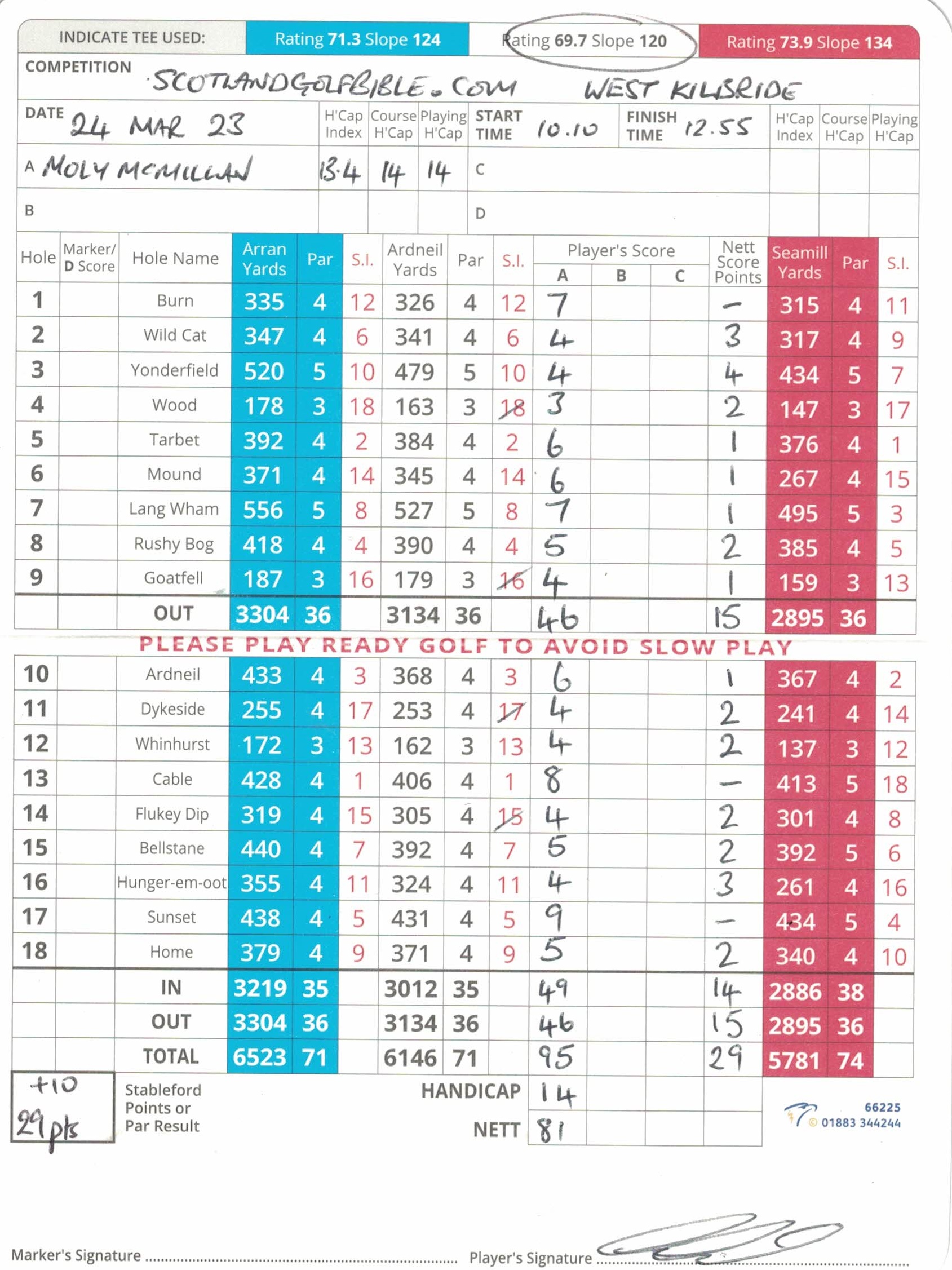
Round: £40 (Winter rate). Par 71. Course Rating 69.7, Slope 120.
Value: 5/5.
Moly’s Score: 95.
Three miles south of Seamill on a rocky promontory above the Firth of Clyde, sits Portencross Castle, a squat fourteenth-century tower house with a roofline destroyed in 1739 and never repaired. This place was consequential long before the castle was built as its land was given by Robert the Bruce to Sir Robert Boyd of Kilmarnock for his service at Bannockburn. The castle became a purgatory stop for Scotland’s dead kings; their bodies lying in state before being transported by a birlinn, a traditional Hebridean ship, to Iona for burial.
By the 1890s, the Craufurds had long since replaced the Boyds of Kilmarnock dynasty. It was Hugh Craufurd, Laird of Auchenames and Portencross, who played the first tee shot at West Kilbride Golf Club in 1893, on the nine-hole course laid out by Old Tom Morris.
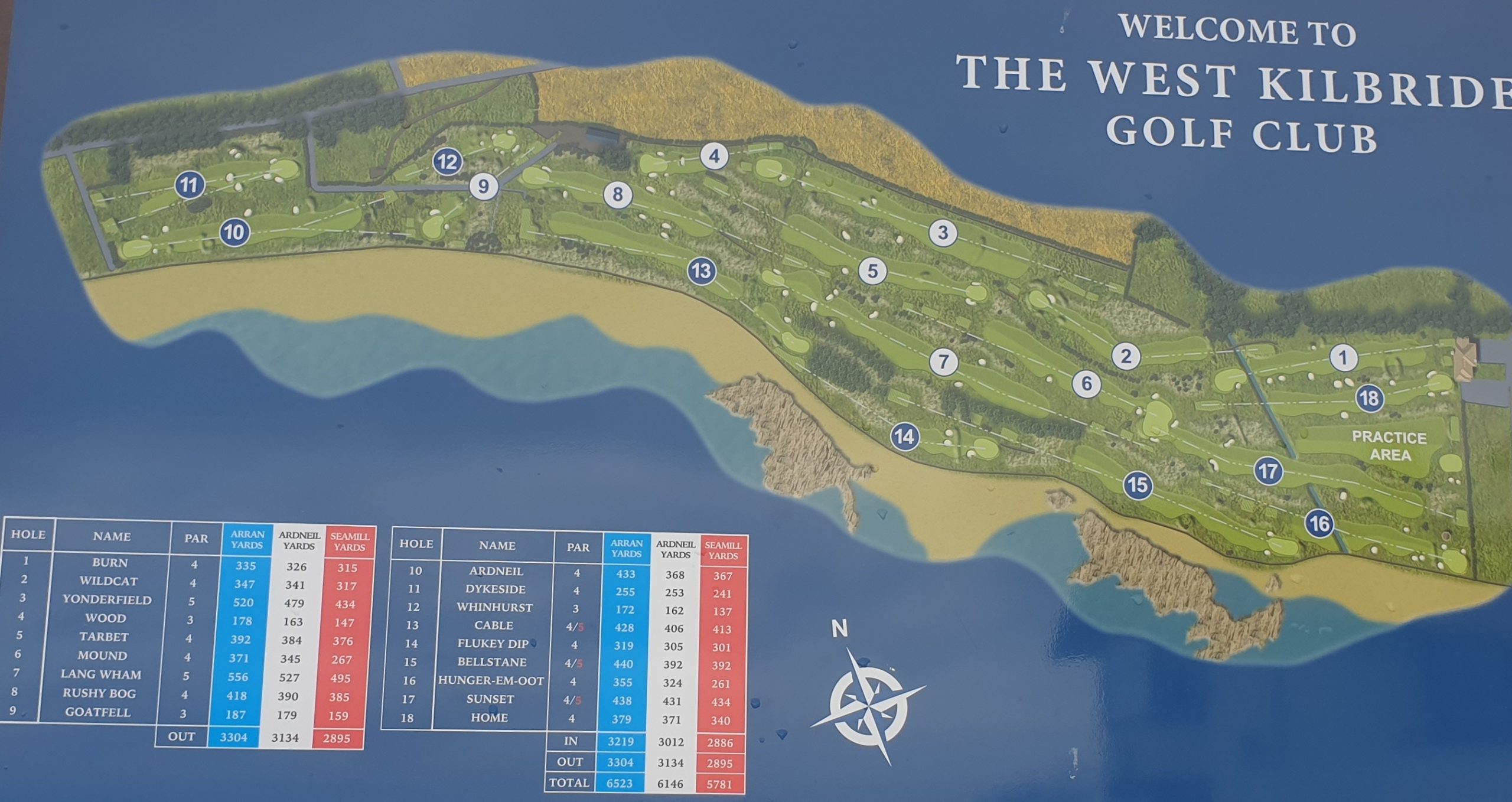
The course extended to 18 in 1905, and the layout was altered again in 1914 and 1925, both done by James Braid. There are many parallels with Lundin GC, blog 84, with the links land predominantly the Morris holes, with Braid encroaching on the more arable turf. The resulting layout it is not a simple out-and-back routing, with Braid keen to make regular changes in wind effect, where he could.
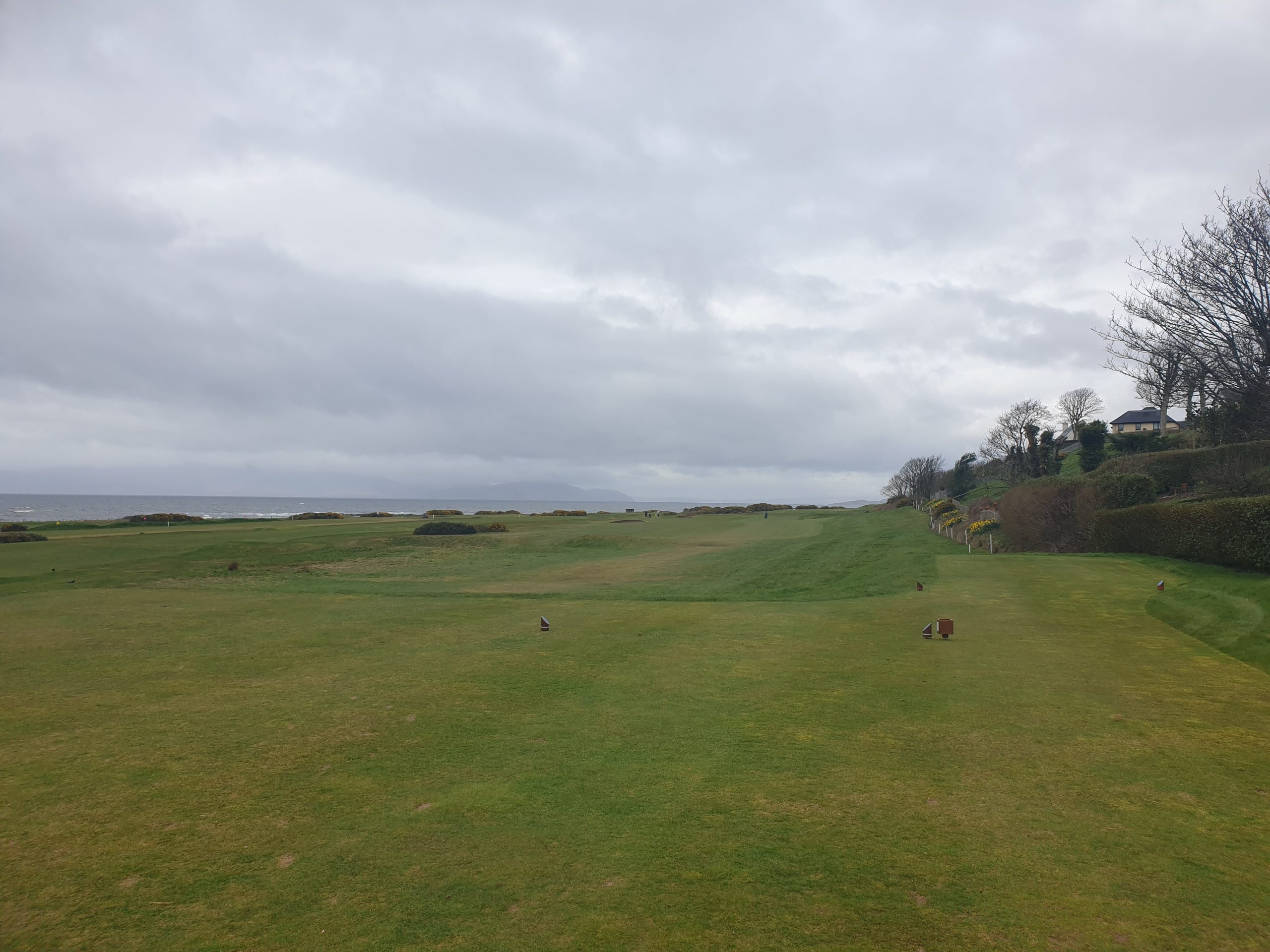
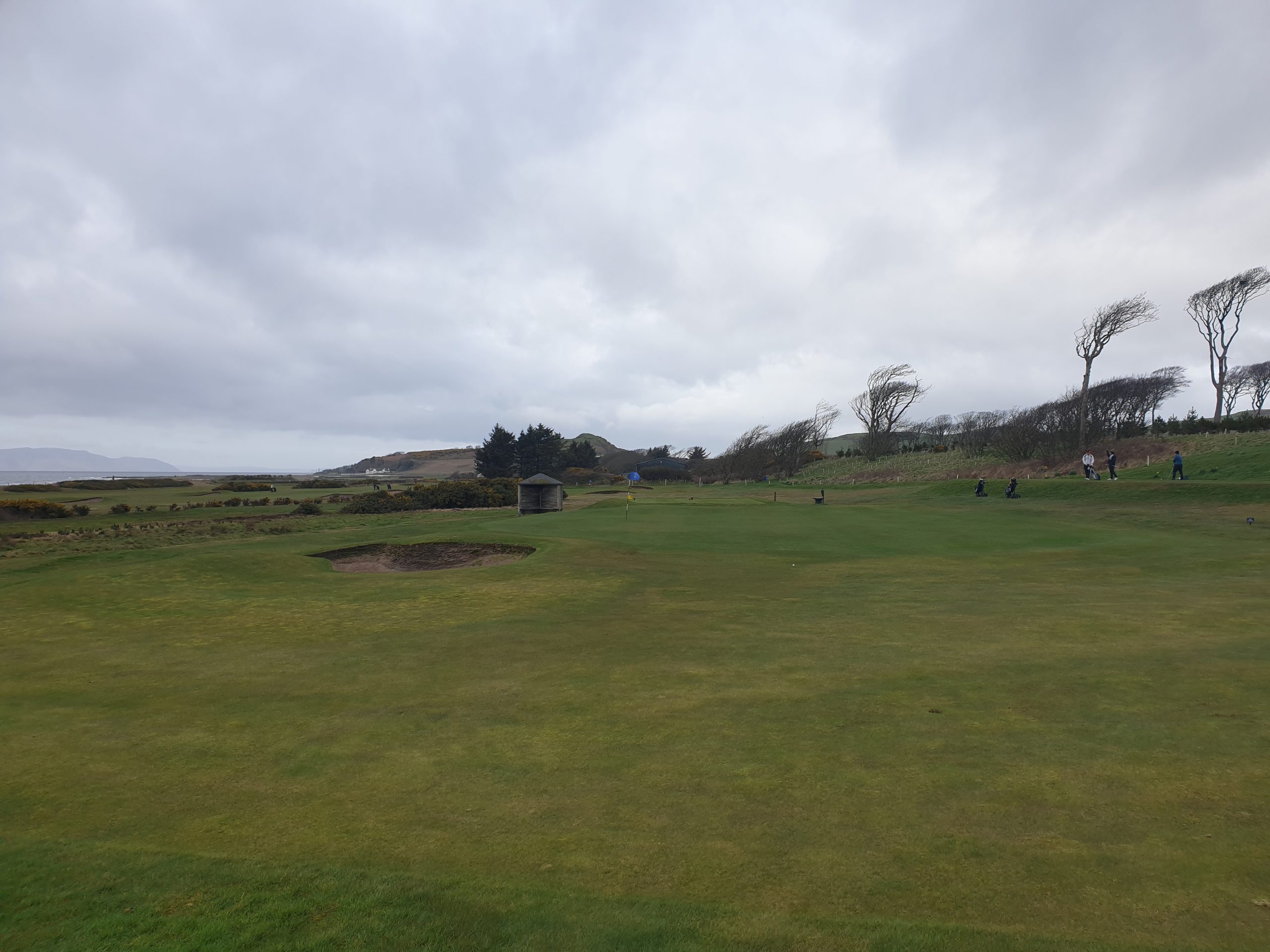
I played alone for only £40 on the winter rate, an unbelievable bargain, in changeable weather conditions as the photos show. Being alone at West Kilbride was mostly meditative, despite a forensic start.
At the first hole, Burn, a par four of 326 yards, my thinned drive embedded in the face of a bunker; not in the sand, but in the turf wall – a rule referee wasn’t available.

Does a ball embedded in the face of a bunker entitle you to free relief? The answer is yes — provided the ball is embedded in the turf of the rivetted wall or face, not in sand. The relief is to find the nearest point in the general area not nearer the hole and drop within one club-length. No penalty. The catch: if any part of the ball is touching sand, free relief evaporates and you play it as it lies or take an unplayable.
I took the free drop and still made seven. The rules of golf are at times generous, but they don’t always mean a lower score.
I played a good round in difficult windy conditions with Out of Bounds (OOB) in play on twelve holes. There is nowhere to hide at West Kilbride. I finished with 95 gross and 29 Stableford points off 14, which in those conditions represented something around par for the day.
The front nine is somewhat on arable, not true links, land. The back nine has more of the original links land holes, giving you two linked but distinct experiences. It is at the turn, Ardneil, the tenth, that the course reveals its real character, with OOBs running the complete left hand side. The westerly prevailing wind becomes your friend here.
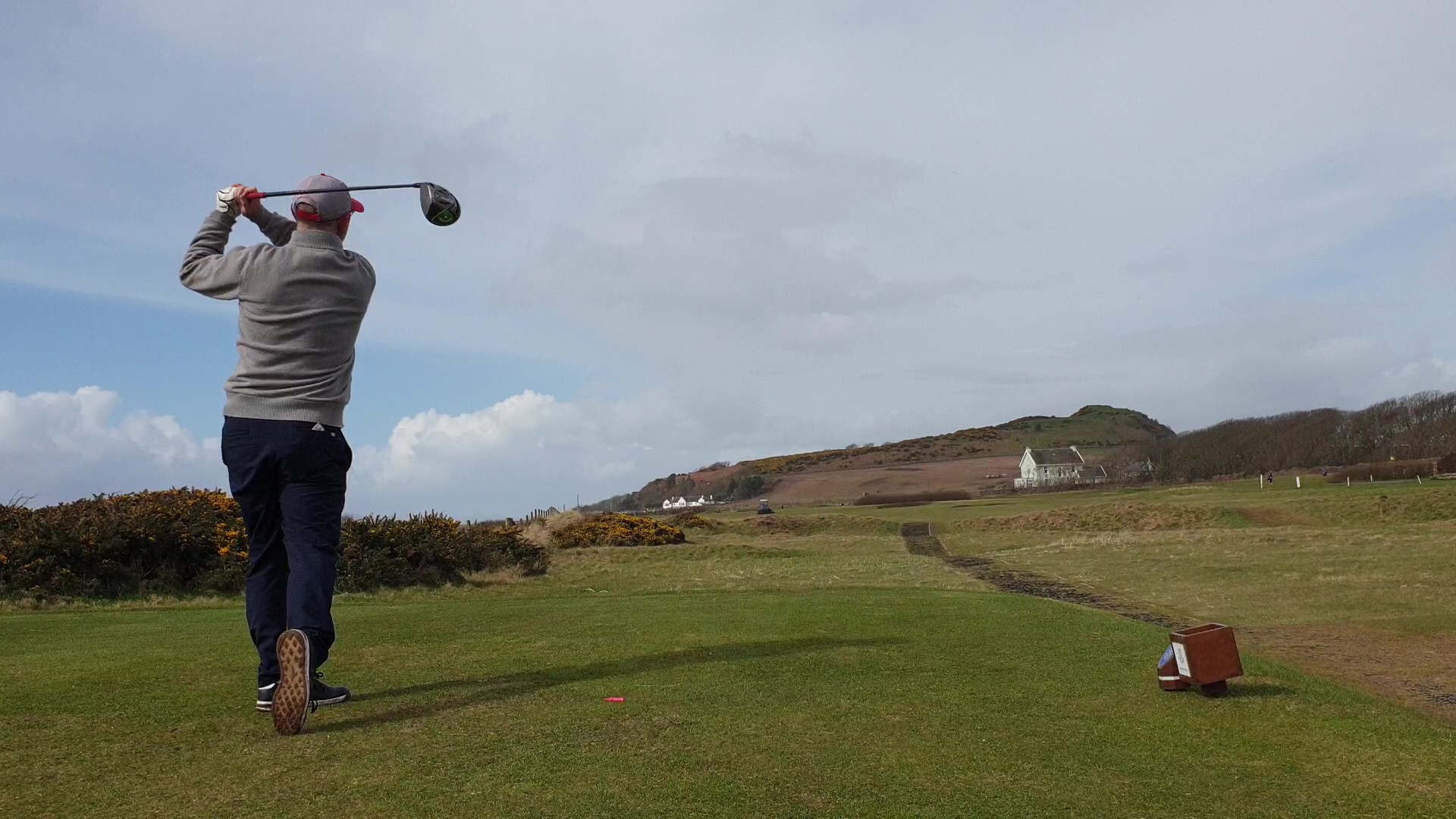
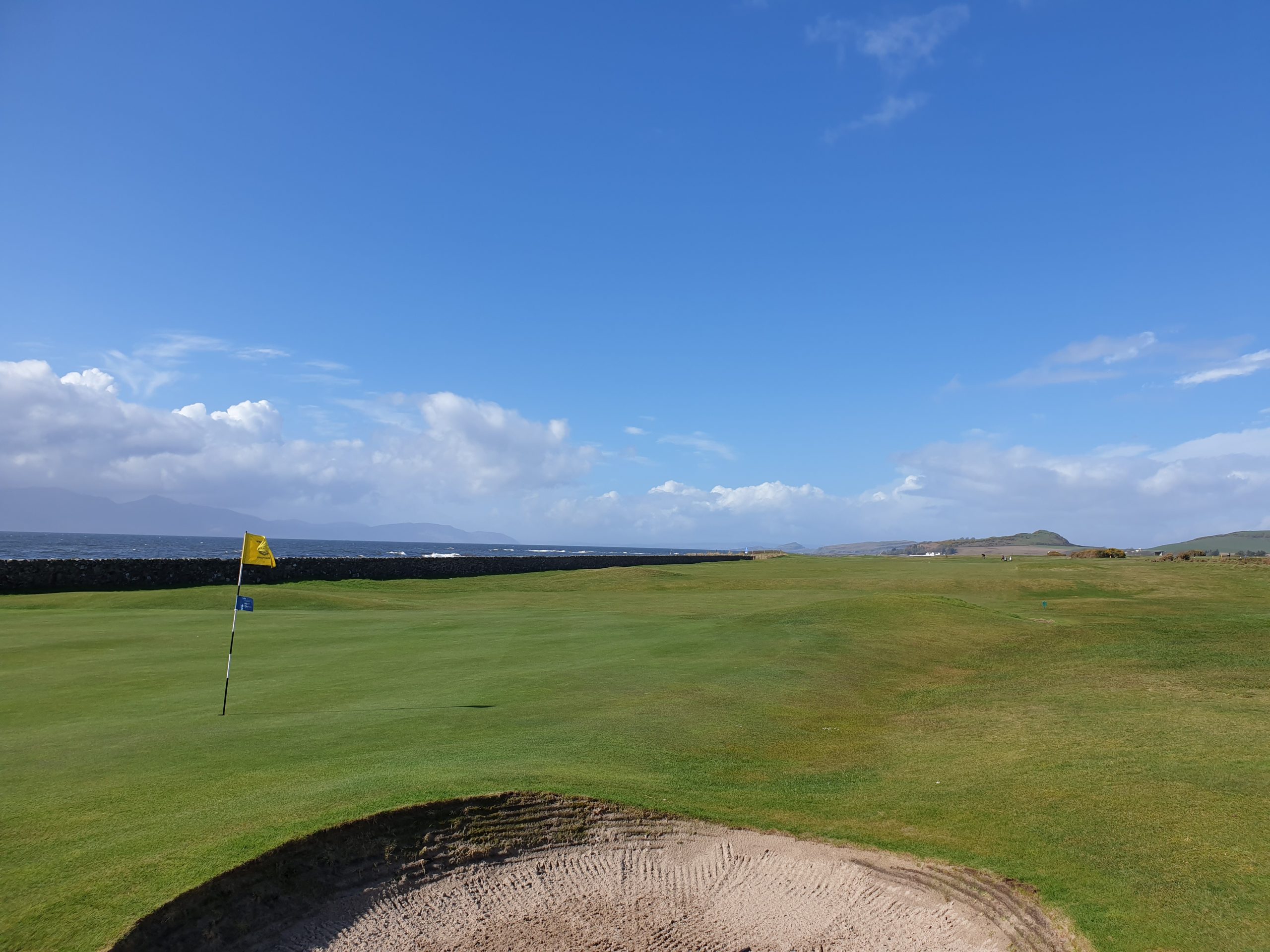
By my back nine, something else had changed: the weather. The grey overcast of the first hour had given way to Ayrshire sunshine, the Firth beginning to catch the light and Arran stunningly on the horizon. Links golf in Scotland operates a variable weather tariff, not unlike most of the fees these days. The same course that hands you a seven on the first hole in a grey wind can, within two hours, be offering something close to transcendence.
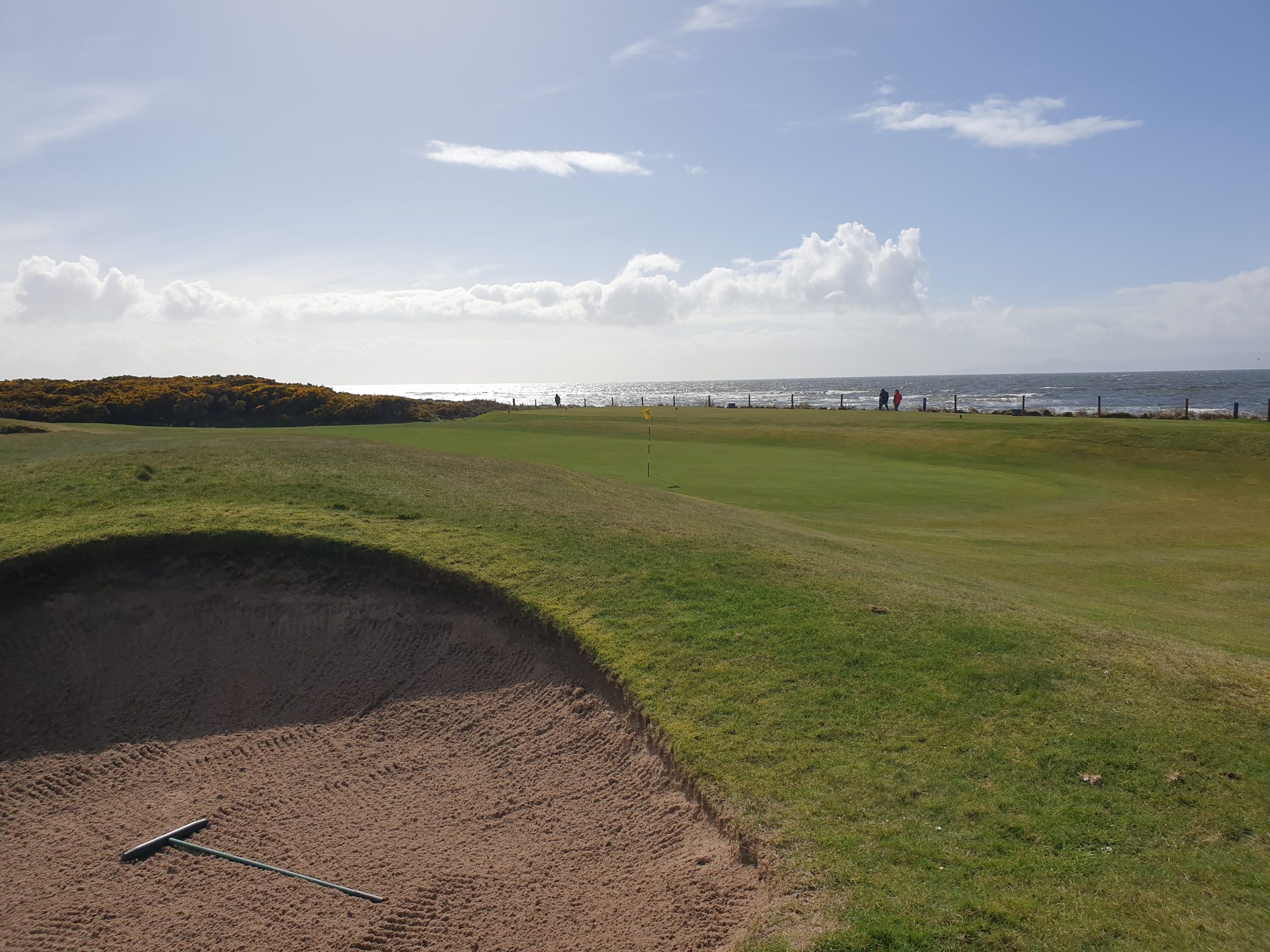
The greens and their surrounds were excellent, brilliant conditioning for late March. The links turf was quality. The hole names carry their own character: Yonderfield, Rushy Bog, Lang Wham, Hunger-em-oot.
The club has attracting high profile visitors over the years and were keen to get Walter Hagen, the “first touring pro” to play an exhibition. Hagen failed to agree his fee and “went elsewhere”, ironically agreeing to play The Machrie on the Isle of Islay, but traveled incorrectly to Machrie Bay on Arran, a much lesser course; blog 110. This was a mistake in more ways than he imagined! Open Champion Bobby Locke played here in 1951, clearly being less demanding than Hagen, the real hustler.
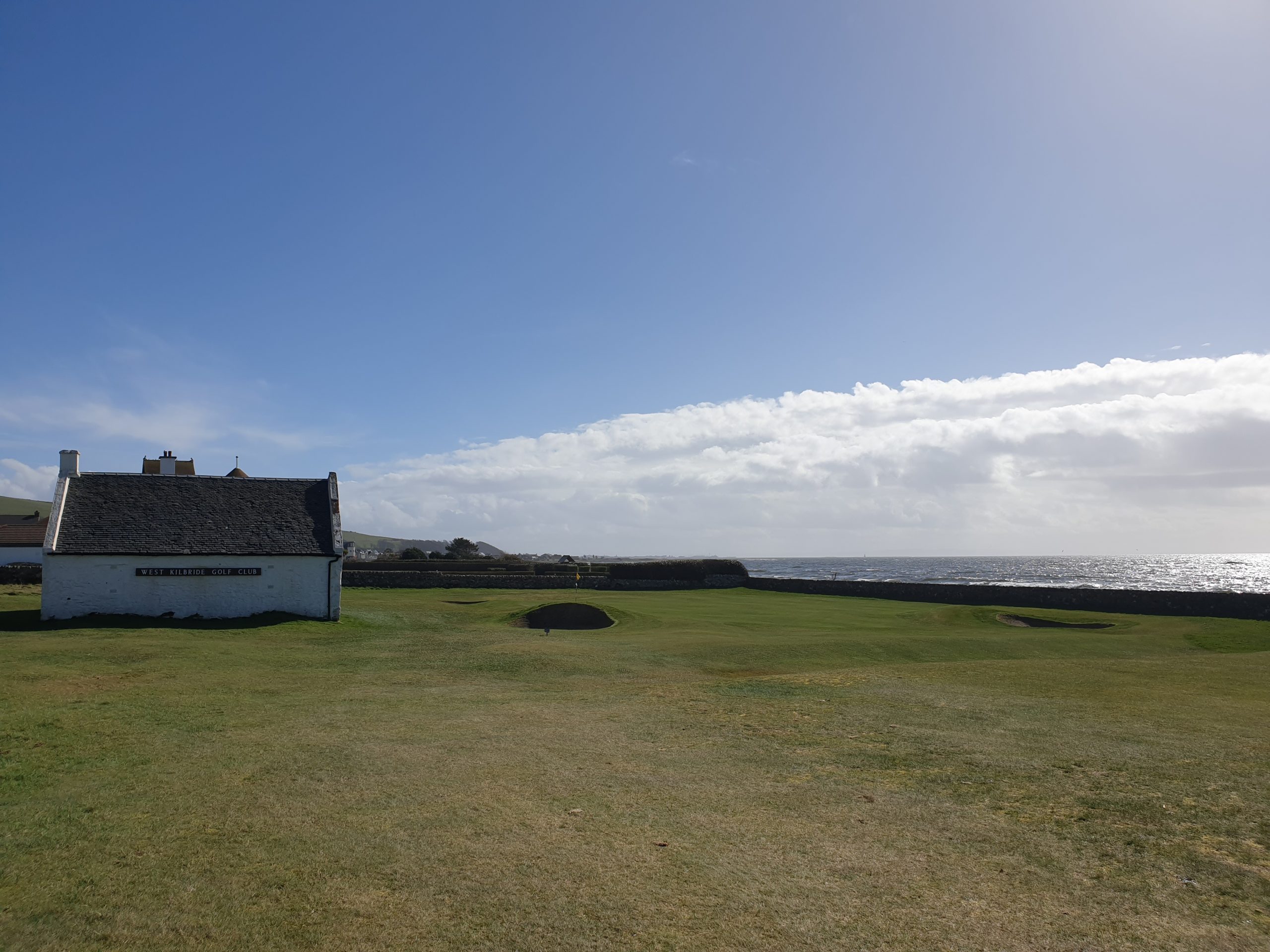
West Kilbride is the most northerly of Ayrshire’s true links courses, including Dundonald, Glasgow Gailes, Troon, Prestwick and Turnberry, partly explaining the lower pricing of £40 in March, which deserves reflection.
The course costs £85 on a summer weekday, more than double the winter rate. That Summer/Winter gap has widened considerably over the past decade as Scottish links golf has repriced itself upward as a premium product. At the top of the market, Kingsbarns charges £448 and Turnberry’s rack rate is £545. Green fees at premium Scottish courses have inflated at roughly 7-8% per year over the past two decades, three times the rate of general inflation. The winter links visitor becomes a shrewder operator.
The course is genuinely excellent; I would go back without hesitation and happily pay more than £40 to do so.
Facts:
Course Type: Links
Par 71 (2 par 5s, 13 par 4s, 4 par 3s)
Distance: 6,146 yards (Ardneil/yellow tees)
Course Rating 69.7, Slope 120
Moly’s Gross Score: 95 (29 Stableford points, net 81)