An Example of the Golf Market Leaving Normal Golfers Behind
Price Paid:£32 (via GolfNow) Current Price (2026):£125 (summer, May-Sep) Value: 5/5 at price paid. 2/5 at current list price.
Tucked between the Ayrshire coastal railway line and the mouth of the River Irvine, this course is shadowed by more famous neighbours, giving an occasional opportunity for value.
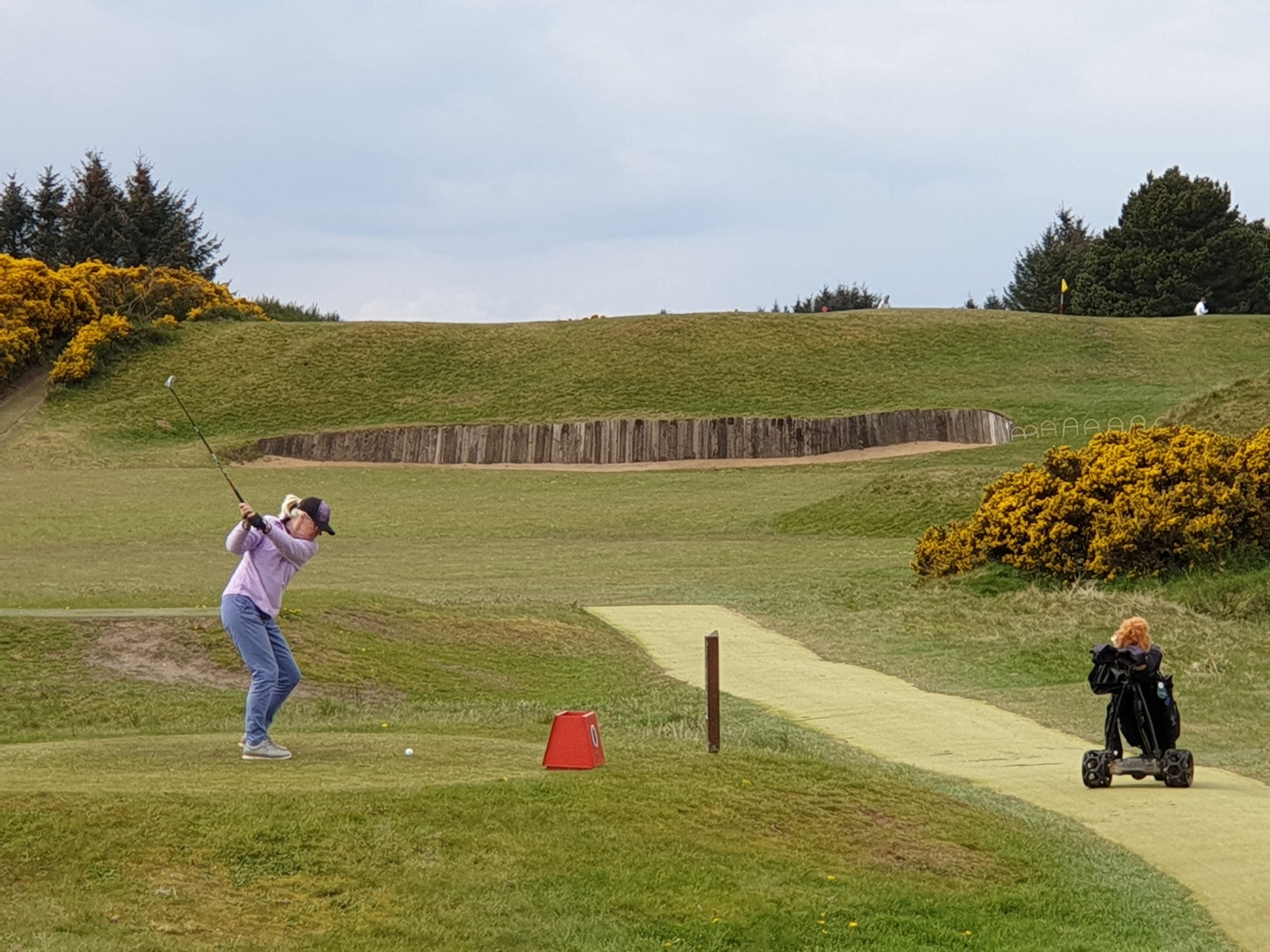
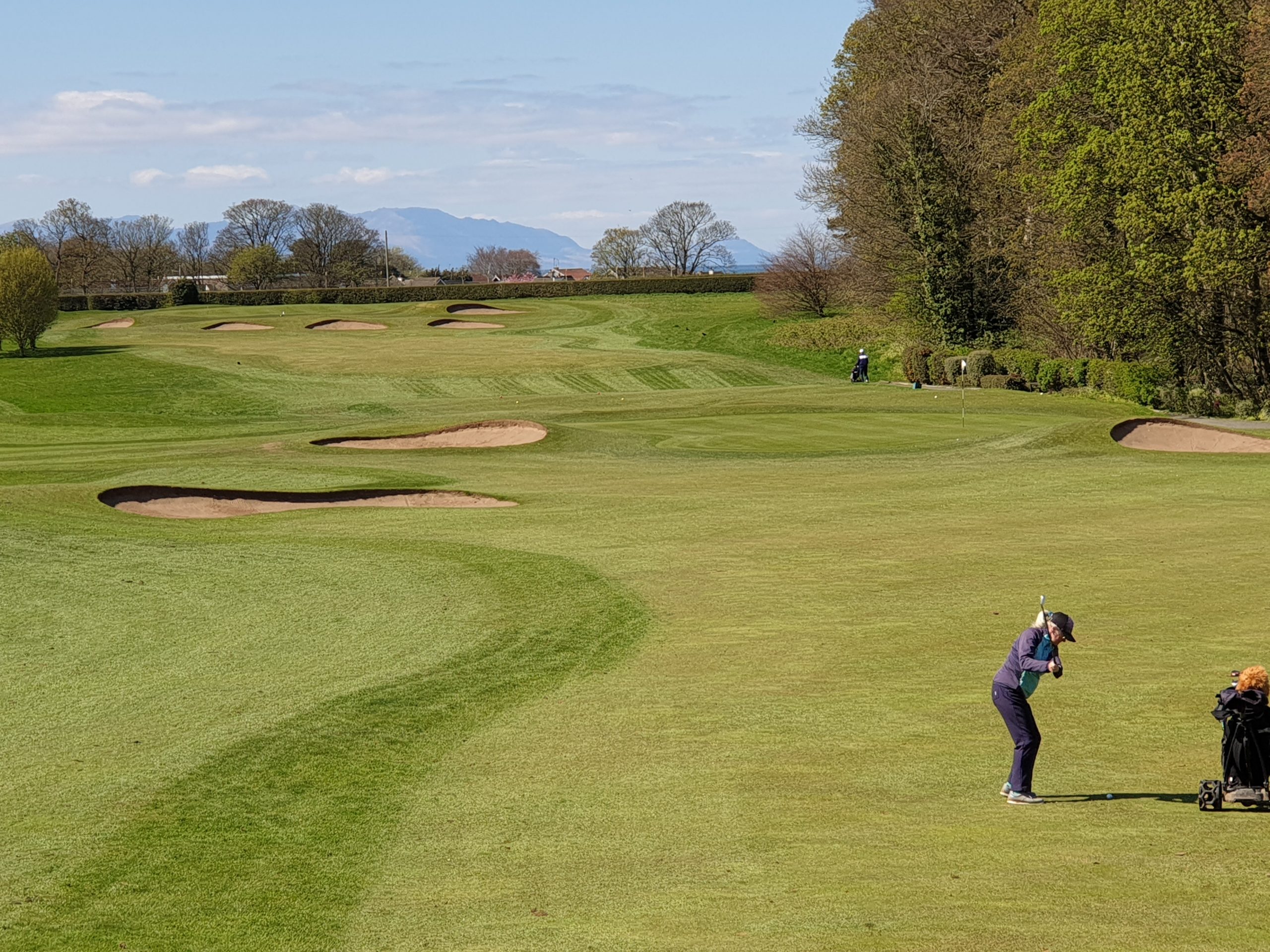
Fran facing the magnificent sleeper bunker at the 5th, “Sandface”.
In 1887 Eglinton Estates leased land for a course to be built between the railway, the river, the village of Bartonholm and the ‘Bogside’ racecourse. The racecourse had opened in 1808 and from 1867 hosted the Scottish Grand National, but money ran out and the last meeting ran in 1965, with the Grand National moving south to Ayr. The 11th hole is called “Grandstand” although no remnants exist.
Approach to the 11th “Grandstand”; nothing remains of the racecourse grandstand.
The golf course is strategic fare. Willie Fernie, professional at Troon, made the first significant alterations after the original 1887 layout, and Harold Hilton surveyed the course in 1912. But much of what’s here now is Braid’s,including four entirely new holes (the 10th, 11th, 12th and 13th) carved from land bought from the neighbouring farms and the Eglinton estate.
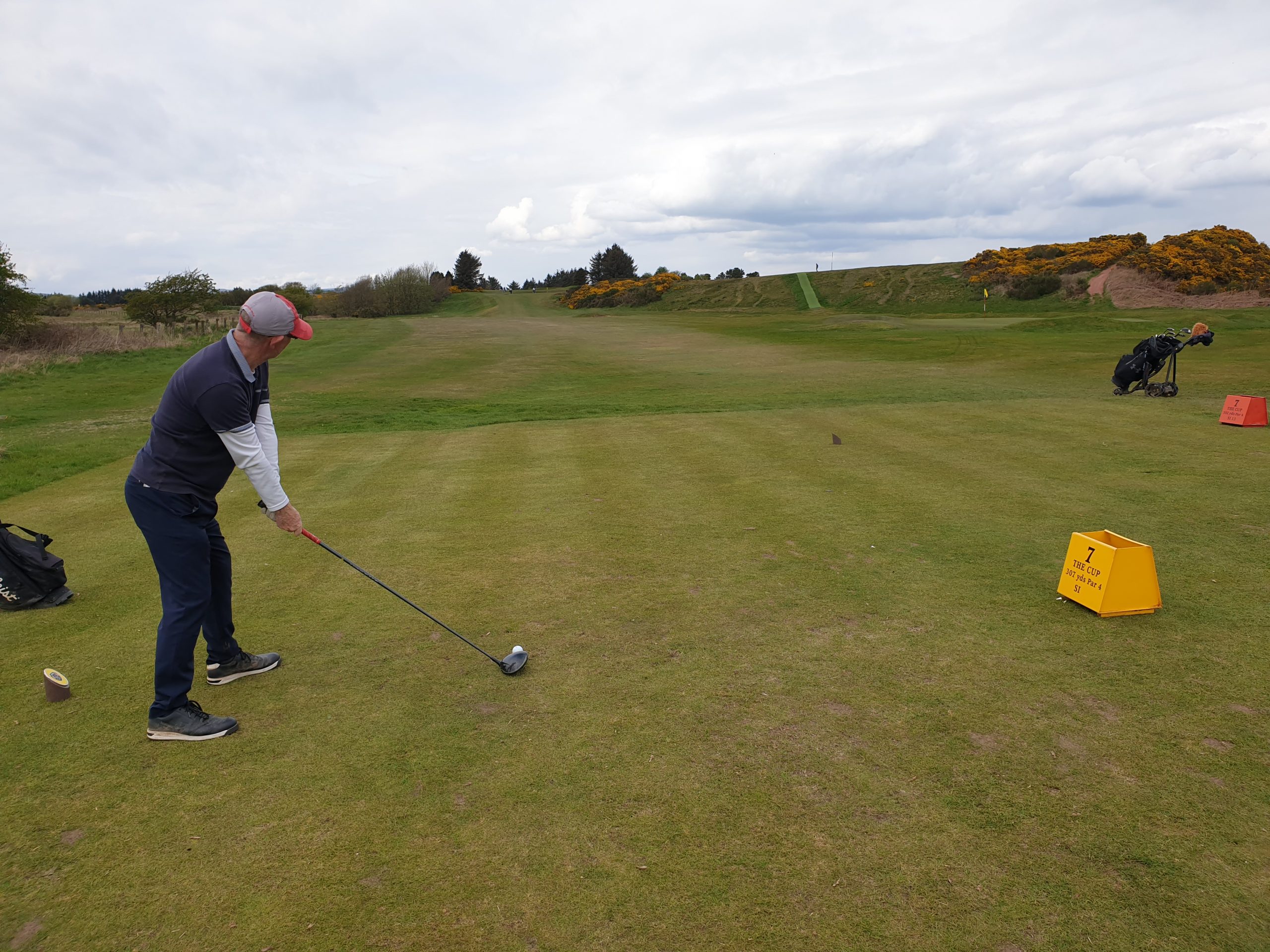
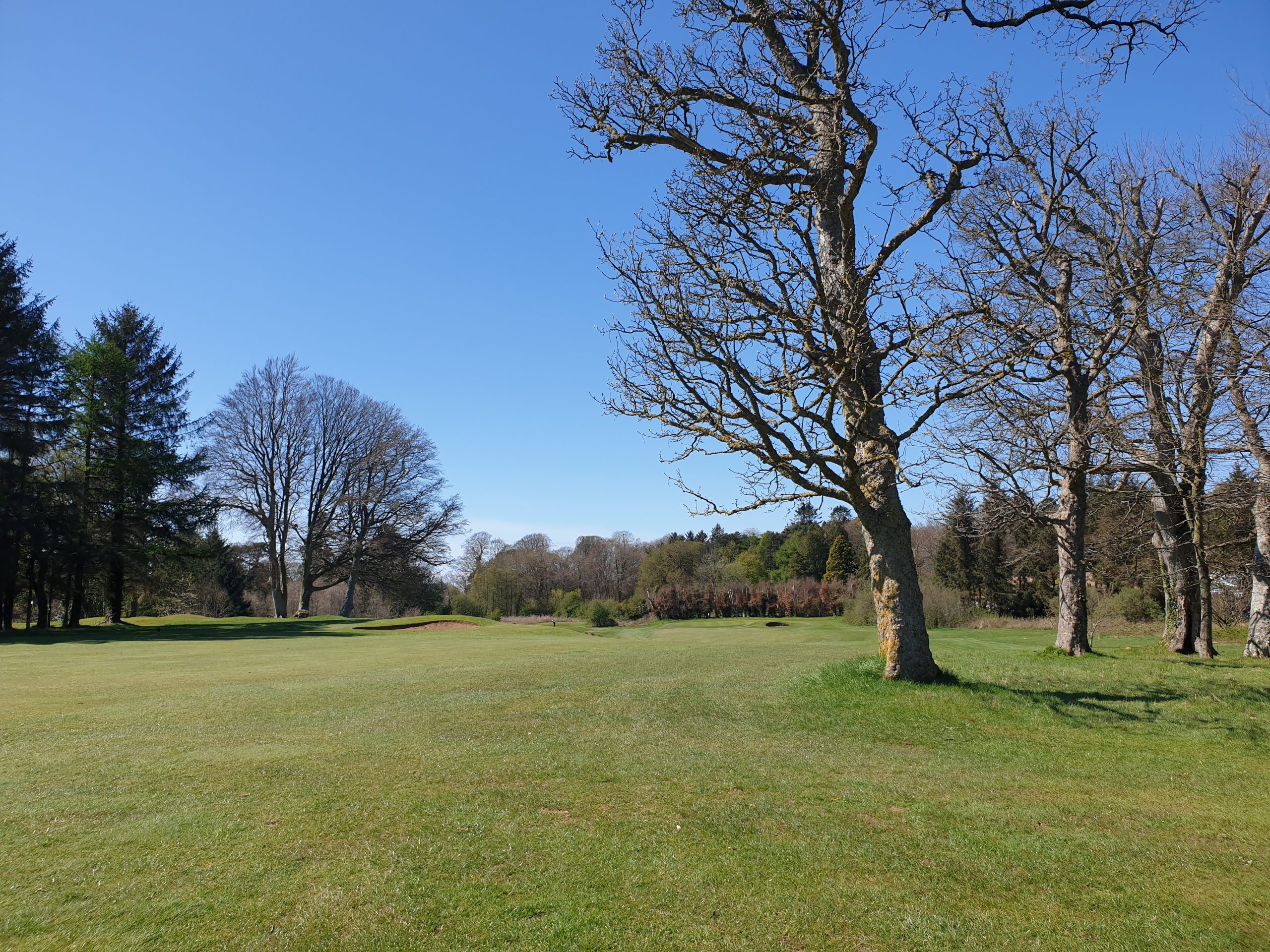
When we played, the turf was superb given how early in the year, with fast, subtle greens. Not every hole is tight, the 7th, The Cup, is as wide open as Bogside gets, a breather after the squeeze of the holes before it.
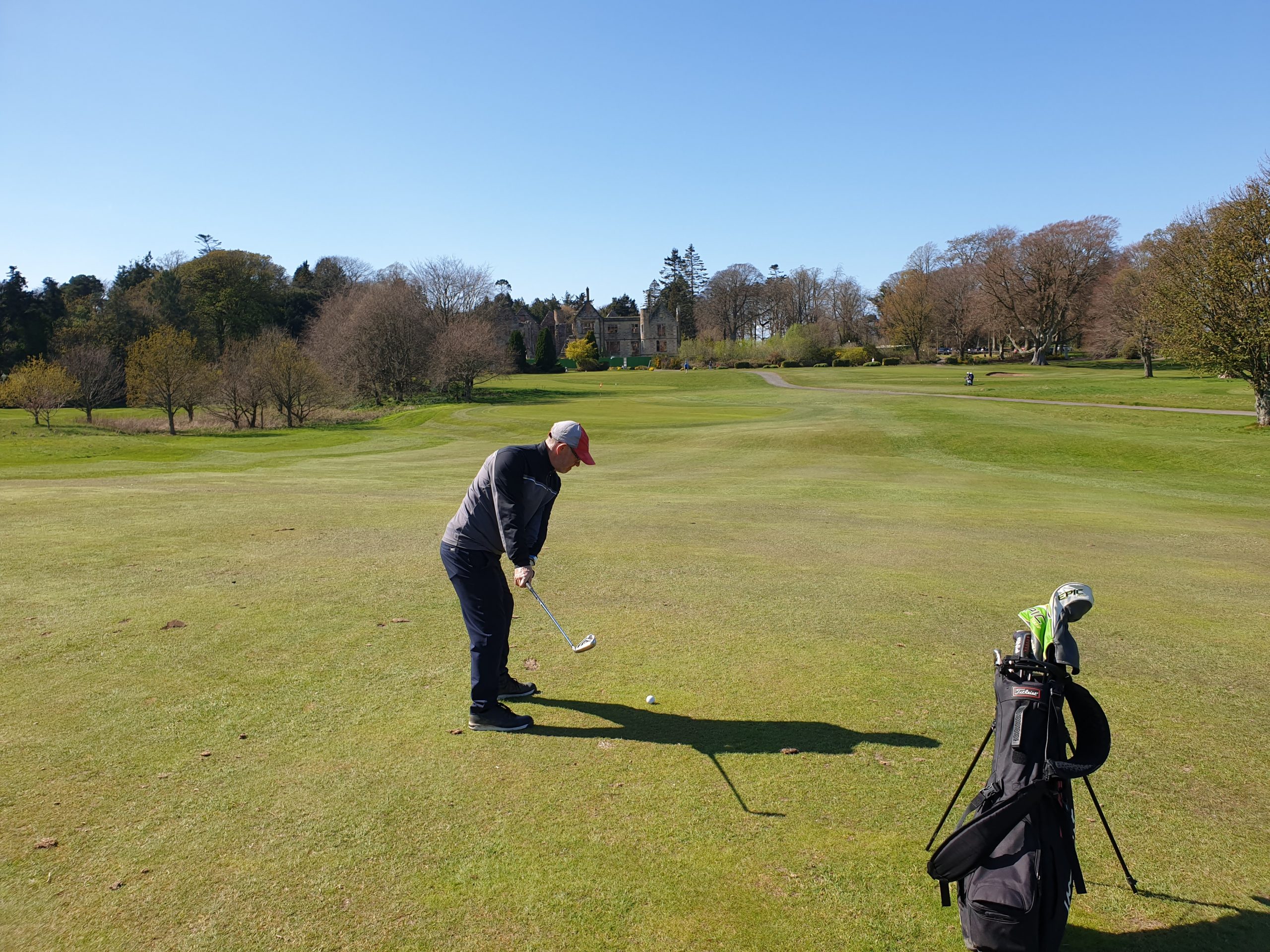
Moly at the short par 4 7th, the wide fairway narrows significantly around 230 yards.
The course has some very difficult holes, no more so than ‘Cannon Hill’, the 6th, a worthy stroke index 1.
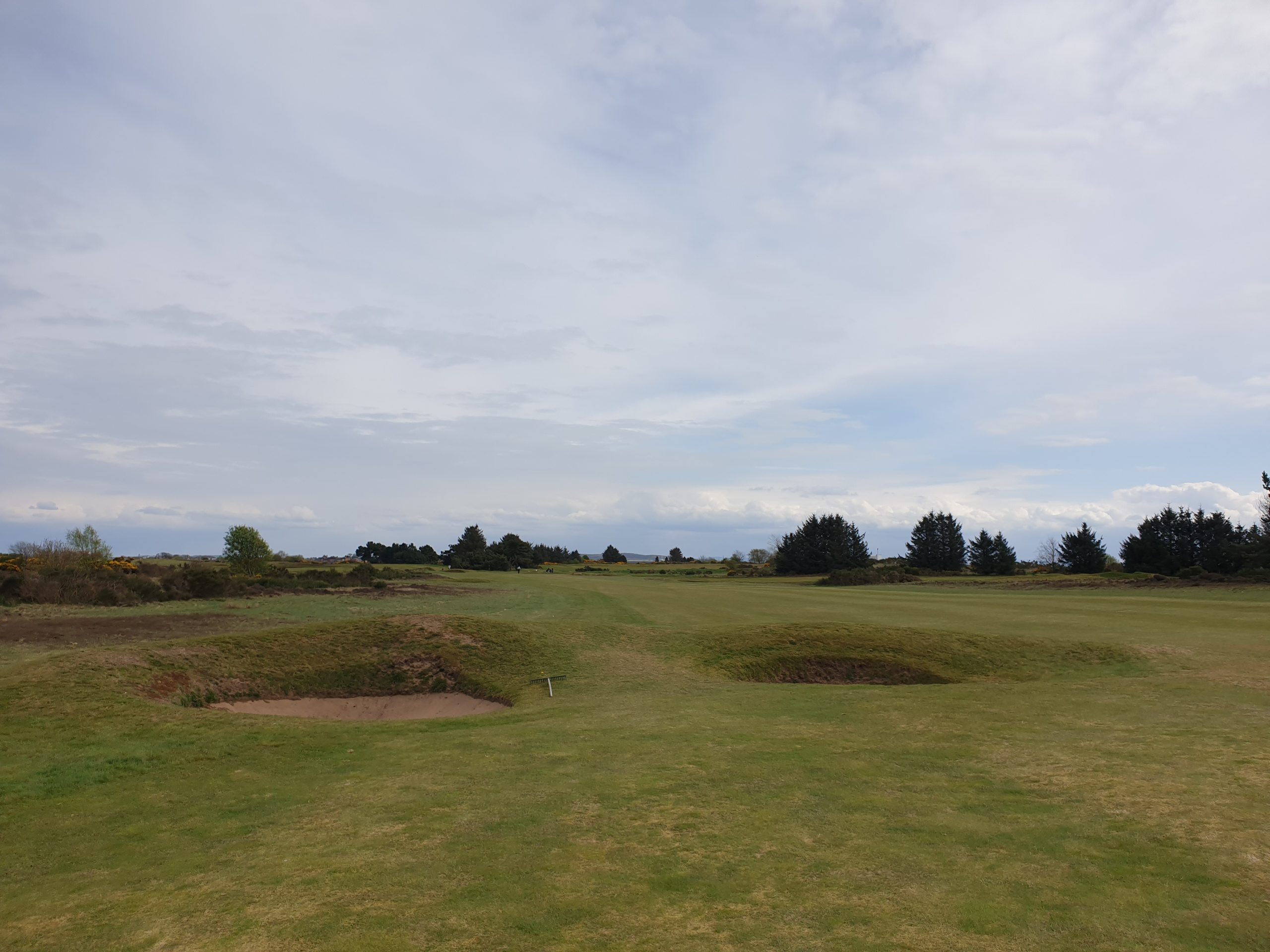
The approach to the difficult par four 6th, “Cannon Hill’s”, the stroke index 1 hole.
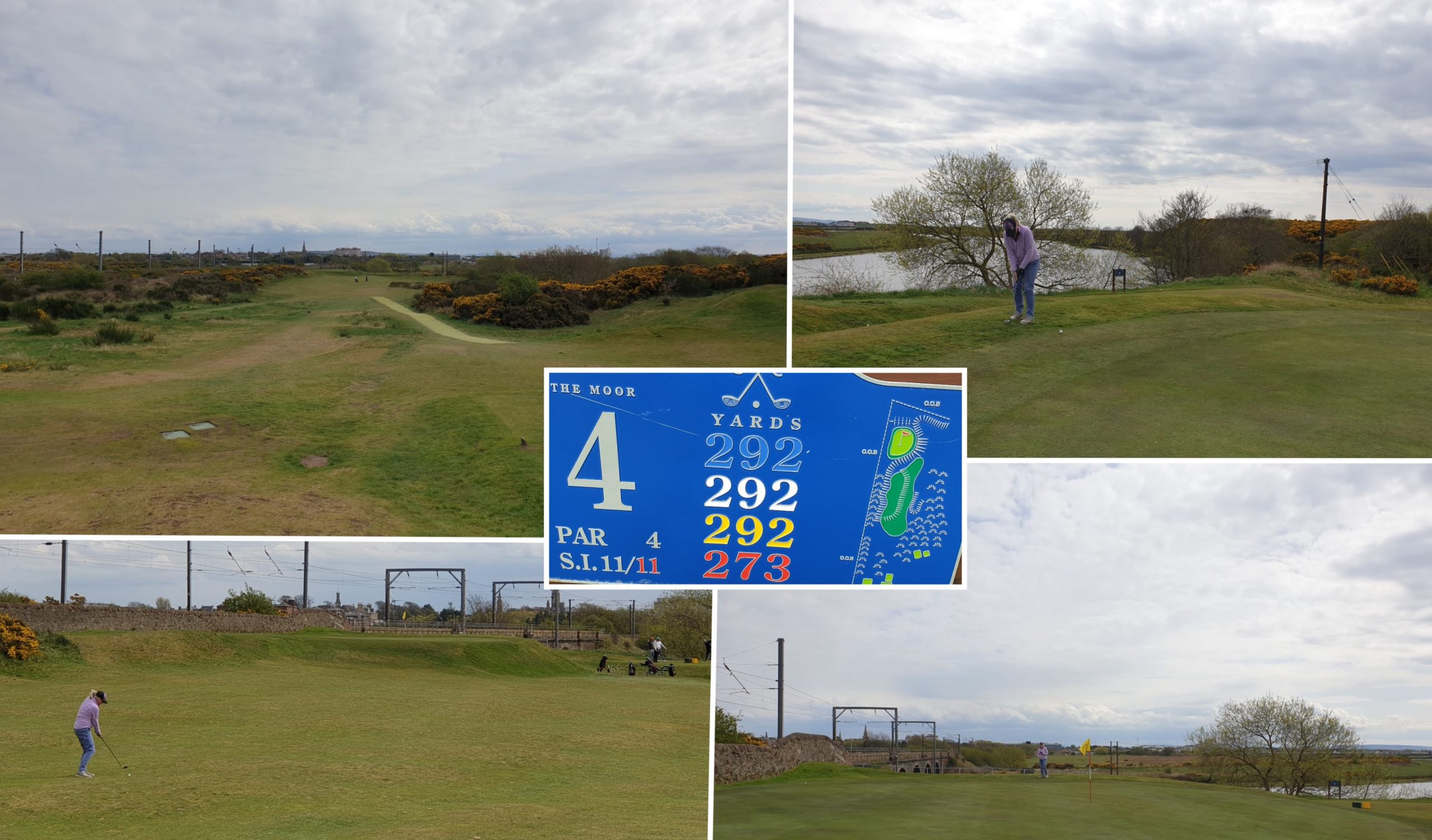
The railway is often in play and gives the course added edge, out of bounds running the length of several holes. The 4th, The Moor, is the hole people talk about: a pond hard against the tee, out of bounds down the left, and a green backed directly onto the railway boundary, the line’s overhead gantries filling the skyline behind the flag.
Tron Carter (TC) of No Laying Up loves the 4th at Bogside.
It’s not just me rating it; Tron Carter of the No Laying Up podcast built himself a fantasy 18-hole course on episode 1151, one hole per course he’d played, matched by hole number, and Bogside’s 4th made the cut as part of his dream.
Here’s my one real gripe. There’s a fair amount of blind driving and approach work through the round, notably at the 12th, one of Braid’s own new holes, no less and again at the 14th, where the green sits in its own hidden punchbowl. That sits oddly against the man who redesigned the course: Braid wrote in Advanced Golf (1908) that blind holes should be avoided, “and especially a blind shot to the green.”
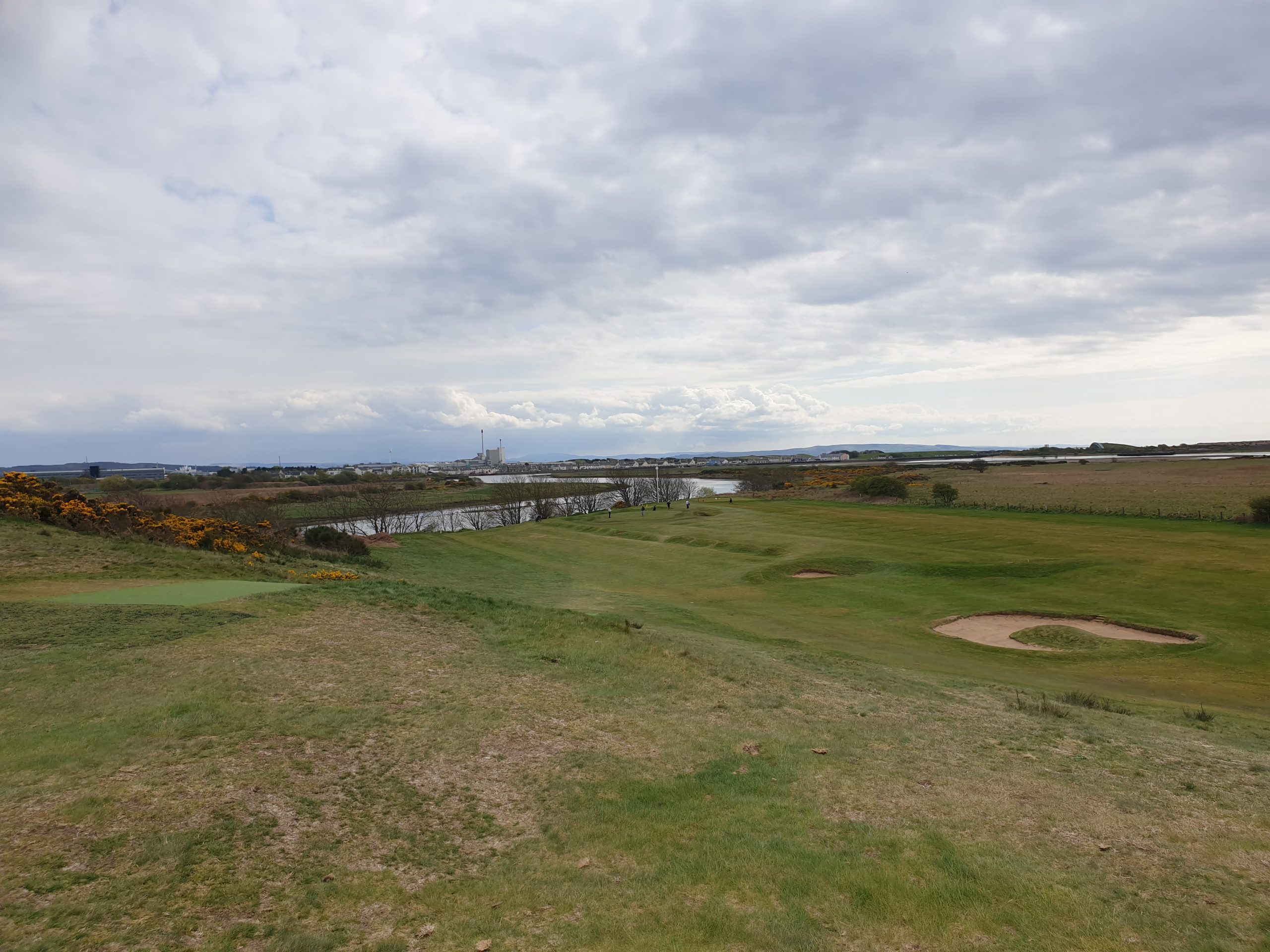
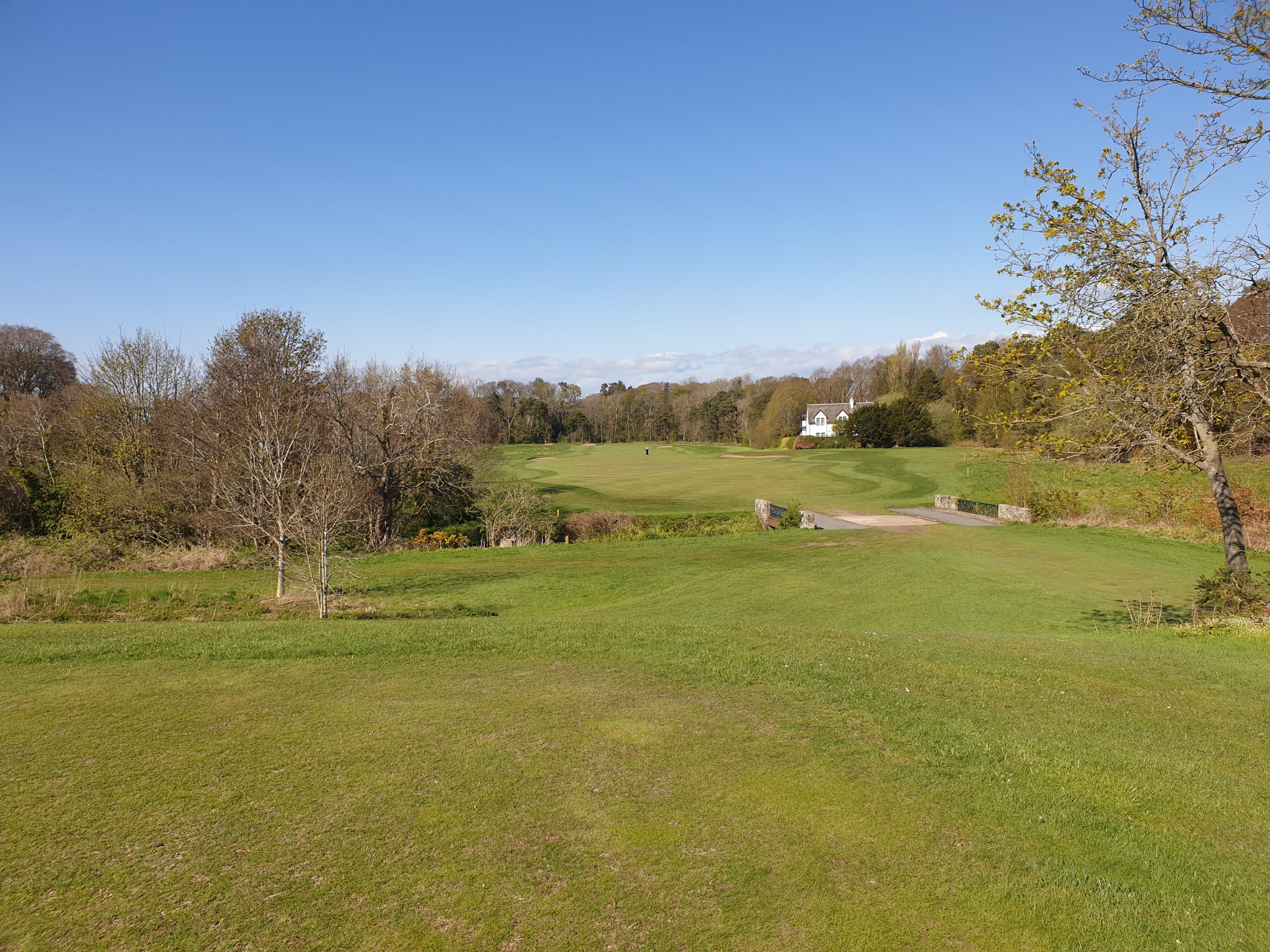
The ‘blind’ 14th green, where the bowl should help your approach find the green.
Now the value case. I paid £32 through GolfNow; today’s rack rate is £90–£125 depending on season, and GolfNow itself is currently listing Bogside at £115 with no Hot Deals running, barely a discount off list price. There’s a folk explanation clubs like to reach for here, that American visitors equate a high green fee with quality, so pricing low would actually cost business. It doesn’t hold up well under scrutiny. A lot of US visitors book through tour operators, buying flights, hotels and golf as a single package, and never see the individual green fee at all; they can’t be pricing courses on a fee they don’t see. What overseas visitors genuinely lack is a reference point: what a comparable course nearby charges, or what this course cost a few years ago. That’s a much simpler explanation for why fees have room to rise unnoticed than any theory about American taste. Whatever the reasoning, Irvine’s tripled its rate since 2023, and the golfer picking up the difference isn’t the tourist it’s golfer like me, deciding whether this round is still worth it. At £32, this was one of the best value rounds I’ve played anywhere in Scotland; Open Final Qualifying pedigree, Braid’s bunkering, a genuinely varied test, for municipal money. At today’s prices — list or GolfNow, that value case collapses; this is a 2/5 course at what it costs now.
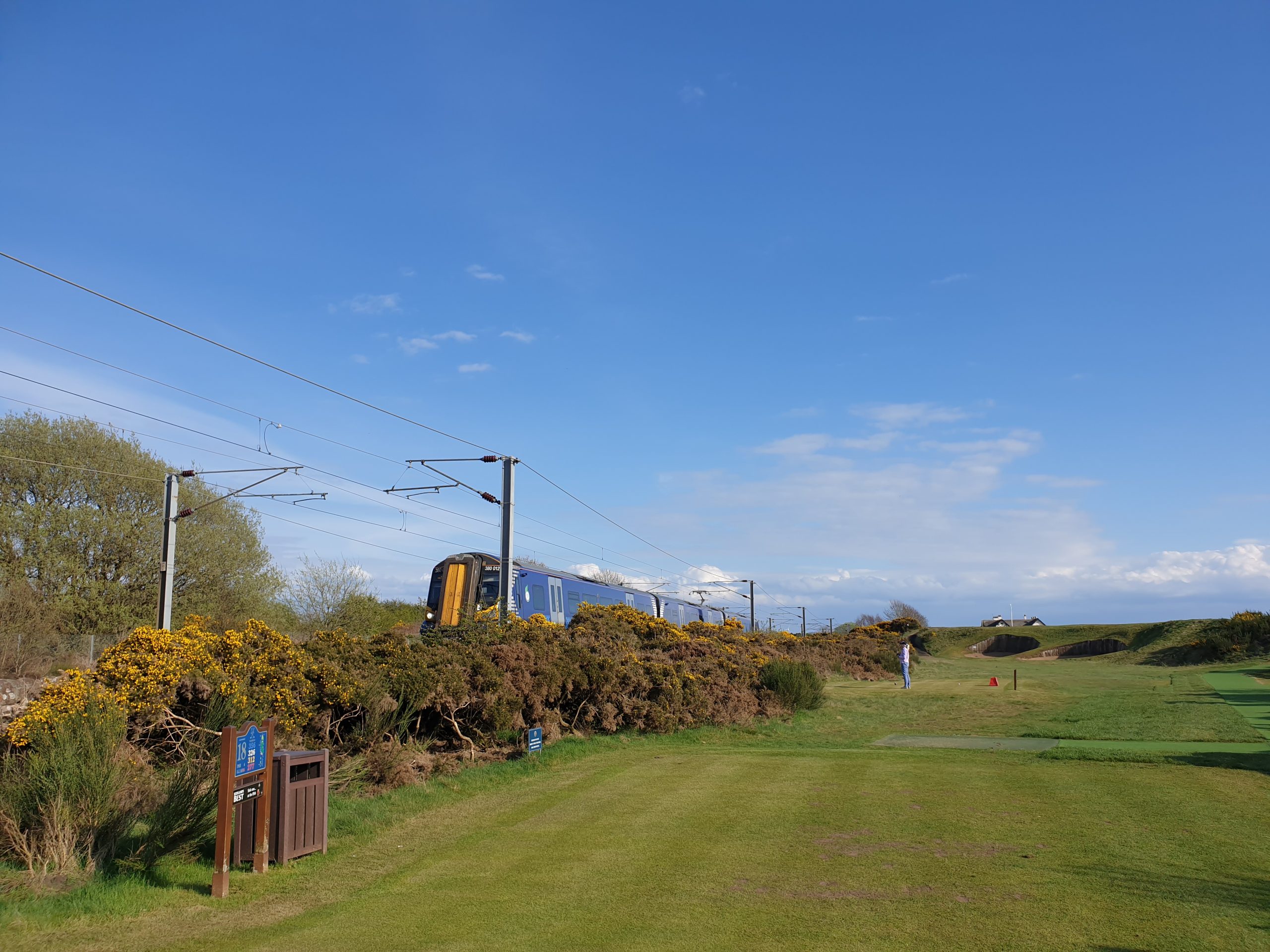
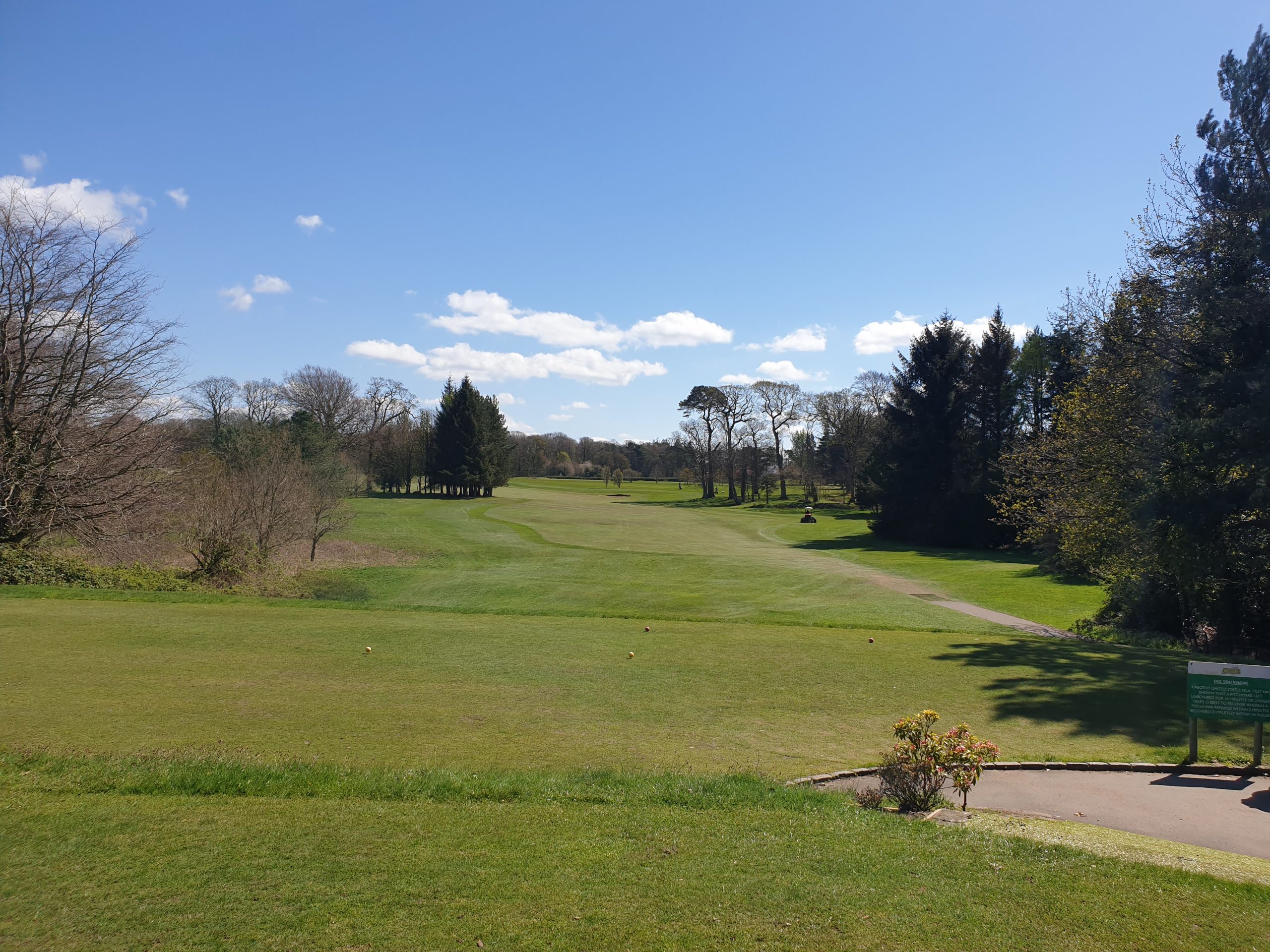
The 18th tee and, right on cue, a reminder of the neighbours. .
It finished well, at least. The 18th runs you out almost to the clubhouse door, and it was worth lingering afterwards in the lovely old building with real history inside; Old Tom Morris attended a professional tournament here in 1919, and his signed photograph still hangs on the wall.
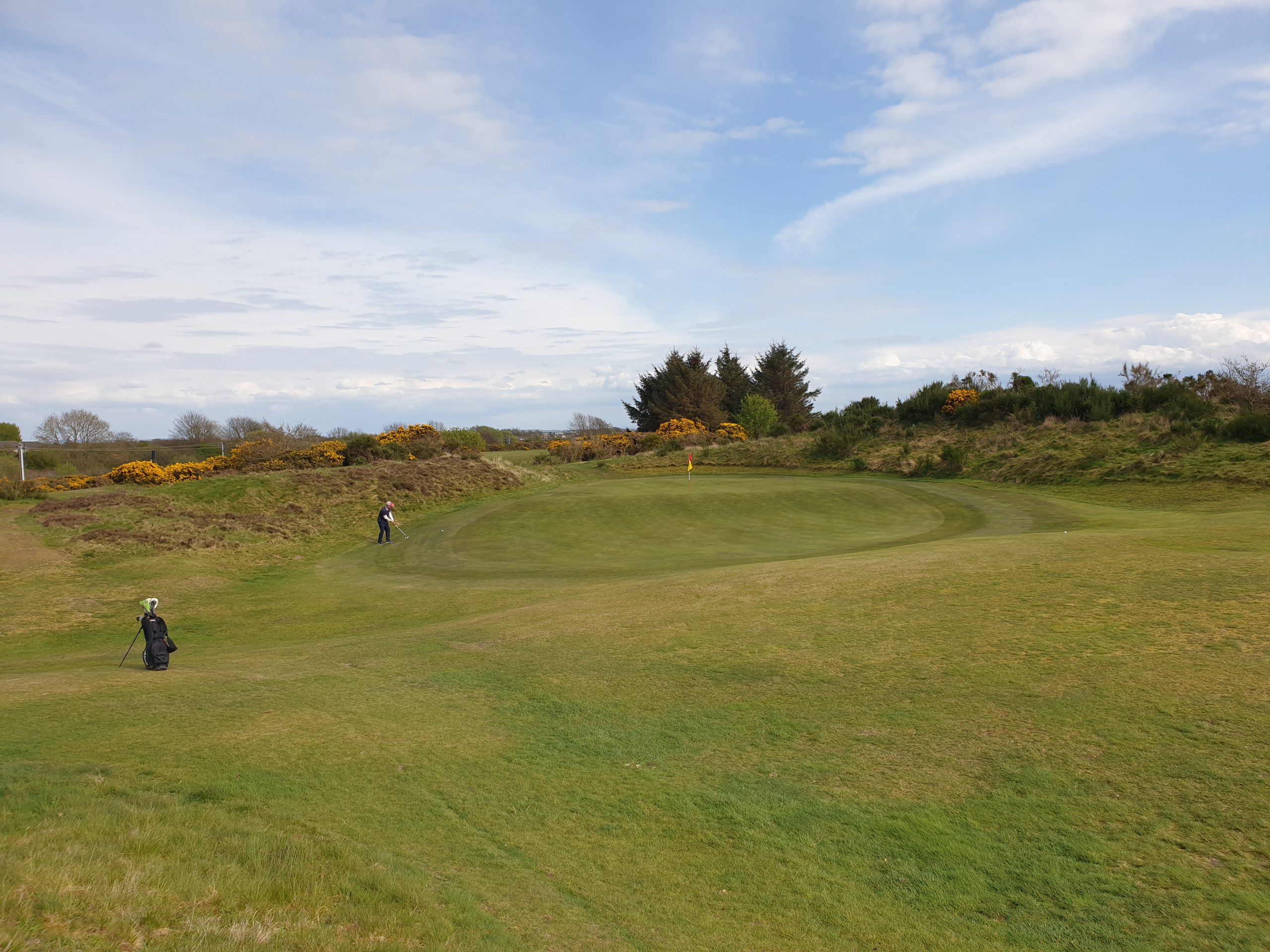
A wedge into the 18th, Flagstaff, found enough of the green to leave a putt worth having, and it dropped for a birdie three — the kind of ending that forgives a round its rough patches.
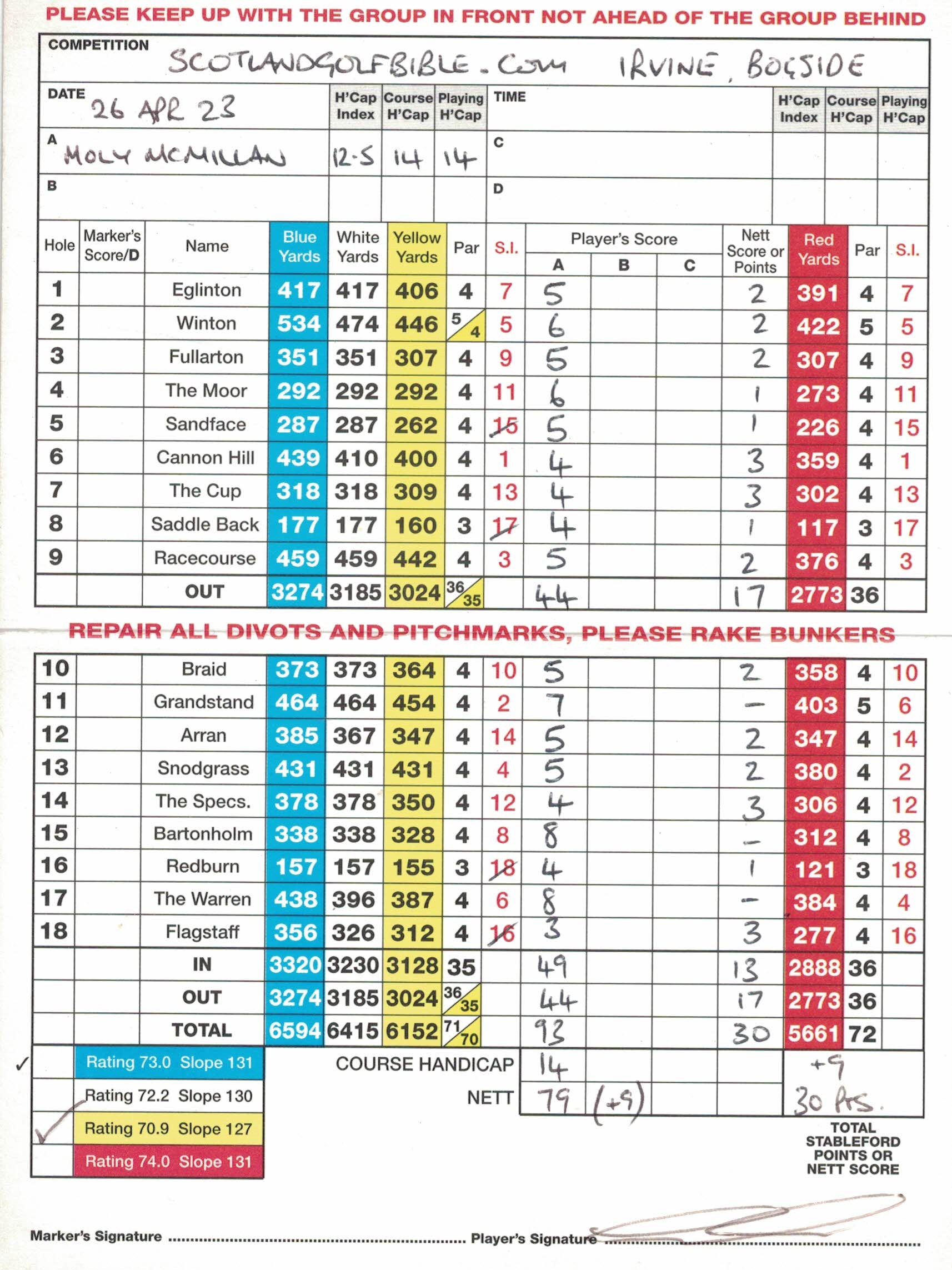
Facts: Course Type — Links/Heathland. Par 71 (yellow tees). Distance — 6,152 yards (Yellow tees).
Belleisle – the people’s course, heading back to the gentry?
Price paid £30 (GolfPass voucher).
Value 5/5 at £30; 4/5 at current GolfNow (~ £43); 3.5/5 at list price £60.
Belleisle’s story has a sweet beginning. The estate’s lands, originally Netherton of Alloway, passed through Ayrshire gentry before Hugh Hamilton bought the property around 1787 using Jamaican plantation money, renaming it Belleisle. The Baronial sandstone mansion was rebuilt in the 1800s, then the Coats family, Paisley thread manufacturers, acquired it in 1886.
The beautifully manicured 12th fairway at Belleisle, showcases the condition.
Following the death of George Coats, Ayr Burgh Council purchased the entire estate for £25,000, opening James Braid’s two courses in 1927. Finally, the working man could walk the same ground his grandfather had doffed his cap to. There is a certain irony, then, in the fact that the listed green fee has doubled in two years since I played to now £60. One finds oneself wondering when the first £100 municipal round will arrive and whether Scotland will even notice what it has lost.
The opening tee at Belleisle; wide, well-maintained, and immediately signalling something above the municipal average.
Belleisle is the flagship of Golf South Ayrshire’s eight courses, which are covered in Blog 136. It is a proper Braid design, only two par fours under 400 yards from the yellow tees, fast-running fairways, and sound bunkering. The greens and surrounds are the real quality indicator, and on the day Fran and I played, late April sunshine, warmer to the eye than to the skin, they were excellent. It played like a good private members’ course in England. Which, at a municipal green fee, is precisely the point.
The approach to the 2nd, beautiful parkland character
The white tees add nearly 400 yards and lift the par from 69 to 71, with holes 1 and 15 both becoming par 5s. The 15th in particular, 426 yards from yellow, 478 from white, would actually be easier from the white.
The 15th, a long par four with a stone bridge, a burn, and an estate lodge for company.
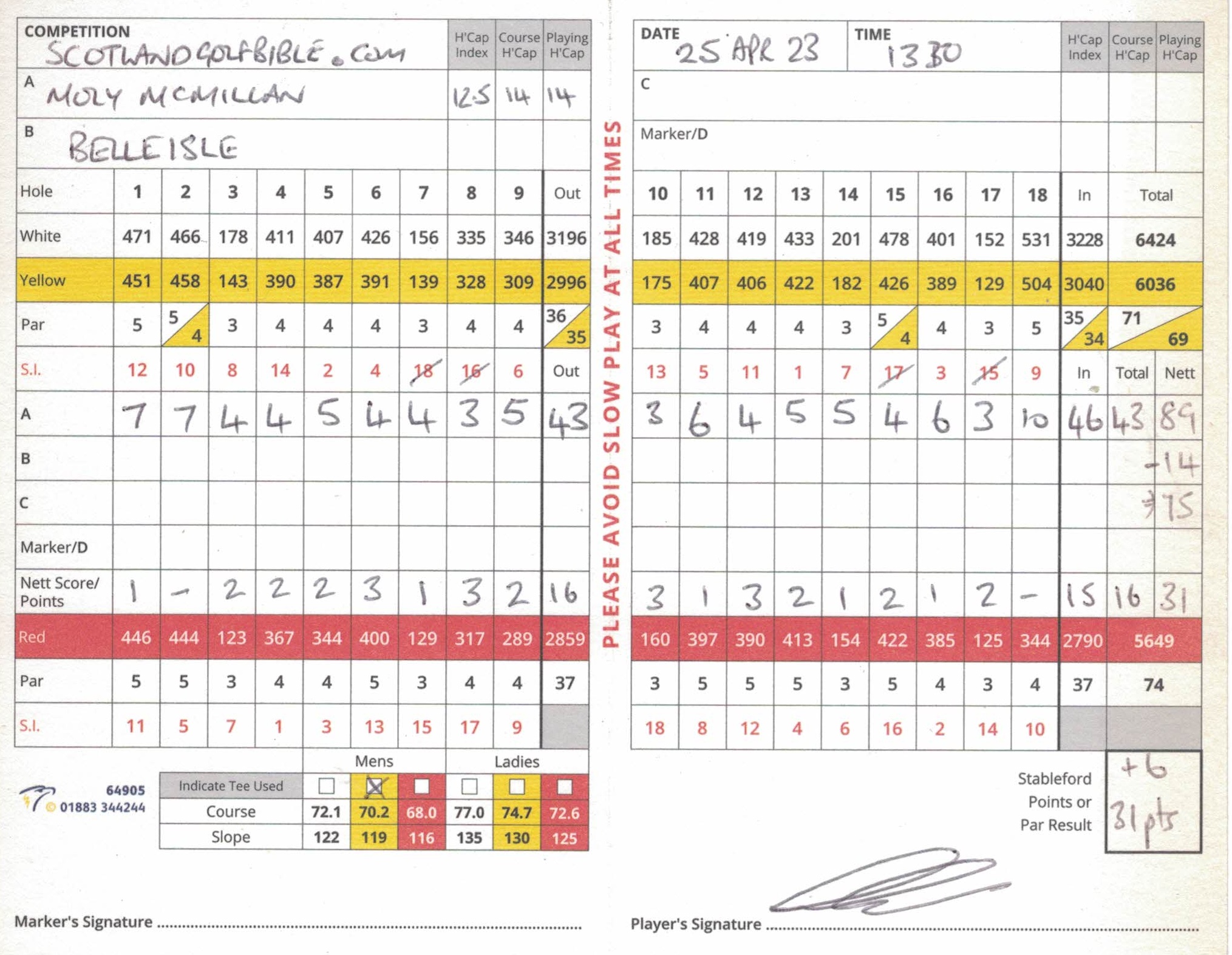
Fran and I played steadily. I shot 89, undone by a 10 on the 18th, a 504-yard par 5 with a burn, a dogleg, and a steep gully that I negotiated with maximum creativity!
Fran playing into the 6th, with the par 3 7th and Arran beyond. Municipal golf at its finest.
A shortage of bunker rakes is noteworthy, a Golf South Ayrshire policy issue discussed in Blog 136, not a Belleisle-specific failing. The absence of twilight rates is more surprising for a late April afternoon, and is itself a small symptom of the broader commercial drift in municipal golf pricing.
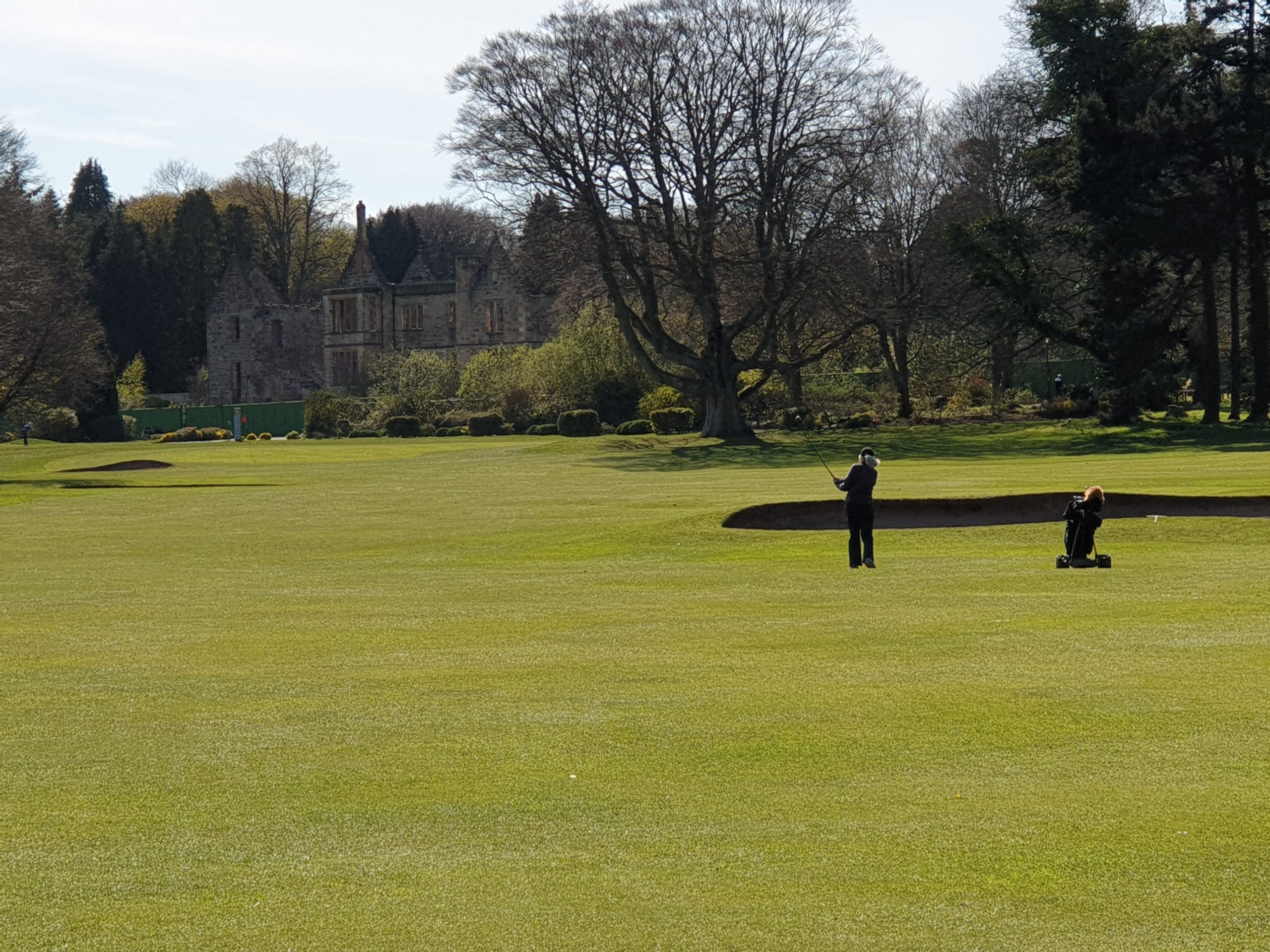
Fran’s approach to the 18th, with the roofless shell of Belleisle House behind. Sold by the council in 2012, gutted by accidental fire in 2019, the council were mid-process repurchasing it when the blaze broke out.
The mansion tells its own story. Belleisle House, Category B listed, Scottish Baronial, presiding over the 18th fairway; it was sold off by South Ayrshire Council in 2012 for £300,000 and gutted by an accidental fire in 2019. The council now own the shell. The golf course thrives; the house that once commanded the estate does not.
For international visitors wanting to understand Scottish golf, Belleisle is essential. It showcases what civic investment in the game can produce at its best. At £29.99 it was exceptional. At £43 via GolfNow today it remains good value. At the £60 list price, the ancestors might start to feel the ground shifting beneath them again.
Course Type: Parkland Par 69 yellow tees (2 par 5s, 12 par 4s, 4 par 3s) / Par 71 white tees Distance: 6,036 yards (yellow tees) Course Rating / Slope (yellow): 70.2 / 119 Moly’s Gross Score: 89
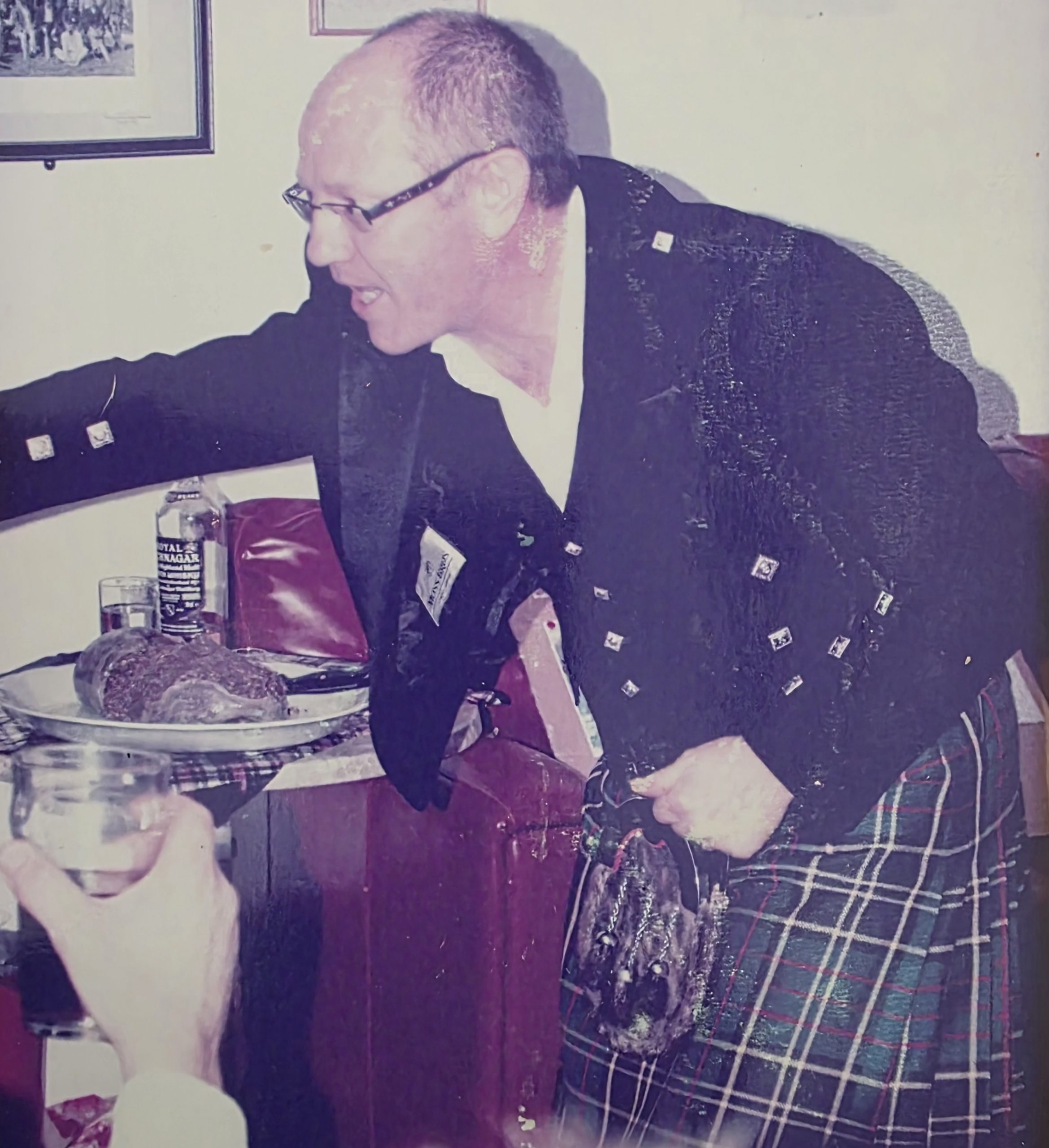
Moly ‘addressing the haggis’ – a prelude to Burns’ later work, Tam o’ Shanter
I’m a Burns man. I know his poems, songs and characters. When I unearthed that the real-life inspiration for Burns’ poem Tam o’ Shanter farmed one mile from Turnberry’s first tee, I had to dig deeper.
Shanter Farm sits adjacent to ‘Maidens’ on the Ayrshire coast. Douglas Graham farmed it in the late 1700s. His drinking ‘crony’ was John Davidson, a cobbler from Kirkoswald. Burns was just 16, in 1775, when he was sent to study in Kirkoswald, where he met Douglas and John, presumably in the pub. They made a lasting impression on the young Robert, who 15 years later used them as the blueprint for ‘Tam o’ Shanter’ and ‘Souter Johnnie’, the hero and his trusted companion, in, arguably, the greatest narrative Scottish poem.
The land of Tam o Shanter would become one of the finest golf courses on earth, but the metaphorical ownership by Burns’ characters wouldn’t end there.
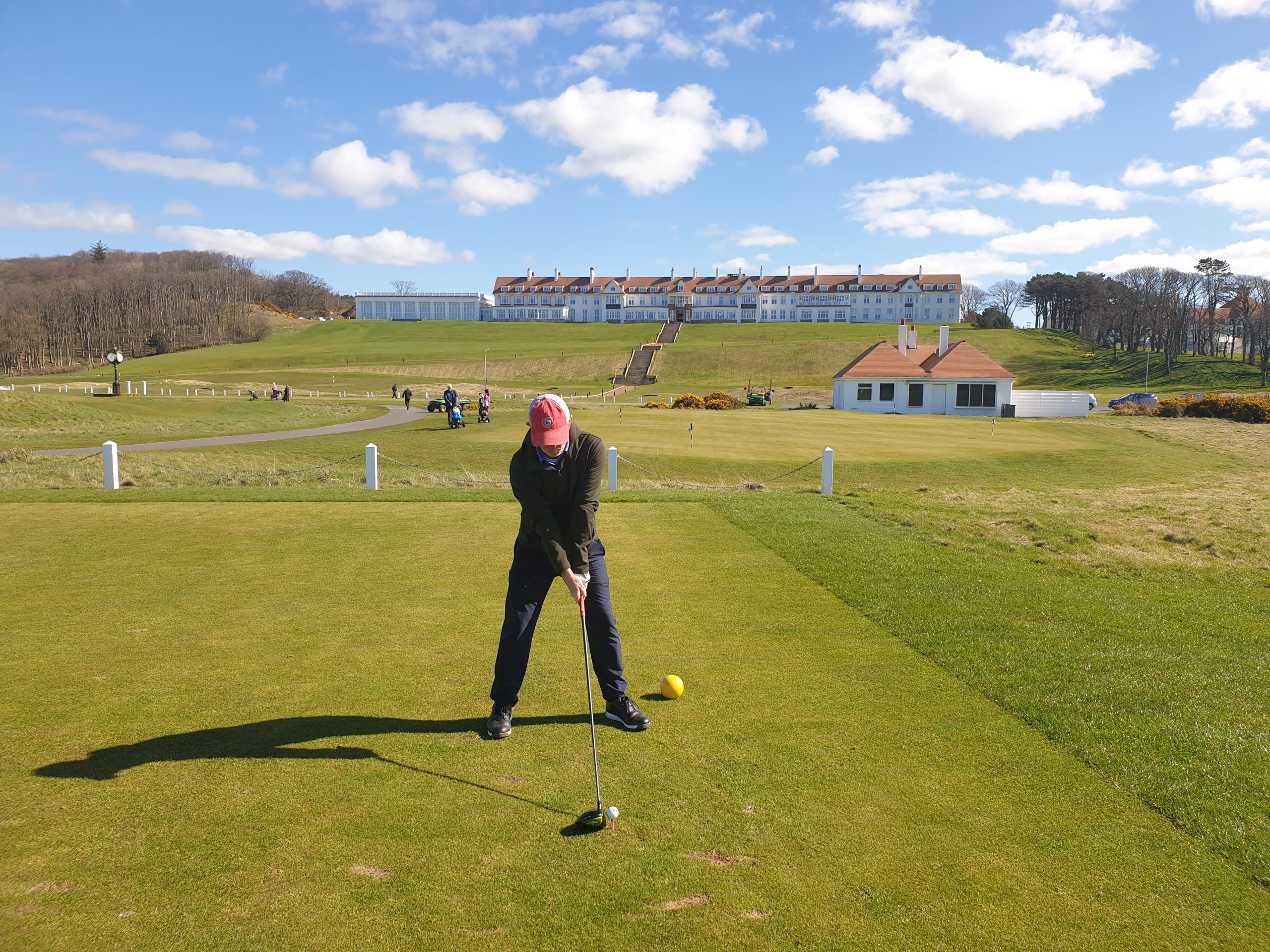
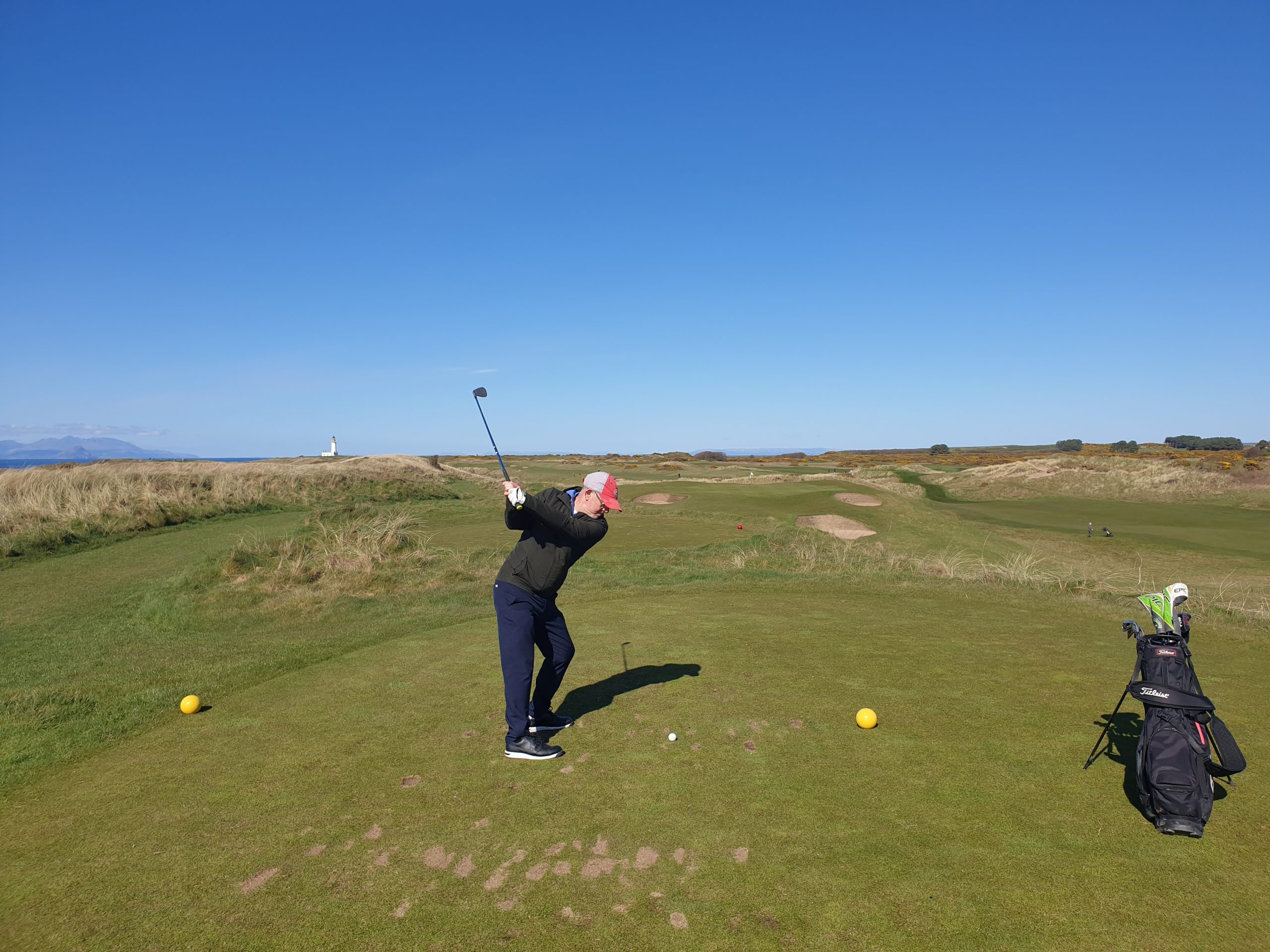
Moly on the first tee, with the Turnberry hotel behind. I just had to wear a Hoodie.
The Course
The Ailsa is in my top three of the 300 plus courses I’ve played to date (at June 2026). It also sits comfortably in most top 20 lists for courses world wide.
A course was laid out in 1901 by Willie Fernie, who was commissioned by Archibald Kennedy, the 3rd Marquess of Ailsa, who foresaw the links could be highly profitable with a railway and hotel, both of which duly opened in 1906. Sadly, the World Wars obliterated the golf resort – the railway closed permanently in 1942. Between 1949 and 1951, Philip Mackenzie Ross, the pre-eminent post war architect, restored the layout to the one which, in 1977, famously hosted the “Duel in the Sun”, between Nicklaus and Watson.
‘The Donald’ purchased the resort in 2014 for £47m, renaming it ‘Trump Turnberry’ and, between 2015 and 2016, Martin Ebert reconstructed the five holes along the coast and transformed the 9th from a par four into arguably the most dramatic par three in Scottish golf. Later he would extend the 16th into a challenging par 4, which will hopefully one day test Open entrants.
The headline rate to play in Summer is an astonishing “up to £1000” (2026). Which begs the question, “How much is perfection worth?”, a hyperbolic one probably crafted by Trump himself. Unbeknownst to Donald, Burns wrote a potentially prophetic and skewering poem about his like, called ‘Holy Willie’s Prayer”. ‘Holy Willie’, a man of towering narcissism who presents himself as chosen and blessed, operating by rules that apply to everyone else. Joking aside, the course is magnificent; perhaps Holy Willie occasionally got it right.
Light breeze on a perfect March day, the greens in Summer condition, here at the 2nd
The Art of The Deal?
At Scotland’s posh courses, like Muirfield or Royal Troon, the list price is the list price. They don’t negotiate. Trump operates differently – he’ll do a deal. When I played, the eye watering rate was £500. Looking late on the day before, the tee sheet showed plenty of spaces. I phoned the Pro shop, deployed my persuasive Dundonian vernacular, explaining I could only afford a ‘hundred quid that I’d saved up’. We settled at what might be my best value golf ever – £130. The man on the other end of my call had, in his own small way, something of the Bard’s spirit from Burns’ The Jolly Beggars; happy to set aside rank and rule for an afternoon, and let an ordinary punter in on the deal. He operated outside the script and created a very happy man..
So, is it perfect? At £500 (2023) I would give it four out of five on value, still exceptional, because very few courses in Scotland could justify that price. At £130 it is five out of five without hesitation. My greatest value ever.
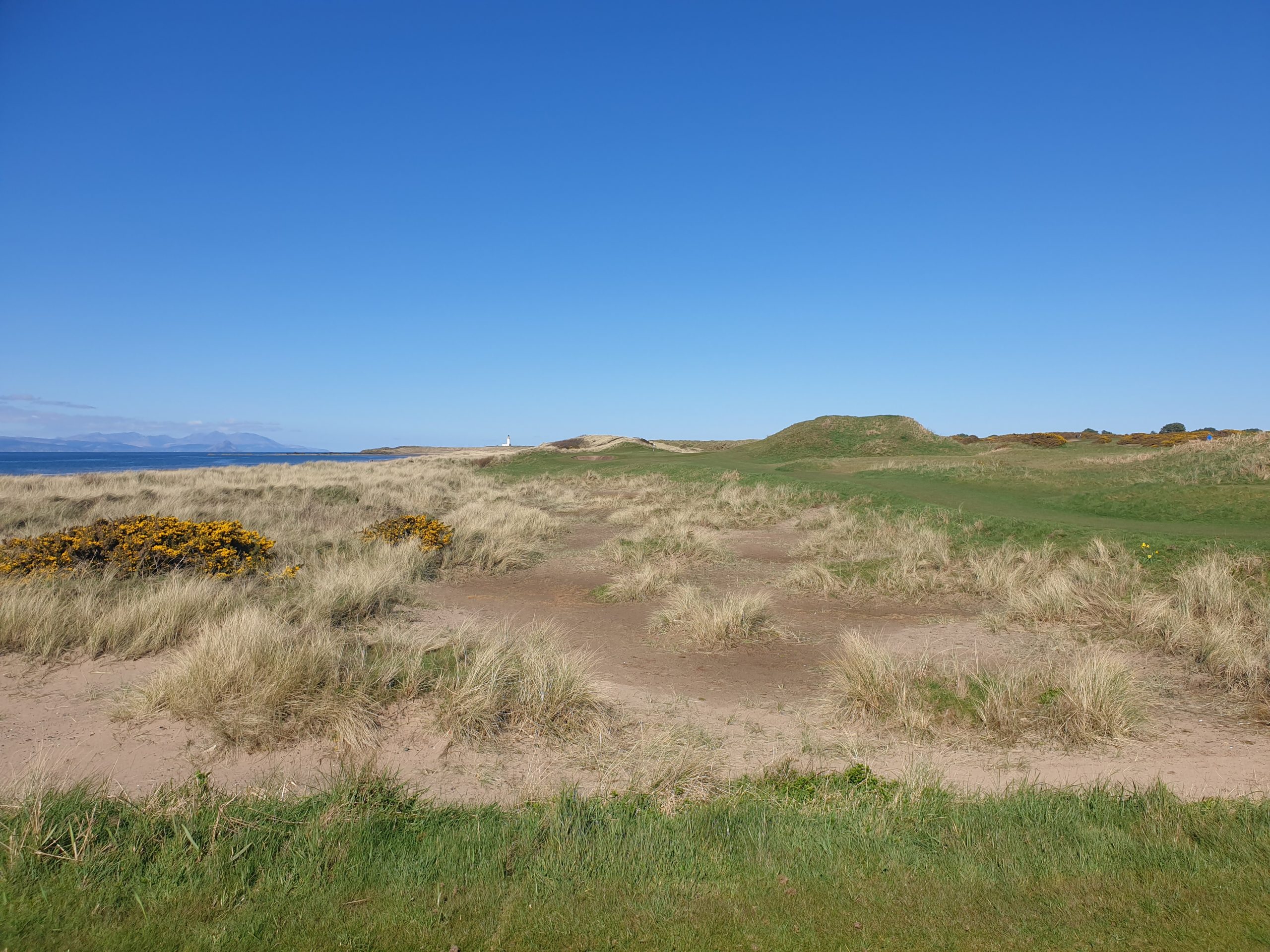
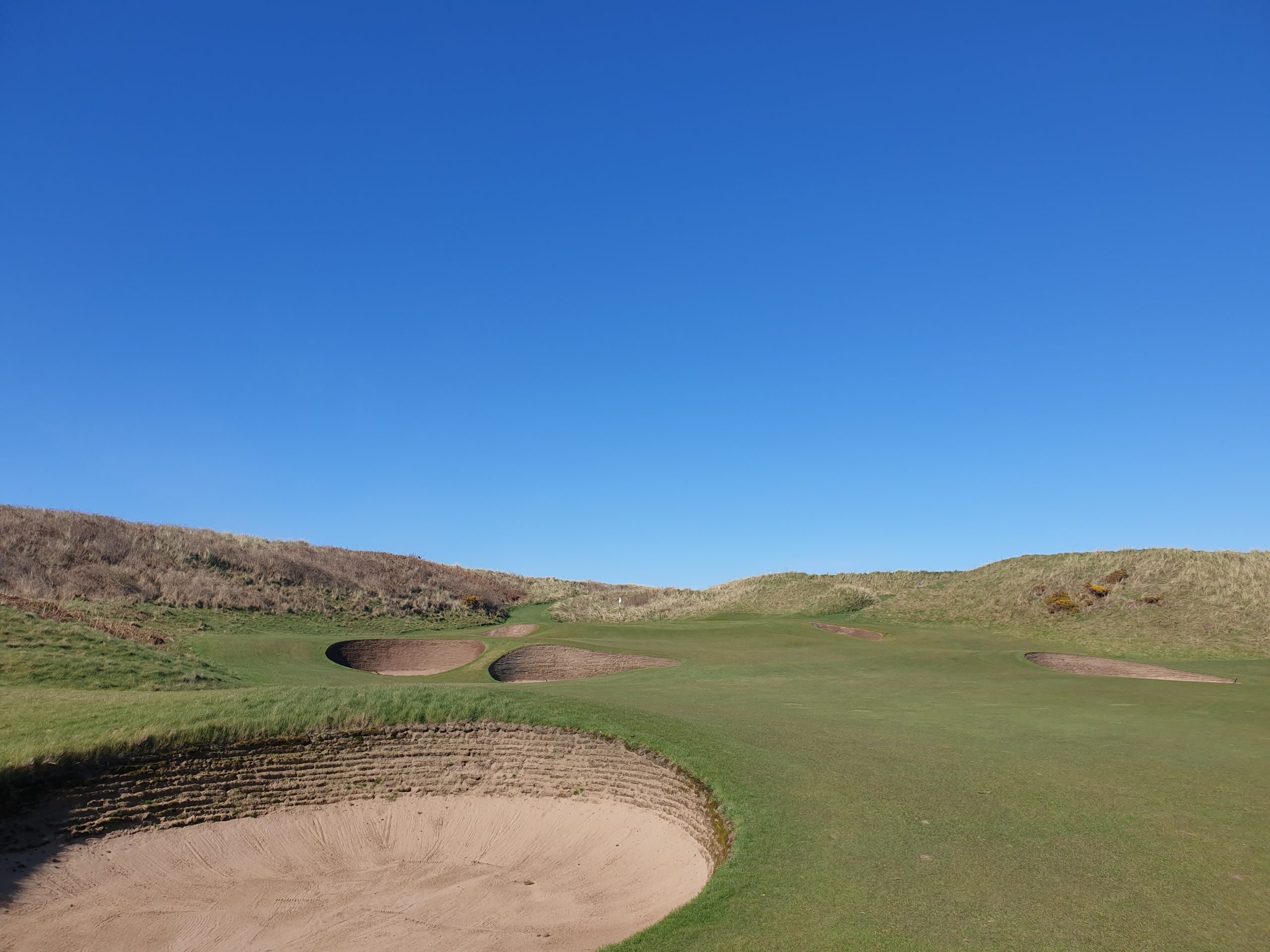
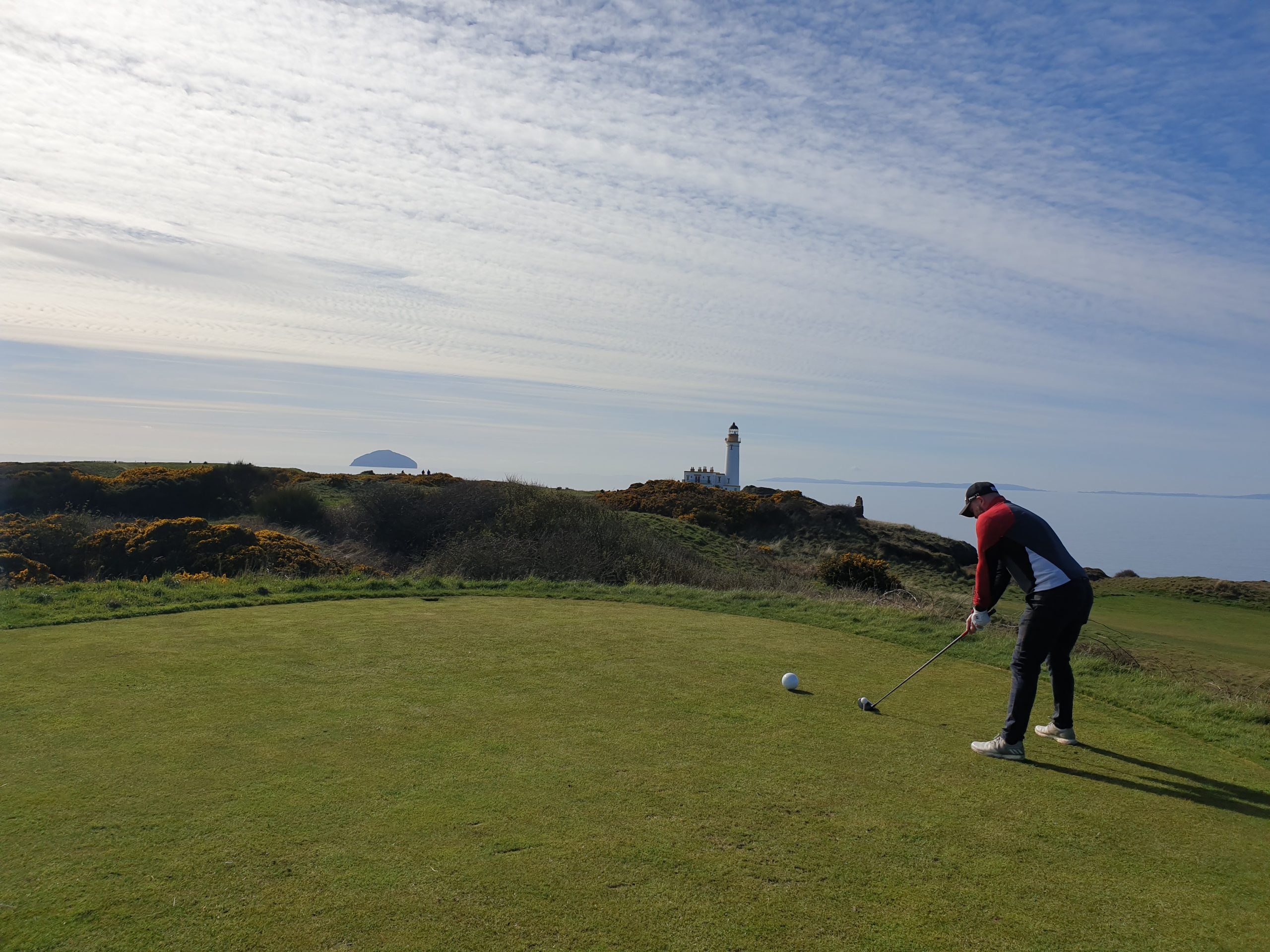
The partially obscured tee shot at the fourth, with the full panoply on view – Arran, Lighthouse, Dunes, Gorse, Rough.
The Round
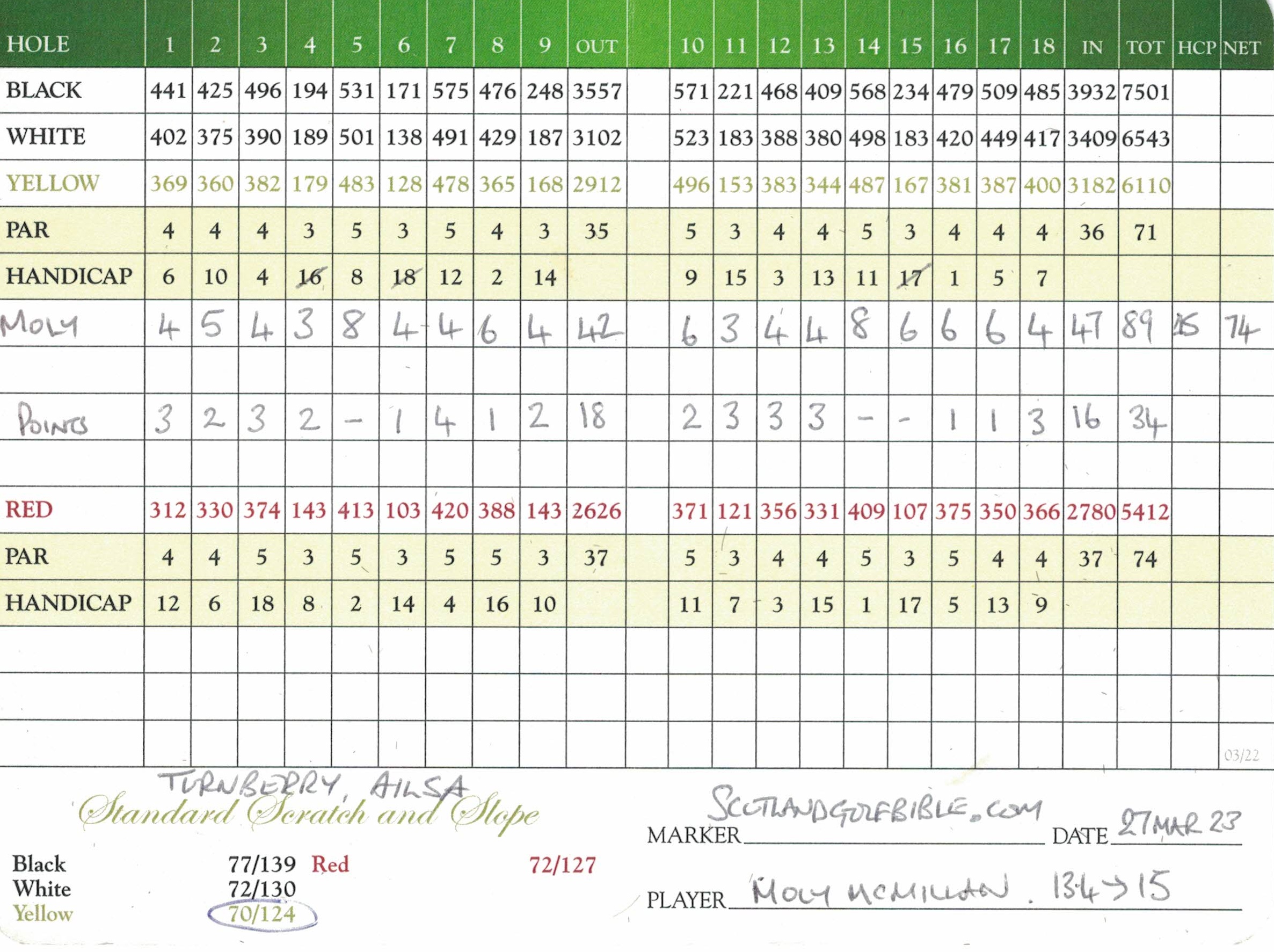
I was paired with 8 handicapper Ian Moffat of Cumbernauld, a naval submariner home on leave, who chose to play from the white tees (6,543 yards), whilst I played the yellows (6,110 yards). The added 433 yards sounds manageable unless you are playing into a stiffening links breeze on a treacherous layout.
Despite a few early lost balls Ian continued off white, displaying the perseverance of submariners. Whilst I didn’t keep Ian’s score, I suspect it was the wrong side of a century, as mine would have been off white. Ian was, in the finest Burns tradition, one ‘Tam Samson’, the Kilmarnock sportsman Burns immortalised for his dogged refusal to leave the field, a man who would rather perish in the attempt than concede defeat. Burns wrote that Tam Samson’s dying words would be that he had never given up. Ian Moffat did not give up either – well done Ian.
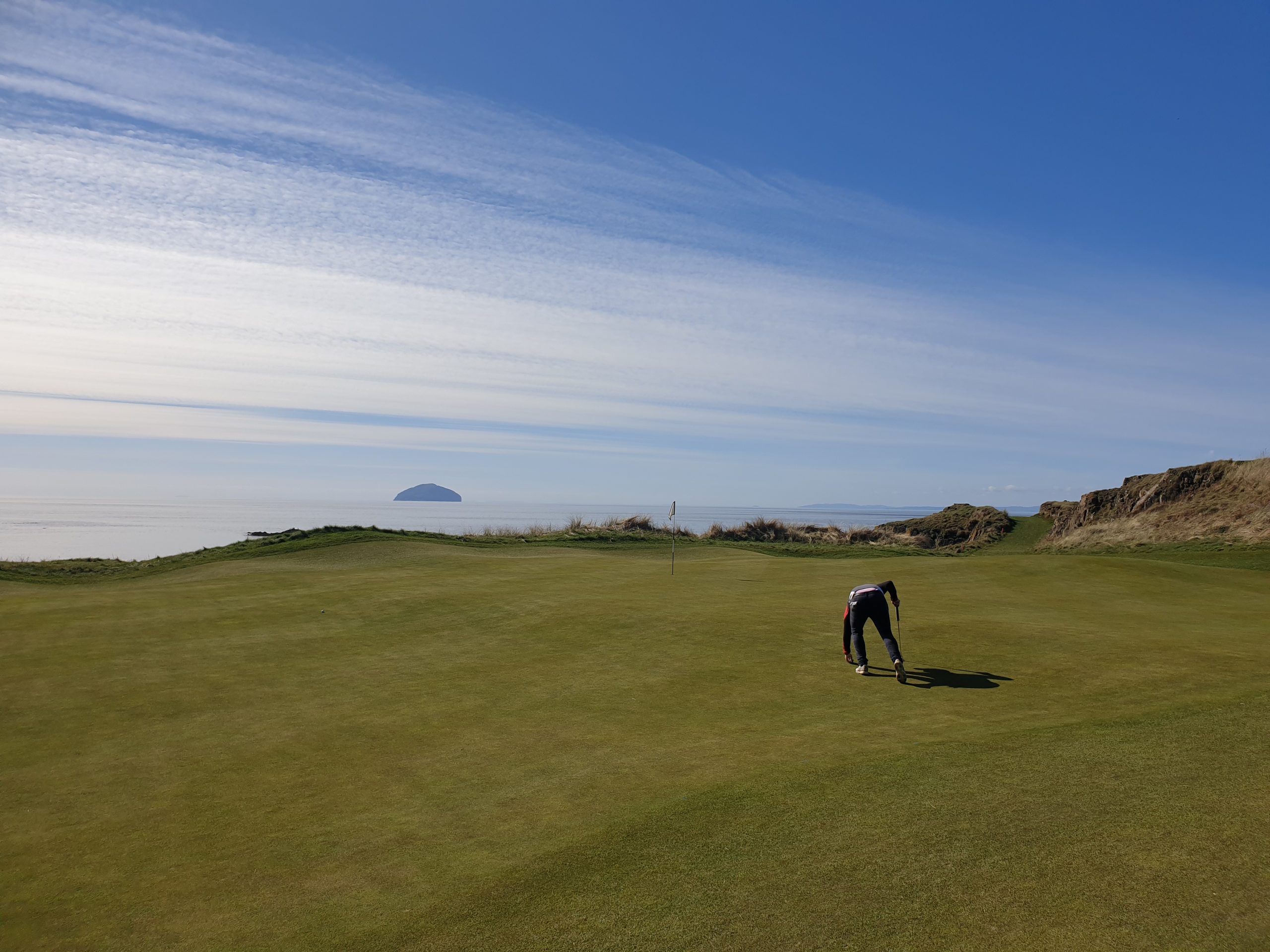
Ian Moffat on the 8th green, Ailsa Craig perfectly framed in the March sunshine.
I shot 89, with three triple bogeys. I hit the ball about as well as I can. If Burns had played golf – and given his appetite for competitive pursuits, convivial company, and the Ayrshire outdoors, I suspect he would have been a natural – he would have recognised himself in the honest, truth-seeking spirit of the game. He was always ‘Davie’, the brother poet, the man seeking meaning in simple honest experience rather than in rank or gold. I’d like to think that summarised our day at Turnberry.
The wonderfully green entrance at the par 5 fifth hole. The bunkers gave me 8!
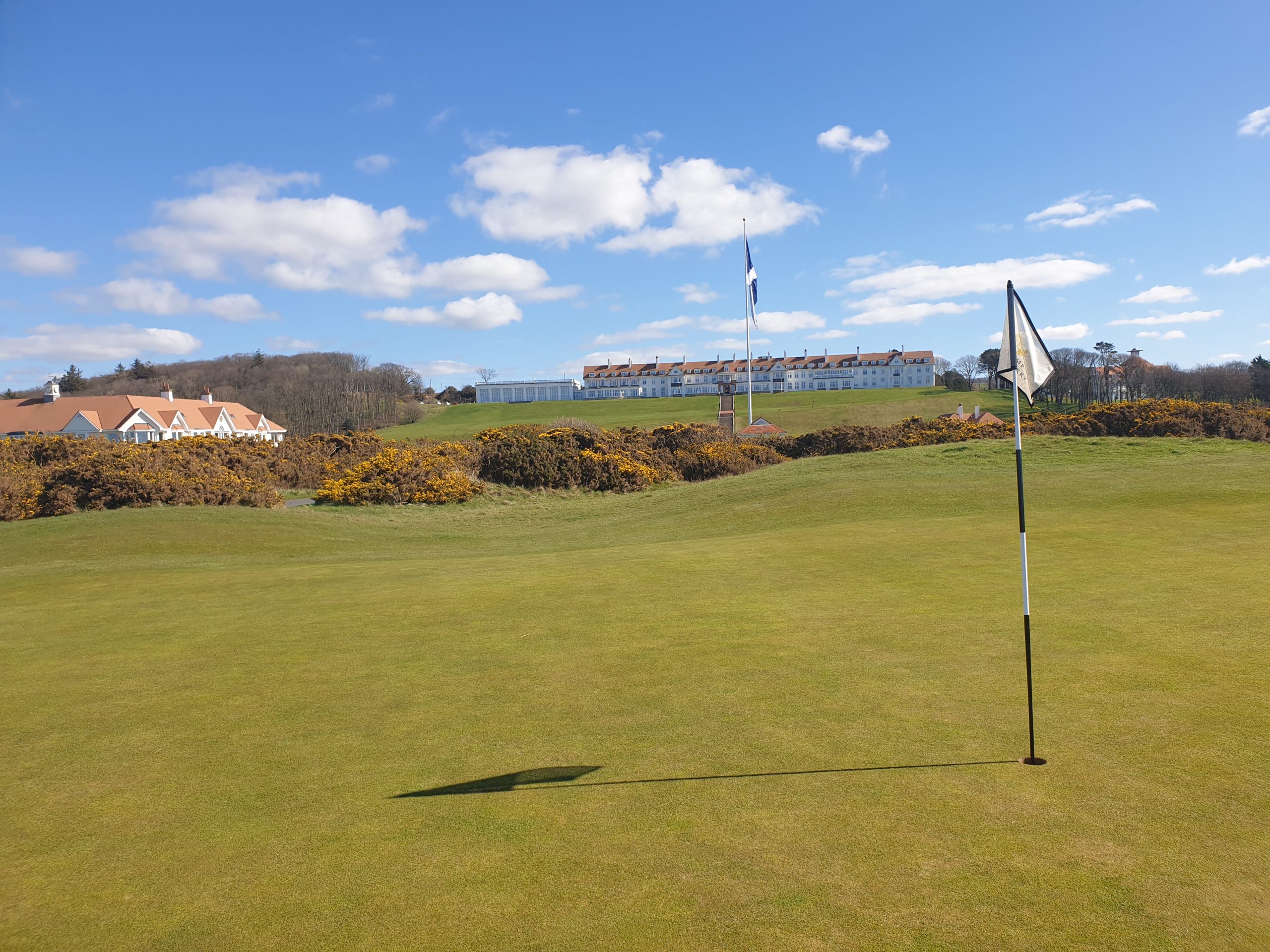
The first two holes ease you in, running through inland undulations with the hotel presiding grandly over everything. By the third, the sea begins to announce itself. By the fourth, you are into the dunes proper, the gorse blazing yellow in the March light.
Moly at the 6th, a short par three, where the prevailing westerly will be a challenge.
The coastal sequence from holes four to eleven is beautiful. Ebert’s redesign brought several of these holes right to the clifftop edge. The seventh was already magnificent; a long par five threading between dunes with the sea appearing and disappearing to the left.
The 7th, a par 5 . My birdie putt awaits!
The Ninth
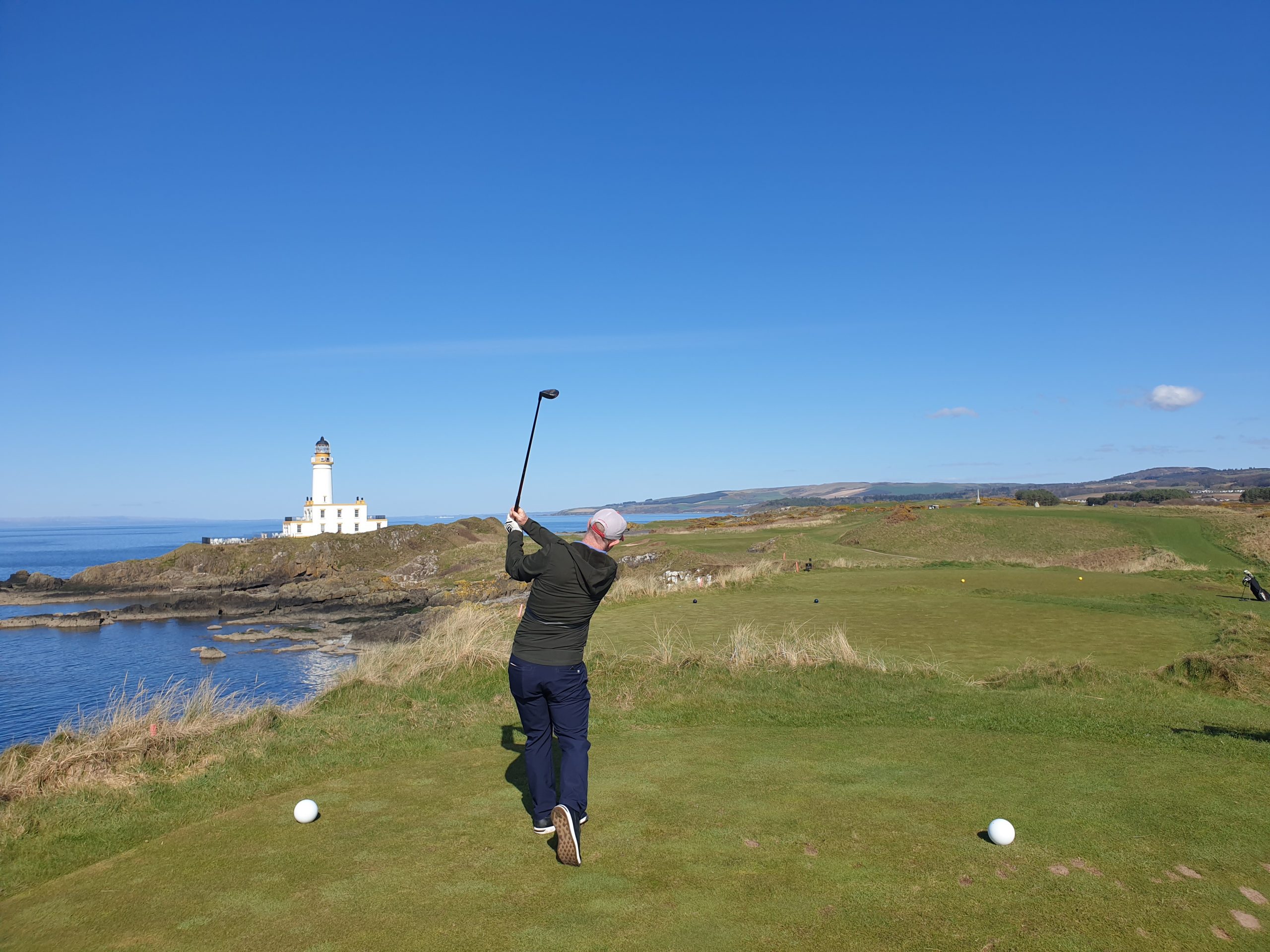
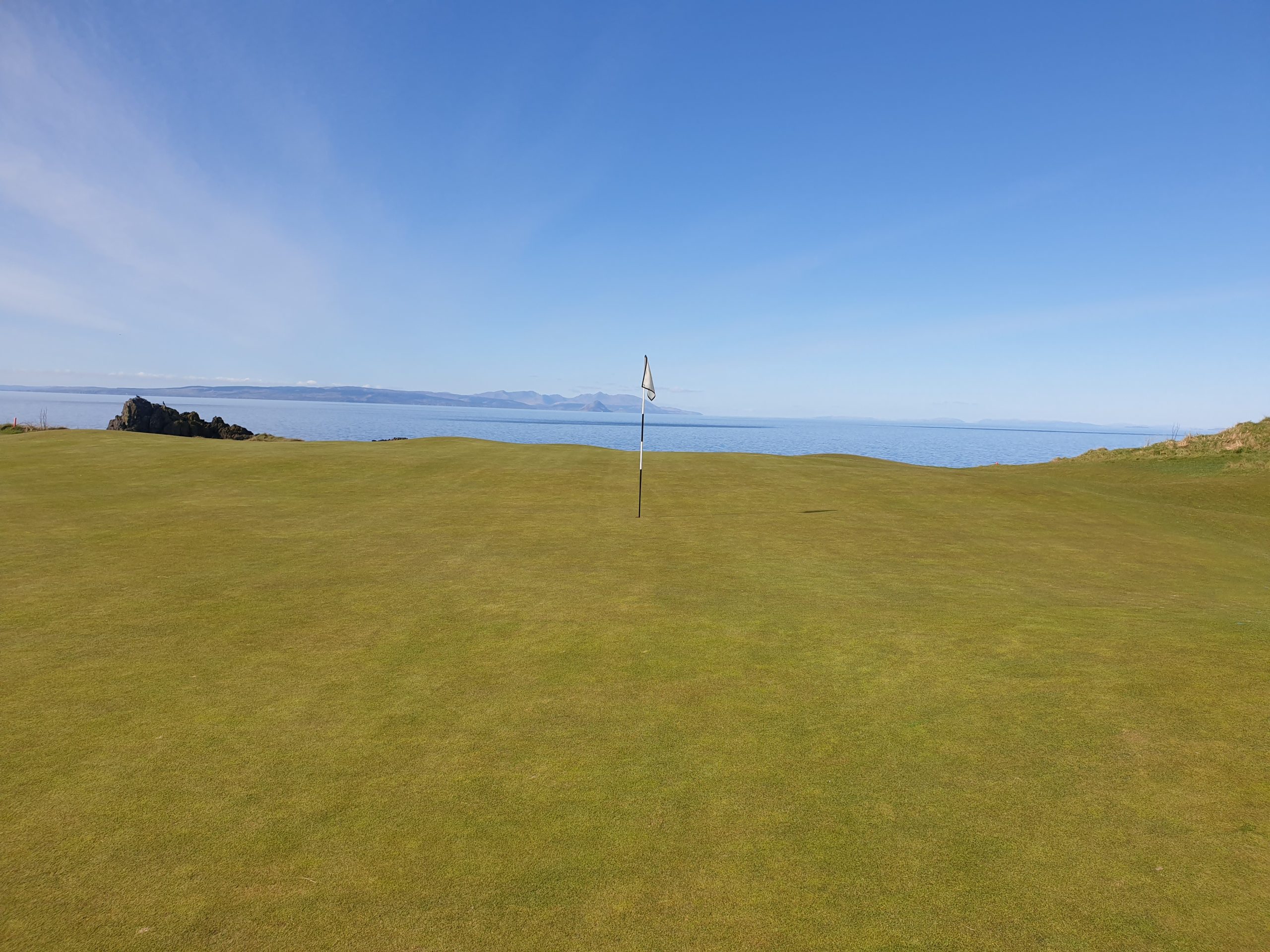
The ninth hole at Turnberry Ailsa is now one of the great short holes in world golf; but not really short for us mortals! Ebert converted it from a par four, placing the tee on the cliff beside the ruins of Turnberry Castle; birthplace, most likely, of Robert the Bruce, though that story belongs to the other course here, the King Robert the Bruce course. The green sits just below the lighthouse, perched above the rocks and the sea, perhaps the best half way house in golf.
With Arran visible across the water and a light breeze off the Firth, standing on the 9th tee at Turnberry is one of those moments that reminds you why you play this game.
Was Burns a Golfer?
It is worth pausing to consider how old this story is. Jack Boyd, in his history of Turnberry Golf Club, quotes a letter of 15th February 1751 from Archibald Kennedy (most likely the great-grandfather of his namesake who built the course in 1901) to Sir Thomas Kennedy, describing golf at Girvan, five miles south of Turnberry, among lairds, a minister, and a doctor, with Sir John judge of both the golf and the drinking. So, three years before the St Andrews Golf Society was formed, golf was being played on the Ayrshire coast. Burns, born in 1759, would have known golfers and recognised all the aforementioned players. He would have found Tam o’ Shanter among them.
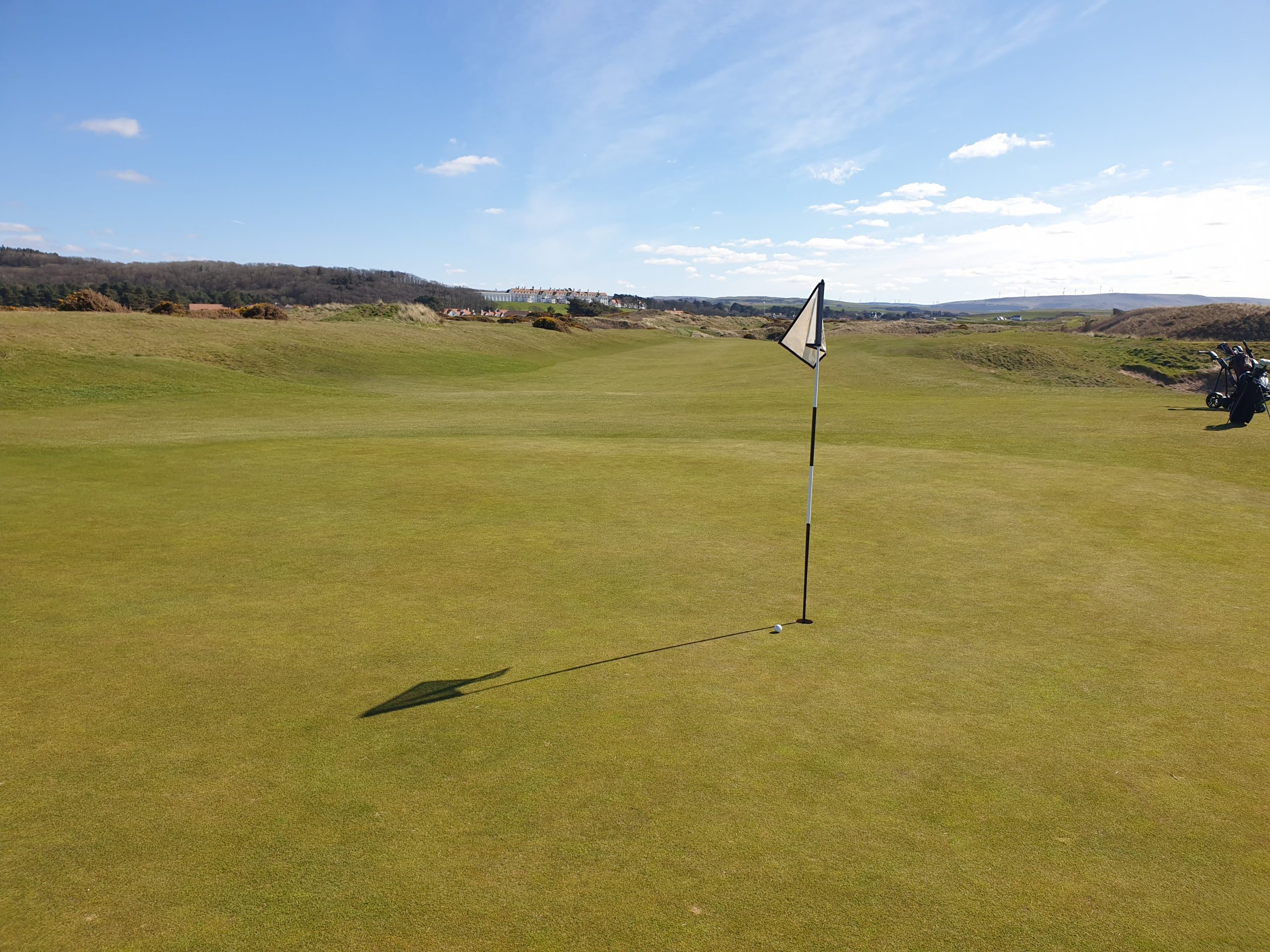
The manicured 10th green to start the back nine.
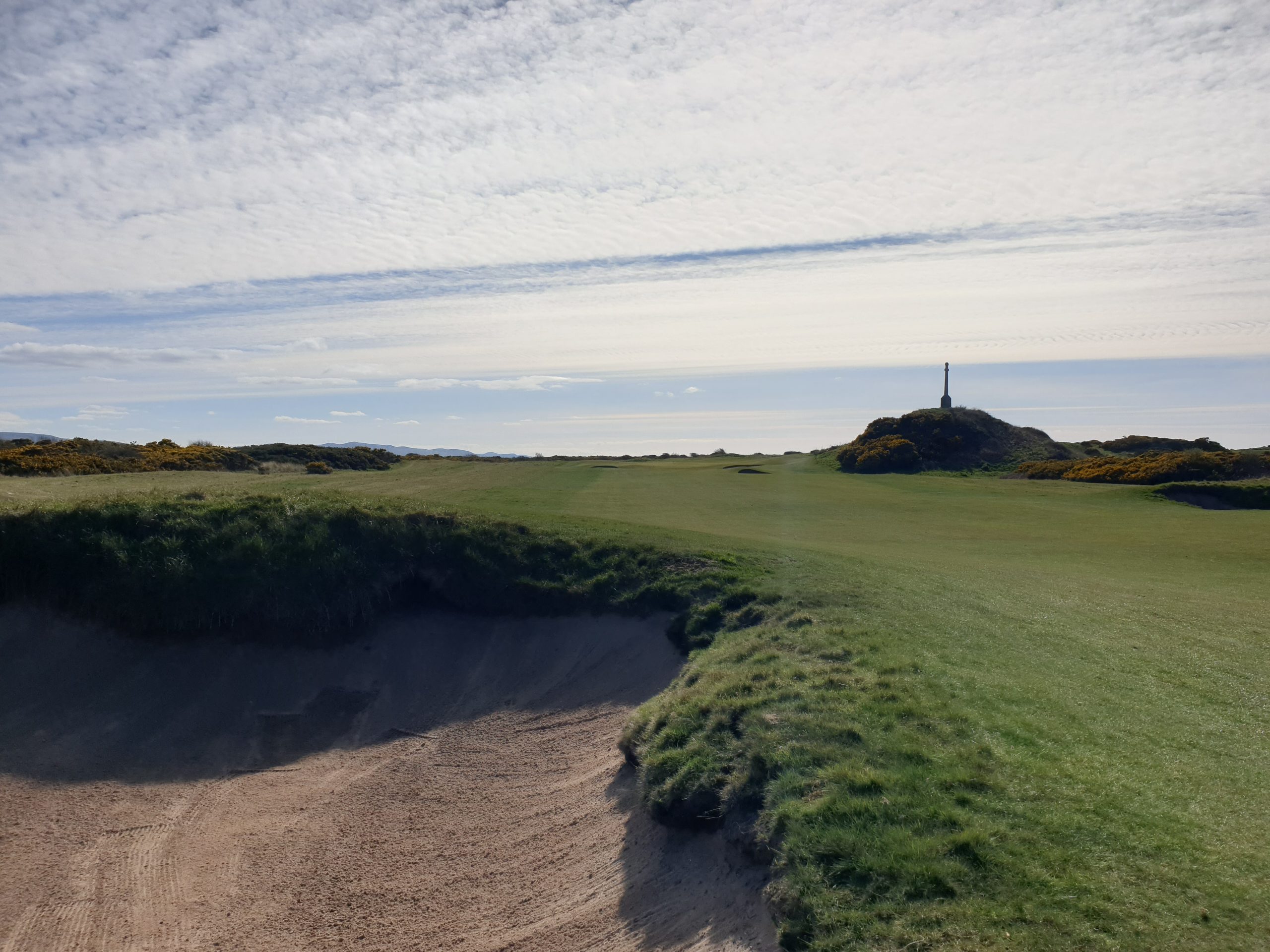
The twelfth tee looks back toward the war memorial on the hill — a stark reminder that this land was twice an RAF airfield, its fairways buried under concrete and tarmac while pilots trained and died here. Something approaching 200 men lost their lives at Turnberry during the two wars.
The War Memorial stands above the twelfth green, here seen from the fairway bunker 150 yards from the green.
From thirteen onward the course begins its journey home, moving back through the dunes toward the hotel. These holes are less dramatic than the coastal sequence but beautifully crafted — fair, strategic, and very demanding but dependent on the prevailing wind..
Ian Moffat on the tee at 13th tee.
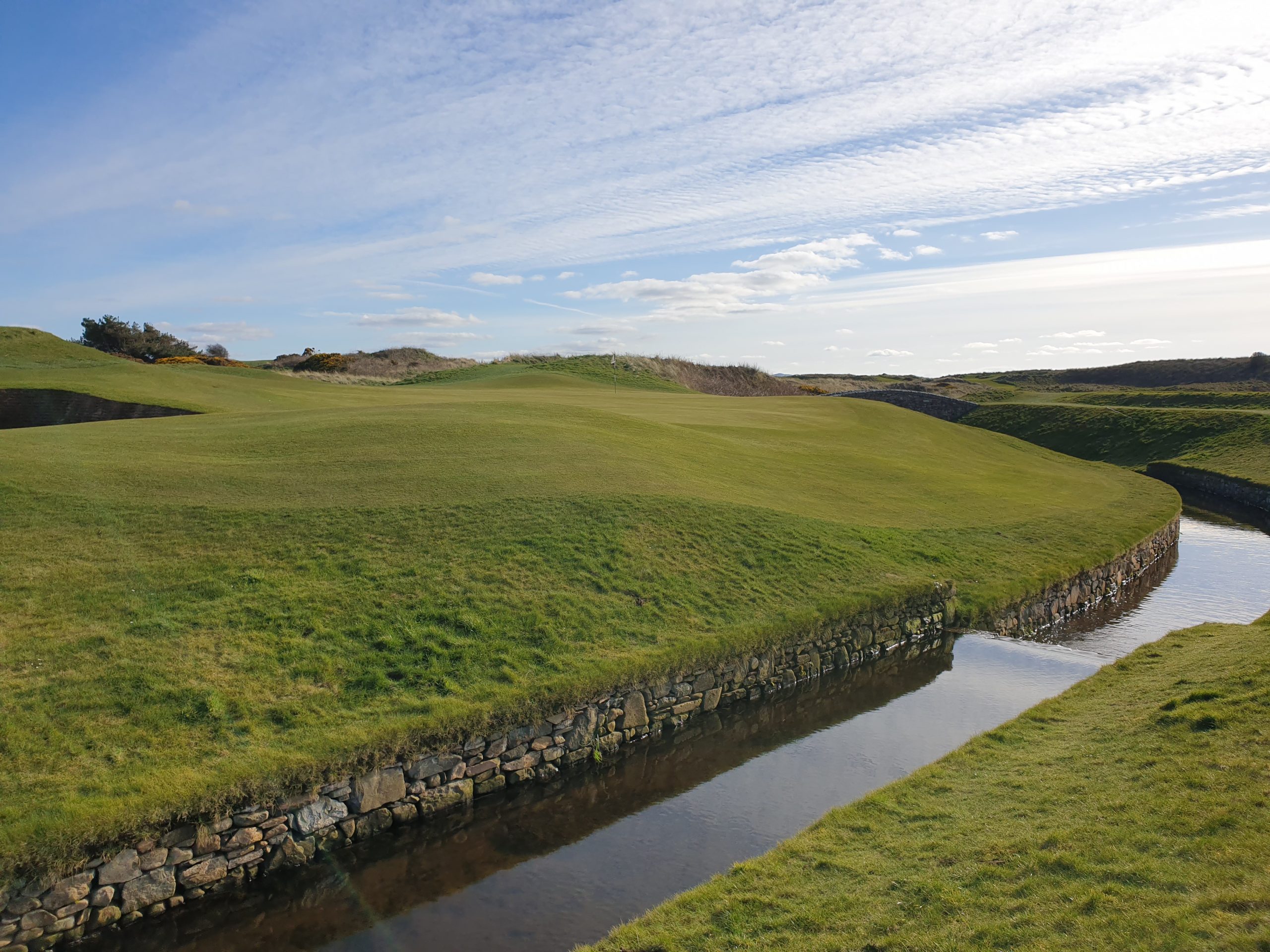
The sixteenth is perhaps the most challenging hole on the course — a long par four that turns slightly left, the hotel reappearing on the horizon as you play back toward it. It was extended by Ebert with a redefined sharper burn.
This burn at the long par 4 16th will be a card wrecker even for the pros.
After the Round
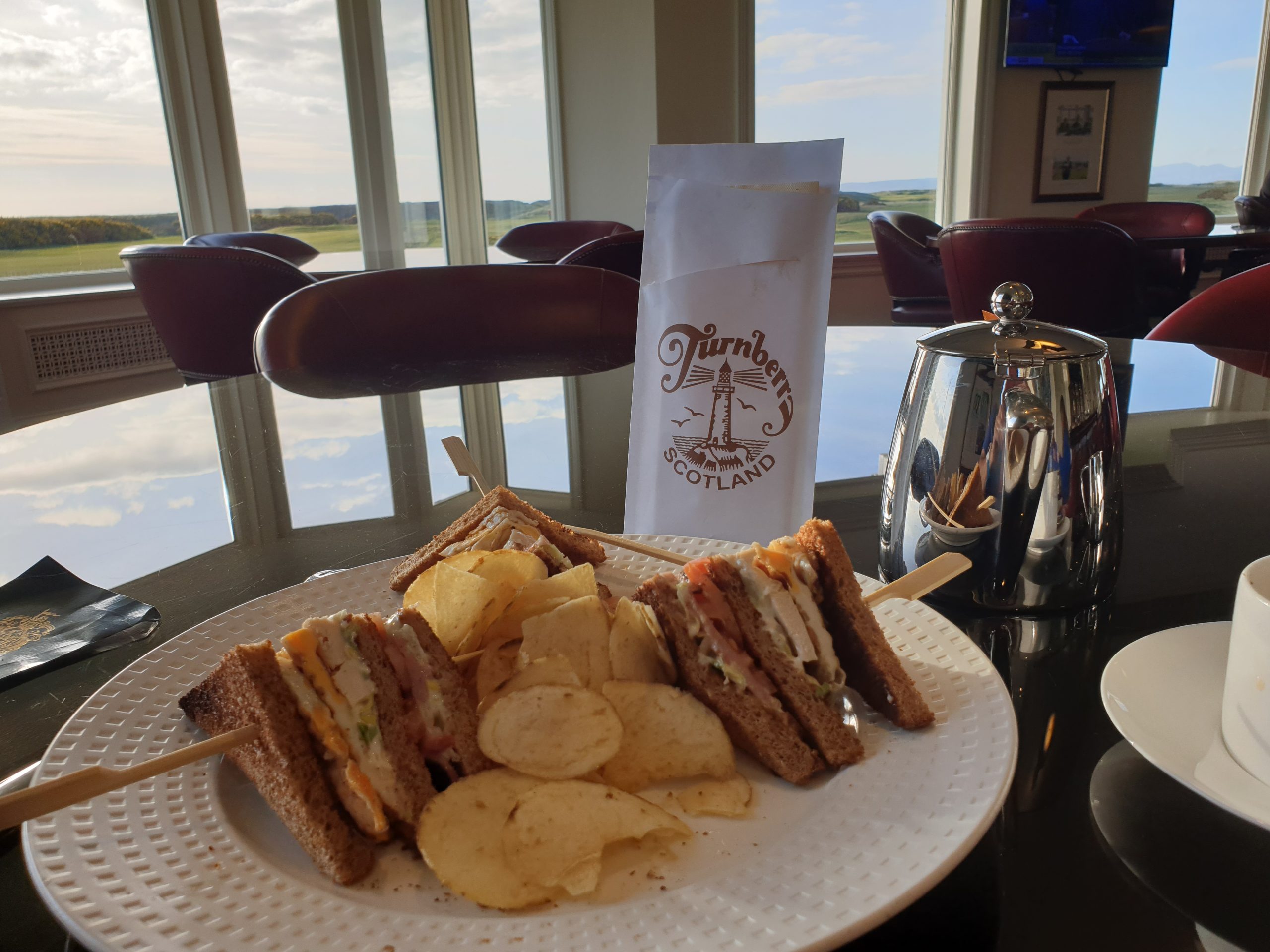
The clubhouse at Turnberry is exactly what you would expect from a five-star resort that has hosted four Open Championships. Leather armchairs. Views across the course to the sea. A club sandwich and a pot of tea for £27, served with a Turnberry-branded paper bag and an air of quiet confidence that it is entirely worth it – maybe.
Trump Club and pot of tea, only £27
The Verdict
Turnberry Ailsa is magnificent. Burns walked this coast. Douglas Graham farmed a mile north of the first tee. The Girvan Gang played golf five miles to the south while Burns’ father was still a young man. The lighthouse stands on the ruins of a castle that shaped Scottish history. Two World Wars tried to destroy the course and failed. Holy Willie bought it and made it better.
Whatever you think of the branding, the course itself demands only one response: reverence.
Played: 27 March 2023 Paid: £130 (list price approximately £500) Score: 89 gross, 34 Stableford points, handicap 15, yellow tees (6,110 yards, SSS 70, Slope 124) Value: ⭐⭐⭐⭐⭐ at £130 / ⭐⭐⭐⭐ at rack rate
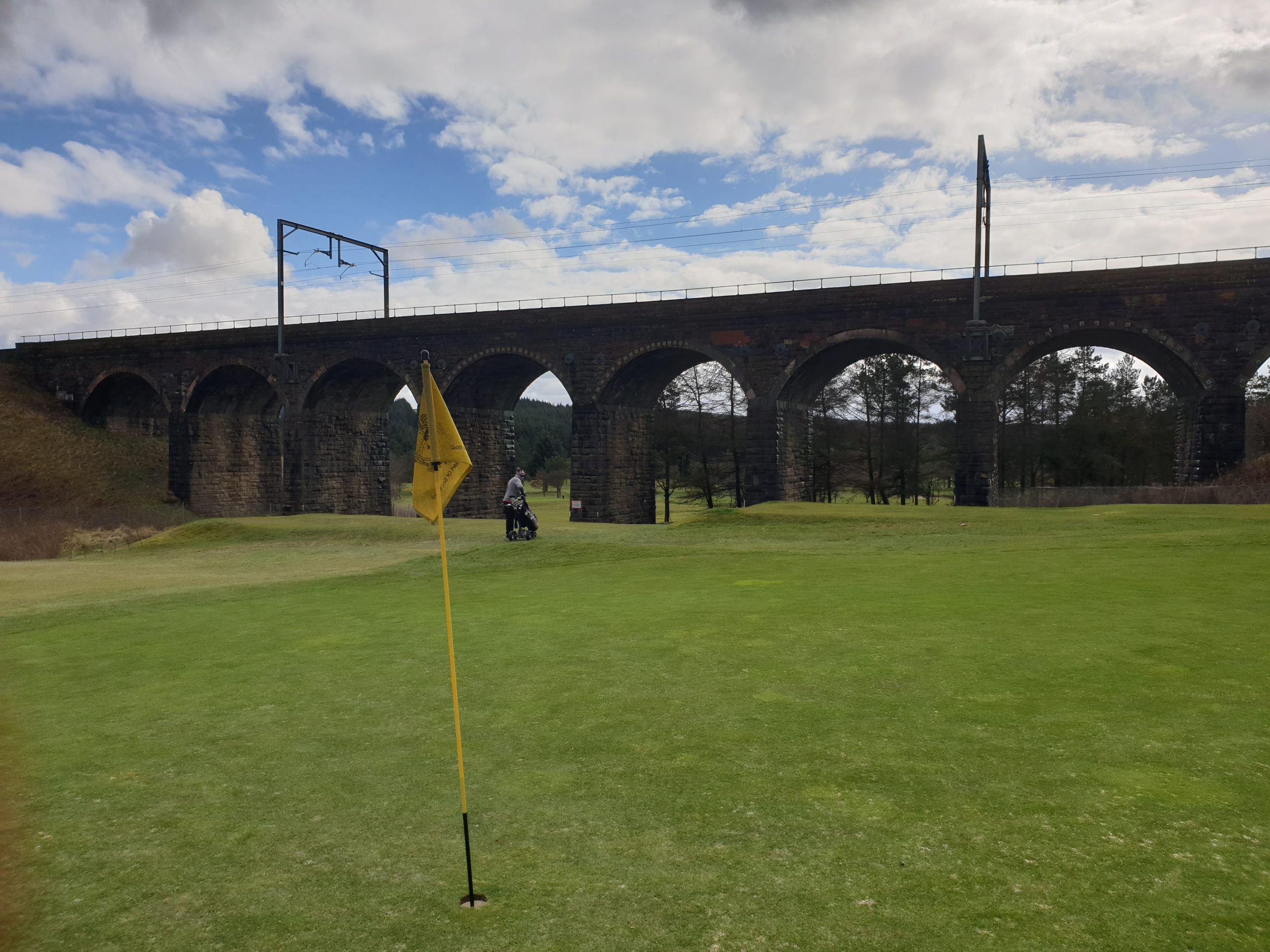
The Golf Club and the Viaduct – which will last longest?
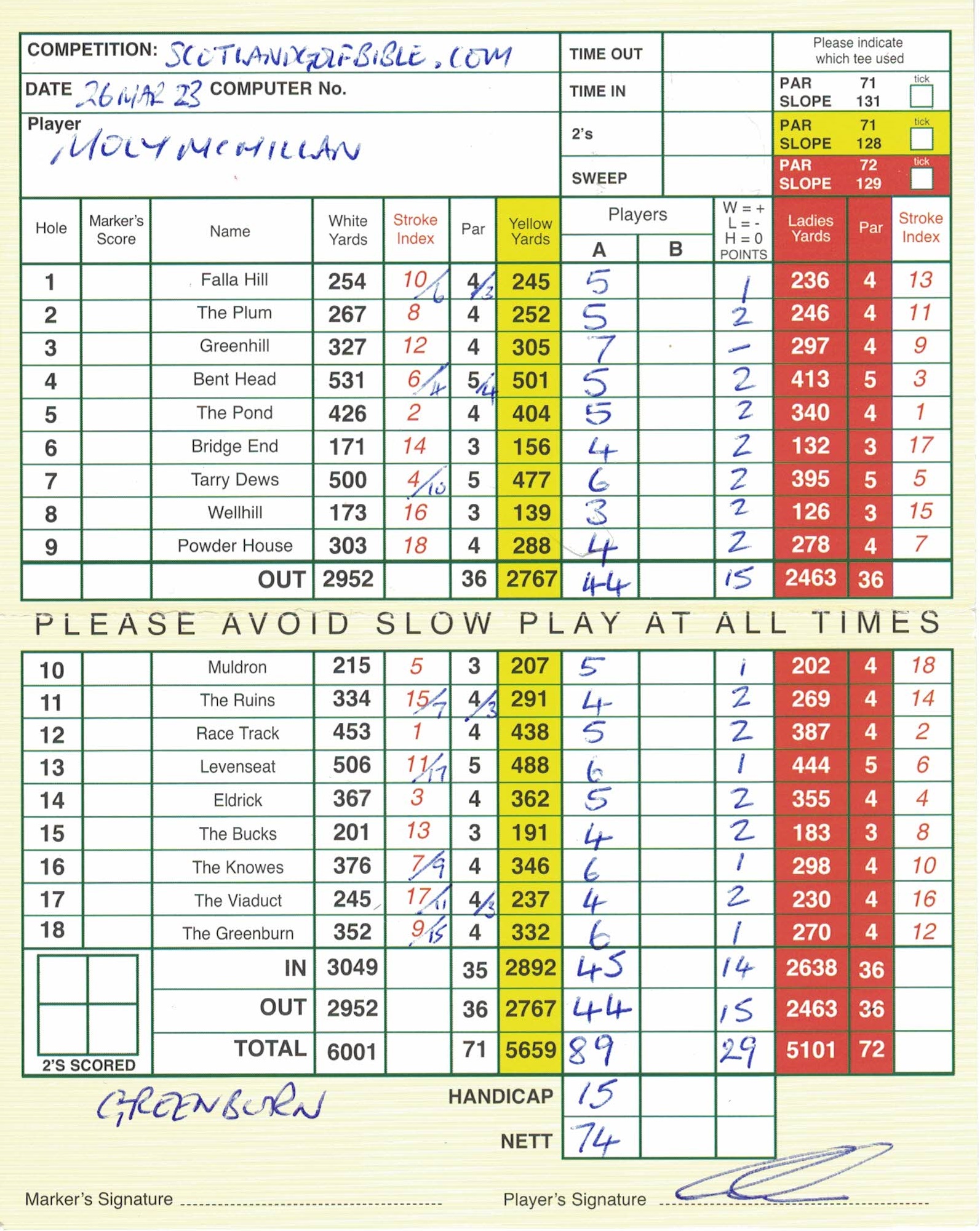
Green Fee: £15 (winter rate). Par 71. Course Rating/Slope: 71/128 (yellow tees). Value: 4/5.
Moly’s Gross Score: 89
Playing Greenburn, I found myself thinking not just about where the course sits geographically – deep in Scotland’s central belt between Glasgow and Edinburgh – but where it sits economically. Scotland has around 575 golf courses and almost certainly cannot sustain all of them. I pondered which side of that financial reckoning Greenburn would end up on. Let’s park that for now.
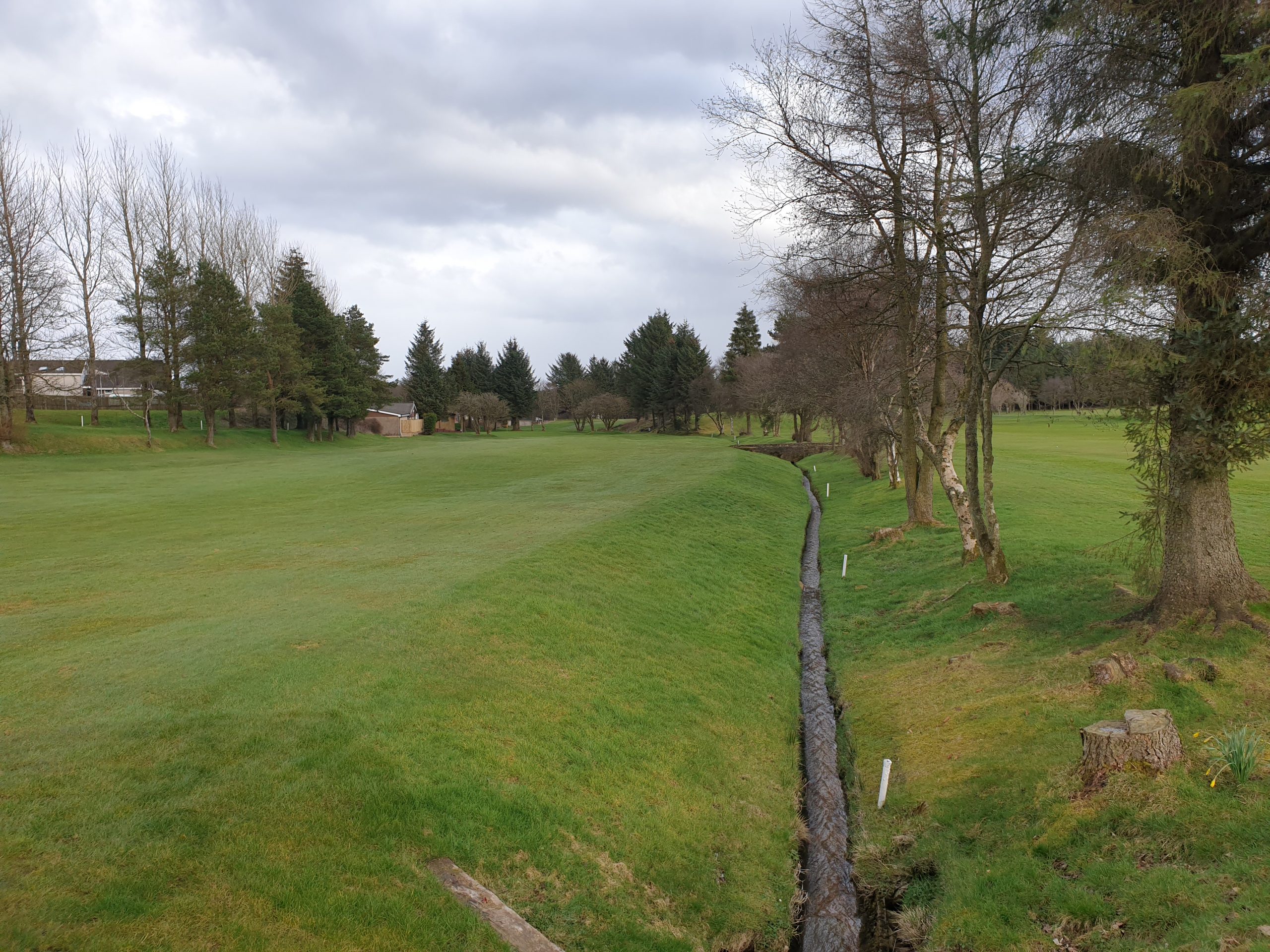
Hole 4 – a long Par 5, with the first start view of the viaduct
Greenburn Golf Club traces its roots to 1894, when the working people of Fauldhouse built a course near their village. The present course, voluntarily built by the members in 1953, relocated to the Breichwater Valley. The club motto, Per Nostra Opera (“By our own endeavors”), says what it does on the tin.
I played at a winter rate of £15, off temporary mats but normal greens. I met recent retiree and local member Gordon Cleland, a decent golfer and clearly very much at home.
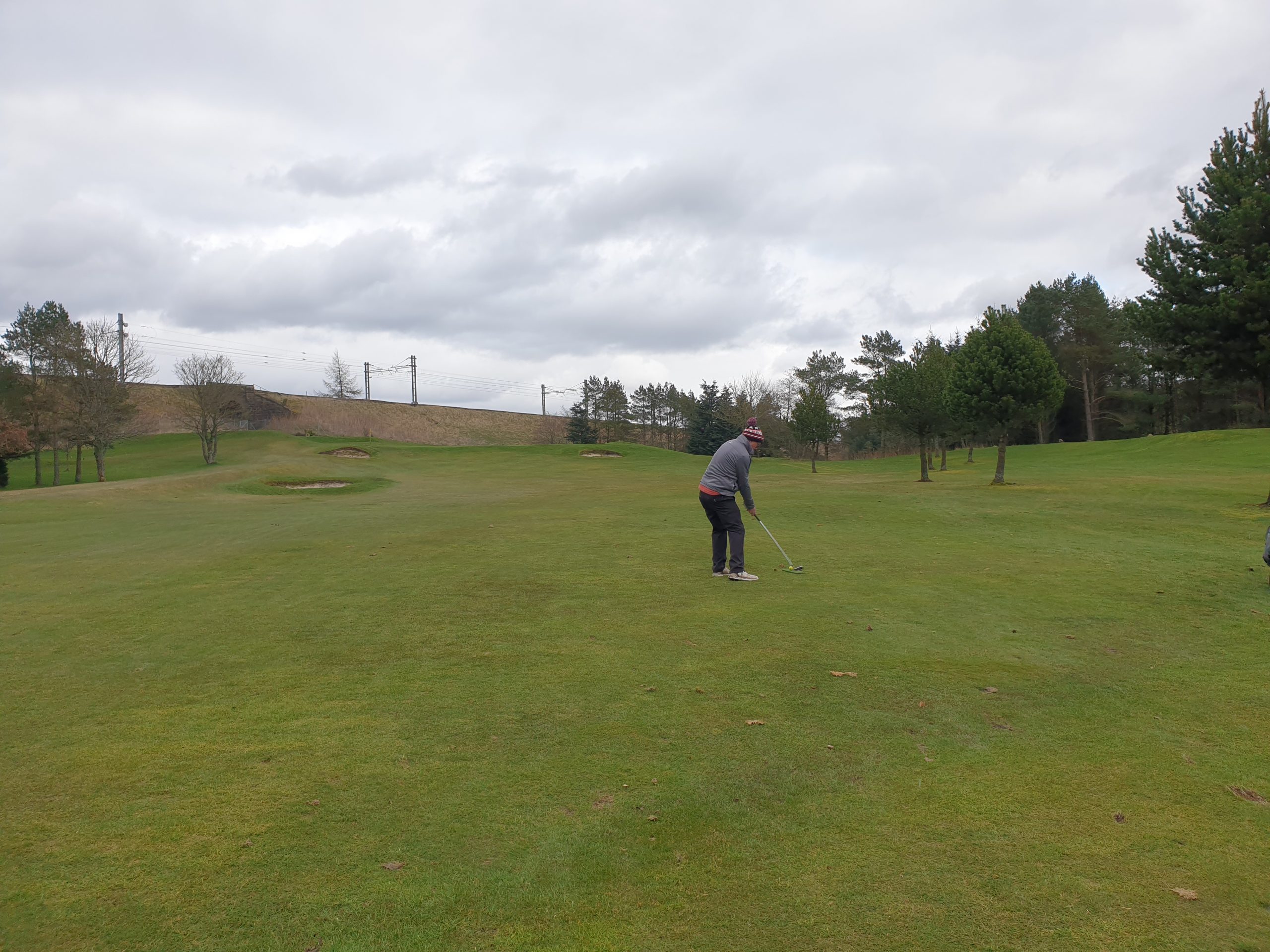
Local Member Gordon Cleland, local member, playing his approach at the par 5 13th.
After a welcoming opening hole, Greenburn becomes a narrow course, surrounded by industrial landmarks, most notably the electrified Glasgow to Edinburgh railway line. Pylons and overhead wires run over some holes.
The sometimes very large and sloping greens were in good condition for the end of winter. I got the feel they would be fast and very difficult in Summer.
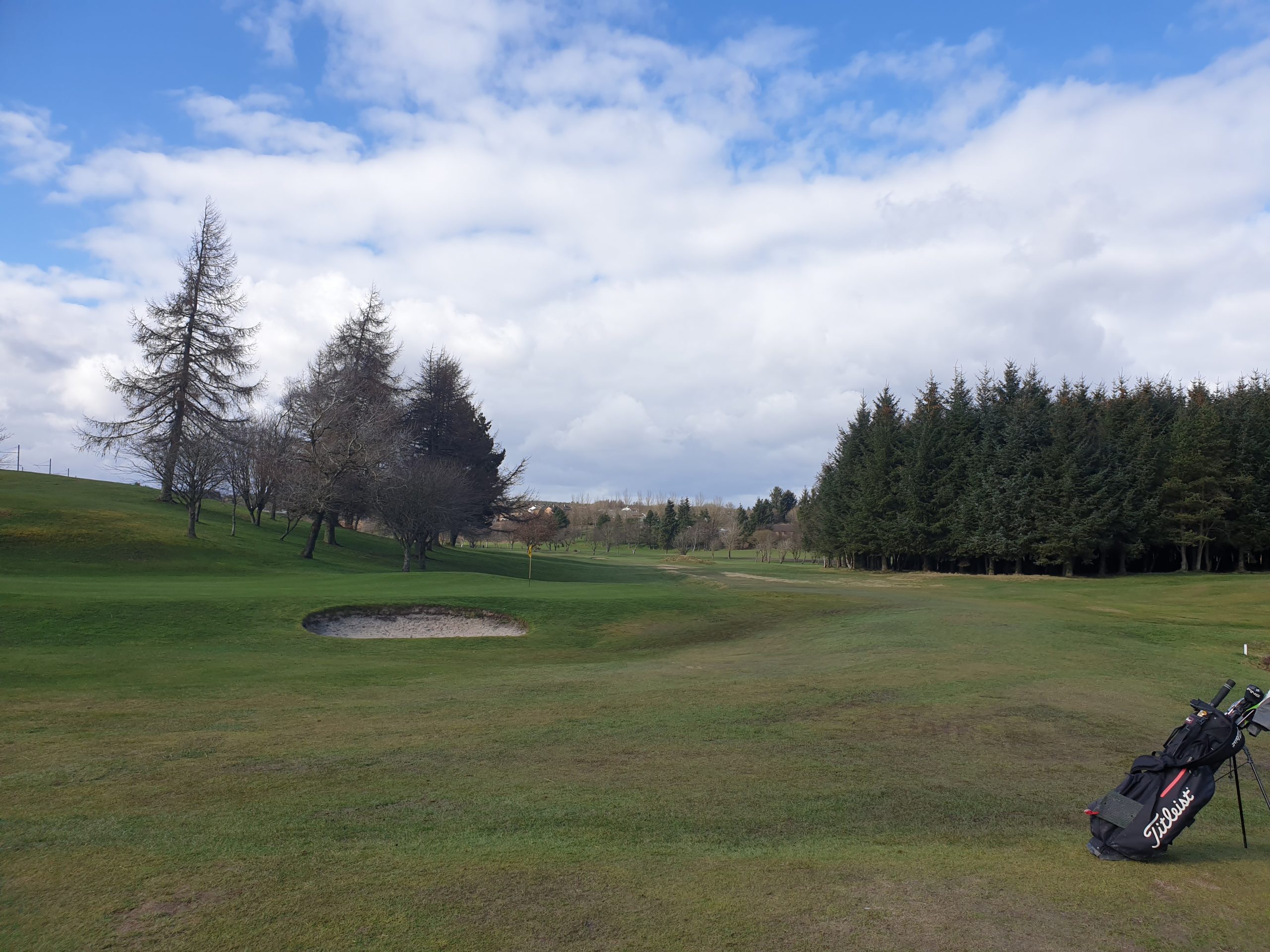
The first, with characteristic large green, the rope marking the winter ground boundary
As you play toward the 4th green, a massive stone railway viaduct dominates – dark and monumental, it represents the ambition of the Victorian age, as does the existence of clubs like Greenburn. Nobody designs viaducts anymore, they’d be too expensive, but were they built to disturbingly outlast their surroundings.
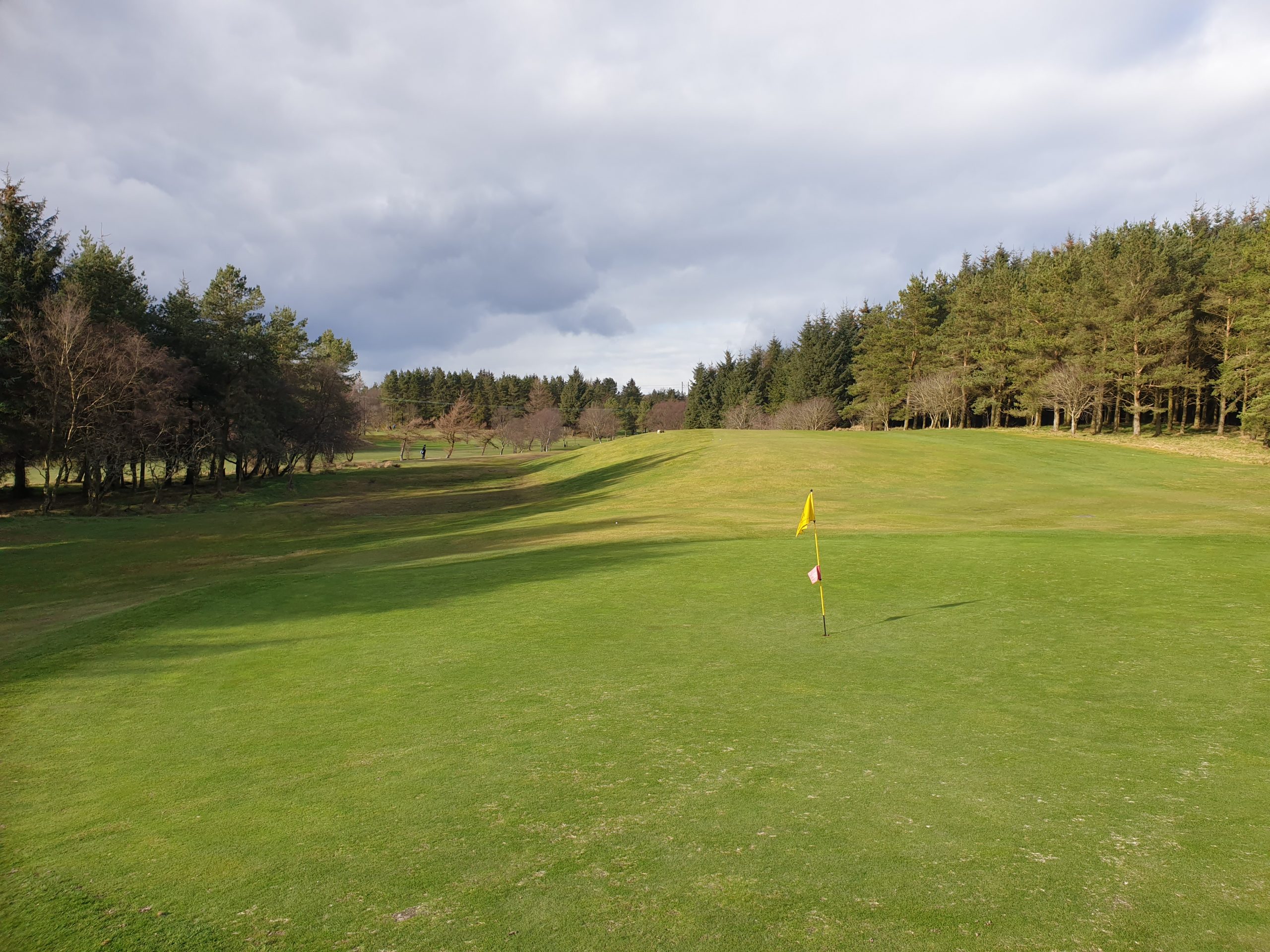
Hole 3, one of the birdieable par 4 holes, with wide narrow green
The highlight of the course are a quartet of difficult par threes, a truism brought to life by Gordon’s tale of the Greenburn “secret 2s pot”. Most clubs have a small stake side comp along side the weekly medal, the “pot” shared by players getting a 2 on their card. At Greenburn this side sweep is on only one of the par 3s, but secretly chosen. Given the difficulty of the par 3s, the pot can accumulate. On one occasion, Gordon took home £340 for a birdie two at the 10th, the stroke index 5, ‘Muldron’ .
The 6th, at 171 yards, is the shortest of a quartet of great par threes at Greenburn
One disappointment was almost every bunker was marked GUR. Well-shaped, properly positioned, but out of play. Hopefully seasonal rather than structural.
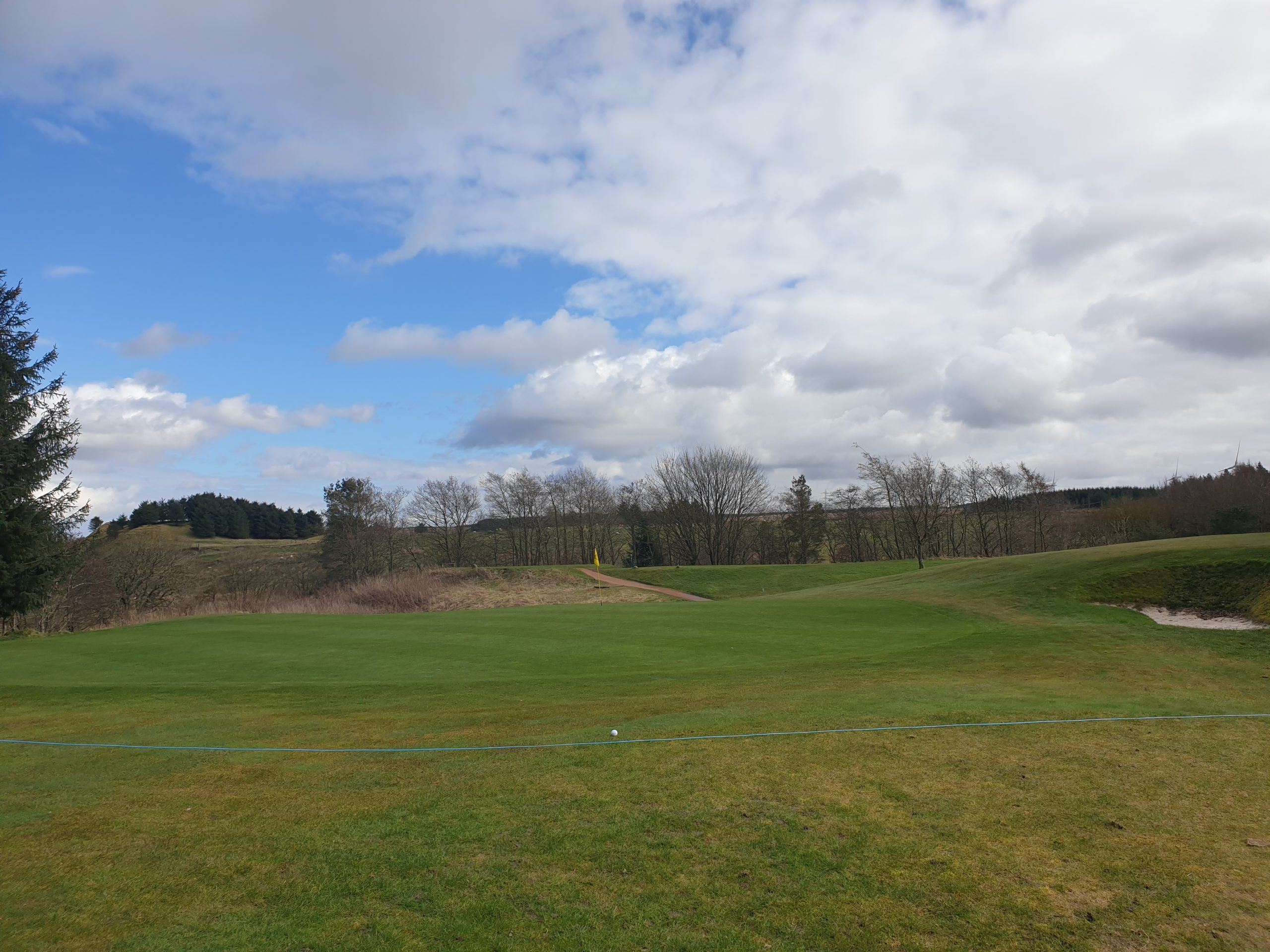
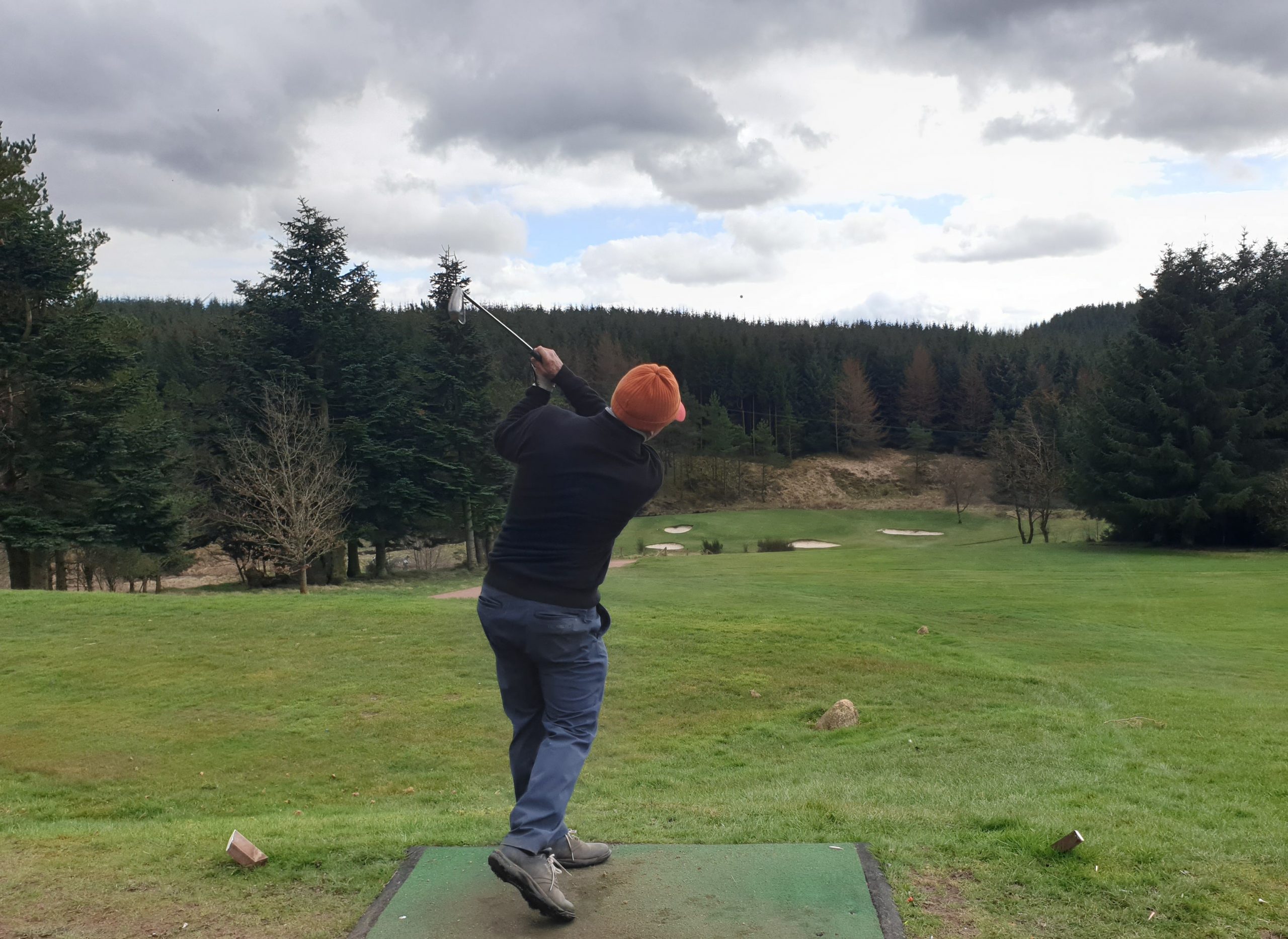
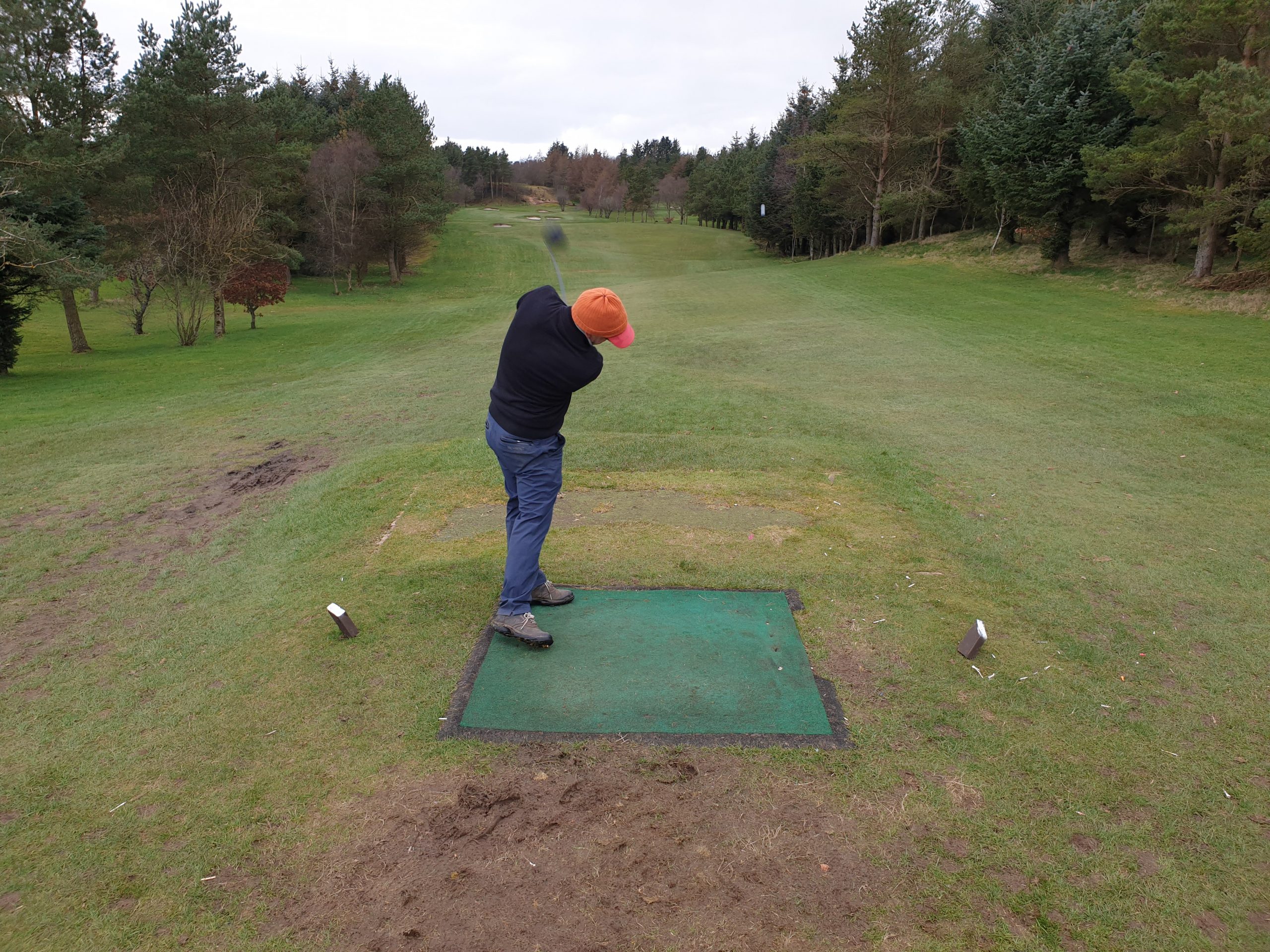
Moly playing his ‘normal’ draw off the winter tee at the 14th, a tough par 4.
Greenburn is a good course, around mid-table in my ranking of Scotland’s courses that I’ve played. It sits in a central belt that offers a car-owning golfer several credible alternatives within thirty minutes. Membership at £738 a year is deliberately affordable — the club keeping itself within reach of its community. The £30 summer visitor is excellent value.
Shades of East Renfrewshire come to mind looking back from the 10th Green
So to the viaduct or course question.
The viaduct was built in an era when Fauldhouse had the population, the industry, and the collective will to anchor infrastructure for generations. The golf club was founded in the same spirit, by the same kind of people, in the same era. Both have lasted. But the economic conditions that created them, dense local population, limited mobility, a working community that played its local course because there was no other, have long since dissolved.
OOB down both sides of the fine 18th hole at Greenburn, likely ruin many a card.
Scotland probably cannot sustain 575 golf courses indefinitely. The adjustment will be slow and uneven, shaped by club type, geography, land ownership and sheer stubbornness. Members’ clubs built by communities like this one don’t close easily – they endure through loyalty, deferred maintenance, and people like Gordon who simply keep turning up. But the structural pressure is real, and it falls unevenly. A course in the middle of the quality distribution, in the middle of the country, with several competitors nearby and no obvious distinguishing draw for the visitor market, faces a particular kind of exposure that a municipal course or a well-capitalised commercial operation simply does not.
The viaduct will almost certainly outlast us all. The golf club? I genuinely hope it does too. But the question in the title isn’t rhetorical.
More on Scotland’s golfing landscape — and what the economics might mean for courses like this one — in a future post.
I scored 89. The course reminded me a little of East Ren (Blog 169).
Facts:
Course Type: Parkland/Moorland Par: 71 (3 par 5s, 11 par 4s, 4 par 3s) Distance: 5,659 yards (yellow tees) Course Rating/Slope: 71/128 (yellow tees) Moly’s Gross Score: 89 Green Fee: £15 (winter rate) Value: 4/5