A guide to green fee value for money

Category: Members (Page 1 of 26)

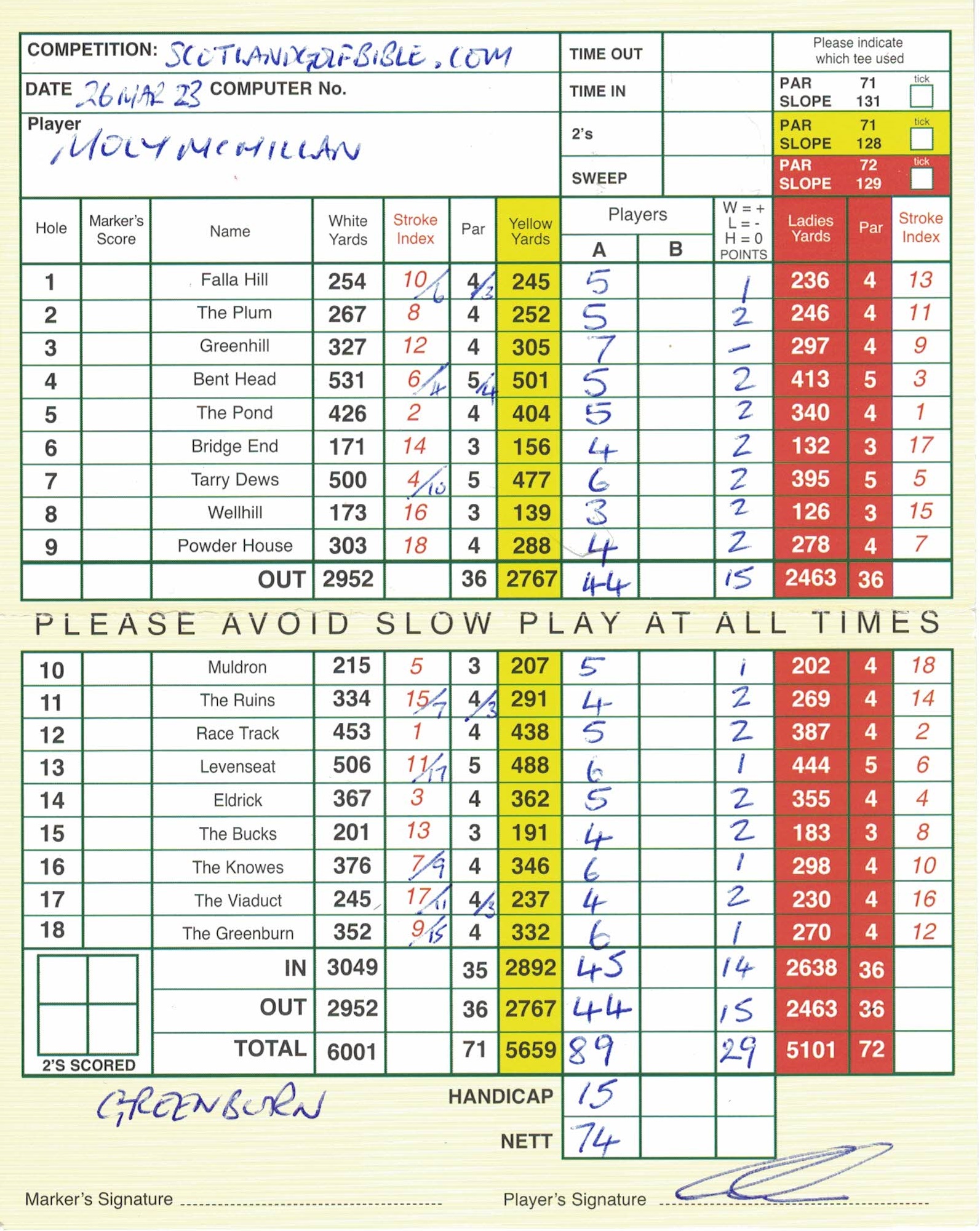
187. Greenburn. 26 Mar 2023.

The Golf Club and the Viaduct – which will last longest?

Green Fee: £15 (winter rate). Par 71. Course Rating/Slope: 71/128 (yellow tees). Value: 4/5.

Moly’s Gross Score: 89

Playing Greenburn, I found myself thinking not just about where the course sits geographically – deep in Scotland’s central belt between Glasgow and Edinburgh – but where it sits economically. Scotland has around 575 golf courses and almost certainly cannot sustain all of them. I pondered which side of that financial reckoning Greenburn would end up on. Let’s park that for now.

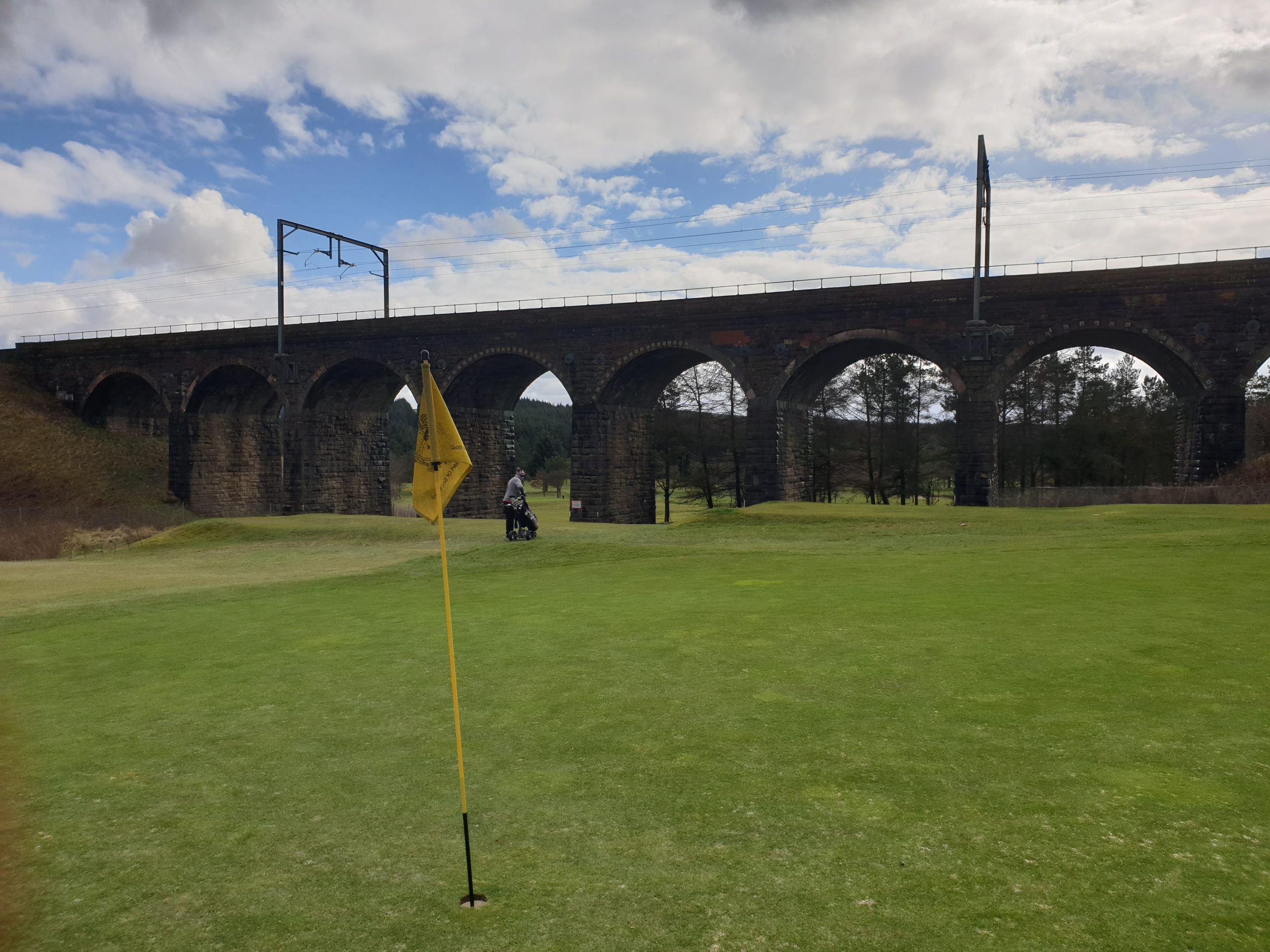
Hole 4 – a long Par 5, with the first start view of the viaduct

Greenburn Golf Club traces its roots to 1894, when the working people of Fauldhouse built a course near their village. The present course, voluntarily built by the members in 1953, relocated to the Breichwater Valley. The club motto, Per Nostra Opera (“By our own endeavors”), says what it does on the tin.

I played at a winter rate of £15, off temporary mats but normal greens. I met recent retiree and local member Gordon Cleland, a decent golfer and clearly very much at home.

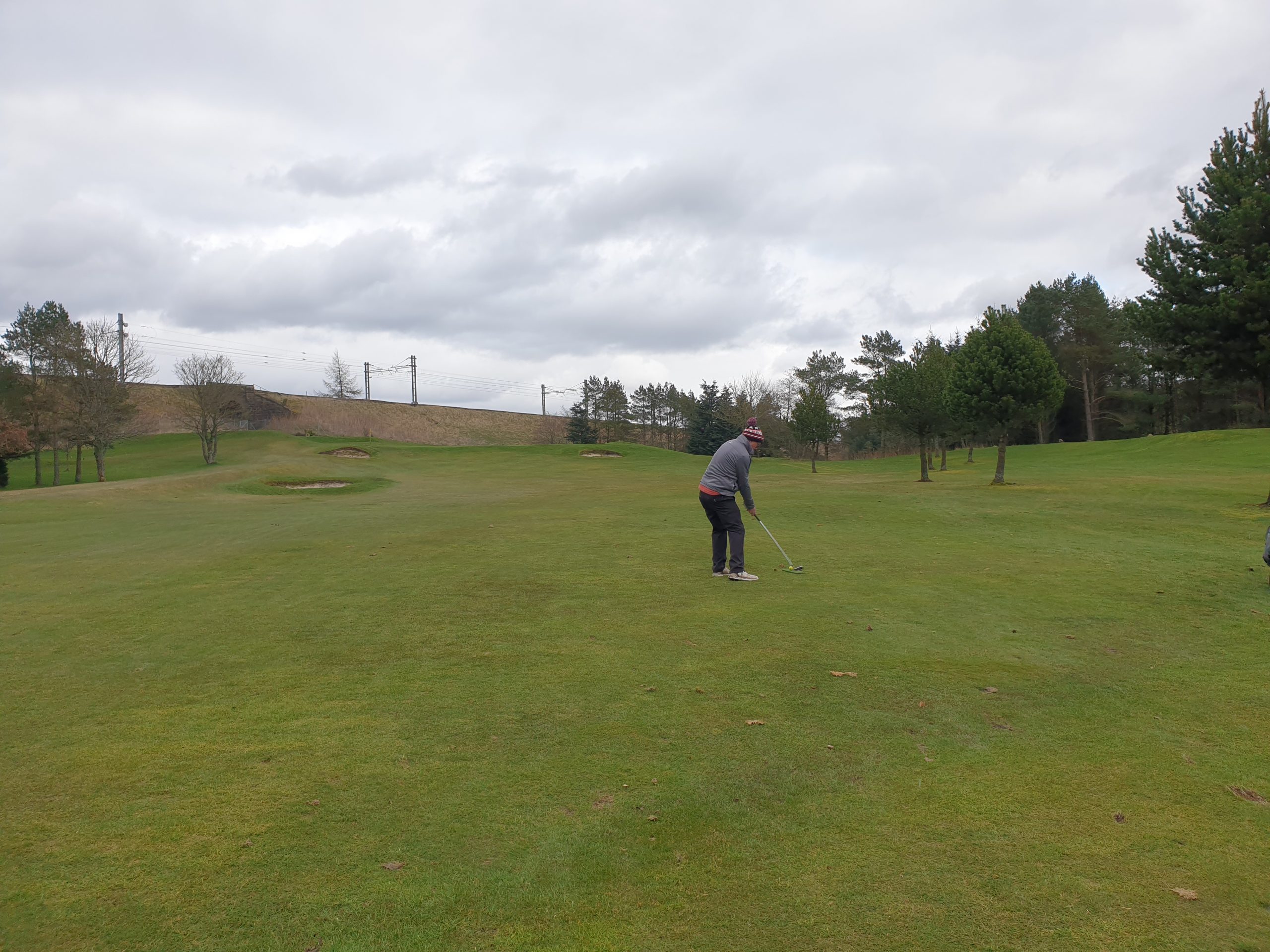
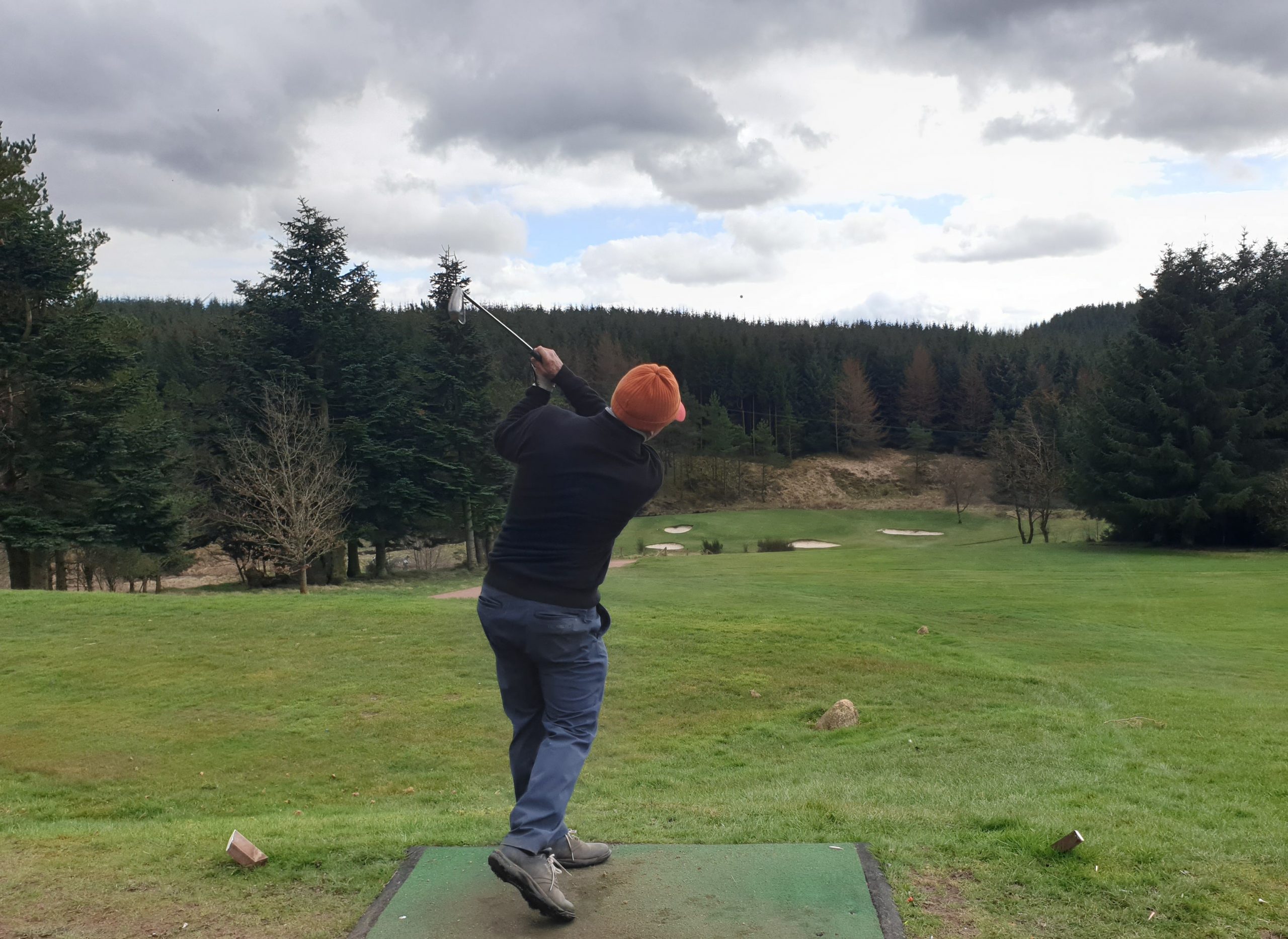
Local Member Gordon Cleland, local member, playing his approach at the par 5 13th.

After a welcoming opening hole, Greenburn becomes a narrow course, surrounded by industrial landmarks, most notably the electrified Glasgow to Edinburgh railway line. Pylons and overhead wires run over some holes.

The sometimes very large and sloping greens were in good condition for the end of winter. I got the feel they would be fast and very difficult in Summer.

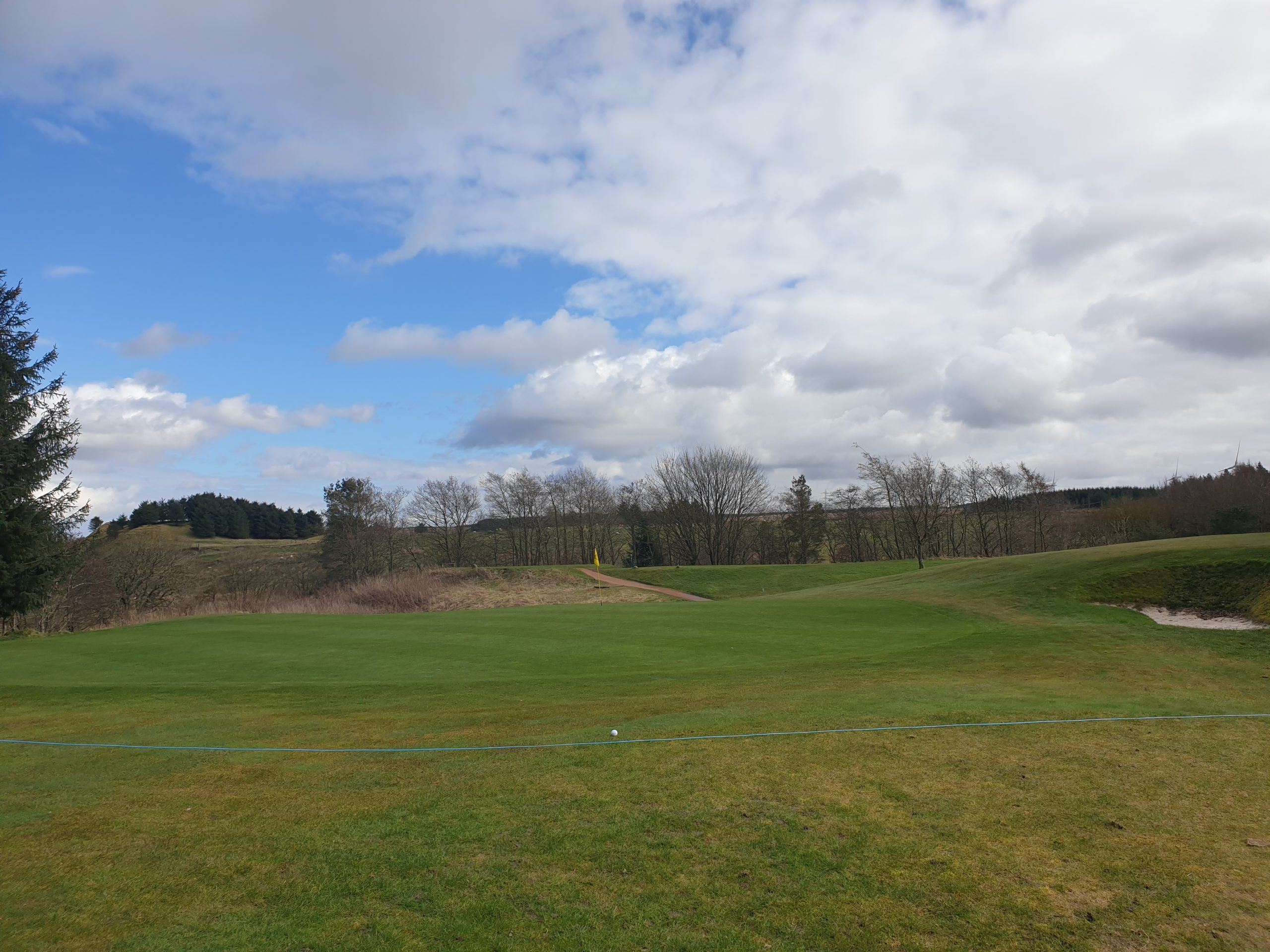
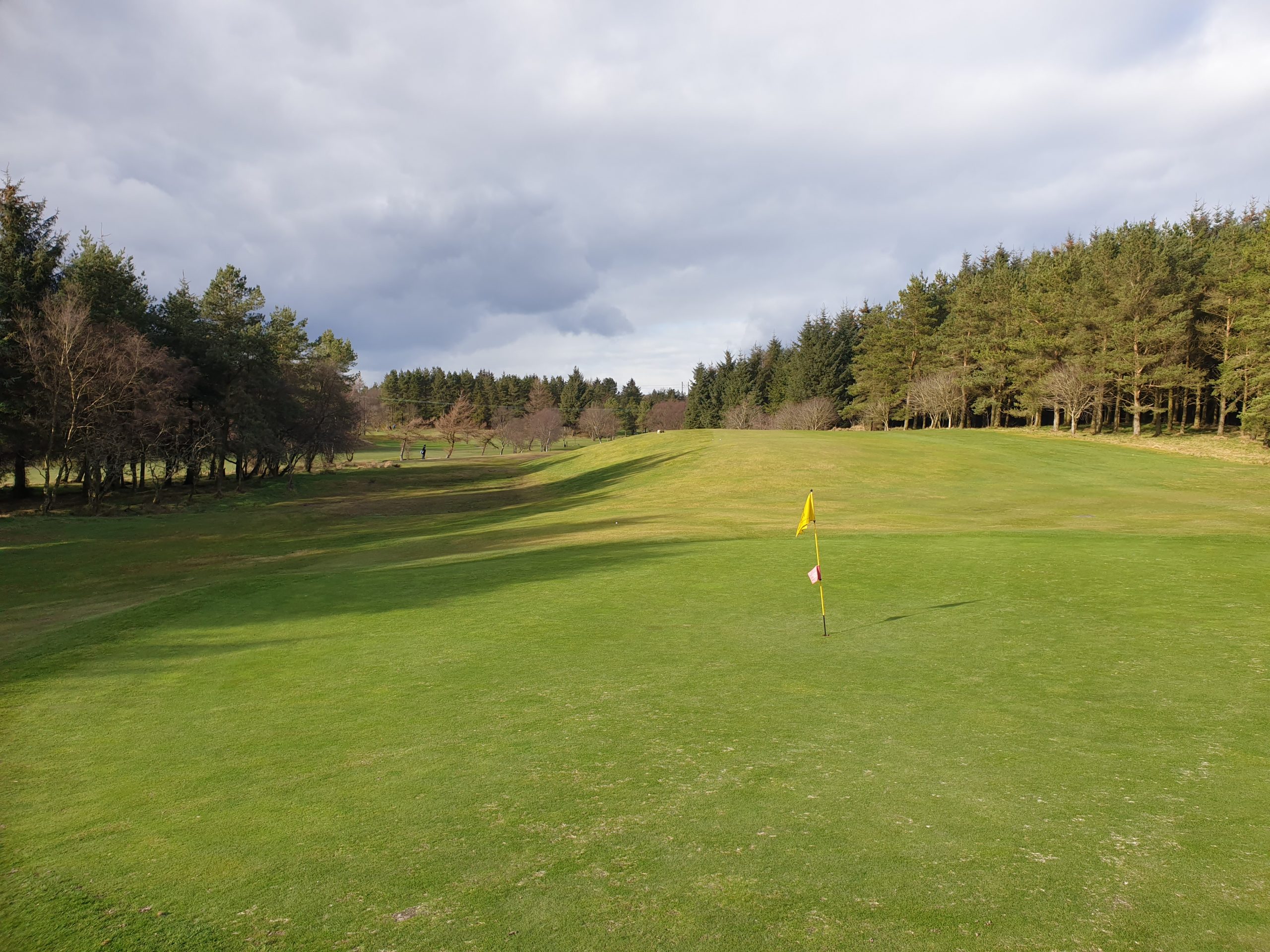
The first, with characteristic large green, the rope marking the winter ground boundary

As you play toward the 4th green, a massive stone railway viaduct dominates – dark and monumental, it represents the ambition of the Victorian age, as does the existence of clubs like Greenburn. Nobody designs viaducts anymore, they’d be too expensive, but were they built to disturbingly outlast their surroundings.

Hole 3, one of the birdieable par 4 holes, with wide narrow green

The highlight of the course are a quartet of difficult par threes, a truism brought to life by Gordon’s tale of the Greenburn “secret 2s pot”. Most clubs have a small stake side comp along side the weekly medal, the “pot” shared by players getting a 2 on their card. At Greenburn this side sweep is on only one of the par 3s, but secretly chosen. Given the difficulty of the par 3s, the pot can accumulate. On one occasion, Gordon took home £340 for a birdie two at the 10th, the stroke index 5, ‘Muldron’ .

The 6th, at 171 yards, is the shortest of a quartet of great par threes at Greenburn

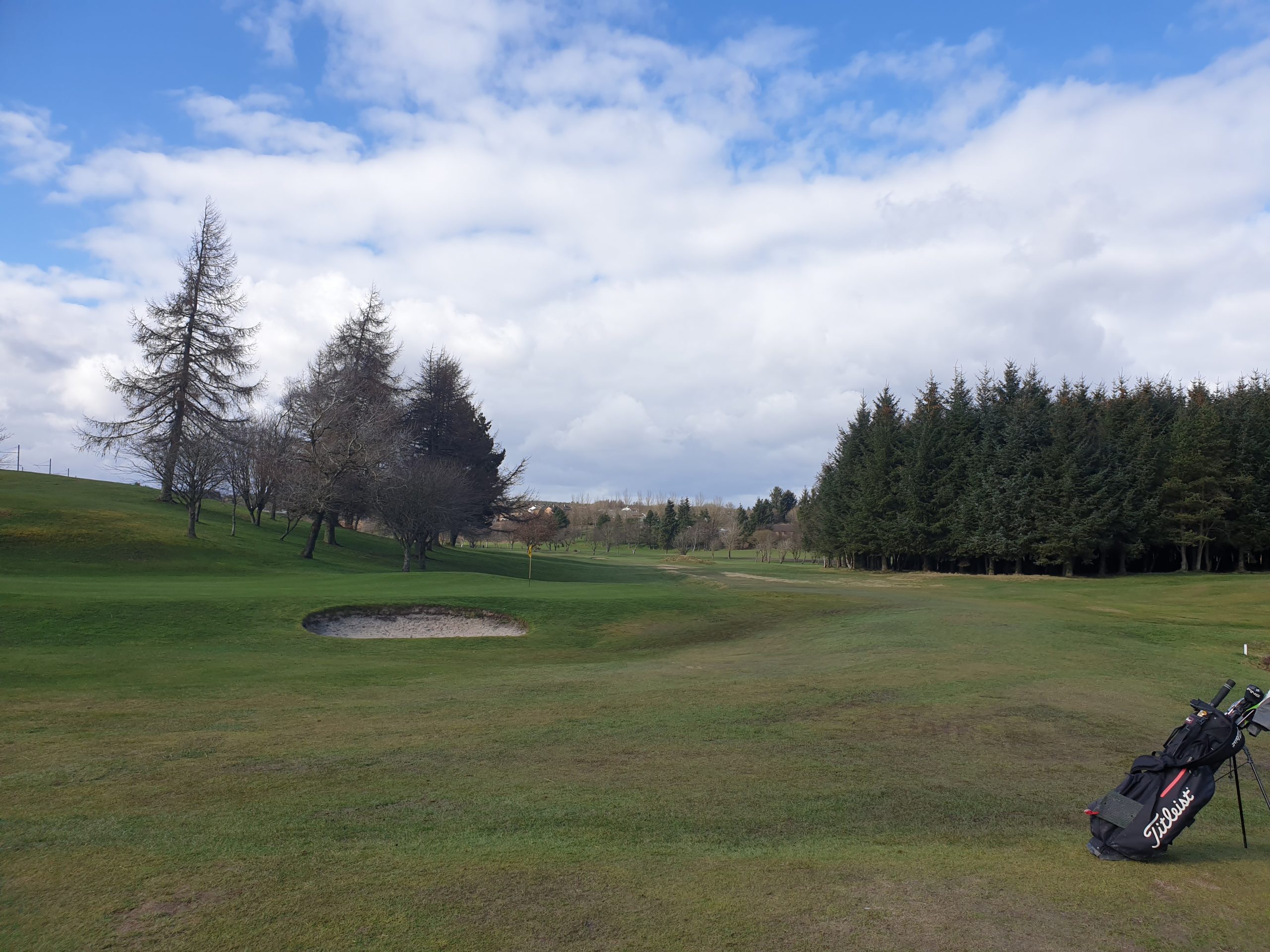
One disappointment was almost every bunker was marked GUR. Well-shaped, properly positioned, but out of play. Hopefully seasonal rather than structural.

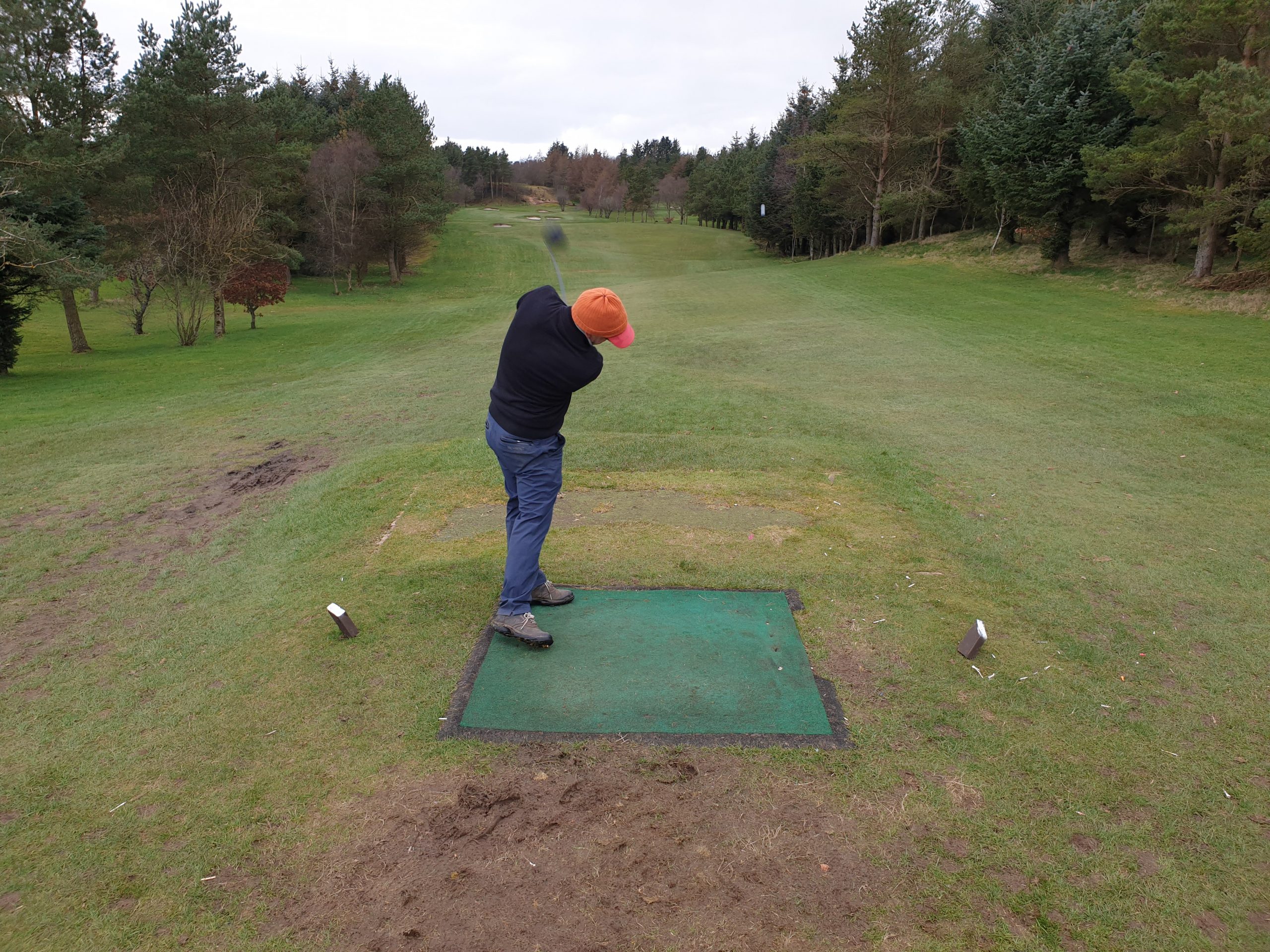
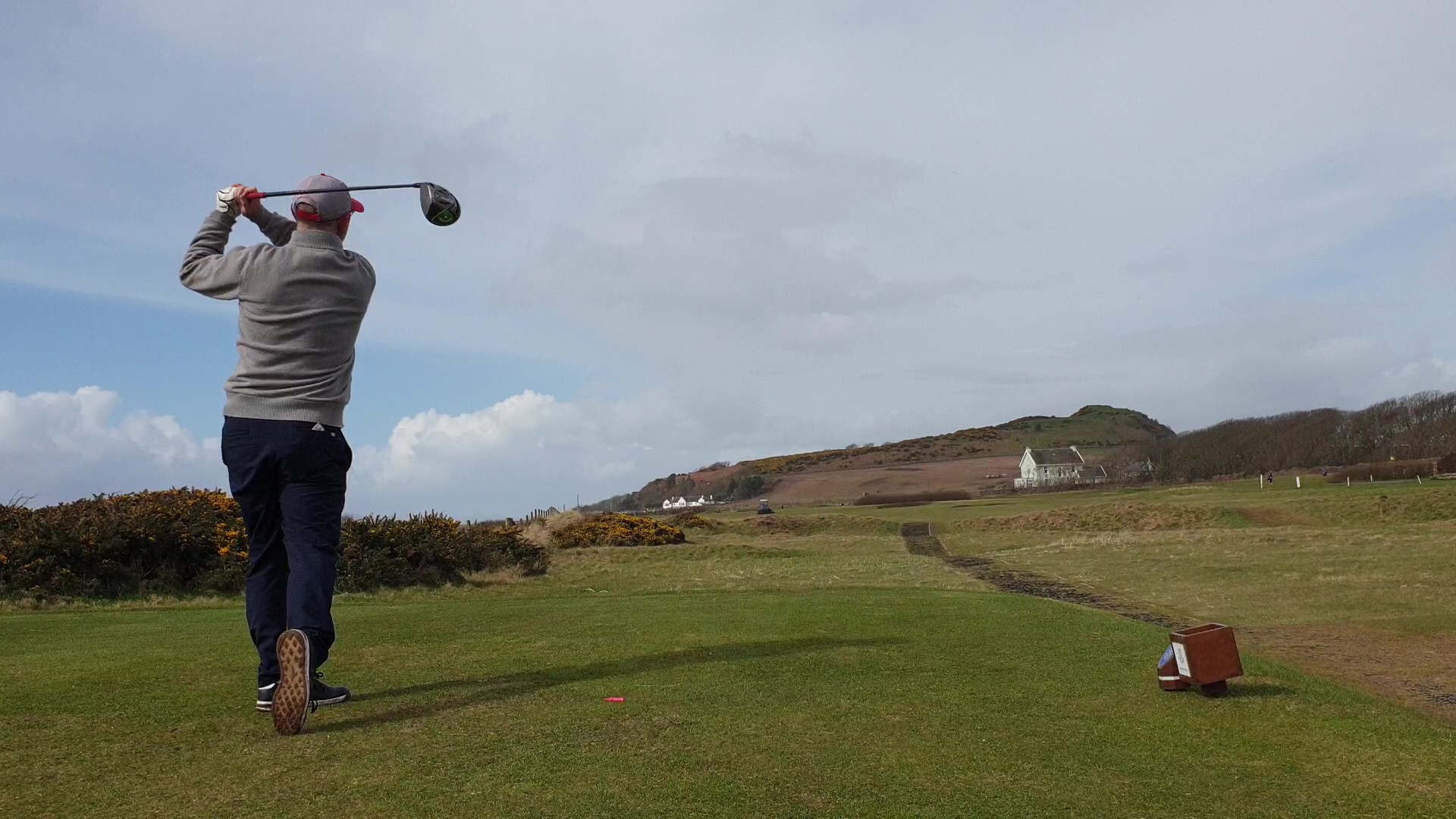
Moly playing his ‘normal’ draw off the winter tee at the 14th, a tough par 4.

Greenburn is a good course, around mid-table in my ranking of Scotland’s courses that I’ve played. It sits in a central belt that offers a car-owning golfer several credible alternatives within thirty minutes. Membership at £738 a year is deliberately affordable — the club keeping itself within reach of its community. The £30 summer visitor is excellent value.

Shades of East Renfrewshire come to mind looking back from the 10th Green

So to the viaduct or course question.

The viaduct was built in an era when Fauldhouse had the population, the industry, and the collective will to anchor infrastructure for generations. The golf club was founded in the same spirit, by the same kind of people, in the same era. Both have lasted. But the economic conditions that created them, dense local population, limited mobility, a working community that played its local course because there was no other, have long since dissolved.

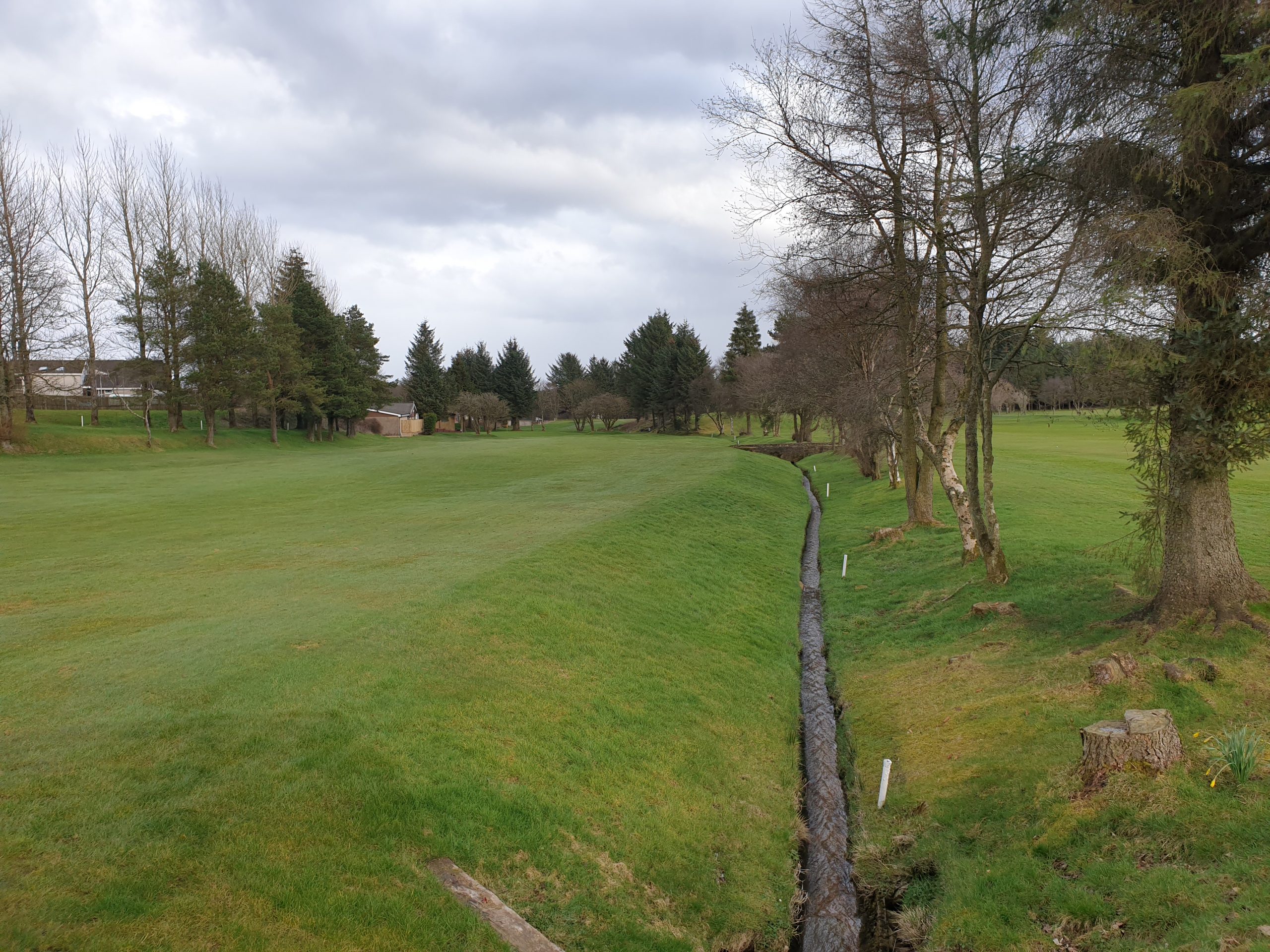
OOB down both sides of the fine 18th hole at Greenburn, likely ruin many a card.

Scotland probably cannot sustain 575 golf courses indefinitely. The adjustment will be slow and uneven, shaped by club type, geography, land ownership and sheer stubbornness. Members’ clubs built by communities like this one don’t close easily – they endure through loyalty, deferred maintenance, and people like Gordon who simply keep turning up. But the structural pressure is real, and it falls unevenly. A course in the middle of the quality distribution, in the middle of the country, with several competitors nearby and no obvious distinguishing draw for the visitor market, faces a particular kind of exposure that a municipal course or a well-capitalised commercial operation simply does not.

The viaduct will almost certainly outlast us all. The golf club? I genuinely hope it does too. But the question in the title isn’t rhetorical.

More on Scotland’s golfing landscape — and what the economics might mean for courses like this one — in a future post.

I scored 89. The course reminded me a little of East Ren (Blog 169).

Facts:

Course Type: Parkland/Moorland
Par: 71 (3 par 5s, 11 par 4s, 4 par 3s)
Distance: 5,659 yards (yellow tees)
Course Rating/Slope: 71/128 (yellow tees)
Moly’s Gross Score: 89
Green Fee: £15 (winter rate)
Value: 4/5

Moly’s 89, was a decent game.

184. West Kilbride. 24 Mar 2023.

Walter Hagen thought better of it. He made a big mistake.

Round: £40 (Winter rate). Par 71. Course Rating 69.7, Slope 120.

Value: 5/5.

Moly’s Score: 95.

Three miles south of Seamill on a rocky promontory above the Firth of Clyde, sits Portencross Castle, a squat fourteenth-century tower house with a roofline destroyed in 1739 and never repaired. This place was consequential long before the castle was built as its land was given by Robert the Bruce to Sir Robert Boyd of Kilmarnock for his service at Bannockburn. The castle became a purgatory stop for Scotland’s dead kings; their bodies lying in state before being transported by a birlinn, a traditional Hebridean ship, to Iona for burial.

By the 1890s, the Craufurds had long since replaced the Boyds of Kilmarnock dynasty. It was Hugh Craufurd, Laird of Auchenames and Portencross, who played the first tee shot at West Kilbride Golf Club in 1893, on the nine-hole course laid out by Old Tom Morris.

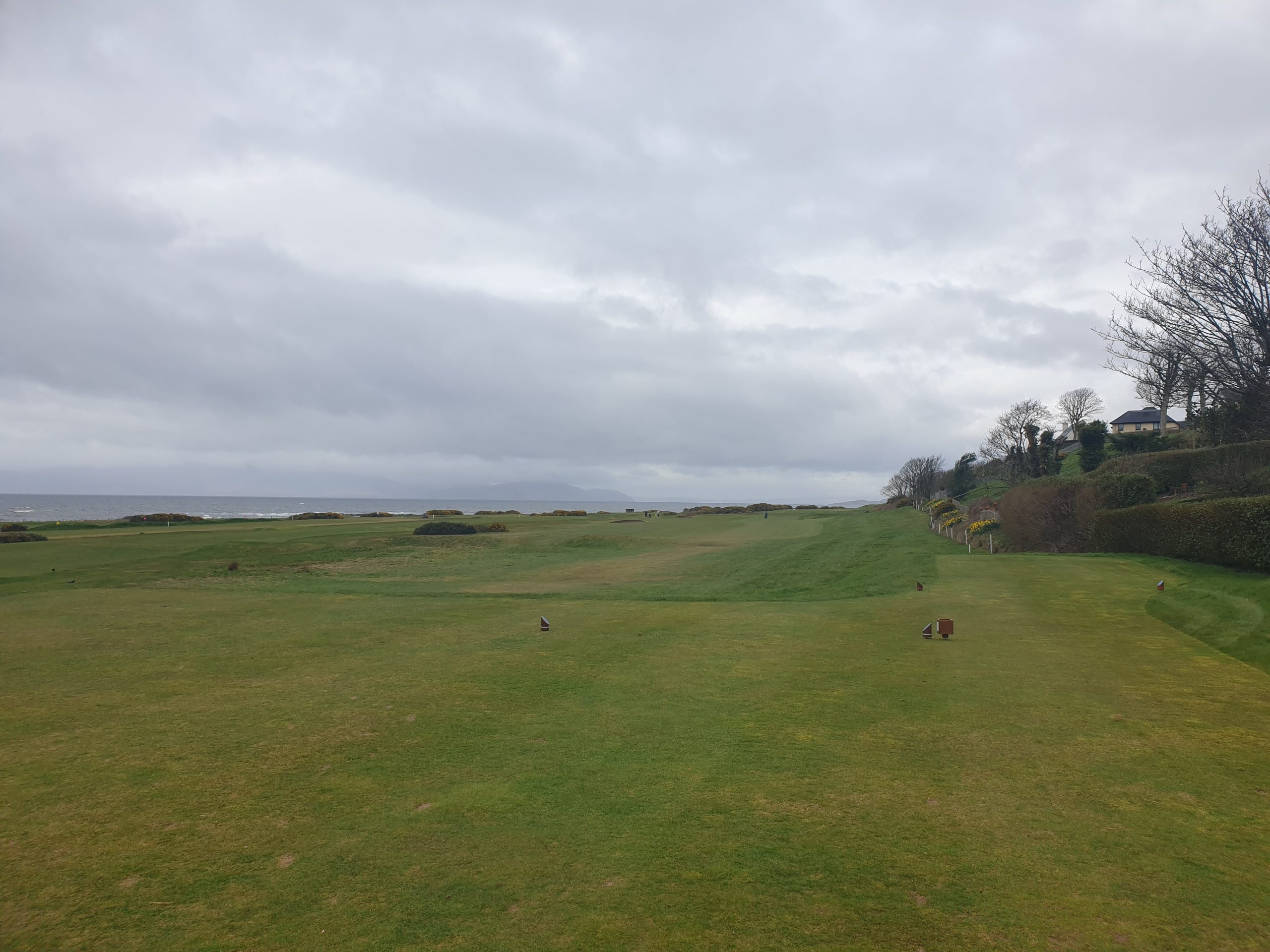
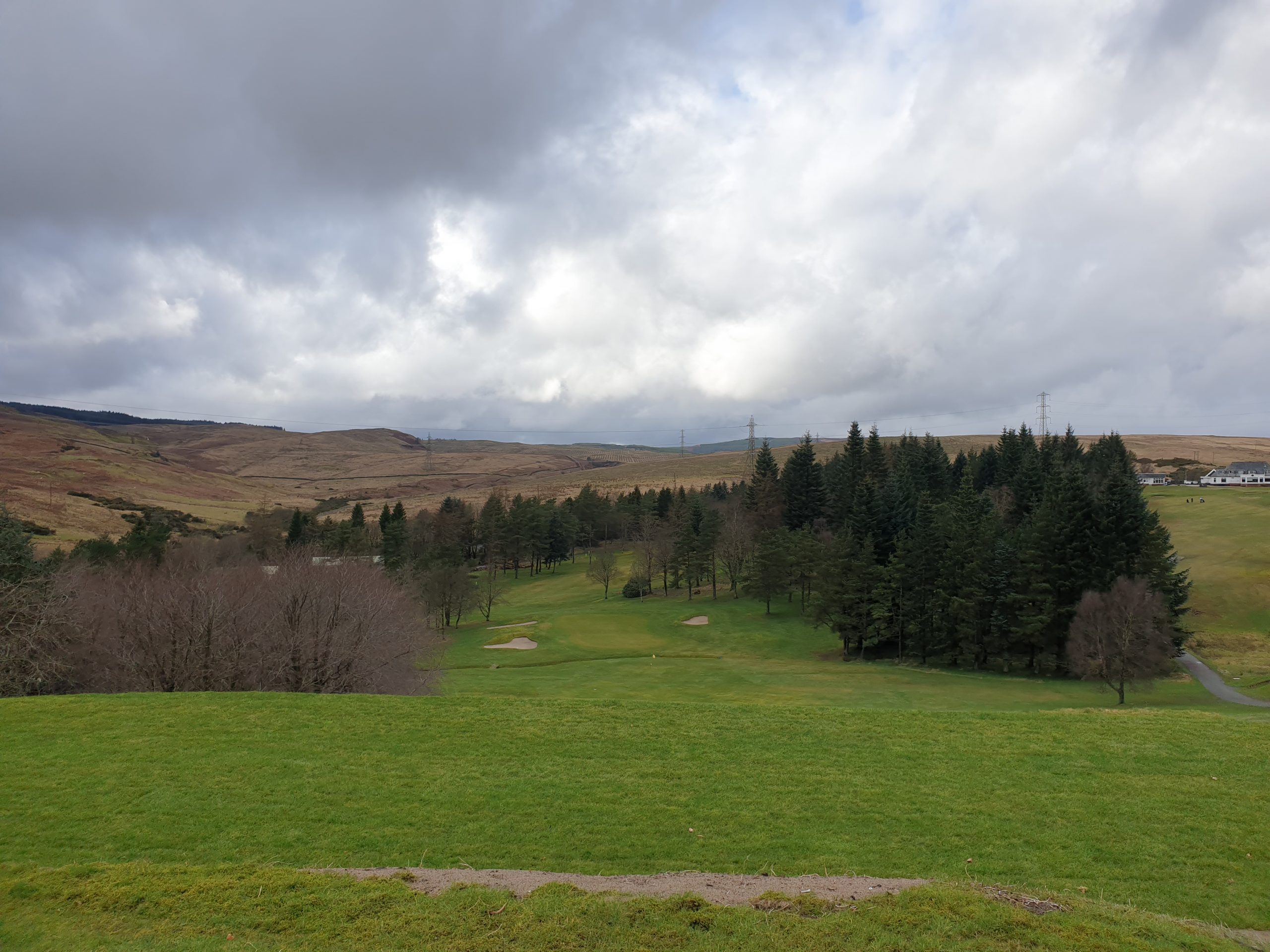
Hole 1, Burn, looking at the Firth of Clyde and the Isle of Arran. The Laird of Auchenames drove off here in May 1893.

The course extended to 18 in 1905, and the layout was altered again in 1914 and 1925, both done by James Braid. There are many parallels with Lundin GC, blog 84, with the links land predominantly the Morris holes, with Braid encroaching on the more arable turf. The resulting layout it is not a simple out-and-back routing, with Braid keen to make regular changes in wind effect, where he could.

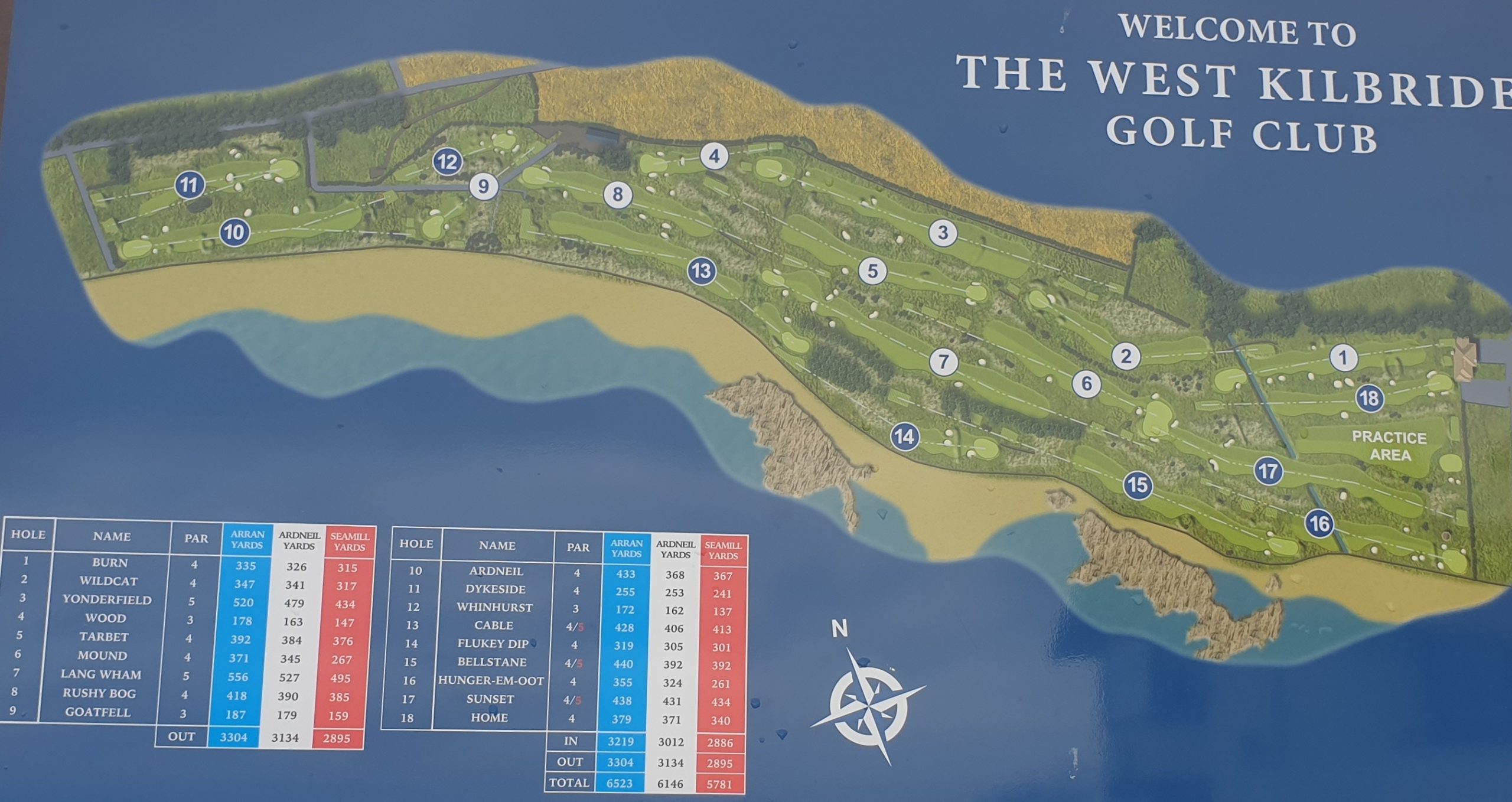
The Old Tom / James Braid layout, a course with parallels to Lundin GC in Fife.

I played alone for only £40 on the winter rate, an unbelievable bargain, in changeable weather conditions as the photos show. Being alone at West Kilbride was mostly meditative, despite a forensic start.

At the first hole, Burn, a par four of 326 yards, my thinned drive embedded in the face of a bunker; not in the sand, but in the turf wall – a rule referee wasn’t available.

The opening drive, embedded in the face of the bunker. A rules quiz – what can you do?

Does a ball embedded in the face of a bunker entitle you to free relief? The answer is yes — provided the ball is embedded in the turf of the rivetted wall or face, not in sand. The relief is to find the nearest point in the general area not nearer the hole and drop within one club-length. No penalty. The catch: if any part of the ball is touching sand, free relief evaporates and you play it as it lies or take an unplayable.

I took the free drop and still made seven. The rules of golf are at times generous, but they don’t always mean a lower score.

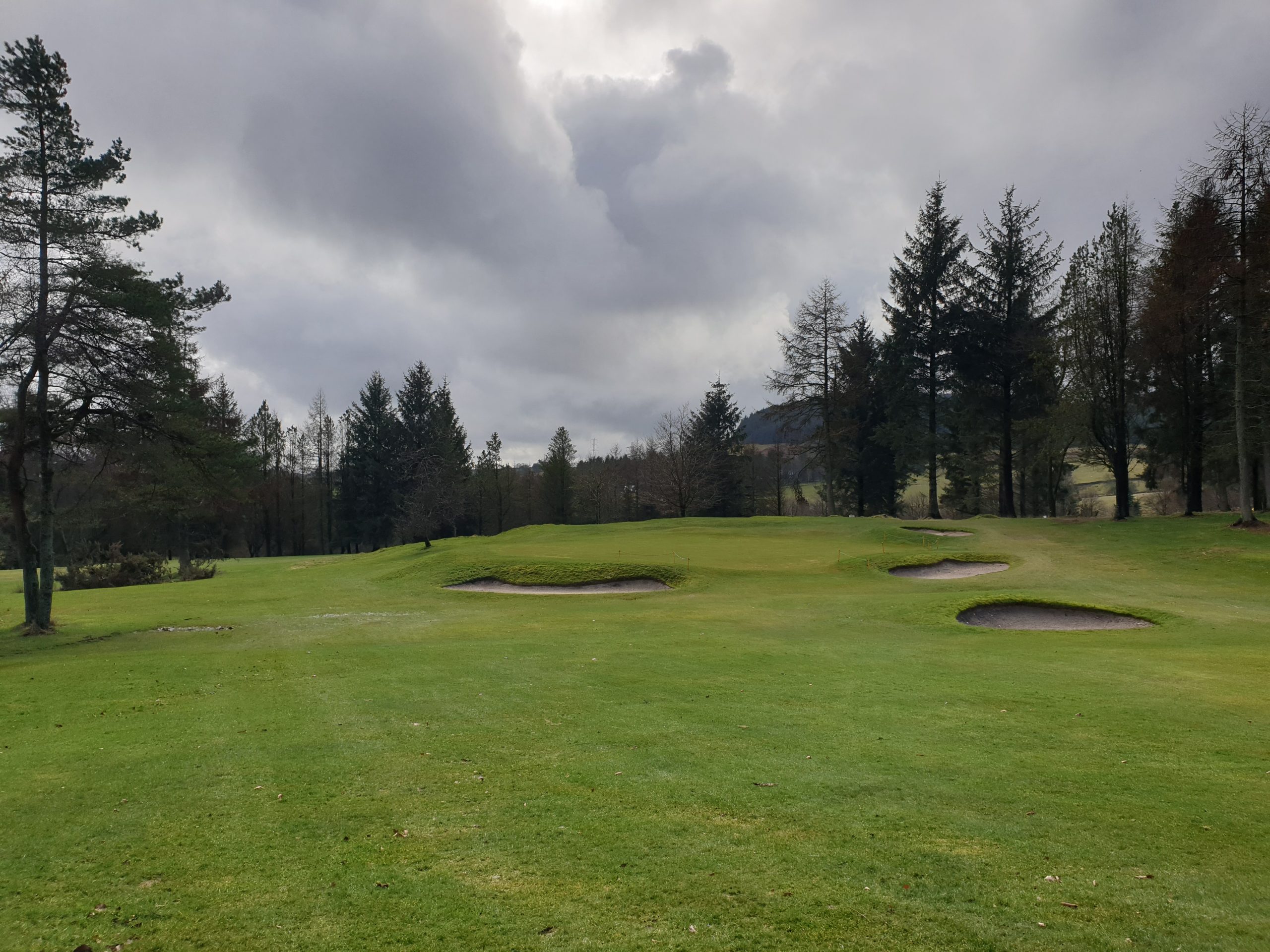
The approach to the par five 3rd hole ‘Yonderfield’. The trees perfectly illustrating the prevailing wind underlying how West Kilbride challenges your game.

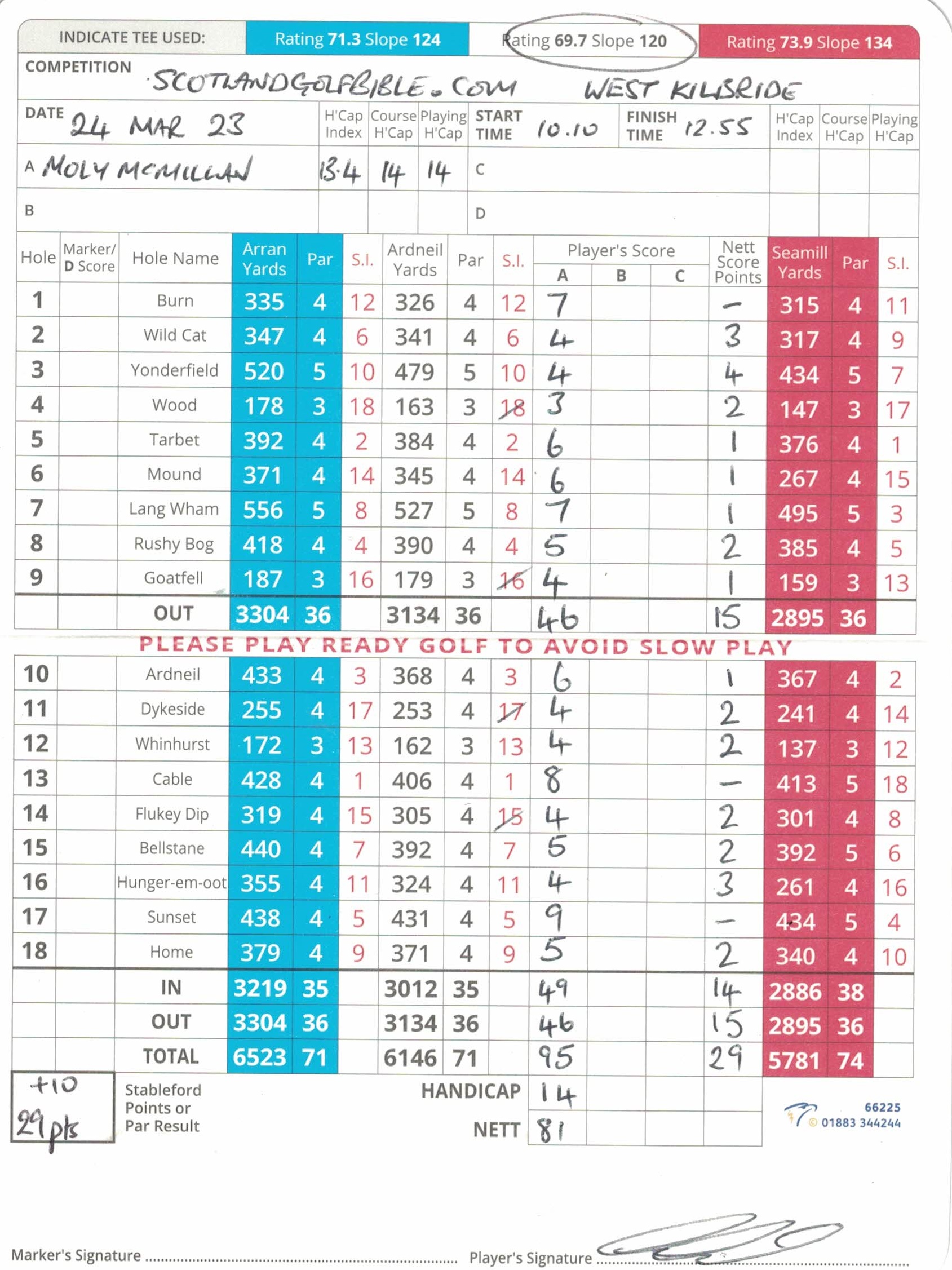
I played a good round in difficult windy conditions with Out of Bounds (OOB) in play on twelve holes. There is nowhere to hide at West Kilbride. I finished with 95 gross and 29 Stableford points off 14, which in those conditions represented something around par for the day.

The front nine is somewhat on arable, not true links, land. The back nine has more of the original links land holes, giving you two linked but distinct experiences. It is at the turn, Ardneil, the tenth, that the course reveals its real character, with OOBs running the complete left hand side. The westerly prevailing wind becomes your friend here.

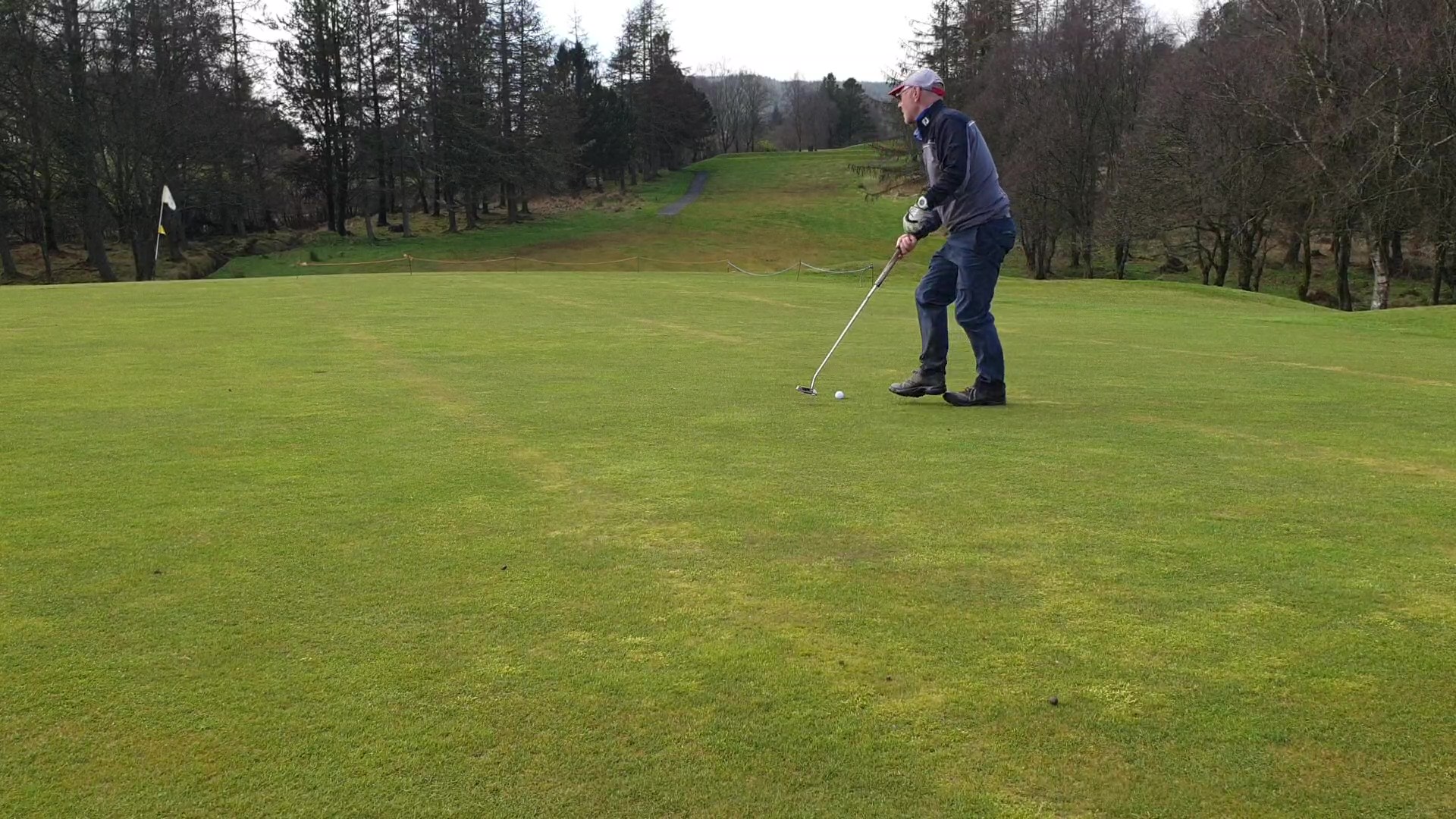
Moly driving at the difficult par four 10th, the stroke index 3 hole, with gorse starting to bloom in March! As a lone golfer you need to be good at setting the camera.

By my back nine, something else had changed: the weather. The grey overcast of the first hour had given way to Ayrshire sunshine, the Firth beginning to catch the light and Arran stunningly on the horizon. Links golf in Scotland operates a variable weather tariff, not unlike most of the fees these days. The same course that hands you a seven on the first hole in a grey wind can, within two hours, be offering something close to transcendence.

The green at the 13th, the toughest hole – stroke index 1, 406 yards, par 4. The conditioning fully on show, as was the improving weather.

The greens and their surrounds were excellent, brilliant conditioning for late March. The links turf was quality. The hole names carry their own character: Yonderfield, Rushy Bog, Lang Wham, Hunger-em-oot.

The club has attracting high profile visitors over the years and were keen to get Walter Hagen, the “first touring pro” to play an exhibition. Hagen failed to agree his fee and “went elsewhere”, ironically agreeing to play The Machrie on the Isle of Islay, but traveled incorrectly to Machrie Bay on Arran, a much lesser course; blog 110. This was a mistake in more ways than he imagined! Open Champion Bobby Locke played here in 1951, clearly being less demanding than Hagen, the real hustler.

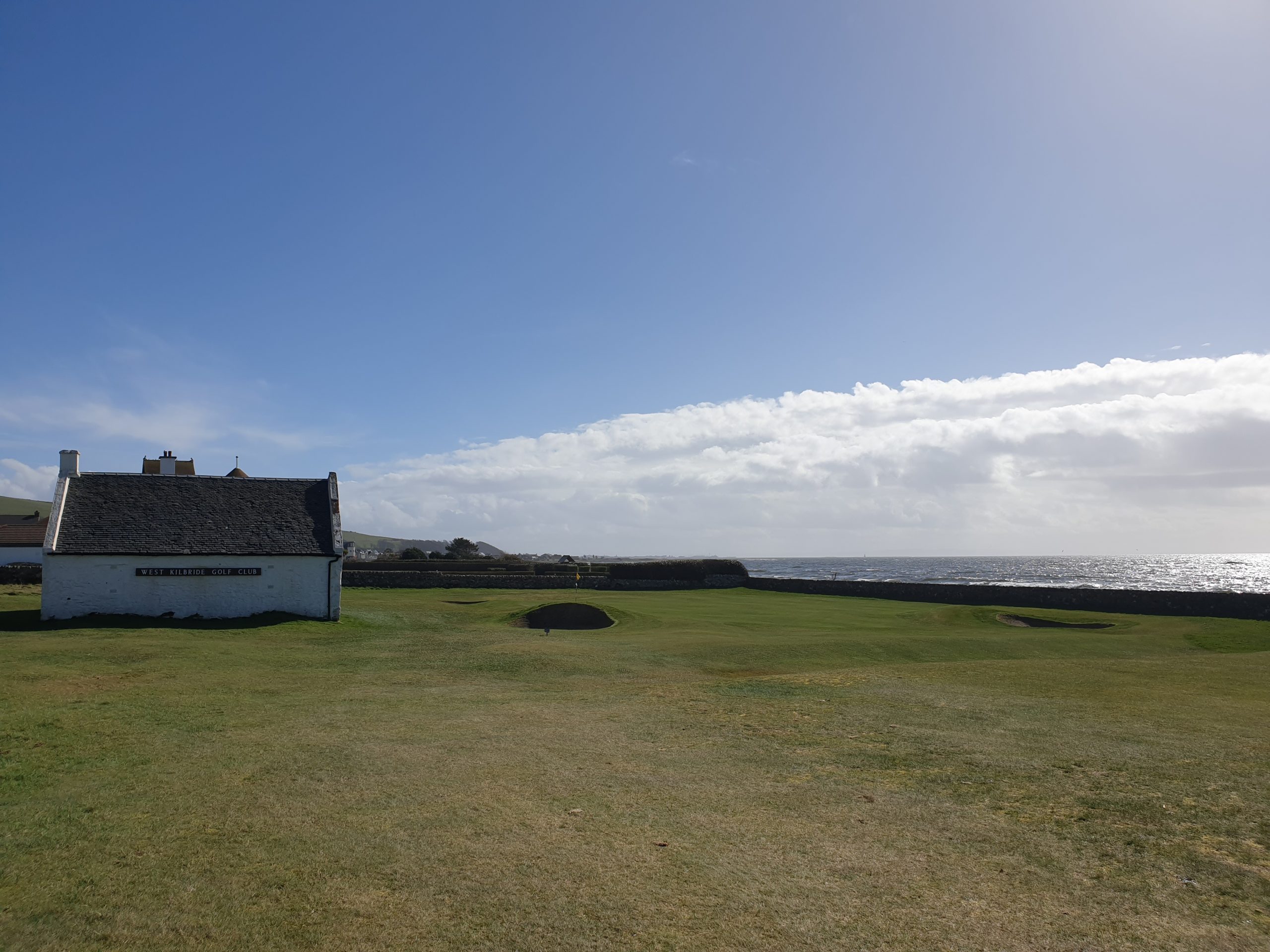
Hole 16, Hunger-em-oot: the signature hole. The West Kilbride Golf Club outbuilding with its sign, the two flanking bunkers, and the Firth of Clyde beyond. This is the image of the course.

West Kilbride is the most northerly of Ayrshire’s true links courses, including Dundonald, Glasgow Gailes, Troon, Prestwick and Turnberry, partly explaining the lower pricing of £40 in March, which deserves reflection.

The course costs £85 on a summer weekday, more than double the winter rate. That Summer/Winter gap has widened considerably over the past decade as Scottish links golf has repriced itself upward as a premium product. At the top of the market, Kingsbarns charges £448 and Turnberry’s rack rate is £545. Green fees at premium Scottish courses have inflated at roughly 7-8% per year over the past two decades, three times the rate of general inflation. The winter links visitor becomes a shrewder operator.

The course is genuinely excellent; I would go back without hesitation and happily pay more than £40 to do so.

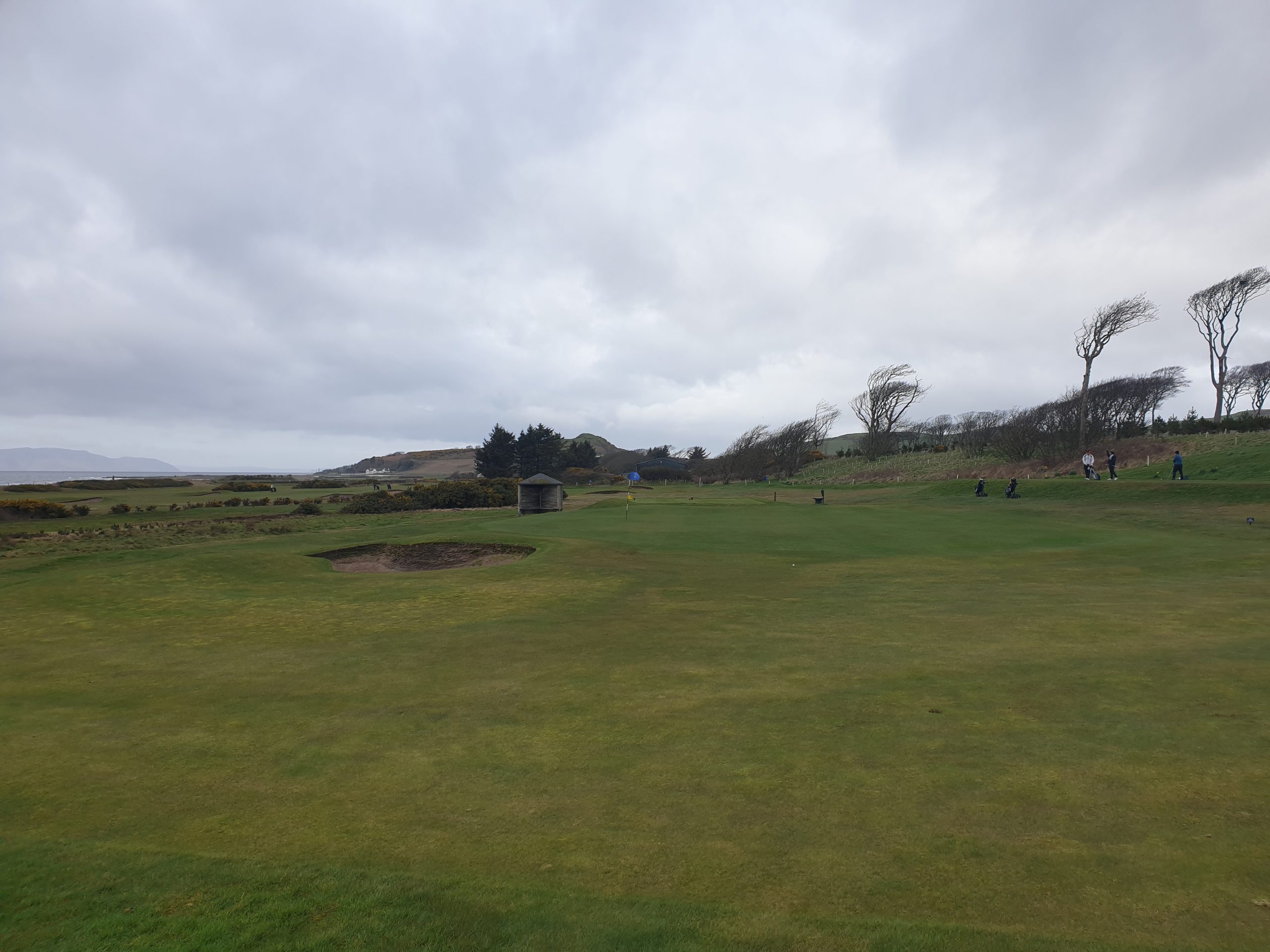
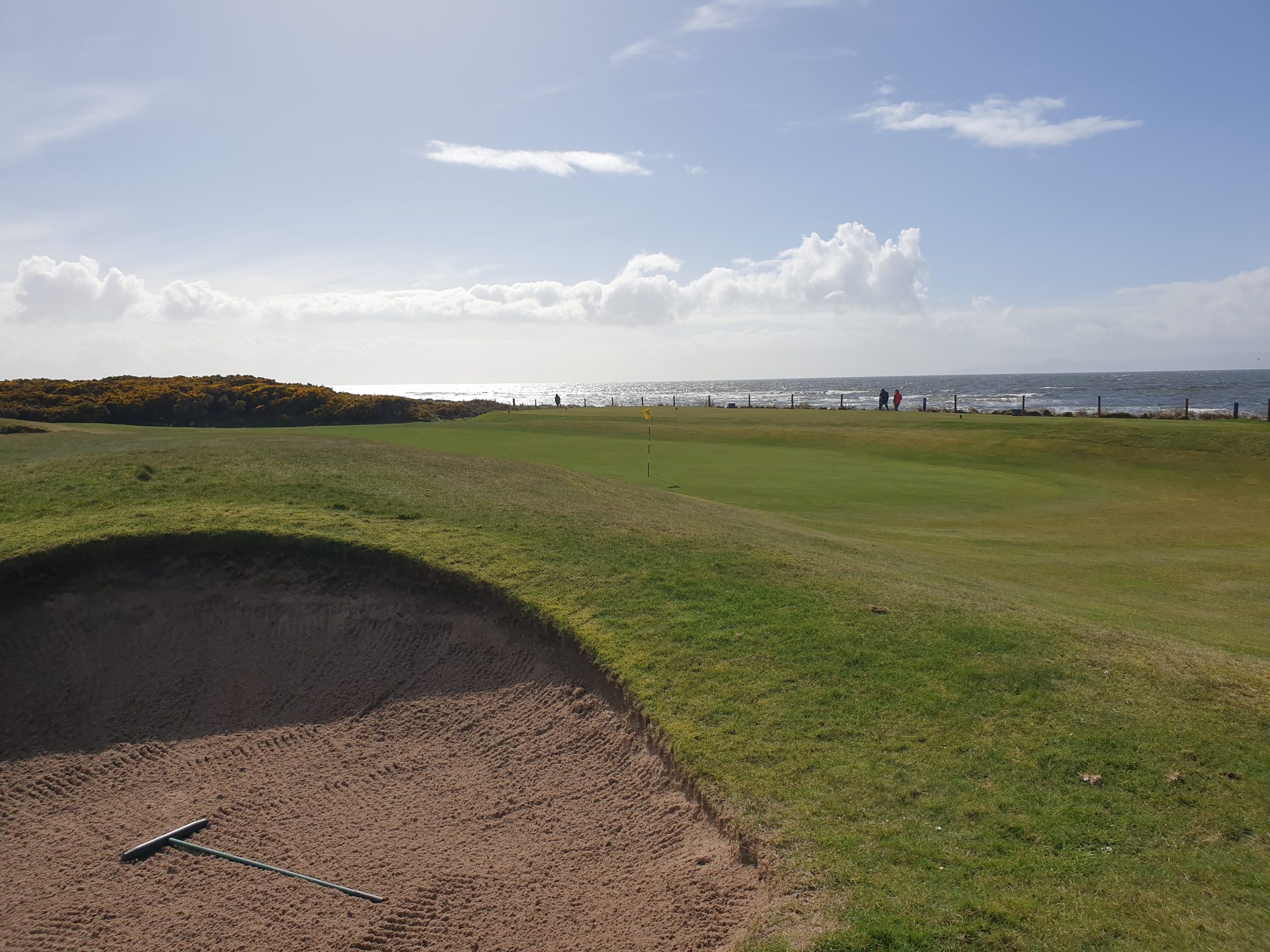
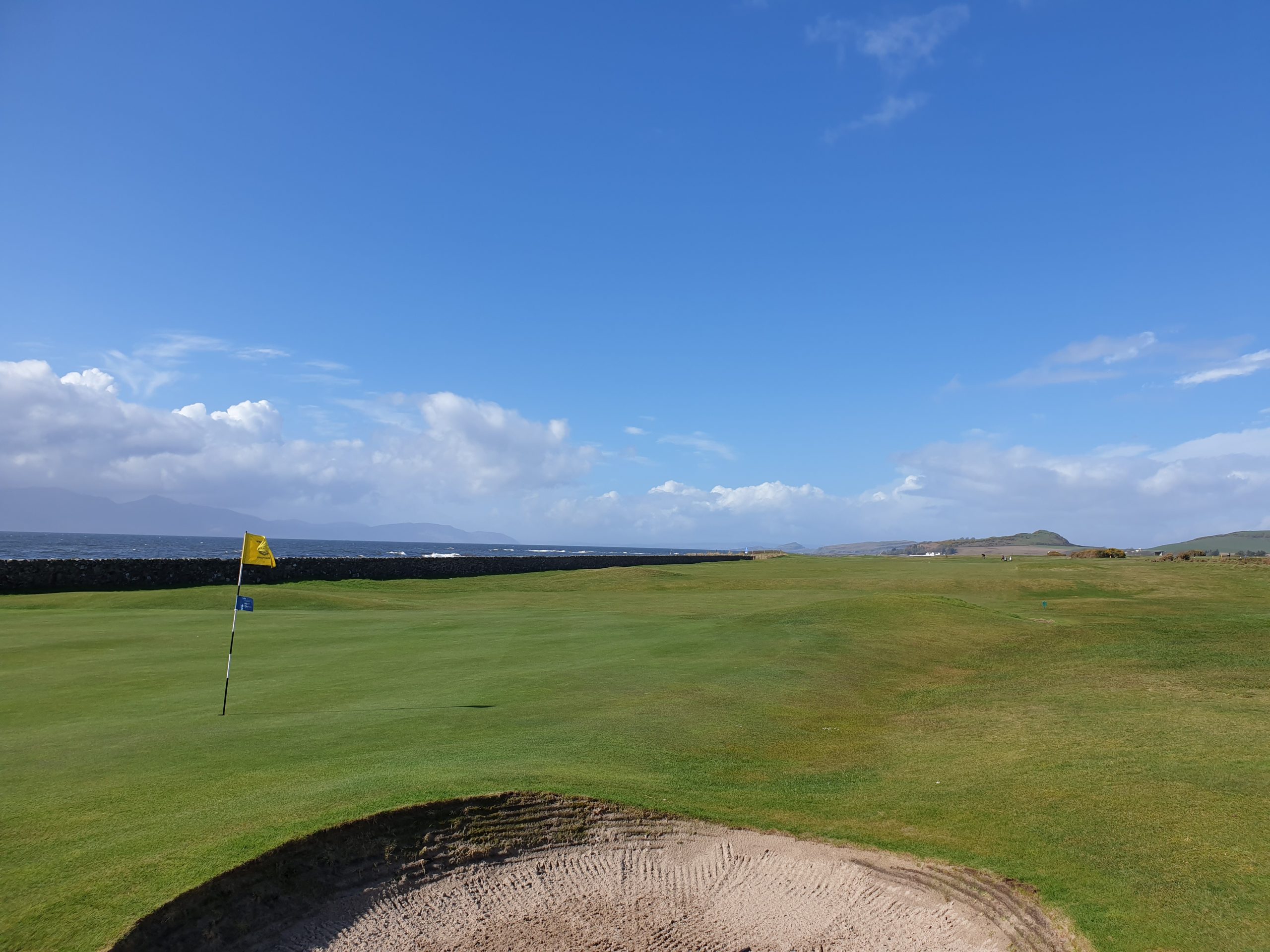
Hole 16 green: looking south along the Firth of Clyde toward Arran. Stone walls, sunshine, the flag. This is what £40 buys you in March at West Kilbride.

Facts:

Course Type: Links

Par 71 (2 par 5s, 13 par 4s, 4 par 3s)

Distance: 6,146 yards (Ardneil/yellow tees)

Course Rating 69.7, Slope 120

Moly’s Gross Score: 95 (29 Stableford points, net 81)

Moly’s scorecard, a day for a stableford preferably.

180. Hilton Park. 21 Mar 23.

Ewan Grimes – What a Pro!

Value – 4/5

Golf in Scotland is a competitive market, so a friendly welcome is essential. Ewan Grimes, the recently appointed pro at Hilton Park, could not have been more hospitable to me. It made up for the miserably wet weather and golf course, which arguably should have been closed. At least that meant it was very quiet and took less than 3 hours to play.

The 17th at Hilton Park, a par 3 of 184 yards with common white and yellow tees.

Hilton Park, just outside Milngavie, is about 10 miles north of Glasgow City Centre, but feels much more remote. It is one of only 23 clubs in Scotland that has two or more 18 hole courses. Moreover, it is one of only 3 clubs with two heathland courses, the others being Gleneagles and Blairgowrie.

Moly putting on the 6th, the most difficult of the four par 3s.

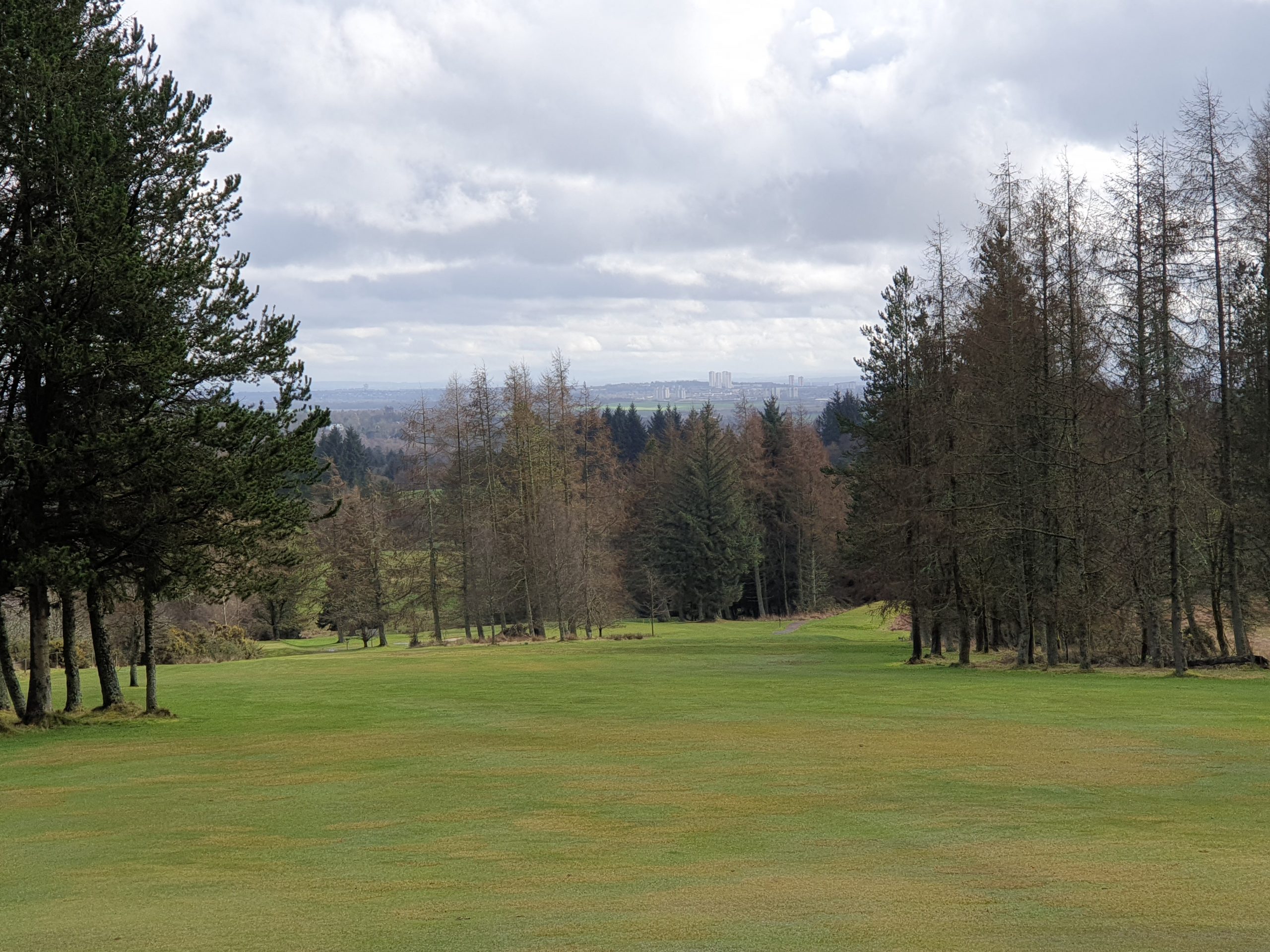
I played both the Hilton Park and Allander courses in one day, which was a challenge given the undulating terrain. A buggy might be useful here. There are excellent views, including of the Glasgow skyline, something made easier by the loss of many trees in recent years due to storms.

The Hilton Park layout was much more demanding that its sister Allander course, but as a combination of courses they compliment each other really well.

The well bunkered par three 12th hole, the stroke index 18 hole.

The course routing was a little confusing and I ended up playing the 15th hole twice, having also played some of the Allander holes in the wrong order. I suspect the reason was the shortened winter course. It was so wet, I was the only player.

The 18th is a strong finish at this undulating course.

Sadly, winter greens were in operation on the majority of holes, but I was only charged £30 for both rounds via Golfnow, which was excellent value. Overall, the Hilton Park property is one of the best in Scotland, and worth checking out.

The par four 13th, at well over 400 yards, will play as a 5 for most.

I could really imagine being a member at Hilton Park as the overall package is incredible value. It would make for a great society day out.

Views of Glasgow from the 8th, a short par 4, Moly’s only birdie hole.

Price £45.

Discount: Golf Now, £15, against the Winter rate of £30.

Course Type: Heathland

Par 70 (2 par 5s, 11 par 4s, 5 par 3s)

Distance:5446 (yellow)

Course Rating / Slope Rating (yellow) 67/127.

Moly’s Gross score85

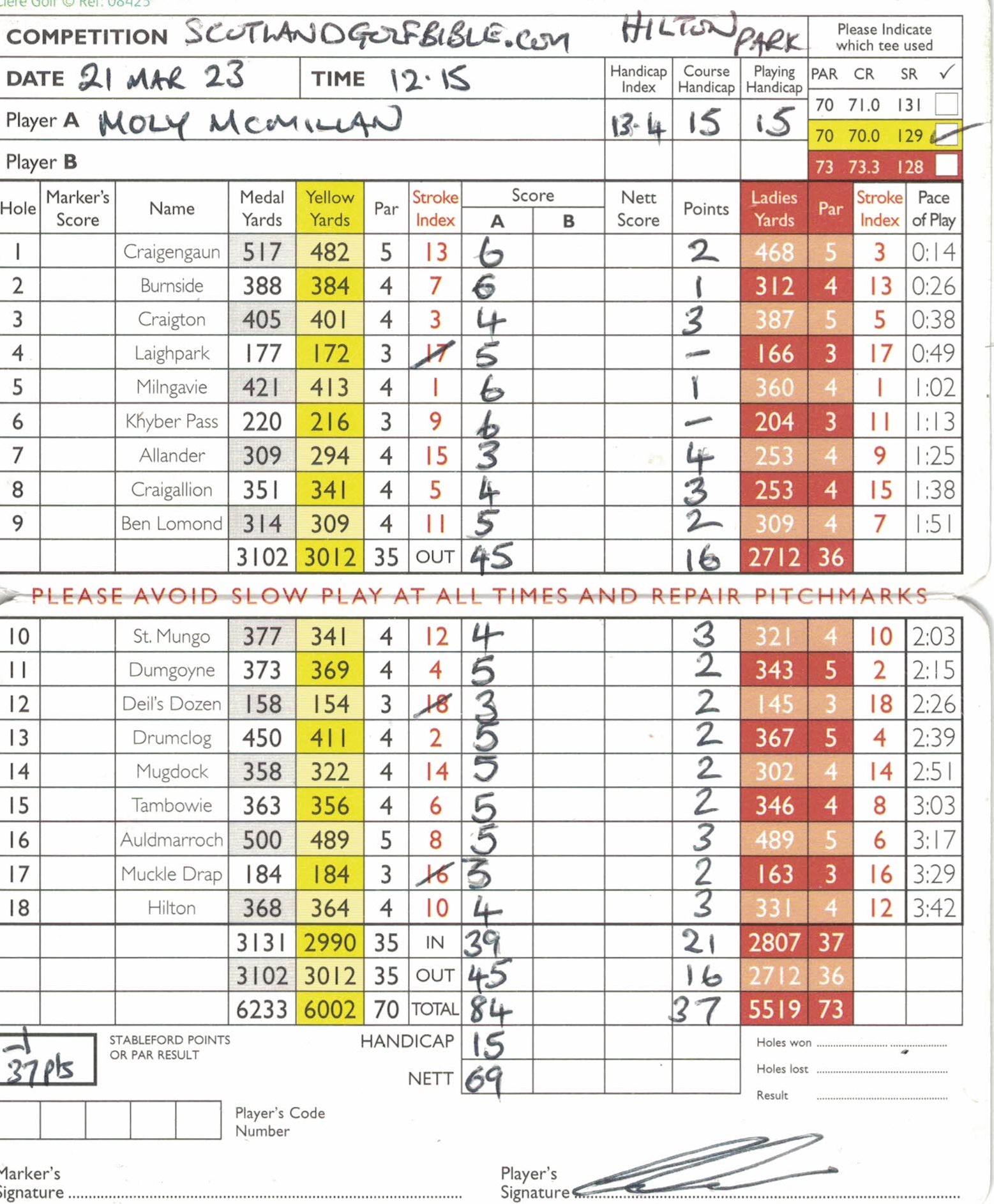
Moly’s Hilton Park Scorecard, using mostly winter greens – 84

179. Hilton Park Allander. 21 Mar 23

I wish AI could extend to golfhonest!

Value – 4.5/5

This is my first blog written with AI assistance.

Nestled near the Campsie Hills north of Glasgow, the Allander course at Hilton Park Golf Club offers a rich blend of history and natural beauty. Opened in 1928 and designed by James Braid it represents a good example of Braid’s artistry of balancing challenge and fun.

The approach to the first, presents a typical view of this Allander course.

Set within an area of beautiful scenery of rolling hills and lush heathland greenery, full of flora and fauna, the course is nice just to walk around.

The par four 5th on the Allander course, fully justified as the Stroke Index 1 hole.

I was particularly impressed by the friendliness of the PGA Pro, Ewan Grimes, who went out of their way to make me feel welcome. His knowledge and welcome were second to none, along with his stories.

Moly teeing off at the 15th on the Allander course at Hilton Park, a mid iron par three.

The course was in good condition. However, the drainage seemed poor, which was unexpected given the heathland conditions. Given the conditions there were several winter greens in play, which was a disappointment.

The tree lines framed many holes, but in fact the fairways were quite generous. Here at the par three 17th.

One of two courses at Hilton Park, the Allander is very much the secondary, shorter course. It would be worth playing though on in a fine summer day.

The Allander 18th hole, a mid length par four, with the impressive clubhouse.

So what do I think of using AI? It created a very bland and flowery draft, which was frankly difficult to take seriously. Clearly influenced by Golf Club websites, full of standard phrases ‘course for all all abilities’, ‘challenge for all’, etc etc, after editing it left me with no more than 4 meaningful sentences.

Price £45.

Discount: Golf Now, £15, against the Winter rate of £30.

Course Type: Heathland

Par 69 (2 par 5s, 11 par 4s, 5 par 3s)

Distance:5446 (yellow)

Course Rating / Slope Rating (yellow) 67/127.

Moly’s Gross score85

Moly’s scorecard, but with several winter greens
« Older posts

© 2026 Scotland Golf Bible

Theme by Anders NorenUp ↑