A guide to green fee value for money

Category: 5 star (Page 1 of 7)

184. West Kilbride. 24 Mar 2023.

Walter Hagen thought better of it. He made a big mistake.

Round: £40 (Winter rate). Par 71. Course Rating 69.7, Slope 120.

Value: 5/5.

Moly’s Score: 95.

Three miles south of Seamill on a rocky promontory above the Firth of Clyde, sits Portencross Castle, a squat fourteenth-century tower house with a roofline destroyed in 1739 and never repaired. This place was consequential long before the castle was built as its land was given by Robert the Bruce to Sir Robert Boyd of Kilmarnock for his service at Bannockburn. The castle became a purgatory stop for Scotland’s dead kings; their bodies lying in state before being transported by a birlinn, a traditional Hebridean ship, to Iona for burial.

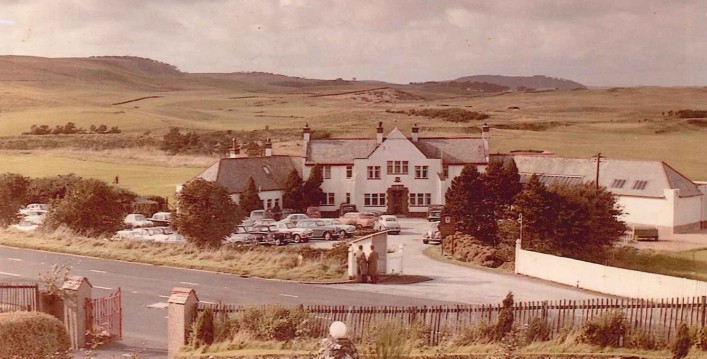
By the 1890s, the Craufurds had long since replaced the Boyds of Kilmarnock dynasty. It was Hugh Craufurd, Laird of Auchenames and Portencross, who played the first tee shot at West Kilbride Golf Club in 1893, on the nine-hole course laid out by Old Tom Morris.
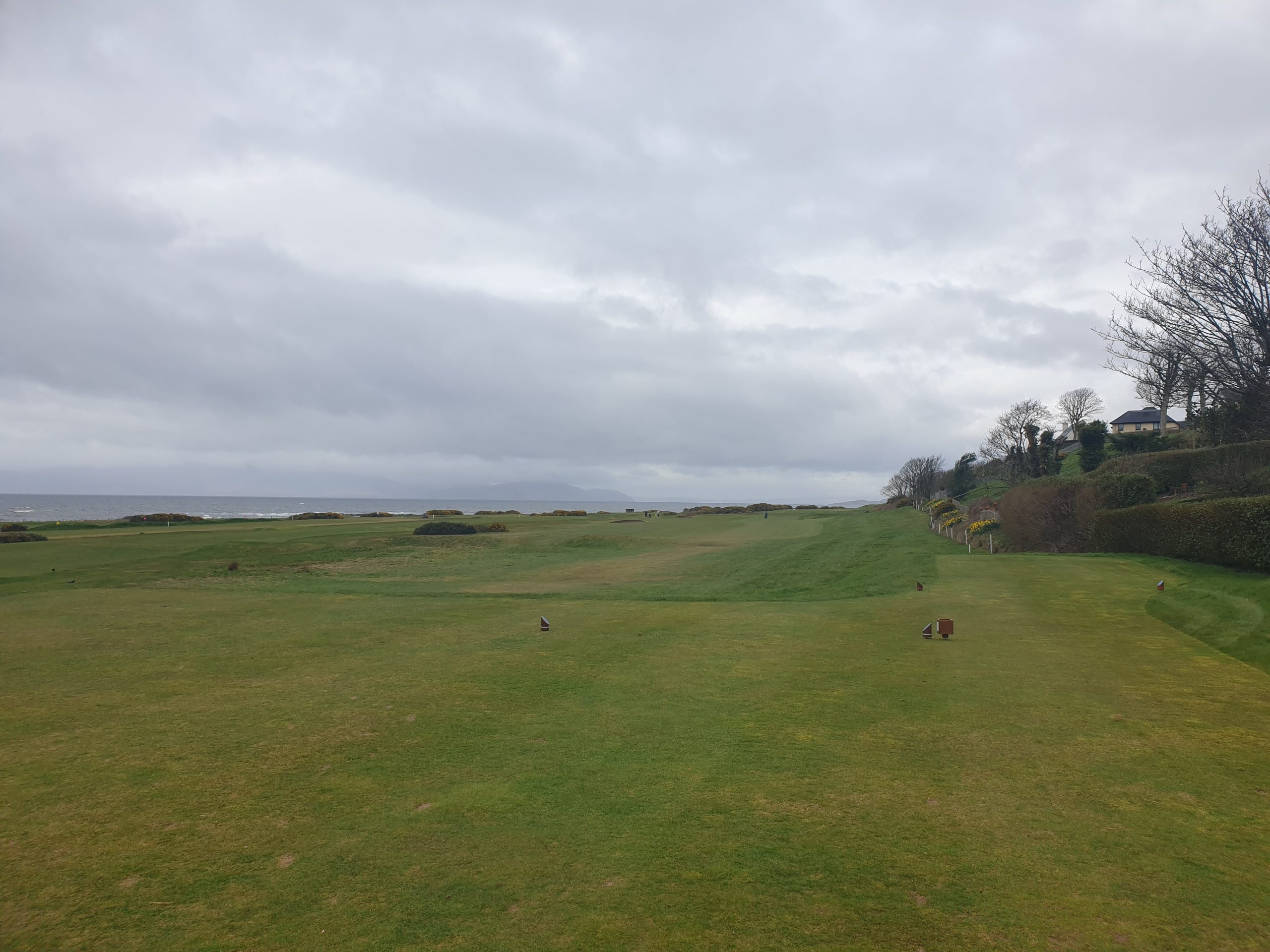
Hole 1, Burn, looking at the Firth of Clyde and the Isle of Arran. The Laird of Auchenames drove off here in May 1893.

The course extended to 18 in 1905, and the layout was altered again in 1914 and 1925, both done by James Braid. There are many parallels with Lundin GC, blog 84, with the links land predominantly the Morris holes, with Braid encroaching on the more arable turf. The resulting layout it is not a simple out-and-back routing, with Braid keen to make regular changes in wind effect, where he could.
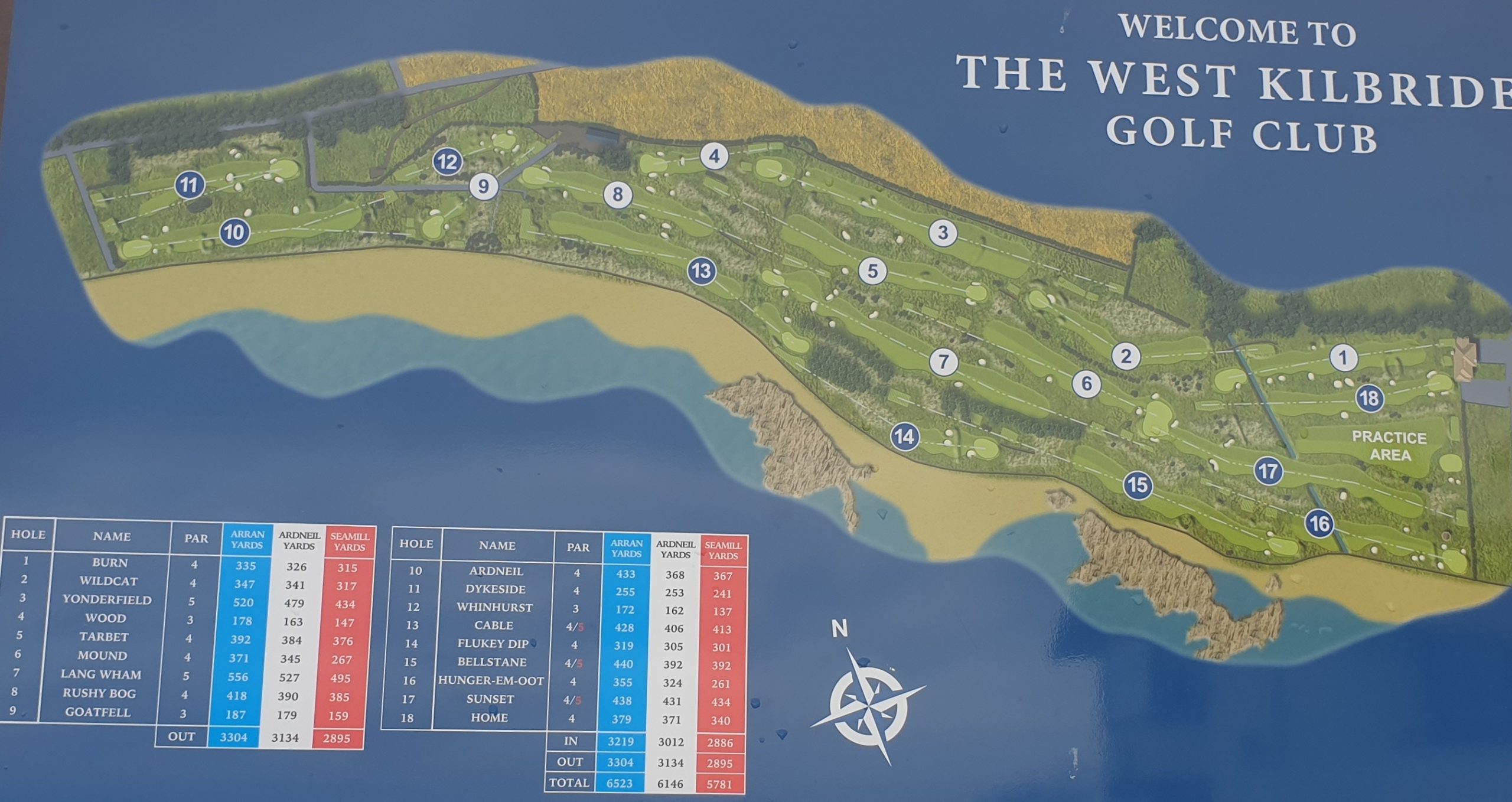
The Old Tom / James Braid layout, a course with parallels to Lundin GC in Fife.

I played alone for only £40 on the winter rate, an unbelievable bargain, in changeable weather conditions as the photos show. Being alone at West Kilbride was mostly meditative, despite a forensic start.

At the first hole, Burn, a par four of 326 yards, my thinned drive embedded in the face of a bunker; not in the sand, but in the turf wall – a rule referee wasn’t available.

The opening drive, embedded in the face of the bunker. A rules quiz – what can you do?

Does a ball embedded in the face of a bunker entitle you to free relief? The answer is yes — provided the ball is embedded in the turf of the rivetted wall or face, not in sand. The relief is to find the nearest point in the general area not nearer the hole and drop within one club-length. No penalty. The catch: if any part of the ball is touching sand, free relief evaporates and you play it as it lies or take an unplayable.

I took the free drop and still made seven. The rules of golf are at times generous, but they don’t always mean a lower score.
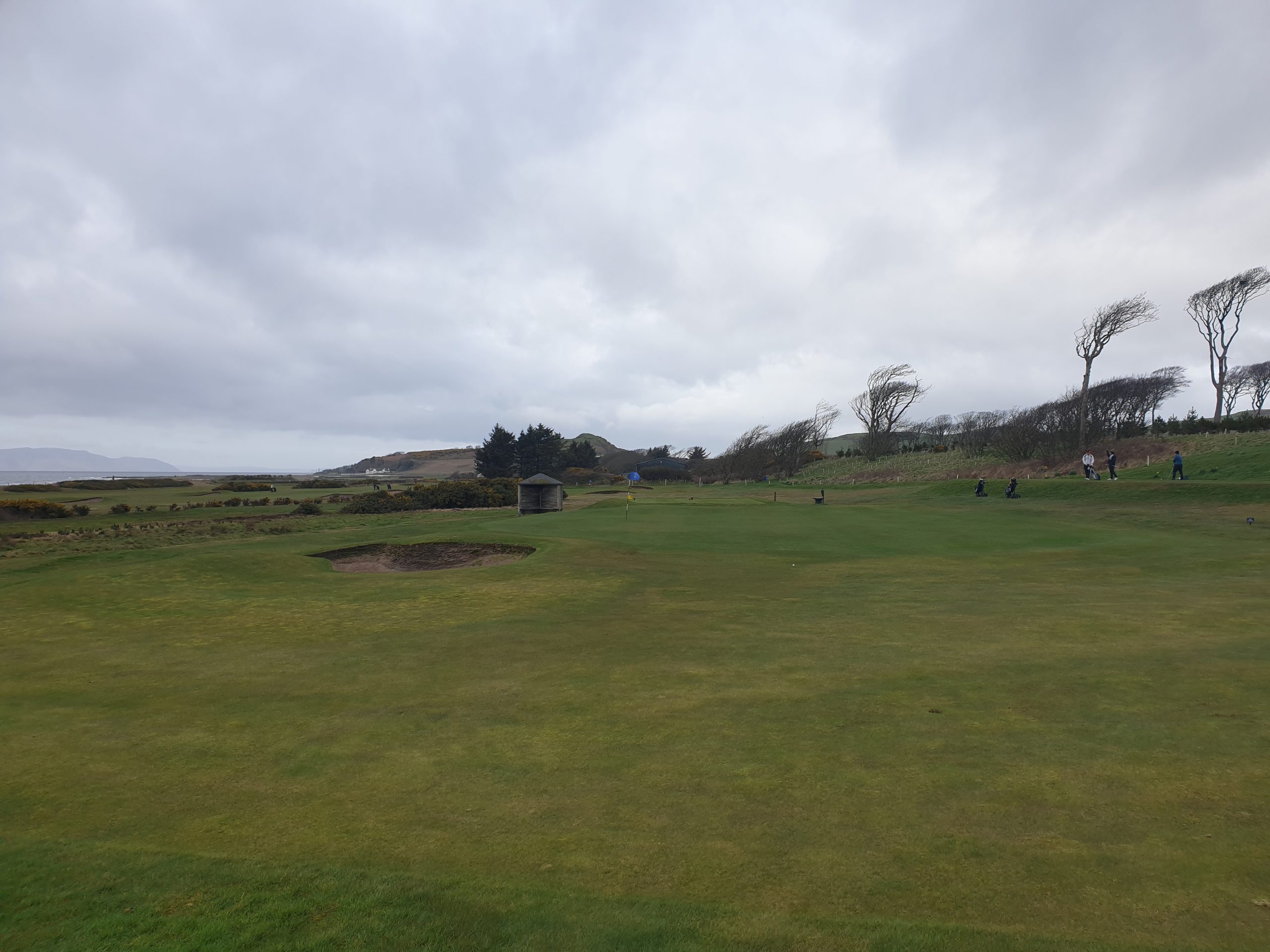
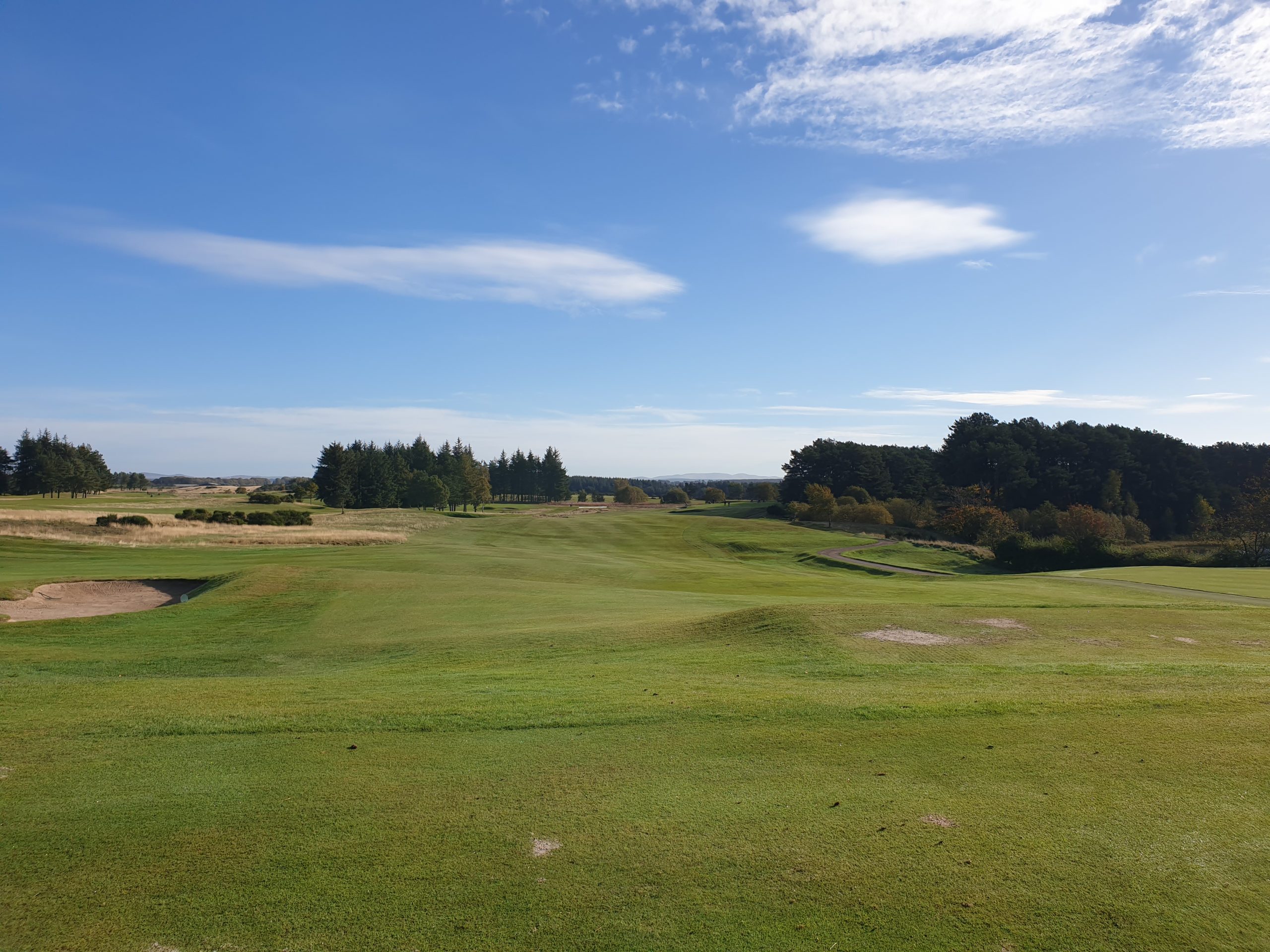
The approach to the par five 3rd hole ‘Yonderfield’. The trees perfectly illustrating the prevailing wind underlying how West Kilbride challenges your game.

I played a good round in difficult windy conditions with Out of Bounds (OOB) in play on twelve holes. There is nowhere to hide at West Kilbride. I finished with 95 gross and 29 Stableford points off 14, which in those conditions represented something around par for the day.

The front nine is somewhat on arable, not true links, land. The back nine has more of the original links land holes, giving you two linked but distinct experiences. It is at the turn, Ardneil, the tenth, that the course reveals its real character, with OOBs running the complete left hand side. The westerly prevailing wind becomes your friend here.
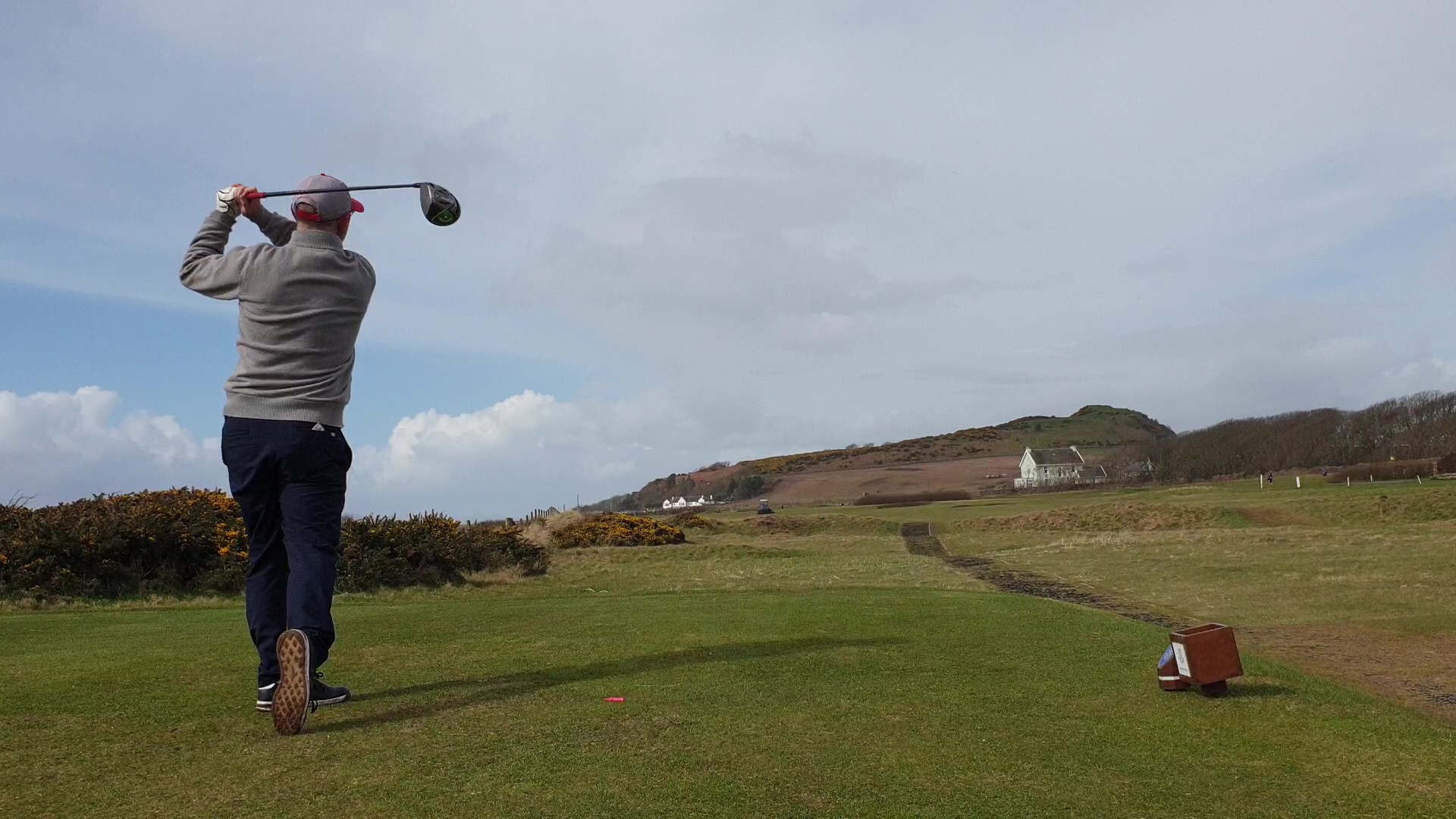
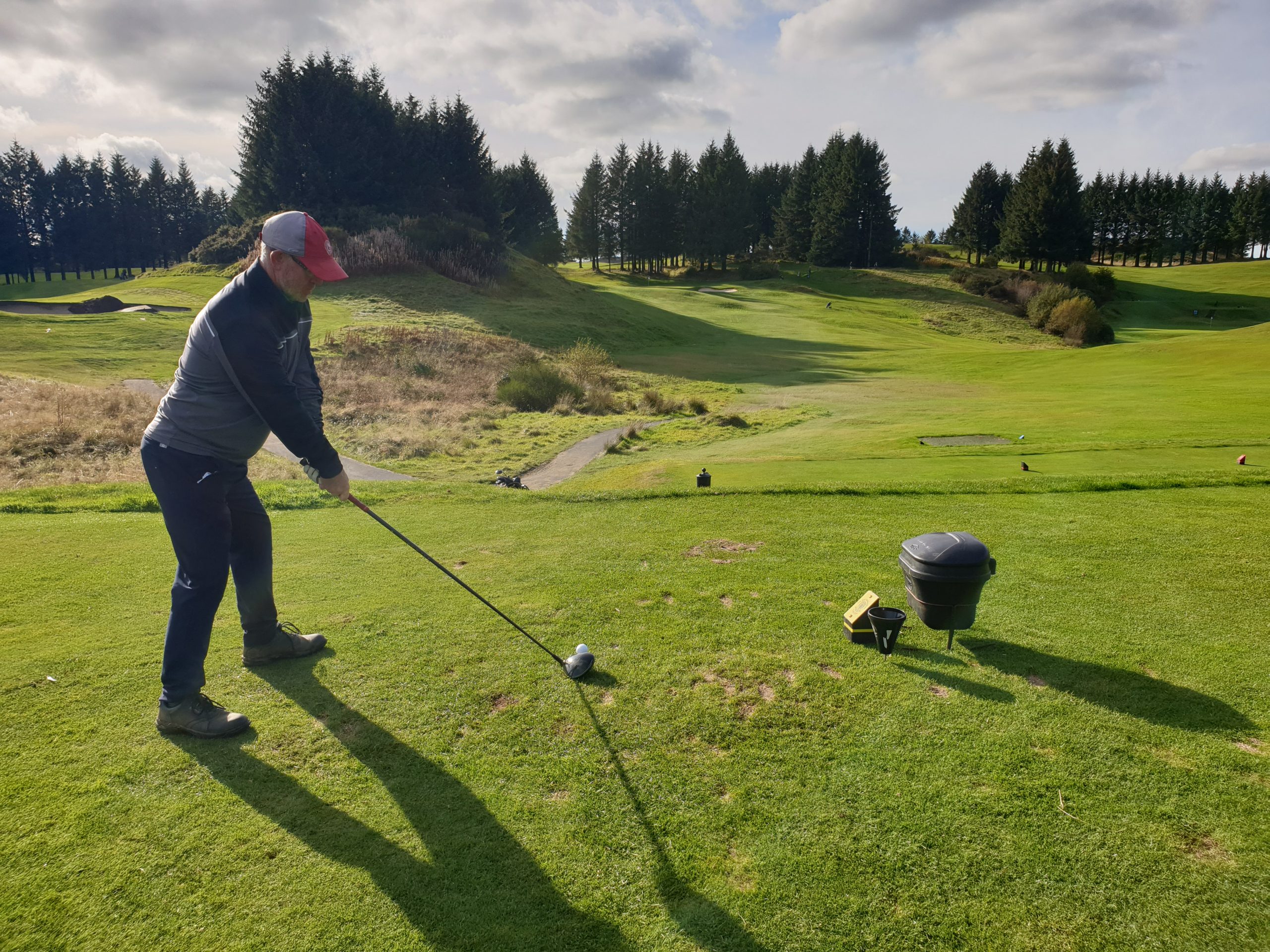
Moly driving at the difficult par four 10th, the stroke index 3 hole, with gorse starting to bloom in March! As a lone golfer you need to be good at setting the camera.

By my back nine, something else had changed: the weather. The grey overcast of the first hour had given way to Ayrshire sunshine, the Firth beginning to catch the light and Arran stunningly on the horizon. Links golf in Scotland operates a variable weather tariff, not unlike most of the fees these days. The same course that hands you a seven on the first hole in a grey wind can, within two hours, be offering something close to transcendence.
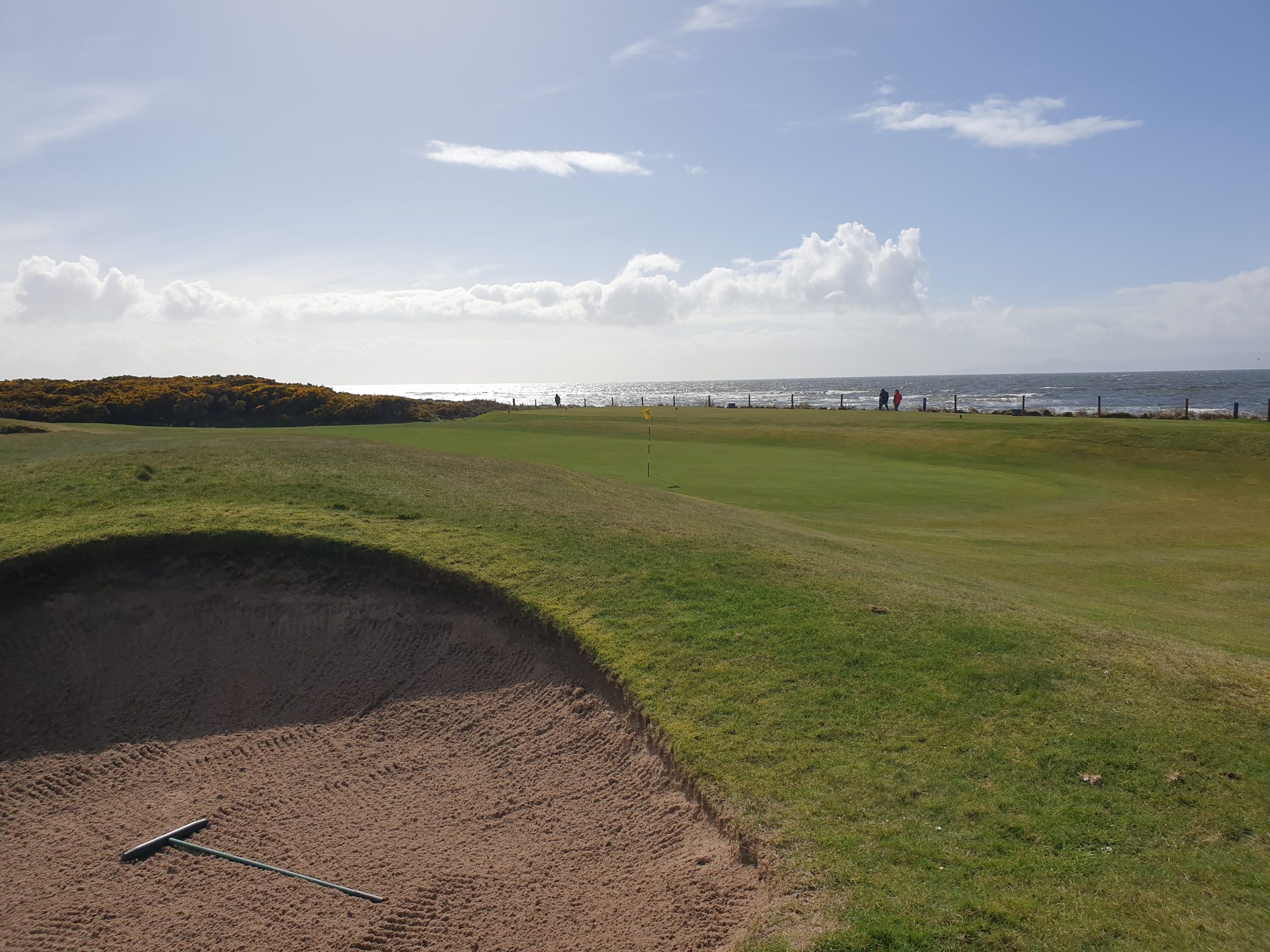
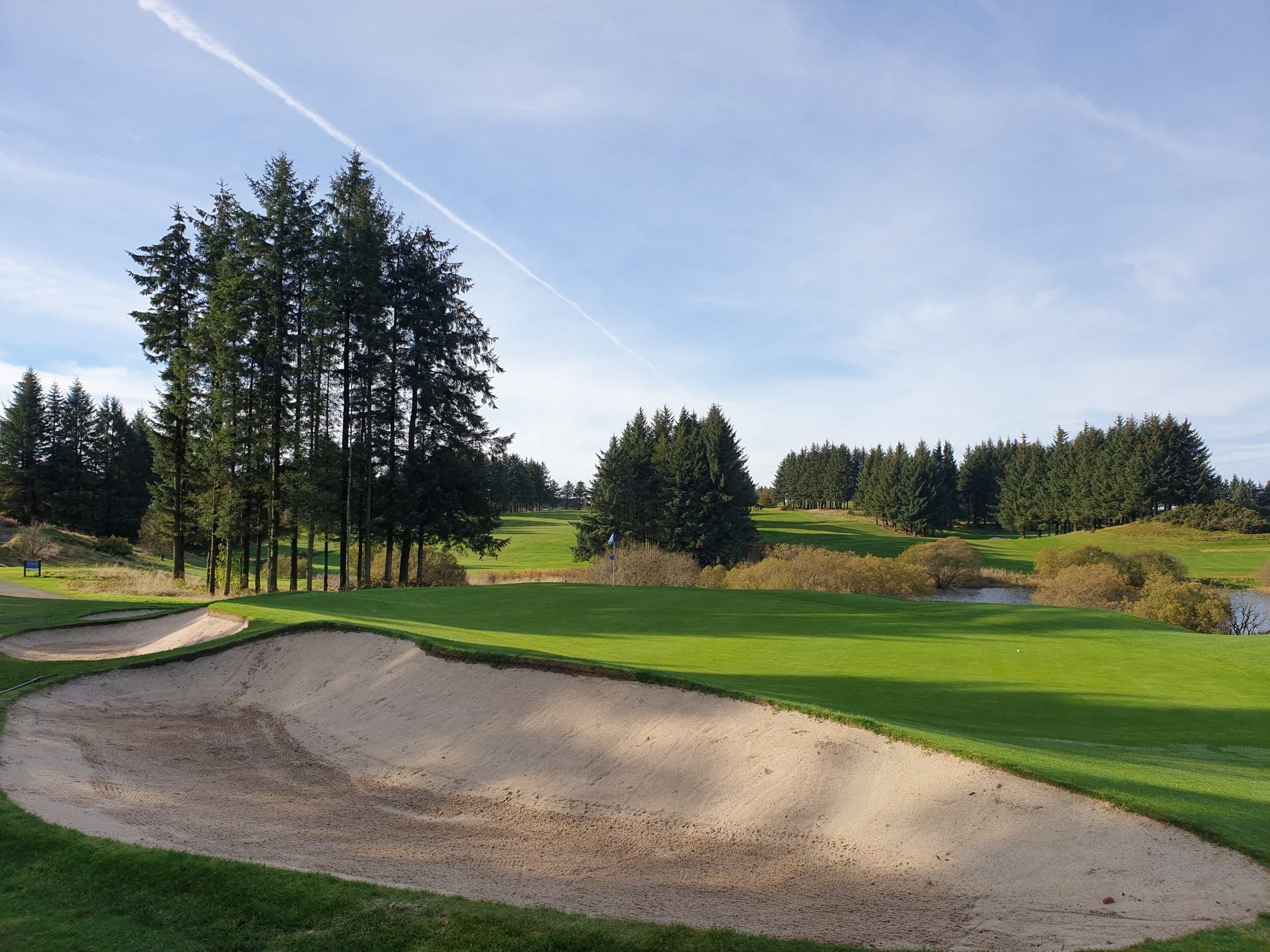
The green at the 13th, the toughest hole – stroke index 1, 406 yards, par 4. The conditioning fully on show, as was the improving weather.

The greens and their surrounds were excellent, brilliant conditioning for late March. The links turf was quality. The hole names carry their own character: Yonderfield, Rushy Bog, Lang Wham, Hunger-em-oot.

The club has attracting high profile visitors over the years and were keen to get Walter Hagen, the “first touring pro” to play an exhibition. Hagen failed to agree his fee and “went elsewhere”, ironically agreeing to play The Machrie on the Isle of Islay, but traveled incorrectly to Machrie Bay on Arran, a much lesser course; blog 110. This was a mistake in more ways than he imagined! Open Champion Bobby Locke played here in 1951, clearly being less demanding than Hagen, the real hustler.
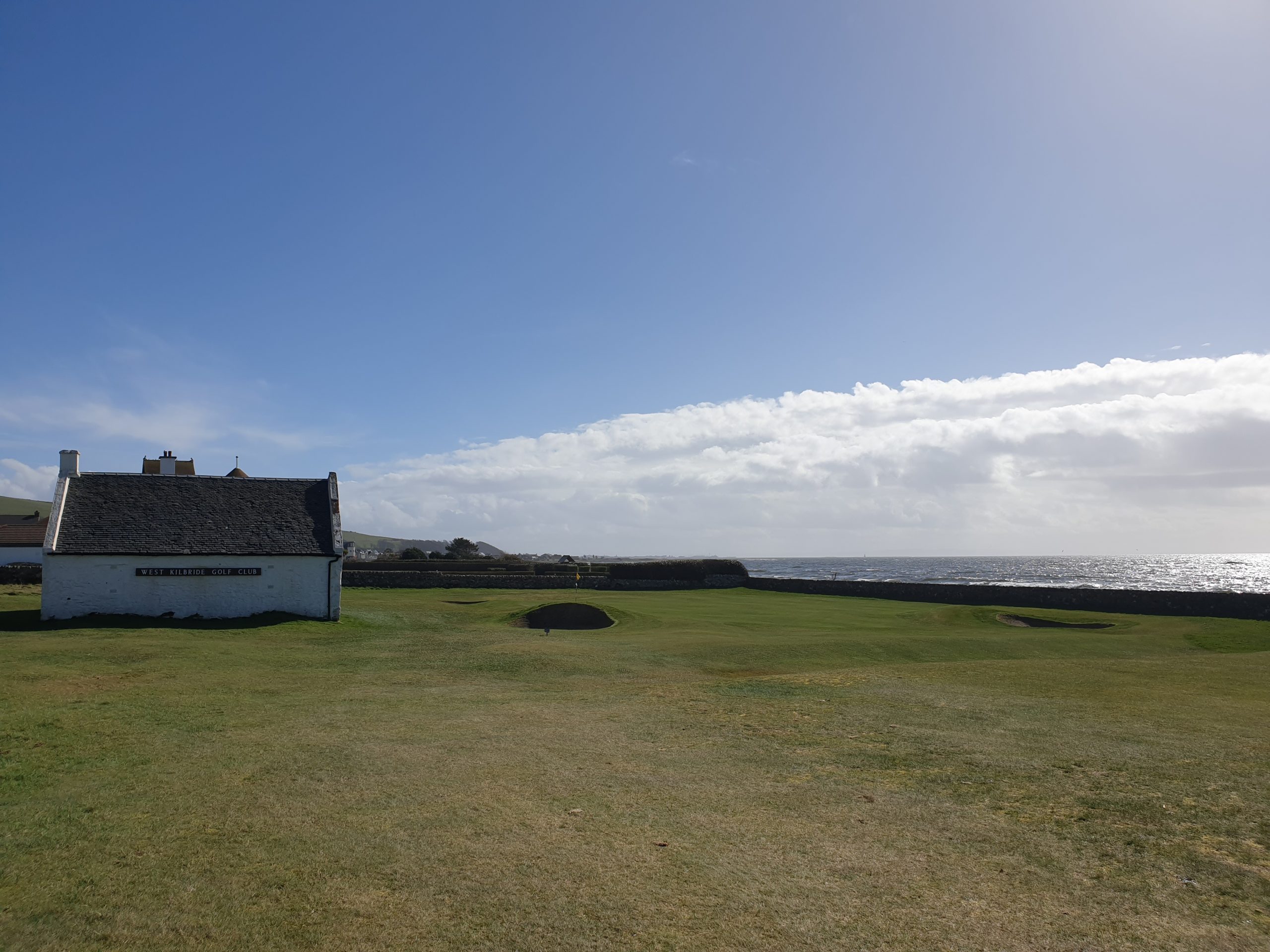
Hole 16, Hunger-em-oot: the signature hole. The West Kilbride Golf Club outbuilding with its sign, the two flanking bunkers, and the Firth of Clyde beyond. This is the image of the course.

West Kilbride is the most northerly of Ayrshire’s true links courses, including Dundonald, Glasgow Gailes, Troon, Prestwick and Turnberry, partly explaining the lower pricing of £40 in March, which deserves reflection.

The course costs £85 on a summer weekday, more than double the winter rate. That Summer/Winter gap has widened considerably over the past decade as Scottish links golf has repriced itself upward as a premium product. At the top of the market, Kingsbarns charges £448 and Turnberry’s rack rate is £545. Green fees at premium Scottish courses have inflated at roughly 7-8% per year over the past two decades, three times the rate of general inflation. The winter links visitor becomes a shrewder operator.

The course is genuinely excellent; I would go back without hesitation and happily pay more than £40 to do so.
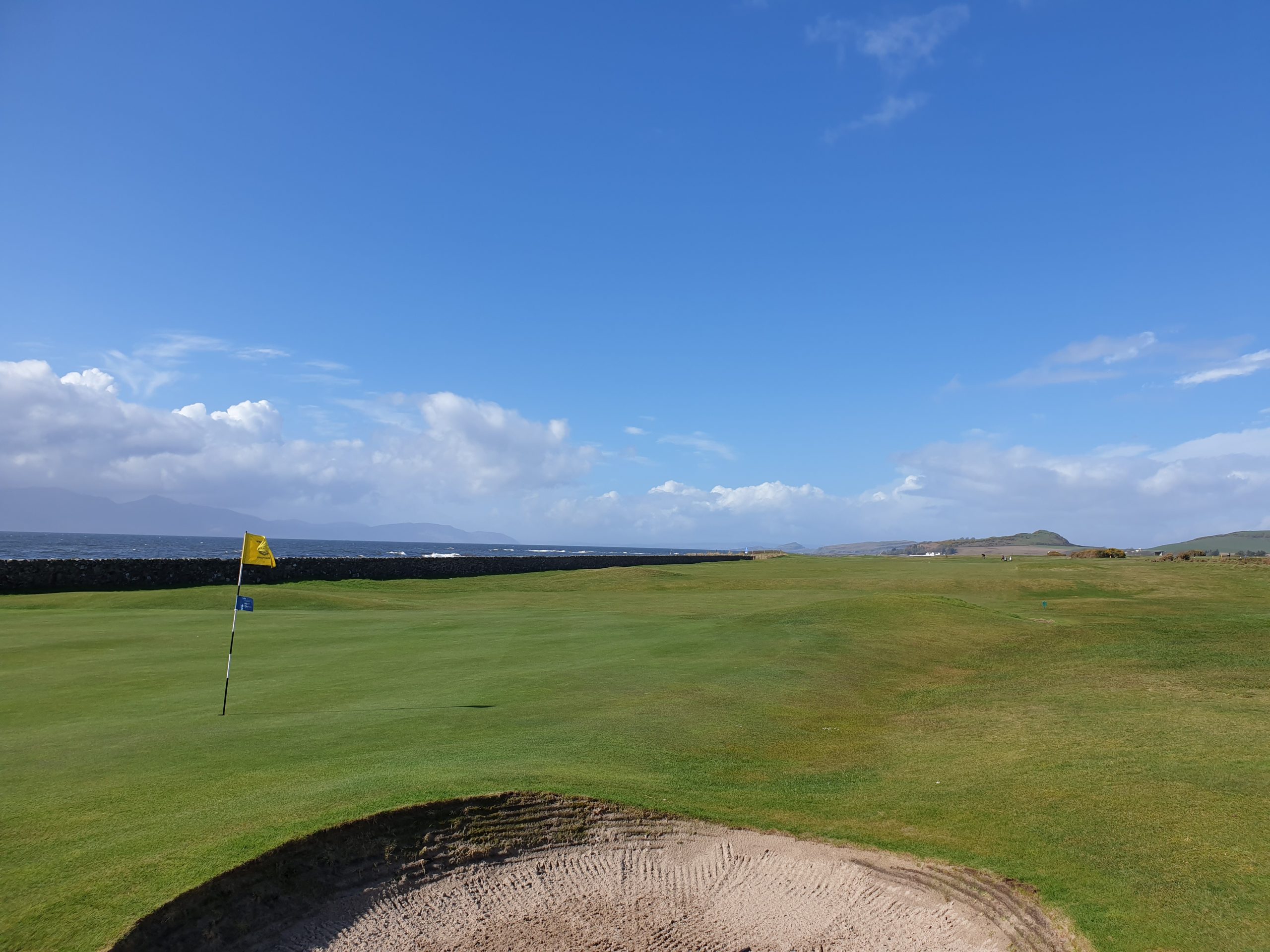
Hole 16 green: looking south along the Firth of Clyde toward Arran. Stone walls, sunshine, the flag. This is what £40 buys you in March at West Kilbride.

Facts:

Course Type: Links

Par 71 (2 par 5s, 13 par 4s, 4 par 3s)

Distance: 6,146 yards (Ardneil/yellow tees)

Course Rating 69.7, Slope 120

Moly’s Gross Score: 95 (29 Stableford points, net 81)
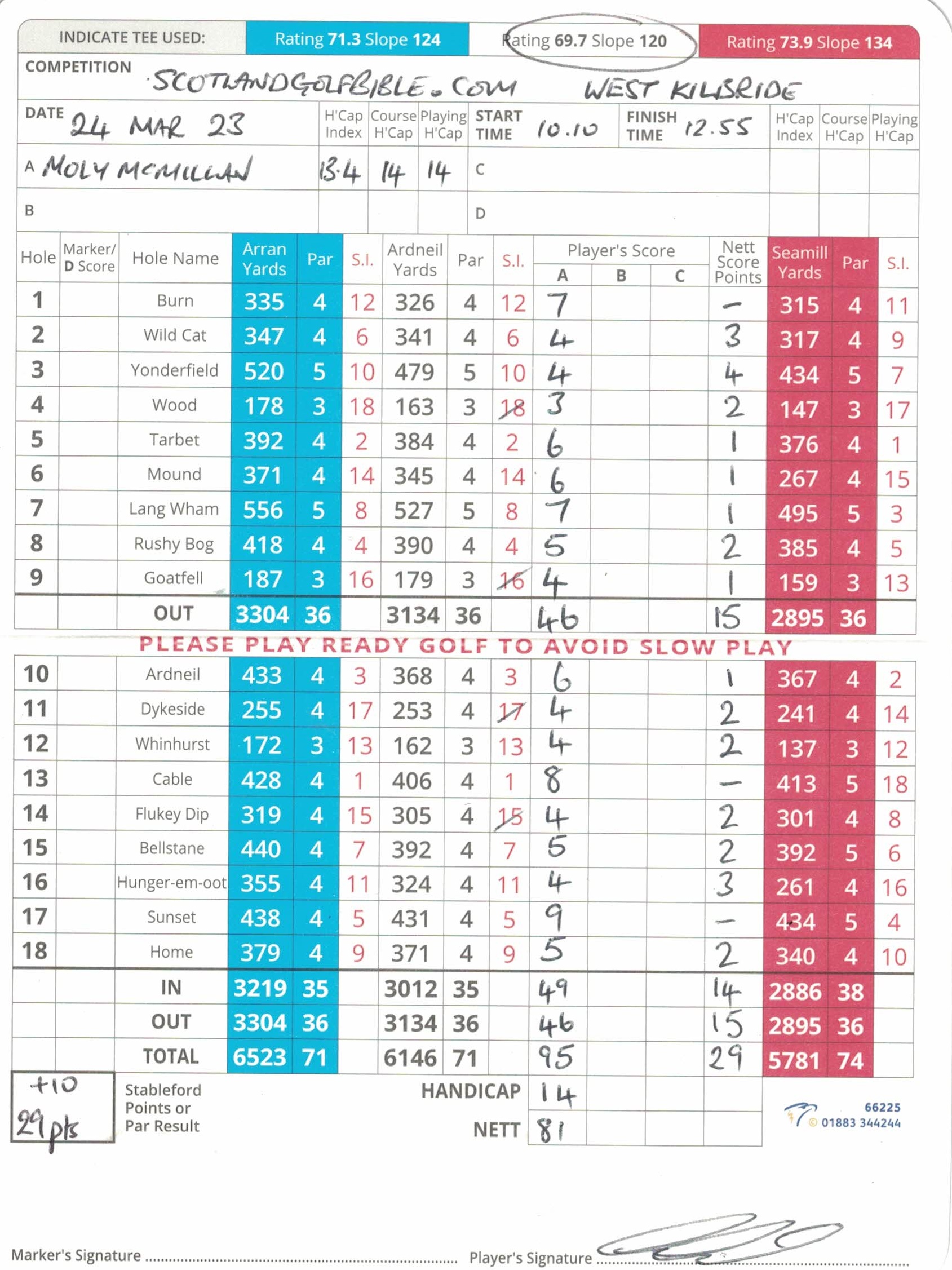
Moly’s scorecard, a day for a stableford preferably.

175. Strathtay. 30 Nov 2022.

Enchanting Course from a ‘one off’ Architect?

Value 4/5

Strathtay golf course, in Highland Perthshire, is the delightful 1909 creation of “Captain Steuart of Ballechin”. With so many good holes on this well crafted layout, I wondered who “Captain Stueart” was. Surely this had to have been designed by an experienced architect?

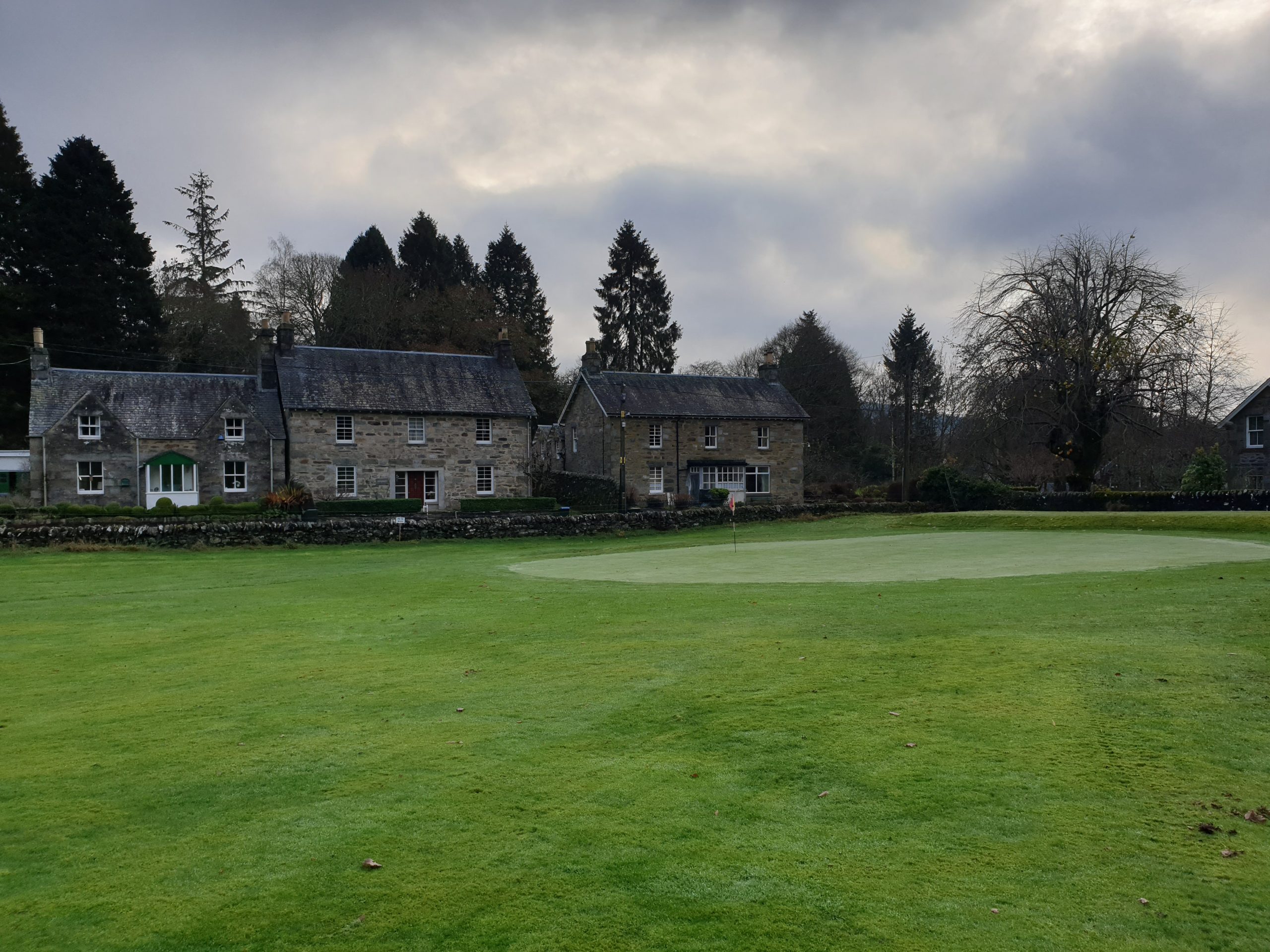
The picturesque stone cottages make the first hole feel like a village green. The Victorian village of Strathtay maintained strict planning laws, demanding use of certain stone, and became a beacon of the Affluent in society.

This 9 hole course is short, at under 2000 yards, with 5 par threes and 4 par fours, although the “11th” is played as a par 4 on the “back 9” from a back tee. Being set into the slopes above the Victorian village of Strathtay, the course feels much longer, with plenty of guile.

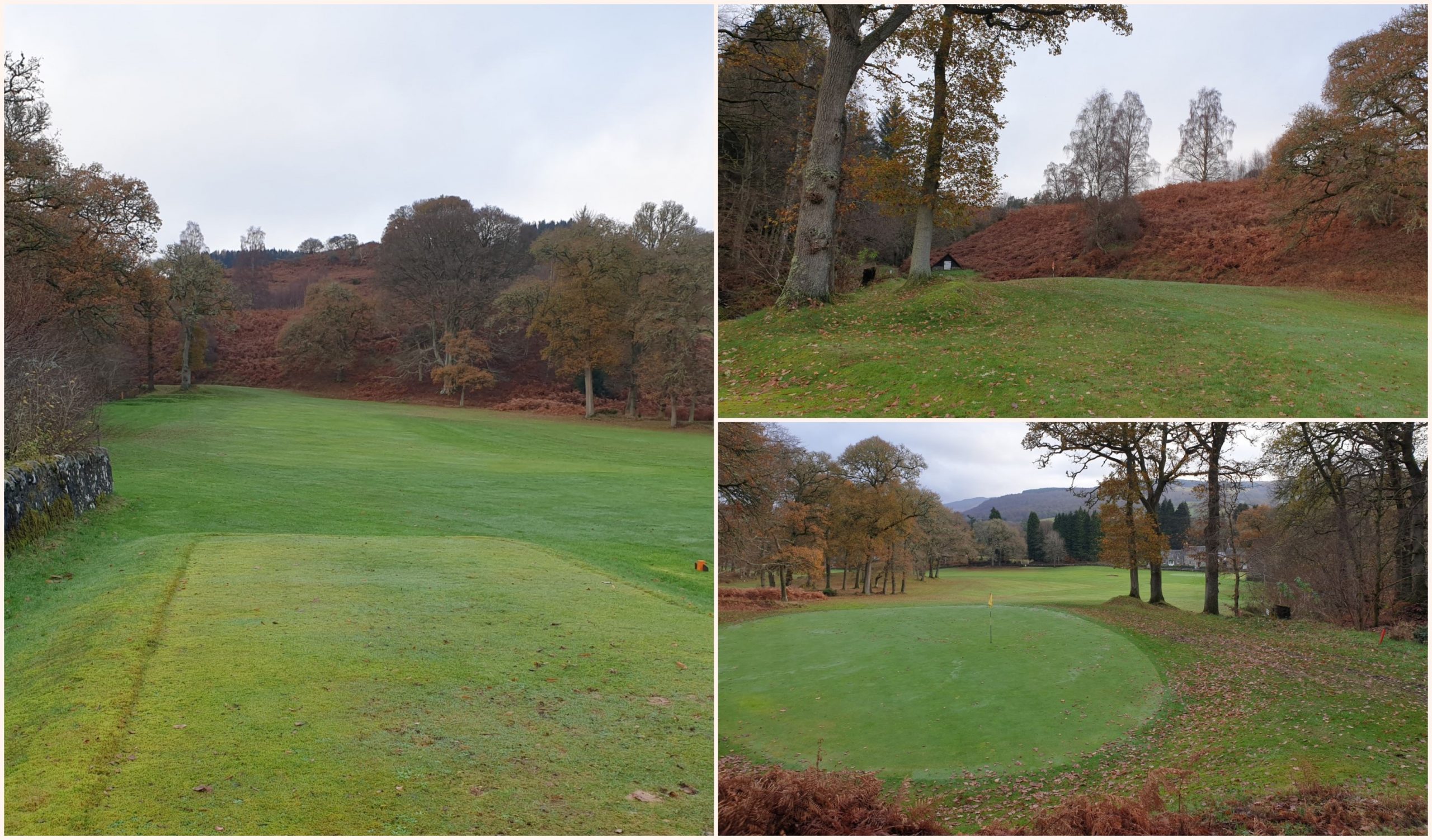
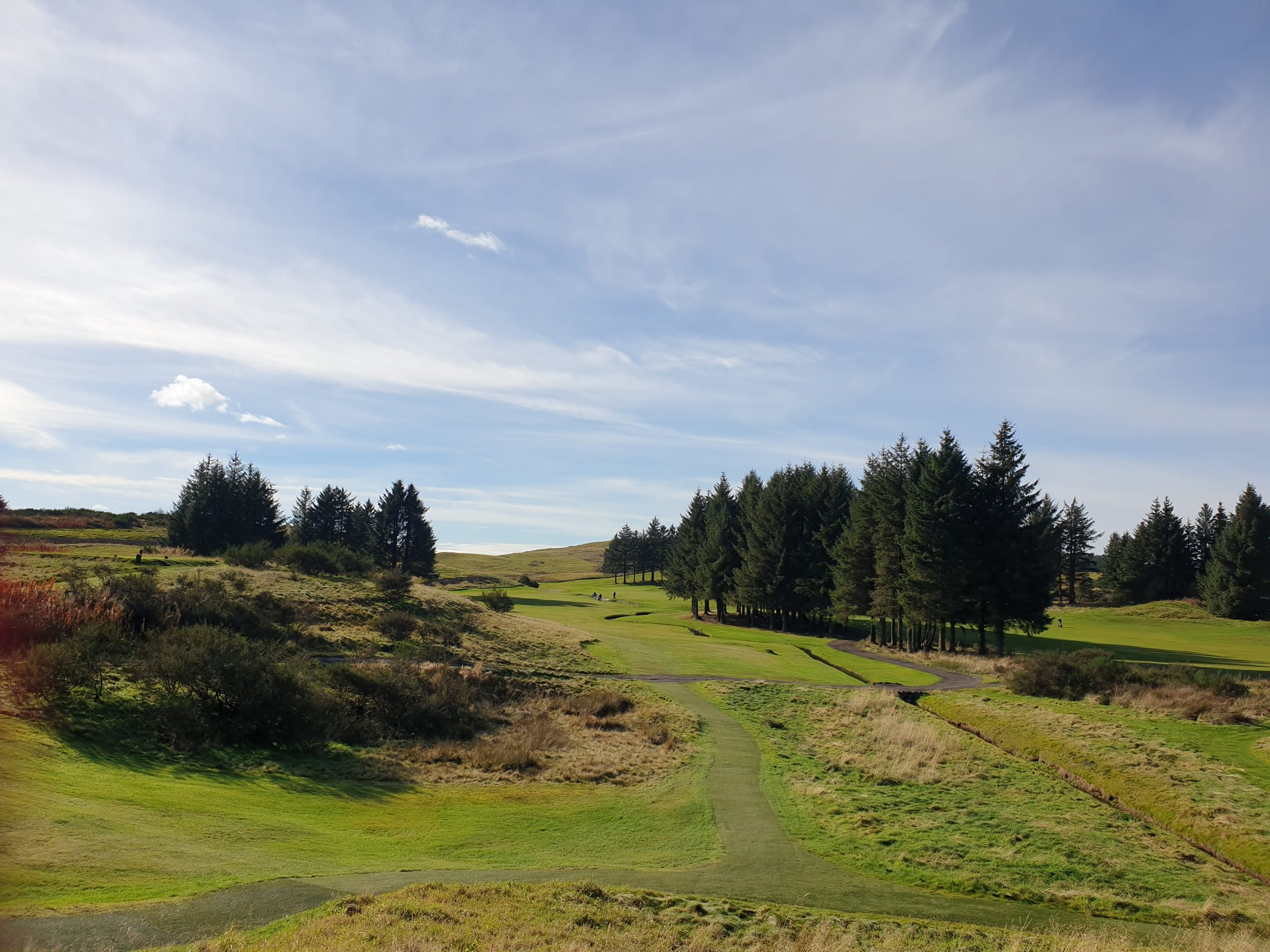
The 6th, a tough slight dog leg left par 4, making good use of the natural contours of this landscape. The green to the right of the picture is actually the 4th.

The “Captain” turns out to be John Malcolm Stueart, an officer in the Rifle Brigade (The Prince Consort’s Own). His nearby home, Ballechin House, was an ancestral seat of the Jacobean Steuart’s (‘Steuart’ being the French spelling of ‘Stewart’). John’s great uncle of the same name, Major John Steuart (1806-1876) had become intrigued with Indian religions, and reportedly came back after his death as a reincarnated dog, resulting in Ballechin house being termed “The most haunted Scotland!”.

One starts to admire the architecture on the 196 yard 2nd hole – a very strong par 3, which requires a long drawing ball, or to be played using a par 4 strategy.

The golfing “Captain” was clearly one of those highly sporty people, and regimental chronicles cite his being the best shot in the battalion, being placed first at rowing and leading the regiment’s best team on sports day. There is also mention of his proficiency at Highland dancing!

The tricky par three 7th hole, “Chapel”, another of the well designed holes. Play to the measured yardage, as if looks longer than it is, with a very difficult chip if you go long.

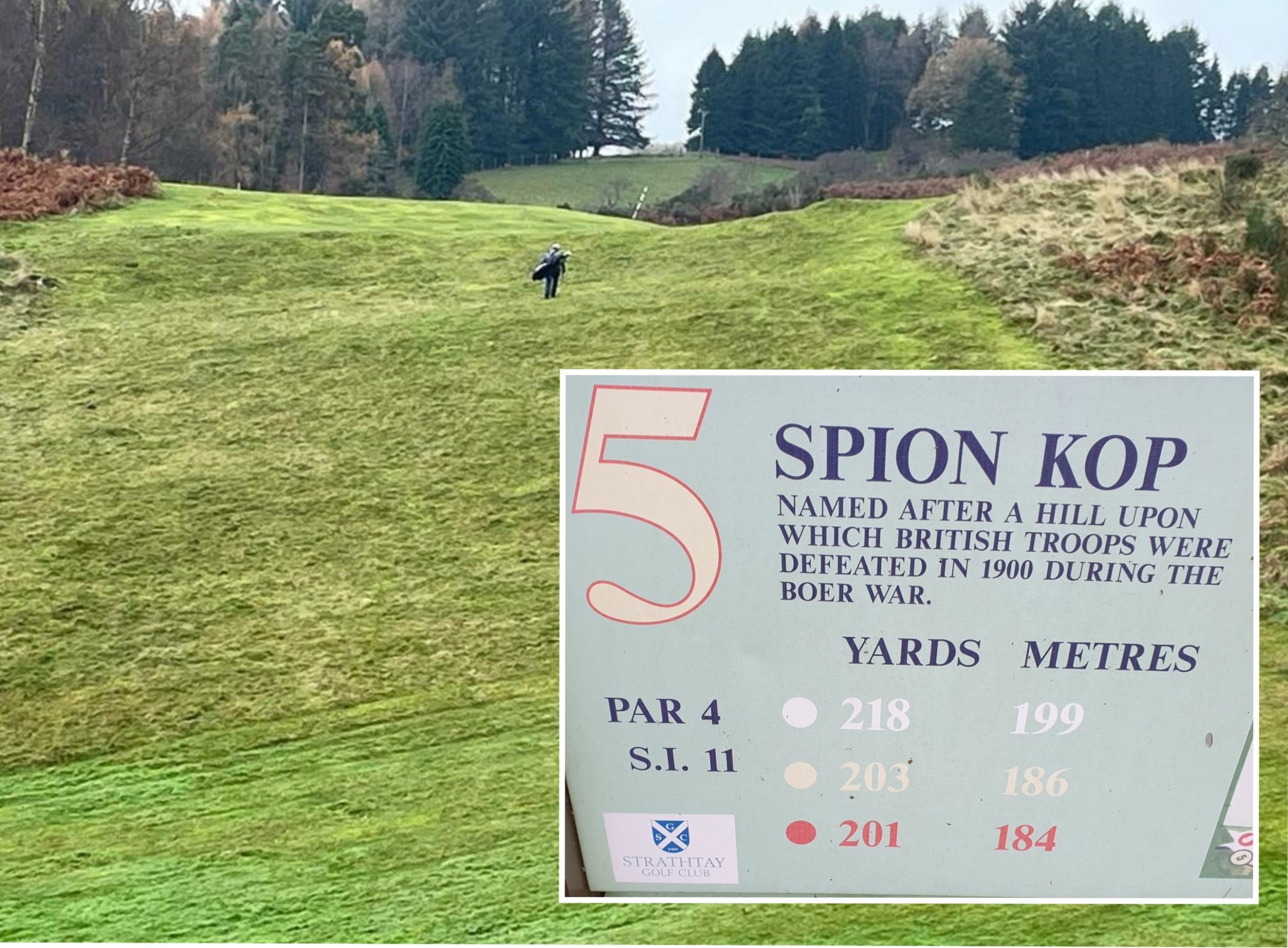
The Rifle Regiment also fought in the Boer War and, whilst it cannot be said with certainty, there is a good chance that Captain Steuart fought at the Battle of Speionkop, which is relevant to the course; the 5th hole is dedicated to the people who died in that battle. The 5th hole is so steep, it is impossible for trolleys and buggies to ascend to the green. It would feel very fitting that the course designer had actually been to the real Spion Kop (see the Craigie Hill blog for the back story).

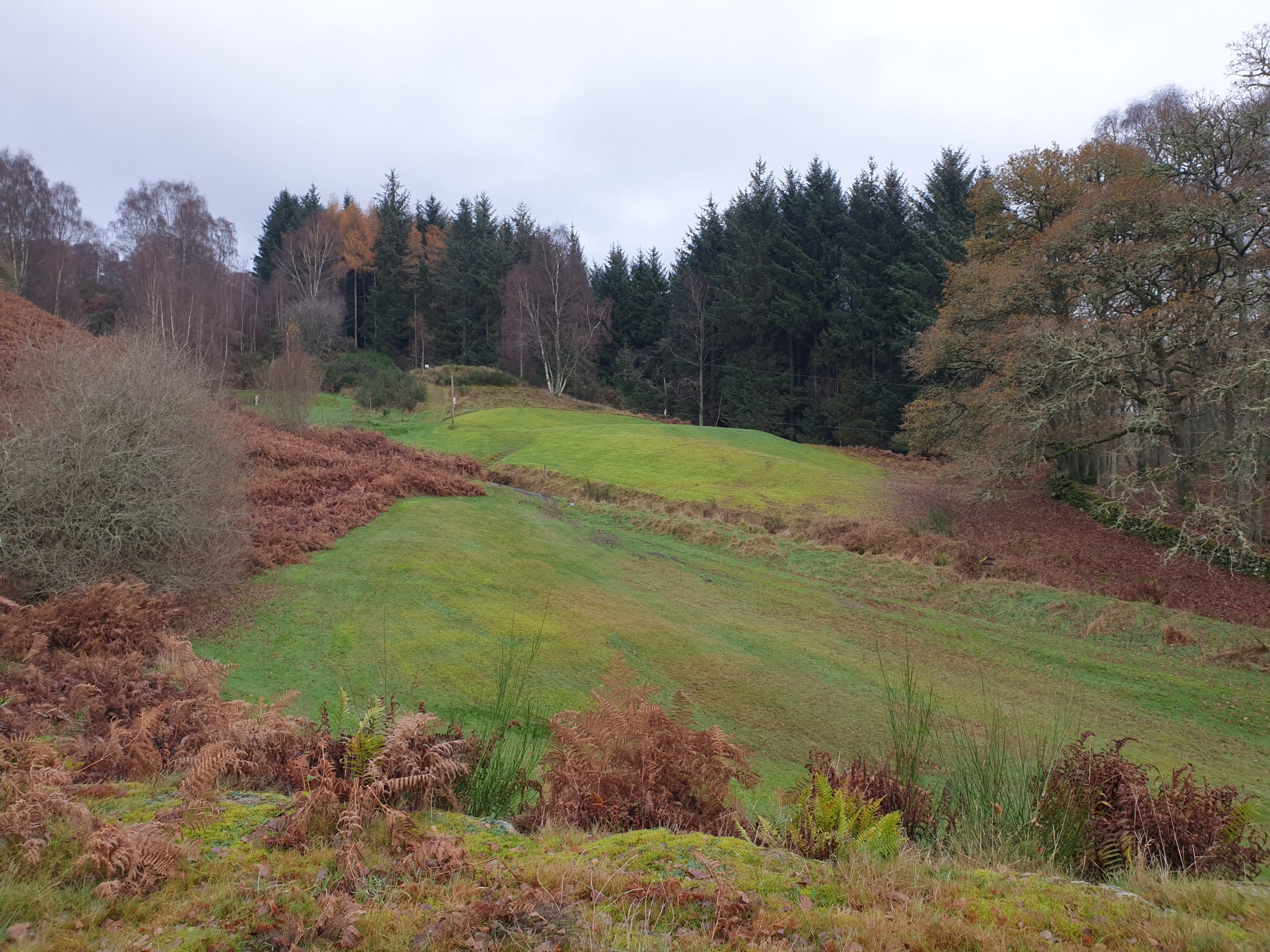
The 5th hole, justified as a par 4, although only 203 yards, with Moly seen climbing the steep “Spion Kop” slope. Buggies and Trolleys have no access.

The course was in excellent condition when we played, despite the recent very wet weather. The small greens are often set into or alongside trees, with some sharp greenside drop offs, making up for the absence of bunkers.

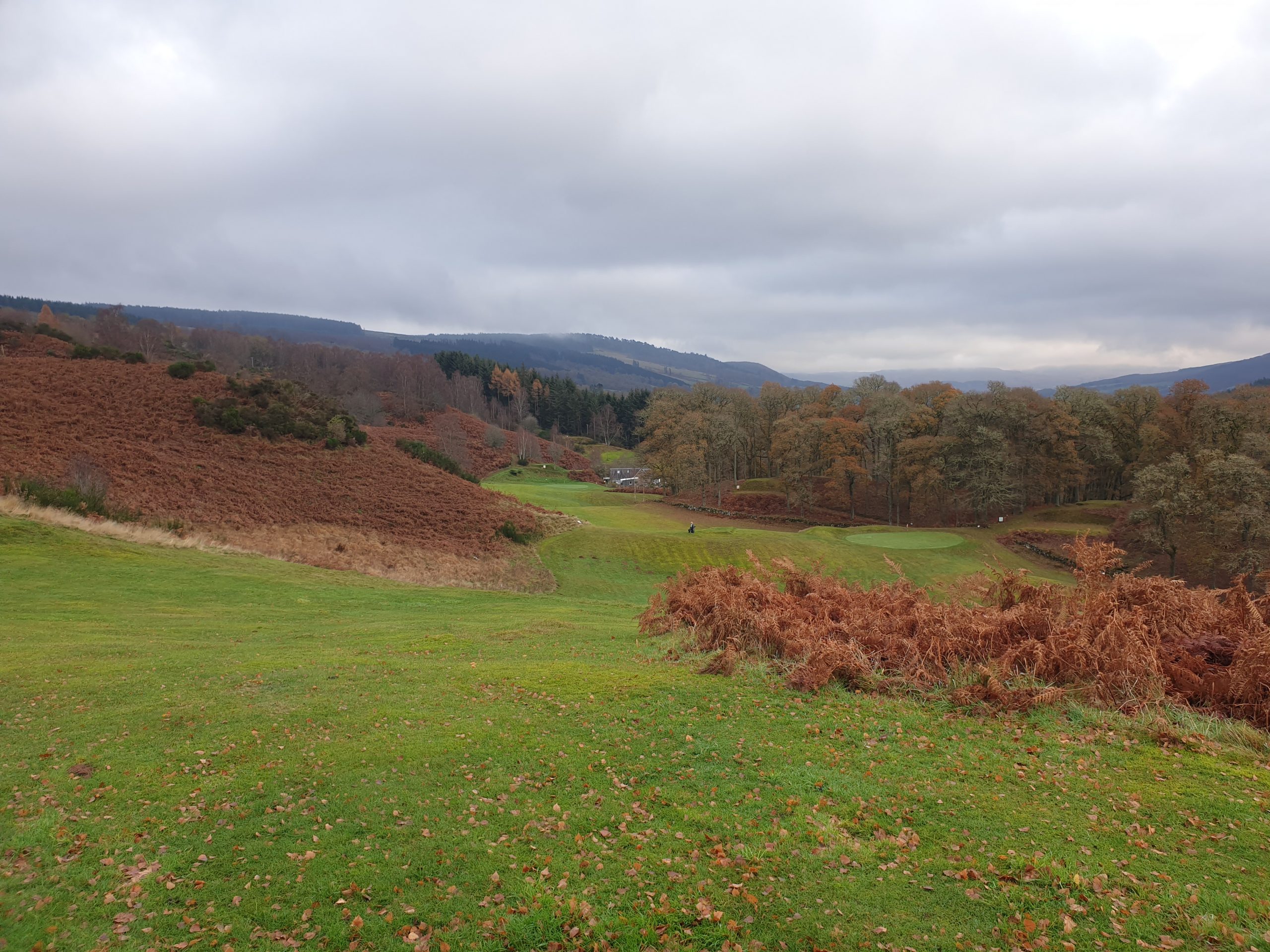
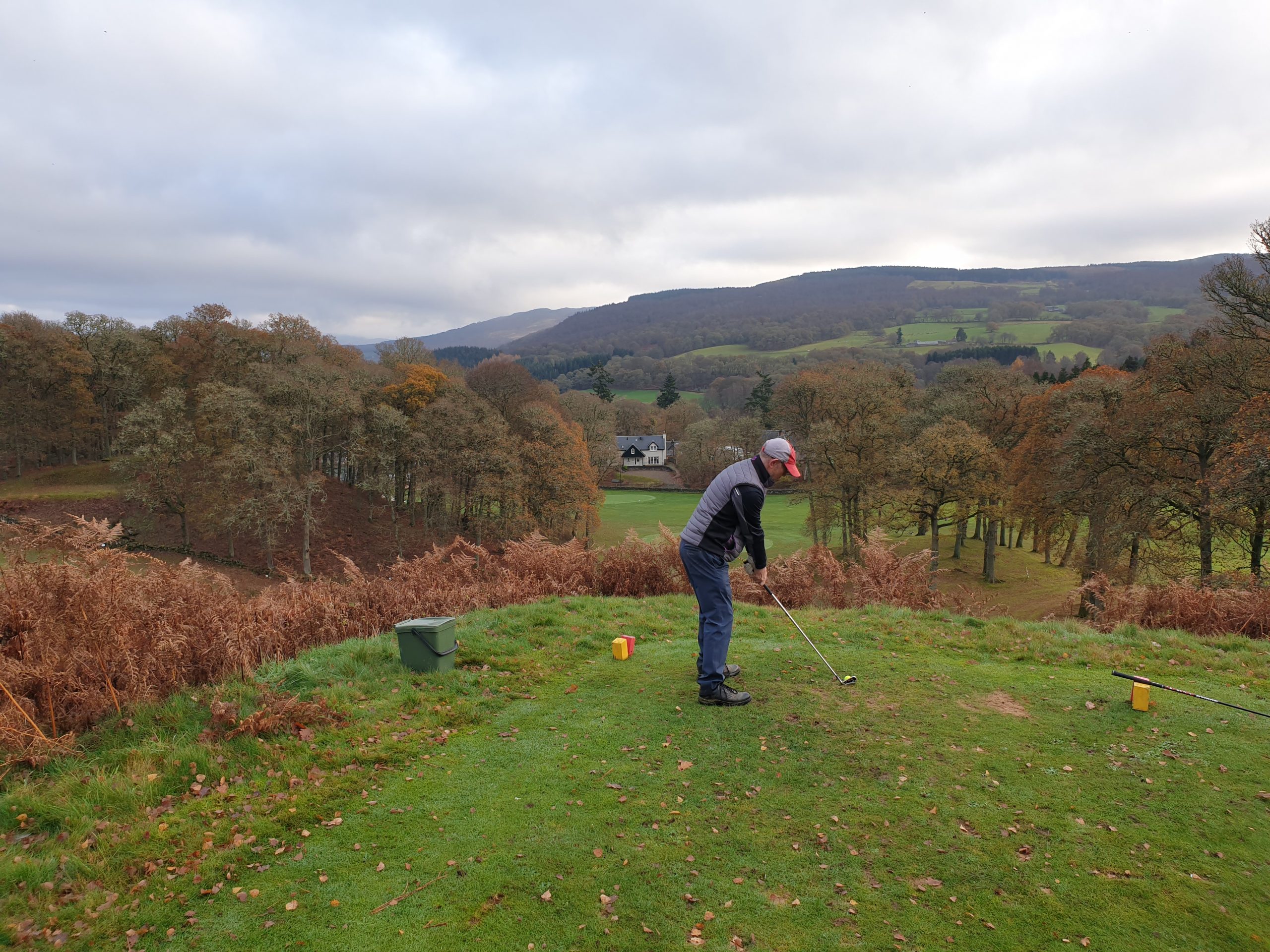
The steep drop at the par 3 third hole, with the Perthshire Hills in the background.

We paid just £10 and thought this was excellent value, given the condition and general ambiance of the course. There is also a nice little clubhouse which I can imagine is a great place to sit on a warm summers day. Highly recommended.

Round List Price £15. Actual Paid £10 (Winter rate).

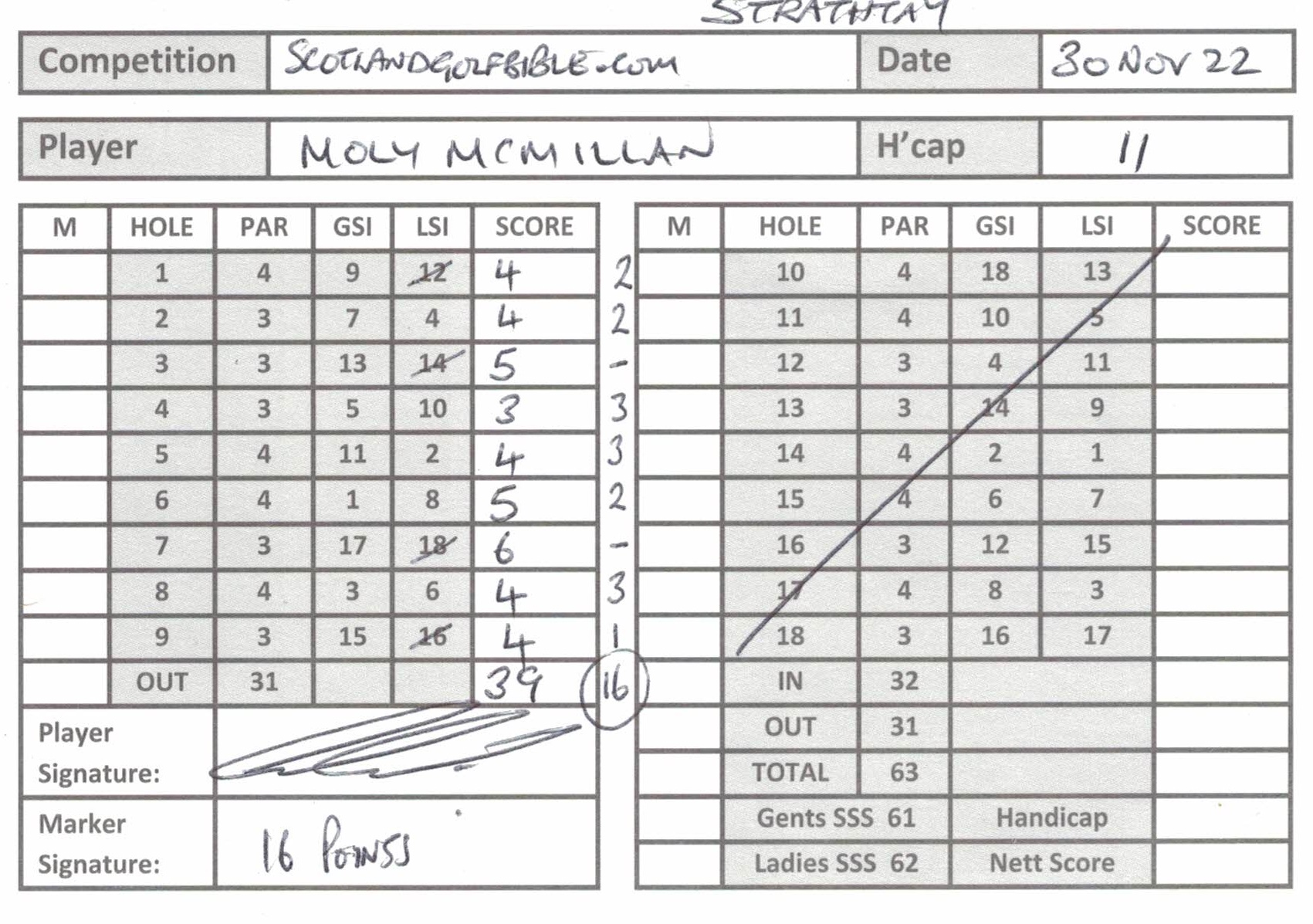
Moly’s Score – 39 for 16 points (off 12)

Course/Slope Rating (yellow) nk/nk

Course Type: Heathland

Par 31  (4 par 4s, 5 par 3s)

Distance (yellow): 1745 yards

Moly’s Gross 39 on this delightful golf course.

169. East Renfrewshire (‘Ren’). 18 Oct 22.

Arboretum type vision creates framing ‘For the Ages’

Value for Money (out of 5) – 5

It takes vision to plant an arboretum as its creator is dead by the time planting has matured, something both sad and somewhat magical. This was how I felt playing one of James Braid’s canvasses – East ‘Ren’.

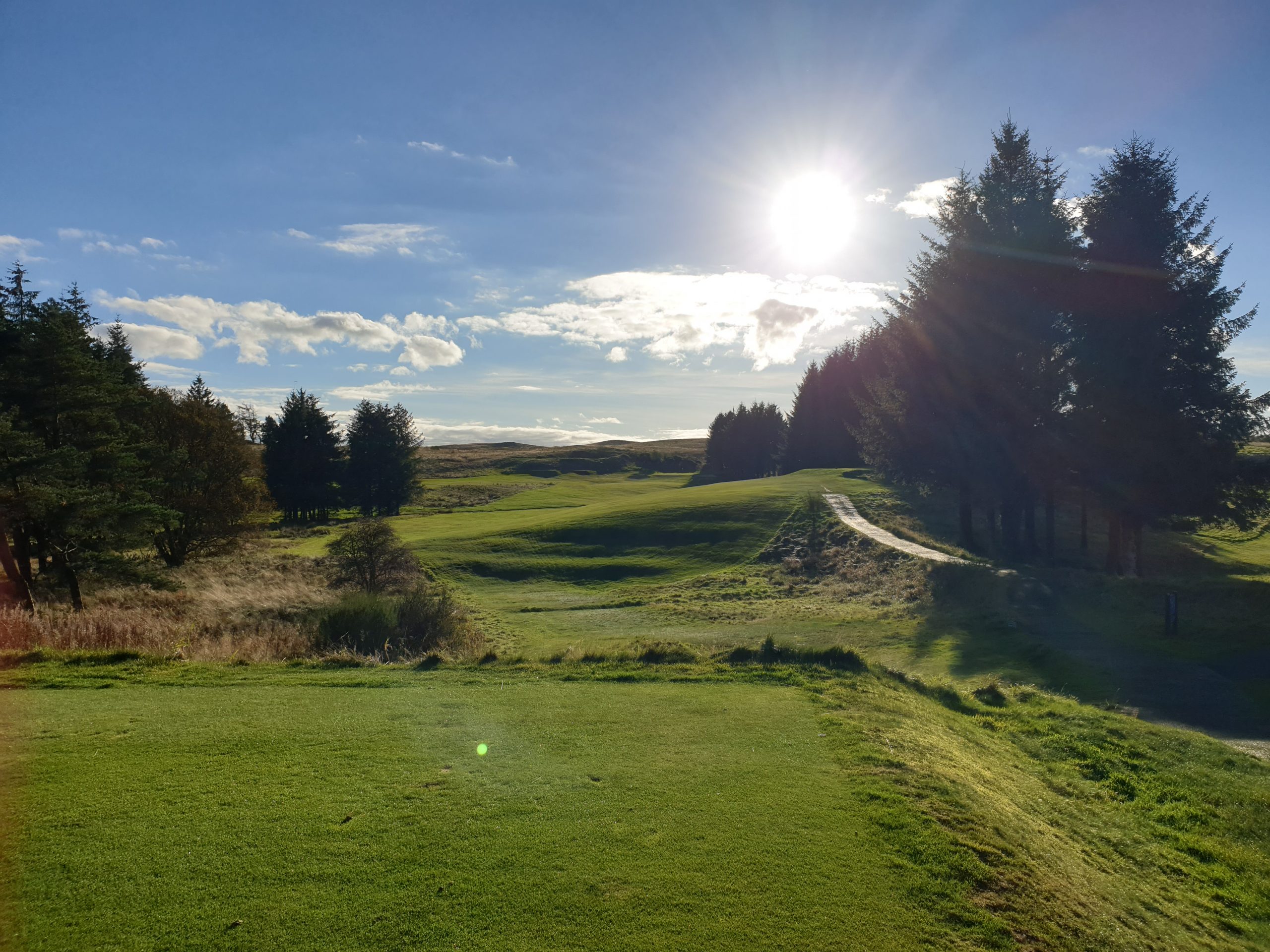
The beautifully framed par four 2nd hole at East Ren from its elevated tee.

In 1922 when Braid designed this moorland layout there were almost no trees and this is a great example how courses evolve over the years.

The original open heathland vista of East Ren, a picture courtesy of the golf club. The clubhouse is still in use.

Looking at the original open heathland layout of the course in 1922, one wonders whether Braid imagined what the course would become? If he did, he really was visionary, because the course is now a beautiful mix of holes and incredibly framed by fir trees. I could have published pictures of every hole.

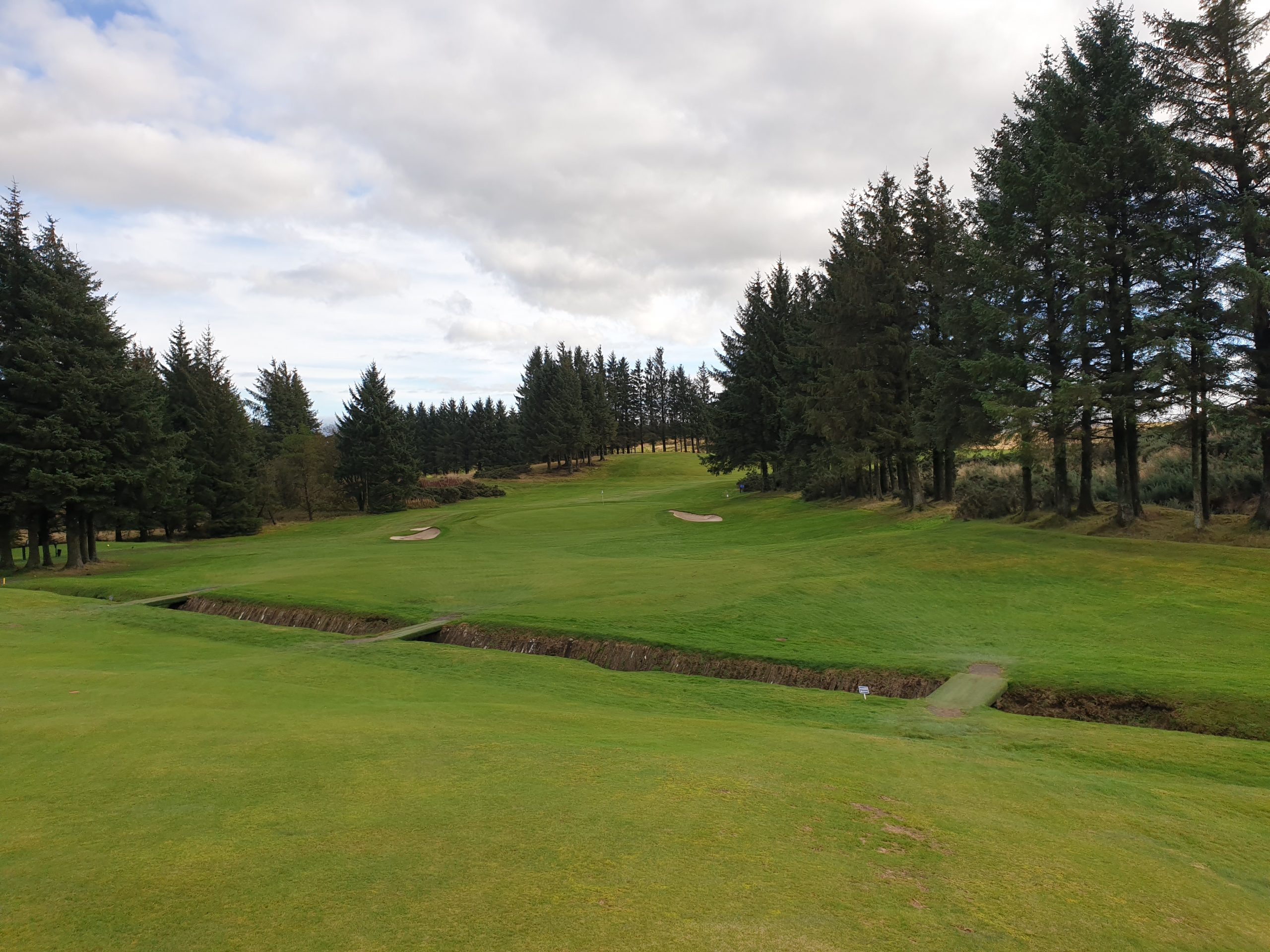
The great conditioning of East Ren shown here at the 4th green, the 135 yard par three, which also demonstrates the large bunkering on many holes.

This very bonny golf course was in great condition when we played, despite the recent wet weather. It fully justifies its high placing in lists of Scotland’s finest courses.

The downhill dog leg left 331 yard par four 6th hole.

With constantly changing directions and a great use of the sloping braes, Braid’s course is one that you’ll want to come back to again and again. It’s a tough walk in places, no more so than the severe uphill par three 11th, “Brae Shouther”, at over 200 yards.

Moly at the difficult 200 yard par three 7th hole.

There are also many slight dog leg holes, and the odd blind shot thrown in for good measure. The bunkering is strong, yet the fairways are overall pretty generous. The greens subtle, but not overly sloping.

The approach at the par five 14th hole, with the burn challenging the longer hitters, attempting to go for the green in two.

The use of craftily routed burns, feeding the adjacent reservoir, means strategy off the tee is a consideration. Overall, it’s an architectural gem, clearly benefitting from Braid’s growing experience by the early 1920s.

The beautiful 17th at East Ren, yet another hole with excellent framing.

Almost every hole is materially different from its predecessor, many with outstanding view of the Renfrewshire countryside. This is a ‘must play’ course and in the top handful of Scottish moorland courses.

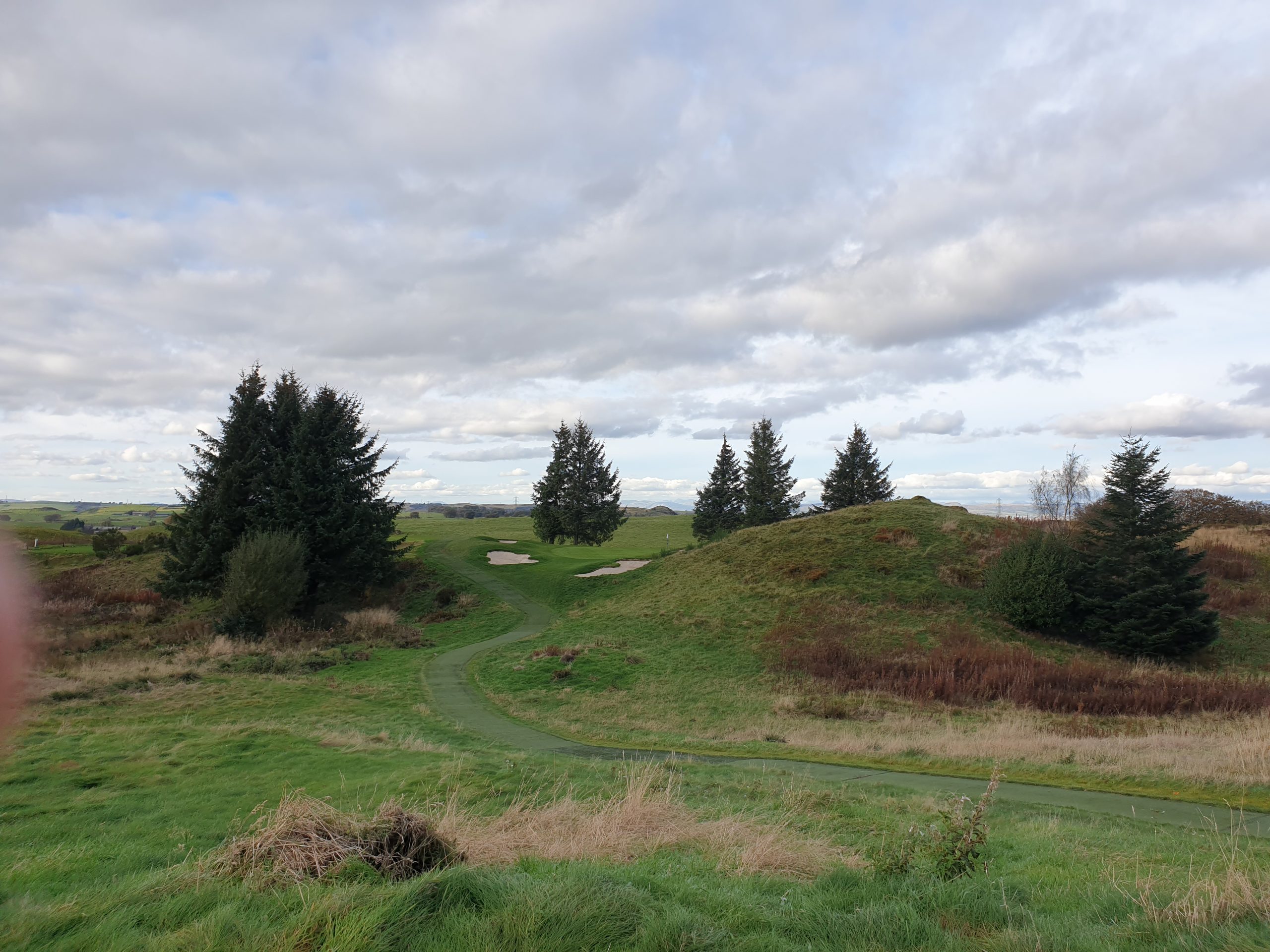
The excellent short 13th hole, at only 120 yards the shortest hole.

Go out of your way to play East ‘Ren’, which has shot towards the top of courses I would like to play regularly.

Facts:

Round List Price £75. Actual Paid £30 through Golfnow.

Course/Slope Rating (yellow) 68.8/119.

Course Type: Heathland

Par 70  (2 par 5s, 12 par 4s, 4 par 3s)

Distance (yellow): 5845 yards

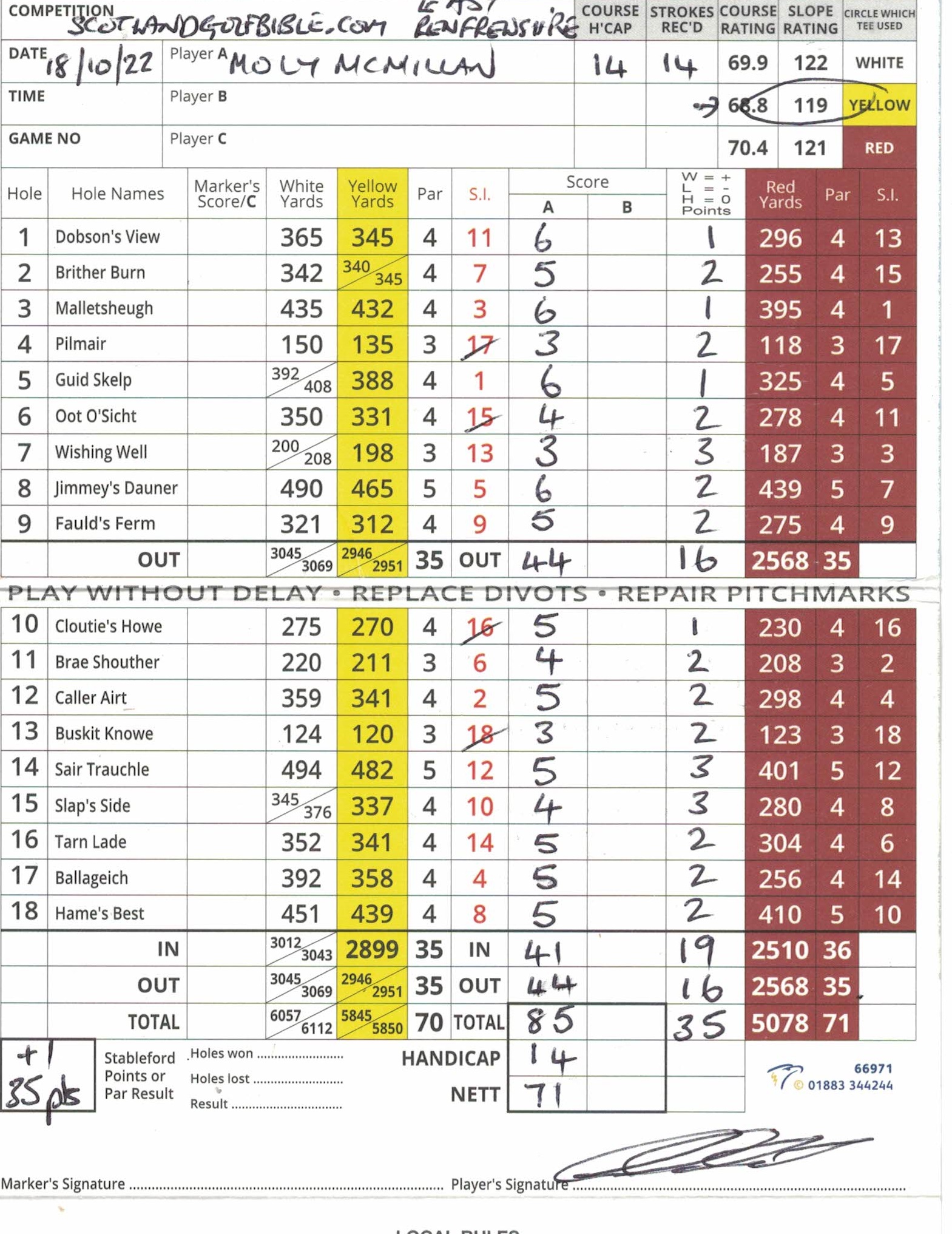
Moly’s ‘East Ren’ Scorecard – 85

165. Lanark. 13 Oct 22.

Gleneagles – “The Lanark of the North”?

Round £65. Par 70. Course/Slope Rating (yellow) 70.1/124. Value (out of 5) – 5

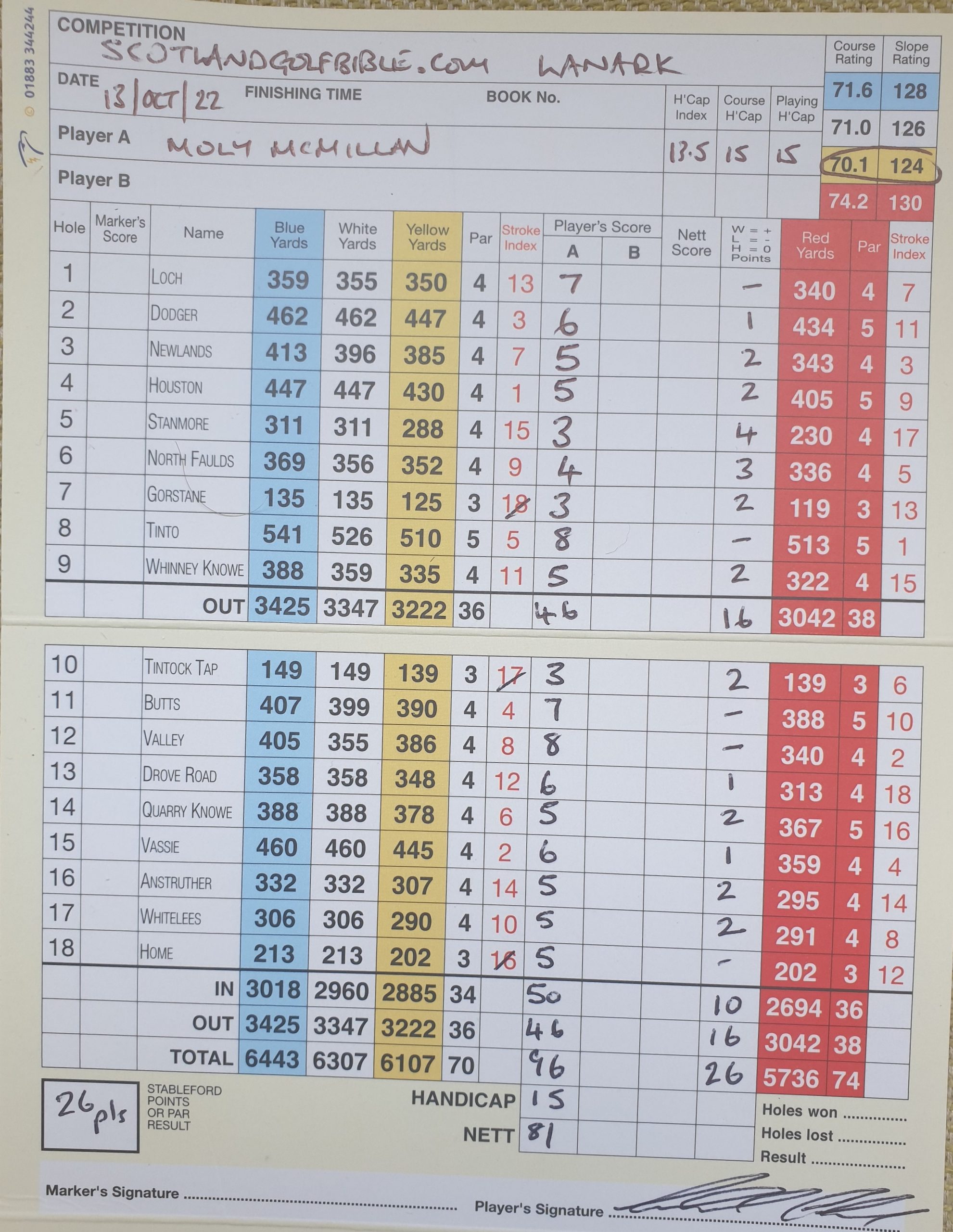
Moly’s score – 96

In immaculate condition, I still found a rabbit hole at Lanark and one which didn’t afford a free drop. Lanark’s website claimed a brilliant story; “In 1920 the LSM Railway Company decided, only on the casting vote of its chairman, to build its hotel at Gleneagles rather than Lanark.”

The beautifully stunning Lanark golf course evident from the first tee, a 350 yard par four.

Disappointingly, I couldn’t find corroboration for Lanark’s story; for example, the excellent 1951 club’s centenary history makes no mention of the ‘Gleneagles’ decision. Jamie Darling, of Lanark GC, was very helpful in my enquiries, but he too found evidence elusive.

The challenging 4th, here the view from 200 yards, at this 430 yard par four stroke index 1 hole.

The more I researched, the more convinced I am The Gleneagles resort vision existed long before 1920; in fact as early as 1910 by Perthshire born Donald Matheson, the Chief Engineer with Caledonian Railways.    The Kings course opened in 1919, with the final hotel site decided around 1920. Matheson later became the GM of Caledonian Railways, then Dep GM in Scotland for LMS, and seems likely the driving force.

The sixth requires two “Sunday best” shots to get close to the green at this uphill par four.

Lanark, unlike Gleneagles, is one of the UK’s best kept golfing secrets – a quite beautiful moorland course, nestled 600 feet up in the Clyde Valley of South Lanarkshire, only 25 miles from Glasgow’s city centre. The town is an ancient burgh and historically important, evidenced by the golf course being one of the oldest “inland” courses in the world. A full 18 holes was designed by Old Tom Morris in 1897, although some holes are traced back to 1851.

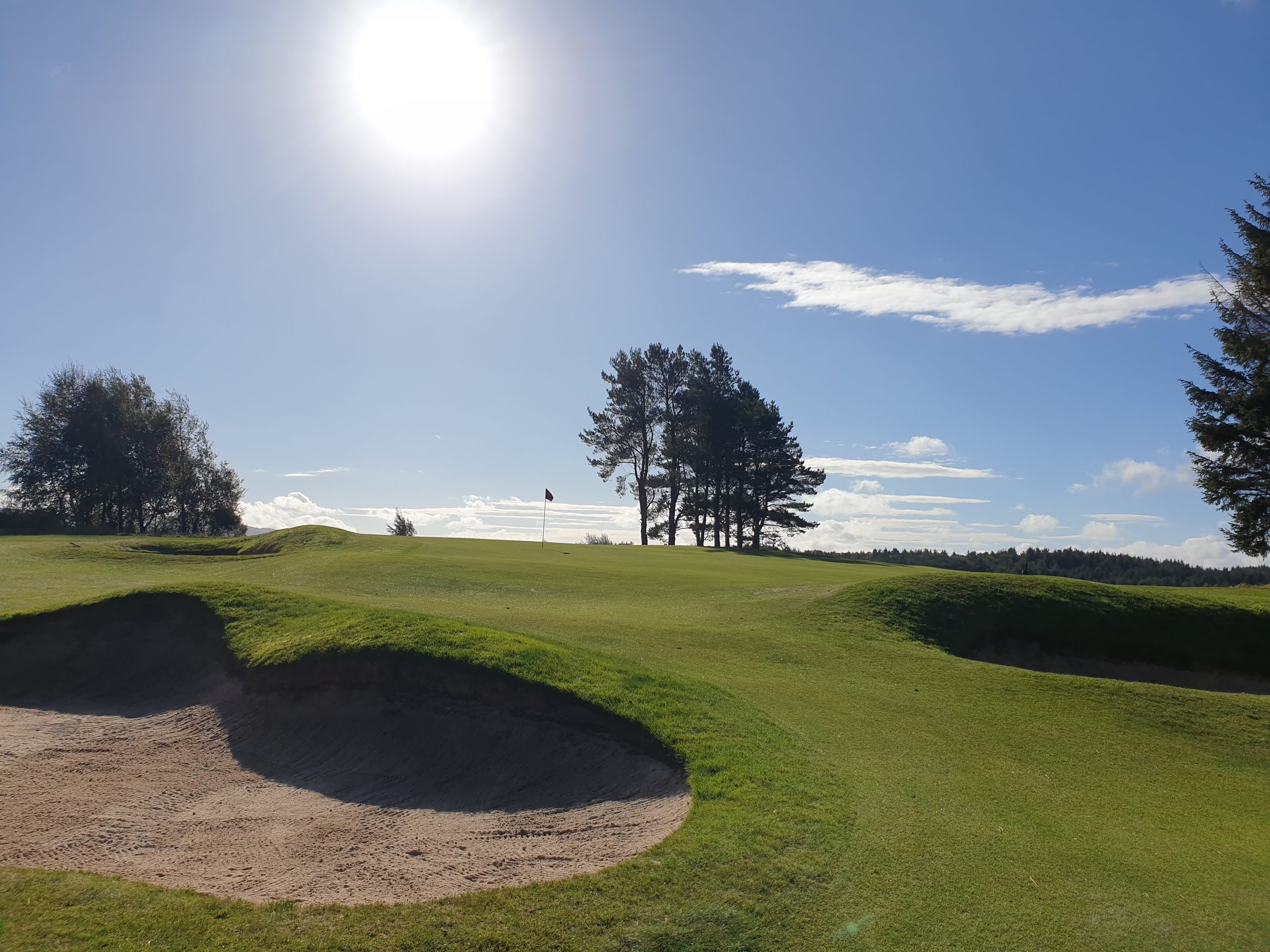
The delightful 125 yard seventh – played downhill to a web of bunkers. The 8th is seen beyond and is the only hole playing the same direction as its predecessor.

This tough course was in majestic condition when I played in good playing conditions yet still struggled to break 100 – I had one of those rounds where you play better than you score. The turf is very firm and certainly played like a links. With beautifully crafted greens and surrounds, I suspect anyone playing to handicap will have made several single putts.

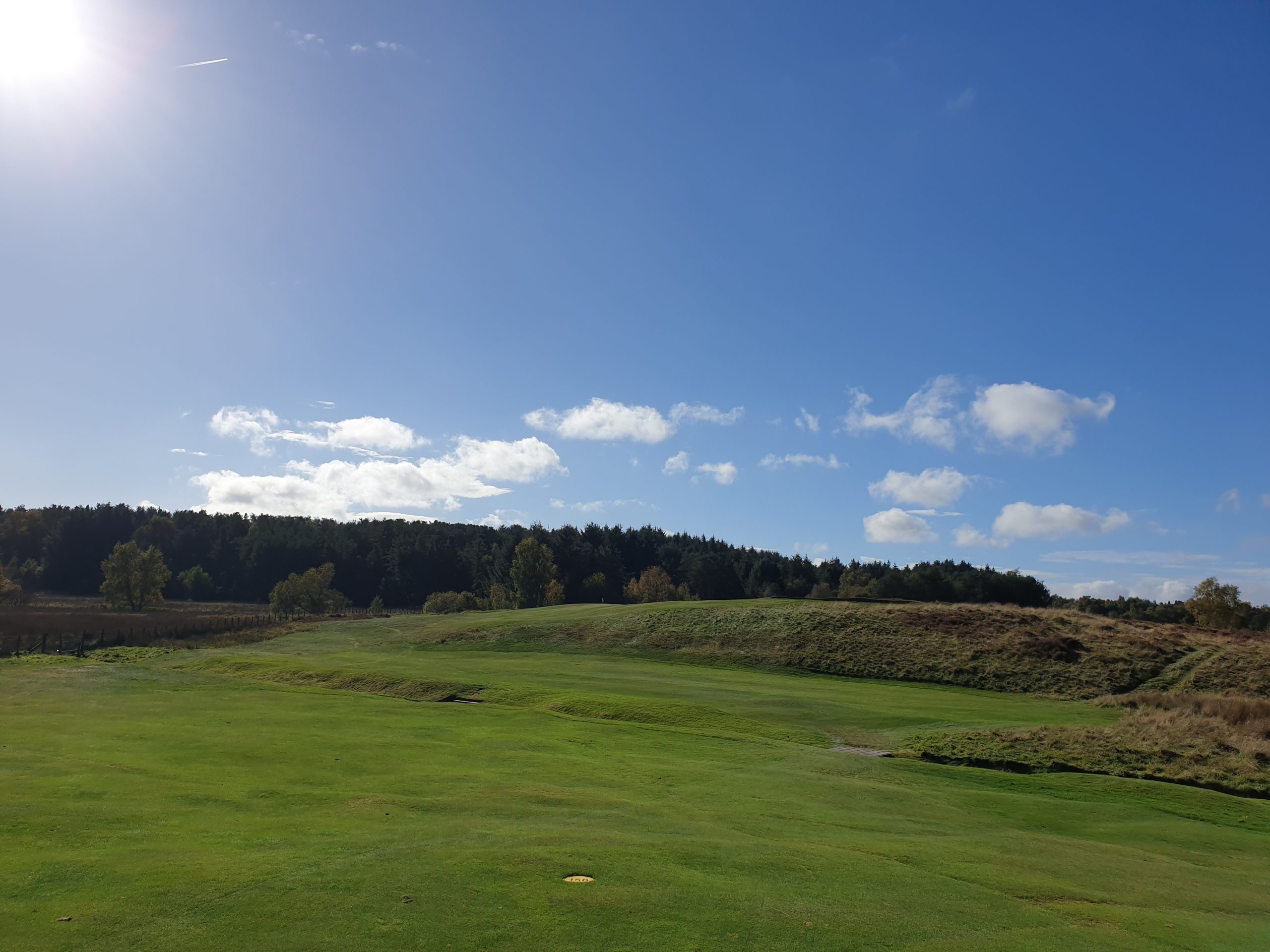
The exquisite condition of the course, seen here at the uphill par three 10th at 147 yards, adorned in Autumn sunshine.

The course is well laid out with constant changes in direction (except the 7th and 8th), so wind is always a strong consideration, especially as the course sits high up in exposed countryside. My only (very slight) criticism is that the approach to the second can be confusing; I hit into the 14th green, to be met by some members telling me “loads of visitors do that!”; later in my round I was advising other visitors the same!

Approach to the 11th, with OOB getting closer at the greenside.

The fairways are pretty generous, but miss these and the rough is at times very brutal. With discounts available through golfnow.com, I paid only £32, which was outstanding value.

I would really love to be able to confirm that Gleneagles is “The Lanark of the North”.  It would be nice if anyone could point me to evidence of the chairman’s decision to validate the club’s great story. For the record, Henry Allan, was Caledonian Railway chairman between 1918-23, are would be the “Chairman” in Lanark’s claim.

It’s worth going out of your way to play Lanark, a wonderful moorland course, arguably one of Scotland’s very best.

Facts:

Course Type: Heathland

Par 70  (1 par 5s, 14 par 4s, 3 par 3s)

Distance (yellow): 6107 yards

Moly’s Gross score: 96

Moly’s Lanark Scorecard – 96

« Older posts

© 2026 Scotland Golf Bible

Theme by Anders NorenUp ↑