A guide to green fee value for money

Category: 5 star (Page 1 of 4)

188. Turnberry Ailsa. 27 Mar 23

Holy Willy has taken over Tam o’ Shanter’s Links

Value – 5 / 5, using ‘The Art of the Deal’

Moly’s Score – 89
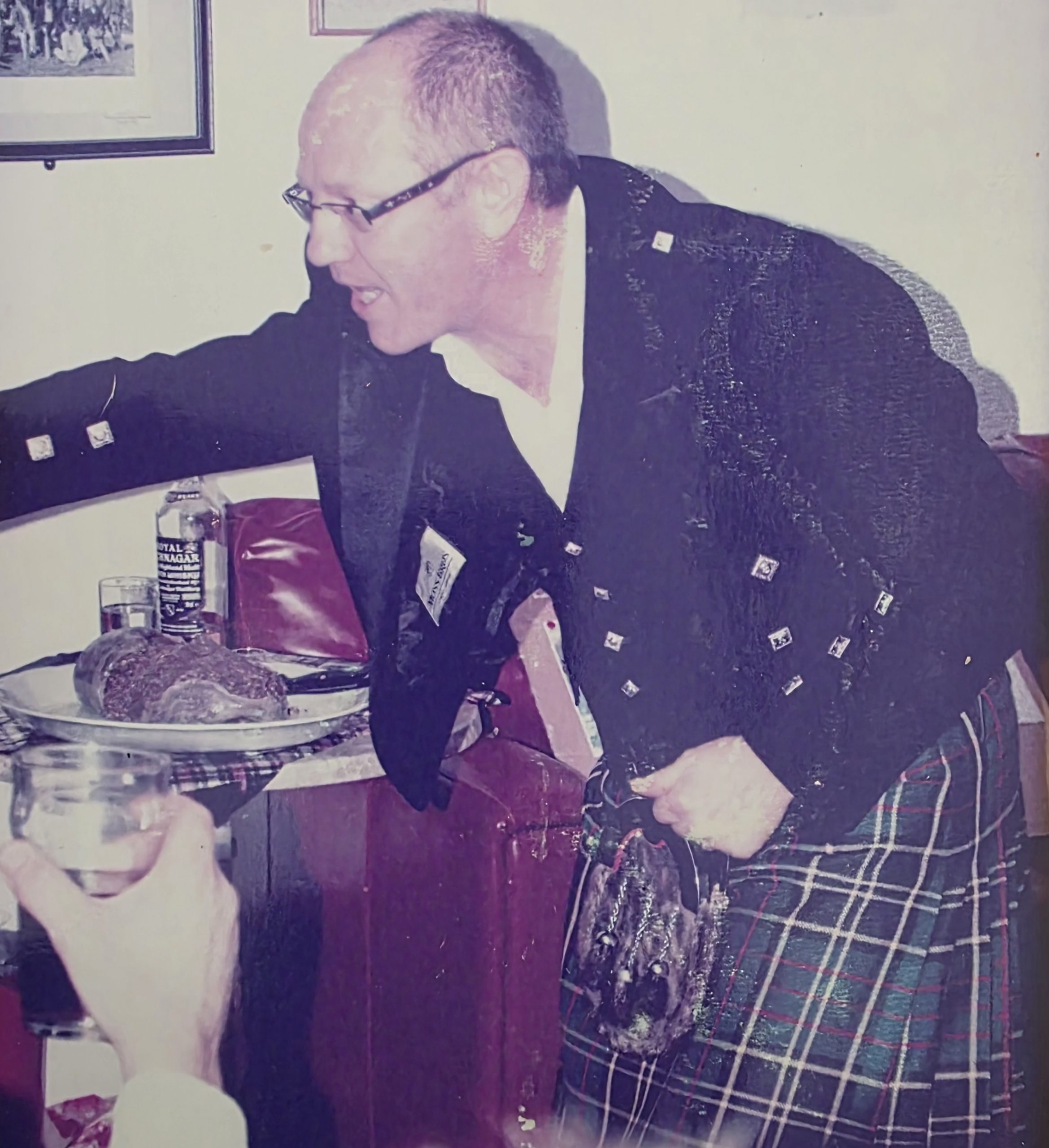
Moly ‘addressing the haggis’ – a prelude to Burns’ later work, Tam o’ Shanter

I’m a Burns man. I know his poems, songs and characters. When I unearthed that the real-life inspiration for Burns’ poem Tam o’ Shanter farmed one mile from Turnberry’s first tee, I had to dig deeper.

Shanter Farm sits adjacent to ‘Maidens’ on the Ayrshire coast. Douglas Graham farmed it in the late 1700s. His drinking ‘crony’ was John Davidson, a cobbler from Kirkoswald. Burns was just 16, in 1775, when he was sent to study in Kirkoswald, where he met Douglas and John, presumably in the pub. They made a lasting impression on the young Robert, who 15 years later used them as the blueprint for ‘Tam o’ Shanter’ and ‘Souter Johnnie’, the hero and his trusted companion, in, arguably, the greatest narrative Scottish poem.

The land of Tam o Shanter would become one of the finest golf courses on earth, but the metaphorical ownership by Burns’ characters wouldn’t end there.
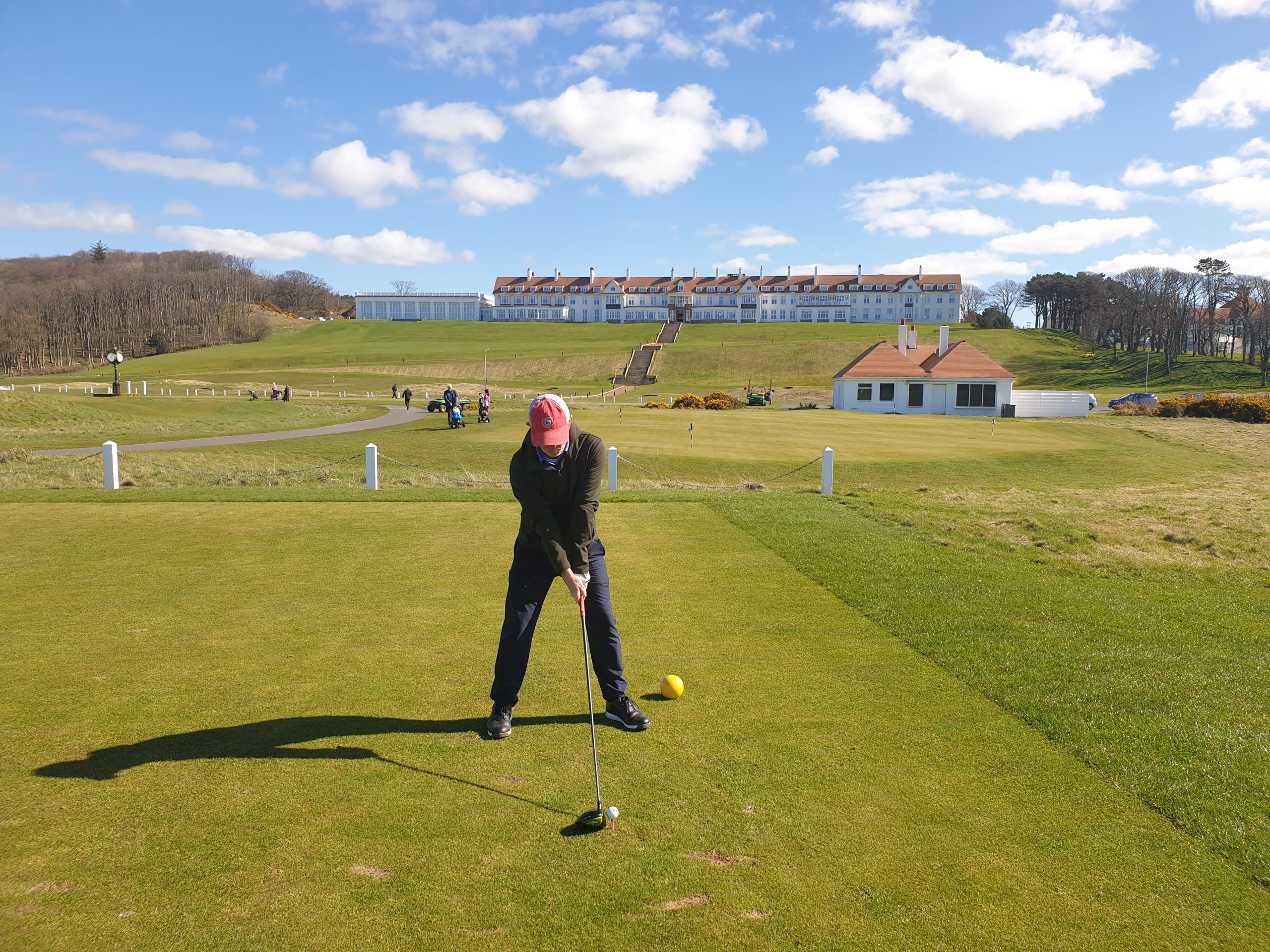
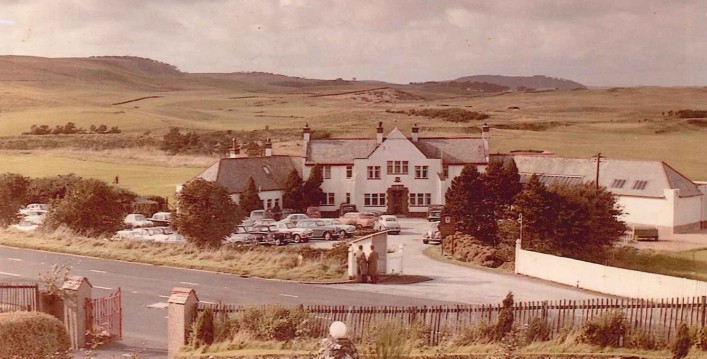
Moly on the first tee, with the Turnberry hotel behind. I just had to wear a Hoodie.

The Course

The Ailsa is in my top three of the 300 plus courses I’ve played to date (at June 2026). It also sits comfortably in most top 20 lists for courses world wide.

A course was laid out in 1901 by Willie Fernie, who was commissioned by Archibald Kennedy, the 3rd Marquess of Ailsa, who foresaw the links could be highly profitable with a railway and hotel, both of which duly opened in 1906. Sadly, the World Wars obliterated the golf resort – the railway closed permanently in 1942. Between 1949 and 1951, Philip Mackenzie Ross, the pre-eminent post war architect, restored the layout to the one which, in 1977, famously hosted the “Duel in the Sun”, between Nicklaus and Watson.

‘The Donald’ purchased the resort in 2014 for £47m, renaming it ‘Trump Turnberry’ and, between 2015 and 2016, Martin Ebert reconstructed the five holes along the coast and transformed the 9th from a par four into arguably the most dramatic par three in Scottish golf. Later he would extend the 16th into a challenging par 4, which will hopefully one day test Open entrants.

The headline rate to play in Summer is an astonishing “up to £1000” (2026). Which begs the question, “How much is perfection worth?”, a hyperbolic one probably crafted by Trump himself. Unbeknownst to Donald, Burns wrote a potentially prophetic and skewering poem about his like, called ‘Holy Willie’s Prayer”. ‘Holy Willie’, a man of towering narcissism who presents himself as chosen and blessed, operating by rules that apply to everyone else. Joking aside, the course is magnificent; perhaps Holy Willie occasionally got it right.
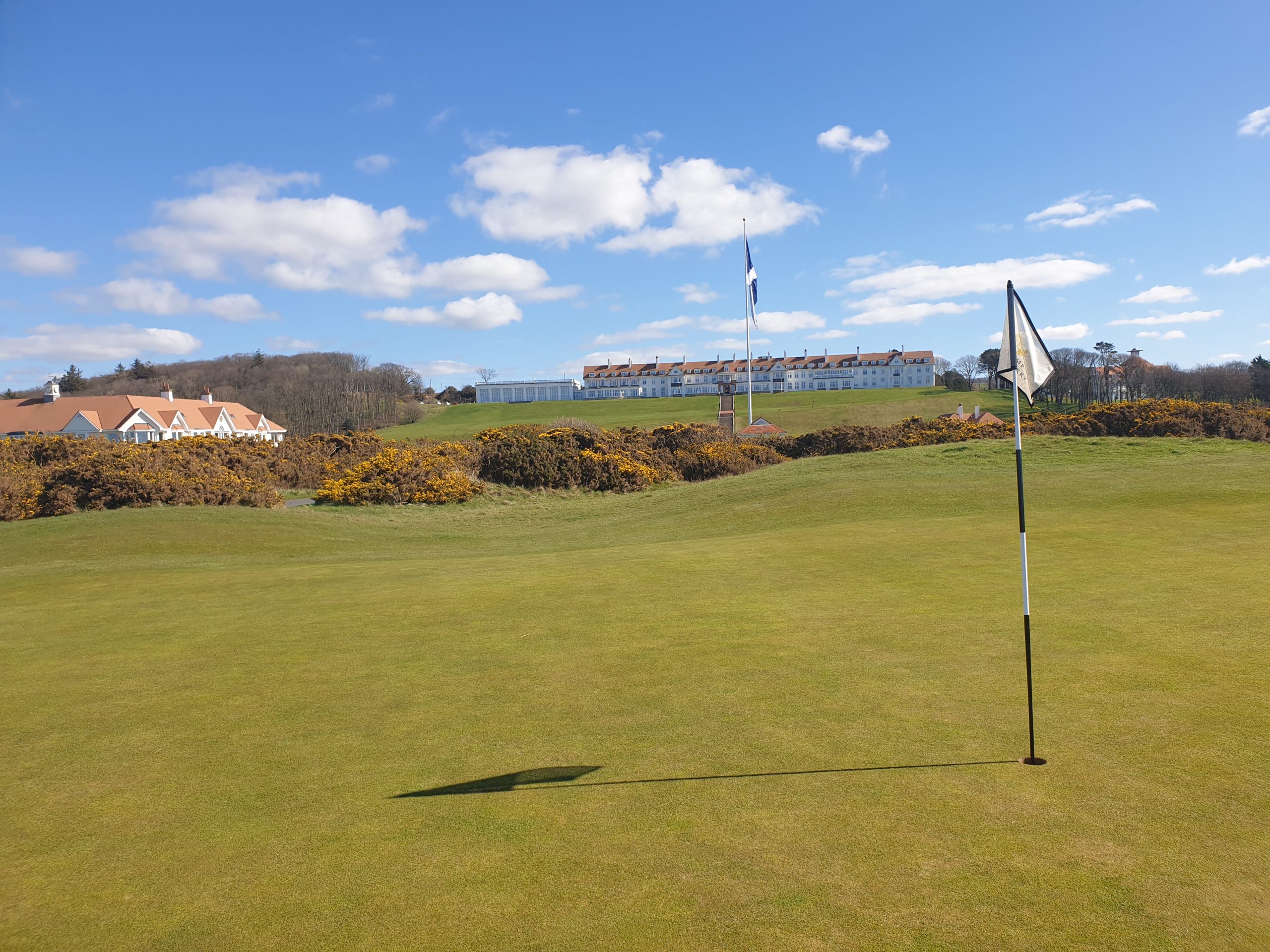
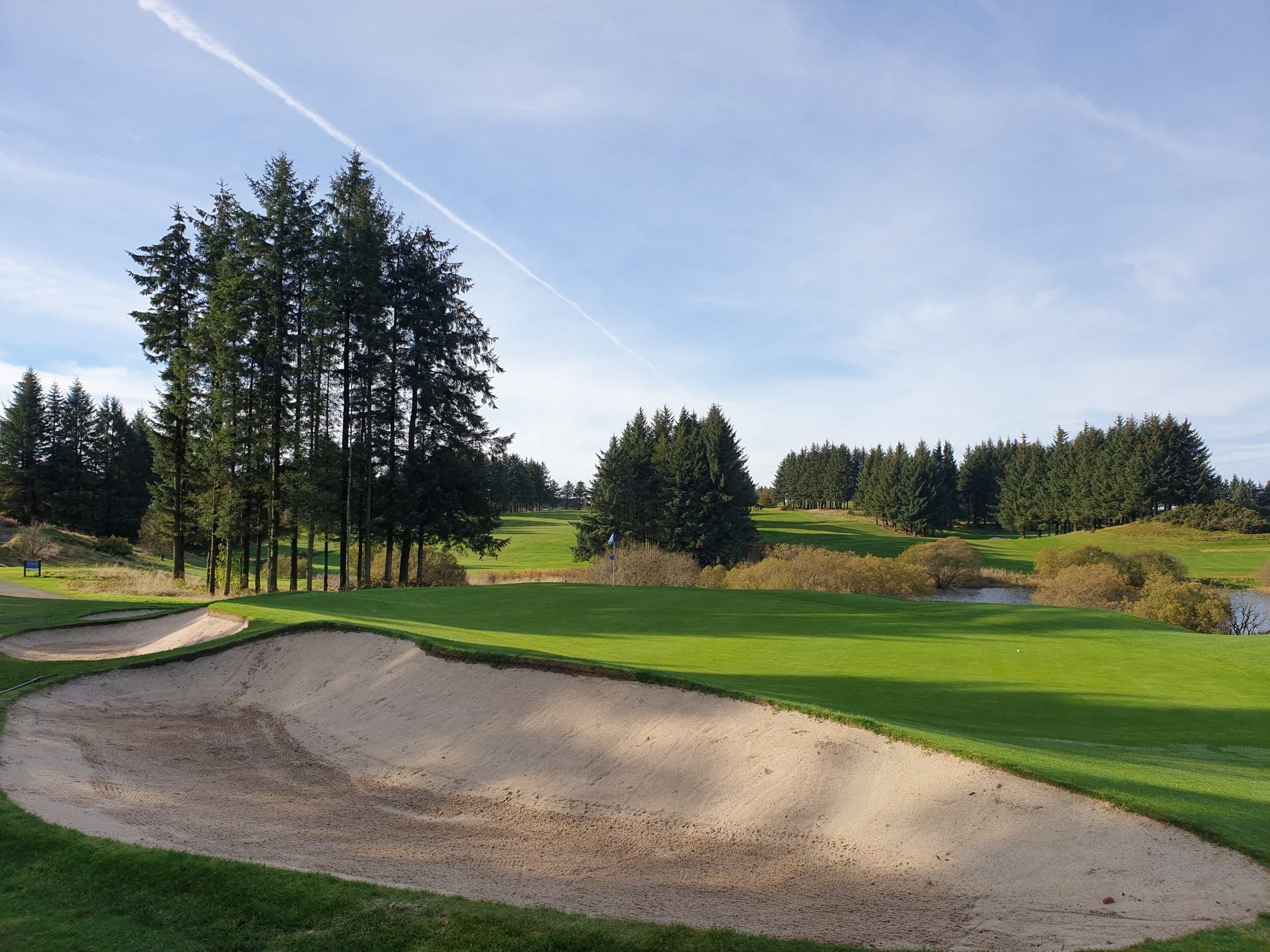
Light breeze on a perfect March day, the greens in Summer condition, here at the 2nd

The Art of The Deal?

At Scotland’s posh courses, like Muirfield or Royal Troon, the list price is the list price. They don’t negotiate. Trump operates differently – he’ll do a deal. When I played, the eye watering rate was £500. Looking late on the day before, the tee sheet showed plenty of spaces. I phoned the Pro shop, deployed my persuasive Dundonian vernacular, explaining I could only afford a ‘hundred quid that I’d saved up’. We settled at what might be my best value golf ever – £130. The man on the other end of my call had, in his own small way, something of the Bard’s spirit from Burns’ The Jolly Beggars; happy to set aside rank and rule for an afternoon, and let an ordinary punter in on the deal. He operated outside the script and created a very happy man..

So, is it perfect? At £500 (2023) I would give it four out of five on value, still exceptional, because very few courses in Scotland could justify that price. At £130 it is five out of five without hesitation. My greatest value ever.
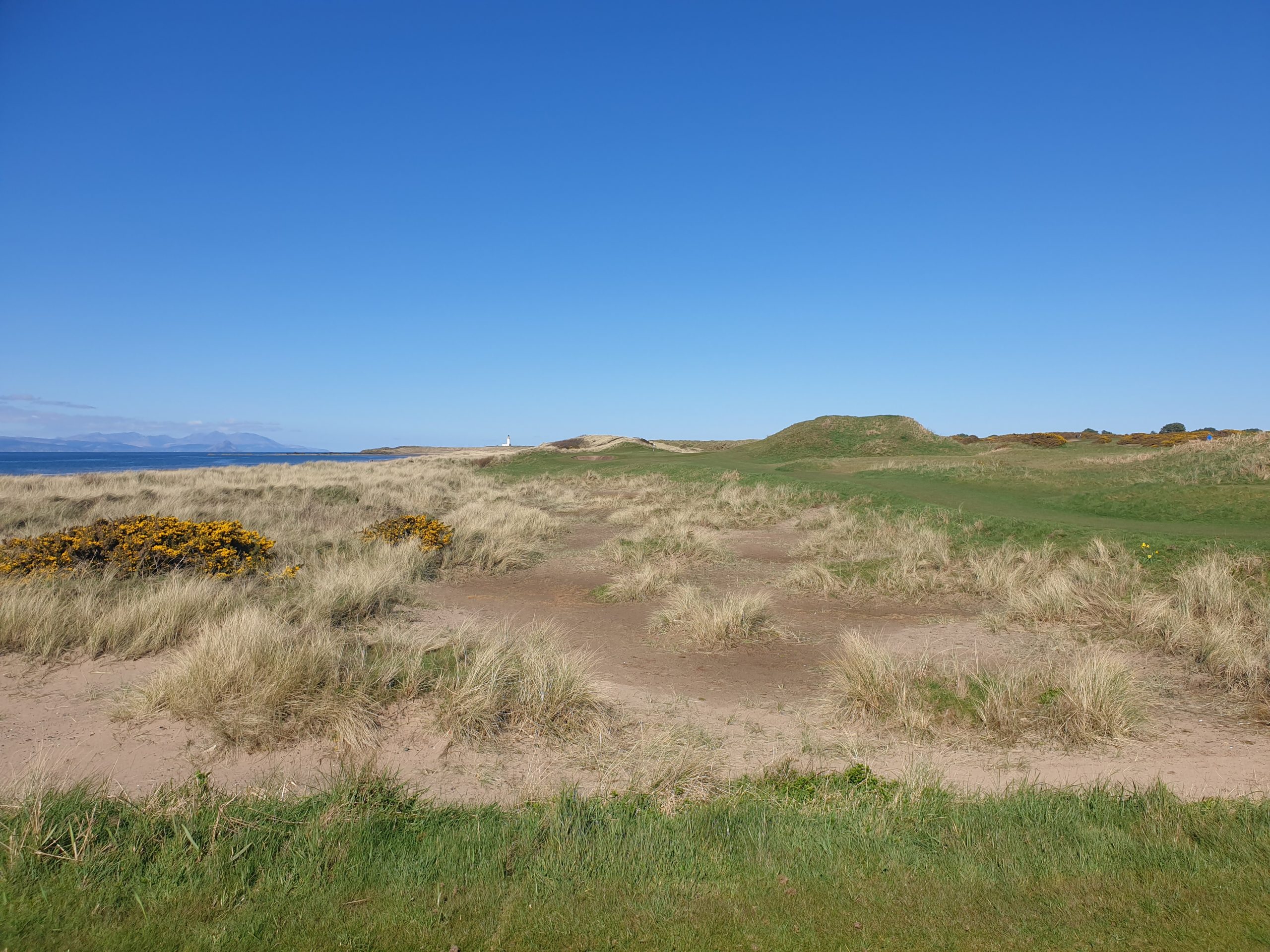
The partially obscured tee shot at the fourth, with the full panoply on view – Arran, Lighthouse, Dunes, Gorse, Rough.

The Round

I was paired with 8 handicapper Ian Moffat of Cumbernauld, a naval submariner home on leave, who chose to play from the white tees (6,543 yards), whilst I played the yellows (6,110 yards). The added 433 yards sounds manageable unless you are playing into a stiffening links breeze on a treacherous layout.

Despite a few early lost balls Ian continued off white, displaying the perseverance of submariners. Whilst I didn’t keep Ian’s score, I suspect it was the wrong side of a century, as mine would have been off white. Ian was, in the finest Burns tradition, one ‘Tam Samson’, the Kilmarnock sportsman Burns immortalised for his dogged refusal to leave the field, a man who would rather perish in the attempt than concede defeat. Burns wrote that Tam Samson’s dying words would be that he had never given up. Ian Moffat did not give up either – well done Ian.
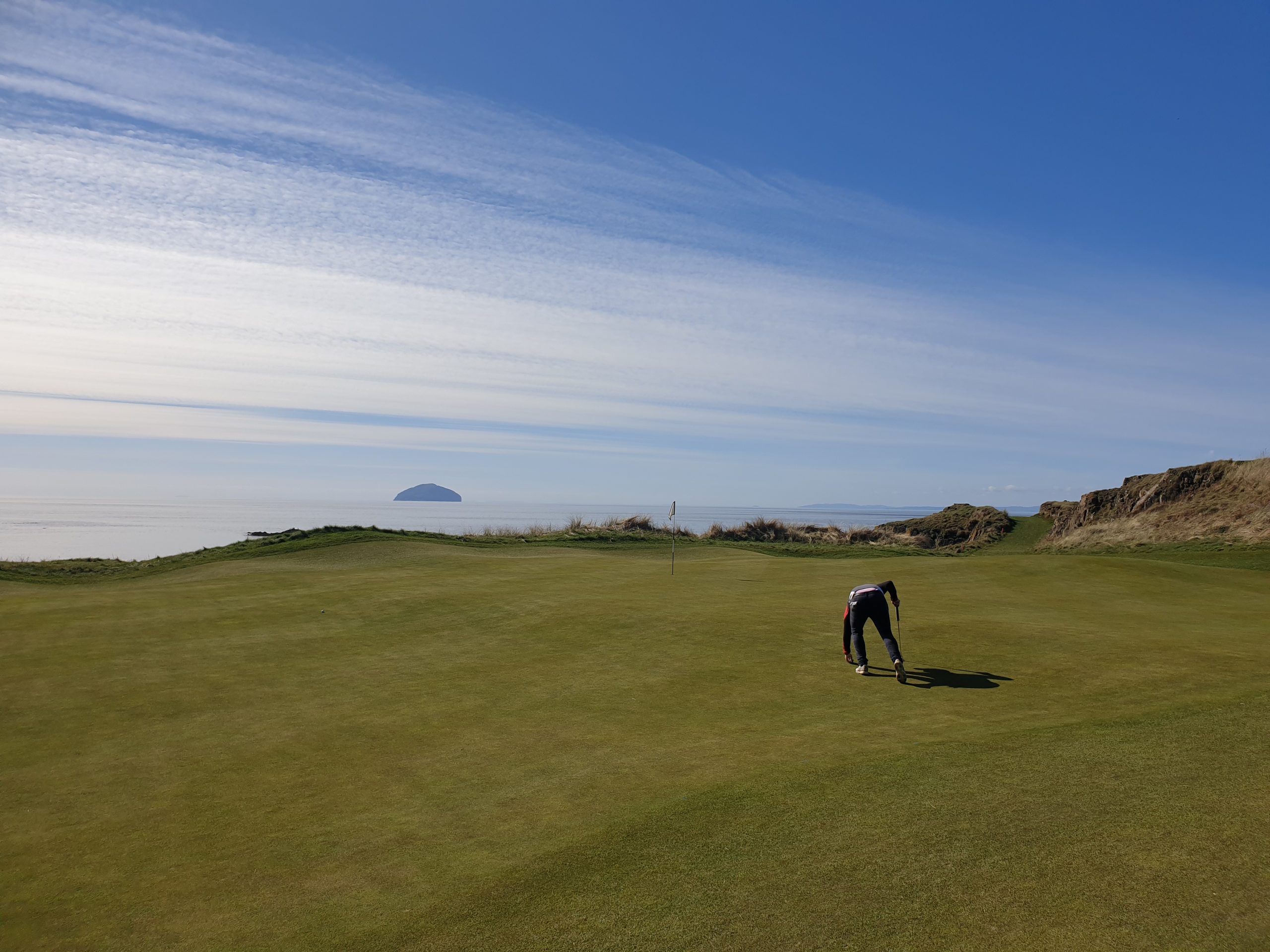
Ian Moffat on the 8th green, Ailsa Craig perfectly framed in the March sunshine.

I shot 89, with three triple bogeys. I hit the ball about as well as I can. If Burns had played golf – and given his appetite for competitive pursuits, convivial company, and the Ayrshire outdoors, I suspect he would have been a natural – he would have recognised himself in the honest, truth-seeking spirit of the game. He was always ‘Davie’, the brother poet, the man seeking meaning in simple honest experience rather than in rank or gold. I’d like to think that summarised our day at Turnberry.
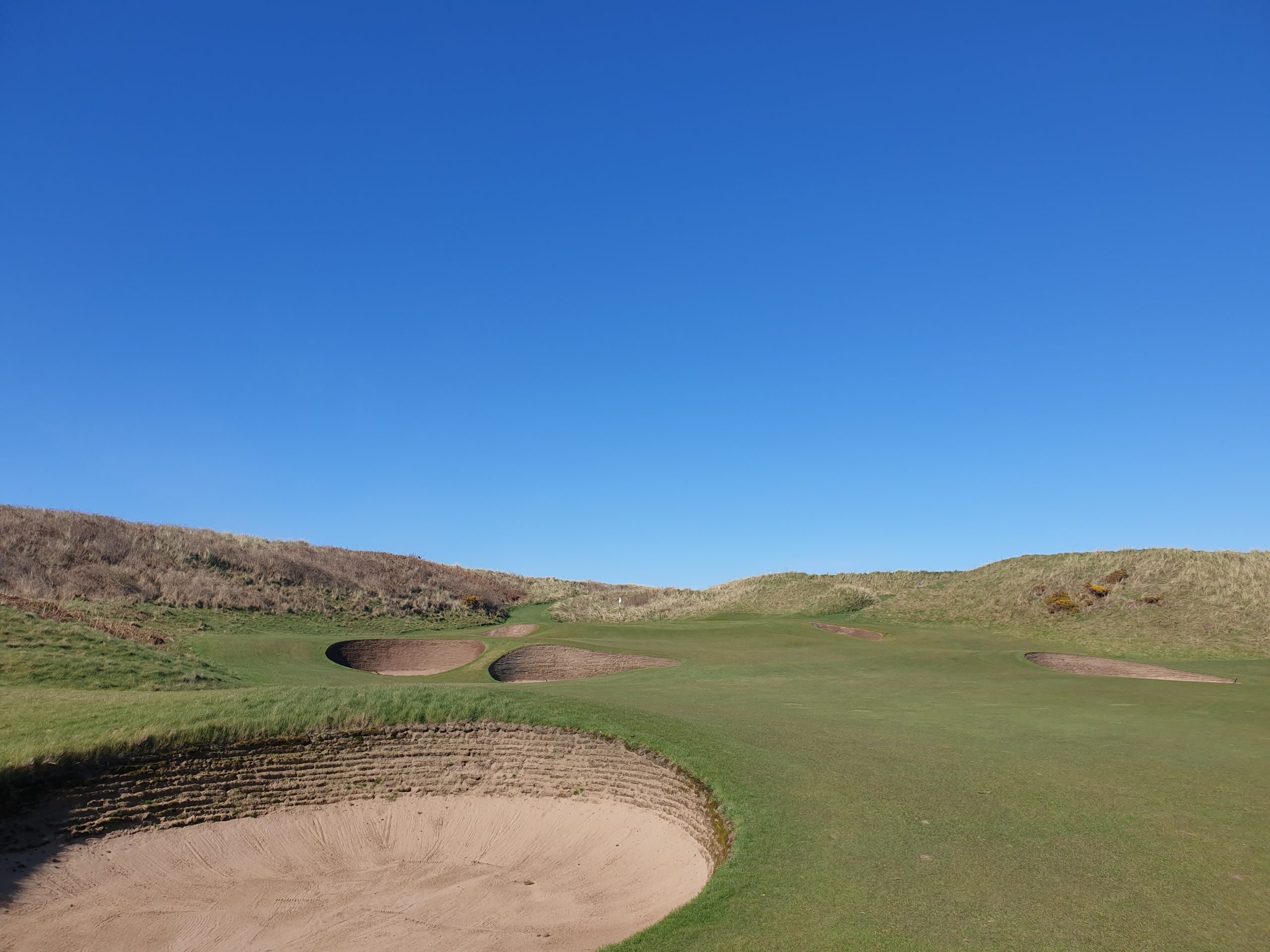
The wonderfully green entrance at the par 5 fifth hole. The bunkers gave me 8!

The first two holes ease you in, running through inland undulations with the hotel presiding grandly over everything. By the third, the sea begins to announce itself. By the fourth, you are into the dunes proper, the gorse blazing yellow in the March light.
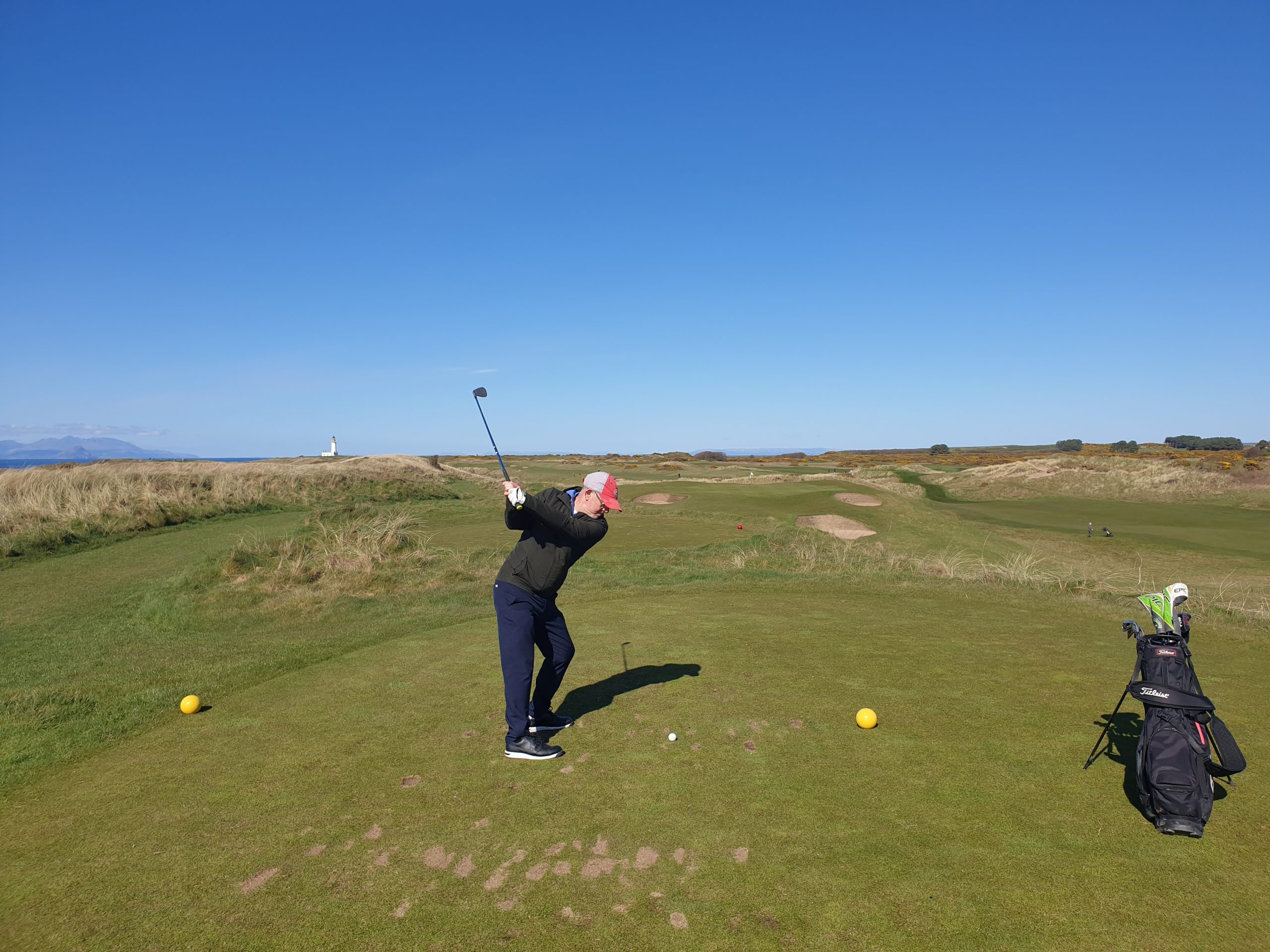
Moly at the 6th, a short par three, where the prevailing westerly will be a challenge.

The coastal sequence from holes four to eleven is beautiful. Ebert’s redesign brought several of these holes right to the clifftop edge. The seventh was already magnificent; a long par five threading between dunes with the sea appearing and disappearing to the left.
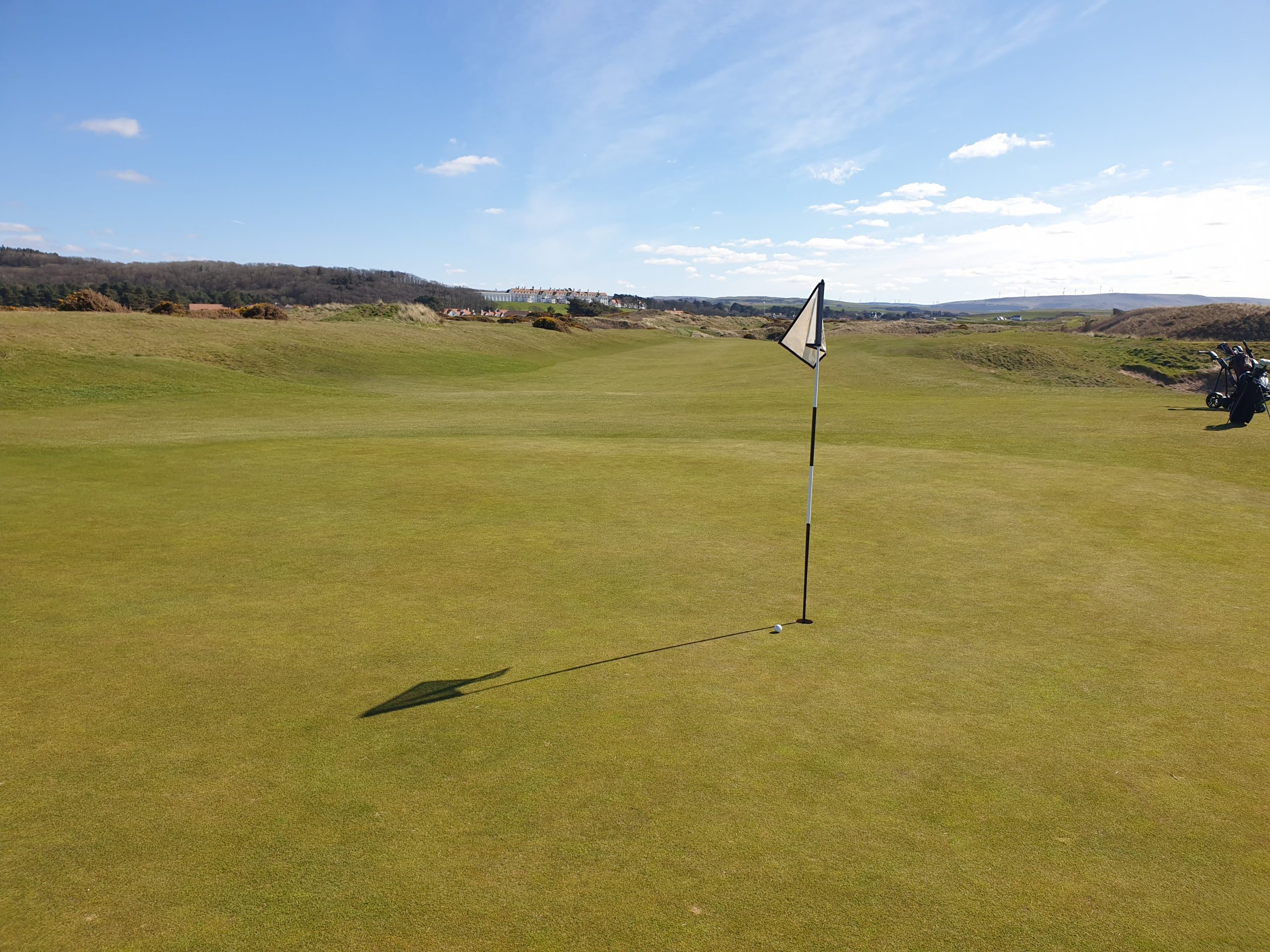
The 7th, a par 5 . My birdie putt awaits!

The Ninth

The ninth hole at Turnberry Ailsa is now one of the great short holes in world golf; but not really short for us mortals! Ebert converted it from a par four, placing the tee on the cliff beside the ruins of Turnberry Castle; birthplace, most likely, of Robert the Bruce, though that story belongs to the other course here, the King Robert the Bruce course. The green sits just below the lighthouse, perched above the rocks and the sea, perhaps the best half way house in golf.
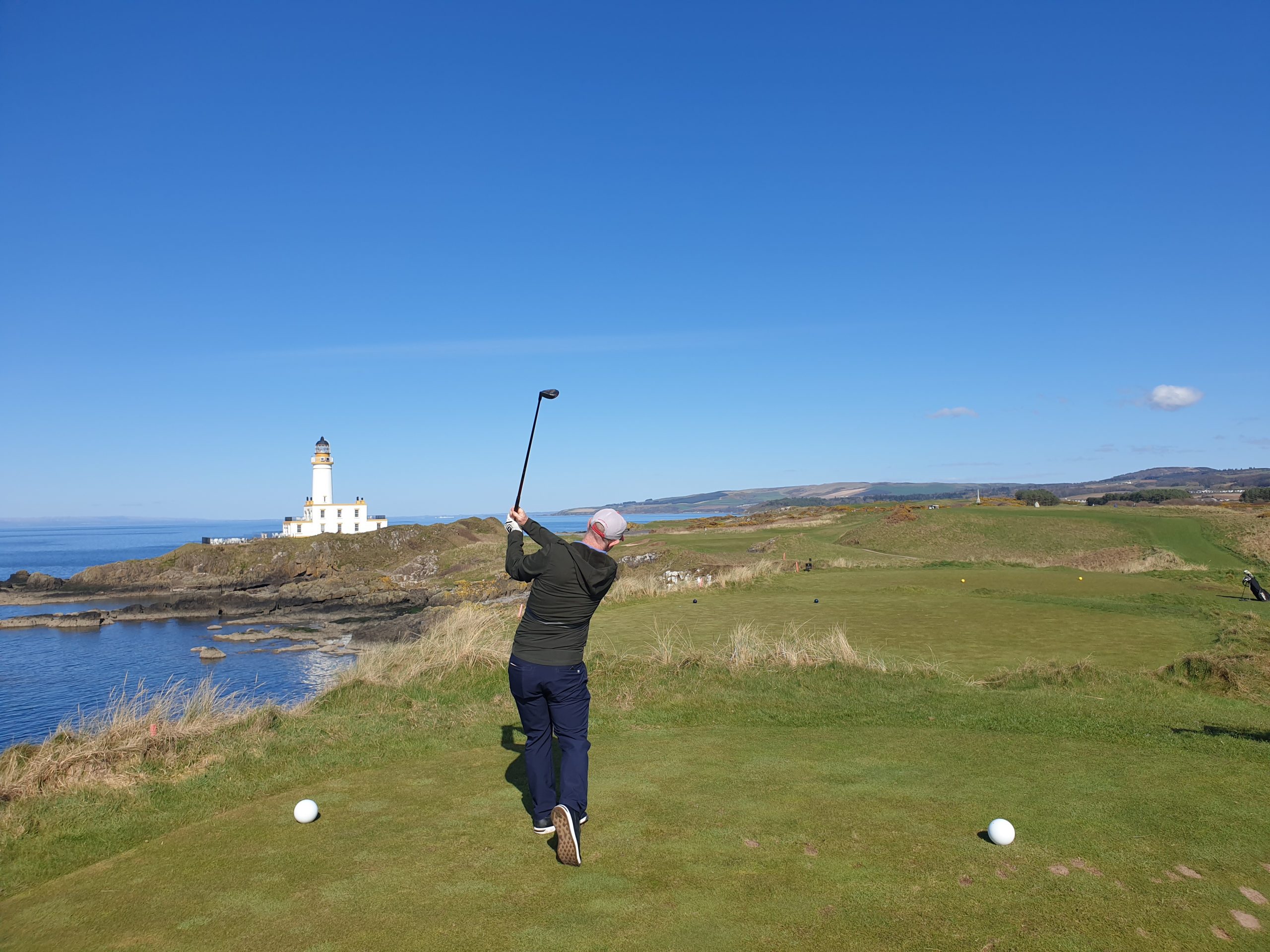
With Arran visible across the water and a light breeze off the Firth, standing on the 9th tee at Turnberry is one of those moments that reminds you why you play this game.

Was Burns a Golfer?

It is worth pausing to consider how old this story is. Jack Boyd, in his history of Turnberry Golf Club, quotes a letter of 15th February 1751 from Archibald Kennedy (most likely the great-grandfather of his namesake who built the course in 1901) to Sir Thomas Kennedy, describing golf at Girvan, five miles south of Turnberry, among lairds, a minister, and a doctor, with Sir John judge of both the golf and the drinking. So, three years before the St Andrews Golf Society was formed, golf was being played on the Ayrshire coast. Burns, born in 1759, would have known golfers and recognised all the aforementioned players. He would have found Tam o’ Shanter among them.
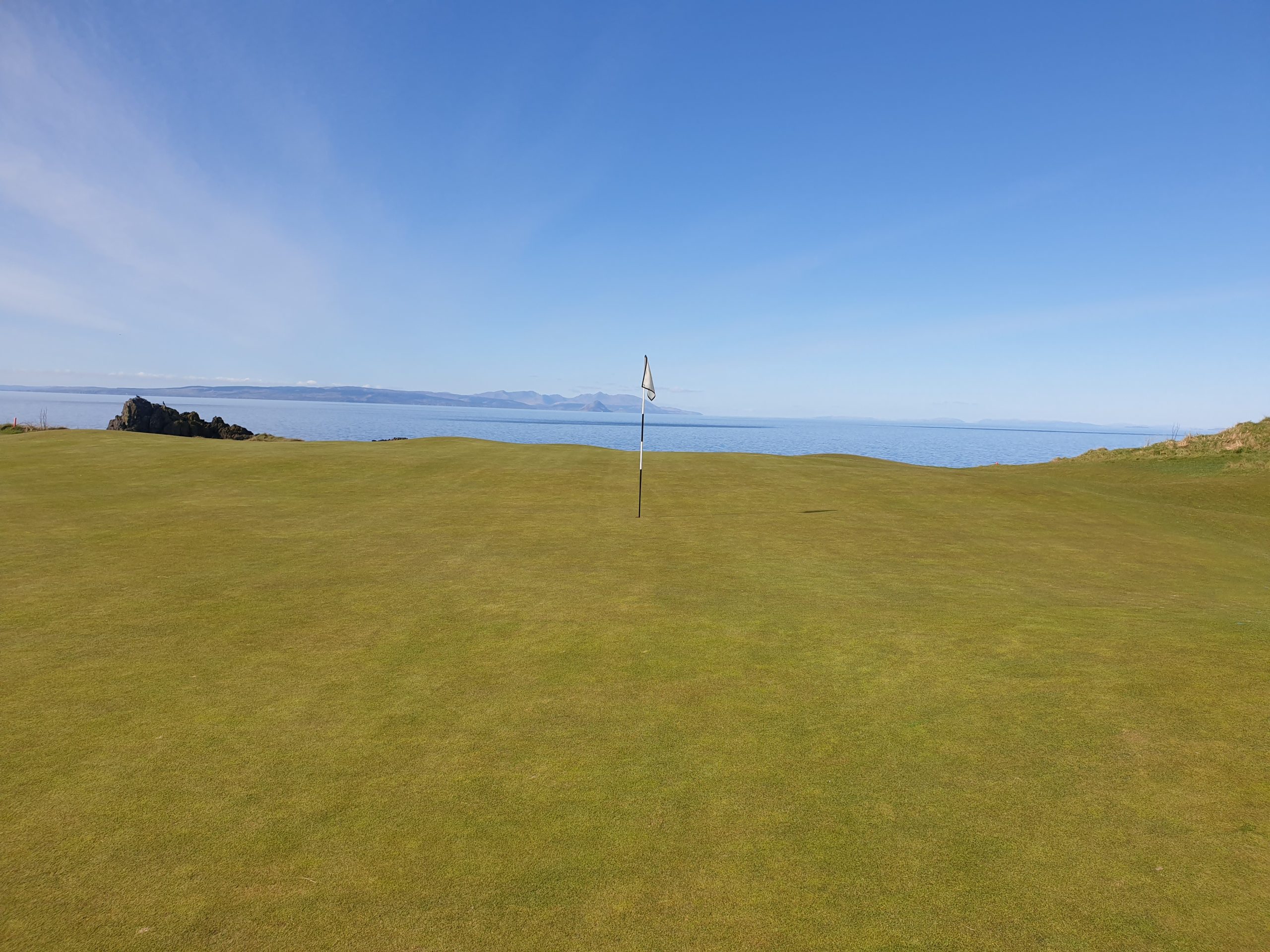
The manicured 10th green to start the back nine.

The twelfth tee looks back toward the war memorial on the hill — a stark reminder that this land was twice an RAF airfield, its fairways buried under concrete and tarmac while pilots trained and died here. Something approaching 200 men lost their lives at Turnberry during the two wars.
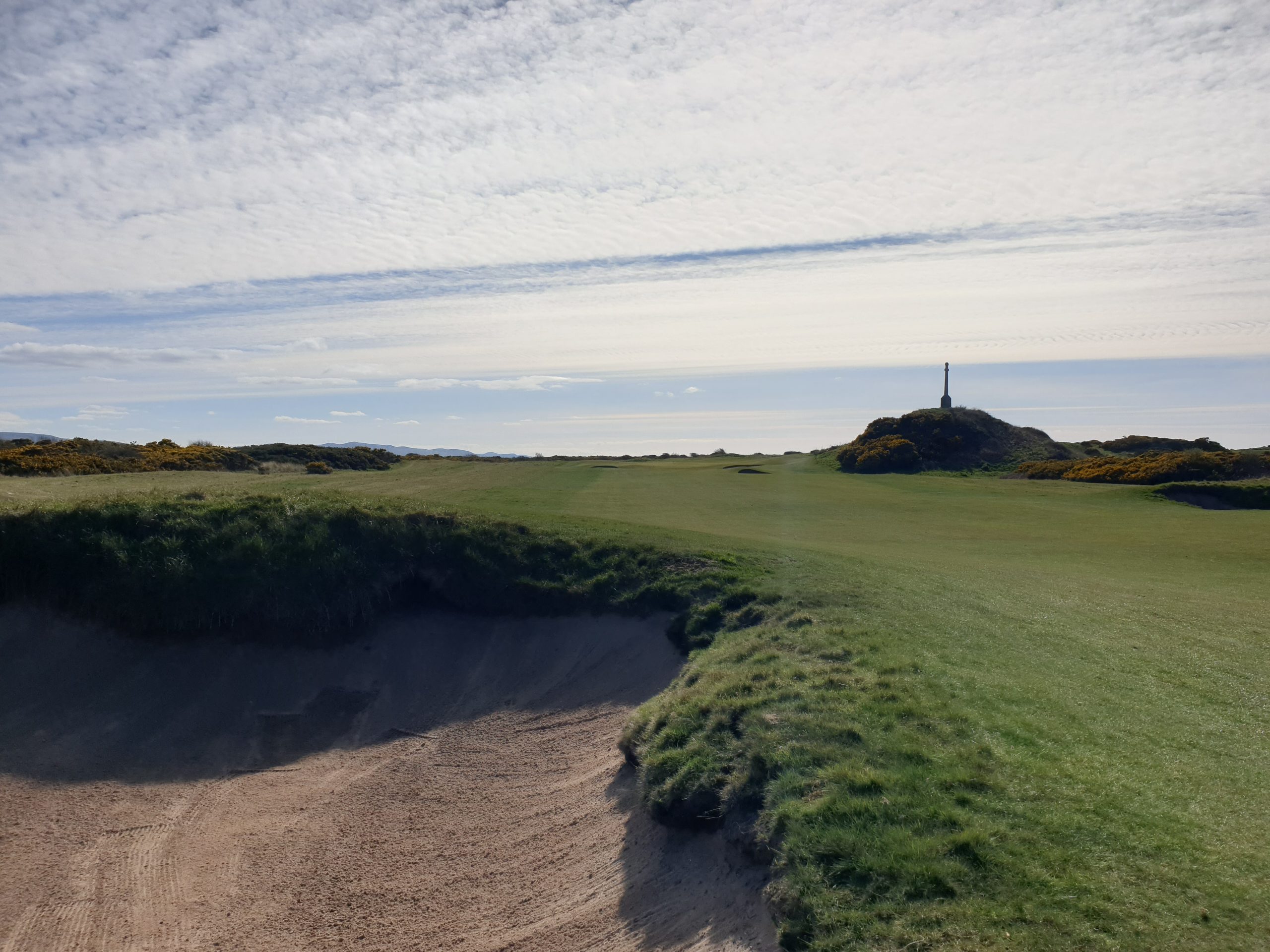
The War Memorial stands above the twelfth green, here seen from the fairway bunker 150 yards from the green.

From thirteen onward the course begins its journey home, moving back through the dunes toward the hotel. These holes are less dramatic than the coastal sequence but beautifully crafted — fair, strategic, and very demanding but dependent on the prevailing wind..
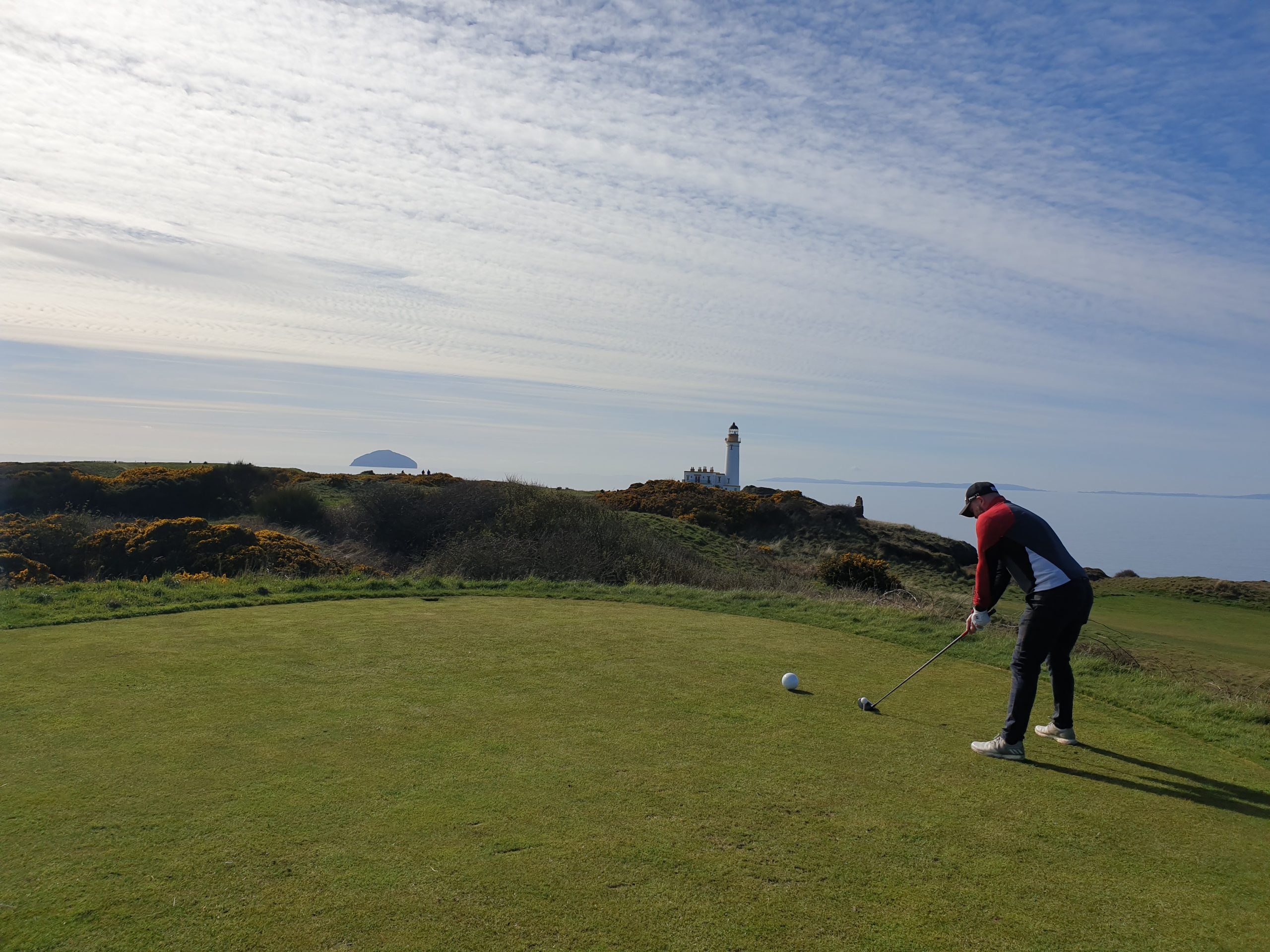
Ian Moffat on the tee at 13th tee.

The sixteenth is perhaps the most challenging hole on the course — a long par four that turns slightly left, the hotel reappearing on the horizon as you play back toward it. It was extended by Ebert with a redefined sharper burn.
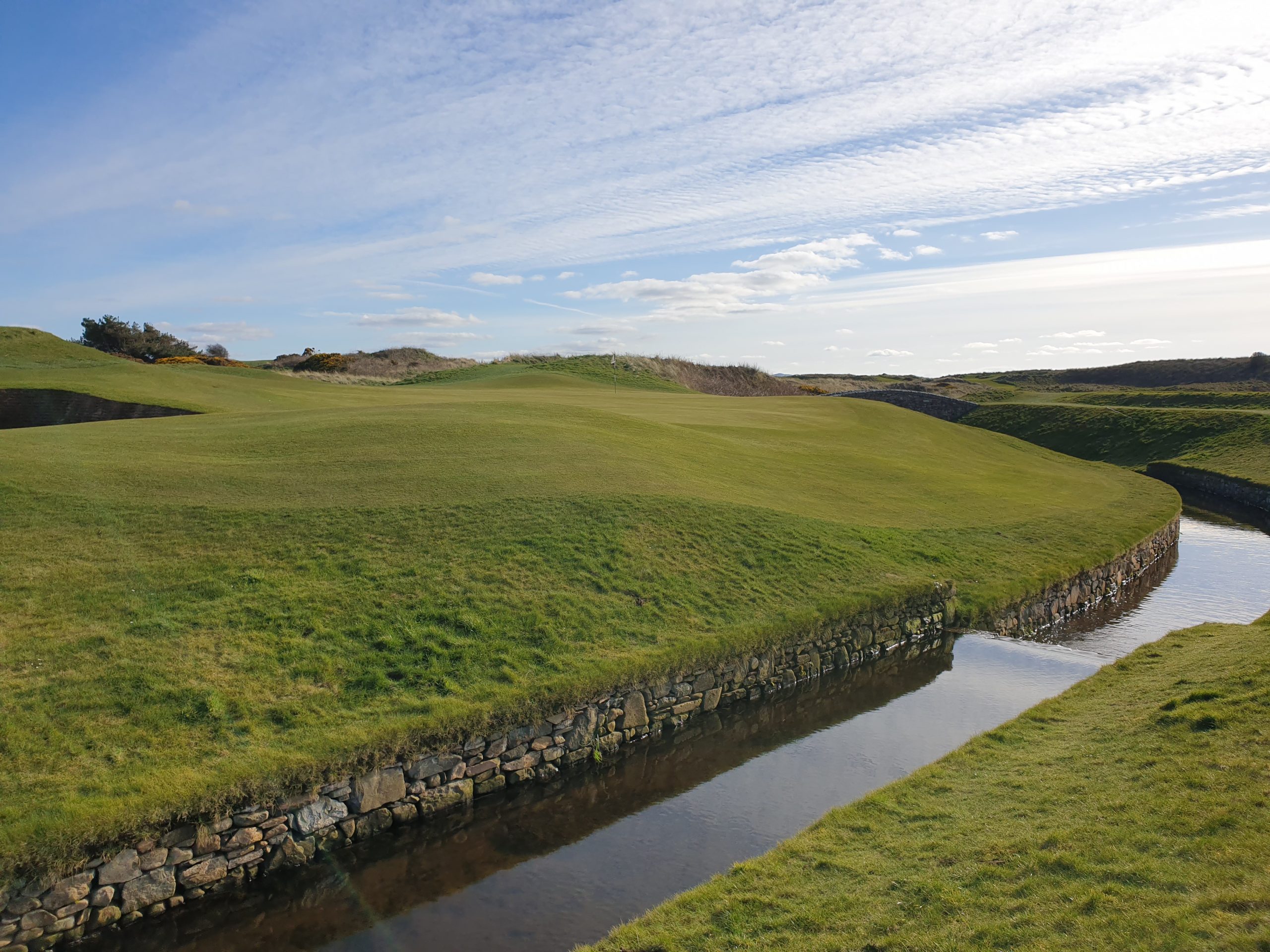
This burn at the long par 4 16th will be a card wrecker even for the pros.

After the Round

The clubhouse at Turnberry is exactly what you would expect from a five-star resort that has hosted four Open Championships. Leather armchairs. Views across the course to the sea. A club sandwich and a pot of tea for £27, served with a Turnberry-branded paper bag and an air of quiet confidence that it is entirely worth it – maybe.
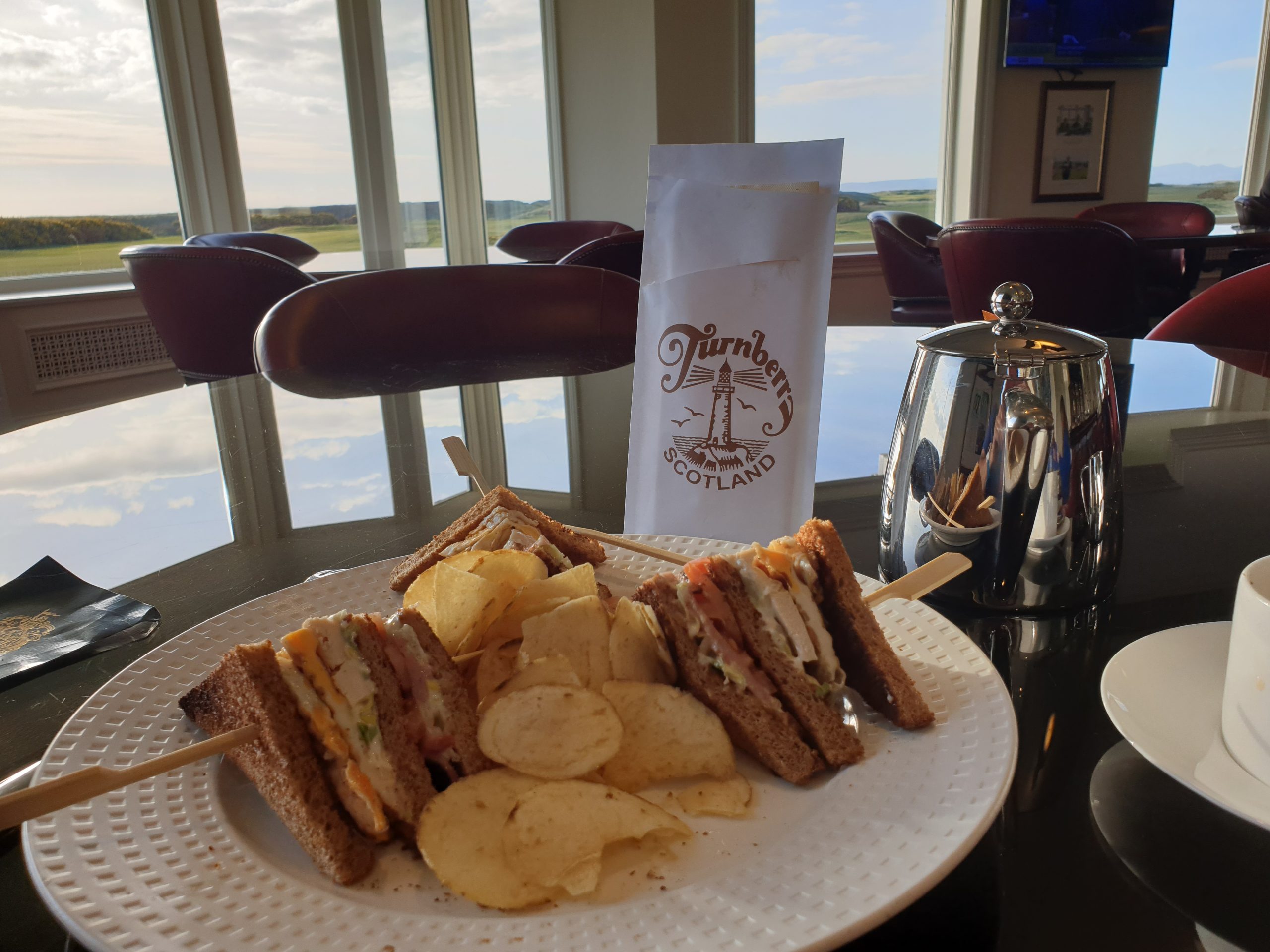
Trump Club and pot of tea, only £27

The Verdict

Turnberry Ailsa is magnificent. Burns walked this coast. Douglas Graham farmed a mile north of the first tee. The Girvan Gang played golf five miles to the south while Burns’ father was still a young man. The lighthouse stands on the ruins of a castle that shaped Scottish history. Two World Wars tried to destroy the course and failed. Holy Willie bought it and made it better.

Whatever you think of the branding, the course itself demands only one response: reverence.

Played: 27 March 2023
Paid: £130 (list price approximately £500)
Score: 89 gross, 34 Stableford points, handicap 15, yellow tees (6,110 yards, SSS 70, Slope 124)
Value: ⭐⭐⭐⭐⭐ at £130 / ⭐⭐⭐⭐ at rack rate
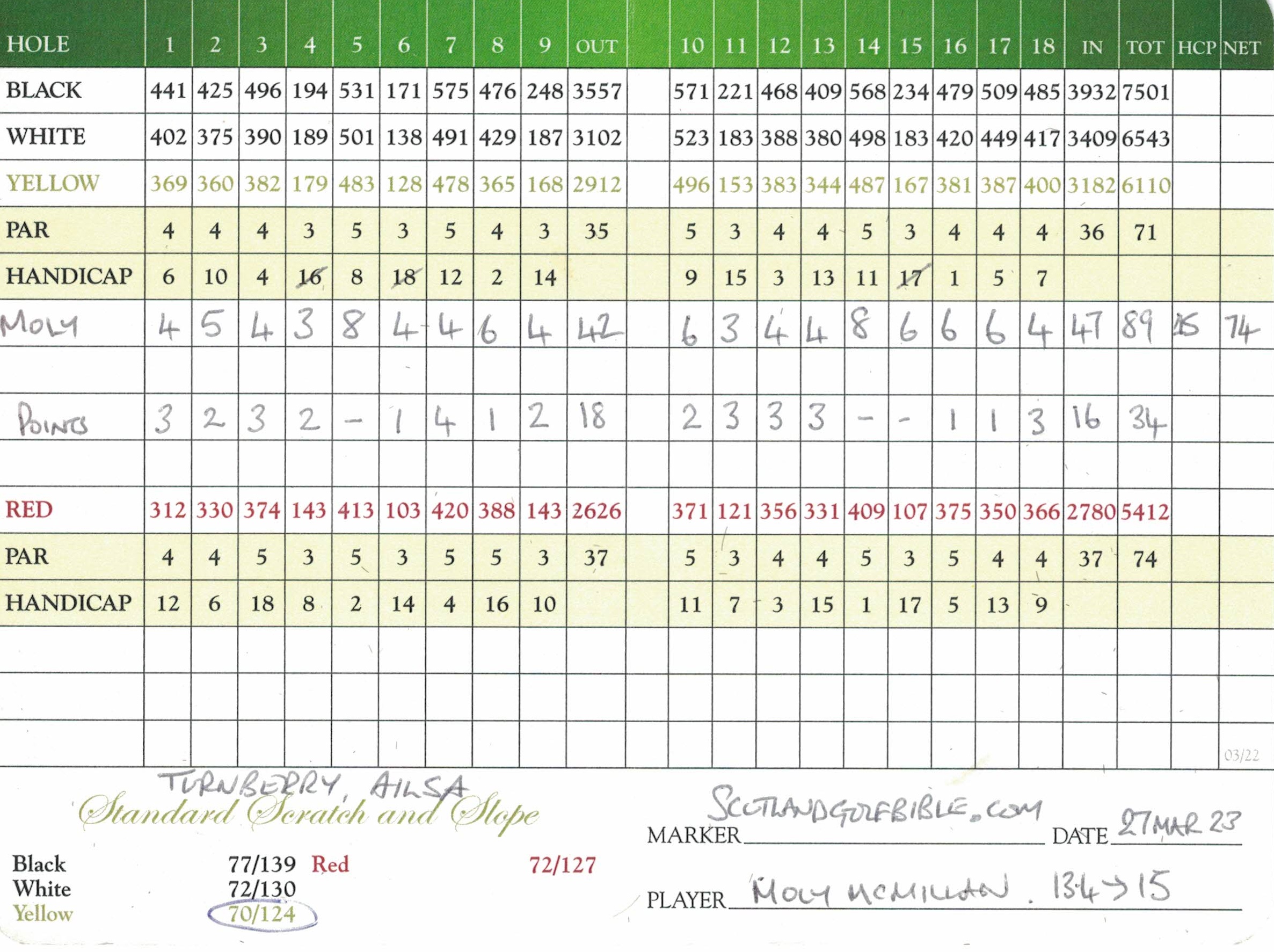
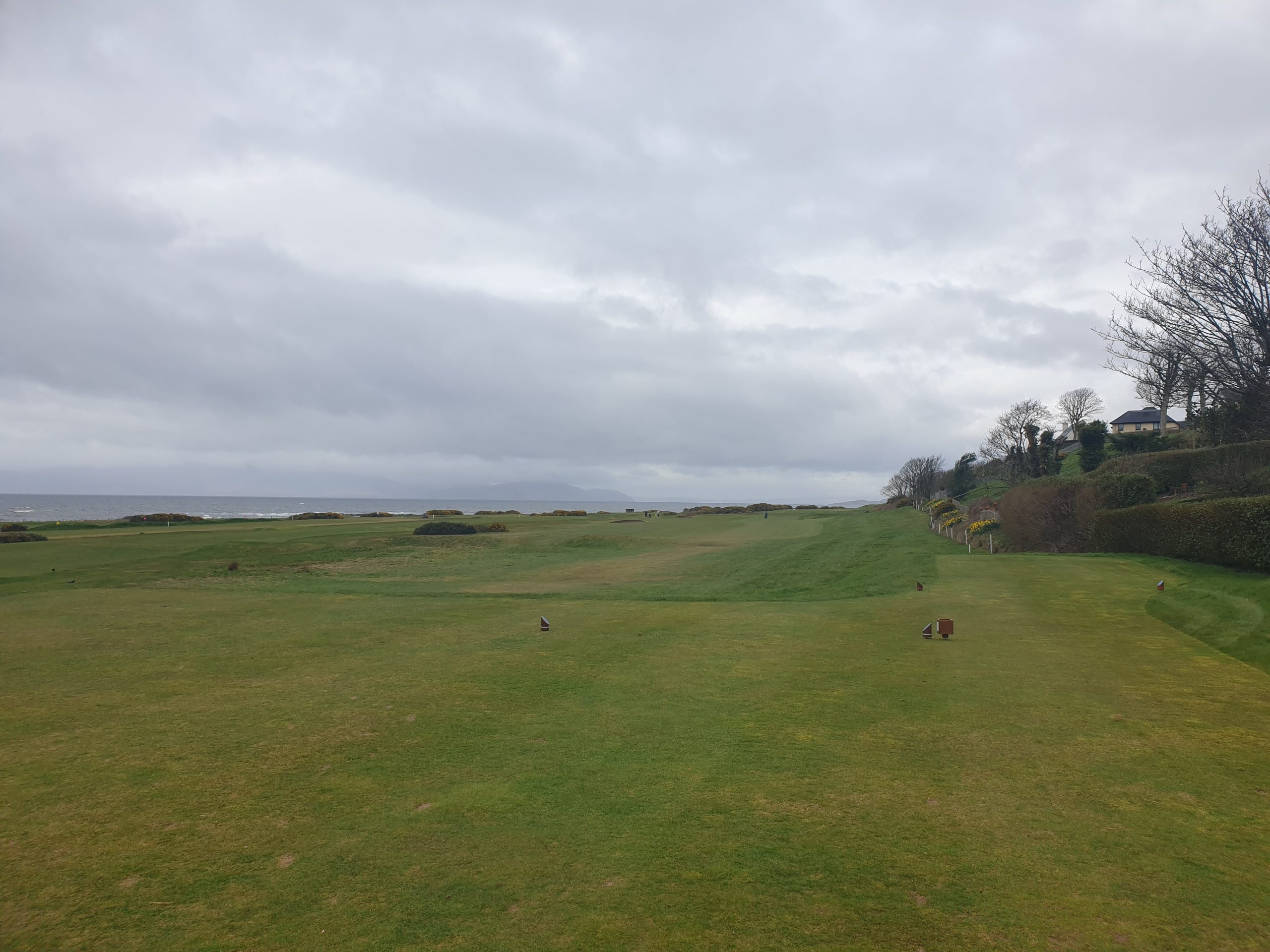
A great day for me, never to be forgotten. 89

184. West Kilbride. 24 Mar 2023.

Walter Hagen thought better of it. He made a big mistake.

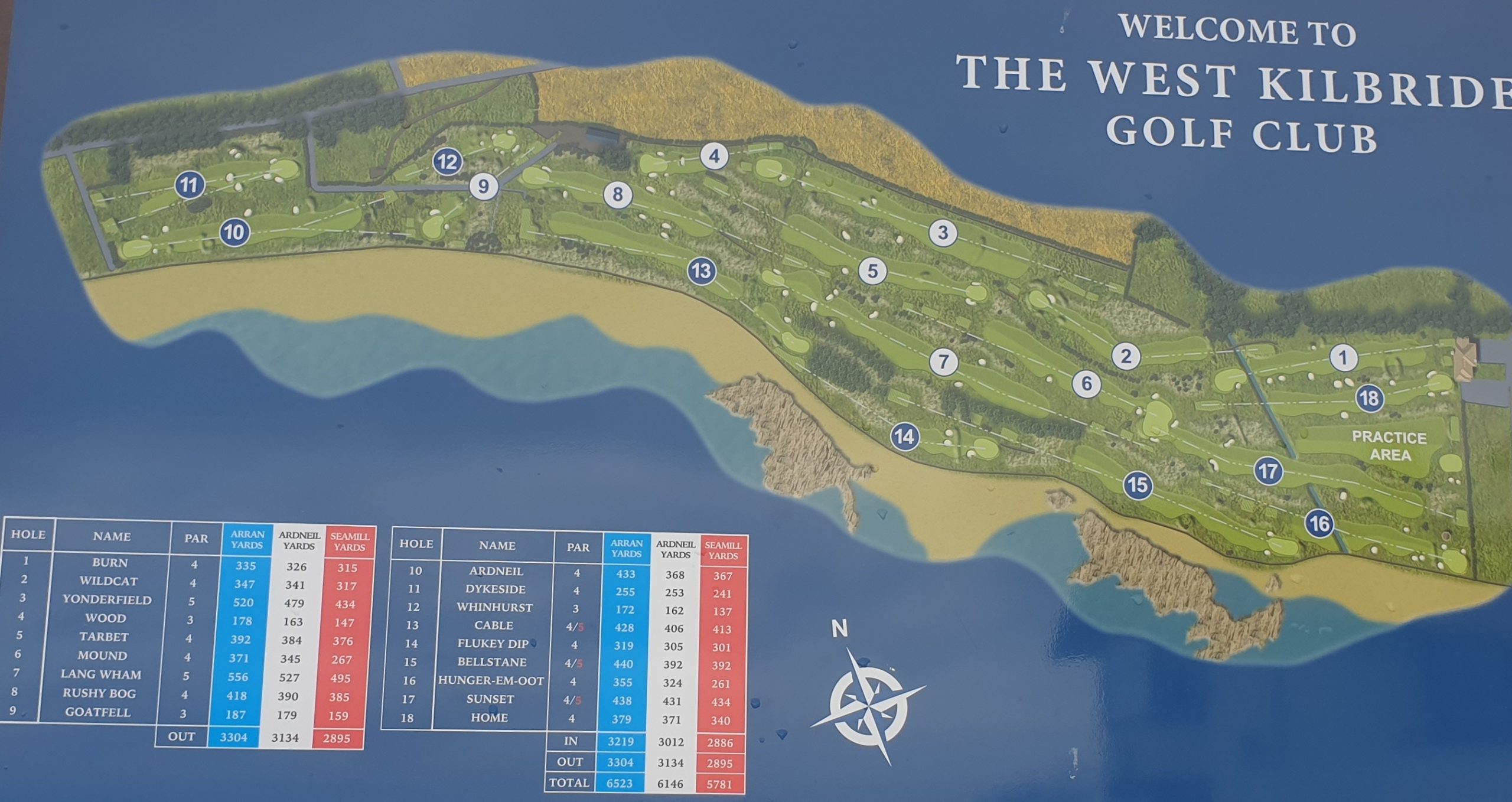
Round: £40 (Winter rate). Par 71. Course Rating 69.7, Slope 120.

Value: 5/5.

Moly’s Score: 95.

Three miles south of Seamill on a rocky promontory above the Firth of Clyde, sits Portencross Castle, a squat fourteenth-century tower house with a roofline destroyed in 1739 and never repaired. This place was consequential long before the castle was built as its land was given by Robert the Bruce to Sir Robert Boyd of Kilmarnock for his service at Bannockburn. The castle became a purgatory stop for Scotland’s dead kings; their bodies lying in state before being transported by a birlinn, a traditional Hebridean ship, to Iona for burial.

By the 1890s, the Craufurds had long since replaced the Boyds of Kilmarnock dynasty. It was Hugh Craufurd, Laird of Auchenames and Portencross, who played the first tee shot at West Kilbride Golf Club in 1893, on the nine-hole course laid out by Old Tom Morris.

Hole 1, Burn, looking at the Firth of Clyde and the Isle of Arran. The Laird of Auchenames drove off here in May 1893.

The course extended to 18 in 1905, and the layout was altered again in 1914 and 1925, both done by James Braid. There are many parallels with Lundin GC, blog 84, with the links land predominantly the Morris holes, with Braid encroaching on the more arable turf. The resulting layout it is not a simple out-and-back routing, with Braid keen to make regular changes in wind effect, where he could.

The Old Tom / James Braid layout, a course with parallels to Lundin GC in Fife.

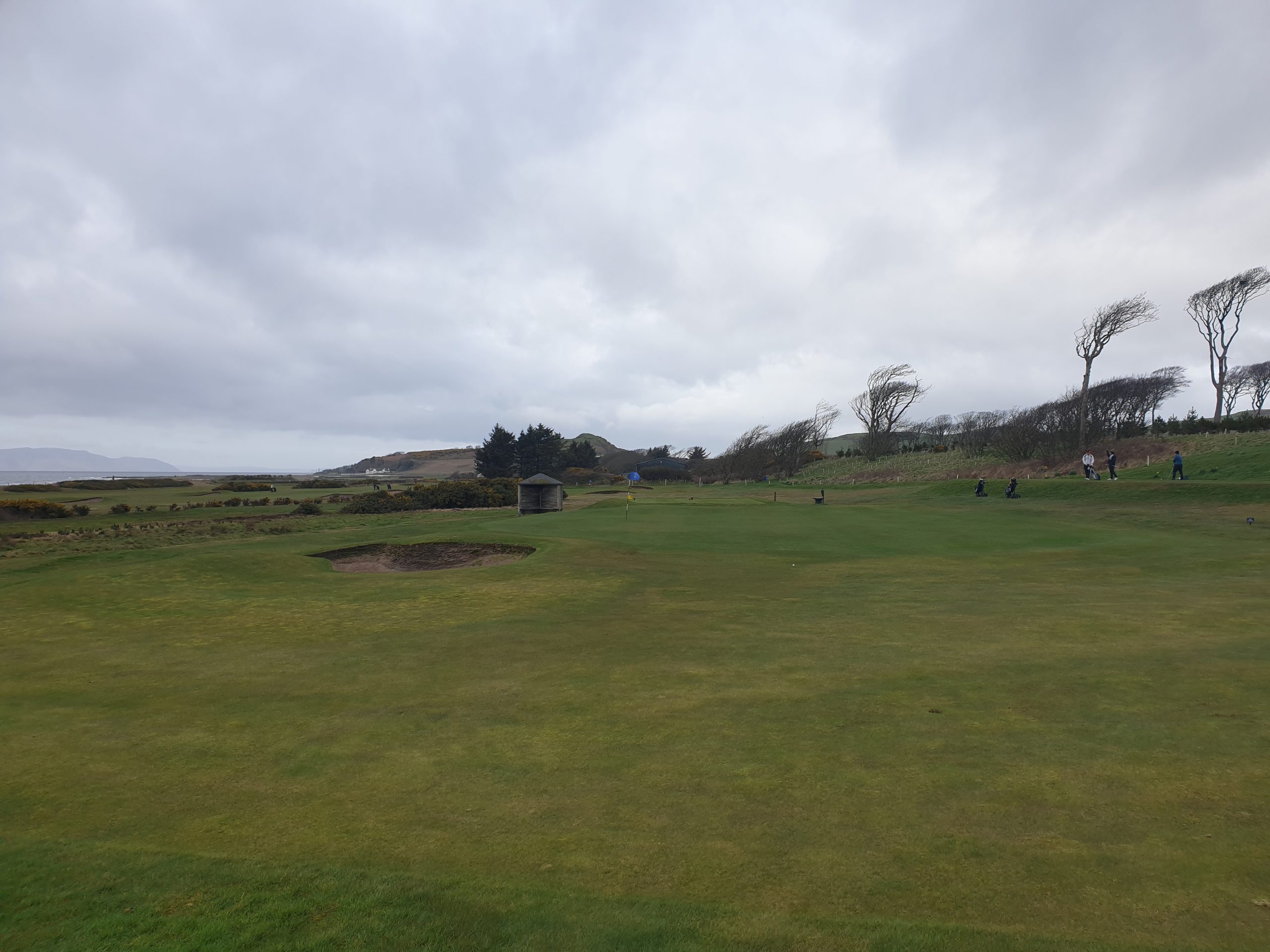
I played alone for only £40 on the winter rate, an unbelievable bargain, in changeable weather conditions as the photos show. Being alone at West Kilbride was mostly meditative, despite a forensic start.

At the first hole, Burn, a par four of 326 yards, my thinned drive embedded in the face of a bunker; not in the sand, but in the turf wall – a rule referee wasn’t available.

The opening drive, embedded in the face of the bunker. A rules quiz – what can you do?

Does a ball embedded in the face of a bunker entitle you to free relief? The answer is yes — provided the ball is embedded in the turf of the rivetted wall or face, not in sand. The relief is to find the nearest point in the general area not nearer the hole and drop within one club-length. No penalty. The catch: if any part of the ball is touching sand, free relief evaporates and you play it as it lies or take an unplayable.

I took the free drop and still made seven. The rules of golf are at times generous, but they don’t always mean a lower score.

The approach to the par five 3rd hole ‘Yonderfield’. The trees perfectly illustrating the prevailing wind underlying how West Kilbride challenges your game.

I played a good round in difficult windy conditions with Out of Bounds (OOB) in play on twelve holes. There is nowhere to hide at West Kilbride. I finished with 95 gross and 29 Stableford points off 14, which in those conditions represented something around par for the day.

The front nine is somewhat on arable, not true links, land. The back nine has more of the original links land holes, giving you two linked but distinct experiences. It is at the turn, Ardneil, the tenth, that the course reveals its real character, with OOBs running the complete left hand side. The westerly prevailing wind becomes your friend here.

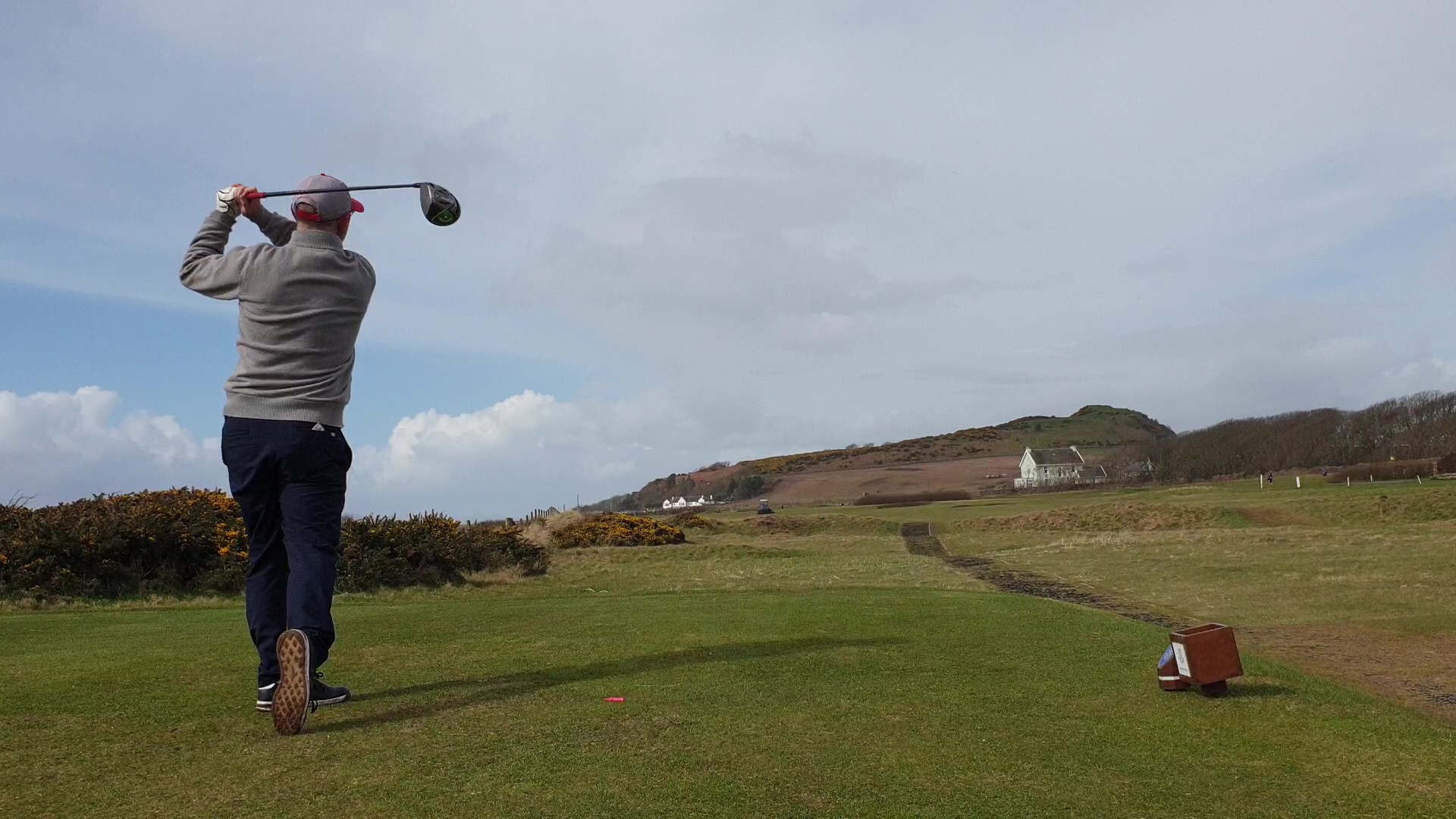
Moly driving at the difficult par four 10th, the stroke index 3 hole, with gorse starting to bloom in March! As a lone golfer you need to be good at setting the camera.

By my back nine, something else had changed: the weather. The grey overcast of the first hour had given way to Ayrshire sunshine, the Firth beginning to catch the light and Arran stunningly on the horizon. Links golf in Scotland operates a variable weather tariff, not unlike most of the fees these days. The same course that hands you a seven on the first hole in a grey wind can, within two hours, be offering something close to transcendence.

The green at the 13th, the toughest hole – stroke index 1, 406 yards, par 4. The conditioning fully on show, as was the improving weather.

The greens and their surrounds were excellent, brilliant conditioning for late March. The links turf was quality. The hole names carry their own character: Yonderfield, Rushy Bog, Lang Wham, Hunger-em-oot.

The club has attracting high profile visitors over the years and were keen to get Walter Hagen, the “first touring pro” to play an exhibition. Hagen failed to agree his fee and “went elsewhere”, ironically agreeing to play The Machrie on the Isle of Islay, but traveled incorrectly to Machrie Bay on Arran, a much lesser course; blog 110. This was a mistake in more ways than he imagined! Open Champion Bobby Locke played here in 1951, clearly being less demanding than Hagen, the real hustler.

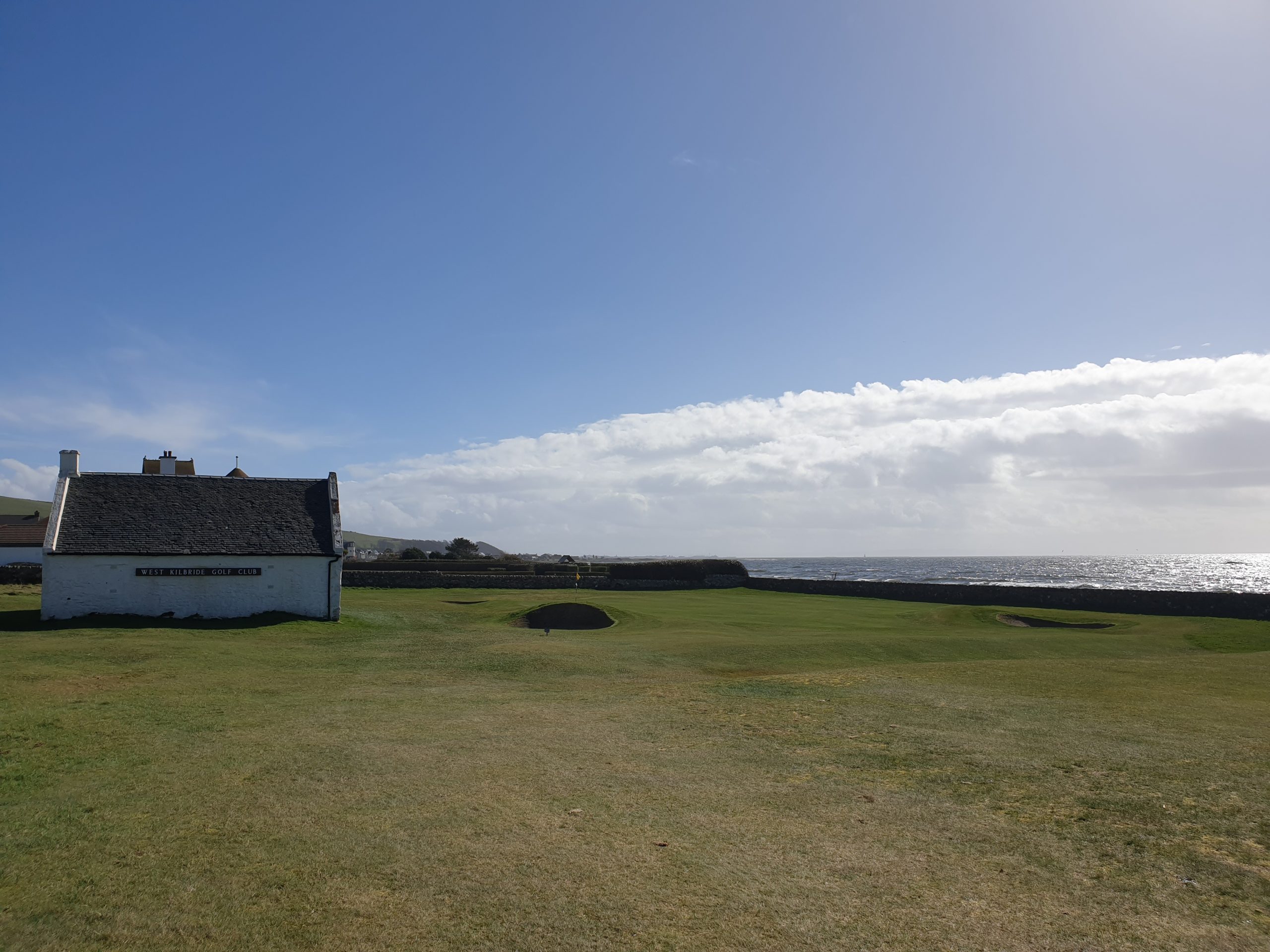
Hole 16, Hunger-em-oot: the signature hole. The West Kilbride Golf Club outbuilding with its sign, the two flanking bunkers, and the Firth of Clyde beyond. This is the image of the course.

West Kilbride is the most northerly of Ayrshire’s true links courses, including Dundonald, Glasgow Gailes, Troon, Prestwick and Turnberry, partly explaining the lower pricing of £40 in March, which deserves reflection.

The course costs £85 on a summer weekday, more than double the winter rate. That Summer/Winter gap has widened considerably over the past decade as Scottish links golf has repriced itself upward as a premium product. At the top of the market, Kingsbarns charges £448 and Turnberry’s rack rate is £545. Green fees at premium Scottish courses have inflated at roughly 7-8% per year over the past two decades, three times the rate of general inflation. The winter links visitor becomes a shrewder operator.

The course is genuinely excellent; I would go back without hesitation and happily pay more than £40 to do so.

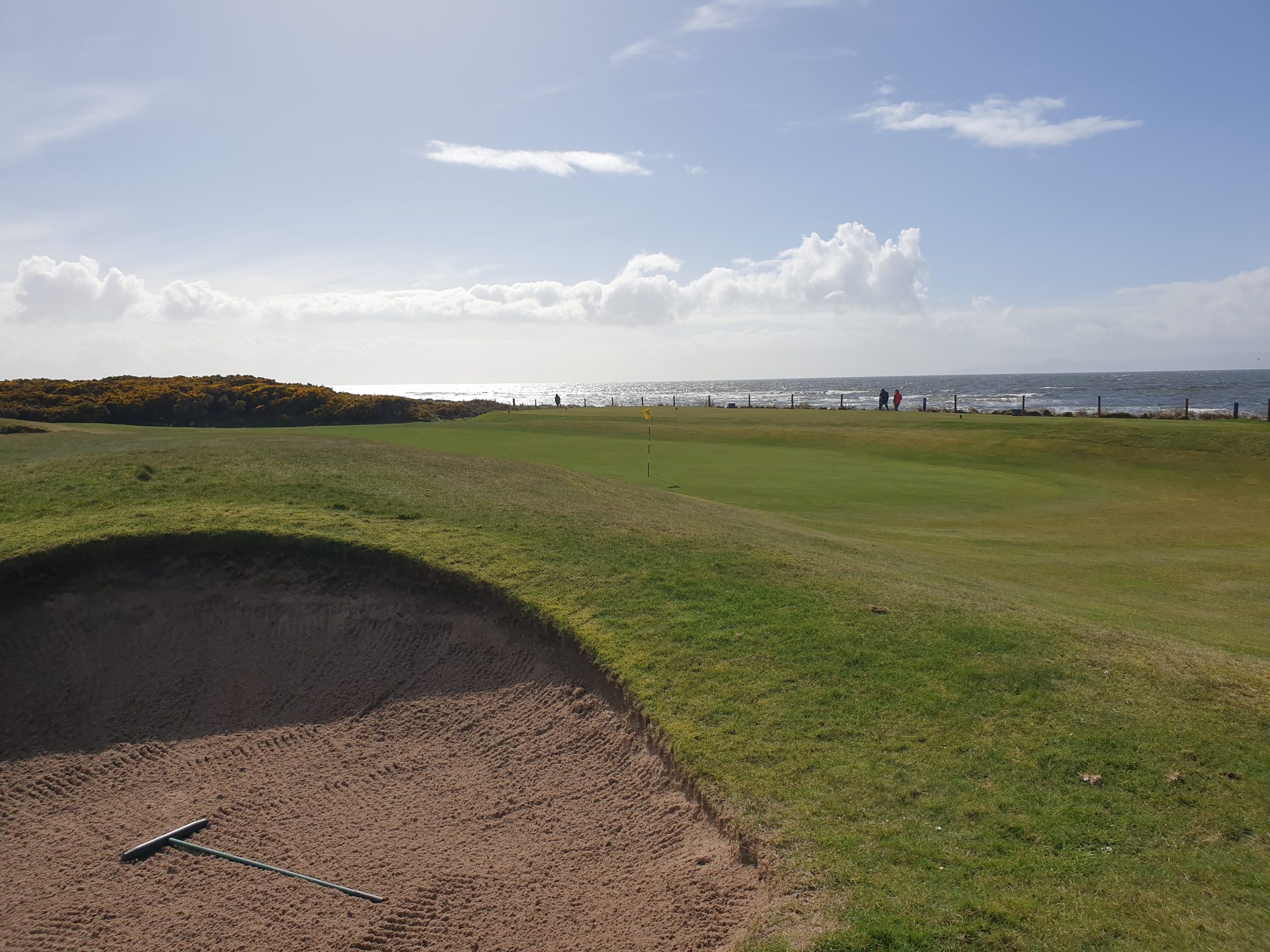
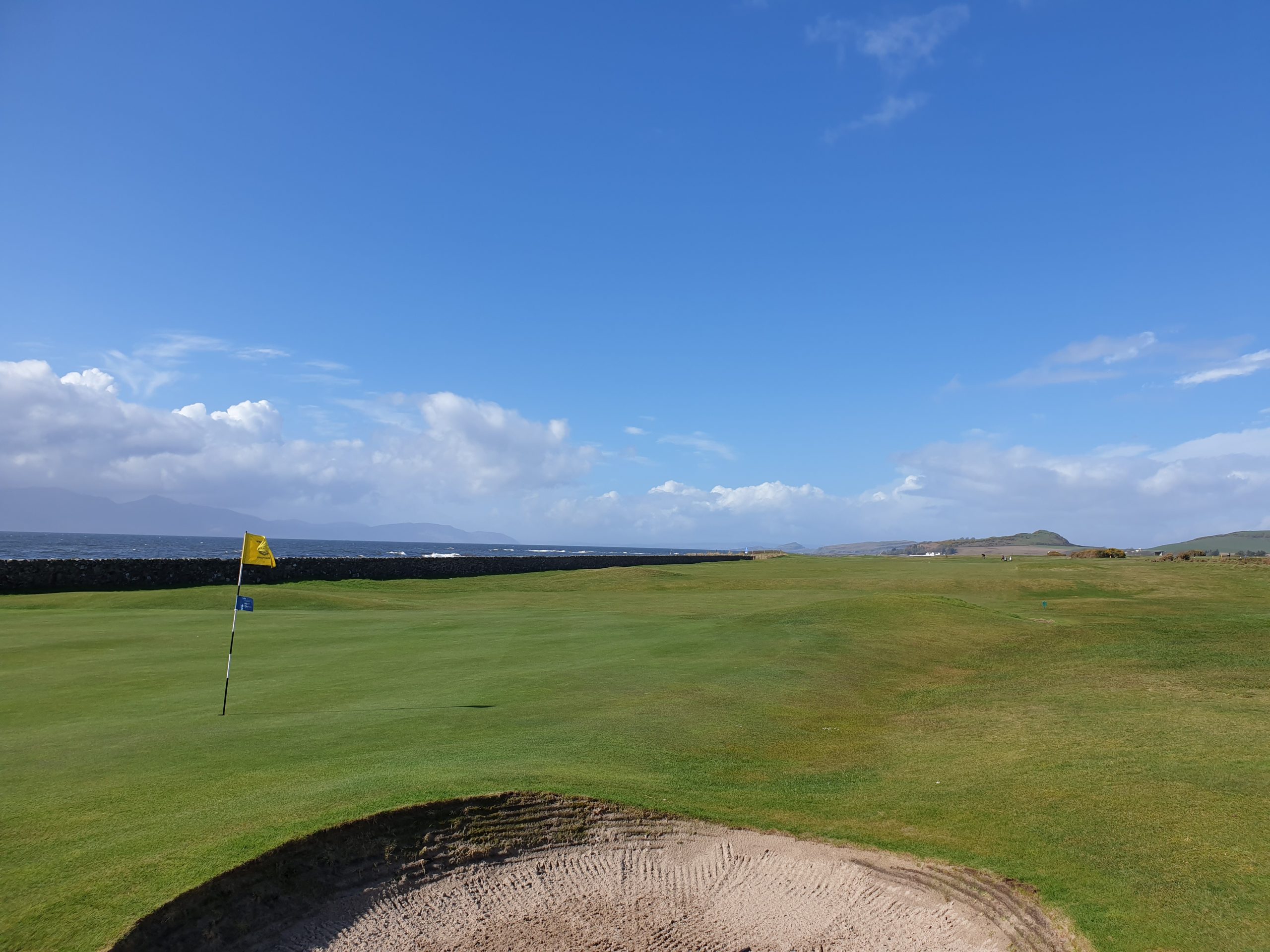
Hole 16 green: looking south along the Firth of Clyde toward Arran. Stone walls, sunshine, the flag. This is what £40 buys you in March at West Kilbride.

Facts:

Course Type: Links

Par 71 (2 par 5s, 13 par 4s, 4 par 3s)

Distance: 6,146 yards (Ardneil/yellow tees)

Course Rating 69.7, Slope 120

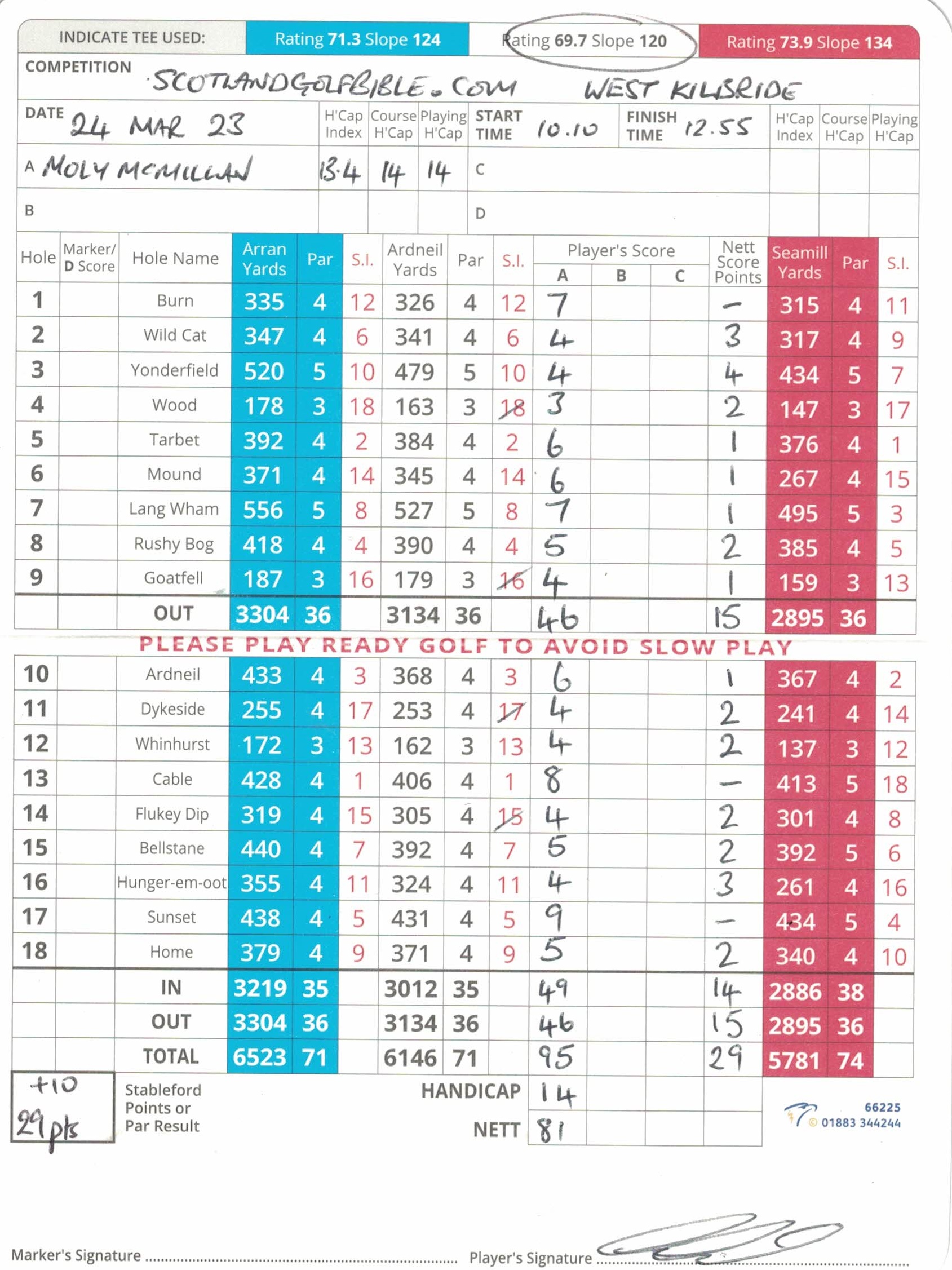
Moly’s Gross Score: 95 (29 Stableford points, net 81)

Moly’s scorecard, a day for a stableford preferably.

176. Blairgowrie Rosemount. 1 Dec 22.

One of the great clubs and excellent value in Winter

Value 3.5/5

Blairgowrie’s Pro explained many members lived quite far from the club, meaning competition days, Wednesday and Saturday, were incredibly busy. Therefore, playing Rosemount on the first Thursday in December, I anticipated a fast round, before finding myself behind one of those 4-balls – you know the kind – those avoiding eye contact!

The 5th, a typical tree lined hole on Rosemount. I was stuck behind a four ball, that steadfastly refused to acknowledge me. They were the rudest golfers I have ever encountered and did nothing to make Blairgowrie feel a welcome place for visitors.

Blairgowrie, or more correctly ‘Blairgowrie and Rattray’, is a twin burgh in eastern Perthshire, and a popular gateway town to the highlands. With a population of 9000, it has some quaint but dated shops.   It also has a fine golf club with 3 courses, 2 of which are listed amongst the very best in the UK.

The impressive Blairgowrie clubhouse behind the difficult 400 yards plus 18th on Rosemount.

The Rosemount course (originally called the Lansdowne) is regarded by many as the jewel in the Blairgowrie crown; designed by the Yorkshireman, Dr Alister MacKenzie, in the 1920s, with further developments by James Braid and Donald Steele. Blairgowrie’s newer 18 hole course, with the inherited Lansdowne name, was designed in the 1970s by Peter Alliss and Dave Thomas. Both courses have been further updated by Scottish Designer, Graeme Webster.

The strong 17th hole, a par 3 of 163 yards; although not as “Plateau’d” as the holes name would suggest. Easy to three putt on this very large green.

‘Lansdowne’, was in fact the original name of the current 9 hole ‘Wee Course’, blogged here. This was the founding 1889 course at Blairgowrie, named after the Dowager Marchioness of Lansdowne, a local aristocrat. It is often cited as one of the best 9 hole courses in Scotland.

The 11th tee, a typical tee shot at this course, so much so I can understand why it could be considered monotonous.

The two main18 hole layouts are championship standard and the Rosemount course hosted the European Tour in the 1970s and 1980s. It was the venue of Greg Norman’s first European tour victory in 1977 with The Martini International on 11 under par with the South African Simon Hobday in second place.

The wonderful bunkering at Rosemount, seen here at the 2nd, a short par 4 of 340 yards, and one of the good birdie chances.

Set in a large tree encrusted heathland property the courses are easy walking, and more forgiving off the tee than what meets the eye. Many of the holes feel similar and with the forested surrounds, there are limited views. Depending on the time of year, this landscape could even feel like California or Portugal.

The course is a highly attractive amateur Open venue due to the ever increasing summer green fees, which are now £140 (2023), whereas the Winter fees are less than £40. Although I played off mats and forward tees, the greens were in play. Given the greens are part of the magnificence of the course, this represents excellent Winter value golf.

The 15th “Wee Dunt”, a lyrical, and potential ryme, for this tricky par 3.

I played very well, scoring 81, and therefore I may have to thank the four ball that slowed me down. Maybe that’s the secret – taking time and concentrating.

In summary, if you are looking for a golf course that combines history, beauty, and challenge, then you might want to visit Rosemount in Blairgowrie. Especially on a nice winter’s day.

Round List Price £140. Actual Paid £30 (Winter rate).

Moly’s Score – 81 for 37 points (off 14)

Course/Slope Rating (winter) 68.8/121

Course Type: Heathland

Par 68  (14 par 4s, 4 par 3s)

Distance (yellow): c 5500 yards

Moly’s 81 on Rosemount off their winter tees, but full greens

169. East Renfrewshire (‘Ren’). 18 Oct 22.

Arboretum type vision creates framing ‘For the Ages’

Value for Money (out of 5) – 5

It takes vision to plant an arboretum as its creator is dead by the time planting has matured, something both sad and somewhat magical. This was how I felt playing one of James Braid’s canvasses – East ‘Ren’.

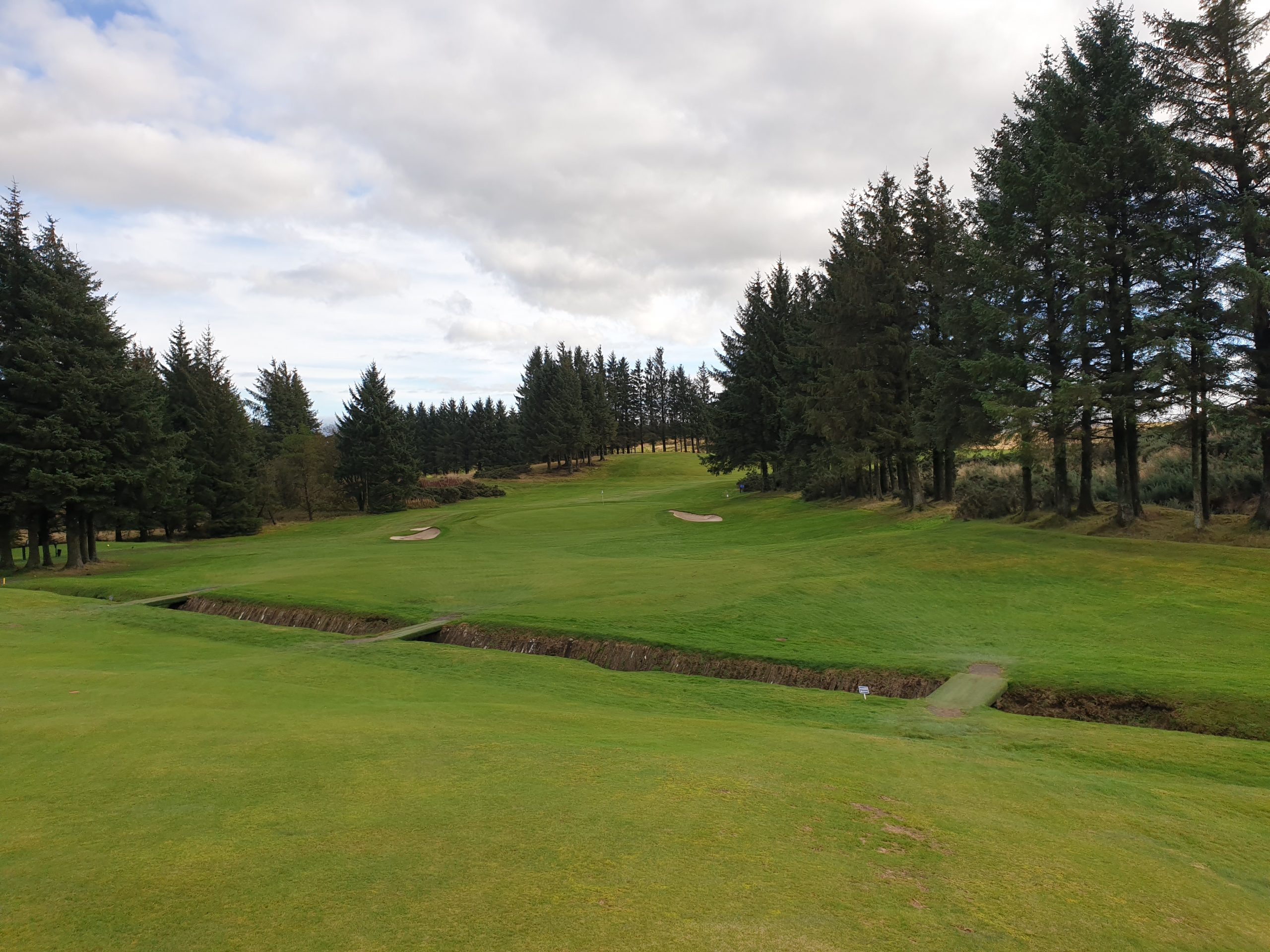
The beautifully framed par four 2nd hole at East Ren from its elevated tee.

In 1922 when Braid designed this moorland layout there were almost no trees and this is a great example how courses evolve over the years.

The original open heathland vista of East Ren, a picture courtesy of the golf club. The clubhouse is still in use.

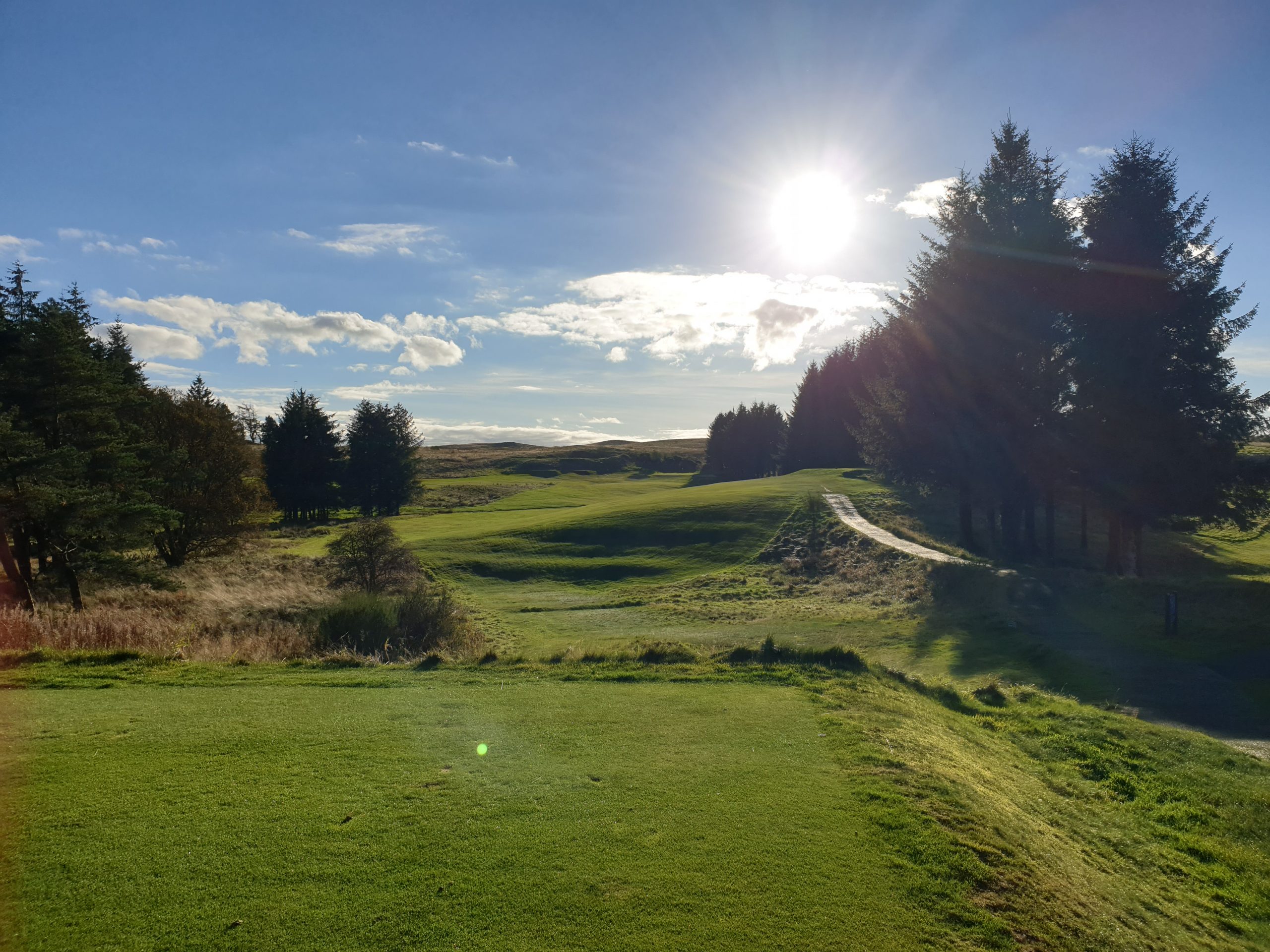
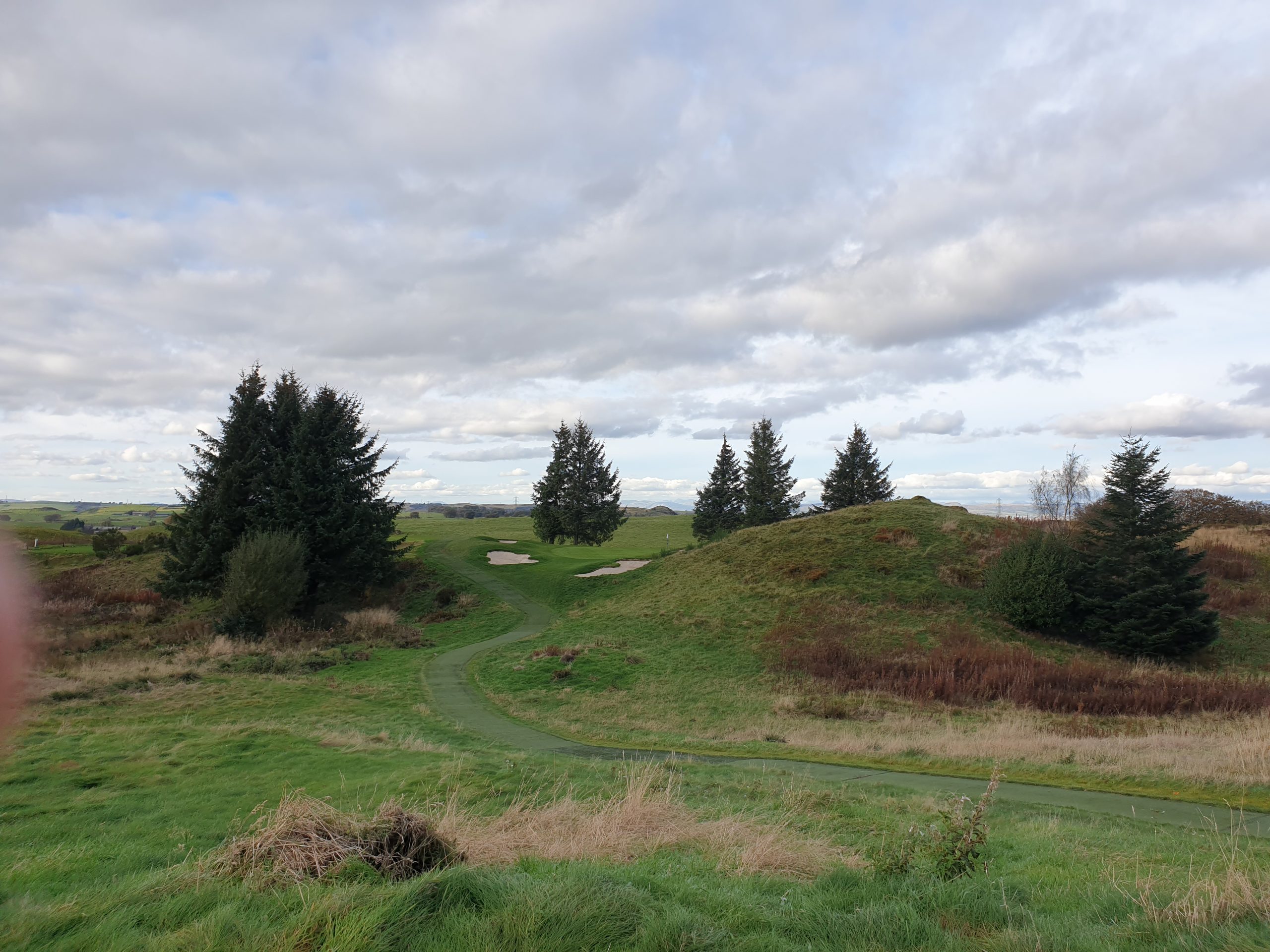
Looking at the original open heathland layout of the course in 1922, one wonders whether Braid imagined what the course would become? If he did, he really was visionary, because the course is now a beautiful mix of holes and incredibly framed by fir trees. I could have published pictures of every hole.

The great conditioning of East Ren shown here at the 4th green, the 135 yard par three, which also demonstrates the large bunkering on many holes.

This very bonny golf course was in great condition when we played, despite the recent wet weather. It fully justifies its high placing in lists of Scotland’s finest courses.

The downhill dog leg left 331 yard par four 6th hole.

With constantly changing directions and a great use of the sloping braes, Braid’s course is one that you’ll want to come back to again and again. It’s a tough walk in places, no more so than the severe uphill par three 11th, “Brae Shouther”, at over 200 yards.

Moly at the difficult 200 yard par three 7th hole.

There are also many slight dog leg holes, and the odd blind shot thrown in for good measure. The bunkering is strong, yet the fairways are overall pretty generous. The greens subtle, but not overly sloping.

The approach at the par five 14th hole, with the burn challenging the longer hitters, attempting to go for the green in two.

The use of craftily routed burns, feeding the adjacent reservoir, means strategy off the tee is a consideration. Overall, it’s an architectural gem, clearly benefitting from Braid’s growing experience by the early 1920s.

The beautiful 17th at East Ren, yet another hole with excellent framing.

Almost every hole is materially different from its predecessor, many with outstanding view of the Renfrewshire countryside. This is a ‘must play’ course and in the top handful of Scottish moorland courses.

The excellent short 13th hole, at only 120 yards the shortest hole.

Go out of your way to play East ‘Ren’, which has shot towards the top of courses I would like to play regularly.

Facts:

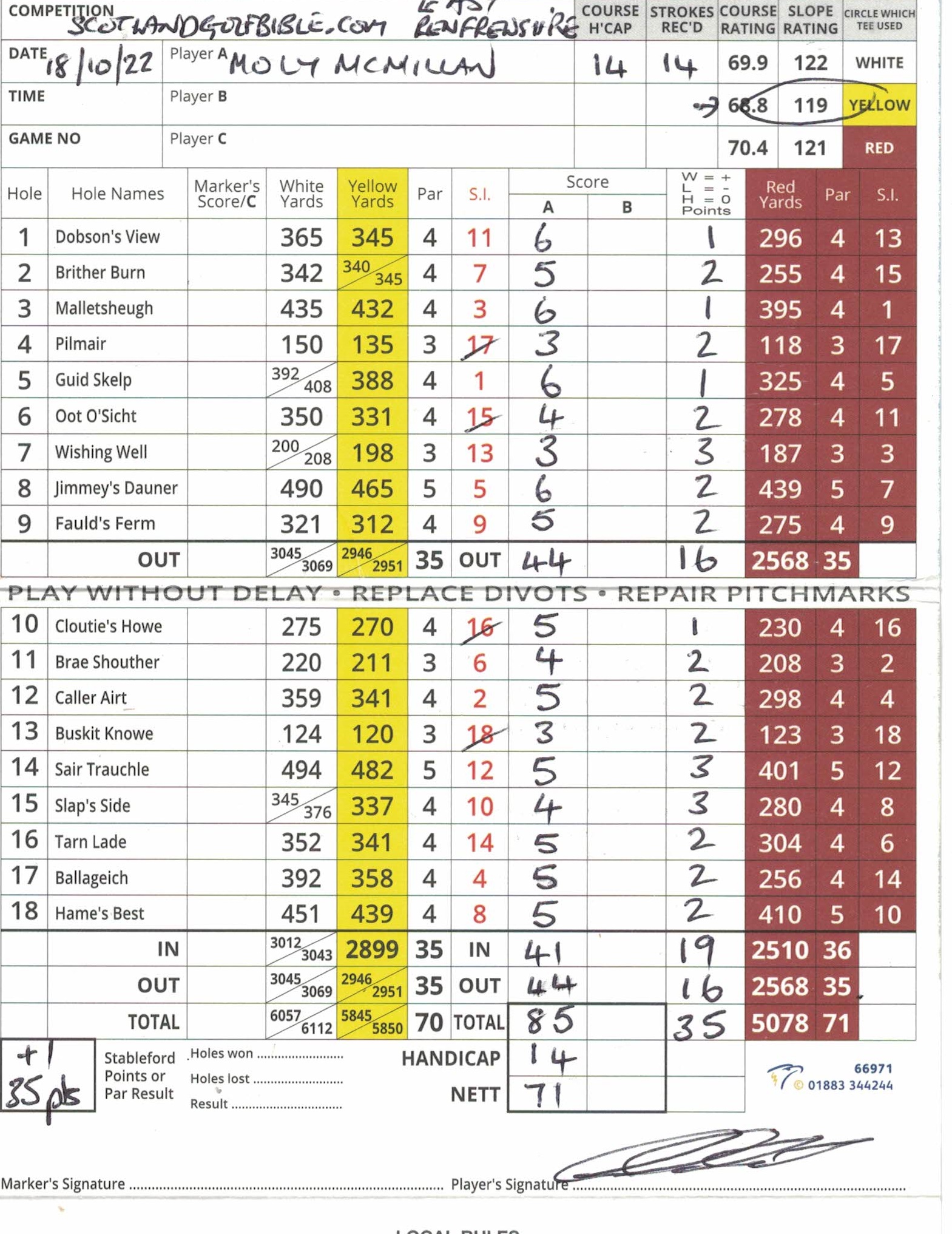
Round List Price £75. Actual Paid £30 through Golfnow.

Course/Slope Rating (yellow) 68.8/119.

Course Type: Heathland

Par 70  (2 par 5s, 12 par 4s, 4 par 3s)

Distance (yellow): 5845 yards

Moly’s ‘East Ren’ Scorecard – 85
« Older posts

© 2026 Scotland Golf Bible

Theme by Anders NorenUp ↑