A guide to green fee value for money

Category: £100 – £199 (Page 1 of 4)

184. West Kilbride. 24 Mar 2023.

Walter Hagen thought better of it. He made a big mistake.

Round: £40 (Winter rate). Par 71. Course Rating 69.7, Slope 120.

Value: 5/5.

Moly’s Score: 95.

Three miles south of Seamill on a rocky promontory above the Firth of Clyde, sits Portencross Castle, a squat fourteenth-century tower house with a roofline destroyed in 1739 and never repaired. This place was consequential long before the castle was built as its land was given by Robert the Bruce to Sir Robert Boyd of Kilmarnock for his service at Bannockburn. The castle became a purgatory stop for Scotland’s dead kings; their bodies lying in state before being transported by a birlinn, a traditional Hebridean ship, to Iona for burial.

By the 1890s, the Craufurds had long since replaced the Boyds of Kilmarnock dynasty. It was Hugh Craufurd, Laird of Auchenames and Portencross, who played the first tee shot at West Kilbride Golf Club in 1893, on the nine-hole course laid out by Old Tom Morris.
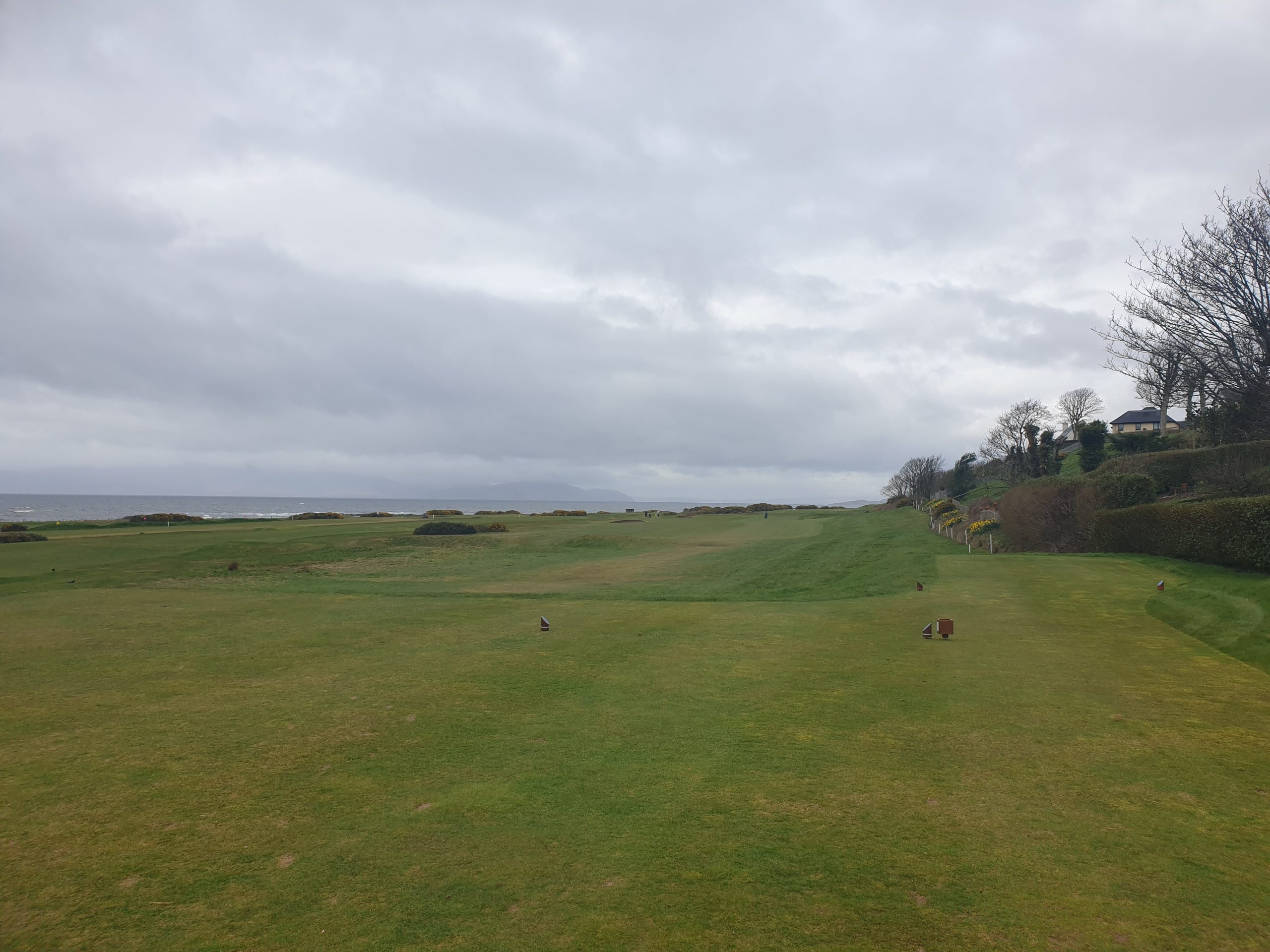
Hole 1, Burn, looking at the Firth of Clyde and the Isle of Arran. The Laird of Auchenames drove off here in May 1893.

The course extended to 18 in 1905, and the layout was altered again in 1914 and 1925, both done by James Braid. There are many parallels with Lundin GC, blog 84, with the links land predominantly the Morris holes, with Braid encroaching on the more arable turf. The resulting layout it is not a simple out-and-back routing, with Braid keen to make regular changes in wind effect, where he could.
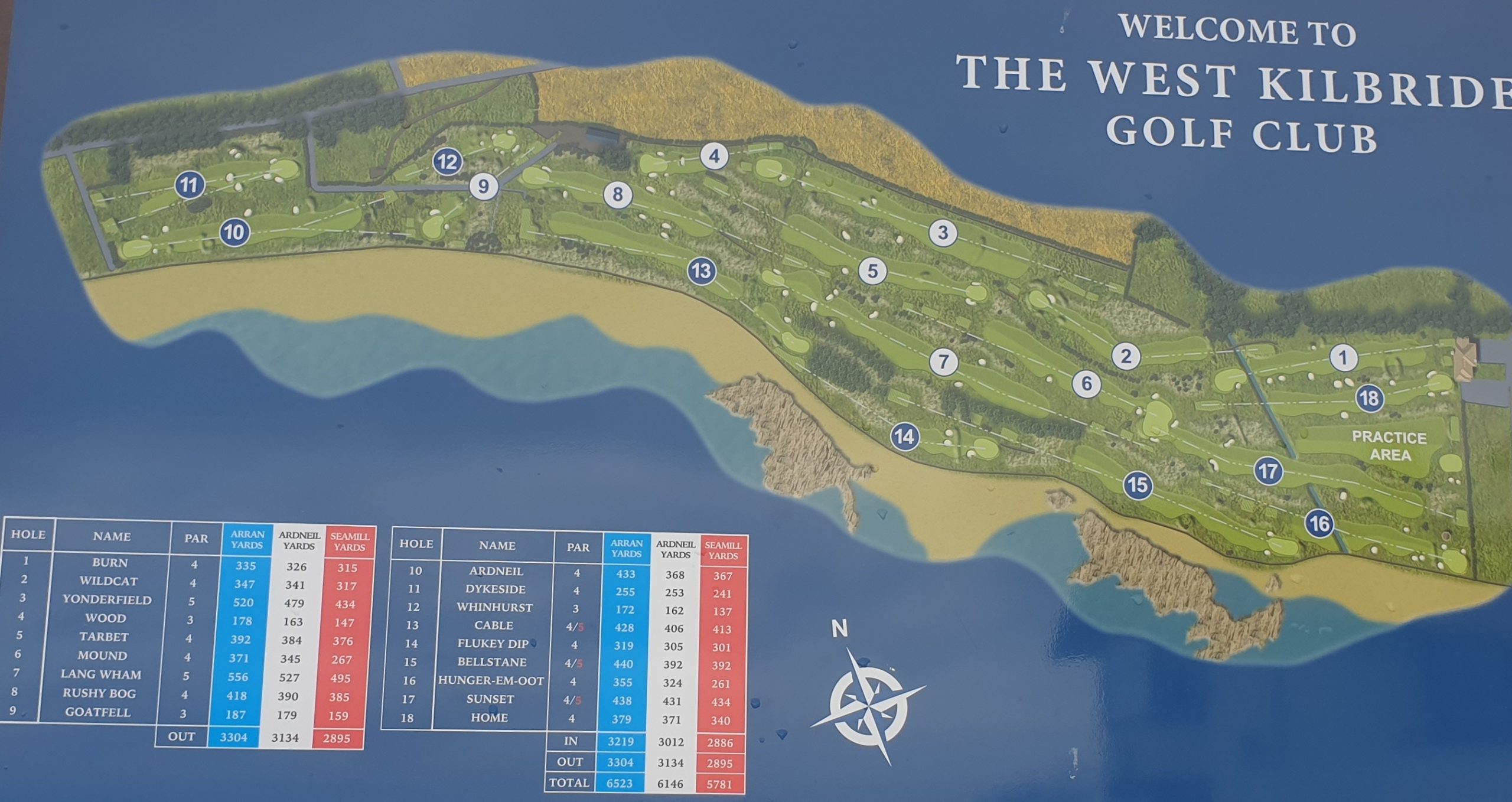
The Old Tom / James Braid layout, a course with parallels to Lundin GC in Fife.

I played alone for only £40 on the winter rate, an unbelievable bargain, in changeable weather conditions as the photos show. Being alone at West Kilbride was mostly meditative, despite a forensic start.

At the first hole, Burn, a par four of 326 yards, my thinned drive embedded in the face of a bunker; not in the sand, but in the turf wall – a rule referee wasn’t available.

The opening drive, embedded in the face of the bunker. A rules quiz – what can you do?

Does a ball embedded in the face of a bunker entitle you to free relief? The answer is yes — provided the ball is embedded in the turf of the rivetted wall or face, not in sand. The relief is to find the nearest point in the general area not nearer the hole and drop within one club-length. No penalty. The catch: if any part of the ball is touching sand, free relief evaporates and you play it as it lies or take an unplayable.

I took the free drop and still made seven. The rules of golf are at times generous, but they don’t always mean a lower score.
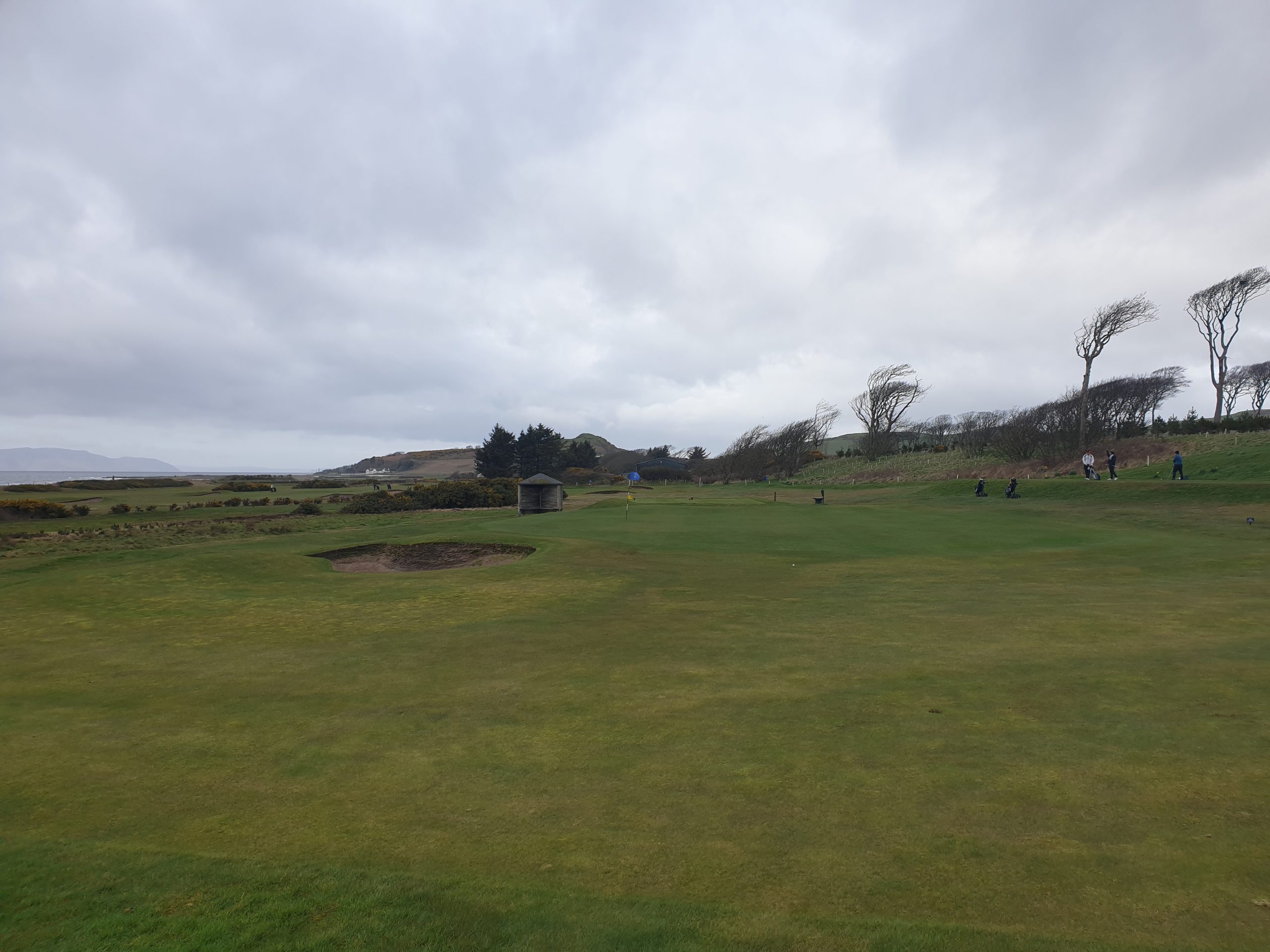
The approach to the par five 3rd hole ‘Yonderfield’. The trees perfectly illustrating the prevailing wind underlying how West Kilbride challenges your game.

I played a good round in difficult windy conditions with Out of Bounds (OOB) in play on twelve holes. There is nowhere to hide at West Kilbride. I finished with 95 gross and 29 Stableford points off 14, which in those conditions represented something around par for the day.

The front nine is somewhat on arable, not true links, land. The back nine has more of the original links land holes, giving you two linked but distinct experiences. It is at the turn, Ardneil, the tenth, that the course reveals its real character, with OOBs running the complete left hand side. The westerly prevailing wind becomes your friend here.
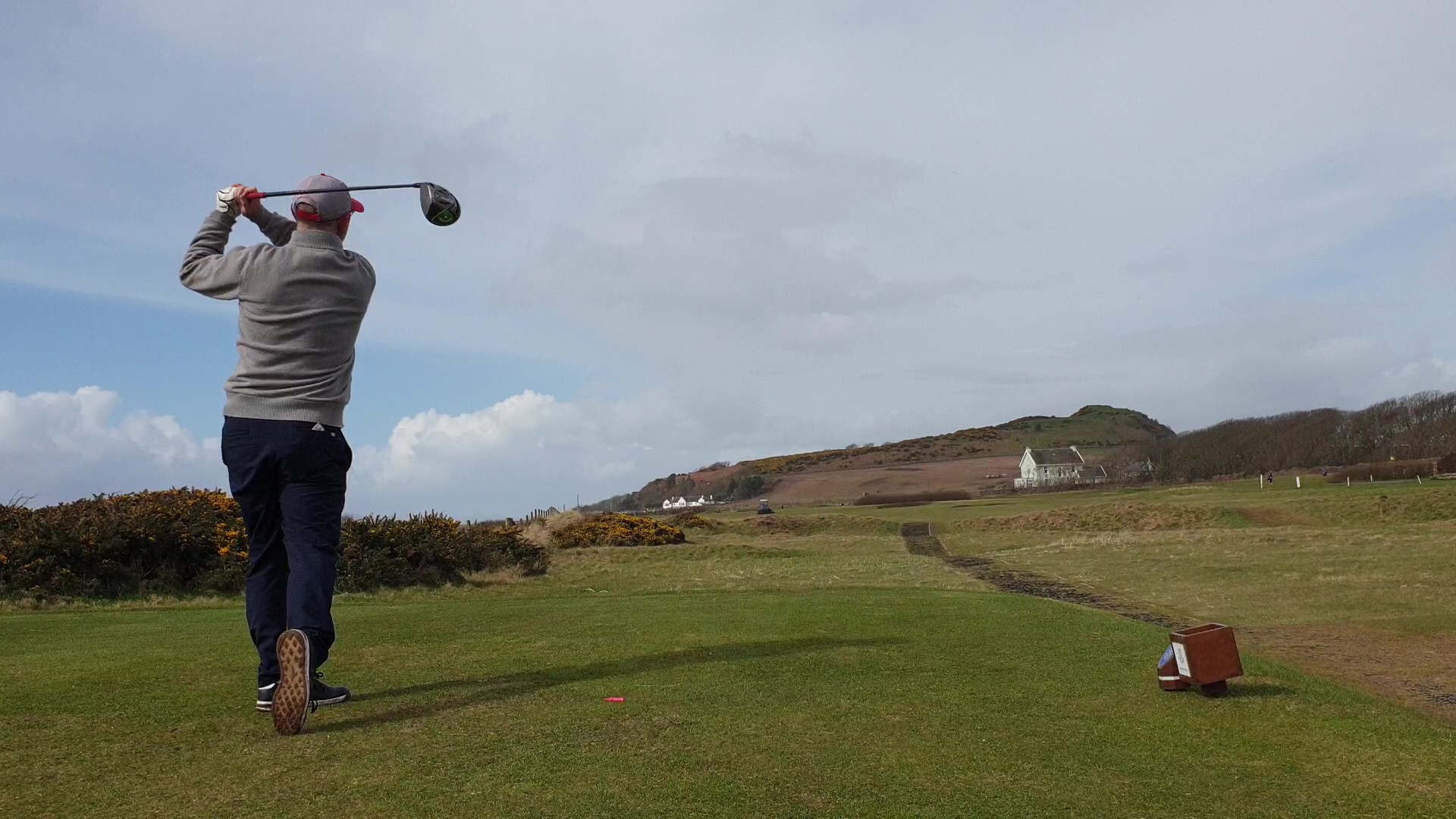
Moly driving at the difficult par four 10th, the stroke index 3 hole, with gorse starting to bloom in March! As a lone golfer you need to be good at setting the camera.

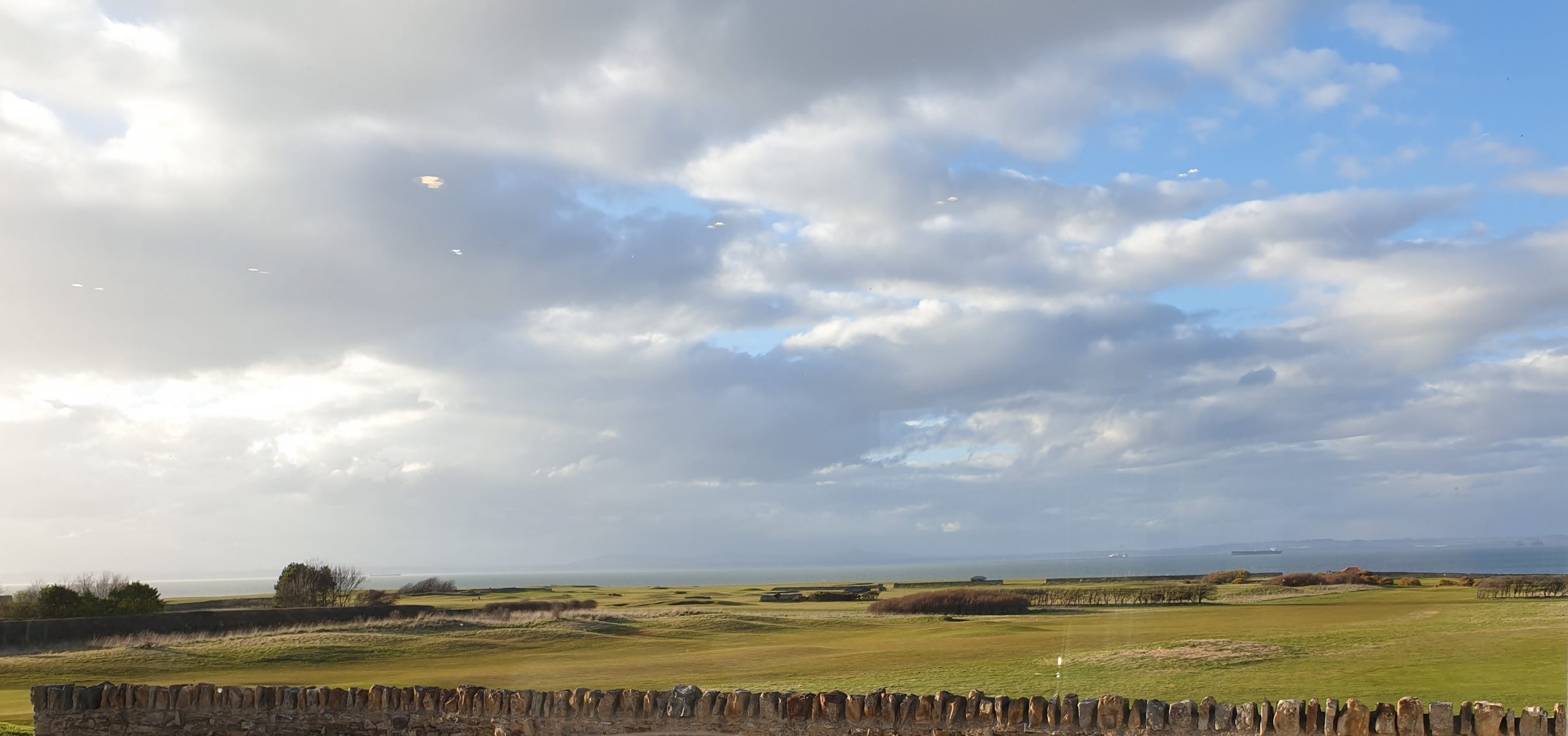
By my back nine, something else had changed: the weather. The grey overcast of the first hour had given way to Ayrshire sunshine, the Firth beginning to catch the light and Arran stunningly on the horizon. Links golf in Scotland operates a variable weather tariff, not unlike most of the fees these days. The same course that hands you a seven on the first hole in a grey wind can, within two hours, be offering something close to transcendence.
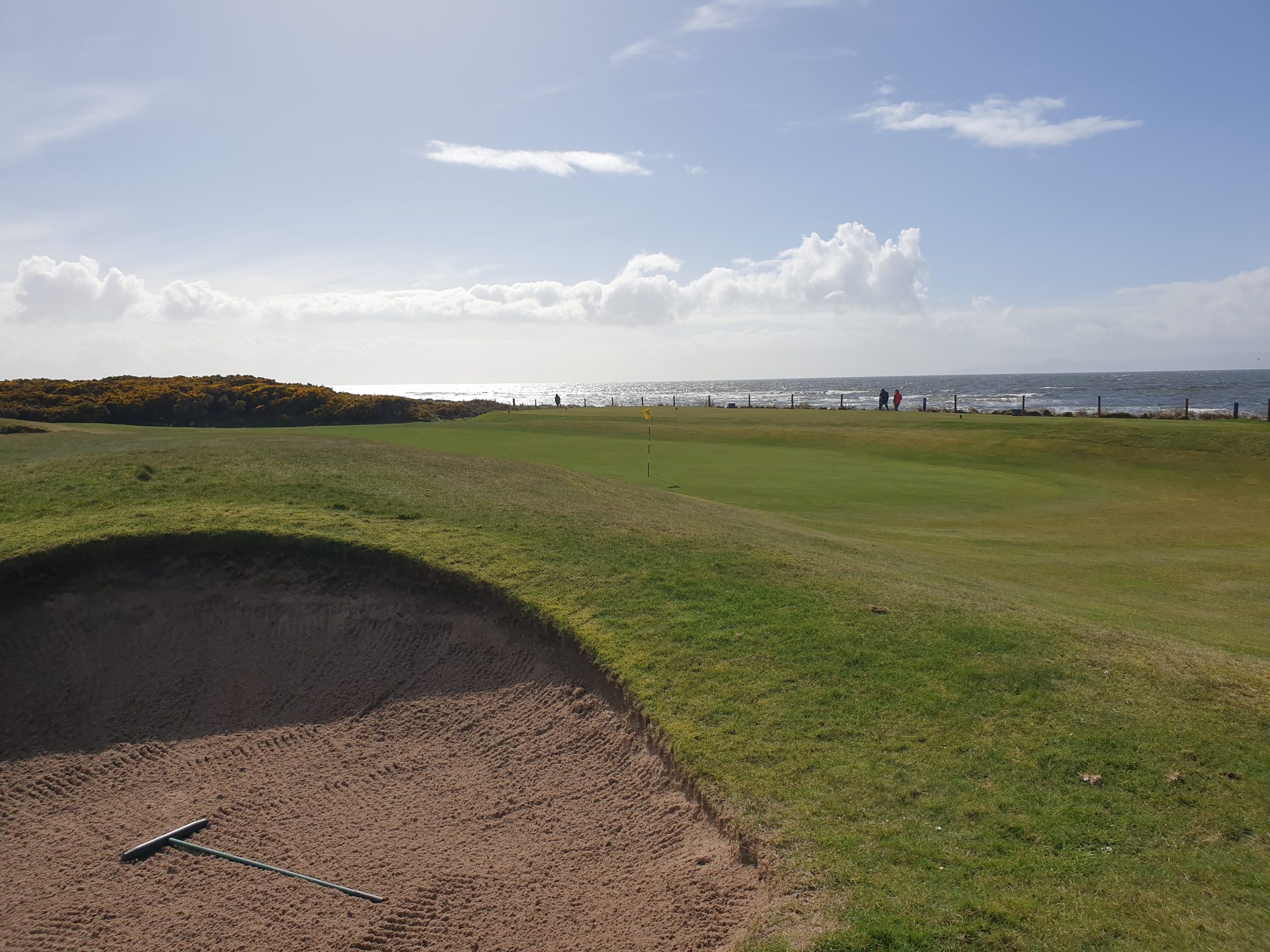
The green at the 13th, the toughest hole – stroke index 1, 406 yards, par 4. The conditioning fully on show, as was the improving weather.

The greens and their surrounds were excellent, brilliant conditioning for late March. The links turf was quality. The hole names carry their own character: Yonderfield, Rushy Bog, Lang Wham, Hunger-em-oot.

The club has attracting high profile visitors over the years and were keen to get Walter Hagen, the “first touring pro” to play an exhibition. Hagen failed to agree his fee and “went elsewhere”, ironically agreeing to play The Machrie on the Isle of Islay, but traveled incorrectly to Machrie Bay on Arran, a much lesser course; blog 110. This was a mistake in more ways than he imagined! Open Champion Bobby Locke played here in 1951, clearly being less demanding than Hagen, the real hustler.
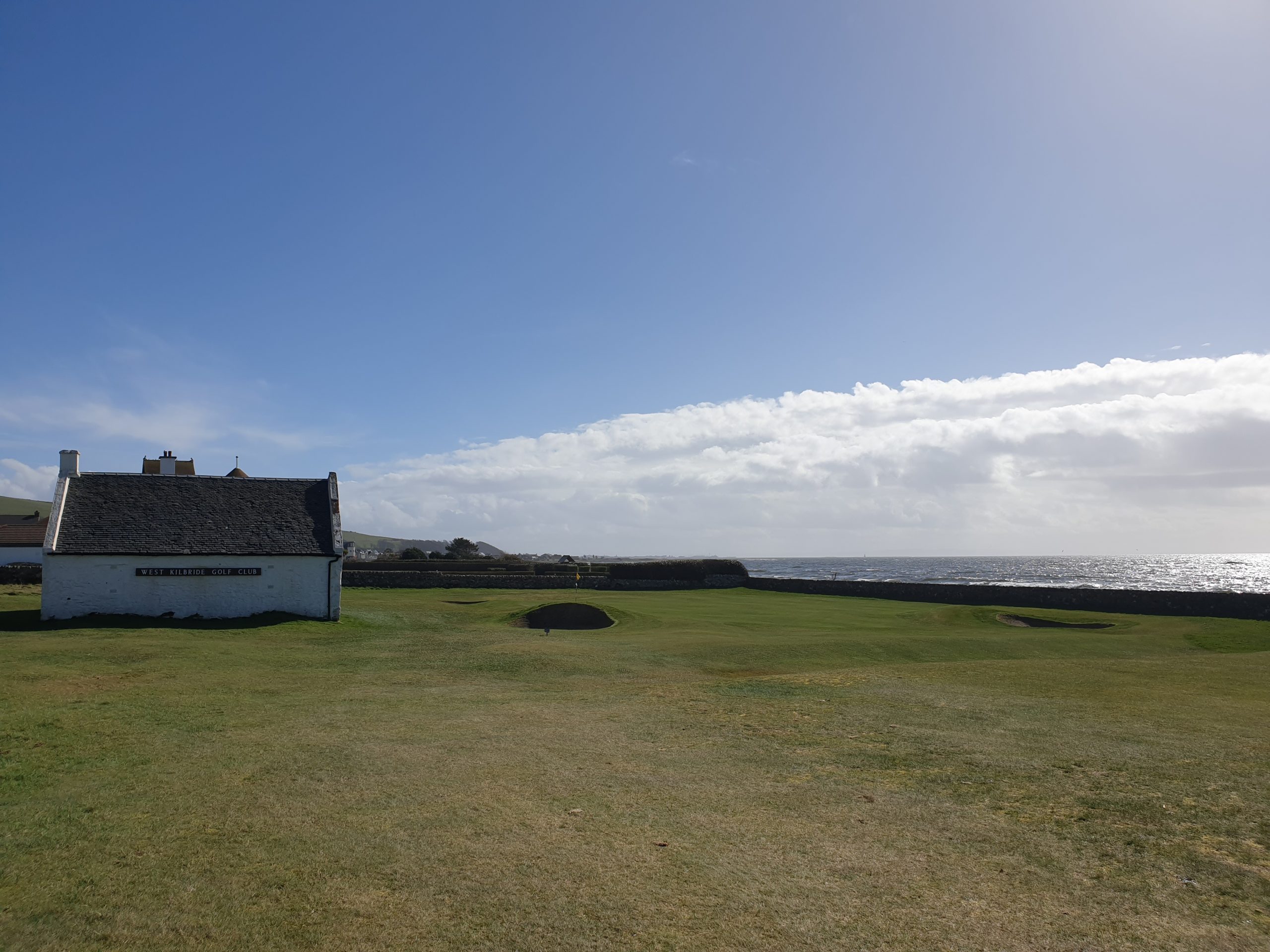
Hole 16, Hunger-em-oot: the signature hole. The West Kilbride Golf Club outbuilding with its sign, the two flanking bunkers, and the Firth of Clyde beyond. This is the image of the course.

West Kilbride is the most northerly of Ayrshire’s true links courses, including Dundonald, Glasgow Gailes, Troon, Prestwick and Turnberry, partly explaining the lower pricing of £40 in March, which deserves reflection.

The course costs £85 on a summer weekday, more than double the winter rate. That Summer/Winter gap has widened considerably over the past decade as Scottish links golf has repriced itself upward as a premium product. At the top of the market, Kingsbarns charges £448 and Turnberry’s rack rate is £545. Green fees at premium Scottish courses have inflated at roughly 7-8% per year over the past two decades, three times the rate of general inflation. The winter links visitor becomes a shrewder operator.

The course is genuinely excellent; I would go back without hesitation and happily pay more than £40 to do so.
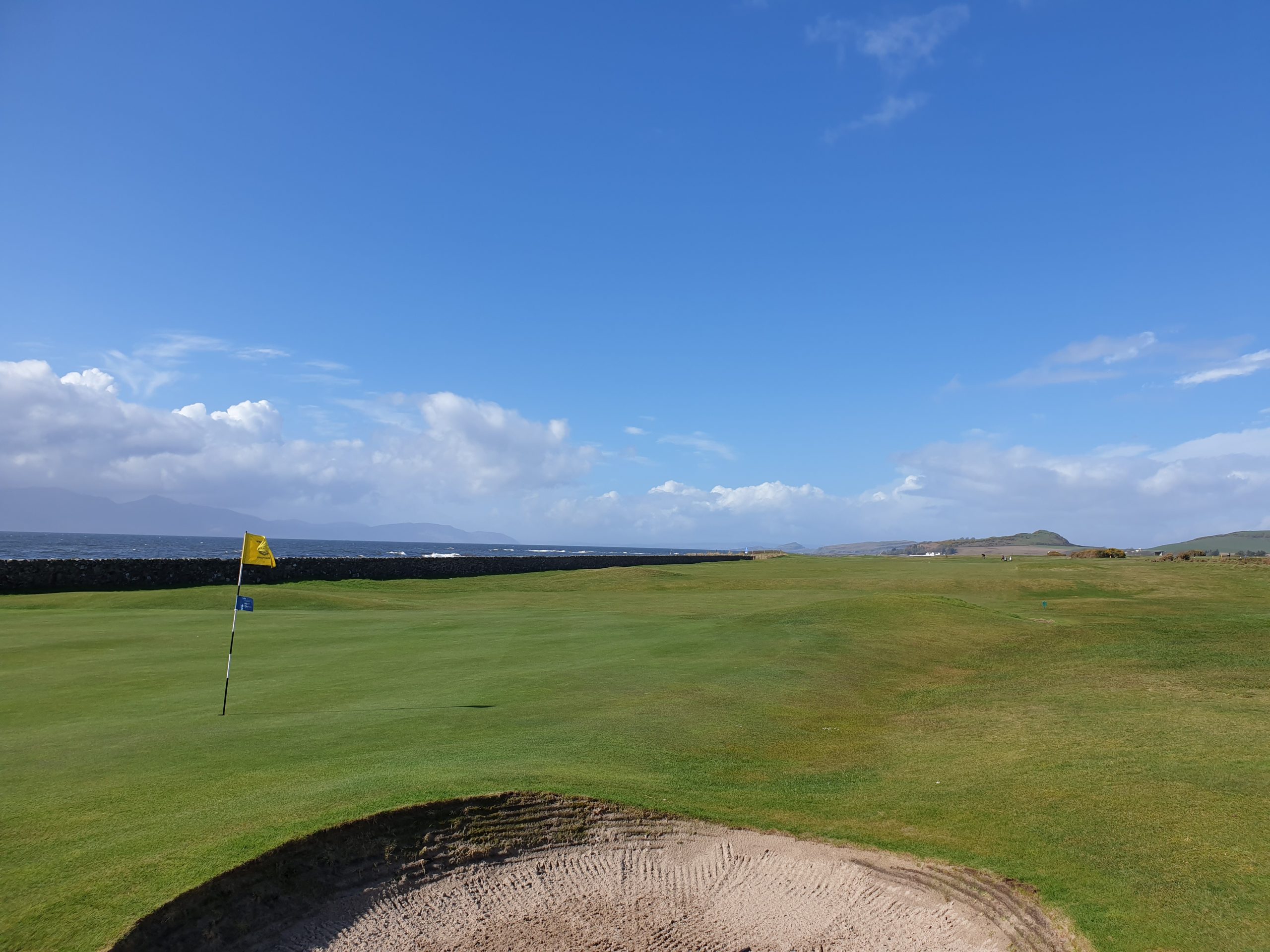
Hole 16 green: looking south along the Firth of Clyde toward Arran. Stone walls, sunshine, the flag. This is what £40 buys you in March at West Kilbride.

Facts:

Course Type: Links

Par 71 (2 par 5s, 13 par 4s, 4 par 3s)

Distance: 6,146 yards (Ardneil/yellow tees)

Course Rating 69.7, Slope 120

Moly’s Gross Score: 95 (29 Stableford points, net 81)
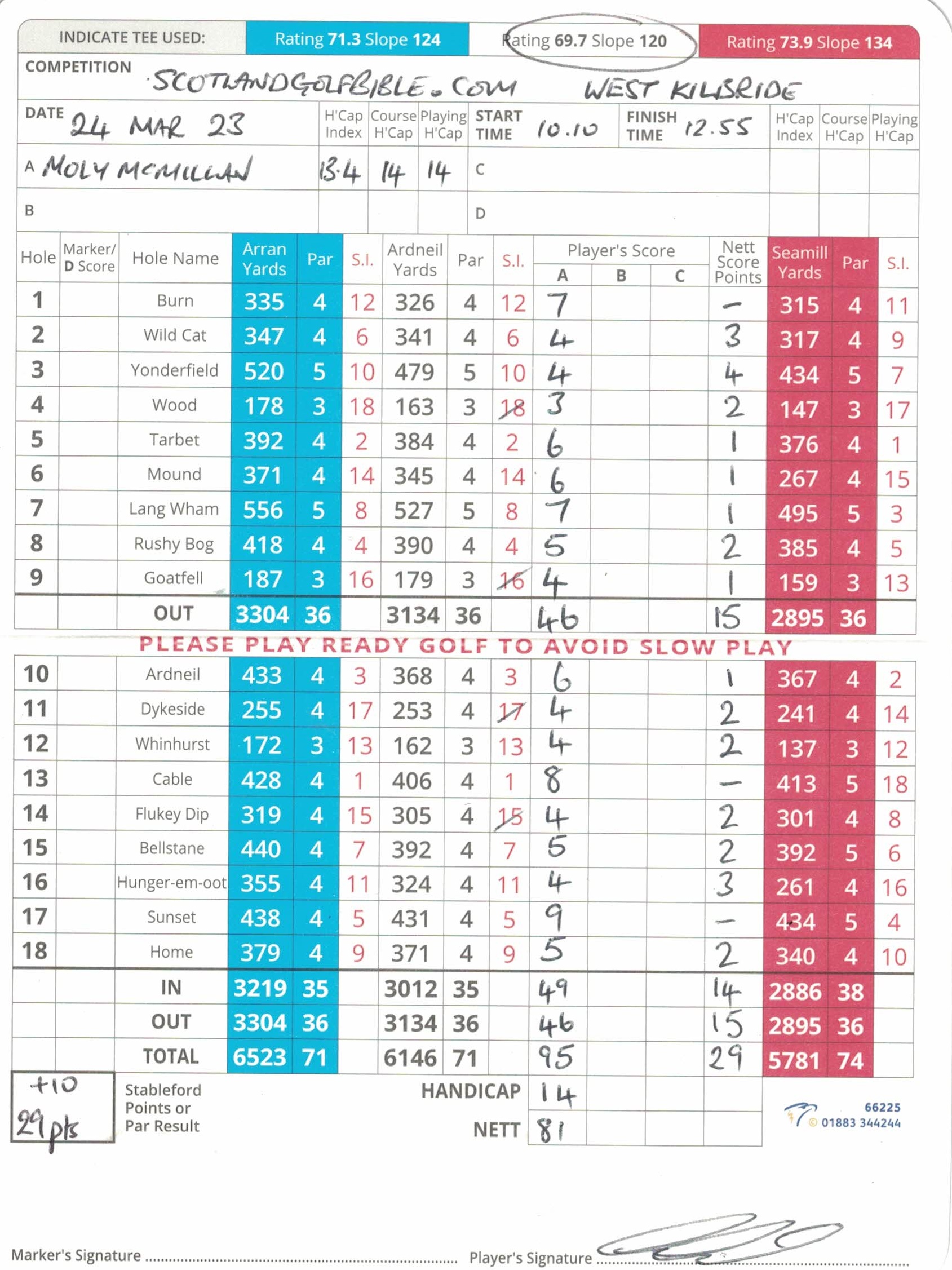
Moly’s scorecard, a day for a stableford preferably.

182. Craigielaw. 23 Mar 23

The course that broke Kilspindie’s heart — a story for another blog.

Value 3/5 (4/5 using GolfNow)

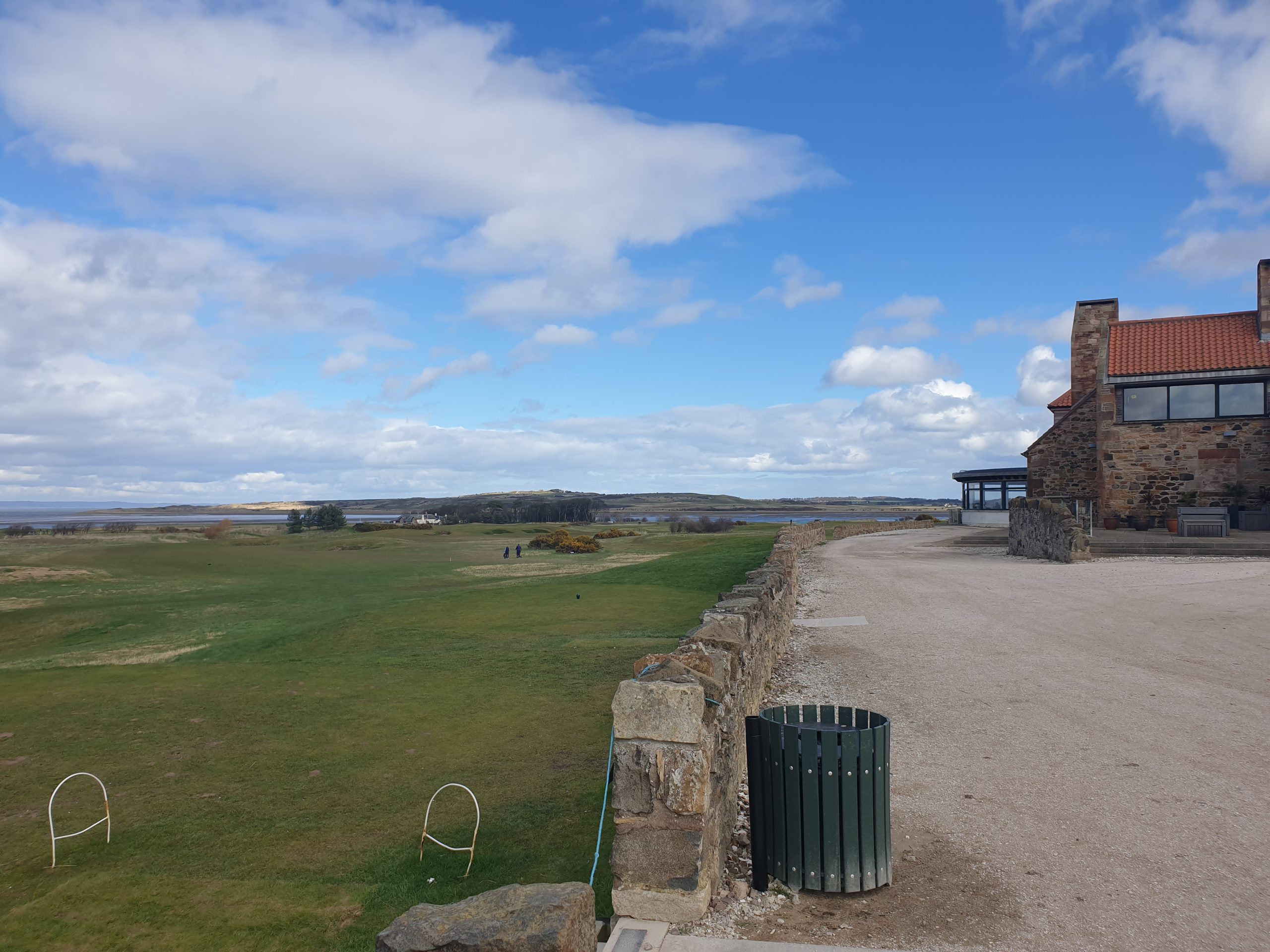
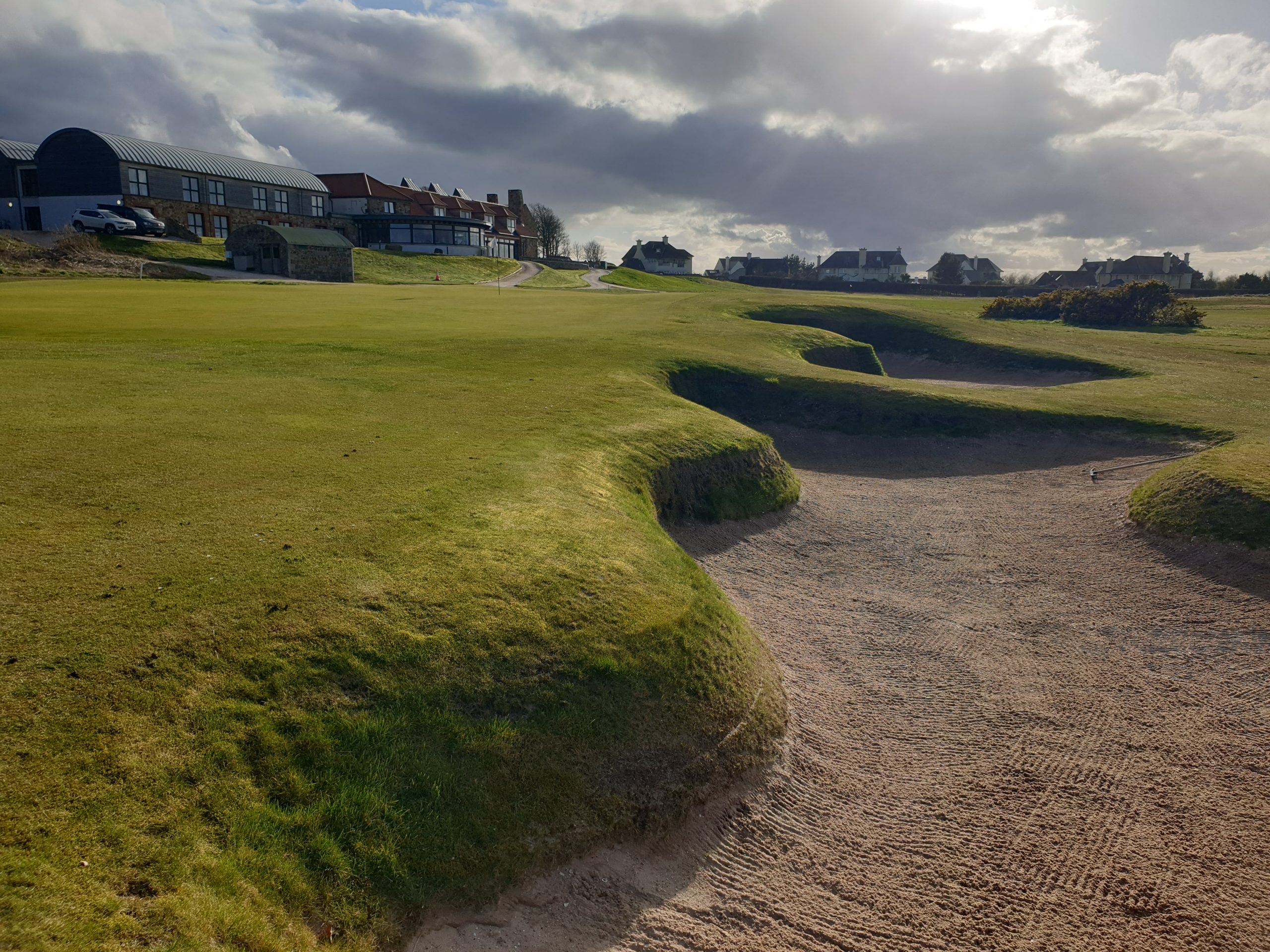
The panoramic clubhouse view back over Craigielaw links towards the Firth of Forth. On a clear day, as good as East Lothian gets.

Craigielaw Golf Club is on Wemyss and March Estates land – the same Estate that has leased its land to neighbouring Kilspindie Golf Club since 1867. In 2001, after two years of fractious negotiations, the Estate cancelled a deal that would have allowed Kilspindie to operate a second course and announced they themselves would build and run Craigielaw Golf Club. Kilspindie’s members, who had already paid handsomely for the privilege of playing ‘their’ second course, were left short changed — that story will feature in Kilspindie’s blog.

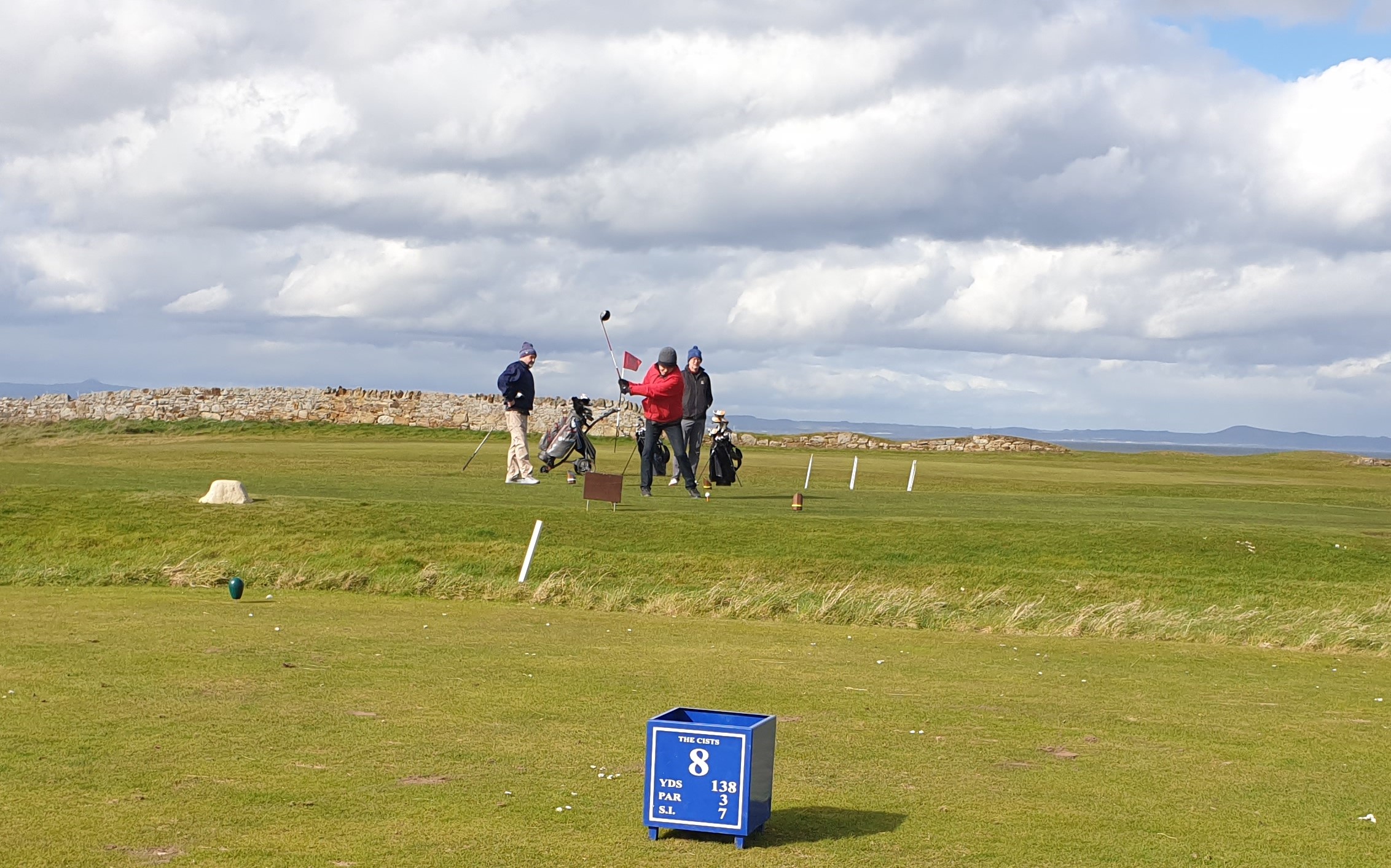
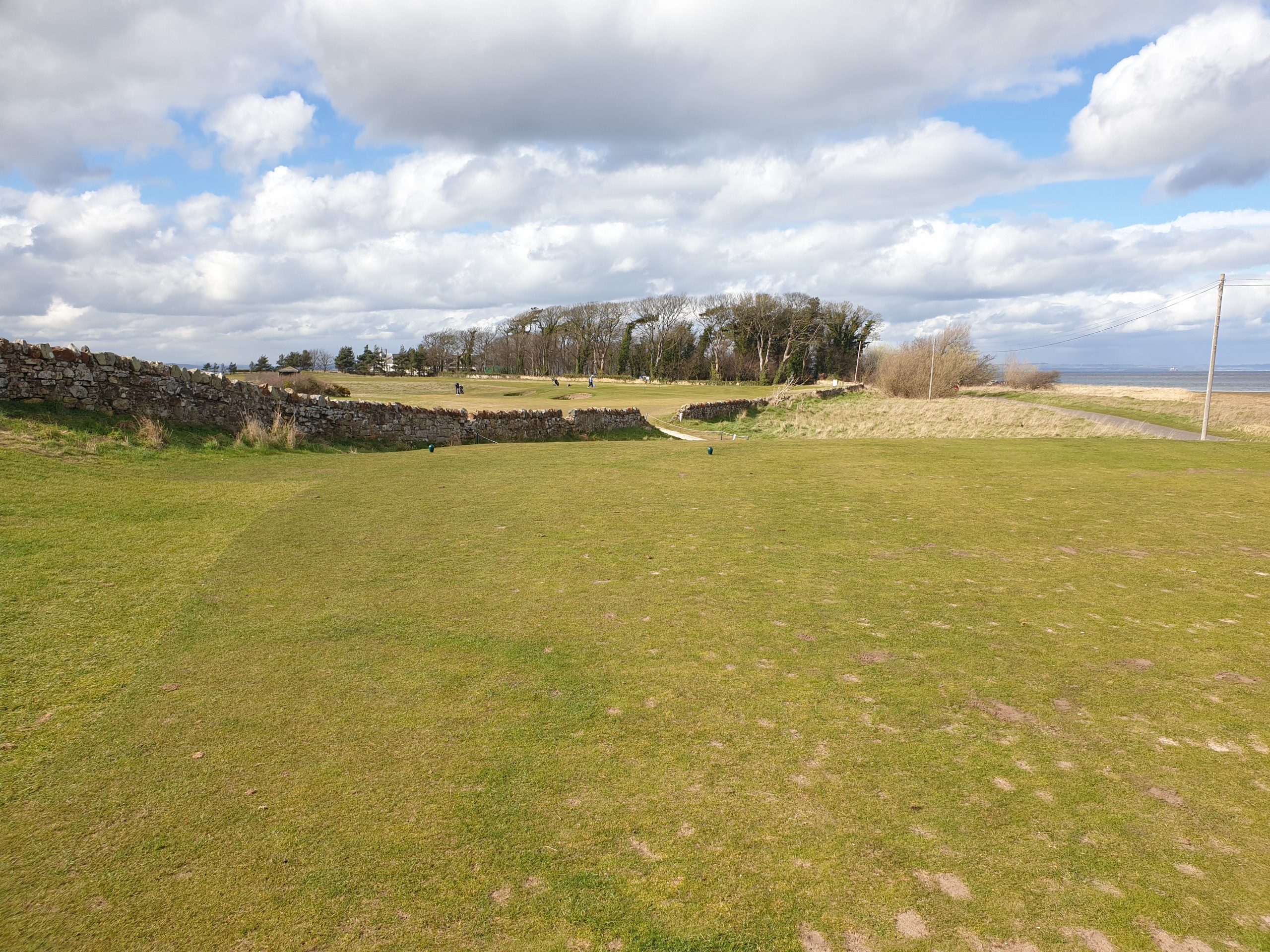
The 8th tee — a short par 3. The golfers here are not playing Craigielaw, they are on the 18th hole of the entirely separate Kilspindie Golf Club. Possibly the two closest tees from independent clubs anywhere? If you know of closer, let me know.

What elevates this origin story beyond a mere property dispute is who, at the time, was the Countess of Wemyss and March (see picture below). In 1995, James Charteris, 13th Earl of Wemyss, had married Amanda Feilding — an English aristocrat, artist, drug policy reformer, and the world’s most committed advocate of trepanation, the practice of drilling a hole in the skull to enhance consciousness and cerebral blood flow.

Amanda Feilding, Countess of Wemyss, with her pet pigeon Birdie, and a human skull, a tribute to her belief in trepanning. [Credit: Beckley Foundation — permission pending]

In 1970, Amanda had drilled a hole in her own forehead with a dentist’s drill, filmed the entire procedure, and called the resulting short film Heartbeat in the Brain. Audiences at early New York screenings were reportedly seen dropping from their seats. She stood for Parliament twice — in 1979 and 1983 — on the sole platform of free trepanation on the NHS, receiving 40 votes and then 139. She later founded the Beckley Foundation, dedicated to psychedelic research, and lived to see much of that work vindicated by mainstream science before her death in May 2025, aged 82.

So when the Wemyss and March Estates Directors, including Lady Wemyss, decided on the use of the land, it might have been fitting if anyone said “We need to operate a golf course like we need a hole in the head!”.

Back to golf. Designed by Donald Steel, Craigielaw is a thoughtful layout. The hole names are a delight — Coffin Lane, Bellfire Knowe, Doos Wa’s.

The sixth, ‘Kilspindie’, a respectful but perhaps pointed name, a tough par 3 where the prevailing wind will challenge the out of bound right.

The property is well set up — impressive clubhouse, lodge accommodation, excellent practice facilities. The bunkering is Steel at his most unforgiving — cavernous, steep-faced pot bunkers with no interest whatsoever in your handicap.

First ‘The Steading’, a drivable par 4. The Firth of Forth and Gullane Hill beyond..

The turf lacks the crisp links quality of nearby Gullane; the geology feels subtly different, more transitional than pure links. And the housing around the 10th and 11th — Gosford Park, as it happens, whose residents were central to the original dispute — briefly breaks the links illusion. The course recovers, but it’s a lapse.

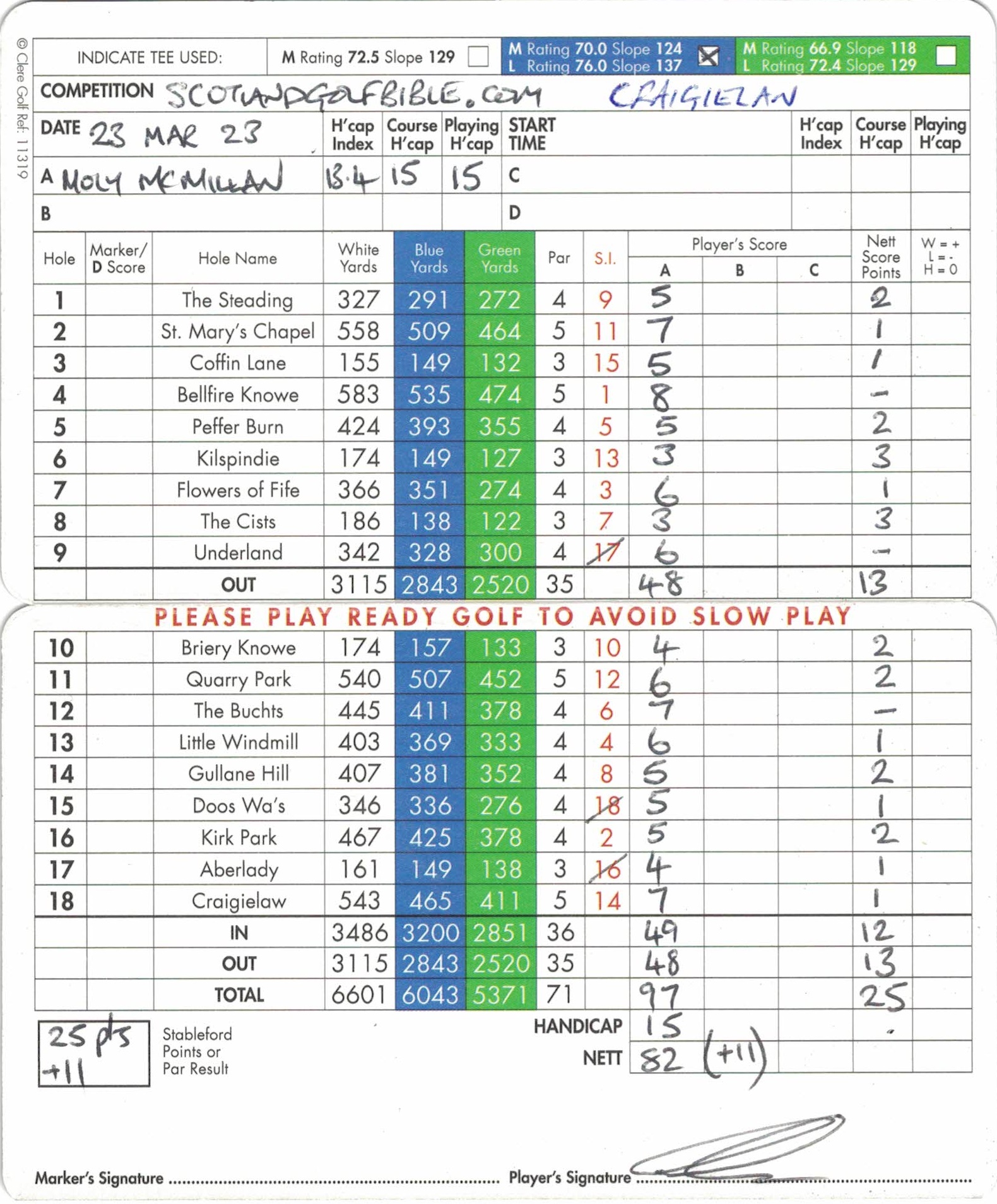
Moly at the 4th, ‘Bellfire Knowe.’ The flag is just visible over the lip. The 8 on the scorecard tells you the rest.

Value? At £125 for a summer midweek round, the price reflects the postcode — Muirfield, Gullane and Luffness New are all neighbours — more than the course itself. Good golf, honestly designed, but 3 out of 5 at full price? Not sure. However, I paid £45 through GolfNow. A Donald Steel championship links in East Lothian for £45 is 4 out of 5 without hesitation. Check GolfNow before you book.

The 18th green, ‘Craigielaw’ — 465 yards, par five — with the modern clubhouse beyond. The bunkering here is the most dramatic on the course.

Facts:

Round £125. Par 71. Course/Slope Rating 70.0/124. Value3/5 (4/5 using GolfNow).

Moly’s Score – 97

Moly’s 97, was OK on a day with very high winds.

177. Blairgowrie Lansdowne. 2 Dec 2022.

Who was the Dowager Marchioness of Lansdowne?

Value 3.5/5

Little did I know as a member of Landsowne Golf Club in Bath in the early 2000s, how influential the Lansdowne name was for one of Scotland’s finest golf properties – Blairgowrie.

First tee at the 1970s designed Lansdowne Course. A difficult and long par 4. Designers Peter Allis and Dave Thomas didn’t provide an “easy James Braid opener”.

All three courses at Blairgowrie Golf Club have at one time been called ‘Lansdowne’ after the Dowager Marchioness of Lansdowne who initially leased land to the Club.

Fran playing into the par 3, 5th, green which was in great condition for a Winter’s day.

The current Wee Course, is where the original 9 hole “Lansdowne” course was. This was extended to 18 holes in 1927, but lasted only 3 years, when in 1930 another 9 holes were built and the new “Landowne” course opened, with the remodeled original 9 hole course becoming the Wee Course. In the 1970s, another 18 hole course was built, which became the current “Lansdowne”, with the1930s course renamed “Rosemount”, which is considered the “main” course.

The 10th, with well placed bunkering, a strong feature on this strong Lansdowne layout.

The history of how the three courses evolved in detail is brilliantly assessed by James Boon on Golf Club Atlas here. The initial designer was founding member, Major (Ret’d) Peter Chalmers, who had fought in Crimea in 1854 and was later wounded in action; he sought advice from both Old Tom Morris and Tom Dunn of the Dunn dynasty. A combination of Alister Mackenzie and James Braid did the late 1920s work, with Peter Allis and Dave Thomas creating the latest course. What is the collective noun I wonder for golf course designers? – ‘A bunker of architects?”

The 13th, where one can see the importance of missing on the right side of the green.

Like all the Blairgowrie courses, the course was in excellent condition, especially for a December day. In particular, the greens were fully in play and running true, meaning I holed most of my putts less than 6 feet. The greens themselves are less undulating than the Rosemount course, the latter being more influenced of course by Alister MacKenzie. The greenside bunkering is of professional layout standard, so best to ensure you stay out of them.

The pine avenue at the 17th on Lansdowne is characteristic of this fine property.

The course is tighter from the tee than its sister Rosemount layout, so consider a hybrid where distance allows. The tree lined fairways are well maintained so anything finding the trees means that balls are usually not lost.

Moly trying to get up and down on the last, a hole that will play more difficult that it’s SI 9 would suggest.

The excellent winter conditions meant the price of £25 is incredible value compared to the high season £140, perhaps it’s Scotland’s best winter discount?

Which brings me to a key question – just who was The Dowager Marchioness of Lansdowne?

Round List Price £140. Actual Paid £25 (Winter rate).

Moly’s Score – 81 for 39 points (off 15)

Course/Slope Rating (winter) 69.0/125

Course Type: Heathland

Par 69  (15 par 4s, 3 par 3s)

Distance (blue): c 5500 yards

Moly’s Lansdowne Scorecard- mats and forward tees, but still it’s an 81
The Winter Scorecard

176. Blairgowrie Rosemount. 1 Dec 22.

One of the great clubs and excellent value in Winter

Value 3.5/5

Blairgowrie’s Pro explained many members lived quite far from the club, meaning competition days, Wednesday and Saturday, were incredibly busy. Therefore, playing Rosemount on the first Thursday in December, I anticipated a fast round, before finding myself behind one of those 4-balls – you know the kind – those avoiding eye contact!

The 5th, a typical tree lined hole on Rosemount. I was stuck behind a four ball, that steadfastly refused to acknowledge me. They were the rudest golfers I have ever encountered and did nothing to make Blairgowrie feel a welcome place for visitors.

Blairgowrie, or more correctly ‘Blairgowrie and Rattray’, is a twin burgh in eastern Perthshire, and a popular gateway town to the highlands. With a population of 9000, it has some quaint but dated shops.   It also has a fine golf club with 3 courses, 2 of which are listed amongst the very best in the UK.

The impressive Blairgowrie clubhouse behind the difficult 400 yards plus 18th on Rosemount.

The Rosemount course (originally called the Lansdowne) is regarded by many as the jewel in the Blairgowrie crown; designed by the Yorkshireman, Dr Alister MacKenzie, in the 1920s, with further developments by James Braid and Donald Steele. Blairgowrie’s newer 18 hole course, with the inherited Lansdowne name, was designed in the 1970s by Peter Alliss and Dave Thomas. Both courses have been further updated by Scottish Designer, Graeme Webster.

The strong 17th hole, a par 3 of 163 yards; although not as “Plateau’d” as the holes name would suggest. Easy to three putt on this very large green.

‘Lansdowne’, was in fact the original name of the current 9 hole ‘Wee Course’, blogged here. This was the founding 1889 course at Blairgowrie, named after the Dowager Marchioness of Lansdowne, a local aristocrat. It is often cited as one of the best 9 hole courses in Scotland.

The 11th tee, a typical tee shot at this course, so much so I can understand why it could be considered monotonous.

The two main18 hole layouts are championship standard and the Rosemount course hosted the European Tour in the 1970s and 1980s. It was the venue of Greg Norman’s first European tour victory in 1977 with The Martini International on 11 under par with the South African Simon Hobday in second place.

The wonderful bunkering at Rosemount, seen here at the 2nd, a short par 4 of 340 yards, and one of the good birdie chances.

Set in a large tree encrusted heathland property the courses are easy walking, and more forgiving off the tee than what meets the eye. Many of the holes feel similar and with the forested surrounds, there are limited views. Depending on the time of year, this landscape could even feel like California or Portugal.

The course is a highly attractive amateur Open venue due to the ever increasing summer green fees, which are now £140 (2023), whereas the Winter fees are less than £40. Although I played off mats and forward tees, the greens were in play. Given the greens are part of the magnificence of the course, this represents excellent Winter value golf.

The 15th “Wee Dunt”, a lyrical, and potential ryme, for this tricky par 3.

I played very well, scoring 81, and therefore I may have to thank the four ball that slowed me down. Maybe that’s the secret – taking time and concentrating.

In summary, if you are looking for a golf course that combines history, beauty, and challenge, then you might want to visit Rosemount in Blairgowrie. Especially on a nice winter’s day.

Round List Price £140. Actual Paid £30 (Winter rate).

Moly’s Score – 81 for 37 points (off 14)

Course/Slope Rating (winter) 68.8/121

Course Type: Heathland

Par 68  (14 par 4s, 4 par 3s)

Distance (yellow): c 5500 yards

Moly’s 81 on Rosemount off their winter tees, but full greens
« Older posts

© 2026 Scotland Golf Bible

Theme by Anders NorenUp ↑