A saint who hadn’t died yet, a battle that may never have happened, and a very decent nine holes.
Price Paid: Free with my Hawklaw Tankard entry, or a nominal rate. Memory fails me, but it wasn’t much.
Current Price (2027): £55 weekday / £60 weekend for 9 holes; £80 / £85 for 18. Free with a summer or shoulder Championship green fee (day before, day of, or day after).
Value Rating: free with the main course 5/5 · £55 for 9 holes 3/5
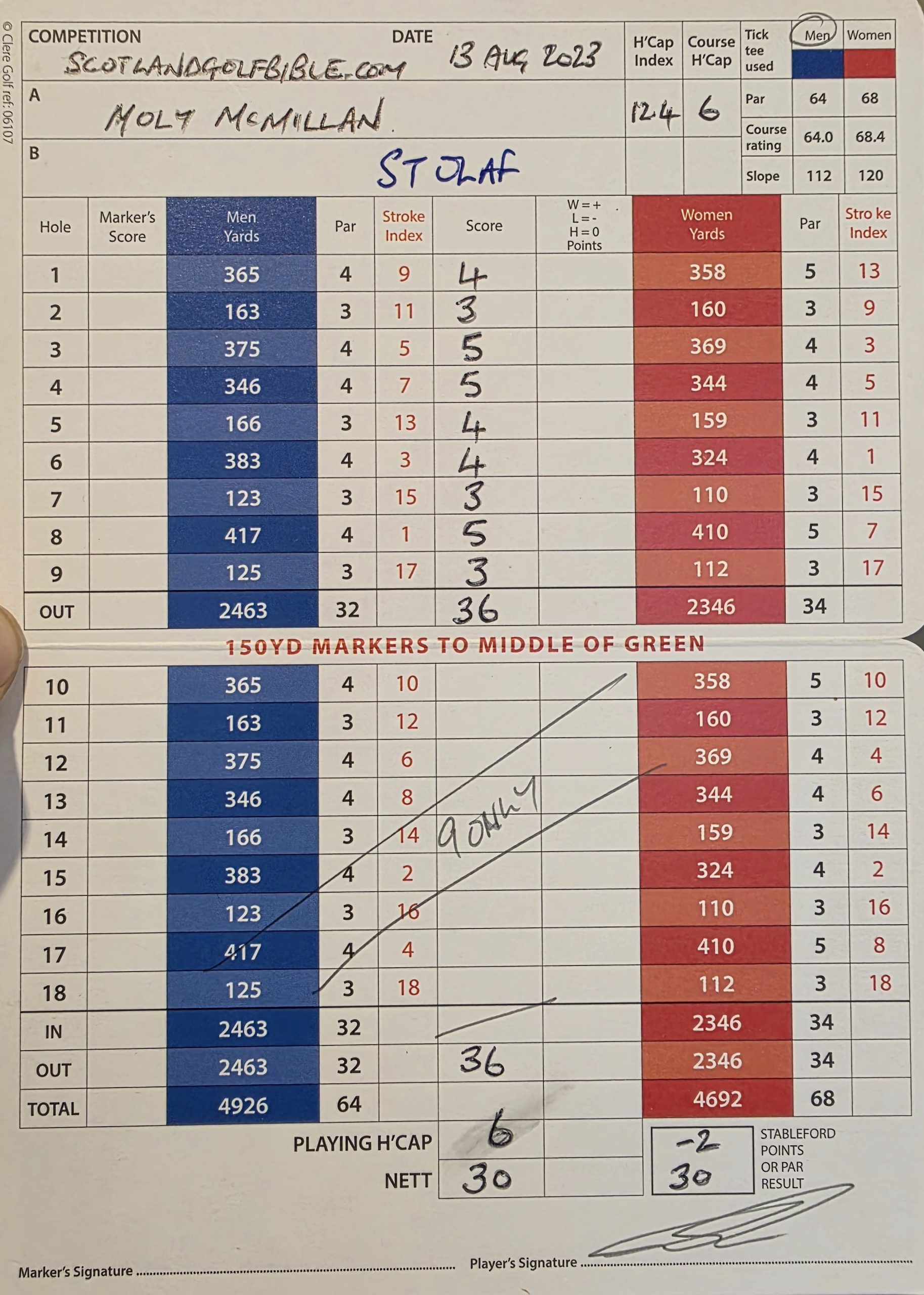
Moly’s Score: 36 gross (+4), net 30 (−2), stroke play
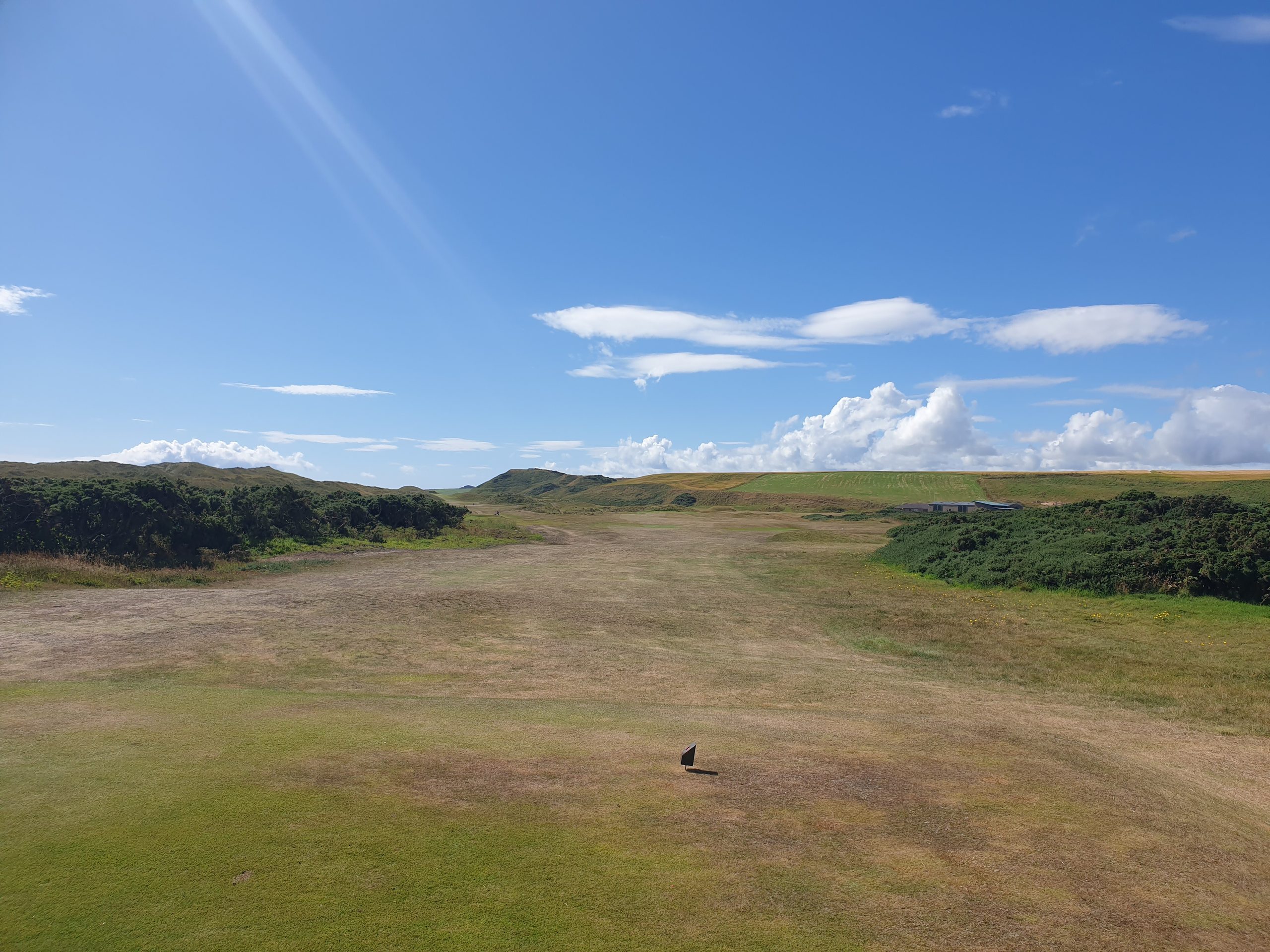
St Olaf is Cruden Bay’s nine-hole course, laid out inside the Championship links in the village of Cruden Bay, about 23 miles north of Aberdeen. It never reaches the sea. Most of what you see from the clubhouse windows is St Olaf, gorse-lined and gentle, while the Championship course hides in the dunes beyond. I played it at midday as a warm-up before the Hawklaw Tankard on the main course that afternoon (Blog 222).
The name comes with a story. In 1012, the legend goes, King Malcolm II of Scotland beat young Canute’s Danish army on this linksland. Afterwards, Malcolm built a chapel on the battlefield to bury the dead of both sides and dedicated it to St Olaf, patron saint of Norway and Denmark. The village’s name supposedly means “slaughter of the Danes”. Here’s the problem: Olaf didn’t die until 1030, eighteen years after the battle. Even the local church records accept that the chapel was dedicated to St Olaf much later. The story seems to begin with Hector Boece, a sixteenth-century chronicler with a weakness for a good yarn, and recent historians doubt the battle ever happened. Whatever the truth, the first St Olaf church stood on the sandy plain that is now the golf course until the sand engulfed it. St Olaf’s Well still sits by the 17th fairway of the main course.
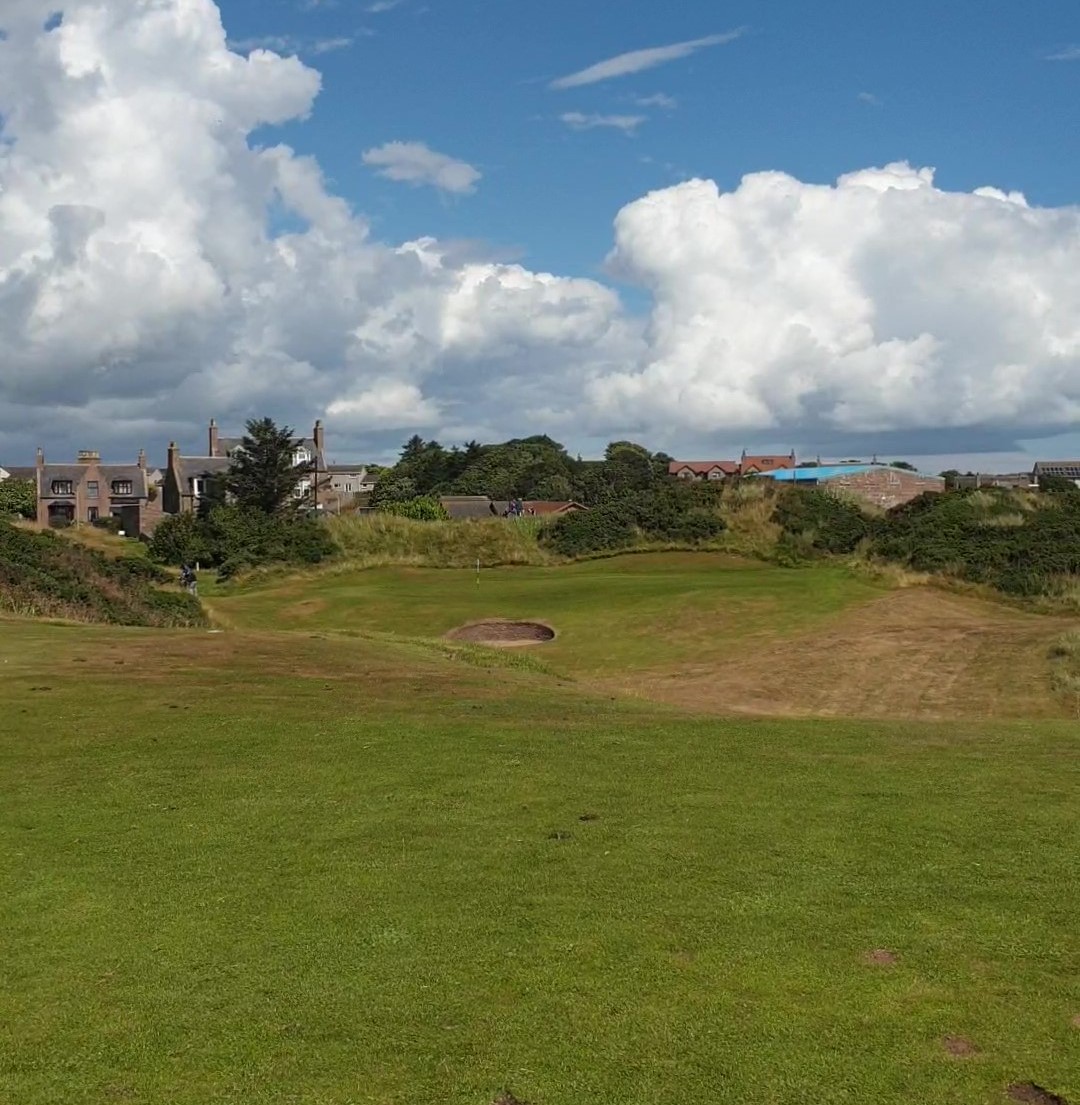
The course began as the inner “ladies’ course” of 1899 and was reworked by Tom Simpson and Herbert Fowler in 1926, when they redesigned the big course. The club’s own timeline says it “re-opened” in 1968. From what, it doesn’t say. It’s par 32, with five par 4s and four par 3s across rumpled, gorse-lined linksland. The turf was very good, the driving pretty generous, and the greens as quick and true as the Championship course’s. In other words, great as a prelude to big brother.
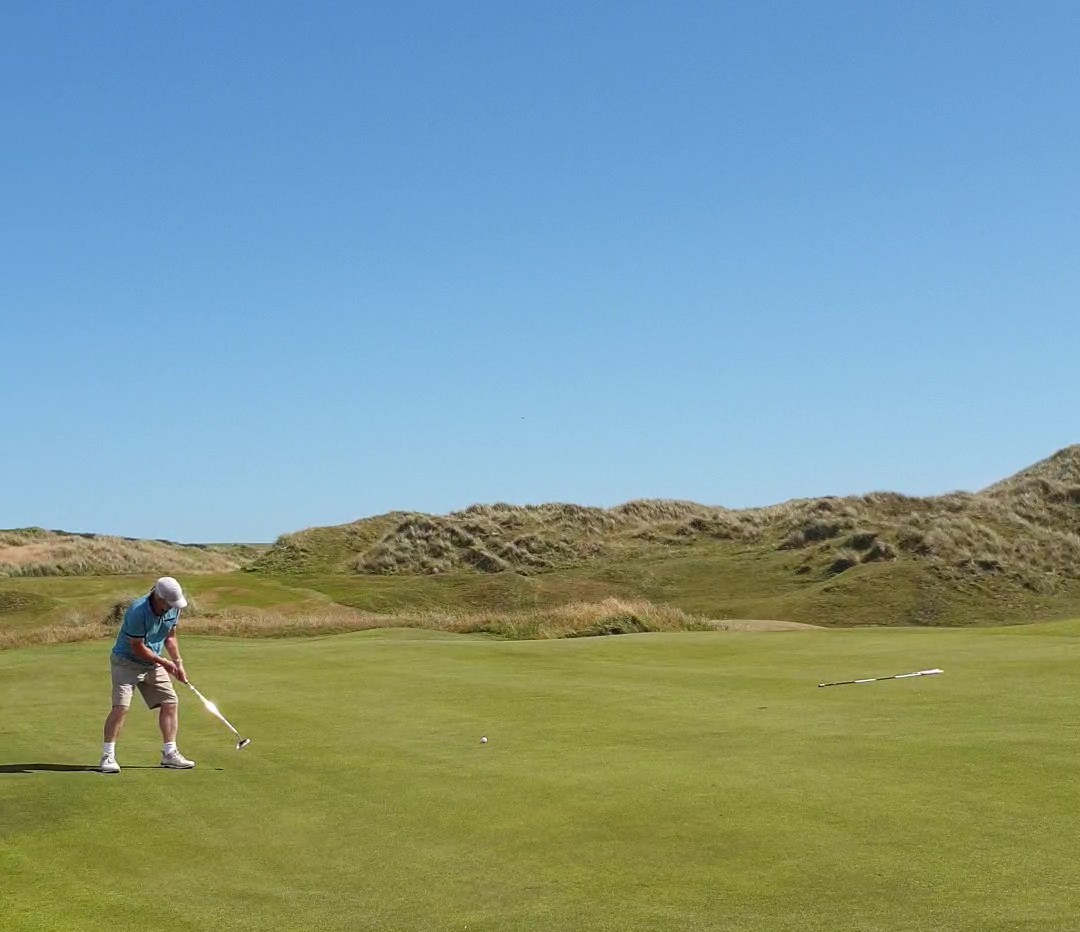
I went round alone in 36, four over, with pars at four of the nine and nothing worse than a bogey. It was a tidy start to the day, and as it turned out, a fair warning of what was coming that afternoon.
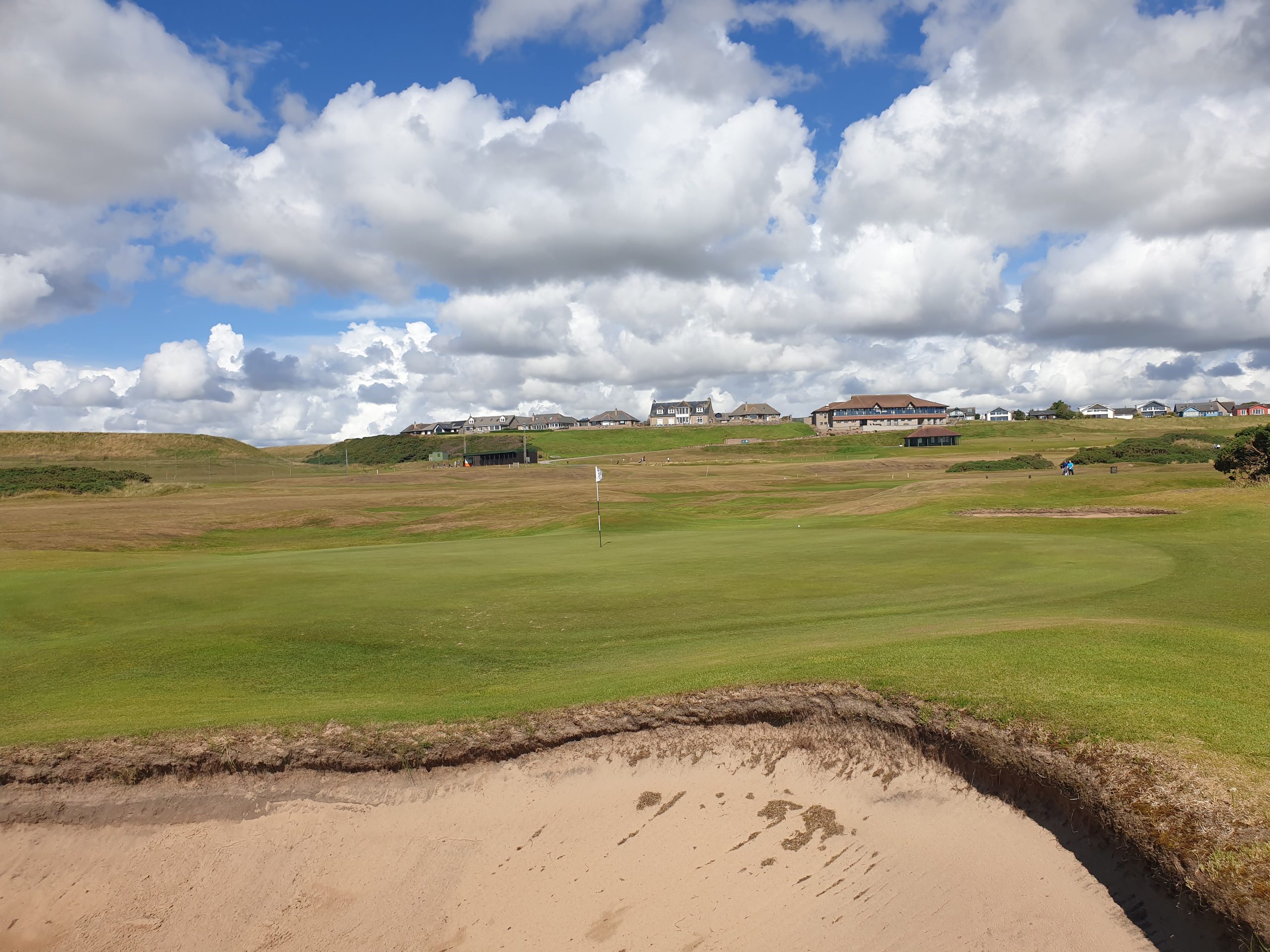
On value, the club only gets it correct when coupled with the Championship green fee – it’s free. Furthermore, you can play your free round one day either side of your main course round, if you can’t play both on the same day. Congratulations to Cruden Bay for that. I wish all the great courses would follow suit, as a recognition of the very high green fees for visitors. Playing St Olaf standalone is £55 for nine holes or £80 for eighteen. As a course it deserves 4/5 for quality: proper links turf, excellent greens, and enough short-game examination to keep you honest. As a standalone nine at £55 it’s 3/5, not cheap for nine holes. Thrown in with a Championship fee, it’s 5/5. The National Club Golfer ranks it 84th in Scotland, and I don’t buy that at all; it’s not better than East Ren, Dunaverty or Barassie, all ranked lower! Just play it as the warm-up it was built to be, but don’t be surprised if you enjoy it more than you expected.
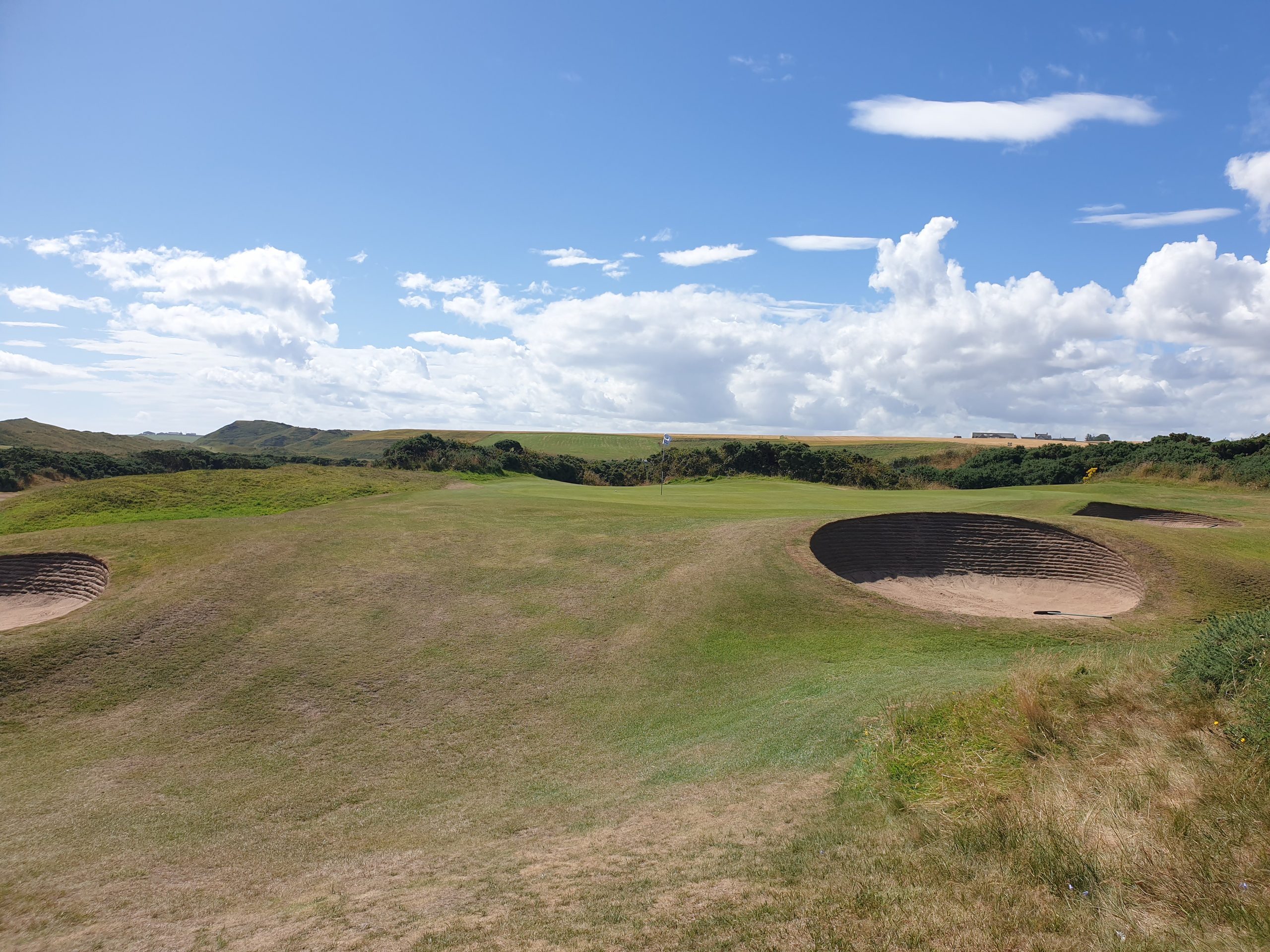
Facts:
Course Type: Links
Par: 32 (5 par 4s, 4 par 3s); 64 for 18 holes
Distance: 2,463 yards (men’s tees)
Course Rating / Slope: 64.0 / 112 (18 holes)
Course Quality: 4/5
Moly’s Gross Score: 36