A guide to green fee value for money

Category: Herbert Fowler

222. Cruden Bay. 13 Aug 23.

The best round of my life, from the best view in Scottish golf — and a question about how mystique happens.

Price Paid: £40, Hawklaw Tankard open entry (and £150 back in prize money)
Current Price (2027): £245 weekday / £265 weekend main season; £170 / £175 shoulder; £120 winter (Nov–Mar). Summer and shoulder fees include 9 holes on St Olaf.
Value Rating: £40 Tankard entry 5/5 · £120 winter rate 4/5 · £245–£265 list 3.5/5
Moly’s Score: 82 gross, net 69 (playing handicap 13), stroke play; 2nd in Division 2
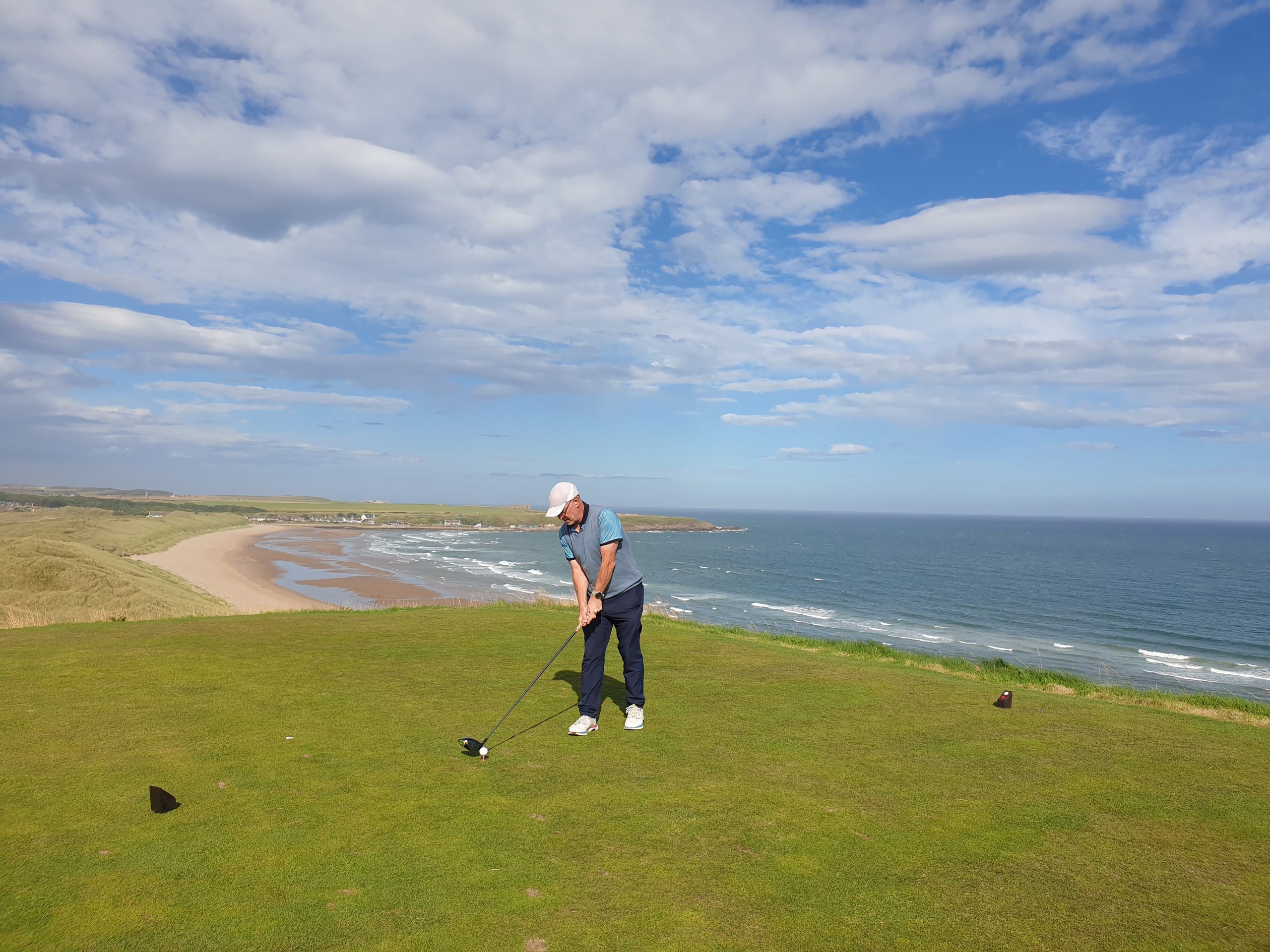
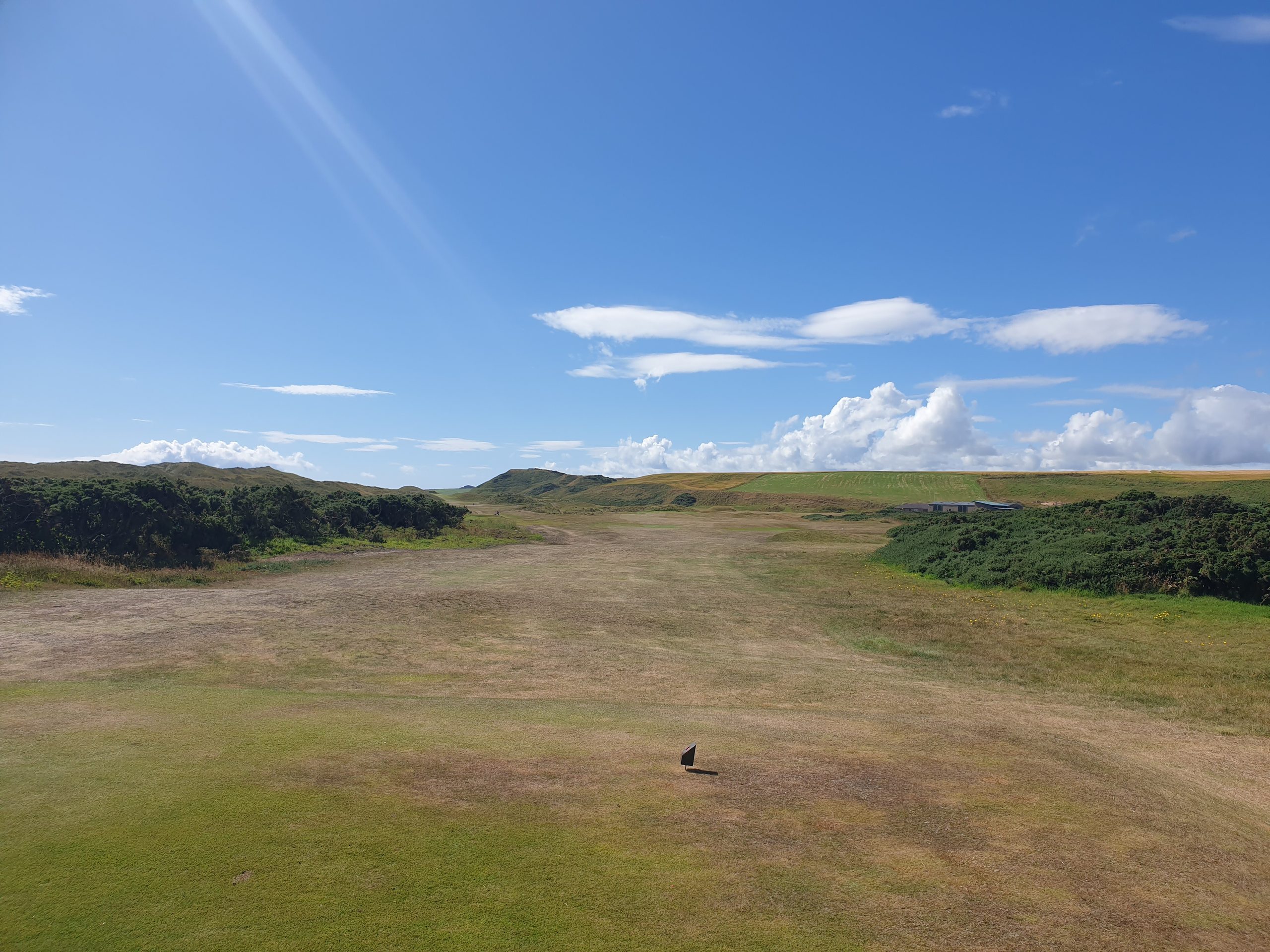
Driving from the 9th tee on top of Hawk Law, with the whole sweep of Cruden Bay below. VisitScotland voted this the best view on any Scottish golf course. Photo: Danial Naqvi.

Cruden Bay is a village on the Aberdeenshire coast, about 23 miles north of Aberdeen. Its figure-of-eight links run north at first, turn seawards at the 4th, then head south before turning back northward from the 13th. Halfway round, the 9th tee perches on Hawk Law, a 35-metre dune the Victorian Ordnance Survey recorded as a beacon hill. On 13 August 2023 I played the Hawklaw Tankard, the gents’ open, which shares the hill’s name, and stood up there in the middle of probably the best round of golf I have played.
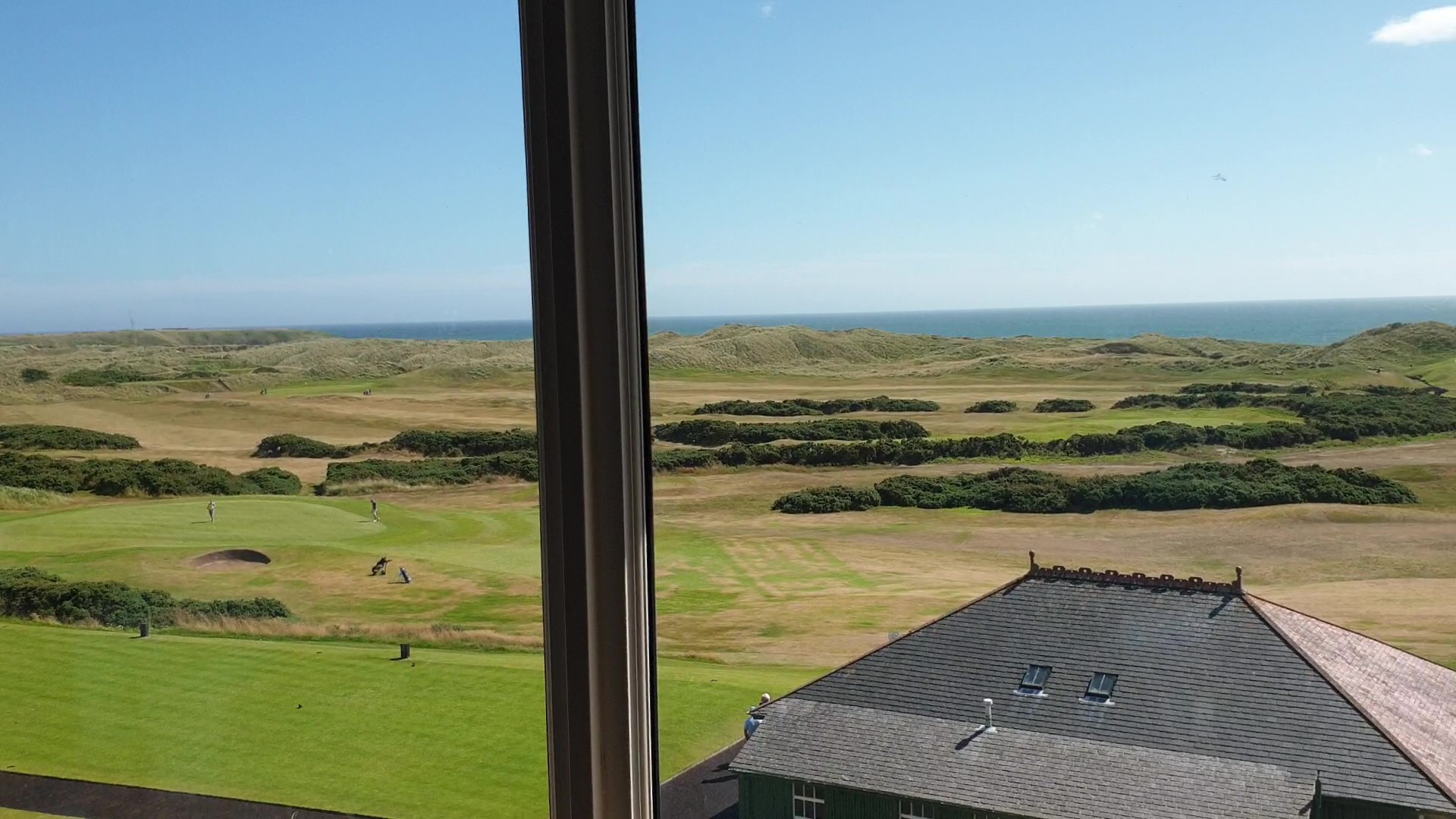
The view from the clubhouse. The gorse-lined holes in the foreground are the St Olaf nine (Blog 221); the Championship course hides in the dunes beyond, with the North Sea behind. There’s a panorama video in Blog 221.

It didn’t start that way. The Tankard is stroke play, so every shot counts, and the wind was blowing hard off the North Sea. I was five over after five, and a 7 at the par-5 6th had me reaching for excuses.
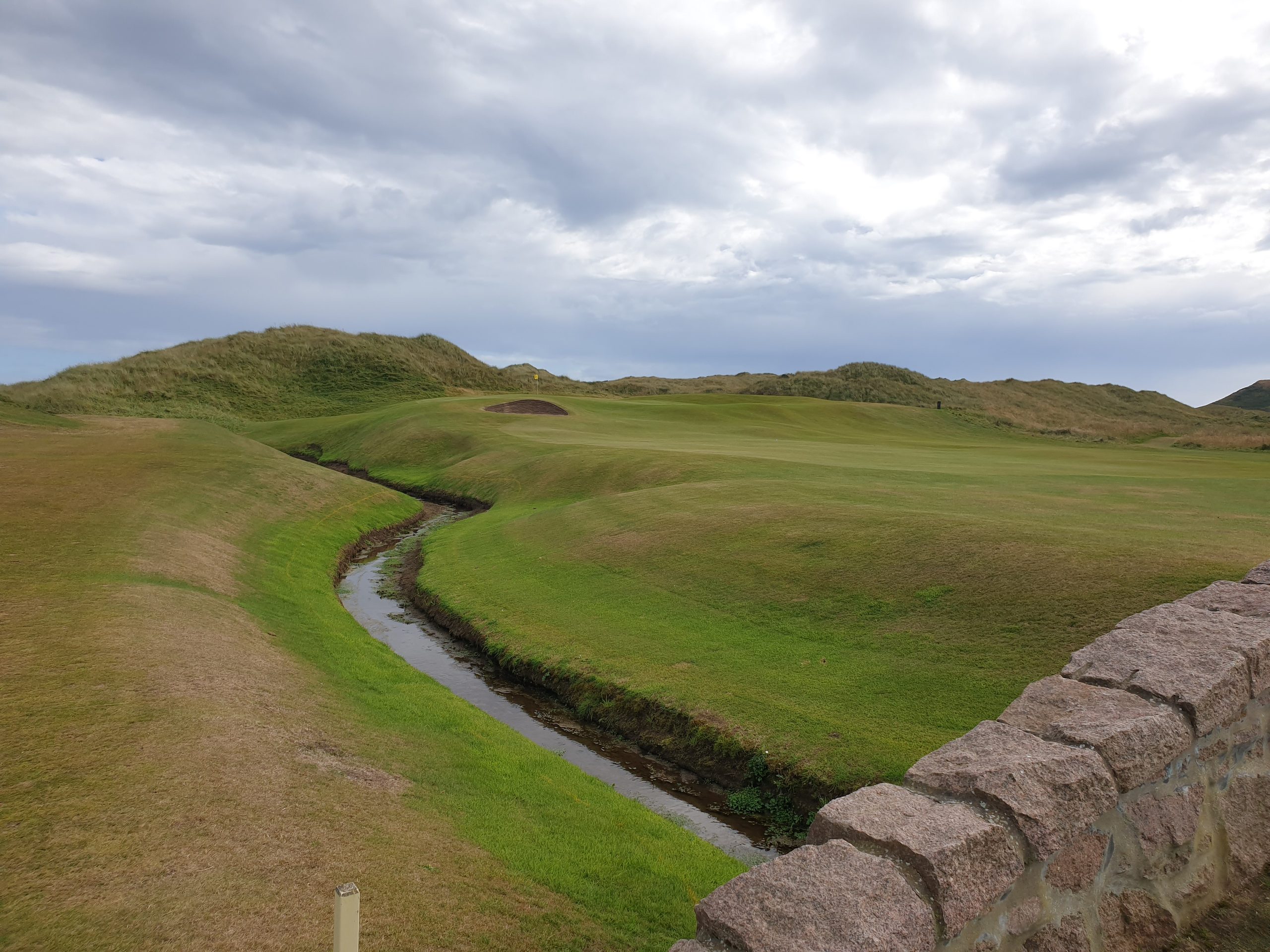
The burn and the old stone bridge on the 6th, where my 7 came. Things could only get better.

Then I simply kept the ball in play. I played the last twelve holes in four over, including a birdie 4 at the 571-yard 13th, holed from thirty feet. That made 82 gross, net 69. The handicap system added two shots of PCC for the conditions, so my score differential was 8.0 and my index dropped from 12.4 to 11.4 overnight.
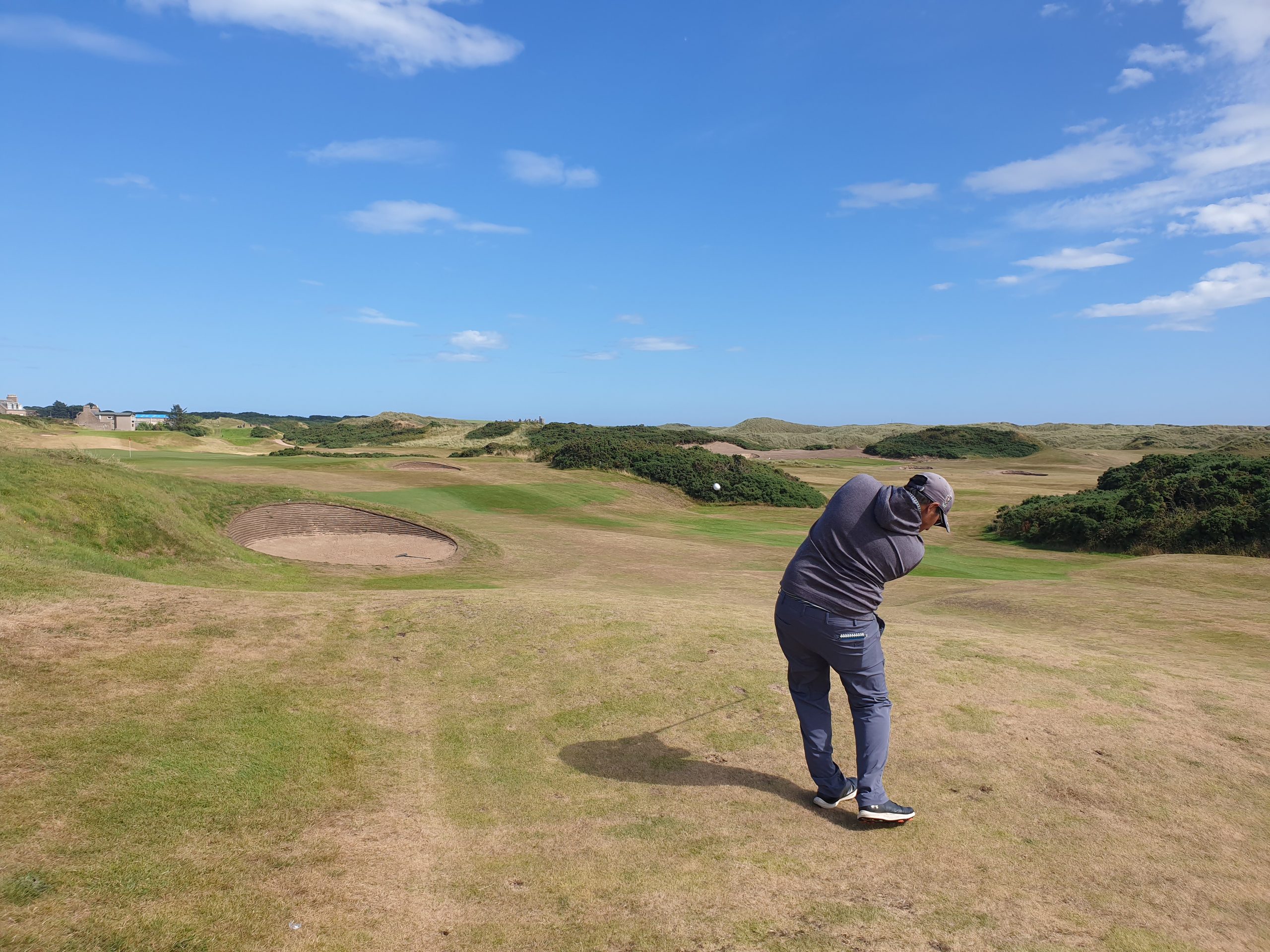
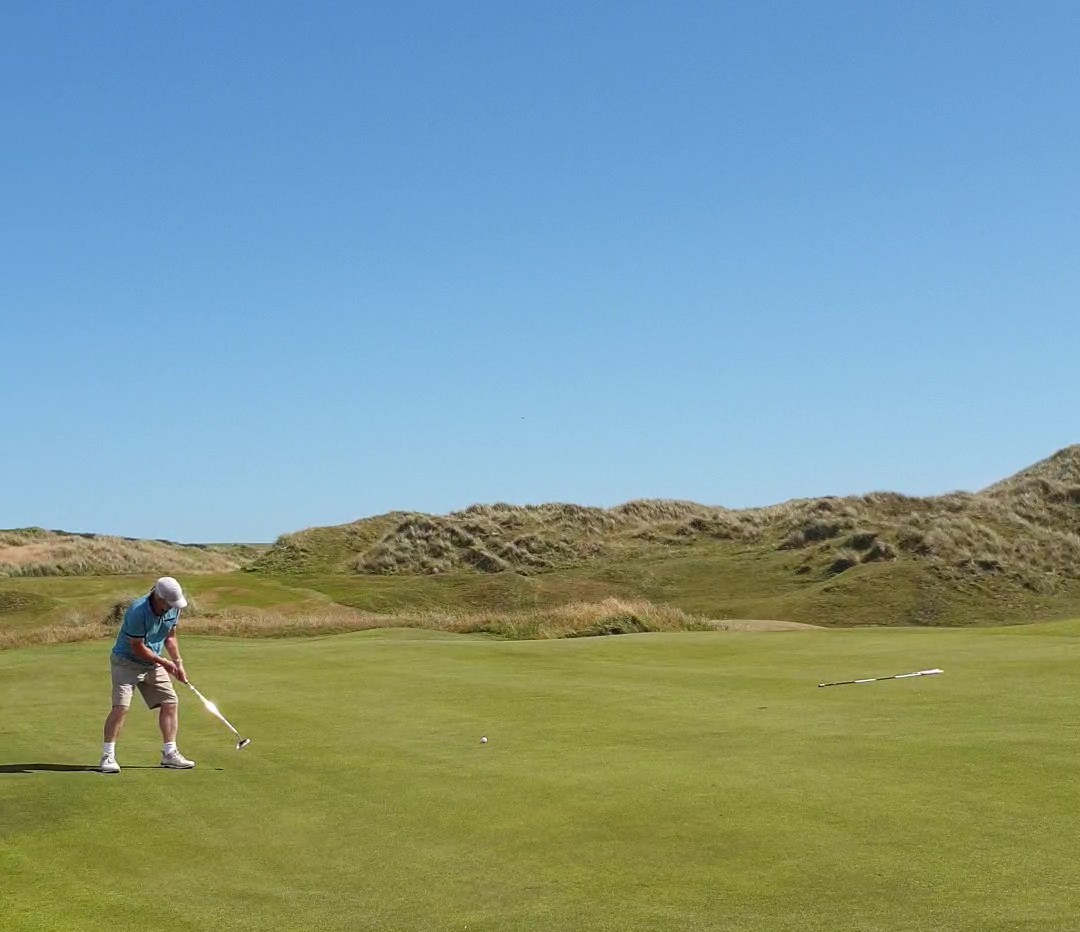
Danial Naqvi, a Category 1 golfer with a Ryan Fox-like swing, playing into the 1st, the dunes and gorse already closing in ahead.

I finished second in Division 2 (handicaps of 11 and up), and my 82 was inside the top twenty gross scores in a field of nearly 200, around fifty of them off single figure handicaps. Entry was £40. My prize money was £150. Cruden Bay paid me £110 to play it. That’s a value rating I’m unlikely to beat.
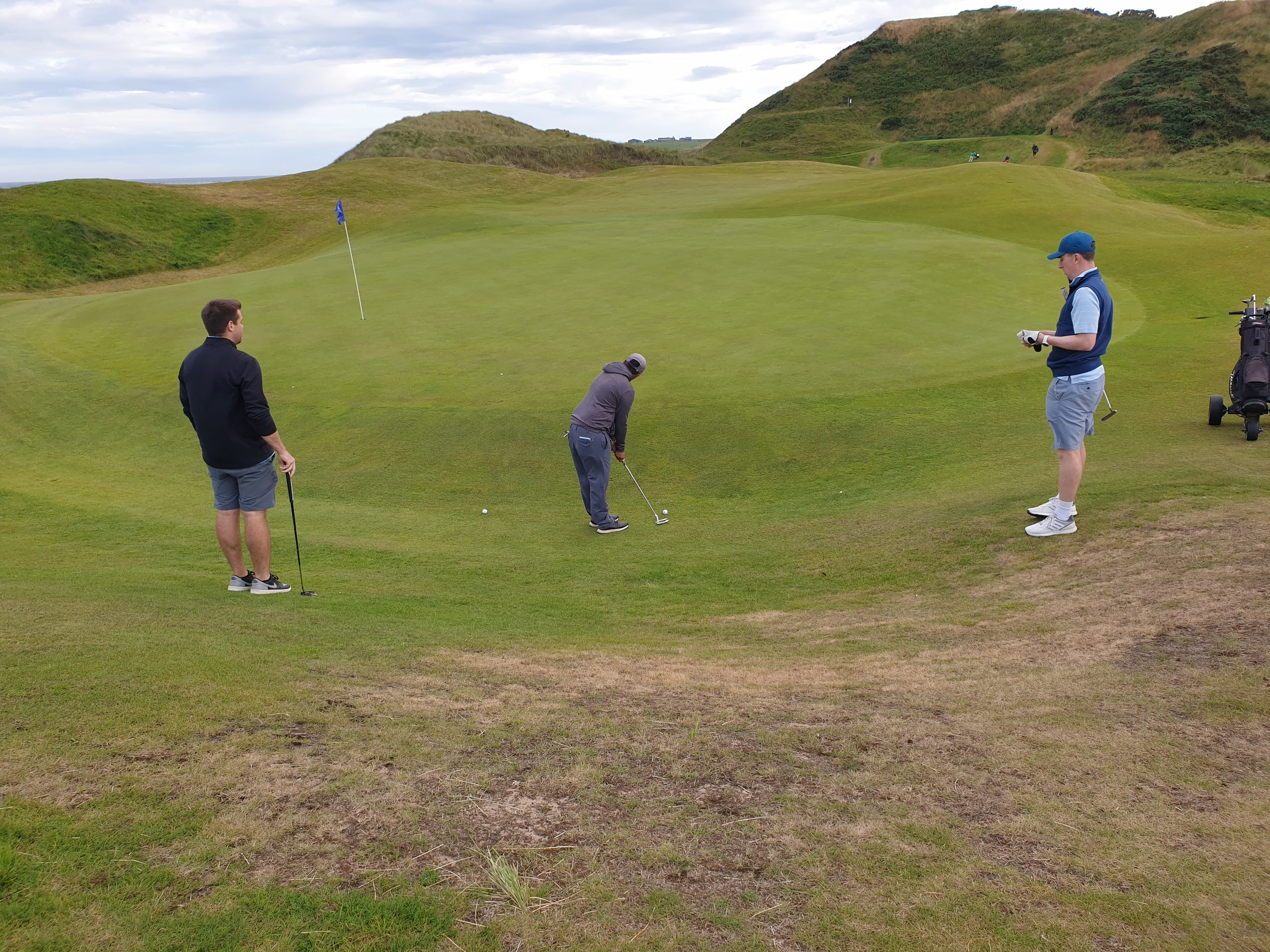
Danial putting on the 16th, with Harris Jones and Michael McKenzie looking on.

I played with Danial Naqvi, a transport civil servant with a geography PhD, and two Baberton members, Harris Jones and Michael McKenzie. Danial took some of the photographs of me, and he did me a bigger favour still.
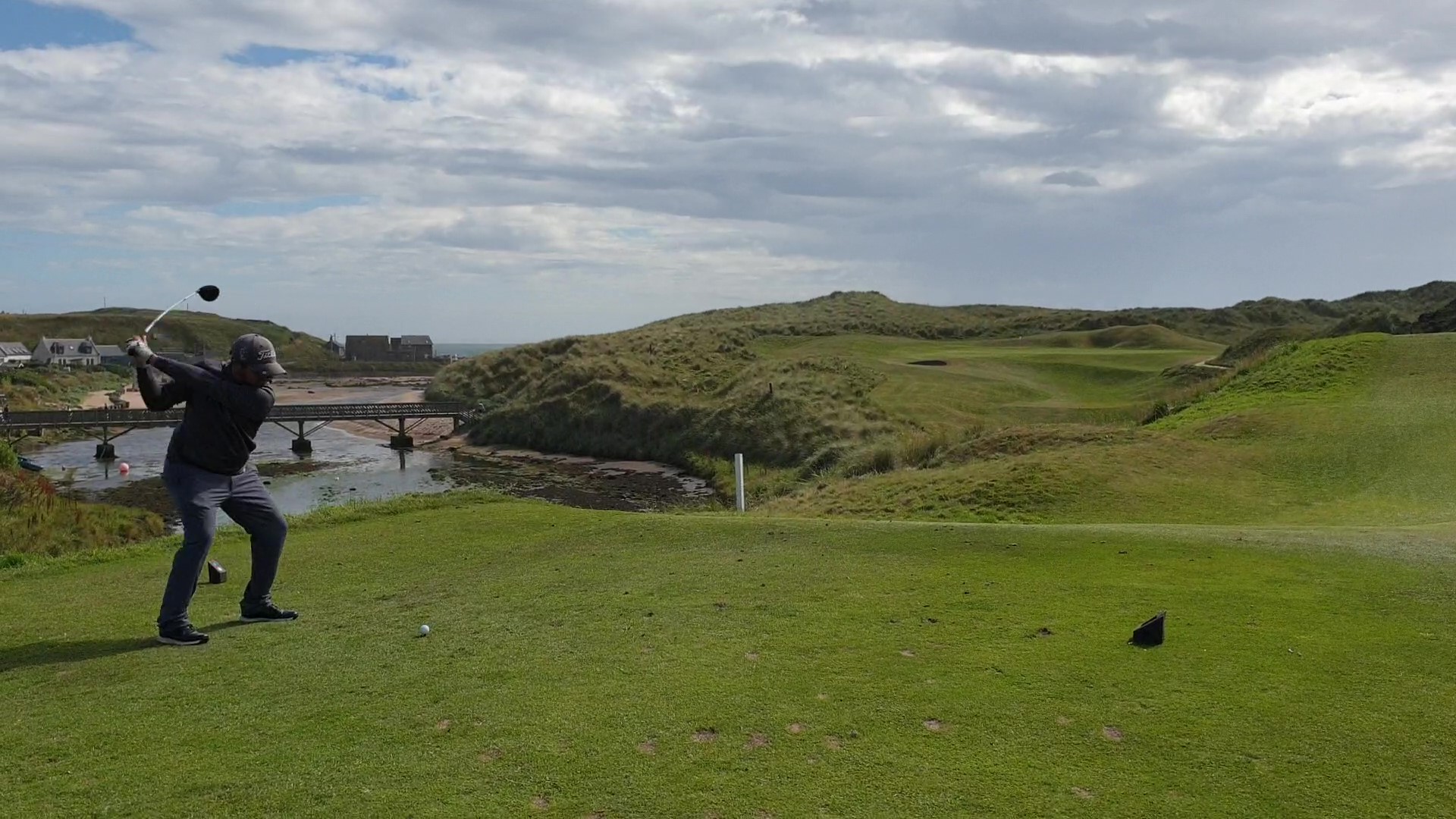
Danial on the long par-3 4th tee, playing across the Water of Cruden, with Port Erroll’s harbour bridge behind. Against the wind, a driver was a necessity.

He introduced me to the Royal & Ancient Company of Dishonorable Golfers (https://racdg.com/), known as The Flock: a free, volunteer-run society of thousands who take their golf seriously and themselves rather less so. I’m grateful to him. That introduction eventually took me to Machrihanish, but that’s a story for another blog.

Cruden Bay is a railway course. The Great North of Scotland Railway Company built a 55-bedroom hotel here, finished in 1899, with a links by Old Tom Morris and Archie Simpson and an electric tram to bring guests from the station. Asquith and Lloyd George took afternoon tea there, and Churchill played the links.
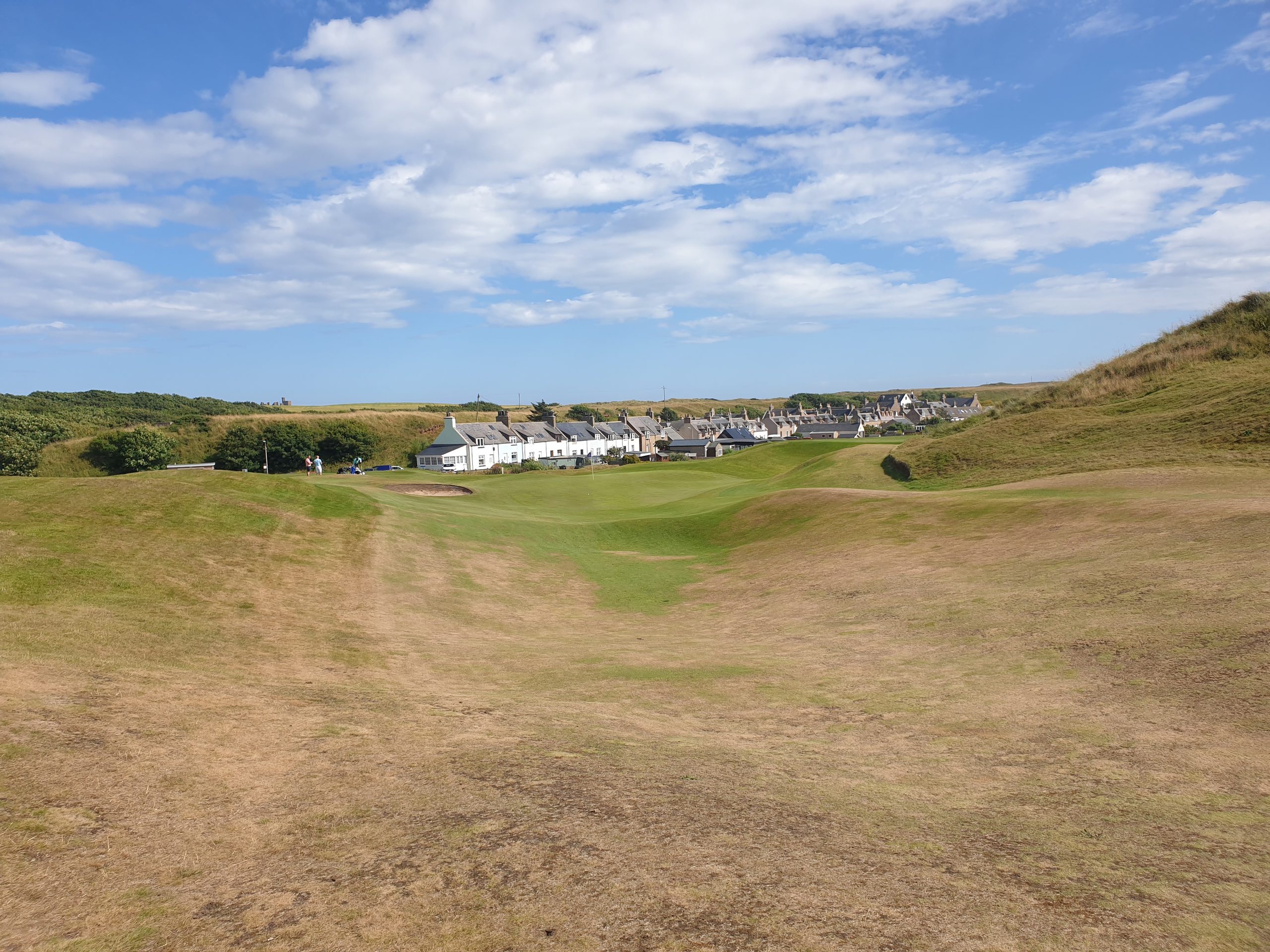
The cottages of Port Erroll behind the 3rd green. The links and the village are closer than the brochures suggest.

The hotel closed in 1932 and was demolished after the war. In 1950 local businessmen bought the course for £2,750, and since 1982 the members have owned it. It was a playground for the well-off, saved by the locals. On this coastline, that’s a familiar story.

The village has older stories too. There’s the battle of 1012 that supposedly gave Cruden its name (see Blog 221 for why I doubt it), and there’s Bram Stoker, who signed the Kilmarnock Arms guest book in 1894 and began Dracula there the following summer. Whether the clifftop pile of Slains Castle was his model for Castle Dracula is believed rather than proven. The village has never been shy about it.
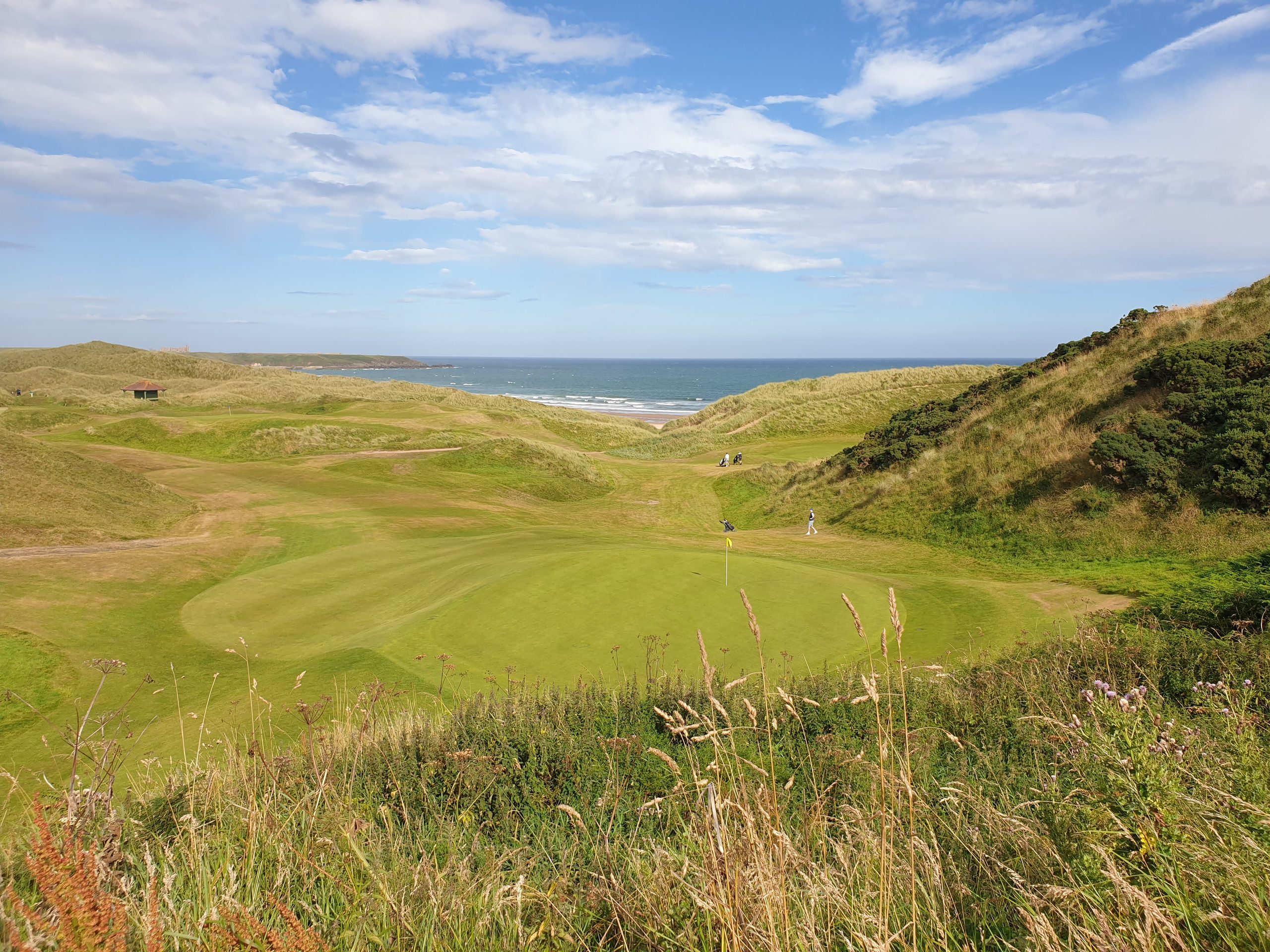
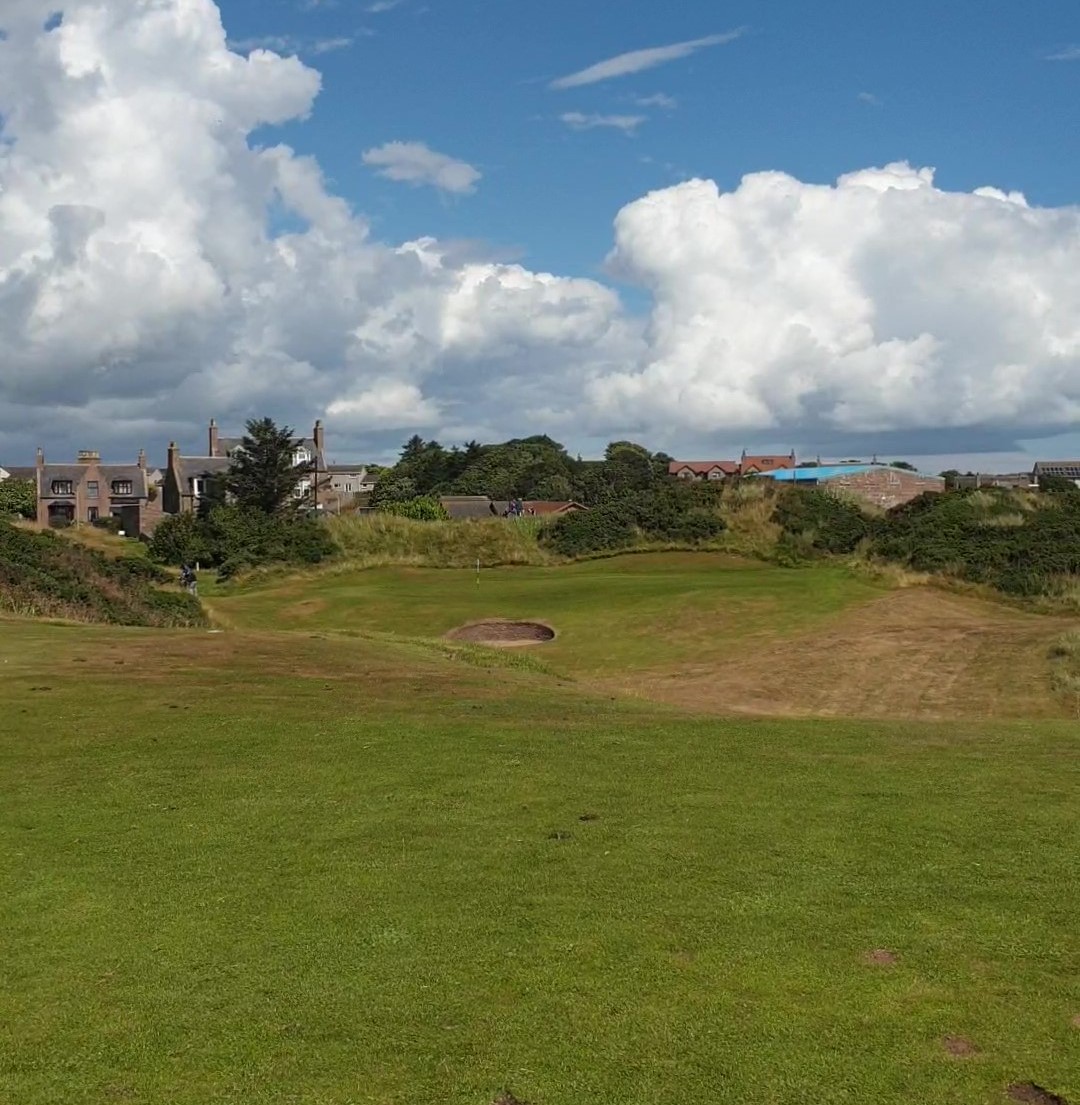
Looking back down over the 8th green to the bay, before the climb up Hawk Law.

The course itself is Tom Simpson and Herbert Fowler’s 1926 rework of Old Tom’s layout, with recent work by Mackenzie & Ebert on the 9th and 10th. It is a links of enormous dunes, burns, blind shots and greens set in hollows.
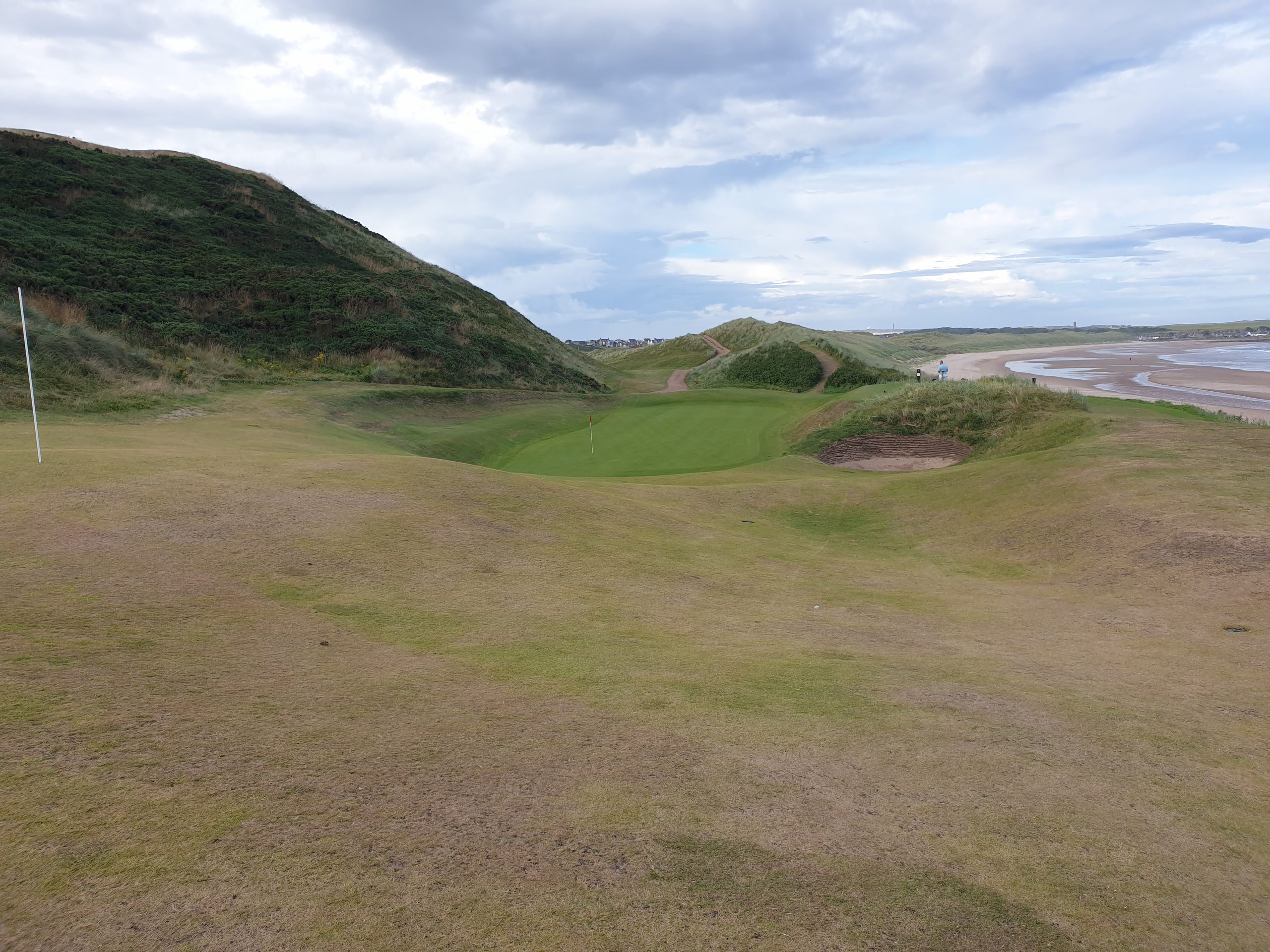
The 14th green, hidden in its dune bowl beside the beach. You aim at a marker post and hope.

The 14th green sits in a punchbowl you can’t see from the fairway, and the 15th is a par 3 played blind over a dune. The greens were excellent and the fairways generous. Wind is everything, and the club’s course planner earned its money.
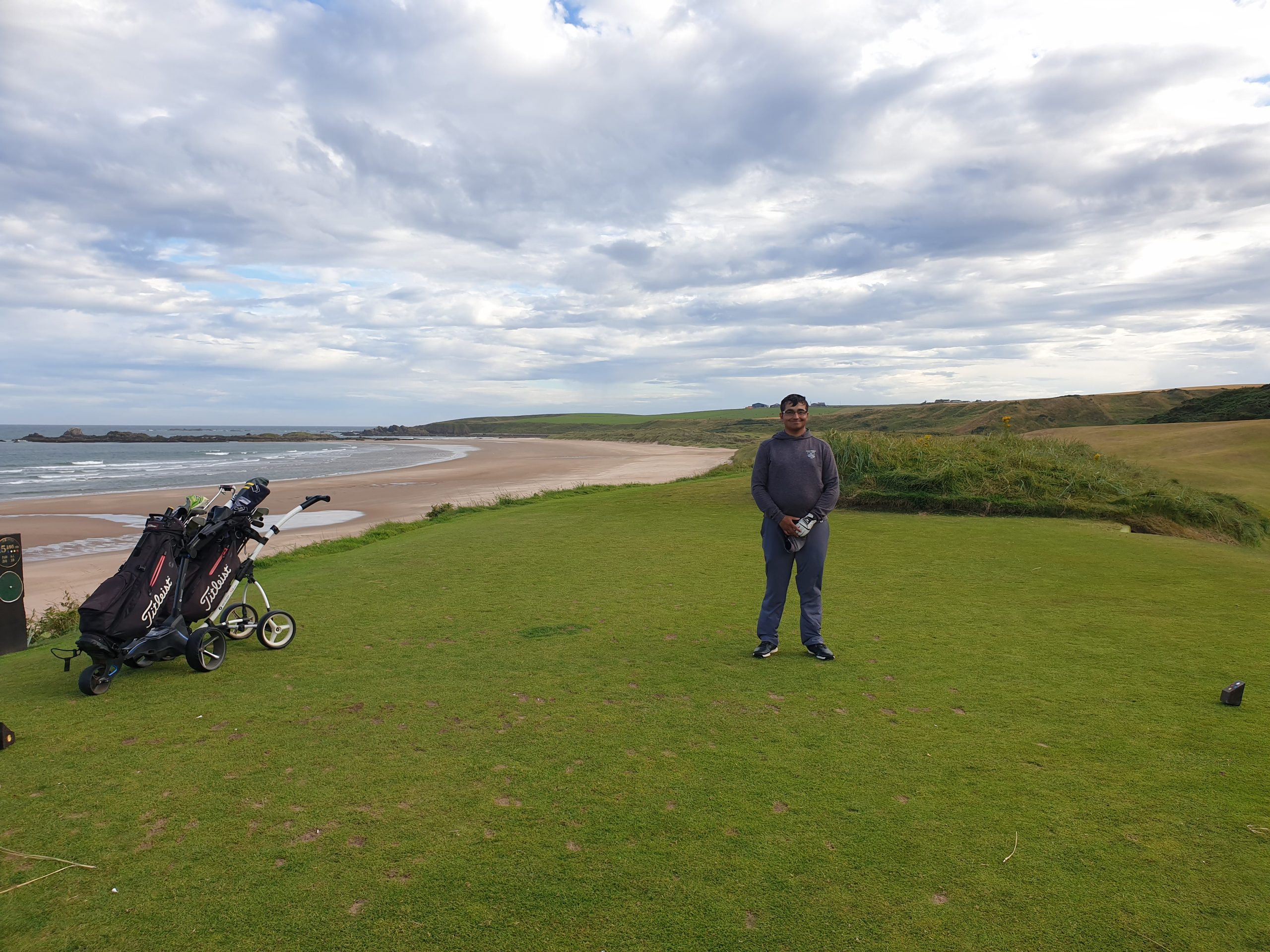
Danial on the 15th tee, the beach at his back and a blind par 3 ahead.

What struck me was the bunkering: well built, but sparse and rarely penal. Cruden Bay has about fifty bunkers, against 85 at Royal Dornoch, 87 on the Ailsa and 112 at Carnoustie. No James Braid here. Cruden Bay defends itself with ground, not sand, and ground is the scarcer commodity. Parts of it put me in mind of Cullen (Blog 52).
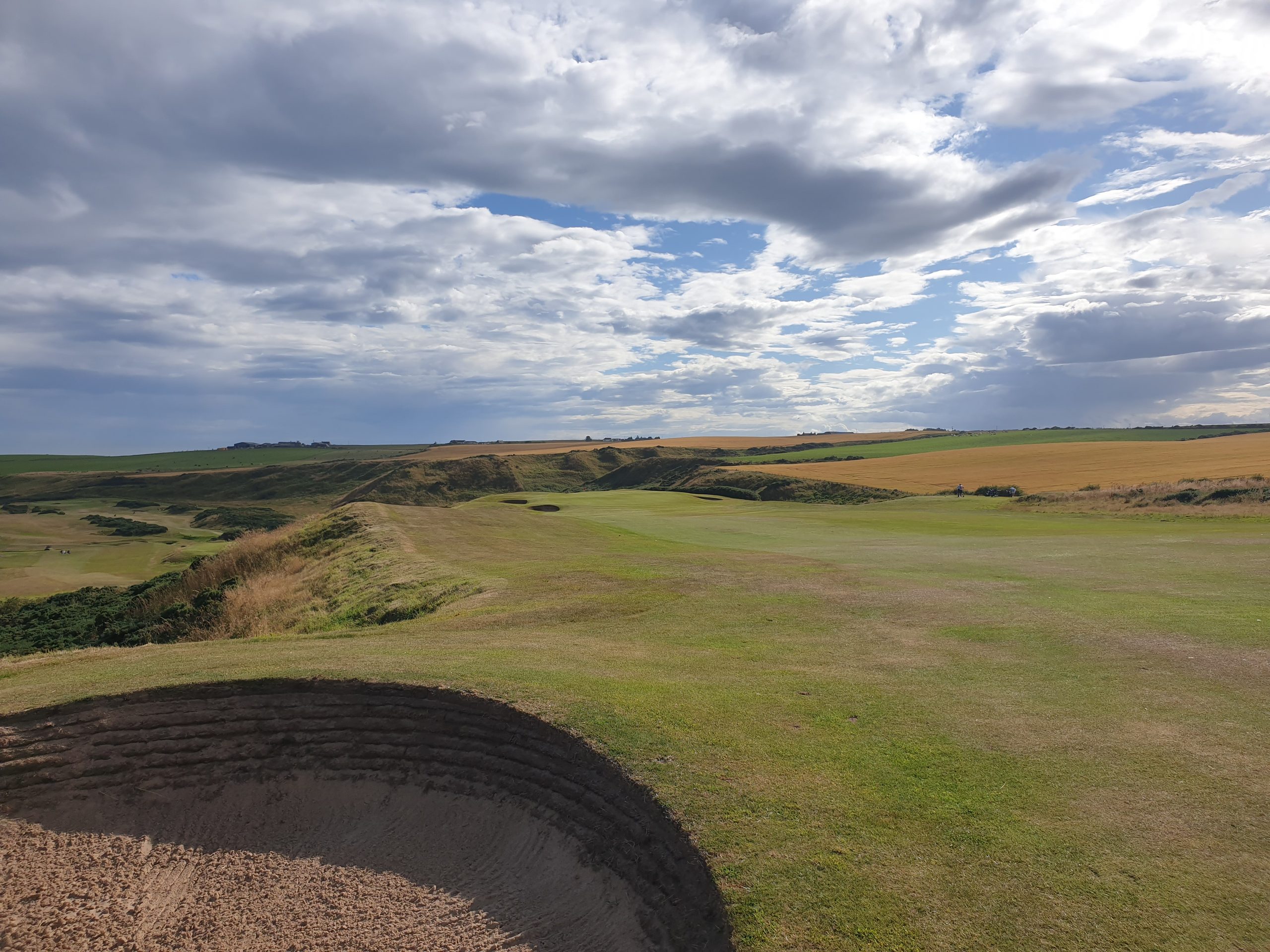
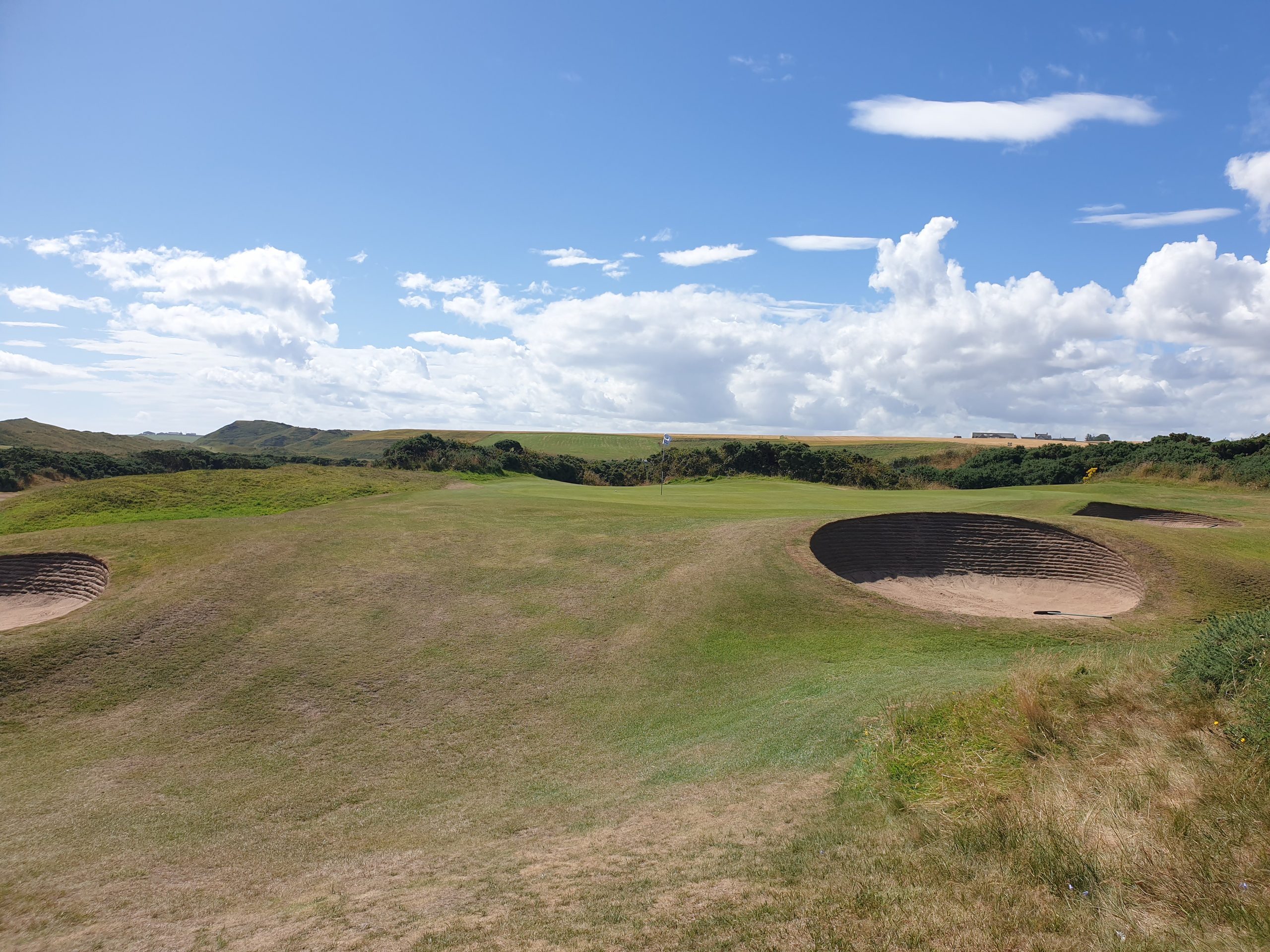
A rare bunker worth the name, on the 9th.

So to my real question: how does a mystique happen? Top100golfcourses has Cruden Bay 10th in Scotland and first in Aberdeenshire, above Trump. NCG has it 8th. GOLF Magazine in the US puts it 61st in the world and calls it a cult classic, a favourite of Pete Dye and Tom Doak. The club’s drone video on its website (https://crudenbaygolfclub.co.uk/) is a magical piece of work: endless sunshine, an empty course, a lone golfer in red, a calm sea, and not a breath of the wind that blew me round in stroke play that August.

Add a railway hotel, prime ministers and Dracula, and you have a story that sells itself to travelling panellists. For me, Murcar (Blog 218) is the better all-round links. Cruden Bay is the better told. And the Scots were building golf in these dunes long before anyone complained about Trump doing it, but that’s for Newburgh (Blog 226).

None of that makes it overrated by much. It’s a five-star course in a stunning setting. The price is the problem: £245 midweek and £265 at weekends in the 2027 main season, against Murcar’s £170 to £195, earns 3.5/5. The £120 winter rate is the value route at 4/5, and summer and shoulder fees include nine holes on St Olaf (Blog 221).
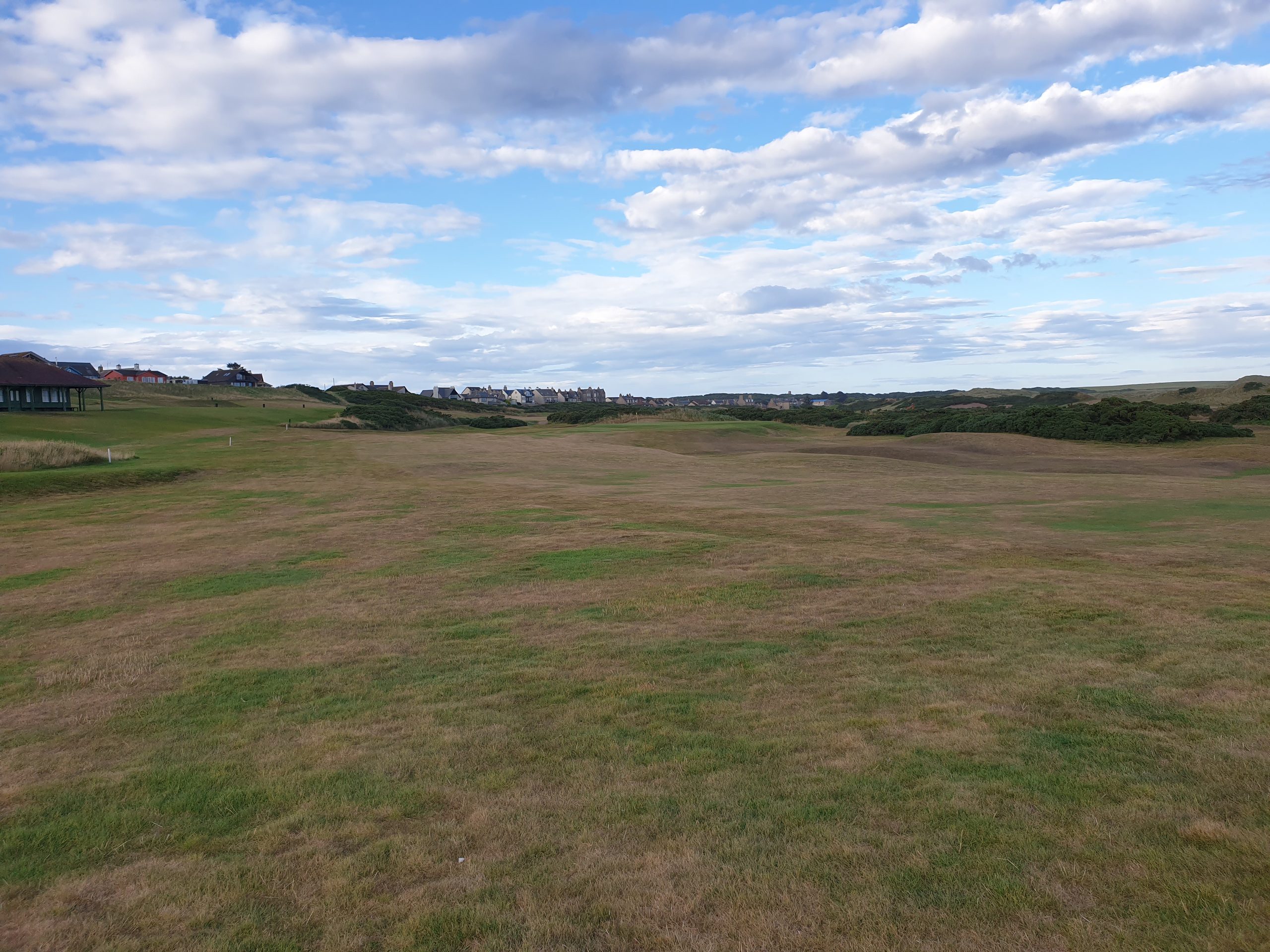
Walking in up the 18th towards the clubhouse and the village, second in Division 2 and £110 up.

Would I go back? Like a shot. Just don’t ask me to repeat the 82.

Facts:
Course Type: Links
Par: 70 (2 par 5s, 12 par 4s, 4 par 3s)
Distance: 6,263 yards (white tees)
Course Rating / Slope: 71.1 / 125
Course Quality: 5/5
Moly’s Gross Score: 82
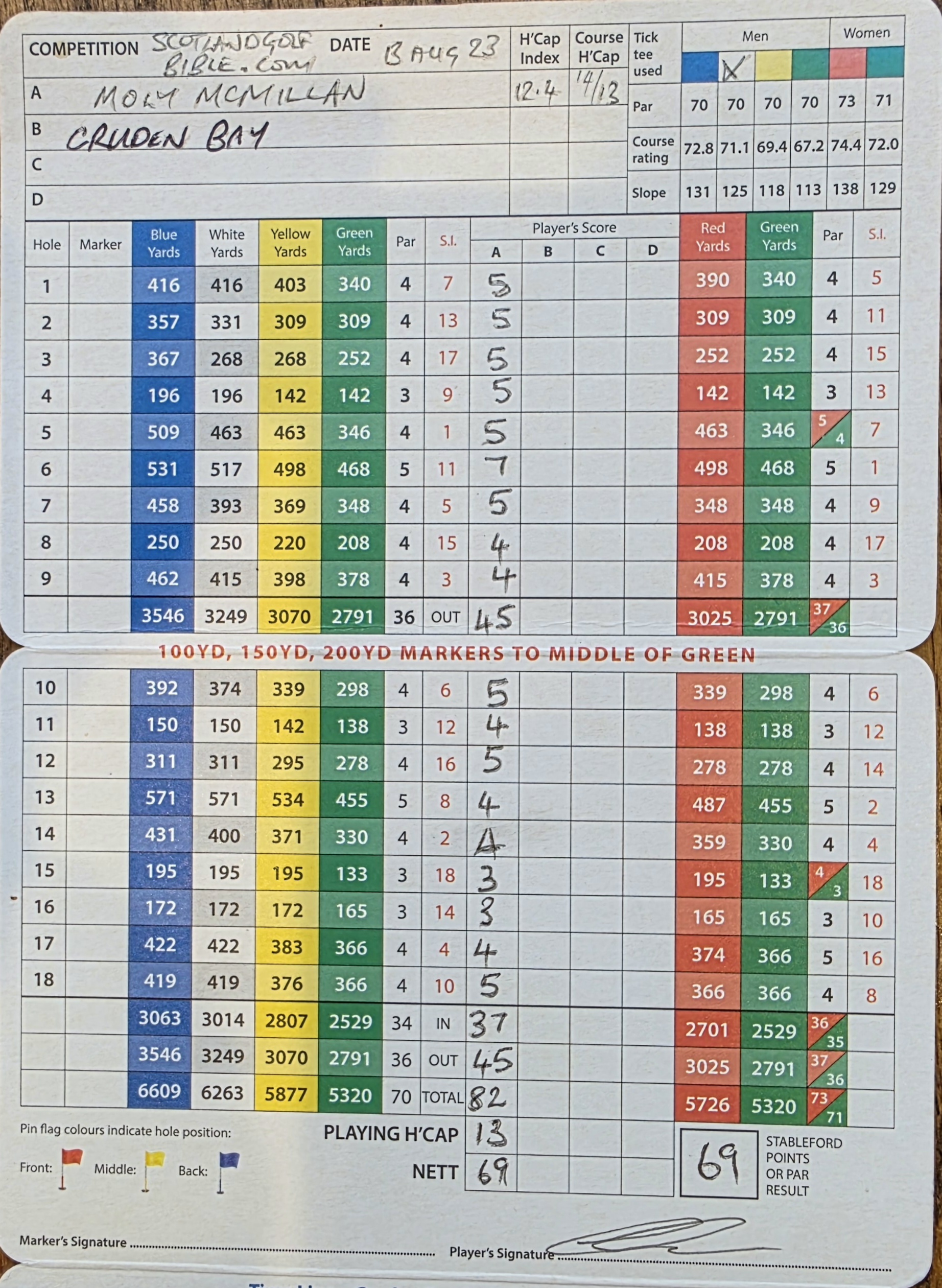
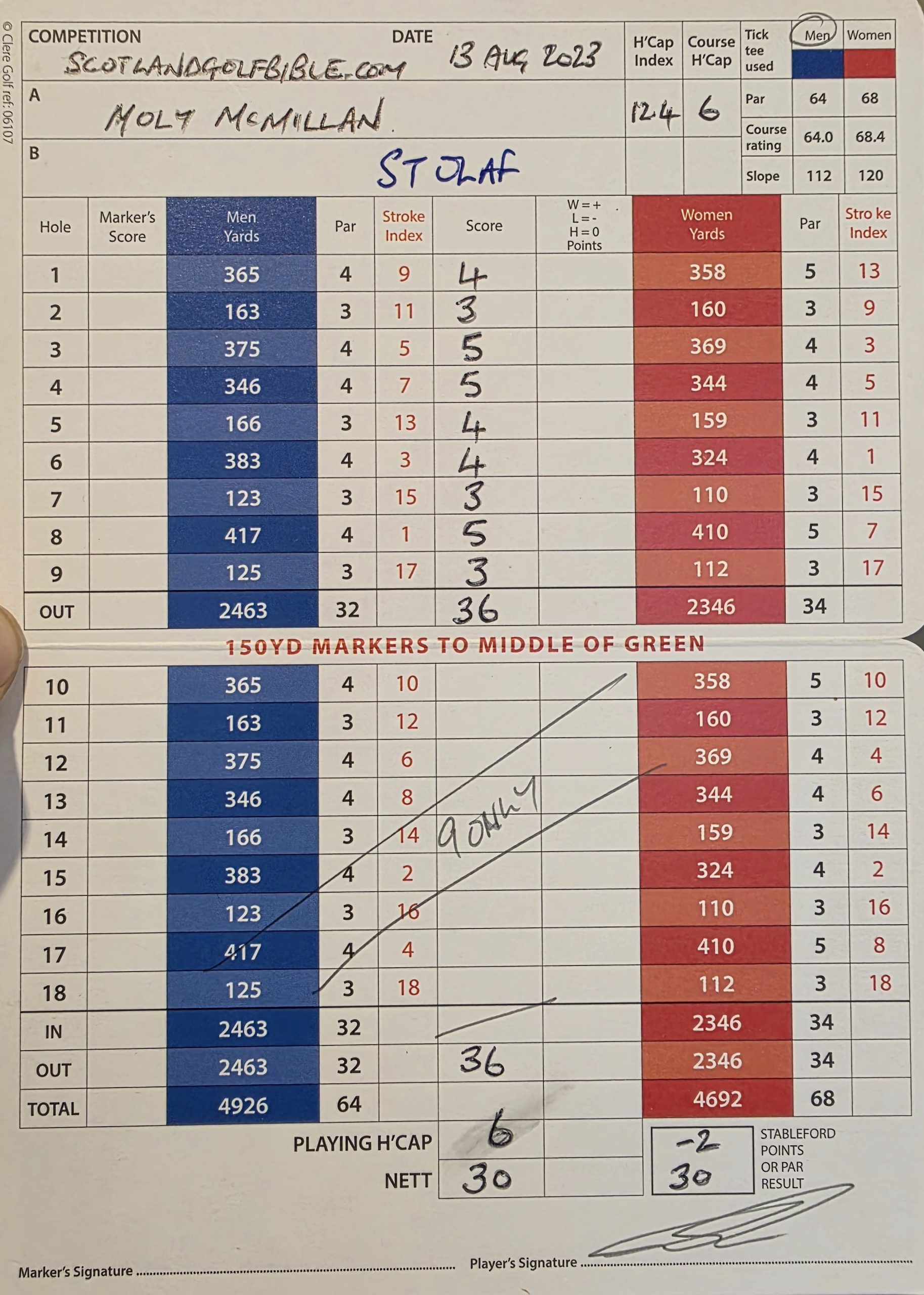
My Hawklaw Tankard Open scorecard, gross 82, good enough to win £150.

221. St Olaf (Cruden Bay). 13 Aug 23.

A saint who hadn’t died yet, a battle that may never have happened, and a very decent nine holes.

Price Paid: Free with my Hawklaw Tankard entry, or a nominal rate. Memory fails me, but it wasn’t much.
Current Price (2027): £55 weekday / £60 weekend for 9 holes; £80 / £85 for 18. Free with a summer or shoulder Championship green fee (day before, day of, or day after).
Value Rating: free with the main course 5/5 · £55 for 9 holes 3/5
Moly’s Score: 36 gross (+4), net 30 (−2), stroke play

The panoramic view from the clubhouse over St Olaf to the dunes and the sea.

St Olaf is Cruden Bay’s nine-hole course, laid out inside the Championship links in the village of Cruden Bay, about 23 miles north of Aberdeen. It never reaches the sea. Most of what you see from the clubhouse windows is St Olaf, gorse-lined and gentle, while the Championship course hides in the dunes beyond. I played it at midday as a warm-up before the Hawklaw Tankard on the main course that afternoon (Blog 222).

The 1st, between dune and gorse. St Olaf sits entirely inside its big brother.

The name comes with a story. In 1012, the legend goes, King Malcolm II of Scotland beat young Canute’s Danish army on this linksland. Afterwards, Malcolm built a chapel on the battlefield to bury the dead of both sides and dedicated it to St Olaf, patron saint of Norway and Denmark. The village’s name supposedly means “slaughter of the Danes”. Here’s the problem: Olaf didn’t die until 1030, eighteen years after the battle. Even the local church records accept that the chapel was dedicated to St Olaf much later. The story seems to begin with Hector Boece, a sixteenth-century chronicler with a weakness for a good yarn, and recent historians doubt the battle ever happened. Whatever the truth, the first St Olaf church stood on the sandy plain that is now the golf course until the sand engulfed it. St Olaf’s Well still sits by the 17th fairway of the main course.

The par-3 7th, with the houses of Cruden Bay village behind. The battle, the chapel and the saint all belong to this patch of links.

The course began as the inner “ladies’ course” of 1899 and was reworked by Tom Simpson and Herbert Fowler in 1926, when they redesigned the big course. The club’s own timeline says it “re-opened” in 1968. From what, it doesn’t say. It’s par 32, with five par 4s and four par 3s across rumpled, gorse-lined linksland. The turf was very good, the driving pretty generous, and the greens as quick and true as the Championship course’s. In other words, great as a prelude to big brother.

Putting out on the 6th, under the dunes the Championship course keeps for itself.

I went round alone in 36, four over, with pars at four of the nine and nothing worse than a bogey. It was a tidy start to the day, and as it turned out, a fair warning of what was coming that afternoon.

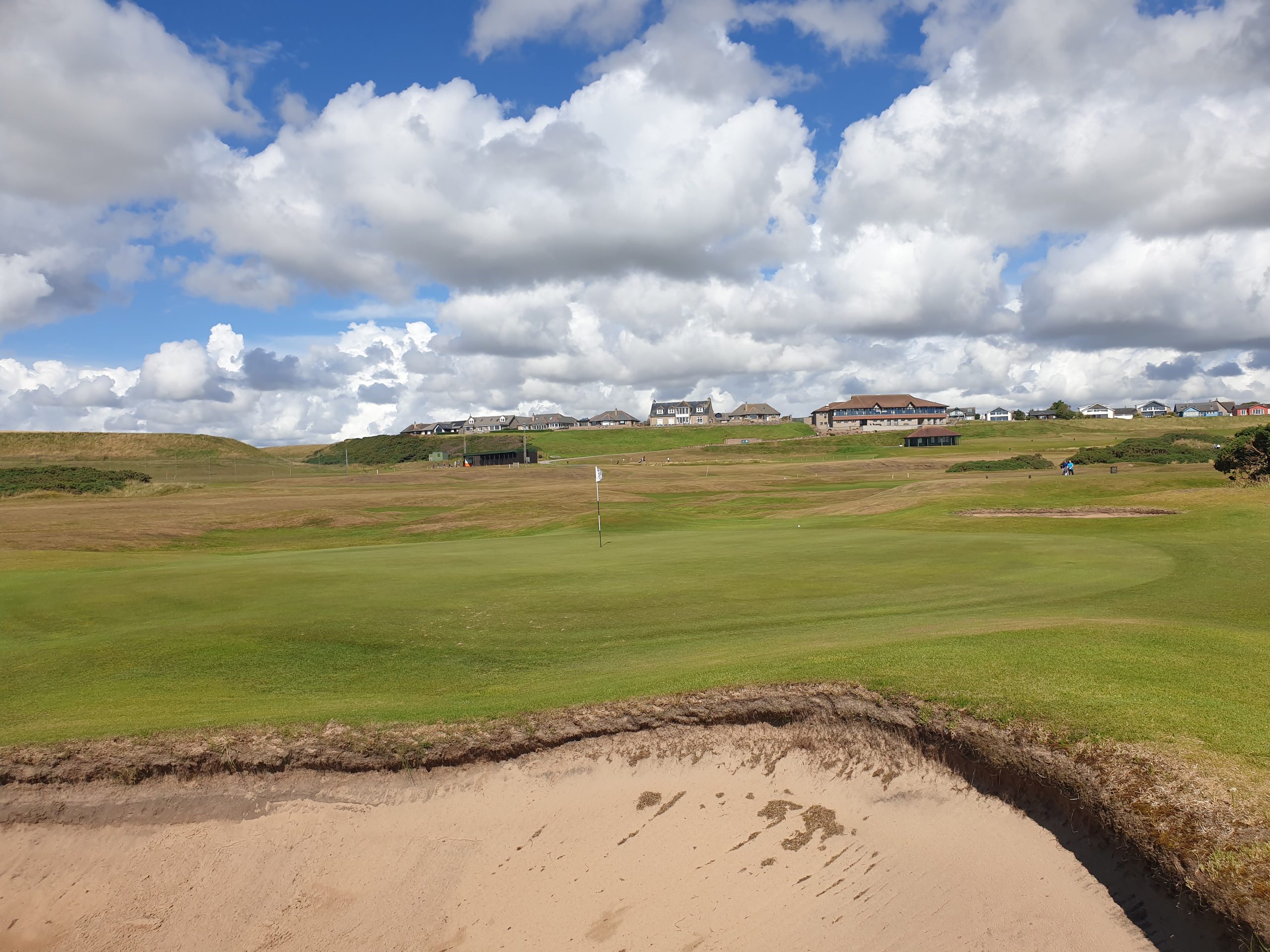
The 2nd green with the wonderful clubhouse beyond.

On value, the club only gets it correct when coupled with the Championship green fee – it’s free. Furthermore, you can play your free round one day either side of your main course round, if you can’t play both on the same day. Congratulations to Cruden Bay for that. I wish all the great courses would follow suit, as a recognition of the very high green fees for visitors. Playing St Olaf standalone is £55 for nine holes or £80 for eighteen. As a course it deserves 4/5 for quality: proper links turf, excellent greens, and enough short-game examination to keep you honest. As a standalone nine at £55 it’s 3/5, not cheap for nine holes. Thrown in with a Championship fee, it’s 5/5. The National Club Golfer ranks it 84th in Scotland, and I don’t buy that at all; it’s not better than East Ren, Dunaverty or Barassie, all ranked lower! Just play it as the warm-up it was built to be, but don’t be surprised if you enjoy it more than you expected.

Pot bunkers and rumpled ground at the 9th: a proper links finish to a short round.

Facts:
Course Type: Links
Par: 32 (5 par 4s, 4 par 3s); 64 for 18 holes
Distance: 2,463 yards (men’s tees)
Course Rating / Slope: 64.0 / 112 (18 holes)
Course Quality: 4/5
Moly’s Gross Score: 36

Moly’s 36 on St Olaf proved the ideal prep for the afternoon round on the Championship course.


© 2026 Scotland Golf Bible

Theme by Anders Noren — Up ↑