A guide to green fee value for money

Category: 3 star (Page 1 of 7)

191. Prestwick St Nicholas. 27 Apr 23.

Friendship has unrivalled value.

Round price: unknown (guest of a member); GolfNow rate at the time £55-£65. Current Fee (2026) £130. Current GolfNow (2026) ~ £65

Value; at current fee, 3/5, at GolfNow 4/5.

Before our game, I’d never met Doug McKinnon, a great friend of my friend Frank Crowe who introduced us. Not only was I heartedly welcomed, Doug waved aside any attempt to pay my guest fee. That kindness is this blog’s message.
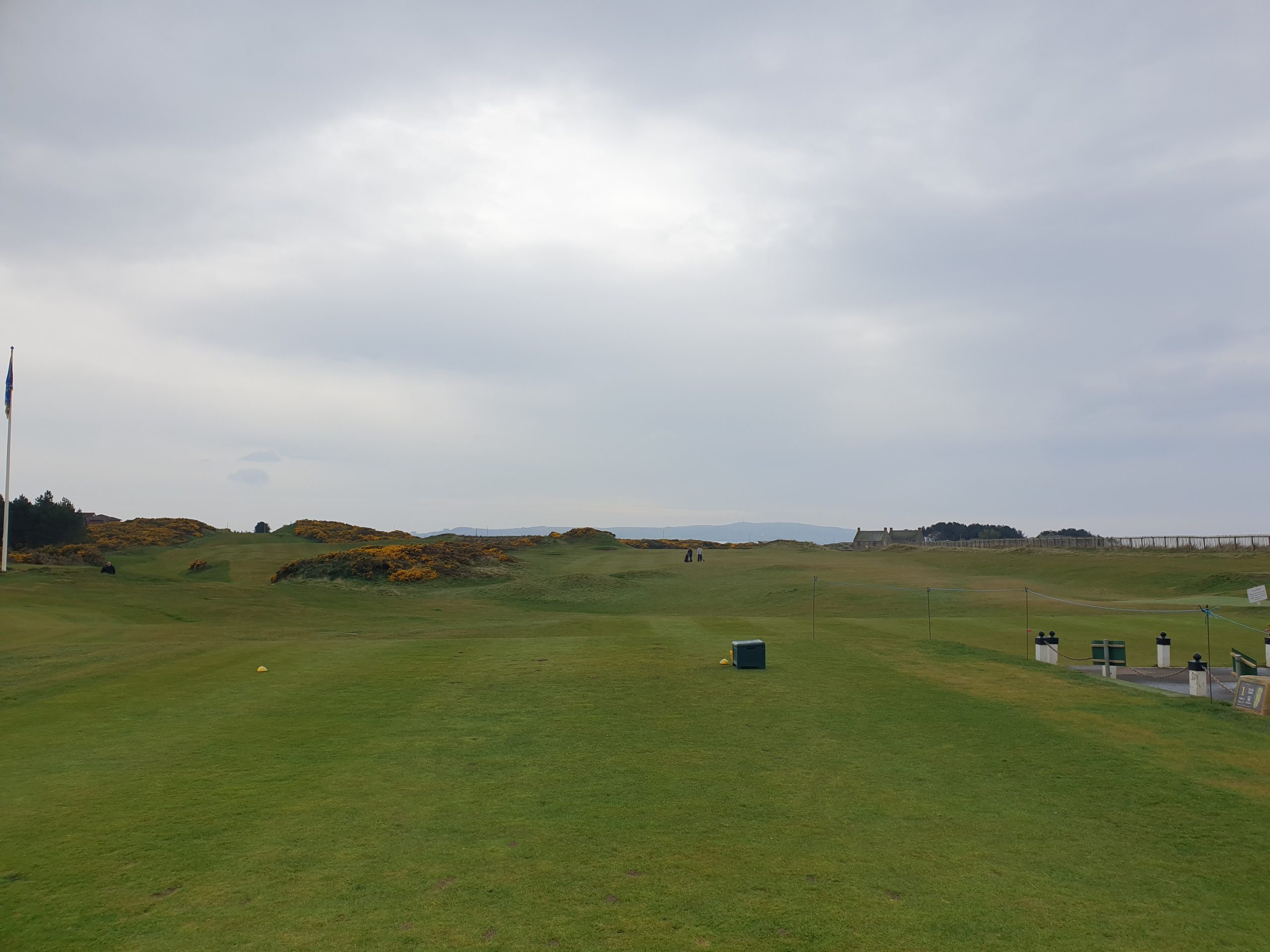
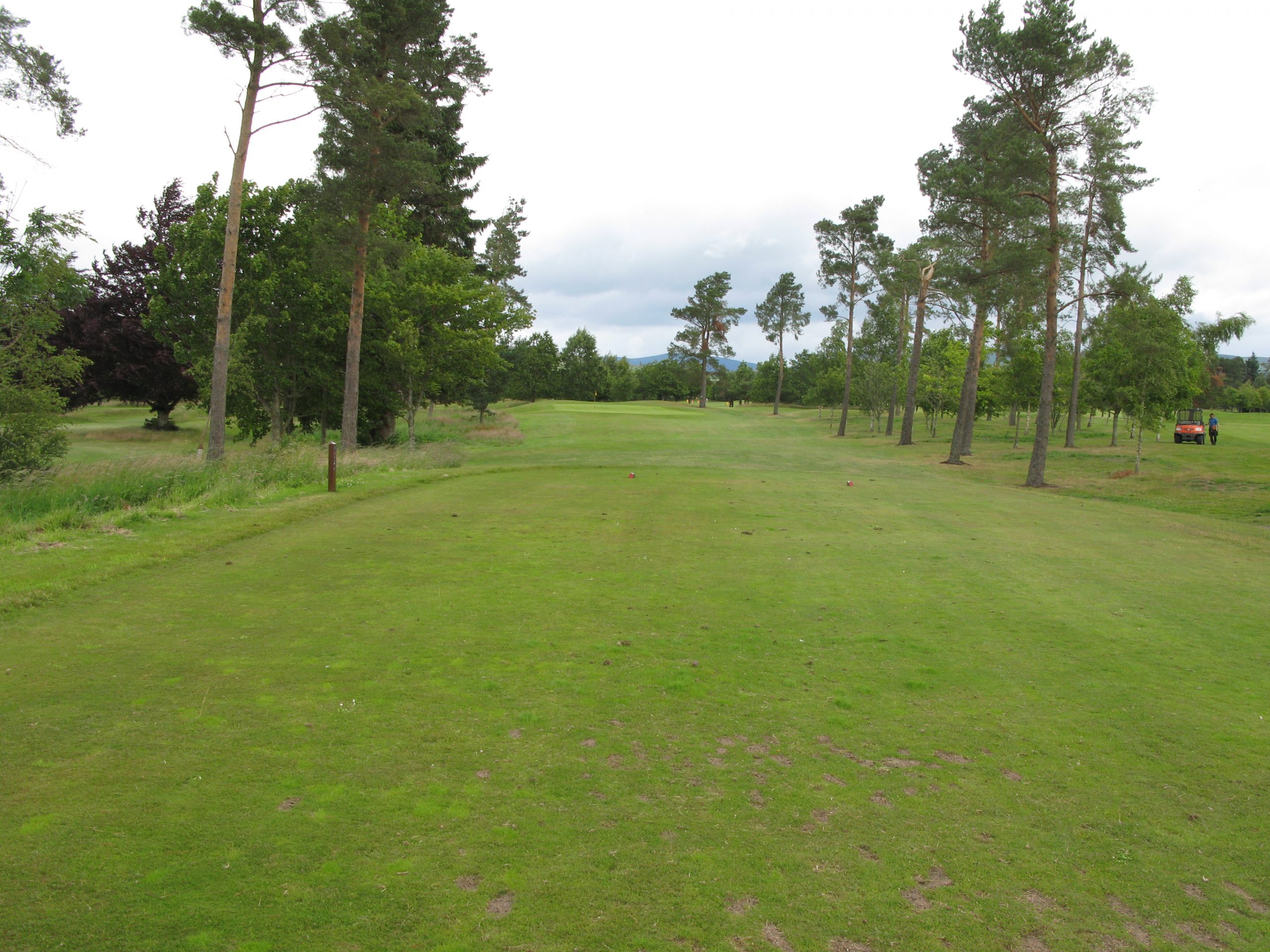
The gorse lined first amid grey Ayrshire skies, a classic links opening.

It’s not unusual either. Golfers are proud of their golf club and will show it off given an opportunity, especially as they understand how visitor green fees have outstripped the pocket of most golfers. Indeed, allowing Members’ guests is one of the great benefits of club membership. Social media groups now solely exist, not only in Scotland, to provide platforms for reciprocal guest arrangements as it’s often the only way many are able to afford the more expensive courses.

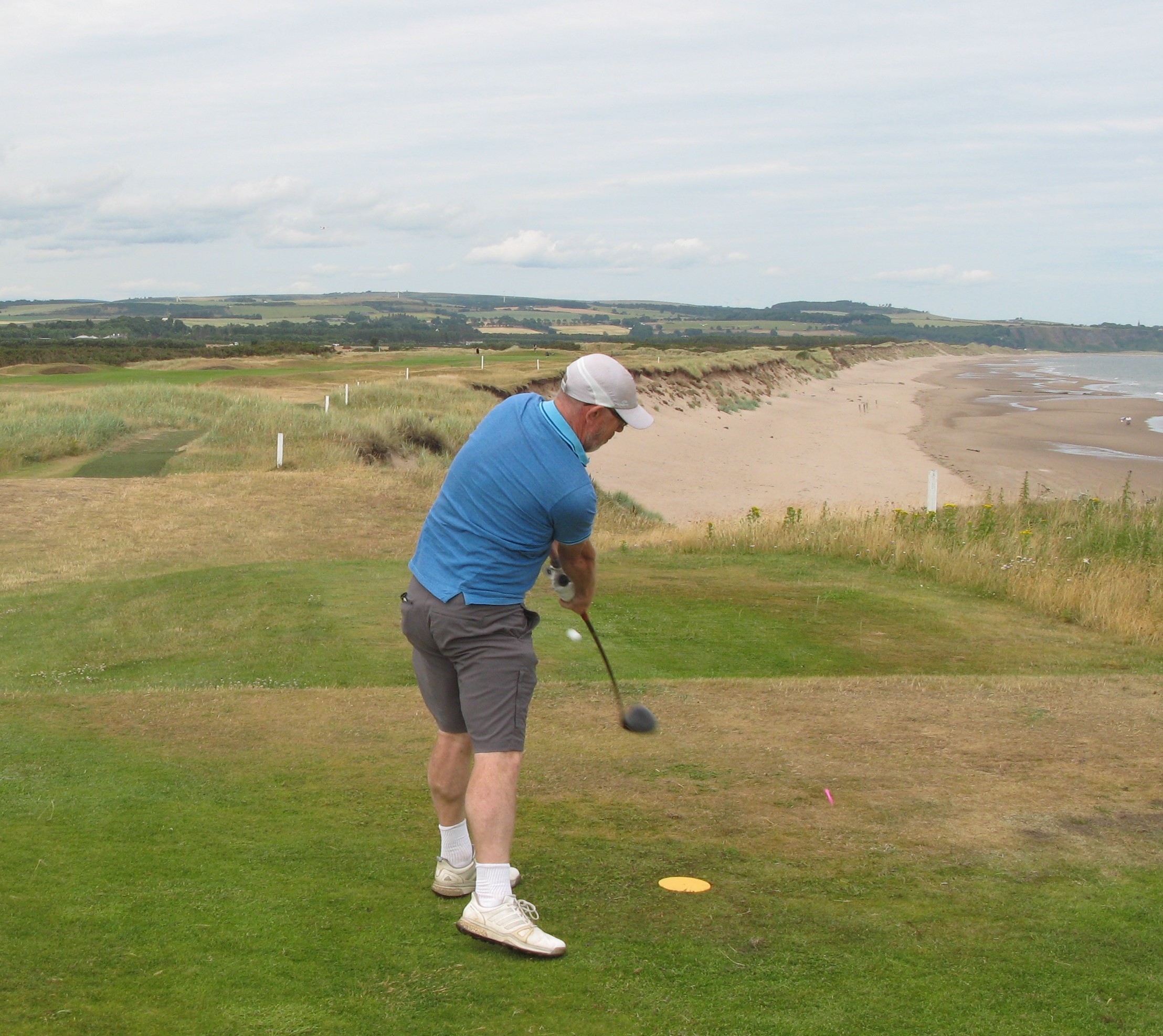
‘St Nicholas’ is proper links land on the north edge of Prestwick. Gorse adorned throughout, with the Firth of Clyde tight along the course and Arran across the water influencing the local weather. We played into a shifting south-easterly, which, on ground this exposed, epitomised links defence.
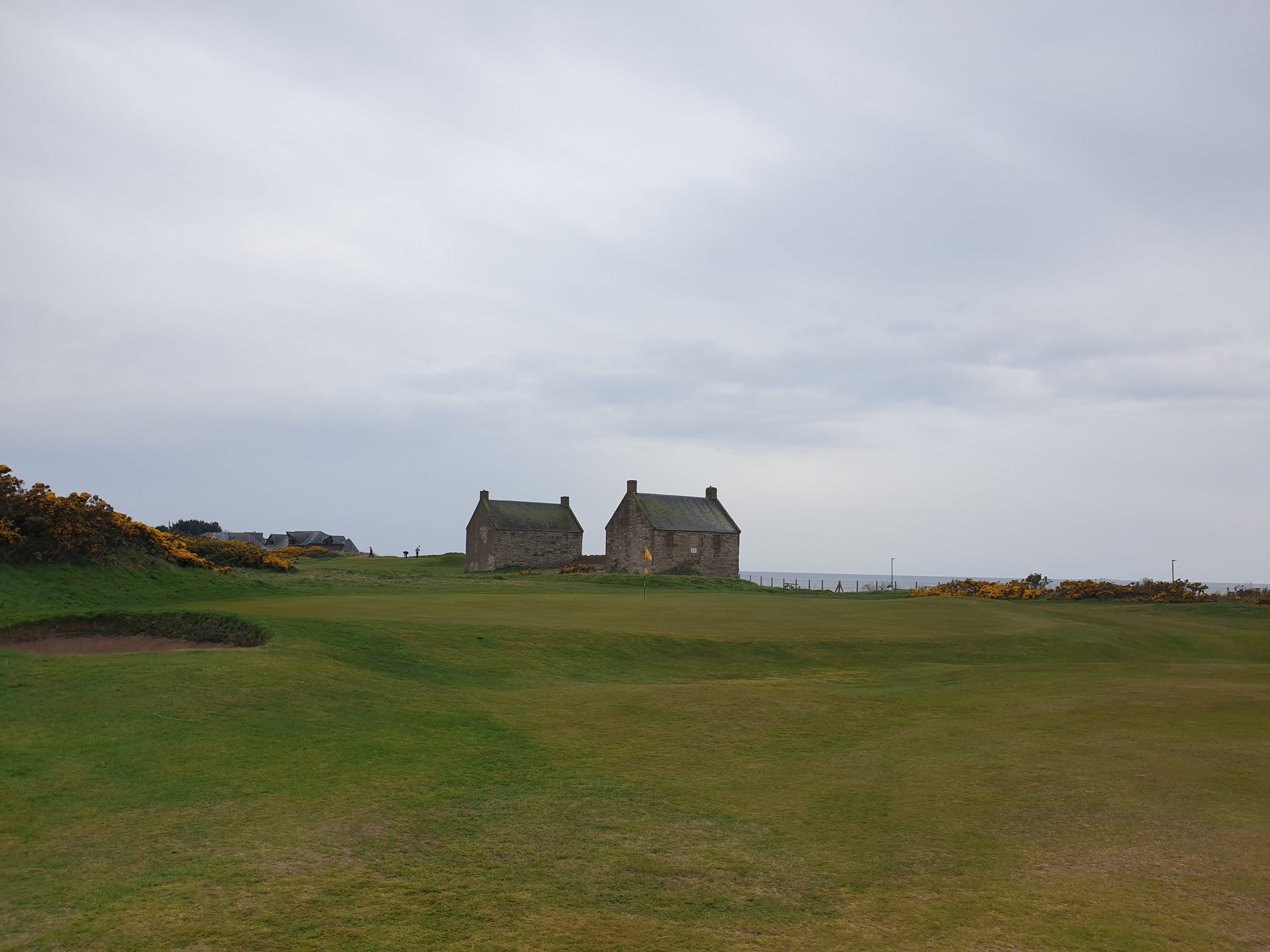
The Salt Pan Houses behind the 1st green, a Category A listed building, and one of the most complete survivals of Scotland’s saltboiling industry.

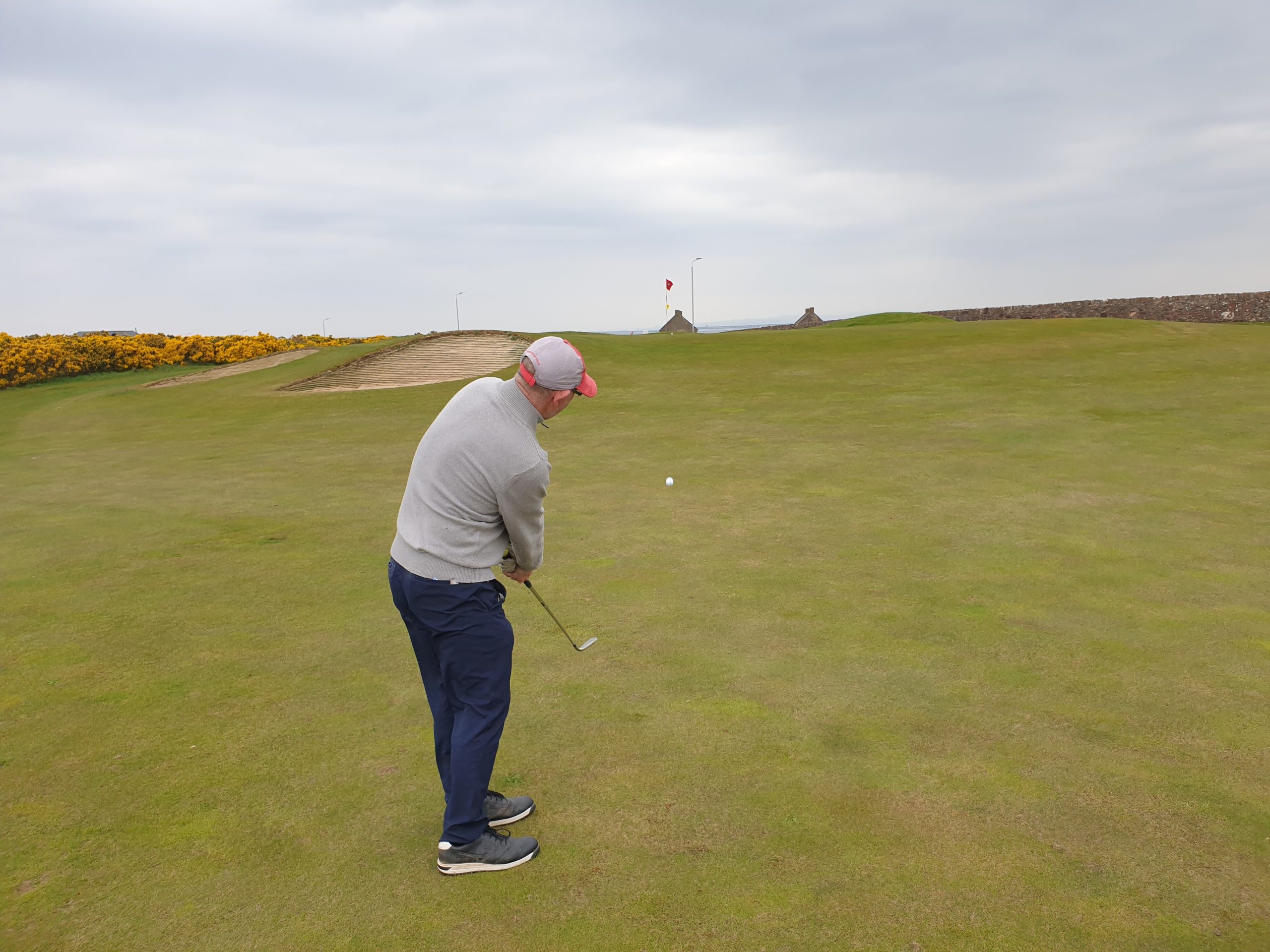
A pair of stone Cat A listed buildings sit behind the 1st green, the Salt Pan Houses, built circa 1760 for the Maryburgh Salt Works. They are regarded as the most complete remains of Scotland’s salt boiling industry. That industry keeps resurfacing: the 3rd is named Maryborough after the works, the 12th is simply “Pans.”
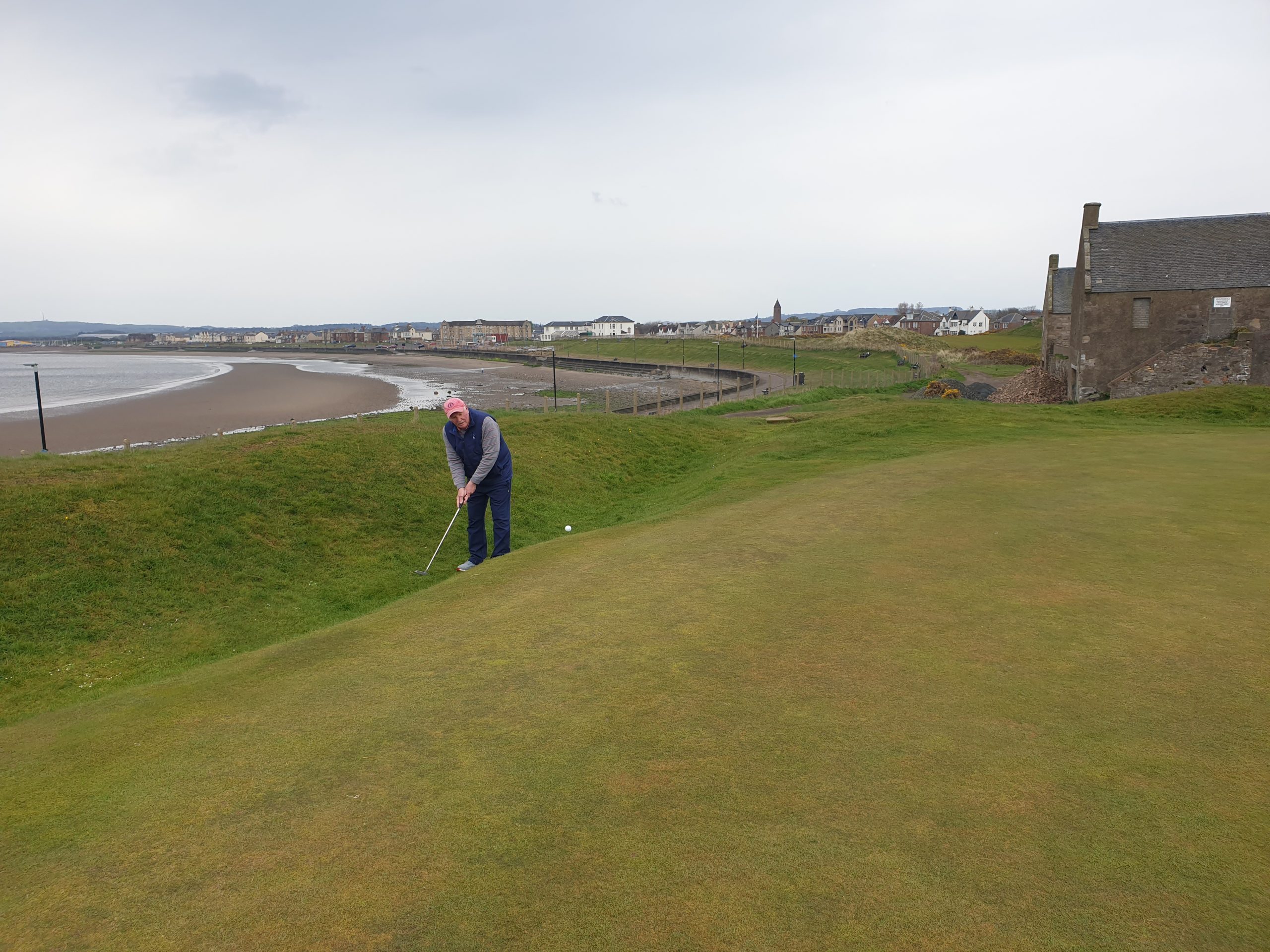
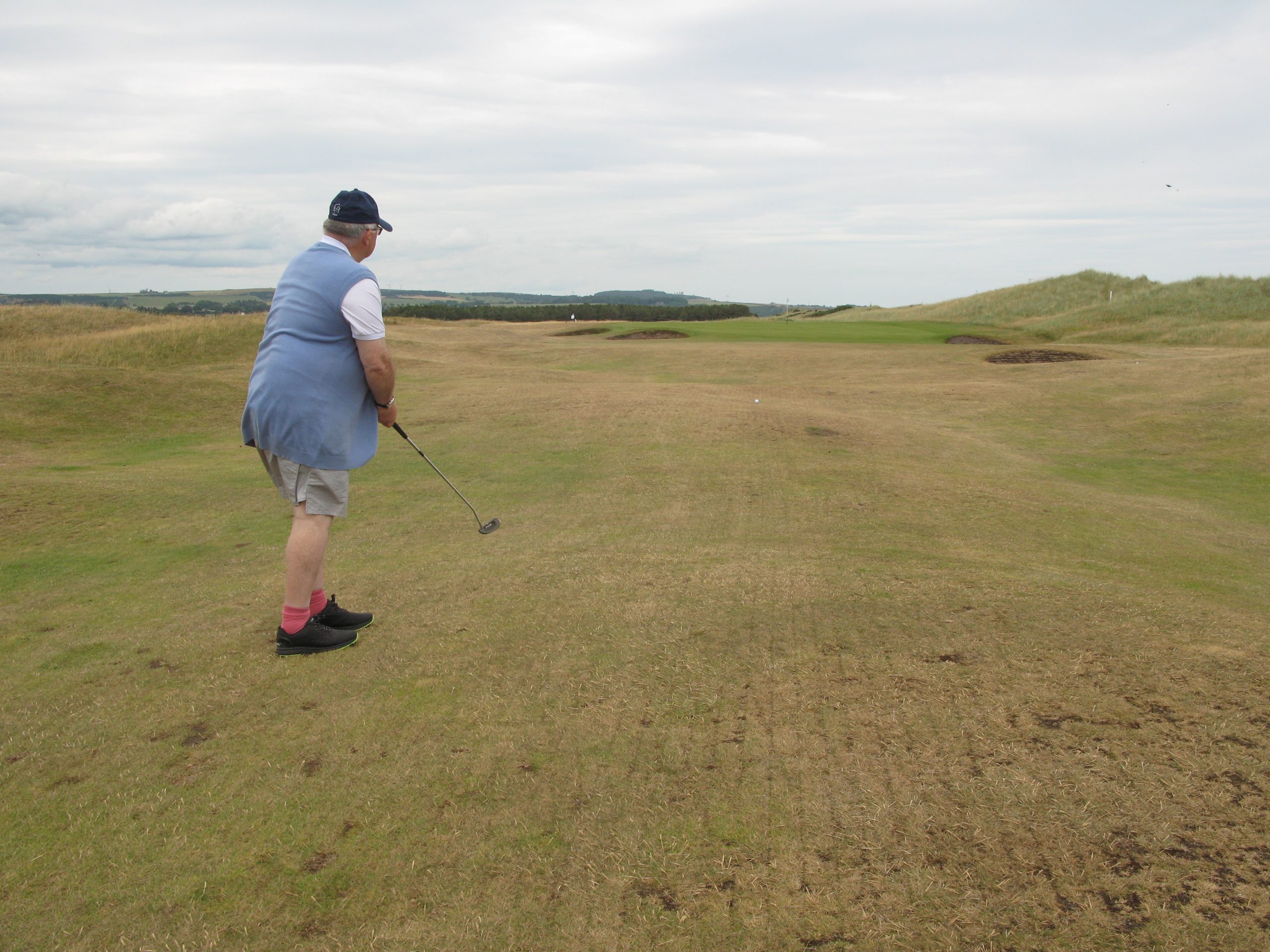
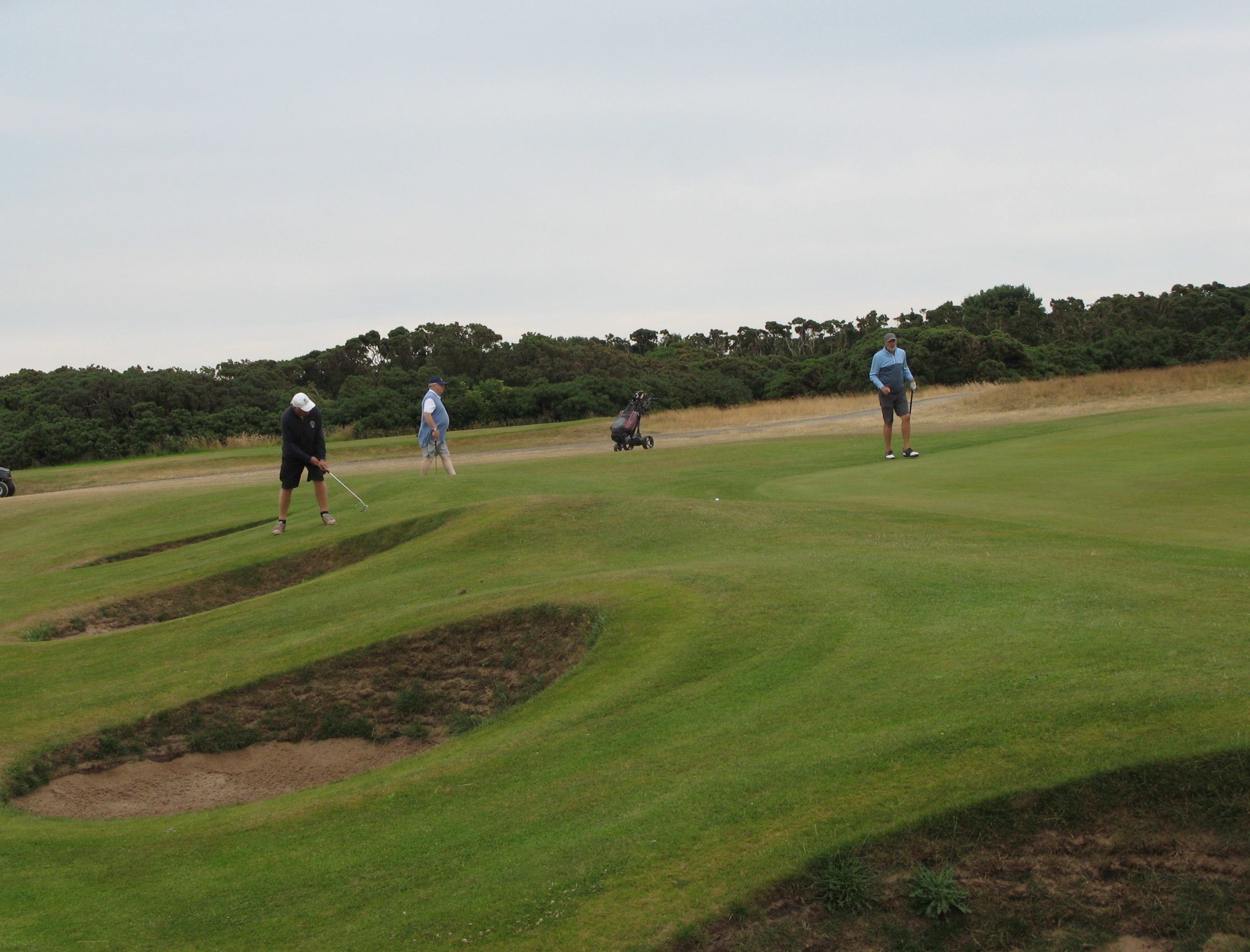
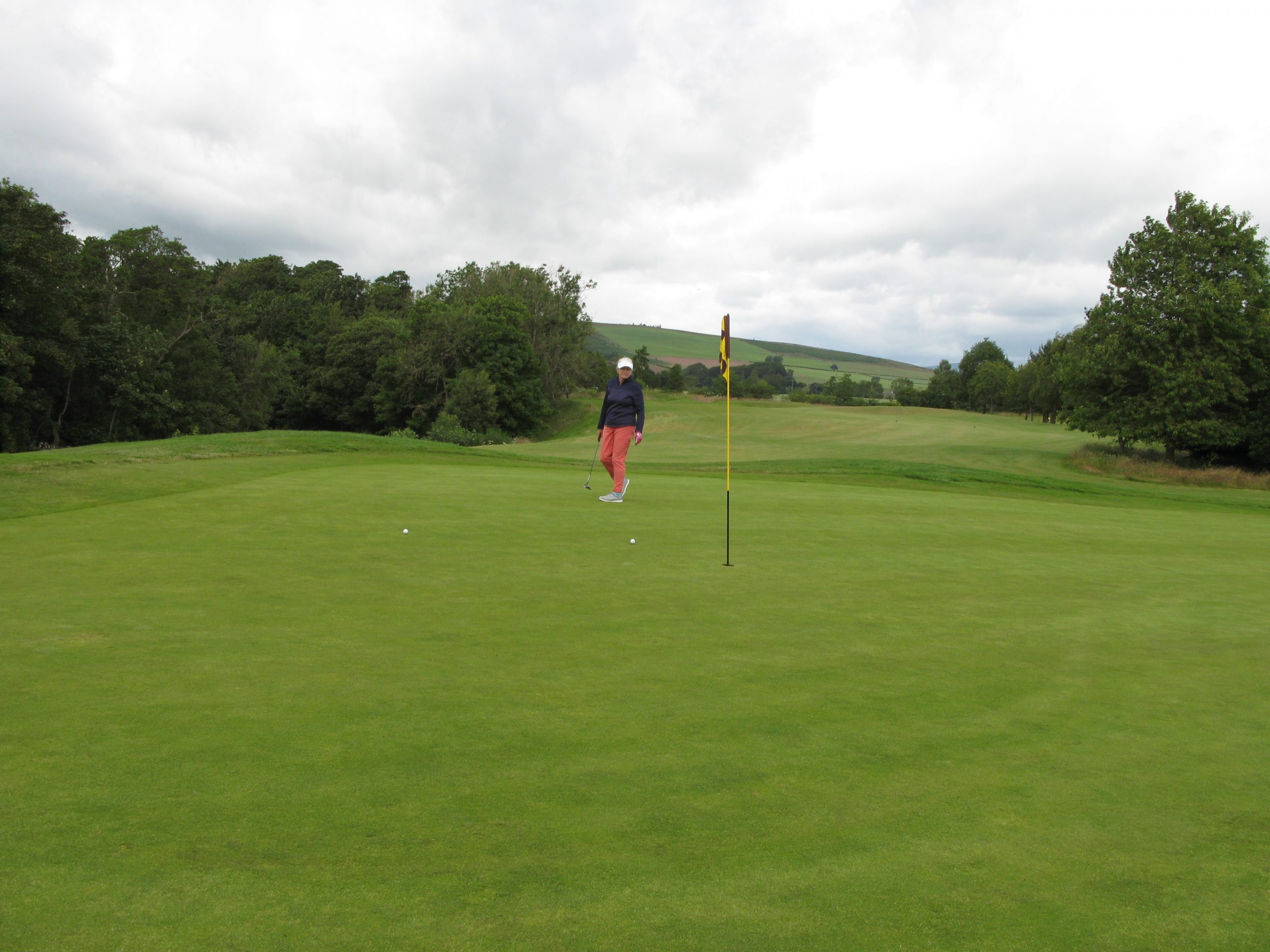
Doug chipping at the 3rd, with the Salt Pan Houses again, closer up.

The club’s founding story is worth recording. Its website leads with “Co-Founded by Old Tom Morris in 1851”, the sort of claim that often outruns the archive. However, this time it’s spot on: Morris, then ‘Keeper of the Green’ at nearby Prestwick Golf Club, met working golfers at the Red Lion Inn in 1851 to found the Prestwick Mechanics Club, the tradesmen’s response to the gentlemen’s club next door. It didn’t become “St Nicholas” until 1858, didn’t get its own course until 1877, and didn’t settle at Grangemuir Road until 1892. So the lineage holds, but the turf we played has sadly nothing to do with anything Morris laid out. However, the story of a working man’s club founded in the shadow of a gentlemen’s one, is better suited than the clubhouse plaque.
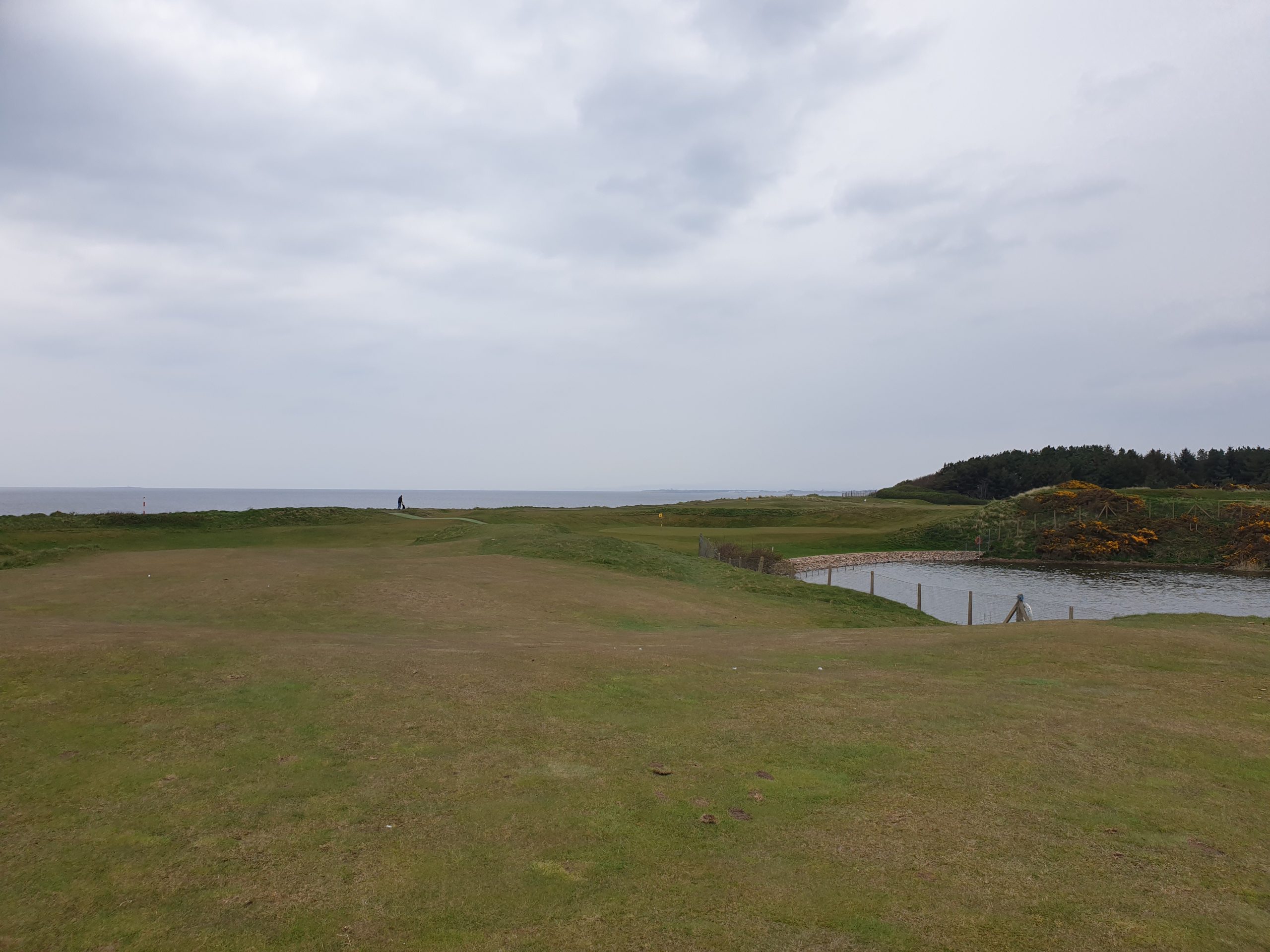
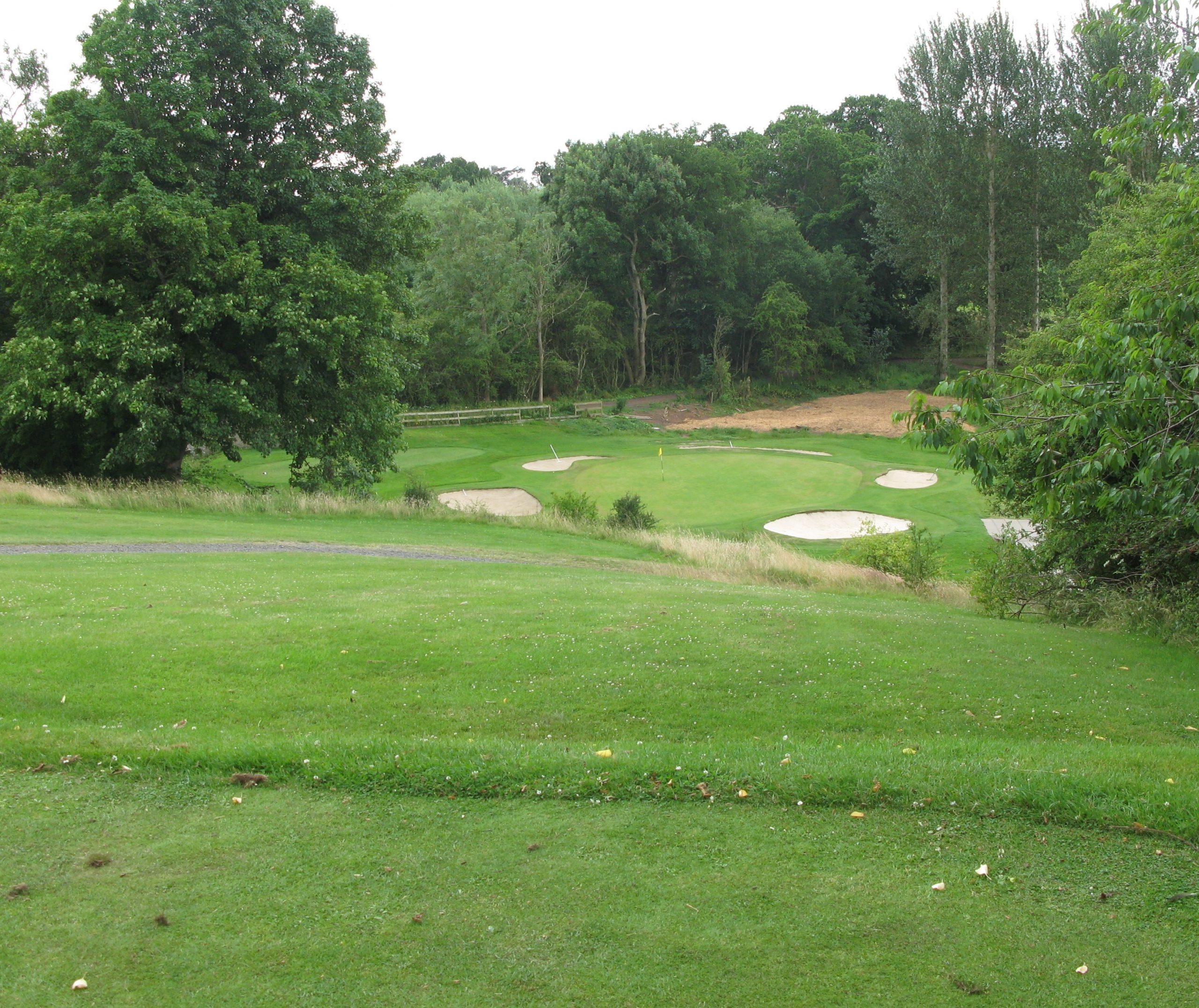
The approach on the tough par four 8th, a flooded quarry pit guarding the green.

What you actually play has real variety: flat, easy walking in stretches, then holes that turn hard without warning. The 8th, Quarry, with its flooded pit crowding the green, is one. Knowing which holes to attack and which to defend is the whole strategic game here.

The 2nd hole, Bruce, lays a consistent clue to the great underlying story of the land. Along with the 5th (St Ninians) and the 15th (Kingcase) they all point at the same legend: Robert the Bruce, cured of leprosy after striking his spear into the ground at Kingcase, founded St Ninian’s leper hospital there in gratitude. The well and chapel ruins survive behind the modern church, dated to the 13th century. Three holes walk you straight through it.
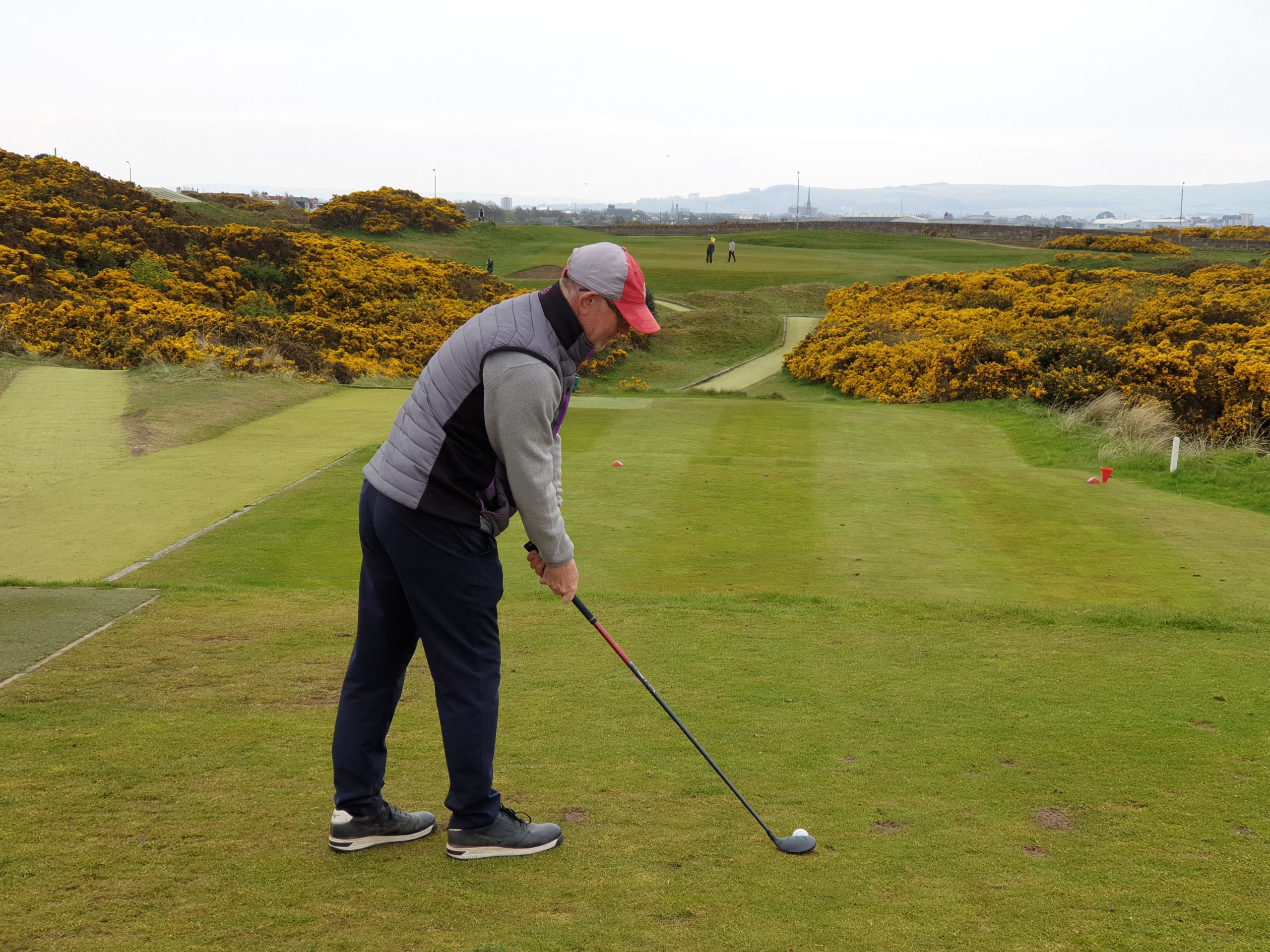
Moly on the par three 2nd tee, called ‘Bruce’.
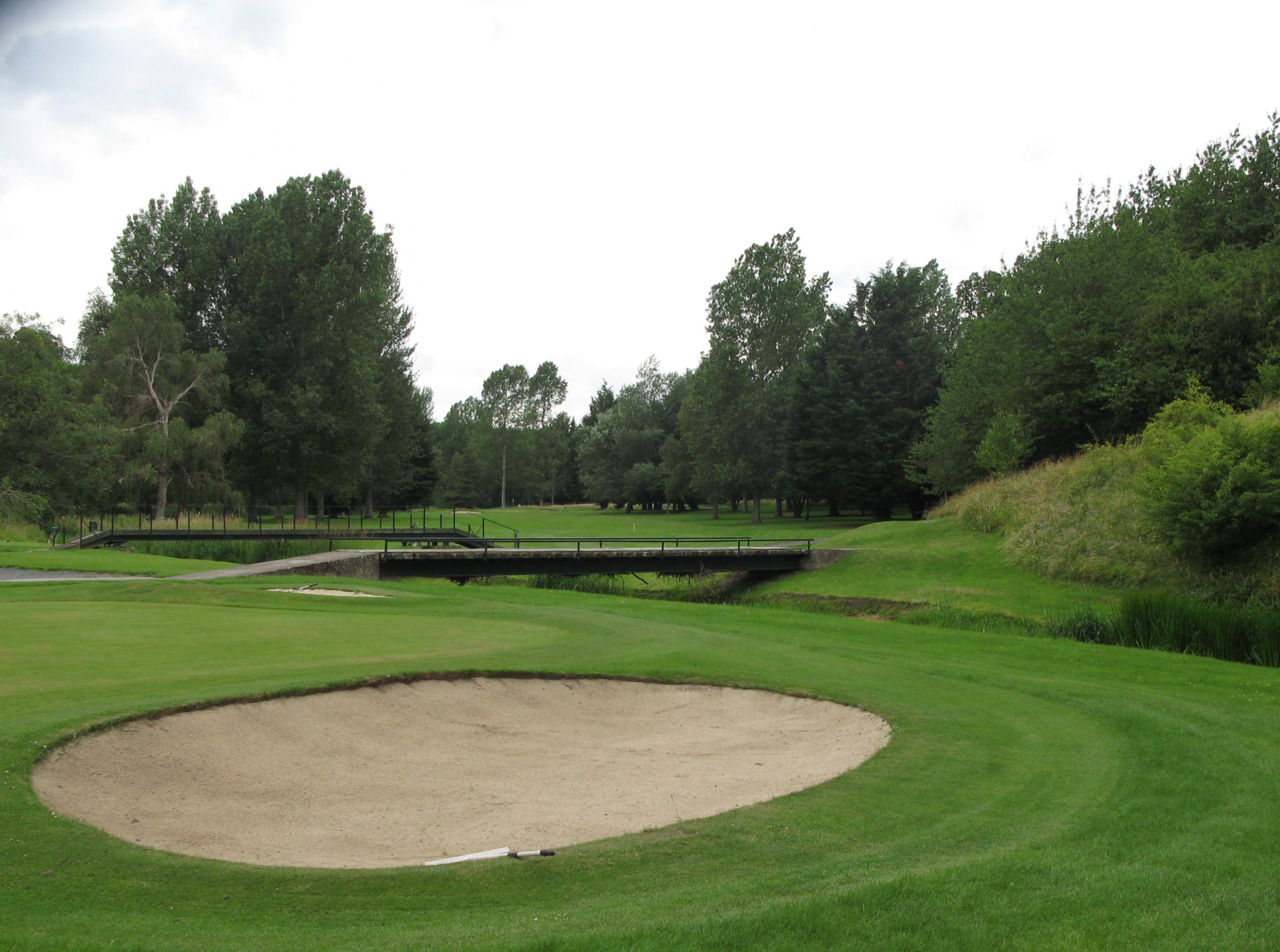
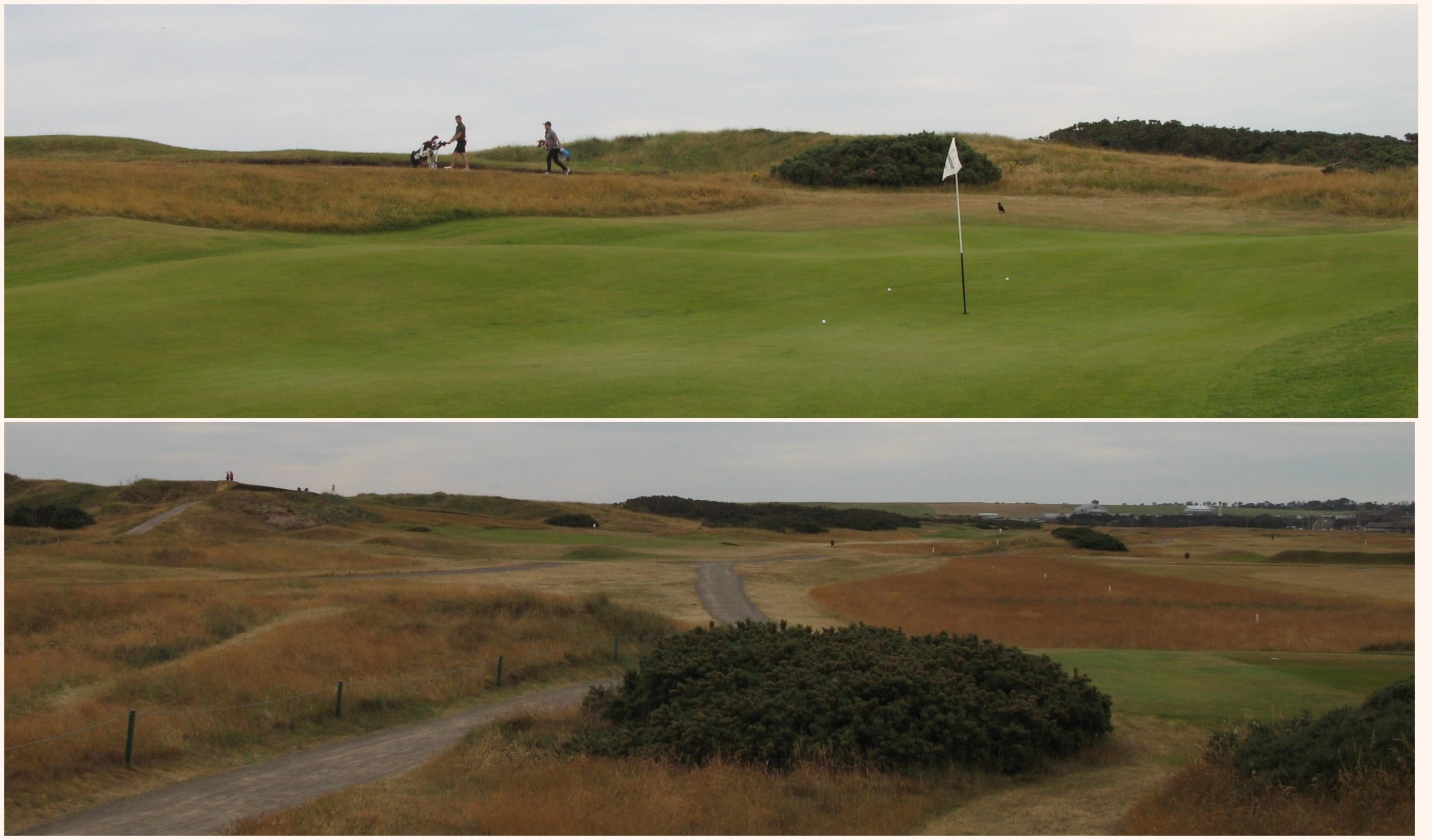
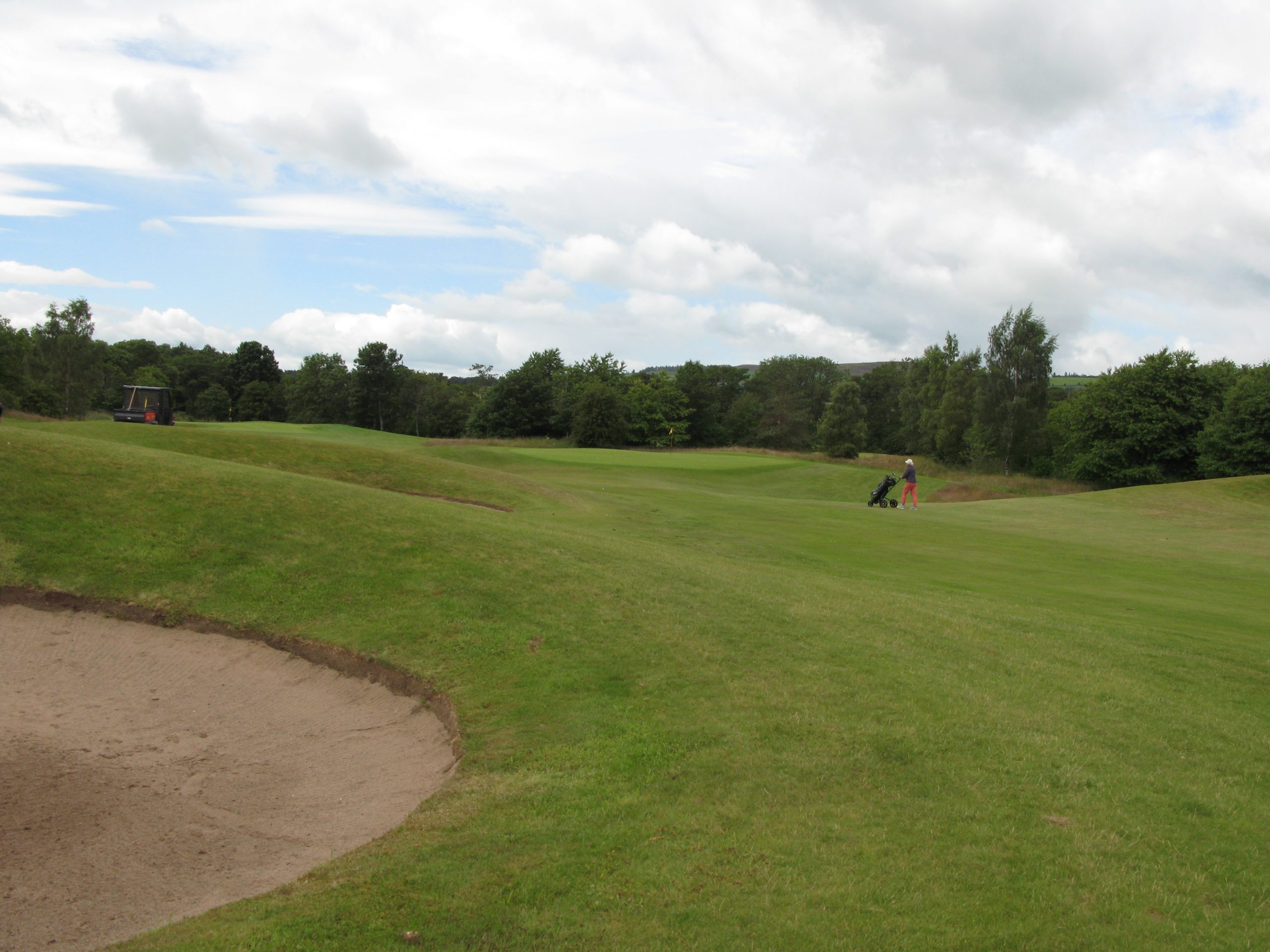
The 15th ‘Kingcase’ the revetted bunker guarding front left, a testament to the conditioning, with the Salt Pan Houses’ chimney line visible again on the horizon.

Two names I couldn’t fully uncover. The 9th, Cock O’ Bendy, nobody at the club could explain. The 11th, Pladda, made more sense once worked out: the only par 5, running along the shoreline, named, one imagines for the small island off Arran, visible from the tee. Ayrshire links have form for naming holes after the view rather than the ground. I carded an 11 there.

The 16th, Tom Morris, I imagine is a regular “card wrecker” where I took 7, gorse pressing in both sides back to the clubhouse. The 17th, easy by comparison, brought a birdie. Golf!
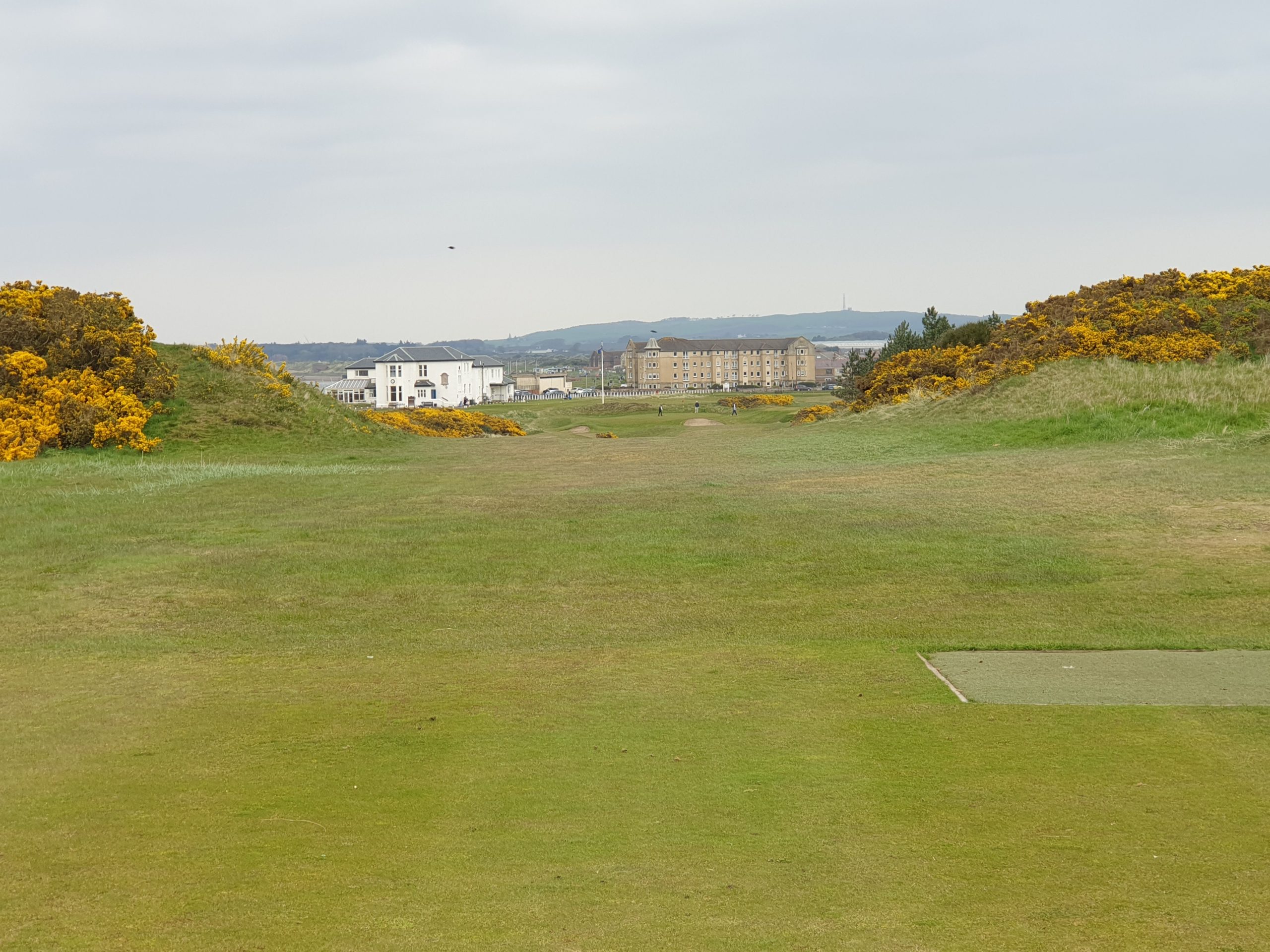
The tough 16th, Tom Morris, running the gauntlet between the gorse back toward the clubhouse; my card-wrecker of the day.

The real teeth are saved for last. The 18th, Home, is 225 yards into the prevailing wind; most golfers won’t reach it with a driver, so it plays as a short par 4 with the wrong club in hand. Doug reckoned Colin Montgomerie once called it the hardest par 3 in Ayrshire; I couldn’t find that written down, so take it as clubhouse lore, but into a stiffening wind I wasn’t arguing.
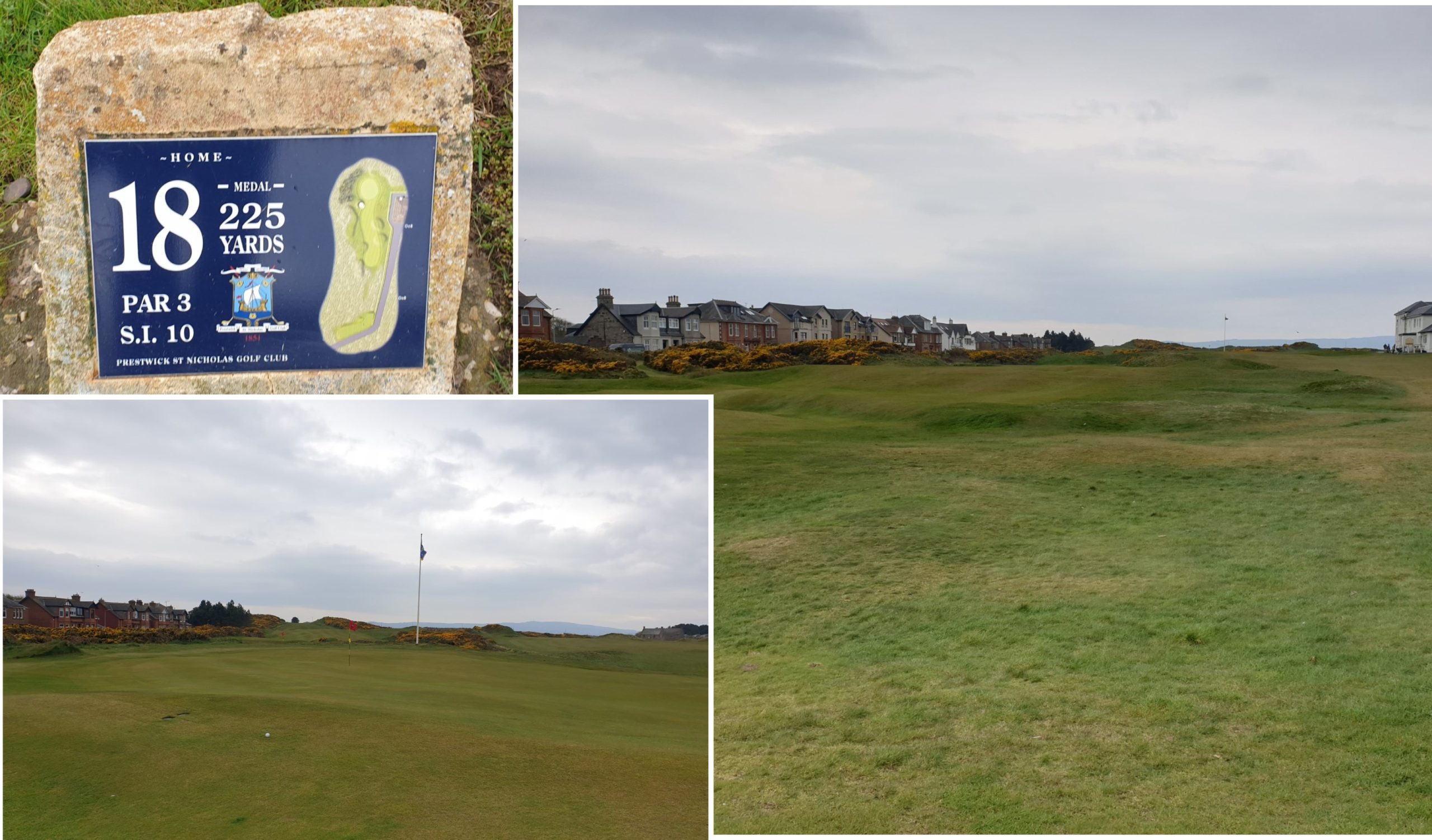
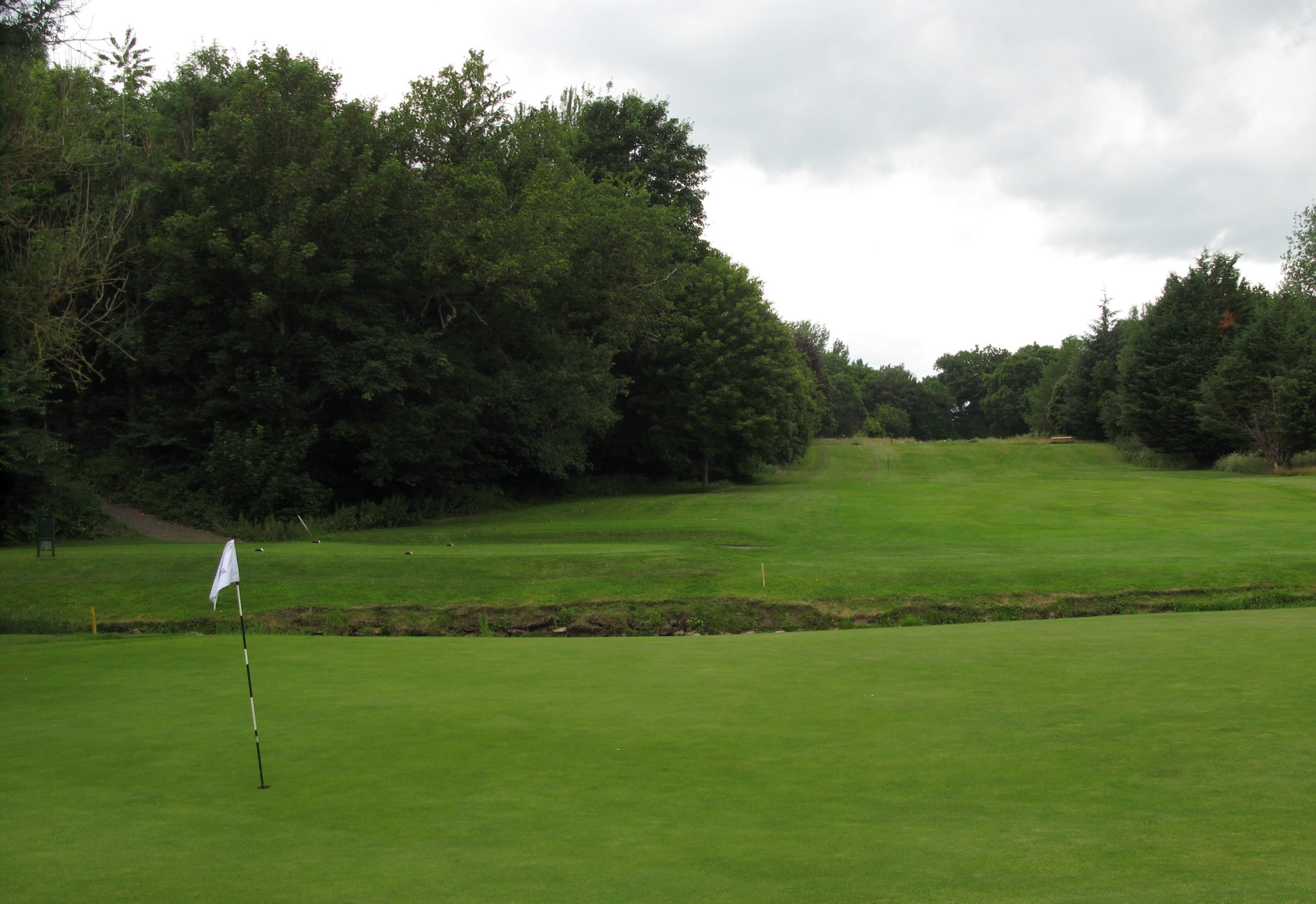
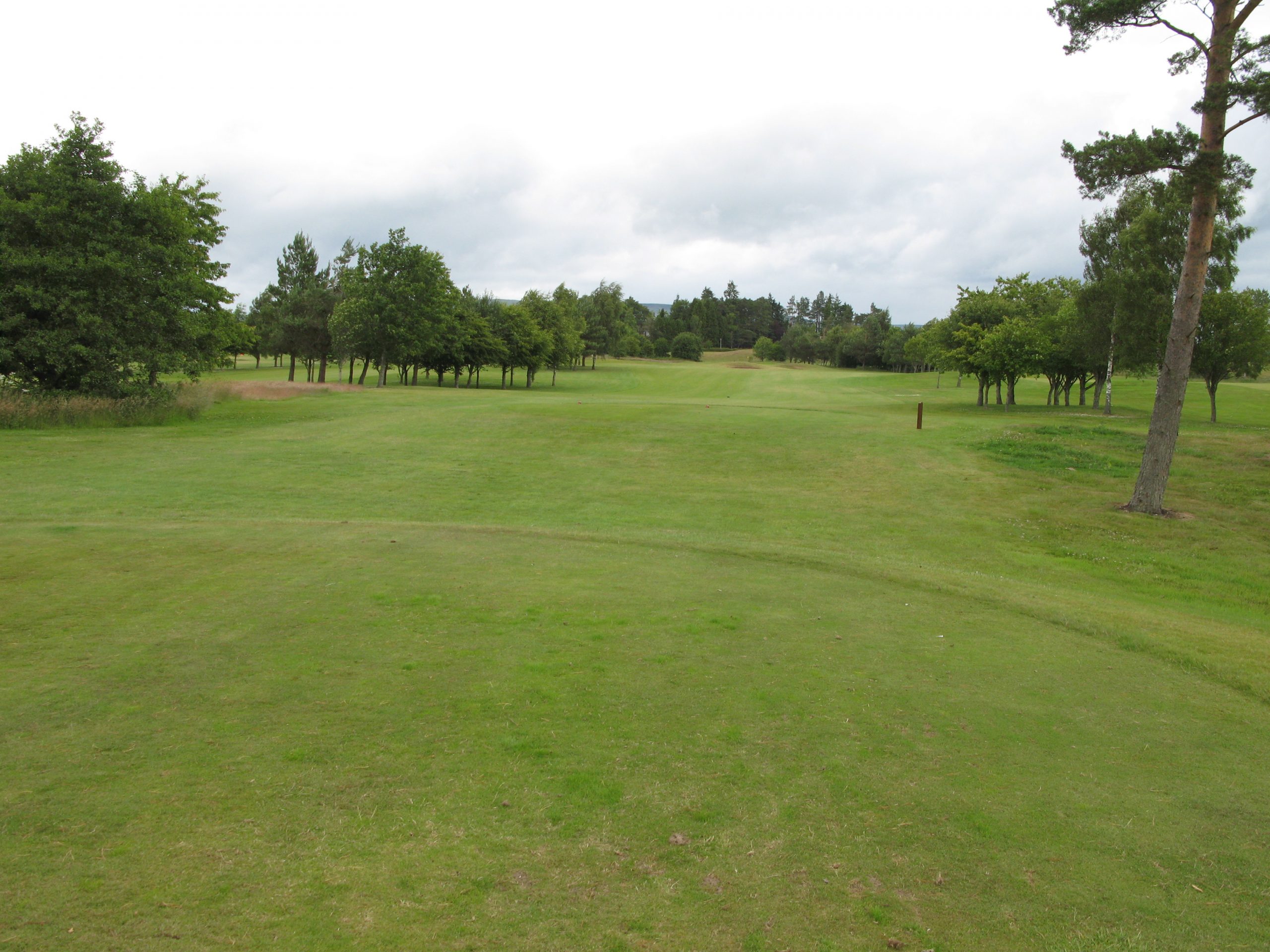
The 18th, 225 yards into the prevailing wind, one of the toughest par 3s in Scotland.

Would I go back? Without hesitation. A fair, strategic links test with real history behind it, and a good place for a first-timer to start on links golf. For the membership, it looks a thoroughly good club to grow old in. At the GolfNow rate, 4 out of 5. As Doug’s guest, worth more than any number I’ve got.

Facts:

Course Type: Links

Par 69 (1 par 5, 13 par 4s, 4 par 3s)

Distance: 5,686 yards (Yellow tees, as played)

Moly’s Gross Score: 92
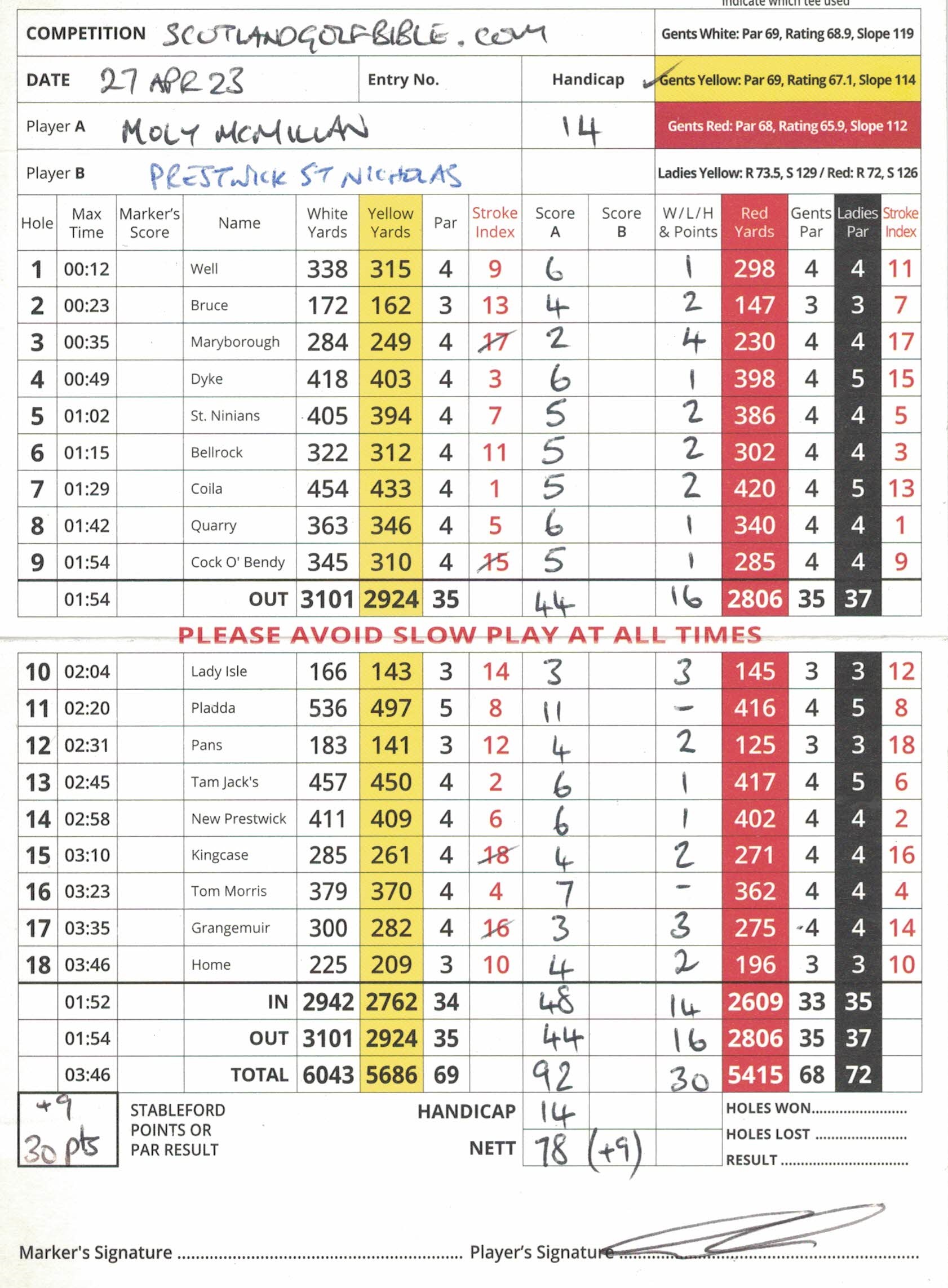
Moly’s Prestwick St Nicholas Scorecard

155. Hirsel. 12 July 22.

Missed opportunity as the “First and Last” in Scotland.

Round £32. Par 70. Course Rating / Slope Rating (yellow) 68.8/124. Value (out of 5) – 3

Moly’s Score – 98

How many fuel stations or pubs on borders proclaim “First and Last”? Like many people, I suspect, I had no idea exactly where Hirsel Golf Club was. Conversely, ask Scots where Coldstream is and most would know the border town famed for the Coldstream Guards, the regiment formed in 1650 making it the oldest continuous serving unit of the British Army.

The picturesque 10th hole at only 93 yards.

Hirsel Golf club, sits on the Hirsel Estate in Coldstream, the home of the son of the former Prime Minister, Sir Alec Douglas-Home. A 9 hole course was designed and built by members in 1948, after the original course in Coldstream, called Lennel Golf Club, founded 1879, fell into some disrepair, a story covered in the website Forgotten Links.

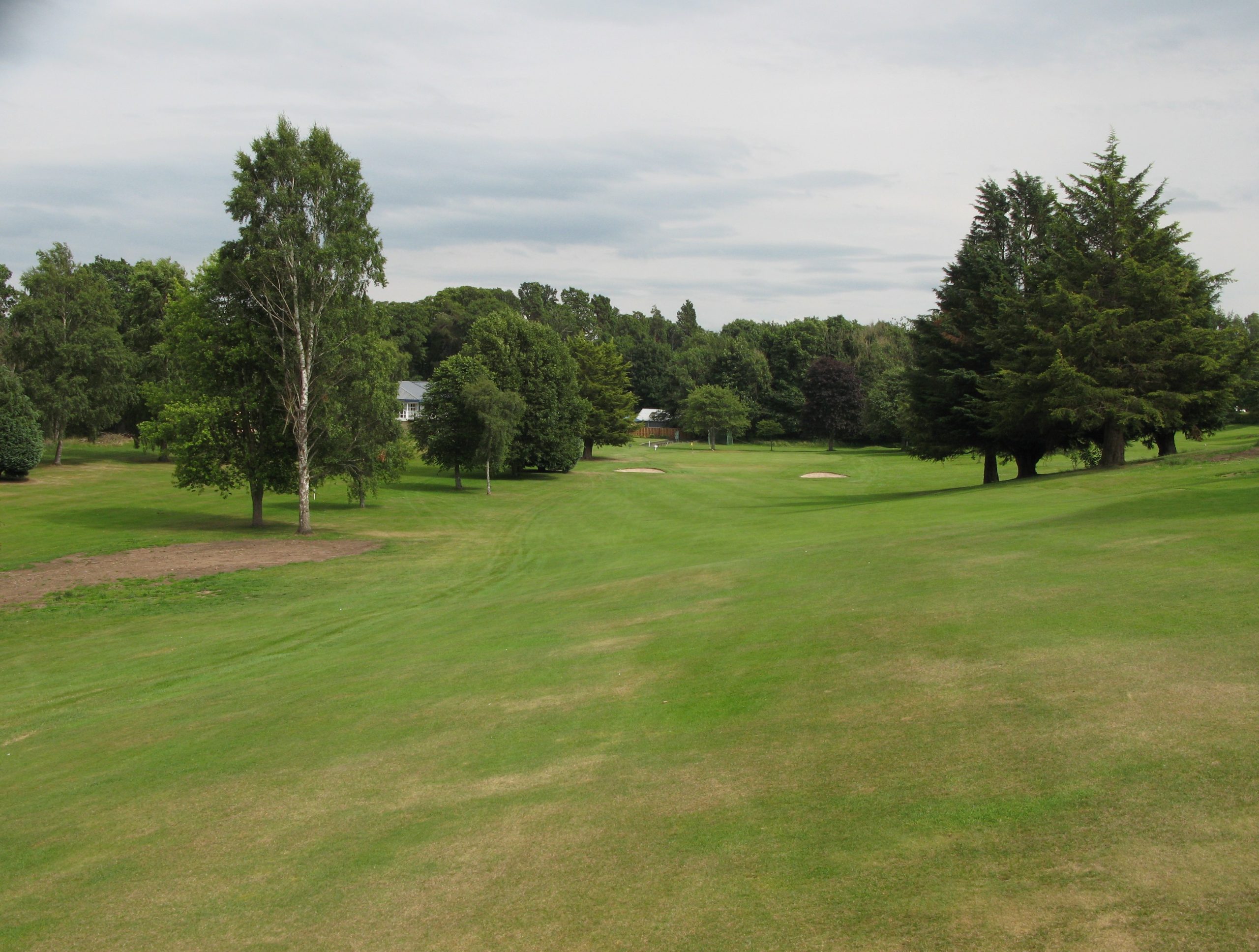
The interweaving layout is evident, with the first green on show here from the 2nd tee.

Hirsel GC remained a 9 hole course until extended to 18 in 1996. The resulting layout is a rather jumbled affair, with a number of tee/green cross overs, which must make Open events a potentially hazardous affair. There is also a significant range of hole design quality, which comes I suspect from the extension. I find the club’s website banner headline “Arguably one of Scotland’s best kept secrets” true in the sense that it’s “unknown”, but the inference of it being a “Hidden Gem” is not what I found.

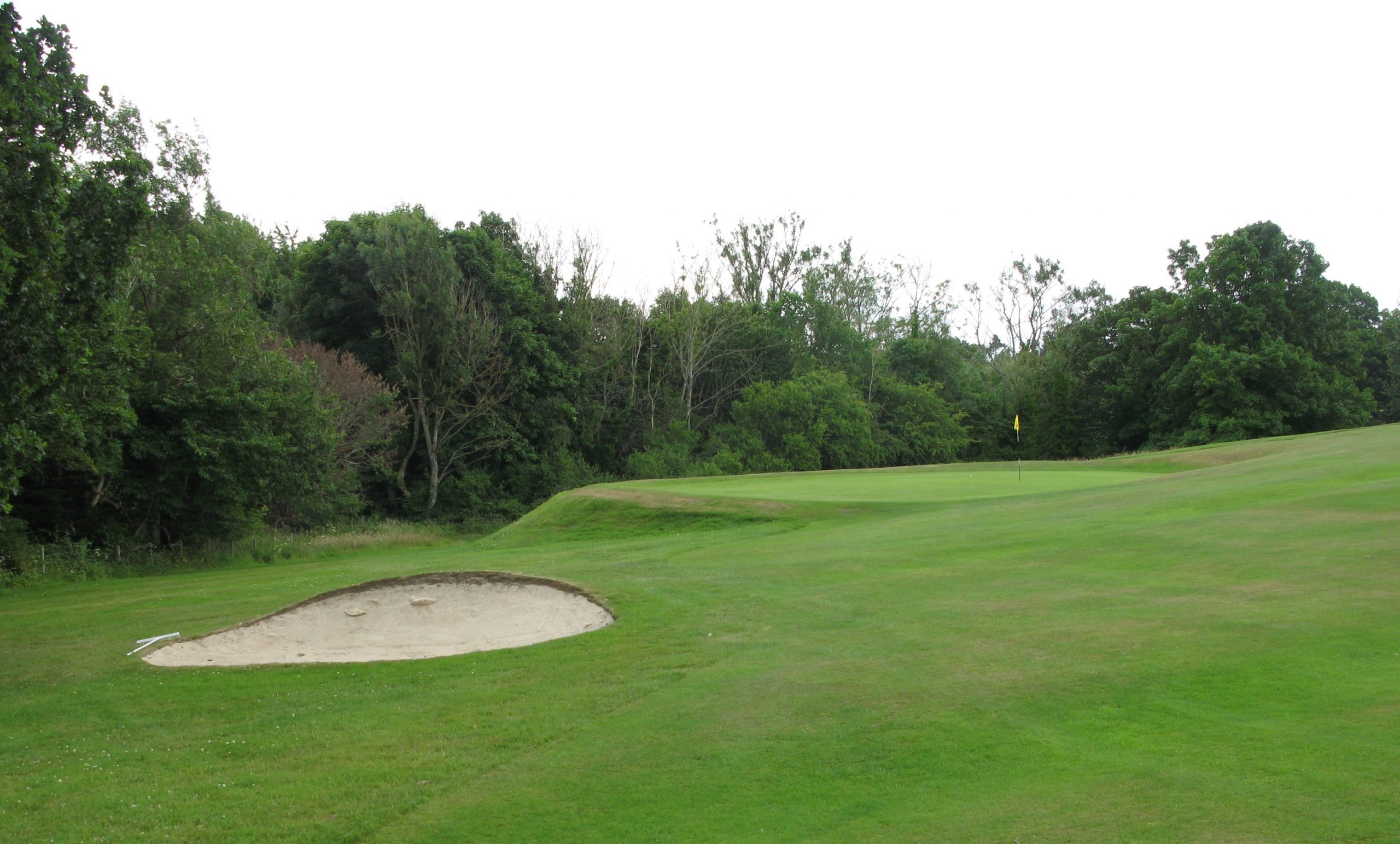
The very disappointing bunkers on show, despite the rakes fully in use, here at the difficult 5th hole, a 369 yard par four.

Despite the main Covid-19 pandemic lockdowns being over, I found a course in poor condition, with some bunkers appearing to imitate 19th century photos featuring Old Tom Morris himself. Nevertheless, with perhaps half dozen really good holes, I can see why it is a popular society day out, especially with the substantial club house overlooking the final green.

The tough par three 7th, with “Leet Water” in play for one of the few times.

It does indeed have some tricky holes, notably the tough uphill par 3 third, played with a blind tee shot at well over 200 yards; it will play as a par four for most. The fairways are generous but miss them and card wrecking is the order of the day, as there are OOB on more than half the holes. As a testimony, I amassed 15 over par on only 3 holes, including a 10 on the 363 yard par four 17th.

The stroke index 2, ninth hole, a long par four, the longest hole on the front nine, with both par fives coming after the turn.

Despite several holes being routed around “Leet Water”, a tributary of the Tweed, the river doesn’t come into play much. The best aspect of the course was the variety in hole lengths, the use of dog legs (on 5 holes) and the use of quite small greens often sloping front to back. Collectively the slope rating of 124 felt spot on for me.

The par 5 18th hole, played downhill it gives a good birdie chance to finish.

At only £32 for a round, with discounts on offer though Golfnow (we paid only £22) it’s okay value, but with a bit of work, especially to the bunkers, it would be really worth playing at that price point.

As to the course name, here’s a suggestion. “Coldstream Golf Club – The First and Last in Scotland”. That would remove the secrecy.

Facts:

Course Type: Parkland

Par 70  (2 par 5s, 12 par 4s, 4 par 3s)

Distance (yellow): 5820 yards

Moly’s Gross score: 98

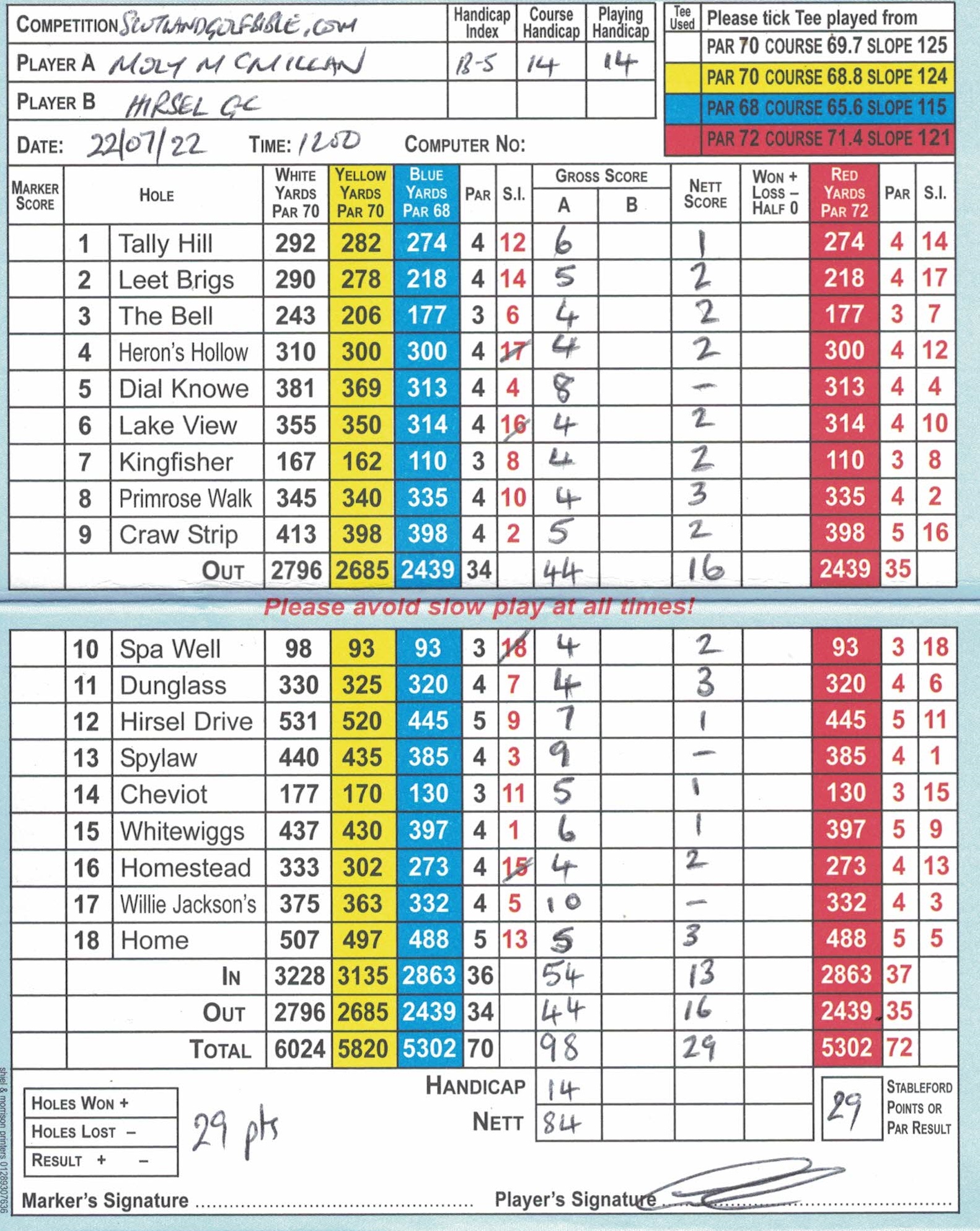
Moly’s 29 points despite his 98 including 15 over collectively on holes 5, 13 and 17. Golf!

154. Montrose 1562. 11 July 22.

Spectacular natural links, but undermined by misleading branding.

Round £100. Par 70. Course Rating / Slope Rating (yellow) 70.3/126. Value (out of 5) – 3

Moly’s score – 91

Golfers often stand on a tee and ask “Where’s the green?”. On Montrose’s first tee, I can imagine a newcomer to links golf asking “Where’s the course?”.

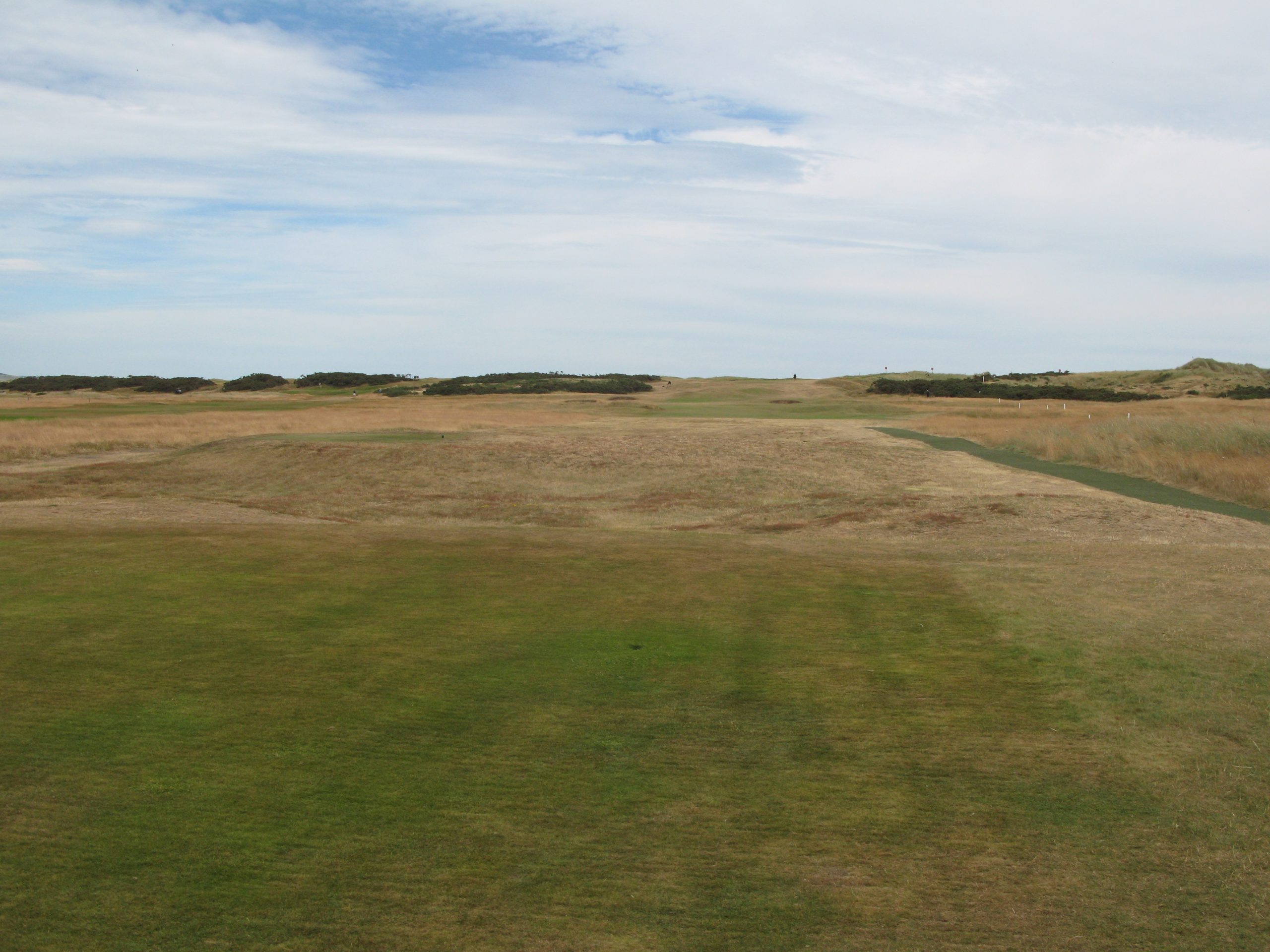
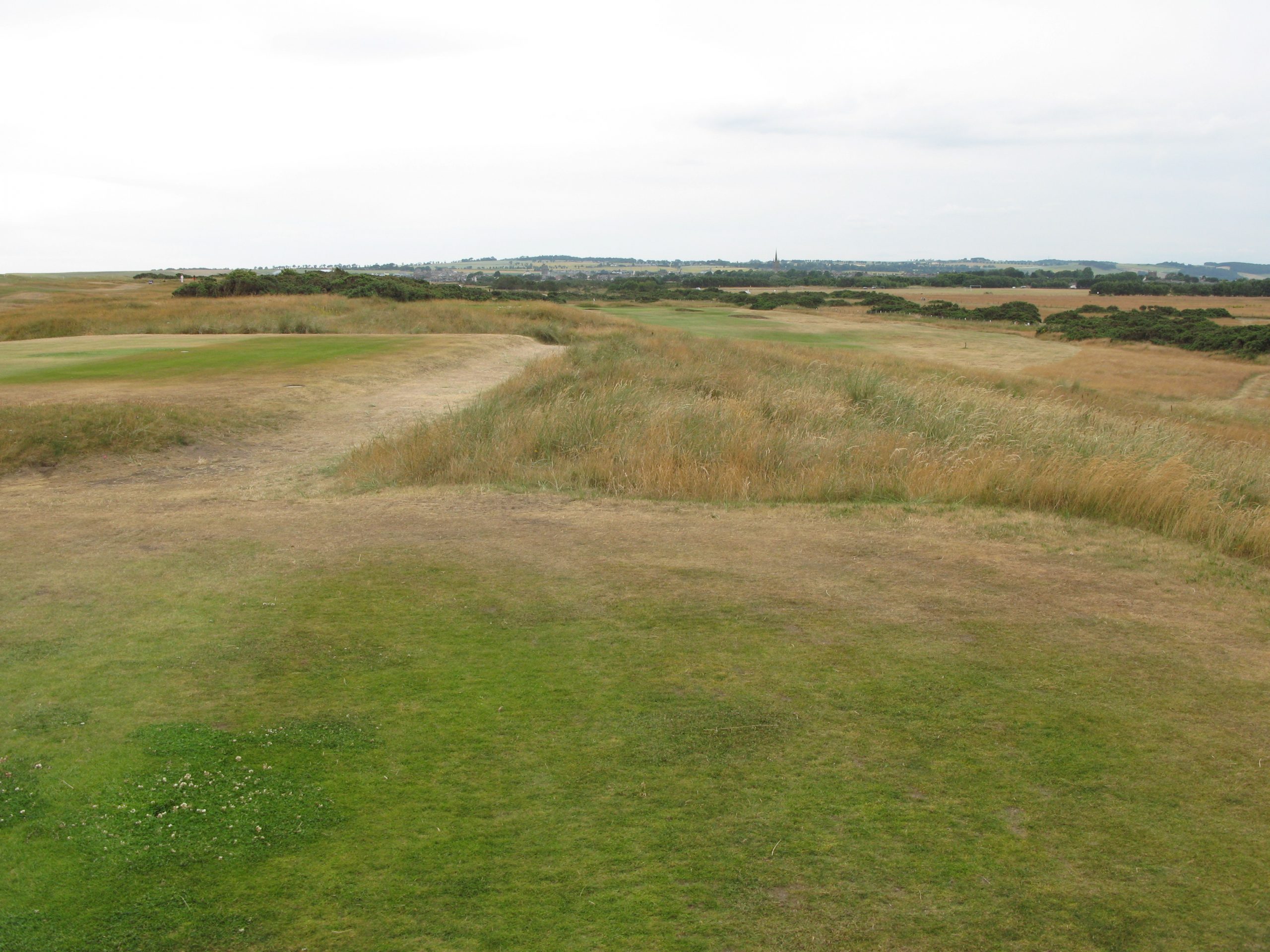
The expanse of links land on view from the Montrose 1562 first tee, albeit in 1562 there would have been no course in this view!

Montrose’s 1562 layout is one of the most natural of all links courses, and as such should be a priority for those wanting to experience this form of the game at its most basic.

Bear in mind the prevailing wind is left to right at this very formidable tee shot at the second on Montrose. Like many, I suspect, I found the brilliantly positioned left hand fairway bunker. I don’t think there can be many holes where the right hand side OOB starts to your left?

Formerly named the Montrose Medal, the ‘1562’ label has only been used since 2018; ‘1562’ derived from the claim that golf has been played on the land from that year. The current course’s story and location actually begins in the 1860s, and evolved over a 50 year period during which a number of legends, starting with Old Tom Morris and ending with Harry Colt who designed the existing course in 1913. Colt had laid out the Montrose Broomfield course a few years earlier (My earlier blog here). So in fact, the more ‘junior’ of the two Montrose courses, ‘Broomfield’, actually pre-dates the ‘1562’ course!

Frank Crowe playing a typical links shot with the putter from well off the 6th green, with the poor fairway condition on show.

Like a number of Scottish Links, there were several different golf clubs that played on the same course, often in club matches versus each other, but sadly only two of them – Royal Montrose Mercantile and Montrose Caledonia – still exist and can be used by visiting golfers.

Brian Fearon putts onto the par three 12th green, one of the holes on the east-west spur away from the coast. Looked over by Gordon Samson

The course is a really honest test of links golf, set on the robust and fast running links land of the Angus coastline. There are six northbound coastal holes, starting from the daunting 2nd, then turning back south for a couple of holes, before an east to west and back gorse-laden spur from holes 10 through 15.

The par three 16th, a very difficult hole. Arguably plays like a par 4, in the prevailing wind.

The par three 16th and par four 17th are then two holes that are good enough for the Championship course of Carnoustie; fitting, as Montrose has been used as a Final Open Qualifying venue. Many a good round will have been destroyed on those late holes.

The characteristic feel of the Montrose 1562 course, here at the “Valley” 8th hole.

Unfortunately, when I played alongside 3 of my former Apex trustees, for the inaugural “Apex Trophy”, the course was not in great condition. We encountered the ‘choice’, but very accurate, language of a few local members of this hardy Angus town, mid way between the cities of Dundee and Aberdeen. I was ‘telt’ by an old guy (in his 80s, fully adorned in football colours) that “Son, the course is in its worst …… state I’ve ever seen and I’ve been a member for more than 50 years!”. It was certainly not conditioned good enough for the £65 twilight round fee, never mind the £100 daytime fee.

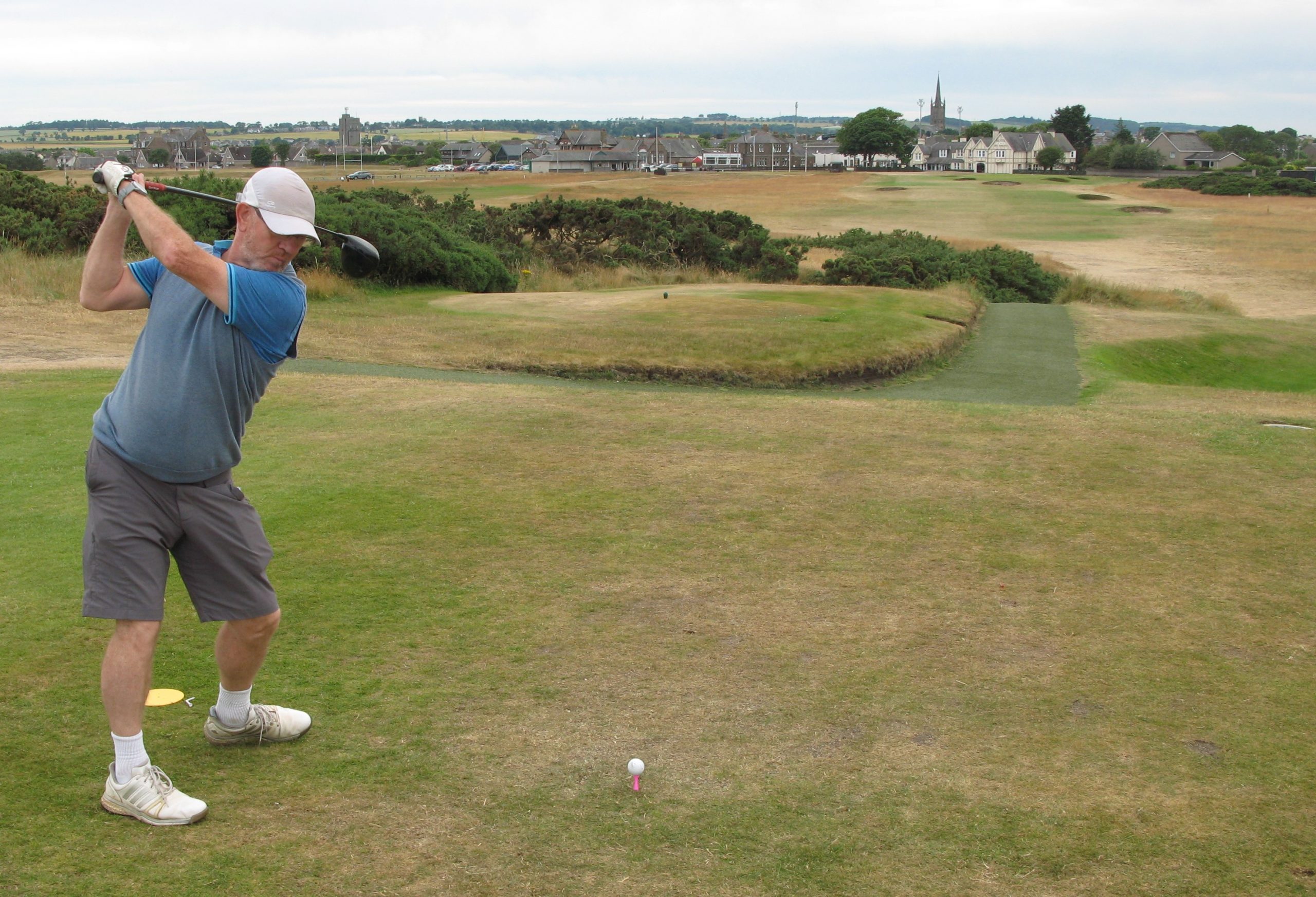
Moly teeing it at the final hole, one of the easier holes at Montrose. The original course was off to the left of this hole.

Nevertheless, the bunkers and greens were decent, and the quality of the layout and challenge was never in doubt, with the yellow tees still presenting 6137 yards in length. A strong wind would undo any golfer here.

I played pretty well for 91, but this was nowhere near good enough for the trophy with Gordon Samson shooting an excellent 83 (40 points), and will be severely cut for the next trophy outing!

Facts:

Course Type: Links

Par 70  (1 par 5s, 14 par 4s, 3 par 3s)

Distance (yellow): 6137 yards

Moly’s Gross score: 91

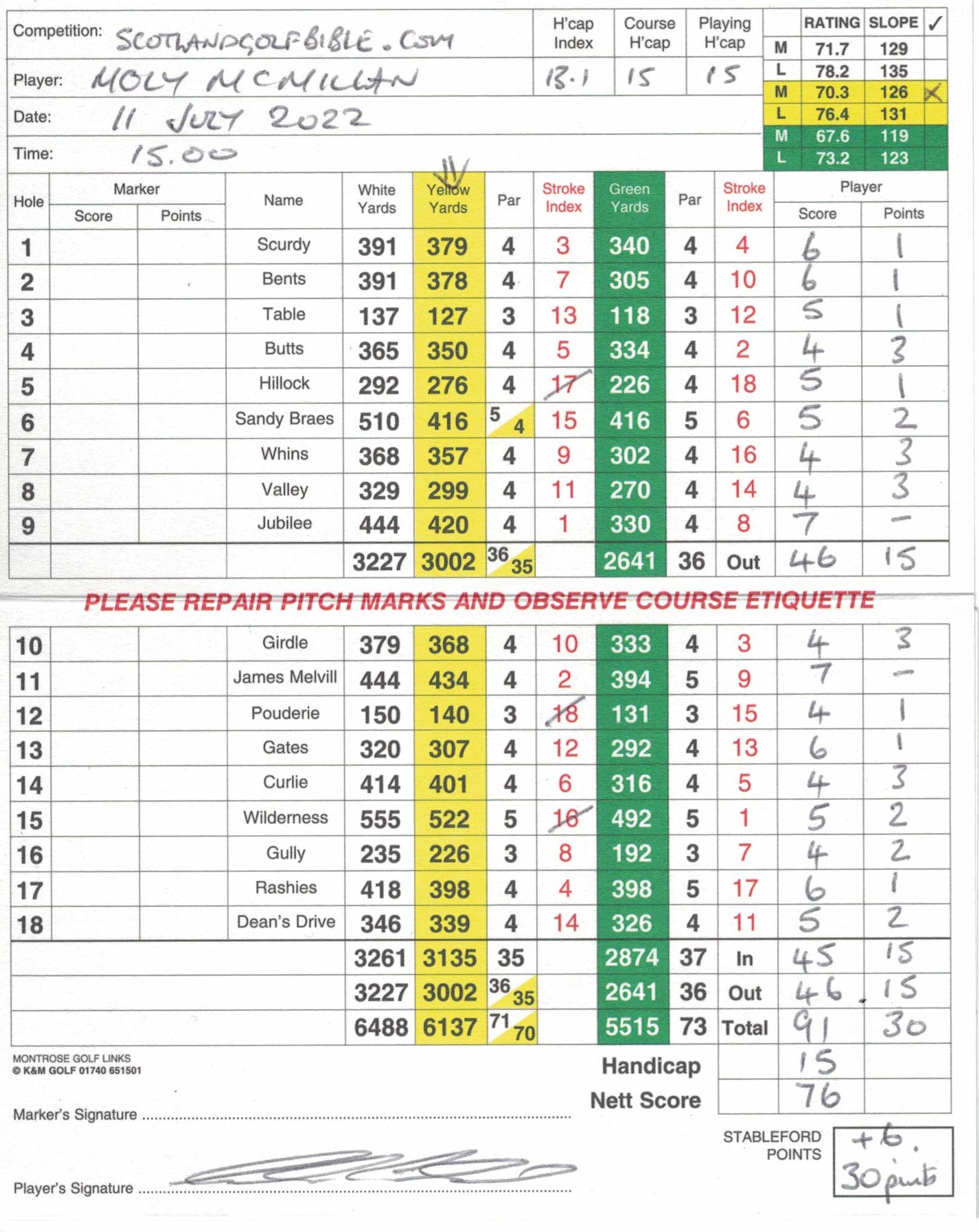
Moly’s Montrose 1562 scorecard – 91

147. Edzell West Water. 4 Jul 22.

Good nine hole course to sit alongside its wonderful big brother

Round £15. Par 32. Course Rating / Slope Rating (yellow) 60.8/99. Value (out of 5) – 3

The main course at Edzell is a well established heathland course and my blog from 2016 is here. This nine hole course, called “Edzell West Water”, was designed by the prolific Scottish golf course architect, Graeme J Webster, of Team Niblick of Inverurie, Aberdeenshire. The course has excellent views of nearby Fettercairn and was opened in 2001, following the period of buoyant economic activity in the 1990s.

Moly on the 9th fairway at the picturesque Edzell West Water

The course is an ideal adjunct to its big brother, albeit it is accessed via a separate road to the main club, and like many people, I suspect, we were directed to the course from the main clubhouse. We got the impression, the staff were fed up re-directing people!

Nonetheless, the welcome from the starter at the small hut serving the West Water course could not have been friendlier.

The tough 3rd hole at “West Water”, a par 3 of 157 yards.

The course is short, but certainly not easy, with several challenging holes. The first has a two tier green that will likely need 3 putts if you don’t reach the right level. Having secured a decent par, I then had a disaster at the par 5 second, including two air shots, trying a miracle shot from the heather to the left of the fairway!

Comprising five par threes, this is a course where good iron or hybrid play is needed to score well. The par four 5th hole, SI 1, is also an excellent hole.

Fran ponders the line on the 6th green, one of the shorter par 3s at Edzell West Water.

The course, which has great ‘heathland’ turf, was in good condition, with green complexes worthy of ‘bigger’ courses, albeit the greens were a little mossy in places, giving some variability in pace. The greenside bunkering is very good.

The entrance to the par four 5th green, the worthy SI 1 hole.

The green fee of £15 was actually for the whole day, which is a real pity if you want to only play 9 holes. That deflates the ’round’ value a lot. There is a good offer of a return fee of only £10, which I think they would do well to charge it someone only wanted to play 9 holes.

The 4th at Edzell West Water, one of only three par 4s.

There is also collocated driving range, which does present an OOB hazard, especially at the par for 7th hole, ‘Wirren’, where you need to keep your tee shot well left off the tee. I didn’t!

The 7th and 8th run alongside the “west water”, hence the name of this course, which is worth playing, but only if you want to play more than 9 holes in my opinion or perhaps combine with the main track.

Facts:

Course Type: Heathland

Par 32 (1 par 5s, 3 par 4s, 5 par 3s)

Distance (white): 2057 yards

Moly’s Gross score: 46

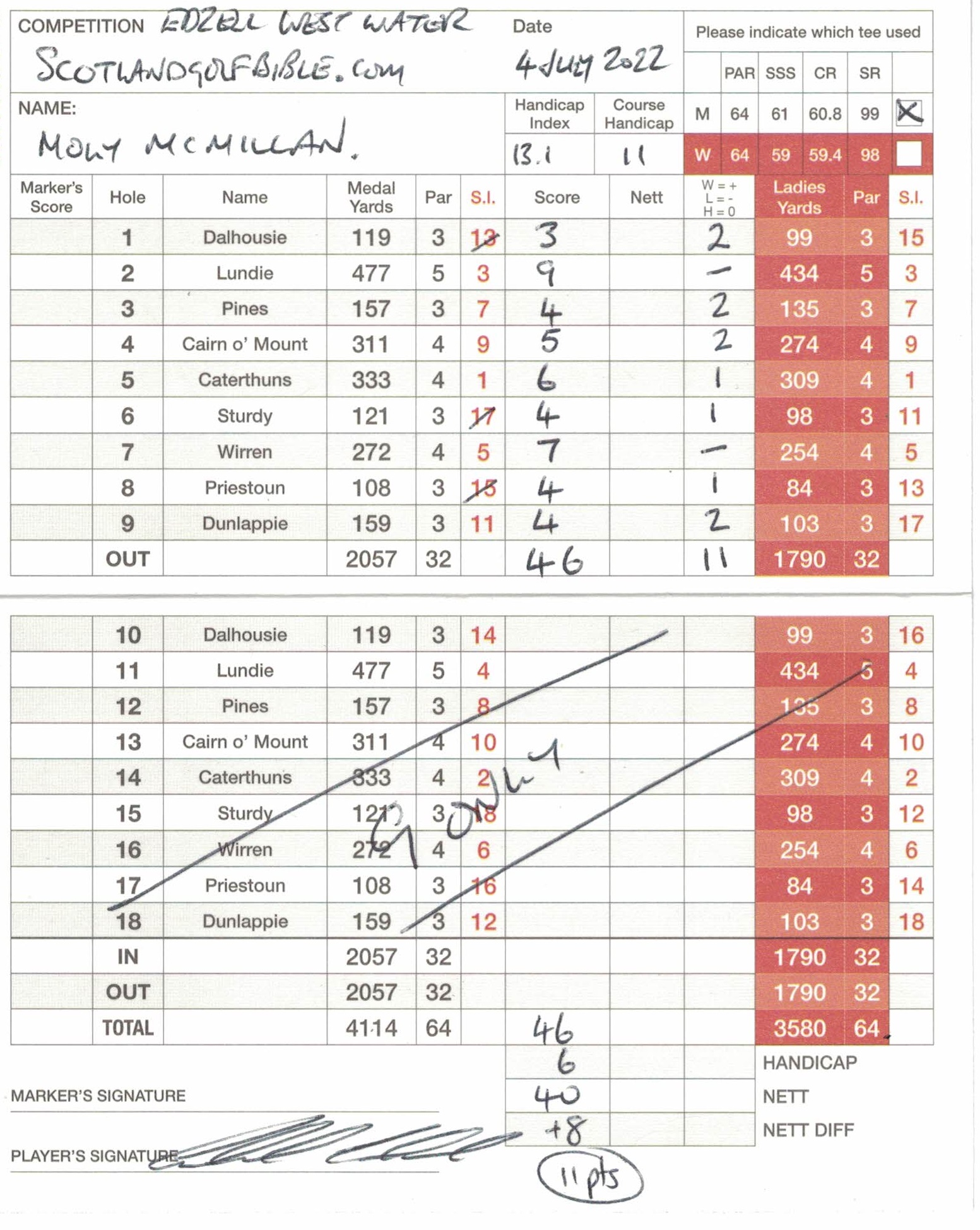
Moly’s Edzell West Water card – high winds didn’t really explain this poor round of 8 over net
« Older posts

© 2026 Scotland Golf Bible

Theme by Anders Noren — Up ↑