All is not what it seems at the delightful Bonnyton.
Price Paid: £23 (GolfNow)
Current Price (2026): around £45 / GolfNow ~£30
Value Rating: 5/5 at £23 / 5/5 at current GolfNow / 4.5/5 at current list
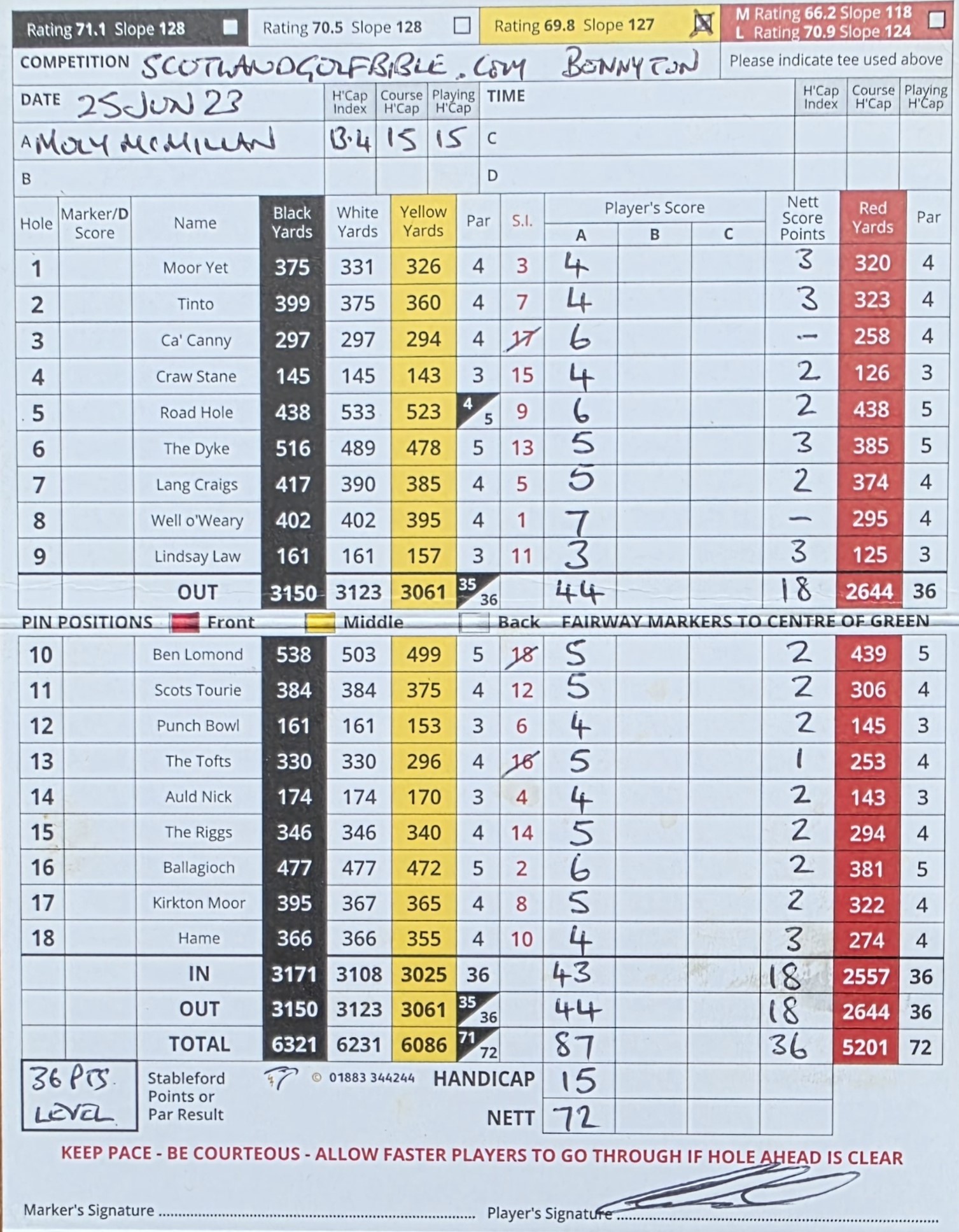
Moly’s Score: 87 gross, net 72, 36 Stableford points
A friend once ordered a bacon burger in the Bonnyton clubhouse. The lady behind the bar paused, then asked, very kindly, whether a beef burger would be all right.
Bonnyton sits on the moor just west of Eaglesham, in East Renfrewshire, about ten miles south of Glasgow city centre. The hole markers say the club was founded in 1957. The scorecard says the course was designed by Dr Alister MacKenzie, of Augusta National fame, who died in 1934. I sharpened my pencil.
But here the club is right. Bonnyton Moor Golf Club was started in 1922 by the Lindsays, a family of Glasgow publicans, with a dormie house so golfers could stay over. Presumably they liked a drink. Mackenzie advised on the course design through 1922-23, and it opened in June 1923 with an exhibition match including the then reigning Open champion, Walter Hagen. Sadly, the old club faded out in the mid-1950s. Then something more interesting happened.
In the same months MacKenzie was working on Bonnyton, he was also laying out Moor Allerton in Leeds, opened in March 1923 by the Leeds Jewish community. It was the first Jewish golf club in Britain. He couldn’t have known his Scottish moor would become another.
Many of Scotland’s institutions sorted their members by religion, especially in the West of Scotland. Catholics and Protestants largely remained segregated and played golf apart, and Glasgow’s Jewish golfers were often shut out altogether, playing on the public courses. Nobody wrote a rule. They didn’t need to. The blackball did the work: an anonymous vote, no reason given, no appeal. The historian Daniel Dee records that Glasgow’s Jewish golfers believed the local clubs were afraid of being “swamped”. Local memory names a club or two along the road. I can find nothing in print to pin it on any one of them, so I won’t.
The Glasgow Jewish Institute formed a golf section in 1931. In the early 1950s the community began raising money for a course of its own, and when the derelict Bonnyton Moor came up, they bought it. The club reopened under Jewish ownership on 19 May 1957, with more than 700 people there. That was twelve years after Belsen. It’s a sobering thought that, in a self-professing welcoming country, a community that had just watched what exclusion can lead to still had to buy its own hillside to get a game. Prejudice sadly runs deep.
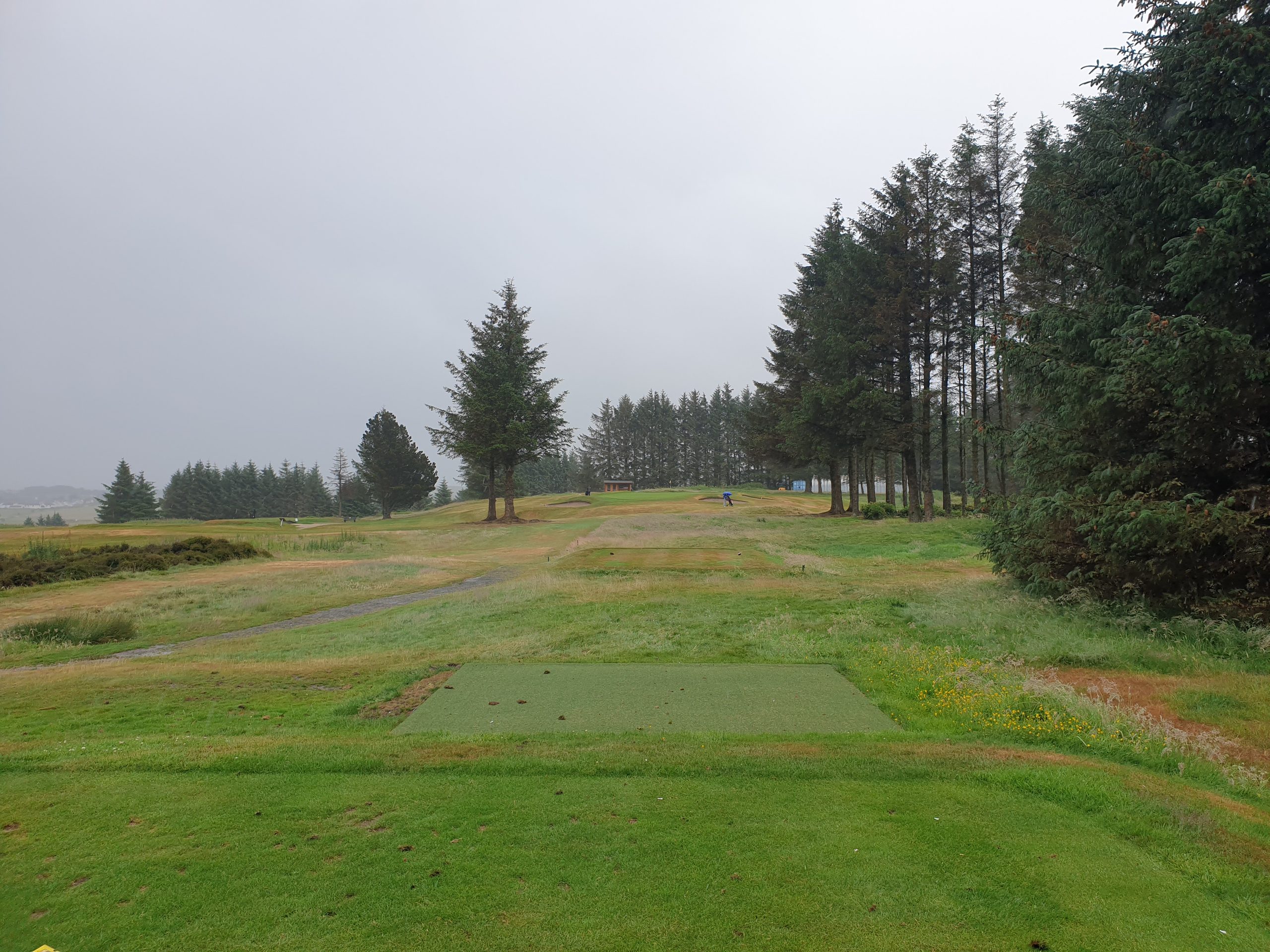
What they did next is the best part. The new owners advertised Bonnyton as an open club, with “no bar on the grounds of religion, race or colour”. A club founded because of exclusion excluded nobody. As one member later observed, once there was a Jewish club, the other clubs became more ready to accept Jews. Today most members aren’t Jewish, and pies and mince have long since replaced the fish and borscht. The beef burger may be the last loyal custodian of the old ways. Meanwhile neighbouring Eastwood, founded in 1893, closed in 2019. It’s said a few Bonnyton members allowed themselves a quiet smile, in memory of their fathers.
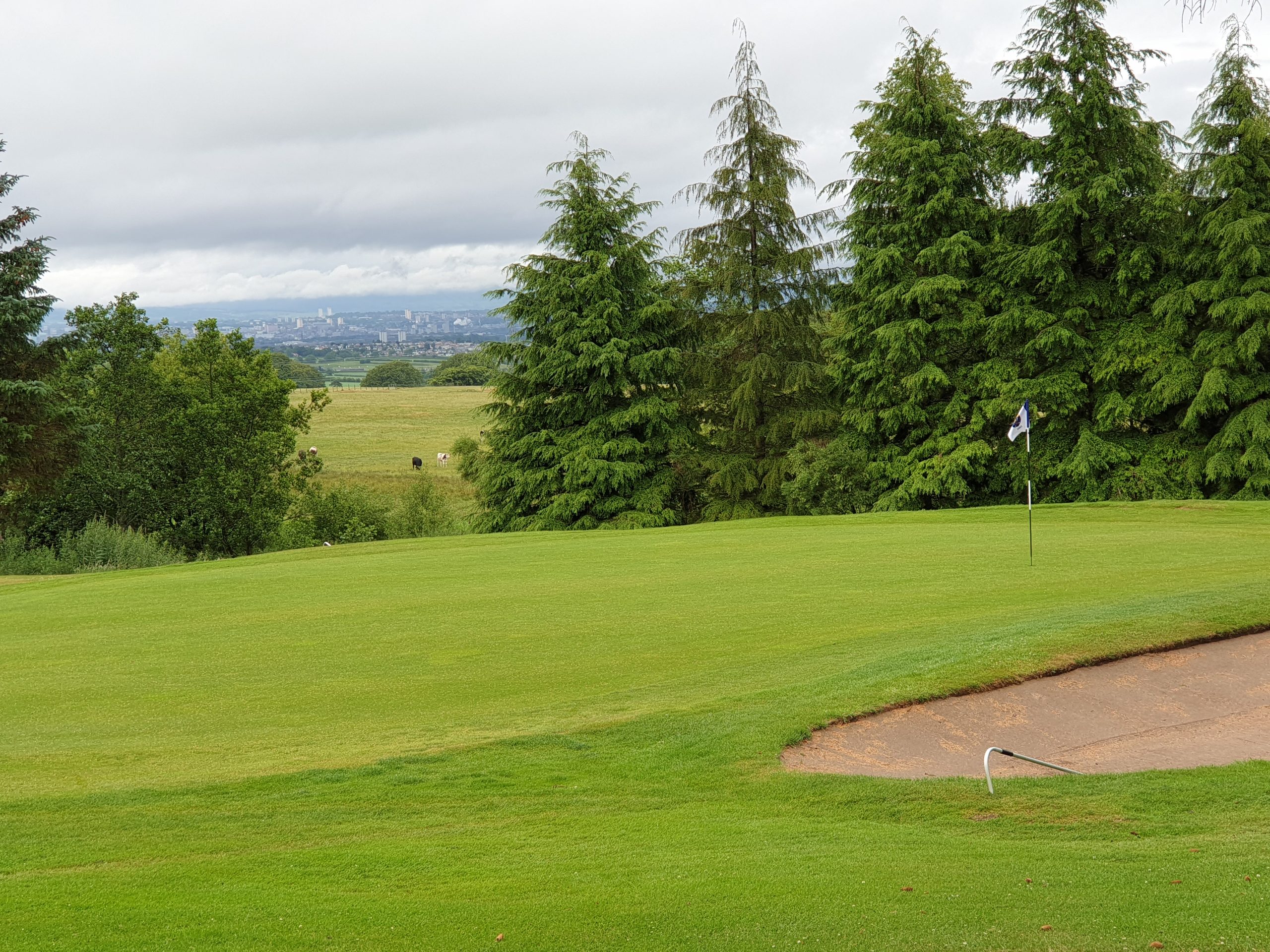
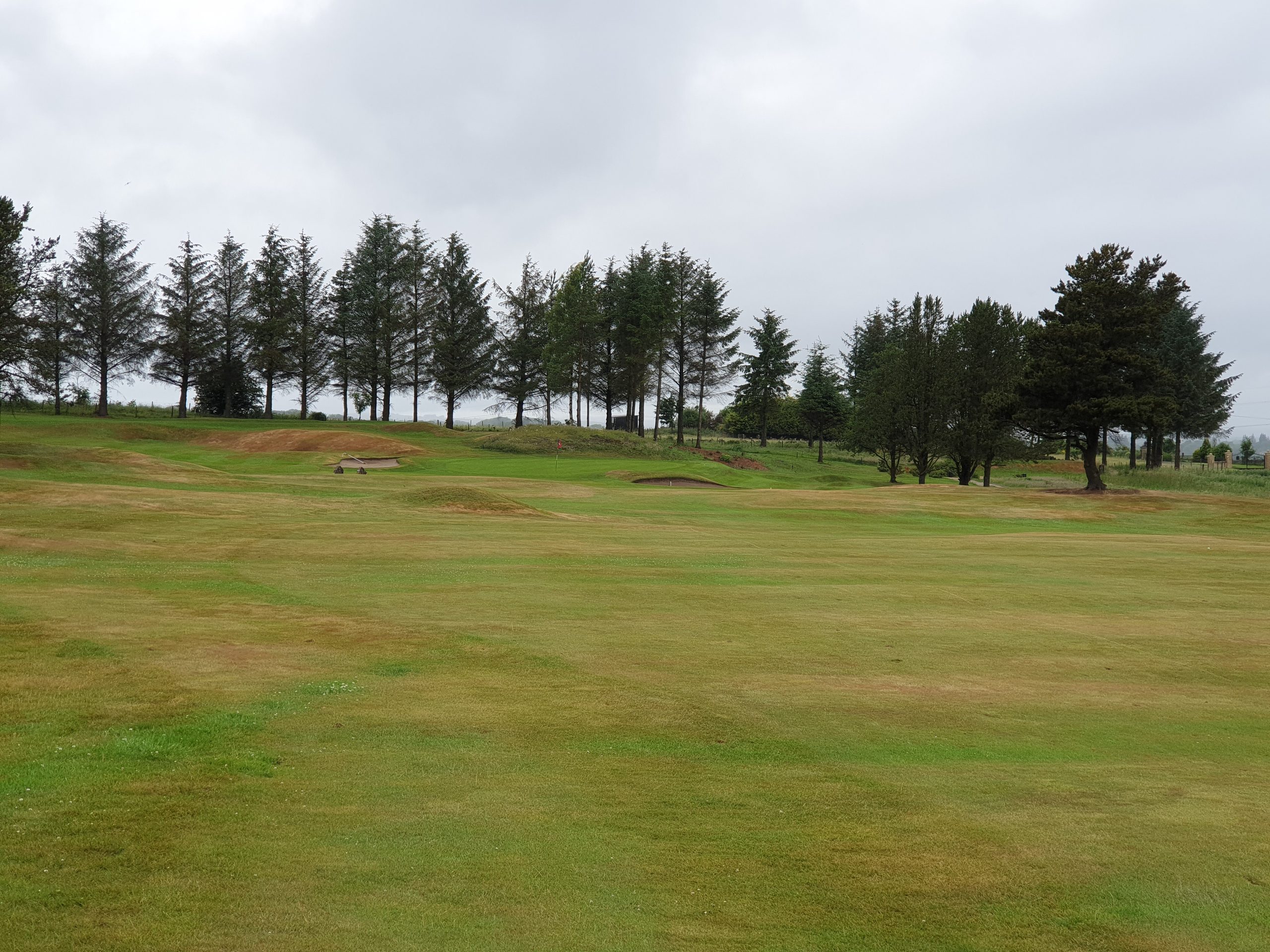
And the golf? It’s an excellent heathland layout in great condition. The fairways are generous and driving is relatively easy. The greens are where Bonnyton earns its rating: tiered, steeply sloping and, in places, tiny. Two of the par 3s rank among the hardest holes on the card, Auld Nick (14th) at SI 4 and Punch Bowl (12th) at SI 6, which is rarer than it should be. There’s a real East Ren feel to it (Blog 169), which is no surprise with Braid’s heathland just over the hill.
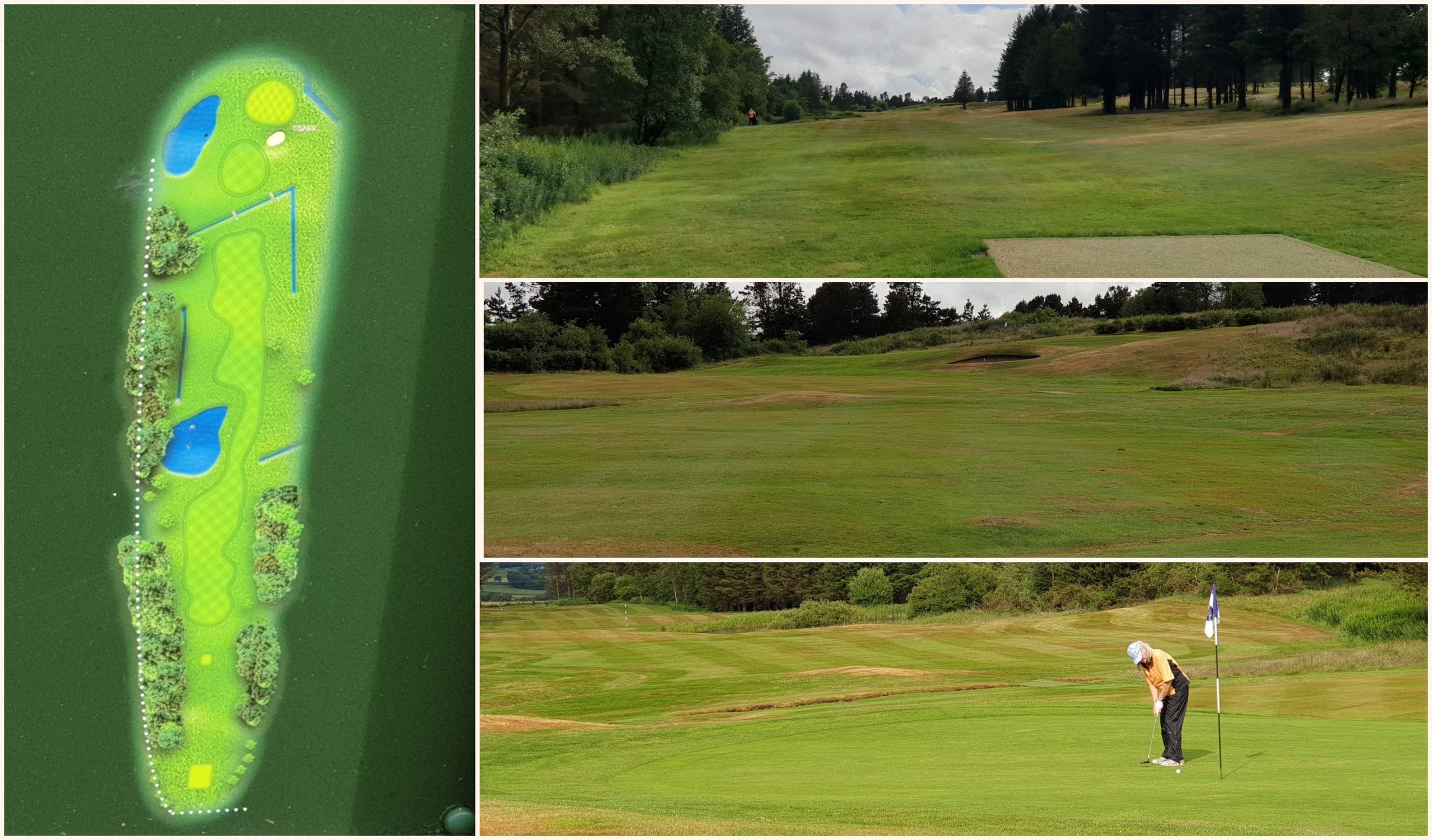
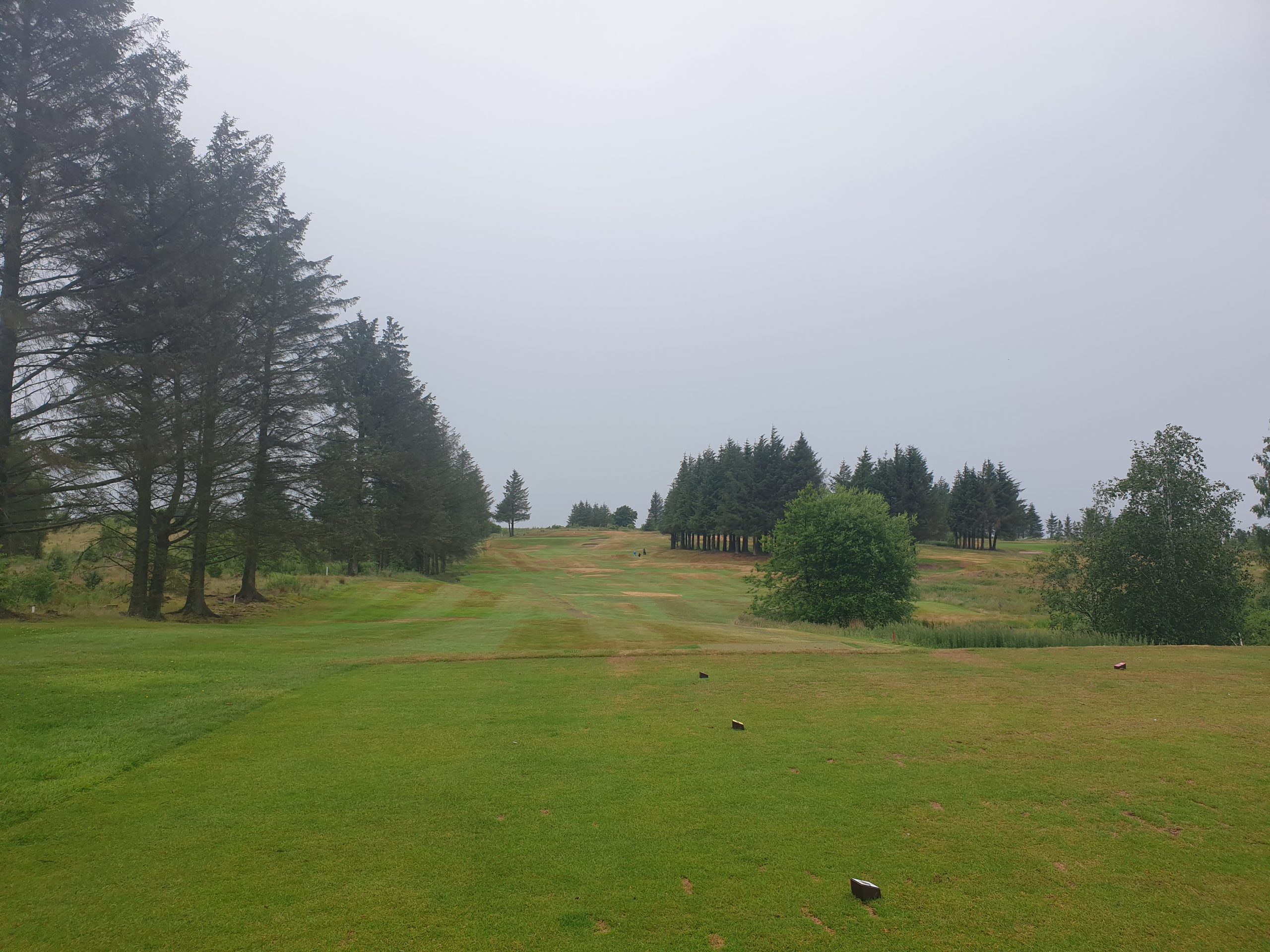
Then there’s the 16th, Ballagioch, a 472-yard par 5. From the tee it’s an innocent avenue of spruce. The plan shows water on both shots and out of bounds down the left. MacKenzie loved deception, but he hated golfers wasting time looking for balls, and I suspect the ponds came later. Either way, all is not what it seems.
It poured. I shot 87, playing exactly to handicap for 36 points. At £23 through GolfNow, a MacKenzie course in this condition was absurd value. I’d go back tomorrow, and I’d happily order the beef burger, as a show of respect.
Facts:
Course Type: Heathland
Par: 72 (4 par 5s, 10 par 4s, 4 par 3s)
Distance: 6,086 yards (yellow)
Course Rating / Slope: 69.8 / 127
Course Quality: 4/5
Moly’s Gross Score: 87