A guide to green fee value for money

Category: Dr Alistair MacKenzie

211. Bonnyton. 25 Jun 23.

All is not what it seems at the delightful Bonnyton.

Price Paid: £23 (GolfNow)
Current Price (2026): around £45 / GolfNow ~£30
Value Rating: 5/5 at £23 / 5/5 at current GolfNow / 4.5/5 at current list
Moly’s Score: 87 gross, net 72, 36 Stableford points
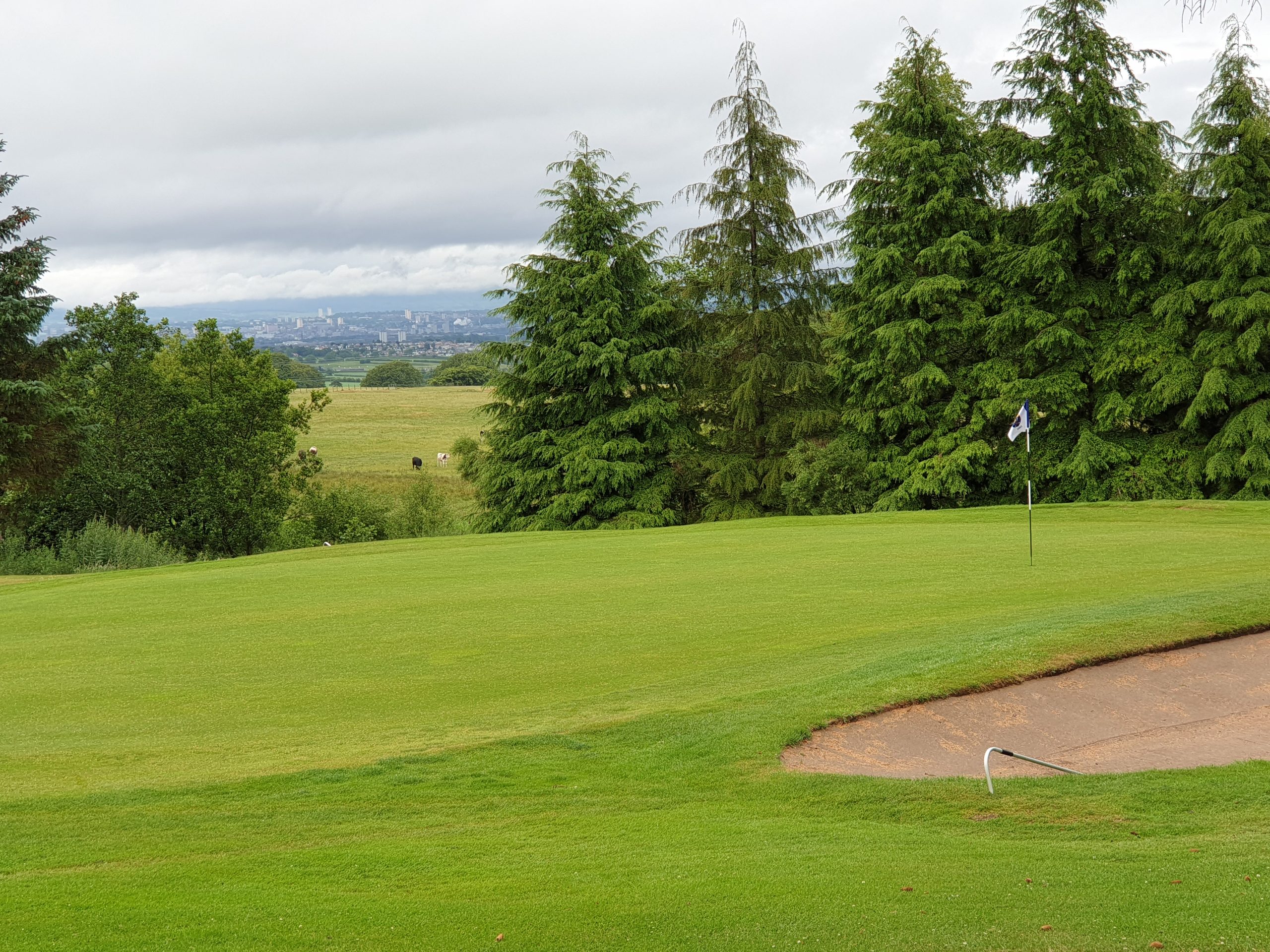
The 11th green, 750 feet up, with Glasgow’s tower blocks below under a low lid of cloud. The view was not always available on this rainy day.

A friend once ordered a bacon burger in the Bonnyton clubhouse. The lady behind the bar paused, then asked, very kindly, whether a beef burger would be all right.

Bonnyton sits on the moor just west of Eaglesham, in East Renfrewshire, about ten miles south of Glasgow city centre. The hole markers say the club was founded in 1957. The scorecard says the course was designed by Dr Alister MacKenzie, of Augusta National fame, who died in 1934. I sharpened my pencil.
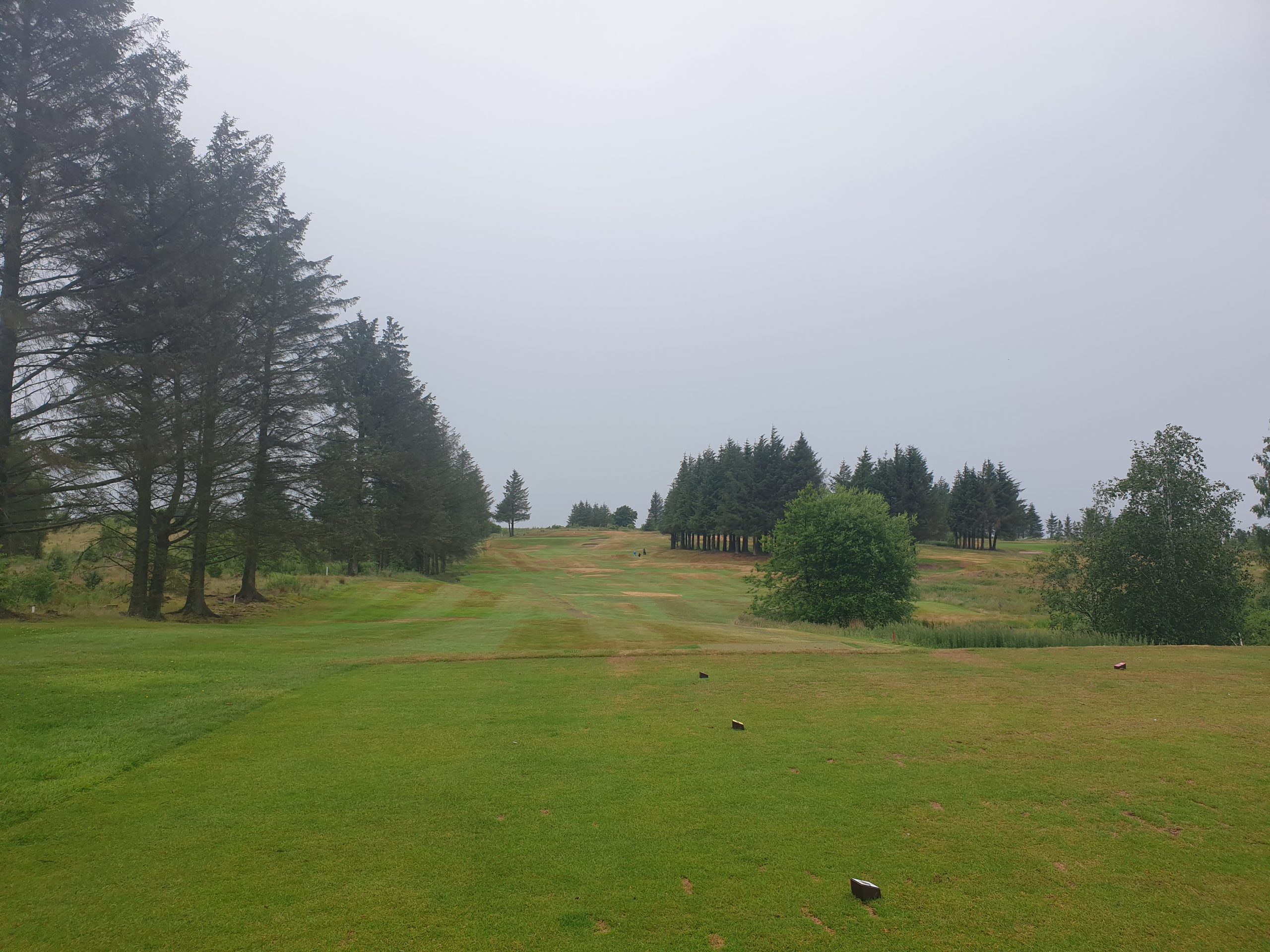
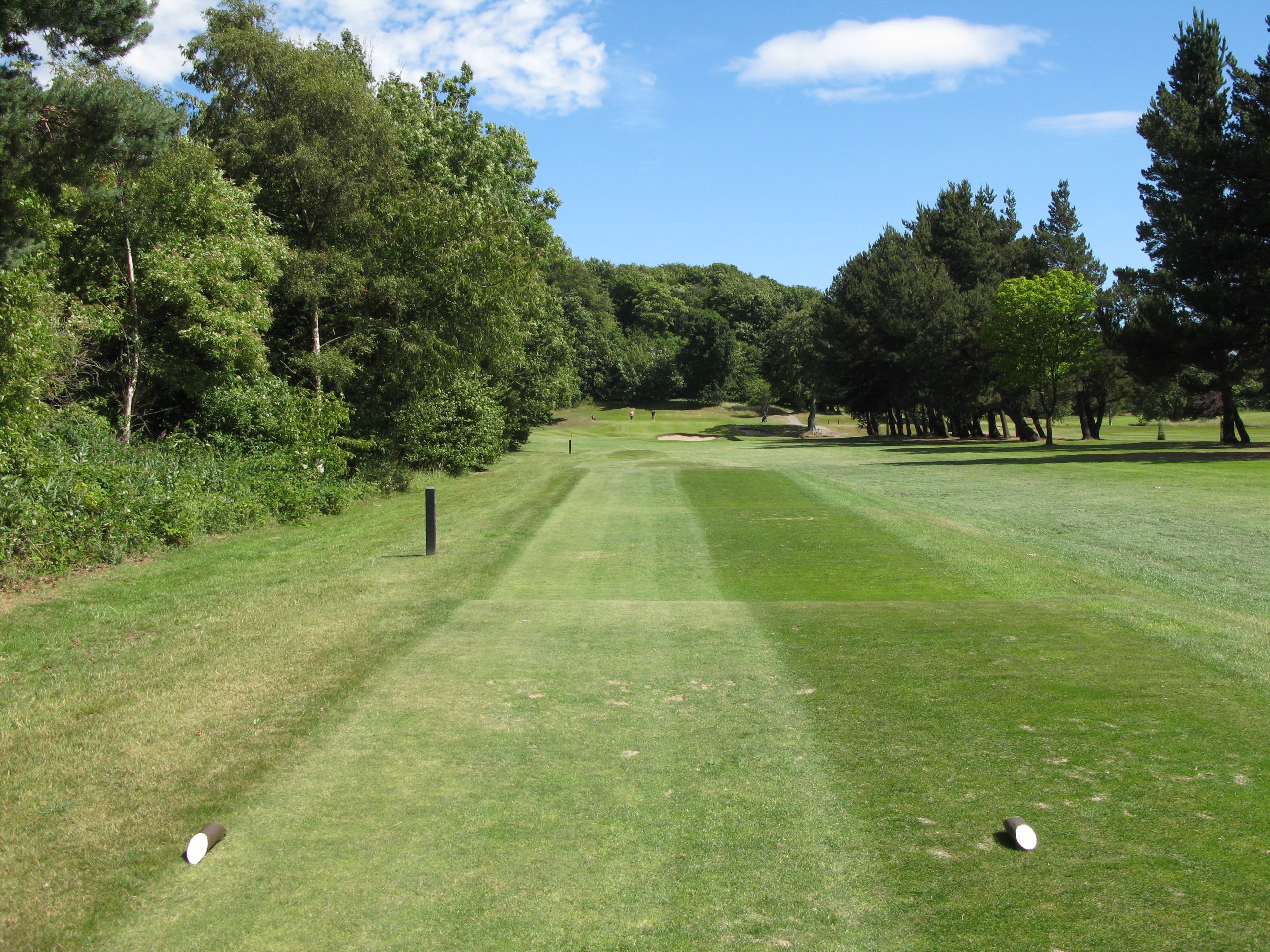
The 1st climbs between ranks of spruce. On our day the mist came down to meet it.

But here the club is right. Bonnyton Moor Golf Club was started in 1922 by the Lindsays, a family of Glasgow publicans, with a dormie house so golfers could stay over. Presumably they liked a drink. Mackenzie advised on the course design through 1922-23, and it opened in June 1923 with an exhibition match including the then reigning Open champion, Walter Hagen. Sadly, the old club faded out in the mid-1950s. Then something more interesting happened.

In the same months MacKenzie was working on Bonnyton, he was also laying out Moor Allerton in Leeds, opened in March 1923 by the Leeds Jewish community. It was the first Jewish golf club in Britain. He couldn’t have known his Scottish moor would become another.
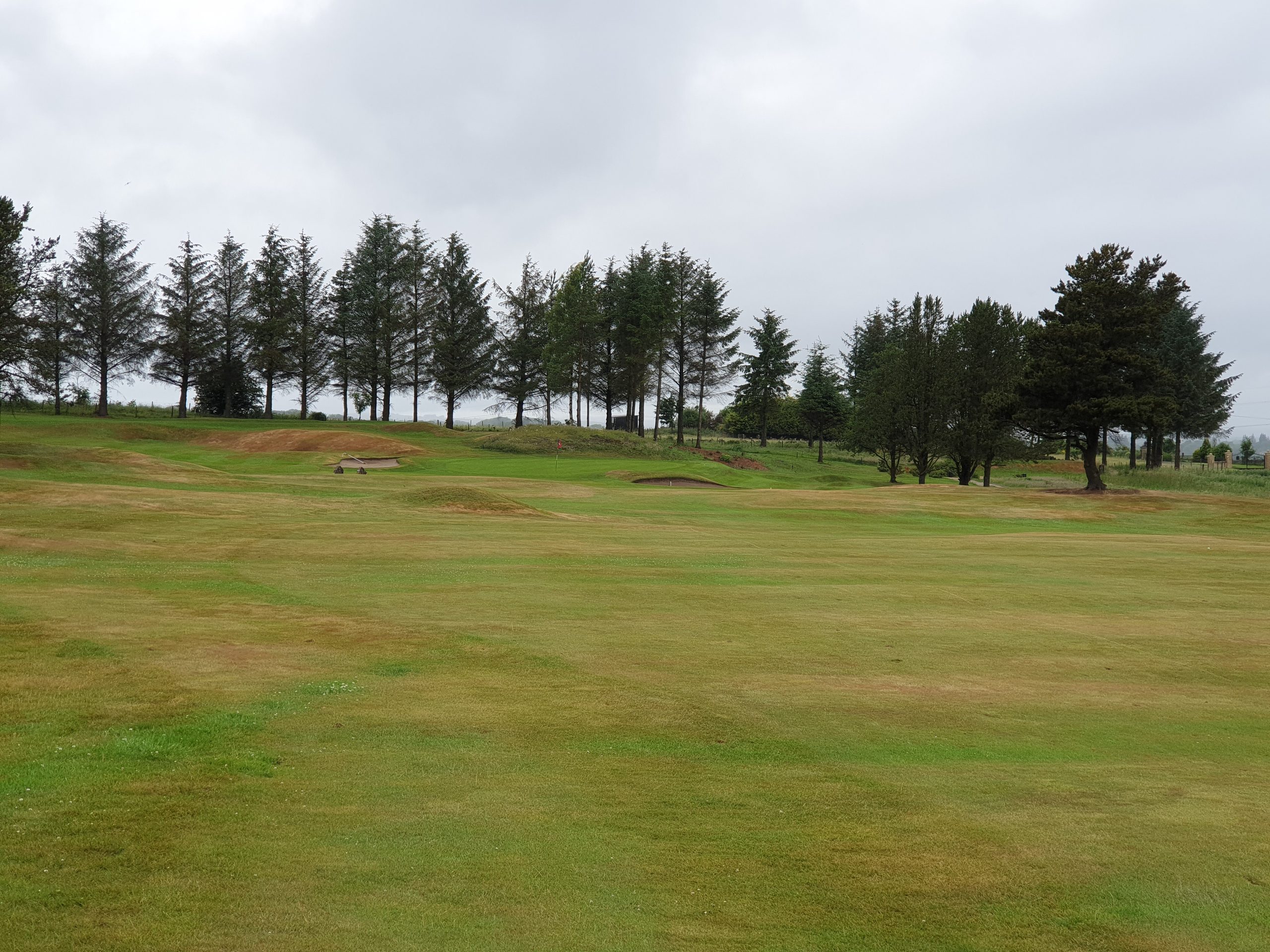
7th, Lang Craigs: the heathland at its best, all humps and hollows and bunkers cut into the slope.

Many of Scotland’s institutions sorted their members by religion, especially in the West of Scotland. Catholics and Protestants largely remained segregated and played golf apart, and Glasgow’s Jewish golfers were often shut out altogether, playing on the public courses. Nobody wrote a rule. They didn’t need to. The blackball did the work: an anonymous vote, no reason given, no appeal. The historian Daniel Dee records that Glasgow’s Jewish golfers believed the local clubs were afraid of being “swamped”. Local memory names a club or two along the road. I can find nothing in print to pin it on any one of them, so I won’t.

The Glasgow Jewish Institute formed a golf section in 1931. In the early 1950s the community began raising money for a course of its own, and when the derelict Bonnyton Moor came up, they bought it. The club reopened under Jewish ownership on 19 May 1957, with more than 700 people there. That was twelve years after Belsen. It’s a sobering thought that, in a self-professing welcoming country, a community that had just watched what exclusion can lead to still had to buy its own hillside to get a game. Prejudice sadly runs deep.
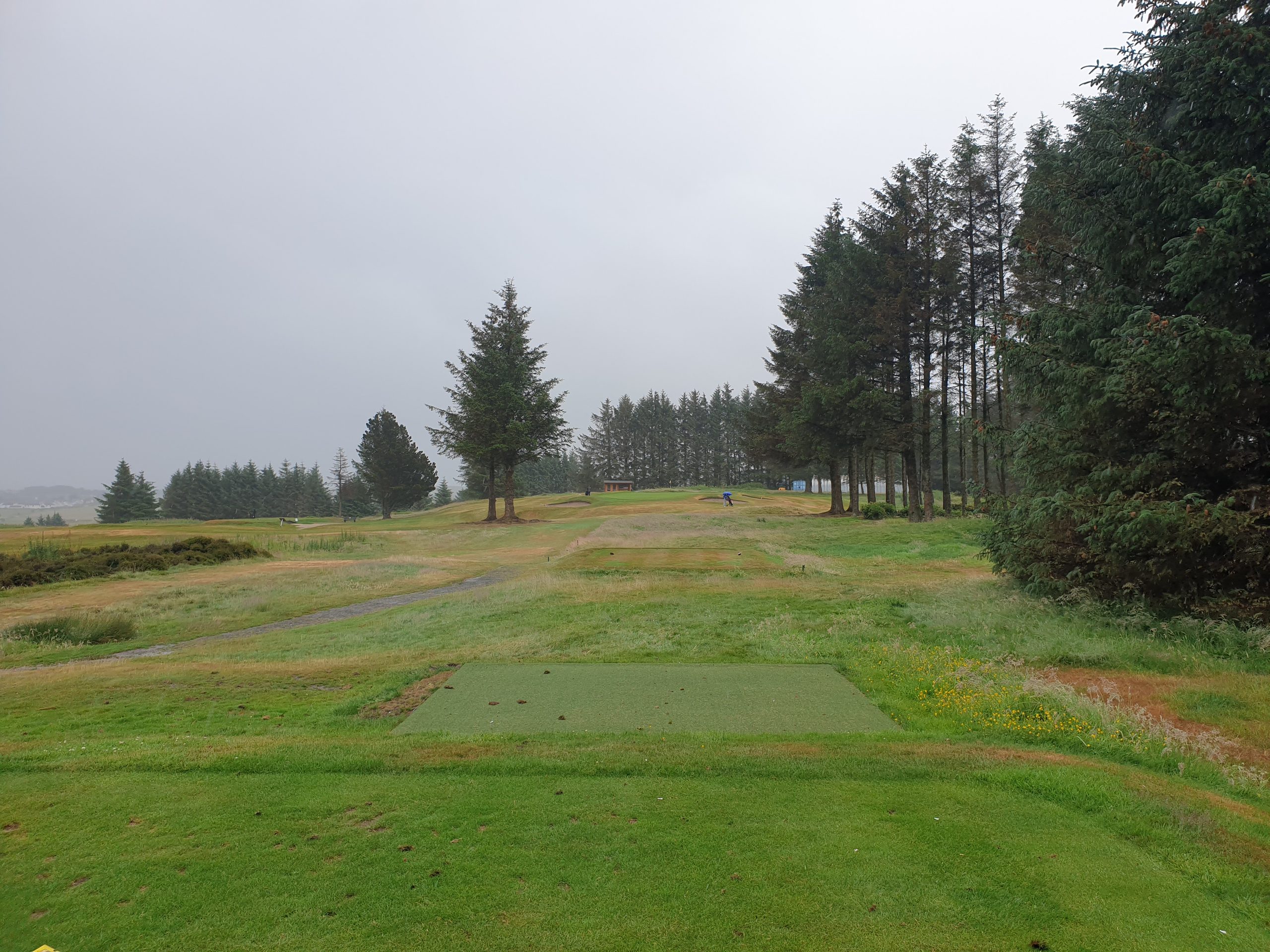
9th, Lindsay Law in the rain. The figure in blue ahead is not enjoying it either.

What they did next is the best part. The new owners advertised Bonnyton as an open club, with “no bar on the grounds of religion, race or colour”. A club founded because of exclusion excluded nobody. As one member later observed, once there was a Jewish club, the other clubs became more ready to accept Jews. Today most members aren’t Jewish, and pies and mince have long since replaced the fish and borscht. The beef burger may be the last loyal custodian of the old ways. Meanwhile neighbouring Eastwood, founded in 1893, closed in 2019. It’s said a few Bonnyton members allowed themselves a quiet smile, in memory of their fathers.

The 12th, Punch Bowl, SI 6. A tough par 3.

And the golf? It’s an excellent heathland layout in great condition. The fairways are generous and driving is relatively easy. The greens are where Bonnyton earns its rating: tiered, steeply sloping and, in places, tiny. Two of the par 3s rank among the hardest holes on the card, Auld Nick (14th) at SI 4 and Punch Bowl (12th) at SI 6, which is rarer than it should be. There’s a real East Ren feel to it (Blog 169), which is no surprise with Braid’s heathland just over the hill.
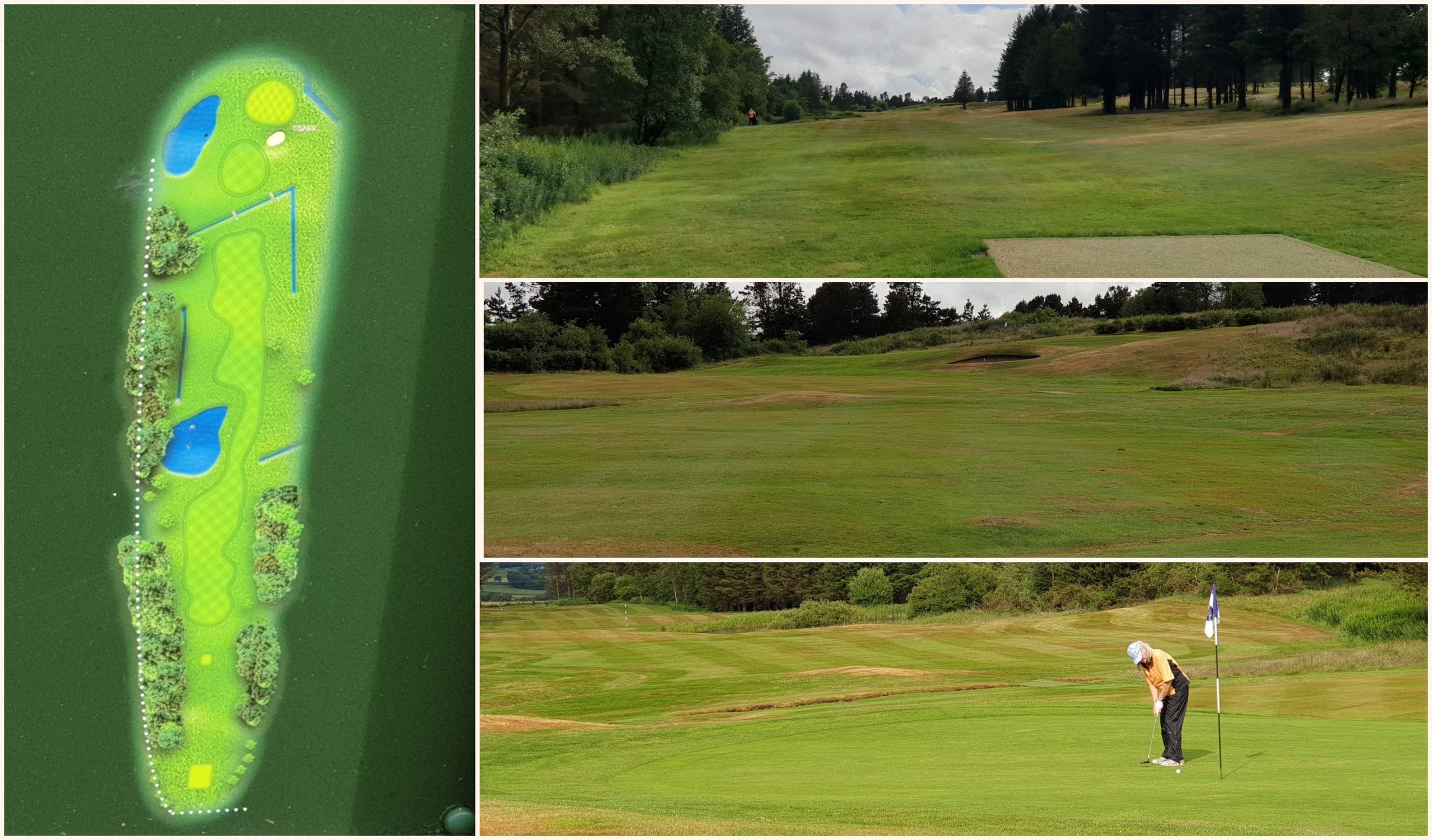
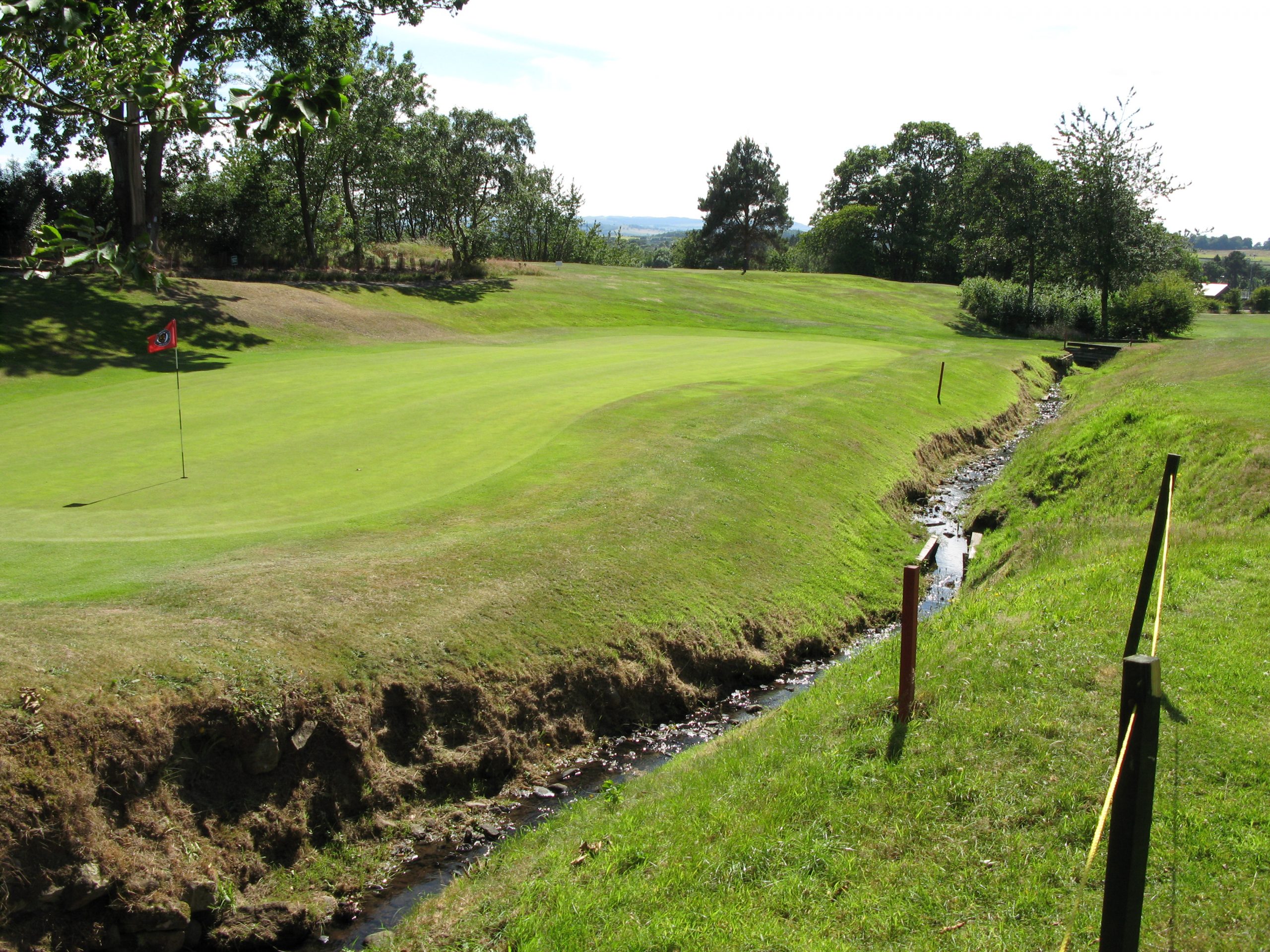
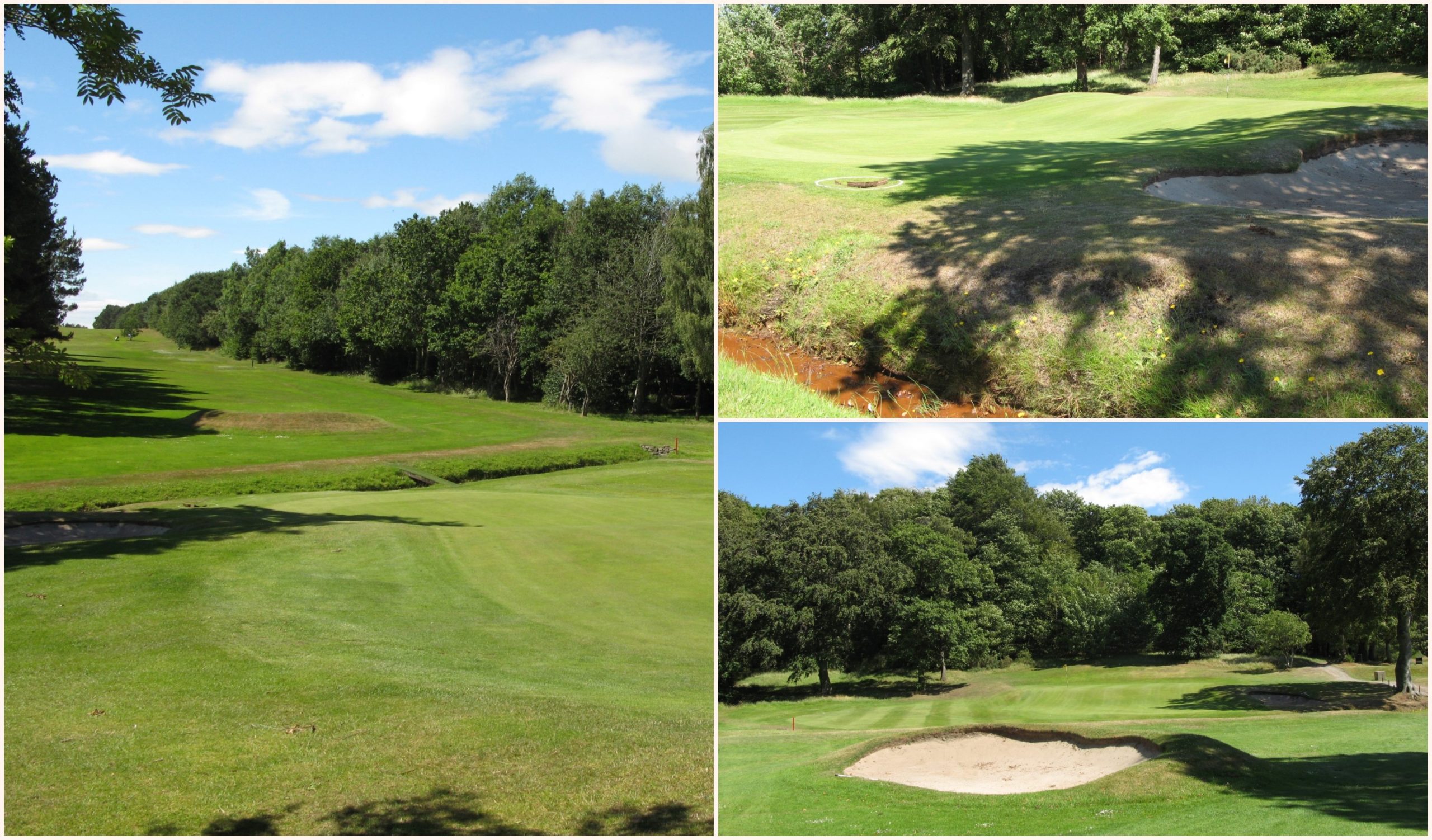
The par 5 16th, Ballagioch, SI 2. The hole plan shows two ponds and two ditches. From the tee you see none of them. MacKenzie would have approved of the deception, if not the lost balls.

Then there’s the 16th, Ballagioch, a 472-yard par 5. From the tee it’s an innocent avenue of spruce. The plan shows water on both shots and out of bounds down the left. MacKenzie loved deception, but he hated golfers wasting time looking for balls, and I suspect the ponds came later. Either way, all is not what it seems.

Fran on the reds at the 13th, with the Renfrewshire lowlands behind. Her course was 885 yards shorter than mine.

It poured. I shot 87, playing exactly to handicap for 36 points. At £23 through GolfNow, a MacKenzie course in this condition was absurd value. I’d go back tomorrow, and I’d happily order the beef burger, as a show of respect.

Facts:
Course Type: Heathland
Par: 72 (4 par 5s, 10 par 4s, 4 par 3s)
Distance: 6,086 yards (yellow)
Course Rating / Slope: 69.8 / 127
Course Quality: 4/5
Moly’s Gross Score: 87
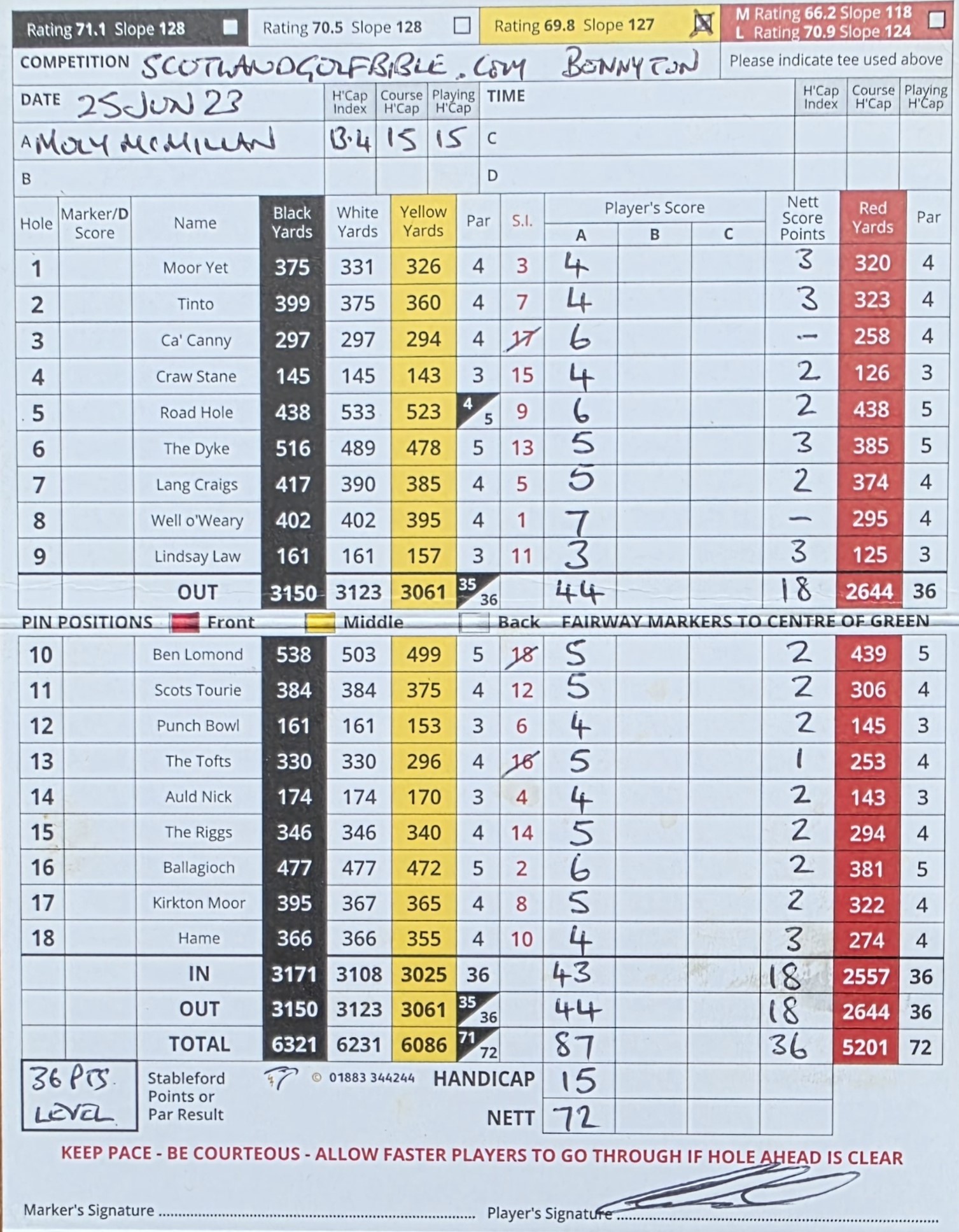
87 was a good score for me in the rainy conditions.

176. Blairgowrie Rosemount. 1 Dec 22.

One of the great clubs and excellent value in Winter

Value 3.5/5

Blairgowrie’s Pro explained many members lived quite far from the club, meaning competition days, Wednesday and Saturday, were incredibly busy. Therefore, playing Rosemount on the first Thursday in December, I anticipated a fast round, before finding myself behind one of those 4-balls – you know the kind – those avoiding eye contact!

The 5th, a typical tree lined hole on Rosemount. I was stuck behind a four ball, that steadfastly refused to acknowledge me. They were the rudest golfers I have ever encountered and did nothing to make Blairgowrie feel a welcome place for visitors.

Blairgowrie, or more correctly ‘Blairgowrie and Rattray’, is a twin burgh in eastern Perthshire, and a popular gateway town to the highlands. With a population of 9000, it has some quaint but dated shops.   It also has a fine golf club with 3 courses, 2 of which are listed amongst the very best in the UK.

The impressive Blairgowrie clubhouse behind the difficult 400 yards plus 18th on Rosemount.

The Rosemount course (originally called the Lansdowne) is regarded by many as the jewel in the Blairgowrie crown; designed by the Yorkshireman, Dr Alister MacKenzie, in the 1920s, with further developments by James Braid and Donald Steele. Blairgowrie’s newer 18 hole course, with the inherited Lansdowne name, was designed in the 1970s by Peter Alliss and Dave Thomas. Both courses have been further updated by Scottish Designer, Graeme Webster.

The strong 17th hole, a par 3 of 163 yards; although not as “Plateau’d” as the holes name would suggest. Easy to three putt on this very large green.

‘Lansdowne’, was in fact the original name of the current 9 hole ‘Wee Course’, blogged here. This was the founding 1889 course at Blairgowrie, named after the Dowager Marchioness of Lansdowne, a local aristocrat. It is often cited as one of the best 9 hole courses in Scotland.

The 11th tee, a typical tee shot at this course, so much so I can understand why it could be considered monotonous.

The two main18 hole layouts are championship standard and the Rosemount course hosted the European Tour in the 1970s and 1980s. It was the venue of Greg Norman’s first European tour victory in 1977 with The Martini International on 11 under par with the South African Simon Hobday in second place.

The wonderful bunkering at Rosemount, seen here at the 2nd, a short par 4 of 340 yards, and one of the good birdie chances.

Set in a large tree encrusted heathland property the courses are easy walking, and more forgiving off the tee than what meets the eye. Many of the holes feel similar and with the forested surrounds, there are limited views. Depending on the time of year, this landscape could even feel like California or Portugal.

The course is a highly attractive amateur Open venue due to the ever increasing summer green fees, which are now £140 (2023), whereas the Winter fees are less than £40. Although I played off mats and forward tees, the greens were in play. Given the greens are part of the magnificence of the course, this represents excellent Winter value golf.

The 15th “Wee Dunt”, a lyrical, and potential ryme, for this tricky par 3.

I played very well, scoring 81, and therefore I may have to thank the four ball that slowed me down. Maybe that’s the secret – taking time and concentrating.

In summary, if you are looking for a golf course that combines history, beauty, and challenge, then you might want to visit Rosemount in Blairgowrie. Especially on a nice winter’s day.

Round List Price £140. Actual Paid £30 (Winter rate).

Moly’s Score – 81 for 37 points (off 14)

Course/Slope Rating (winter) 68.8/121

Course Type: Heathland

Par 68  (14 par 4s, 4 par 3s)

Distance (yellow): c 5500 yards

Moly’s 81 on Rosemount off their winter tees, but full greens

150. Pitreavie (Dunfermline). 7 July 22.

Foreshadows of Augusta at Dr Alister MacKenzie’s only Fife creation

Round £30. Par 70. Course Rating / Slope Rating (yellow) 68.8/134. Value (out of 5) – 5

Paul Brookes, the professional at Pitreavie GC asked me, “Name an architect that has three courses consistently in any list of the world’s top 100 courses?”. He was, of course, speaking about the courses Augusta National, Cypress Point and The West Course at Royal Melbourne, all creations of Dr Alister MacKenzie. Paul could even rephrase the question to be “in the top 10 or 20 best courses ever built”, such is the regard for these designs.

The ‘camoufleur’ skill of Alister Mackenzie on show at the par three 3rd hole. A brilliant golf hole.

You could spend a lifetime, and a fortune, trying to play all of these top 10 world courses; however, you can get a glimpse of MacKenzie’s skill by playing Pitreavie in Dunfermline for no more than £30. Pitreavie is one of only three courses in Scotland fully designed by MacKenzie, the other two being Hazlehead Municipal in Aberdeen and the Eden course at St Andrews.

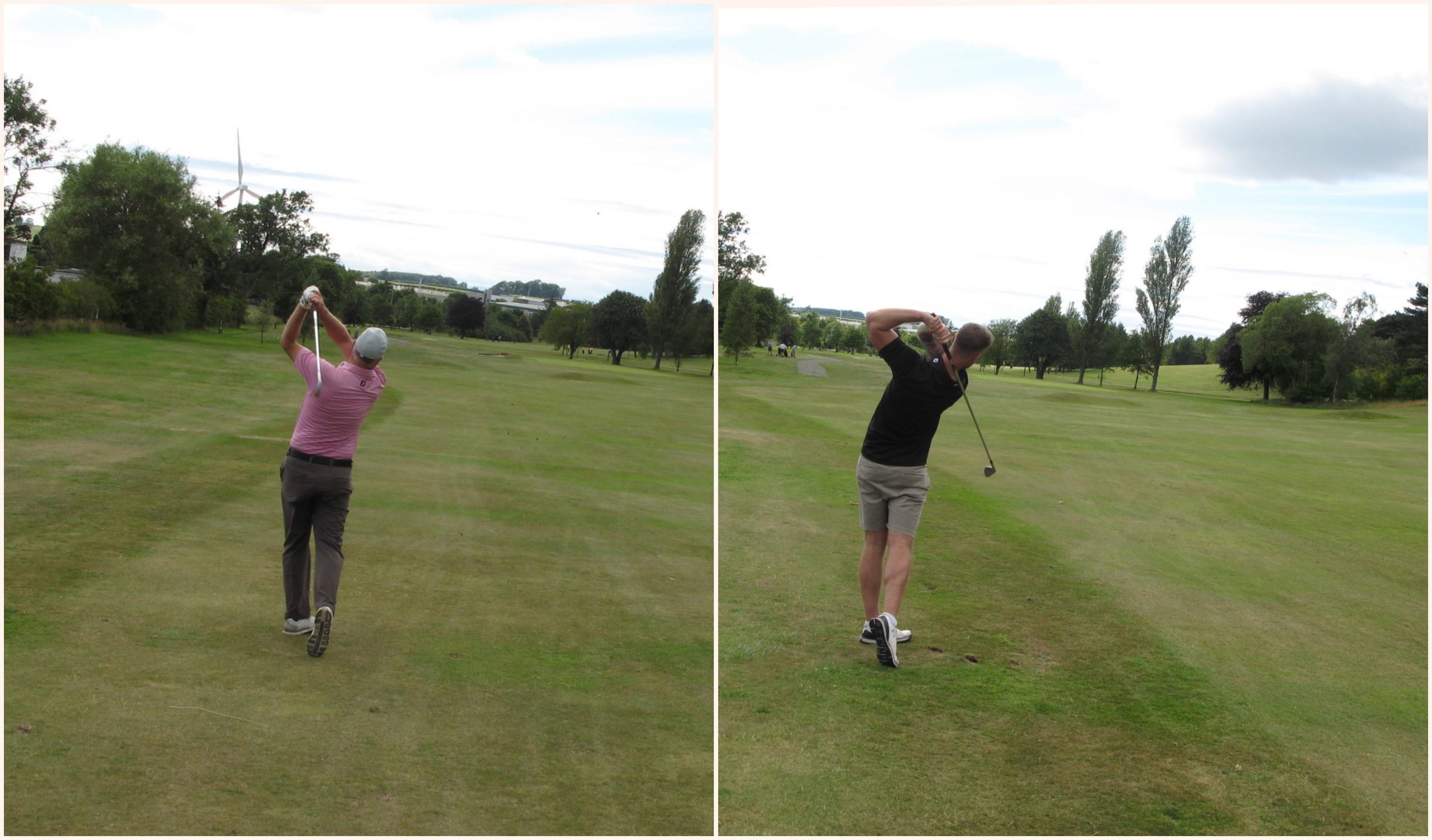
Moly tees it up at the fifth hole, one of the more scoreable par 4s on Pitreavie.

Born of Scottish parents, MacKenzie was in fact a Yorkshireman. His Scottish name must have been handy though in the early 20th Century US golf growth period, at a time when many of the great Scottish designers, such as Donald Ross (Pinehurst) and Tom Bendelow were making great advances.

The very wide and narrow 12th green at Pitreavie, a downhill par 3 of only 135 yards. A great hole. The entrance is from the right of this picture.

After two par fives to start, the third is the first real glimpse of MacKenzie’s skill. A long par three, it is the stroke index 2 hole, with a teeing ground almost 65 yards long giving many distance options. But looking at the hole you can’t readily see how hazardous it is. Medical army doctor MacKenzie had specialised during the Boer war and then WW1 to become a camoufleur, a specialist in camouflage. He was to later note the similarities between camouflage and golf design. At the 3rd, there is a hidden burn running across the front and up the right of the long multi level green. It is a formidable ‘camouflaged’ hole, as your eye is drawn naturally to the green tiers.

The third, the most beguiling of par 3rd at nearly 200 yards. I can imaging even low handicap players playing as a 2 shot hole.

This clever use of the burn is brought into play on several more holes, notably the par threes 6th and 12th holes, and most cunningly at the par four 13th hole, the Stroke Index 1. When you play Pitreavie, keep in mind the use of Ray’s Creek at Augusta, especially at the front of the 13th green. It’s the symmetry between both 13th holes, at Augusta and Pitreavie, that adds to the story.

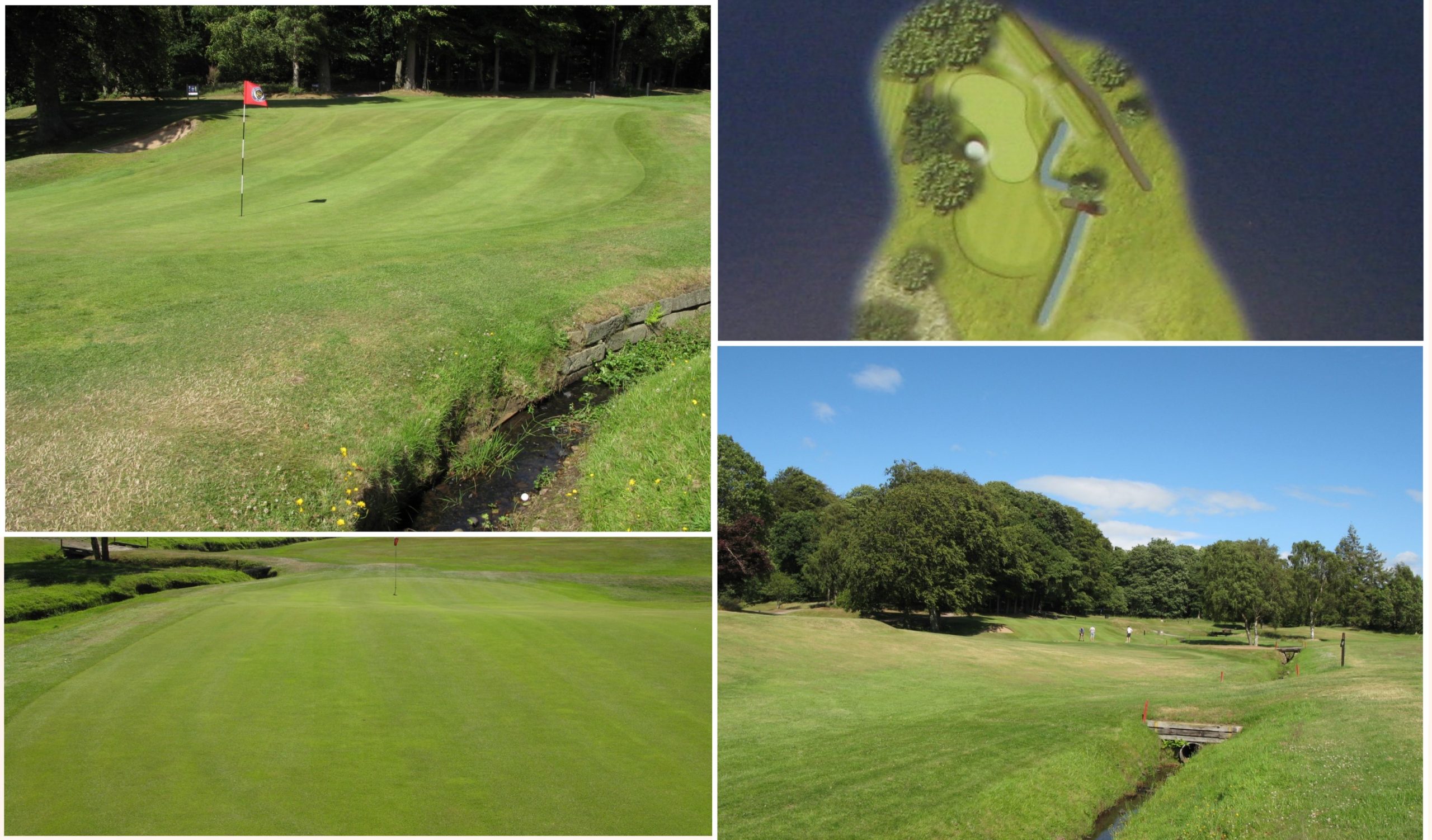
The wonderful par four SI1 13th hole at Pitreavie. Have a close look at the course map (top right) at how the burn cuts into the green, but is completely unseen from the approach (bottom right). You can see my ball in the top left picture!

Another feature of the course is the undulating terrain. This gives rise to the question about how closely did MacKenzie follow his own 13 principles of course design published in Golf Architecture (1920). “The greens and fairways should be undulating, but there should be no hill climbing”, also “There should be a minimum of blindness for the approach shots”. Whilst there are several blind tee shots, there are indeed no blind approach shots; however, I’ll leave readers to find out about how tough a walk it is in places!

I met up with local members, father and son, Ian and Dean Black. Ian on the left here, with both shown playing into the 17th green.

The course was in great condition when I played. The sand in the bunkers was perfect, often an overlooked part of parkland maintenance. There are also outstanding views from several tees, towards the Queensferry Bridge.

The fairways were fairly open, which reinforces the difficulty of the green surrounds that contribute to the slope indices well into the 130s for both white and yellow tees.

I met up with local members Ian Black and his son Dean, and we enjoyed a few holes together, and I listened to how they were very happy with the course and how good value the membership was.

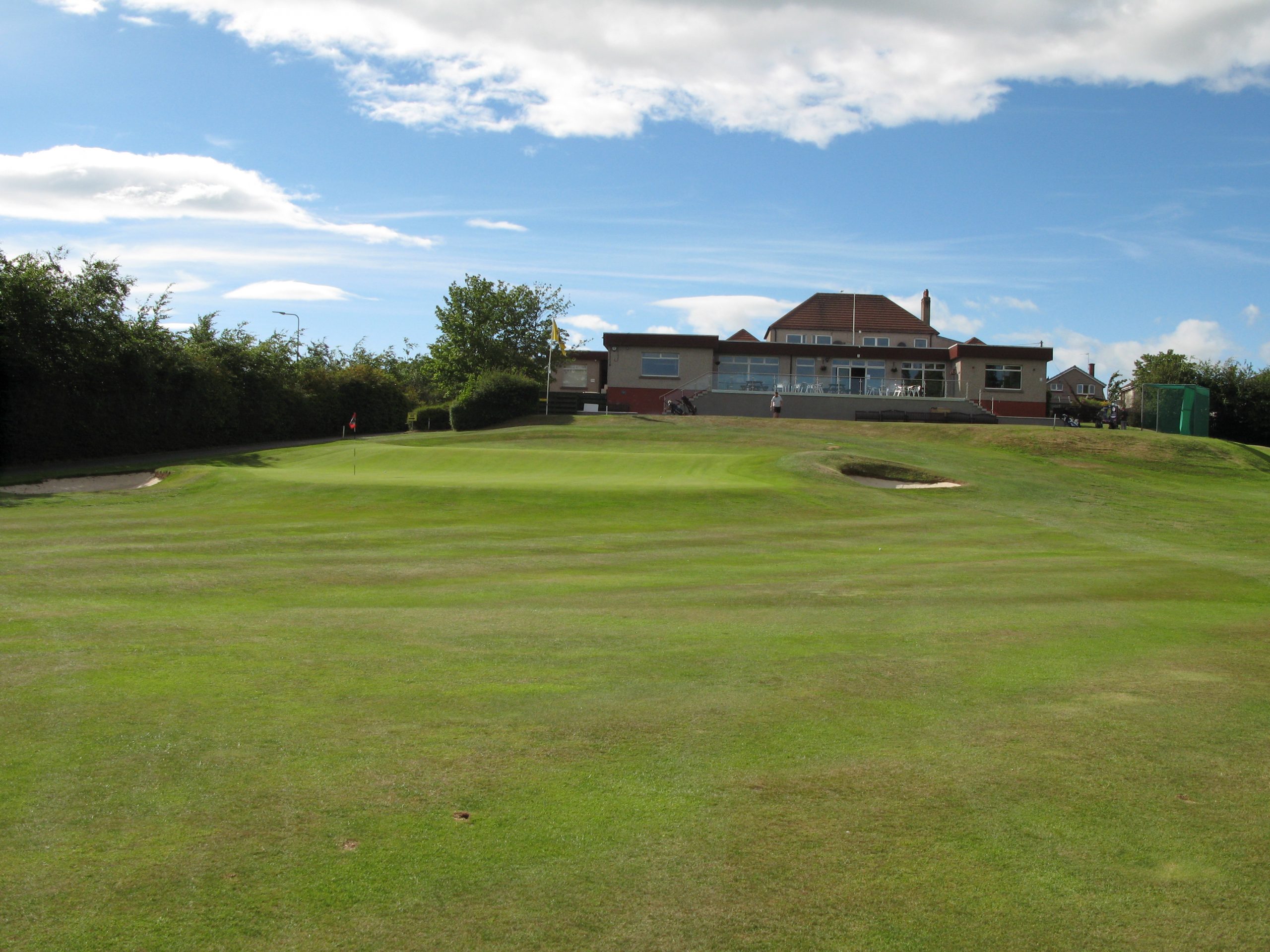
The beautiful 18th green at Pitreavie, adhering to Alister MacKenzie’s design principles.

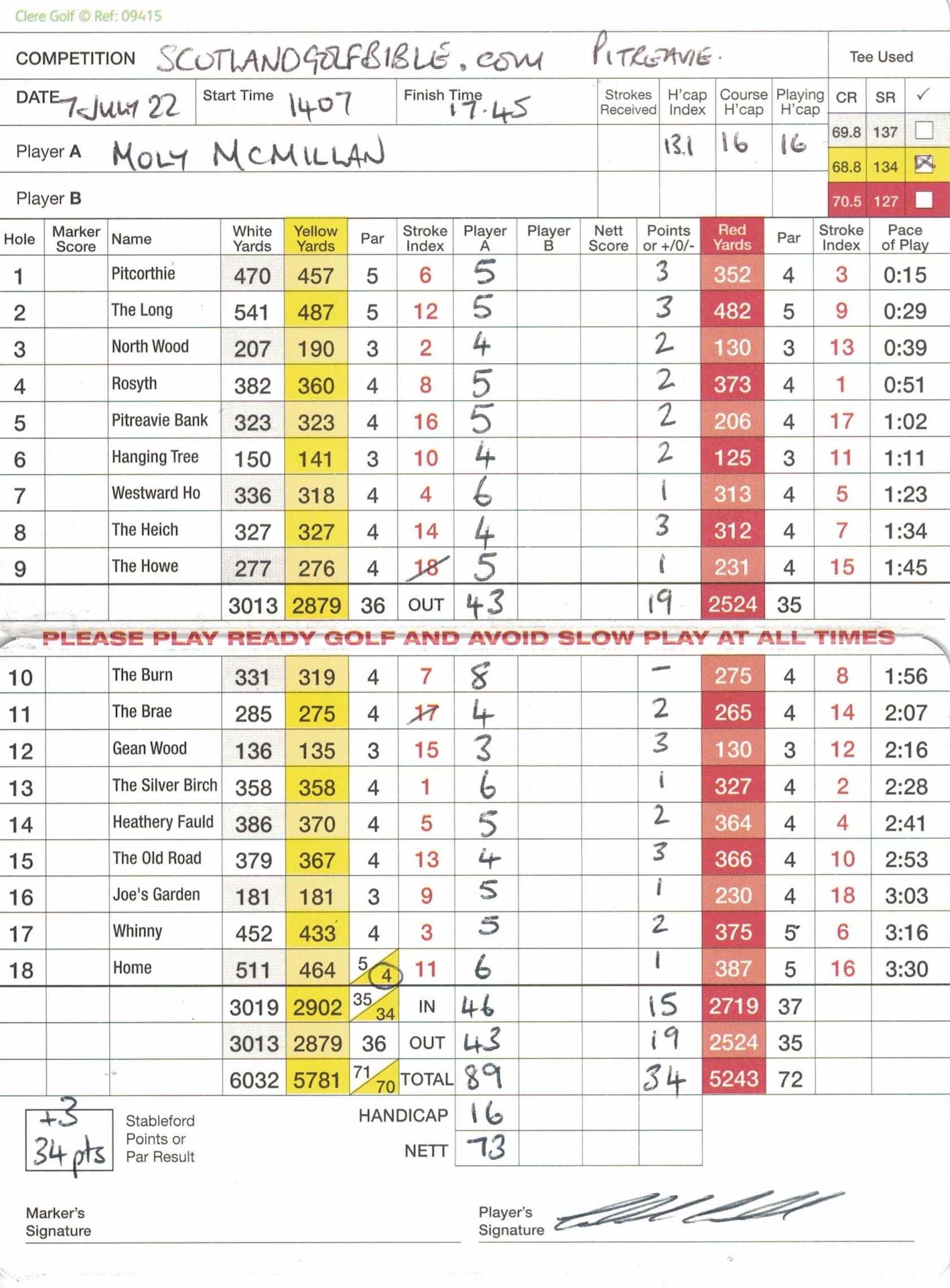
I played well, shooting 89 for 34 stableford points, with only one blob/disaster at the 10th, where I took an 8 at one of the few dog leg holes.

As to value, although there are a few weaker holes, to be able to experience some of MacKenzie’s genius at no more than £30 (I paid only £17.99 on Golfnow) means 5 out of 5 for me. This is outstanding value and highly recommended.

Facts:

Course Type: Parkland

Par 70  (2 par 5s, 12 par 4s, 4 par 3s)

Distance (yellow): 5781 yards

Moly’s Gross score: 89

Moly’s Pitreavie scorecard – 89 for 34 stableford points.

© 2026 Scotland Golf Bible

Theme by Anders Noren — Up ↑