A guide to green fee value for money

Category: Links (Page 2 of 11)

162. Panmure. 24 Aug 2022.

Course with a brilliant stretch of holes including a Hogan favourite.

Round £145. Par 70. Course/Slope Rating (blue) 69.1/128. Value (out of 5) – 3.5

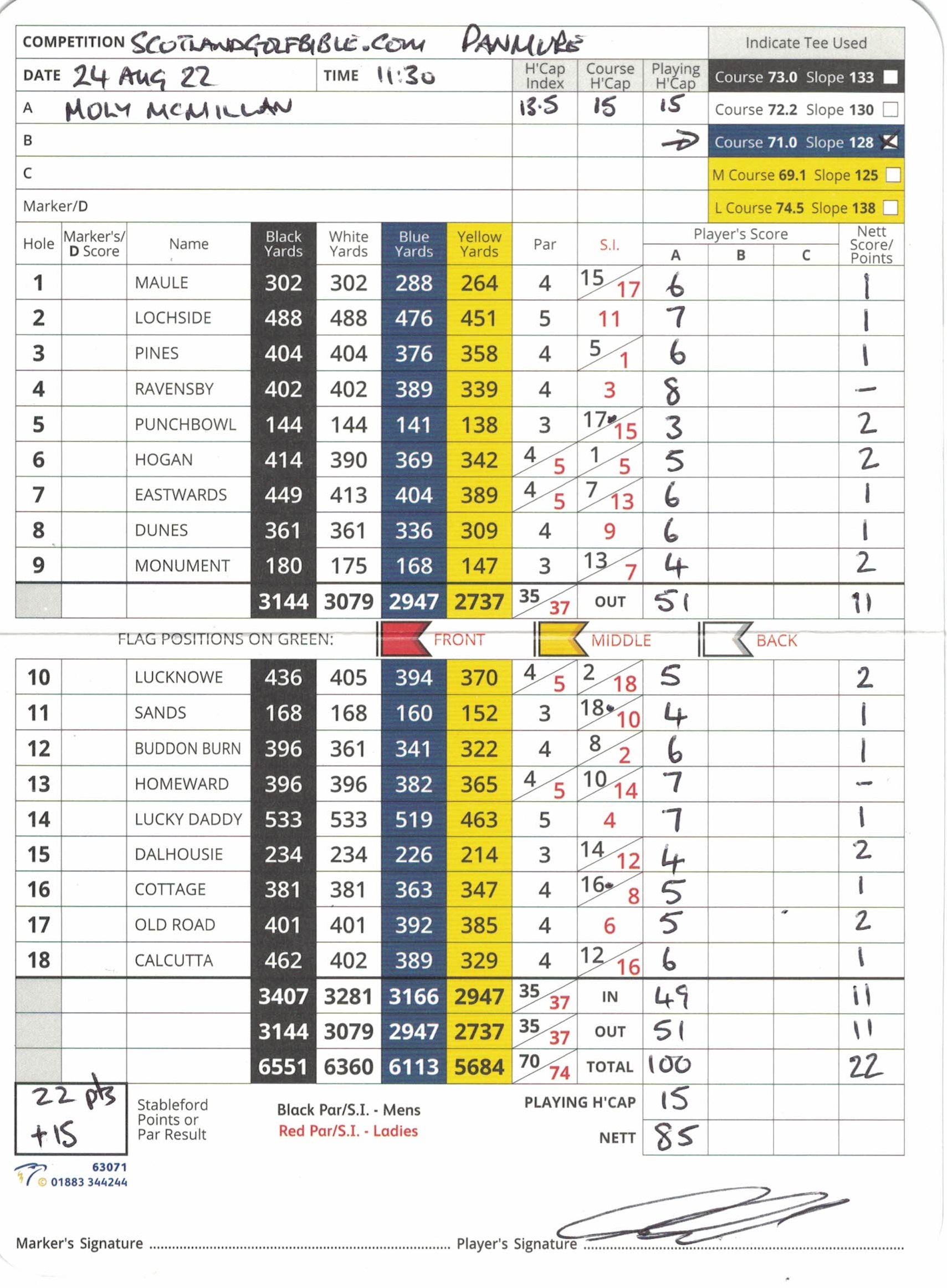
Moly’s score – 100

With it’s ‘Hogan’ room and surrounding legend one could conclude Panmure Golf Club’s role as pivotal in American Ben Hogan’s1953 Open victory at Carnoustie.

Yet, in Gene Gregston’s seminal biography, “The Man Who Played for Glory”, the lengthy chapter dedicated to Hogan’s 1953 trip, doesn’t have a word of Panmure. Even the company NCR (National Cash Registers) gets a mention for accommodating Hogan in Dundee’s Taypark House.

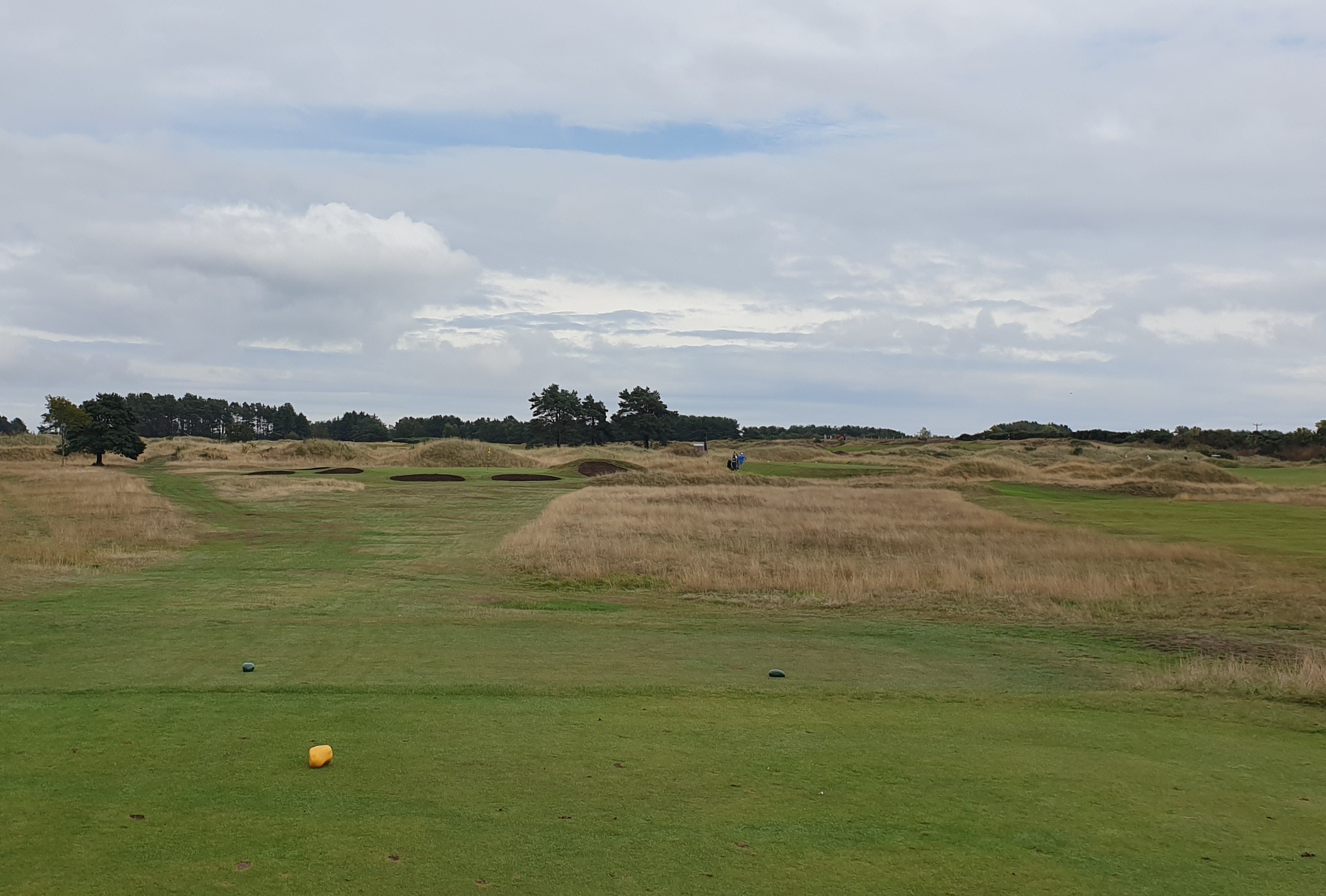
The magnificent 6th, a mid length par 4, and reportedly one of Ben Hogan’s favourite holes.

These contrasting perspectives intrigued me. So many Hogan myths exist, there are books and podcasts dedicated to them. Had I stumbled upon a myth? Had Hogan really ‘played’ here?

There are no photographs of Hogan playing Panmure, although several of him on the Carnoustie Championship and Burnside courses. Other than the Panmure Club’s website I couldn’t readily uncover corroborating contemporaneous evidence. The more I researched Hogan, the meticulous preparer for tournament golf, the more skeptical I became of the story. Hogan was not on holiday, surely he would not have played Panmure, if he could play at Carnoustie. Henry Cotton’s article “Reflections of the 1953 Open”, focused on Hogan and his ‘ten days of preparation’, but again no mention of where.

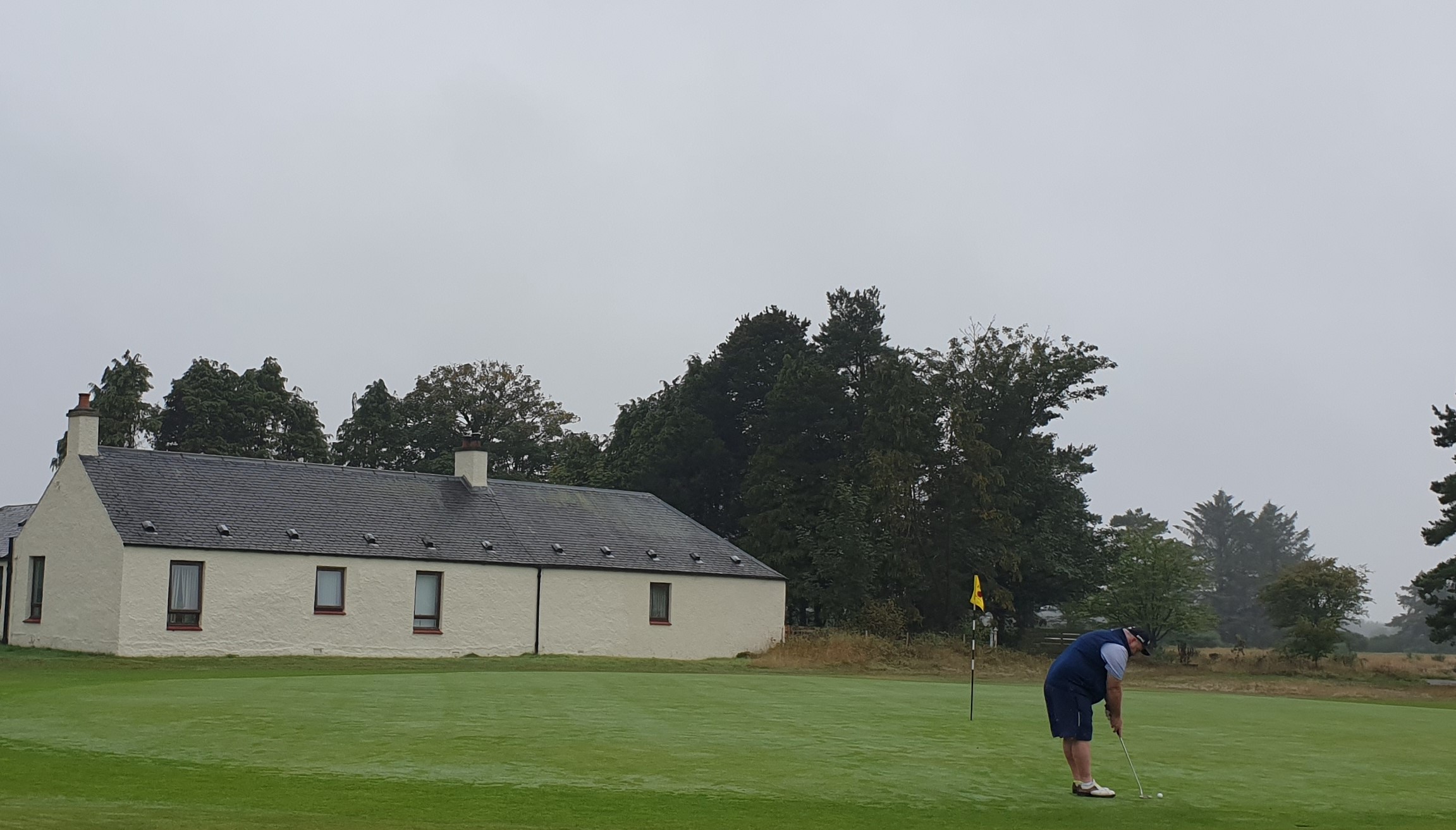
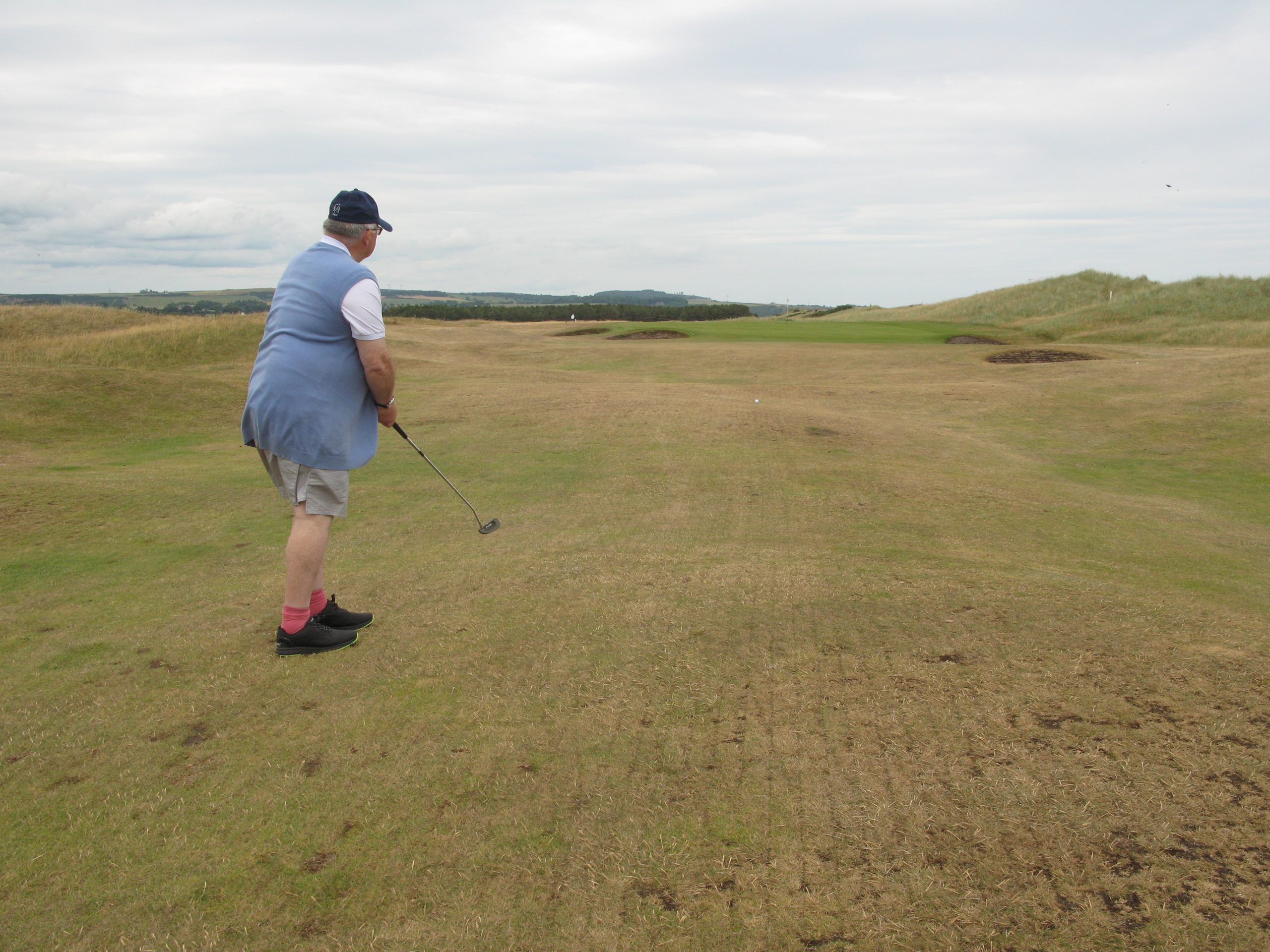
Ian Ponton, of the Oz Bar in Edinburgh, putts up to the 6th green.

Researching Gregston’s writing finally uncovered a ghost written article for Ben Hogan, in one of America’s oldest institutions, The Saturday Evening Post. In ‘The Greatest Year of My Life’, published on 17th Oct 1953, in Hogan’s own words there it was…. ‘Barry’. But it was only by a quirk of fate.

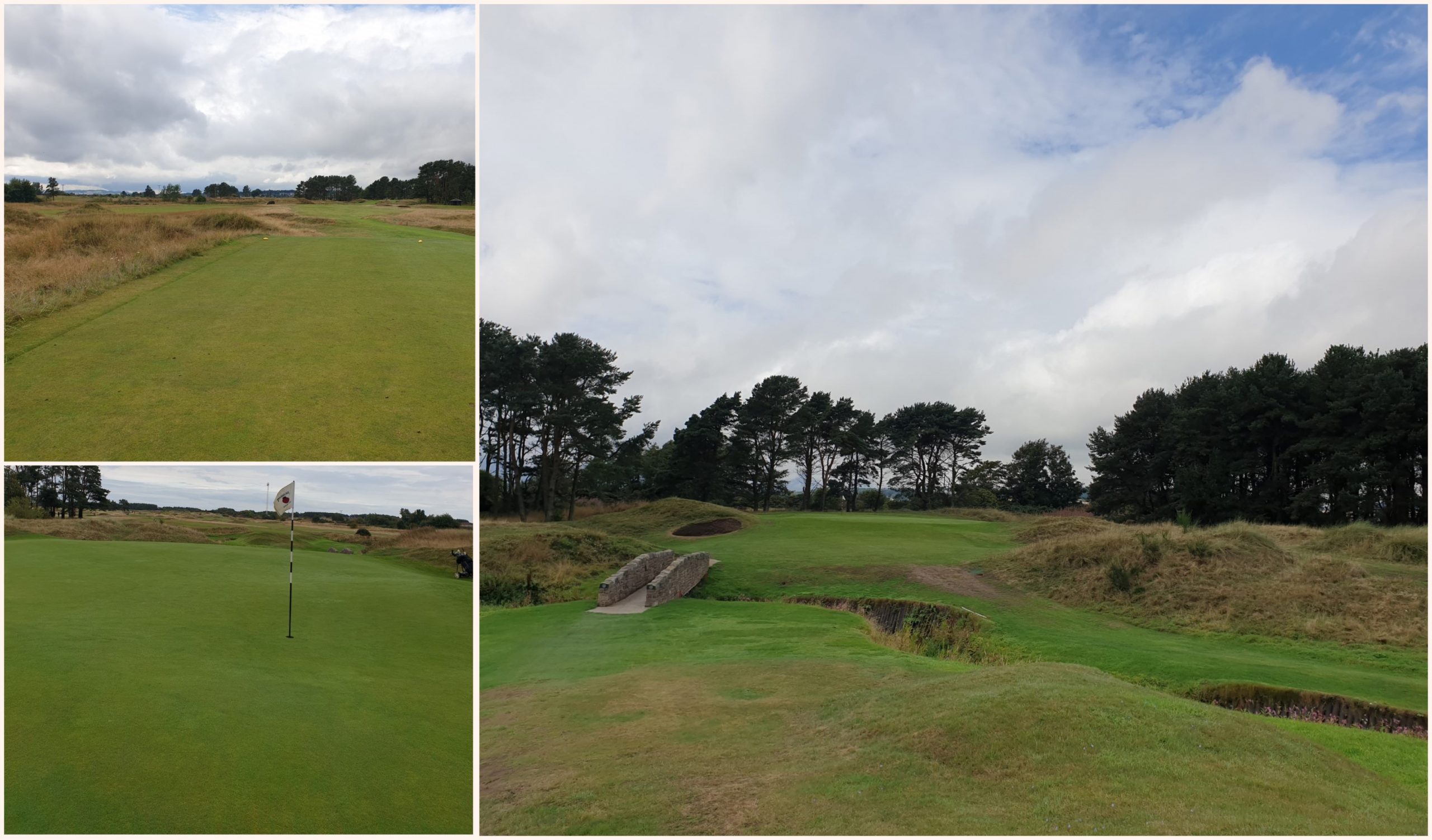
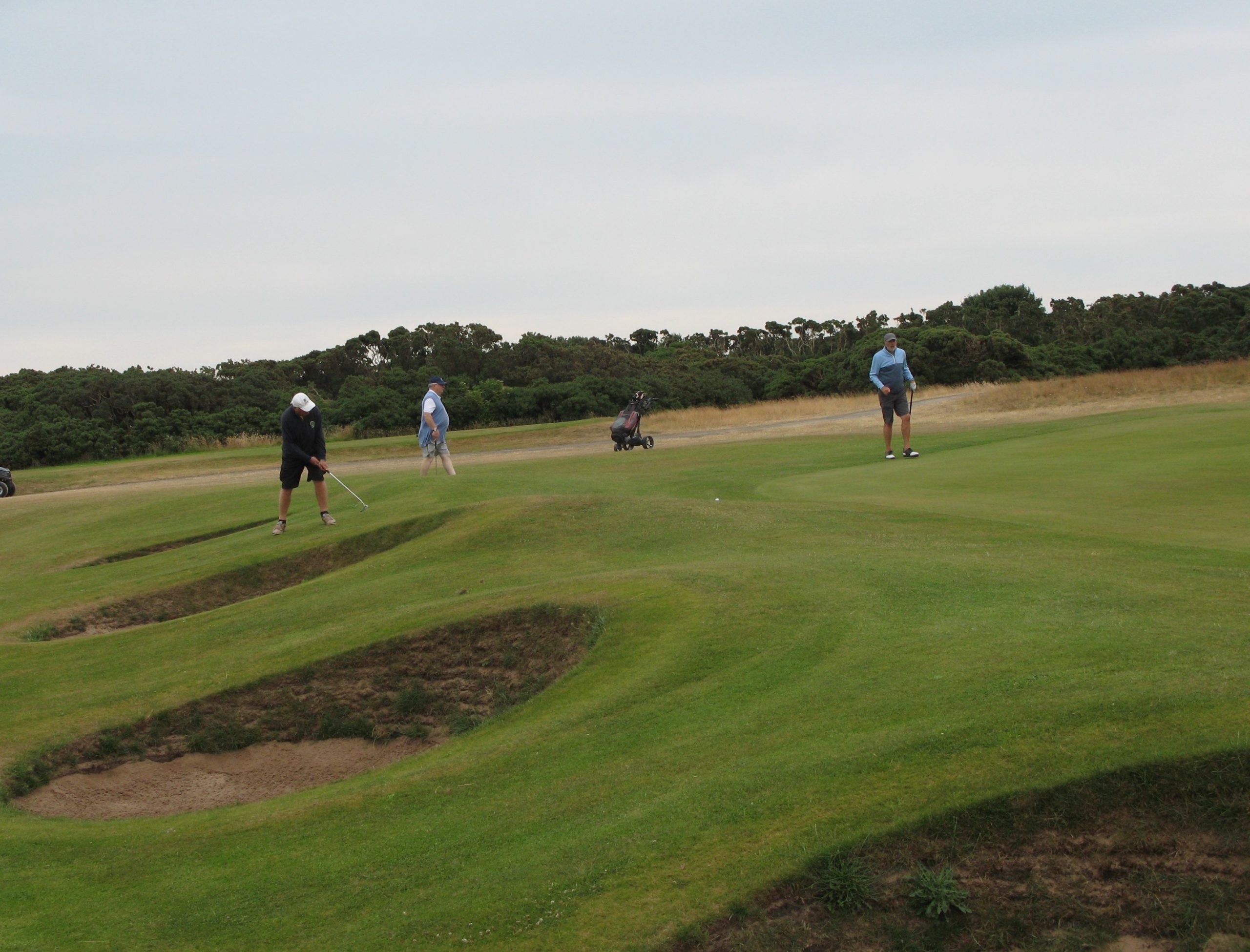
The superbly bunkered short 11th hole, with the wider view of the Barry links land.

Panmure Golf Club originated in 1845, as one of several clubs using Monifieth Links; the Panmure Ladies Club, of which my wife is a member, still play at Monifieth. Due to golf’s growth the Panmure Club built the Barry course, which is midway between Monifieth and Carnoustie. Initially 9 holes laid out by Old Tom Morris, then 78 years old, it was called Barry Links or Panmure Barry, names still used by locals. James Braid remodeled the course in 1922.

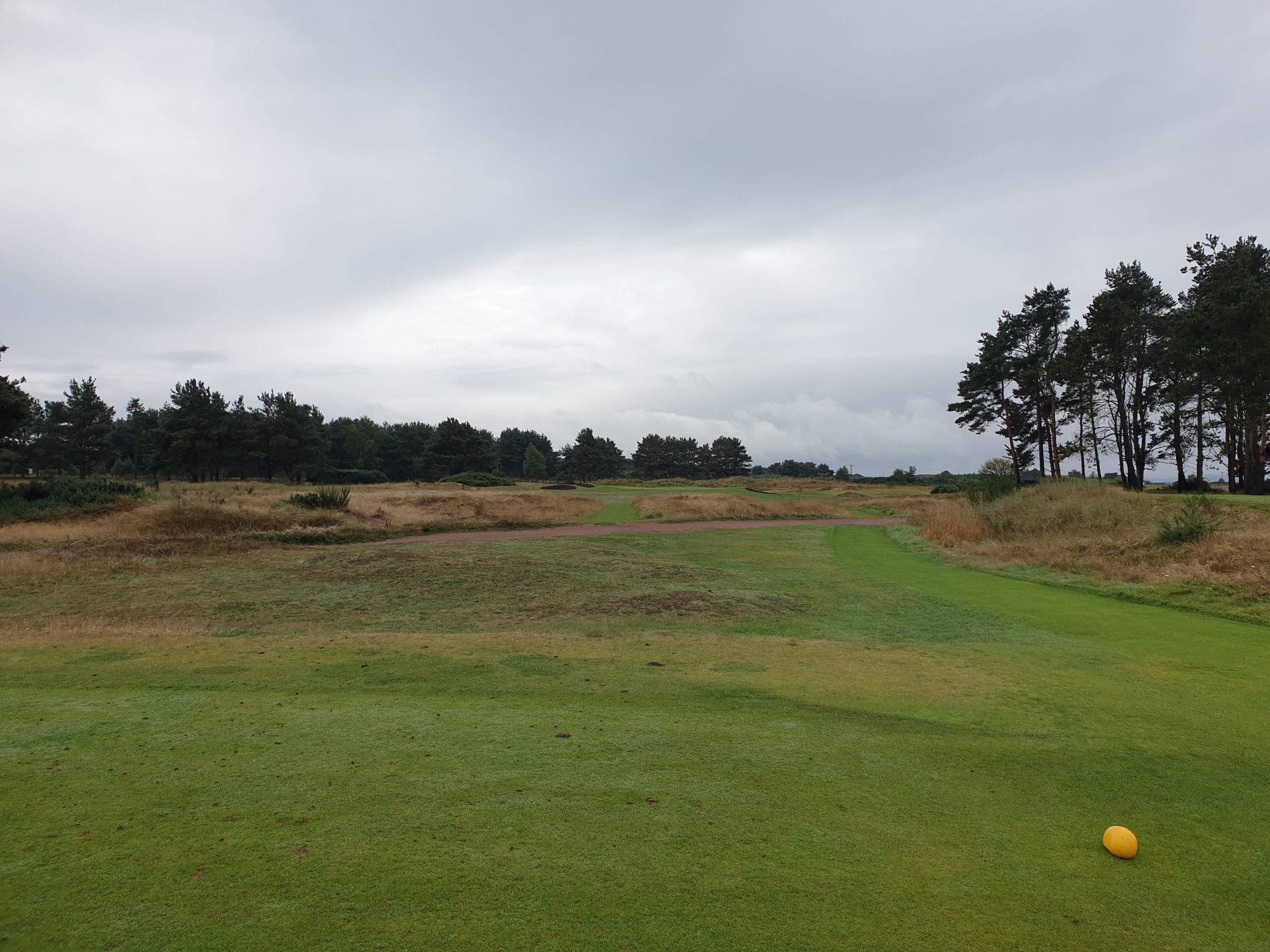
The challenging 12th hole, ‘Buddon Burn’ a par 4, and stroke index 4, at Panmure.

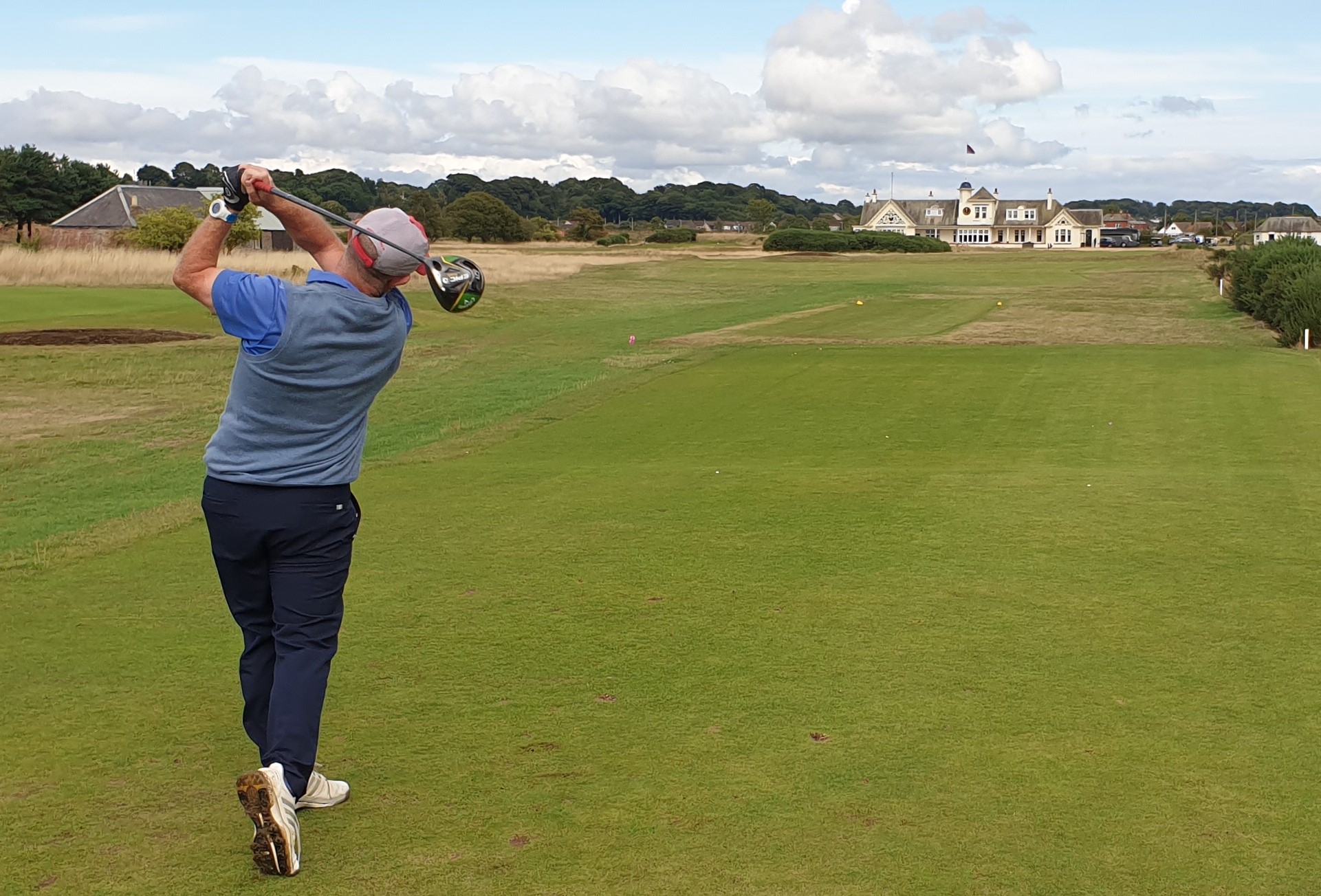
Panmure is one of Scotland’s ‘posh’ and, until 2018, ‘men only’, clubs. One may not realise nearby Broughty Ferry, home to many of the initial Panmure members in their grand houses, was once ‘one of the richest suburbs in Europe’, due to the then industrial might of Dundee. The area’s economic reach still highlighted by Panmure’s impressive clubhouse, a replica of Calcutta Golf Club, a vestige of the British Empire.

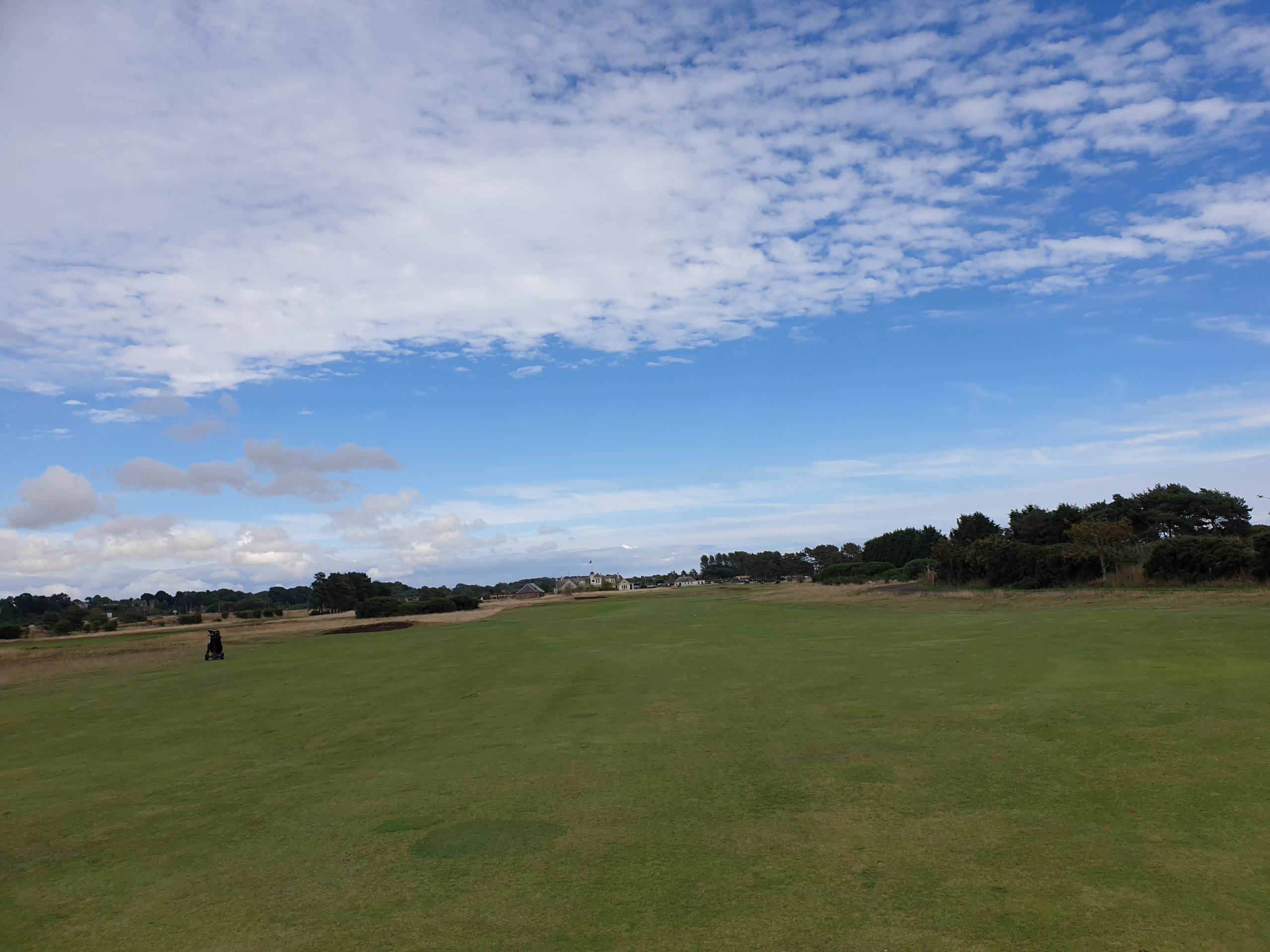
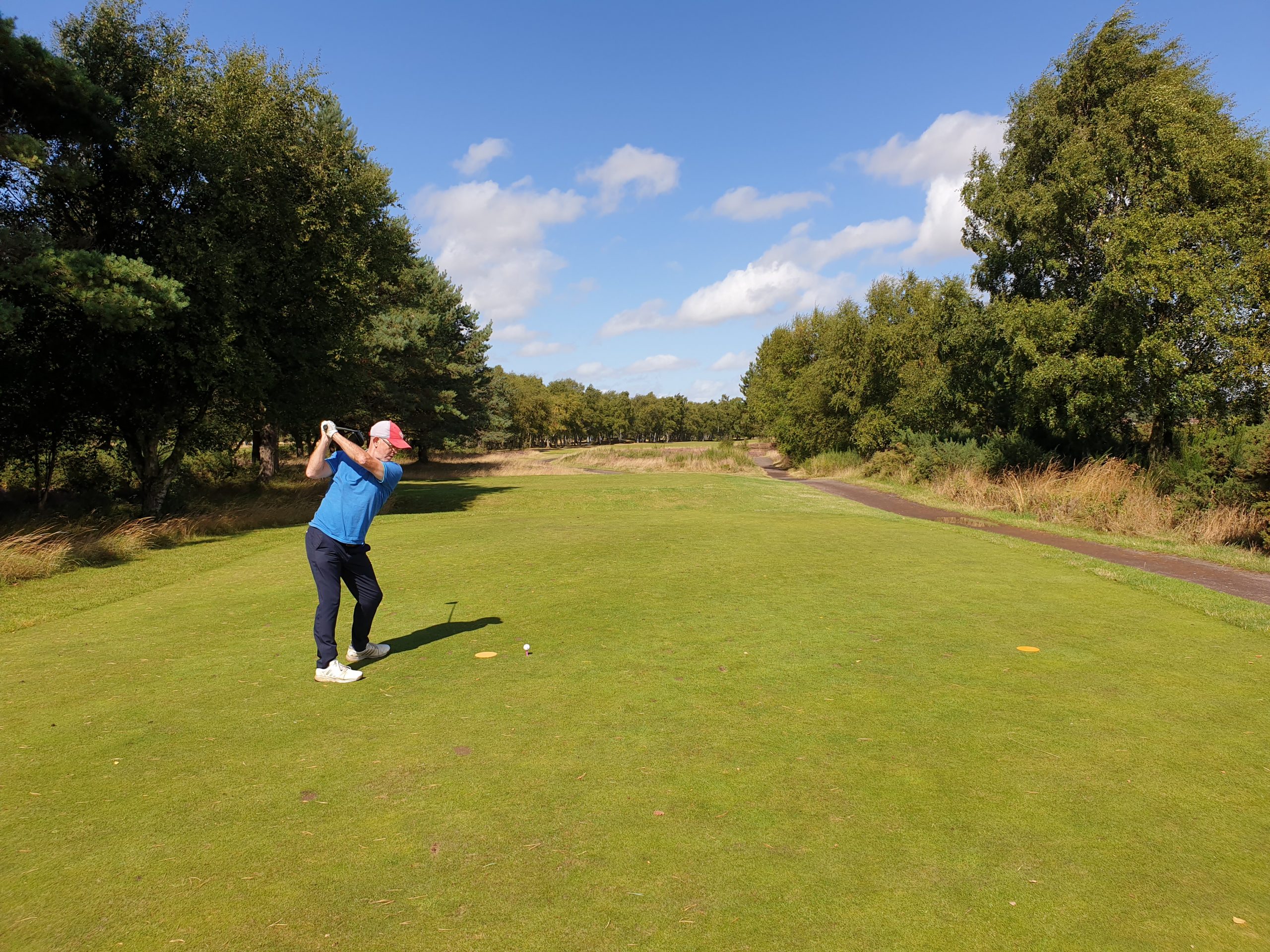
Moly drives at the 18th towards the replica of the Calcutta Golf Club clubhouse.

The golf course is exceptionally maintained to professional playing standards. It is a classic out and back clockwise course, with any OOB being on the right. It plays into the prevailing wind on the outward 9 (except for the 7th which doubles back), so I would suggest trying to ensure you stay in play going out, as there will be opportunities to catch up coming home.

The course rates very high nationally, but for me it starts and ends rather tamely. What it does have is an outstanding middle section of holes, starting from the par three 5th, before one of Scotland’s greatest holes, the par four sixth.

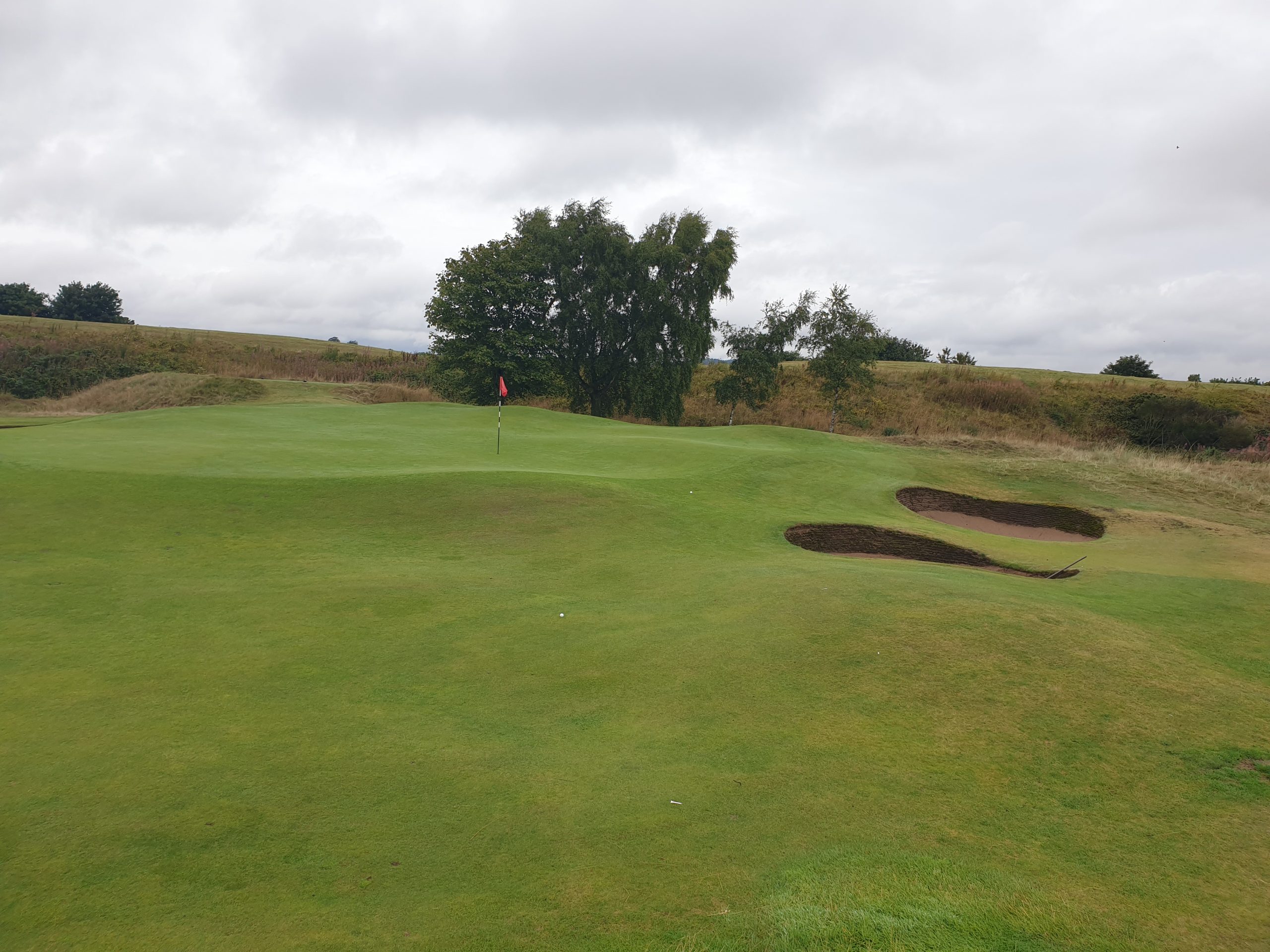
The greens and surrounds are championship quality, here shown at the 168 yard 9th hole.

The 6th, ‘Hogan’, is spoken of as Hogan’s ‘favourite Carnoustie hole’, and it’s understandable why. It is a slight dogleg left, with the approach played directly into the prevailing wind, meaning the tee shot is about the worst wind direction for anyone other than the very best ball strikers. Although only 360 yards from the blue tees (Panmure’s equivalent of ‘yellow’), with a blind tee shot into a larger than seen landing area, it becomes nigh impossible in any high wind, as the approach plays to a plateau green through an ever narrowing channel. It has mesmerising natural framing. Like many great holes it’s risk-reward, as the fairway narrows at full driving length. Play it as an easy par 5, to avoid double bogie or worse. The 6th is also the part of the course with natural grassy hummocks, characteristic of this coastline.

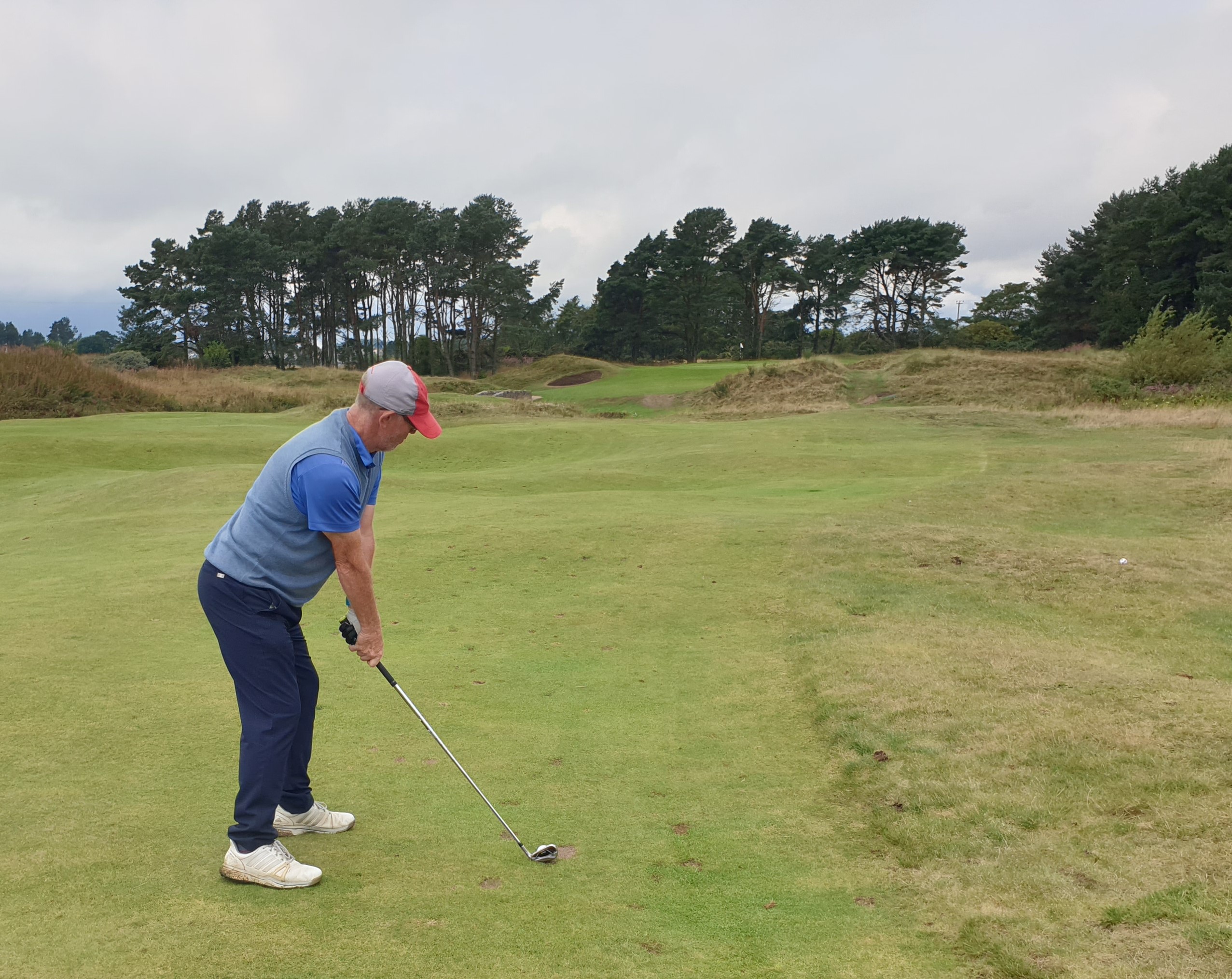
Moly’s approach at the 12th, ‘Buddon Burn’, with the grassy hummocks in full display.

How many great holes does it take to make up a great course? That’s a question worth thinking about, especially when one is pondering value? As a Dundonian, I played Panmure several times in the 1970s and 80s, when the price was relatively much cheaper. As with many ‘well heeled’ Scottish clubs nowadays, visitor prices have focused on the more wealthy visitor fees on offer, aided in Panmure’s case by the closeness of Carnoustie. At £145 for a summer season round, I think it’s overpriced, hence my score of 3.5.

Colin Snedon at the par five 2nd, ‘Lochside’. Another mystery as there is no loch, but a pretty cottage!

Returning to the Hogan story, here’s what my investigation concluded. He started off practicing on Carnoustie, as was his plan, but found that its practice area was located next to the Barry Buddon military firing range. For Hogan, this was too noisy! So he then practiced for “an hour to an hour and a half each day at Barry” (Hogan’s words), using the 17th fairway and green (which he had cut shorter), as his practice area. As he was adapting to the smaller UK ball he was focused on his ball striking and yardages. He then went on to Carnoustie each day for his practice rounds and, late into the evenings, meticulously measuring the course, for key distances, as a modern caddy would do for his professional. He played 3 balls on each tee (to left, centre and right of the fairway). He missed one fairway in 4 rounds.

The 5th hole, a short but still very tricky par 3.

Given that he was practicing at Panmure for about a week, for about an hour a day, I think it’s highly unlikely he ever played a round at Panmure. Why would he, when he needed to learn Carnoustie’s monstrous 7,200 yard course.

As to the story of the 6th hole being Hogan’s favourite? Well, intriguingly, Carnoustie Championship course’s 6th hole is also called ‘Hogan’, with its famed ‘Hogan’s Alley’ describing a portion of land created between a loop of the Barry Burn. Might he have been confused? Nonetheless, both 6th holes are candidates for inclusion into a list of great Scottish holes.

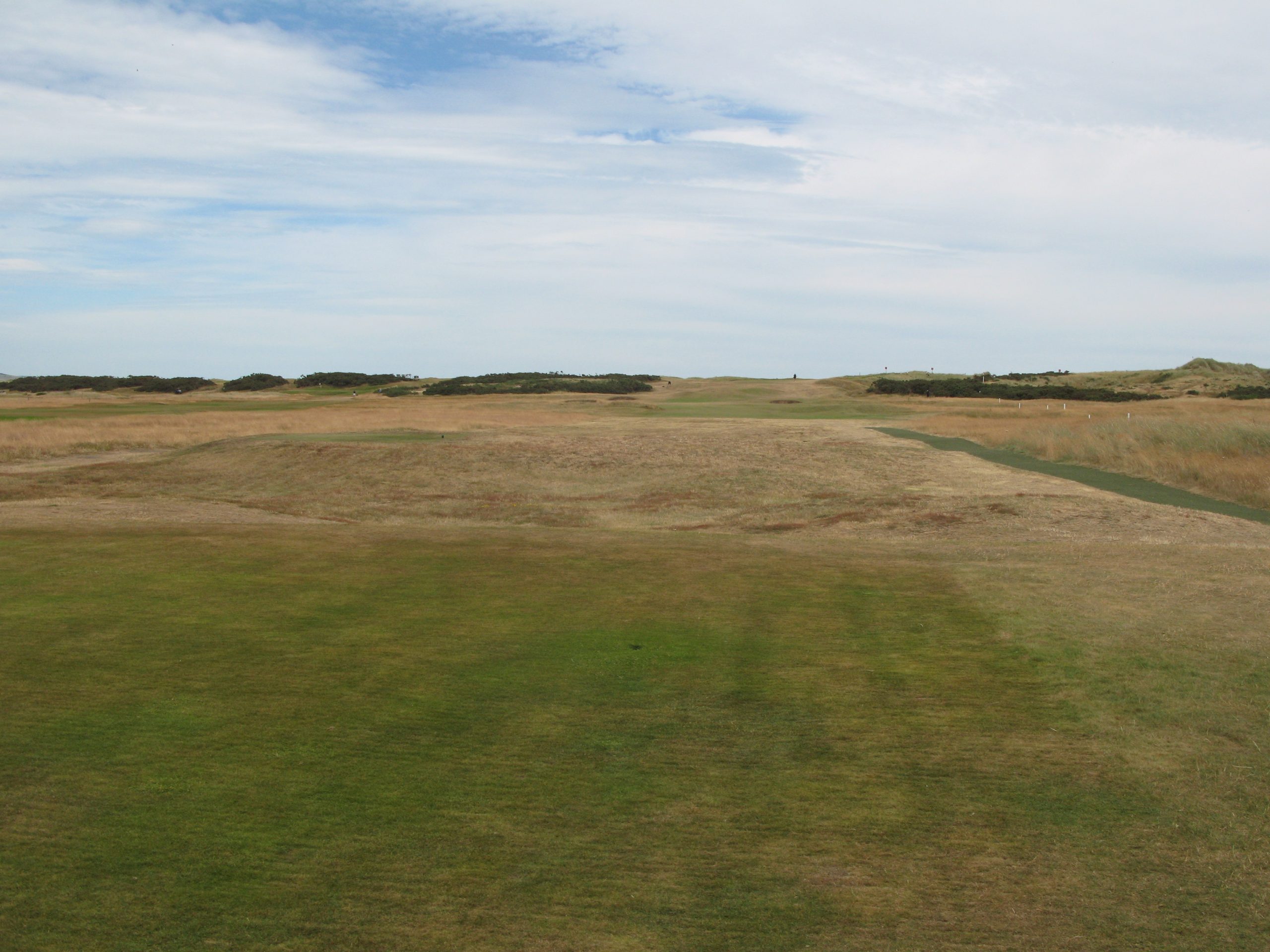
The 17th, Ben Hogan’s driving range, helping him prepare for his 1953 Open victory.

Panmure is a great course, full of history, with a brilliant stretch of holes; however, other than for the soldier’s firing on the range, the ‘Hogan’ room at Panmure Golf Club would need another name.

Interestingly, there are still no red tees at Panmure.

Facts:

Course Type: Links

Par 70  (2 par 5s, 12 par 4s, 4 par 3s)

Distance (blue): 6113 yards

Moly’s Gross score: 100

Moly’s 100 included only 1 par. In high winds and wet, just too challenging.

159. Carnoustie Buddon. 20 Aug 22.

With top quality greenkeeping this is the best option for mid to high handicap golfers at Carnoustie.

Round £75. Par 68. Course Rating / Slope Rating (yellow) 67.7/117. Value (out of 5) – 3.5

Barry Buddon is a 2,300 acre peninsular between Monifieth and Carnoustie. Used as a military training area since 1850, the Scottish comedian, Billy Connelly, wrote his “weekend soldier” song based on his territorial army experiences here.

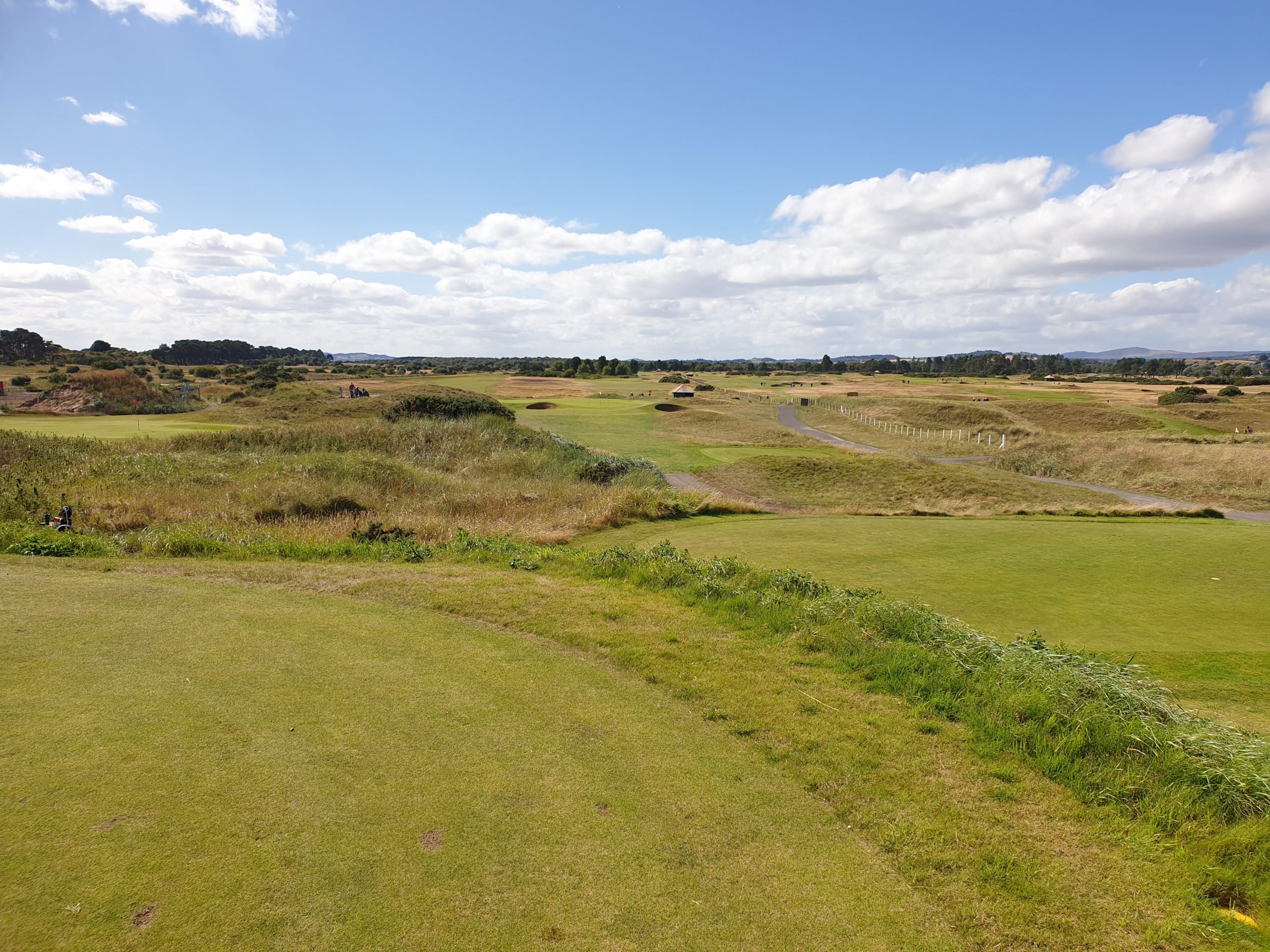
The second on The Buddon, a well bunkered par 3, with the view over the Championship Course to the right, beyond the white OOB stakes.

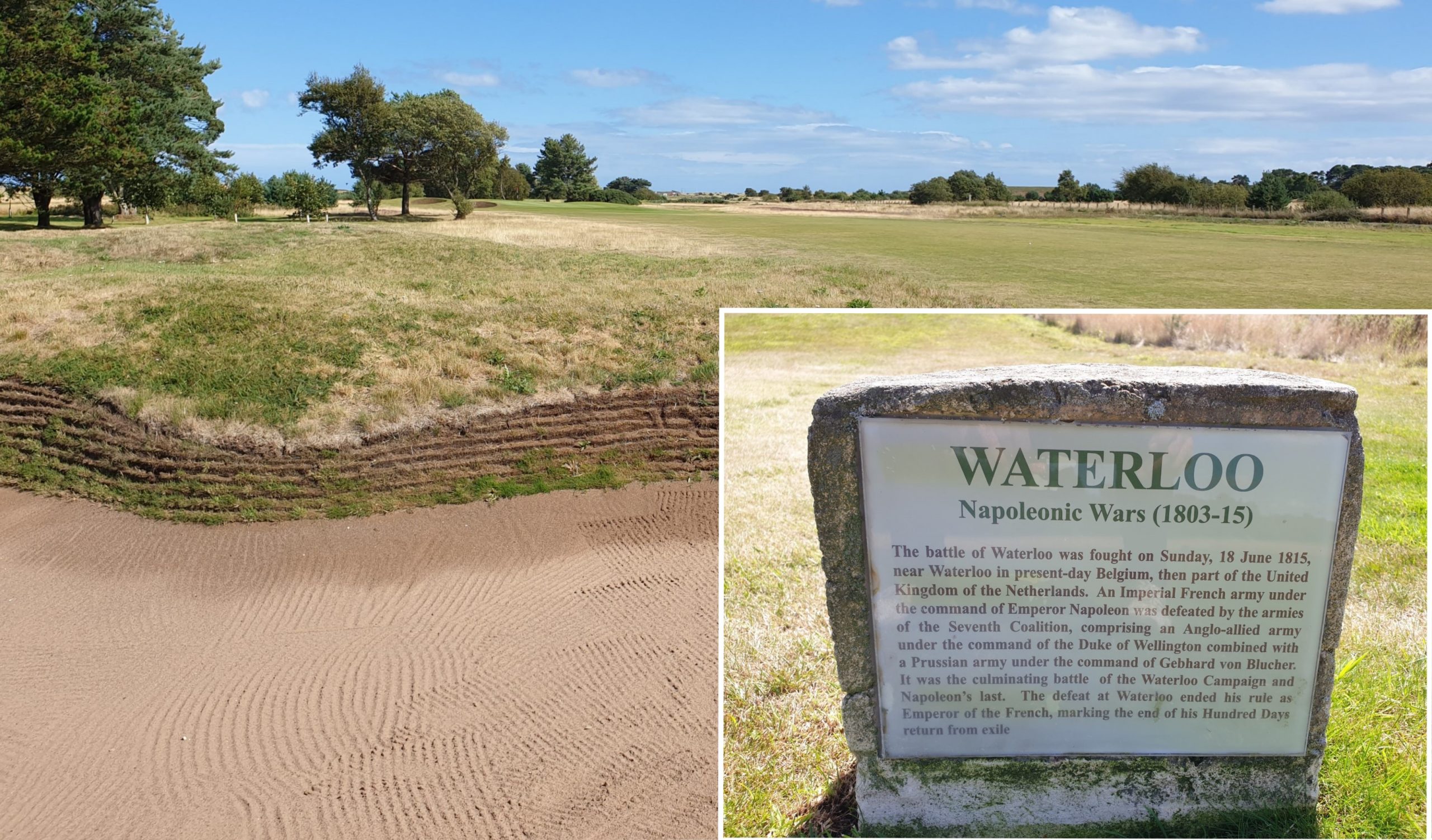
‘The Buddon’ is the youngest of the three Carnoustie courses. Designed by prolific golfers turned architects Peter Alliss and Dave Thomas, it was built on land previously used for military training and opened in 1981. The army range, immediately adjacent the course, is still operational, so it’s not uncommon to hear gunshots as you play. Recognising the neighbouring heritage, the holes are named after battles with the stone memorials on each tee well worth reading.

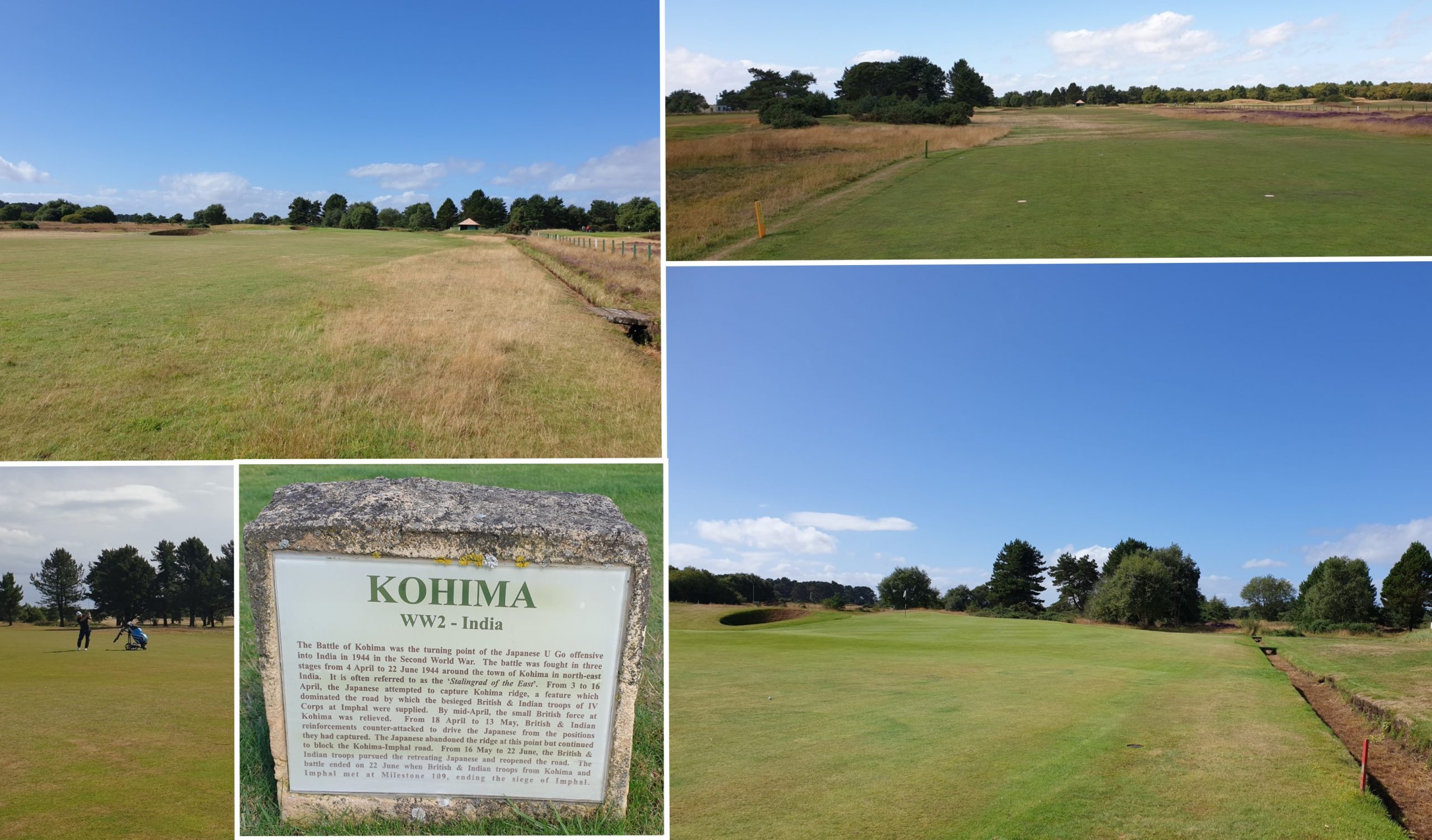
The 5th hole, “Kohima”, a par 4, named after the WW2 battle in India.

I therefore couldn’t help thinking about Billy Connelly as I played The Buddon, especially around holes 11 through 13, those closest to the military range. You might be playing exactly where Connelly lay in his camouflage dreaming up lyrics – it was during those weekend soldiering visits that Billy made his first public appearance in the Stag’s Head pub in Carnoustie in July 1962.

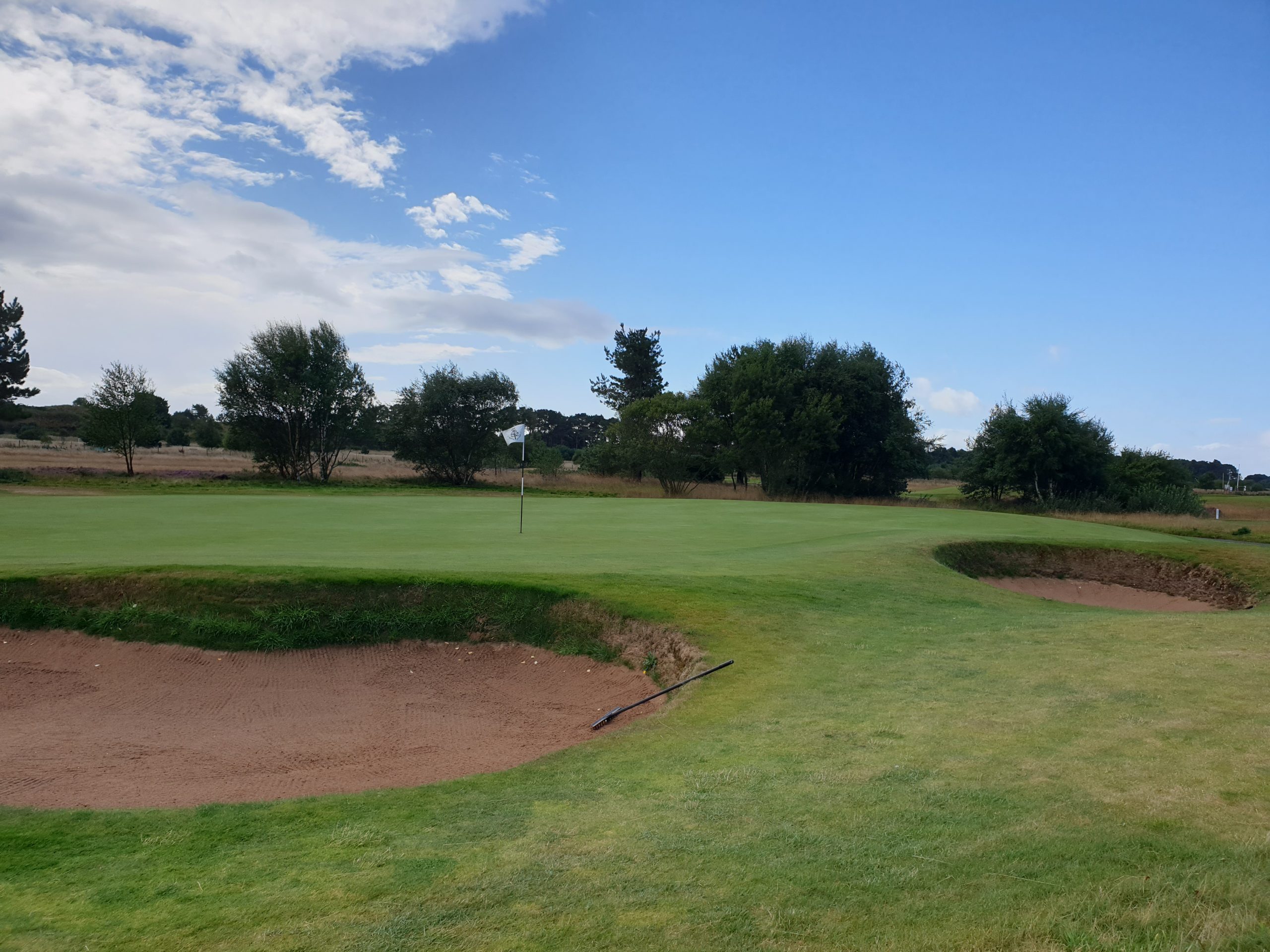
The beautiful bunkering and greens at The Buddon, here seen at the 4th, a mid iron par three.

Holes 2 to 5 run beside the Championship course and you clearly see you’re playing the same turf, the same immaculately contoured bunkers, the same rough – only The Buddon is much shorter. At a quarter of the price though of the main course, but with the same greenkeeping quality, you wonder why people put themselves through the potential torment of the ‘Carnastie’ layout. When I get asked “How difficult is Carnoustie?”, I tell them about a 7 handicap member, who’s never broken 80.

Moly at the 6th, the first of the non-links holes on The Buddon, a tough par 4 of nearly 400 yards.

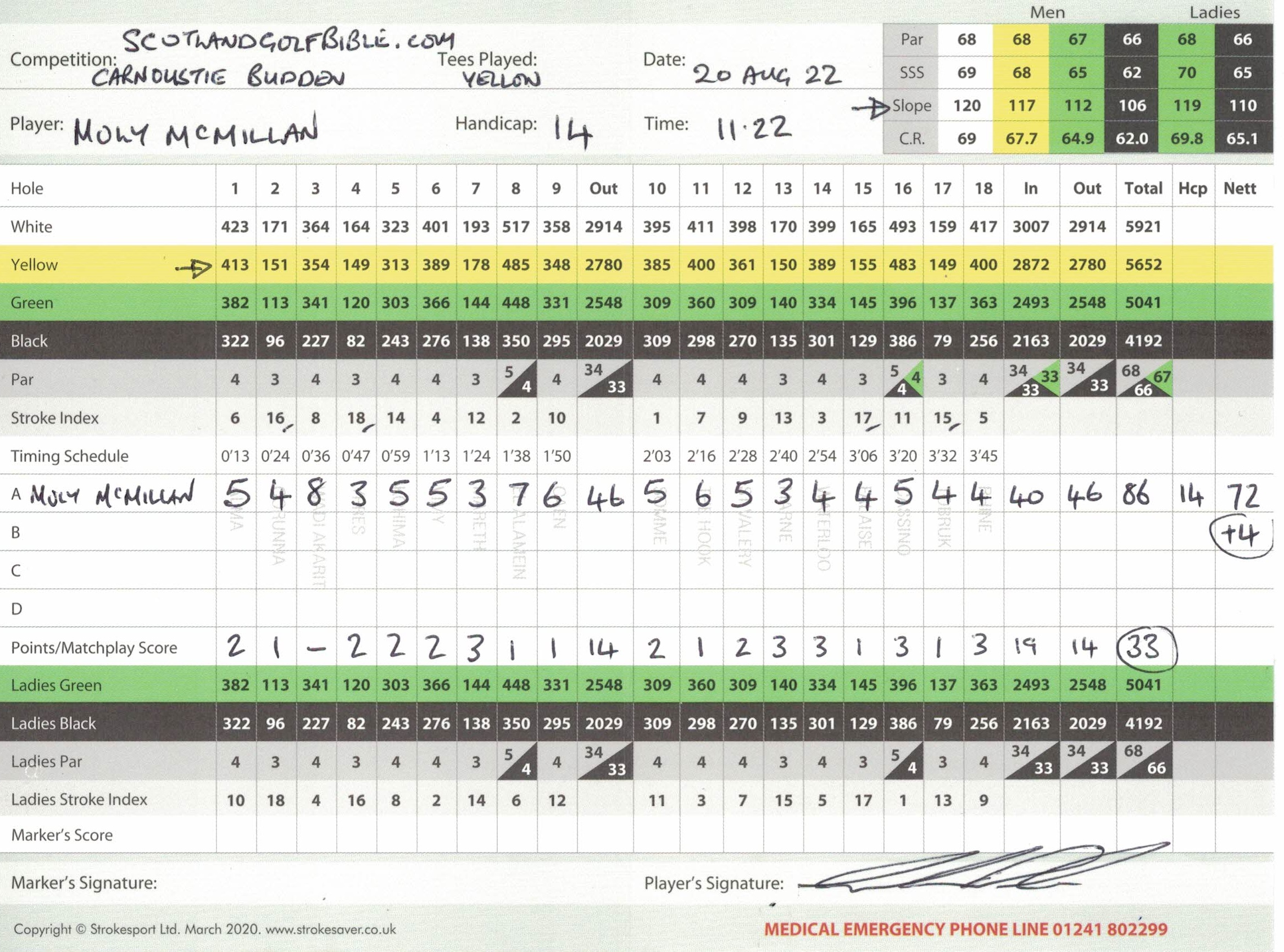
The Buddon, on the other hand, at under 6,000 yards, offers great variety and the better opportunity to play to your handicap. I scored 86 (33 stableford points) despite winds gusting up to 40 mph. Many of the holes (6 through 16) are routed through trees, and have a distinctive heathland feel. Throw in the views towards the Sidlaws Hills and it could be the highlands. It’s consequently a great venue to discuss what constitutes a “true links”?

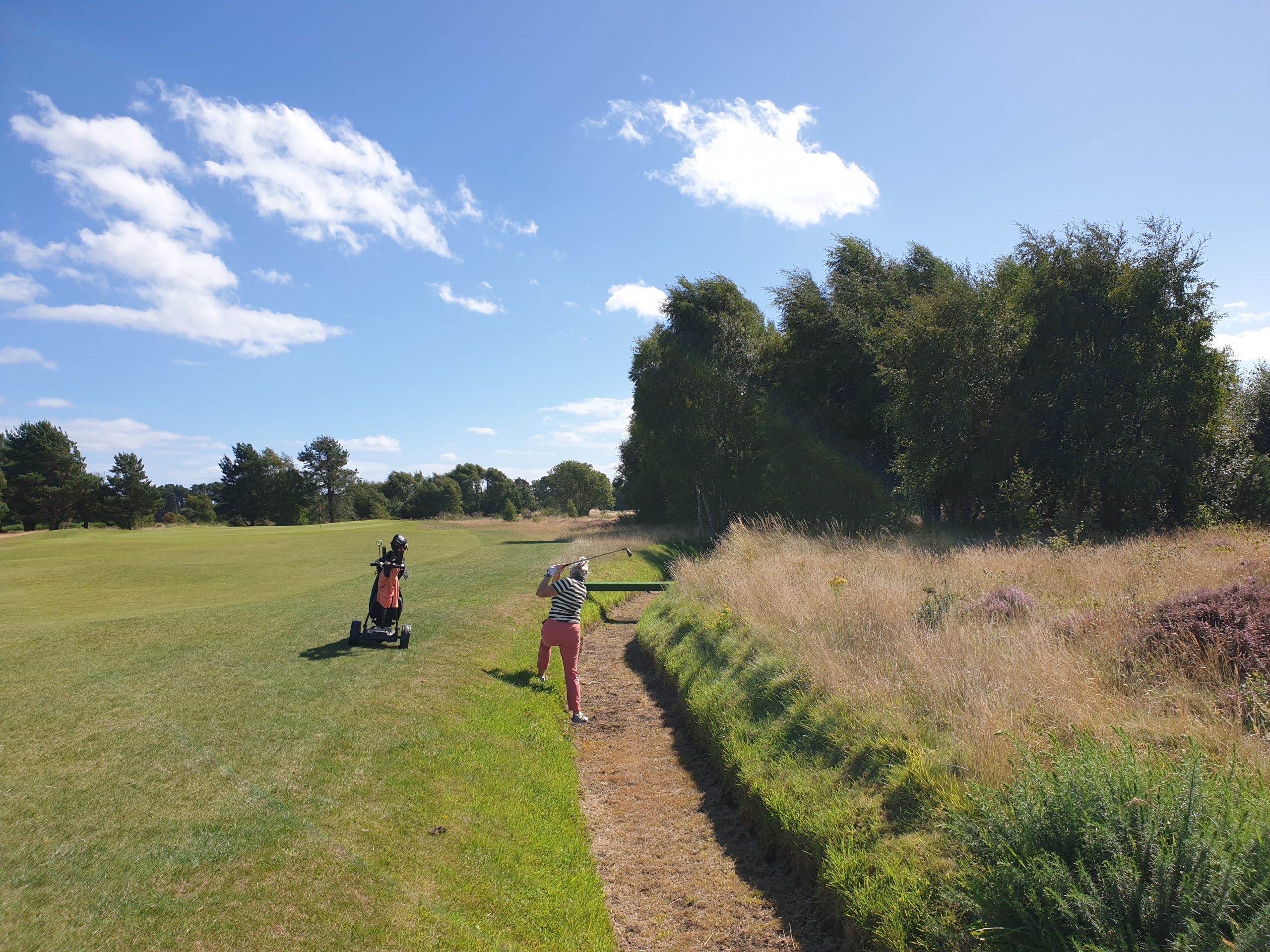
Fran plays from the ditch on the par four 12th hole, getting a par. Take a bow Fran.

Without the Barry Burn in play, Alliss and Thomas have made good use of man made ditches to create the same hazardous feel, albeit you can play out of the ditches. The course is generally an “out and back” layout, so the south-westerly prevailing wind is a big challenge, especially on the first 5, where OOB on the right (the boundary with the Championship course) comes into play. This was my own undoing on the third, where I hit the fairway, but on the wrong course!

The 14th, Waterloo, played with the prevailing wind, a good birdie chance, as long as you miss the large fairway bunker.

The course was in excellent condition when Fran and I played along with our host, family member Greg Kemp. The 16th was undergoing a new tee construction, but still in play from a forward mat. The greens are large and were a delight to putt on. On the day, we all played pretty well.

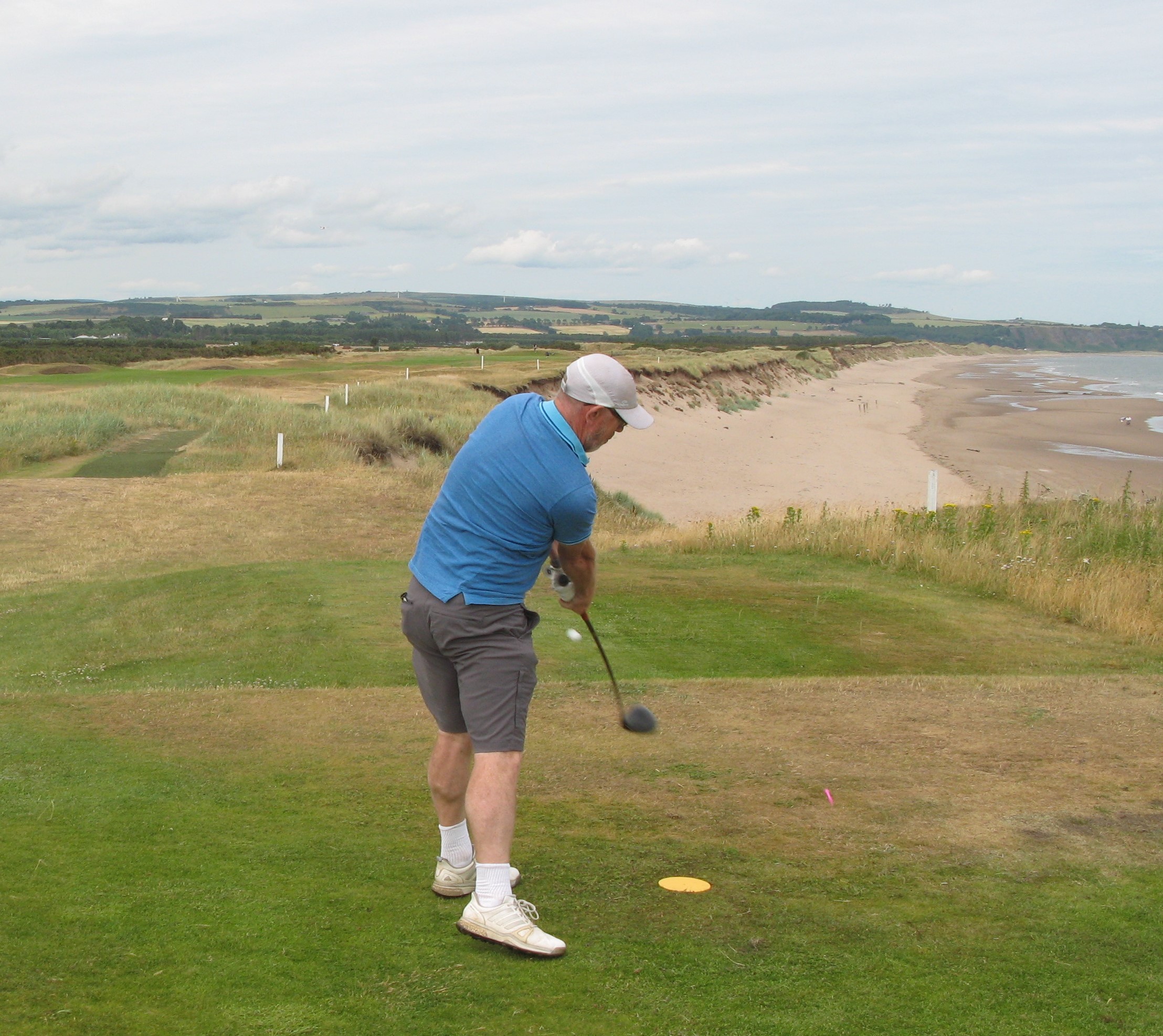
Greg’s power on show, driving at the last on The Buddon, a long par 4.

Of the two ‘secondary’ courses at Carnoustie, there’s little to choose from in determining which I would recommend. The Burnside has more history and is a truer links course, whereas The Buddon has more variety and is better designed. If it’s a windy day, go for The Buddon, because at least the trees give you some respite.

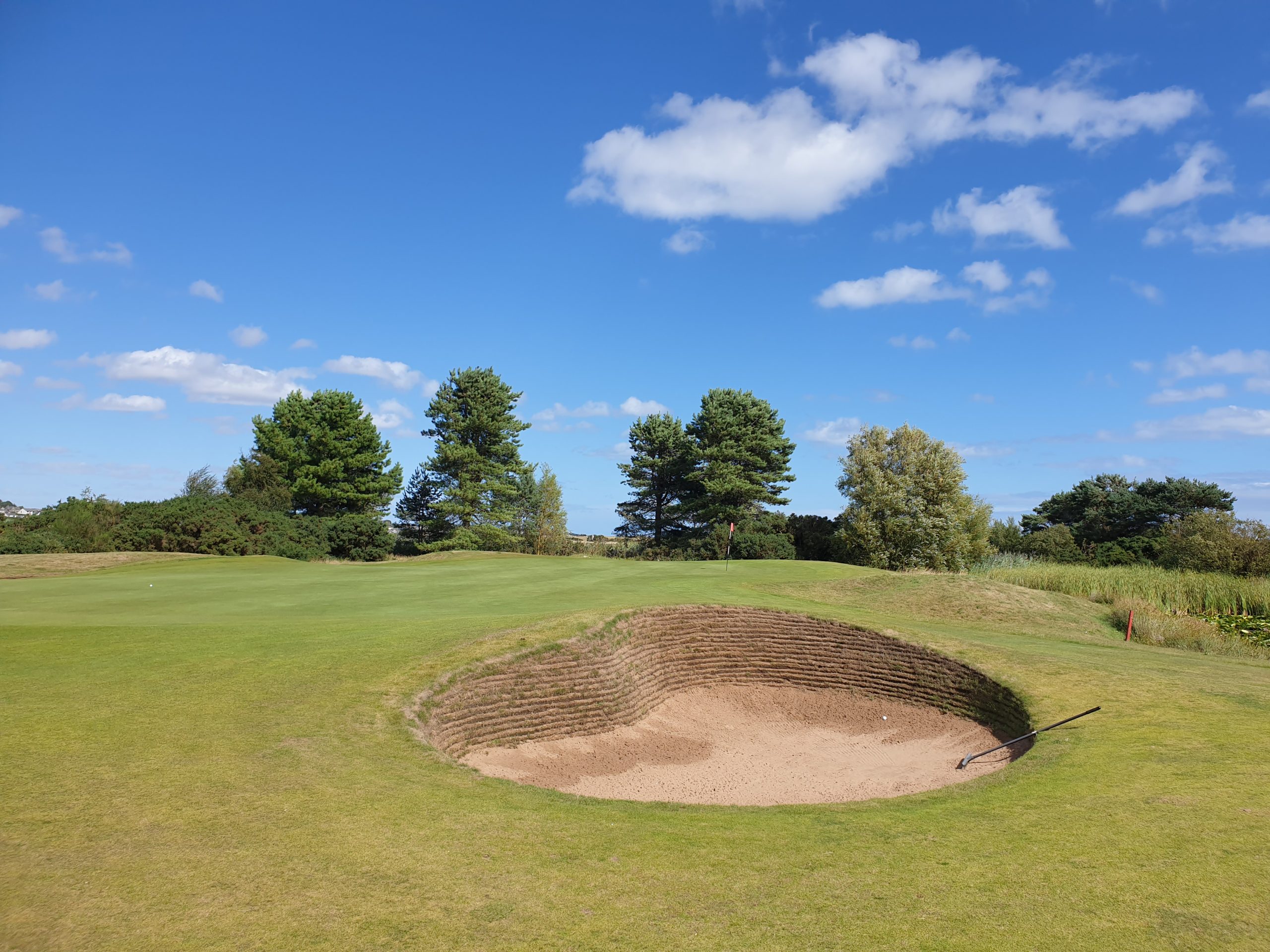
The short 15th hole, again showing the great bunkering on The Buddon. Thankfully its not my ball!

As to value, its a case of 3.5 for me, as the price of £75 is inflated due to its Carnoustie Championship companion. Having said that, if you ‘need’ to play on Carnoustie, this is probably the best option if you’re not single figures.

Facts:

Course Type: Links

Par 68  (2 par 5s, 10 par 4s, 6 par 3s)

Distance (yellow): 5652 yards

Moly’s Gross score: 86

Moly’s Buddon scorecard – a solid 86, especially in very high winds.

154. Montrose 1562. 11 July 22.

Spectacular natural links, but undermined by misleading branding.

Round £100. Par 70. Course Rating / Slope Rating (yellow) 70.3/126. Value (out of 5) – 3

Moly’s score – 91

Golfers often stand on a tee and ask “Where’s the green?”. On Montrose’s first tee, I can imagine a newcomer to links golf asking “Where’s the course?”.

The expanse of links land on view from the Montrose 1562 first tee, albeit in 1562 there would have been no course in this view!

Montrose’s 1562 layout is one of the most natural of all links courses, and as such should be a priority for those wanting to experience this form of the game at its most basic.

Bear in mind the prevailing wind is left to right at this very formidable tee shot at the second on Montrose. Like many, I suspect, I found the brilliantly positioned left hand fairway bunker. I don’t think there can be many holes where the right hand side OOB starts to your left?

Formerly named the Montrose Medal, the ‘1562’ label has only been used since 2018; ‘1562’ derived from the claim that golf has been played on the land from that year. The current course’s story and location actually begins in the 1860s, and evolved over a 50 year period during which a number of legends, starting with Old Tom Morris and ending with Harry Colt who designed the existing course in 1913. Colt had laid out the Montrose Broomfield course a few years earlier (My earlier blog here). So in fact, the more ‘junior’ of the two Montrose courses, ‘Broomfield’, actually pre-dates the ‘1562’ course!

Frank Crowe playing a typical links shot with the putter from well off the 6th green, with the poor fairway condition on show.

Like a number of Scottish Links, there were several different golf clubs that played on the same course, often in club matches versus each other, but sadly only two of them – Royal Montrose Mercantile and Montrose Caledonia – still exist and can be used by visiting golfers.

Brian Fearon putts onto the par three 12th green, one of the holes on the east-west spur away from the coast. Looked over by Gordon Samson

The course is a really honest test of links golf, set on the robust and fast running links land of the Angus coastline. There are six northbound coastal holes, starting from the daunting 2nd, then turning back south for a couple of holes, before an east to west and back gorse-laden spur from holes 10 through 15.

The par three 16th, a very difficult hole. Arguably plays like a par 4, in the prevailing wind.

The par three 16th and par four 17th are then two holes that are good enough for the Championship course of Carnoustie; fitting, as Montrose has been used as a Final Open Qualifying venue. Many a good round will have been destroyed on those late holes.

The characteristic feel of the Montrose 1562 course, here at the “Valley” 8th hole.

Unfortunately, when I played alongside 3 of my former Apex trustees, for the inaugural “Apex Trophy”, the course was not in great condition. We encountered the ‘choice’, but very accurate, language of a few local members of this hardy Angus town, mid way between the cities of Dundee and Aberdeen. I was ‘telt’ by an old guy (in his 80s, fully adorned in football colours) that “Son, the course is in its worst …… state I’ve ever seen and I’ve been a member for more than 50 years!”. It was certainly not conditioned good enough for the £65 twilight round fee, never mind the £100 daytime fee.

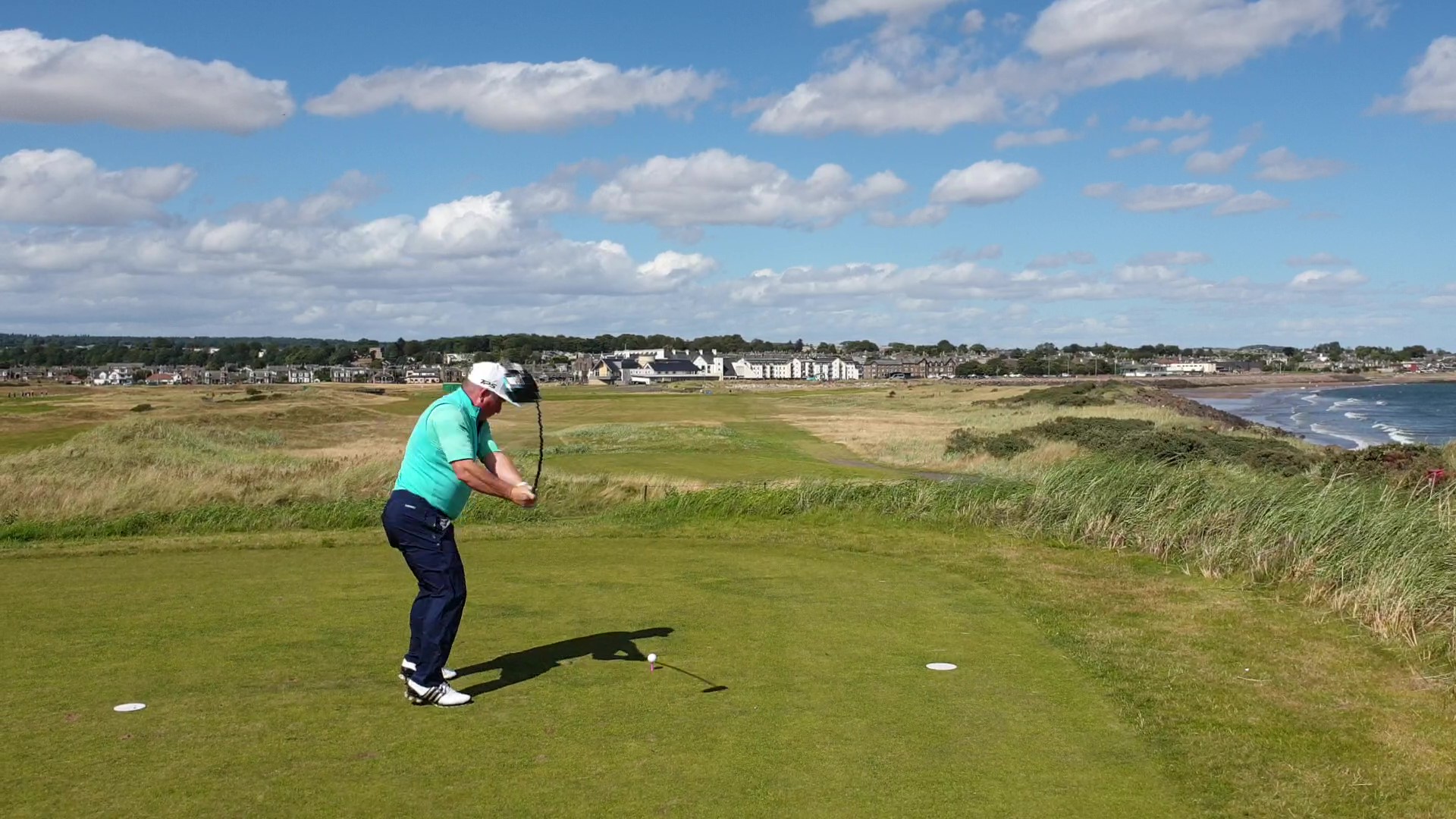
Moly teeing it at the final hole, one of the easier holes at Montrose. The original course was off to the left of this hole.

Nevertheless, the bunkers and greens were decent, and the quality of the layout and challenge was never in doubt, with the yellow tees still presenting 6137 yards in length. A strong wind would undo any golfer here.

I played pretty well for 91, but this was nowhere near good enough for the trophy with Gordon Samson shooting an excellent 83 (40 points), and will be severely cut for the next trophy outing!

Facts:

Course Type: Links

Par 70  (1 par 5s, 14 par 4s, 3 par 3s)

Distance (yellow): 6137 yards

Moly’s Gross score: 91

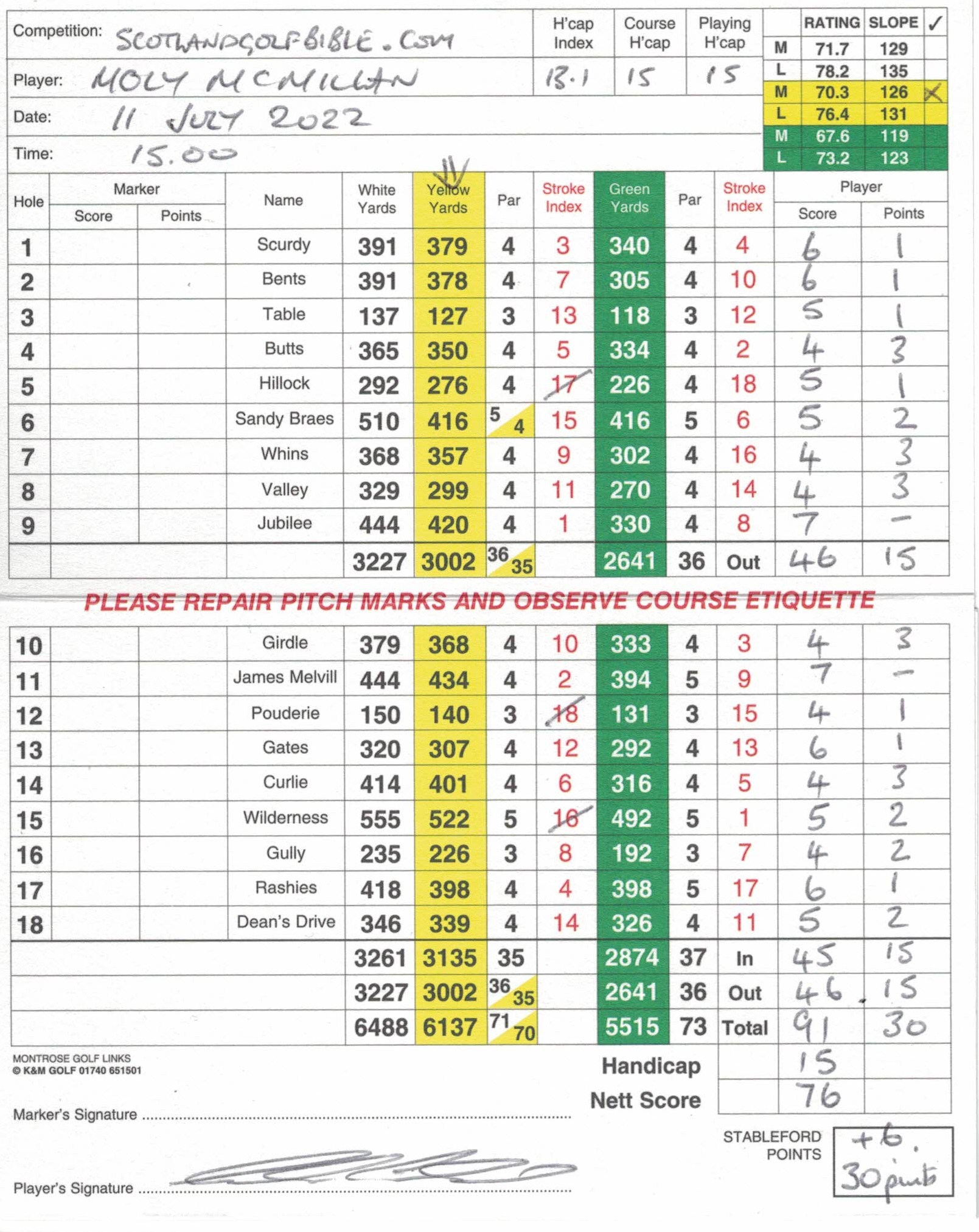
Moly’s Montrose 1562 scorecard – 91

143. Gullane Number 1. 24 May 2022.

Arguably the epi-centric viewpoint of world links golf

Round £195. Par 71. Course Rating / Slope Rating (yellow) 70.4/122. Value (out of 5) – 5

In Michael Murphy’s great book, “Golf in The Kingdom”, golf is eulogised in metaphysical or spiritual terms. In starting to write about Gullane, I can’t do better than Murphy’s epigraph, the Scottish golf saying:

“Golf was invented a billion years ago; don’t you remember?”

Oh, to win the lottery and live next to Gullane Number 1’s first tee.

That epigraph made complete sense as I walked onto the 7th tee at Gullane Number 1 for the first time. Set on the small Gullane Hill, it is said on a clear day you can see fourteen counties. What is without debate, I think, is that you have the greatest links land view on earth. Perched there, you are at the mid point of the East Lothian ‘golf coast’ stretching from Dunbar to the east and Musselburgh to the west, with names synonymous with world golf – Dunbar, North Berwick, Archerfield, Renaissance, Muirfield, Luffness, Kilspindie, Craigie Law and Longniddry.

Moly on the epi-centric viewpoint of world golf – the 7th tee at Gullane No 1.

Look north across the Firth of Forth towards the Kingdom of Fife, with Leven, Crail, Elie and St Andrews; see past the Tentsmuir Forrest towards the links of Carnoustie, Montrose, Royal Aberdeen and Cruden Bay. Golf has been played on the East Coast of Scotland for hundreds of years, perhaps indeed ‘billions’. This 7th tee on Gullane Number 1 could be the epi-centric viewpoint of world golf; the Old Course is undoubtedly the “home”, but Gullane’s viewpoint is unparalleled.

The second hole at Gullane No 1, a par four “carved into the Ancient Links”

So much has been written about Gullane, including the crafted explanation of posh ‘Gillin’ versus humble ‘Gullan’ in his book, “Playing Through”, by Curtis Gillespie, that I decided to more or less tell this story mainly through pictures.

Alastair Allanach plays his low top spin drawing drive, which galloped down the “Racecourse” third; a swing honed and bartered over many years of tutelage by a South African pro. The Hill was used in bygone days by racehorses.

Accompanied by Gullane member, Alastair Allanach, a man who has played more golf courses than anyone I know, we had an absolute blast, waxing lyrical about Gullane and its history. Alastair, a great all round sportsman, and now well into his 70s, was keen to get in at least two of the three Gullane courses on the day, as he struggles to “carry my bag for three rounds nowadays!”

Gullane is one of a few nesting grounds where Larks abound, here encountered at the 8th green.

I met Alasdair a few years ago, when I helped a tiny bit in his editing of the golf book, “The Golfing Life of Jock Kirkcaldy“, the alter ego of our mutual great friend Frank Crowe. The book was forwarded by Gary Player, a friend of Alastair’s – of course!

The brilliant bunkering at the par 3, ninth hole. Although not “the turn”, as with constant directional changes on the interweaving course, it’s unlike the many “out and back” links in Scotland.

This Championship course, the first of the three Gullane courses, dates back to 1882, (the others being innovatively named Gullane 2 and Gullane 3) and it was in brilliant condition. It could have immediately held another Scottish Open without any adjustment. The greens had a little more grass than a professional tournament would have, in order to ensure they didn’t become unplayable in the wind. We had a relatively still day on the links – only a 10mph breeze. Whilst Gullane 2 and 3 were both designed by golfing royalty, Willie Park Jr, the designer of Gullane 1 remains a mystery, which seems so apt.

The bunkers at the left of the 12th fairway, a short par 5, but played slightly uphill and into the prevailing wind – a challenge. Moly’s birdie 4, was witnessed by a group of Swedish golfers, among the many international visitors Gullane gets each year.

The bunkering was exceptional. Strategically placed, penal, but not impossible, many of the new US style courses could learn from a Gullane recce. I recently played on the Ryder Cup course at the K Club and found that almost all the bunkers required a shot height and carry I no longer had in my bag. Gullane bunkers give you a chance.

The immaculate bunker at the 14th green – penal but not impossible.

I was very pleased with my 91, despite 3 triple bogies, including at the stroke indexes 1 and 2 holes, the 5th and 10th respectively. I played off the yellow tees at 6162 yards, plenty enough distance for me. I had such a great time playing Gullane. I only hope all of the very fortunate 1200 members feel as blessed as Alastair does, who was a joy to play with on a memorable day for me.

The approach at the long par 5 15th hole.

The course sits on a vast area, so expect to 3 putt some of the monstrous greens. Despite being a busy day with all tee slots taken, I was amazed to only hear one shout of “fore”, a measure of the space here.

Moly has a rare birdie chance at the uphill par 3, 17th. Note the rain in the Firth of Forth, which never arrived on the course.

Now for the assessment of value. Golfing visitor fee inflation has really impacted Scottish golf. In 2018, in my St Andrews Old Course blog, I said anything higher priced than the old course can’t be worth the money. At the time the Old Course was £180 for a high season round, this year it is £270, a compound annual rise of over 10% per year, or more than three times the retail price index over the same period. Put another way, using 2018 as the datum, the Old Course should be £205.

All good things come to an end – here Moly walks towards the 17th green, a deceptive par four, with the town of Gullane awaiting, watched over by Berwick Law.

No matter how much might have wanted to, in the end I couldn’t give this course anything less than 5 out of 5 for value, despite the price tag of £195. It’s a must play links golf course with unbeatable turf, bunkering, green surrounds, sea breeze, wispy rough.

Play, if for nothing else, to stand on the exact epi-centric viewpoint of world links golf. If such a thing could exist.

Facts:

Course Type: Links

Par 71 (3 par 5s, 11 par 4s,  4 par 3s)

Distance (yellow): 6162 yards

Moly’s Gross score: 91

Moly’s Gullane Number 1 scorecard – 91
« Older posts Newer posts »

© 2026 Scotland Golf Bible

Theme by Anders NorenUp ↑