A guide to green fee value for money

Category: 5 star (Page 4 of 7)

132. Grangemouth. 24 Mar 22.

Forget the industrial surround to experience Scottish golfing value at its best

Round £15. Par 70. Course Rating / Slope Rating (yellow) 69/121. Value (out of 5) – 5

As long as courses like Grangemouth remain open and accessible, Scotland will easily retain its lead in providing the best value golf worldwide. At only £10 for a ‘winter round’ or £15 for summer, this is as good value golf as you can get.
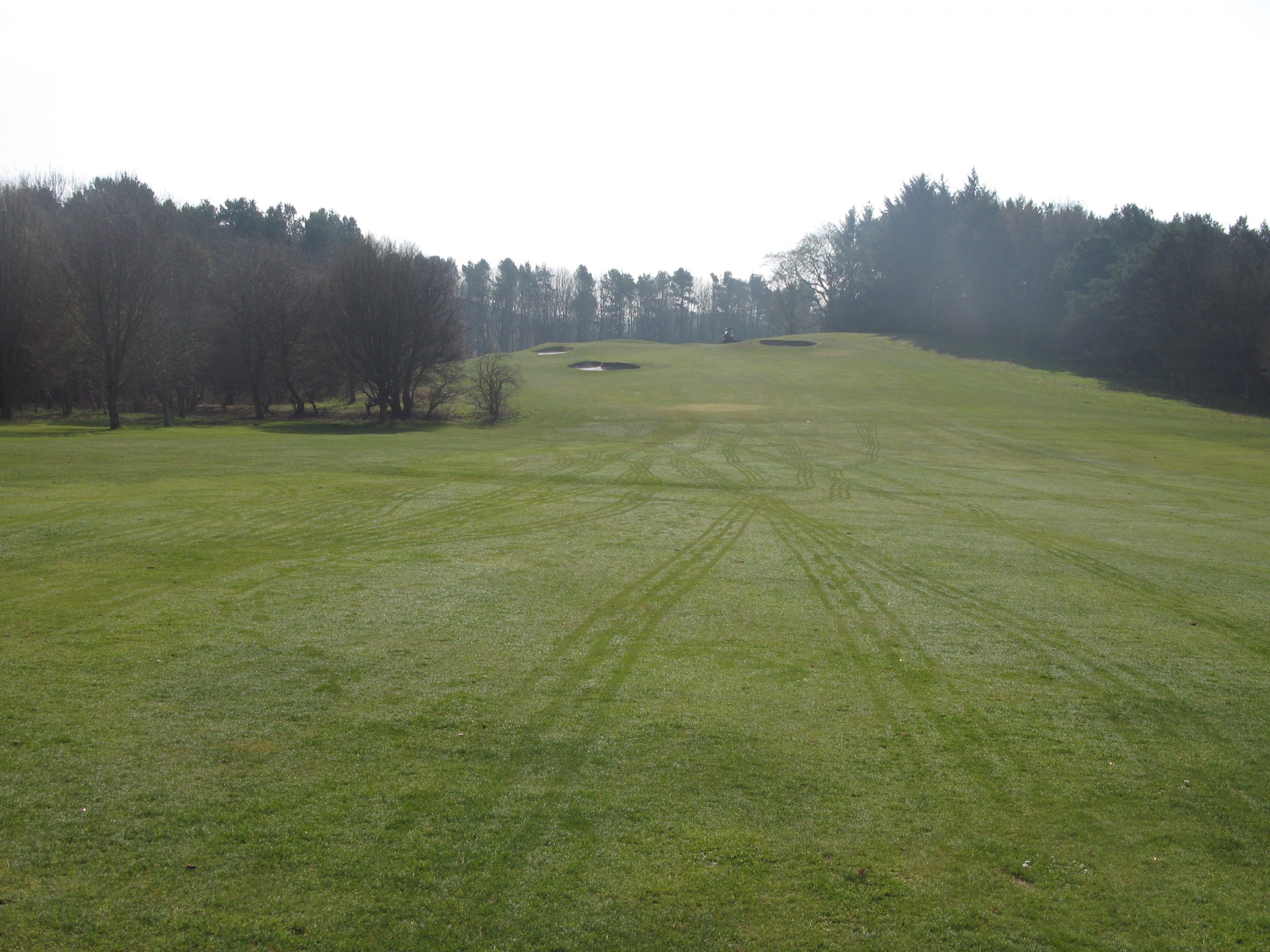
You quickly realise the quality on offer at Grangemouth, with the approach at the first hole.

But Grangemouth Golf Club and it’s courses, have not always had a guaranteed existence and the Scottish golfing community can’t take venues like Grangemouth for granted – its history is worth dwelling on.

The current parkland municipal course, opened in 1974 by the local council, is just outside the village of Polmont and close to junction 4 of the M9 motorway. However, the first Grangemouth golf course can be traced back to the mid 1890s, and its growth and decline are charted on the excellent web site “Forgotten Greens of Scotland”. After a few false starts, a 9 hole course opened in 1908 at Abottsgrange, including greens created through “beating, rolling, sanding, cutting”. A “small shelter was built to protect against the ‘Sudden Blast'”. Initially there were 113 men and 67 lady members, highlighting the non sexist nature of golf in Scotland. A clubhouse was soon built but burned down in 1924, with the most informative comment being the sad loss of 200 sets of clubs, “only those few who took clubs away at the weekend were saved”.
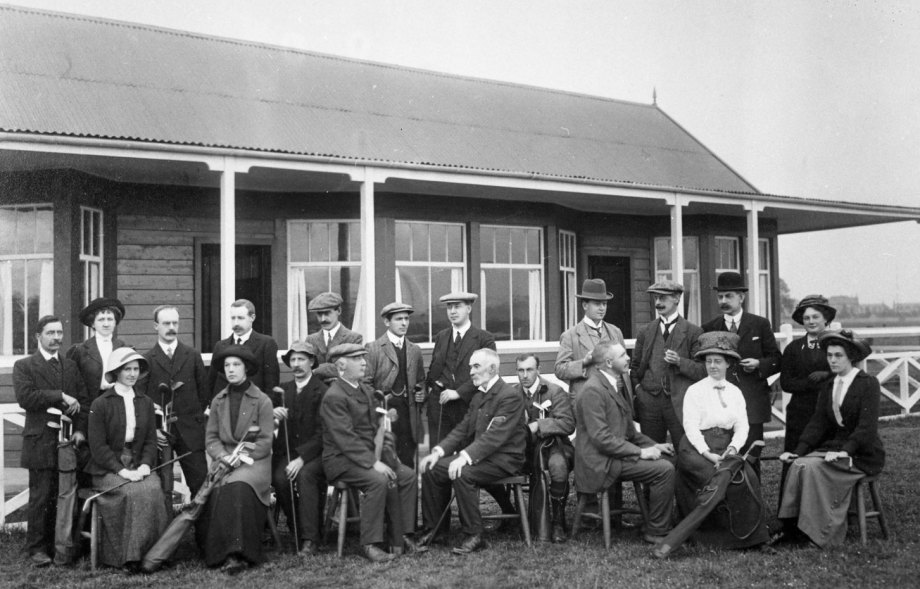
The original Grangemouth members. We should never take the longevity of courses for granted.

By the early 1950s the course, now with 18 holes, became a victim of a mix of expanding urban growth, the building of a new Scottish Central airfield and political wrangling within Stirling County and the local Town councils. This led to the closure of that course in 1954, now the sight of a school and housing estate, with the political promise of a new replacement course on Polmonthill. It was finally established 30 years later! Politics.
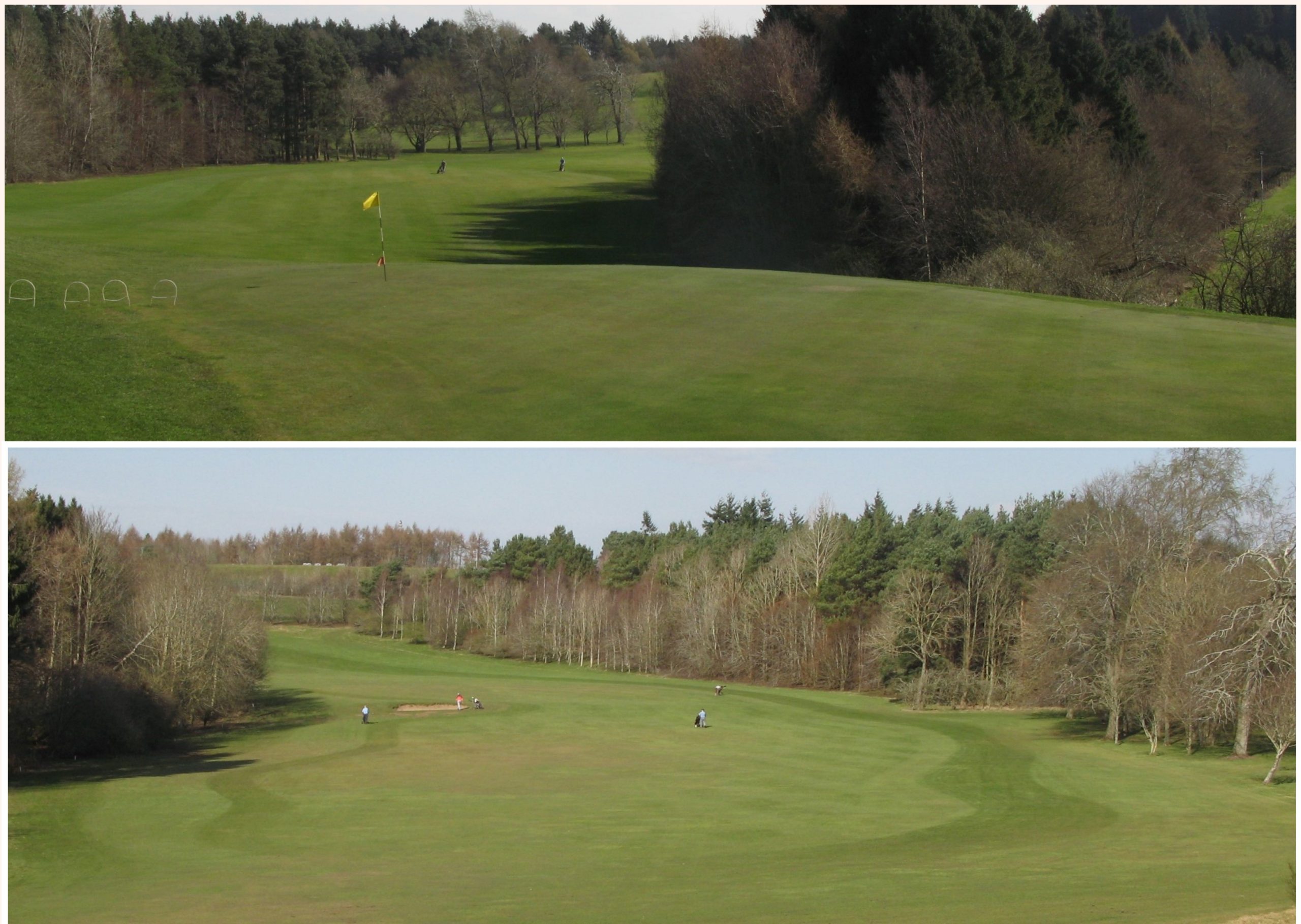
The long par four 8th, “Gambler’s Gap” (you can see it), the most difficult hole.

Arguably, the current course was worth the wait. At well over 6000 yards, this undulating layout, bordering Polmont Woods, is very challenging. When I played, on a fine March day, along with my old friend Frank Crowe and two of his friends, Colin Campbell (a local member) and Ian Ponton, it was in remarkable condition. It beggared belief that it is maintained by only two greenkeepers; the greens were first class.
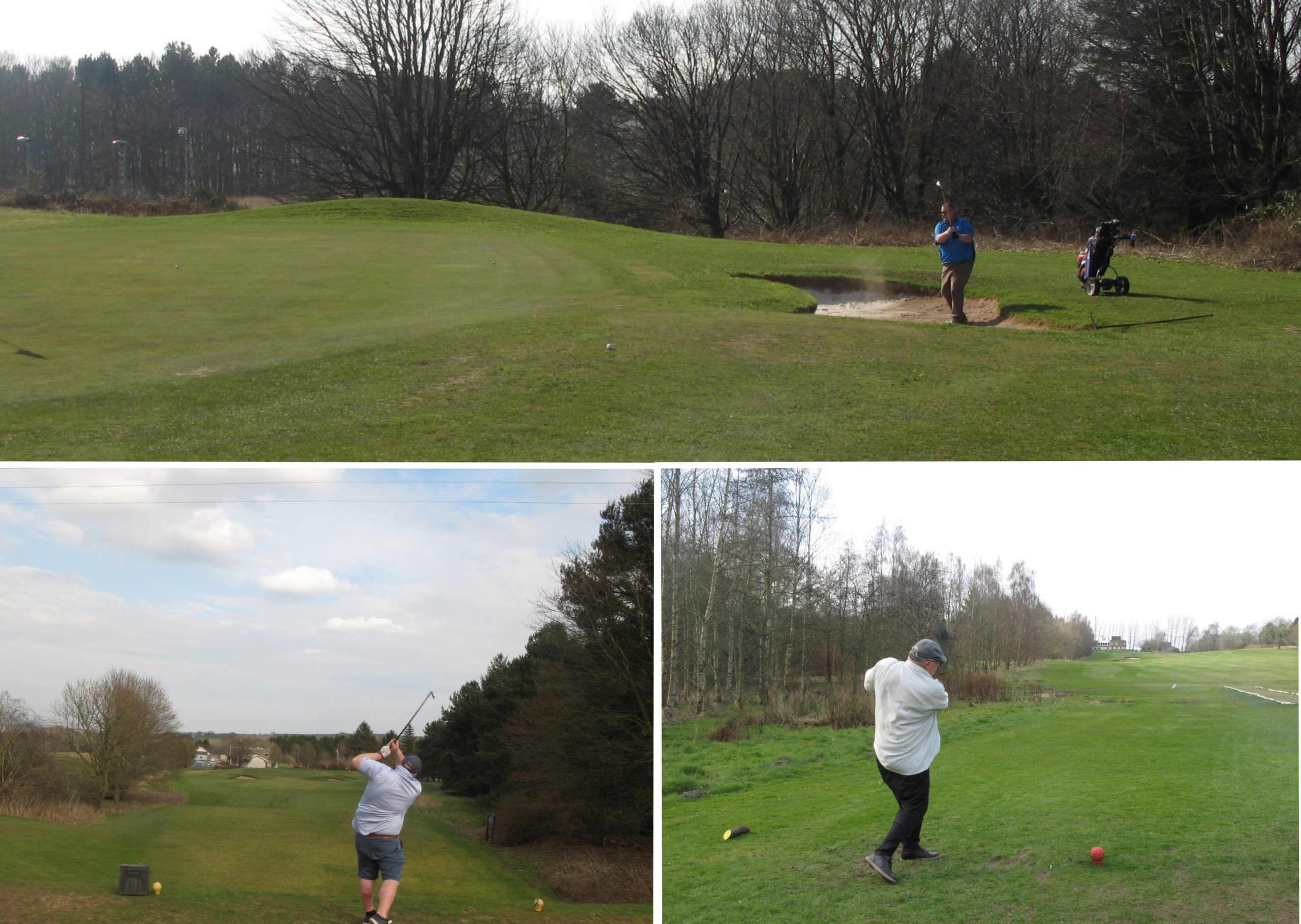
My playing partners in action.
Top – Ian Ponton at the 2nd; Bottom left Colin at the 15th; Frank at the 18th.

The course has won a “Scottish Municipal Course of the Year” award in the past, and you could see why. The bunkers, where admittedly more rakes were needed, and tees, could have been a bit sprucer; but this was golf costing about the same as two pints of beer, with high summer rates still being well short of £20. If any international tourists wanted to see what is on offer elsewhere in Scotland, other than the heady courses in nearby Fife or East Lothian costing over 10 times the green fee, this would be a great course to play.

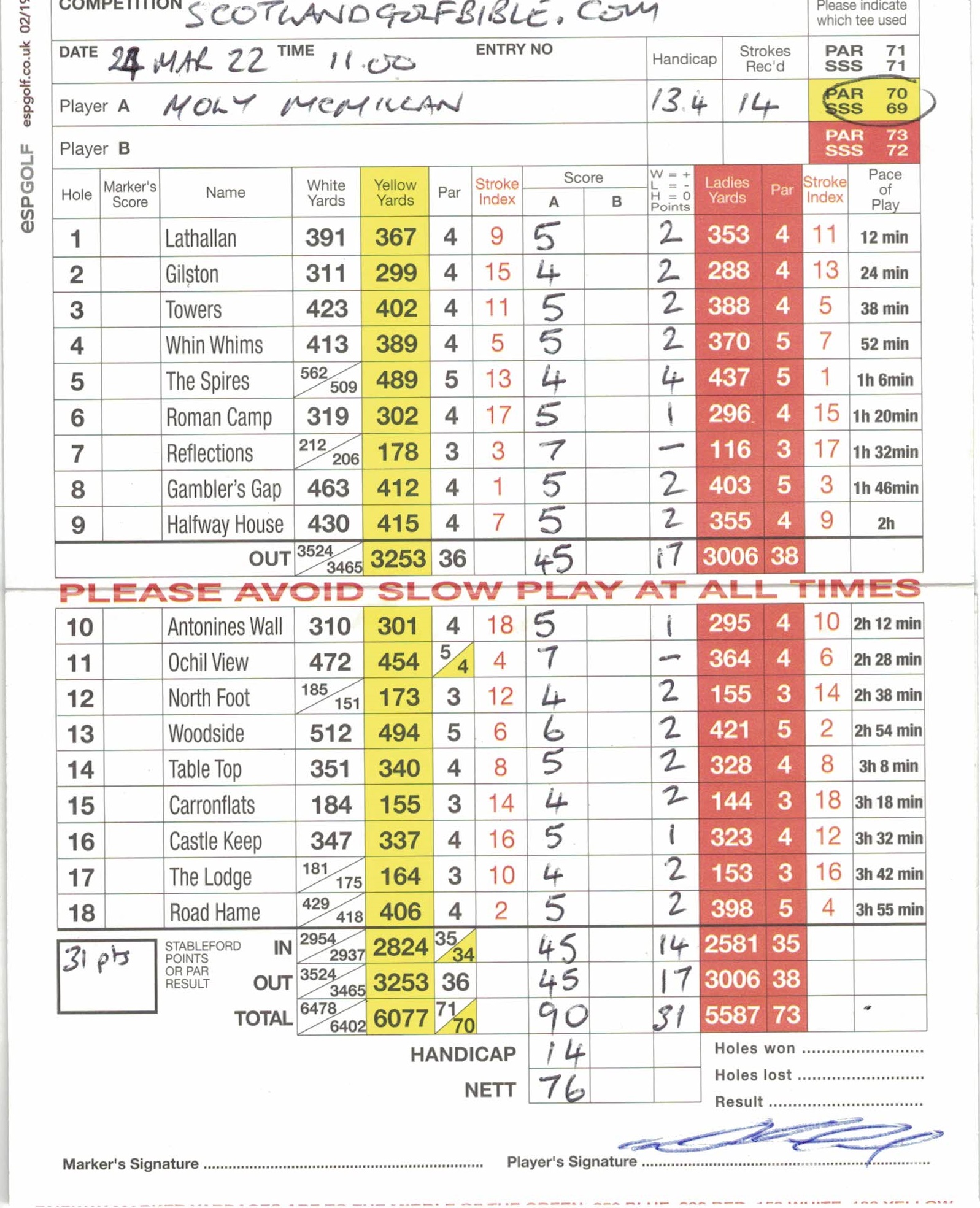
There are some memorable holes, not least the brilliantly framed par fours first and fourth holes, both played uphill into well bunkered greens. The signature hole, “Reflections”, the par three seventh at 178 yards, played over a resevoir, left me ‘reflecting’ how I racked up a 7, including my first ball finding the water.
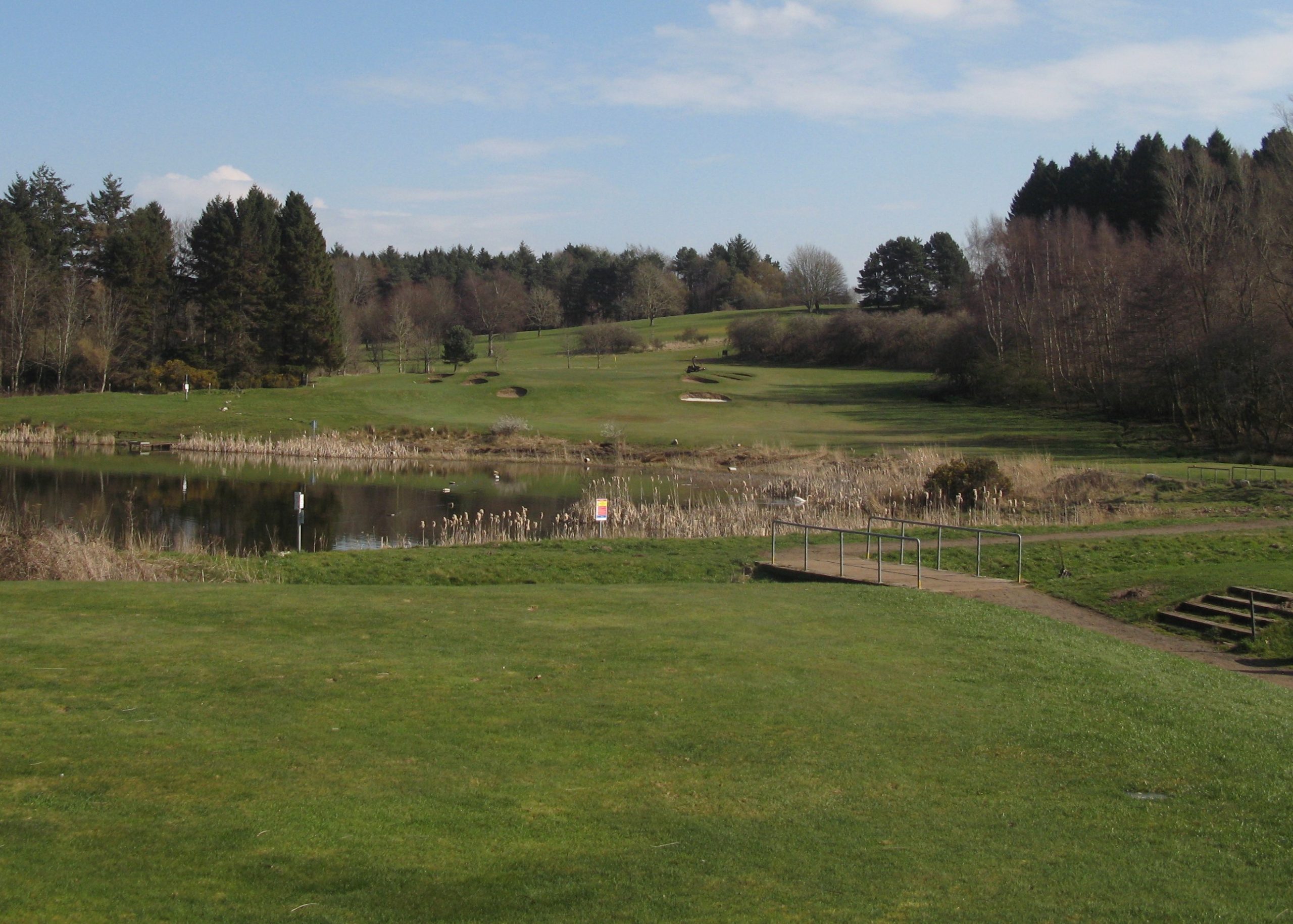
The par three 7th. Is there a finer visual par three on any other UK municipal course?

The greens were very tricky, as my seven 3 putts attest; this was due to the large and sloping nature of them, not the surfaces which were true. My gross 90, therefore, indicting my otherwise decent ball striking.

The overall layout has a nice variety of dog leg holes, blind shots, and some easier respite holes to catch the odd birdie or par. The four par 3s, collectively, are the course highlight for me.
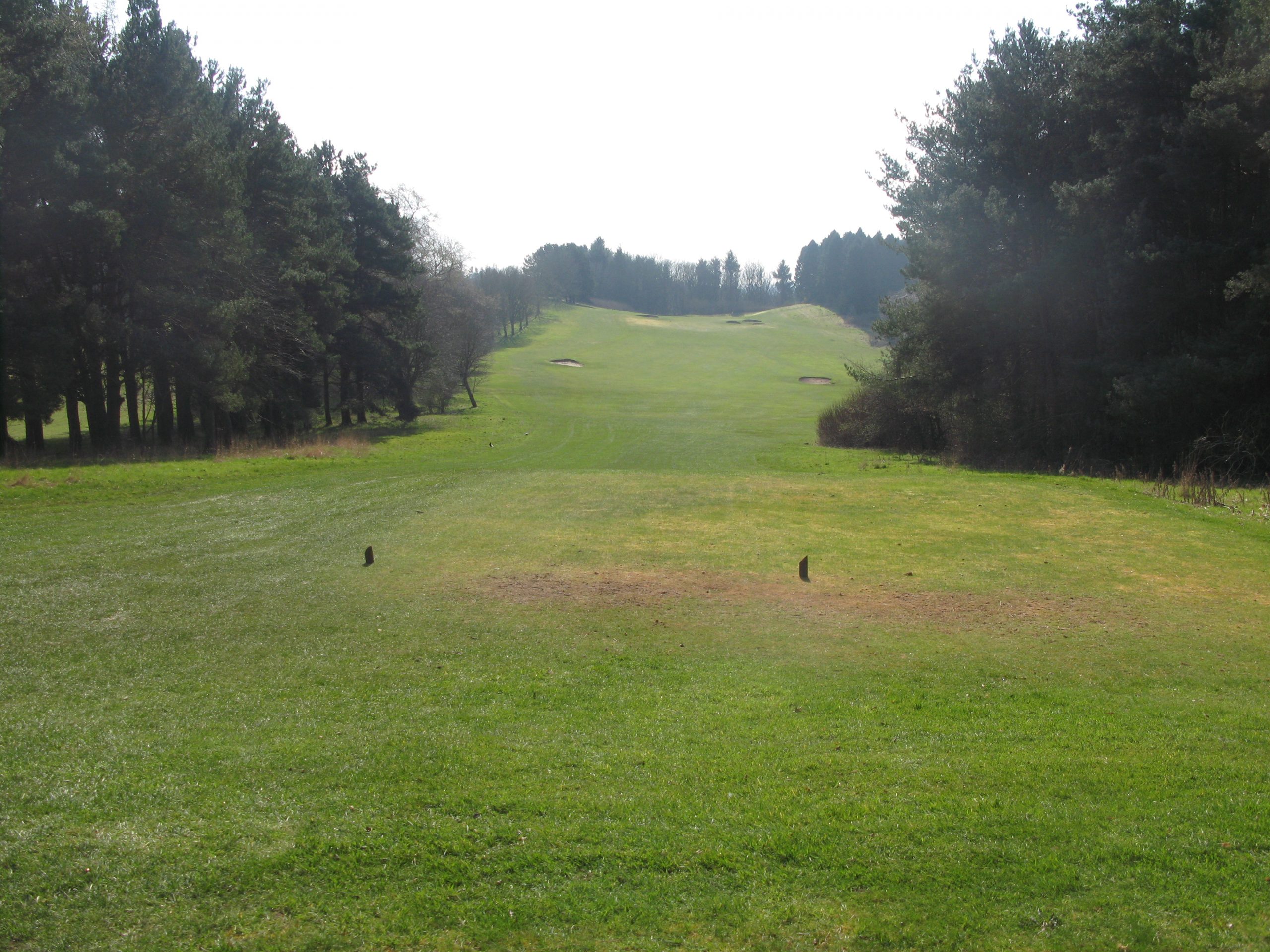
The great framing on the par four 4th hole. A tough challenge to reach the green in two here.

It is worth getting ready for the industrial views of the refinery, which only comes into view on a few holes, most notably at the 11th and 12th. Also nearby is one of the largest land fill sites in Scotland, but local member Colin commented that there was never any impact from smells. I would not let the local industrial surround put you off playing Grangemouth, it’s actually a reason to go.
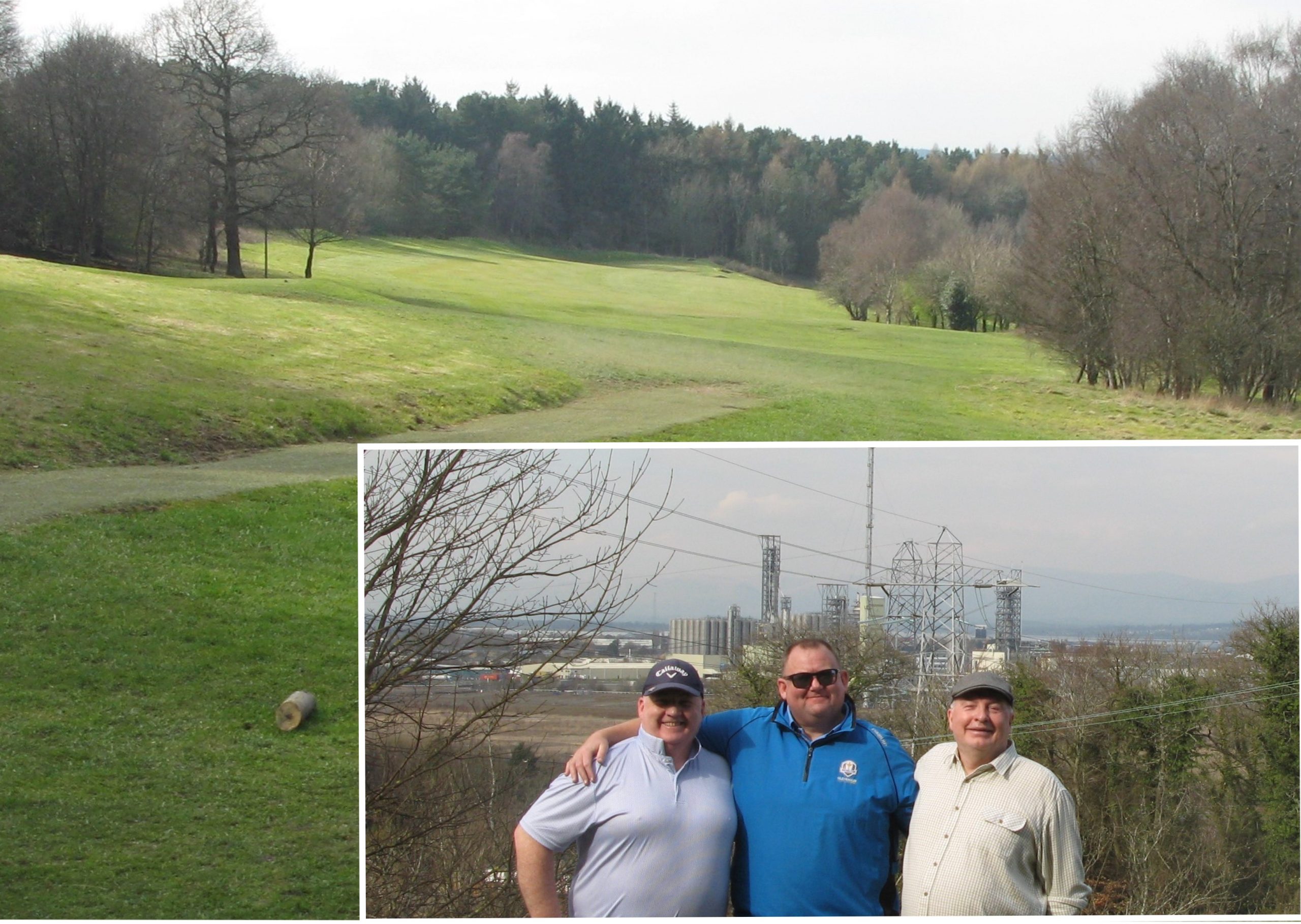
The very difficult long par four 11th (a par five from the white tees), with the inset showing the view at the tee of Colin, Ian and Frank (L to R) with the Grangemouth refinery in the background

The course, laid out as 4 loops of holes, makes it easy to just play a few holes, or cut out some of the track. As I was leaving, I saw a local member, taking advantage by jumping onto the back nine. He was a old guy, in jeans and t-shirt, whose clubs looked like they could have survived the 1924 fire. “Could be the Algarve” I said, commenting on the unseasonal weather. “Aye, yer right, ma five pals have gone tae Turkey and its pissing down and four o’ them have caught that ‘covee’, ****ing brilliant eh!”

Frank and I, played Colin and Ian, in a tightly contested four ball game that went to the last. Well played everyone, a memorable day’s golf on one of the finest municipal courses in the world. Now that is “****ing brilliant”.

Play Grangemouth. Its currently going through a change from municipal to private management, so you never know how long it might be there.

Course Type: Parkland

Par 70 (2 par 5s, 12 par 4s, 4 par 3s)

Distance: 6077 (yellow)

Moly’s Gross score90

Moly’s 90 scorecard at Grangemouth, for 31 stableford points, on this brilliant value golf course.

119. Aberfoyle. 5 Nov 2020

A wonderfully understated golf course

Round £25. Par 66. Course Rating / Slope Rating (yellow) 64.1/115. Value (out of 5) – 5

From the endearing conversation with local members, to the beautifully crafted use of space and to meeting the challenge of some excellent holes, Aberfoyle golf course is an absolute joy, set in the magnificent surroundings of the Trossachs area of Scotland. It’s a must play and incredible Scottish golfing value.

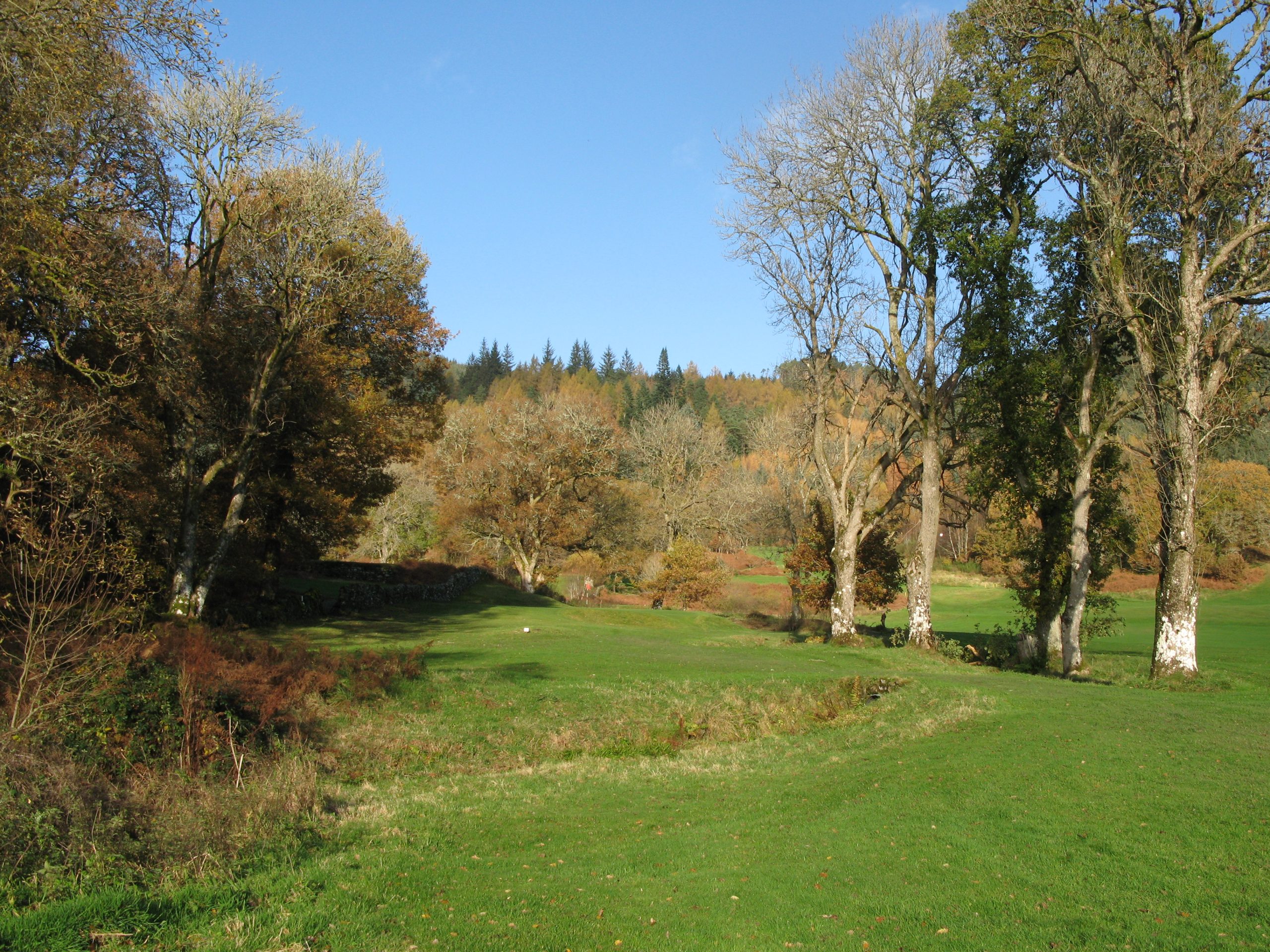
The 6th tee at Aberfoyle, with the typical scenic views of he Trossachs countryside.
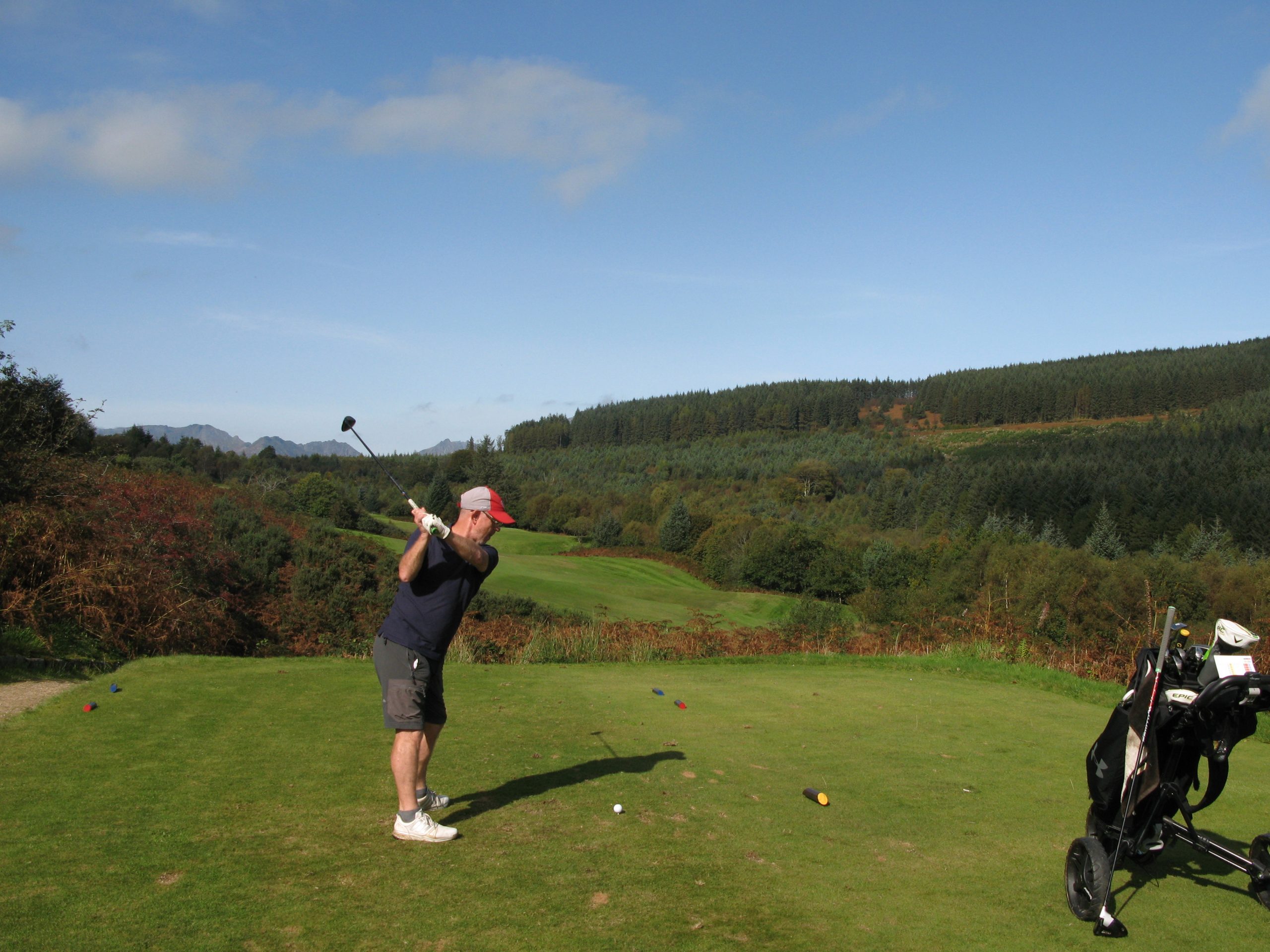
Bend that right leg Moly!

The course was established in 1890 with 9 holes and only extended to 18 holes in the 1980s, albeit it’s a difficult job trying to guess the original 9. It’s short in length, at well under 5000 yards from the yellow tees most people will use, but still has a slope rating of 115 despite only having 8 bunkers.

My favourite hole at Aberfoyle – the short par four 4th, with tricky thin green from front to back.

Set among the glens, the wind may make some of the longer par 3s and par 4s difficult to reach in regulation. Particularly so, for those holes played into the prevailing wind; the long par three 5th and par four 14th, well deserving of their stroke indexed 2 and 1 ratings.

The approach shot into the first at Aberfoyle, is the first of several blind shots played at this course.

The highlight of my playing was actually a bogie 4 at the 5th, after pulling a 3 wood tee shot into the heath on the left of the green and getting the ball miraculously onto the green with my second. It’s not always birdies that get remembered.

The most memorable hole, however, was the gorgeous short par four 4th hole. Again, played into the prevailing wind, it has a delightful thin green from ‘front to back’. The local guide, excellently displayed on the good club website, is well worth reviewing before play, with the advice on the 4th not to be tempted to go for the green from the tee, but rather play conservatively left with a mid iron, or hybrid, to leave an easy pitch up to the green.

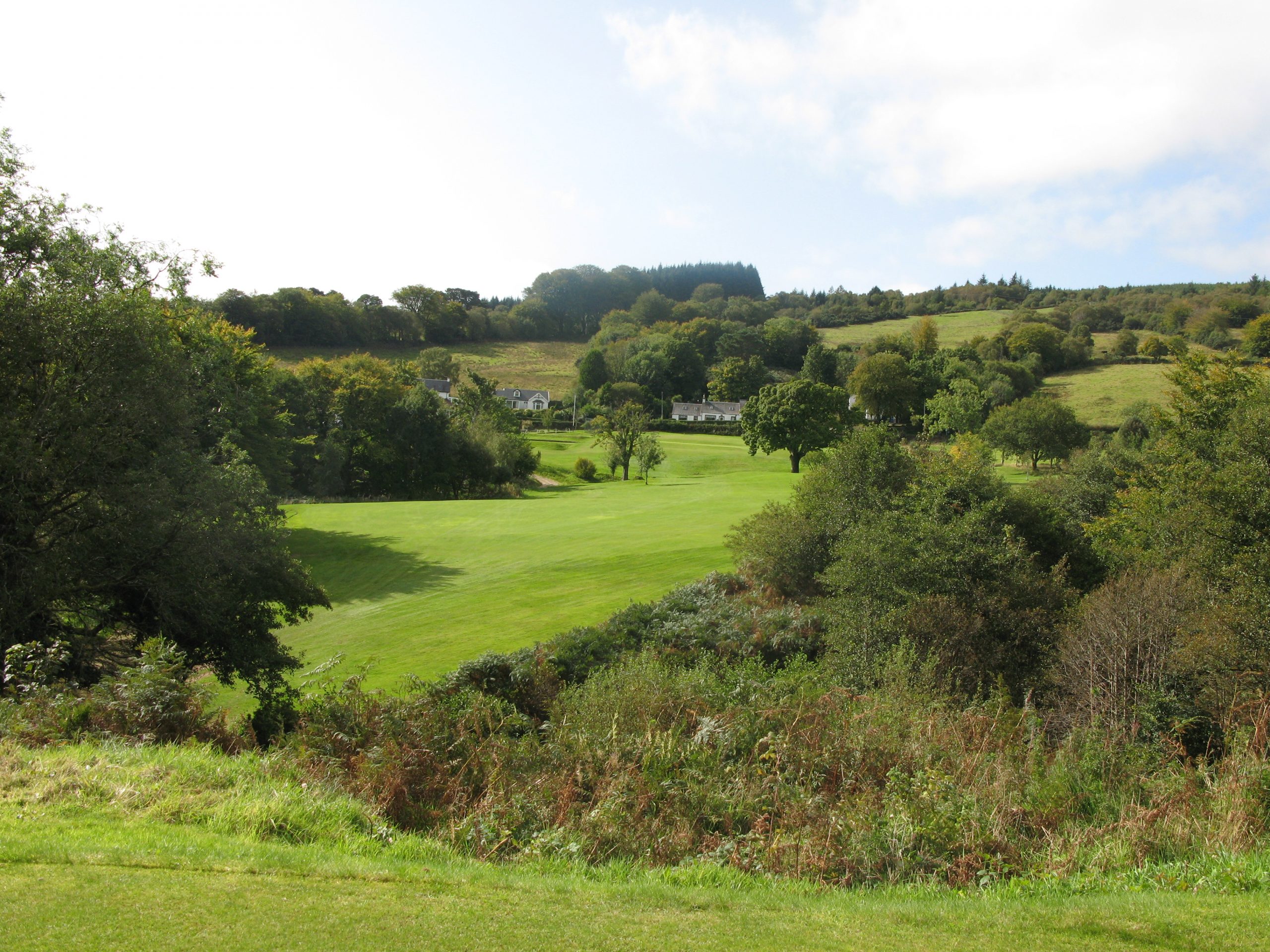
The lovely par three 10th hole at Aberfoyle

The recent weather when I played had been horrendous and I was amazed at the great condition of the course, testament to the natural drainage and mindful greenkeeping. I can imagine the joy of playing Aberfoyle on an early or late Summer evening.

It is a tough walk tough, with several blind shots to encounter (the 17th was the most striking in this regard), so a yardage device is also recommended. There are also some holes that cross each other, something typical of the late Victorian courses. Some amalgamation golf course guides cite James Braid as the designer, but I didn’t get any confirmation of that on the list of courses on the Braid association guide. It would be interesting to know who the designer of the original 9 holes was.

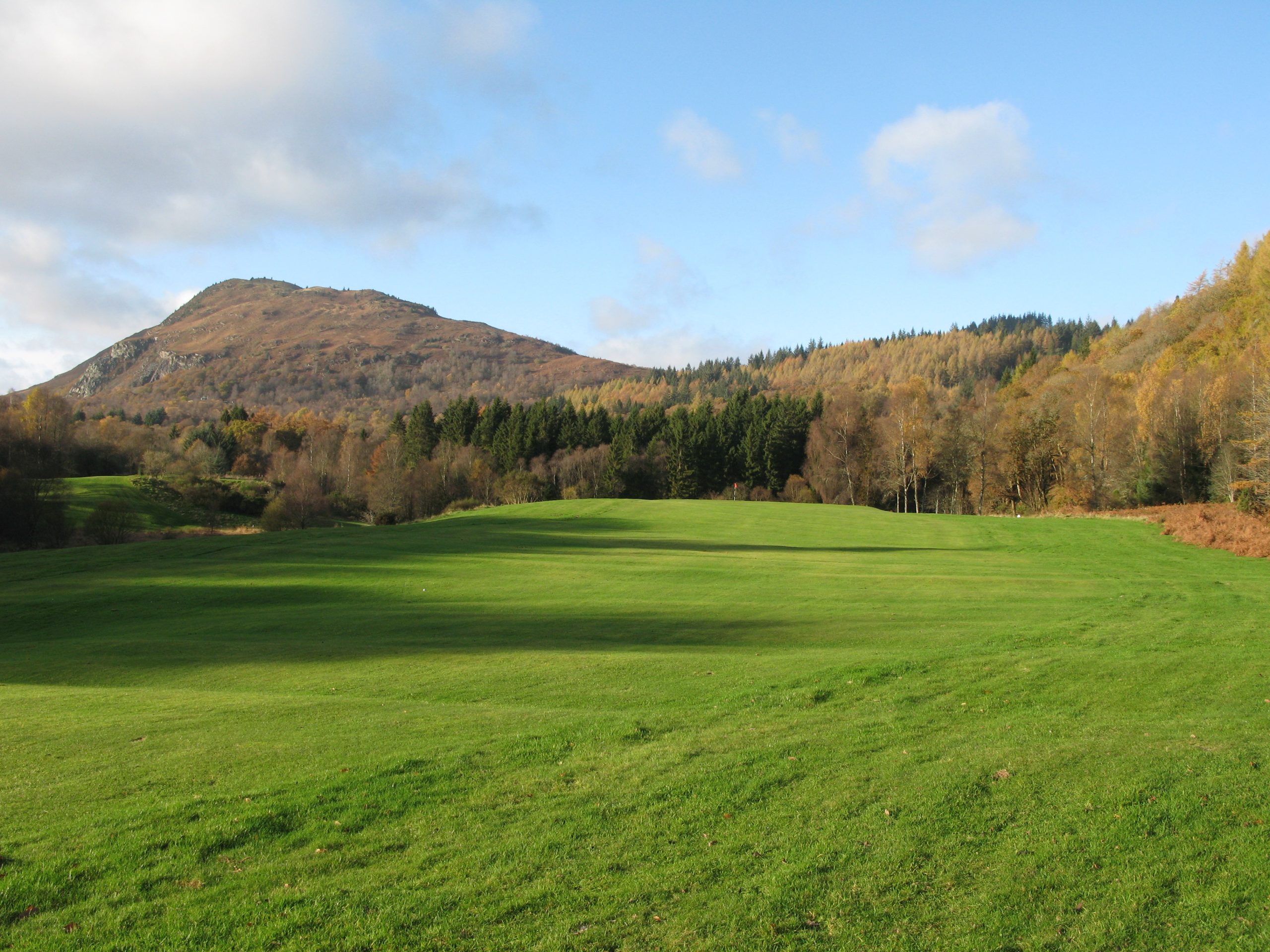
The beautiful scenery at Aberfoyle, displayed here at the 11th

Golf is such a game of “what if’s” – on the day, mine were a triple bogie 7 on the 16th followed by an even worse 9 on the par four 17th having lost 2 balls. Other than those holes, I played pretty well.

It’s a great course Aberfoyle, well worth the journey. One trivial point – having paid £15 on-line using the clubs booking system, I turned up to find a sign on the closed clubhouse door saying “From 1st Nov, only £10”. Despite being a little peeved, this is still 5-star value!

Course Type: Heathland

Par 66 (0 par 5s, 12 par 4s, 6 par 3s)

Distance: 4767

Moly’s Gross score89

Moly’s Aberfoyle scorecard – 89

109. Lamlash. 20 Sep 2020.

Reserve your ‘A’ game for Lamlash – the toughest Arran challenge

Round £27. Par 61. Slope (yellow) 106. Value (out of 5) – 5

If you only play one course in Arran, Shiskine would be it. However, for difficulty, Lamlash, “a wolf in sheep’s clothing”, takes the prize. Played as a par 61 of just under 4000 yards, or as a par 64 of 4500 yards, it represents a real challenge, both physically (it’s a tough walk) and demanding accuracy off the tee. There can’t be many players of the course for the first time who don’t need at least one “3 off the tee”. I anticipate the World Handicap System (WHS) slope ratings will be adjusted upwards in time from the initial 106 (yellow) or 109 (white), once historical data is built up.

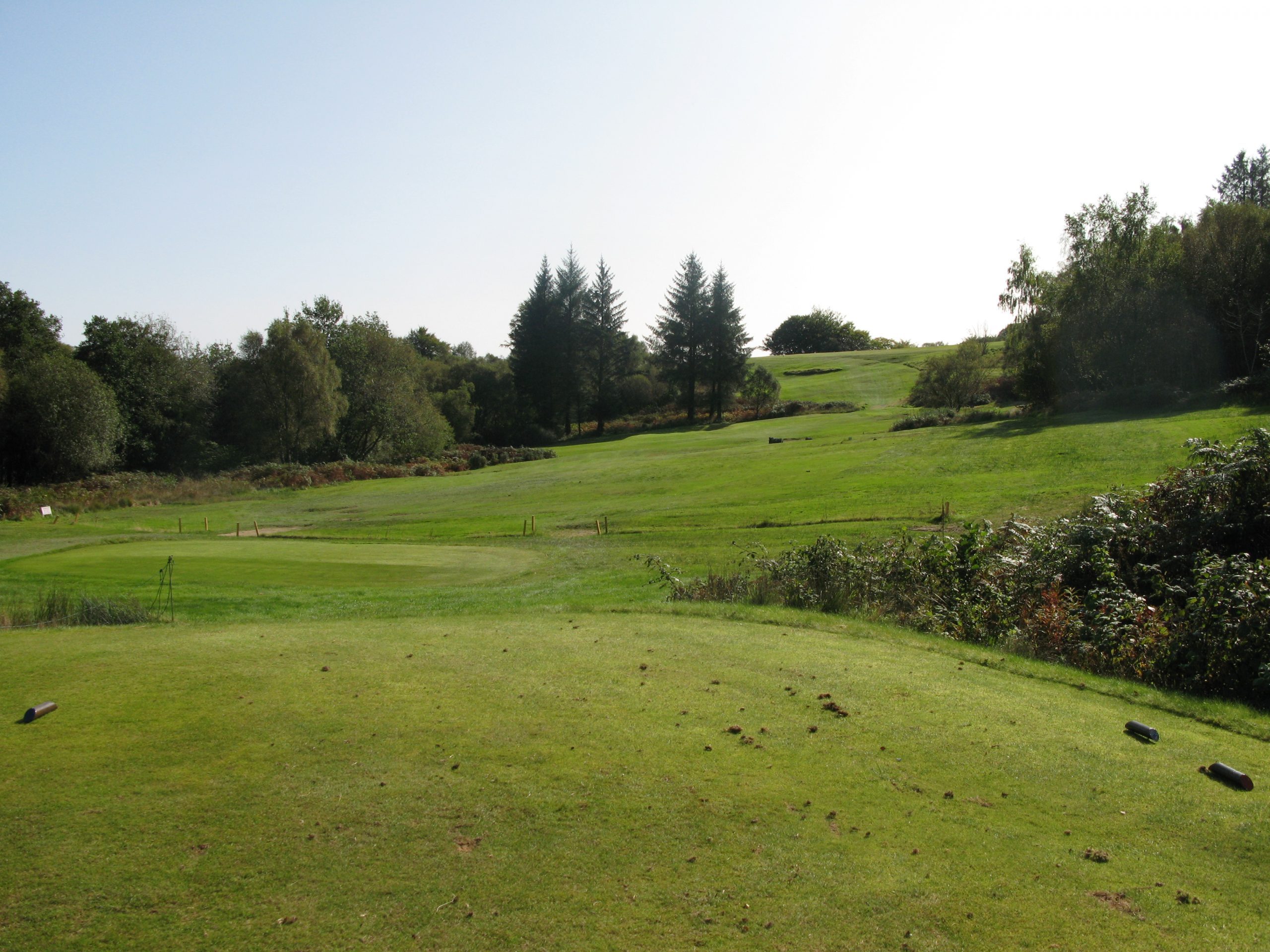
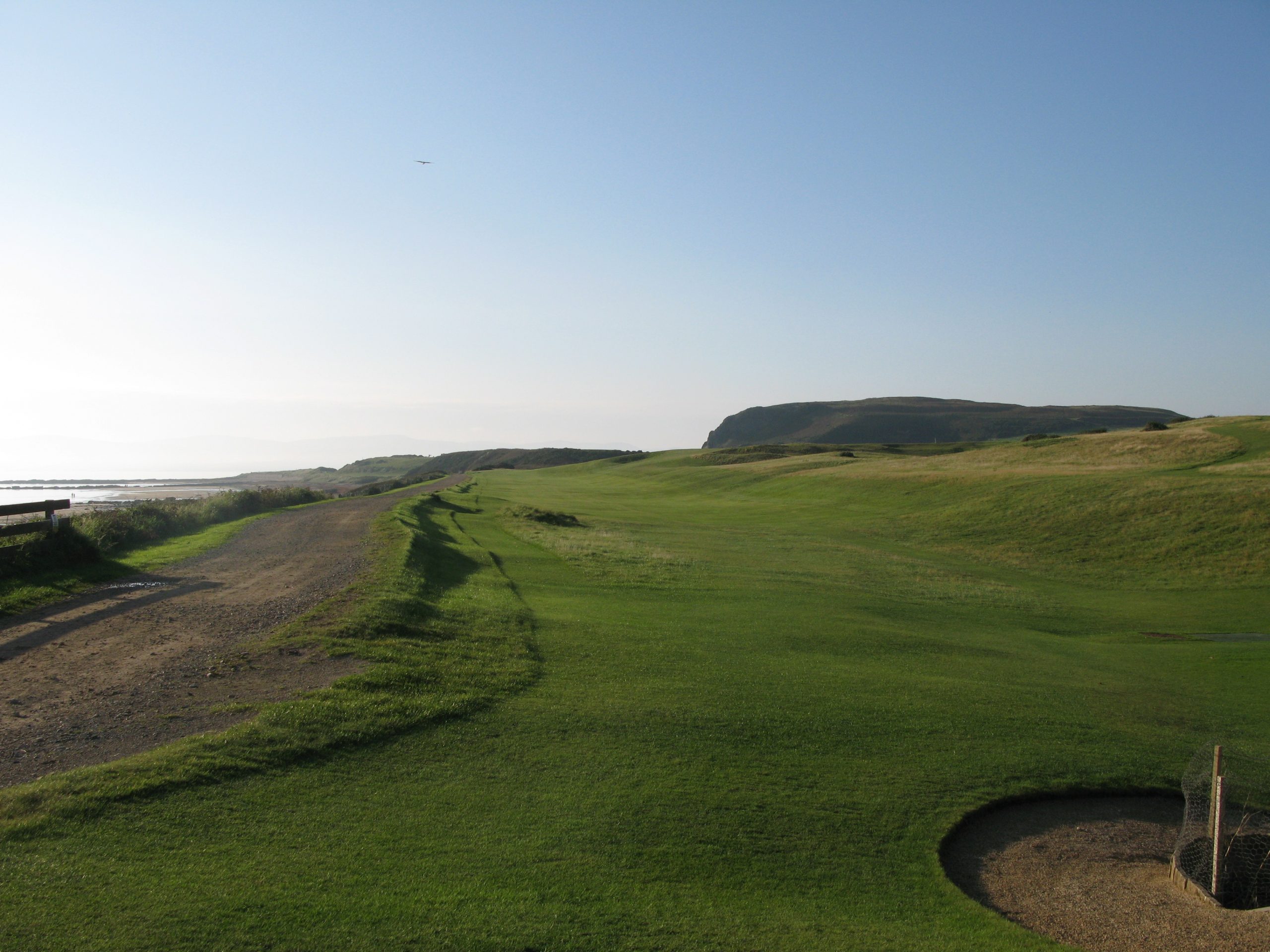
The beautiful par 4 first hole at Lamlash, playing longer than its stated length.

With three of the holes (7, 8 and 10) playing as long par 3s off the yellow tees, rather than short par 4s from the white, I actually think the slope rating should be higher off the yellow tee boxes compared with white.

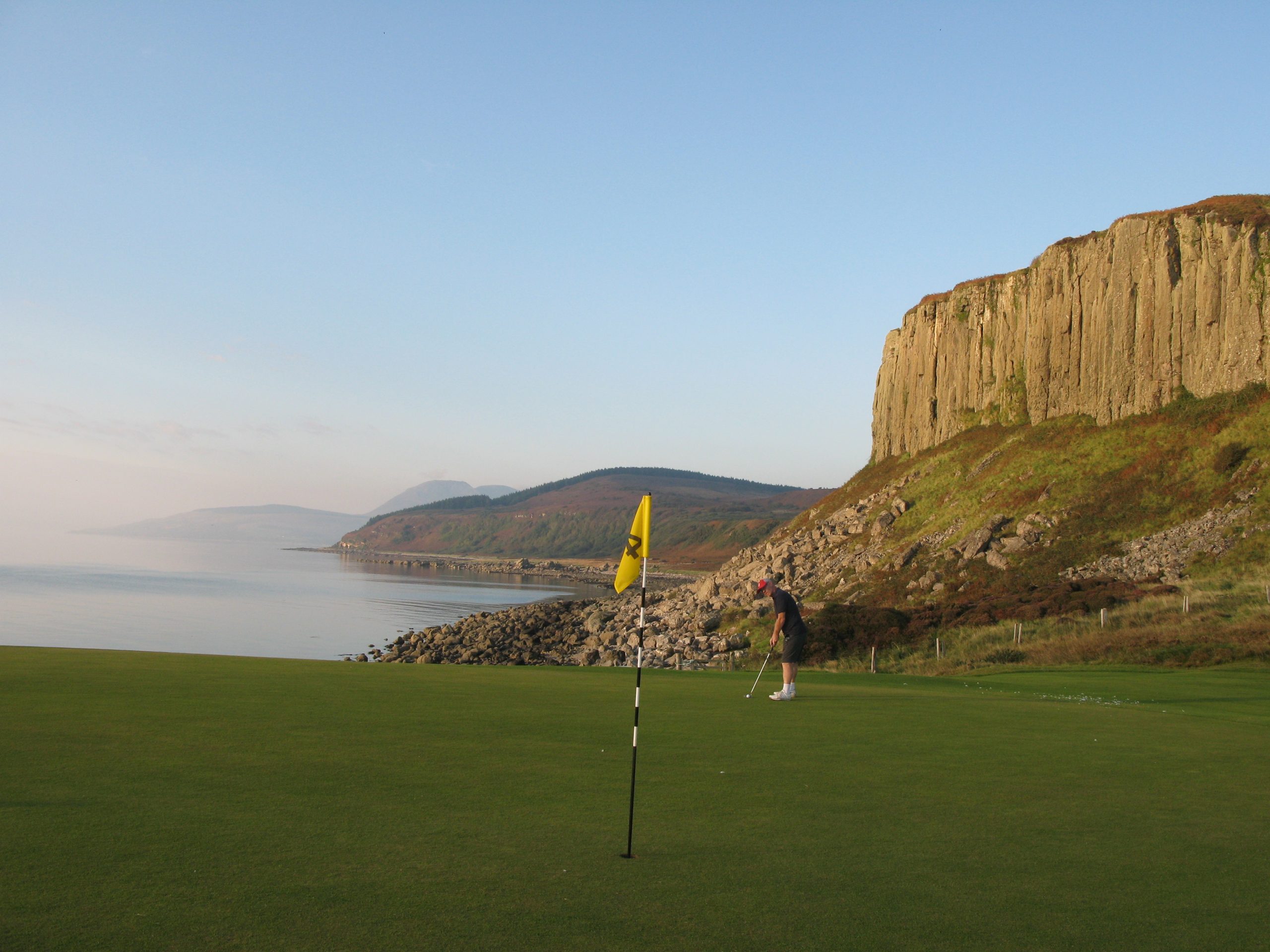
The 3rd hole at Lamlash, the stroke index 1 “goatfell” par 4. Moly learnt too late to play conservatively off the tee (play short and right with a 5 iron off the tee).

Blessed with a quite magnificent late summer day, the course was in excellent condition when I played with Fran on our Arran golfing trip. Paying only £20 through Golfnow this was incredible value, especially as the rack rate of £27 would also merit 5 star value. Disappointingly, we were met with a gruff starter who complained that “Golfnow shouldn’t have allowed the booking”. This reinforced a theme that emerged over our Arran trip with several locals behaving resentfully towards the holiday golfer – even although the holiday visitor income no doubt enables the local fees to be reduced. As an example, the current membership (2021) of Lamlash is only £380, with a first year membership reduced to only £225. These fees are so much lower than English club golf fees, this being a relevant comment as we were told that the village of Lamlash had a nickname of “Little Yorkshire”, such was the number of retired people from the North of England.

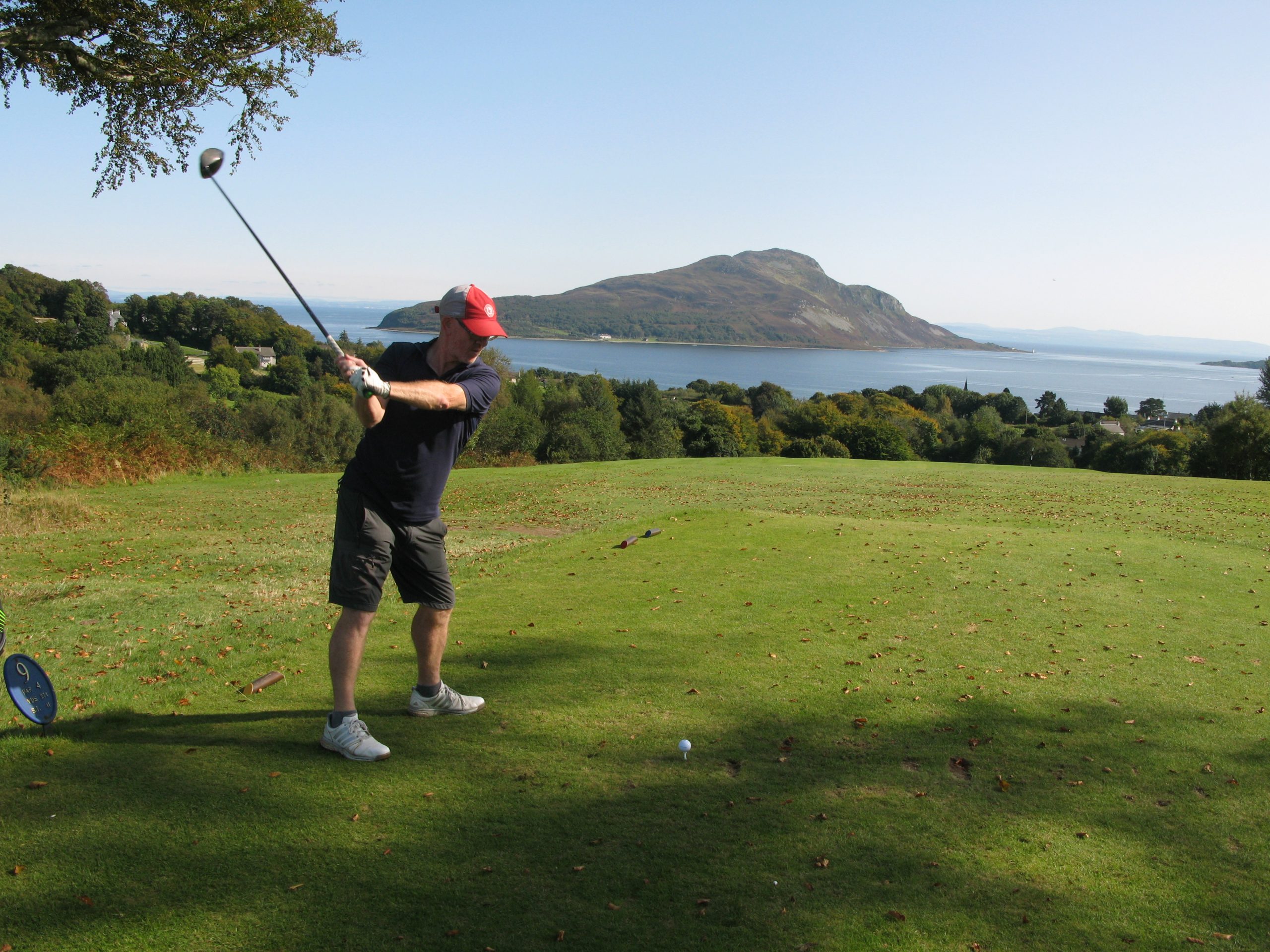
The par four 9th at Lamlash, with views towards Ayrshire past Holy Island in the foreground.

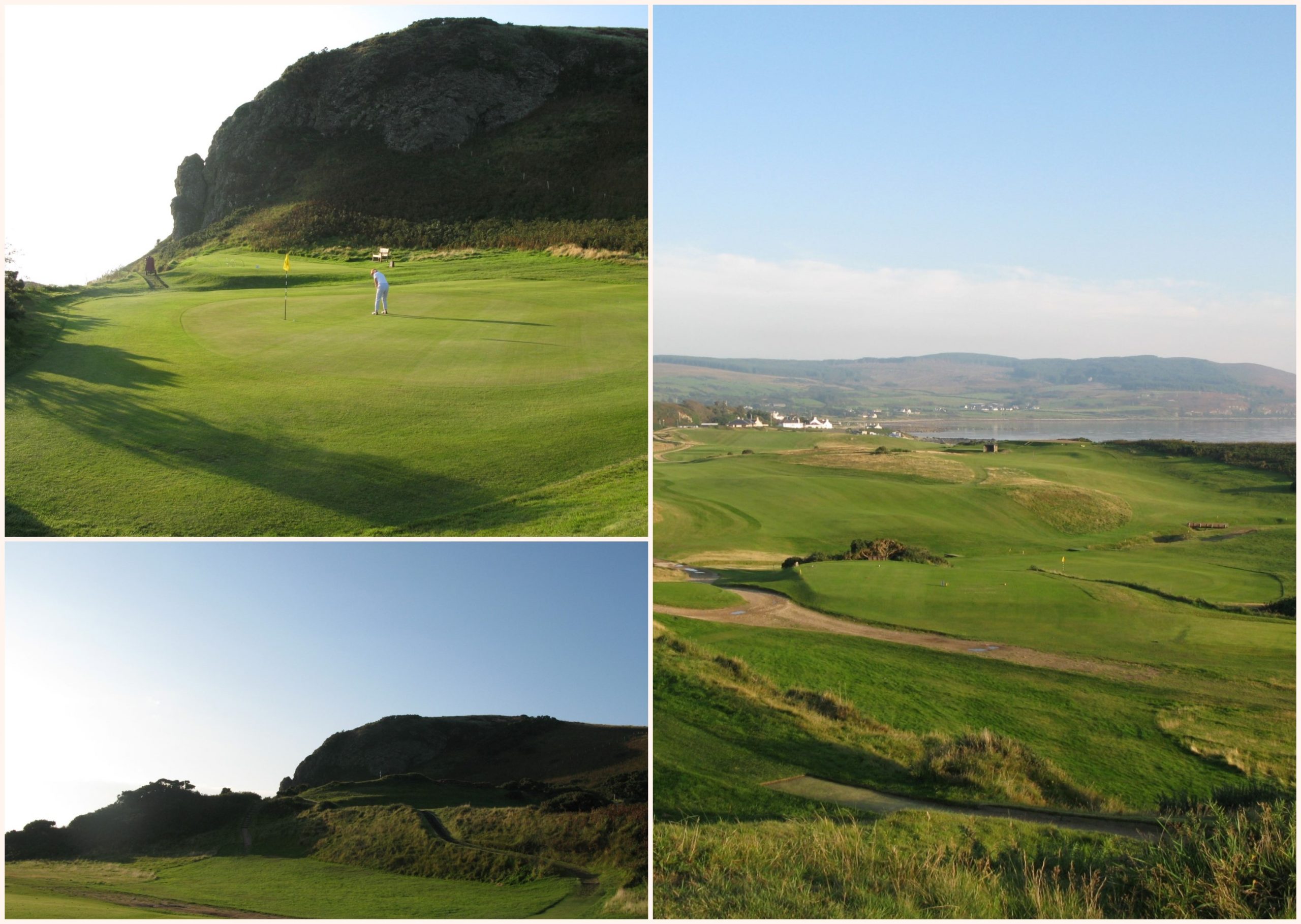
The course abounds with sea and hill views – with Troon and Prestwick visible on clear days – Holy Island also dominates the skyline.

Don’t let the views offset the concentration needed in playing Lamlash, a course that feels a combination of Highland, Parkland and Heathland layouts. It has some really great holes. The starting 3 holes should be played conservatively, with level bogies being more than ok for anything other than the single figure player. The third, a par 4, justifiably the stroke index one hole, with great views, has a demanding drive, which should tend to the right of the fairway, with the second shot best played long and left.

The tough 208 yard par three 7th hole (yellow), which plays as a 283 yard par 4 from white. A key theme at Lamlash.

The long par 3s played off the yellow tees are, collectively, a real test. There are four over 200 yards long, plus the 10th, an uphill par 3 at 198 yards, which needs to be played as a par 4 by most golfers. There is a strong argument that the stroke indexes should be different for the white and the yellow tee boxes here.

The 18th at Lamlash, a finishing hole that befits this tough golf course.

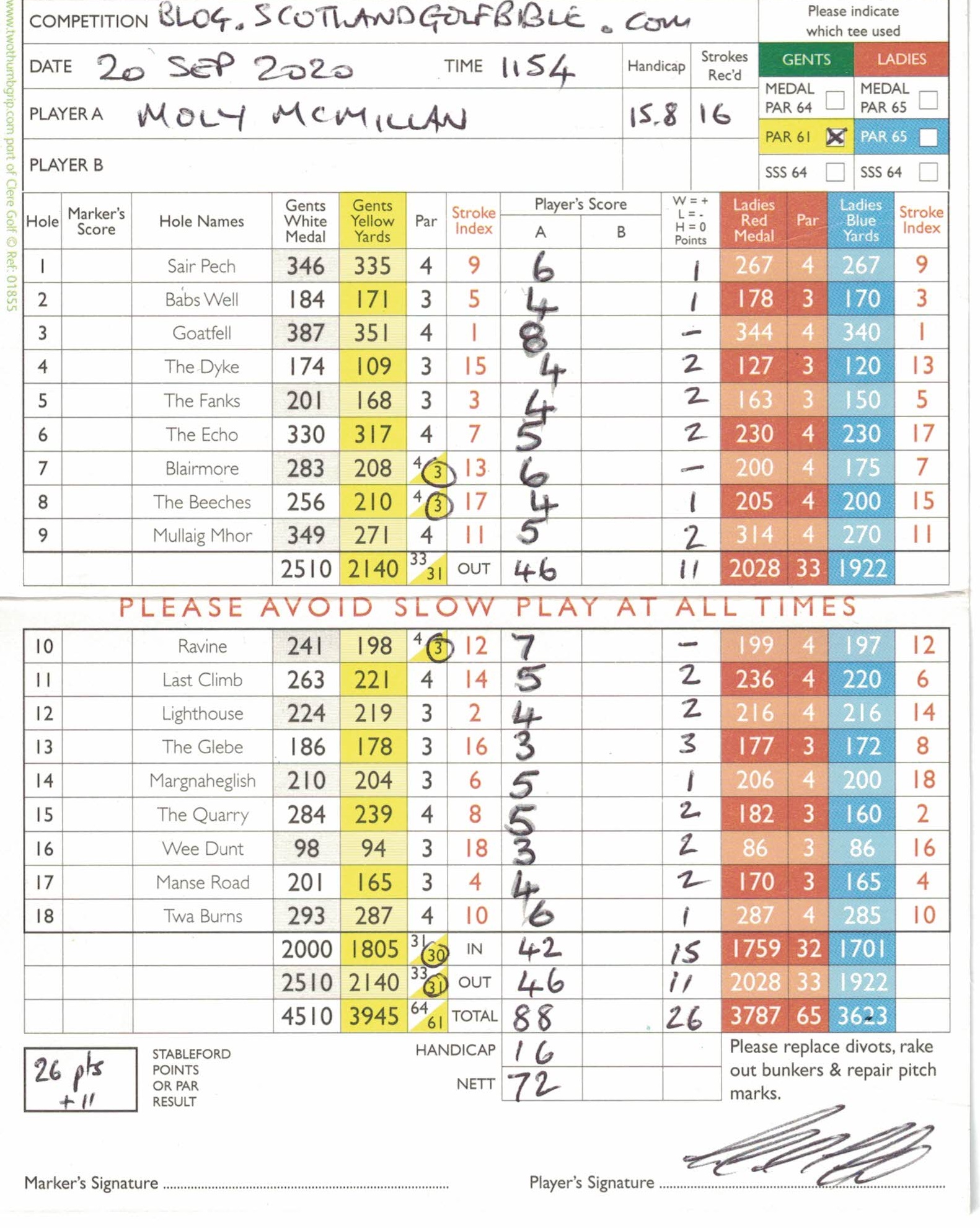
On a benign playing day, I scored 88, or 11 over my handicap. I can’t imagine many players beating their handicap playing Lamlash for the first time. It has plenty of guile and, along with Shiskine, is one of the two must play courses while on Arran. But – this is not “occasional holiday golf”, for that play another course on this beautiful golfing island.

Highly recommended.

Facts:

Course Type: Highland / Heathland / Parkland

Par 61 (0 par 5, 7 par 4s, 11 par 3s)

Distance: 3945

Moly’s Gross score88

Moly’s Lamlash scorecard – 88 for 26 points. It actually could have been much worse!

105. Shiskine. 15th Sep 2020

One explanation makes sense – this is perhaps God’s home course.

Round £26 (12 holes). Par 42. Value (out of 5) – 5

Shiskine is probably the greatest 12 hole golf course in the world, but that hardly does the course justice.

The Isle of Arran sits off the North Ayrshire coast, accessible all year round by regular ferry crossings from the Port of Ardrossan or, during Summer, from the Kintyre peninsular.

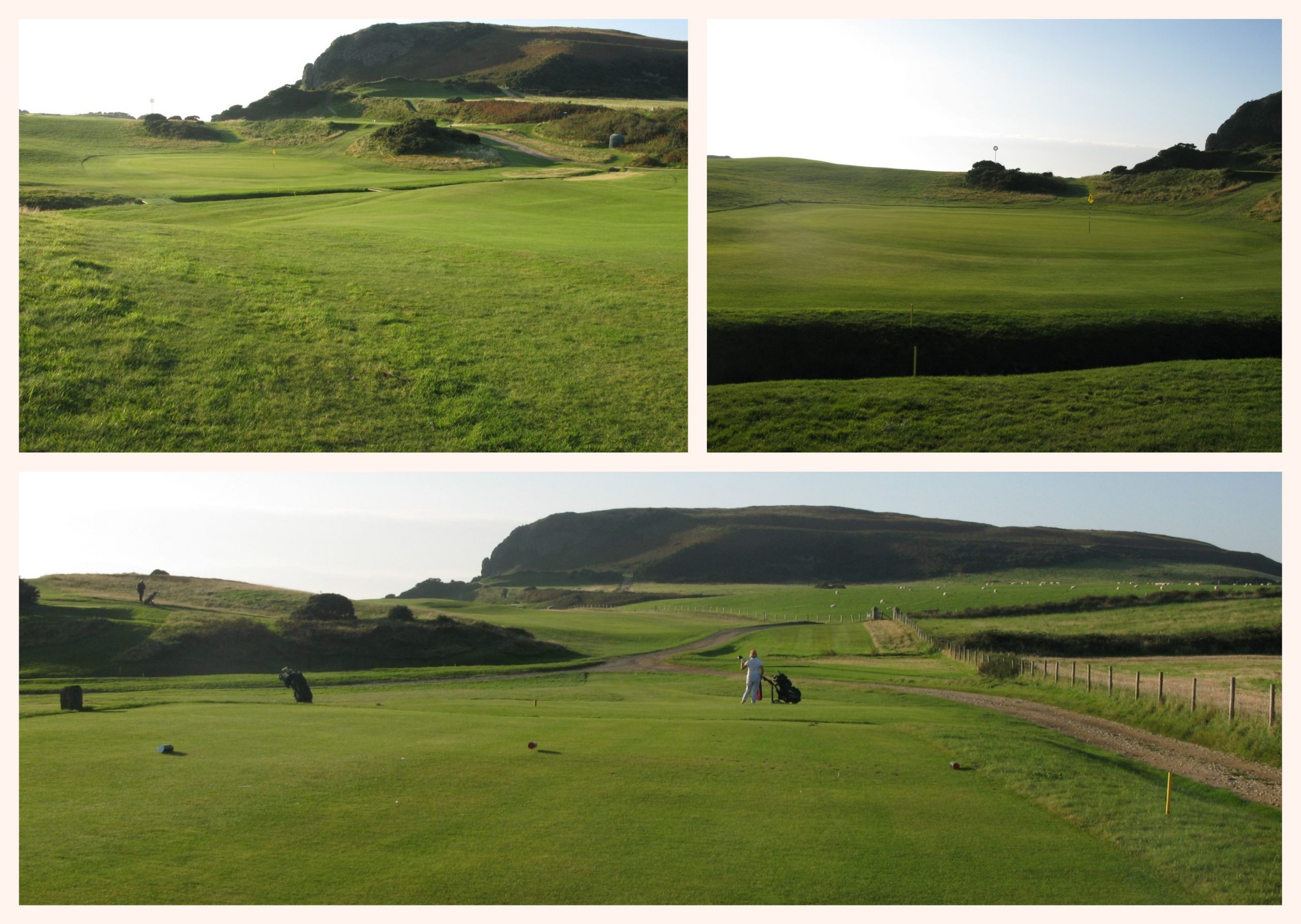
Moly putting for birdie at the 4th “The Shelf” hole at Shiskine, in benign conditions.

Several areas of Scotland self proclaim the title of best destination for golf, with the East Neuk of Fife and the North Berwick coastline being the headline events. But when it comes to the best value destination for golf (worldwide?) Arran sits comfortably at the top of any list – in my humble opinion. This island of 432km2 has a population of 5,000, with a majority of the people working in the hospitality sector. Arran has 7 golf courses, which all sit on the periphery of the island and are easily accessed; none of them has a weekly green fee greater than £30. With many hotels, B&Bs and campsites, Arran is a must visit golfing destination.

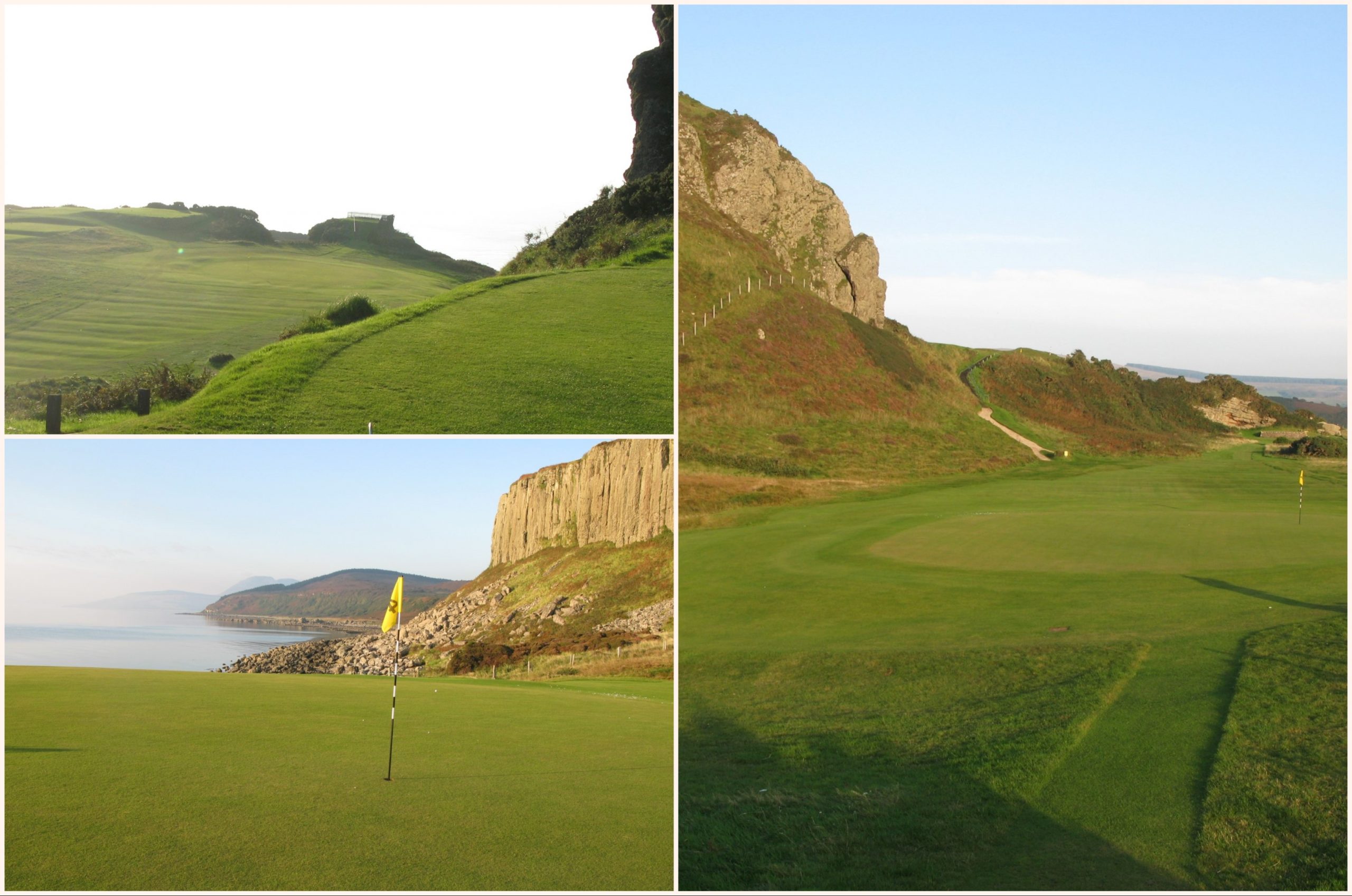
Shiskine, set on the west of the island, is the jewel in Arran’s crown.

The par 3 ‘Craws Nest’, 3rd, with views over the beautiful Shiskine layout.

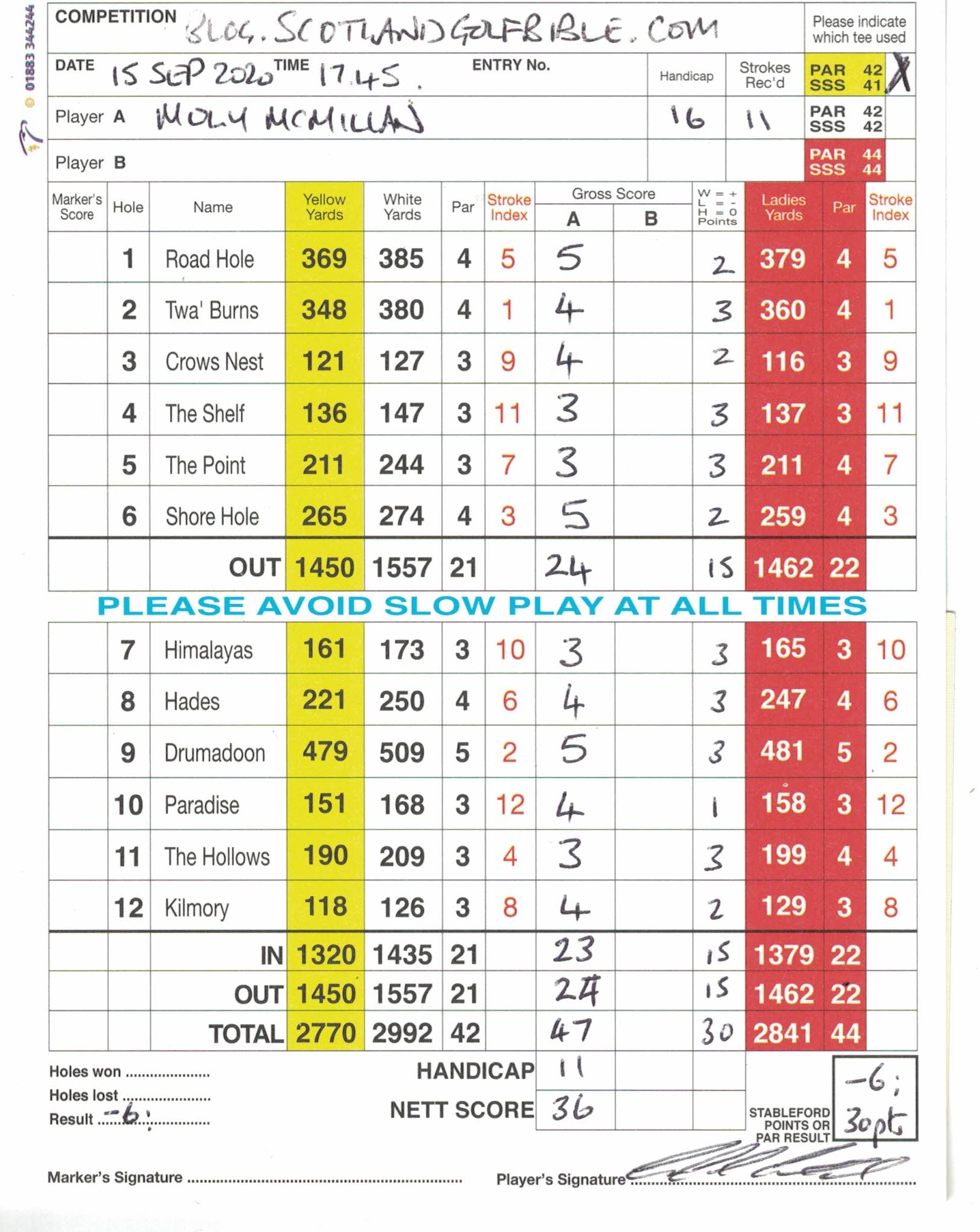
It is said you should never meet your heroes as it can be so disappointing. It was with a similar sentiment I embarked for Arran with nightmares about losing all my balls into the sea from Shiskine’s formidable first tee. Such was my desperation to play that immediately after pitching our caravan and with pristinely tranquil conditions, I psychologically ran to the course to grab a twilight round at only £21. Without a pre-shot routine, and with a vice like will to keep my head over the ball, I drove a low running drive over 200 yards up the fairway – hallelujah! Entering a trance like state, I then proceeded to play the 12 holes in 47, or 5 over par – not quite the best round of my life, but I cannot remember smiling so much to myself during a round of golf.

The terrifying par 4 “Road Hole” first at Shiskine, with OOB left all the way to the hole.

Perhaps by ‘divine’ intervention, a feasibility study in the late 1800s rejected building a deep water pier on the current golf course site to serve the local port of Blackwaterfoot. Sometime thereafter, Willie Fernie of Troon (who also designed Turnberry’s Ailsa course), laid out the original 9 hole course, which opened in 1896, although only the current 5th and 9th holes survive from then.

The difficult stroke index1 second hole at Shiskine, a tough par 4 with a burn in front of the green capturing many of the blind second shots into the green. Take enough club. Atop Drumadoon Hill in the background was where 6 holes returned to waste during the first world war

The course was extended to 18 holes just before the first world war using land above the current ‘shelf’ area of the 3rd green, but fell into disrepair during that war. Several attempts during the decades after failed to reestablish an 18 hole course.

Willie Park (Sunningdale and the North Course at Olympic Park, Chicago) then designed the current 12 holes between 1925-28. 18 holes play is reserved for member only competitions with the 1st, 2nd, 9th, 11th, 12th replayed with a further hole using a unique “15th” tee into the 4th green.

The course is not long, at just under 3000 yards from the white tees for the 12 holes, and 4,878 for the 18 hole layout; its slope rating is only 99 and disappointingly has no red ‘ladies’ tee boxes. It has 7 par 3s, 1 par 5 and 4 par 4s. Despite its short length, this is really fun golf, with very many blind tee or approach shots. I would strongly recommend reading the course guide, there is, for example, a bale out area to the right of the blind 3rd green, so aiming right of the flag is imperative. It’s rather hard to adequately describe the course other than saying it’s magical. It’s not perfect though, with the 12th a rather underwhelming short finishing hole. Nevertheless, it actually made me feel like I was playing my part in a Michael Murphy (Golf in the Kingdom) style mystical adventure with Shivas Irons as a playing partner. Perhaps I exaggerate. I can conclude by saying that I doubt you’d find anything like this course other than in Scotland and it’s a must play destination.

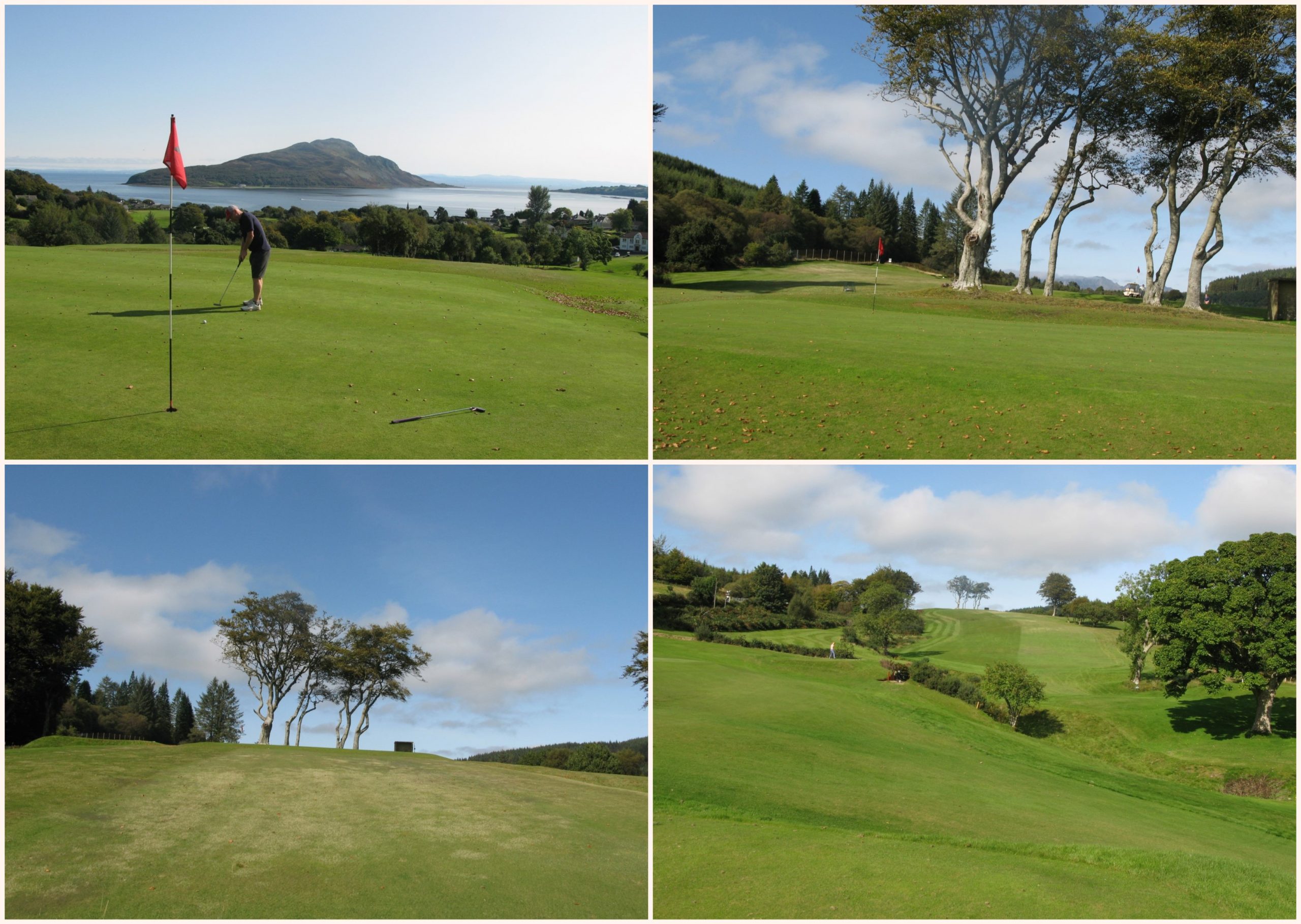
The 4th at Shiskine, a collage of dreams.

I’ve often pondered what golf handicap God might have? I’ve concluded that it would make sense if he or she were to have the exact average Scottish men’s or women’s handicap. God’s preferred course would be majestic, but not too difficult. For example, it wouldn’t have par 4s or par 3s that are really disguised par 5s or 4s respectively. It wouldn’t have any carries off the tee that effectively disenfranchise most higher handicap players. It would be set amid a beautiful landscape. It would offer a mix of guile and strategy. Some of the shots would be frightening. The greens, tees, fairways and all round conditions would be perfect. The weather or elements would play a significant part of the experience. Play would have to be fast – so he/she decided 12 holes was the best length. In the right conditions, it would bring you close to it’s maker.

Perhaps God did design Shiskine after all. Please go and play.

Facts:

Course Type: Links

Par 42 (1 par 5, 4 par 4s, 7 par 3s)

Distance: 2770

Moly’s Gross score47

Moly’s life affirming 5 over for the 12 wonderful holes at Shiskine
« Older posts Newer posts »

© 2026 Scotland Golf Bible

Theme by Anders NorenUp ↑