A guide to green fee value for money

Category: 5 star (Page 3 of 7)

150. Pitreavie (Dunfermline). 7 July 22.

Foreshadows of Augusta at Dr Alister MacKenzie’s only Fife creation

Round £30. Par 70. Course Rating / Slope Rating (yellow) 68.8/134. Value (out of 5) – 5

Paul Brookes, the professional at Pitreavie GC asked me, “Name an architect that has three courses consistently in any list of the world’s top 100 courses?”. He was, of course, speaking about the courses Augusta National, Cypress Point and The West Course at Royal Melbourne, all creations of Dr Alister MacKenzie. Paul could even rephrase the question to be “in the top 10 or 20 best courses ever built”, such is the regard for these designs.
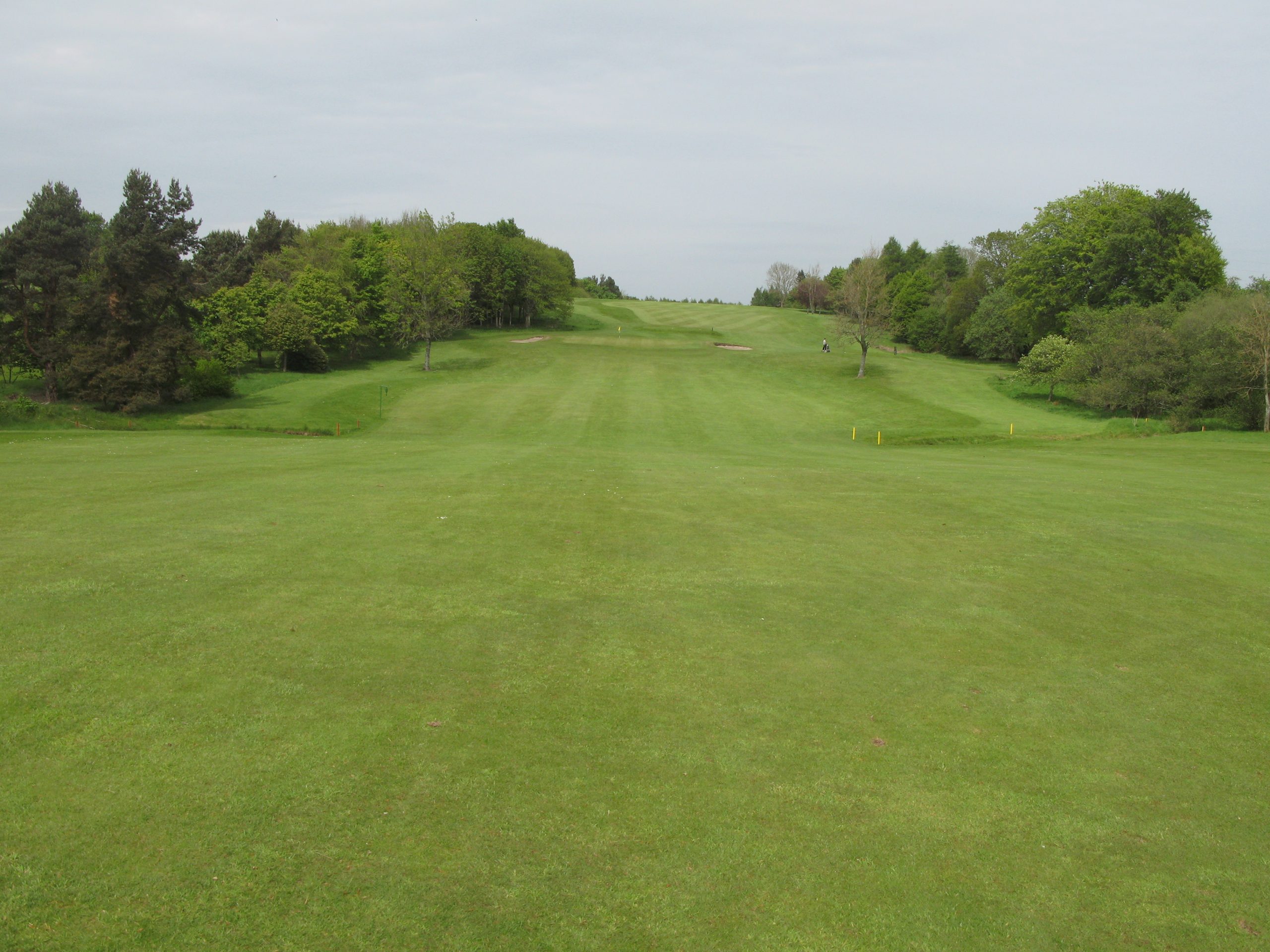
The ‘camoufleur’ skill of Alister Mackenzie on show at the par three 3rd hole. A brilliant golf hole.

You could spend a lifetime, and a fortune, trying to play all of these top 10 world courses; however, you can get a glimpse of MacKenzie’s skill by playing Pitreavie in Dunfermline for no more than £30. Pitreavie is one of only three courses in Scotland fully designed by MacKenzie, the other two being Hazlehead Municipal in Aberdeen and the Eden course at St Andrews.
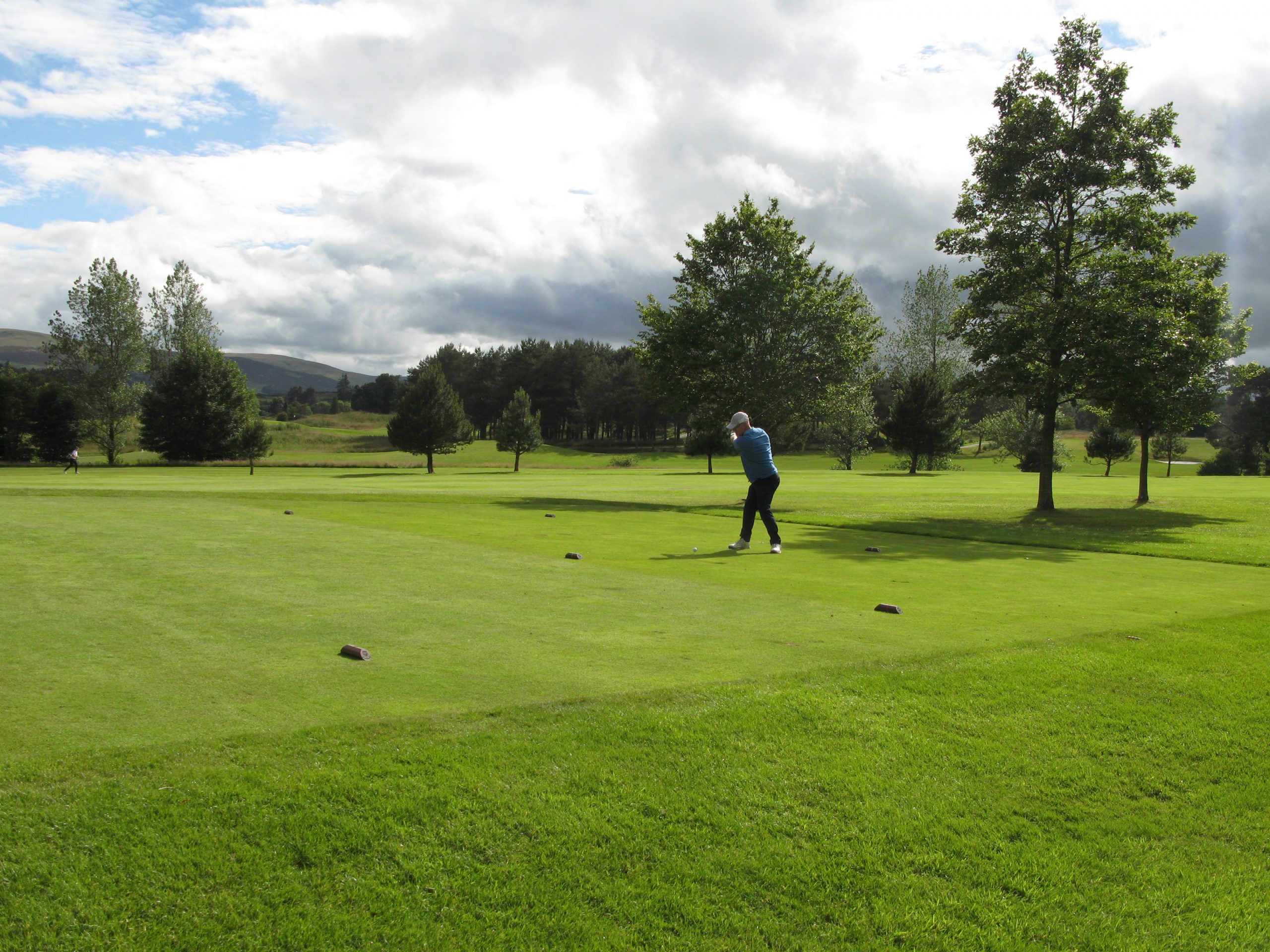
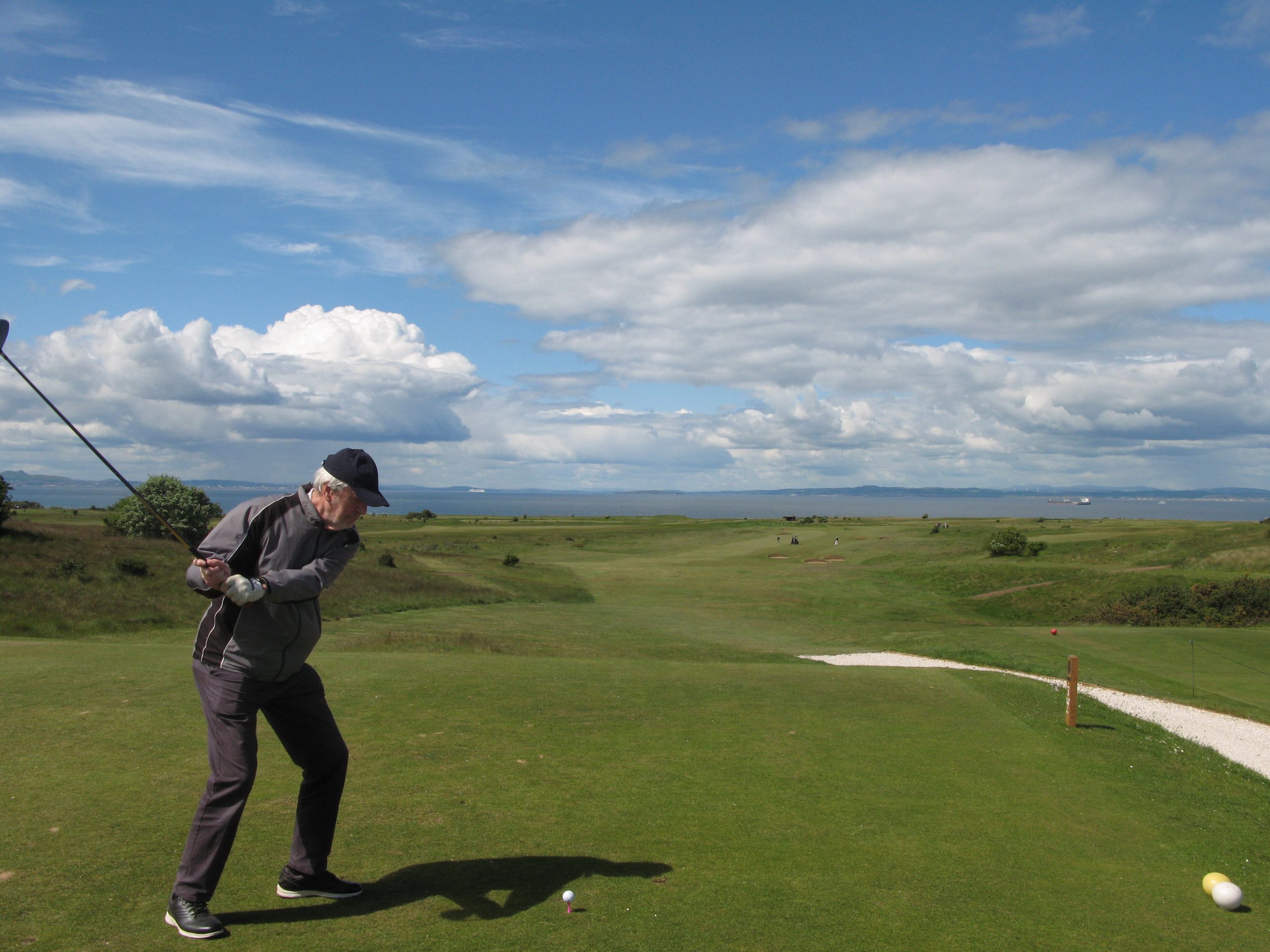
Moly tees it up at the fifth hole, one of the more scoreable par 4s on Pitreavie.

Born of Scottish parents, MacKenzie was in fact a Yorkshireman. His Scottish name must have been handy though in the early 20th Century US golf growth period, at a time when many of the great Scottish designers, such as Donald Ross (Pinehurst) and Tom Bendelow were making great advances.
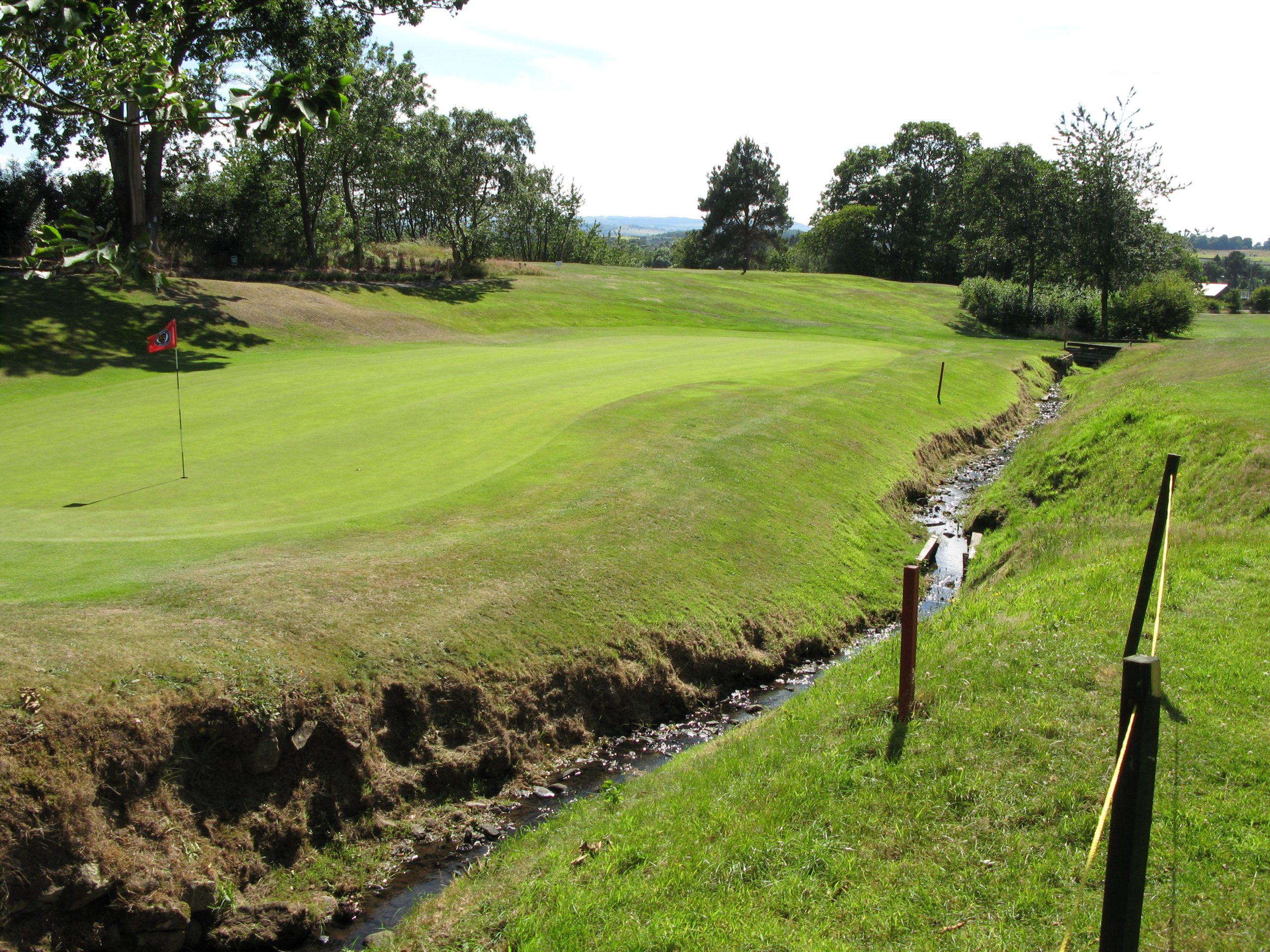
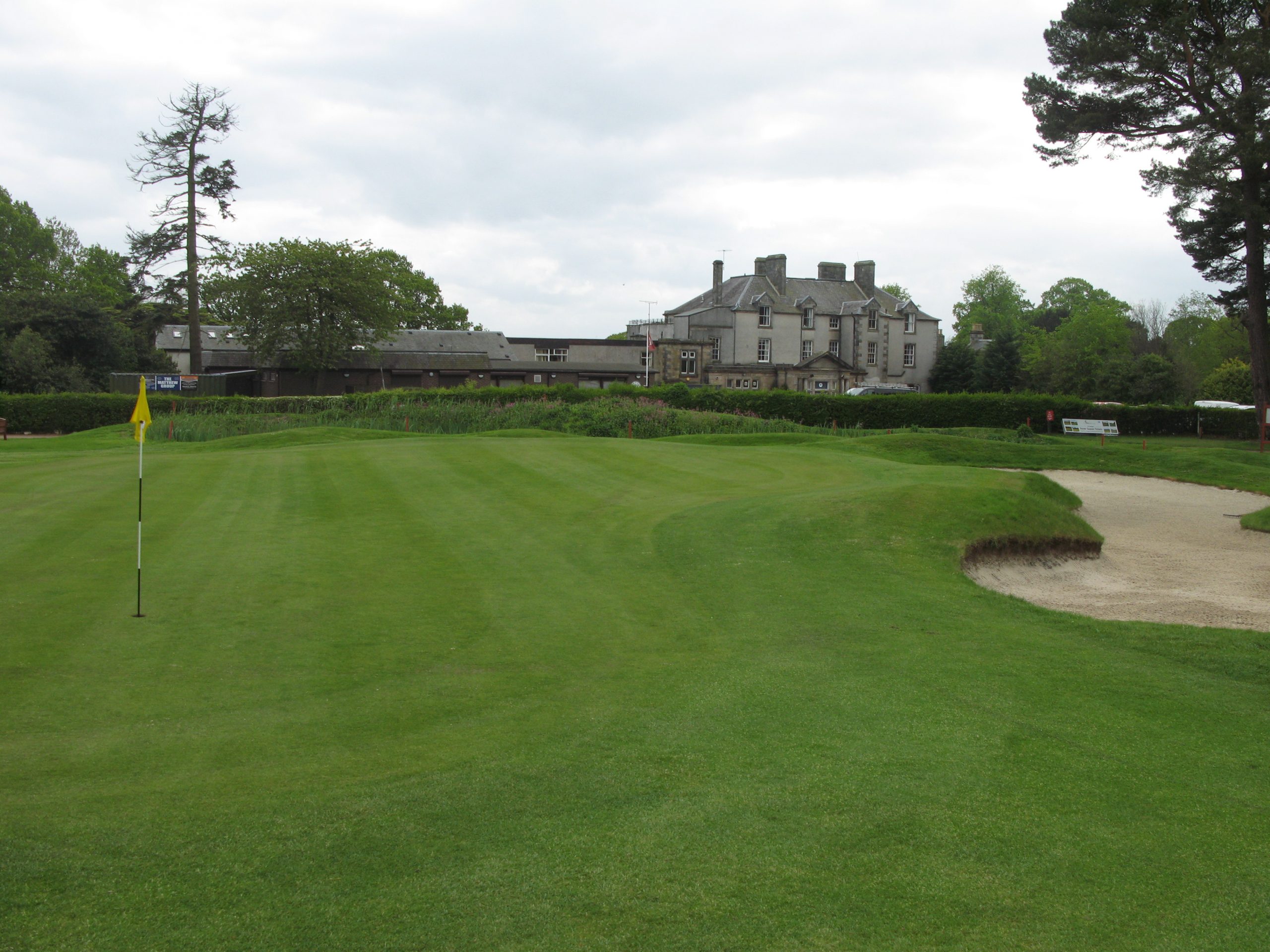
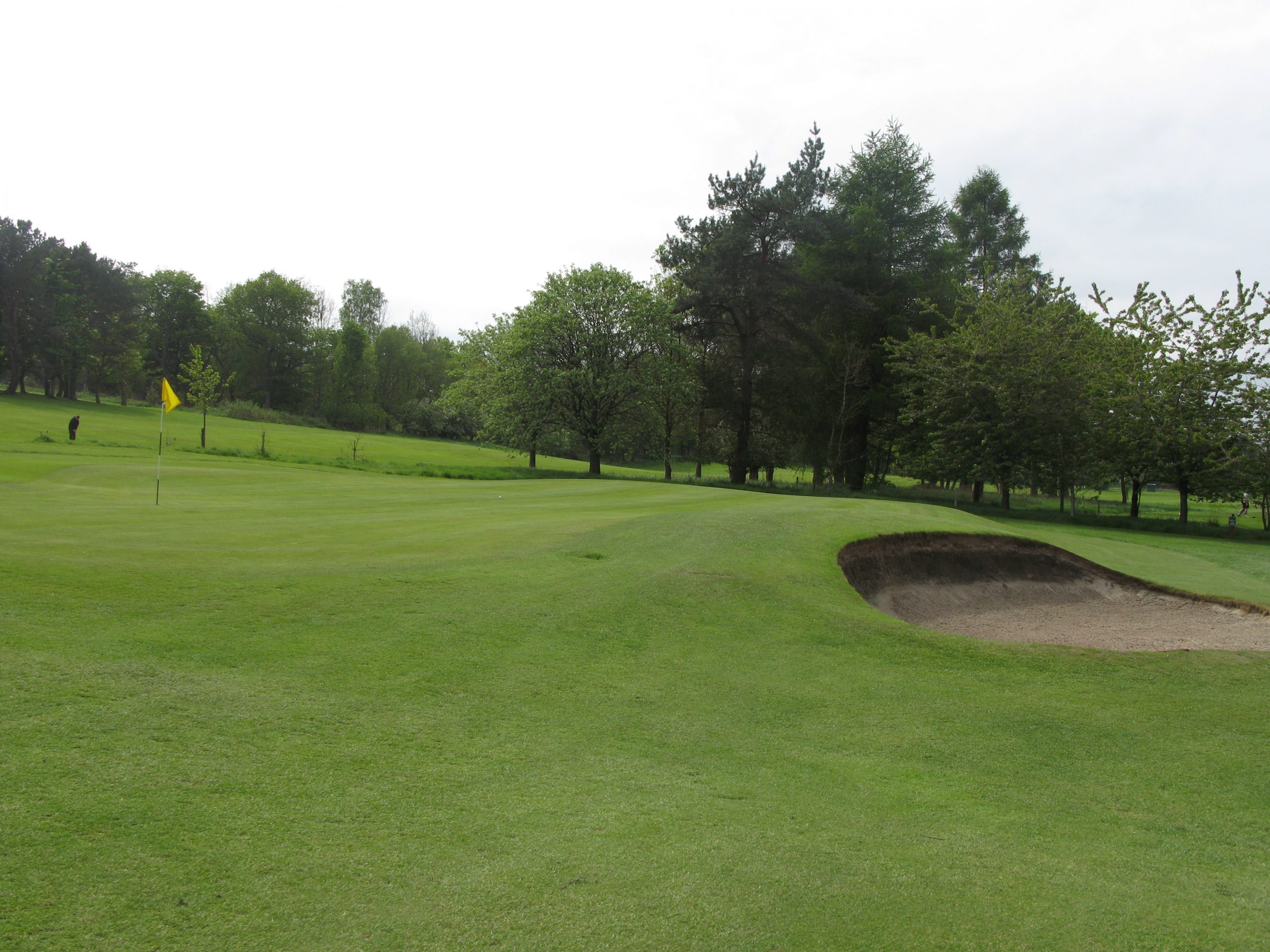
The very wide and narrow 12th green at Pitreavie, a downhill par 3 of only 135 yards. A great hole. The entrance is from the right of this picture.

After two par fives to start, the third is the first real glimpse of MacKenzie’s skill. A long par three, it is the stroke index 2 hole, with a teeing ground almost 65 yards long giving many distance options. But looking at the hole you can’t readily see how hazardous it is. Medical army doctor MacKenzie had specialised during the Boer war and then WW1 to become a camoufleur, a specialist in camouflage. He was to later note the similarities between camouflage and golf design. At the 3rd, there is a hidden burn running across the front and up the right of the long multi level green. It is a formidable ‘camouflaged’ hole, as your eye is drawn naturally to the green tiers.
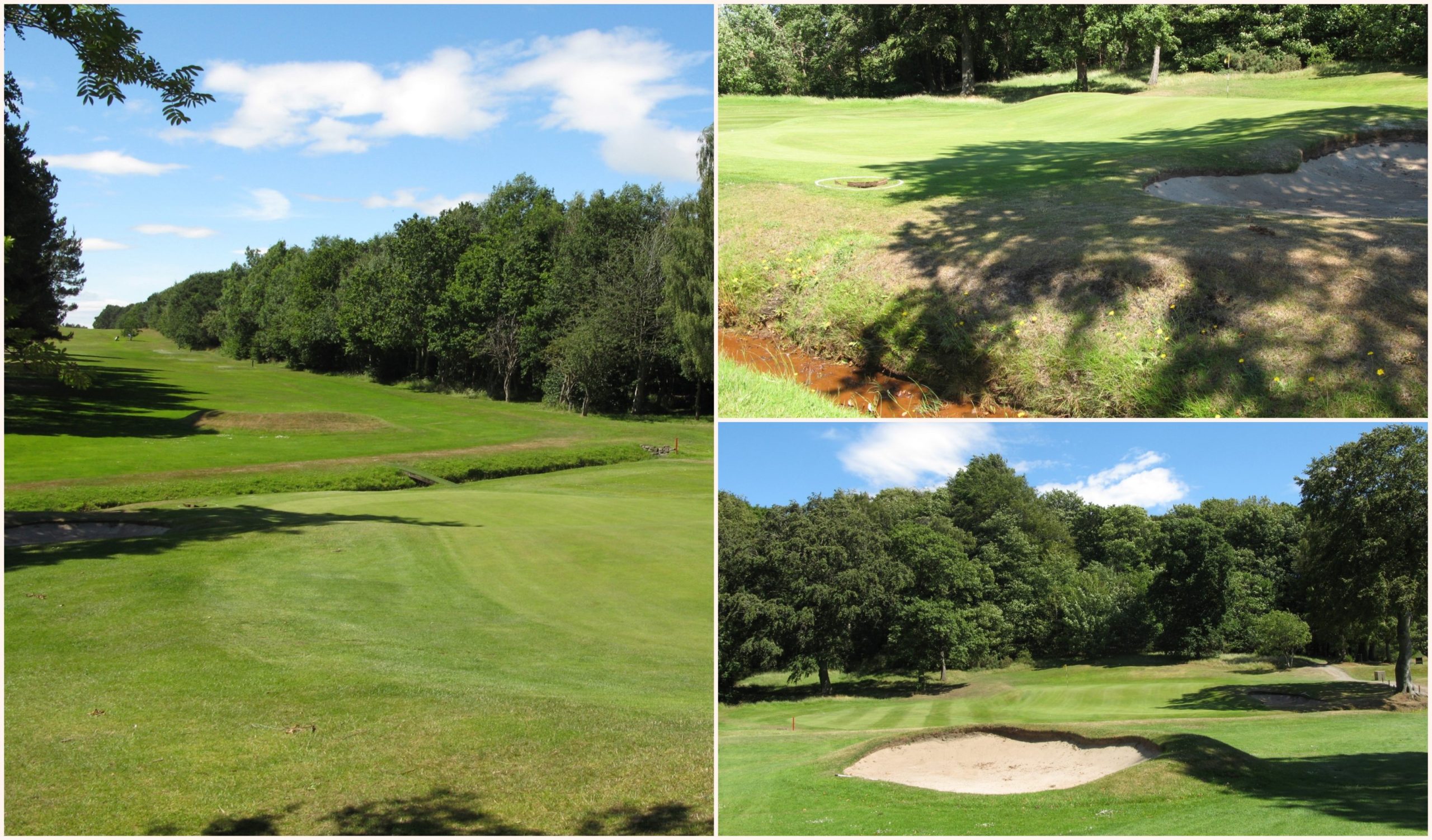
The third, the most beguiling of par 3rd at nearly 200 yards. I can imaging even low handicap players playing as a 2 shot hole.

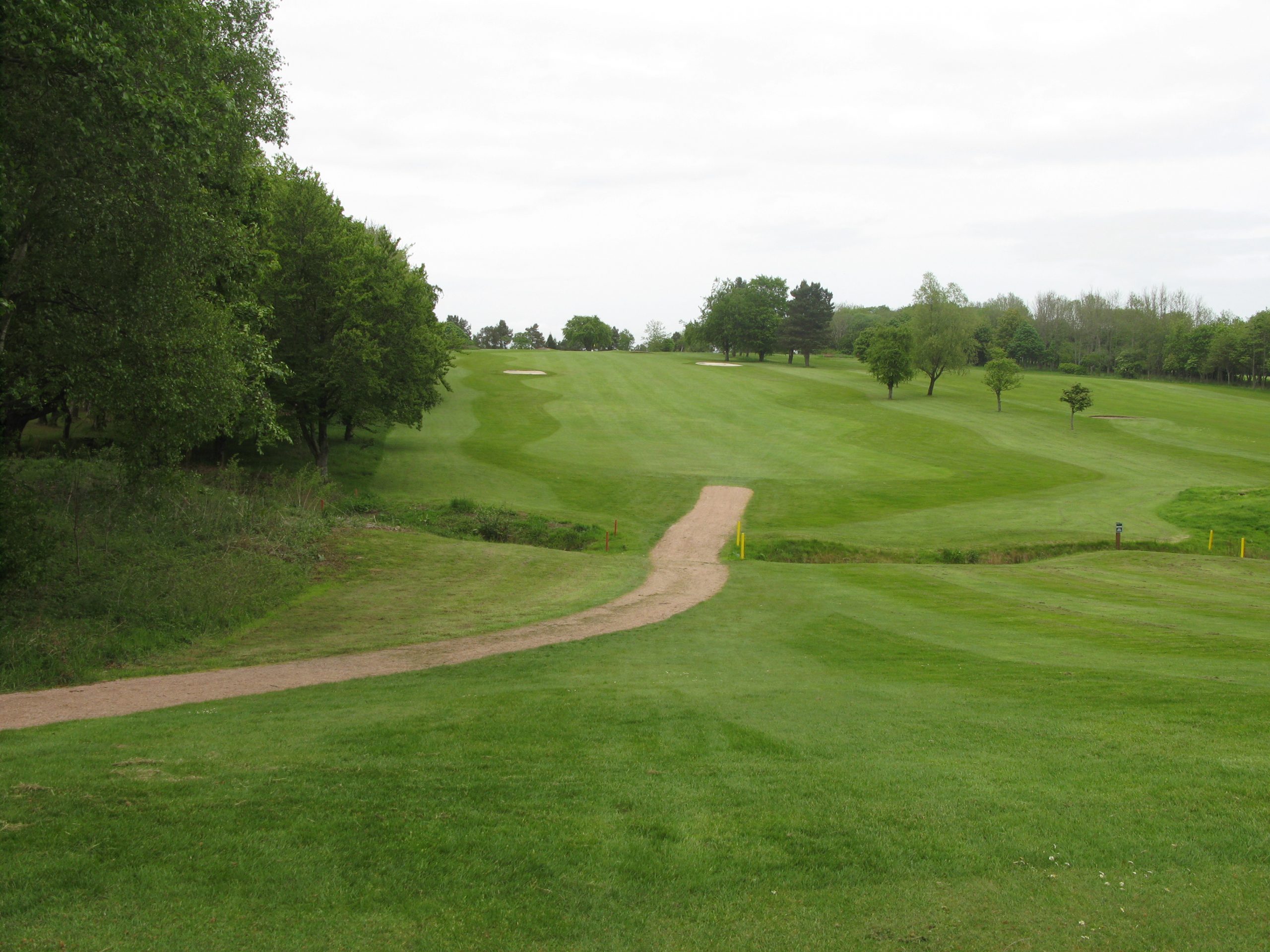
This clever use of the burn is brought into play on several more holes, notably the par threes 6th and 12th holes, and most cunningly at the par four 13th hole, the Stroke Index 1. When you play Pitreavie, keep in mind the use of Ray’s Creek at Augusta, especially at the front of the 13th green. It’s the symmetry between both 13th holes, at Augusta and Pitreavie, that adds to the story.
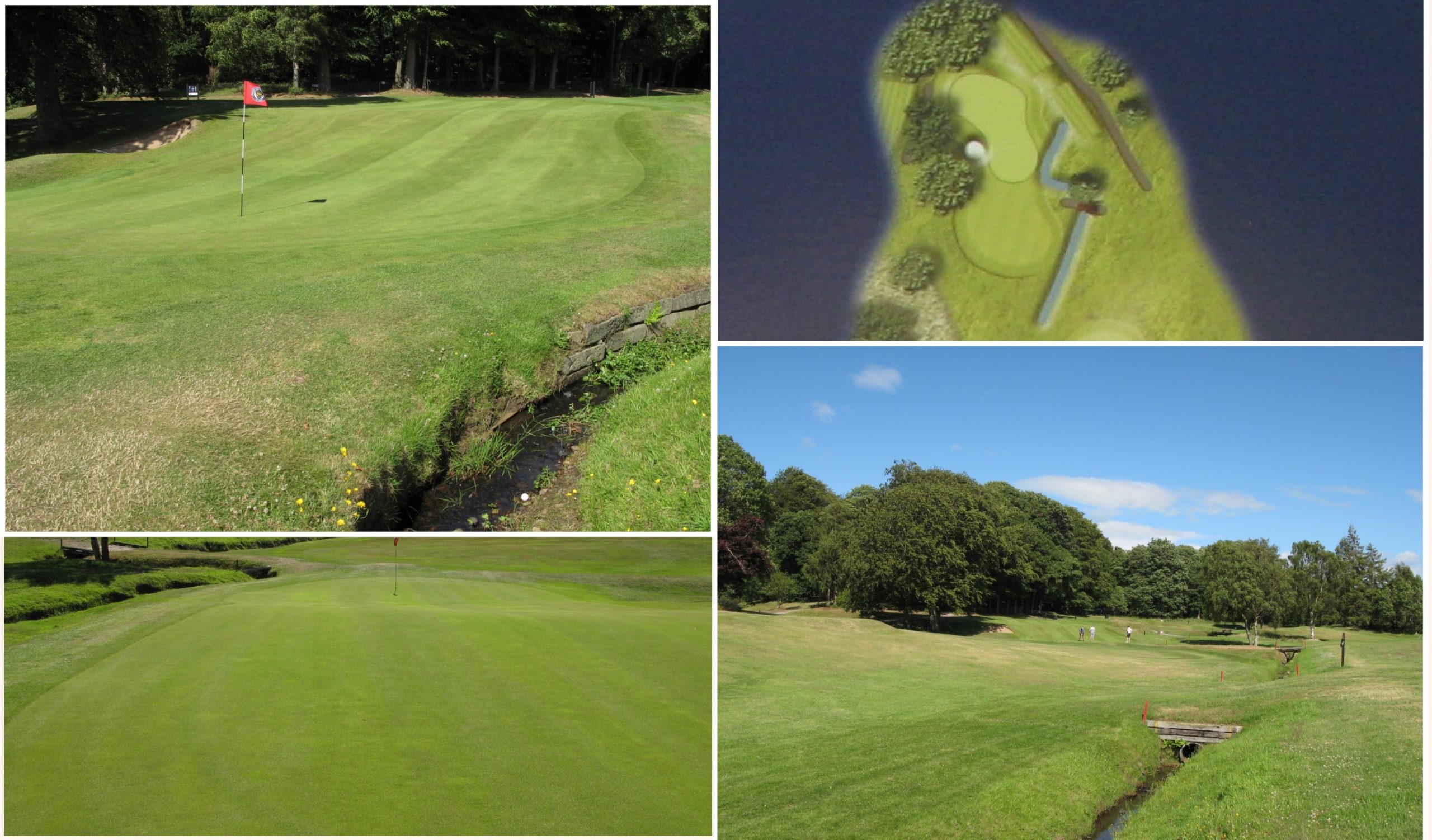
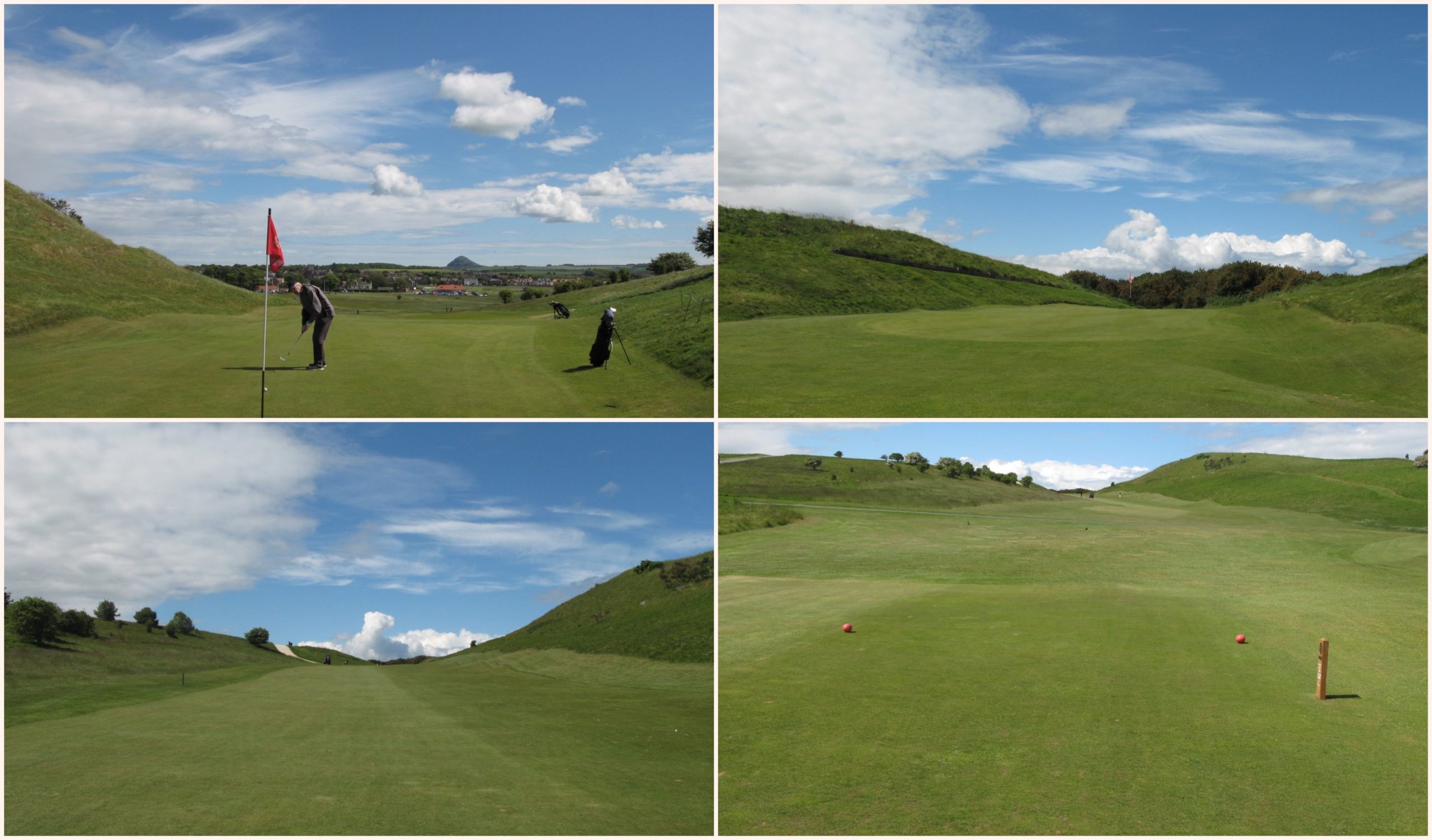
The wonderful par four SI1 13th hole at Pitreavie. Have a close look at the course map (top right) at how the burn cuts into the green, but is completely unseen from the approach (bottom right). You can see my ball in the top left picture!

Another feature of the course is the undulating terrain. This gives rise to the question about how closely did MacKenzie follow his own 13 principles of course design published in Golf Architecture (1920). “The greens and fairways should be undulating, but there should be no hill climbing”, also “There should be a minimum of blindness for the approach shots”. Whilst there are several blind tee shots, there are indeed no blind approach shots; however, I’ll leave readers to find out about how tough a walk it is in places!
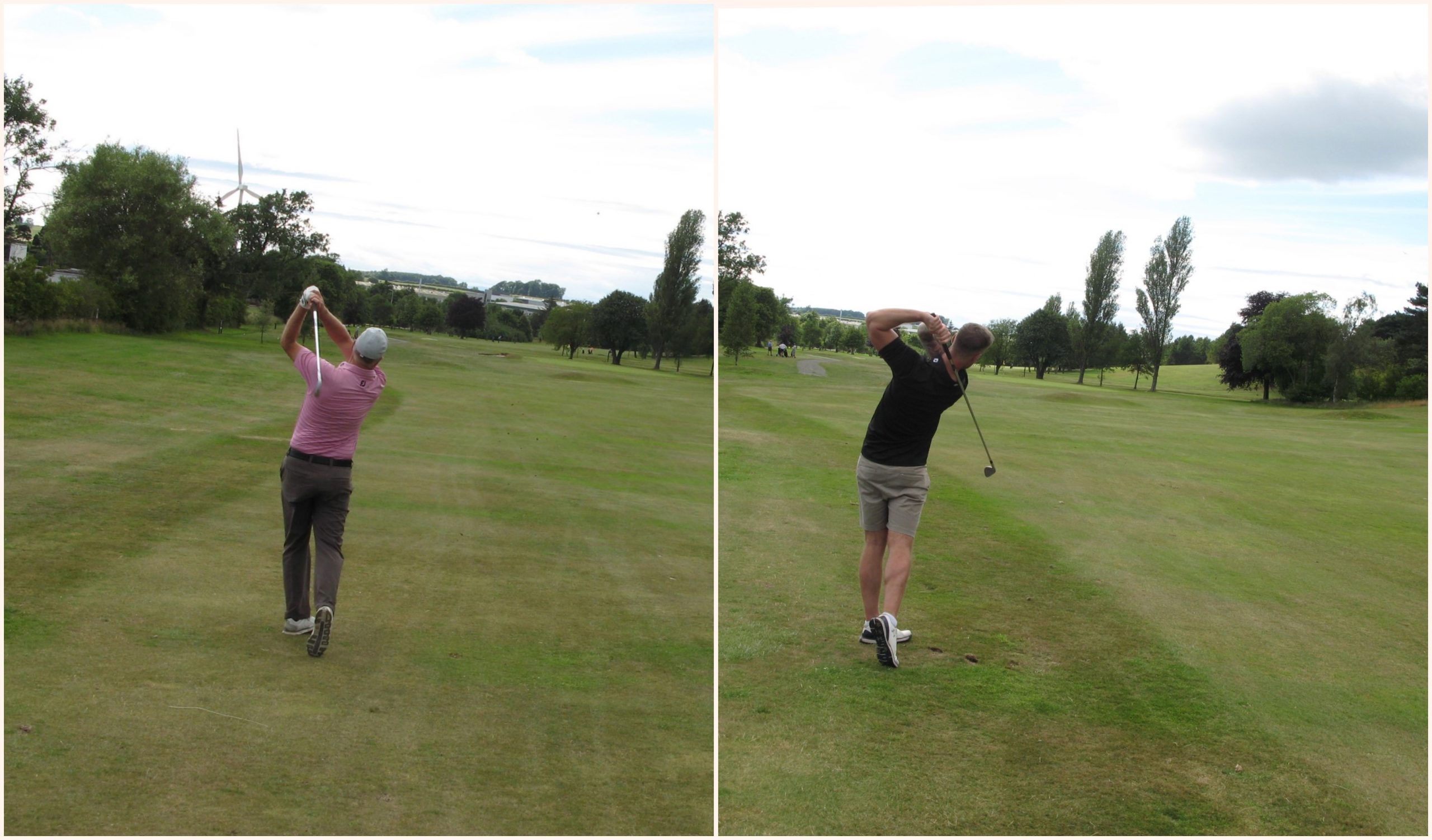
I met up with local members, father and son, Ian and Dean Black. Ian on the left here, with both shown playing into the 17th green.

The course was in great condition when I played. The sand in the bunkers was perfect, often an overlooked part of parkland maintenance. There are also outstanding views from several tees, towards the Queensferry Bridge.

The fairways were fairly open, which reinforces the difficulty of the green surrounds that contribute to the slope indices well into the 130s for both white and yellow tees.

I met up with local members Ian Black and his son Dean, and we enjoyed a few holes together, and I listened to how they were very happy with the course and how good value the membership was.
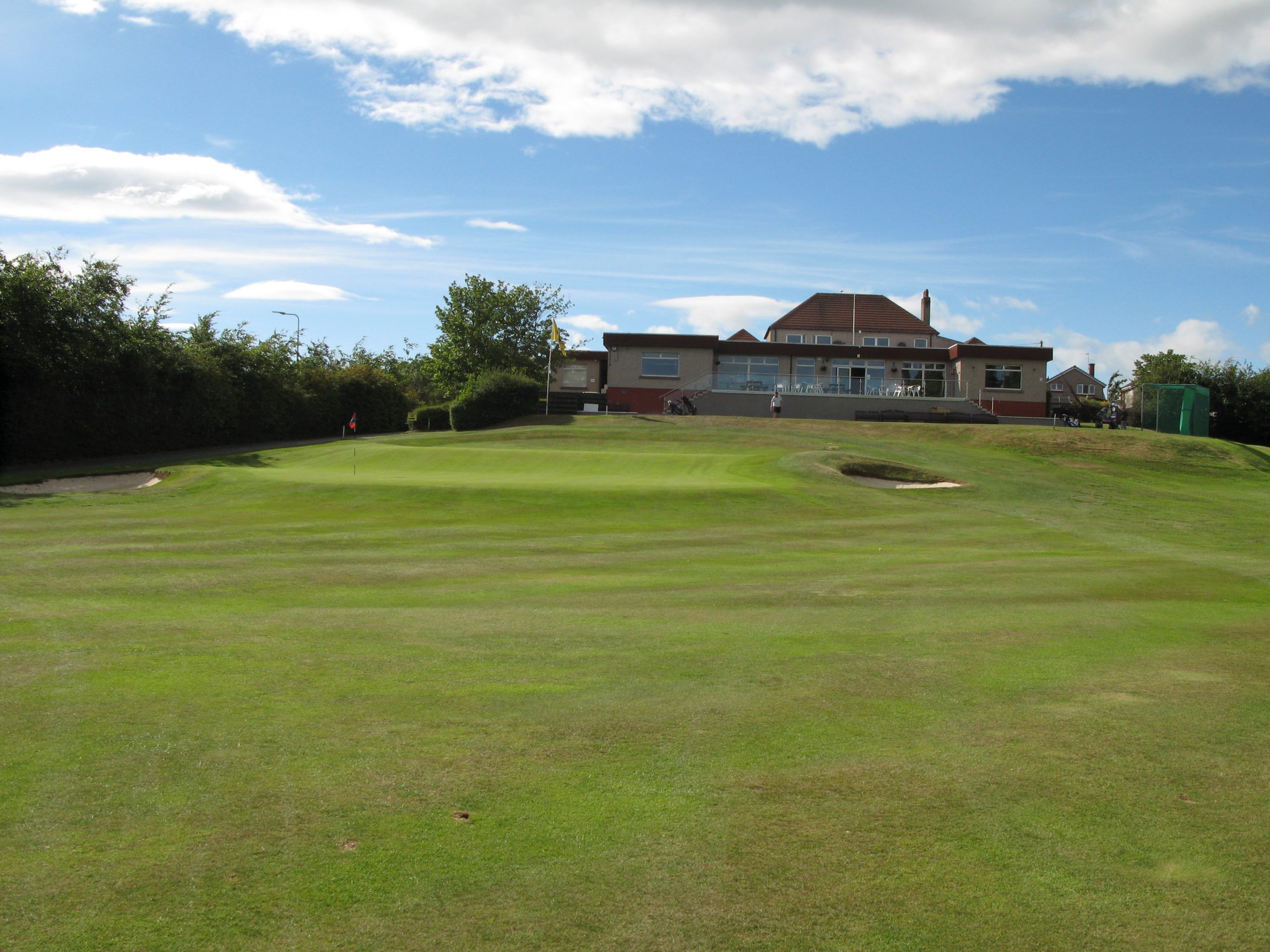
The beautiful 18th green at Pitreavie, adhering to Alister MacKenzie’s design principles.

I played well, shooting 89 for 34 stableford points, with only one blob/disaster at the 10th, where I took an 8 at one of the few dog leg holes.

As to value, although there are a few weaker holes, to be able to experience some of MacKenzie’s genius at no more than £30 (I paid only £17.99 on Golfnow) means 5 out of 5 for me. This is outstanding value and highly recommended.

Facts:

Course Type: Parkland

Par 70  (2 par 5s, 12 par 4s, 4 par 3s)

Distance (yellow): 5781 yards

Moly’s Gross score: 89
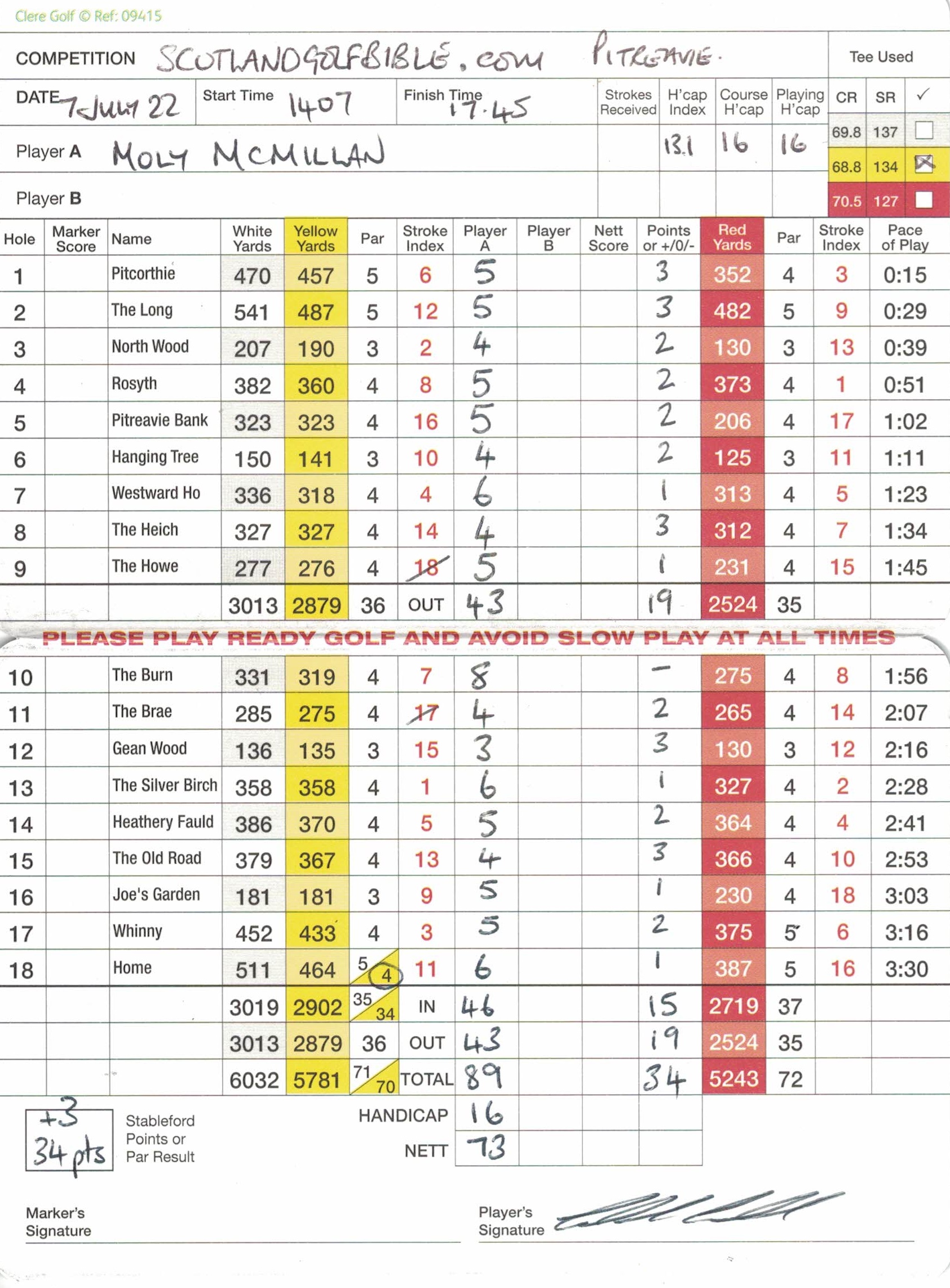
Moly’s Pitreavie scorecard – 89 for 34 stableford points.

146. Auchterarder. 3 July 22.

Stroll the Gleneagles landscape at 20% of the cost.

Round £50. Par 69. Course Rating / Slope Rating (yellow) 65.7/114. Value (out of 5) – 5

Wonderful Perthshire views. Firm heathland turf. Magnificent greens and teeing grounds. It really could be Gleneagles. But whereas playing the PGA Centenary Course will set you back £250, next door Auchterarder will be £50 for a mid week summer round; I paid only £35 for a weekend twilight for a beautiful early evening game, representing incredible value.

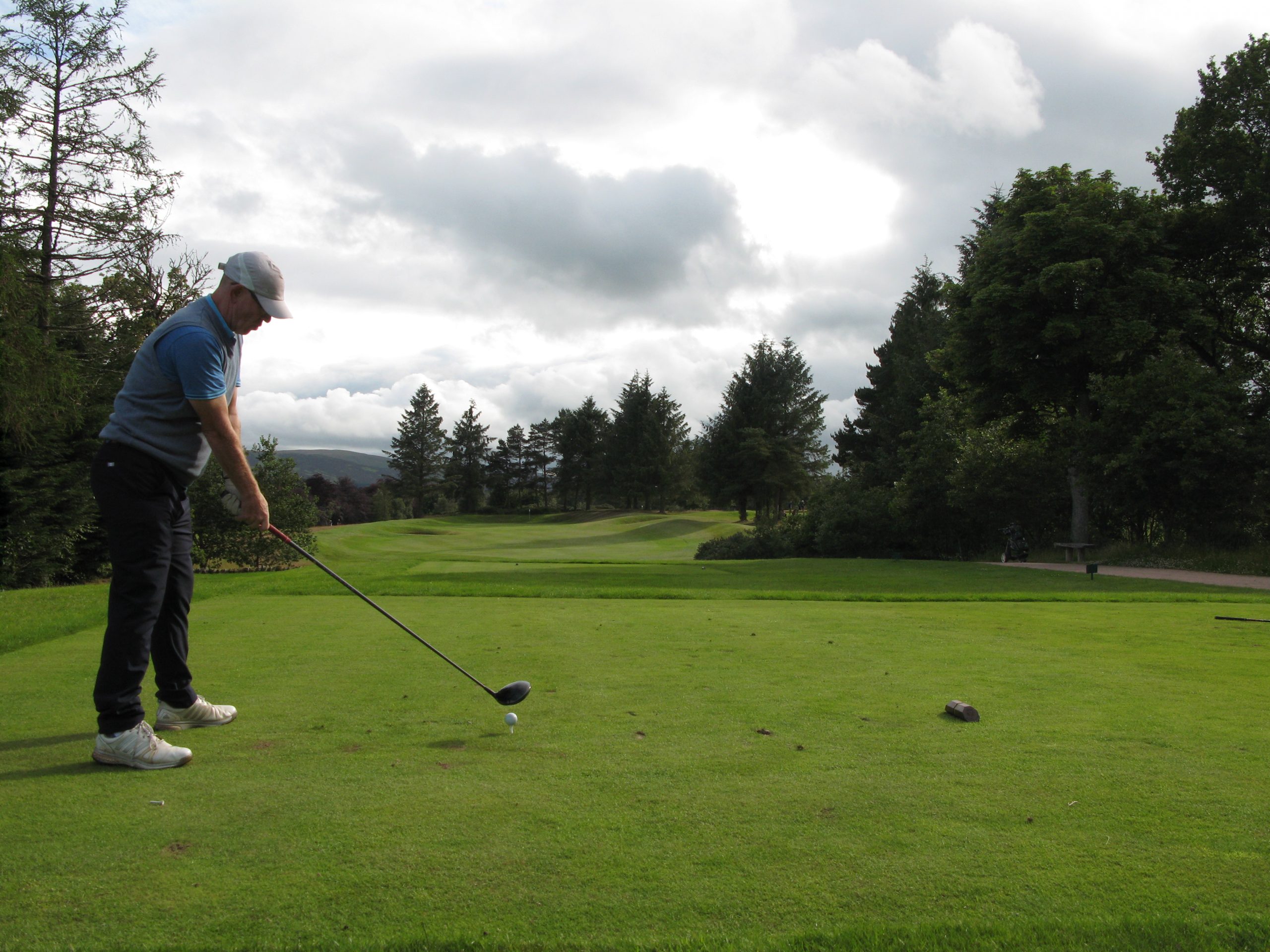
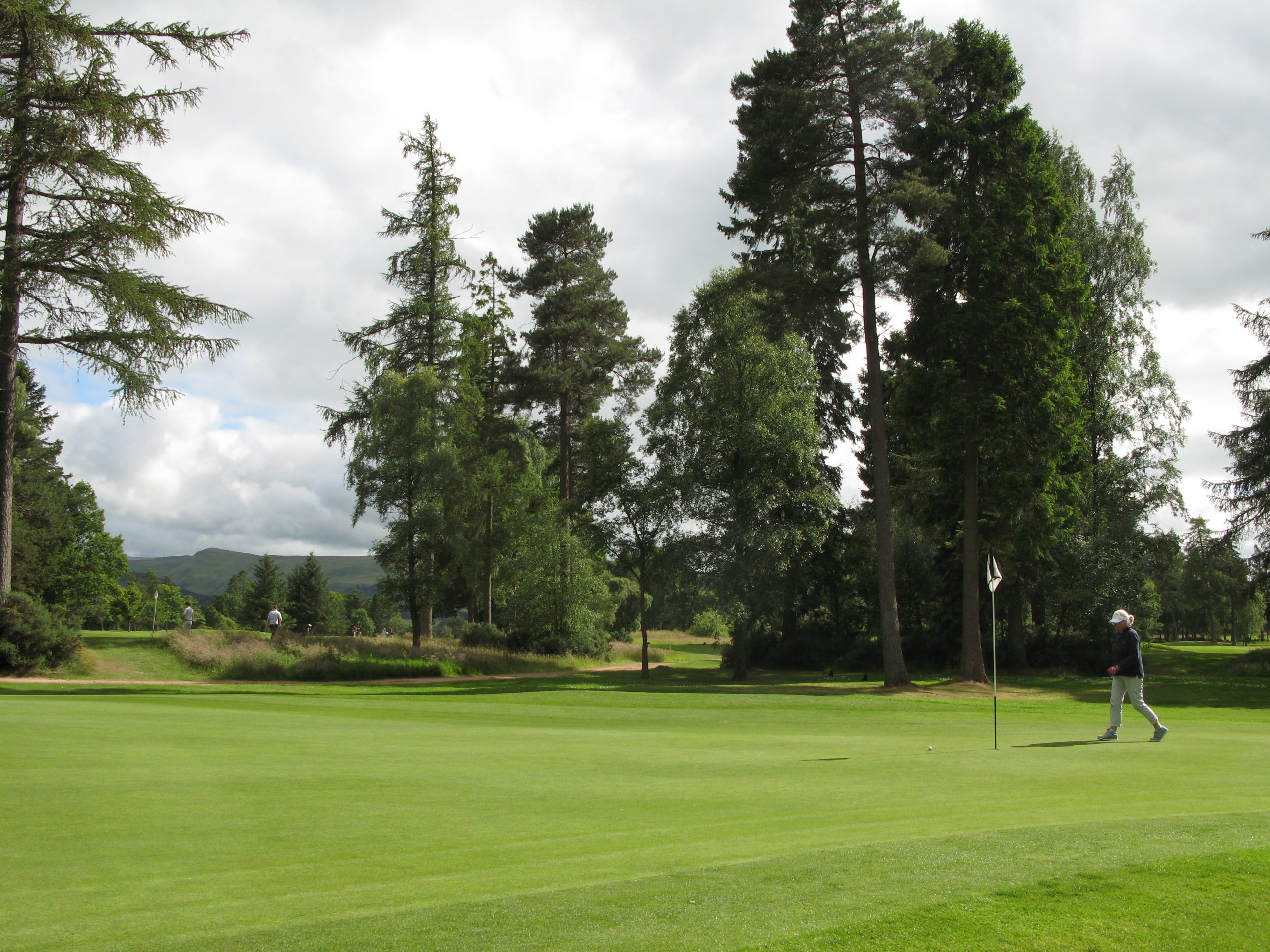
Moly tees off at the 10th at Auchterarder, with the Gleneagles PGA course, venue of the 2014 Ryder Cup, in the background.

Having previously been brutally exposed on the Gleneagles Ryder Cup layout, I continually wonder why ordinary golfers like me are willing to pay huge fees for golf courses that just highlight their golfing deficiencies. I can well imagine the humour value for the Auchterarder members, who pay £670 for annual membership, looking across at the well heeled swings next door.

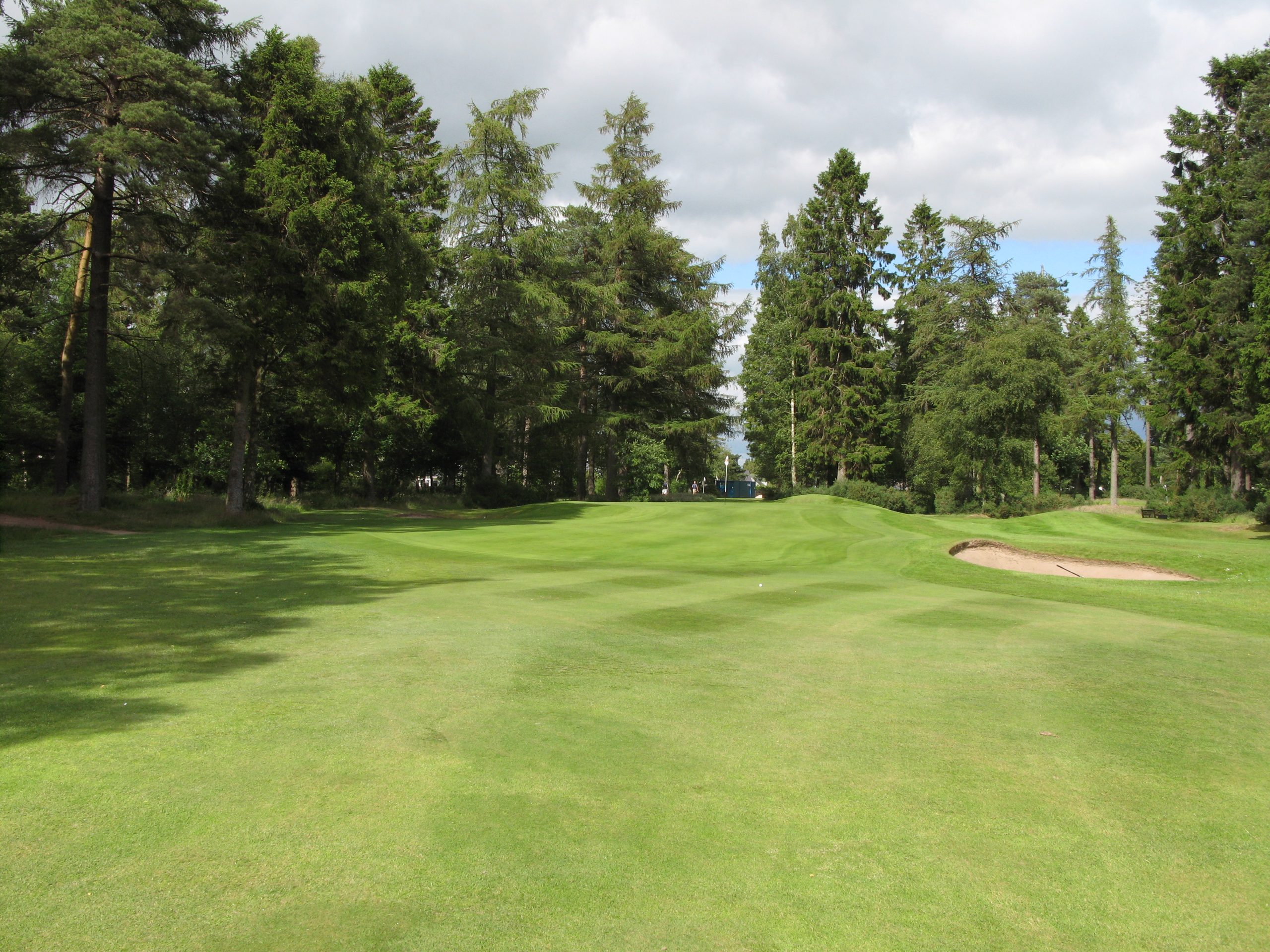
Challenging first hole, ‘Deils Dyke’, at Auchterarder – 360 yards from the yellow tees played into the prevailing wind.

Auchterarder was designed as a 9 hole course by the legendary Ben Sayers in 1913, some 6 years before The Kings Course at Gleneagles was laid out, making Auchterarder the senior member of the local golf courses. The course went through plenty of disruption around WW2, but was subsequently reconstructed and then extended to an 18 hole course in 1979, partly through the demand created by the Gleneagles Hotel establishing its reputation as one of the world’s great golfing resorts.

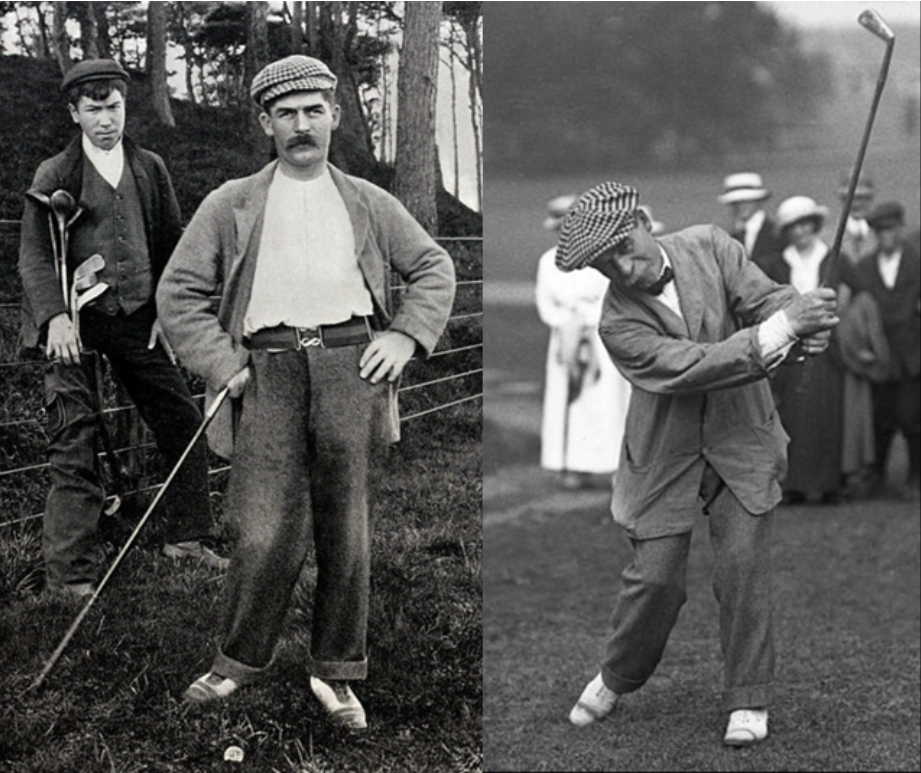
The brilliant golfing entrepreneur Ben Sayers, the designer of Auchterarder, here depicted in his younger and older self.

The current course is an absolute cracker. Short, at 5357 from the yellow tees most visitors will use, this course gives you a chance to play to your handicap, making it an attractive amateur open venue, especially given its highly rated kitchen.

The 16th, ‘Gulley Brae’, a long and challenging par three, needing driver for most.

Surrounded by hills the course itself is an easy walk, amidst well maintained pines and other trees that frame many holes but don’t overly narrow the generous fairways.

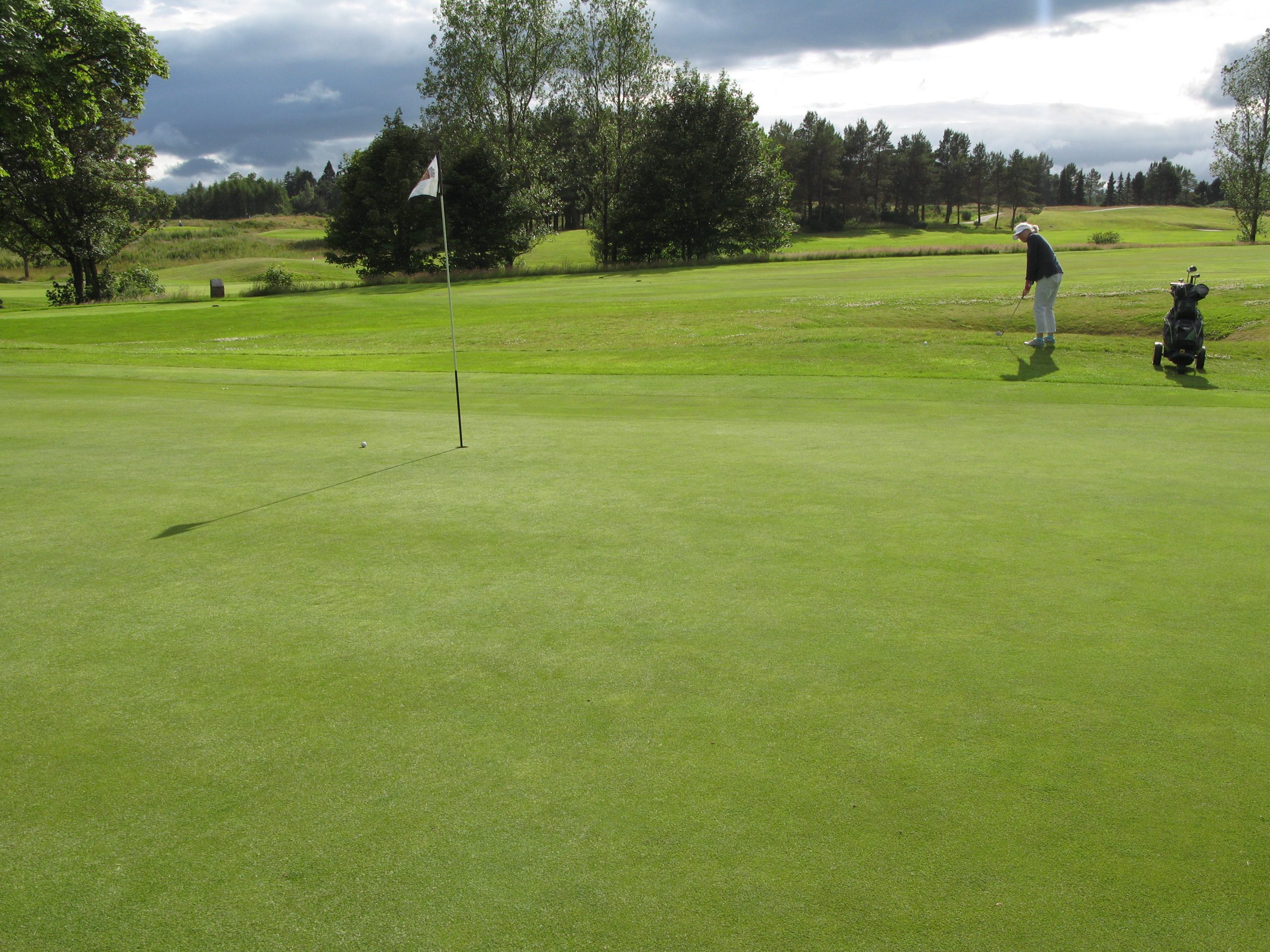
The typically picturesque short par three 8th hole at Auchterarder.

The course is very well maintained and was in immaculate condition, the bunker sand in particular being in perfect order. The greens were firm, but gave good purchase for well struck irons. Beware the rough though, which was very whispy and will wrap the club for most players.

The brilliant green at the par 4 seventh hole, one of Moly’s disasters.

My only misgiving with Auchterarder was that it is set on a fairly small parcel of land, which means there is some ‘criss-crossing’ of holes, with some slightly reverse walks between greens to tees, to facilitate the yardage. A few times I came across ‘lost’ balls in the fairway which could have come from one of two adjacent holes. I can imagine many balls being ‘found’ that were actually ‘in play’ for others. These comments are perhaps a little over critical.

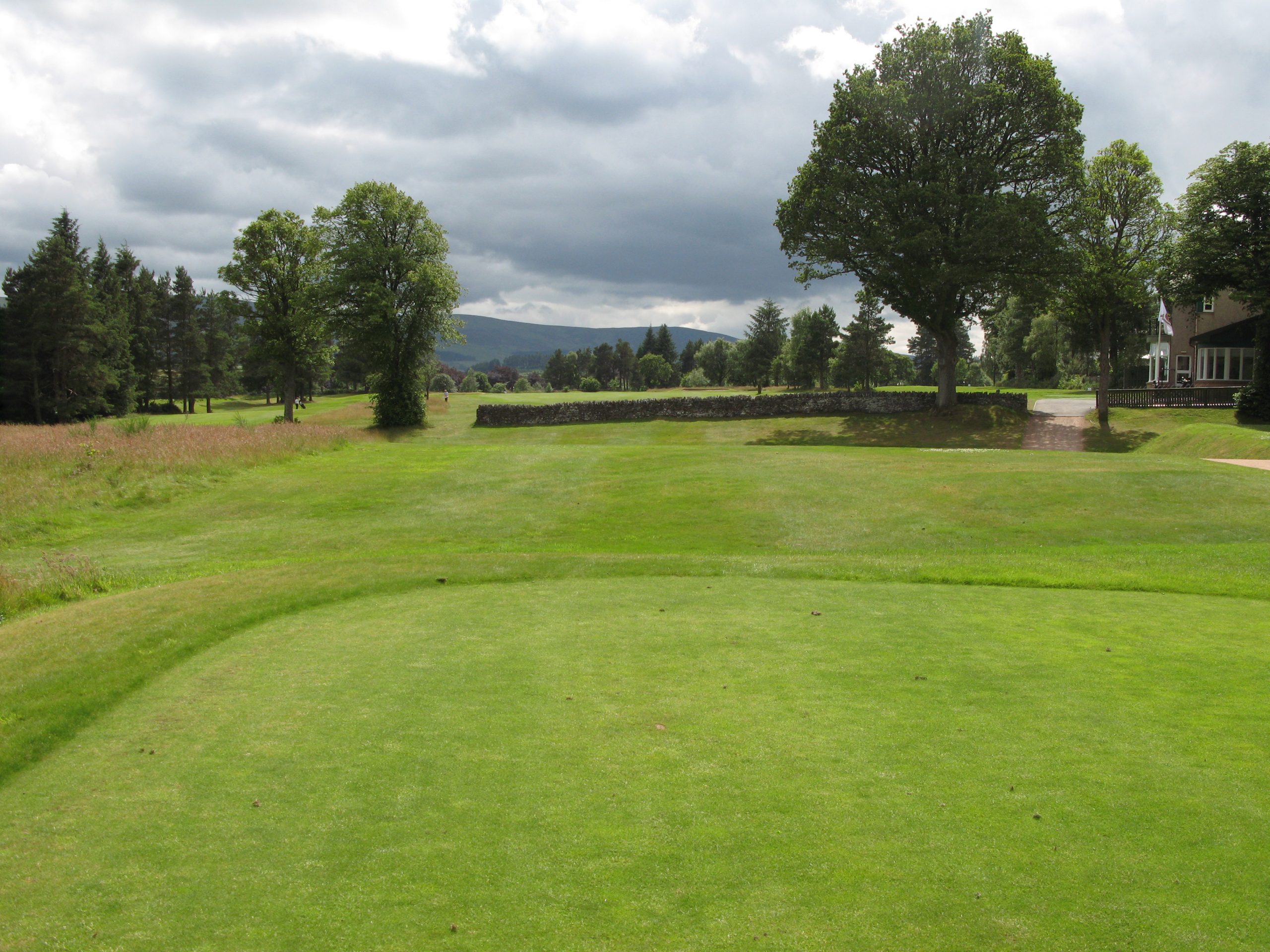
Fran at the short par four 13th, ‘Ochil View’, with the Gleneagles backdrop in the distance.

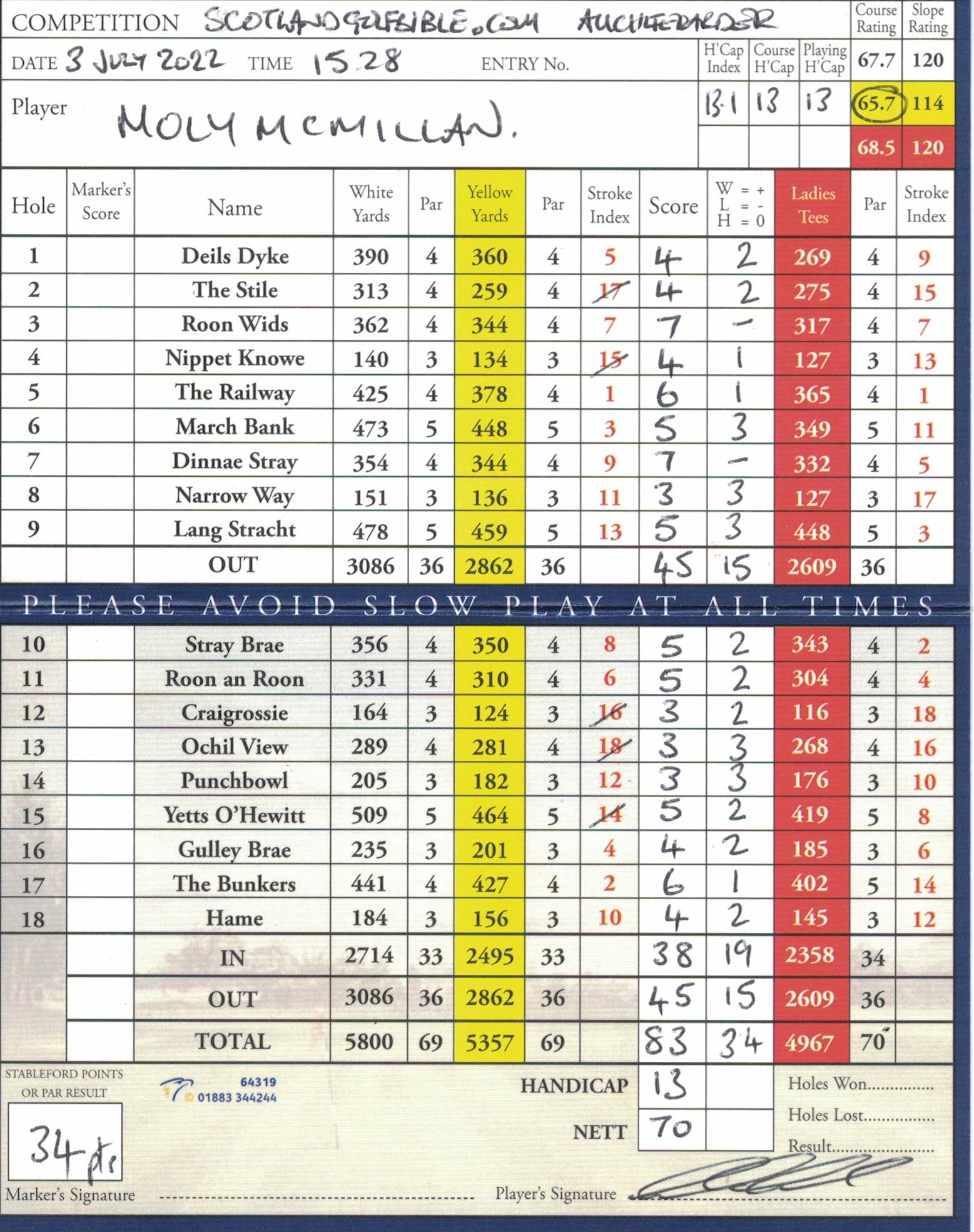
I played really well for my 83, especially my back nine of 38. My 14 over par, included two triple bogie 7s; one of those was on the very aptly named ‘Dinnae Stray’ seventh hole, where having hit two good shots onto the front of the very large green , I proceeded to take 5 shots to get down and they were not all putts!

Auchterarder is 5 star value golf. Take note of the clever hole names, which are a delight.

Facts:

Course Type: Heathland

Par 69 (3 par 5s, 9 par 4s, 6 par 3s)

Distance (yellow): 5357 yards

Moly’s Gross score: 83

Moly’s very solid 83 at Auchterarder

143. Gullane Number 1. 24 May 2022.

Arguably the epi-centric viewpoint of world links golf

Round £195. Par 71. Course Rating / Slope Rating (yellow) 70.4/122. Value (out of 5) – 5

In Michael Murphy’s great book, “Golf in The Kingdom”, golf is eulogised in metaphysical or spiritual terms. In starting to write about Gullane, I can’t do better than Murphy’s epigraph, the Scottish golf saying:

“Golf was invented a billion years ago; don’t you remember?”

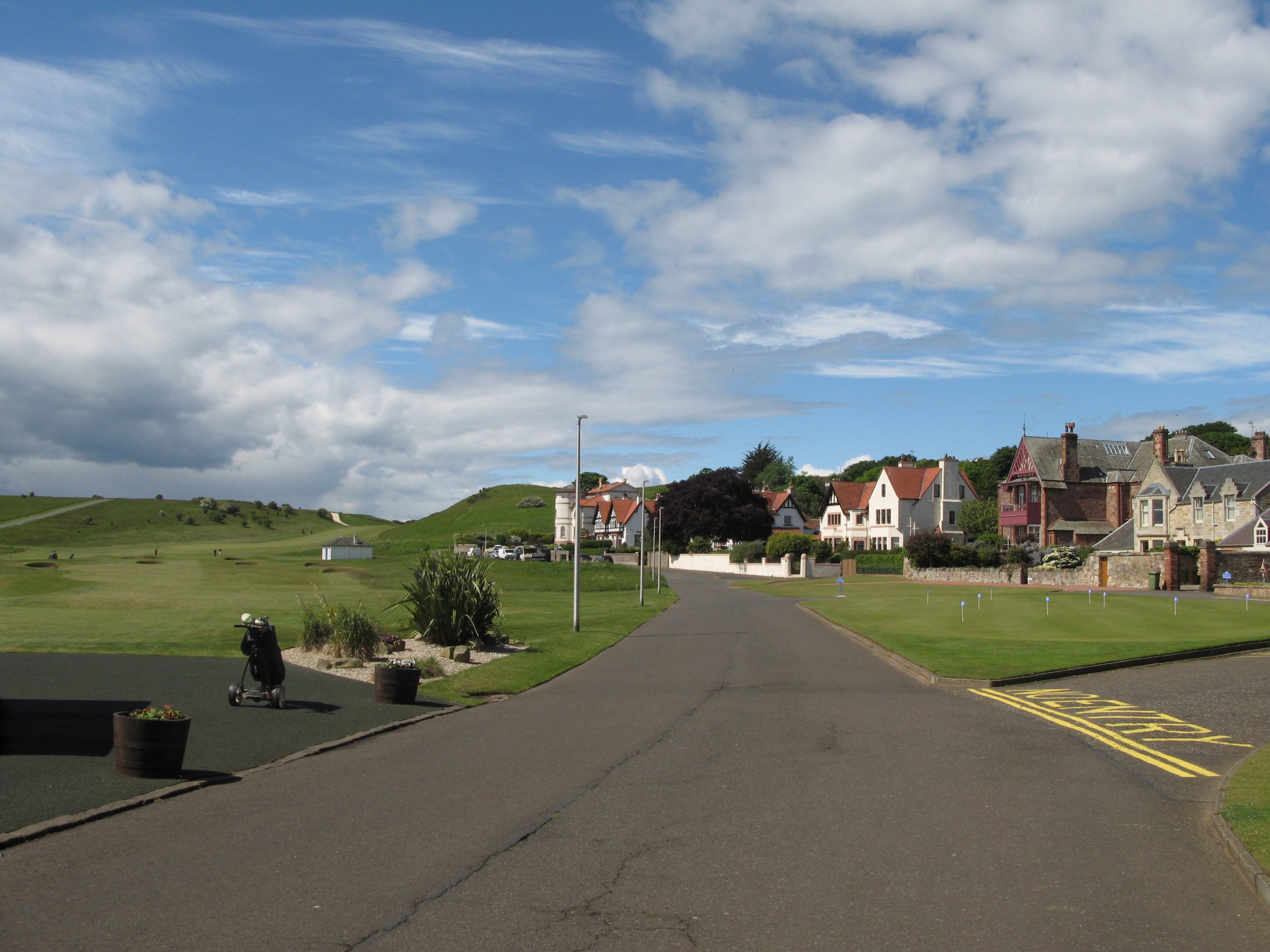
Oh, to win the lottery and live next to Gullane Number 1’s first tee.

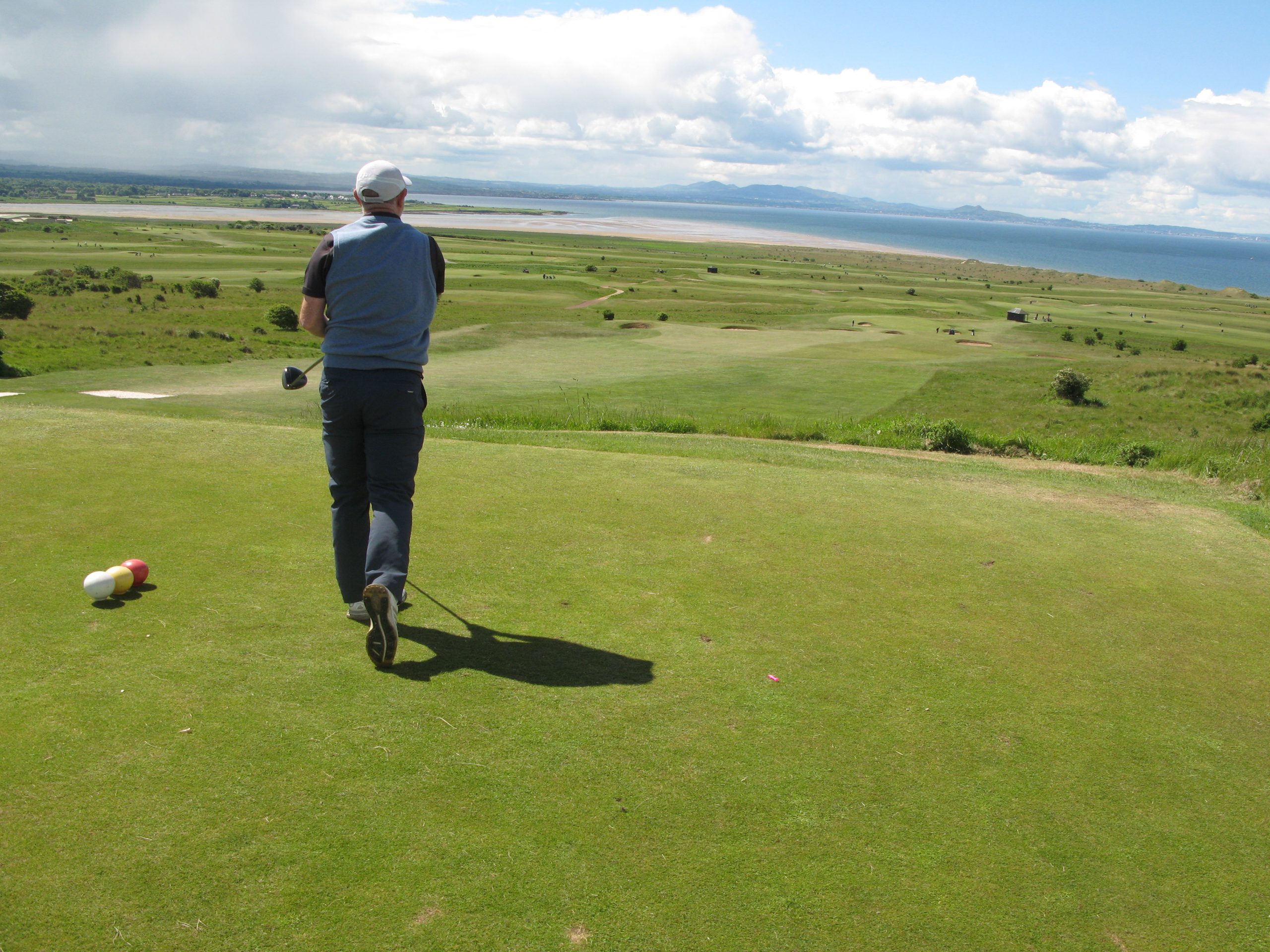
That epigraph made complete sense as I walked onto the 7th tee at Gullane Number 1 for the first time. Set on the small Gullane Hill, it is said on a clear day you can see fourteen counties. What is without debate, I think, is that you have the greatest links land view on earth. Perched there, you are at the mid point of the East Lothian ‘golf coast’ stretching from Dunbar to the east and Musselburgh to the west, with names synonymous with world golf – Dunbar, North Berwick, Archerfield, Renaissance, Muirfield, Luffness, Kilspindie, Craigie Law and Longniddry.

Moly on the epi-centric viewpoint of world golf – the 7th tee at Gullane No 1.

Look north across the Firth of Forth towards the Kingdom of Fife, with Leven, Crail, Elie and St Andrews; see past the Tentsmuir Forrest towards the links of Carnoustie, Montrose, Royal Aberdeen and Cruden Bay. Golf has been played on the East Coast of Scotland for hundreds of years, perhaps indeed ‘billions’. This 7th tee on Gullane Number 1 could be the epi-centric viewpoint of world golf; the Old Course is undoubtedly the “home”, but Gullane’s viewpoint is unparalleled.

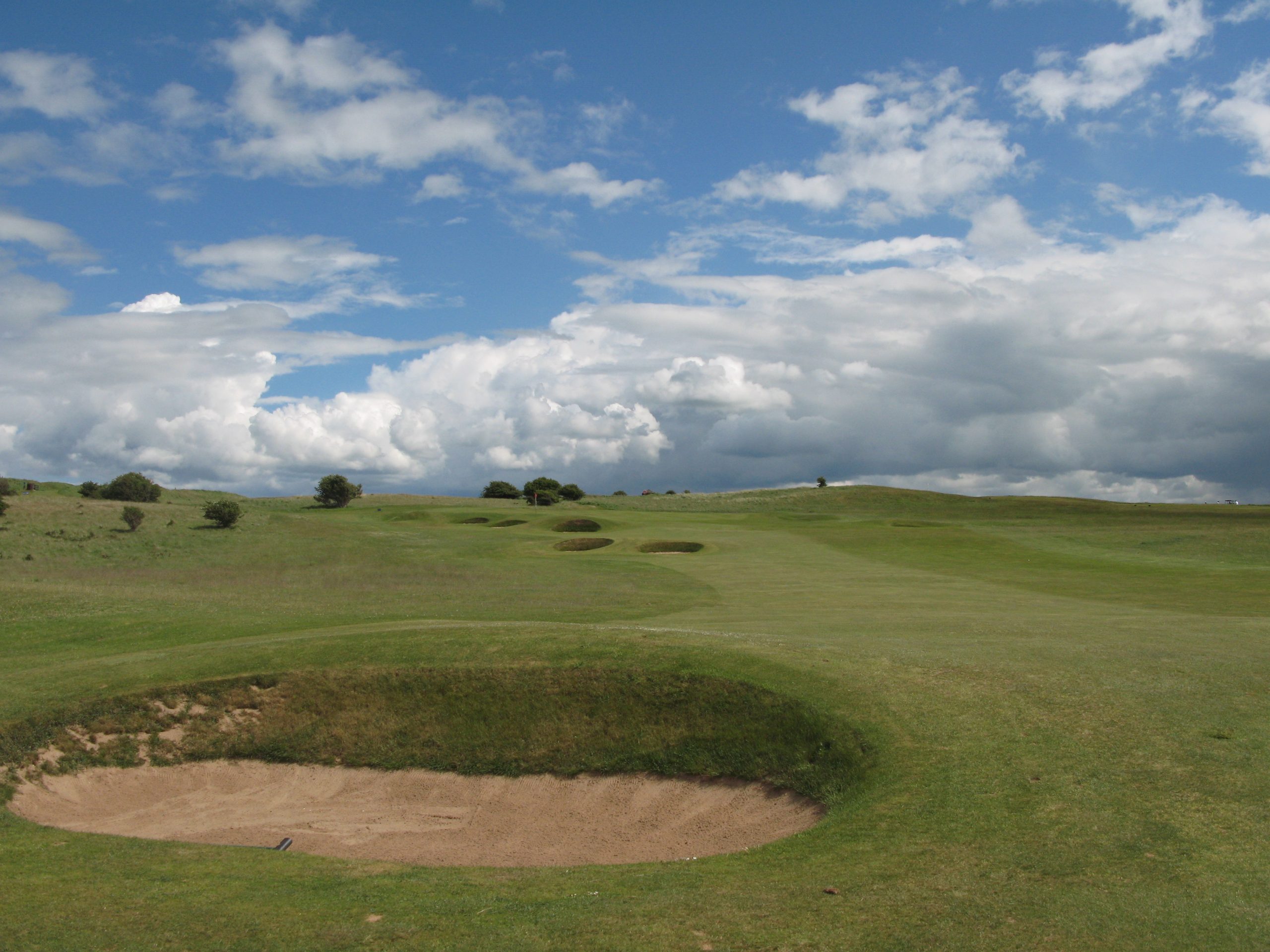
The second hole at Gullane No 1, a par four “carved into the Ancient Links”

So much has been written about Gullane, including the crafted explanation of posh ‘Gillin’ versus humble ‘Gullan’ in his book, “Playing Through”, by Curtis Gillespie, that I decided to more or less tell this story mainly through pictures.

Alastair Allanach plays his low top spin drawing drive, which galloped down the “Racecourse” third; a swing honed and bartered over many years of tutelage by a South African pro. The Hill was used in bygone days by racehorses.

Accompanied by Gullane member, Alastair Allanach, a man who has played more golf courses than anyone I know, we had an absolute blast, waxing lyrical about Gullane and its history. Alastair, a great all round sportsman, and now well into his 70s, was keen to get in at least two of the three Gullane courses on the day, as he struggles to “carry my bag for three rounds nowadays!”

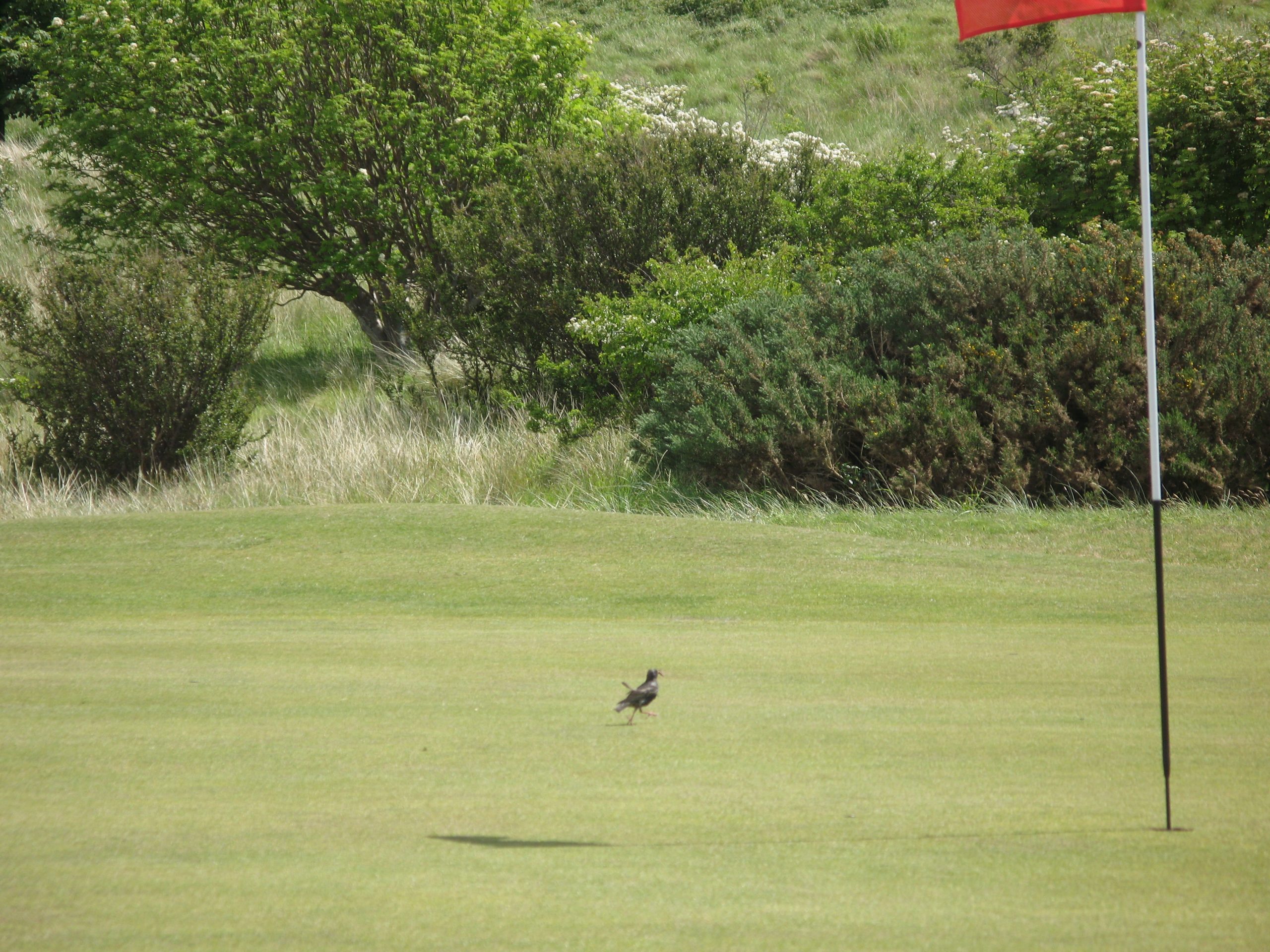
Gullane is one of a few nesting grounds where Larks abound, here encountered at the 8th green.

I met Alasdair a few years ago, when I helped a tiny bit in his editing of the golf book, “The Golfing Life of Jock Kirkcaldy“, the alter ego of our mutual great friend Frank Crowe. The book was forwarded by Gary Player, a friend of Alastair’s – of course!

The brilliant bunkering at the par 3, ninth hole. Although not “the turn”, as with constant directional changes on the interweaving course, it’s unlike the many “out and back” links in Scotland.

This Championship course, the first of the three Gullane courses, dates back to 1882, (the others being innovatively named Gullane 2 and Gullane 3) and it was in brilliant condition. It could have immediately held another Scottish Open without any adjustment. The greens had a little more grass than a professional tournament would have, in order to ensure they didn’t become unplayable in the wind. We had a relatively still day on the links – only a 10mph breeze. Whilst Gullane 2 and 3 were both designed by golfing royalty, Willie Park Jr, the designer of Gullane 1 remains a mystery, which seems so apt.

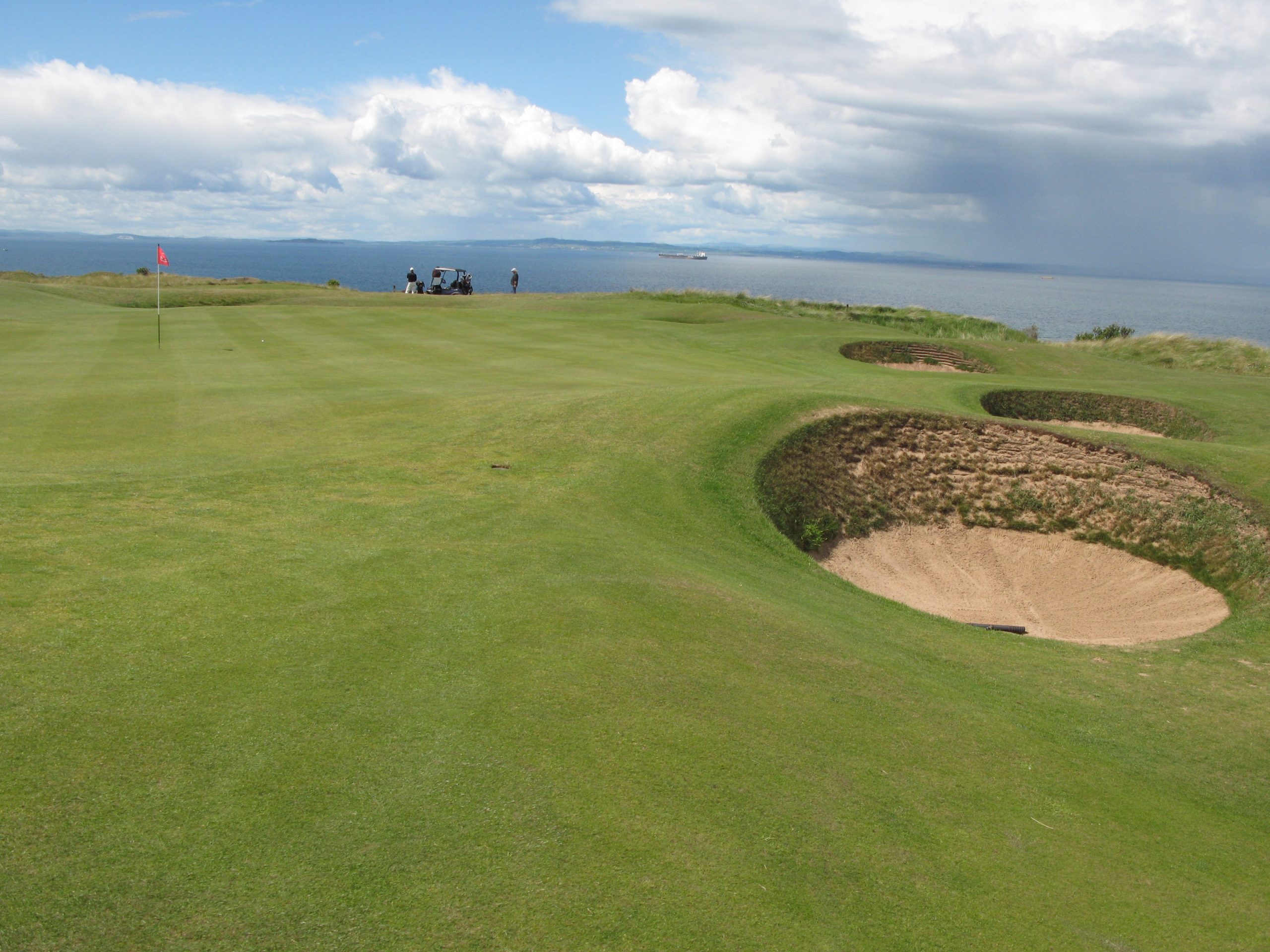
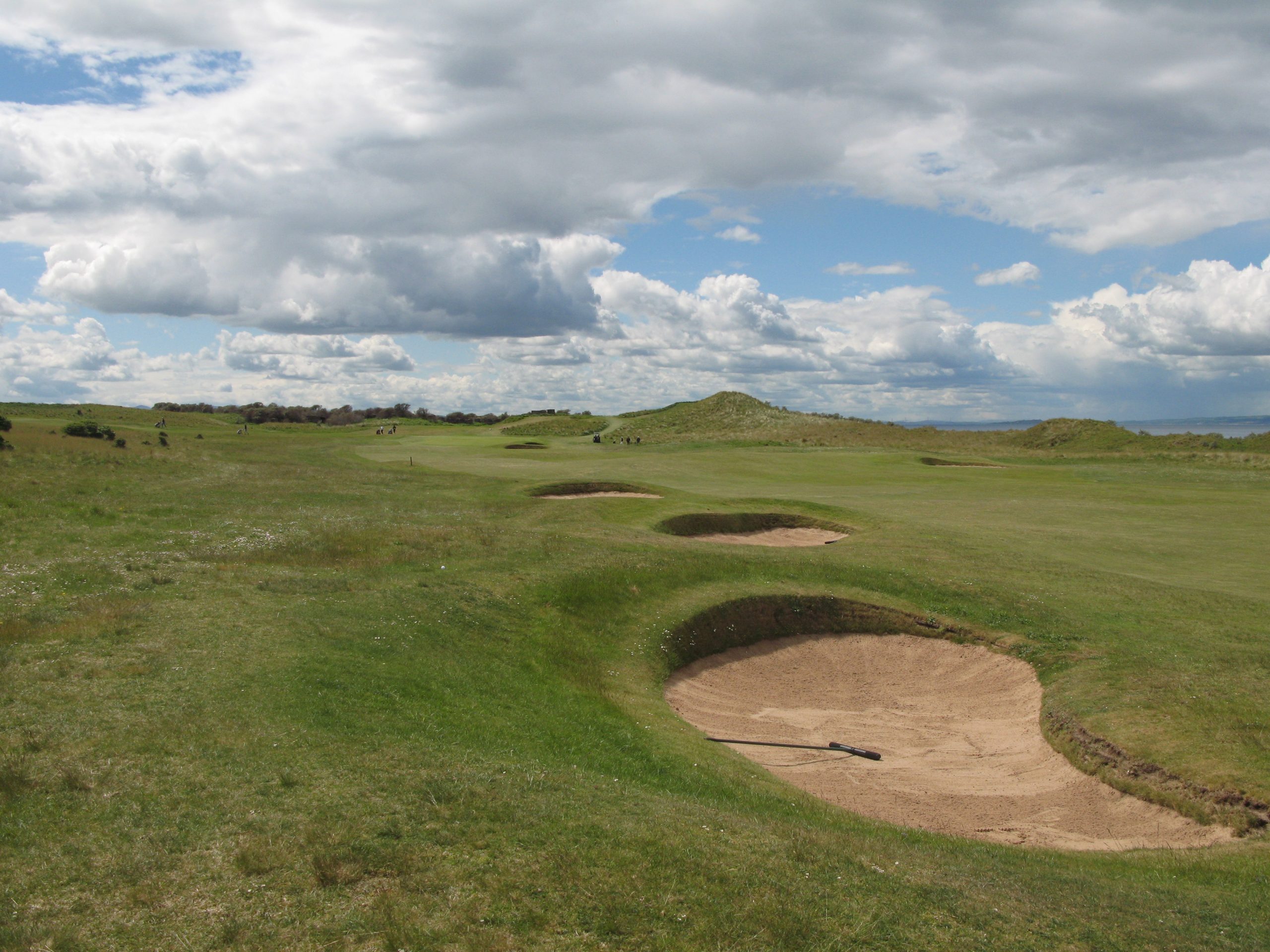
The bunkers at the left of the 12th fairway, a short par 5, but played slightly uphill and into the prevailing wind – a challenge. Moly’s birdie 4, was witnessed by a group of Swedish golfers, among the many international visitors Gullane gets each year.

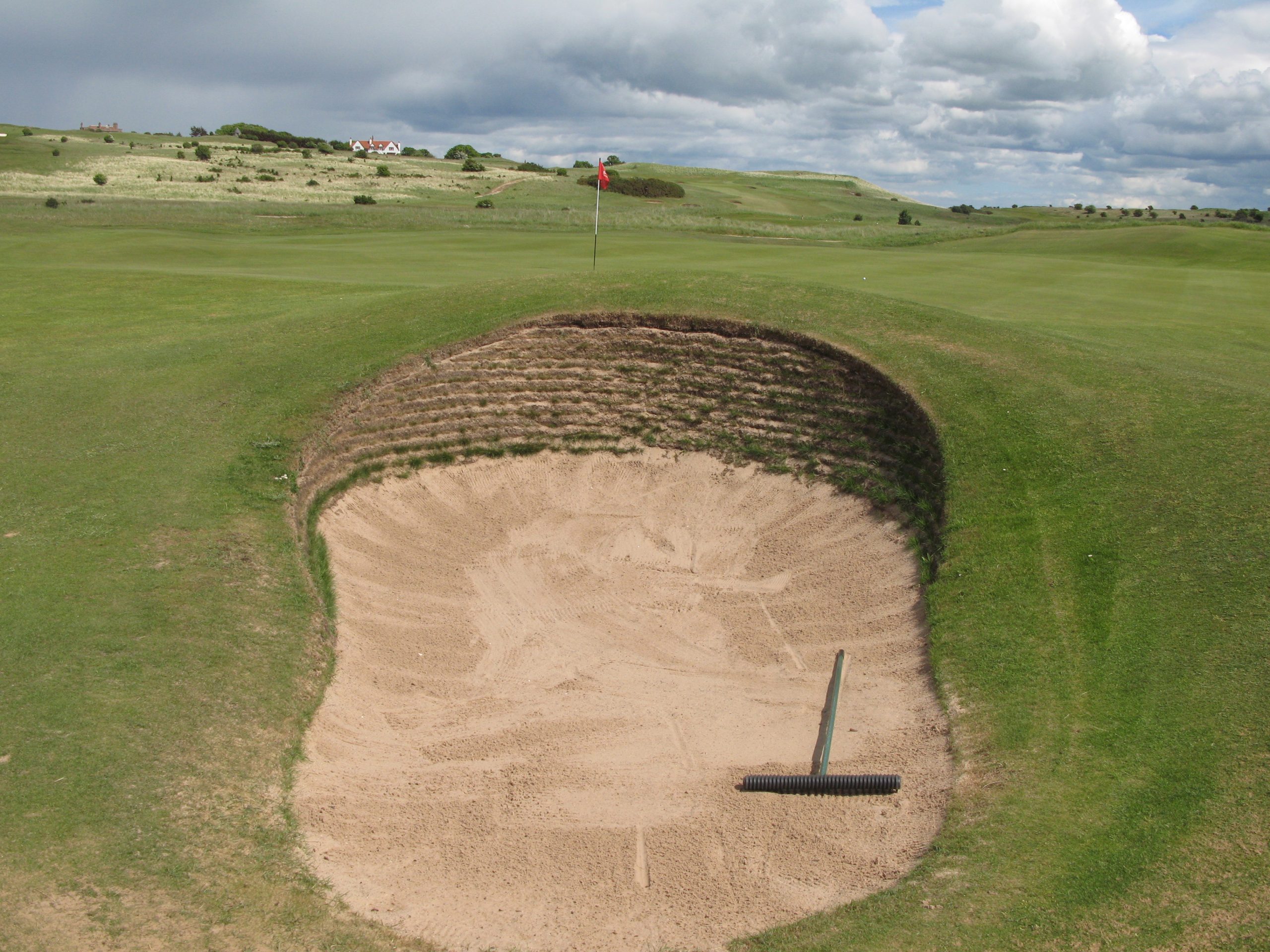
The bunkering was exceptional. Strategically placed, penal, but not impossible, many of the new US style courses could learn from a Gullane recce. I recently played on the Ryder Cup course at the K Club and found that almost all the bunkers required a shot height and carry I no longer had in my bag. Gullane bunkers give you a chance.

The immaculate bunker at the 14th green – penal but not impossible.

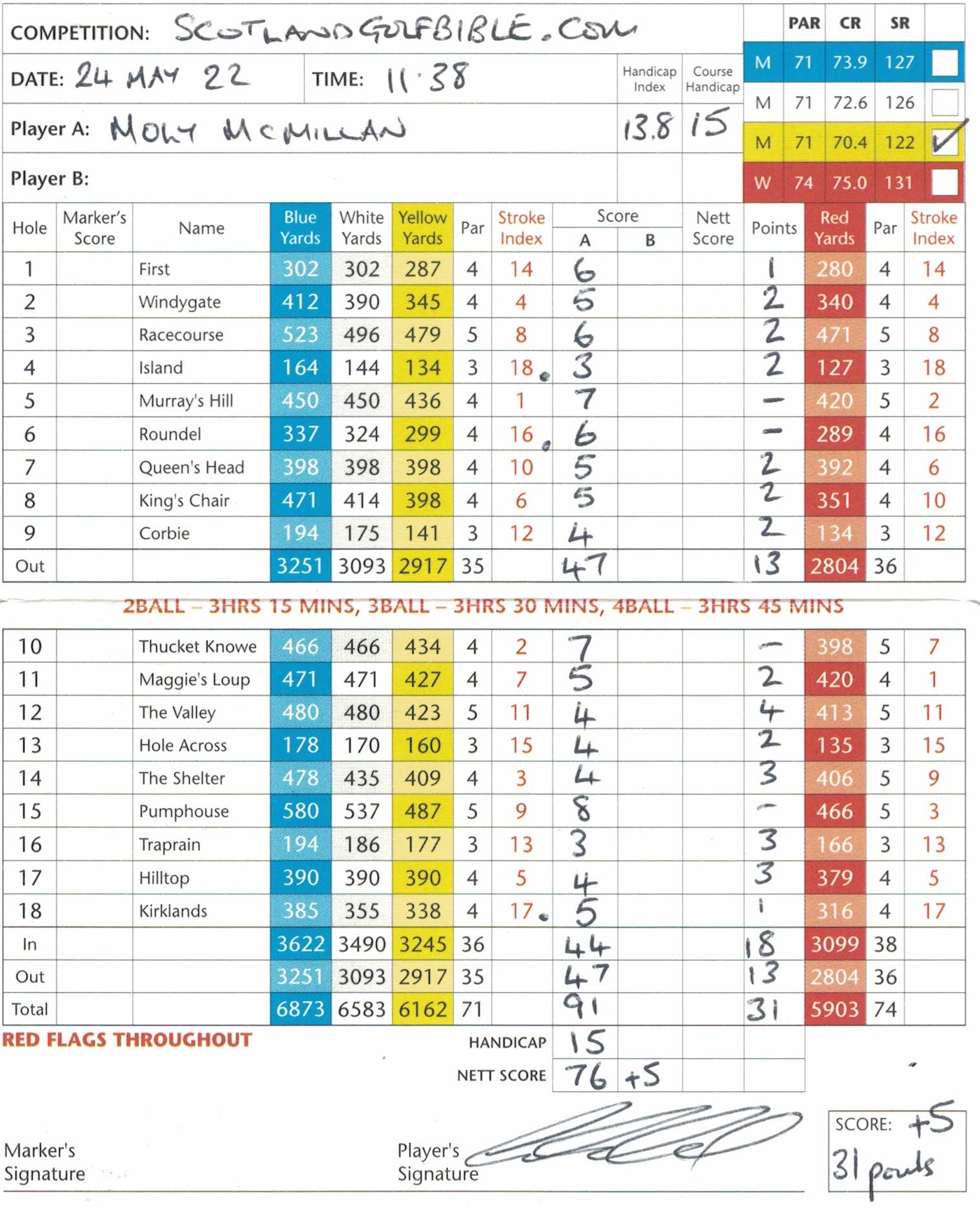
I was very pleased with my 91, despite 3 triple bogies, including at the stroke indexes 1 and 2 holes, the 5th and 10th respectively. I played off the yellow tees at 6162 yards, plenty enough distance for me. I had such a great time playing Gullane. I only hope all of the very fortunate 1200 members feel as blessed as Alastair does, who was a joy to play with on a memorable day for me.

The approach at the long par 5 15th hole.

The course sits on a vast area, so expect to 3 putt some of the monstrous greens. Despite being a busy day with all tee slots taken, I was amazed to only hear one shout of “fore”, a measure of the space here.

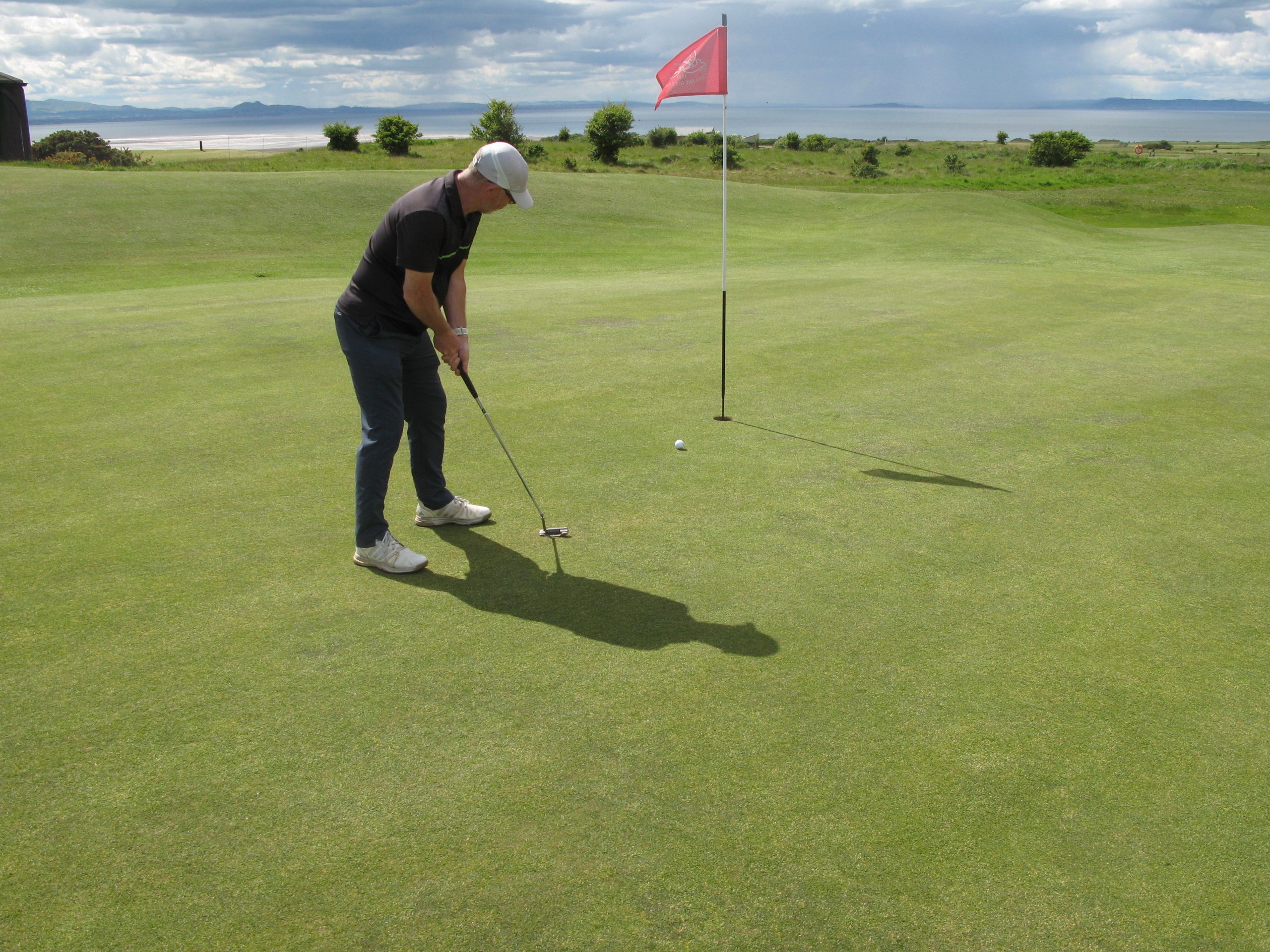
Moly has a rare birdie chance at the uphill par 3, 17th. Note the rain in the Firth of Forth, which never arrived on the course.

Now for the assessment of value. Golfing visitor fee inflation has really impacted Scottish golf. In 2018, in my St Andrews Old Course blog, I said anything higher priced than the old course can’t be worth the money. At the time the Old Course was £180 for a high season round, this year it is £270, a compound annual rise of over 10% per year, or more than three times the retail price index over the same period. Put another way, using 2018 as the datum, the Old Course should be £205.

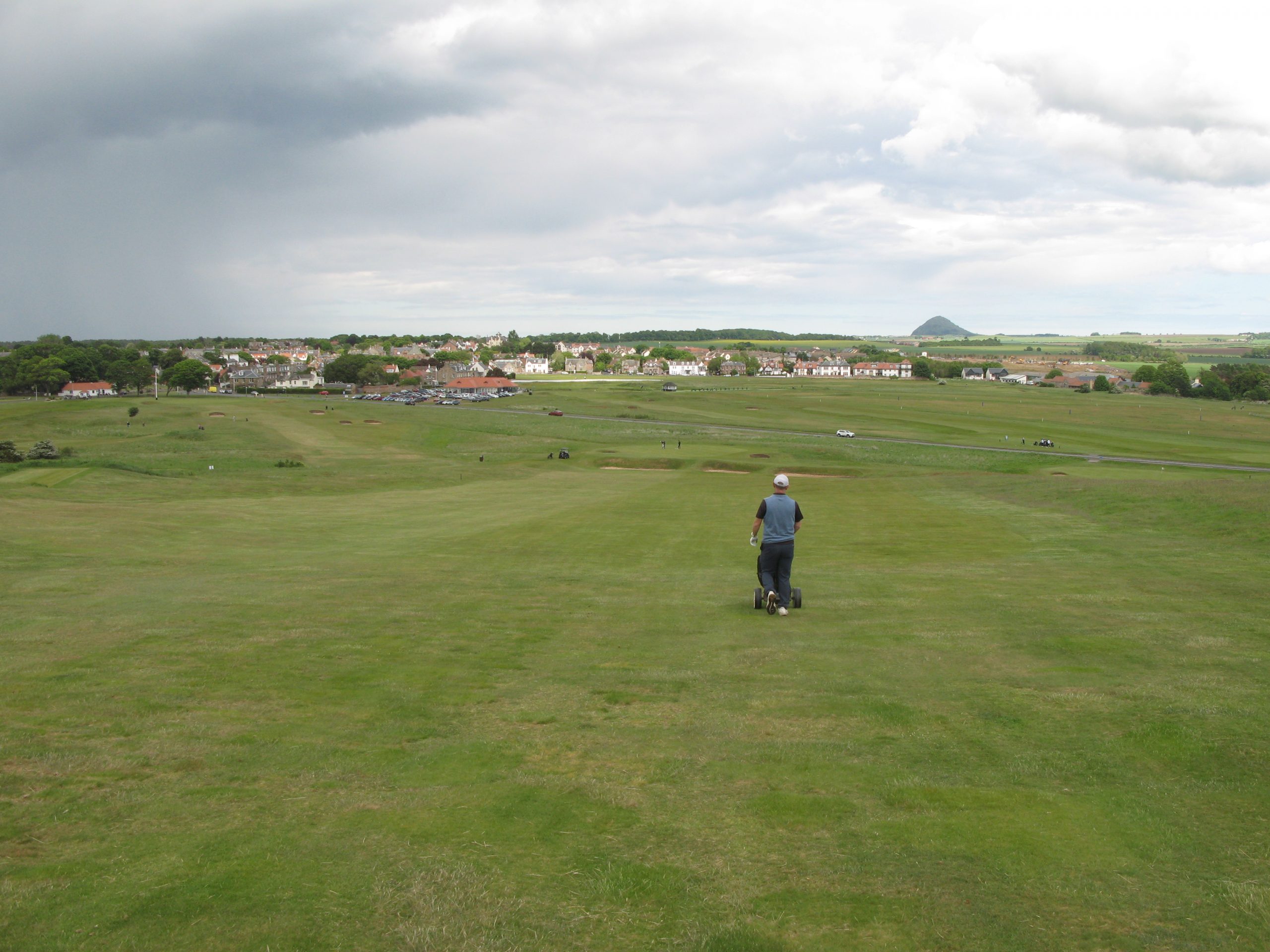
All good things come to an end – here Moly walks towards the 17th green, a deceptive par four, with the town of Gullane awaiting, watched over by Berwick Law.

No matter how much might have wanted to, in the end I couldn’t give this course anything less than 5 out of 5 for value, despite the price tag of £195. It’s a must play links golf course with unbeatable turf, bunkering, green surrounds, sea breeze, wispy rough.

Play, if for nothing else, to stand on the exact epi-centric viewpoint of world links golf. If such a thing could exist.

Facts:

Course Type: Links

Par 71 (3 par 5s, 11 par 4s,  4 par 3s)

Distance (yellow): 6162 yards

Moly’s Gross score: 91

Moly’s Gullane Number 1 scorecard – 91

137. Dunnikier Park. 17 May 22.

Fife Golf Trust knocks it out the park with this brilliant value course.

Round £26. Par 72. Course Rating / Slope Rating (yellow) 69.9/128. Value (out of 5) – 5

Dunnikier Park golf course, in Kirkcaldy, in the very heart of Fife, is one of 7 courses managed by the Fife Golf Trust which was established in 2011 to take over Fife Council’s directly managed courses; the course is arguably their flagship.  The Dunnikier Park Golf Club is private, like many Scottish clubs associated with public courses.

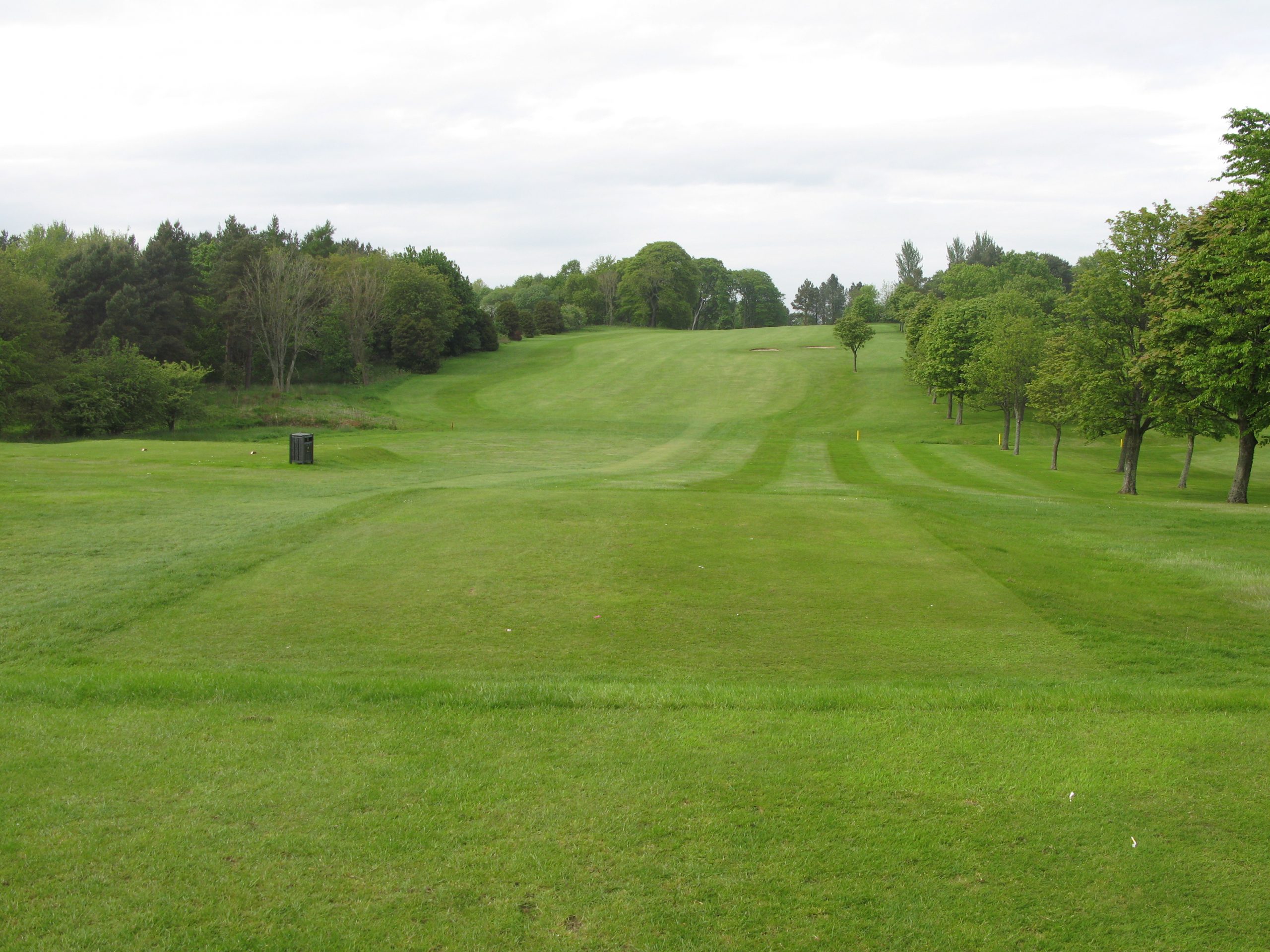
The first, a par 4 of nearly 400 yards, at Dunnikier Park. A brilliant municipal golf course.

The course was established in 1963, build on land given by the Oswald family to the “people of Kirkcaldy” and was the local town council’s very first municipal course. And what a beauty it is. Designed by J E Strutt, It has generous fairways, is well bunkered and with many undulating holes, it is a tough walk at well over 6000 yards. The golf club website also contains a delightful history written to make the 50th anniversary of the course here.

The par five 9th green, with Dunnikier House hotel the former Oswald family residence.

Fife Golf trust offers incredible value golf. A “Fife Rover” season ticket to play all their seven courses is only £347. Many golfers will then choose to join one of the collocated golf clubs, for all the normal club social and competitive benefits, which for Dunnikier Park is only £120 per year.

The greens at Dunnikier are first class, here shown at the greenside of the long par three 3rd hole.

The course is very balanced, with each nine having two par 3s and 5s. A burn runs through the course and comes into play on about half the holes; it is often submerged in under fairway piping, but opened up and cuts into the fairways on each side, often at the typical amateur’s driving length. The best example of this being the par 5 “Lang Whang” 9th hole. It’s worth buying the course planner book, to check this unusual feature out, the book being another measure of the professionalism of Fife Golf Trust.


The 8th, a 350 yard par 4, at Dunnikier Park, typical of the course and showing its undulating nature.

The course was in excellent condition when I played, with bunker conditioning on a par with many of the top courses I’ve played. My only slight criticism is that the greens could have done with being mown – but that does not detract from the green consistency and quality.

The tough uphill par four 17th hole, stroke index 5. Many a match play will be settled here I suspect.

It I ever write a golf book it will be called “Golf, it’s a Fucking Mystery”. My round immediately prior to Dunnikier Park had many disasters and I had started to shank my irons and afterwards threatened to ‘give up golf’. My very next round is then at Dunnikier and my best ever blog game, shooting gross 84, for 40 points, with no blobs and a nice birdie on the par four 4th hole. Like I said, “A mystery”.

Of course, any golfing book I write will not be a game improvement book. Except with one exception perhaps, a story of encouragement. As a member of Monifieth GC for several years I played a number of times with and against “Hutch”; in our Seniors Winter league on the Ashludie course (par 68; SSS of 65), “Hutch” was allocated a handicap of plus 6, as he was after all in his mid 70s. When I mention this golfing handicap to others, a state of their disbelief descends upon me.

How delighted I was, therefore, to read in the history of Dunnikier Park, one of their own great golfers, Davie Gray, who won their club championship a dozen times and about every club open in Fife – an impressive CV. He was asked for the history about the best golfer he ever played with, he said:

“Without equal, Ian Hutcheon of Monifieth, and I’ve also played with, when they were top amateurs, Nick Faldo, Lee Westwood, Colin Montgomery, Andrew Oldcorn, Andrew Coltart and Stephen Gallacher”.

So it was at Dunnikier Park, I once more came across the legend of Ian “The Hutch” Hutcheon.

Course Type: Parkland

Par 72 (4 par 5s, 10 par 4s, 4 par 3s)

Distance: 6116 (silver)

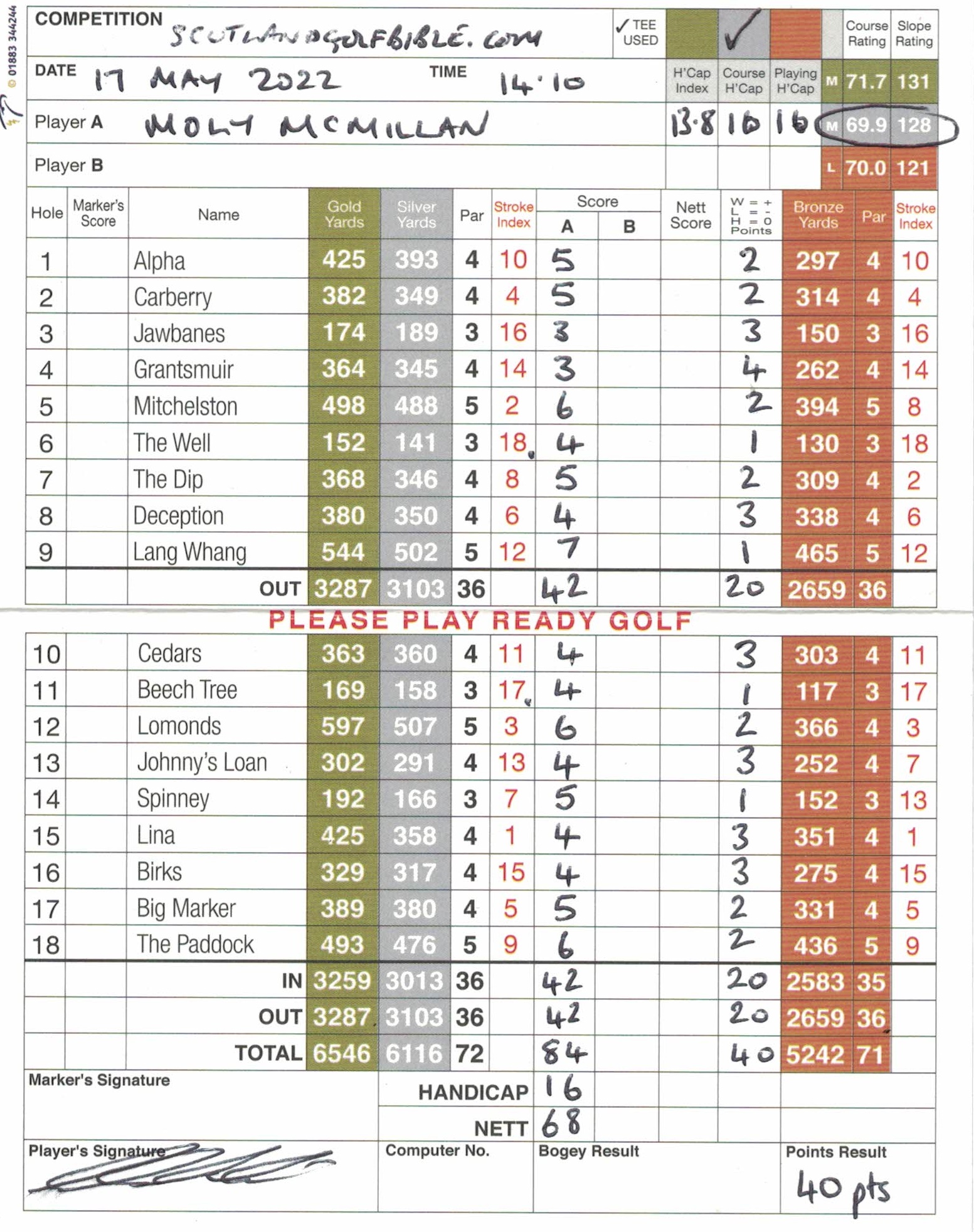
Moly’s Gross score84

Moly’s best blog score for a long time. Gross 84.
« Older posts Newer posts »

© 2026 Scotland Golf Bible

Theme by Anders NorenUp ↑