A guide to green fee value for money

Category: James Braid (Page 6 of 10)

82. The Glen, East Links, North Berwick. 11 Aug 2018.

Excellent vistas, with some memorable holes, but clearly an overplayed course and a little worse for wear.

Round £58.   Par 70.  Value (out of 5) – 3

The seaside town of North Berwick, about 25 miles east of Edinburgh, sits along an outstanding coastline that is home to many renowned and world class golf courses, helpfully listed in the East Lothian golf website here.

The Glen golf course sits on the east of the town, and has historically been called “East Links”, to differentiate it from its more westerly and much older “West Links” neighbour, North Berwick golf course, which is one of Scotland’s great championship golf courses.
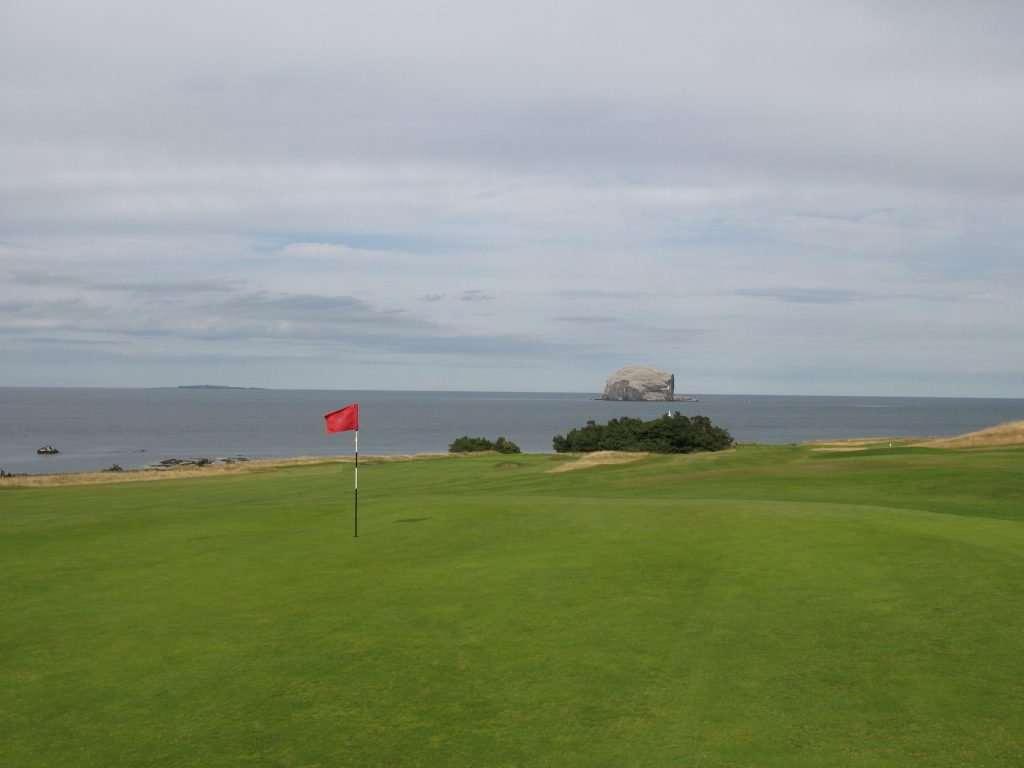
The Bass Rock from the 10th tee at The Glen.

The North Berwick “West Links” golf club actually opened in 1832.  Demand for golf expanded rapidly towards the latter part of the 19th Century along with the expansion of the railways and the increased wealth and leisure time which came from the Industrialised age.  A second 9 hole golf course to meet this demand was laid out in the east of the town in 1894, designed by Ben Sayers, the legendary Scottish golf professional and club innovator, who played a match to mark its opening.    Then, only a little over 10 years later, Sayers again, this time in conjunctions with James Braid, oversaw the extension to 18 holes, of what is now The Glen golf course.
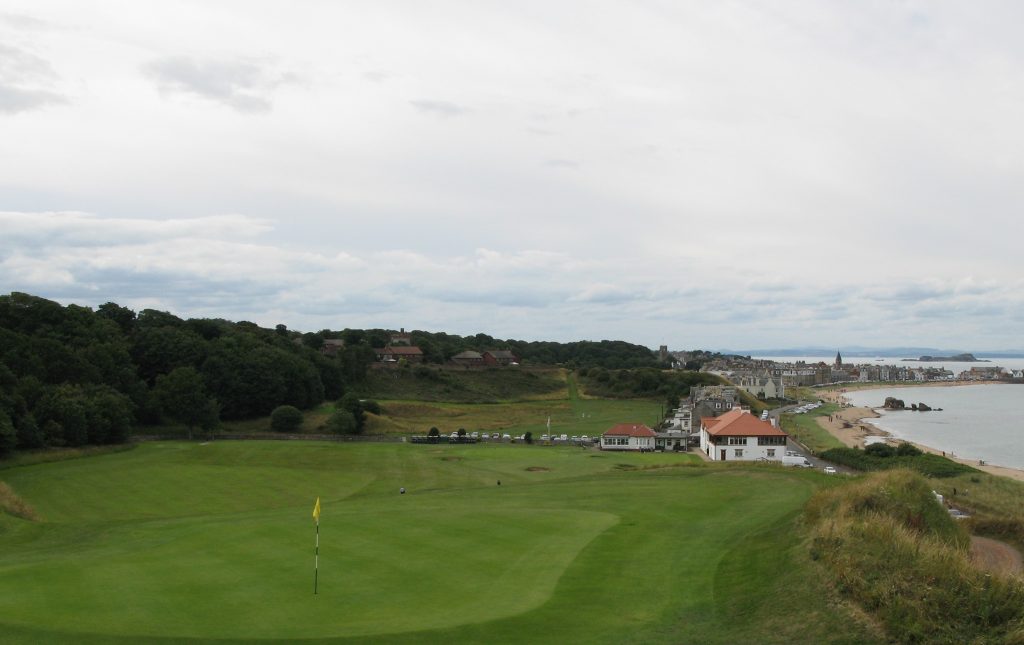
The view from the 1st green at The Glen towards the nice clubhouse.

The course is dominated by the views of the Bass Rock, one of the several islands which dot the outer part of the Firth of Forth.  The rock can appear almost fluorescent in the correct light, which is the result of the white droppings of the large colony of gannets which inhabit it.
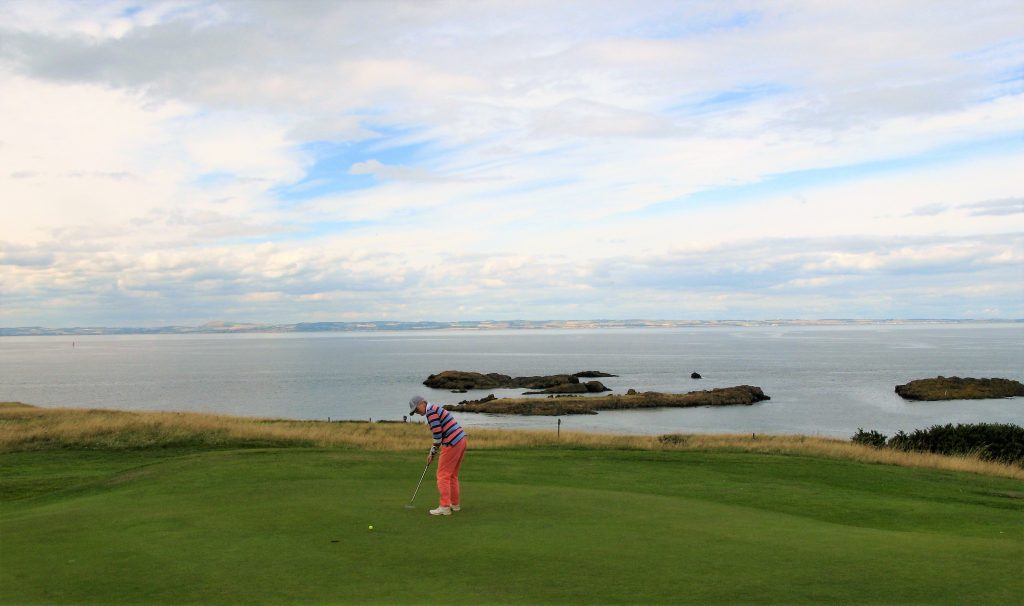
Views North towards the Fife Coast from the mid iron par 3 4th hole, where Fran and I both kept right as guided in the Course planner!

In fact, the coastal views from the course are among the best in Scotland, extending far north to the Kingdom of Fife; however, they serve as a rather flattering deception as many of the holes of the course are in my opinion pretty bland.  In particular, the several holes on the inland most side of the course are built on arable turf and don’t feel particularly links like at all.
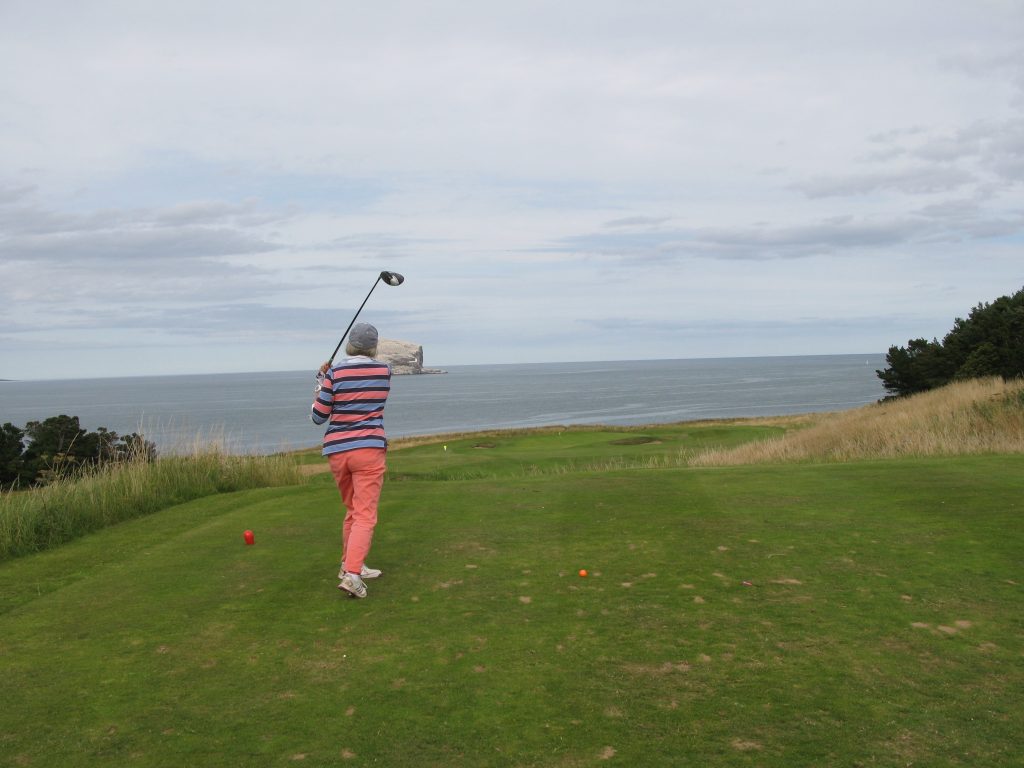
Fran at the 9th, with a view of the typically worn teeing ground.

The course is basically an out and back layout, and starts with one of the most challenging holes, which after a fairly innocuous drive to around 200 yards, requires an uphill shot to a blind green – take at least 2 clubs more than normal, as the green is very long.  If you just get to the top of the hill, you’re faced with almost an inevitable 3 putt!.  This brings me to the greens – they were in good condition but seemed to have a great deal of variability of pace, which I never got used to and I three putted 8 times, which I think must be my record.

The course was otherwise in fair condition, except for the tees which were really very poor, and a clear sign of the amount of play throughout the summer – granted, the dry summer may not have helped the green keepers.  Nevertheless, the high amount of golf played is a really good thing, as golf in Scotland is in general decline.  I think The Glen provide a nice welcome and the facilities and clubhouse are new and very good, another sign of the general wealth on the coastline.
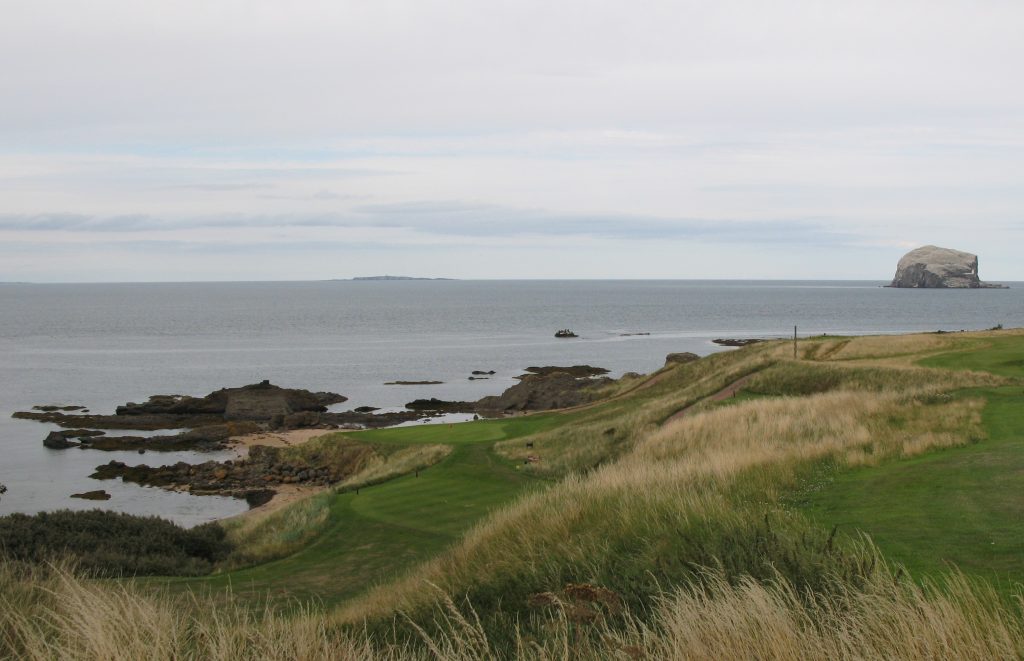
The signature par 3 13th green here seen from a distance. Note the hole is not played in this direction.

The course does have some excellent holes, and some very challenging ones, in its 6000+ yards locker.  The best known is its signature hole, the 13th, which has been likened to the famous short 7th at Pebble Beach in California, which if you look at comparable pictures is not unreasonable.

Other than my putting I had an excellent day, scoring 86, having hit 10 greens in regulation;  this was greatly helped by the pretty wide fairways the course has.  The nicest thing was having a birdie 2 at the signature hole.

It’s worth playing The Glen, but if possible I would think that early season would be a time the course is at its best before the Summer visitor season.

Facts:

Course Type: Links

Par 70 (yellow:  2 par 5s, 12 par 4s,  4 par 3s)

Distance (yellow): 6048 Yards

Moly’s Gross score: 86
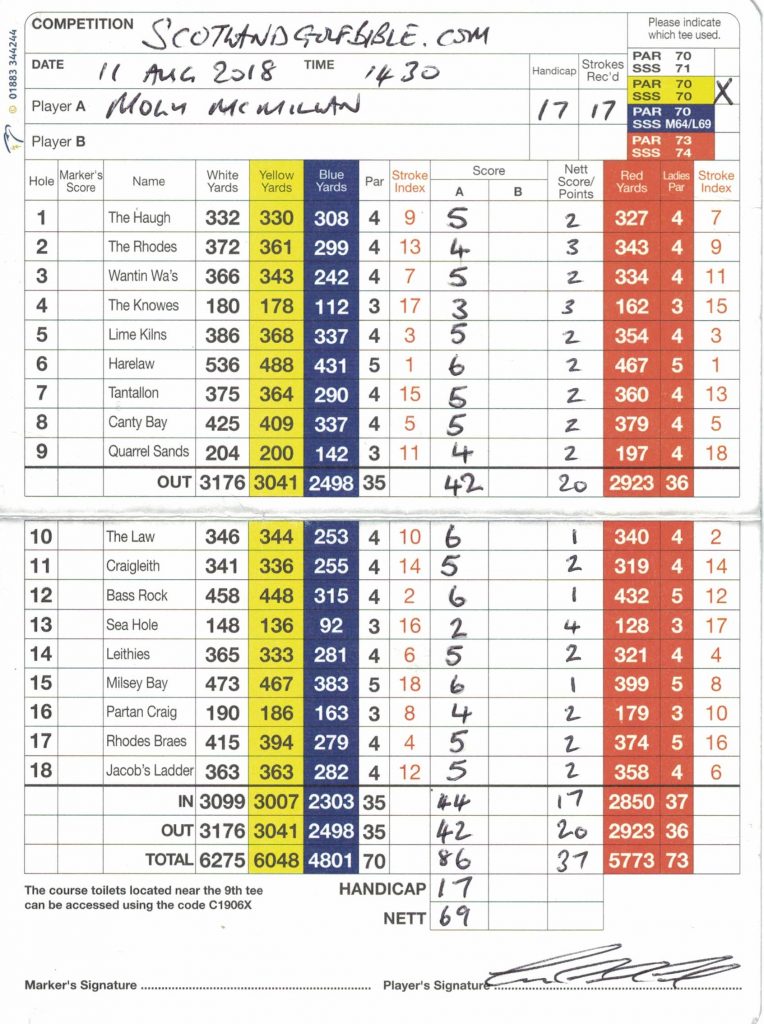
Some excellent play for 86 at The Glen; but included 3 putting 8 greens!
79. Fortrose & Rosemarkie. 24 June 2018.

Possibly the best located Scottish golf course, with evidence that James Braid’s bunkering came pretty cheap!      

Round £55.   Par 69.  Value (out of 5) – 4.5

“The Black Isle?”  Well, it’s not an isle and it’s not particularly black!  But it is a 10 mile wide by 20 mile long peninsular just north of Inverness, which also has a further very small peninsular on it’s southern Moray Firth coastline which is the heavenly location of Fortrose & Rosemarkie golf course.

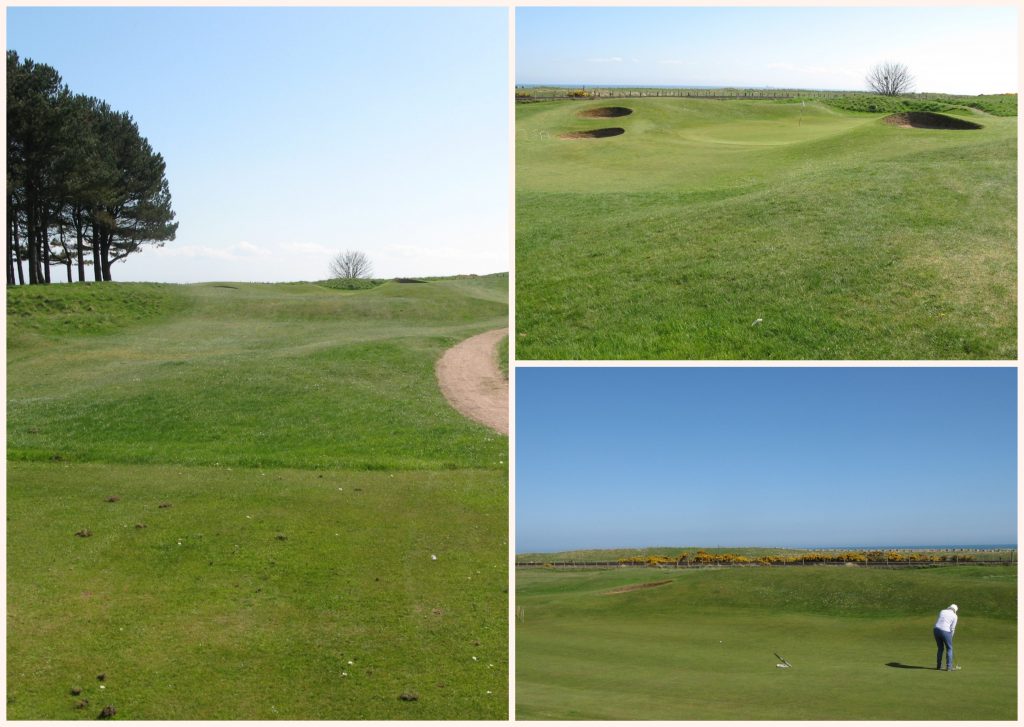
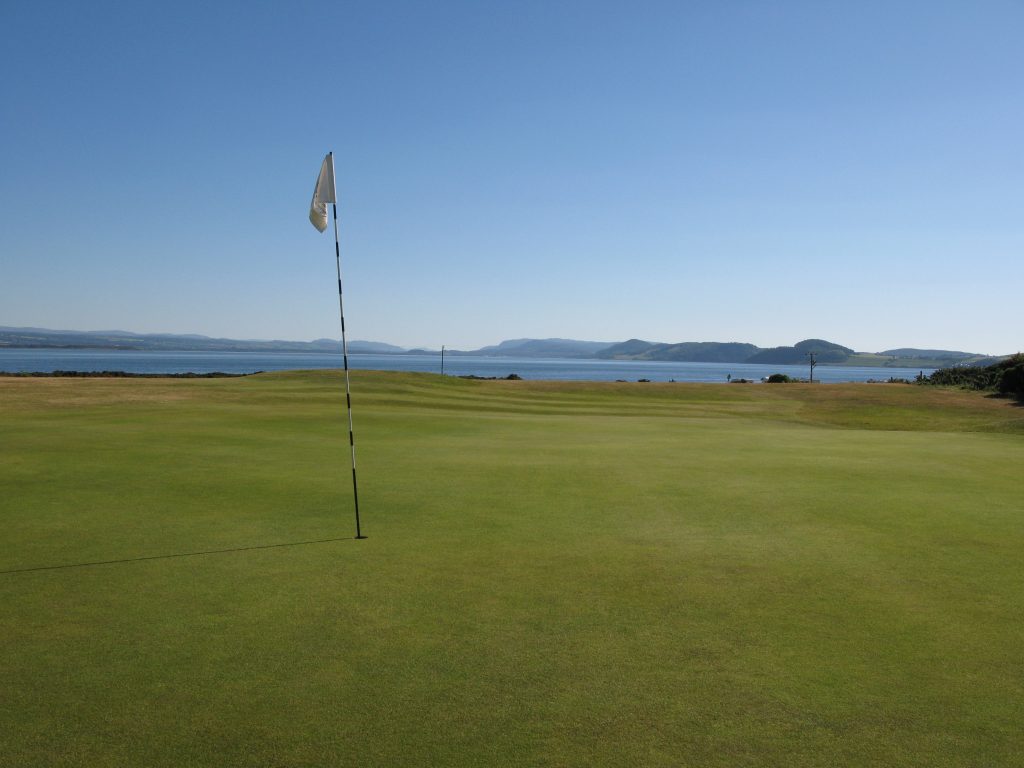
The 9th green looking back to the tee with the Moray and Beauly Firths in the background.

Scots sometimes refer (tongue in cheek) to being “from God’s own country”.  If that were the case, it might just be that God chose the Fortrose & Rosemarkie peninsular for his (or her!) own personal golf course.  I played the course on a wonderfully warm and sunny late midsummer evening for a twilight fee of only £30, shot 39 (4 over) on the back 9, including 2 birdies, and seriously thought that maybe I should just stop played with that golfing memory etched on my brain.  It really can’t get much better…can it?

The Black Isle has recently become a popular destination with the creation of the North Coast 500  but has long been a destination to play some of the cream of Scottish Links, with Royal Dornoch, Nairn and Tain all close by, plus the recent addition of Castle Stuart. Fortrose & Rosemarkie has actually been attracting golfing visitors in high numbers since the expansion of the railways in the late 19th century and golf in the course location is traceable back to 1702.  Established in 1793, is the Club is the 15th oldest in the world, of which they are very proud.

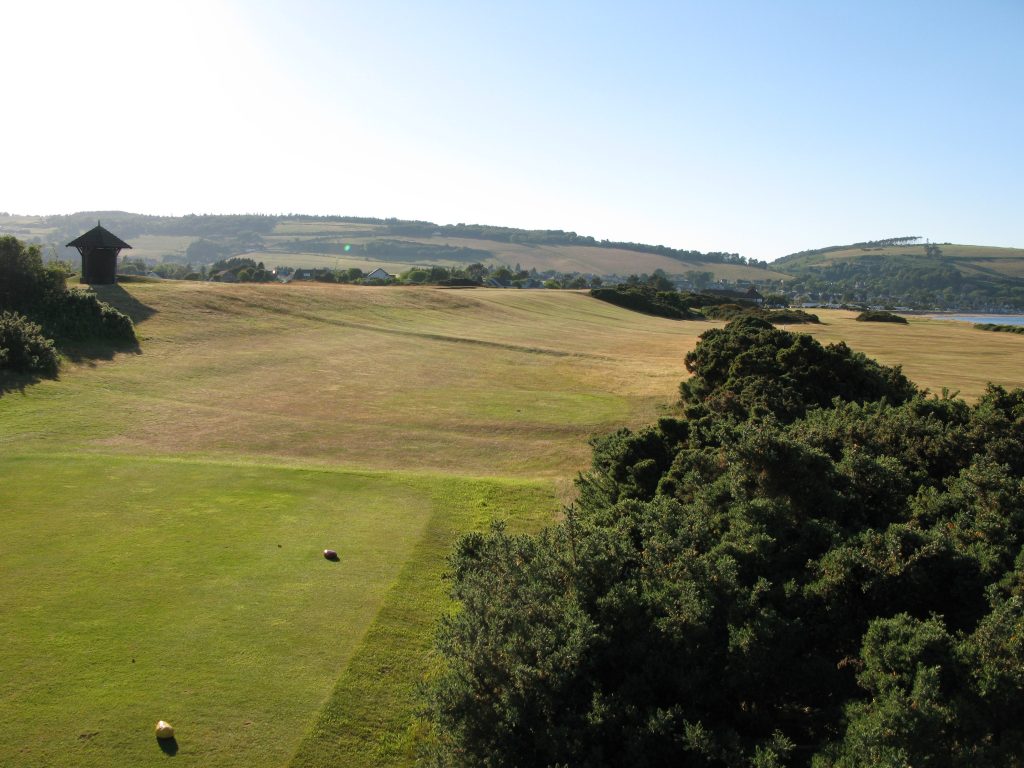
The 11th tee, which is one of several arguably bland holes around the turn at Fortrose and Rosemarkie.

The course is quite short, at only 5893 yards from white tees and 5594 yards from yellow tees which I used.   It is essentially 2 horseshoe loops with the outer loop played clockwise with sea (only in play at a few holes) on your left , then an inner smaller loop played in opposite direction.  The difficulty will be dominated by the weather, but the bunkering and greens are tricky and provide protection when the wind is down.    Originally a 9 hole layout, it was extended to 18 in 1924 and in both 1932 and 1934 James Braid was engaged to advise on layout and bunkering – his 1934 fee was £12.10/  which ended in the course in its current layout.   That is only about  £1000 in current value!

The 17th at Fortrose & Rosemarkie; play left to ensure reaching to the plateau fairway.

There are some majestic holes, most notably the long par 4 4th, played towards the lighthouse at Chanonry Point, which protects the small channel through the Moray Firth towards Inverness, which is a popular viewpoint to see the many dolphins which inhabit the area.  I have spoken to people who have played the course many times and never parred the 4th.

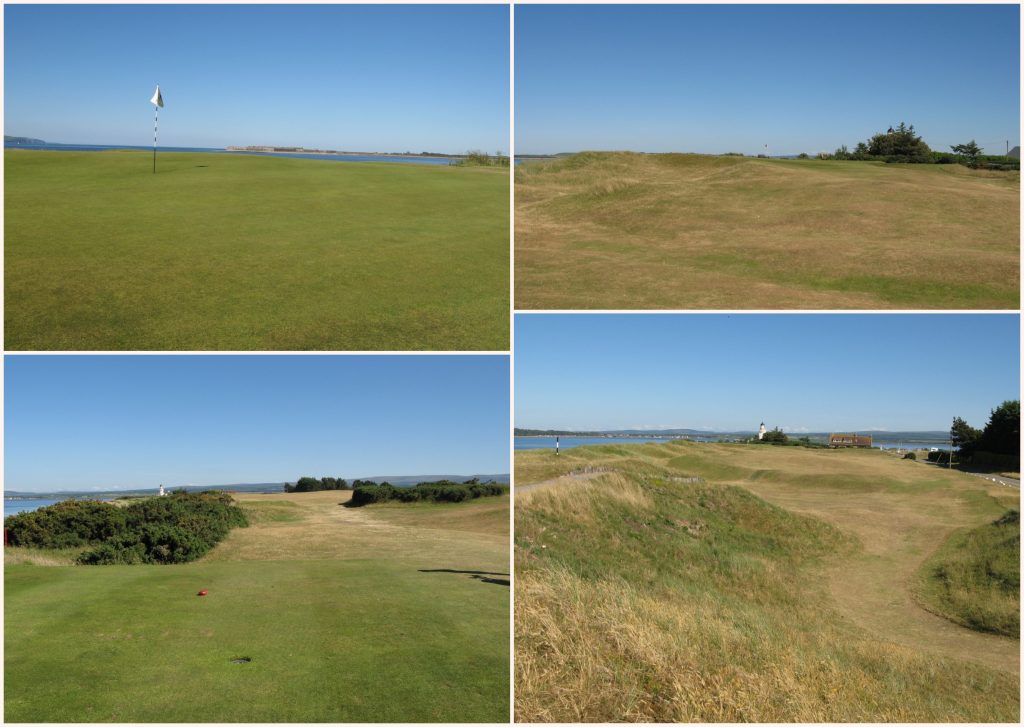
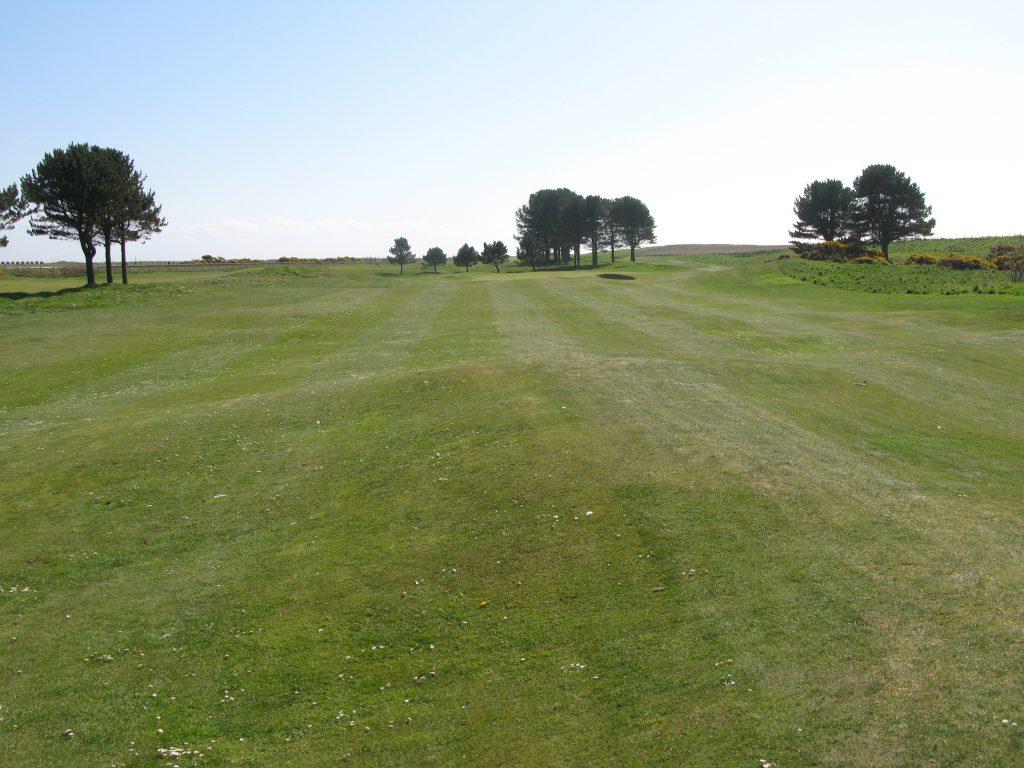
Mission Impossible – the long par 4 4th hole at Fortrose and Rosemarkie, with Lighthouse and Fort George in view.

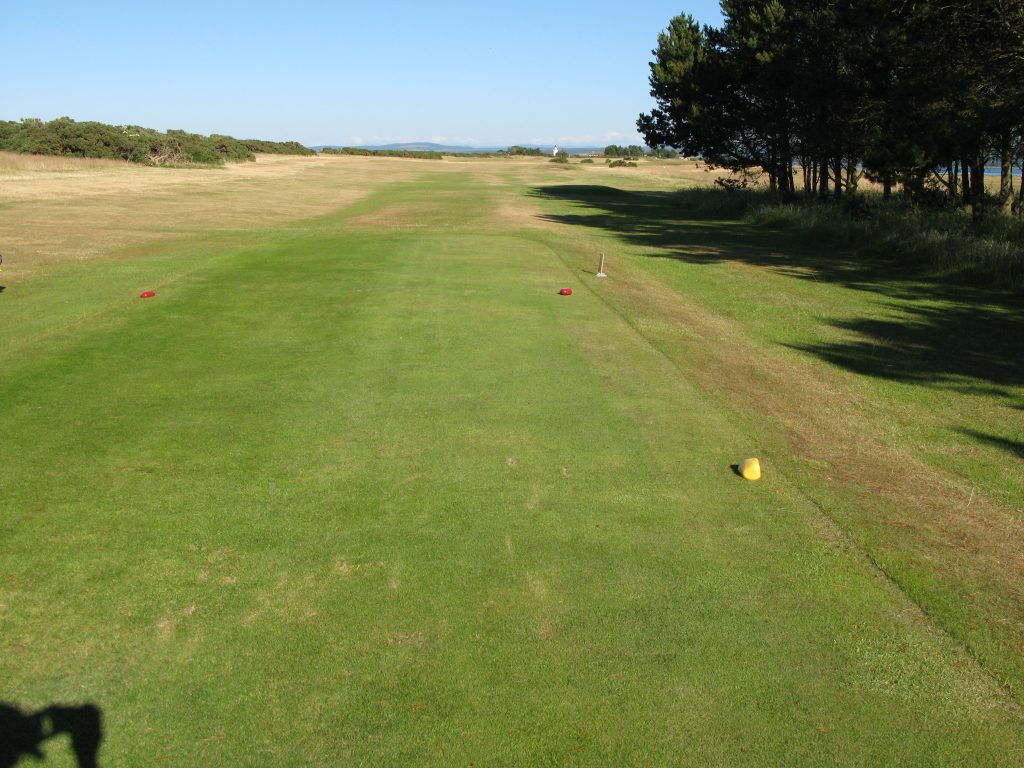
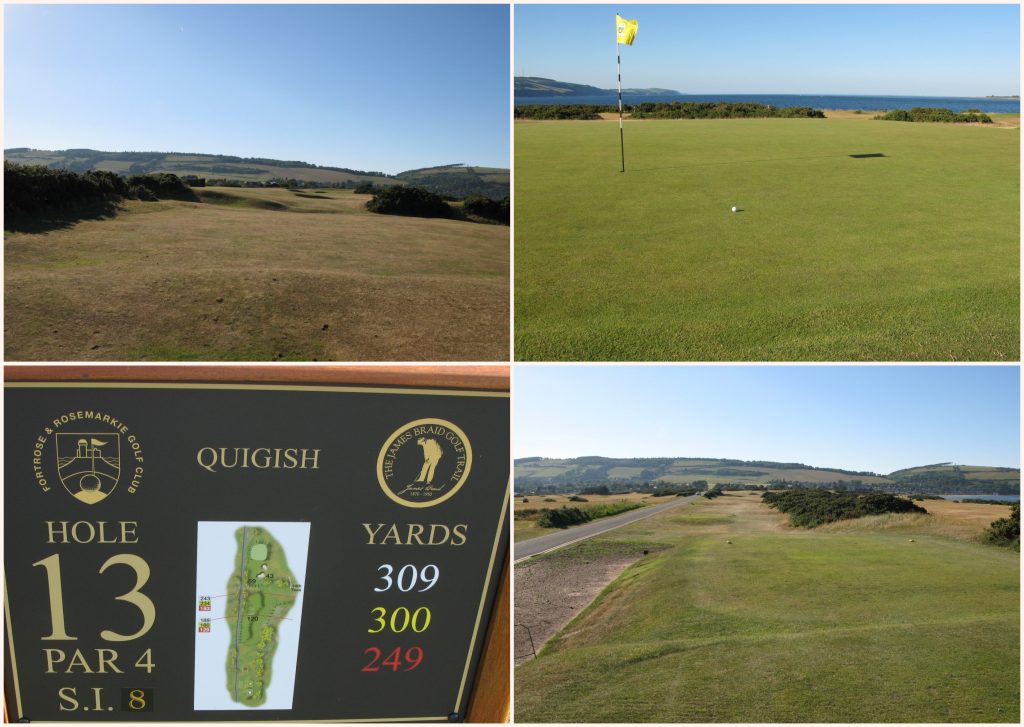
The 13th is also a great example of visible links architecture and Braid’s bunkers.  A hole with many options from the tee box.

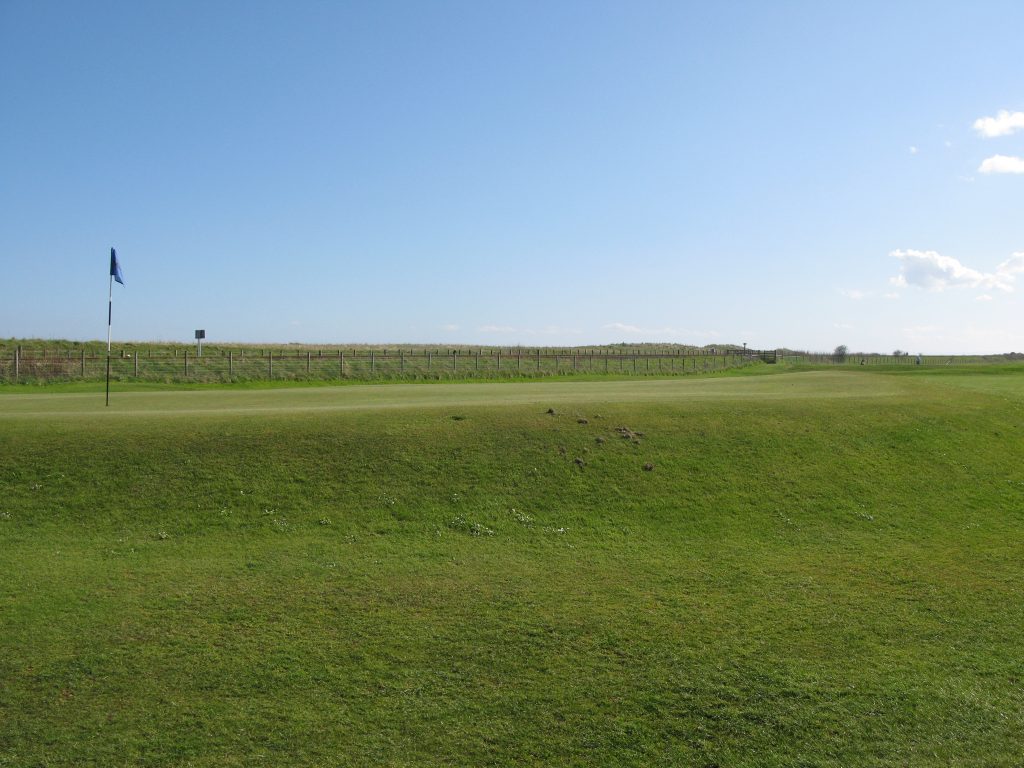
The 13th – a magnificent short par 4.

The course was in all round excellent condition when I played and the club are happy for visitors to use any of the tee boxes.    In the benign conditions I shot gross 84 (net 2 under), including 4 double bogies – inevitably one of these was at the 4th!.

This is a must play course, with a twilight fee at only £30 being especially great value.

Facts:

Course Type: Links

Par 69 (yellow; 15 par 4s,  3 par 3s)

Distance: 5594 yards

Moly’s Gross score84

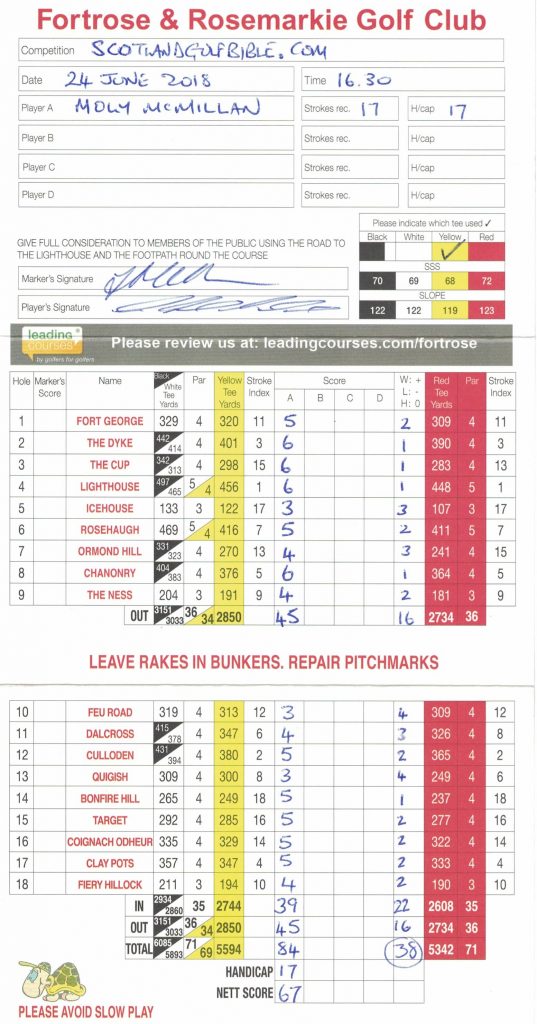
Moly’s scorecard – 84 with only 39 on the back 9.

75. Arbroath. 6 May 2018.

A must visit course for US Historians, fish lovers and record book chasers!       

Round £40.   Par 70.  Value (out of 5) – 4

Arbroath is the largest town in Angus and it’s golf course sits about 2 miles to the east of the town and only 6 miles from Carnoustie.  It probably gets bypassed by many visiting golfers moving north from Carnoustie towards the wonderful links courses in Aberdeenshire – this would be a wasted opportunity.

Arbroath has a remarkable claim for it’s influence on the modern world.  The “Declaration of Arbroath”, a Scottish declaration of independence of 1320, is regarded by several historians as the model for the American Declaration of Independence.

The delightful par 3 7th hole at Arbroath (159 yards)

The golf course can also argue a potentially unrivaled and rich architectural history.  Designed by Old Tom Morris, it opened in 1878,  was redesigned by the Troon professional Willie Fernie about 30 years later, then James Braid remodeled the tees, to add length, and bunkers in 1931.  That’s a strong golfing pedigree.

The course is predominantly an out and back layout.  The first 7 holes are played westward into the, normally very strong and cold, prevailing wind, before turning back for the 8th to 10th;  westward again for the 11th and 12th, then with 5 of the last 6 holes played eastward downwind back to the clubhouse.  Strategically, 11 of the holes have reachable out of bounds to the right, so right handed slicers may wish to consider their options off the tee.

The Stroke Index 7, 375 yard 6th hole at Arbroath, a typically difficult par 4 on the opening stretch of holes.

Viewed from the tees, Arbroath seems at times flat and innocuous, but it has been very cleverly bunkered by Braid, and I’m sure the locals will have many advisory comments on where to miss the greens.  The greens were also very hard when I played and difficult to hold (for all I guess other than very good golfers).  Playing off the yellow tees didn’t give  much respite either, as the 2nd and 17th both played as long par 4s, rather than par 5s from the white tees.  There are also 3 ditches that cross the course, and these need to be carefully considered, especially as the flat terrain makes them invisible to the eye.

I rather suspect first time visitors rarely score much above 30 stableford points.

The very difficult green to find in 2 at the 13th at Arbroath, with the railway OOB on the right

The highlights for me were the par 3s, all of which had good surrounds, with the two on the back 9, the 14th at 200 yards (white at 232) and the 16th, being especially difficult.

It’s a well kept course, with good tees, greens, fairways and bunkers.  The clubhouse has a friendly staff and good food, where you can try the Arbroath Smokie, the local smoked haddock delicacy protected by EU Trade regulations.

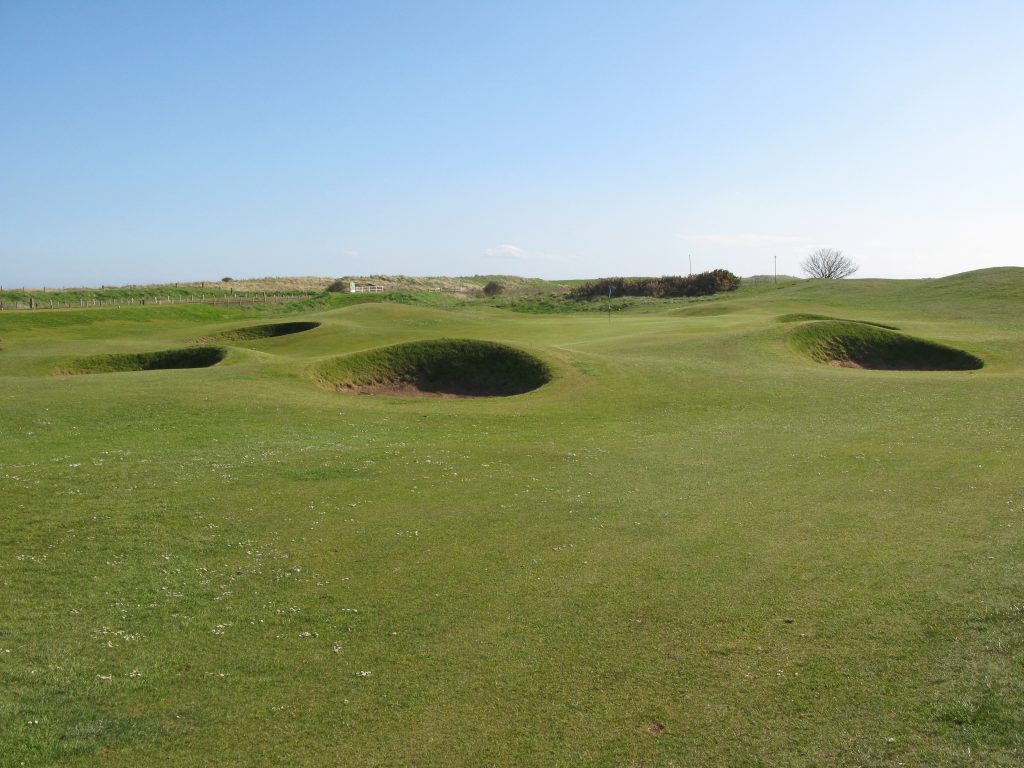
The wonderfully bunkered par 3 16th green at Arbroath

The other Arbroath claim to fame is the local Football Club, which holds 2 world records – the highest professional scoring record (winning 36-0), and their ground, Gayfield Park, being the closest to the sea in the world – only 5 and 1/2 yards away!  Apparently, one famous game was abandoned after all balls were “lost at sea!”.

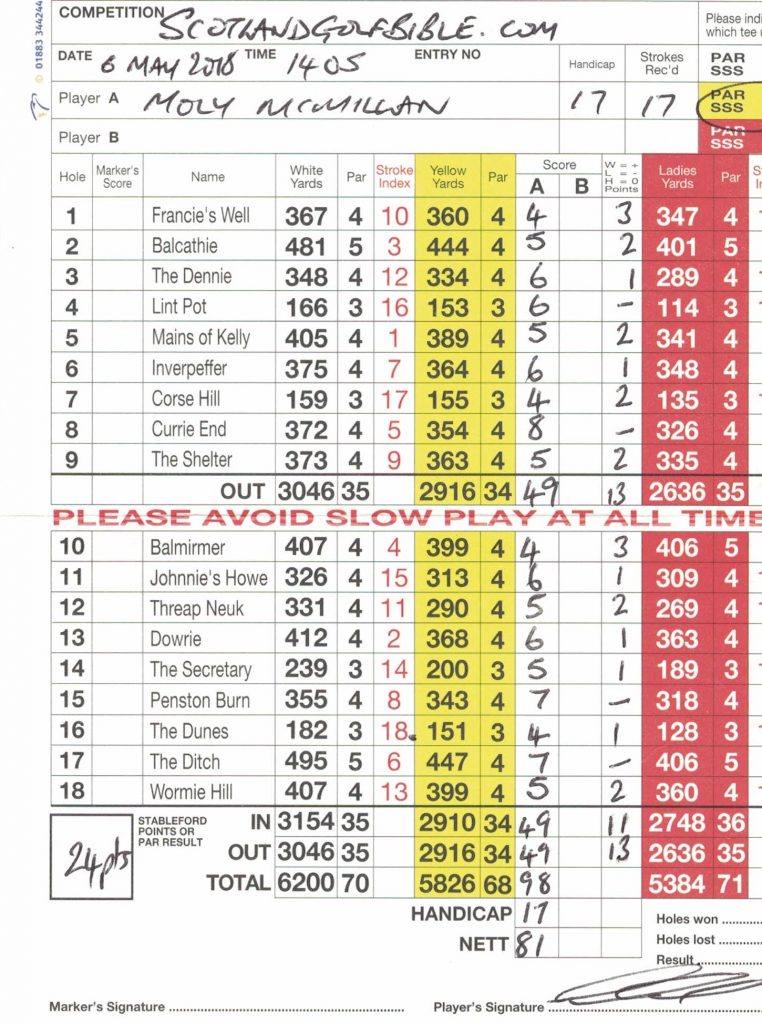
Not a great day for me, I lost 3 balls (6 shots) and 3 putted 7 times!  I suppose that explains completely my 13 over par net!  Oh, and yes, the greens are rather large and difficult!

Well worth a visit.

Facts:

Course Type: Links

Par 68 (14 par 4s, 4 par 3s)

Distance (yellow): 5826

Moly’s Gross score98

Moly’s Arbroath scorecard – 98

66. Turnhouse. 10th Oct 2017

Nice layout with good greens with upside for plane spotters! 

Summary:  Round  £35.   Par 69.  Value (out of 5) – 3.5

Turnhouse golf course was laid out with 9 holes in 1897, and extended to 18 holes a few years later.  The original course designer is not known, but James Braid carried out a redesign in 1928, characteristically focused on the use of bunkers.

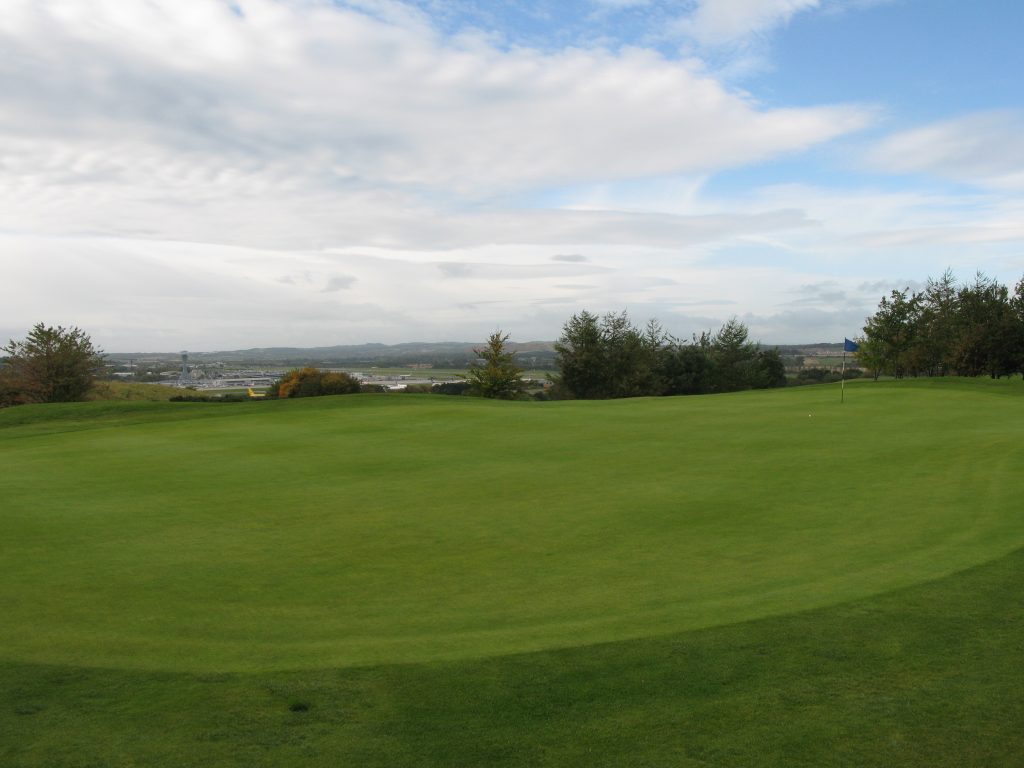
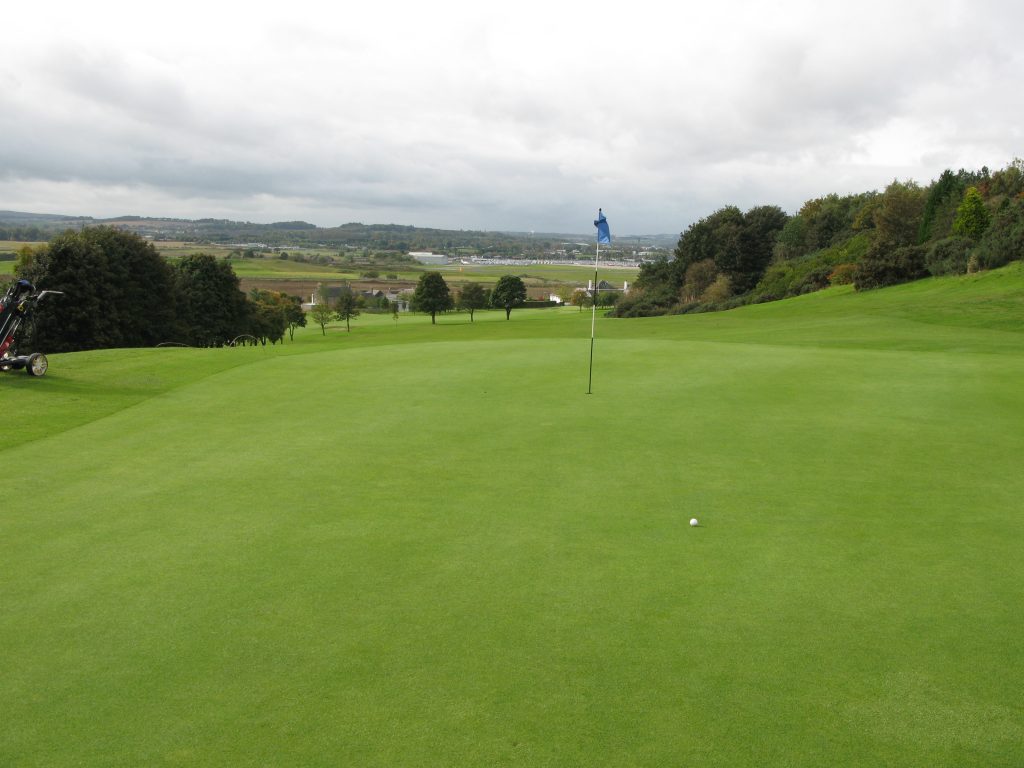
Views of Edinburgh airport from the 5th green at Turnhouse

The course sits on Lennie Hill, very close to Edinburgh airport and easily accessed by road.  There are good views of the Pentland Hills to the south and to the Fife Ochill Hills to the north.  For a parkland course designed in the 19th century it unusually has two 9 hole loops, starting at the clubhouse.

The nice par 4 6th hole at Turnhouse – where I had one of my 3 birdies

Turnhouse has a classic parkland feel and there is a good mix of some generous and some tighter fairways.  I thoroughly recommend the excellent online course planner available on the club website, especially as there are several blind tee and second shots.  A good example is the long 4th hole which has a nasty blind bunker on the right hand side of the fairway at about 430 yards awaiting a well struck second shot – bear in mind out of bounds is tight along the left of this hole.

The fast Stroke Index 1 10th green at Turnhouse, a tough start to the back 9.

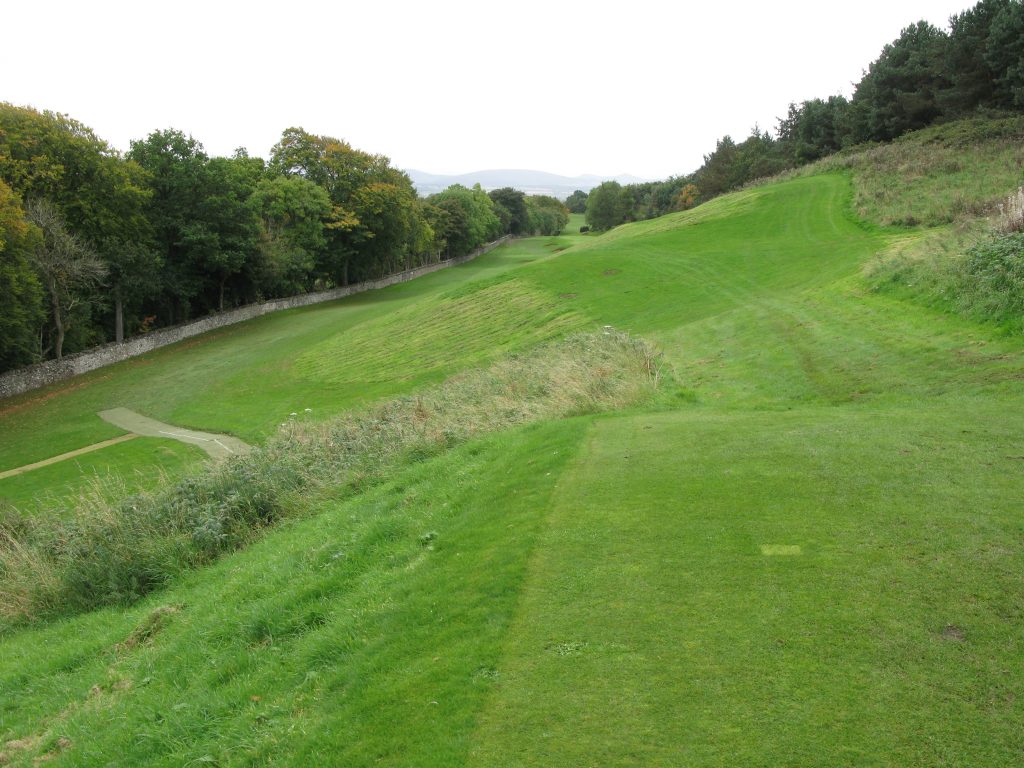
The planner might also help gauge driving distance on some of the tighter holes, with the formidable 13th tee shot being actually easier that it looks, with only a hybrid or fairway wood being needed at the tee, with a larger landing area being available than at first sight.

The greens were surprisingly well drained and quiet fast – I putted off  the 9th green where the pin had been placed on the right – beware!     Overall the course was in good condition, with only the tees perhaps in need of some effort.

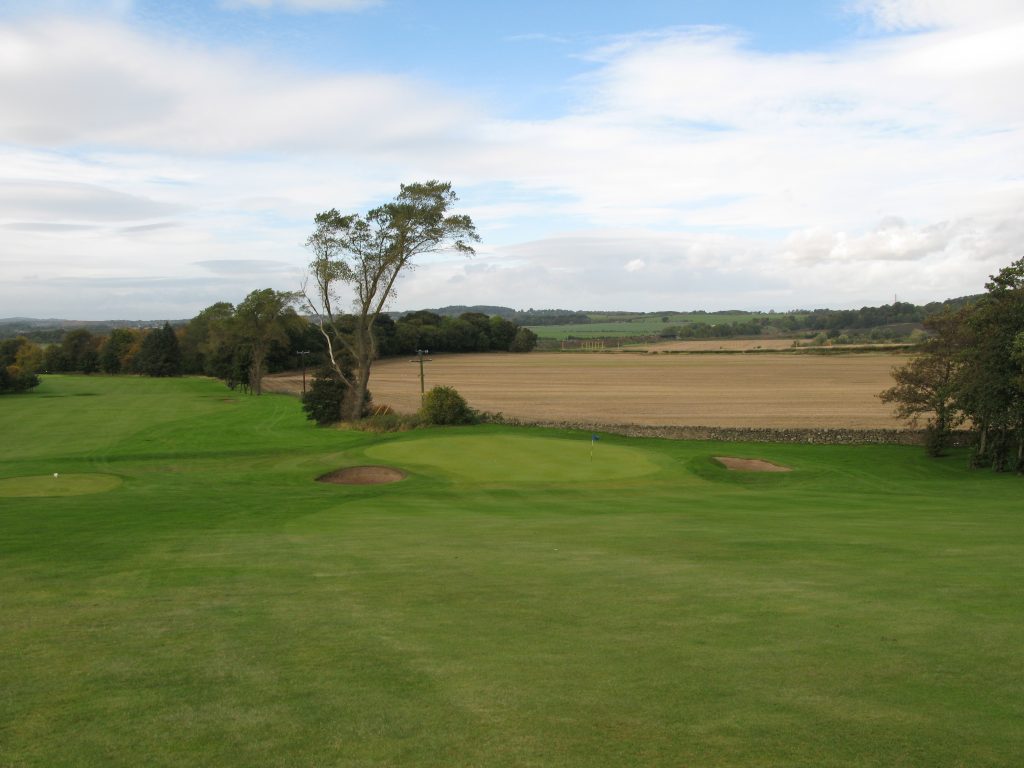
The frightening looking 13th tee shot at Turnhouse – take a hybrid to guarantee playing from the fairway.

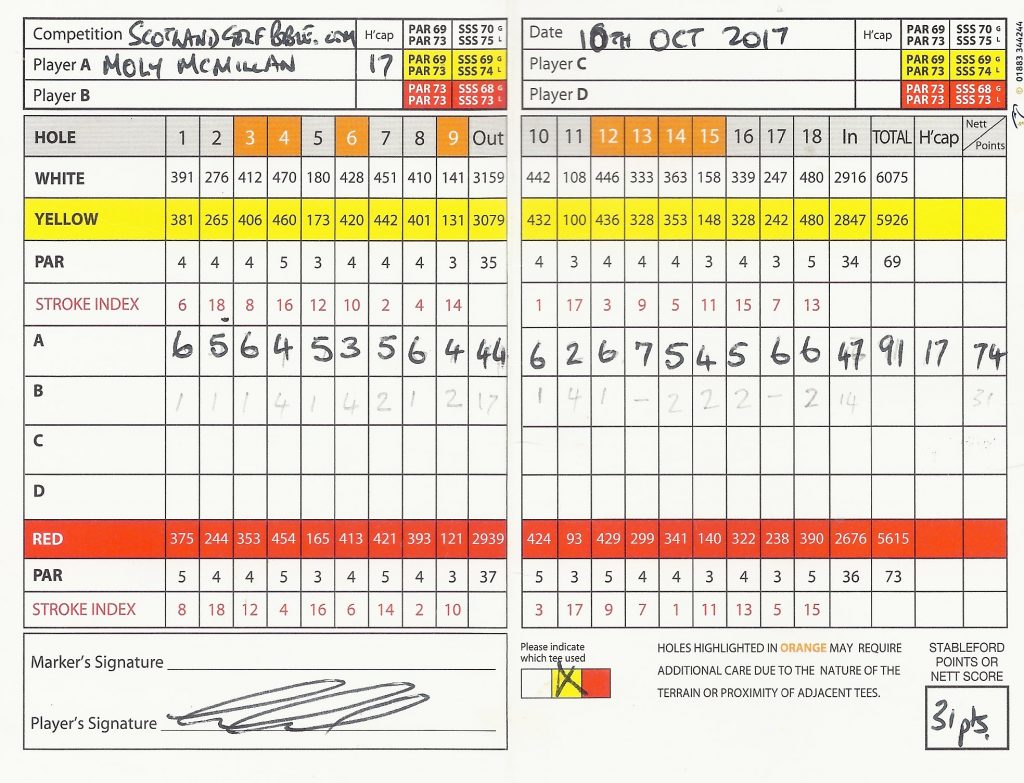
I had a most mercurial round.  I only hit 3 greens in regulation and birdied all 3 of them! (4th, 6th and 11th)  – my stableford had three 4 pointers but no 3 pointers!

There is an interesting quote on the club web site about the hazards in the development of parkland courses around the turn of the 20th century, and worth sharing:

In those early days, golf courses were shaped by natural terrain and while links courses had sand bunkers, inland courses relied on gorse, whin and dry stone walls for hazards. At Turnhouse there is a record of turf dykes about three feet high being built forty or fifty yards from the tee across some fairways and in January 1908 an instruction was issued to remove steps over the walls and have gaps made in their place.”

Turnhouse was a most pleasant surprise and one of the lessor known Edinburgh courses well worth a visit.

Facts:

Course Type: Parkland

Par 69 (2 par 5s, 11 par 4s, 5 par 3s)

Distance (yellow): 5926

Moly’s Gross score: 91.

Moly’s Turnhouse scorecard: 91 for 31 points

« Older posts Newer posts »

© 2026 Scotland Golf Bible

Theme by Anders NorenUp ↑