Scotland Golf Bible

A guide to green fee value for money

Page 24 of 45

87. Archerfield – Dirleton Links. 13 Sep 2018.

One of the two courses on the Archerfield Estate, Dirleton demands a place in the “Faux” Links discussion

Round £90…plus hotel residency!   Par 72.  Value (out of 5) – 3.5

Nestled between Muirfield and North Berwick, and adjacent to the magnificent Renaissance, the Dirleton Links and Fidra Links courses form the golfing challenges of the Archerfield Estate, a development created by the Edinburgh businessman Kevin Doyle over the last 15 years.   These additions strengthen the case that this East Lothian region is Scotland’s premier golfing destination.  Read my Fidra Links blog here and my Renaissance blog here.
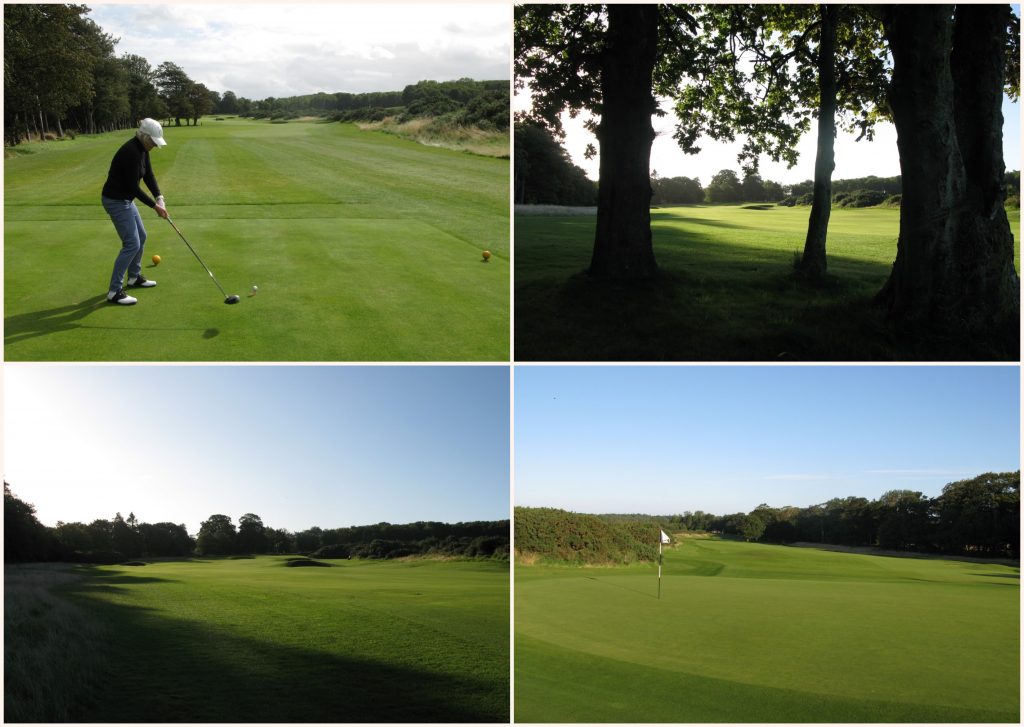
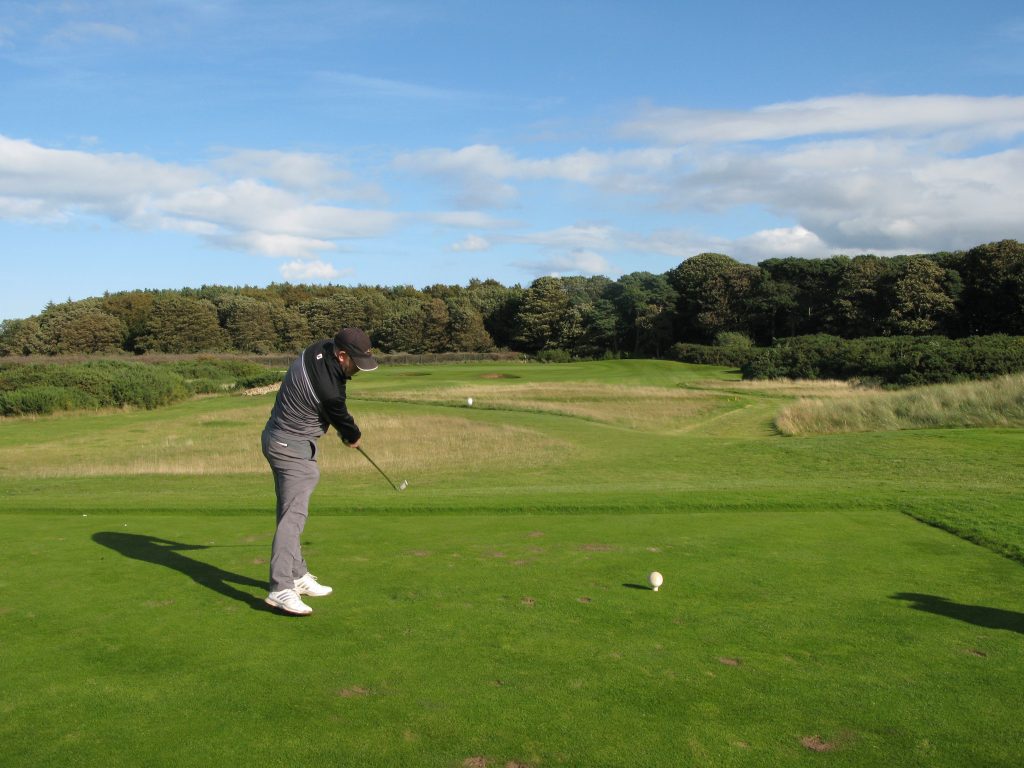
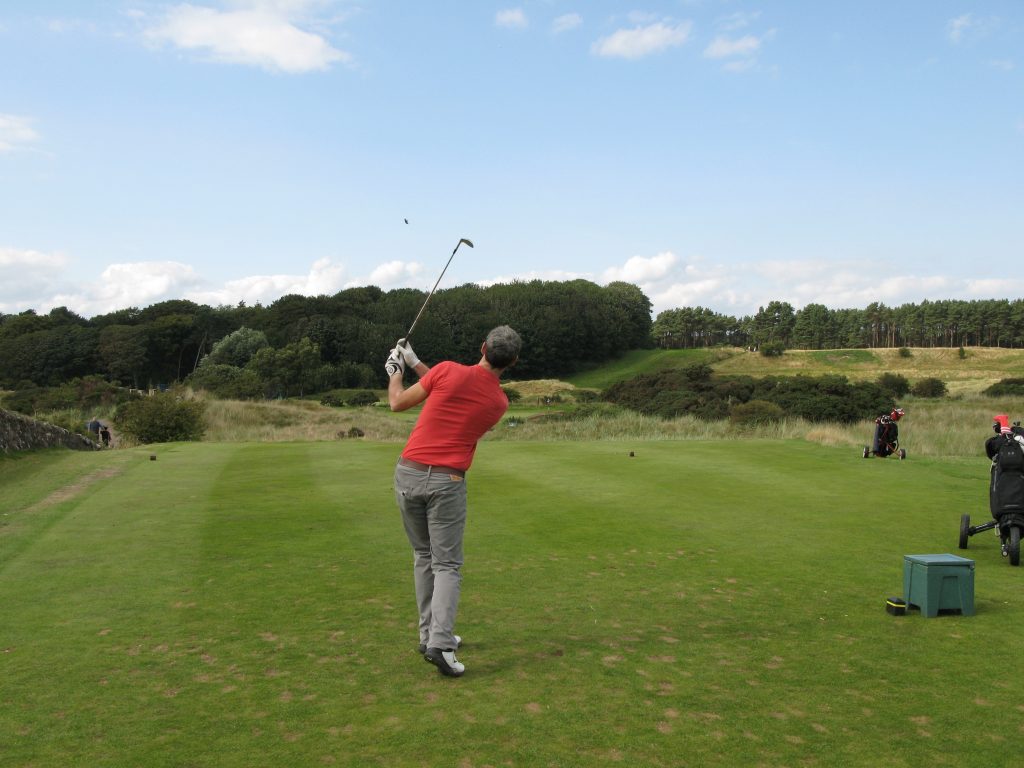
The magnificent par 5 5th at Archerfield’s Dirleton Links, with Fran on the tee,

The estate has a range of 5 star accommodation options, with the 17th Century, 16 bedroom, flagship Archerfield House being available to rent in part or in whole.    With great accommodation, a quite superb Scandinavian inspired spa (I thoroughly recommend the Golfers Recover massage), and first rate practice facilities on offer, this is a world class golf resort on Edinburgh’s doorstep.  Curiously, the clubhouse restaurant and bar is adorned with African art, giving it a colonial feel?
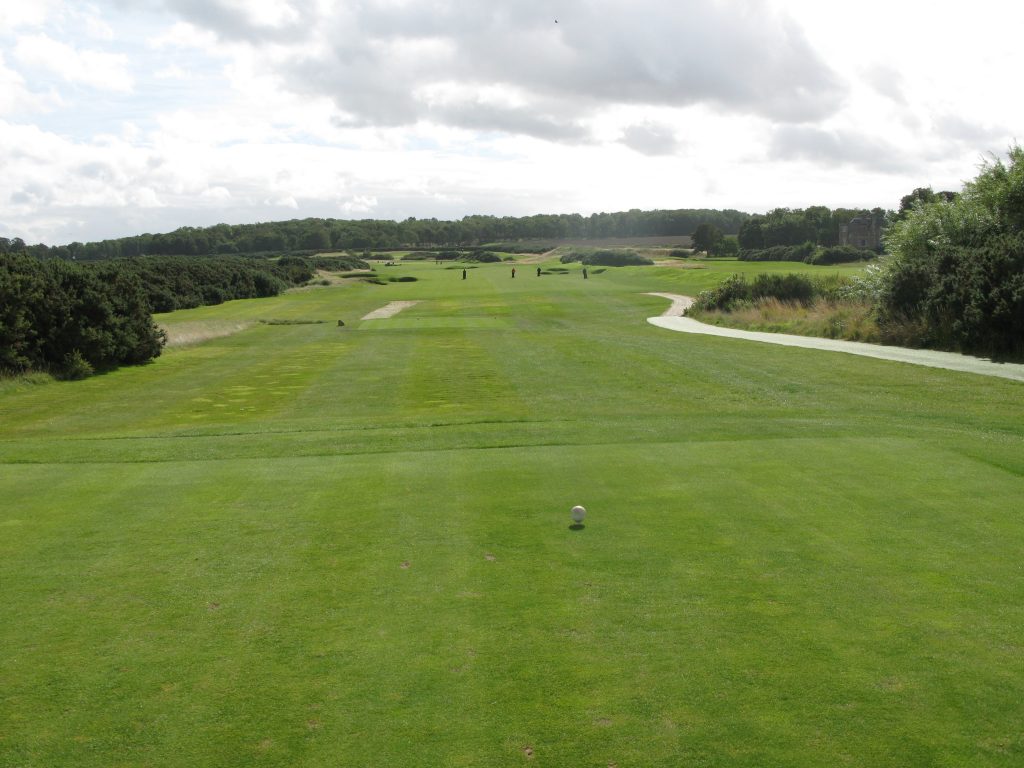
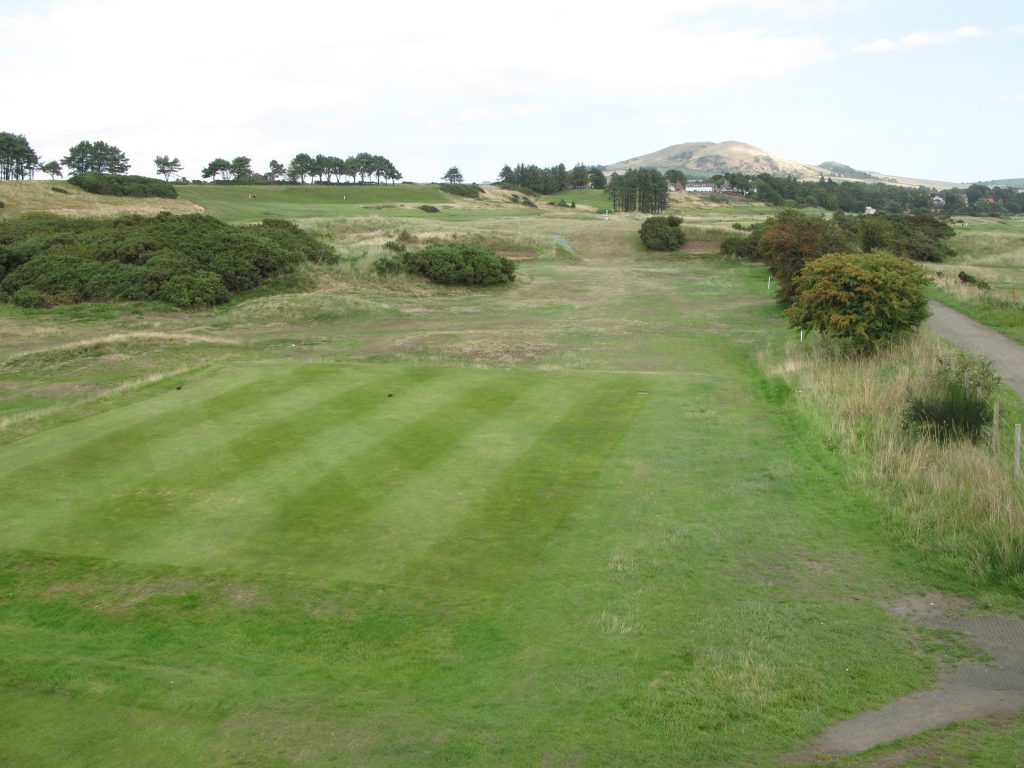
The par 4 2nd, a typical hole at Dirleton, with the gorse surrounding the fairways.

In considering Dirleton Links, there is an argument that this is a “Faux” Links, a term that has gained traction in recent years, mainly coined for inland courses, designed to replicate Links conditions.  A couple of definitions are worth referring to:

The Wikipedia Definition of a Links course includes  “..comes via the Scots, meaning “rising ground, ridge” and refers to an area of coastal sand dunes and …. is typically characterised by () an undulating surface, and a sandy soil unsuitable for arable farming but which readily supports various indigenous browntop bents and red fescue grasses, that result in the firm turf associated with links courses and the ‘running’ game…”

Whereas the meaning of “faux” is “made in imitation; artificial”.

So is Dirleton Links a true links course?  I think what has crept into the game is the thought that Gorse forms a key part of a links layout, and that is what the creator of Dirleton, David J Russell, has surrounded the course with.  However, there is no sand dues to be seen, and I’m convinced that you could plant a fair few “Tatties” on those fairways.  So for me, its not a real links, regardless of the course name.
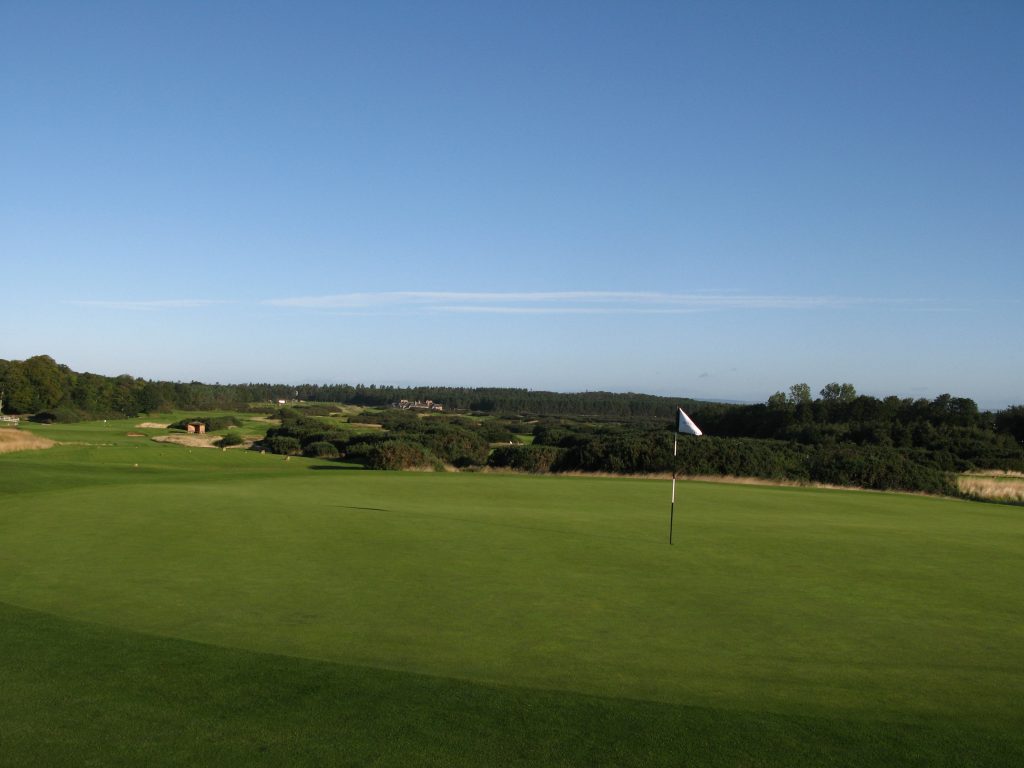
The view over the “Faux” Links from the beautiful 6th green at Dirleton

However, that’s not to say its a poor course, on the contrary it’s a terrific golf course, which in my opinion is better than its sister Fidra, which appears higher on most ratings lists of
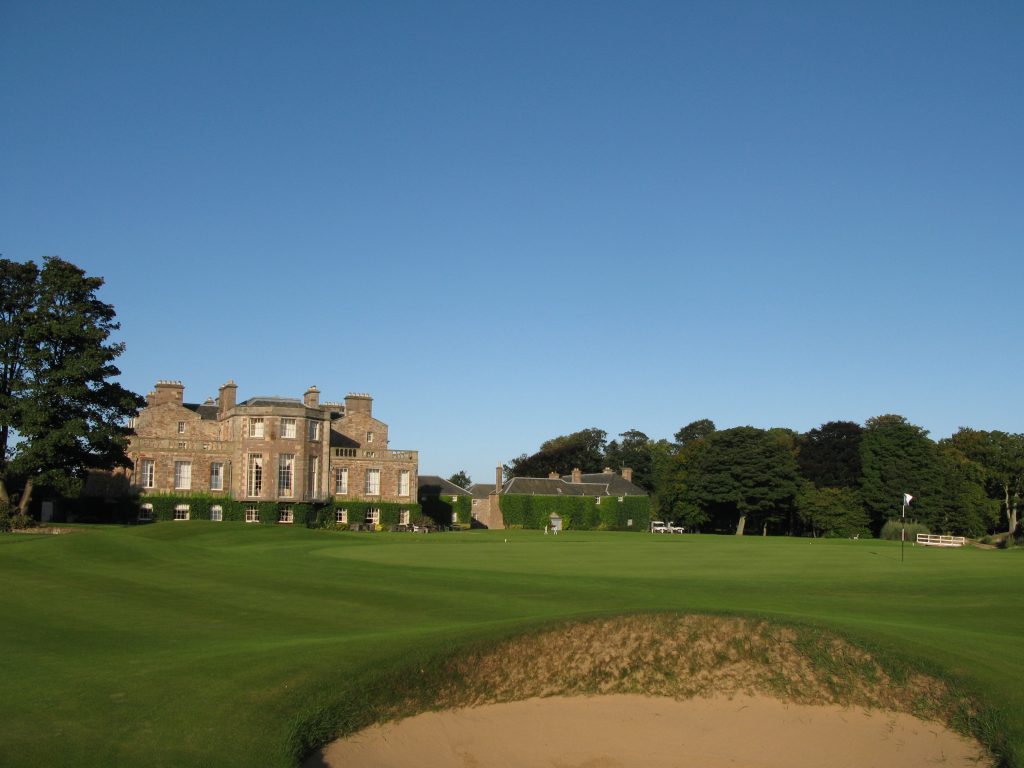
The Archerfield House behind the 7th green at Dirleton Links; which was rented out complete by 4 Americans, during our stay.

Scottish courses.

It’s a very traditional layout with both the outward and back 9s made up of 5 pars 4s, 2 pars 3s and 2 par 5s.  This is my favourite layout, and in addition there is a great mix of long and short par 4s.  The course meanders around itself, so wind direction was always changing from hole to hole.  It was one of those courses where the wind most often seemed to be against though!  It was a very windy day – gusts of up to 45mph, which played havoc with both Fran and my scores.   The fairway bunkers are really well positioned and force strategic decisions off the tee.   Overall a course I would like to take my A game to.

It’s not cheap;  membership via a debenture costs about £30,000, then around £3,000 annual fees.  But, you do get your shoes cleaned and don’t need to worry about paying for range balls.  You can have a “golf experience day” (price unknown), or as I did pay a £90 green fee as an accommodation occupant; I suspect many golfers play both courses either side of a single night B&B stay, which costs about £500; not bad for a short of this quality.  The clubhouse food is pretty good too, and not overpriced.  One of the benefits of the fee was a superb course planner, which was included, illustrated by Kenneth Reed FRSA.
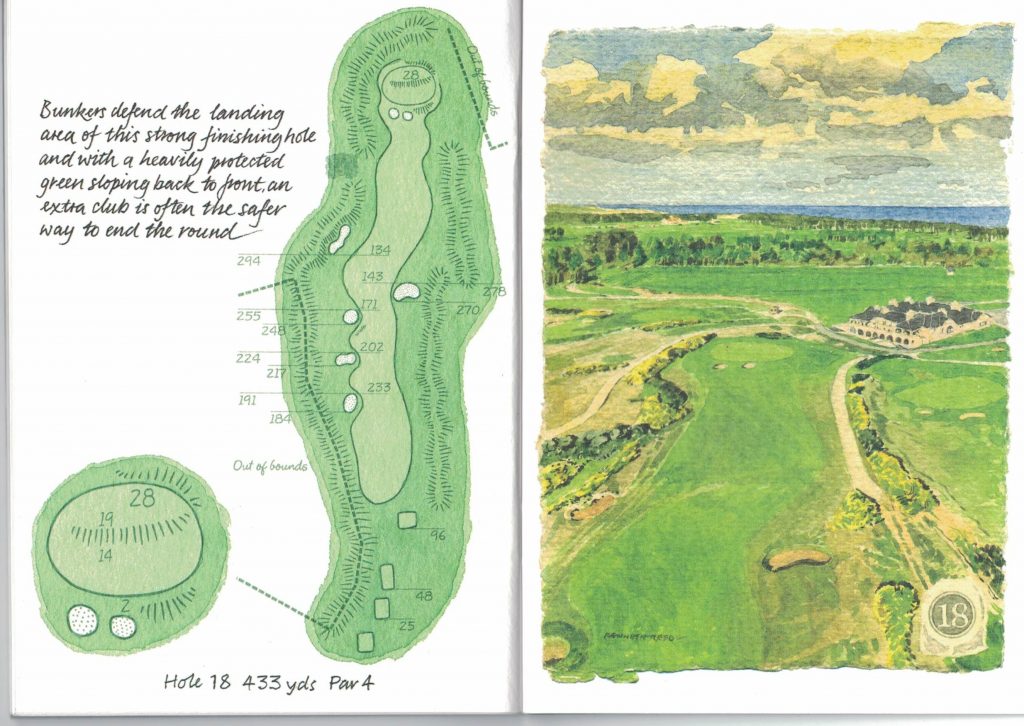
The wonderful course planner at Archerfield’s Dirleton Links, illustrated by Kenneth Reed FRSA.

If you can afford it, its worth staying and playing at Archerfield.

Plus, whether a “Faux” or real Links, its a great course.

Facts:

Course Type: Links

Par 72 (4 par 5s, 10 par 4s,  4 par 3s)

Distance (white): 6133 Yards

Moly’s Gross score: 103
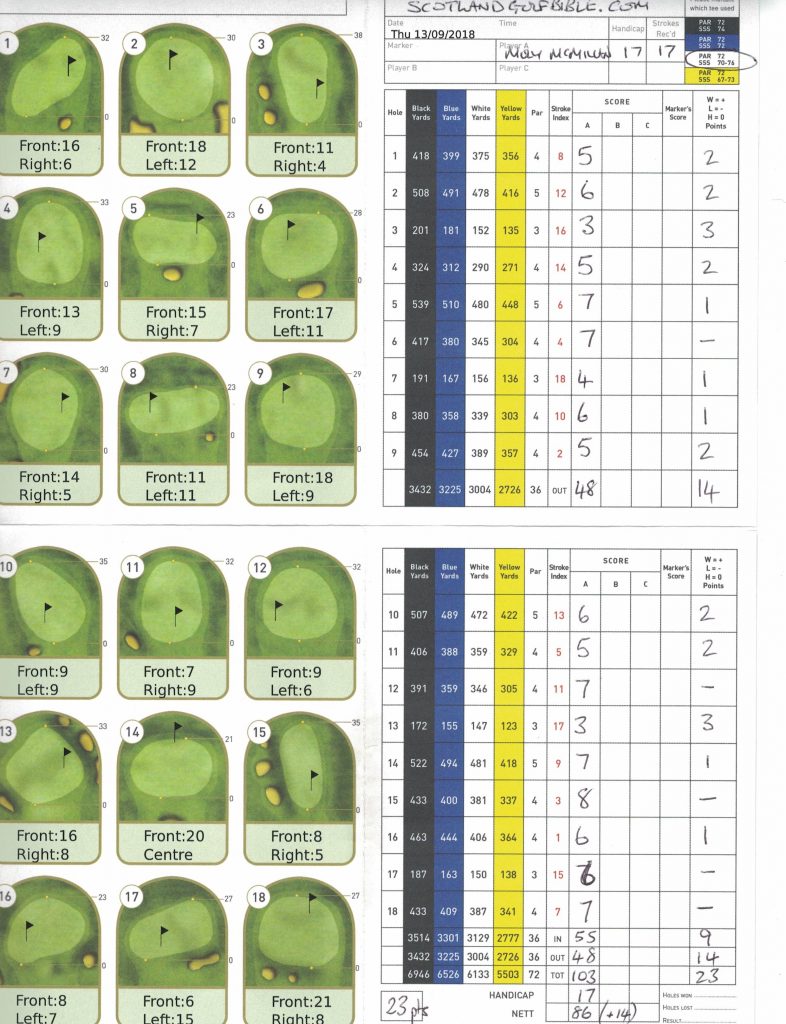
The very high winds – gusts of 40mph – explain the 103 for 23 points
86. Archerfield – Fidra Links. 12 Sep 2018.

Superbly designed course that could be considered any of links, parkland or woodland!

Round £90…plus hotel residency!   Par 72.  Value (out of 5) – 3.5

I felt a little stupid when the answer came to my question “Why is it called Archerfield?”.  “It was where King Edward I’s bowmen practiced in 1298!”

The 1st at Fidra Links, very typical of the first 11 holes.

Fidra Links is one of the two courses on the Archerfield Estate, a golf centred development created by the Edinburgh businessman Kevin Doyle over the last 15 years.  The estate has a range of 5 star accommodation options, with the 17th Century, 16 bedroom, flagship Archerfield House being available to rent in part or in whole.  When my wife and I stayed in a nearby “Pavilion Suite”, we were politely refused entry to Archerfield House by a Concierge, as we weren’t one of the 4 Americans that had rented it for the week.  Get the picture – know your place amongst the clientele of “Scottish” golf these days.

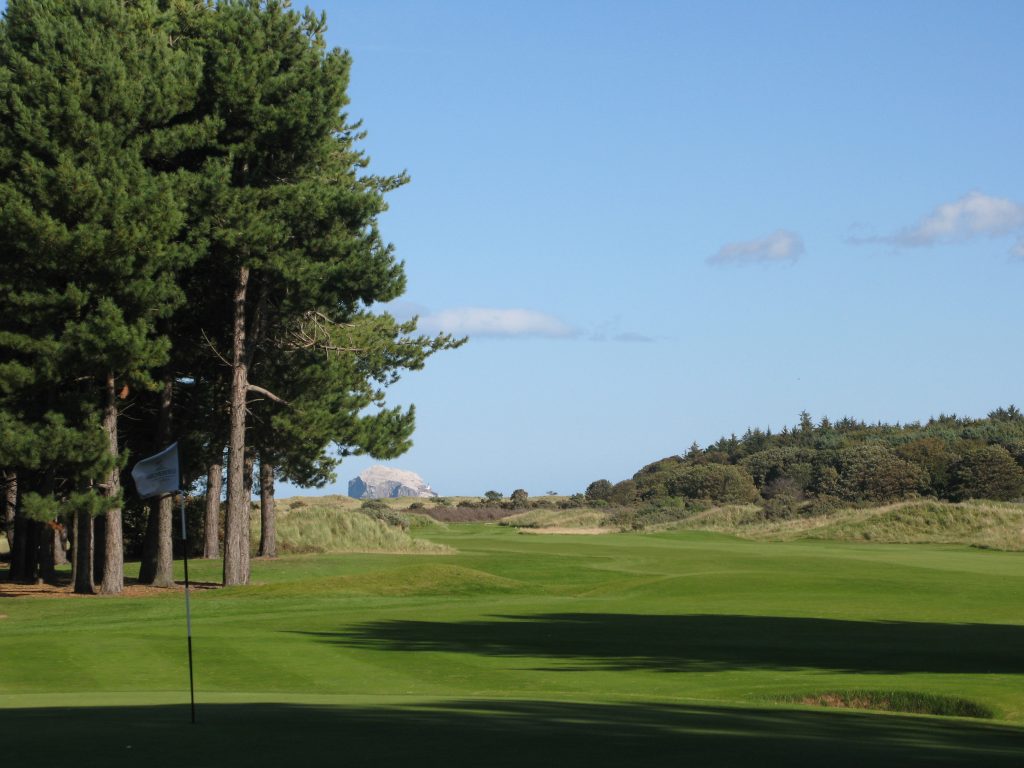
A view towards the Bass Rock from behind the 6th green at Fidra Links

Seriously though, with great accommodation, a quite superb Scandinavian inspired spa, and first rate practice facilities on offer, this is a world class golf resort on Edinburgh’s doorstep.  Curiously, the clubhouse restaurant and bar is adorned with African art, giving it a colonial feel?

Nestled between Muirfield and North Berwick, and adjacent to the magnificent Renaissance,  Fidra Links and Dirleton Links (the other Archerfield course) strengthen the case that this East Lothian region is Scotland’s premier golfing destination.

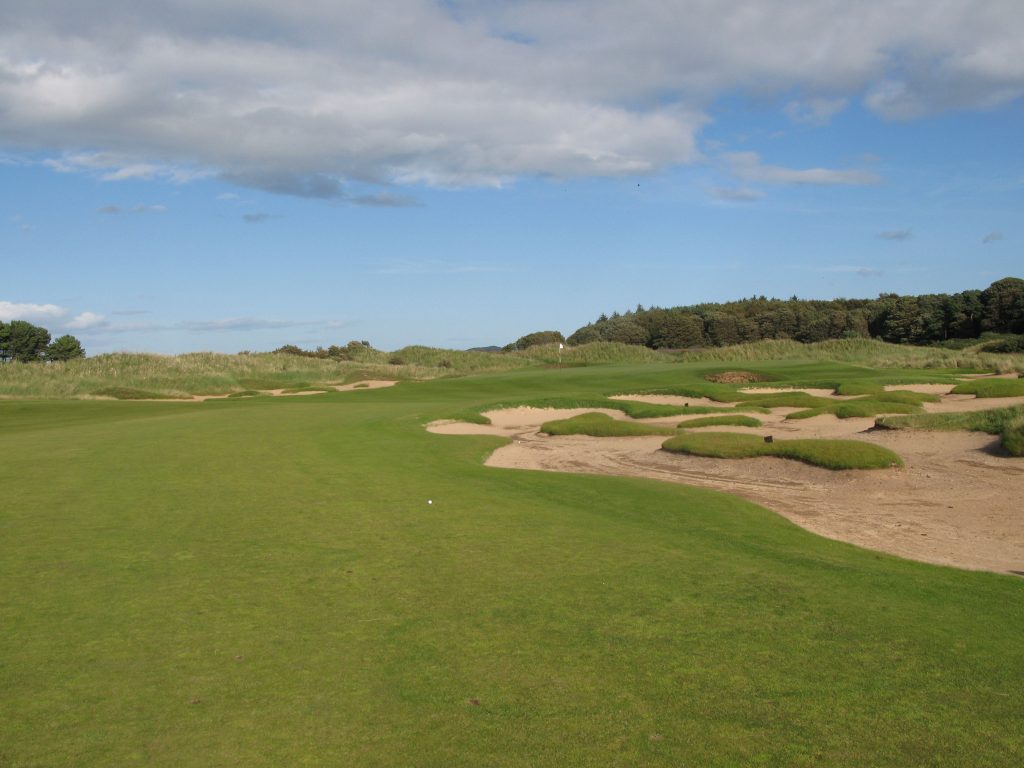
The approach to the 12th has plenty sand awaiting.

It’s not cheap though;  membership via a debenture costs about £30,000, then around £3,000 annual fees.  But, you do get your shoes cleaned and don’t need to worry about paying for range balls.  You can have a “golf experience day” (price unknown), or as I did pay a £90 green fee as an accommodation occupant; I suspect many golfers play both courses either side of a single night B&B stay, which costs about £500; not bad for a short break of this quality.  The clubhouse food is pretty good too, and not overpriced.

Moly plays straight at the par 3 12th at Fidra Links – straight into the front bunker that is!


Fidra “Links” is a beautifully laid out design by architect David J Russell, who has created a great mix of parkland, woodland and links!  It may well be the most tree lined course adjacent to the sea in Scotland; I really don’t know how you would classify it.  The first 11 holes are pine forest protected, with the last 7 holes being the “faux” links holes open to the elements.  The bunkering is often fierce, the greens are large and tricky, and with constant changes of direction, it’s difficult to get an easy couple of holes together, especially if the wind is up as it was for us.   The trees are fairly open at times with the pine undergrowth meaning balls are relatively easy to find, which is a big bonus with my wayward driving game.

The course condition was excellent, as one would expect, and if you were to find any lost balls they are unlikely to be scuffed Top-Fight’s.  Finding good golf balls, especially by having to crawl though thorny bushes, is one of the guilty pleasures in my life!  It was actually more difficult to find the next tee at Fidra, than lost balls, as apparently Mr Dolye doesn’t like signage?  That was my main criticism of the course, as well as the tee options.

There are some great golf holes here.  The SI 2, par 4, 7th hole, is a slight dog leg left, where only a tee shot on the right of the fairway, can avoid having to hit over 2 prominent trees about 50 yards short of the green.  The short par 4 12th has magnificent bunkering awaiting a pushed second. The 14th, into the prevailing wind was well worth the SI1 tag.

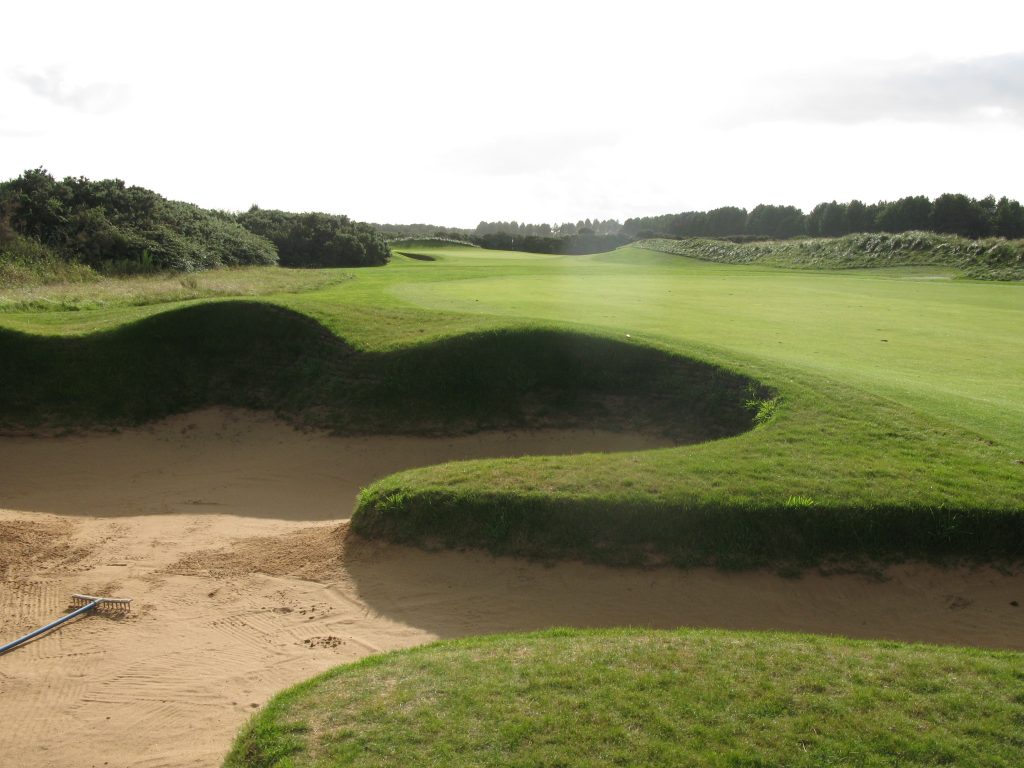
The fairway bunker on 15 at Fidra is a typical and well constructed feature.

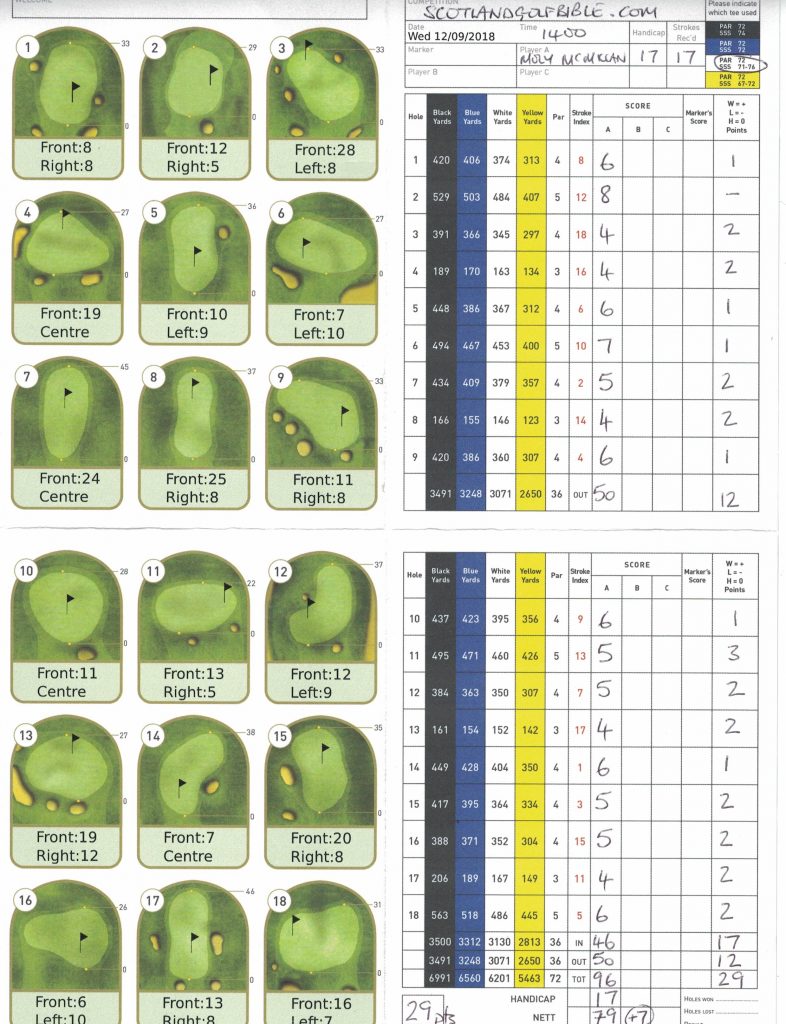
It wasn’t long from the yellow tee (5463 yards), but with 4 tee options to choose, I played off the white at 6201 yards, and felt I played really well for my 96 and 29 stableford points.  Disappointingly, there were no red tees, the traditional colour used for ladies, which given the current debate about encouraging women to play, didn’t make any sense to me!    The card was though very instructive (see below) as it was printed daily with the pin positions!

If you can afford it, its worth staying and playing at Archerfield.  If you do, I recommend you also splash out on the Golfer’s recovery massage – I didn’t know I had so many knots in my back!

Facts:

Course Type: Parkland/woodland/links

Par 72 (4 par 5s, 10 par 4s,  4 par 3s)

Distance (white): 6201 Yards

Moly’s Gross score: 96

The daily printed scorecard at Archerfield’s Fidra Links – Moly shot 96.

85. Portlethen. 2 Sep 2018.

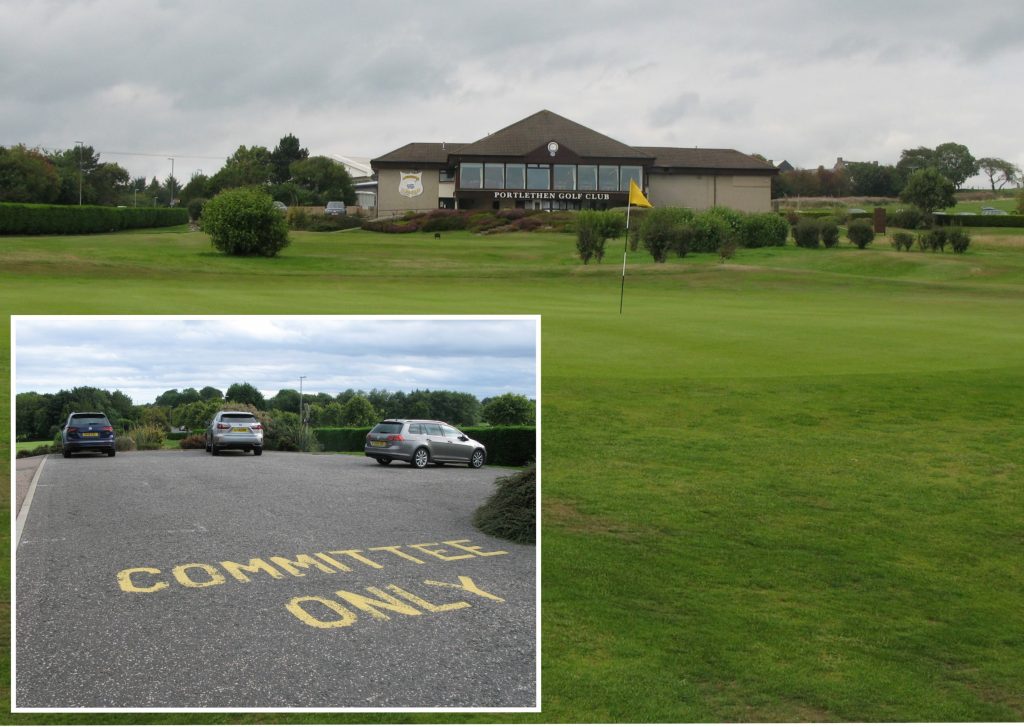
The “Committee Only” Car Park sums up why Golf has to change to survive.

Round £45.   Par 70.  Value (out of 5) – 3

Portlethen, about 7 miles south of Aberdeen, on the A90,  is one of the fastest growing areas in Scotland over the last 30 years.  When the golf course was opened in 1989 the population was recorded as 1500, yet in 2011 it was over 7000 – no doubt driven by the North Sea oil boom.   With the opening of the substantial Aberdeen bypass imminent, Portlethen continues to grow, albeit the area is also suffering from the collapse in oil prices in 2015.

The welcome wasn’t warm at Portlethen – Beware of any clubs with “Committee Only” anything. No wonder some clubs are struggling.

The course, designed by the renowned Donald Steel, along with the substantial clubhouse, seems apt testimony to the ambitions of the area.  Yet somehow, for me, the course fails to deliver on the initial optimism demonstrated by the designer chosen.  When asked what I thought of Portlethen, my answer was “It’s OK”, which sums up my experience.

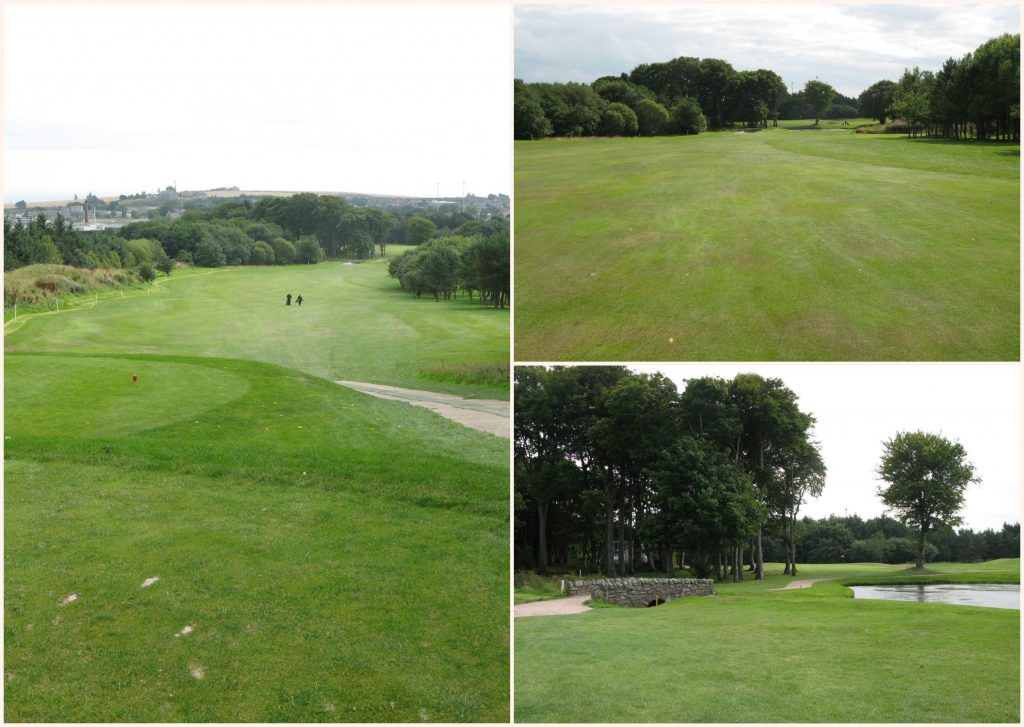
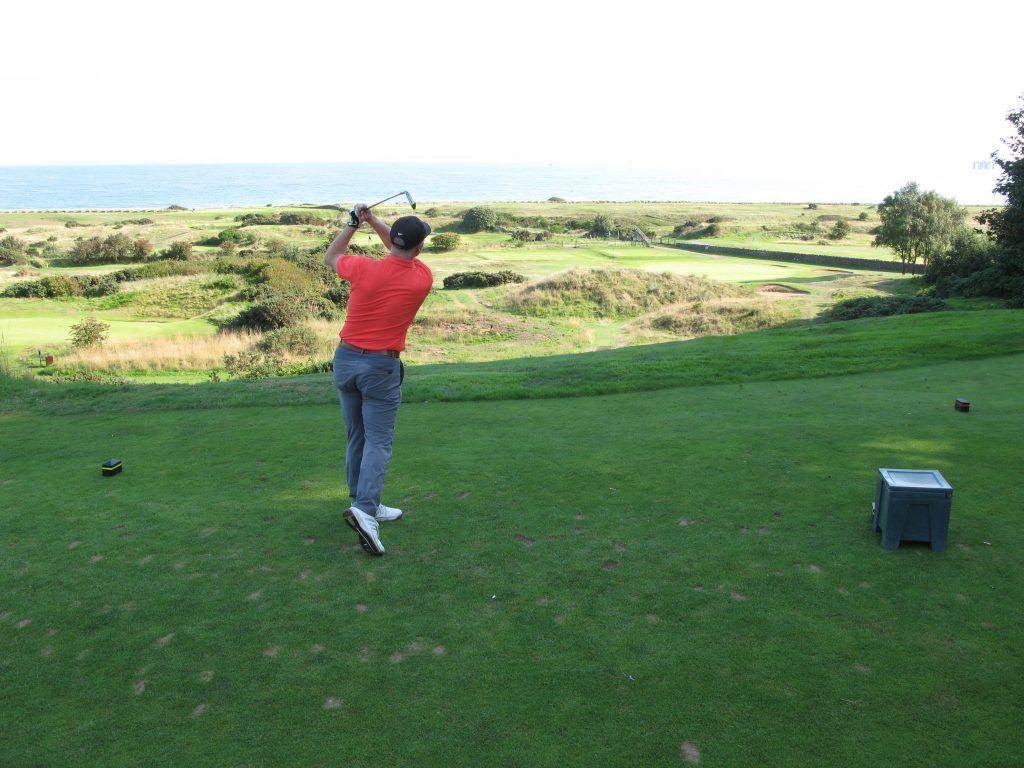
The 4th at Portlethen, one of the best holes.

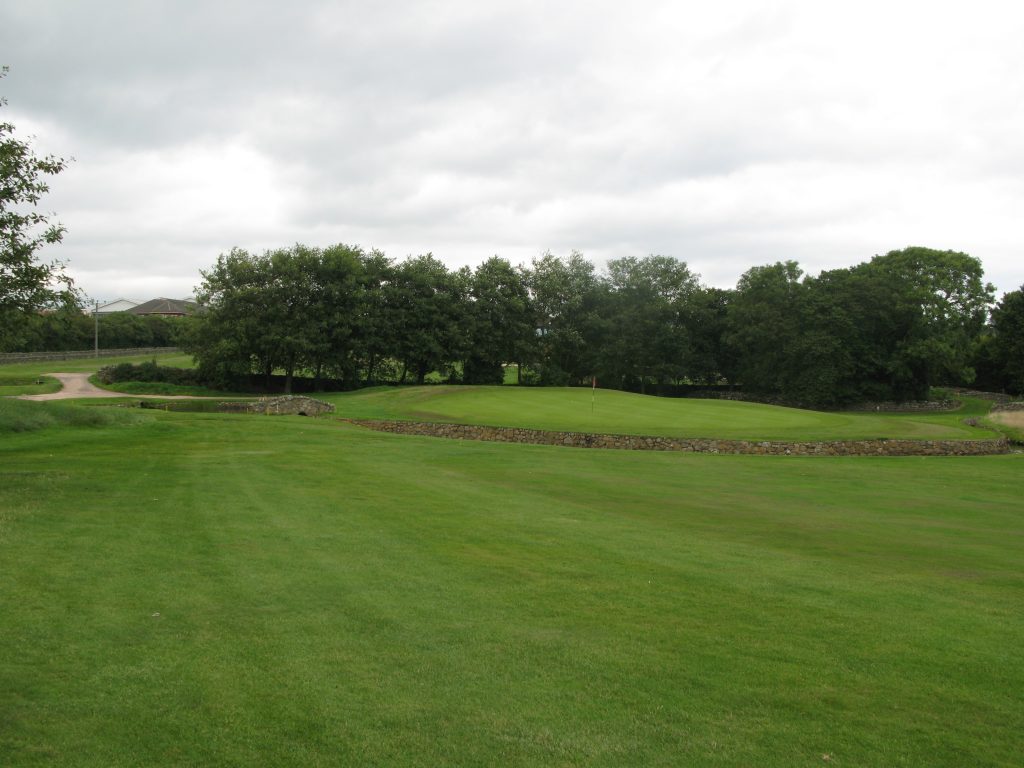
It’s a generous parkland setting, and after a few ordinary holes, the 4th tee provides an excellent view of the par 5 signature hole;  after a good drive I hit an excellent 3 wood over the pond guarding the green – my best strike of the day – which caught the top of a large tree and ended in the water.  The 5th is also a picturesque water featured par 3.  After those highlights, I thought the course somewhat fell away in quality, other than the superb 15th, the SI 2 par 4, which also had a green fronted by water.

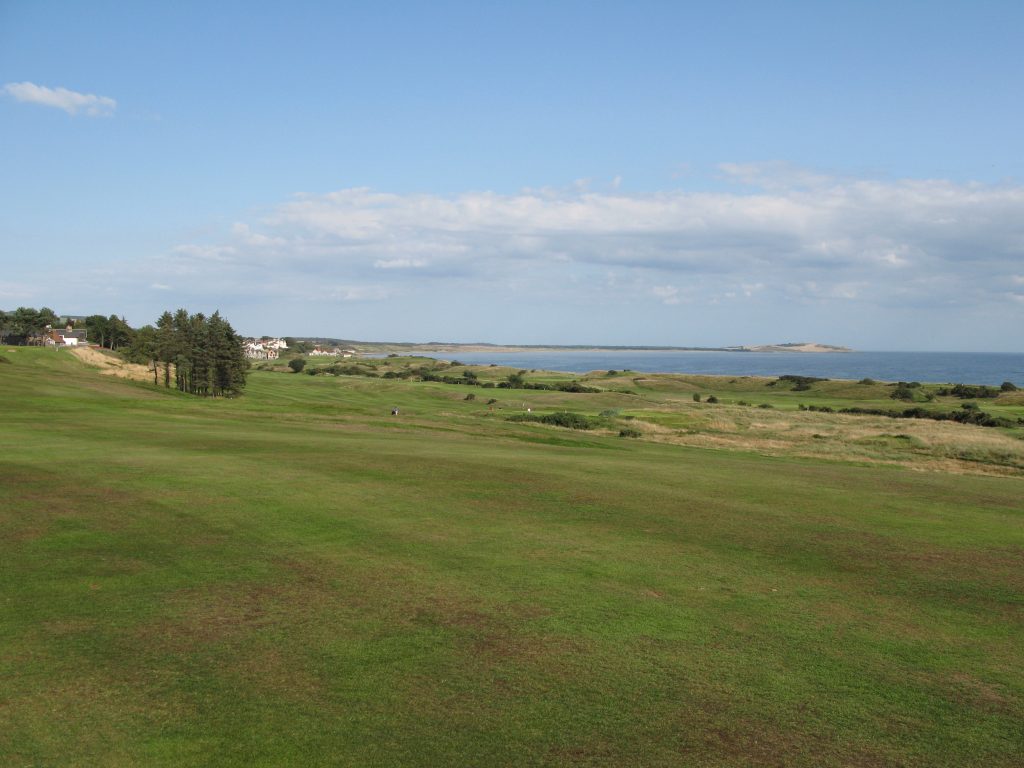
The difficult par 4 15th at Portlethen.

The course was in reasonably good condition.  But it was the lack of welcome which stuck with me.  As a www.teeofftimes.co.uk customer I was advised I would be paired together – not a problem, but expressed in a manner that made me feel a second class citizen.  However, shortly thereafter, I was advised I could play on my own as there was space on the tee!  Nevertheless, my round was very slow, and it was clear that people in front of me were determined not to let me through, even when there was space in front.

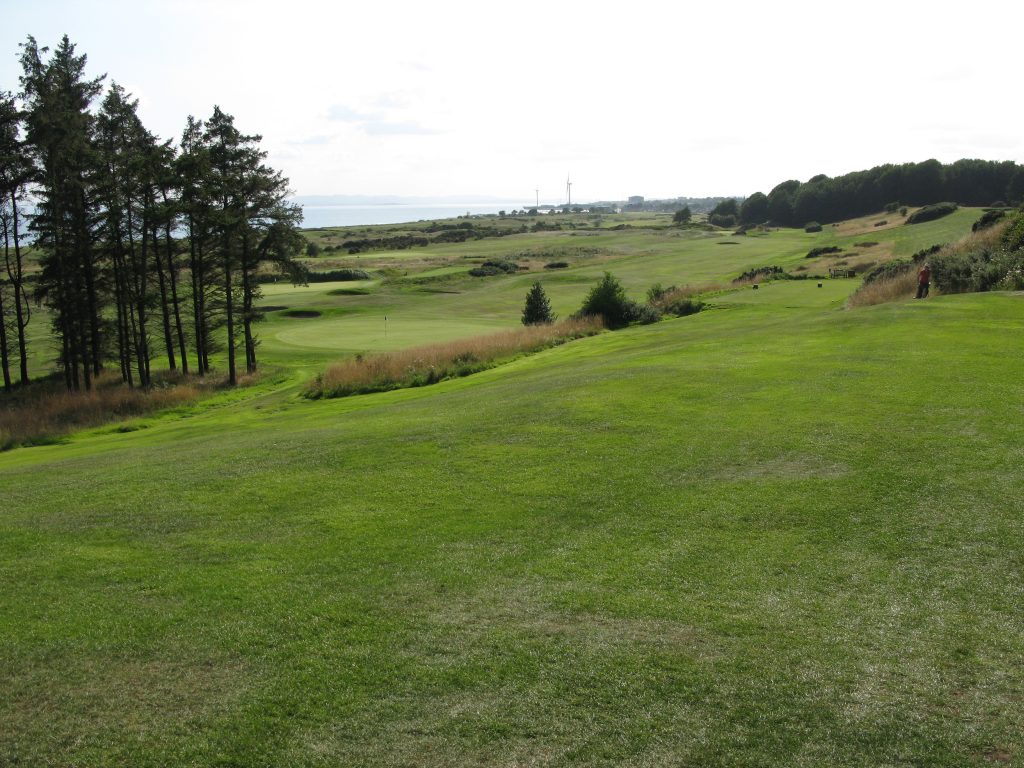
The aesthetic 5th at Portlethen, a short iron par 3.

This seemingly unfriendly approach by a couple of players cannot, of course, be judged representative – however, when I saw the size of the “Committee Only” car park, this seemed so representative of the welcome I’d received.

My overall assessment was that Portlethen was about a 3 for value.  The club’s website makes a big sell of “The Portlethen Experience” – but I must say, for me, it just felt a little bit pretentious overall.

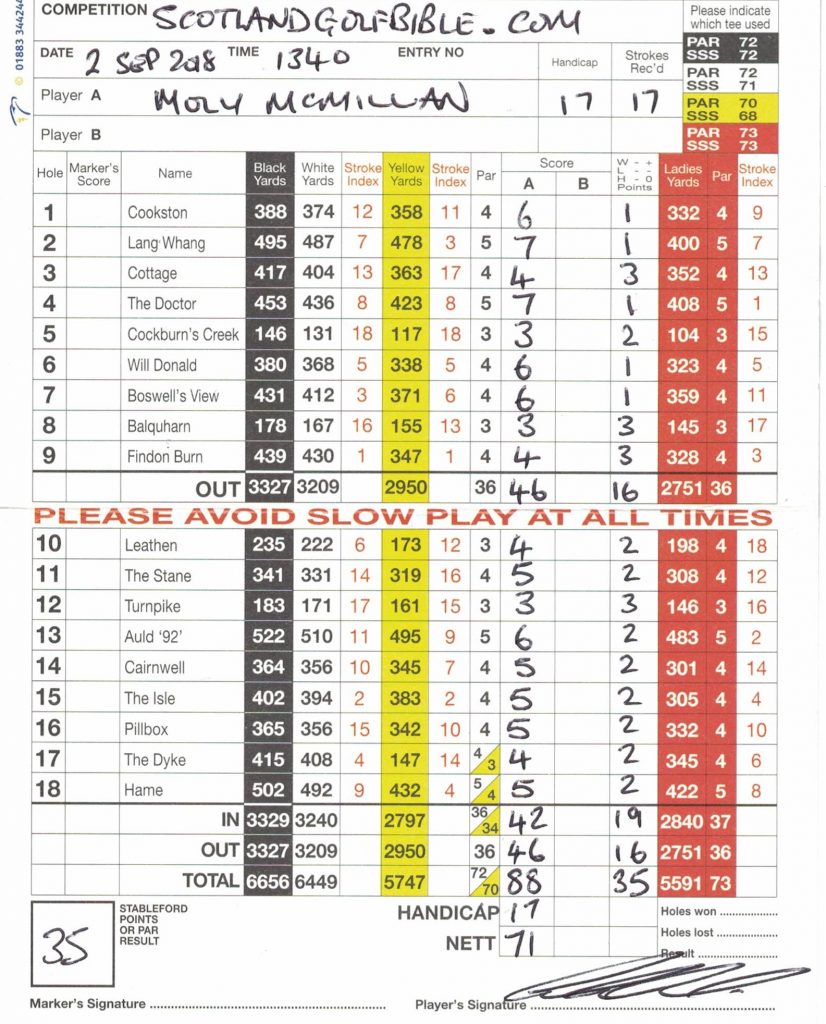
On the day I played well for my net 71.

Facts:

Course Type: Parkland

Par 70 (3 par 5s, 10 par 4s,  5 par 3s)

Distance (yellow): 5747 Yards

Moly’s Gross score: 88

Moly’s Portlethen 88, with only 1 lost ball – which was the best strike of the day, including direction!

84. Lundin. 31 Aug 2018.

This historic links is a marriage made in golfing heaven 

Round £75.   Par 70.  Value (out of 5) – 5

Winston Churchill one said “this is a long speech because I’ve not had time to prepare a short one”.  That feels like my dilemma in writing about the wonderfully crafted golf course at Lundin Links; what to leave out?  I say the golf course “at” Lundin Links, because that is actually the name of the town, which sits on the southerly Fife coast about 12 miles south of St Andrews, where the Lundin Golf Club is based.  I think it’s the only place in the world where the town has the more appropriate golfing name than its golf course!

Moly at Lundin’s par 3 14th – where you can see all the 18 greens!

This naming conundrum is aesthetically appropriate because Lundin golf course poses a few other riddles.  Along with the adjacent Leven Links (the name of the golf course by the way, not the town, which is simply called Leven; au contraire!) it had the first ever 18 hole golf course with 18 separate greens, established in 1868.  That original 18 hole layout, 9 holes of the current Leven Links course plus 9 from Lundin, separated by the Mile Dyke, is still played, but only once per year in a competition to mark its history.  I covered the history of the split in the courses fully in the Leven Links blog here.

View across the Lundin course from the 13th fairway.

The real riddle at Lundin was the architectural one given to James Braid, who was tasked in 1908 with adding 9 holes on the inland side of the 9 holes crafted by Old Tom Morris, to leave us with the current 18 hole layout.  The resulting course is an absolute beauty, and I’m sure Braid tinkered with the bunkering of Old Tom’s holes as well.  Old Tom’s holes are now the first 5 and last 4.

The course is a nice length at about 6400 yards; not long by today’s standards, but with some fascinating decision making, especially from the tee.  Until very recently it was used for final qualifying when the Open was staged at St Andrews, a measure of its quality and condition.

View from the 12th green at Lundin, looking towards Leven

The course was in excellent condition when I played, as a guest of local member Eric Brown and his wife, Moira.  I ungraciously won the “6 point per hole” match play game, although it was nip and tuck most of the way round.  My 9 pars off my 16.8 handicap did rightly elicit a self induced “bandit” conversation, albeit my 3 lost balls (1 resulting in an 8 at the par 4 18th), meant that my 36 points on a fine day would likely have been only in the handicap buffer zone!  That’s my defence anyway M’Laud!

Enough about me, the golf course is the star here.   It’s also a good time to introduce readers to Golf Club Atlas a non commercial web site run by and for golf course architects, where you can find some excellent reviews of many of the worlds great courses.  Being reviewed by Golf Club Atlas is a measure of a course’s pedigree, as well as giving great insight as with their entry for Lundin.

The first 4 holes are classic links holes, played normally into the prevailing wind, with OOB along the left with the beach awaiting a wild hook.  The first is a difficult 400+ yards par 4, with a mid to long iron needed to an uphill plateaued green;  the second, a shorter par 4, requires good judgement to stop short of a fairway burn with your tee shot;  then the 3rd, another short par 4, presents a challenging drive to miss several fairway bunkers.    The 4th, however, is where many a round will come unstuck.  Any time a James Braid influenced course has a stroke index 1 hole without any fairway bunkers, one needs to probable play it as a par 5.  I failed to adhere to this plan, and ended up hitting a decent second shot with a hybrid to the right on the green and never saw it again – whether it cleared the deep burn I will never know!

Eric Brown playing at the par 3 5th hole, one of only 2 holes at Lundin not playing in the coastline direction.

After a relatively short par 3 5th, you leave Old Tom’s legacy and move to the other side of an old railway line that slices the course in half, and play the 9 Braid holes, the first 3 of which have the railway as OOBs to the right.    By the time you have played the 6th and 7th, you might also have picked up another clever feature of this course – the short par 4s tend to have very tricky greens.

The view from the 6th tee, one of the short par 4s with a very tricky green.

The 10th hole was another of the typical strategic challenges;  the fairway is cut in two between the tee and green;  go left where no bunkers exist, but leave a blind second with the green side bunkering obscured, or go right for an easier approach shot, as long as you miss the well placed fairway bunkers.  A joy of a hole.

After playing the, arguably parkland, inland holes of 11 through 13, you reach a place arguably unique in world golf.  From the 14th tee, you can see every green on the course, along with a magnificent view of the Firth of Forth and the North Berwick coast in the distance.  This view is worth the green fee alone.  The 14th is also a great par 3, with a significant drop, so club selection is key to this hole – it’s better being long than short here by the way.

After a nice set of par 4s, you come to the very difficult last hole, a long par 4 played to a long and slightly raised green that slopes from back to front in front of the terrific clubhouse.  I think the number of visiting golfers that find this green in regulation will be low;  plus the sting in the tail is that it has a very difficult green to finish.  I ended up with an 8, having put my second OOB to the left.

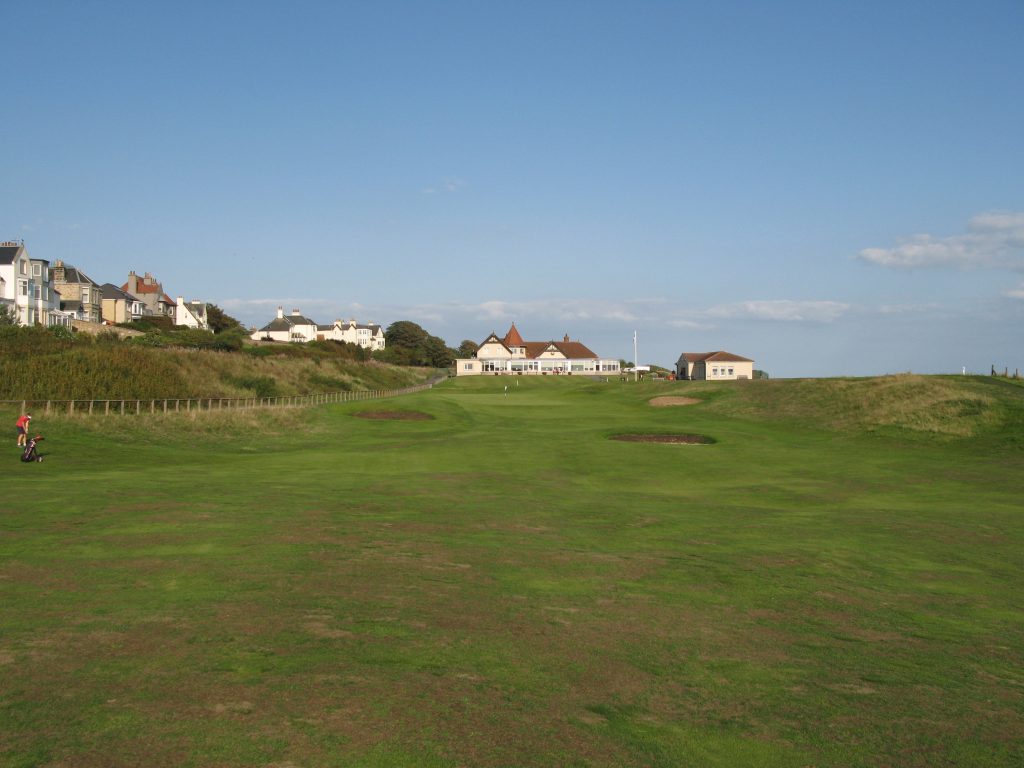
The difficult long par 4 18th hole, in front of the lovely Lundin clubhouse.  Moira, seen here playing her approach, having just stayed in bounds on the left.

People say that Lundin is a “gem”, but I disagree.  Its much better than that;  for me, the term “gem” has evolved into one used to describe “great courses, but somewhat unknown or off the beaten track”.  Lundin is very much on the well trodden track, is a merge of architectural significance by 2 of the greats, and it is a joy, for many reasons.

A must play Scottish golf course.   Buy the Course Guide, and study the holes!

Facts:

Course Type: Links

Par 70 (2 par 5s, 13 par 4s,  3 par 3s)

Distance (yellow): 6138 Yards

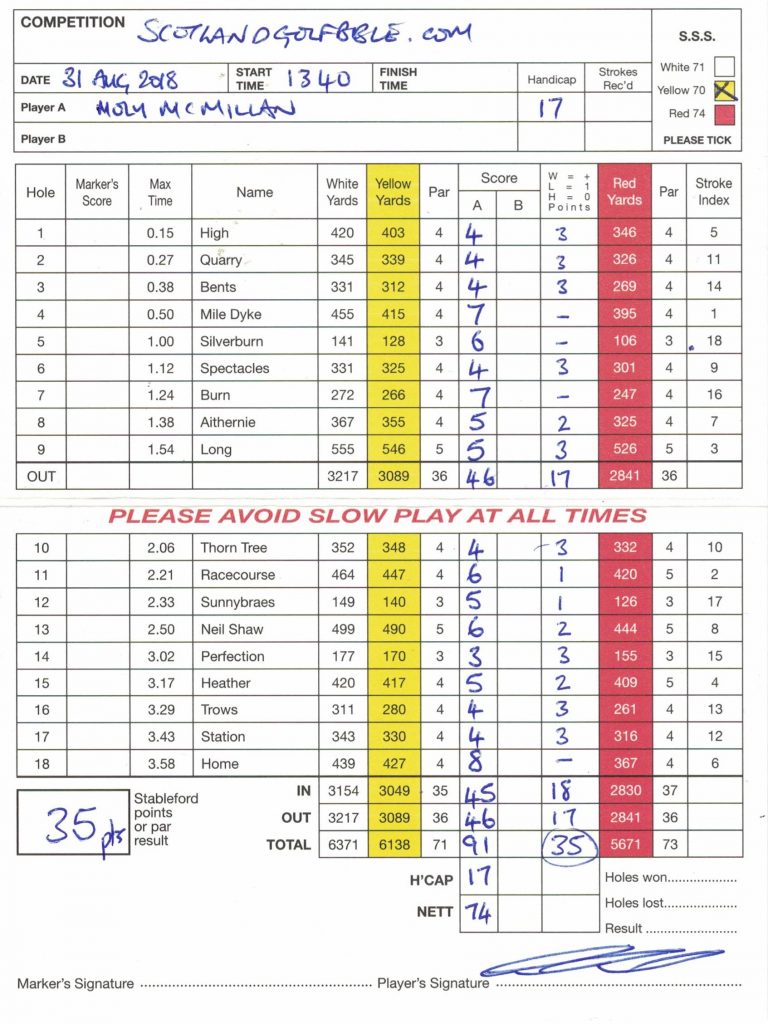
Moly’s Gross score: 91

Moly’s very mixed Lundin scorecard – 9 pars, but still 21 over par for 91!

« Older posts Newer posts »

© 2025 Scotland Golf Bible

Theme by Anders NorenUp ↑