A guide to green fee value for money

Category: Edinburgh & The Lothians (Page 5 of 7)

86. Archerfield – Fidra Links. 12 Sep 2018.

Superbly designed course that could be considered any of links, parkland or woodland!

Round £90…plus hotel residency!   Par 72.  Value (out of 5) – 3.5

I felt a little stupid when the answer came to my question “Why is it called Archerfield?”.  “It was where King Edward I’s bowmen practiced in 1298!”
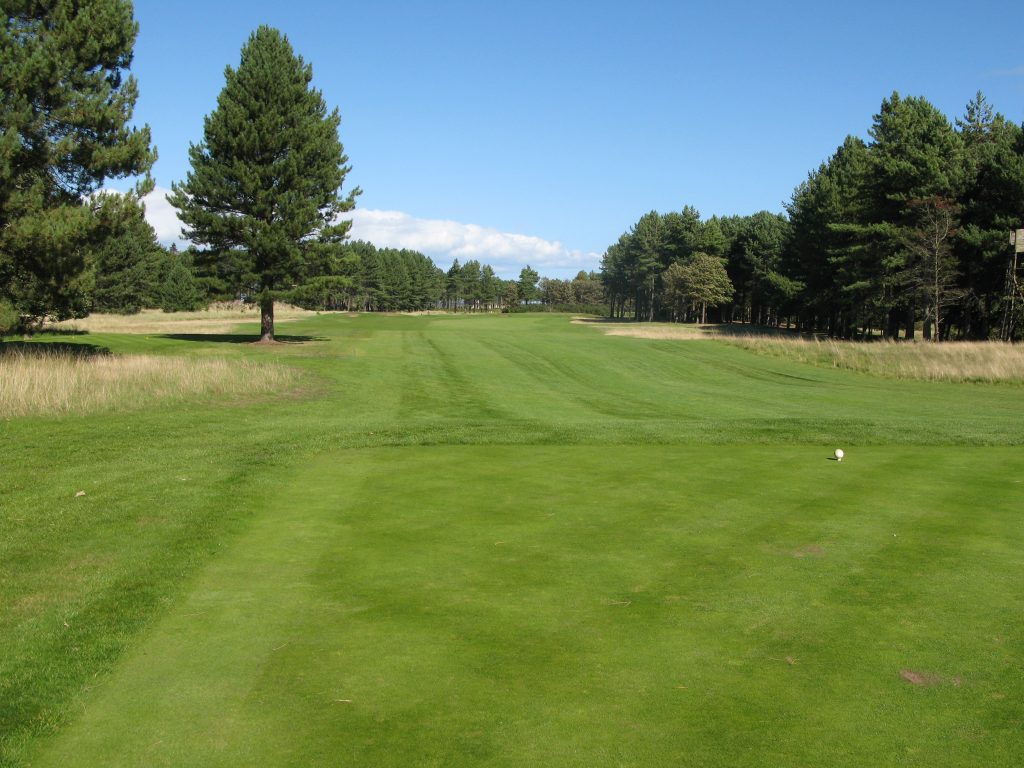
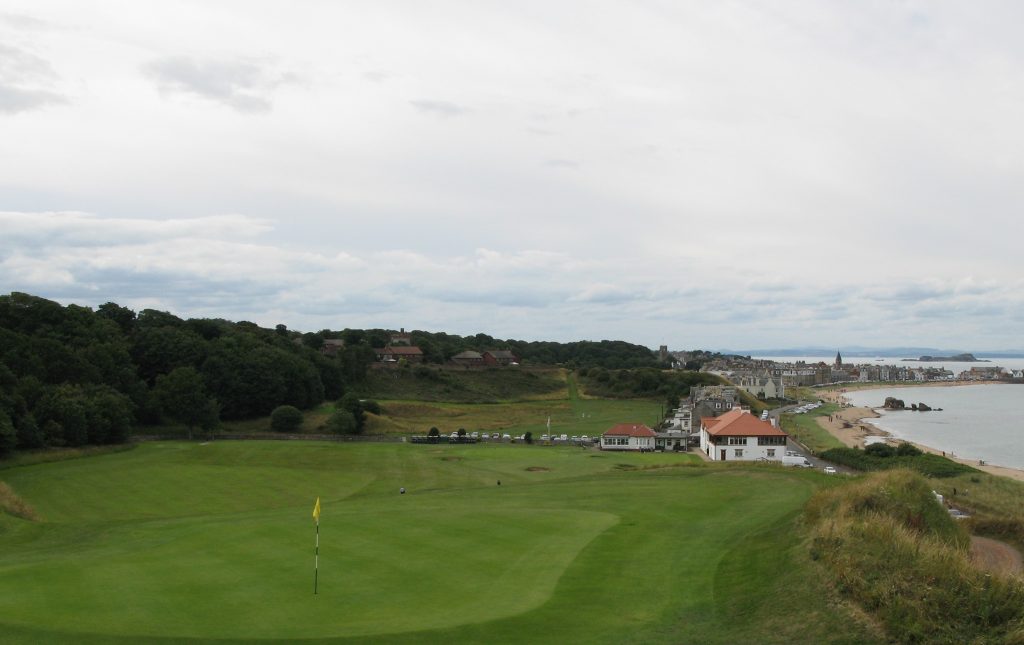
The 1st at Fidra Links, very typical of the first 11 holes.

Fidra Links is one of the two courses on the Archerfield Estate, a golf centred development created by the Edinburgh businessman Kevin Doyle over the last 15 years.  The estate has a range of 5 star accommodation options, with the 17th Century, 16 bedroom, flagship Archerfield House being available to rent in part or in whole.  When my wife and I stayed in a nearby “Pavilion Suite”, we were politely refused entry to Archerfield House by a Concierge, as we weren’t one of the 4 Americans that had rented it for the week.  Get the picture – know your place amongst the clientele of “Scottish” golf these days.
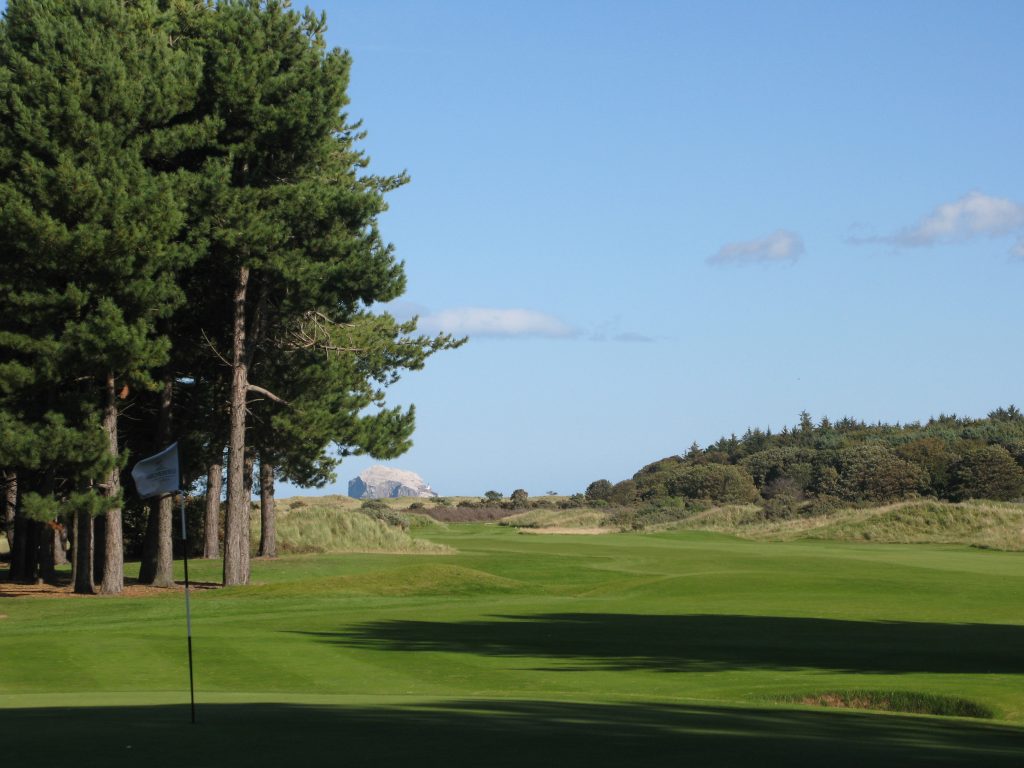
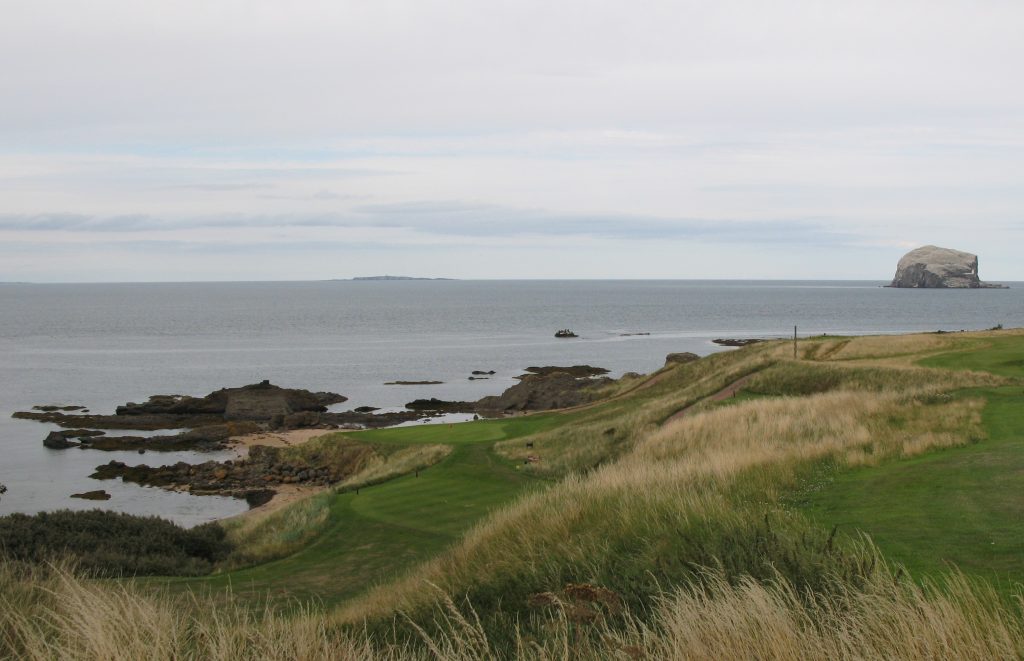
A view towards the Bass Rock from behind the 6th green at Fidra Links

Seriously though, with great accommodation, a quite superb Scandinavian inspired spa, and first rate practice facilities on offer, this is a world class golf resort on Edinburgh’s doorstep.  Curiously, the clubhouse restaurant and bar is adorned with African art, giving it a colonial feel?

Nestled between Muirfield and North Berwick, and adjacent to the magnificent Renaissance,  Fidra Links and Dirleton Links (the other Archerfield course) strengthen the case that this East Lothian region is Scotland’s premier golfing destination.
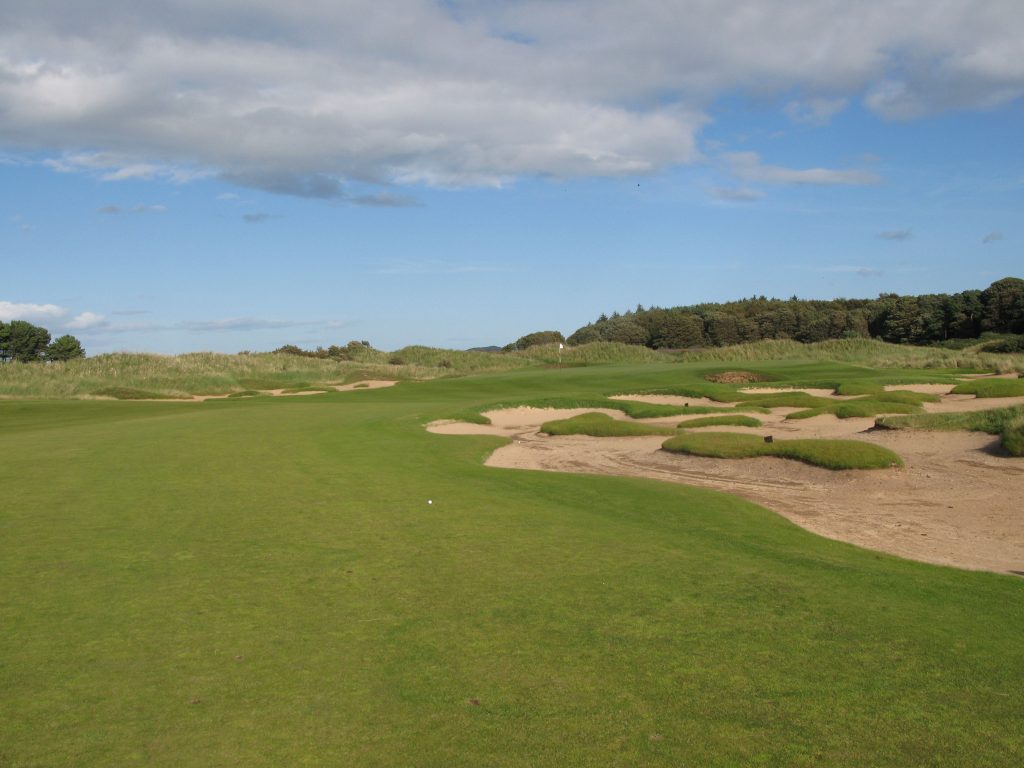
The approach to the 12th has plenty sand awaiting.

It’s not cheap though;  membership via a debenture costs about £30,000, then around £3,000 annual fees.  But, you do get your shoes cleaned and don’t need to worry about paying for range balls.  You can have a “golf experience day” (price unknown), or as I did pay a £90 green fee as an accommodation occupant; I suspect many golfers play both courses either side of a single night B&B stay, which costs about £500; not bad for a short break of this quality.  The clubhouse food is pretty good too, and not overpriced.
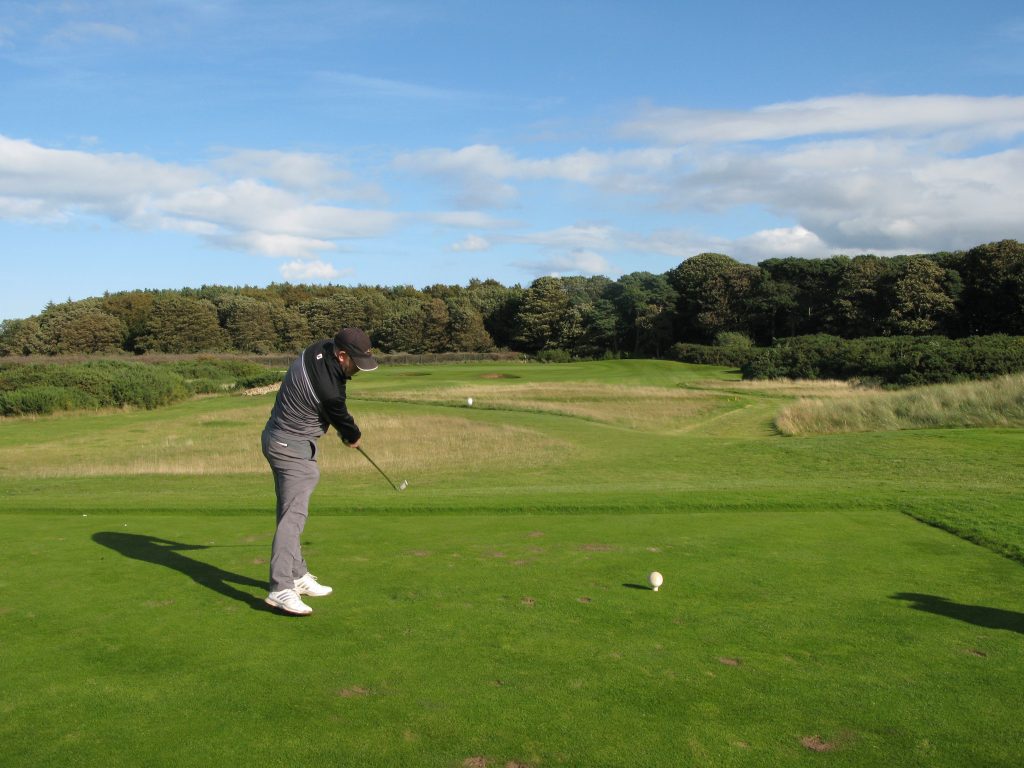
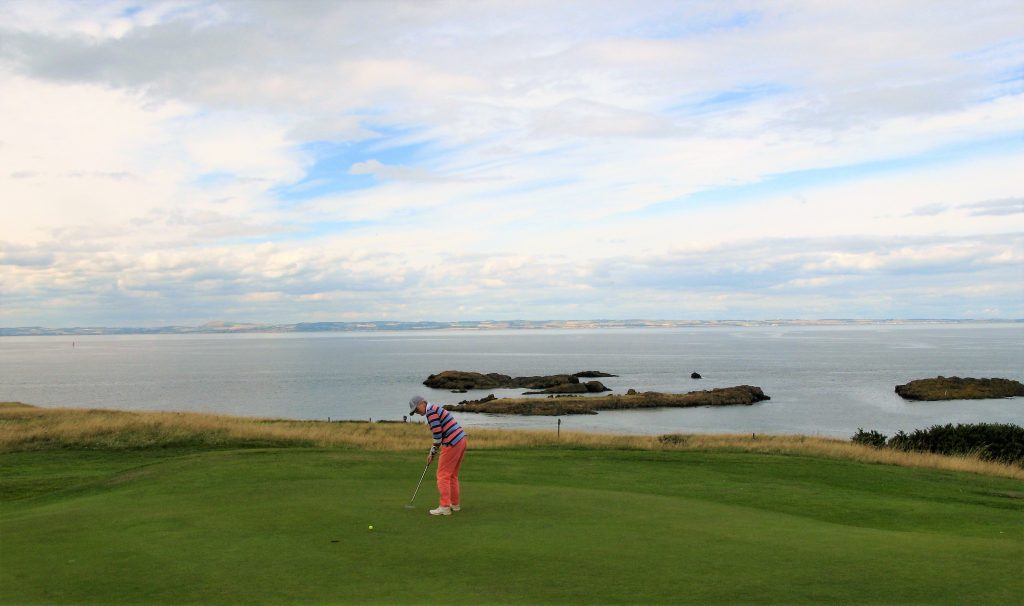
Moly plays straight at the par 3 12th at Fidra Links – straight into the front bunker that is!


Fidra “Links” is a beautifully laid out design by architect David J Russell, who has created a great mix of parkland, woodland and links!  It may well be the most tree lined course adjacent to the sea in Scotland; I really don’t know how you would classify it.  The first 11 holes are pine forest protected, with the last 7 holes being the “faux” links holes open to the elements.  The bunkering is often fierce, the greens are large and tricky, and with constant changes of direction, it’s difficult to get an easy couple of holes together, especially if the wind is up as it was for us.   The trees are fairly open at times with the pine undergrowth meaning balls are relatively easy to find, which is a big bonus with my wayward driving game.

The course condition was excellent, as one would expect, and if you were to find any lost balls they are unlikely to be scuffed Top-Fight’s.  Finding good golf balls, especially by having to crawl though thorny bushes, is one of the guilty pleasures in my life!  It was actually more difficult to find the next tee at Fidra, than lost balls, as apparently Mr Dolye doesn’t like signage?  That was my main criticism of the course, as well as the tee options.

There are some great golf holes here.  The SI 2, par 4, 7th hole, is a slight dog leg left, where only a tee shot on the right of the fairway, can avoid having to hit over 2 prominent trees about 50 yards short of the green.  The short par 4 12th has magnificent bunkering awaiting a pushed second. The 14th, into the prevailing wind was well worth the SI1 tag.
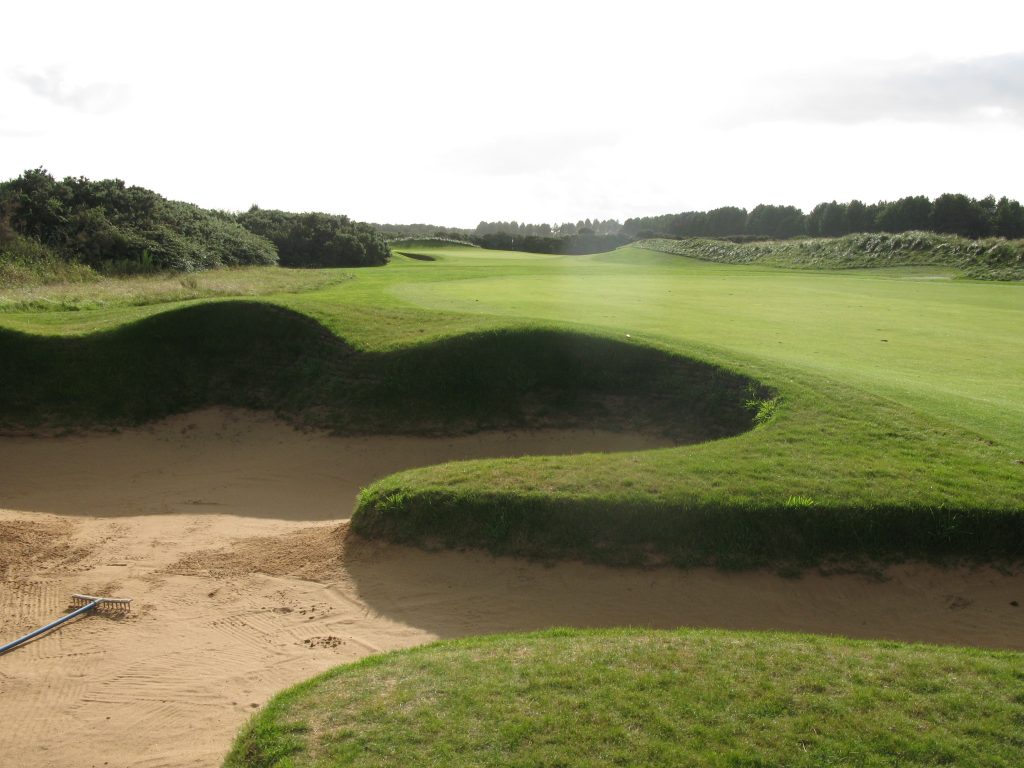
The fairway bunker on 15 at Fidra is a typical and well constructed feature.

It wasn’t long from the yellow tee (5463 yards), but with 4 tee options to choose, I played off the white at 6201 yards, and felt I played really well for my 96 and 29 stableford points.  Disappointingly, there were no red tees, the traditional colour used for ladies, which given the current debate about encouraging women to play, didn’t make any sense to me!    The card was though very instructive (see below) as it was printed daily with the pin positions!

If you can afford it, its worth staying and playing at Archerfield.  If you do, I recommend you also splash out on the Golfer’s recovery massage – I didn’t know I had so many knots in my back!

Facts:

Course Type: Parkland/woodland/links

Par 72 (4 par 5s, 10 par 4s,  4 par 3s)

Distance (white): 6201 Yards

Moly’s Gross score: 96
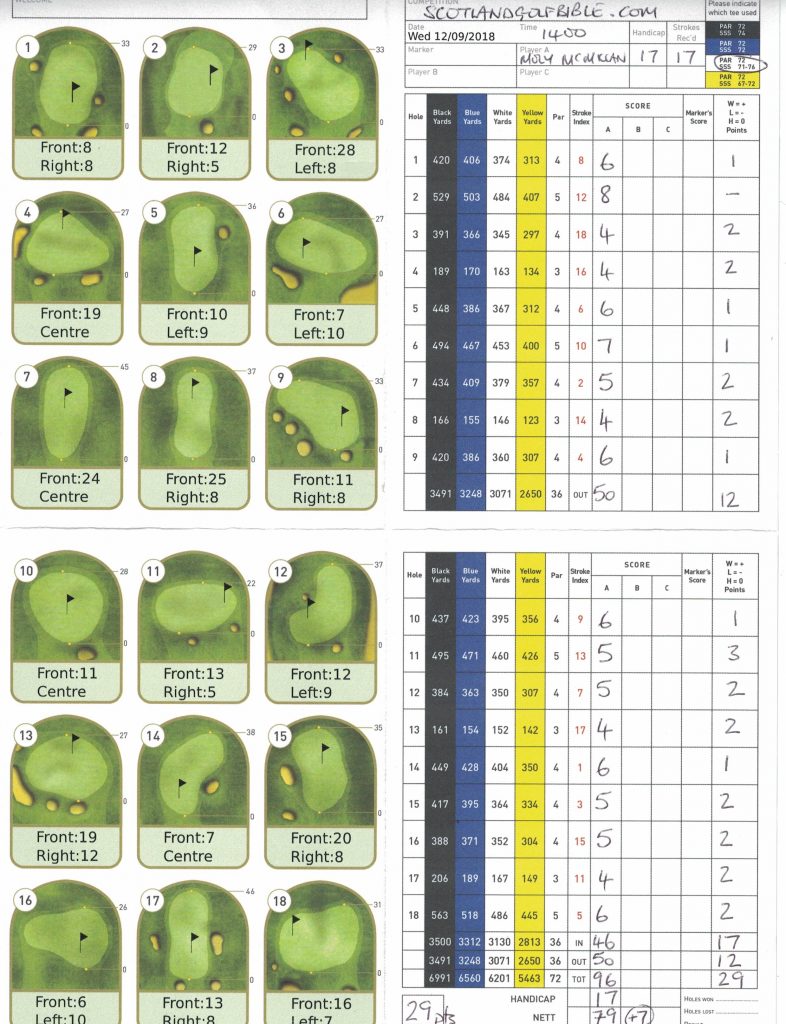
The daily printed scorecard at Archerfield’s Fidra Links – Moly shot 96.
82. The Glen, East Links, North Berwick. 11 Aug 2018.

Excellent vistas, with some memorable holes, but clearly an overplayed course and a little worse for wear.

Round £58.   Par 70.  Value (out of 5) – 3

The seaside town of North Berwick, about 25 miles east of Edinburgh, sits along an outstanding coastline that is home to many renowned and world class golf courses, helpfully listed in the East Lothian golf website here.

The Glen golf course sits on the east of the town, and has historically been called “East Links”, to differentiate it from its more westerly and much older “West Links” neighbour, North Berwick golf course, which is one of Scotland’s great championship golf courses.

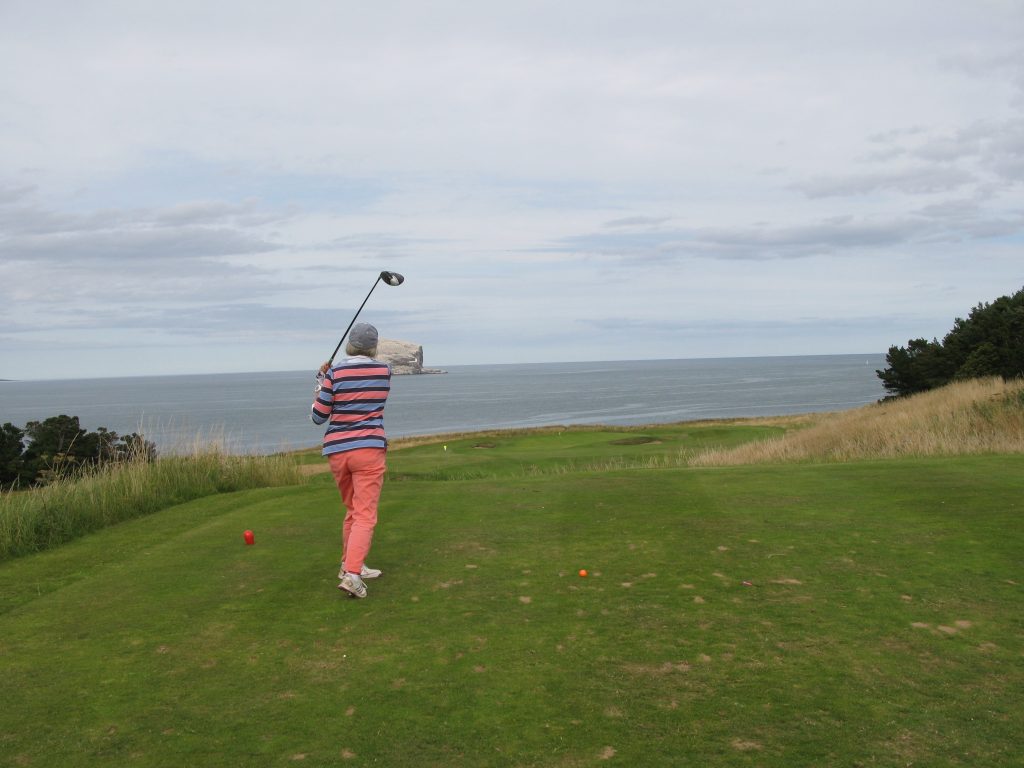
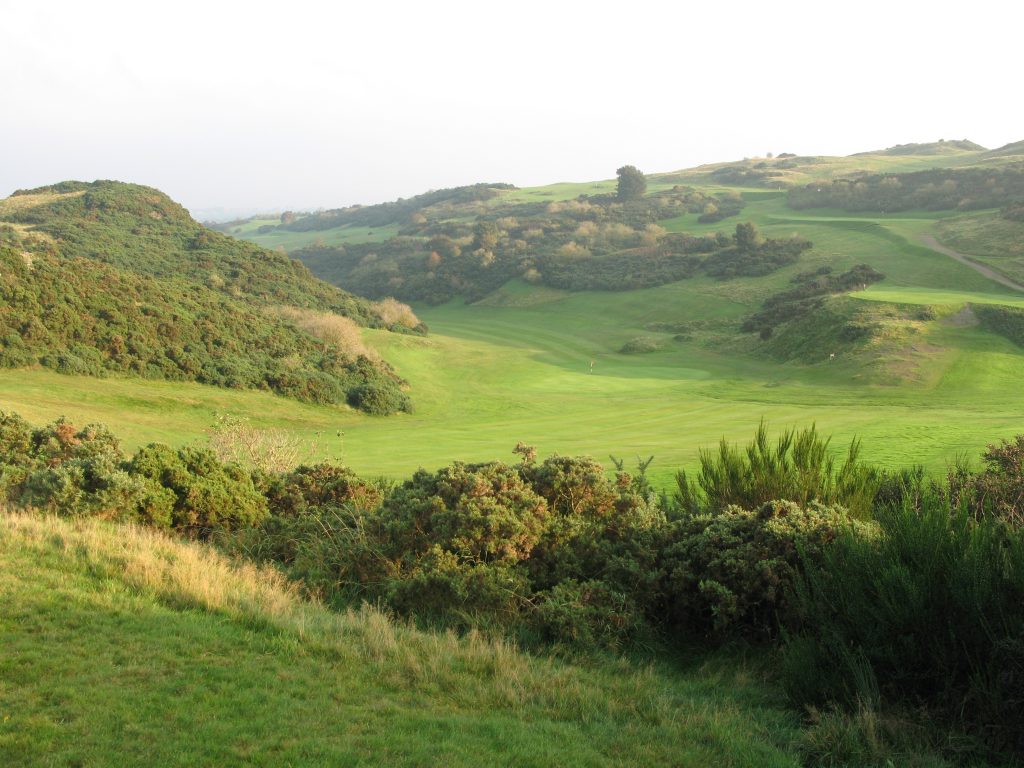
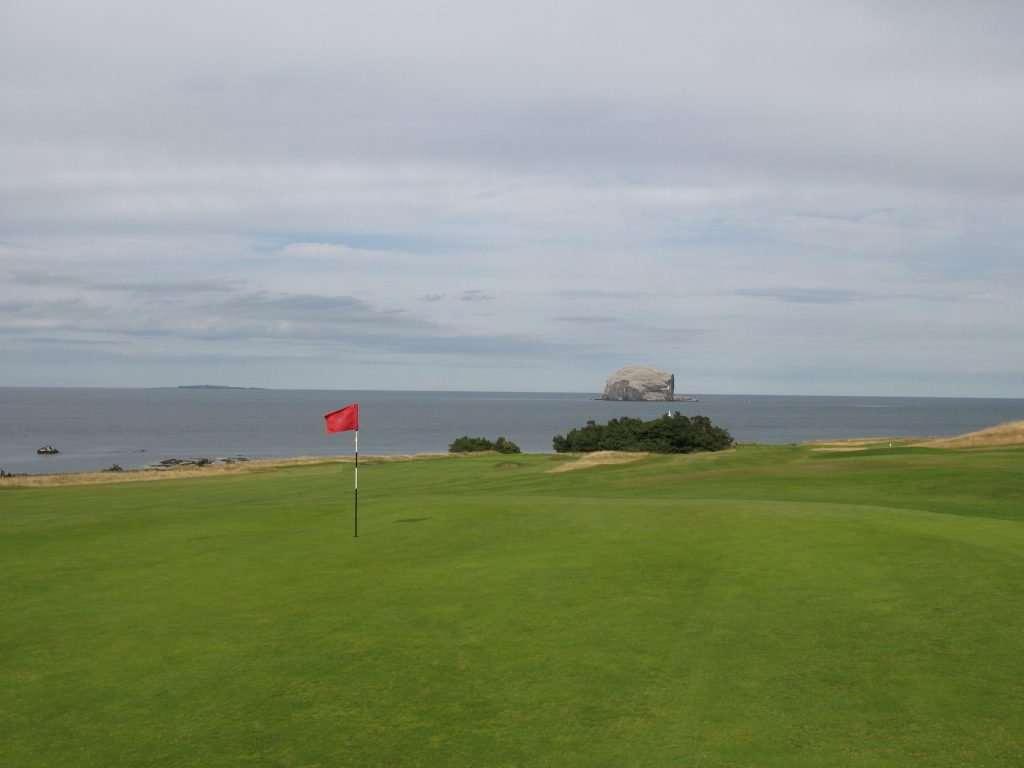
The Bass Rock from the 10th tee at The Glen.

The North Berwick “West Links” golf club actually opened in 1832.  Demand for golf expanded rapidly towards the latter part of the 19th Century along with the expansion of the railways and the increased wealth and leisure time which came from the Industrialised age.  A second 9 hole golf course to meet this demand was laid out in the east of the town in 1894, designed by Ben Sayers, the legendary Scottish golf professional and club innovator, who played a match to mark its opening.    Then, only a little over 10 years later, Sayers again, this time in conjunctions with James Braid, oversaw the extension to 18 holes, of what is now The Glen golf course.

The view from the 1st green at The Glen towards the nice clubhouse.

The course is dominated by the views of the Bass Rock, one of the several islands which dot the outer part of the Firth of Forth.  The rock can appear almost fluorescent in the correct light, which is the result of the white droppings of the large colony of gannets which inhabit it.

Views North towards the Fife Coast from the mid iron par 3 4th hole, where Fran and I both kept right as guided in the Course planner!

In fact, the coastal views from the course are among the best in Scotland, extending far north to the Kingdom of Fife; however, they serve as a rather flattering deception as many of the holes of the course are in my opinion pretty bland.  In particular, the several holes on the inland most side of the course are built on arable turf and don’t feel particularly links like at all.

Fran at the 9th, with a view of the typically worn teeing ground.

The course is basically an out and back layout, and starts with one of the most challenging holes, which after a fairly innocuous drive to around 200 yards, requires an uphill shot to a blind green – take at least 2 clubs more than normal, as the green is very long.  If you just get to the top of the hill, you’re faced with almost an inevitable 3 putt!.  This brings me to the greens – they were in good condition but seemed to have a great deal of variability of pace, which I never got used to and I three putted 8 times, which I think must be my record.

The course was otherwise in fair condition, except for the tees which were really very poor, and a clear sign of the amount of play throughout the summer – granted, the dry summer may not have helped the green keepers.  Nevertheless, the high amount of golf played is a really good thing, as golf in Scotland is in general decline.  I think The Glen provide a nice welcome and the facilities and clubhouse are new and very good, another sign of the general wealth on the coastline.

The signature par 3 13th green here seen from a distance. Note the hole is not played in this direction.

The course does have some excellent holes, and some very challenging ones, in its 6000+ yards locker.  The best known is its signature hole, the 13th, which has been likened to the famous short 7th at Pebble Beach in California, which if you look at comparable pictures is not unreasonable.

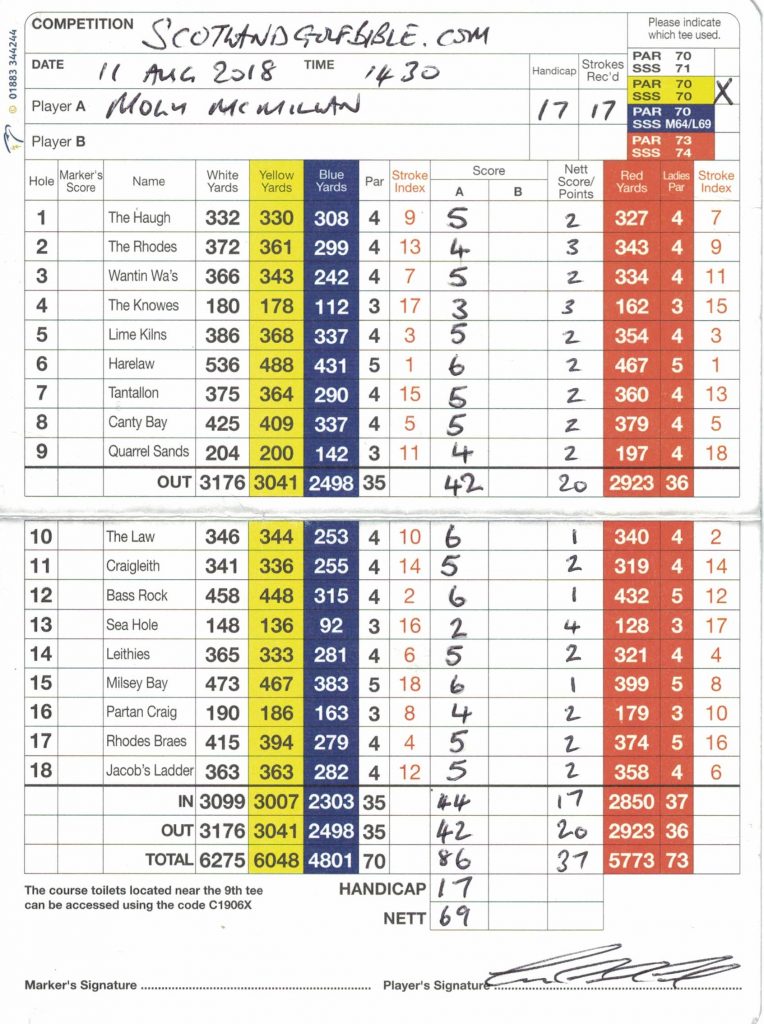
Other than my putting I had an excellent day, scoring 86, having hit 10 greens in regulation;  this was greatly helped by the pretty wide fairways the course has.  The nicest thing was having a birdie 2 at the signature hole.

It’s worth playing The Glen, but if possible I would think that early season would be a time the course is at its best before the Summer visitor season.

Facts:

Course Type: Links

Par 70 (yellow:  2 par 5s, 12 par 4s,  4 par 3s)

Distance (yellow): 6048 Yards

Moly’s Gross score: 86

Some excellent play for 86 at The Glen; but included 3 putting 8 greens!

68. Braid Hills No 1. 16th Oct 2017.

Edinburgh’s public gem too prominent to be called “hidden”   

Summary:  Round  £25.30.   Par 70.  Value (out of 5) – 4.5

Braid Hills “No 1” is a wonderful public 18 hole golf course carved among the gorse and hillocks of Braid Hills on the south western edges of Edinburgh.  It has magnificent views of the Edinburgh skyline towards the Firth of Forth and also the Pentland Hills.  Although often misused, the term “gem” could well have been defined just for this golf course.  It is sometimes described as “one of the best loved public courses in Scotland”, and a real gem it is.

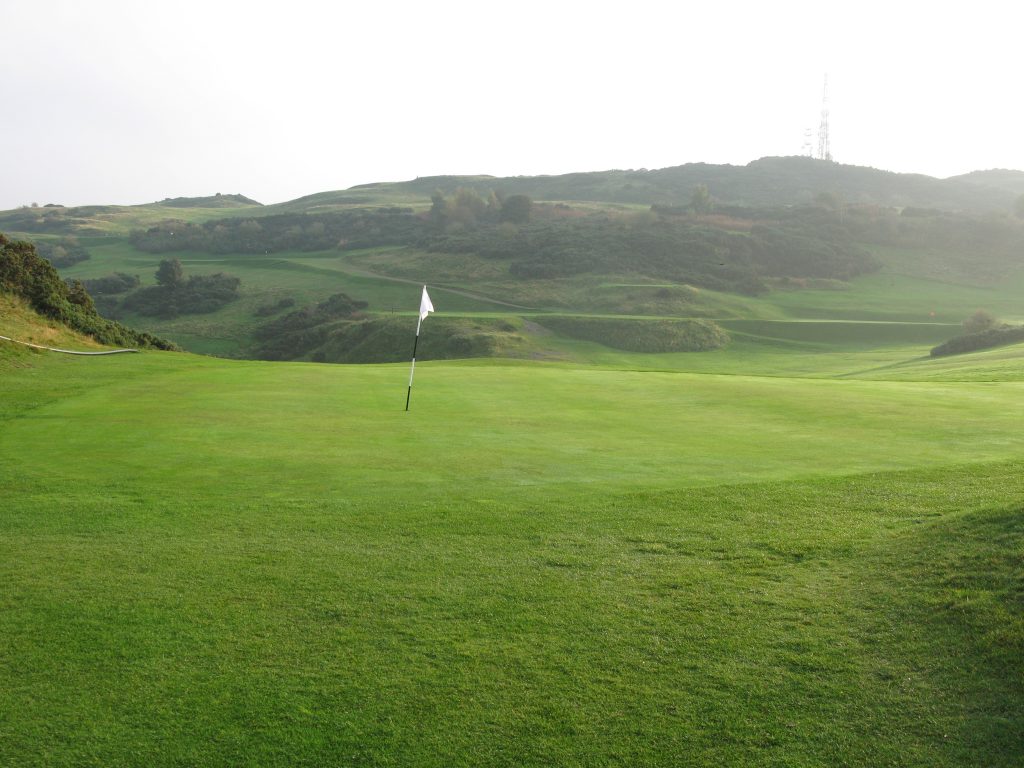
Overlooking the 16th green and 17th tee, with the view representing the feel of Braid Hills

“The Braids” takes its name historically from the nearby Braid estate originally the property of the “de Brad” family, one of whom, Henri de Brad, was Sheriff of Edinburgh in the 12th century.  The name has nothing to do with the famous course architect James Braid who, ironically, did not in any way shape his namesake course!

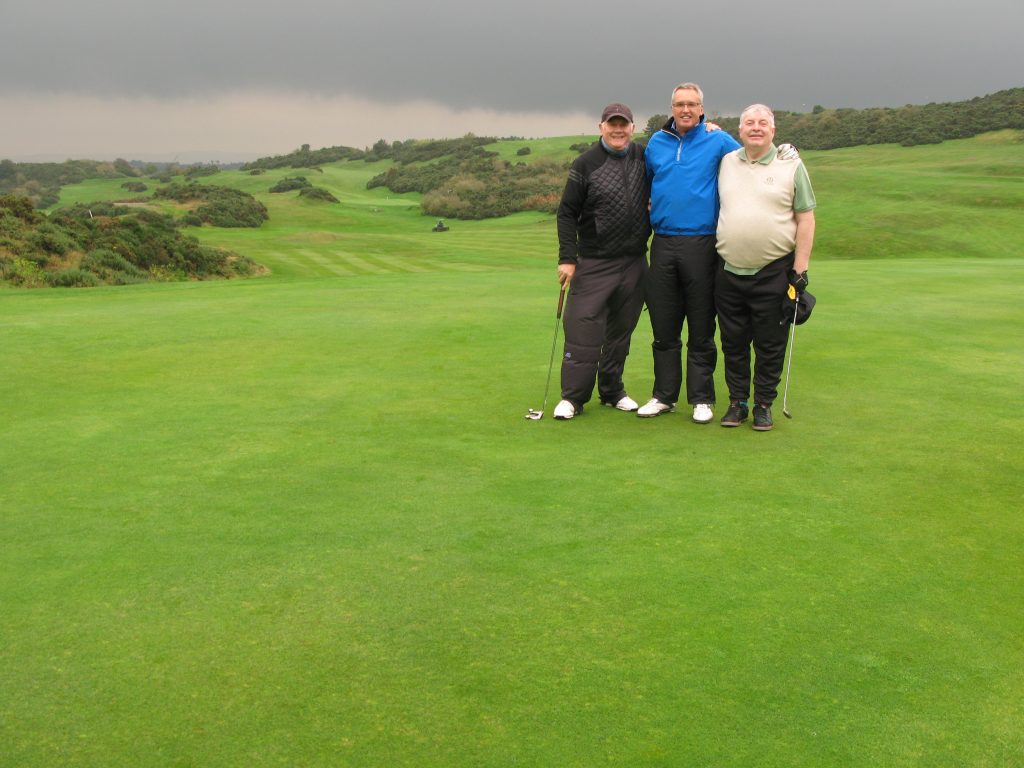
It was appropriate to play here with Sheriff Frank Crowe, fully equipped with Tommy Armour irons, given that Henri de Brad, the 12th Century Sheriff of Edinburgh, is the origin of the Braid Hills name.

The golf course was opened in 1893 and several golf clubs sprang up to accommodate the popularity of the sport with many of those clubs still affiliated: Edinburgh Thistle, Edinburgh Western, Harrison, Comiston Ladies and Braids United.  The 1931 Open Champion Tommy Armour was a member at Edinburgh Western.  Such was the popularity of golf, the nearby Braid Hills Hotel, immortalised in Muriel Spark’s ‘The Prime of Miss Jean Brodie’, originally had a Golf Room erected to serve the golfers playing the new Braid Hills golf course.

It’s a relatively short course, but there are many blind or semi blind tee shots, and I would highly recommend buying the course planner, as some of the holes can be played with very different strategies, most notably the par 4 7th and 14th holes, where successful drives can be 60 yards wide on either left or right.

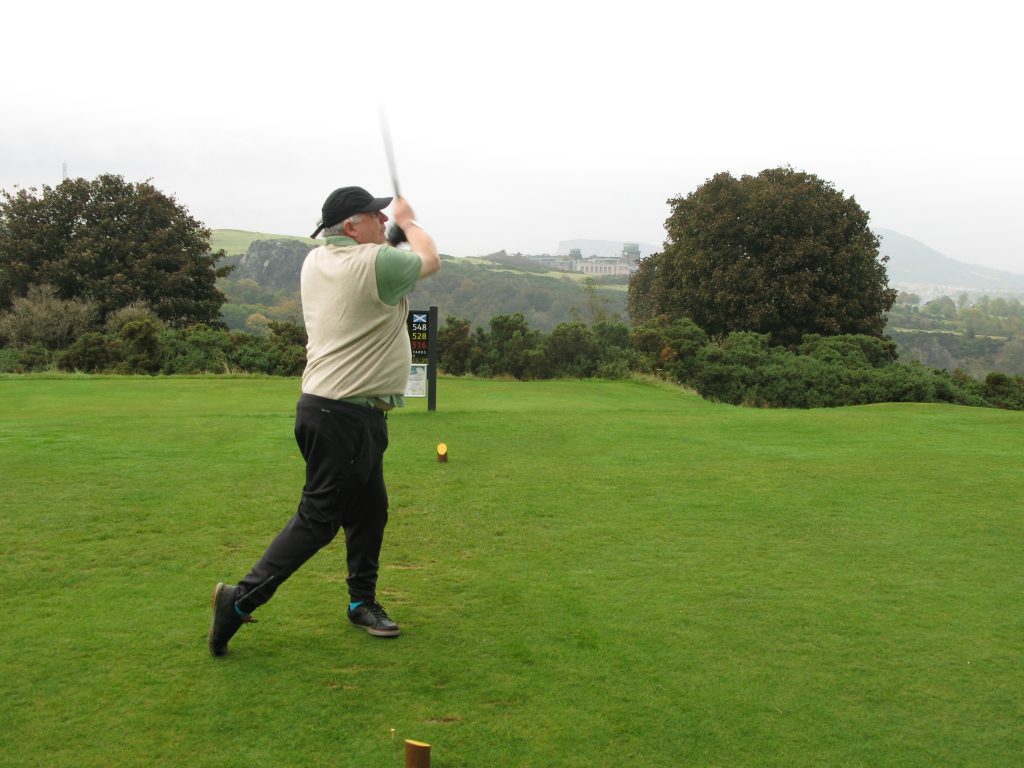
Brian Fearon teeing off at the very difficult par 4 7th hole. Choose your line with care; my shot seemed the best drive but was never found!

Although easily accessed from the city, whilst on the course if feels incredibly remote, especially in one of the holes surrounded by the gorse.  The main hazard on this course is the pervasive gorse bushes, and the need to get the correct alignment from the tee.  If you play well off the tee here, you will score low, otherwise disaster awaits.  This is reflected abundantly on my card, where I had several disasters, resulting in lost balls.  However, I found many more that I lost – on the 4th hole my own ball was the 7th I found.  Make sure you remember the ball you played with!  Also take care with approach shots, which often seem to take at least one extra shot here – this was evident from the 17th tee, which has about 140 yards of “valley” between the tee and green – you need to get up here to make par.

The lovely par 3 17th, one of 4 nice par 3s, of which the uphill 9th was the most challenging

The walk is quite hilly with some hazardous steps up and down from teeing grounds, but the walk is well worth it just to get to the 18th tee alone which must have one of the best views in Edinburgh.  Even on a fairly misty day we were able to appreciate it.

The course was in pretty good condition when I played with some colleagues from the Apex organisation.  The greens were quite quick and the fairways good; there were some bunkers although they are quite spare and very basic in construction.

A set of happy golfers on the characteristic 8th hole of Braid Hills.

For the record, there once was a Braid Hills No 2 course of 18 holes, but that disappeared a few decades ago, and there is now nearby a small 9 hole course called Wee Braids and also a Braid Hills Golf Centre.

This is a really great little golf course highly recommended.

Facts:

Course Type: Heathland

Par 70 (2 par 5s, 12 par 4s, 4 par 3s)

Distance (yellow): 5508

Moly’s Gross score: 106

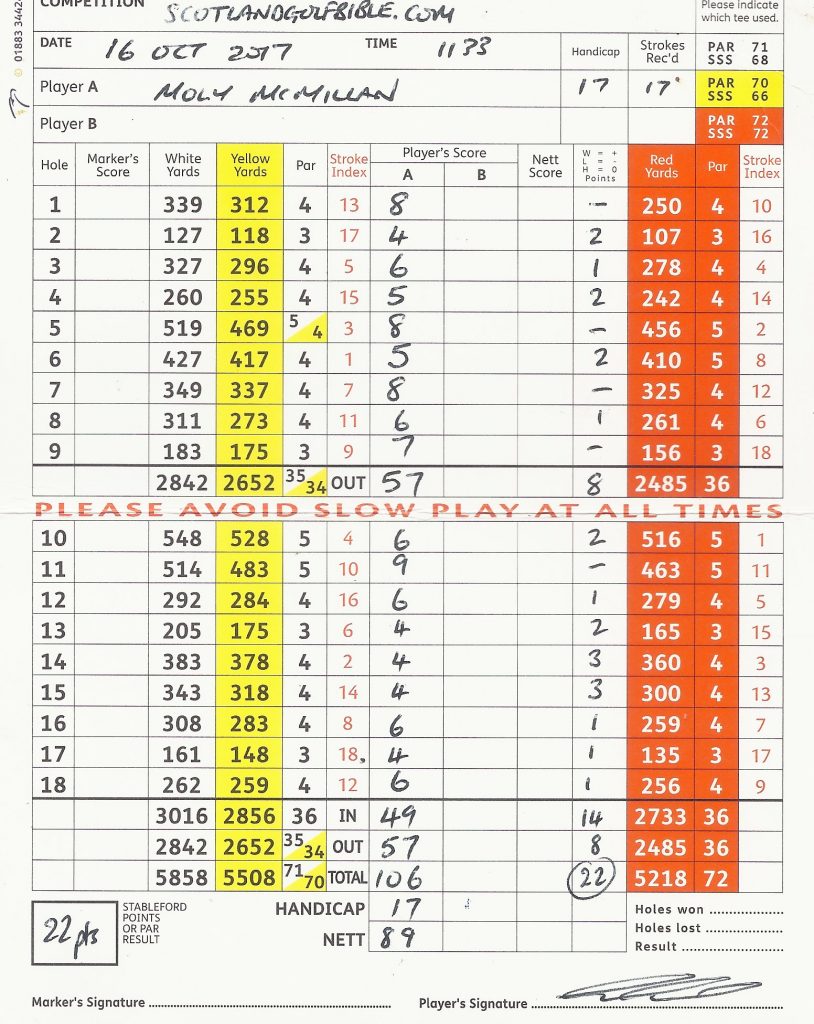
Moly’s disastrous Braid Hills Card – 106 including 10 penalty shots and 40 putts

66. Turnhouse. 10th Oct 2017

Nice layout with good greens with upside for plane spotters! 

Summary:  Round  £35.   Par 69.  Value (out of 5) – 3.5

Turnhouse golf course was laid out with 9 holes in 1897, and extended to 18 holes a few years later.  The original course designer is not known, but James Braid carried out a redesign in 1928, characteristically focused on the use of bunkers.

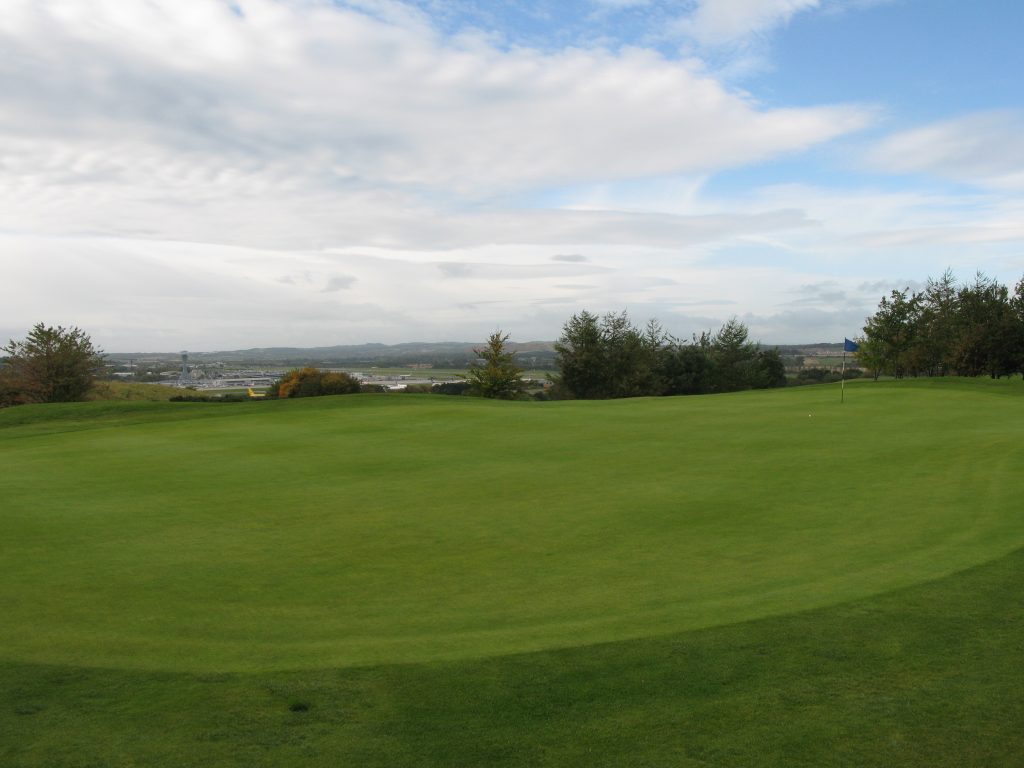
Views of Edinburgh airport from the 5th green at Turnhouse

The course sits on Lennie Hill, very close to Edinburgh airport and easily accessed by road.  There are good views of the Pentland Hills to the south and to the Fife Ochill Hills to the north.  For a parkland course designed in the 19th century it unusually has two 9 hole loops, starting at the clubhouse.

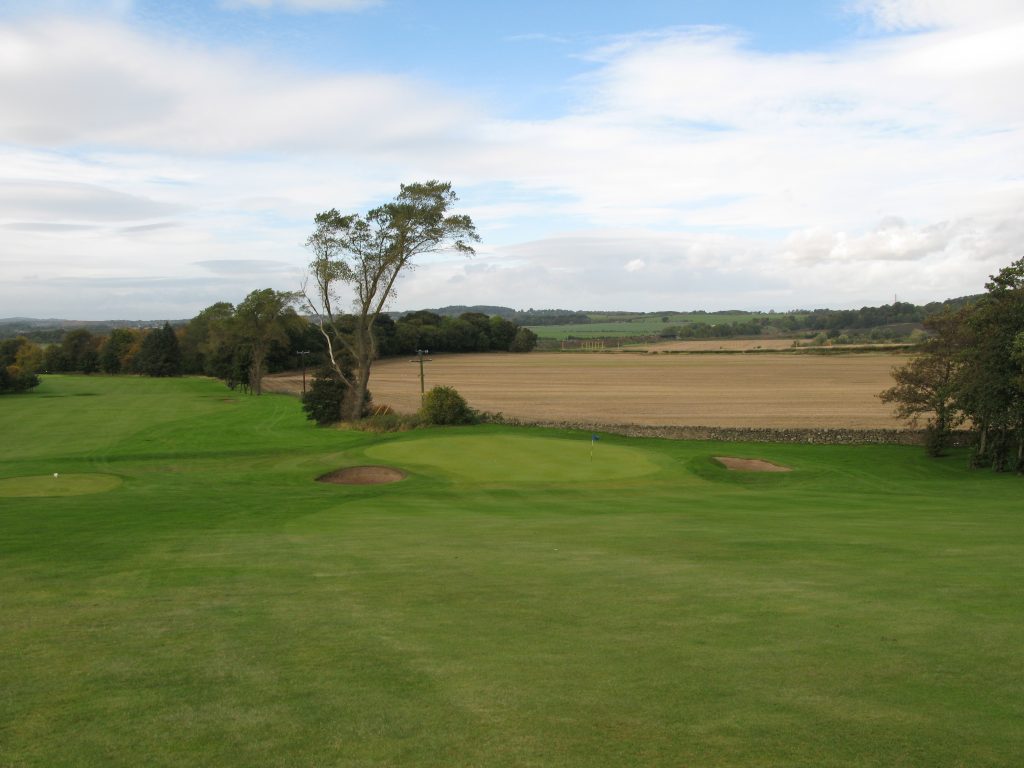
The nice par 4 6th hole at Turnhouse – where I had one of my 3 birdies

Turnhouse has a classic parkland feel and there is a good mix of some generous and some tighter fairways.  I thoroughly recommend the excellent online course planner available on the club website, especially as there are several blind tee and second shots.  A good example is the long 4th hole which has a nasty blind bunker on the right hand side of the fairway at about 430 yards awaiting a well struck second shot – bear in mind out of bounds is tight along the left of this hole.

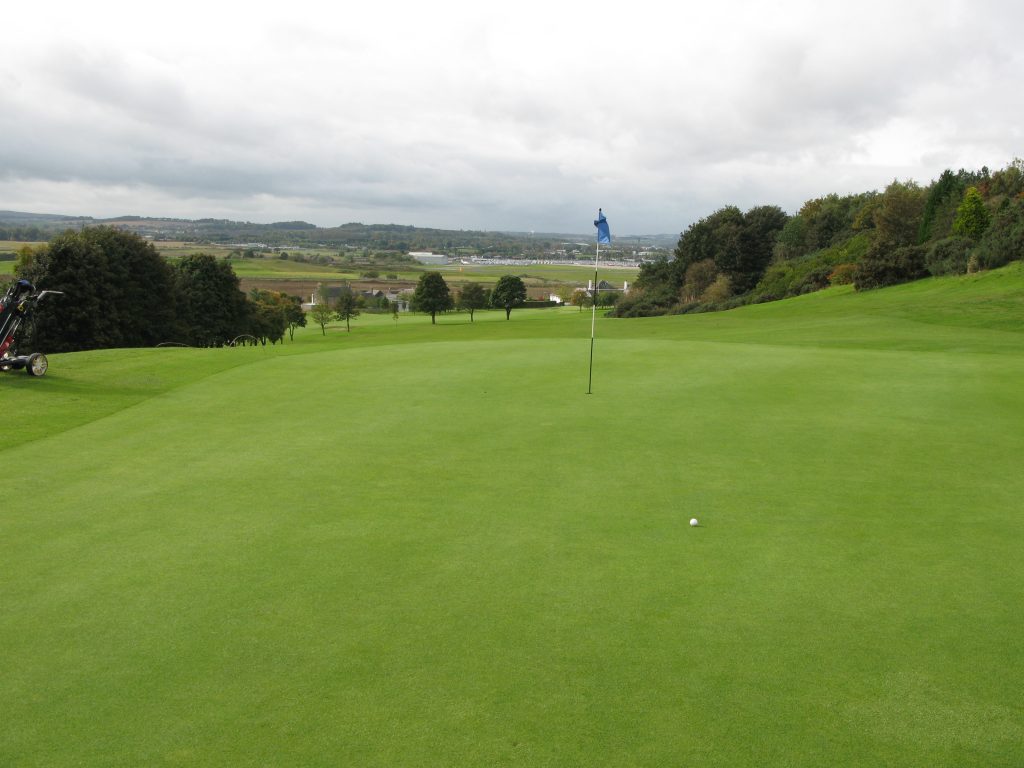
The fast Stroke Index 1 10th green at Turnhouse, a tough start to the back 9.

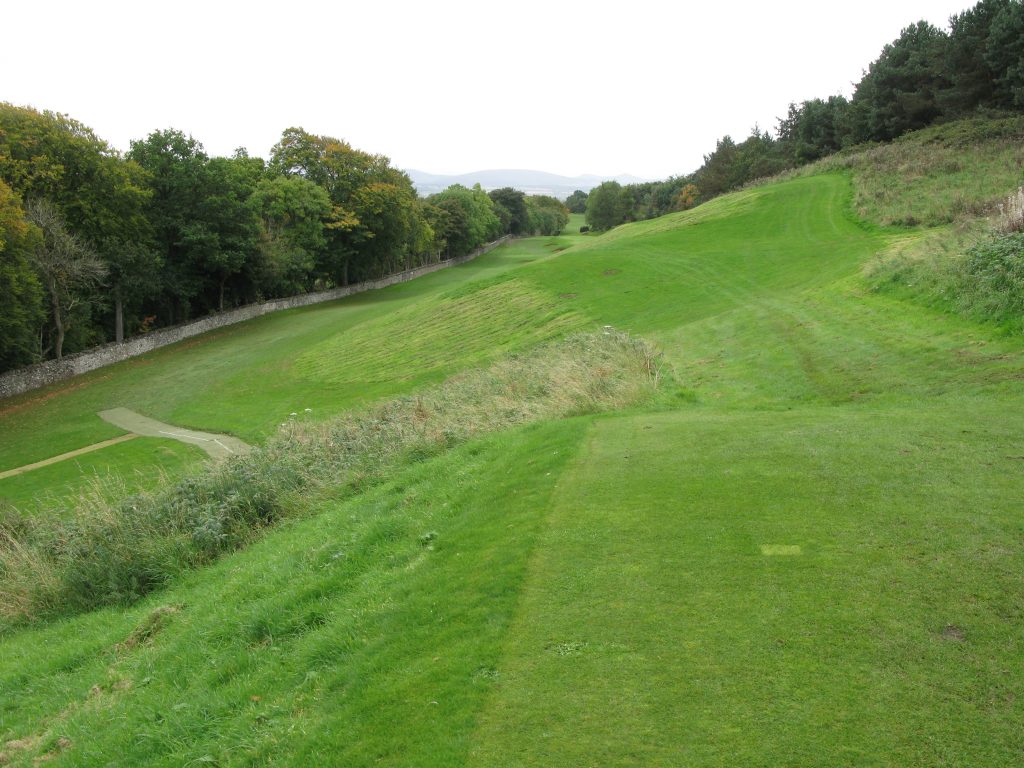
The planner might also help gauge driving distance on some of the tighter holes, with the formidable 13th tee shot being actually easier that it looks, with only a hybrid or fairway wood being needed at the tee, with a larger landing area being available than at first sight.

The greens were surprisingly well drained and quiet fast – I putted off  the 9th green where the pin had been placed on the right – beware!     Overall the course was in good condition, with only the tees perhaps in need of some effort.

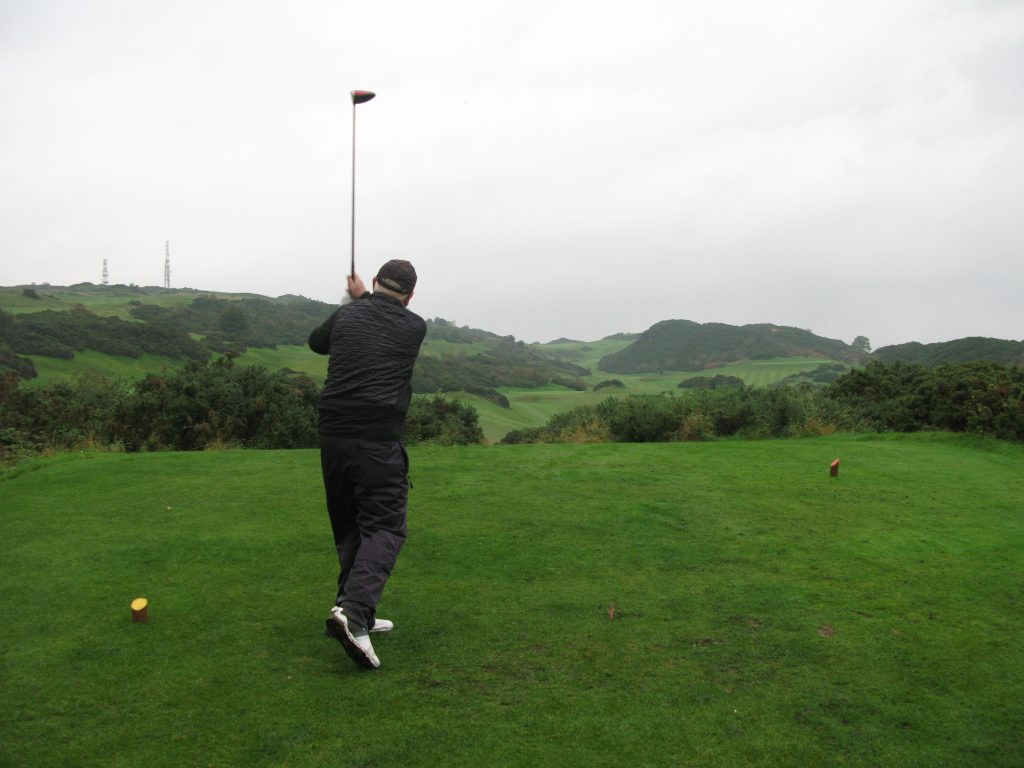
The frightening looking 13th tee shot at Turnhouse – take a hybrid to guarantee playing from the fairway.

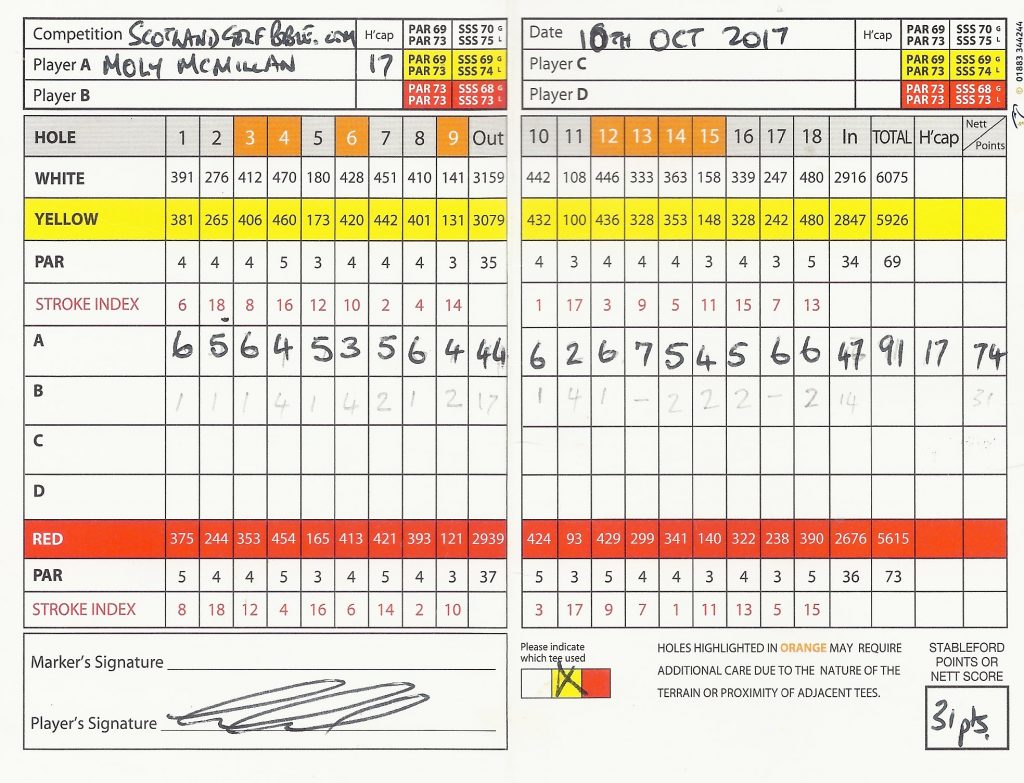
I had a most mercurial round.  I only hit 3 greens in regulation and birdied all 3 of them! (4th, 6th and 11th)  – my stableford had three 4 pointers but no 3 pointers!

There is an interesting quote on the club web site about the hazards in the development of parkland courses around the turn of the 20th century, and worth sharing:

In those early days, golf courses were shaped by natural terrain and while links courses had sand bunkers, inland courses relied on gorse, whin and dry stone walls for hazards. At Turnhouse there is a record of turf dykes about three feet high being built forty or fifty yards from the tee across some fairways and in January 1908 an instruction was issued to remove steps over the walls and have gaps made in their place.”

Turnhouse was a most pleasant surprise and one of the lessor known Edinburgh courses well worth a visit.

Facts:

Course Type: Parkland

Par 69 (2 par 5s, 11 par 4s, 5 par 3s)

Distance (yellow): 5926

Moly’s Gross score: 91.

Moly’s Turnhouse scorecard: 91 for 31 points

« Older posts Newer posts »

© 2025 Scotland Golf Bible

Theme by Anders NorenUp ↑