A guide to green fee value for money

Category: Course Owned By (Page 32 of 45)

54. Culcrieff. 20th Sep 2016.

Decent greens and fine scenery don’t warrant playing this overpriced course

Round £32.  Par 66.  Value (out of 5) 1

Culcrieff golf course is part of the well known Crieff Hydro hotel located in Perthshire. The parkland course, with fine views of the local Perthshire hills, was established in 1972 from a disused 9 holes, then extended to 18 in 2002, using a design by John Stark the local Crieff professional.
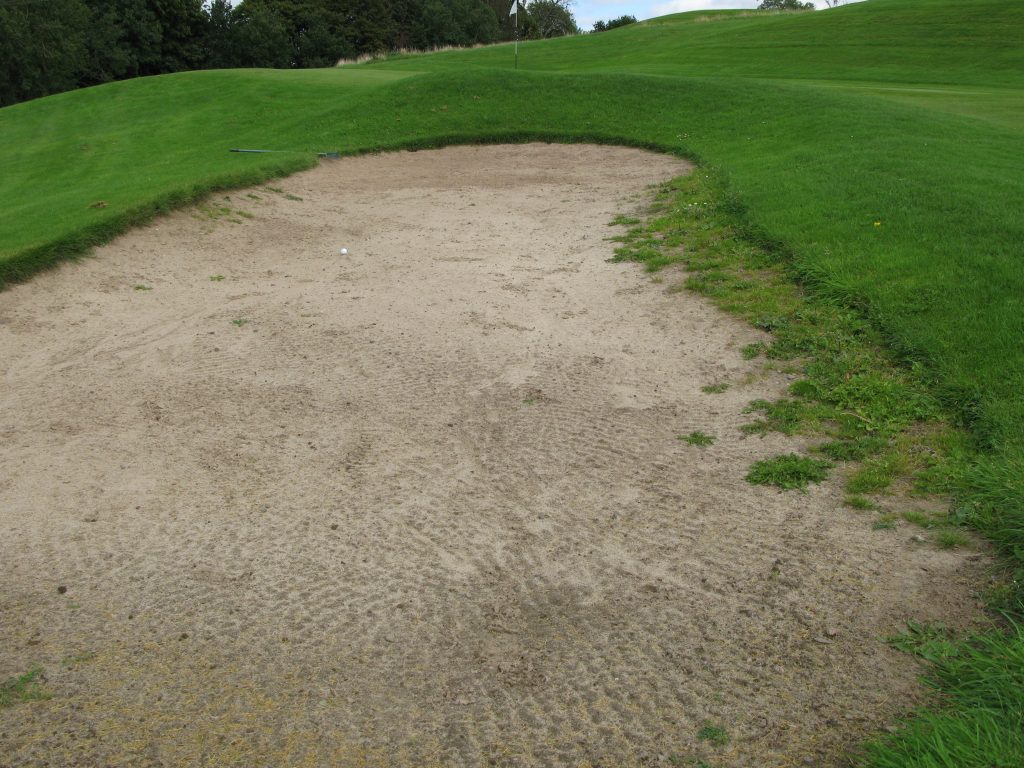
The greens at Culcrieff were the worst I'd ever experienced, as evidenced here at the 5th green.

The greens at Culcrieff were the worst I’d ever experienced, as evidenced here at the 5th green, NOT one designated as GUR.   Many others were much worse!

Being part of the Hydro, the course feels as if it’s managed as one of the very many holiday activities on offer, therefore there is no Golf Club oversight of the course.  This apparent lack of specific golfing focus, has resulted in a course that is under invested and not worth the money to play.  I rather suspect that holidaying golfers staying at the hydro are taken a bit for granted as a captive cash cow.  When you look at the price of £32, there are very many council courses in Scotland in much better condition, and no more than £20. The best discount offer I could find was through www.teeofftimes.co.uk at £26, even that is over priced, in my opinion.
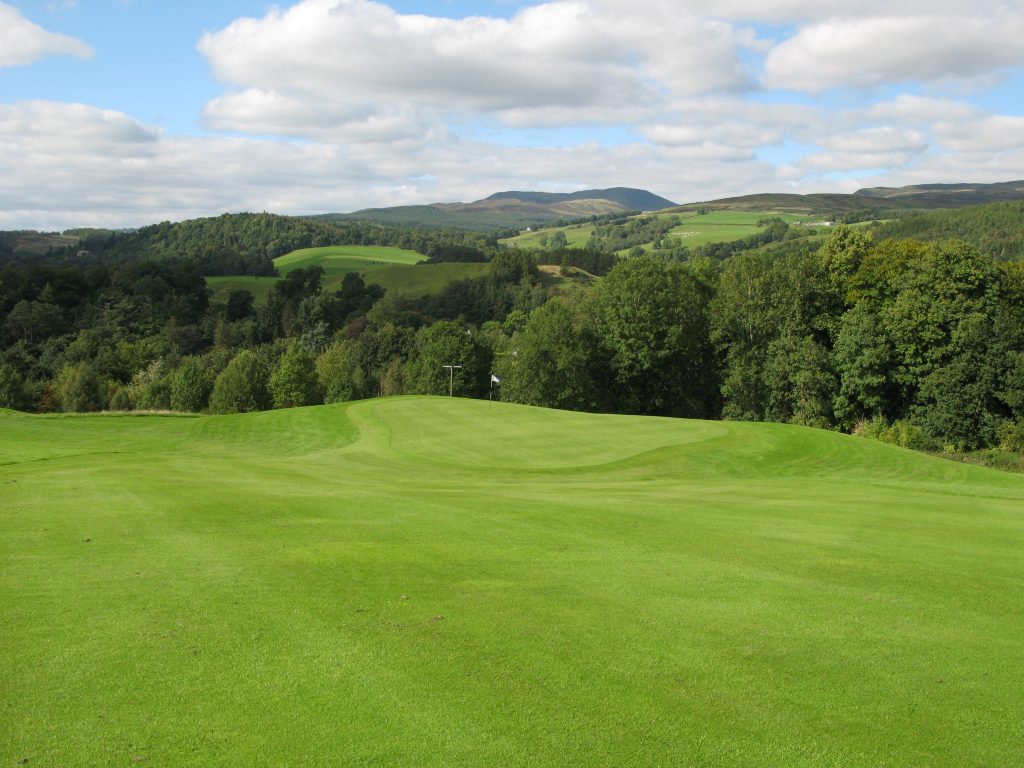
1st approach at Culcrieff with nice views

1st approach at Culcrieff with nice views

The greens were decent, granted, and apparently built to USGA specification, but the bunkers were the worse condition I’ve played, several were designated as GUR although they would have been better designated as Ground Under Neglect.  The fairways also needed a cut when I played.
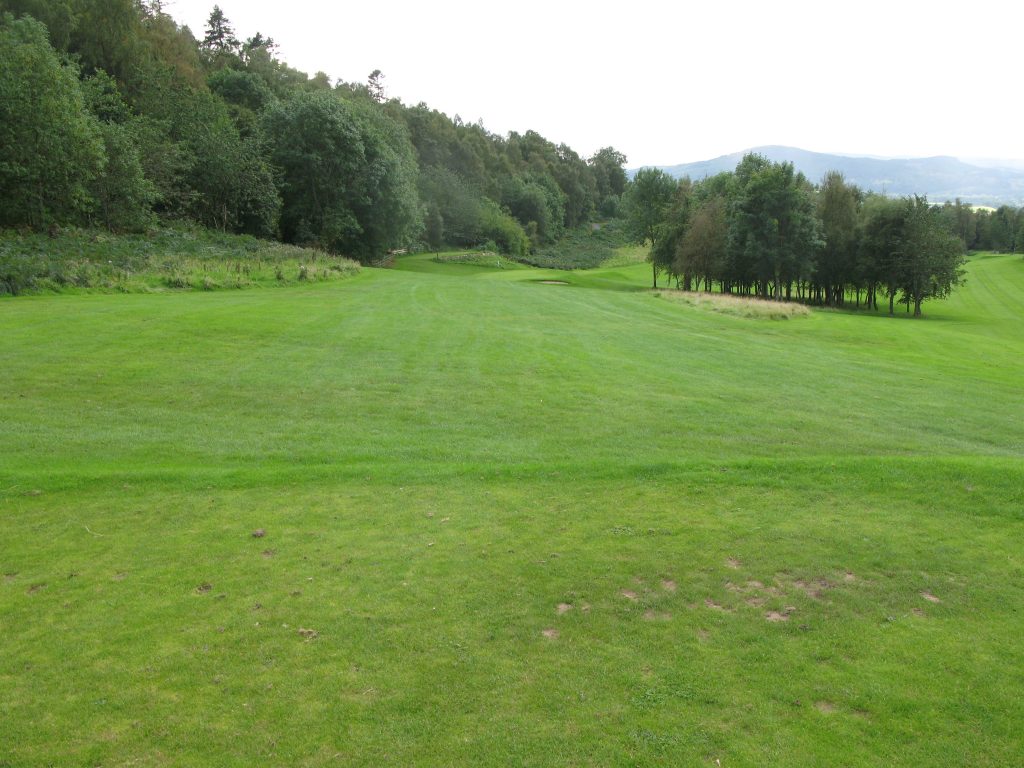
The 16th at Culcrieff had a tricky green to find.

The 16th at Culcrieff had a tricky green to find.

Setting aside the condition, the course has some nicely designed holes that are challenging, not least because of the small greens.  The dog leg left 2nd hole, although short at 295 yards needs a very accurate 2nd shot into a well protected green.  The long dog leg right par 4 5th will test the longest hitters.  The second to the par 4 12th will also require a longer shot that expected to hit the plateau green, and the downhill par 3 16th, aptly called “Deil’s delight,” is devilishly tricky to find the small green.
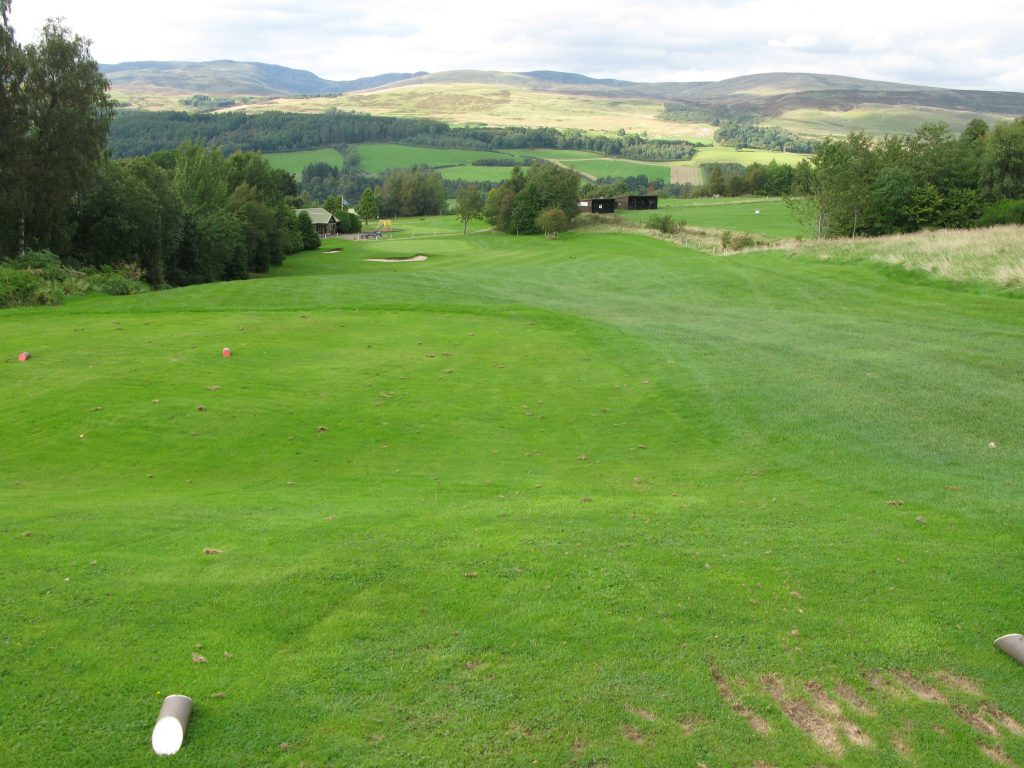
Nice finishing hole at Culcrieff, a 200+ yard par 3.

Nice finishing hole at Culcrieff, a 200+ yard par 3.

I played fairly decent scoring 32 stableford points with a gross 87. However, I shall not return to try again, and I would certainly not recommend playing here.  In its current condition, it should be priced at about £15 – £20.

Some Facts

Course Type: Parkland

Par 66 (12 par 4s, 6 par 3s)

Distance yards:  4892 (white)

Moly’s Gross Score: 97
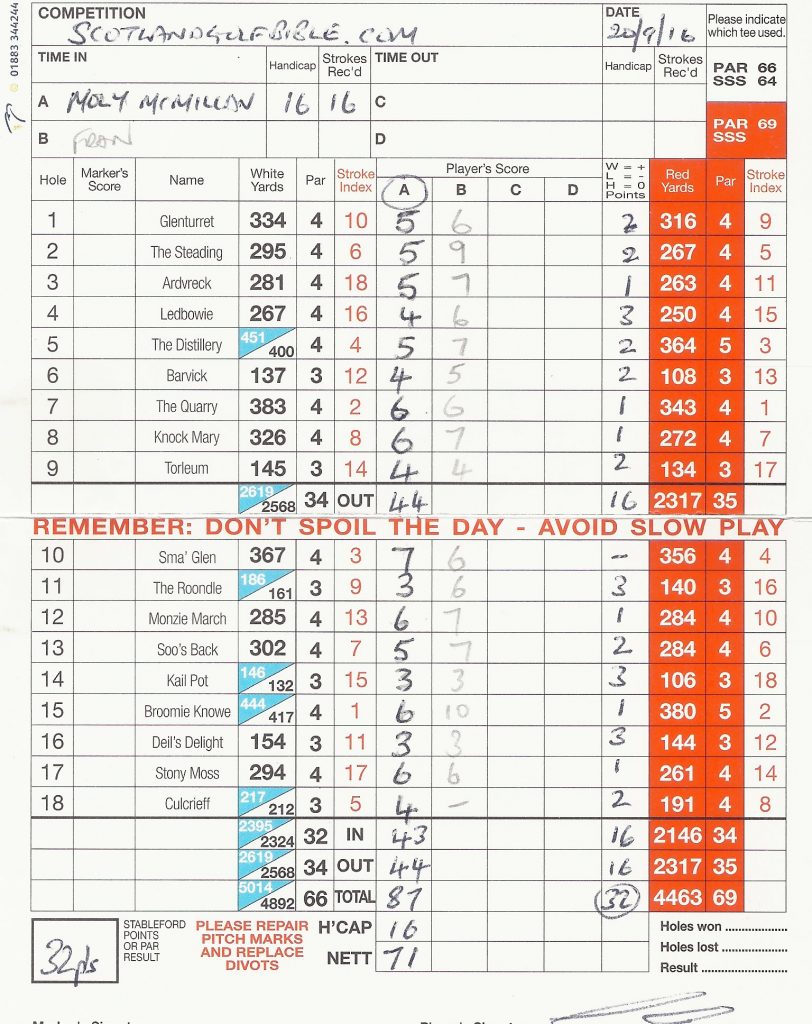
Moly's Culcrieff scorecard - 87 for 32 stableford points

Moly’s Culcrieff scorecard – 87 for 32 stableford points
 

53. Stirling. 19th Sep 2016.

“Camera’s Please” at this historically located parkland course with  outstanding views.

Round £45.  Par 72.  Value (out of 5) 4 

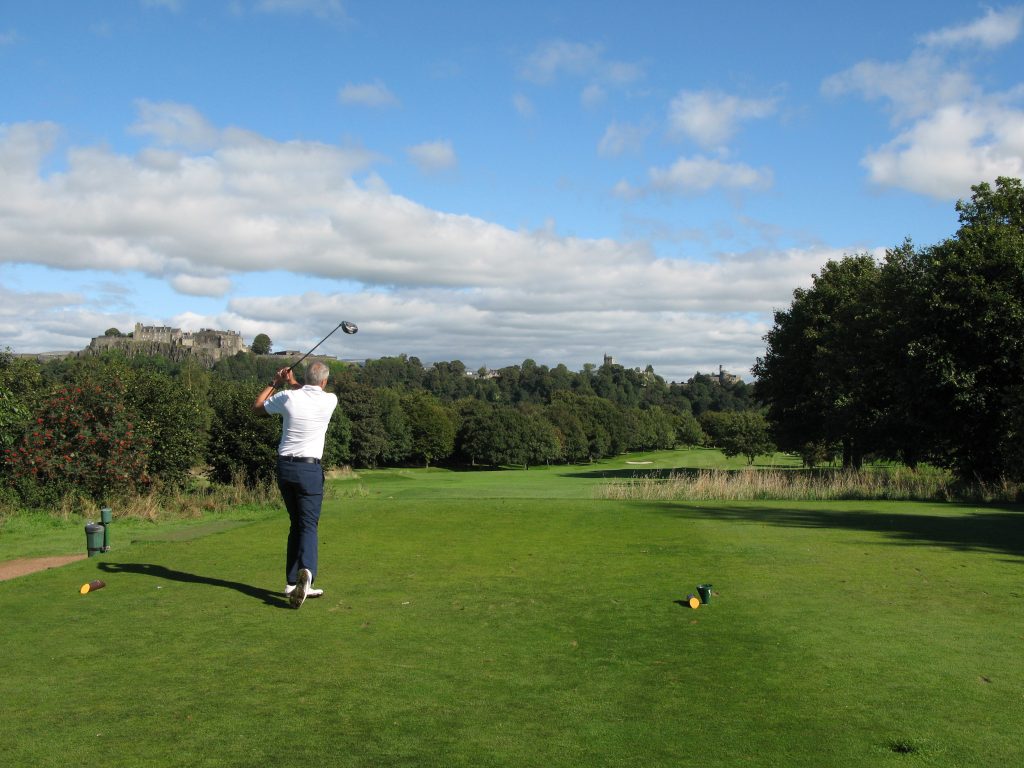
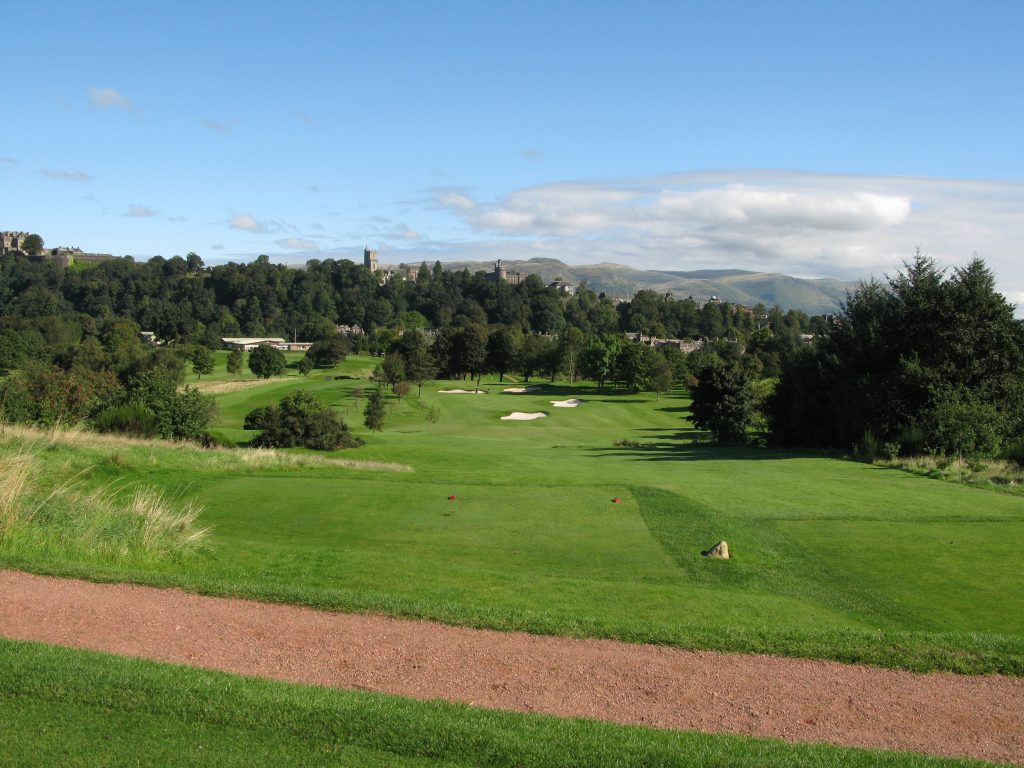
If you play at Stirling remember to take a camera.  There are spectacular views of Stirling, it’s castle and other historic buildings and of the Trossachs, Ochill and Lomond Hills, even the Southern Highlands (in clear weather!).

2nd tee at Stirling with views towards the historic town - the rounded turret of the gaol is evident.

2nd tee at Stirling with views towards the historic town – the rounded turret of the gaol is evident.

Given Stirling’s strategic and historic location, it’s not surprising that golf was played in the area currently occupied by Stirling golf course, by King James IV, King of Scots, in 1505.  There was no golf course as such, on what was historically a “Royal Park” dating back to 1200 and used for Hunting – perhaps worth reflecting on when you hunt for golf balls here:)

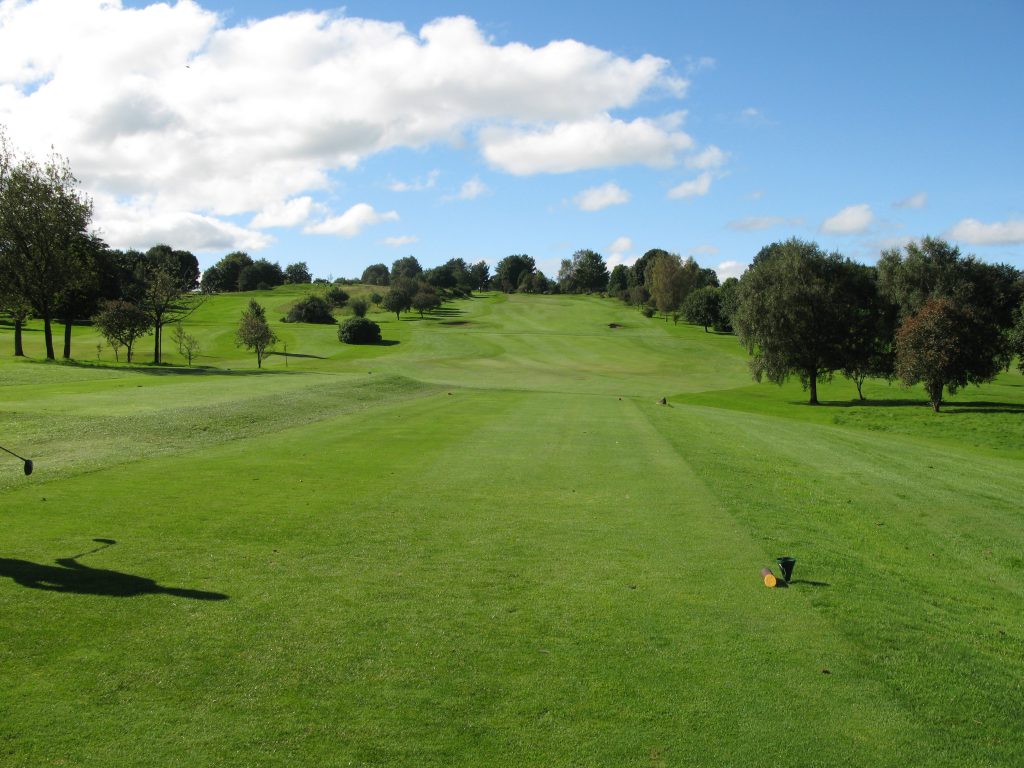
3rd at Stirling, a typical well defined hole

3rd at Stirling, a typical well defined hole on this course

The current course was established in 1869, and has been subsequently developed by some of golf’s aristocracy – in 1892 Tom Morris Junior designed a 9 hole layout; in 1904 Willie Fernie of Troon extended it to 18 holes; and in 1967 Sir Henry Cotton redesigned the course with significant tree re-planting which is now bearing full fruit.

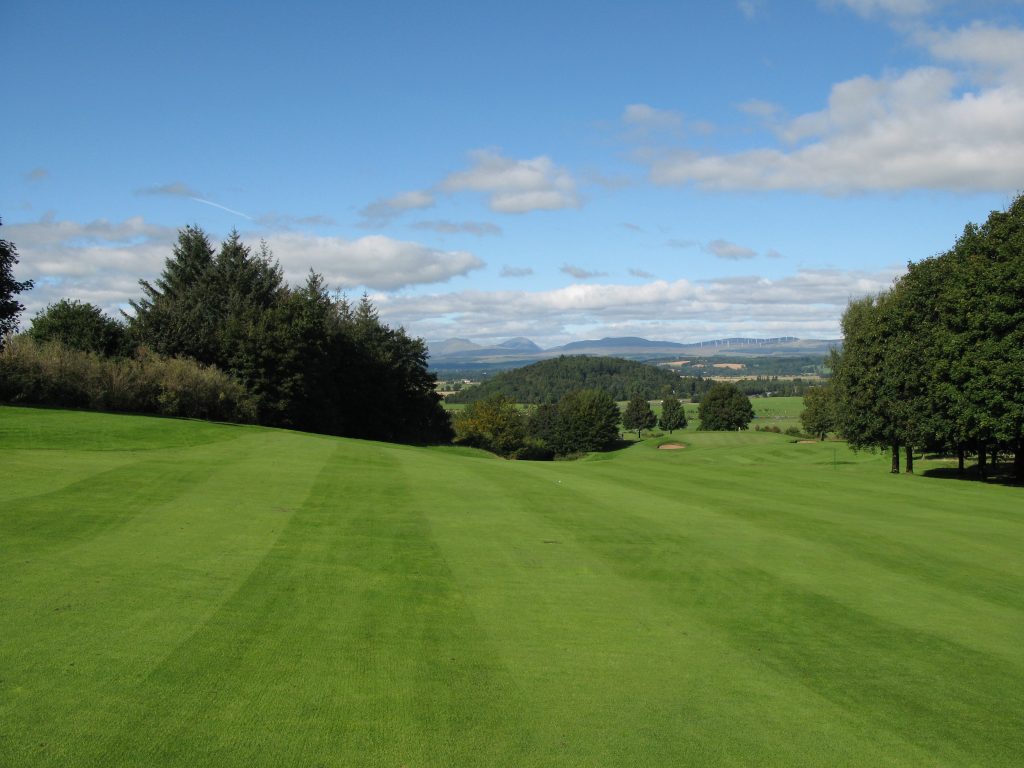
The Apex of the dog leg on the 9th, with fine hill views

The apex of the dog leg on the 9th, with fine hill views

The resulting golf course does justice to the views on offer and at well over 6000 yards, even from the yellow tees, will challenge your handicap to the full (see Moly’s card below for evidence!).  Stirling is a classic layout, with both front and back 9s, each having a par of 36 with 2 par 3s and par 5s.  There is also a really good level of architectural variety, in terms of uphill, downhill, dog-legs right and left.  The course sits on a hill and this is therefore no easy walk, but it’s worth it.

One of my playing partners, Gordon, plays at the 11th with Stirling Castle in the background

One of my playing partners, Gordon, plays at the 11th with Stirling Castle in the background

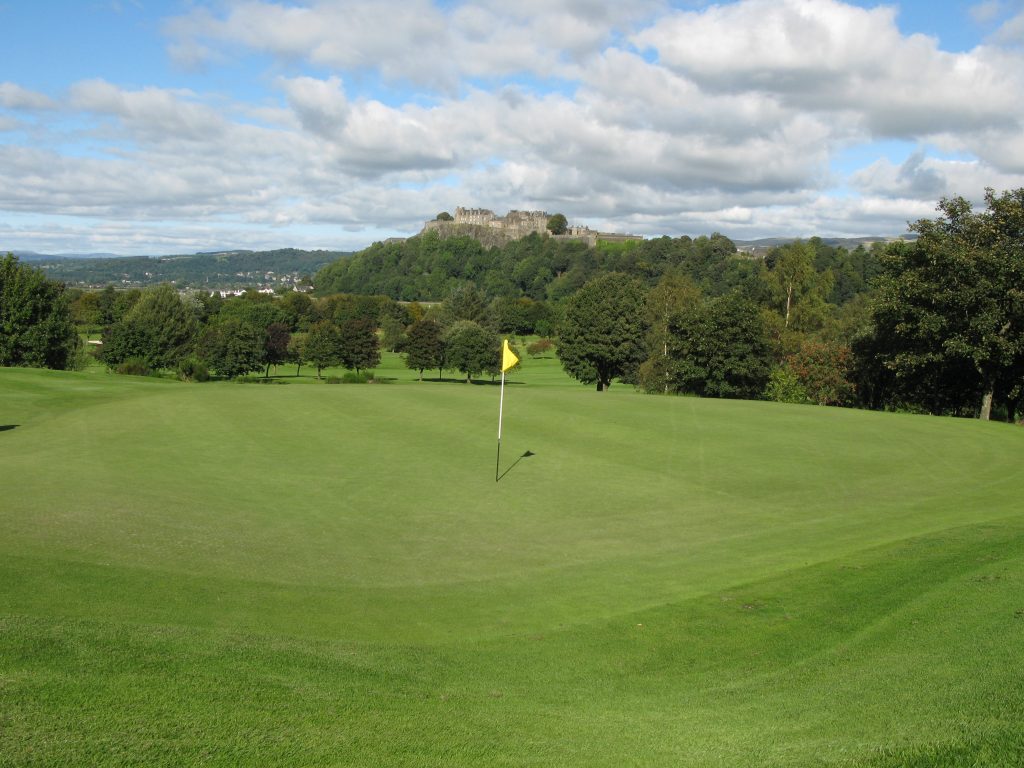
The highlight holes for me were the dog-legs:  the par 5 1st is a tough start, the 9th offers great hill views from the dog leg apex, and the par 4 15th, which is SI2, is the best hole on the course in my opinion requiring a 220+ yard uphill drive to give access to the plateau green.   The only omission in the design for me is the lack of a 200+ yard par 3, although the par 3 8th, at 180 yards uphill, required a recovery or long iron.

The 15th at Stirling with the Castle in the background

The 15th at Stirling with the Castle in the background

The course was also in great condition when I played along with some former colleagues of the charity Apex (Scotland), which does so much good work helping people rebuild their lives after offending.  Only downside was that the greens had been treated with sand, making putting very slow and different compared with my local links greens.

Stirling also has a nice club house, serving good food.  Its well worth playing Stirling.

Some Facts

Course Type: Parkland

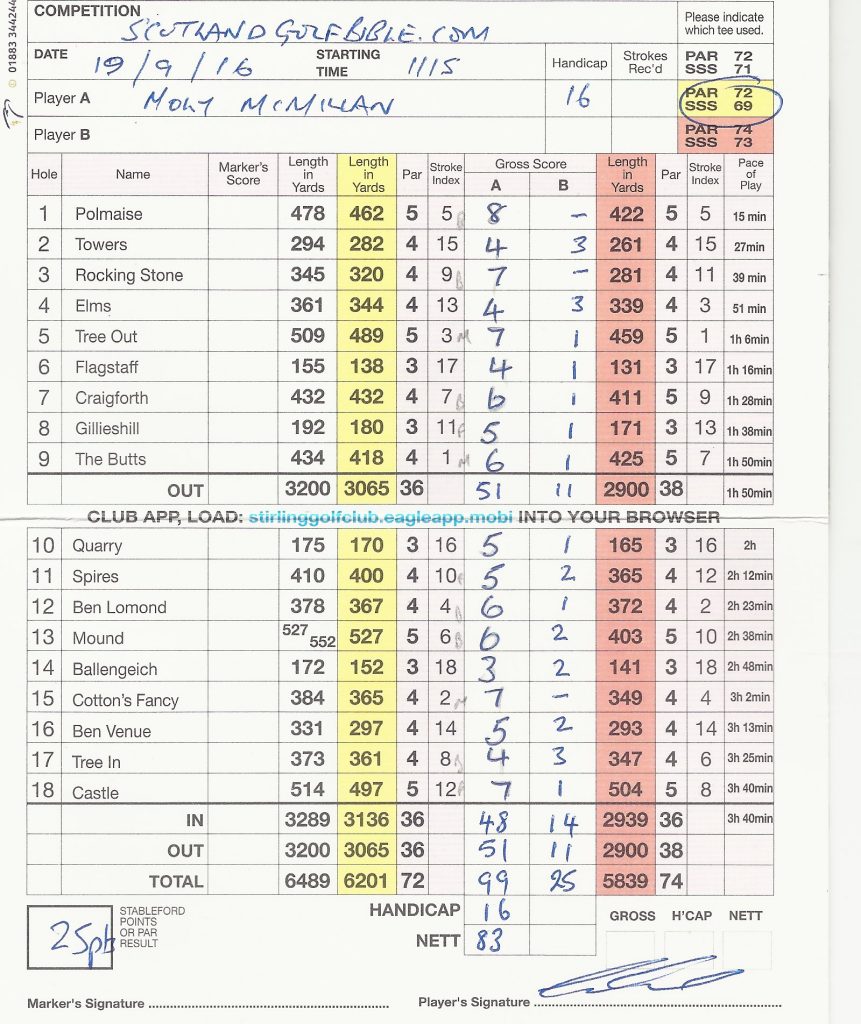
Par 72 (4 par 5s, 10 par 4s, 4 par 3s)

Distance yards:  6201 (yellow)

Moly’s Gross Score: 99

Moly's Stirling scorecard - 99

Moly’s Stirling scorecard – 99


52. Cullen. 13th Sep 2016.

Treat yourself at this unique Moray coastal gem

Round £21.  Par 63.  Value (out of 5) 4 

Cullen is only about 4500 yards long, with 10 par 3s, so it’s hardly the toughest golfing challenge you’ll ever face, but it’s difficult to articulate the absolute delight which awaits any first time visitor.   Ask any golfer that’s played here for their “top 10” courses, and they are almost guaranteed to have Cullen on the list.  It’s unique, quirky, unconventional and, most importantly, great fun.

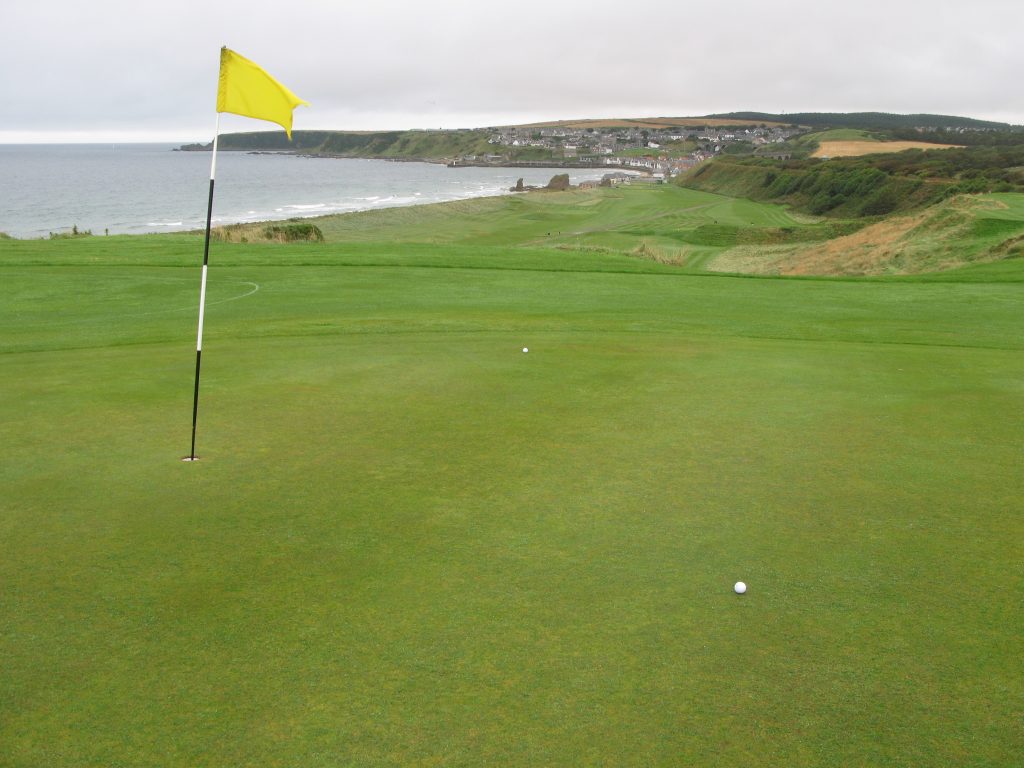
4th green, with views towards Cullen

4th green, with views towards Cullen

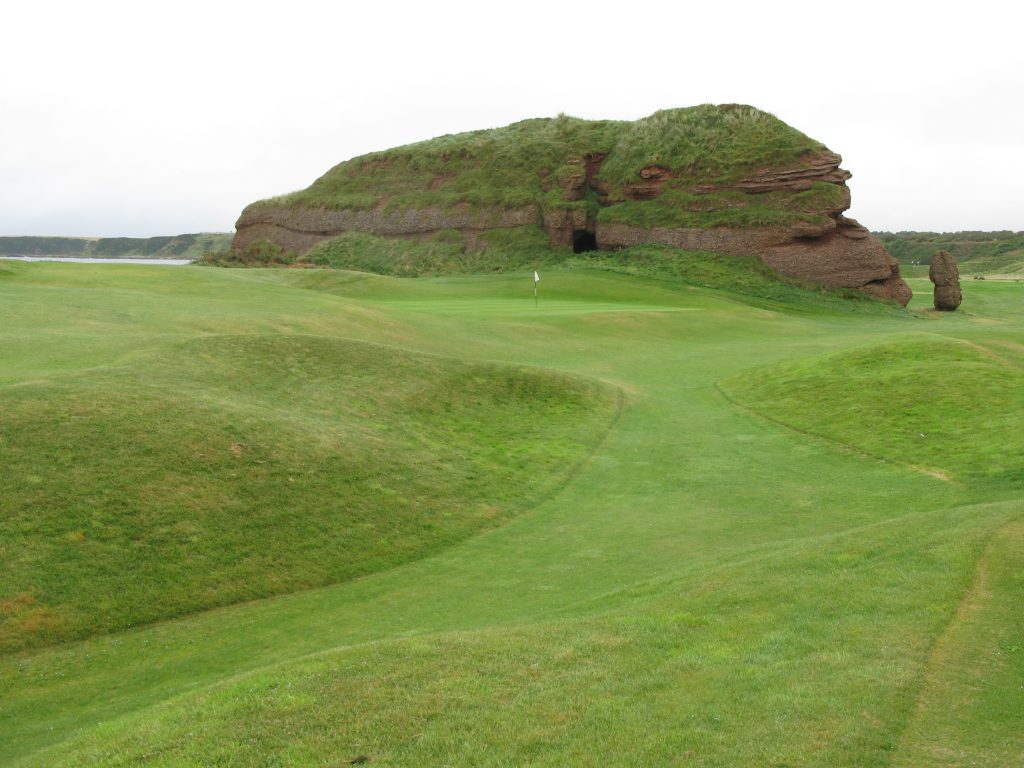
Cullen, which sits mid-way between Aberdeen and Inverness on the Moray coast, also has a great pedigree; 9 holes were designed by Old Tom Morris in 1870, then extended in 1905 to 18 holes by Charlie Neaves, the professional at nearby Lossiemouth.  Thirteen holes fit snugly into a cavernous bay with sandy beach, plus 5 holes play on higher cliff ground with magnificent views of the bay.   In addition to this, in itself, magnificent location, there is added the spectacular Boar Crag, a huge 80 foot high rock which dominates the bay, and forms a challenging hazard as part of a run of 4 par 3s from the 11th.  It truly is a remarkable location.

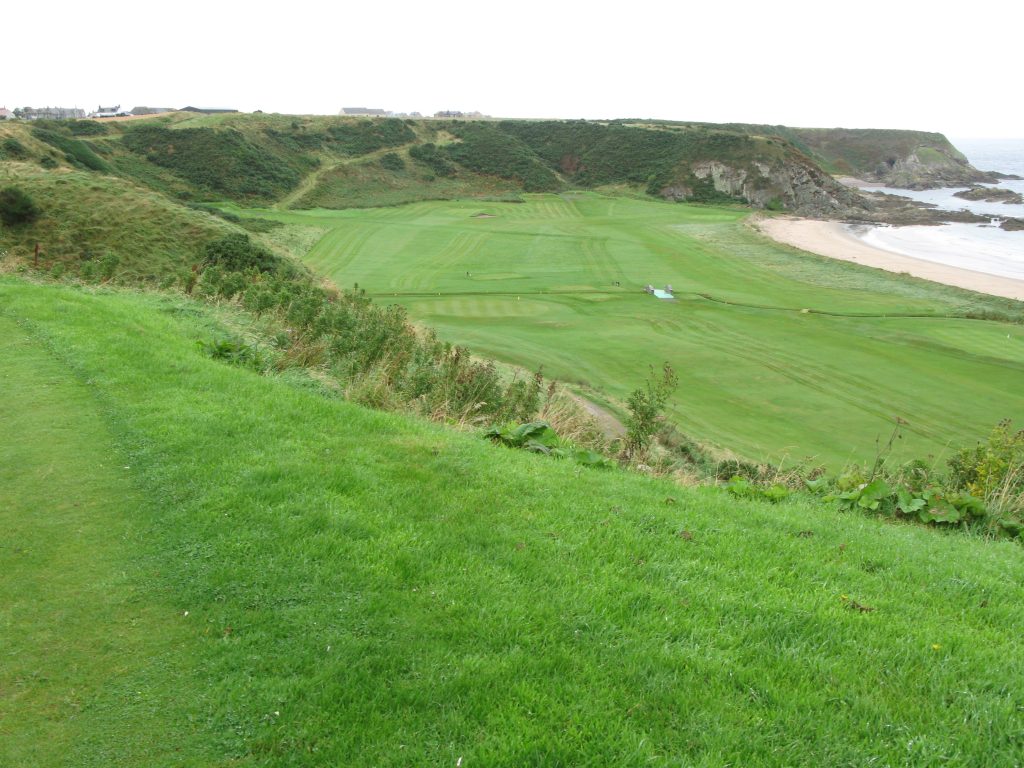
The signature 7th hole tee shot

The signature 7th hole tee shot

Without meaning to be too controversial, Cullen does in my opinion warrant adding to the debate about what constitutes a links course.  Although most of the course hugs the coast line, the cliff top land, with 5 greens, is undoubtedly arable.  In addition, the turf on the 13 beach side holes, is also much softer than, say, the turf on which the Angus links courses are played.  So although this is undoubtedly classified as a seaside links course, few of the shots “feel” like they are links shots.  This doesn’t diminish Cullen at all, but in a “what is a links course”  debate, it’s worth discussing Cullen.

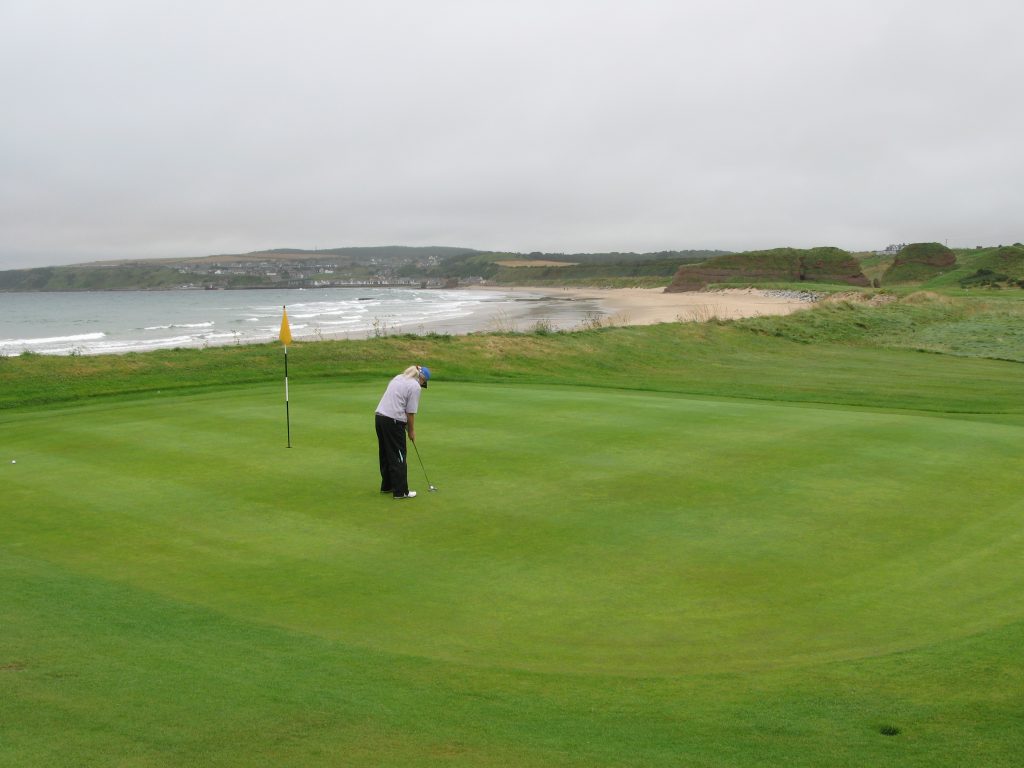
Fran, my playing partner, at the 9th green at Cullen

Fran, my playing partner, at the 9th green at Cullen

There are many highlights of the course.  Both the 2nd and 4th are blind shot par 3s, requiring good distance understanding.  Then soon after comes the fantastic long par 3 7th, at over 200 yards, with a drop of around 50 feet, which is one of those holes where your ball seems to stay airborne indefinitely;  it also has wonderful views of the course.

The 11th green at Cullen with the indomitable Boar Crag

The 11th green at Cullen with the indomitable Boar Crag

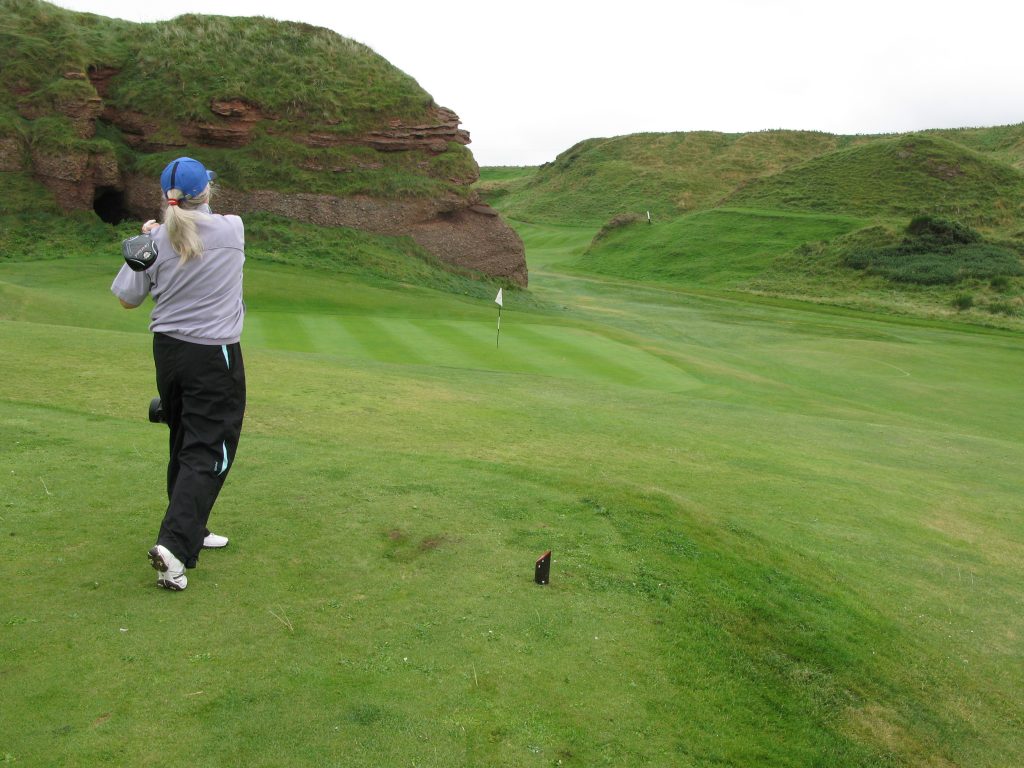
Later in your round awaits Boar Crag, and in particular the par 3 12th and 13th holes, where the rock formation dominates shots.  I suspect several played treat themselves to the odd “provisional” ball off these tees – especially on the 13th, where you need to hit directly over the marker post, and not be fooled into hitting to the 16th green by mistake.

The difficult 12th tee shot at Cullen

The difficult 12th tee shot at Cullen

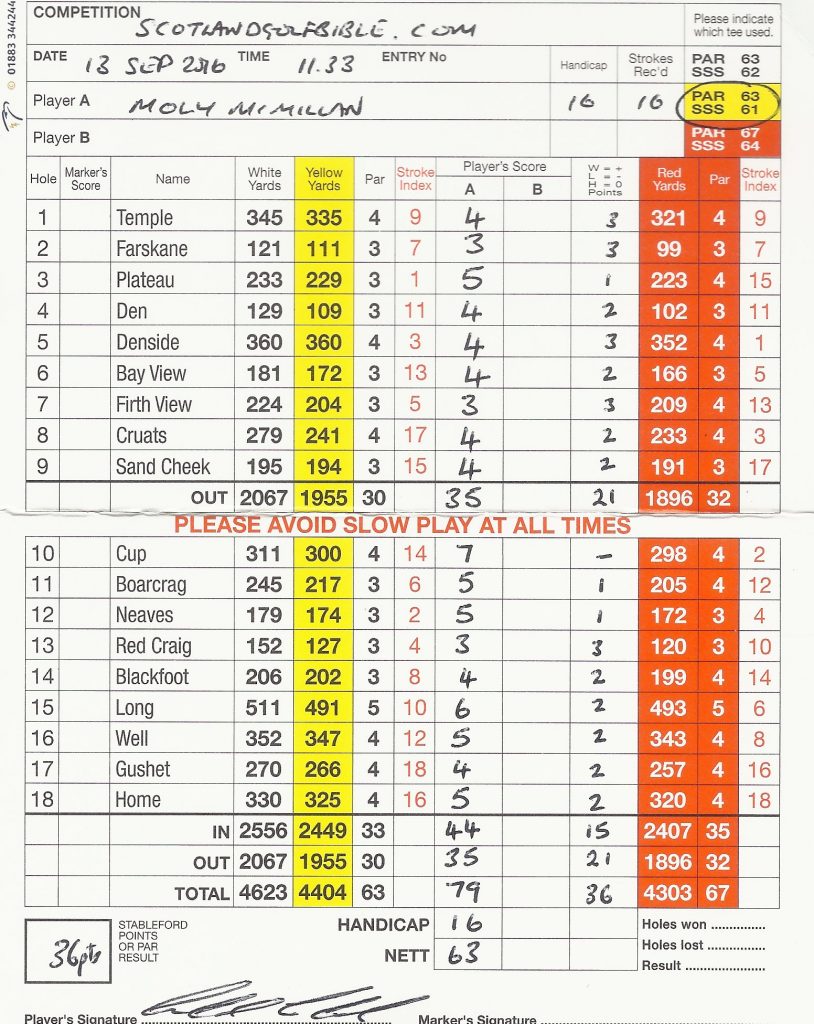
The course was in excellent condition when I played, with the greens being very well paced and true.  I played to my handicap and scored 79, although I irritatingly lost a ball on the 10th with one of those shots that you just don’t think is going to be lost.

Cullen also has a nice club house where you can dine on the other local delicacy, Cullen “Skink”, which is a hearty fish & potato chowder, before going out for another 18 holes – its one of those very few courses you want to be more than 18 holes!

Some Facts

Course Type: (mainly) Links

Par 63 (1 par 5, 7 par 4s, 10 par 3s)

Distance Yards   4404 (yellow) 

Moly’s Gross Score: 79

Moly's Cullen scorecard - a 79

Moly’s Cullen scorecard – a 79

51. Ballindalloch Castle. 11th Sep 2016.

Creatively ambitious Highland Estate course with single malt 19th hole

Round £15(9)/£25(18). Par 36(72).  Value (out of 5) 4. 

Ballindalloch Castle golf course is 14 miles north east of Grantown on Spey and sits alongside the River Avon not far from it’s confluence with the River Spey.  The Castle has been the home of the Macpherson-Grant family since it was finished in 1546; the golf course is a little younger, having been designed by 2 of the more prestigious designers around, Donald Steel and Tom MacKenzie, in 2002-3.  They obviously work well together, having also designed the well regarded Carnegie layout at Skibo Castle – maybe they just like castles?

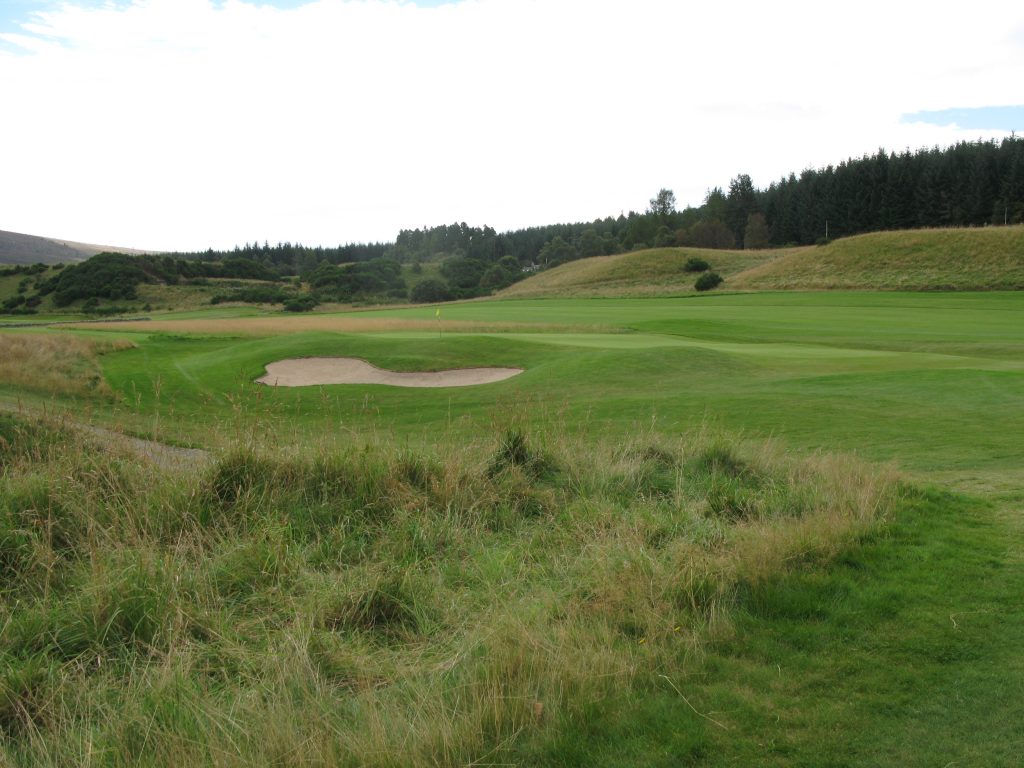
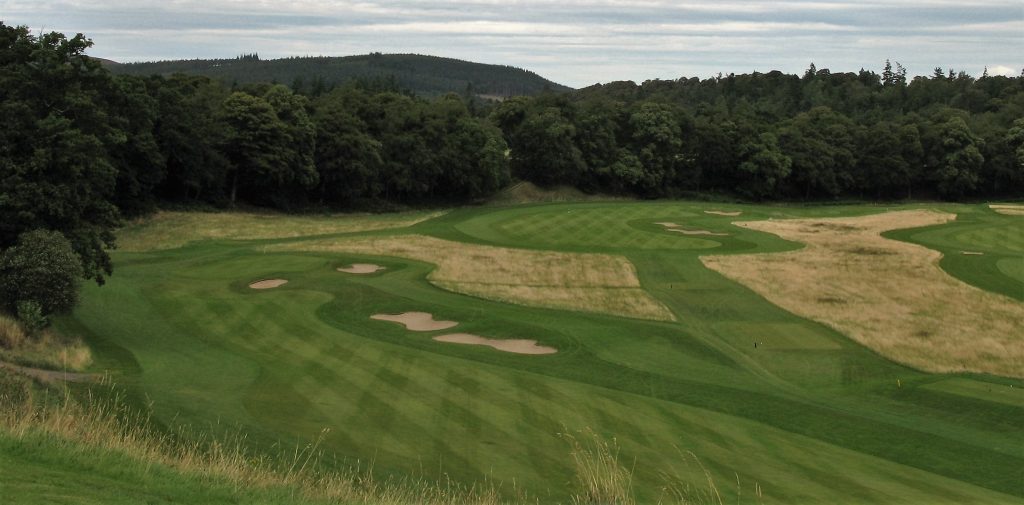
Approach to the 1st (Par 5) or 10th (Par 4) - a difficult green to reach in regulation.

Approach to the 1st (Par 5) or 10th (Par 4) – a difficult green to reach in regulation.

The resulting golf course, with views of  hills and birch woods, is a rather marvelous and pleasantly surprising layout at 6417 yards from the white tees.  Although a “9 hole” course, there are 18 tees, with many of the tee combinations significantly altering the front and back 9s – I would strongly recommend playing 18 holes to appreciate the architectural cleverness of this Steel and MacKenzie design.

The magnificent 4th / 13th at Ballindalloch Castle - here showing the 2nd shot view.

The magnificent 4th / 13th at Ballindalloch Castle – here showing the 2nd shot view.

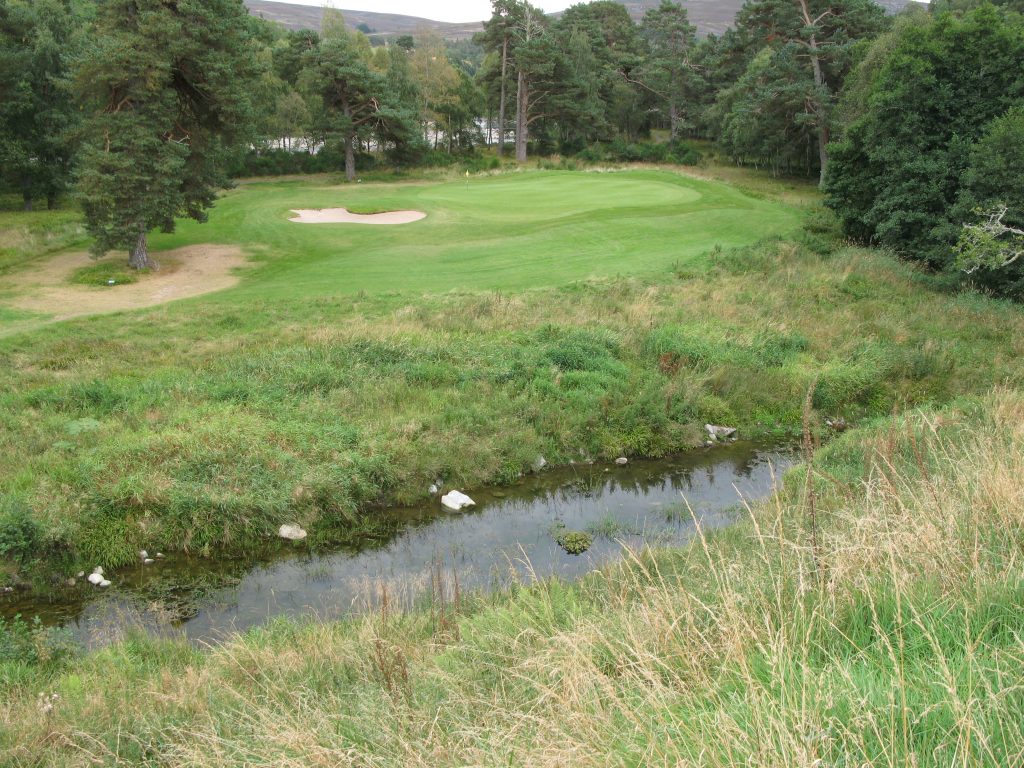
The effect of the different tees, is exemplified straight away with the 1st playing as a par 5 at 488 yards, but the 10th as a par 4 at 405 yards – however, the westerly prevailing wind make both holes very difficult.   The tees at the 5th/14th are 100 yards apart, with the 14th playing as a near 90 degree dog leg right.  Arguably most stark is the par 3 7th/16th, where I suspect most players need at least a rescue club on the 7th, but only a wedge on 16th; the holes are 70 yards different in length.

The 7th/16th green (here showing the 16th tee view)

The 7th/16th green (here showing the 16th tee view)

As I played around this very ambitious project for a highland estate, I was struck with how fitting the course adds to the colourful history of the castle, which is the original home of the Black Watch, the oldest of the Highland regiments, and also the place where Captain W.E. Johns wrote many of his Biggles stories.

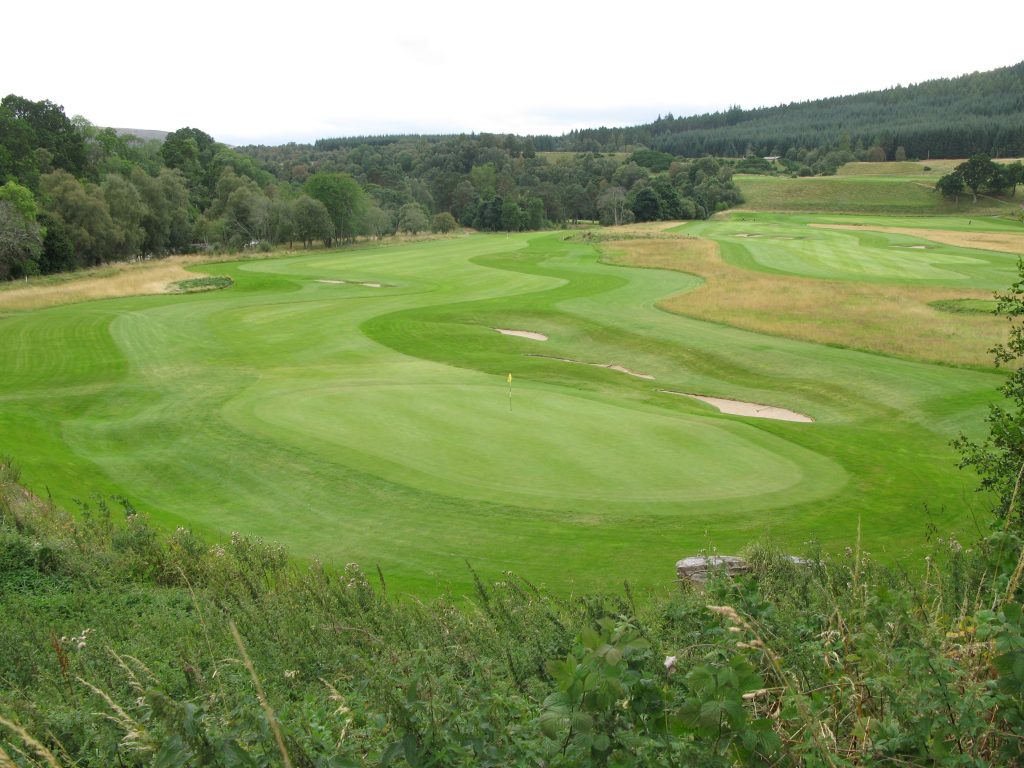
View from behind the 7th/16th green at Ballindalloch

View from behind the 8th/17th green at Ballindalloch

The course was in excellent condition when I played, which I suspect might be helped by the relatively small number of members and players the course attracts.  I guess it’s because not many people want to travel too far “just for 9 holes”.  I think they are making a big mistake – this must be one of the best 9 hole courses in Scotland, and it is very competitively priced against its Strathspey and Baddenoch neighbours.

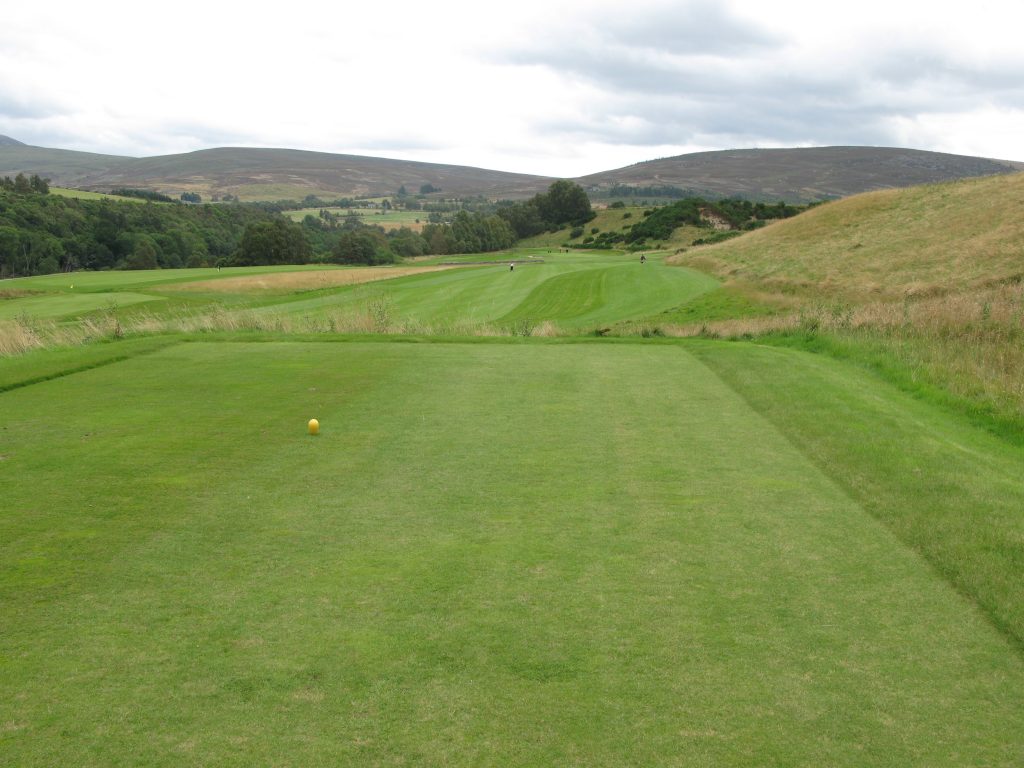
The 12th tee at Ballindalloch

The 12th tee at Ballindalloch

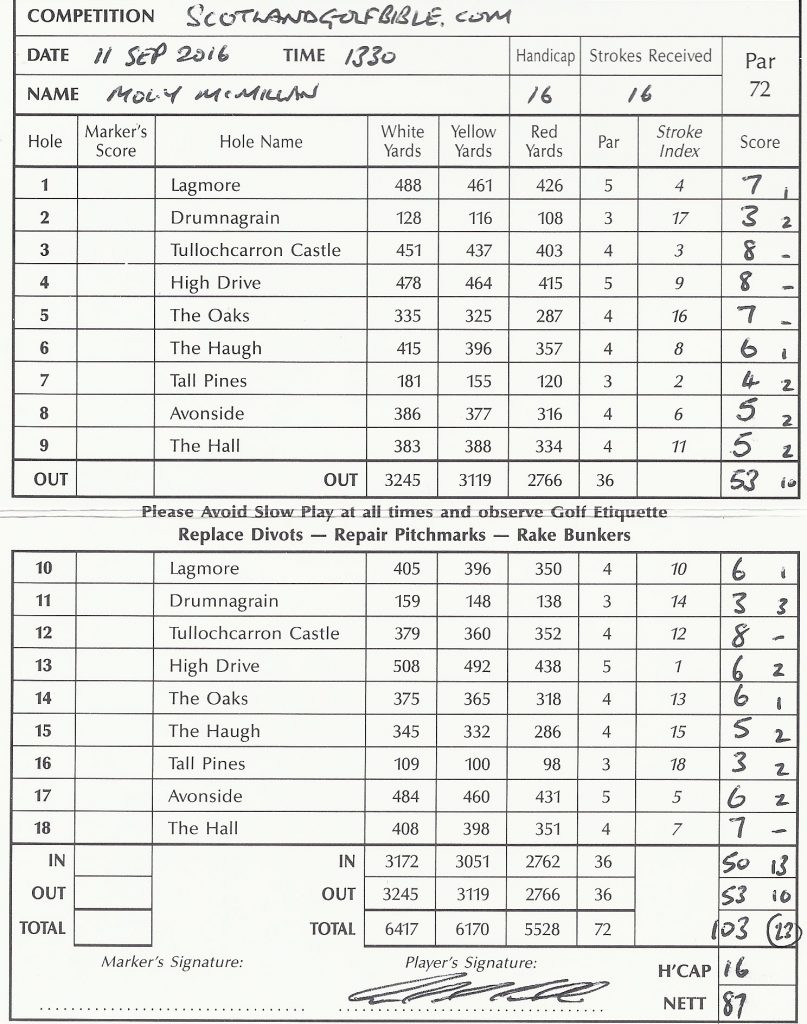
On the day, I played pretty poorly, scoring 103 for 23 points, although I was only 1 over for the 4 par 3s.

Finally, there is plenty to keep non golfing family members busy on the estate, which has also recently opened a whisky distillery right next door to the golf course, again reinforcing this highland estate’s ambition.

I highly recommend playing at Ballindalloch Castle.

Some Facts

Course Type: Highland

Par 72 (4 par 5s, 10 par 4s, 4 par 3s)

Distance Yards   6170 (yellow) 

Moly’s Gross Score: 103

Moly's Ballindalloch scorecard - 103, for 23 points!

Moly’s Ballindalloch scorecard – 103, for 23 points!

« Older posts Newer posts »

© 2025 Scotland Golf Bible

Theme by Anders NorenUp ↑