A guide to green fee value for money

Category: Since 2000 (Page 5 of 7)

87. Archerfield – Dirleton Links. 13 Sep 2018.

One of the two courses on the Archerfield Estate, Dirleton demands a place in the “Faux” Links discussion

Round £90…plus hotel residency!   Par 72.  Value (out of 5) – 3.5

Nestled between Muirfield and North Berwick, and adjacent to the magnificent Renaissance, the Dirleton Links and Fidra Links courses form the golfing challenges of the Archerfield Estate, a development created by the Edinburgh businessman Kevin Doyle over the last 15 years.   These additions strengthen the case that this East Lothian region is Scotland’s premier golfing destination.  Read my Fidra Links blog here and my Renaissance blog here.
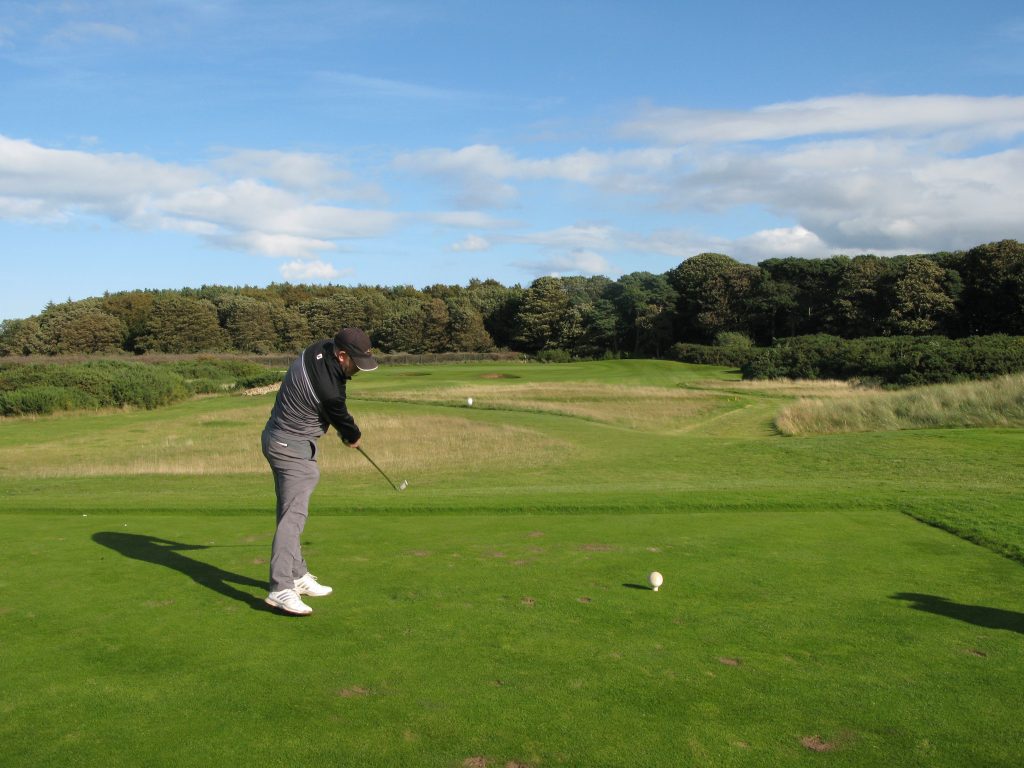
The magnificent par 5 5th at Archerfield’s Dirleton Links, with Fran on the tee,

The estate has a range of 5 star accommodation options, with the 17th Century, 16 bedroom, flagship Archerfield House being available to rent in part or in whole.    With great accommodation, a quite superb Scandinavian inspired spa (I thoroughly recommend the Golfers Recover massage), and first rate practice facilities on offer, this is a world class golf resort on Edinburgh’s doorstep.  Curiously, the clubhouse restaurant and bar is adorned with African art, giving it a colonial feel?
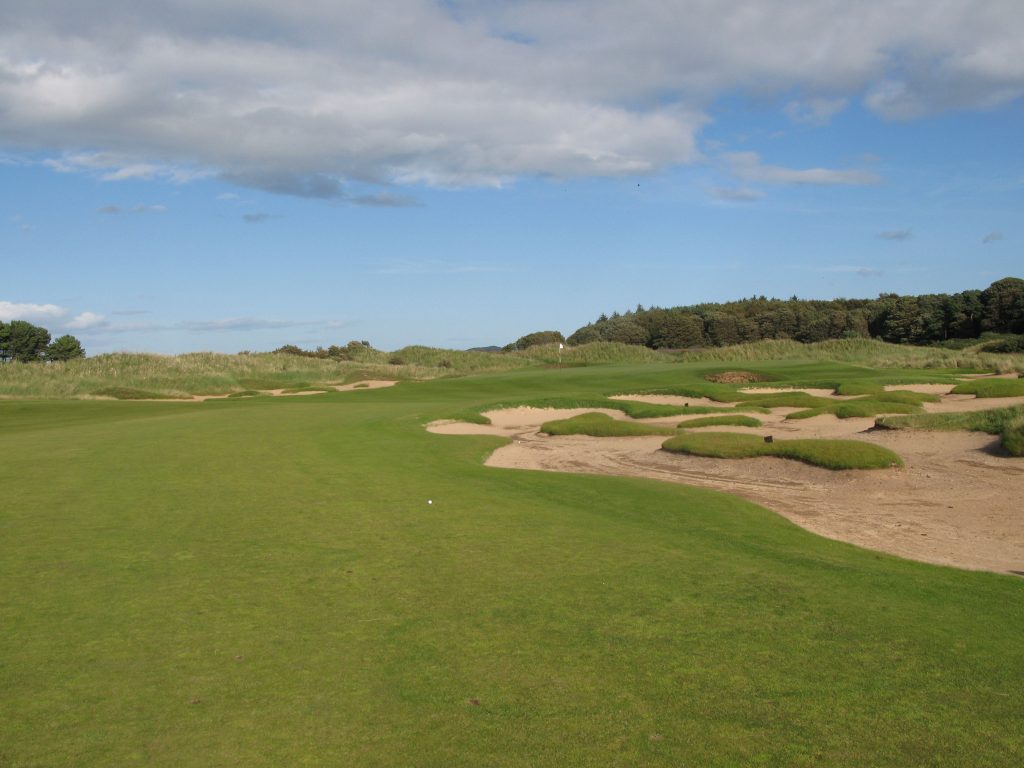
The par 4 2nd, a typical hole at Dirleton, with the gorse surrounding the fairways.

In considering Dirleton Links, there is an argument that this is a “Faux” Links, a term that has gained traction in recent years, mainly coined for inland courses, designed to replicate Links conditions.  A couple of definitions are worth referring to:

The Wikipedia Definition of a Links course includes  “..comes via the Scots, meaning “rising ground, ridge” and refers to an area of coastal sand dunes and …. is typically characterised by () an undulating surface, and a sandy soil unsuitable for arable farming but which readily supports various indigenous browntop bents and red fescue grasses, that result in the firm turf associated with links courses and the ‘running’ game…”

Whereas the meaning of “faux” is “made in imitation; artificial”.

So is Dirleton Links a true links course?  I think what has crept into the game is the thought that Gorse forms a key part of a links layout, and that is what the creator of Dirleton, David J Russell, has surrounded the course with.  However, there is no sand dues to be seen, and I’m convinced that you could plant a fair few “Tatties” on those fairways.  So for me, its not a real links, regardless of the course name.
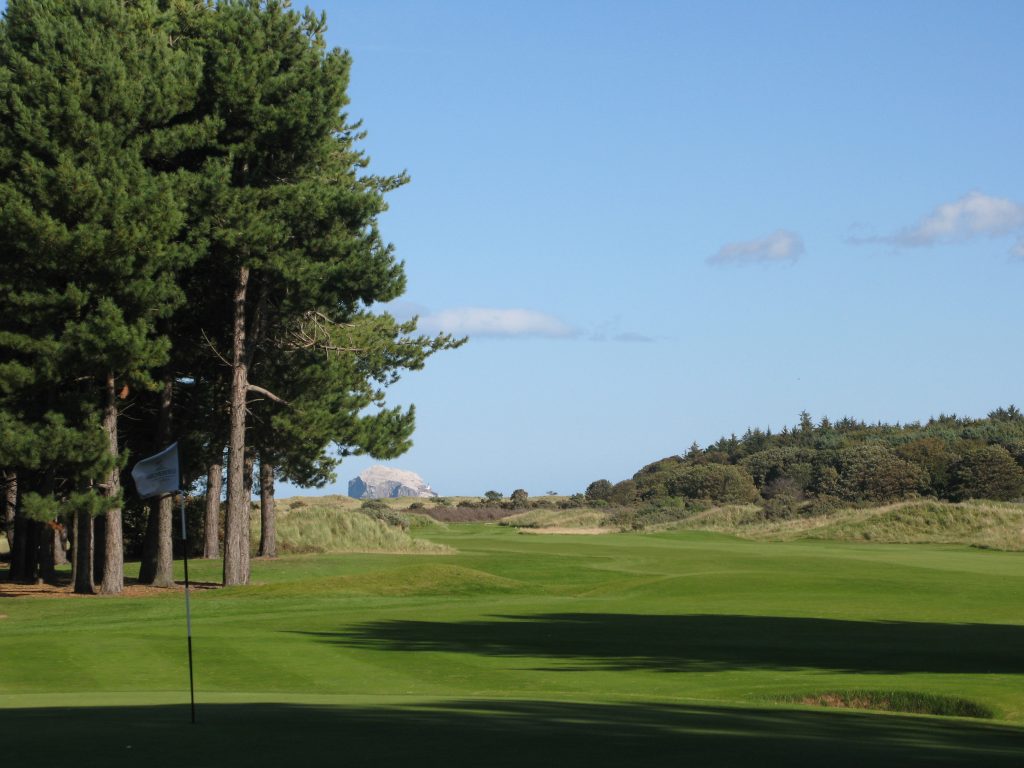
The view over the “Faux” Links from the beautiful 6th green at Dirleton

However, that’s not to say its a poor course, on the contrary it’s a terrific golf course, which in my opinion is better than its sister Fidra, which appears higher on most ratings lists of
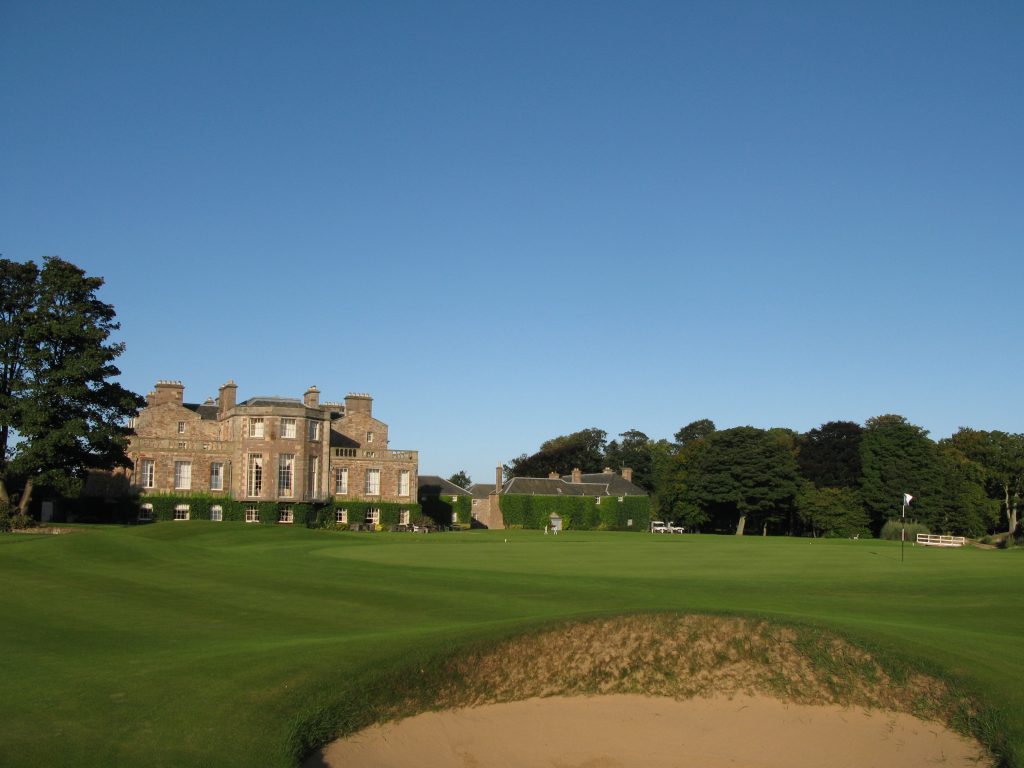
The Archerfield House behind the 7th green at Dirleton Links; which was rented out complete by 4 Americans, during our stay.

Scottish courses.

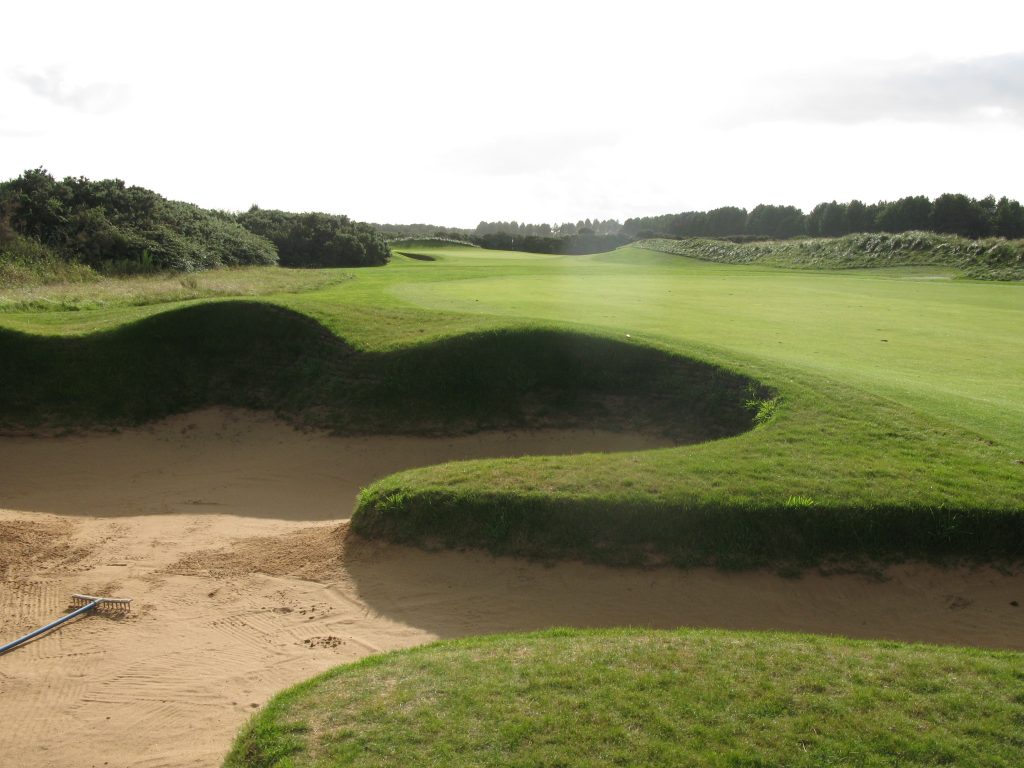
It’s a very traditional layout with both the outward and back 9s made up of 5 pars 4s, 2 pars 3s and 2 par 5s.  This is my favourite layout, and in addition there is a great mix of long and short par 4s.  The course meanders around itself, so wind direction was always changing from hole to hole.  It was one of those courses where the wind most often seemed to be against though!  It was a very windy day – gusts of up to 45mph, which played havoc with both Fran and my scores.   The fairway bunkers are really well positioned and force strategic decisions off the tee.   Overall a course I would like to take my A game to.

It’s not cheap;  membership via a debenture costs about £30,000, then around £3,000 annual fees.  But, you do get your shoes cleaned and don’t need to worry about paying for range balls.  You can have a “golf experience day” (price unknown), or as I did pay a £90 green fee as an accommodation occupant; I suspect many golfers play both courses either side of a single night B&B stay, which costs about £500; not bad for a short of this quality.  The clubhouse food is pretty good too, and not overpriced.  One of the benefits of the fee was a superb course planner, which was included, illustrated by Kenneth Reed FRSA.
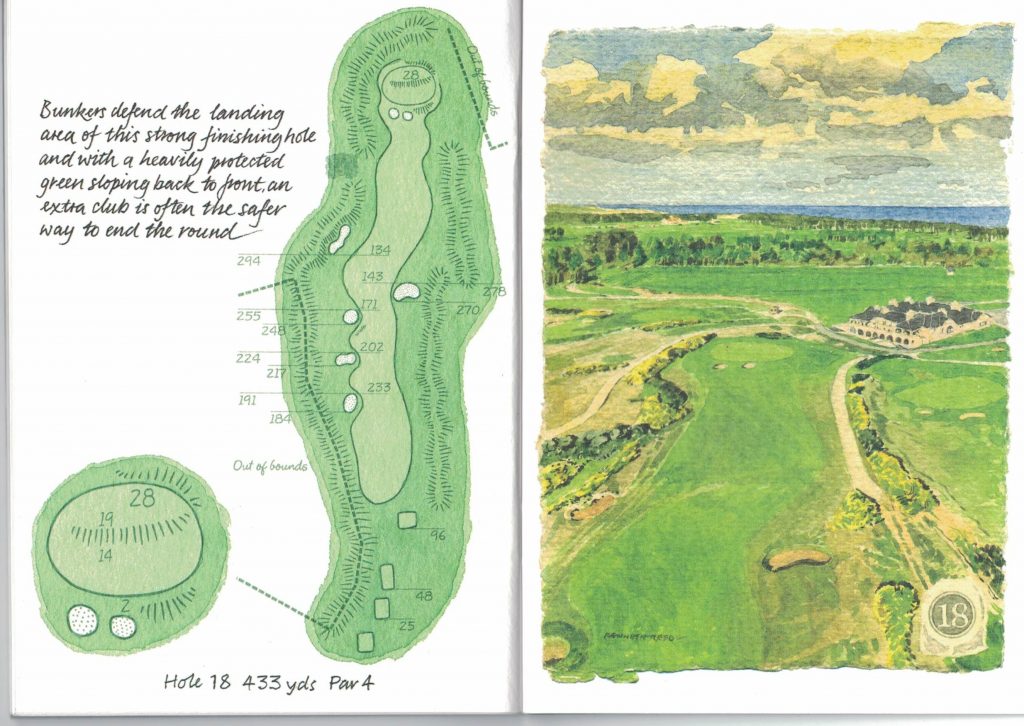
The wonderful course planner at Archerfield’s Dirleton Links, illustrated by Kenneth Reed FRSA.

If you can afford it, its worth staying and playing at Archerfield.

Plus, whether a “Faux” or real Links, its a great course.

Facts:

Course Type: Links

Par 72 (4 par 5s, 10 par 4s,  4 par 3s)

Distance (white): 6133 Yards

Moly’s Gross score: 103
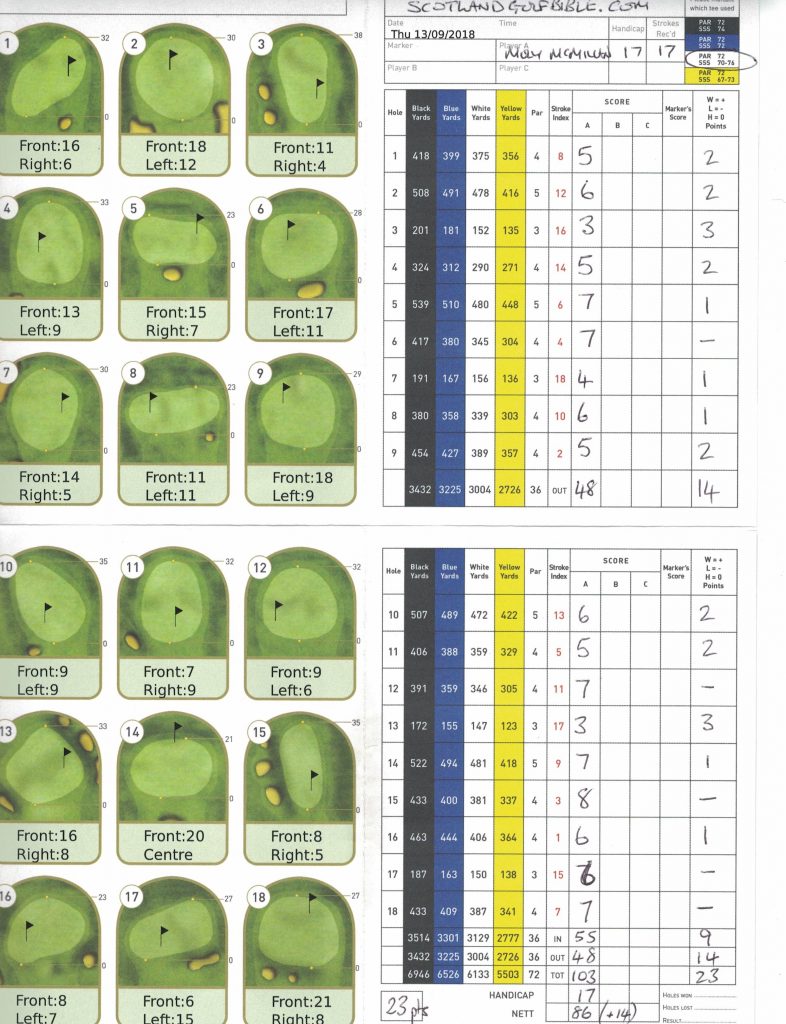
The very high winds – gusts of 40mph – explain the 103 for 23 points
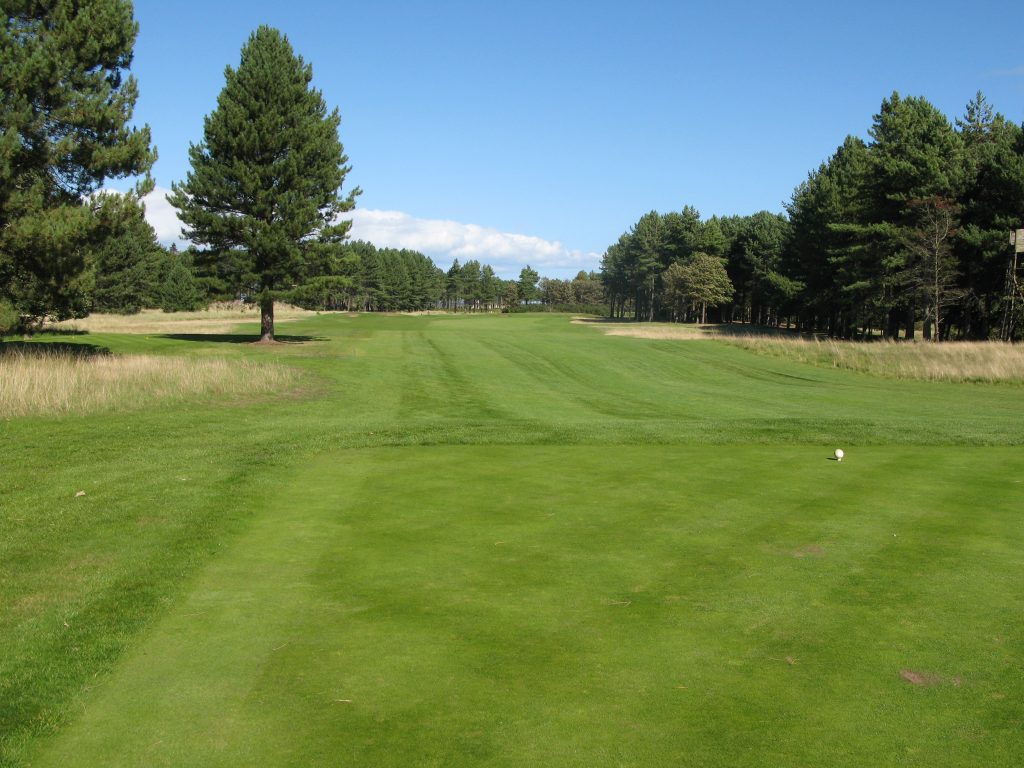
86. Archerfield – Fidra Links. 12 Sep 2018.

Superbly designed course that could be considered any of links, parkland or woodland!

Round £90…plus hotel residency!   Par 72.  Value (out of 5) – 3.5

I felt a little stupid when the answer came to my question “Why is it called Archerfield?”.  “It was where King Edward I’s bowmen practiced in 1298!”

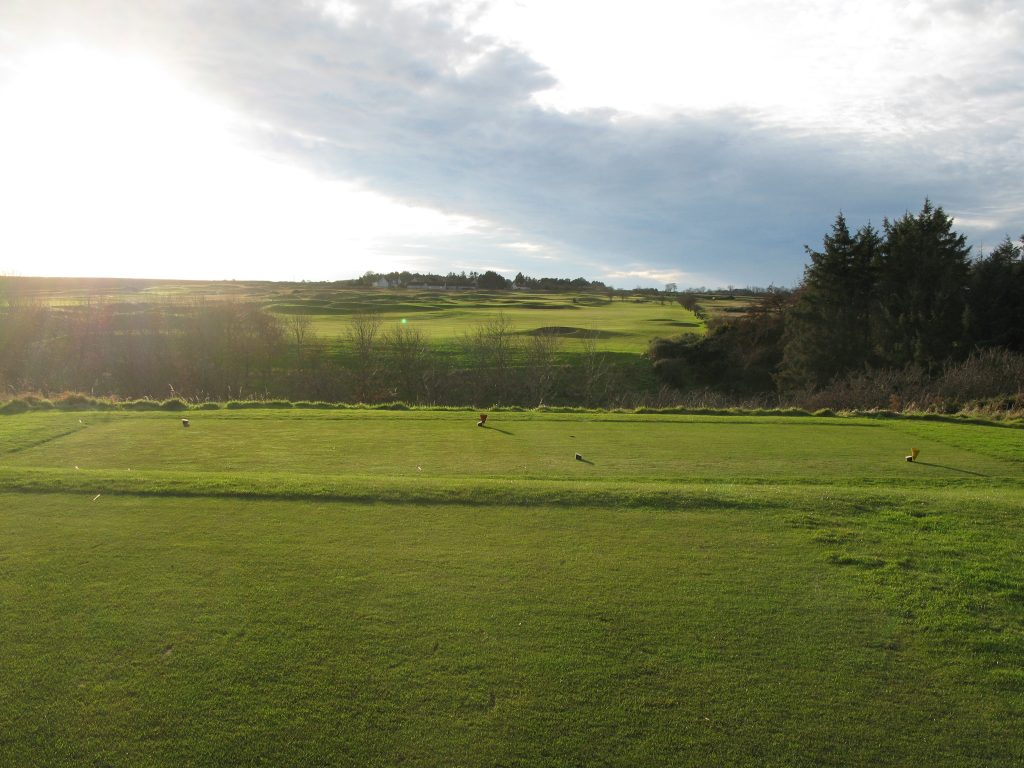
The 1st at Fidra Links, very typical of the first 11 holes.

Fidra Links is one of the two courses on the Archerfield Estate, a golf centred development created by the Edinburgh businessman Kevin Doyle over the last 15 years.  The estate has a range of 5 star accommodation options, with the 17th Century, 16 bedroom, flagship Archerfield House being available to rent in part or in whole.  When my wife and I stayed in a nearby “Pavilion Suite”, we were politely refused entry to Archerfield House by a Concierge, as we weren’t one of the 4 Americans that had rented it for the week.  Get the picture – know your place amongst the clientele of “Scottish” golf these days.

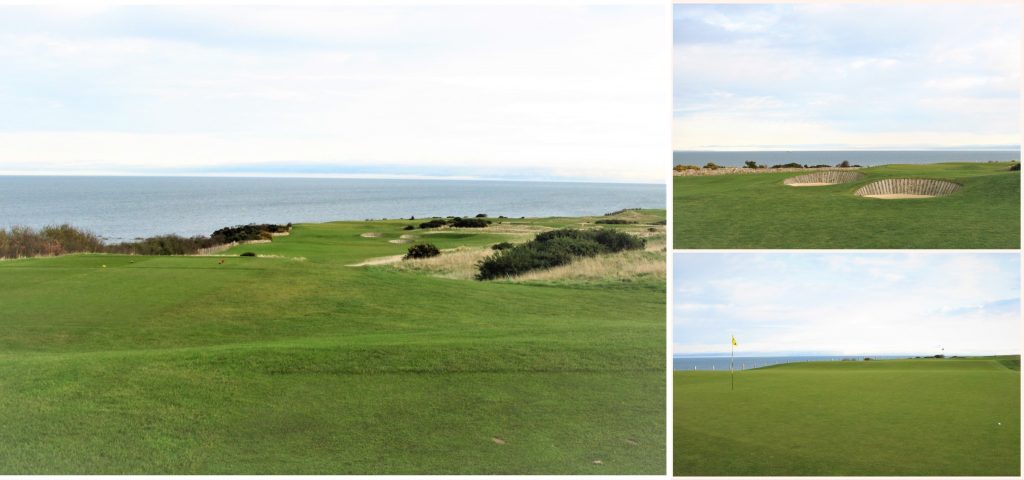
A view towards the Bass Rock from behind the 6th green at Fidra Links

Seriously though, with great accommodation, a quite superb Scandinavian inspired spa, and first rate practice facilities on offer, this is a world class golf resort on Edinburgh’s doorstep.  Curiously, the clubhouse restaurant and bar is adorned with African art, giving it a colonial feel?

Nestled between Muirfield and North Berwick, and adjacent to the magnificent Renaissance,  Fidra Links and Dirleton Links (the other Archerfield course) strengthen the case that this East Lothian region is Scotland’s premier golfing destination.

The approach to the 12th has plenty sand awaiting.

It’s not cheap though;  membership via a debenture costs about £30,000, then around £3,000 annual fees.  But, you do get your shoes cleaned and don’t need to worry about paying for range balls.  You can have a “golf experience day” (price unknown), or as I did pay a £90 green fee as an accommodation occupant; I suspect many golfers play both courses either side of a single night B&B stay, which costs about £500; not bad for a short break of this quality.  The clubhouse food is pretty good too, and not overpriced.

Moly plays straight at the par 3 12th at Fidra Links – straight into the front bunker that is!


Fidra “Links” is a beautifully laid out design by architect David J Russell, who has created a great mix of parkland, woodland and links!  It may well be the most tree lined course adjacent to the sea in Scotland; I really don’t know how you would classify it.  The first 11 holes are pine forest protected, with the last 7 holes being the “faux” links holes open to the elements.  The bunkering is often fierce, the greens are large and tricky, and with constant changes of direction, it’s difficult to get an easy couple of holes together, especially if the wind is up as it was for us.   The trees are fairly open at times with the pine undergrowth meaning balls are relatively easy to find, which is a big bonus with my wayward driving game.

The course condition was excellent, as one would expect, and if you were to find any lost balls they are unlikely to be scuffed Top-Fight’s.  Finding good golf balls, especially by having to crawl though thorny bushes, is one of the guilty pleasures in my life!  It was actually more difficult to find the next tee at Fidra, than lost balls, as apparently Mr Dolye doesn’t like signage?  That was my main criticism of the course, as well as the tee options.

There are some great golf holes here.  The SI 2, par 4, 7th hole, is a slight dog leg left, where only a tee shot on the right of the fairway, can avoid having to hit over 2 prominent trees about 50 yards short of the green.  The short par 4 12th has magnificent bunkering awaiting a pushed second. The 14th, into the prevailing wind was well worth the SI1 tag.

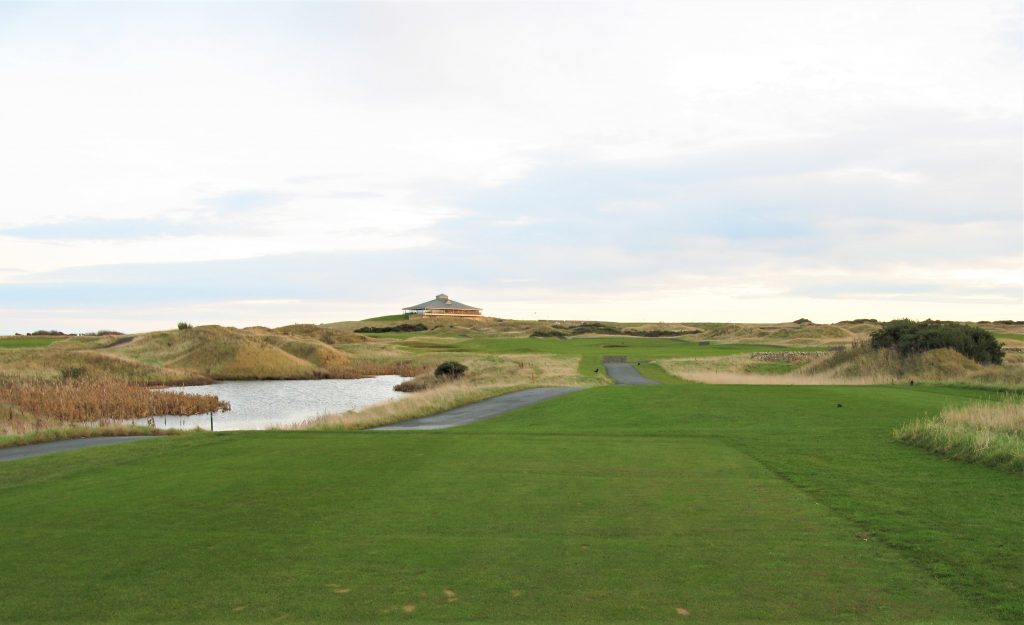
The fairway bunker on 15 at Fidra is a typical and well constructed feature.

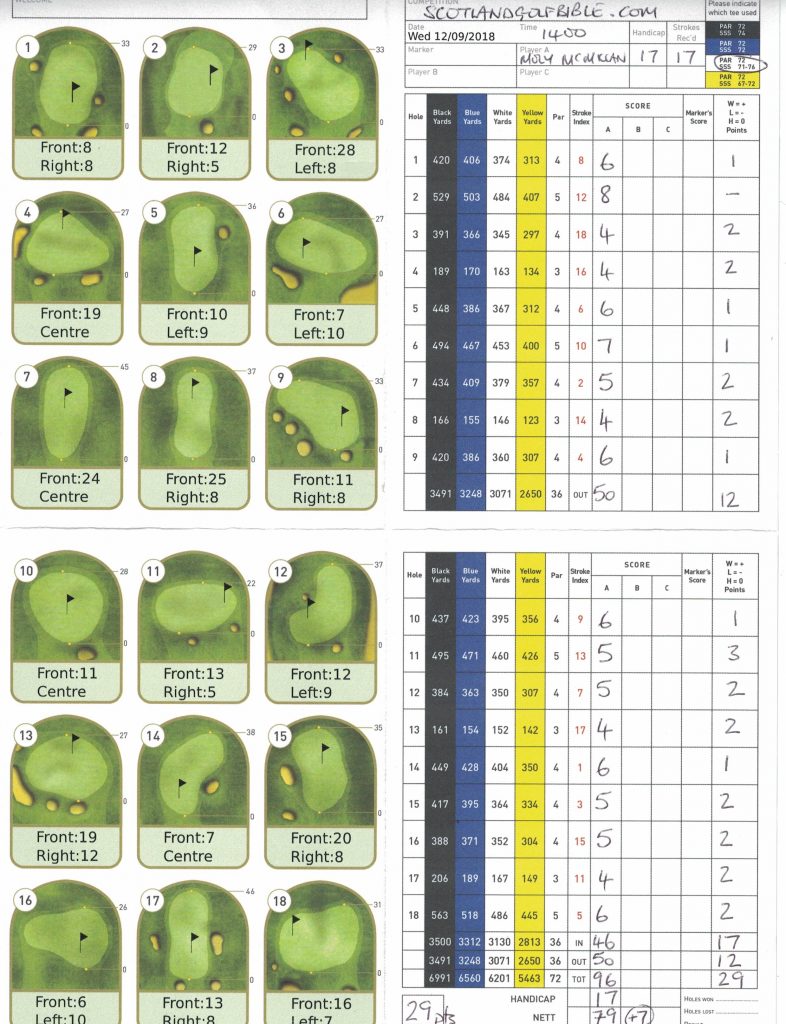
It wasn’t long from the yellow tee (5463 yards), but with 4 tee options to choose, I played off the white at 6201 yards, and felt I played really well for my 96 and 29 stableford points.  Disappointingly, there were no red tees, the traditional colour used for ladies, which given the current debate about encouraging women to play, didn’t make any sense to me!    The card was though very instructive (see below) as it was printed daily with the pin positions!

If you can afford it, its worth staying and playing at Archerfield.  If you do, I recommend you also splash out on the Golfer’s recovery massage – I didn’t know I had so many knots in my back!

Facts:

Course Type: Parkland/woodland/links

Par 72 (4 par 5s, 10 par 4s,  4 par 3s)

Distance (white): 6201 Yards

Moly’s Gross score: 96

The daily printed scorecard at Archerfield’s Fidra Links – Moly shot 96.

74. Fairmont Kittocks. 20 Dec 2017.

American style resort “Links” 2 miles south east of St Andrews       

Round £95.   Par 71.  Value (out of 5) – 3.5

The Kittocks is one of two courses on the Fairmont hotel complex just outside St Andrews.  The resort was opened as the St Andrews Bay Golf Resort and Spa by the American pharmaceutical entrepreneur Dan Panoz in 2001, but has transferred ownership a number of times since.  The sister course is the Torrance named after its architect Sam Torrance the Scottish golfer.   Both courses are championship venues and have hosted major qualifying and senior events.

The 12th tee at Kittocks shows the well laid our fairways

The Kittocks course was originally called the Devlin after its golfing designer, the Australian Bruce Devlin, who developed the course in partnership with Denis Griffiths, the well known designer and past President of the American Society of Golf Course Architects.  The Kittocks is named after an area of land on the course which is inhabited by a family of deer.

Until recently, both courses had a headline Summer rate of £140, although new management has repriced it at “only” £95.  I say “only” to highlight how crazy, in my opinion, golf prices in Scotland have become at the higher end of the market – Kingsbarns, only a couple of miles away, is £268 for a 2018 summer round!  Assessing “value”, my key course assessment, is inevitably subjective, especially considering the different types of golfers each course targets – Kingsbarns starter box has a toll free American number!  Comparing “value” between Kingsbarns (£268), St Andrews New (£80), Scotscraig (£70), Tain (£60), or the Kittocks at £95, is highly debatable….but good fun!

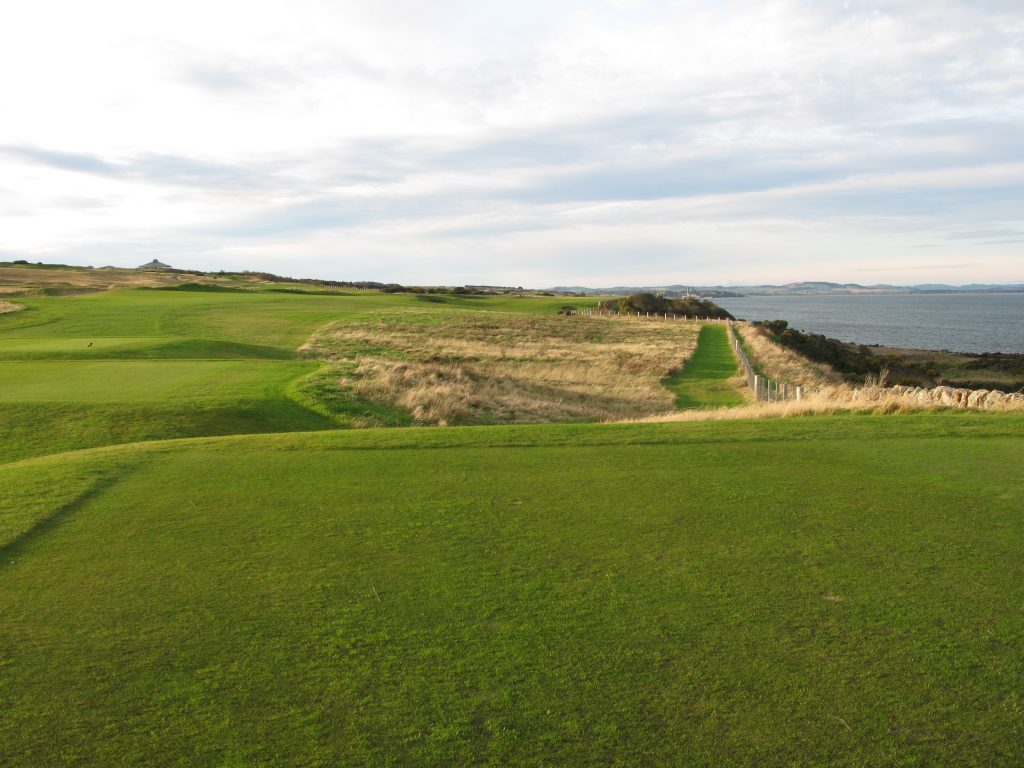
The signature 7th hole at Fairmont Kittocks, with the North Sea in view

The Kittocks has many original links design attributes, including 2 double greens (the 1st and 13th, and 7th and 10th), deep and revetted bunkers (although slightly oddly built), whispy rough, boundary dykes  and several dune like mounds.  The layout is a mesmerising number of interlinking horseshoes, meaning wind changes direction from hole to hole. The very clever use of contours and rough means each hole feels isolated from the others displaying high level architecture.

The tough long par 4 18th hole at The Kittocks

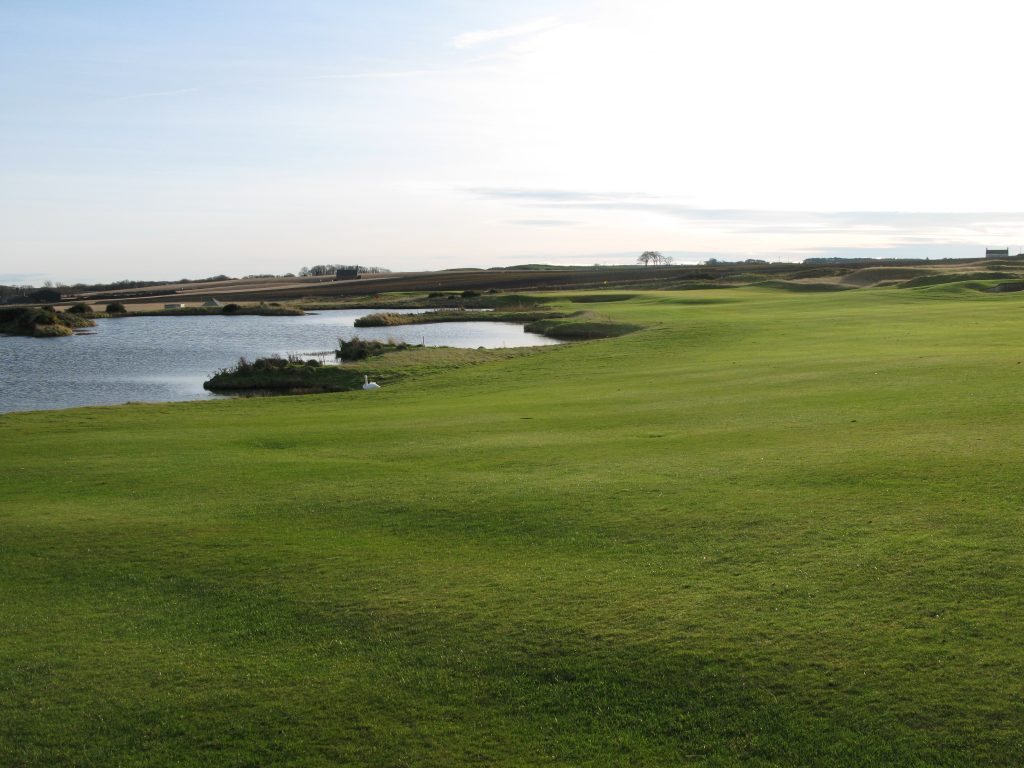
After a fairly straight forward par 5 opening hole, the very picturesque 2nd hole, with its manufactured lake along the left, lets you know this course is not trying to be a classic links design.   The 4th hole, stroke index 1, is the first of several very difficult holes, where a long second shot is needed over a deep gully into a green surrounded by gorse.  Having hitting my best drive and 5 wood of the day, my ball was never to be found again in the gorse to the left of the green!

The man made lake alongside the beautiful Kittocks 2nd hole gives away this is a modern “links”

The course then winds down to the North Sea, with the dog leg par 5 5th hole presenting one of the few blind tee shots on the course, with its green giving outstanding views back towards the “Toon” of St Andrews.  After the nice par 3 6th hole you then reach the signature par 4 7th hole, which has a great vista showing the unusual bunkers and, finally, the huge double green.

There then follows a range of nicely varied holes, whereby there is no stretch of incredibly difficult back to back holes.  Looking at the stroke indexes on the card you see how balanced the course is.  The 10th presents the first time the combination of the prevailing westerly wind really comes into play along with the sea tight along the right of the fairway.  The highlight for me, both visibly and playing, was the difficult par 3 16th hole, where the yellow tee of the day had been mischievously placed on the championship tees, giving me a slightly uphill shot of almost 200 yards into a 15 mph wind – I didn’t lose my ball!  Its worth noting that there are a range of tee options with big differences between the blue/white/yellow/red tees, suiting all standards.

The Kittocks 10th tee with the Fife coastal path verging the course and St Andrews in the background

The final 2 holes were originally part of the Torrance course, but incorporated into the Kittocks after a redesign in 2009 and present 2 very fine long par 4s to finish.

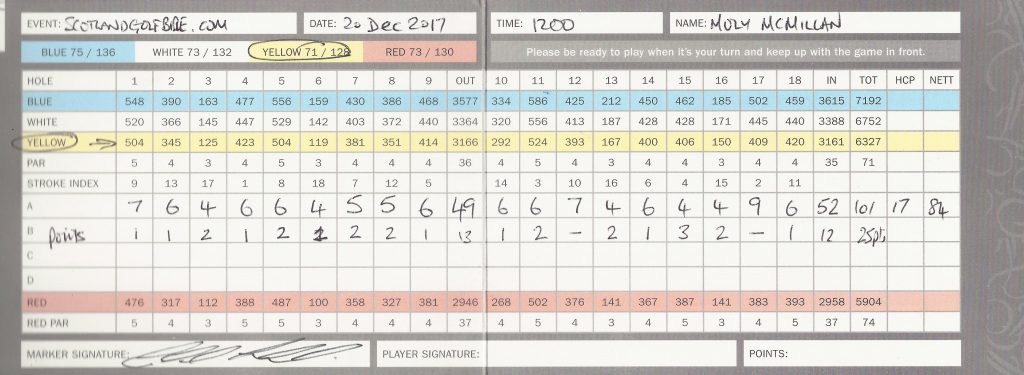
The course was in great condition for a December, with full tees and greens in play.  The course is quite open with wide fairways and the greens were surprisingly fast.  The greens are generally very large, and I imagine not many amateurs will go without 3 putting the odd green – I did it 7 times….ouch!    Along with 2 lost balls, this was the reason for my gross 101 for 25 stableford points.

If you are looking for a golf resort whilst in St Andrews, the Fairmont offers a great location with the fees for unlimited golf on both courses during your stay being very reasonable and much better value than a single round.   I got a good deal with a winter fee of only £30, but my score of 3.5 represents a value at £95 per round.

Facts:

Course Type: Links

Par 71 (3 par 5, 11 par 4s, 4 par 3s)

Distance (yellow): 6327

Moly’s Gross score: 101

Moly’s Fairmont Kittocks scorecard – 101 for 25 points

51. Ballindalloch Castle. 11th Sep 2016.

Creatively ambitious Highland Estate course with single malt 19th hole

Round £15(9)/£25(18). Par 36(72).  Value (out of 5) 4. 

Ballindalloch Castle golf course is 14 miles north east of Grantown on Spey and sits alongside the River Avon not far from it’s confluence with the River Spey.  The Castle has been the home of the Macpherson-Grant family since it was finished in 1546; the golf course is a little younger, having been designed by 2 of the more prestigious designers around, Donald Steel and Tom MacKenzie, in 2002-3.  They obviously work well together, having also designed the well regarded Carnegie layout at Skibo Castle – maybe they just like castles?

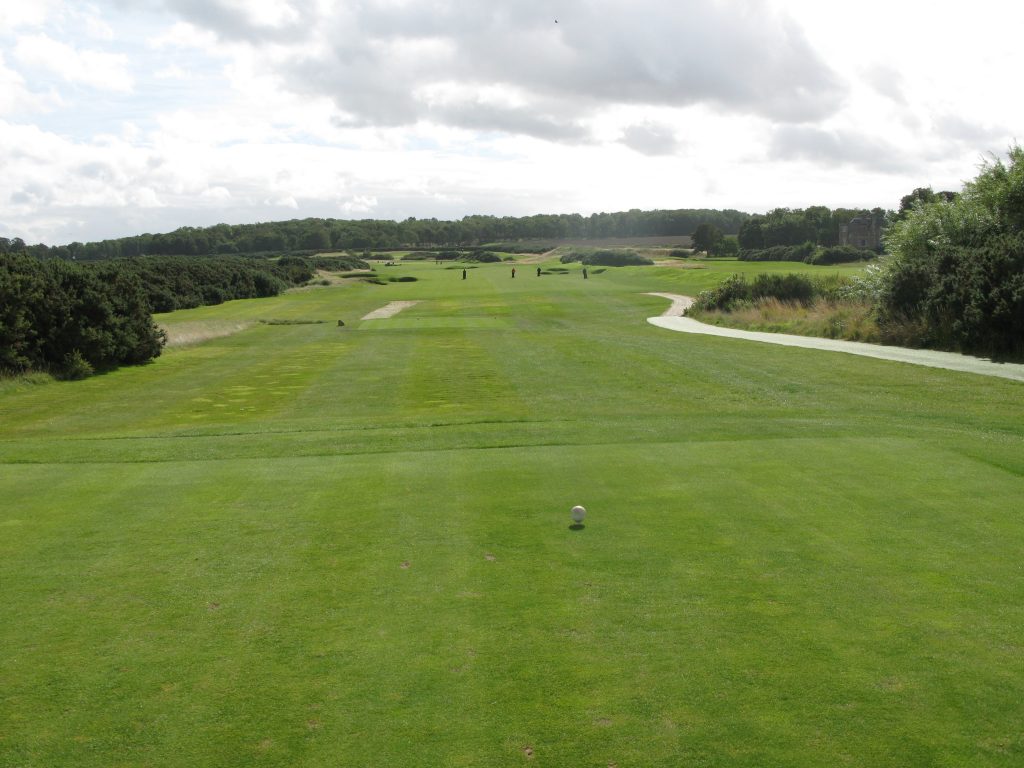
Approach to the 1st (Par 5) or 10th (Par 4) - a difficult green to reach in regulation.

Approach to the 1st (Par 5) or 10th (Par 4) – a difficult green to reach in regulation.

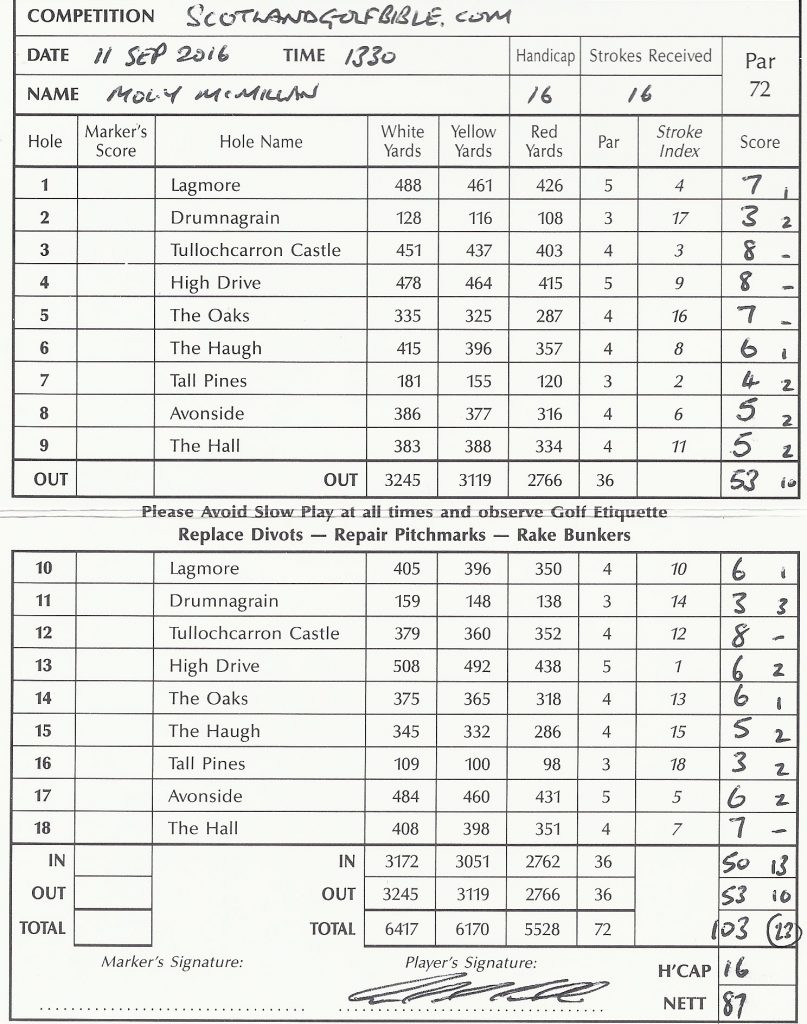
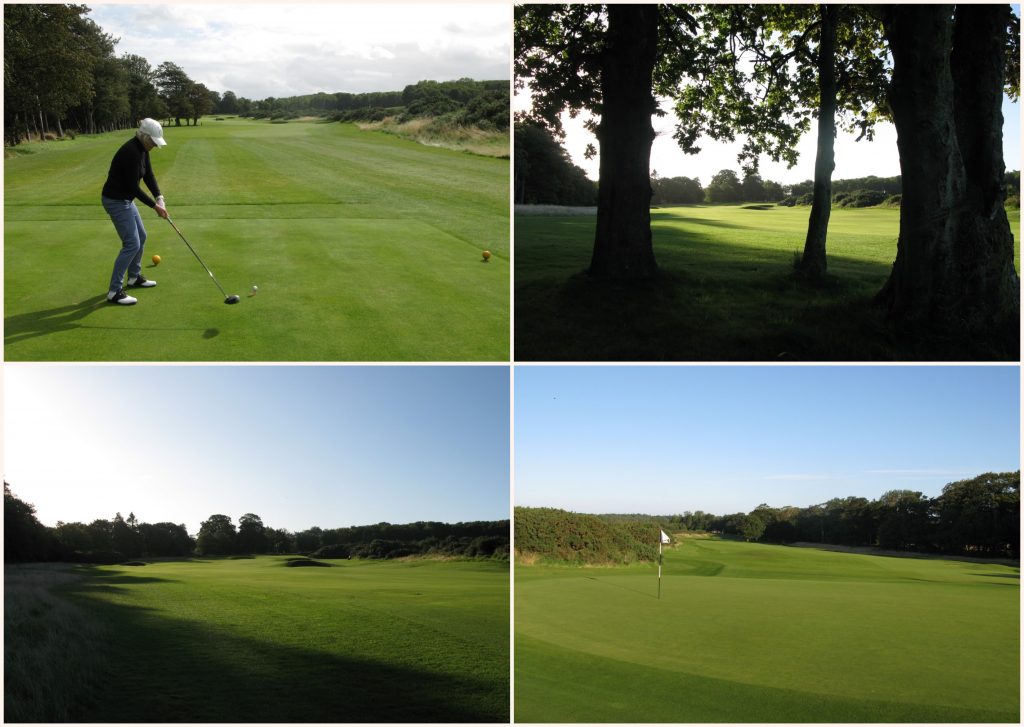
The resulting golf course, with views of  hills and birch woods, is a rather marvelous and pleasantly surprising layout at 6417 yards from the white tees.  Although a “9 hole” course, there are 18 tees, with many of the tee combinations significantly altering the front and back 9s – I would strongly recommend playing 18 holes to appreciate the architectural cleverness of this Steel and MacKenzie design.

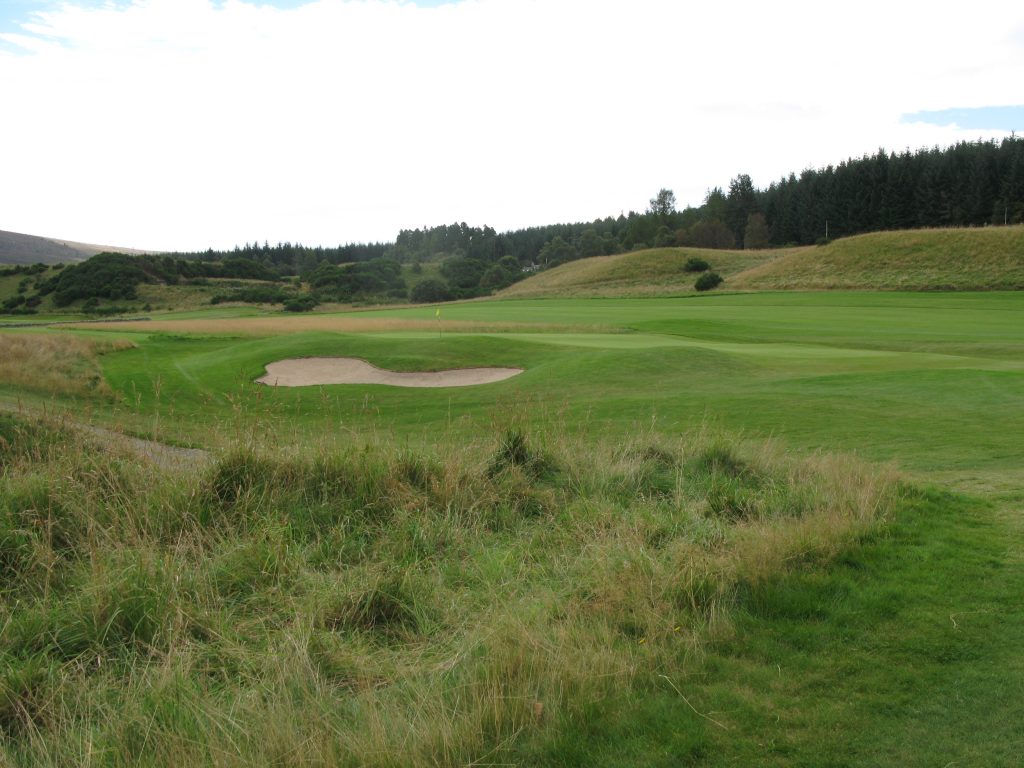
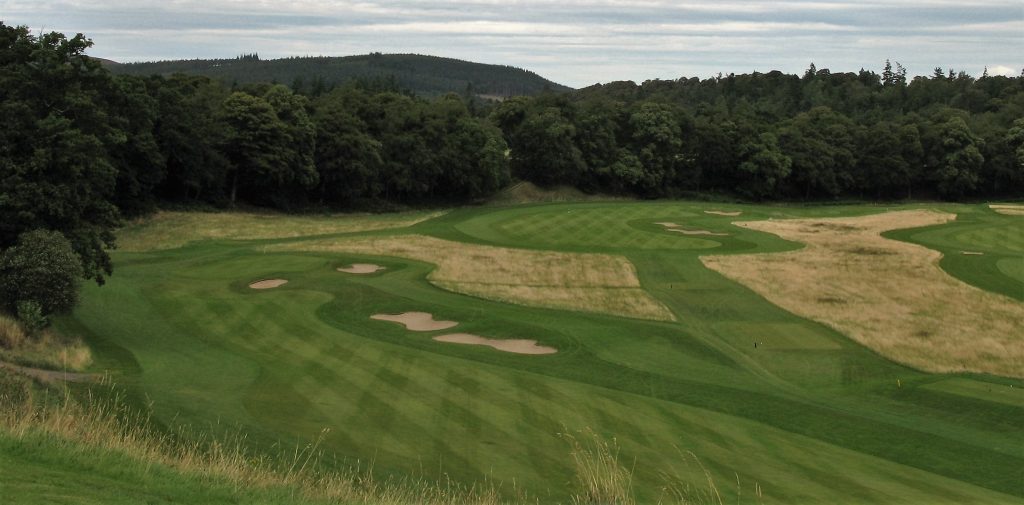
The magnificent 4th / 13th at Ballindalloch Castle - here showing the 2nd shot view.

The magnificent 4th / 13th at Ballindalloch Castle – here showing the 2nd shot view.

The effect of the different tees, is exemplified straight away with the 1st playing as a par 5 at 488 yards, but the 10th as a par 4 at 405 yards – however, the westerly prevailing wind make both holes very difficult.   The tees at the 5th/14th are 100 yards apart, with the 14th playing as a near 90 degree dog leg right.  Arguably most stark is the par 3 7th/16th, where I suspect most players need at least a rescue club on the 7th, but only a wedge on 16th; the holes are 70 yards different in length.

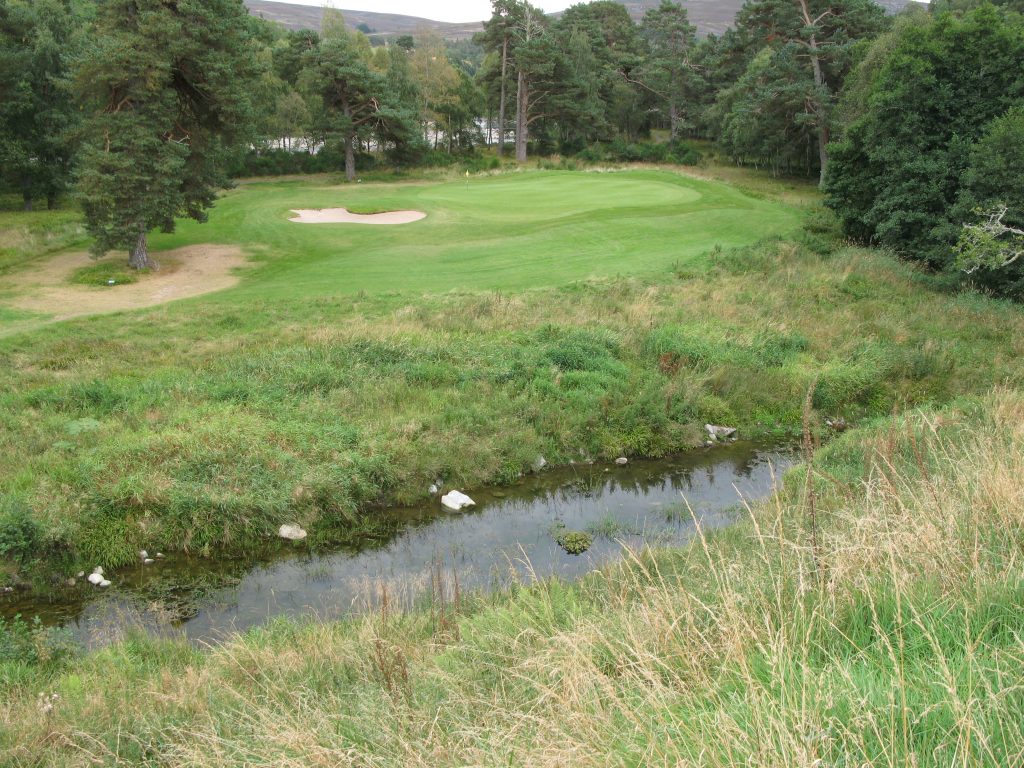
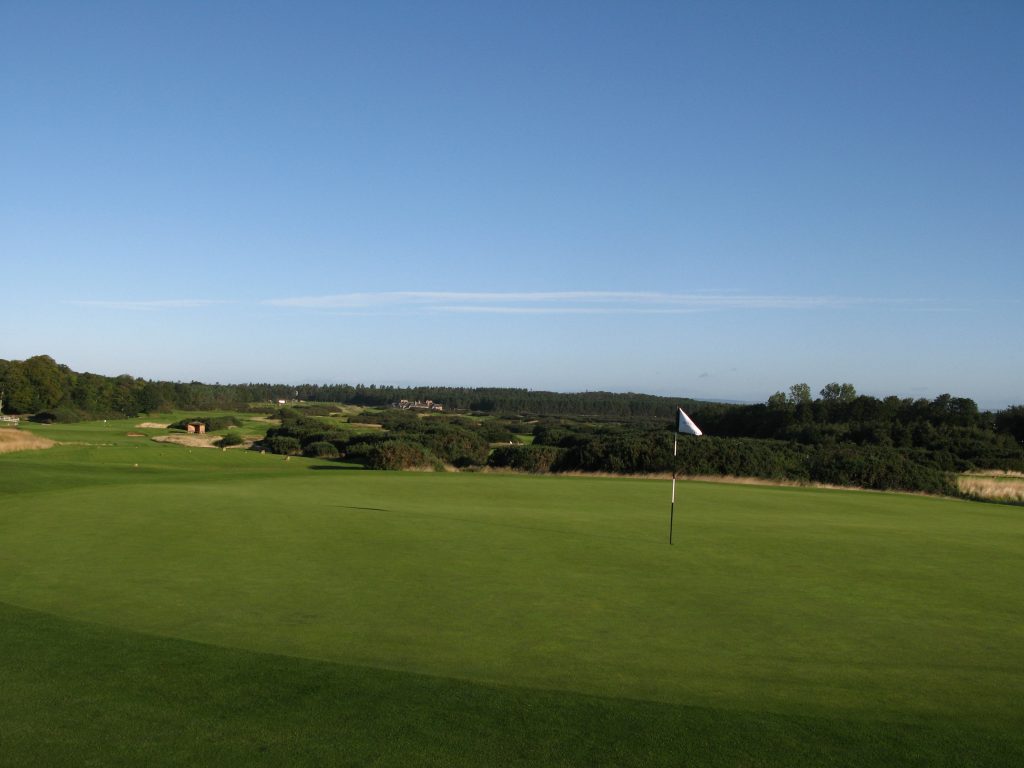
The 7th/16th green (here showing the 16th tee view)

The 7th/16th green (here showing the 16th tee view)

As I played around this very ambitious project for a highland estate, I was struck with how fitting the course adds to the colourful history of the castle, which is the original home of the Black Watch, the oldest of the Highland regiments, and also the place where Captain W.E. Johns wrote many of his Biggles stories.

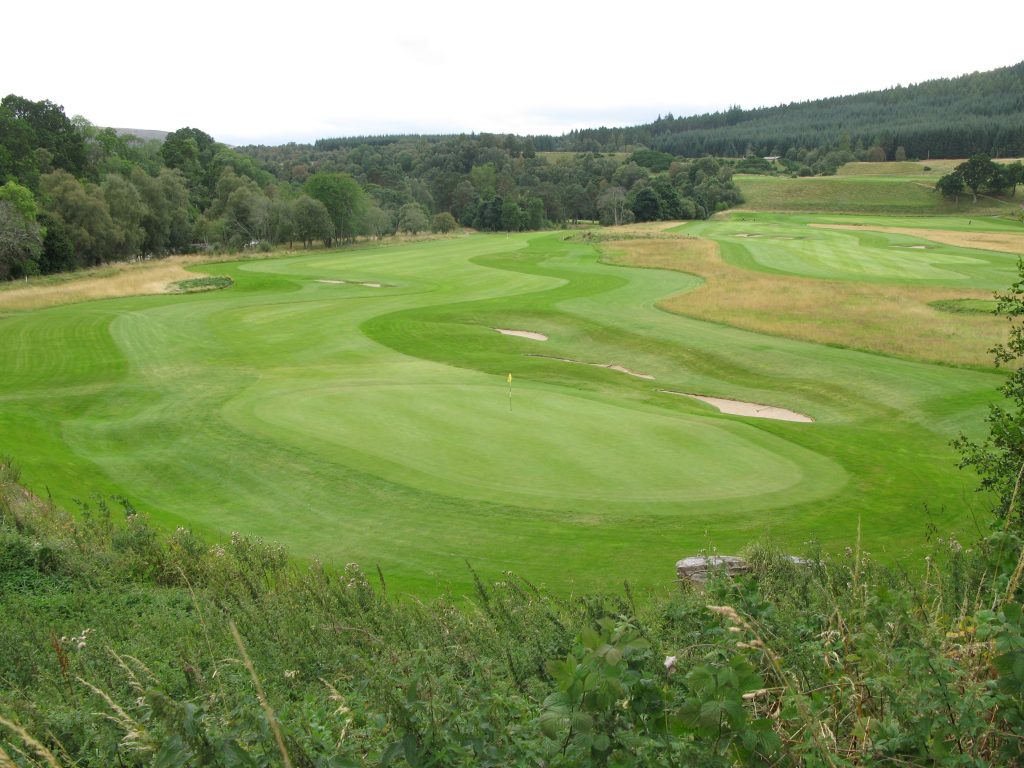
View from behind the 7th/16th green at Ballindalloch

View from behind the 8th/17th green at Ballindalloch

The course was in excellent condition when I played, which I suspect might be helped by the relatively small number of members and players the course attracts.  I guess it’s because not many people want to travel too far “just for 9 holes”.  I think they are making a big mistake – this must be one of the best 9 hole courses in Scotland, and it is very competitively priced against its Strathspey and Baddenoch neighbours.

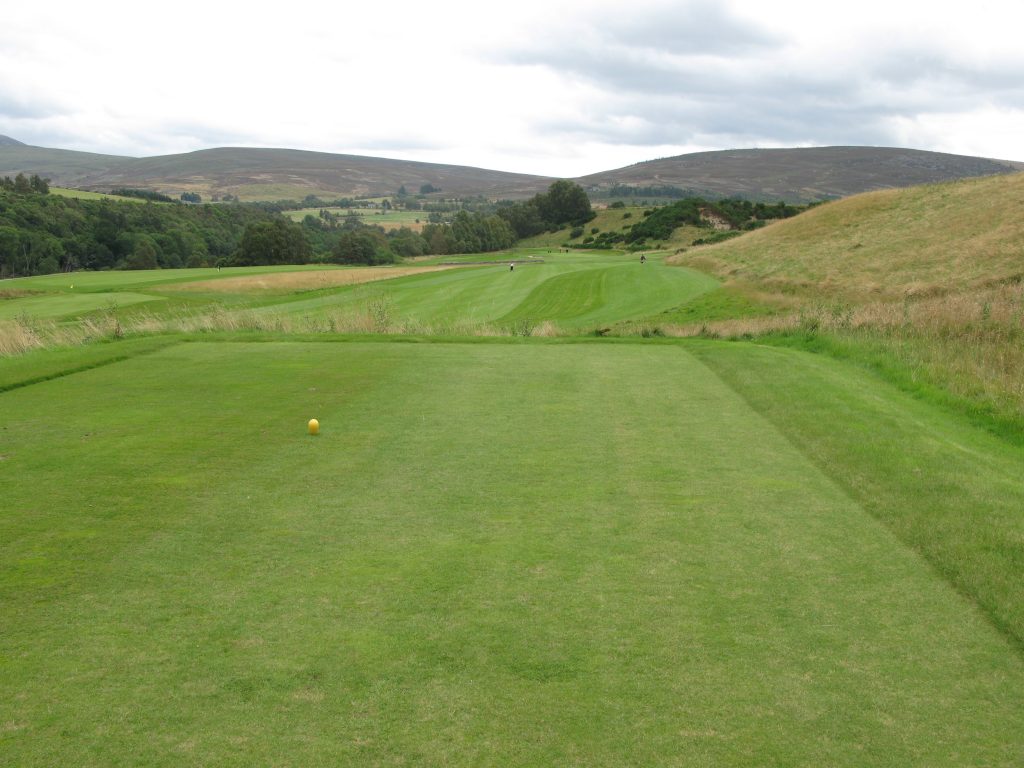
The 12th tee at Ballindalloch

The 12th tee at Ballindalloch

On the day, I played pretty poorly, scoring 103 for 23 points, although I was only 1 over for the 4 par 3s.

Finally, there is plenty to keep non golfing family members busy on the estate, which has also recently opened a whisky distillery right next door to the golf course, again reinforcing this highland estate’s ambition.

I highly recommend playing at Ballindalloch Castle.

Some Facts

Course Type: Highland

Par 72 (4 par 5s, 10 par 4s, 4 par 3s)

Distance Yards   6170 (yellow) 

Moly’s Gross Score: 103

Moly's Ballindalloch scorecard - 103, for 23 points!

Moly’s Ballindalloch scorecard – 103, for 23 points!

« Older posts Newer posts »

© 2026 Scotland Golf Bible

Theme by Anders NorenUp ↑