A guide to green fee value for money

Category: Heathland (Page 5 of 7)

118. Callander. 4 Nov 2020.

A course down on its luck, well worth playing, but this is no “Gleneagles” as its web site infers.

Round £24. Par 63. Course Rating / Slope Rating (yellow) 62.6/105. Value (out of 5) – 4

There is a well known equation for individual business success – “under promise and over deliver”. Why do some golf clubs get this completely inverted by “over promising and under delivering”. Callander Golf Club is a perfect example of this error.

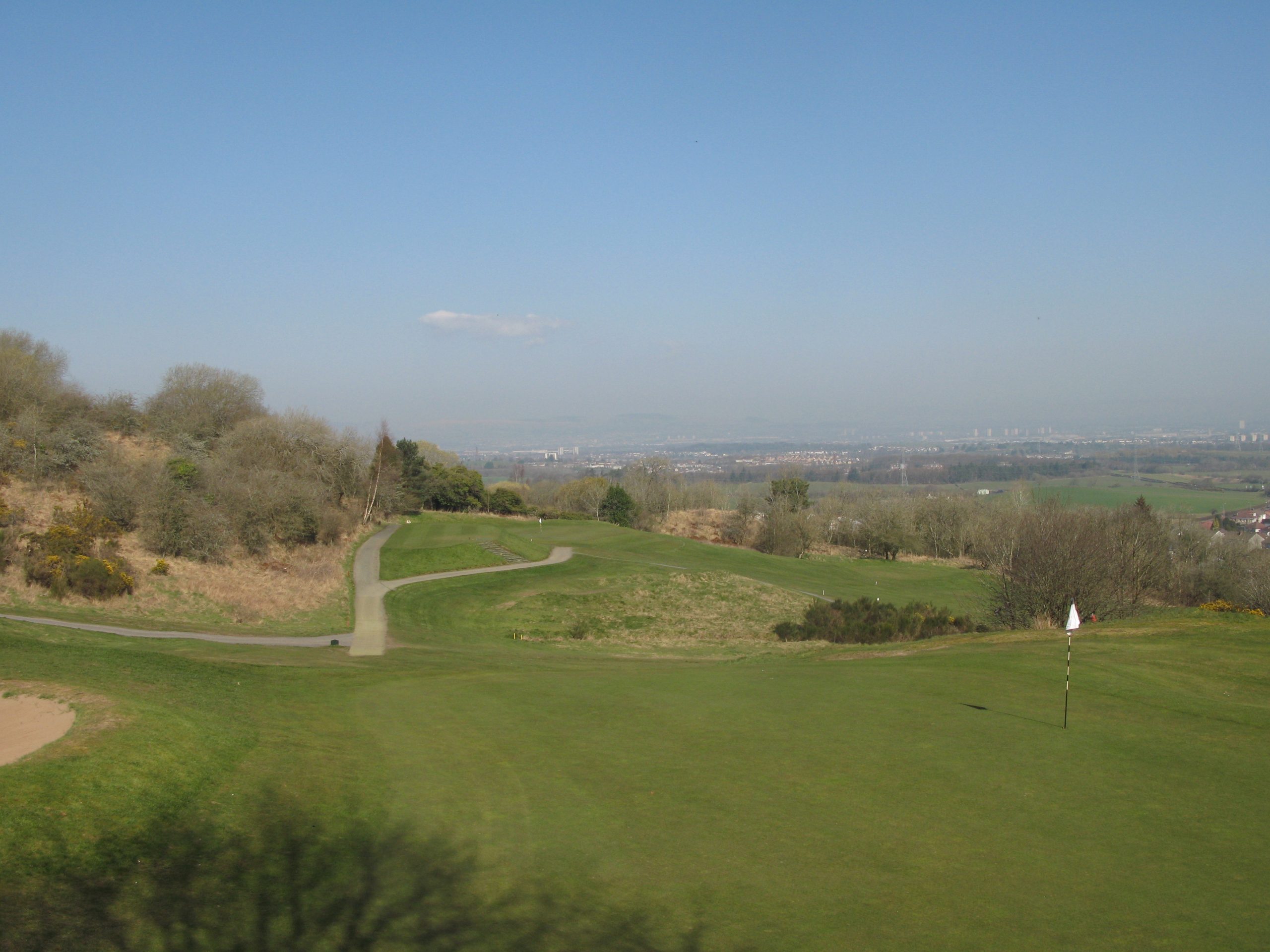
Callander golf club has seen much better days – its website is also living in the past.

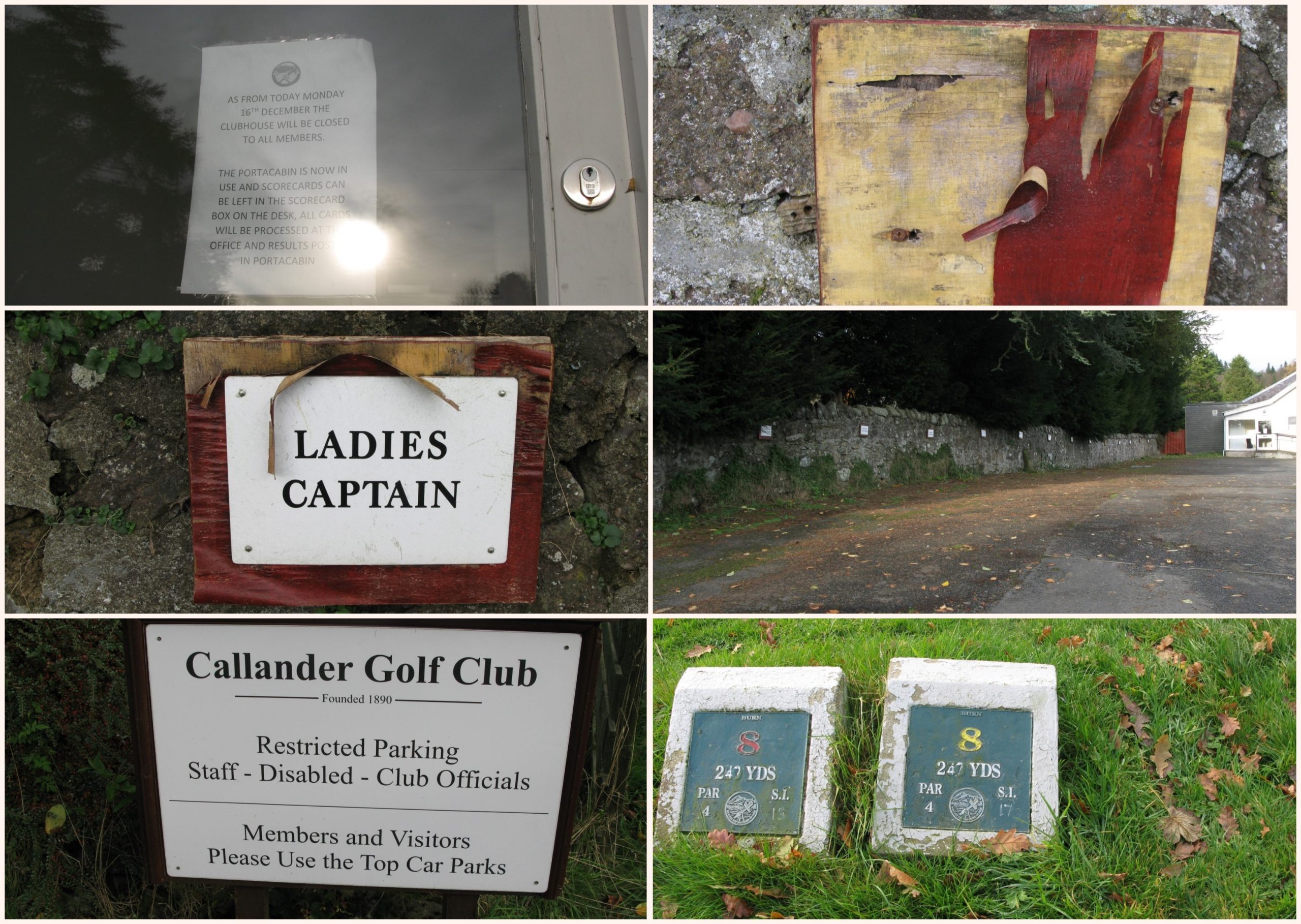
The club has clearly seen better days – the photo above gives a glimpse of the state of its infrastructure. The ‘temporary’ clubhouse was a shipping container. Its web site includes the following statements, some quoted from media outlets:

Callander Golf Club is probably the most scenic golf course in the UK“,

The charming and challenging 15th is one of the most famous par 3s in Scotland“,

“‘The Scotsman’ includes Callander … ahead of Carnoustie’s Championship Course.

“‘Golf Monthly’ rated Callander among the top ten courses in Scotland for visitors, alongside Gleneagles, Turnberry and St. Andrews.

These statements, collectively, are so wide of the mark – in my humble opinion of course! Just image a touring golfer, having played Gleneagles, Turnberry, St Andrews and Carnoustie, turning up at Callander expecting something similar.

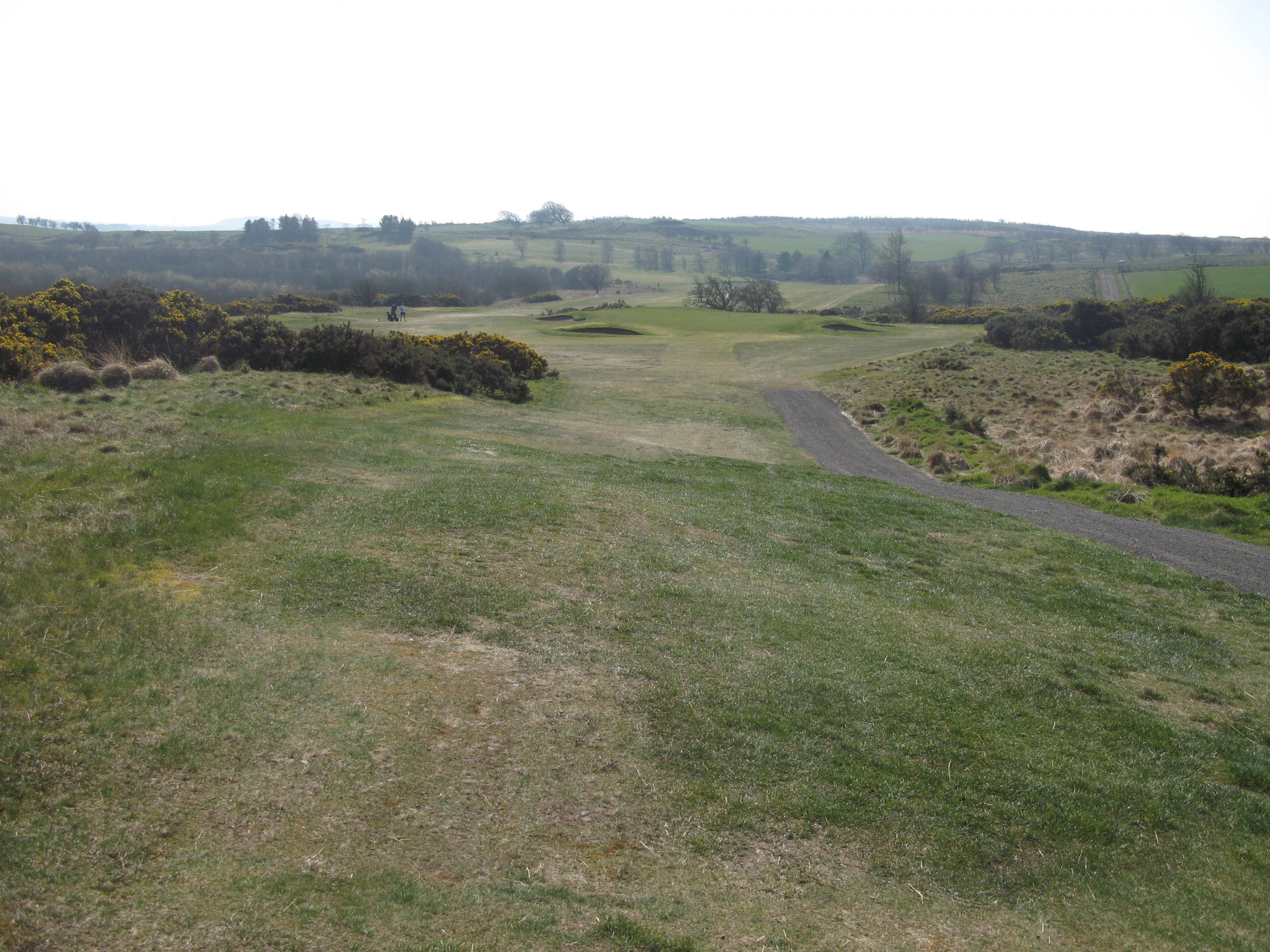
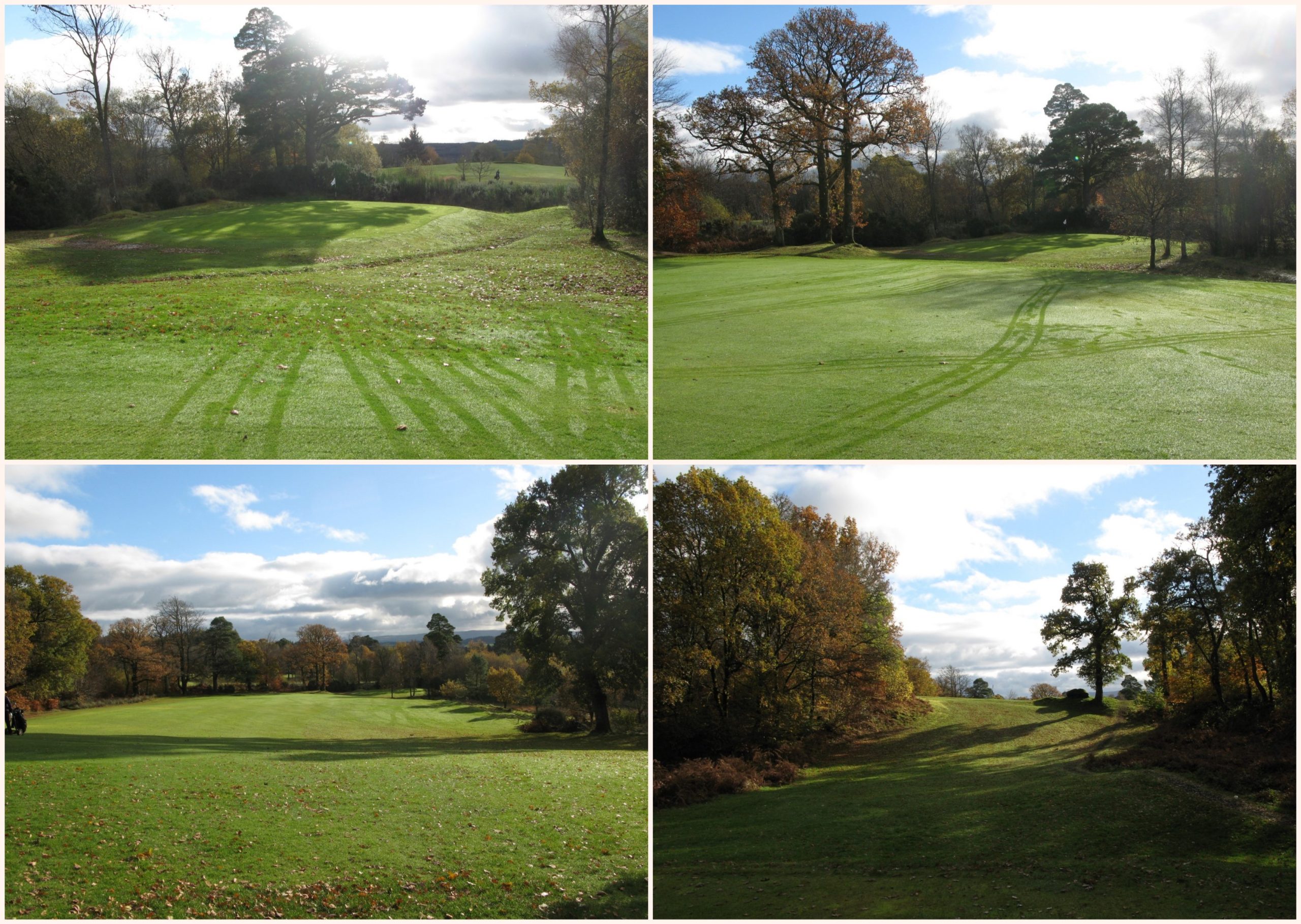
Callander’s 7th, one of the many short par 4s, this one called ‘Blind’ for obvious reasons off the tee.

Please, don’t get me wrong, this is a really fun and lovely golf course set within the beautiful Trossachs area of central Scotland, with very picturesque surroundings, some great and memorable holes and in decent condition.

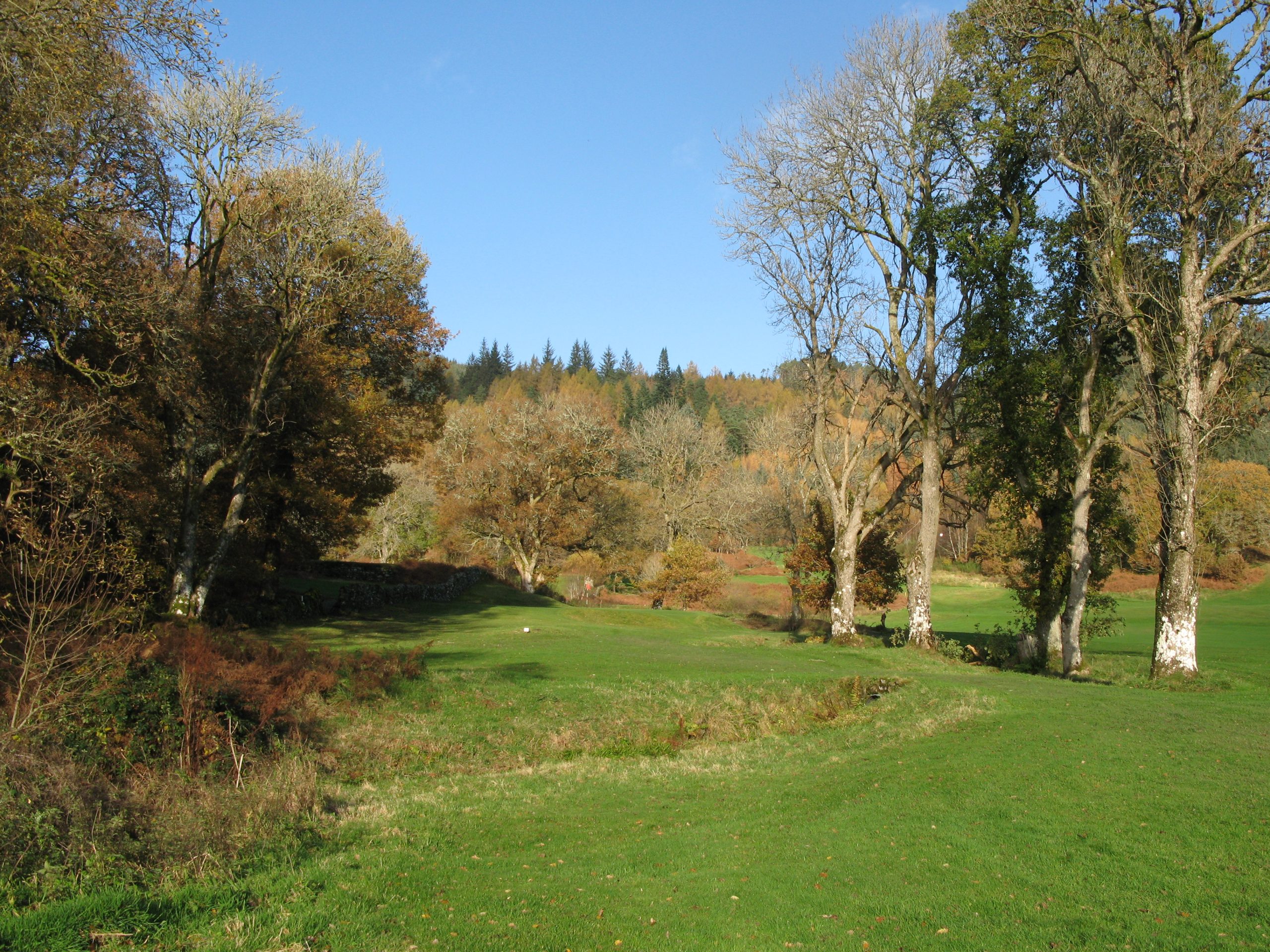
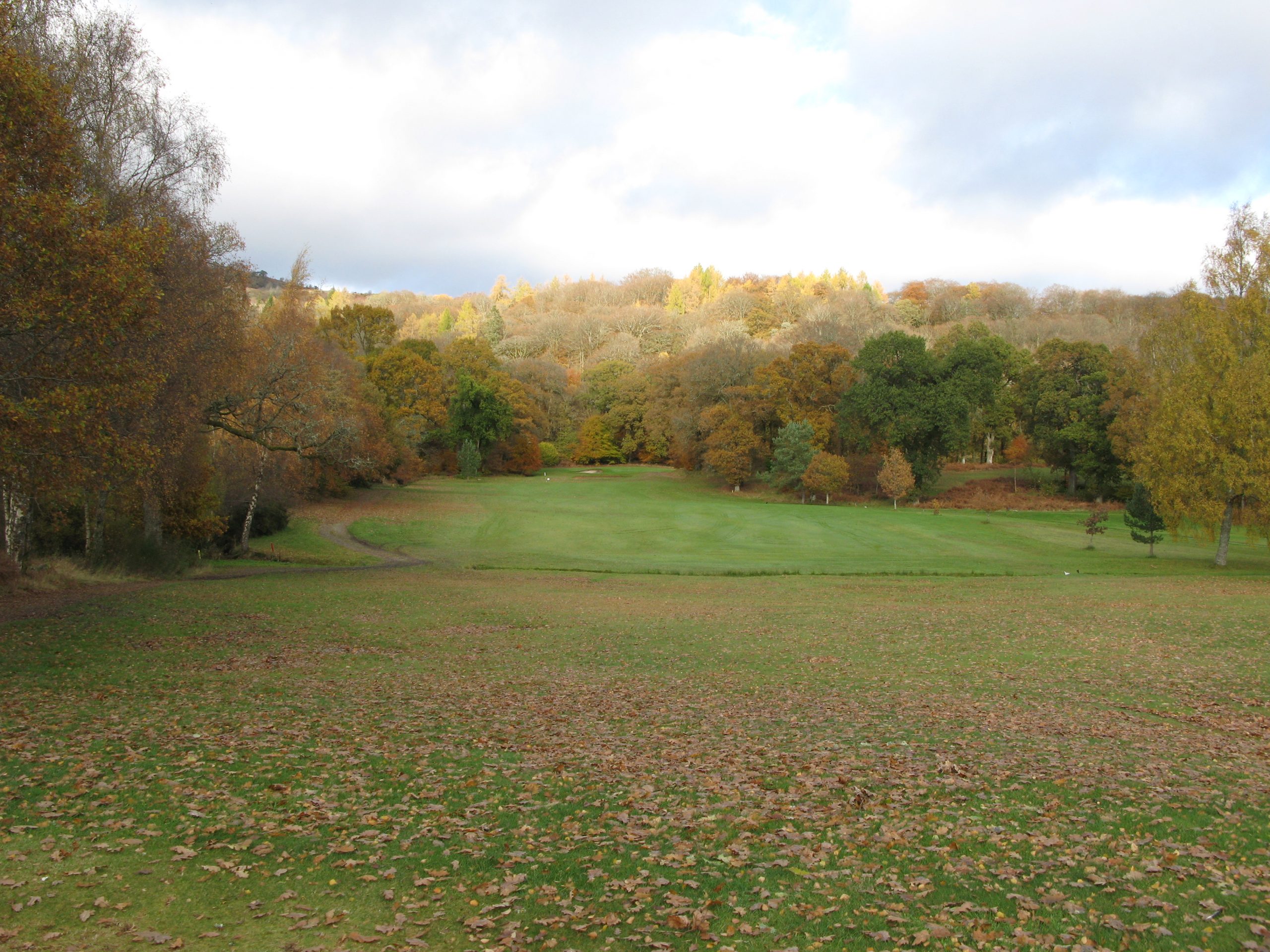
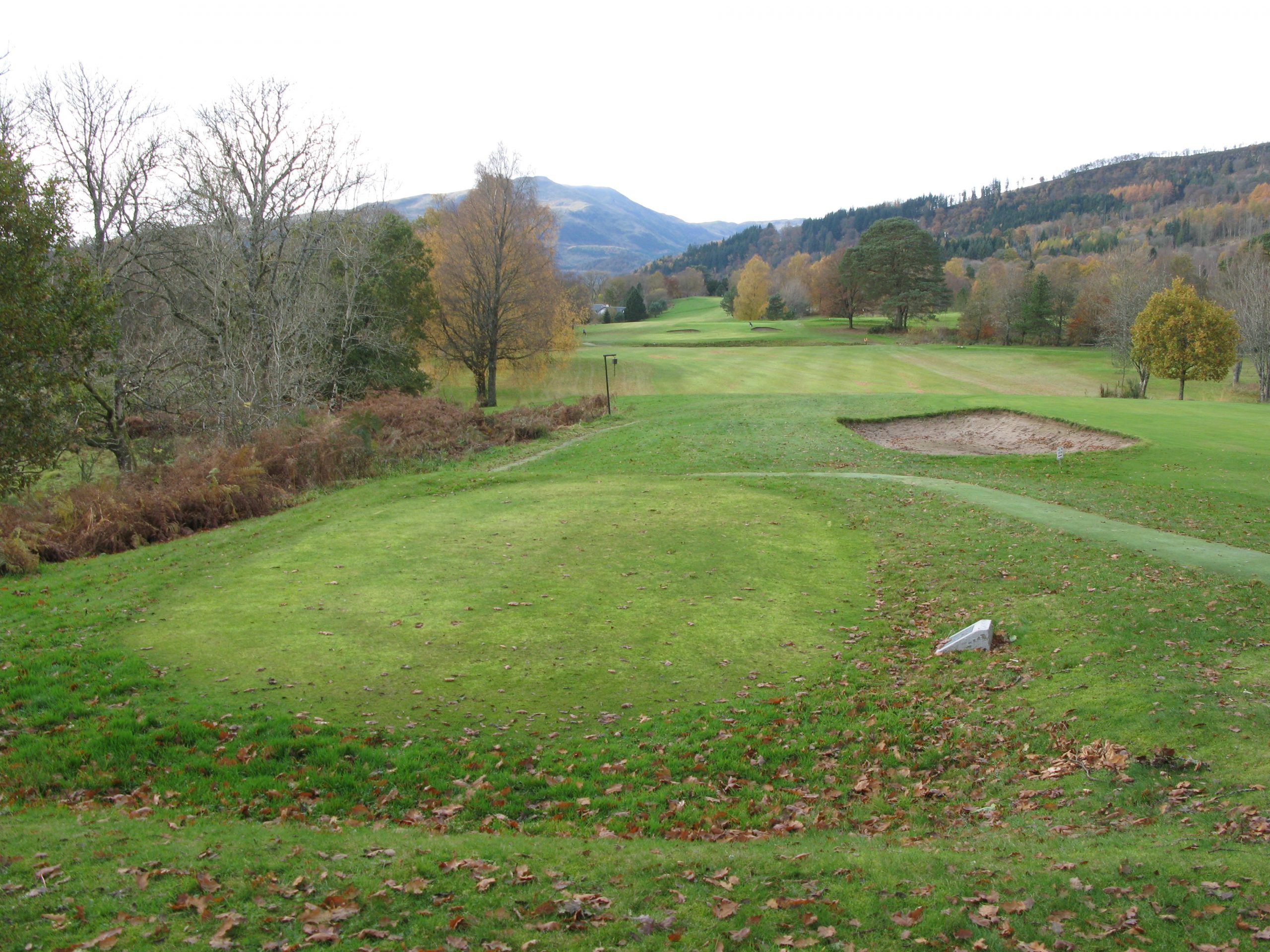
The 6th at Callander, ‘Dell’, the most difficult of all the holes , in full Autumn colours

The course was opened in 1892 as 9 holes designed by Old Tom Morris, then Willie Fernie extended it to 18 holes in 1914. Heady architects both.

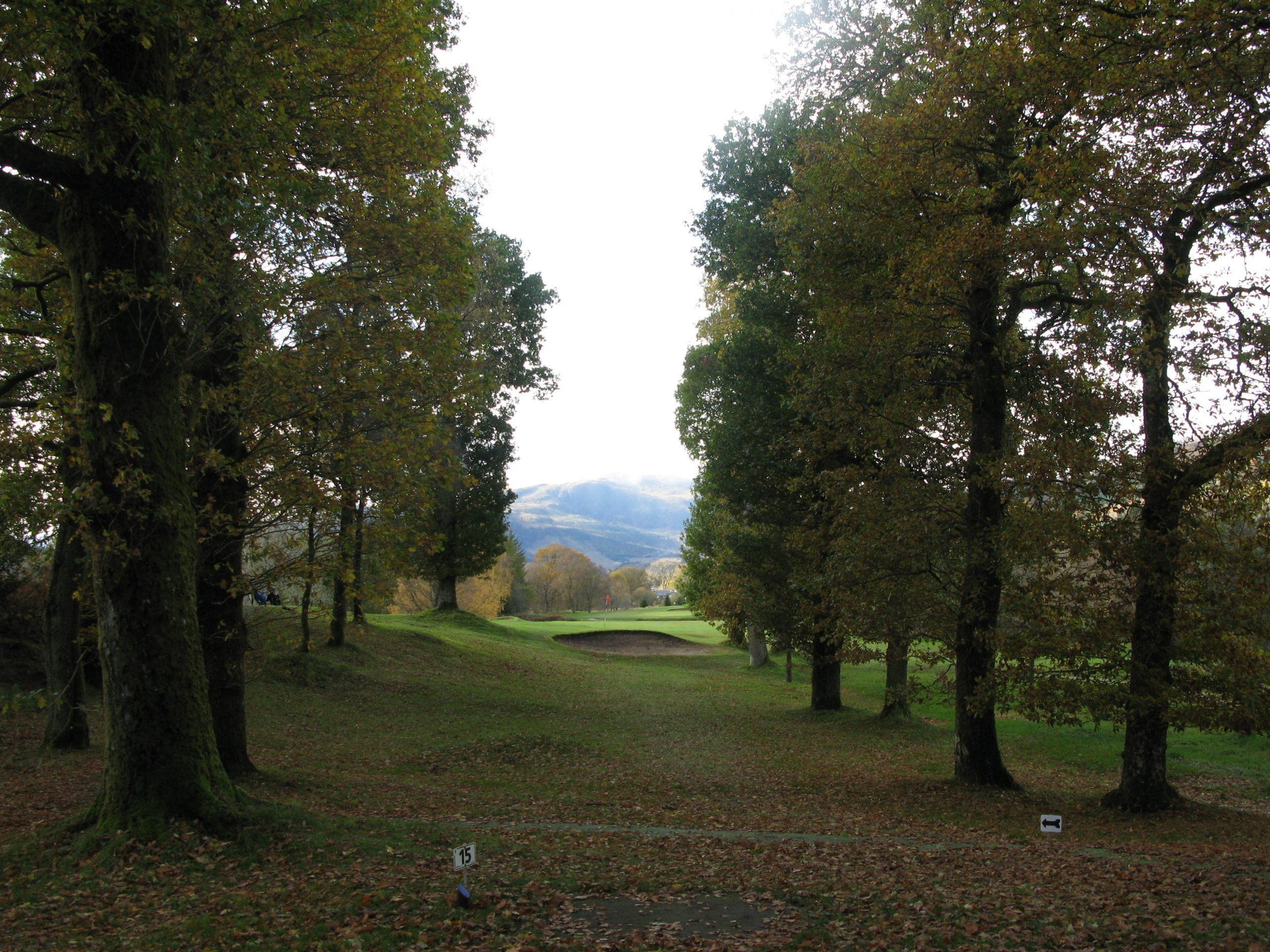
This is, in particular, brilliant holiday golf. It’s short, at well under 5000 yards from the yellow tees. It has fairly generous fairways, not too many bunkers and relatively straightforward greens. There is an abundance of par 3s, with five on the back 9 alone, including the cute 15th, where play is through, or more likely, above a tiny channel between tall trees. It’s memorable, and one of those holes that demands straight hitting.

The Slope Rating of 105, gives most golfers the chance of posting a great score for 18 holes – that’s always nice.

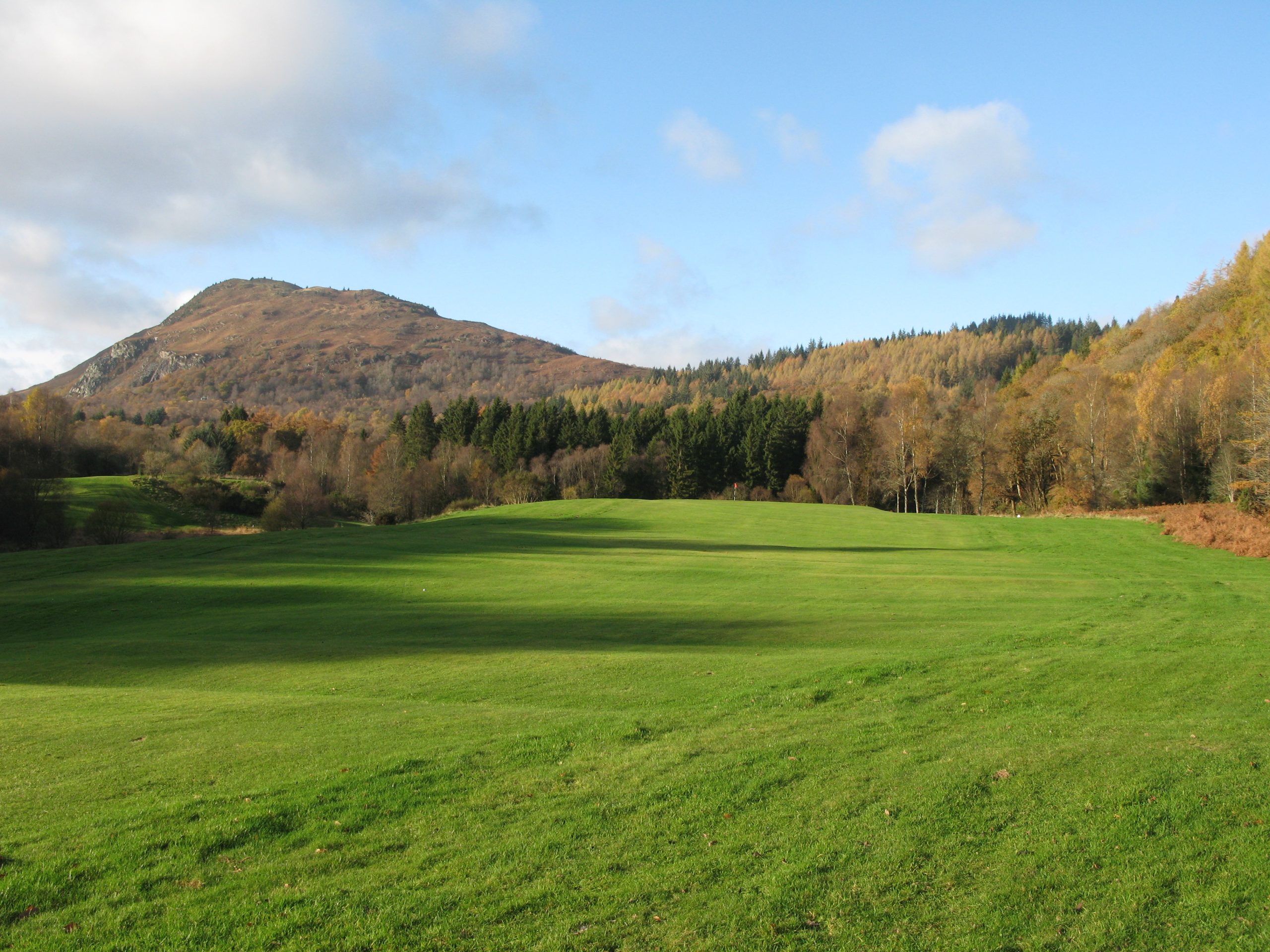
The 16th at Callander, with Ben Ledi in the background

Its well worth playing – but don’t expect to be playing Gleneagles – the green fee will tell the true story, and to that extent it’s also a great course for serious golfers to play as well, in order to experience the great value golf Scotland has to offer. Scots are known for being honest, so lets set the record straight on the web site.

The wonderful par three 15th – ‘Avenue’. But not as famous as, for example, the ‘postage stamp’

On a very wet Autumnal day, with colours in late bloom, Fran and I had the course pretty much to ourselves. I played decent to shoot 80

Course Type: Parkland

Par 64 (0 par 5s (although 1 on the white), 10 par 4s, 8 par 3s)

Distance: 4470

Moly’s Gross score80

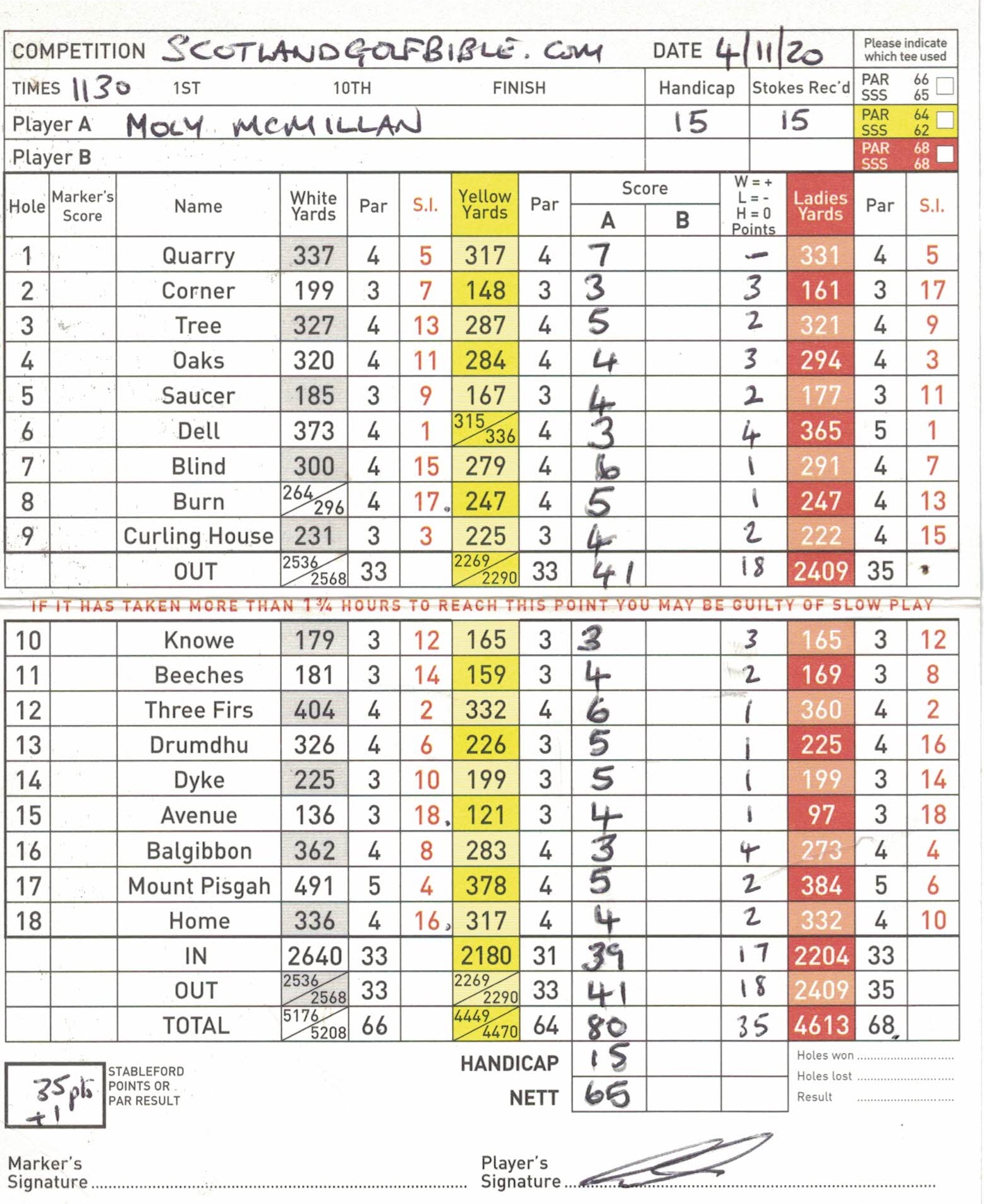
Moly’s scorecard at Callander – 80

115. Gatehouse. 26 Oct 2020.

Joyful little gem

Round £15. Par 33. Course Rating / Slope Rating (yellow) 32/115. Value (out of 5) – 4

Can you only have fun playing golf if you play well? That was the question I pondered when assessing Gatehouse, a 9 hole golf course in Gatehouse of Fleet, a lovely little town in Dumfries and Galloway, which takes its name from the “Water of Fleet’ river that flows to the sea at nearby Kirkcudbright.

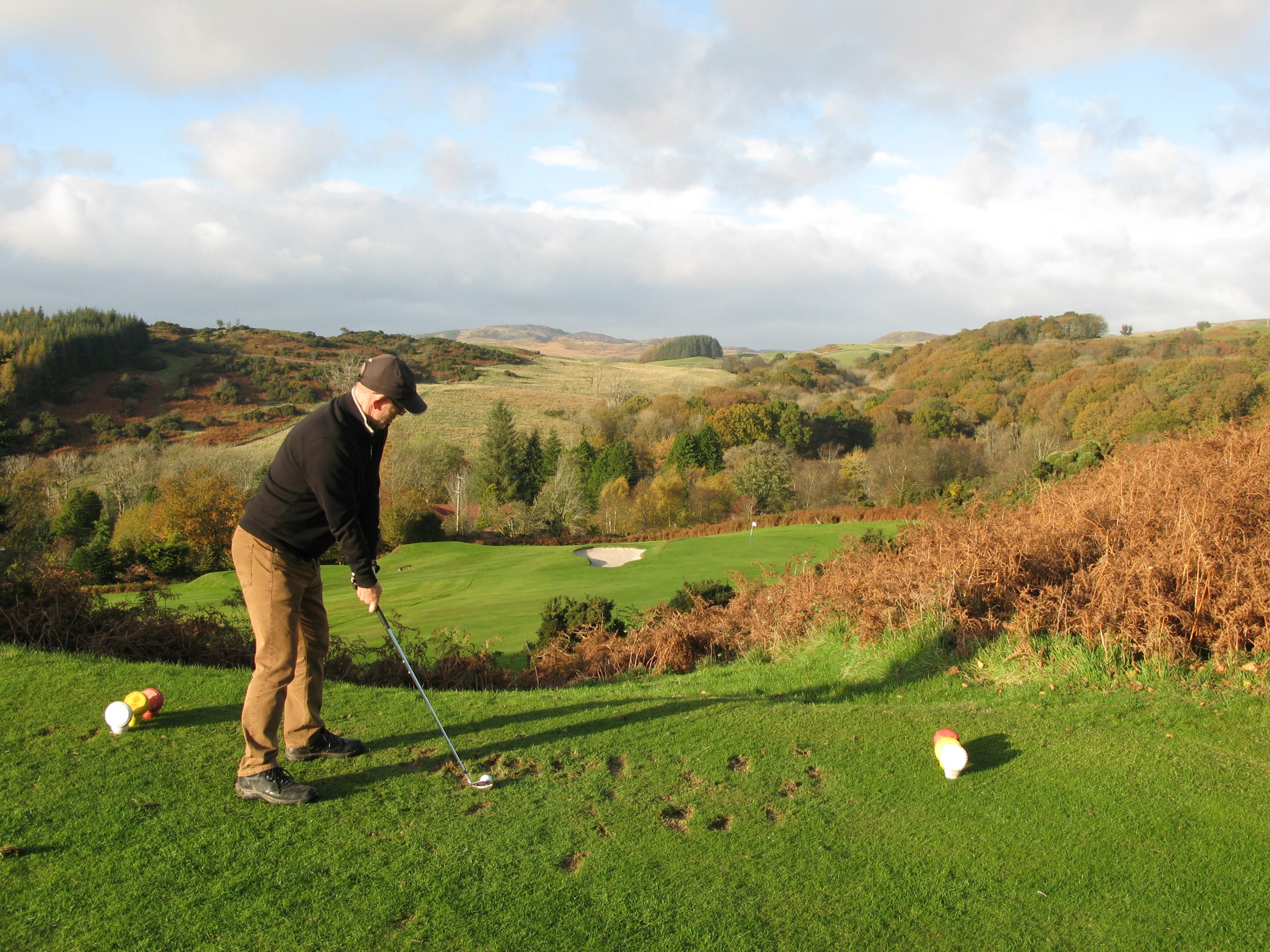
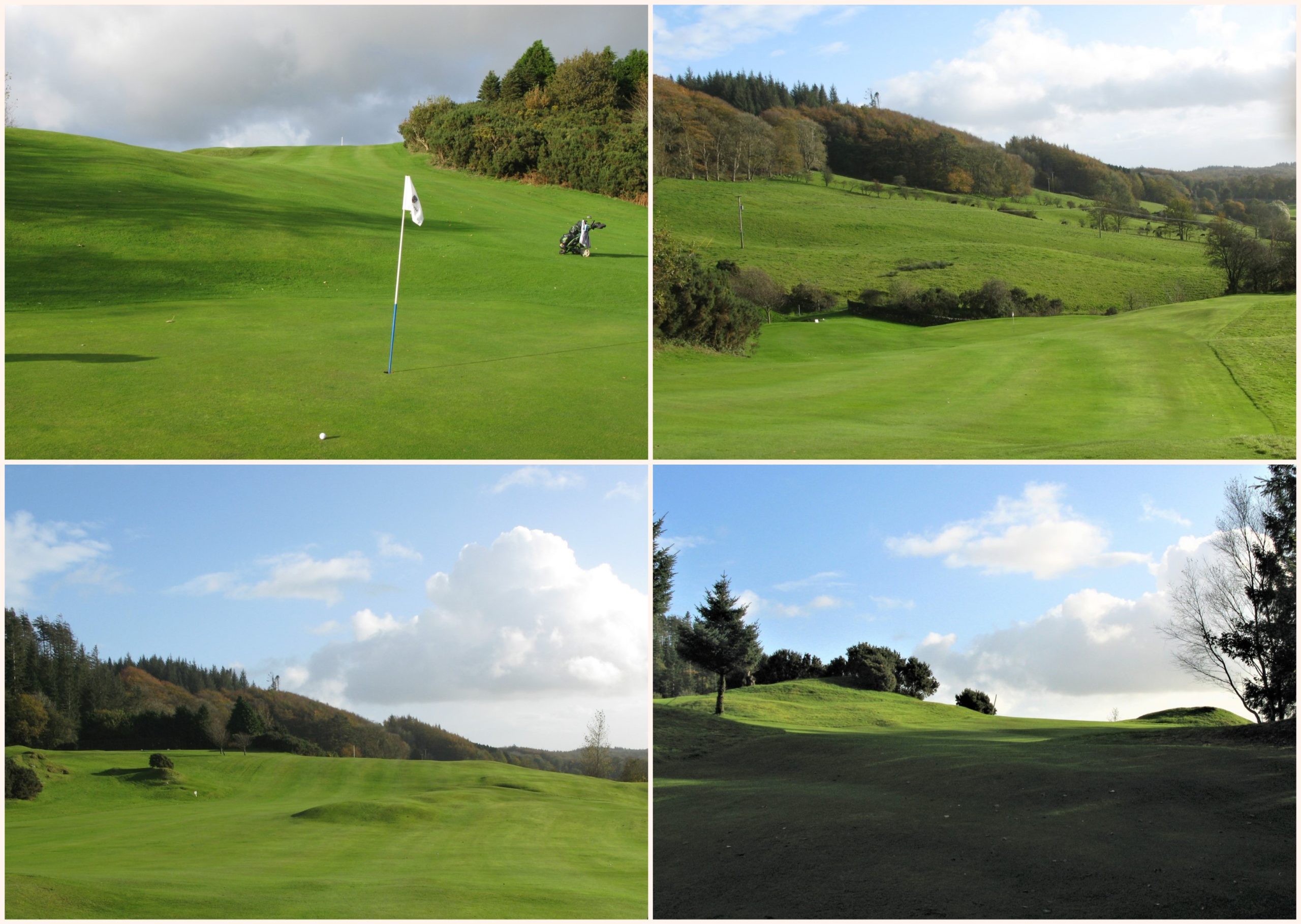
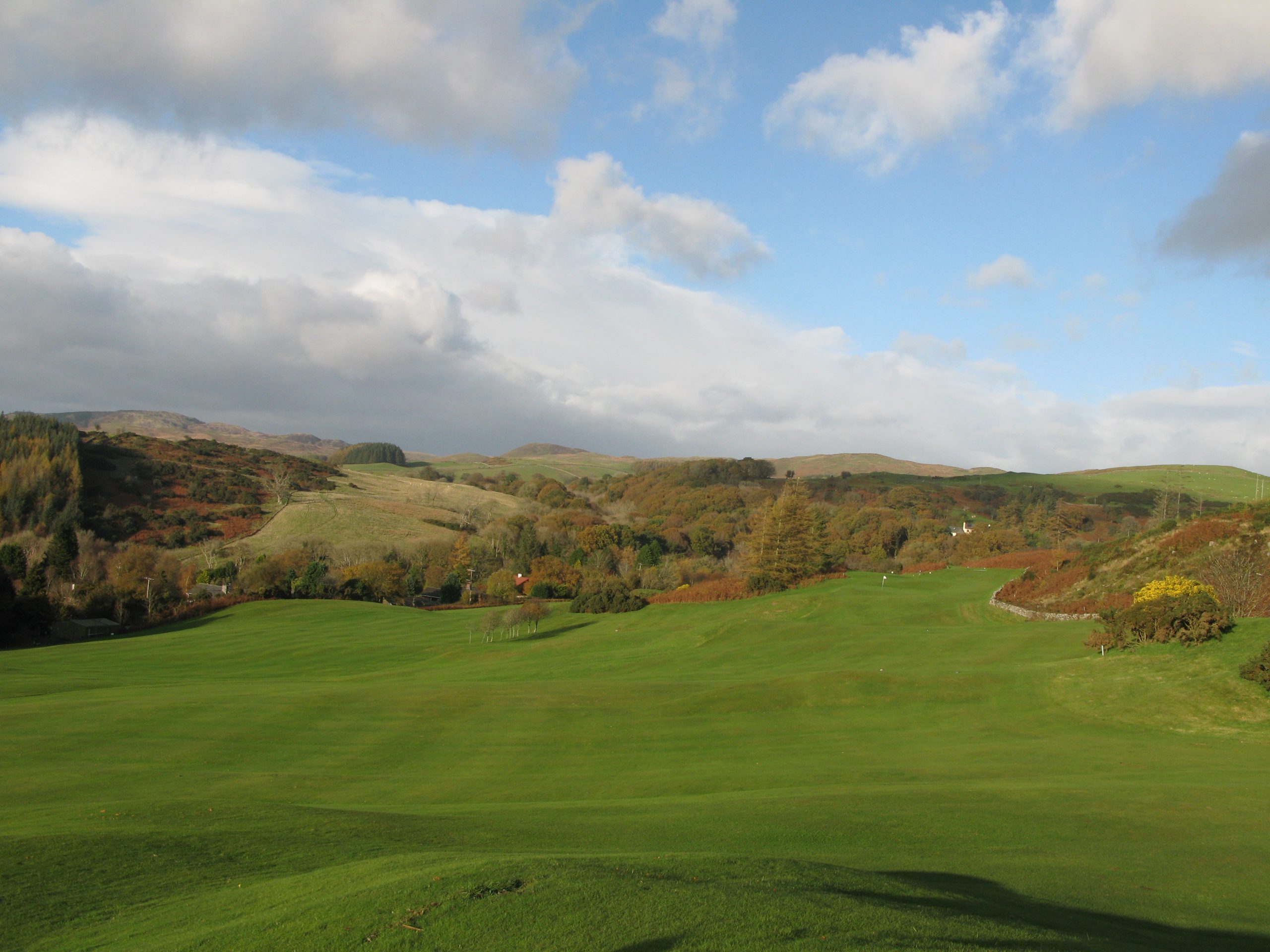
Moly at the short par three 5th tee at Gatehouse with magnificent Dumfries and Galloway backdrop.

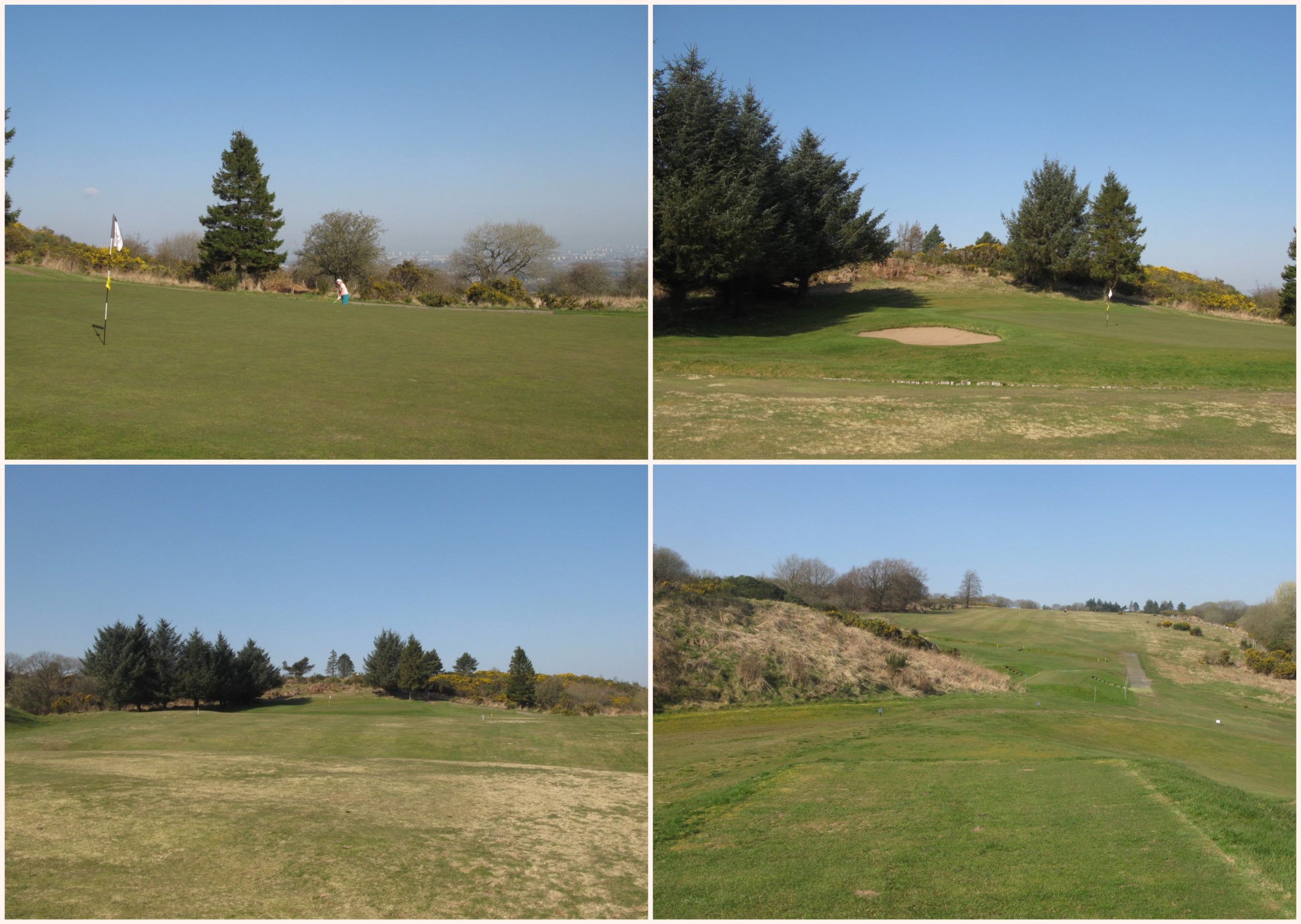
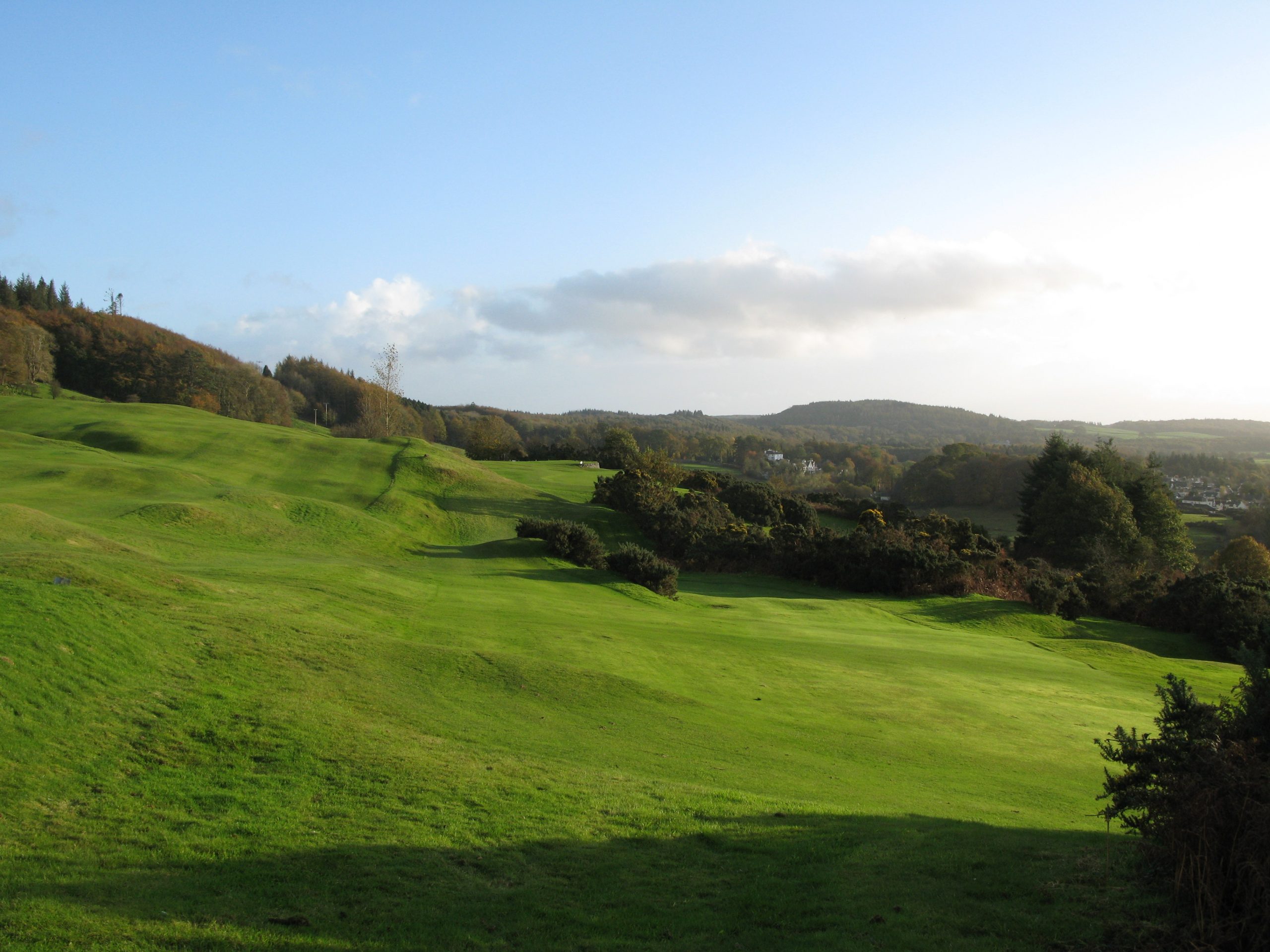
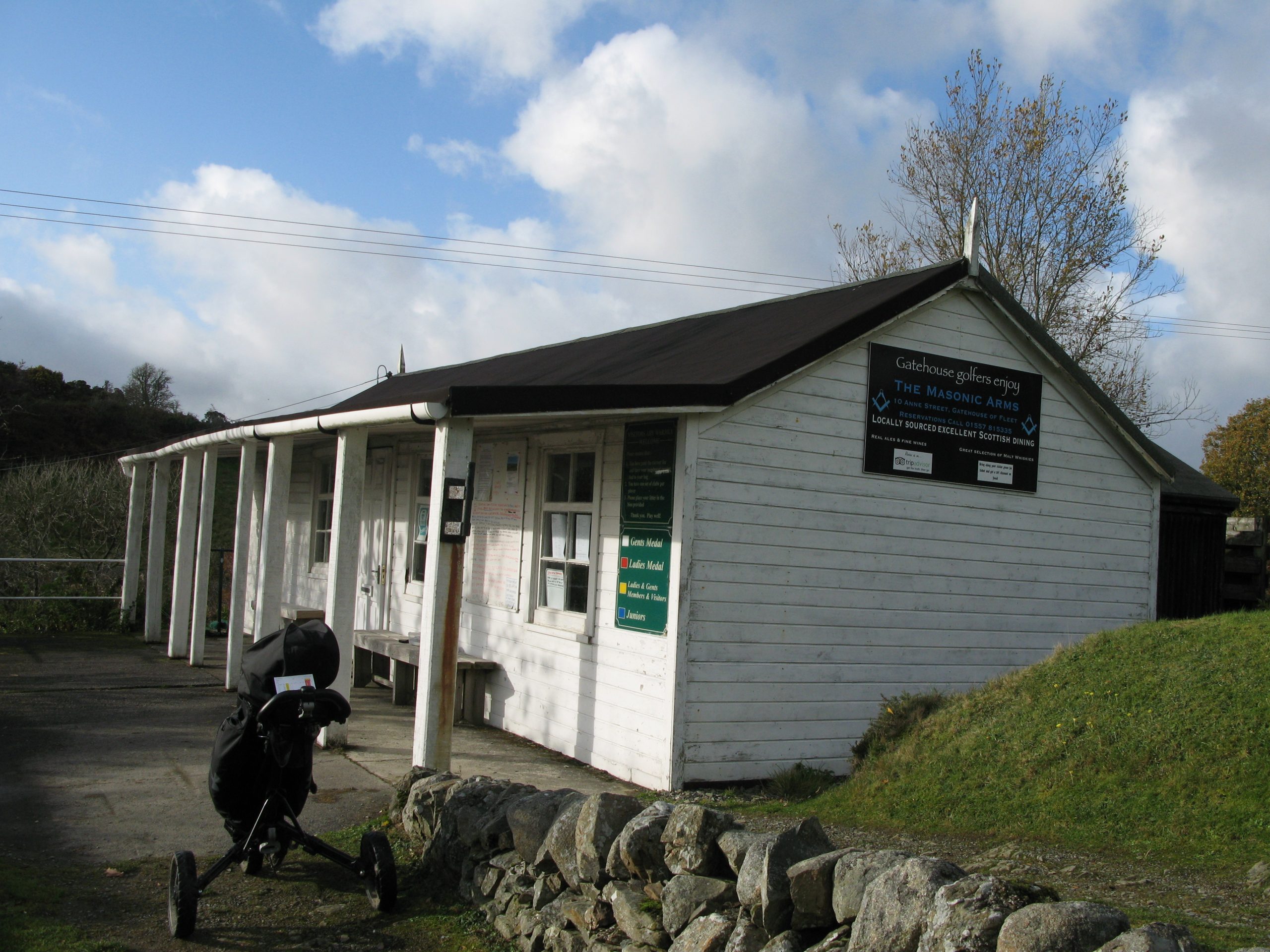
It is a ‘highland/heathland’ course, with outstanding views. The clubhouse, a lovely little ‘shed’ type building, shouted ‘golf in its basic form’ to me. The course has been around for a hundred years (founded 1921) and probably has changed very little.

The second at Gatehouse, a beautiful mid length, par 4, with blind tee shot – plenty of room to the left of the marker.

The course has plenty of variety as well, requiring all your clubs (well me, anyway) – one par 5, four par 3s and 4s. The par 3s in particular are varied and collectively difficult. The first, an uphill par 3 of over 200 yards, played like a short par 4. The 8th and 9th are great finishing holes, with the downhill 160 yard 9th presenting a potential disaster if you go long – don’t do that.

The approach shot to the par 4 forth hole, at 322 yards (white), with the wonderful views.

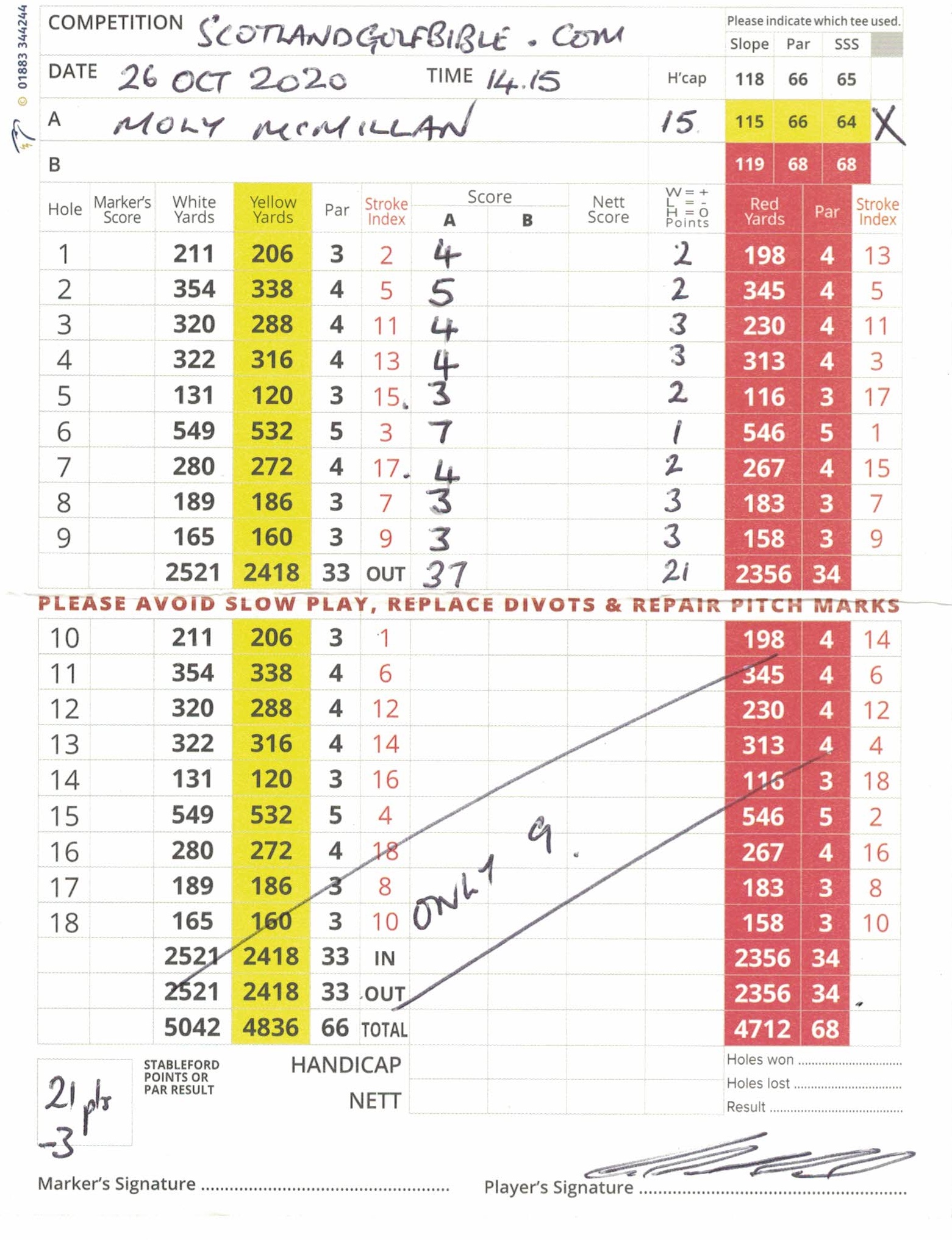
I played well – scoring 37, 4 over par – on this course that I wouldn’t recommend for the ‘occasional’ golfer. It’s very undulating, a tough walk, has small greens and many blind tee and approach shots. It was quite slippery when I played and actually could be a bit hazardous (my playing partner Fran fell on one of the slopes).

The difficult par 3 eight hole, where being long is better than short.

Overall, its really great value golf. The greens and fairways were in excellent condition and overall this is highly recommended.

The ‘highland’ style clubhouse, typical of Scottish 9 hole courses.

But even without playing well, I think I would have come to the same conclusion – this is Scottish golf personified in many ways.

Course Type: Heathland

Par 33 (1 par 5, 4 par 4s, 4 par 3s)

Distance: 2418

Moly’s Gross score37

Moly’s scorecard at Gatehouse – 37 and great fun

109. Lamlash. 20 Sep 2020.

Reserve your ‘A’ game for Lamlash – the toughest Arran challenge

Round £27. Par 61. Slope (yellow) 106. Value (out of 5) – 5

If you only play one course in Arran, Shiskine would be it. However, for difficulty, Lamlash, “a wolf in sheep’s clothing”, takes the prize. Played as a par 61 of just under 4000 yards, or as a par 64 of 4500 yards, it represents a real challenge, both physically (it’s a tough walk) and demanding accuracy off the tee. There can’t be many players of the course for the first time who don’t need at least one “3 off the tee”. I anticipate the World Handicap System (WHS) slope ratings will be adjusted upwards in time from the initial 106 (yellow) or 109 (white), once historical data is built up.

The beautiful par 4 first hole at Lamlash, playing longer than its stated length.

With three of the holes (7, 8 and 10) playing as long par 3s off the yellow tees, rather than short par 4s from the white, I actually think the slope rating should be higher off the yellow tee boxes compared with white.

The 3rd hole at Lamlash, the stroke index 1 “goatfell” par 4. Moly learnt too late to play conservatively off the tee (play short and right with a 5 iron off the tee).

Blessed with a quite magnificent late summer day, the course was in excellent condition when I played with Fran on our Arran golfing trip. Paying only £20 through Golfnow this was incredible value, especially as the rack rate of £27 would also merit 5 star value. Disappointingly, we were met with a gruff starter who complained that “Golfnow shouldn’t have allowed the booking”. This reinforced a theme that emerged over our Arran trip with several locals behaving resentfully towards the holiday golfer – even although the holiday visitor income no doubt enables the local fees to be reduced. As an example, the current membership (2021) of Lamlash is only £380, with a first year membership reduced to only £225. These fees are so much lower than English club golf fees, this being a relevant comment as we were told that the village of Lamlash had a nickname of “Little Yorkshire”, such was the number of retired people from the North of England.

The par four 9th at Lamlash, with views towards Ayrshire past Holy Island in the foreground.

The course abounds with sea and hill views – with Troon and Prestwick visible on clear days – Holy Island also dominates the skyline.

Don’t let the views offset the concentration needed in playing Lamlash, a course that feels a combination of Highland, Parkland and Heathland layouts. It has some really great holes. The starting 3 holes should be played conservatively, with level bogies being more than ok for anything other than the single figure player. The third, a par 4, justifiably the stroke index one hole, with great views, has a demanding drive, which should tend to the right of the fairway, with the second shot best played long and left.

The tough 208 yard par three 7th hole (yellow), which plays as a 283 yard par 4 from white. A key theme at Lamlash.

The long par 3s played off the yellow tees are, collectively, a real test. There are four over 200 yards long, plus the 10th, an uphill par 3 at 198 yards, which needs to be played as a par 4 by most golfers. There is a strong argument that the stroke indexes should be different for the white and the yellow tee boxes here.

The 18th at Lamlash, a finishing hole that befits this tough golf course.

On a benign playing day, I scored 88, or 11 over my handicap. I can’t imagine many players beating their handicap playing Lamlash for the first time. It has plenty of guile and, along with Shiskine, is one of the two must play courses while on Arran. But – this is not “occasional holiday golf”, for that play another course on this beautiful golfing island.

Highly recommended.

Facts:

Course Type: Highland / Heathland / Parkland

Par 61 (0 par 5, 7 par 4s, 11 par 3s)

Distance: 3945

Moly’s Gross score88

Moly’s Lamlash scorecard – 88 for 26 points. It actually could have been much worse!

83. Dunkeld & Birnam. 25 Aug 2018.

This brilliantly located course, with great countryside views, is a tough 18 hole undulating walk – I wonder whether in time the club may reflect it should have stayed as a 9 hole layout? 

Round £30.   Par 69.  Value (out of 5) – 3.5

Dunkeld and Birnam Golf  Course is just a few miles east of Dunkeld, in the village of Birnam,  in what the club describe on their website as “Highland Perthshire”.    Birman and Dunkeld were actually different villages set on opposite banks of the river Tay, until they were connected in 1809 by a Thomas Telford bridge.  It is in an area of outstanding beauty, and I suspect many visitors may decide to play golf whilst on holiday.

Moly at the par 3 11th, one of the new holes created in 2000.

The course was designed by Old Tom Morris in 1892, and was only extended to 18 holes in 2000.  The new holes are very much more open parkland, and slightly out of sorts with many of the original holes, which provide some typical “highland” holes.

The new layout also caused a change in the hole order, with the 17th and 18th (both originally part of the 9 hole course) being 2 of the 4 par 3s of the 18 hole course.  This makes for a rather unbalanced course in my view.  With the increasing debate about 9 hole golf competitions, as a means of encouraging play, I wonder whether Dunkeld and Birnam should have remained a 9 hole course?  I certainly think there is a charm in the “highland 9 holer”, which arguably has been lost.

The risk reward par 4 6th hole, with the picturesque surrounds.

The course is relatively short, but it feels much longer, due to the many undulating holes, and there are a couple of fairly long walks between green and tee (the 7th to 8th being the longest, between the old and new holes).  The walk up to the 18th green warrants a buggy hire in its own right and, thankfully, there are several available for hire.

The tough approach shot at the par 4 8th at Dunkeld and Birnam

Having said all this, which might be unfairly critical, it’s really well worth the visit to play Dunkeld and Birnam.  The overall condition of the course was excellent and the greens were lovely.  The views were outstanding, including overlooking Dunkeld and taking in The Loch of the Lowes, and I think that playing in early Autumn must be particularly spectacular, due to the many trees surrounding the local hillsides.  It is an area renowned for local bird life.

The 9th tee, with The Loch of the Lowes in the distance.

Even if not playing golf here, the Golf Club has a really nice clubhouse, with beautiful countryside views and would be nice to visit for the good food also on offer.   The members were very friendly to Fran and I, and they were very proud of their club.   They are also an enterprising club and have an apartment for rent in the clubhouse.

The first green looking towards the lovely club house at Dunkeld and Birnam

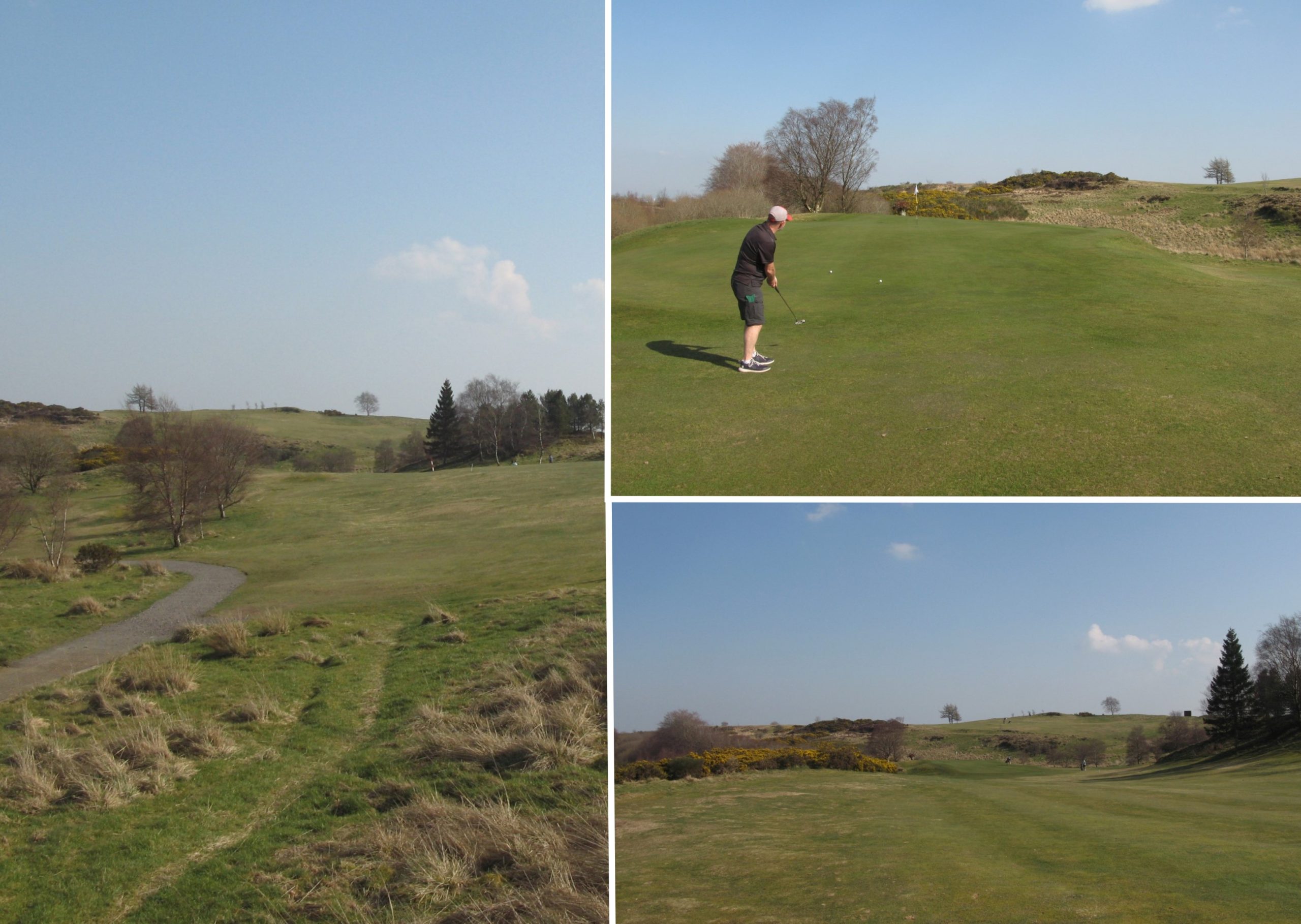
The course has some very interesting holes, and also several short par 4s which present the classic risk and reward dilemma, no more so than the 6th, one of several drive-able holes; on the day I stuck to a conservative strategy, albeit my scoring (91 for 33 points), may indicate I should have played driver more often!

The best hole for me was the SI3 7th hole, where a mid iron is likely needed to a raised green surrounded by trouble.    I suggest you play more club than you think towards the left side of the green.

Fran putting at the 11th at Dunkeld and Birnam


Worth playing Dunkeld and Birnam, not least for the friendly welcome and the outstanding views from the clubhouse, over the tipple of your choice.

Facts:

Course Type: Heathland

Par 69 (1 par 5s, 13 par 4s,  4 par 3s)

Distance (yellow): 5192 Yards

Moly’s Gross score: 91

Moly’s 91 scorecard at Dunkeld & Birnam

« Older posts Newer posts »

© 2025 Scotland Golf Bible

Theme by Anders NorenUp ↑