A guide to green fee value for money

Category: Commercial (Page 7 of 9)

51. Ballindalloch Castle. 11th Sep 2016.

Creatively ambitious Highland Estate course with single malt 19th hole

Round £15(9)/£25(18). Par 36(72).  Value (out of 5) 4. 

Ballindalloch Castle golf course is 14 miles north east of Grantown on Spey and sits alongside the River Avon not far from it’s confluence with the River Spey.  The Castle has been the home of the Macpherson-Grant family since it was finished in 1546; the golf course is a little younger, having been designed by 2 of the more prestigious designers around, Donald Steel and Tom MacKenzie, in 2002-3.  They obviously work well together, having also designed the well regarded Carnegie layout at Skibo Castle – maybe they just like castles?
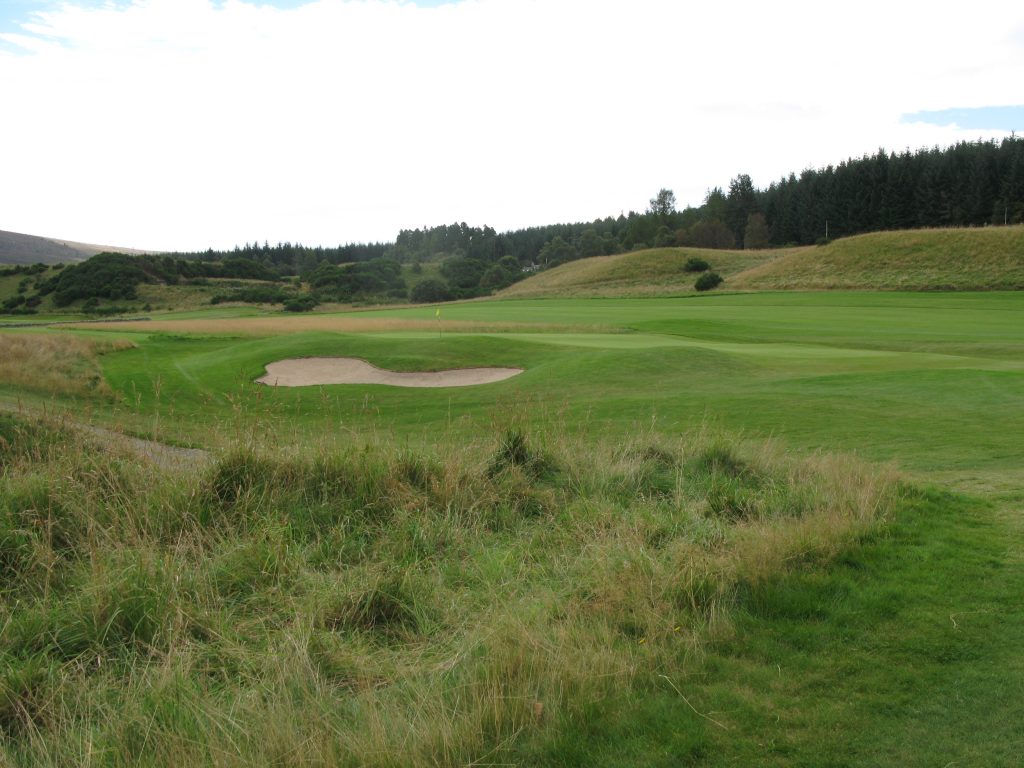
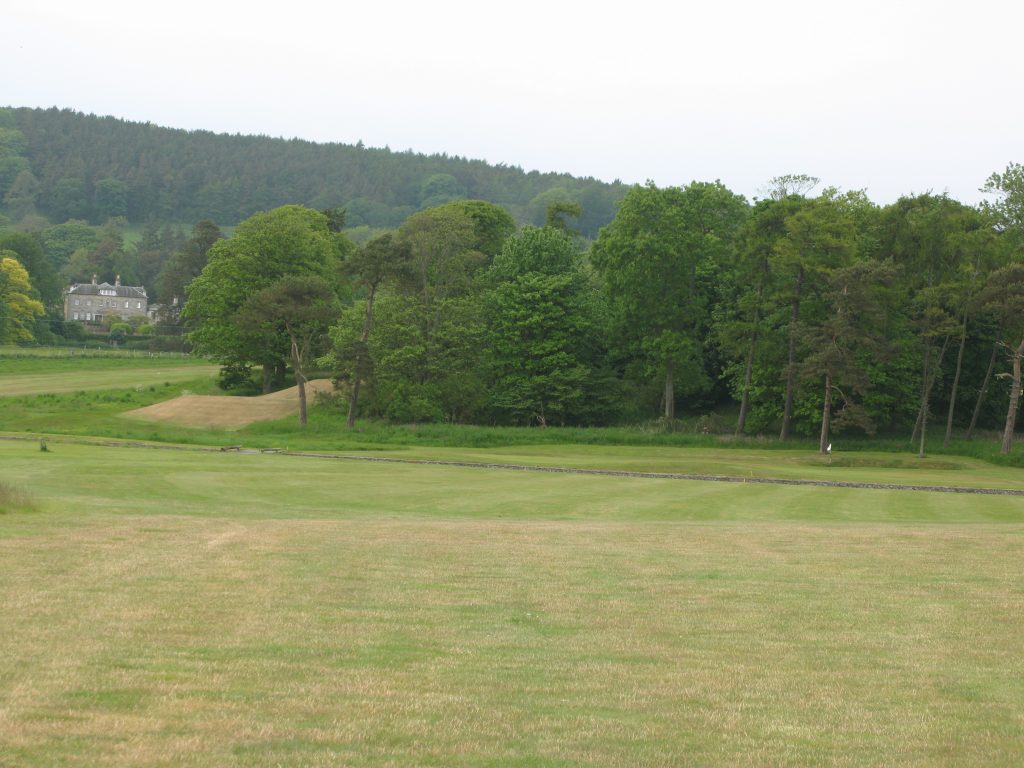
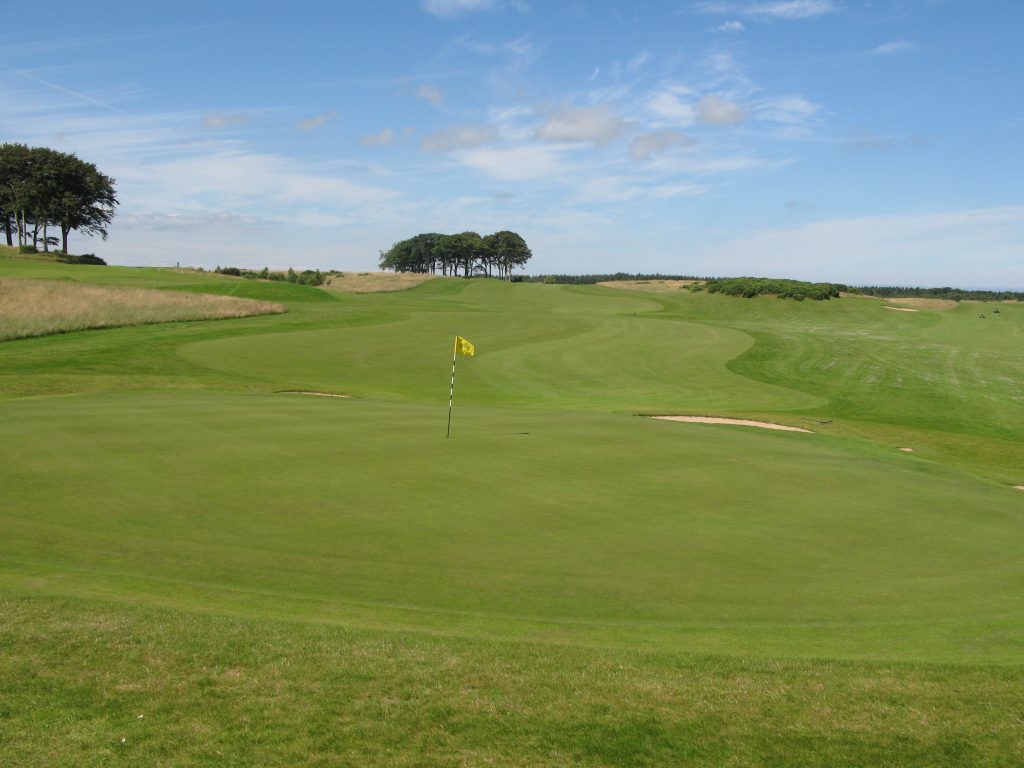
Approach to the 1st (Par 5) or 10th (Par 4) - a difficult green to reach in regulation.

Approach to the 1st (Par 5) or 10th (Par 4) – a difficult green to reach in regulation.

The resulting golf course, with views of  hills and birch woods, is a rather marvelous and pleasantly surprising layout at 6417 yards from the white tees.  Although a “9 hole” course, there are 18 tees, with many of the tee combinations significantly altering the front and back 9s – I would strongly recommend playing 18 holes to appreciate the architectural cleverness of this Steel and MacKenzie design.
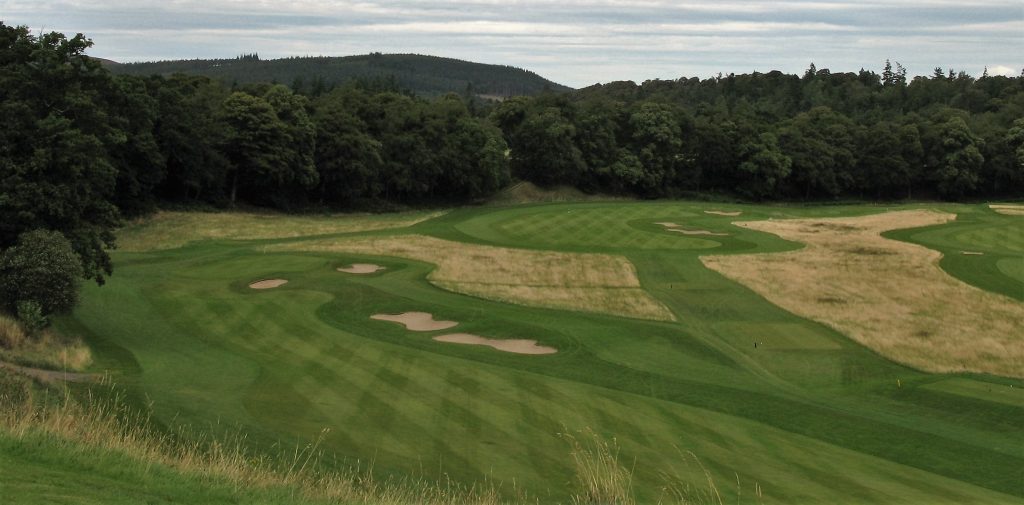
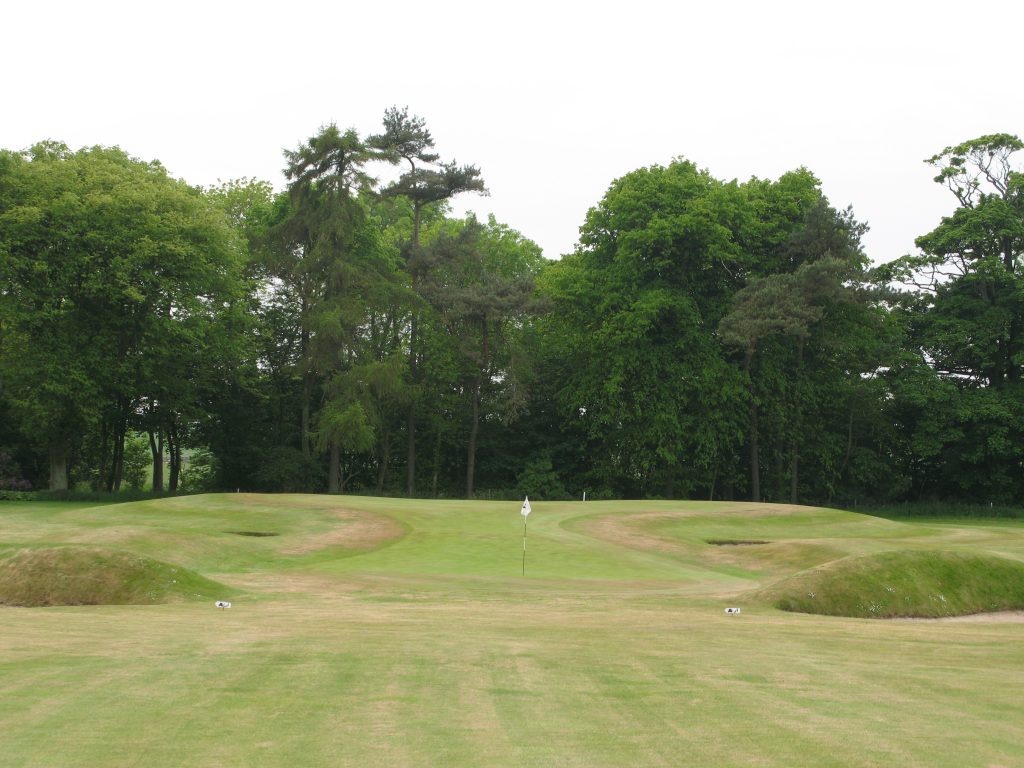
The magnificent 4th / 13th at Ballindalloch Castle - here showing the 2nd shot view.

The magnificent 4th / 13th at Ballindalloch Castle – here showing the 2nd shot view.

The effect of the different tees, is exemplified straight away with the 1st playing as a par 5 at 488 yards, but the 10th as a par 4 at 405 yards – however, the westerly prevailing wind make both holes very difficult.   The tees at the 5th/14th are 100 yards apart, with the 14th playing as a near 90 degree dog leg right.  Arguably most stark is the par 3 7th/16th, where I suspect most players need at least a rescue club on the 7th, but only a wedge on 16th; the holes are 70 yards different in length.
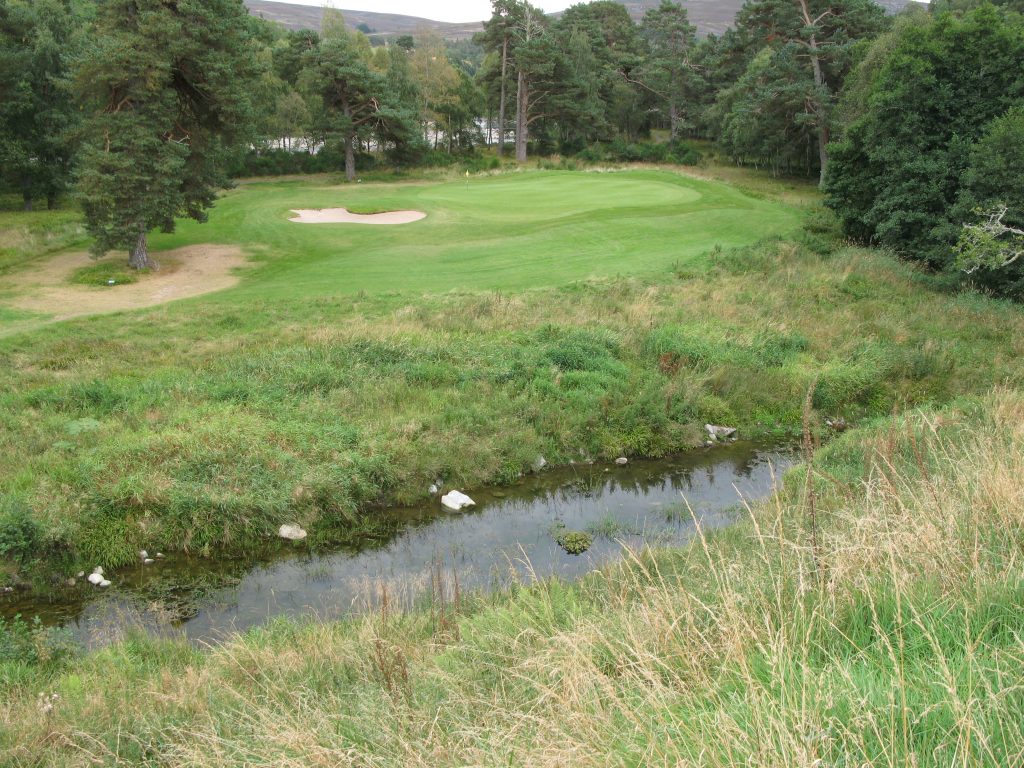
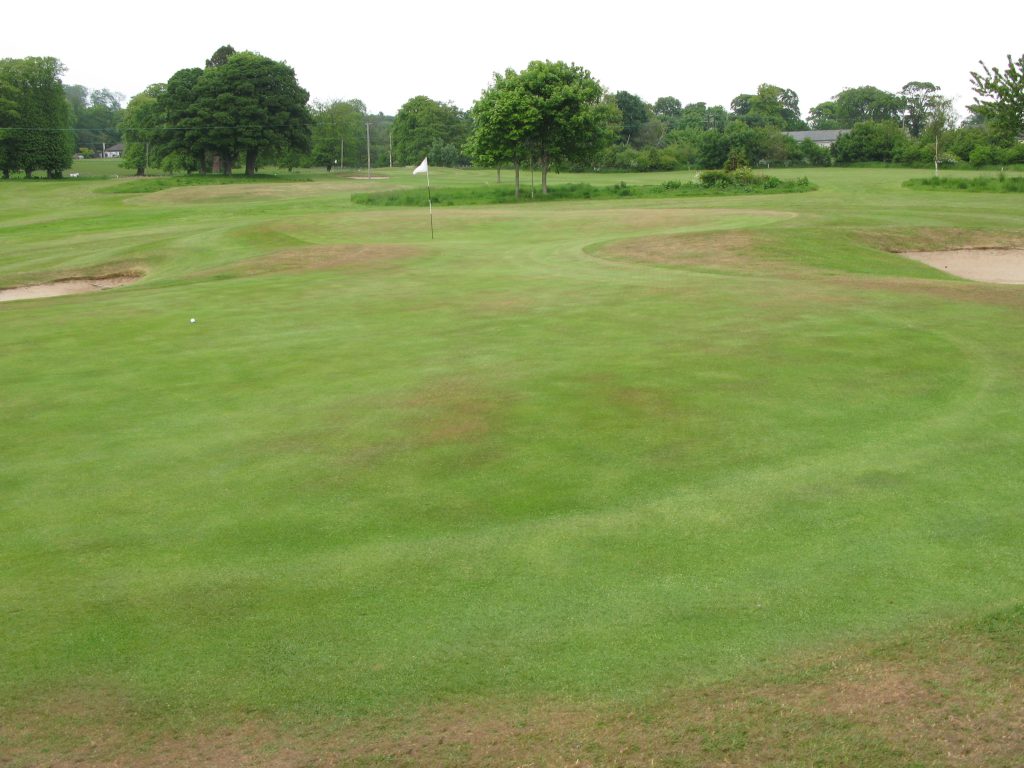
The 7th/16th green (here showing the 16th tee view)

The 7th/16th green (here showing the 16th tee view)

As I played around this very ambitious project for a highland estate, I was struck with how fitting the course adds to the colourful history of the castle, which is the original home of the Black Watch, the oldest of the Highland regiments, and also the place where Captain W.E. Johns wrote many of his Biggles stories.
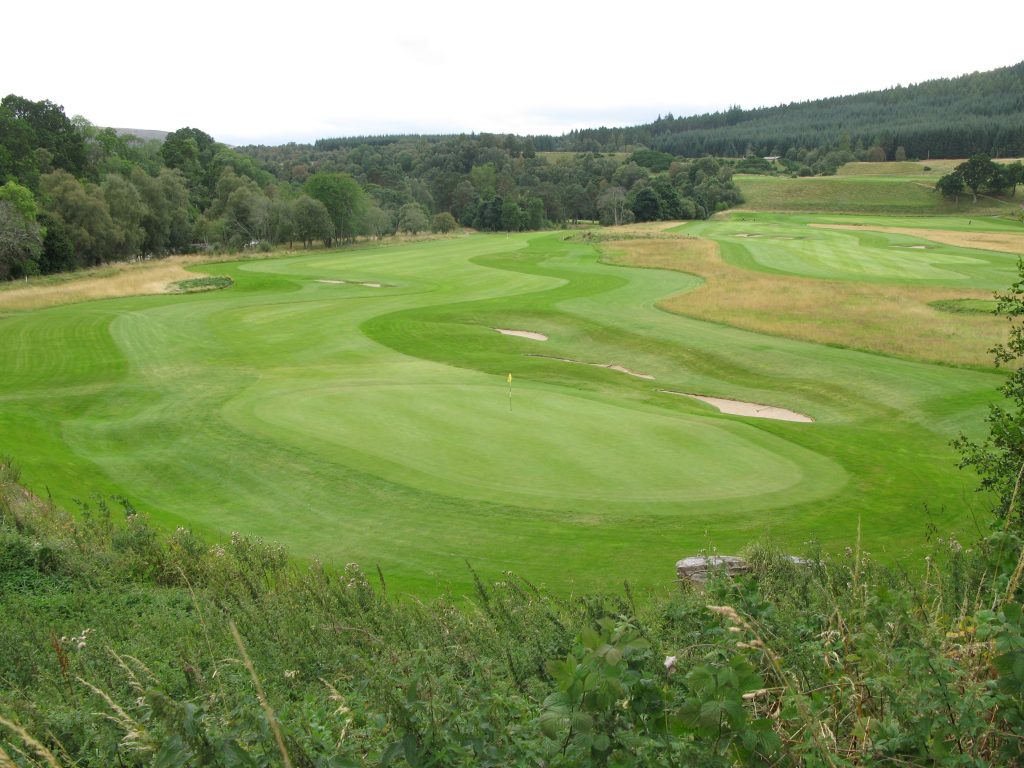
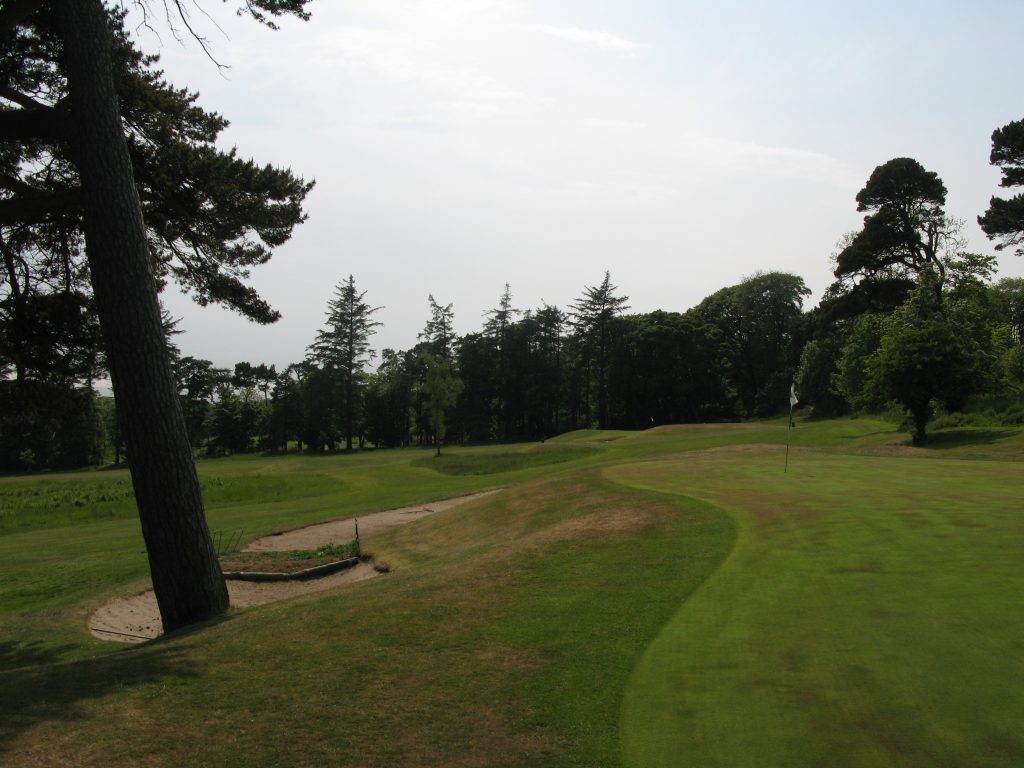
View from behind the 7th/16th green at Ballindalloch

View from behind the 8th/17th green at Ballindalloch

The course was in excellent condition when I played, which I suspect might be helped by the relatively small number of members and players the course attracts.  I guess it’s because not many people want to travel too far “just for 9 holes”.  I think they are making a big mistake – this must be one of the best 9 hole courses in Scotland, and it is very competitively priced against its Strathspey and Baddenoch neighbours.
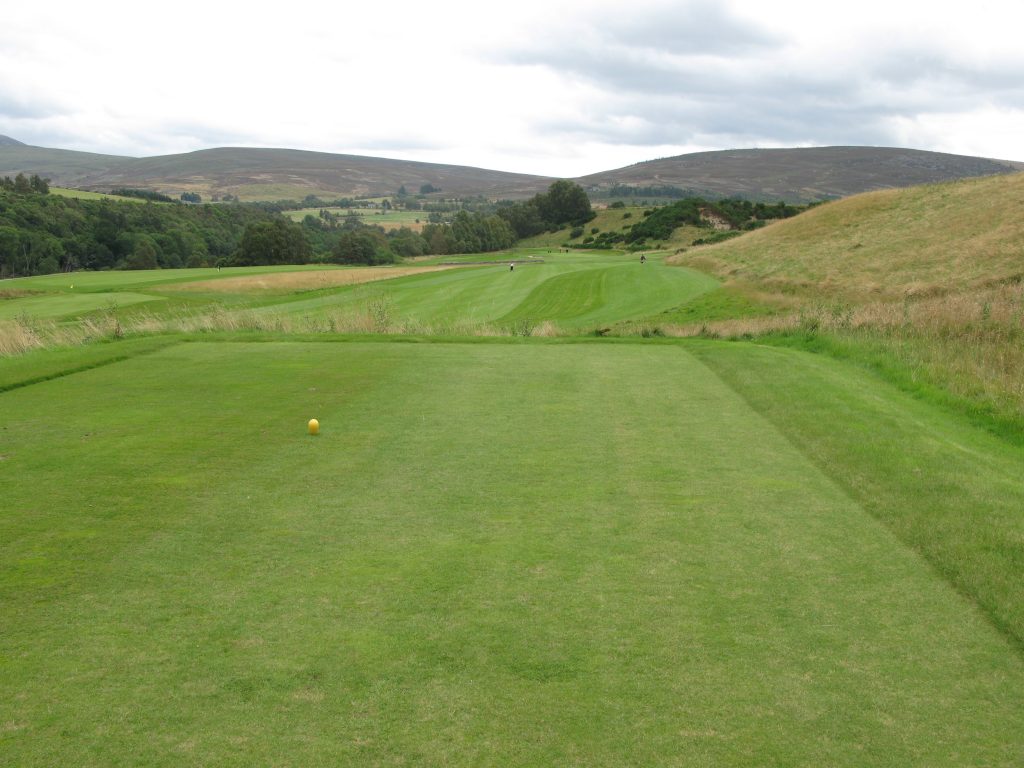
The 12th tee at Ballindalloch

The 12th tee at Ballindalloch

On the day, I played pretty poorly, scoring 103 for 23 points, although I was only 1 over for the 4 par 3s.

Finally, there is plenty to keep non golfing family members busy on the estate, which has also recently opened a whisky distillery right next door to the golf course, again reinforcing this highland estate’s ambition.

I highly recommend playing at Ballindalloch Castle.

Some Facts

Course Type: Highland

Par 72 (4 par 5s, 10 par 4s, 4 par 3s)

Distance Yards   6170 (yellow) 

Moly’s Gross Score: 103
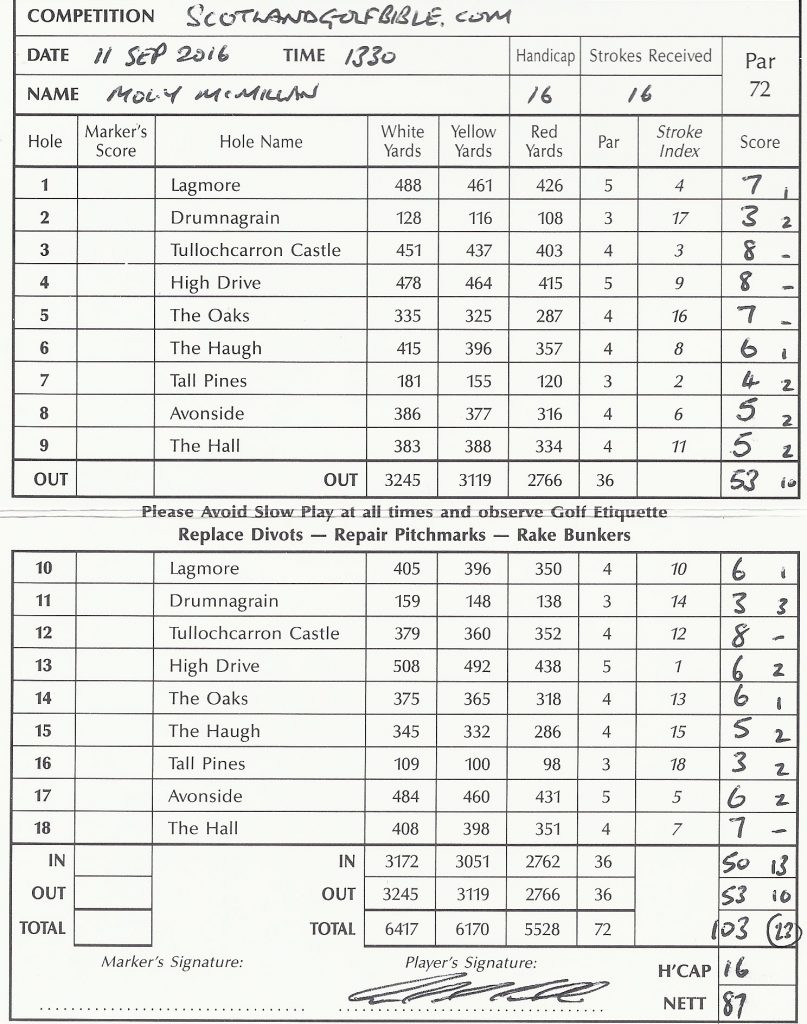
Moly's Ballindalloch scorecard - 103, for 23 points!

Moly’s Ballindalloch scorecard – 103, for 23 points!
46. Maverston. 2nd Aug 2016.

Good example of a new course worth playing, but will it be viable in an area with so many fine golf courses? 

Round £25.  Par 70.  Value (out of 5) 3.5

Maverston Golf Course is owned and operated by the ANM Group, a member owned co-operative company with interests in mainly farming related businesses.  It seems clear that the business goal of the Maverston estate was to build a golf course attractive enough to enable the sale of the co-located residential housing plots surrounding the course.  The course itself opened in 2014, and several “executive” houses are now completed and occupied.

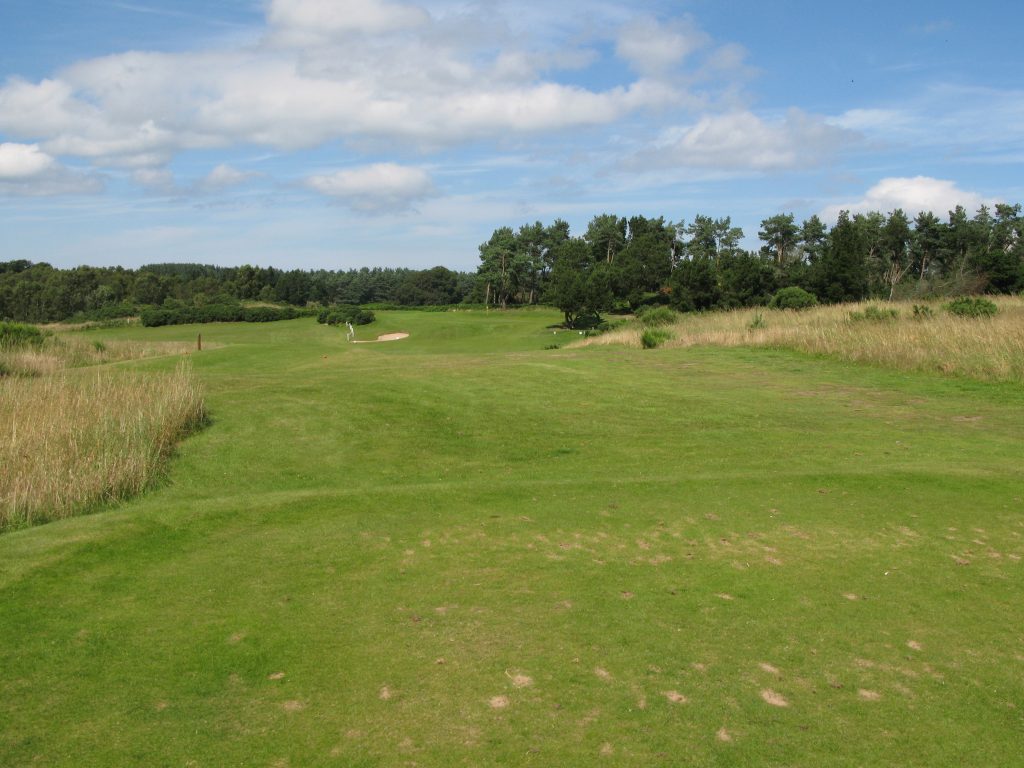
Maverston 2nd hole - a typical example of the course.

Maverston 2nd hole – a typical example of the course.

The course has matured quickly and provides an excellent challenge – especially if the wind blows as it is on open parkland.   It is located very close to Elgin and although close to the coast, there are no sea views of great merit from the course.  The web site also boasts of Cairngorms views, but I think that’s not a fair reflection of the mainly rolling farming countryside views on offer.

The course is an excellent piece of architecture, designed by former Scottish international Euan McIntosh and plays 6,000+ yards off white and yellow, both with par 70.  It has had a good start to its existence, and has picked up several members who have moved from the nearby Kinloss Country course, mainly due to the latter course struggling and reducing the course from 18 to only 11 holes.  This story, I suspect, may be the risk that Maverston faces, as the Moray coast is blessed with so many genuinely world class courses.  Only time will tell.

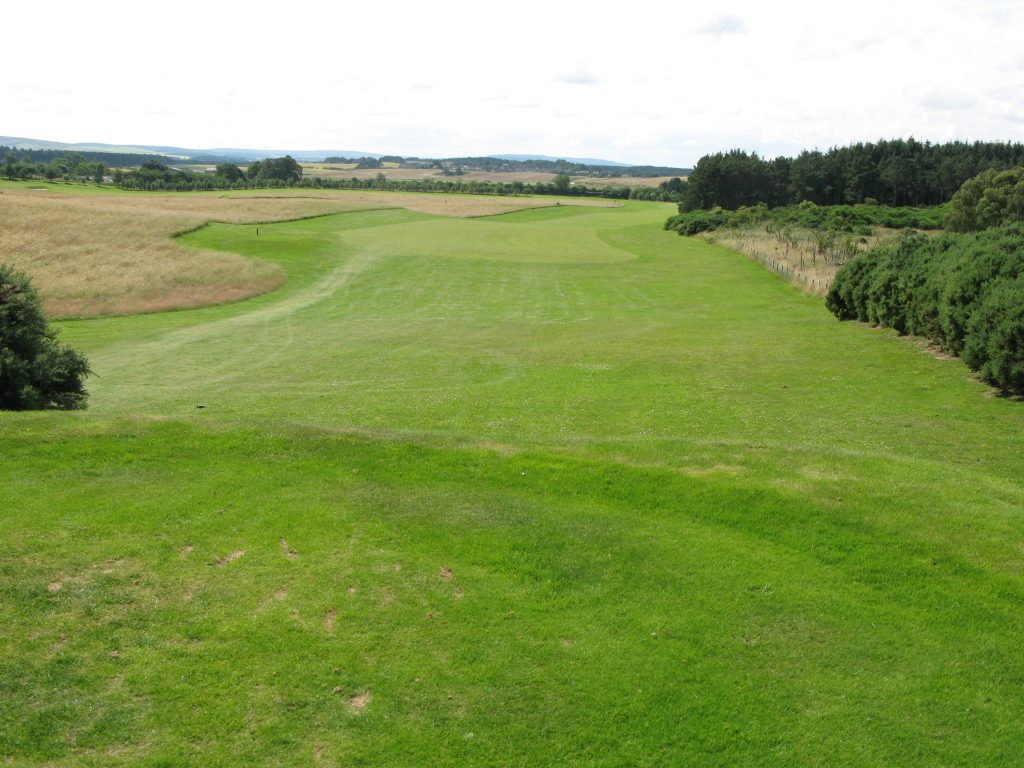
Excellent par 3 7th at Maverston

Excellent par 3 7th at Maverston

The course has some excellent holes, with the outward 9 being significantly longer than the inward 9.  The 3 holes from 6th to 8th were the highlight for me, with the lovely par 3 7th, sandwiched between 2 par 5s, which were the stroke index 1 and 3 respectively.

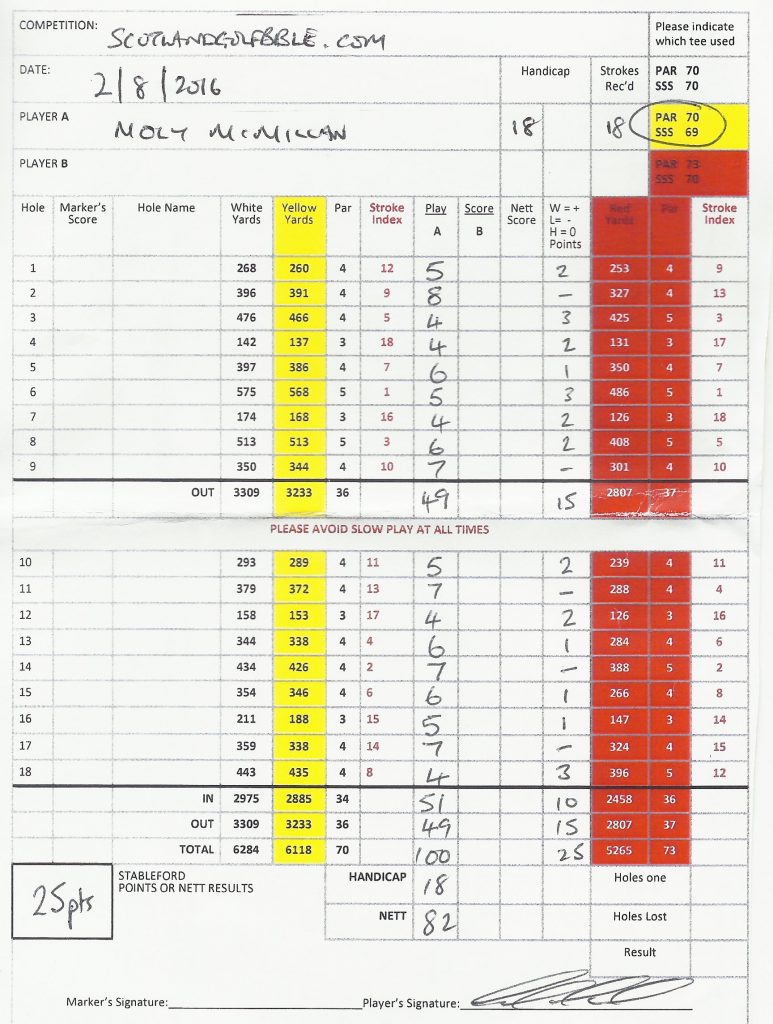
The course was in very good condition when I played and the greens were fast and true, albeit I thought the greens could have benefited from more undulation, but that’s probably overly critical.  The fairways are quite generous, but the rough outside these wide targets is very penal. On the day I actually lost 6 balls, costing me 12 penalty shots, making up the whole story between my score and handicap!  The rough was so deep I didn’t find any alternative balls either!

Tough drive at par 5 8th hole at Maverston.

Tough drive at par 5 8th hole at Maverston.

With the exposure to the wind and the dry conditions I faced there was quite a “links” feel to this course, and the advice from the starter was to treat the greens and approaches as if they were links.  If that was intended as part of the design it has been a good job.

I’d recommend playing Maverston, which also has a nice little clubhouse with cafe/bar seating overlooking the 10th.  Overall good value, I hope it remains viable.

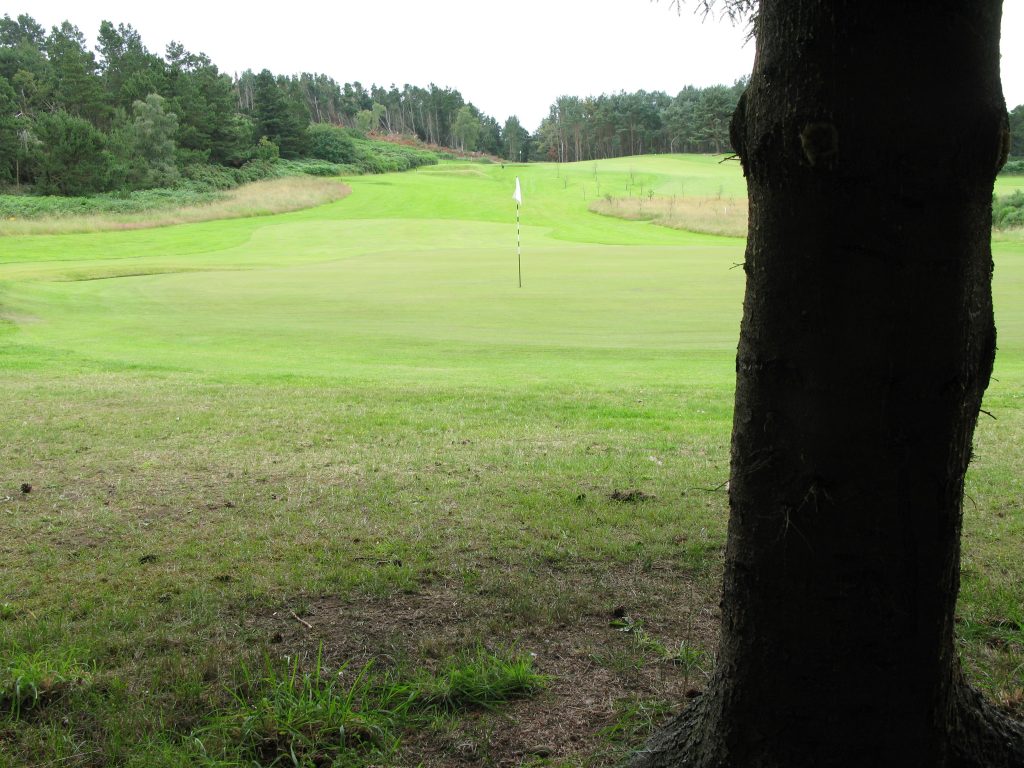
Excellent par 16th par 3 at Maverston.

Excellent par 3 16th at Maverston.

Some Facts

Course Type: Parkland

Par 70 (2 par 5s, 12 par 4s, 4 par 3s)

Distance (yellow)   6118 yards

Moly’s Gross Score  100

Moly's Maverston scorecard - a 100 with 6 lost balls for 12 penalties

Moly’s Maverston scorecard – a 100 with 6 lost balls for 12 penalties

43. Charleton. 7th June 2016.

A rather bland open parkland course, but with magnificent greens – it’s a cunundrum!  

Round  £32.   Par 71 (yellow).  Value (out of 5) – 3

Charleton House on the East Neuk of Fife was built in 1759 and after passing through several hands is now owned by a Swedish family and it was Baron John Bonde (1918–2009) who established the golf course and small picturesque club house in 1994.  The Estate house and terraced garden, with outstanding Firth of Forth views, is operated as an events location.

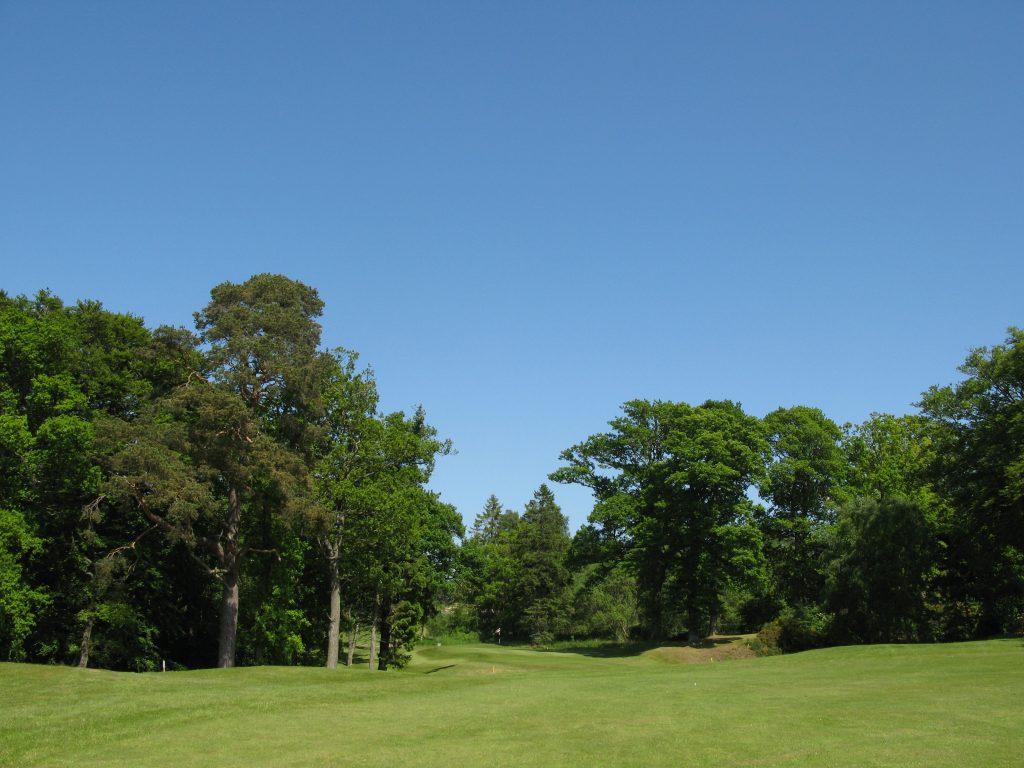
Short par 4 17th tee with Charleton house in the distance.

Short par 4 17th tee with Charleton house in the distance.

Firstly, I’d point out that unlike the club’s website boast, this is definately not in my opinion “Scotland’s Premier Parkland Course”, a rather embarrassing claim, given the competition.  Given that the course was opened by ex-US president George Bush Snr, one can’t help conclude that the Bonde family have many good contacts!

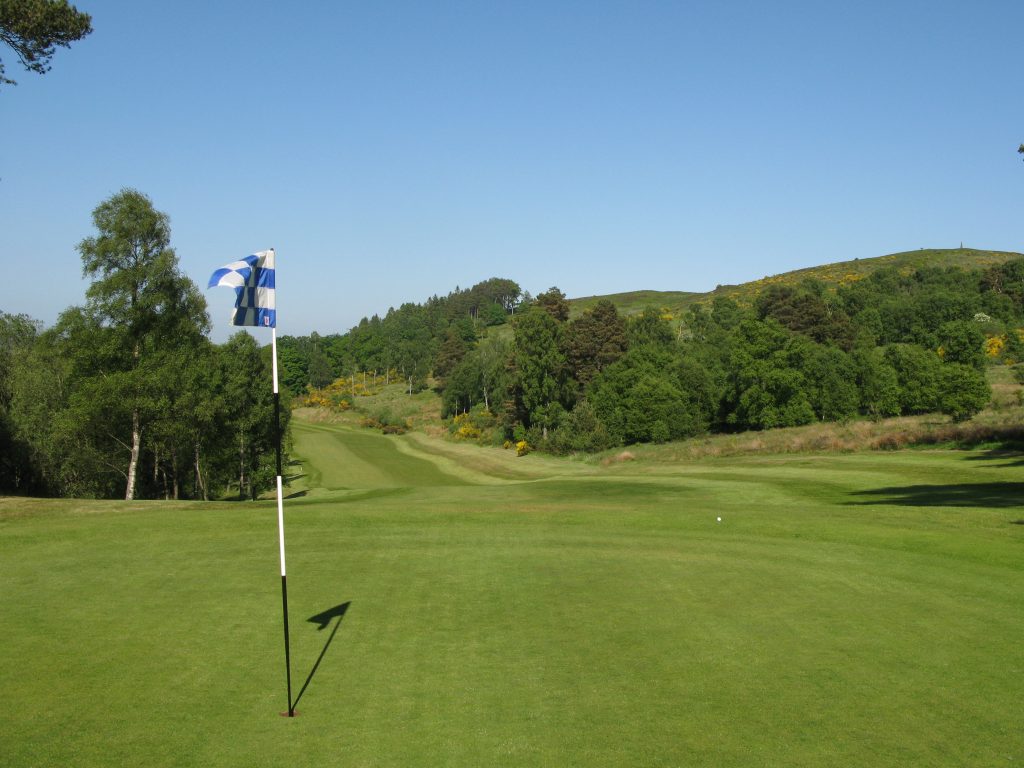
The difficult short par 3 5th green.

The difficult short par 3 5th green.

Charleton is actually the most open of parkland courses, in fact it has some of the widest fairways you’re likley to find in Fife.  Therefore it is a good course for Society outings, without the need for several balls in your bag.

The course is a bit of a conundrum, since although the tee shots are relatively mundane, when you get to the greens, many of them are rather magnificent; several are up to 50 yards from front to back, some guitar shaped narrowing to only 6 yards wide and there are several positions on the greens that you might have to pitch over the fringes to get to the flags.  There are also some very severe sloping banks at the sides of the greens, which combined with deep bunkers, make the approach play some of the most challenging around.

The trecherous green at the par 4 14th.

The trecherous green at the par 4 14th.

There are some real highlights, but for me the most difficult were the par 3s, only 3 of them, but on each occasion I struck what I thought were excellent shots, only to discover my ball in devilish greenside bunkers.  I also must mention the 14th green – it measures 50 yards front to back, and has several very damging bunkers – I took 4 to get out of one of them!

The guitar shaped 15th green - a par 4.

The guitar shaped 15th green – a par 4.

Therefore, the course without greens gets no more than 2/5 for value, whereas the greens are 5/5 alone, giving a rounded 3/5 value score.  It was rounded down because the teeing grounds were in poor condition when I played.

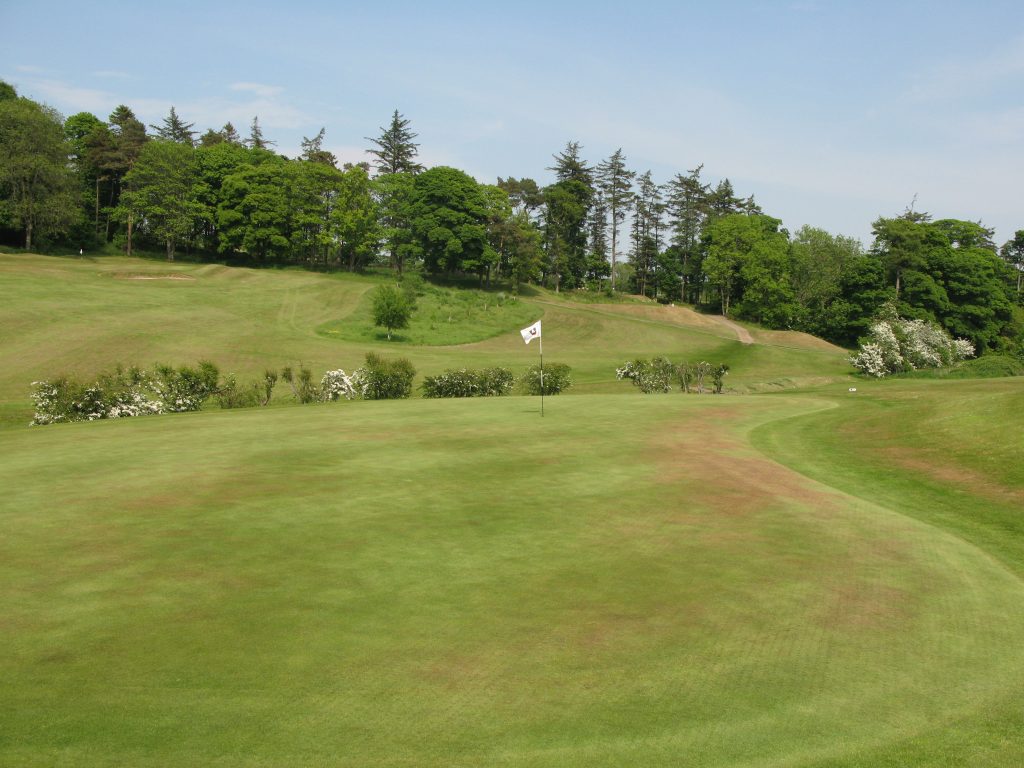
The par 3 6th green at Charleton

The par 3 6th green at Charleton

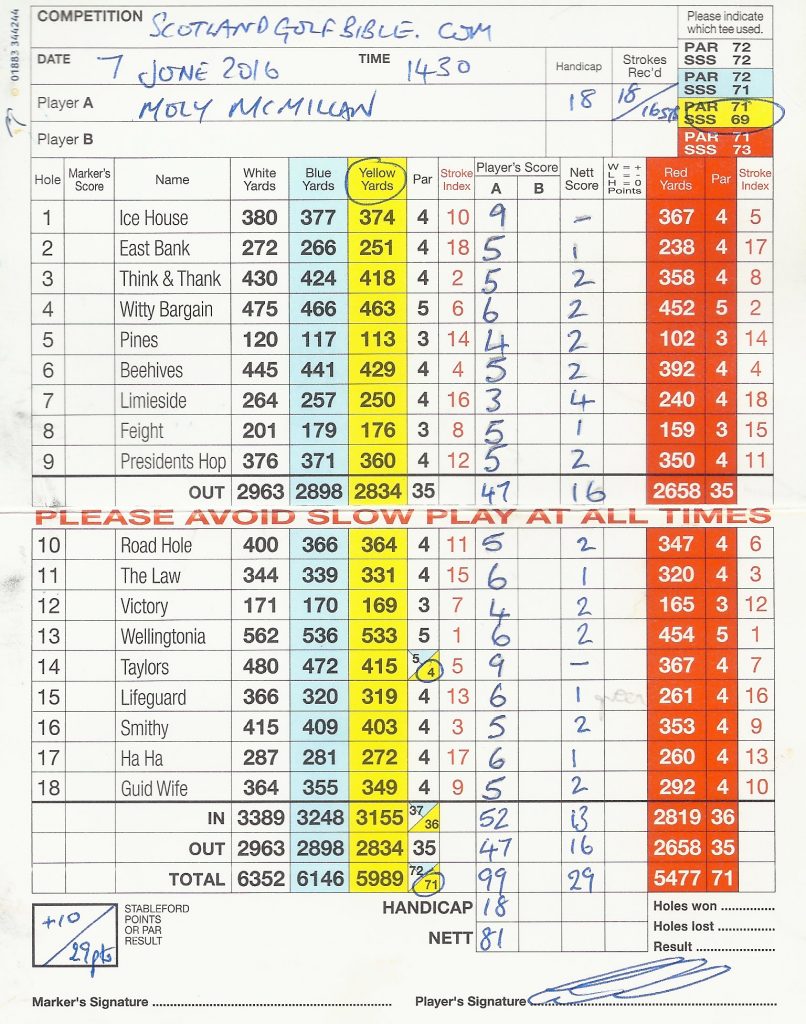
I gaurantee if you play at Charleton, you’ll want to re-play many of your greenside chips and long putts.  You can see from my card, of 99, I found the greens a challenge, having 3 putted 6 times!

Some Facts

Course Type: Parkland/Woodland

Par 71 (2 par 5s, 13 par 4s, 3 par 3s)

Distance (yellow)   5989 yards

Moly’s Gross Score  99

Moly's scorecard at Charleton adding to 99, with two 9s.

Moly’s scorecard at Charleton adding to 99, with two 9s.

42. Murrayshall Lynedoch. 6th June 2016.

The “junior” Murrayshall course provides a surprisingly outstanding challenge  

Round  £30 ( variable on-line).   Par 68.  Value (out of 5) – 4

The Murrayshall estate, first built in 1664, was established as a commercially successful Country House hotel in the early 1970s, following the sale of the estate by the Norrie-Millar family, of whom Francis Norrie-Millar was one of the key instrumentalists in building the General Accident insurance company in nearby Perth, only 3 miles to the west of Murrayshall.

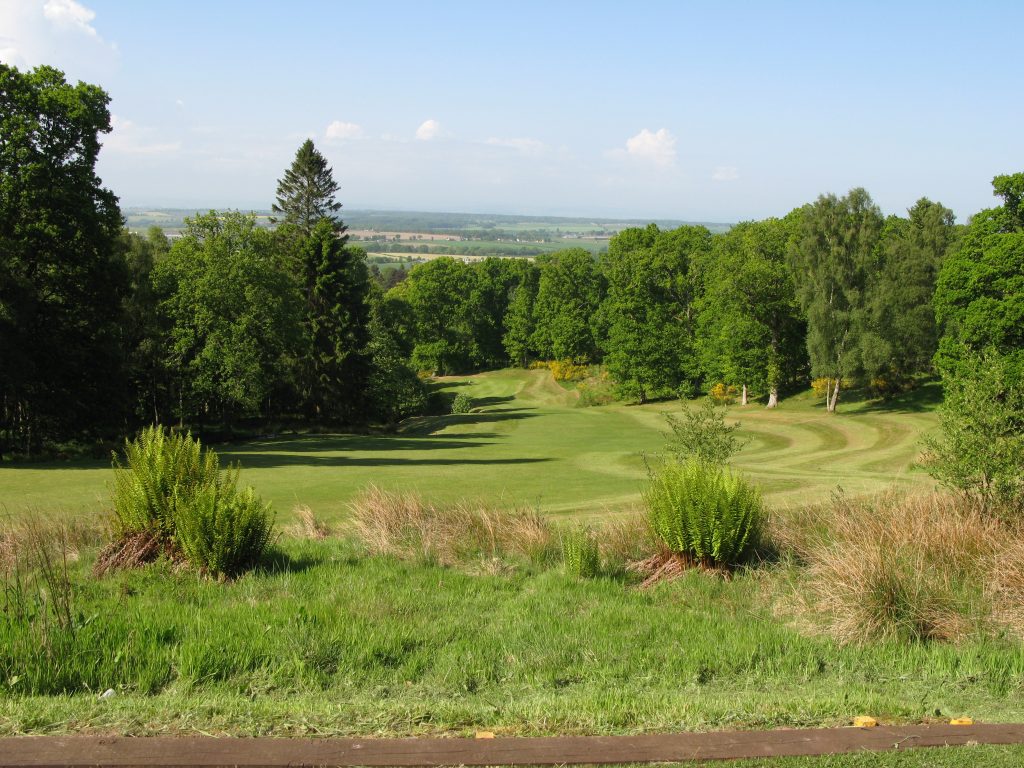
Approach to the par 4 second - requiring a well placed tee shot, into a narrow green over a deep ditch.

Approach to the par 4 2nd – requiring a well placed tee shot, into a narrow green over a deep ditch.

The esteemed golf architect Hamilton J Strutt (grandson of James Braid’s foreman) designed the original Championship course in the 70s, and returned to design the Lynedoch course which opened in 2000.  The latter course is named after Thomas Graham, aka Lord Lynedoch, who became second in command to the Duke of Wellinton’s Armies in the early 1800s.

Playing the Lynedoch actually reminds you of the Duke of Wellington when importalised in song for “marching them up to the top of the hill, and marching them down again!” There’s plenty of hills to march up and down on the Lynedoch course, which feels longer than its 5279 yards off the white tees.   I wouldn’t recommend carrying a full bag!

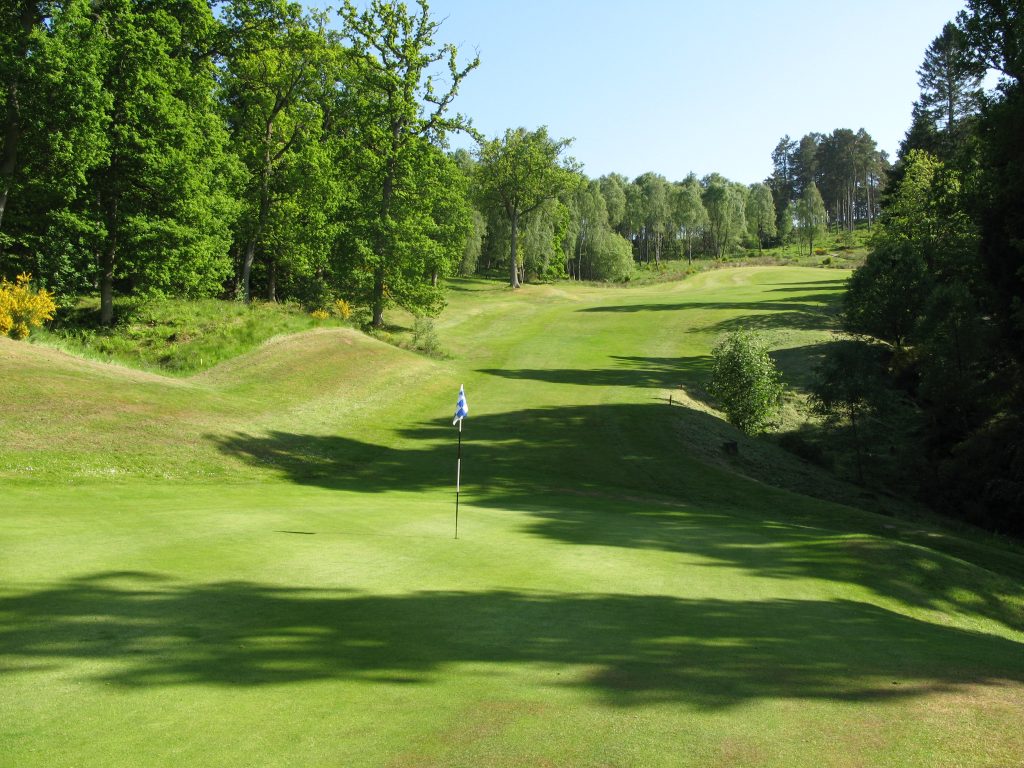
The demanding SI 1, par 5 14th hole on The Lynedoch

The demanding SI 1, narrow par 5 14th hole on The Lynedoch

The Lynedoch Course really surprised me for both its quality and character, given that it is very much the junior course at Murrayshall.  It is very difficult to give a single course type categorisation, and is a mix of woodland and parkland/medow, and has some wonderful highland views to the north.  It also has a fair amount of bracken, ditch/water hazards and Disney sized bunkers on some holes.

Given its all round quality and design, it’s arguably better value than the longer Championship course.  It has many memorable holes, starting on the first, a dog leg right par 4, which is much harder than the stroke index of 10 would suggest.  The second, a shorter par 4, starts to lay out the need for accuracy needed here.  Then the 3rd is the first of 6 delighful par 3s, with a hugh amount of variety.

The long par 3 15th tee on The Lynedoch, with deep ditch just visible on the left - cant impagine many 2s here!

The long par 3 15th tee on The Lynedoch, with deep ditch just visible on the left – can’t imagine many 2s here!

My favourite holes were the 14th, 15th and 16th, with stroke indexes 1, 5 and 3 repectively – I rather suspect these holes have defined many match play games here.  The 15th is particularly interesting played as a long par 3 (212 yards) off white but as a short par 4 (294 yards) off yellow.  It requires the most accurate tee shot, due to a right to left sloping fairway into a deep ravine/ditch – which I had to chip out of!

View from green at the par 3 15th (although par 4 from yellow tees)

View from green at the par 3 15th (although par 4 from yellow tees)

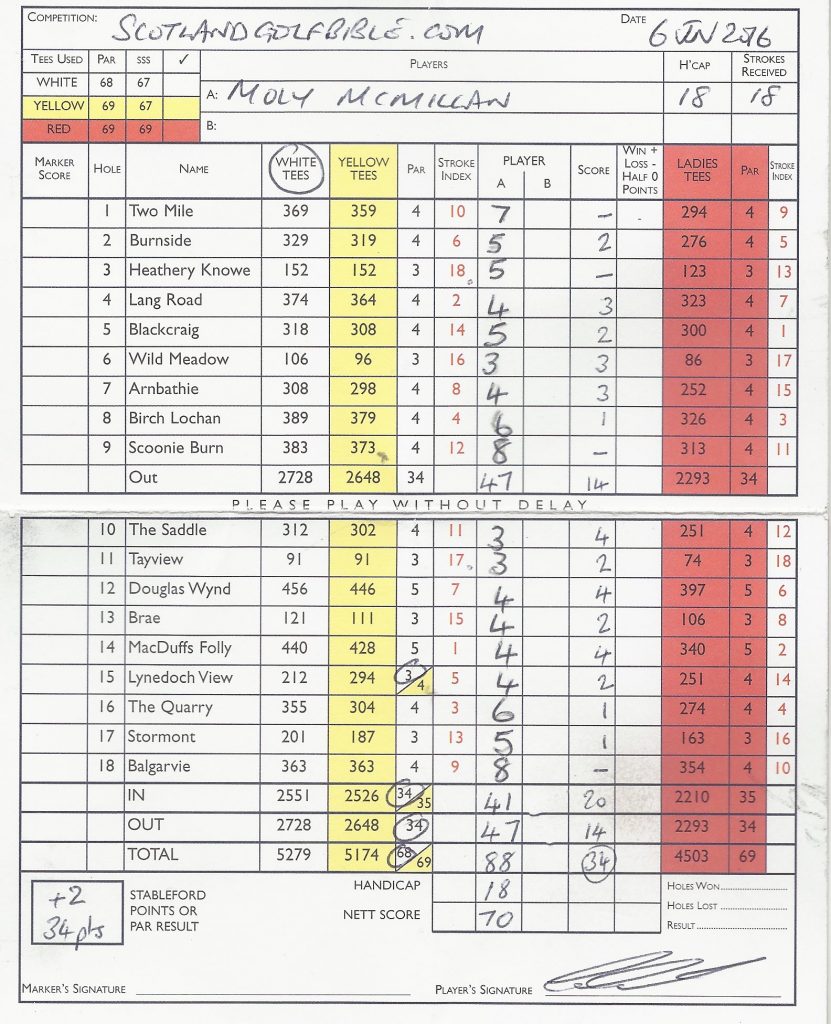
The course was in excellent all round condition when I played and I had a very mercurial round of 88 (net 2 over), including 3 birdies for the second time in my life, but unfortunately 2 quadruple and 1 triple bogie!  I think this scorecard rather sums up the Lynedoch course – lots of opportunity and hazard, but very true greens!

I highly recommend playing here.

Some Facts

Course Type: Parkland/Woodland

Par 68 (2 par 5s, 10 par 4s, 6 par 3s)

Distance (white)   5279 yards

Moly’s Gross Score  88

A mercurial 88, with 3 birdies and 2 quadruple bogies!

A mercurial 88, with 3 birdies and 2 quadruple bogies!

« Older posts Newer posts »

© 2026 Scotland Golf Bible

Theme by Anders NorenUp ↑