A guide to green fee value for money

Category: Commercial (Page 2 of 9)

182. Craigielaw. 23 Mar 23

The course that broke Kilspindie’s heart — a story for another blog.

Value 3/5 (4/5 using GolfNow)
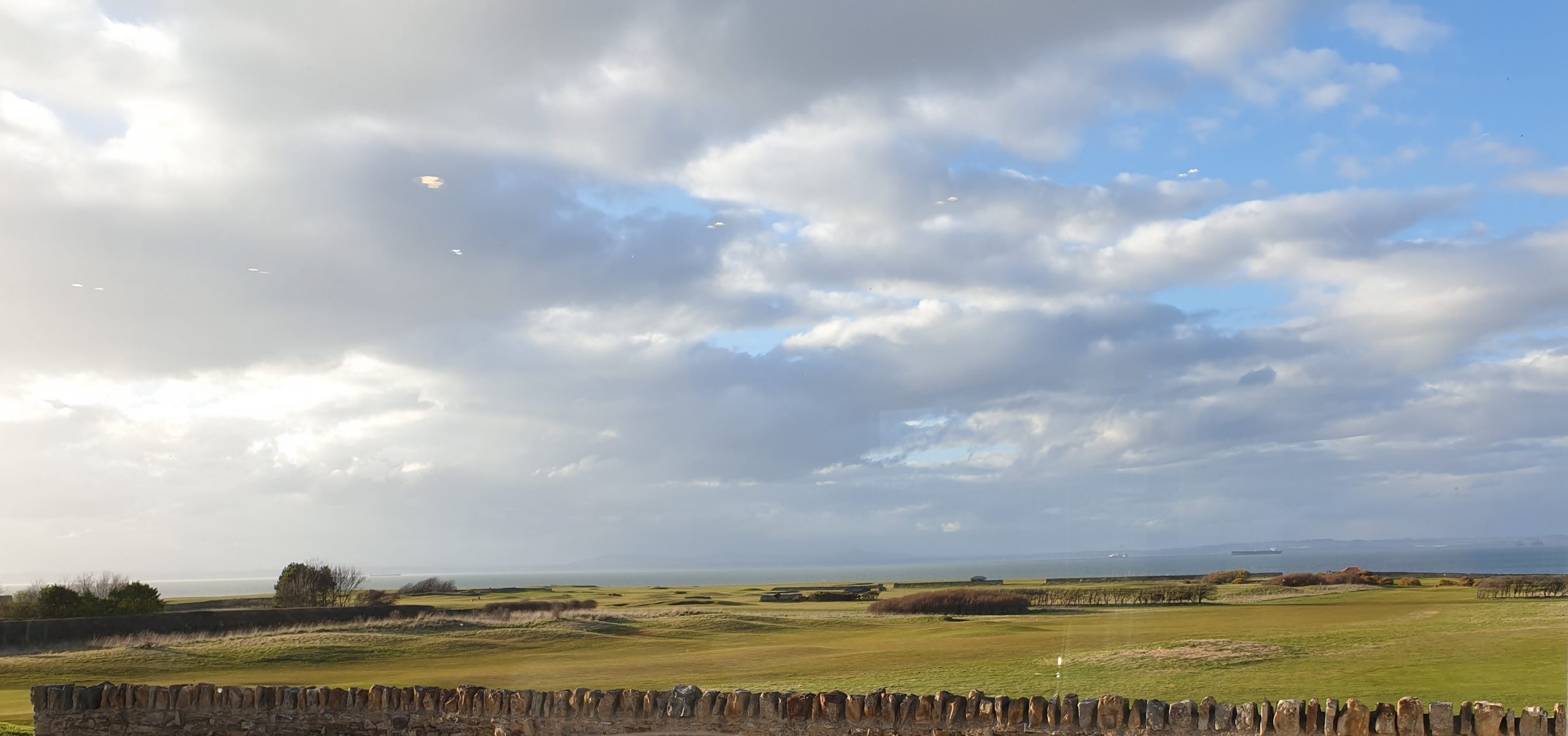
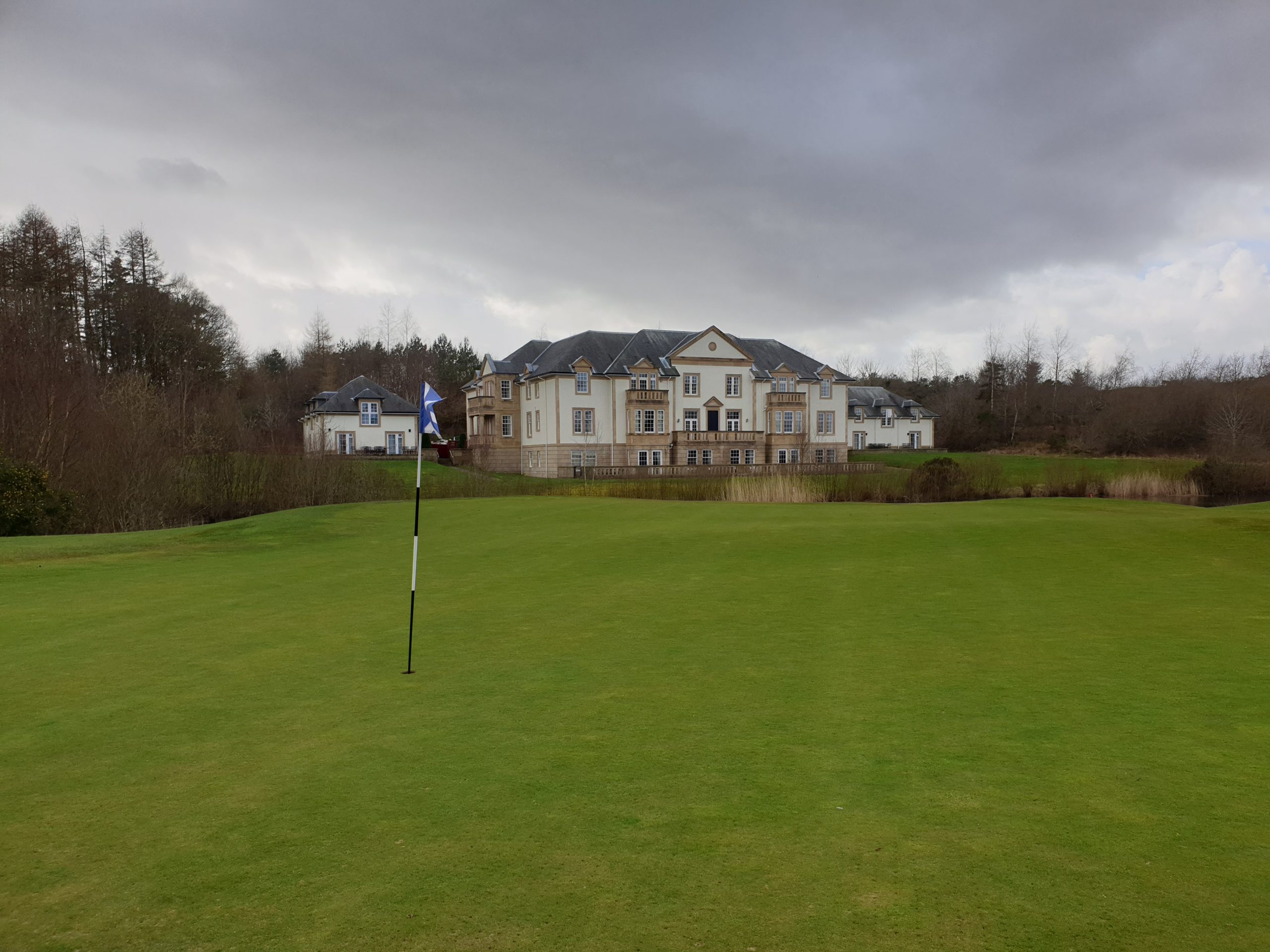
The panoramic clubhouse view back over Craigielaw links towards the Firth of Forth. On a clear day, as good as East Lothian gets.

Craigielaw Golf Club is on Wemyss and March Estates land – the same Estate that has leased its land to neighbouring Kilspindie Golf Club since 1867. In 2001, after two years of fractious negotiations, the Estate cancelled a deal that would have allowed Kilspindie to operate a second course and announced they themselves would build and run Craigielaw Golf Club. Kilspindie’s members, who had already paid handsomely for the privilege of playing ‘their’ second course, were left short changed — that story will feature in Kilspindie’s blog.
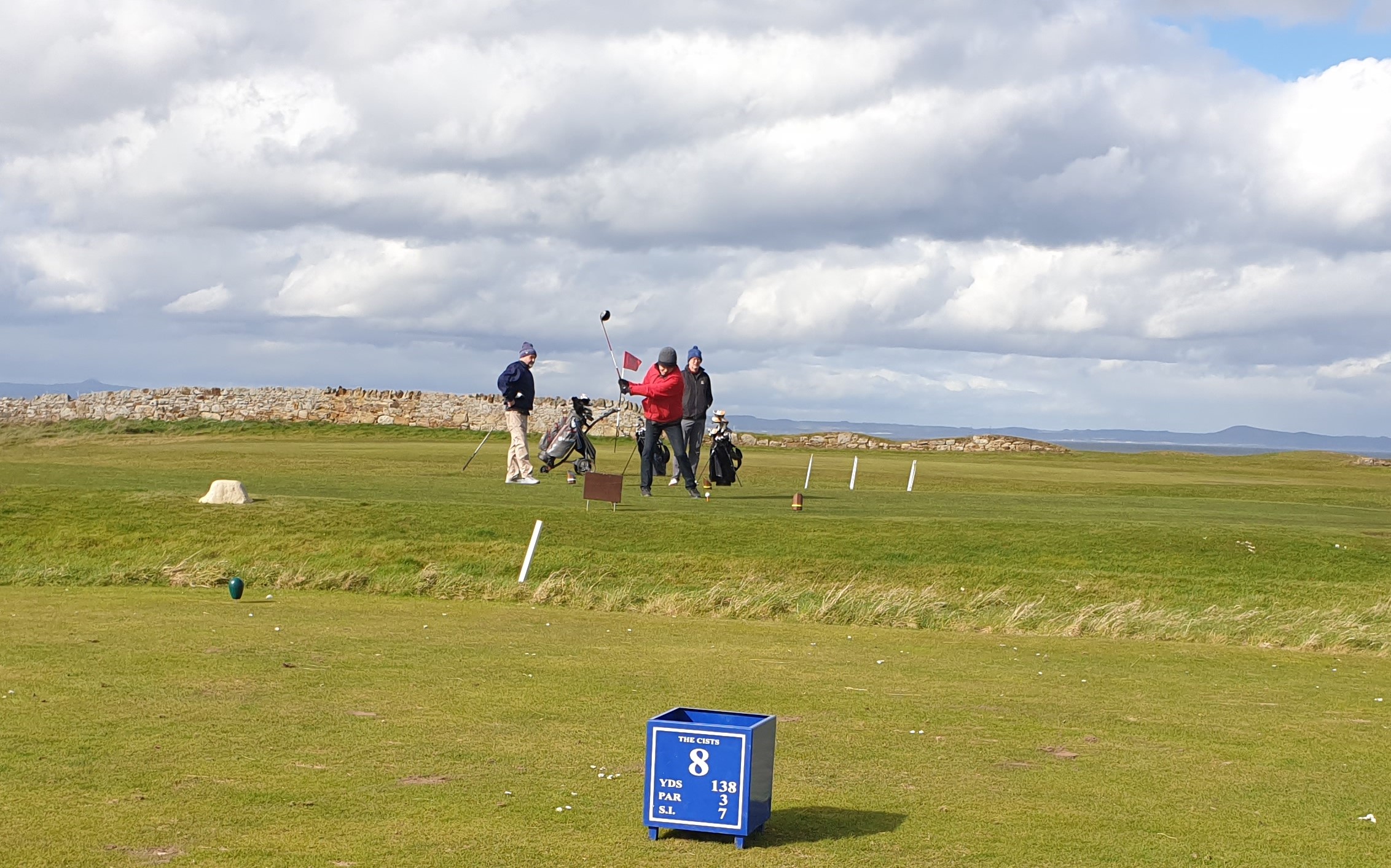
The 8th tee — a short par 3. The golfers here are not playing Craigielaw, they are on the 18th hole of the entirely separate Kilspindie Golf Club. Possibly the two closest tees from independent clubs anywhere? If you know of closer, let me know.

What elevates this origin story beyond a mere property dispute is who, at the time, was the Countess of Wemyss and March (see picture below). In 1995, James Charteris, 13th Earl of Wemyss, had married Amanda Feilding — an English aristocrat, artist, drug policy reformer, and the world’s most committed advocate of trepanation, the practice of drilling a hole in the skull to enhance consciousness and cerebral blood flow.

Amanda Feilding, Countess of Wemyss, with her pet pigeon Birdie, and a human skull, a tribute to her belief in trepanning. [Credit: Beckley Foundation — permission pending]

In 1970, Amanda had drilled a hole in her own forehead with a dentist’s drill, filmed the entire procedure, and called the resulting short film Heartbeat in the Brain. Audiences at early New York screenings were reportedly seen dropping from their seats. She stood for Parliament twice — in 1979 and 1983 — on the sole platform of free trepanation on the NHS, receiving 40 votes and then 139. She later founded the Beckley Foundation, dedicated to psychedelic research, and lived to see much of that work vindicated by mainstream science before her death in May 2025, aged 82.

So when the Wemyss and March Estates Directors, including Lady Wemyss, decided on the use of the land, it might have been fitting if anyone said “We need to operate a golf course like we need a hole in the head!”.

Back to golf. Designed by Donald Steel, Craigielaw is a thoughtful layout. The hole names are a delight — Coffin Lane, Bellfire Knowe, Doos Wa’s.
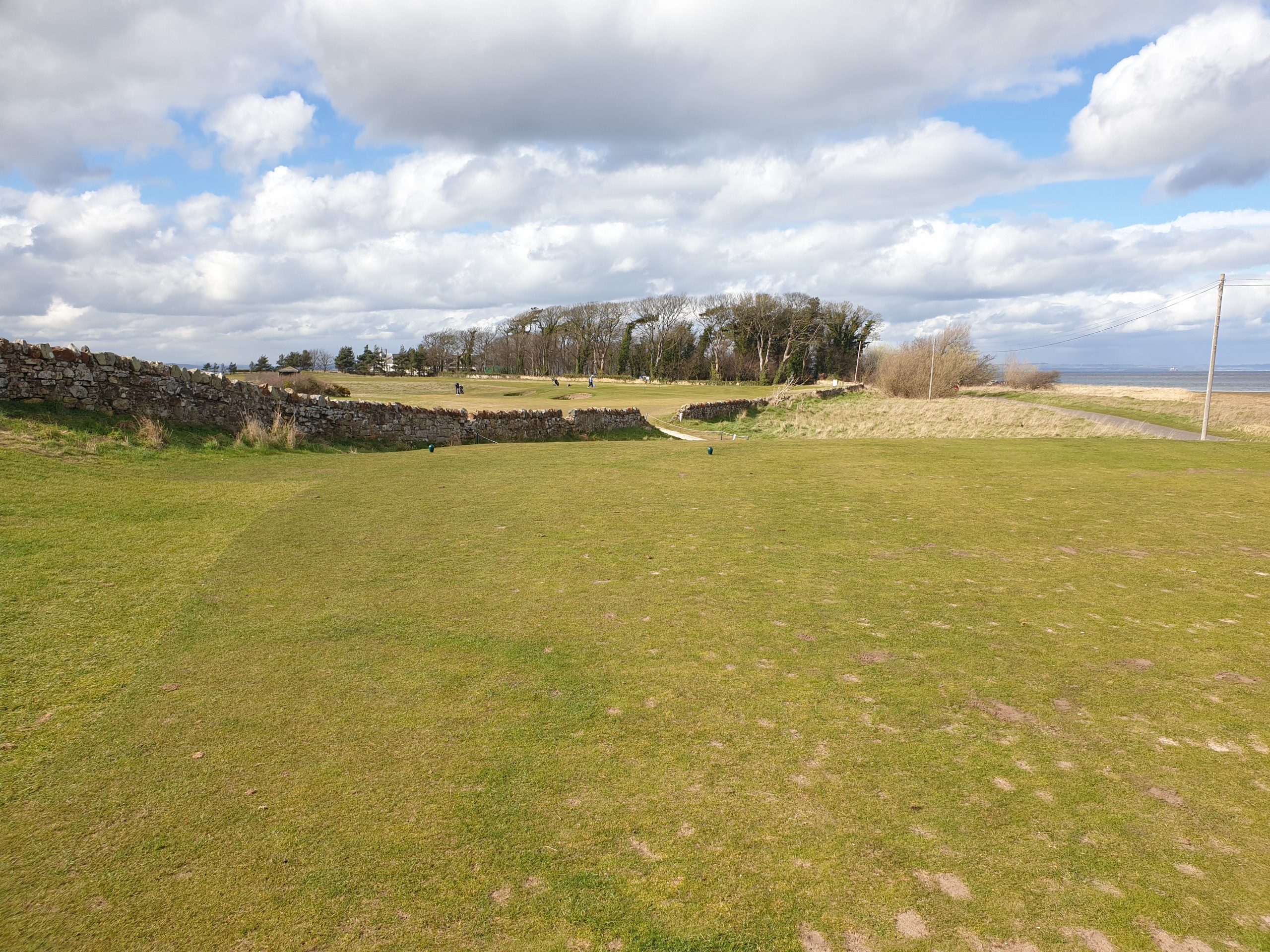
The sixth, ‘Kilspindie’, a respectful but perhaps pointed name, a tough par 3 where the prevailing wind will challenge the out of bound right.

The property is well set up — impressive clubhouse, lodge accommodation, excellent practice facilities. The bunkering is Steel at his most unforgiving — cavernous, steep-faced pot bunkers with no interest whatsoever in your handicap.
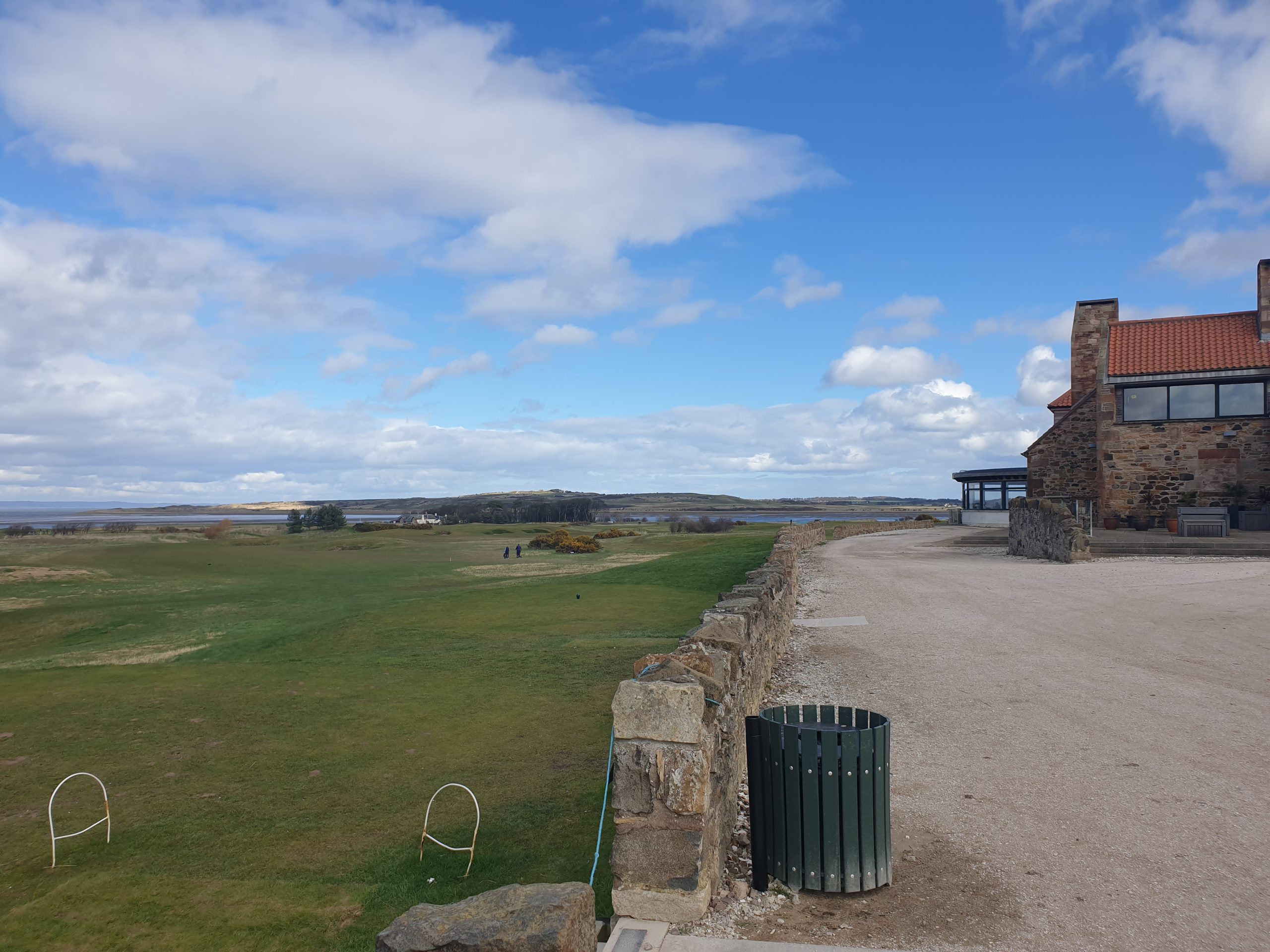
First ‘The Steading’, a drivable par 4. The Firth of Forth and Gullane Hill beyond..

The turf lacks the crisp links quality of nearby Gullane; the geology feels subtly different, more transitional than pure links. And the housing around the 10th and 11th — Gosford Park, as it happens, whose residents were central to the original dispute — briefly breaks the links illusion. The course recovers, but it’s a lapse.

Moly at the 4th, ‘Bellfire Knowe.’ The flag is just visible over the lip. The 8 on the scorecard tells you the rest.

Value? At £125 for a summer midweek round, the price reflects the postcode — Muirfield, Gullane and Luffness New are all neighbours — more than the course itself. Good golf, honestly designed, but 3 out of 5 at full price? Not sure. However, I paid £45 through GolfNow. A Donald Steel championship links in East Lothian for £45 is 4 out of 5 without hesitation. Check GolfNow before you book.
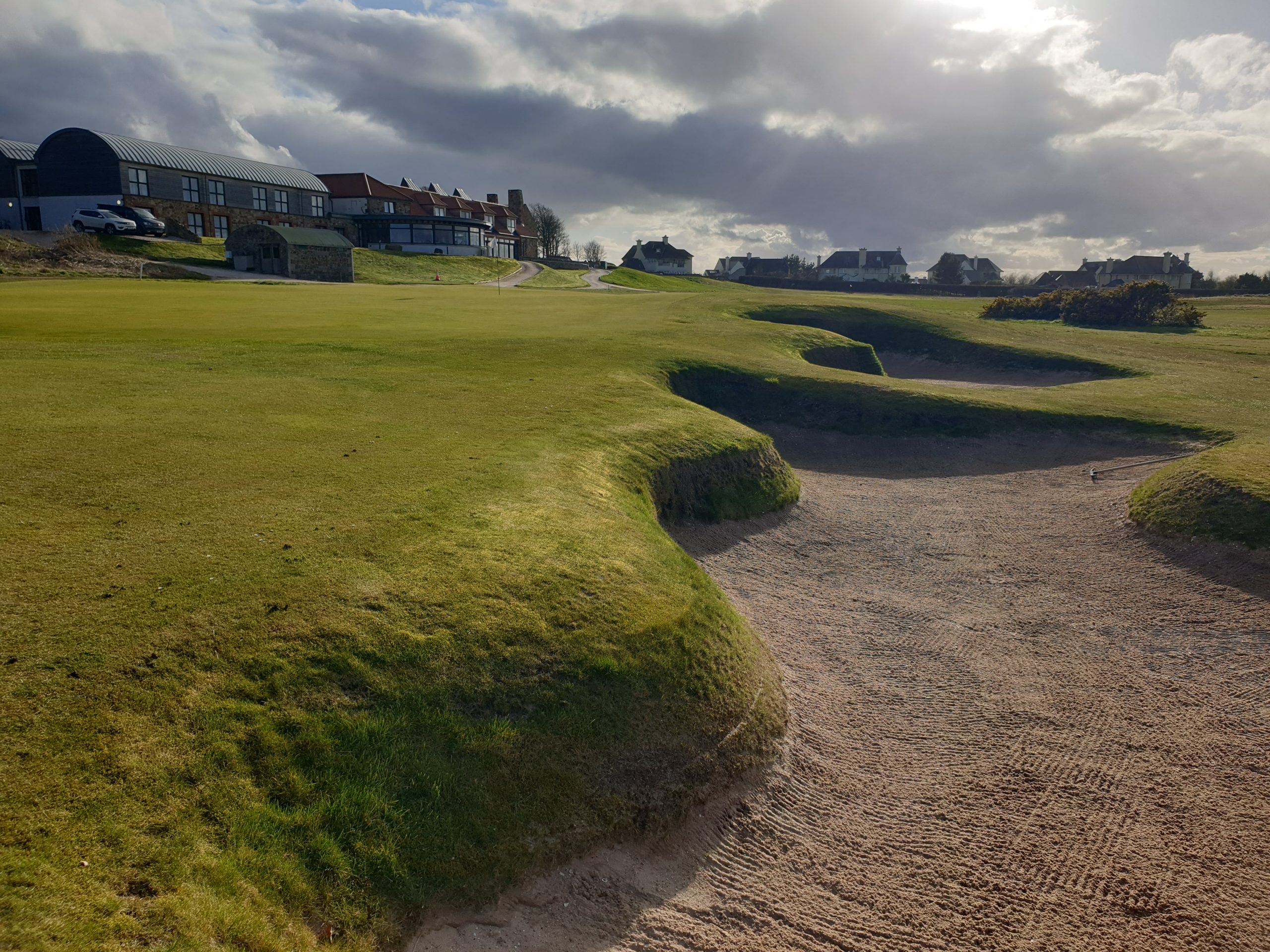
The 18th green, ‘Craigielaw’ — 465 yards, par five — with the modern clubhouse beyond. The bunkering here is the most dramatic on the course.

Facts:

Round £125. Par 71. Course/Slope Rating 70.0/124. Value3/5 (4/5 using GolfNow).

Moly’s Score – 97
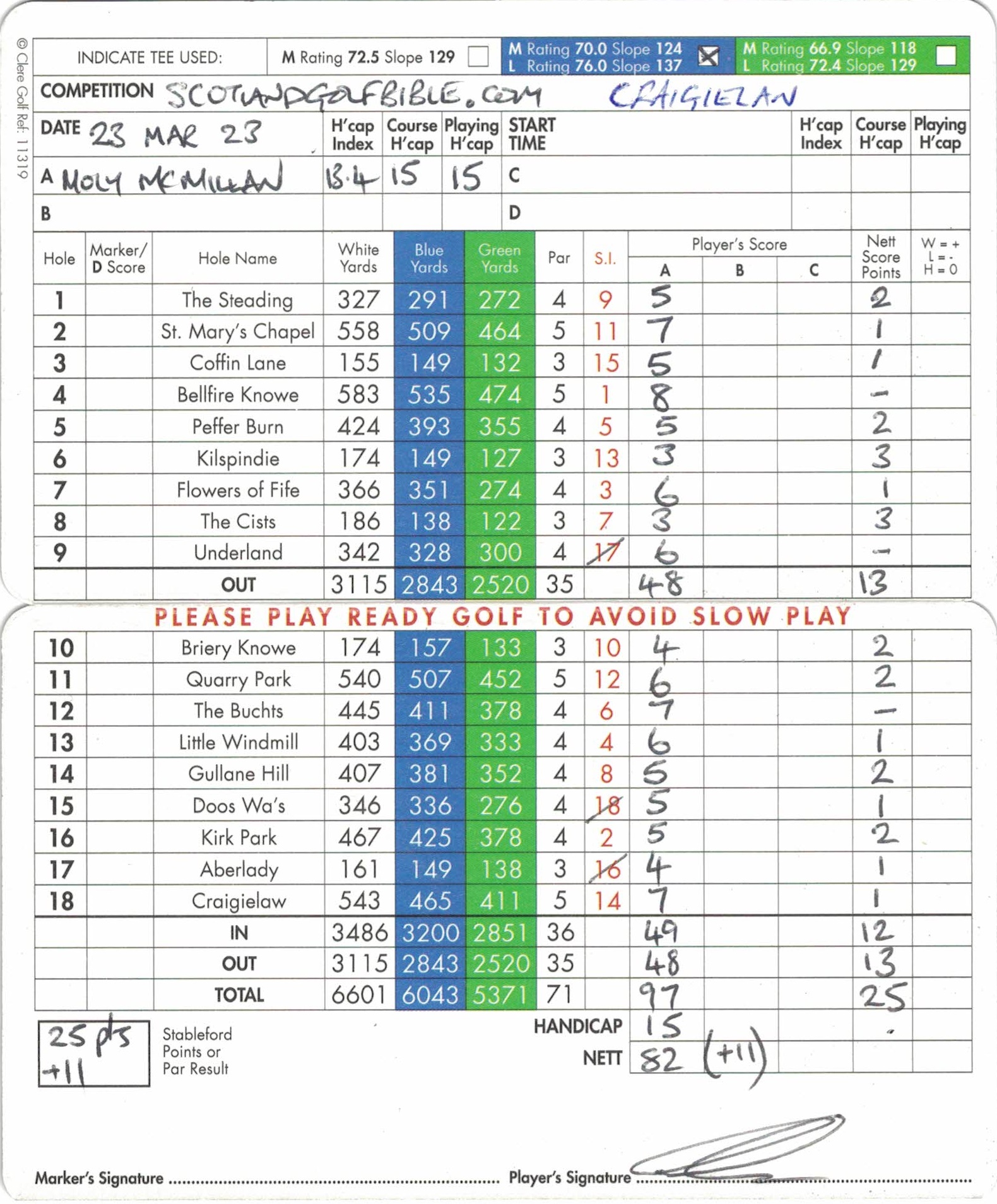
Moly’s 97, was OK on a day with very high winds.

181. The Carrick. 22 Mar 23.

Fake News – Trump wanted “The Carrick”

Value – 4 / 5

The King Robert the Bruce course at Trump Turnberry was to be named “The Carrick”, but dropped after a legal challenge. Perhaps fake news? “The Carrick” remains the name of Cameron House’s premier golf course, set on the banks of Loch Lomond. A just outcome, given the designer is Doug Carrick, one of Canada’s most prolific architects with a CV of 100 courses.

The halfway boat enhances the contrast between ‘lowland’ to ‘highland’ holes.

Cameron House is a 5 star resort, less than an hours drive from central Glasgow. However, a word of warning. This is not Gleneagles, so be prepared for the swimming pool filled with screaming children, plus the only quiet restaurant may be the fine dining one!

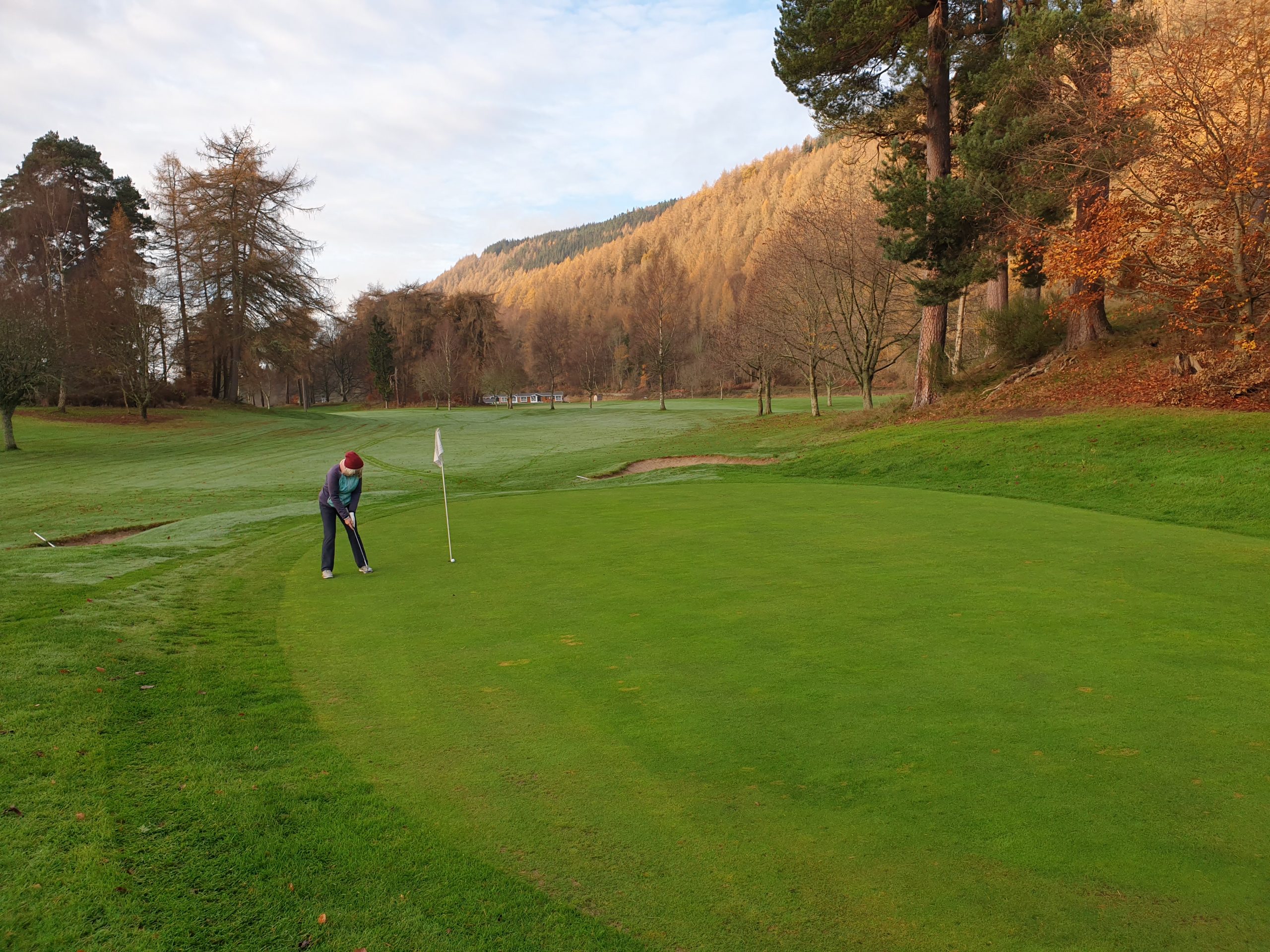
The Carrick’s ‘lowland’ could be called Wetlands, on display at the par 3 2nd

The Carrick is really 2 courses; the front 8 “Lowland” holes are flat parkland weaving around a pond which is in play on several holes, the 10 “Highland” holes could then be a homage to James Braid’s “East Ren“, an undulating piece of ground, with views of Loch Lomond.

The 8th, ‘Glen Fruin’, is a monstrous par 5, and the toughest hole on the outward nine.

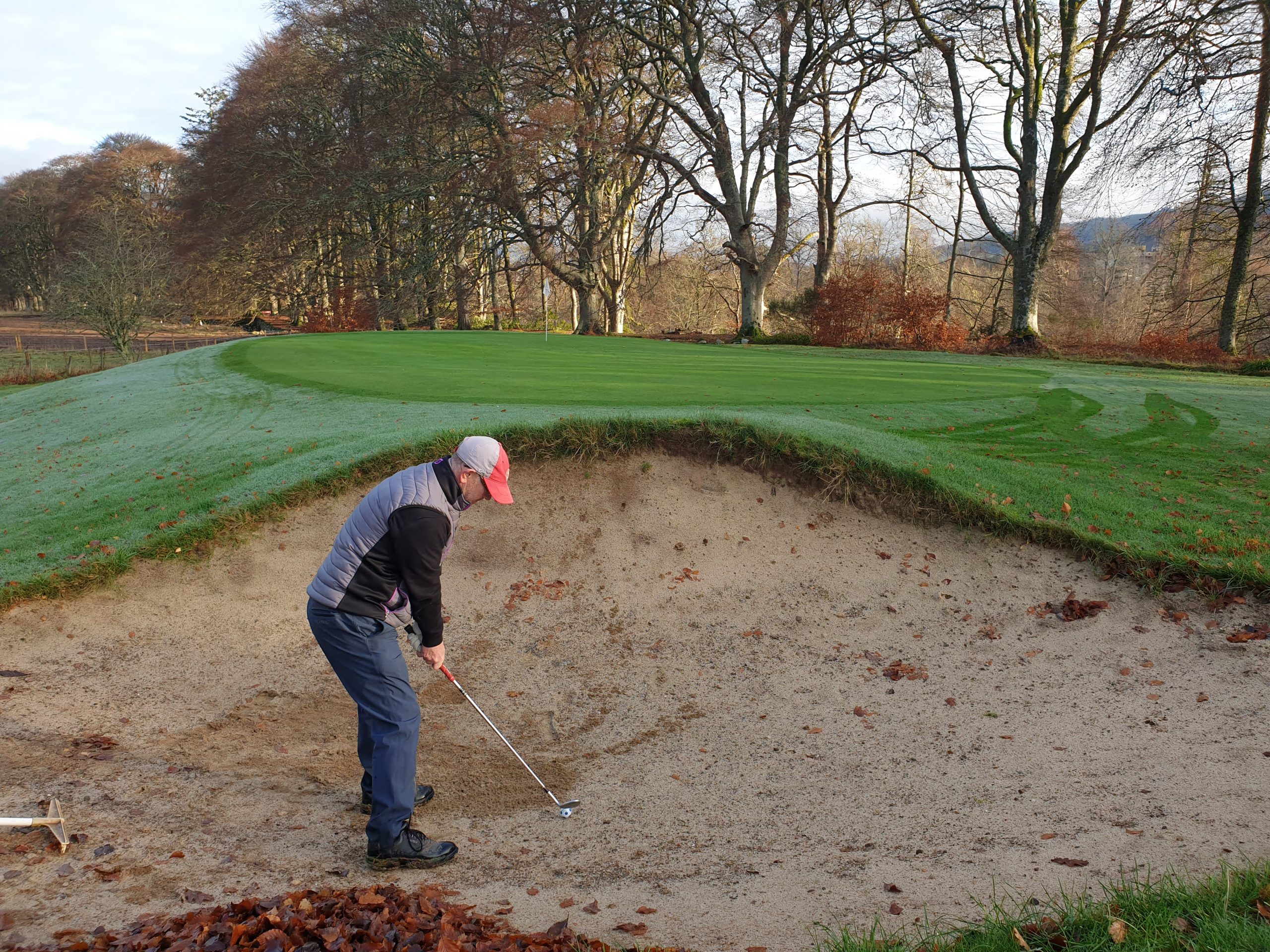
The course had several mediocre holes, but complimented by a few brilliant ones, none less than the stroke index one 11th, played uphill – the mixture of fairway and greenside bunkering is superb, testimony to Carrick’s design experience. The conditioning was a touch tired in places, albeit the recent wet weather probably played a part. Nonetheless the bunkers were well presented.

The SI one 11th played “into the glen” needs three good shots to give a chance of par.

Combined with the scenery, this could be spectacular on a late summer day with the hills in bloom. One thing worth mentioning was the proximity to the A82 west highland arterial route so road noise will be a factor in the height of summer.

The ‘Signature” ‘Tappit Doon’ par three 14th, a 2 to 3 club drop.

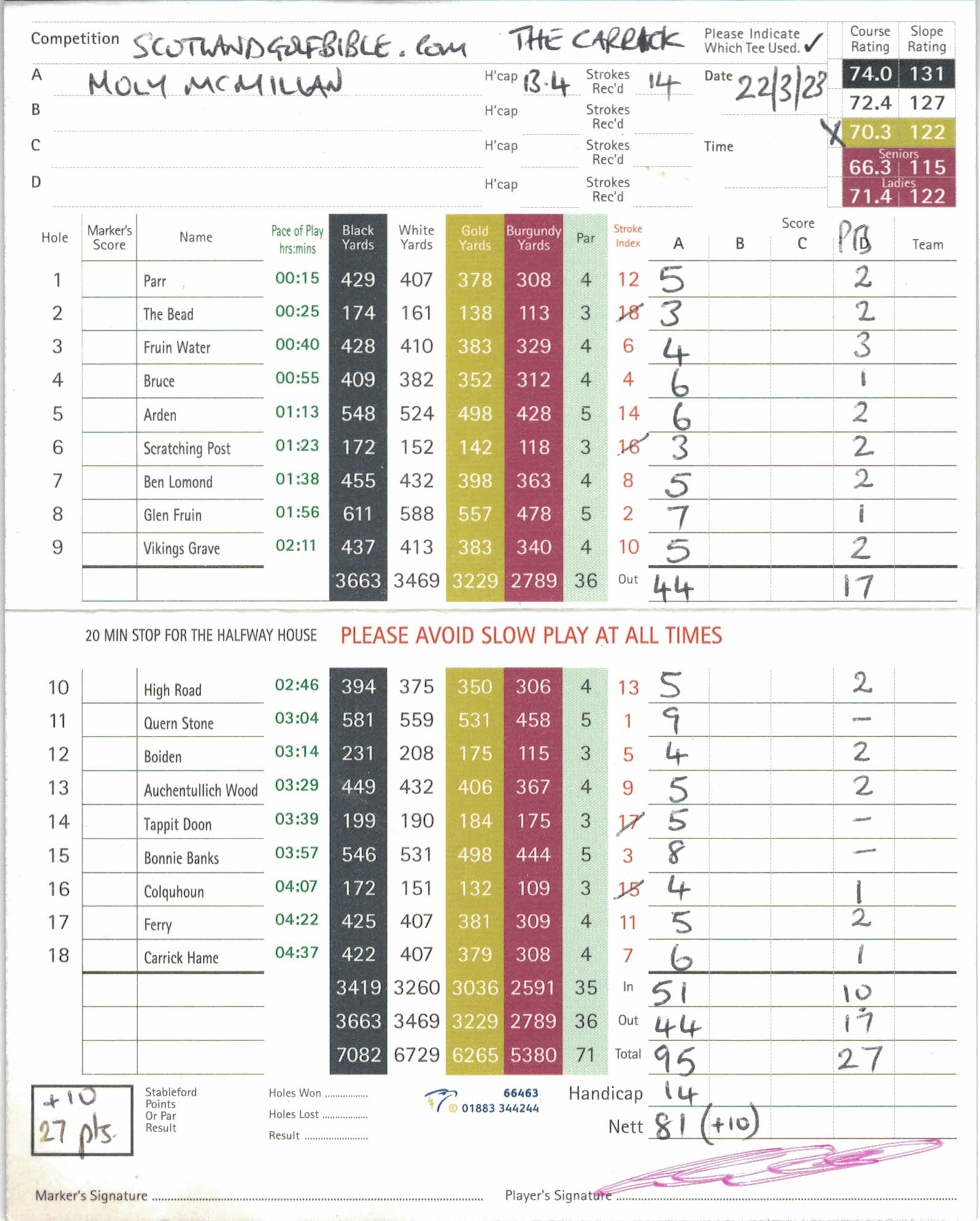
In the very strong winds, gusting at 40mph, I played one of my rounds of the year to score 95. My par on the long par 4 third hole being the highlight.

Shades of ‘East Ren’ abound (here at the 13th) on the Highland part of The Carrick.

I paid £54.99 through GolfNow to play on a windswept day with the ground pretty saturated in places. The course was fully in play. It still represented decent value as this is an interesting course with great variety and picturesque surroundings. The Summer price of well over £100 is a little steep in my opinion.

My recommendation would be to seek out a twighlight or a Golfnow “Hot deal”, if you get one go and play this “tale of two halves” course.

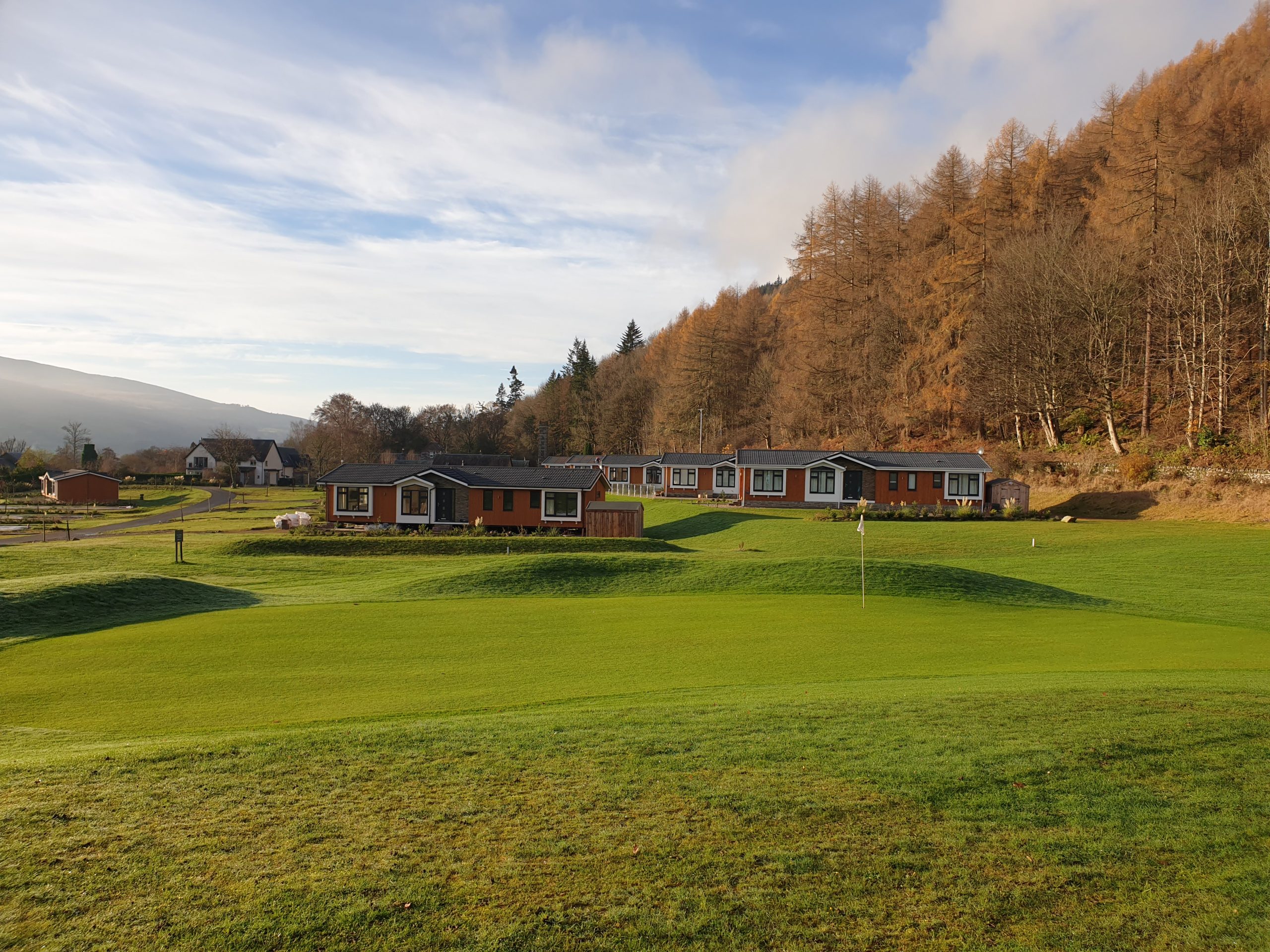
Cameron House Apartments overlook the 17th green, a 400 yard par 4.

Facts:

Round List Price £120. Actual Paid £55 through Golfnow.

Course/Slope Rating (gold) 70.3/122.

Course Type: Parkland & Heathland

Par 71  (4 par 5s, 9 par 4s, 5 par 3s)

Distance (yellow): 6265 yards

Moly’s 95 was actually a good round in 40+mph winds on a wet course

173. Mains of Taymouth. 30 Nov 22.

I was ‘green with envy’ on this country estate course but no longer confused by the two Taymouths.

Value 3.5/5.

Kenmore, in highland Perthshire, is a village on the eastern end of Loch Tay, which is where the main part of the River Tay begins, Scotland’s longest river and the UK’s largest measured by discharge. People like myself from Dundee, where The ‘Silvery’ Tay reaches the sea, claim any small victory!

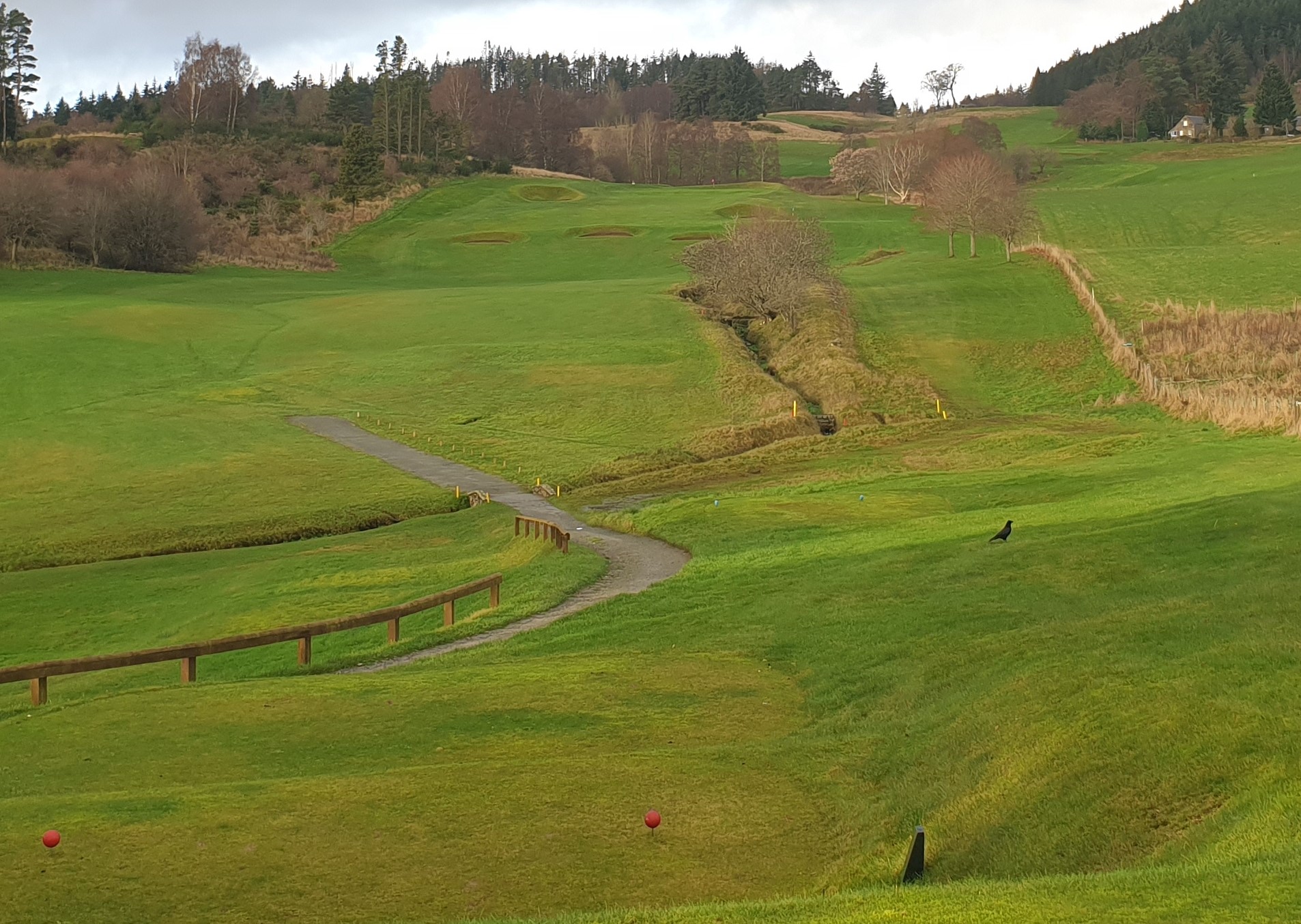
9th at Mains of Taymouth, a hole shortened to make way for new holiday lodges; technically a long par 3 rather than the par 4 of 263 yards shown on the card.

Now to my confusion. Kenmore is home to two golf courses, both on separate Country Estate developments and only separated by 30 yards of river. Taymouth Castle Estate golf course, on the south bank, was founded in 1925, designed by James Braid, and grew a championship level kudos; however, the castle and course is currently “closed for a £300m development” following its purchase in 2018 by American real estate company, Discovery Land Company.

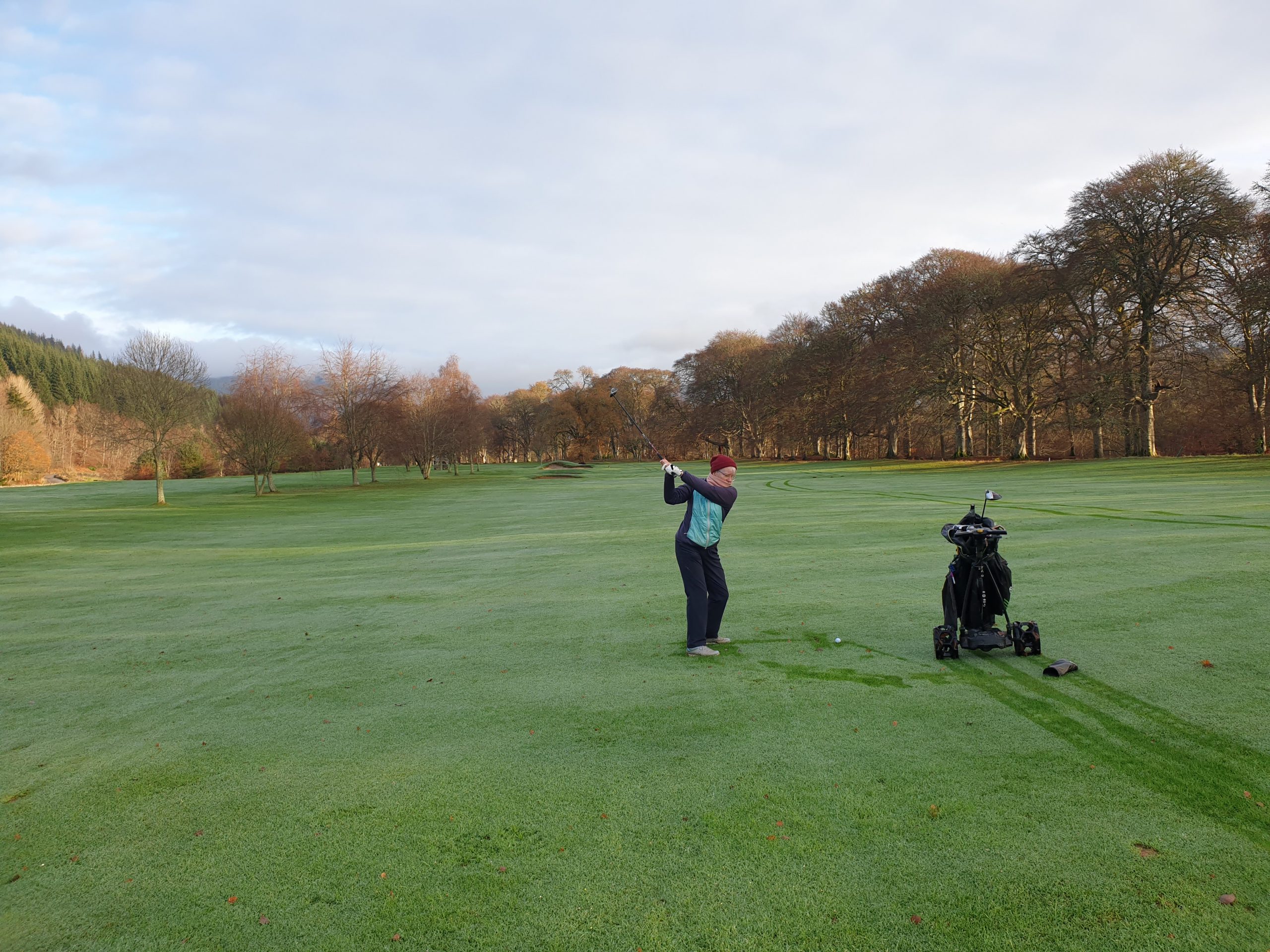
Fran on the par four 2nd, reportedly the Designer Robert Menzies’ favourite hole.

Meanwhile, north of the river, Kenmore Golf Course was founded, designed and constructed in 1992 by civil engineer Robert Menzies, on diversified farming land that had been in his family for many decades. With Taymouth Castle closed, Robert renamed his estate and course, “Mains of Taymouth”. The whole estate was sold for £13.5m in 2022 to Pure Leisure Group, the owner of the well known Westmoreland Golf Resort in Barbados, home to many British celebrities.

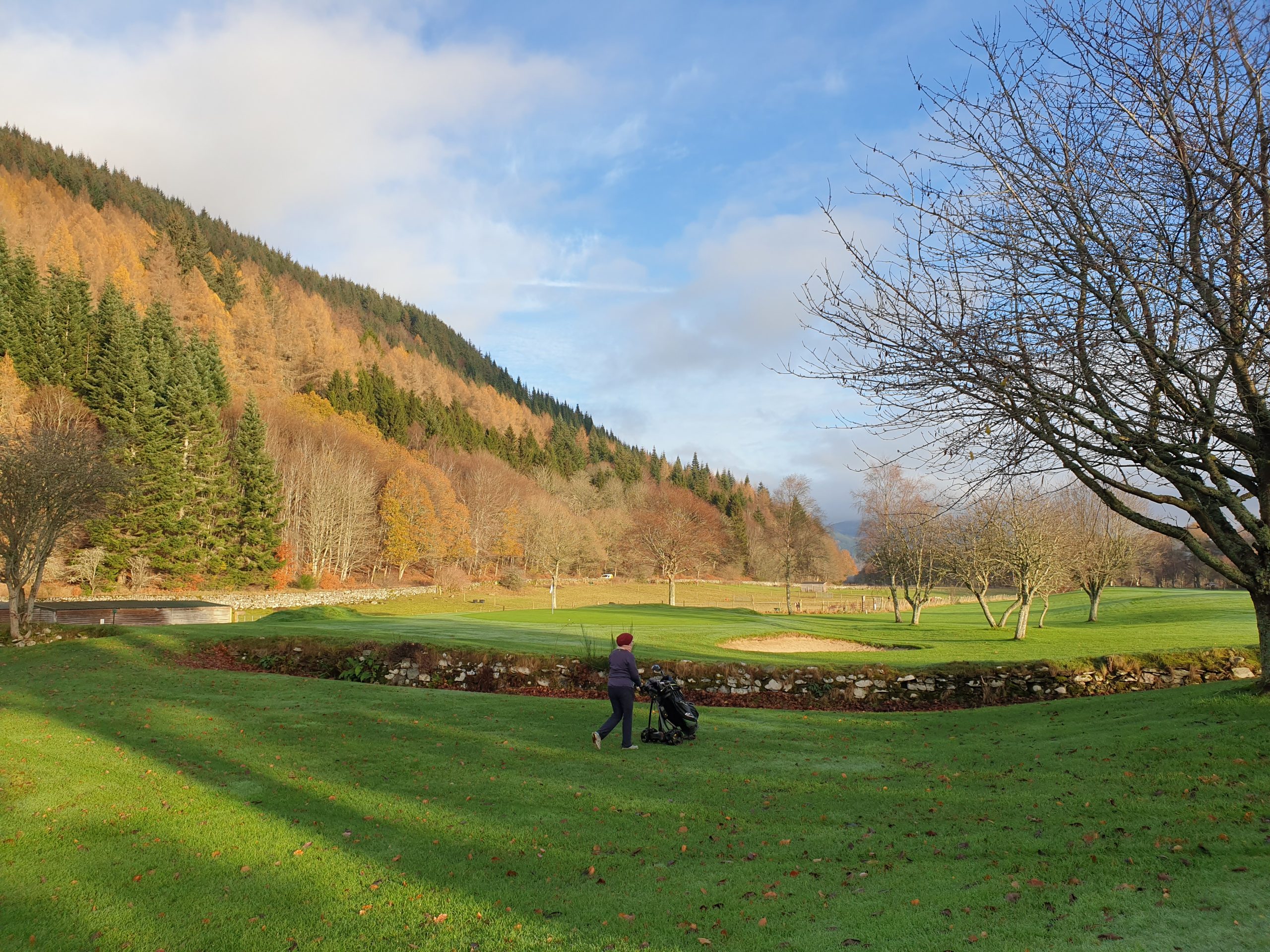
Moly at the 5th, a well designed par three. The bunkers could have been better raked.

So ‘Mains of Taymouth’ and ‘Taymouth Castle’ are separate country estates, both with golf courses with similar branding. I anticipate a lawsuit at some point over the use of Taymouth, a name which seems to have begun when the Clan Campbell rebuilt the former Balloch Castle, their ancestral seat.

The irony is that Kenmore isn’t technically the location of a mouth of a river, defined as “where a river flows into a larger body of water, such as another river or the sea”. Thankfully, any geographically minded golfer that mistakenly turn up at the real Mouth of the Tay, has better golf course options to choose from.

Wide fairways are characteristic at “Kenmore”, shown here at the par five 4th hole, a picture also highlighting the good course conditioning.

My envy in the title is of Robert Menzies, who has done an admirable job on his “home made” nine hole golf course. How many of us have had that dream over the years. He has created a lovely course, which was well maintained and playable on this early winter day.

The course has wide fairways, and is protected by small greens that are well bunkered. Set alongside the river the land is flat and easy walking, so would suit the occasional golfer, but also useful for golf course “baggers” who can easily “bag” 3 or 4 nine hole courses on a summer day (including nearby Killin, Aberfeldy and Strathtay). I bagged three (omitting Killin) on the day, despite the limited light.

The beautiful Perthshire landscape on show here at the par 3 seventh hole, with “ha-ha”.

We paid only £12 for a winter day rate, but at £18 for a round it represents decent value in the Summer.

Sadly, although the 3rd is called “Loch View”, there are no river or loch views from the course. Making my big deal about “Taymouth” seem somewhat arbitrary – never mind.

Round List Price £18. Actual Paid £12 (Winter rate).

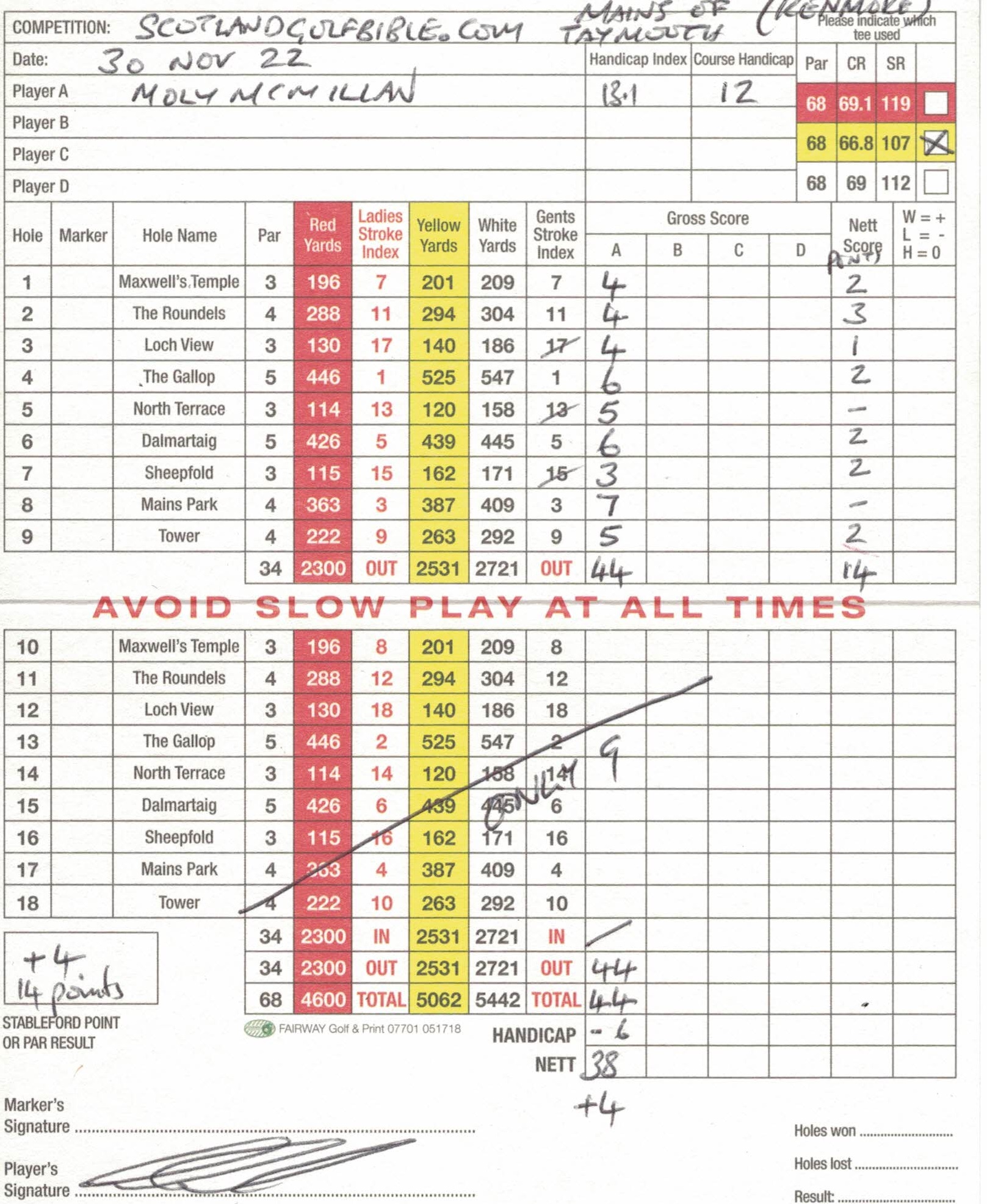
Moly’s Score – 44 for 14 points (off 12)

Course/Slope Rating (yellow) 107/66.8.

Course Type: Parkland

Par 34  ( 2 par 5s, 3 par 4s, 4 par 3s)

Distance (yellow): 2531 yards

Moly’s Mains of Taymouth Scorecard – 44

171. Pitlochry. 27 Nov 22.

Very good, but a world best?

Value for Money (out of 5) – 4.5

The club website reports “The best course in the world ….under 6000 yards”.

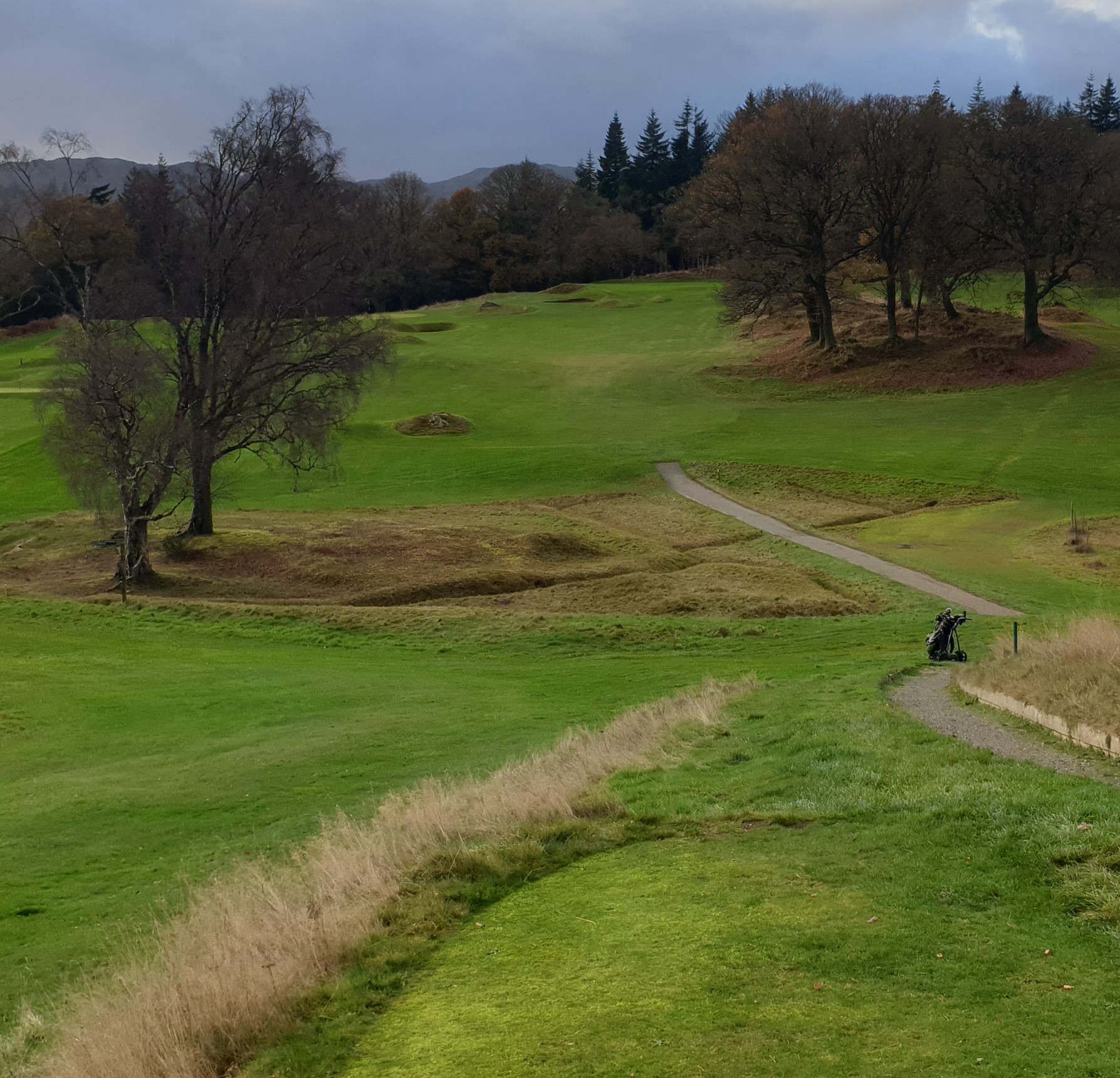
The uphill opening hole at Pitlochry – a par 4 of nearly 400 yards and stroke index 3 it was the site of an old distillery, so not all golf clubs improve the environment!

Pitlochry is unquestionably a good course, laid out in 1908 by a great designer, Willie Fernie (Turnberry Ailsa). But a “best in the world?”. Has anyone ever played more than 10% of the world’s 40,000 courses or listed them by yardage?

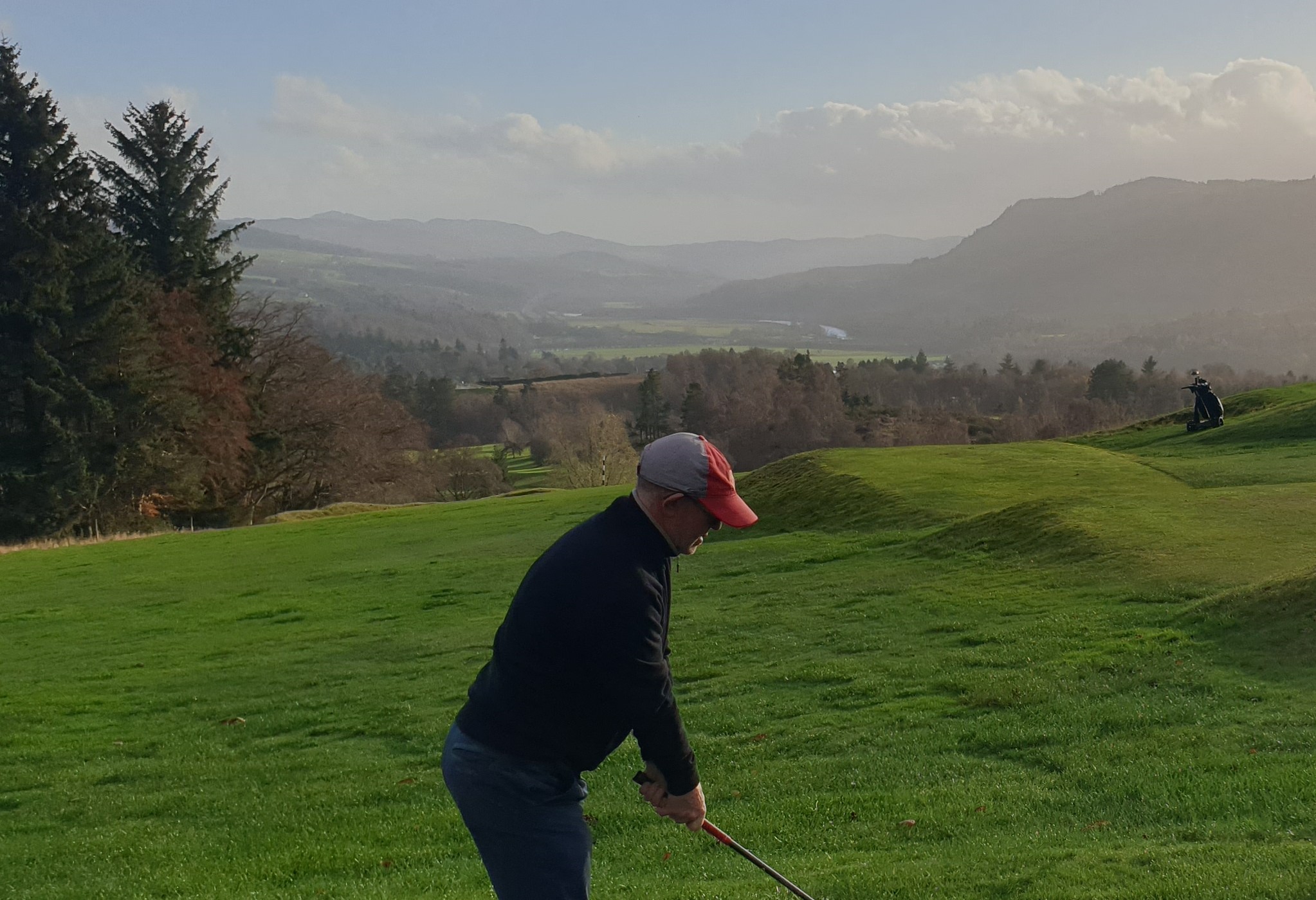
Magnificent views surround Pitlochry, the Tummel Valley seen here at the 9th, a downhill dog leg left par 4.

The website statement is marketing hyperbole of course but, in a way, is fitting as this “Gateway to the Highlands” course has always been a commercial venture since a development consortium built the course above the town. Having laid the new golf course, the original 9 hole Pitlochry course was later flooded in creating Faskally Reservoir for a major hydro eclectic plant. I doubt any visitors to Pitlochry’s dam to watch salmon leaping, through the man made fish ladder, know they are standing above a golf course.

The 11th, one of three strong par 3s at Pitlochry, arguably the highlight of the design. Here looking back towards the elevated tee.

So how good is the course? Setting aside the hubris from the website, it’s a really good one. It is fairly short, but the undulations and the many plateaued greens make it feel longer. Despite, arguably, a lack of variation (there are 15 par 4s and 3 par 3s) the regular changes in hole elevation is the real challenge, especially for a visiting golfer. Weaving it’s way around relevant sites of Pictish Forts, and with stories of visits by Robert The Bruce and Queen Ann, there is plenty of history here as well, all described on the excellent course guide on the club website here. The greens are beautifully constructed and difficult to read.

The deceptive 15th, a short par 4, where a good drive might leave a good birdie chance, as long as you judge uphill approach distance. But note the stroke index 5 rating!

The course was in excellent all round condition when we played, despite recent heavy rain. We played off a shortened winter layout, and paid only £21.99 via golfnow.com. This is incredible value and as a business there are often deals to be had here.

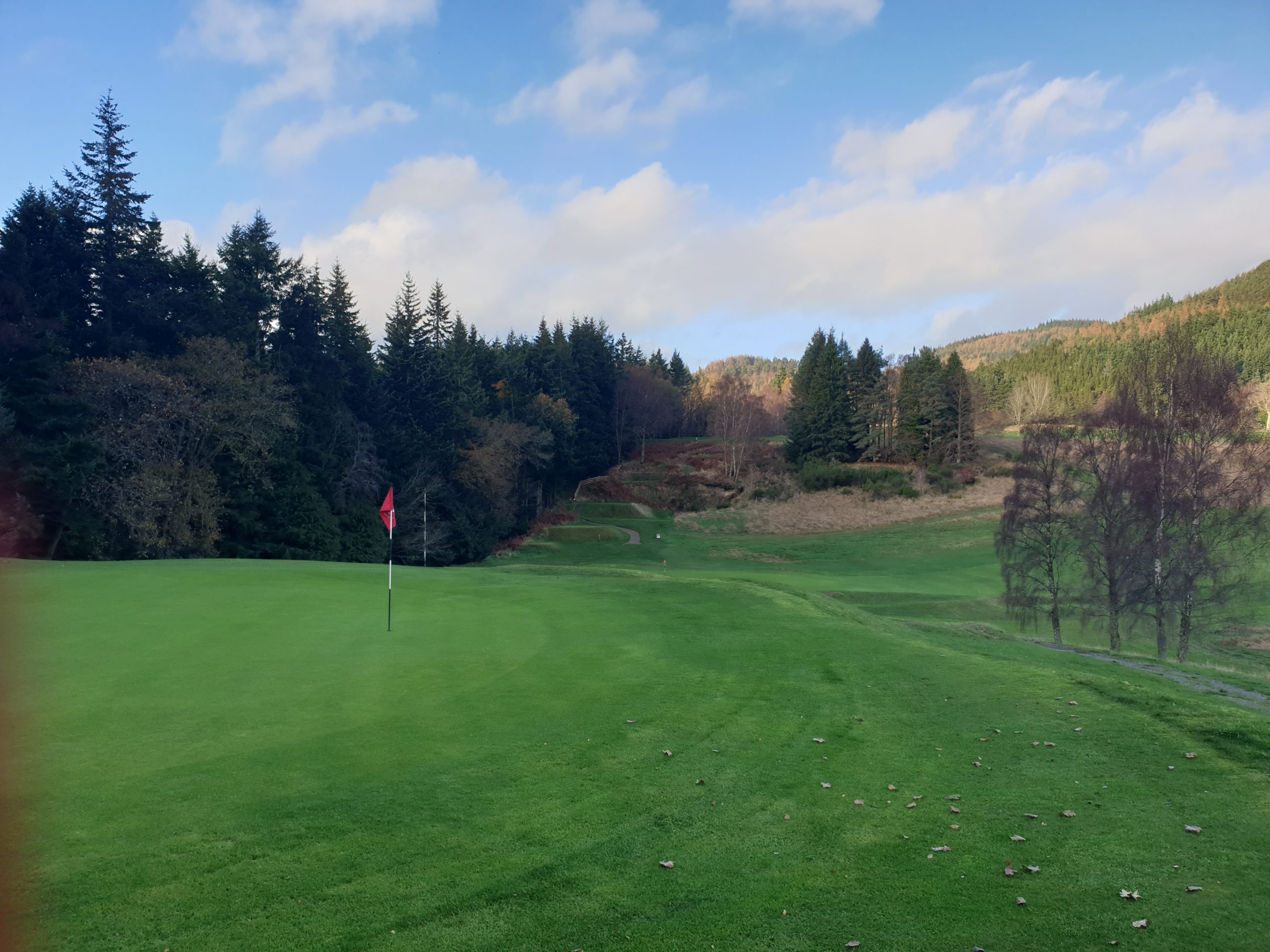
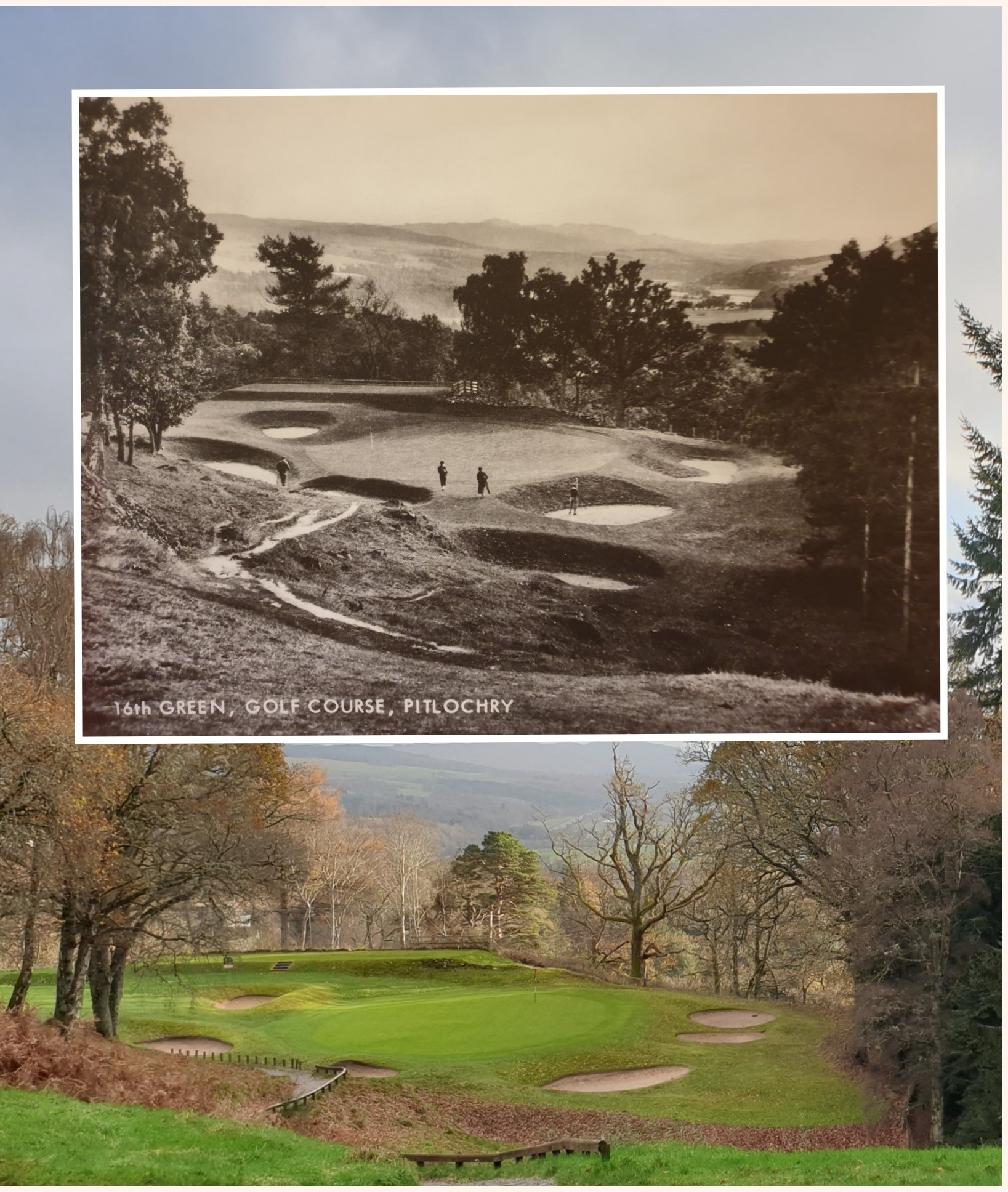
Although several changes have been made to the course over the years, the signature mid iron 16th, clearly didn’t need improving.

Being only 25 miles north of Perth on the A9, Pitlochry became a key holiday destination in late Victorian times and still remains a desirable holiday venue. The Golf Club’s opens competitions are very popular, not least because of the great clubhouse hospitality and food.

The 18th green, a downhill par 4 and a good birdie opportunity, with the “New England” feel clubhouse, which houses a good restaurant.

Back to the hyperbolic claims. Of the courses I’ve played, Pitlochry isn’t even the best Willie Fernie designed course under 6000 yards – that’s Shiskine for me. I also think Boat of Garton, Kilspindie and Carnoustie Burnside (where Hogan qualified for the 1953 Open) are all better courses and under 6000 yards from their longest tees.

Pitlochry’s course guide also states the short par 15th hole is “probably the most difficult par four in the world”! Whilst it’s likely ‘tongue in cheek’, I did take 7!

Facts:

Round List Price £65. Actual Paid £21.99 through Golfnow.

Course/Slope Rating (yellow) 67/116.

Course Type: Heathland

Par 69  (15 par 4s, 3 par 3s)

Distance (blue): 5517 yards

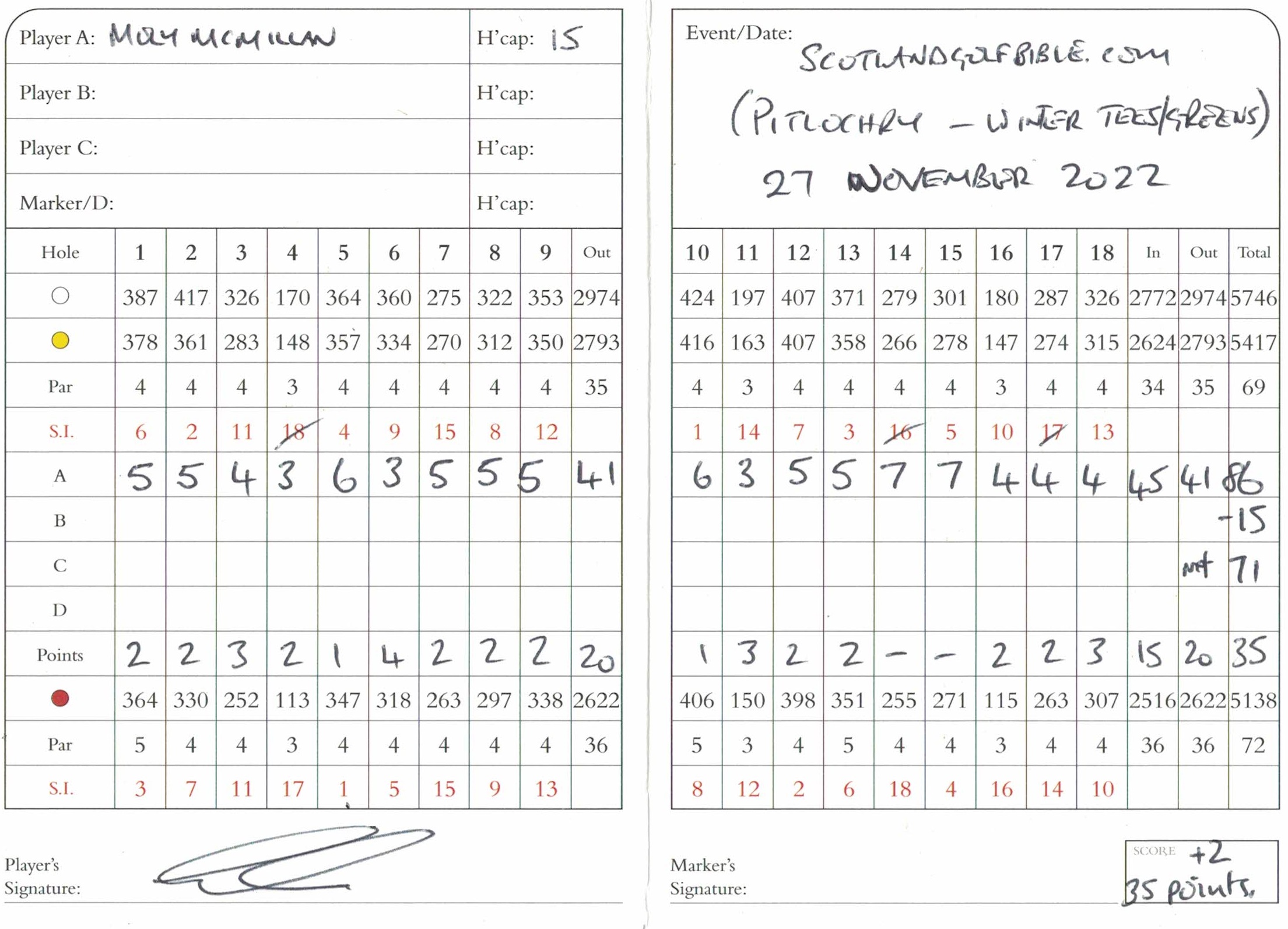
Moly’s Pitlochry Scorecard – 86
« Older posts Newer posts »

© 2026 Scotland Golf Bible

Theme by Anders NorenUp ↑