A guide to green fee value for money

Category: 4 star (Page 1 of 11)

187. Greenburn. 26 Mar 2023.

The Golf Club and the Viaduct – which will last longest?

Green Fee: £15 (winter rate). Par 71. Course Rating/Slope: 71/128 (yellow tees). Value: 4/5.

Moly’s Gross Score: 89

Playing Greenburn, I found myself thinking not just about where the course sits geographically – deep in Scotland’s central belt between Glasgow and Edinburgh – but where it sits economically. Scotland has around 575 golf courses and almost certainly cannot sustain all of them. I pondered which side of that financial reckoning Greenburn would end up on. Let’s park that for now.
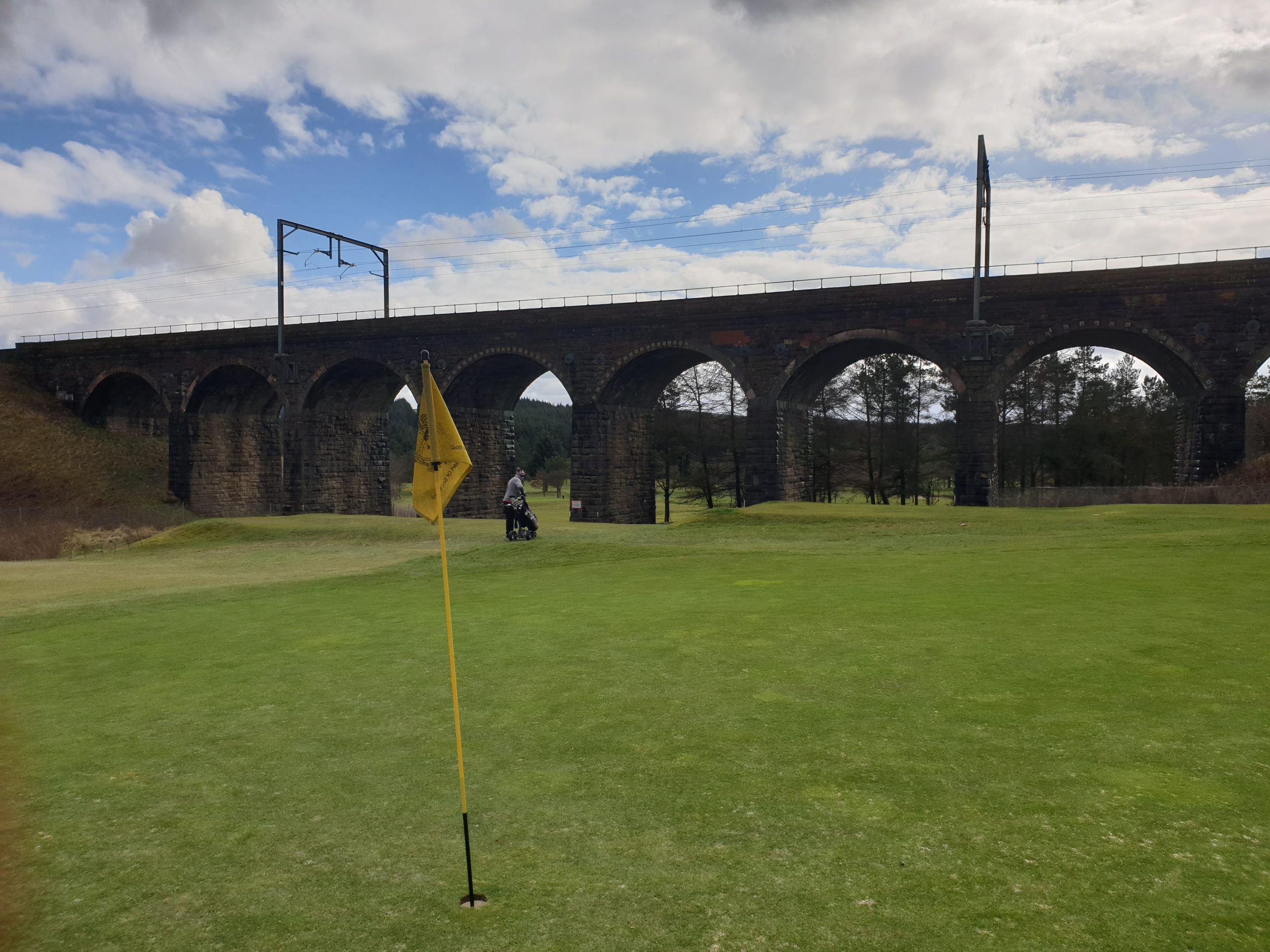
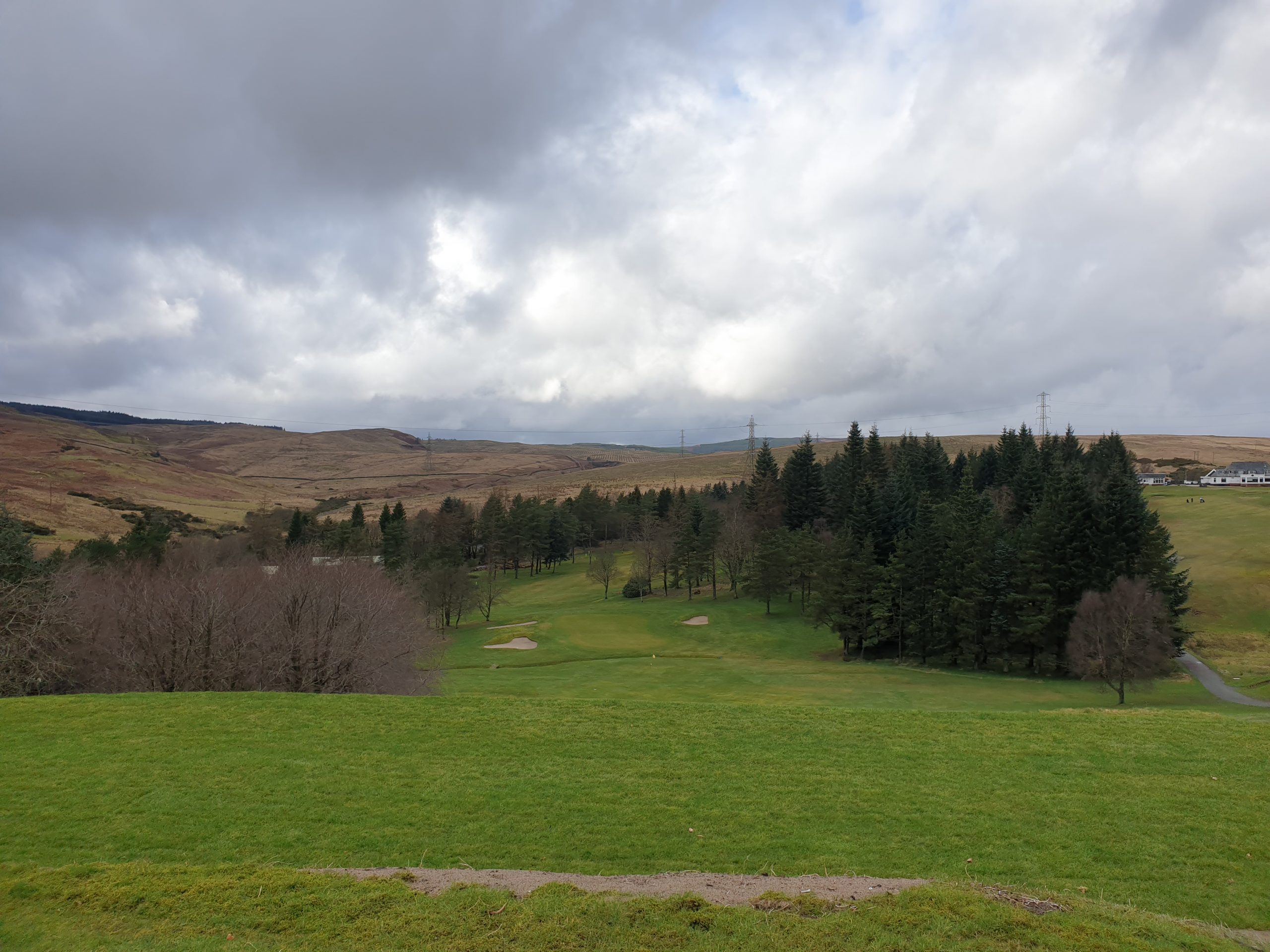
Hole 4 – a long Par 5, with the first start view of the viaduct

Greenburn Golf Club traces its roots to 1894, when the working people of Fauldhouse built a course near their village. The present course, voluntarily built by the members in 1953, relocated to the Breichwater Valley. The club motto, Per Nostra Opera (“By our own endeavors”), says what it does on the tin.

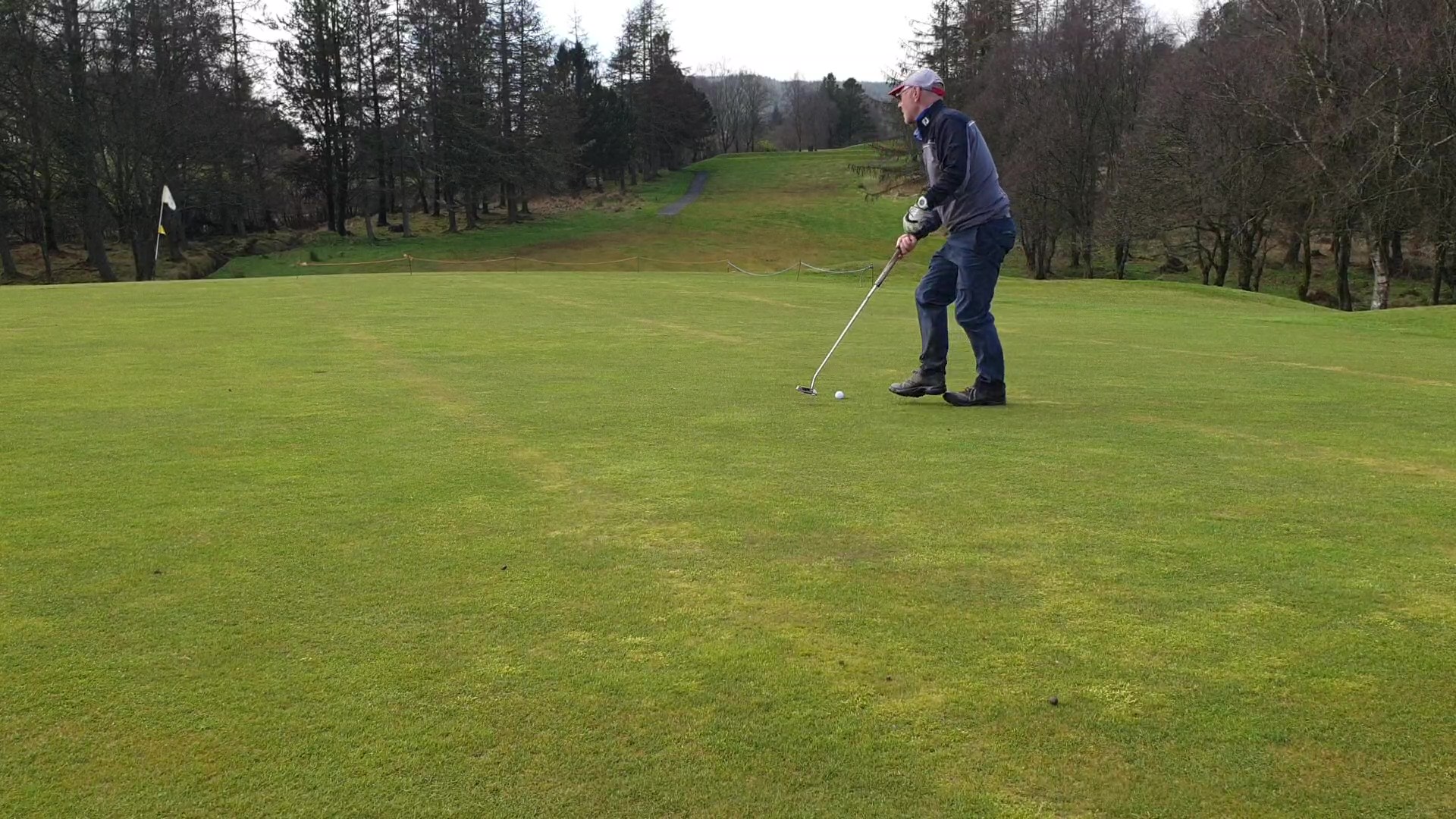
I played at a winter rate of £15, off temporary mats but normal greens. I met recent retiree and local member Gordon Cleland, a decent golfer and clearly very much at home.
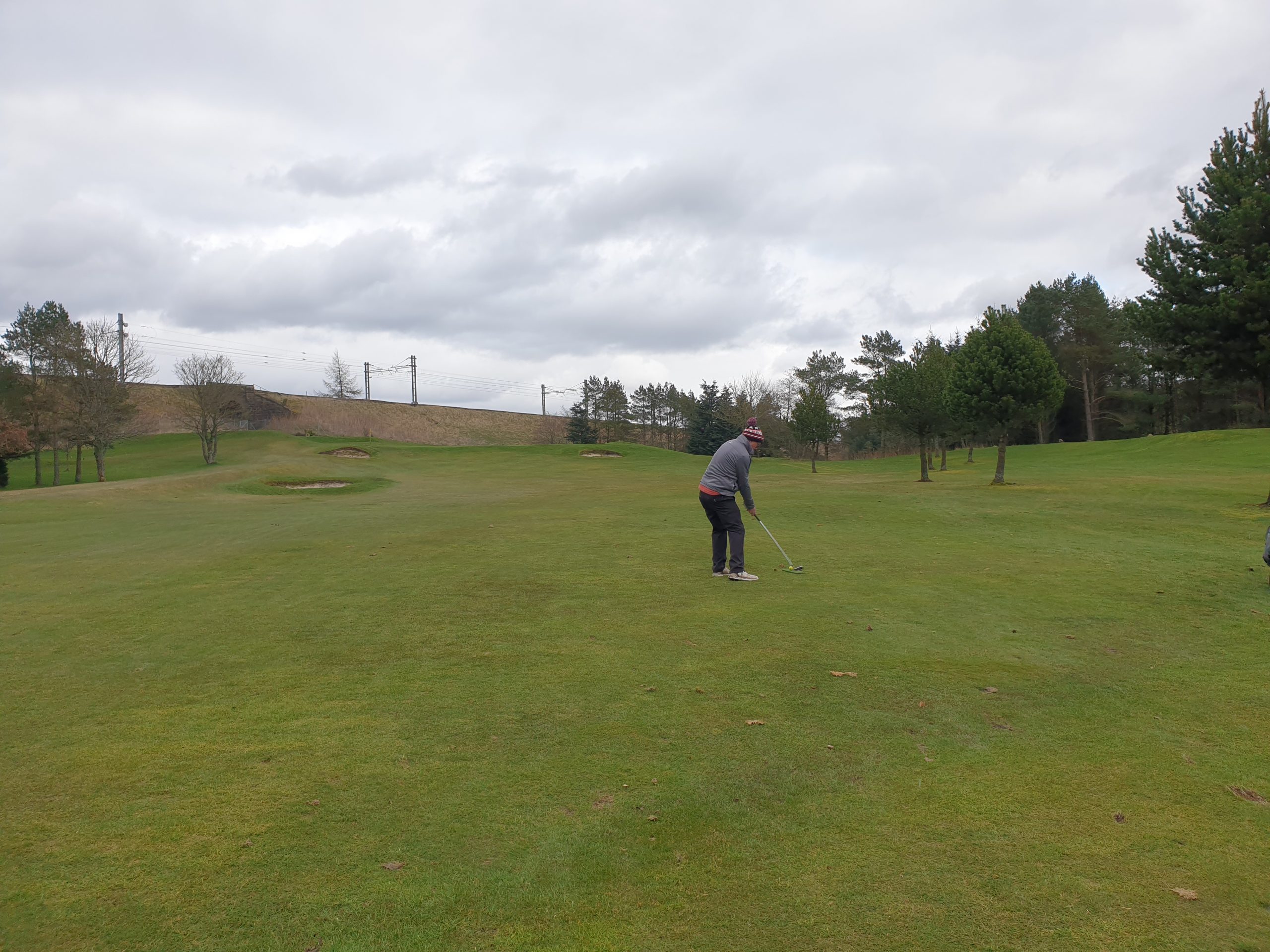
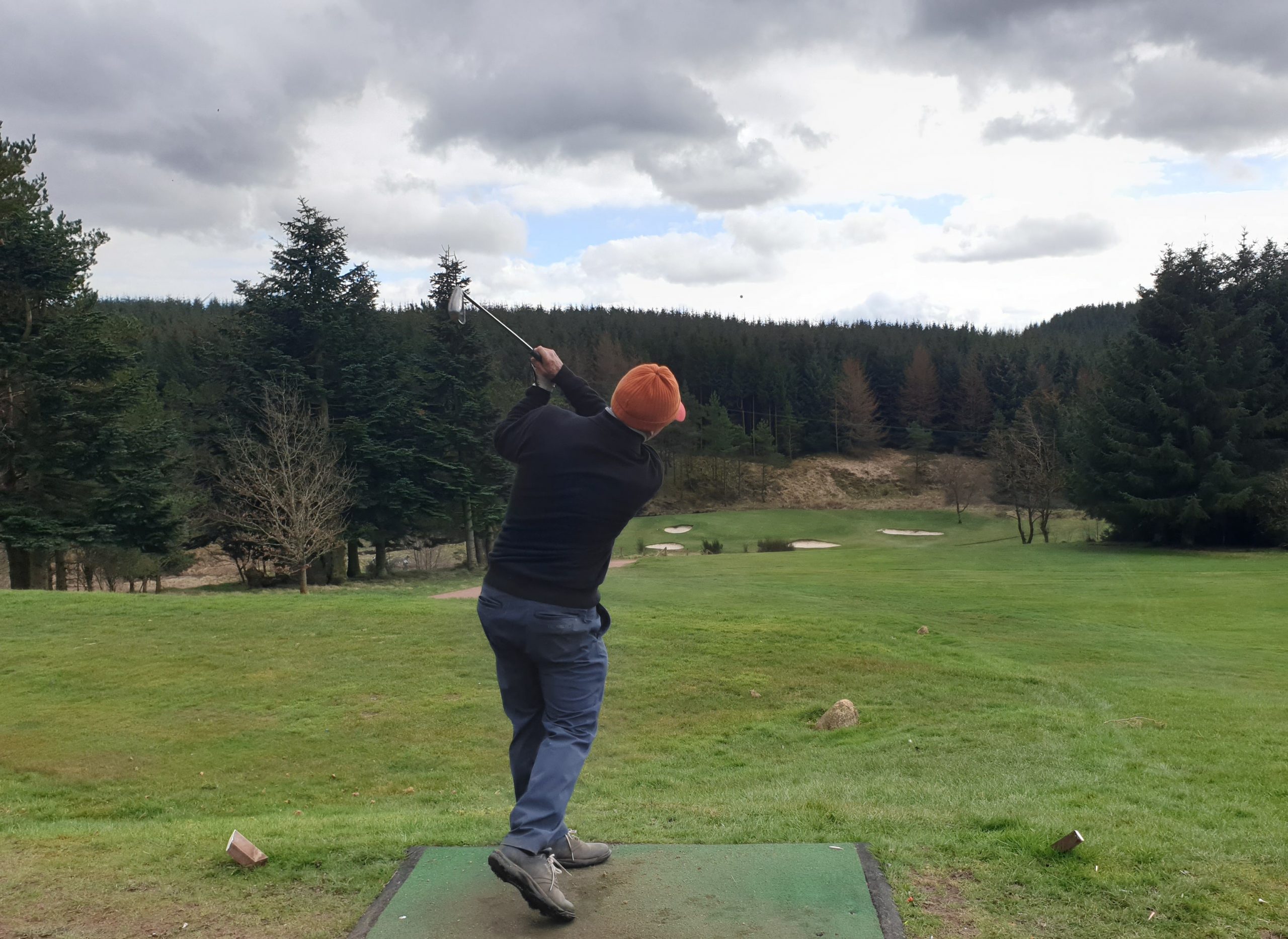
Local Member Gordon Cleland, local member, playing his approach at the par 5 13th.

After a welcoming opening hole, Greenburn becomes a narrow course, surrounded by industrial landmarks, most notably the electrified Glasgow to Edinburgh railway line. Pylons and overhead wires run over some holes.

The sometimes very large and sloping greens were in good condition for the end of winter. I got the feel they would be fast and very difficult in Summer.
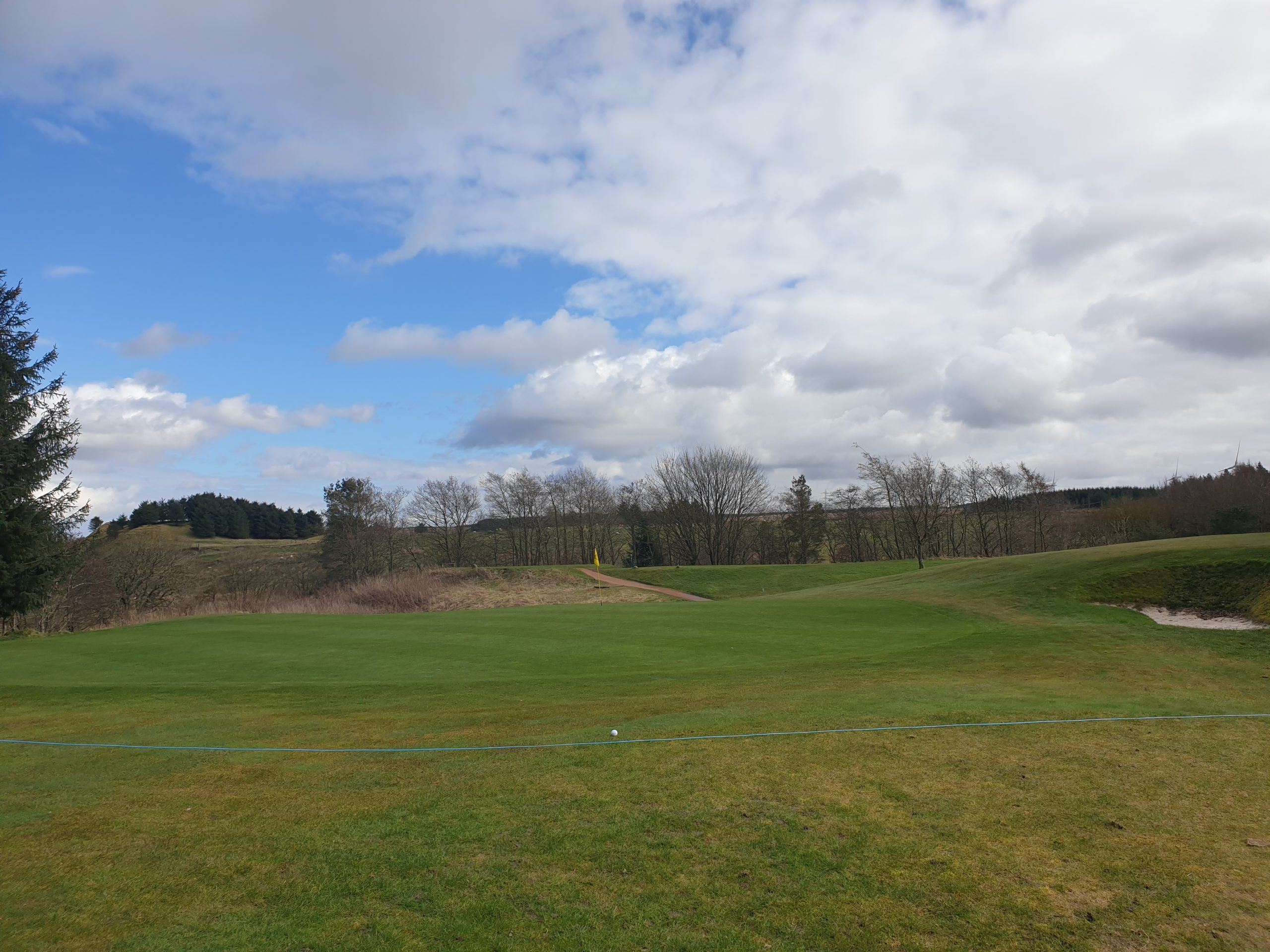
The first, with characteristic large green, the rope marking the winter ground boundary

As you play toward the 4th green, a massive stone railway viaduct dominates – dark and monumental, it represents the ambition of the Victorian age, as does the existence of clubs like Greenburn. Nobody designs viaducts anymore, they’d be too expensive, but were they built to disturbingly outlast their surroundings.
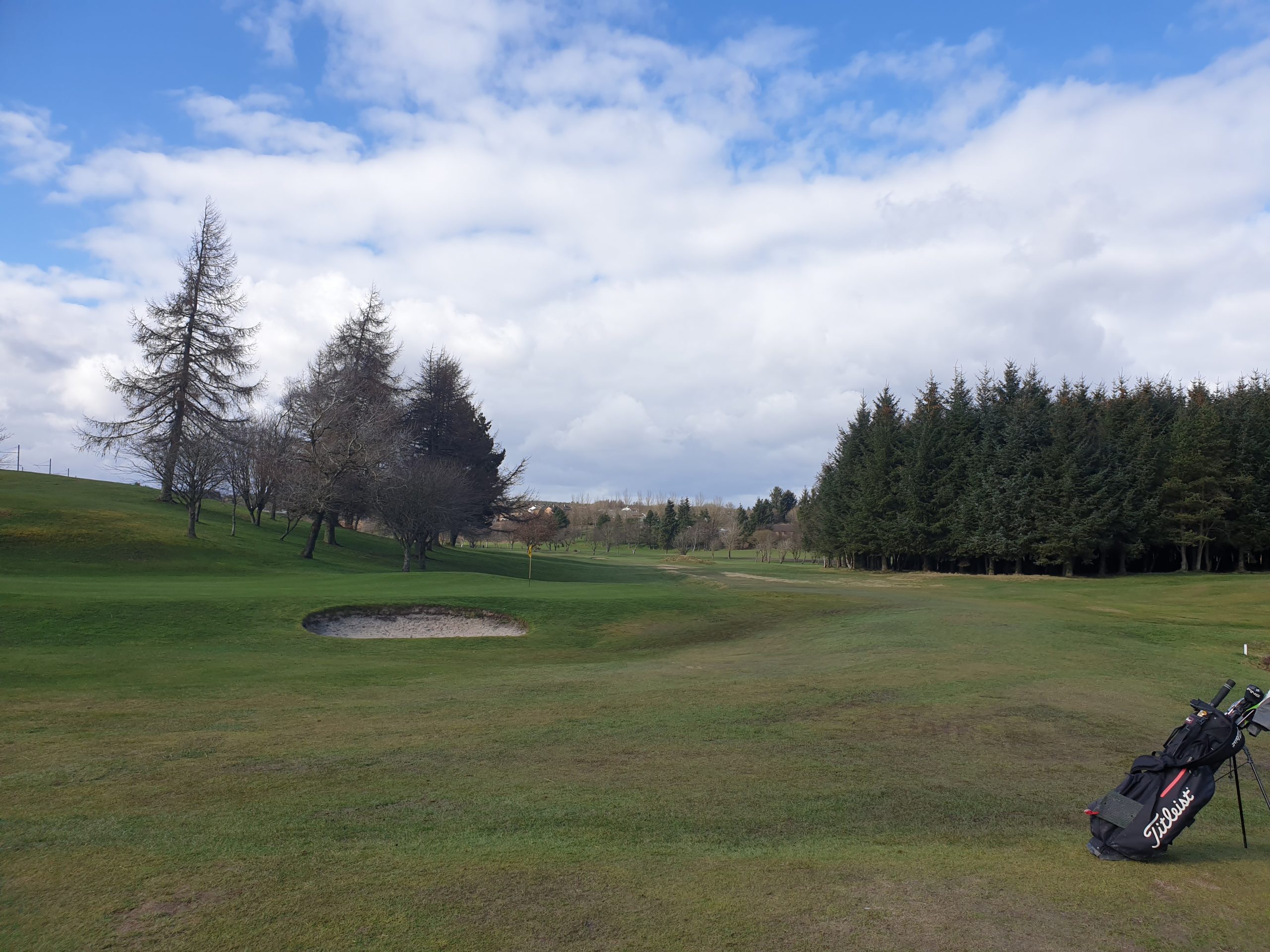
Hole 3, one of the birdieable par 4 holes, with wide narrow green

The highlight of the course are a quartet of difficult par threes, a truism brought to life by Gordon’s tale of the Greenburn “secret 2s pot”. Most clubs have a small stake side comp along side the weekly medal, the “pot” shared by players getting a 2 on their card. At Greenburn this side sweep is on only one of the par 3s, but secretly chosen. Given the difficulty of the par 3s, the pot can accumulate. On one occasion, Gordon took home £340 for a birdie two at the 10th, the stroke index 5, ‘Muldron’ .
The 6th, at 171 yards, is the shortest of a quartet of great par threes at Greenburn

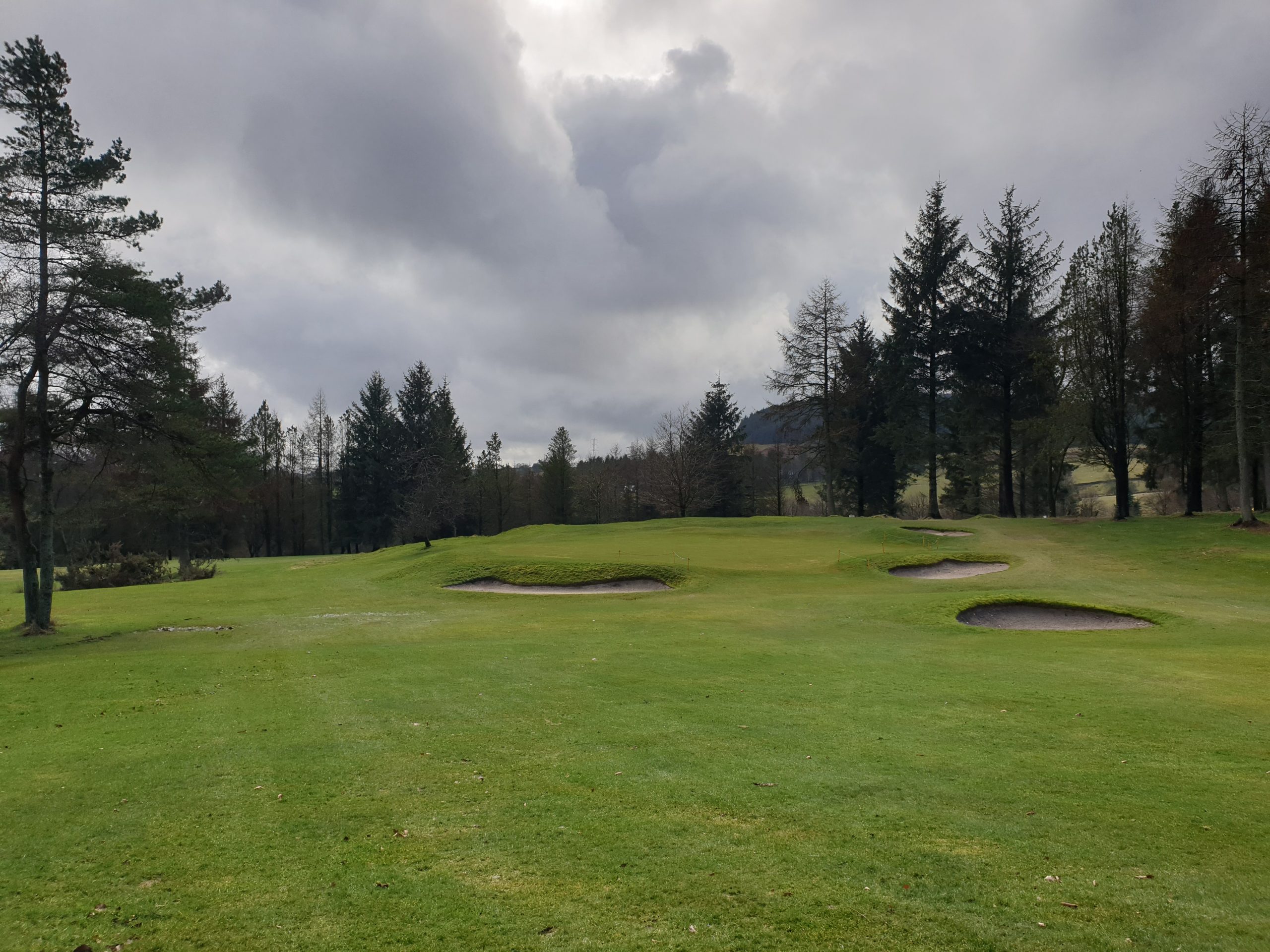
One disappointment was almost every bunker was marked GUR. Well-shaped, properly positioned, but out of play. Hopefully seasonal rather than structural.
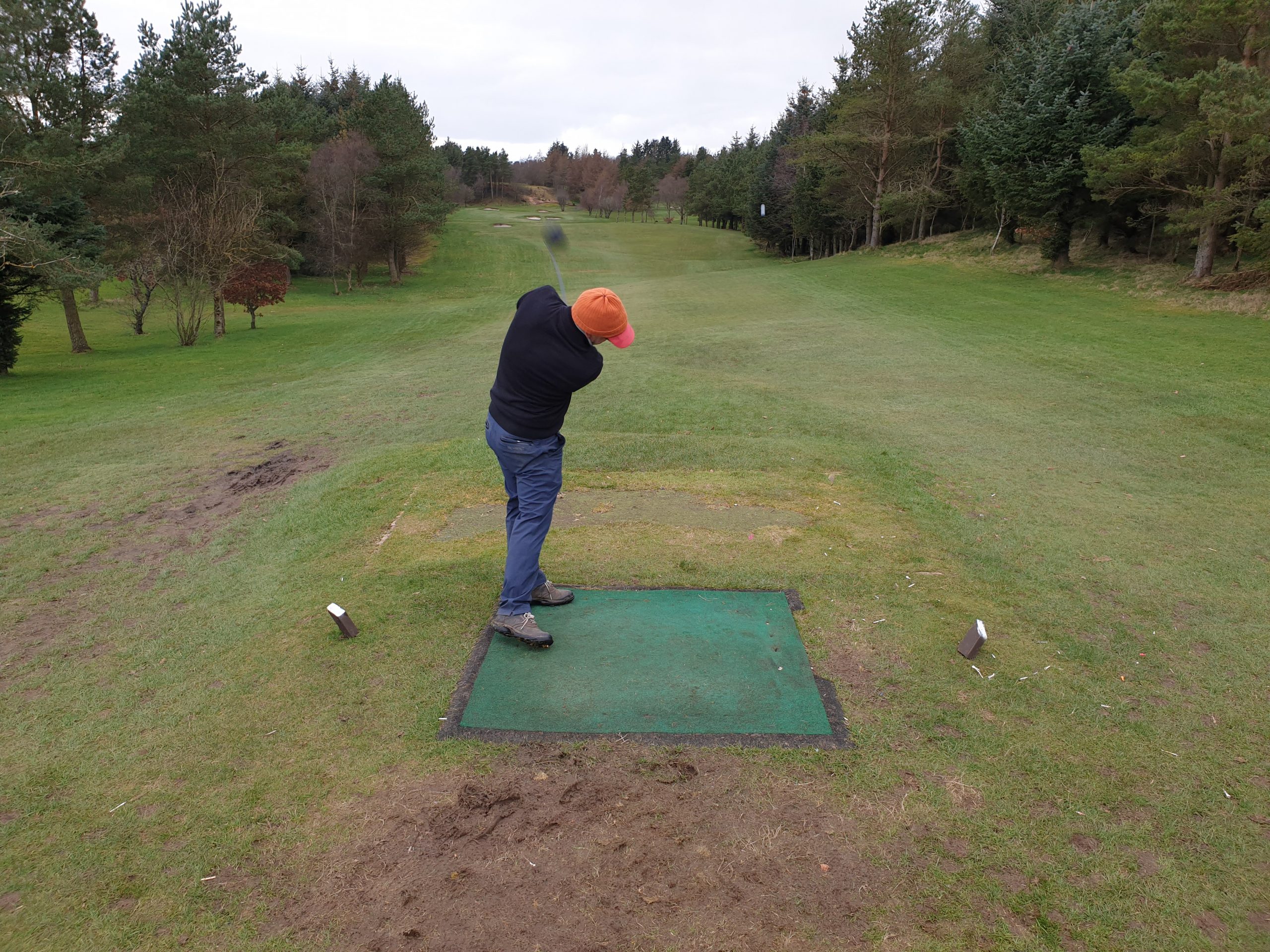
Moly playing his ‘normal’ draw off the winter tee at the 14th, a tough par 4.

Greenburn is a good course, around mid-table in my ranking of Scotland’s courses that I’ve played. It sits in a central belt that offers a car-owning golfer several credible alternatives within thirty minutes. Membership at £738 a year is deliberately affordable — the club keeping itself within reach of its community. The £30 summer visitor is excellent value.
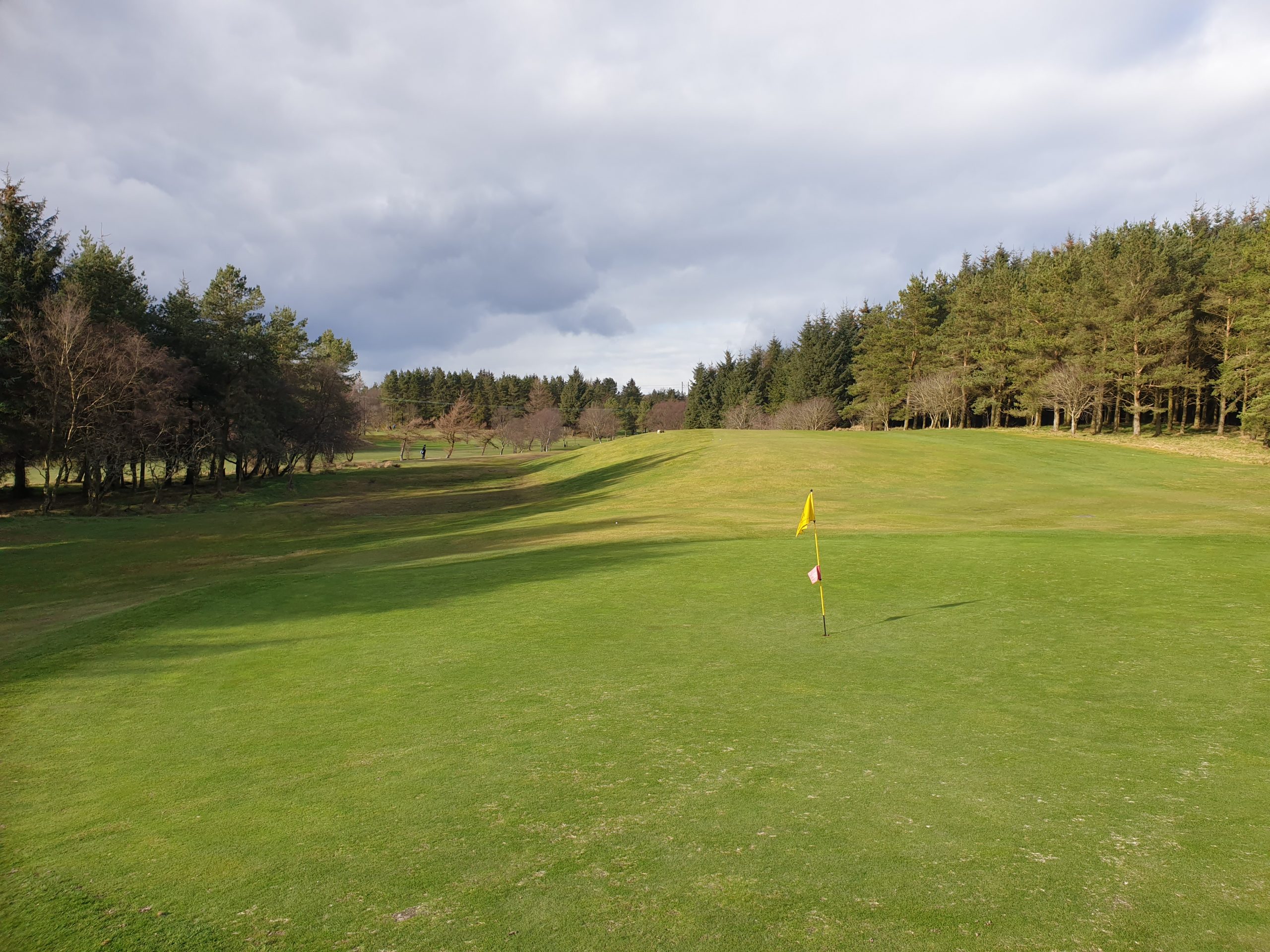
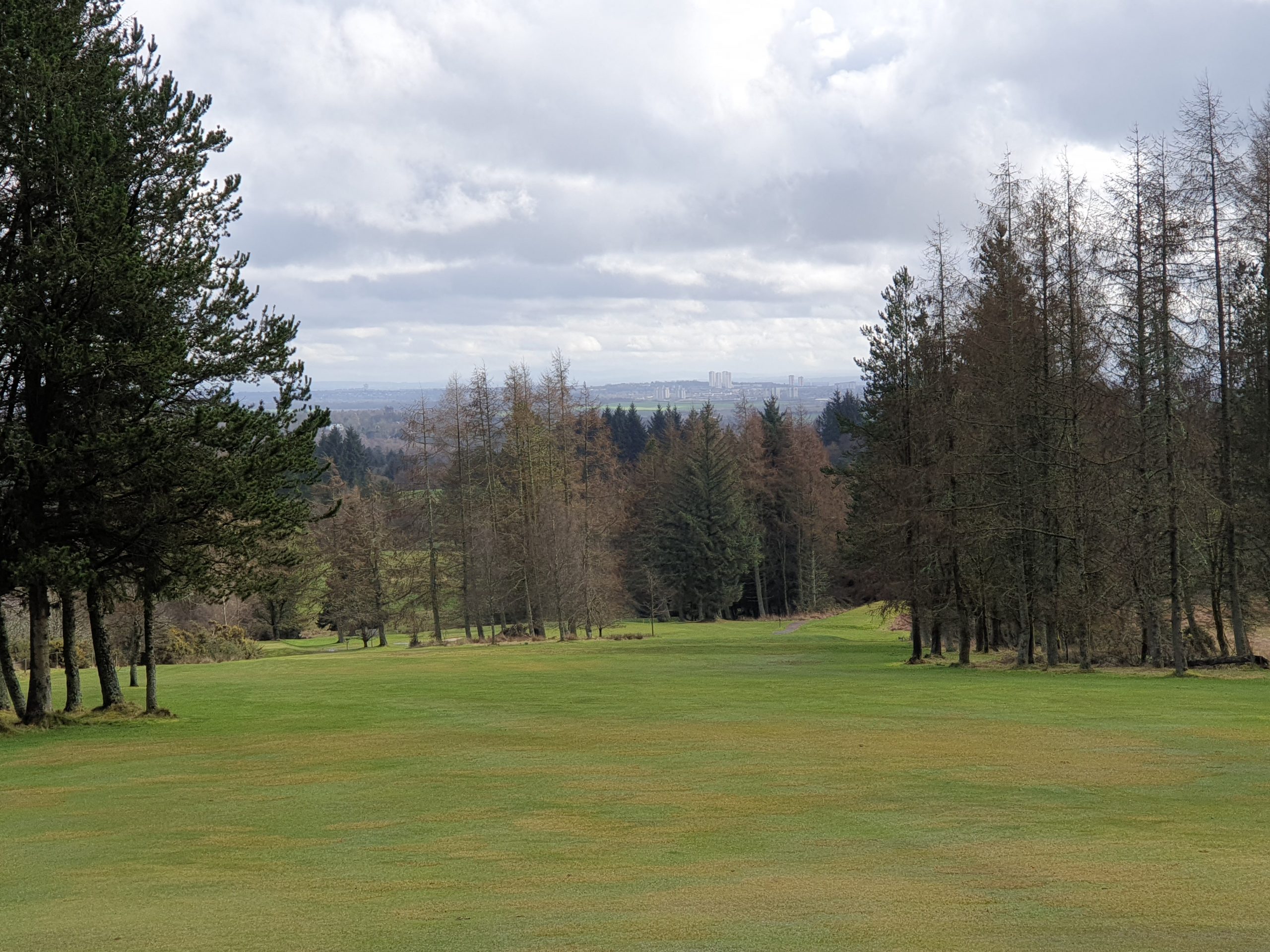
Shades of East Renfrewshire come to mind looking back from the 10th Green

So to the viaduct or course question.

The viaduct was built in an era when Fauldhouse had the population, the industry, and the collective will to anchor infrastructure for generations. The golf club was founded in the same spirit, by the same kind of people, in the same era. Both have lasted. But the economic conditions that created them, dense local population, limited mobility, a working community that played its local course because there was no other, have long since dissolved.
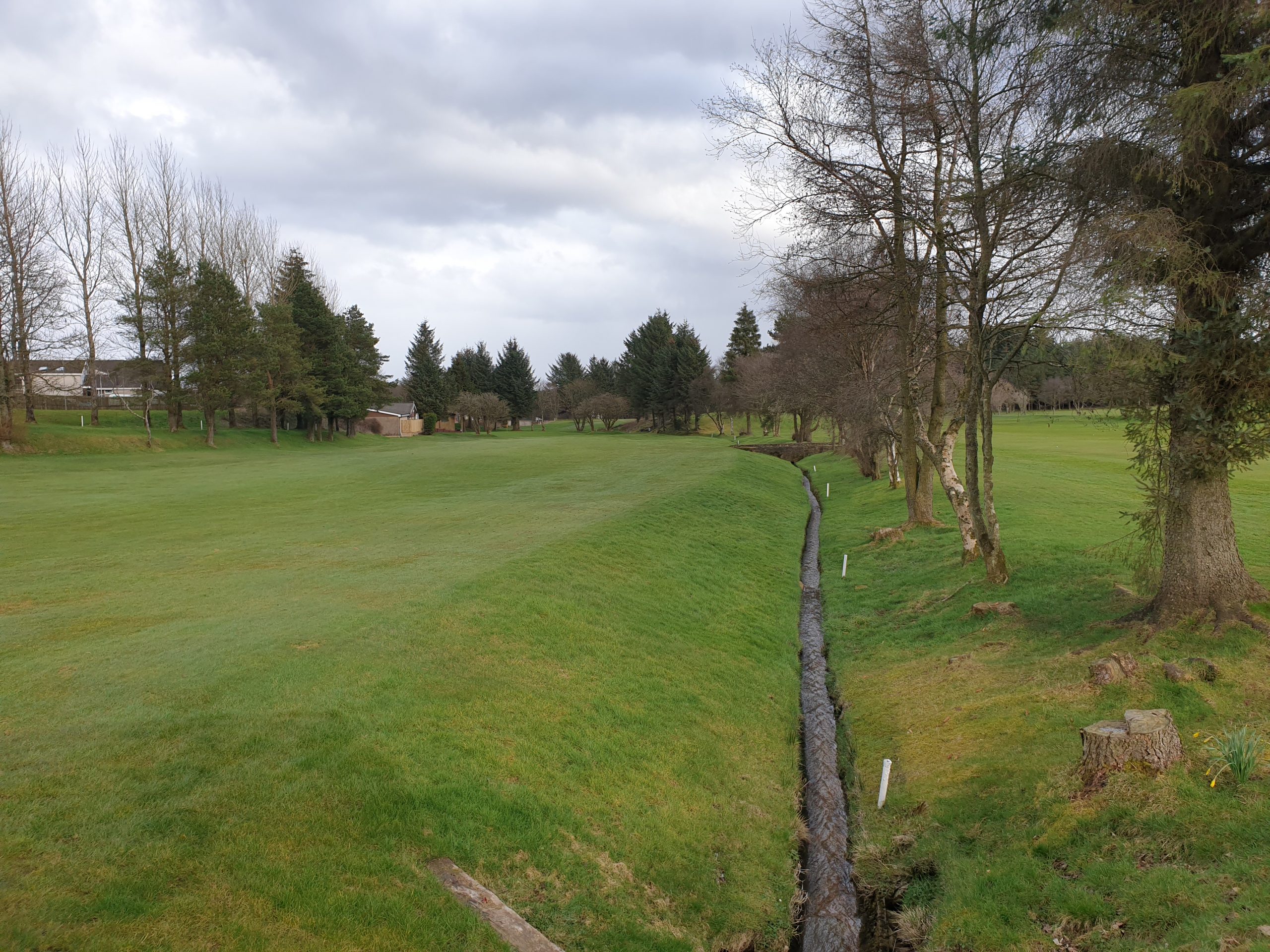
OOB down both sides of the fine 18th hole at Greenburn, likely ruin many a card.

Scotland probably cannot sustain 575 golf courses indefinitely. The adjustment will be slow and uneven, shaped by club type, geography, land ownership and sheer stubbornness. Members’ clubs built by communities like this one don’t close easily – they endure through loyalty, deferred maintenance, and people like Gordon who simply keep turning up. But the structural pressure is real, and it falls unevenly. A course in the middle of the quality distribution, in the middle of the country, with several competitors nearby and no obvious distinguishing draw for the visitor market, faces a particular kind of exposure that a municipal course or a well-capitalised commercial operation simply does not.

The viaduct will almost certainly outlast us all. The golf club? I genuinely hope it does too. But the question in the title isn’t rhetorical.

More on Scotland’s golfing landscape — and what the economics might mean for courses like this one — in a future post.

I scored 89. The course reminded me a little of East Ren (Blog 169).

Facts:

Course Type: Parkland/Moorland
Par: 71 (3 par 5s, 11 par 4s, 4 par 3s)
Distance: 5,659 yards (yellow tees)
Course Rating/Slope: 71/128 (yellow tees)
Moly’s Gross Score: 89
Green Fee: £15 (winter rate)
Value: 4/5
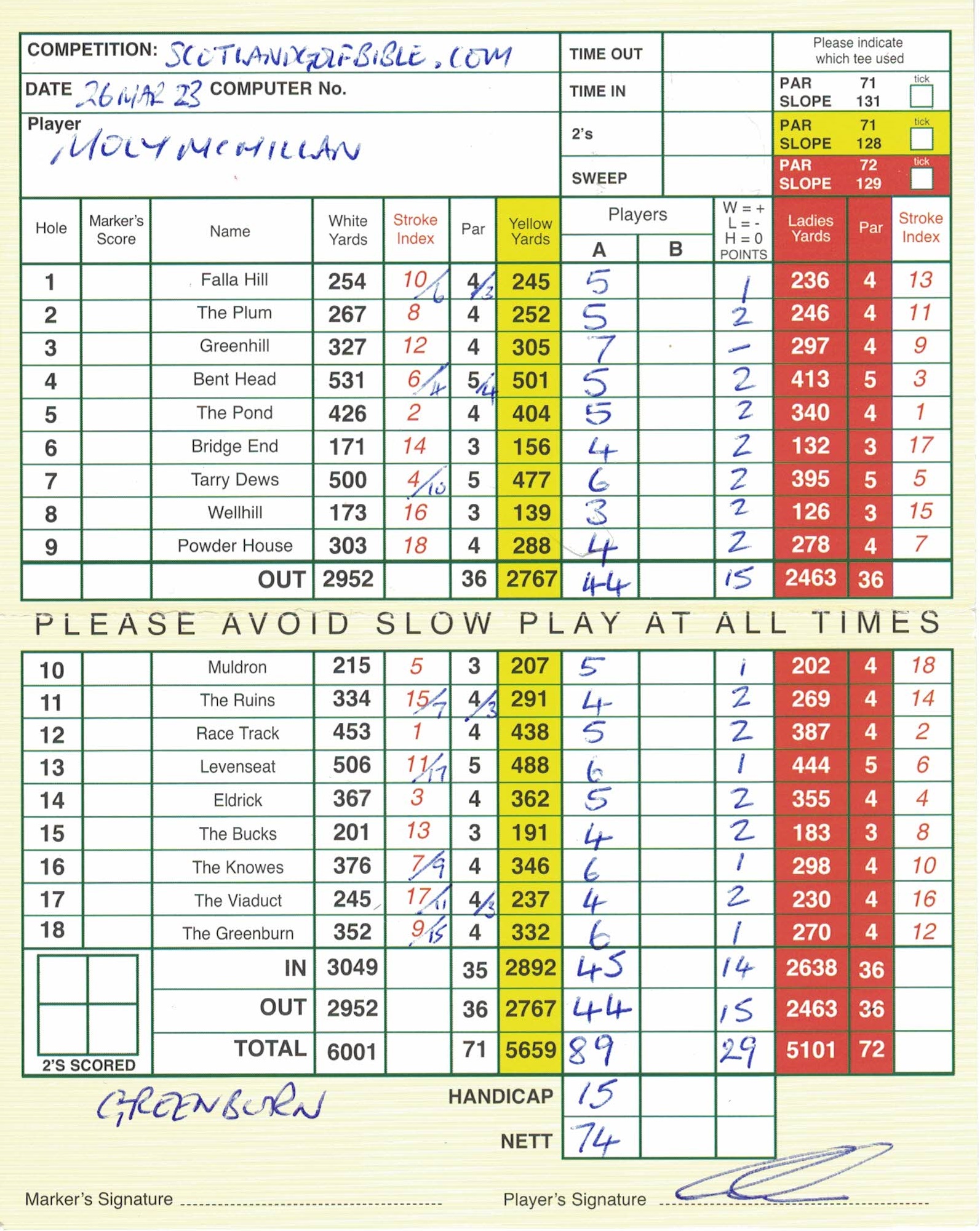
Moly’s 89, was a decent game.

186. Broadlees Par 3. 25 Mar 2023

Scotland’s first synthetic greens course, probably.

Price: £8. Par 27. Value: 4/5.

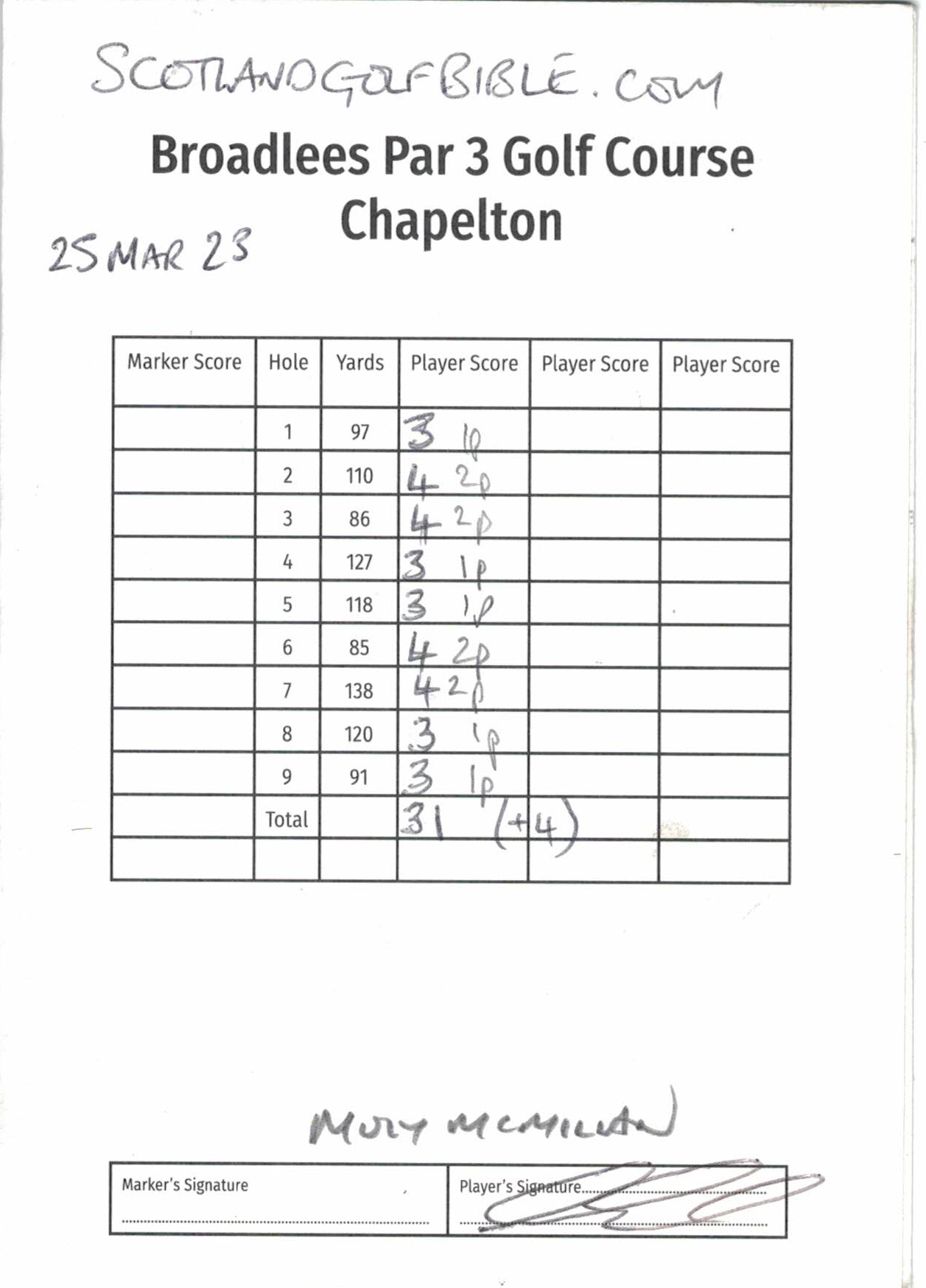
Moly’s Score: 31 (+4)

The backstory is in Blog 185, the main Broadlees course. In summary, since 2004, Robert and Barbara Anderson have built a diverse golf operation – range, 9-hole course, crazy golf, footgolf, academy, café and Santa’s grotto – to compete in an area stocked with golfing alternatives, many of them subsidised.

In 2021, they added something possibly unique in Scotland: a 9-hole par 3 course with synthetic greens and tees, playable every day of the year regardless of weather or ground conditions. The commercial reasoning is sound: a course needing no greenkeeping on its playing surfaces, generating income in January.

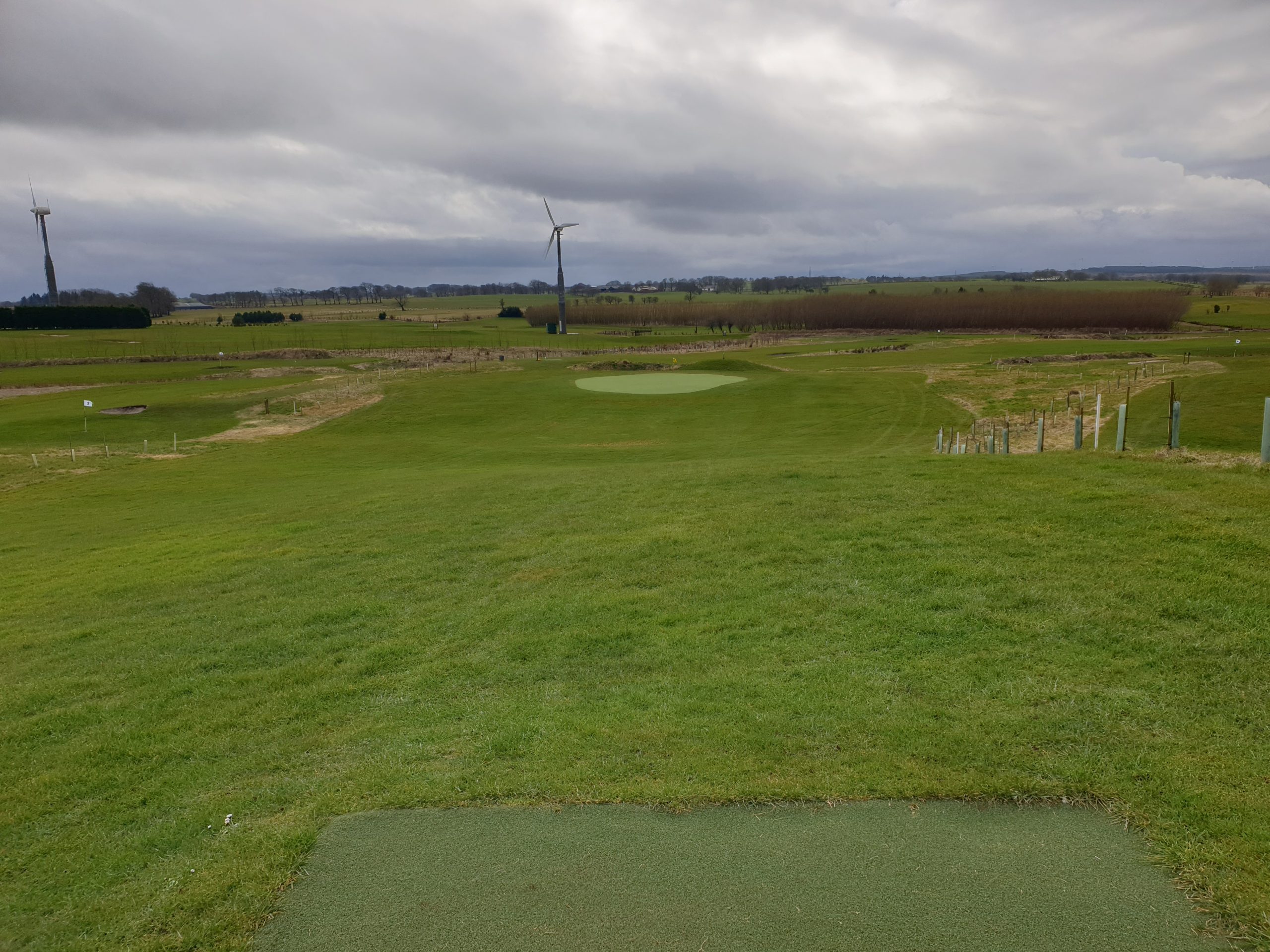
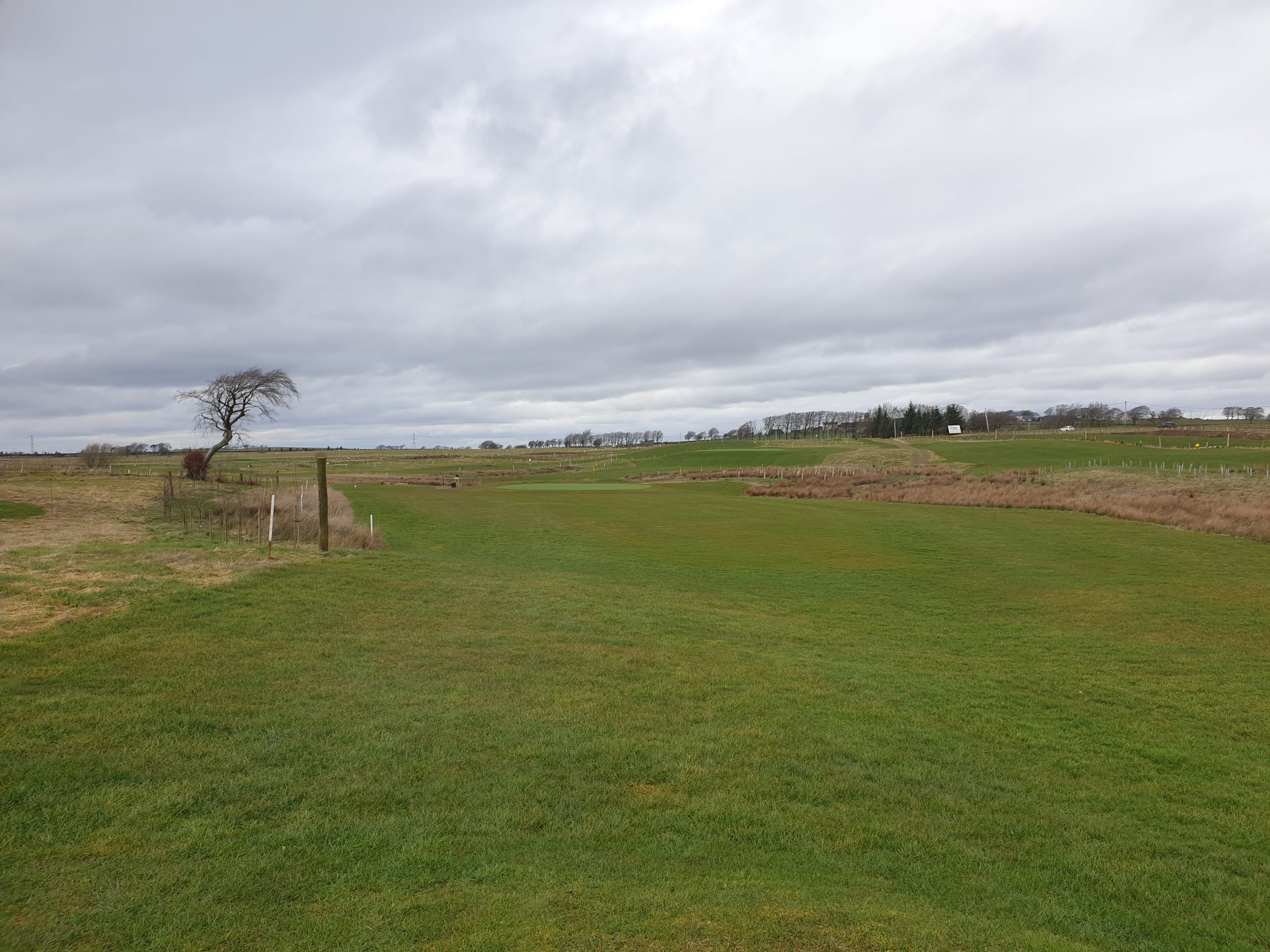
The first (97 yards) with the startlingly green synthetic surface immediately apparent against the March gloom. You are not playing a normal golf course.

From the start the scene is stripped back entirely with open ground, single windswept tree, and a synthetic “green” looking like a piece of discarded carpet. Not aesthetic, but very interesting, with the graves of golfing Architects stirring?

Synthetic tees matter commercially as much as the greens, as grass par 3 tees are brutally punished and need constant repair, reseeding, levelling and divot mix. The cost of upkeep of mats is negligible, plus they play consistently.

Hole 3 from elevated tee. The two wind turbines are a constant presence.

Holes range from 85 to 138 yards, so this is great wedge practice. They are not architecturally interesting in any way. But the holes have several water hazards to contend with.

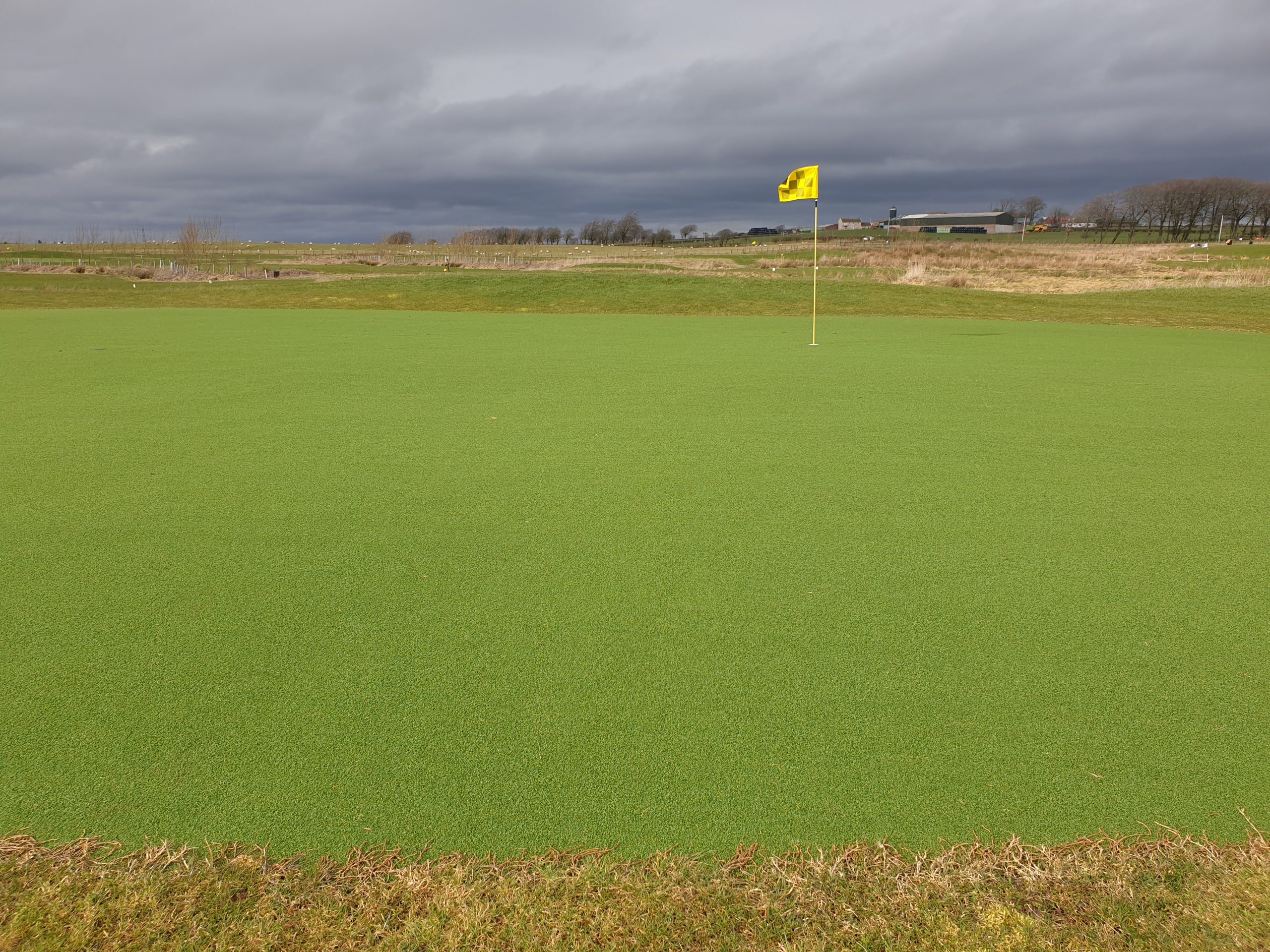
The fourth green with synthetic pile; dense, uniform with its own playing logic.

The key question is “how do the greens play?”. The answer is situational. In wet March conditions the green surrounds were too soft for a chip and run approach. The only option was to fly the ball onto the front of the green and allow it to release. The surface bounces more than ‘checks’ on full shots, so that requires careful judgment. Land too deep into the green and the ball runs through; land short and it stops on wet grass short.

Short chips around the green, played softly, were a different matter — the synthetic pile had enough give to generate some check, certainly more than expected. A useful discovery, though it came too late on the card to rescue early bogeys. On the greens themselves the ball rolled true, although breaking differently from a grass surface.

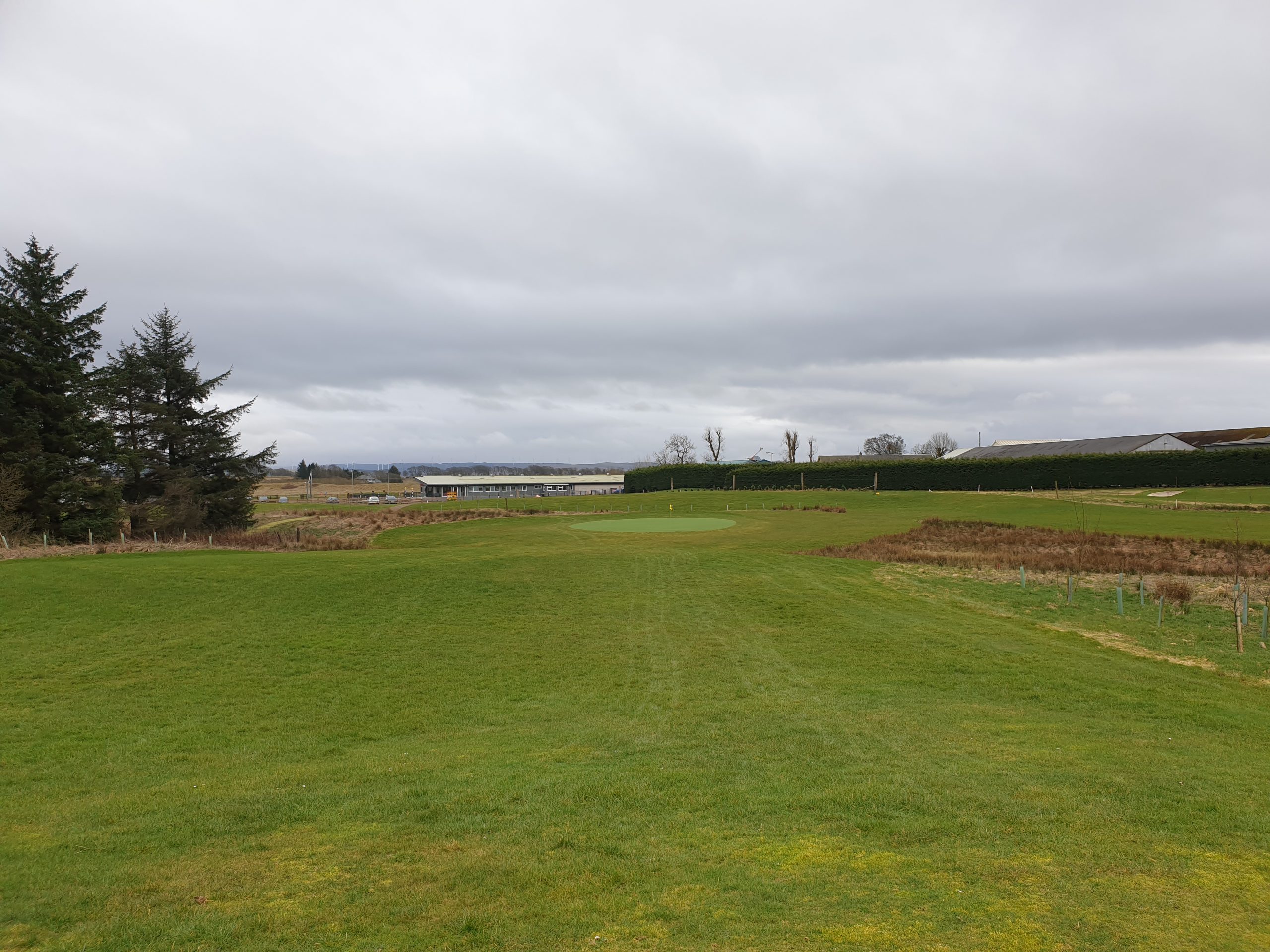
The 9th (91 yards), looking towards the Broadlees clubhouse, with cafe, range, and main course off to the right.

I shot 31 gross, four over par. On the two holes where I holed from outside ten feet I correctly read that the ball would not break as much as expected. It was an education. I’m sure regular players hole lots of putts.

At £8 for nine holes (2023) this is great ‘novelty’ value. I would think there is a commercial opportunity to price a combined fee with 9 holes on this course and 9 holes on the main Broadlees course.

Value: 4/5, to play Scotland’s first and possibly only synthetic greens course

Facts:

Course type: Par 3, synthetic tees and greens

Par 27 . Distance: 972 yards.

Moly’s Gross Score: 31 (+4)

See also: Blog 185 — Broadlees Golf Course

180. Hilton Park. 21 Mar 23.

Ewan Grimes – What a Pro!

Value – 4/5

Golf in Scotland is a competitive market, so a friendly welcome is essential. Ewan Grimes, the recently appointed pro at Hilton Park, could not have been more hospitable to me. It made up for the miserably wet weather and golf course, which arguably should have been closed. At least that meant it was very quiet and took less than 3 hours to play.

The 17th at Hilton Park, a par 3 of 184 yards with common white and yellow tees.

Hilton Park, just outside Milngavie, is about 10 miles north of Glasgow City Centre, but feels much more remote. It is one of only 23 clubs in Scotland that has two or more 18 hole courses. Moreover, it is one of only 3 clubs with two heathland courses, the others being Gleneagles and Blairgowrie.

Moly putting on the 6th, the most difficult of the four par 3s.

I played both the Hilton Park and Allander courses in one day, which was a challenge given the undulating terrain. A buggy might be useful here. There are excellent views, including of the Glasgow skyline, something made easier by the loss of many trees in recent years due to storms.

The Hilton Park layout was much more demanding that its sister Allander course, but as a combination of courses they compliment each other really well.

The well bunkered par three 12th hole, the stroke index 18 hole.

The course routing was a little confusing and I ended up playing the 15th hole twice, having also played some of the Allander holes in the wrong order. I suspect the reason was the shortened winter course. It was so wet, I was the only player.

The 18th is a strong finish at this undulating course.

Sadly, winter greens were in operation on the majority of holes, but I was only charged £30 for both rounds via Golfnow, which was excellent value. Overall, the Hilton Park property is one of the best in Scotland, and worth checking out.

The par four 13th, at well over 400 yards, will play as a 5 for most.

I could really imagine being a member at Hilton Park as the overall package is incredible value. It would make for a great society day out.

Views of Glasgow from the 8th, a short par 4, Moly’s only birdie hole.

Price £45.

Discount: Golf Now, £15, against the Winter rate of £30.

Course Type: Heathland

Par 70 (2 par 5s, 11 par 4s, 5 par 3s)

Distance:5446 (yellow)

Course Rating / Slope Rating (yellow) 67/127.

Moly’s Gross score85

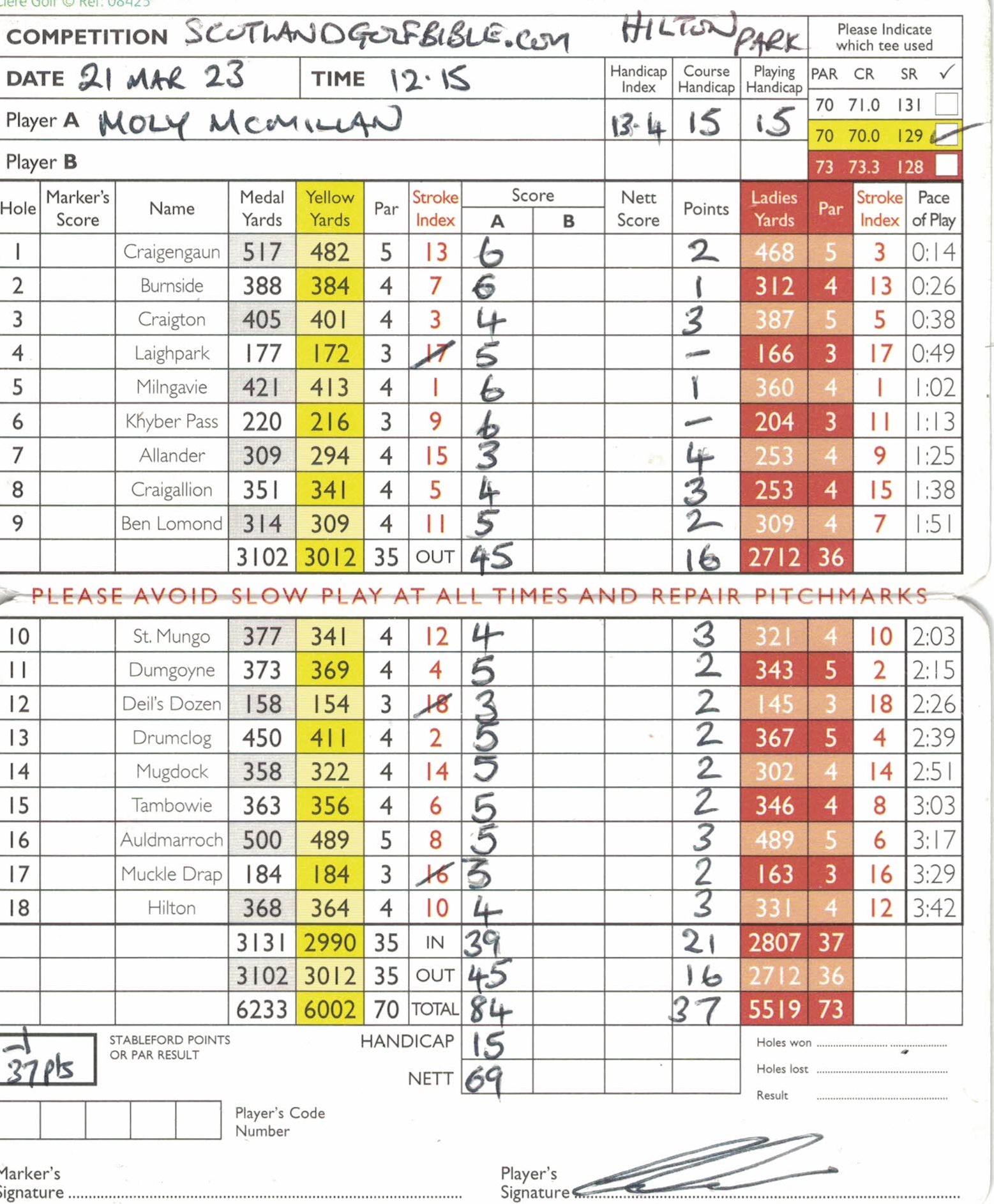
Moly’s Hilton Park Scorecard, using mostly winter greens – 84

178. Hollandbush. 20 Mar 23.

Tough South Lanarkshire Council course in perennial danger of closing

Value – 4/5

Hollandbush Golf Club near Lesmahagow was founded in 1955 as a 9 hole course, later extended to 18 in 1963. Web searching “Hollandbush GC future” though will return articles about council funding woes; it’s highly likely this blog becomes redundant in future after the course closes. This will be a great shame, as Hollandbush represents a great example of a Scottish municipal course.

The free course planner, a surprising addition at this municipal course, worth playing

South Lanarkshire council operates 6 courses, in addition to Hollandbush, the other 18 holes layouts are Biggar, Langlands and Torrance House, plus two nine hole courses of Larkhall and Strathclyde Country Park.

The 17th at Hollandbush, a drivable par four, but with well positioned protective ditches

Hollandbush also has an independent golf club, providing members with competition and social benefits. This is a common feature of municipal courses in Scotland. This ‘club’ costs £115 annually.

The well maintained ditches shown here at the difficult par 4 12th hole.

Golf pricing is interesting. Annual golf membership for one of South Lanarkshire’s 18 hole municipals is £475, but for just £32 more you can play all 6 courses for £508. If you can make sense of that price differential, good luck! A green fee in peak season is £25, but the winter senior rate I paid was only £9, incredible value.

The 14th at Hollandbush, with one of the relatively few bunkers at this course.

The course is well designed; with constant changes of direction, the undulating fairways, regularly interspersed with well maintained ditches, provide a tough challenge. The slope rating of 129 from the yellow tees testifies to that, albeit it was a fairly generous course from the tee.

The greens were good at this municipal course, here seen at the 10th hole, a long par 3, one of the best holes on the course.

The course was well presented, especially given the wet conditions. I saw no-one else playing and the car park had only one other car, possibly owned by the clubhouse attendant. I think the council could reasonably consider “honesty” box payment to reduce its costs.

The second was one of several card wreckers at this well designed golf course.

I played pretty well, scoring 88, but with 4 blobs. I actually beat the course ‘1 up’, something which is a good measure of your game,

As to the name ‘Hollandbush’ it remains a mystery for me despite my efforts to find it’s origin.

It’s worth playing Hollandbush, a course I hope continues operating.

Price £25.

Discount: Senior winter rate. £9

Course Type: Parkland

Par 70 (1 par 5, 14 par 4s, 3 par 3s)

Distance: 5552 (yellow)

Course Rating / Slope Rating (yellow) 67.8/129.

Moly’s Gross score88

« Older posts

© 2026 Scotland Golf Bible

Theme by Anders NorenUp ↑