A guide to green fee value for money

Category: £20 – £39 (Page 2 of 22)

194. Troon Links (Lochgreen). 29 Apr 23.

The road to the Open ran through this municipal course for forty years; Jack Nicklaus took it, though not the way the legend tells it.

Price Paid: £19.99 (GolfNow)
Current Price (2026): £38 list; £30 GolfNow Hot Deal
Value (out of 5): 5 at price paid / 5 at current GolfNow / 4.5 at current list
Moly’s Score: 85 gross, 72 nett, 38 Stableford points (playing handicap 13)
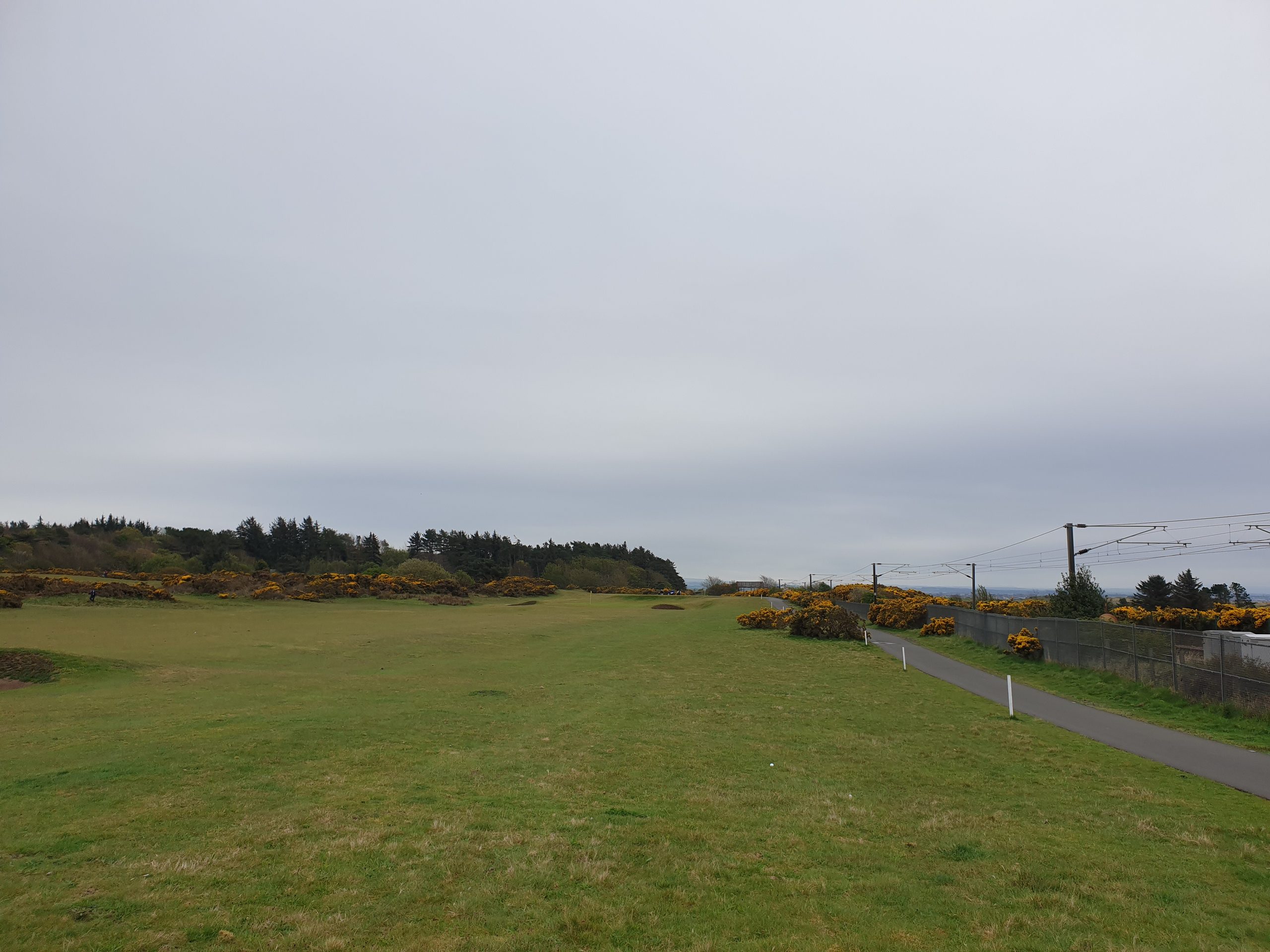
The 5th, stroke index 1, runs beside the Glasgow to Ayr railway. On the far side of the line lie Royal Troon’s members’ courses. On this side, the people’s golf. Moly took a 7.

In my Troon Darley blog (136) I wrote about two tiers of Scottish golf: Royal Troon’s clubhouse and the Troon Links clubhouse are less than a mile, but a world, apart. Lochgreen is where those two worlds used to meet.

From 1923 to 1962, anyone who wanted to play in The Open at Troon first had to qualify, and half the qualifying was on the municipal course. In 1923 it was still called Troon Municipal No.2. Gene Sarazen shot 75 on it on the Monday. On the Tuesday he went out first on Troon’s New (Portland) course into the worst of the rain and wind, shot 85, and failed to qualify. Walter Hagen scraped in on 159. The municipal half had not been Sarazen’s hurdle.
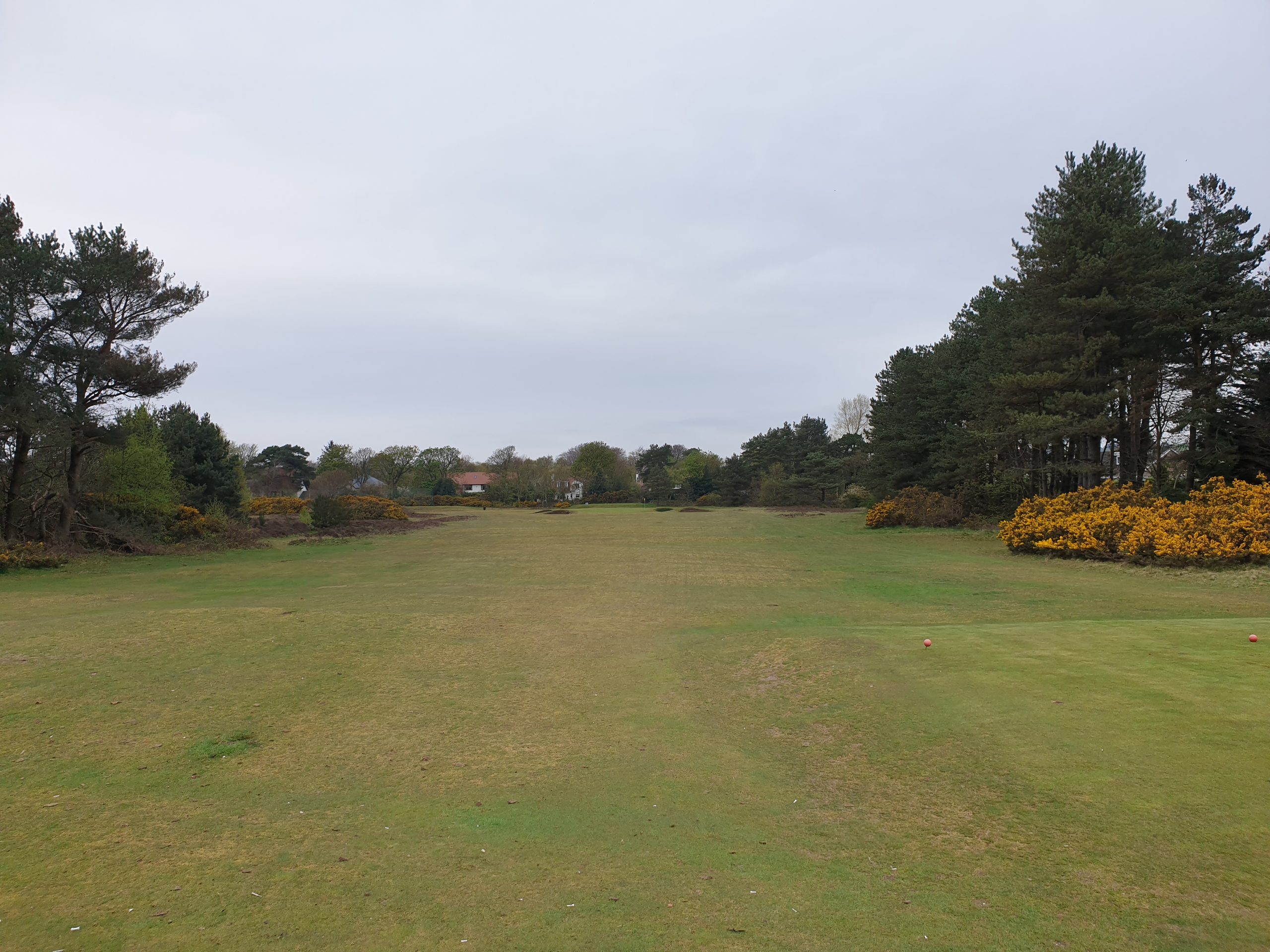
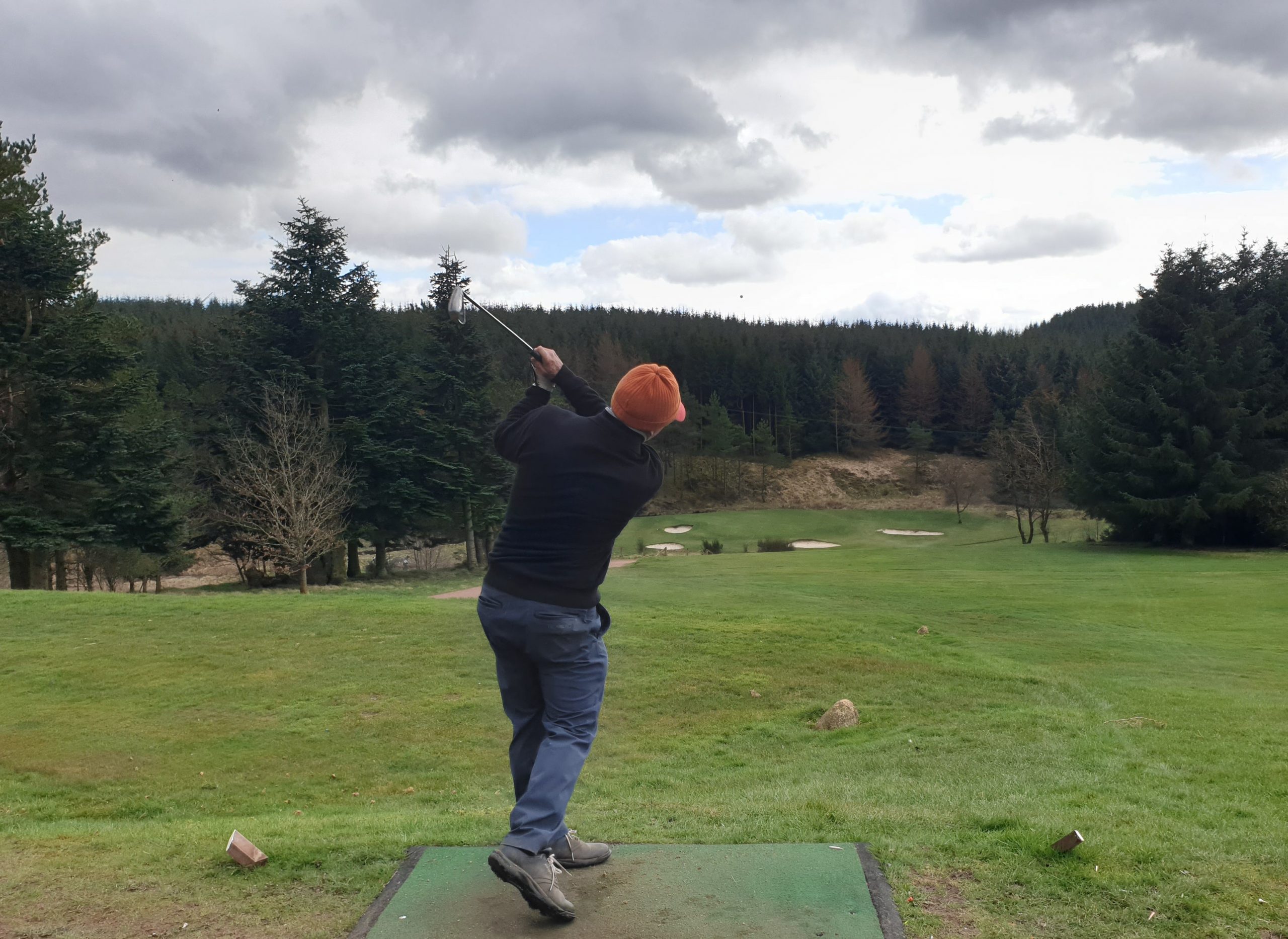
The 15th tee, framed by pines and full flowering broom, a highlight all round the course.

The 1962 Open was the last with no qualifying exemptions, so even the reigning US Open champion, a 22-year-old Jack Nicklaus, had to play a round over Royal Troon’s Old Course and one over Lochgreen. Every Lochgreen write-up mentions this. One goes further, claiming he “shot an 82 and then a 68 on the Troon Links Lochgreen course to qualify by one shot”.
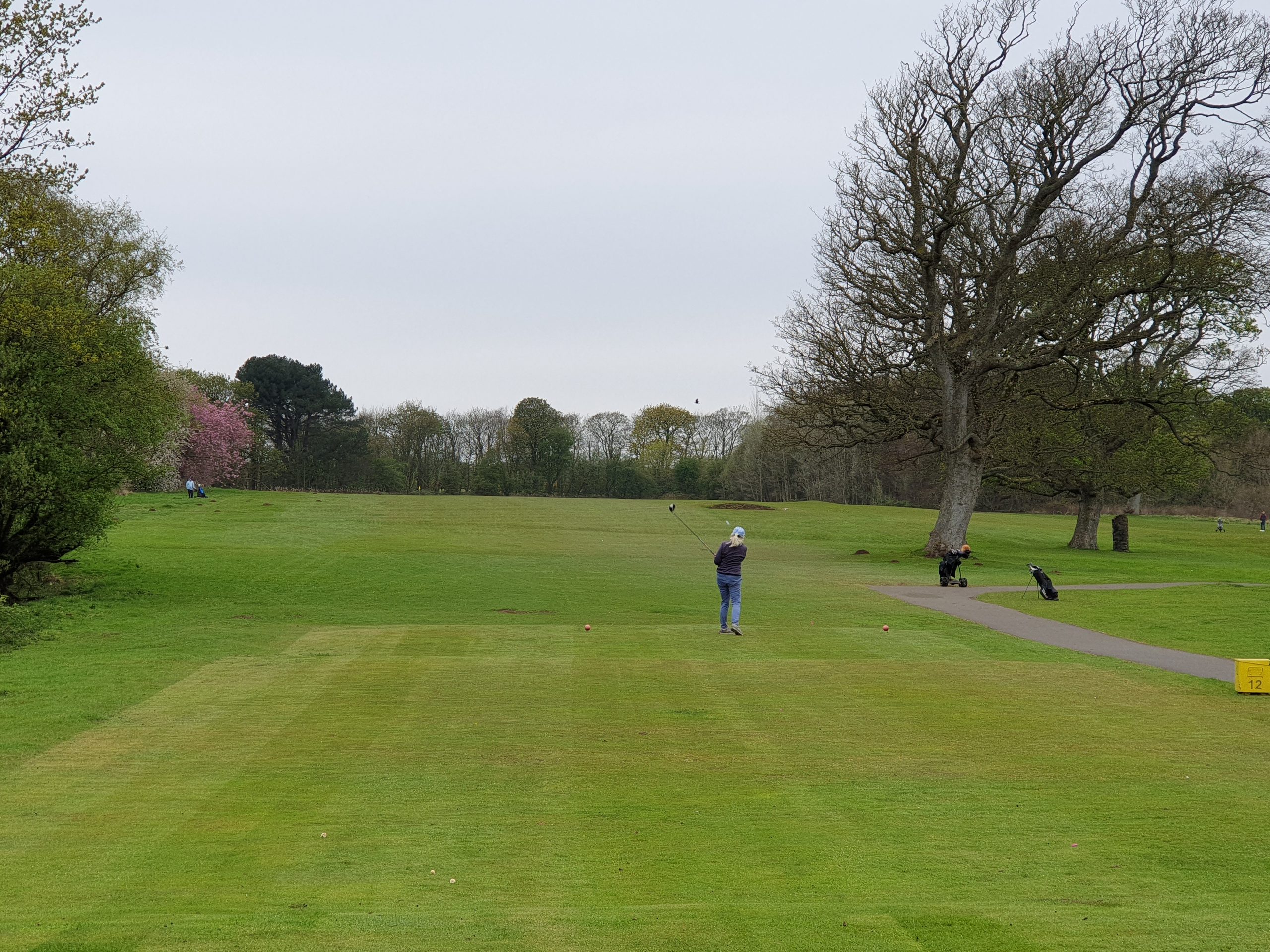
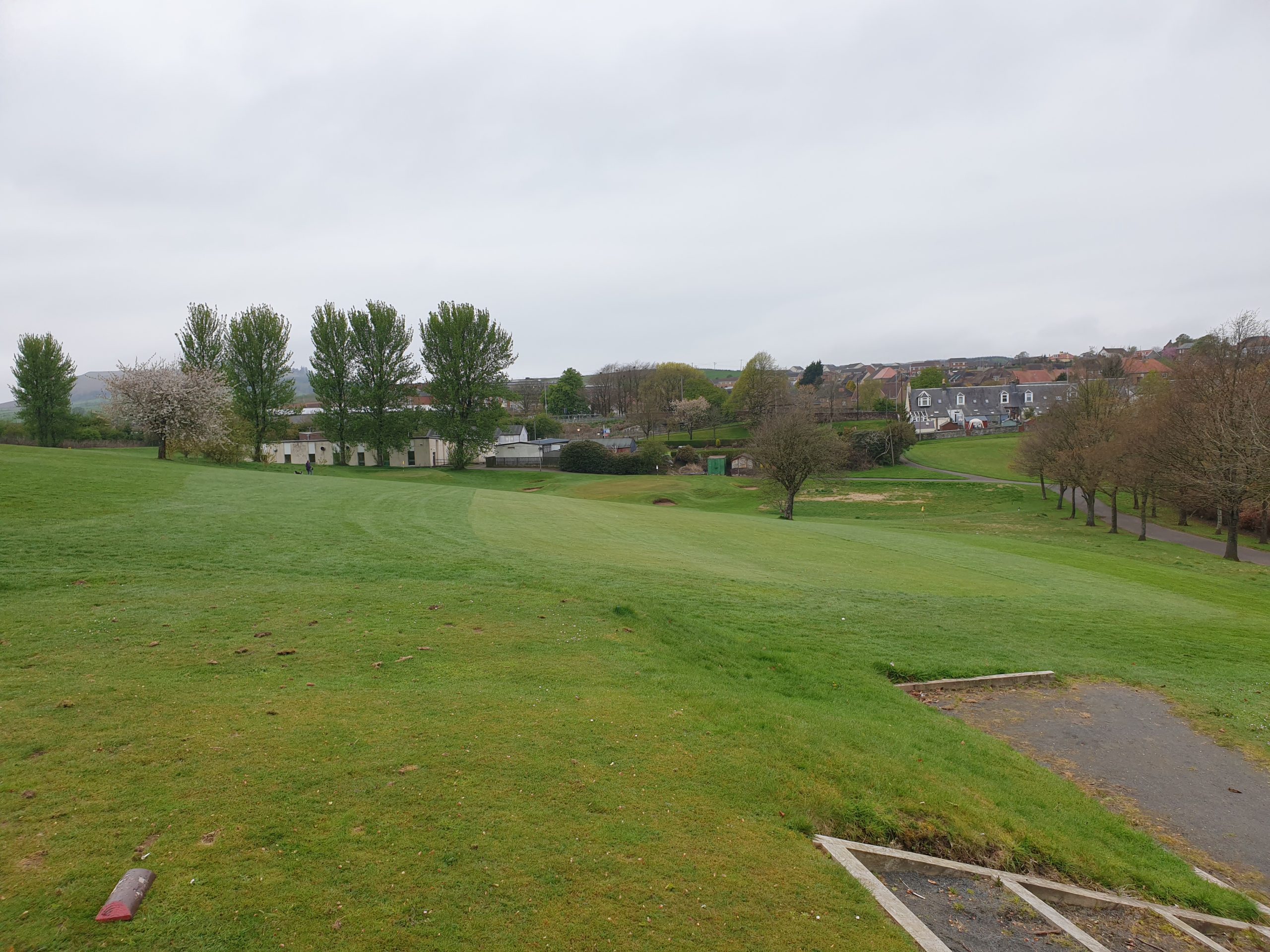
Fran on the 12th tee, in the “Dovecot Section”. Three holes of mature estate parkland, a different course entirely from the links holes either side.

It doesn’t add up. Only one of the two qualifying rounds was on Lochgreen. The qualifying mark was 154, and 82 plus 68 is 150, four shots inside it. The figures look borrowed from the championship proper. Nicklaus opened with 80 on the Old Course, including a 10 at the 11th, then shot 72, making 152, exactly the halfway cut. Twelve players on 153 went home. So the scramble happened, but on Royal Troon, not here. Somewhere along the way the legend crossed the railway line. His actual qualifying scores have so far eluded me.
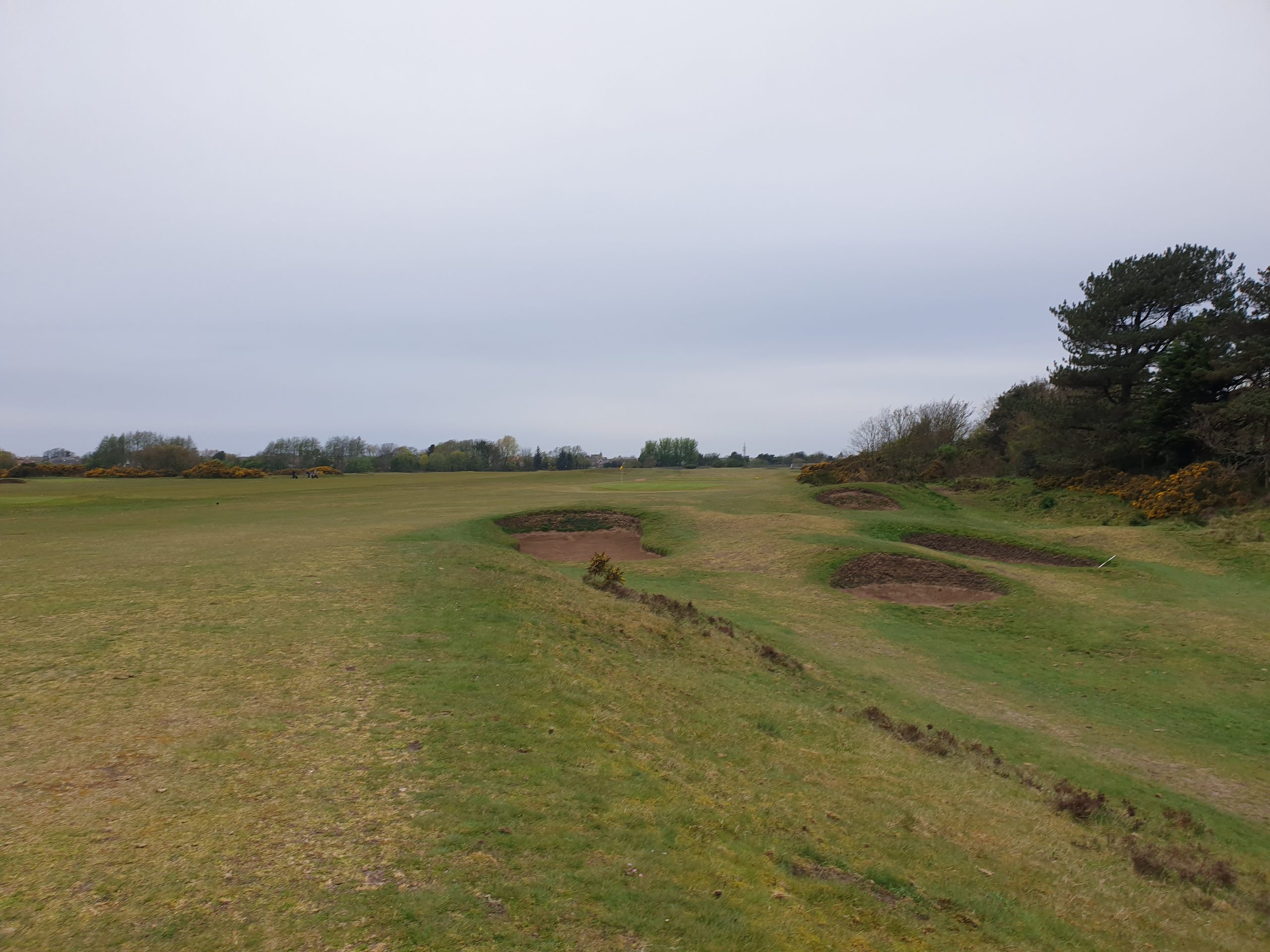
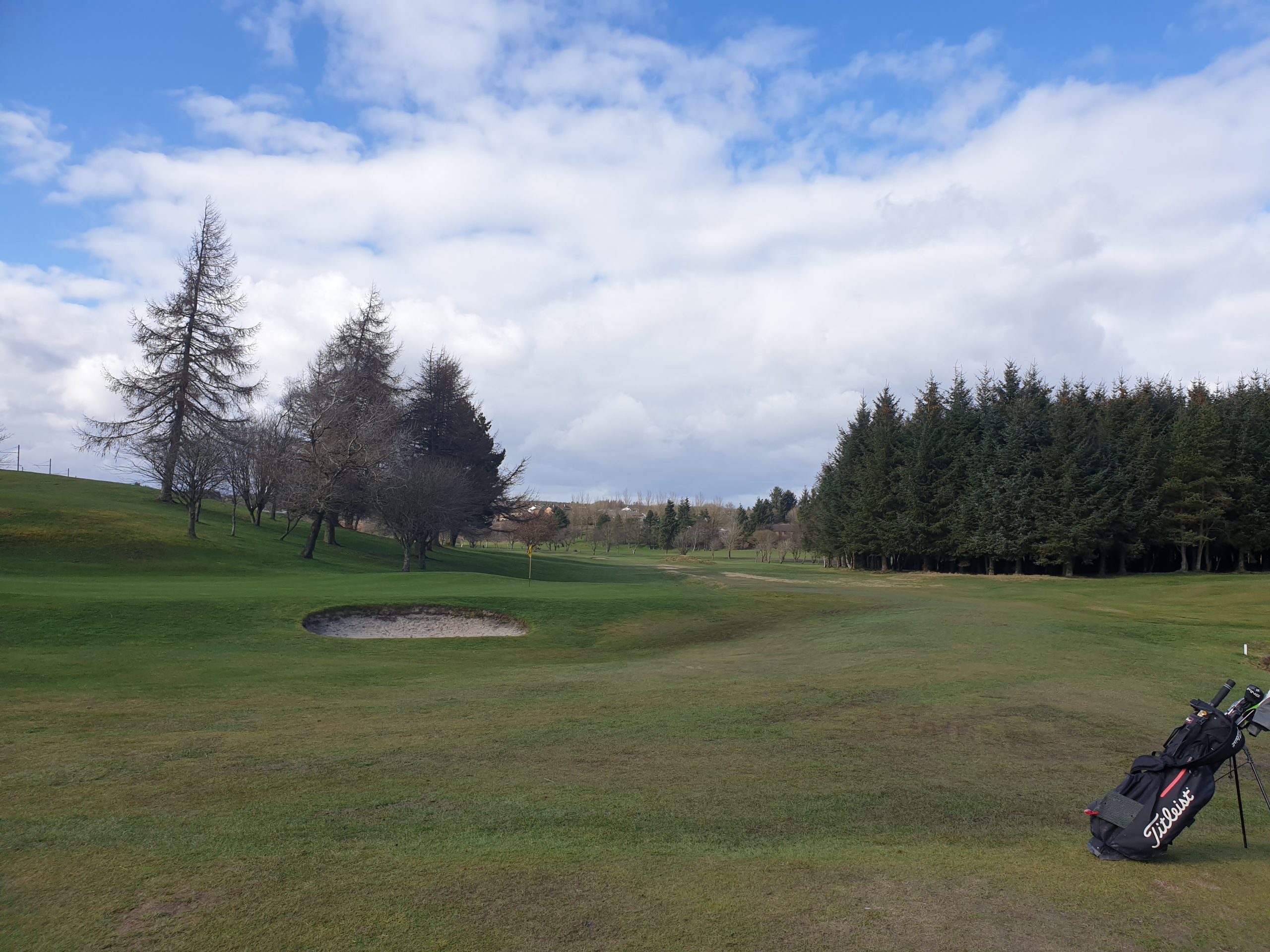
The 16th, a par 5 with devilish bunkers cut into a heathery bank, unseen from the fairway until you’re on top of them. The bunkering is Lochgreen’s strongest feature.

So, the course? Lochgreen is quite long. At par 74 with five par 5s, it’s the longest of the three Troon Links courses. The par flatters, though. From the yellows the Course Rating is 71.1, nearly three shots below par. Under the handicap rules in force in 2023, that worked in my favour: the 38 points came against a par the rating says is soft. Since April 2024, Scotland’s handicap formula deducts the difference, and the same round off the same index would give a course handicap of 10, not 13, and around 35 points. Lochgreen’s par 74 used to be a three-shot present to every Stableford player who teed it up there.
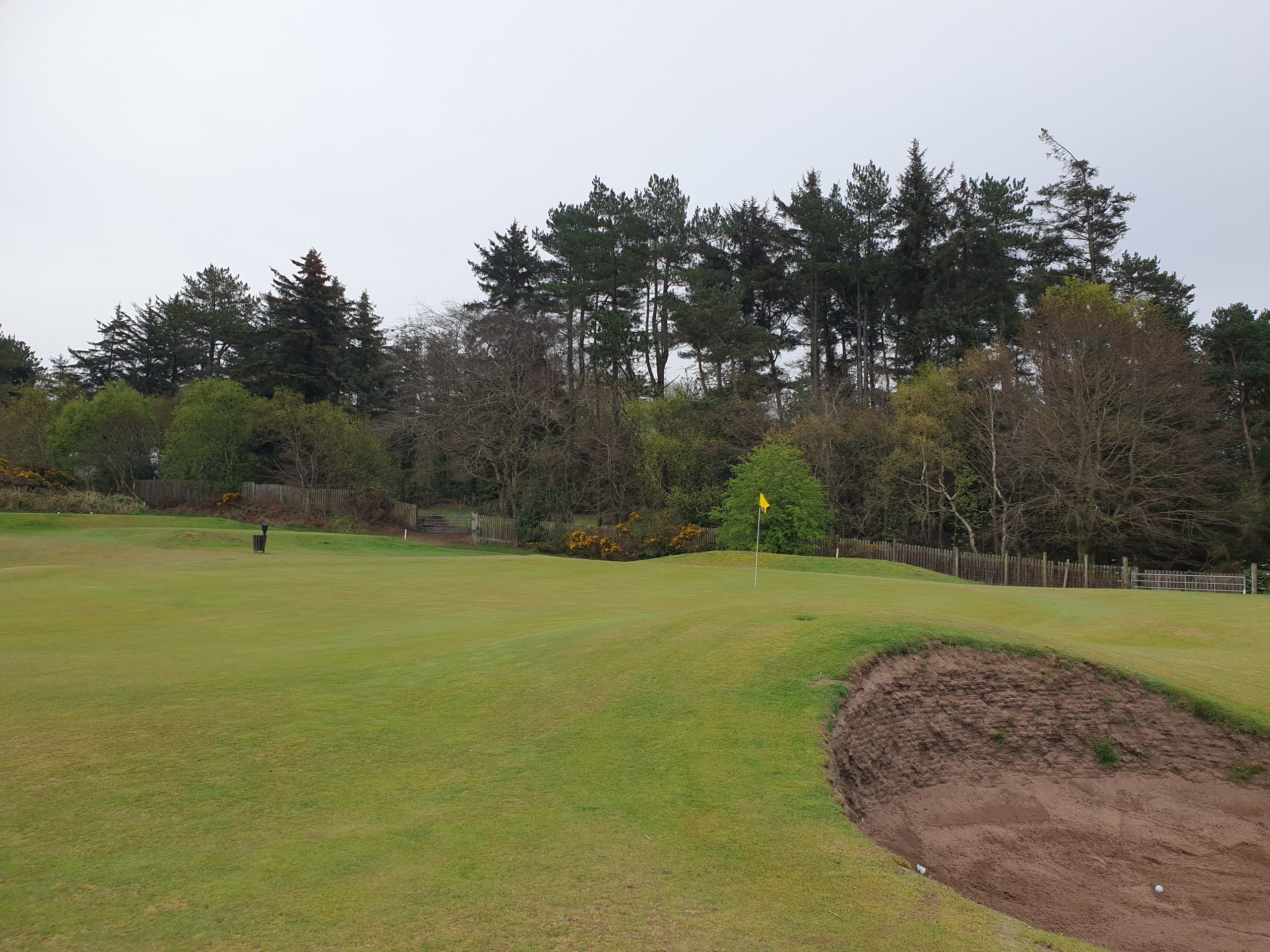
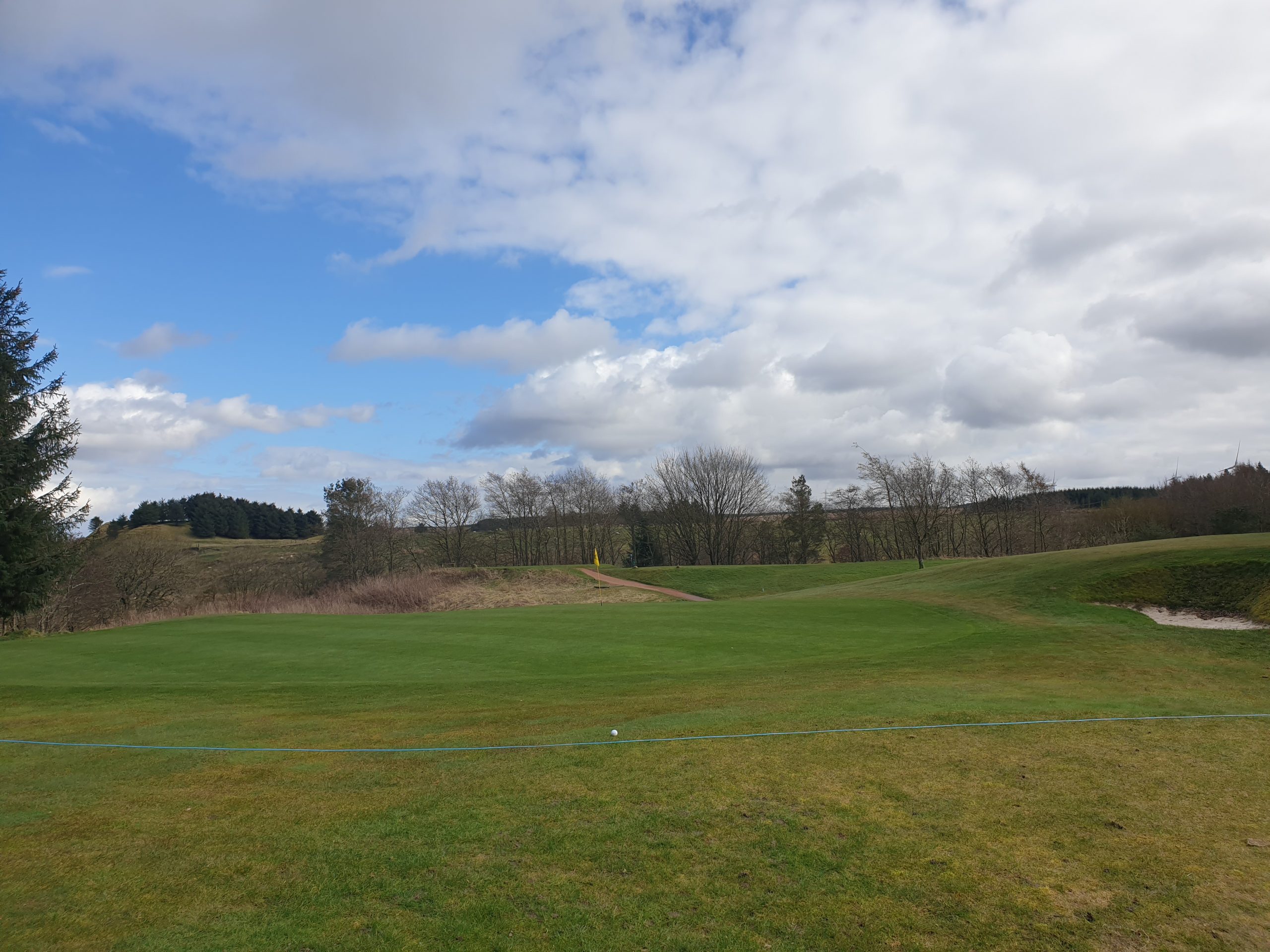
The 6th green, a tough par 3. A deep revetted bunker, properly shaped and properly punishing: the quality of Lochgreen in a single frame.

The links holes play over firm turf that I suspect differs little from Royal Troon’s across the line. The driving is generous, but the greenside bunkering is not: deep, revetted and properly placed. The 5th, with the railway tight on the right, is the hole to remember, and it was my only blank on the card. Holes 11 to 13 break off into the parkland of the Dovecot Section, with veteran trees, a stone ruin and a reed bed behind one green. That suits a course named after a loch drained long ago. The Lochgreen name survives; the loch itself is now a culverted burn.
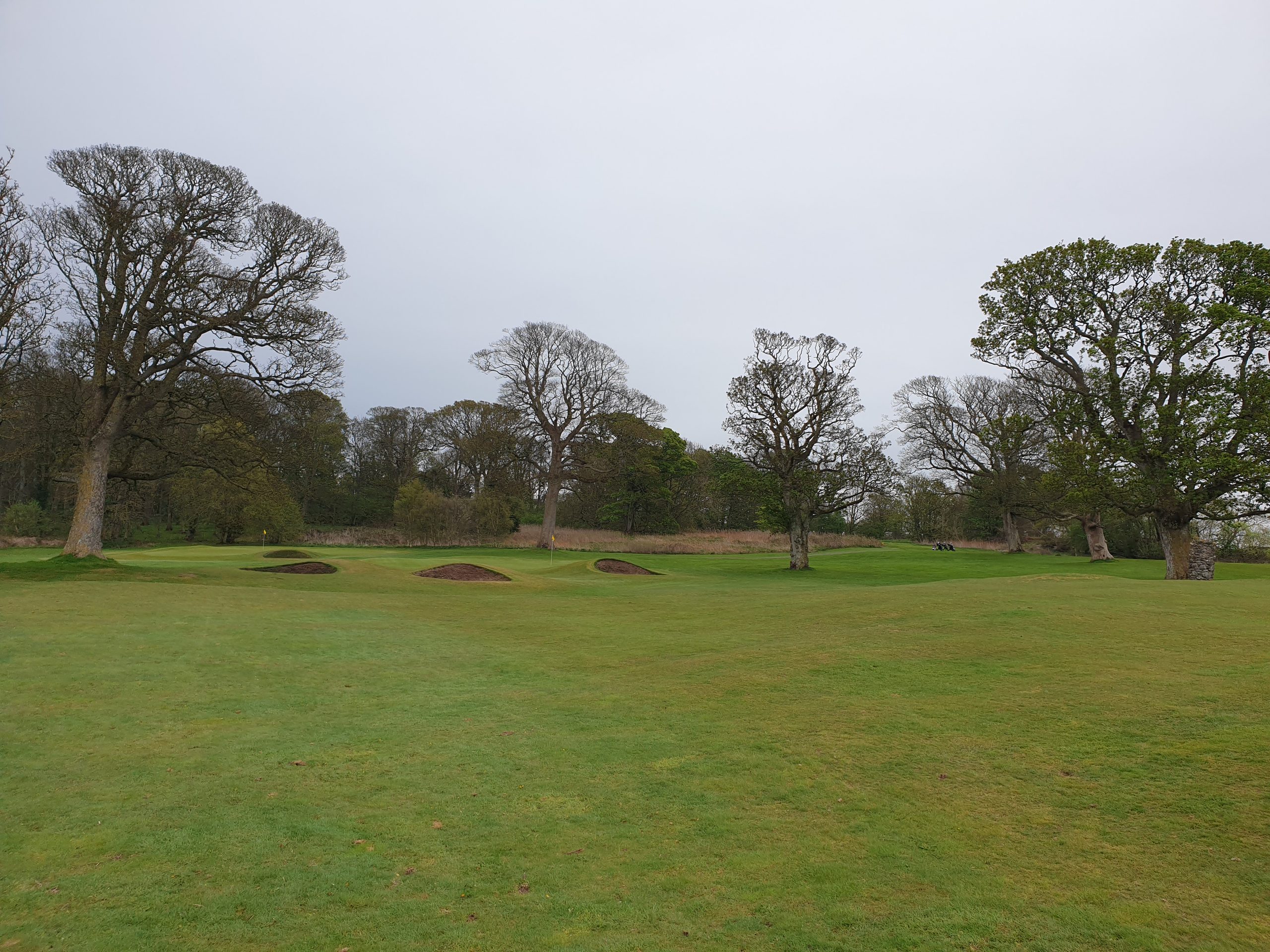
The approach to the 13th: crisp greenside bunkers in the parkland stretch, with a reed bed behind, the nearest thing left to a loch at Lochgreen.

The condition was the weak point. A year after my Darley round, and a month later in the season, the fairways were still thin, worn and straw-coloured. Nothing about the Glasgow winter overflow I described in Blog 136 had changed. The greens held up; I just didn’t hole anything on them. Better putting would have made it a very good round rather than a decent one.
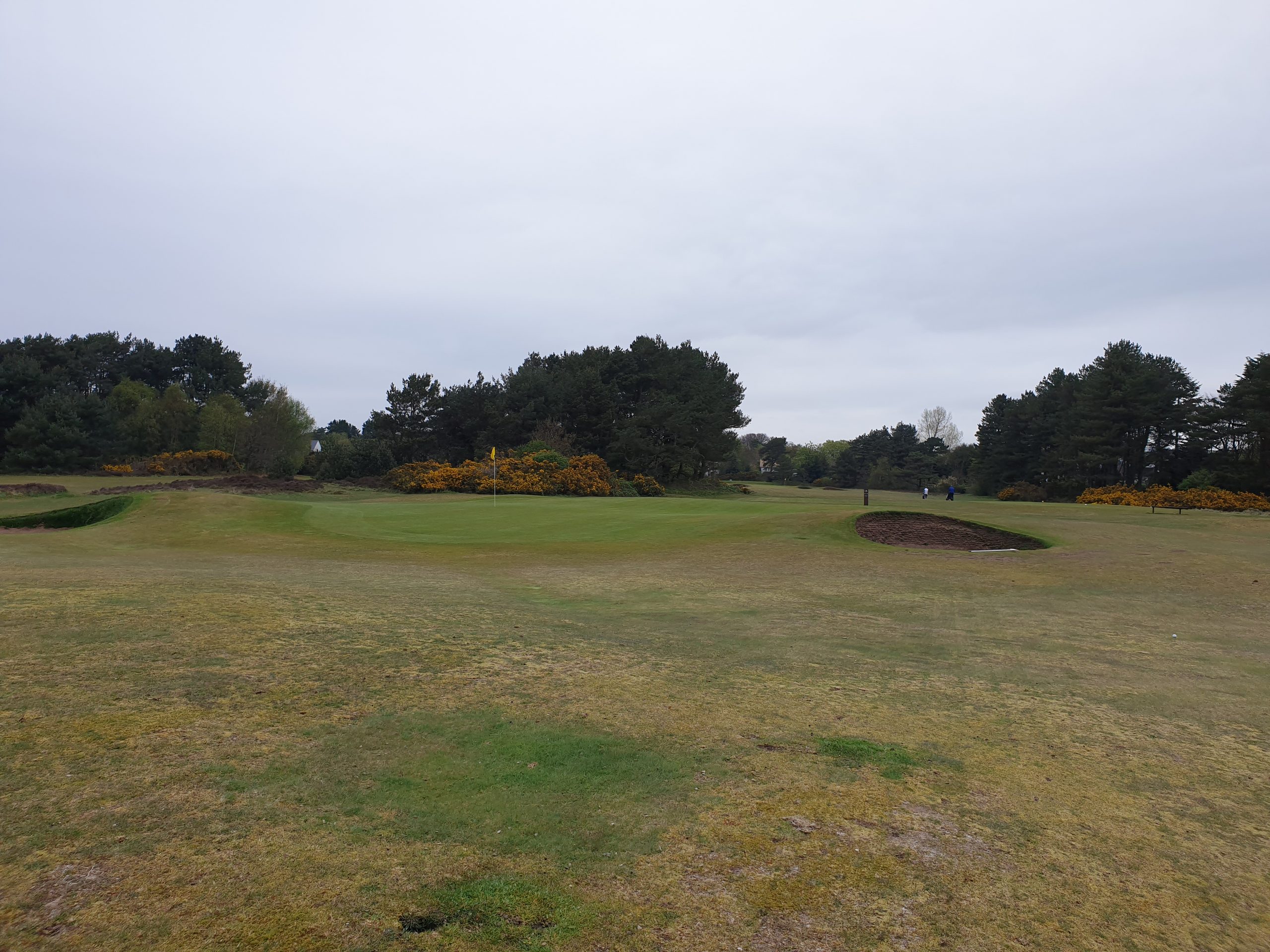
The 10th green, a par 3 in good order. It was getting to it that showed the wear.

On value, one development since Blog 136. Then, GolfNow was the competitor the council was responding to with “dynamic pricing”. Now South Ayrshire sells its tee times through GolfNow’s own platform. The discount app has become the shop counter. At £19.99, Lochgreen was 5/5. At the current £30 Hot Deal it still is. At £38 list it drops half a point, mostly because of the condition. It’s still a long, historic, properly bunkered links for a fraction of the price across the line, if you could get on, that is!
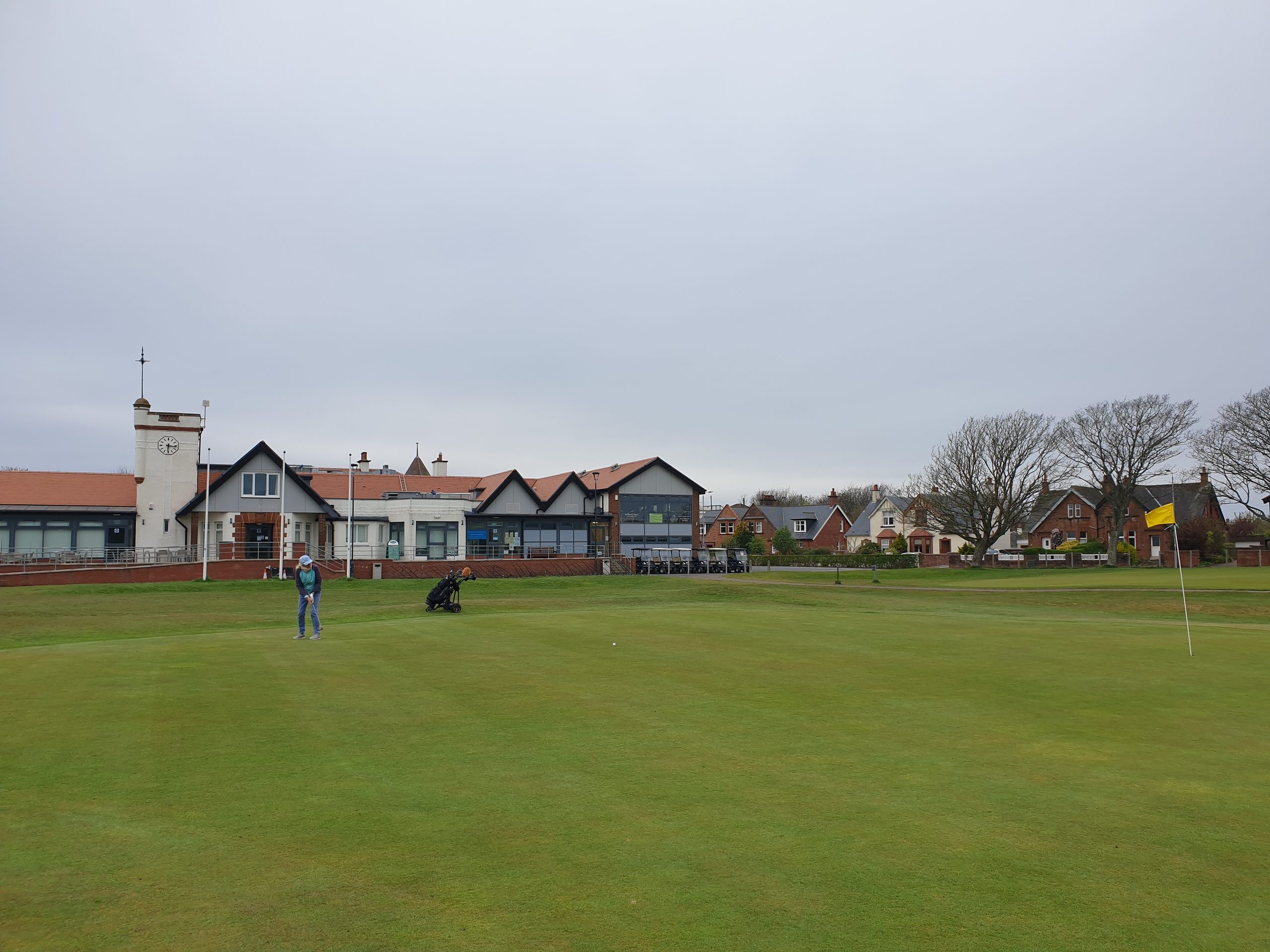
Fran putting on the 18th green in front of the Troon Links clubhouse, the shared home of Lochgreen, Darley and Fullarton.

Next, Fullarton (Blog 195), the shortest course of the three, where the land story begins.

Facts:

Course Type: Links, with a three-hole parkland stretch
Par: 74 (5 par 5s, 10 par 4s, 3 par 3s)
Distance: 6,476 yards (yellow)
Course Rating / Slope: 71.1 / 120 (yellow)
Course Quality: 3.5/5
Moly’s Gross Score: 85 (38 points)
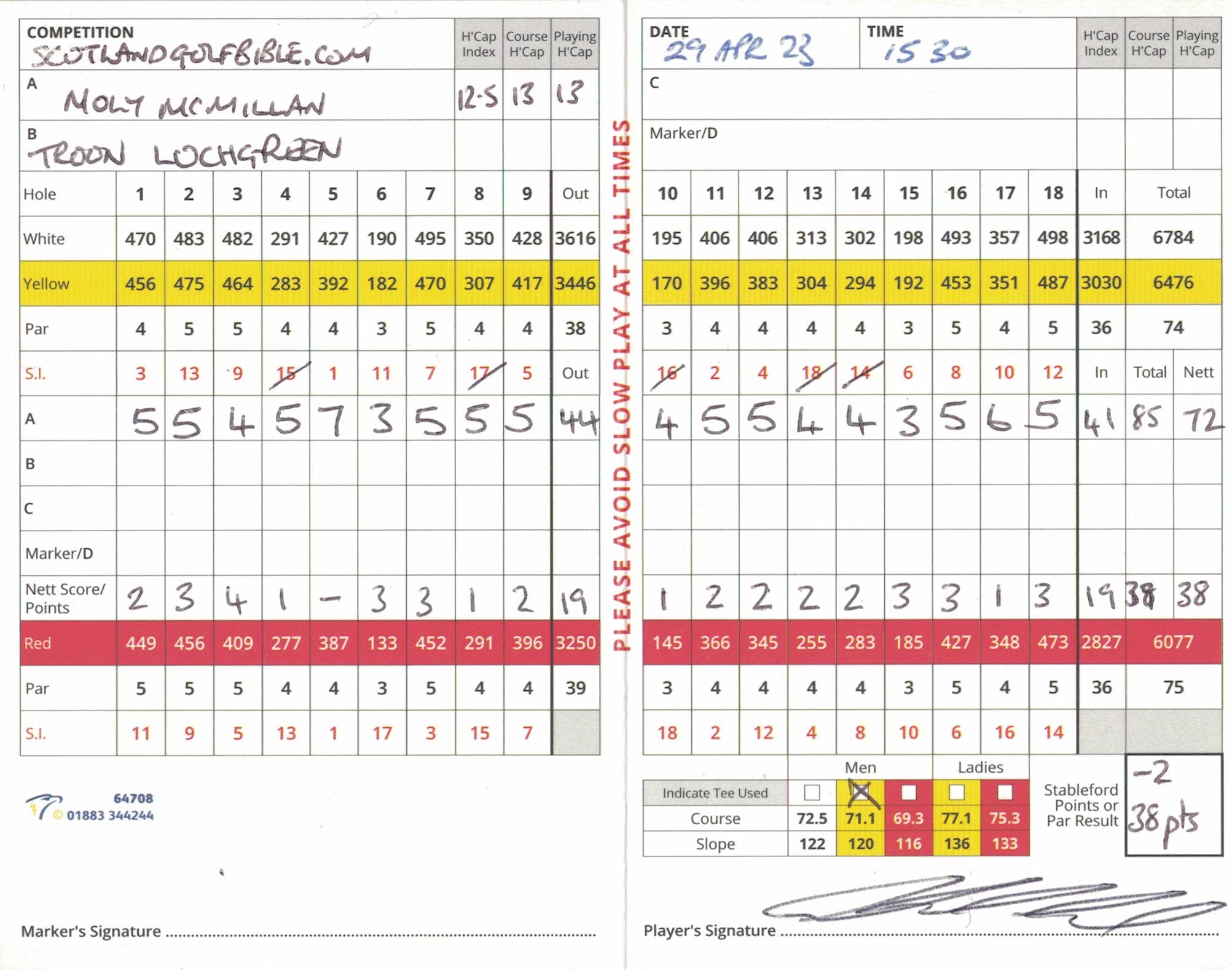
Moly’s Lochgreen scorecard: 85 gross, 38 points. The 7 at the 5th was the only blank.


193. Maybole. 29 Apr 23.

Maybole: a town that has never agreed on anything, including whether it needs a golf course.

Price Paid: £4 (winter rate, paid at the swimming pool over the road)
Current Price (2026): £8 GolfNow; £24 list (Golf South Ayrshire)
Value: 3/5 at £4 paid | 2.5/5 at £8 GolfNow | 1/5 at £24 list
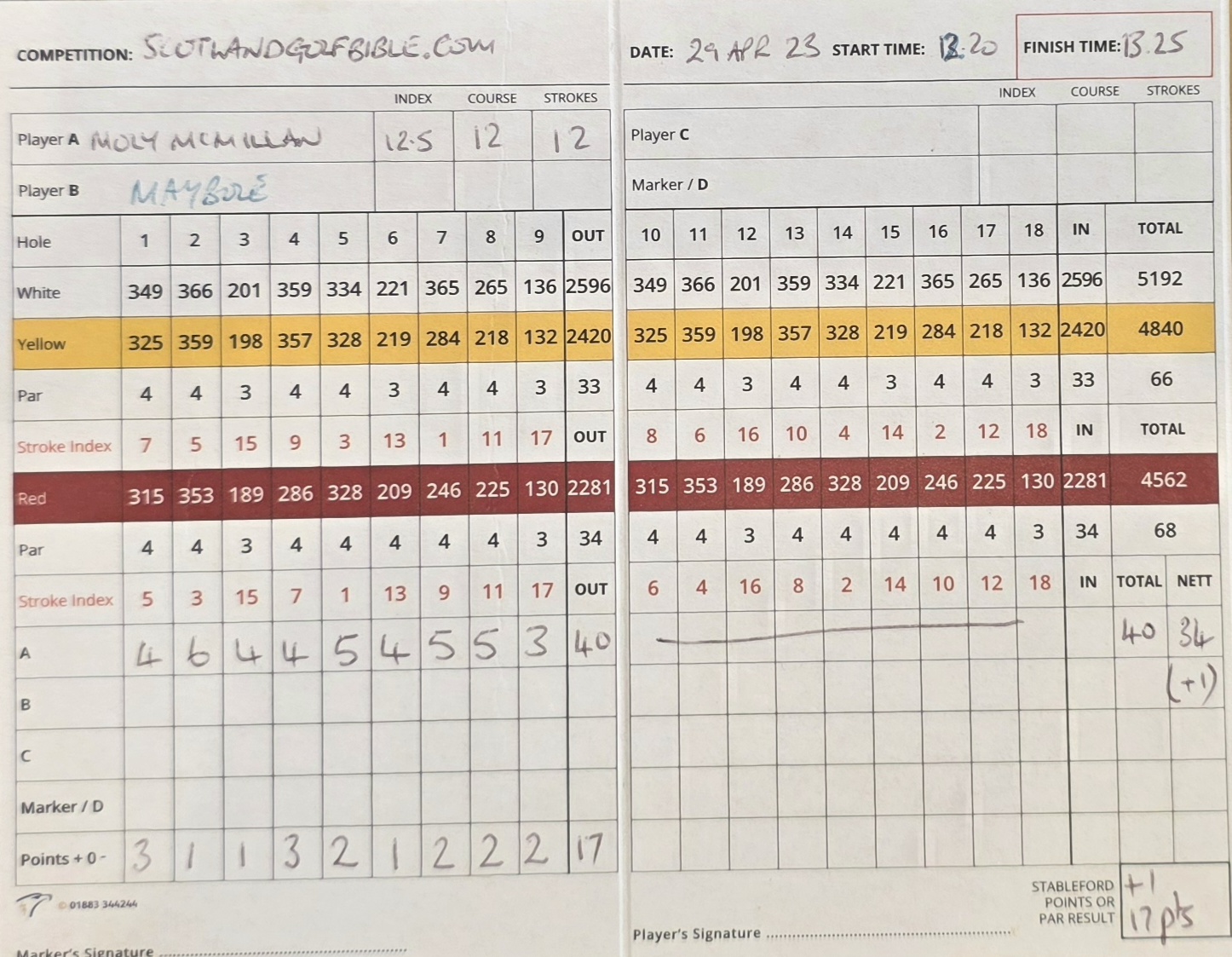
Moly’s Score: 40 gross, 34 net, 17 Stableford points (9 holes)

Getting a consensus in Maybole has never been easy. Start with the name. A charter of 1192 calls the place Maybothel, which some read as Old English for a maiden’s house. Others prefer Gaelic: a plain with a cattle fold on it. The old folk called it Minnybole, which points to a moor instead. When the Ordnance Survey arrived in the 1850s, its surveyors dutifully listed the rival theories and dismissed one as purely fanciful. Nobody has settled it since.

Then there is the town’s most famous argument. In 1562 John Knox came to Carrick and was challenged by Quintin Kennedy, Abbot of Crossraguel, to debate the Mass. They met in the Provost’s house with forty witnesses apiece and argued for three days. Neither man won. The 1860 Encyclopaedia Britannica records that both claimed victory. That is Maybole in a sentence.

Which brings me to golf, and an argument the town has been having for a decade: does Maybole need a golf course?

The club was founded in 1905 on a course off the Dailly Road. It later moved into the Memorial Park, land the town bought to remember its Great War dead. In 1935 a storm lifted the pavilion off its foundations and smashed it. Visitors then paid sixpence a round and couldn’t play on Sundays. Closure threats came in 2016, 2018 and 2020. In February 2023 the club finally folded for “lack of support”, and the golf press mourned a 118-year-old institution.

I went looking to debunk the 118 years, and I couldn’t. Golf’s Missing Links headlines the club as 1905–2023, then says in its own text that it ceased to exist in 1923. Even the archive can’t reach a consensus. But its Golfer’s Handbook entries run unbroken from the 1930s to the 2000s, so 1923 is plainly a slip for 2023. The club’s age stands. The course is younger.

Fourteen months later, Carrick Speakers Golf Club folded too, after 35 years. That made two clubs gone from one nine-holer. The course carries on regardless as one of eight run by Golf South Ayrshire, and the local councillor insists there is no threat to it. A community company now wants the pavilion as a meeting space and e-bike store. That may be the future of the Scottish town course: still there, but no longer anybody’s club.

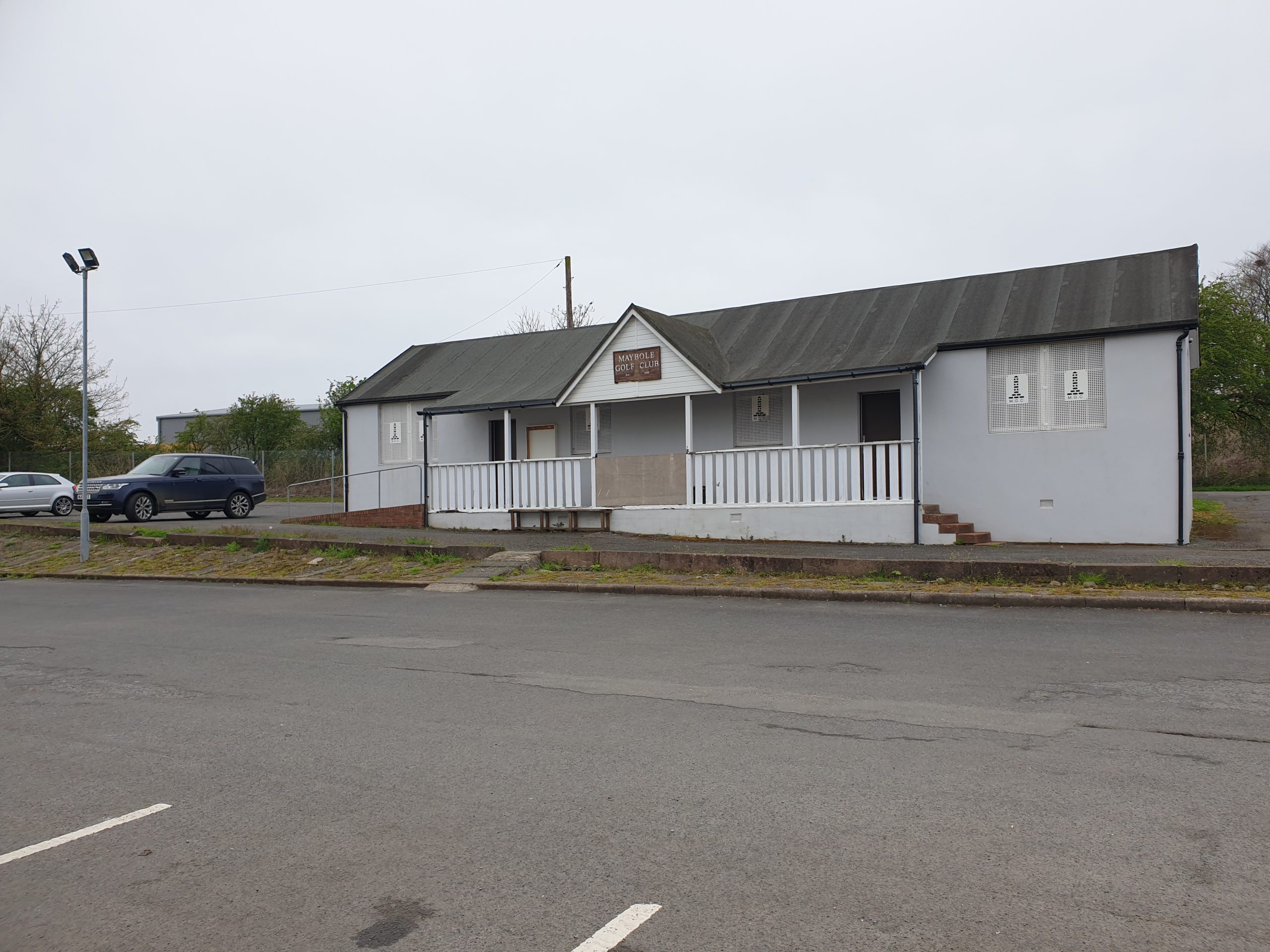
The Maybole Golf Club pavilion, shuttered since the club folded in February 2023. Green fees are now paid at the swimming pool across the road, and a community group has applied to turn the building into a meeting space and e-bike store.

I arrived ten weeks after the club folded, paid my £4 at the pool, and played alone. The course repays the effort. It is hilly and constantly undulating, with small greens. The par 3s are the real examination: the 3rd and 6th measure 198 and 219 yards off the yellows, a long way to a small target, and both cost me a shot. Footgolf shares the fairways, and dog walkers share everything else.

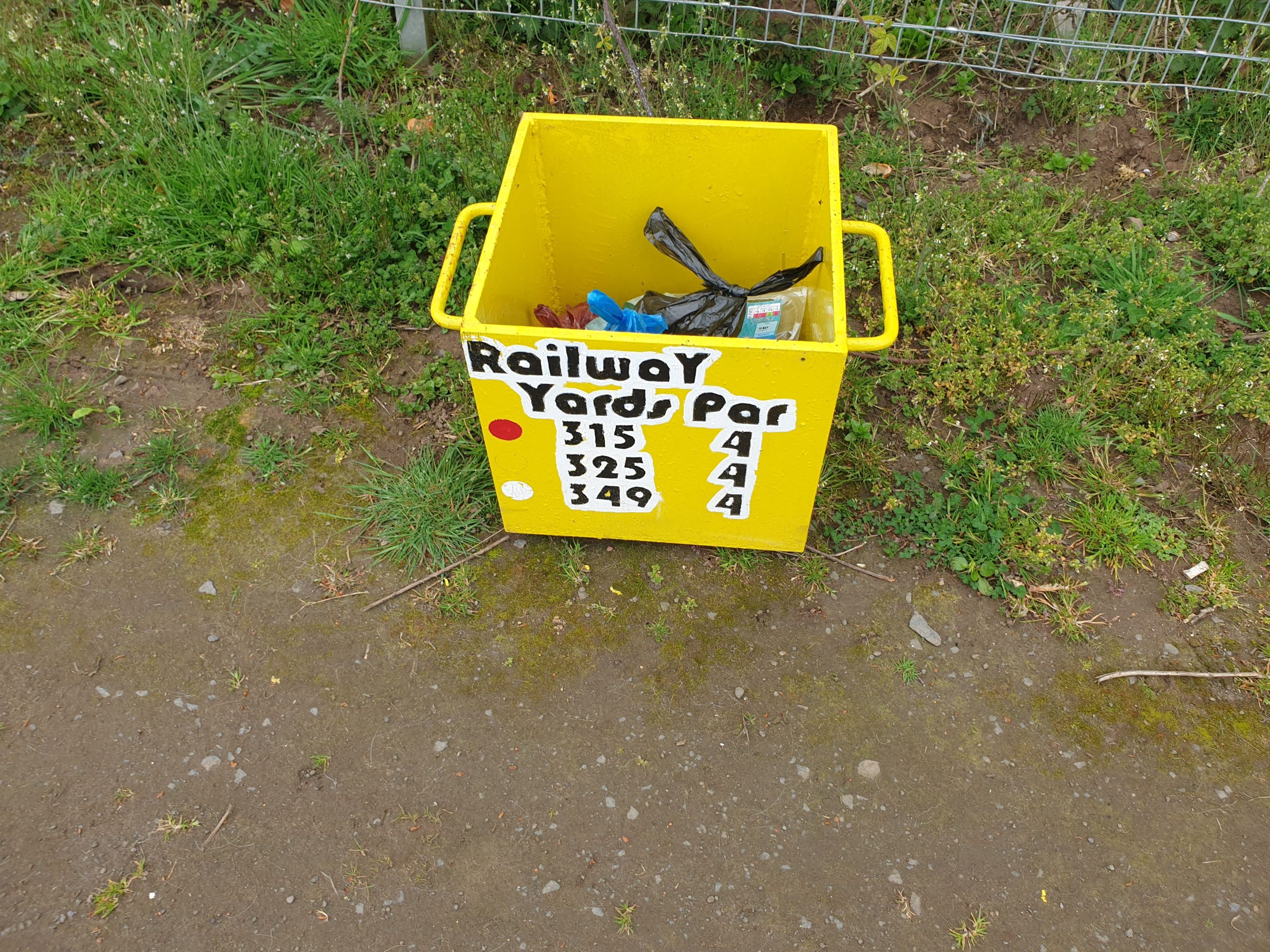
The tee markers deserve a paragraph of their own. Each hole has a yellow metal bin, hand-painted with its name and yardages. The 1st is “Railway”. Somebody took real care over these. The dog walkers have found another use for them.

The 1st, “Railway”: hand-painted yardages on a metal tee bin. It doubles as a dog-bag bin, which is about as municipal as golf gets.

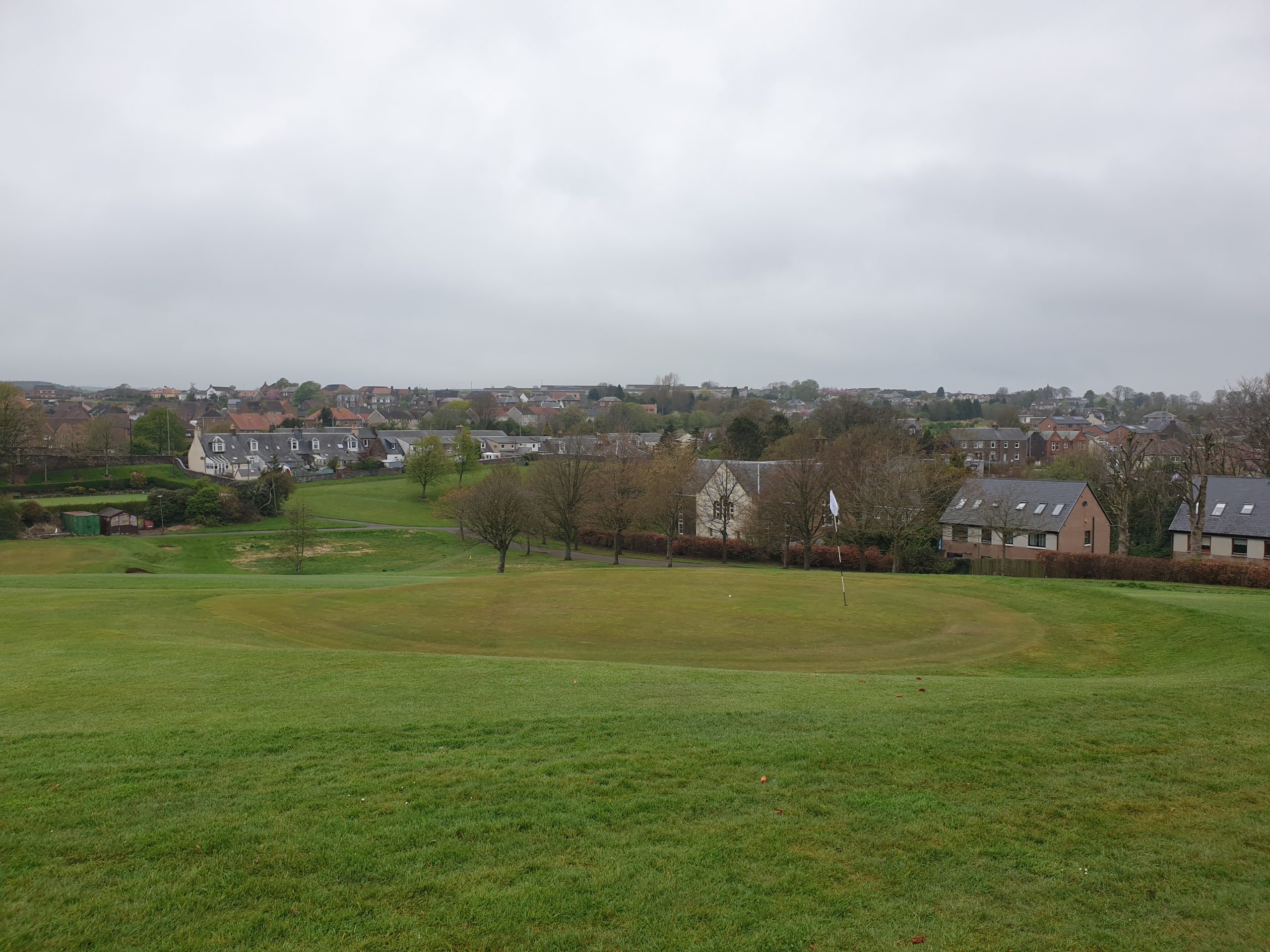
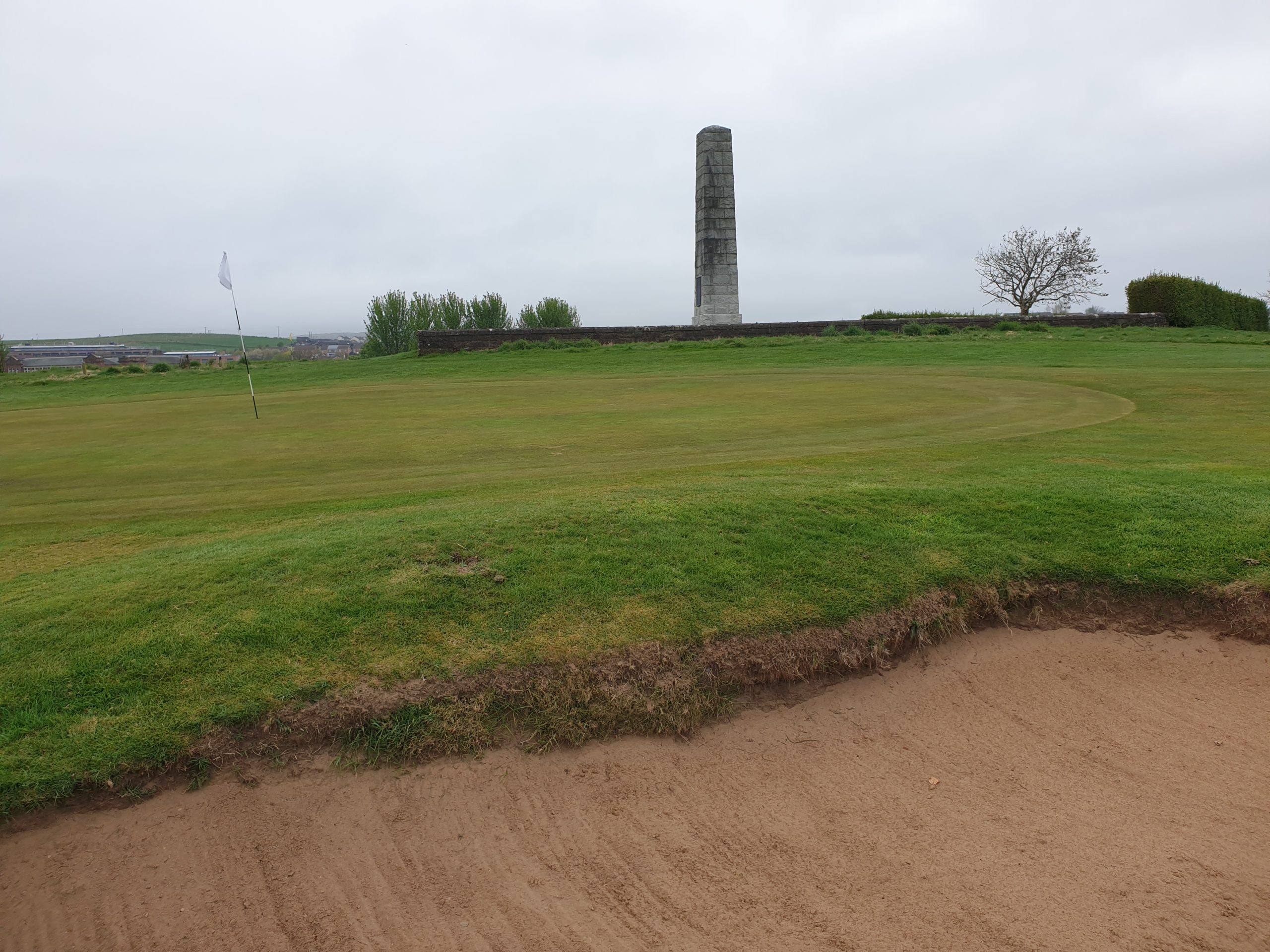
The 3rd green looks back over the rooftops of the old Kennedy capital. The 5th climbs steadily to a green beneath the Maybole War Memorial, a reminder of why this park exists at all.

Behind the 3rd green, Maybole’s slate roofs and church fall away down the hill. The green is small and sloping, typical of the course.
The 5th green beneath the Maybole War Memorial. The bunker is neatly raked, its edge less so: honest council maintenance.

The conditioning is honest council standard: well-cut fairways, raked bunkers, and rough edges where the budget runs out. It is better than its South Ayrshire stablemate Dalmilling (Blog 192). I went round in 40 for 17 points, in 65 minutes, which on those greens felt fair.

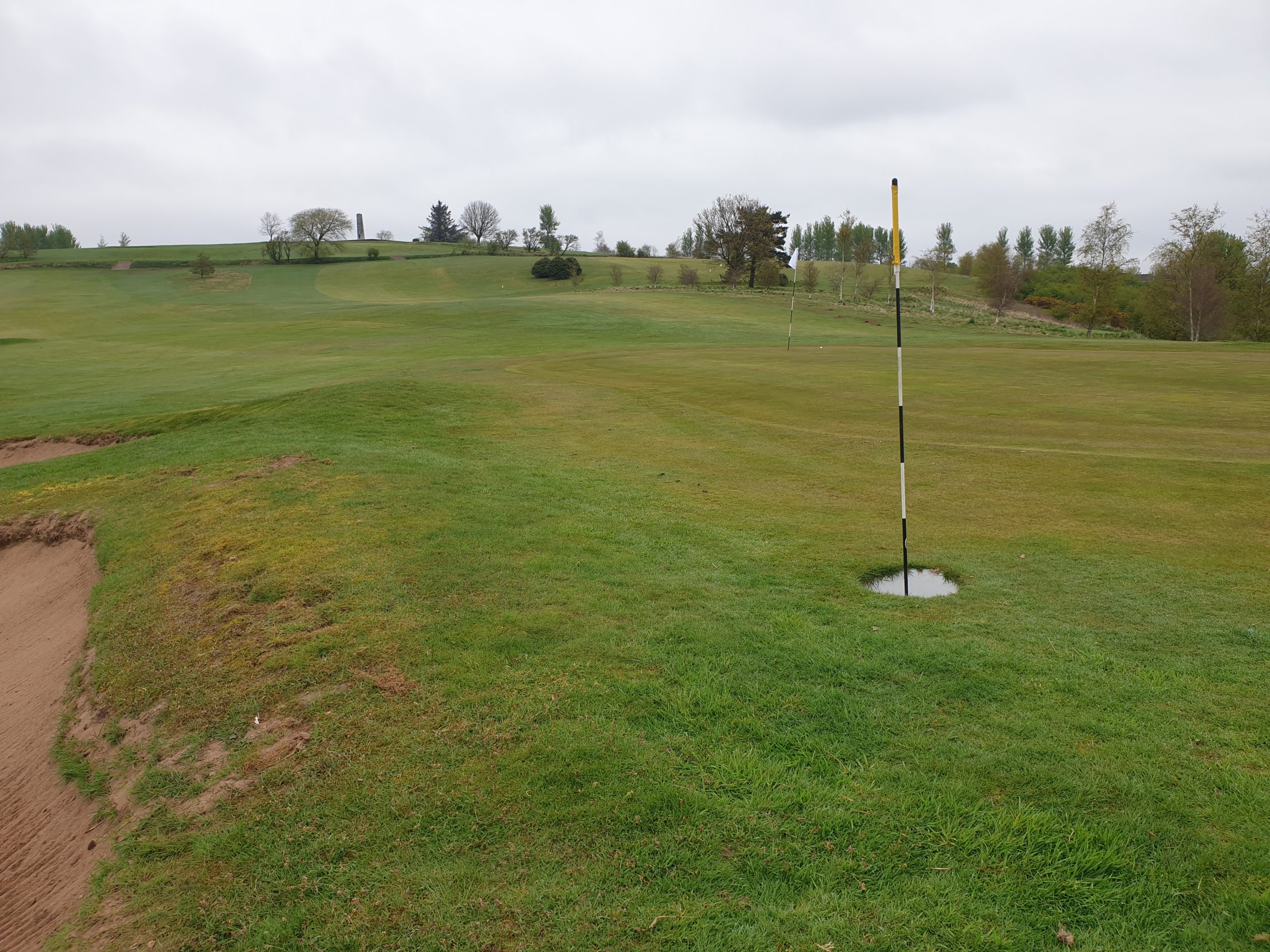
The 4th Green, showing the dovetailed Foot and Normal golf
From the 9th tee, the view back to the swimming pool, where you pay, and the town beyond. A lone dog walker is on duty.

At £4 this is 3/5 value. Cheap is not the same as good value: there is no club, no clubhouse, and a course that is honest rather than memorable. At £8 on GolfNow it slips to 2.5/5. At the new £24 rack rate it is 1/5, because for that money you’d expect the clubhouse lights to be on.

Whether Maybole needs a golf course is a debate that, like Knox and the abbot, will probably end with both sides claiming victory. For £4, I’m happy to declare mine.

Facts:
Course Type: Parkland (hilly town course in the Memorial Park)
Par: 33 for 9 holes (6 par 4s, 3 par 3s); 66 played twice
Distance: 2,420 yards from the yellows (4,840 for 18)
Course Rating/Slope: 64.0 / 109 (yellow, 18 holes)
Course Quality: 2/5
Moly’s Gross Score: 40 (34 net, 17 Stableford points)

Moly’s card, 40 shots took 65 minutes!

187. Greenburn. 26 Mar 2023.

The Golf Club and the Viaduct – which will last longest?

Green Fee: £15 (winter rate). Par 71. Course Rating/Slope: 71/128 (yellow tees). Value: 4/5.

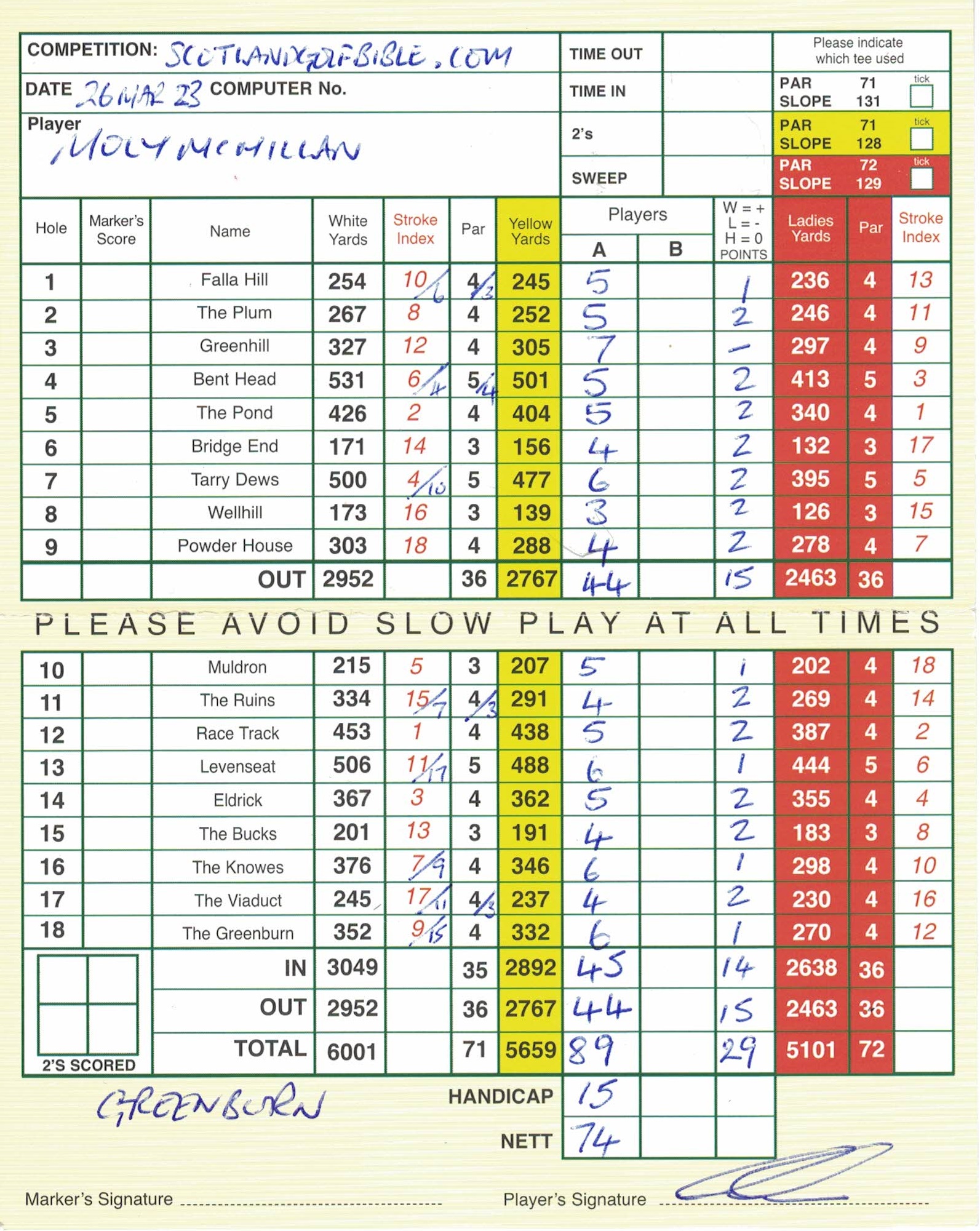
Moly’s Gross Score: 89

Playing Greenburn, I found myself thinking not just about where the course sits geographically – deep in Scotland’s central belt between Glasgow and Edinburgh – but where it sits economically. Scotland has around 575 golf courses and almost certainly cannot sustain all of them. I pondered which side of that financial reckoning Greenburn would end up on. Let’s park that for now.

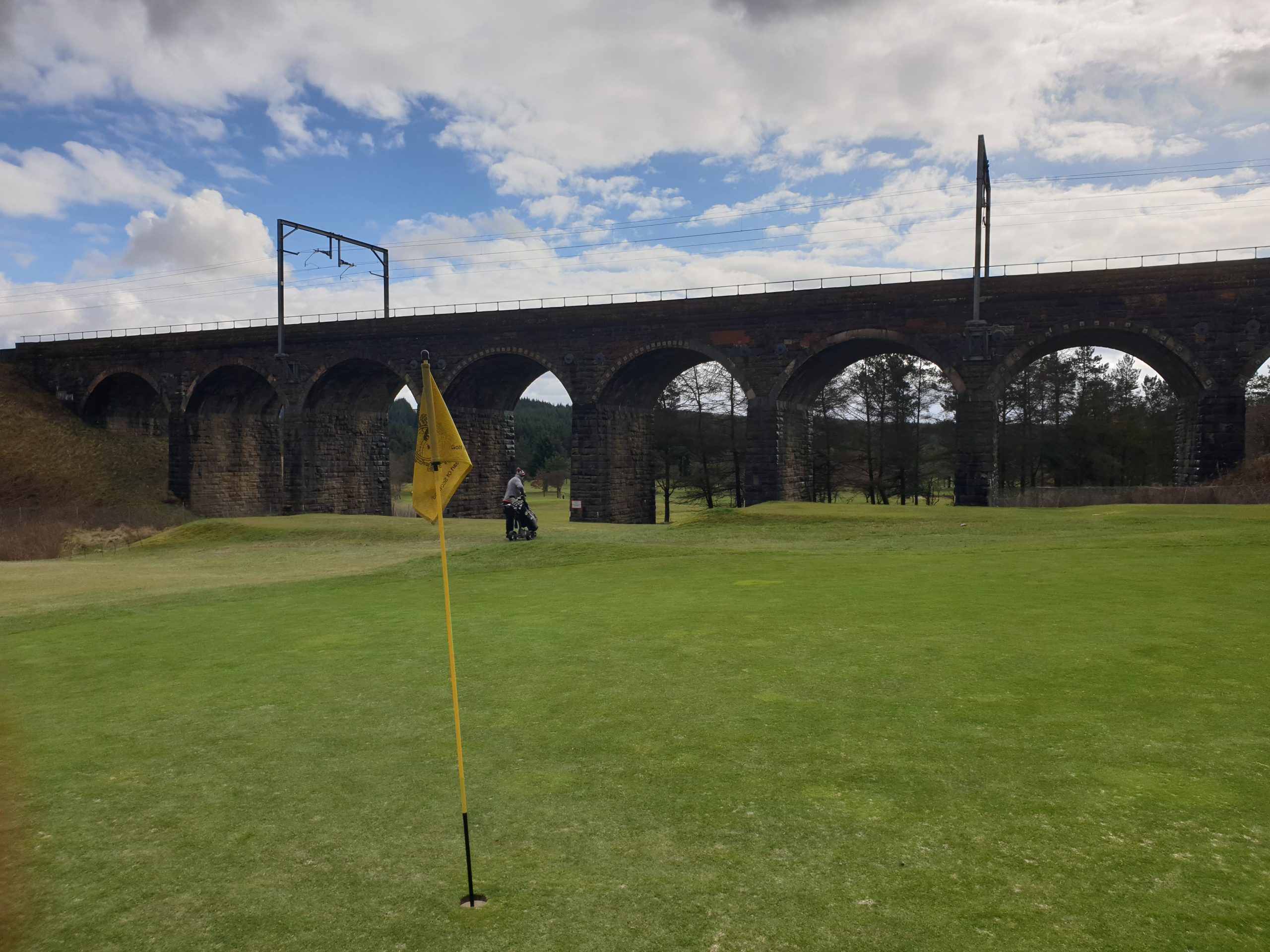
Hole 4 – a long Par 5, with the first start view of the viaduct

Greenburn Golf Club traces its roots to 1894, when the working people of Fauldhouse built a course near their village. The present course, voluntarily built by the members in 1953, relocated to the Breichwater Valley. The club motto, Per Nostra Opera (“By our own endeavors”), says what it does on the tin.

I played at a winter rate of £15, off temporary mats but normal greens. I met recent retiree and local member Gordon Cleland, a decent golfer and clearly very much at home.

Local Member Gordon Cleland, local member, playing his approach at the par 5 13th.

After a welcoming opening hole, Greenburn becomes a narrow course, surrounded by industrial landmarks, most notably the electrified Glasgow to Edinburgh railway line. Pylons and overhead wires run over some holes.

The sometimes very large and sloping greens were in good condition for the end of winter. I got the feel they would be fast and very difficult in Summer.

The first, with characteristic large green, the rope marking the winter ground boundary

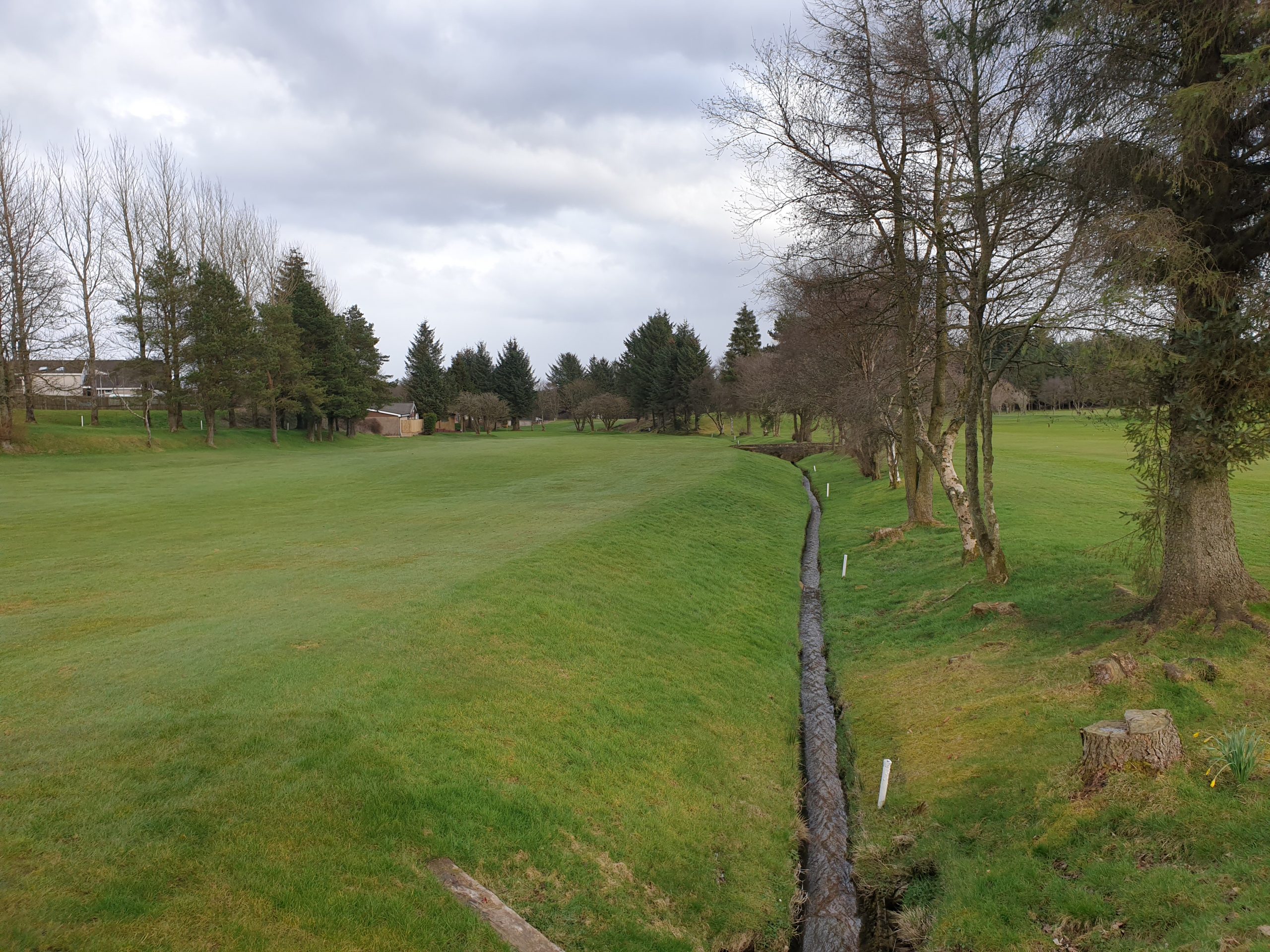
As you play toward the 4th green, a massive stone railway viaduct dominates – dark and monumental, it represents the ambition of the Victorian age, as does the existence of clubs like Greenburn. Nobody designs viaducts anymore, they’d be too expensive, but were they built to disturbingly outlast their surroundings.

Hole 3, one of the birdieable par 4 holes, with wide narrow green

The highlight of the course are a quartet of difficult par threes, a truism brought to life by Gordon’s tale of the Greenburn “secret 2s pot”. Most clubs have a small stake side comp along side the weekly medal, the “pot” shared by players getting a 2 on their card. At Greenburn this side sweep is on only one of the par 3s, but secretly chosen. Given the difficulty of the par 3s, the pot can accumulate. On one occasion, Gordon took home £340 for a birdie two at the 10th, the stroke index 5, ‘Muldron’ .

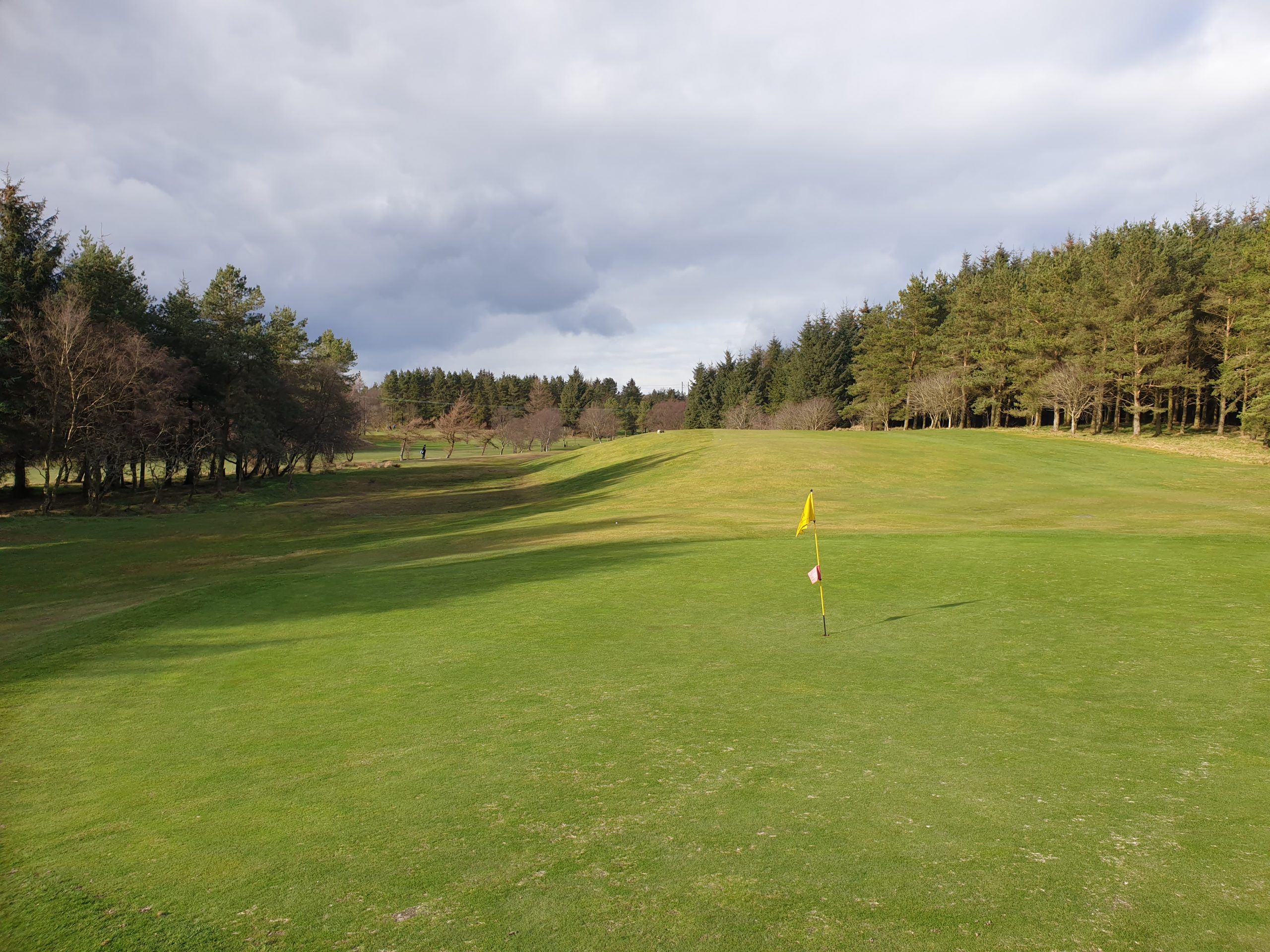
The 6th, at 171 yards, is the shortest of a quartet of great par threes at Greenburn

One disappointment was almost every bunker was marked GUR. Well-shaped, properly positioned, but out of play. Hopefully seasonal rather than structural.

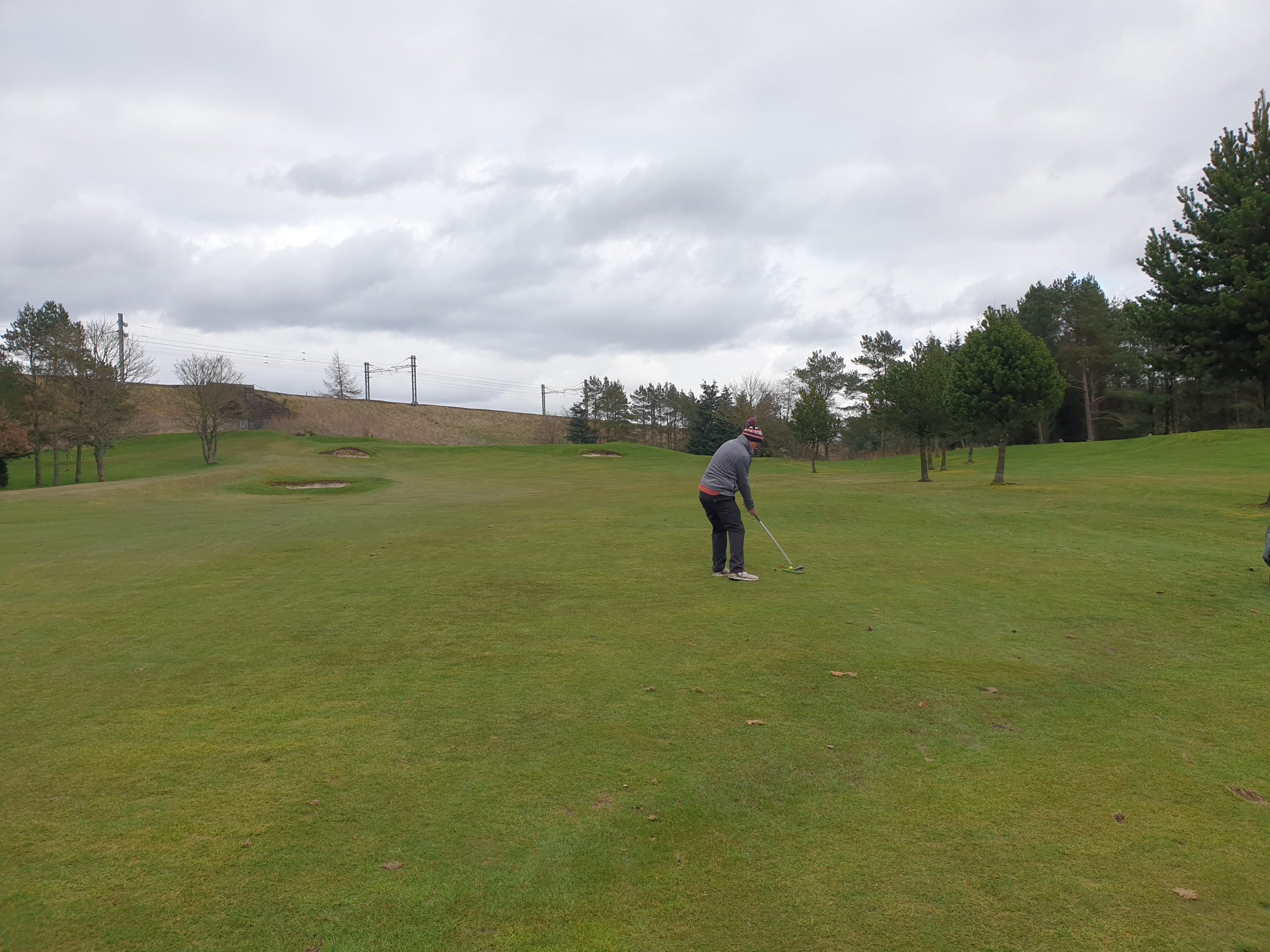
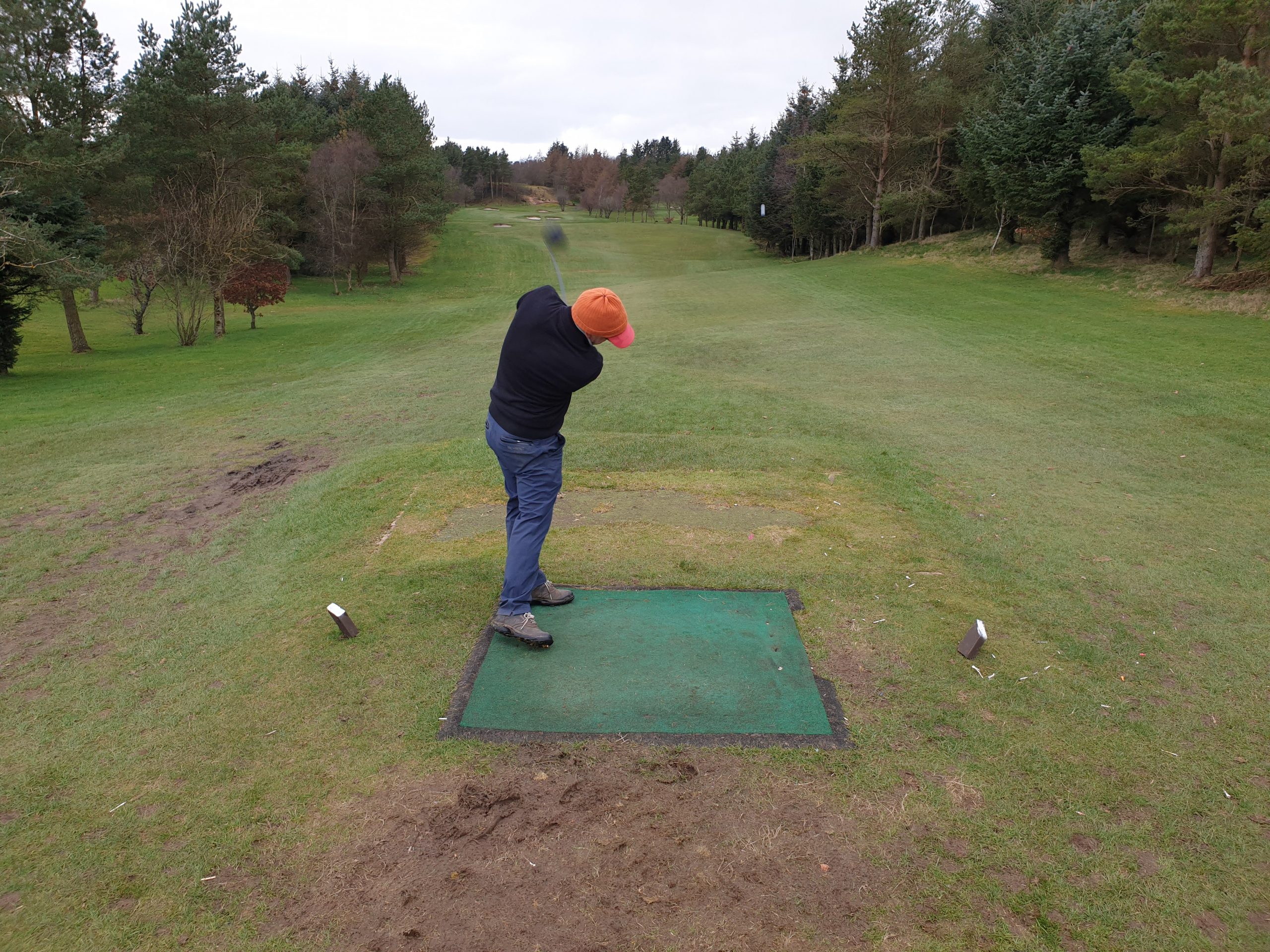
Moly playing his ‘normal’ draw off the winter tee at the 14th, a tough par 4.

Greenburn is a good course, around mid-table in my ranking of Scotland’s courses that I’ve played. It sits in a central belt that offers a car-owning golfer several credible alternatives within thirty minutes. Membership at £738 a year is deliberately affordable — the club keeping itself within reach of its community. The £30 summer visitor is excellent value.

Shades of East Renfrewshire come to mind looking back from the 10th Green

So to the viaduct or course question.

The viaduct was built in an era when Fauldhouse had the population, the industry, and the collective will to anchor infrastructure for generations. The golf club was founded in the same spirit, by the same kind of people, in the same era. Both have lasted. But the economic conditions that created them, dense local population, limited mobility, a working community that played its local course because there was no other, have long since dissolved.

OOB down both sides of the fine 18th hole at Greenburn, likely ruin many a card.

Scotland probably cannot sustain 575 golf courses indefinitely. The adjustment will be slow and uneven, shaped by club type, geography, land ownership and sheer stubbornness. Members’ clubs built by communities like this one don’t close easily – they endure through loyalty, deferred maintenance, and people like Gordon who simply keep turning up. But the structural pressure is real, and it falls unevenly. A course in the middle of the quality distribution, in the middle of the country, with several competitors nearby and no obvious distinguishing draw for the visitor market, faces a particular kind of exposure that a municipal course or a well-capitalised commercial operation simply does not.

The viaduct will almost certainly outlast us all. The golf club? I genuinely hope it does too. But the question in the title isn’t rhetorical.

More on Scotland’s golfing landscape — and what the economics might mean for courses like this one — in a future post.

I scored 89. The course reminded me a little of East Ren (Blog 169).

Facts:

Course Type: Parkland/Moorland
Par: 71 (3 par 5s, 11 par 4s, 4 par 3s)
Distance: 5,659 yards (yellow tees)
Course Rating/Slope: 71/128 (yellow tees)
Moly’s Gross Score: 89
Green Fee: £15 (winter rate)
Value: 4/5

Moly’s 89, was a decent game.

183. Mearns Castle. 24 Mar 23.

“Most scenic and challenging in the area.” An exaggerated claim by the Academy.

Round £10 (GolfNow Hot Deal, now £20). Par 31. Value 2/5.

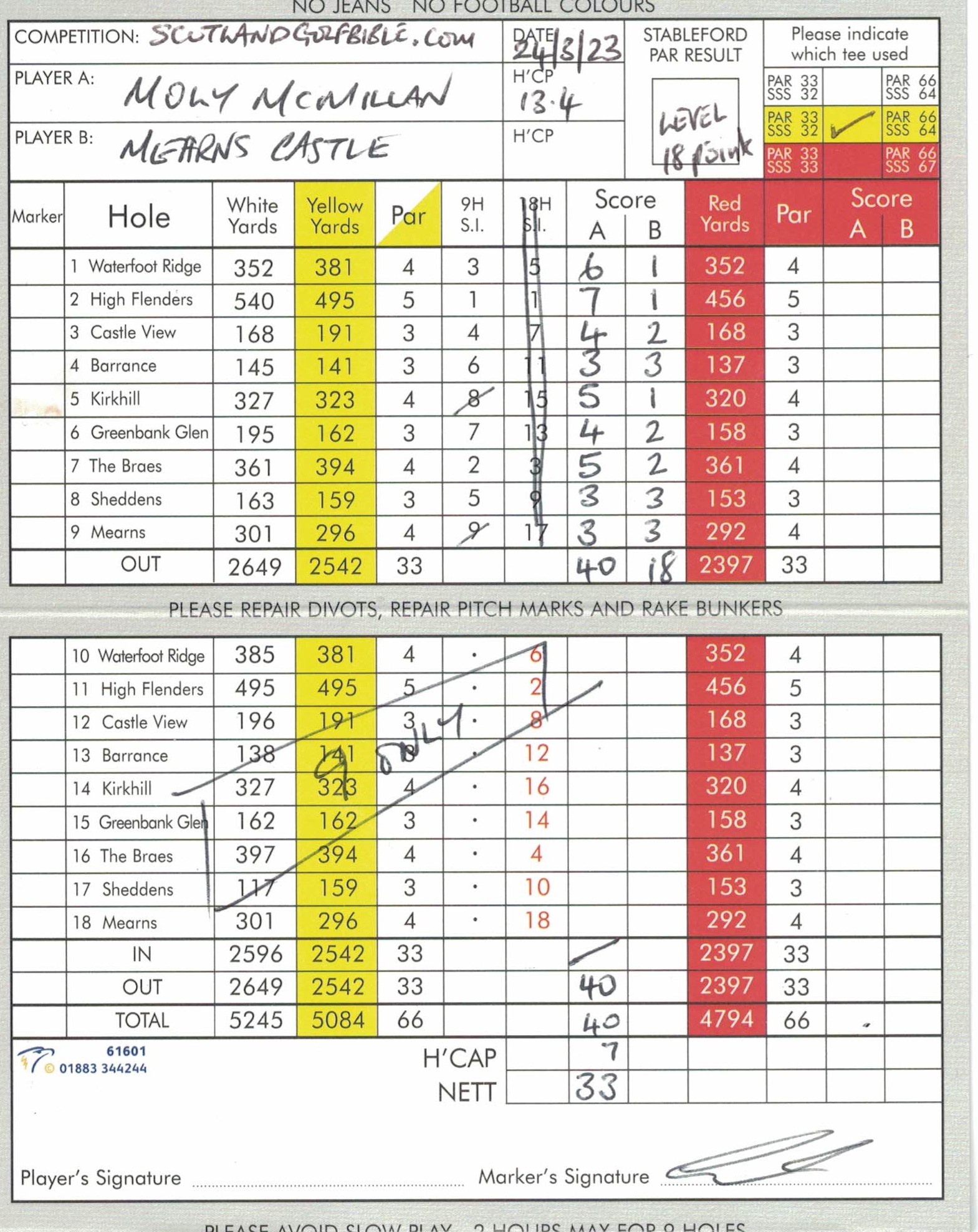
Moly’s Score – 40

There is a real Mearns Castle about half a mile from the golf course, built in 1449 by Lord Herbert Maxwell. The same Maxwell family whose descendants would eventually own Southerness on the Solway Firth, reviewed in Blog 164, a course that justifies the word “scenic” more than anything I encountered here.

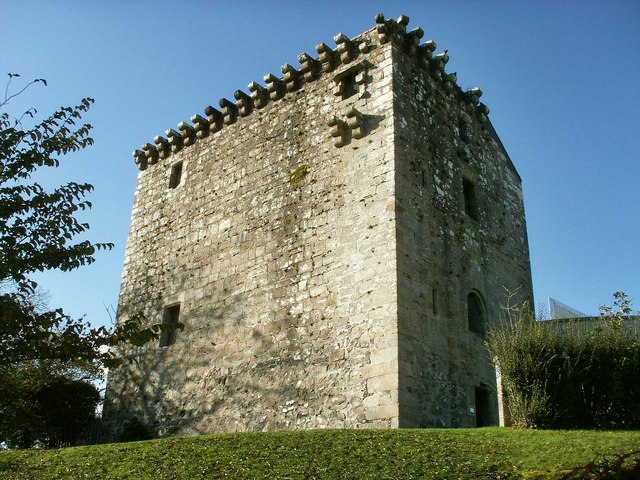
The actual nearby ‘Mearns Castle’, a 15th century Maxwell tower house, which the course takes its name. I wonder if Satnav ever gets this confused with the course.

The castle has, as far as I can establish, no connection whatsoever to the golf academy except proximity and, one suspects, the marketable romance of a medieval tower.

The golf academy is a substantial operation with Toptracer range, tuition, café, fitness studio, nail salon, and a massage therapist! More of a leisure complex with a 9-hole course attached. Nothing wrong with that, but problems begin when the website describes that course as “one of the most scenic and challenging courses in the area.”

I played it on 24 March 2023, via a GolfNow Hot Deal, for £10. It was waterlogged. It should have been closed.

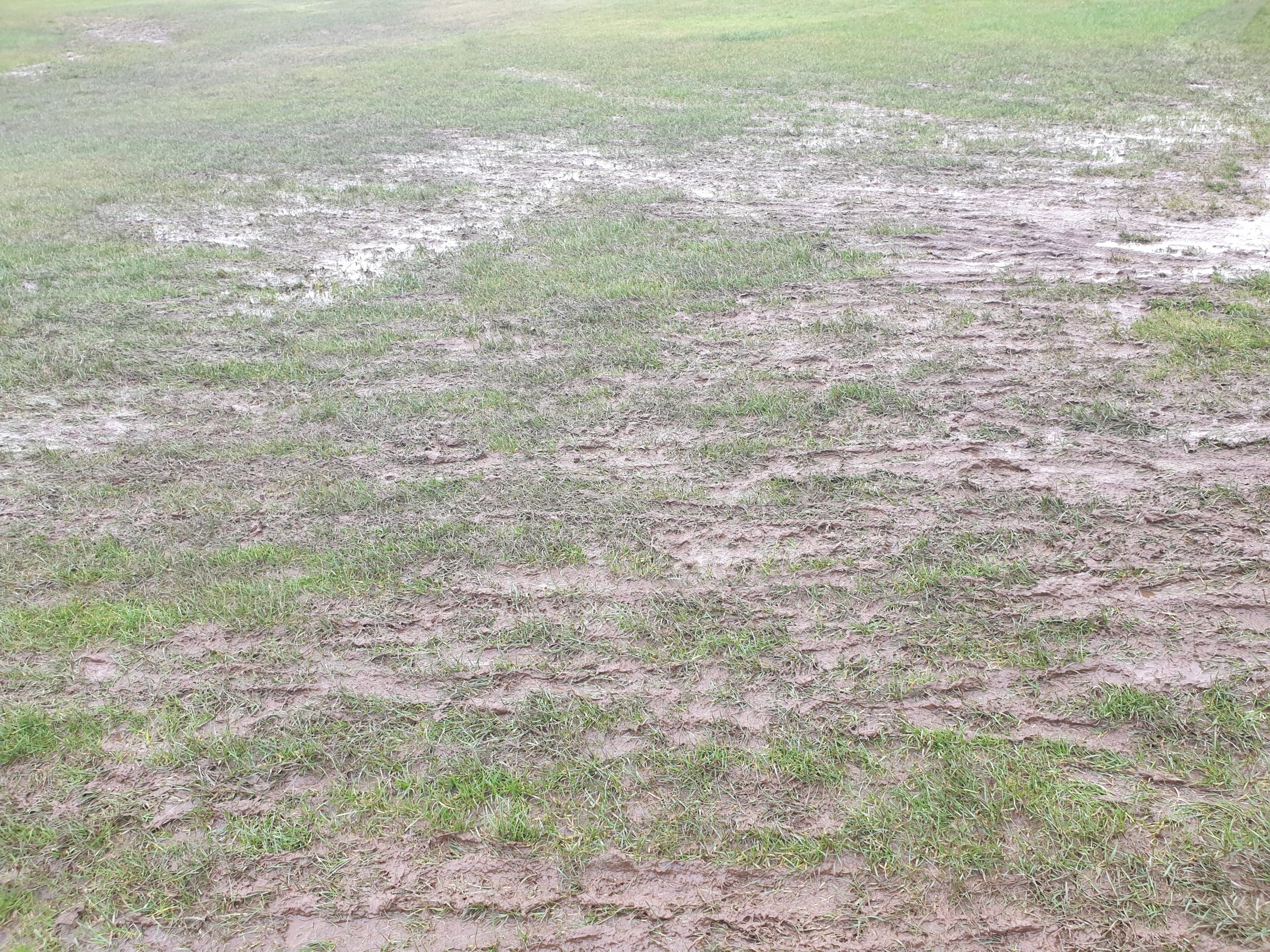
How could you allow play with fairways like this in several places. Sometimes short term economics doesn’t make sense. One never knows if a Blogger will come along!

The course occupies pleasant enough parkland on the southern fringes of Newton Mearns, the well heeled commuter town south of Glasgow. The 1st offered an early introduction to the course’s style: there is a hidden fairway ditch ready to swallow a ball without warning. This was one of the very few “challenging” features though.

The course had minimal fairway bunkering. However the greens were surprisingly good surfaces, so well done to the greenkeepers. It is the one positive comment I can offer.

The greens were redeeming, a benefit for players learning the game. Here at the 4th.

The course website mentioned “continued investment in drainage and course improvements.” This is a tacit acknowledgement that drainage was a problem, which again raises the question why the course was open. A course that quietly admits its drainage issues while remaining open in March when waterlogged is providing very poor value, even at £10.

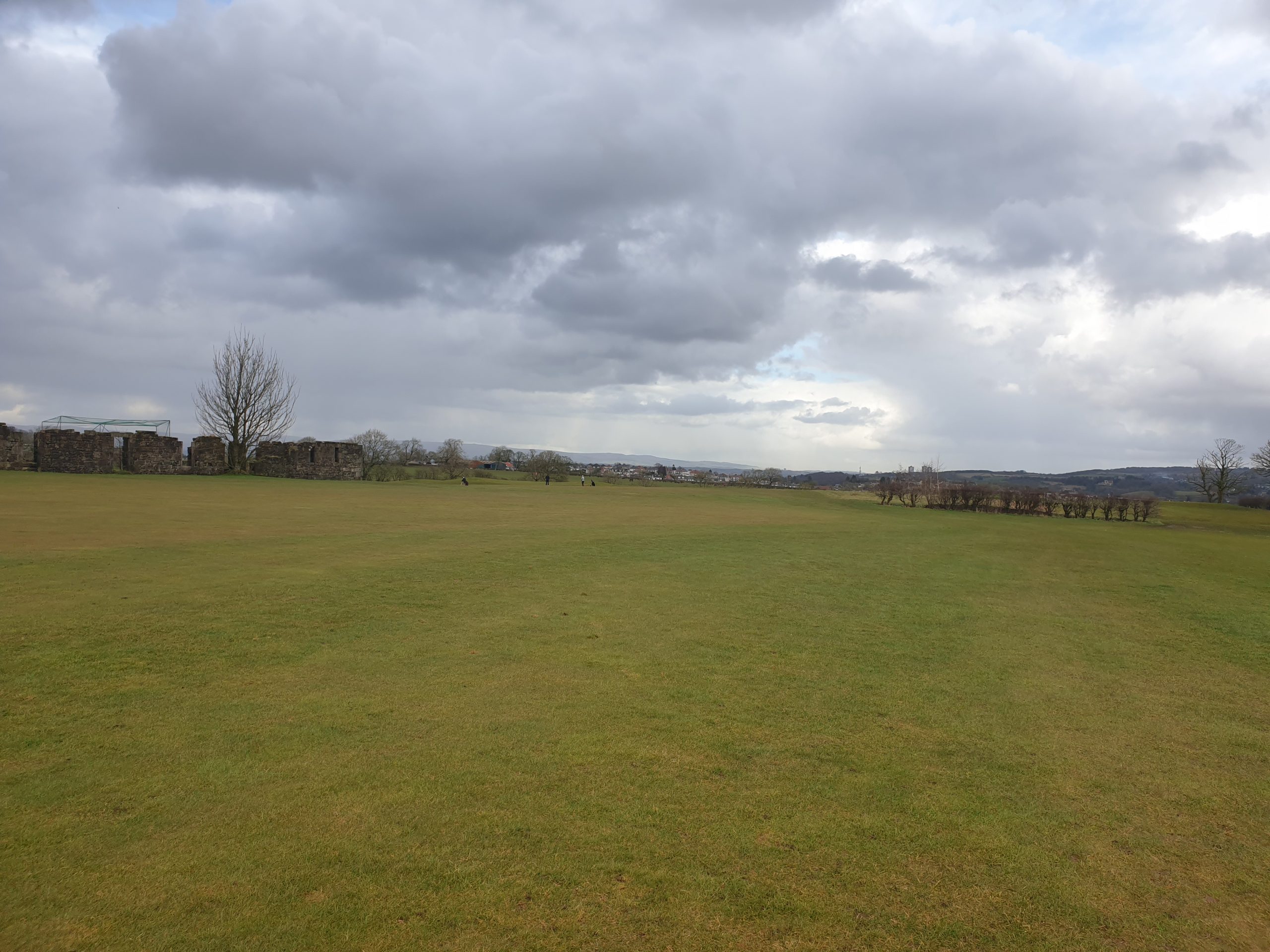
The was the typically bland approach view, here at the 5th hole, with the building ruins on the left being one of the very few interesting features.

The list price is now £20 for nine holes, I paid £10 on a Hot Deal. But golf on a course that should have been closed, is not good value at any price. The marketing overclaim tips it further – a course that sets expectations it cannot meet is doing its visitors a disservice.

Facts:

Course Type: Parkland

Par 31 (9 holes)

Moly’s Gross Score: 40 (net par)

Round: £10 (GolfNow Hot Deal). List price £20 (9 holes).

Value: 2/5

Moly shot 40 on a waterlogged day.

« Older posts Newer posts »

© 2026 Scotland Golf Bible

Theme by Anders Noren — Up ↑