A guide to green fee value for money

Category: £20 – £39 (Page 1 of 21)

187. Greenburn. 26 Mar 2023.

The Golf Club and the Viaduct – which will last longest?

Green Fee: £15 (winter rate). Par 71. Course Rating/Slope: 71/128 (yellow tees). Value: 4/5.

Moly’s Gross Score: 89

Playing Greenburn, I found myself thinking not just about where the course sits geographically – deep in Scotland’s central belt between Glasgow and Edinburgh – but where it sits economically. Scotland has around 575 golf courses and almost certainly cannot sustain all of them. I pondered which side of that financial reckoning Greenburn would end up on. Let’s park that for now.
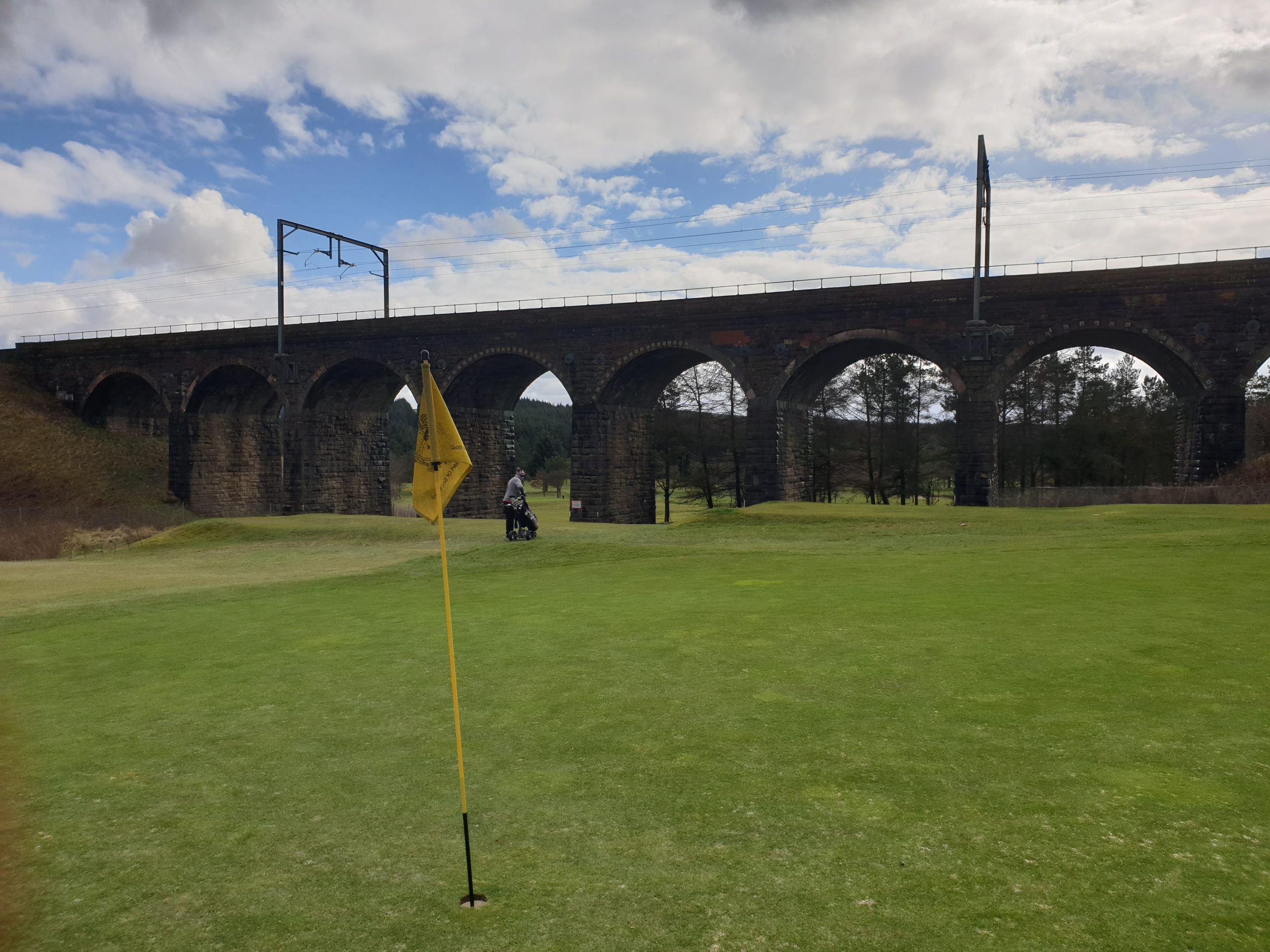
Hole 4 – a long Par 5, with the first start view of the viaduct

Greenburn Golf Club traces its roots to 1894, when the working people of Fauldhouse built a course near their village. The present course, voluntarily built by the members in 1953, relocated to the Breichwater Valley. The club motto, Per Nostra Opera (“By our own endeavors”), says what it does on the tin.

I played at a winter rate of £15, off temporary mats but normal greens. I met recent retiree and local member Gordon Cleland, a decent golfer and clearly very much at home.
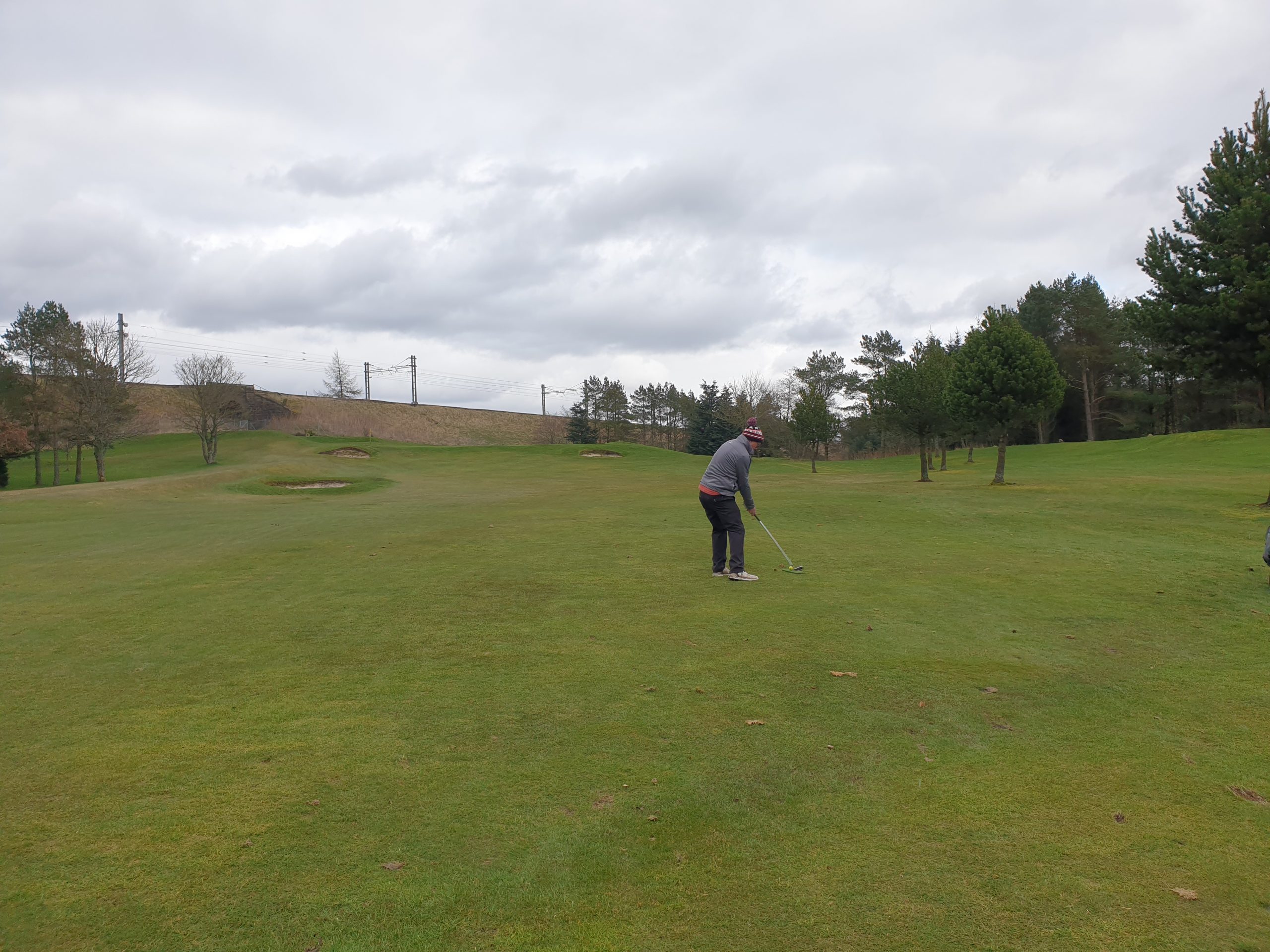
Local Member Gordon Cleland, local member, playing his approach at the par 5 13th.

After a welcoming opening hole, Greenburn becomes a narrow course, surrounded by industrial landmarks, most notably the electrified Glasgow to Edinburgh railway line. Pylons and overhead wires run over some holes.

The sometimes very large and sloping greens were in good condition for the end of winter. I got the feel they would be fast and very difficult in Summer.
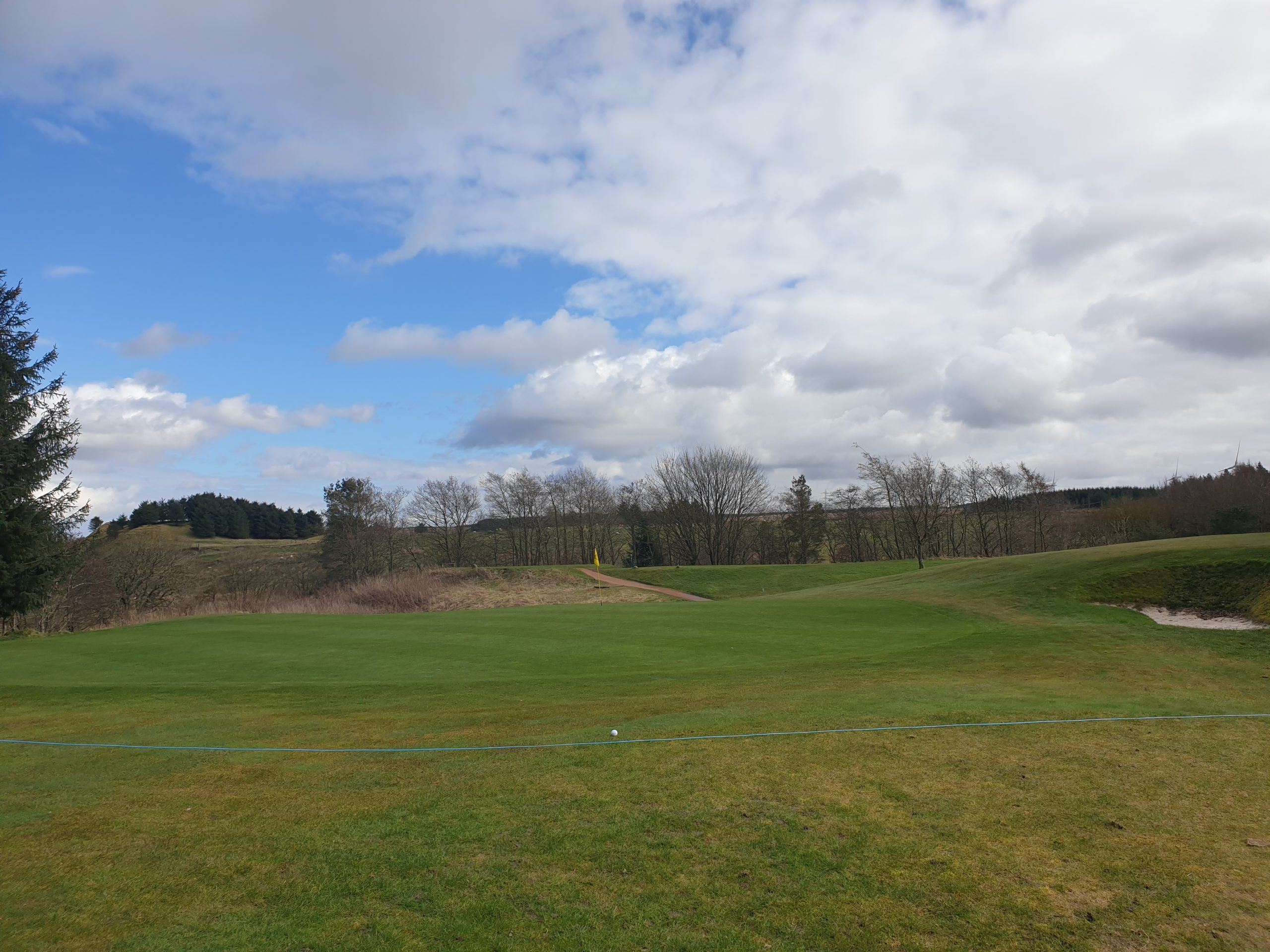
The first, with characteristic large green, the rope marking the winter ground boundary

As you play toward the 4th green, a massive stone railway viaduct dominates – dark and monumental, it represents the ambition of the Victorian age, as does the existence of clubs like Greenburn. Nobody designs viaducts anymore, they’d be too expensive, but were they built to disturbingly outlast their surroundings.
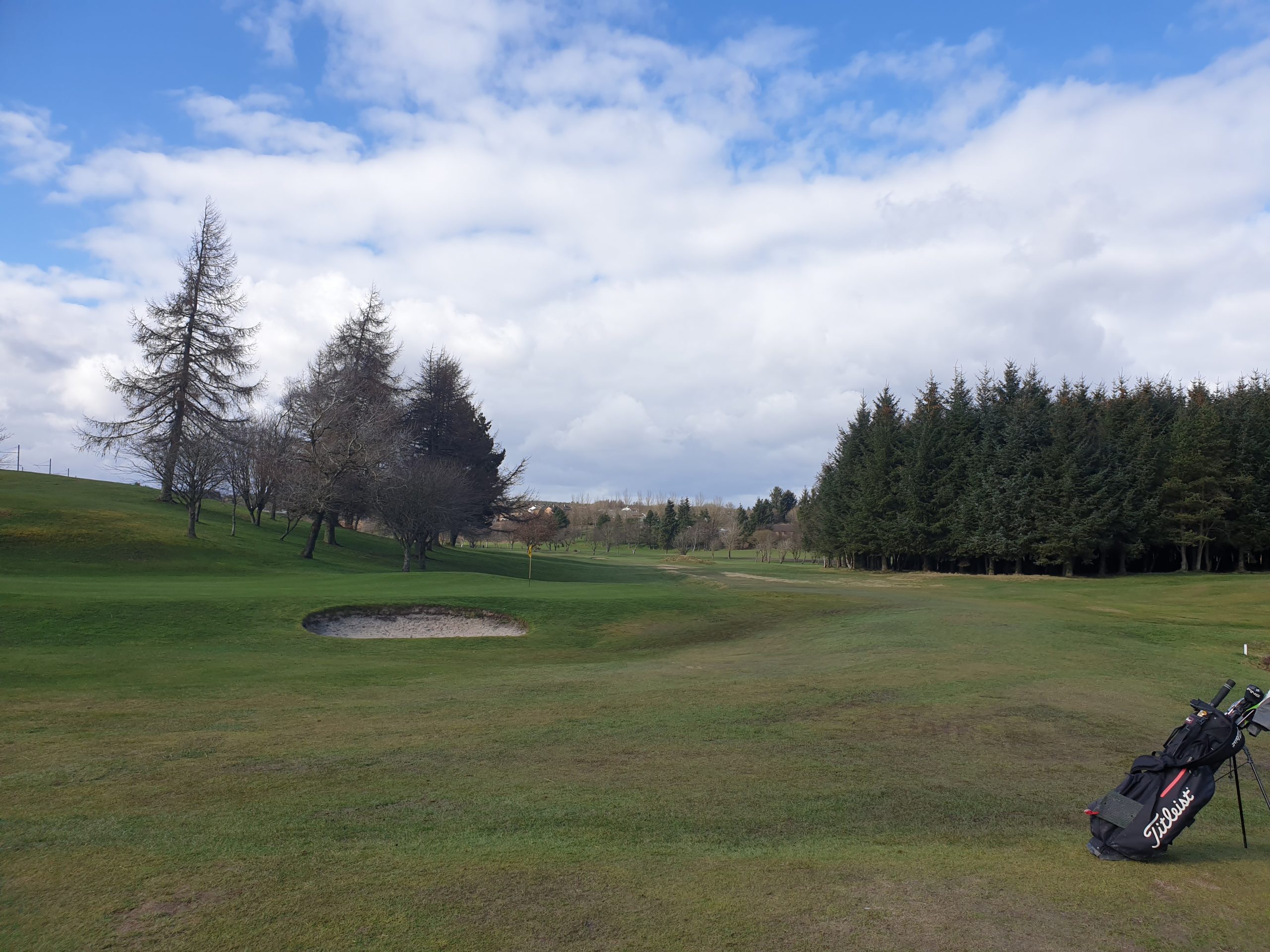
Hole 3, one of the birdieable par 4 holes, with wide narrow green

The highlight of the course are a quartet of difficult par threes, a truism brought to life by Gordon’s tale of the Greenburn “secret 2s pot”. Most clubs have a small stake side comp along side the weekly medal, the “pot” shared by players getting a 2 on their card. At Greenburn this side sweep is on only one of the par 3s, but secretly chosen. Given the difficulty of the par 3s, the pot can accumulate. On one occasion, Gordon took home £340 for a birdie two at the 10th, the stroke index 5, ‘Muldron’ .
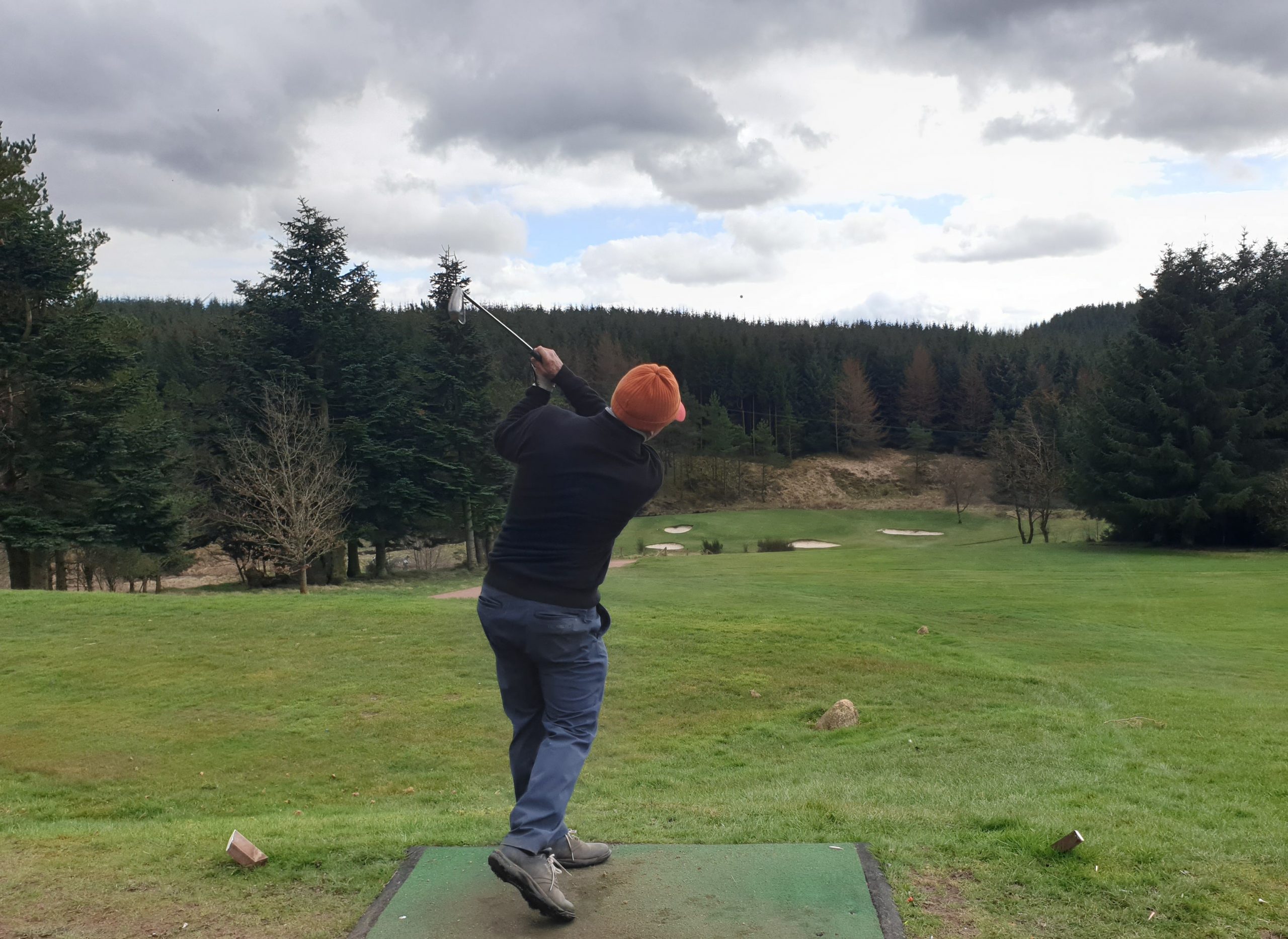
The 6th, at 171 yards, is the shortest of a quartet of great par threes at Greenburn

One disappointment was almost every bunker was marked GUR. Well-shaped, properly positioned, but out of play. Hopefully seasonal rather than structural.
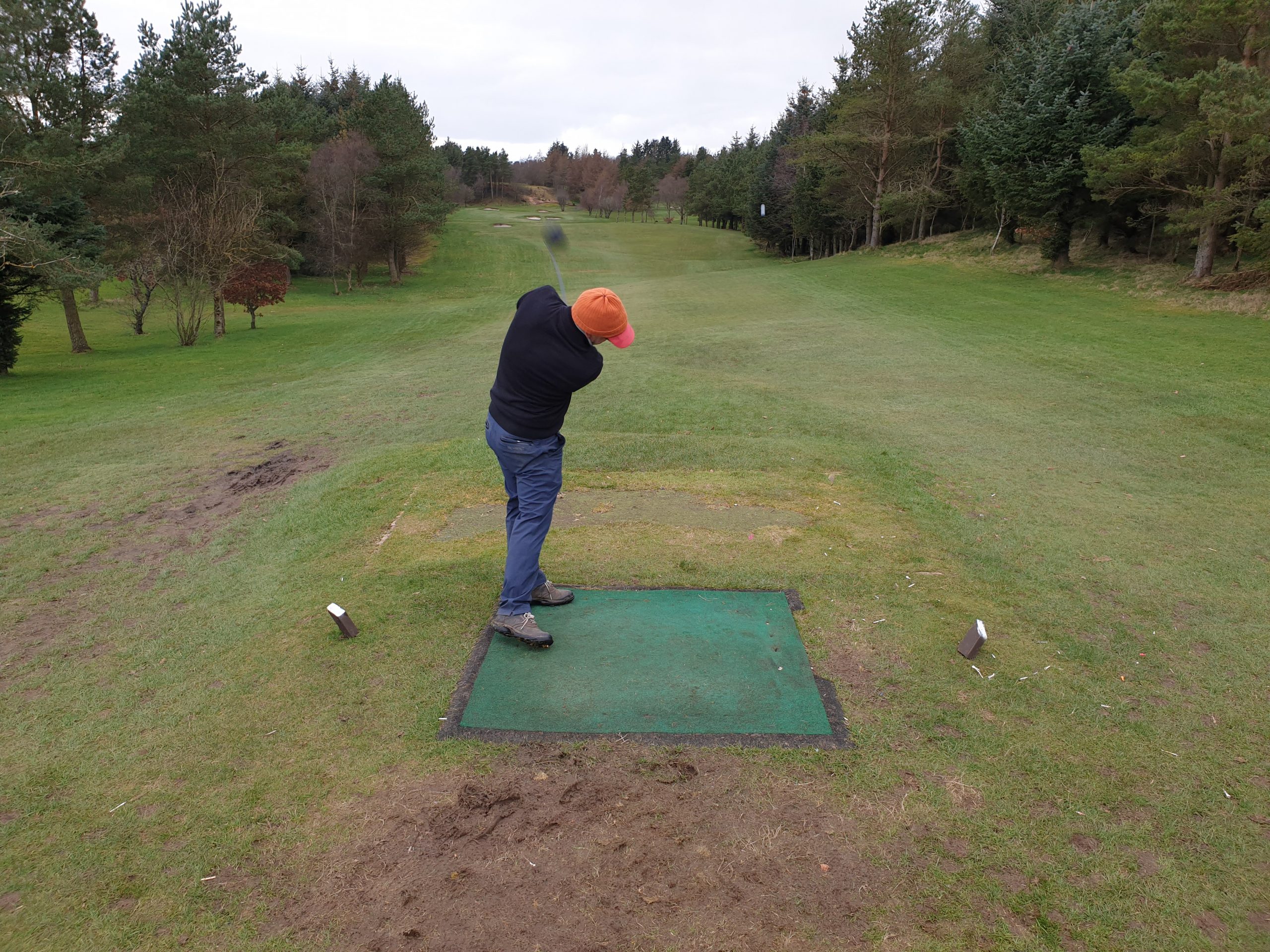
Moly playing his ‘normal’ draw off the winter tee at the 14th, a tough par 4.

Greenburn is a good course, around mid-table in my ranking of Scotland’s courses that I’ve played. It sits in a central belt that offers a car-owning golfer several credible alternatives within thirty minutes. Membership at £738 a year is deliberately affordable — the club keeping itself within reach of its community. The £30 summer visitor is excellent value.
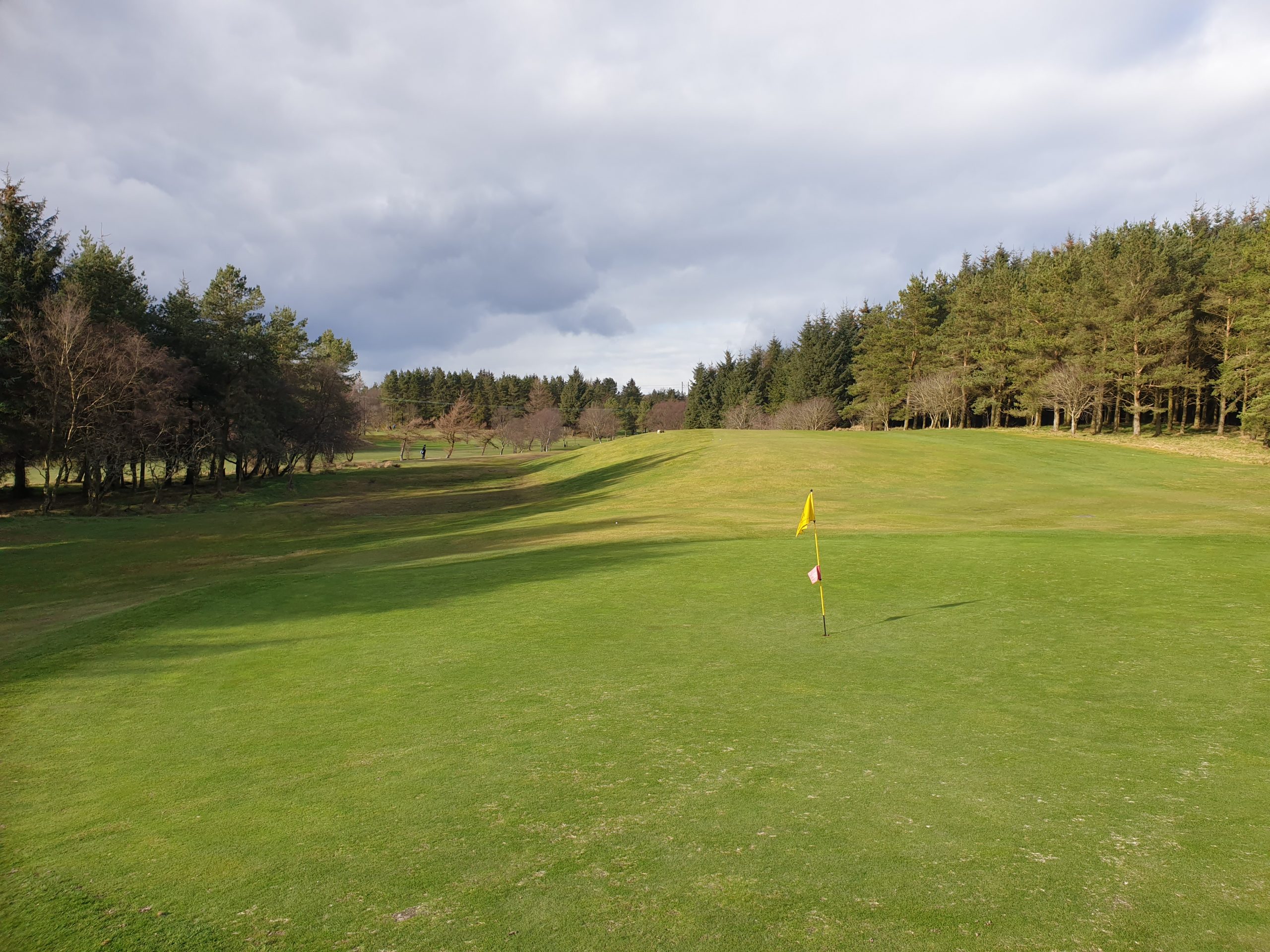
Shades of East Renfrewshire come to mind looking back from the 10th Green

So to the viaduct or course question.

The viaduct was built in an era when Fauldhouse had the population, the industry, and the collective will to anchor infrastructure for generations. The golf club was founded in the same spirit, by the same kind of people, in the same era. Both have lasted. But the economic conditions that created them, dense local population, limited mobility, a working community that played its local course because there was no other, have long since dissolved.
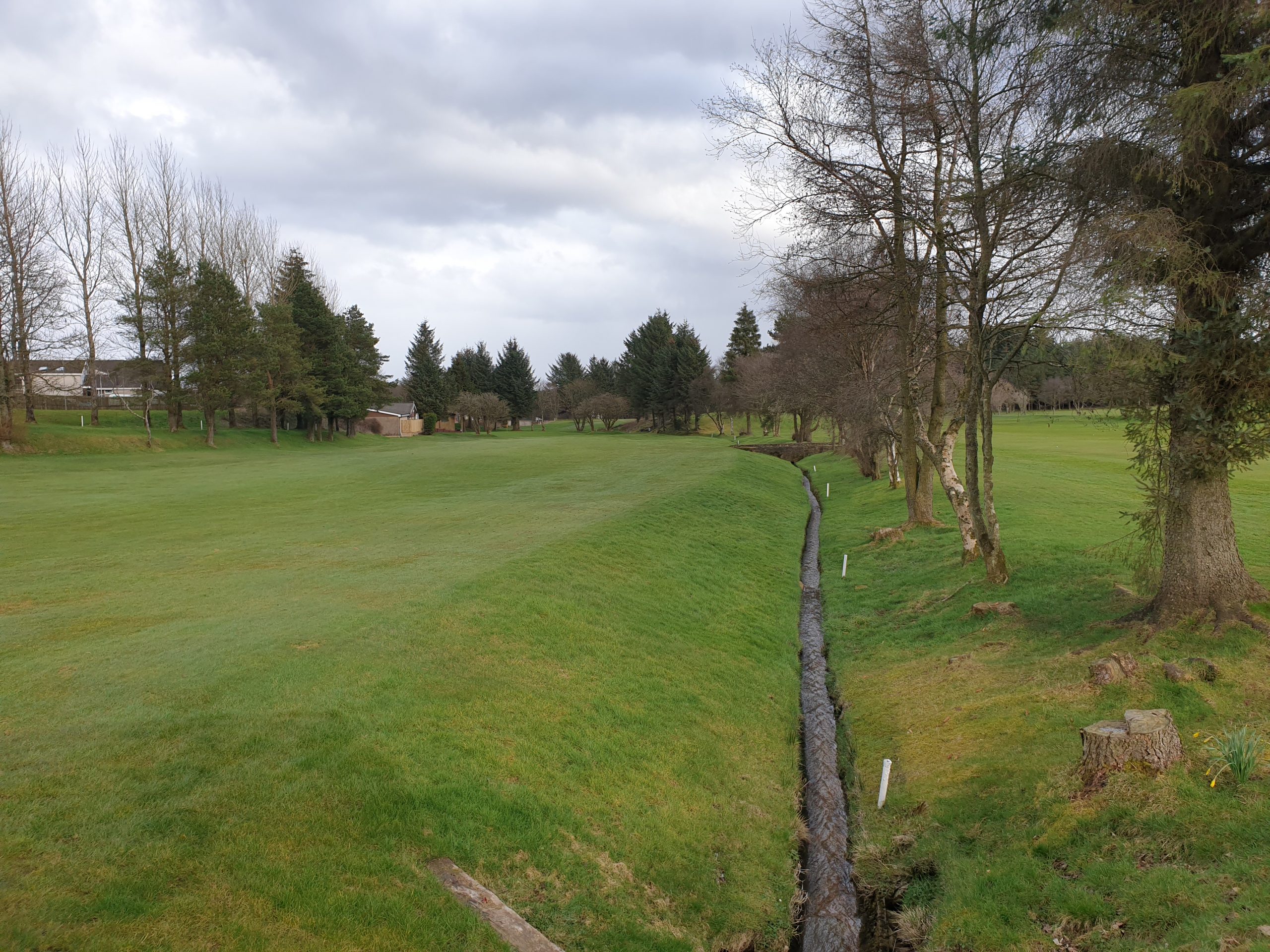
OOB down both sides of the fine 18th hole at Greenburn, likely ruin many a card.

Scotland probably cannot sustain 575 golf courses indefinitely. The adjustment will be slow and uneven, shaped by club type, geography, land ownership and sheer stubbornness. Members’ clubs built by communities like this one don’t close easily – they endure through loyalty, deferred maintenance, and people like Gordon who simply keep turning up. But the structural pressure is real, and it falls unevenly. A course in the middle of the quality distribution, in the middle of the country, with several competitors nearby and no obvious distinguishing draw for the visitor market, faces a particular kind of exposure that a municipal course or a well-capitalised commercial operation simply does not.

The viaduct will almost certainly outlast us all. The golf club? I genuinely hope it does too. But the question in the title isn’t rhetorical.

More on Scotland’s golfing landscape — and what the economics might mean for courses like this one — in a future post.

I scored 89. The course reminded me a little of East Ren (Blog 169).

Facts:

Course Type: Parkland/Moorland
Par: 71 (3 par 5s, 11 par 4s, 4 par 3s)
Distance: 5,659 yards (yellow tees)
Course Rating/Slope: 71/128 (yellow tees)
Moly’s Gross Score: 89
Green Fee: £15 (winter rate)
Value: 4/5
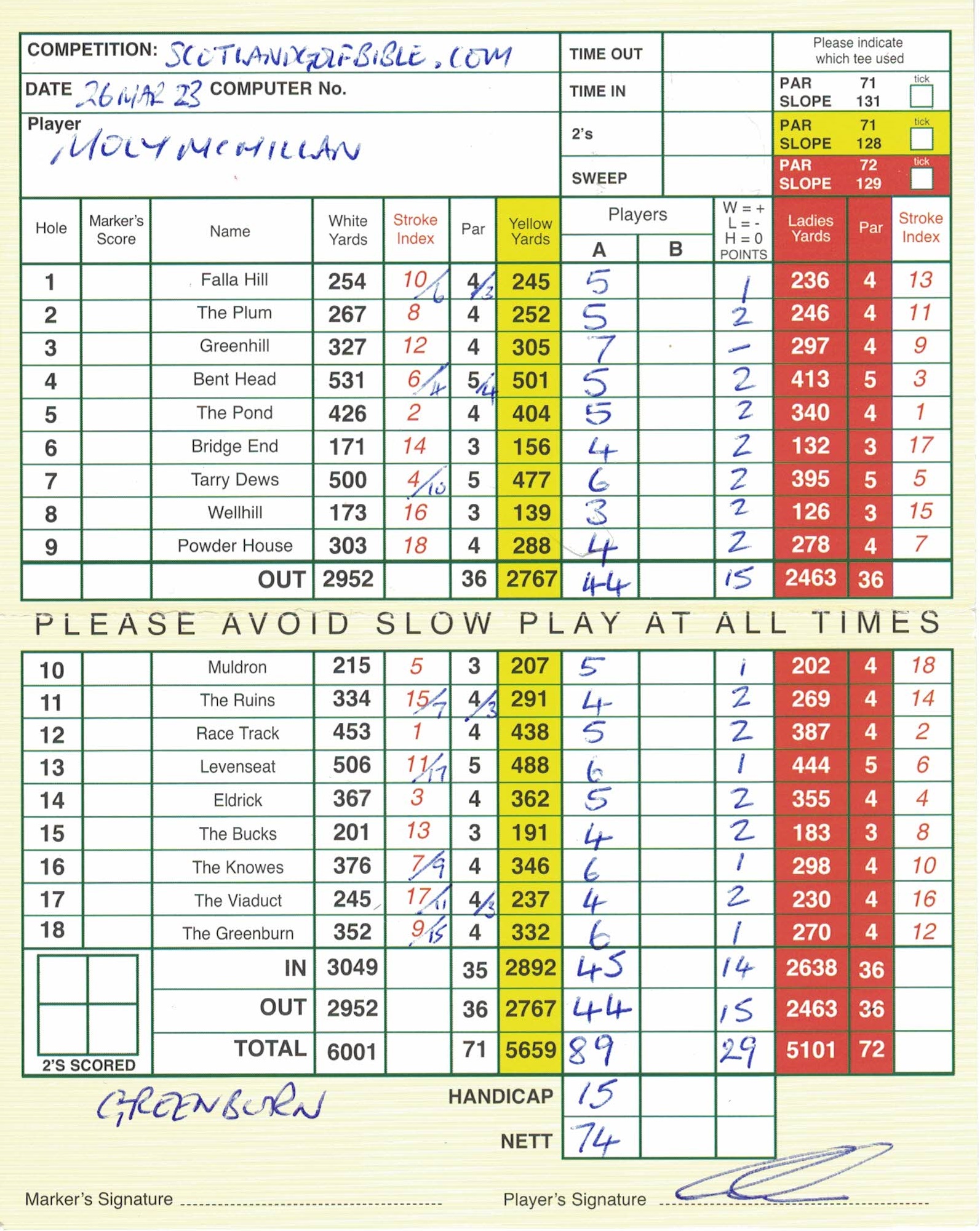
Moly’s 89, was a decent game.

183. Mearns Castle. 24 Mar 23.

“Most scenic and challenging in the area.” An exaggerated claim by the Academy.

Round £10 (GolfNow Hot Deal, now £20). Par 31. Value 2/5.

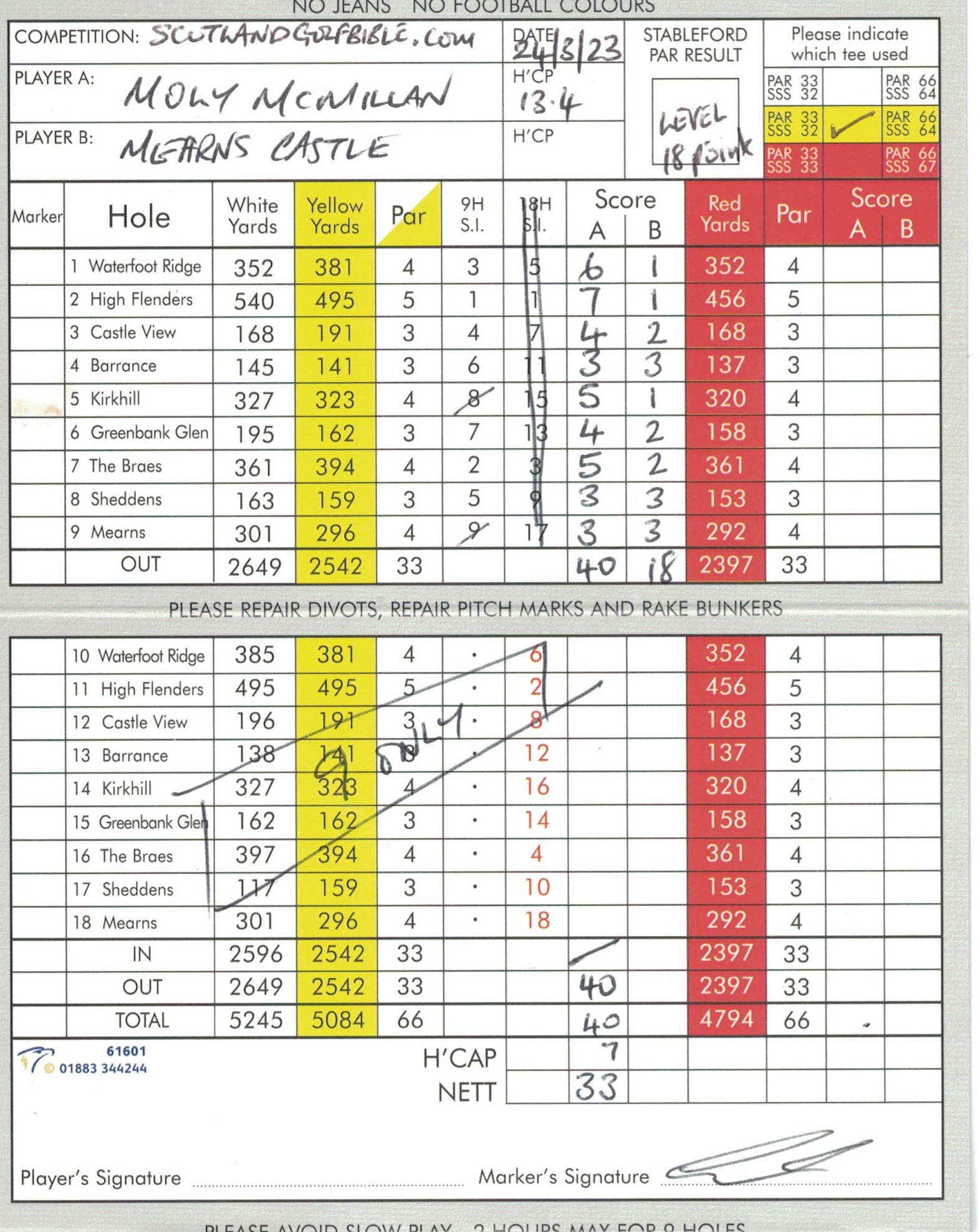
Moly’s Score – 40

There is a real Mearns Castle about half a mile from the golf course, built in 1449 by Lord Herbert Maxwell. The same Maxwell family whose descendants would eventually own Southerness on the Solway Firth, reviewed in Blog 164, a course that justifies the word “scenic” more than anything I encountered here.

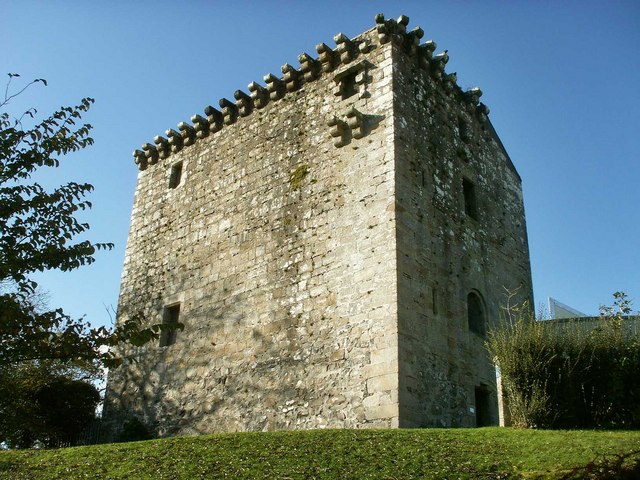
The actual nearby ‘Mearns Castle’, a 15th century Maxwell tower house, which the course takes its name. I wonder if Satnav ever gets this confused with the course.

The castle has, as far as I can establish, no connection whatsoever to the golf academy except proximity and, one suspects, the marketable romance of a medieval tower.

The golf academy is a substantial operation with Toptracer range, tuition, café, fitness studio, nail salon, and a massage therapist! More of a leisure complex with a 9-hole course attached. Nothing wrong with that, but problems begin when the website describes that course as “one of the most scenic and challenging courses in the area.”

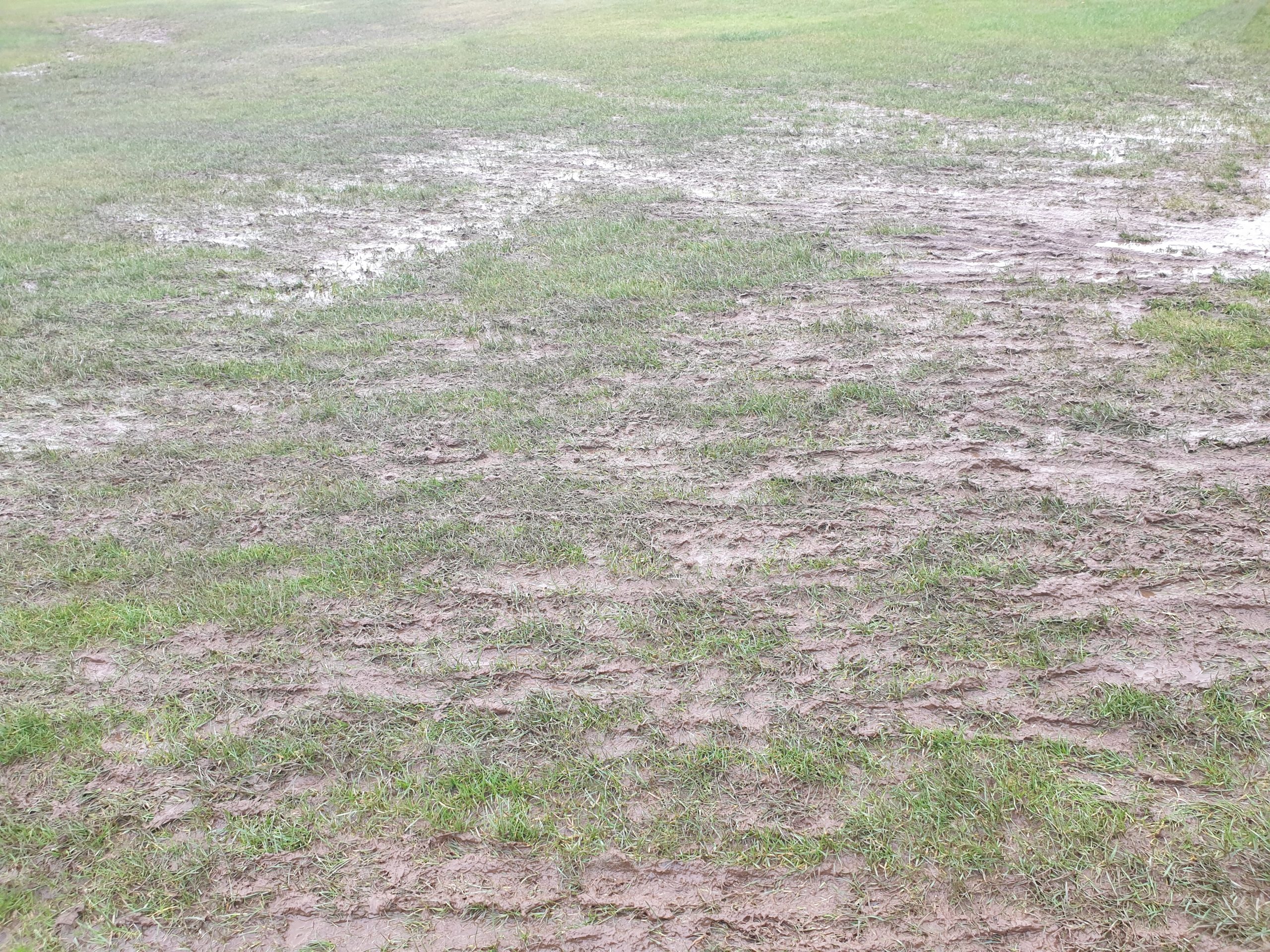
I played it on 24 March 2023, via a GolfNow Hot Deal, for £10. It was waterlogged. It should have been closed.

How could you allow play with fairways like this in several places. Sometimes short term economics doesn’t make sense. One never knows if a Blogger will come along!

The course occupies pleasant enough parkland on the southern fringes of Newton Mearns, the well heeled commuter town south of Glasgow. The 1st offered an early introduction to the course’s style: there is a hidden fairway ditch ready to swallow a ball without warning. This was one of the very few “challenging” features though.

The course had minimal fairway bunkering. However the greens were surprisingly good surfaces, so well done to the greenkeepers. It is the one positive comment I can offer.

The greens were redeeming, a benefit for players learning the game. Here at the 4th.

The course website mentioned “continued investment in drainage and course improvements.” This is a tacit acknowledgement that drainage was a problem, which again raises the question why the course was open. A course that quietly admits its drainage issues while remaining open in March when waterlogged is providing very poor value, even at £10.

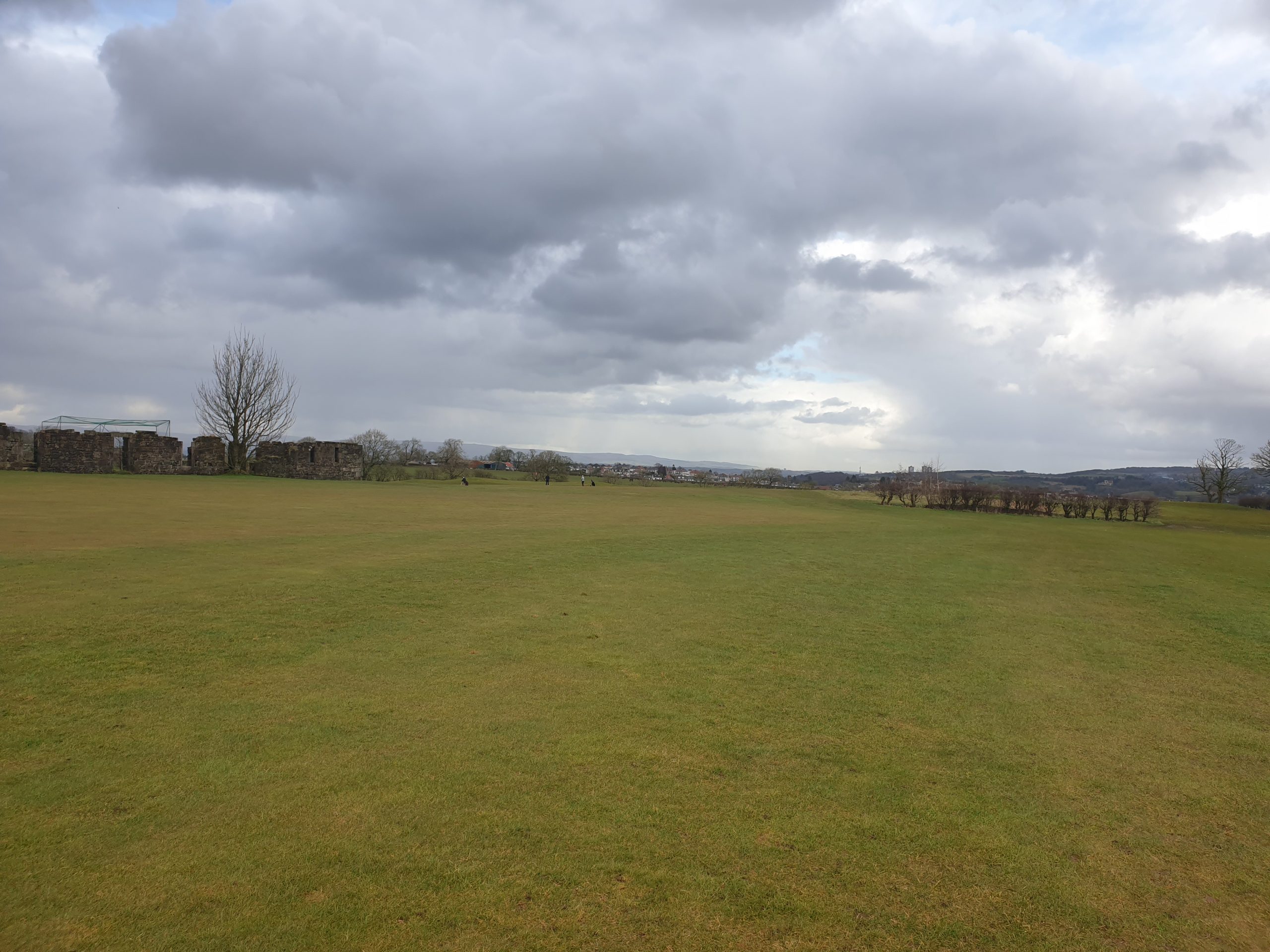
The was the typically bland approach view, here at the 5th hole, with the building ruins on the left being one of the very few interesting features.

The list price is now £20 for nine holes, I paid £10 on a Hot Deal. But golf on a course that should have been closed, is not good value at any price. The marketing overclaim tips it further – a course that sets expectations it cannot meet is doing its visitors a disservice.

Facts:

Course Type: Parkland

Par 31 (9 holes)

Moly’s Gross Score: 40 (net par)

Round: £10 (GolfNow Hot Deal). List price £20 (9 holes).

Value: 2/5

Moly shot 40 on a waterlogged day.

178. Hollandbush. 20 Mar 23.

Tough South Lanarkshire Council course in perennial danger of closing

Value – 4/5

Hollandbush Golf Club near Lesmahagow was founded in 1955 as a 9 hole course, later extended to 18 in 1963. Web searching “Hollandbush GC future” though will return articles about council funding woes; it’s highly likely this blog becomes redundant in future after the course closes. This will be a great shame, as Hollandbush represents a great example of a Scottish municipal course.

The free course planner, a surprising addition at this municipal course, worth playing

South Lanarkshire council operates 6 courses, in addition to Hollandbush, the other 18 holes layouts are Biggar, Langlands and Torrance House, plus two nine hole courses of Larkhall and Strathclyde Country Park.

The 17th at Hollandbush, a drivable par four, but with well positioned protective ditches

Hollandbush also has an independent golf club, providing members with competition and social benefits. This is a common feature of municipal courses in Scotland. This ‘club’ costs £115 annually.

The well maintained ditches shown here at the difficult par 4 12th hole.

Golf pricing is interesting. Annual golf membership for one of South Lanarkshire’s 18 hole municipals is £475, but for just £32 more you can play all 6 courses for £508. If you can make sense of that price differential, good luck! A green fee in peak season is £25, but the winter senior rate I paid was only £9, incredible value.

The 14th at Hollandbush, with one of the relatively few bunkers at this course.

The course is well designed; with constant changes of direction, the undulating fairways, regularly interspersed with well maintained ditches, provide a tough challenge. The slope rating of 129 from the yellow tees testifies to that, albeit it was a fairly generous course from the tee.

The greens were good at this municipal course, here seen at the 10th hole, a long par 3, one of the best holes on the course.

The course was well presented, especially given the wet conditions. I saw no-one else playing and the car park had only one other car, possibly owned by the clubhouse attendant. I think the council could reasonably consider “honesty” box payment to reduce its costs.

The second was one of several card wreckers at this well designed golf course.

I played pretty well, scoring 88, but with 4 blobs. I actually beat the course ‘1 up’, something which is a good measure of your game,

As to the name ‘Hollandbush’ it remains a mystery for me despite my efforts to find it’s origin.

It’s worth playing Hollandbush, a course I hope continues operating.

Price £25.

Discount: Senior winter rate. £9

Course Type: Parkland

Par 70 (1 par 5, 14 par 4s, 3 par 3s)

Distance: 5552 (yellow)

Course Rating / Slope Rating (yellow) 67.8/129.

Moly’s Gross score88

173. Mains of Taymouth. 30 Nov 22.

I was ‘green with envy’ on this country estate course but no longer confused by the two Taymouths.

Value 3.5/5.

Kenmore, in highland Perthshire, is a village on the eastern end of Loch Tay, which is where the main part of the River Tay begins, Scotland’s longest river and the UK’s largest measured by discharge. People like myself from Dundee, where The ‘Silvery’ Tay reaches the sea, claim any small victory!

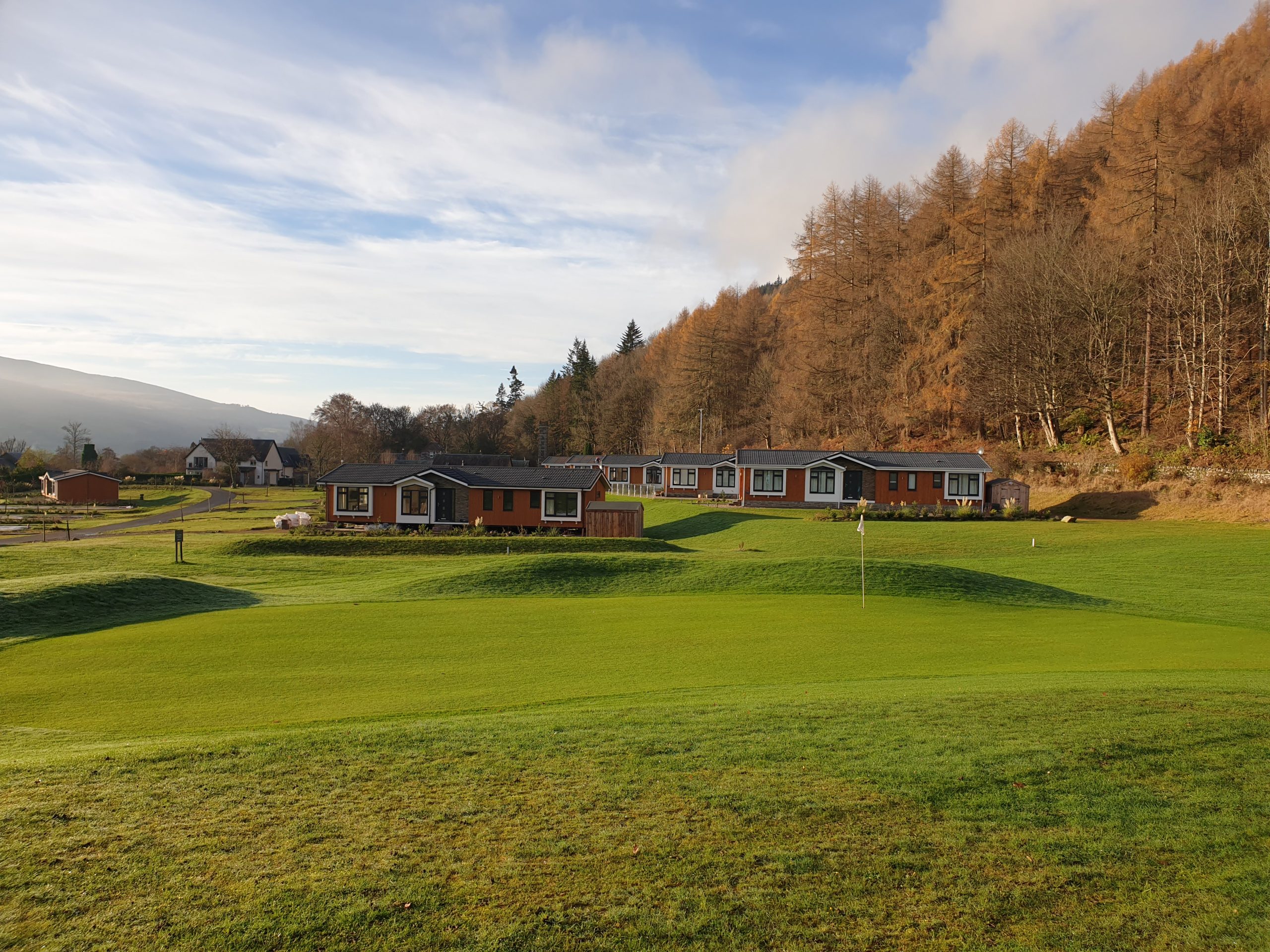
9th at Mains of Taymouth, a hole shortened to make way for new holiday lodges; technically a long par 3 rather than the par 4 of 263 yards shown on the card.

Now to my confusion. Kenmore is home to two golf courses, both on separate Country Estate developments and only separated by 30 yards of river. Taymouth Castle Estate golf course, on the south bank, was founded in 1925, designed by James Braid, and grew a championship level kudos; however, the castle and course is currently “closed for a £300m development” following its purchase in 2018 by American real estate company, Discovery Land Company.

Fran on the par four 2nd, reportedly the Designer Robert Menzies’ favourite hole.

Meanwhile, north of the river, Kenmore Golf Course was founded, designed and constructed in 1992 by civil engineer Robert Menzies, on diversified farming land that had been in his family for many decades. With Taymouth Castle closed, Robert renamed his estate and course, “Mains of Taymouth”. The whole estate was sold for £13.5m in 2022 to Pure Leisure Group, the owner of the well known Westmoreland Golf Resort in Barbados, home to many British celebrities.

Moly at the 5th, a well designed par three. The bunkers could have been better raked.

So ‘Mains of Taymouth’ and ‘Taymouth Castle’ are separate country estates, both with golf courses with similar branding. I anticipate a lawsuit at some point over the use of Taymouth, a name which seems to have begun when the Clan Campbell rebuilt the former Balloch Castle, their ancestral seat.

The irony is that Kenmore isn’t technically the location of a mouth of a river, defined as “where a river flows into a larger body of water, such as another river or the sea”. Thankfully, any geographically minded golfer that mistakenly turn up at the real Mouth of the Tay, has better golf course options to choose from.

Wide fairways are characteristic at “Kenmore”, shown here at the par five 4th hole, a picture also highlighting the good course conditioning.

My envy in the title is of Robert Menzies, who has done an admirable job on his “home made” nine hole golf course. How many of us have had that dream over the years. He has created a lovely course, which was well maintained and playable on this early winter day.

The course has wide fairways, and is protected by small greens that are well bunkered. Set alongside the river the land is flat and easy walking, so would suit the occasional golfer, but also useful for golf course “baggers” who can easily “bag” 3 or 4 nine hole courses on a summer day (including nearby Killin, Aberfeldy and Strathtay). I bagged three (omitting Killin) on the day, despite the limited light.

The beautiful Perthshire landscape on show here at the par 3 seventh hole, with “ha-ha”.

We paid only £12 for a winter day rate, but at £18 for a round it represents decent value in the Summer.

Sadly, although the 3rd is called “Loch View”, there are no river or loch views from the course. Making my big deal about “Taymouth” seem somewhat arbitrary – never mind.

Round List Price £18. Actual Paid £12 (Winter rate).

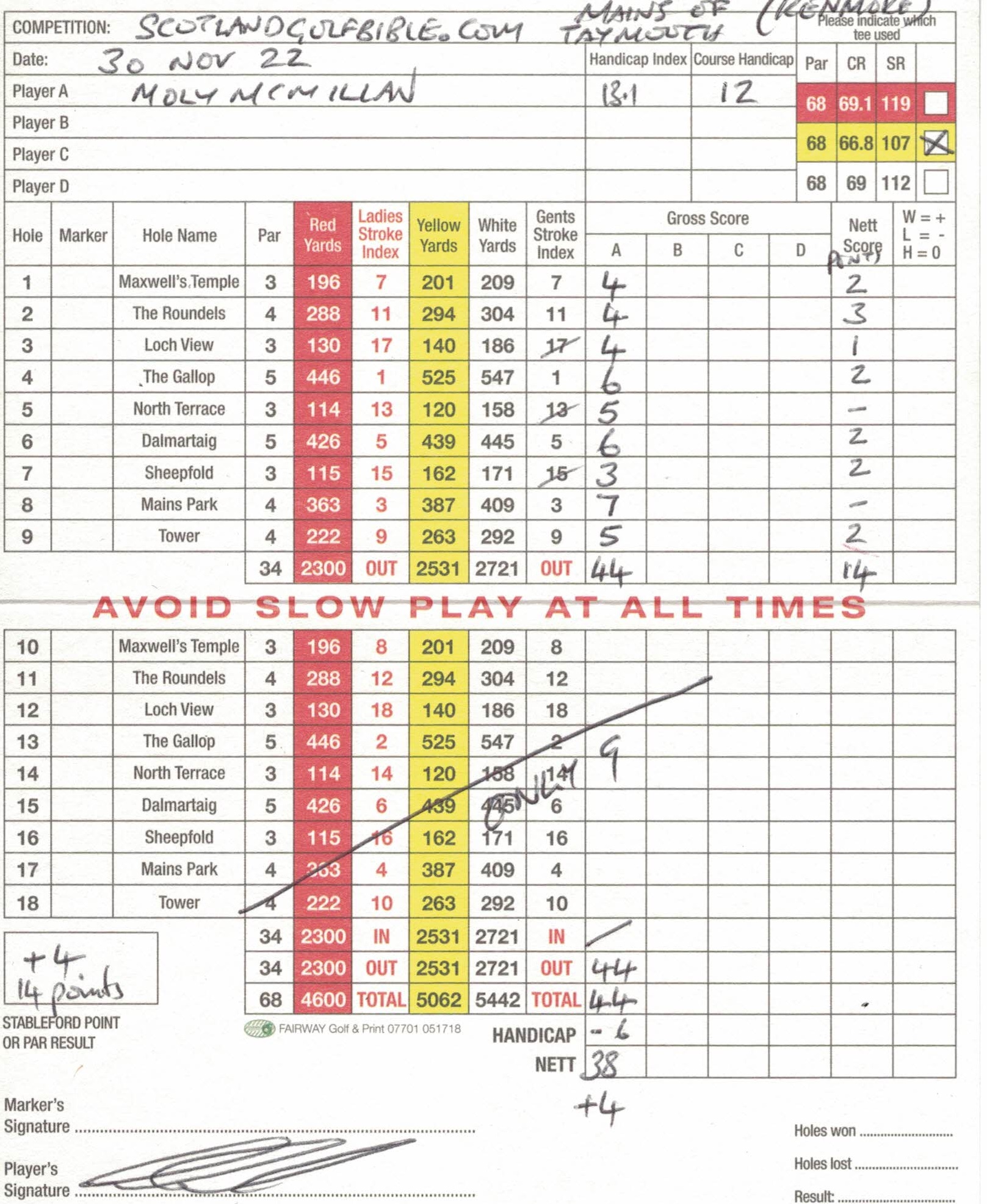
Moly’s Score – 44 for 14 points (off 12)

Course/Slope Rating (yellow) 107/66.8.

Course Type: Parkland

Par 34  ( 2 par 5s, 3 par 4s, 4 par 3s)

Distance (yellow): 2531 yards

Moly’s Mains of Taymouth Scorecard – 44
« Older posts

© 2026 Scotland Golf Bible

Theme by Anders NorenUp ↑