A guide to green fee value for money

Category: Dave Thomas (Page 1 of 2)

177. Blairgowrie Lansdowne. 2 Dec 2022.

Who was the Dowager Marchioness of Lansdowne?

Value 3.5/5

Little did I know as a member of Landsowne Golf Club in Bath in the early 2000s, how influential the Lansdowne name was for one of Scotland’s finest golf properties – Blairgowrie.

First tee at the 1970s designed Lansdowne Course. A difficult and long par 4. Designers Peter Allis and Dave Thomas didn’t provide an “easy James Braid opener”.

All three courses at Blairgowrie Golf Club have at one time been called ‘Lansdowne’ after the Dowager Marchioness of Lansdowne who initially leased land to the Club.

Fran playing into the par 3, 5th, green which was in great condition for a Winter’s day.

The current Wee Course, is where the original 9 hole “Lansdowne” course was. This was extended to 18 holes in 1927, but lasted only 3 years, when in 1930 another 9 holes were built and the new “Landowne” course opened, with the remodeled original 9 hole course becoming the Wee Course. In the 1970s, another 18 hole course was built, which became the current “Lansdowne”, with the1930s course renamed “Rosemount”, which is considered the “main” course.

The 10th, with well placed bunkering, a strong feature on this strong Lansdowne layout.

The history of how the three courses evolved in detail is brilliantly assessed by James Boon on Golf Club Atlas here. The initial designer was founding member, Major (Ret’d) Peter Chalmers, who had fought in Crimea in 1854 and was later wounded in action; he sought advice from both Old Tom Morris and Tom Dunn of the Dunn dynasty. A combination of Alister Mackenzie and James Braid did the late 1920s work, with Peter Allis and Dave Thomas creating the latest course. What is the collective noun I wonder for golf course designers? – ‘A bunker of architects?”

The 13th, where one can see the importance of missing on the right side of the green.

Like all the Blairgowrie courses, the course was in excellent condition, especially for a December day. In particular, the greens were fully in play and running true, meaning I holed most of my putts less than 6 feet. The greens themselves are less undulating than the Rosemount course, the latter being more influenced of course by Alister MacKenzie. The greenside bunkering is of professional layout standard, so best to ensure you stay out of them.

The pine avenue at the 17th on Lansdowne is characteristic of this fine property.

The course is tighter from the tee than its sister Rosemount layout, so consider a hybrid where distance allows. The tree lined fairways are well maintained so anything finding the trees means that balls are usually not lost.

Moly trying to get up and down on the last, a hole that will play more difficult that it’s SI 9 would suggest.

The excellent winter conditions meant the price of £25 is incredible value compared to the high season £140, perhaps it’s Scotland’s best winter discount?

Which brings me to a key question – just who was The Dowager Marchioness of Lansdowne?

Round List Price £140. Actual Paid £25 (Winter rate).

Moly’s Score – 81 for 39 points (off 15)

Course/Slope Rating (winter) 69.0/125

Course Type: Heathland

Par 69  (15 par 4s, 3 par 3s)

Distance (blue): c 5500 yards

Moly’s Lansdowne Scorecard- mats and forward tees, but still it’s an 81
The Winter Scorecard

166. Torrance Park. 14 Oct 22.

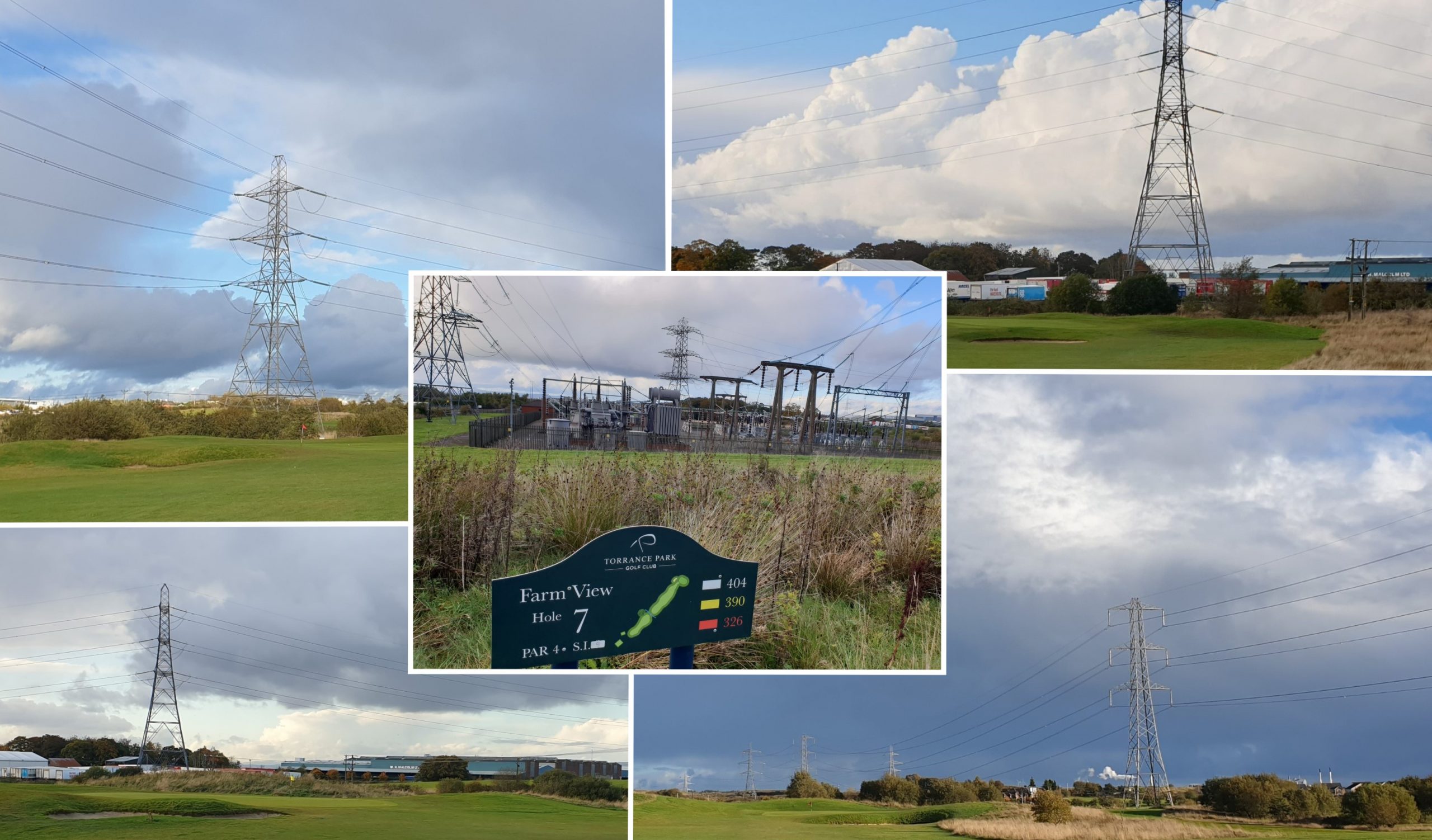
Electrifying, but not in a way you would want.

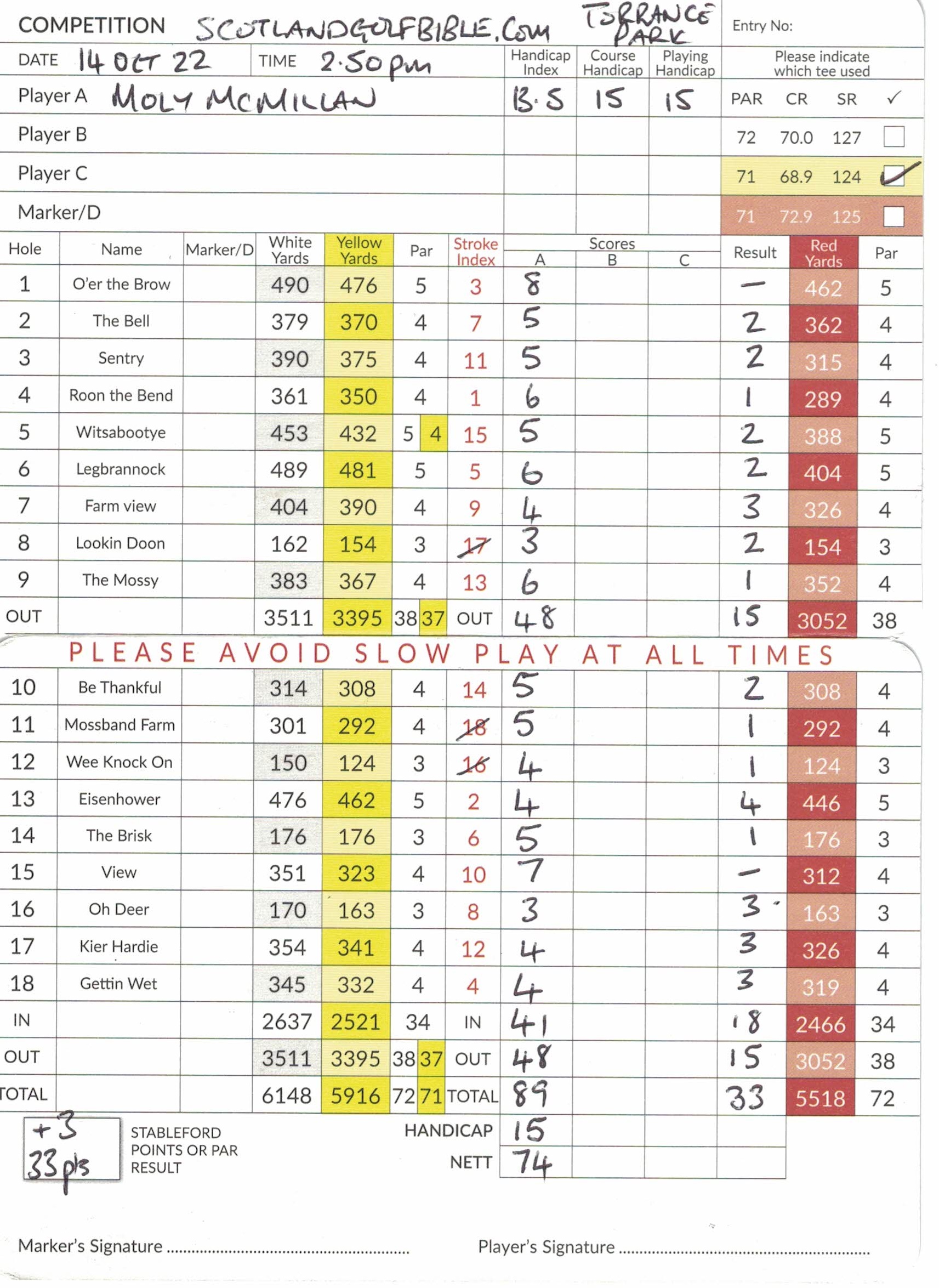
Moly’s Score – 89

Round £25. Par 71. Course/Slope Rating (yellow) 68.9/124. Value (out of 5) – 2.5

Torrance Park golf course started off as an ambitious project. Owned by David Murray, the Scottish businessman and former owner of Glasgow Rangers FC, it was designed by Dave Thomas (The Belfry, Spey Valley) as an impressive PGA style 18 holes course and opened as recently as 2008. It had plans also for a driving range. Sited close to the M8 motorway and adjacent to the town of Holytown, an area with rapid housing development, it was ideally located.

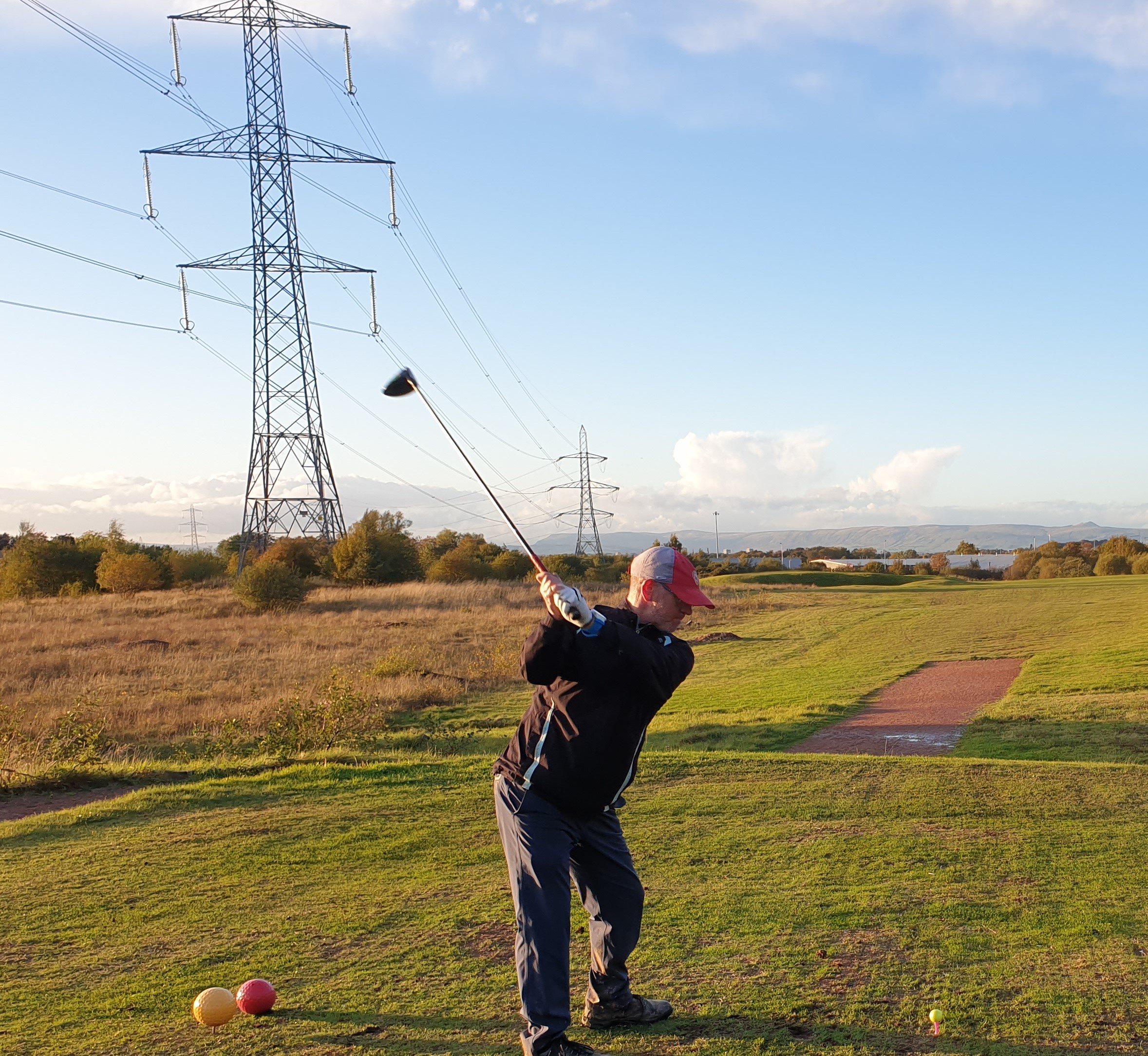
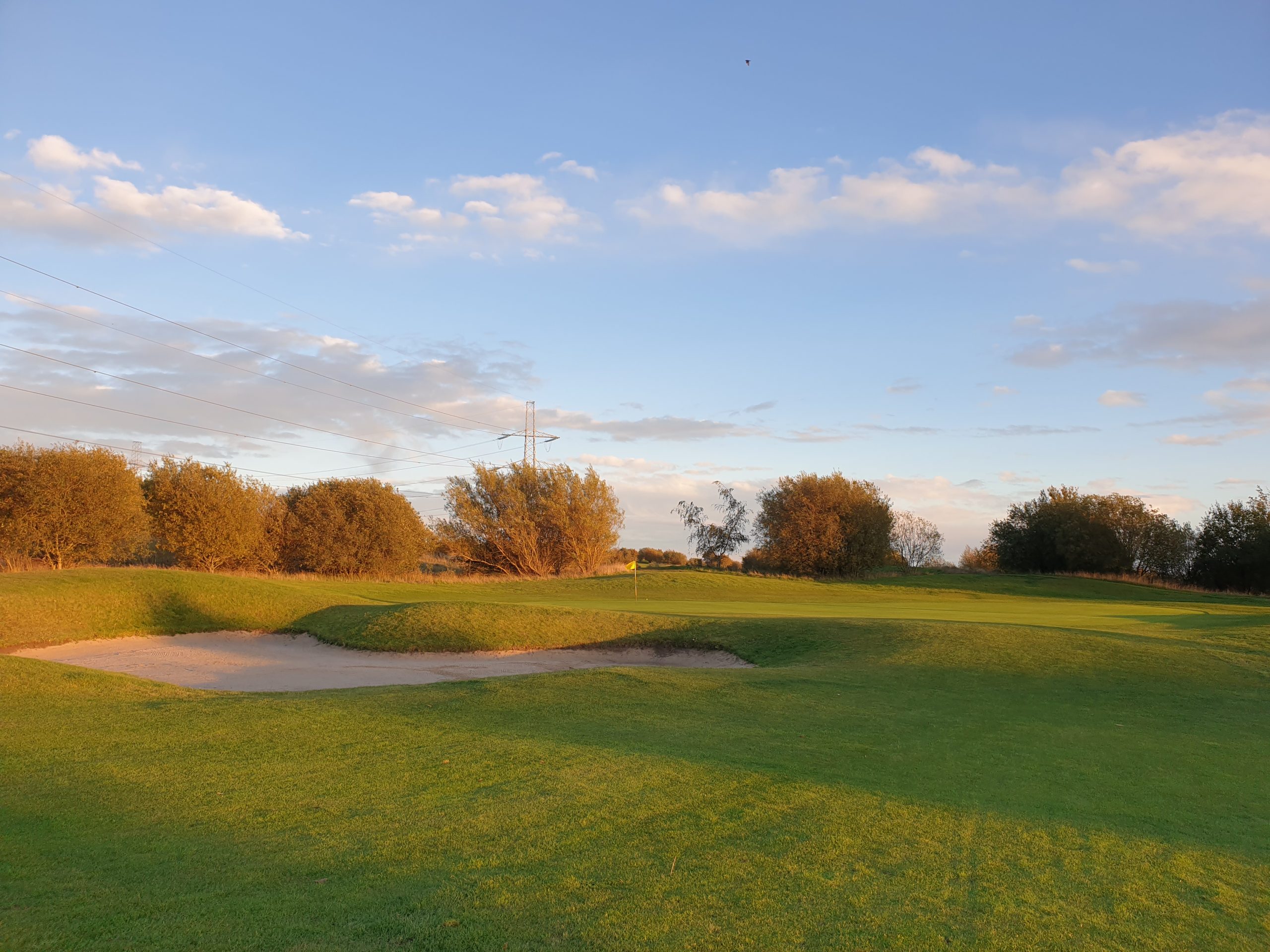
Torrance Park, adjacent to a major power distribution hub, might have the most pylons in Scotland.

However, jump forward 15 years, and the course was rather forlorn when I played, during which I also found out that from 2023, the course was to be 9 holes only. The land to the west of Legbrannock Road, was to be a housing development, leaving 9 holes currently the nearest around the modern clubhouse.

The greens, the 1st shown here, are well designed and well maintained, and the best feature of this otherwise uninspiring course.

When I played I met up with a local member, who was angry that he and many other members had paid their annual membership fees, before shortly thereafter being advised by email of the course reduction plans, but without an option to cancel their membership.

The par four 4th at Torrance Park, worthy of being the stroke index 1. A water feature ready to capture any right handed slice from the tee.

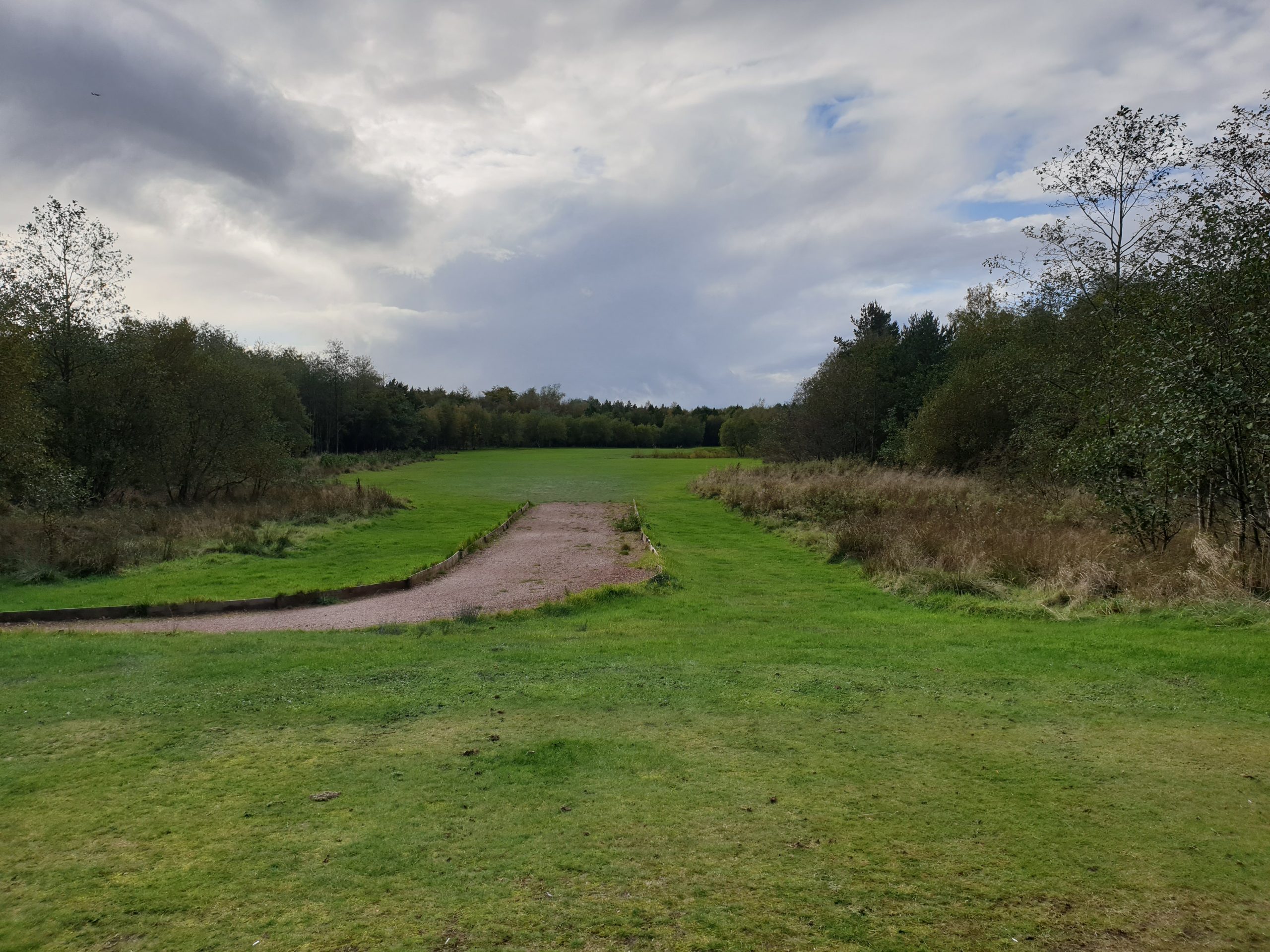
This parkland course feels rather odd. Fairways are wide, with disproportionally huge bunkers – it’s as if an innocuous municipal course had a few bunkers that would be at home in Valderrama! The greens are nonetheless pretty good, but again they feel better than the surrounding landscape and course conditioning.

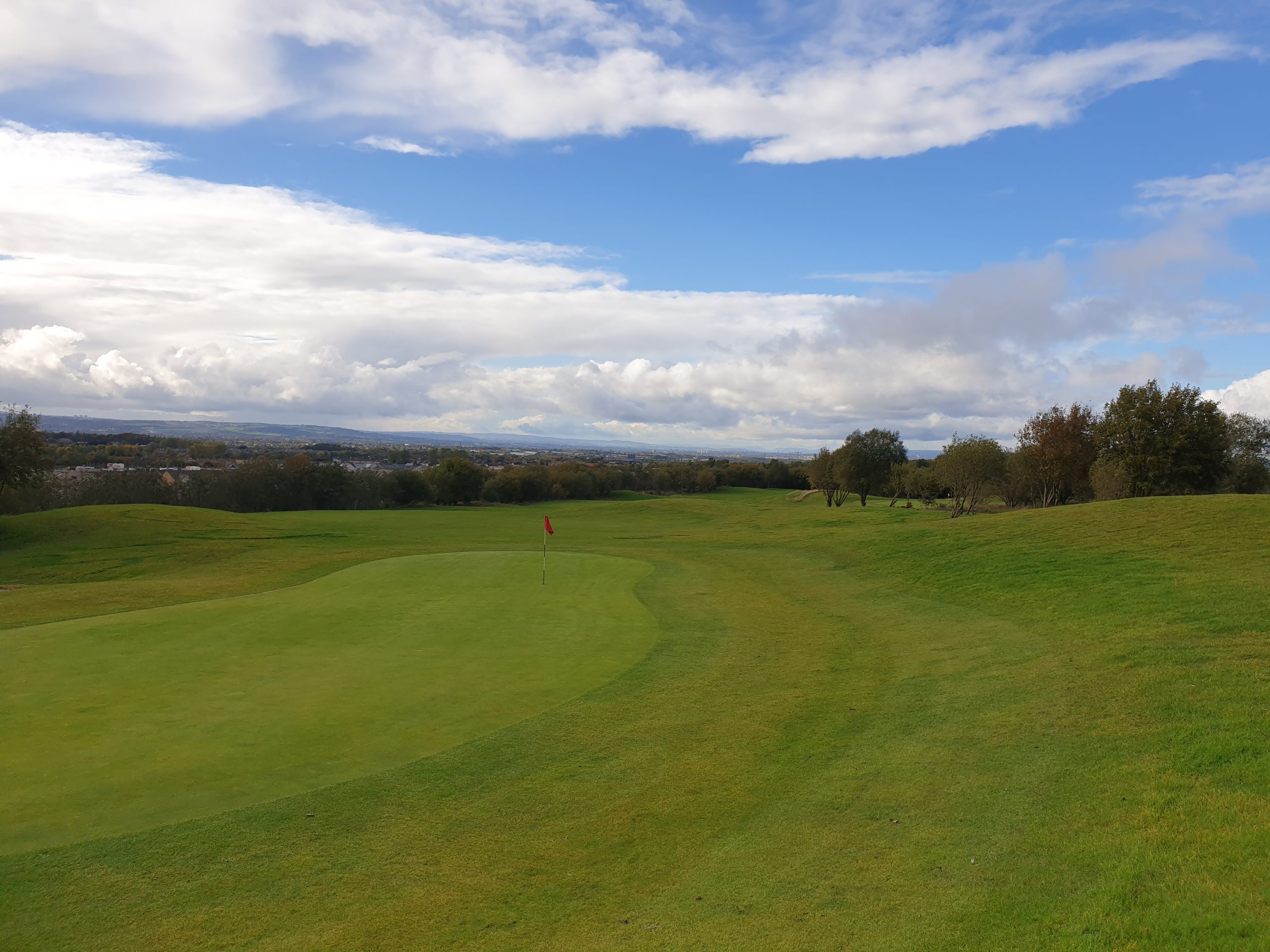
The par four 17th (likely the new 8th), with views north towards the Campsie Hills. With another pylon to view!

When I played the course was very wet, although the greens had held up well. The new clubhouse had very friendly staff, and the building seems to be used as a ‘local’ for the adjacent housing estate. The food was good.

The par four 18th (which I would think is the 9th now) is a decent finishing hole – stroke index 4, with large front bunker, typical of the design here. I would recommend considering a shot to the front right of the green to leave a straight forward chip.

As for value, I struggle to think more than 2.5/5 is justified, using £25 as the stated amount. It’s convenient to the M8 if you want a quick knock about, but not worth going out of your way for, in my opinion.

Facts (pre 2022):

Course Type: Parkland

Par 71  (3 par 5s, 11 par 4s, 4 par 3s)

Distance (yellow): 5916 yards

Moly’s Gross score: 89

Moly’s Torrance Park scorecard – great finish meant decent score

159. Carnoustie Buddon. 20 Aug 22.

With top quality greenkeeping this is the best option for mid to high handicap golfers at Carnoustie.

Round £75. Par 68. Course Rating / Slope Rating (yellow) 67.7/117. Value (out of 5) – 3.5

Barry Buddon is a 2,300 acre peninsular between Monifieth and Carnoustie. Used as a military training area since 1850, the Scottish comedian, Billy Connelly, wrote his “weekend soldier” song based on his territorial army experiences here.

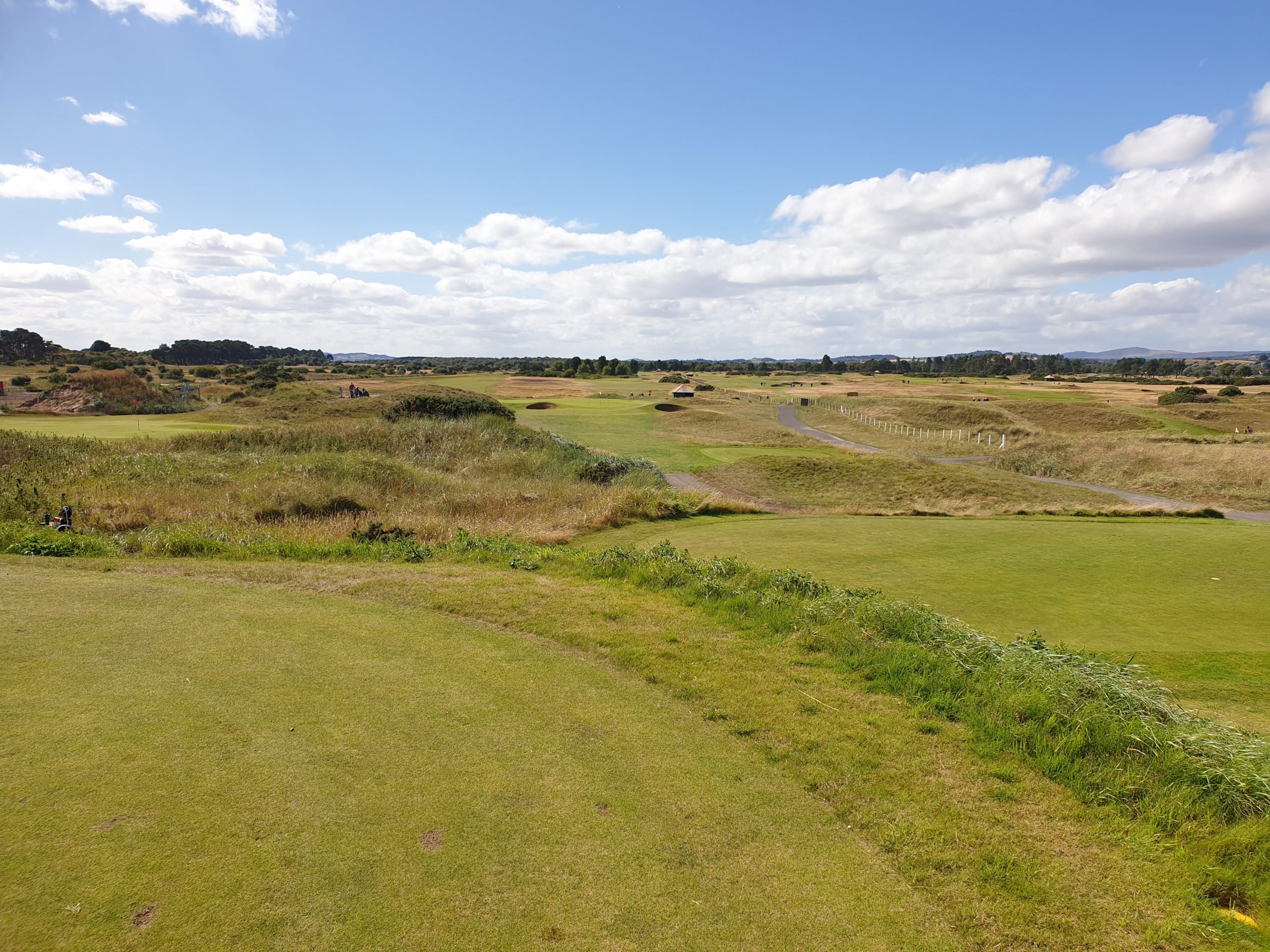
The second on The Buddon, a well bunkered par 3, with the view over the Championship Course to the right, beyond the white OOB stakes.

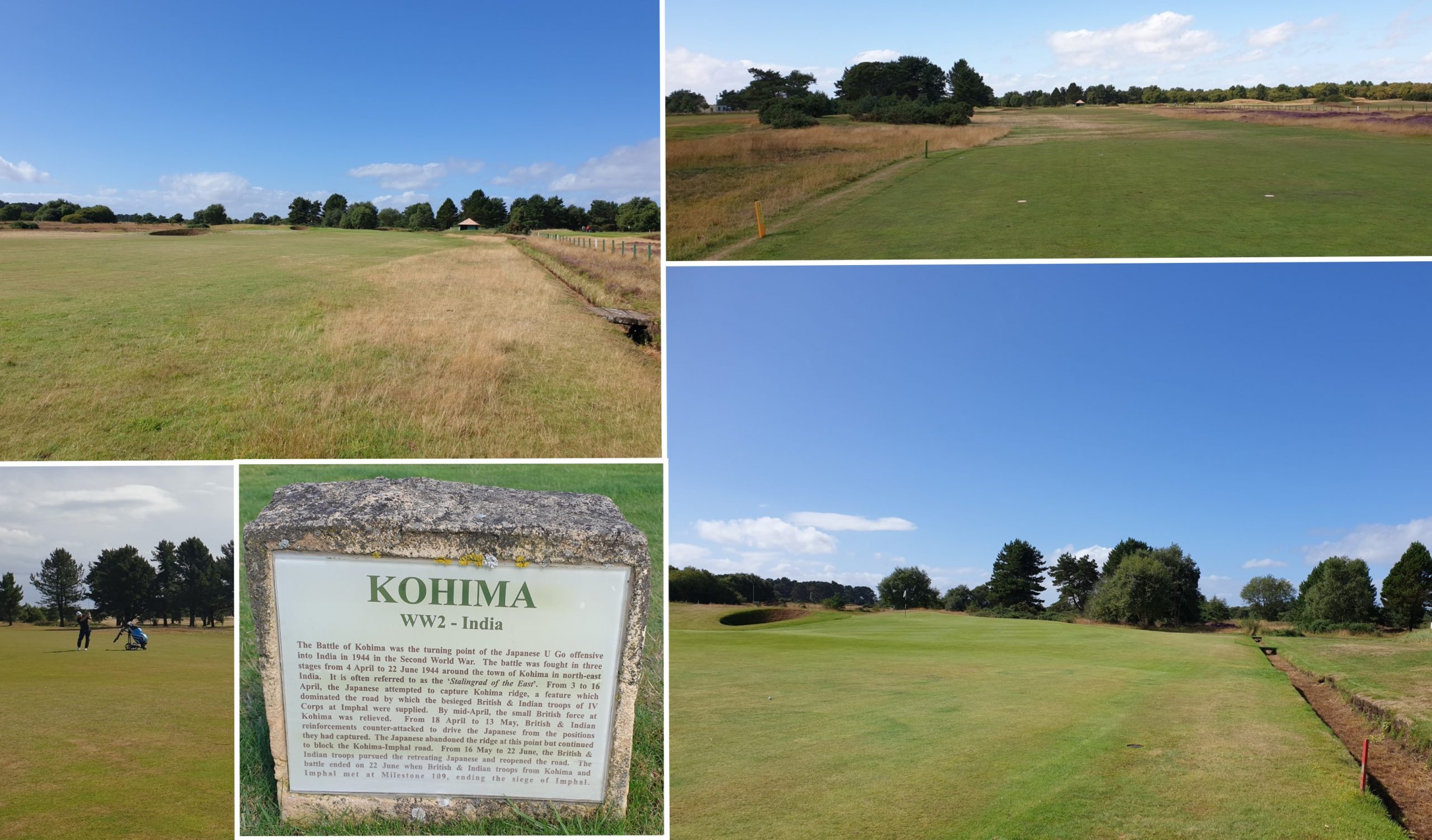
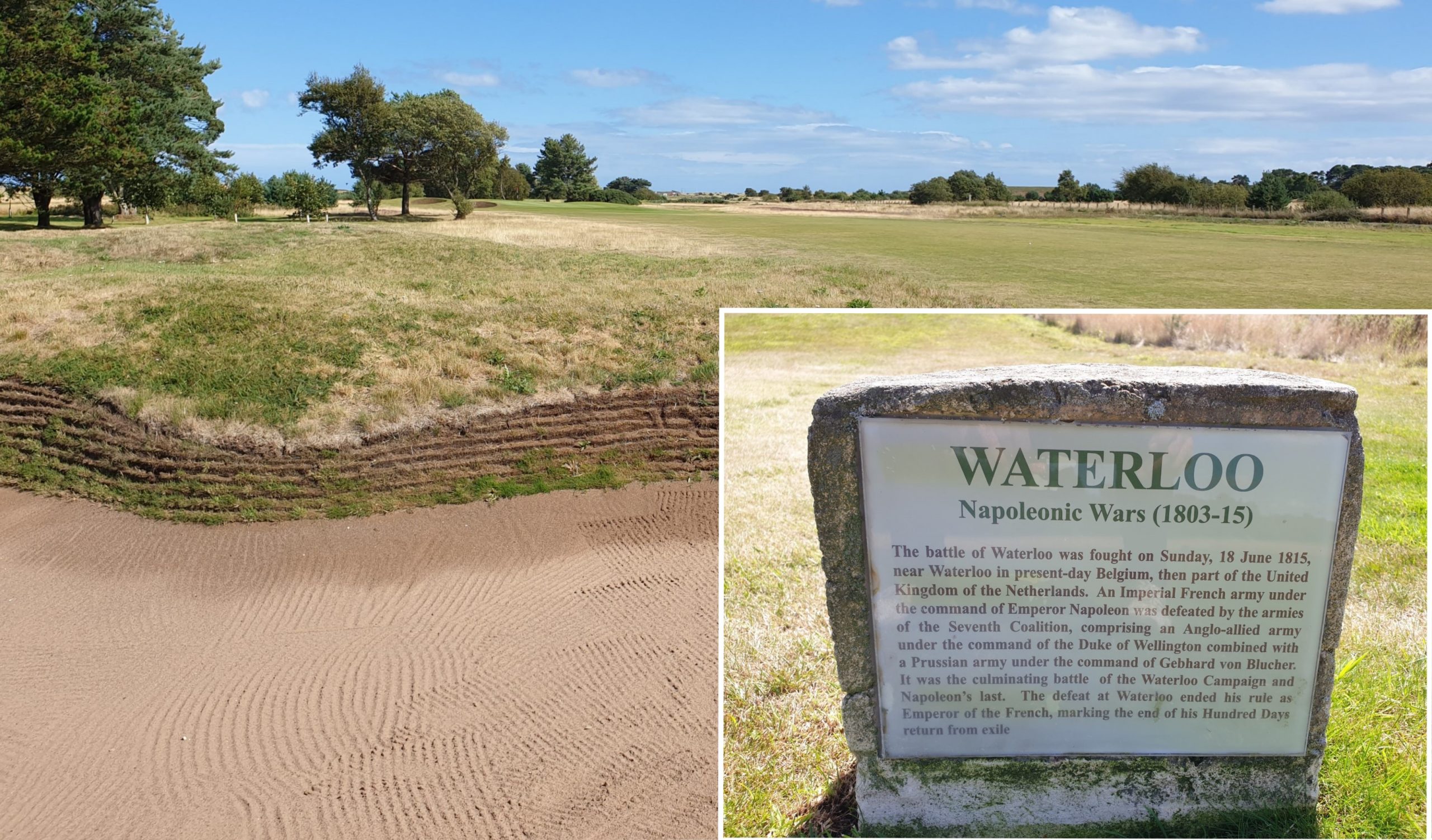
‘The Buddon’ is the youngest of the three Carnoustie courses. Designed by prolific golfers turned architects Peter Alliss and Dave Thomas, it was built on land previously used for military training and opened in 1981. The army range, immediately adjacent the course, is still operational, so it’s not uncommon to hear gunshots as you play. Recognising the neighbouring heritage, the holes are named after battles with the stone memorials on each tee well worth reading.

The 5th hole, “Kohima”, a par 4, named after the WW2 battle in India.

I therefore couldn’t help thinking about Billy Connelly as I played The Buddon, especially around holes 11 through 13, those closest to the military range. You might be playing exactly where Connelly lay in his camouflage dreaming up lyrics – it was during those weekend soldiering visits that Billy made his first public appearance in the Stag’s Head pub in Carnoustie in July 1962.

The beautiful bunkering and greens at The Buddon, here seen at the 4th, a mid iron par three.

Holes 2 to 5 run beside the Championship course and you clearly see you’re playing the same turf, the same immaculately contoured bunkers, the same rough – only The Buddon is much shorter. At a quarter of the price though of the main course, but with the same greenkeeping quality, you wonder why people put themselves through the potential torment of the ‘Carnastie’ layout. When I get asked “How difficult is Carnoustie?”, I tell them about a 7 handicap member, who’s never broken 80.

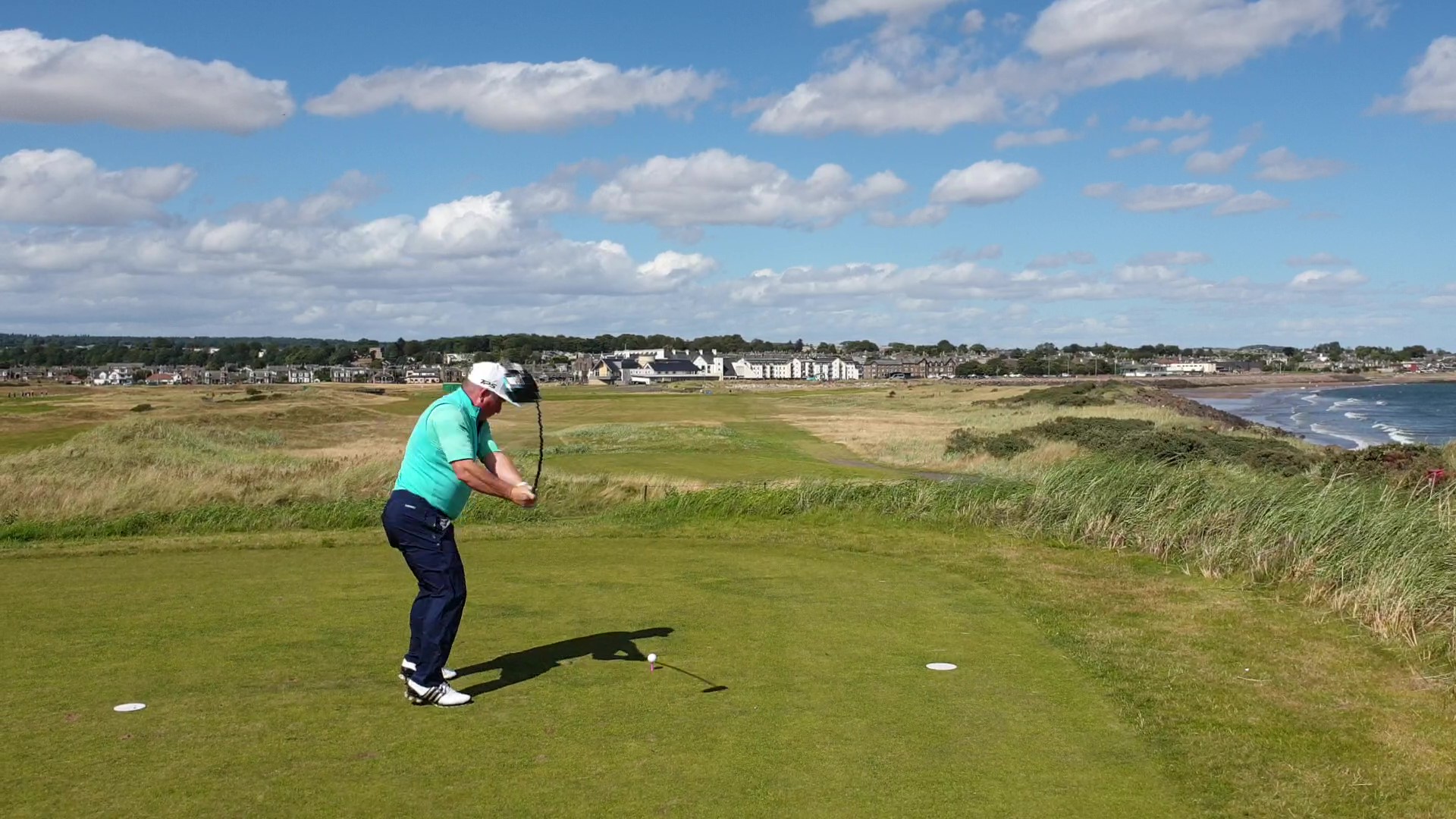
Moly at the 6th, the first of the non-links holes on The Buddon, a tough par 4 of nearly 400 yards.

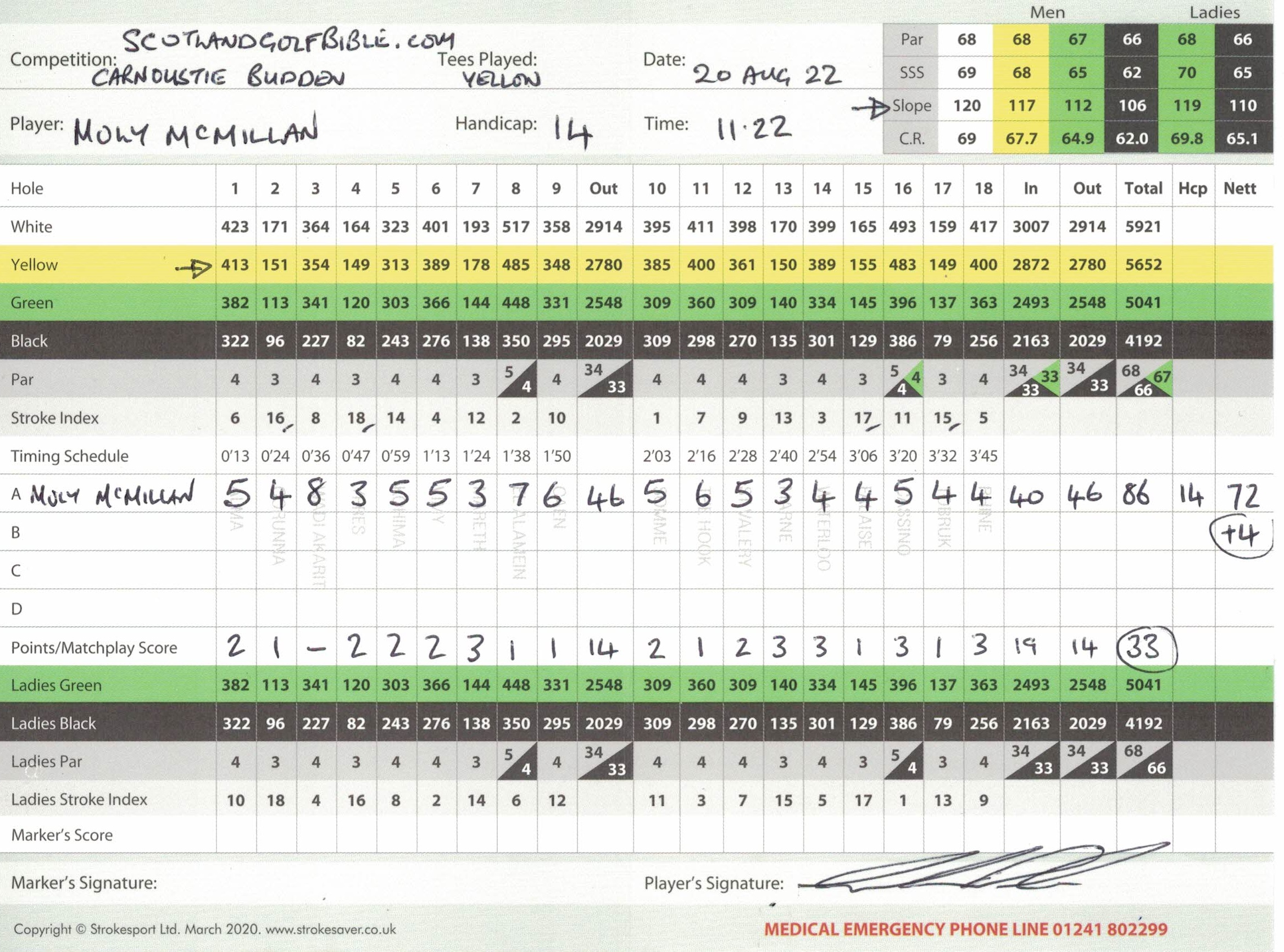
The Buddon, on the other hand, at under 6,000 yards, offers great variety and the better opportunity to play to your handicap. I scored 86 (33 stableford points) despite winds gusting up to 40 mph. Many of the holes (6 through 16) are routed through trees, and have a distinctive heathland feel. Throw in the views towards the Sidlaws Hills and it could be the highlands. It’s consequently a great venue to discuss what constitutes a “true links”?

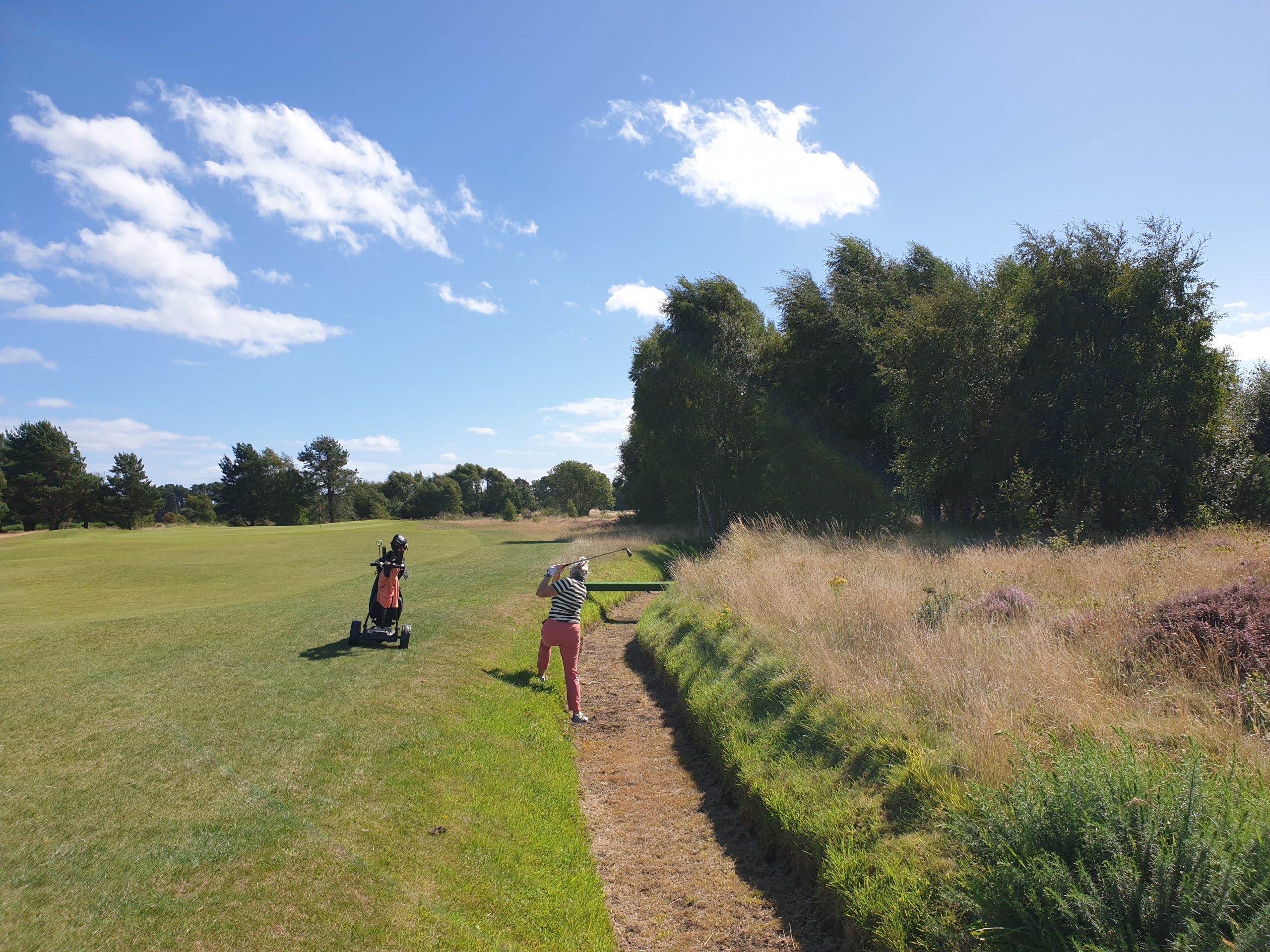
Fran plays from the ditch on the par four 12th hole, getting a par. Take a bow Fran.

Without the Barry Burn in play, Alliss and Thomas have made good use of man made ditches to create the same hazardous feel, albeit you can play out of the ditches. The course is generally an “out and back” layout, so the south-westerly prevailing wind is a big challenge, especially on the first 5, where OOB on the right (the boundary with the Championship course) comes into play. This was my own undoing on the third, where I hit the fairway, but on the wrong course!

The 14th, Waterloo, played with the prevailing wind, a good birdie chance, as long as you miss the large fairway bunker.

The course was in excellent condition when Fran and I played along with our host, family member Greg Kemp. The 16th was undergoing a new tee construction, but still in play from a forward mat. The greens are large and were a delight to putt on. On the day, we all played pretty well.

Greg’s power on show, driving at the last on The Buddon, a long par 4.

Of the two ‘secondary’ courses at Carnoustie, there’s little to choose from in determining which I would recommend. The Burnside has more history and is a truer links course, whereas The Buddon has more variety and is better designed. If it’s a windy day, go for The Buddon, because at least the trees give you some respite.

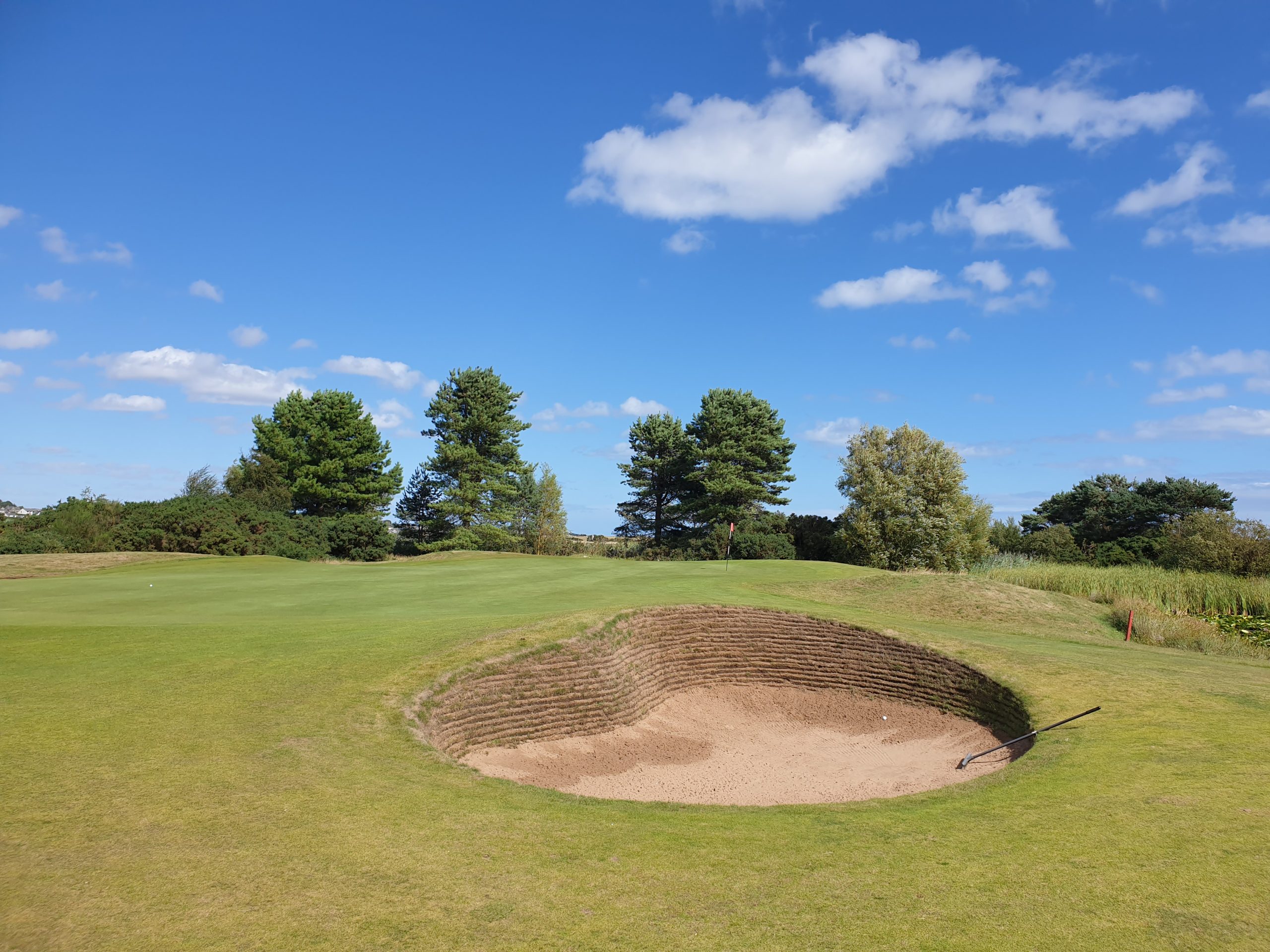
The short 15th hole, again showing the great bunkering on The Buddon. Thankfully its not my ball!

As to value, its a case of 3.5 for me, as the price of £75 is inflated due to its Carnoustie Championship companion. Having said that, if you ‘need’ to play on Carnoustie, this is probably the best option if you’re not single figures.

Facts:

Course Type: Links

Par 68  (2 par 5s, 10 par 4s, 6 par 3s)

Distance (yellow): 5652 yards

Moly’s Gross score: 86

Moly’s Buddon scorecard – a solid 86, especially in very high winds.

117. Earl of Mar. 30 Oct 2020.

Rainbows and Celebs are potential hazards at this excellent new course

Round £60. Par 70. Course Rating / Slope Rating (yellow) 70.8/129. Value (out of 5) – 4.5

The official name of this golf course is the ‘Earl of Mar’, but I’ve entitled the blog ‘Mar Hall’ ,the name of the hotel, which opened 2004, as that is what the course is more commonly listed as.

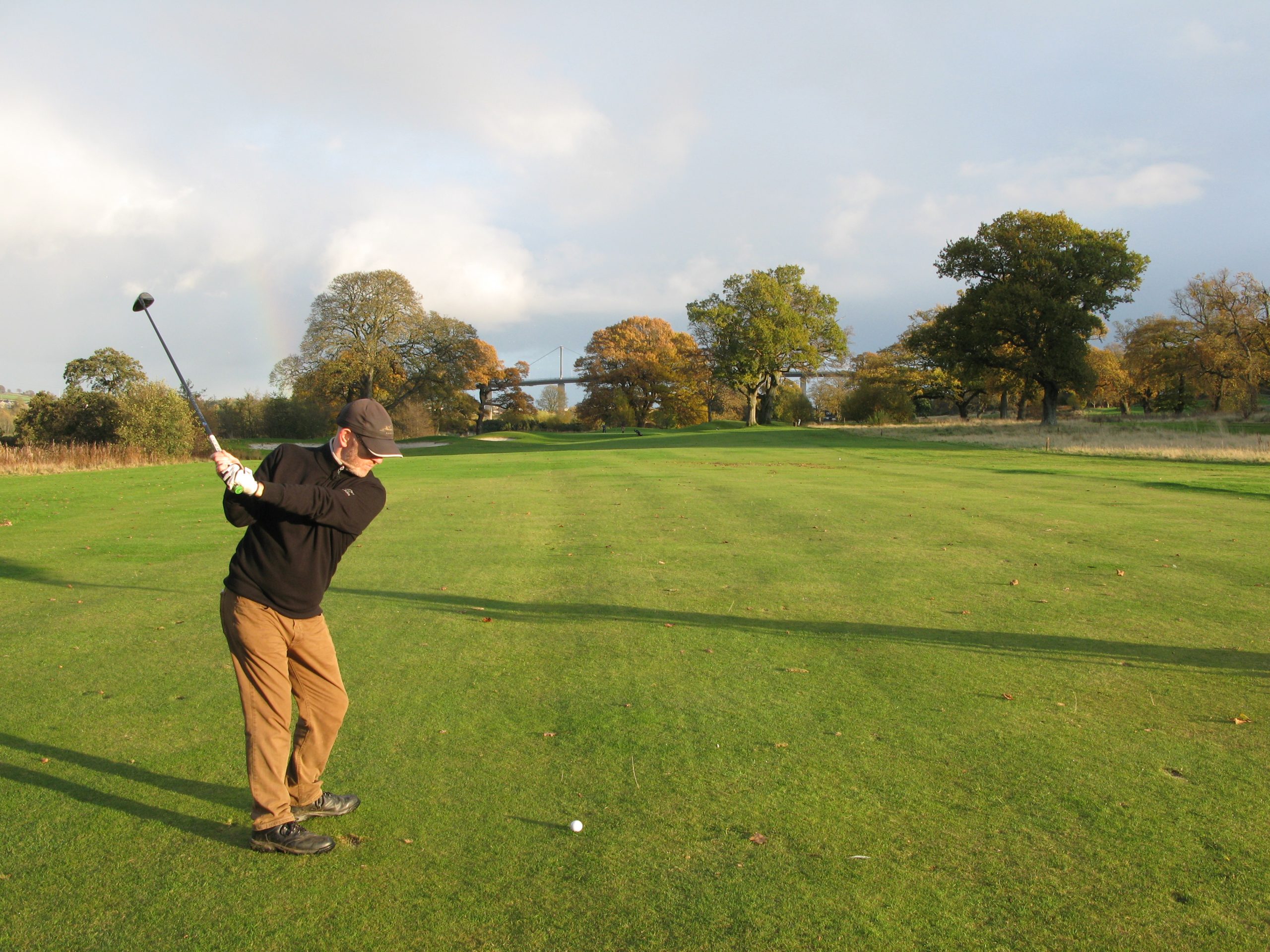
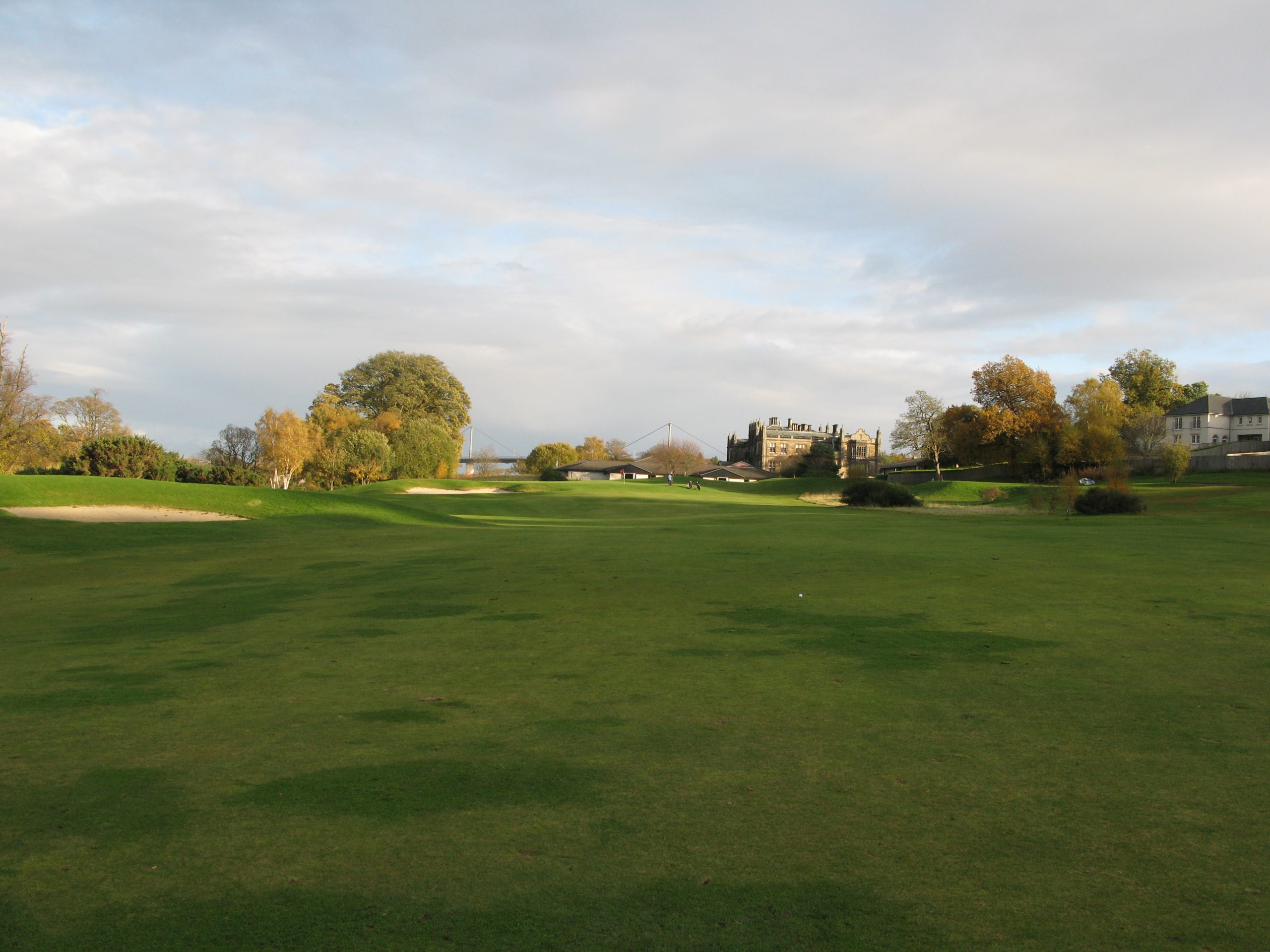
Moly at the par five 15th hole, with the Erskine Bridge on the horizon. One of only two par 5s on the course.

The course itself was designed by the renowned Dave Thomas and founded in 2010 ; and what a great golf course he has created, making full use of the available land – albeit it does feel a little compact in places with several holes adjoining in an ‘up and down’ fashion, making it play wider than perhaps intended. However, with USGA style bunkers, in both fairway and greenside, this course requires accuracy off the tee and especially into the greens, where knowledge of your yardage will pay dividends.

The approach at the 12th at Mar Hall, with the Baronial 18th Century Manor, now hotel, in the background. The fairways had held up to recent torrential rain, but were a little mossy.

Coupled with a stay in the collocated 5 star hotel, the former Erskine Estate and House make for an excellent golfing break, especially with its proximity to Glasgow and its airport. The Erskine bridge, which crosses the River Clyde, dominates the skyline, especially at the downhill dog-leg left second hole, where you feel you are playing under the bridge. Although set along the south bank of the Clyde, the river doesn’t come into play, which is a pity.

The excellent 13th hole, a dog-leg right, par 4, where you need to keep well left of the fairway bunkers, to give a par opportunity.

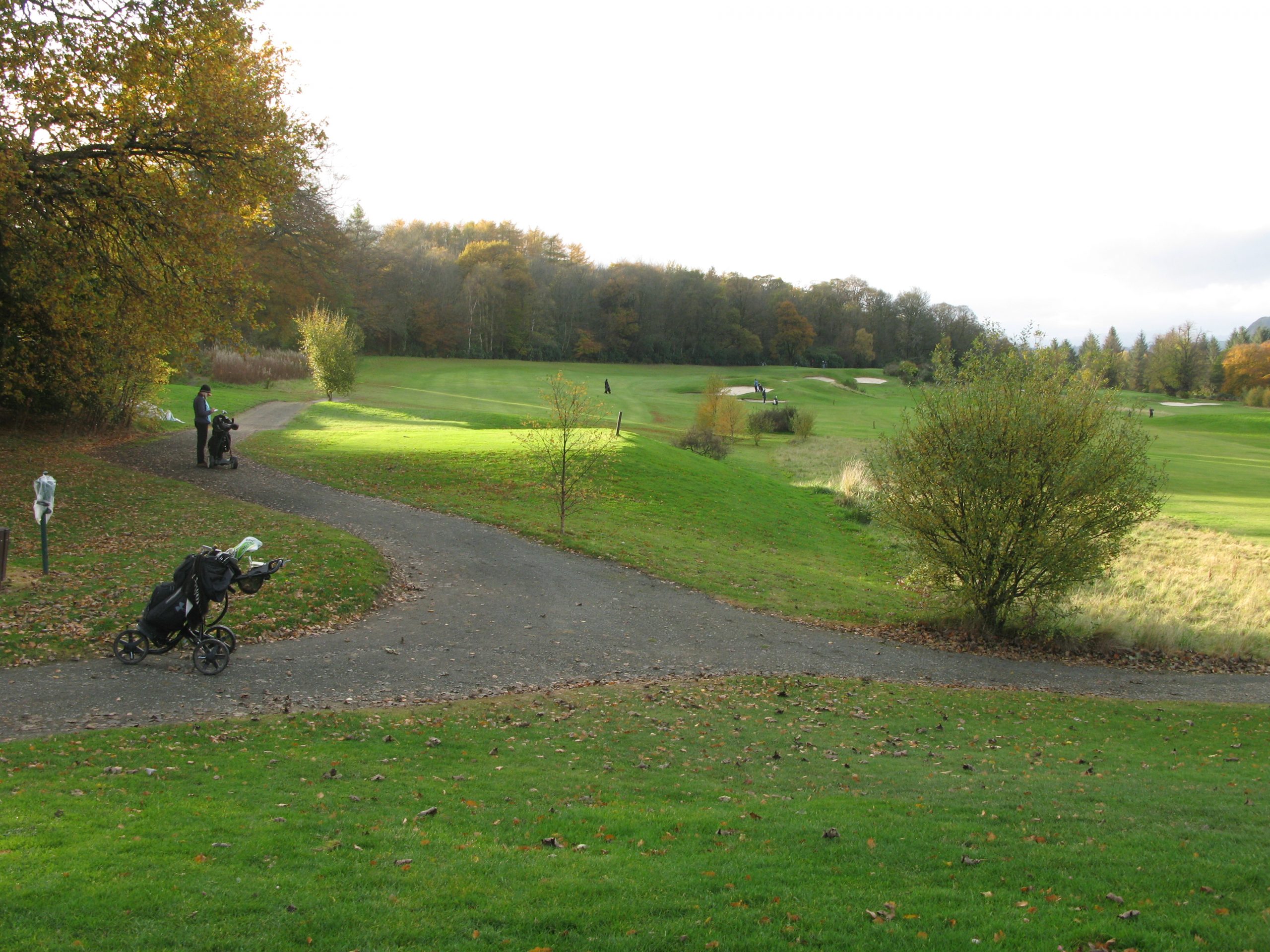
Other than the river, there are outstanding views of the hills to the north and some magnificent trees, which Thomas has carefully utilised in the design.

At over 6200 yards from the yellow tees, at par 70, this is a challenging course for all bar the single figure golfer. Some of the shorter par 4s, such as the delightful 9th hole, play slightly uphill into the prevailing wind and will require 2 decent shots to reach in regulation.

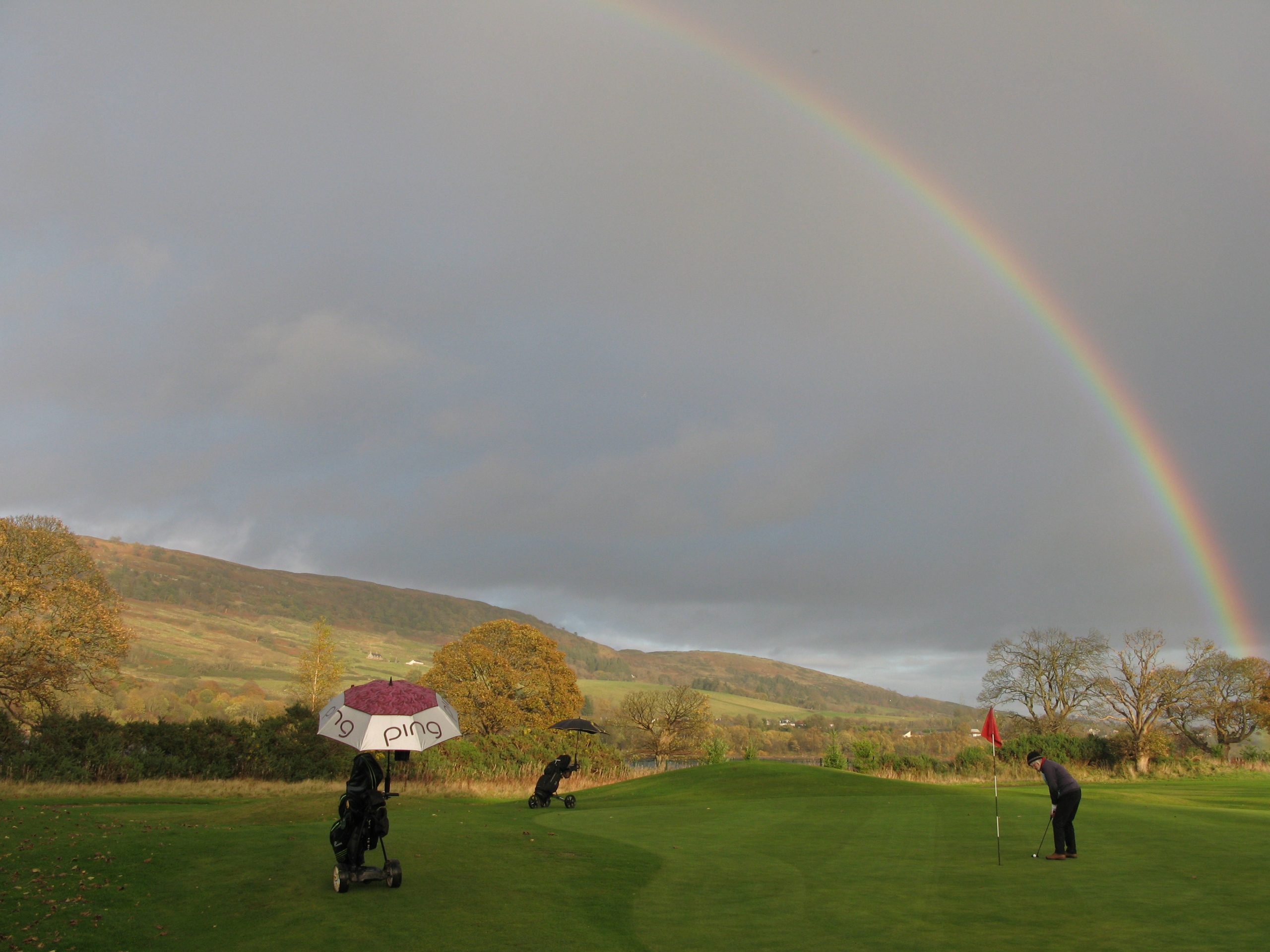
Fran puts at the 14th, with the Rainbow and the Old Kirkpatrick hills in the background.

When I played in late October, there had been several days of very heavy rain, but the course was in remarkably good condition, testament to the build quality and green keeping. The greens were all in play, they are generally very large, with devilish surrounds, including large bunkers, so keeping a 3 putt off the card, or scrambling, will also be a challenge.

The 9th makes for a robust end to the front 9, a short but tough par 4, normally played into the prevailing wind.

Nevertheless, its a delightful walking course, and as said, there is ample room from many tees, so makes for a good society day.

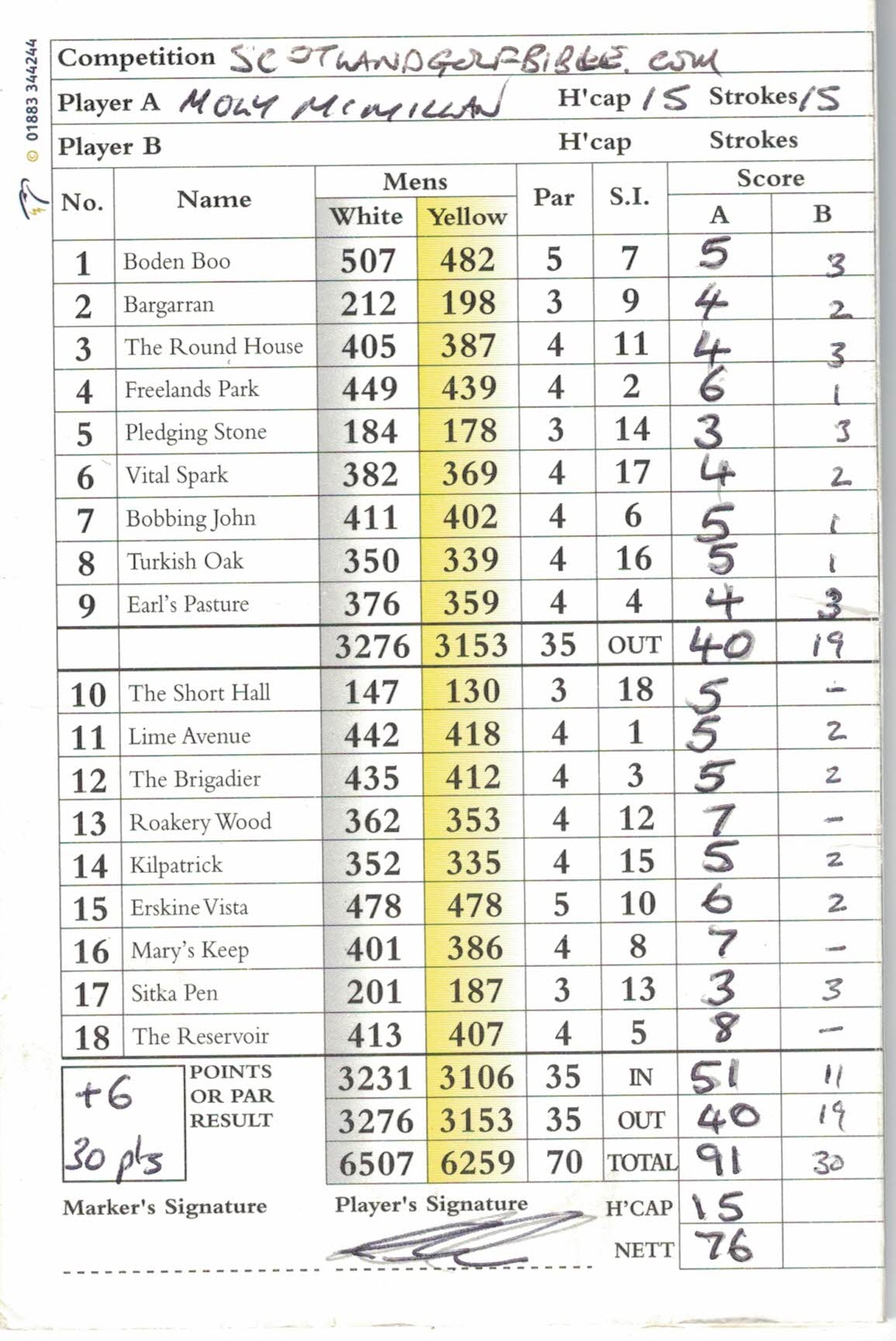
On the day, I played very well to get round in 91, for 30 stableford points, the latter number I always think is acceptable playing a course for the first time.

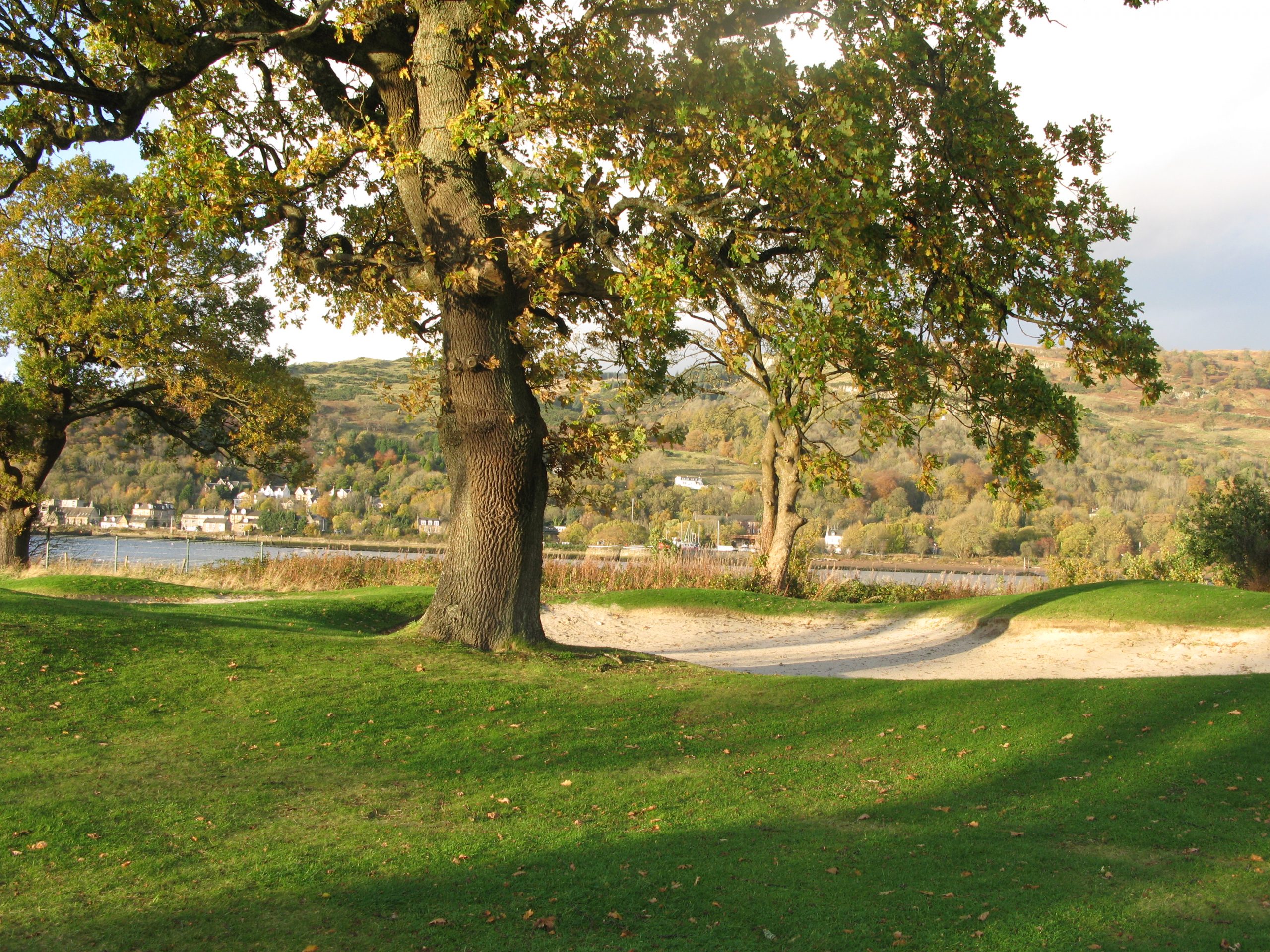
The trees are carefully crafted into the course, as here at the 15th fairway, with the view over the River Clyde.

The hotel has apparently hosted many celebs during its short existence, which I thought was quite appropriate given that, according to the barman, the river and hills make for ideal conditions for rainbows – although I didn’t find any pots of gold.

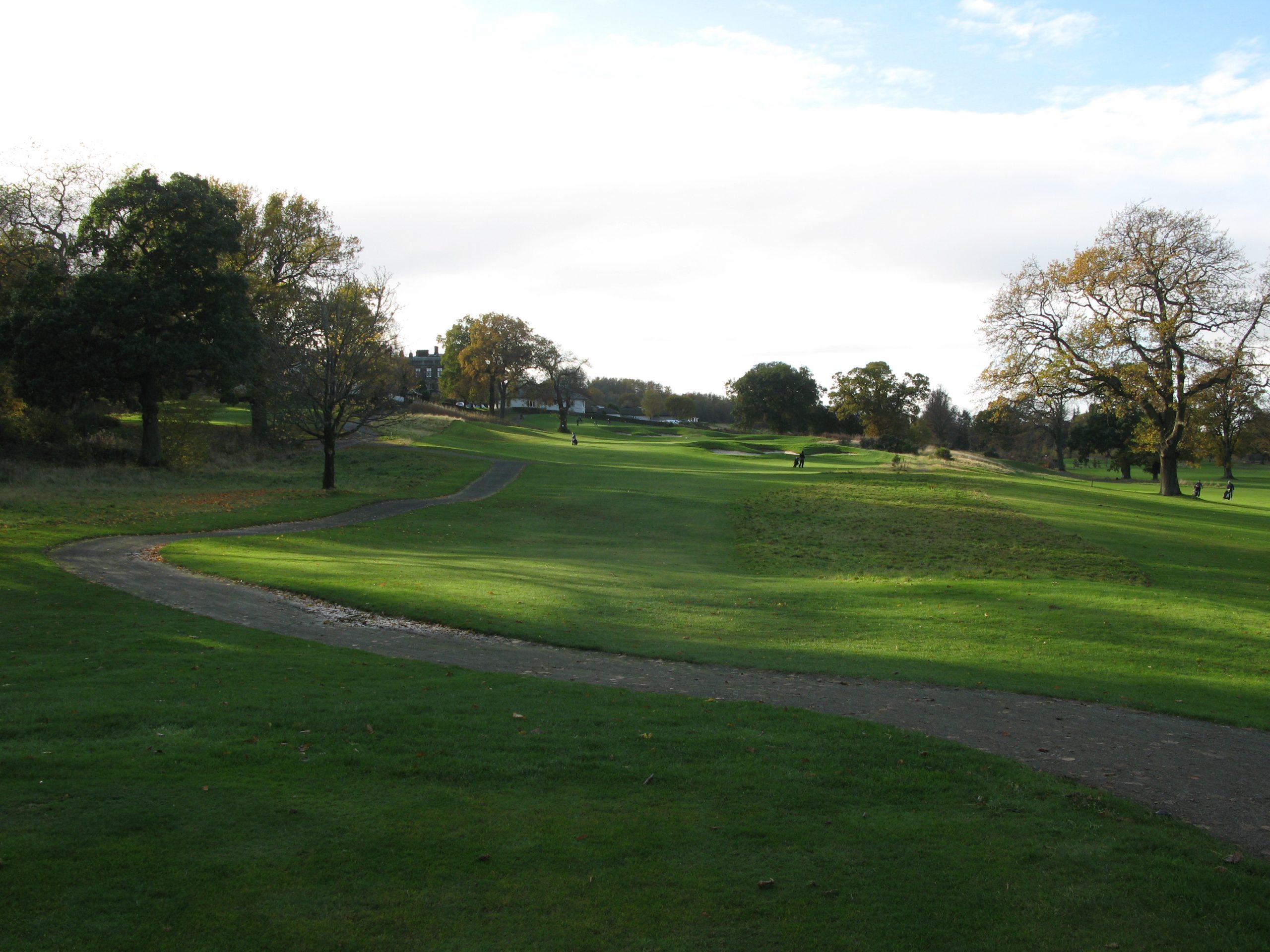
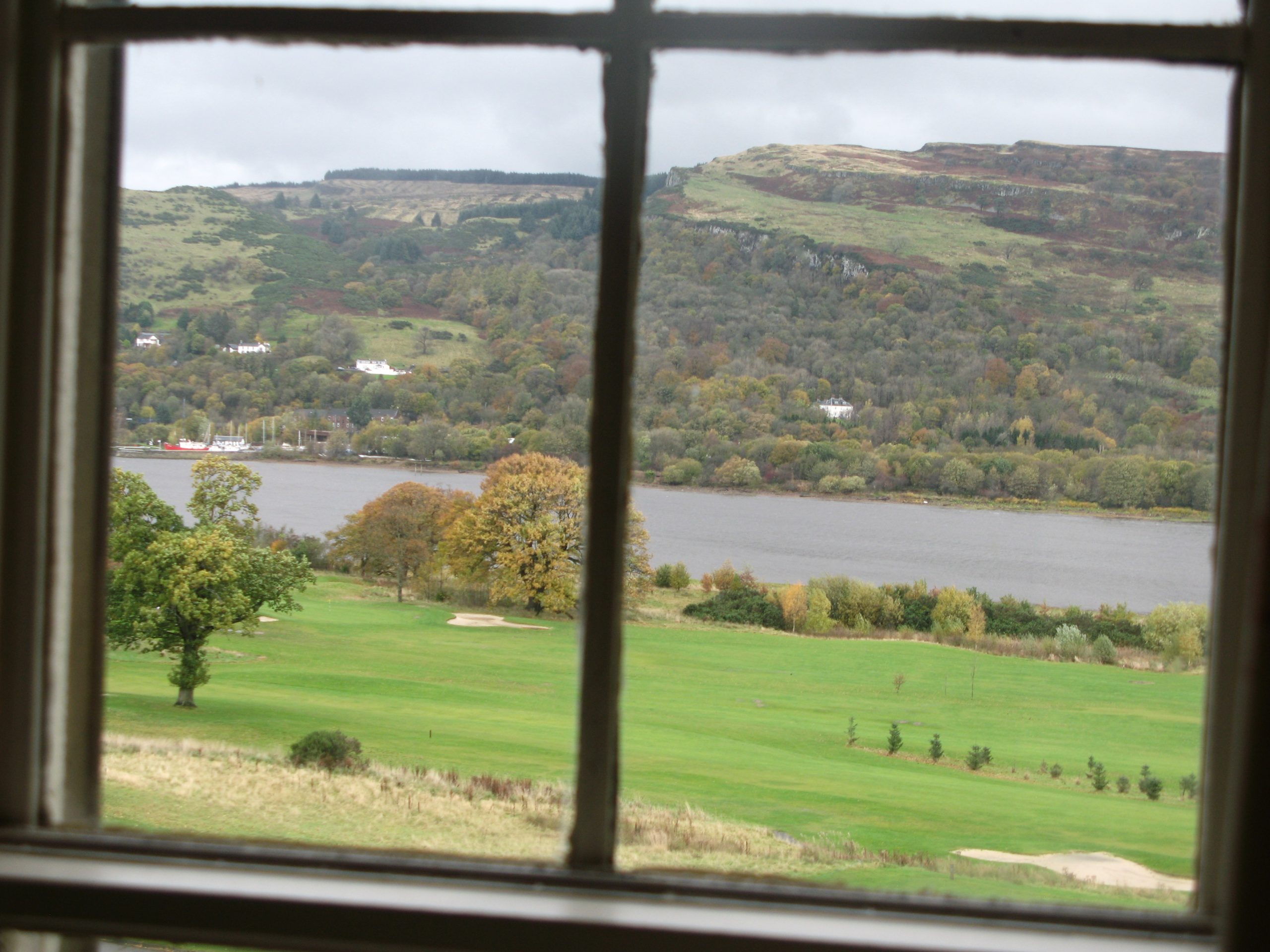
The view over the course from the hotel at Mar Hall – well worth a short golfing break here.

The course is the star here though. Well worth playing.

Course Type: Parkland

Par 70 (2 par 5, 12 par 4s, 4 par 3s)

Distance: 6259

Moly’s Gross score91

Played well for a 91 on this compact and challenging course
« Older posts

© 2025 Scotland Golf Bible

Theme by Anders NorenUp ↑