A guide to green fee value for money

Category: £40 – £59 (Page 6 of 7)

62. Carnoustie Burnside. 9th Aug 2017.

Treading on possibly the very origins of links golf

Summary: Cost £46. Par 68.  Score 85. Value (out of 5) – 4.5.

The Burnside course, or more correctly the Carnoustie Burnside course, is eclipsed by its magnificent Championship course neighbour, but that’s only because the Championship course is one of the greatest courses in the world!  Do not play the Championship course without also trying The Burnside, which is a great naturally laid out links course.
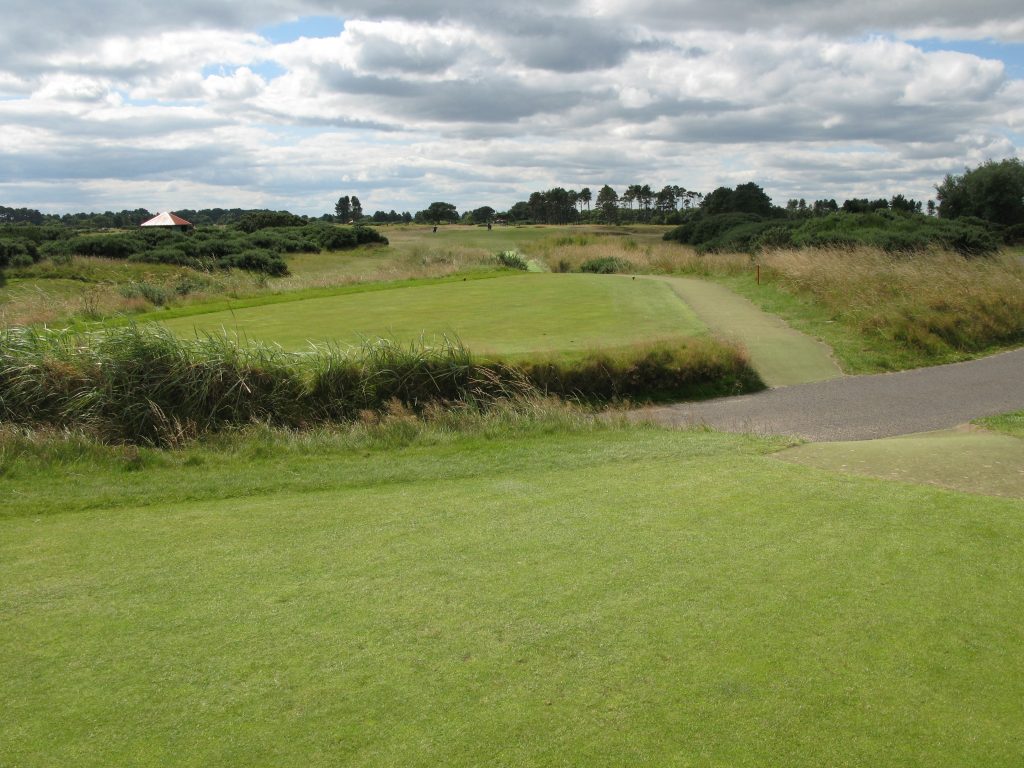
The wonderful links land view from the 15th tee of The Burnside

Golf on the “Barry Links” was recorded as early as 1527, nearly 50 years earlier than St Andrews, making this the area that “Links” golf was first played.  The Scottish Golf History web site lays out a strong case that these first games of links golf were most likely played on the land between the Barry Burn (more of that later) and the railway line currently where holes 1 to 5 of the Burnside course are.

Therefore, arguably, “The Burner” is the most historical of all links golf courses!  You are truly walking among the ghosts of golf’s distant past playing here.
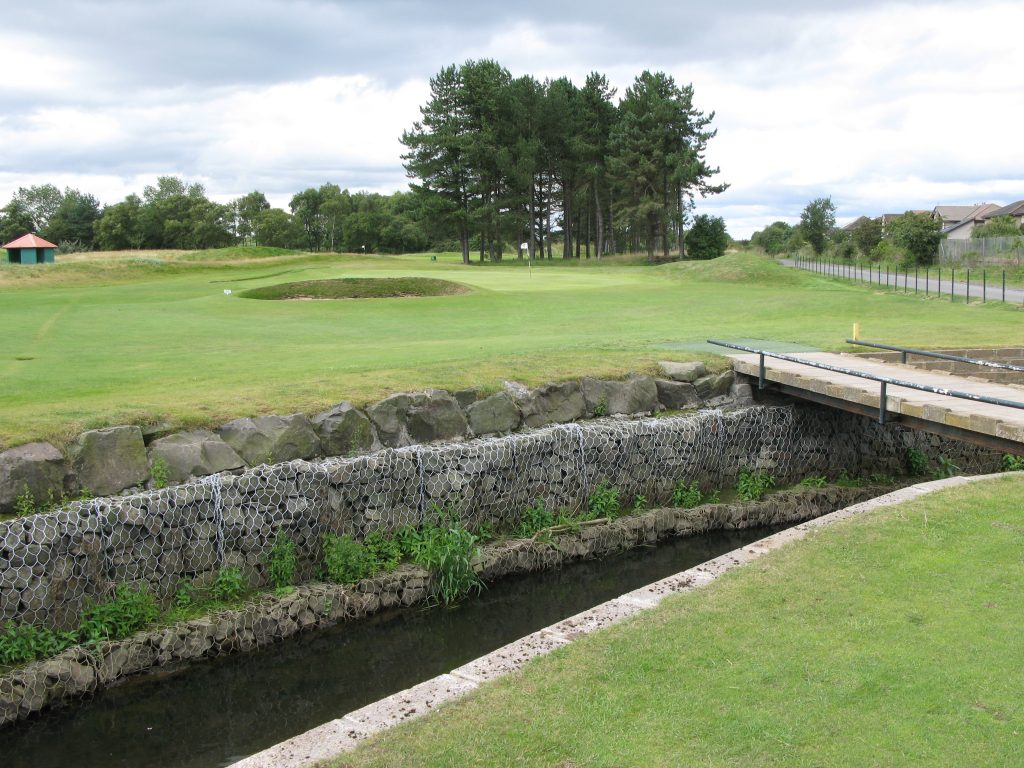
The 3rd hole, the first of 5 wonderful par 3s, the highlight of Burnside – the Barry Burn awaits!

Of course, there are more recent historical stories worth telling.  It’s largely forgotten that when Ben Hogan famously won his 1953 Open at Carnoustie he qualified on The Burnside course.  It was therefore very apt that I played The Burnside with my brother-in-law, Colin Macqueen, since his fascination with golf started during the same summer of 1953 when he and his elder brothers were mesmerised by the large crowds watching Ben Hogan outside the window of their home, “Lismore House”, which overlooks the Burnside’s 18th green.
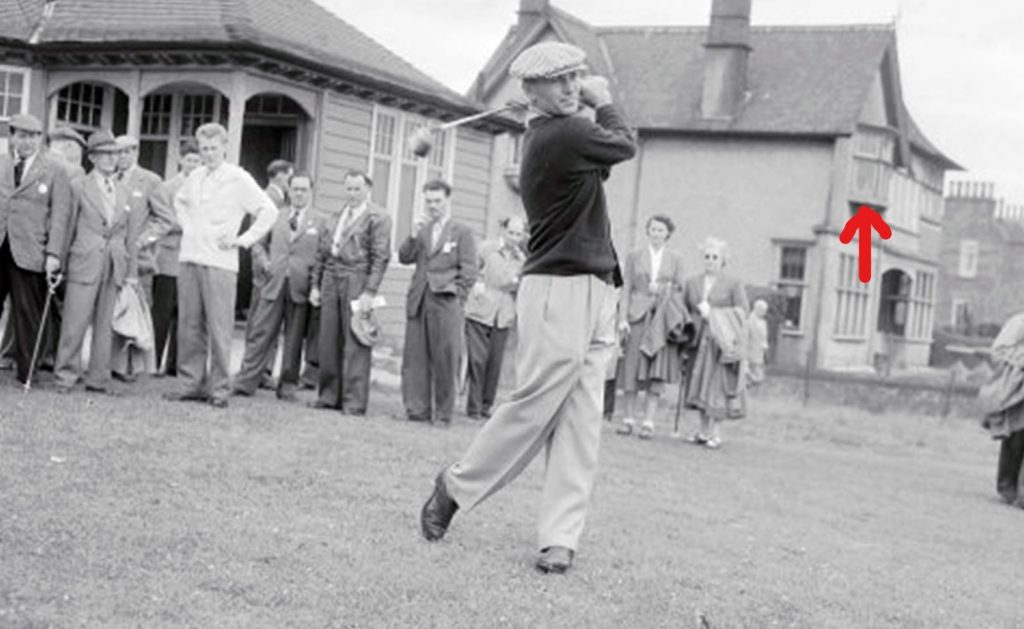
Hogan playing the Burnside; Colin Macqueen’s “Lismore House” bedroom highlighted.

Colin has dined in Australia, his home of 50 years now, on the true story of him falling out of the upper floor bay window nearly causing Ben to miss a crucial putt!

The Burnside was designed by James Braid and opened in 1934, not long after Braid had redesigned the Championship course in 1926.  Although a relatively short golf course at just under 6000 yards, many of the holes would easily be at home on an Open venue.  The 5th, 9th and 14th are par 3s of the highest calibre, each with a very different challenge.
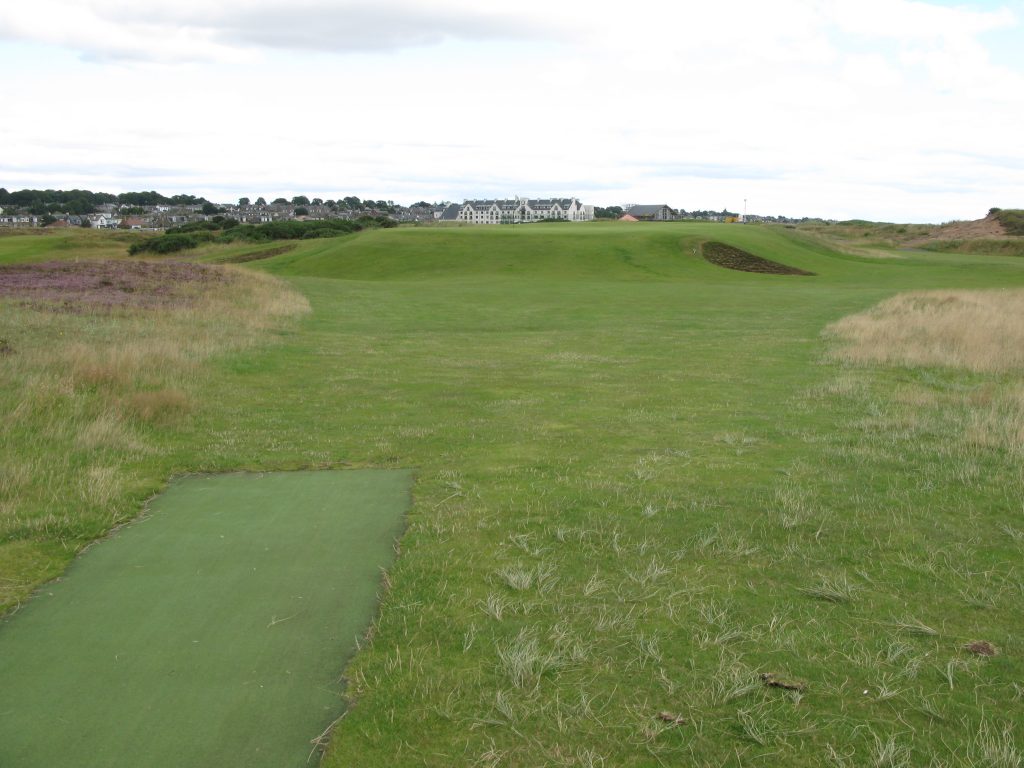
The beautifully difficult par 3 9th green.

The 5th is surrounded by the Barry Burn (that of Jean van de Velde fame) where it’s virtually impossible to get close to a right-hand pin. The large plateau green at the 9th makes it imperative to hit the green with the tee shot. The long 14th is stoke index 1 for a good reason, and is a magnificent test.
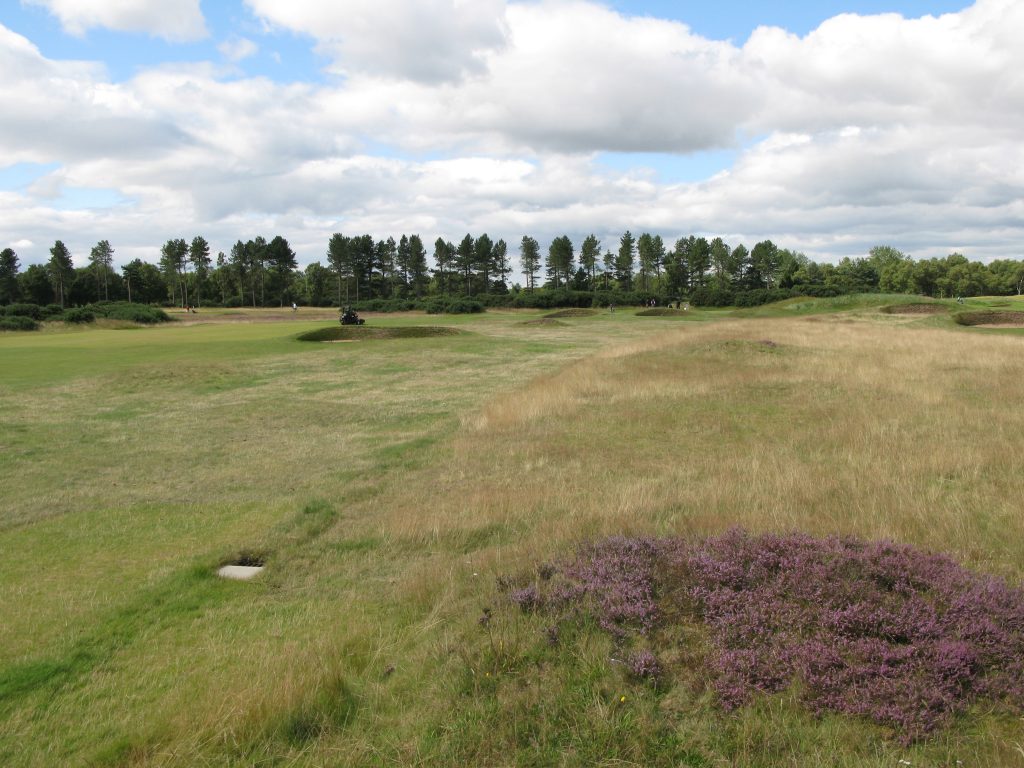
Bunkers sprinkle the 6th fairway at The Burnside

The 17th, a par 4 of about 450 yards, needs to be played with a 3-shot strategy for all bar the very long hitters.   I could also get into details on many other holes, the course is that good.  To cap it all, the greens have very subtle borrows, so putting needs extra concentration.  It is one of the great small James Braid courses.
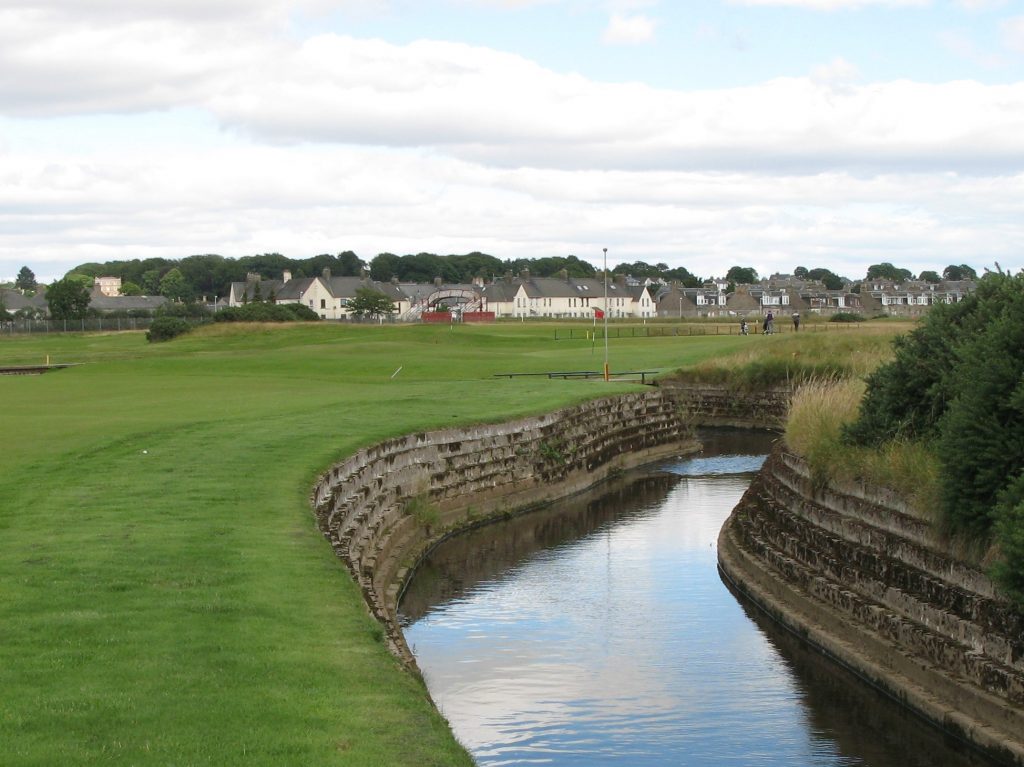
The Barry Burn (of Jean van de Velde fame) at the long par 4 17th – a card wrecker

With the large green keeping staff at Carnoustie, it was no surprise that the course was in such fine condition.  The tees, fairways, bunkers, rough and greens were all superb, and to have the sun shine made for a quite memorable round.  I scored 85 for a net level par score off my new handicap of 17; this was enough to beat Colin 3 and 1, which at least meant he could focus on the 18th green photograph, close to the site of Hogan’s zenith and also Colin’s boyhood fall.
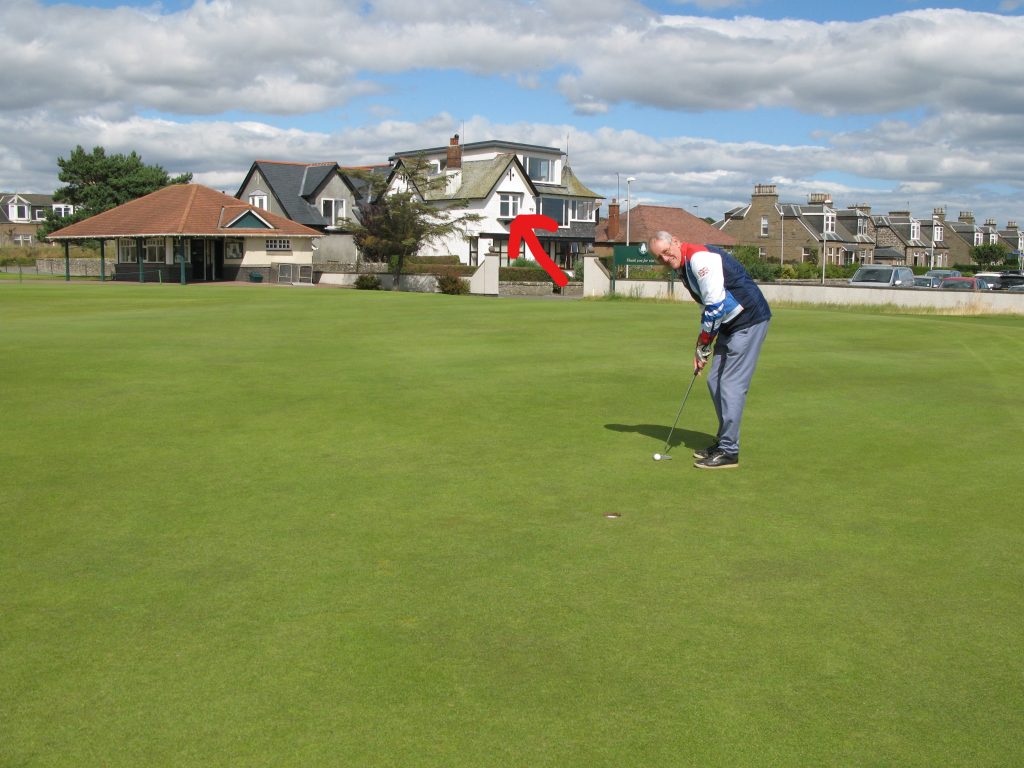
My playing partner, Colin Macqueen, on the 18th with his bedroom highlighted in the background, where he fell in 1953 during Hogan’s Open!

A quite magnificent days’ golf.

Key Facts

Course Type: Links

Par 68 (1 par 5, 12 par 4s, 5 par 3s)

Distance (blue): 5740

Moly’s Gross score: 85
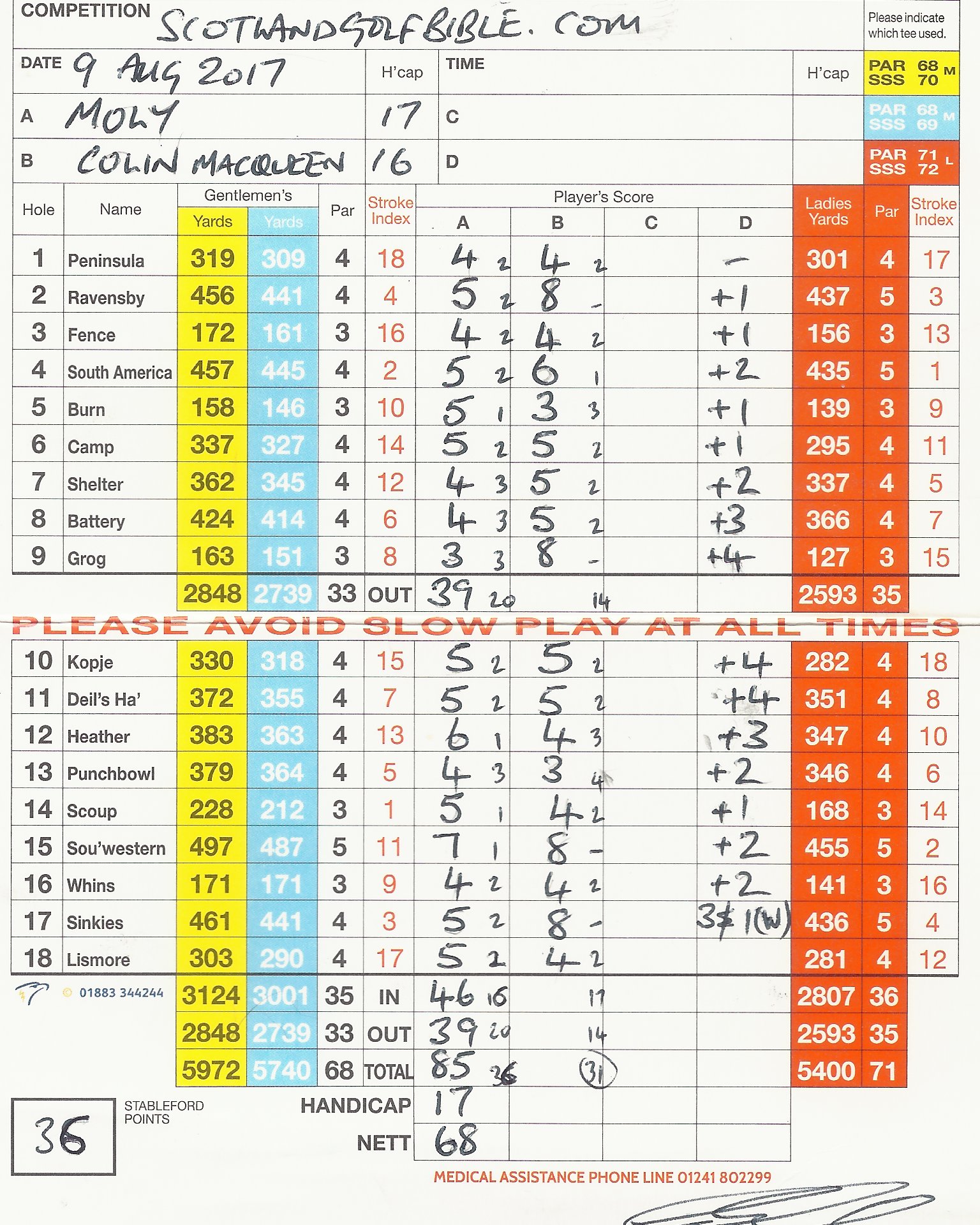
Moly’s Burnside scorecard – 85 for 36 points (off 17)
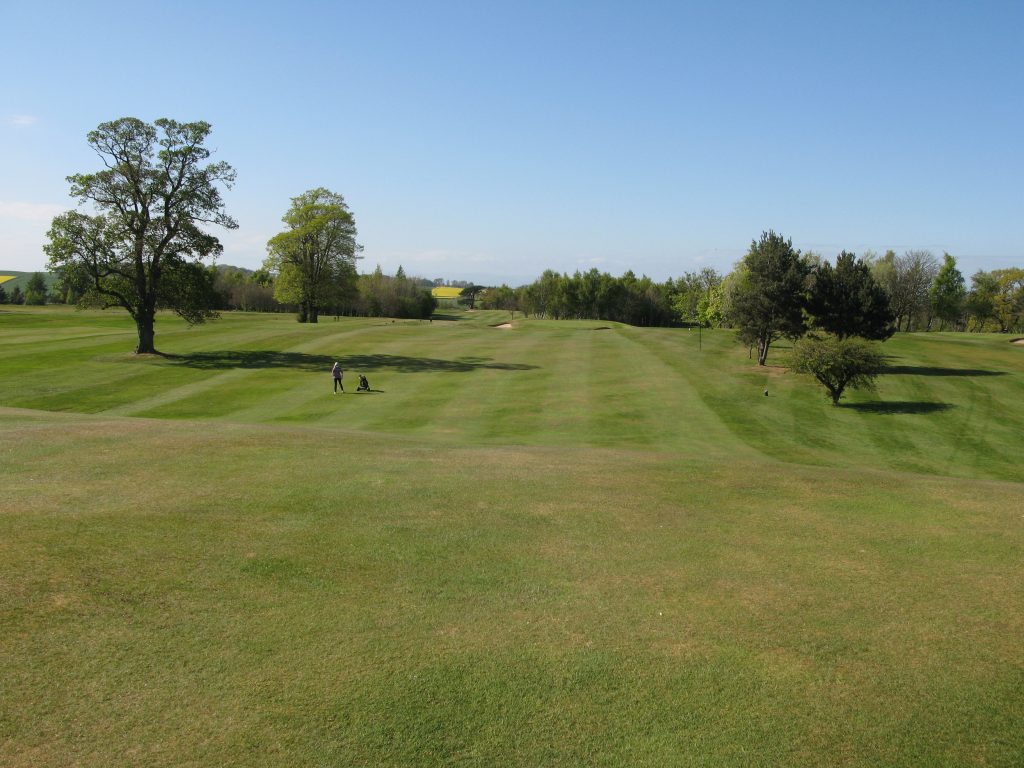
60. Dalmahoy West. 7th May 2017

Pleasant parkland course which would be ideal for the more social of society golf days.  

Summary:  Cost “between £30 – £55”.  Par 68.  Score 88.  Value (out of 5) – 2.  

So it has taken until 7th May to blog the first course of 2017, due to various travel, work commitments and poor weather!

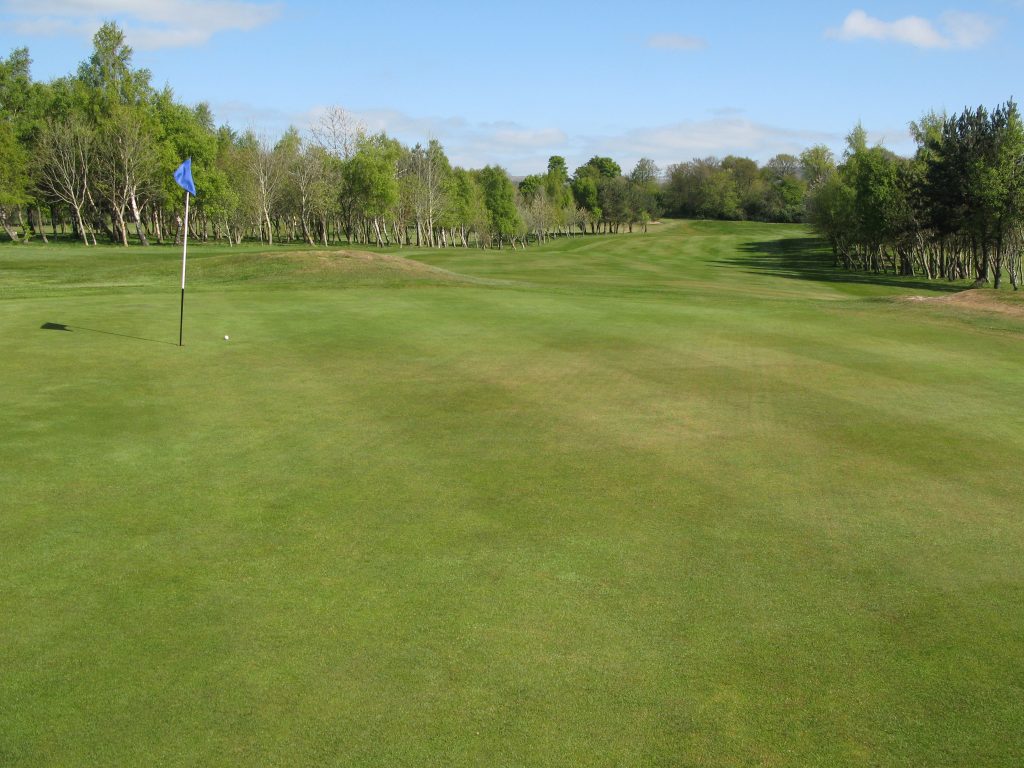
The 8th fairway at Dalmahoy West, a typically open hole on this short parkland course

Marriot Hotels run the Dalmahoy Hotel, Golf and Country Club, which is on the South East of Edinburgh about a 10 minute drive from Edinburgh Airport.   The resort has 2 courses; the East course is a championship layout designed by James Braid and hosted the Solheim Cup in 1992; I played the East course in 2014;  the West course is a much shorter later addition.   Both course are part of a 1000 acre estate surrounding Dalmahoy Manor, which was built in the 1720s and converted to a hotel and golf resort in 1927, becoming part of the Marriot organisation in the 1990s.

The Par 4 5th green at Dalmahoy West

The East course, like the West course, is an open parkland layout, where there is ample opportunity to be wild off the tee but able to recover and retain a flattering score.  If you’re like me, this will suit you, as it allows a freedom to be aggressive, especially off the tee. Additionally, there is only one of the par 4s (the stroke index two 8th) which is over 400 yards, so for all bar the shortest of hitters you are hitting short irons into most greens.

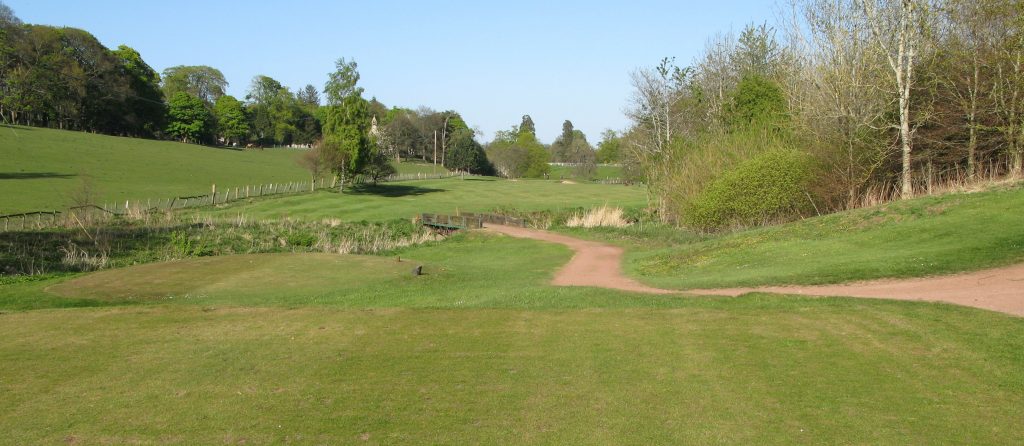
The 15th tee, at Dalmahoy West, the start of the trickiest stretch on this resort course. The church to the left of the green is a Scottish Episcopal chapel on the grounds.

The highlight of the layout, is the 3 tricky holes staring from the 15th; water is in play to the right of the par 4 15th, and then in front of the short 16th which makes it important to play long, especially into the wind.  The 16th is another par 3, but with 3 well positioned greenside bunkers.   I suspect these 3 holes have damaged many a medal scorecard.

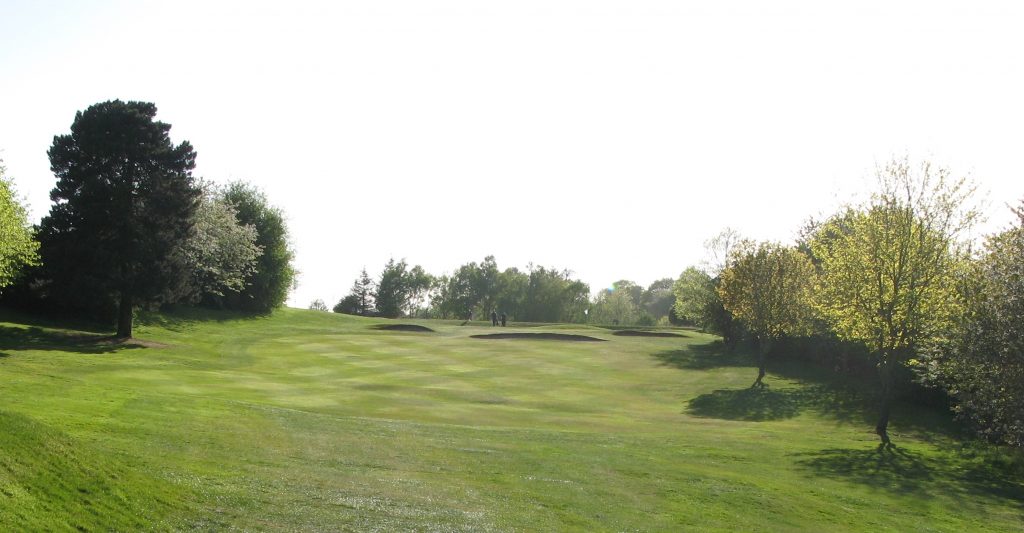
The well guarded par 3 17th green at Dalmahoy West

The course was in reasonable condition when I played, with nice greens, however the tees were poor.  It was not good value for the price:  I paid £23 for a twilight slot based on a price match with Teeofftimes.co.uk, although the rack rate states the price between “£30 – £55”, and it would be robbery if paying greater than £40 here.  It would nevertheless be a really good society venue, particularly for societies where golf is rather secondary to the socialising.

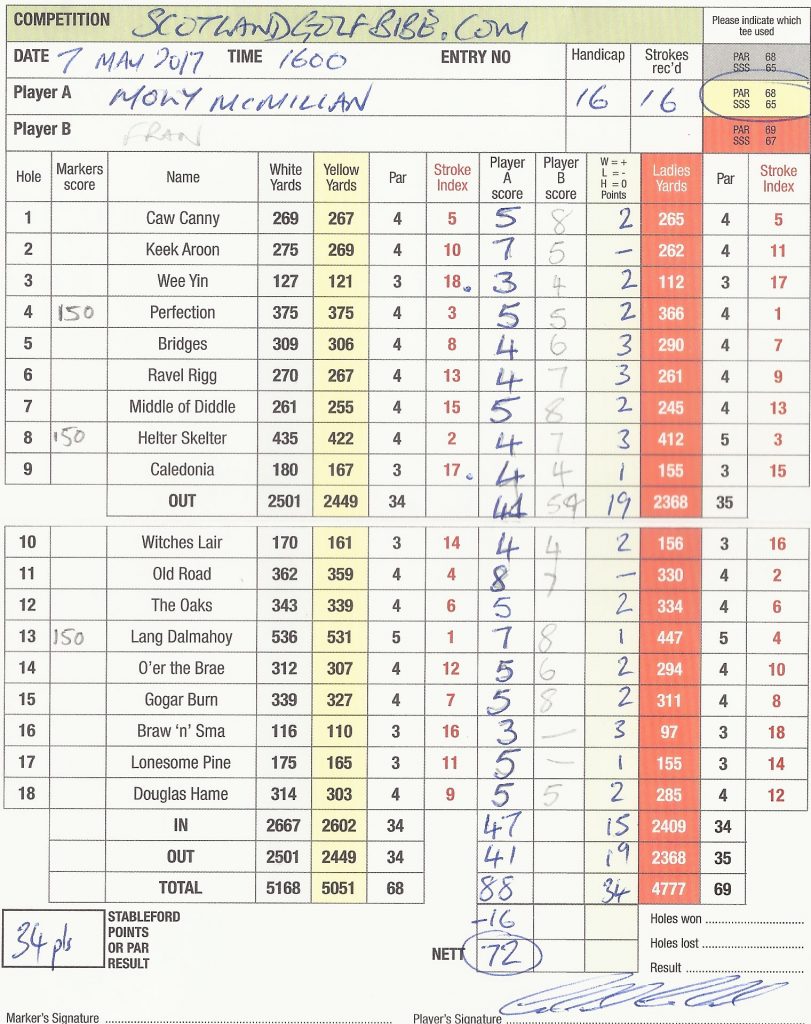
I carded an 88, for 34 points, but had a couple of disaster holes:  a 7 on the par 4 2nd and an 8 on the par 4 11th.  When will I next get a round without major error!


Key Facts

Course Type: Parkland

Par 68 (1 par 5s, 12 par 4s, 5 par 3s)

Distance (yellow): 5051

Moly’s Gross score: 88.

Dalmahoy scorecard – 88

53. Stirling. 19th Sep 2016.

“Camera’s Please” at this historically located parkland course with  outstanding views.

Round £45.  Par 72.  Value (out of 5) 4 

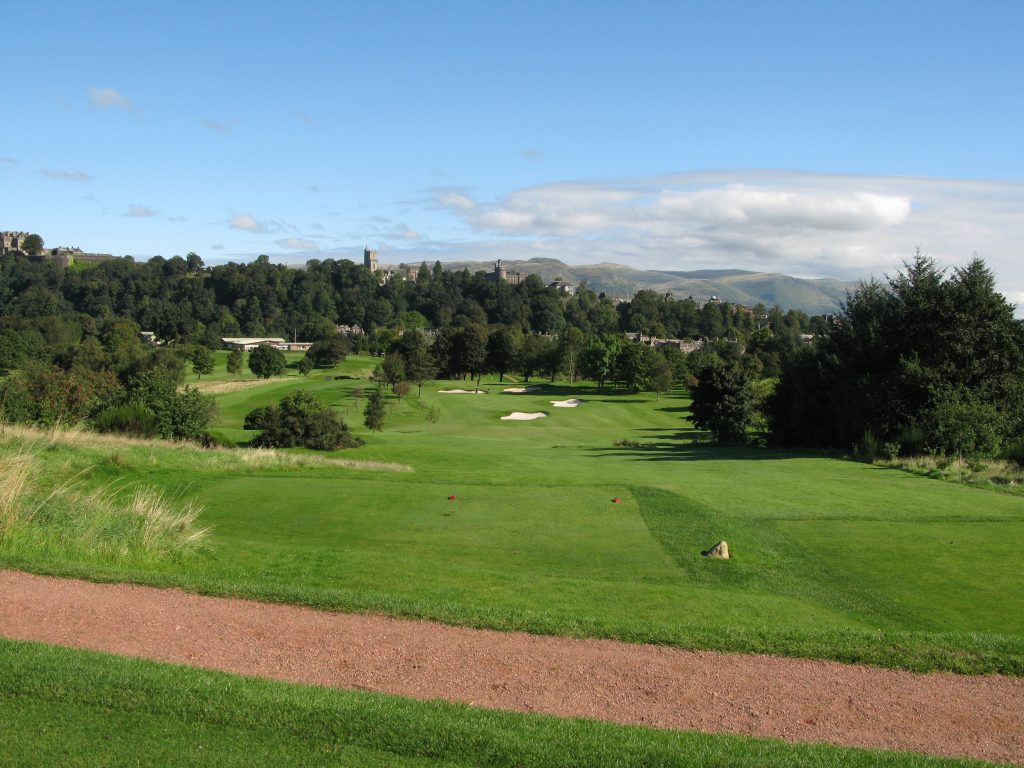
If you play at Stirling remember to take a camera.  There are spectacular views of Stirling, it’s castle and other historic buildings and of the Trossachs, Ochill and Lomond Hills, even the Southern Highlands (in clear weather!).

2nd tee at Stirling with views towards the historic town - the rounded turret of the gaol is evident.

2nd tee at Stirling with views towards the historic town – the rounded turret of the gaol is evident.

Given Stirling’s strategic and historic location, it’s not surprising that golf was played in the area currently occupied by Stirling golf course, by King James IV, King of Scots, in 1505.  There was no golf course as such, on what was historically a “Royal Park” dating back to 1200 and used for Hunting – perhaps worth reflecting on when you hunt for golf balls here:)

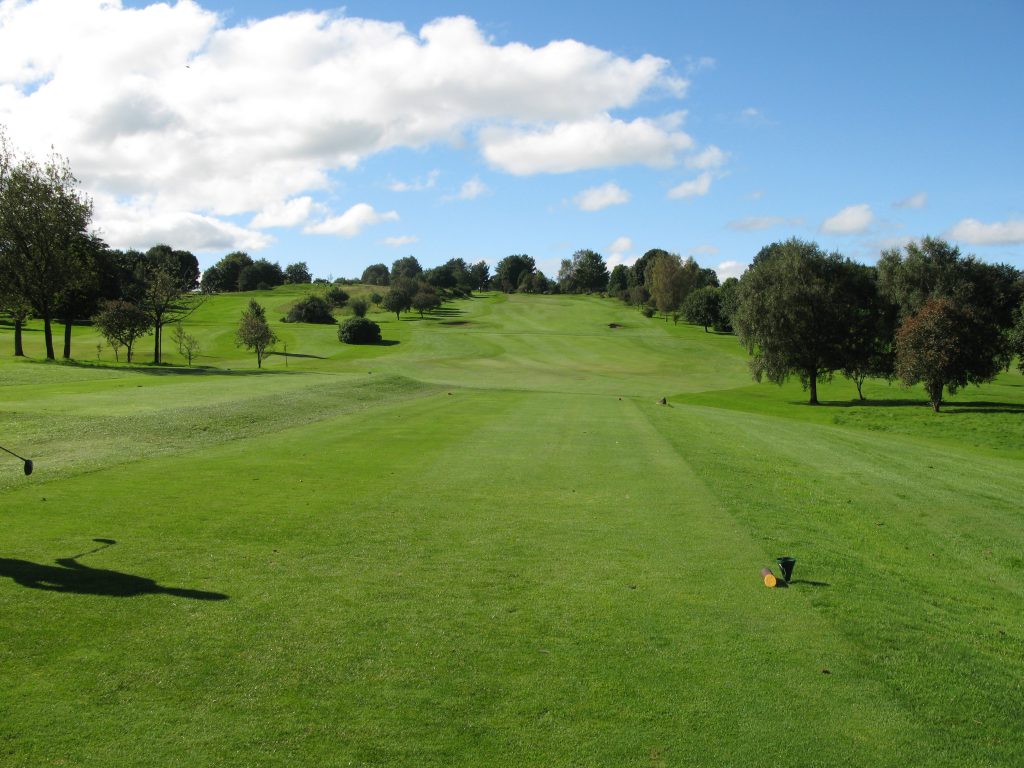
3rd at Stirling, a typical well defined hole

3rd at Stirling, a typical well defined hole on this course

The current course was established in 1869, and has been subsequently developed by some of golf’s aristocracy – in 1892 Tom Morris Junior designed a 9 hole layout; in 1904 Willie Fernie of Troon extended it to 18 holes; and in 1967 Sir Henry Cotton redesigned the course with significant tree re-planting which is now bearing full fruit.

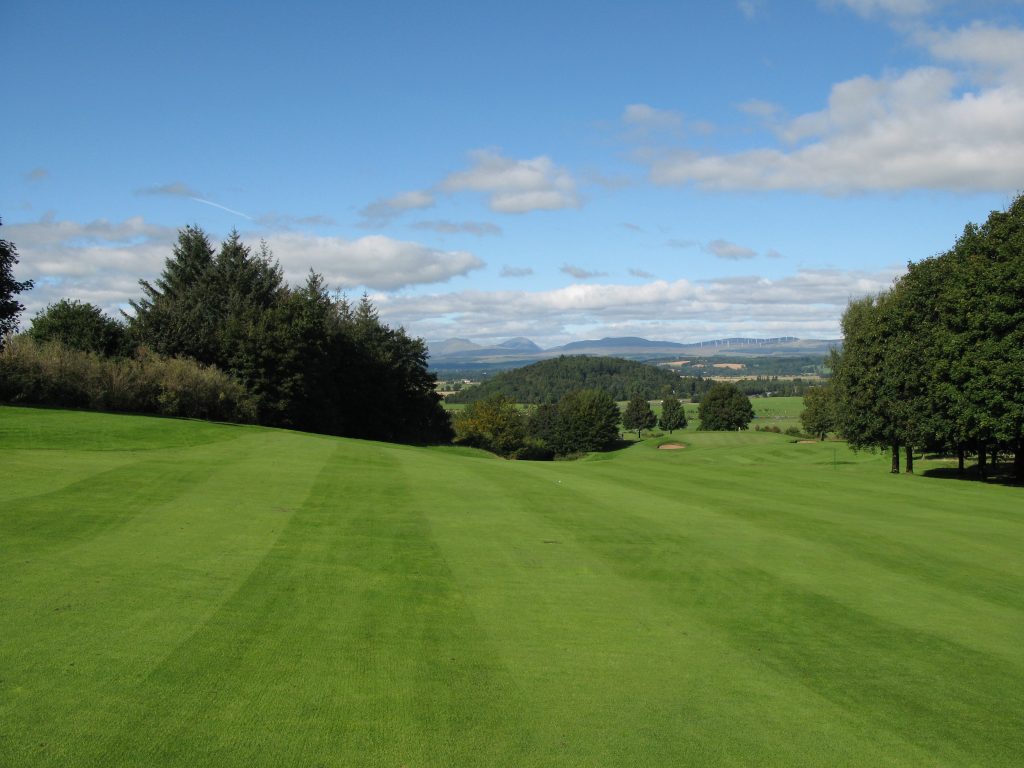
The Apex of the dog leg on the 9th, with fine hill views

The apex of the dog leg on the 9th, with fine hill views

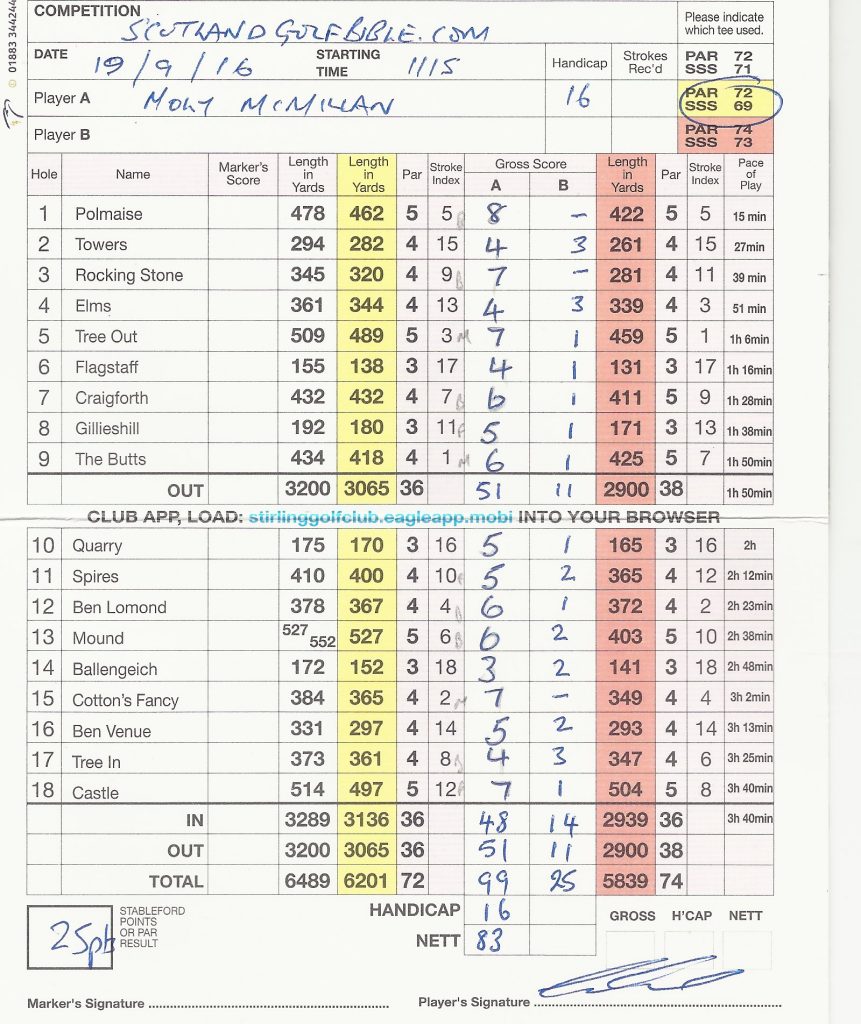
The resulting golf course does justice to the views on offer and at well over 6000 yards, even from the yellow tees, will challenge your handicap to the full (see Moly’s card below for evidence!).  Stirling is a classic layout, with both front and back 9s, each having a par of 36 with 2 par 3s and par 5s.  There is also a really good level of architectural variety, in terms of uphill, downhill, dog-legs right and left.  The course sits on a hill and this is therefore no easy walk, but it’s worth it.

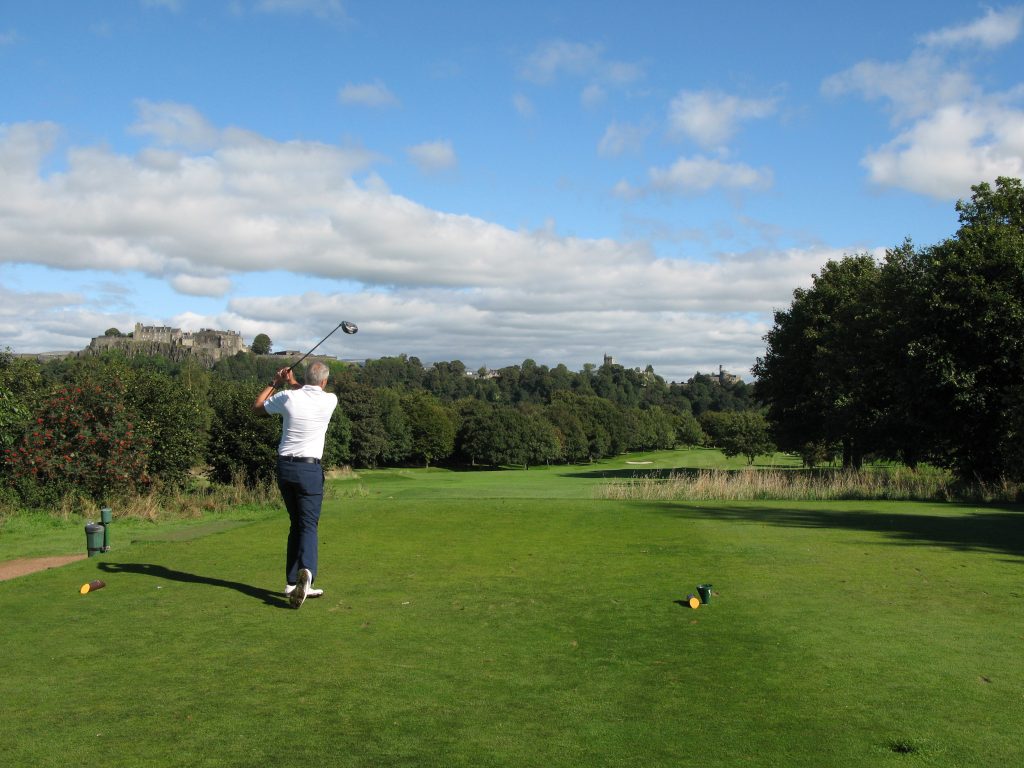
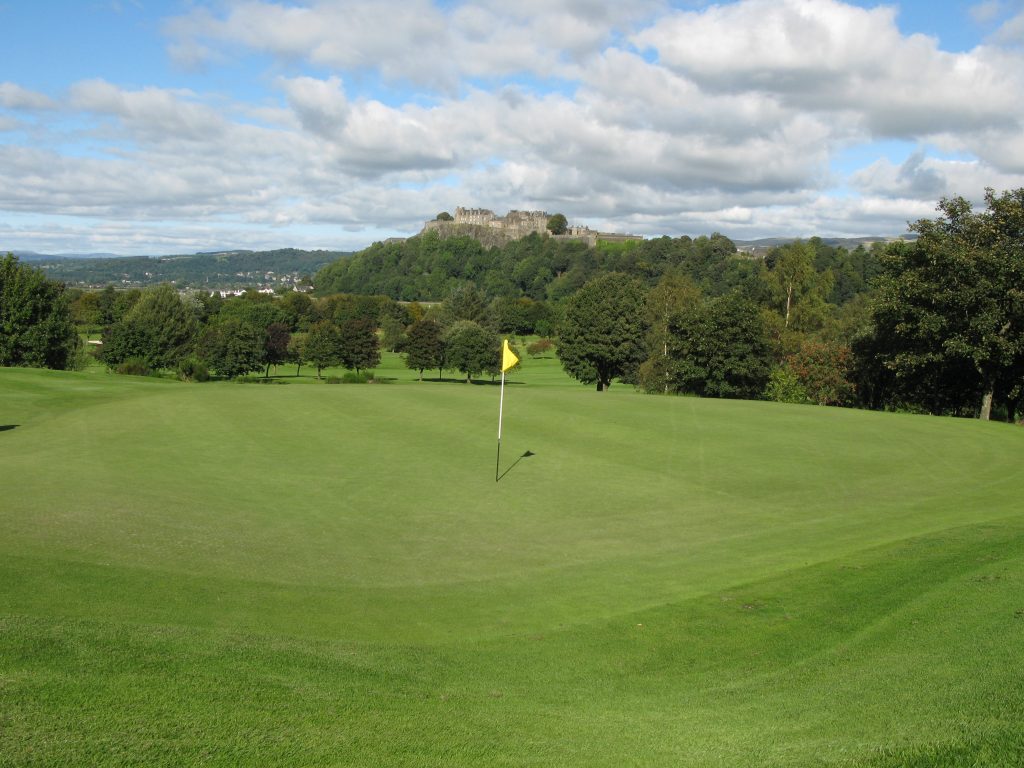
One of my playing partners, Gordon, plays at the 11th with Stirling Castle in the background

One of my playing partners, Gordon, plays at the 11th with Stirling Castle in the background

The highlight holes for me were the dog-legs:  the par 5 1st is a tough start, the 9th offers great hill views from the dog leg apex, and the par 4 15th, which is SI2, is the best hole on the course in my opinion requiring a 220+ yard uphill drive to give access to the plateau green.   The only omission in the design for me is the lack of a 200+ yard par 3, although the par 3 8th, at 180 yards uphill, required a recovery or long iron.

The 15th at Stirling with the Castle in the background

The 15th at Stirling with the Castle in the background

The course was also in great condition when I played along with some former colleagues of the charity Apex (Scotland), which does so much good work helping people rebuild their lives after offending.  Only downside was that the greens had been treated with sand, making putting very slow and different compared with my local links greens.

Stirling also has a nice club house, serving good food.  Its well worth playing Stirling.

Some Facts

Course Type: Parkland

Par 72 (4 par 5s, 10 par 4s, 4 par 3s)

Distance yards:  6201 (yellow)

Moly’s Gross Score: 99

Moly's Stirling scorecard - 99

Moly’s Stirling scorecard – 99


28. Brechin. 22nd Aug 2015

Weak link in the Braid Association?

Round  £40 (variable).   Par 72.  Value (out of 5) – 2.5

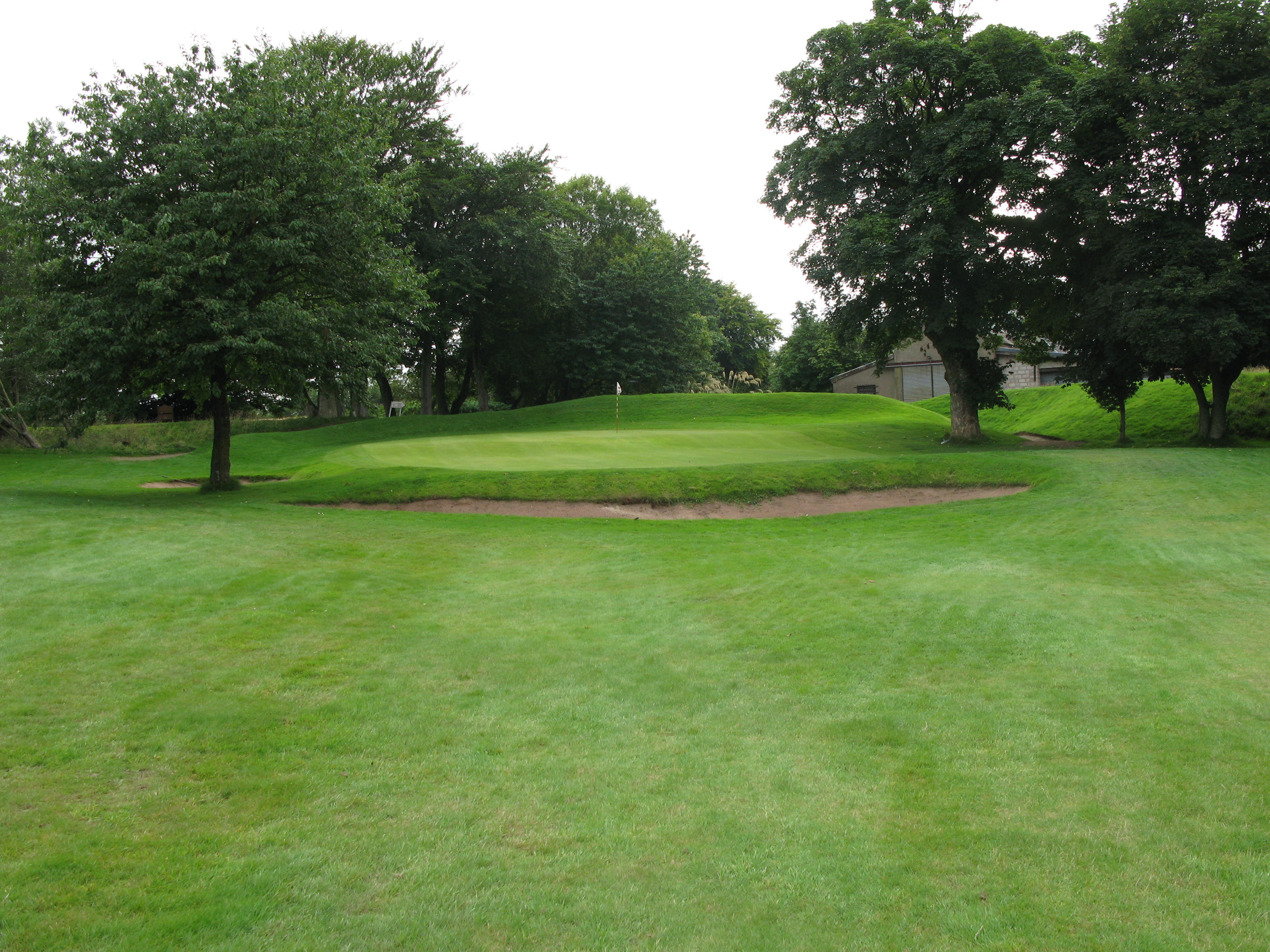
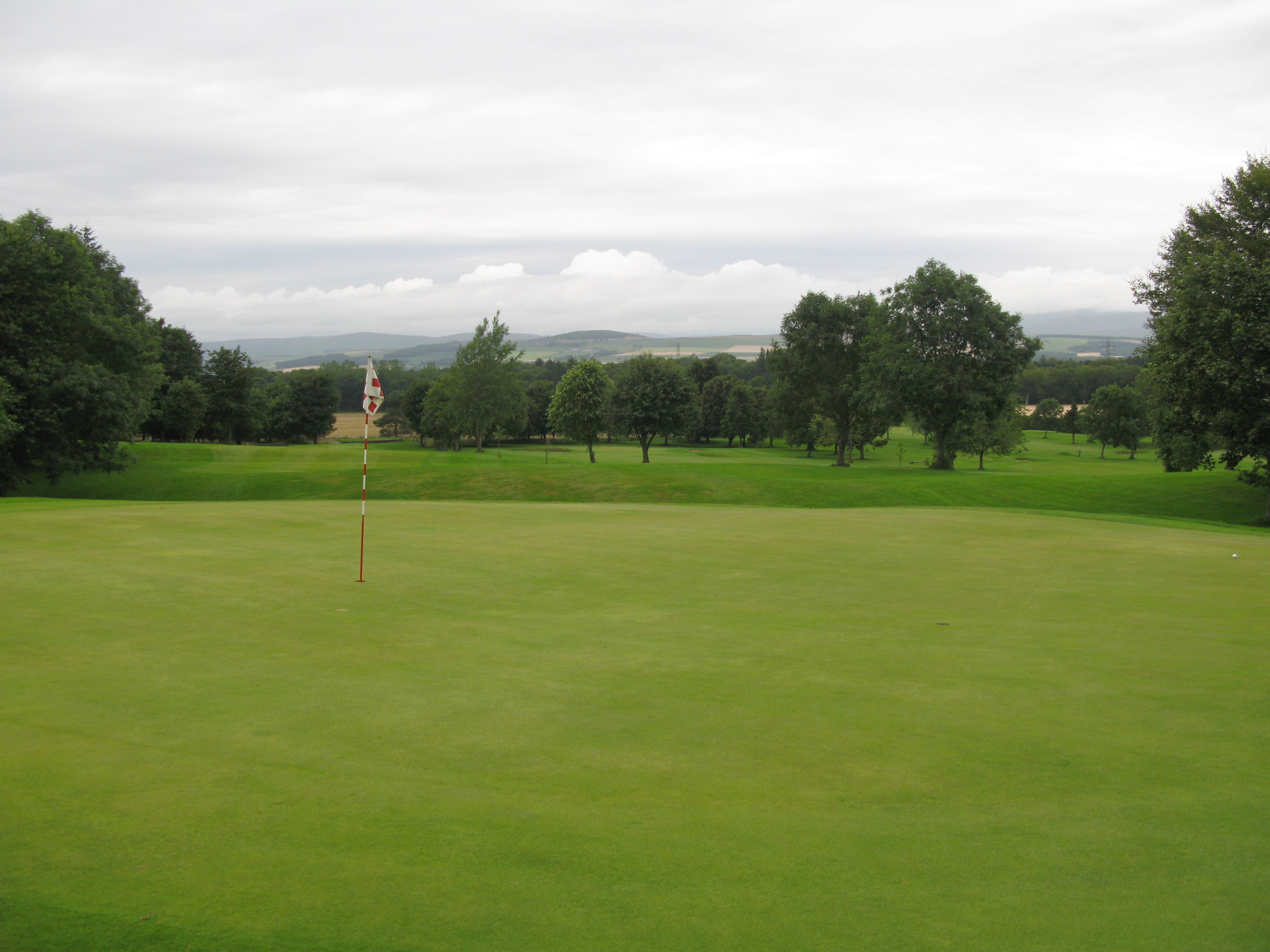
Green at the par 3 third at Brechin

Green at the par 3 third at Brechin

This 6162 yard, 18 hole parkland course, was founded in 1893 and is part of the Braid Association – a group of courses designed by James Braid, which gives golf playing discounts to members of courses within the association.    On closer examination, some of the association’s courses have fairly tenuous links to Braid – in Brechin’s case, it’s website claims:

“By 1926 the famous James Braid was invited to play the course.  J.P Gellatly, the Club’s Captain at the time, generously offered to pay his fee.  Braid was so impressed he suggested suitable sites for sand bunkers in the Limefield section (holes 10-17) of the course.”

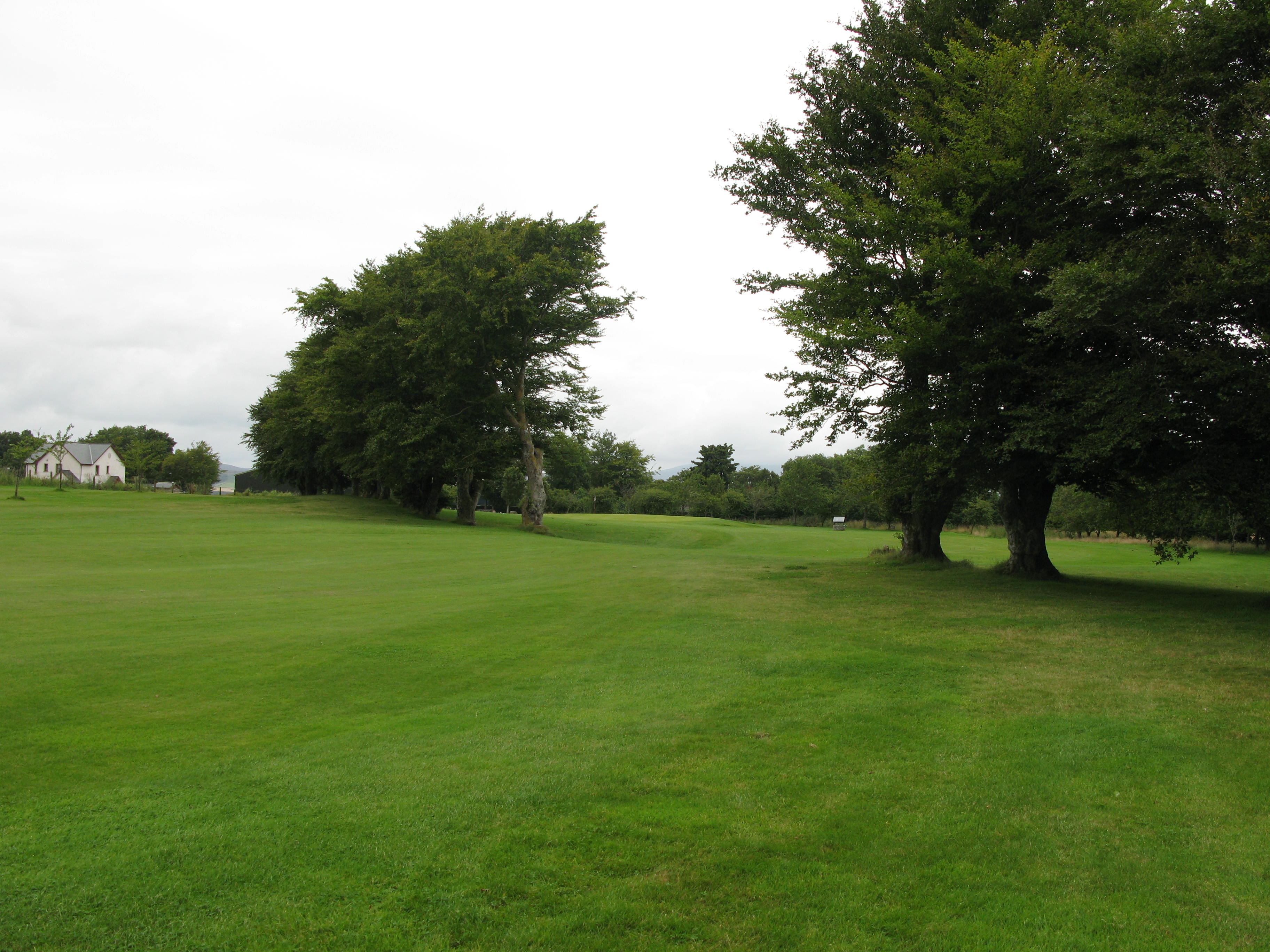
The tricky and fun par 4 8th at Brechin

The tricky and fun par 4 8th at Brechin

It’s clear that holes 10-17 are the best part of the course, with holes 13 and 14 being the toughest in my book – the greens are also measurably better in the section and some of the best in the area.  However stand on the first tee and you’ll realise this is a weak addition to the Braid association.

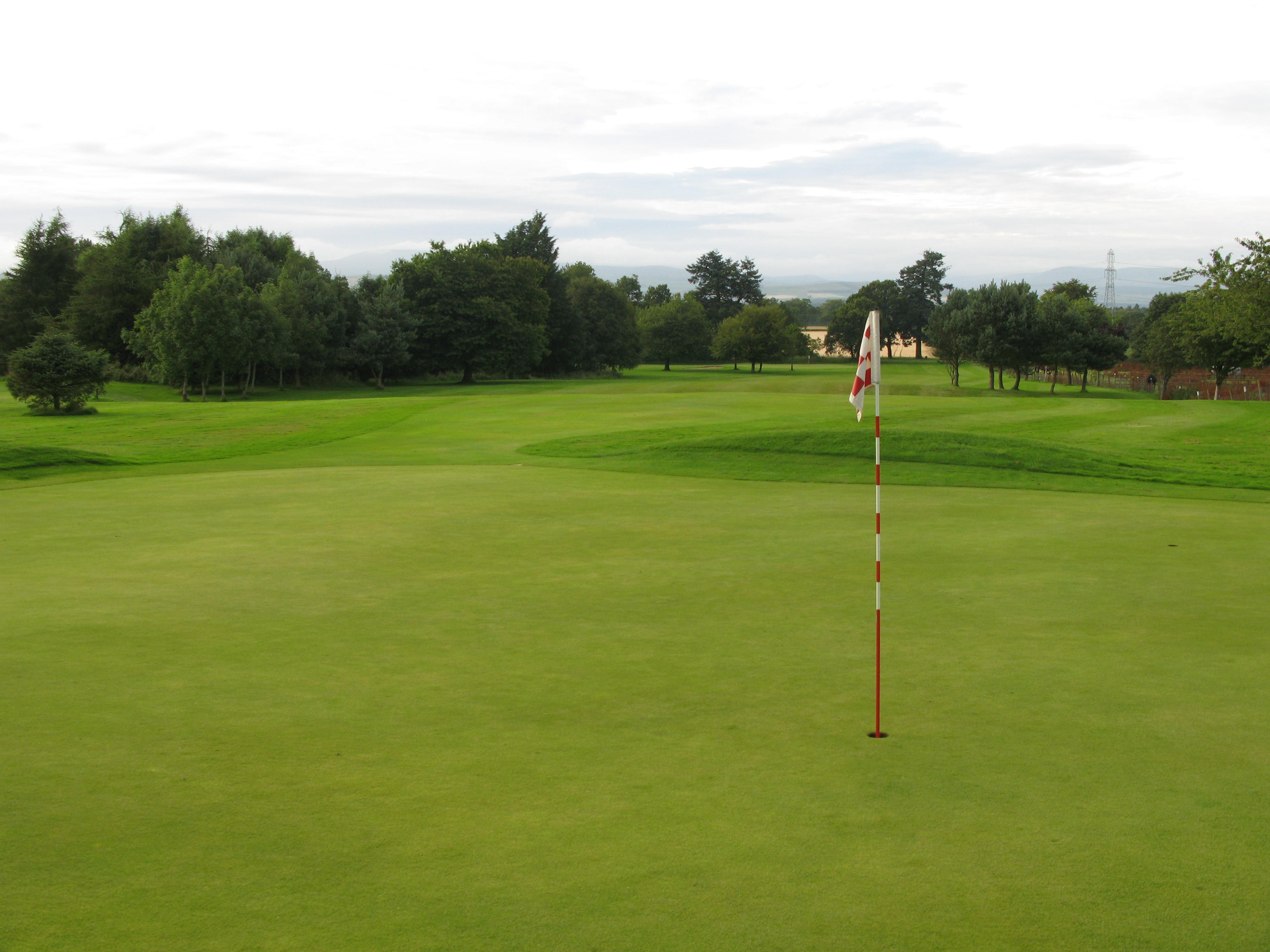
12th green at Brechin with views of the Angus Hills

12th green at Brechin with views of the Angus Hills

Moreover, several of the holes are new editions in the 1990s, and fairly bland additions at that.  These new holes are on either side of the Brechin A90 bypass and designed by John Farrell.

The 8th deserves a mention, which is a shortish par 4, with a very small gap in a line of trees – the only tactic I could see was take driver and try and clear the trees – there is an ironically placed wishing well to the front right of the green – I enjoyed this humour from the Members:)

Brechin is nevertheless in a nice setting, with good views of the Angus Glens, and is easily accessible and close to the main Dundee-Aberdeen road – coupled with some good clubhouse facilities it would make an excellent venue for a society golf day.  However, the amount of road noise is significant.

Brechin's 17th green

Brechin’s 17th green

It’s a well kept course, with nice fairways and greens, but the £40 per round is a bit over priced in my opinion, hence the value for money score of 2.5.

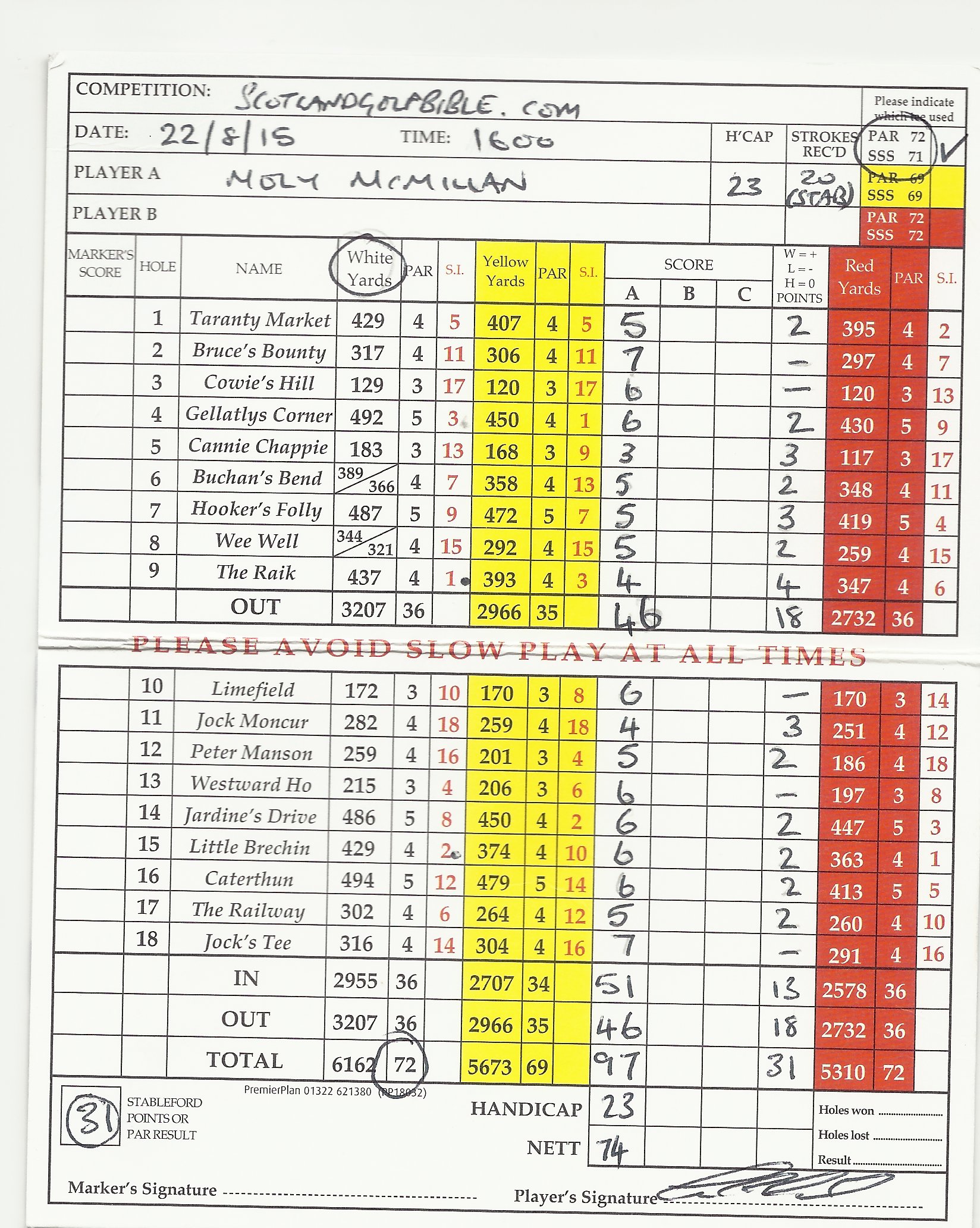
I played well on the front 9, but 3 “blobs” on the back meant I ended up with a 97, for 31 stableford points.

Some Facts

Course Type: Parkland

Par 72 (4 par 5s, 10 par 4s, 4 par 3s)

Distance (white)   6162 yards

Moly’s Gross Score  97

Moly's Brechin Scorecard - 97

Moly’s Brechin Scorecard – 97

« Older posts Newer posts »

© 2026 Scotland Golf Bible

Theme by Anders NorenUp ↑