A guide to green fee value for money

Category: 4.5 star (Page 4 of 5)

70. Tain. 25th Oct 2017.

Old Tom Morris’ creation is a “must play” if you head North.    

Summary:  Round up to £60.   Par 70.  Value (out of 5) –4.5

Standing on the innocuous looking first tee at Tain, visitors will most likely think “is this it?”;  fast forward 3 holes they may well be thinking “I can’t cope with this!”  The second shot into the 1st is blind over a fenced road with a well placed green side bunker; the approach at the 2nd (SI 4) is also blind with a ditch and engulfing bunker awaiting; and the long par 4 3rd (SI 2) requires a drawing approach shot to have any chance of being close to a left sided or even centre pin – thankfully these holes are assisted by the prevailing wind!  Given the old hickories and gutty balls used in 1890 when the course was opened, Old Tom must have been an incredible golfer.  Welcome to Old Tom’s “Northern Jewel”.
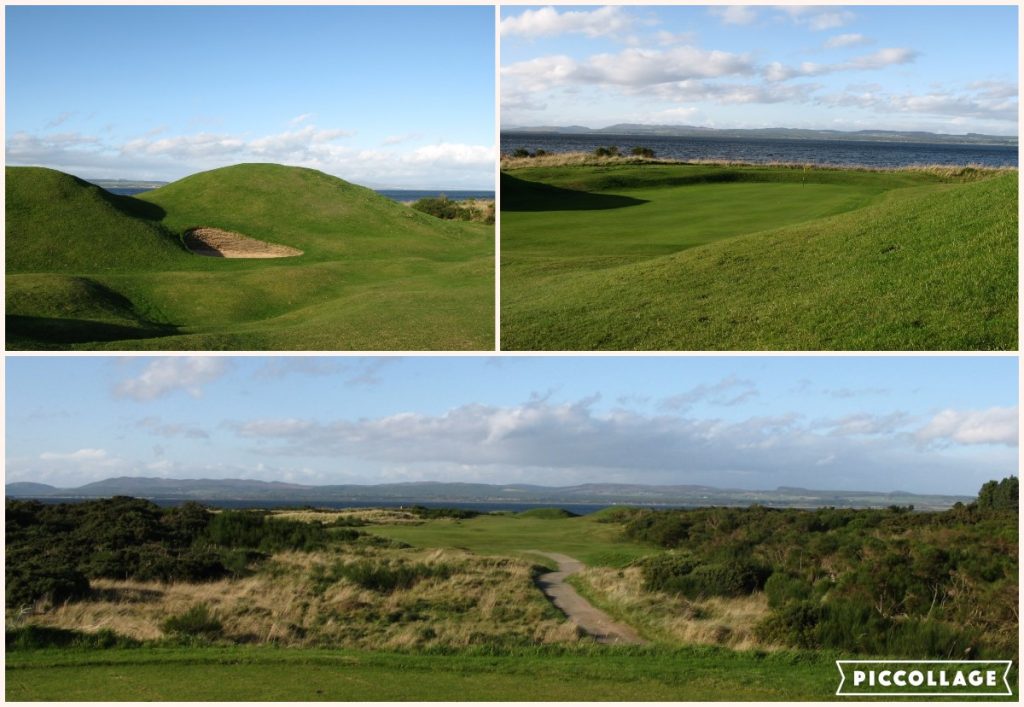
The signature 11th “Alps” – for obvious reasons!

Tain is situated on the Dornoch Firth, 34 miles north of Inverness and 9 miles south of Dornoch.  There is record of 6 holes existing from around 1870, prior to Old Tom Morris designing a 15 hole course which finally extended to 18 in 1894.  Initially called St. Duthus Golf Club, after the patron saint of the town, the name evolved to “Tain” during the 1900s.
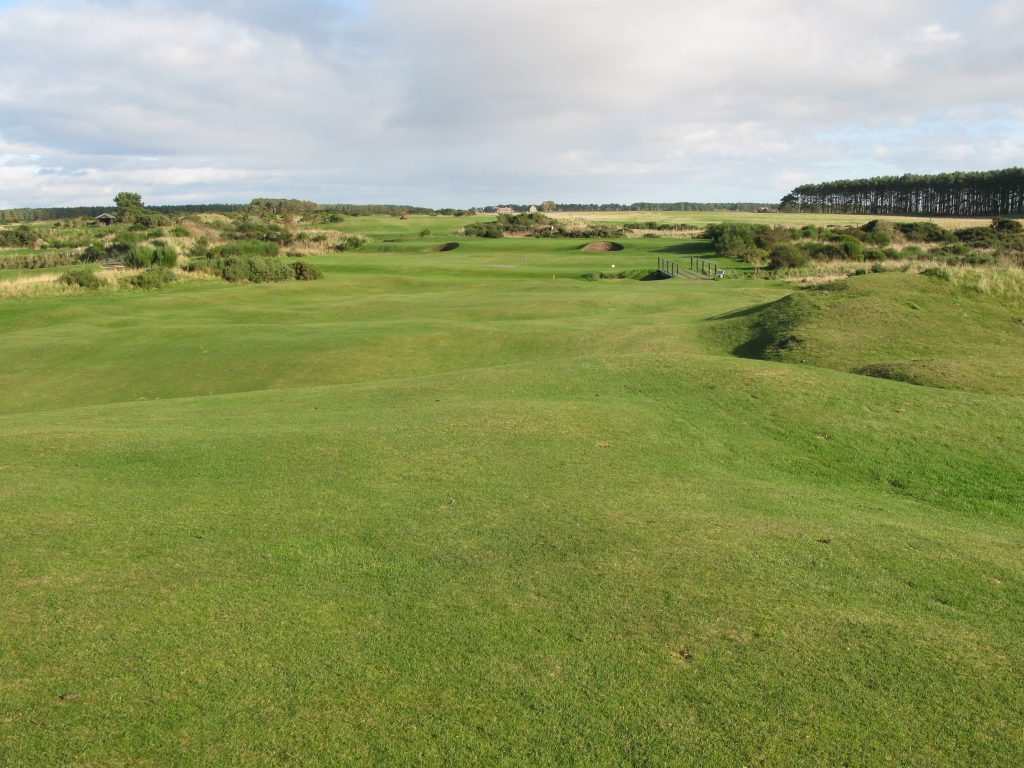
The difficult par 4 2nd hole, with this approach being blind for most average golfers – the ditch is deep!

In assessing Tain’s layout, it’s interesting to consider the originality of the course design and what remains today.   There are several detailed maps on the club’s excellent website – in truth, although the general layout remains similar, due to many adjustments and lengthening over the years, only a few holes, the present 9th (still playing to the original green), 10th, 14th and 15th, remain as Old Tom Morris designed them.   In contrast, Bridge of Allen ,is almost untouched from Old Tom’s original design.

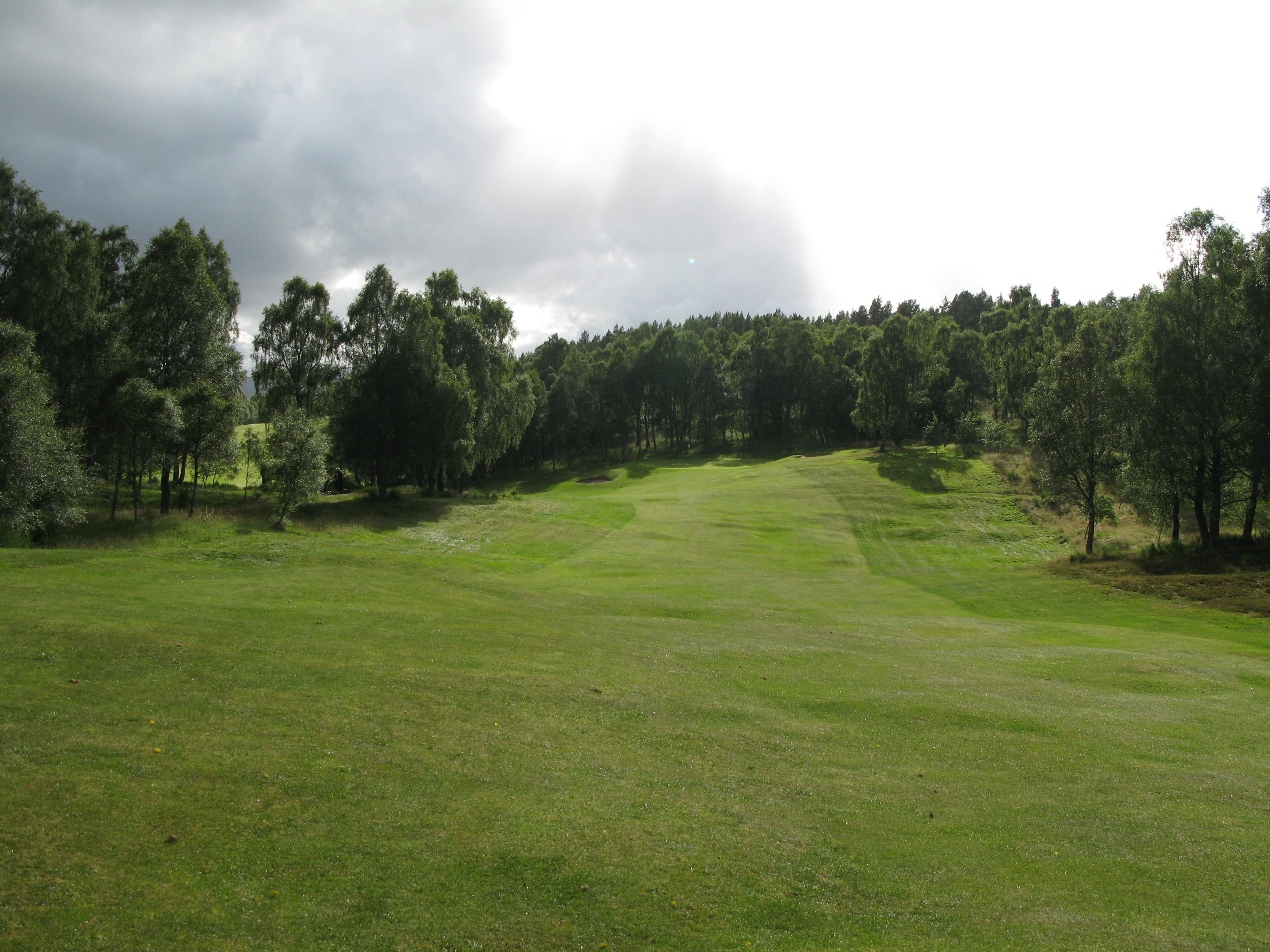
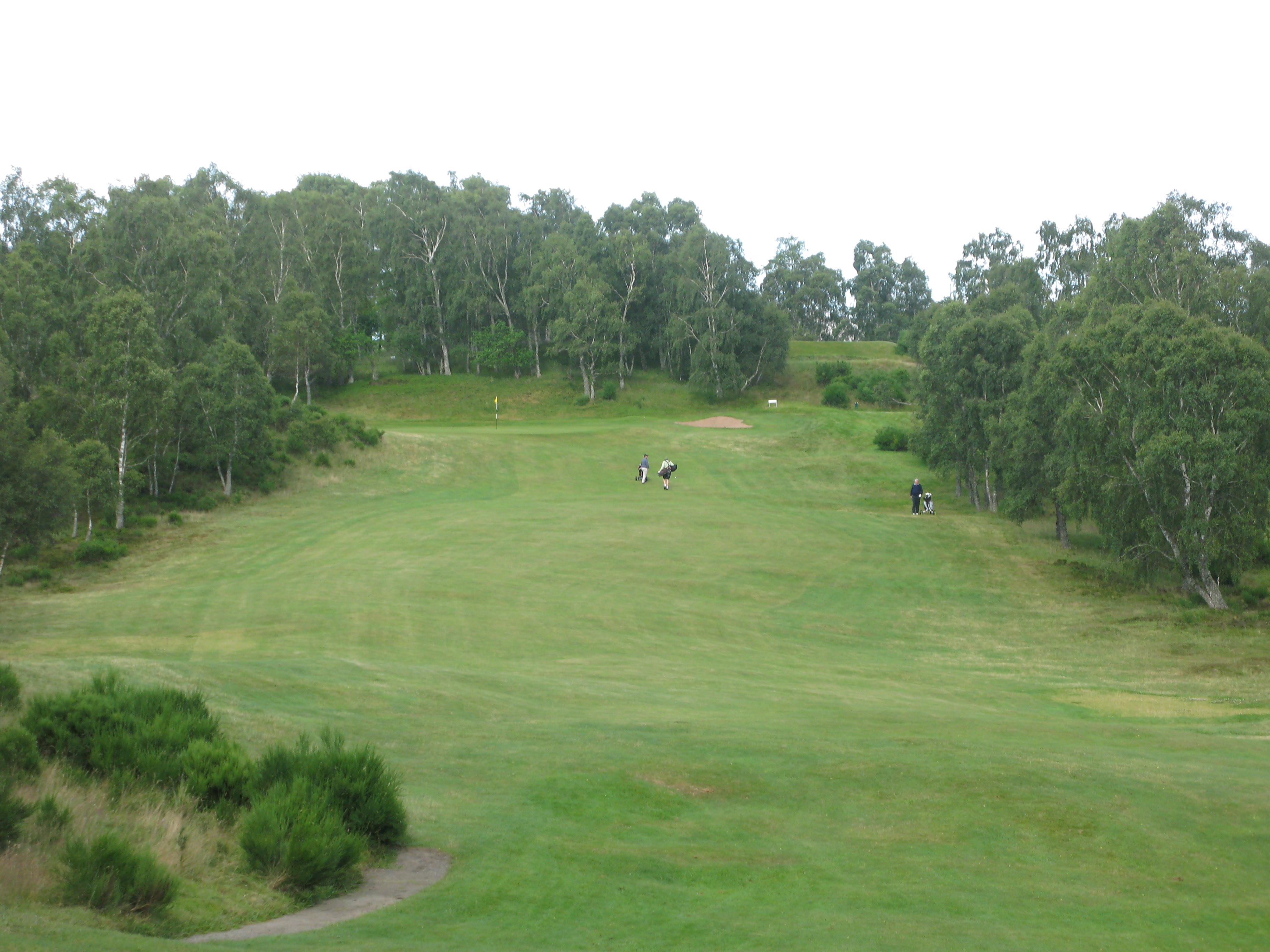
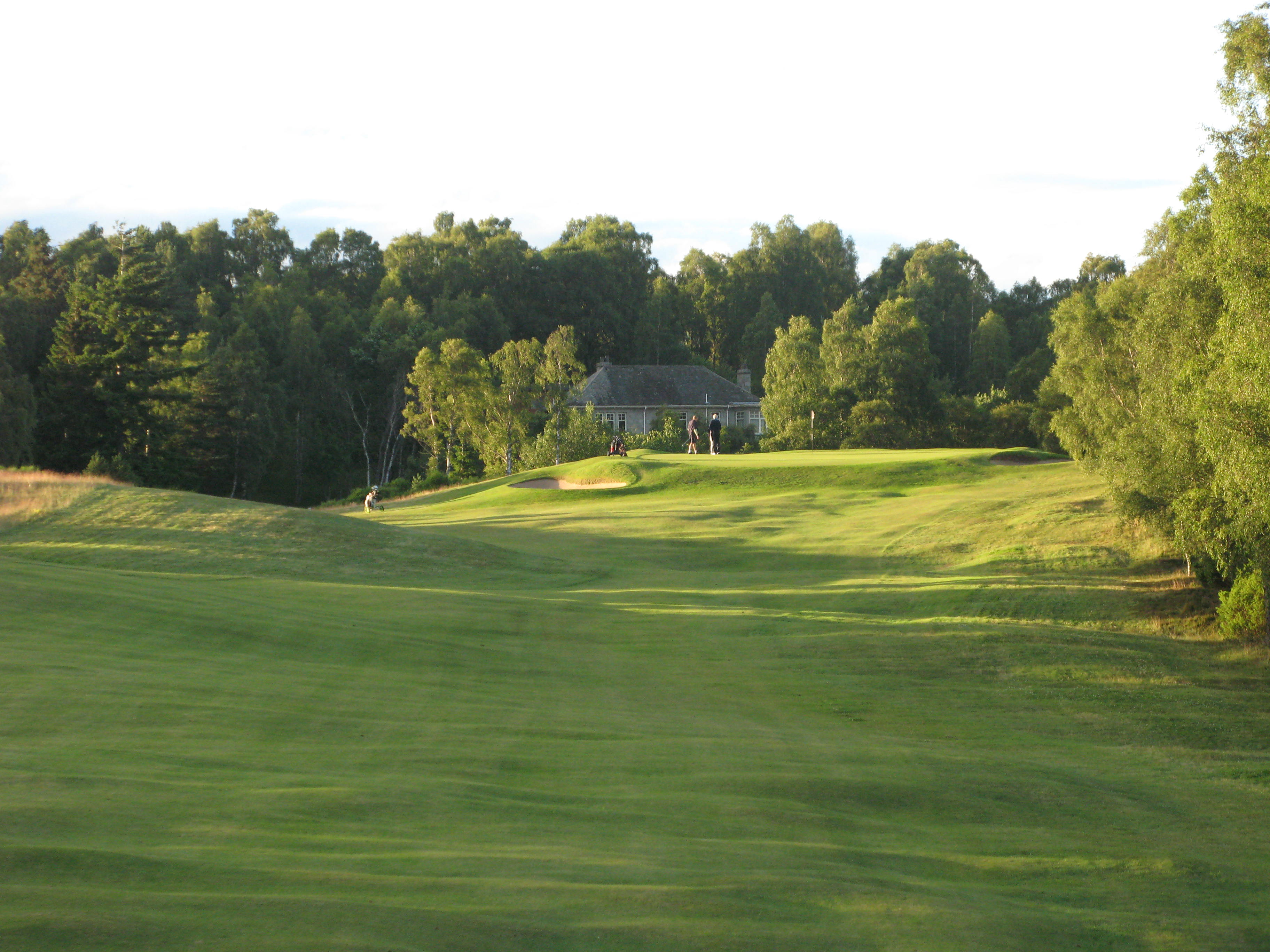
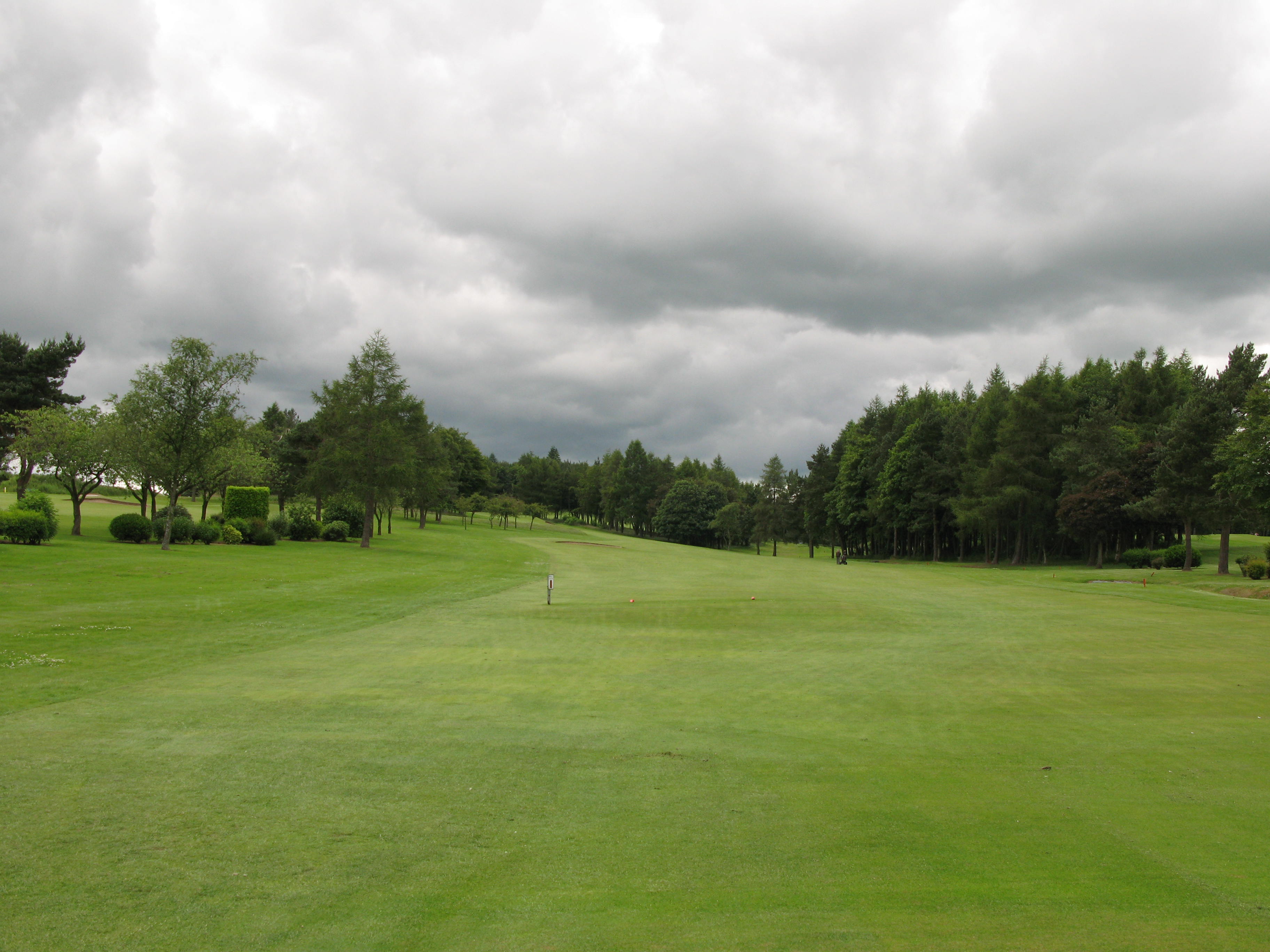
After the opening 3 holes, you are then faced with the long par 5 4th, actually a respite, then a mid iron par 3 5th, with deep pot bunkers, then turning partly back into the prevailing wind to play the par 4 6th hole, which worryingly has the name “Bunker”.   By which time on the day I was 13 over par!
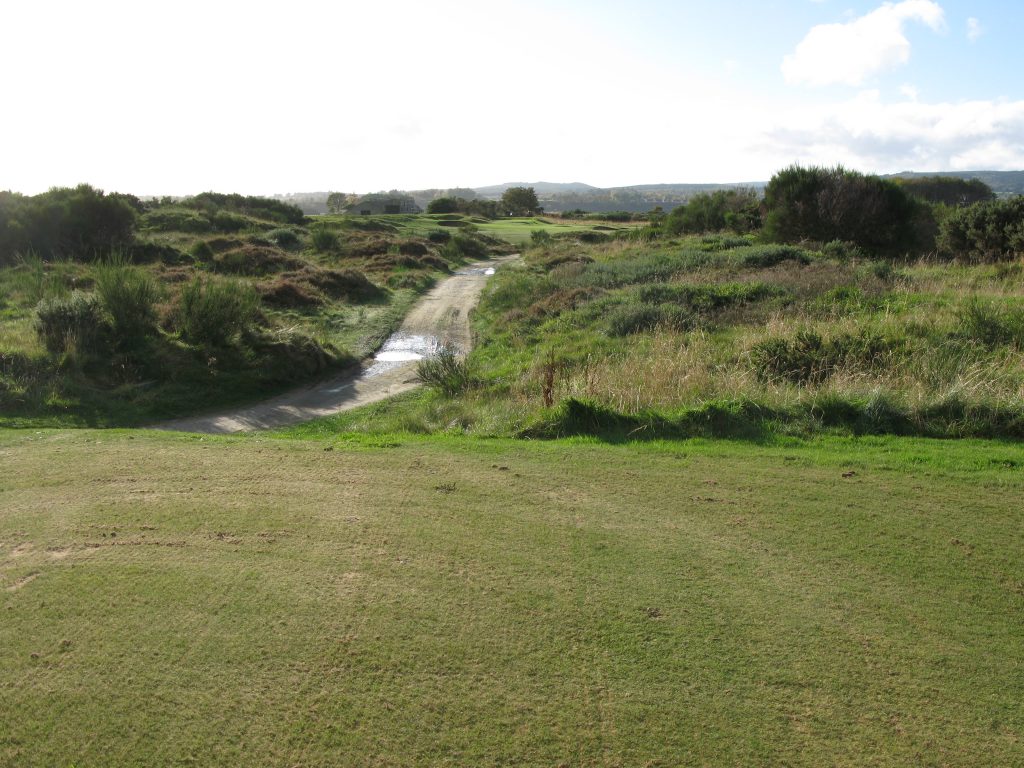
The mid iron par 3 8th hole at Tain

After some holes that then feel more like highland golf (trees, turf, ‘feel’), the signature 11th hole, “Alps”, takes you closest to the shore, followed immediately by the aptly named “Glenmorangie”, 12th, with views to the distillery.

By which time, if you’ve still got a card going, beware the SI 1 14th, played into the prevailing wind, then an interesting pair of back to back par 3s, at 16 and 17, both with water in play.
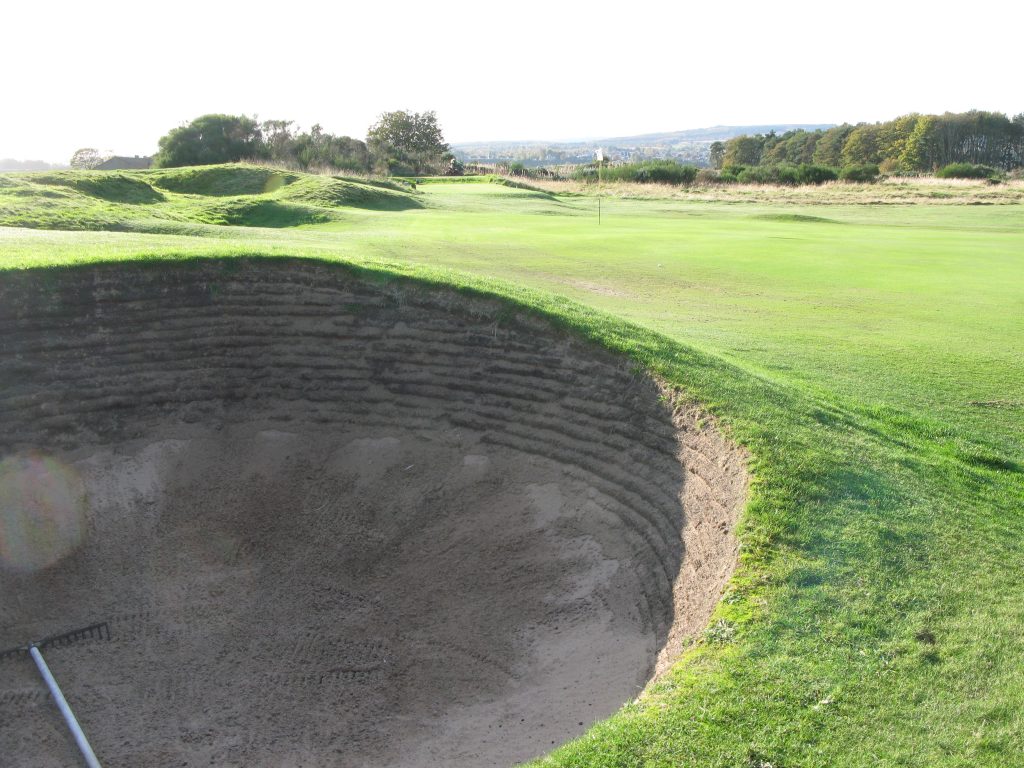
A typical well placed Tain bunker at the 8th.

After a very friendly and helpful discussion before my game with the pro, Stuart Morrison,  in the end I shot 106 (Aaagh), completely down to my very poor play, albeit the wind blew up to 30 mph.  The course was in very good condition with play still on full tees and greens.

It must be said that Tain has very many characteristics of a links course (layout, location, pot bunkers, hillocks) but the turf in many places is distinctly more arable and I suspect Tain will play longer in the summer months than the more harder fairwayed links courses.
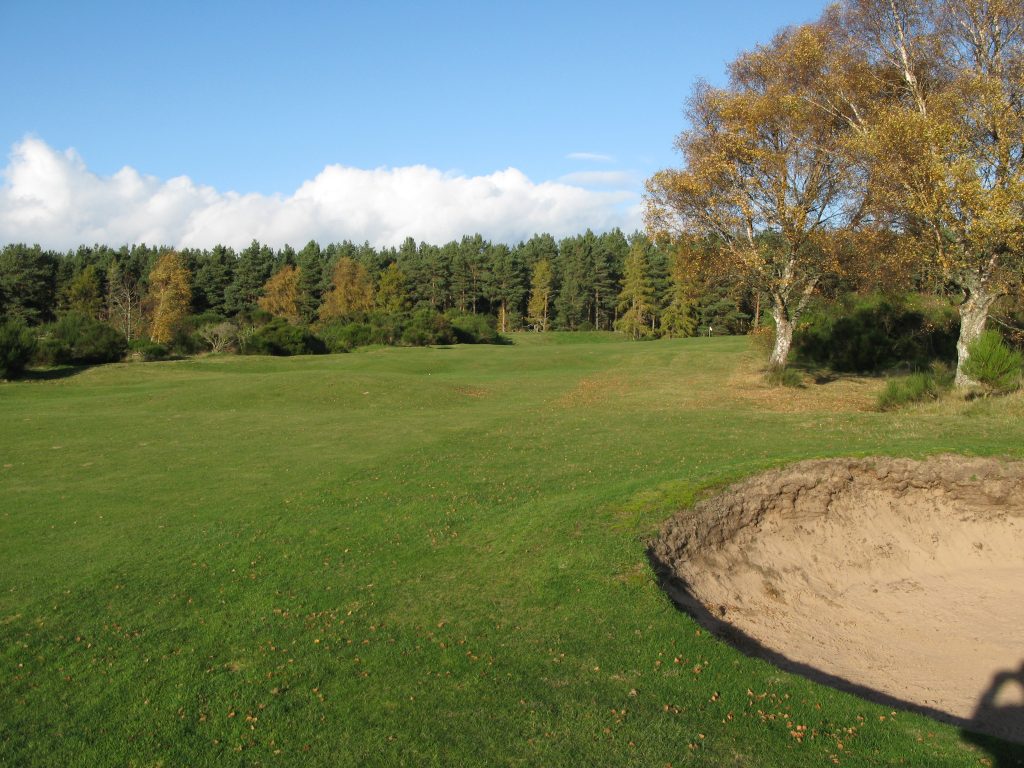
A more highland feel at the dog leg par 4 9th at Tain.

This is rightly regarded as a “must play” links course, and I would urge anyone venturing north to play Royal Dornoch, its more prestigious neighbour, to play Tain, which could be argued is better value.

Facts:

Course Type: Links

Par 70 (2 par 5s, 12 par 4s, 4 par 3s)

Distance (yellow): 6109

Moly’s Gross score: 106
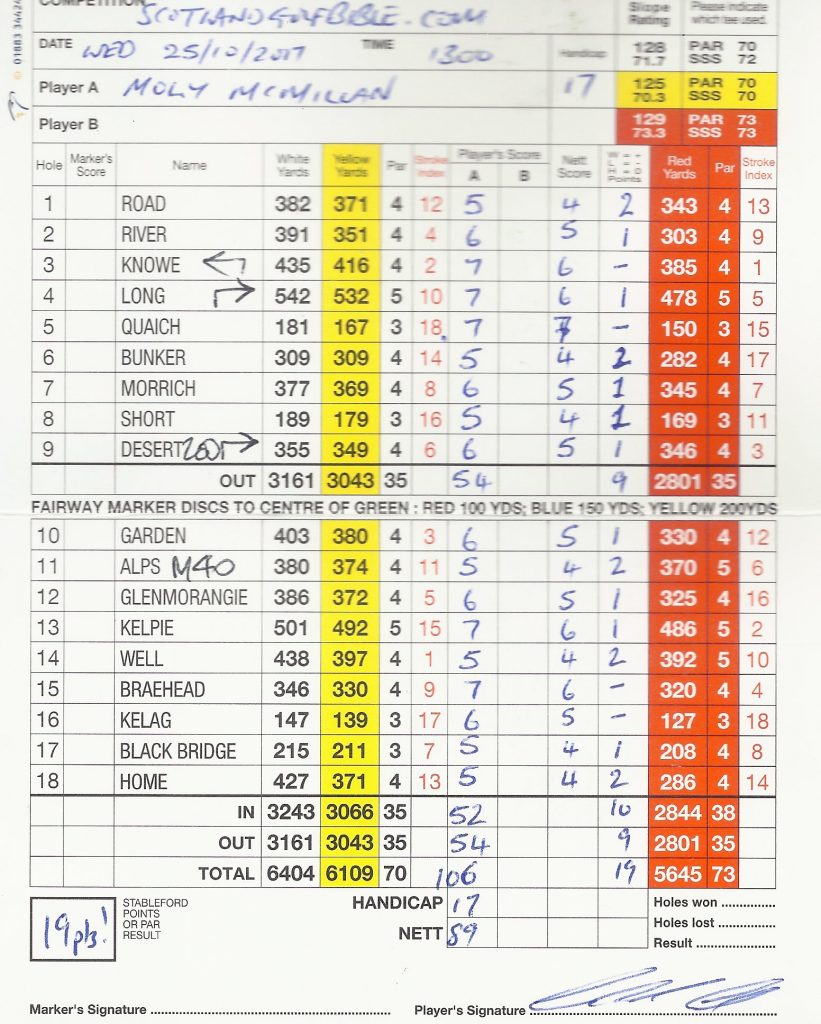
Moly’s 106 card at Tain!
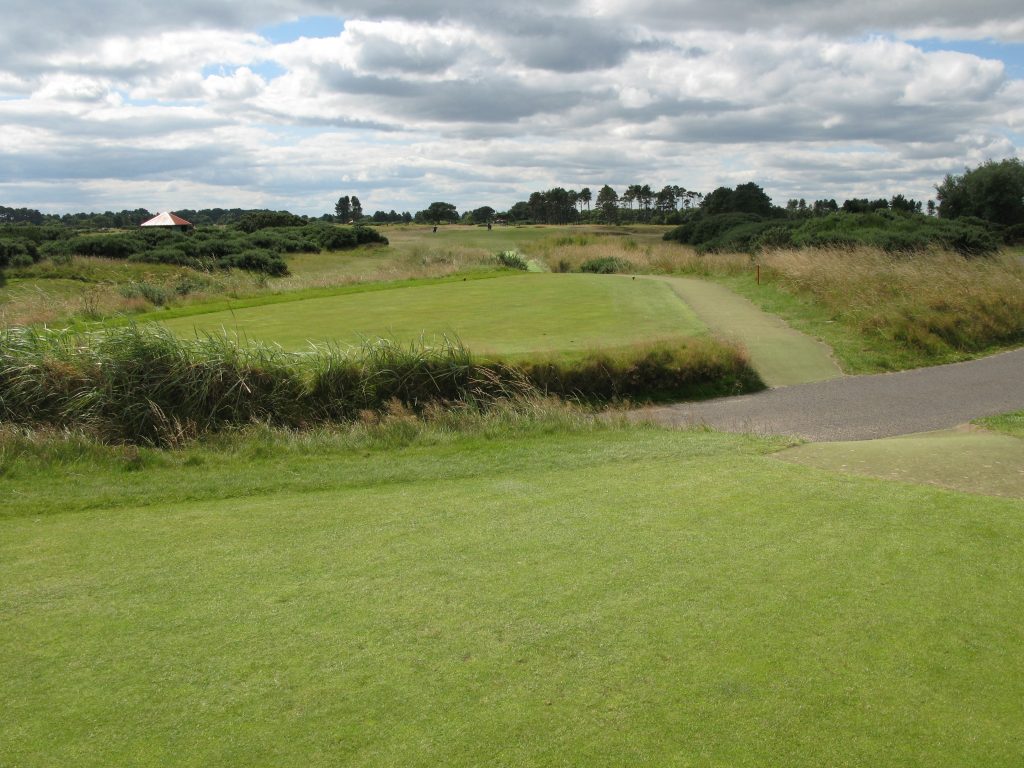
62. Carnoustie Burnside. 9th Aug 2017.

Treading on possibly the very origins of links golf

Summary: Cost £46. Par 68.  Score 85. Value (out of 5) – 4.5.

The Burnside course, or more correctly the Carnoustie Burnside course, is eclipsed by its magnificent Championship course neighbour, but that’s only because the Championship course is one of the greatest courses in the world!  Do not play the Championship course without also trying The Burnside, which is a great naturally laid out links course.

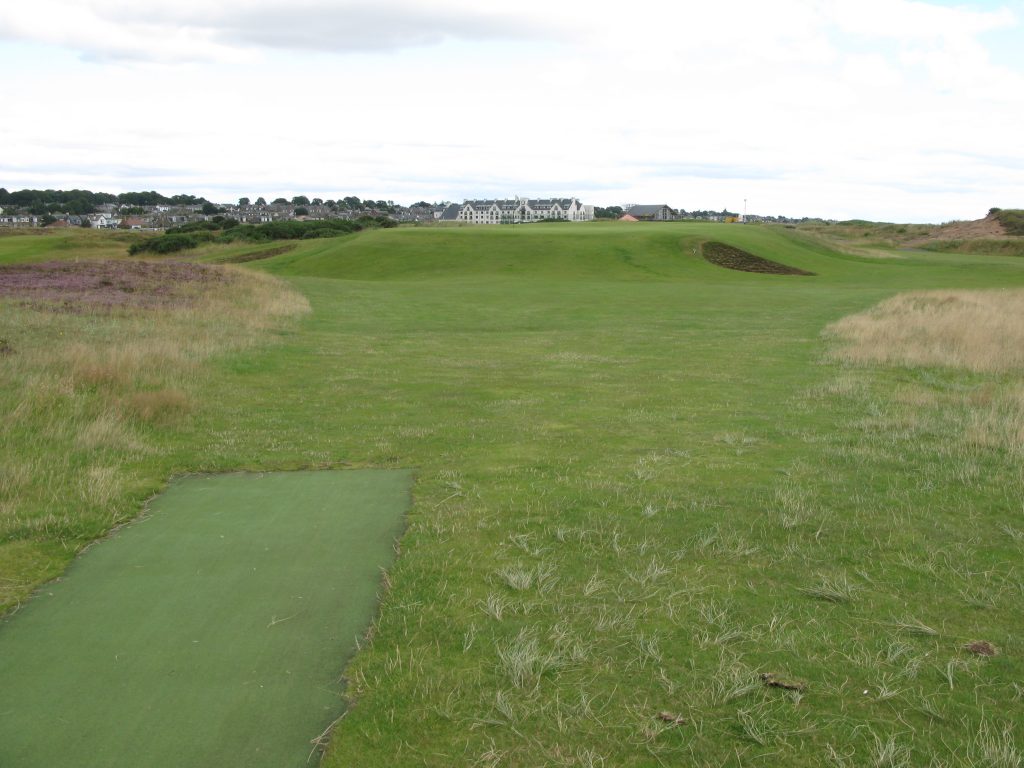
The wonderful links land view from the 15th tee of The Burnside

Golf on the “Barry Links” was recorded as early as 1527, nearly 50 years earlier than St Andrews, making this the area that “Links” golf was first played.  The Scottish Golf History web site lays out a strong case that these first games of links golf were most likely played on the land between the Barry Burn (more of that later) and the railway line currently where holes 1 to 5 of the Burnside course are.

Therefore, arguably, “The Burner” is the most historical of all links golf courses!  You are truly walking among the ghosts of golf’s distant past playing here.

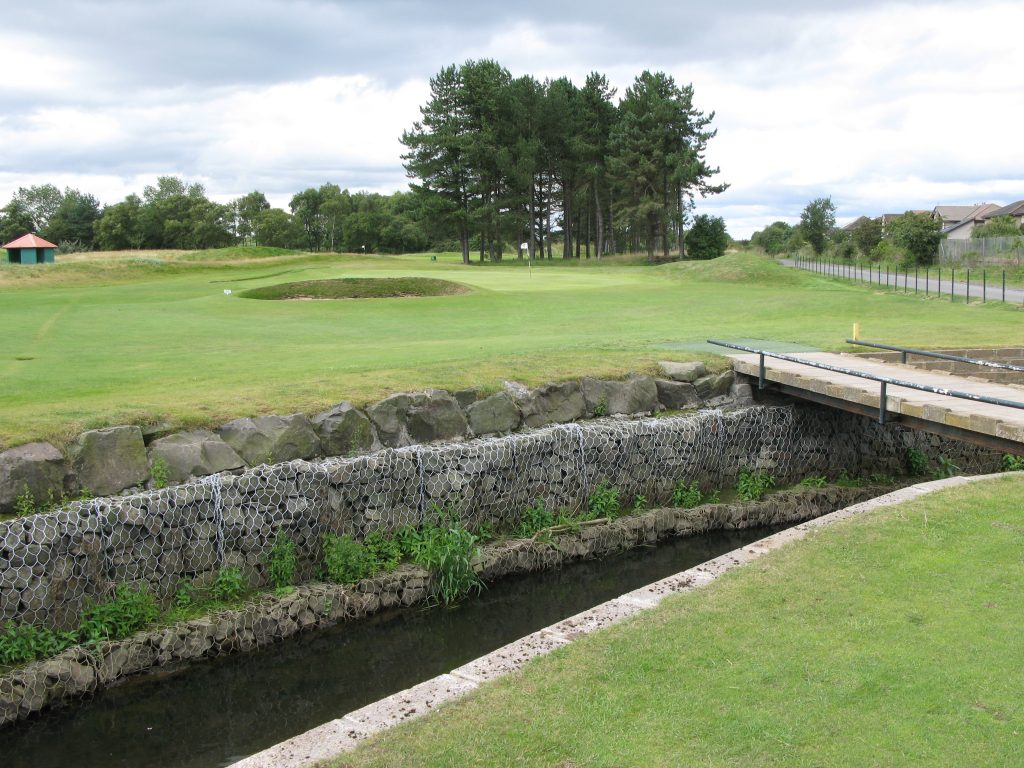
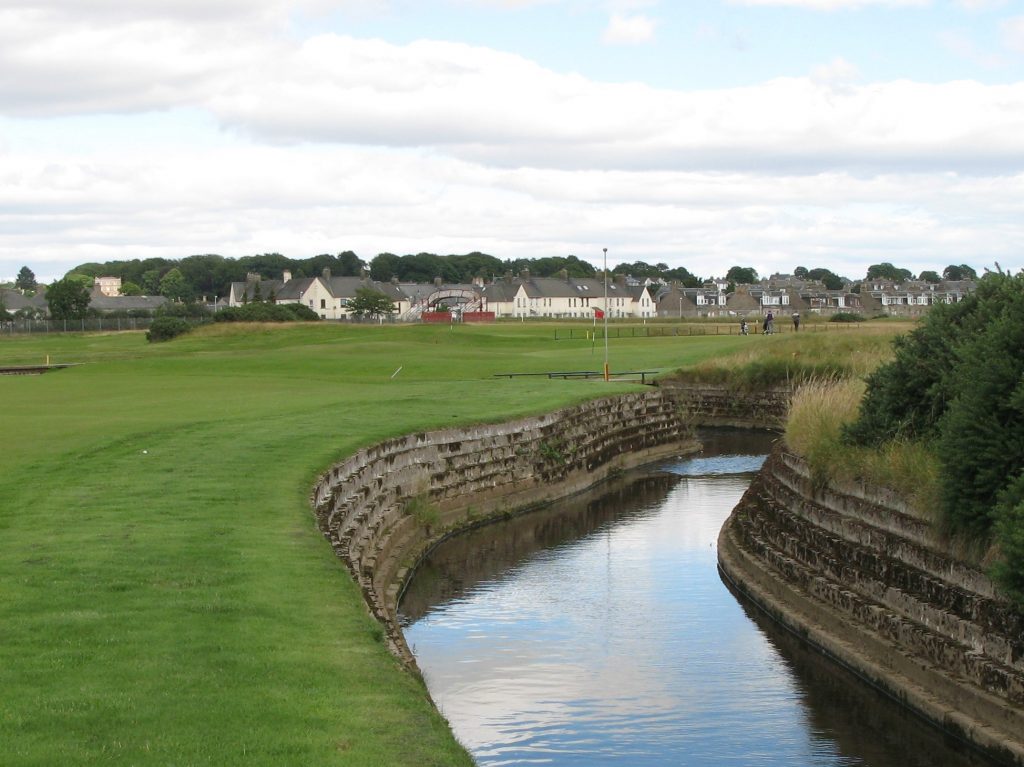
The 3rd hole, the first of 5 wonderful par 3s, the highlight of Burnside – the Barry Burn awaits!

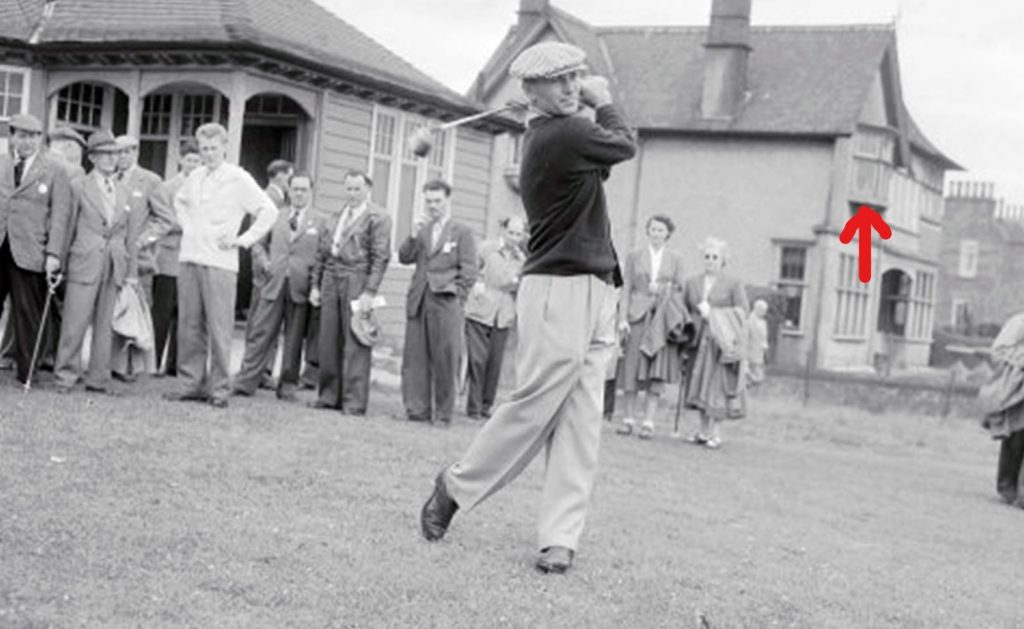
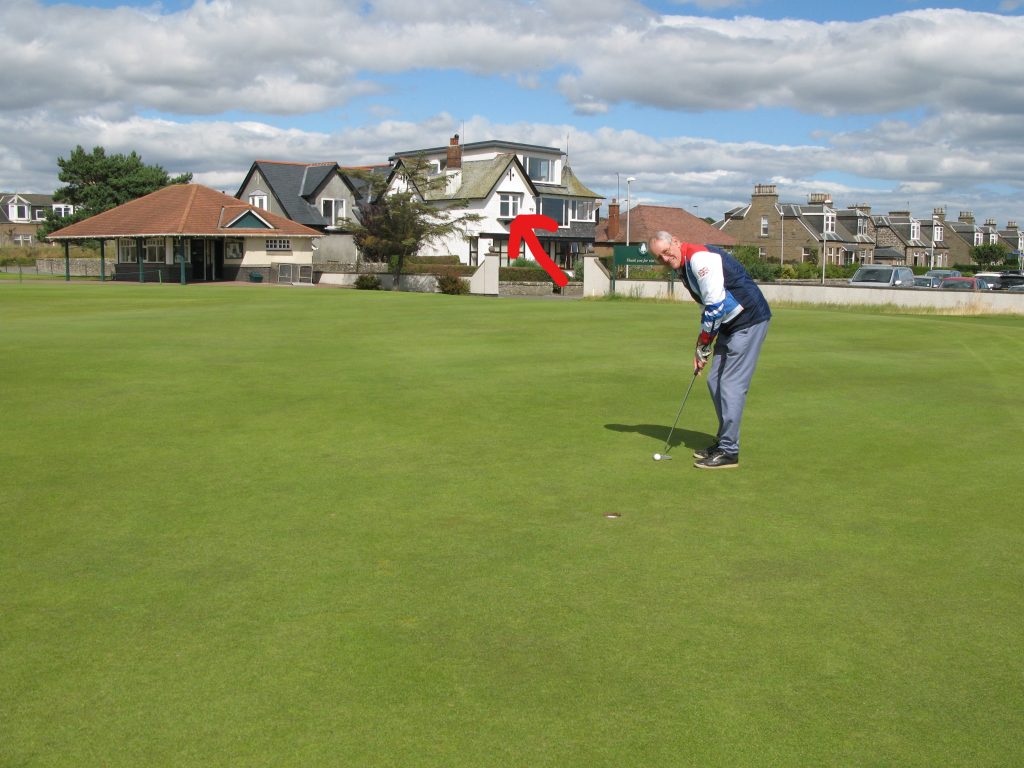
Of course, there are more recent historical stories worth telling.  It’s largely forgotten that when Ben Hogan famously won his 1953 Open at Carnoustie he qualified on The Burnside course.  It was therefore very apt that I played The Burnside with my brother-in-law, Colin Macqueen, since his fascination with golf started during the same summer of 1953 when he and his elder brothers were mesmerised by the large crowds watching Ben Hogan outside the window of their home, “Lismore House”, which overlooks the Burnside’s 18th green.

Hogan playing the Burnside; Colin Macqueen’s “Lismore House” bedroom highlighted.

Colin has dined in Australia, his home of 50 years now, on the true story of him falling out of the upper floor bay window nearly causing Ben to miss a crucial putt!

The Burnside was designed by James Braid and opened in 1934, not long after Braid had redesigned the Championship course in 1926.  Although a relatively short golf course at just under 6000 yards, many of the holes would easily be at home on an Open venue.  The 5th, 9th and 14th are par 3s of the highest calibre, each with a very different challenge.

The beautifully difficult par 3 9th green.

The 5th is surrounded by the Barry Burn (that of Jean van de Velde fame) where it’s virtually impossible to get close to a right-hand pin. The large plateau green at the 9th makes it imperative to hit the green with the tee shot. The long 14th is stoke index 1 for a good reason, and is a magnificent test.

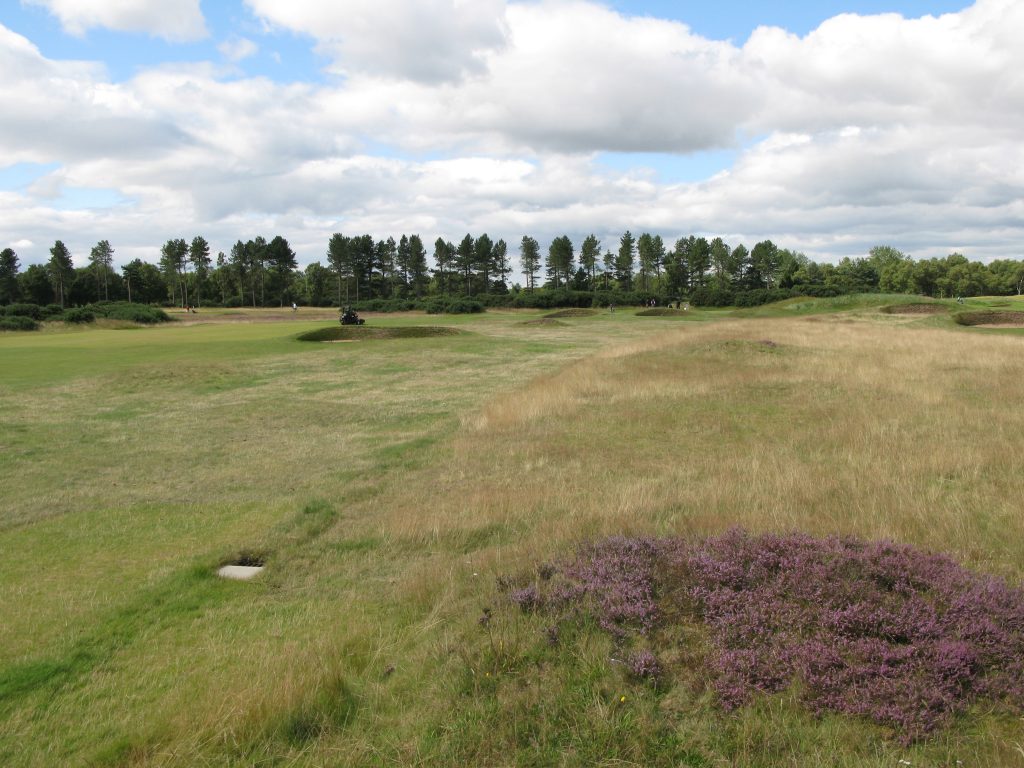
Bunkers sprinkle the 6th fairway at The Burnside

The 17th, a par 4 of about 450 yards, needs to be played with a 3-shot strategy for all bar the very long hitters.   I could also get into details on many other holes, the course is that good.  To cap it all, the greens have very subtle borrows, so putting needs extra concentration.  It is one of the great small James Braid courses.

The Barry Burn (of Jean van de Velde fame) at the long par 4 17th – a card wrecker

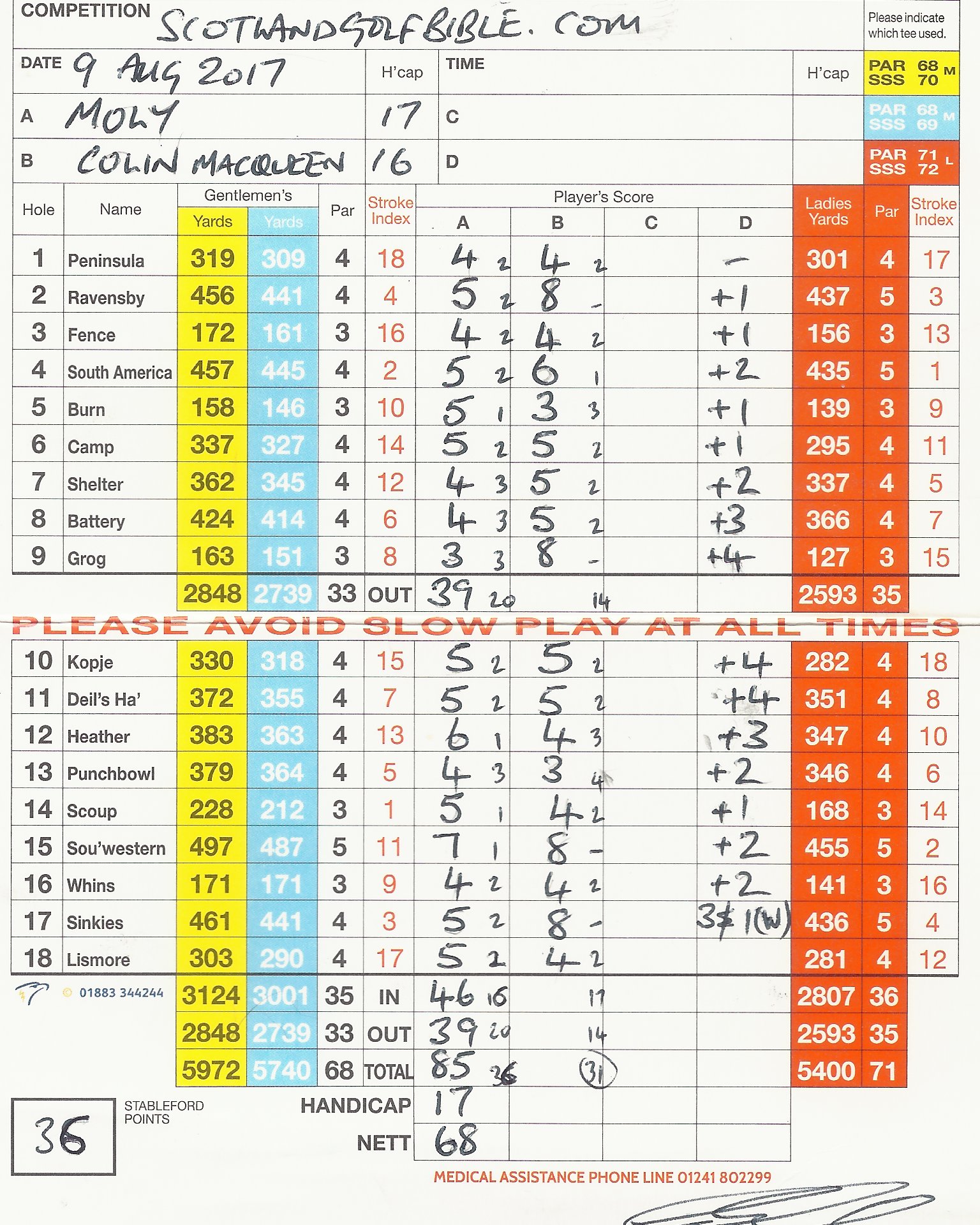
With the large green keeping staff at Carnoustie, it was no surprise that the course was in such fine condition.  The tees, fairways, bunkers, rough and greens were all superb, and to have the sun shine made for a quite memorable round.  I scored 85 for a net level par score off my new handicap of 17; this was enough to beat Colin 3 and 1, which at least meant he could focus on the 18th green photograph, close to the site of Hogan’s zenith and also Colin’s boyhood fall.

My playing partner, Colin Macqueen, on the 18th with his bedroom highlighted in the background, where he fell in 1953 during Hogan’s Open!

A quite magnificent days’ golf.

Key Facts

Course Type: Links

Par 68 (1 par 5, 12 par 4s, 5 par 3s)

Distance (blue): 5740

Moly’s Gross score: 85

Moly’s Burnside scorecard – 85 for 36 points (off 17)

25. Boat of Garten. 4 Aug 2015

“The Boat” – the “must play” highland course

Weekday round  £45; weekend £49.   Par 70.  Value (out of 5) – 4.5

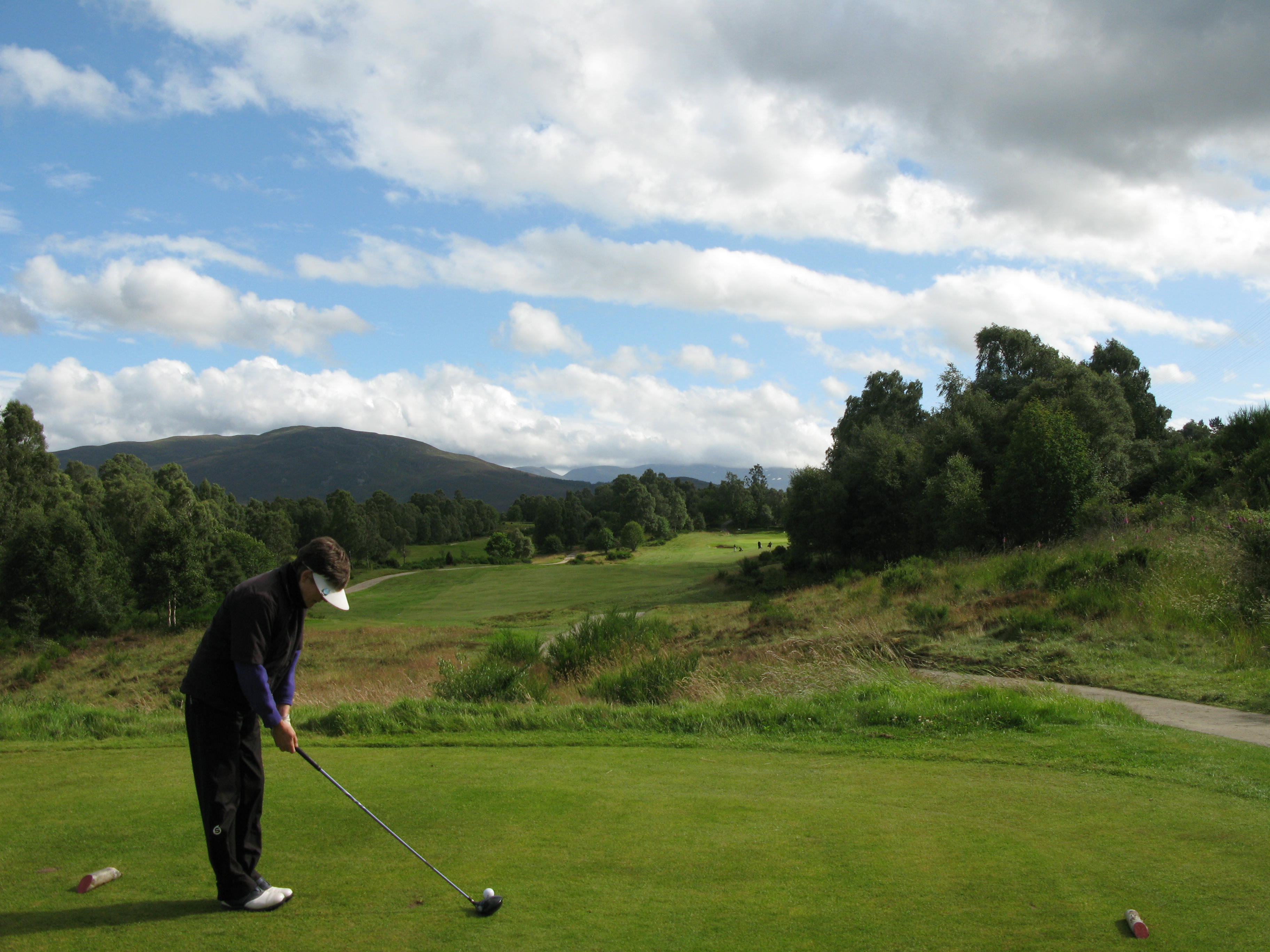
The Ladies 2nd tee,, with Cairngorms in the background

The Ladies 2nd tee,, with Cairngorms in the background

“The Boat”, close to Aviemore in the heart of the Cairngorms National Park, was founded in 1898, with the current 18 hole  layout designed by the renowned James Braid in 1930.

The course could serve as the definition of what a “highland course” should be – a good variation of challenging holes carved into a surrounding landscape of trees, heather and broom, against a backdrop of the Cairngorm mountains.

The magnificent 6th "Avenue"

The magnificent 6th “Avenue”

On a good day, especially if playing well, then this may be as close to golfing paradise as it gets.   This has been recognised through the many accolades the course has won, including being “Scotland’s No 1 Hidden Gem”.

8th approach - Boat of Garten

8th approach – Boat of Garten

The combination of (invariably) wind, changeable weather and some undulating fairways, makes “the Boat” feel and play longer than its 5876 yards from the white tees.  Play to your handicap here versus the SSS 69 and many will rightly be referring you to the Handicap committee.

Regardless of your play, this is a beautifully architected course.  The unusual opening par 3 first hole at nearly 190 yards is normally played into the prevailing wind – with danger left and right – par or bogie is a good start. Then the 2nd and 4th played in the same direction, mean that getting to the 5th tee with your score intact is key to your overall score.  After a bit of respite at the 5th, normally with the wind, the 6th, called “Avenue” is a magnificent longer par 4, played to a plateau green.

Boat of Garten - 11th Ladies Tee

Boat of Garten – 11th Ladies Tee

There are then many further great holes on this course, with only the 9th and 10th being the main easier birdie contenders.  The 18th is a fantastic hole, demanding a long drive if you are to have any chance of holding a shot on the plateau green.

The course was in lovely condition when I played, with the greens true and fast.


Boat of Garten's 18th approach

Boat of Garten’s 18th approach

Due to its celebrity this is a popular course with visitors from both home and abroad, therefore ensure to make a booking.  I played a twilight round (after 4pm) at only £30 – brilliant value.

Some Facts

Course Type: Highland

Par 70 (2 par 5, 12 par 4s, 4 par 3s)

Distance (white)   5876 yards

Moly’s Gross Score  99

Moly's Boat of Garten Scorecard

Moly’s Boat of Garten Scorecard

24. Glenrothes. 15th July 2015.

Challenging Parkland Golf in Centre of Fife

Weekday round  £18; weekend £22 .   Par 71.  Value (out of 5) – 4.5

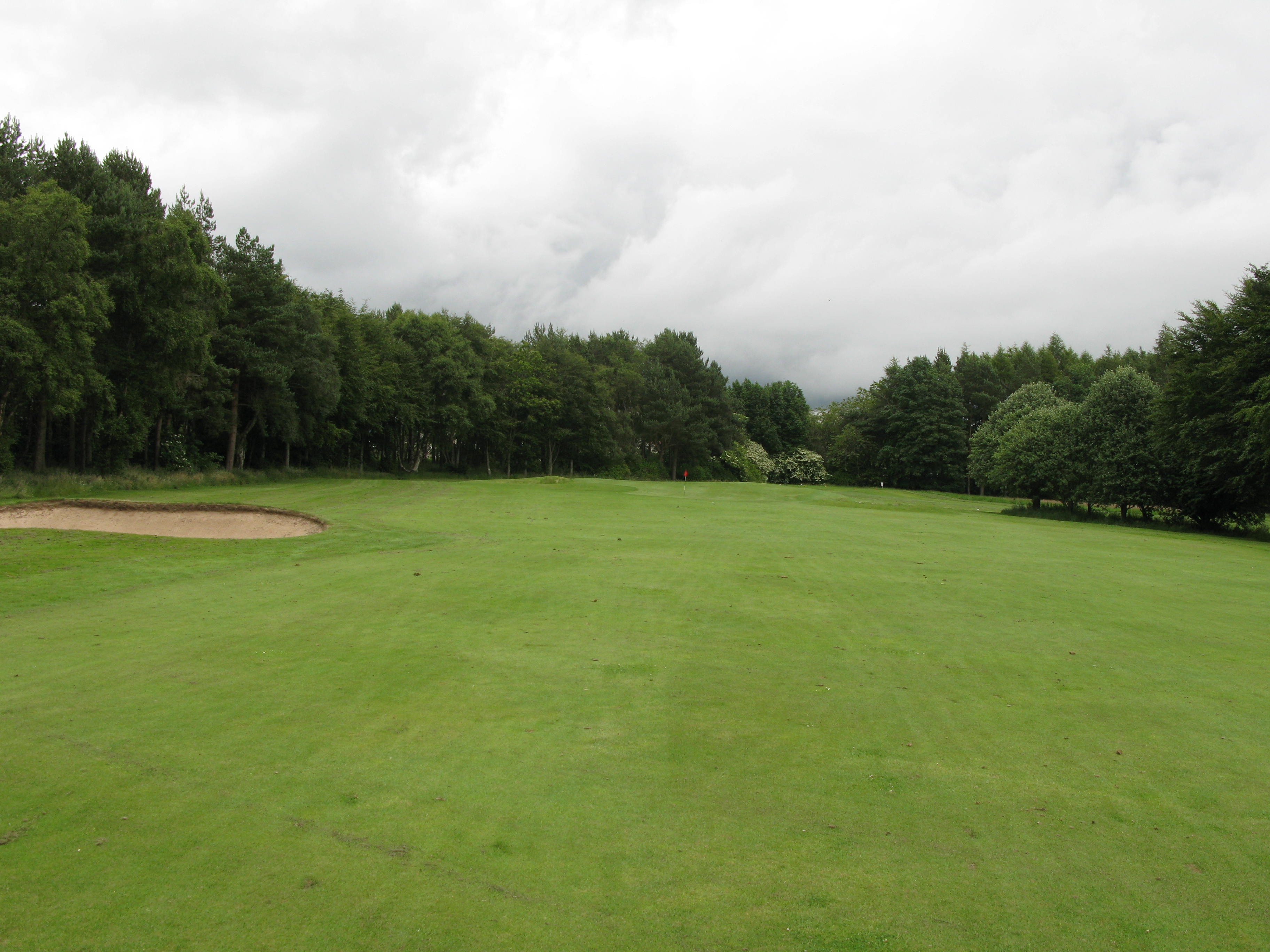
1st tee at Glenrothes

1st tee at Glenrothes

Glenrothes golf course is set in a prominent position on the high ground to the west of Glenrothes and offers a mainly parkland setting; some of the back 9 is exposed to the elements with a more heathland feel.

Approach to the 7th at Glenrothes

Approach to the 7th at Glenrothes


It is one of 7 courses managed by the Fife Golf Trust which was established in 2011 to take over Fife Council’s directly managed courses.  This is becoming a common practice by Local Authorities in Scotland to manage golf courses.  The golf club itself is private, like many Scottish clubs associated with publicly owned courses, and welcomes visitors .

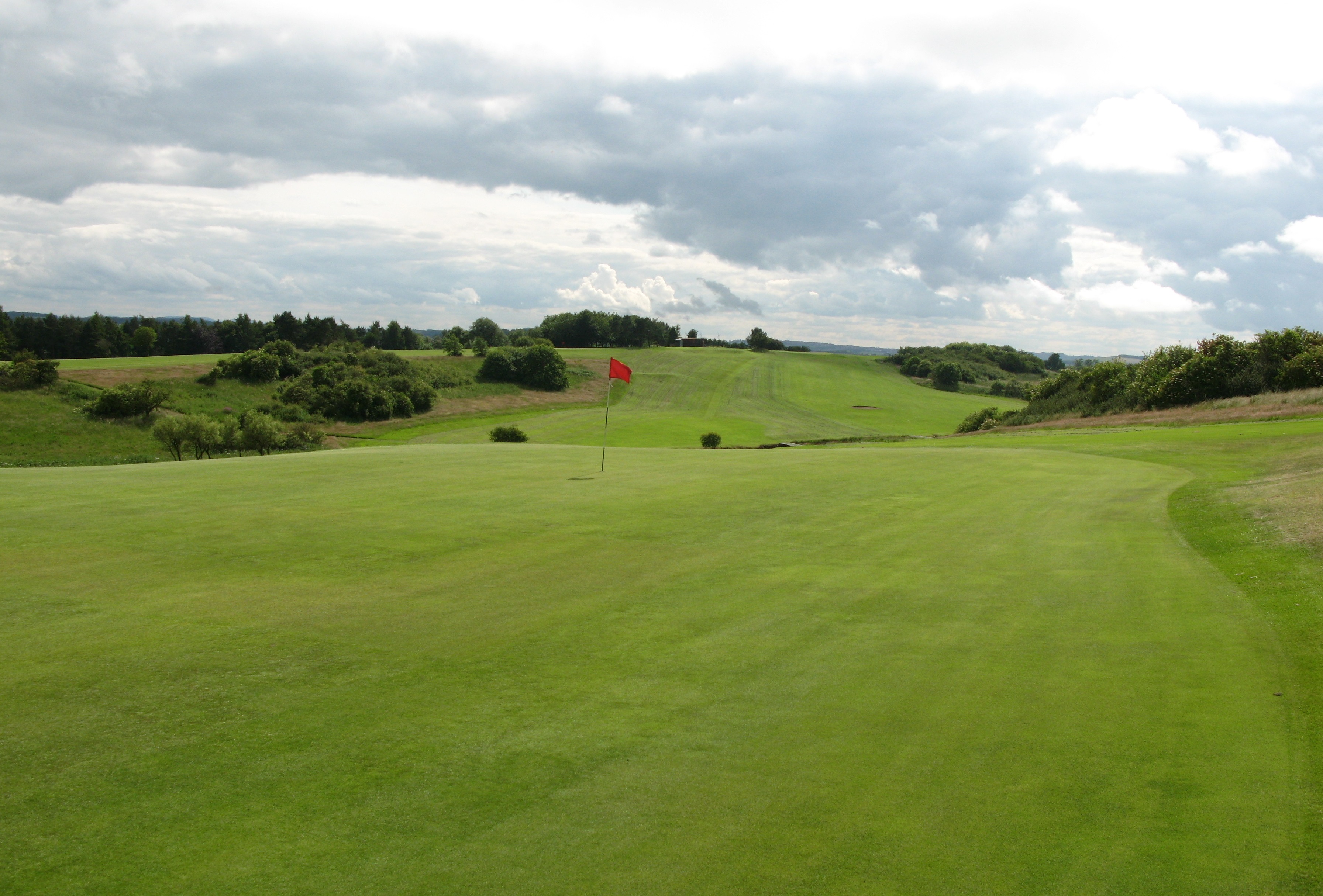
The heathland feel of the 12th at Glenrothes

The heathland feel of the 12th at Glenrothes


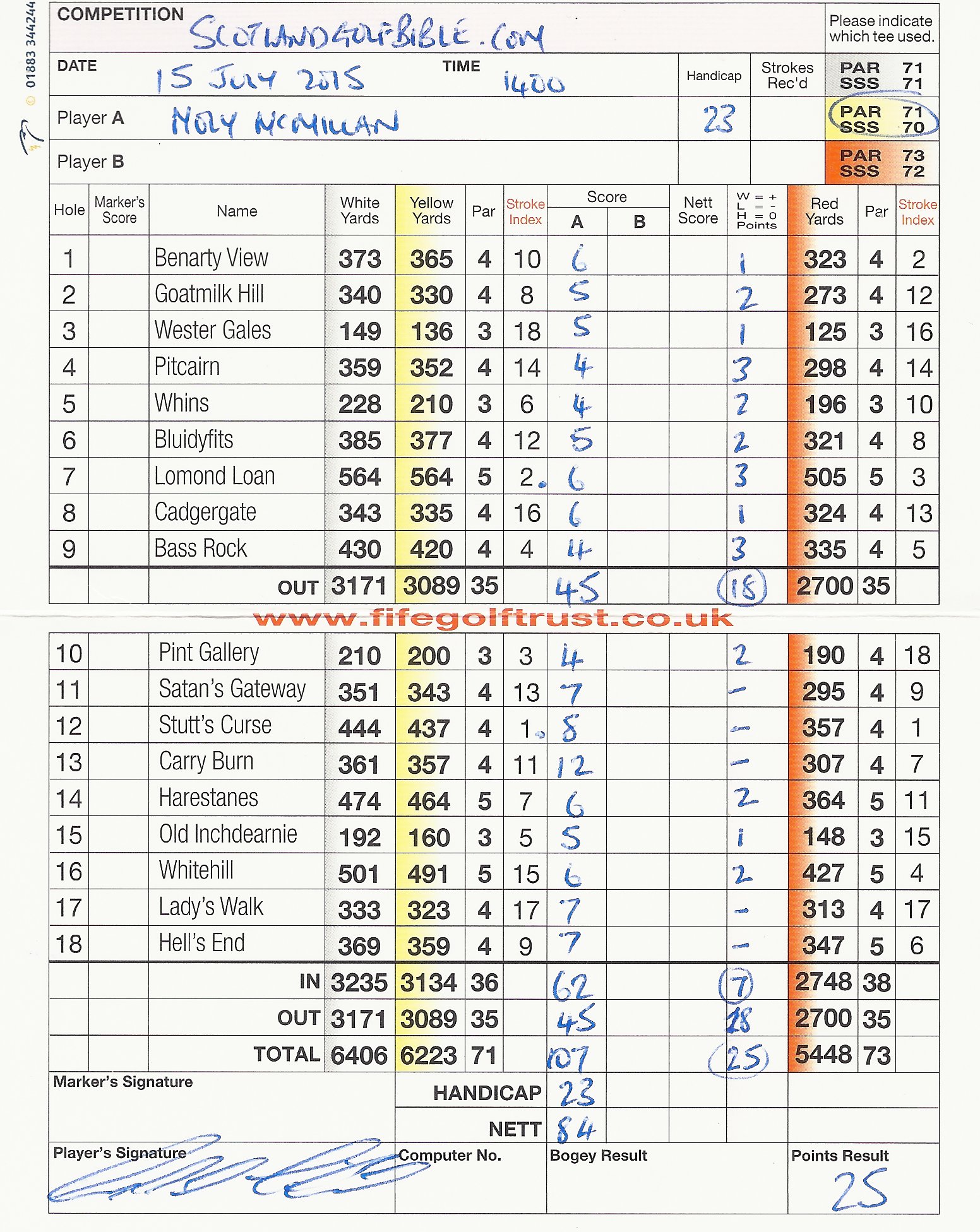
This is a challenging golf course, with quite wide fairways, although if you stray into the rough you are penalised severely, so be well equipped with balls if you are wayward from the tee.  There are some great individual holes, with the highlights for me being the 9th, 10th and 12th.  The bunkers to the long par 3 10th being very well positioned, so better being long than short.

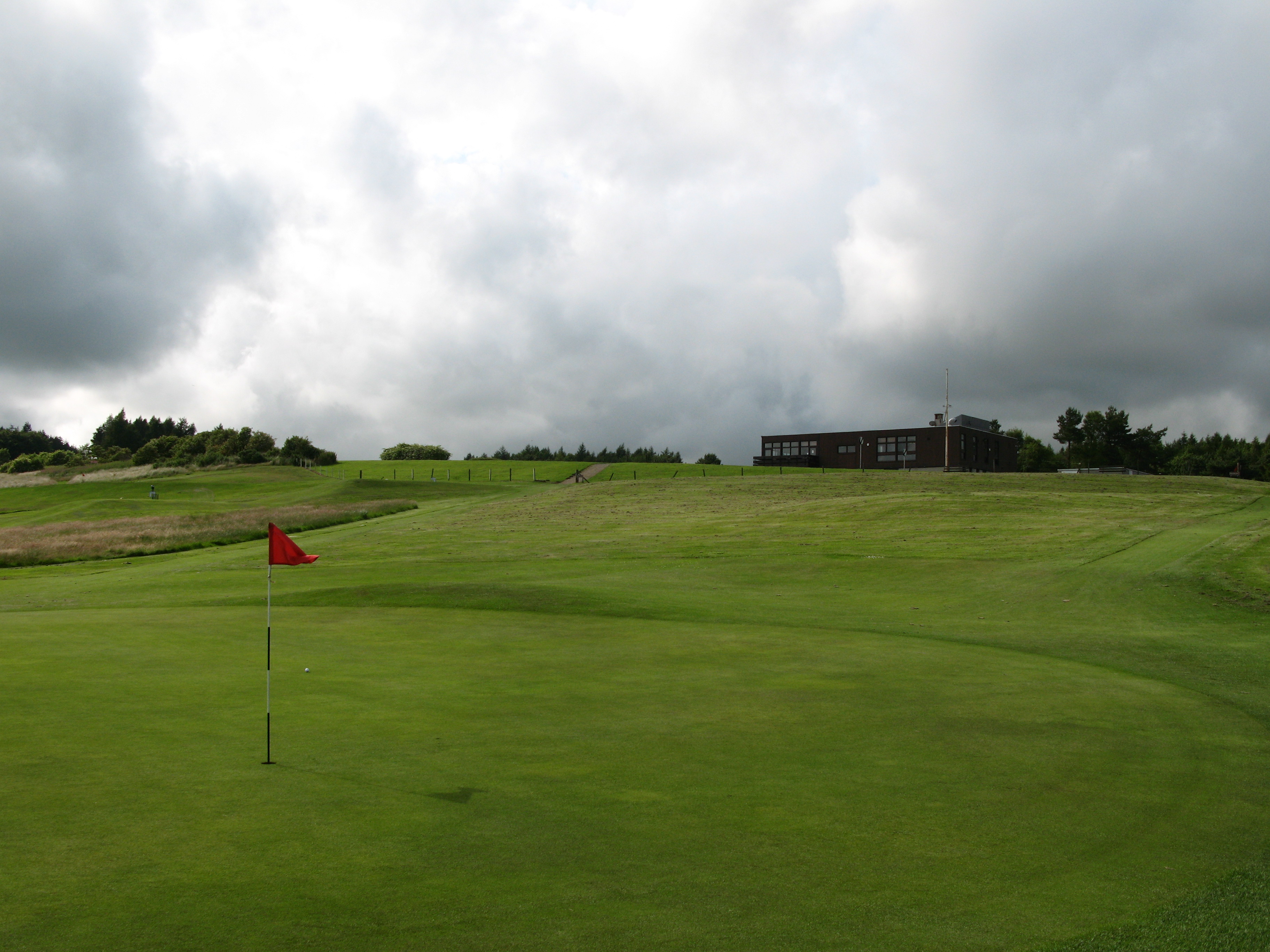
18th green and clubhouse at Glenrothes

18th green and clubhouse at Glenrothes

The heathland holes on the back 9, 11th through 13th, are exposed to the elements and in a breeze (which I had) proved to be a card wrecker – I was 15 over for these 3 holes, with several lost balls in the heavy rough.   Another thing to be aware of is the large greens, therefore ample opportunity to 3 putt.

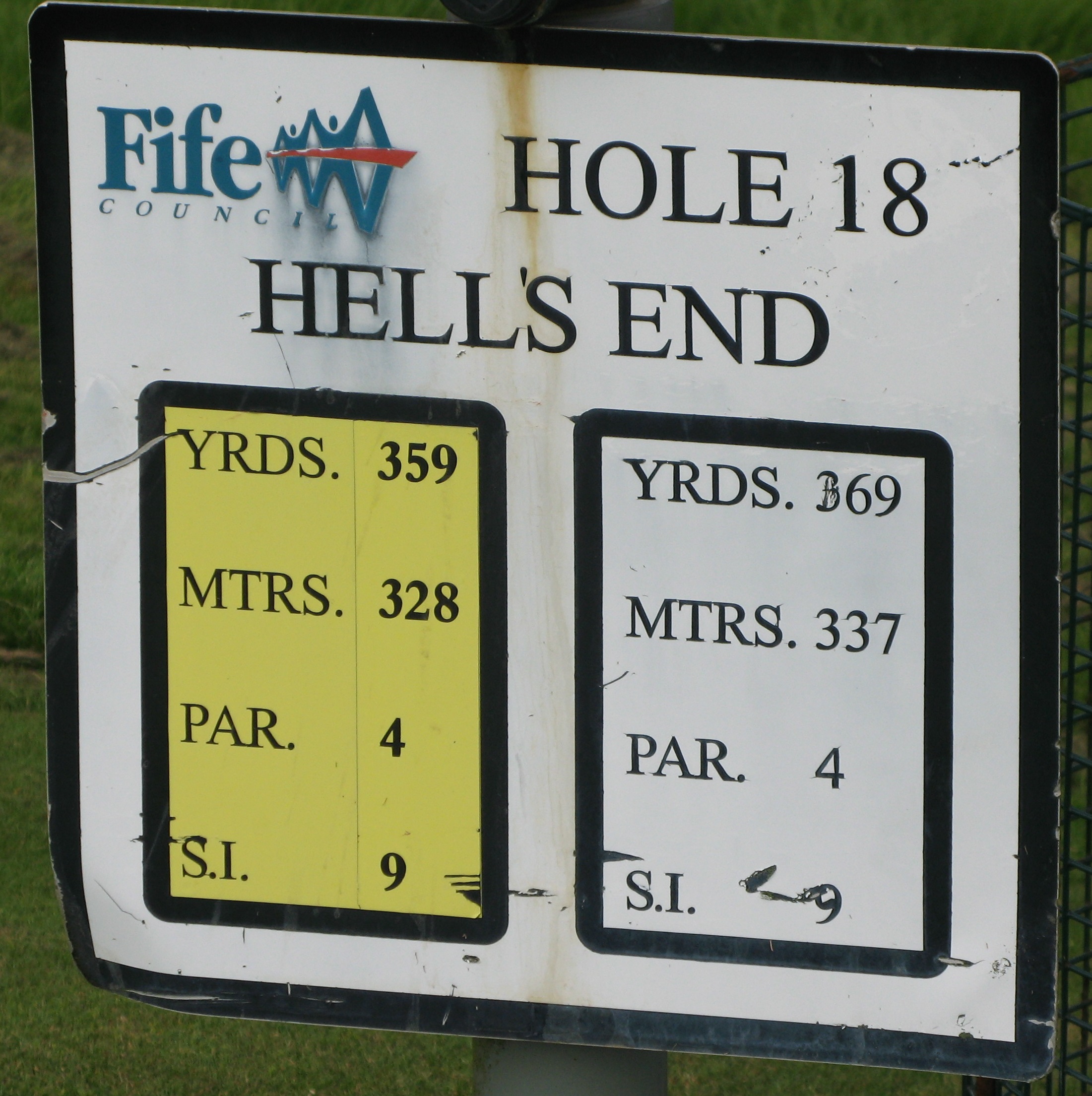
Amply named final hole - given my 62 on the back 9.

Amply named final hole – given my 62 on the back 9.

The course was in very good condition when I played, with only some attention to some fairways needed to get to the next level.  However, with a twilight round only £12 (after 3pm), this is fantastic value golf.  I think many visitors to Scotland would be surprised at the quality of such a public golf course.

This is a highly recommended course to play.

Some Facts

Course Type: Parkland/heathland

Par 71 (3 par 5, 11 par 4s, 4 par 3s)

Distance (yellow)   6223 yards

Moly’s Gross Score  107

150715_Glenrothes scorecard

Moly’s Glenrothes Scorecard – 107 (62 on back 9!)


« Older posts Newer posts »

© 2025 Scotland Golf Bible

Theme by Anders NorenUp ↑