A guide to green fee value for money

Category: 4 star (Page 7 of 20)

125. Gifford. 23 Sep 2021.

Like a roller coaster that leaves you wanting to get straight back on.

Round £25. Par 34. Course Rating / Slope Rating (yellow) 34.1/127. Value (out of 5) – 4

I can’t imaging many golfers not wanting to be a member of Gifford Golf Club. This easy walking nine hole course in the delightful and upmarket village of Gifford in East Lothian has an alluring appeal. No sooner than finished the ninth you’ll want to go straight back on – just like a great roller coaster, that you see kids jumping back in the queue time after time.
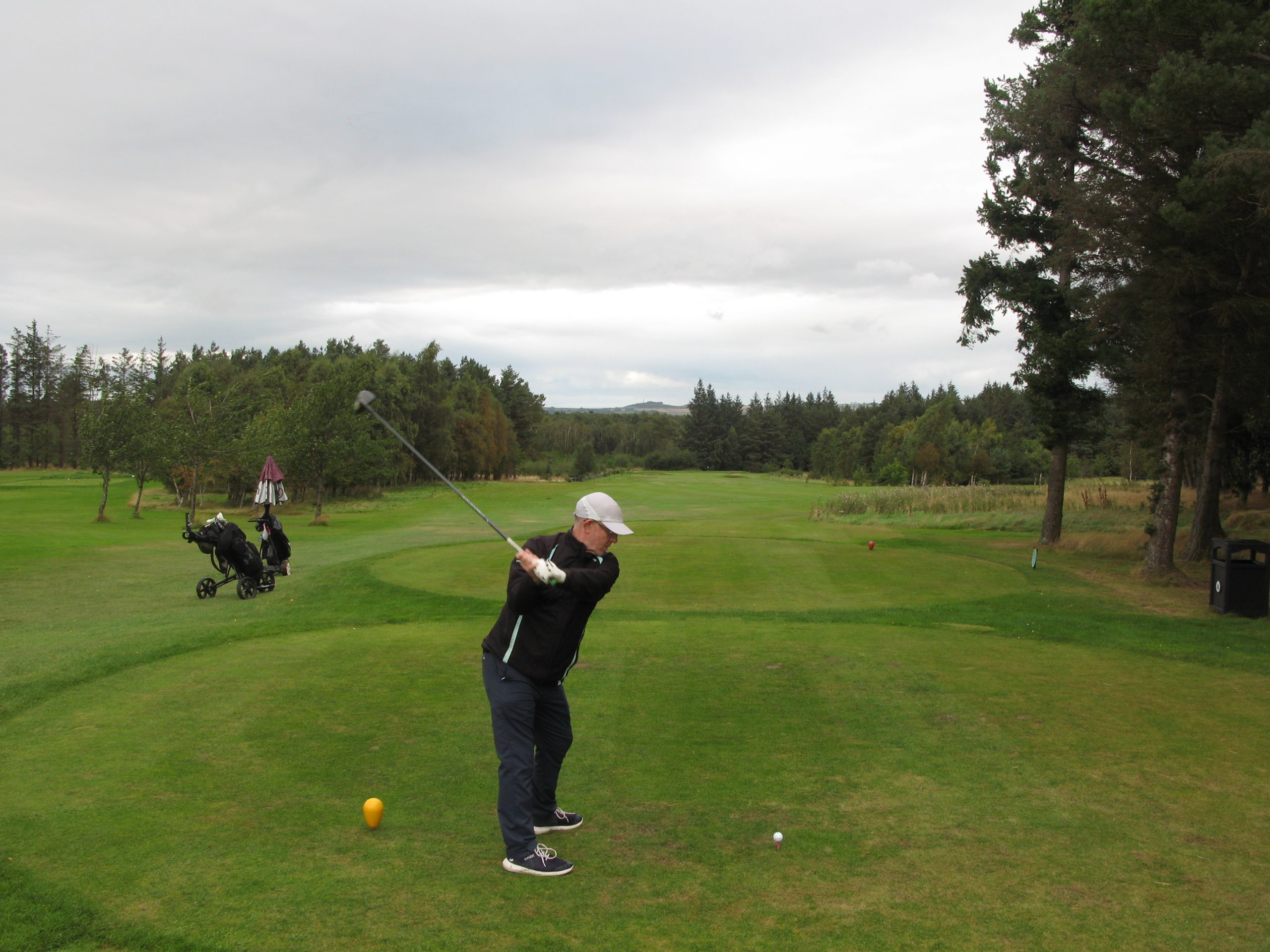
Moly driving at the very tough par four 6th hole at Gifford.

I imagine there’s been quite a few people have gone round here at least 4 times on a summer day – I wonder what the record for most times played in a day is? This is no easy course though. The Slope of 127 will tell you that.

It was designed in 1904 and by all accounts has not changed much since being laid out. It has by all account only had 4 greenkeepers in the nearly 120 years of its existence; that would explain the excellent all round condition including the greens which were quite varied and all challenging.
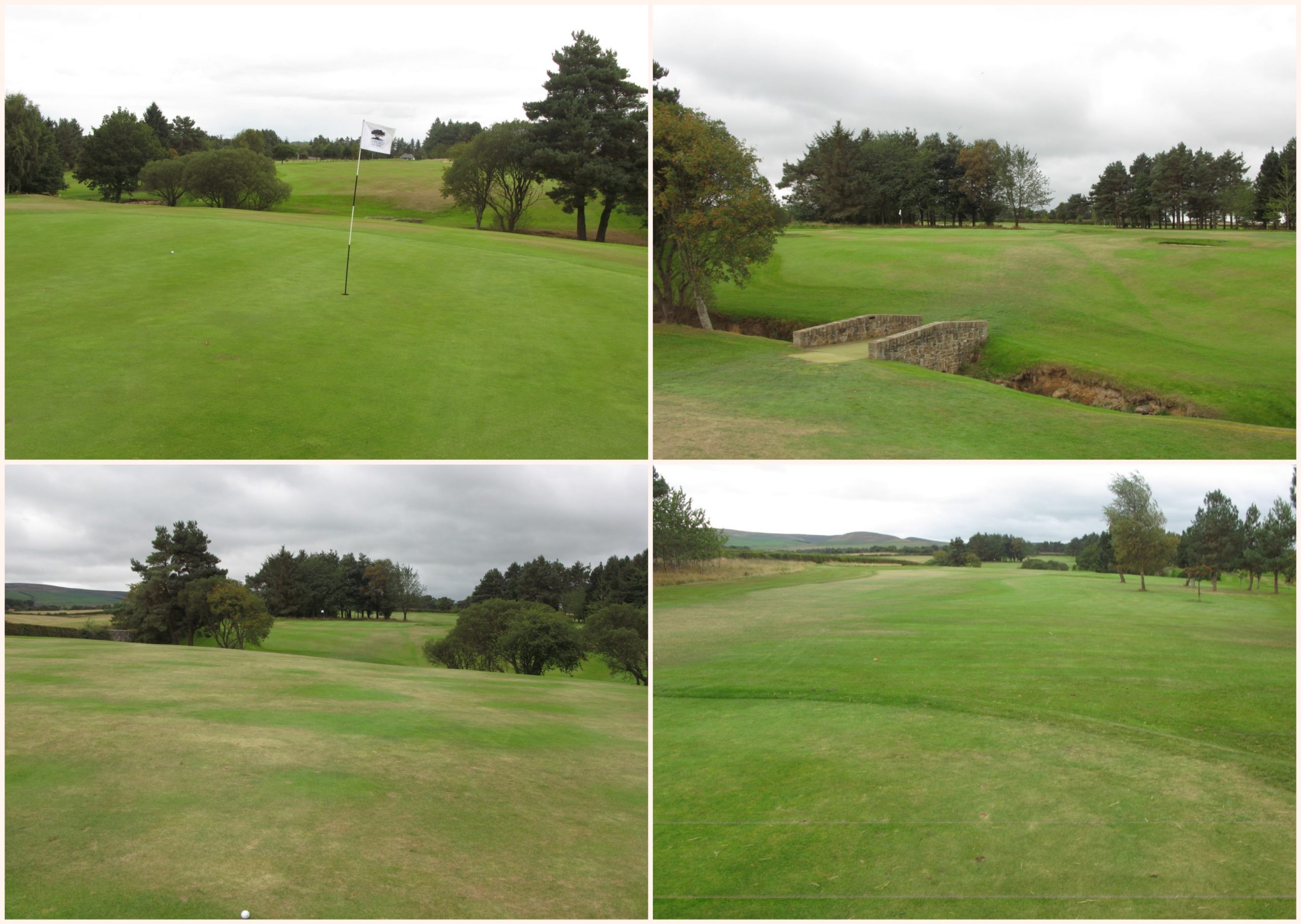
The second hole, a par 4 of around 350 yards, at Gifford is typical of the challenges awaiting.

Despite searching, I couldn’t find the architect, but I imagine it was a top designer given how well the course flows, the excellent hole framing and the variety of challenges presented.

The course starts with three holes played out into the prevailing wind – the first, a well bunkered par 3, one of only two par 3s on the course, needs enough club as the danger is all at the front. The second, although a relatively short par 4, is a difficult hole, where the approach shot into the green, is played over a small burn, and is difficult to judge – trust your distance device here. The third, is the SI 9 hole and is the only ‘easy’ hole on the course – I got a ‘blob’.
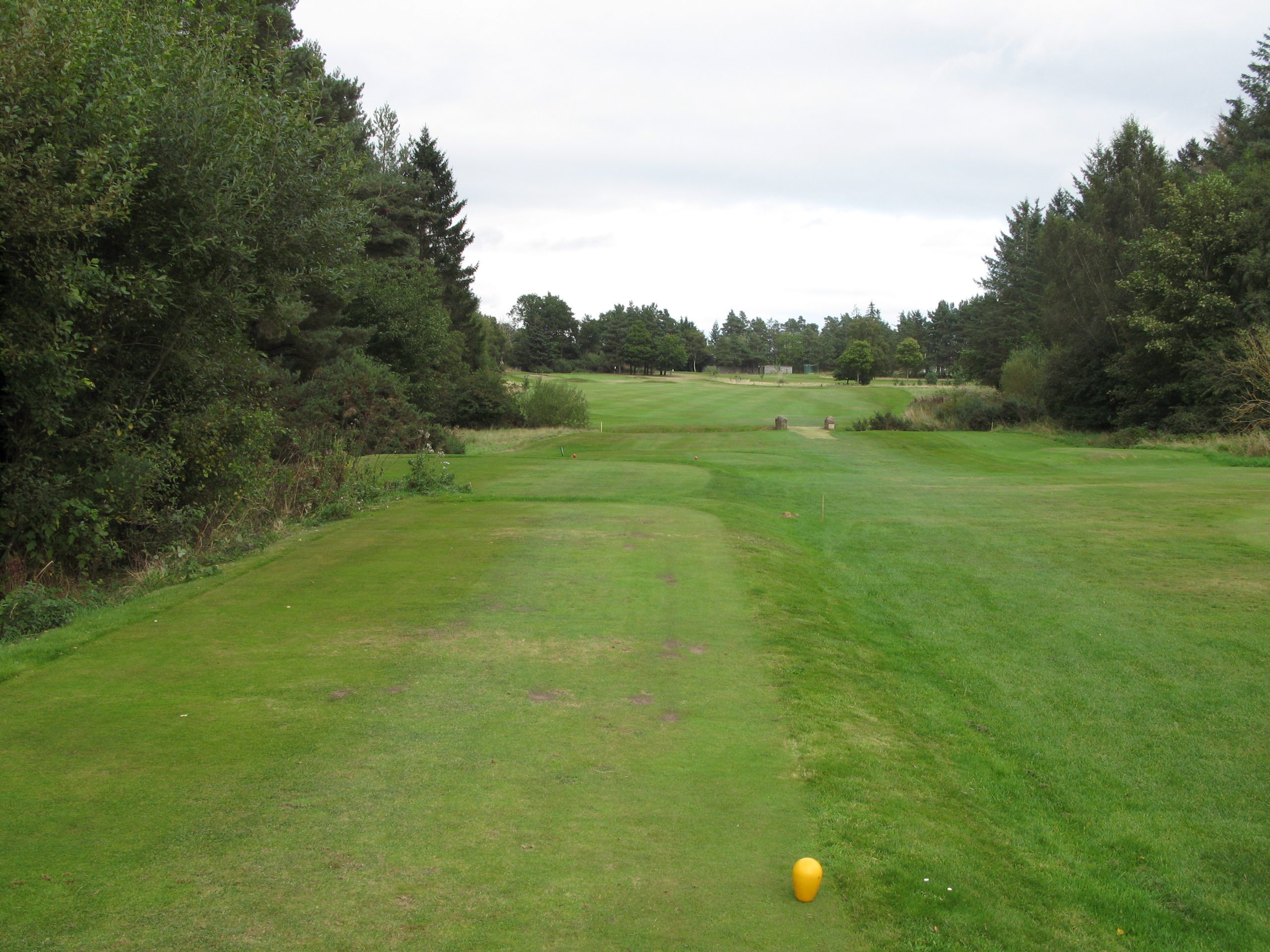
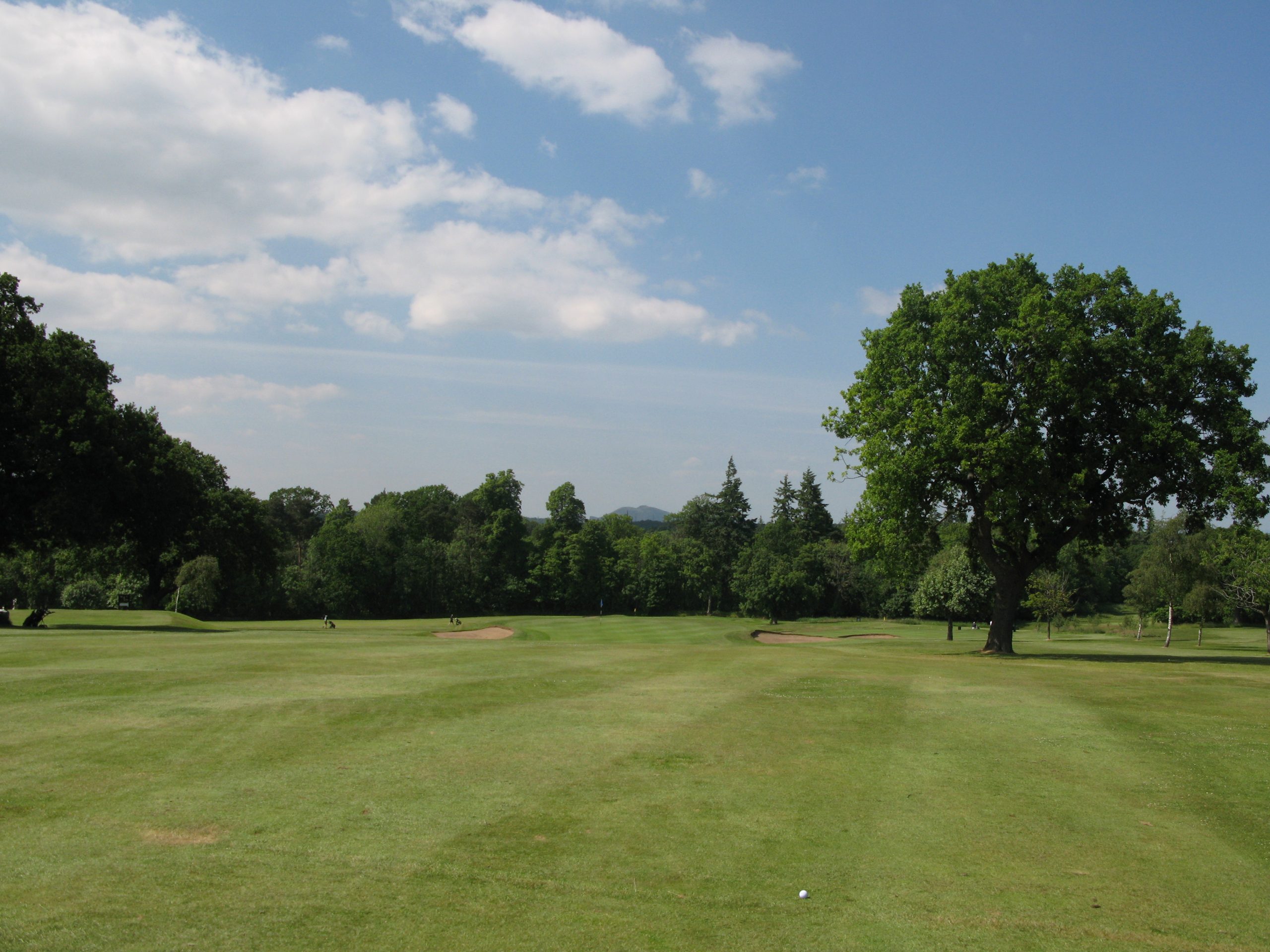
The excellent par four 7th, here showing the great condition of the teeing ground – a sure fire measure of greenkeeping excellence.

The remainder of the holes constantly change direction, making for great variety depending on the wind. Set in open and undulating countryside, you are exposed to the elements, so wind will normally be a dominating feature playing here.

I found the challenge of the wind when I played a little too difficult and I scored a 48, 14 over par, thereby using all my handicap on the “first” nine holes. There are a couple of the holes, which have significant alternative tees, to enable a “back” nine to be played, albeit I never consider this anything other than 9 holes. It would be like classifying different tee boxes as constituting a different hole.
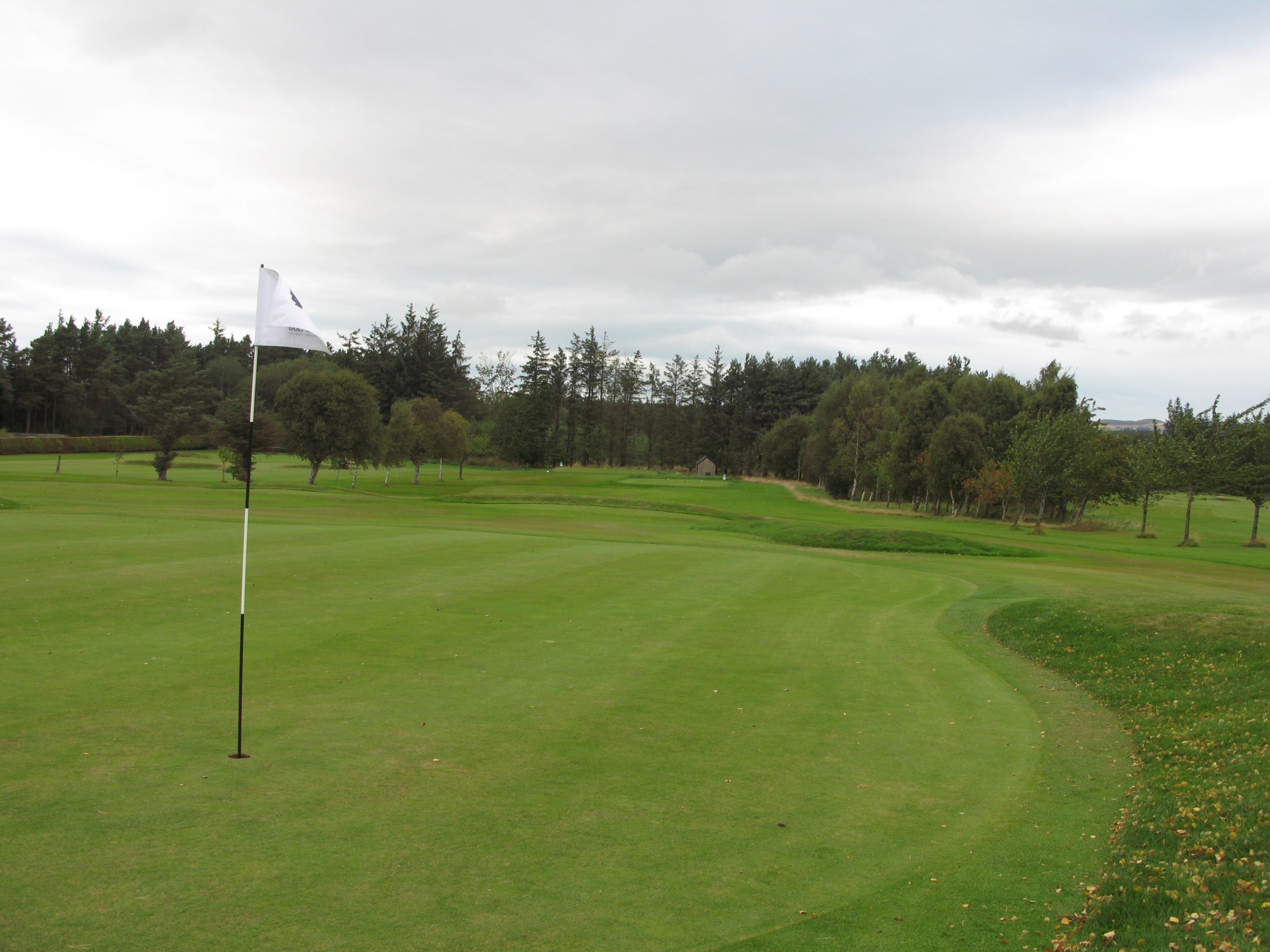
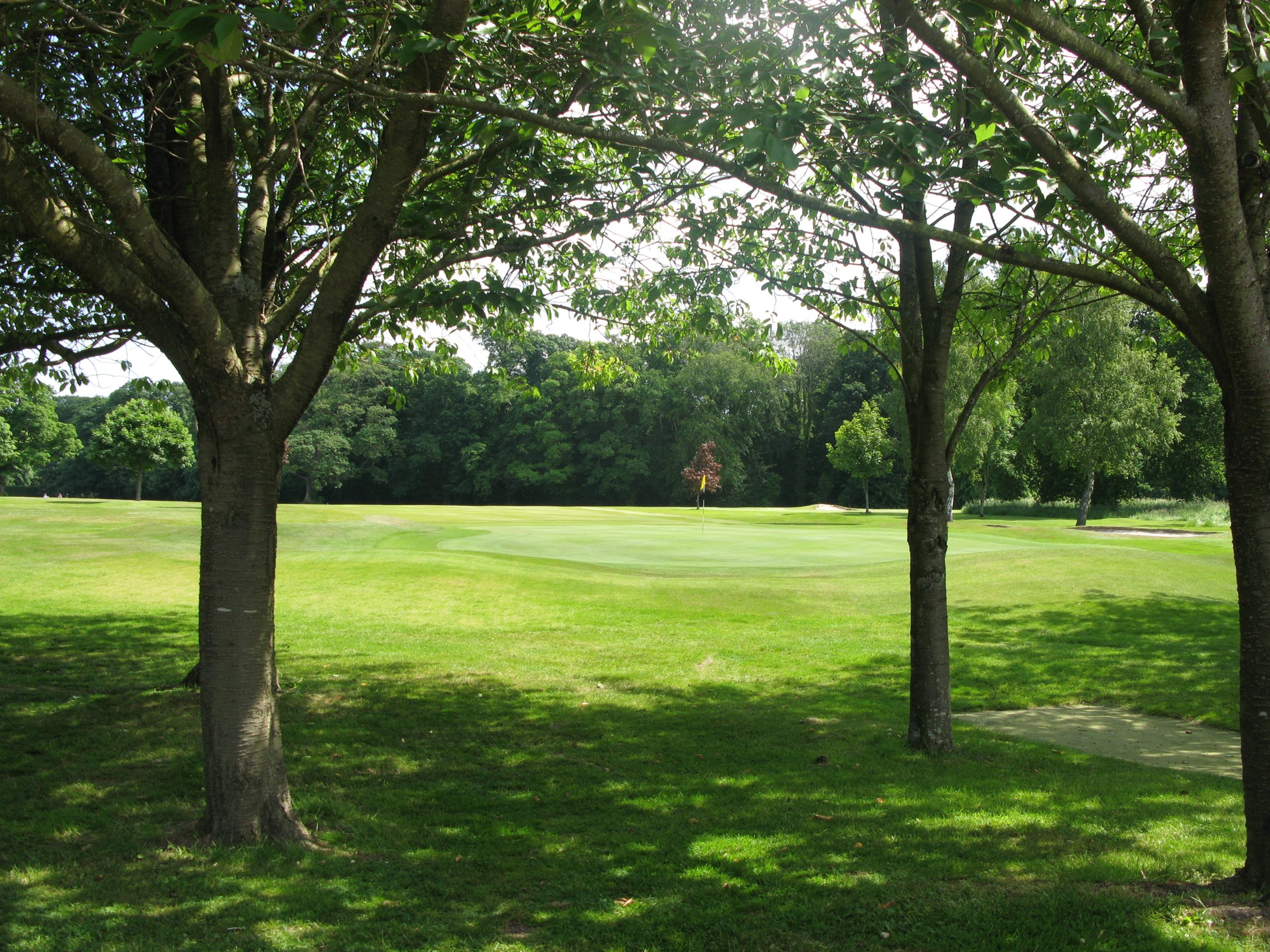
The good greens at Gifford, here shown at the par four 5th.

The clubhouse is also delightful and give yourself time for the exquisite but homely baking on offer.

On having a discussion with the very friendly attendant/cook, I found out that many local resident of Gifford village – a very well heeled place – are members of both Gifford and Gullane. Now that does make me envious!

Worth playing Gifford.

Course Type: Parkland

Par 34 (7 par 4s, 2 par 3s)“front 9”

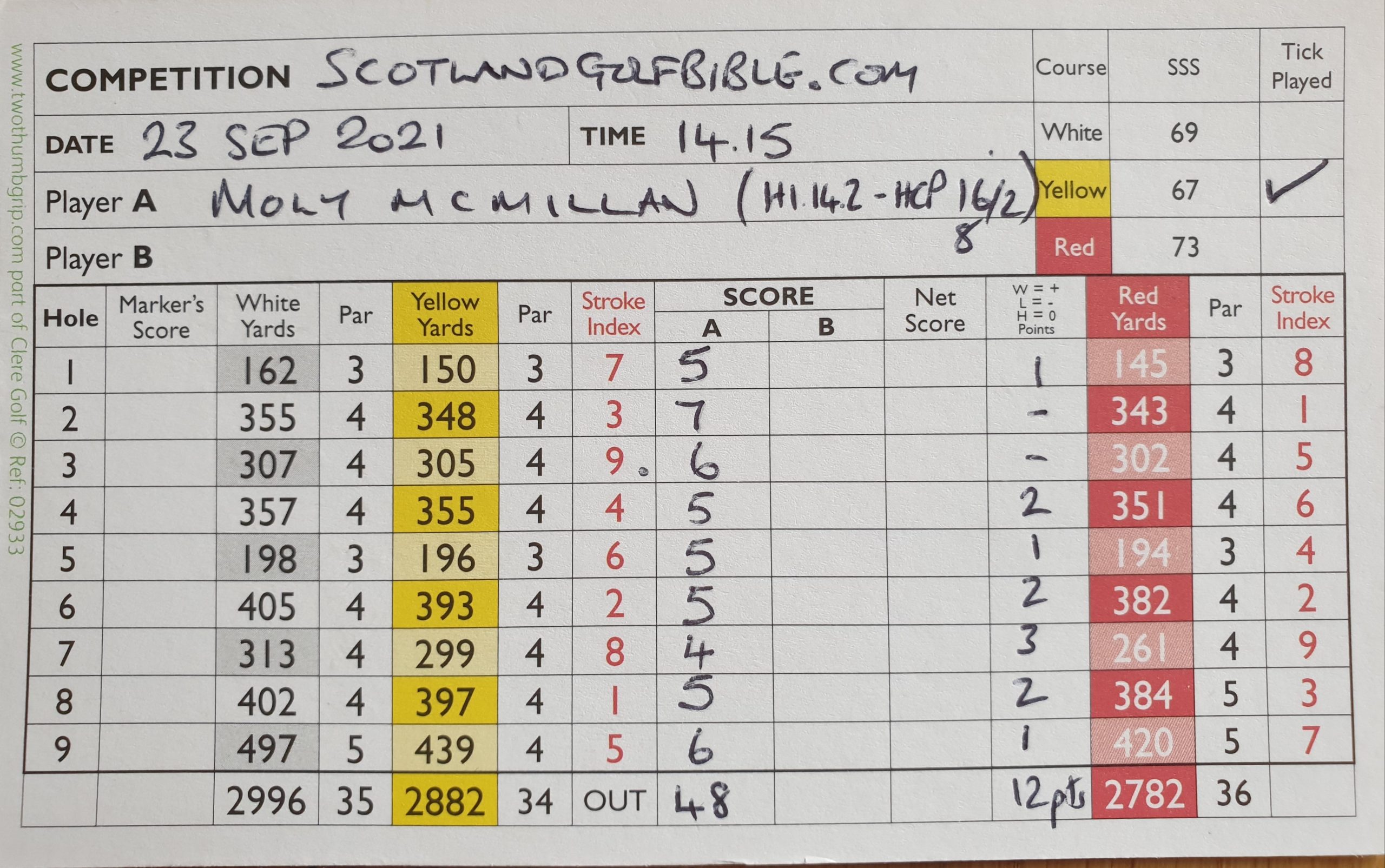
Distance: 2882

Moly’s Gross score48

Moly’s 48 – for 12 stableford points – on this delightful nine hole Gifford course.

121. Newbattle. 22 June 2021.

This oasis might be the cheapest Harry Colt course in the world?

Round £40. Par 69. Course Rating / Slope Rating (yellow) 68.1/127. Value (out of 5) – 5

Drive through Dalkeith, which might appear a bit drab, and through the car park of Newbattle GC and you are met with a graceful parkland layout, with many magnificent trees, that just seems so unexpected. The course is an easy walking affair, other that the 2 holes (2nd and 17th) that play across the river esk valley that sits between the opening and closing holes and the rest of the course. With a substantial club house, this makes Newbattle a great venue for a group or society day out.

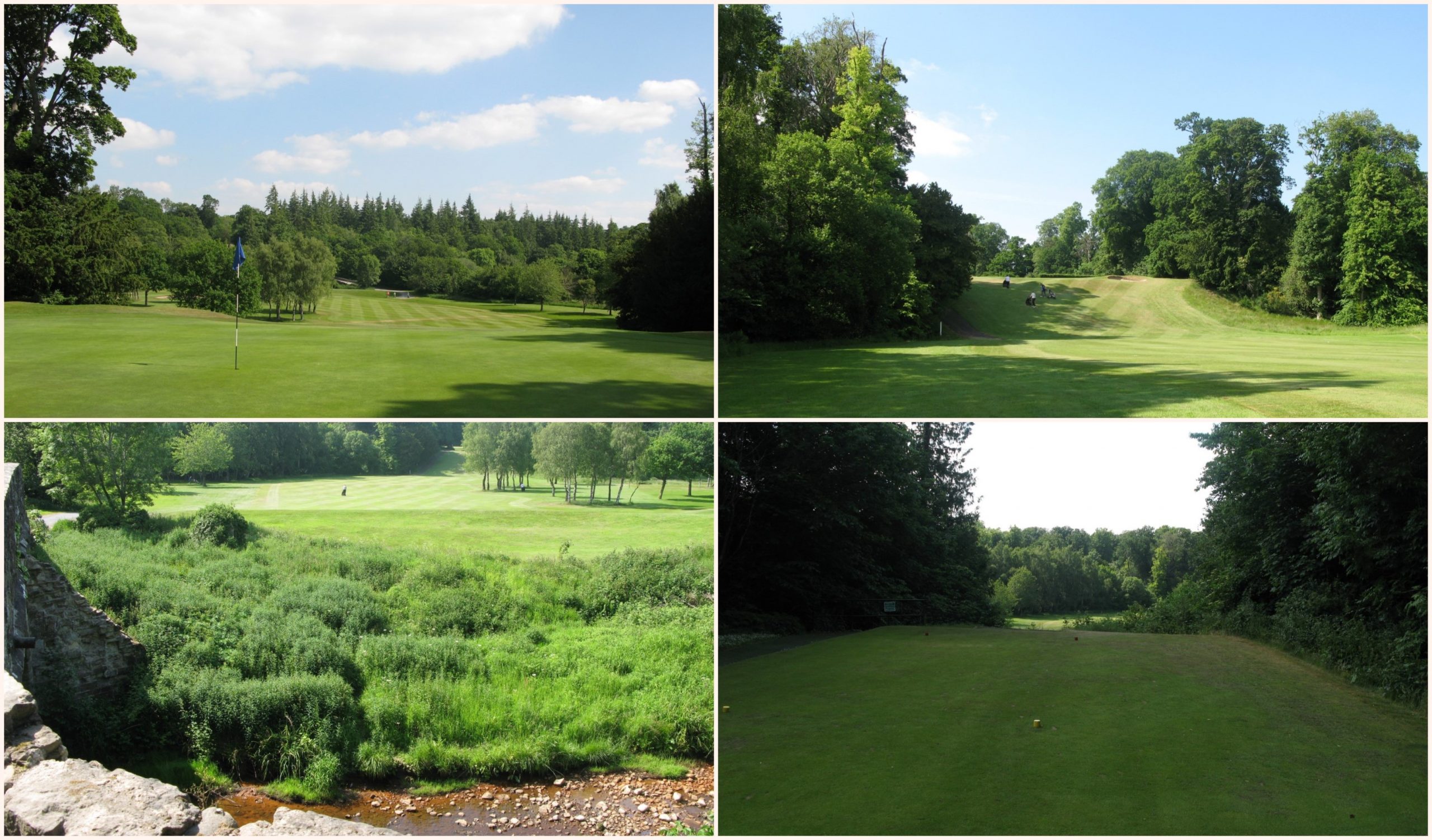
The delightful 17th at Newbattle, a par 4, stroke index 4, which must be a formidable match play hole. The River Esk is just visible, and never comes into play.

We know about the genius of some golf course design; the majestic Augusta of Alister McKenzie, the natural beauty and guile of The Old Course, the brutal nature of Pete Dye’s Ocean Course at Kiawah Island. Sometimes though, great golf course design is difficult to put your finger on.

When I played Newbattle, in Dalkeith near Edinburgh, it felt great, not because I played well, not because the weather was nice, but because ‘it just did’. It was almost indescribable why the course flowed so well and that I think is real genius. That was what Harry Colt design can be.

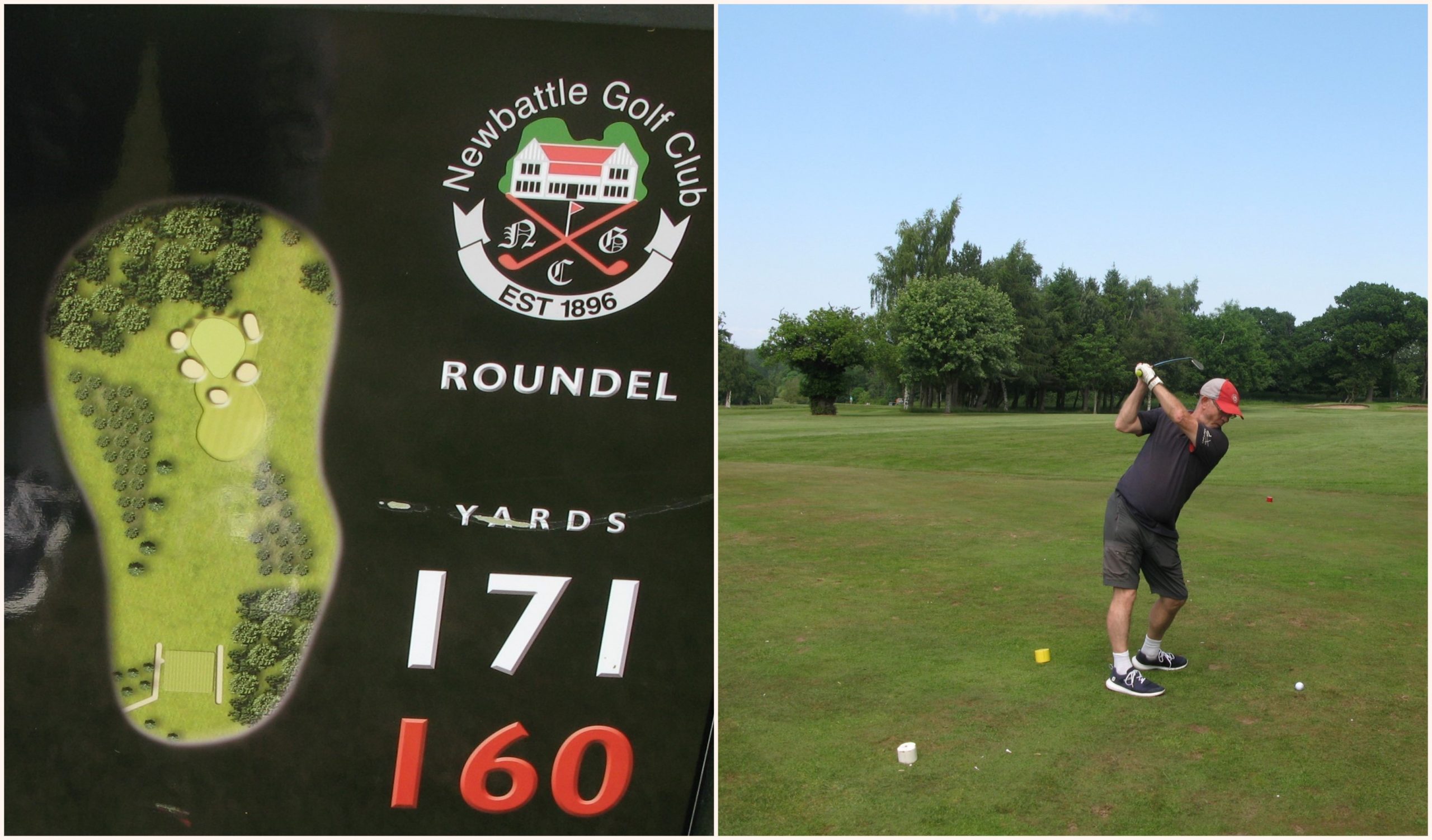
The very well bunkered par three 11th hole, ‘Roundel’, at Newbattle.

Although the Newbattle club was formed in 1896, the current full 18 hole course, the Colt legacy, was built in Dalkeith in 1934. Originally linked to Dalkeith Golf Club (1880), it’s called Newbattle as it’s within the historic boundary of Newbattle Abbey, a Roman Catholic monastery, and a key part of the Scottish religious story.

The tee markers, here at the 9th, are typical of the small yardage differences at Newbattle

When Fran and I played on a delightful mid summer day, the course was very busy, but never seemed to get back logged. The tees, fairways and greens were immaculate, with the bunkers still unraked due to the ongoing Covid Pandemic.

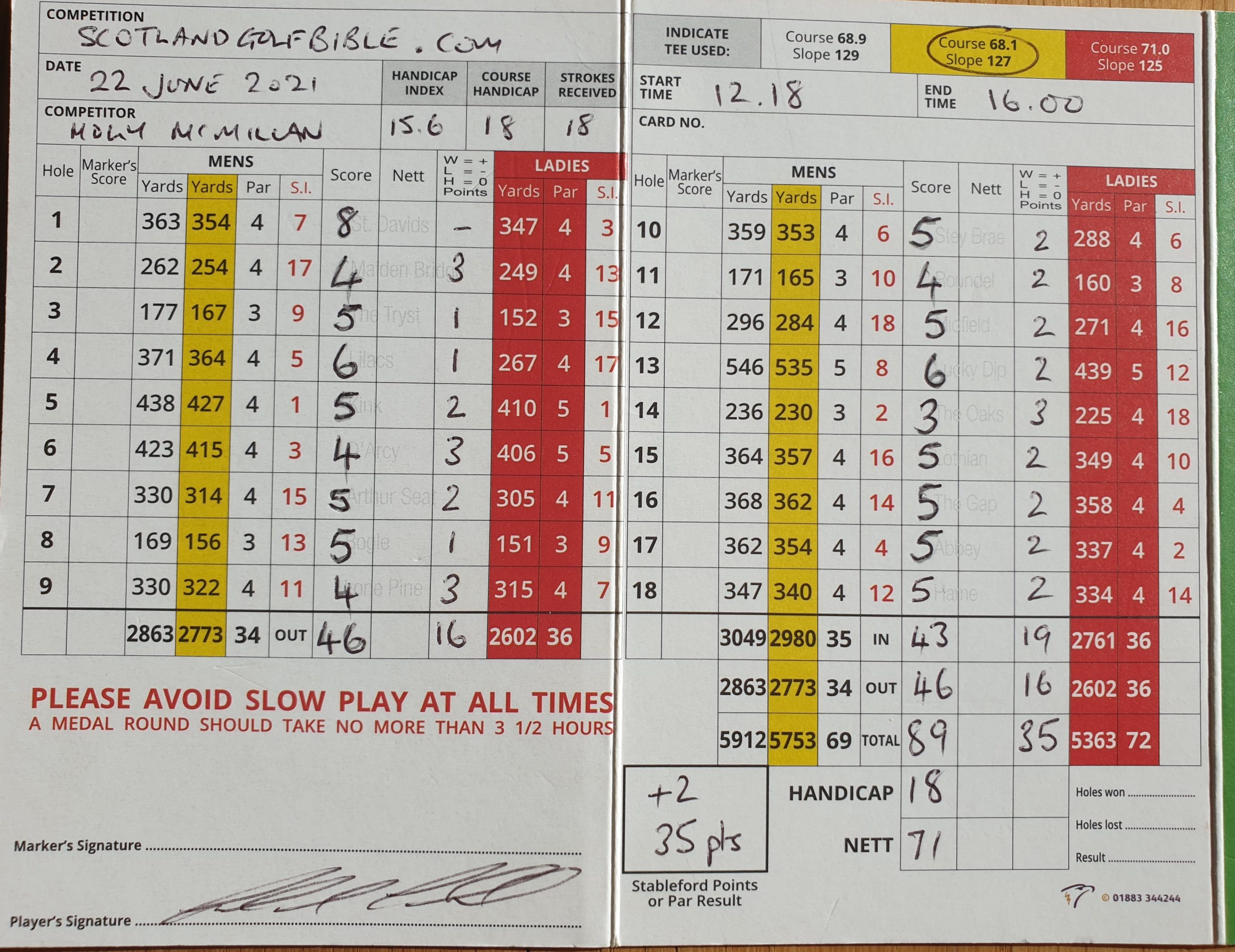
After pulling my opening drive about 2 yards out of bounds left, then hitting my second ball over the back of the first green, that turned out to be my only ‘blob’ in returning an 89, for 35 stableford points. If it were a competition though, it wouldn’t have troubled the scorers on this ideal day for golf.

The approach to the 13th at Newbattle, with Arthur’s Seat in the background

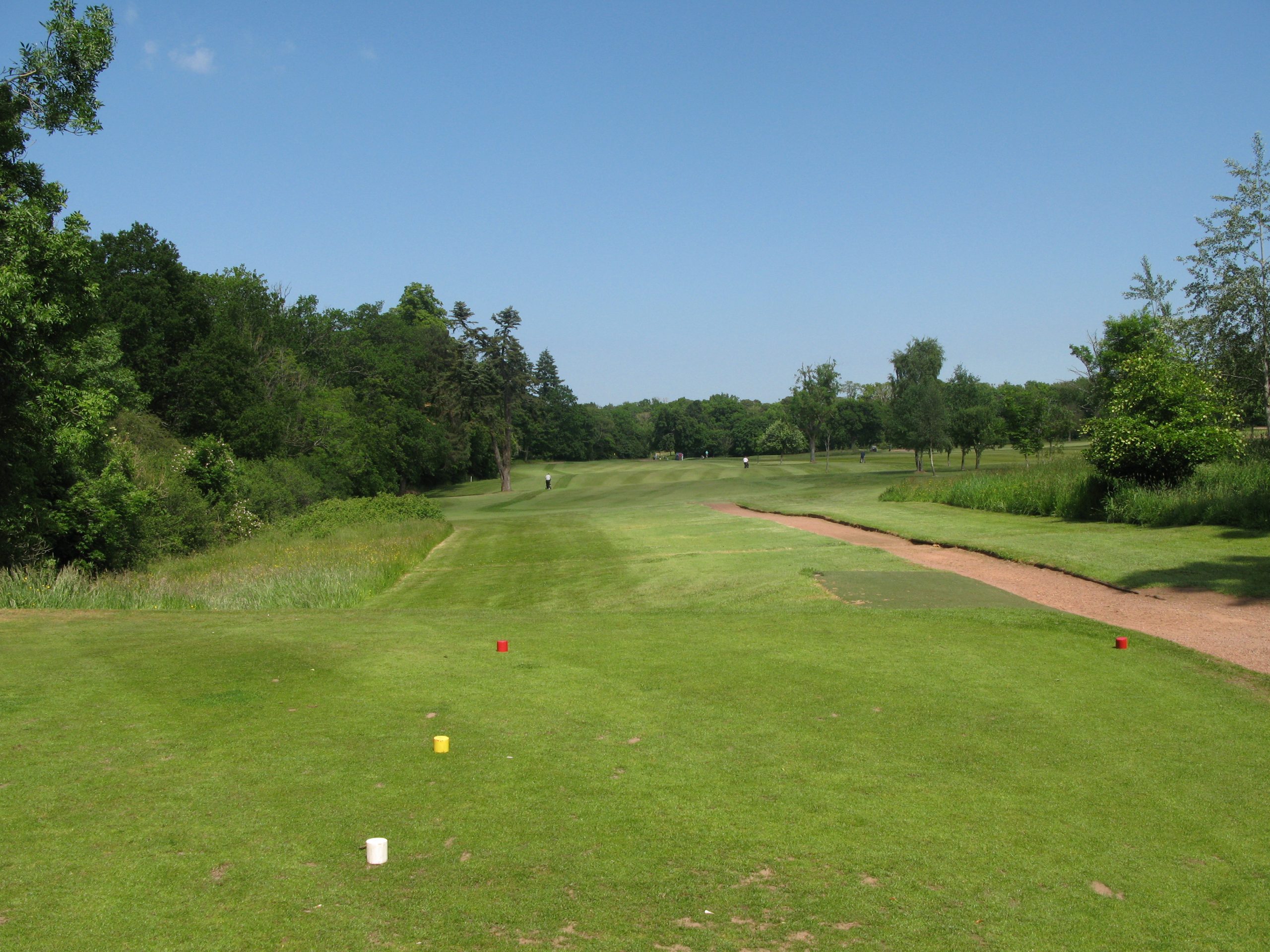
Play aside, this is a great little course well worth playing as part of an East Lothian tour. In terms of East Lothian value for money, it must be near the top of the pile. It’s certainly underrated in my opinion. The stand out holes for me, were the 5th, a long par 4, and easily the Stroke Index 1 hole and the long par 3 14th hole. To score well though, you need to avoid the clever and penalising bunkers.

The relatively easy finish at Newbattle, except if you find the copse of trees beside the green

There is an argument to say Harry Colt, the main contributor to many of the world’s great courses, including 3 on the Open Championship rota (Muirfield, Royal Liverpool, Royal Portrush), is the foremost designer of his age. I think Newbattle might just be the cheapest green fee of the more than 100 courses designed in whole or part by Colt.

Course Type: Parkland

Par 69 (1 par 5s, 13 par 4s, 4 par 3s)

Distance: 5753

Moly’s Gross score89

Moly’s scorecard – a very decent 89

119. Aberfoyle. 5 Nov 2020

A wonderfully understated golf course

Round £25. Par 66. Course Rating / Slope Rating (yellow) 64.1/115. Value (out of 5) – 5

From the endearing conversation with local members, to the beautifully crafted use of space and to meeting the challenge of some excellent holes, Aberfoyle golf course is an absolute joy, set in the magnificent surroundings of the Trossachs area of Scotland. It’s a must play and incredible Scottish golfing value.

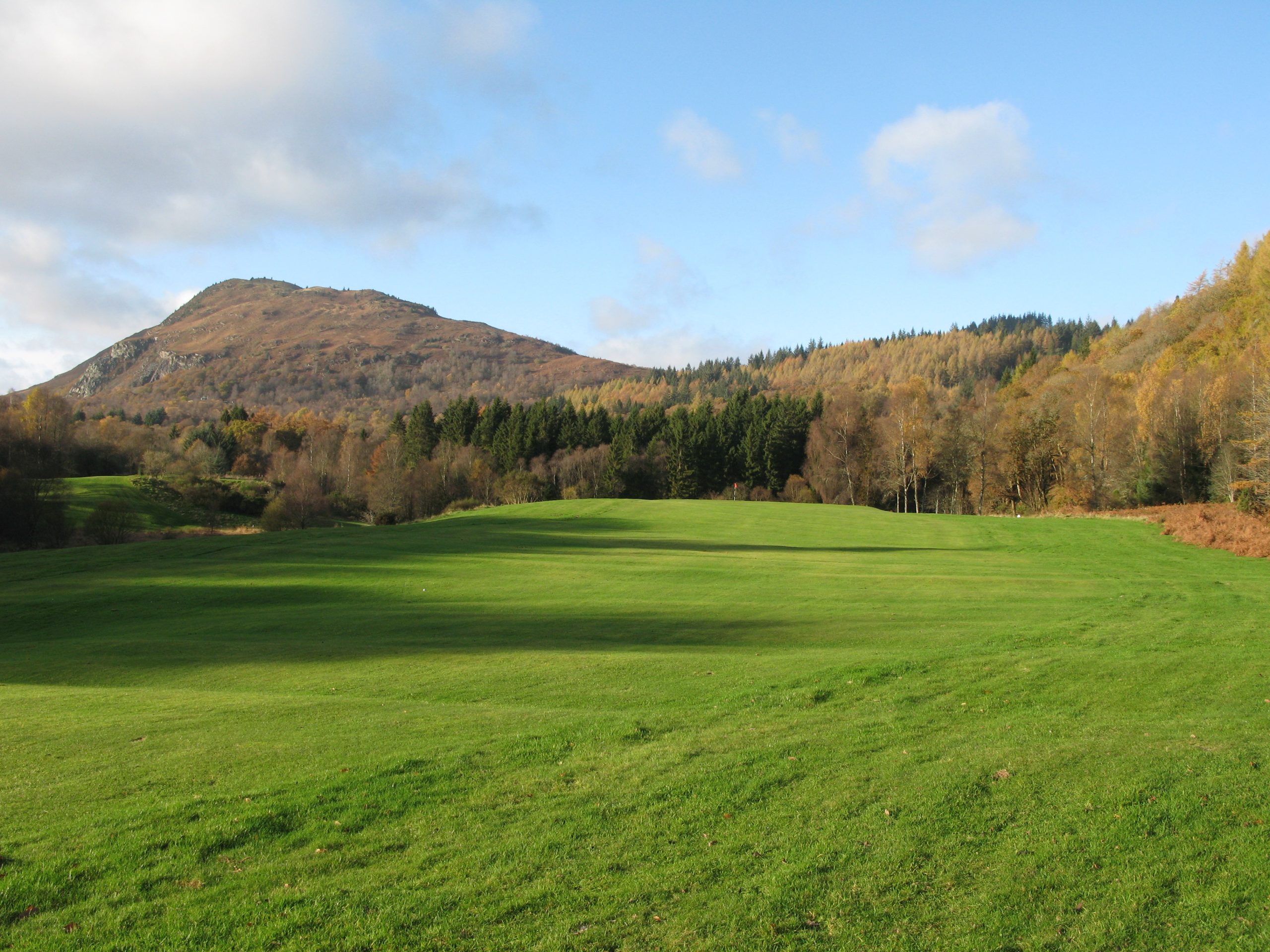
The 6th tee at Aberfoyle, with the typical scenic views of he Trossachs countryside.
Bend that right leg Moly!

The course was established in 1890 with 9 holes and only extended to 18 holes in the 1980s, albeit it’s a difficult job trying to guess the original 9. It’s short in length, at well under 5000 yards from the yellow tees most people will use, but still has a slope rating of 115 despite only having 8 bunkers.

My favourite hole at Aberfoyle – the short par four 4th, with tricky thin green from front to back.

Set among the glens, the wind may make some of the longer par 3s and par 4s difficult to reach in regulation. Particularly so, for those holes played into the prevailing wind; the long par three 5th and par four 14th, well deserving of their stroke indexed 2 and 1 ratings.

The approach shot into the first at Aberfoyle, is the first of several blind shots played at this course.

The highlight of my playing was actually a bogie 4 at the 5th, after pulling a 3 wood tee shot into the heath on the left of the green and getting the ball miraculously onto the green with my second. It’s not always birdies that get remembered.

The most memorable hole, however, was the gorgeous short par four 4th hole. Again, played into the prevailing wind, it has a delightful thin green from ‘front to back’. The local guide, excellently displayed on the good club website, is well worth reviewing before play, with the advice on the 4th not to be tempted to go for the green from the tee, but rather play conservatively left with a mid iron, or hybrid, to leave an easy pitch up to the green.

The lovely par three 10th hole at Aberfoyle

The recent weather when I played had been horrendous and I was amazed at the great condition of the course, testament to the natural drainage and mindful greenkeeping. I can imagine the joy of playing Aberfoyle on an early or late Summer evening.

It is a tough walk tough, with several blind shots to encounter (the 17th was the most striking in this regard), so a yardage device is also recommended. There are also some holes that cross each other, something typical of the late Victorian courses. Some amalgamation golf course guides cite James Braid as the designer, but I didn’t get any confirmation of that on the list of courses on the Braid association guide. It would be interesting to know who the designer of the original 9 holes was.

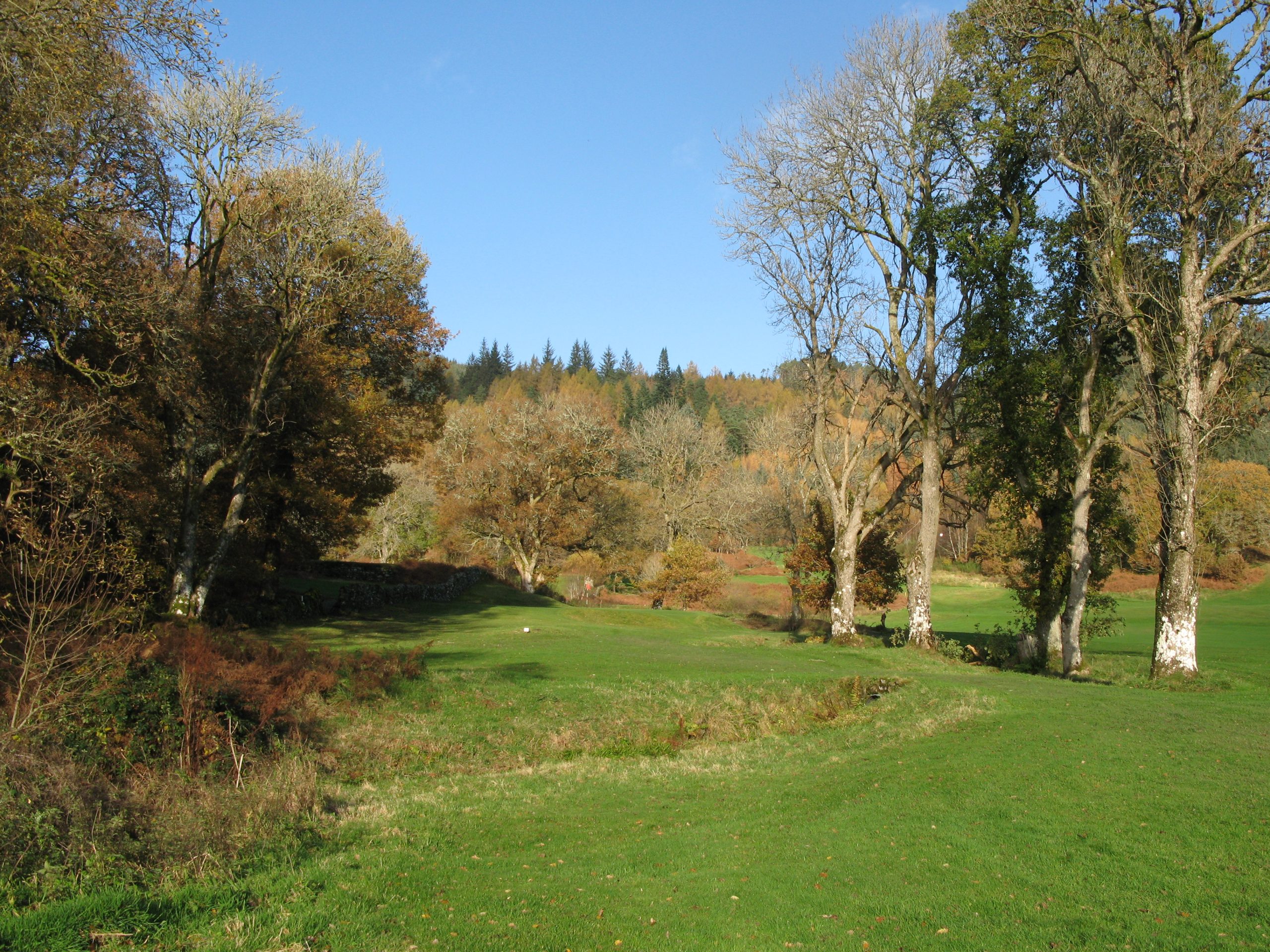
The beautiful scenery at Aberfoyle, displayed here at the 11th

Golf is such a game of “what if’s” – on the day, mine were a triple bogie 7 on the 16th followed by an even worse 9 on the par four 17th having lost 2 balls. Other than those holes, I played pretty well.

It’s a great course Aberfoyle, well worth the journey. One trivial point – having paid £15 on-line using the clubs booking system, I turned up to find a sign on the closed clubhouse door saying “From 1st Nov, only £10”. Despite being a little peeved, this is still 5-star value!

Course Type: Heathland

Par 66 (0 par 5s, 12 par 4s, 6 par 3s)

Distance: 4767

Moly’s Gross score89

Moly’s Aberfoyle scorecard – 89

117. Earl of Mar. 30 Oct 2020.

Rainbows and Celebs are potential hazards at this excellent new course

Round £60. Par 70. Course Rating / Slope Rating (yellow) 70.8/129. Value (out of 5) – 4.5

The official name of this golf course is the ‘Earl of Mar’, but I’ve entitled the blog ‘Mar Hall’ ,the name of the hotel, which opened 2004, as that is what the course is more commonly listed as.

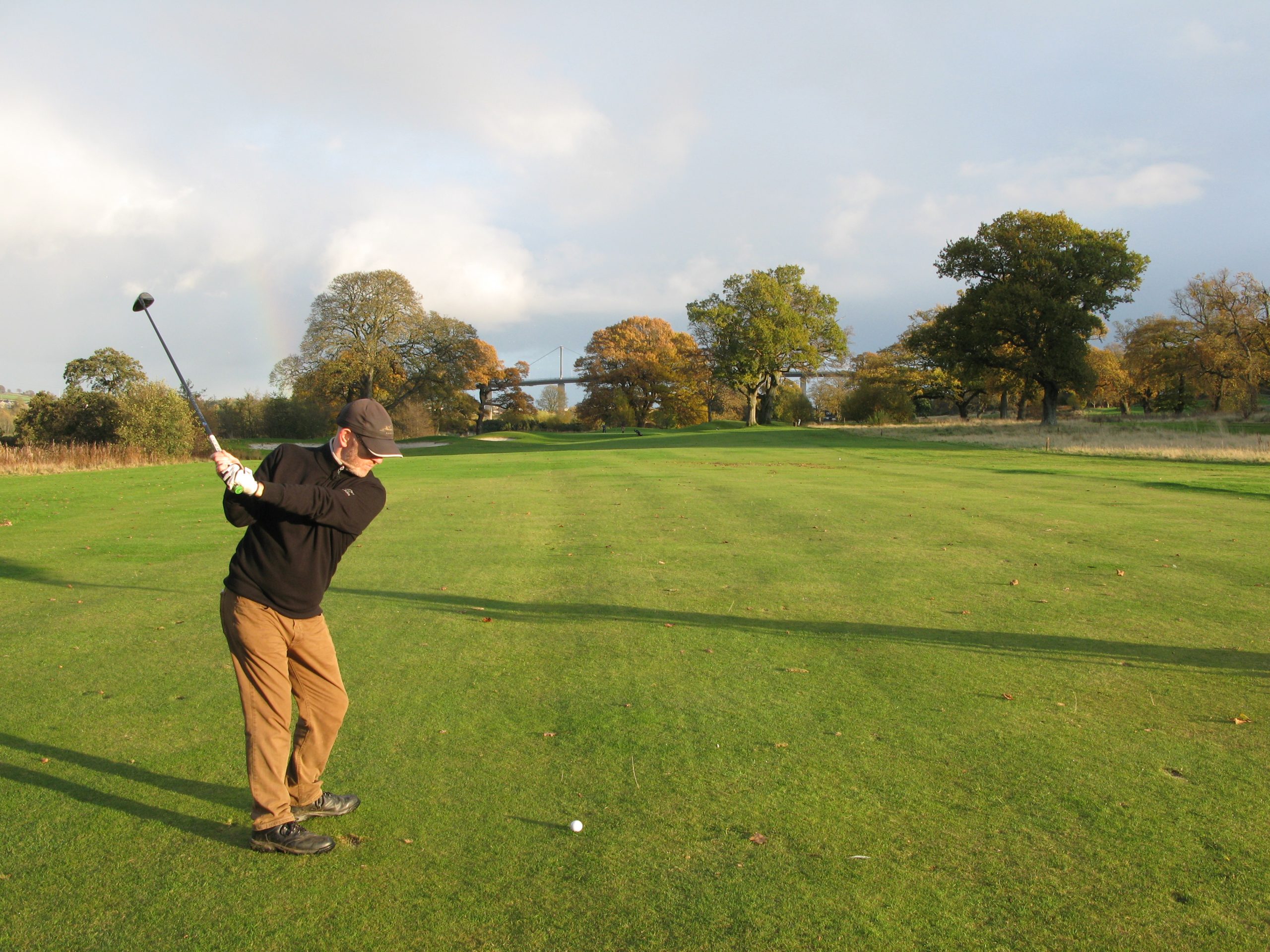
Moly at the par five 15th hole, with the Erskine Bridge on the horizon. One of only two par 5s on the course.

The course itself was designed by the renowned Dave Thomas and founded in 2010 ; and what a great golf course he has created, making full use of the available land – albeit it does feel a little compact in places with several holes adjoining in an ‘up and down’ fashion, making it play wider than perhaps intended. However, with USGA style bunkers, in both fairway and greenside, this course requires accuracy off the tee and especially into the greens, where knowledge of your yardage will pay dividends.

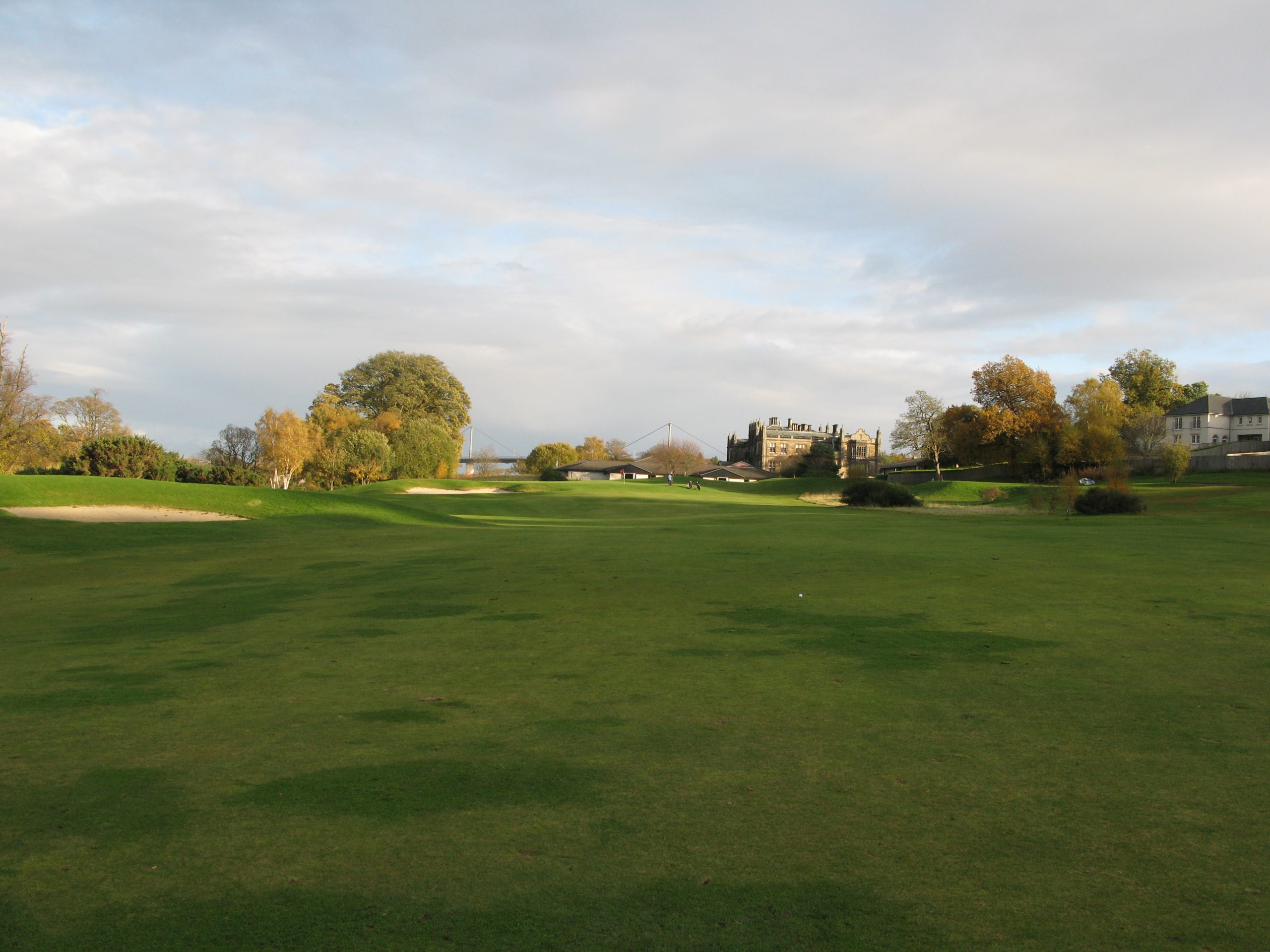
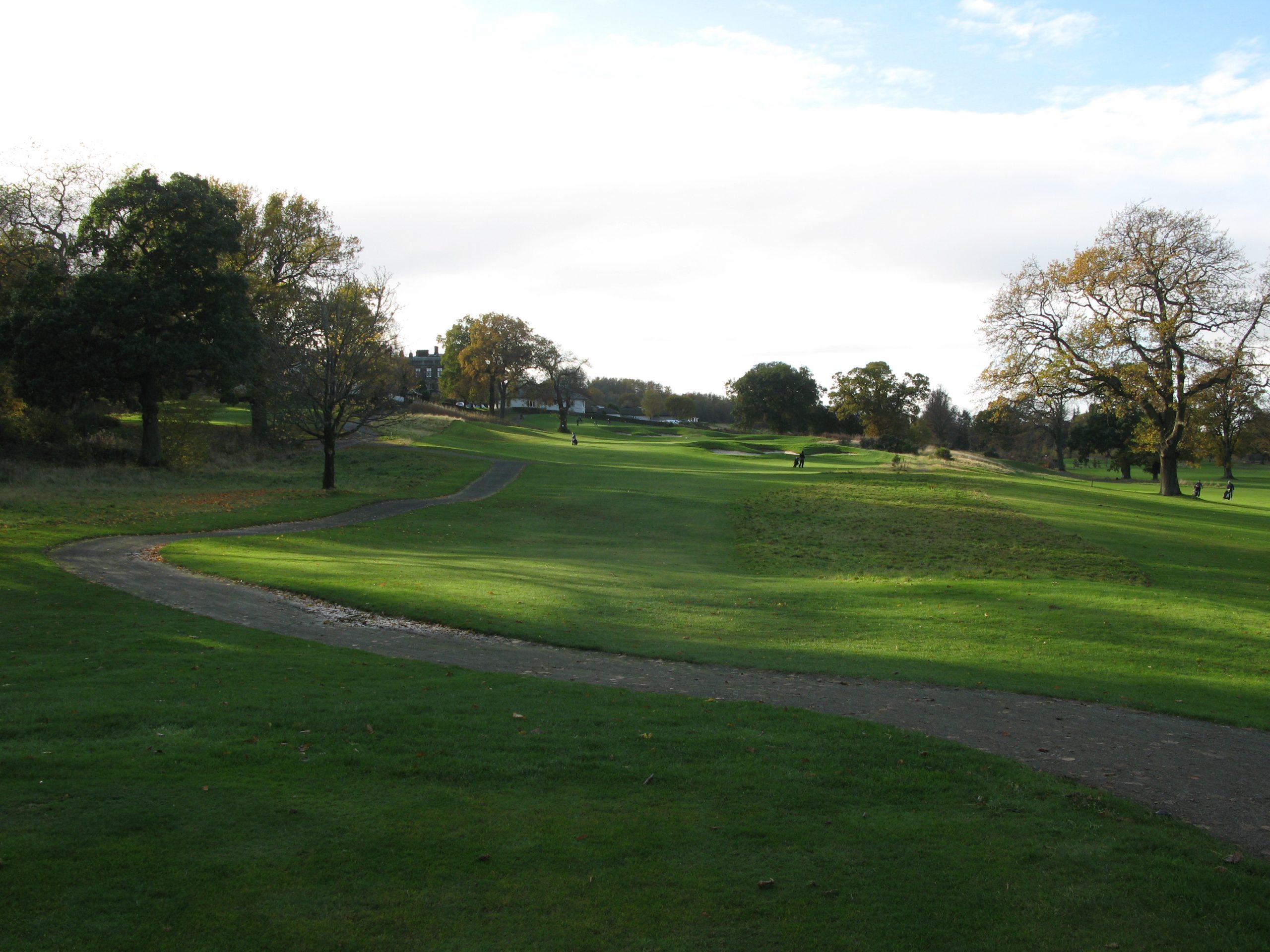
The approach at the 12th at Mar Hall, with the Baronial 18th Century Manor, now hotel, in the background. The fairways had held up to recent torrential rain, but were a little mossy.

Coupled with a stay in the collocated 5 star hotel, the former Erskine Estate and House make for an excellent golfing break, especially with its proximity to Glasgow and its airport. The Erskine bridge, which crosses the River Clyde, dominates the skyline, especially at the downhill dog-leg left second hole, where you feel you are playing under the bridge. Although set along the south bank of the Clyde, the river doesn’t come into play, which is a pity.

The excellent 13th hole, a dog-leg right, par 4, where you need to keep well left of the fairway bunkers, to give a par opportunity.

Other than the river, there are outstanding views of the hills to the north and some magnificent trees, which Thomas has carefully utilised in the design.

At over 6200 yards from the yellow tees, at par 70, this is a challenging course for all bar the single figure golfer. Some of the shorter par 4s, such as the delightful 9th hole, play slightly uphill into the prevailing wind and will require 2 decent shots to reach in regulation.

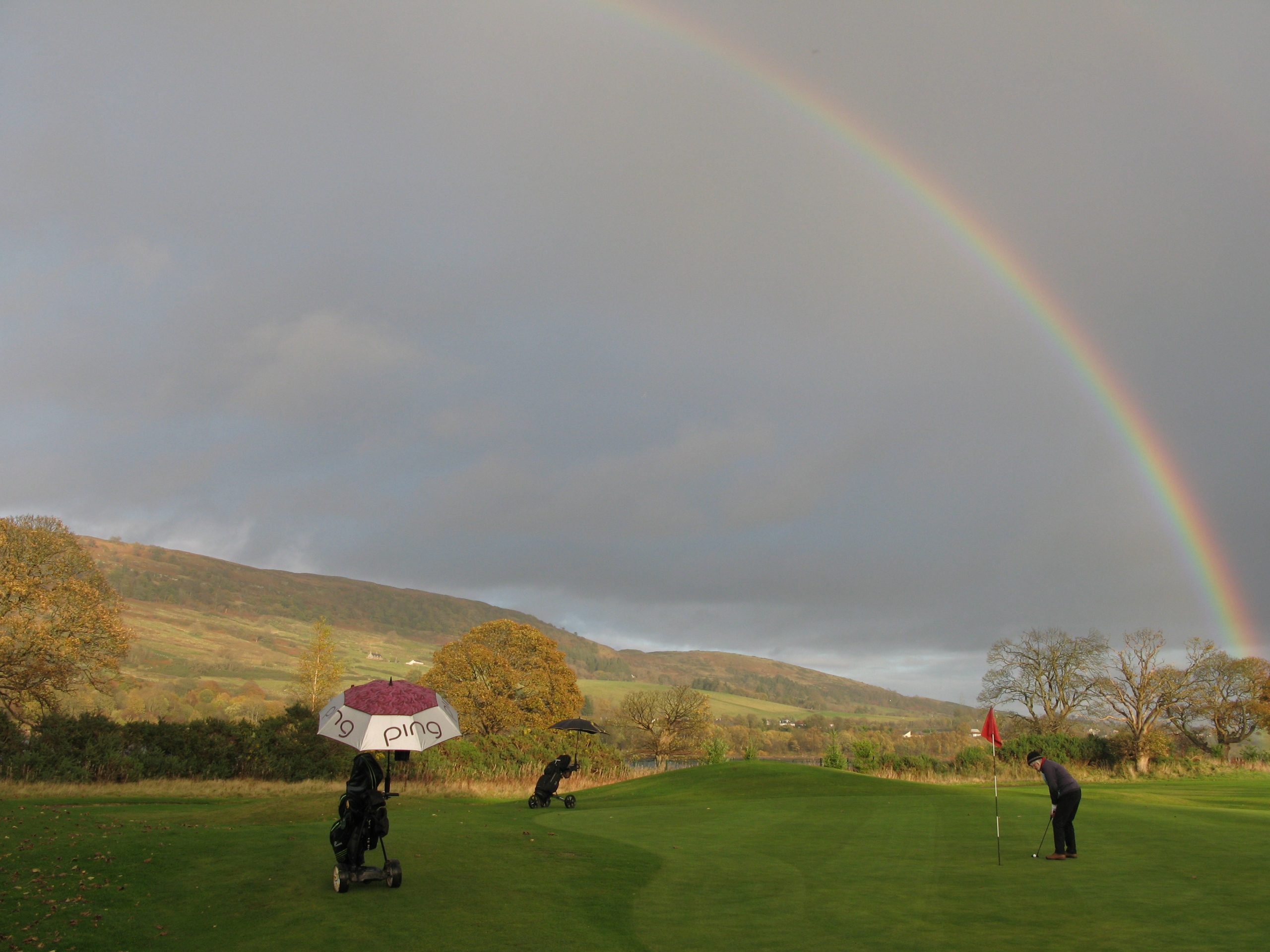
Fran puts at the 14th, with the Rainbow and the Old Kirkpatrick hills in the background.

When I played in late October, there had been several days of very heavy rain, but the course was in remarkably good condition, testament to the build quality and green keeping. The greens were all in play, they are generally very large, with devilish surrounds, including large bunkers, so keeping a 3 putt off the card, or scrambling, will also be a challenge.

The 9th makes for a robust end to the front 9, a short but tough par 4, normally played into the prevailing wind.

Nevertheless, its a delightful walking course, and as said, there is ample room from many tees, so makes for a good society day.

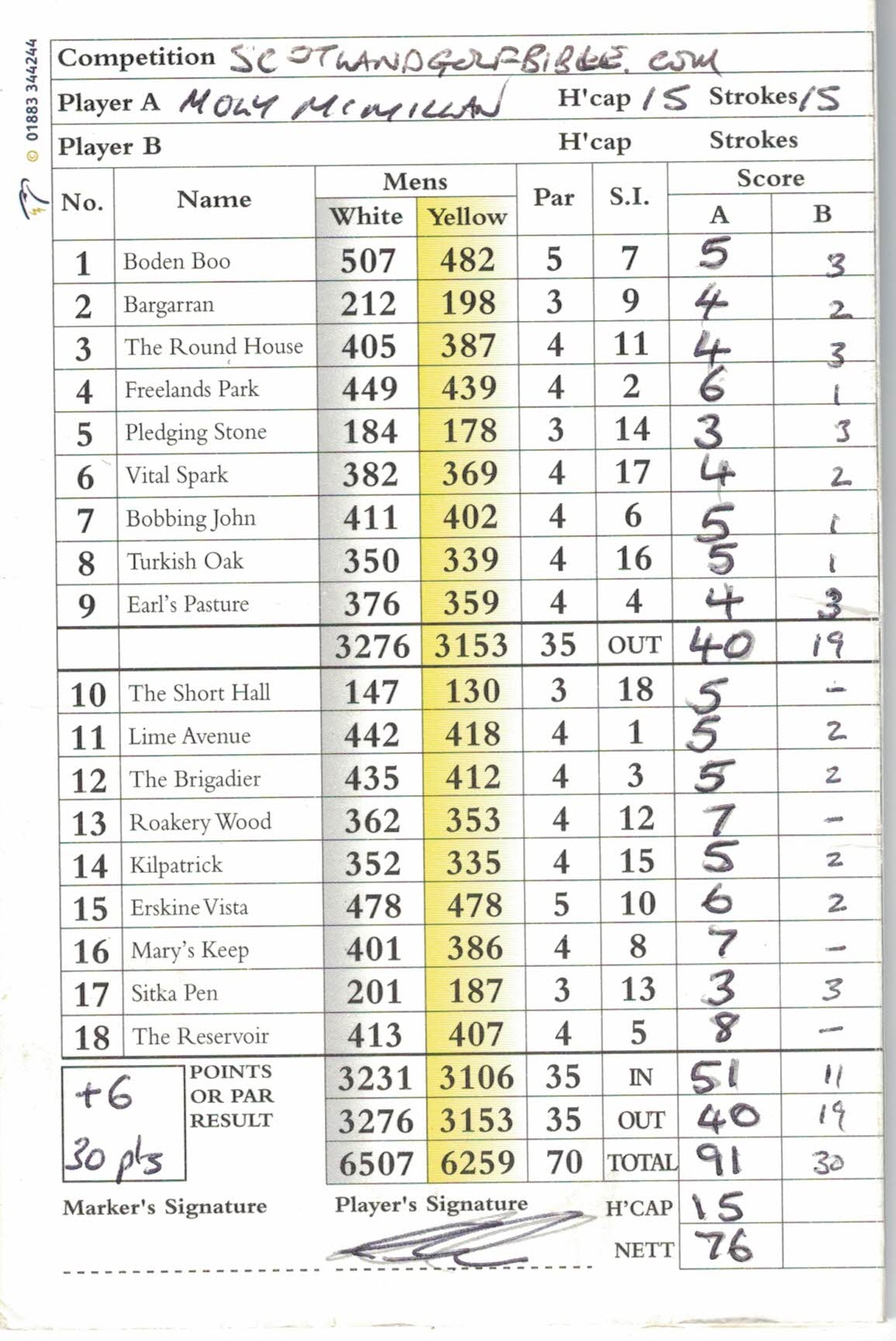
On the day, I played very well to get round in 91, for 30 stableford points, the latter number I always think is acceptable playing a course for the first time.

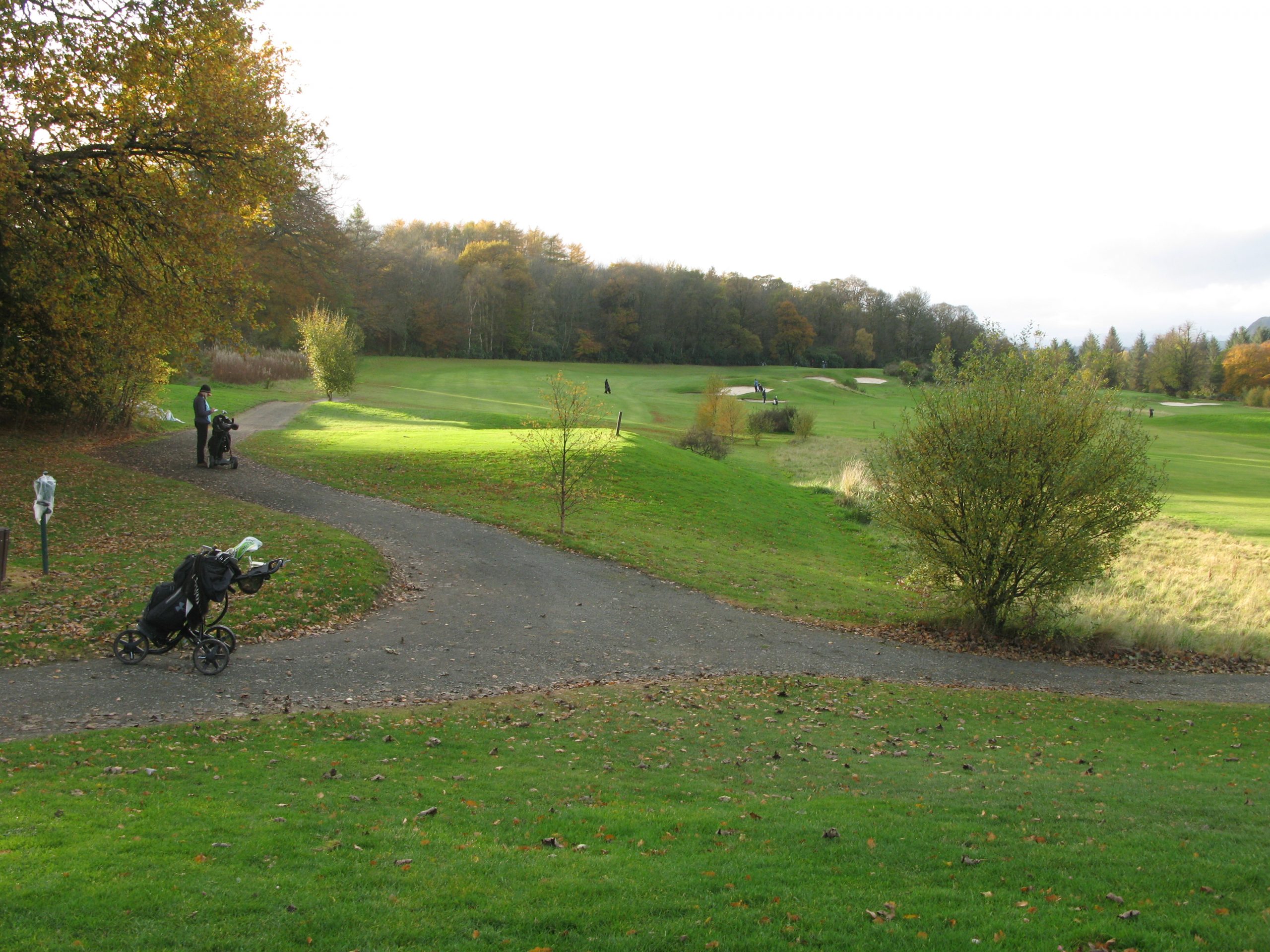
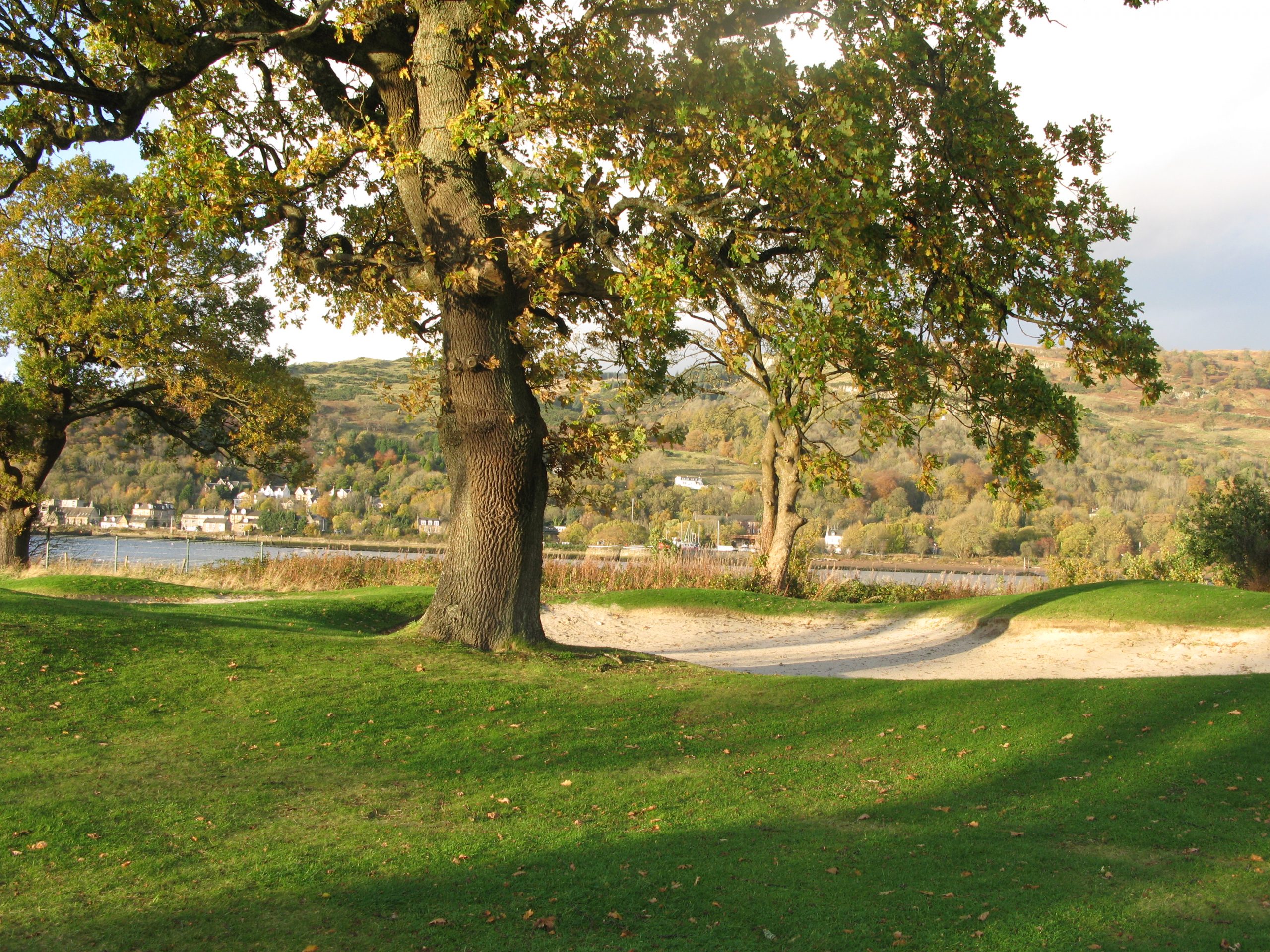
The trees are carefully crafted into the course, as here at the 15th fairway, with the view over the River Clyde.

The hotel has apparently hosted many celebs during its short existence, which I thought was quite appropriate given that, according to the barman, the river and hills make for ideal conditions for rainbows – although I didn’t find any pots of gold.

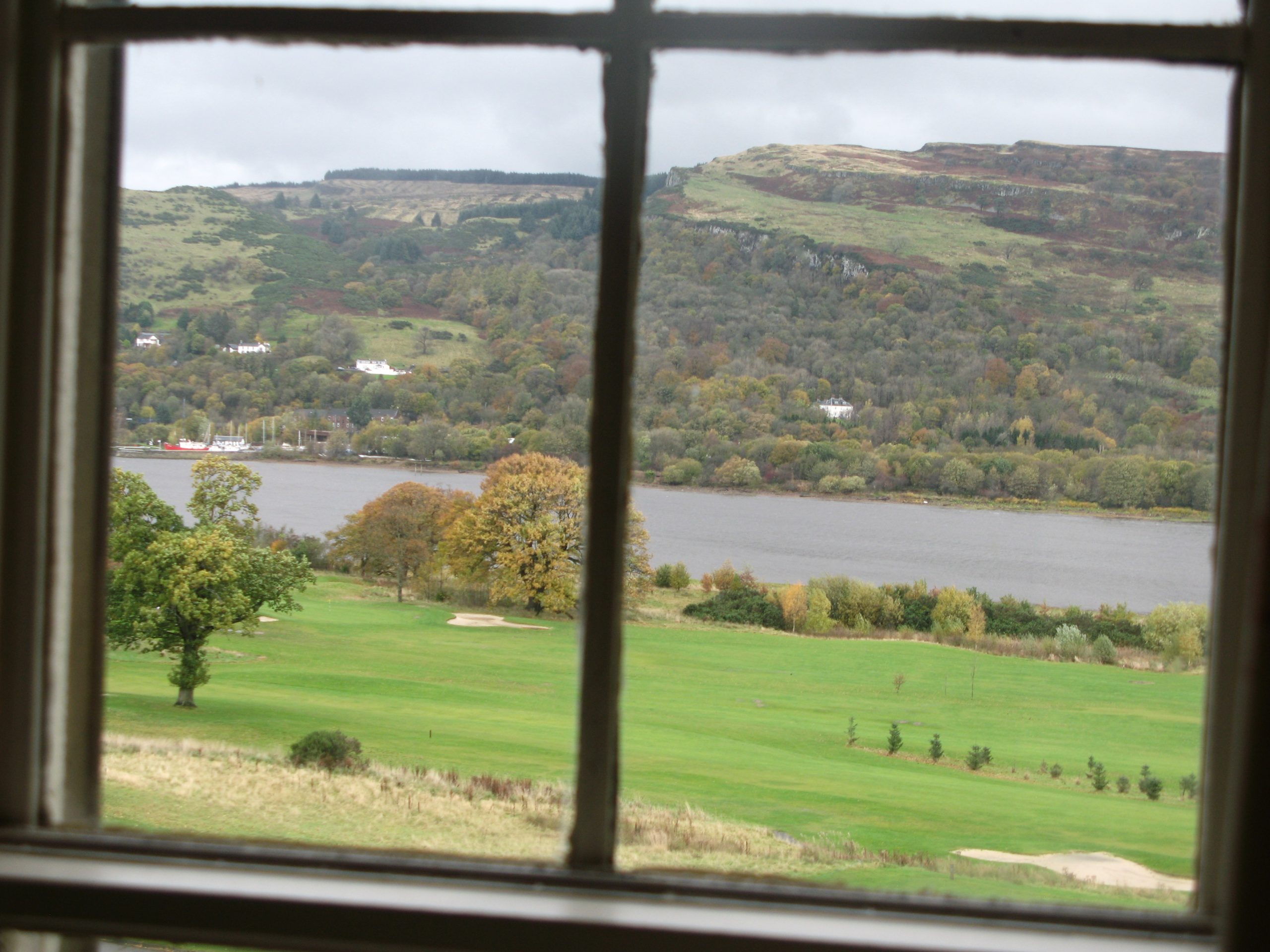
The view over the course from the hotel at Mar Hall – well worth a short golfing break here.

The course is the star here though. Well worth playing.

Course Type: Parkland

Par 70 (2 par 5, 12 par 4s, 4 par 3s)

Distance: 6259

Moly’s Gross score91

Played well for a 91 on this compact and challenging course
« Older posts Newer posts »

© 2025 Scotland Golf Bible

Theme by Anders NorenUp ↑