Nestled near the Campsie Hills north of Glasgow, the Allander course at Hilton Park Golf Club offers a rich blend of history and natural beauty. Opened in 1928 and designed by James Braid it represents a good example of Braid’s artistry of balancing challenge and fun.
The approach to the first, presents a typical view of this Allander course.
Set within an area of beautiful scenery of rolling hills and lush heathland greenery, full of flora and fauna, the course is nice just to walk around.
The par four 5th on the Allander course, fully justified as the Stroke Index 1 hole.
I was particularly impressed by the friendliness of the PGA Pro, Ewan Grimes, who went out of their way to make me feel welcome. His knowledge and welcome were second to none, along with his stories.
Moly teeing off at the 15th on the Allander course at Hilton Park, a mid iron par three.
The course was in good condition. However, the drainage seemed poor, which was unexpected given the heathland conditions. Given the conditions there were several winter greens in play, which was a disappointment.
The tree lines framed many holes, but in fact the fairways were quite generous. Here at the par three 17th.
One of two courses at Hilton Park, the Allander is very much the secondary, shorter course. It would be worth playing though on in a fine summer day.
The Allander 18th hole, a mid length par four, with the impressive clubhouse.
So what do I think of using AI? It created a very bland and flowery draft, which was frankly difficult to take seriously. Clearly influenced by Golf Club websites, full of standard phrases ‘course for all all abilities’, ‘challenge for all’, etc etc, after editing it left me with no more than 4 meaningful sentences.
Price £45.
Discount: Golf Now, £15, against the Winter rate of £30.
Little did I know as a member of Landsowne Golf Club in Bath in the early 2000s, how influential the Lansdowne name was for one of Scotland’s finest golf properties – Blairgowrie.
First tee at the 1970s designed Lansdowne Course. A difficult and long par 4. Designers Peter Allis and Dave Thomas didn’t provide an “easy James Braid opener”.
All three courses at Blairgowrie Golf Club have at one time been called ‘Lansdowne’ after the Dowager Marchioness of Lansdowne who initially leased land to the Club.
Fran playing into the par 3, 5th, green which was in great condition for a Winter’s day.
The current Wee Course, is where the original 9 hole “Lansdowne” course was. This was extended to 18 holes in 1927, but lasted only 3 years, when in 1930 another 9 holes were built and the new “Landowne” course opened, with the remodeled original 9 hole course becoming the Wee Course. In the 1970s, another 18 hole course was built, which became the current “Lansdowne”, with the1930s course renamed “Rosemount”, which is considered the “main” course.
The 10th, with well placed bunkering, a strong feature on this strong Lansdowne layout.
The history of how the three courses evolved in detail is brilliantly assessed by James Boon on Golf Club Atlas here. The initial designer was founding member, Major (Ret’d) Peter Chalmers, who had fought in Crimea in 1854 and was later wounded in action; he sought advice from both Old Tom Morris and Tom Dunn of the Dunn dynasty. A combination of Alister Mackenzie and James Braid did the late 1920s work, with Peter Allis and Dave Thomas creating the latest course. What is the collective noun I wonder for golf course designers? – ‘A bunker of architects?”
The 13th, where one can see the importance of missing on the right side of the green.
Like all the Blairgowrie courses, the course was in excellent condition, especially for a December day. In particular, the greens were fully in play and running true, meaning I holed most of my putts less than 6 feet. The greens themselves are less undulating than the Rosemount course, the latter being more influenced of course by Alister MacKenzie. The greenside bunkering is of professional layout standard, so best to ensure you stay out of them.
The pine avenue at the 17th on Lansdowne is characteristic of this fine property.
The course is tighter from the tee than its sister Rosemount layout, so consider a hybrid where distance allows. The tree lined fairways are well maintained so anything finding the trees means that balls are usually not lost.
Moly trying to get up and down on the last, a hole that will play more difficult that it’s SI 9 would suggest.
The excellent winter conditions meant the price of £25 is incredible value compared to the high season £140, perhaps it’s Scotland’s best winter discount?
Which brings me to a key question – just who was The Dowager Marchioness of Lansdowne?
Round List Price £140.Actual Paid £25 (Winter rate).
Moly’s Score – 81 for 39 points (off 15)
Course/Slope Rating (winter) 69.0/125
Course Type:Heathland
Par 69 (15 par 4s, 3 par 3s)
Distance (blue): c 5500 yards
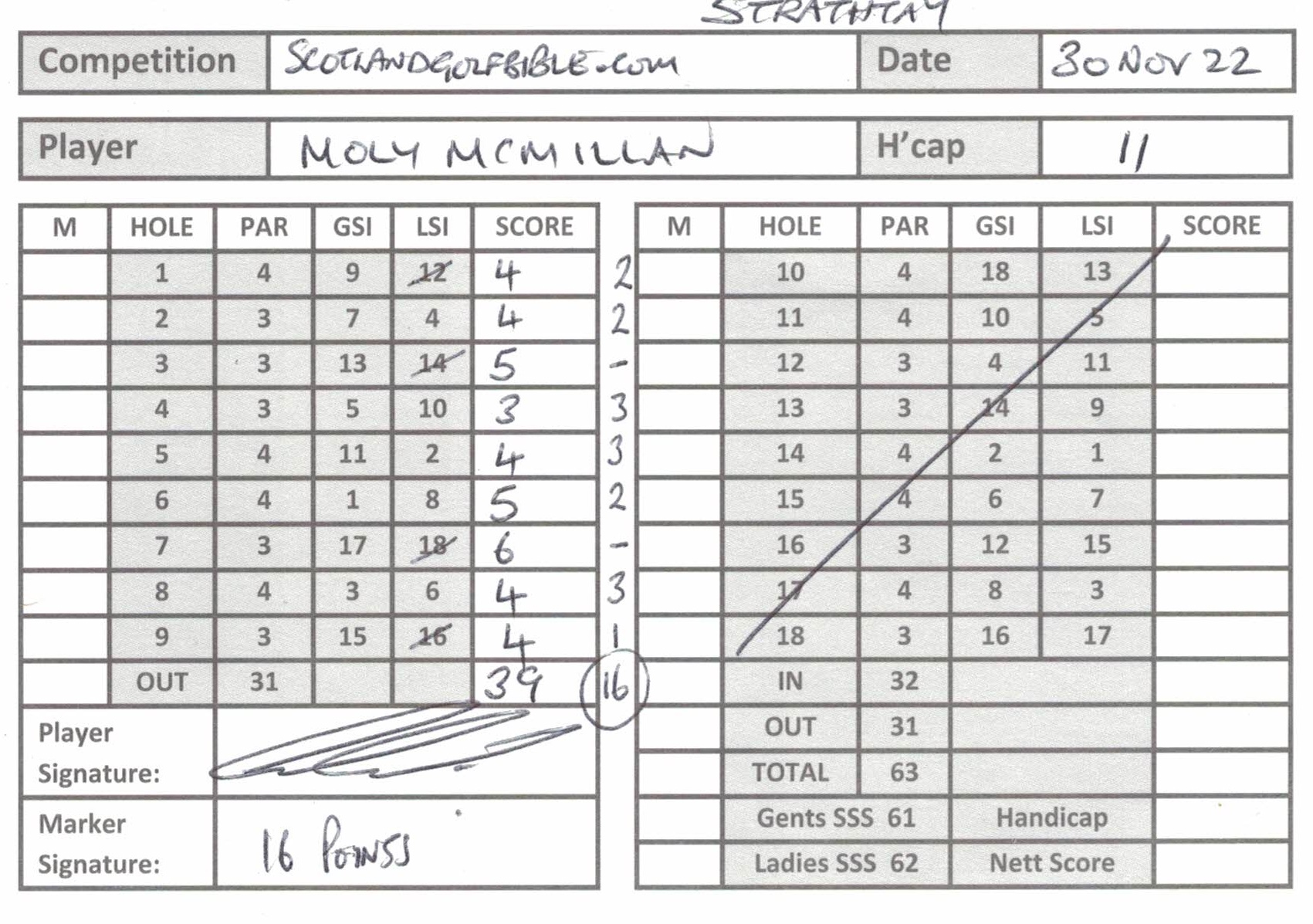
Moly’s Lansdowne Scorecard- mats and forward tees, but still it’s an 81
Strathtay golf course, in Highland Perthshire, is the delightful 1909 creation of “Captain Steuart of Ballechin”. With so many good holes on this well crafted layout, I wondered who “Captain Stueart” was. Surely this had to have been designed by an experienced architect?
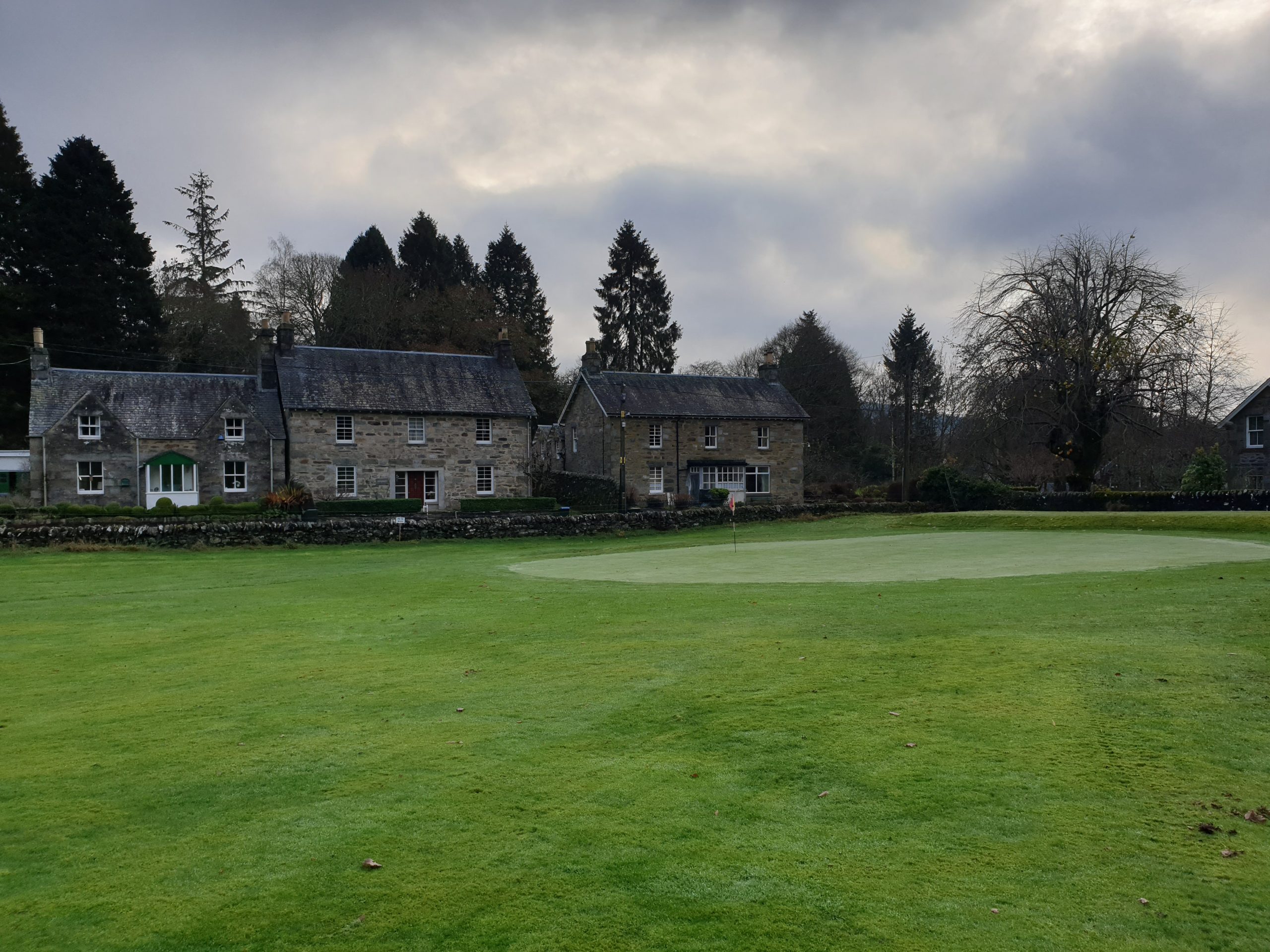
The picturesque stone cottages make the first hole feel like a village green. The Victorian village of Strathtay maintained strict planning laws, demanding use of certain stone, and became a beacon of the Affluent in society.
This 9 hole course is short, at under 2000 yards, with 5 par threes and 4 par fours, although the “11th” is played as a par 4 on the “back 9” from a back tee. Being set into the slopes above the Victorian village of Strathtay, the course feels much longer, with plenty of guile.
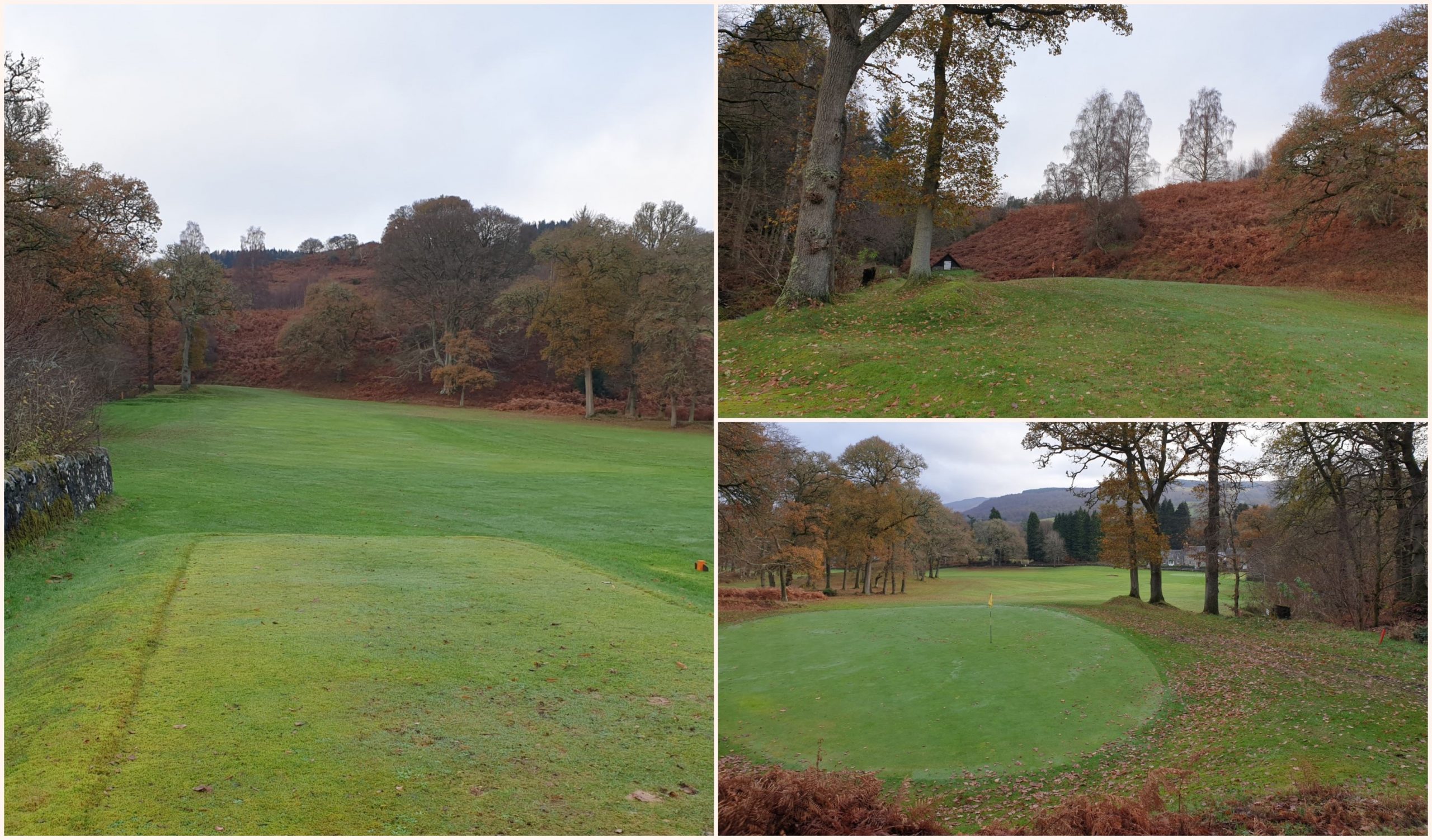
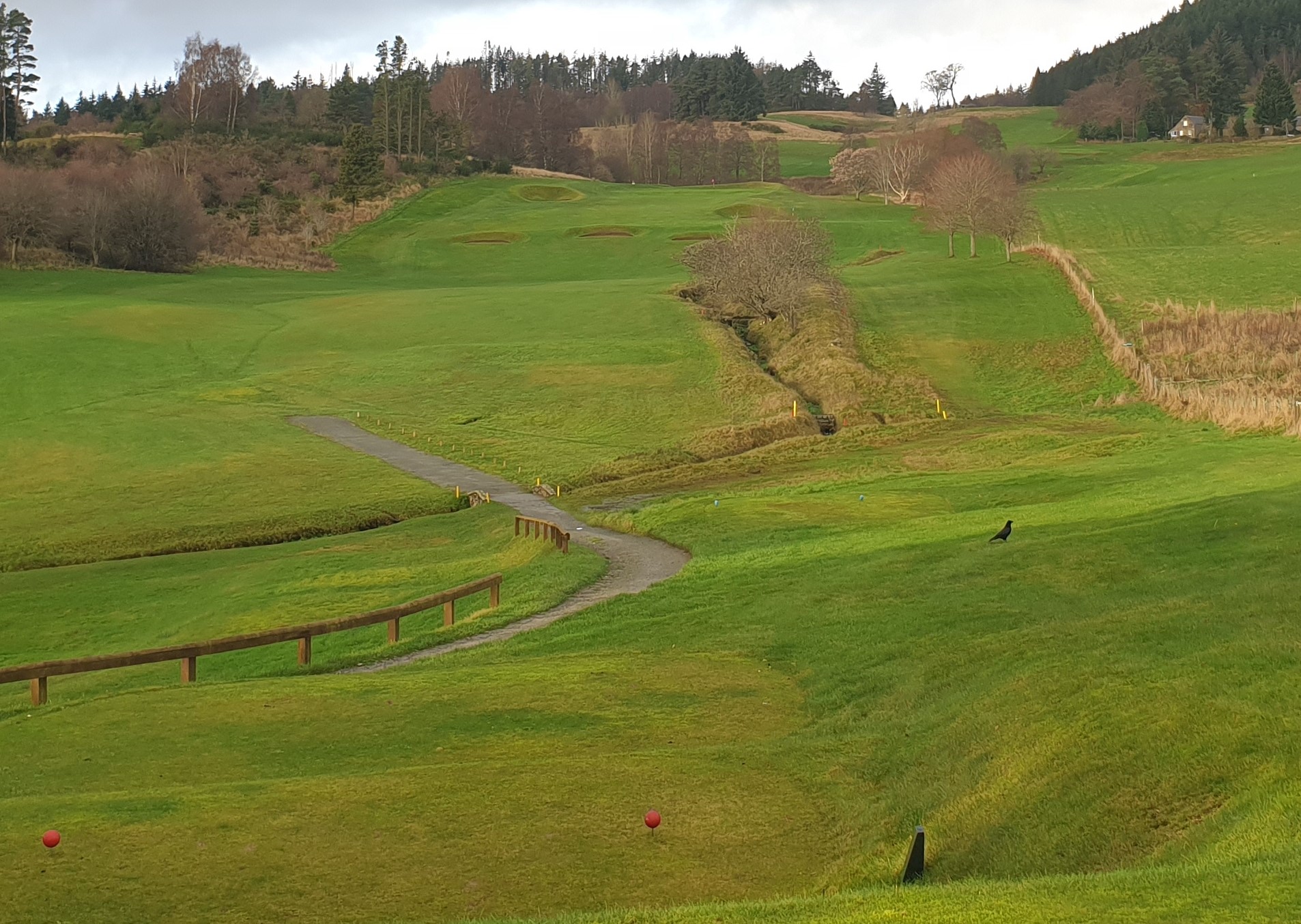
The 6th, a tough slight dog leg left par 4, making good use of the natural contours of this landscape. The green to the right of the picture is actually the 4th.
The “Captain” turns out to be John Malcolm Stueart, an officer in the Rifle Brigade (The Prince Consort’s Own). His nearby home, Ballechin House, was an ancestral seat of the Jacobean Steuart’s (‘Steuart’ being the French spelling of ‘Stewart’). John’s great uncle of the same name, Major John Steuart (1806-1876) had become intrigued with Indian religions, and reportedly came back after his death as a reincarnated dog, resulting in Ballechin house being termed “The most haunted Scotland!”.
One starts to admire the architecture on the 196 yard 2nd hole – a very strong par 3, which requires a long drawing ball, or to be played using a par 4 strategy.
The golfing “Captain” was clearly one of those highly sporty people, and regimental chronicles cite his being the best shot in the battalion, being placed first at rowing and leading the regiment’s best team on sports day. There is also mention of his proficiency at Highland dancing!
The tricky par three 7th hole, “Chapel”, another of the well designed holes. Play to the measured yardage, as if looks longer than it is, with a very difficult chip if you go long.
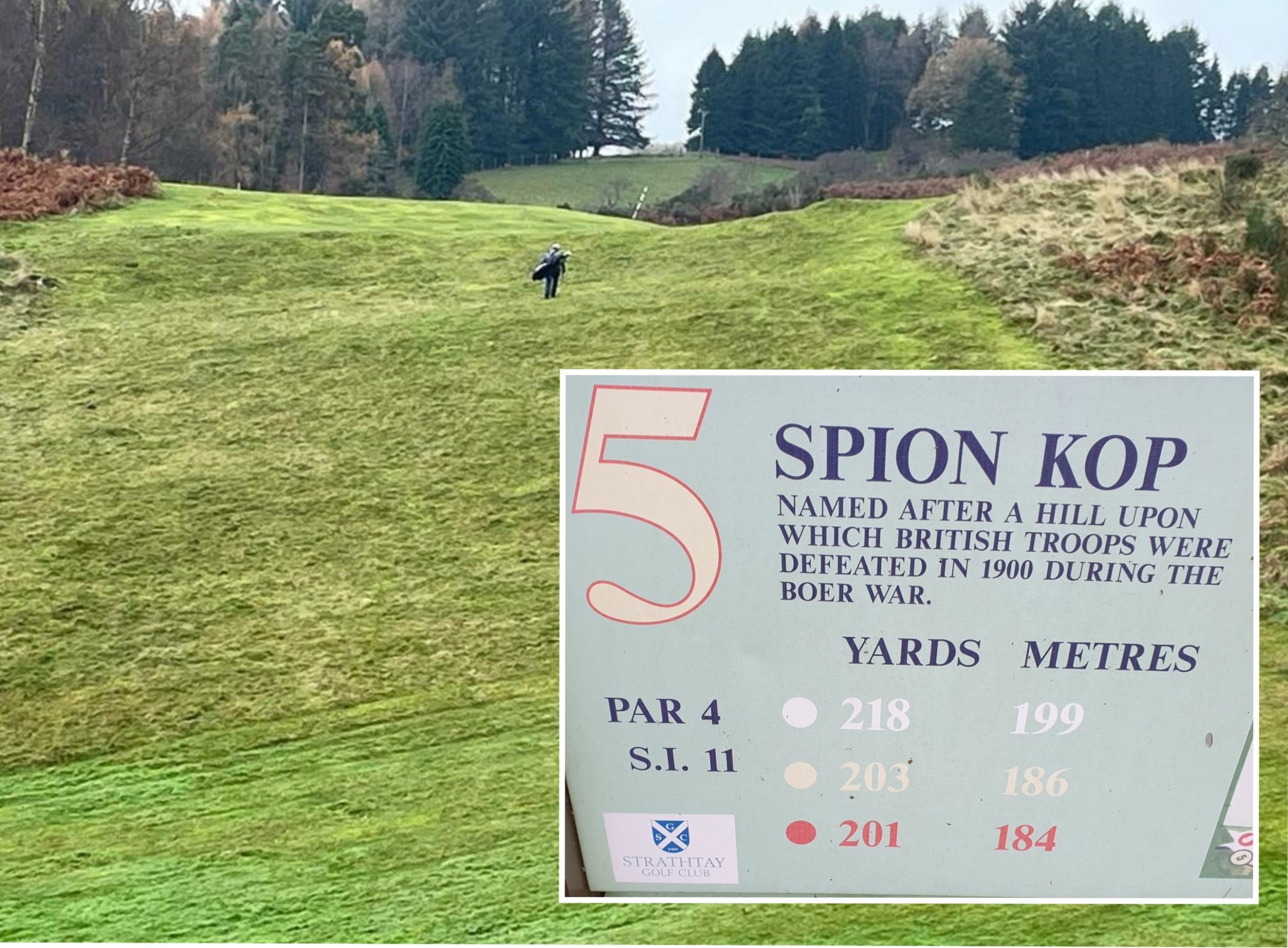
The Rifle Regiment also fought in the Boer War and, whilst it cannot be said with certainty, there is a good chance that Captain Steuart fought at the Battle of Speionkop, which is relevant to the course; the 5th hole is dedicated to the people who died in that battle. The 5th hole is so steep, it is impossible for trolleys and buggies to ascend to the green. It would feel very fitting that the course designer had actually been to the real Spion Kop (see the Craigie Hill blog for the back story).
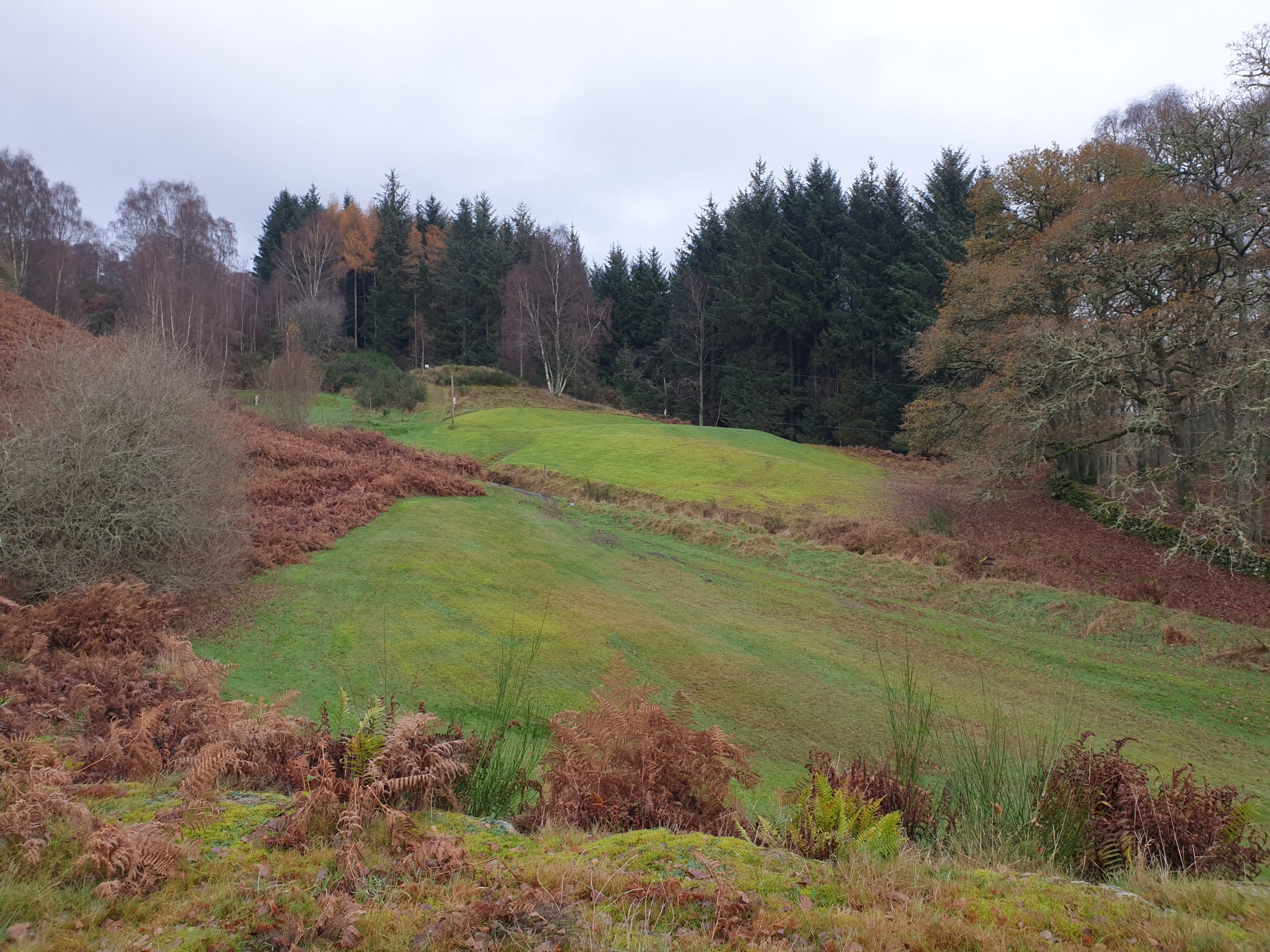
The 5th hole, justified as a par 4, although only 203 yards, with Moly seen climbing the steep “Spion Kop” slope. Buggies and Trolleys have no access.
The course was in excellent condition when we played, despite the recent very wet weather. The small greens are often set into or alongside trees, with some sharp greenside drop offs, making up for the absence of bunkers.
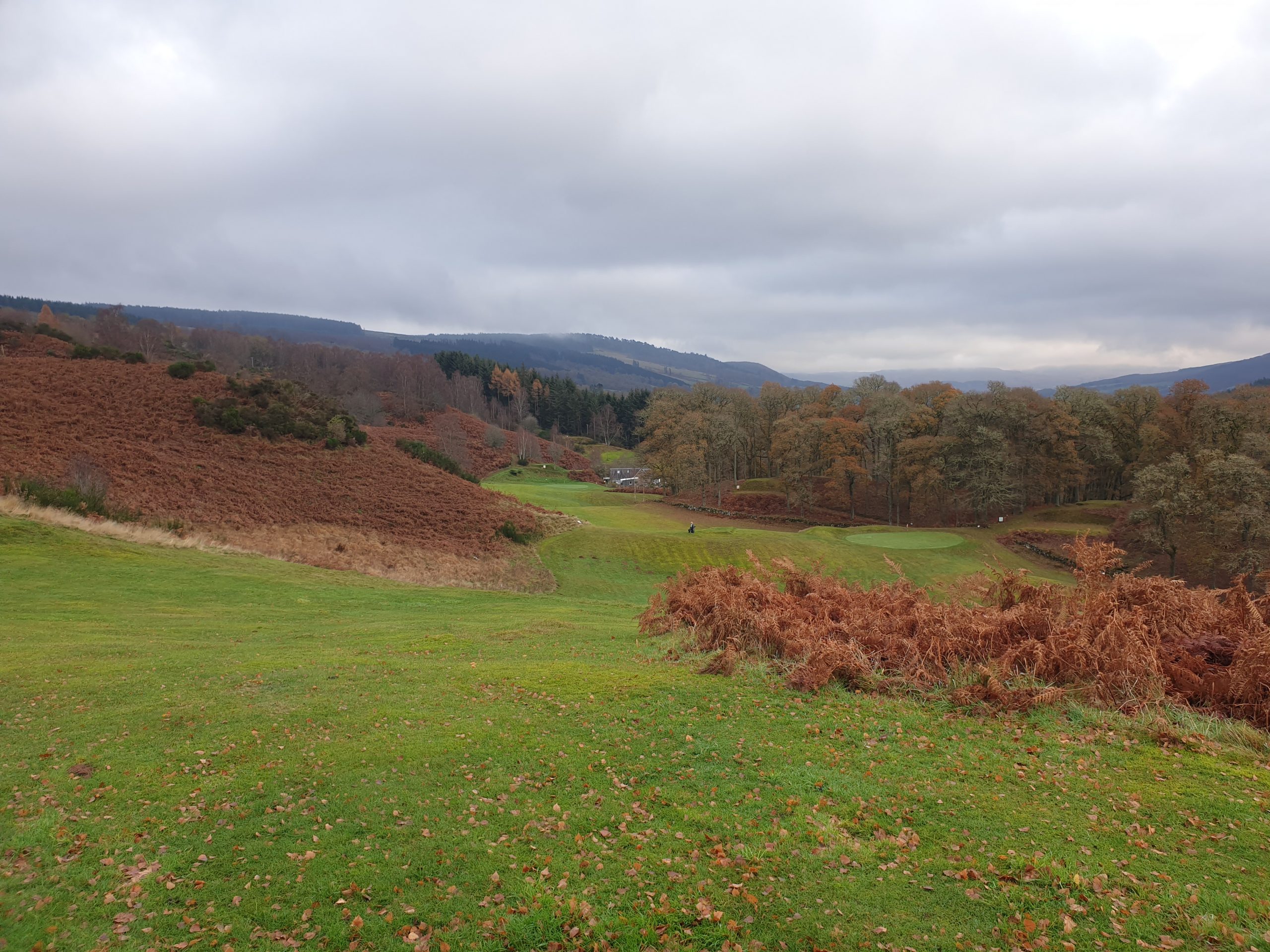
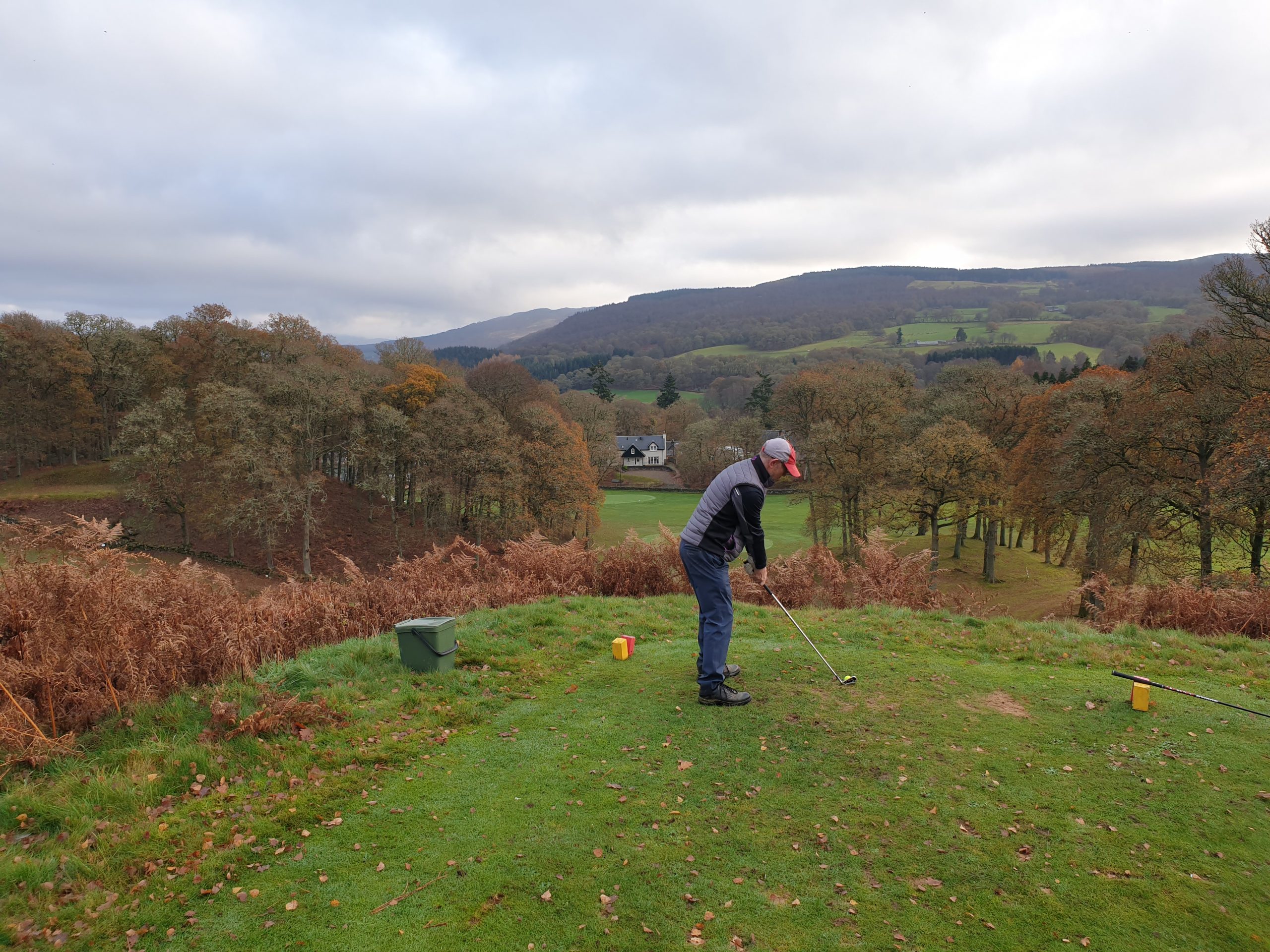
The steep drop at the par 3 third hole, with the Perthshire Hills in the background.
We paid just £10 and thought this was excellent value, given the condition and general ambiance of the course. There is also a nice little clubhouse which I can imagine is a great place to sit on a warm summers day. Highly recommended.
Round List Price £15.Actual Paid £10 (Winter rate).
The club website reports “The best course in the world ….under 6000 yards”.
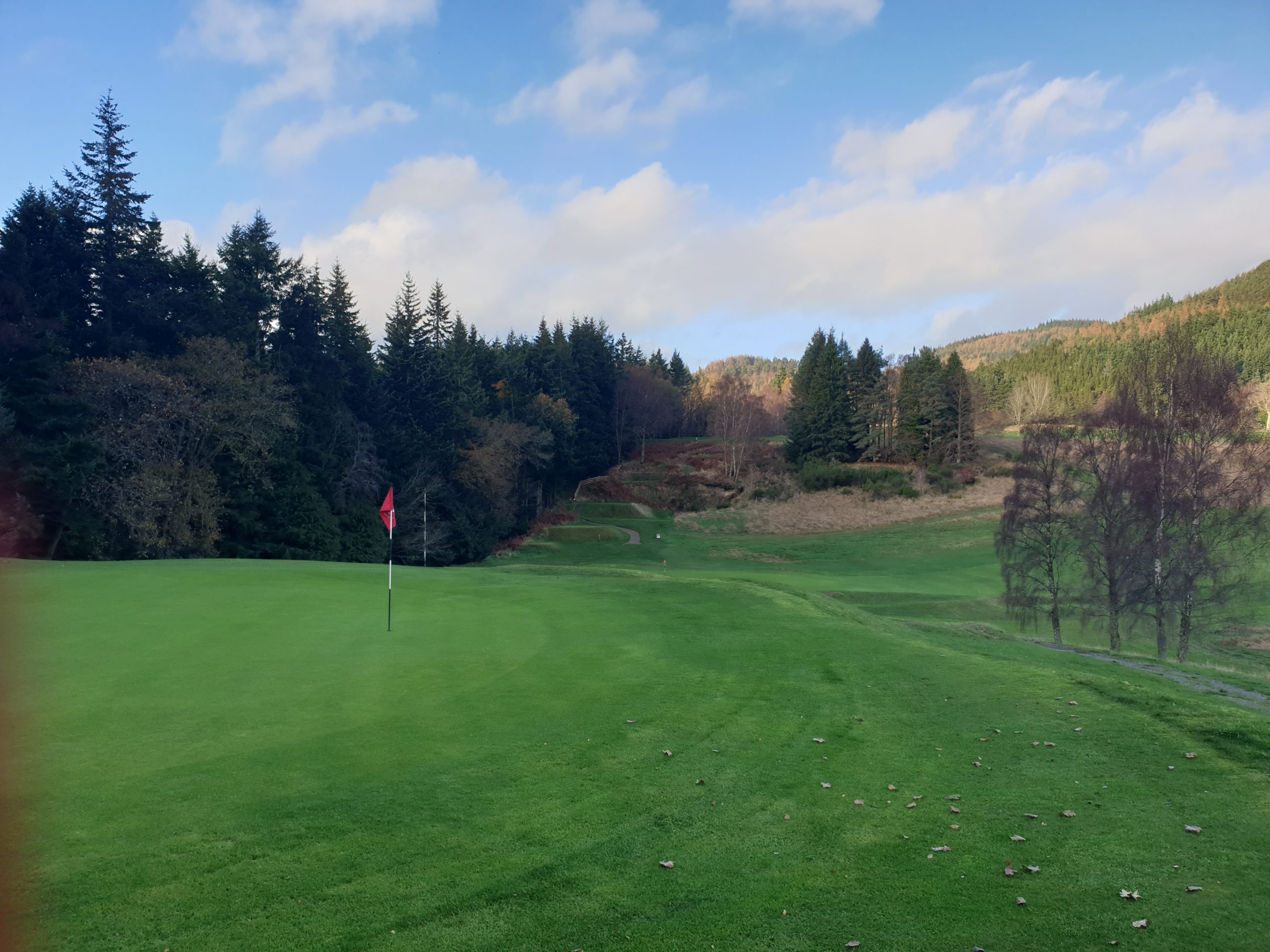
The uphill opening hole at Pitlochry – a par 4 of nearly 400 yards and stroke index 3– it was the site of an old distillery, so not all golf clubs improve the environment!
Pitlochry is unquestionably a good course, laid out in 1908 by a great designer, Willie Fernie (Turnberry Ailsa). But a “best in the world?”. Has anyone ever played more than 10% of the world’s 40,000 courses or listed them by yardage?
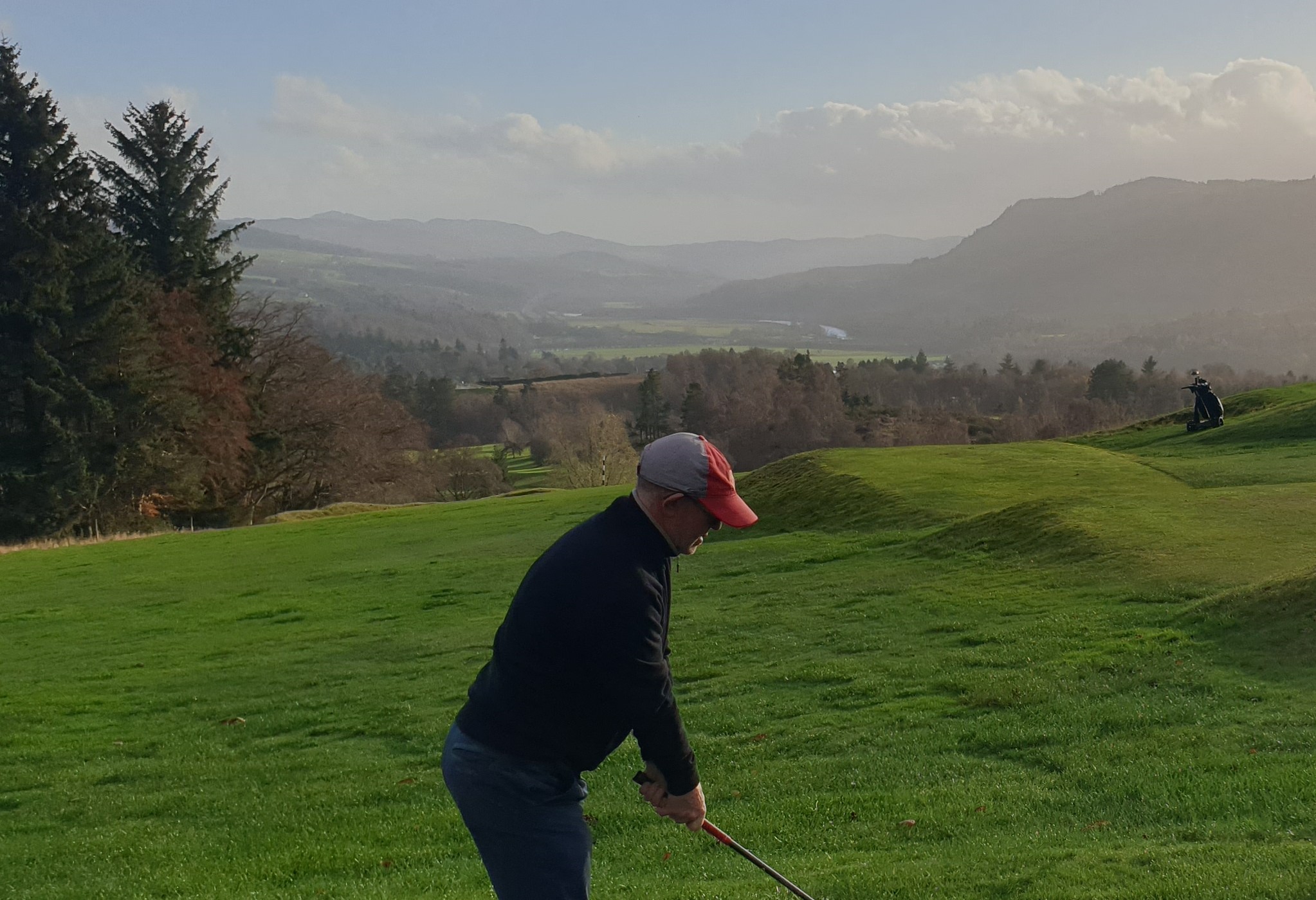
Magnificent views surround Pitlochry, the Tummel Valley seen here at the 9th, a downhill dog leg left par 4.
The website statement is marketing hyperbole of course but, in a way, is fitting as this “Gateway to the Highlands” course has always been a commercial venture since a development consortium built the course above the town. Having laid the new golf course, the original 9 hole Pitlochry course was later flooded in creating Faskally Reservoir for a major hydro eclectic plant. I doubt any visitors to Pitlochry’s dam to watch salmon leaping, through the man made fish ladder, know they are standing above a golf course.
The 11th, one of three strong par 3s at Pitlochry, arguably the highlight of the design.Here looking back towards the elevated tee.
So how good is the course? Setting aside the hubris from the website, it’s a really good one. It is fairly short, but the undulations and the many plateaued greens make it feel longer. Despite, arguably, a lack of variation (there are 15 par 4s and 3 par 3s) the regular changes in hole elevation is the real challenge, especially for a visiting golfer. Weaving it’s way around relevant sites of Pictish Forts, and with stories of visits by Robert The Bruce and Queen Ann, there is plenty of history here as well, all described on the excellent course guide on the club website here. The greens are beautifully constructed and difficult to read.
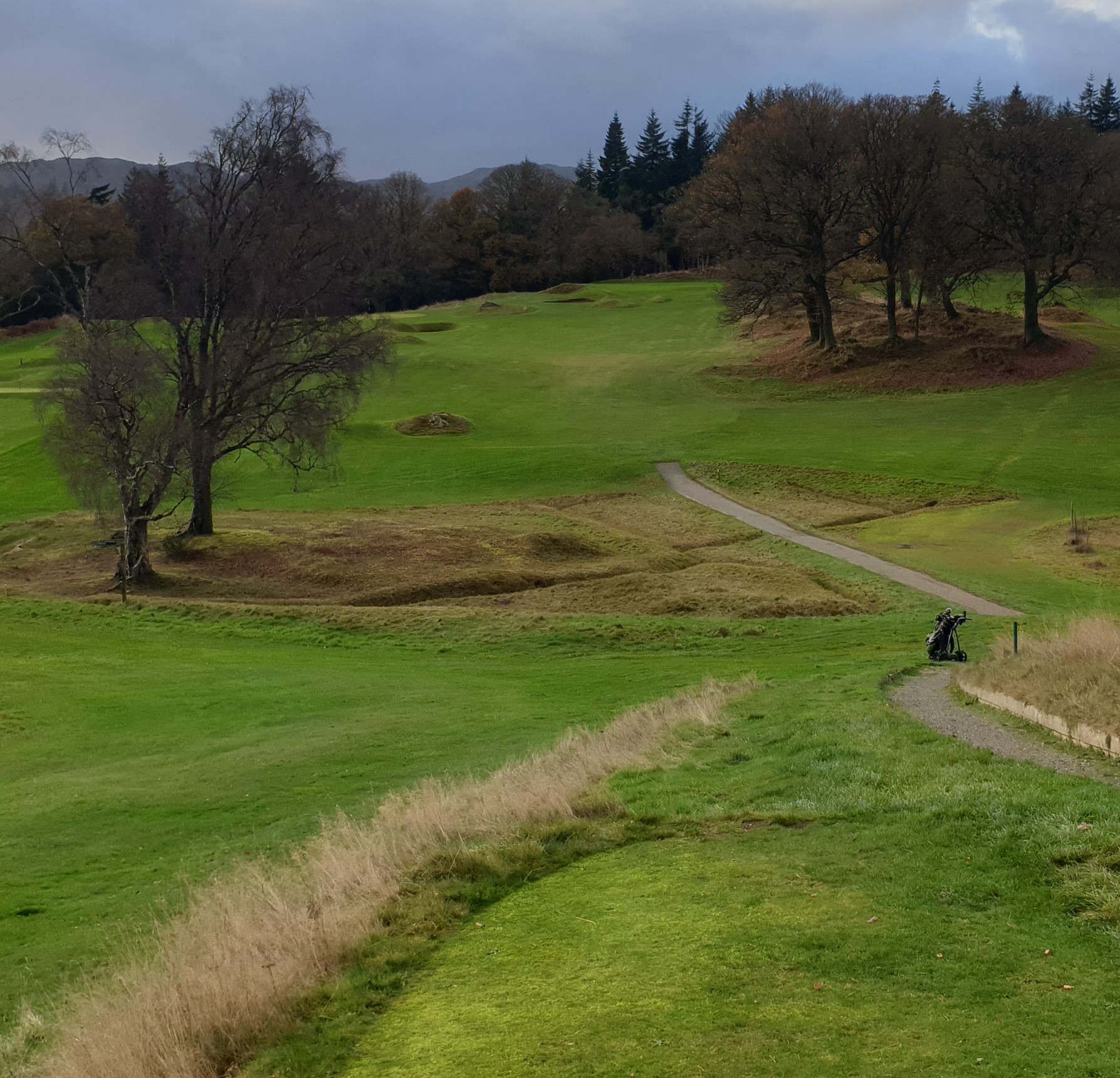
The deceptive 15th, a short par 4, where a good drive might leave a good birdie chance, as long as you judge uphill approach distance. But note the stroke index 5 rating!
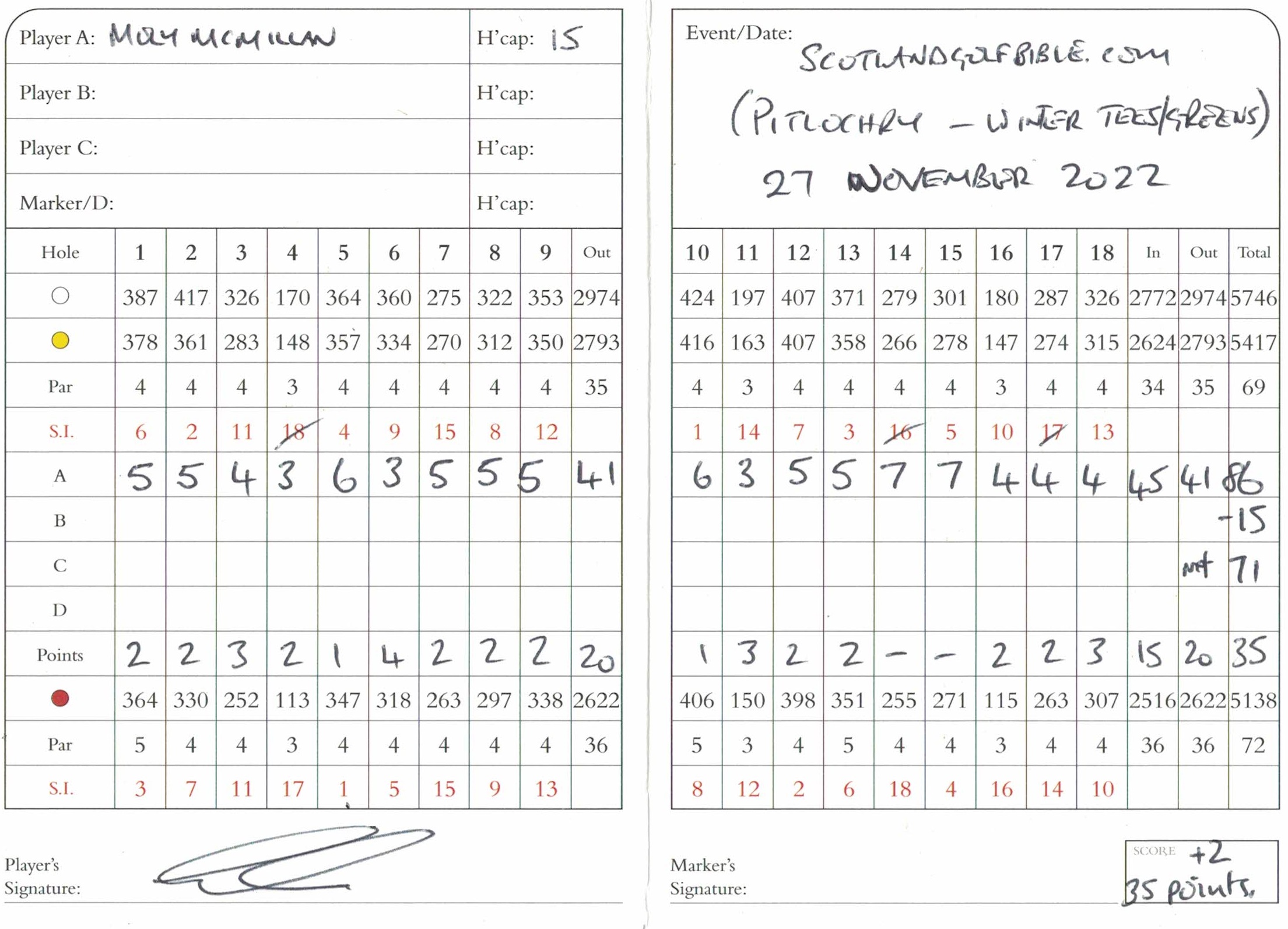
The course was in excellent all round condition when we played, despite recent heavy rain. We played off a shortened winter layout, and paid only £21.99 via golfnow.com. This is incredible value and as a business there are often deals to be had here.
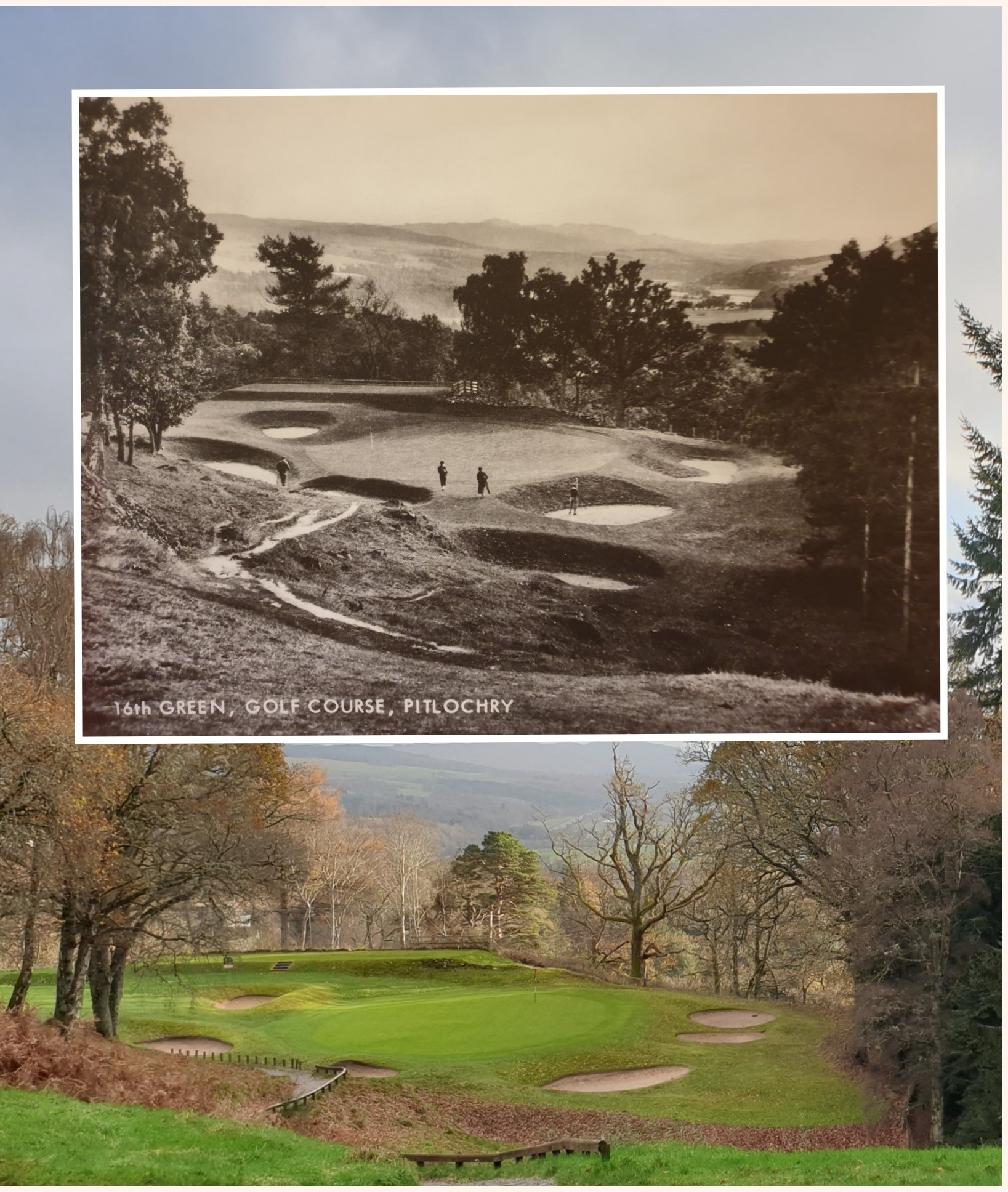
Although several changes have been made to the course over the years, the signature mid iron 16th, clearly didn’t need improving.
Being only 25 miles north of Perth on the A9, Pitlochry became a key holiday destination in late Victorian times and still remains a desirable holiday venue. The Golf Club’s opens competitions are very popular, not least because of the great clubhouse hospitality and food.
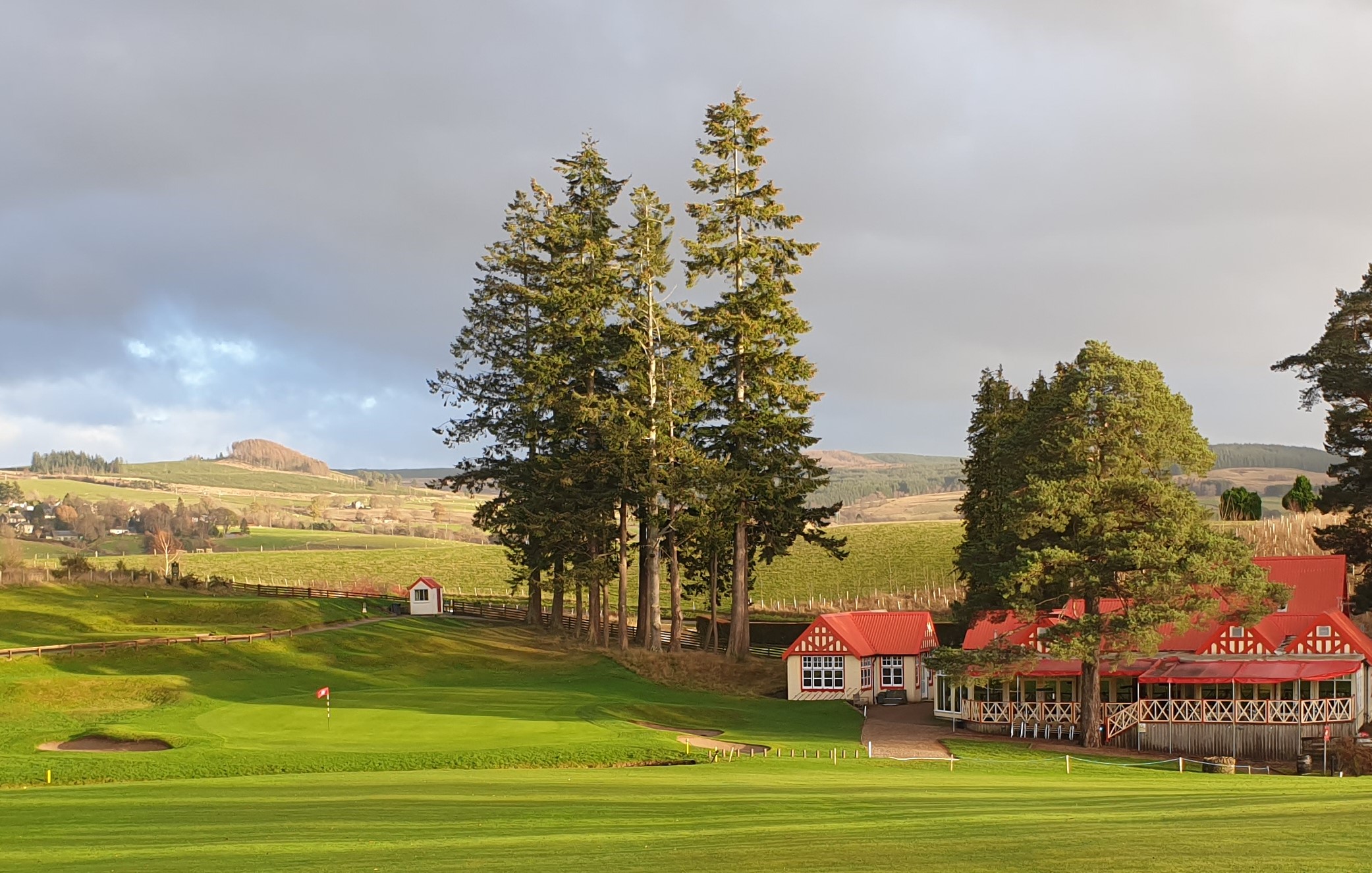
The 18th green, a downhill par 4 and a good birdie opportunity, with the “New England” feel clubhouse, which houses a good restaurant.
Back to the hyperbolic claims. Of the courses I’ve played, Pitlochry isn’t even the best Willie Fernie designed course under 6000 yards – that’s Shiskine for me. I also think Boat of Garton, Kilspindie and Carnoustie Burnside (where Hogan qualified for the 1953 Open) are all better courses and under 6000 yards from their longest tees.
Pitlochry’s course guide also states the short par 15th hole is “probably the most difficult par four in the world”! Whilst it’s likely ‘tongue in cheek’, I did take 7!
Facts:
Round List Price £65.Actual Paid £21.99 through Golfnow.