A guide to green fee value for money

Category: 3 star (Page 1 of 14)

178. Hollandbush. 20 Mar 23.

Tough South Lanarkshire Council course in perennial danger of closing

Value – 4/5

Hollandbush Golf Club near Lesmahagow was founded in 1955 as a 9 hole course, later extended to 18 in 1963. Web searching “Hollandbush GC future” though will return articles about council funding woes; it’s highly likely this blog becomes redundant in future after the course closes. This will be a great shame, as Hollandbush represents a great example of a Scottish municipal course.

The free course planner, a surprising addition at this municipal course, worth playing

South Lanarkshire council operates 6 courses, in addition to Hollandbush, the other 18 holes layouts are Biggar, Langlands and Torrance House, plus two nine hole courses of Larkhall and Strathclyde Country Park.

The 17th at Hollandbush, a drivable par four, but with well positioned protective ditches

Hollandbush also has an independent golf club, providing members with competition and social benefits. This is a common feature of municipal courses in Scotland. This ‘club’ costs £115 annually.

The well maintained ditches shown here at the difficult par 4 12th hole.

Golf pricing is interesting. Annual golf membership for one of South Lanarkshire’s 18 hole municipals is £475, but for just £32 more you can play all 6 courses for £508. If you can make sense of that price differential, good luck! A green fee in peak season is £25, but the winter senior rate I paid was only £9, incredible value.

The 14th at Hollandbush, with one of the relatively few bunkers at this course.

The course is well designed; with constant changes of direction, the undulating fairways, regularly interspersed with well maintained ditches, provide a tough challenge. The slope rating of 129 from the yellow tees testifies to that, albeit it was a fairly generous course from the tee.

The greens were good at this municipal course, here seen at the 10th hole, a long par 3, one of the best holes on the course.

The course was well presented, especially given the wet conditions. I saw no-one else playing and the car park had only one other car, possibly owned by the clubhouse attendant. I think the council could reasonably consider “honesty” box payment to reduce its costs.

The second was one of several card wreckers at this well designed golf course.

I played pretty well, scoring 88, but with 4 blobs. I actually beat the course ‘1 up’, something which is a good measure of your game,

As to the name ‘Hollandbush’ it remains a mystery for me despite my efforts to find it’s origin.

It’s worth playing Hollandbush, a course I hope continues operating.

Price £25.

Discount: Senior winter rate. £9

Course Type: Parkland

Par 70 (1 par 5, 14 par 4s, 3 par 3s)

Distance: 5552 (yellow)

Course Rating / Slope Rating (yellow) 67.8/129.

Moly’s Gross score88

173. Mains of Taymouth. 30 Nov 22.

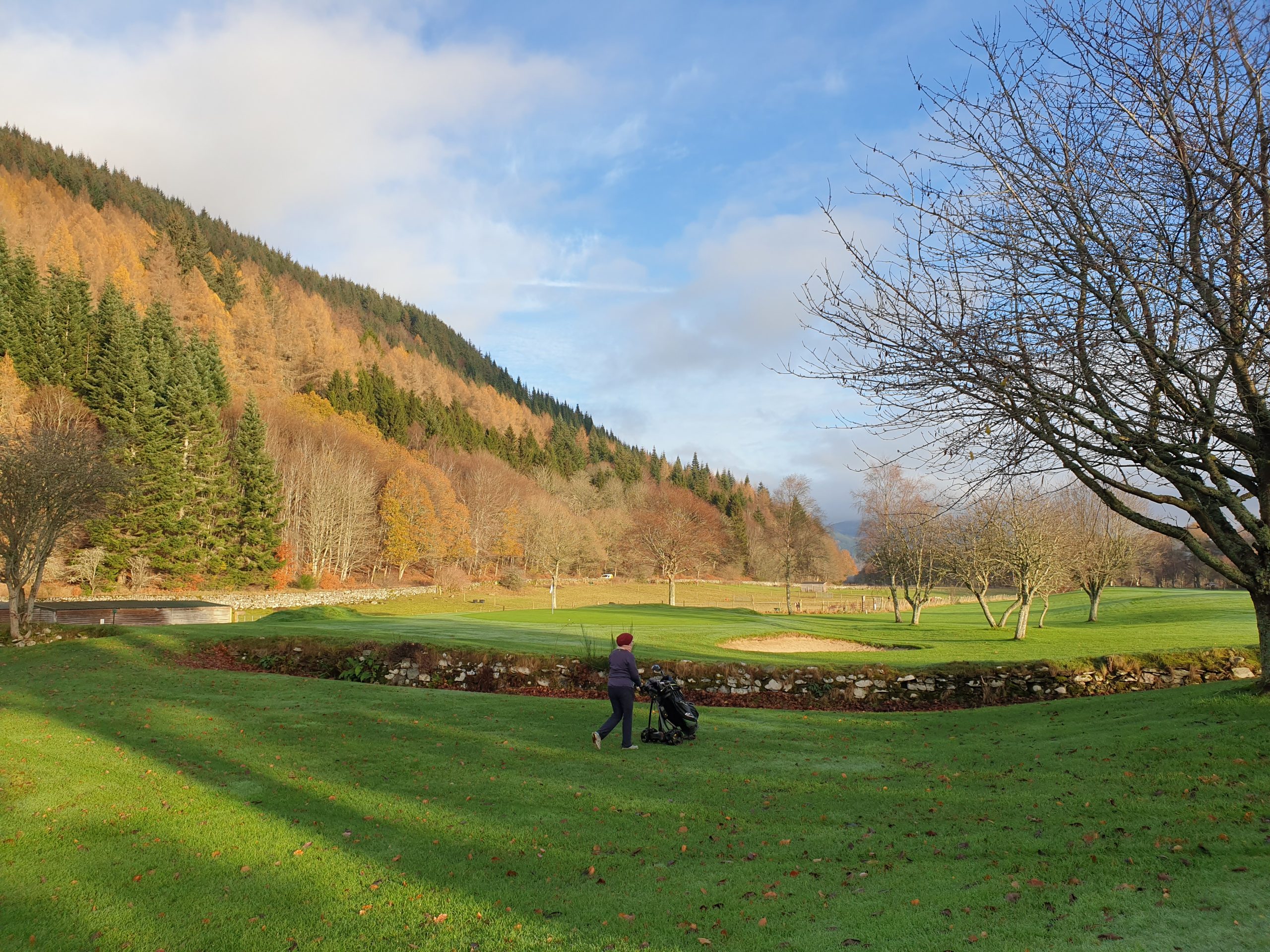
I was ‘green with envy’ on this country estate course but no longer confused by the two Taymouths.

Value 3.5/5.

Kenmore, in highland Perthshire, is a village on the eastern end of Loch Tay, which is where the main part of the River Tay begins, Scotland’s longest river and the UK’s largest measured by discharge. People like myself from Dundee, where The ‘Silvery’ Tay reaches the sea, claim any small victory!

9th at Mains of Taymouth, a hole shortened to make way for new holiday lodges; technically a long par 3 rather than the par 4 of 263 yards shown on the card.

Now to my confusion. Kenmore is home to two golf courses, both on separate Country Estate developments and only separated by 30 yards of river. Taymouth Castle Estate golf course, on the south bank, was founded in 1925, designed by James Braid, and grew a championship level kudos; however, the castle and course is currently “closed for a £300m development” following its purchase in 2018 by American real estate company, Discovery Land Company.

Fran on the par four 2nd, reportedly the Designer Robert Menzies’ favourite hole.

Meanwhile, north of the river, Kenmore Golf Course was founded, designed and constructed in 1992 by civil engineer Robert Menzies, on diversified farming land that had been in his family for many decades. With Taymouth Castle closed, Robert renamed his estate and course, “Mains of Taymouth”. The whole estate was sold for £13.5m in 2022 to Pure Leisure Group, the owner of the well known Westmoreland Golf Resort in Barbados, home to many British celebrities.

Moly at the 5th, a well designed par three. The bunkers could have been better raked.

So ‘Mains of Taymouth’ and ‘Taymouth Castle’ are separate country estates, both with golf courses with similar branding. I anticipate a lawsuit at some point over the use of Taymouth, a name which seems to have begun when the Clan Campbell rebuilt the former Balloch Castle, their ancestral seat.

The irony is that Kenmore isn’t technically the location of a mouth of a river, defined as “where a river flows into a larger body of water, such as another river or the sea”. Thankfully, any geographically minded golfer that mistakenly turn up at the real Mouth of the Tay, has better golf course options to choose from.

Wide fairways are characteristic at “Kenmore”, shown here at the par five 4th hole, a picture also highlighting the good course conditioning.

My envy in the title is of Robert Menzies, who has done an admirable job on his “home made” nine hole golf course. How many of us have had that dream over the years. He has created a lovely course, which was well maintained and playable on this early winter day.

The course has wide fairways, and is protected by small greens that are well bunkered. Set alongside the river the land is flat and easy walking, so would suit the occasional golfer, but also useful for golf course “baggers” who can easily “bag” 3 or 4 nine hole courses on a summer day (including nearby Killin, Aberfeldy and Strathtay). I bagged three (omitting Killin) on the day, despite the limited light.

The beautiful Perthshire landscape on show here at the par 3 seventh hole, with “ha-ha”.

We paid only £12 for a winter day rate, but at £18 for a round it represents decent value in the Summer.

Sadly, although the 3rd is called “Loch View”, there are no river or loch views from the course. Making my big deal about “Taymouth” seem somewhat arbitrary – never mind.

Round List Price £18. Actual Paid £12 (Winter rate).

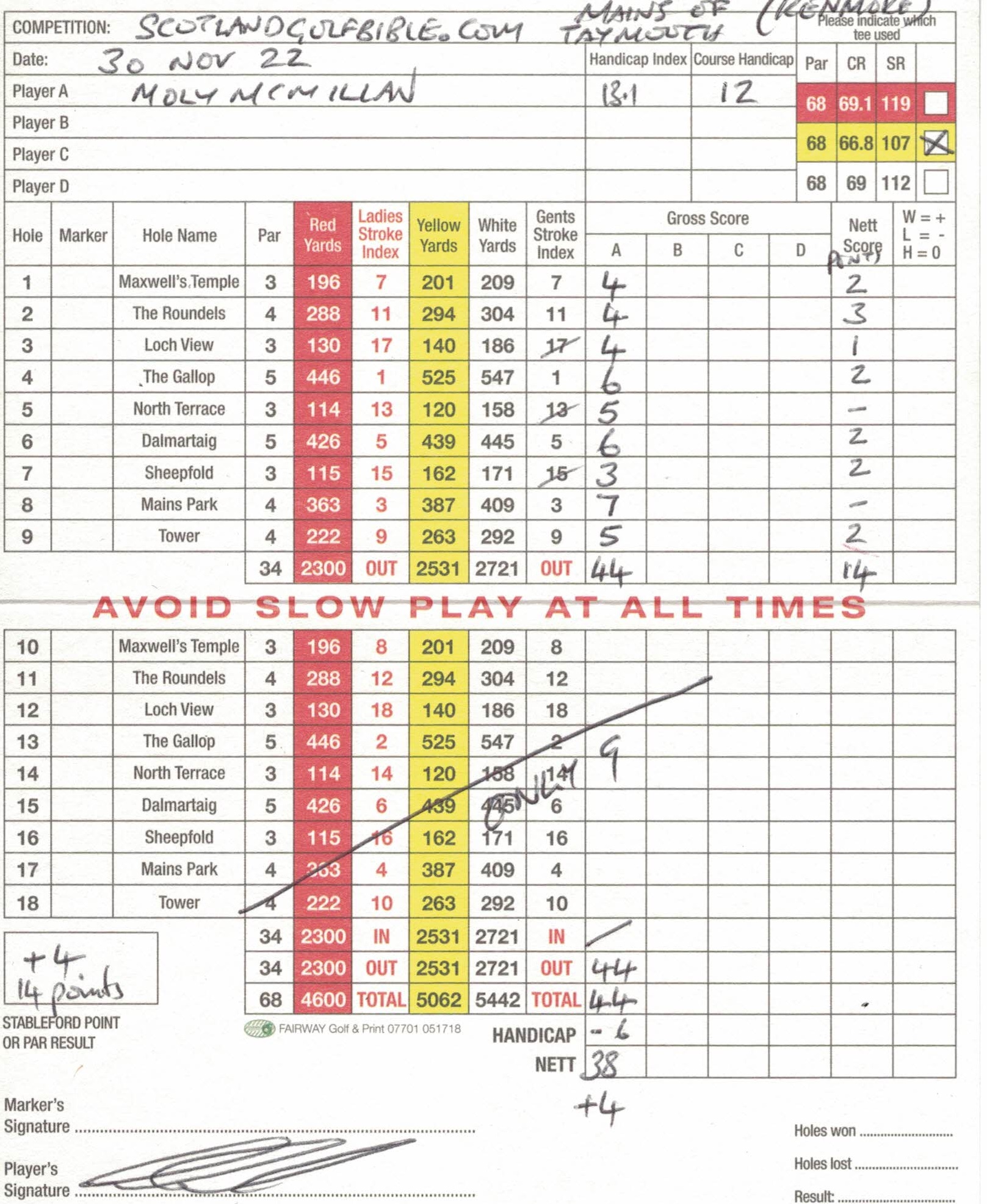
Moly’s Score – 44 for 14 points (off 12)

Course/Slope Rating (yellow) 107/66.8.

Course Type: Parkland

Par 34  ( 2 par 5s, 3 par 4s, 4 par 3s)

Distance (yellow): 2531 yards

Moly’s Mains of Taymouth Scorecard – 44

172. Craigie Hill. 29 Nov 22.

The “Spion Kop”

Value 4/5

Most golfers don’t know the hole names on their own course, yet would instantly know the locations of “Road Hole”, “Hogan’s Alley”, “Postage Stamp” or “Golden Bell”. Some stretches of holes become famous, such as “Amen Corner”.

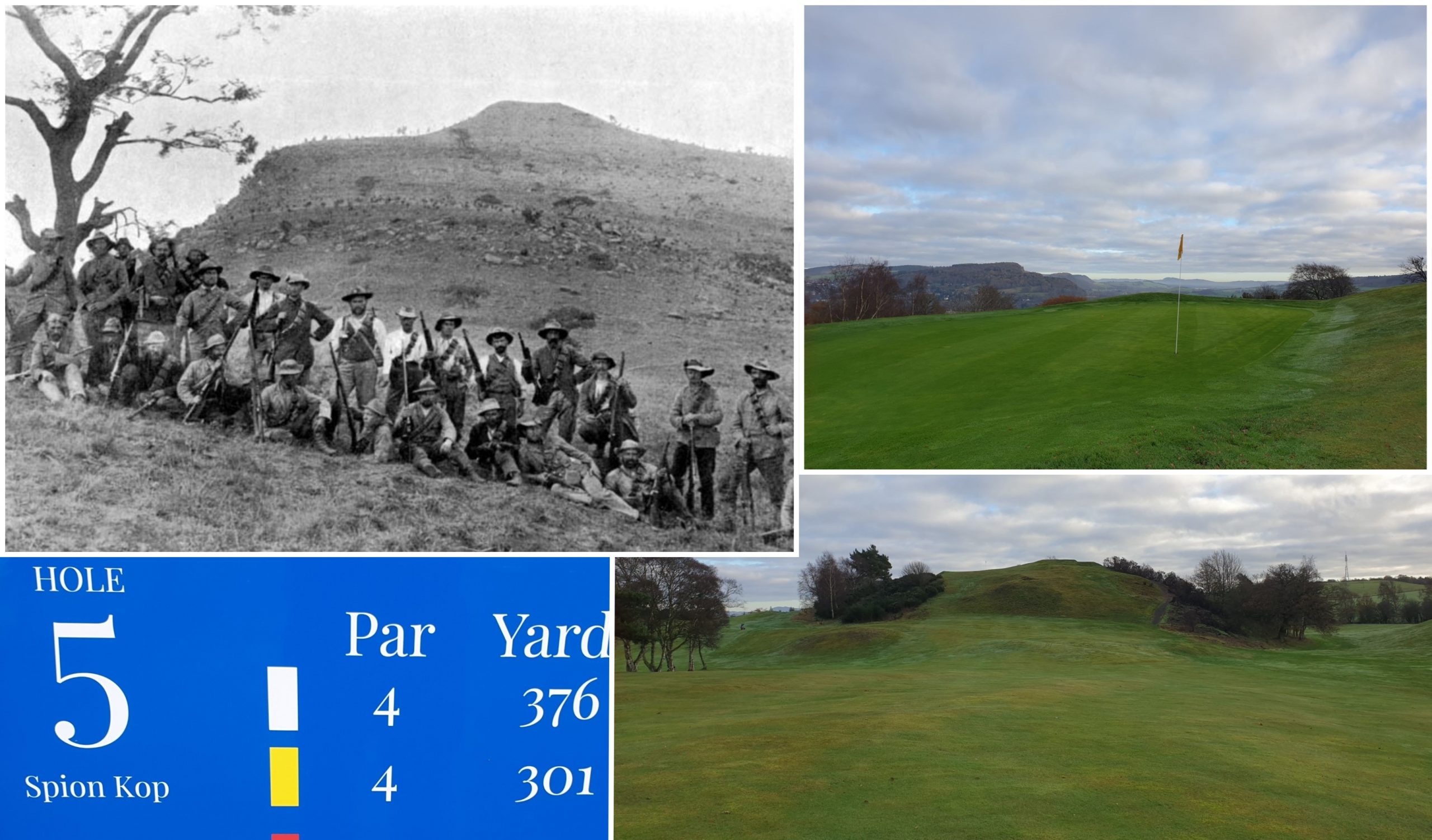
The original Boer War “Spion Kop”(top left) presents an uncanny resemblance to the Craigie Hill fifth hole (bottom right).

As a carry bag player, the hole name “Spion Kop” fills me with dread and Craigie Hill’s 5th hole was no exception. It is a worthy candidate for the toughest “Spion Kop” in Scotland.

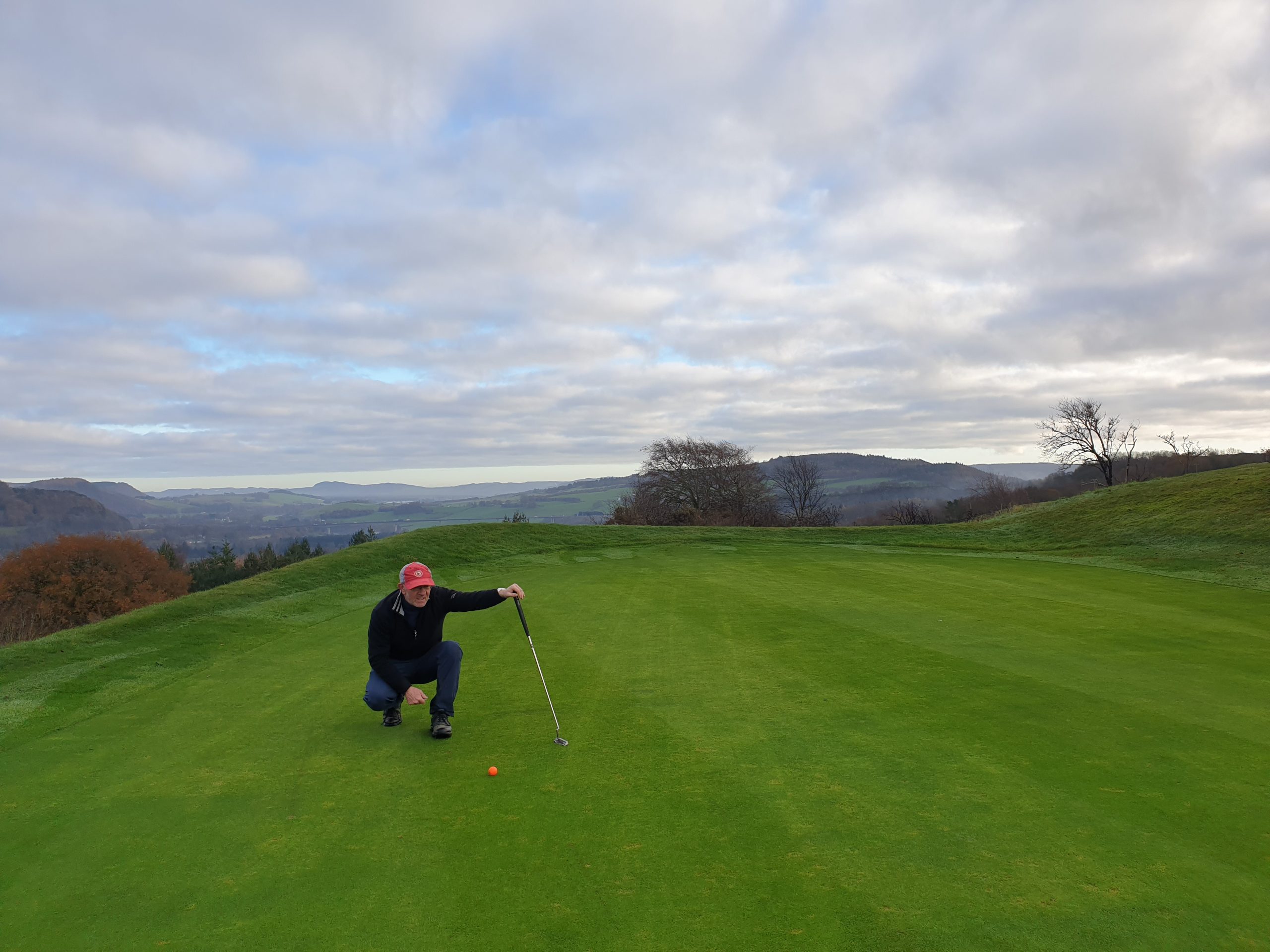
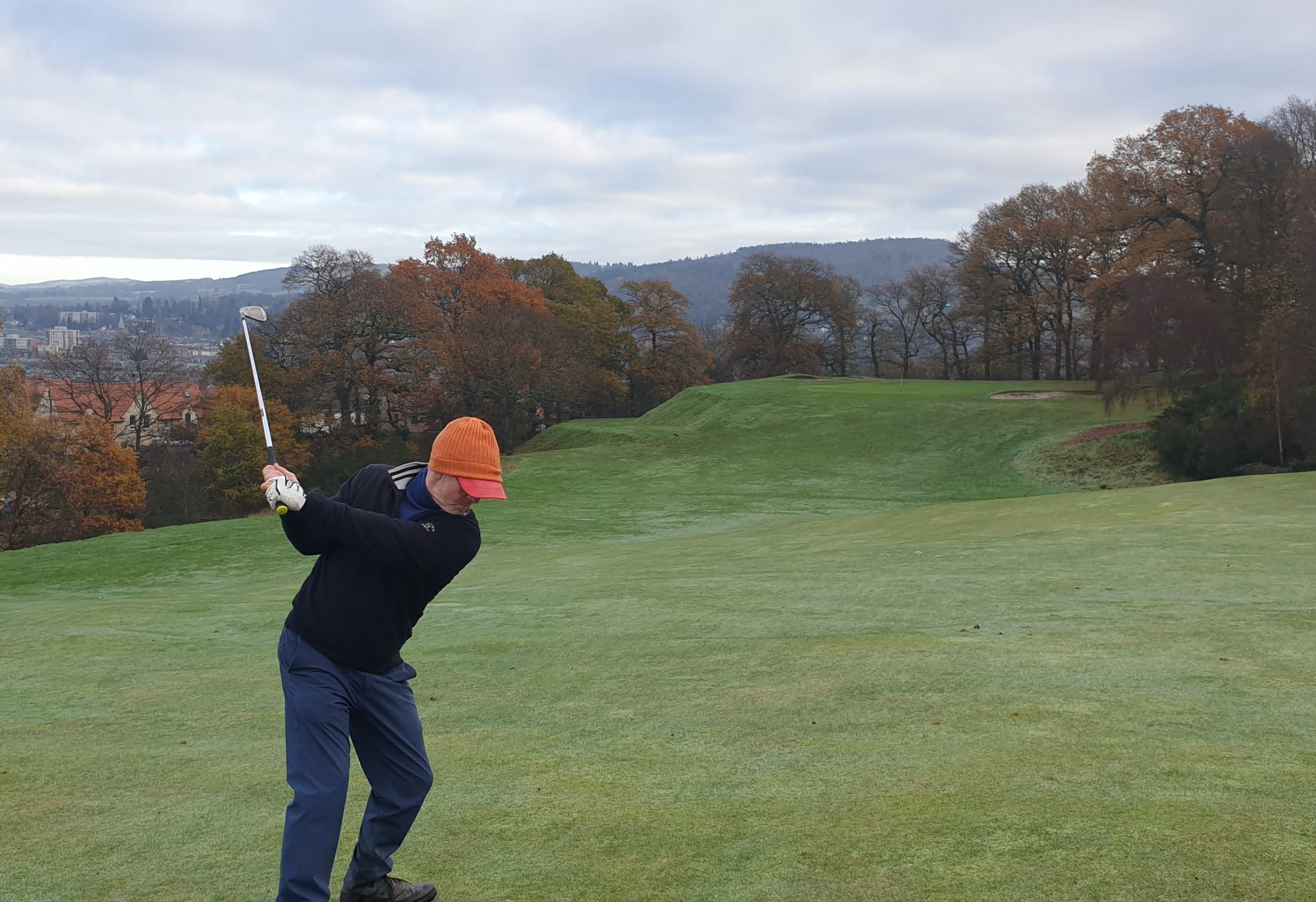
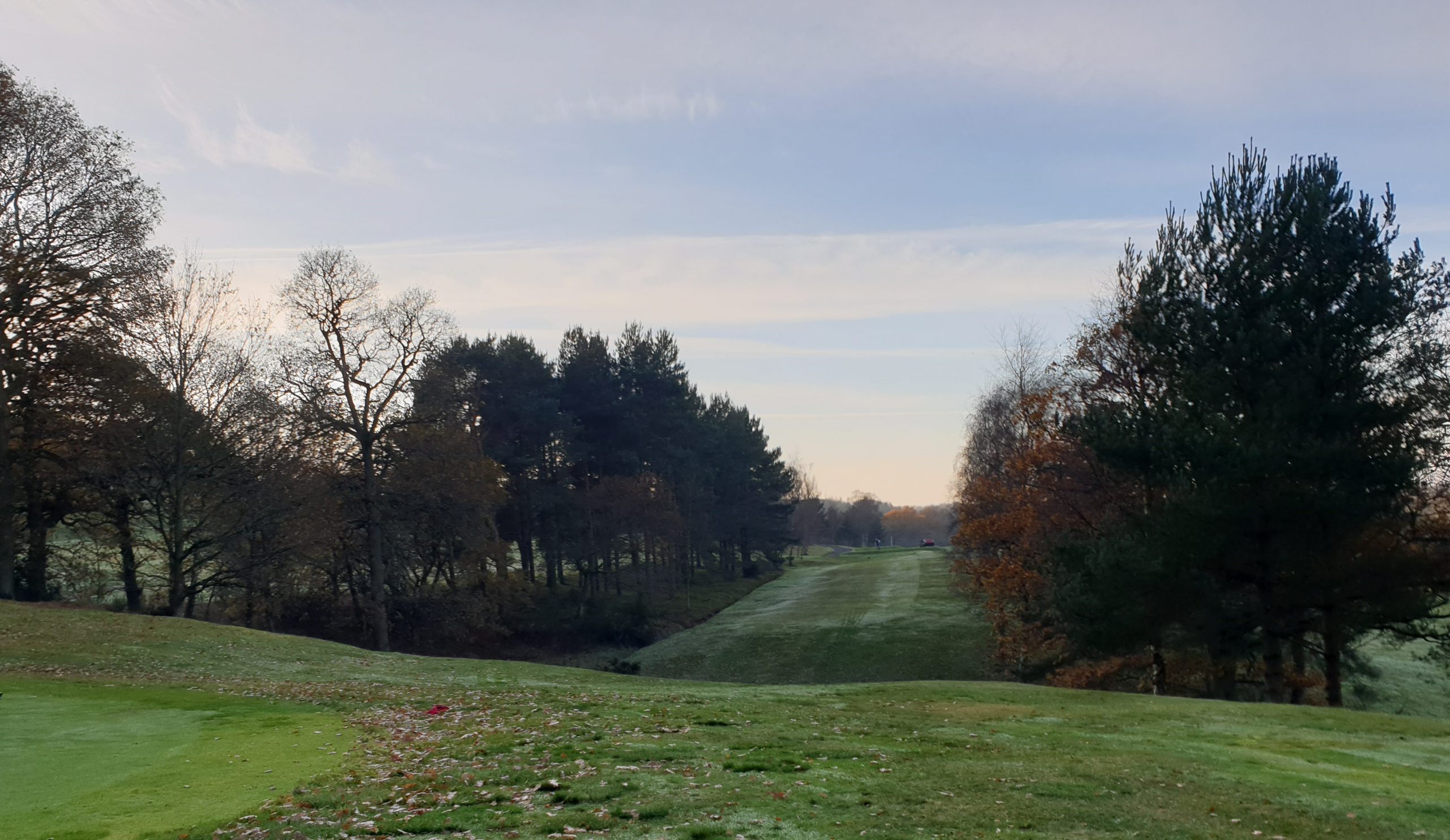
The outstanding views of the Perthshire countryside seen from the top of the “Spioen Kop” 5th, with Moly lining up a rare birdie attempt on this SI 1 hole. Hit long and slightly right on your approach.

“Spioenkop”, means ‘lookout hill’ in Afrikaans/Dutch, and became famous after the Boer War battle of the same name at the dawn of the twentieth century. “Spion Kop” has become a commemorative name for steep standing terraces in many football stadiums in the UK. It is also a common name for several Scottish holes (Edzell 16th, Traigh 2nd and Strathtay’s 5th) in memory of the Scots who fought at Spioenkop.

Moly playing an approach to the par 4 first at Craigie Hill, a typical undulating fairway at this well laid out course.

Craigie Hill was founded in 1911 and well designed by two of the best architects of its day, Willie Fernie and Joe Anderson. It sits on the south of Perth and is the course seen from the M90 which bypasses Perth. Like many readers, I’ve seen this course hundreds of times as I’ve driven past over the years.

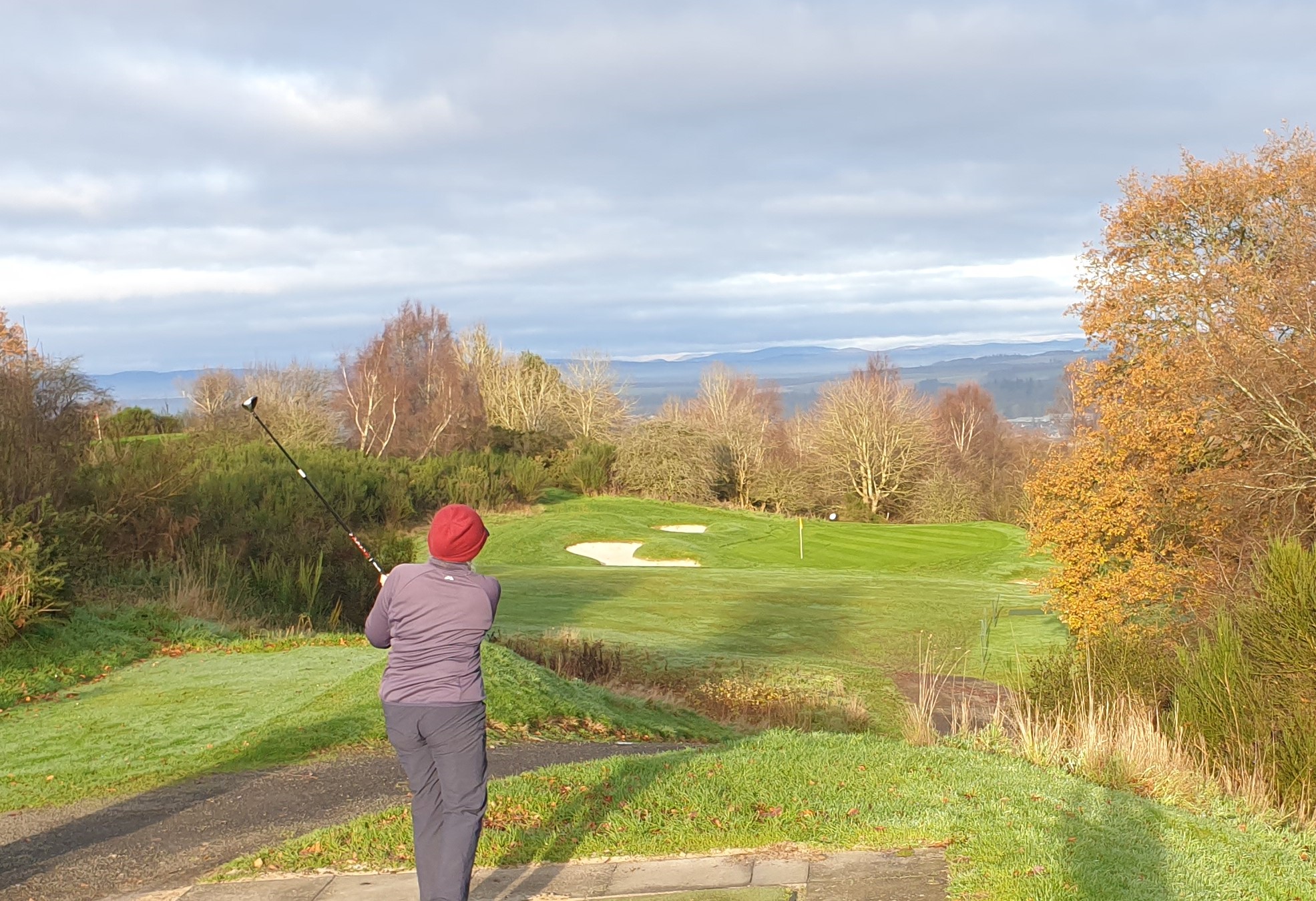
Fran playing off a forward winter tee at the par 3 eighth hole.

Craigie Hill is a tough trek and therein lies one of the big challenges for such clubs. The aging golfing population (the average age of Scotland’s club members in 2020 was 55 years old) means that physically demanding courses will struggle to attract older people and societies. Although a very nice course and attractively priced, I was advised that the membership was in decline (around 200) and the course would likely “reduce to 9 holes within three years”. The state of the buildings were also run down.

The 13th, another of the tough par 3s at Craigie Hill

The course had several holes where it was necessary to carry over long gulleys. Again, I imaging this also a struggle for golfers without a long carry in their armoury and has likely contributed to the declining membership.

The approach to the 15th, a par 4 of 319 yards.

The undulations of the course though meant that drainage was very good with the greens in decent shape for the time of year. Unfortunately, all bunkers were “GUR”. The all round fairway condition was excellent. I can well imagine this being a spectacular place to play on a mid summer evening.

The difficult 17th at Craigie Hill, looking back towards the tee, a Par 3 of about 200 yards. One of the holes that might put people off joining Craigie Hill.

We payed only £10 for a winter round, albeit we couldn’t access the clubhouse and no score cards were available, luckily a local member had a spare card and was very helpful to Fran and I.

The Club website says its “dog friendly”. That was certainly true, as one of the greenkeepers dogs ran off with my ball!

For the record, I managed a par on the “Spion Kop”.

Facts:

Round List Price £30. Actual Paid £10.

Course/Slope Rating (yellow) 118/65.7.

Course Type: Parkland

Par 67  (13 par 4s, 5 par 3s)

Distance (blue): 5131 yards

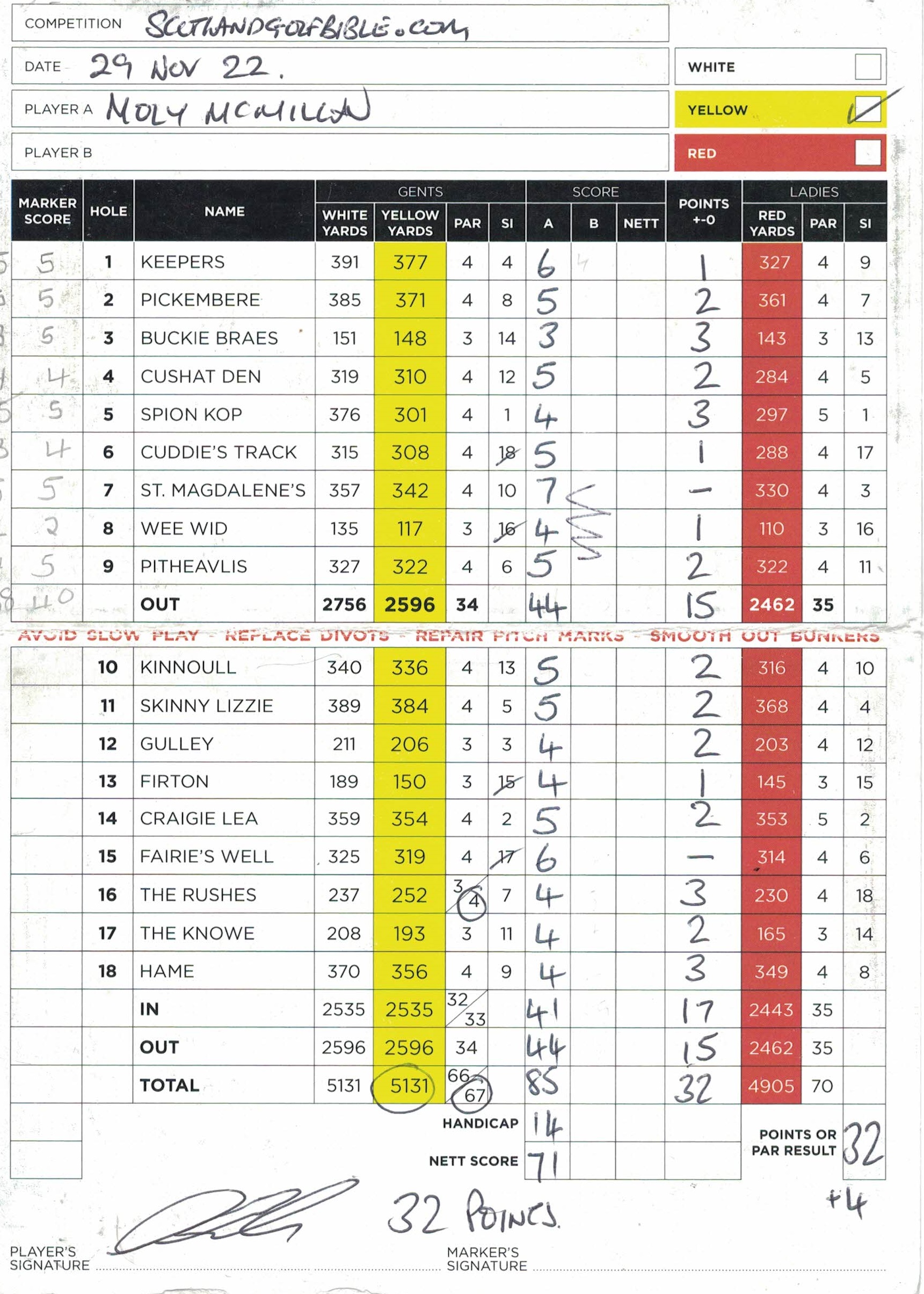
Moly’s Criagie Hill scorecard – 85

170. Tulliallan. 25 Nov 22.

Where exactly is Kincardine Golf Club?

Value for Money (out of 5) – 3.5

I love marketing using “it does exactly what it says on the tin“.

Most Scots know where the Kincardine Bridge is, but few know where Tulliallan is. Tulliallan Golf Club is less than a mile north of the Kincardine Bridge which crosses the Firth of Forth about 20 miles west of Edinburgh, at a cross roads of several Scottish Counties, including Stirlingshire, Fife and Perthshire.

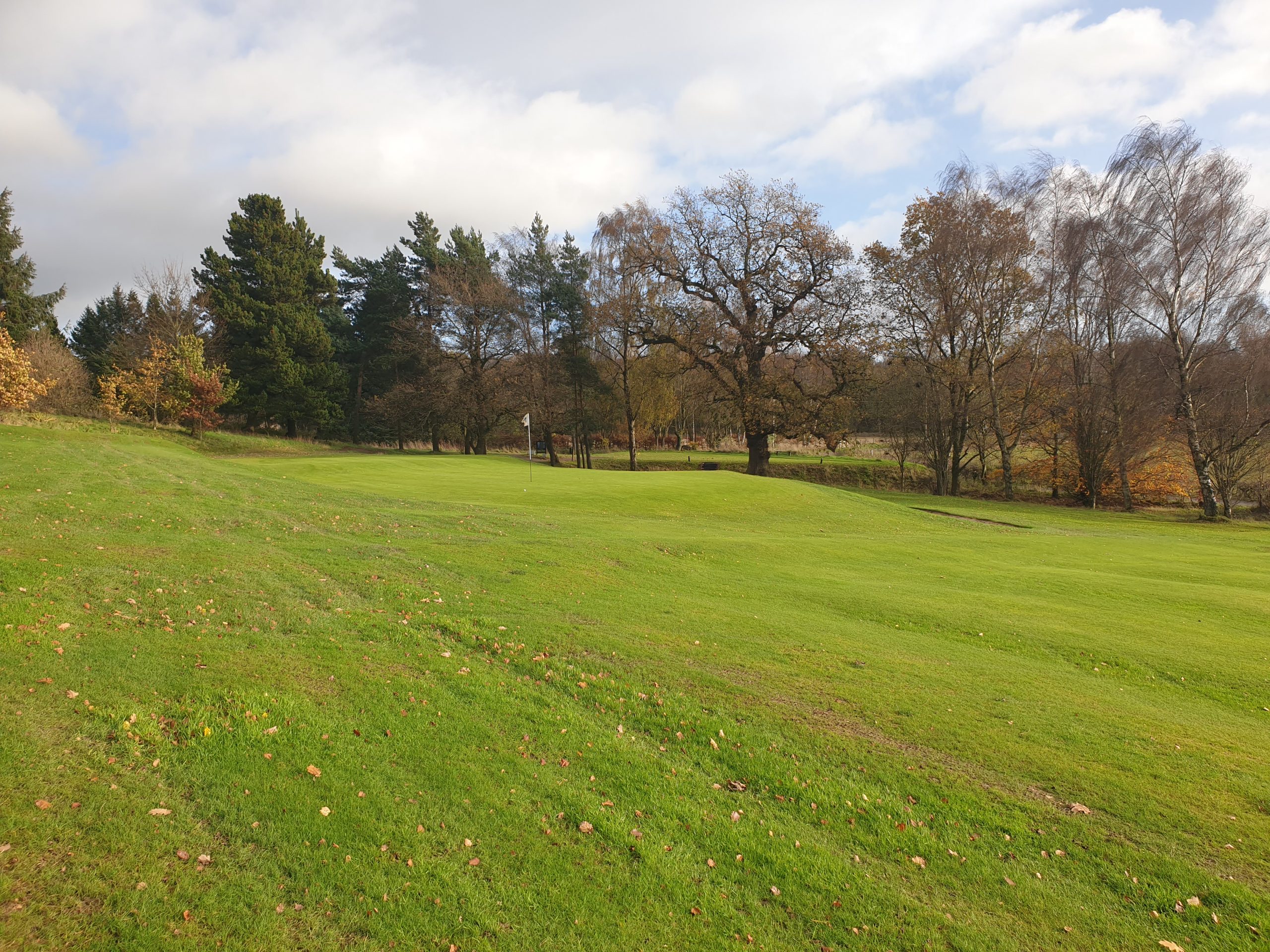
The tough par four uphill 3rd hole, at well over 400 yards, rightly the stroke index 1.

‘Tulliallan’, meaning ‘beautiful knoll’ in Gaelic, was the name of an estate owned by the Lairds of Blackadder, which is unusual given the Blackadder Clan (now defunct) were from Berwickshire. The original 9 hole golf course was founded in 1902 with 5 holes occupying the ground of Blackadder Castle (sometimes called the Old Tulliallan Castle). For the record the New Tulliallan Castle, built in the 19th Century, is home of the Scottish Police College. The golf clubhouse bisects the two castles which are only a mile apart.

The short par four 262 yard 11th, a potential card wrecker or equally a birdie chance.

As with many courses of the age it was fairly quickly extended 18 although I couldn’t find out the architect, which is a shame as it’s a decent layout. The course makes good use of the gently sloping lands and excellent use of the burns. With some blind shots and sparse, but effective, bunkering, it’s slope rating of 122 means its a decent test.

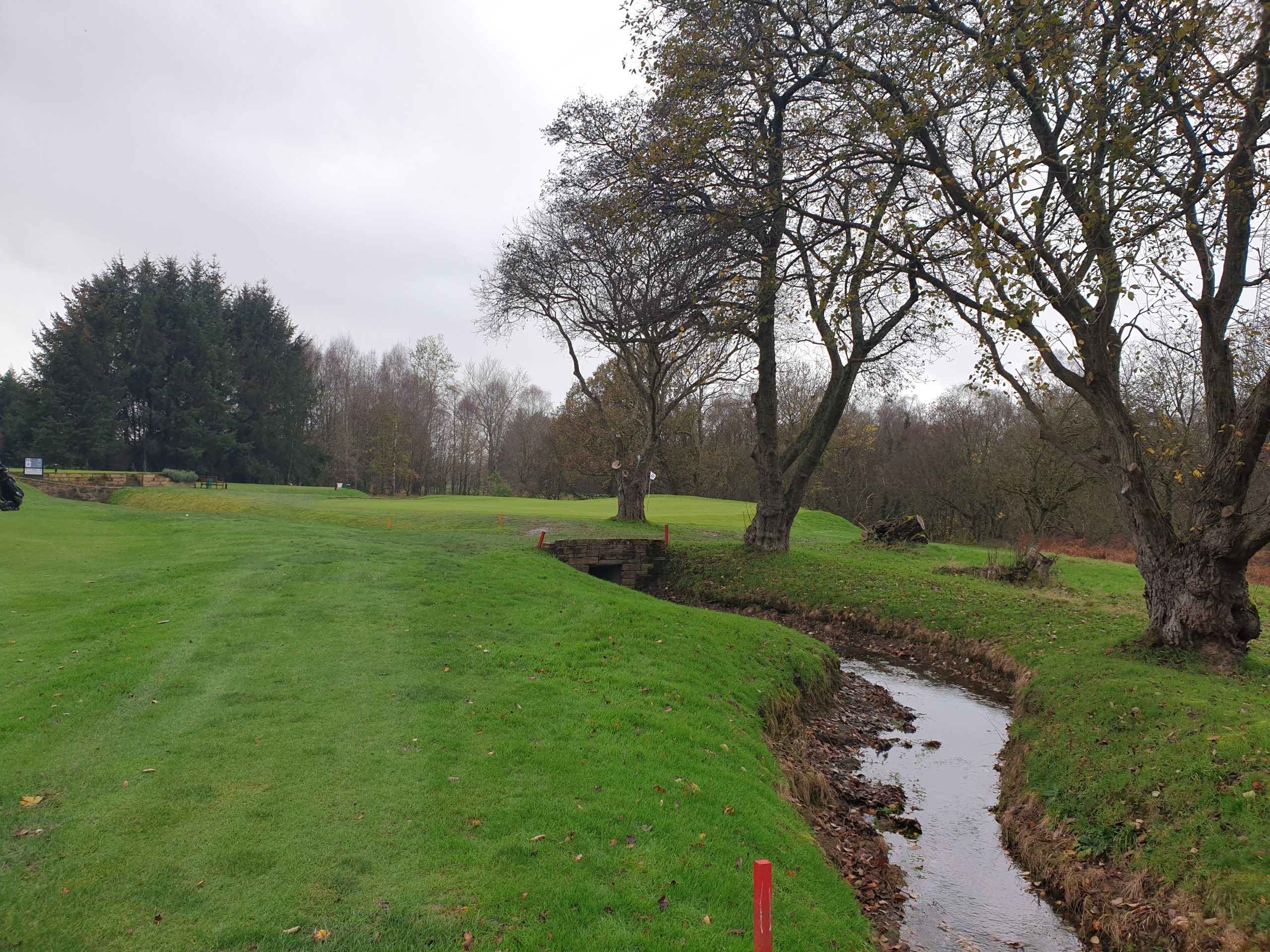
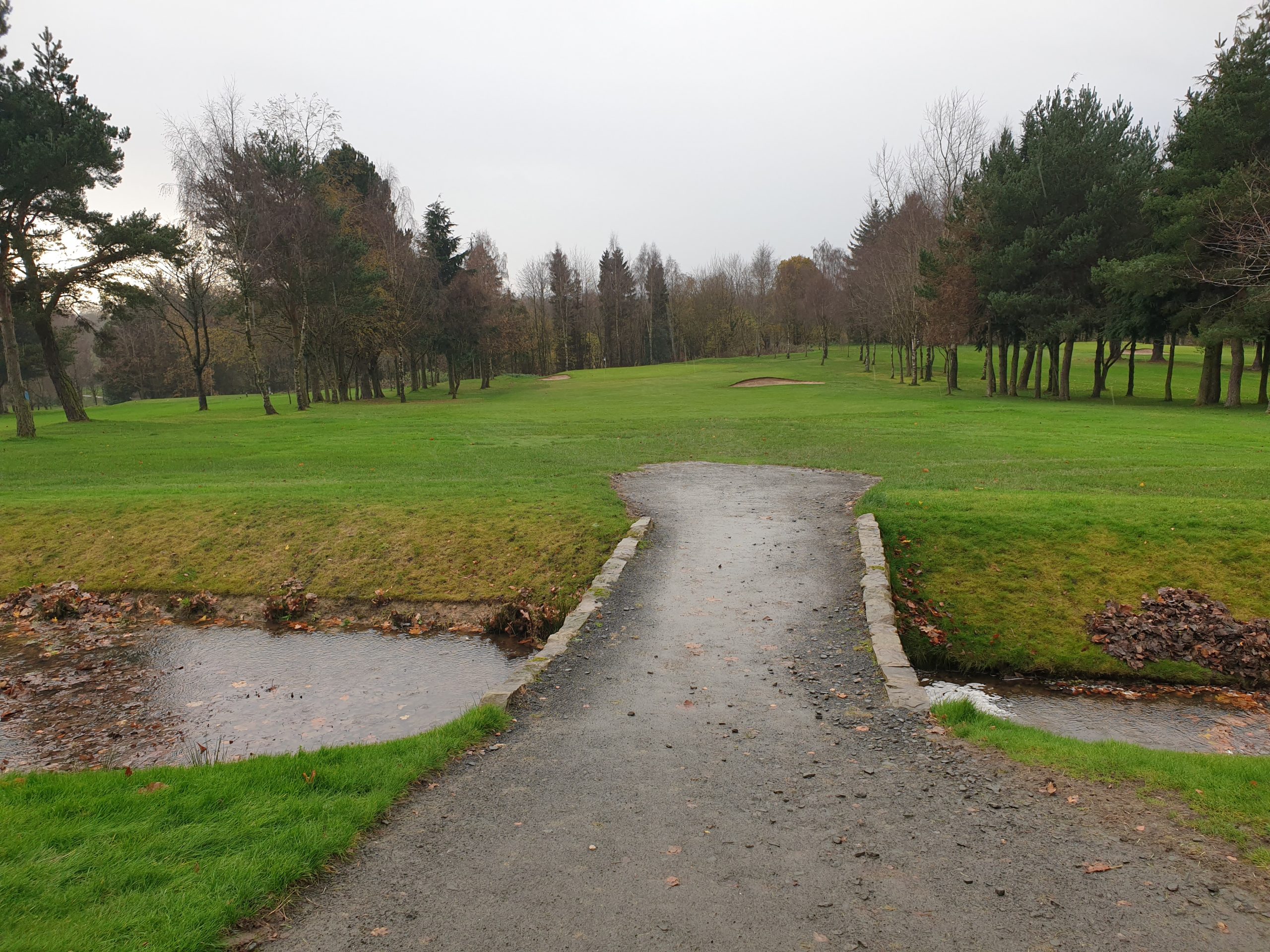
The approach towards the par four 8th, at 389 yards, with water determining strategy from the tee.

The course was wet when we played, but other than some casual water on the first and last it had withstood the heavy rain well. To prevent mud paths, the club had introduced a clever winter routing altering the order of holes 7 through 13. The tee signs had been clearly marked, highlighting good course management.

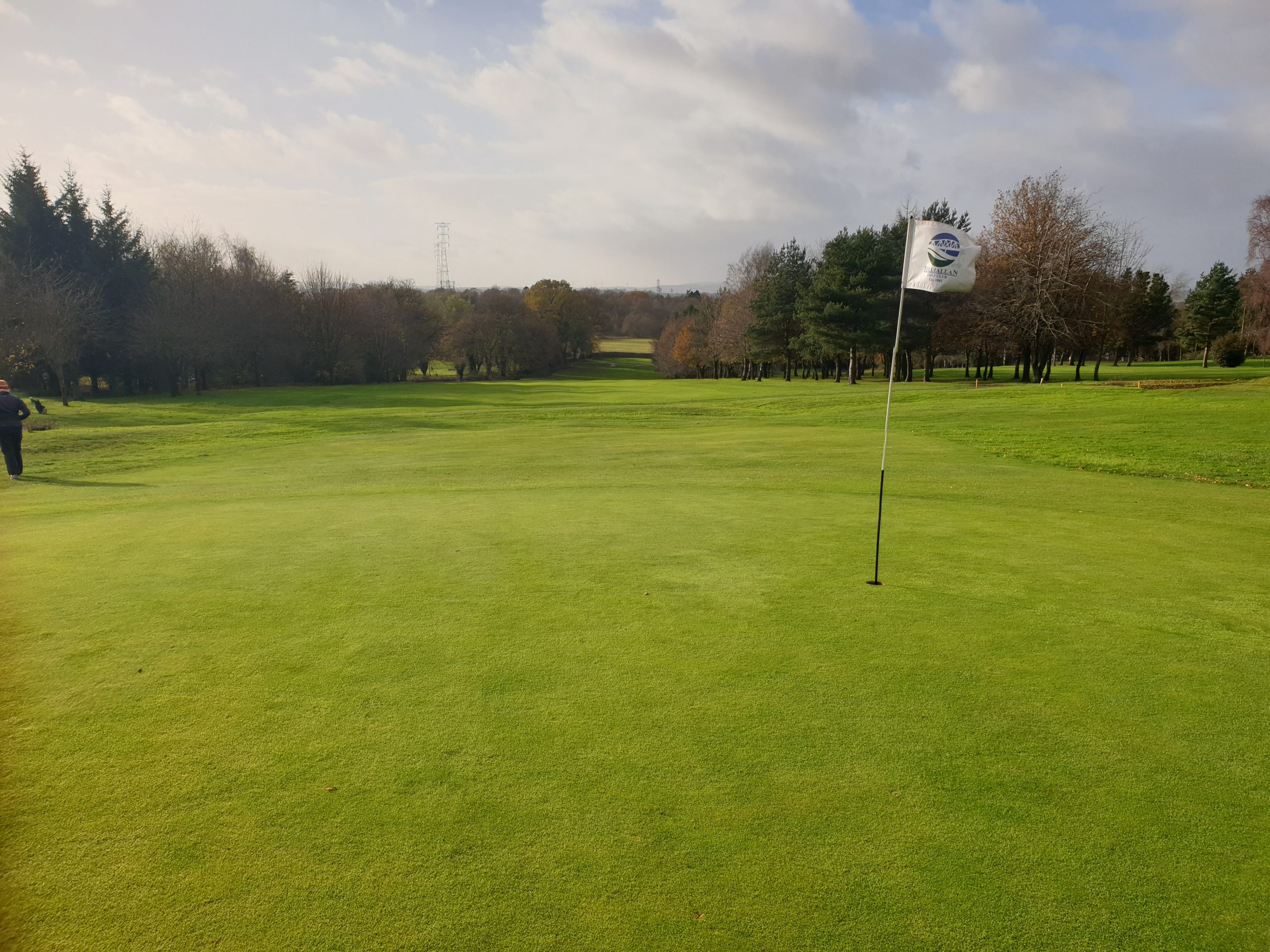
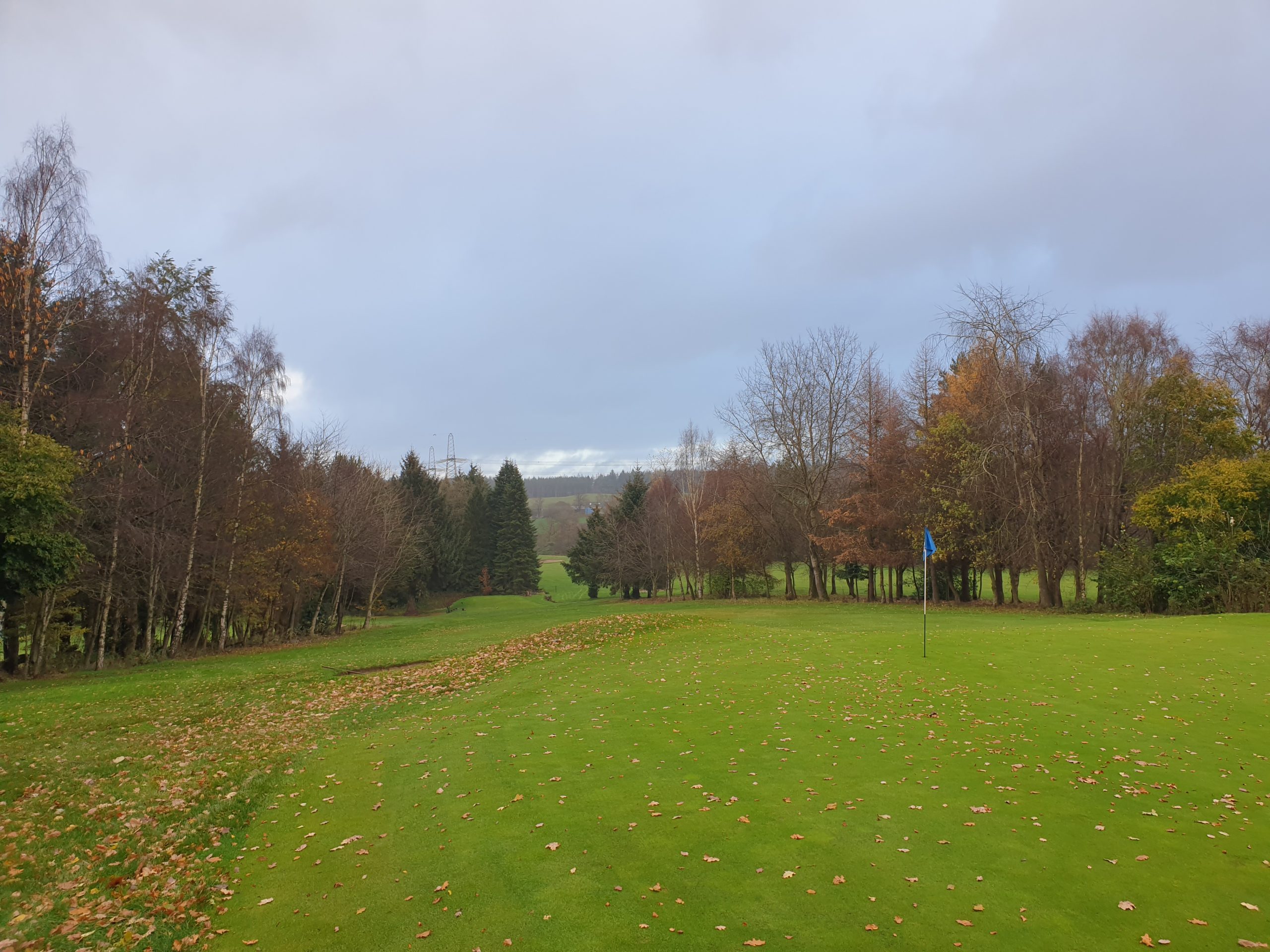
The greens (here the long par three 4th) were in good condition, despite the heavy rain.

The highlight is the careful ordering of the holes, ensuring each presents a different challenge from the last. There was really good stoke indexing as well, other than the last, which I think should not be SI 18.

The course’s fairly wide fairways, good greens and very nice cafe/restaurant, as well as its decent pricing means its a good choice for a society outing, especially with its central location.

The 15th is the last of the four par 3s, a strong point of this well designed course.

Finally to ‘marketing’. One wonders how many more visitors this course would get annually it it was called “Kincardine Golf Club”? I actually searched and did find a Kincardine Golf Club – one of the oldest in Canada, founded in 1906, only 4 years after Tulliallan was founded.

Facts:

Round List Price £35. Actual Paid £17 through Golfnow.

Course/Slope Rating (white) 69/122.

Course Type: Parkland

Par 69  (1 par 5s, 13 par 4s, 4 par 3s)

Distance (yellow): 5678 yards

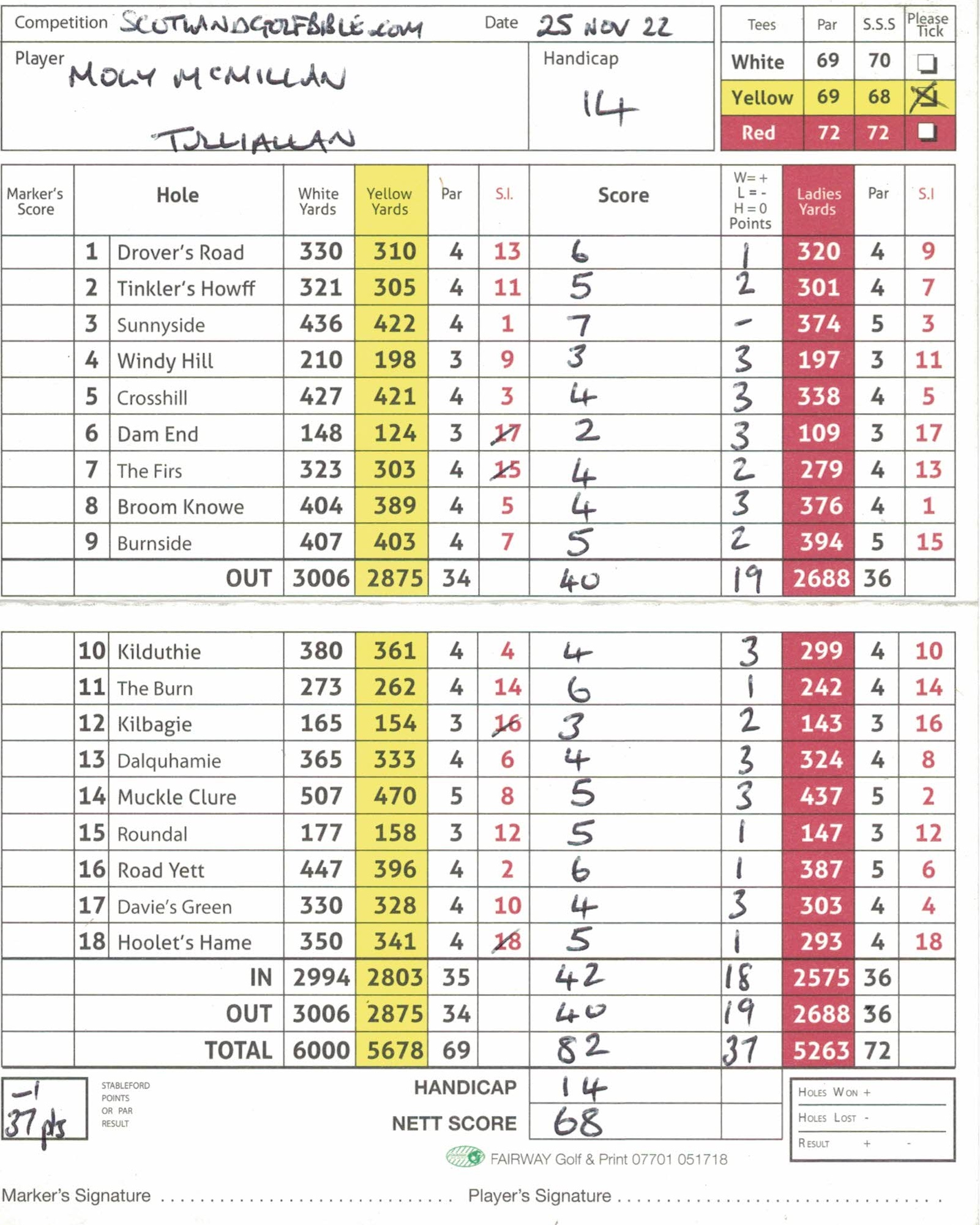
Moly’s Tulliallan Scorecard – 82
« Older posts

© 2025 Scotland Golf Bible

Theme by Anders NorenUp ↑