A guide to green fee value for money

Category: Local Authority (Page 4 of 7)

75. Arbroath. 6 May 2018.

A must visit course for US Historians, fish lovers and record book chasers!       

Round £40.   Par 70.  Value (out of 5) – 4

Arbroath is the largest town in Angus and it’s golf course sits about 2 miles to the east of the town and only 6 miles from Carnoustie.  It probably gets bypassed by many visiting golfers moving north from Carnoustie towards the wonderful links courses in Aberdeenshire – this would be a wasted opportunity.

Arbroath has a remarkable claim for it’s influence on the modern world.  The “Declaration of Arbroath”, a Scottish declaration of independence of 1320, is regarded by several historians as the model for the American Declaration of Independence.
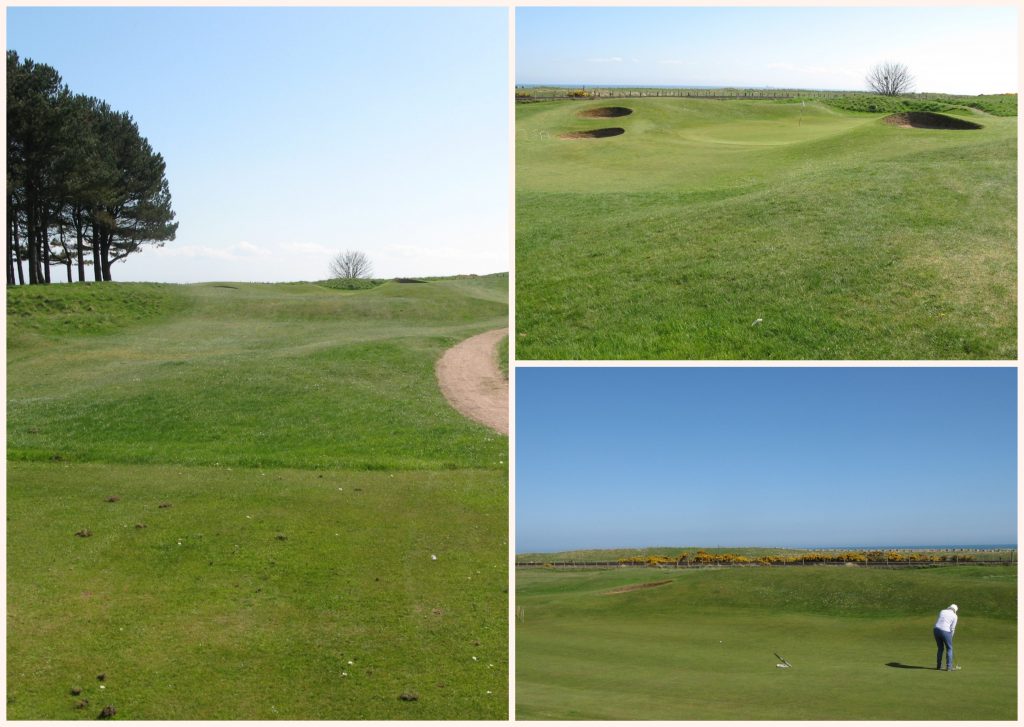
The delightful par 3 7th hole at Arbroath (159 yards)

The golf course can also argue a potentially unrivaled and rich architectural history.  Designed by Old Tom Morris, it opened in 1878,  was redesigned by the Troon professional Willie Fernie about 30 years later, then James Braid remodeled the tees, to add length, and bunkers in 1931.  That’s a strong golfing pedigree.

The course is predominantly an out and back layout.  The first 7 holes are played westward into the, normally very strong and cold, prevailing wind, before turning back for the 8th to 10th;  westward again for the 11th and 12th, then with 5 of the last 6 holes played eastward downwind back to the clubhouse.  Strategically, 11 of the holes have reachable out of bounds to the right, so right handed slicers may wish to consider their options off the tee.
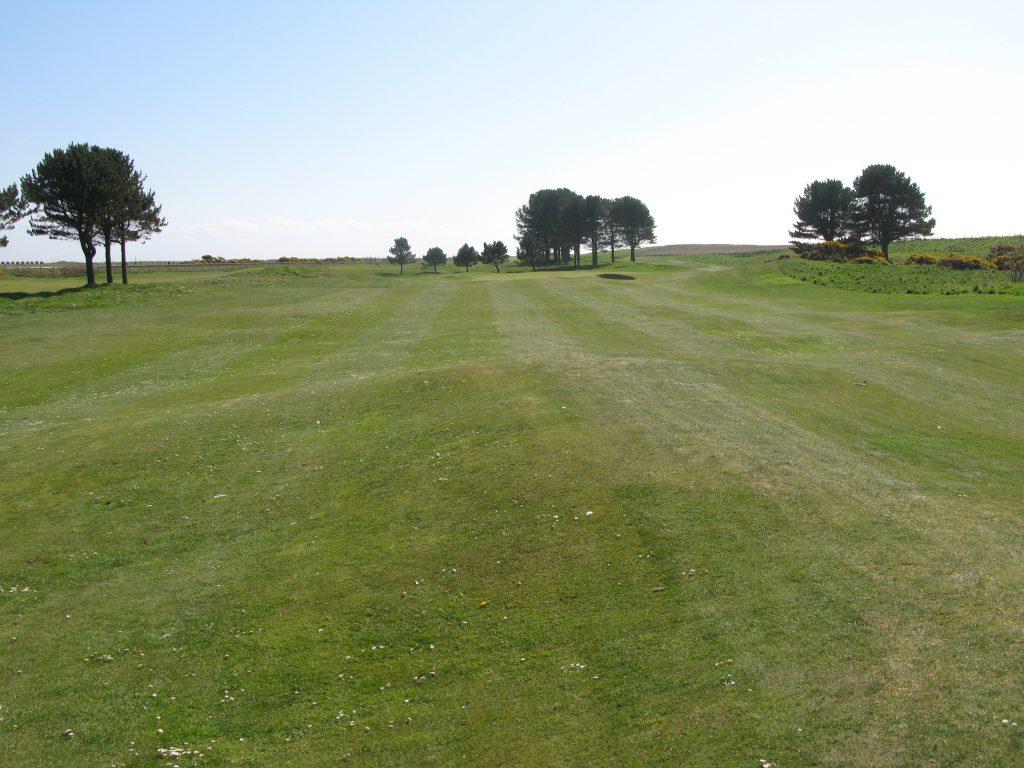
The Stroke Index 7, 375 yard 6th hole at Arbroath, a typically difficult par 4 on the opening stretch of holes.

Viewed from the tees, Arbroath seems at times flat and innocuous, but it has been very cleverly bunkered by Braid, and I’m sure the locals will have many advisory comments on where to miss the greens.  The greens were also very hard when I played and difficult to hold (for all I guess other than very good golfers).  Playing off the yellow tees didn’t give  much respite either, as the 2nd and 17th both played as long par 4s, rather than par 5s from the white tees.  There are also 3 ditches that cross the course, and these need to be carefully considered, especially as the flat terrain makes them invisible to the eye.

I rather suspect first time visitors rarely score much above 30 stableford points.
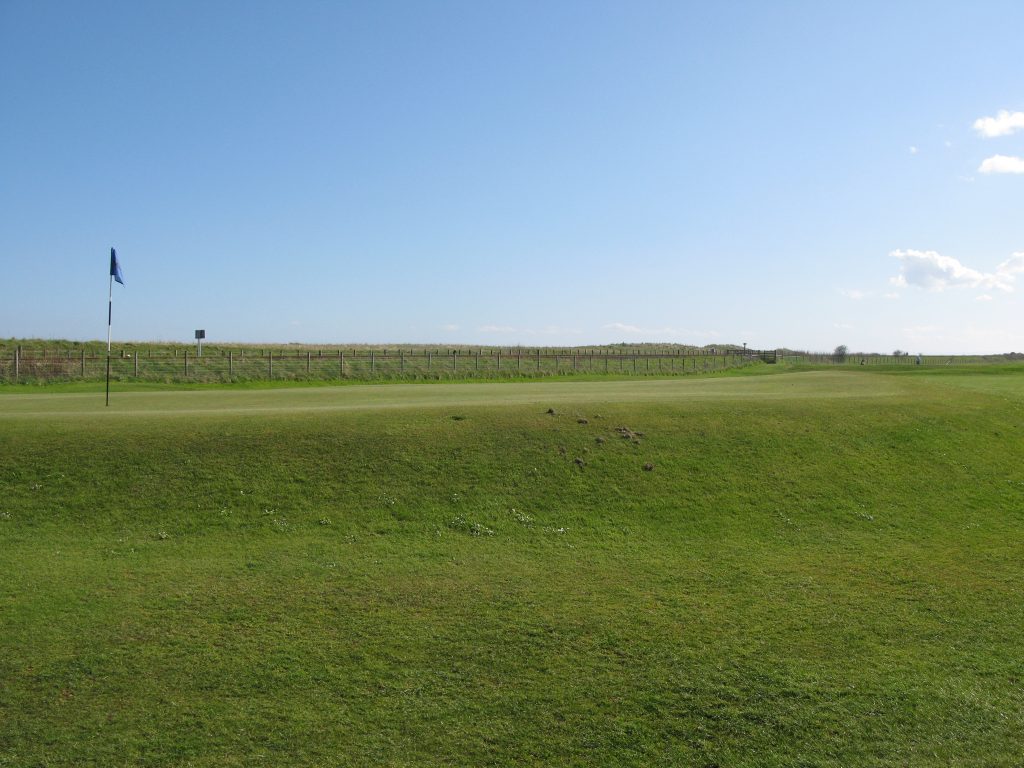
The very difficult green to find in 2 at the 13th at Arbroath, with the railway OOB on the right

The highlights for me were the par 3s, all of which had good surrounds, with the two on the back 9, the 14th at 200 yards (white at 232) and the 16th, being especially difficult.

It’s a well kept course, with good tees, greens, fairways and bunkers.  The clubhouse has a friendly staff and good food, where you can try the Arbroath Smokie, the local smoked haddock delicacy protected by EU Trade regulations.
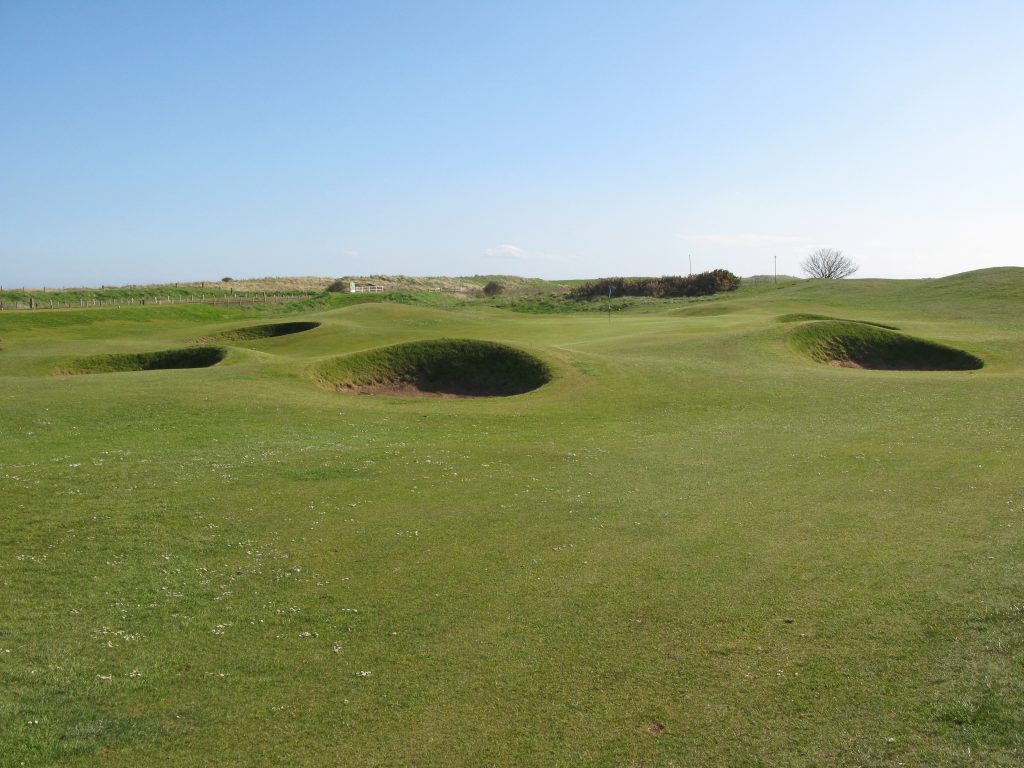
The wonderfully bunkered par 3 16th green at Arbroath

The other Arbroath claim to fame is the local Football Club, which holds 2 world records – the highest professional scoring record (winning 36-0), and their ground, Gayfield Park, being the closest to the sea in the world – only 5 and 1/2 yards away!  Apparently, one famous game was abandoned after all balls were “lost at sea!”.

Not a great day for me, I lost 3 balls (6 shots) and 3 putted 7 times!  I suppose that explains completely my 13 over par net!  Oh, and yes, the greens are rather large and difficult!

Well worth a visit.

Facts:

Course Type: Links

Par 68 (14 par 4s, 4 par 3s)

Distance (yellow): 5826

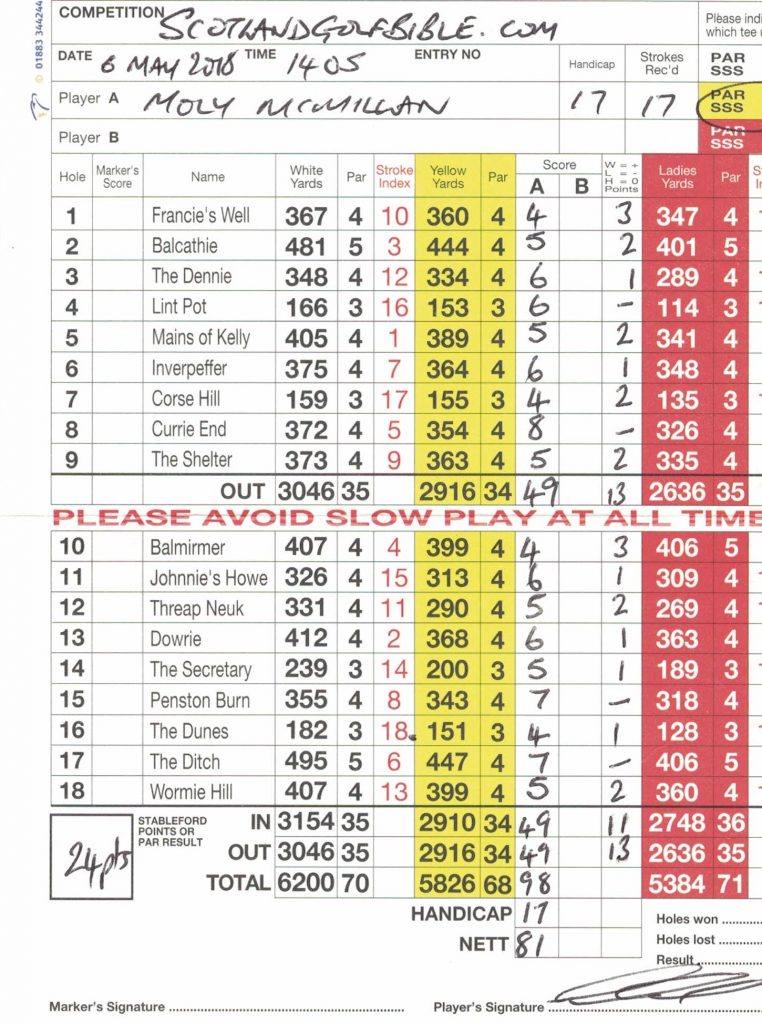
Moly’s Gross score98

Moly’s Arbroath scorecard – 98
68. Braid Hills No 1. 16th Oct 2017.

Edinburgh’s public gem too prominent to be called “hidden”   

Summary:  Round  £25.30.   Par 70.  Value (out of 5) – 4.5

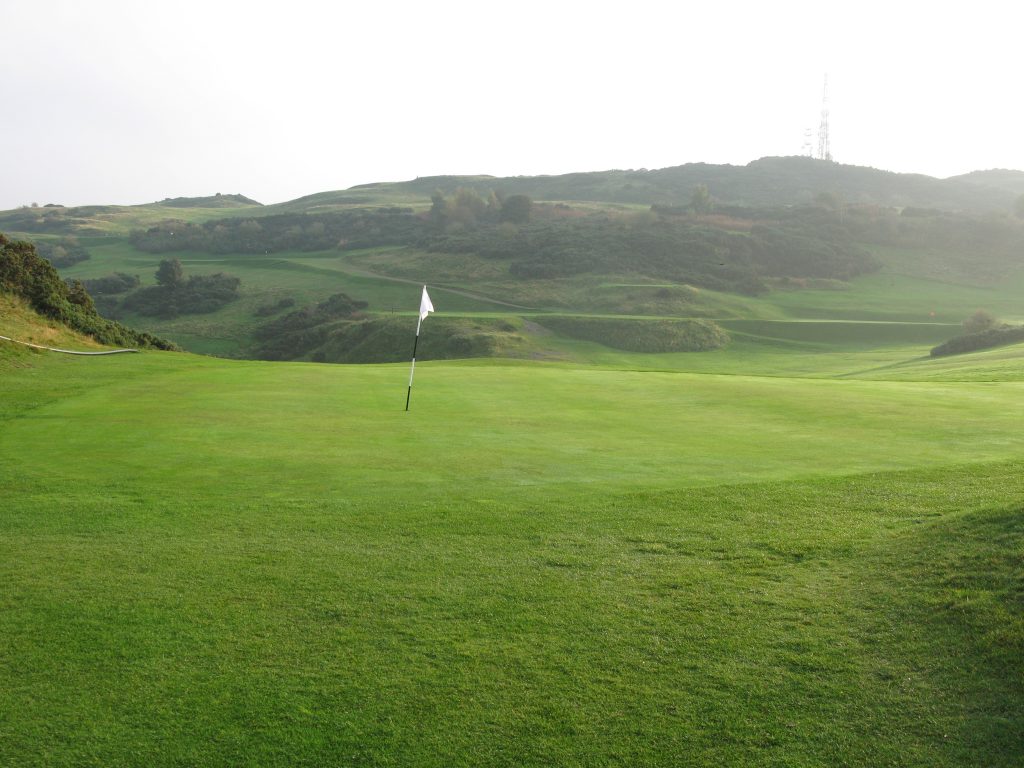
Braid Hills “No 1” is a wonderful public 18 hole golf course carved among the gorse and hillocks of Braid Hills on the south western edges of Edinburgh.  It has magnificent views of the Edinburgh skyline towards the Firth of Forth and also the Pentland Hills.  Although often misused, the term “gem” could well have been defined just for this golf course.  It is sometimes described as “one of the best loved public courses in Scotland”, and a real gem it is.

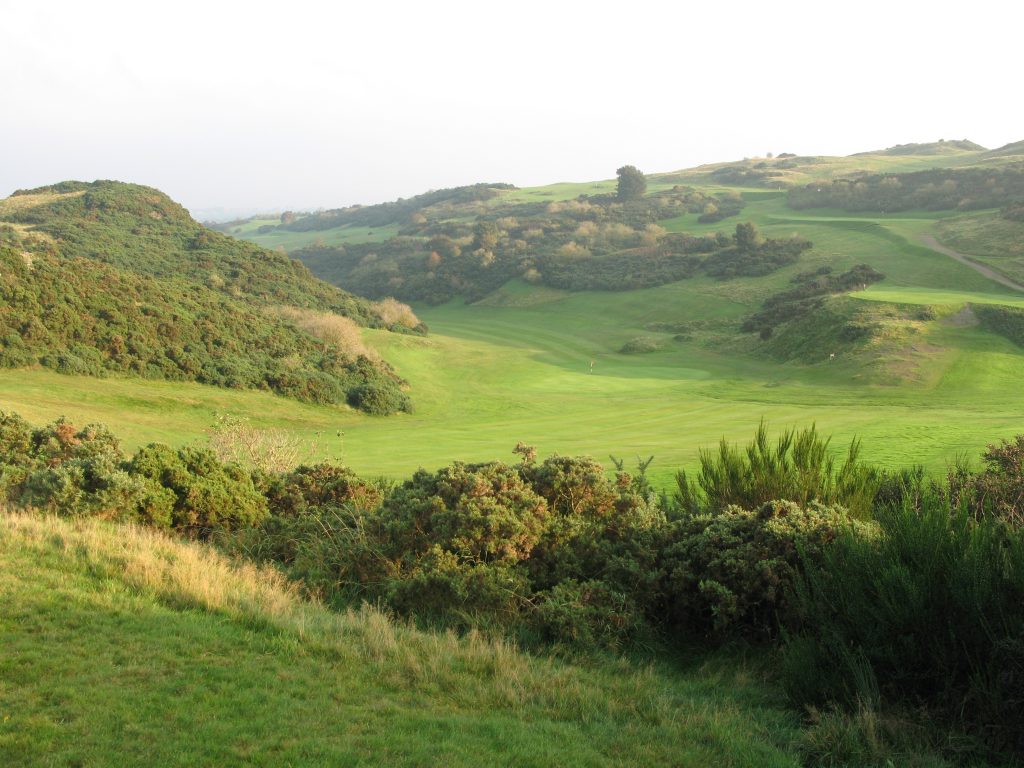
Overlooking the 16th green and 17th tee, with the view representing the feel of Braid Hills

“The Braids” takes its name historically from the nearby Braid estate originally the property of the “de Brad” family, one of whom, Henri de Brad, was Sheriff of Edinburgh in the 12th century.  The name has nothing to do with the famous course architect James Braid who, ironically, did not in any way shape his namesake course!

It was appropriate to play here with Sheriff Frank Crowe, fully equipped with Tommy Armour irons, given that Henri de Brad, the 12th Century Sheriff of Edinburgh, is the origin of the Braid Hills name.

The golf course was opened in 1893 and several golf clubs sprang up to accommodate the popularity of the sport with many of those clubs still affiliated: Edinburgh Thistle, Edinburgh Western, Harrison, Comiston Ladies and Braids United.  The 1931 Open Champion Tommy Armour was a member at Edinburgh Western.  Such was the popularity of golf, the nearby Braid Hills Hotel, immortalised in Muriel Spark’s ‘The Prime of Miss Jean Brodie’, originally had a Golf Room erected to serve the golfers playing the new Braid Hills golf course.

It’s a relatively short course, but there are many blind or semi blind tee shots, and I would highly recommend buying the course planner, as some of the holes can be played with very different strategies, most notably the par 4 7th and 14th holes, where successful drives can be 60 yards wide on either left or right.

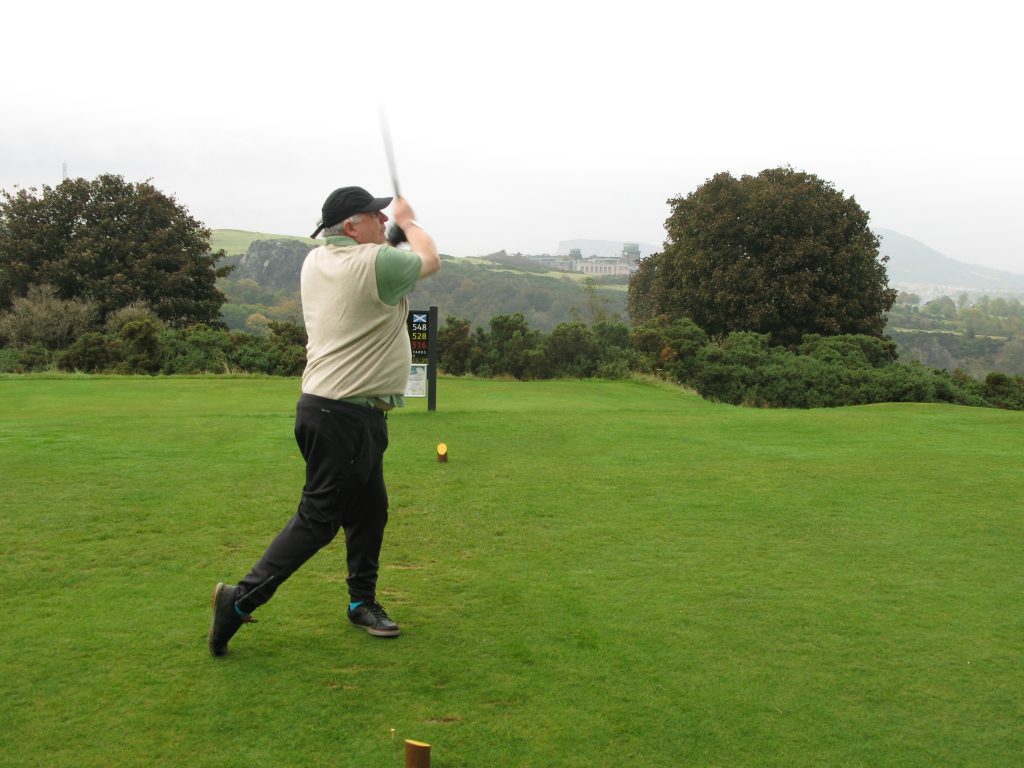
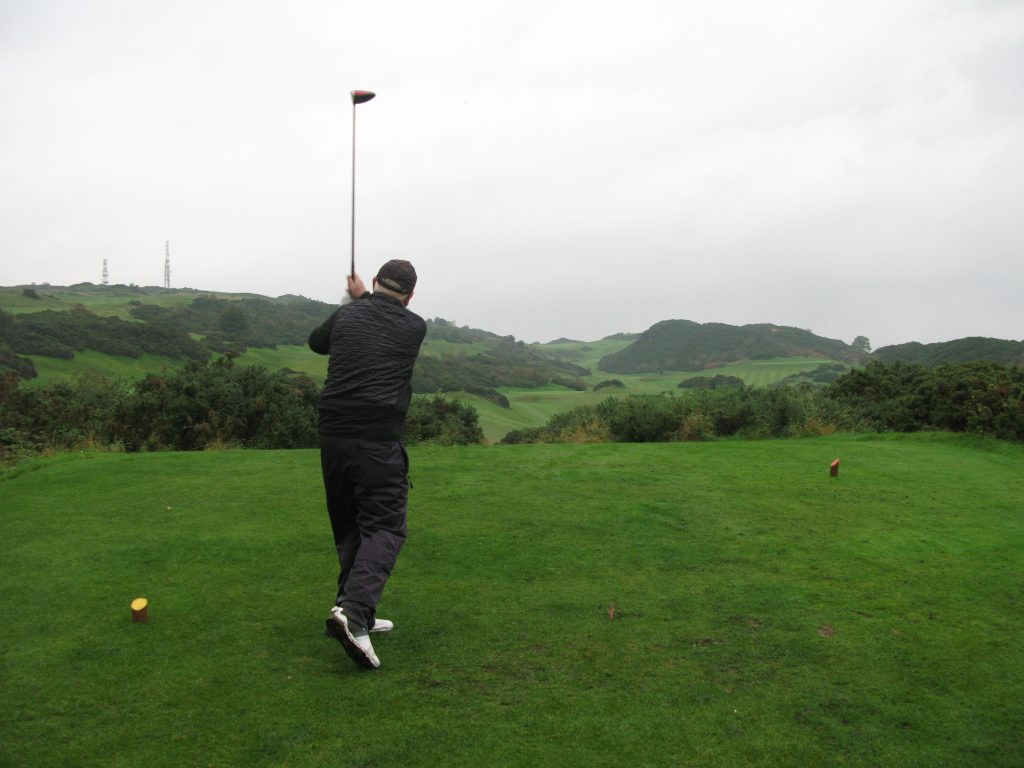
Brian Fearon teeing off at the very difficult par 4 7th hole. Choose your line with care; my shot seemed the best drive but was never found!

Although easily accessed from the city, whilst on the course if feels incredibly remote, especially in one of the holes surrounded by the gorse.  The main hazard on this course is the pervasive gorse bushes, and the need to get the correct alignment from the tee.  If you play well off the tee here, you will score low, otherwise disaster awaits.  This is reflected abundantly on my card, where I had several disasters, resulting in lost balls.  However, I found many more that I lost – on the 4th hole my own ball was the 7th I found.  Make sure you remember the ball you played with!  Also take care with approach shots, which often seem to take at least one extra shot here – this was evident from the 17th tee, which has about 140 yards of “valley” between the tee and green – you need to get up here to make par.

The lovely par 3 17th, one of 4 nice par 3s, of which the uphill 9th was the most challenging

The walk is quite hilly with some hazardous steps up and down from teeing grounds, but the walk is well worth it just to get to the 18th tee alone which must have one of the best views in Edinburgh.  Even on a fairly misty day we were able to appreciate it.

The course was in pretty good condition when I played with some colleagues from the Apex organisation.  The greens were quite quick and the fairways good; there were some bunkers although they are quite spare and very basic in construction.

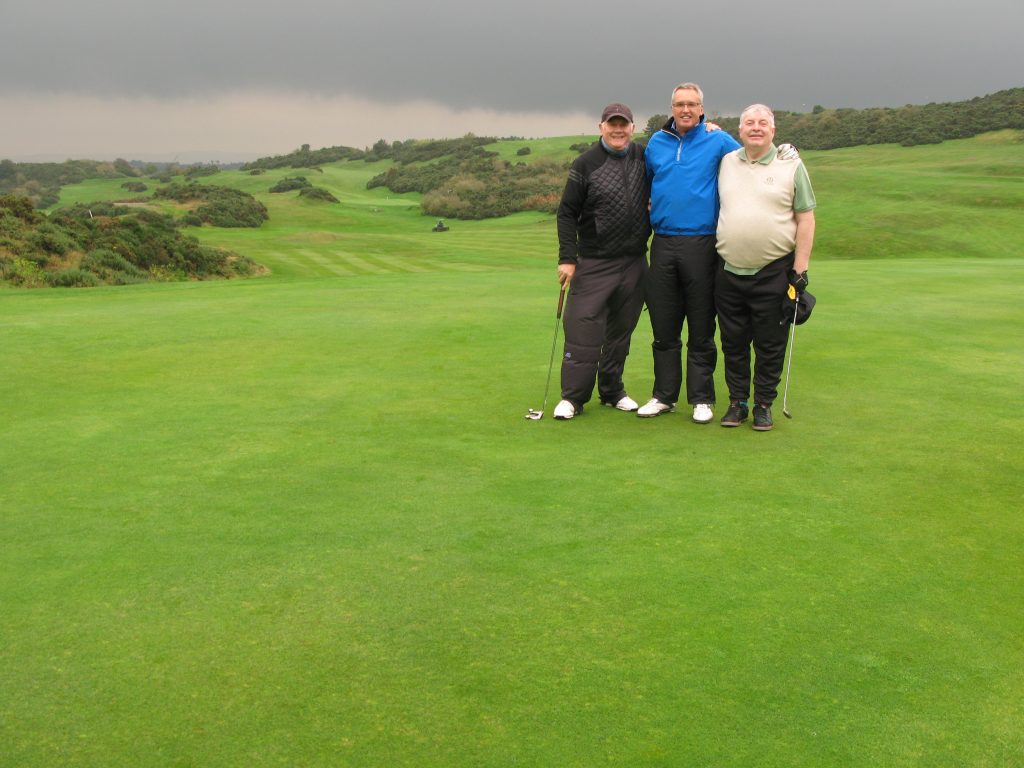
A set of happy golfers on the characteristic 8th hole of Braid Hills.

For the record, there once was a Braid Hills No 2 course of 18 holes, but that disappeared a few decades ago, and there is now nearby a small 9 hole course called Wee Braids and also a Braid Hills Golf Centre.

This is a really great little golf course highly recommended.

Facts:

Course Type: Heathland

Par 70 (2 par 5s, 12 par 4s, 4 par 3s)

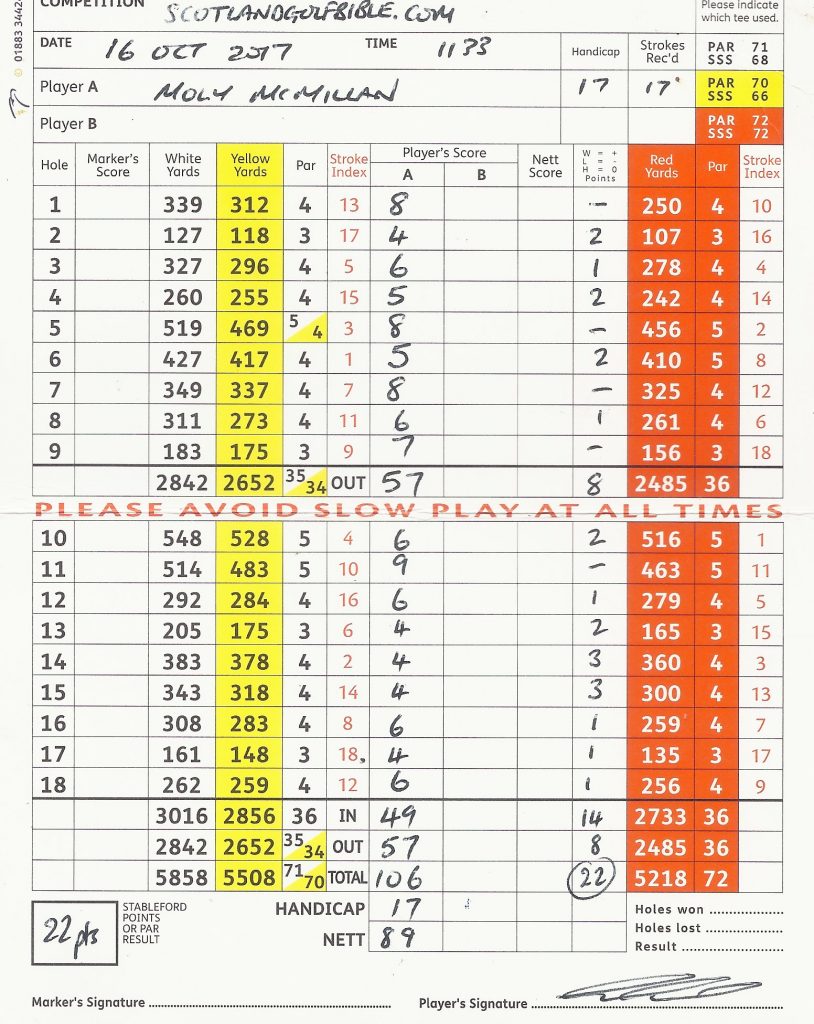
Distance (yellow): 5508

Moly’s Gross score: 106

Moly’s disastrous Braid Hills Card – 106 including 10 penalty shots and 40 putts

56. Portobello. 25th Oct 2016.

Easy walking 9 hole public course – but a no rake policy! 

Round £9.30.  Par 32.  Value (out of 5) 1.5

Portobello is a short 9 hole pay-for-play course operated by Edinburgh Leisure, which manages 6 golf courses on behalf of Edinburgh Council; an annual 7-day membership to play all courses costs around only £400 – excellent value.   However, Edinburgh Leisure’s pricing policy, with all courses priced the same on a pay-per-play basis, makes Portobello very poor value compared with the other more substantial courses (e.g. Braid Hills) on offer.  That is a great shame.

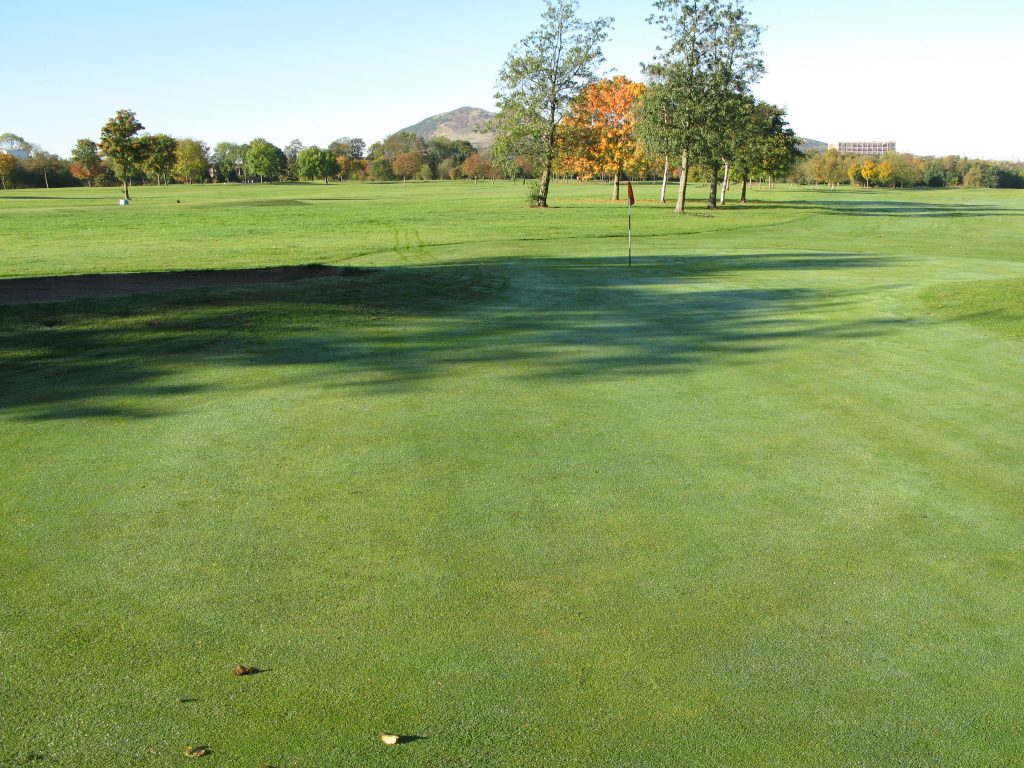
1st green at Portobello, with good view of Arthur's seat over this flat course.

1st green at Portobello, with good view of Arthur’s seat over this flat course.

It is a short, open and easy walking course of only 2566 yards, with some excellent views of Arthur’s seat, one of Edinburgh’s signature landmarks.

There is however little variation on this course, with only a couple of playing highlights of note.  The 6th approach shot over a bunker some 40 yards in front of the green provides a distance judgment challenge, with the green being one of the few sloping ones.   The signature hole is the long par 3 9th at nearly 200 yards and requiring a fairway wood for most I suspect.

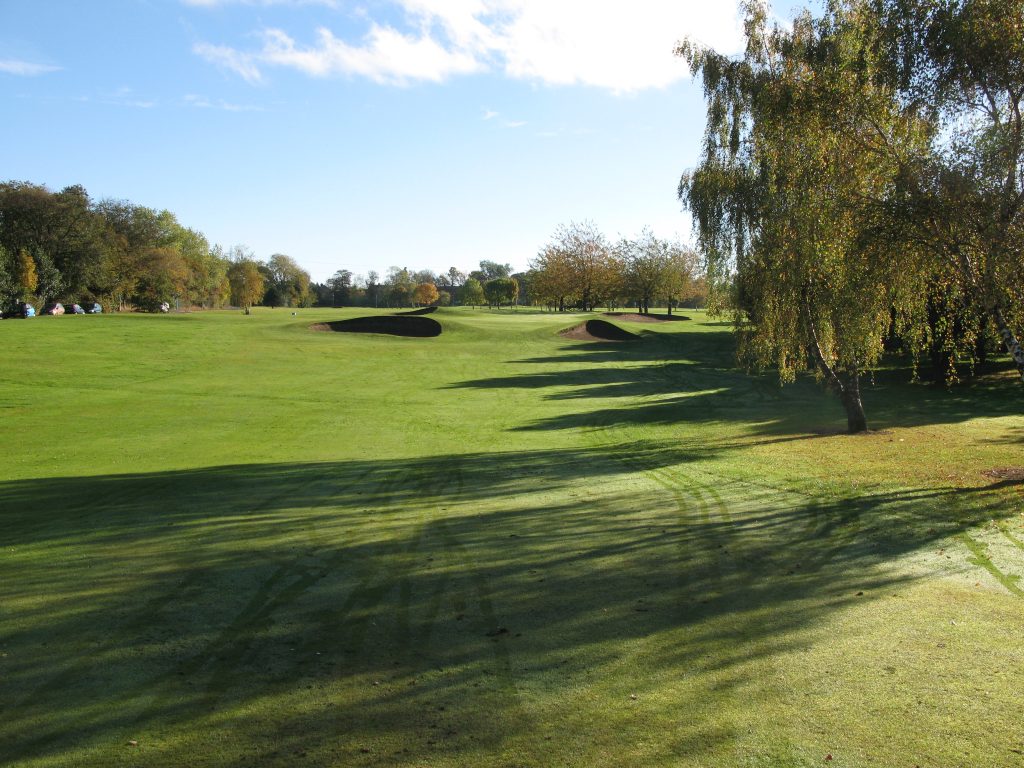
Approach at the 6th at Portobello

Approach at the 6th at Portobello

The only memory of the club which will endure was the chat I had with the starter attendant, who explained the policy of not leaving rakes in the bunkers, due to the theft risk.  This is a great shame, and I concluded that a better policy might be to at least put the rakes out in the morning and then take them in when the starter box closes.

The signature 9th at Portobello

The signature 9th at Portobello

The greens were in OK condition, but the tees were poor, and of course the bunkers at the mercy of the previous occupant.

Overall, a good course to learn on, or if you’re looking for a quick 9 holes.

Some Facts

Course Type: Parkland

Par 32 (5 par 4s, 4 par 3s)

Distance yards:  2566

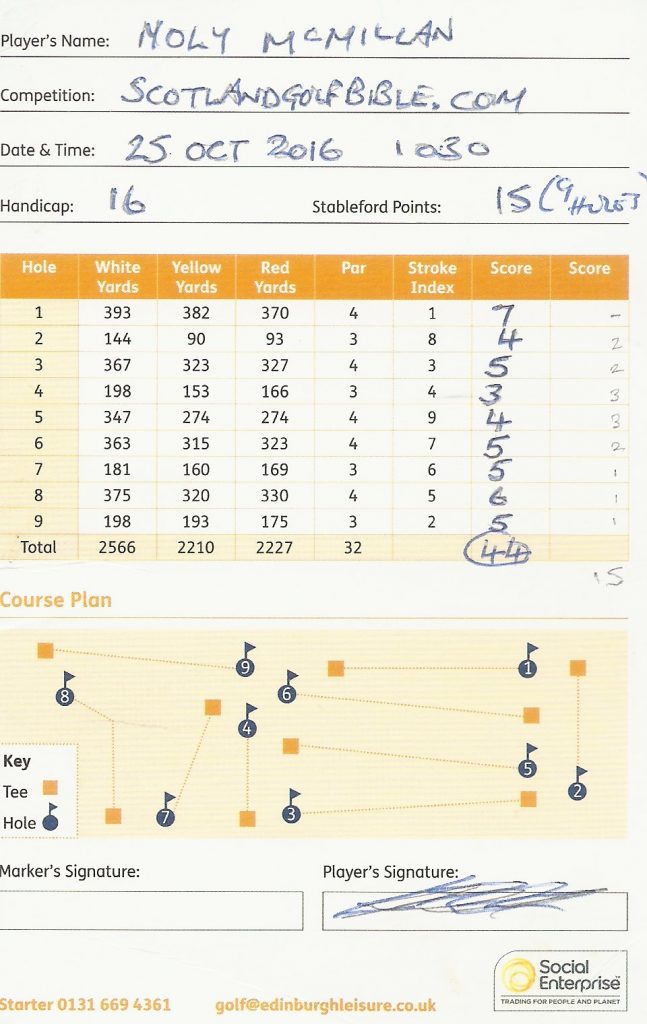
Moly’s Gross Score: 44

Moly's Portobello scorecard - 44 (12 over)

Moly’s Portobello scorecard – 44 (12 over)

55. Silverknowes. 20th Oct 2016.

Golf of the people, by the people, for the people, shall not perish in Scotland

Round £22.70.  Par 71.  Value (out of 5) 3

Silverknowes is a small suburb in the north-west of Edinburgh on the south bank of the Firth of Forth with views across to Fife.  The community evolved around the 1930s and the golf course opened in 1957 after an almost 30 year gestation.

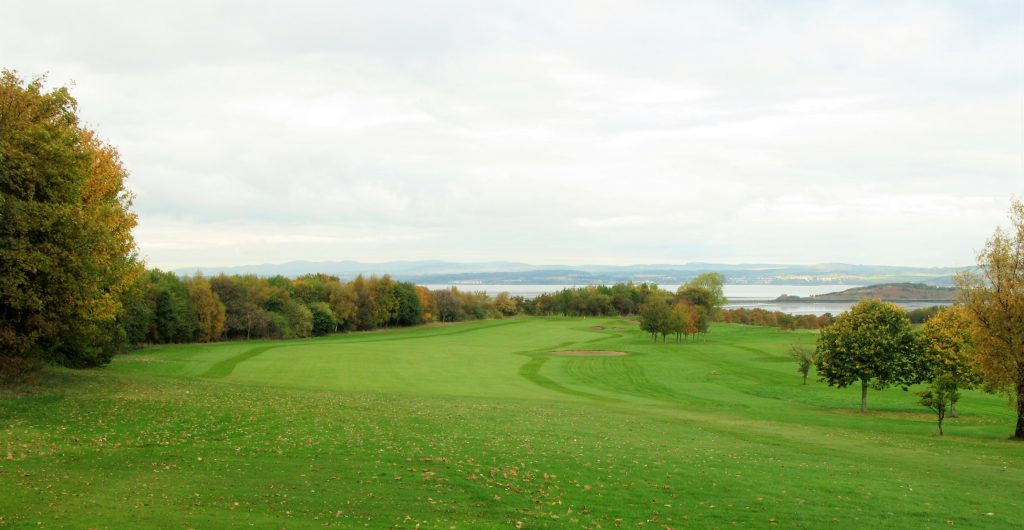
The commending views of the Forth from the first at Silverknowes

The commanding views of the Forth from the first at Silverknowes

In trying to sum up my thoughts about Silverknowes golf course, I couldn’t help thinking about Abraham Lincoln’s famous quote about government being “of/by/for the people”. Arguably, no other country in the world would provide a low cost public golf course on such prime real estate as that on which Silverknowes is laid out.

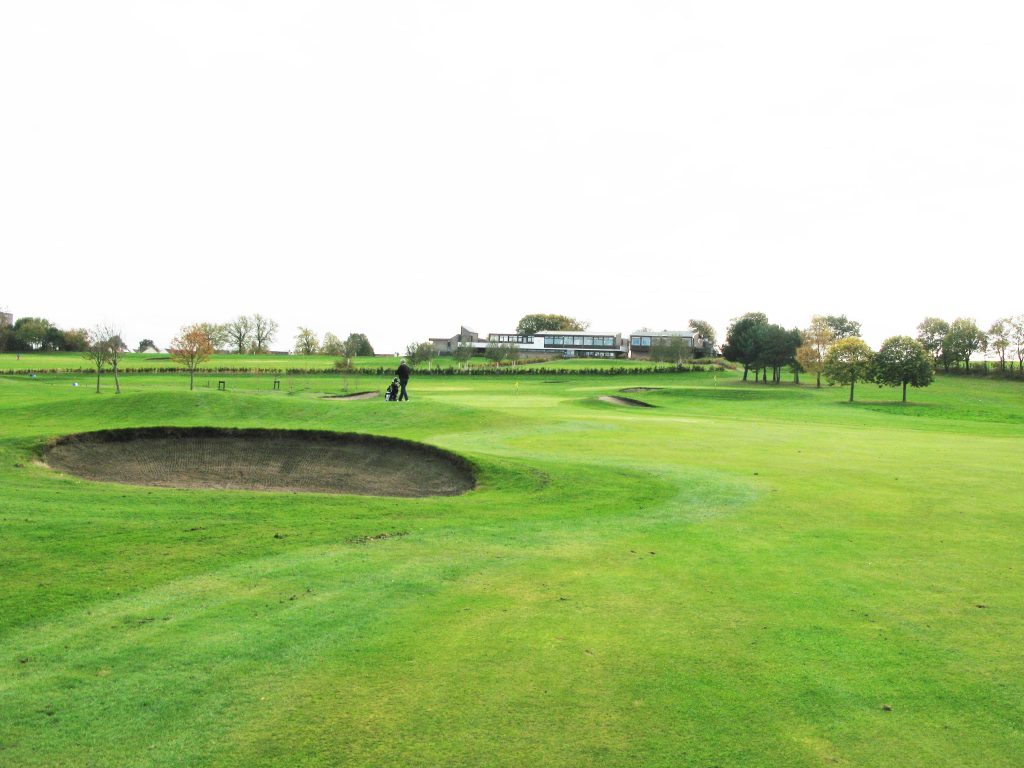
The approach to the difficult 5th with the clubhouse in the background.

The approach to the difficult 5th with the clubhouse in the background.

The course is managed as a pay-for-play facility by Edinburgh Leisure, a not for profit charity, which manages the leisure activities formerly run by Edinburgh Council, although there is also a separate private members Silverknowes Golf Club.  Edinburgh Leisure operate 6 golf courses, with an annual 7-day membership to play all 6 costing around only £400 – excellent value.

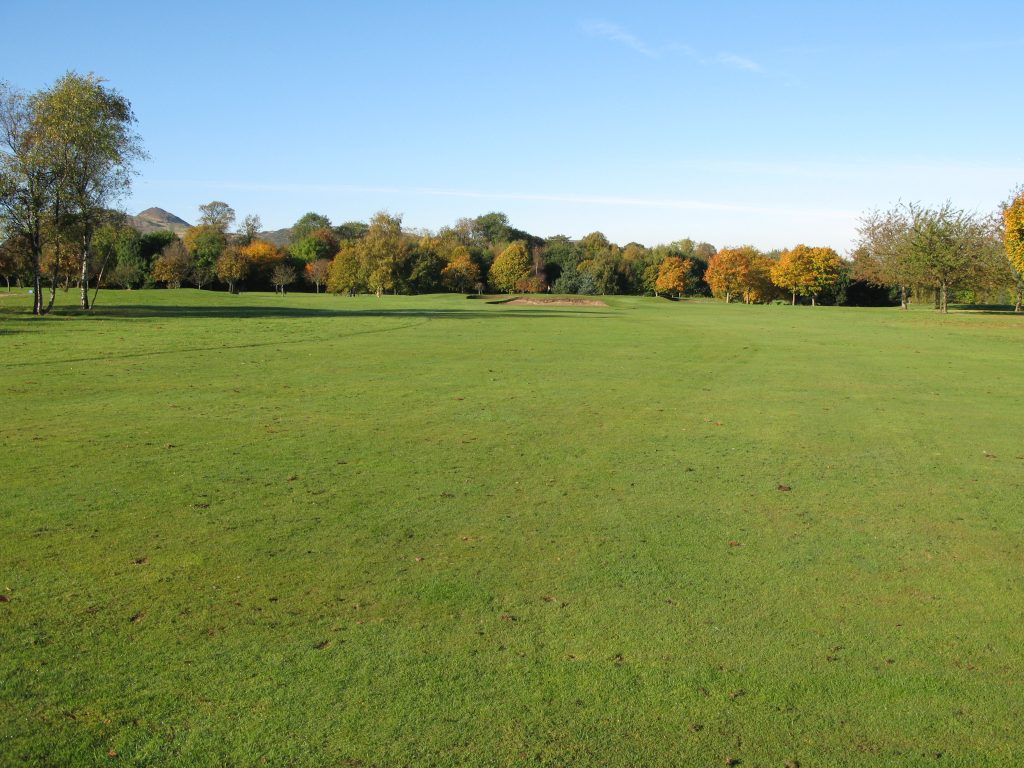
The Arboretum backdrop to the 14th at Silverknowes

The Arboretum backdrop to the 14th at Silverknowes

The par 71 parkland layout provides an easy walking course with several wide fairways, so you can open up with the driver, without carrying around a bucket of spare balls. However, you do need to keep a keen eye on your line as the lush and green rough make losing a ball possible when you least expect to.

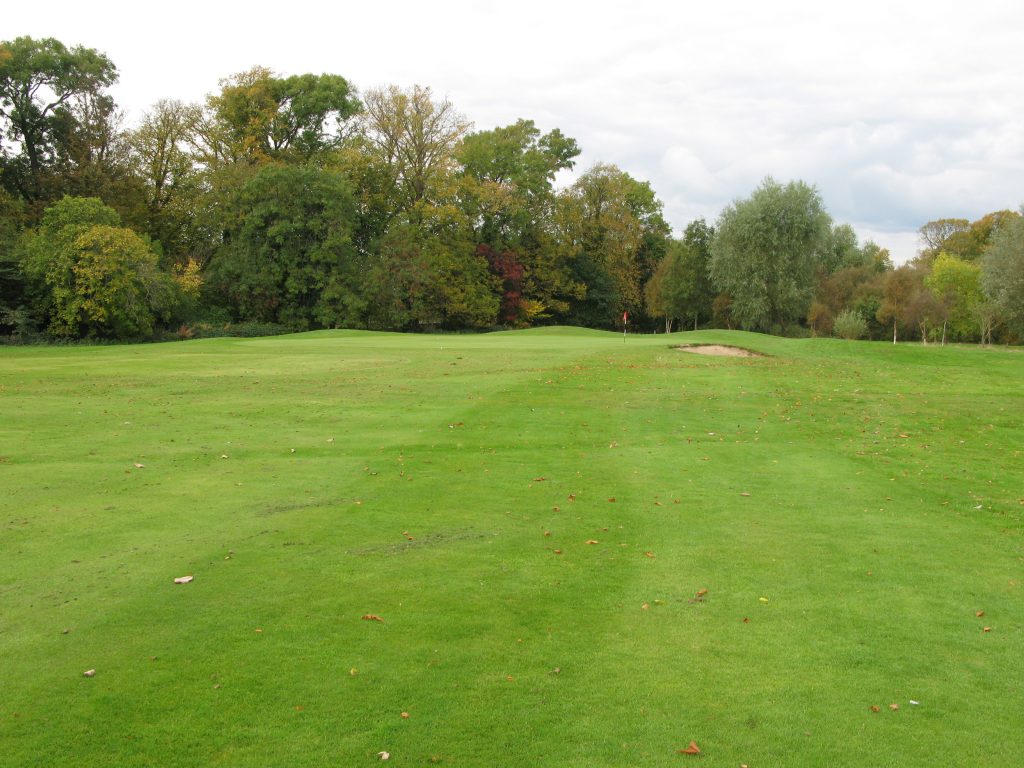
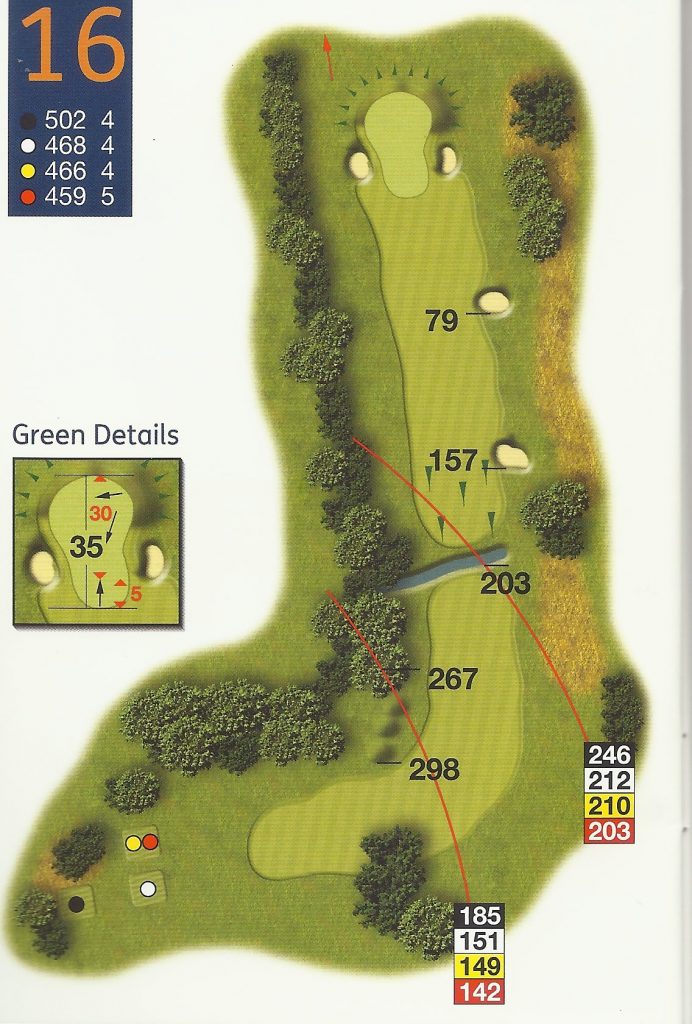
The course has undergone several changes in the hole order over the years, but now has a relatively easy opening 4 holes, but toughens up from the 5th, with the stoke index 1 par 4 7th, being the first of a number of very difficult holes.  Indeed, it’s actually worth playing Silverknowes to try out the Par 4 16th, which is one of the most difficult par 4s I have encountered, and that includes the 17th road hole at St Andrews.  At over 460 yards, it’s dog leg apex is only about 170-180 yards from the tee, leaving an almost 300 yard second shot – not something many amateurs (or even professionals) have in their bag!

The "par 4" 16th at Silverknowes

The “par 4” 16th at Silverknowes

The greens and fairways were in nice condition when I played, although annoyingly the bunkers had no rakes available, which caused myself and my partners on the day to have some interesting bunker lies.  The tees and tee boxes were also in need of some added care.

There were however many magnificent views across to Fife and the several islands that festoon the Forth, and I would highly recommend playing in the Autumn as the colours of the many variety of trees on several holes make for quite an arboretum.

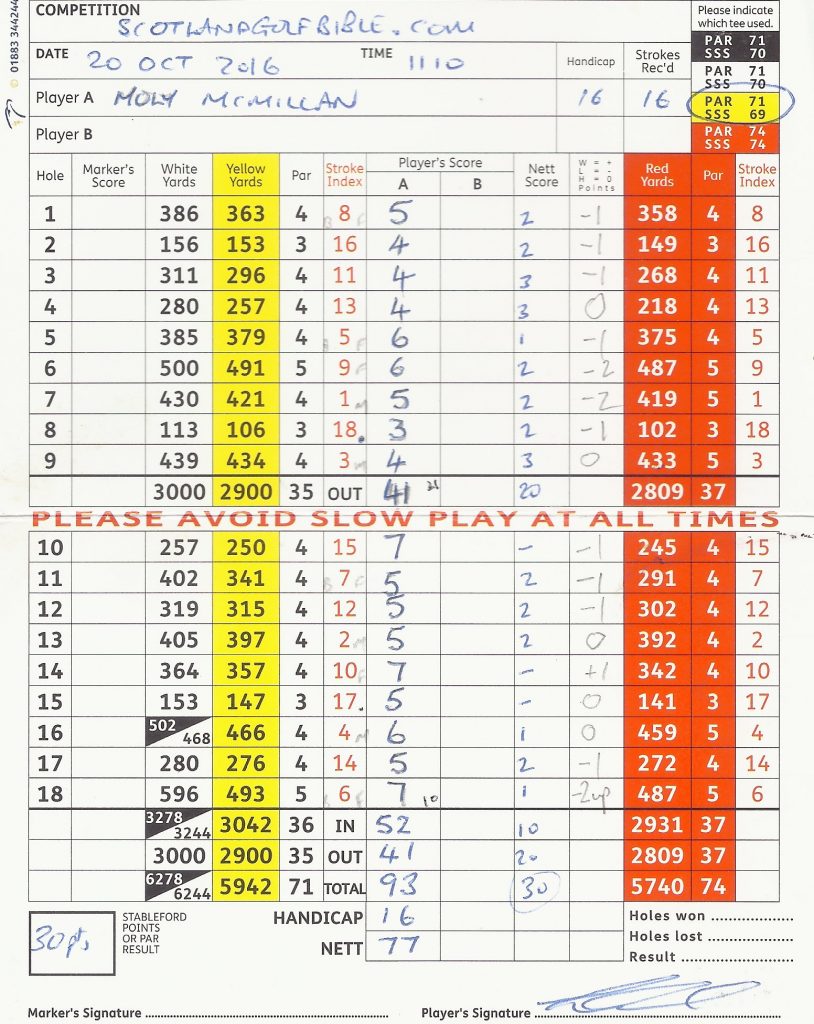
Unfortunately I found the trees a few too many times on my back 9, coming back in 52, having gone out in 41 – golf the great leveler!   This course reflects so much of the ethos of golf in Scotland, and it is worth playing, just to understand that alone.

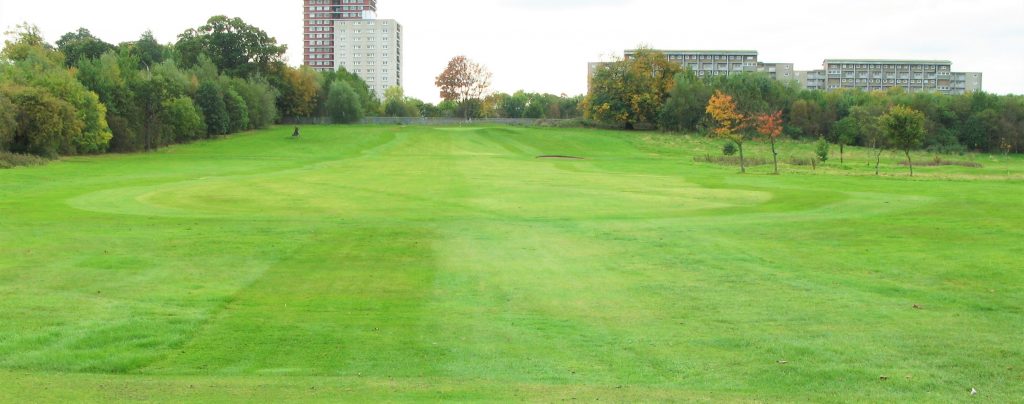
The urban backdrop a reflection of Golf in Scotland - The peoples game

The urban backdrop a reflection of Golf in Scotland – The peoples game

Some Facts

Course Type: Parkland

Par 71 (2 par 5s, 13 par 4s, 3 par 3s)

Distance yards:  5942 (yellow)

Moly’s Gross Score: 93

Moly's Silverknowes scorecard - 93 (41 out; 52 back!)

Moly’s Silverknowes scorecard – 93 (41 out; 52 back!)


« Older posts Newer posts »

© 2026 Scotland Golf Bible

Theme by Anders NorenUp ↑