A guide to green fee value for money

Category: Course Owned By (Page 34 of 45)

46. Maverston. 2nd Aug 2016.

Good example of a new course worth playing, but will it be viable in an area with so many fine golf courses? 

Round £25.  Par 70.  Value (out of 5) 3.5

Maverston Golf Course is owned and operated by the ANM Group, a member owned co-operative company with interests in mainly farming related businesses.  It seems clear that the business goal of the Maverston estate was to build a golf course attractive enough to enable the sale of the co-located residential housing plots surrounding the course.  The course itself opened in 2014, and several “executive” houses are now completed and occupied.
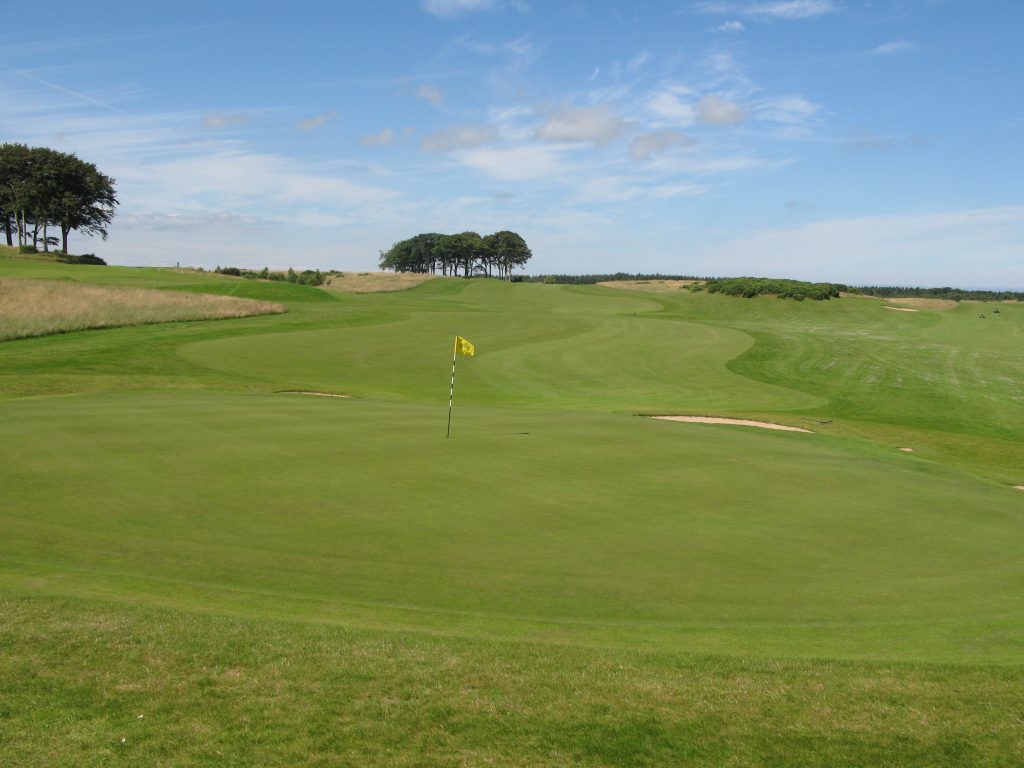
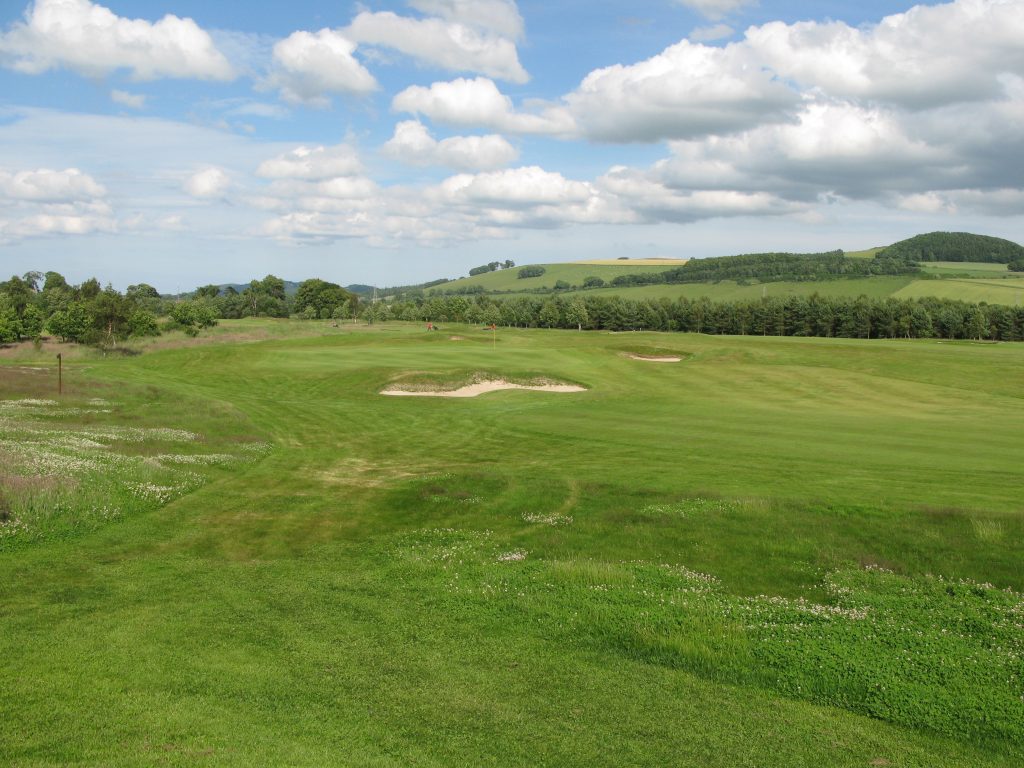
Maverston 2nd hole - a typical example of the course.

Maverston 2nd hole – a typical example of the course.

The course has matured quickly and provides an excellent challenge – especially if the wind blows as it is on open parkland.   It is located very close to Elgin and although close to the coast, there are no sea views of great merit from the course.  The web site also boasts of Cairngorms views, but I think that’s not a fair reflection of the mainly rolling farming countryside views on offer.

The course is an excellent piece of architecture, designed by former Scottish international Euan McIntosh and plays 6,000+ yards off white and yellow, both with par 70.  It has had a good start to its existence, and has picked up several members who have moved from the nearby Kinloss Country course, mainly due to the latter course struggling and reducing the course from 18 to only 11 holes.  This story, I suspect, may be the risk that Maverston faces, as the Moray coast is blessed with so many genuinely world class courses.  Only time will tell.
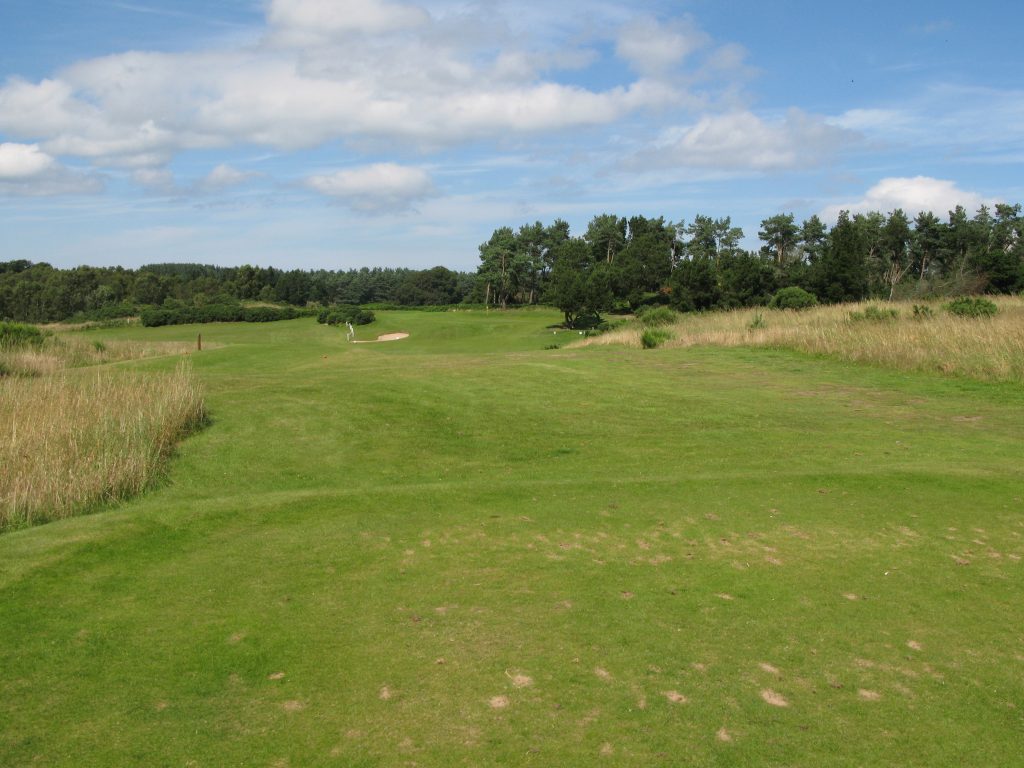
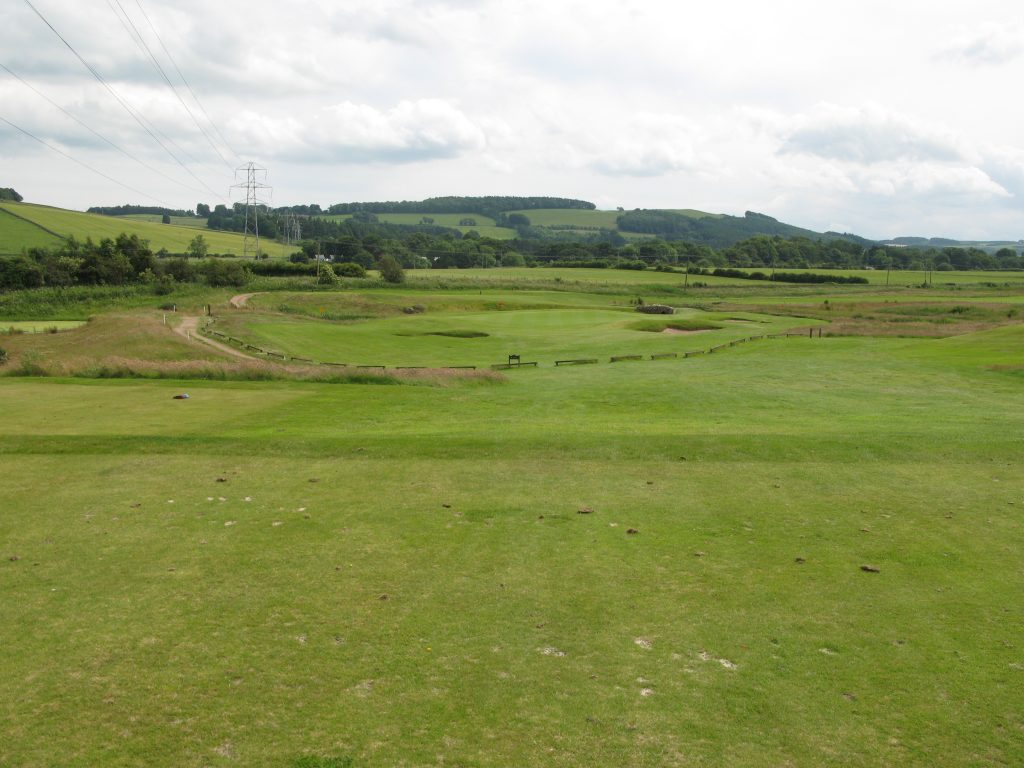
Excellent par 3 7th at Maverston

Excellent par 3 7th at Maverston

The course has some excellent holes, with the outward 9 being significantly longer than the inward 9.  The 3 holes from 6th to 8th were the highlight for me, with the lovely par 3 7th, sandwiched between 2 par 5s, which were the stroke index 1 and 3 respectively.

The course was in very good condition when I played and the greens were fast and true, albeit I thought the greens could have benefited from more undulation, but that’s probably overly critical.  The fairways are quite generous, but the rough outside these wide targets is very penal. On the day I actually lost 6 balls, costing me 12 penalty shots, making up the whole story between my score and handicap!  The rough was so deep I didn’t find any alternative balls either!
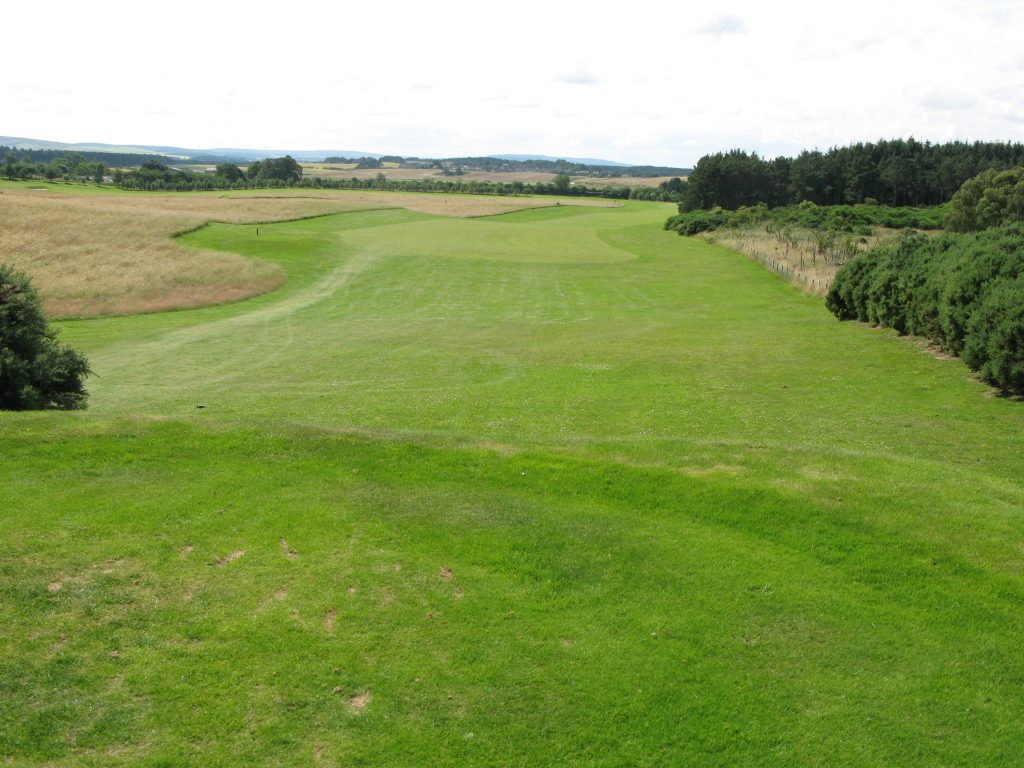
Tough drive at par 5 8th hole at Maverston.

Tough drive at par 5 8th hole at Maverston.

With the exposure to the wind and the dry conditions I faced there was quite a “links” feel to this course, and the advice from the starter was to treat the greens and approaches as if they were links.  If that was intended as part of the design it has been a good job.

I’d recommend playing Maverston, which also has a nice little clubhouse with cafe/bar seating overlooking the 10th.  Overall good value, I hope it remains viable.
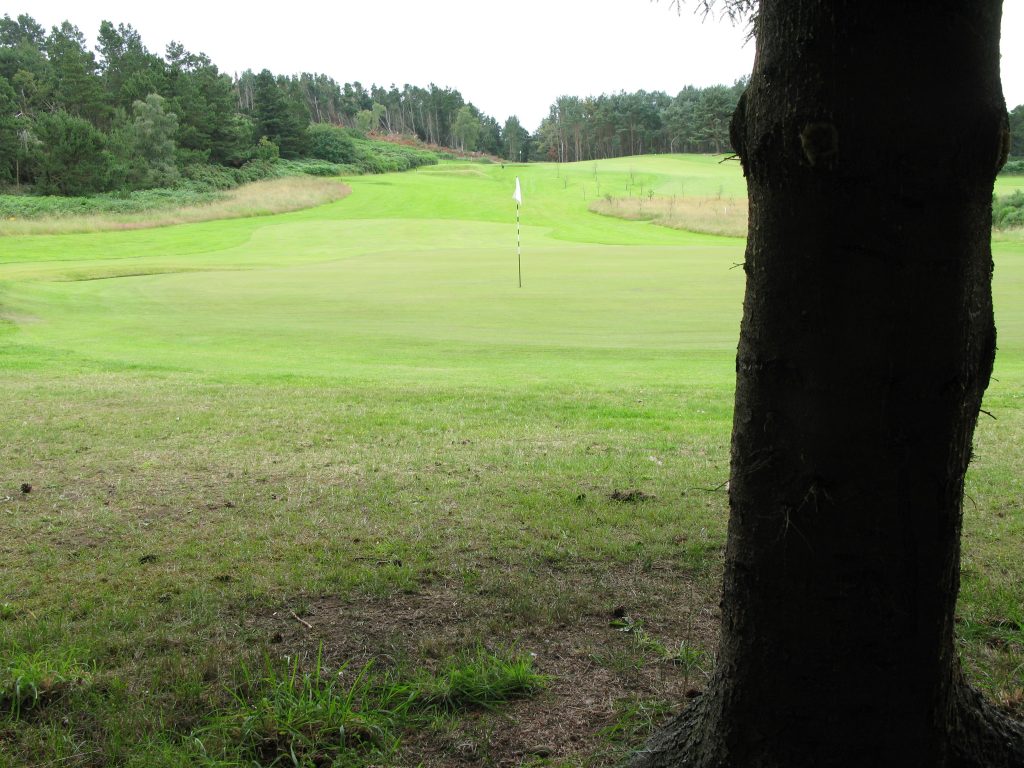
Excellent par 16th par 3 at Maverston.

Excellent par 3 16th at Maverston.

Some Facts

Course Type: Parkland

Par 70 (2 par 5s, 12 par 4s, 4 par 3s)

Distance (yellow)   6118 yards

Moly’s Gross Score  100
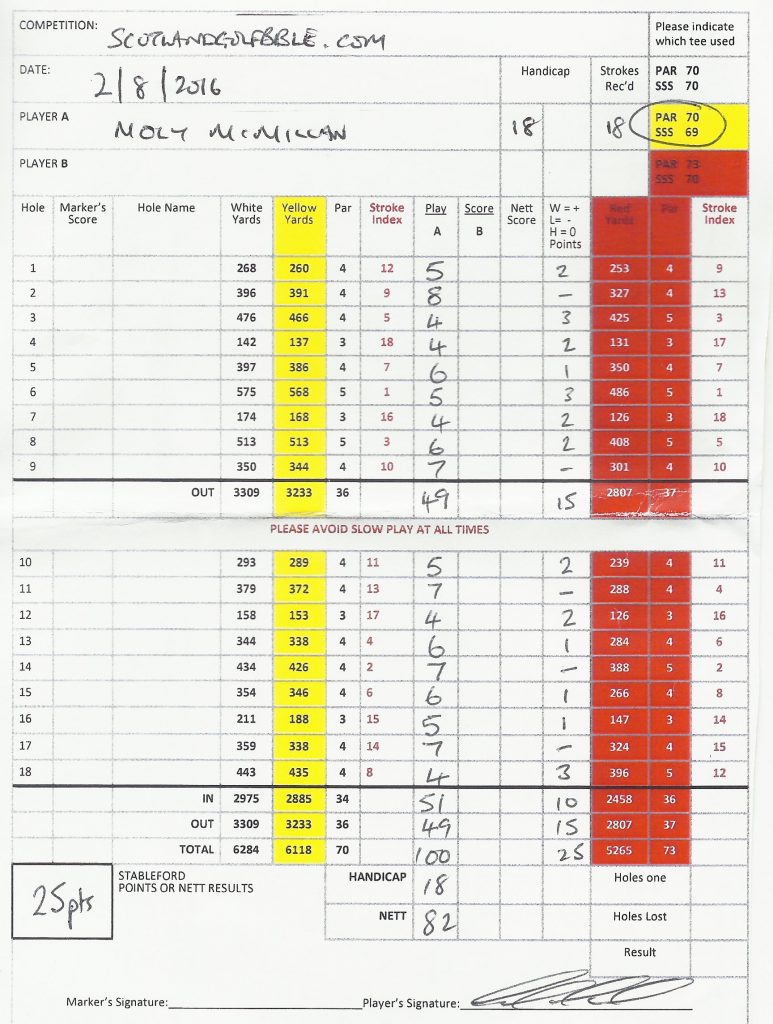
Moly's Maverston scorecard - a 100 with 6 lost balls for 12 penalties
Moly’s Maverston scorecard – a 100 with 6 lost balls for 12 penalties
45. Elmwood. 7th July 2016.

A great society golf course with wide fairways and well maintained facilities

Round £26.  Par 68.  Value (out of 5) 3

Elmwood golf course, more correctly named Scottish Rural College (SRUC) Elmwood, is owned and run by Scotland’s national rural college and the Elmwood Campus is based in Cupar, Fife.  The golf course was opened in 1997 and Geo Certified in 2013 to reward its sustainability credentials.   The College offers various golf management courses with the golf course providing the practical setting for several skill developments, such as greenkeeping.

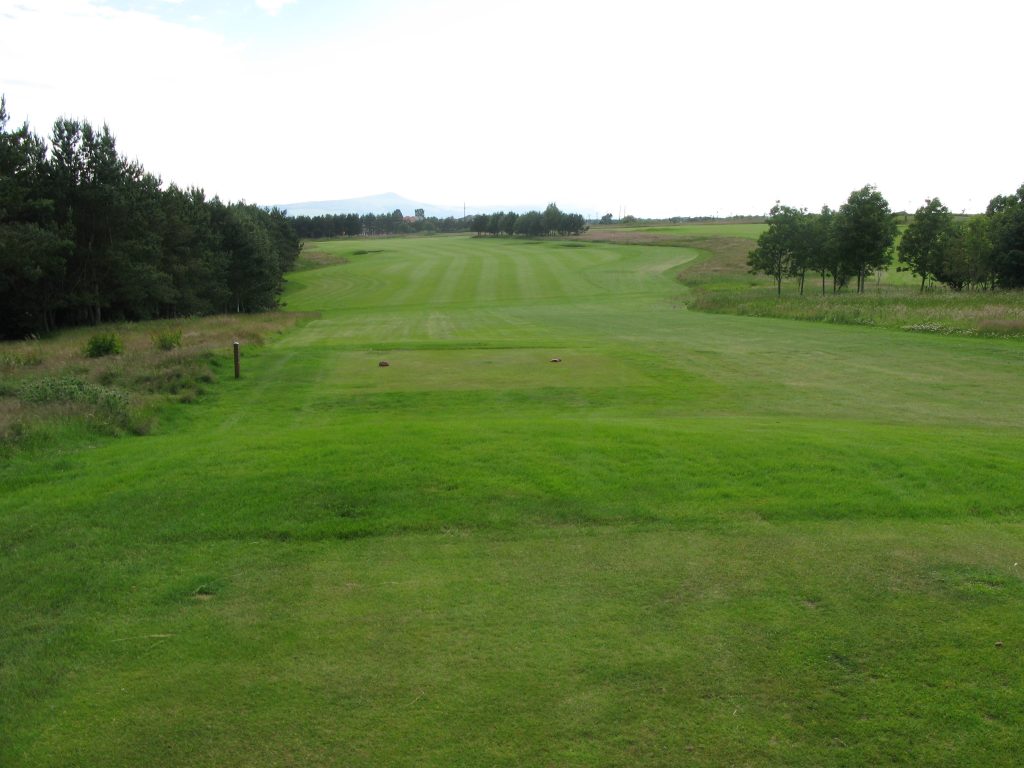
The Par 3 4th at SRUC Elmwood golf course

The Par 3 4th at SRUC Elmwood golf course

Although there are some scenic views of Tarvit Hill and the Lomond Hills Elmwood has a rather bland feel, with many wide and feature light fairways.  The course highlights are indeed the conditioning of fairways, greens and, in particular, bunkers.  However, the bunkers had deep surrounds on all sides, meaning that on one occasion when near the “back” of the bunker, I was forced to play away from the hole – a bunker design flaw in my book.

The difficult to find 10th green at Elmwood

The difficult to find 10th green at Elmwood

The wide fairways and absense of any water hazards makes this an ideal society day out, and it’s easy to check the course availablity using the club’s on-line booking system, which offers variable pricing discounts.

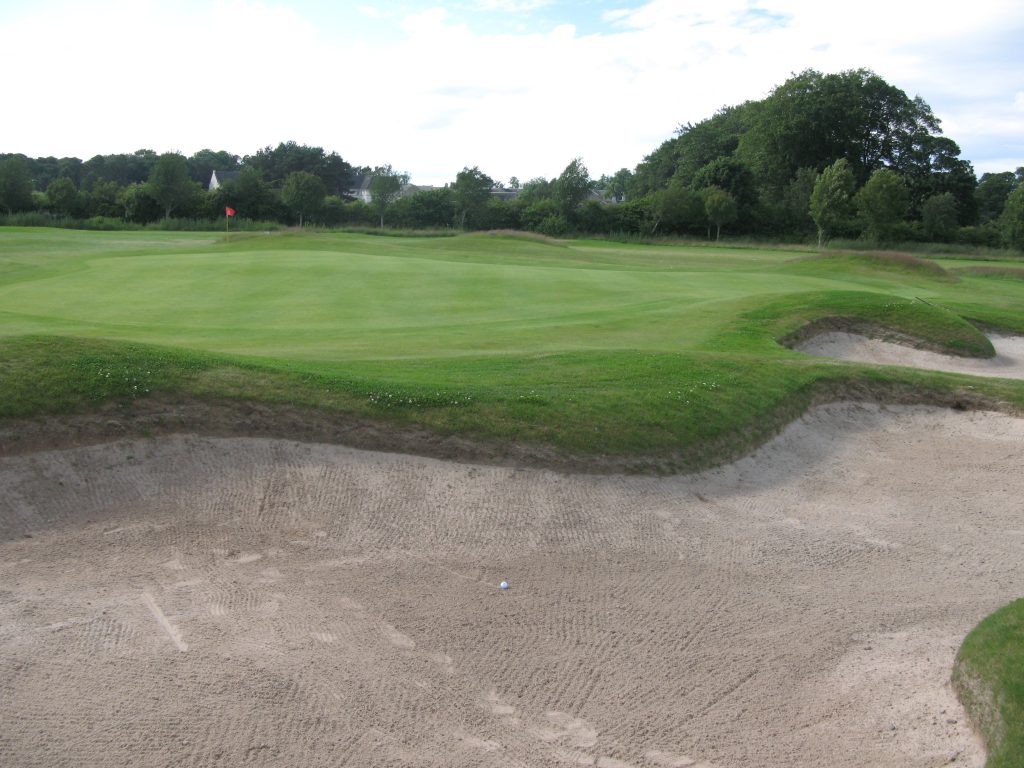
Elwood has excellent bunkers like here at the 12th

Elwood has excellent bunkers like here at the 12th

As to the course, there are some difficult and challenging holes.  The par 4 3rd at 434 yards off yellow is a long 2 shotter and I thought the par 4 10th (worth the SI 5 at least) was the architectural highlight, where unless you were to the left of the fairway with your tee shot, any shot to an angled and well bunkered green was nigh impossible.  The last 2 holes at around 430 yards each, are also card wreckers.  With the 16th green being close to the nice clubhouse, I suspect several rounds end there!

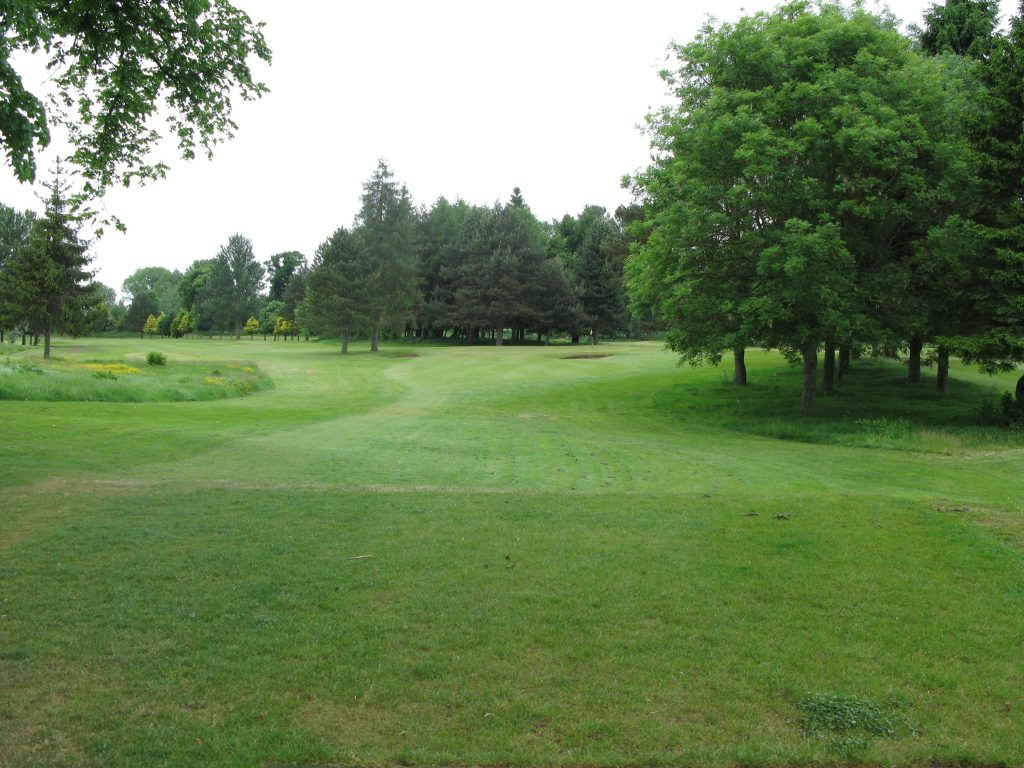
The 17th tee at Elmwood, one of the more aesthetic  holes

The 17th tee at Elmwood, one of the more aesthetic holes

I had a rather inconsistent round with only 2 pars, but a welcome birdie 4 at the long par 5 13th, which I thought was not the hardest hole by any means as the SI 1 suggested.

I would recommend playing Elmwood for the golf, but if scenery is equally important to you its probably worth a miss.

Some Facts

Course Type: Parkland

Par 70 (2 par 5s, 12 par 4s, 4 par 3s)

Distance (yellow)   5757 yards

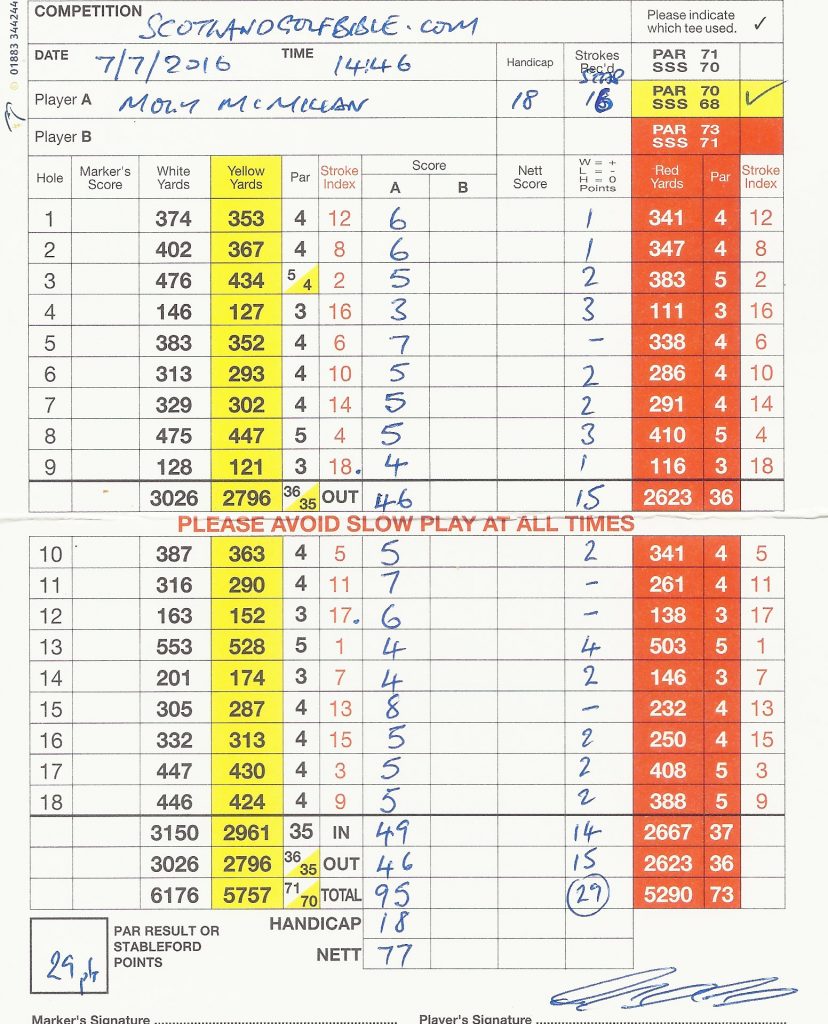
Moly’s Gross Score  95

Moly's scorecard - 95 - at SRUC Elmwood

Moly’s scorecard – 95 – at SRUC Elmwood

44. North Inch. 10th June 2016.

Historic course with some challenging holes, but let down by its poor condition given its vulnerability to flooding.

Round £15.  Par 68.  Value (out of 5) 2.5

‘The Inch’ is one of the worlds oldest golfing venues (supposedly dating back 500 years) and sits on the banks of the River Tay in the city of Perth.  It is the base for the ‘Royal Perth Golfing Society’ founded in 1833, a year older than the R & A of St Andrews.  Although the “royal” connection is there, this is very much a local authoritity pay and play course accessible to all.

4th at North Inch, the first of 6 par 3s on this historic course.

4th at North Inch, the first of 6 par 3s on this historic course.

The course traces its current roots to 6 holes in 1803, and it had several holes laid out by Tom Morris himself in the late 19th century; after various course guises it became the current 18 hole layout in 1927.

Given its flat layout and location adjacent to the river it has become very vulnerable to flooding and was submersed under water as recently as 2012.  This accounts for much of the poor condition of several fairways I experienced, and whilst the course has made a dramitic recovery, it was nonetheless in a poor condition, which is such a pity given its historical importance to the home of golf.  The teeing grounds in particular could do with a lot of work.

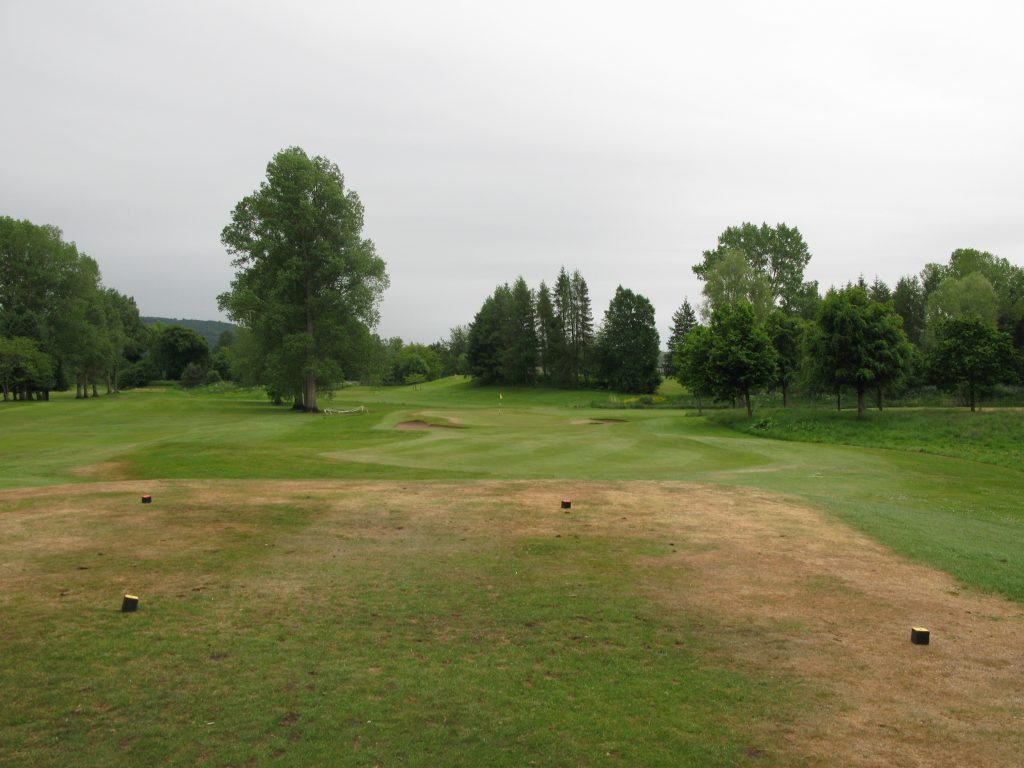
The short par 3 9th, showing the poor teeing area.

The short par 3 9th, showing the poor teeing area.

However, given its very reasonable price of £15, it represents decent value, and there are also some challenging holes to overcome.  The back 9 is the tougher of the two, and the 5 hole stretch from 11th-15th provide the toughest golf.  The 11th is the worthy SI 1 hole, where only a drive exceeding 250 yards off the white tee can get you to the dog leg apex, still leaving a mid iron to the small green, with the approach shot having to negotiate a 100 yard long ditch along the left side of the fairway.

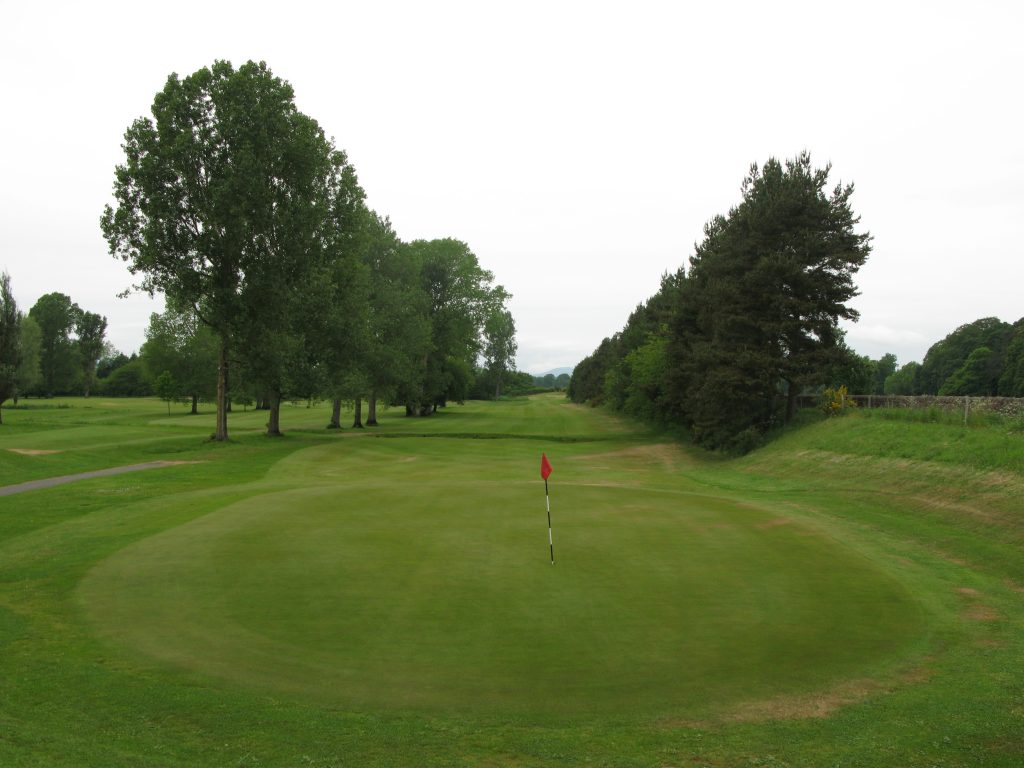
The long 13th looking back from the green, presents a difficult drive.

The long 13th looking back from the green, presents a difficult drive.

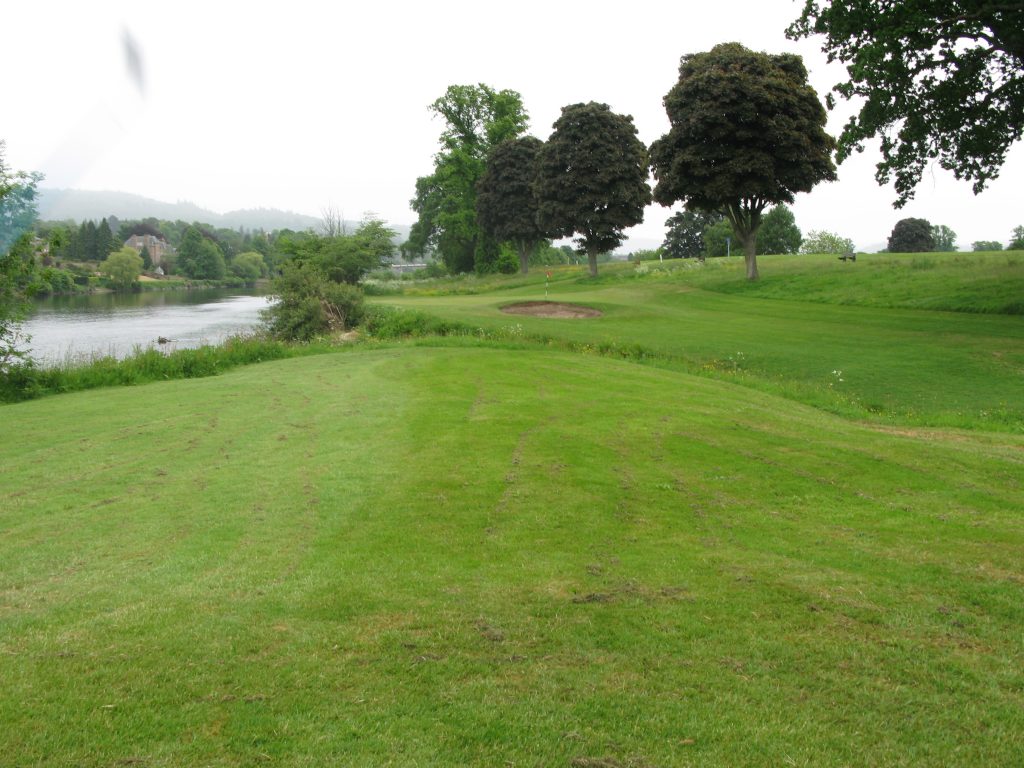
The River Tay only comes into view and play at the tough par 4 15th and the very short 79 yard 16th.

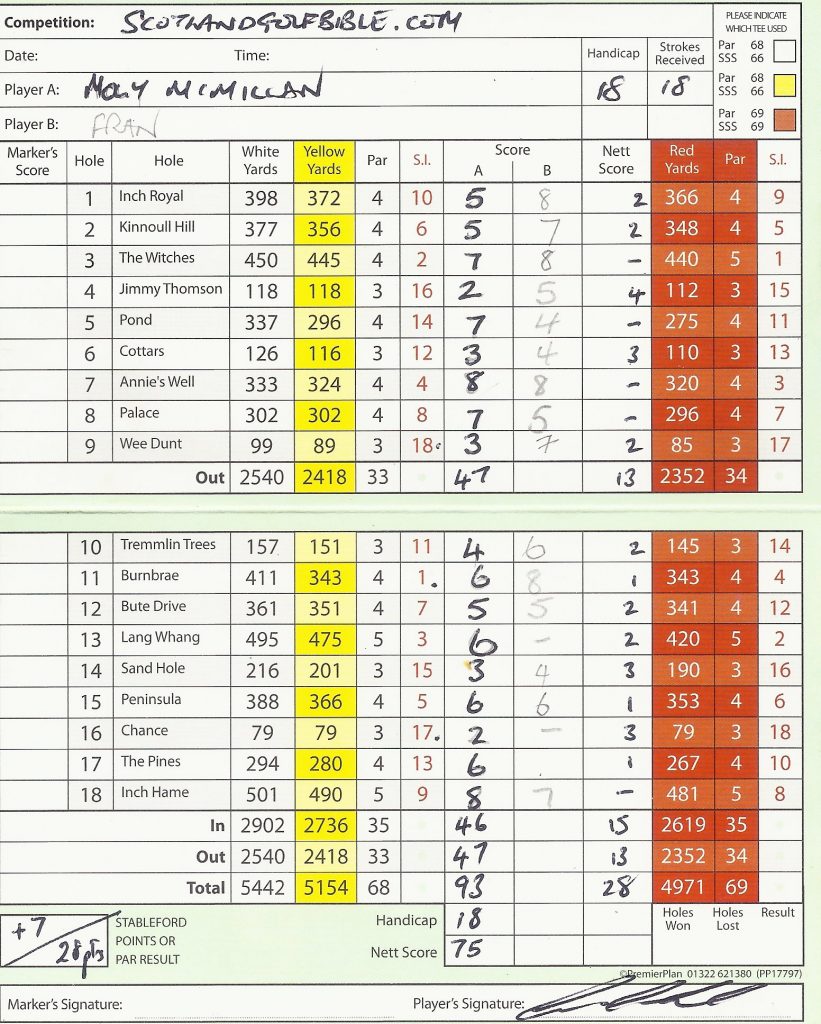
I had the most mercurial of  golf rounds.  I was 1 under for the 6 par 3s, yet 26 over for the other 12 holes, including 4 lost balls off the tee!

The 16th with the River Tay on the left - not really in play.

The 16th with the River Tay on the left – not really in play.

If you are in Perth on holiday, it’s worth playing “The Inch”, but I wouldn’t go out of your way just for the golf.

Some Facts

Course Type: Parkland

Par 71 (2 par 5s, 10 par 4s, 6 par 3s)

Distance (white)   5442 yards

Moly’s Gross Score  93

Moly's amazingly mercurial scorecard: -1 for the 6 par 3s, and +26 for the other 12 holes! Driving was very poor!

Moly’s amazingly mercurial scorecard: -1 for the 6 par 3s, and +26 for the other 12 holes! Driving was very poor!

43. Charleton. 7th June 2016.

A rather bland open parkland course, but with magnificent greens – it’s a cunundrum!  

Round  £32.   Par 71 (yellow).  Value (out of 5) – 3

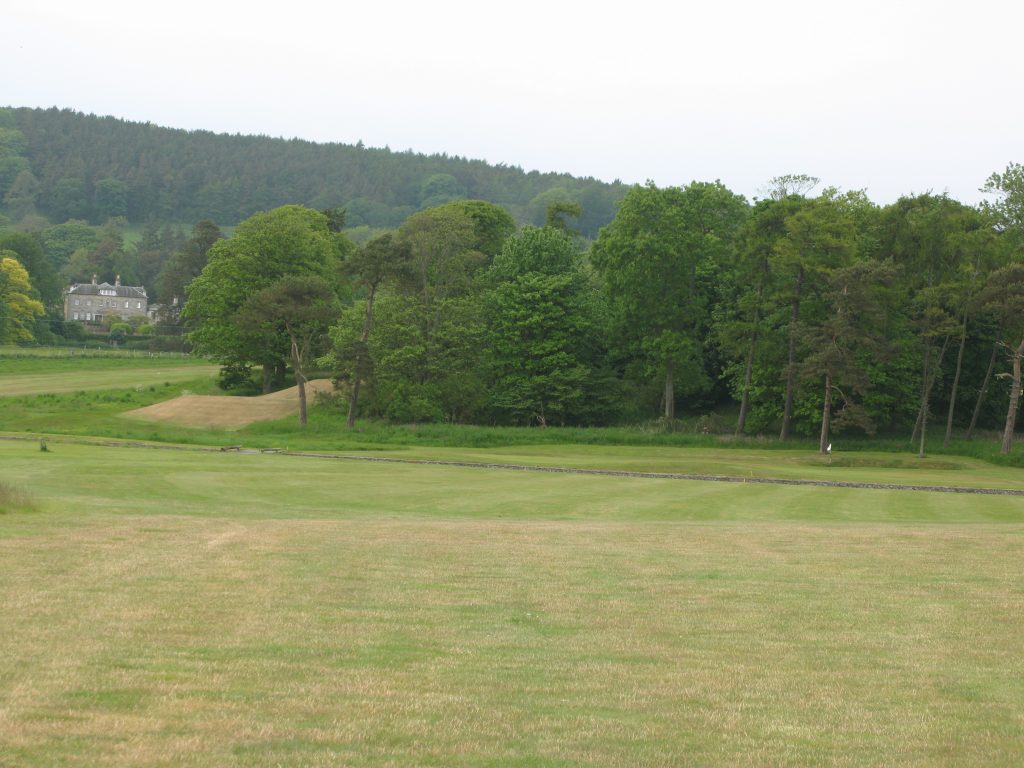
Charleton House on the East Neuk of Fife was built in 1759 and after passing through several hands is now owned by a Swedish family and it was Baron John Bonde (1918–2009) who established the golf course and small picturesque club house in 1994.  The Estate house and terraced garden, with outstanding Firth of Forth views, is operated as an events location.

Short par 4 17th tee with Charleton house in the distance.

Short par 4 17th tee with Charleton house in the distance.

Firstly, I’d point out that unlike the club’s website boast, this is definately not in my opinion “Scotland’s Premier Parkland Course”, a rather embarrassing claim, given the competition.  Given that the course was opened by ex-US president George Bush Snr, one can’t help conclude that the Bonde family have many good contacts!

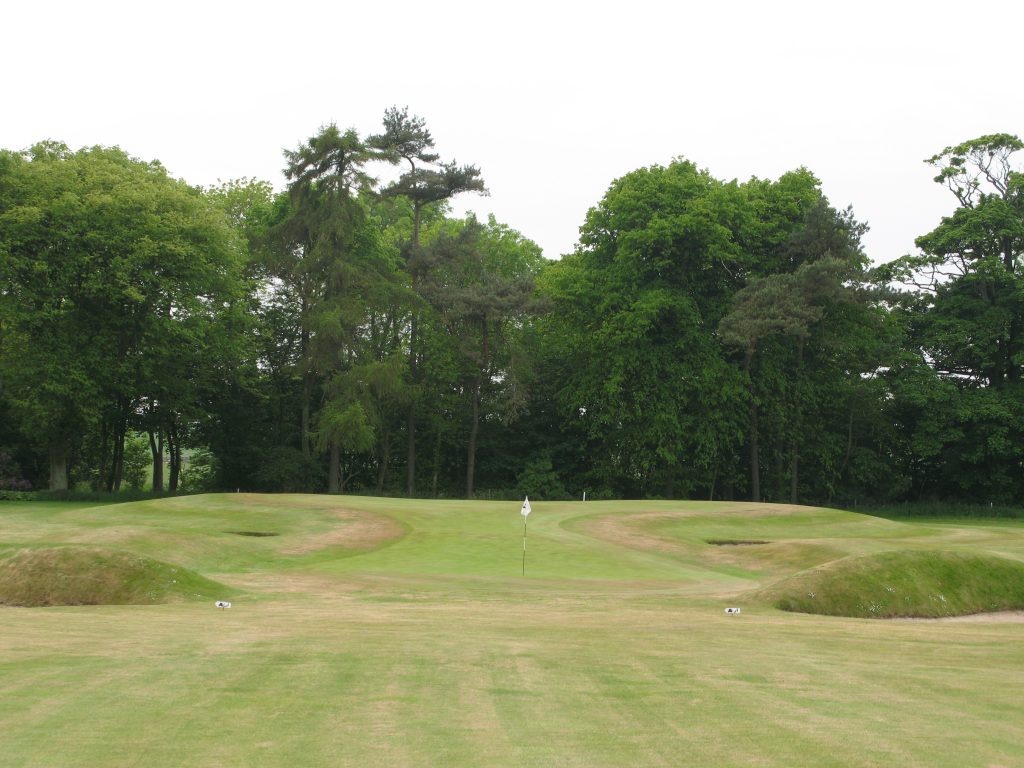
The difficult short par 3 5th green.

The difficult short par 3 5th green.

Charleton is actually the most open of parkland courses, in fact it has some of the widest fairways you’re likley to find in Fife.  Therefore it is a good course for Society outings, without the need for several balls in your bag.

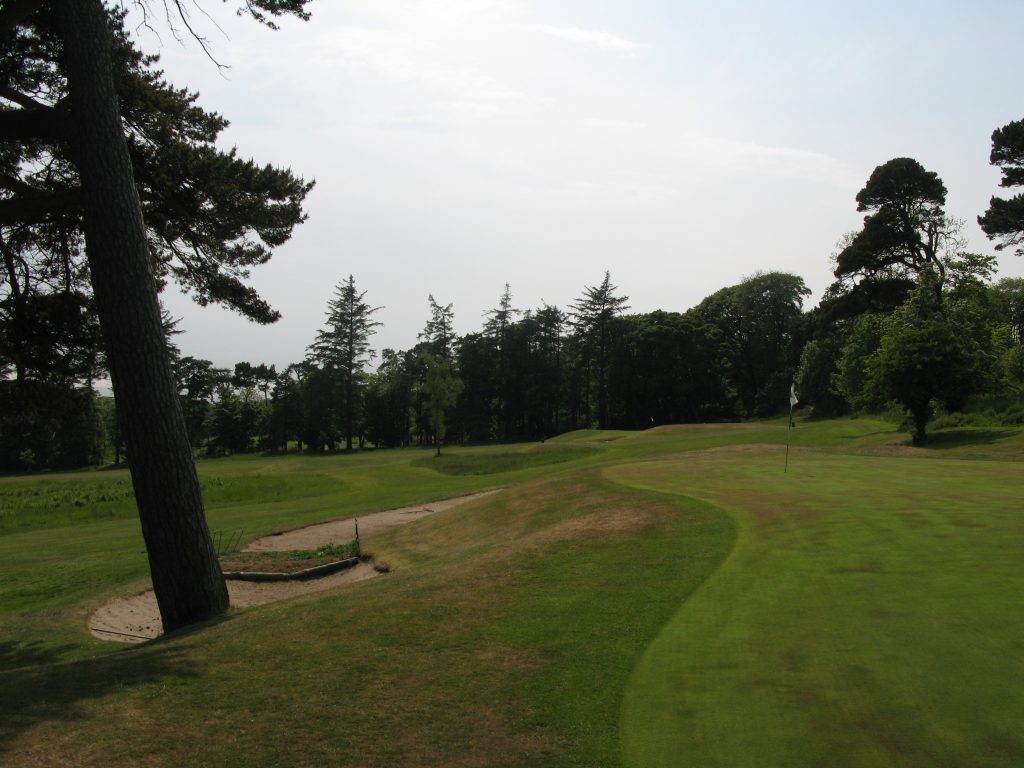
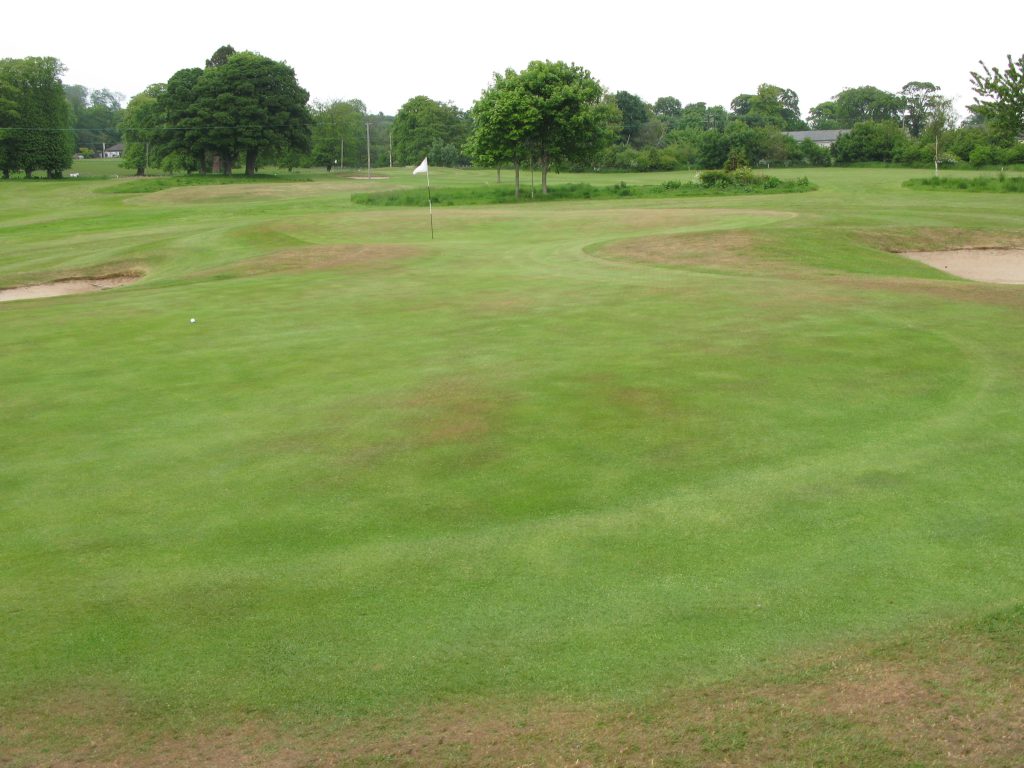
The course is a bit of a conundrum, since although the tee shots are relatively mundane, when you get to the greens, many of them are rather magnificent; several are up to 50 yards from front to back, some guitar shaped narrowing to only 6 yards wide and there are several positions on the greens that you might have to pitch over the fringes to get to the flags.  There are also some very severe sloping banks at the sides of the greens, which combined with deep bunkers, make the approach play some of the most challenging around.

The trecherous green at the par 4 14th.

The trecherous green at the par 4 14th.

There are some real highlights, but for me the most difficult were the par 3s, only 3 of them, but on each occasion I struck what I thought were excellent shots, only to discover my ball in devilish greenside bunkers.  I also must mention the 14th green – it measures 50 yards front to back, and has several very damging bunkers – I took 4 to get out of one of them!

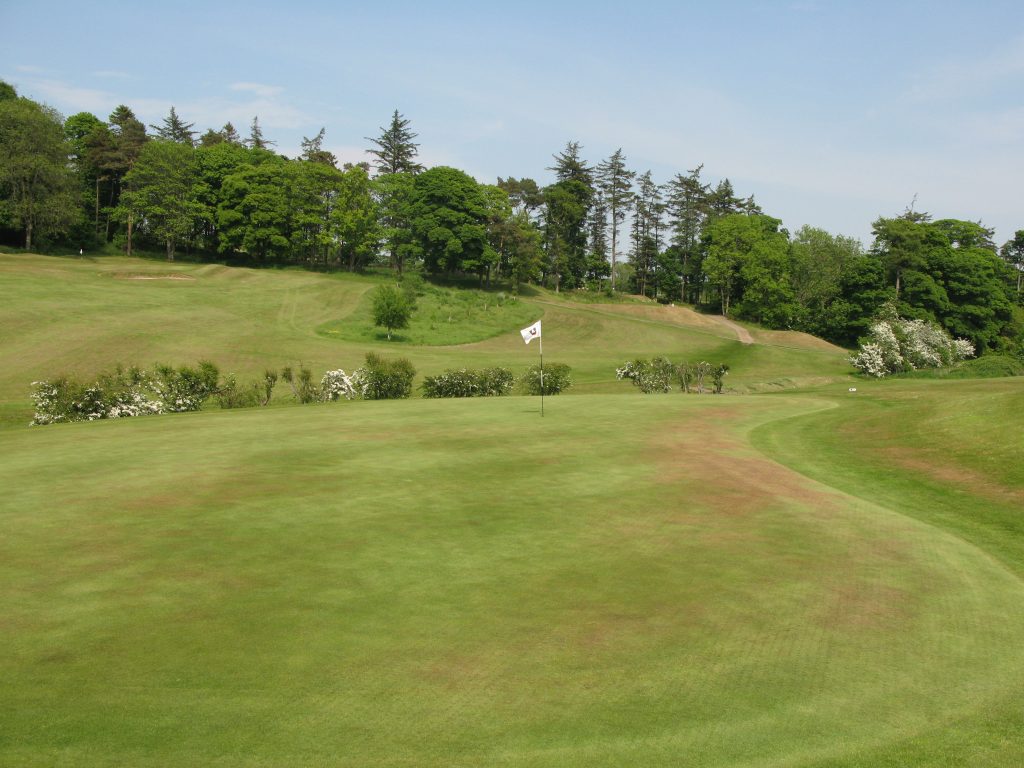
The guitar shaped 15th green - a par 4.

The guitar shaped 15th green – a par 4.

Therefore, the course without greens gets no more than 2/5 for value, whereas the greens are 5/5 alone, giving a rounded 3/5 value score.  It was rounded down because the teeing grounds were in poor condition when I played.

The par 3 6th green at Charleton

The par 3 6th green at Charleton

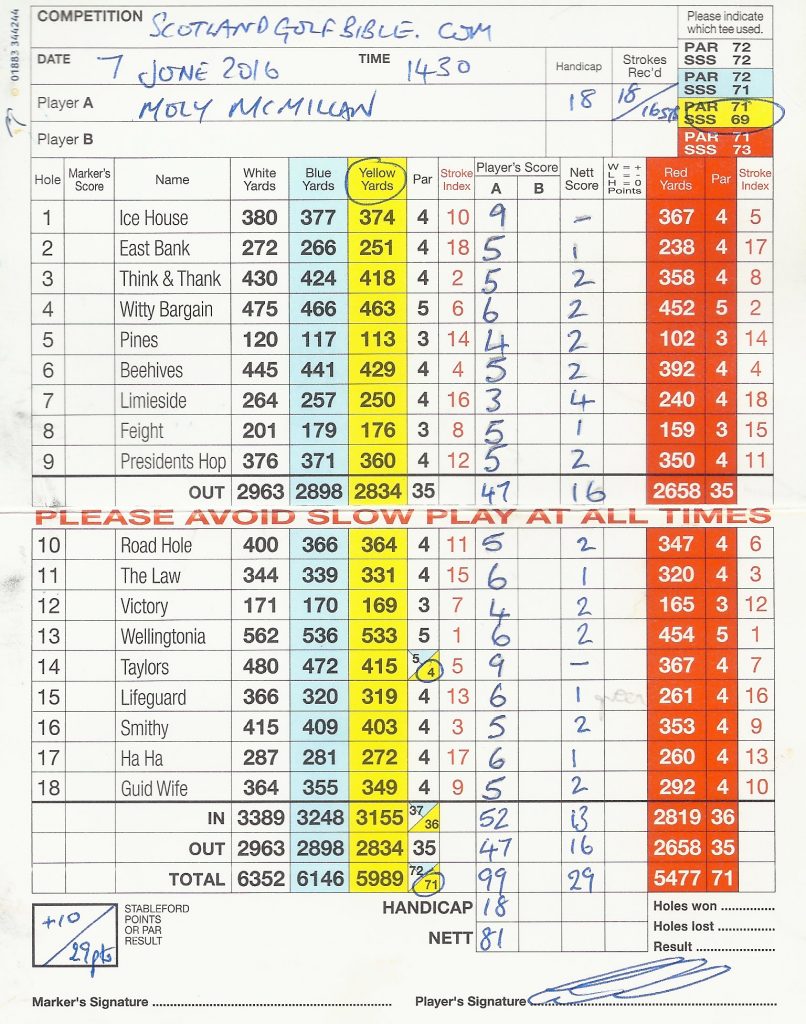
I gaurantee if you play at Charleton, you’ll want to re-play many of your greenside chips and long putts.  You can see from my card, of 99, I found the greens a challenge, having 3 putted 6 times!

Some Facts

Course Type: Parkland/Woodland

Par 71 (2 par 5s, 13 par 4s, 3 par 3s)

Distance (yellow)   5989 yards

Moly’s Gross Score  99

Moly's scorecard at Charleton adding to 99, with two 9s.

Moly’s scorecard at Charleton adding to 99, with two 9s.

« Older posts Newer posts »

© 2025 Scotland Golf Bible

Theme by Anders NorenUp ↑