Like a roller coaster that leaves you wanting to get straight back on.
Round £25. Par 34. Course Rating / Slope Rating (yellow) 34.1/127. Value (out of 5) – 4
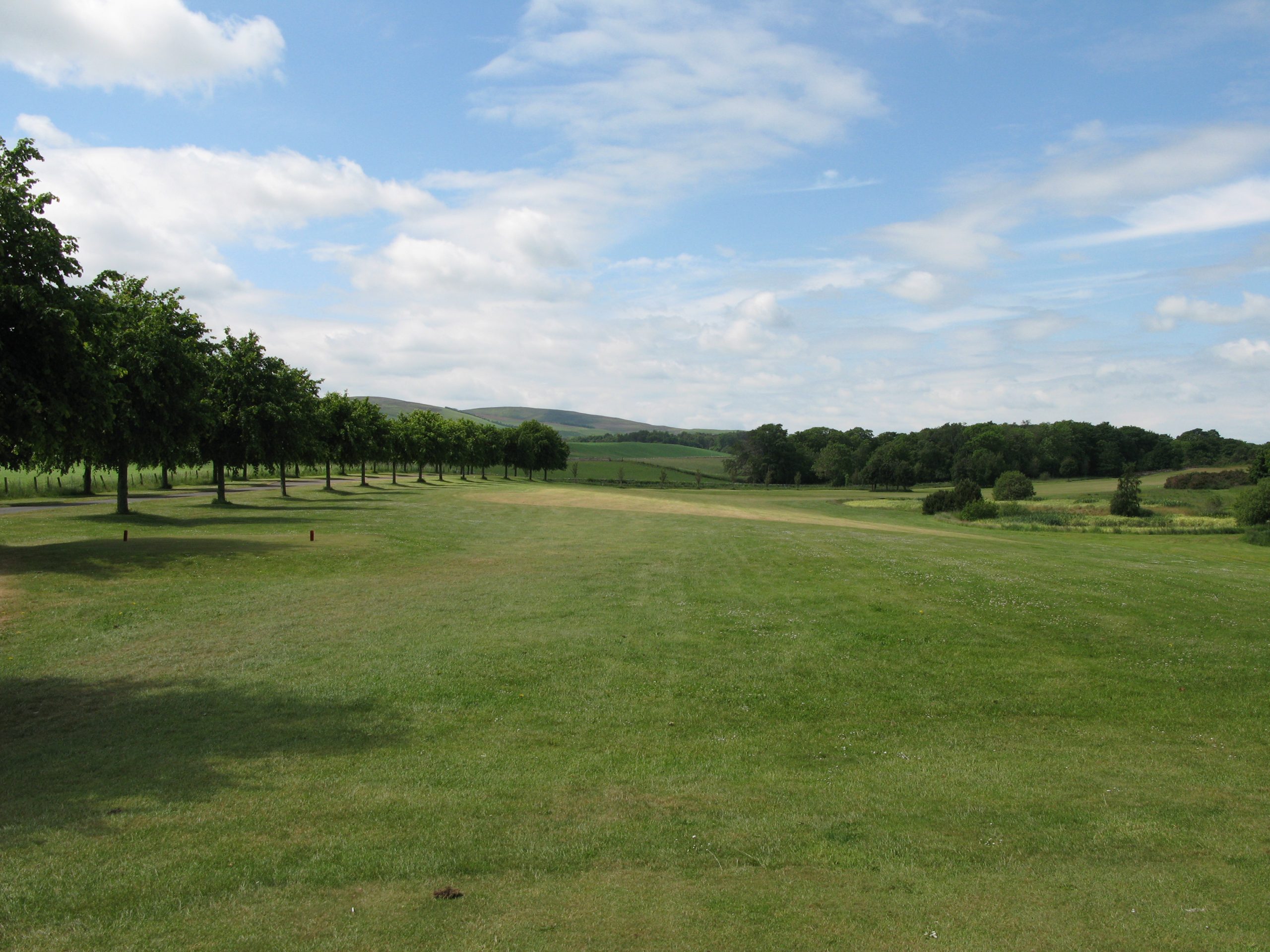
I can’t imaging many golfers not wanting to be a member of Gifford Golf Club. This easy walking nine hole course in the delightful and upmarket village of Gifford in East Lothian has an alluring appeal. No sooner than finished the ninth you’ll want to go straight back on – just like a great roller coaster, that you see kids jumping back in the queue time after time.
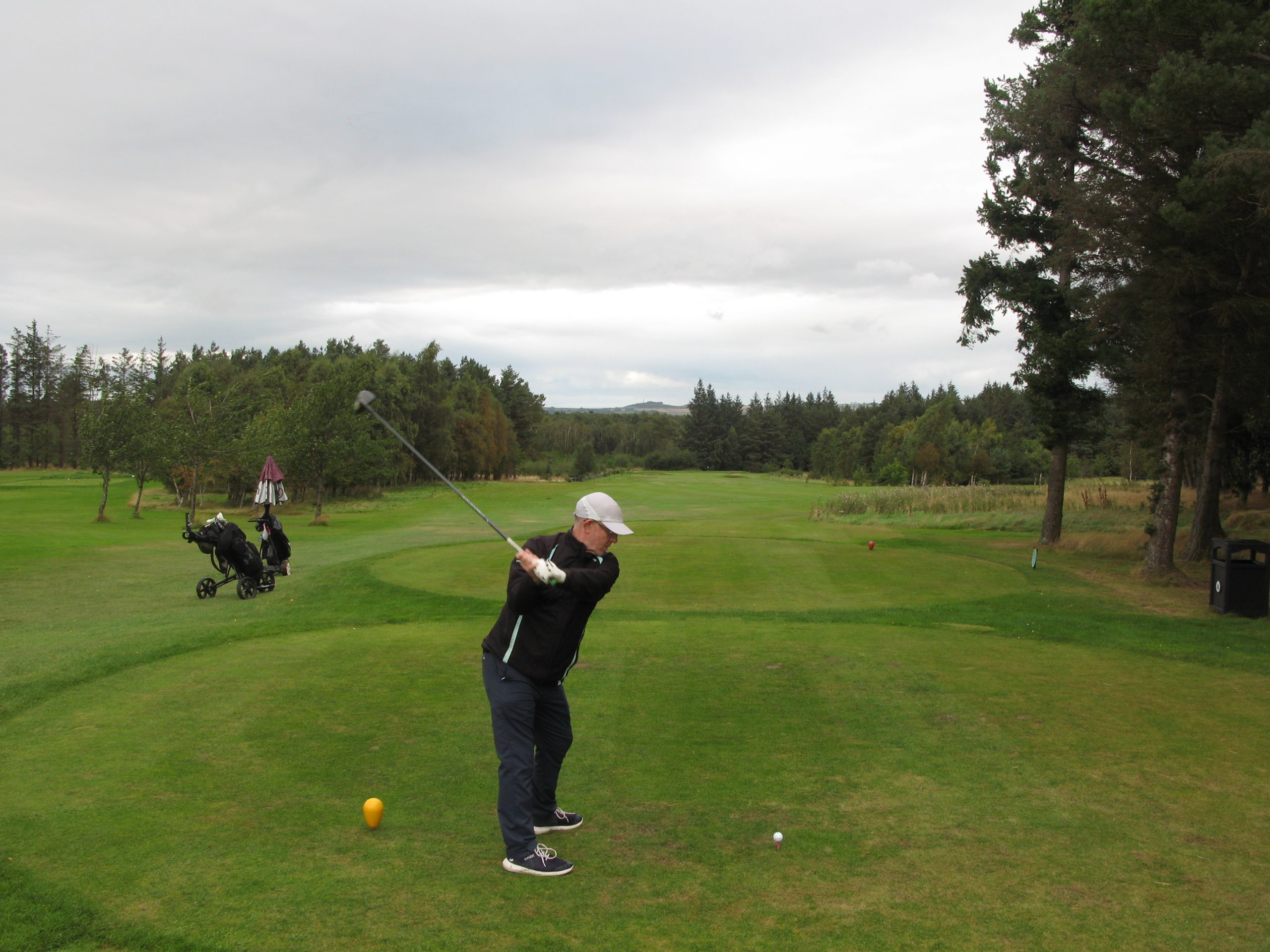
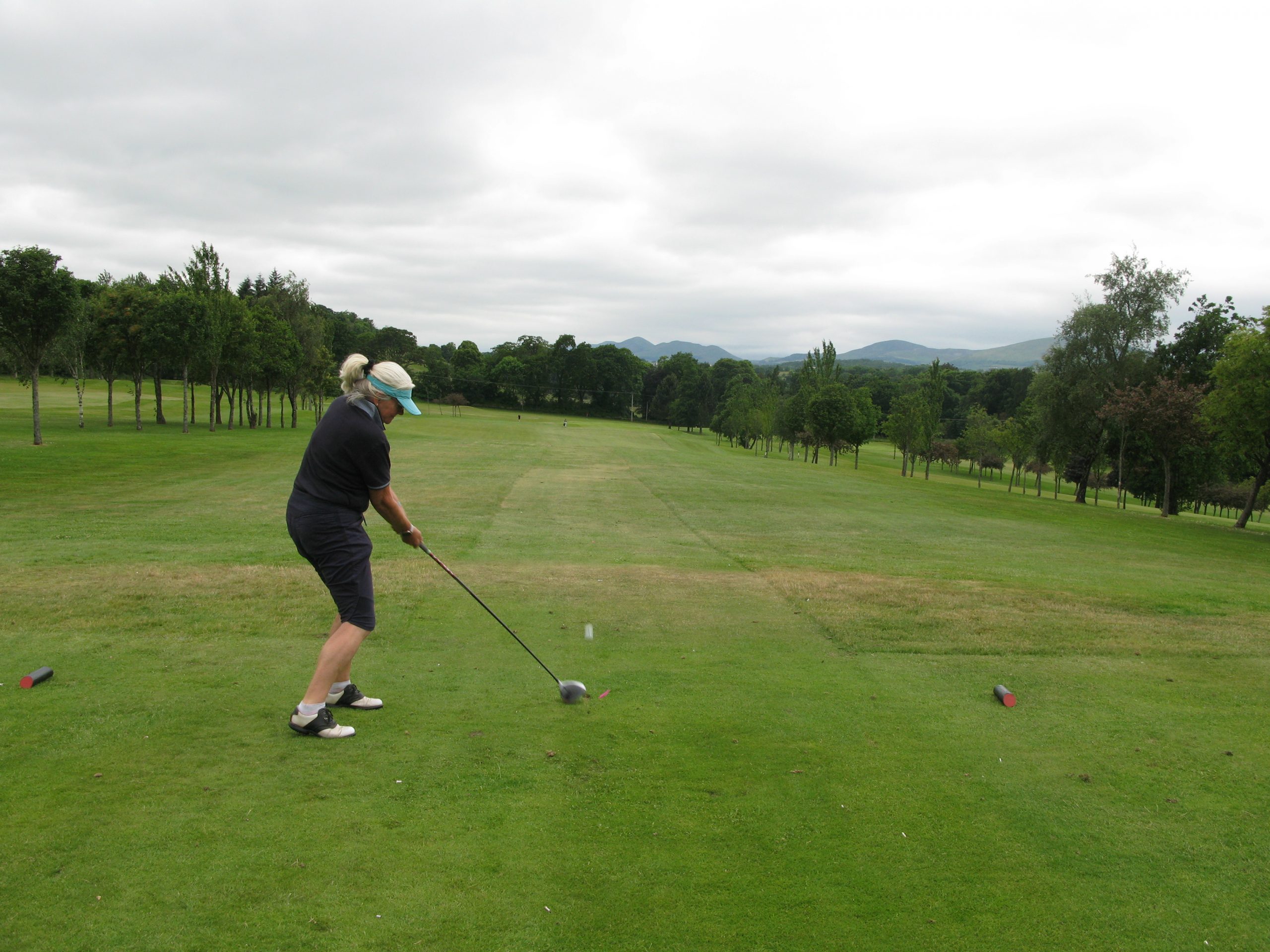
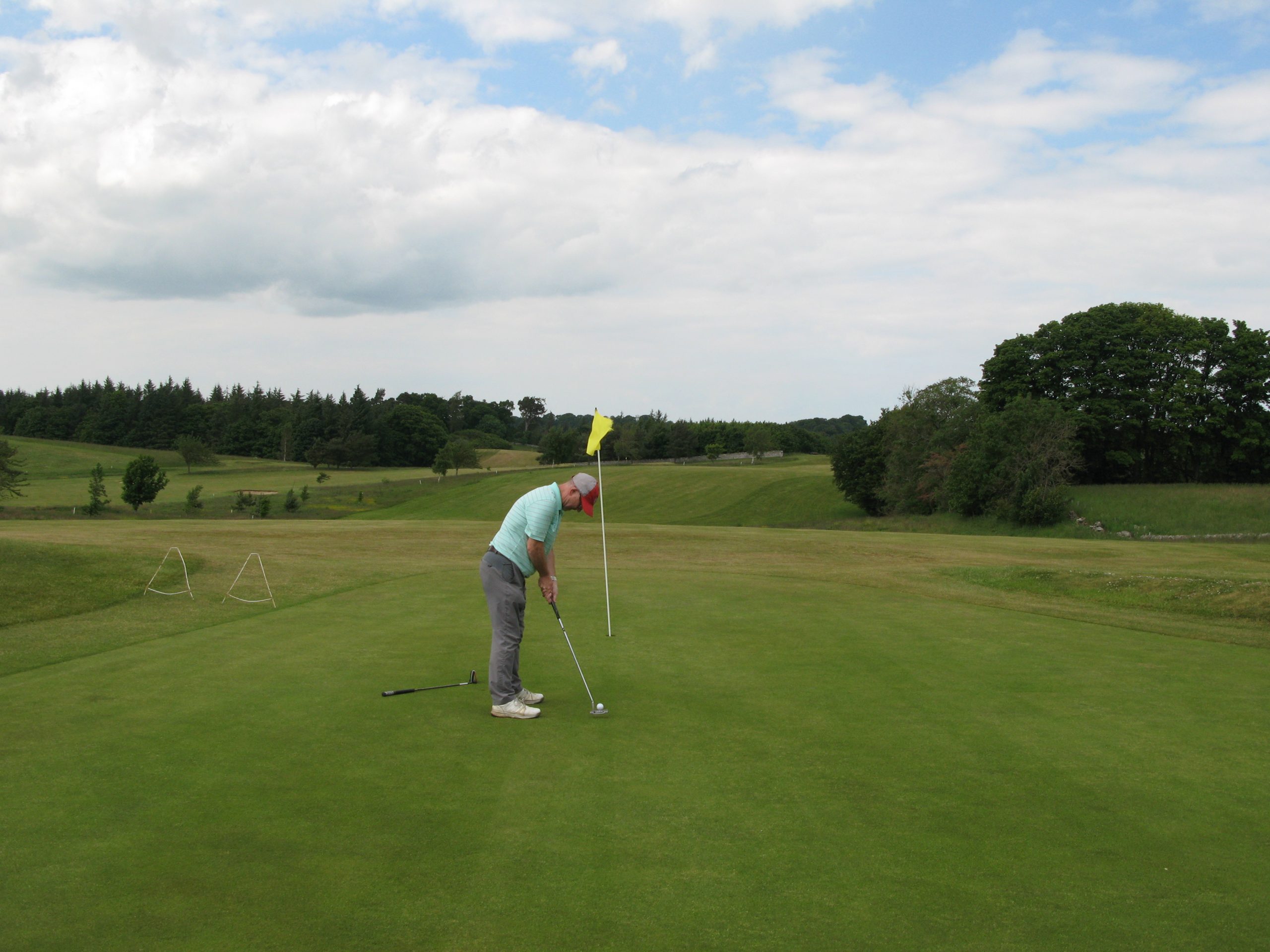
Moly driving at the very tough par four 6th hole at Gifford.
I imagine there’s been quite a few people have gone round here at least 4 times on a summer day – I wonder what the record for most times played in a day is? This is no easy course though. The Slope of 127 will tell you that.
It was designed in 1904 and by all accounts has not changed much since being laid out. It has by all account only had 4 greenkeepers in the nearly 120 years of its existence; that would explain the excellent all round condition including the greens which were quite varied and all challenging.
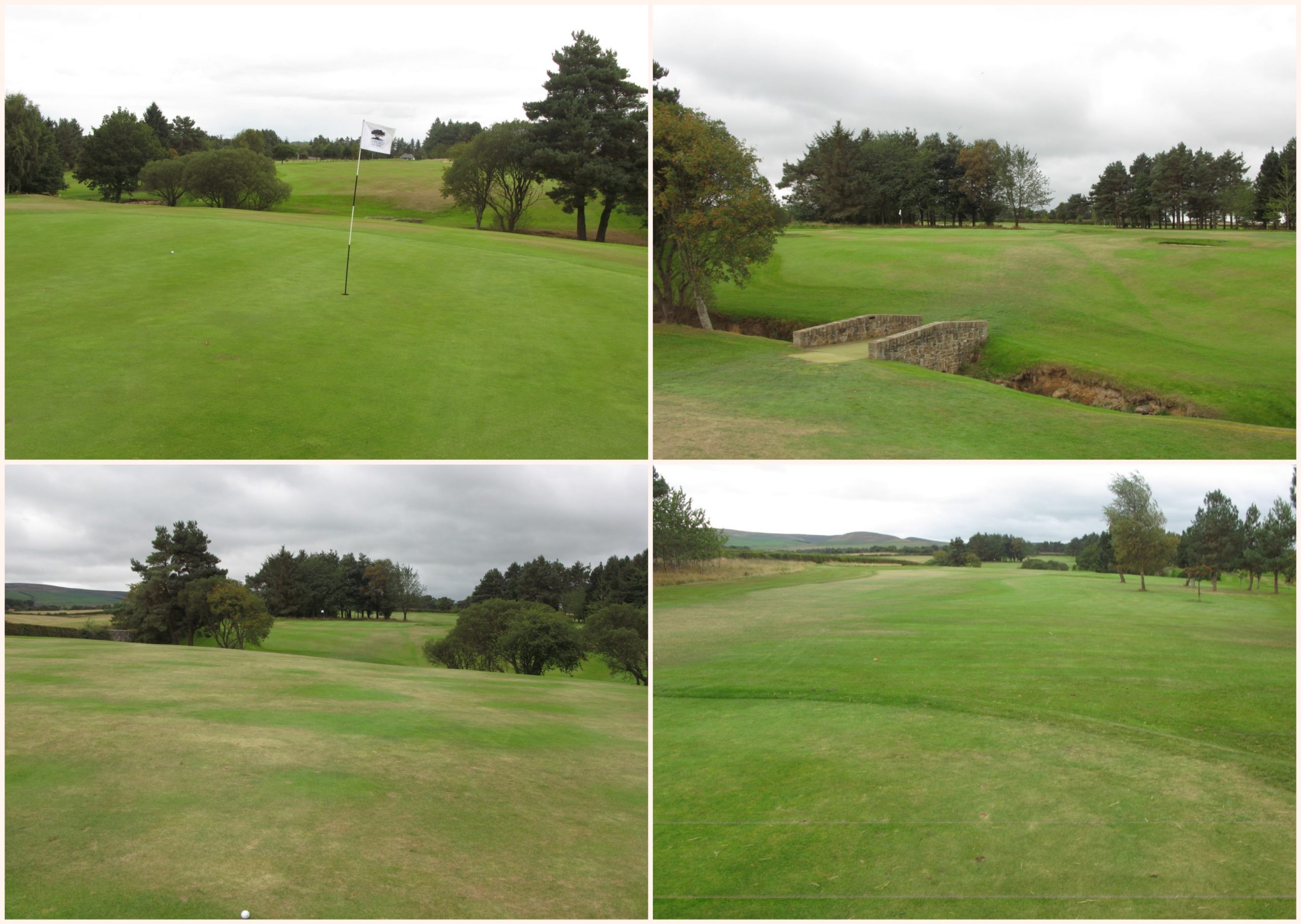
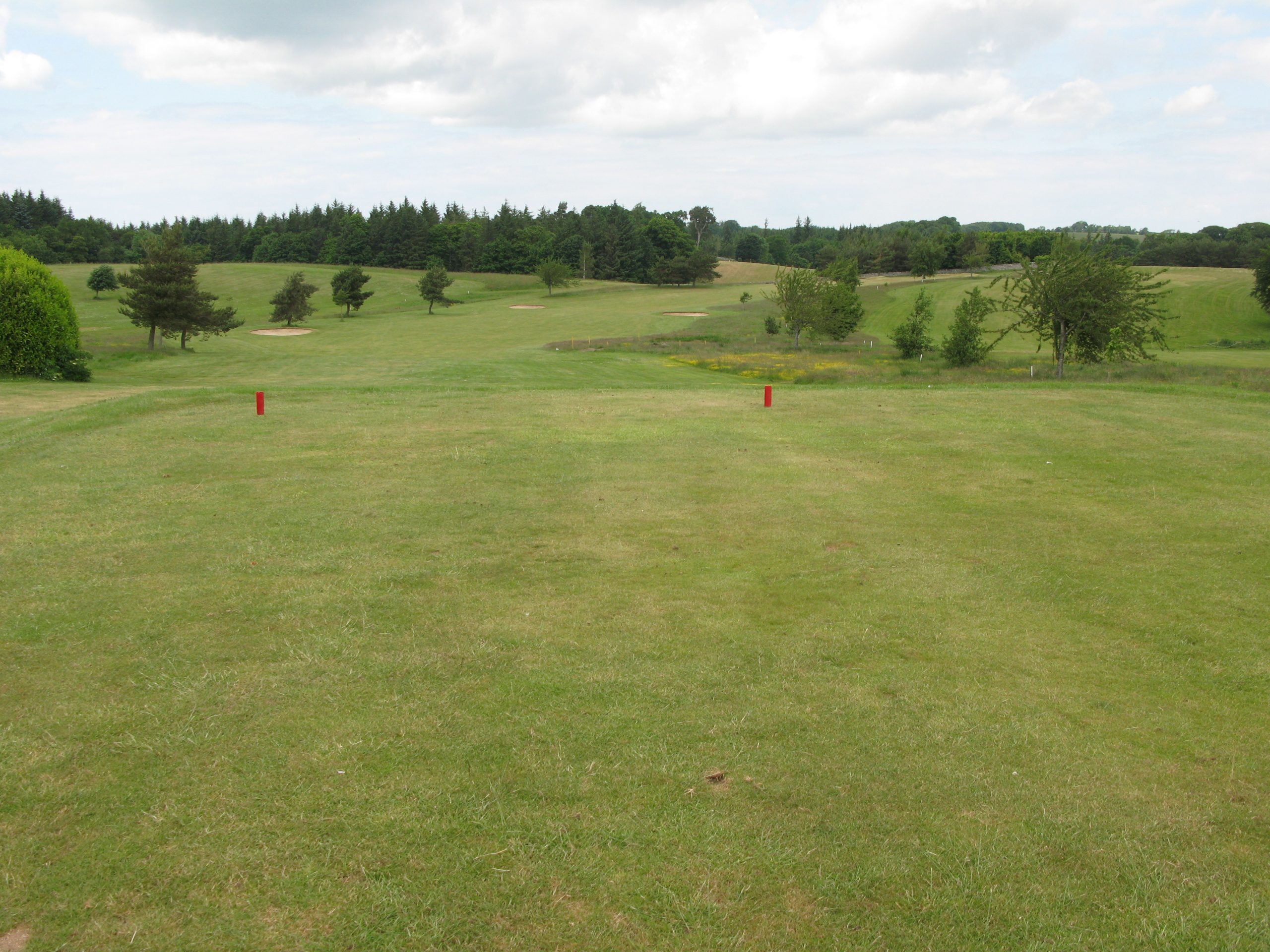
The second hole, a par 4 of around 350 yards, at Gifford is typical of the challenges awaiting.
Despite searching, I couldn’t find the architect, but I imagine it was a top designer given how well the course flows, the excellent hole framing and the variety of challenges presented.
The course starts with three holes played out into the prevailing wind – the first, a well bunkered par 3, one of only two par 3s on the course, needs enough club as the danger is all at the front. The second, although a relatively short par 4, is a difficult hole, where the approach shot into the green, is played over a small burn, and is difficult to judge – trust your distance device here. The third, is the SI 9 hole and is the only ‘easy’ hole on the course – I got a ‘blob’.
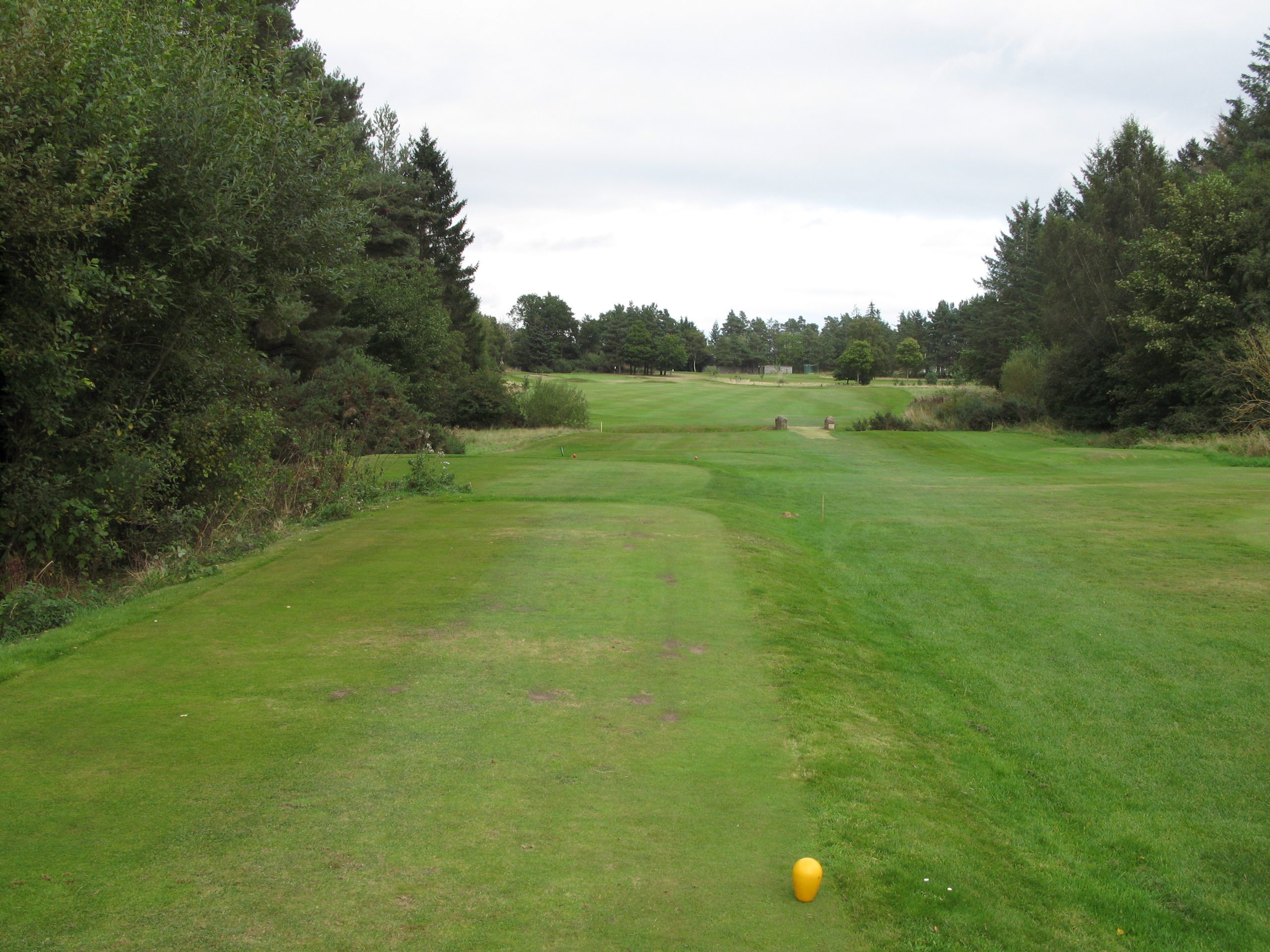
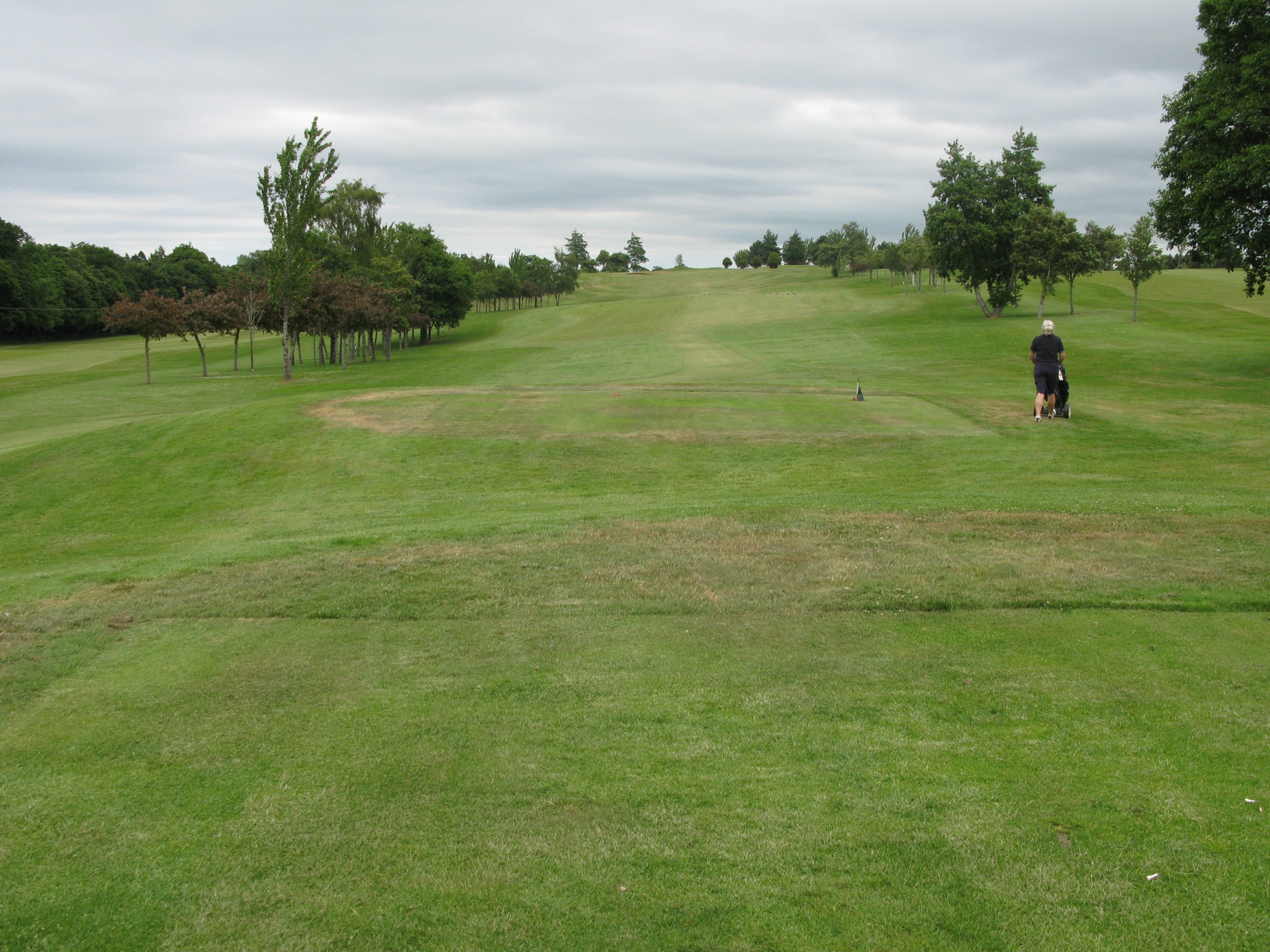
The excellent par four 7th, here showing the great condition of the teeing ground – a sure fire measure of greenkeeping excellence.
The remainder of the holes constantly change direction, making for great variety depending on the wind. Set in open and undulating countryside, you are exposed to the elements, so wind will normally be a dominating feature playing here.
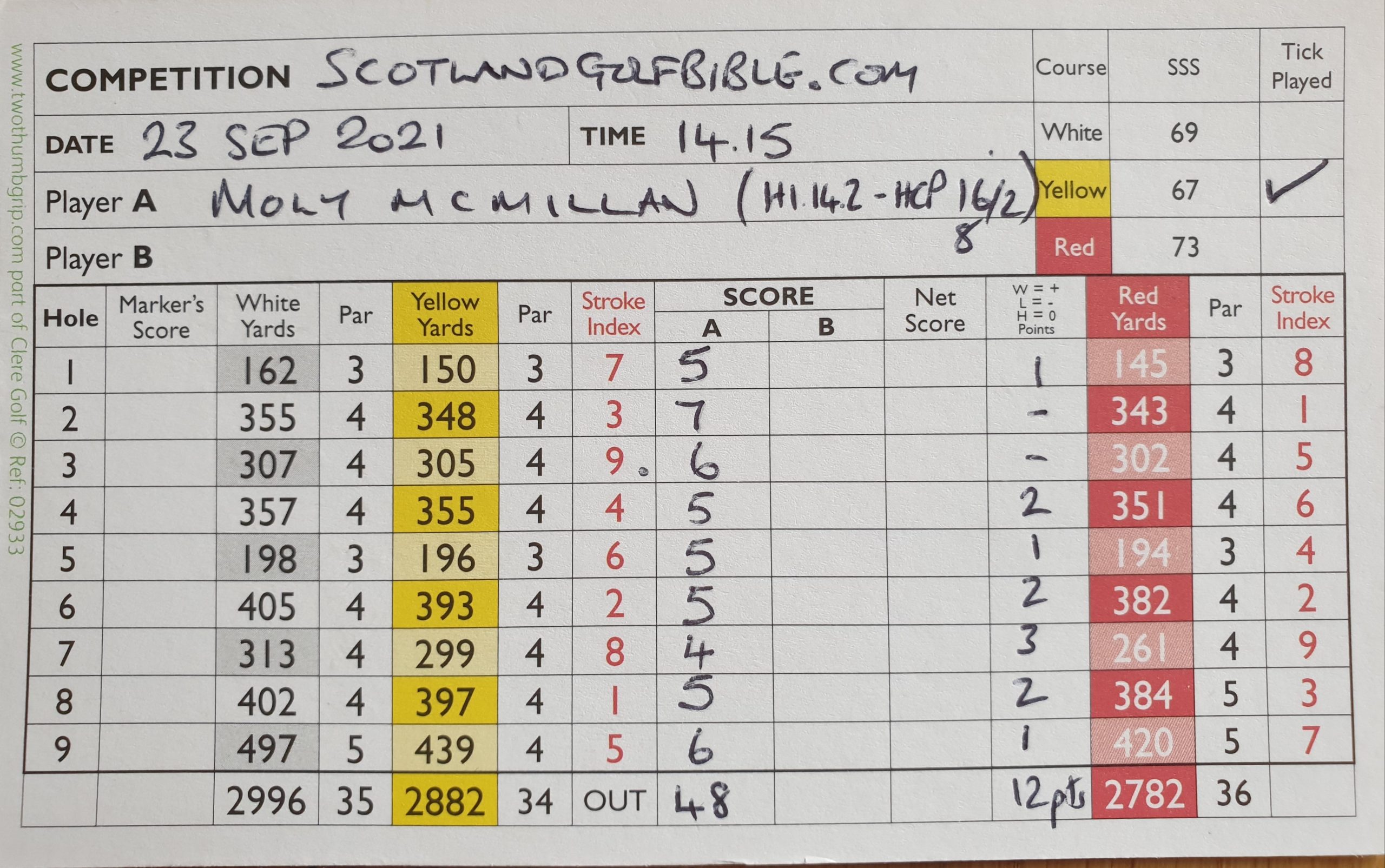
I found the challenge of the wind when I played a little too difficult and I scored a 48, 14 over par, thereby using all my handicap on the “first” nine holes. There are a couple of the holes, which have significant alternative tees, to enable a “back” nine to be played, albeit I never consider this anything other than 9 holes. It would be like classifying different tee boxes as constituting a different hole.
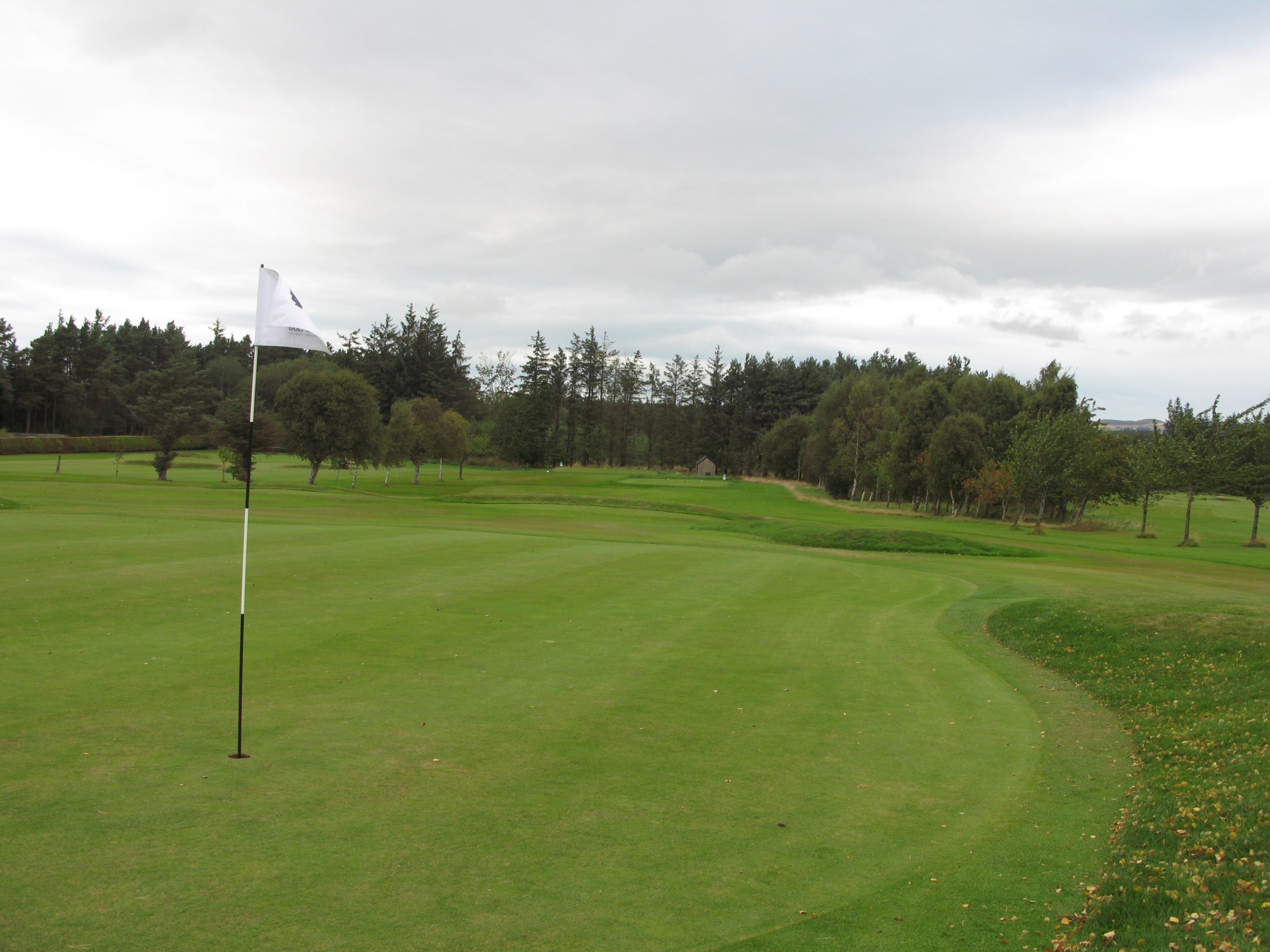
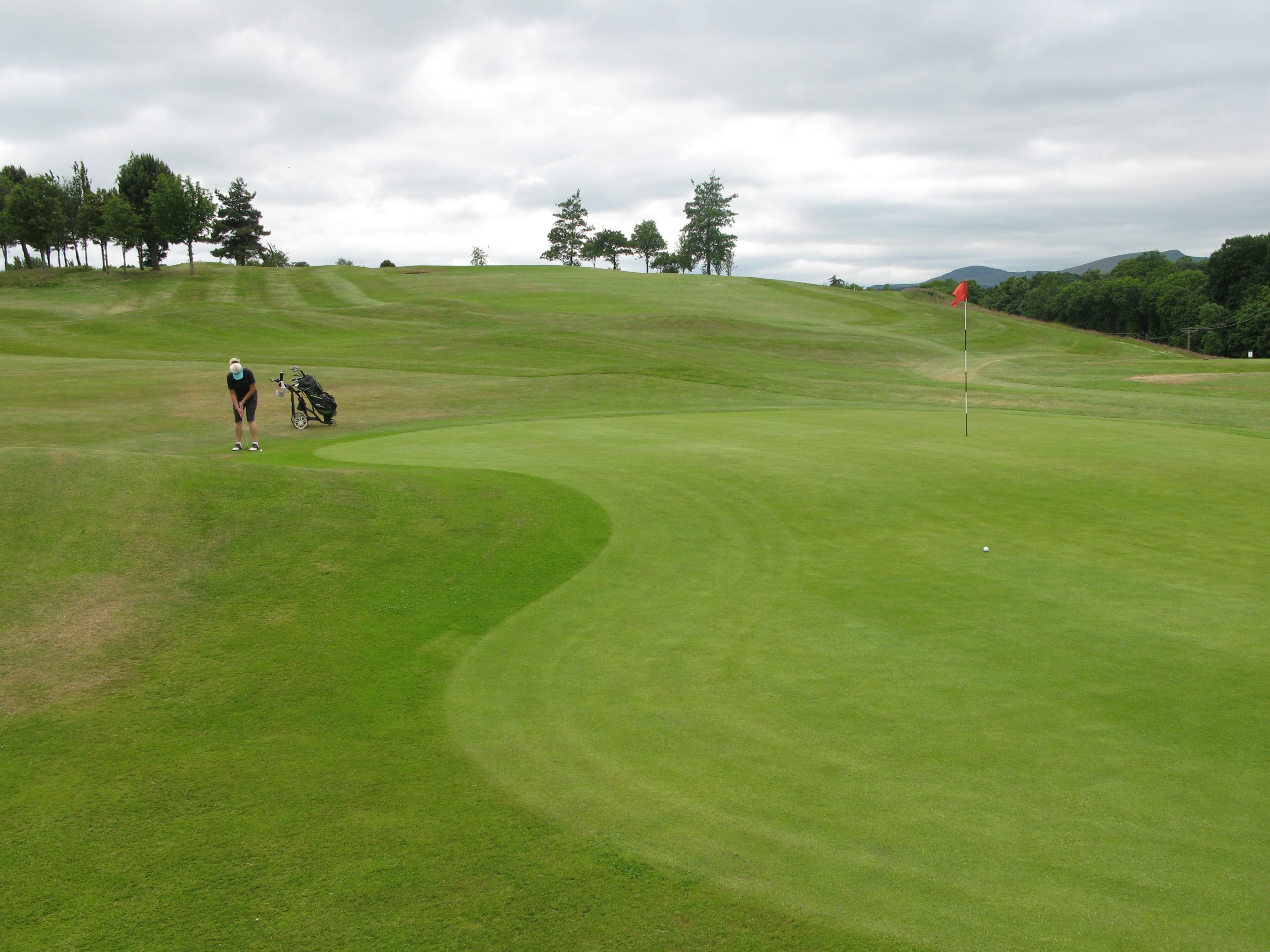
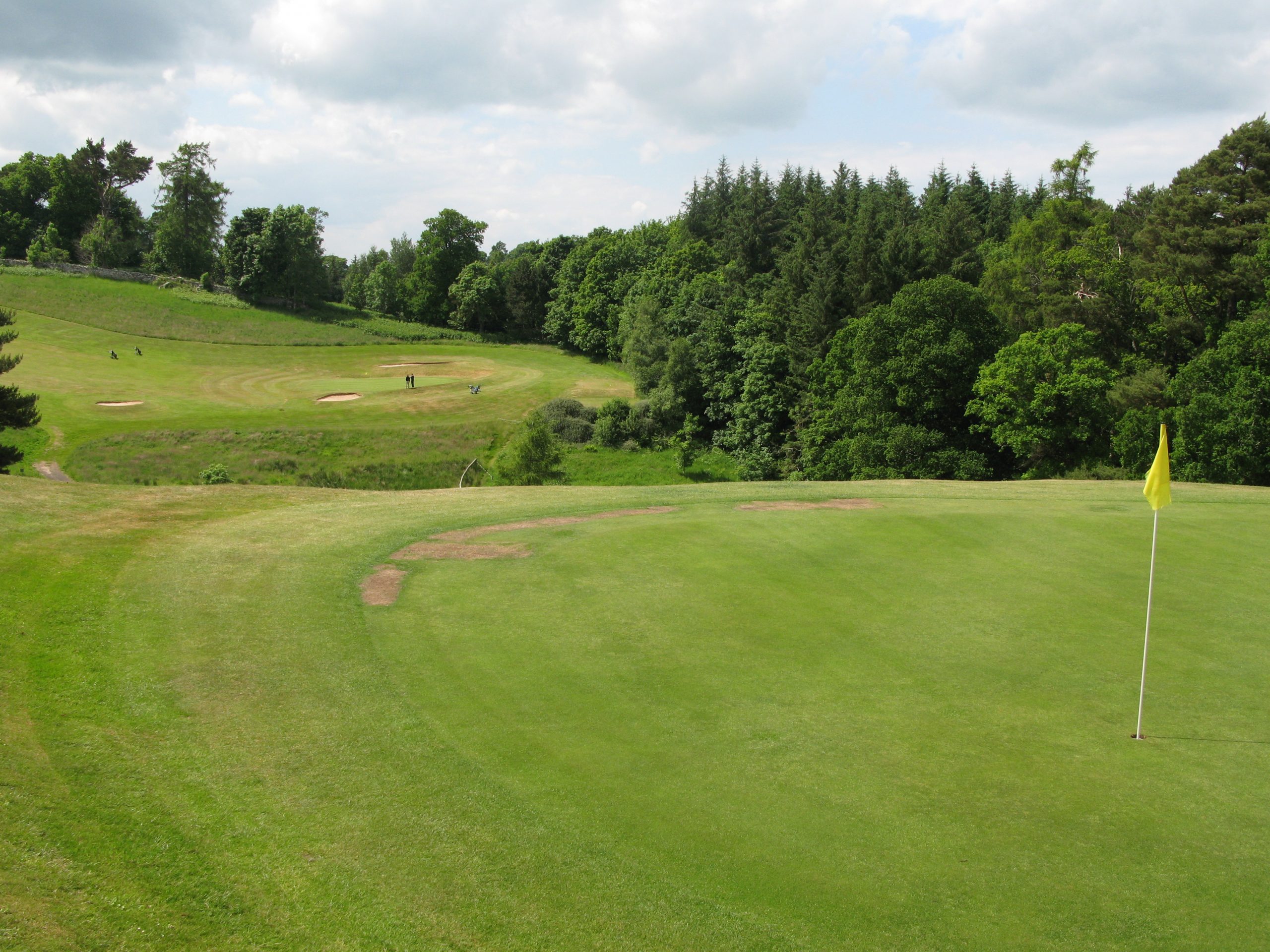
The good greens at Gifford, here shown at the par four 5th.
The clubhouse is also delightful and give yourself time for the exquisite but homely baking on offer.
On having a discussion with the very friendly attendant/cook, I found out that many local resident of Gifford village – a very well heeled place – are members of both Gifford and Gullane. Now that does make me envious!
Worth playing Gifford.
Course Type:Parkland
Par 34 (7 par 4s, 2 par 3s) – “front 9”
Distance: 2882
Moly’s Gross score: 48
Moly’s 48 – for 12 stableford points – on this delightful nine hole Gifford course.
Good ‘family friendly’ 9 hole “Pay & Play” course is no ‘pitch ‘n putt’
Round £14.50. Par 32. Course Rating / Slope Rating (yellow) 30.0 /98. Value (out of 5) – 3
Look at Melville Golf Centre web site and you would think it is just a ‘Top Tracer’ driving range. However, alongside the ‘family friendly’ range is a nice little 9 hole course that, according to the web site, is built to US PGA Standards. There is no trace of the course architect, unfortunately.
My partner Fran at the 7th with the Pentlands in the background.
The course is only a few miles outside Edinburgh, near the village of Lasswade, not far from the intersection of the A720 Edinburgh bypass and the A7 route to the Borders. It is therefore ideally located to pick up transiting golfers, albeit the range has stiff competition from the nearby Kings Acre golf course.
The tricky 2nd green, a short par four.
Dig a little deeper, and you find that the Melville Golf Centre has attracted EU and Scottish Government funding through an organisation called “Tyne Esk LEADER”, a development vehicle for the ‘River Esk – River Tyne’ region, basically covering The Lothians, which of course is one of the best areas in the world for golf. Why some of this public money should be needed to help develop ‘Family Friendly’ golf, in an area rich in golfing history, with more golf clubs per head than any country in the world, is a sad indictment of the state of Scottish Golf and the lack of funds going from richer clubs back into the grass roots of the game.
The uphill par four 5th hole, which needs good distance judgement with the approach.
Set aside the politics, and Melville Golf Course does indeed provide an excellent setting for introducing people to golf. No frills, and in decent condition, there are a good variety of holes to test the full game. Set in relatively open parkland, you’re not likely to lose too many balls either.
The greens, fairways and tees were all pretty good. Along with great views of the Pentland Hills, from a number of the holes, and this is a handy way to spend a little more than an hour grabbing a very quick game of golf.
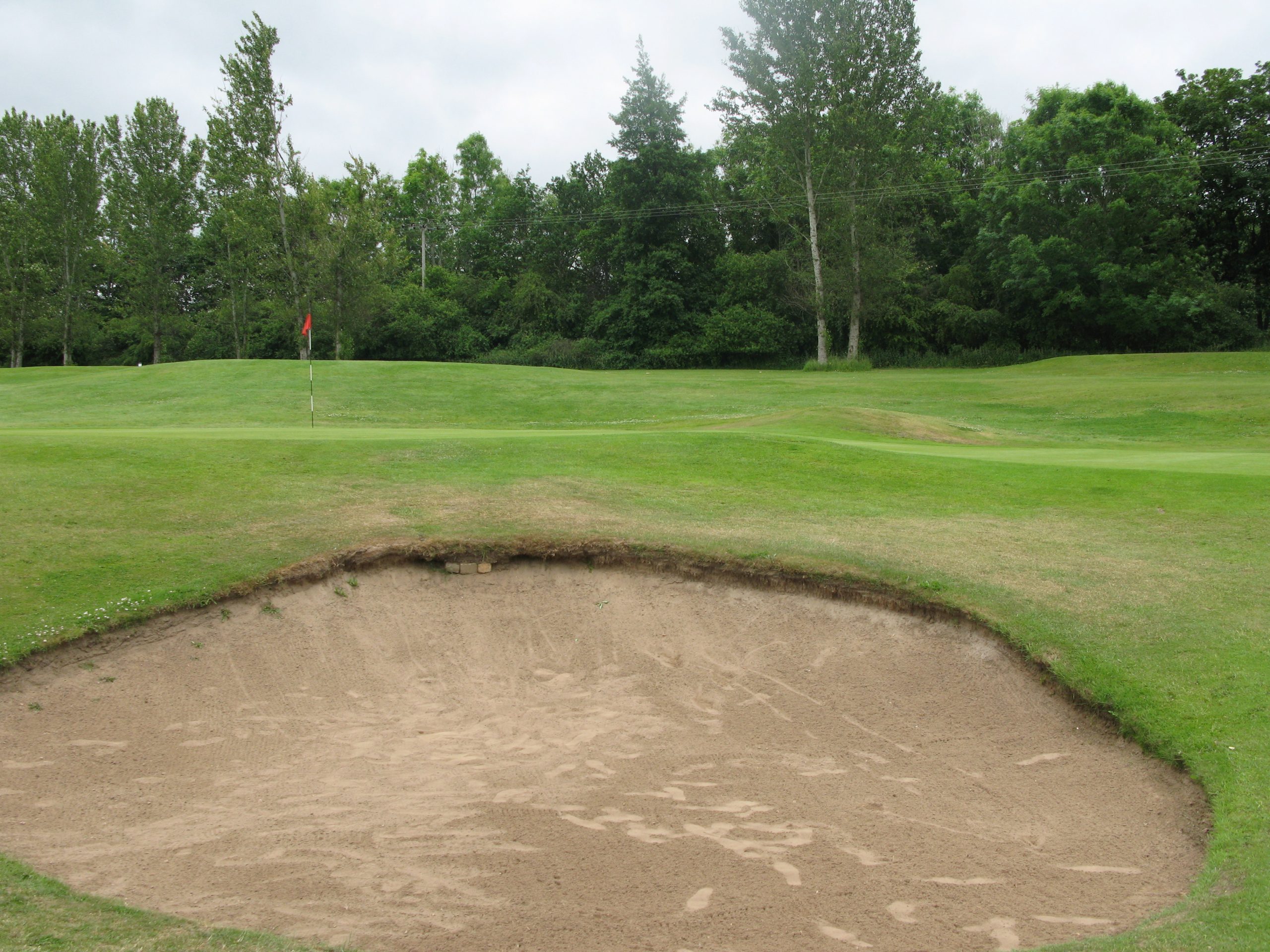
The makeshift greenkeeping at the par three 8th hole, with the bricks shoring up the bunker lip:)
The highlights of the course for me, were the tricky uphill par three 3rd, where a difficult club choice awaits, followed by the long par four 4th (SI1), then the uphill par four 5th. Other than these 3 holes, the rest are birdie opportunities for many golfers.
The 4th at Melville, clearly the most difficult hole off yellow (par 4), but a relatively easy par 5, from the white.
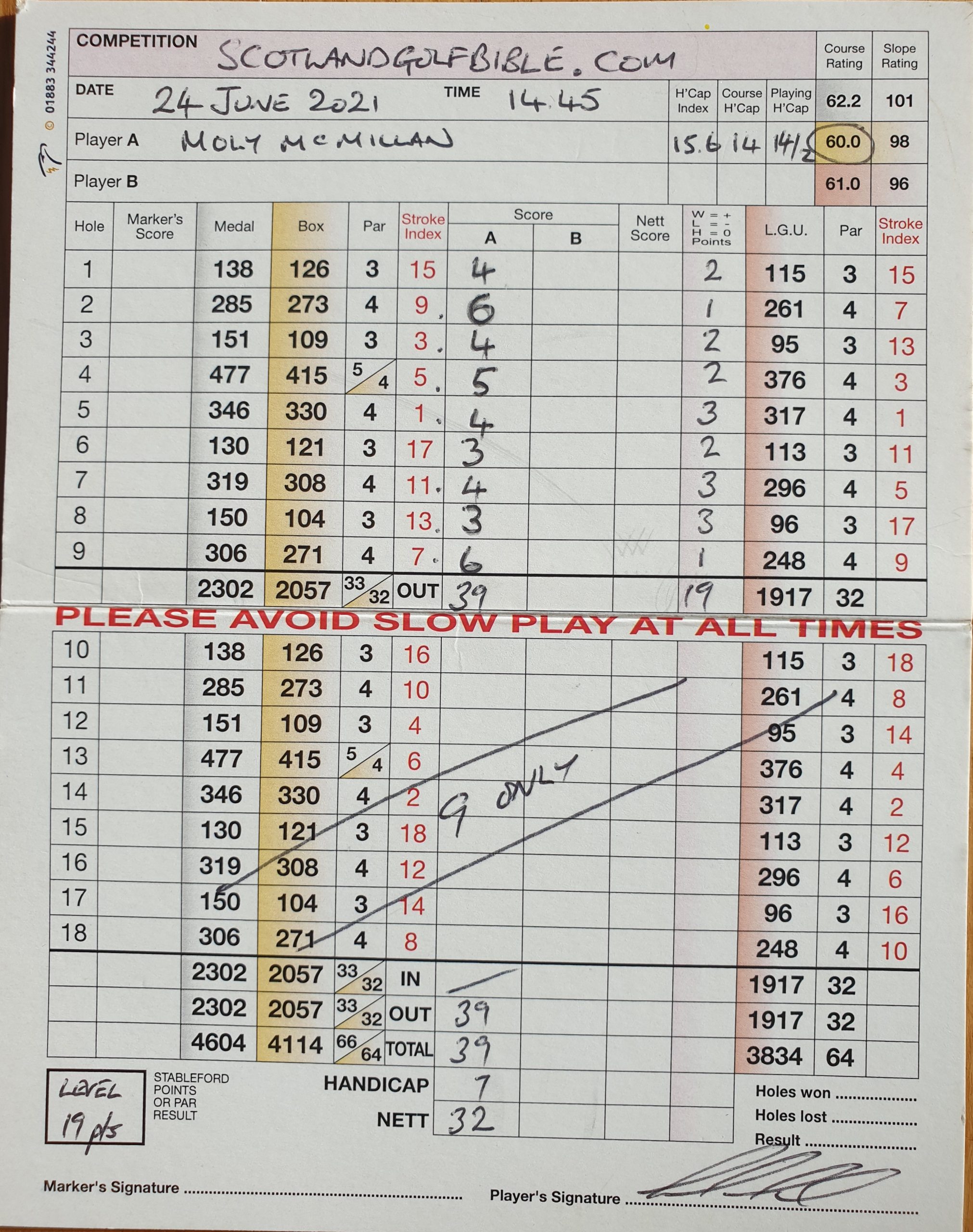
This is no ‘pitch ‘n putt’, it’s a nice little course if you have a couple of hours free. I shot 39, seven over the yellow card of 32. This included a 6 at the par four 9th, where after losing my first drive right, my second drive went through the green at 270 yards – it was windy!
Why it attracted EU and Scottish Government money, is blog article for someone else.
This course’s struggle epitomises Scotland’s golfing challenge
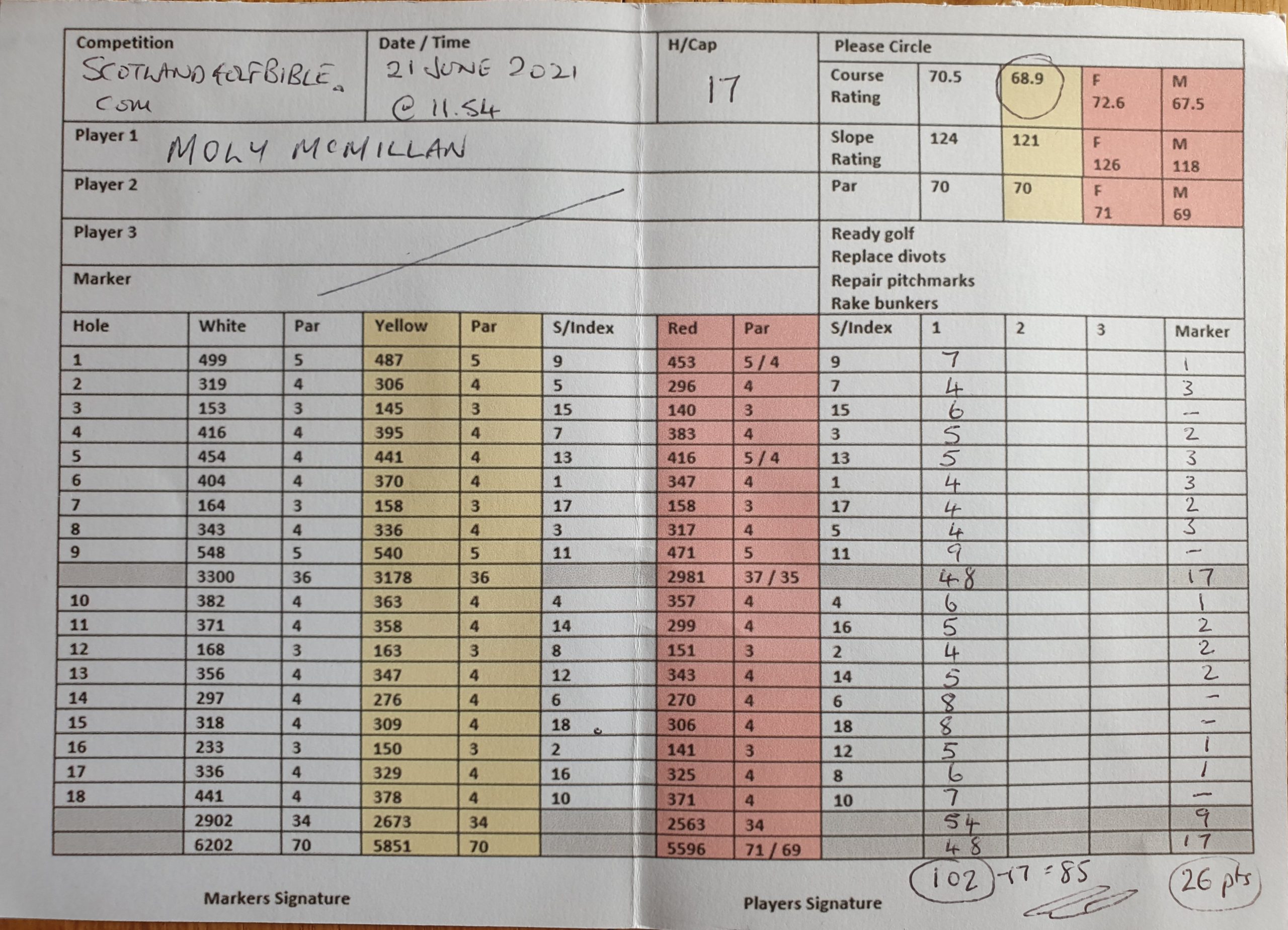
Round £30. Par 70. Course Rating / Slope Rating (yellow) 68.9/121. Value (out of 5) – 2.5
One of the sadder days of my golfing life, was reading about the closure of Camperdown golf course in my home town of Dundee in 2020, a course that I’d once written about as “probably the best value golf in the world“. Thankfully, it has recently been announced that a 9 hole course will be re-opened along with a driving range.
The 5th at Castle Park, one of the better holes on the front nine on this course.Mind the Crows!
One of the legacies of being the ‘Home of Golf’, is that on a per head basis Scotland has the most golf courses of any country. Moreover, when analysed on the GDP per head basis, it’s clear Scotland doesn’t have an economy big enough to sustain so many courses. The long term decline in courses seems set to continue.
The opening hole at Castle Park in Gifford. Typical of the open fairways.
However, this is not a ubiquitous story. Whilst attending a conference of Scottish Golf in 2018, one of the things that became apparent to me, was the divide existing between “have” and “have not” clubs, exposed during a debate about increasing the Scottish Golf ‘members sub’ paid as part of each individual golf club fee. There were several speakers from wealthier clubs (those likely occupying the top 100 Scottish courses) who resented any increase in the levy, as they were “doing very well, thanks very much”.
The 10th at Castle Park. Don’t go to the 18th after this, like I did!
The evidence as I see it, is that the top courses make significant visitor fee income, with many courses costing well over £120 per round, whilst their annual membership fees remain significantly under £1000 per year. For example, for 2022 Carnoustie will charge £270 per visitor round during Summer, but local members only paying the equivalent of not much more than 2 visitor green fees for their annual membership. Living close to a top course is like winning a mini golfing lottery.
Considering the courses outside the (say) top 200 courses, of which Castle Park, in Gifford, is a good example. Opened in 1994, during a period of golfing optimism, by 2015 Castle Park was up for sale and highly anticipated that it would revert to farmland; it was not commercially viable. It was saved from closure by a local Gifford businessman, Craig McLachlan, with a partnership consortium resolved to keep the ‘community resource’ open. This threat to courses and passion to keep them open, is understandable, but the big picture economics will remain a challenge.
Take enough club to carry the valley at the par three 12th at Castle Park.
So has it been worth it, in Castle Park’s case – from a golfing perspective? The short answer for me sadly is no. I would anticipate the continued struggle. Why?
Castle Park sits in a lovely part of the East Lothian countryside, adjacent to the Lammermuir Hills and the affluent village of Gifford, which also has a wonderful Harry Colt designed 9 hole course (Gifford golf course). Many of the Gifford GC Members are also members at any number of the world class courses along the nearby East Lothian ‘Golf Coast’. Gifford is only 20 mins from Gullane Golf Club. So to say the golfing competition is fierce, is an understatement.
Perhaps as a ‘PR defense mechanism’, the course’s website declares itself “The Gleneagles of the South — Peter Allis”. Let’s examine the evidence:
> The scorecard was a haphazard affair on a printed piece of normal paper.
> On arriving at the club and showing our www.golfnow.com booking, we were told “They shouldn’t have allowed your booking” – as if it was our fault! Why do some people go into service?
> Two of the management team were driving around on a buggy – when we walked very close by them we were completely ignored, almost as if we ‘didn’t exist’.
> The tee markings were wooden pegs – no nomenclature.
> There was no guidance to find the next tee boxes, even although it was not always clear. We were well down the “11th” before we realised we were actually playing the 18th, that being the only tee box visible from the 10th green.
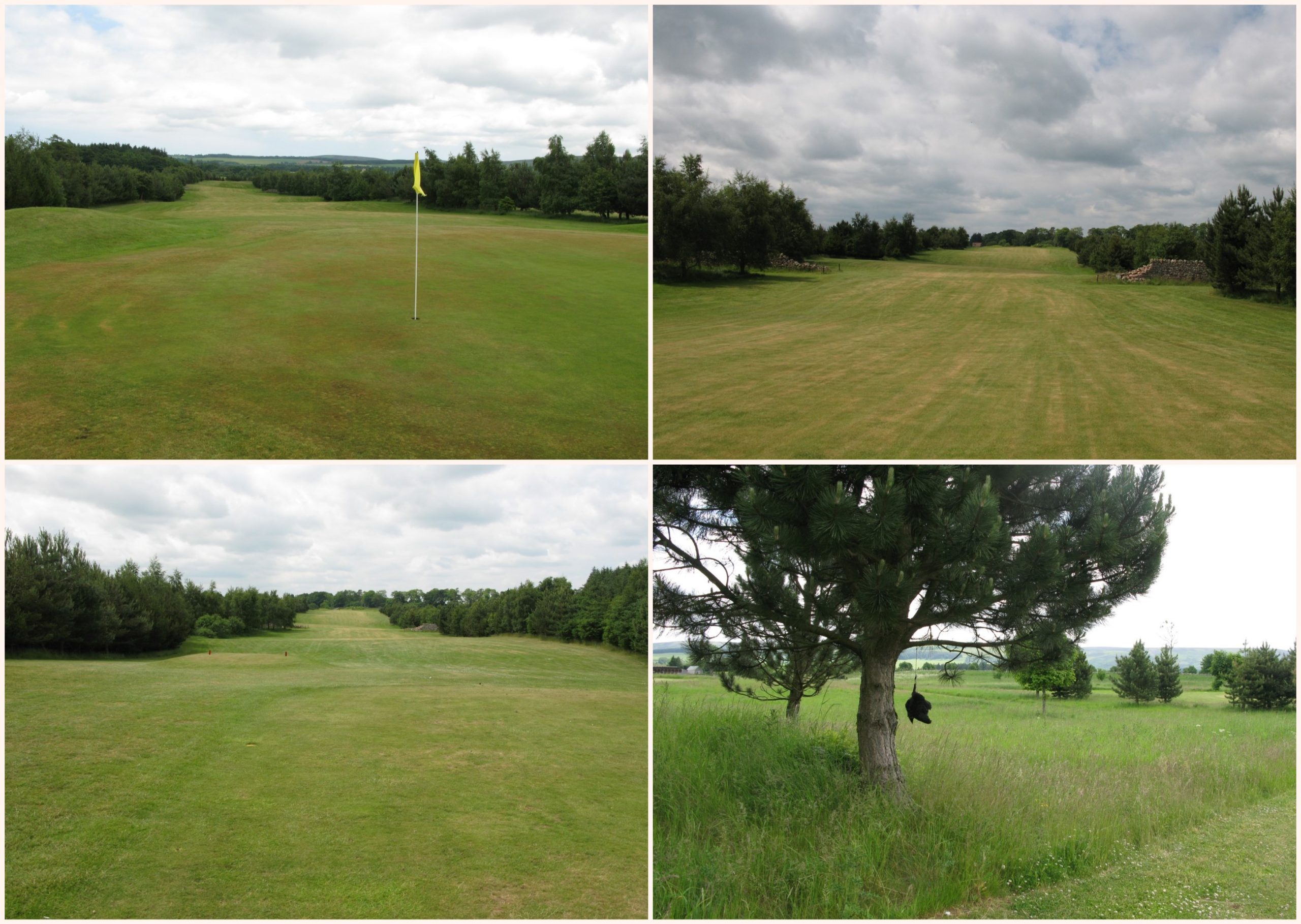
> There were dead crows hanging from trees everywhere, apparently to stop the crows eating worms (according to a green keeper).
I honestly find it hard to believe that Peter Allis would have made his Gleneagles comparison. I wonder whether he ever played at Castle Park?
The course itself is a tale of two halves. The front nine is an easy walking affair, but the back nine is very undulating and a really tough walk. It is fairly open parkland, but very long penal rough when you do miss the generous fairways. The greens were well watered and very true, but some had several patch repairs. The bunkers were shallow with insufficient sand.
Moly putting out on the 18th at Castle Park – Decent Value but nothing like “Gleneagles”!
Overall, it was a fairly tough challenge but with some decent holes; the slope index of 121 from the yellows, might have been from a 110 front 9, and a 130 back nine. The memorable holes were mainly on the back, with the par three 12th, played over a valley and the long par three 16th being the highlights for me.
The tale of two halves also represented my score, with 17 stableford points going out, and only 9 points coming back.
The best part is the price which is a very affordable£30, the price alone telling the story of the quality. It’s 2.5 star value, but lets not kid ourselves, this is no more “The Gleneagles of the South”, than Peter Allis, God rest his soul, is part of the woke generation. It’s also too tough a walk to be used as a Society day out – in my humble opinion. That’s why it sadly will struggle – no amount of ‘questionable’ PR will address that.
Round £25. Par 66. Course Rating / Slope Rating (yellow) 64.1/115. Value (out of 5) – 5
From the endearing conversation with local members, to the beautifully crafted use of space and to meeting the challenge of some excellent holes, Aberfoyle golf course is an absolute joy, set in the magnificent surroundings of the Trossachs area of Scotland. It’s a must play and incredible Scottish golfing value.
The 6th tee at Aberfoyle, with the typical scenic views of he Trossachs countryside. Bend that right leg Moly!
The course was established in 1890 with 9 holes and only extended to 18 holes in the 1980s, albeit it’s a difficult job trying to guess the original 9. It’s short in length, at well under 5000 yards from the yellow tees most people will use, but still has a slope rating of 115 despite only having 8 bunkers.
My favourite hole at Aberfoyle – the short par four 4th, with tricky thin green from front to back.
Set among the glens, the wind may make some of the longer par 3s and par 4s difficult to reach in regulation. Particularly so, for those holes played into the prevailing wind; the long par three 5th and par four 14th, well deserving of their stroke indexed 2 and 1 ratings.
The approach shot into the first at Aberfoyle, is the first of several blind shots played at this course.
The highlight of my playing was actually a bogie 4 at the 5th, after pulling a 3 wood tee shot into the heath on the left of the green and getting the ball miraculously onto the green with my second. It’s not always birdies that get remembered.
The most memorable hole, however, was the gorgeous short par four 4th hole. Again, played into the prevailing wind, it has a delightful thin green from ‘front to back’. The local guide, excellently displayed on the good club website, is well worth reviewing before play, with the advice on the 4th not to be tempted to go for the green from the tee, but rather play conservatively left with a mid iron, or hybrid, to leave an easy pitch up to the green.
The lovely par three 10th hole at Aberfoyle
The recent weather when I played had been horrendous and I was amazed at the great condition of the course, testament to the natural drainage and mindful greenkeeping. I can imagine the joy of playing Aberfoyle on an early or late Summer evening.
It is a tough walk tough, with several blind shots to encounter (the 17th was the most striking in this regard), so a yardage device is also recommended. There are also some holes that cross each other, something typical of the late Victorian courses. Some amalgamation golf course guides cite James Braid as the designer, but I didn’t get any confirmation of that on the list of courses on the Braid association guide. It would be interesting to know who the designer of the original 9 holes was.
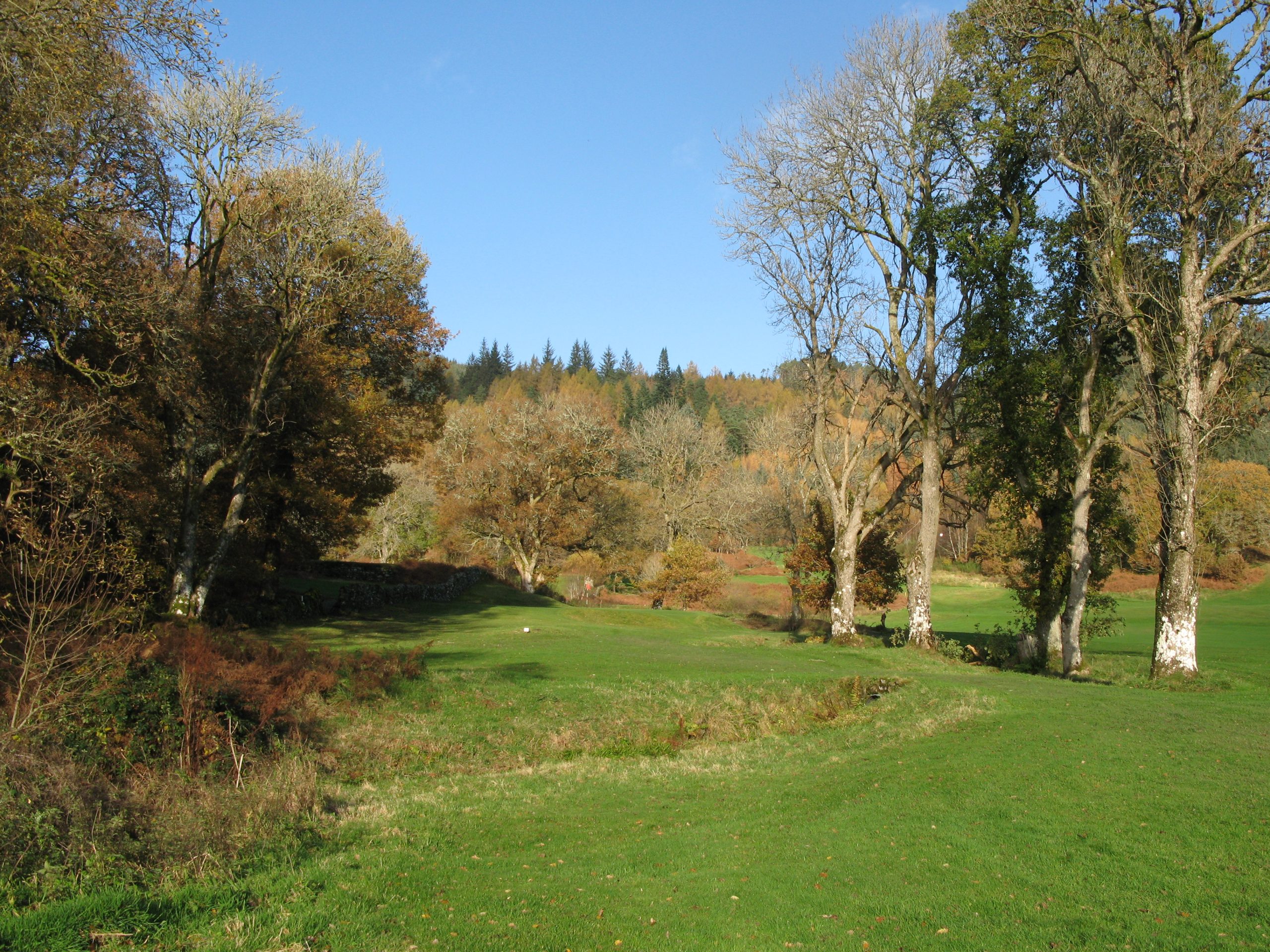
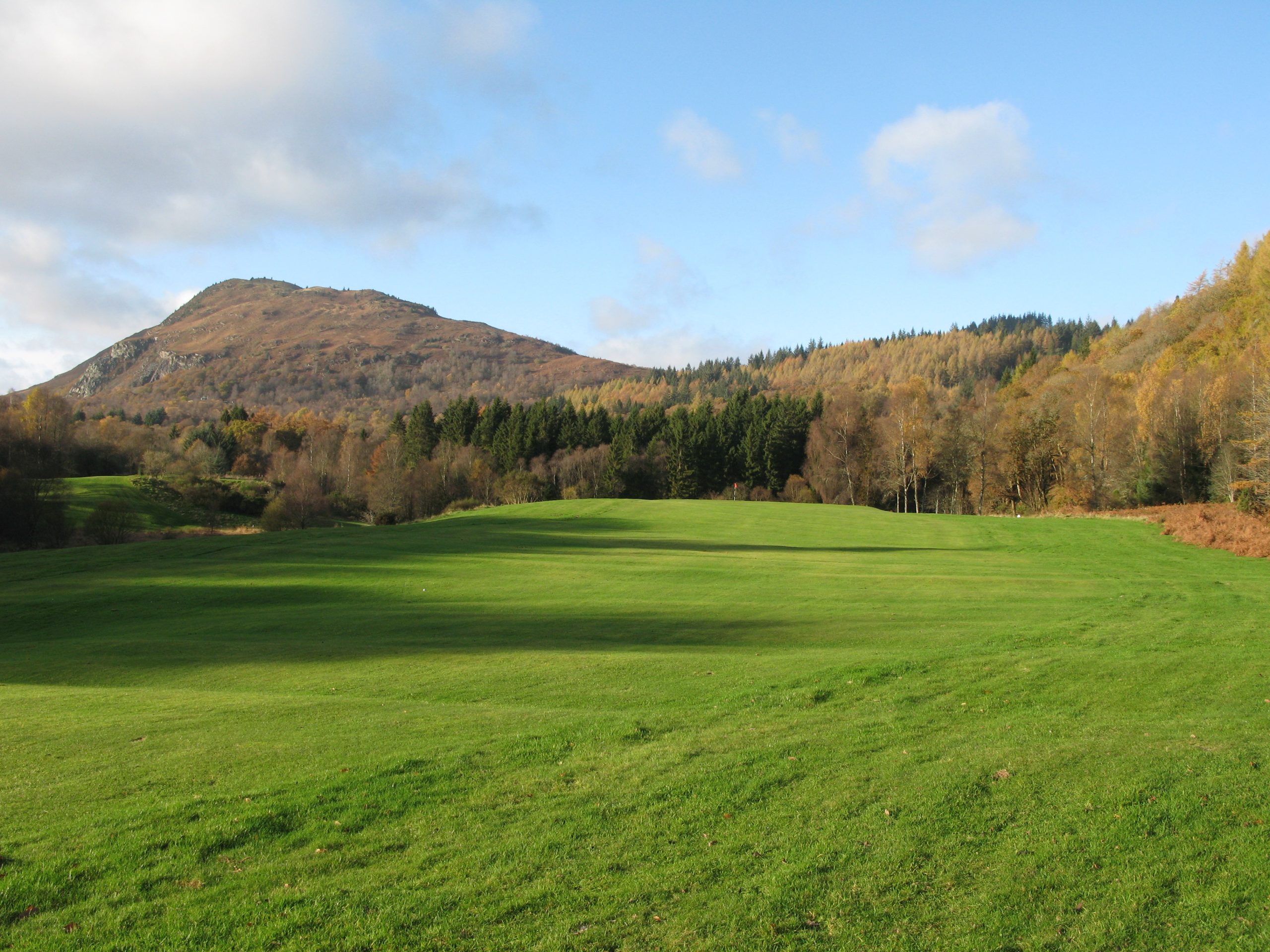
The beautiful scenery at Aberfoyle, displayed here at the 11th
Golf is such a game of “what if’s” – on the day, mine were a triple bogie 7 on the 16th followed by an even worse 9 on the par four 17th having lost 2 balls. Other than those holes, I played pretty well.
It’s a great course Aberfoyle, well worth the journey. One trivial point – having paid £15 on-line using the clubs booking system, I turned up to find a sign on the closed clubhouse door saying “From 1st Nov, only £10”. Despite being a little peeved, this is still 5-star value!