A guide to green fee value for money

Category: 1946 – 1999 (Page 6 of 10)

88. Murrayshall. 16 Sep 2018

Murrayshall is a nice parkland course, but its hotel partner course (Lynedoch) is much better value.

Round  £50 ( variable on-line).   Par 70.  Value (out of 5) – 3

The Murrayshall estate, first built in 1664, was established as a commercially successful Country House hotel in the early 1970s, following the sale of the estate by the Norrie-Millar family, of whom Francis Norrie-Millar was one of the key instrumentalists in building the General Accident insurance company in nearby Perth, only 3 miles to the west of Murrayshall.
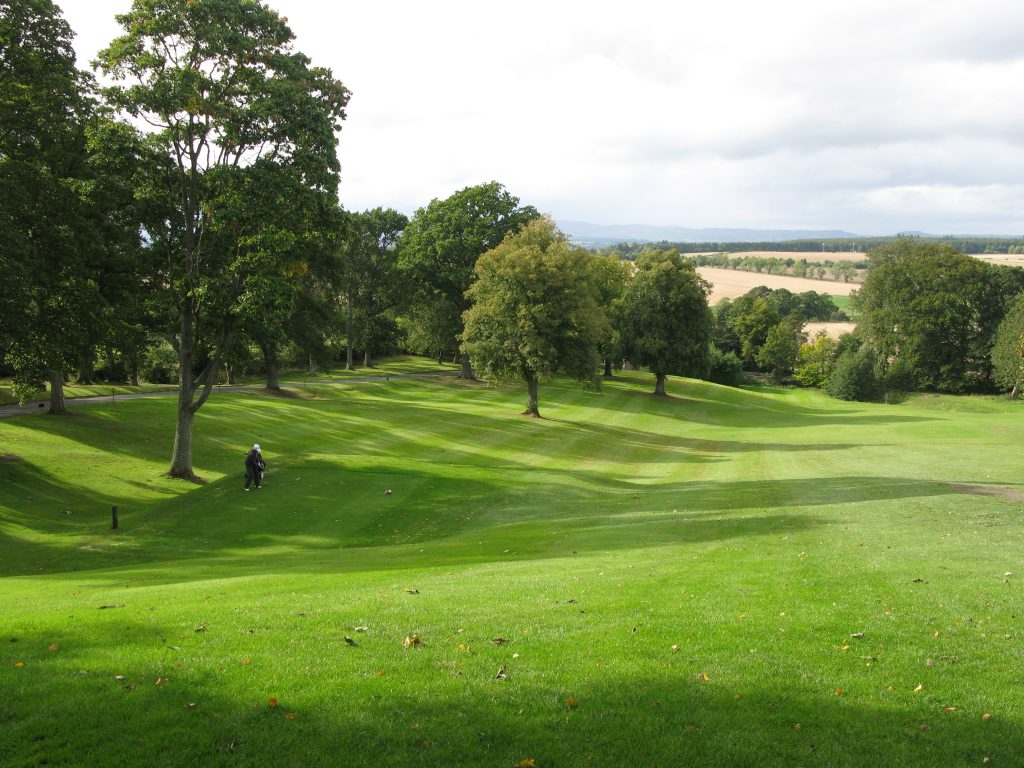
Fran plays at the par 5 9th at Murrayshall

The esteemed golf architect Hamilton J Strutt (grandson of James Braid’s foreman) designed this Championship course in the 70s, and returned to design the Lynedoch course which opened in 2000.   The Murrayshall course is indeed a fine example of Strutt crafting a course amidst mature parkland, leaving an impression that the course has been there for a hundred years.  This is almost completely true except for the bland and exposed par 4 13th hole, which was oddly the SI1 hole (more of later).
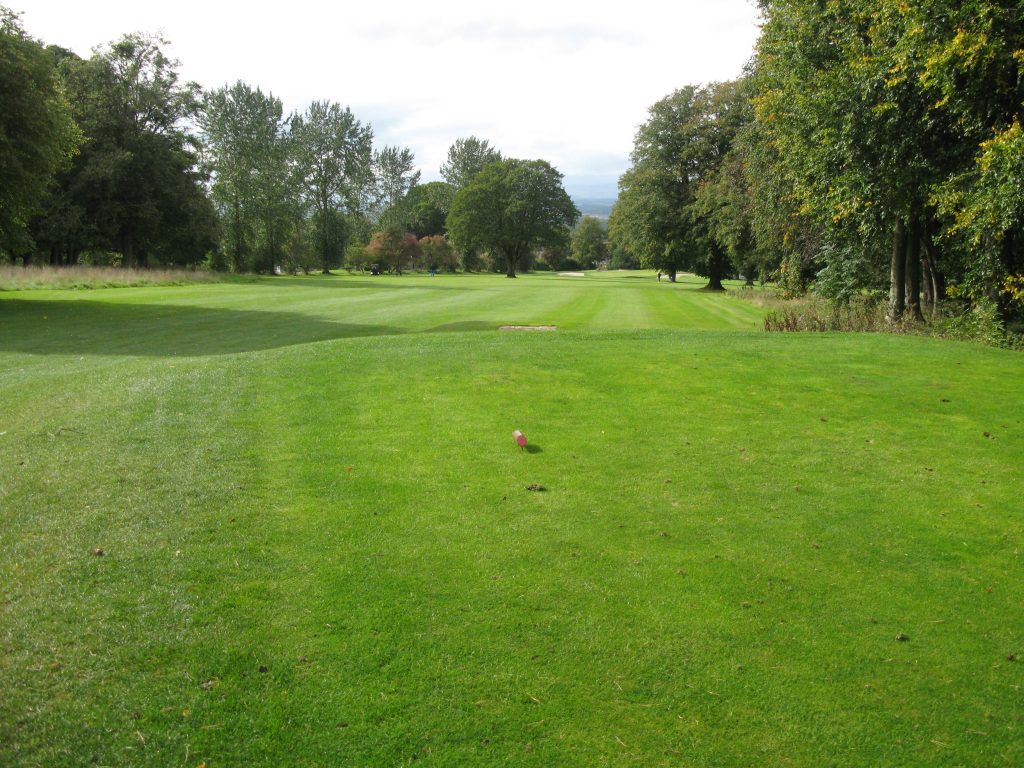
The 6th tee view, typical of the Murrayshall course

Whereas the sister Lynedoch course is partly woodland, Murrayshall is exclusively parkland.  I had previously played the Lynedoch track and had been very impressed (read my blog here).  I was therefore greatly looking forward to playing the hotel’s premium course, but must admit that I don’t think the higher price is worth it is versus its shorter neighbour.   It’s still a very nice course, with some outstanding countryside views, nice greens and good bunkering;  but, other than being a longer course, it lacked the guile of its smaller sister course.
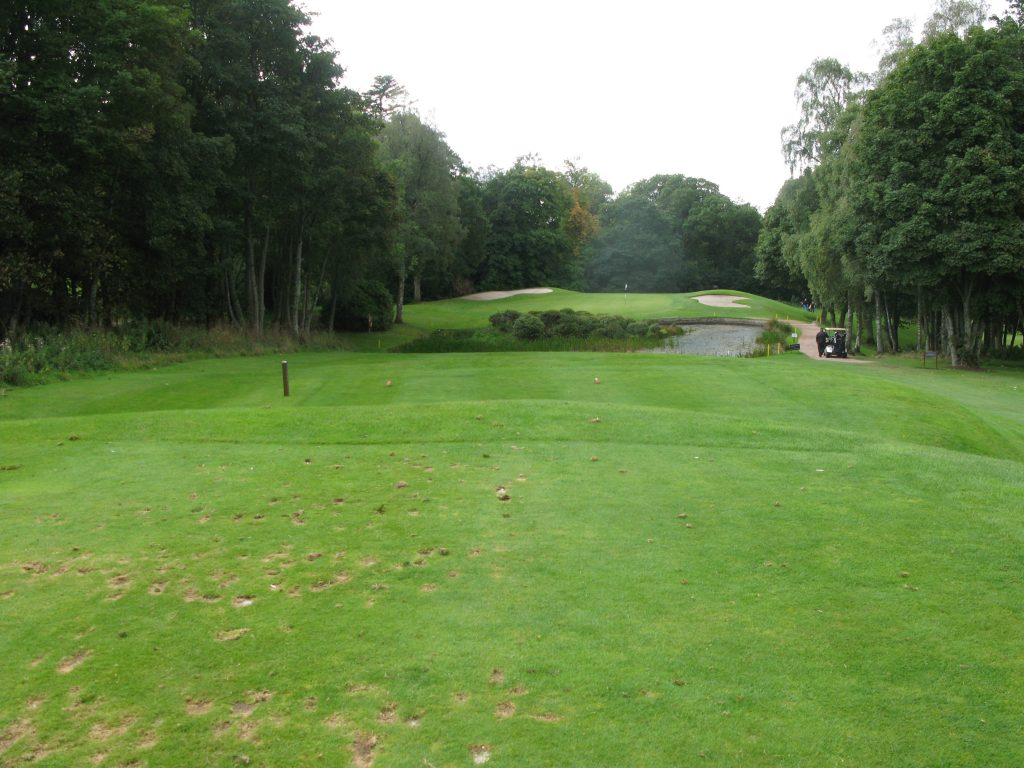
The short par 3, 4th hole, at Murrayshall

The course was in good condition when I played and I had a nice round of 89, for 37 stableford points (off 17);  including a birdie at the 13th, the stoke index 1 hole, which was one of the more bland holes played towards a local farmyard.  My score also reflects the fairly open fairways and relatively accessible surrounds of the trees.  Other notable holes were the stretch of 6th, 7th and 8th, a really nice set of challenges, with a reachable par 4, a difficult par 4, and a tricky par 3.  Also noteworthy is the mix holes, with five par 5s and five par 3s, its an odd mix.
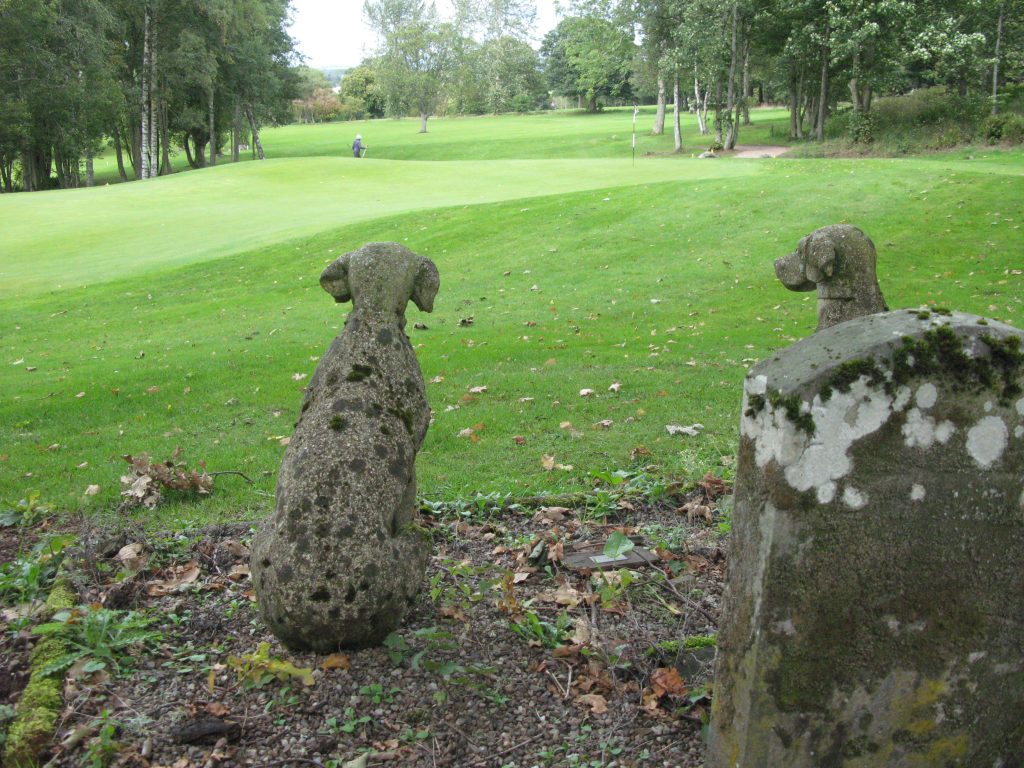
The two dogs (Isla and Joseph) whose grave guards the very difficult pay 4 7th, “Dogs Grave”

Unfortunately, the round at Murrayshall was the slowest I’ve played for several years, at around 4.5 hours.  Having caught up with the 4-ball in front, on hole 2, which actually turned out to be the last group of about 10 groups making up a society day, we then were delayed at about 5 minutes per hole for the remained of the round!  I’m writing this, to give context to my “value” assessment.  How should an assessment be dictated by pace of play?  Well, if I hadn’t been doing a blog, we would have walked in after 12 holes.   It was anything but value for money.  How many times have you heard “we would let you through, but it’s the group ahead holding us up” – I refer everyone to the Etiquette section of the rules of golf, which clearly recommends allowing a faster grouping through, regardless of circumstances.

It is worth playing, but perhaps check whether a society is playing in front!

Some Facts

Course Type: Parkland

Par 70 (5 par 5s, 8 par 4s, 5 par 3s)

Distance (white)   5868 yards

Moly’s Gross Score  89
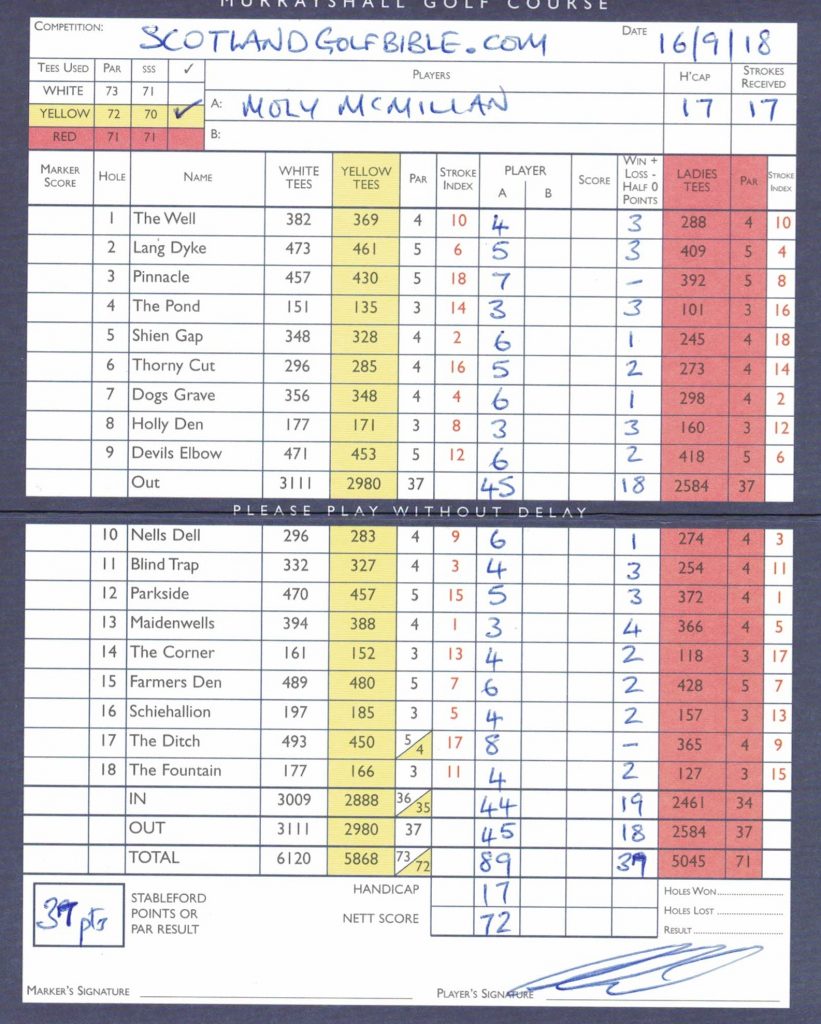
Moly’s 89 at Murrayshall – a decent round given the chilly weather
85. Portlethen. 2 Sep 2018.

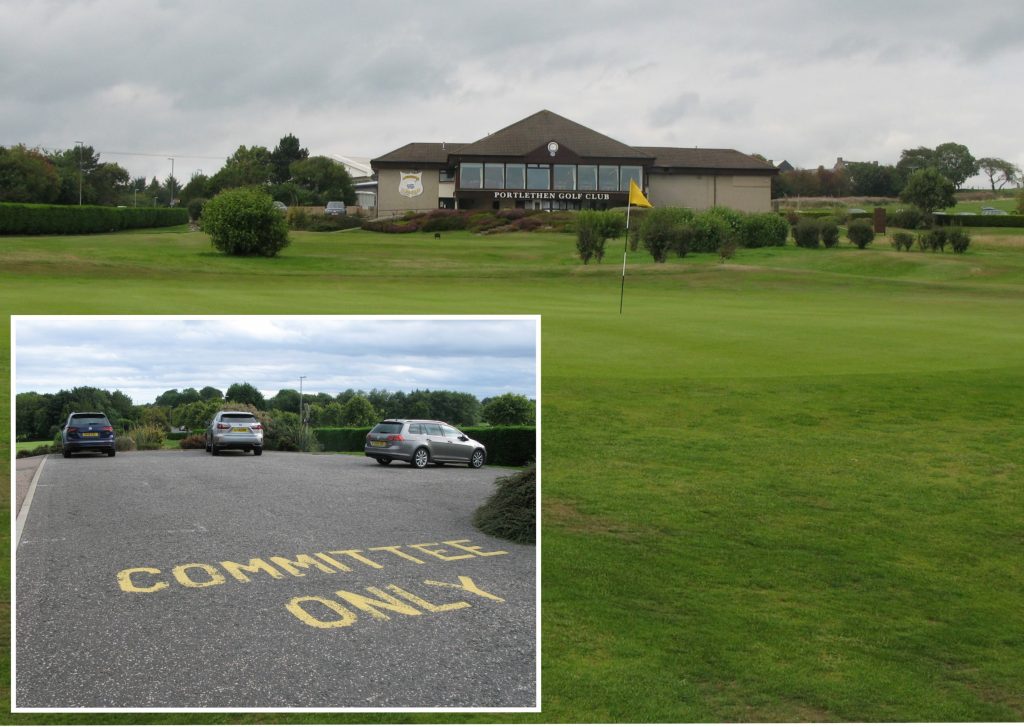
The “Committee Only” Car Park sums up why Golf has to change to survive.

Round £45.   Par 70.  Value (out of 5) – 3

Portlethen, about 7 miles south of Aberdeen, on the A90,  is one of the fastest growing areas in Scotland over the last 30 years.  When the golf course was opened in 1989 the population was recorded as 1500, yet in 2011 it was over 7000 – no doubt driven by the North Sea oil boom.   With the opening of the substantial Aberdeen bypass imminent, Portlethen continues to grow, albeit the area is also suffering from the collapse in oil prices in 2015.

The welcome wasn’t warm at Portlethen – Beware of any clubs with “Committee Only” anything. No wonder some clubs are struggling.

The course, designed by the renowned Donald Steel, along with the substantial clubhouse, seems apt testimony to the ambitions of the area.  Yet somehow, for me, the course fails to deliver on the initial optimism demonstrated by the designer chosen.  When asked what I thought of Portlethen, my answer was “It’s OK”, which sums up my experience.

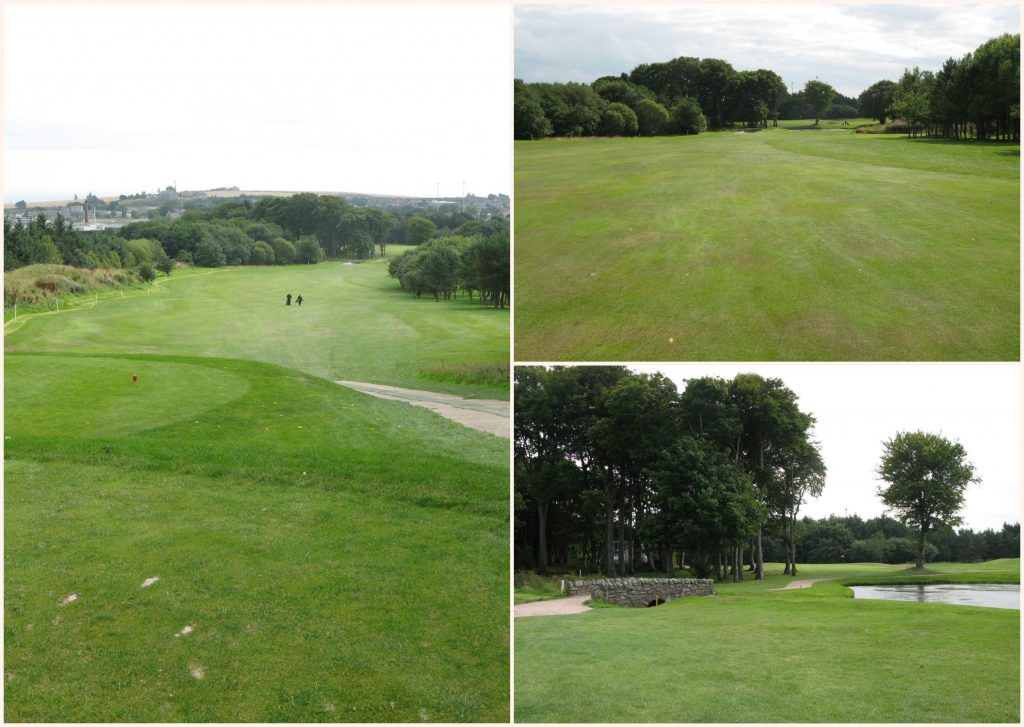
The 4th at Portlethen, one of the best holes.

It’s a generous parkland setting, and after a few ordinary holes, the 4th tee provides an excellent view of the par 5 signature hole;  after a good drive I hit an excellent 3 wood over the pond guarding the green – my best strike of the day – which caught the top of a large tree and ended in the water.  The 5th is also a picturesque water featured par 3.  After those highlights, I thought the course somewhat fell away in quality, other than the superb 15th, the SI 2 par 4, which also had a green fronted by water.

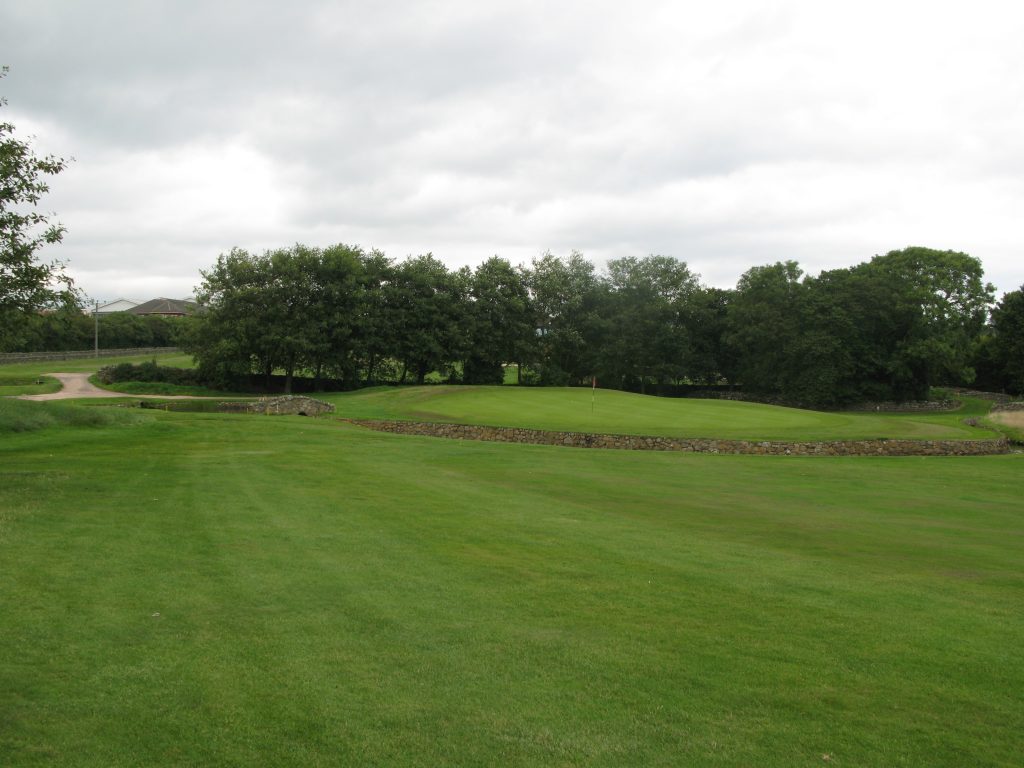
The difficult par 4 15th at Portlethen.

The course was in reasonably good condition.  But it was the lack of welcome which stuck with me.  As a www.teeofftimes.co.uk customer I was advised I would be paired together – not a problem, but expressed in a manner that made me feel a second class citizen.  However, shortly thereafter, I was advised I could play on my own as there was space on the tee!  Nevertheless, my round was very slow, and it was clear that people in front of me were determined not to let me through, even when there was space in front.

The aesthetic 5th at Portlethen, a short iron par 3.

This seemingly unfriendly approach by a couple of players cannot, of course, be judged representative – however, when I saw the size of the “Committee Only” car park, this seemed so representative of the welcome I’d received.

My overall assessment was that Portlethen was about a 3 for value.  The club’s website makes a big sell of “The Portlethen Experience” – but I must say, for me, it just felt a little bit pretentious overall.

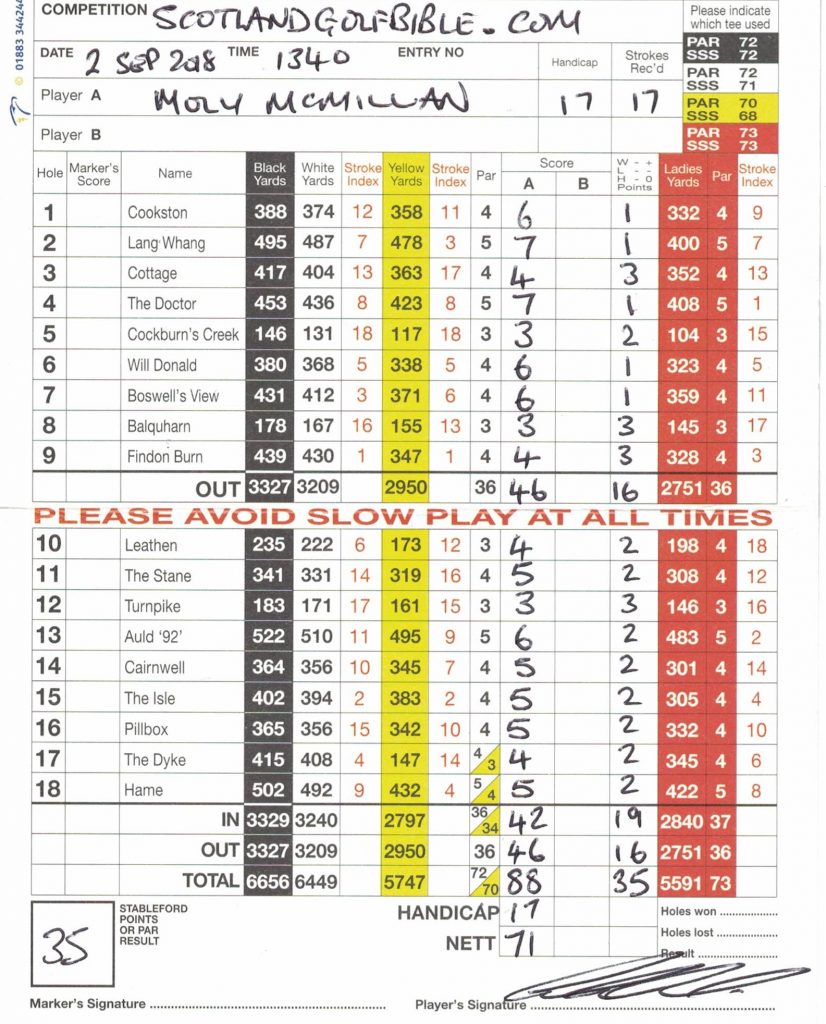
On the day I played well for my net 71.

Facts:

Course Type: Parkland

Par 70 (3 par 5s, 10 par 4s,  5 par 3s)

Distance (yellow): 5747 Yards

Moly’s Gross score: 88

Moly’s Portlethen 88, with only 1 lost ball – which was the best strike of the day, including direction!

76. Meldrum House. 19 June 2018.

Aberdeenshire’s “exclusive golf experience” is untypically Scottish and fails to deliver value   

Round £85 + hotel residency.   Par 70.  Value (out of 5) – 2

Let’s get something clear – Meldrum House is a beautifully crafted parkland golf course cut among the agricultural heartland of Aberdeenshire.  The quality and design, by Graham Webster, is of a very high standard.  However (yes, there is a big one), in establishing the course as “the exclusive golf experience”, Meldrum House feels so untypically Scottish.  It felt much more like playing, for example, the AA Golf Club in Epsom, than a Scottish golf course.

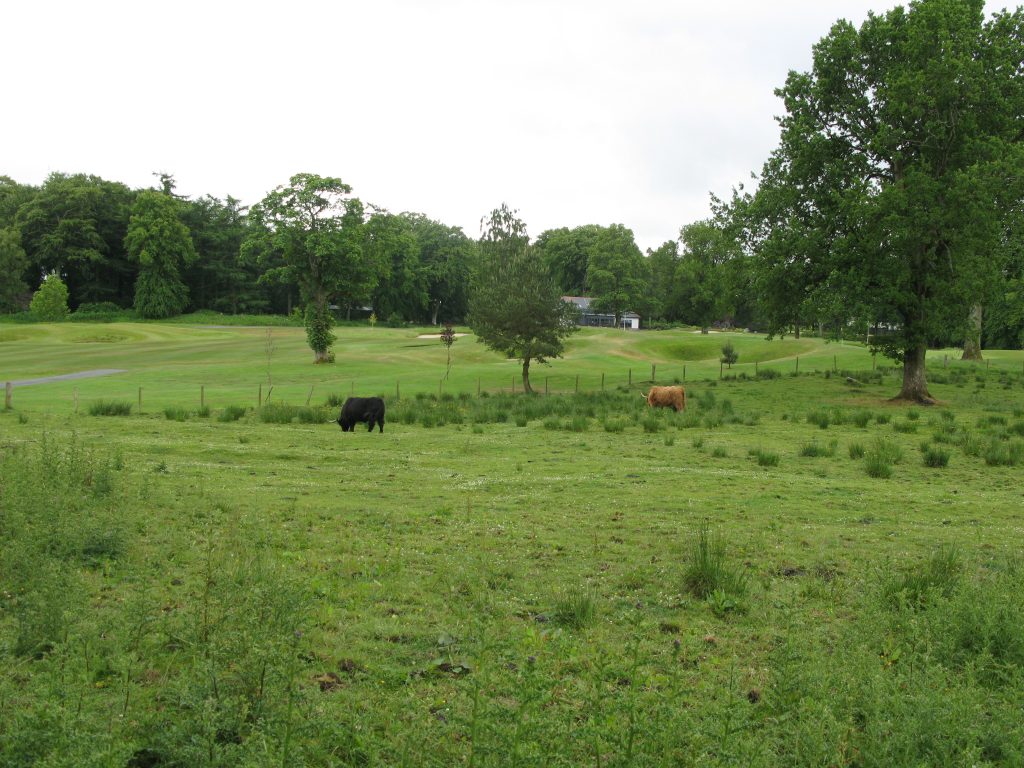
Perhaps that’s why there was a need to stock some Highland Cattle between the 17th fairway and the manufactured lawns of the Country House hotel of the same name, otherwise one might think you were playing the very many lookalike late 1900s courses developed in the southern counties of Surrey or Hampshire.

The rare Highland Cattle compliment the surroundings at Meldrum House – 17th hole behind.

The only way to play a single round is to stay at the 4-star Meldrum House hotel, which allows guests to play the course for a fee of £85.   Therefore, with dinner, bed and breakfast, a round here is going to cost at least £250+.  Hence why I’ve assessed its value rating as 2.

Meldrum House hotel provides great accommodation and the estate of the same name has a long heralded history, with the Barony of Meldrum dating back to the 13th Century.  So, if you were looking for an Aberdeenshire short break with a bit of golf and good food, it’s a great option.

For the record, individual membership (2018 prices) of Meldrum House golf club is £1,895, although for that the club does consider it “our privilege to have our members”.  Unsurprisingly, business memberships are available, and start at over £5,000.   Of course, there lies the likely clue to the golf course’s existence, which seems to rest on the wealthy oil industry of the North East.  I’ll wager that this course will not be around in it’s current format, once the North Sea oil is long gone.  Why pay these Meldrum House fees when membership of one of the world’s best courses, Cruden Bay, is £680, and only about 22 miles away?

Par 3 10th hole, one of the 7 water feature holes in the first 10 at Meldrum House.

The course has a headline length of over 7000 yards from the black tees, but I suspect most will play from the White (6203) or Yellow (5867) tees, the latter which I used while playing with my wife Fran who used the Red (5492).

There is water genuinely in play at 11 of the 18 holes, and at 7 of the first 10.   There is also many very deep bunkers.  To score well, you need to play strategically around here and pay close attention to the course planner (included in the fee!).  I did this pretty well other than at the 8th, the aptly named “The Lochans”, and the 18th (more of later);  the 8th fairway slopes left to right towards the water hazard, which I surprisingly found after a well struck drive;  the smart play is a hybrid from the tee to the left side of the fairway.

The beautiful 16th hole at Meldrum House, characteristic of the course.

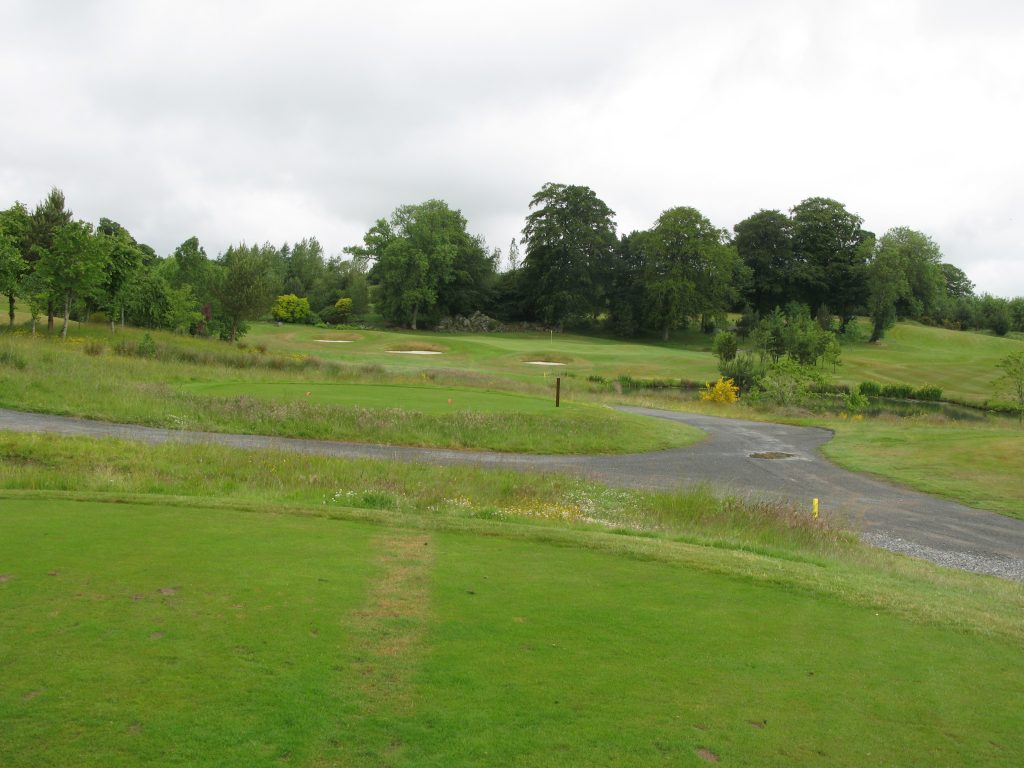
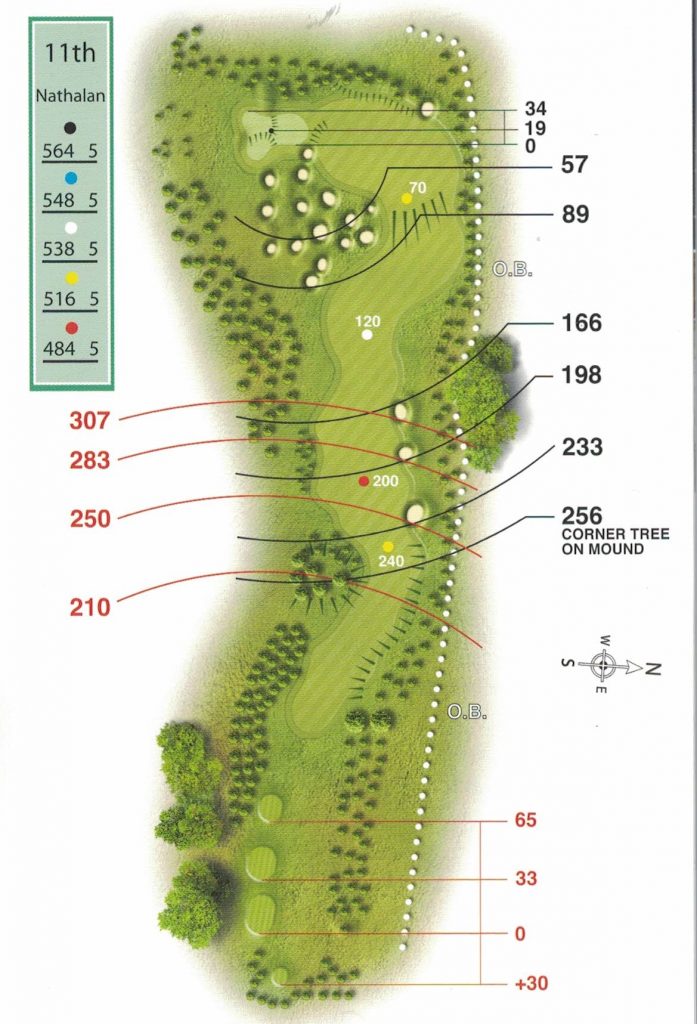
Holes 11 through 15 play on the higher part of the course, with no water hazards, but the stretch starts with what can be described as a “gimmicky” 11th hole which has a disaster of 15 (yes 15) bunkers in front of the green approach.  I couldn’t help wondering what the record is for the most, separate, bunkers ever played from on a single hole??

The “gimmicky” long par 5 11th, with bunkers covering 70 yards of the green approach.


The course was in very good condition when I played other than one fairway (9th) which was poor.  The greens were beautiful, the tees and bunkers well kept and manicured.  It was also a very pleasant walk and, of course, there was hardly any other players!

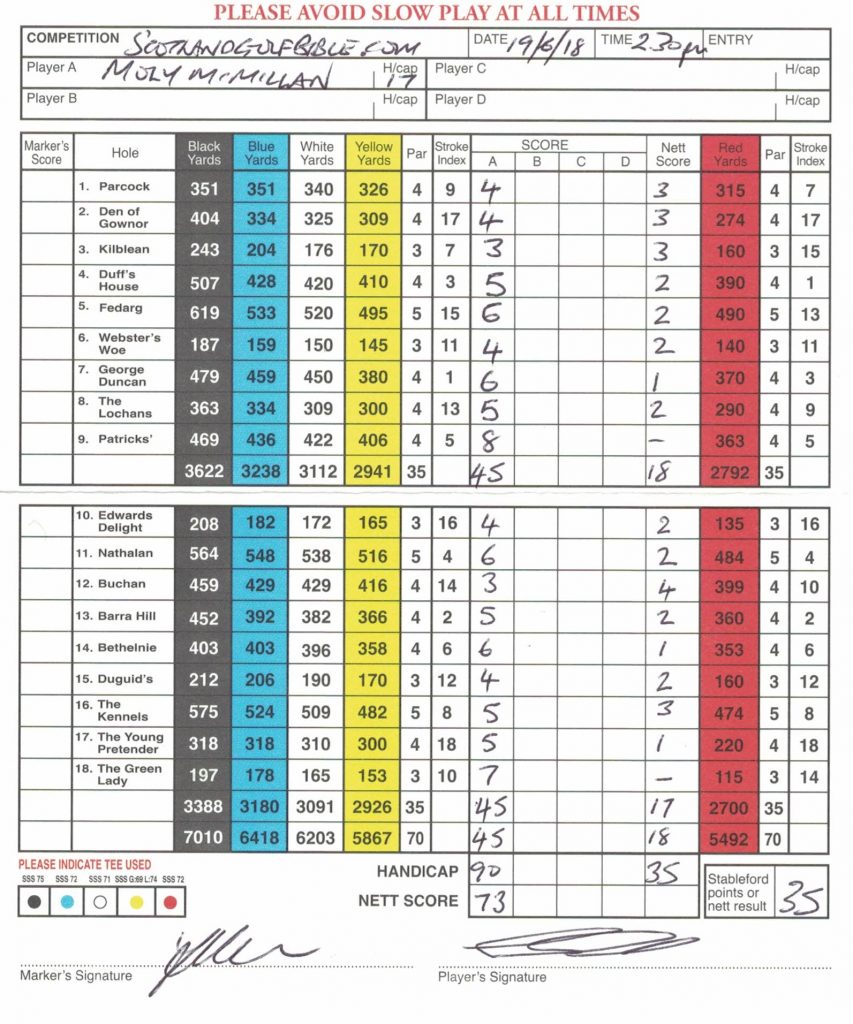
The 18th, unusually, was a short to medium iron, par 3, played over 2 sets of marshy water hazards.  Unfortunately, I found both hazards for a 7, my second quadruple bogie of the day, along with the 9th, which ruined an otherwise impressive card.  I still shot 90 for 35 points.

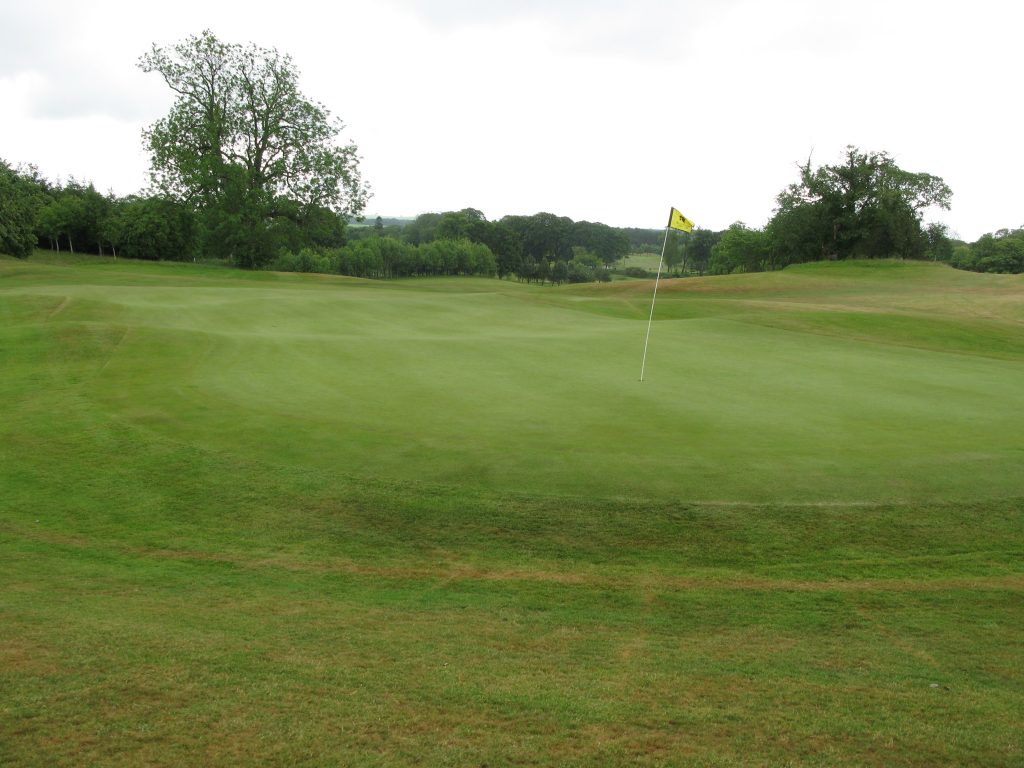
13th green, site of my only birdie of the day at Meldrum House

Oh, I nearly forgot to mention – coffee & tee were “free” in the clubhouse;)

Facts:

Course Type: Parkland

Par 70 (3 par 5s, 10 par 4s, 5 par 3s)

Distance (yellow): 5867

Moly’s Gross score90

Moly’s Meldrum House Scorecard – 90 for 35 points

65. Lochore Meadows. 1st Sep 2017

Good value 9 hole course managed by Fife Golf Trust 

Summary:  Round  £12.   Par 36.  Value (out of 5) – 3.5

Lochore Meadows is one of 7 courses managed by the Fife Golf Trust which was established in 2011 to take over Fife Council’s directly managed courses. This is becoming a common practice by Local Authorities in Scotland to manage golf courses.  The golf club is private, like many Scottish clubs associated with public courses.

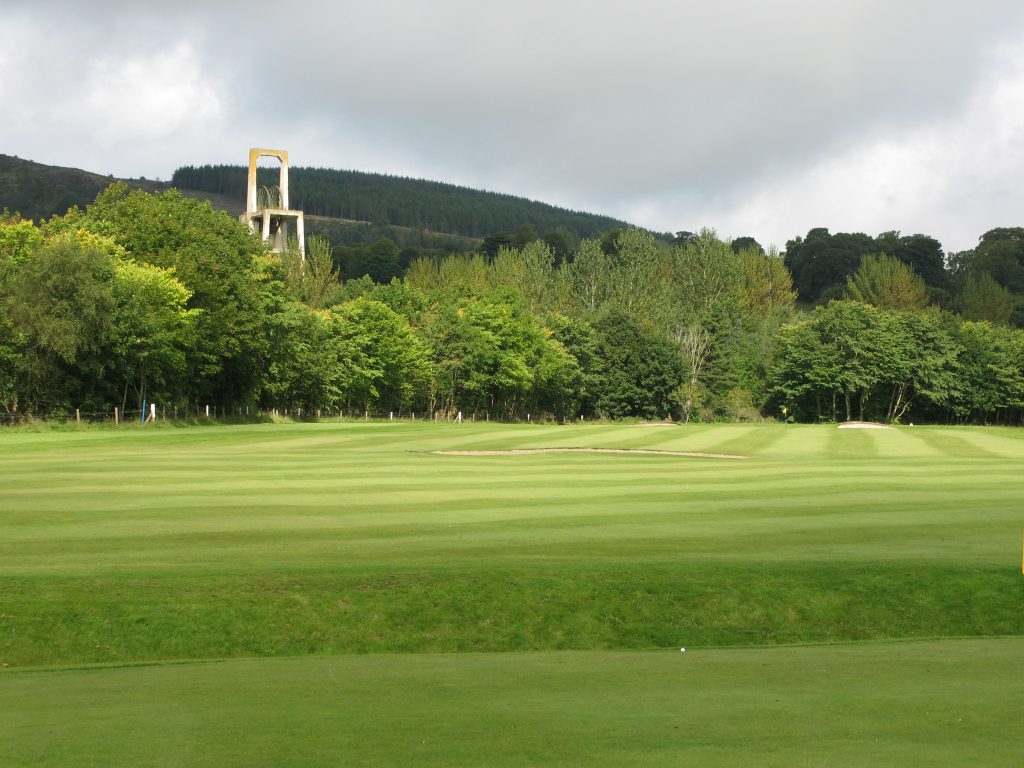
The 1st at Lochore Meadows, with a mine shaft a reminder of better times for this poor area.

Lochore Meadows Golf Course, located within Lochore Meadows Country Park, was formerly called Ballingry Golf Course.   It was founded in 1981.

The country park is just north of Lochgelly, in the Benarty area, comprising the separate villages of Ballingry, Lochore, Crosshill, and Glencraig; this is a poor part of Scotland still in need of economic regeneration following the demise of the coal mining industry – a former mine shaft being a major feature to the left of the first hole.

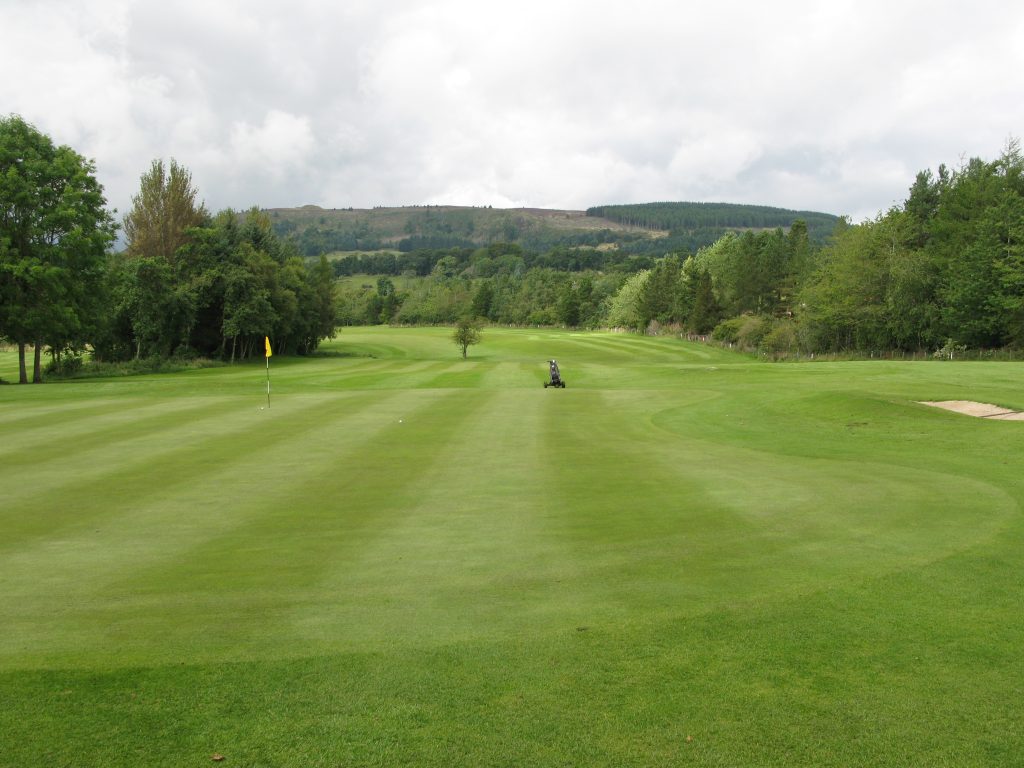
The 3rd green at Lochore Meadows.

The 9 hole golf course is really good value.  It has a very traditional layout with 2 par 3s and 2 par 5s, and at over 3000 yards, from the yellow tees, is a full length course.  It was also in very good condition when I played, with the medal tees looking like they would have been at home on a much more prestigious Fife course.

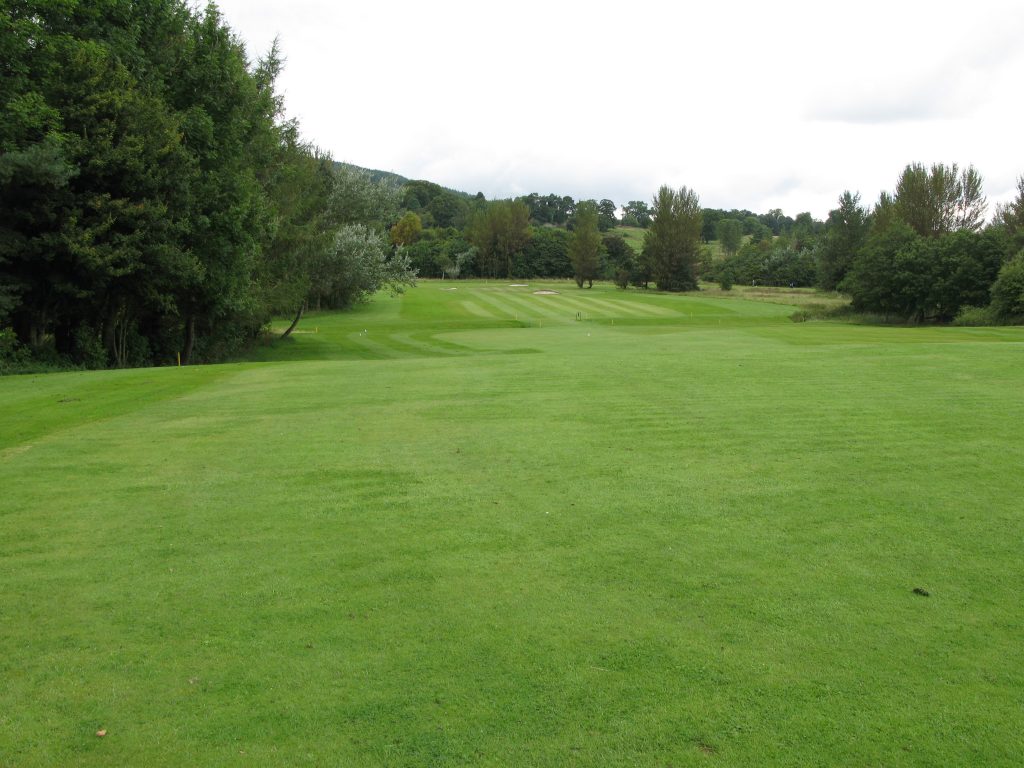
The par 5 8th hole at Lochore Meadows with the hazard in play for the second shot.

The fairways are very generous so you can take driver on most holes.  There is also a stream running across the course which comes into play on the 1st, 8th and 9th. The large greens were also in great condition when I played.

There are some lovely views of the surrounding hillsides, which coupled with the good course, means that it is worth travelling to play Lochore Meadows.

Key Facts:

Course Type: Parkland

Par 36 (2 par 5s, 5 par 4s, 2 par 3s)

Distance (yellow):3010

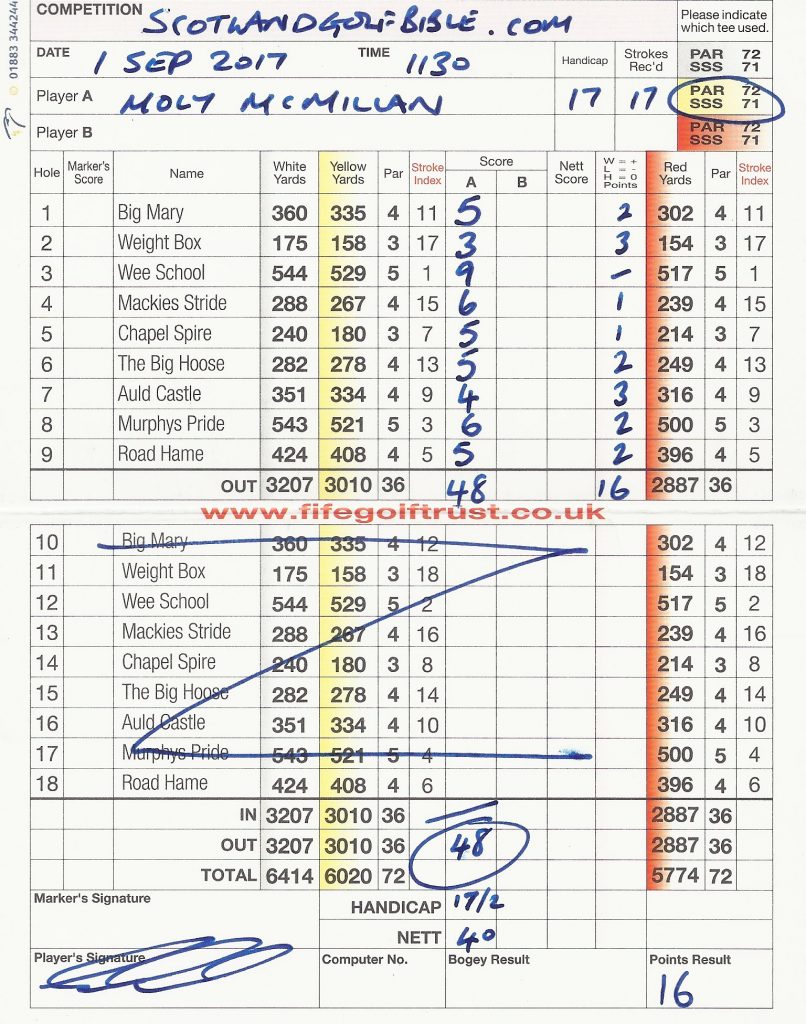
Moly’s Gross score48.

Moly’s Lochore Meadows scorecard – 48 for 16 points (off 17 hcp)

« Older posts Newer posts »

© 2025 Scotland Golf Bible

Theme by Anders NorenUp ↑