Don’t get confused by historic rhetoric – you play the course, not the ‘club’.
Round £16. Par 33. Course Rating / Slope Rating (yellow) 31.9/114. Value (out of 5) – 3.5
Cupar is a quaint 9 hole course in the town of the same name, only 10 miles to the west of St Andrews.
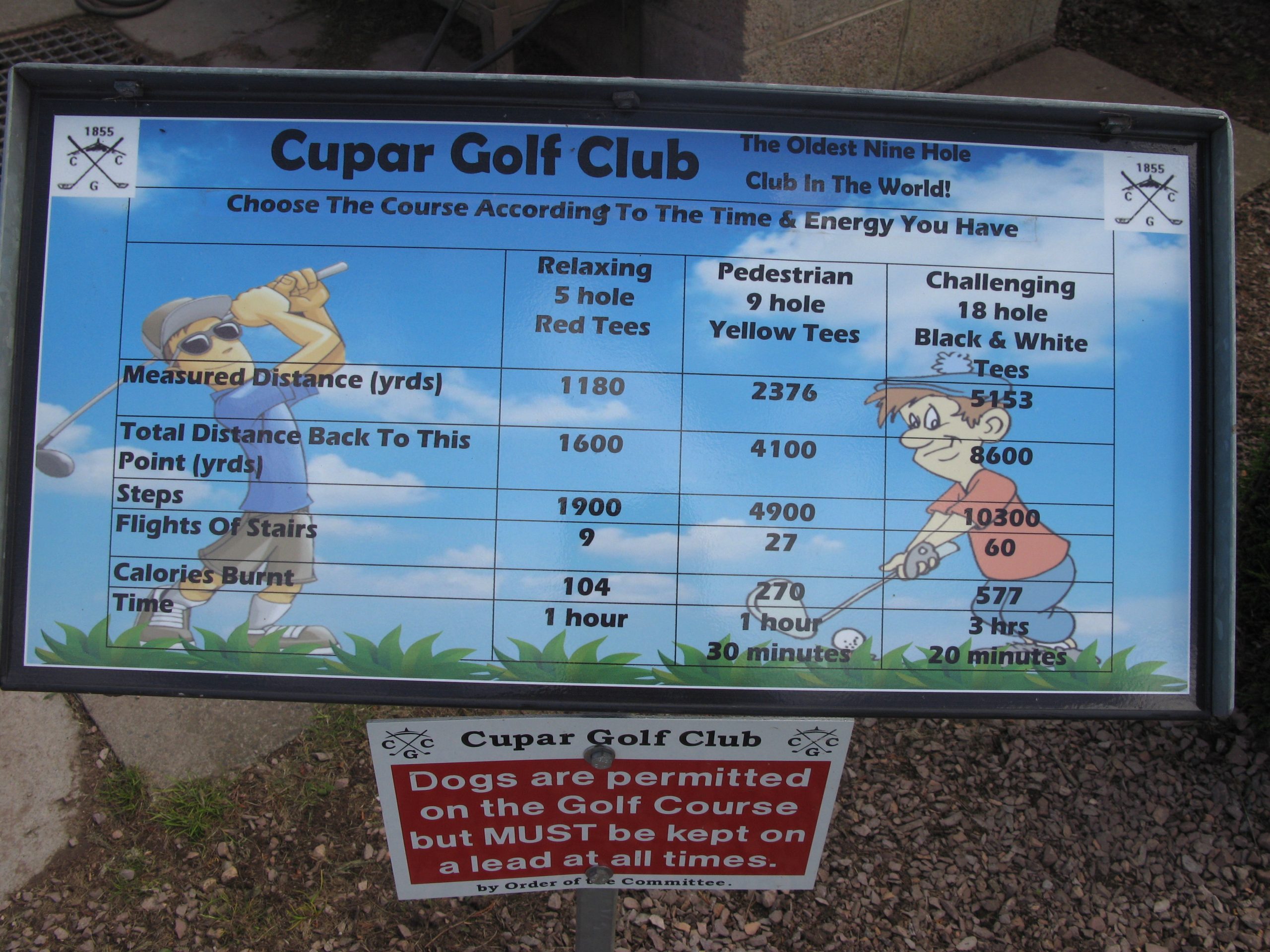
The web site and a sign at the first hole declare you’re playing at “the oldest 9 hole golf club in the world”. Dig just a little under the surface and you realise this is just a trifle disingenuous.
The delightful and fun sign on near the first at Cupar.
Firstly, you play on a golf course, not on a golf club. So whilst Cupar Golf Club was founded in 1855, it was at a 6 hole course (note not 9) some distance from the current location, which is in the Hilltarvit area of Cupar.
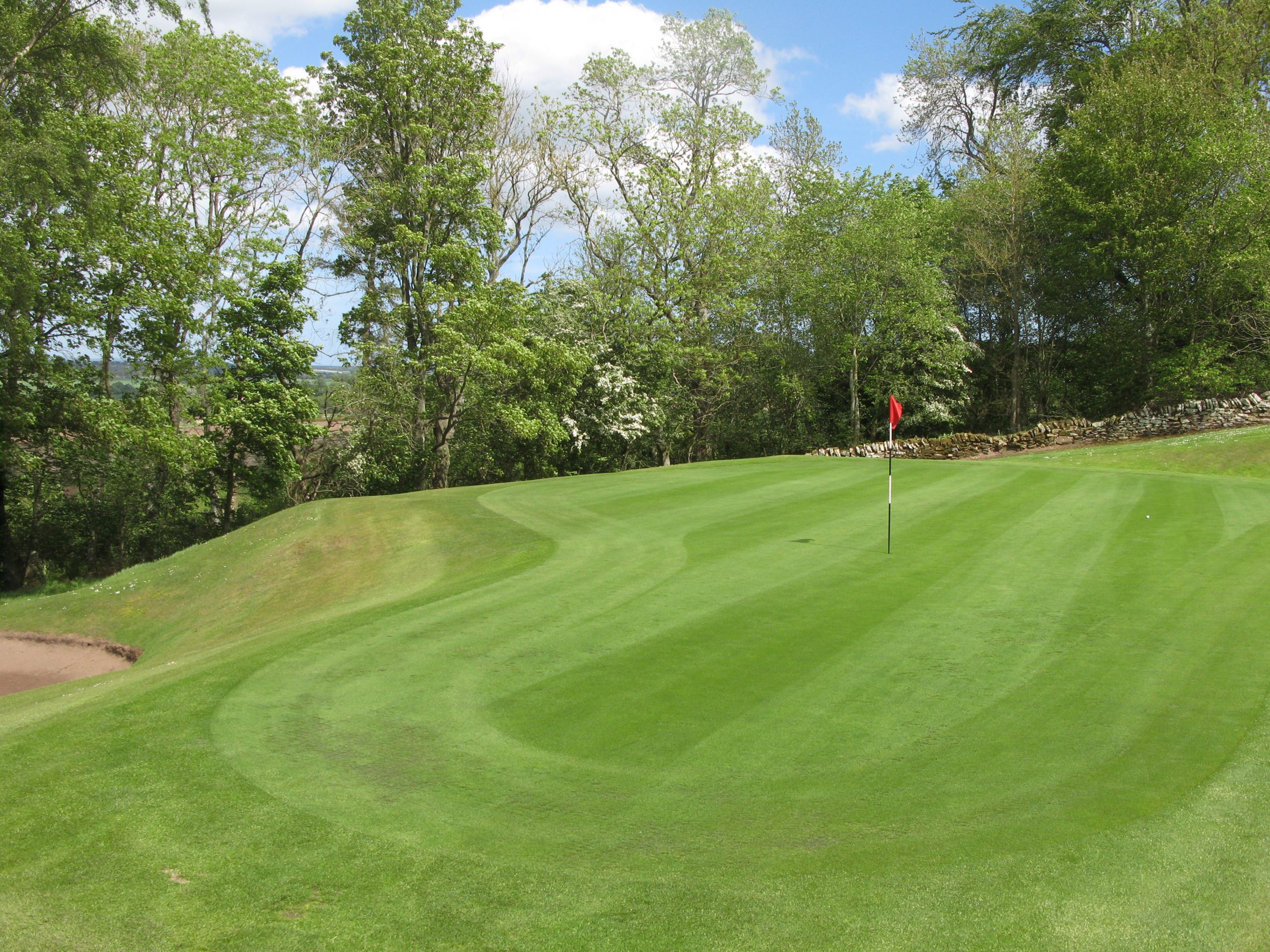
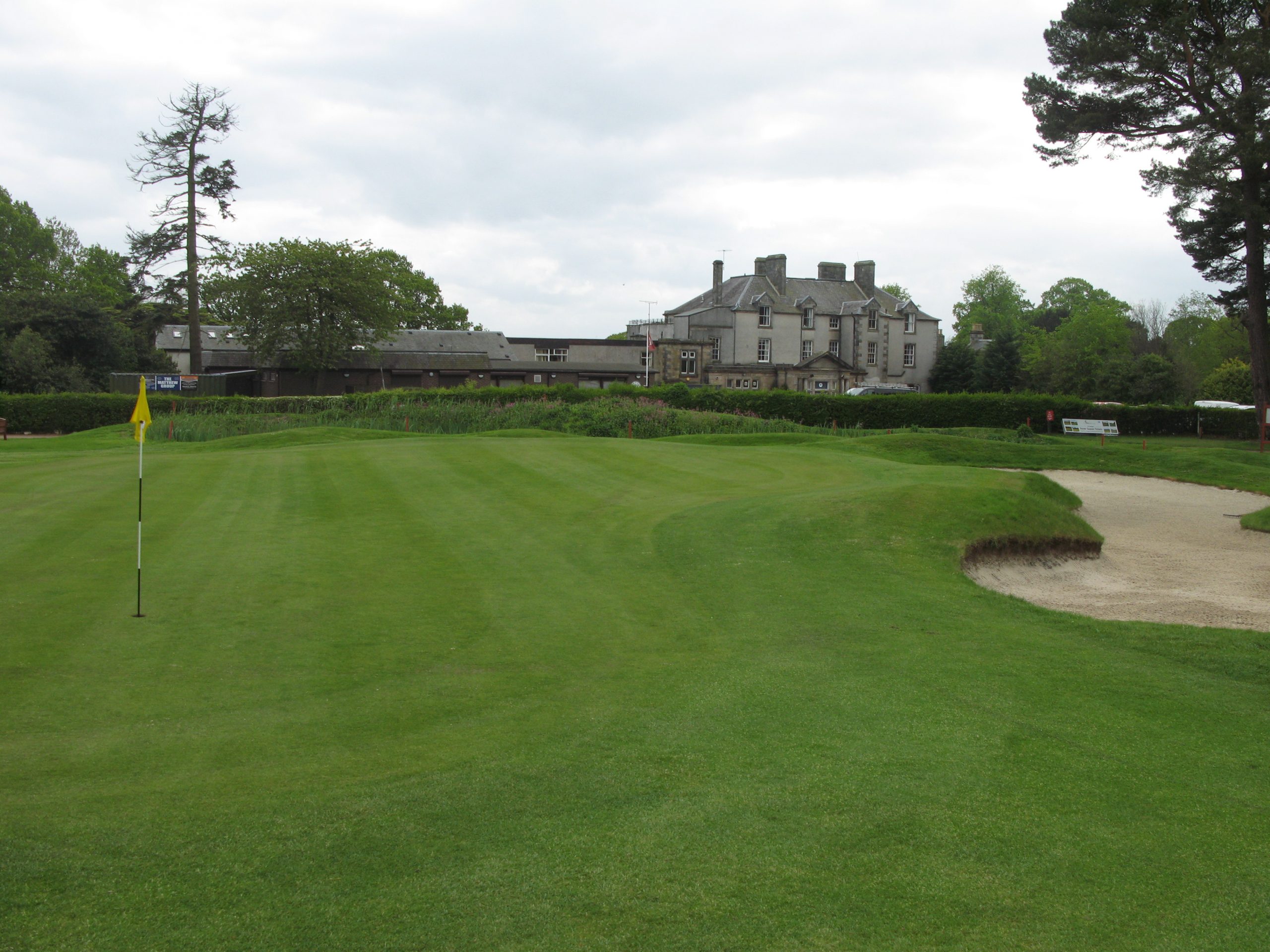
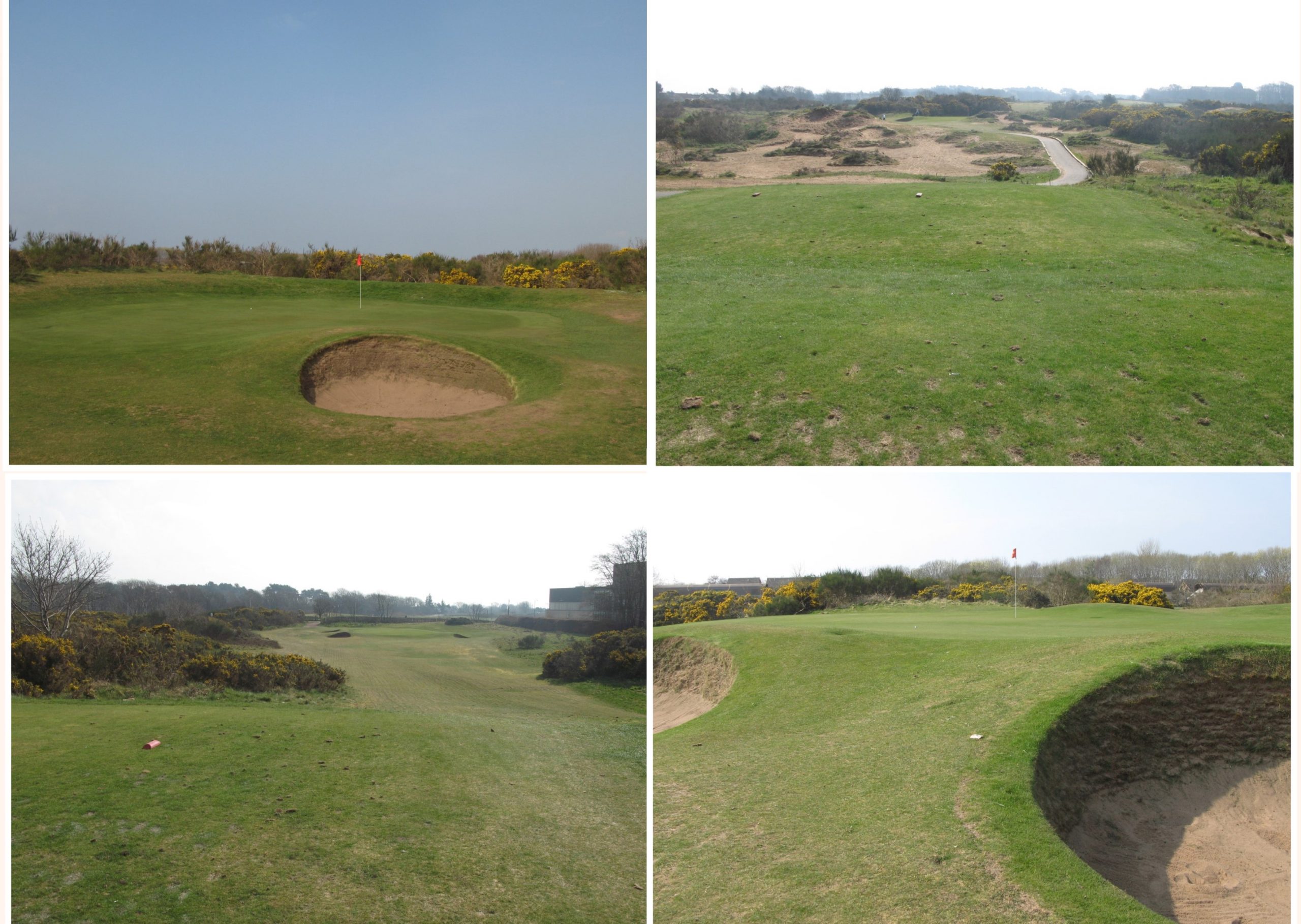
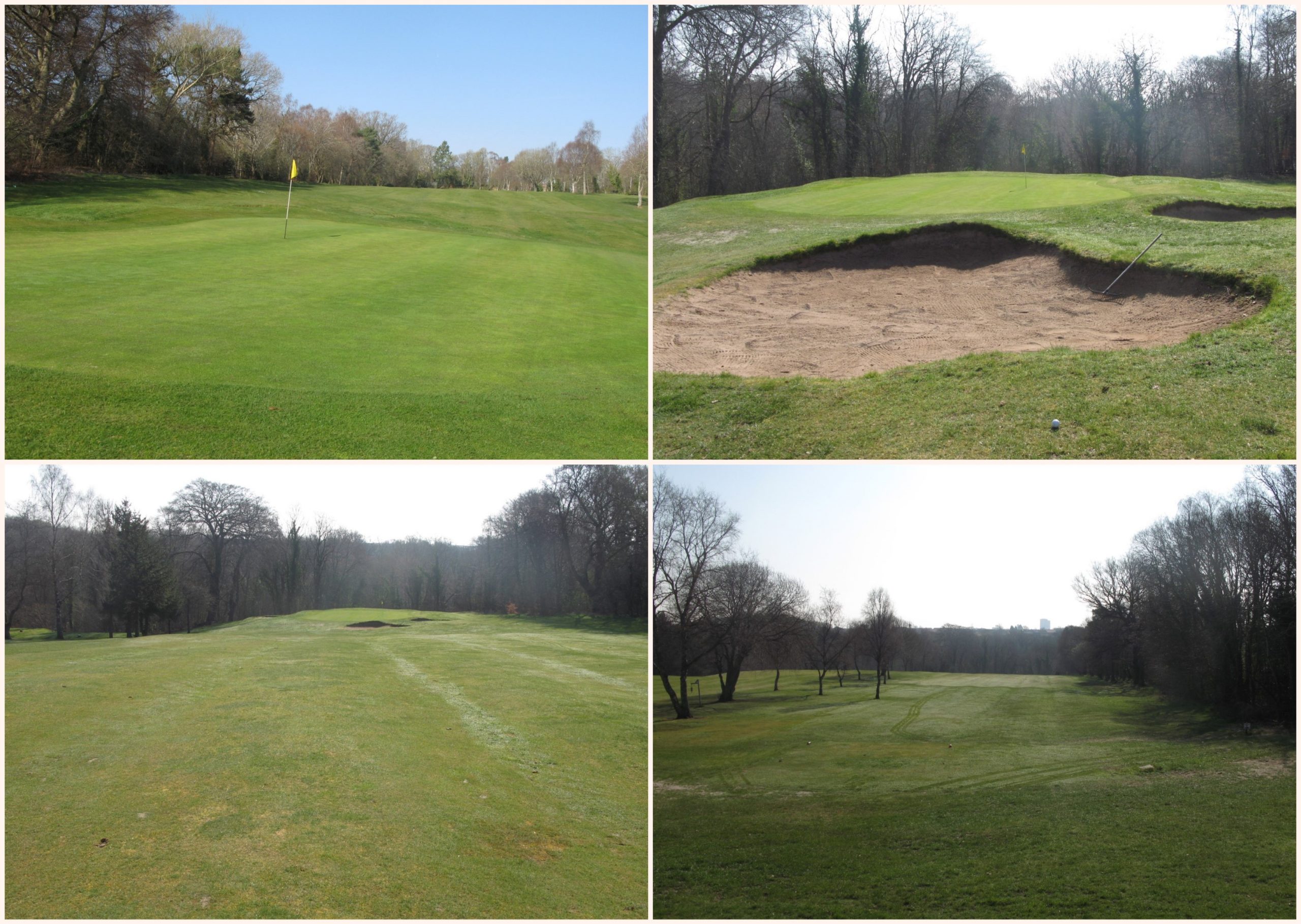
The green at the short 6th, which plays much longer that the yardage, perhaps 3 clubs longer. Try and look closely you’ll note the greens could have been better.
After an interesting first 40 years of existence, during which the Cupar Golf Club located and played at Ladybank golf course, this current 9 hole layout which plays across the slope of Tarvit Hill was laid out in 1896, after a few years of a more “up and down” layout.
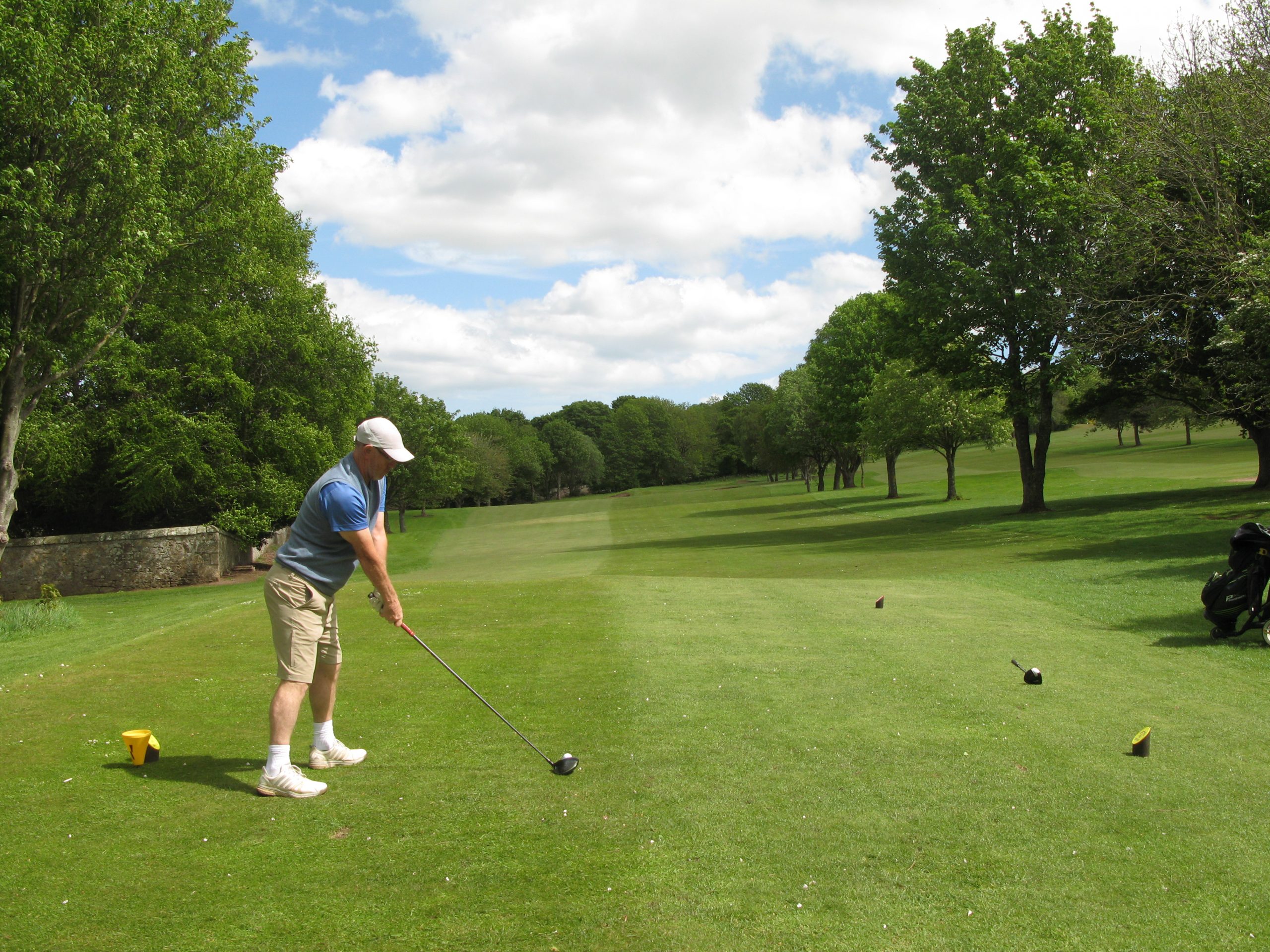
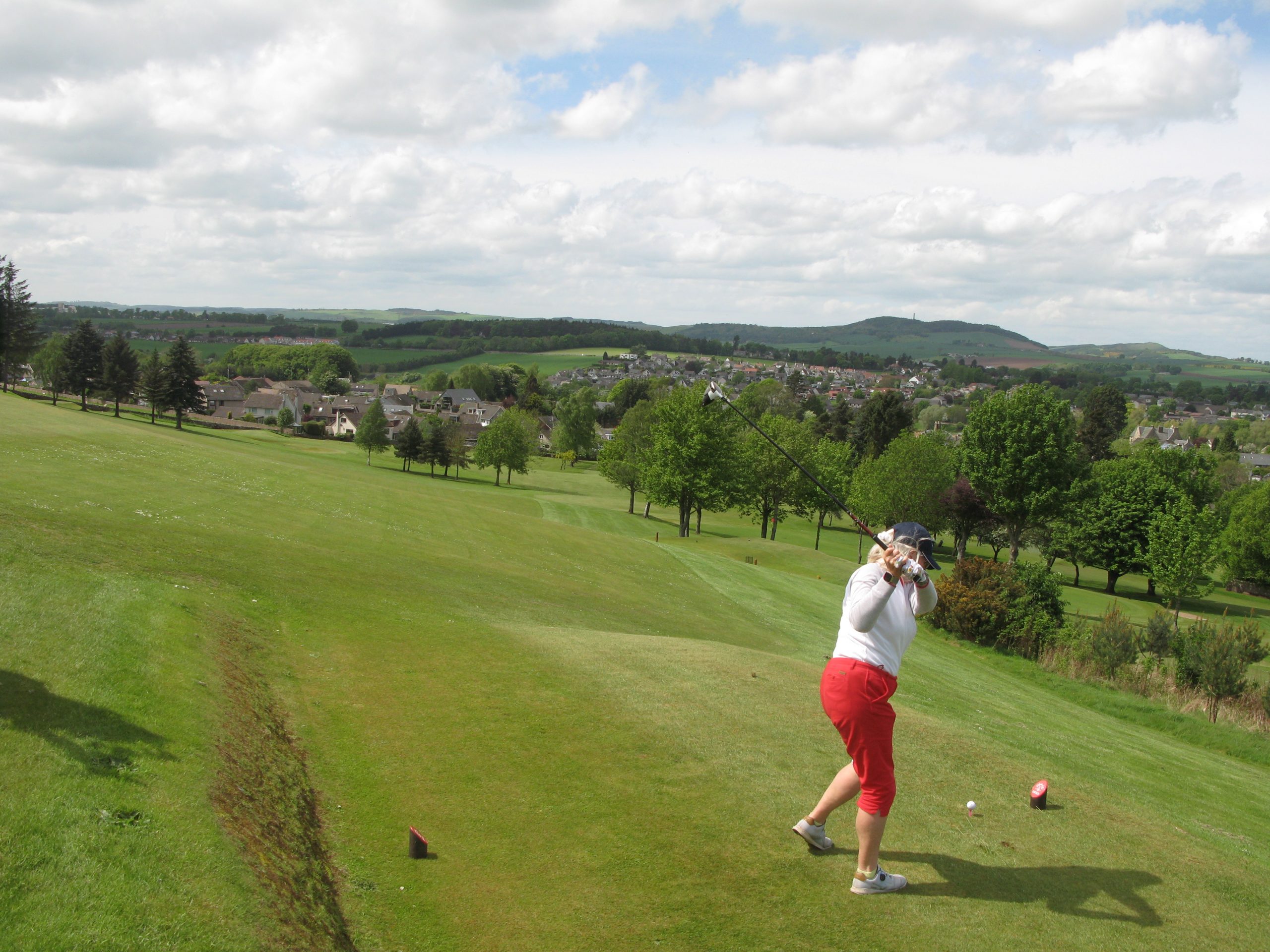
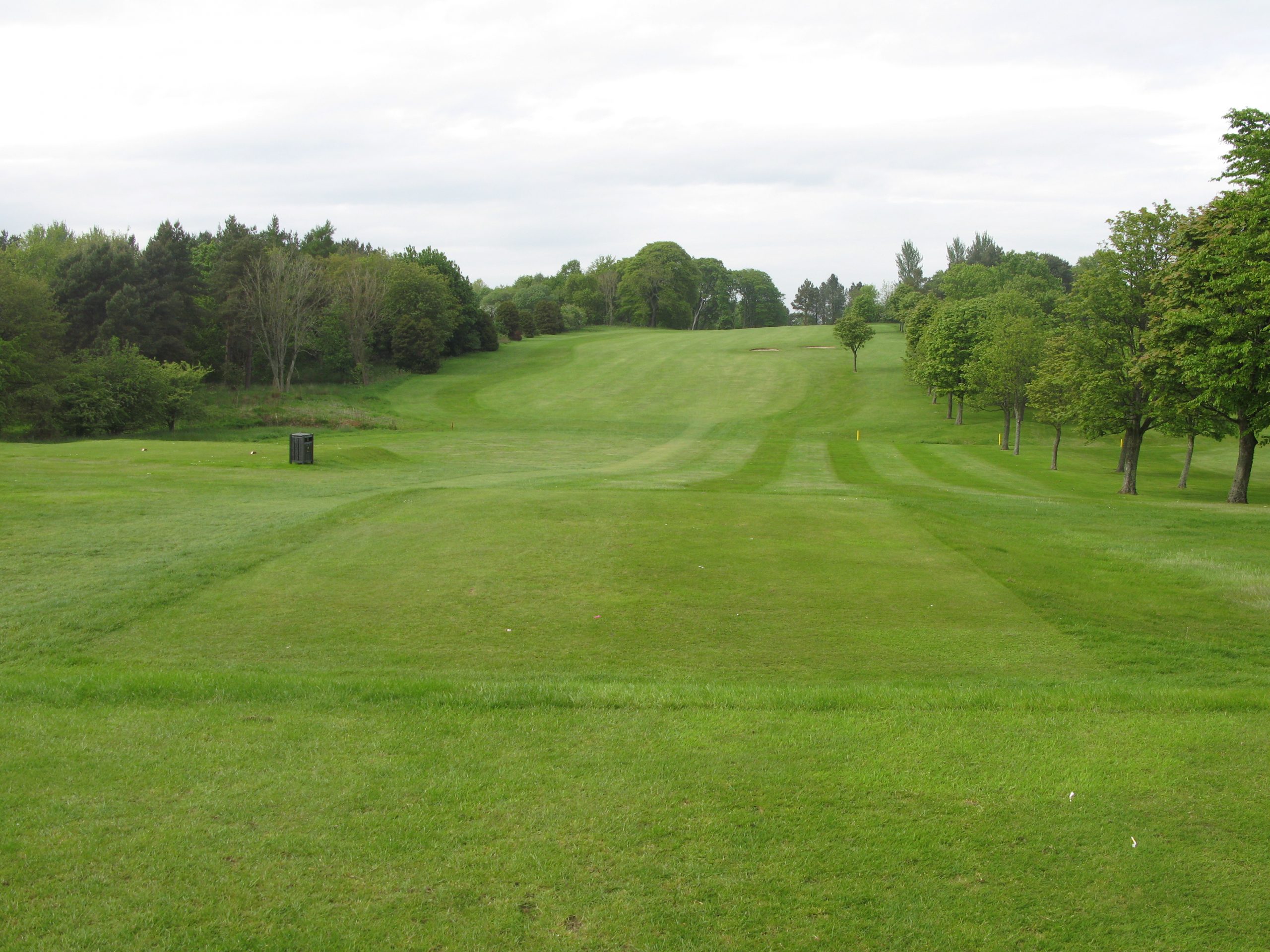
Moly at the 255 yard par 4 third hole from the well prepared teeing ground
Do some research and you uncover there are a number of 9 hole courses still in play from the early 1890s, with nearby Anstruther (click for my blog), being a good example.
Set aside the longevity, and you do have a delightful little fun course to play, along with its nice wooden clubhouse.
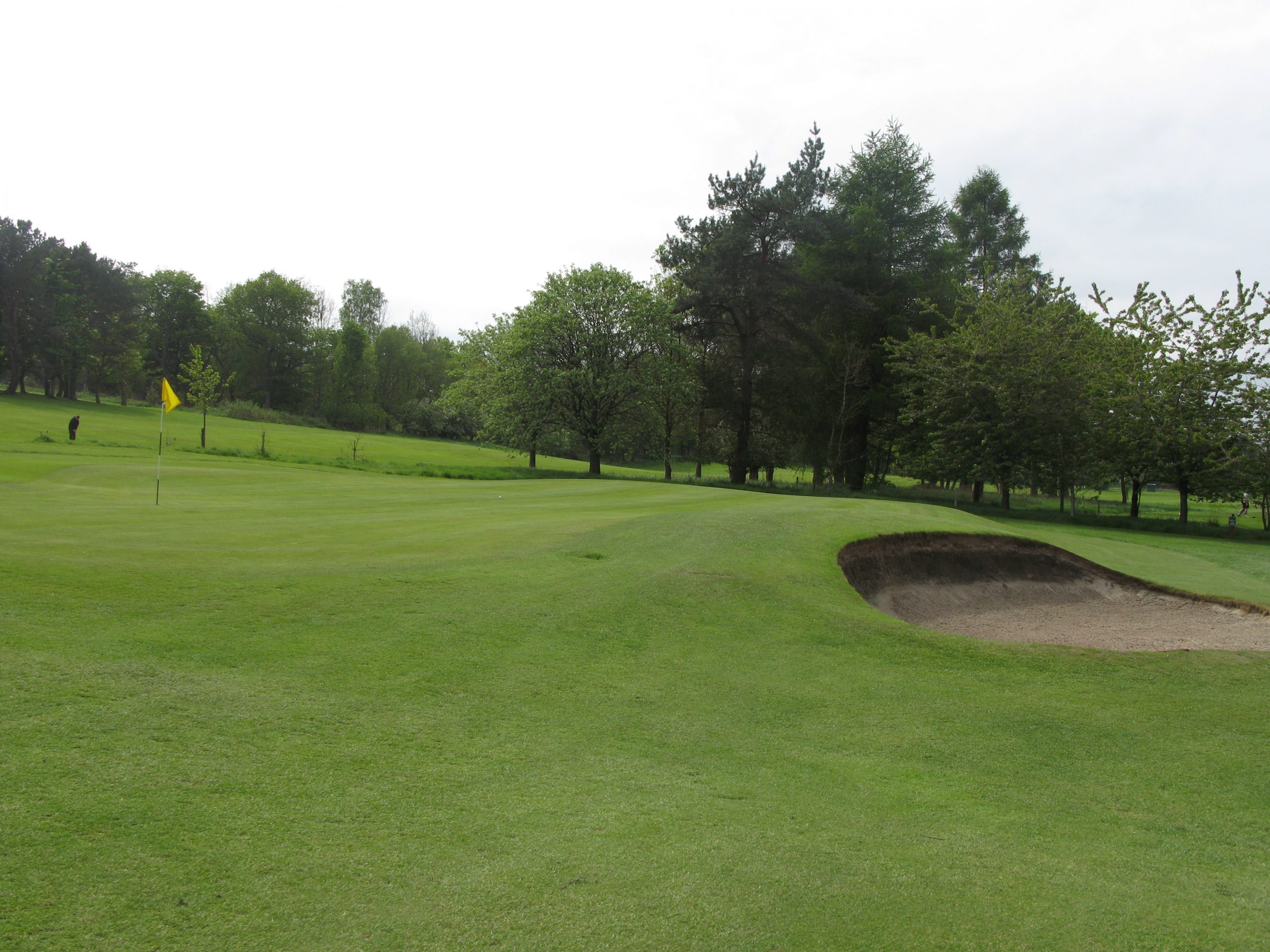
The tricky surrounds of the green at the 7th, a par 4 of 344 yards.
The course was in pretty good condition, although the greens were soft in places and many pitch marks had not been repaired, which was a shame.
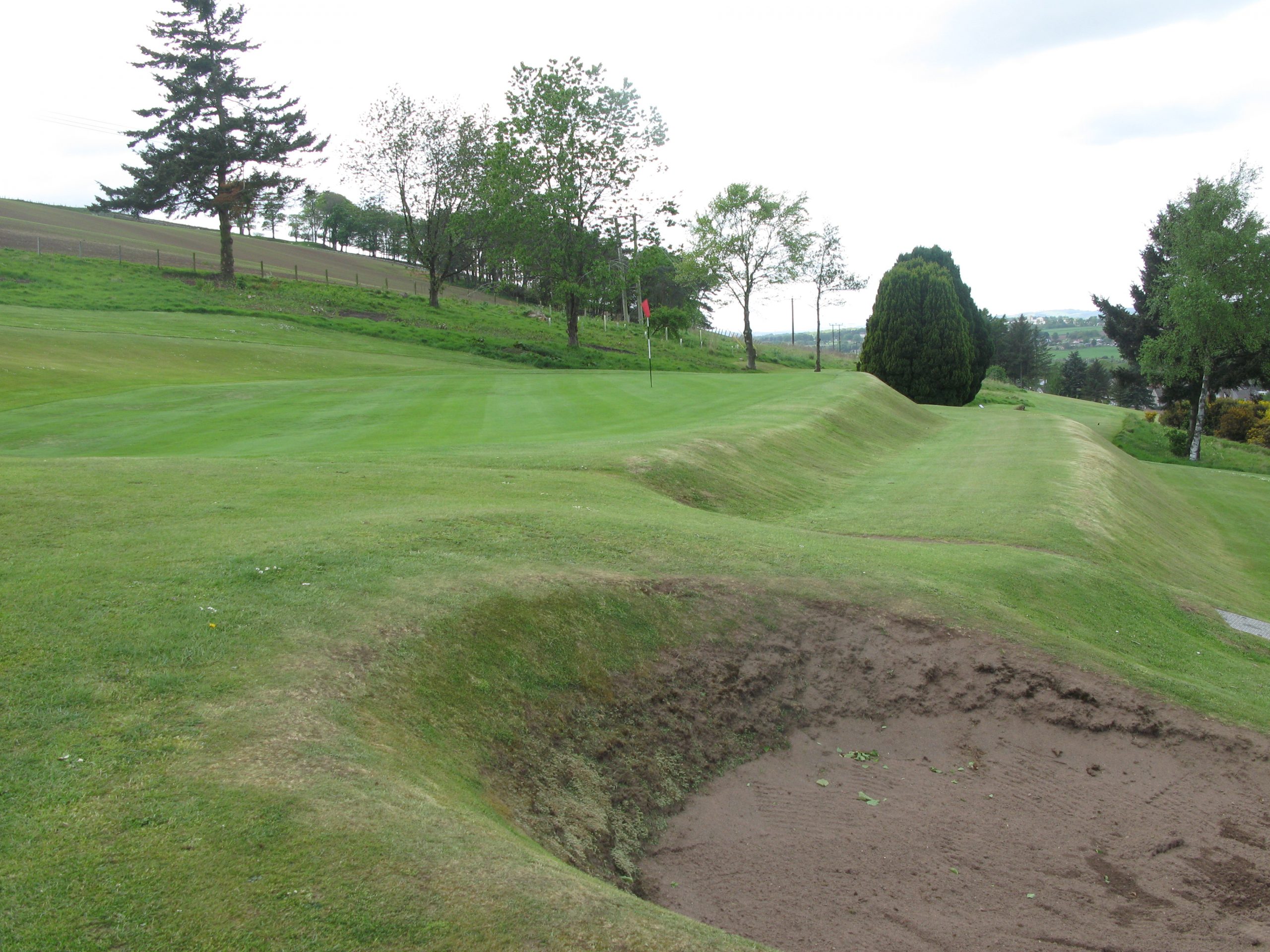
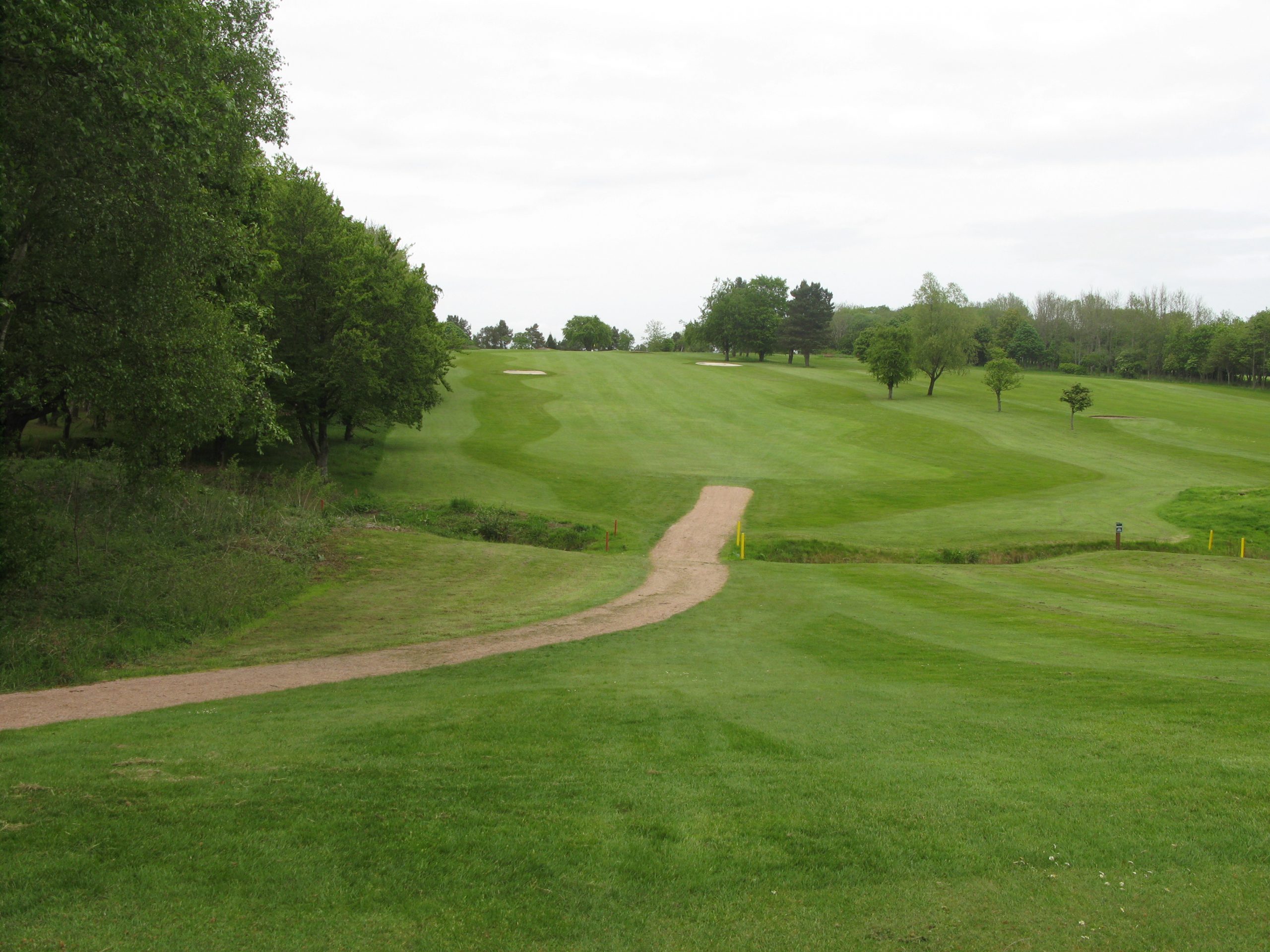
Fran at the 8th, with long reaching views and showing the sloping fairways that await you at Cupar.
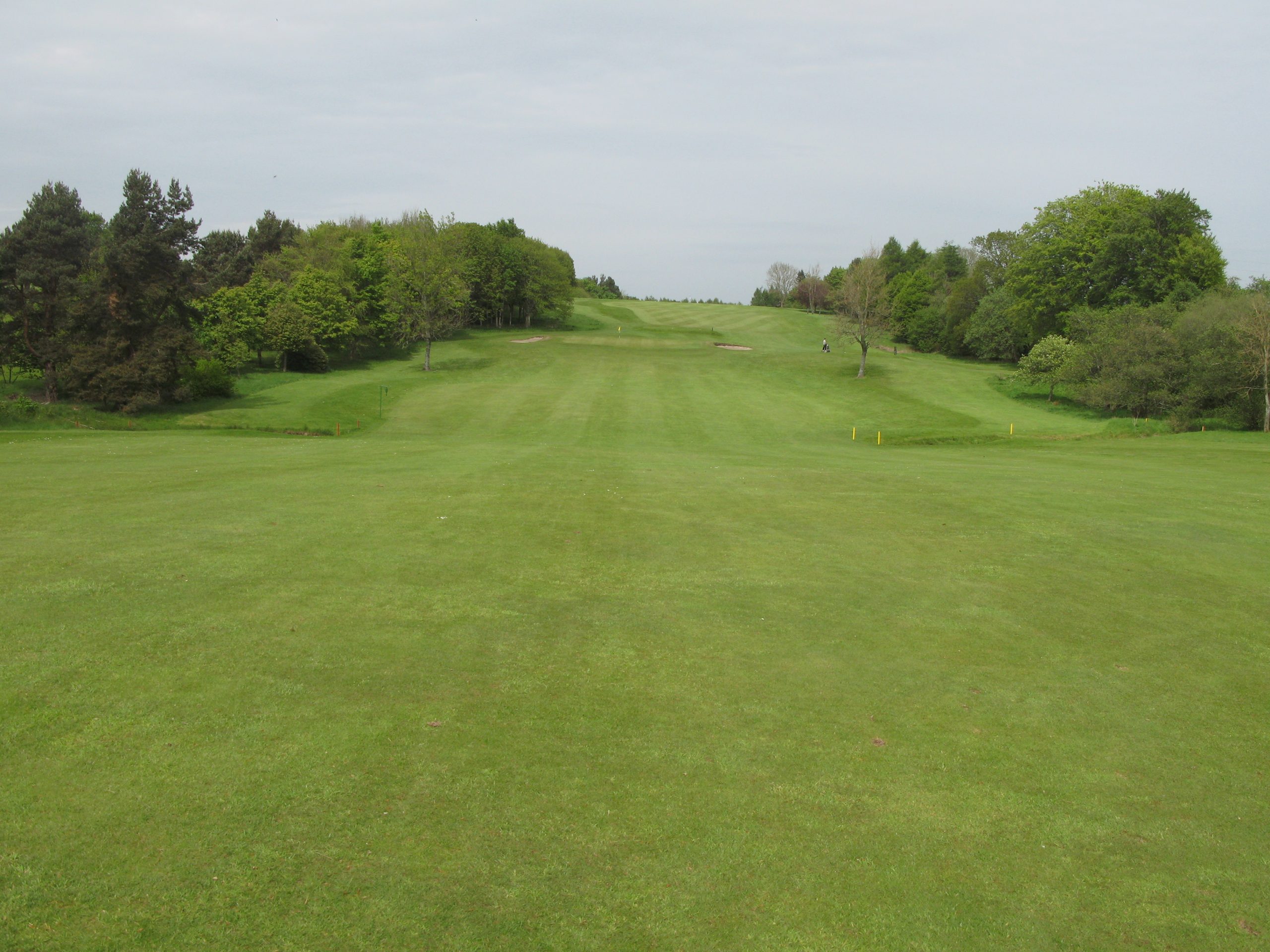
Although set on a hill, with great views over the town and surrounding countryside, many of the holes played across the slopes so it was a much easier walk that we had envisioned.
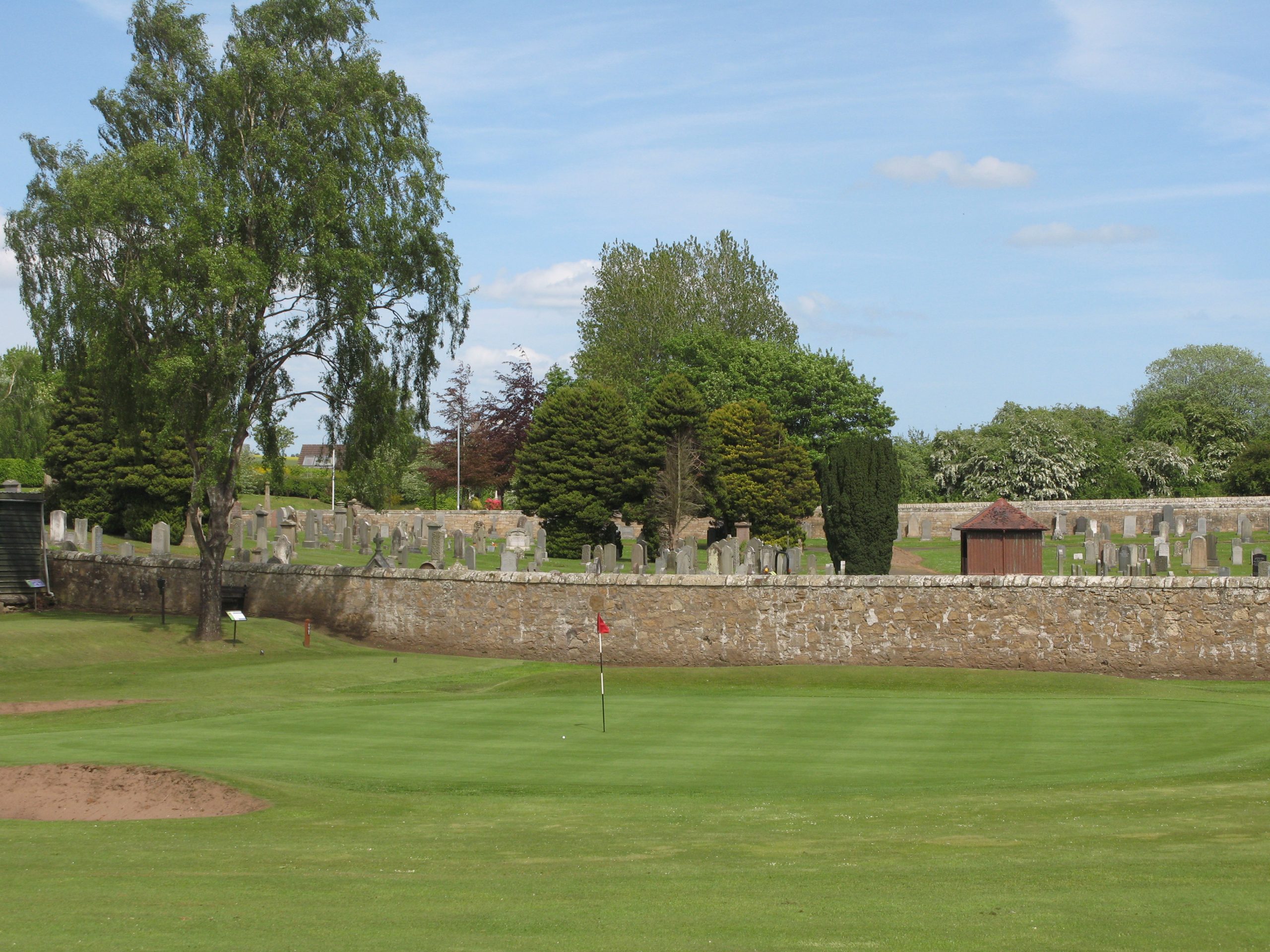
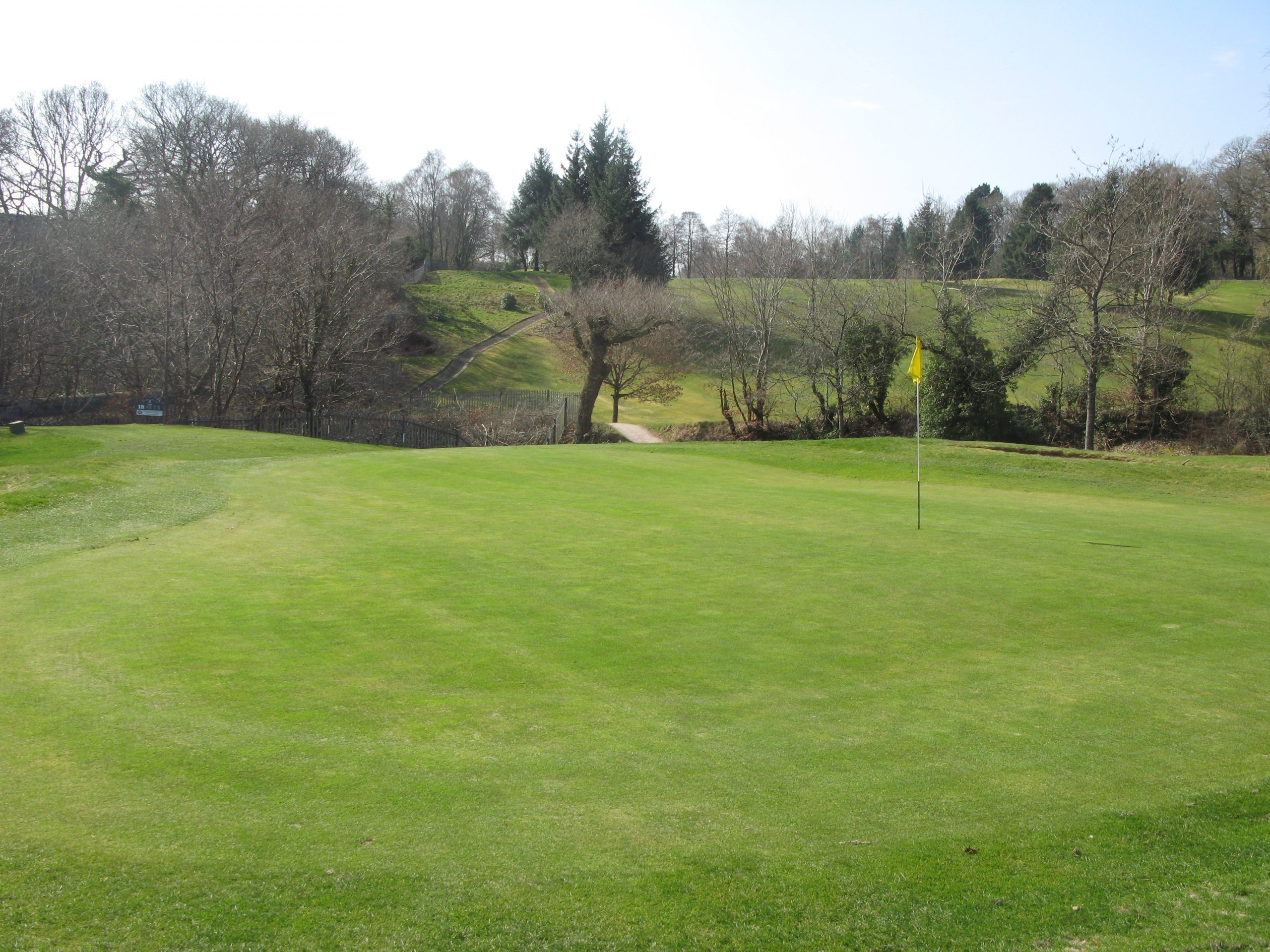
The last hole!
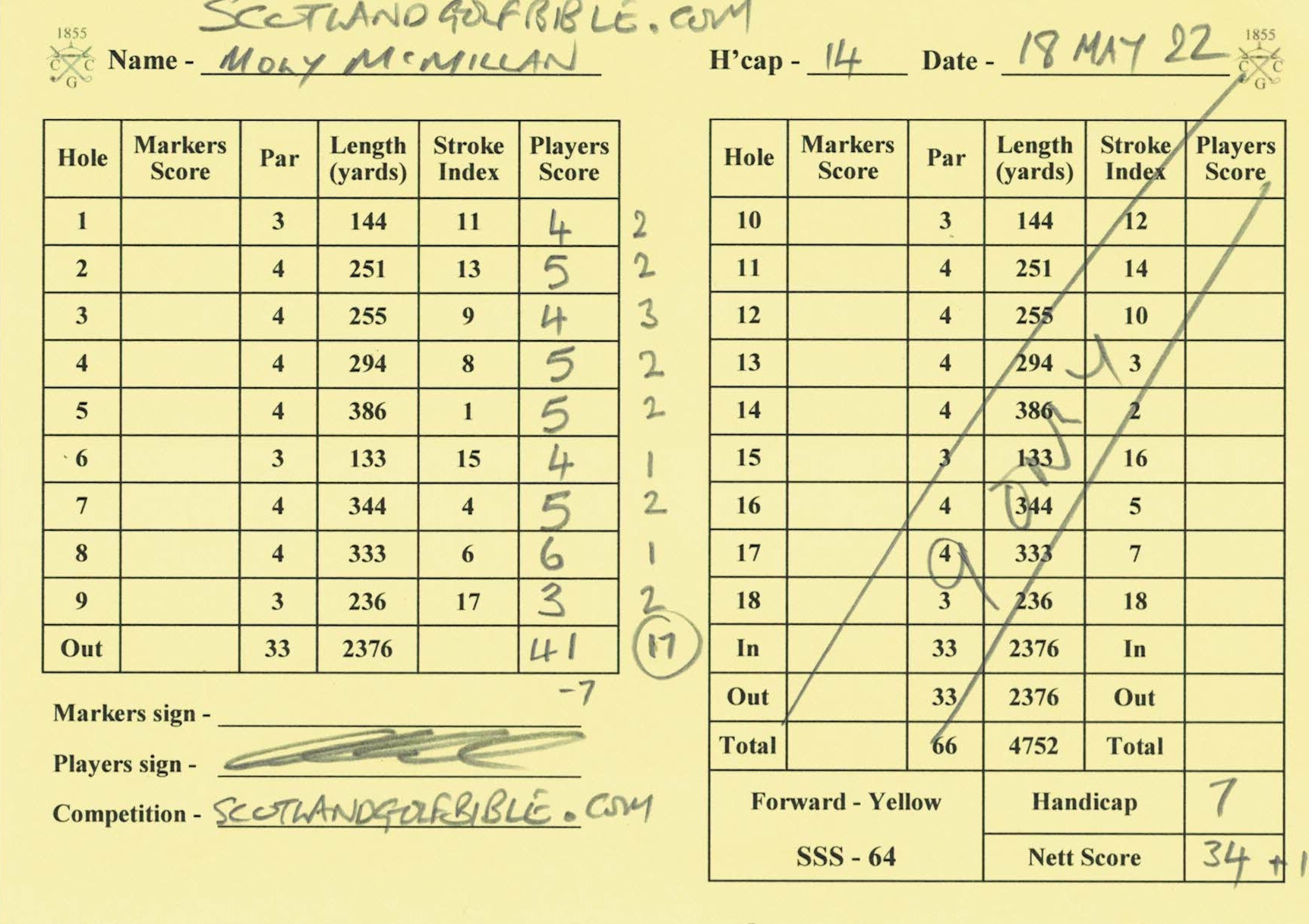
I played very well, in blustery conditions, for a 41, 7 over, which was about to handicap for the 9 holes. I drove to 4 feet at the last (see photo above) but missed my birdie putt.
It’s well worth playing Cupar, but don’t buy any of the “oldest” stuff, is my steer. But don’t take my word for it – check out the nice history overview on the web site here and make your own mind up.
Cupar GC allow bookings direct on their BRS system, where I got a decent discount and paid only £13 for 9 holes. Good value.
Lastly, don’t put Hill of Tarvit into your sat nav, as you’ll end up a few miles south at Kingarrock Hickory golf course, another place well worth a visit.
Course Type:Parkland
Par 33 (0 par 5s, 6 par 4s, 3 par 3s)
Distance: 2376 (white)
Moly’s Gross score: 41
Moly’s Cupar 9 hole scorecard – 41, net 34, 1 over par. A good day in blustery conditions.
Fife Golf Trust knocks it out the park with this brilliant value course.
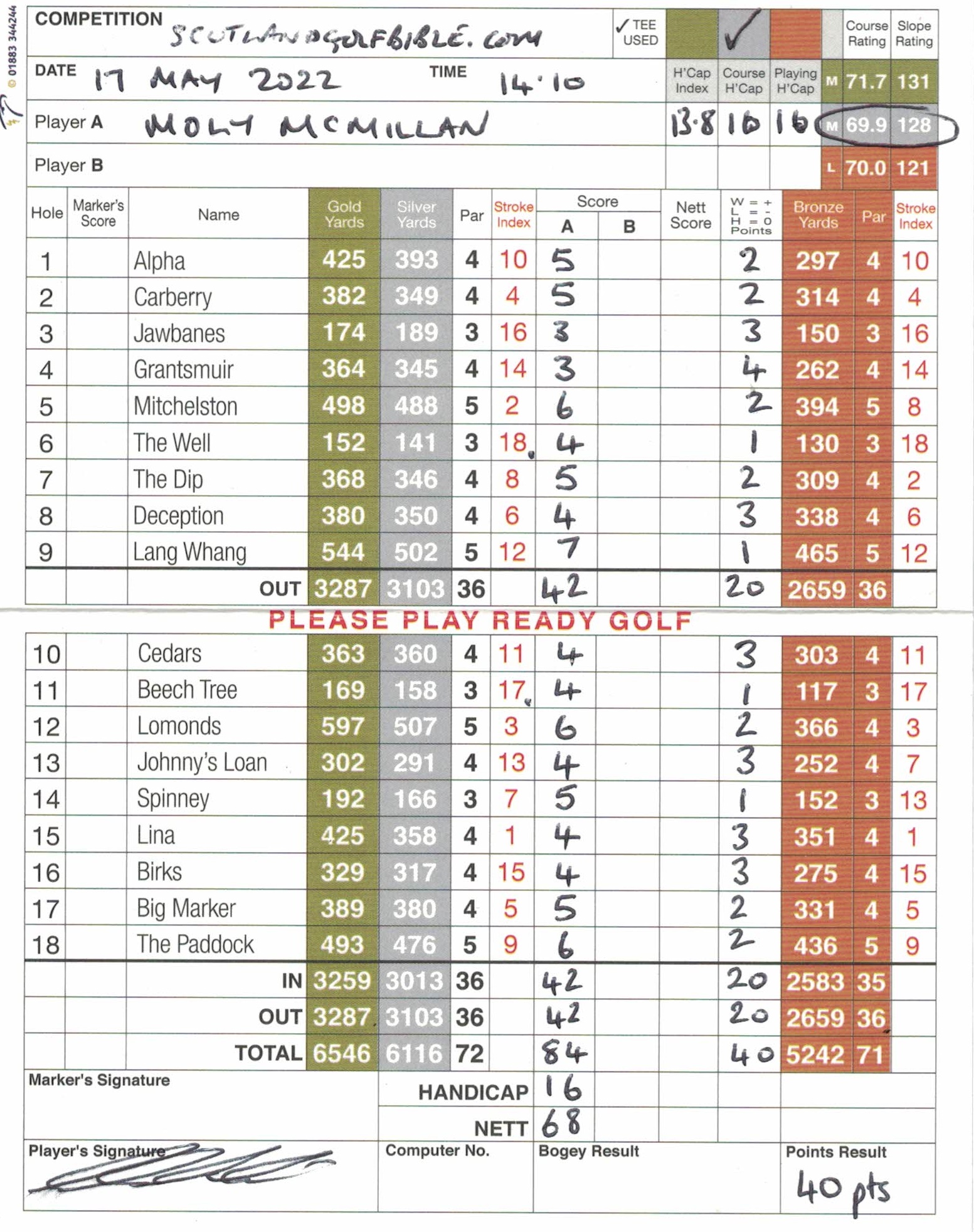
Round £26. Par 72. Course Rating / Slope Rating (yellow) 69.9/128. Value (out of 5) – 5
Dunnikier Park golf course, in Kirkcaldy, in the very heart of Fife, is one of 7 courses managed by the Fife Golf Trust which was established in 2011 to take over Fife Council’s directly managed courses; the course is arguably their flagship. The Dunnikier Park Golf Club is private, like many Scottish clubs associated with public courses.
The first, a par 4 of nearly 400 yards, at Dunnikier Park. A brilliant municipal golf course.
The course was established in 1963, build on land given by the Oswald family to the “people of Kirkcaldy” and was the local town council’s very first municipal course. And what a beauty it is. Designed by J E Strutt, It has generous fairways, is well bunkered and with many undulating holes, it is a tough walk at well over 6000 yards. The golf club website also contains a delightful history written to make the 50th anniversary of the course here.
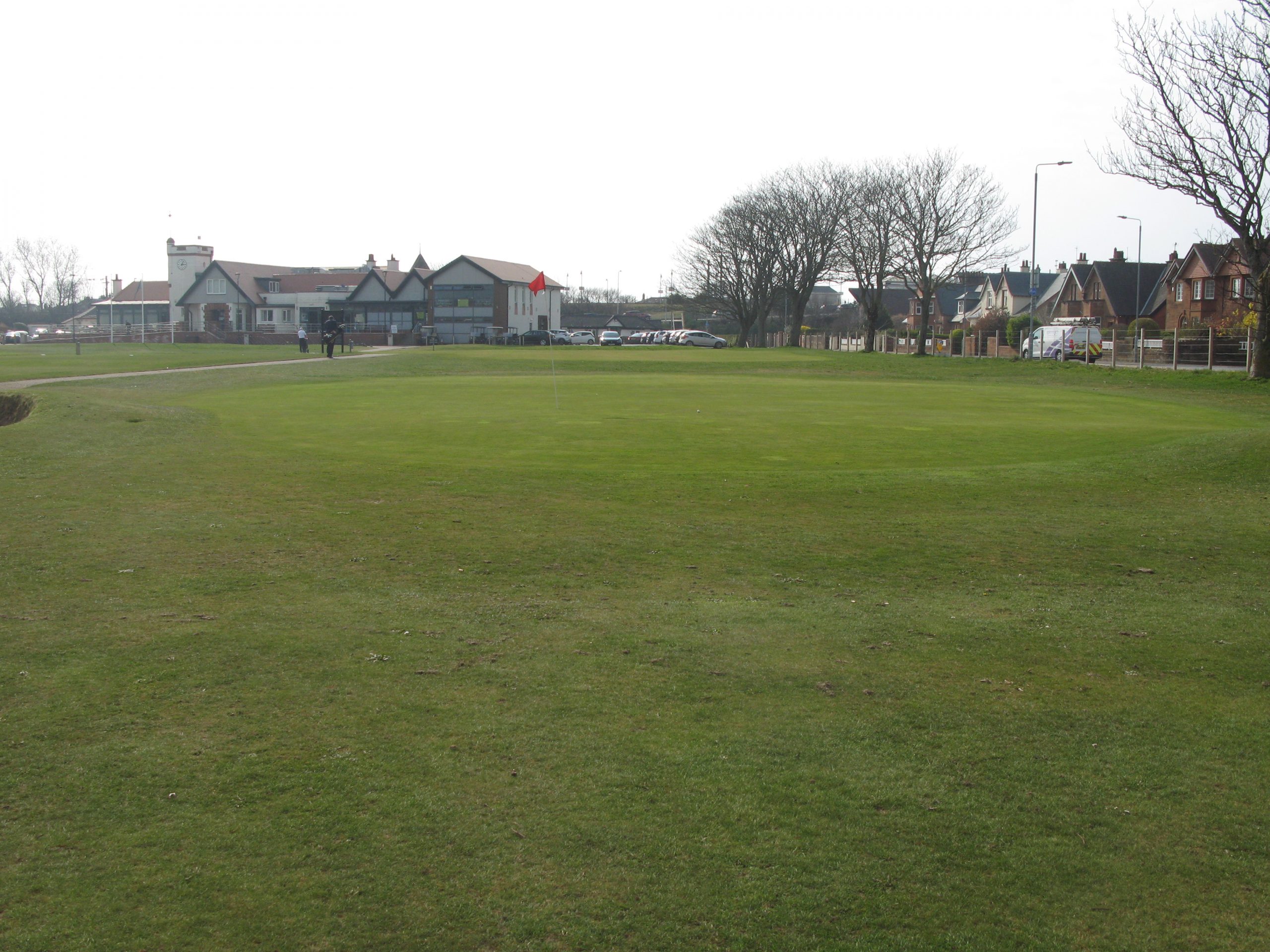
The par five 9th green, with Dunnikier House hotel the former Oswald family residence.
Fife Golf trust offers incredible value golf. A “Fife Rover” season ticket to play all their seven courses is only £347. Many golfers will then choose to join one of the collocated golf clubs, for all the normal club social and competitive benefits, which for Dunnikier Park is only £120 per year.
The greens at Dunnikier are first class, here shown at the greenside of the long par three 3rd hole.
The course is very balanced, with each nine having two par 3s and 5s. A burn runs through the course and comes into play on about half the holes; it is often submerged in under fairway piping, but opened up and cuts into the fairways on each side, often at the typical amateur’s driving length. The best example of this being the par 5 “Lang Whang” 9th hole. It’s worth buying the course planner book, to check this unusual feature out, the book being another measure of the professionalism of Fife Golf Trust.
The 8th, a 350 yard par 4, at Dunnikier Park, typical of the course and showing its undulating nature.
The course was in excellent condition when I played, with bunker conditioning on a par with many of the top courses I’ve played. My only slight criticism is that the greens could have done with being mown – but that does not detract from the green consistency and quality.
The tough uphill par four 17th hole, stroke index 5. Many a match play will be settled here I suspect.
It I ever write a golf book it will be called “Golf, it’s a Fucking Mystery”. My round immediately prior to Dunnikier Park had many disasters and I had started to shank my irons and afterwards threatened to ‘give up golf’. My very next round is then at Dunnikier and my best ever blog game, shooting gross 84, for 40 points, with no blobs and a nice birdie on the par four 4th hole. Like I said, “A mystery”.
Of course, any golfing book I write will not be a game improvement book. Except with one exception perhaps, a story of encouragement. As a member of Monifieth GC for several years I played a number of times with and against “Hutch”; in our Seniors Winter league on the Ashludie course (par 68; SSS of 65), “Hutch” was allocated a handicap of plus 6, as he was after all in his mid 70s. When I mention this golfing handicap to others, a state of their disbelief descends upon me.
How delighted I was, therefore, to read in the history of Dunnikier Park, one of their own great golfers, Davie Gray, who won their club championship a dozen times and about every club open in Fife – an impressive CV. He was asked for the history about the best golfer he ever played with, he said:
“Without equal, Ian Hutcheon of Monifieth, and I’ve also played with, when they were top amateurs, Nick Faldo, Lee Westwood, Colin Montgomery, Andrew Oldcorn, Andrew Coltart and Stephen Gallacher”.
So it was at Dunnikier Park, I once more came across the legend of Ian “The Hutch” Hutcheon.
Modernity and Tradition collide full on at this South Ayrshire Council course, which exposes the real challenges facing Scottish Golfeverywhere – if you become a local councilor, beware the “golf brief”
Round £dynamic – typically £37. Par 71. Course Rating / Slope Rating (yellow) 70.1/123. Value (out of 5) – 4
Scotland has a tradition of great municipal courses, some of the world’s best. However, green fees and subscriptions often don’t cover costs, taxpayers paying the deficit, making municipal golf a political hot potato.
The 18th green at Darley with the impressive clubhouse serving the 3 Troon Links Municipal courses.
‘Golf South Ayrshire’ operates 8 municipal courses; Troon Links (Lochgreen, Fullarton, Darley), Belleisle Park Ayr (Belleisle, Seafield), Ayr Dalmilling, North Carrick Maybole, and South Carrick Girvan. In 2021 the Council’s new golfing strategy, to address a £300,000 annual deficit in the golf budget, resulted in annual 7 day membership to play all 8 courses rising by almost 50% to just over£500. This received extensive press coverage including “South Ayrshire golfers hit out at council’s ‘enforced changes’ to sport”, (Daily Record).
An overplayed and under cared for Troon Darley course.
In stark contrast, I recently visited Monteray in California, where a green fee at any one of the three headline ‘public’ Pebble Beach courses (Pebble Beach Links, Spyglass Hill and Spanish Bay Links) would have cost nearly $700. So, the price to play all eight Golf South Ayrshire courses as often as you want in a year, is about the same as a single green fee at a Pebble Beach course.
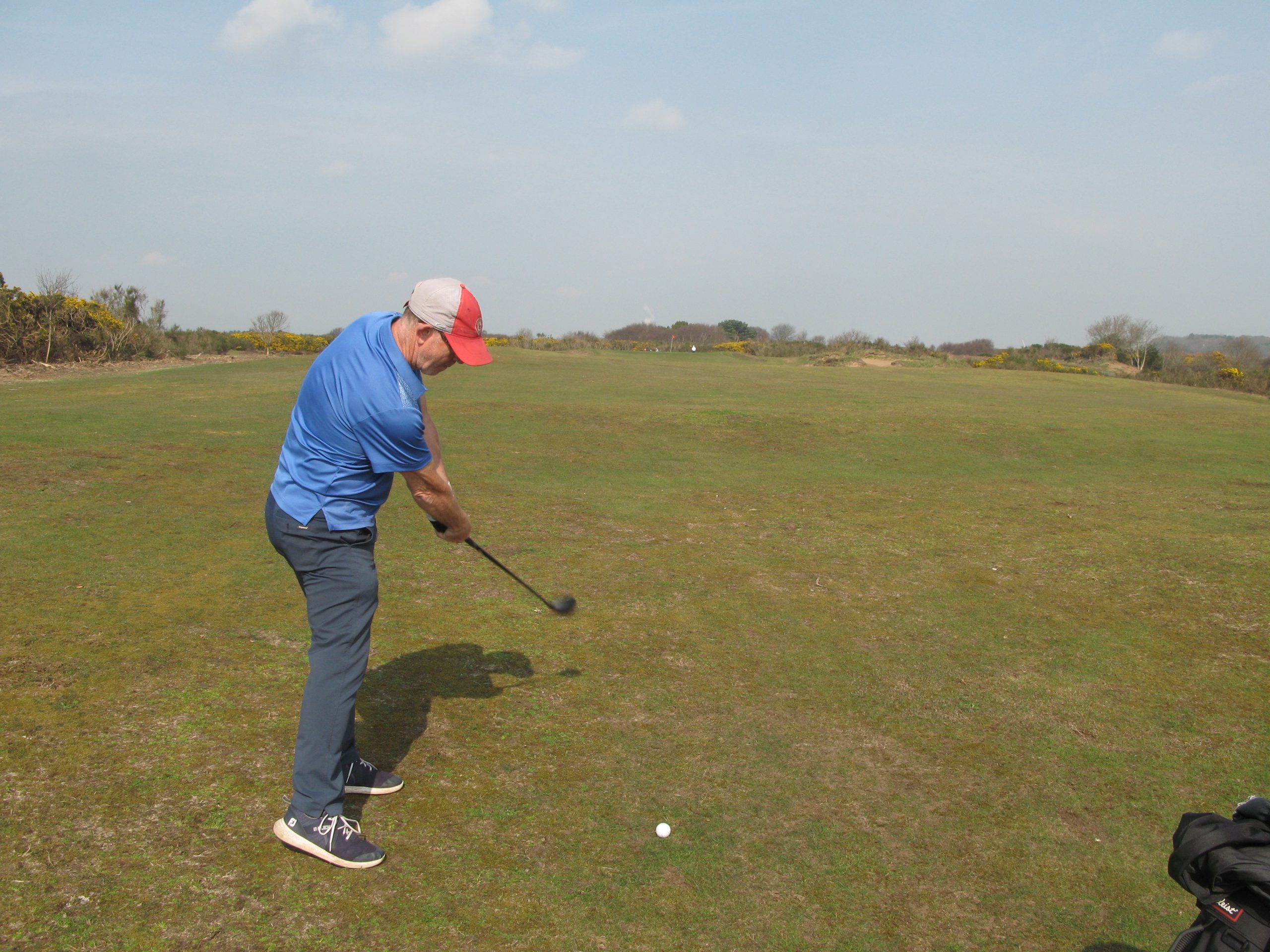
Why can’t you play with your practice swing? – Moly at the 11th, a par four over 400 yards. The fairways were pretty rough.
It’s little wonder, that golf holidaying Americans think golf is still cheap in Scotland, even when paying £300+ for a round at Royal Troon. The clubhouses of municipal Troon (Darley) Links and Open venue Royal Troon are less than a mile, but yet a world, apart.
There are two tiers of access to golf in Scotland. First, courses for the masses, like Troon Darley Links, which is incredibly affordable. Second, courses in the (say) top100 Scottish golf courses for the lucky local residents and/or those often professionally or family connected to existing members. These second category courses, have visitor green fees ranging from £140 to £300+ per round , equivalent to as much as about 25% to 50% of the lucky members’ annual subscriptions. Members of these affluent courses never relinquish membership readily and only wealthy visitors can afford green fees (Kingsbarns rate for 2023 will be £374, or more than £20 per hole).
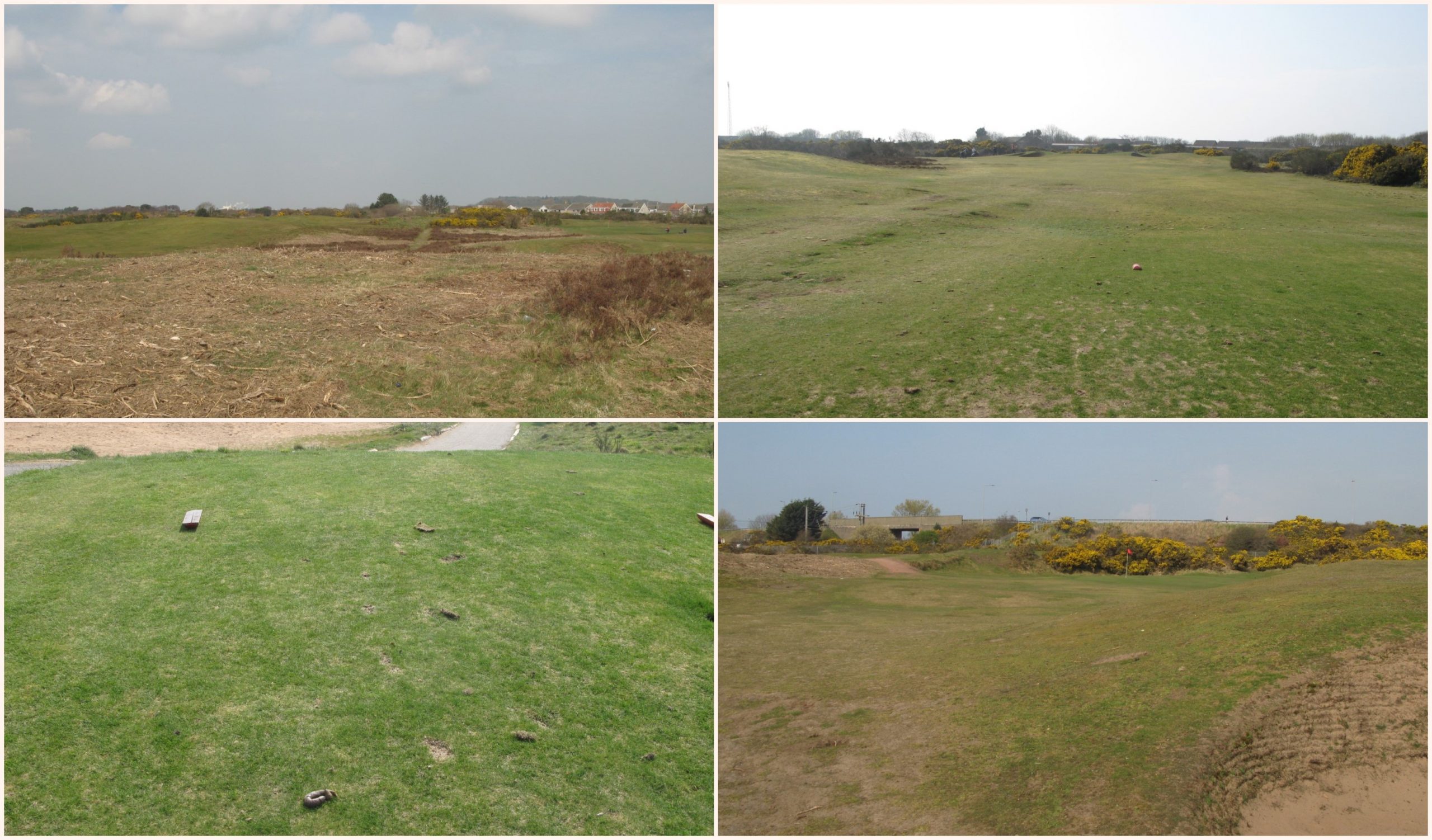
The four par 3s at Darley, clockwise from top left; 4th, 9th, 12th and 16th. The highlight at Darley.
The truth is, the vast majority of the Scottish golfing public playing “The People’s Game” will never play an Open venue.
Admittedly, the concept of “Scottish Resident” rates have emerged at the very expensive courses, but these are still sometimes up to £200. Scottish Golf have also introduced lotteries for members of all Scottish clubs to play at the great courses, typically at about £300-£400 per 4-ball, but these are limited and only available in the winter season.
Add into the mix the growing use of Golf discounted green fee apps, such as Golfnow, and you have an interesting time for golf pricing. Interestingly, the top clubs never appear on Golfnow, in fact you can probably gauge the wealth of a club by how many tee time are available on these apps.
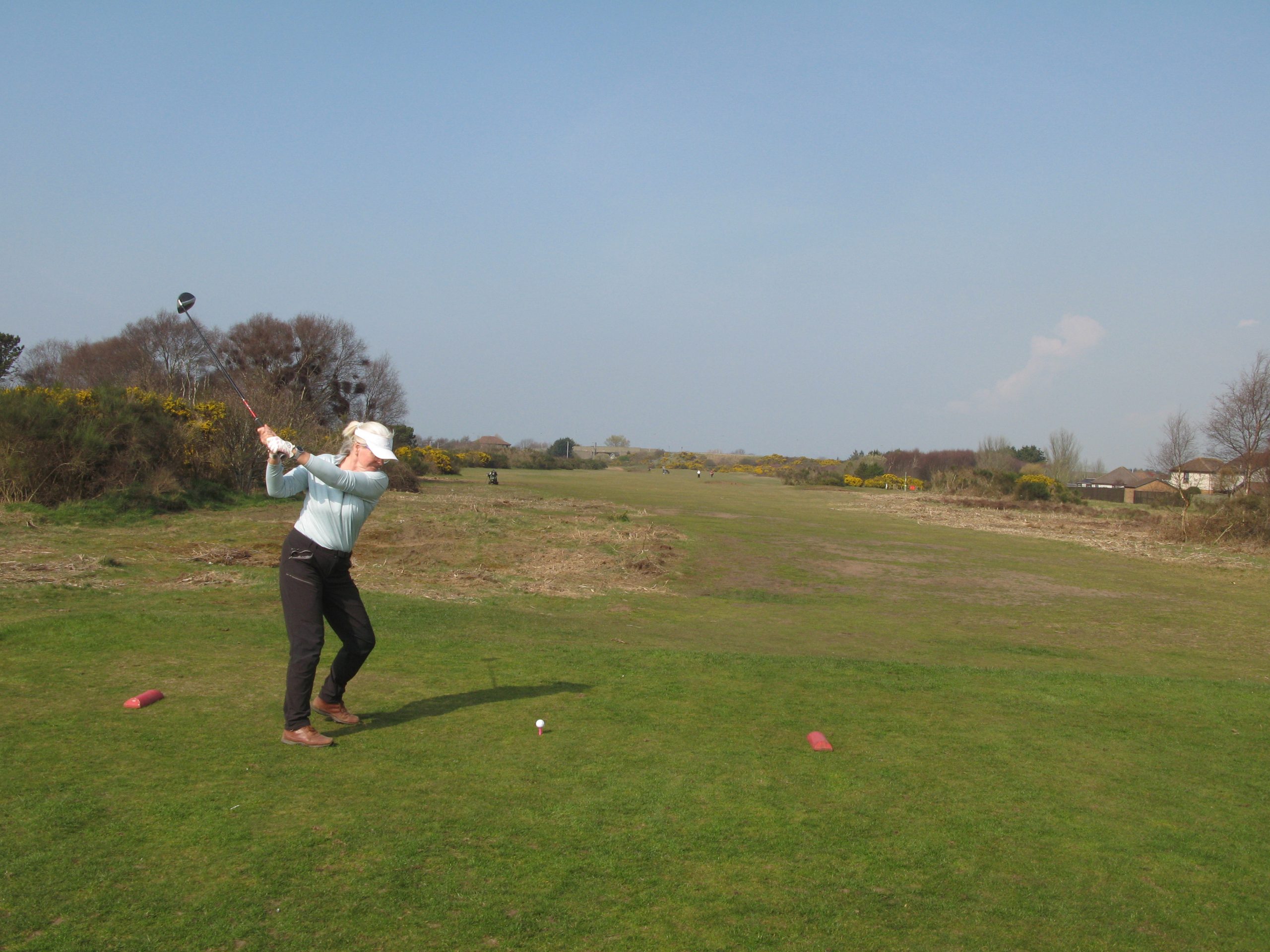
Fran teeing off at the par five 6th hole, at 535 yards from the red tee.
Strategically, looking at the bigger economic picture in Scotland, which still has well over 600 courses, it has more courses per person, per GDP, than any other country with more than 200 courses. In effect, the economy is not big enough to sustain the cheaper “courses for the masses”. This is one of the reasons behind the number of course closures since 2000.
I played Darley, one of the 3 Troon Links courses, on an unseasonably warm March day. I paid only £16.99 (via Golfnow), against the typical £37 for the summer rate, albeit the Troon Links website does advocate ‘dynamic pricing’, responding, in part, to users using the competing commercial green fee apps.
The course was basically ‘beaten up’, by the volume of winter play. I met a number of people who are based in Glasgow, whose courses are waterlogged in winter, and who make the short trip down the coast.
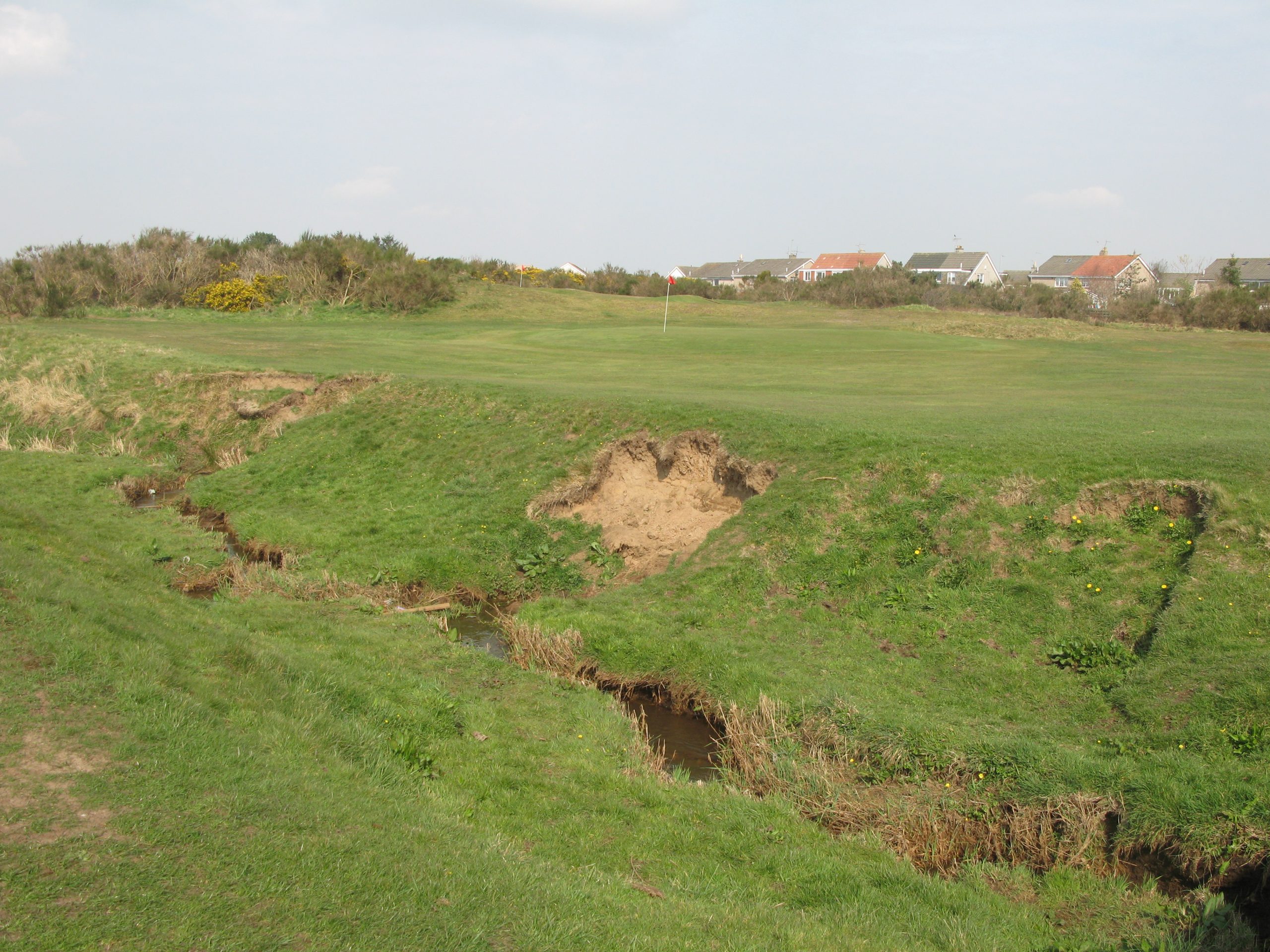
The burn in front of the 14th, a fairly long par four, which was a card wrecker for Moly, carding an 8.
The greens had held up, but the tees, fairways and bunkers were unkempt. There were very few rakes in the bunkers (the pandemic was ending and no longer an excuse). On advising one of the three people who were chatting in the green fee kiosk of the rakes situation, I got the comment “we thought all the locals would have all had a rake by now!”
Maybe the Ayrshire golfers complaining to the Daily Record, had contextualised their criticism on fees, with the ‘condition of the courses’. And there lies another conundrum – it takes effort and money to produce a course in great playing condition, and increasing fees restricts the volume of demand, making it good for the members. I’m not saying all this is easy to balance.
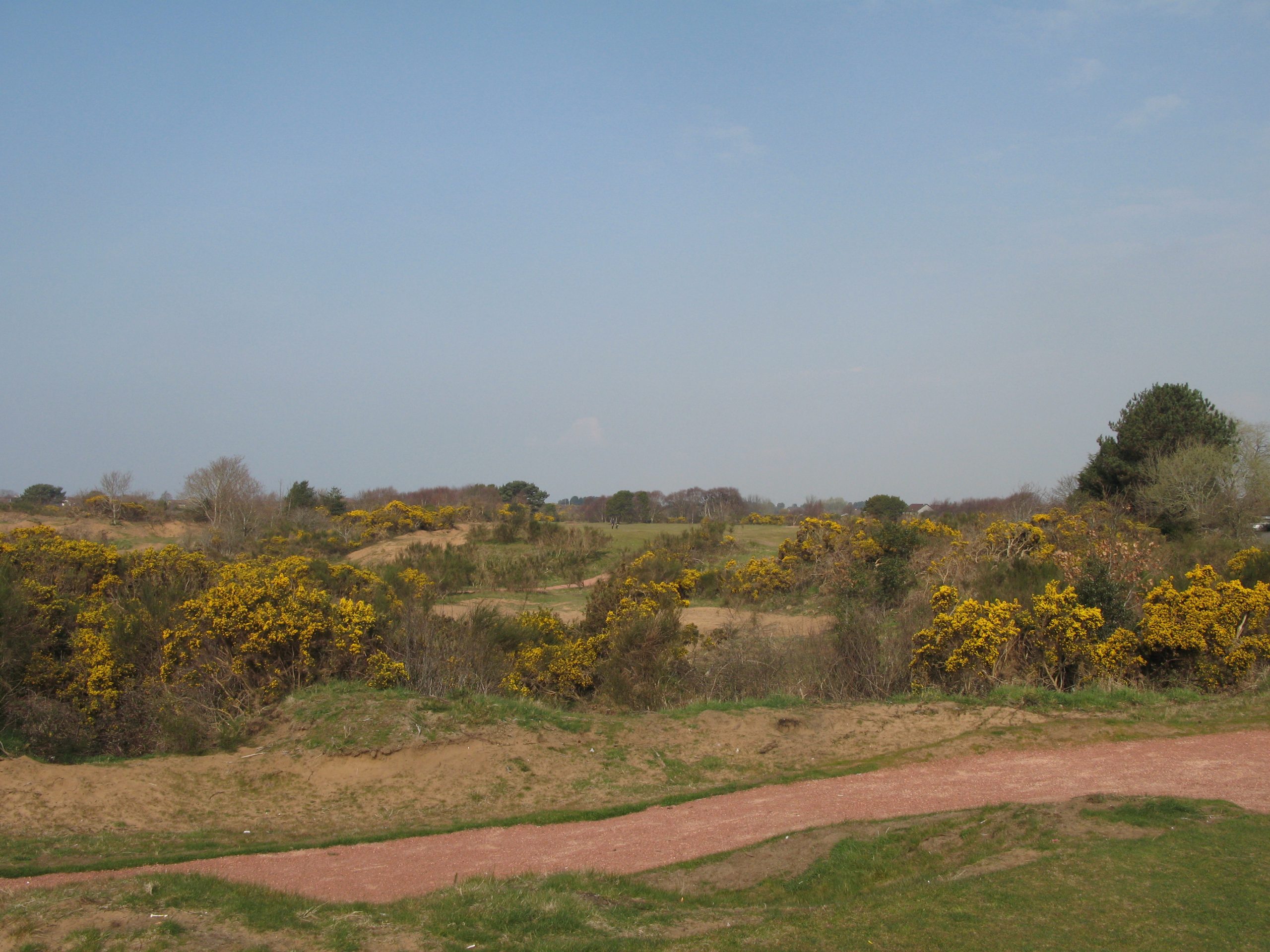
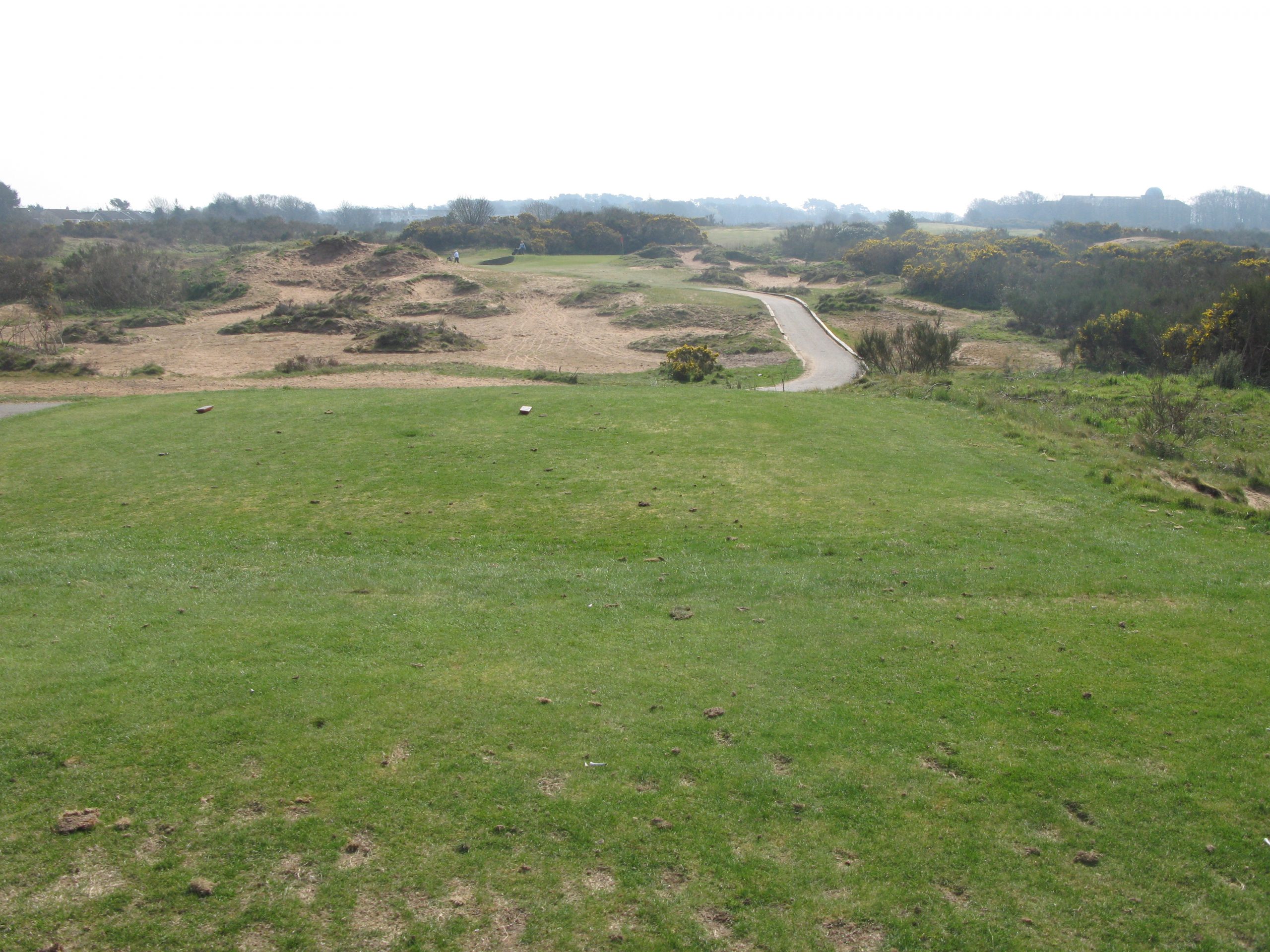
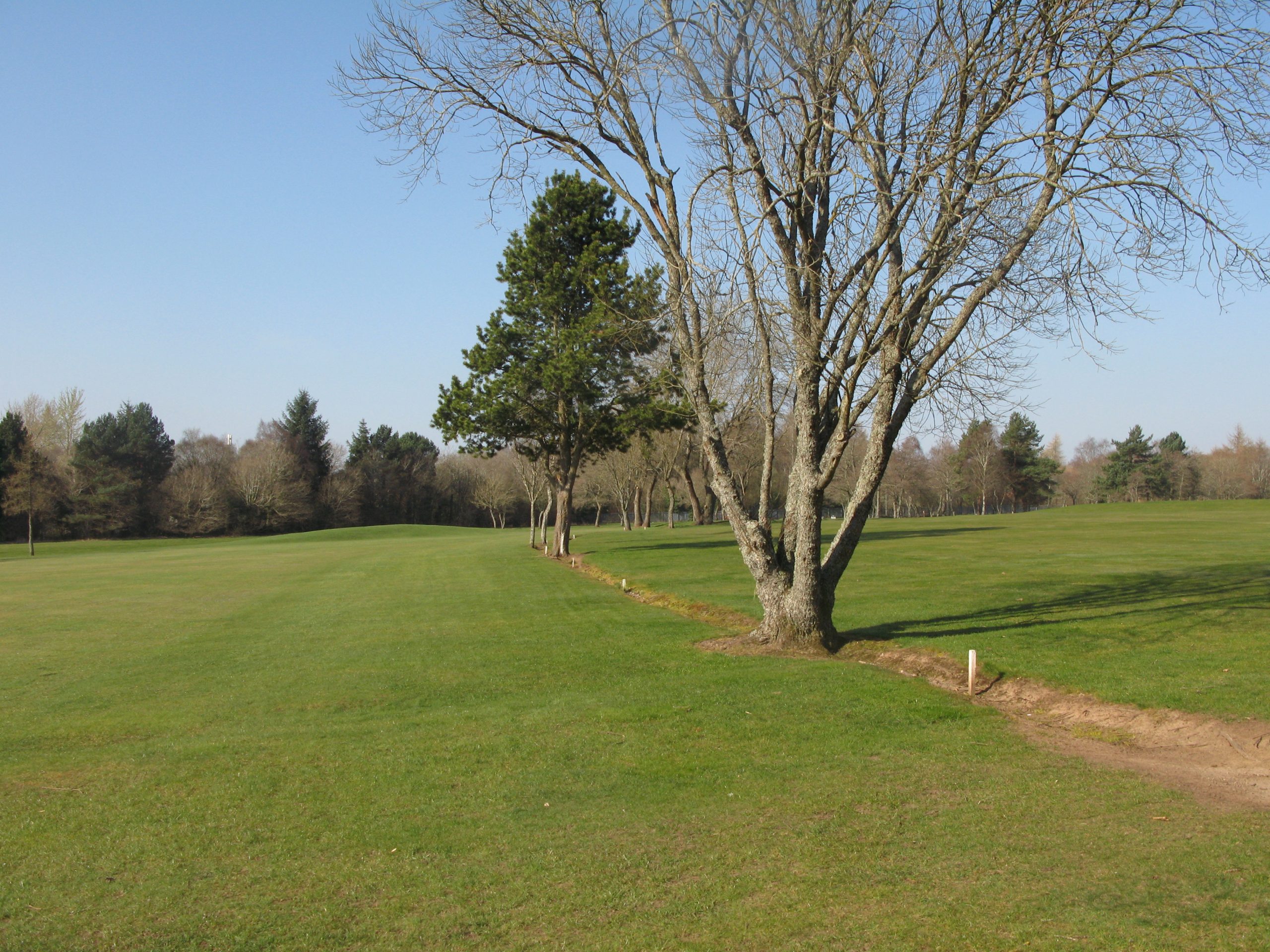
The tee shot at the 5th at Darley, the stroke index 1 par four a 411 yards, displaying the links land.
The Troon Links clubhouse has been a major investment for the Darley, Lochgreen and Fullarton courses.
As to the Darley course itself, between the pretty benign opening two holes and the closing two holes, the holes 3 through 16, represent a decent links layout, on firm turf, several good bunkers, with gorse lined fairways, and some tricky greens. Its a good test of golf, albeit the signage to navigate between holes would be a good investment. The four par 3s are the highlight for me, with the 9th standing up well to many more expensive club par threes; its the really stand out hole at Darley.
The 158 yard par three 9th hole, the absolutely stand out hole at Darley. Brilliant green complex.
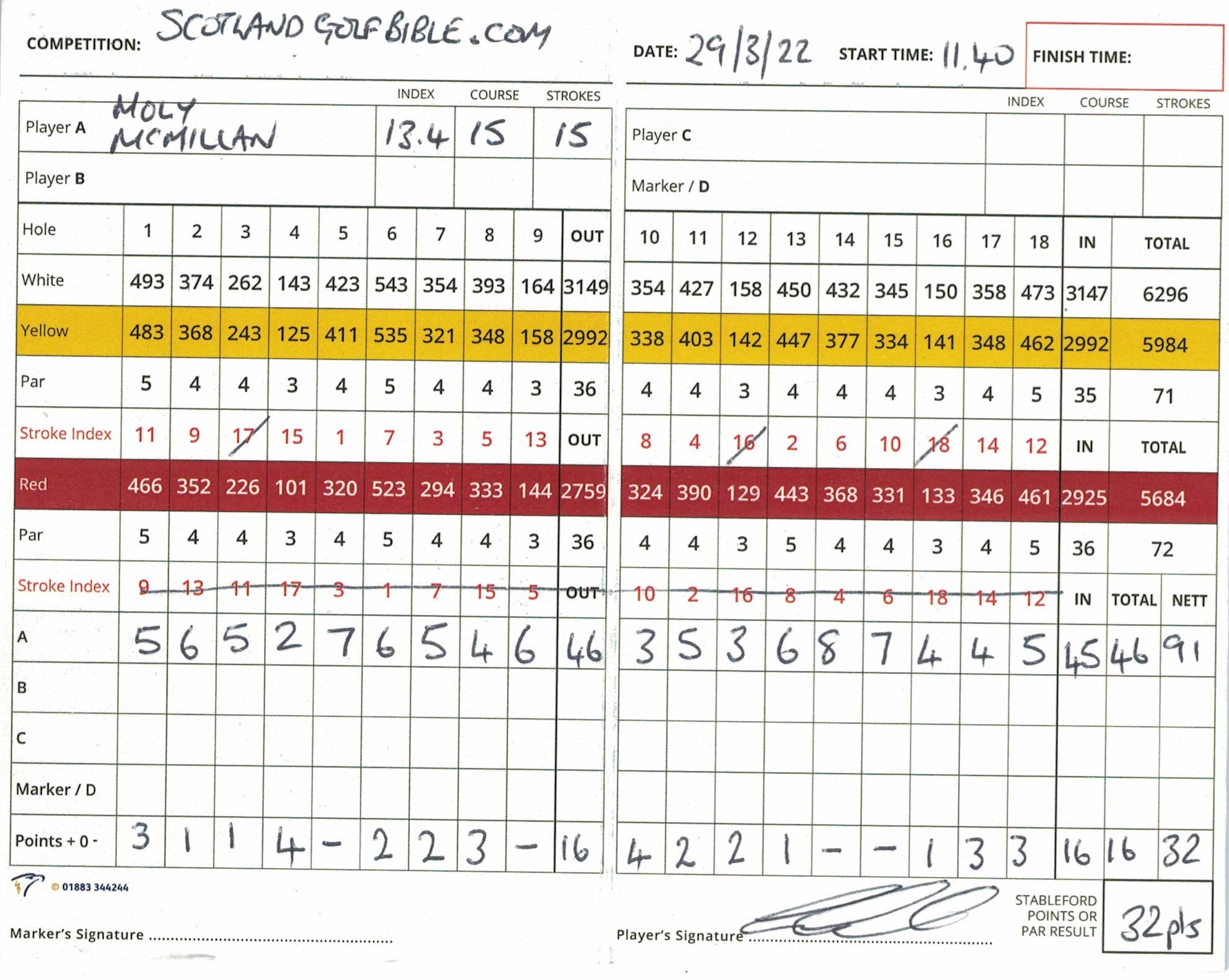
I had a mixed round, with birdies at the 4th and 10th, but then 2 triples and 1 quadruple bogie at the 14th. So my gross 91, equated to 32 points off 15. Not bad for me.
It must be said that South Ayrshire Council probably leads the way in the provision of Municipal golf in Scotland. I would advocate more investment on the courses please, even if the price needs to rise a little. A good value course, which could have been really great value with a little more attention.
Incidentally, I decided not to play the main Pebble Beach courses, instead I had a good walk around ‘The Links at Spanish Bay’, and nearly had to pay excess baggage for the about 150 golf balls (All grade A) I found in less than an hour!
Course Type:Links
Par 71 (3 par 5s, 11 par 4s, 4 par 3s)
Distance: 5984 (yellow)
Moly’s Gross score: 91
Moly’s Troon Darley scorecard. 91, but a very mixed bag with a couple of birdies and 4 blobs.
A great lesson in the use of internal OOB at this excellent course, built on a key social history site
Round £25. Par 69. Course Rating / Slope Rating (yellow) 68.3/120. Value (out of 5) – 4.5
I really liked playing Bellshill. Set in lovely parkland alongside Strathclyde Country Park, it is a popular venue for golfing societies given its central and easily accessed location. Founded in 1905, with 9 holes, and later extended to 18, it has an excellent history documented here by one of its former captains Alexander Gardner; it doesn’t record the course designer.
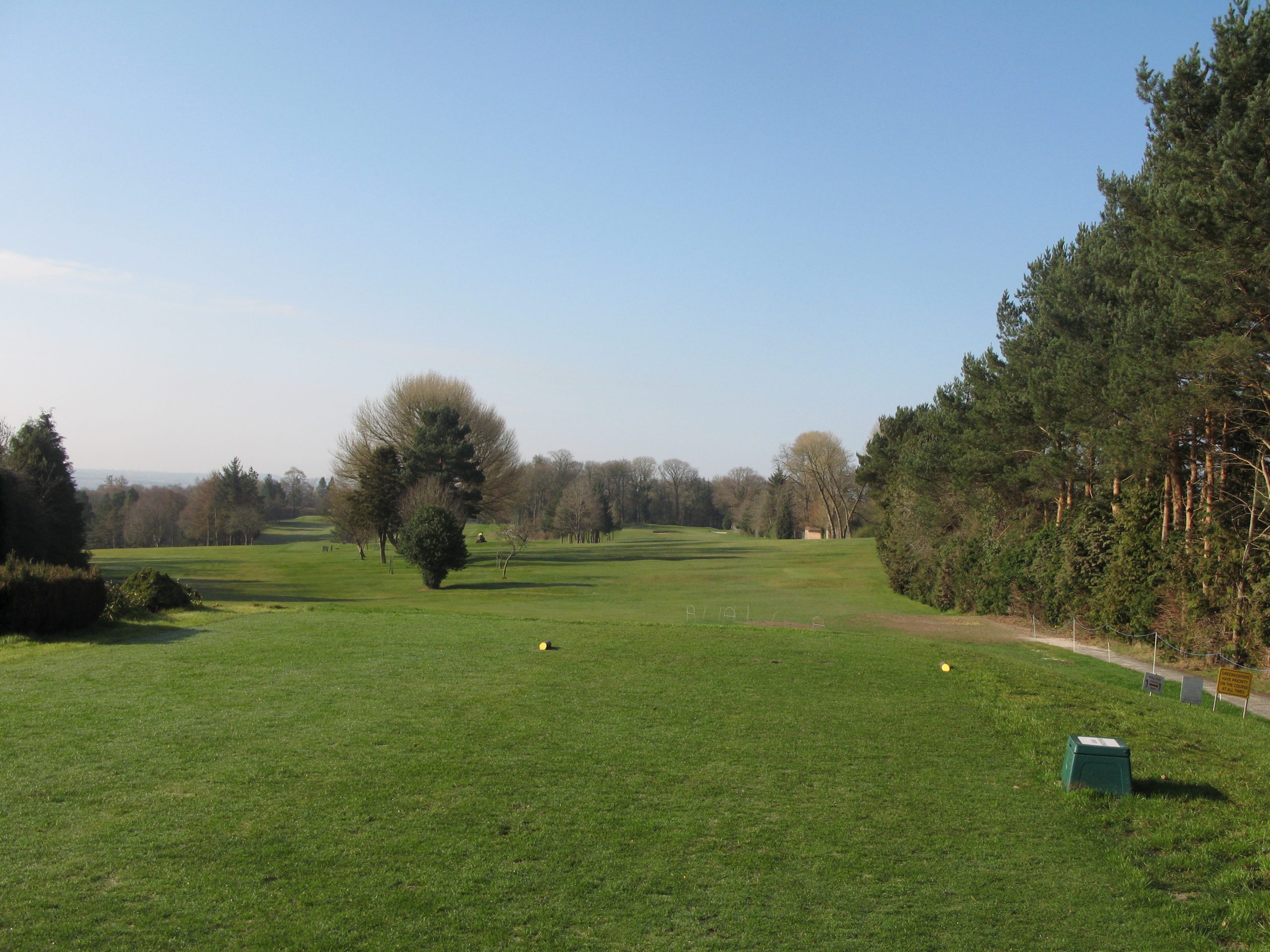
The quality is clear right at the start at Bellshill – here the long par four (449 yards) opening hole.
Look deeper into the course’s history and you uncover a remarkable story of societal development, that I suspect the vast majority of local golfers know nothing about.
It’s very fitting you enter the golf course through a humble, working class area. Go back 200 years and you would be sited on the Orbiston Community, set up by ‘Owenites’, the followers of the Welsh social reformer, Robert Owen (1771-1858). It was a community of ‘co-operation and equality and to social provisions, such as education and welfare’. Robert married a local Scottish woman, hence his association to Lanarkshire. Like many ‘utopian’ projects, it didn’t last forever, albeit the par three 8th hole is still called “Orbiston”.
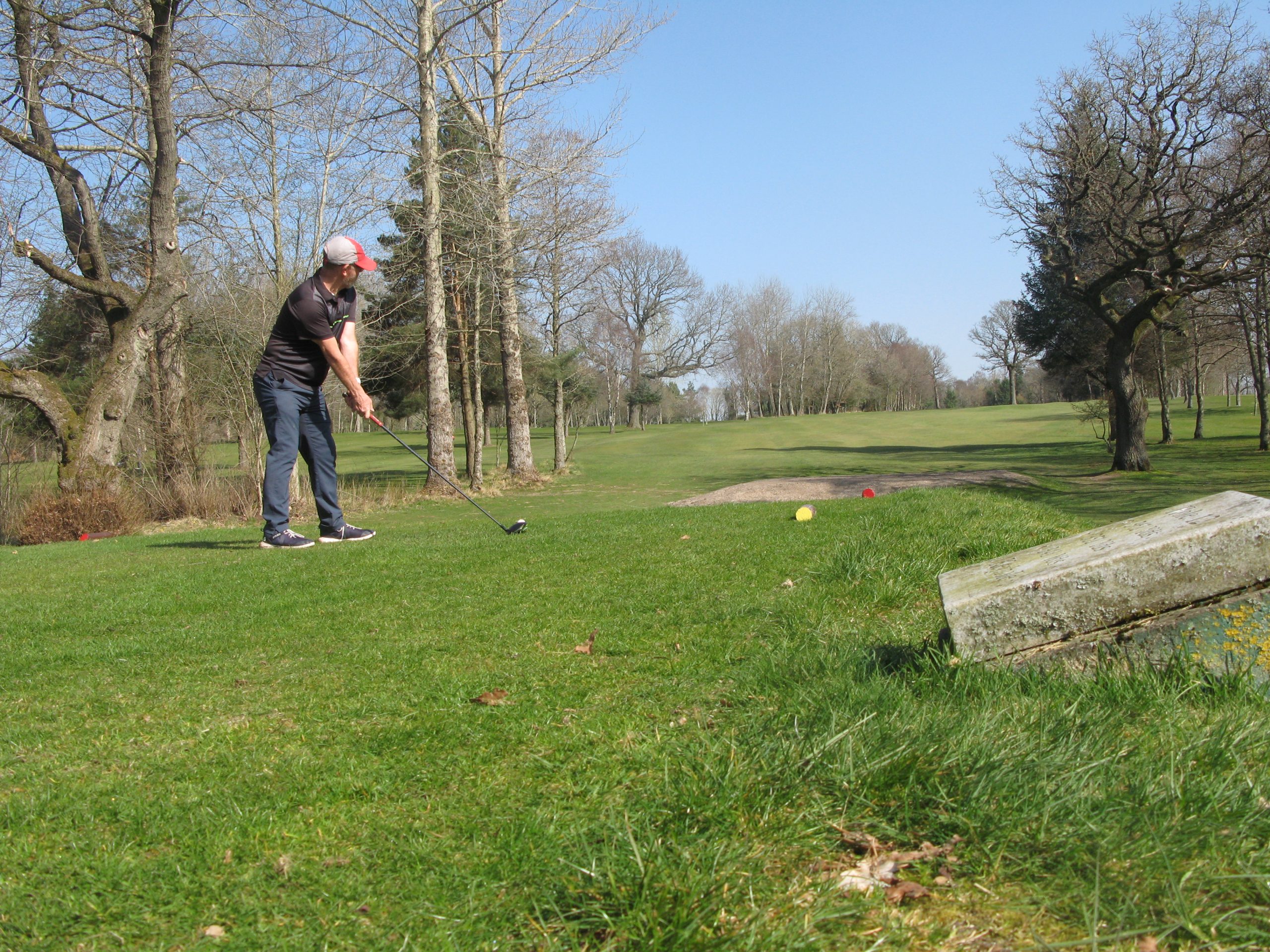
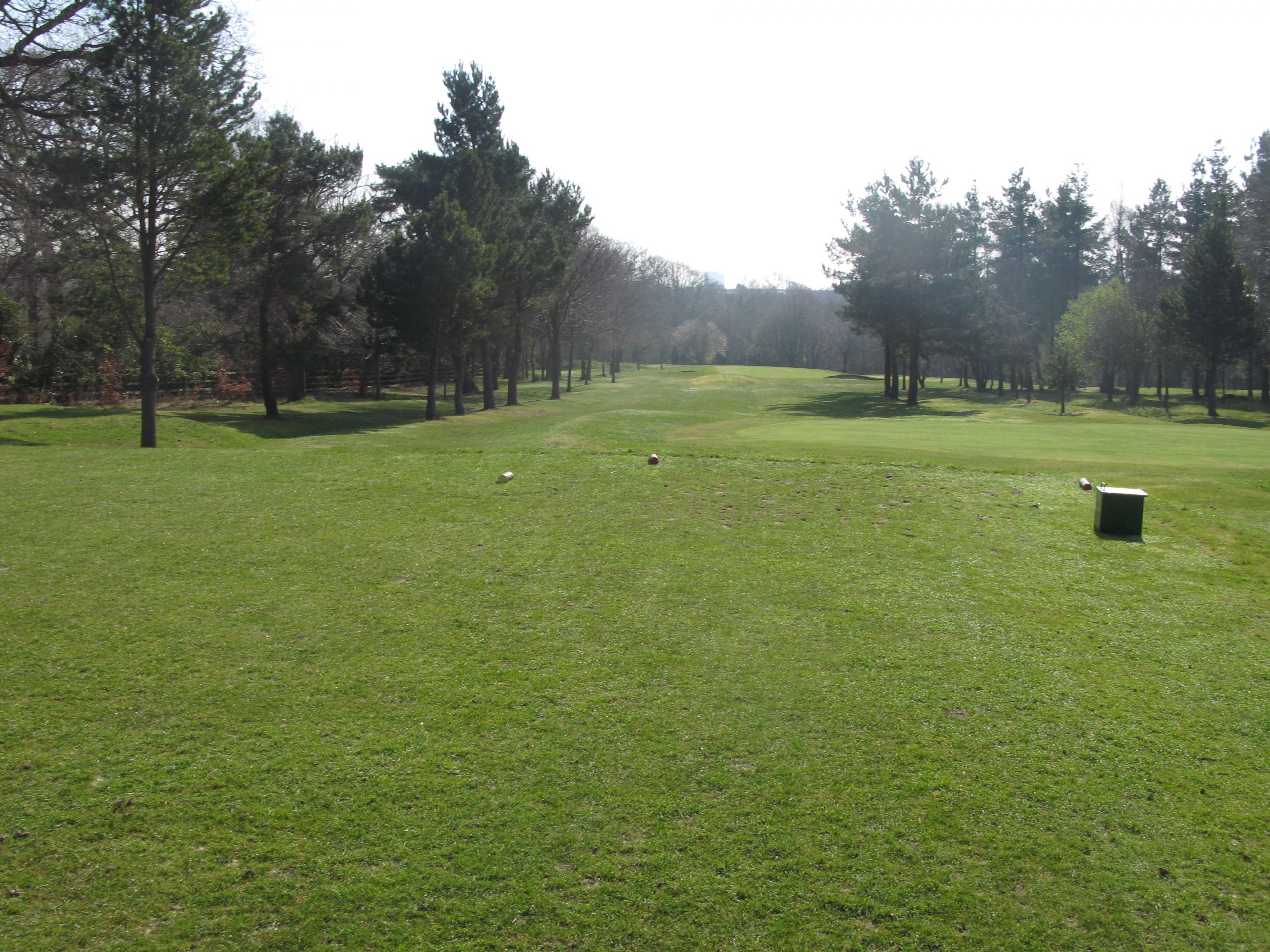
Moly about to drive at the mid length 12th hole – the 351 yard par four, stroke index 6 hole.Beware the tree in the fairway at about 220 yards, just visible here.
The course has 9 holes either side of a main railway line, with the first five and last four being on the side of the clubhouse. There is excellent signage to navigate between holes and either side of the line.
If you look at the first hole and the last 4 holes, you get a sense that it was an experienced course architect who first laid out Bellshill. Variety, undulations, appropriate bunkering and good green surrounds are testament to the quality of the designer.
The brilliant short par four 6th hole. Both “easy” and a “potential nightmare”
There are some memorable holes, in my book most notably the sixth. A short par four of only 292 yards, from both white and yellow tees, it has a blind tee shot over a slight brow about 140 yards from the tee. With a green fronted bunker and a front to back sloping green, it is impossible to drive. I was very lucky to unknowingly hit driver, which came up just short of the bunker. With a front pin, it was then impossible to get close to. Somewhat lucky to get a par 4, I preceded to have an interesting conversation with a greenkeeper on the next hole. He said many members don’t like the 6th hole, but the more experienced golfers, “just hit two short irons hoping for a single putt”. Alternatively, with a good bunker game, a shot into the front green bunker is also an option. A good example of a short hole giving good options, at all levels.
Many courses can learn from Bellshill’s good use of an internal OOBs, here shown at the 4th hole where OOB is on the right of the hole.
The course had very few fairway bunkers, but that was compensated by many undulating greens, some very difficult. The good finish, from holes 15 to 18, includes some card wreckers, most notably the stoke index 4, 16th par four. The 18th, with OOB right, is also a difficult green to hit in two.
The 8th hole “Orbiston”, a tough par 3, named after the community founded by Robert Owen the 18th Century social reformer.
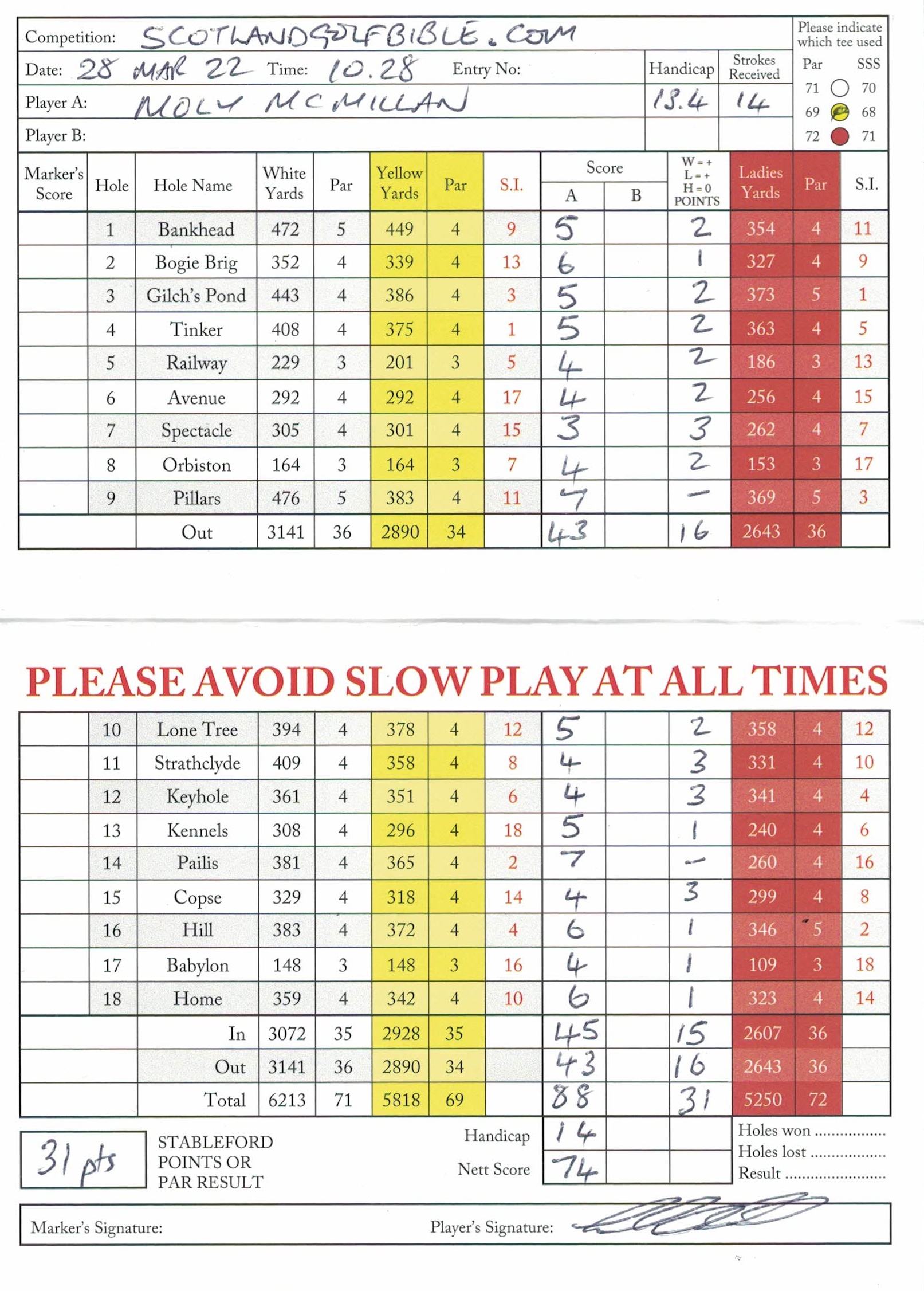
I had a solid game, scoring 88, or net 74, 5 over par. Any time over 30 points on a new course, I’m very satisfied. The condition of the course was superb when I played. At an annual membership just under £600, it represents a great value course to play on regularly amongst the many available in this urban area of Central Scotland.
The difficult par three 17th hole, ‘Babylon’, part of the very fine last four hole stretch at Bellshill.
I had a great and welcoming conversation with two local members in the changing rooms and did indeed get a feeling of ‘community’ which somehow felt right. They told me a great many members volunteer to maintain the course in such good condition. I was let wondering if they knew how fitting that was and how proud Robert Owen might have felt at that feeling of community.