A guide to green fee value for money

Category: Region (Page 16 of 45)

The 15 regions are as defined by the visitscotland website, the Nation Tourism Organisation; http://www.visitscotland.com/destinations-maps/

117. Earl of Mar. 30 Oct 2020.

Rainbows and Celebs are potential hazards at this excellent new course

Round £60. Par 70. Course Rating / Slope Rating (yellow) 70.8/129. Value (out of 5) – 4.5

The official name of this golf course is the ‘Earl of Mar’, but I’ve entitled the blog ‘Mar Hall’ ,the name of the hotel, which opened 2004, as that is what the course is more commonly listed as.

Moly at the par five 15th hole, with the Erskine Bridge on the horizon. One of only two par 5s on the course.

The course itself was designed by the renowned Dave Thomas and founded in 2010 ; and what a great golf course he has created, making full use of the available land – albeit it does feel a little compact in places with several holes adjoining in an ‘up and down’ fashion, making it play wider than perhaps intended. However, with USGA style bunkers, in both fairway and greenside, this course requires accuracy off the tee and especially into the greens, where knowledge of your yardage will pay dividends.

The approach at the 12th at Mar Hall, with the Baronial 18th Century Manor, now hotel, in the background. The fairways had held up to recent torrential rain, but were a little mossy.

Coupled with a stay in the collocated 5 star hotel, the former Erskine Estate and House make for an excellent golfing break, especially with its proximity to Glasgow and its airport. The Erskine bridge, which crosses the River Clyde, dominates the skyline, especially at the downhill dog-leg left second hole, where you feel you are playing under the bridge. Although set along the south bank of the Clyde, the river doesn’t come into play, which is a pity.

The excellent 13th hole, a dog-leg right, par 4, where you need to keep well left of the fairway bunkers, to give a par opportunity.

Other than the river, there are outstanding views of the hills to the north and some magnificent trees, which Thomas has carefully utilised in the design.

At over 6200 yards from the yellow tees, at par 70, this is a challenging course for all bar the single figure golfer. Some of the shorter par 4s, such as the delightful 9th hole, play slightly uphill into the prevailing wind and will require 2 decent shots to reach in regulation.

Fran puts at the 14th, with the Rainbow and the Old Kirkpatrick hills in the background.

When I played in late October, there had been several days of very heavy rain, but the course was in remarkably good condition, testament to the build quality and green keeping. The greens were all in play, they are generally very large, with devilish surrounds, including large bunkers, so keeping a 3 putt off the card, or scrambling, will also be a challenge.

The 9th makes for a robust end to the front 9, a short but tough par 4, normally played into the prevailing wind.

Nevertheless, its a delightful walking course, and as said, there is ample room from many tees, so makes for a good society day.

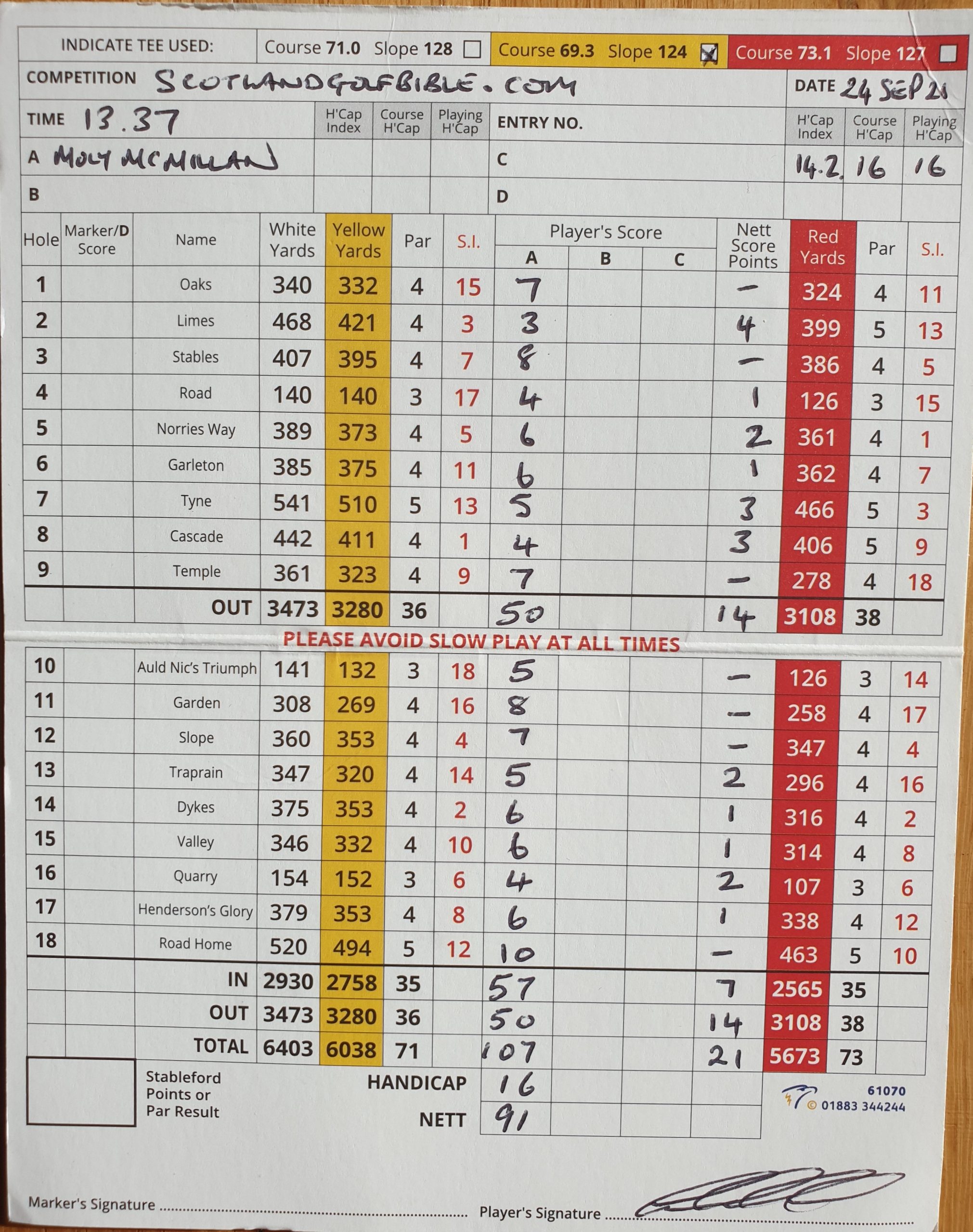
On the day, I played very well to get round in 91, for 30 stableford points, the latter number I always think is acceptable playing a course for the first time.

The trees are carefully crafted into the course, as here at the 15th fairway, with the view over the River Clyde.

The hotel has apparently hosted many celebs during its short existence, which I thought was quite appropriate given that, according to the barman, the river and hills make for ideal conditions for rainbows – although I didn’t find any pots of gold.

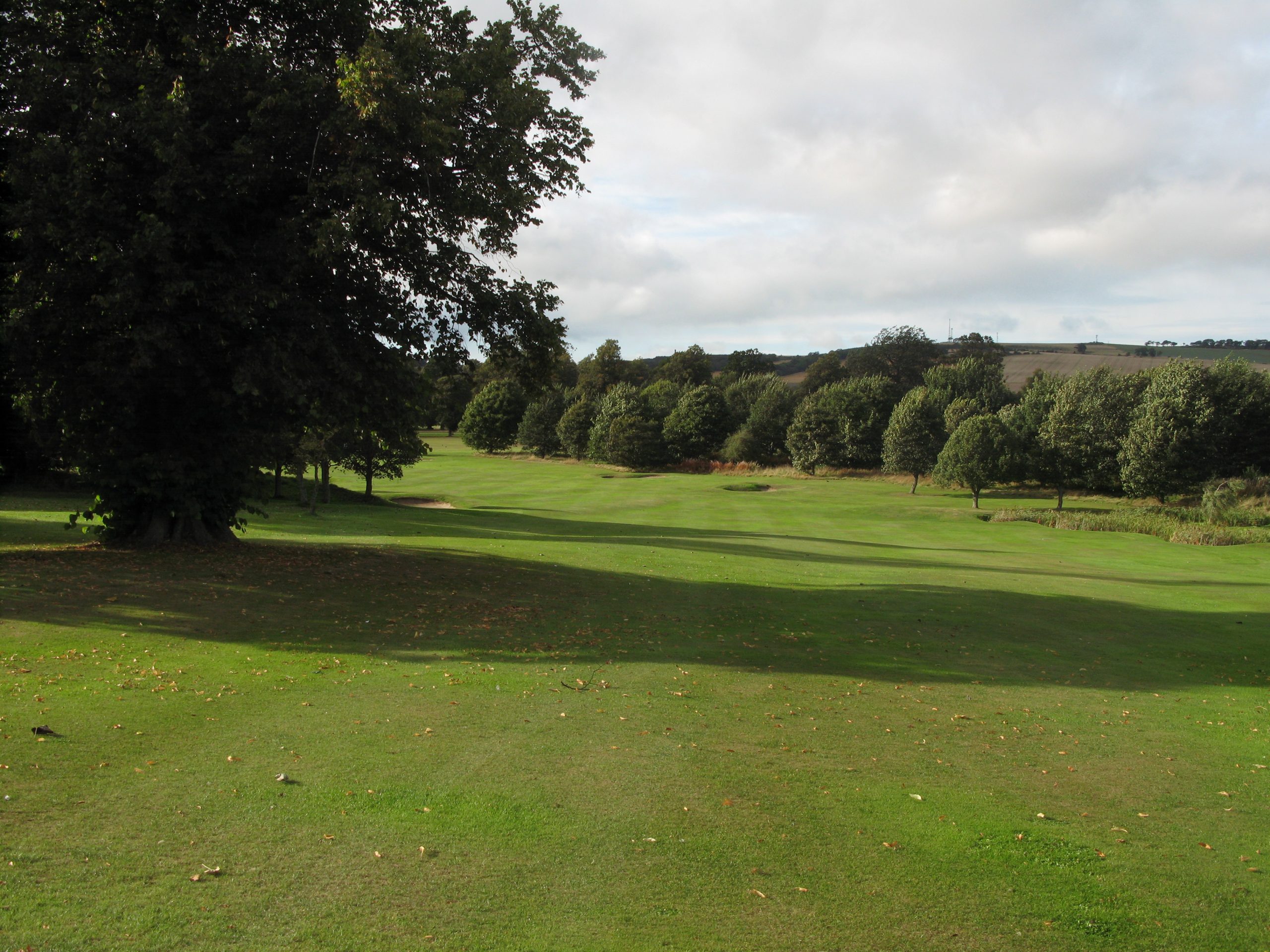
The view over the course from the hotel at Mar Hall – well worth a short golfing break here.

The course is the star here though. Well worth playing.

Course Type: Parkland

Par 70 (2 par 5, 12 par 4s, 4 par 3s)

Distance: 6259

Moly’s Gross score91

Played well for a 91 on this compact and challenging course

116. Kirkcudbright. 28 Oct 2020.

Kuh coo bree’ – worth a visit to this course and the local art galleries

Round £32. Par 69. Course Rating / Slope Rating (yellow) 68/117. Value (out of 5) – 3.5

The town of Kirkcudbright, mysteriously pronounced ‘Kuh-coo-bree’, sits on the east of the River Dee estuary in Dumfries and Galloway. It’s a remarkable place; festooned with art galleries and nice coffee shops – one could imagine it being twinned with Glastonbury, the epi-centre of Druids in Somerset, England.

The course, set above the town, gives excellent views of The Galloway Hills providing a very picturesque backdrop – here Moly tees at the 3rd, one of the more straight forward holes – a short par 4.

The town was home of The ‘Kircudbright’ artist movement in the late 1800s, and several of the galleries tell that story. The golf course was in fact founded in 1893, at the very height of the art movement in the town. I wondered how many of the artists, some of international significance, ever played the golf course – after all, the first hole, (Charles) ‘Oppenheimer’ is named after one of the towns best know artists?

A birdie opportunity at the fairly short downhill par five 8th, stroke index 15, hole at Kirkcudbright.

The course was originally 9 holes and only extended to 18 holes in the 1970s, unfortunately neither original or extension architect are listed in the website. After a fairly benign opening par 4 , the second is played uphill across the current 15th hole. After a short par four 3rd, the first of the several difficult holes is the 4th – although a relatively short dog leg right, judging the distance off the tee is crucial to avoid a lost ball. On the day, I saw an old man in the woods searching for golf balls – it was as if I saw the “ghost of golf future” for me.

The signature ninth hole, a challenging par 3 likely requiring a mid to long iron for most players.

The extension of the course, includes a nice run of holes, from 9 through 12, by far the most nuanced part of the course. The 12th, in particular would fit into a much higher standard layout.

The course was in pretty good condition when I played with Fran, but there were a few winter greens in early use, even although they seemed completely playable, and firm.

The beautiful par five 12th hole, the best on the course, in Moly’s opinion. The stroke index of 2 fully justified.

I shot 91, and played pretty well on the back 9, where I had 18 stableford points. This was helped by the wide fairway in the main.

Another wonderful quirk is that the clubhouse is used by an award winning Thai restaurant – I loved this and it just seemed so befitting this ‘cool’ place. The artists would undoubtedly been customers of the restaurant, even if they were not golfers!

Lastly, I have to mention the few local members in the clubhouse were really friendly and helpful explaining the layout of the course.

Course Type: Parkland

Par bb (2 par 5s, 11 par 4s, 5 par 3s)

Distance: 5412

Moly’s Gross score91

A struggle to 91 at Kirkcudbright golf course

115. Gatehouse. 26 Oct 2020.

Joyful little gem

Round £15. Par 33. Course Rating / Slope Rating (yellow) 32/115. Value (out of 5) – 4

Can you only have fun playing golf if you play well? That was the question I pondered when assessing Gatehouse, a 9 hole golf course in Gatehouse of Fleet, a lovely little town in Dumfries and Galloway, which takes its name from the “Water of Fleet’ river that flows to the sea at nearby Kirkcudbright.

Moly at the short par three 5th tee at Gatehouse with magnificent Dumfries and Galloway backdrop.

It is a ‘highland/heathland’ course, with outstanding views. The clubhouse, a lovely little ‘shed’ type building, shouted ‘golf in its basic form’ to me. The course has been around for a hundred years (founded 1921) and probably has changed very little.

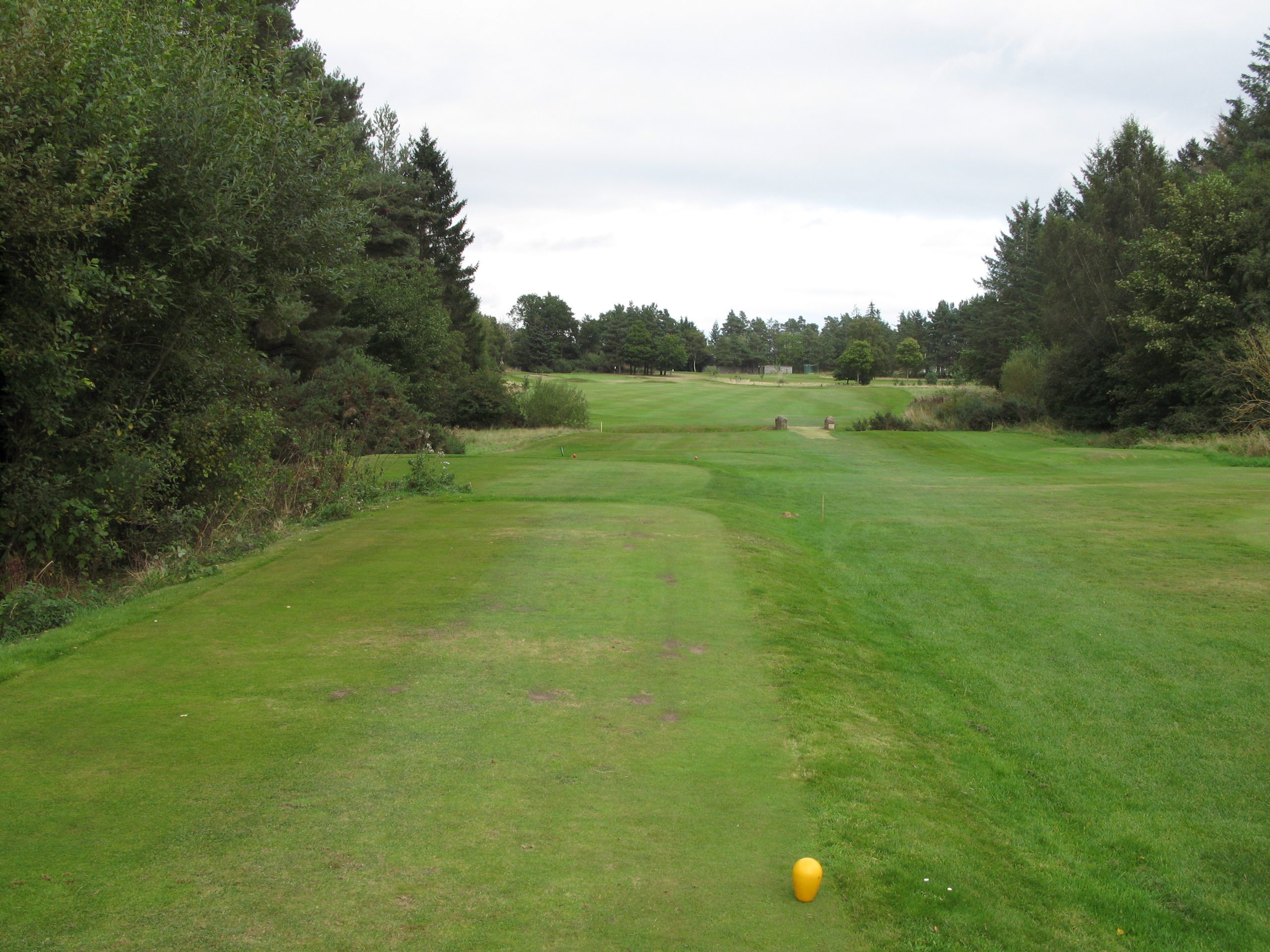
The second at Gatehouse, a beautiful mid length, par 4, with blind tee shot – plenty of room to the left of the marker.

The course has plenty of variety as well, requiring all your clubs (well me, anyway) – one par 5, four par 3s and 4s. The par 3s in particular are varied and collectively difficult. The first, an uphill par 3 of over 200 yards, played like a short par 4. The 8th and 9th are great finishing holes, with the downhill 160 yard 9th presenting a potential disaster if you go long – don’t do that.

The approach shot to the par 4 forth hole, at 322 yards (white), with the wonderful views.

I played well – scoring 37, 4 over par – on this course that I wouldn’t recommend for the ‘occasional’ golfer. It’s very undulating, a tough walk, has small greens and many blind tee and approach shots. It was quite slippery when I played and actually could be a bit hazardous (my playing partner Fran fell on one of the slopes).

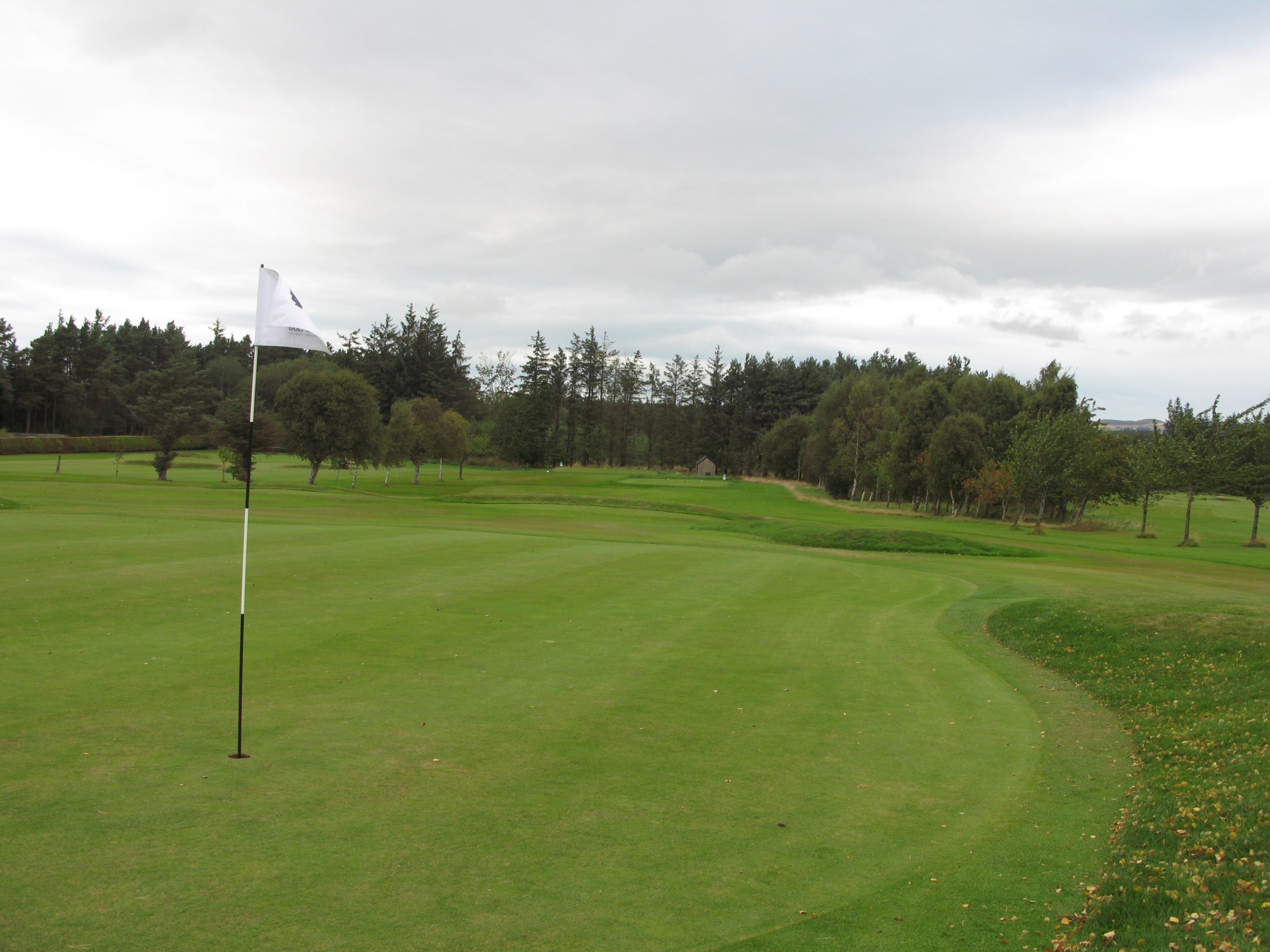
The difficult par 3 eight hole, where being long is better than short.

Overall, its really great value golf. The greens and fairways were in excellent condition and overall this is highly recommended.

The ‘highland’ style clubhouse, typical of Scottish 9 hole courses.

But even without playing well, I think I would have come to the same conclusion – this is Scottish golf personified in many ways.

Course Type: Heathland

Par 33 (1 par 5, 4 par 4s, 4 par 3s)

Distance: 2418

Moly’s Gross score37

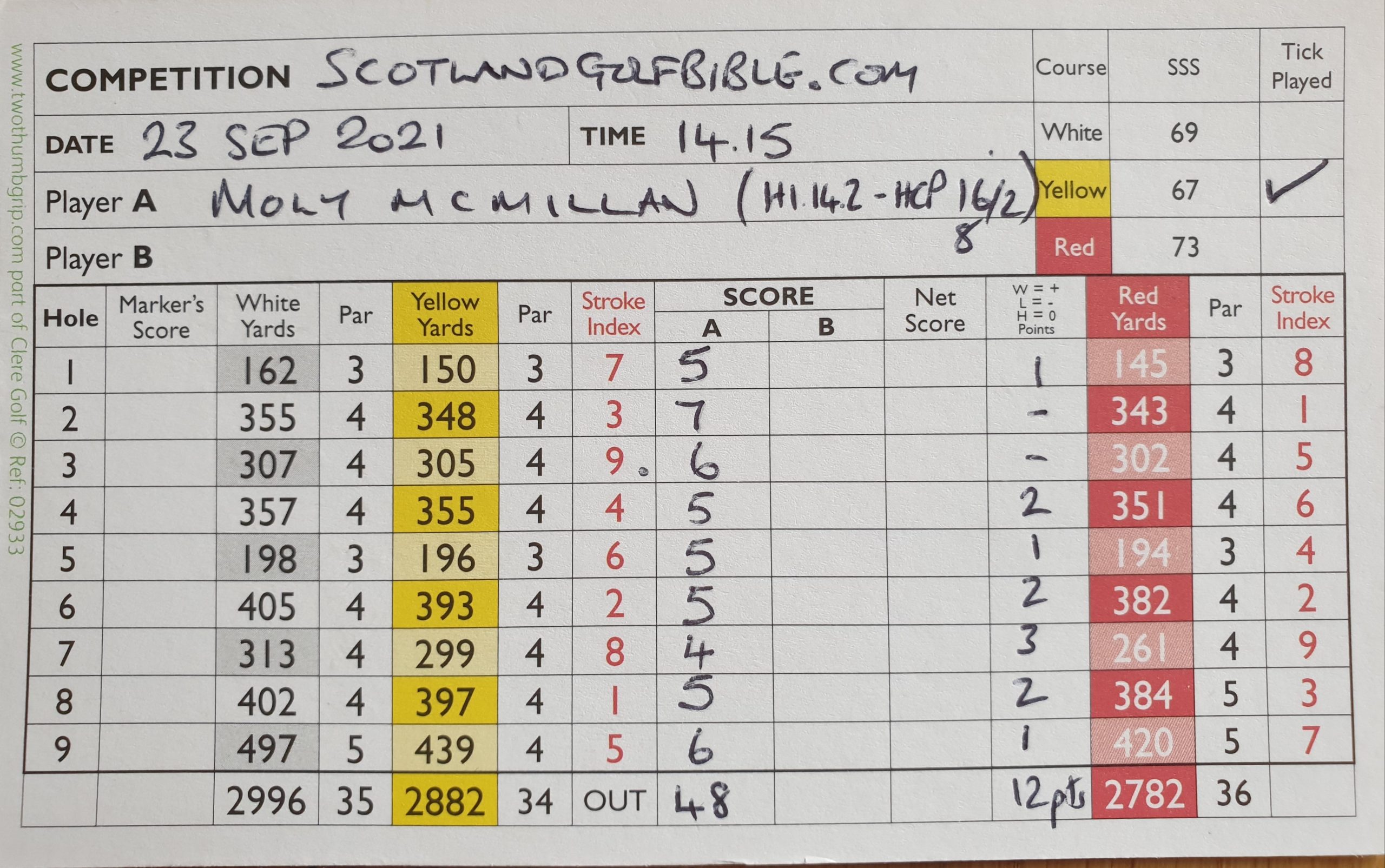
Moly’s scorecard at Gatehouse – 37 and great fun

114. Wigtownshire County. 25 Oct 2020.

Great value and wide open links course is a means to experience, or more accurately feel like, history

Round £45. Par 70. Course Rating / Slope Rating (yellow) 68.3/124. Value (out of 5) – 4

Wigtownshire County golf course, set beside Luce Bay on the west coast of Dumfries and Galloway, will, I suspect, sharply divide opinion. This is links golf at its most basic, which I really like.

The 8th – a typically basic hole at this course.

It’s an open course, with many wide fairways, so several of the holes aren’t readily framed to the eye. It’s also made up of 14 par fours, with only 1 par five and 3 par 3s; to some this likely lacks the desired variety of holes.

Moly drives at “St Helena”, the dog leg right par 4 fourth hole, which hugs Luce Bay, at Wigtownshire County. Plenty of room to the left.

On the other hand, many golfers who prefer the natural feel of what courses were historically like, might love Wigtownshire County; however, to that extent, the course is also a bit of a façade. It was a 9 hole course (current holes 1 to 4 and 14 through18) when designed in 1894 by Charlie Hunter, who also designed Machrihanish and Royal Troon, so he has has great pedigree. It was only extended to 18 holes as recently as 1987, by designer Gordon Cunningham, whose work is really brilliant in that you really feel like you’re playing a joined-up 18 holes , unchanged for 100 years.

The 3rd at Wigtownshire, a decent par 4, one of the original 9 holes. This is a typical hole here.

Given the open aspect of the design and its coastal location, weather is going to dominate your experience here. I played in very high winds, with gusts up to 40mph, didn’t break 100, and racked up 4 triple bogies or worse. I suspect the wide fairways and relatively open approaches as well, would see very low scoring in benign conditions. Weather notwithstanding, the would be a great society day out. Good greens, no impossible challenges, 2 nice coastal holes and generally good course conditions.

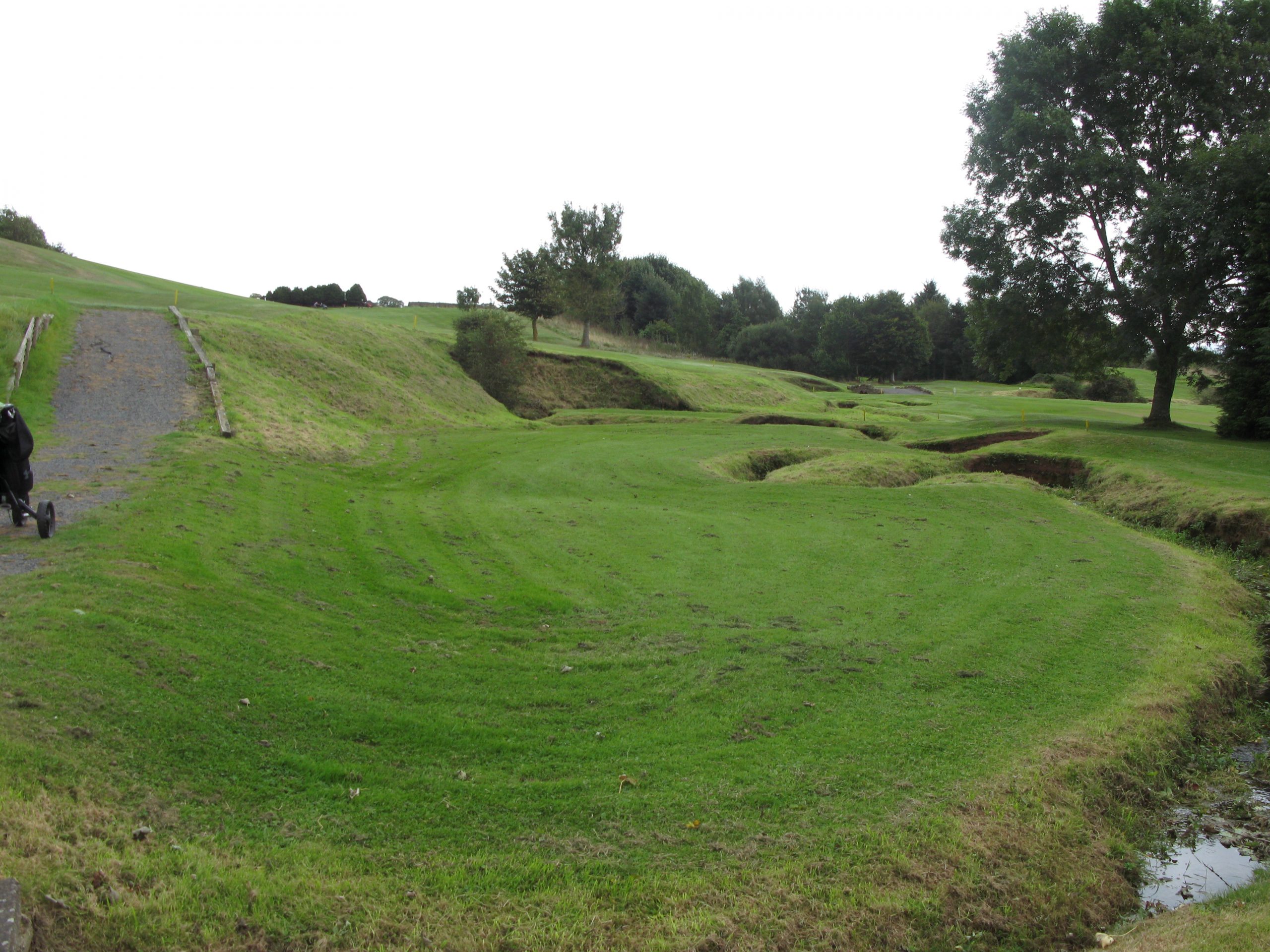
The par four 10th, one of the very few undulating holes at Wigtownshire County. This was one of the new holes laid down in 1997.

If you’re a lover of links golf and like the historic feel of a basic layout, it’s worth going out of your way to play here, especially as the price represents excellent value and great natural drainage guarantees all year round golf.

Facts:

Course Type: Links

Par 70 (1 par 5, 14 par 4s, 3 par 3s)

Distance: 5829

Moly’s Gross score102

Moly’s Wigtownshire County Scorecard – a 102 in very high winds
« Older posts Newer posts »

© 2025 Scotland Golf Bible

Theme by Anders NorenUp ↑