A guide to green fee value for money

Category: Heathland (Page 2 of 7)

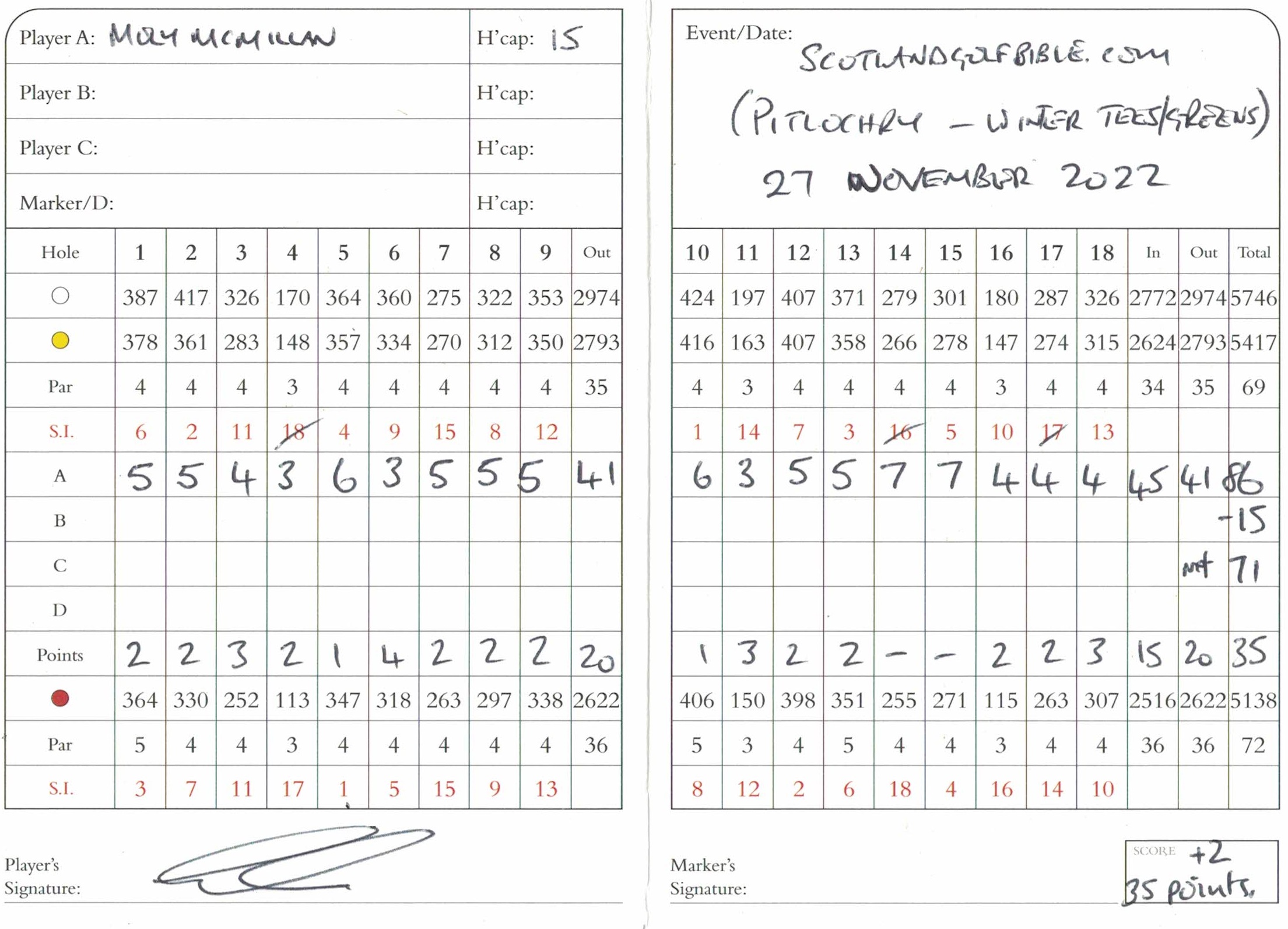
171. Pitlochry. 27 Nov 22.

Very good, but a world best?

Value for Money (out of 5) – 4.5

The club website reports “The best course in the world ….under 6000 yards”.

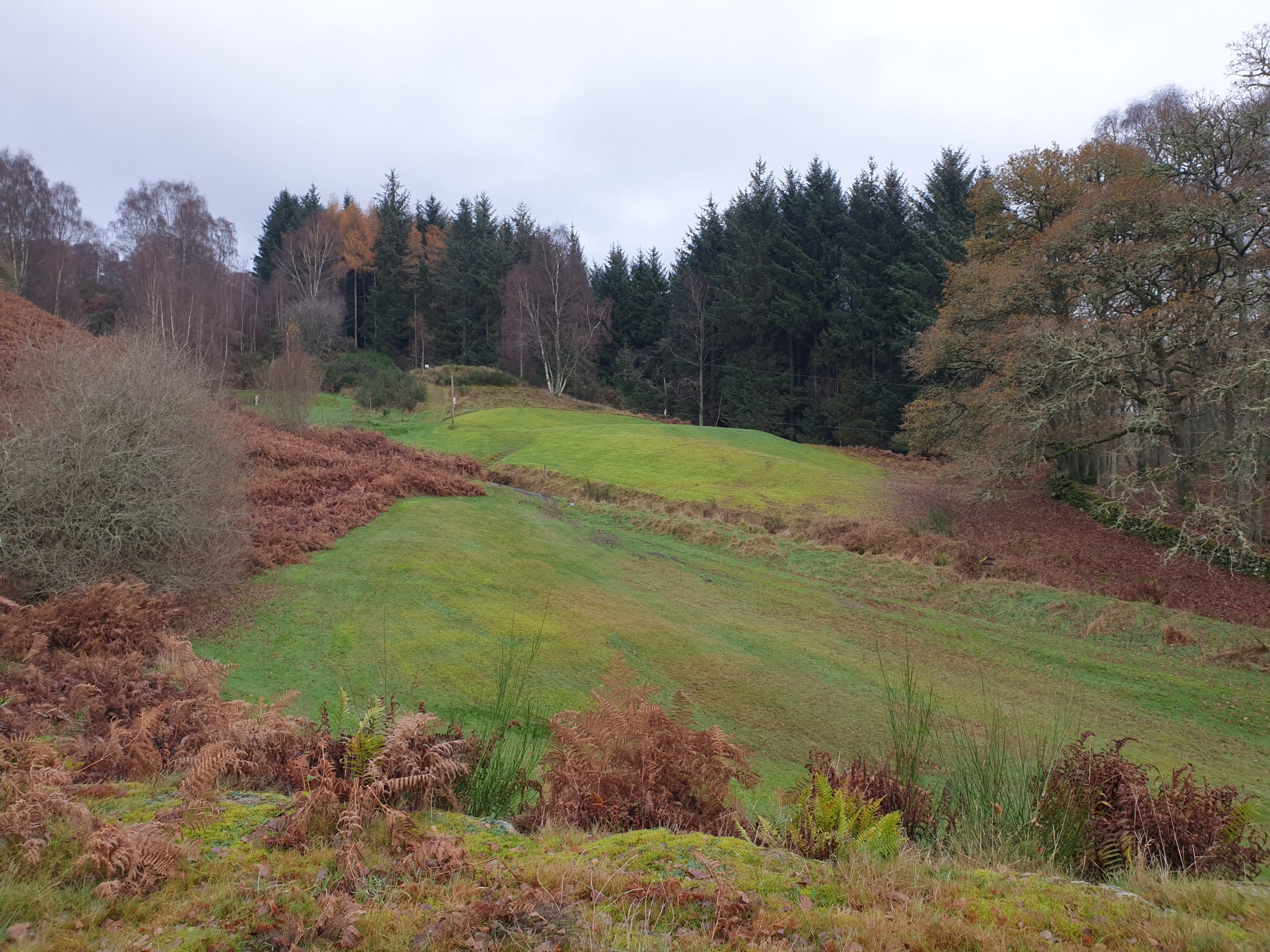
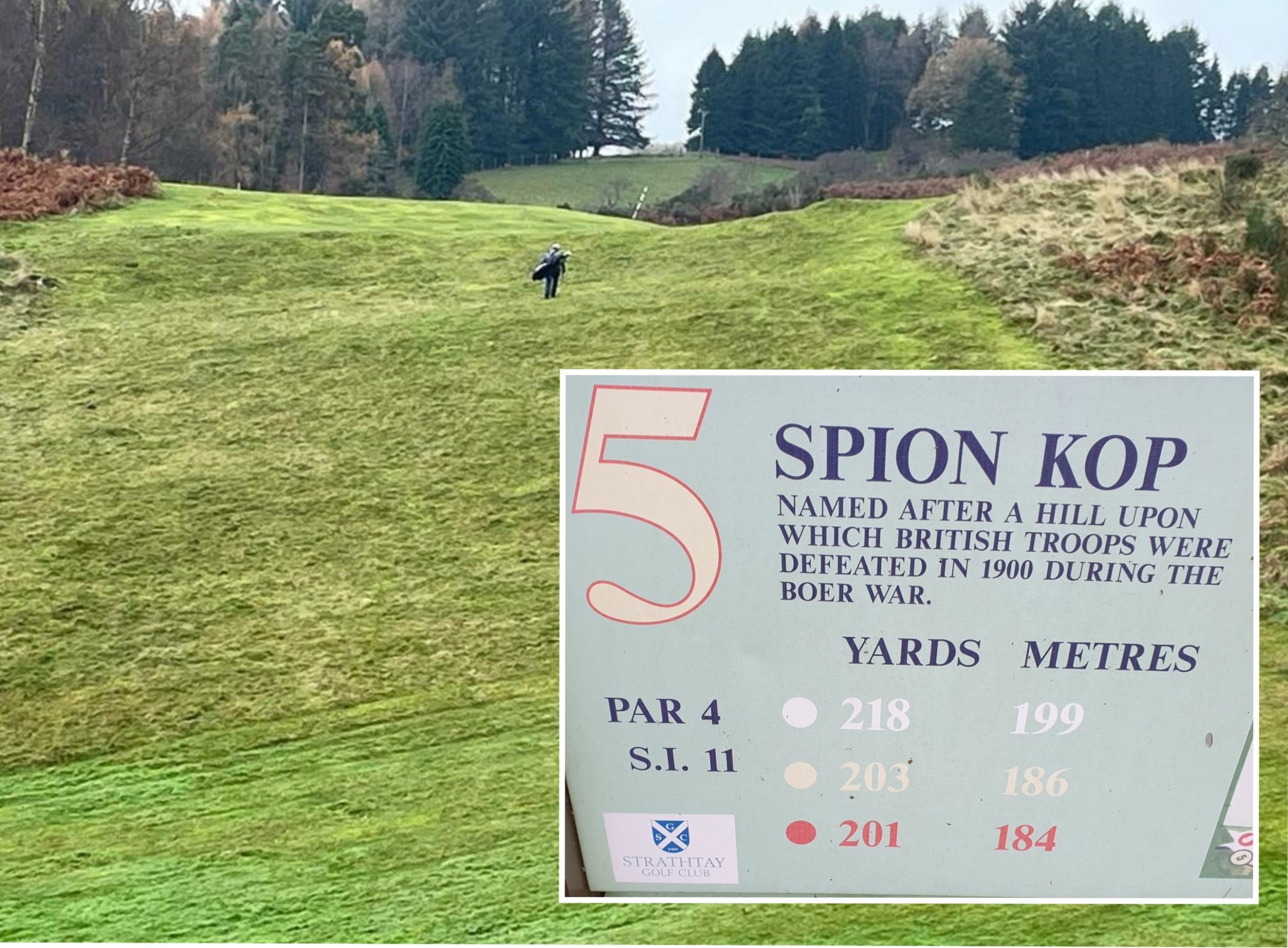
The uphill opening hole at Pitlochry – a par 4 of nearly 400 yards and stroke index 3 it was the site of an old distillery, so not all golf clubs improve the environment!

Pitlochry is unquestionably a good course, laid out in 1908 by a great designer, Willie Fernie (Turnberry Ailsa). But a “best in the world?”. Has anyone ever played more than 10% of the world’s 40,000 courses or listed them by yardage?

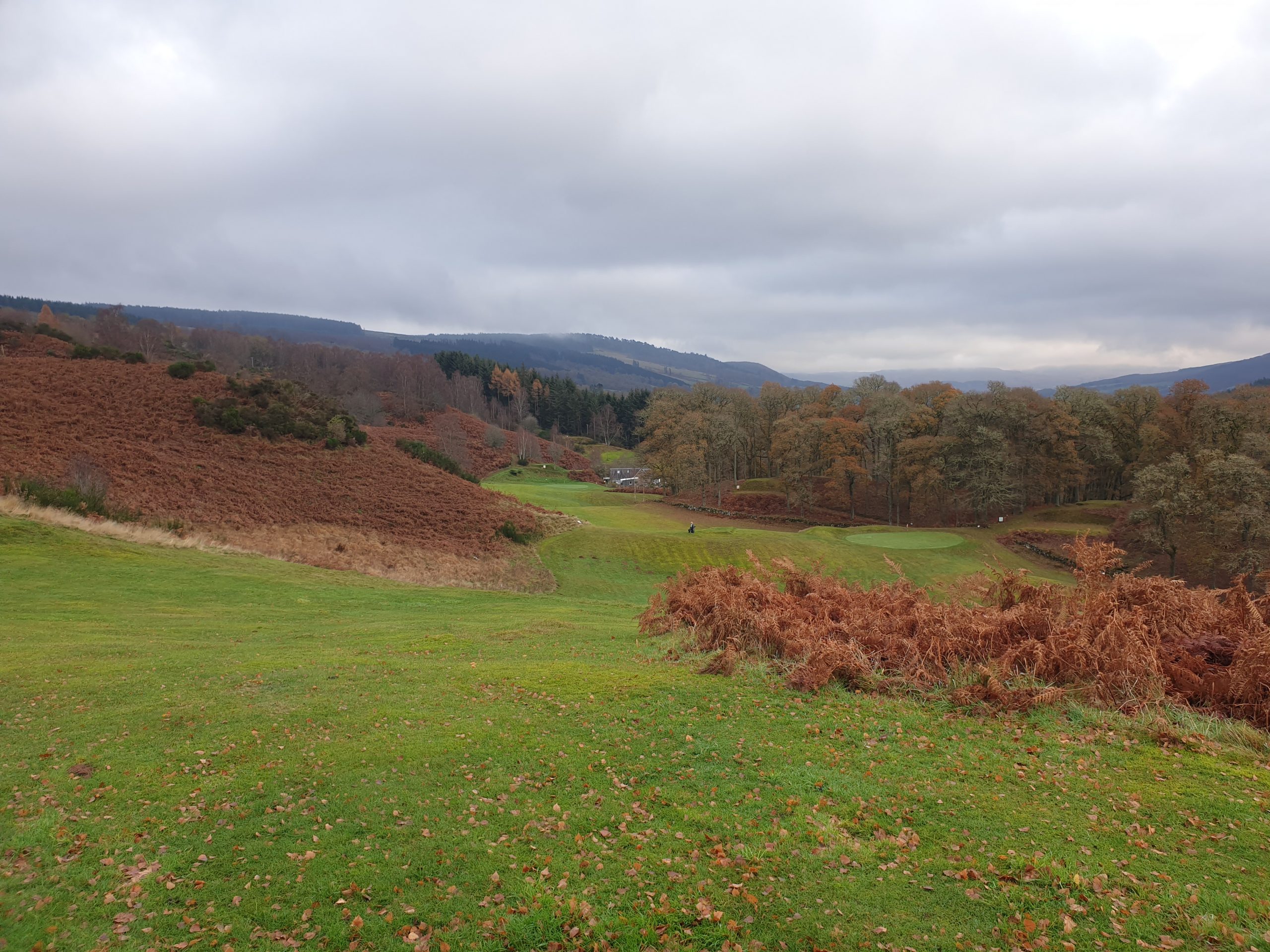
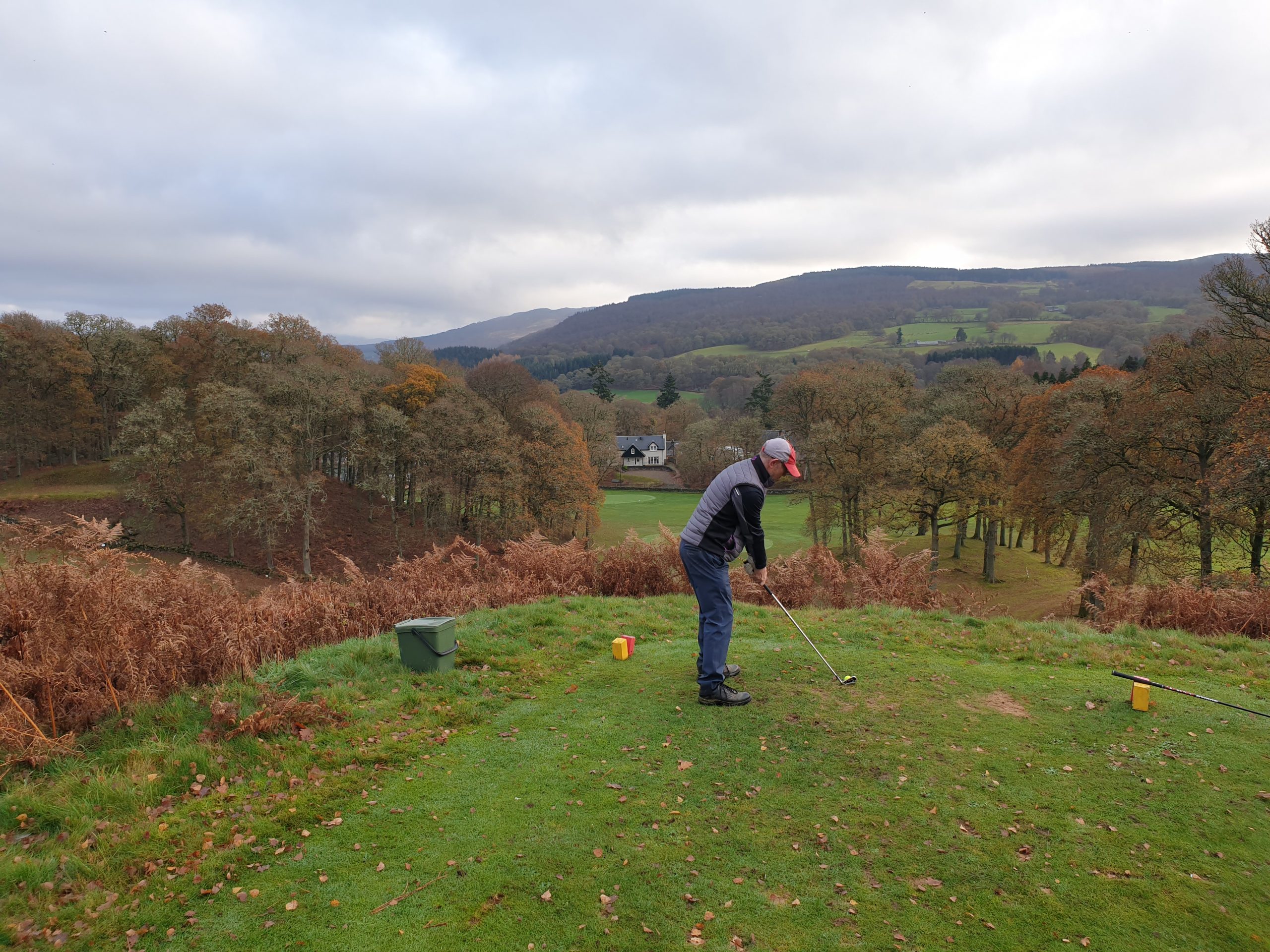
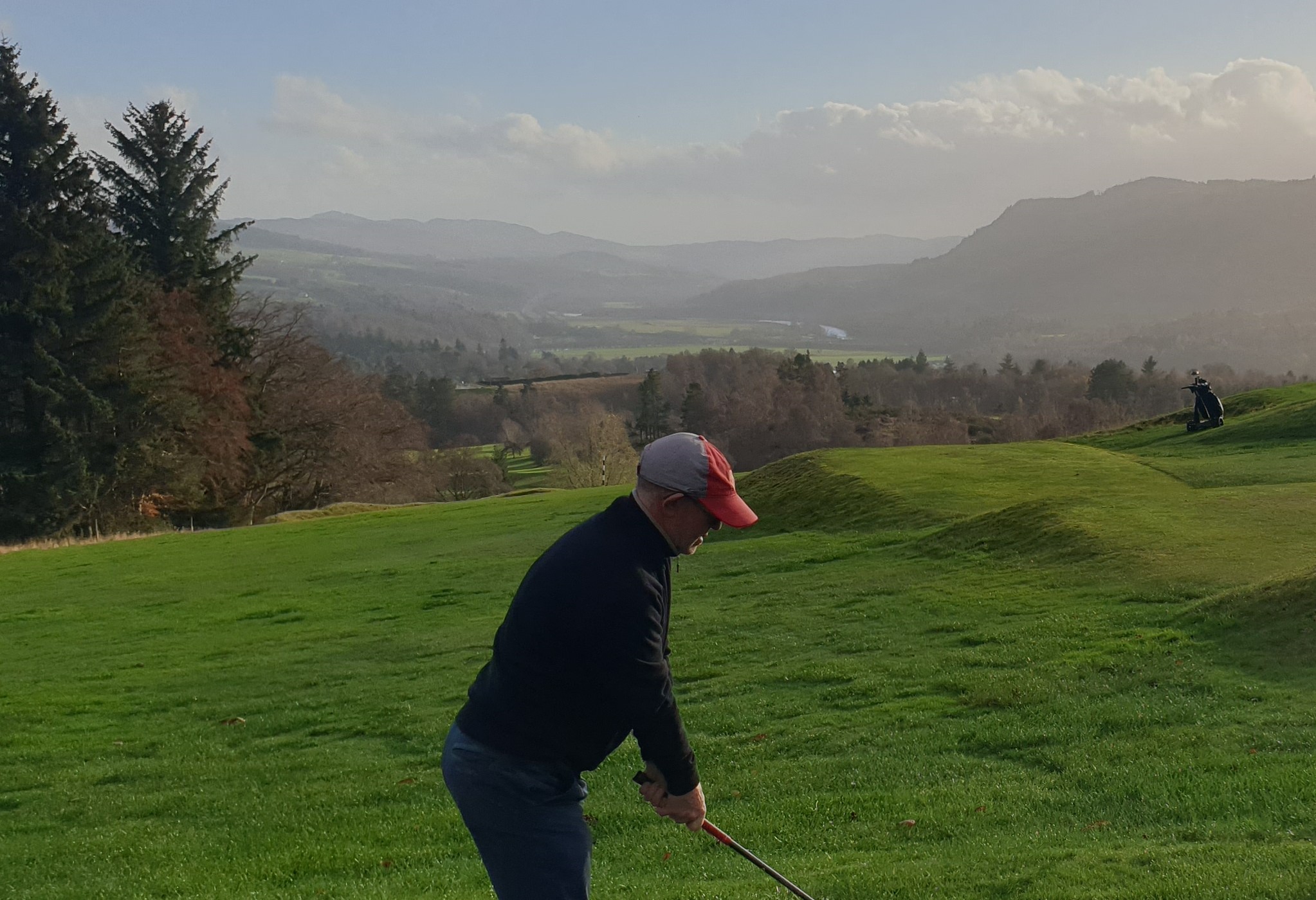
Magnificent views surround Pitlochry, the Tummel Valley seen here at the 9th, a downhill dog leg left par 4.

The website statement is marketing hyperbole of course but, in a way, is fitting as this “Gateway to the Highlands” course has always been a commercial venture since a development consortium built the course above the town. Having laid the new golf course, the original 9 hole Pitlochry course was later flooded in creating Faskally Reservoir for a major hydro eclectic plant. I doubt any visitors to Pitlochry’s dam to watch salmon leaping, through the man made fish ladder, know they are standing above a golf course.

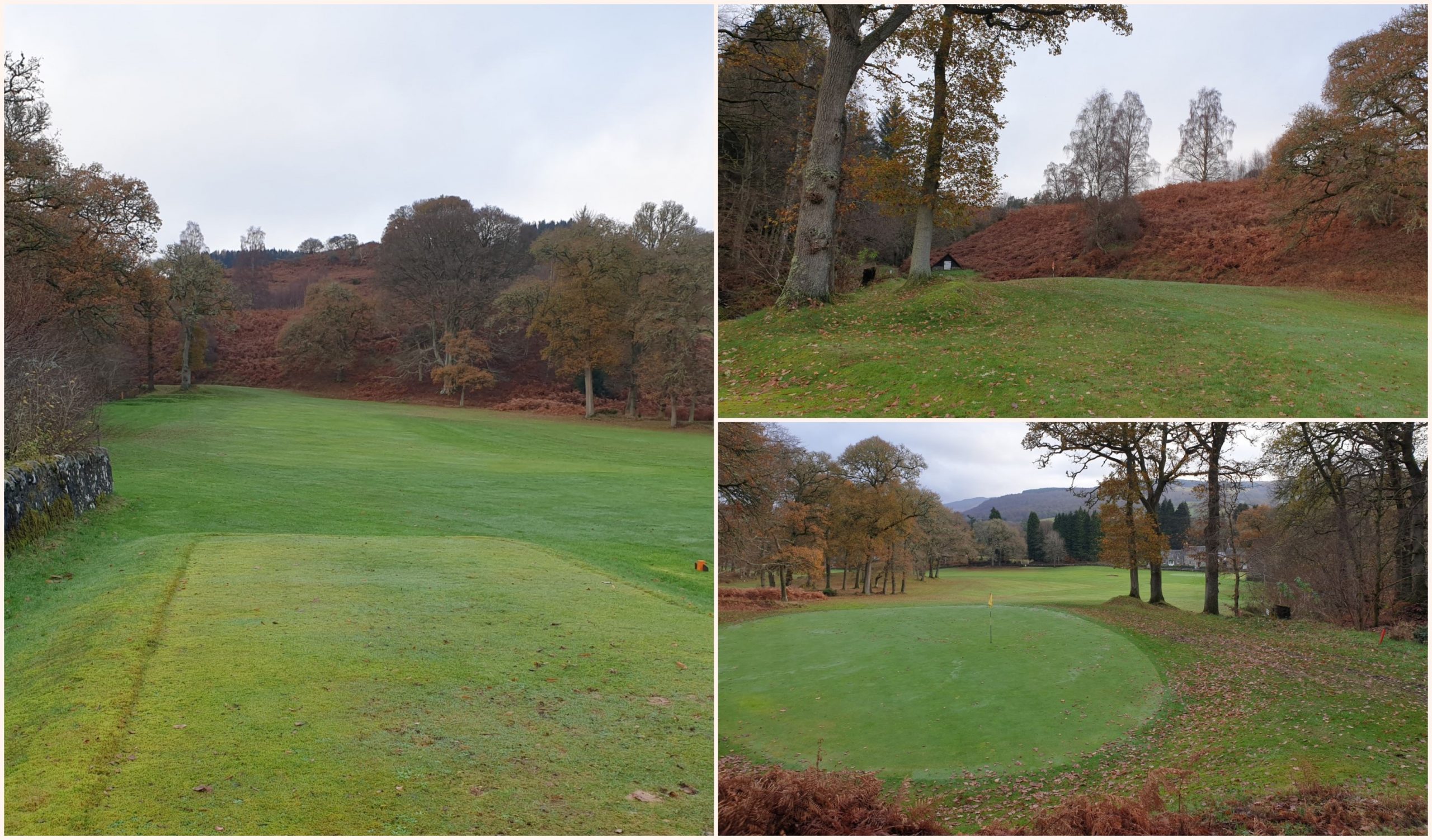
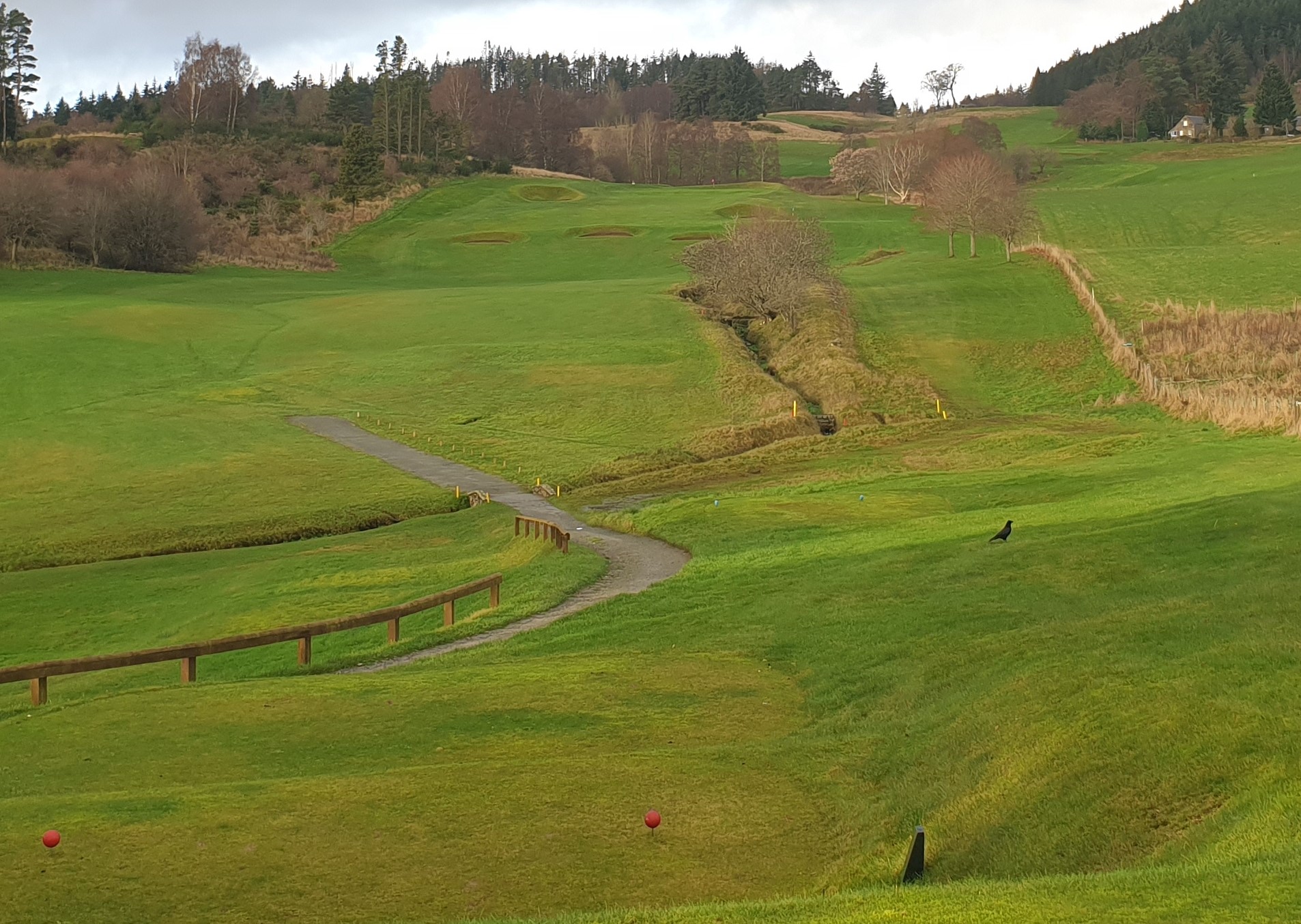
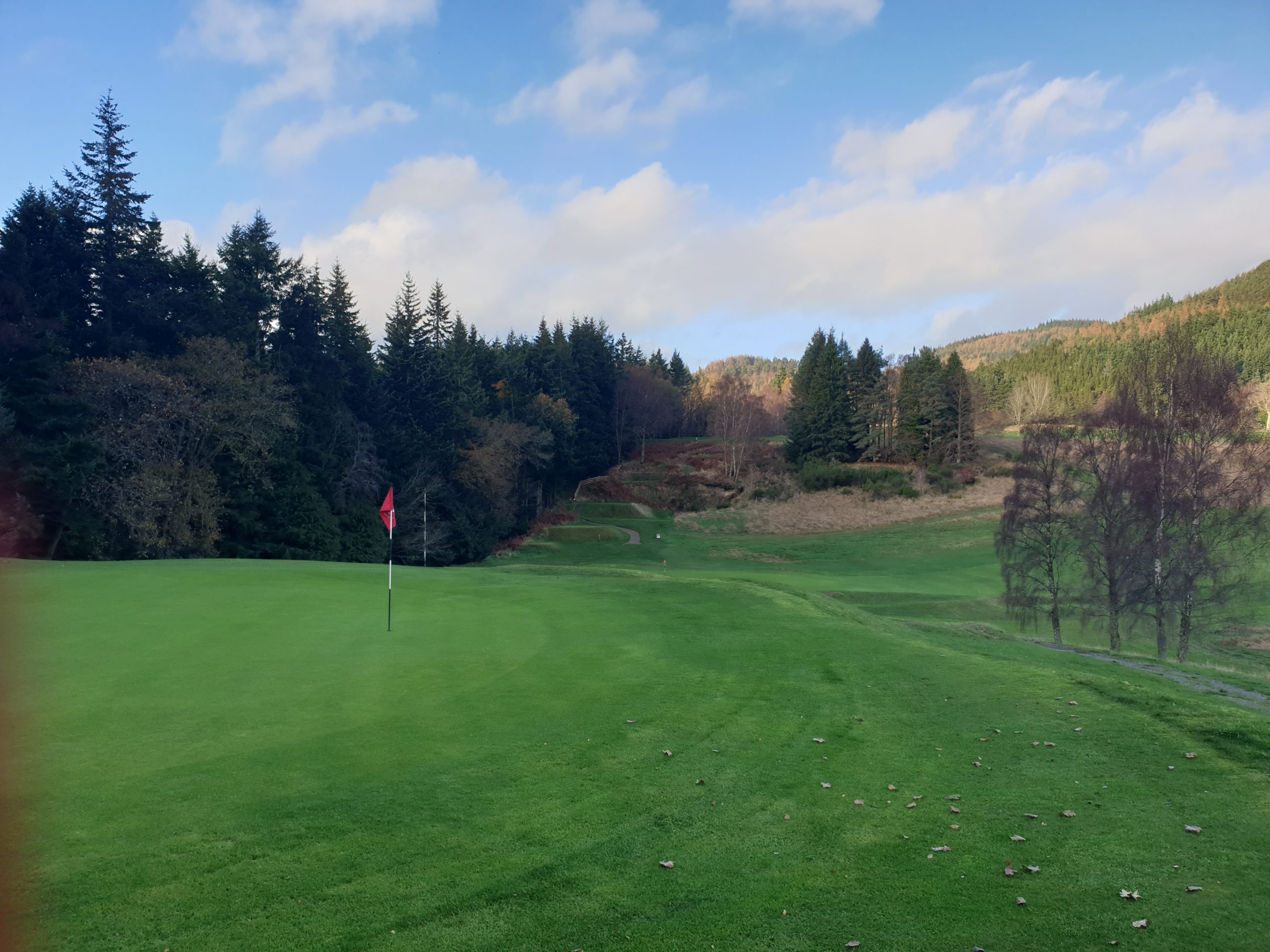
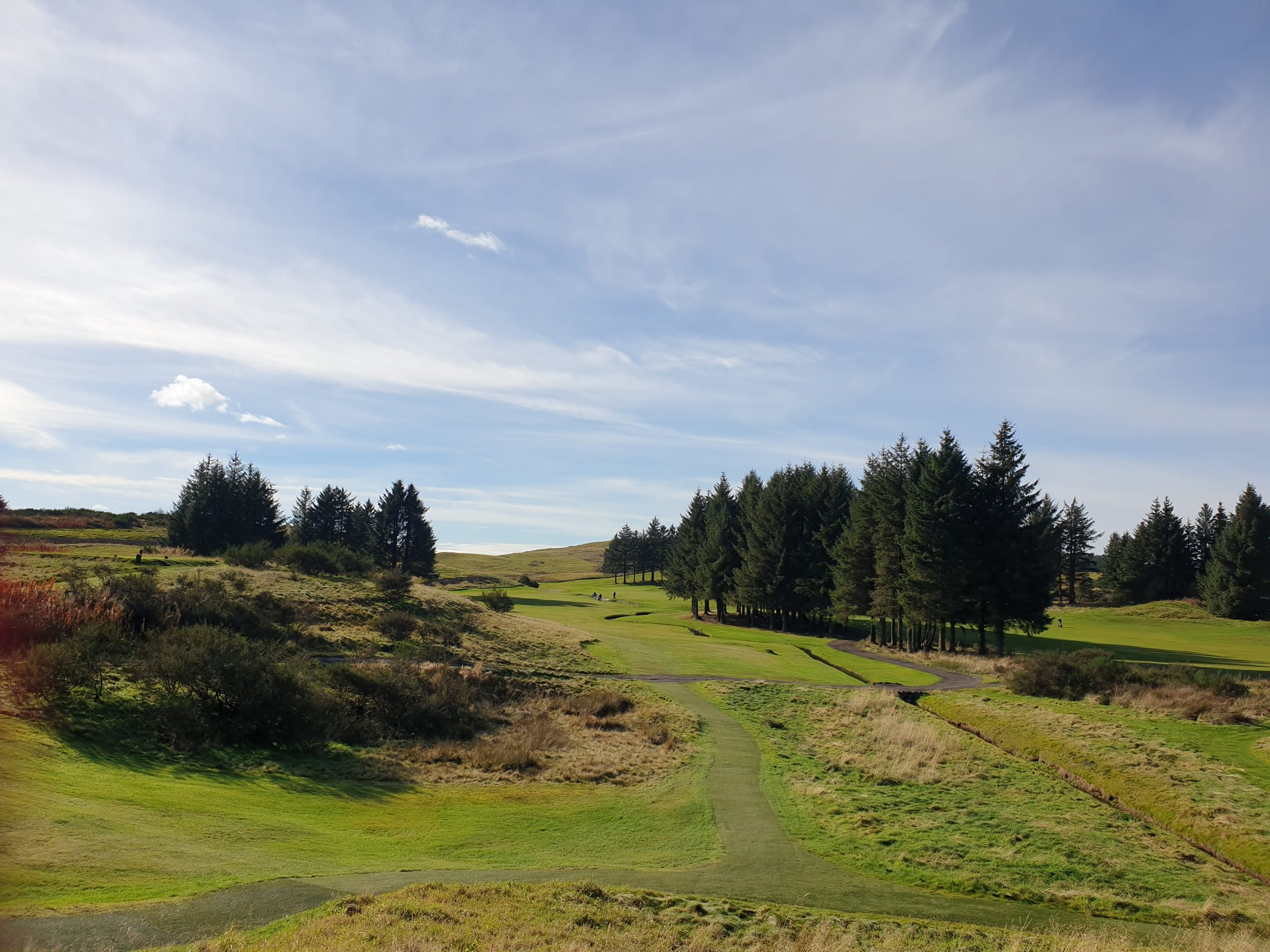
The 11th, one of three strong par 3s at Pitlochry, arguably the highlight of the design. Here looking back towards the elevated tee.

So how good is the course? Setting aside the hubris from the website, it’s a really good one. It is fairly short, but the undulations and the many plateaued greens make it feel longer. Despite, arguably, a lack of variation (there are 15 par 4s and 3 par 3s) the regular changes in hole elevation is the real challenge, especially for a visiting golfer. Weaving it’s way around relevant sites of Pictish Forts, and with stories of visits by Robert The Bruce and Queen Ann, there is plenty of history here as well, all described on the excellent course guide on the club website here. The greens are beautifully constructed and difficult to read.

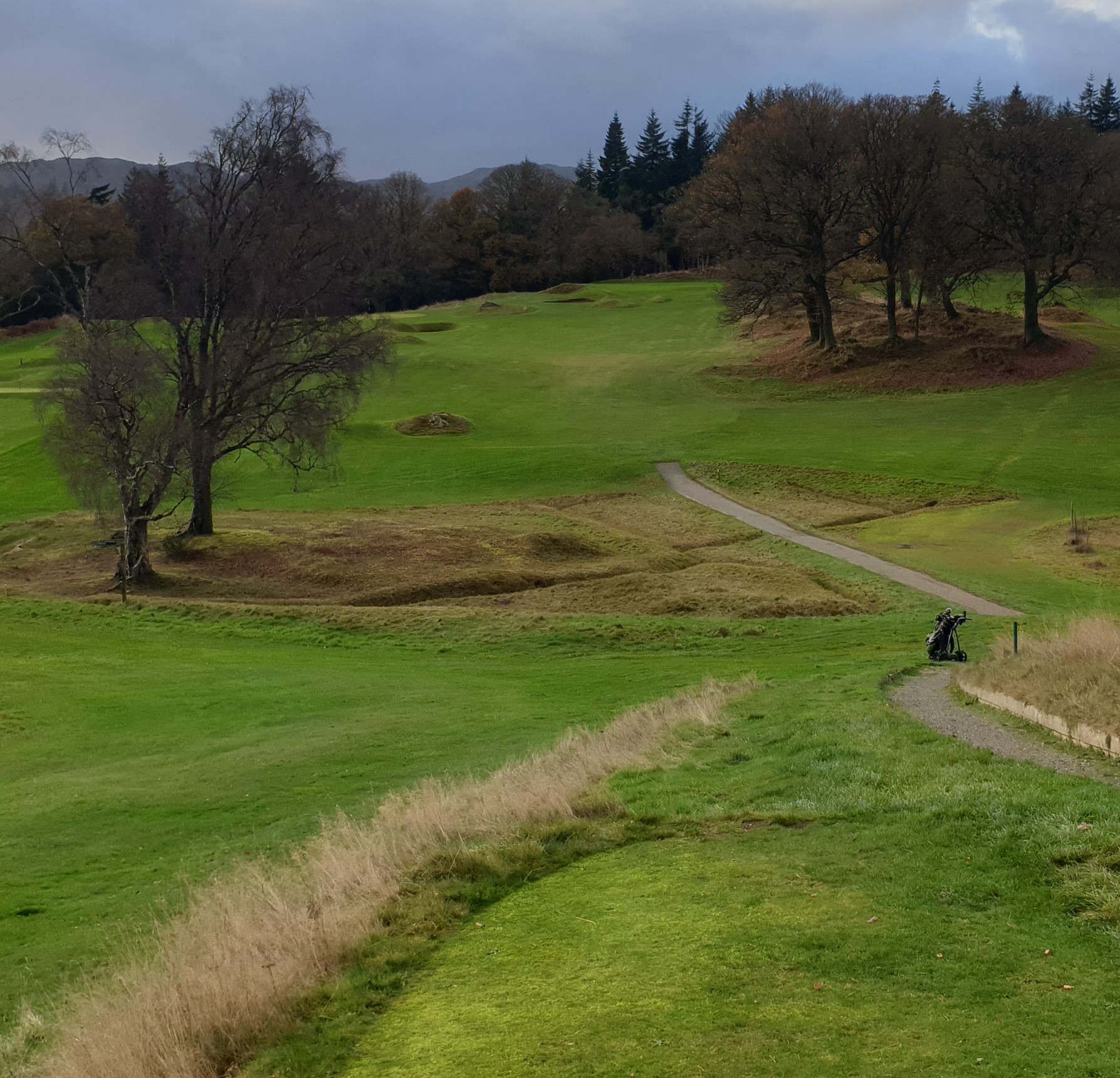
The deceptive 15th, a short par 4, where a good drive might leave a good birdie chance, as long as you judge uphill approach distance. But note the stroke index 5 rating!

The course was in excellent all round condition when we played, despite recent heavy rain. We played off a shortened winter layout, and paid only £21.99 via golfnow.com. This is incredible value and as a business there are often deals to be had here.

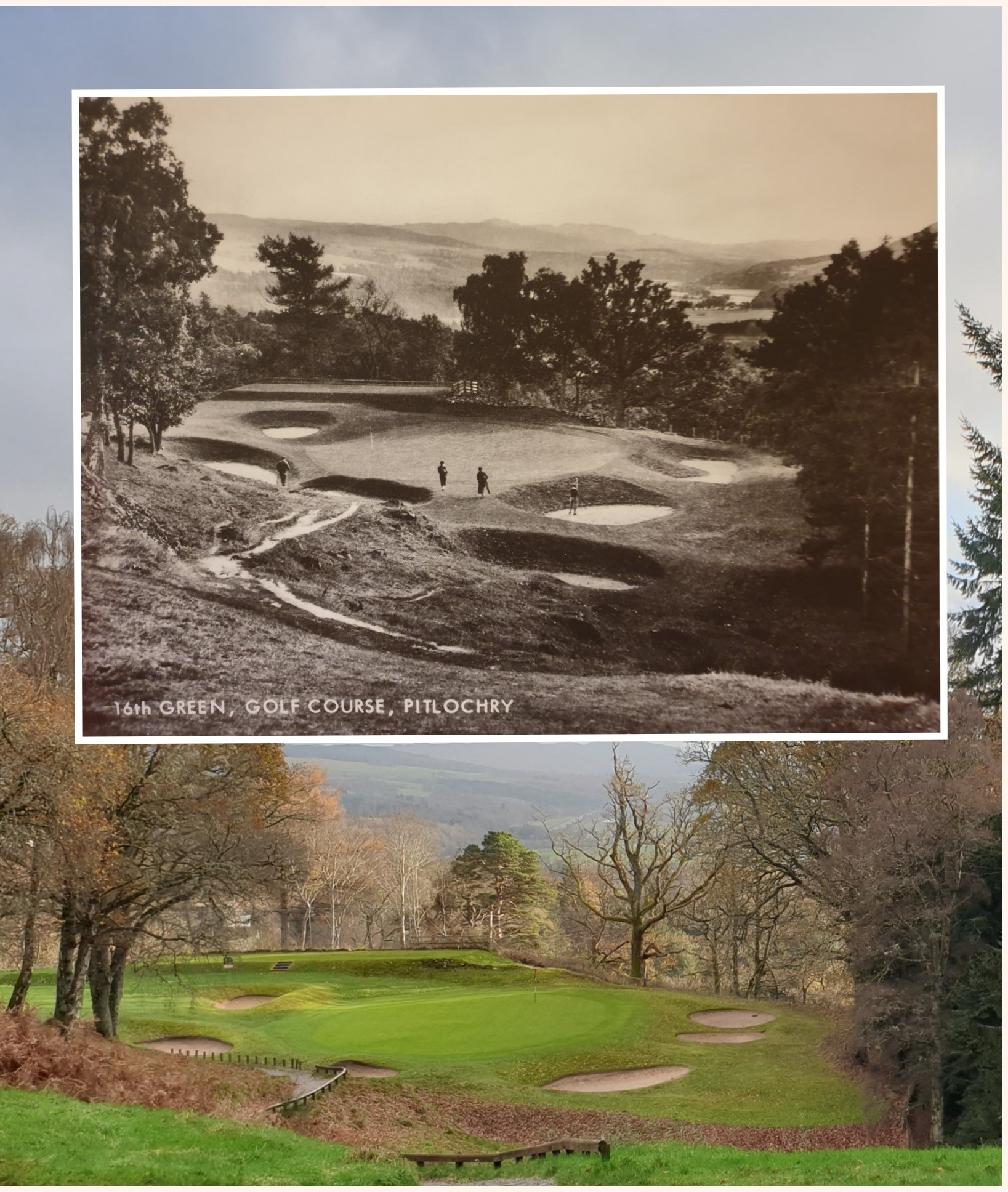
Although several changes have been made to the course over the years, the signature mid iron 16th, clearly didn’t need improving.

Being only 25 miles north of Perth on the A9, Pitlochry became a key holiday destination in late Victorian times and still remains a desirable holiday venue. The Golf Club’s opens competitions are very popular, not least because of the great clubhouse hospitality and food.

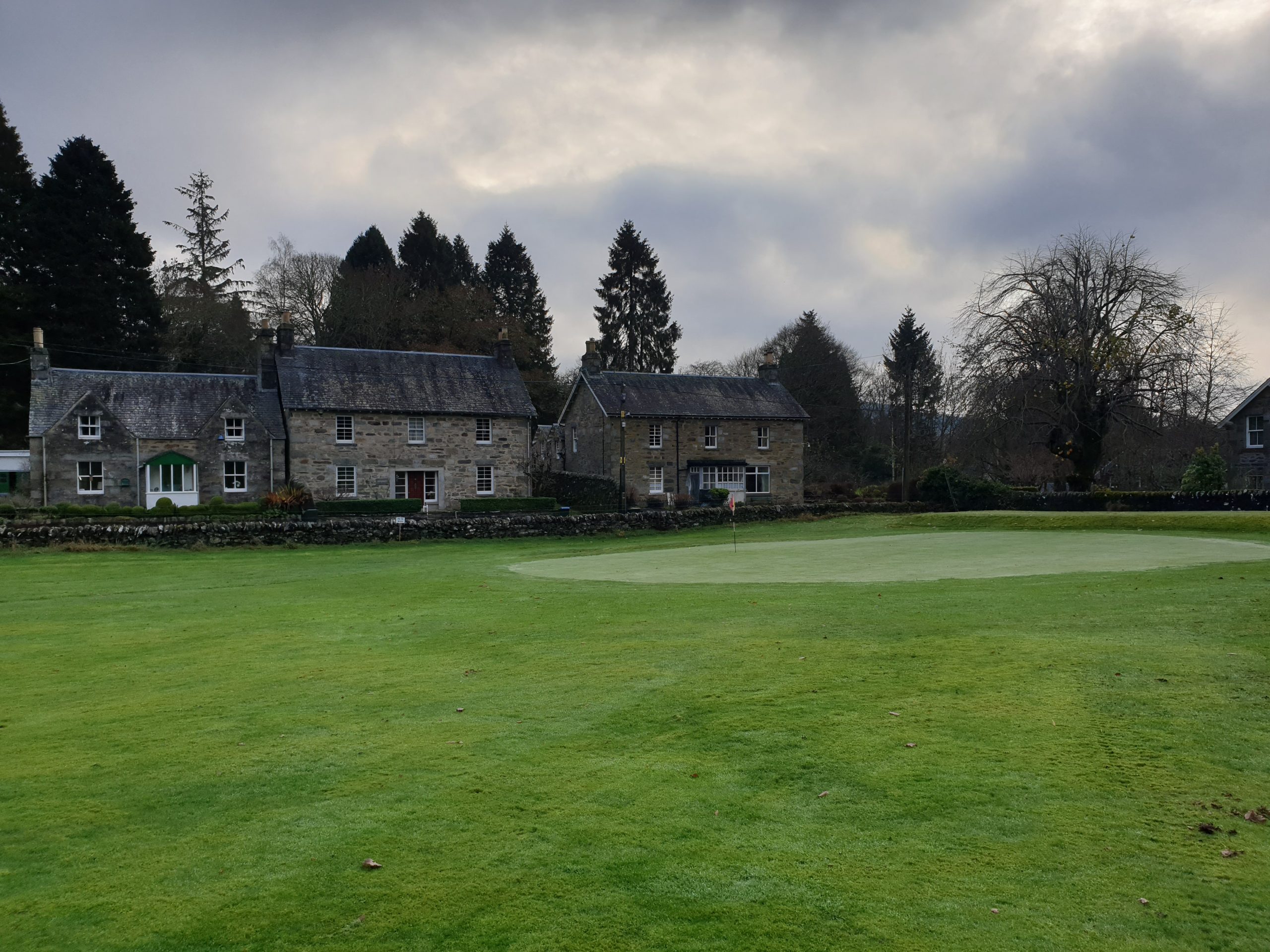
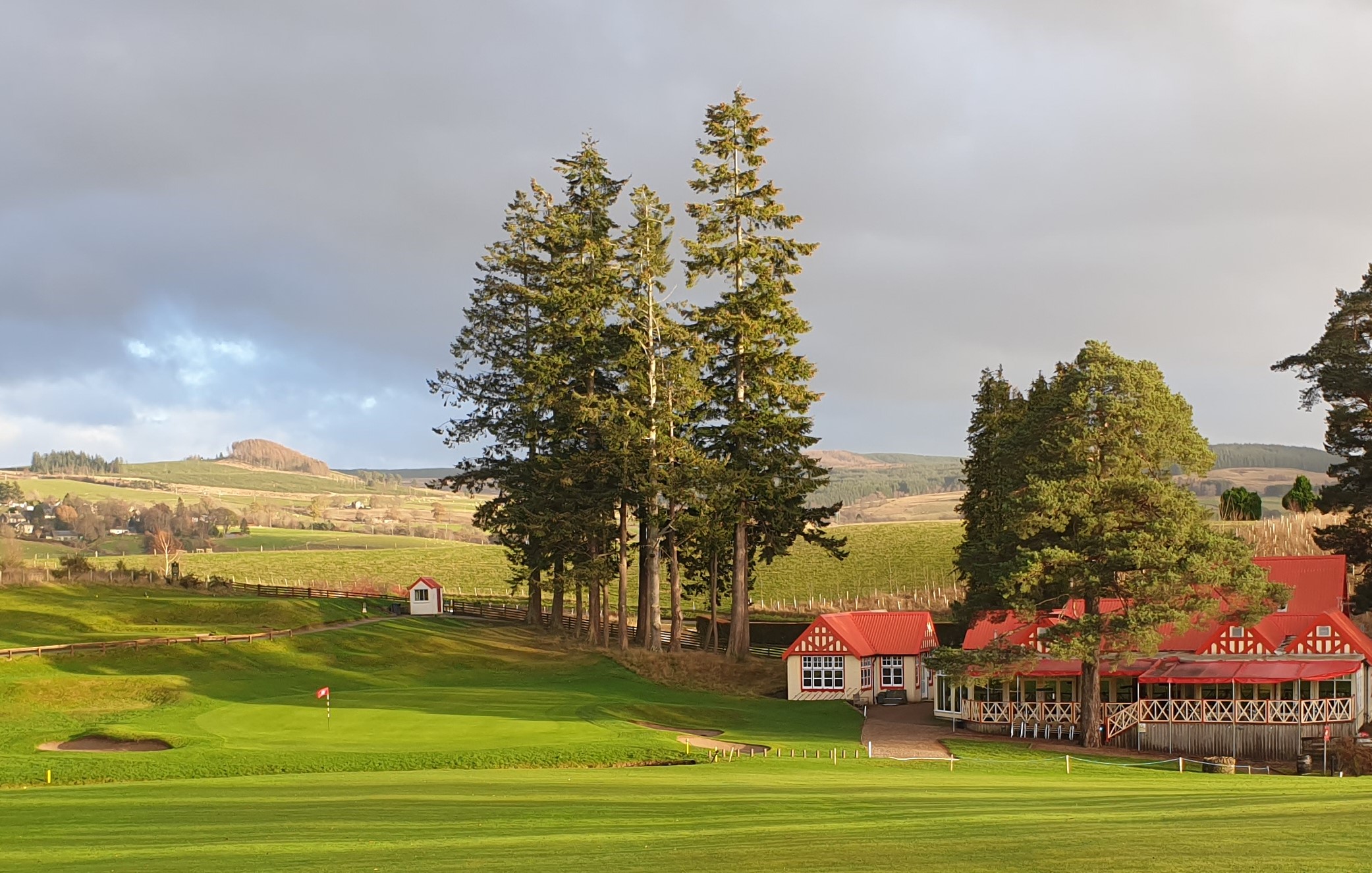
The 18th green, a downhill par 4 and a good birdie opportunity, with the “New England” feel clubhouse, which houses a good restaurant.

Back to the hyperbolic claims. Of the courses I’ve played, Pitlochry isn’t even the best Willie Fernie designed course under 6000 yards – that’s Shiskine for me. I also think Boat of Garton, Kilspindie and Carnoustie Burnside (where Hogan qualified for the 1953 Open) are all better courses and under 6000 yards from their longest tees.

Pitlochry’s course guide also states the short par 15th hole is “probably the most difficult par four in the world”! Whilst it’s likely ‘tongue in cheek’, I did take 7!

Facts:

Round List Price £65. Actual Paid £21.99 through Golfnow.

Course/Slope Rating (yellow) 67/116.

Course Type: Heathland

Par 69  (15 par 4s, 3 par 3s)

Distance (blue): 5517 yards

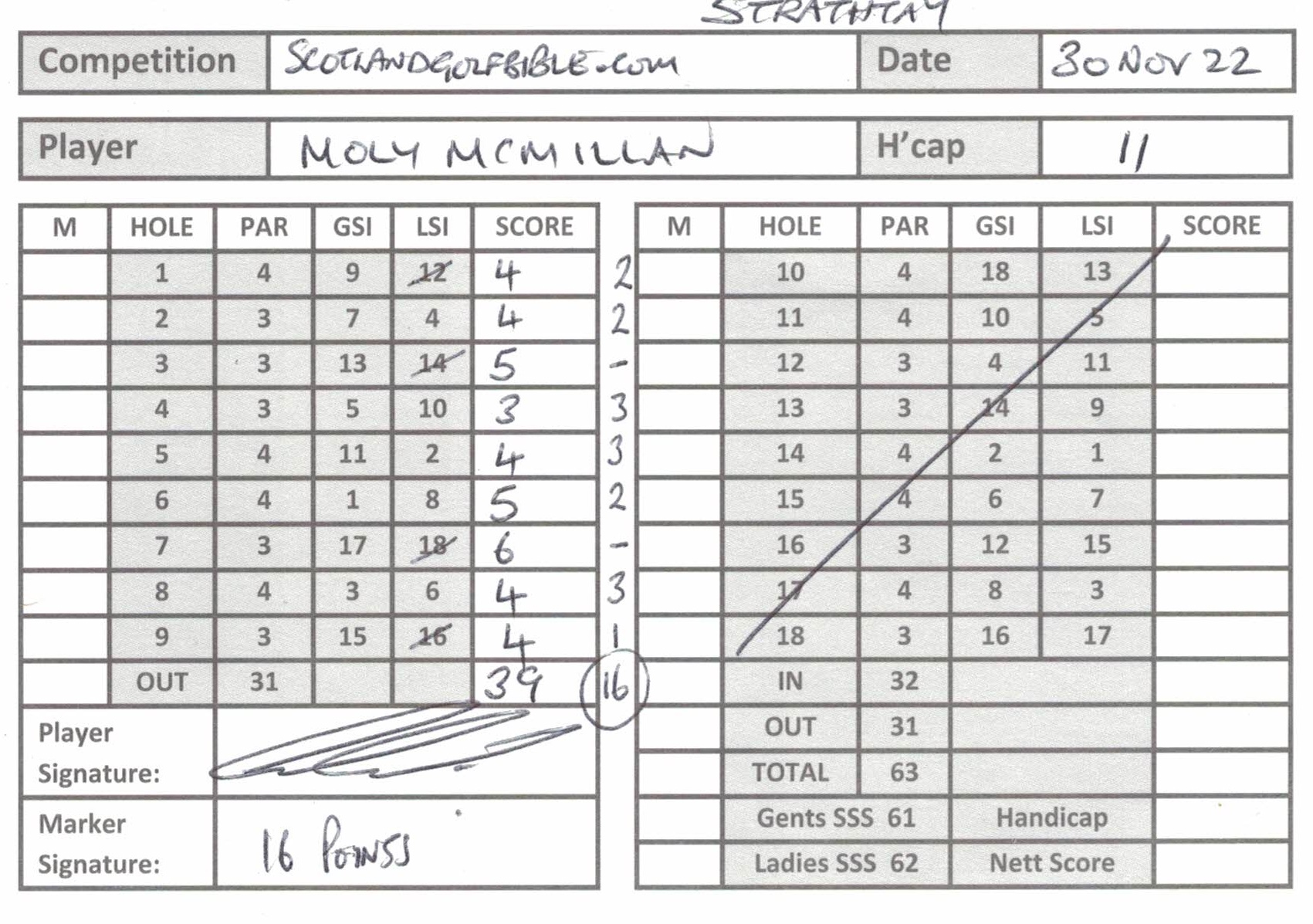
Moly’s Pitlochry Scorecard – 86

169. East Renfrewshire (‘Ren’). 18 Oct 22.

Arboretum type vision creates framing ‘For the Ages’

Value for Money (out of 5) – 5

It takes vision to plant an arboretum as its creator is dead by the time planting has matured, something both sad and somewhat magical. This was how I felt playing one of James Braid’s canvasses – East ‘Ren’.

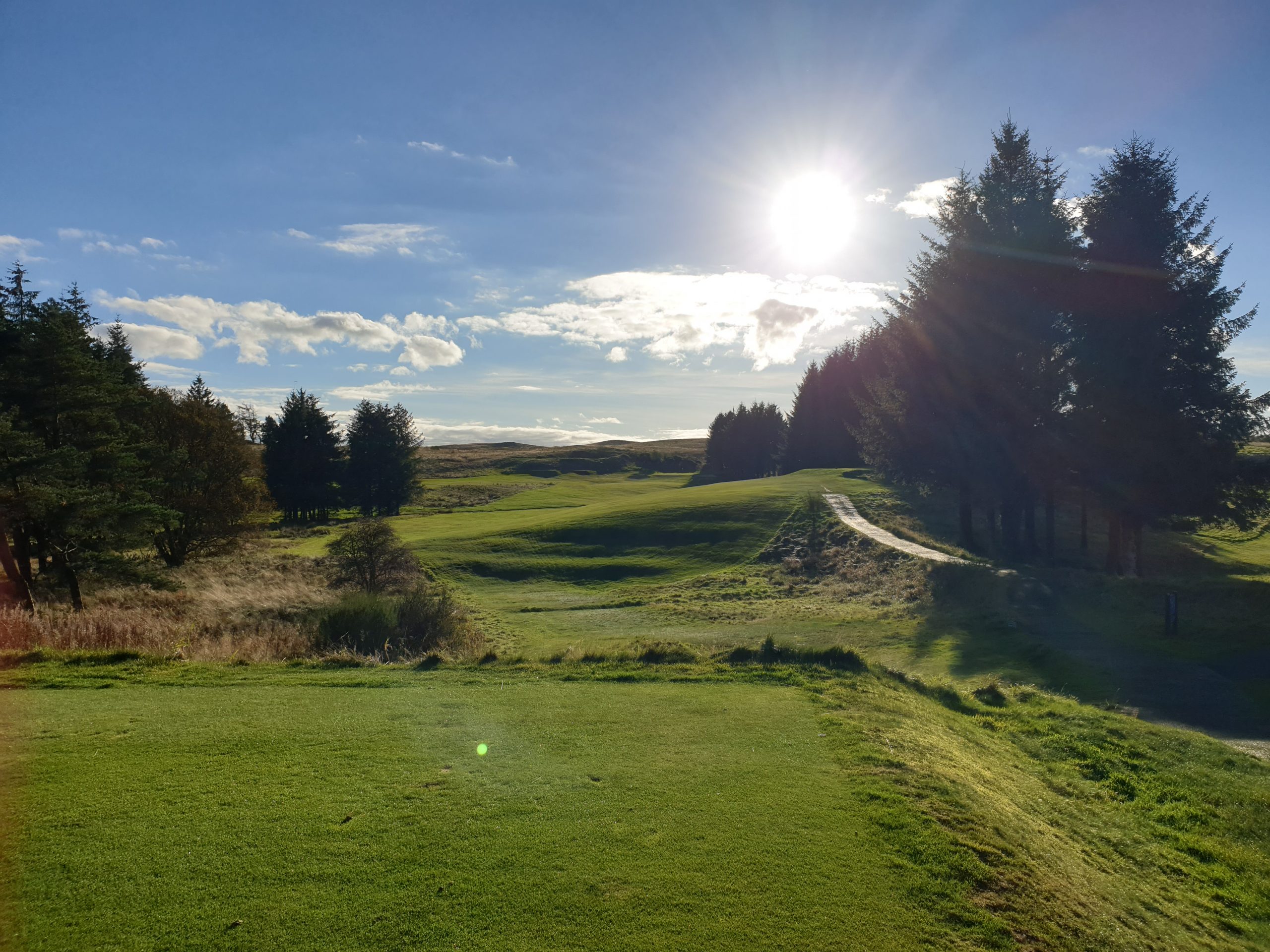
The beautifully framed par four 2nd hole at East Ren from its elevated tee.

In 1922 when Braid designed this moorland layout there were almost no trees and this is a great example how courses evolve over the years.

The original open heathland vista of East Ren, a picture courtesy of the golf club. The clubhouse is still in use.

Looking at the original open heathland layout of the course in 1922, one wonders whether Braid imagined what the course would become? If he did, he really was visionary, because the course is now a beautiful mix of holes and incredibly framed by fir trees. I could have published pictures of every hole.

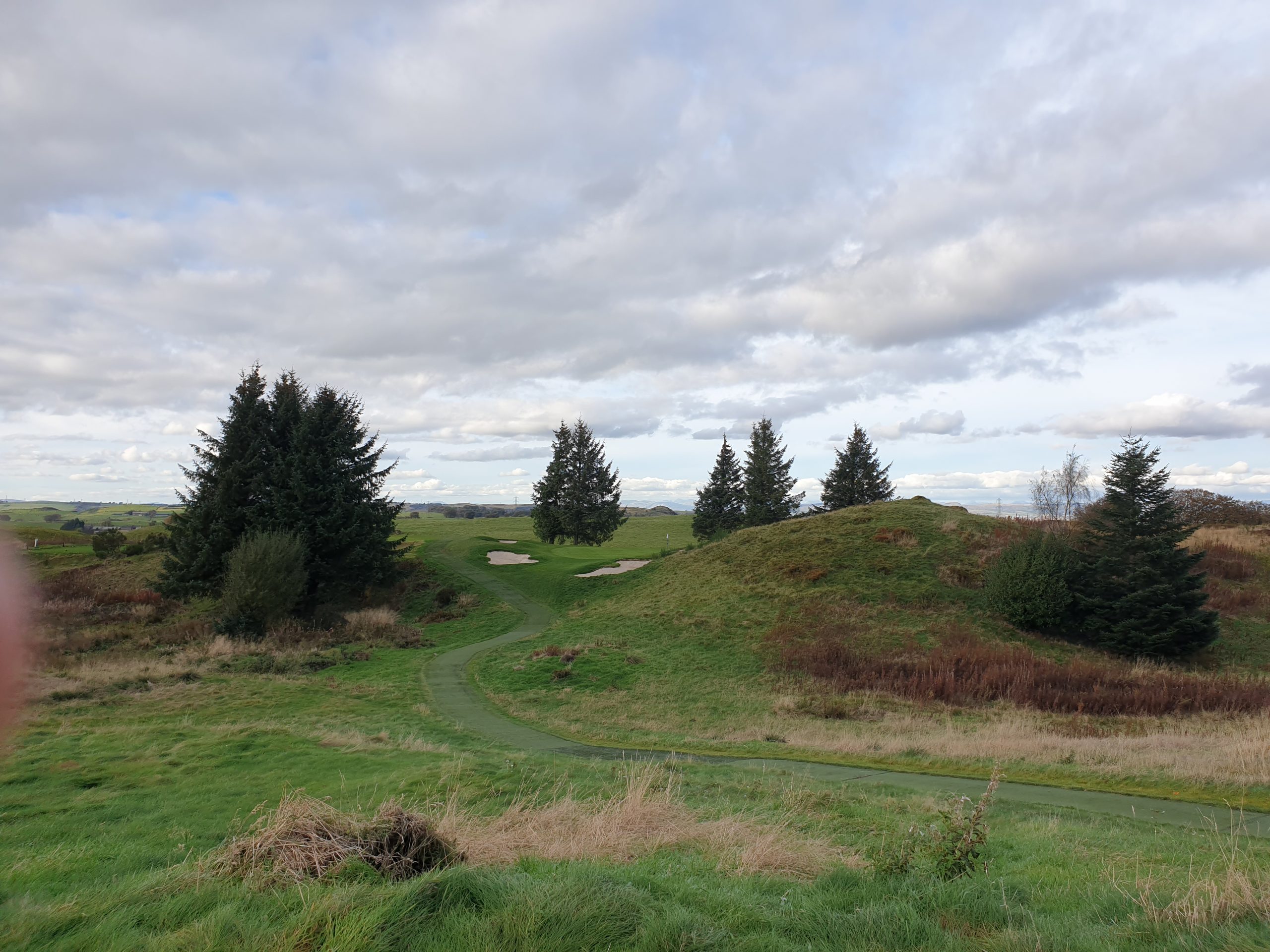
The great conditioning of East Ren shown here at the 4th green, the 135 yard par three, which also demonstrates the large bunkering on many holes.

This very bonny golf course was in great condition when we played, despite the recent wet weather. It fully justifies its high placing in lists of Scotland’s finest courses.

The downhill dog leg left 331 yard par four 6th hole.

With constantly changing directions and a great use of the sloping braes, Braid’s course is one that you’ll want to come back to again and again. It’s a tough walk in places, no more so than the severe uphill par three 11th, “Brae Shouther”, at over 200 yards.

Moly at the difficult 200 yard par three 7th hole.

There are also many slight dog leg holes, and the odd blind shot thrown in for good measure. The bunkering is strong, yet the fairways are overall pretty generous. The greens subtle, but not overly sloping.

The approach at the par five 14th hole, with the burn challenging the longer hitters, attempting to go for the green in two.

The use of craftily routed burns, feeding the adjacent reservoir, means strategy off the tee is a consideration. Overall, it’s an architectural gem, clearly benefitting from Braid’s growing experience by the early 1920s.

The beautiful 17th at East Ren, yet another hole with excellent framing.

Almost every hole is materially different from its predecessor, many with outstanding view of the Renfrewshire countryside. This is a ‘must play’ course and in the top handful of Scottish moorland courses.

The excellent short 13th hole, at only 120 yards the shortest hole.

Go out of your way to play East ‘Ren’, which has shot towards the top of courses I would like to play regularly.

Facts:

Round List Price £75. Actual Paid £30 through Golfnow.

Course/Slope Rating (yellow) 68.8/119.

Course Type: Heathland

Par 70  (2 par 5s, 12 par 4s, 4 par 3s)

Distance (yellow): 5845 yards

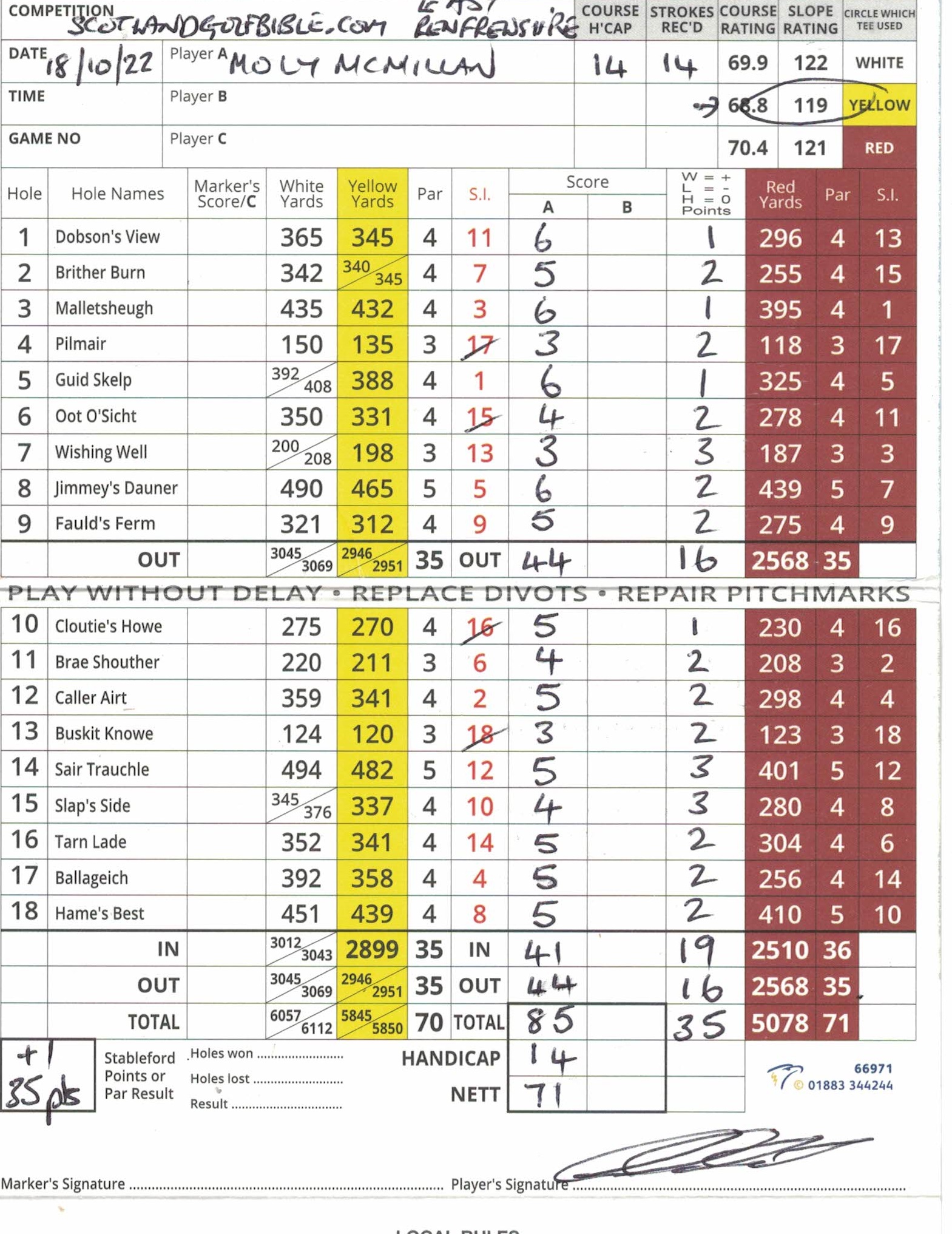
Moly’s ‘East Ren’ Scorecard – 85

165. Lanark. 13 Oct 22.

Gleneagles – “The Lanark of the North”?

Round £65. Par 70. Course/Slope Rating (yellow) 70.1/124. Value (out of 5) – 5

Moly’s score – 96

In immaculate condition, I still found a rabbit hole at Lanark and one which didn’t afford a free drop. Lanark’s website claimed a brilliant story; “In 1920 the LSM Railway Company decided, only on the casting vote of its chairman, to build its hotel at Gleneagles rather than Lanark.”

The beautifully stunning Lanark golf course evident from the first tee, a 350 yard par four.

Disappointingly, I couldn’t find corroboration for Lanark’s story; for example, the excellent 1951 club’s centenary history makes no mention of the ‘Gleneagles’ decision. Jamie Darling, of Lanark GC, was very helpful in my enquiries, but he too found evidence elusive.

The challenging 4th, here the view from 200 yards, at this 430 yard par four stroke index 1 hole.

The more I researched, the more convinced I am The Gleneagles resort vision existed long before 1920; in fact as early as 1910 by Perthshire born Donald Matheson, the Chief Engineer with Caledonian Railways.    The Kings course opened in 1919, with the final hotel site decided around 1920. Matheson later became the GM of Caledonian Railways, then Dep GM in Scotland for LMS, and seems likely the driving force.

The sixth requires two “Sunday best” shots to get close to the green at this uphill par four.

Lanark, unlike Gleneagles, is one of the UK’s best kept golfing secrets – a quite beautiful moorland course, nestled 600 feet up in the Clyde Valley of South Lanarkshire, only 25 miles from Glasgow’s city centre. The town is an ancient burgh and historically important, evidenced by the golf course being one of the oldest “inland” courses in the world. A full 18 holes was designed by Old Tom Morris in 1897, although some holes are traced back to 1851.

The delightful 125 yard seventh – played downhill to a web of bunkers. The 8th is seen beyond and is the only hole playing the same direction as its predecessor.

This tough course was in majestic condition when I played in good playing conditions yet still struggled to break 100 – I had one of those rounds where you play better than you score. The turf is very firm and certainly played like a links. With beautifully crafted greens and surrounds, I suspect anyone playing to handicap will have made several single putts.

The exquisite condition of the course, seen here at the uphill par three 10th at 147 yards, adorned in Autumn sunshine.

The course is well laid out with constant changes in direction (except the 7th and 8th), so wind is always a strong consideration, especially as the course sits high up in exposed countryside. My only (very slight) criticism is that the approach to the second can be confusing; I hit into the 14th green, to be met by some members telling me “loads of visitors do that!”; later in my round I was advising other visitors the same!

Approach to the 11th, with OOB getting closer at the greenside.

The fairways are pretty generous, but miss these and the rough is at times very brutal. With discounts available through golfnow.com, I paid only £32, which was outstanding value.

I would really love to be able to confirm that Gleneagles is “The Lanark of the North”.  It would be nice if anyone could point me to evidence of the chairman’s decision to validate the club’s great story. For the record, Henry Allan, was Caledonian Railway chairman between 1918-23, are would be the “Chairman” in Lanark’s claim.

It’s worth going out of your way to play Lanark, a wonderful moorland course, arguably one of Scotland’s very best.

Facts:

Course Type: Heathland

Par 70  (1 par 5s, 14 par 4s, 3 par 3s)

Distance (yellow): 6107 yards

Moly’s Gross score: 96

Moly’s Lanark Scorecard – 96

163. Carnwath. 25 Aug 2022.

Set on Gallow Hill, this course has both outstanding and infamous views.

Round £35. Par 70. Course/Slope Rating (blue) 67.7/120. Value (out of 5) – 4.5

Moly’s score – 88

Reaching the sixth tee at Carnwath, I thought about Alexander McGregor’s book “The Law Killers“, the dark history of murder in the area of Dundee where I was brought up. Some of the book’s killers look out upon Carnwath golf course, from neighbouring ‘Carstairs’, the State Mental Hospital. I wondered if any ‘patients’, had been golfers and, if so, whether seeing a course through their barred windows improved or worsened their existence.

The par four 6th tee at Carnwath, with The State Hospital ‘Carstairs’ on the right. Fittingly SI 1.

Carstairs was completed in 1939, more than 30 years after the golf course opened in 1907, designed as a 9 hole layout by Willie Auchterlonie of St Andrews. This South Lanarkshire heathland course is great fun with outstanding views all around. It’s easily accessible being about about 30 miles from both Edinburgh and Glasgow.

The tough par 3 uphill opening hole, ‘Roundell’ will need a hybrid or wood for most golfers. The brown coloured ‘Roundell’ can be seen, behind the green, and was a look out point in medieval times

The course, now much changed from the initial layout, became 18 holes in 1963. It was in beautiful condition when I played in fine weather. The tees and fairways were excellent, the bunkers well raked and the greens true and fast, but not too sloping.

The par four 5th hole, “Railway”, the first of a number of strong dog leg holes at Carnwath.

The layout is unusual, with three of its four par 3s, being in the first four holes. With only two par 5s, the course’s variety is added to with dog legs, blind shots and some treacherous and well bunkered plateau greens.

The par four stroke index 3, 8th hole, the approach played steeply uphill, with only the longest hitters reaching in regulation I suspect.

The course sits astride the busy A70, which is quite hazardous to cross over. It is also a tough undulating walk, and plays all of its length, of 5632 yards from the blue (middle) tees, which would normally be coloured yellow.

The quality greens make for an enjoyable visitor experience, here shown at the tricky par four 15th hole. One of many plateau type greens.

At only £35 for a round it represents excellent value. With wide fairways, it’s no surprise this is a popular society venue, especially given the outstanding borders views and abundant wildlife. I found the staff in the shop and bar very welcoming.

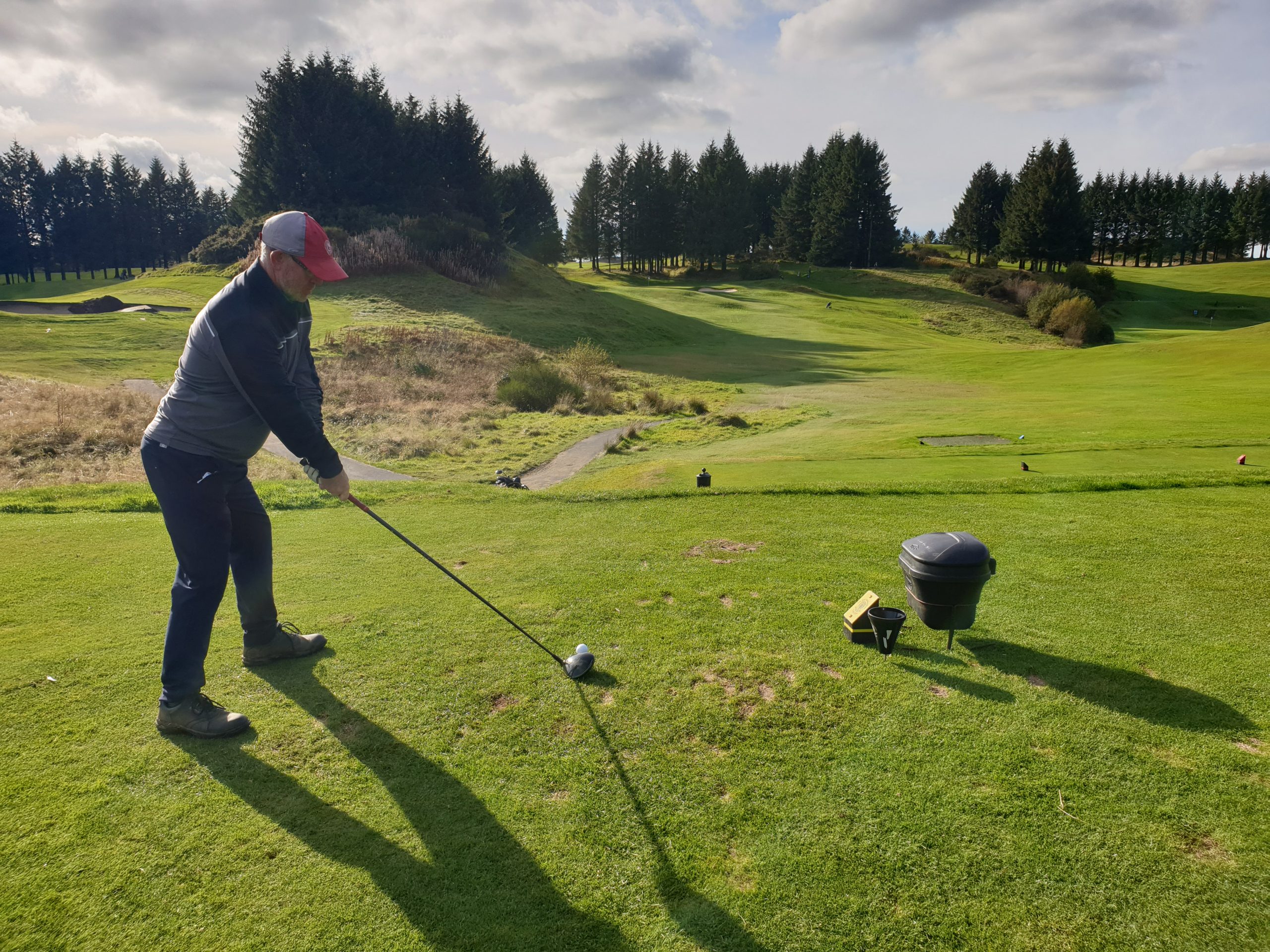
Moly at the dog leg right 9th hole, “Winterlaw”, at 359 yards. Sadly, Moly’s sliced shot resulted in his only blob of the day.

Returning to The Law Killers; the stories of the headless human corpse found in my Dad’s allotment on The Dundee Law, or the murder of three women in my street, is not appropriate here. But the irony of the golf course and State Hospital being built on Gallow Hill can’t go unstated, since in bygone days, patients in Carstairs would have looked upon a Gallow of rather different construction.

Carnwath’s 6th green with The State Hospital looking on.

Facts:

Course Type: Heathland

Par 70  (2 par 5s, 12 par 4s, 4 par 3s)

Distance (blue): 5632 yards

Moly’s Gross score: 88

Moly’s Carnwath scorecard – 88, a solid round
« Older posts Newer posts »

© 2025 Scotland Golf Bible

Theme by Anders NorenUp ↑