A guide to green fee value for money

Category: Parkland (Page 10 of 25)

113. Cally Palace. 23 Oct 2020.

Don’t believe the hotel’s description – this is no better than your average council course.

Round £32. Par 71. Course Rating / Slope Rating (yellow) not registered. Value (out of 5) – 2

The hotel website quotes: “The Cally Palace has it’s own 18 hole parkland golf course, which is one of the finest golf courses in the area.”

Utter rubbish, this course, designed in 1994 by Tom Macauley, an architect described as “adequate” by golfclubatlas.com, is no better that many average council run courses in Scotland. In fact, that might be doing a great disservice to many of the wonderful council run courses.

The trees are the star on this course – Moly finding a nice hazard on the 16th fairway!

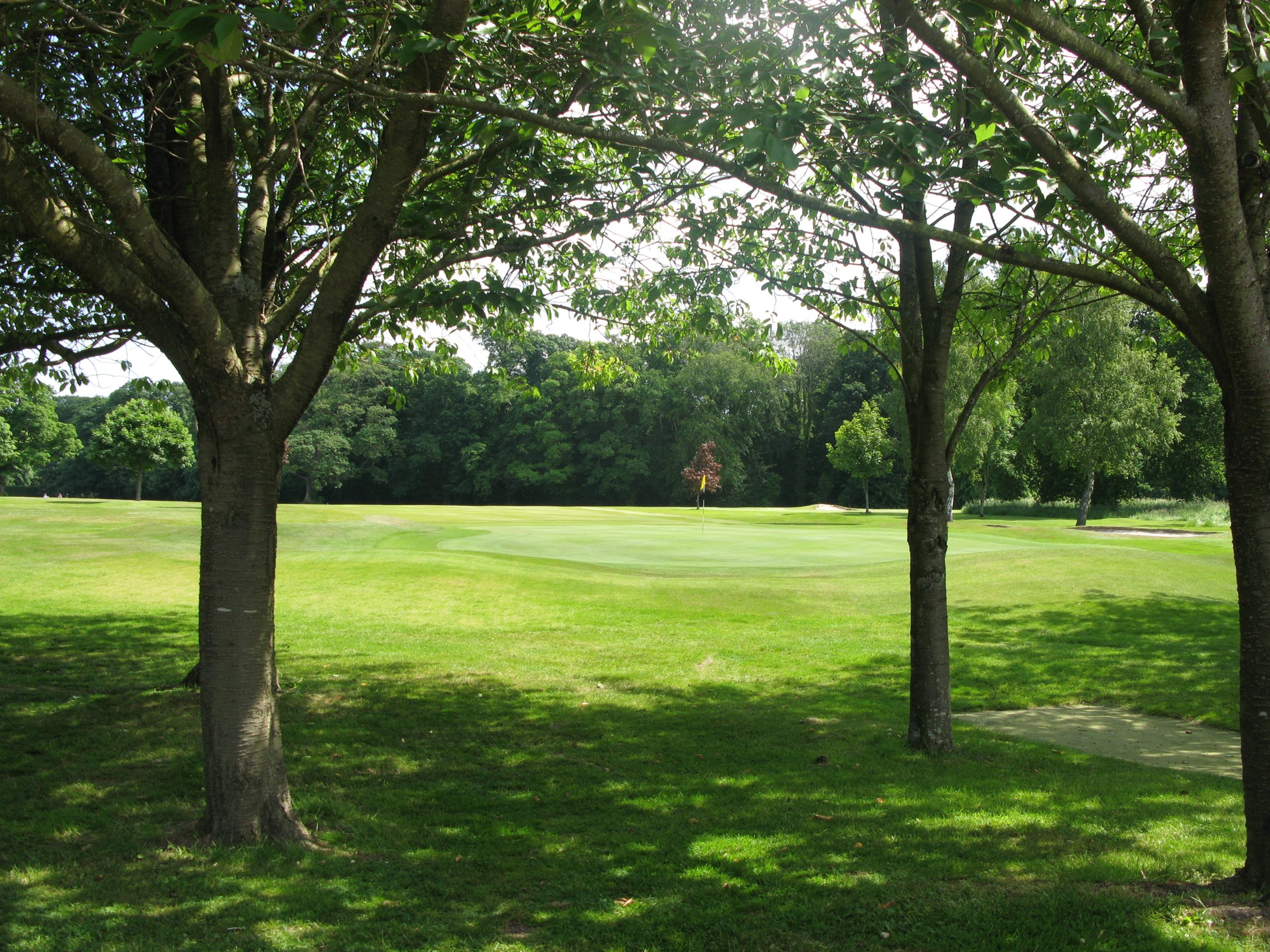
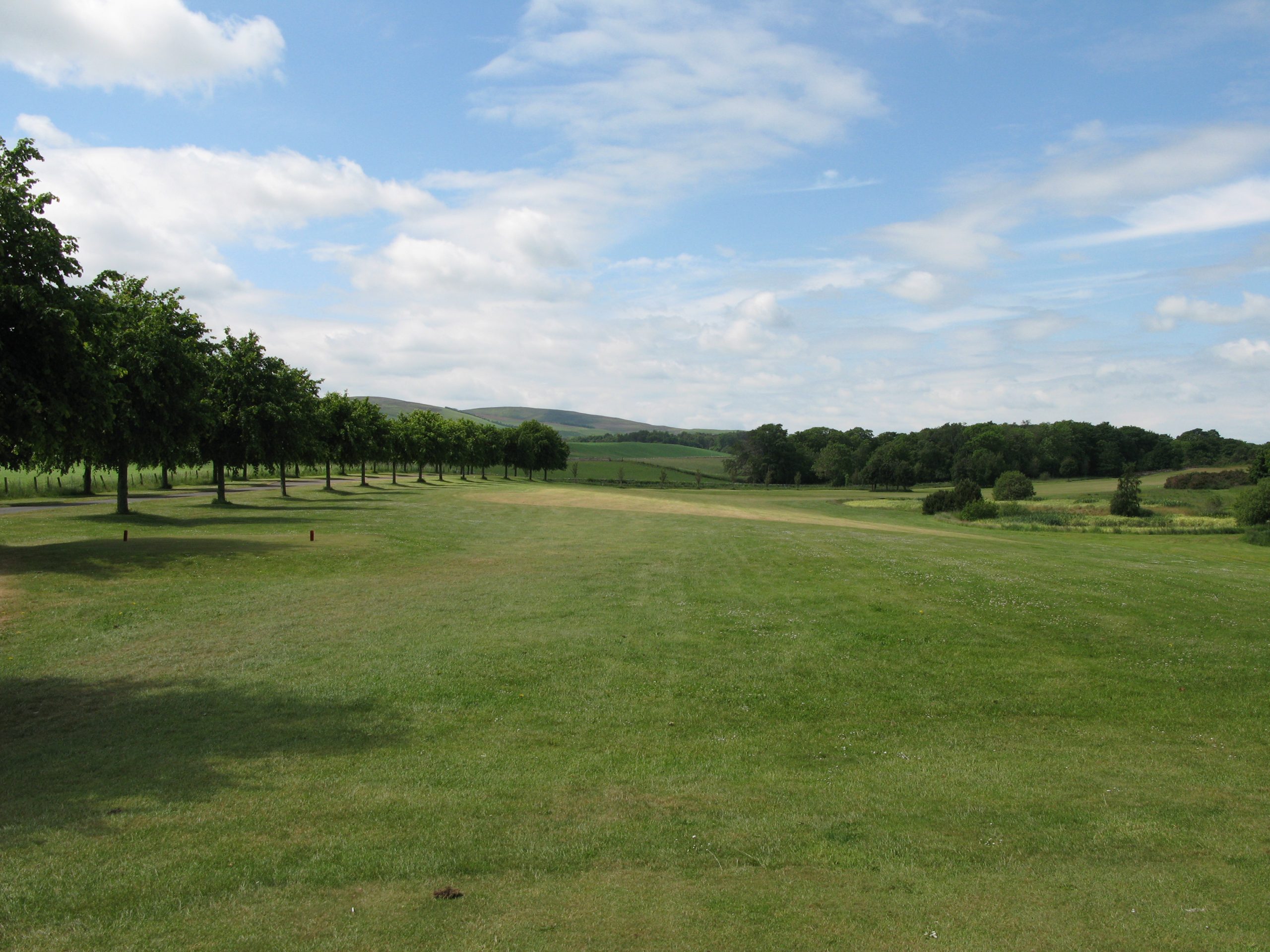
If there is a highlight at this ‘free to hotel residents’ course in Dumfries and Galloway, it’s the many beautiful trees that adorn the grounds of the hotel. They are worth seeing – albeit one of them made for a difficult lie on the 16th!

The trees are the star at The Cally – here as a backdrop to the hotel at the 18th

Everything about the course spoke about it being done ‘on the cheap’. The bunkers were shallow, the greens were small and, disappointedly, the course made little use of the magnificent Cally Loch on the estate. In addition, several of the greens were indistinguishable from their surrounds.

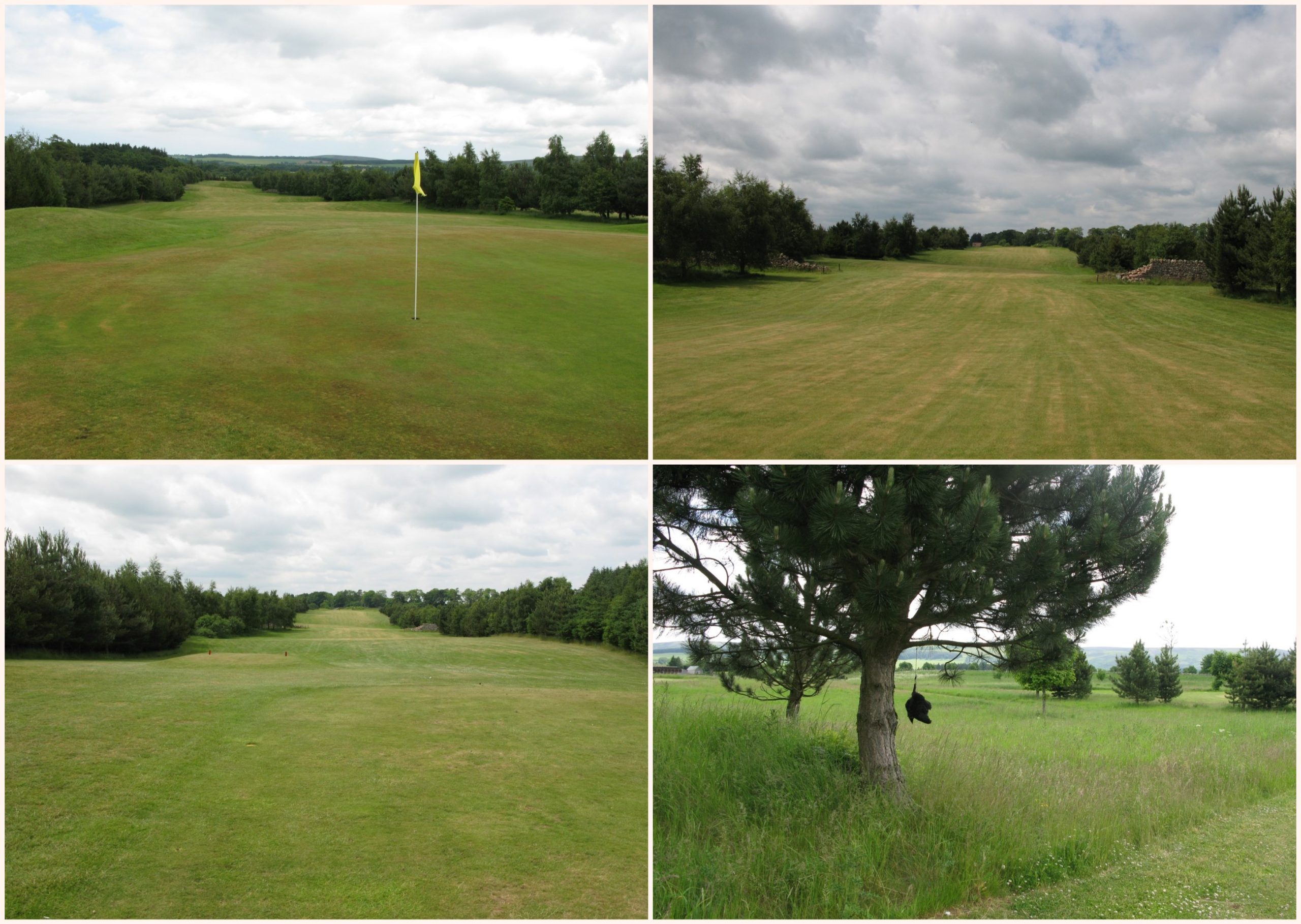
The 13th at Cally Palace – by far the best hole on the course.

Although the course is free to residents, this is definitely not a golfing hotel, with no changing facilities for the visiting golfer. It is also closed in January and February, made possible by not having any golfing members. It’s also not listed on Scottish Golf’s list of courses, so it doesn’t have a course rating or slope index.

When I played, the course should really have been closed due to being waterlogged, but the benefit at least being that Fran and I were the only people playing.

The very poor 17th green at The Cally – typical of the course, unfortunately.

Other than the trees, the only hole of real note was the Stroke Index 1, short par 5 thirteenth hole – by for the best on this layout. I was very lucky to get a par, after pulling my drive, only to find I’d miraculously cut the corner of the dog leg and able to get to the green in 2!

The 7th at The Cally, a typically bland par 4.

The course helped me to another personal record, the most occasions relief for casual water has been taken.

Don’t go out of your way to play Cally Palace.

Facts:

Course Type: Parkland

Par 70 (3 par 5, 11 par 4s, 4 par 3s)

Distance: 5706

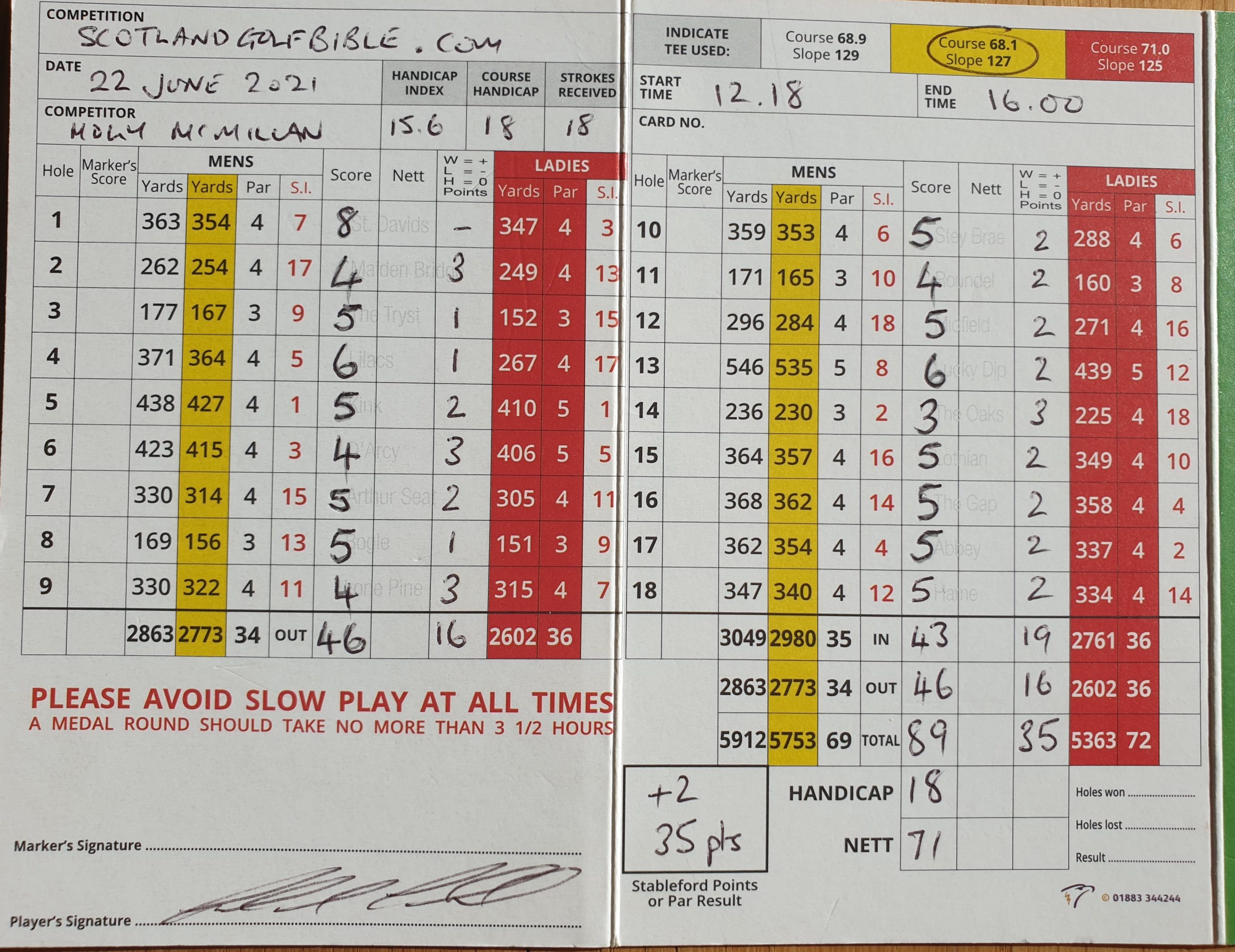
Moly’s Gross score94

A wet day, making the 94 at The Cally, better than the score really.

112. Lochmaben. 24 Sep 2020

A gem of a course where Robert the Bruce stole a castle!

Round £38. Par 70. Course Rating / Slope Rating (yellow) 68.4/126. Value (out of 5) – 4

Lochmaben golf course, founded in 1926, is set in a picturesque village of the same name in The Scottish Borders, on the A709 between Dumfries and Lockerbie. There is an interesting and long history of the area dating back to the 1300s and the story of Robert the Bruce.

Bruce’s Motte – the wonderful par 3 second hole at Lochmaben – the toughest hole on this course according the Moly

Take a close look at the name of the second hole, ‘Bruce’s Motte’, and you realise you’re actually playing uphill to a plateau upon which Bruce built a fortification to stop intruders. It’s a very fitting name, as the golf hole, a par 3 of 185 yards, is the stroke index 2 hole; and that, on a course with several long par 4s, is a measure of the challenge. I always try to take heed of stroke indices before playing a hole, as often when a short hole is rated so difficult it deserves added attention. Take at least 2 or 3 clubs more to get up the incline and be satisfied with a bogie. I imagine many long term members have never birdied this very demanding hole.

The signature par 3 eight hole, ‘Kirk Loch’ at Lochmaben – a delightful short hole

The course overall is an absolute joy. It’s set around Kirk Loch, one of 3 lochs in which the village of Lochmaben sits in the middle. Intriguingly, none of the 3 lochs are called Loch Maben? Castle Loch, the biggest of the 3, is the site of what was a more formidable castle and central to many of the battles between the Scots and the English in the area.

The 15th, a short par 5, a typical hole on this course; one of the added holes in 1995.

The original layout of the course was only 9 holes, laid out by James Braid, and occupied the majority of the holes on the east of the loch, with the course only extended to 18 in 1995. The lakeside holes, especially the short 8th, are characteristic of more modern design. Overall though, it really works as a ‘joined up’ 18, with some really great holes. Other than the 2nd, which I think is the most difficult, both the 10th and the 17th are challenging par 4’s both playing uphill and at 450 and 423 yards respectfully and are difficult to reach with 2 shots.

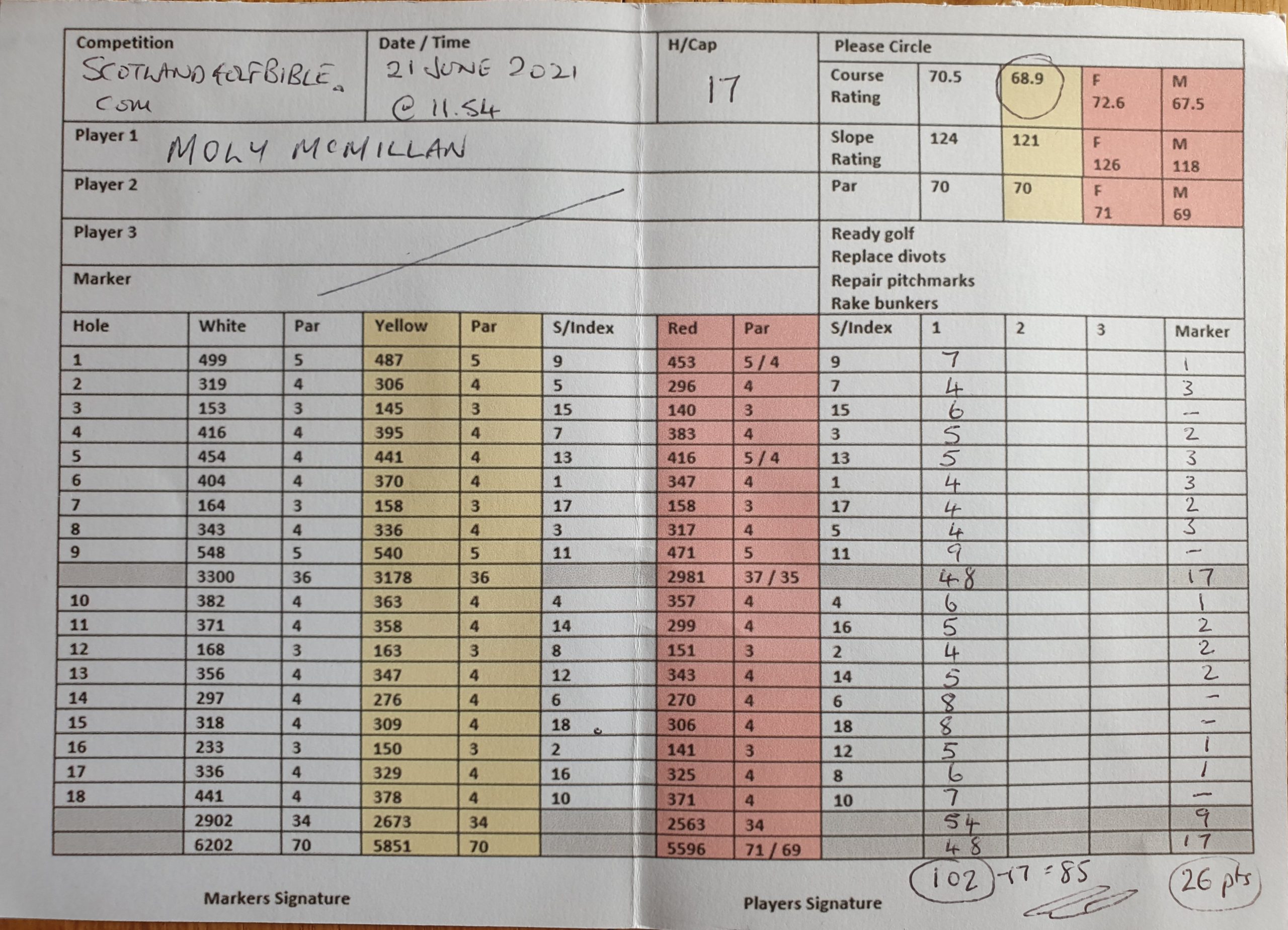
It was in great condition when I played. The fairways were good, the greens very true, and only the bunkers were needing attention, but that was likely due to the covid pandemic. I shot 98, and felt I played not bad. It was one of those courses where local knowledge has a bigger premium than usual, and I imagine the home advantage makes a bigger difference in club matches here.

The good finishing hole at Lochmaben (looking bach from the green), a relatively short (328 yards), but tight, par 4 finishing hole. A good matchplay finish.

It’s not an easy walk, so make sure the trolley batteries are fully charged, but its well worth playing Lochmaben.

Incidentally, Robert The Bruce apparently stole the castle from Edward 1, so the history books say!

Facts:

Course Type: Parkland

Par 70 (2 par 5, 12 par 4s, 4 par 3s)

Distance: 5873

Moly’s Gross score98

Moly’s Lochmaben scorecard – 98 – which felt hard fought for

107. Brodick. 18 Sep 2020.

Easy walking course with good views of Brodick and it’s surrounds

Round £27. Par 65. Slope (yellow) 109. Value (out of 5) – 4

The Isle of Arran sits off the North Ayrshire coast, accessible all year round by regular ferry crossings from the Port of Ardrossan or, during Summer, from the Kintyre peninsular. The main port is Brodick, which is also home to one of the 7 golf courses on the island.

Moly on the 17th green at Brodick, with Goat Fell dominating the background.

The Brodick course was founded with 9 holes in 1897 and designed by John Duncan of Glasgow. It was originally sited in an elevated position near Knowe and West Mayish, as noted on the www.golfsmissinglinks.co.uk web site. It moved to the current location in 1913.

The 10th green at Brodick, with a Calmac ferry in the background in the town of Brodick, the main port on the island of Arran

At only just over 4500 yards this is a short course, but has a slope rating of 109 due, I suspect, to several of the nine par 3s being very difficult; the 4th and 15th are over the “Glenrosa Water”, the 167 yard 8th deserves its stroke index 3 rating with a difficult plateau green tight against a set of trees, and the 188 yard 13th requires a blind shot taken close to the beach if the green is to be found.

The short par three 4th hole, one of 2 over water par 3s on the Brodick golf course

The course was in excellent condition when I played with Fran during our Arran venture. Although adjacent to the bay this is most definitely mainly arable turf and therefore not a links course. In fact in the fine weather, the tall pine trees across the 5th, made us feel we were playing in Portugal – albeit I don’t imagine that happens often.

The magnificent pine trees on Brodick’s 5th hole, a dog leg left par 4

With excellent true greens, this helped my 80, for a net par round, so I was very pleased especially my back nine of 37.

The treacherous 11th tee at Brodick golf course

Unfortunately the clubhouse and changing rooms had seen better days. It felt like the run down changing rooms of football clubs I played with in the 70s!

Nevertheless, this is a good course and one well worth playing. The green fee made for excellent value, like the other Arran courses.

Facts:

Course Type: Parkland

Par 64 (1 par 5, 8 par 4s, 9 par 3s)

Distance: 4540

Moly’s Gross score47

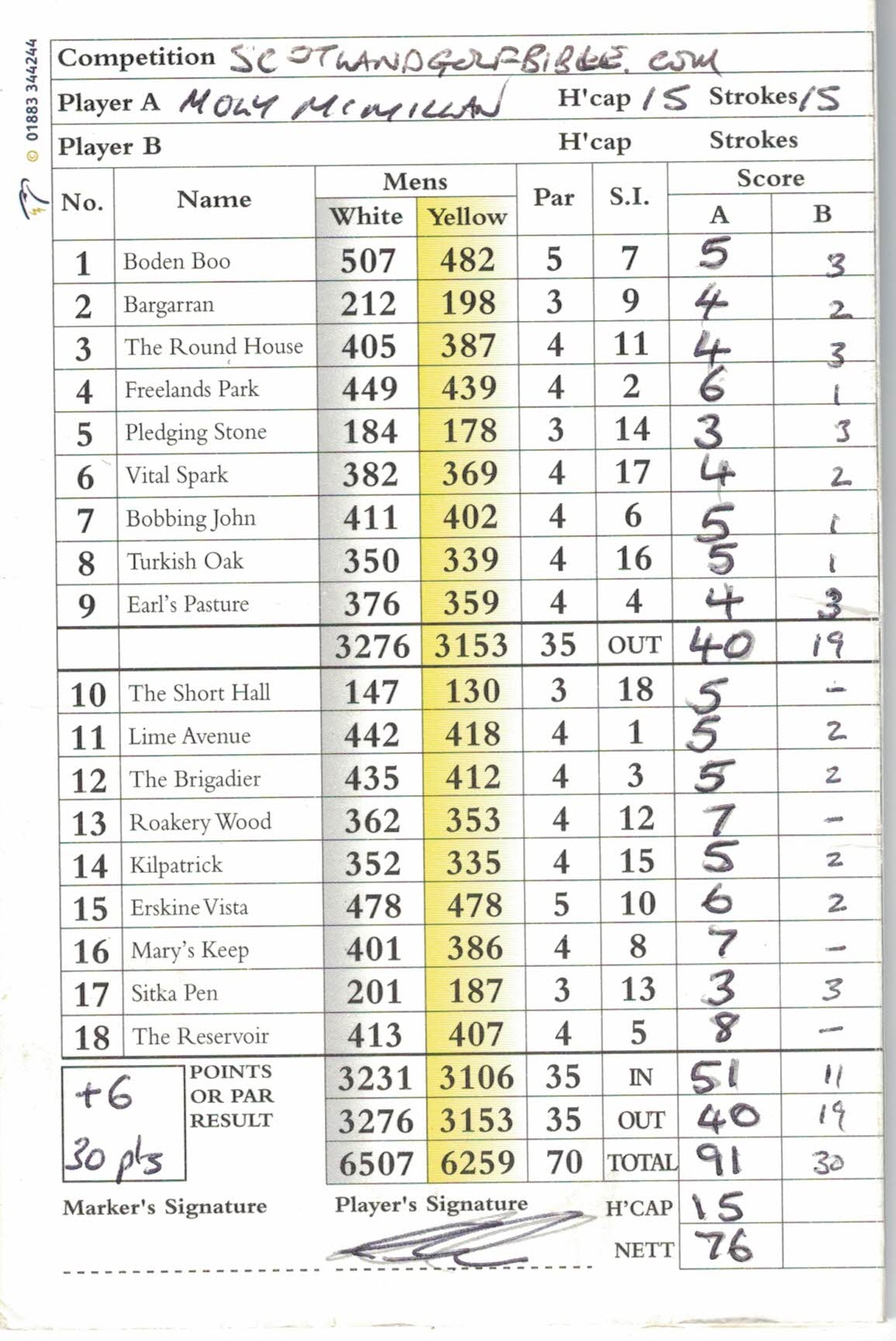
Moly’s Brodick scorecard – 80

106. Whiting Bay. 17 Sep 2020.

Officious Starter didn’t disrupt my enjoyment at this nice course

Round £25. Par 63. Slope (yellow) 97. Value (out of 5) – 4

Having booked a twilight round on GolfNow we reported at Whiting Bay about 25 minutes before our tee time and were told abruptly by the starter “You can’t go before your time!”. Taken aback, we responded politely, “That’s absolutely fine, we were only advising you we were here”. With no putting green available or practice net in operation, we loitered around the first tee for 20 minutes (no-one else teed off in the meantime), after which the icy starter announced “You may as well go now”.

This story is hopefully not representative of how people are welcomed at Whiting Bay and the starter was undoubtedly unaware that one day people might read about how we were treated on arriving there. But I write it because Arran is a holiday destination and golf is a big attraction on the island, with 7 courses available; it’s important clubs present a welcoming feel, as they are part of a wider hospitality sector. Sometimes you only get one chance.

The 11th at Whiting Bay, with views of Holy Isle in the background.

The golf course opened in 1895 and is set on a hillside above Whiting Bay, a substantial village located on the east side of the Isle of Arran, which sits in the Firth of Clyde just off the North Ayrshire coast – it is accessed by ferry from the Port of Ardrossan.

The par 4 8th deserving of being the Stroke Index 1 hole at Whiting Bay in Arran.

Regrettably, I couldn’t find any information about the course architect on the website, which is a shame. The course has some clues for the students of golf architecture. Several holes’ fairways crisscross each other, making it a potentially hazardous walk. Some of the greens are very undulating, and some very flat. There are some very large greens, most notably the short par four 6th hole which was only just over 250 yards, whereas the difficult uphill mid-iron par three 3rd had a tiny green. Contrast this with the often clever use of small greens to protect short par 4s, typical of James Braid’s designs. I would be grateful for any information if readers have any about Whiting Bay’s designer.

Whiting Bay has outstanding views, here looking back from the first green with the clubhouse lower down the hill.

It is also a tough walk, and uphill all the way to the 4th green – I would recommend a buggy or power trolley for those less able. There are however no bunkers and the fairways are very generous, which with the length of under 4500 yards, results in slope ratings of 97(yellow), 99(white) and 98 (red). In summary, it’s good holiday golf, except if you are unfit! Also, for occasional golfers, in particular, please take at least 2 clubs more on the uphill holes, most notable the 1st and 16th.

The 6th is the best example of the odd design, a par 4 at just over 250 yards, but with a huge green.

The course was in great condition and clearly well maintained, albeit the greens were very mossy which really detracted from the rest of the set up. On the day I had a very good round of 76 against the par of 63, especially after I had recorded two triple bogies in the first 4 holes.

The really difficult 17th Green. It was such a pity the greens were so ‘mossy’.

With outstanding views abounding, and the reasonable twilight rates, this is excellent value. Just don’t turn up early, especially when the clubhouse is closed!

Facts:

Course Type: Parkland

Par 63 (0 par 5s, 9 par 4s, 9 par 3s)

Distance: 4092

Moly’s Gross score76

Moly’s Whiting Bay scorecard – 76 but with 2 triple bogies. Ouch!
« Older posts Newer posts »

© 2025 Scotland Golf Bible

Theme by Anders NorenUp ↑