A guide to green fee value for money

Category: £100 – £199 (Page 3 of 4)

145. The Royal Burgess Golfing Society. 26 May 22.

Golfing grandeur nestled out of sight – just like Augusta National – with azaleas and other mysteries thrown in.

Round £175. Par 68. Course Rating / Slope Rating (yellow) 67.4/113. Value (out of 5) – 2.5

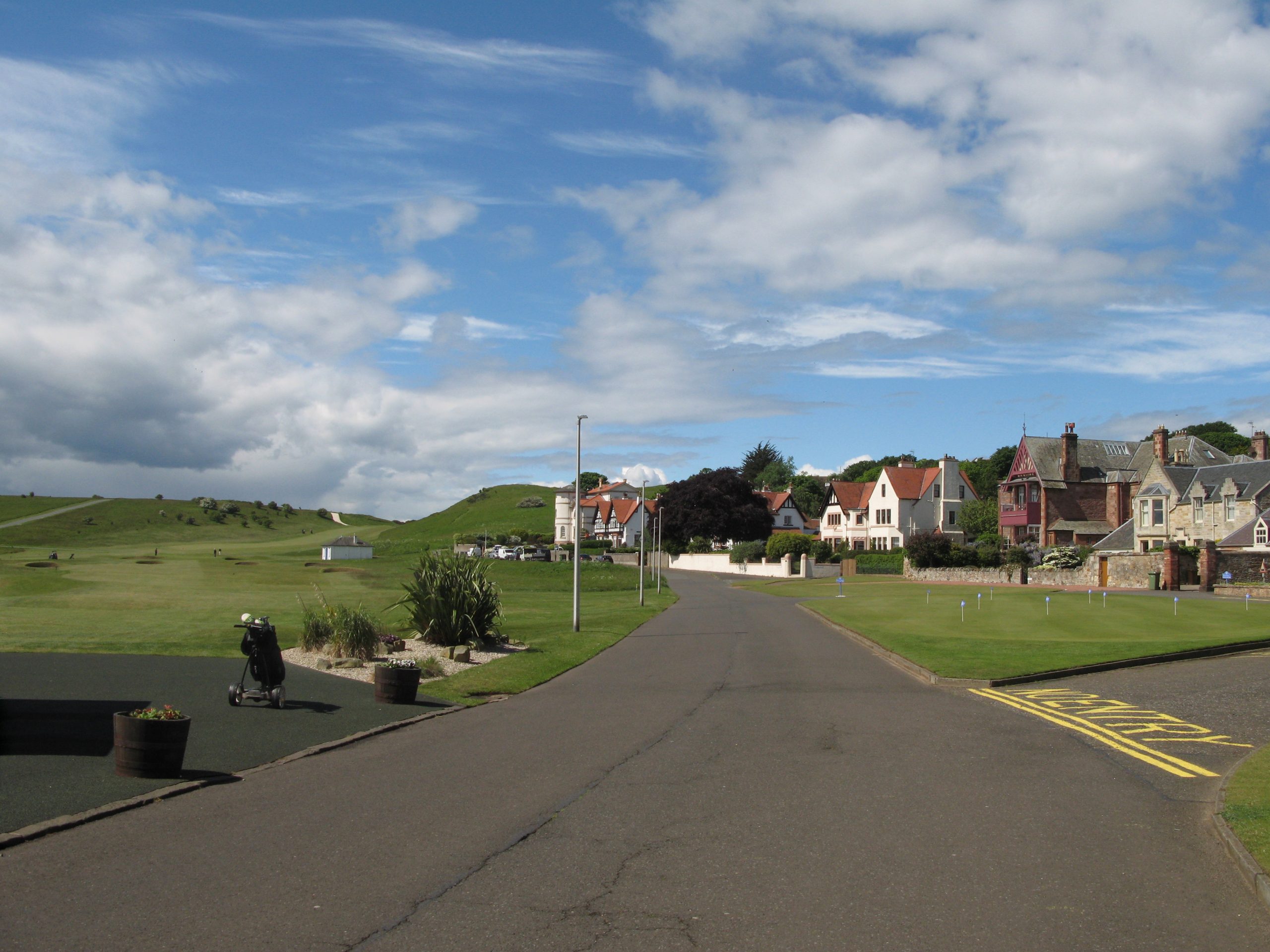
As I played Royal Burgess, close by a busy traffic junction in Edinburgh, I had a nagging thought; this venue has parallels to Bobby Jones’ Augusta National, an oasis of golfing perfection just off a nondescript highway.
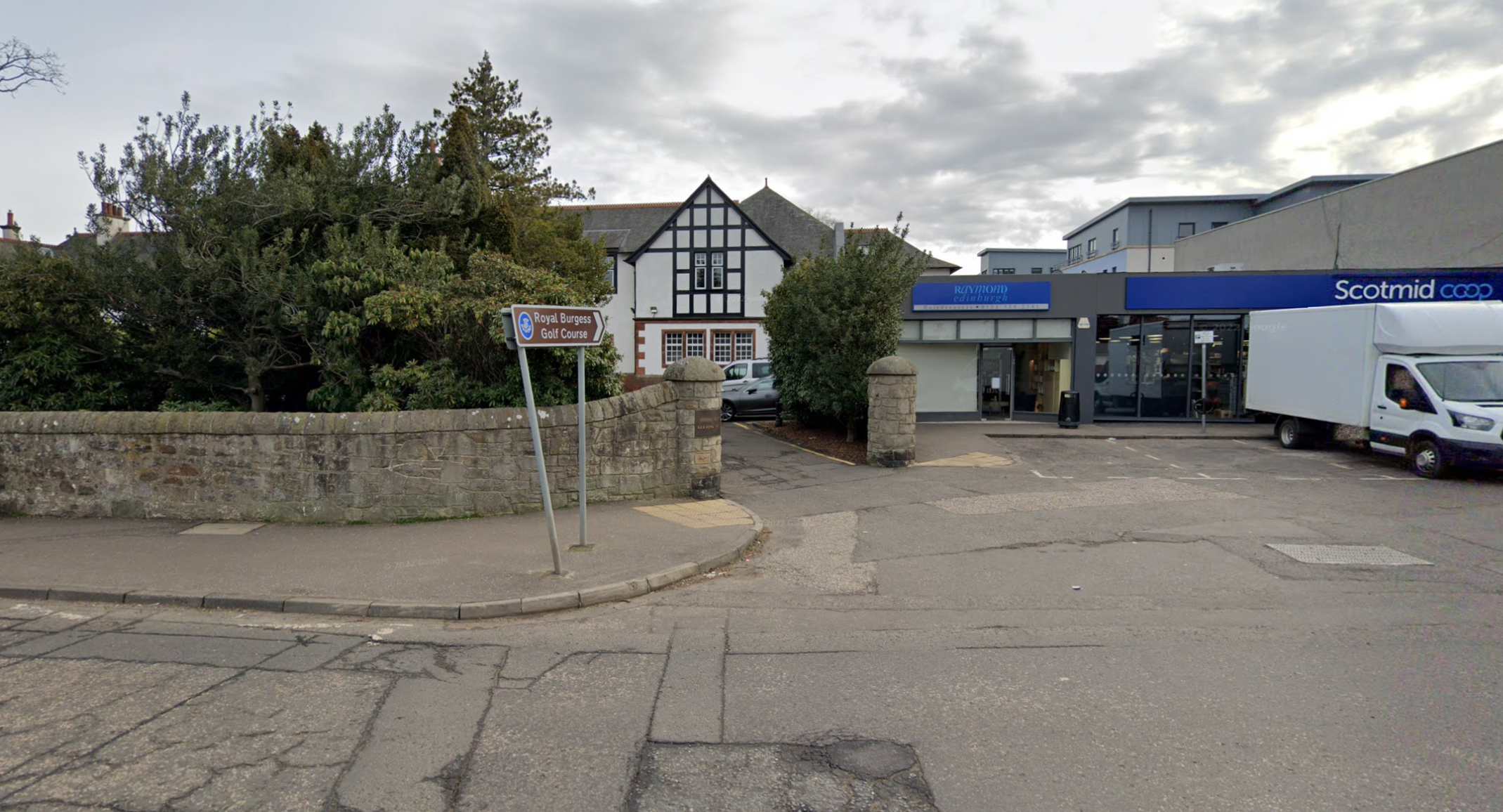
The humble Burgess entrance, belying the wonderful parkland beyond, had me musing of Augusta.

This is not a ‘Golf Club’ though, but the more grander ‘Golfing Society’, a term dating back to 1735, some 150 years before the creation of the current golf course at Barnton.
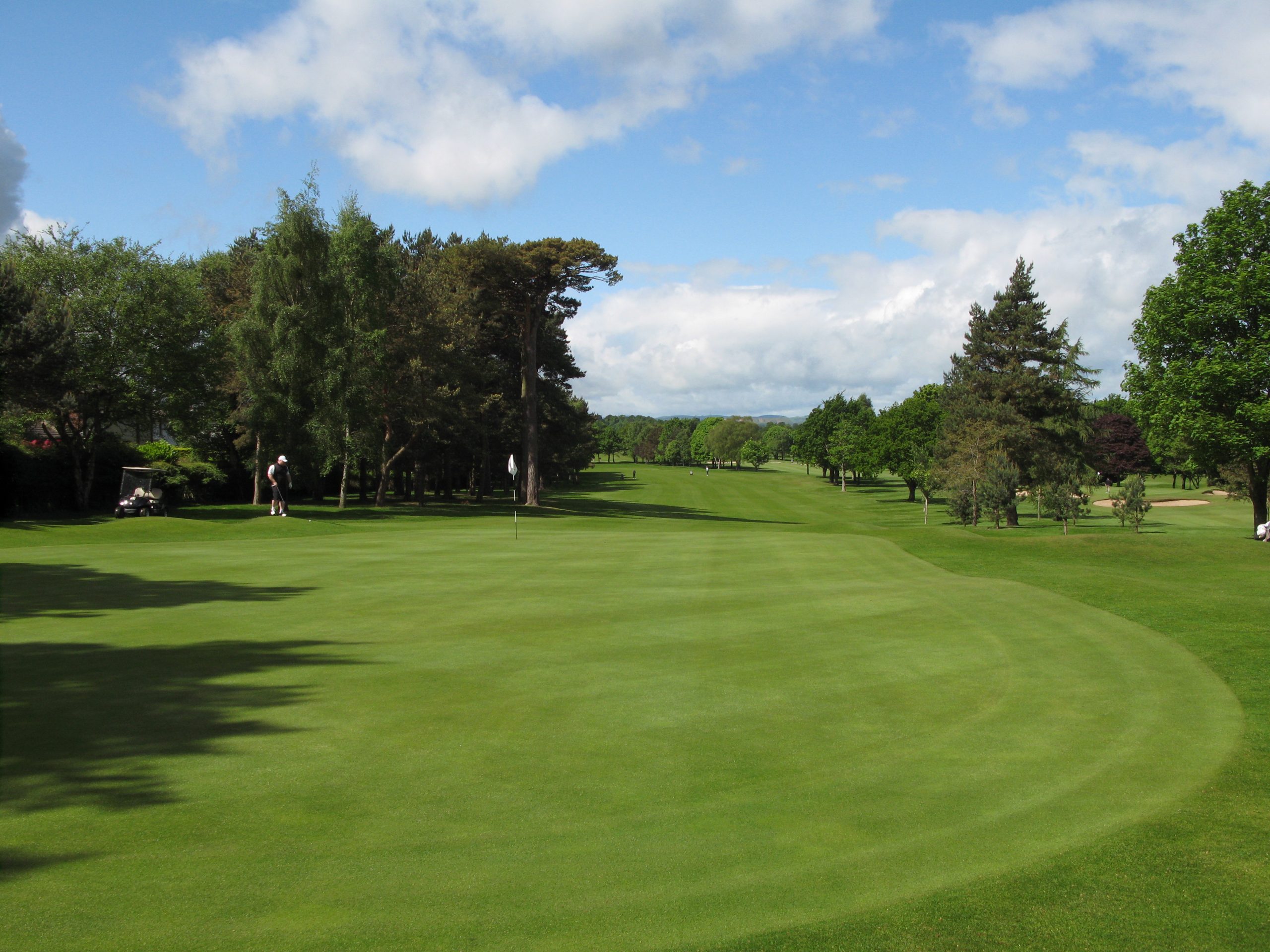
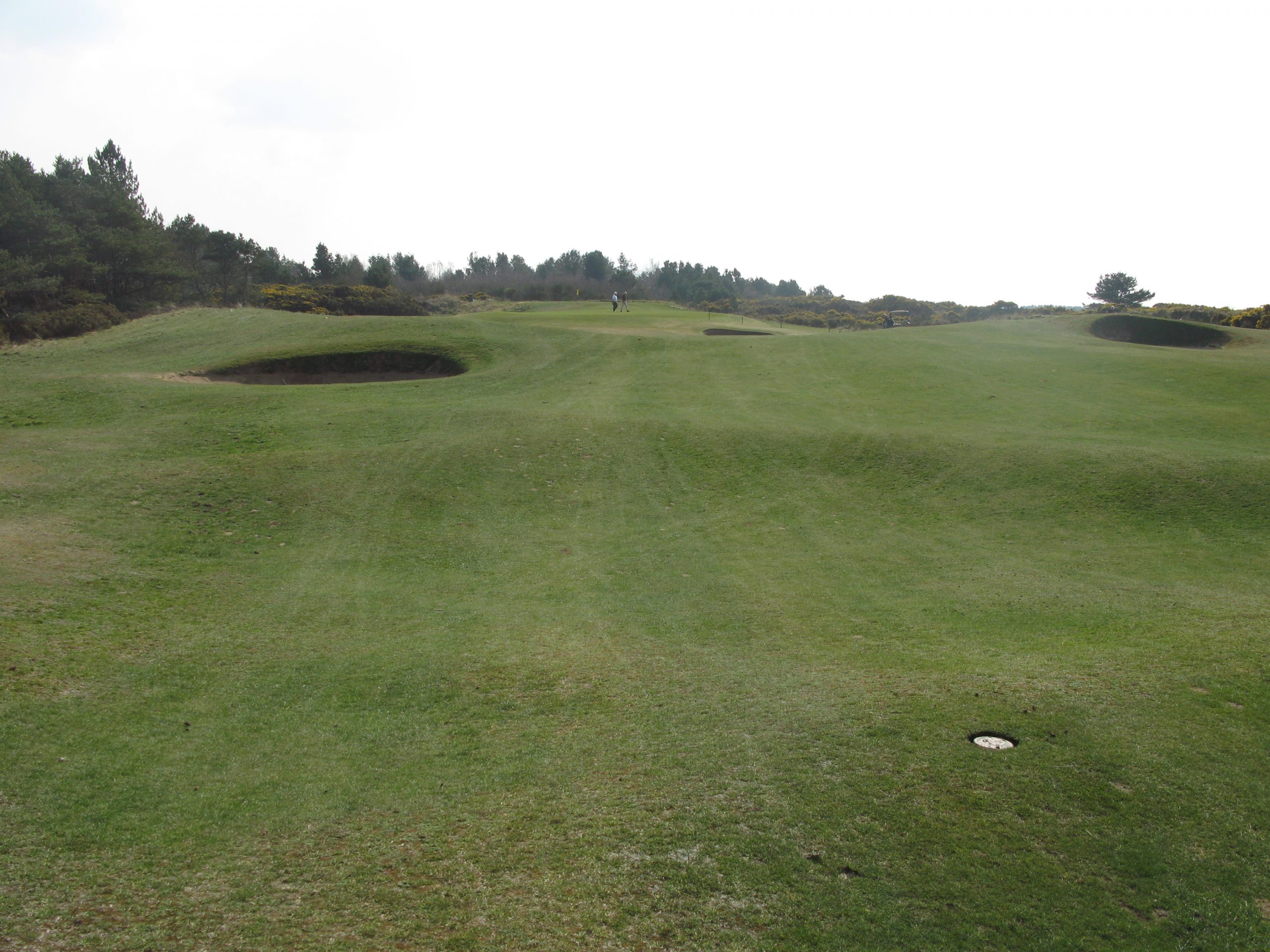
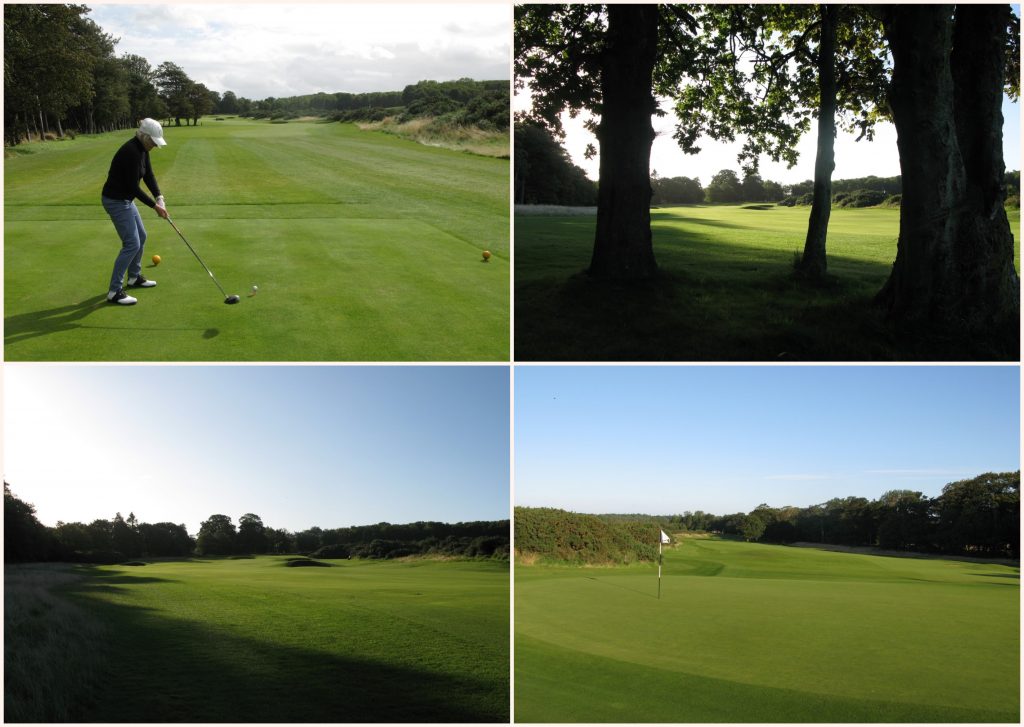
The difficult par 4, fourth hole, one of the best at Royal Burgess.

A ‘Burgess’ is a term used differently in different countries. In Scotland in 1735, the year of the Societies origin making it the oldest golf club in the world, ‘burgesses’ were city freemen with exclusive trading rights and members of trade guilds. In a sense, they were the Scottish Bourgeoisie. The men would also, probably without exception, have been Freemasons, as Scotland was the birthplace of post middle-age freemasonry. There is a very interesting article “How freemasons invented golf” in the www.scottishgolfhistory.org website which also covers how the Burgess Society was involved.
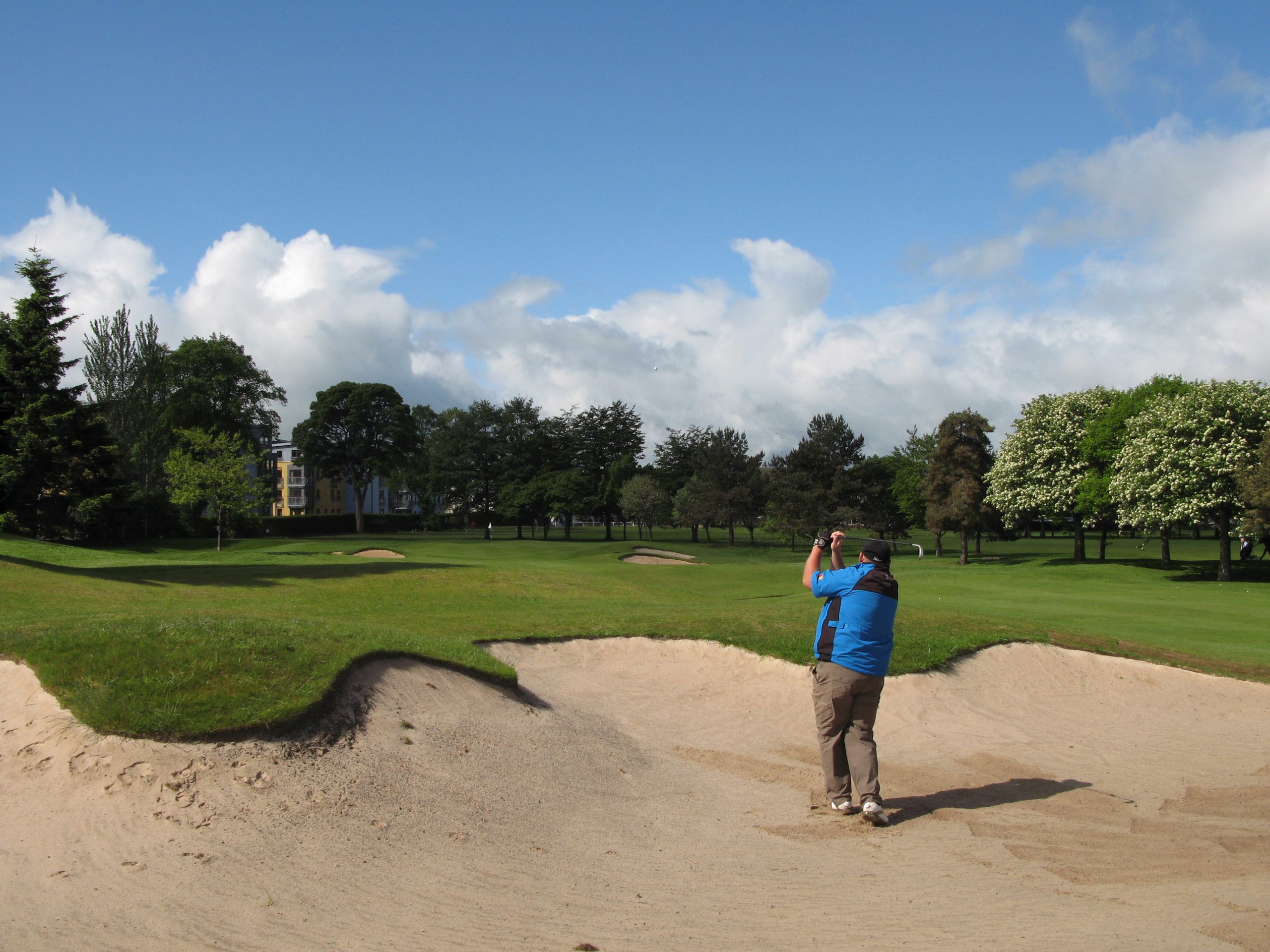
Ian Ponton plays from a typically well manicured bunker, here at the 2nd, a short par 4.

There is also a lovely Burgess history here on the clubs website, and covered in fine detail on the walls of the impressive 1897 “Arts and Crafts” clubhouse, which is well worth visiting when you play.
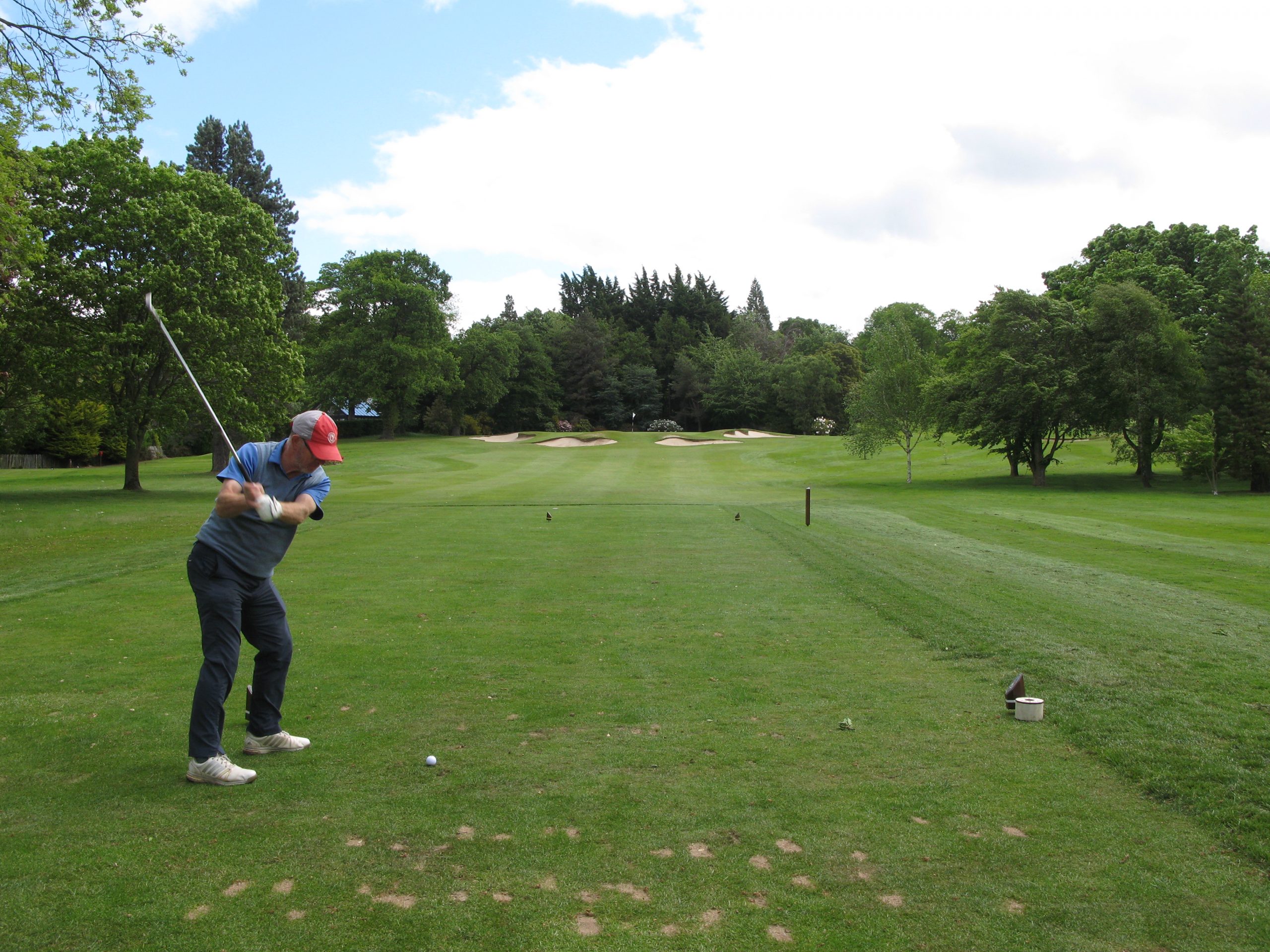
Moly’s tee shot at the 121 yard par three 8th hole, with a typically aesthetic surround.

The society originally played over 6 holes at Bruntsfield Links near Edinburgh Castle, then at Musselburgh from 1874 along with some rival societies (you may be able to guess them?). The Burgess finally came to its current location in 1895 on land that had been the private course of a wealthy businessman, Robert Clark. It was an ideal location in its day, with the current starters hut, adjacent the first tee, formerly being the ticket office for the Barnton railway station of the Caledonian line.
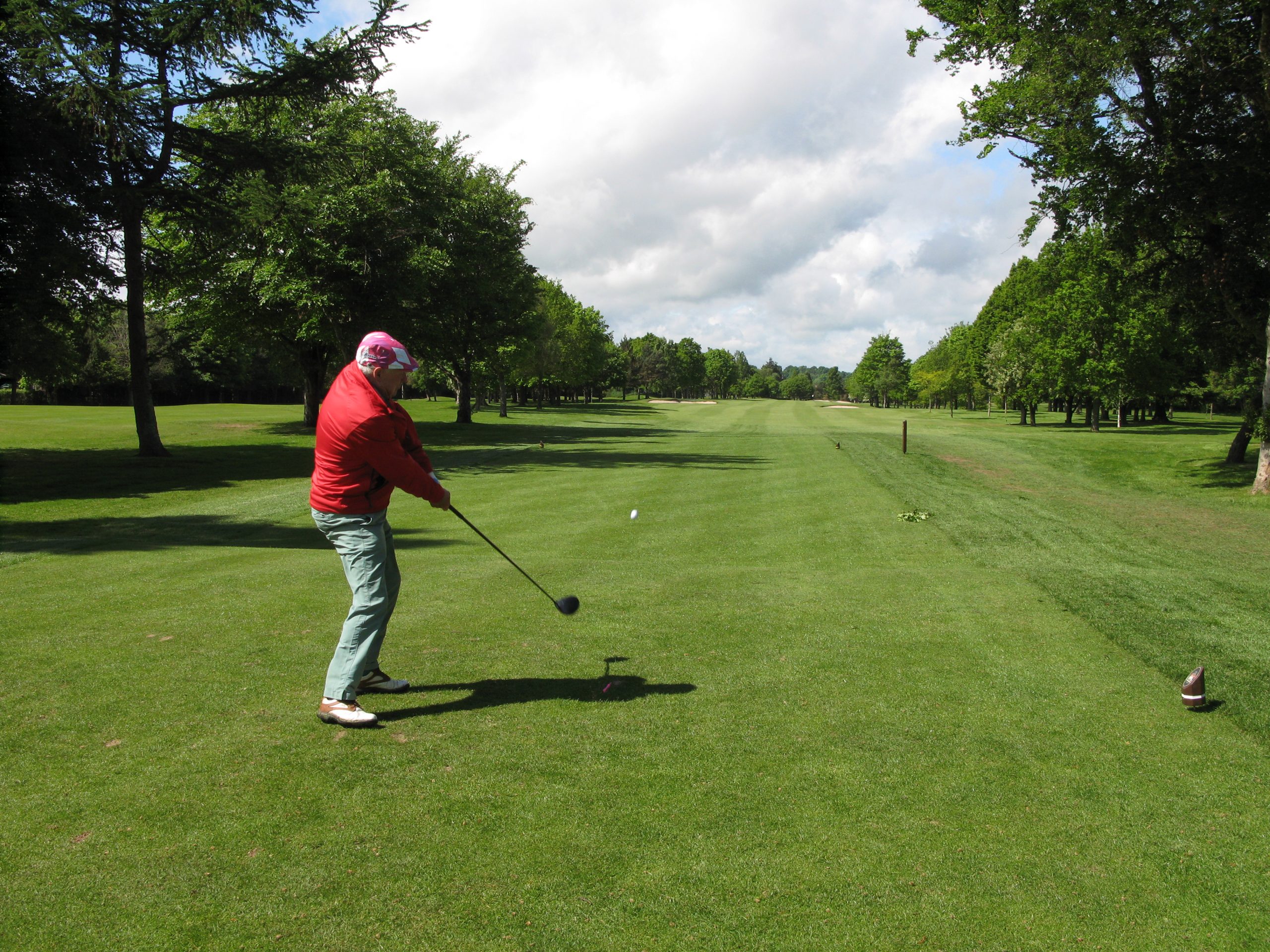
Bob Tait, demonstrating a full extension through the ball, at the 437 yard par four 6th hole. Royal Burgess is a good course to use in any debate for advocating different stroke indexes for each tee box.

Since 1895, no lesser than Old Tom Morris, Willie Park Jnr (main designer), James Braid and Philip MacKenzie Ross have developed the course – that’s quite an architectural pedigree.

The course sits in a beautifully manicured arboretum with a wide variety of trees and plants, including azaleas and rhododendron. Although not a long course and constrained by the tight parkland surrounding, the ‘yellow’ course feels longer than its 5700 yards, comprising several long par 4s and no yellow par 5s. There are many large and deceptive greens making three putts a constant hazard. An anomaly in yardages means that the 210 yard par three 18th, is stroke index 18, due to the championship tee designating it a par four. I imagine most matchplay games reaching the 18th, strongly favour a lower handicapper.
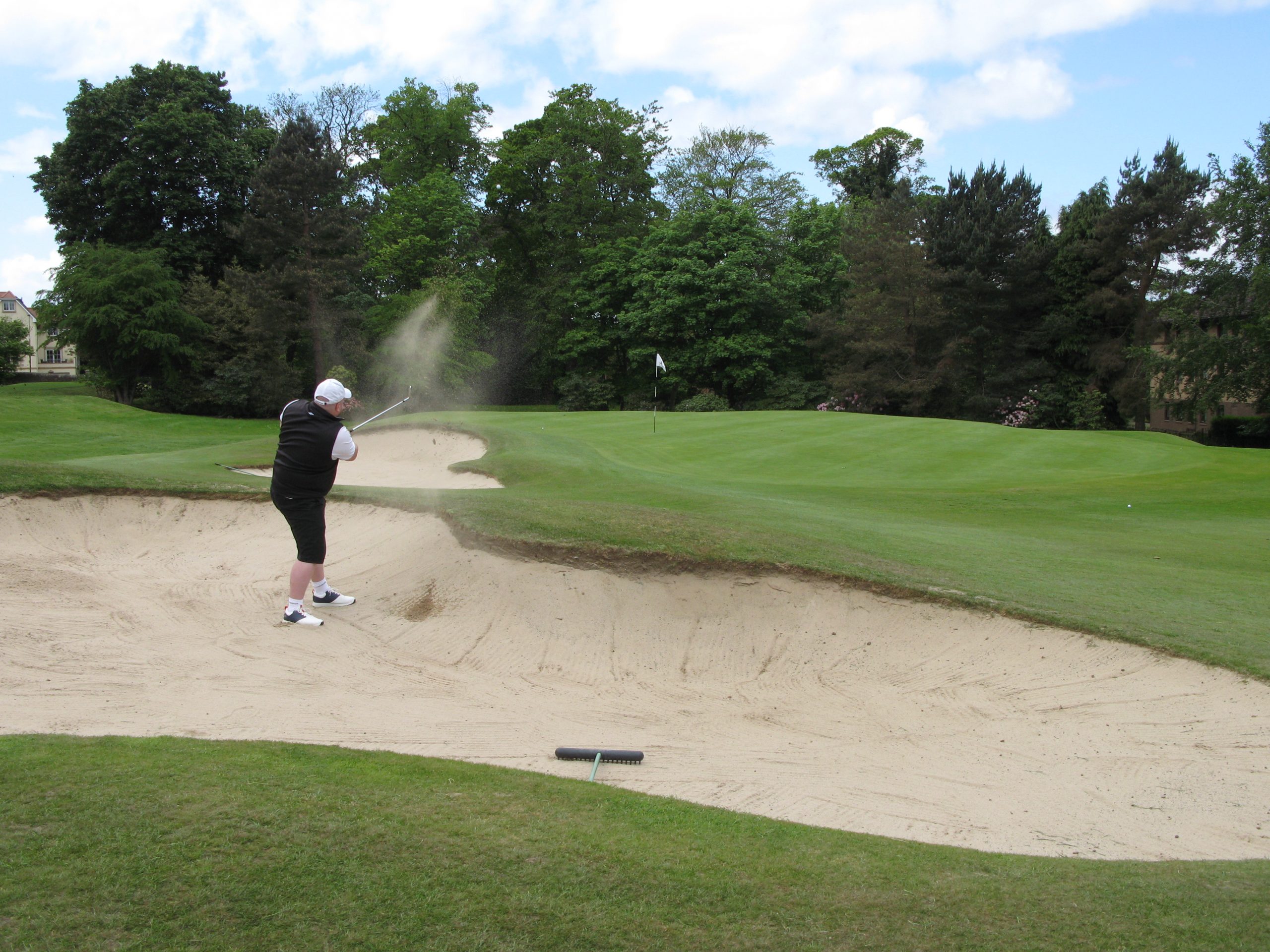
Jamie Snedon playing from the greenside bunker at the 15th, a tough par four.

The course was in great condition when I played, hosted by the affable Ian Ponton, owner of the Oz Bar in Candlemaker Row in Edinburgh, along with his great friends Bob Tait and Jamie Snedon. Jamie played by far the best golf on a very windy day, but thankfully we hadn’t made a wager as we started off in a bit of Scottish drizzle.
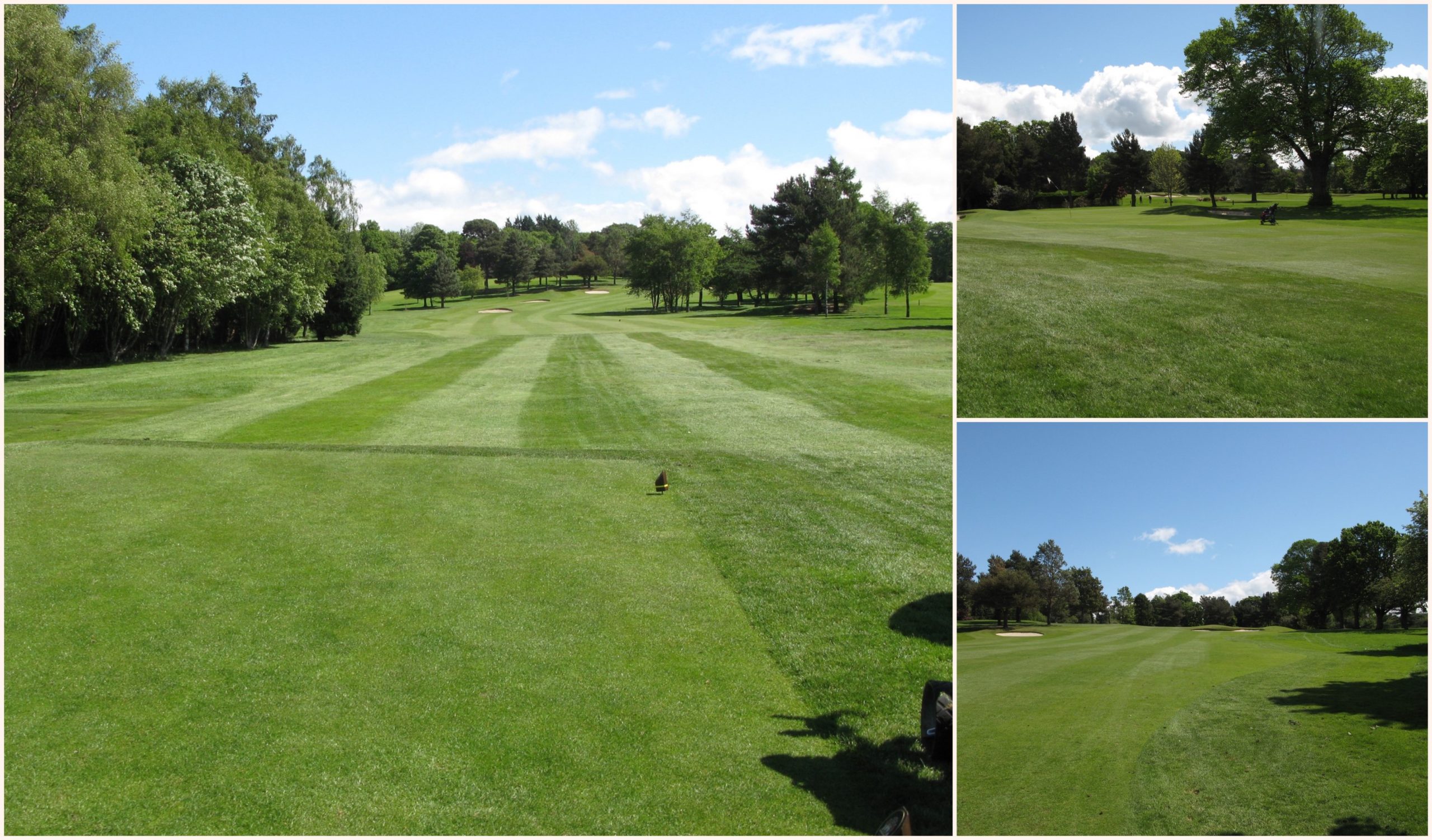
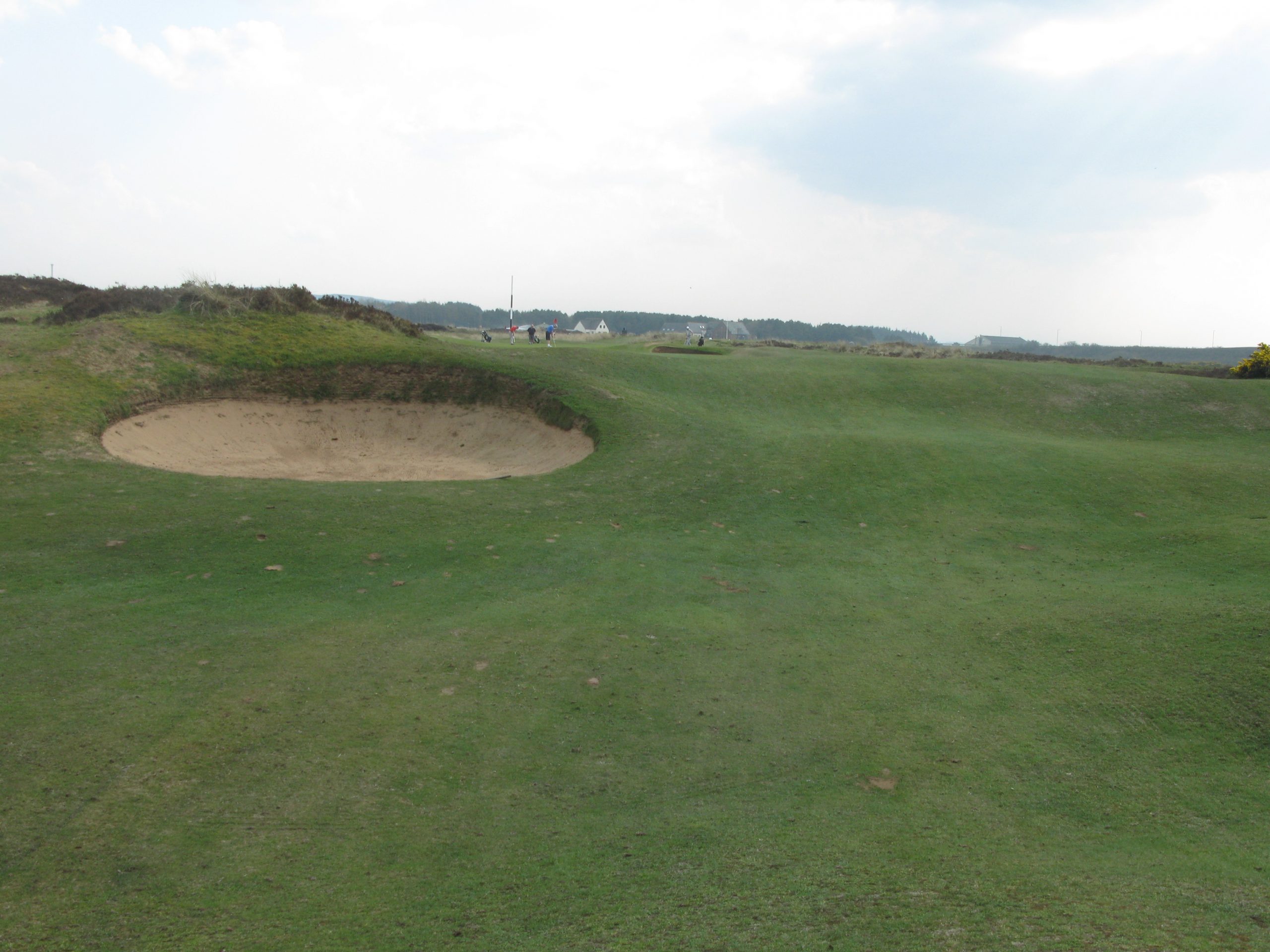
The 10th, a testing dog leg par four and a very characteristic Burgess hole

The wind didn’t hamper our enjoyment and one could really appreciate the course design, where many large fairway and greenside bunkers were of the highest order, with perfect sand. Many bunkers have been added over the years, some recently. The course sets up better for a fader of the ball (such as Jamie), with all bar one (the 14th) of the many dog leg holes being left to right.

The par threes were well bunkered albeit, other than the 18th, they were short to mid length iron shots for most players.
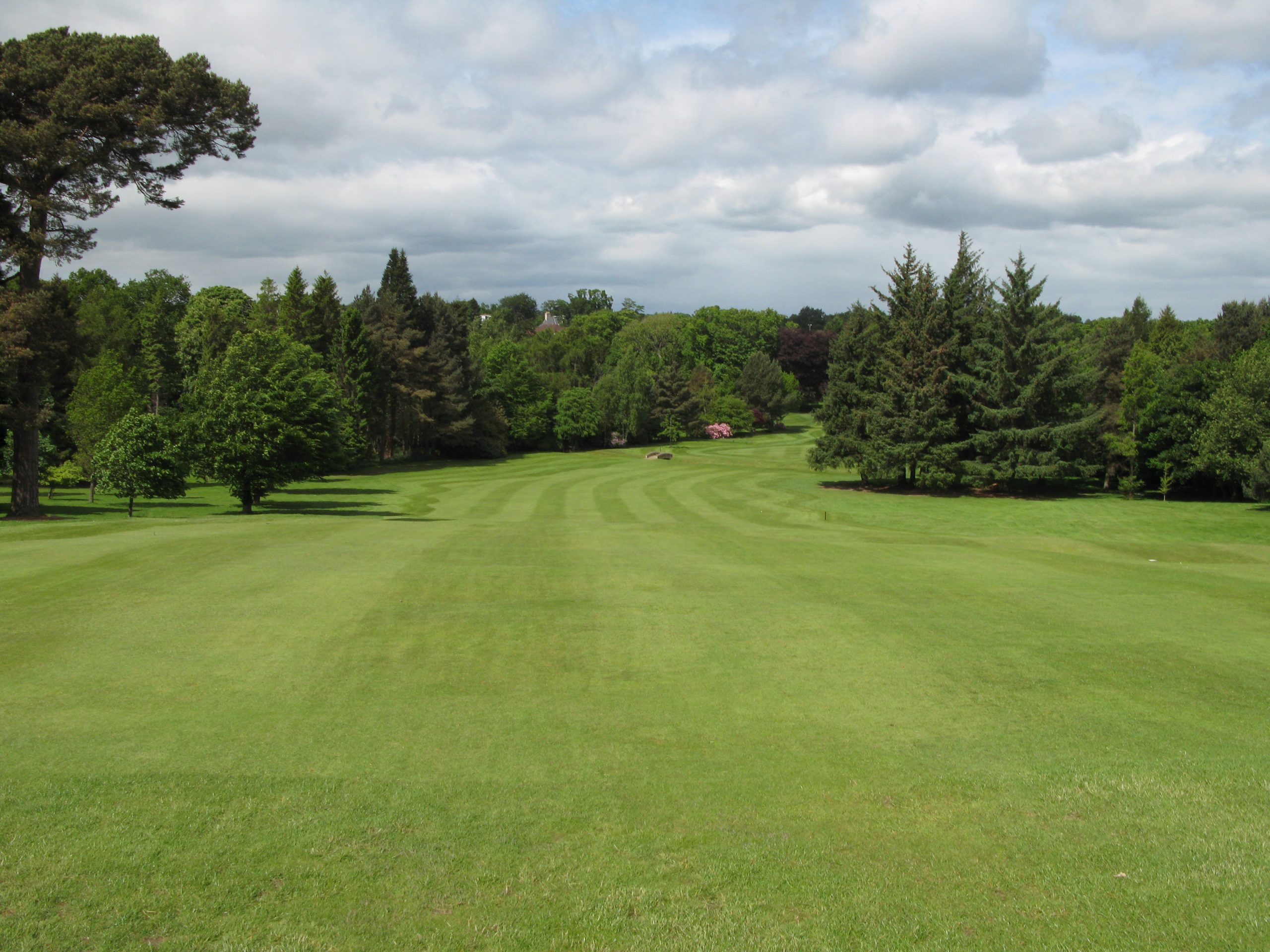
The approach at the 11th, the signature hole at The Burgess

I struggled to a score of 95, which can’t all be attributed to the wind and my recently developed fade was turned into a monstrous slice on several occasions. It’s important to avoid the bunkers to score well at Burgess, something I failed to do.

I can’t imagine anyone not liking Royal Burgess, a place of genuine history in the developing of the game. It’s beautiful condition, makes it a four for value at its current price.
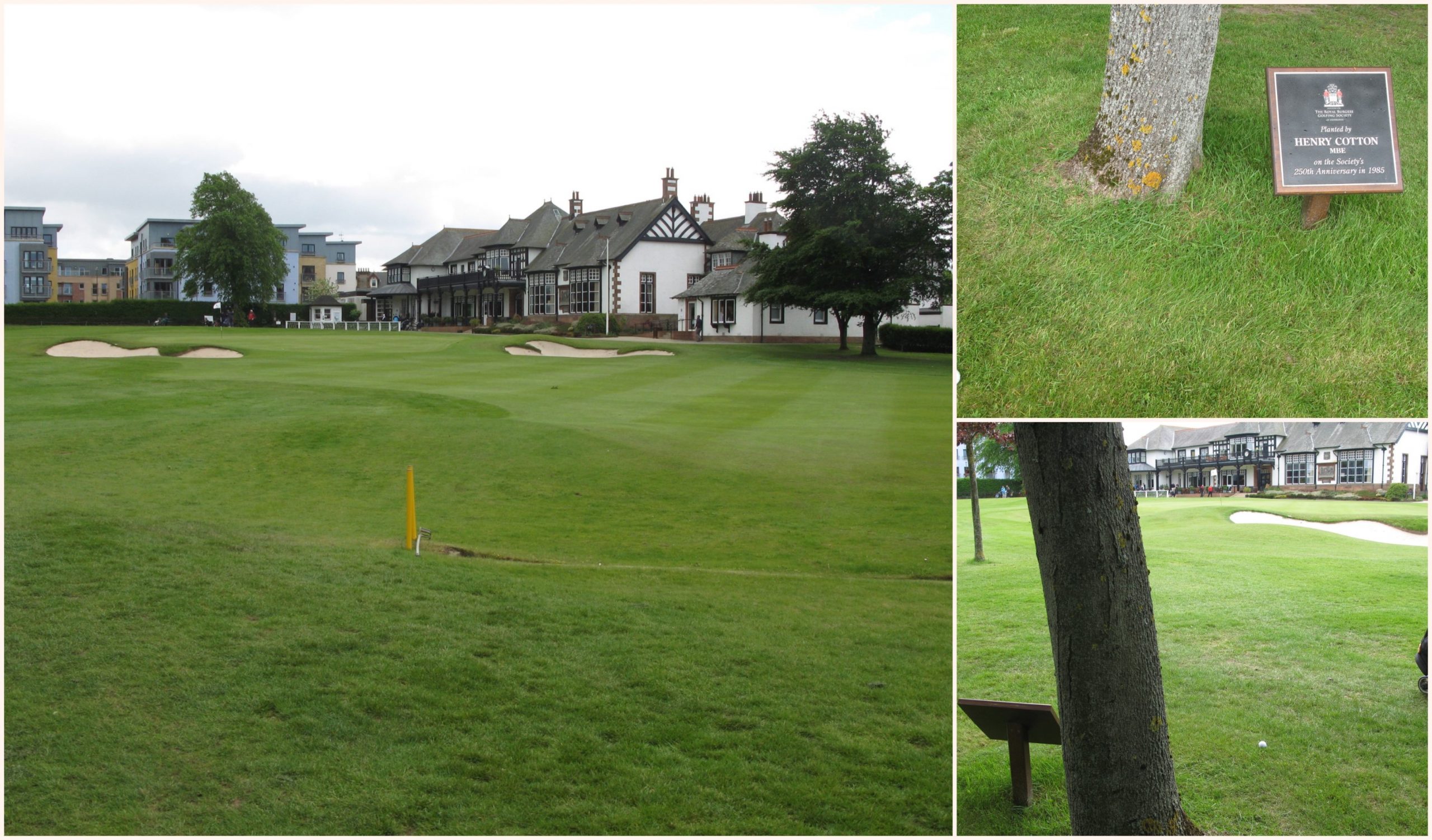
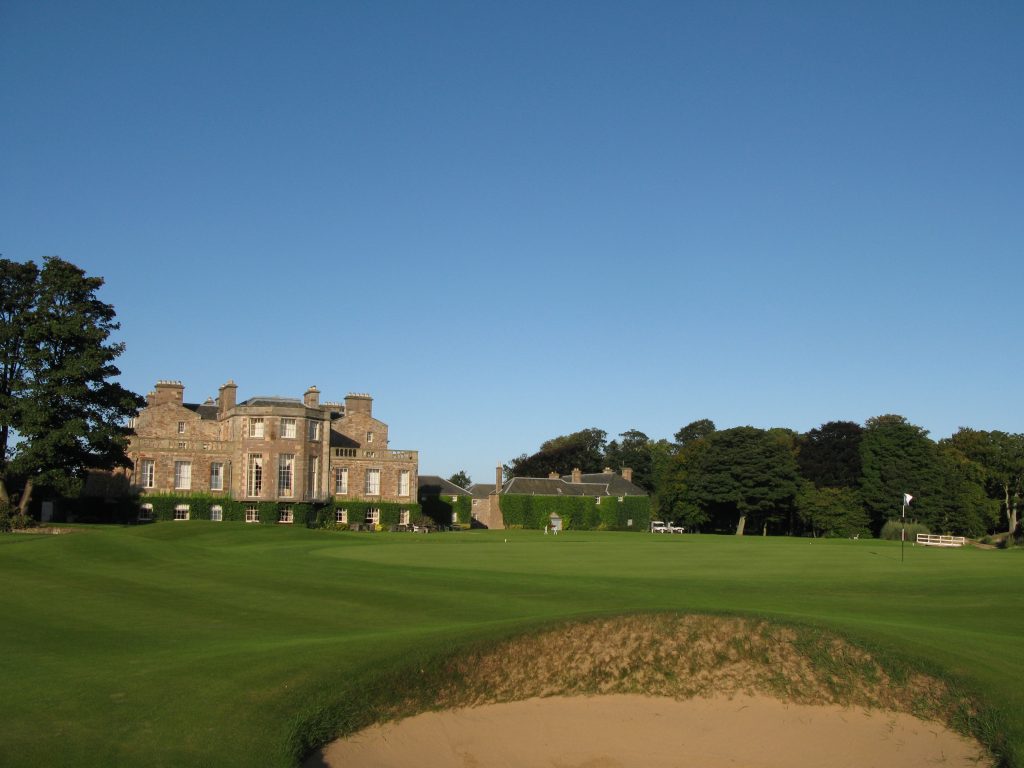
The clubhouse is the backdrop to the 18th, with a plaque commemorating Henry Cotton’s visit to Royal Burgess, where I conveniently located my tee shot!

The “Royal” patronage was bestowed on the club in 1929, due to a friendship between Robert Boothby, a Burgess member, and the Prince of Wales, later King Edward VIII (he who abdicated). Boothby was knighted the same year the club became Royal Burgess.

Finally, lets return to my Augusta National ‘gut feeling’ comparison. In looking for a comparable Augusta picture to the Royal Burgess entrance photograph, I stumbled upon a quite remarkable thing. Directly opposite the unobtrusive entranceway to The Masters venue, is the headquarters of the Ancient Scottish Rite Freemasonry organisation. Dig only a little deeper and you find that none other than Augusta hero Brother Arnold Palmer was a Grand Great 33 degree Freemason of the Scottish Rite.
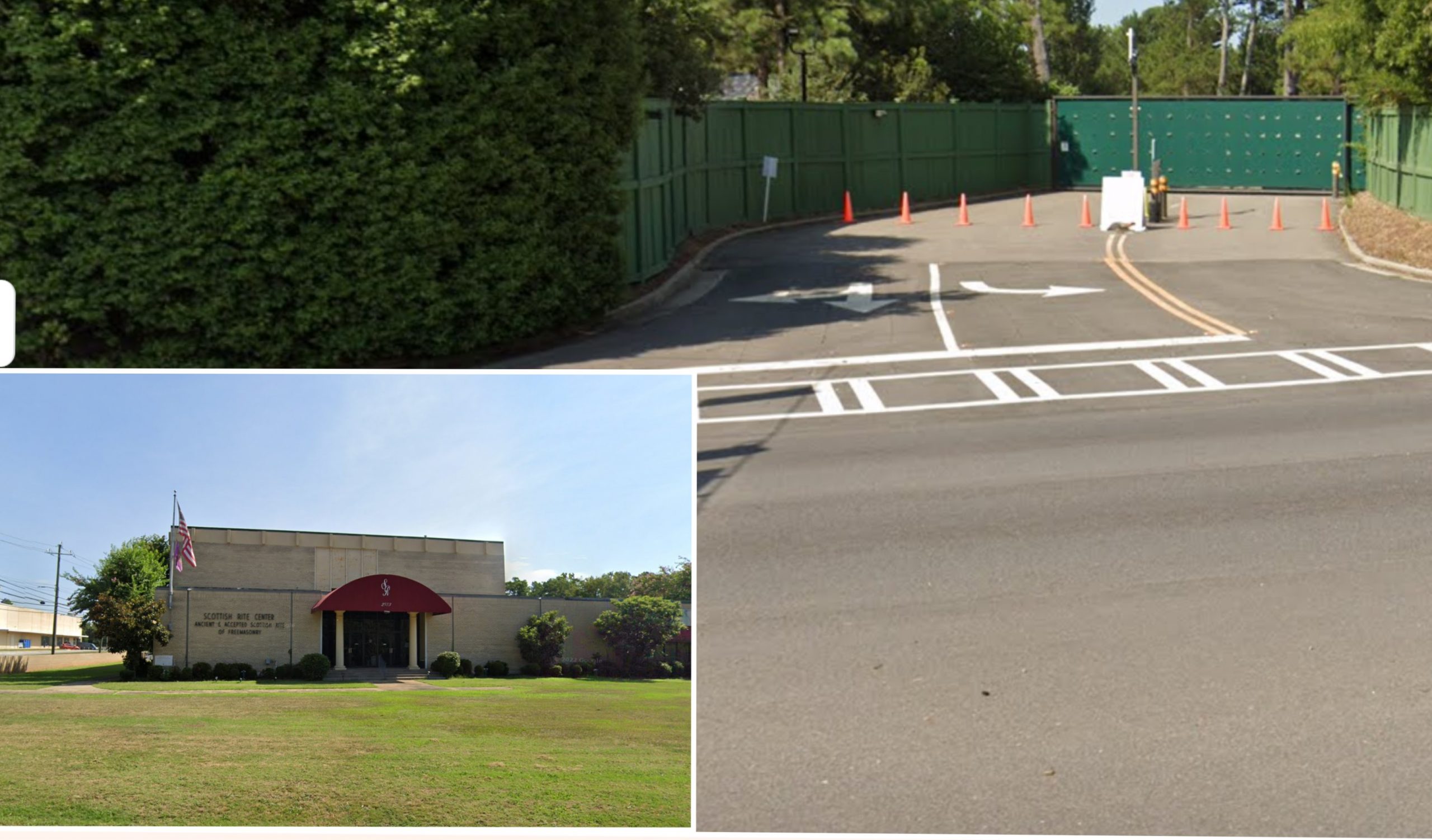
Augusta National entrance with inset of the building opposite – the HQ of Scottish Rite Freemasonry

Plenty of mystery and history to ponder in playing this recommended, but overly priced, course.

Facts:

Course Type: Parkland

Par 70 (0 par 5s, 14 par 4s,  4 par 3s)

Distance (yellow): 5704 yards

Moly’s Gross score: 95
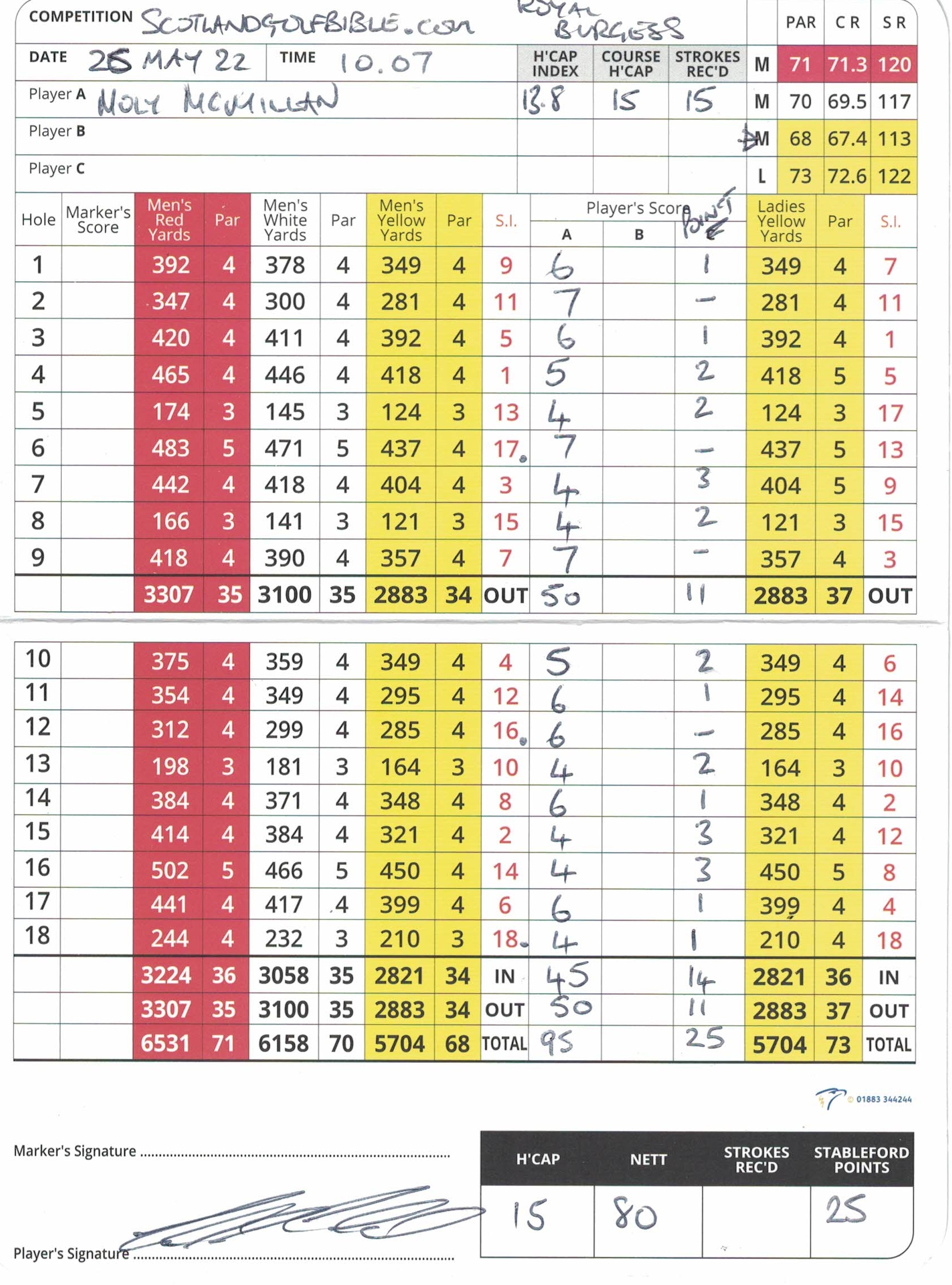
Moly’s Royal Burgess scorecard – 95 – dominated by up to 40 mph wind.

143. Gullane Number 1. 24 May 2022.

Arguably the epi-centric viewpoint of world links golf

Round £195. Par 71. Course Rating / Slope Rating (yellow) 70.4/122. Value (out of 5) – 5

In Michael Murphy’s great book, “Golf in The Kingdom”, golf is eulogised in metaphysical or spiritual terms. In starting to write about Gullane, I can’t do better than Murphy’s epigraph, the Scottish golf saying:

“Golf was invented a billion years ago; don’t you remember?”

Oh, to win the lottery and live next to Gullane Number 1’s first tee.

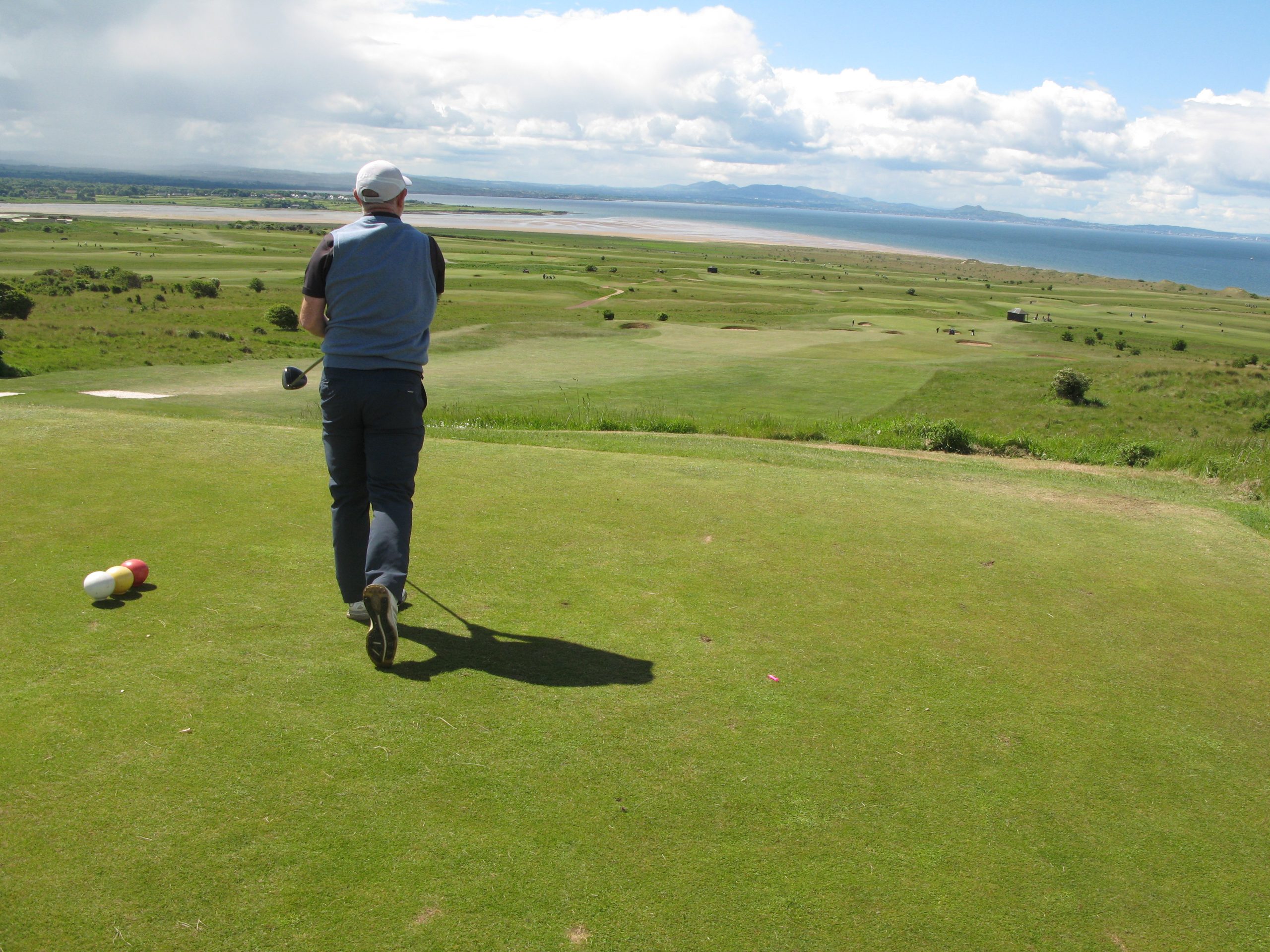
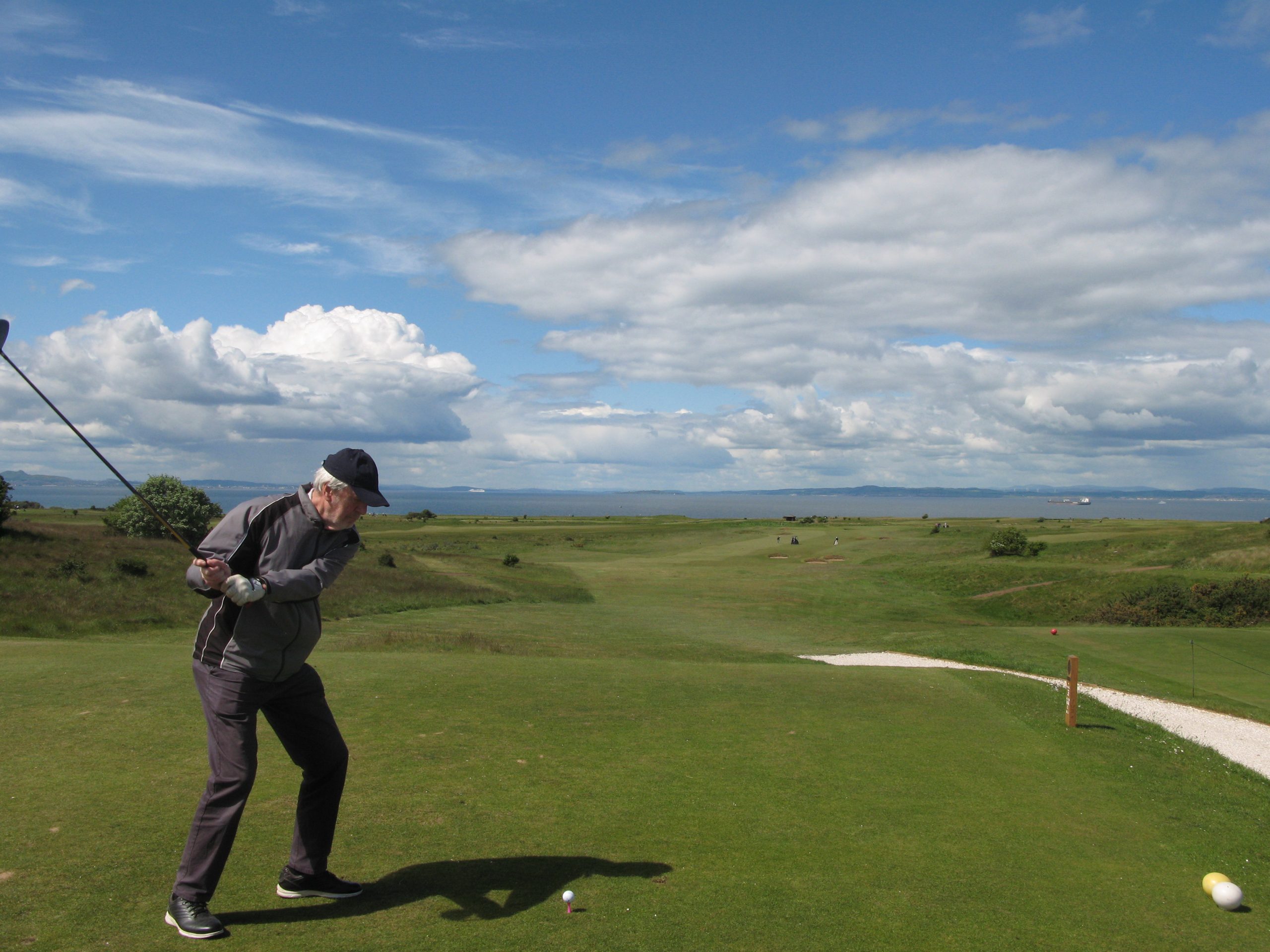
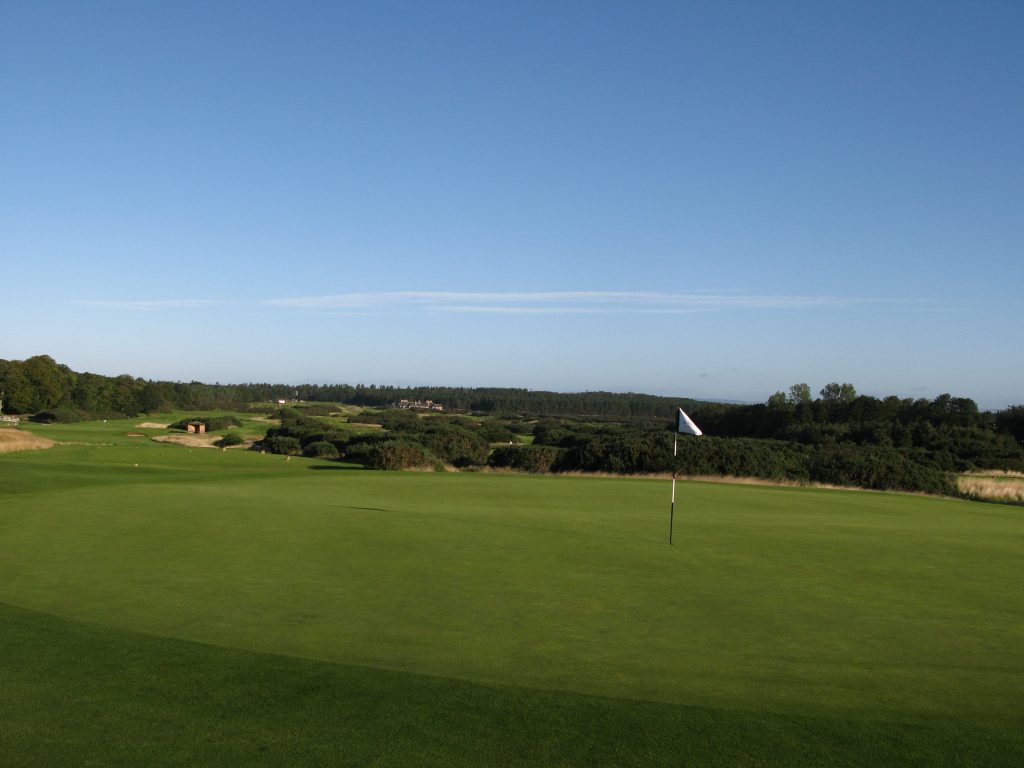
That epigraph made complete sense as I walked onto the 7th tee at Gullane Number 1 for the first time. Set on the small Gullane Hill, it is said on a clear day you can see fourteen counties. What is without debate, I think, is that you have the greatest links land view on earth. Perched there, you are at the mid point of the East Lothian ‘golf coast’ stretching from Dunbar to the east and Musselburgh to the west, with names synonymous with world golf – Dunbar, North Berwick, Archerfield, Renaissance, Muirfield, Luffness, Kilspindie, Craigie Law and Longniddry.

Moly on the epi-centric viewpoint of world golf – the 7th tee at Gullane No 1.

Look north across the Firth of Forth towards the Kingdom of Fife, with Leven, Crail, Elie and St Andrews; see past the Tentsmuir Forrest towards the links of Carnoustie, Montrose, Royal Aberdeen and Cruden Bay. Golf has been played on the East Coast of Scotland for hundreds of years, perhaps indeed ‘billions’. This 7th tee on Gullane Number 1 could be the epi-centric viewpoint of world golf; the Old Course is undoubtedly the “home”, but Gullane’s viewpoint is unparalleled.

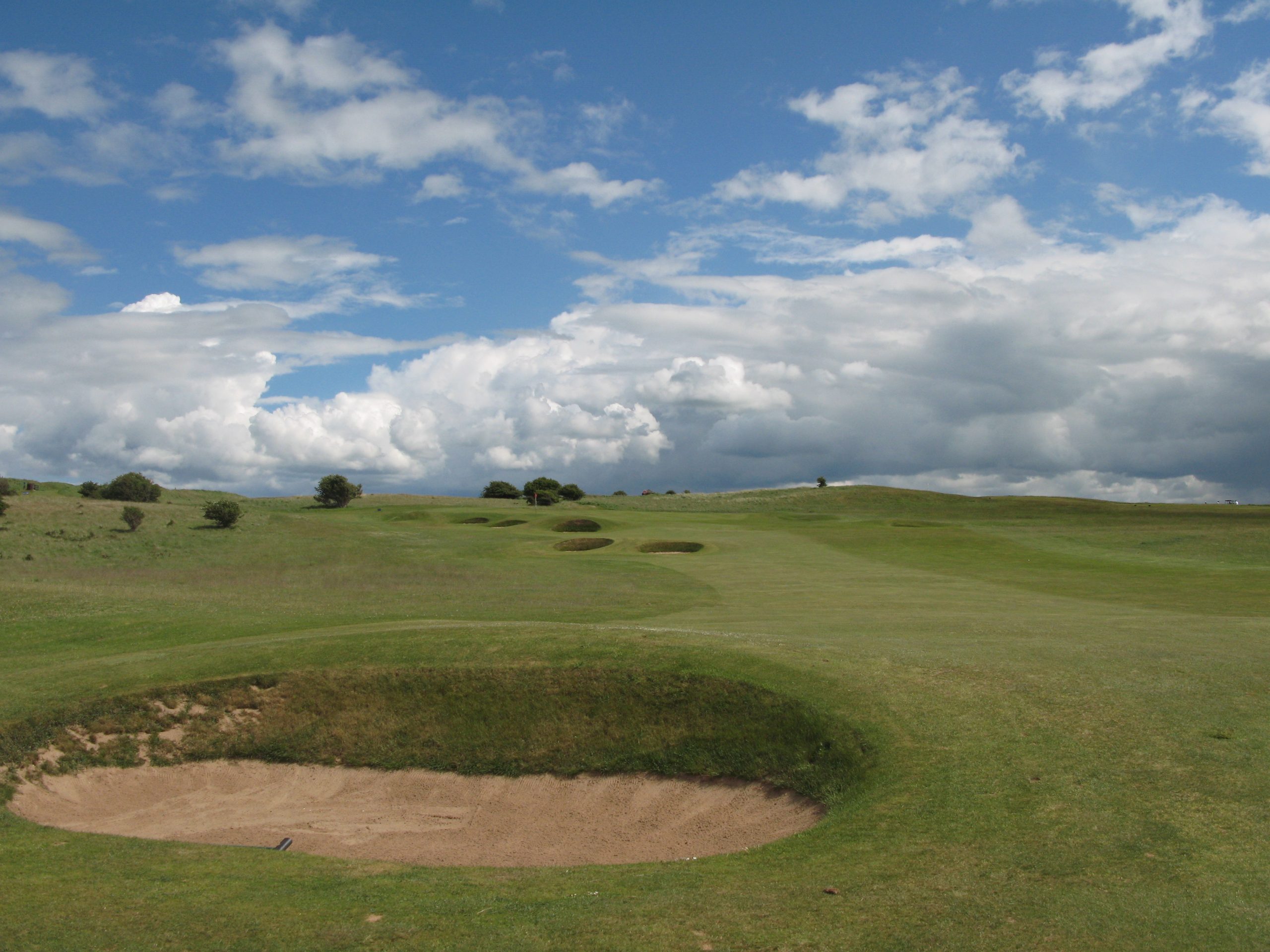
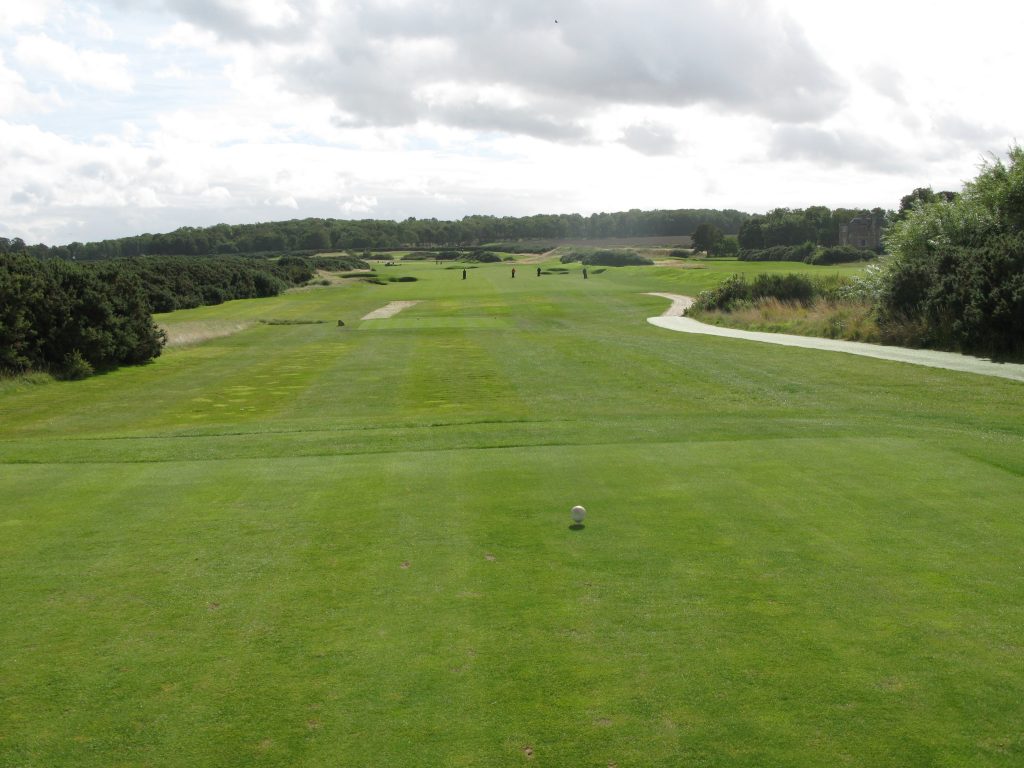
The second hole at Gullane No 1, a par four “carved into the Ancient Links”

So much has been written about Gullane, including the crafted explanation of posh ‘Gillin’ versus humble ‘Gullan’ in his book, “Playing Through”, by Curtis Gillespie, that I decided to more or less tell this story mainly through pictures.

Alastair Allanach plays his low top spin drawing drive, which galloped down the “Racecourse” third; a swing honed and bartered over many years of tutelage by a South African pro. The Hill was used in bygone days by racehorses.

Accompanied by Gullane member, Alastair Allanach, a man who has played more golf courses than anyone I know, we had an absolute blast, waxing lyrical about Gullane and its history. Alastair, a great all round sportsman, and now well into his 70s, was keen to get in at least two of the three Gullane courses on the day, as he struggles to “carry my bag for three rounds nowadays!”

Gullane is one of a few nesting grounds where Larks abound, here encountered at the 8th green.

I met Alasdair a few years ago, when I helped a tiny bit in his editing of the golf book, “The Golfing Life of Jock Kirkcaldy“, the alter ego of our mutual great friend Frank Crowe. The book was forwarded by Gary Player, a friend of Alastair’s – of course!

The brilliant bunkering at the par 3, ninth hole. Although not “the turn”, as with constant directional changes on the interweaving course, it’s unlike the many “out and back” links in Scotland.

This Championship course, the first of the three Gullane courses, dates back to 1882, (the others being innovatively named Gullane 2 and Gullane 3) and it was in brilliant condition. It could have immediately held another Scottish Open without any adjustment. The greens had a little more grass than a professional tournament would have, in order to ensure they didn’t become unplayable in the wind. We had a relatively still day on the links – only a 10mph breeze. Whilst Gullane 2 and 3 were both designed by golfing royalty, Willie Park Jr, the designer of Gullane 1 remains a mystery, which seems so apt.

The bunkers at the left of the 12th fairway, a short par 5, but played slightly uphill and into the prevailing wind – a challenge. Moly’s birdie 4, was witnessed by a group of Swedish golfers, among the many international visitors Gullane gets each year.

The bunkering was exceptional. Strategically placed, penal, but not impossible, many of the new US style courses could learn from a Gullane recce. I recently played on the Ryder Cup course at the K Club and found that almost all the bunkers required a shot height and carry I no longer had in my bag. Gullane bunkers give you a chance.

The immaculate bunker at the 14th green – penal but not impossible.

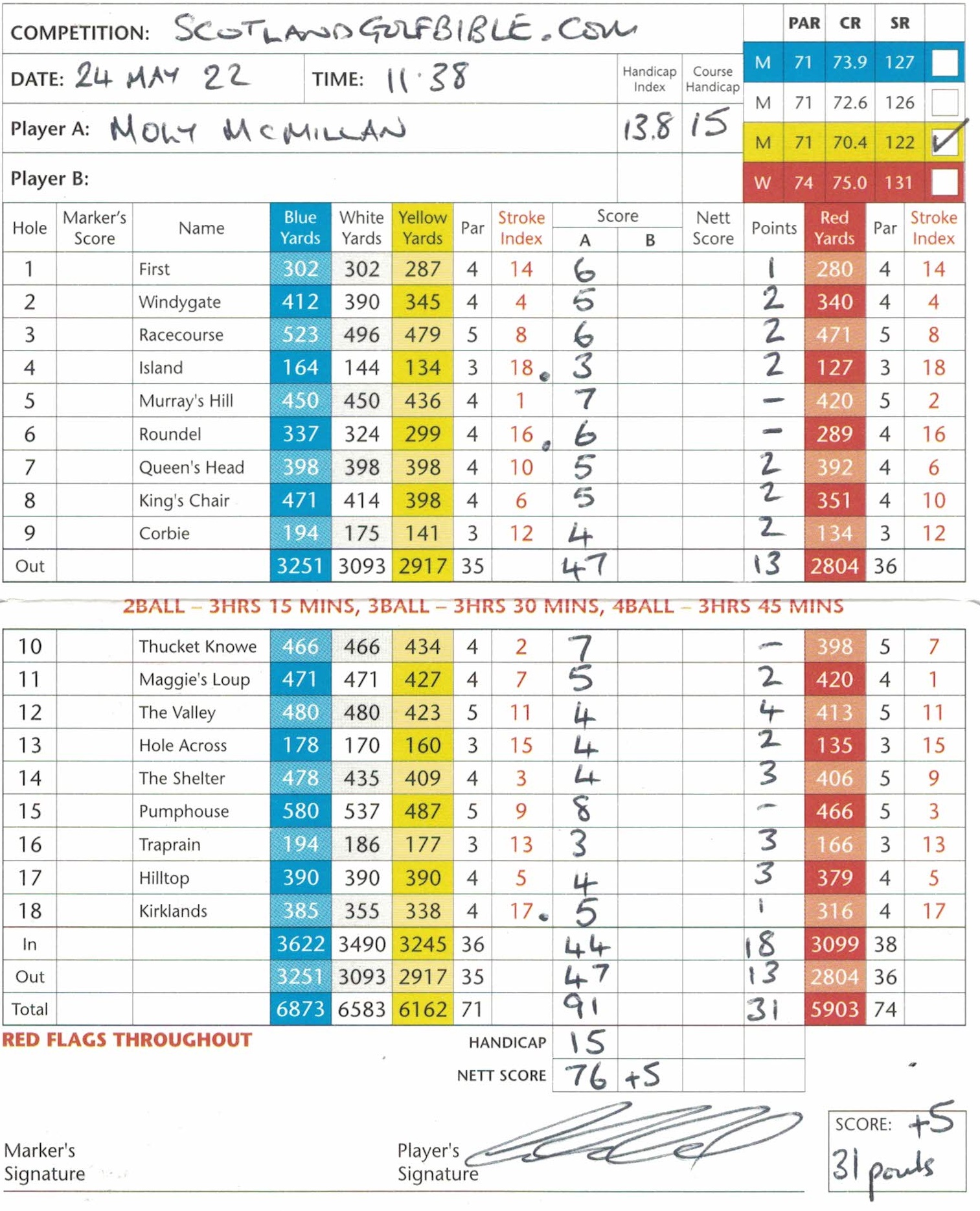
I was very pleased with my 91, despite 3 triple bogies, including at the stroke indexes 1 and 2 holes, the 5th and 10th respectively. I played off the yellow tees at 6162 yards, plenty enough distance for me. I had such a great time playing Gullane. I only hope all of the very fortunate 1200 members feel as blessed as Alastair does, who was a joy to play with on a memorable day for me.

The approach at the long par 5 15th hole.

The course sits on a vast area, so expect to 3 putt some of the monstrous greens. Despite being a busy day with all tee slots taken, I was amazed to only hear one shout of “fore”, a measure of the space here.

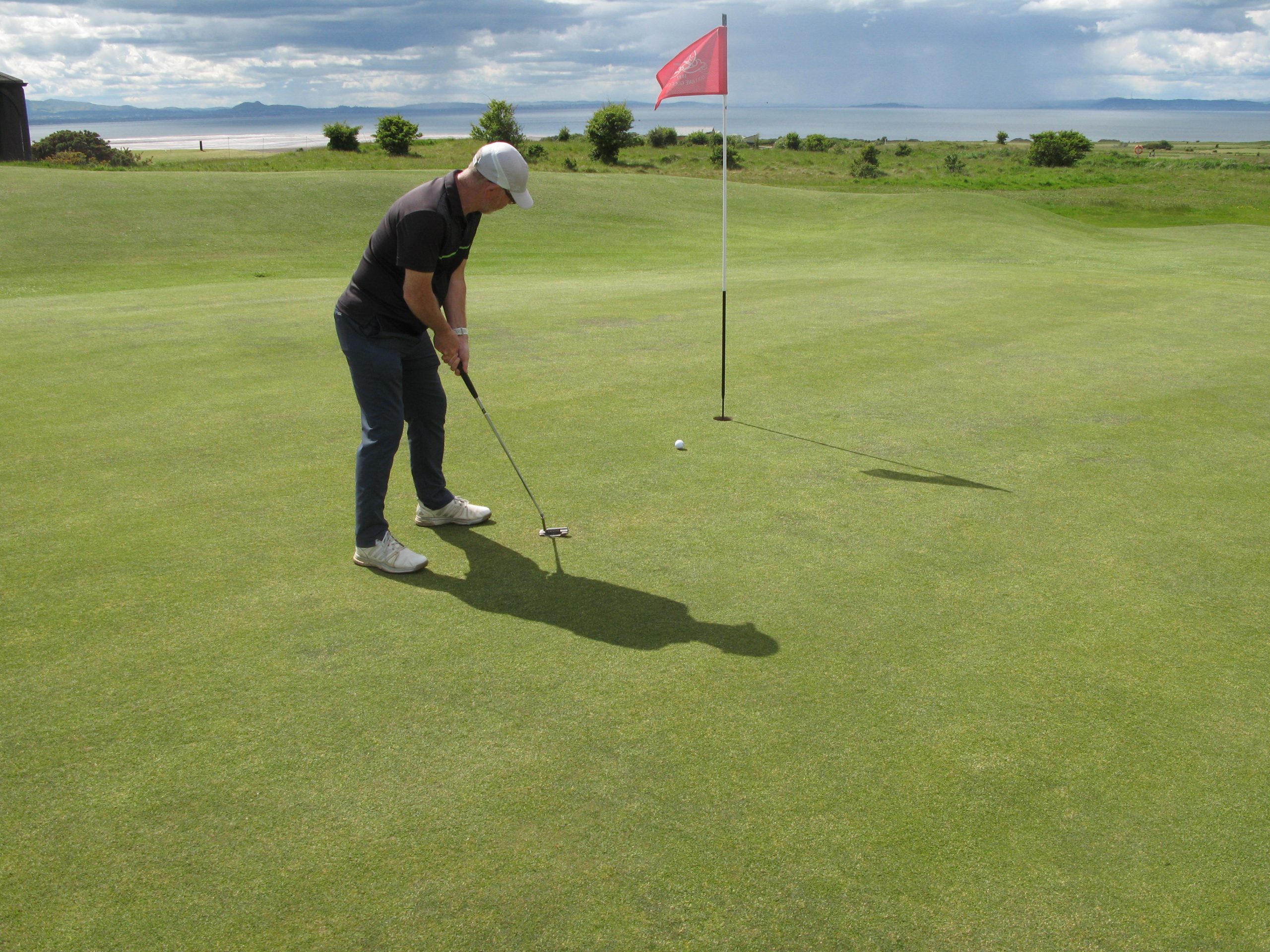
Moly has a rare birdie chance at the uphill par 3, 17th. Note the rain in the Firth of Forth, which never arrived on the course.

Now for the assessment of value. Golfing visitor fee inflation has really impacted Scottish golf. In 2018, in my St Andrews Old Course blog, I said anything higher priced than the old course can’t be worth the money. At the time the Old Course was £180 for a high season round, this year it is £270, a compound annual rise of over 10% per year, or more than three times the retail price index over the same period. Put another way, using 2018 as the datum, the Old Course should be £205.

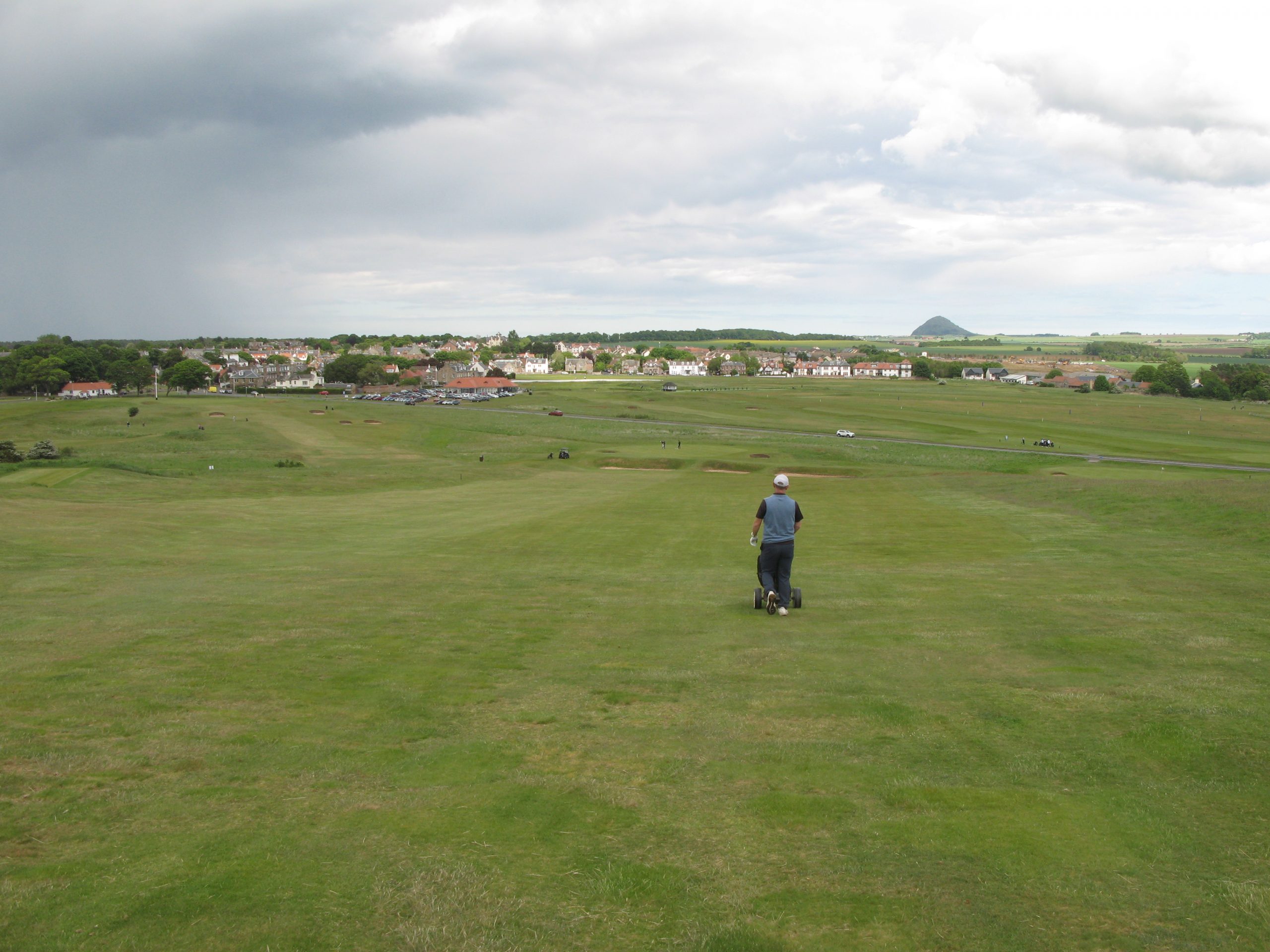
All good things come to an end – here Moly walks towards the 17th green, a deceptive par four, with the town of Gullane awaiting, watched over by Berwick Law.

No matter how much might have wanted to, in the end I couldn’t give this course anything less than 5 out of 5 for value, despite the price tag of £195. It’s a must play links golf course with unbeatable turf, bunkering, green surrounds, sea breeze, wispy rough.

Play, if for nothing else, to stand on the exact epi-centric viewpoint of world links golf. If such a thing could exist.

Facts:

Course Type: Links

Par 71 (3 par 5s, 11 par 4s,  4 par 3s)

Distance (yellow): 6162 yards

Moly’s Gross score: 91

Moly’s Gullane Number 1 scorecard – 91

131. (Glasgow) Gailes Links. 23 Mar 22.

I wonder how many visitors drive to Killermont to uncover this true links test?

Round £110. Par 71. Course Rating / Slope Rating (yellow) 71.5/130. Value (out of 5) – 3

I probably know more than most about Scotland’s golf courses, plus I also lived in Glasgow; one of my son’s attended school in Killermont. Despite this, I find a geography lesson is needed for ‘Glasgow’ Gailes as I almost ended up back in Glasgow to play at the Gailes Links. That would have been a big mistake!

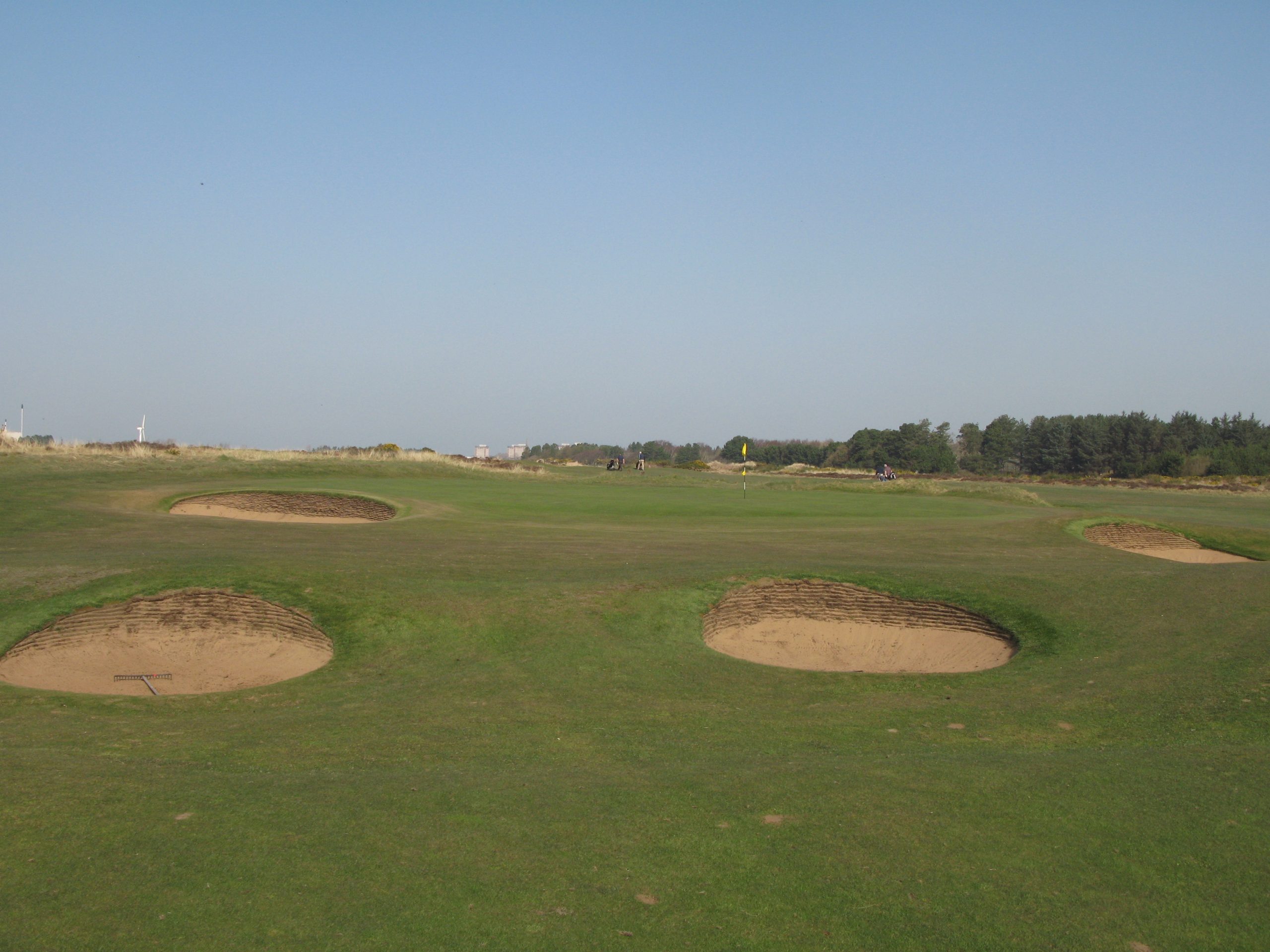
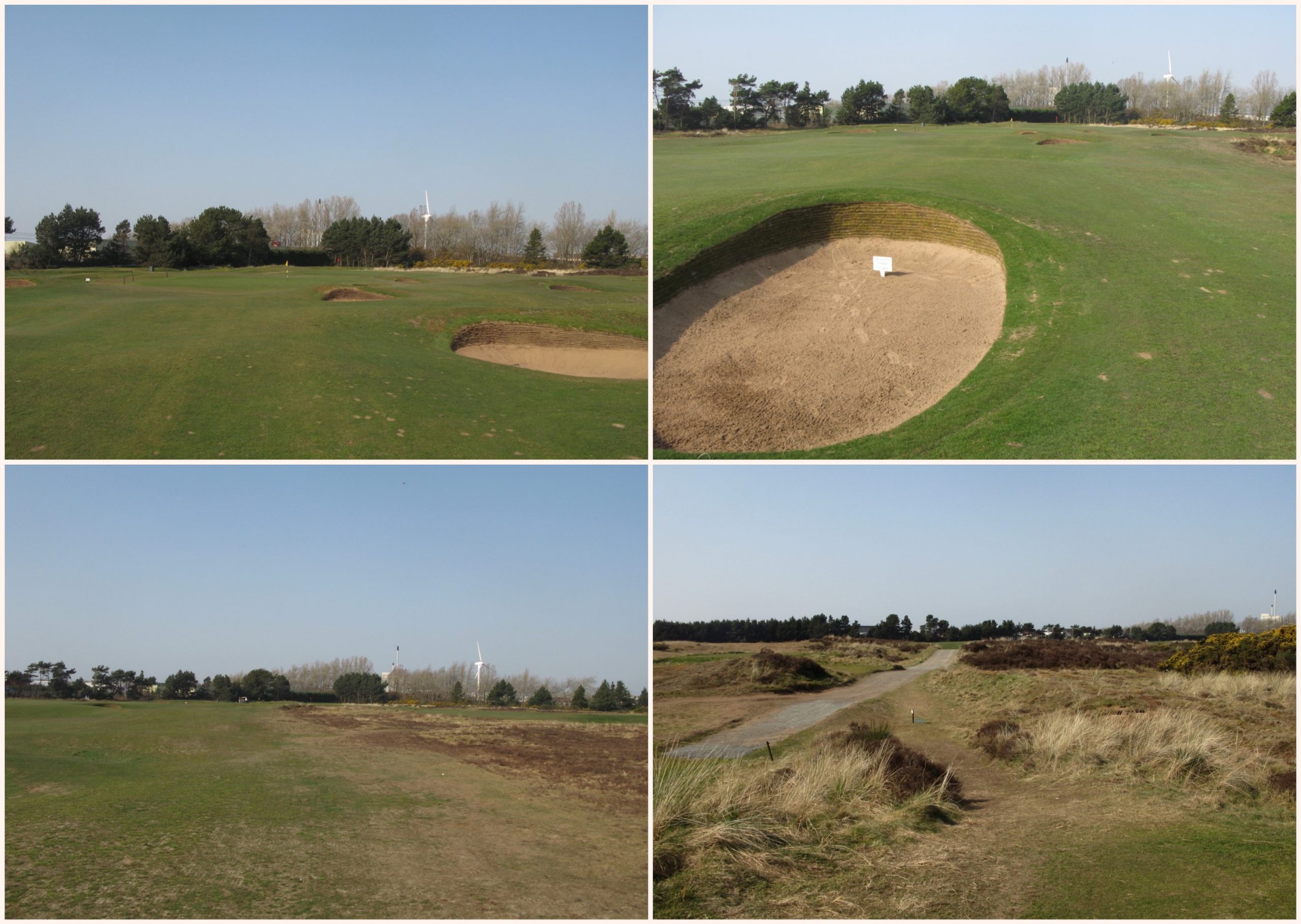
The bunkers at the first hole, a par four of 341 yards, serves notice of what lies ahead at Gailes Links.

Glasgow Golf Club was established in 1787 by the wealthy men of Glasgow making it the first club in the West of Scotland, and the ‘9th oldest club in the world’. It retains an exclusive air and its main headquarter club, based in Killermont in Glasgow, is not open for visitors, other than as a members’ guest. In 1892, the club built the Gailes Links course, initially designed by Willie Fernie, just south of the town of Irvine on the North Ayrshire coast. It is the most northerly of the great set of Ayrshire links courses, starting from Turnberry about 30 miles south. Since its inauguration the Gailes Links has been called ‘Glasgow’ Gailes, in part to distinguish itself from Western Gailes which it adjoins. Hence the confusion about its location. The Glasgow Golf Club might hold the record for the biggest distance between two club courses.

The ‘gorsy’ remains, where trees used to be, on full display at the 3rd, the challenging par 4, stroke index 1 hole, at Gailes Links.

The layout as it exists today, required a redesign by Willie Park Junior in 1912. Furthermore, and controversially, the course has undergone a complete transformation in the last few years, having uprooted tens of thousands of trees. I got mixed feedback from some members about the ‘carnage’ of the trees, which I understand is the reason that the Gailes Links course has been removed from the Open Qualifying rota.

The delightful fifth green complex at Gailes Links, with the social housing of Irvine in the background. A beautiful contrast.

One of the members said the resulting treeless course is much easier, as it has become a wide open links course. On at least two occasions I played from where trees would have been, likely saving me 4 shots. The courses main defense is now through clever and some severe bunkering – other than the westerly prevailing wind of course! This bunkering became sharply evident to me when, after a sound opening 5 holes, being called through by a 4 ball grouping, who then witnessed my 6, including 4 bunker shots, at a short par 3!

The 6th, the first of only three par 3 holes at ‘Glasgow’ Gailes.

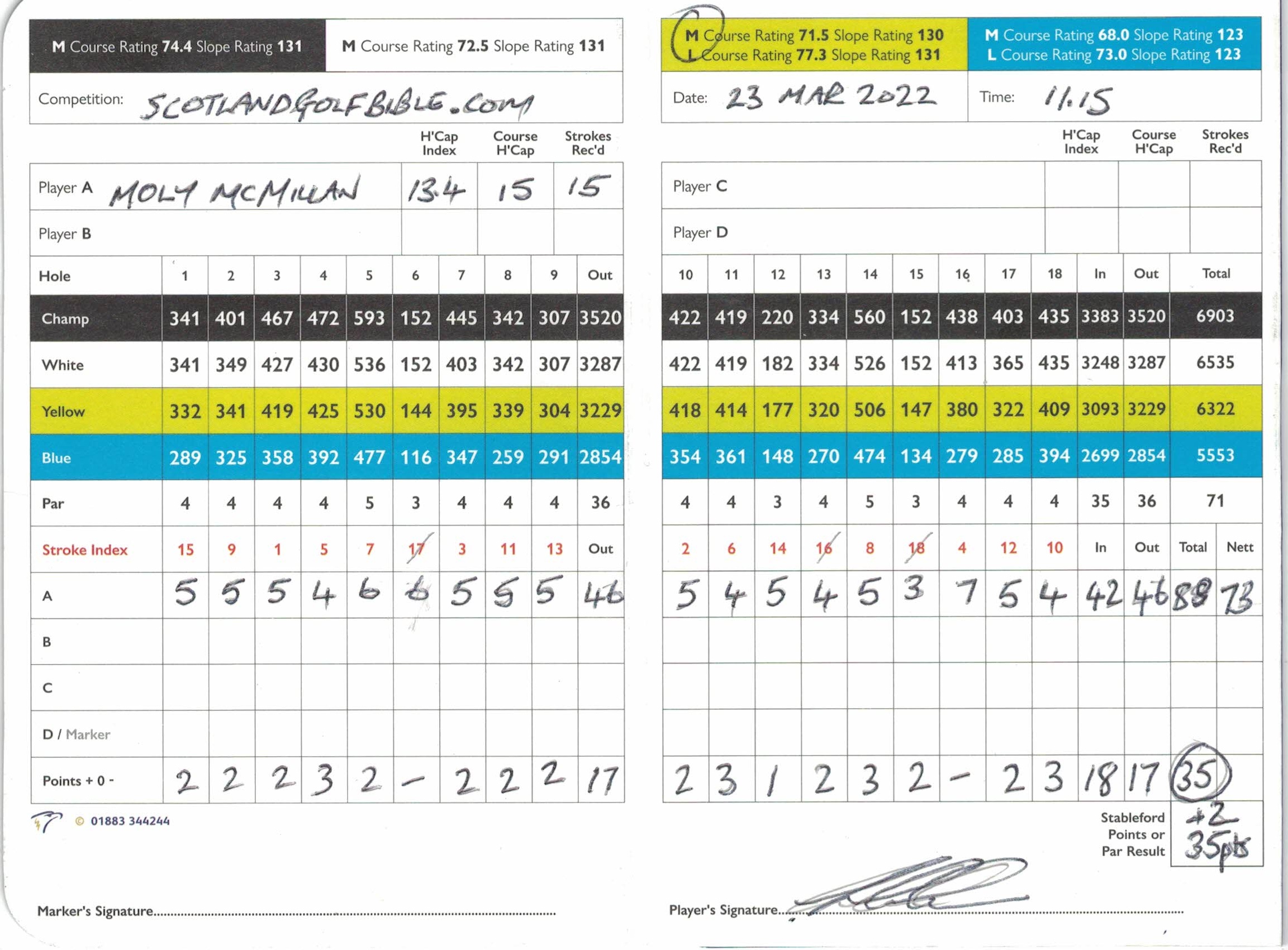
My six at the 6th, provides a lesson how to score well at Gailes. Study the course guide and stay away from the bunkers, some of which are out of sight. I actually played well for my gross 88, albeit the course was playing short due to the very dry March weather. Along with no wind and sunny weather it felt more like the Algarve for the time of year.

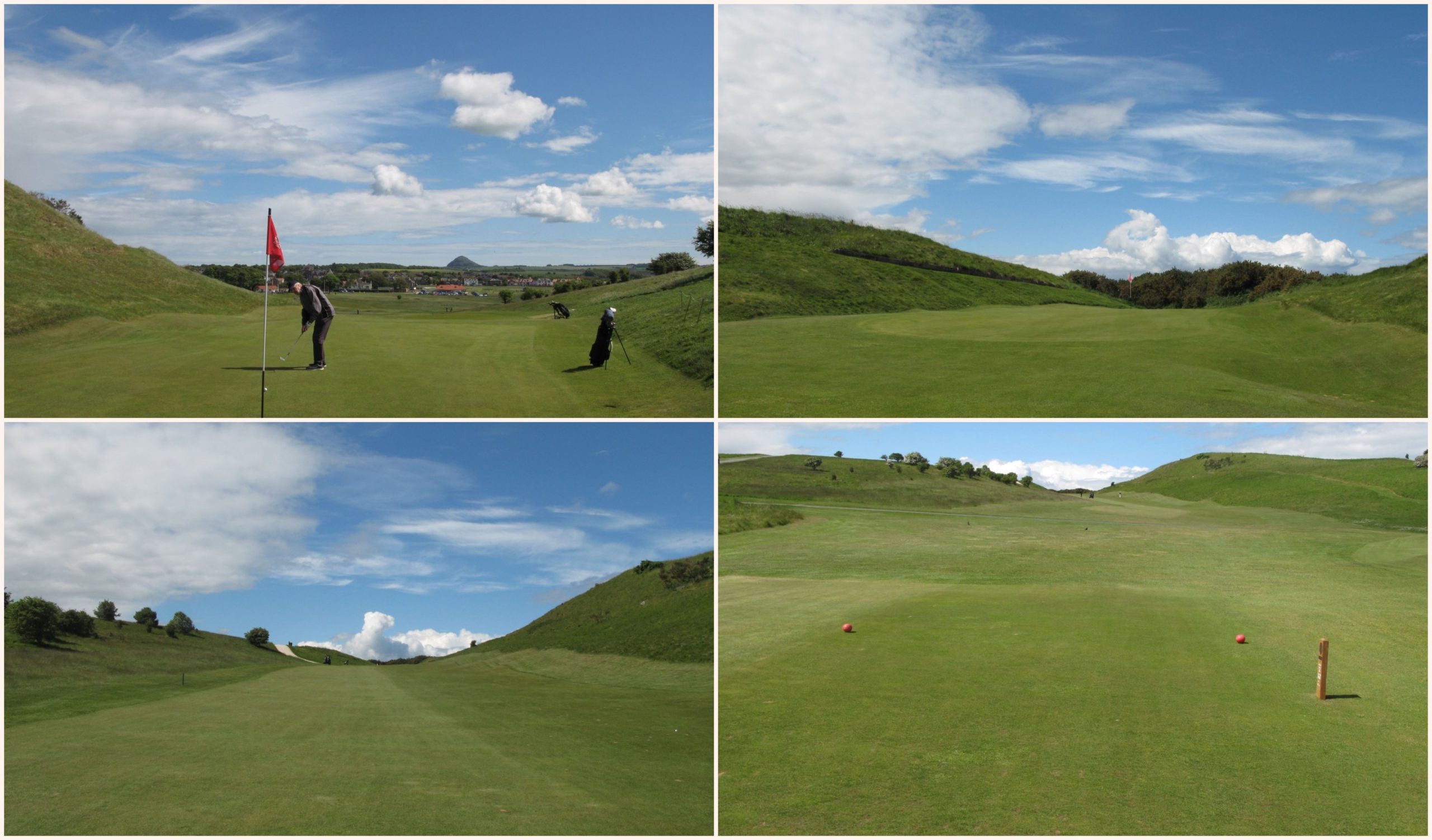
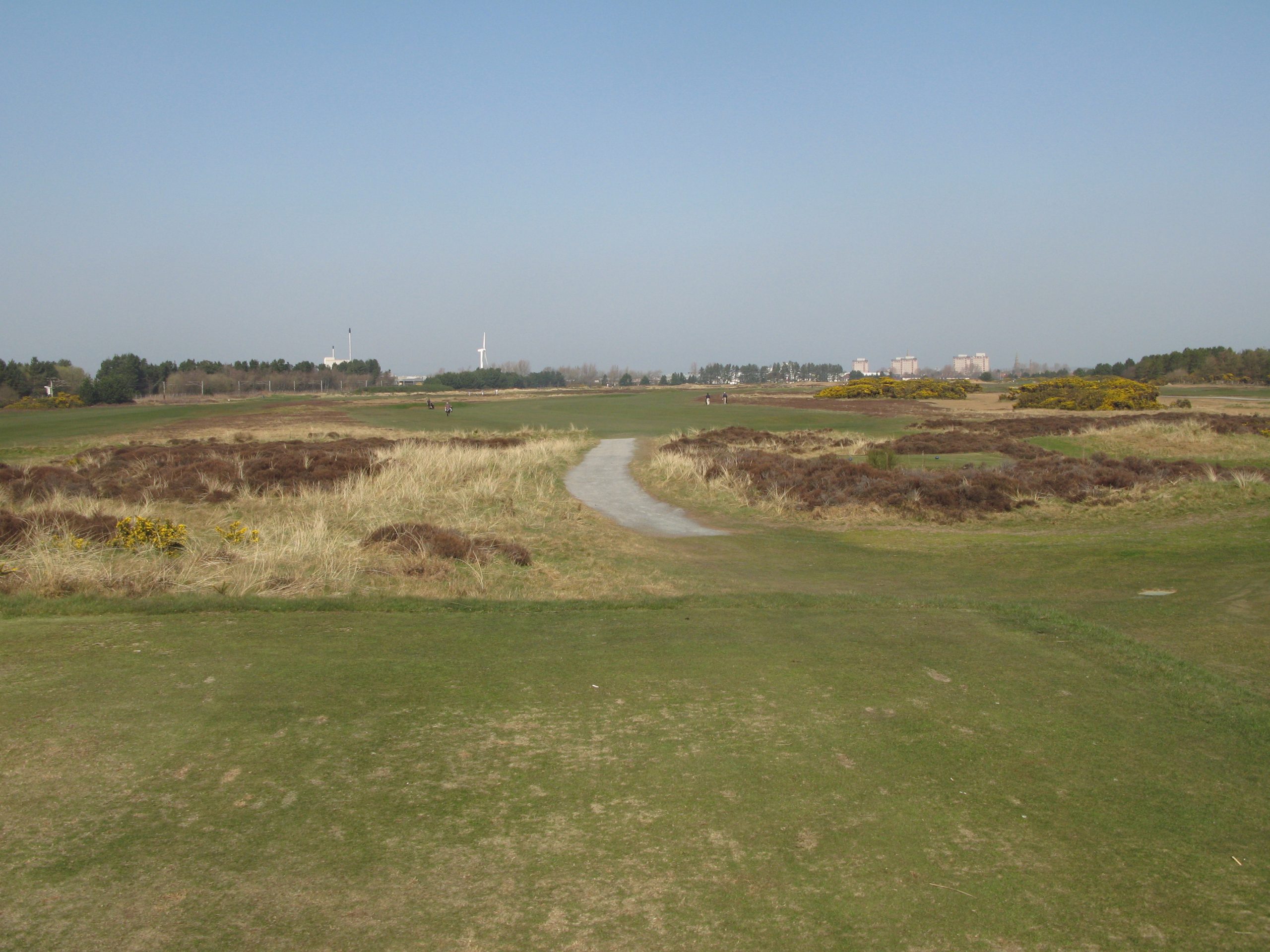
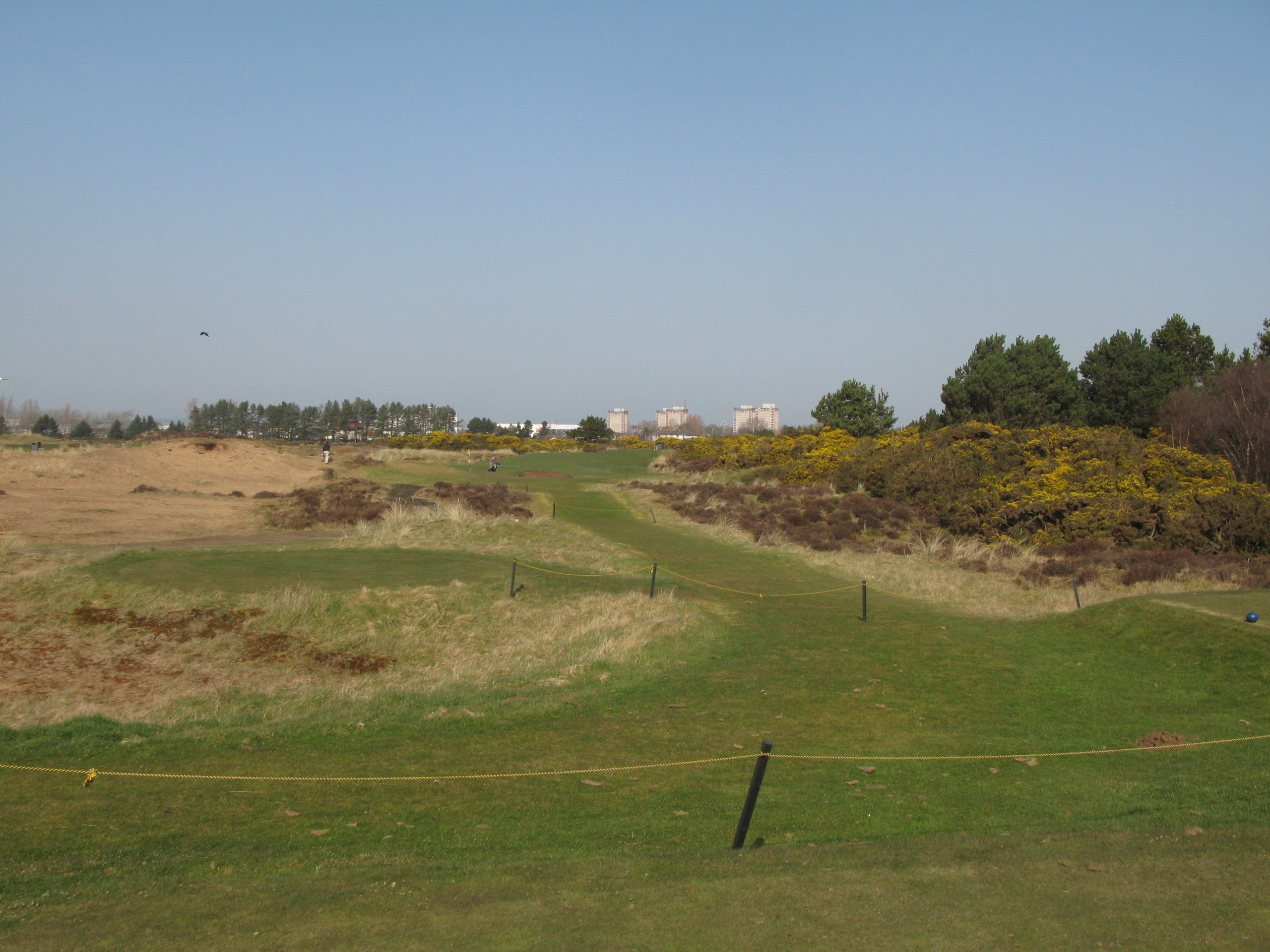
The only blind tee shot at Gailes Links is at the 7th (bottom right of the collage). There is much more space right of the ‘eye’ line, especially with the large scale tree removal.

The course is long at over 6300 yards from the yellow tees, and comprises a zig-zagged ‘north/south out and back’ layout, with about 4 transverse holes. The resulting layout provides a great many subtle changes of direction, which must be very challenging when the wind gets up.

The 9th is the shortest par 4 at Gailes Links, at 304 yards, but well bunkered at a typical driving length for most players, who might be best to play a longish iron off the tee, to avoid the sand.

Without the trees, being wayward off the tees is not penalised, especially as there is only one ‘blind’ tee shot (par four 7th), and only one ‘blind’ approach, at the 14th, one of only two par 5s on the course. Along with only three par 3s, this makes the main challenge to score well, being your long iron/hybrid game being up to the challenge of the several par 4s over 400 yards. The resulting par is 71, although the yellow course rating is 71.5, with white being one more.

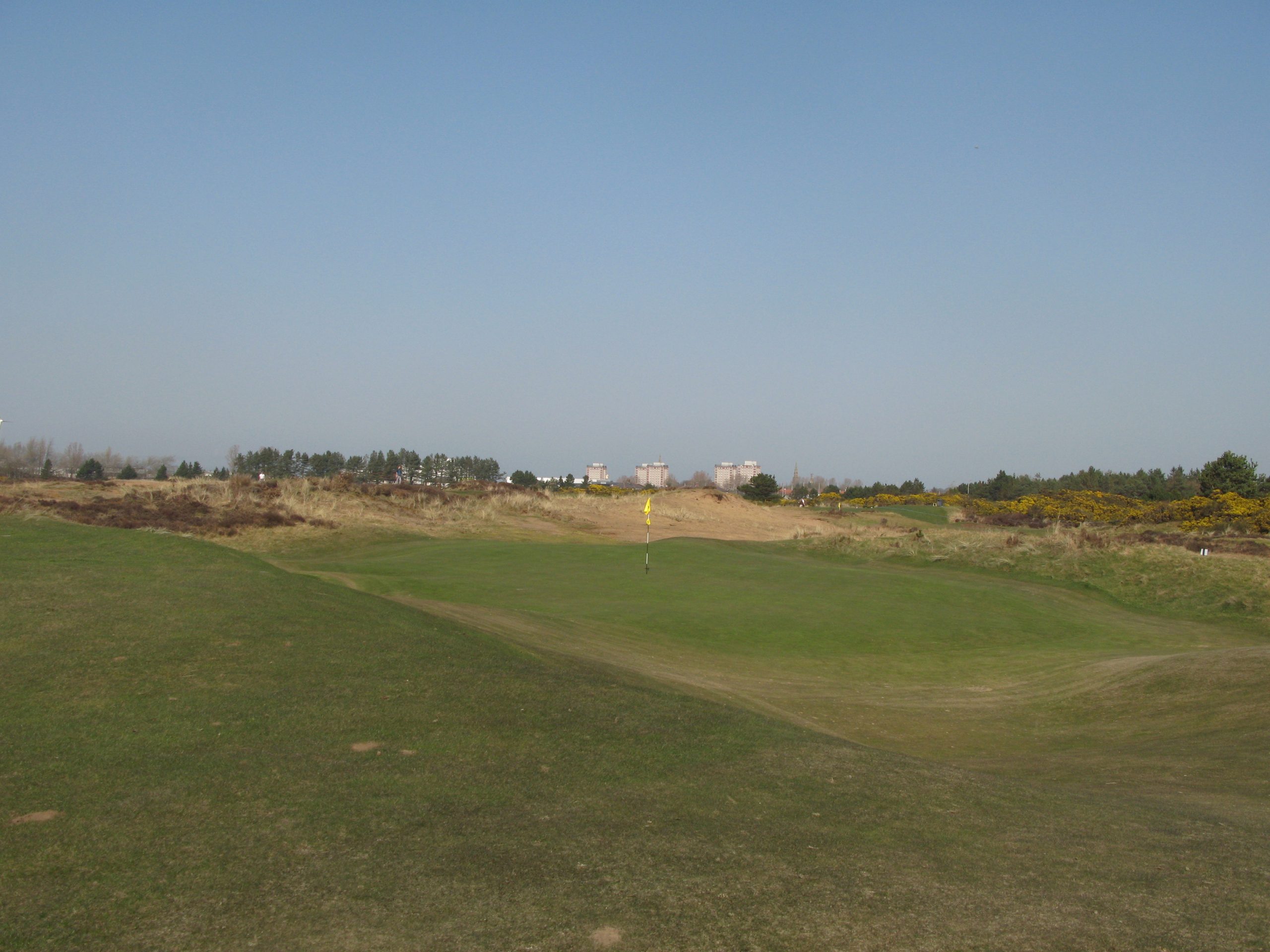
The approach at the 14th, a short but good par 5, where the long hitters will be tempted to reach the green in two, but will require to avoid a narrow bunker filled gap (above) about 100 yards short of the putting surface.

On the day I played, several of the bunkers were GUR, although not the ones I found at the 6th (my only bunkers of the day). I felt the winter rate I paid of £60 a little steep, with a few winter tees still in play, and despite the dry weather there was surprising indications of muddy locations – I wondered if that was a legacy of the tree removal, and impact on the drainage?

The local pro “Arthur” was really friendly and very welcoming, and therefore worth a mention.

If you get lucky with a winter rate in dry conditions, its fairish value, but the main fee of £110 for a mid week summer round, is not great value and getting out of range of affordability for most.

Course Type: Links

Par 72 (2 par 5s, 13 par 4s, 3 par 3s)

Distance: 6322 (yellow)

Moly’s Gross score: 88

Moly’s Gailes Links scorecard – 88, best round in a while.

87. Archerfield – Dirleton Links. 13 Sep 2018.

One of the two courses on the Archerfield Estate, Dirleton demands a place in the “Faux” Links discussion

Round £90…plus hotel residency!   Par 72.  Value (out of 5) – 3.5

Nestled between Muirfield and North Berwick, and adjacent to the magnificent Renaissance, the Dirleton Links and Fidra Links courses form the golfing challenges of the Archerfield Estate, a development created by the Edinburgh businessman Kevin Doyle over the last 15 years.   These additions strengthen the case that this East Lothian region is Scotland’s premier golfing destination.  Read my Fidra Links blog here and my Renaissance blog here.

The magnificent par 5 5th at Archerfield’s Dirleton Links, with Fran on the tee,

The estate has a range of 5 star accommodation options, with the 17th Century, 16 bedroom, flagship Archerfield House being available to rent in part or in whole.    With great accommodation, a quite superb Scandinavian inspired spa (I thoroughly recommend the Golfers Recover massage), and first rate practice facilities on offer, this is a world class golf resort on Edinburgh’s doorstep.  Curiously, the clubhouse restaurant and bar is adorned with African art, giving it a colonial feel?

The par 4 2nd, a typical hole at Dirleton, with the gorse surrounding the fairways.

In considering Dirleton Links, there is an argument that this is a “Faux” Links, a term that has gained traction in recent years, mainly coined for inland courses, designed to replicate Links conditions.  A couple of definitions are worth referring to:

The Wikipedia Definition of a Links course includes  “..comes via the Scots, meaning “rising ground, ridge” and refers to an area of coastal sand dunes and …. is typically characterised by () an undulating surface, and a sandy soil unsuitable for arable farming but which readily supports various indigenous browntop bents and red fescue grasses, that result in the firm turf associated with links courses and the ‘running’ game…”

Whereas the meaning of “faux” is “made in imitation; artificial”.

So is Dirleton Links a true links course?  I think what has crept into the game is the thought that Gorse forms a key part of a links layout, and that is what the creator of Dirleton, David J Russell, has surrounded the course with.  However, there is no sand dues to be seen, and I’m convinced that you could plant a fair few “Tatties” on those fairways.  So for me, its not a real links, regardless of the course name.

The view over the “Faux” Links from the beautiful 6th green at Dirleton

However, that’s not to say its a poor course, on the contrary it’s a terrific golf course, which in my opinion is better than its sister Fidra, which appears higher on most ratings lists of

The Archerfield House behind the 7th green at Dirleton Links; which was rented out complete by 4 Americans, during our stay.

Scottish courses.

It’s a very traditional layout with both the outward and back 9s made up of 5 pars 4s, 2 pars 3s and 2 par 5s.  This is my favourite layout, and in addition there is a great mix of long and short par 4s.  The course meanders around itself, so wind direction was always changing from hole to hole.  It was one of those courses where the wind most often seemed to be against though!  It was a very windy day – gusts of up to 45mph, which played havoc with both Fran and my scores.   The fairway bunkers are really well positioned and force strategic decisions off the tee.   Overall a course I would like to take my A game to.

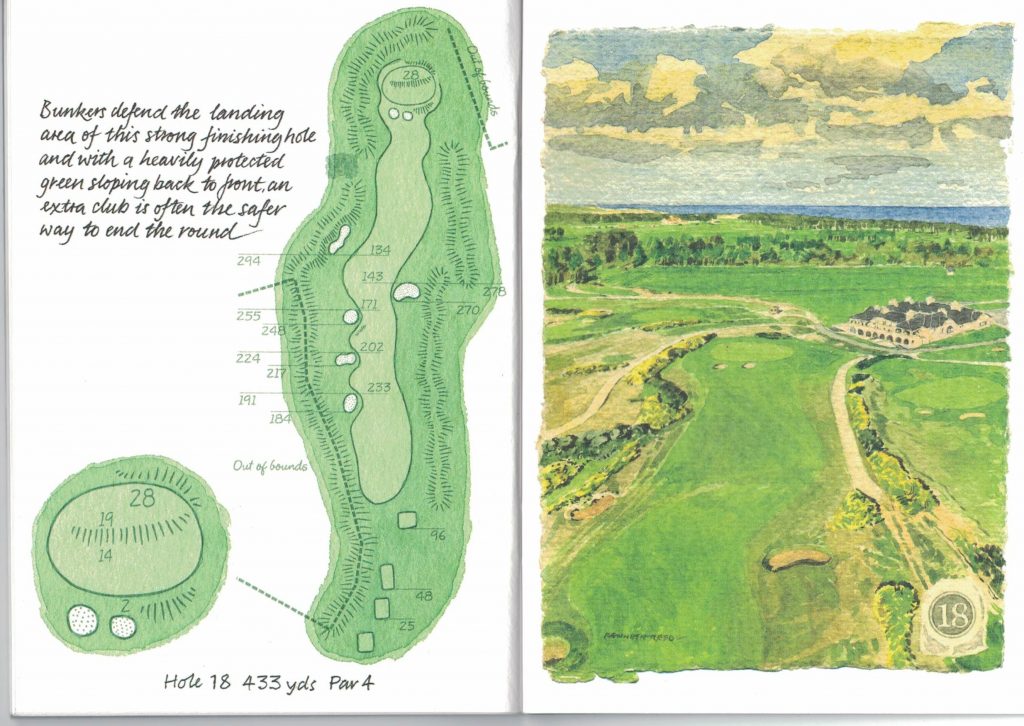
It’s not cheap;  membership via a debenture costs about £30,000, then around £3,000 annual fees.  But, you do get your shoes cleaned and don’t need to worry about paying for range balls.  You can have a “golf experience day” (price unknown), or as I did pay a £90 green fee as an accommodation occupant; I suspect many golfers play both courses either side of a single night B&B stay, which costs about £500; not bad for a short of this quality.  The clubhouse food is pretty good too, and not overpriced.  One of the benefits of the fee was a superb course planner, which was included, illustrated by Kenneth Reed FRSA.

The wonderful course planner at Archerfield’s Dirleton Links, illustrated by Kenneth Reed FRSA.

If you can afford it, its worth staying and playing at Archerfield.

Plus, whether a “Faux” or real Links, its a great course.

Facts:

Course Type: Links

Par 72 (4 par 5s, 10 par 4s,  4 par 3s)

Distance (white): 6133 Yards

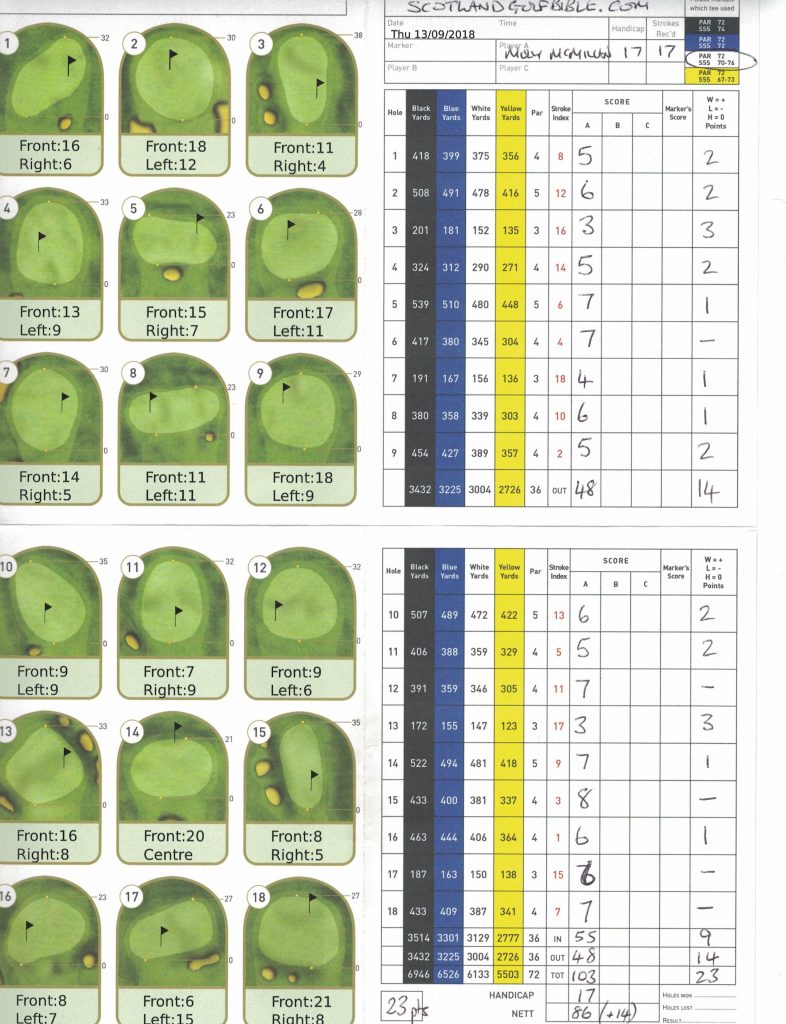
Moly’s Gross score: 103

The very high winds – gusts of 40mph – explain the 103 for 23 points

« Older posts Newer posts »

© 2026 Scotland Golf Bible

Theme by Anders Noren — Up ↑