A guide to green fee value for money

Category: Willie Fernie (Page 2 of 3)

118. Callander. 4 Nov 2020.

A course down on its luck, well worth playing, but this is no “Gleneagles” as its web site infers.

Round £24. Par 63. Course Rating / Slope Rating (yellow) 62.6/105. Value (out of 5) – 4

There is a well known equation for individual business success – “under promise and over deliver”. Why do some golf clubs get this completely inverted by “over promising and under delivering”. Callander Golf Club is a perfect example of this error.
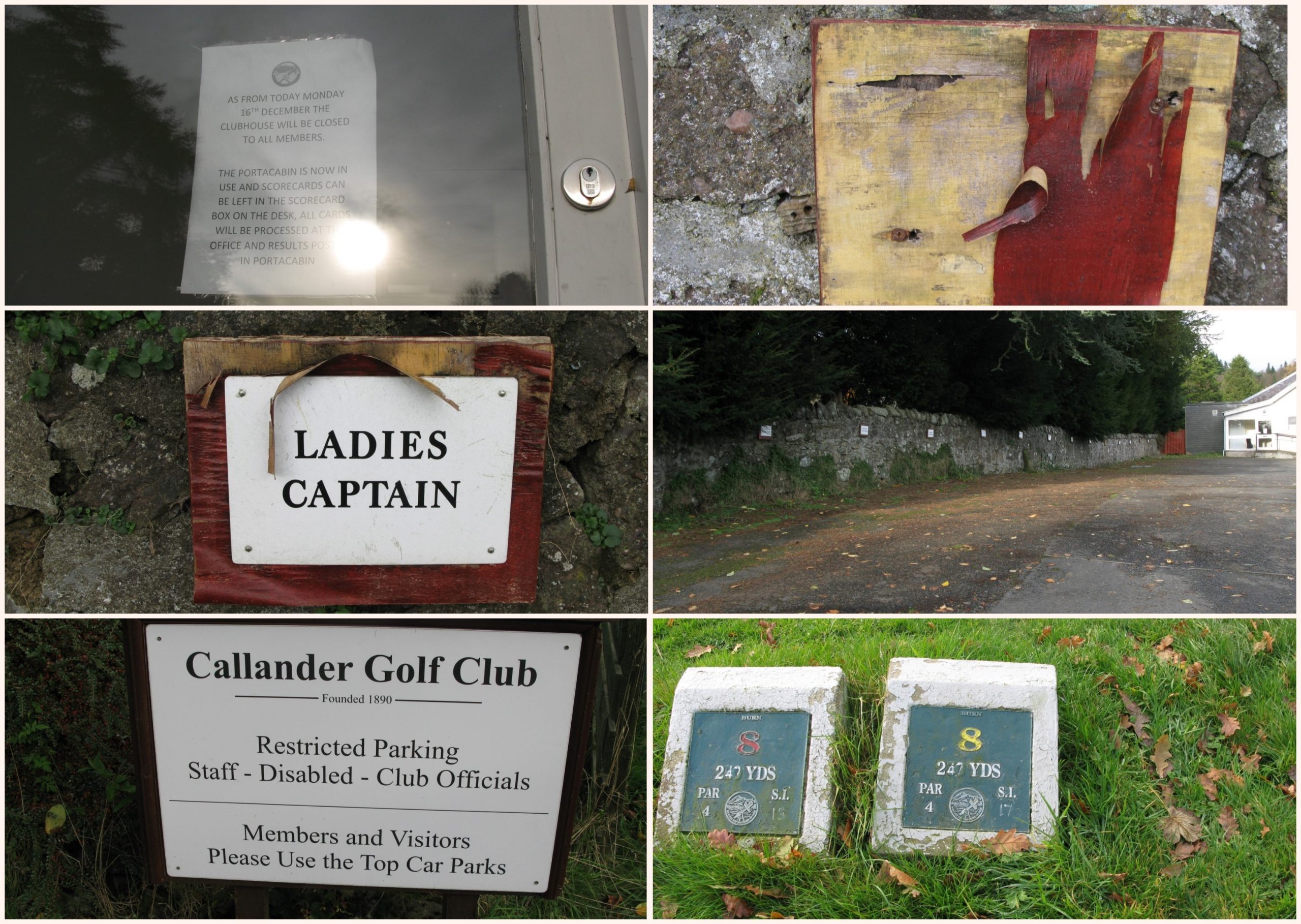
Callander golf club has seen much better days – its website is also living in the past.

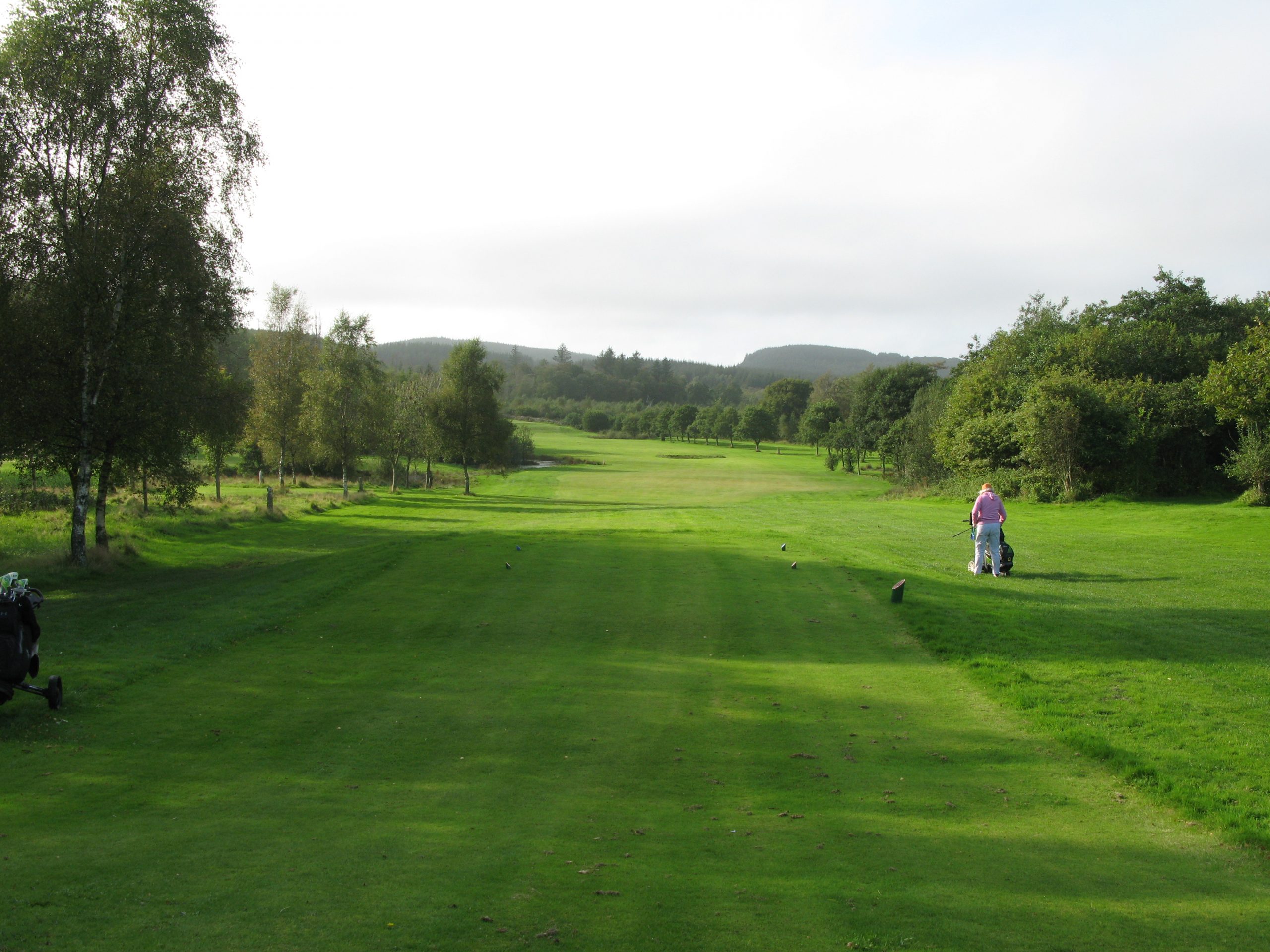
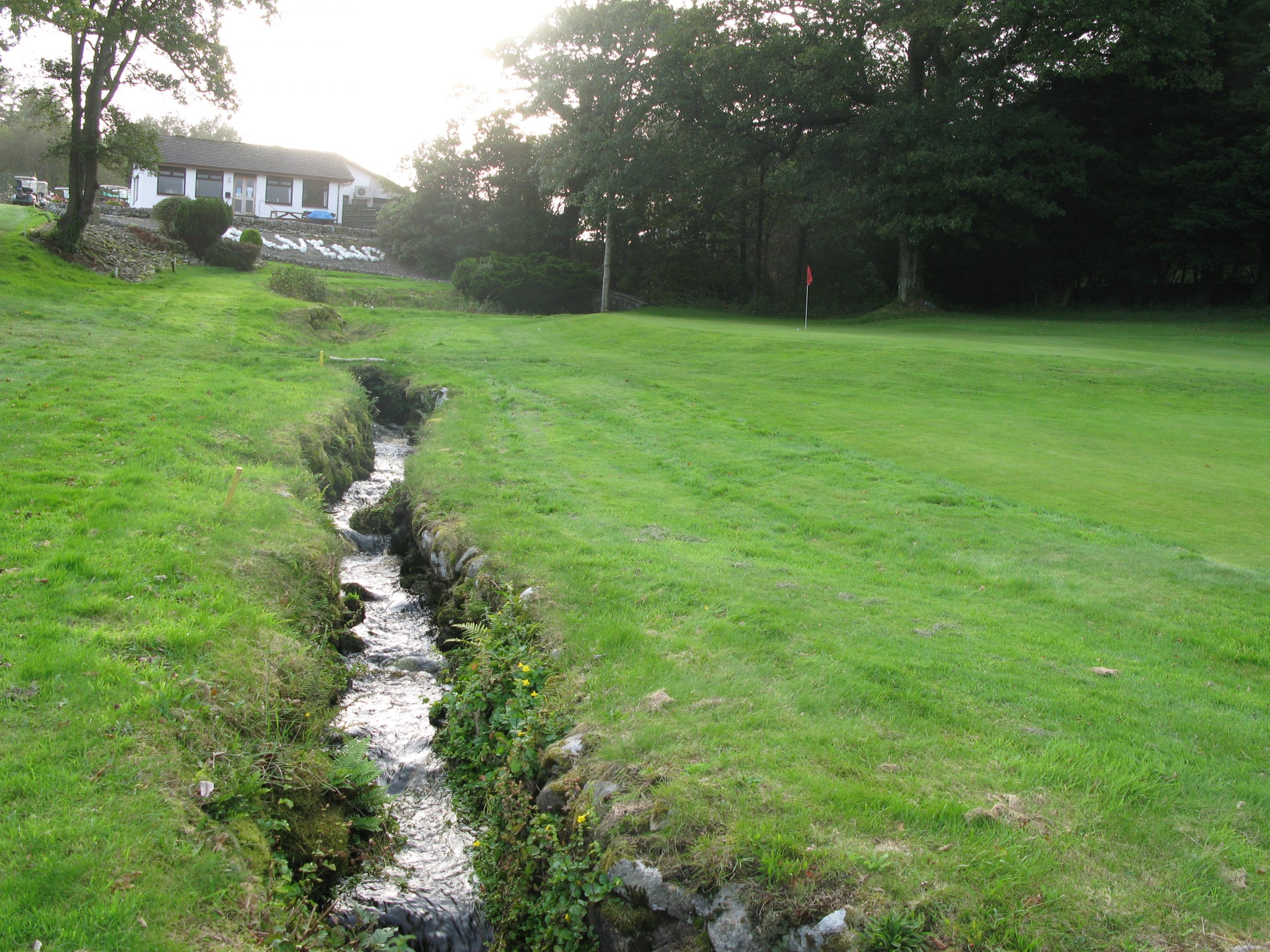
The club has clearly seen better days – the photo above gives a glimpse of the state of its infrastructure. The ‘temporary’ clubhouse was a shipping container. Its web site includes the following statements, some quoted from media outlets:

Callander Golf Club is probably the most scenic golf course in the UK“,

The charming and challenging 15th is one of the most famous par 3s in Scotland“,

“‘The Scotsman’ includes Callander … ahead of Carnoustie’s Championship Course.

“‘Golf Monthly’ rated Callander among the top ten courses in Scotland for visitors, alongside Gleneagles, Turnberry and St. Andrews.

These statements, collectively, are so wide of the mark – in my humble opinion of course! Just image a touring golfer, having played Gleneagles, Turnberry, St Andrews and Carnoustie, turning up at Callander expecting something similar.
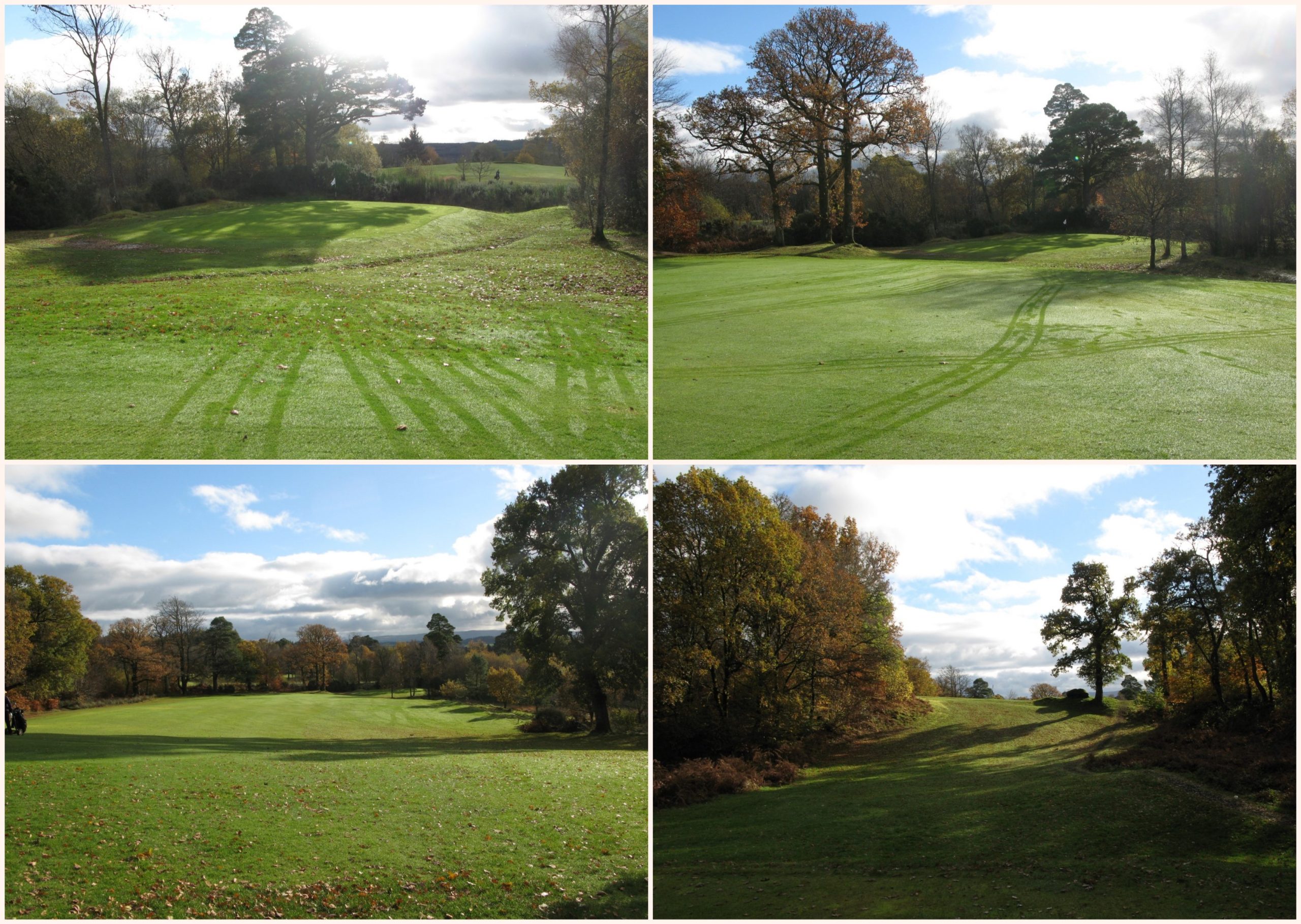
Callander’s 7th, one of the many short par 4s, this one called ‘Blind’ for obvious reasons off the tee.

Please, don’t get me wrong, this is a really fun and lovely golf course set within the beautiful Trossachs area of central Scotland, with very picturesque surroundings, some great and memorable holes and in decent condition.
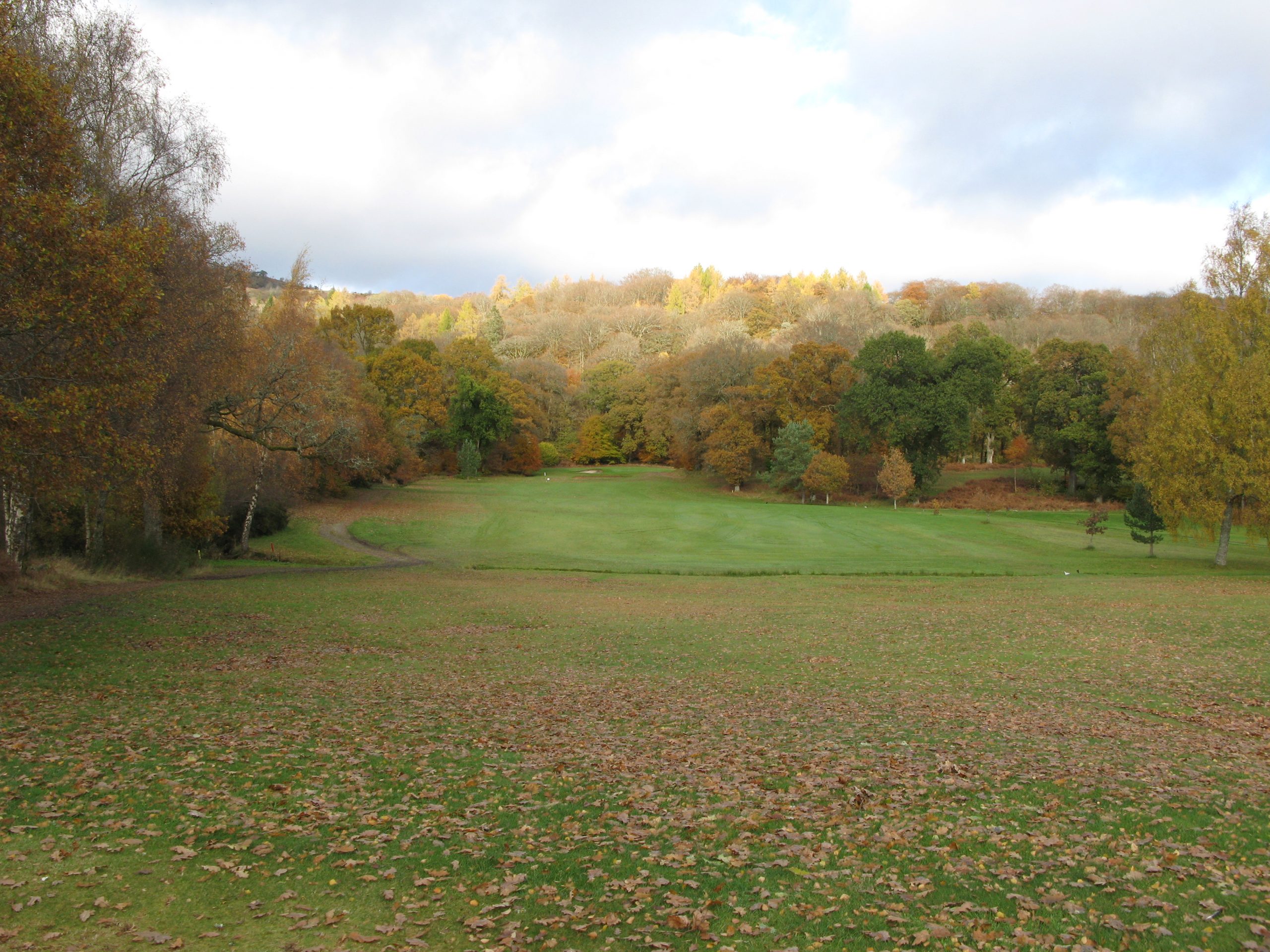
The 6th at Callander, ‘Dell’, the most difficult of all the holes , in full Autumn colours

The course was opened in 1892 as 9 holes designed by Old Tom Morris, then Willie Fernie extended it to 18 holes in 1914. Heady architects both.

This is, in particular, brilliant holiday golf. It’s short, at well under 5000 yards from the yellow tees. It has fairly generous fairways, not too many bunkers and relatively straightforward greens. There is an abundance of par 3s, with five on the back 9 alone, including the cute 15th, where play is through, or more likely, above a tiny channel between tall trees. It’s memorable, and one of those holes that demands straight hitting.

The Slope Rating of 105, gives most golfers the chance of posting a great score for 18 holes – that’s always nice.
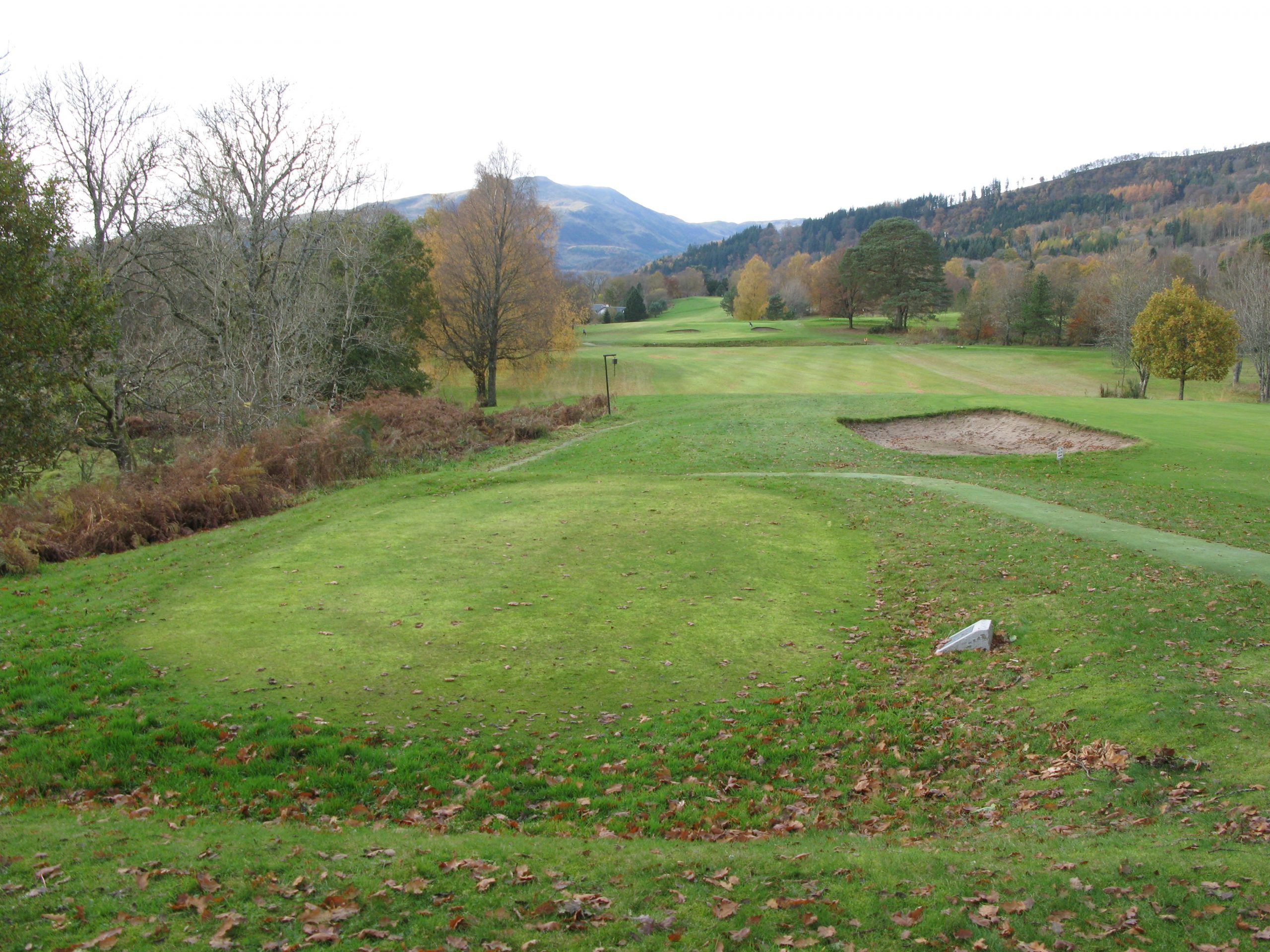
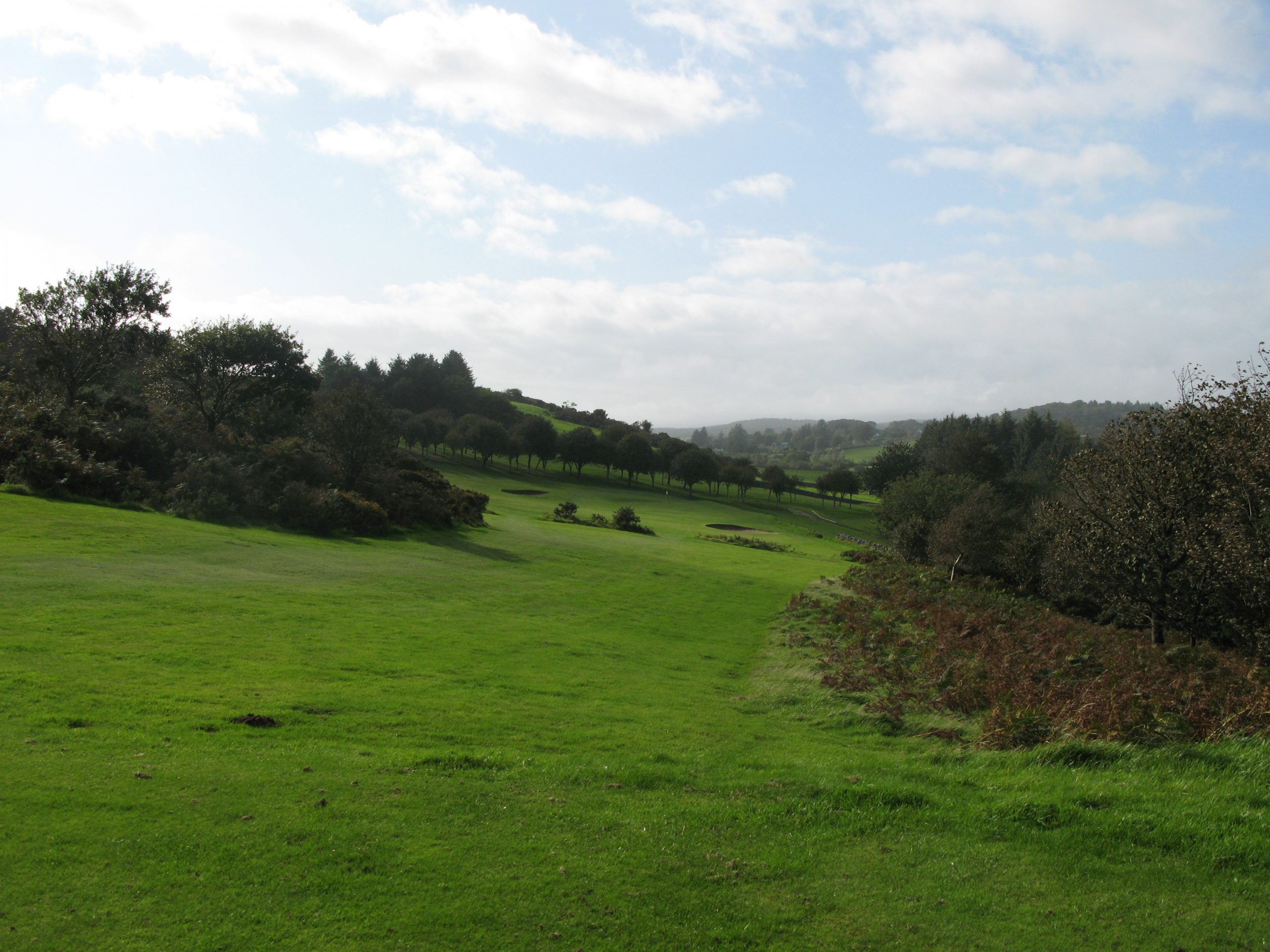
The 16th at Callander, with Ben Ledi in the background

Its well worth playing – but don’t expect to be playing Gleneagles – the green fee will tell the true story, and to that extent it’s also a great course for serious golfers to play as well, in order to experience the great value golf Scotland has to offer. Scots are known for being honest, so lets set the record straight on the web site.
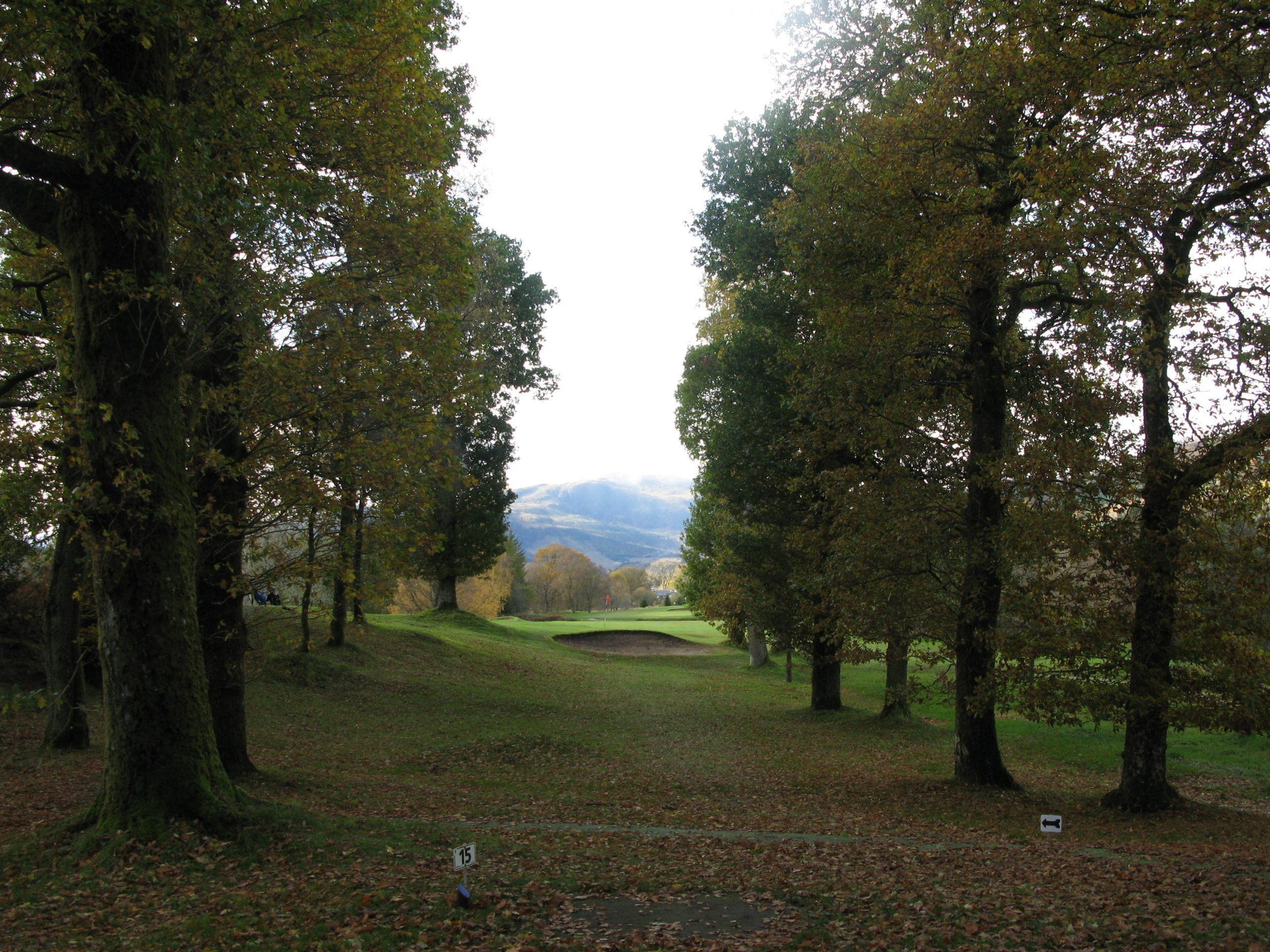
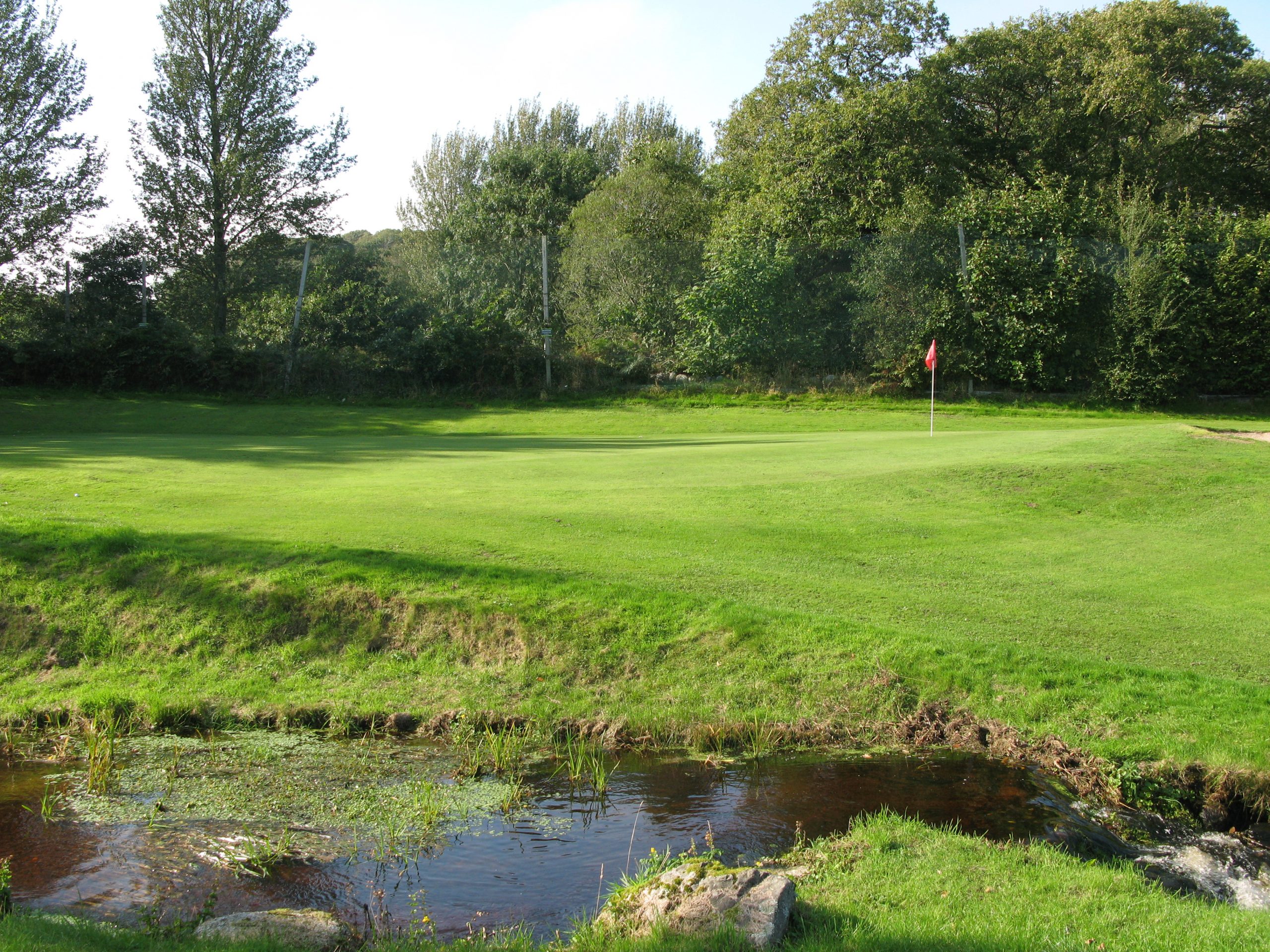
The wonderful par three 15th – ‘Avenue’. But not as famous as, for example, the ‘postage stamp’

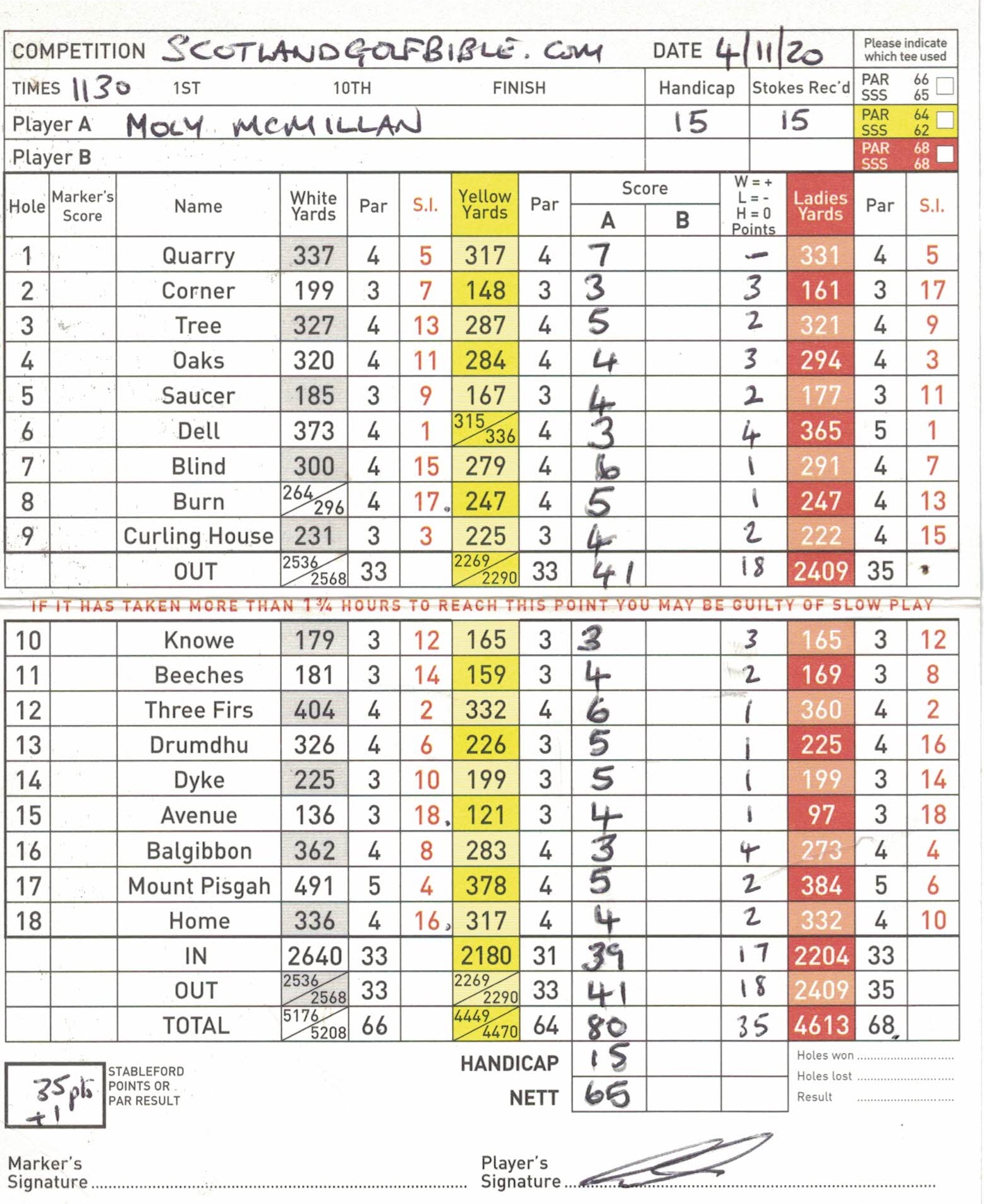
On a very wet Autumnal day, with colours in late bloom, Fran and I had the course pretty much to ourselves. I played decent to shoot 80

Course Type: Parkland

Par 64 (0 par 5s (although 1 on the white), 10 par 4s, 8 par 3s)

Distance: 4470

Moly’s Gross score80

Moly’s scorecard at Callander – 80

105. Shiskine. 15th Sep 2020

One explanation makes sense – this is perhaps God’s home course.

Round £26 (12 holes). Par 42. Value (out of 5) – 5

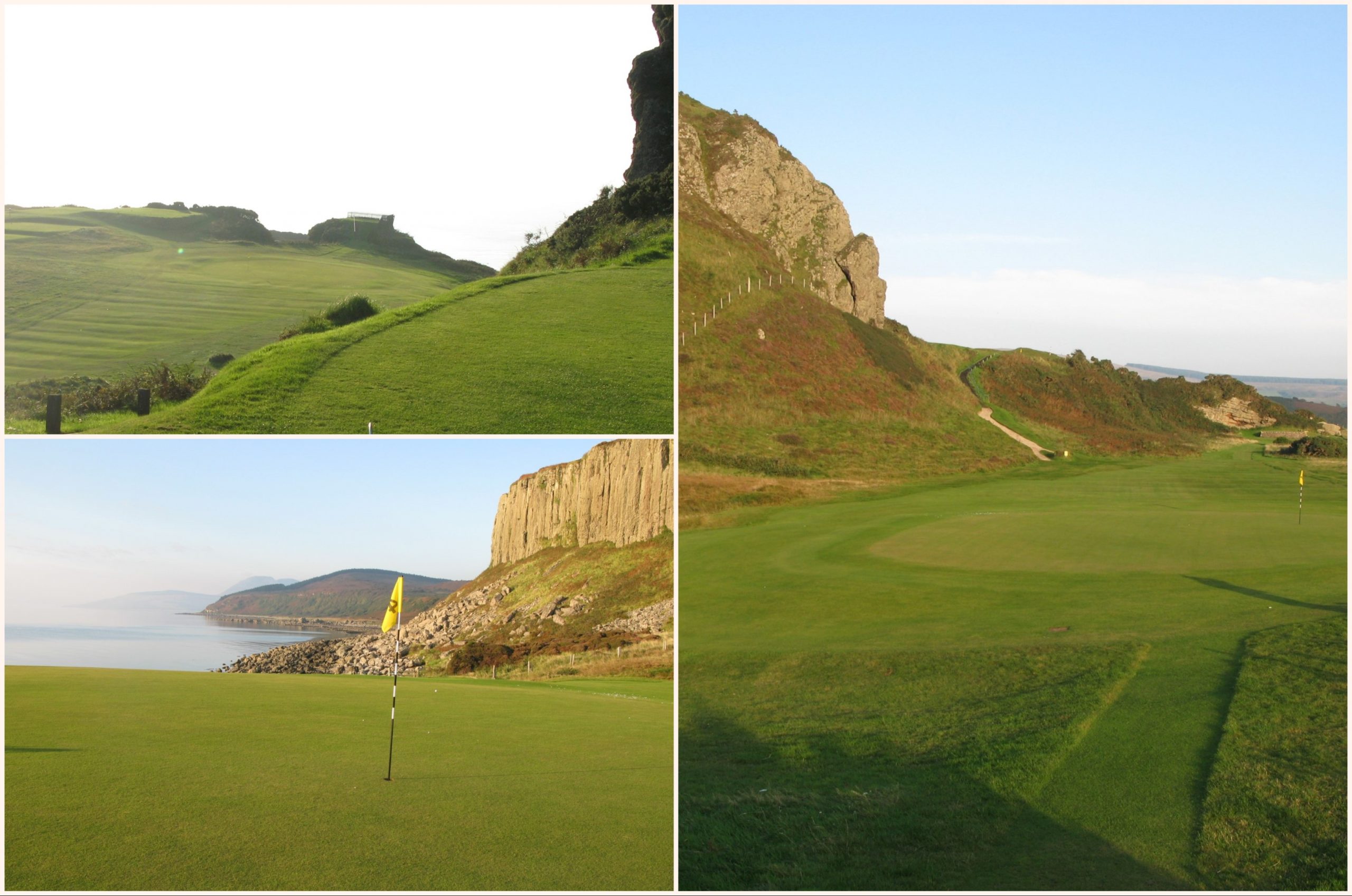
Shiskine is probably the greatest 12 hole golf course in the world, but that hardly does the course justice.

The Isle of Arran sits off the North Ayrshire coast, accessible all year round by regular ferry crossings from the Port of Ardrossan or, during Summer, from the Kintyre peninsular.

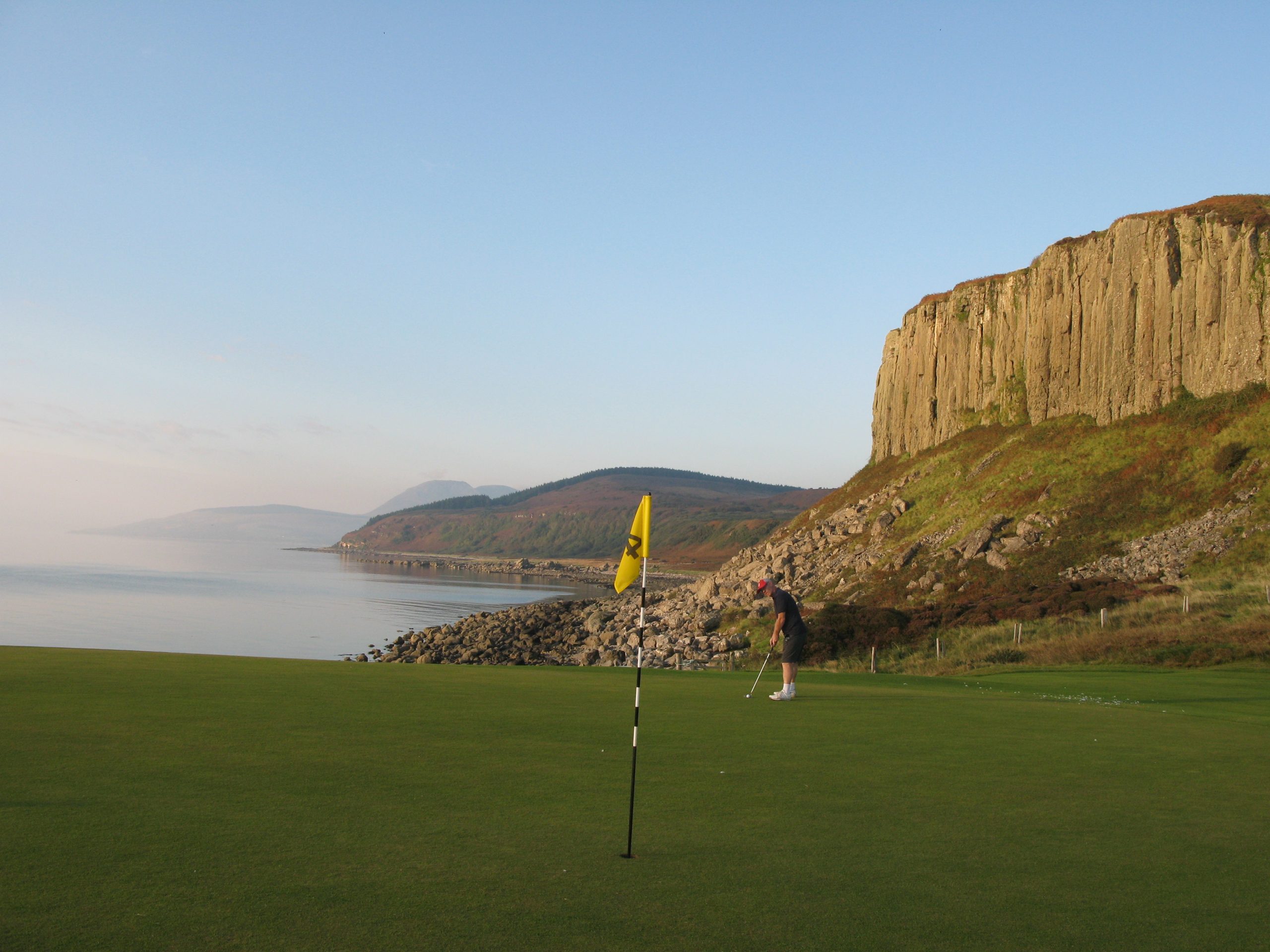
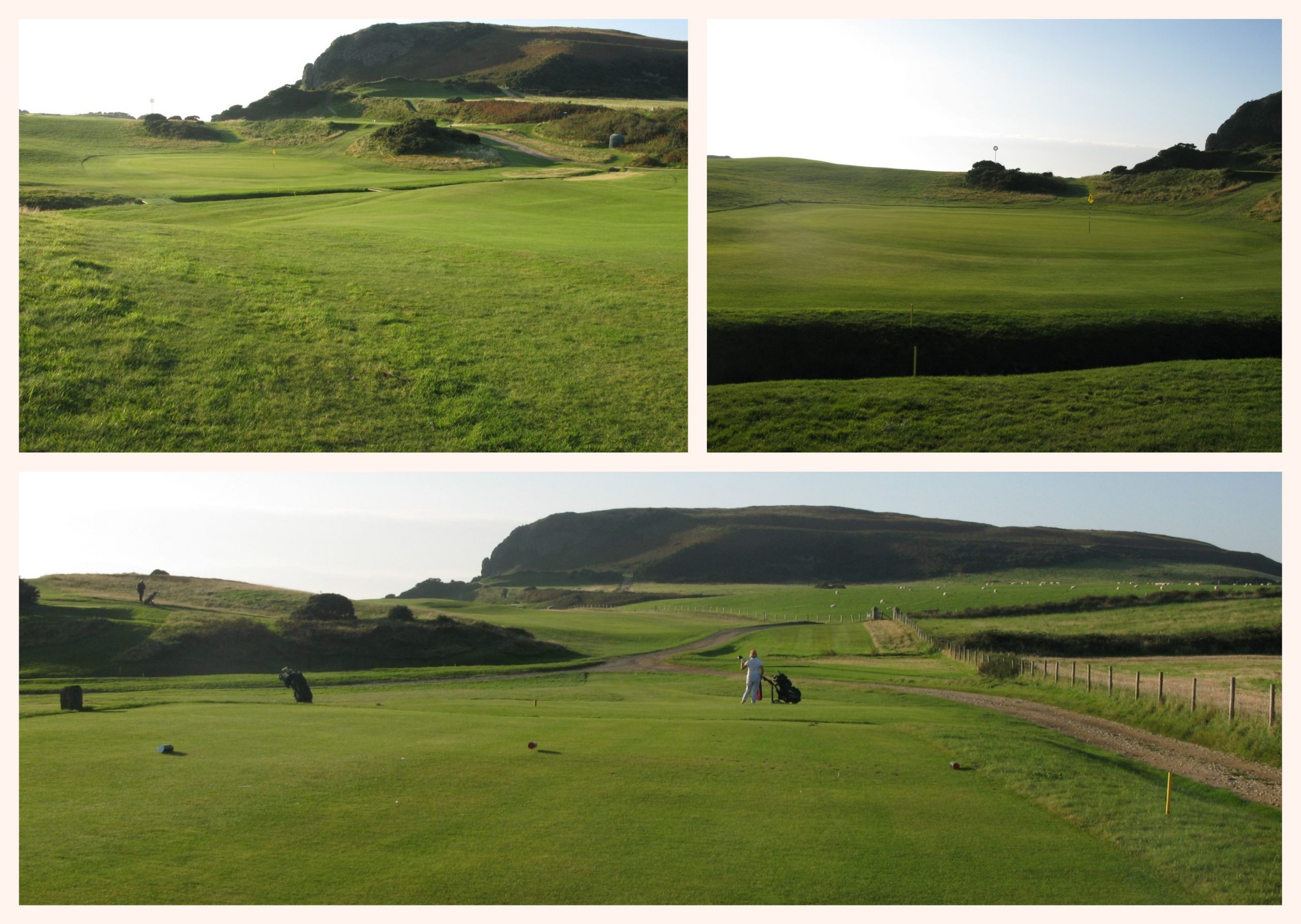
Moly putting for birdie at the 4th “The Shelf” hole at Shiskine, in benign conditions.

Several areas of Scotland self proclaim the title of best destination for golf, with the East Neuk of Fife and the North Berwick coastline being the headline events. But when it comes to the best value destination for golf (worldwide?) Arran sits comfortably at the top of any list – in my humble opinion. This island of 432km2 has a population of 5,000, with a majority of the people working in the hospitality sector. Arran has 7 golf courses, which all sit on the periphery of the island and are easily accessed; none of them has a weekly green fee greater than £30. With many hotels, B&Bs and campsites, Arran is a must visit golfing destination.

Shiskine, set on the west of the island, is the jewel in Arran’s crown.

The par 3 ‘Craws Nest’, 3rd, with views over the beautiful Shiskine layout.

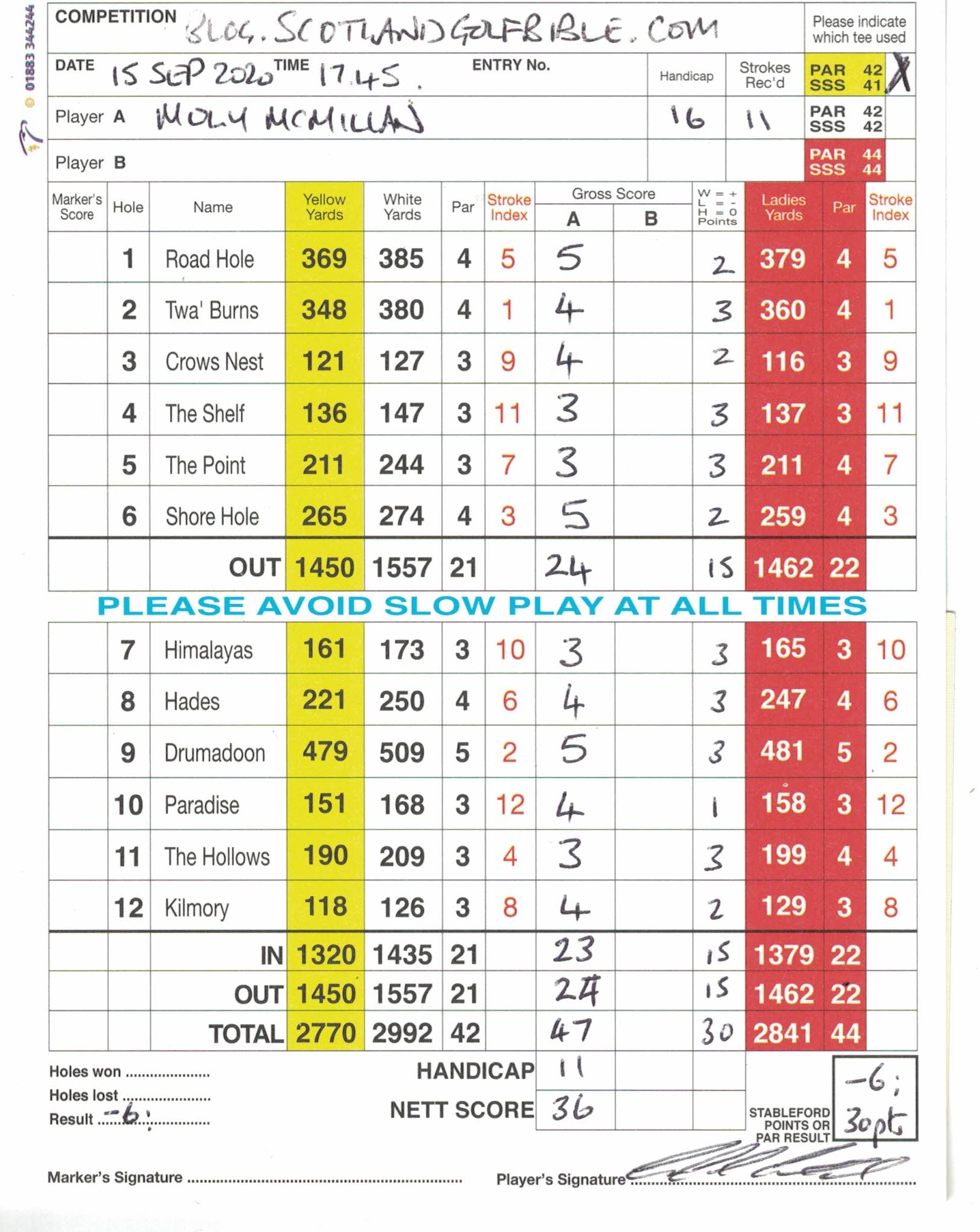
It is said you should never meet your heroes as it can be so disappointing. It was with a similar sentiment I embarked for Arran with nightmares about losing all my balls into the sea from Shiskine’s formidable first tee. Such was my desperation to play that immediately after pitching our caravan and with pristinely tranquil conditions, I psychologically ran to the course to grab a twilight round at only £21. Without a pre-shot routine, and with a vice like will to keep my head over the ball, I drove a low running drive over 200 yards up the fairway – hallelujah! Entering a trance like state, I then proceeded to play the 12 holes in 47, or 5 over par – not quite the best round of my life, but I cannot remember smiling so much to myself during a round of golf.

The terrifying par 4 “Road Hole” first at Shiskine, with OOB left all the way to the hole.

Perhaps by ‘divine’ intervention, a feasibility study in the late 1800s rejected building a deep water pier on the current golf course site to serve the local port of Blackwaterfoot. Sometime thereafter, Willie Fernie of Troon (who also designed Turnberry’s Ailsa course), laid out the original 9 hole course, which opened in 1896, although only the current 5th and 9th holes survive from then.

The difficult stroke index1 second hole at Shiskine, a tough par 4 with a burn in front of the green capturing many of the blind second shots into the green. Take enough club. Atop Drumadoon Hill in the background was where 6 holes returned to waste during the first world war

The course was extended to 18 holes just before the first world war using land above the current ‘shelf’ area of the 3rd green, but fell into disrepair during that war. Several attempts during the decades after failed to reestablish an 18 hole course.

Willie Park (Sunningdale and the North Course at Olympic Park, Chicago) then designed the current 12 holes between 1925-28. 18 holes play is reserved for member only competitions with the 1st, 2nd, 9th, 11th, 12th replayed with a further hole using a unique “15th” tee into the 4th green.

The course is not long, at just under 3000 yards from the white tees for the 12 holes, and 4,878 for the 18 hole layout; its slope rating is only 99 and disappointingly has no red ‘ladies’ tee boxes. It has 7 par 3s, 1 par 5 and 4 par 4s. Despite its short length, this is really fun golf, with very many blind tee or approach shots. I would strongly recommend reading the course guide, there is, for example, a bale out area to the right of the blind 3rd green, so aiming right of the flag is imperative. It’s rather hard to adequately describe the course other than saying it’s magical. It’s not perfect though, with the 12th a rather underwhelming short finishing hole. Nevertheless, it actually made me feel like I was playing my part in a Michael Murphy (Golf in the Kingdom) style mystical adventure with Shivas Irons as a playing partner. Perhaps I exaggerate. I can conclude by saying that I doubt you’d find anything like this course other than in Scotland and it’s a must play destination.

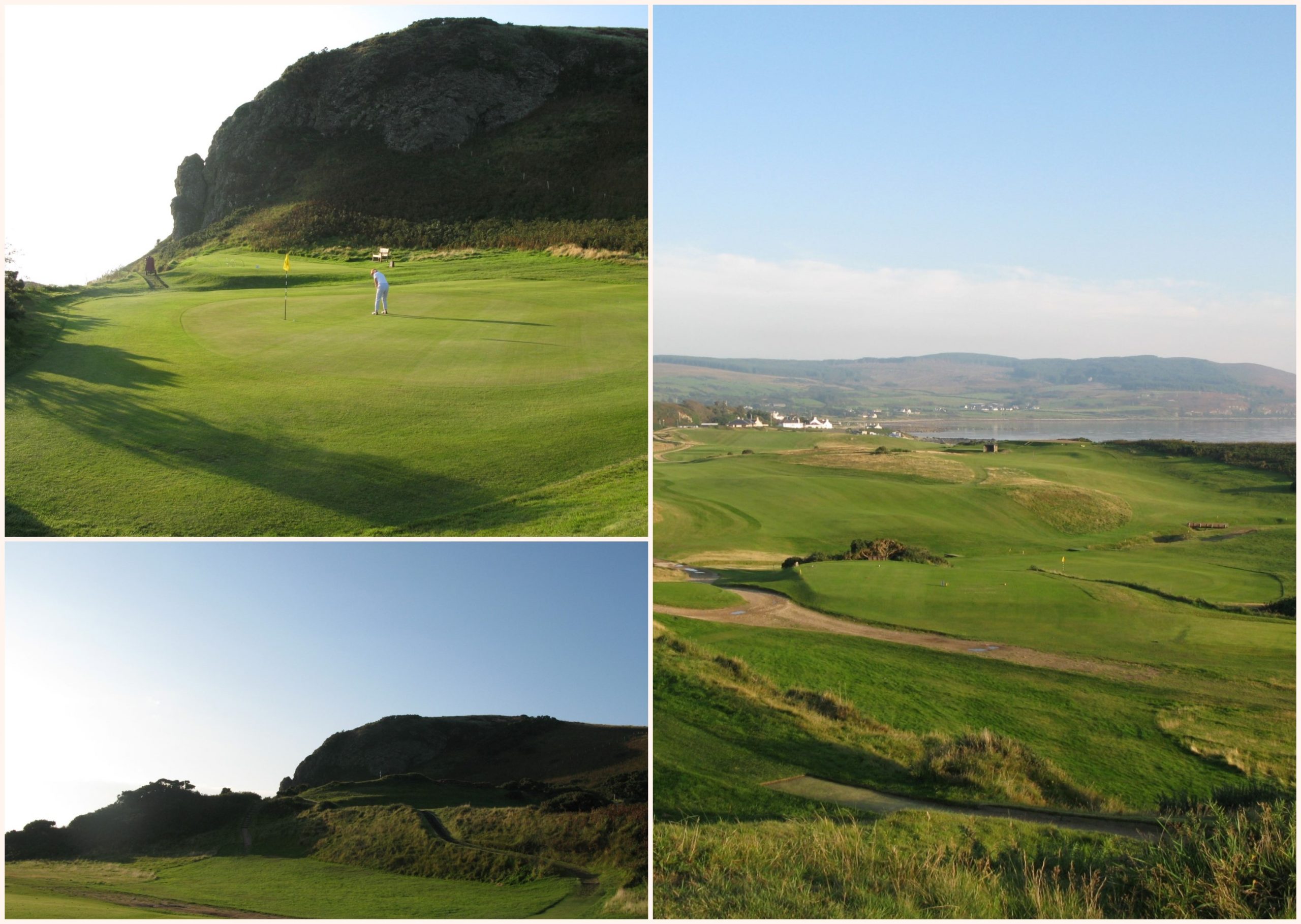
The 4th at Shiskine, a collage of dreams.

I’ve often pondered what golf handicap God might have? I’ve concluded that it would make sense if he or she were to have the exact average Scottish men’s or women’s handicap. God’s preferred course would be majestic, but not too difficult. For example, it wouldn’t have par 4s or par 3s that are really disguised par 5s or 4s respectively. It wouldn’t have any carries off the tee that effectively disenfranchise most higher handicap players. It would be set amid a beautiful landscape. It would offer a mix of guile and strategy. Some of the shots would be frightening. The greens, tees, fairways and all round conditions would be perfect. The weather or elements would play a significant part of the experience. Play would have to be fast – so he/she decided 12 holes was the best length. In the right conditions, it would bring you close to it’s maker.

Perhaps God did design Shiskine after all. Please go and play.

Facts:

Course Type: Links

Par 42 (1 par 5, 4 par 4s, 7 par 3s)

Distance: 2770

Moly’s Gross score47

Moly’s life affirming 5 over for the 12 wonderful holes at Shiskine

103. Colvend. 13th Sep 2020.

A favorite course of The Times’ sports photographers Marc Aspland and Bradley Ormesher

Round £25. Par 69. Value (out of 5) – 3.5

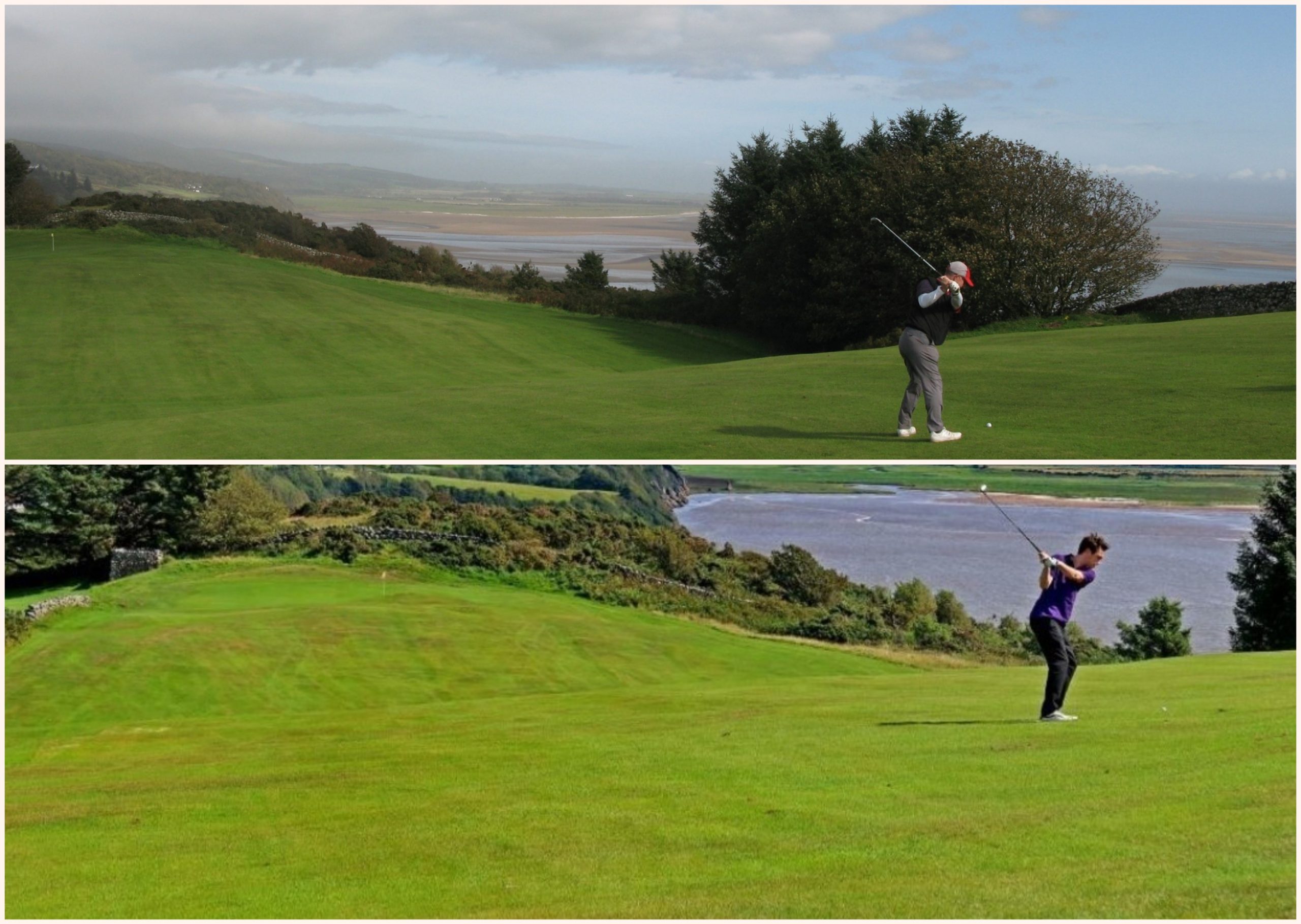
They say you should never meet your heroes. After reading an article in The Times (25th Aug 2020) about Colvend golf course by the sports photographers Marc Aspland and Bradley Ormesher, I felt obliged to seek out the course whilst in the south west of Scotland on a golf trip a couple of weeks later. Marc and Bradley had written so lovingly about a place that was clearly deep in their hearts, to the extent that the “third hole at Colvend remains my favorite place”, even when compared with Open venues. Really?

Moly (top) replicates the photo of Marc Aspland (bottom) at the third hole “Solway View” that appeared in The Times article on 25 th Aug 2020.

Colvend golf course has 9 holes either side of the A710, the road which skirts the northern coast of the Solway Firth, from Dumfries and Dalbeattie. The course was established in 1905 with the 9 holes on the coastal side of the road, designed by Willie Fernie (Ailsa course at Turnberry) and the 9 inland holes were added in 2005 by Dave Thomas (Belfry, Spey Valley).

13th hole at Colvend, easily the stroke index 1 hole, and a clearly modern parkland design which could be picked up from the Belfry. Plan your way to a bogie and move on quick!

Although on the coast, this is very much a parkland layout, with great views on a couple of holes across the Solway Firth to the Lake District.

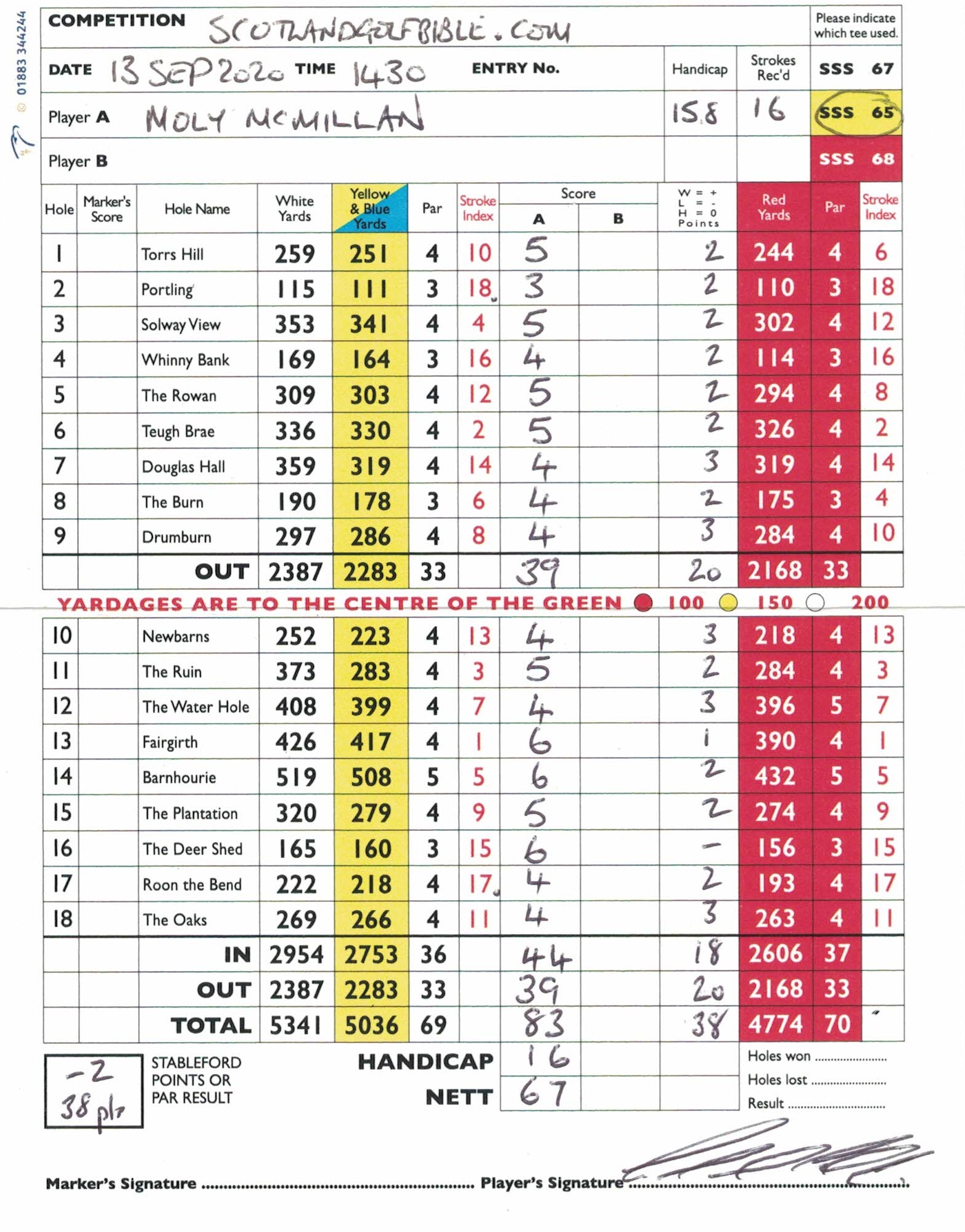
Looking at the card, you’ll see the difference in length between the original holes and the ones later laid out by Thomas – the par 4 18th at 266 yards, was the original 9th hole. There’s also significant architectural differences as well, with the coastal holes being very naturally laid out, and the inland holes being clearly “designed”, no more so than at the 13th, the clear stroke index 1 hole.

There are some neat challenges as well. The par three 8th has a hidden burn in front so take enough club, but with danger behind the green as well, I imagine this being a “lay-up par 3” for many of the members.

The dangerous 8th green, take at least 1 extra club to avoid the water in front, which is obscured from the tee.

The par-4 dogleg 18th is a clever hole. Only 266 yards long, I imagine the longer hitters see this as a risk reward hole, trying to drive the green. But the green has a burn in front and very large trees obscuring the approach, mean you need to be well back to get over easily. With no wind it’s probably something like 7 iron, then wedge to the green. Very strategic, and to be fair to Dave Thomas, it has the feel of the 10th at the Belfry.

Keep left on the 4th, with plenty of room to chip and putt. One of the original naturally designed holes.

The course was in decent, but not great, condition when I played, but to be fair we had only recently come out of the first prolonged covid-19 lockdown so everyone was just grateful to be out of the house. The greens had become quite mossy.

The 18th green at Colvend with treacherous burn awaiting to spoil a good round

Few things to be aware of. This is not an easy walk as the amount of buggies for hire in the car park attested to, so is not necessarily an occasional holiday golf game venue; the steep uphill first being one of several inclines to navigate. There was also a need for better signposting between the 16th green and the 17th tee, which left Fran and I lost for a few minutes.

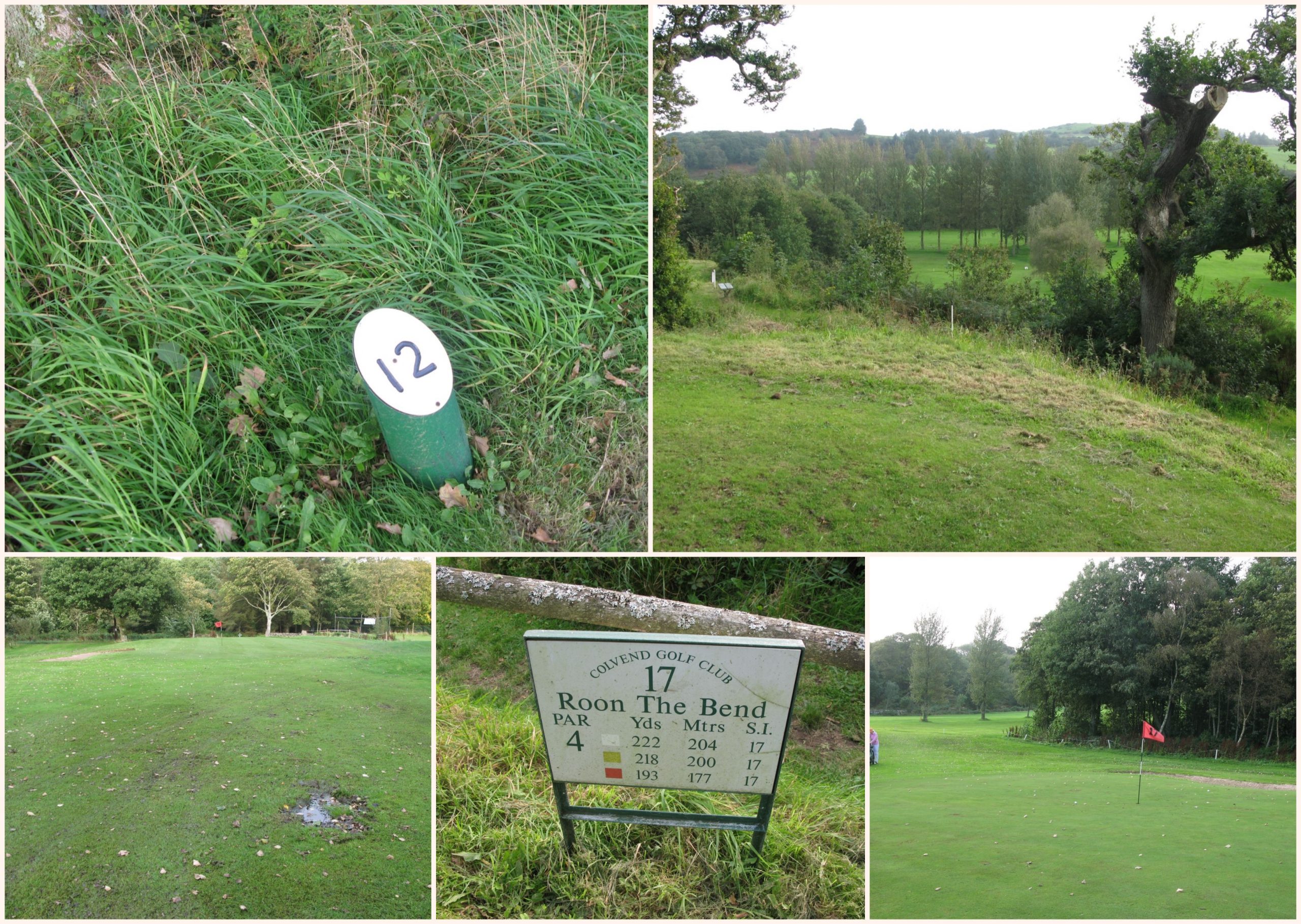
The aptly named “Roon the Bend” 17th hole, which is difficult to find, the clue is its part of the 12th tee, but you can’t see that as you walk onto the “17th” tee.

Despite high winds I scored very well breaking my handicap with a steady round. I did walk off though a little perplexed at how “rose tinted” The Times article had been – it was a nice course, but sometimes over-marketing isn’t actually good business as it can just lead to disappointment. Perhaps it needed a clearer day for those views.

Worth playing.

Facts:

Course Type: Coastal/Parkland

Par 69 (1 par 5, 13 par 4s, 5 par 3s)

Distance: 5036

Moly’s Gross score83

Colvend Scorecard – 83 in high winds a great day out, level against SSS of 67

75. Arbroath. 6 May 2018.

A must visit course for US Historians, fish lovers and record book chasers!       

Round £40.   Par 70.  Value (out of 5) – 4

Arbroath is the largest town in Angus and it’s golf course sits about 2 miles to the east of the town and only 6 miles from Carnoustie.  It probably gets bypassed by many visiting golfers moving north from Carnoustie towards the wonderful links courses in Aberdeenshire – this would be a wasted opportunity.

Arbroath has a remarkable claim for it’s influence on the modern world.  The “Declaration of Arbroath”, a Scottish declaration of independence of 1320, is regarded by several historians as the model for the American Declaration of Independence.

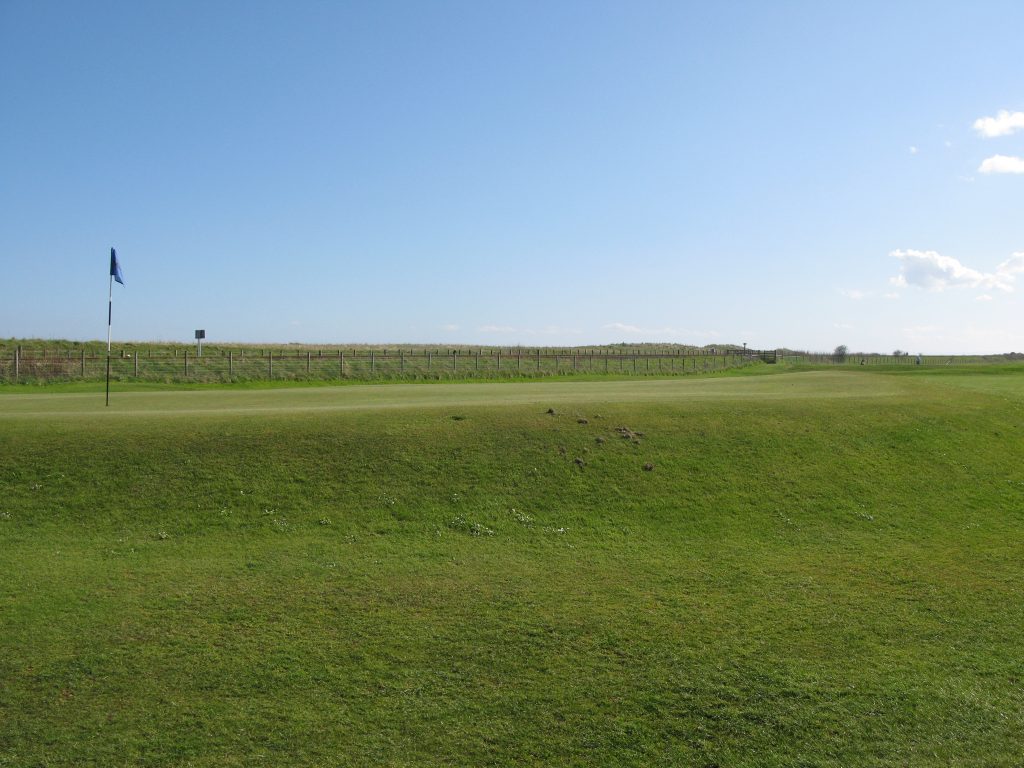
The delightful par 3 7th hole at Arbroath (159 yards)

The golf course can also argue a potentially unrivaled and rich architectural history.  Designed by Old Tom Morris, it opened in 1878,  was redesigned by the Troon professional Willie Fernie about 30 years later, then James Braid remodeled the tees, to add length, and bunkers in 1931.  That’s a strong golfing pedigree.

The course is predominantly an out and back layout.  The first 7 holes are played westward into the, normally very strong and cold, prevailing wind, before turning back for the 8th to 10th;  westward again for the 11th and 12th, then with 5 of the last 6 holes played eastward downwind back to the clubhouse.  Strategically, 11 of the holes have reachable out of bounds to the right, so right handed slicers may wish to consider their options off the tee.

The Stroke Index 7, 375 yard 6th hole at Arbroath, a typically difficult par 4 on the opening stretch of holes.

Viewed from the tees, Arbroath seems at times flat and innocuous, but it has been very cleverly bunkered by Braid, and I’m sure the locals will have many advisory comments on where to miss the greens.  The greens were also very hard when I played and difficult to hold (for all I guess other than very good golfers).  Playing off the yellow tees didn’t give  much respite either, as the 2nd and 17th both played as long par 4s, rather than par 5s from the white tees.  There are also 3 ditches that cross the course, and these need to be carefully considered, especially as the flat terrain makes them invisible to the eye.

I rather suspect first time visitors rarely score much above 30 stableford points.

The very difficult green to find in 2 at the 13th at Arbroath, with the railway OOB on the right

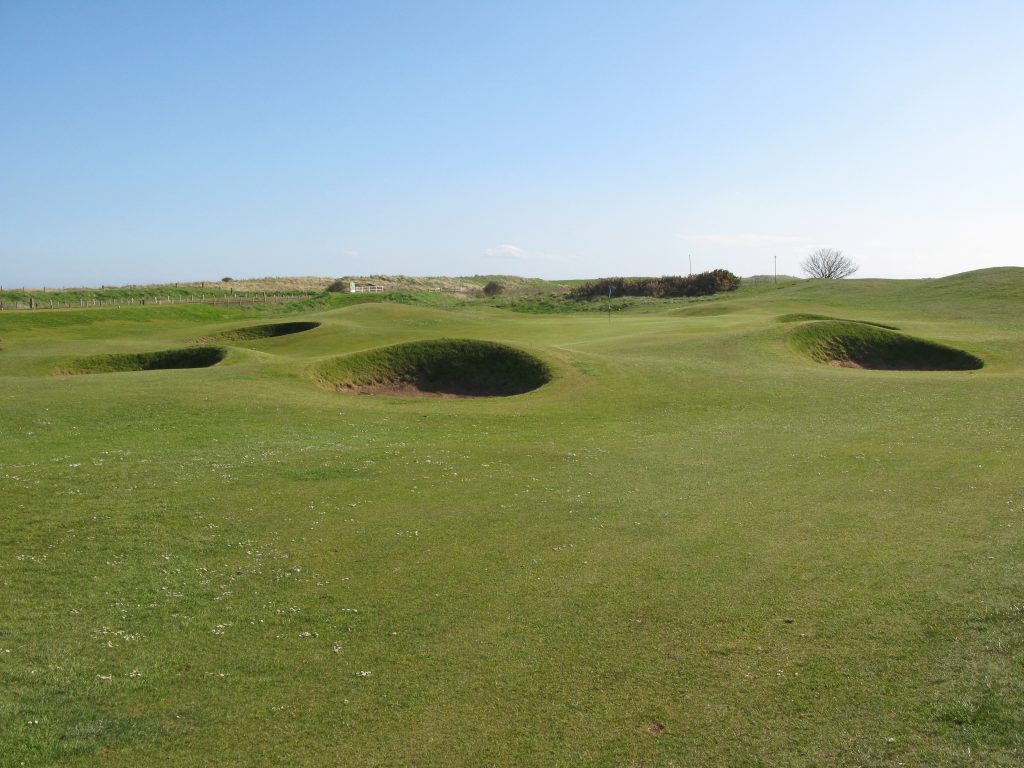
The highlights for me were the par 3s, all of which had good surrounds, with the two on the back 9, the 14th at 200 yards (white at 232) and the 16th, being especially difficult.

It’s a well kept course, with good tees, greens, fairways and bunkers.  The clubhouse has a friendly staff and good food, where you can try the Arbroath Smokie, the local smoked haddock delicacy protected by EU Trade regulations.

The wonderfully bunkered par 3 16th green at Arbroath

The other Arbroath claim to fame is the local Football Club, which holds 2 world records – the highest professional scoring record (winning 36-0), and their ground, Gayfield Park, being the closest to the sea in the world – only 5 and 1/2 yards away!  Apparently, one famous game was abandoned after all balls were “lost at sea!”.

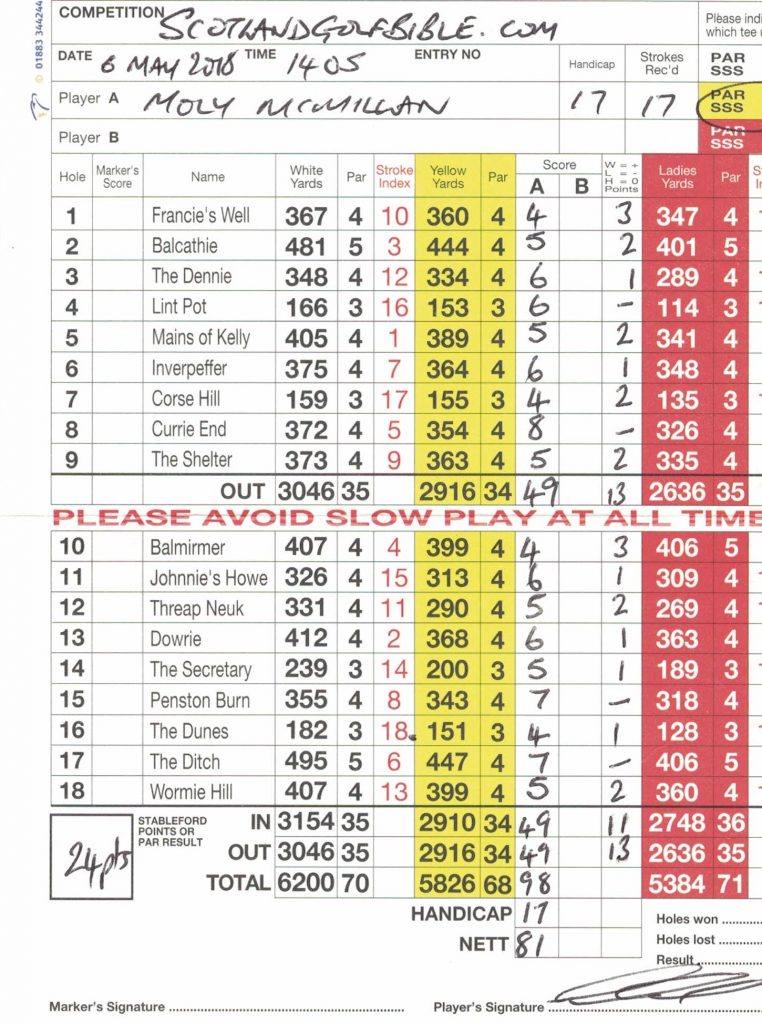
Not a great day for me, I lost 3 balls (6 shots) and 3 putted 7 times!  I suppose that explains completely my 13 over par net!  Oh, and yes, the greens are rather large and difficult!

Well worth a visit.

Facts:

Course Type: Links

Par 68 (14 par 4s, 4 par 3s)

Distance (yellow): 5826

Moly’s Gross score98

Moly’s Arbroath scorecard – 98

« Older posts Newer posts »

© 2026 Scotland Golf Bible

Theme by Anders NorenUp ↑