A guide to green fee value for money

Category: Old Tom Morris (Page 4 of 5)

67. Bridge of Allan. 11th Oct 2017.

A 9 hole course from bygone days worth experiencing. 

Summary:  Round  £20.   Par 33.  Value (out of 5) – 4

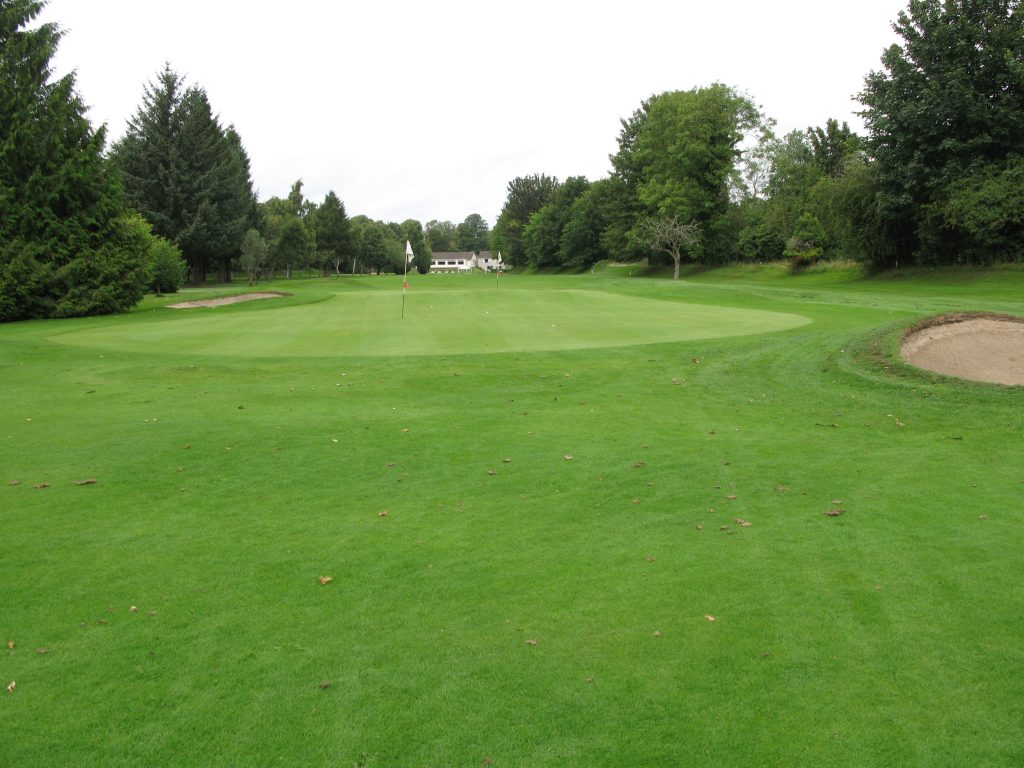
There can’t be many golfers who play Bridge of Allan for the first time that find the par 3 1st green with their tee shot; less than 5% I suspect, probably much lower.  It’s not that it’s the most difficult par 3 ever, it’s just also so unusual.  It’s 223 yards up a steep slope (40% they say!), with a blind plateau green that has a dry stone dyke across the fairway about 30 yards in front of the green.  Welcome to one of Old Tom Morris’ famous holes.  Thankfully not all of Old Tom’s holes are as demanding as this, otherwise golf in Scotland may not be as popular as it is!
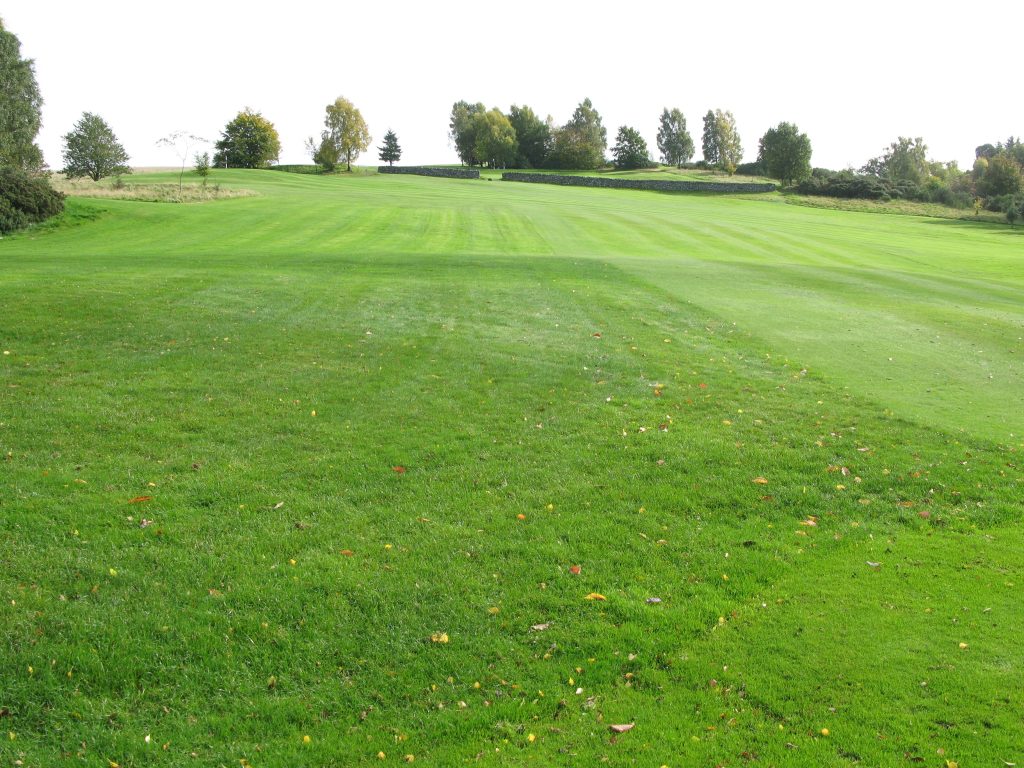
The very demanding first shot at Bridge of Allan – the long par 3.

Old Tom Morris designed this nine-hole golf course in 1895, in the affluent Victorian spa town of Bridge of Allan and the course has commanding views of the surrounding hills and countryside, including Ben Lomond, and also Stirling Castle which is only a few miles away.

According to the golf historian, Robert Kroeger, in his book ‘ The Golf Courses of Old Tom Morris’, Bridge of Allan is “the best preserved in that the layout and length of holes and greens are exactly the same as they were in 1895”.  So for historical reasons alone, it’s worthwhile playing here, and that is why I’ve said this is a 4/5 for value.
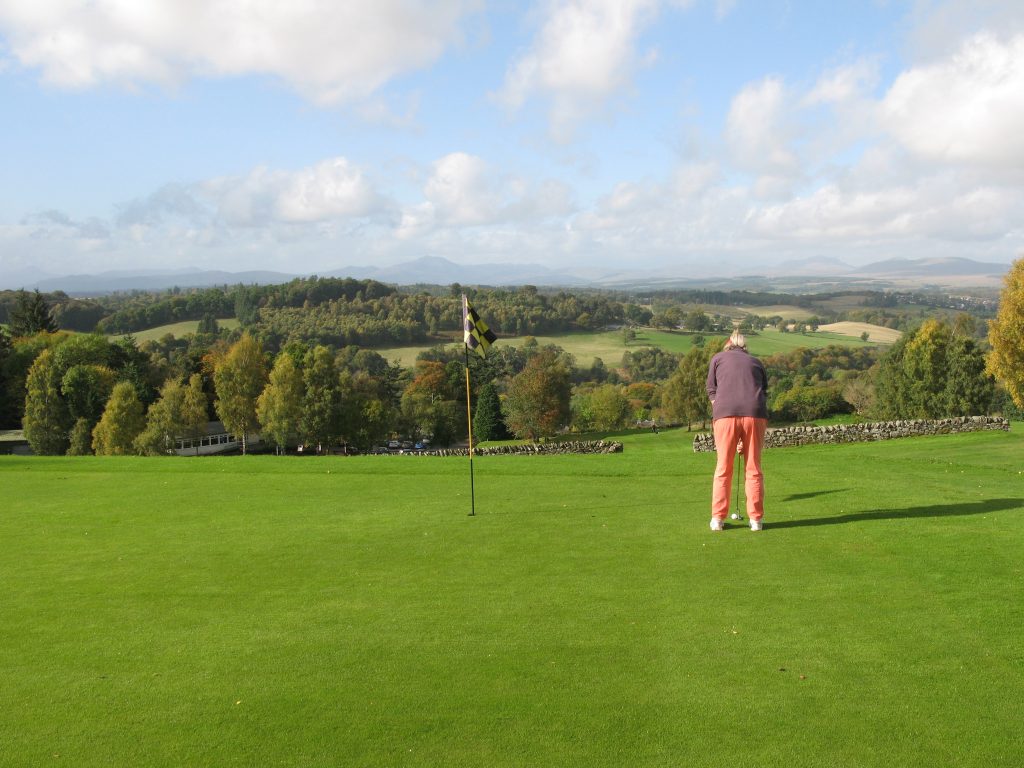
Fine views from the 1st, which also shows the typical flat greens

However, I suspect the course will not be to everyone’s taste.  Most of the holes have out of bounds (OOB) in play, mainly for the right handed hooker.  OOB areas are also tight behind some greens, especially the 4th which also has a dyke in front of the green.  There are hardly any flat lies as the course is so hilly.  The greens are however pretty flat, which meant that when I played 2 greens were out of action due to being waterlogged.  Of course, Old Tom mainly designed links greens, which naturally drain much better than parkland.
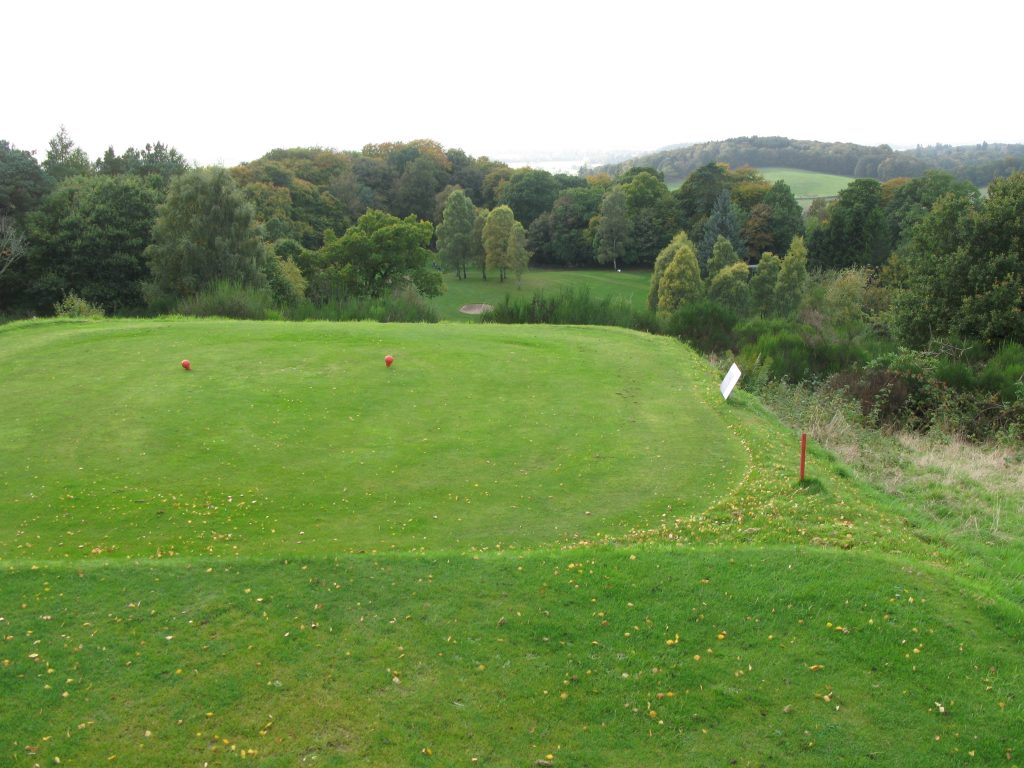
The semi-blind par 4 7th at Bridge of Allan

Old Tom makes much use of existing dykes which are in play on several holes and also blind tee shots by carefully using existing tree lines – this is especially true on the 6th and 7th holes, which need to be played more than once to get a feel for the line from the tee.

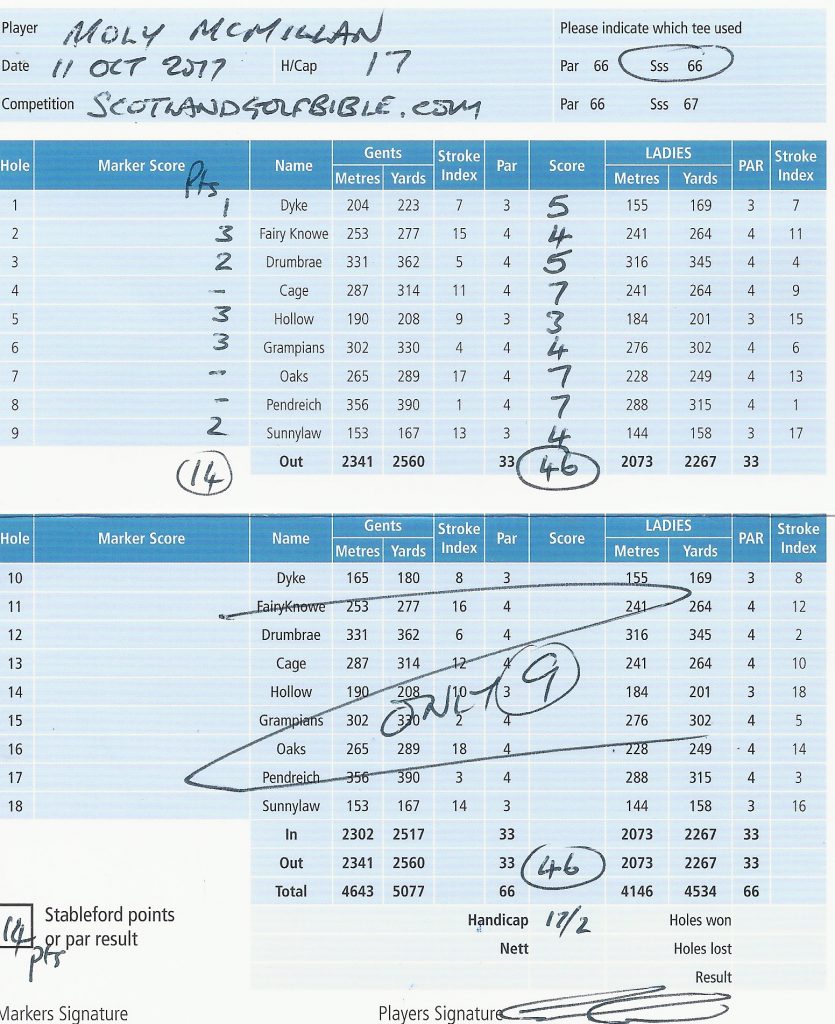
I had a difficult time on the day, including three 7s in my 13 over for 9 holes.  My day was typified by hitting a magnificent drive (probably about 240 yards) at the 7th, but I never found my ball as it was very likely plugged.
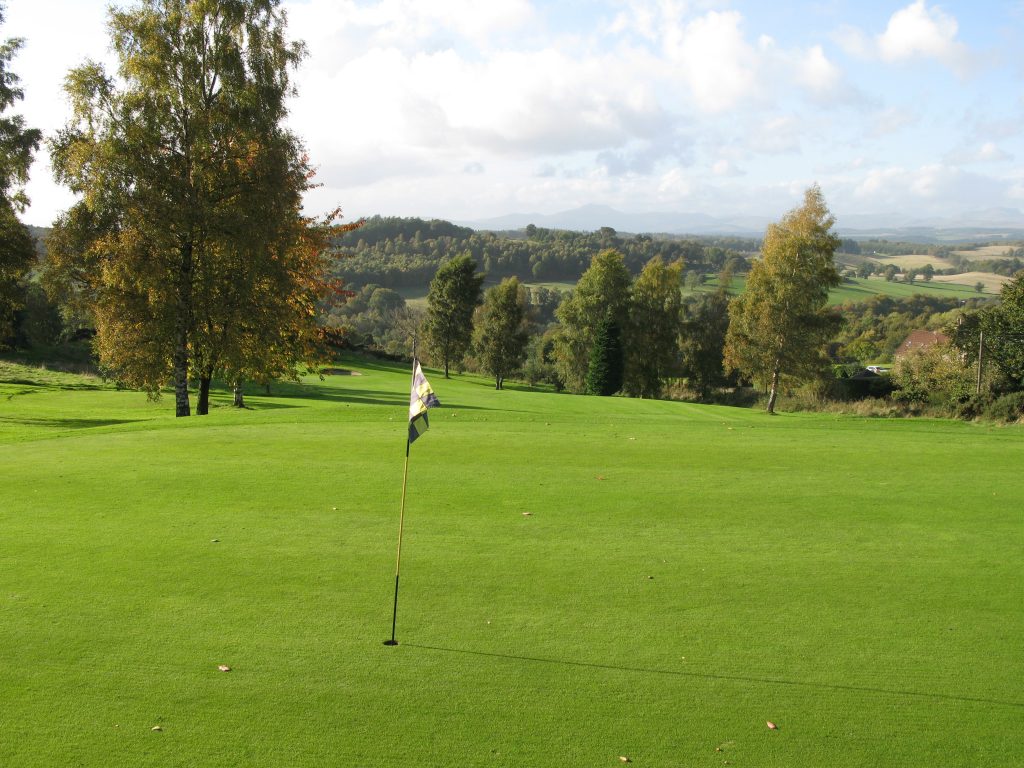
The difficult par 4 8th, another uphill hole at Bridge of Allan

The course was very wet when I played which was a pity, but the fairways were in good condition.  I think that it must take several rounds here to get used to the tricky layout.  The highlight holes for me in addition to the 1st were the 4th, 5th and 7th.

Facts:

Course Type: Parkland

Par 33 (0 par 5s, 6 par 4s, 3 par 3s)

Distance (yellow): 2517 (9 holes)

Moly’s Gross score46.

Moly’s Bridge of Allan Scorecard – 46
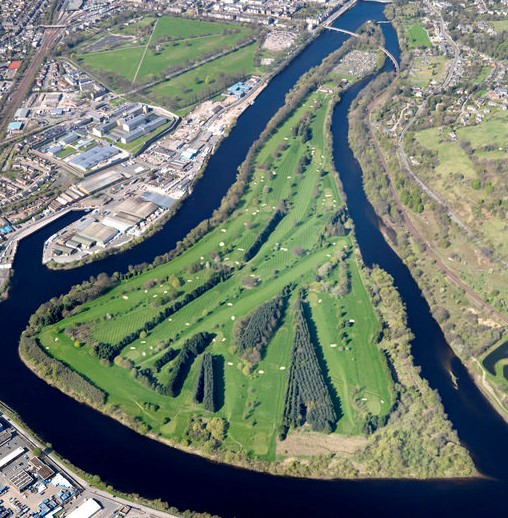
64. King James VI. 29th Aug 2017.

Easy walking freshwater “island” course on the River Tay in Perth ideal if you are a trainspotter!

Summary:  Cost £25.  Par 68.  Score 95. Value (out of 5) – 2.5.

The “King Jimmy” golf club was founded in 1858 and initially played on North Inch; it was named because King James VI had played golf on the “Inches”, the public land for common use along the River Tay.  Golf can actually be traced back 500 years in Perth and this in covered in an earlier blog here.

Moncreiffe island, home of the “King Jimmy” golf club

The club relocated to Moncreiffe Island in  1897, to a course designed by ‘Old’ Tom Morris, and is believed to be the only freshwater island course in the UK.

 This presents a challenge for any visiting golfer, as the only access to the course is by using the narrow walkway across the railway bridge, accessed by steep stairs on either side of the bridge.    The walk from the nearest public car park is around 500m.

The double green on the 1st/4th with King James VI club house in the background.

The course is very flat and its lack of undulation makes for a fairly repetitive round with many holes looking the same.  Although I played in late August after a relatively dry spell the course was very soft and preferred lies would have been appropriate.  I understand that the course is impacted significantly after rainfall.  This softness made the course play much longer than its stated yardage.

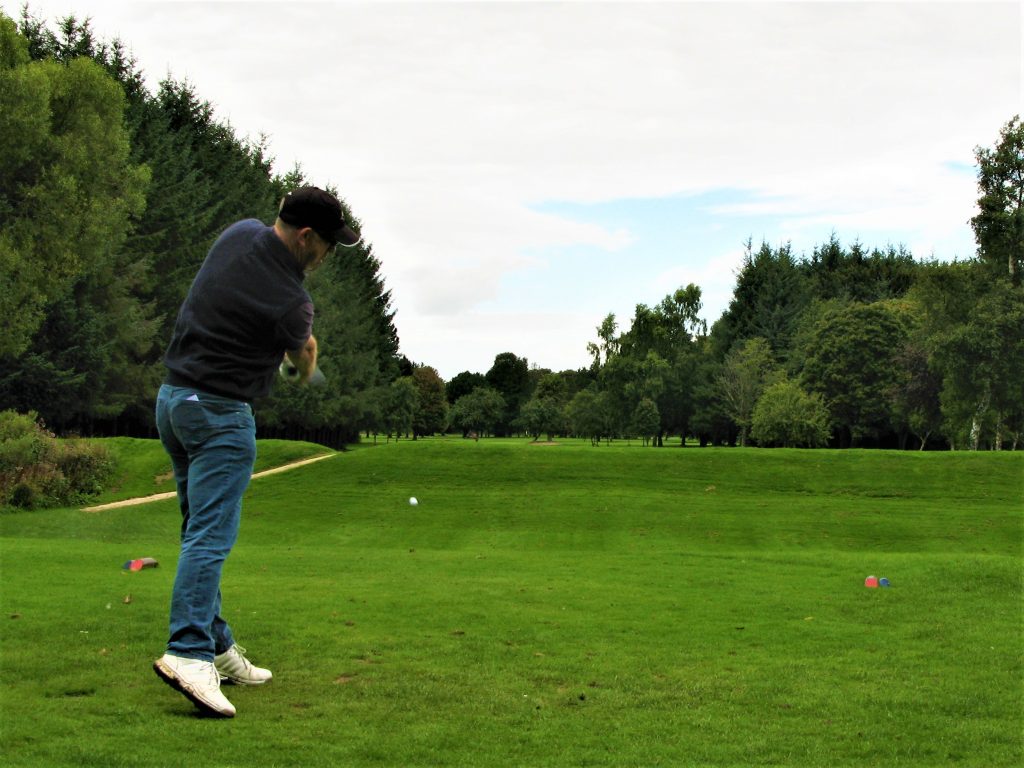
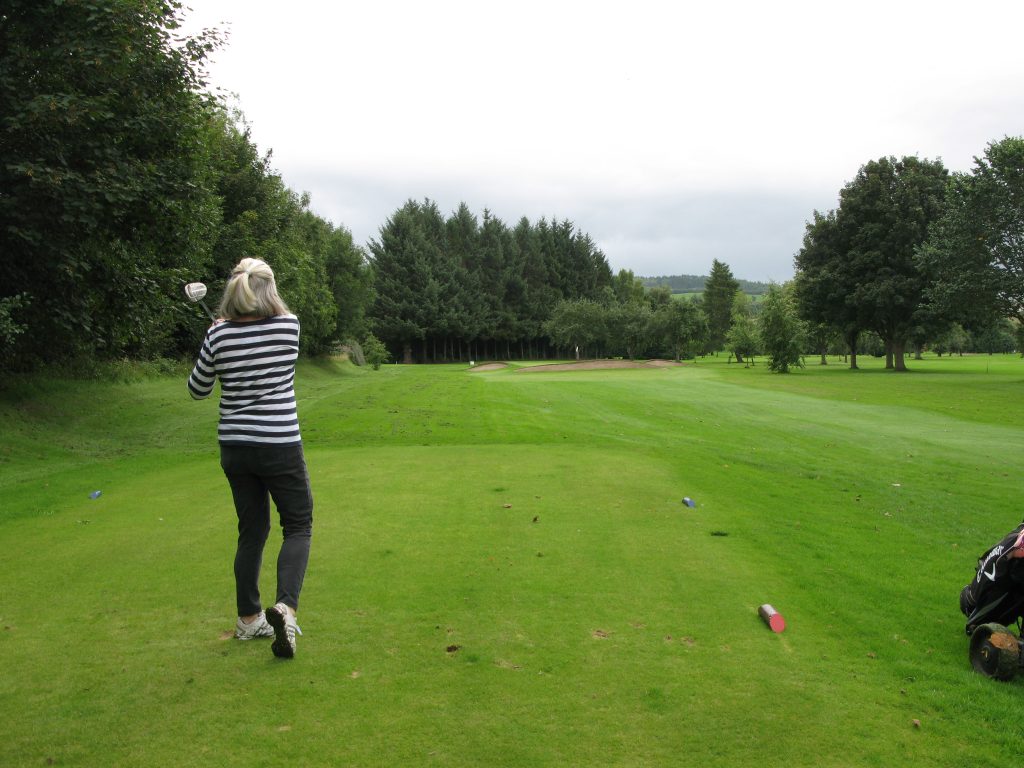
Moly driving at the tree lined short par 4 12th hole

The very lush grass also meant that balls were easily lost in the short semi rough, in fact I found 3 balls sitting in the open;  make sure you get a good line on the ball after each shot.

The greens were the best feature of the course, closely followed by the lush fairways. The tees would benefit from some work. The main hazards are the course boundaries and some majestic tree lines. 

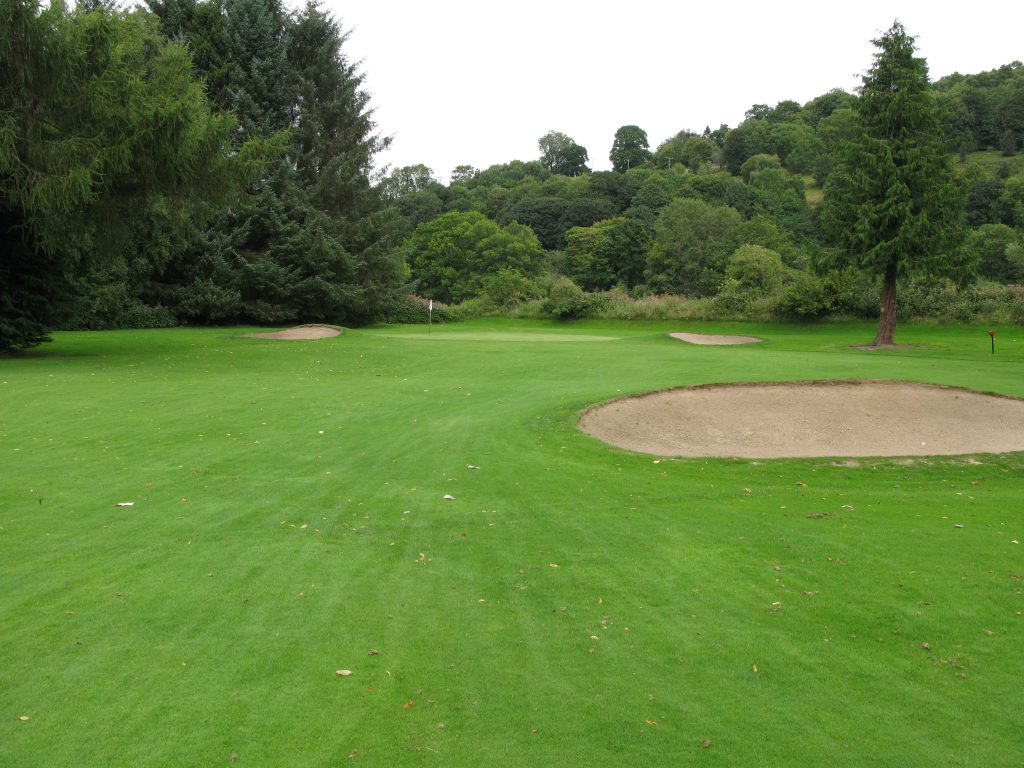
The 8th green, typical of the scenery at King James VI in Perth

The most memorable holes were those played over a grassy dyke built into the 11th and 13th holes, where it’s important to know your yardages.  The dyke is almost 50 yards in front of the 11th green, so make sure you take enough club.

Fran, my playing partner, at the par 3 5th hole.

I played with Fran and we both had good and bad patches in our round.  My highlight was reaching the 423 yard par 4 18th green in 2 blows.  Pity about much of the rest.

If you do plan to play here, I strongly recommend using a half set carry bag and hiring a trolley from the club.

Key Facts

Course Type: Links

Par 68 (1 par 5s, 12 par 4s, 5 par 3s)

Distance (yellow): 5684

Moly’s Gross score95.

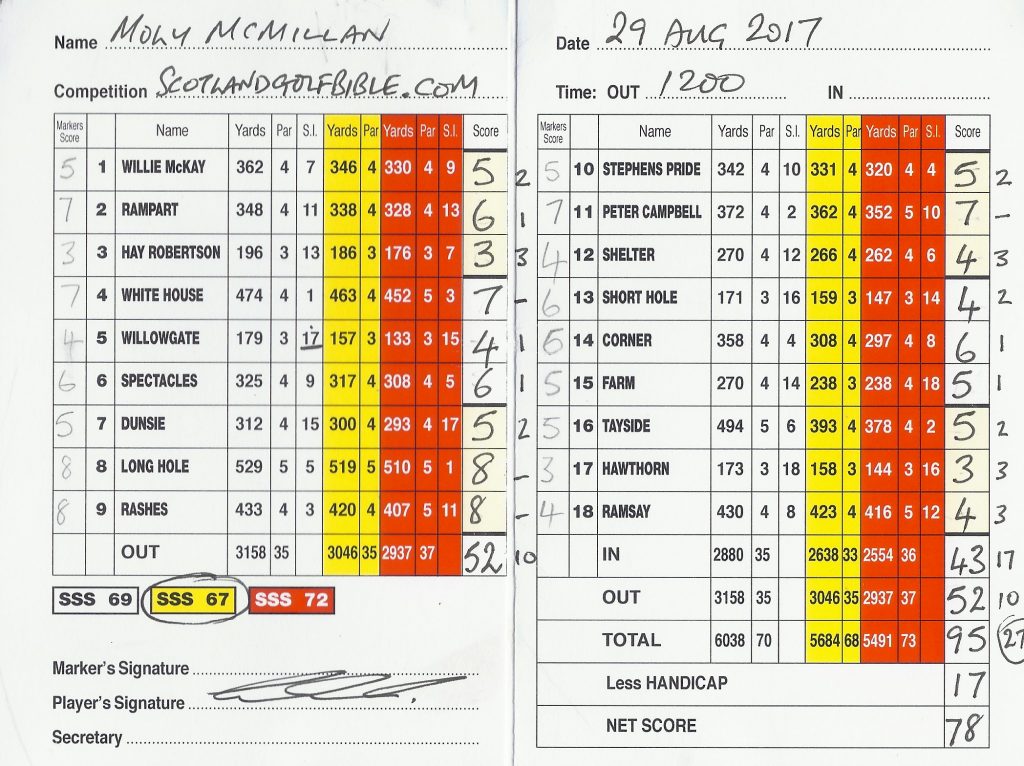
Moly’s King James VI scorecard – 95 for 27 points (off 17 hcp)

63. Leven Links. 24th Aug 2017.

Check the wind forecast and prepare accordingly on this historic links!

Summary:  Cost £50.  Par 71.  Score 97. Value (out of 5) – 3.5.

Leven Links golf course lies on a beautiful piece of links land running almost exactly in the south-westerly prevailing wind direction between the towns of Leven and Lundin Links on the north bank of the Firth of Forth.  Many a round here will be strongly influenced by the prevailing conditions; I was level bogies over the 9 holes played with the wind and 18 over for the nine holes played into the wind, which was only about 10 mph!

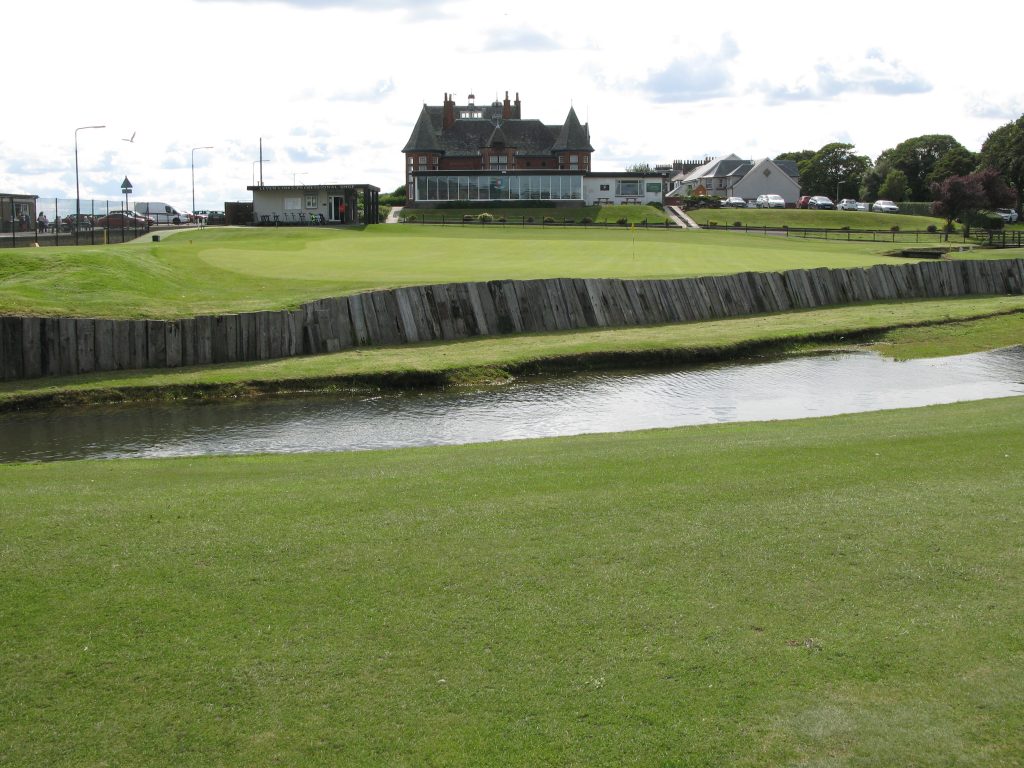
The Scoonie burn in front of the huge 18th green at Leven Links – a magnificent final hole.


The course has a key place in golfing history, tied strongly with its “Siamese Twin” neighbour, Lundin golf course, and well documented in the History of Scottish Golf web site.   A 9 hole golf course was laid out in 1846 by Old Tom Morris in the ground between Leven and the course’s current eastern boundary marked by the Mile Dyke. The most significant part of the history though is that in 1868 this original course was extended by laying another 9 holes to the east of the Mile Dyke towards the town of Lundin Links;  as the resulting layout had no double greens, this was arguably the first “modern” 18 hole links golf course in the world.

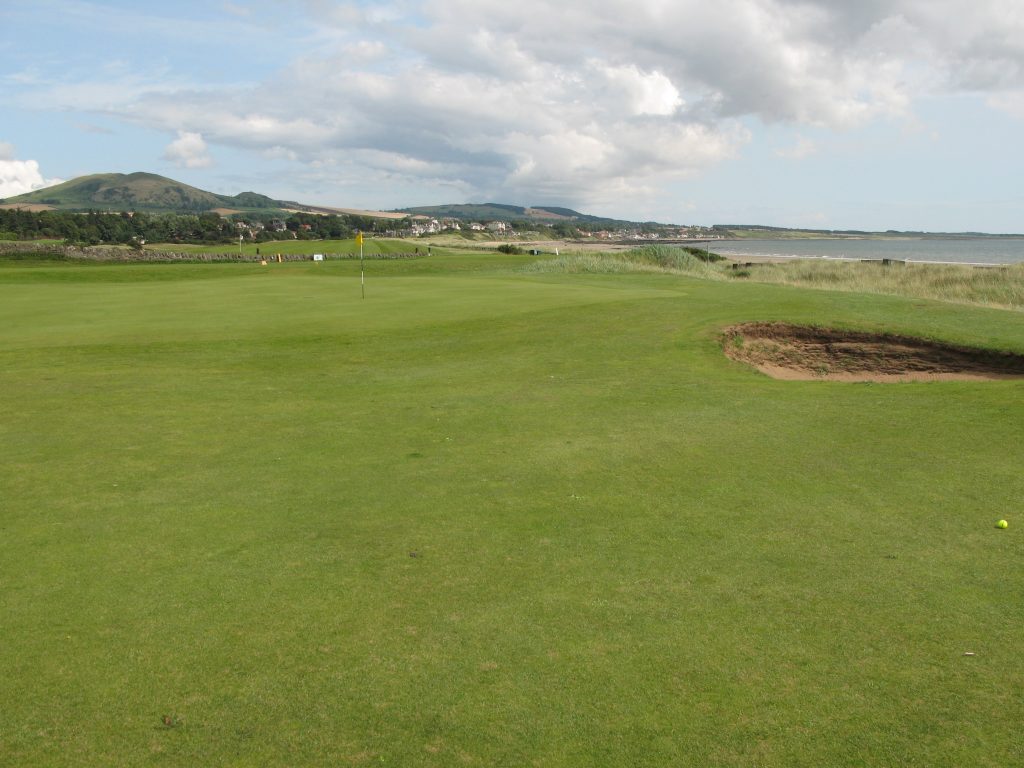
The 4th green at Leven Links, with the boundary of Mile Dyke and Lundin Links in the background

This historic 18 hole course lasted until 1909 when the volume of players forced a division at the Mile Dyke with Lundin G.C, thereby creating twin 18 hole courses; Lundin and Leven Links.   Of the current Leven Links course, the opening 5 holes and also the incredibly challenging 13th and 18th holes are part of that original 18 holes.

Like a number of the links courses on the east coast of Scotland, Leven Links is managed separately from the 2 golf clubs using it, Leven Golfing Society and Leven Thistle Golf Club.  Both clubs welcome visting golfers.

The golf course is laid out around the natural dunes and grasses of the links land and this makes for a very interesting first few holes especially for those new to this format of the game.  I suspect many people will find that their approach shots end up through the green at the short par 4 2nd and 3rd holes.  Many of the greens call for pitch and run shots running onto the green.

The wonderful links approach at the par 4 2nd at Leven Links

After a relatively straight forward start the short par 3 5th green can be very difficult to find played through the prevailing left to right wind.  Then comes the small matter of the 6th, a par 5 of 555 yards off the yellow tees – as the pro said to me before my game “it’s normally a drive, two 3 woods and then an iron to the green!”.  I was actually in a greenside bunker in 5, but finished with a 30 foot putt – I cannot remember feeling happier with a 7!  The 6th also has another characteristic of Leven Links – very large greens.

The difficult par 3 15th normally played into the prevailing wind.

The stretch from the 13th to 18th, where all bar the 17th are into the wind, offers some great challenges, however the best is kept till last.  The 18th is a par 4 of over 450 yards, with the dominating Scoonie burn laying in wait for the approach shots, which for almost all average players will be their 3rd shot.  I met up with a local member who said it was statistically the second hardest par 4 in Scotland.  This was quite believable, however the course stroke indexes are not and are the most strange I have encountered, best exemplified by the short par 5 12th, at 504 yards, played normally with the wind being SI 1, but the 18th, the “second hardest par 4 in Scotland”, being SI 9…..go figure?

The town of Leven behind the par 3 9th green.

Due to location and historical interest Leven Links is a very heavily played course and I think this was the main reason the course being a little bit worn in condition when I played, in particularly several fairways were chewed a bit and the bunkers needed a bit of care.  Due to this, it was very difficult to assess a value rating at the stated green fee of £50 for a weekday round;  historically the course demands a 4+, but the condition and price merited only 3.5. It is really worth playing though as its a really great layout.

The 4th tee at Leven with the Firth of Forth coast line to the right.

Leven Links has hosted many national and international competitions as well as hosting local final qualifying many time when St Andrews hosts The Open.

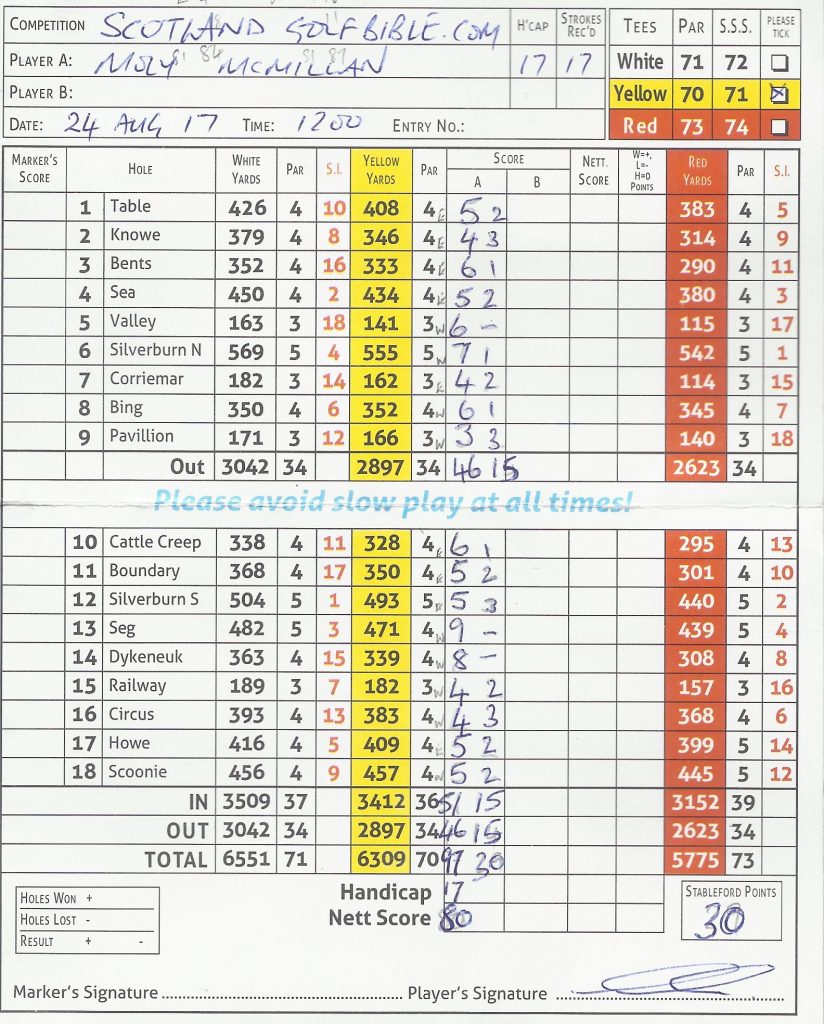
I thought I played pretty well for a gross 97 and 30 stableford points (off current 17 hcp).

Key Facts

Course Type: Links

Par 70 (2 par 5s, 12 par 4s, 4 par 3s)

Distance (yellow): 6309

Moly’s Gross score97.

Moly’s Leven Links scorecard – 97 for 30 points

52. Cullen. 13th Sep 2016.

Treat yourself at this unique Moray coastal gem

Round £21.  Par 63.  Value (out of 5) 4 

Cullen is only about 4500 yards long, with 10 par 3s, so it’s hardly the toughest golfing challenge you’ll ever face, but it’s difficult to articulate the absolute delight which awaits any first time visitor.   Ask any golfer that’s played here for their “top 10” courses, and they are almost guaranteed to have Cullen on the list.  It’s unique, quirky, unconventional and, most importantly, great fun.

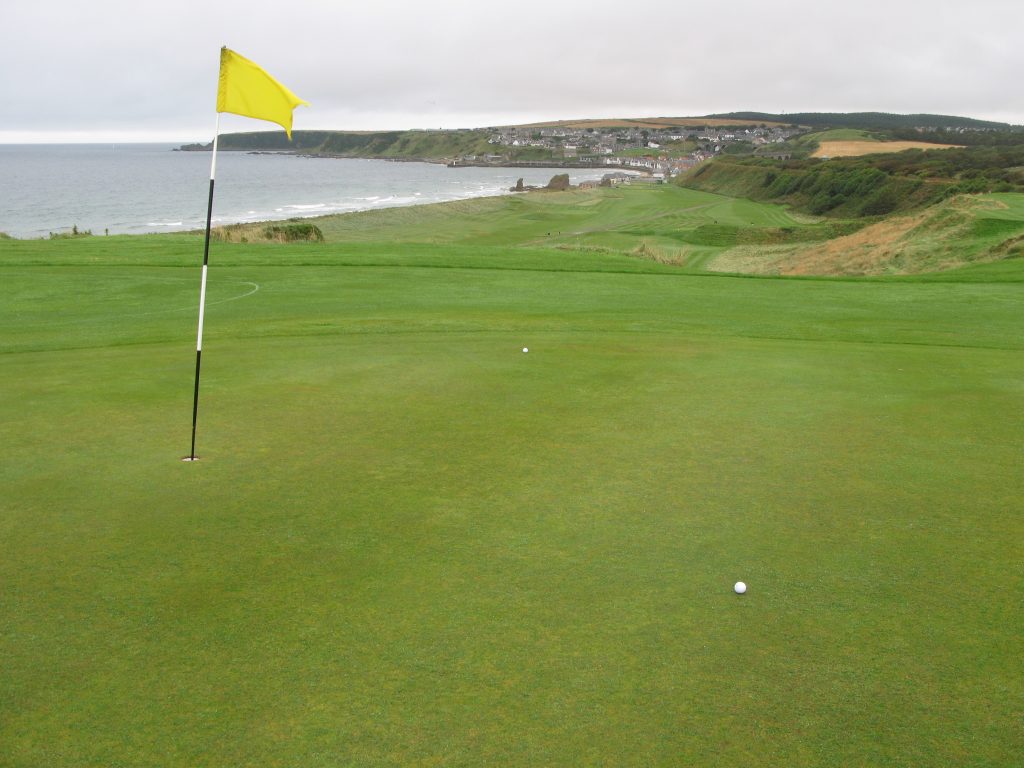
4th green, with views towards Cullen

4th green, with views towards Cullen

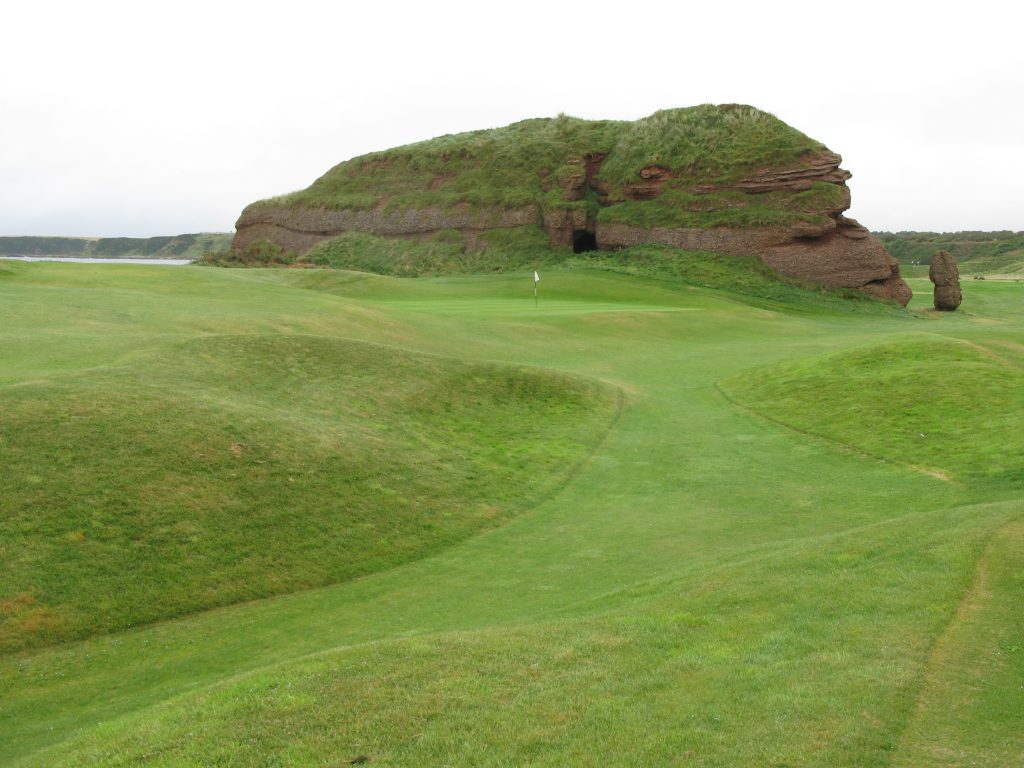
Cullen, which sits mid-way between Aberdeen and Inverness on the Moray coast, also has a great pedigree; 9 holes were designed by Old Tom Morris in 1870, then extended in 1905 to 18 holes by Charlie Neaves, the professional at nearby Lossiemouth.  Thirteen holes fit snugly into a cavernous bay with sandy beach, plus 5 holes play on higher cliff ground with magnificent views of the bay.   In addition to this, in itself, magnificent location, there is added the spectacular Boar Crag, a huge 80 foot high rock which dominates the bay, and forms a challenging hazard as part of a run of 4 par 3s from the 11th.  It truly is a remarkable location.

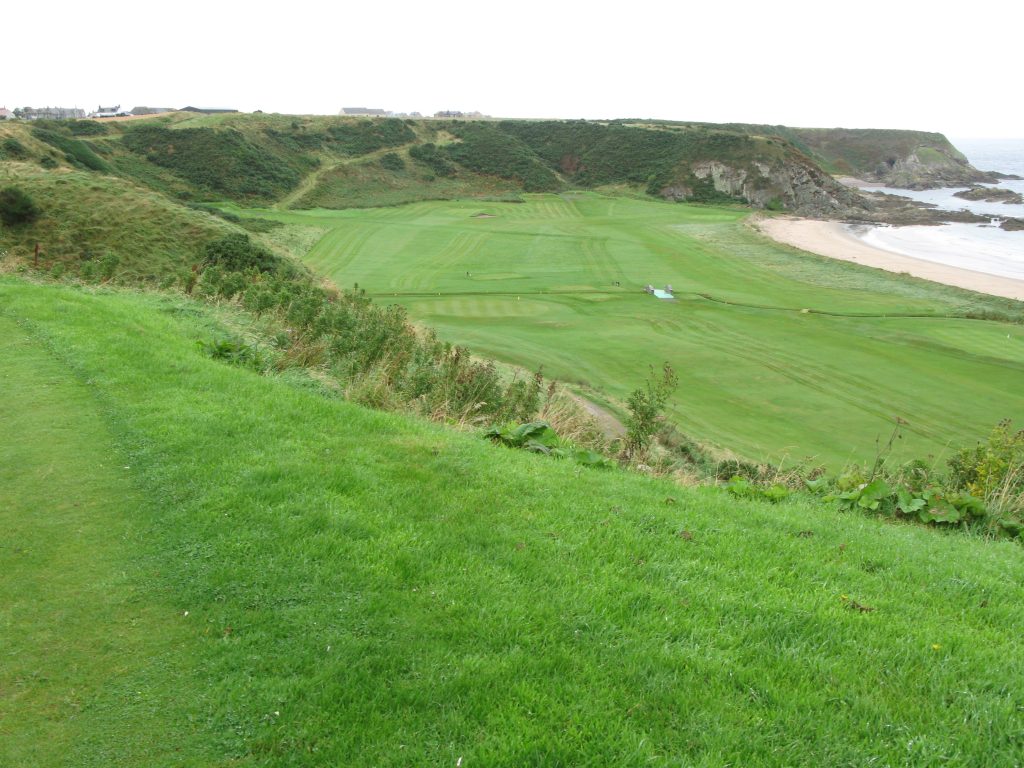
The signature 7th hole tee shot

The signature 7th hole tee shot

Without meaning to be too controversial, Cullen does in my opinion warrant adding to the debate about what constitutes a links course.  Although most of the course hugs the coast line, the cliff top land, with 5 greens, is undoubtedly arable.  In addition, the turf on the 13 beach side holes, is also much softer than, say, the turf on which the Angus links courses are played.  So although this is undoubtedly classified as a seaside links course, few of the shots “feel” like they are links shots.  This doesn’t diminish Cullen at all, but in a “what is a links course”  debate, it’s worth discussing Cullen.

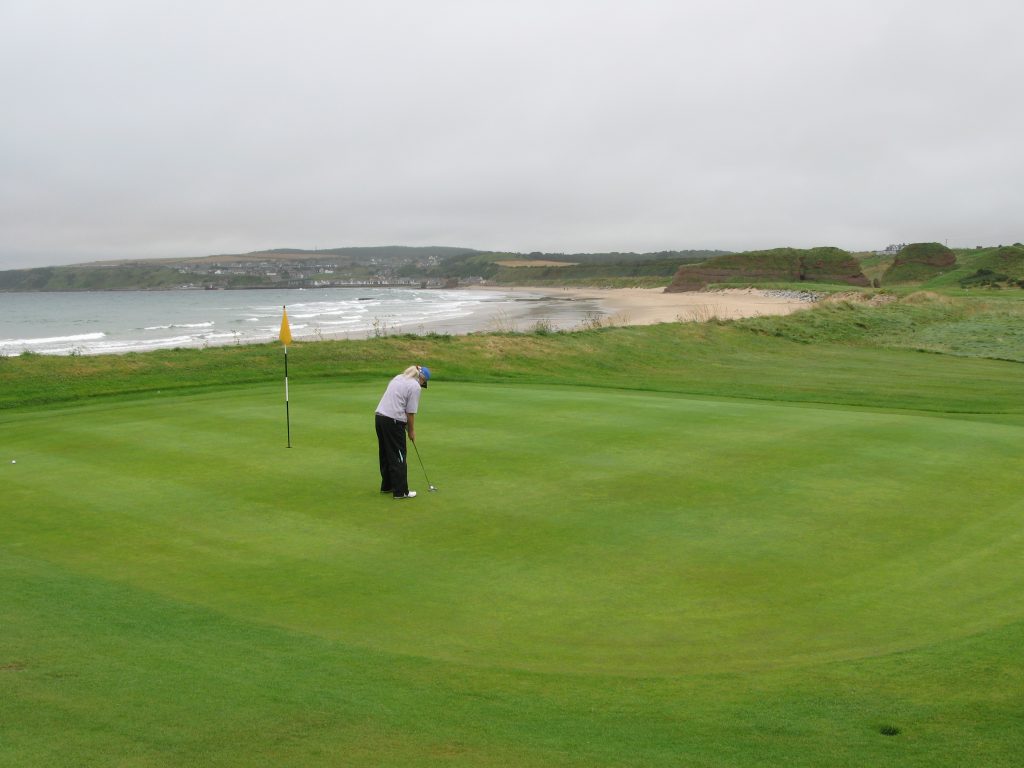
Fran, my playing partner, at the 9th green at Cullen

Fran, my playing partner, at the 9th green at Cullen

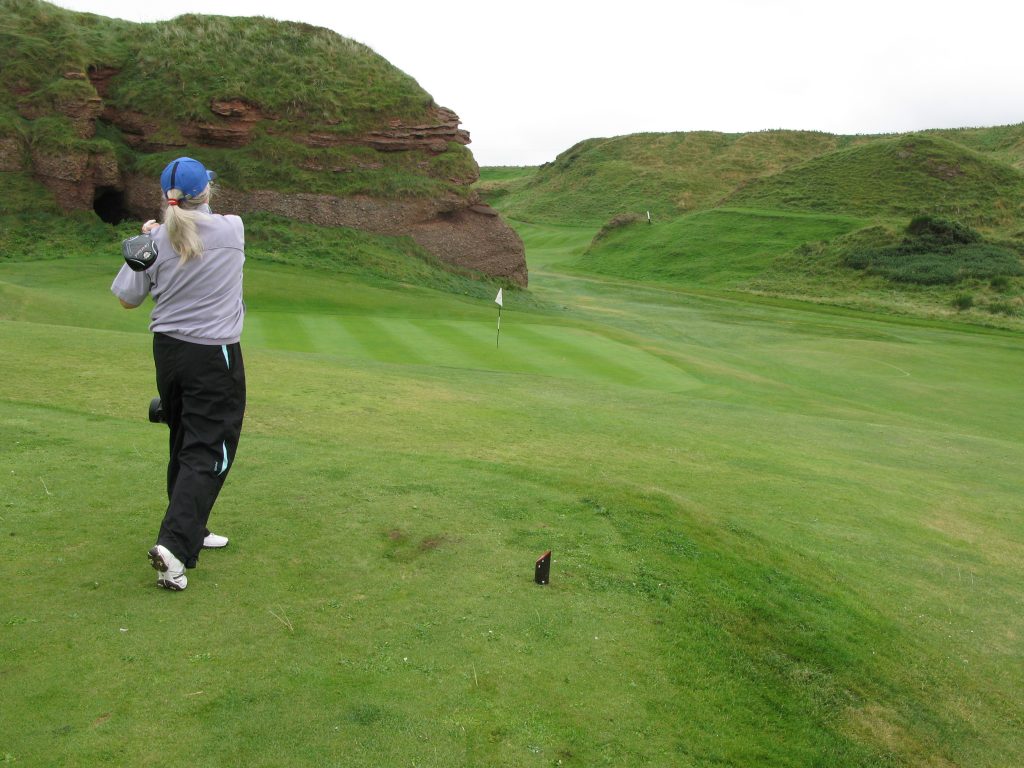
There are many highlights of the course.  Both the 2nd and 4th are blind shot par 3s, requiring good distance understanding.  Then soon after comes the fantastic long par 3 7th, at over 200 yards, with a drop of around 50 feet, which is one of those holes where your ball seems to stay airborne indefinitely;  it also has wonderful views of the course.

The 11th green at Cullen with the indomitable Boar Crag

The 11th green at Cullen with the indomitable Boar Crag

Later in your round awaits Boar Crag, and in particular the par 3 12th and 13th holes, where the rock formation dominates shots.  I suspect several played treat themselves to the odd “provisional” ball off these tees – especially on the 13th, where you need to hit directly over the marker post, and not be fooled into hitting to the 16th green by mistake.

The difficult 12th tee shot at Cullen

The difficult 12th tee shot at Cullen

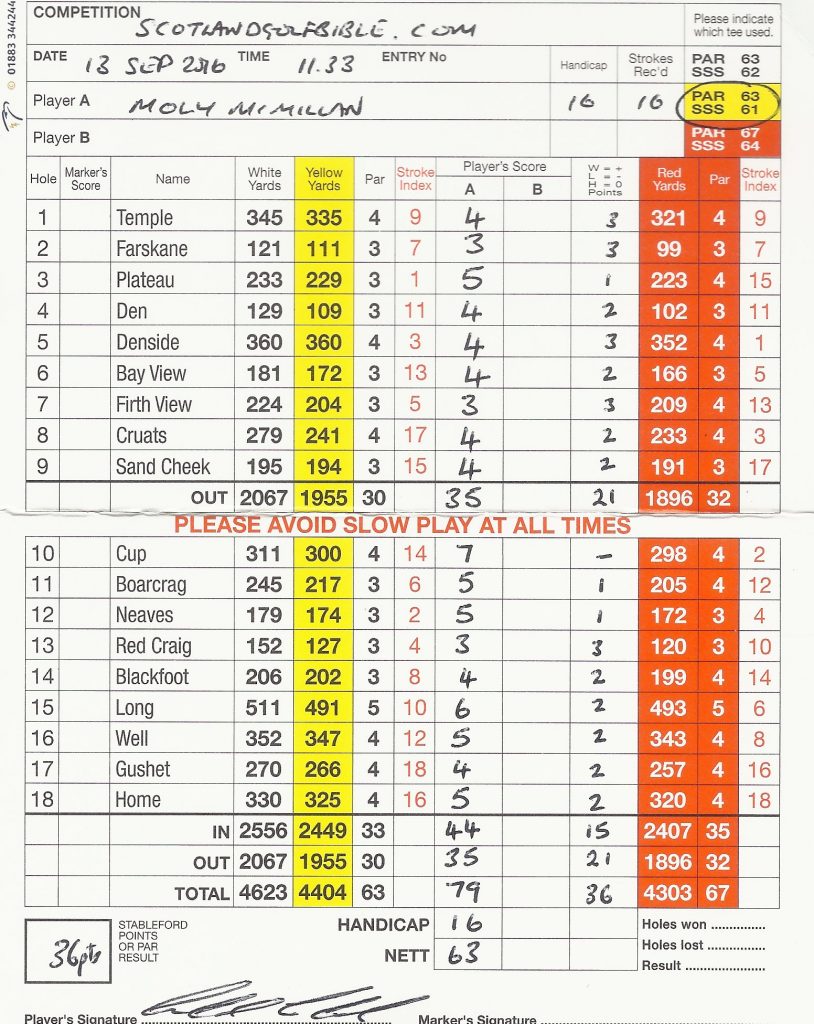
The course was in excellent condition when I played, with the greens being very well paced and true.  I played to my handicap and scored 79, although I irritatingly lost a ball on the 10th with one of those shots that you just don’t think is going to be lost.

Cullen also has a nice club house where you can dine on the other local delicacy, Cullen “Skink”, which is a hearty fish & potato chowder, before going out for another 18 holes – its one of those very few courses you want to be more than 18 holes!

Some Facts

Course Type: (mainly) Links

Par 63 (1 par 5, 7 par 4s, 10 par 3s)

Distance Yards   4404 (yellow) 

Moly’s Gross Score: 79

Moly's Cullen scorecard - a 79

Moly’s Cullen scorecard – a 79

« Older posts Newer posts »

© 2026 Scotland Golf Bible

Theme by Anders NorenUp ↑