A guide to green fee value for money

Category: Old Tom Morris (Page 3 of 5)

83. Dunkeld & Birnam. 25 Aug 2018.

This brilliantly located course, with great countryside views, is a tough 18 hole undulating walk – I wonder whether in time the club may reflect it should have stayed as a 9 hole layout? 

Round £30.   Par 69.  Value (out of 5) – 3.5

Dunkeld and Birnam Golf  Course is just a few miles east of Dunkeld, in the village of Birnam,  in what the club describe on their website as “Highland Perthshire”.    Birman and Dunkeld were actually different villages set on opposite banks of the river Tay, until they were connected in 1809 by a Thomas Telford bridge.  It is in an area of outstanding beauty, and I suspect many visitors may decide to play golf whilst on holiday.
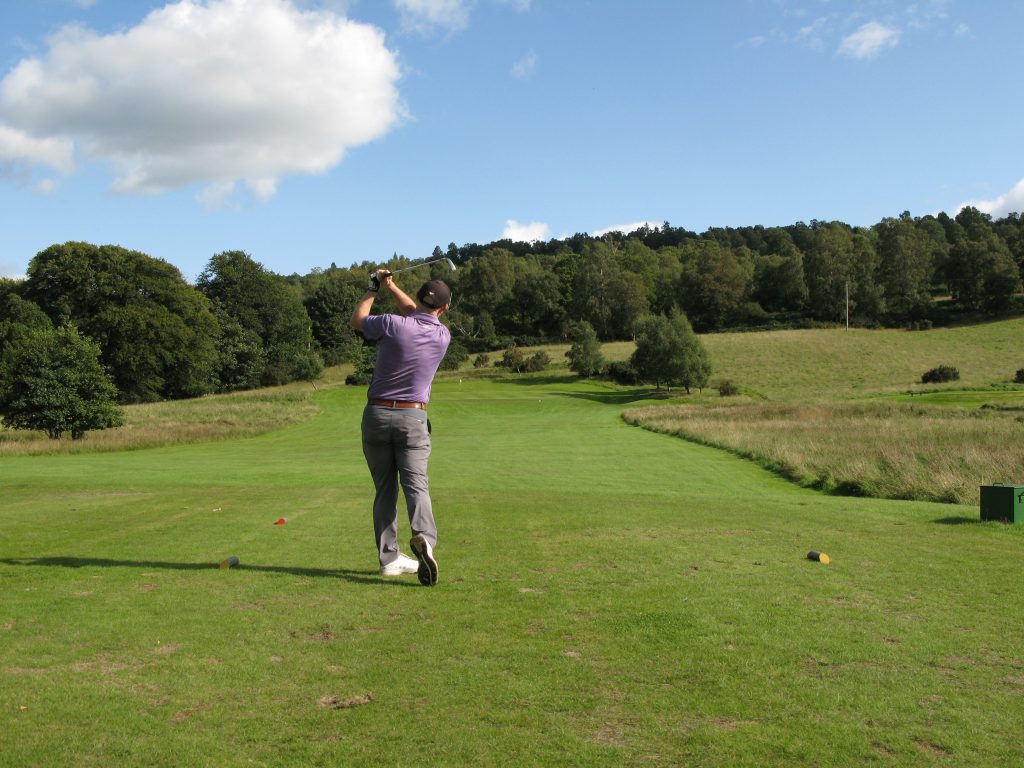
Moly at the par 3 11th, one of the new holes created in 2000.

The course was designed by Old Tom Morris in 1892, and was only extended to 18 holes in 2000.  The new holes are very much more open parkland, and slightly out of sorts with many of the original holes, which provide some typical “highland” holes.

The new layout also caused a change in the hole order, with the 17th and 18th (both originally part of the 9 hole course) being 2 of the 4 par 3s of the 18 hole course.  This makes for a rather unbalanced course in my view.  With the increasing debate about 9 hole golf competitions, as a means of encouraging play, I wonder whether Dunkeld and Birnam should have remained a 9 hole course?  I certainly think there is a charm in the “highland 9 holer”, which arguably has been lost.
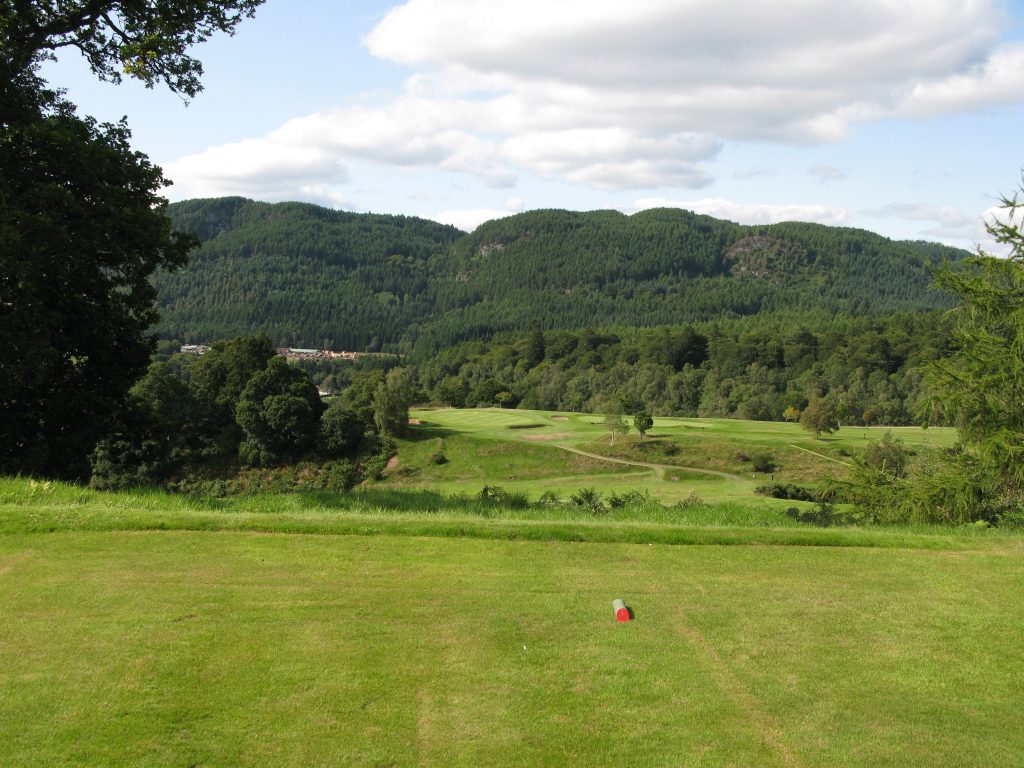
The risk reward par 4 6th hole, with the picturesque surrounds.

The course is relatively short, but it feels much longer, due to the many undulating holes, and there are a couple of fairly long walks between green and tee (the 7th to 8th being the longest, between the old and new holes).  The walk up to the 18th green warrants a buggy hire in its own right and, thankfully, there are several available for hire.
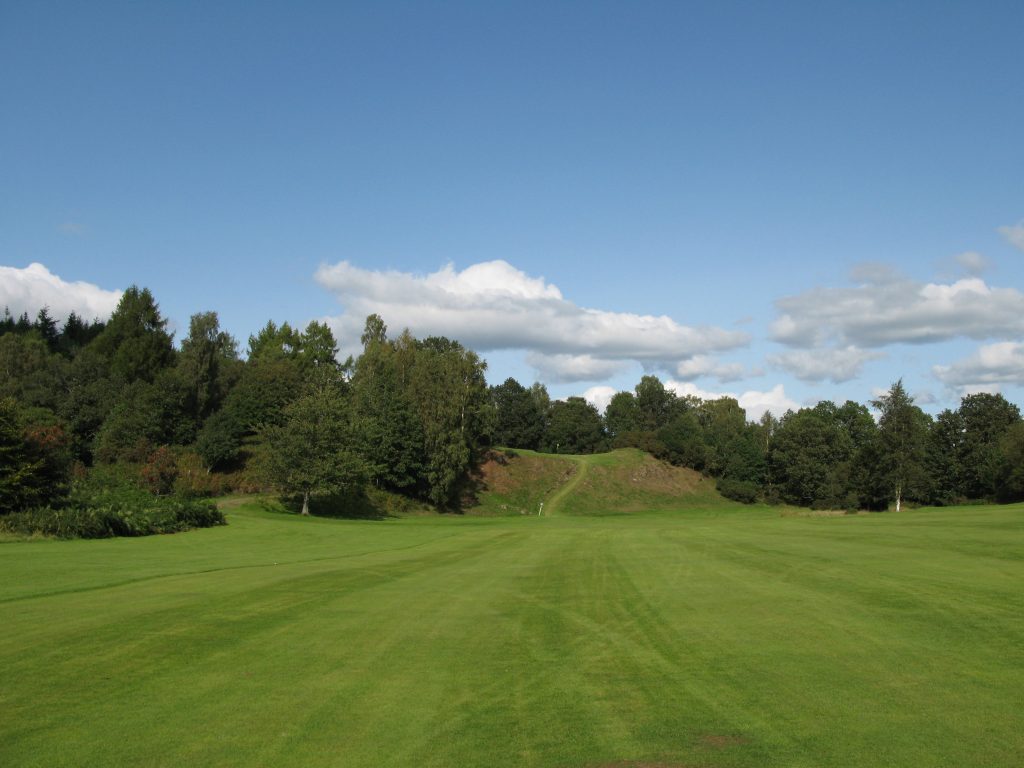
The tough approach shot at the par 4 8th at Dunkeld and Birnam

Having said all this, which might be unfairly critical, it’s really well worth the visit to play Dunkeld and Birnam.  The overall condition of the course was excellent and the greens were lovely.  The views were outstanding, including overlooking Dunkeld and taking in The Loch of the Lowes, and I think that playing in early Autumn must be particularly spectacular, due to the many trees surrounding the local hillsides.  It is an area renowned for local bird life.
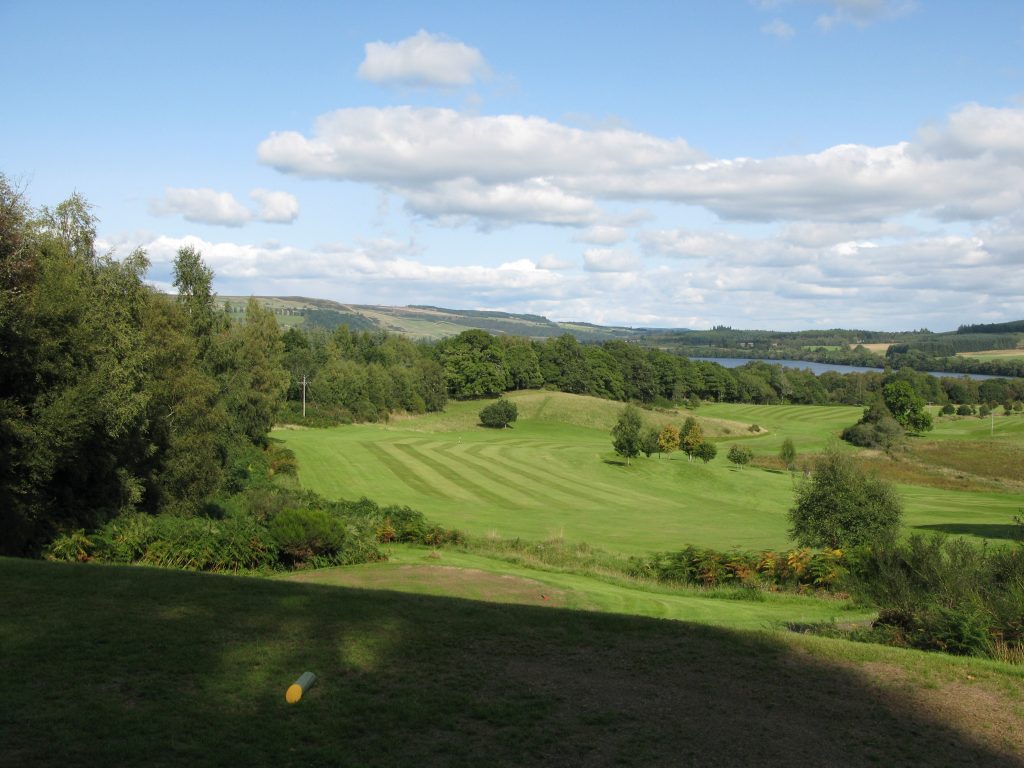
The 9th tee, with The Loch of the Lowes in the distance.

Even if not playing golf here, the Golf Club has a really nice clubhouse, with beautiful countryside views and would be nice to visit for the good food also on offer.   The members were very friendly to Fran and I, and they were very proud of their club.   They are also an enterprising club and have an apartment for rent in the clubhouse.
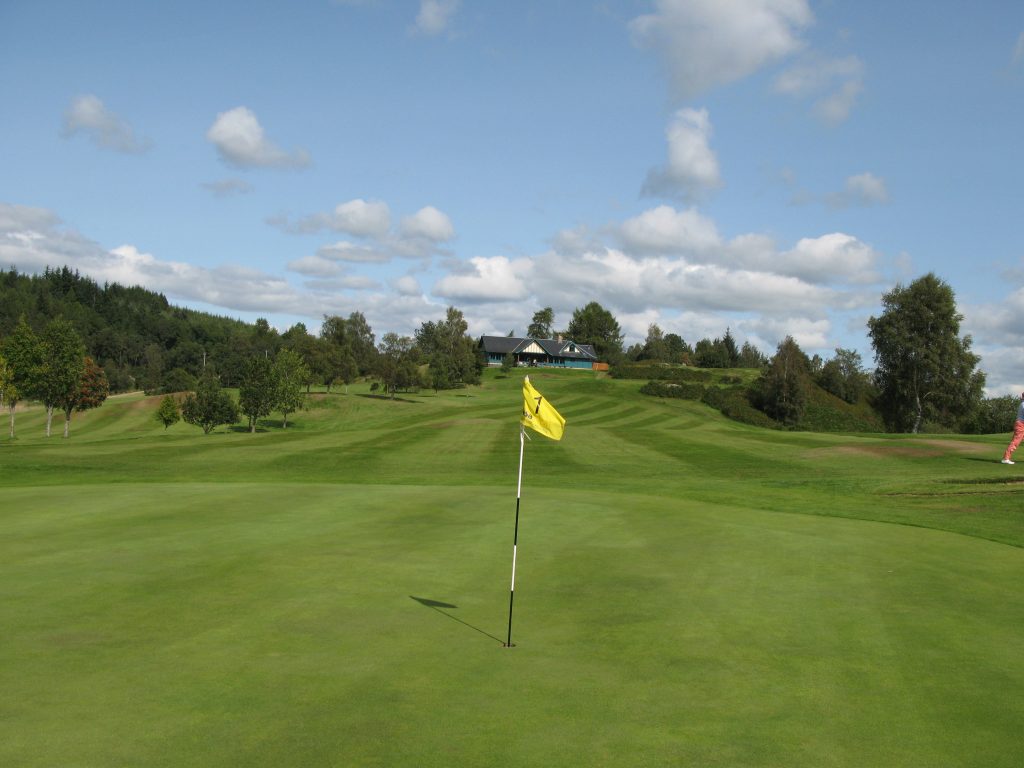
The first green looking towards the lovely club house at Dunkeld and Birnam

The course has some very interesting holes, and also several short par 4s which present the classic risk and reward dilemma, no more so than the 6th, one of several drive-able holes; on the day I stuck to a conservative strategy, albeit my scoring (91 for 33 points), may indicate I should have played driver more often!

The best hole for me was the SI3 7th hole, where a mid iron is likely needed to a raised green surrounded by trouble.    I suggest you play more club than you think towards the left side of the green.
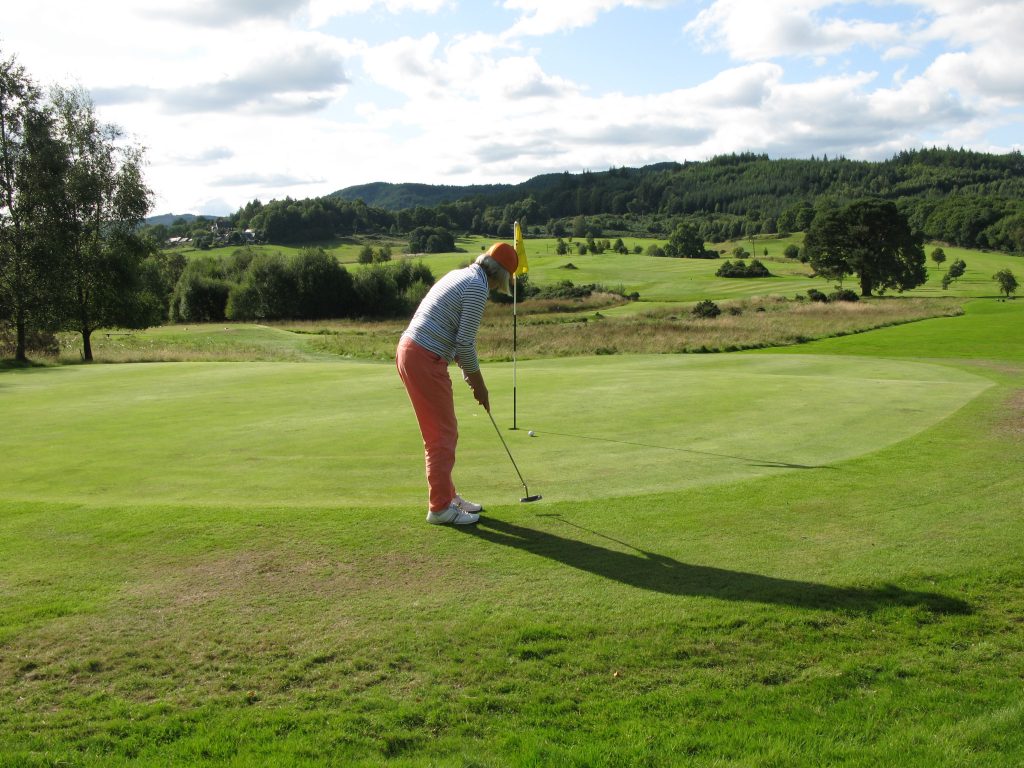
Fran putting at the 11th at Dunkeld and Birnam


Worth playing Dunkeld and Birnam, not least for the friendly welcome and the outstanding views from the clubhouse, over the tipple of your choice.

Facts:

Course Type: Heathland

Par 69 (1 par 5s, 13 par 4s,  4 par 3s)

Distance (yellow): 5192 Yards

Moly’s Gross score: 91
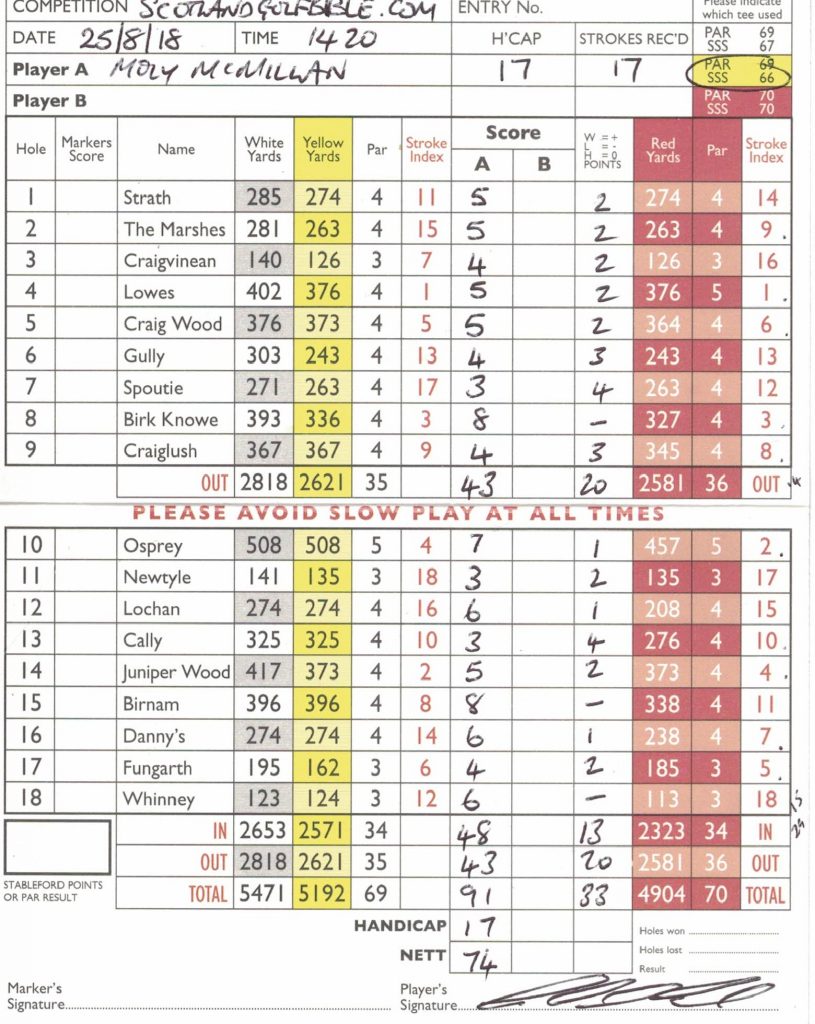
Moly’s 91 scorecard at Dunkeld & Birnam
75. Arbroath. 6 May 2018.

A must visit course for US Historians, fish lovers and record book chasers!       

Round £40.   Par 70.  Value (out of 5) – 4

Arbroath is the largest town in Angus and it’s golf course sits about 2 miles to the east of the town and only 6 miles from Carnoustie.  It probably gets bypassed by many visiting golfers moving north from Carnoustie towards the wonderful links courses in Aberdeenshire – this would be a wasted opportunity.

Arbroath has a remarkable claim for it’s influence on the modern world.  The “Declaration of Arbroath”, a Scottish declaration of independence of 1320, is regarded by several historians as the model for the American Declaration of Independence.

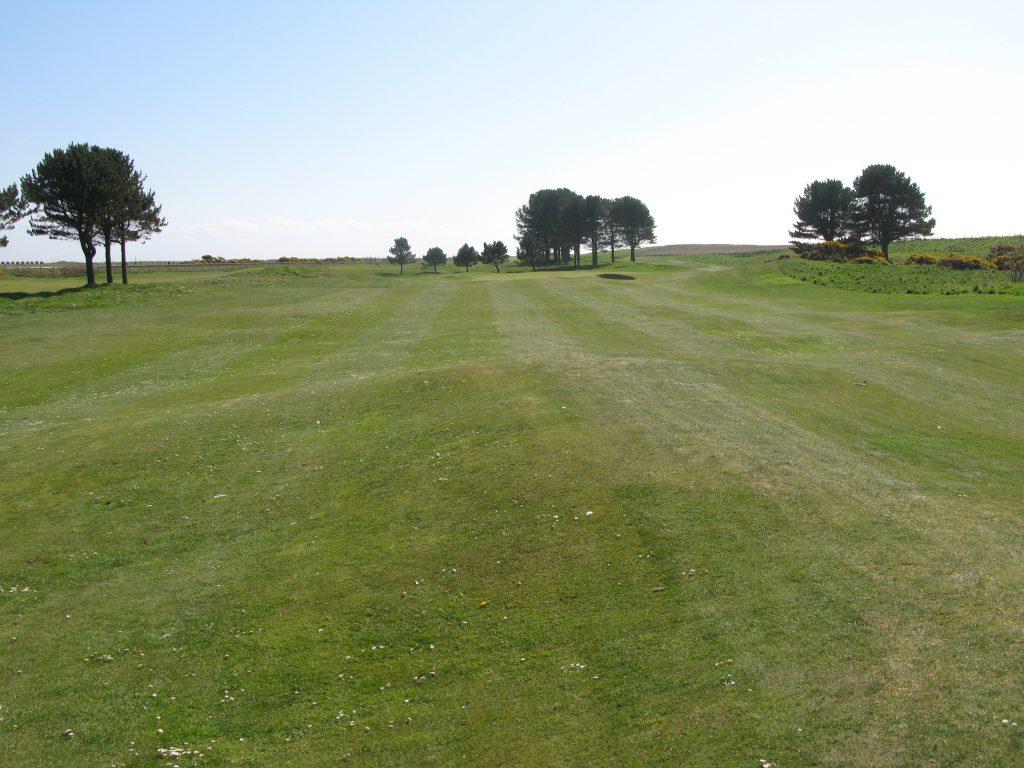
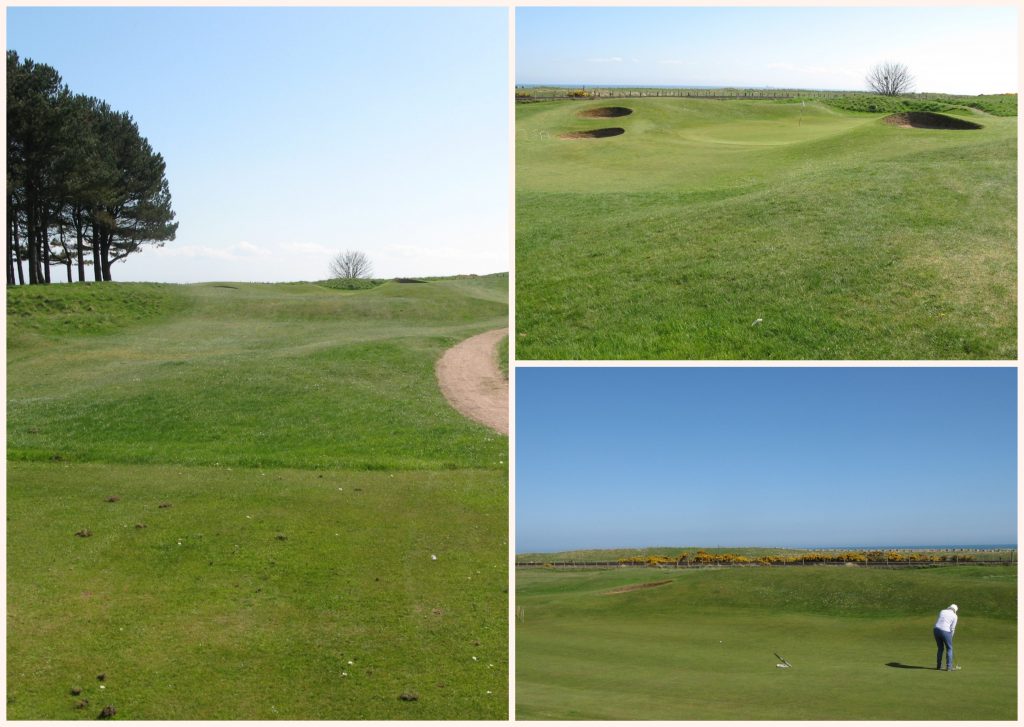
The delightful par 3 7th hole at Arbroath (159 yards)

The golf course can also argue a potentially unrivaled and rich architectural history.  Designed by Old Tom Morris, it opened in 1878,  was redesigned by the Troon professional Willie Fernie about 30 years later, then James Braid remodeled the tees, to add length, and bunkers in 1931.  That’s a strong golfing pedigree.

The course is predominantly an out and back layout.  The first 7 holes are played westward into the, normally very strong and cold, prevailing wind, before turning back for the 8th to 10th;  westward again for the 11th and 12th, then with 5 of the last 6 holes played eastward downwind back to the clubhouse.  Strategically, 11 of the holes have reachable out of bounds to the right, so right handed slicers may wish to consider their options off the tee.

The Stroke Index 7, 375 yard 6th hole at Arbroath, a typically difficult par 4 on the opening stretch of holes.

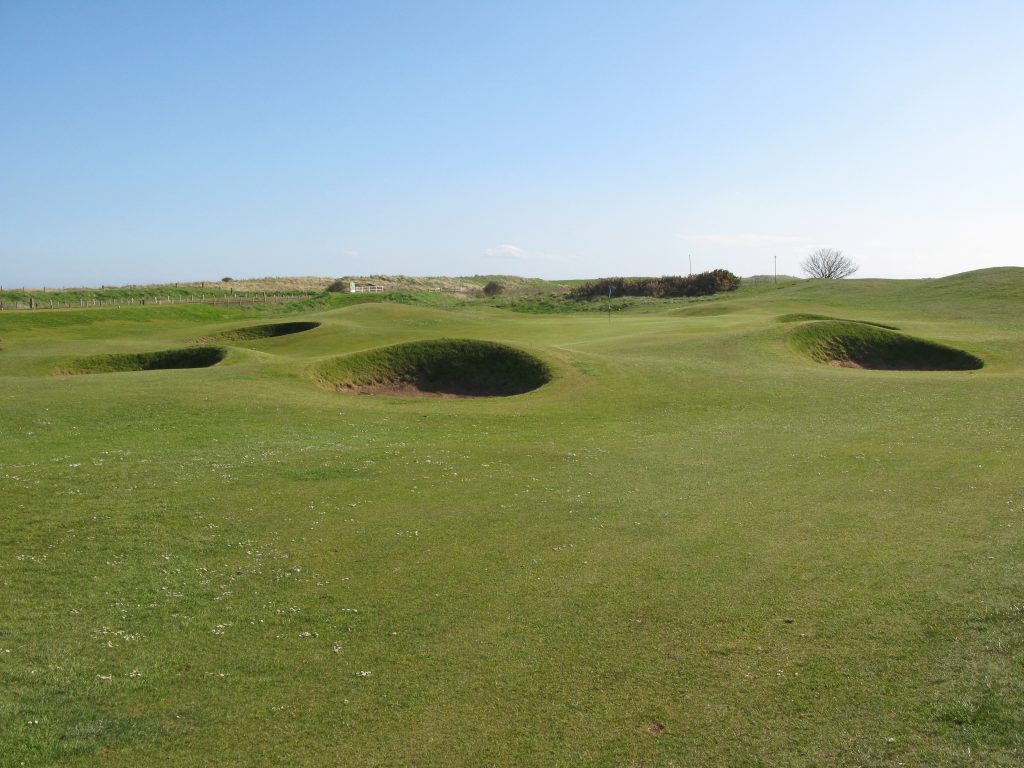
Viewed from the tees, Arbroath seems at times flat and innocuous, but it has been very cleverly bunkered by Braid, and I’m sure the locals will have many advisory comments on where to miss the greens.  The greens were also very hard when I played and difficult to hold (for all I guess other than very good golfers).  Playing off the yellow tees didn’t give  much respite either, as the 2nd and 17th both played as long par 4s, rather than par 5s from the white tees.  There are also 3 ditches that cross the course, and these need to be carefully considered, especially as the flat terrain makes them invisible to the eye.

I rather suspect first time visitors rarely score much above 30 stableford points.

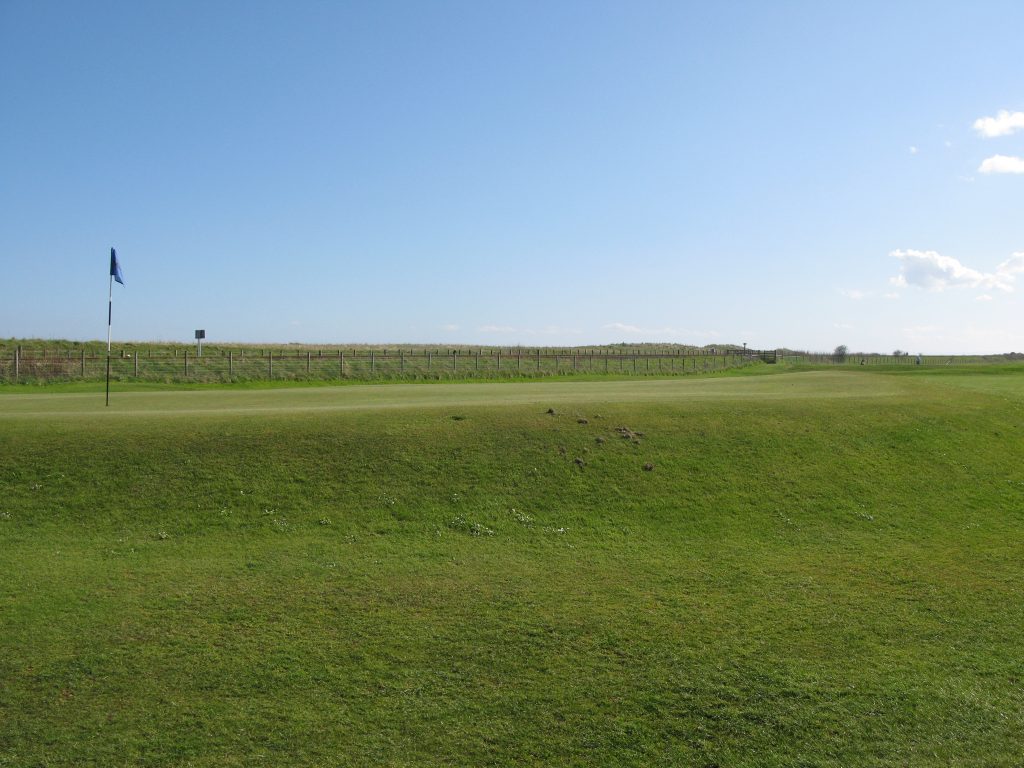
The very difficult green to find in 2 at the 13th at Arbroath, with the railway OOB on the right

The highlights for me were the par 3s, all of which had good surrounds, with the two on the back 9, the 14th at 200 yards (white at 232) and the 16th, being especially difficult.

It’s a well kept course, with good tees, greens, fairways and bunkers.  The clubhouse has a friendly staff and good food, where you can try the Arbroath Smokie, the local smoked haddock delicacy protected by EU Trade regulations.

The wonderfully bunkered par 3 16th green at Arbroath

The other Arbroath claim to fame is the local Football Club, which holds 2 world records – the highest professional scoring record (winning 36-0), and their ground, Gayfield Park, being the closest to the sea in the world – only 5 and 1/2 yards away!  Apparently, one famous game was abandoned after all balls were “lost at sea!”.

Not a great day for me, I lost 3 balls (6 shots) and 3 putted 7 times!  I suppose that explains completely my 13 over par net!  Oh, and yes, the greens are rather large and difficult!

Well worth a visit.

Facts:

Course Type: Links

Par 68 (14 par 4s, 4 par 3s)

Distance (yellow): 5826

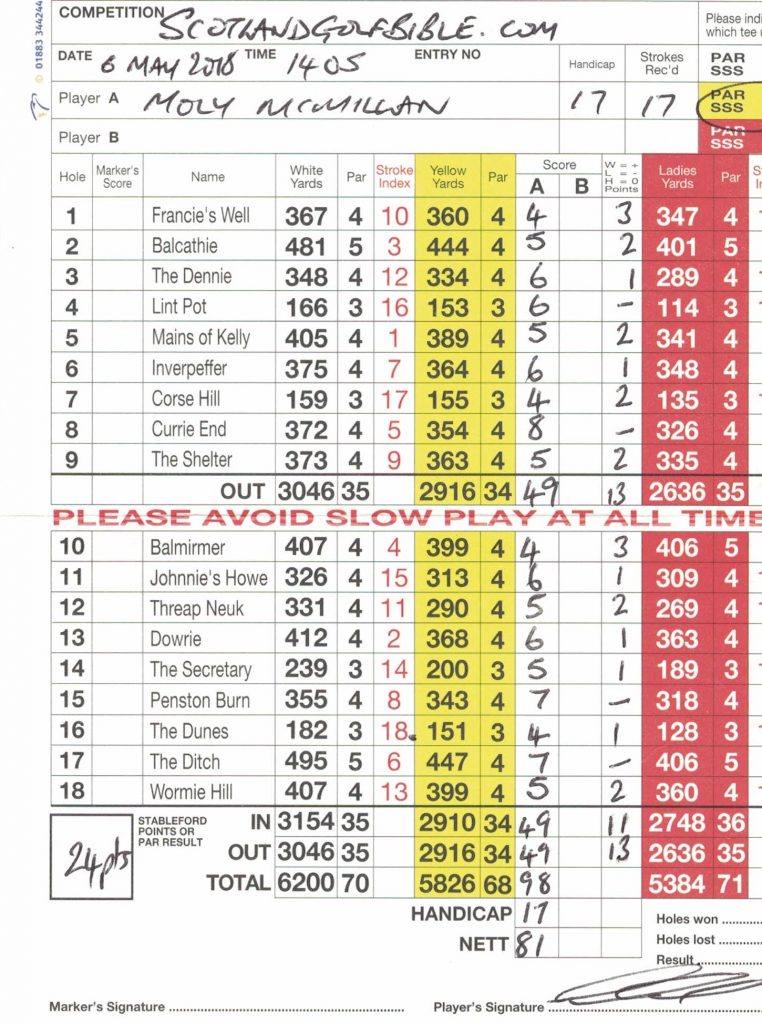
Moly’s Gross score98

Moly’s Arbroath scorecard – 98

71. Anstruther. 31st Oct 2017.

Take on  the UK’s toughest par 3, “The Rockies”.     

Summary:  Round £28.   Par 31.  Value (out of 5) – 3

Anstruther Golf Club sits on the Fife coast between the villages of Anstruther and Pittenweem about 9 miles south of St Andrews.  It was established in 1890 with 7 holes with 2 further holes (the current 1st and 9th) added in 1892.  Old Tom Morris advised the club in 1896 to extend the course, but it’s not clear whether he did any re-design.

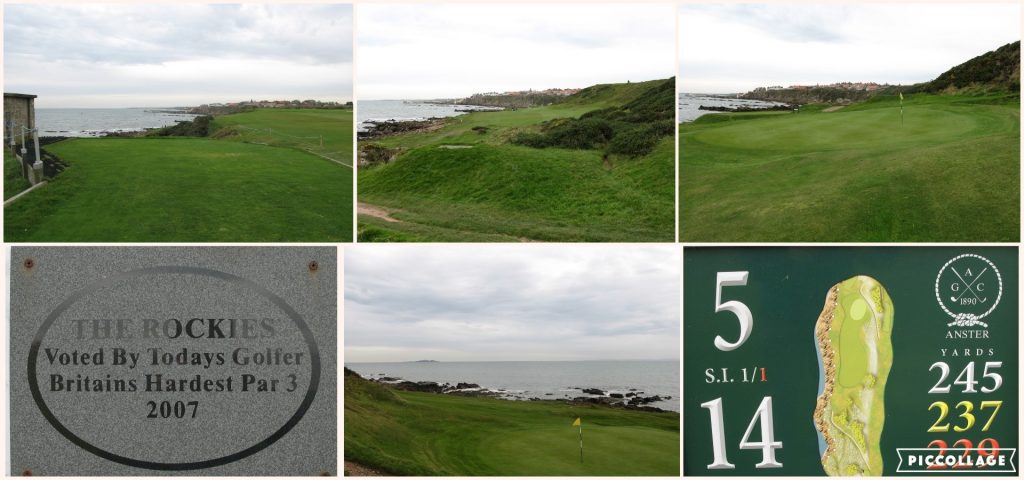
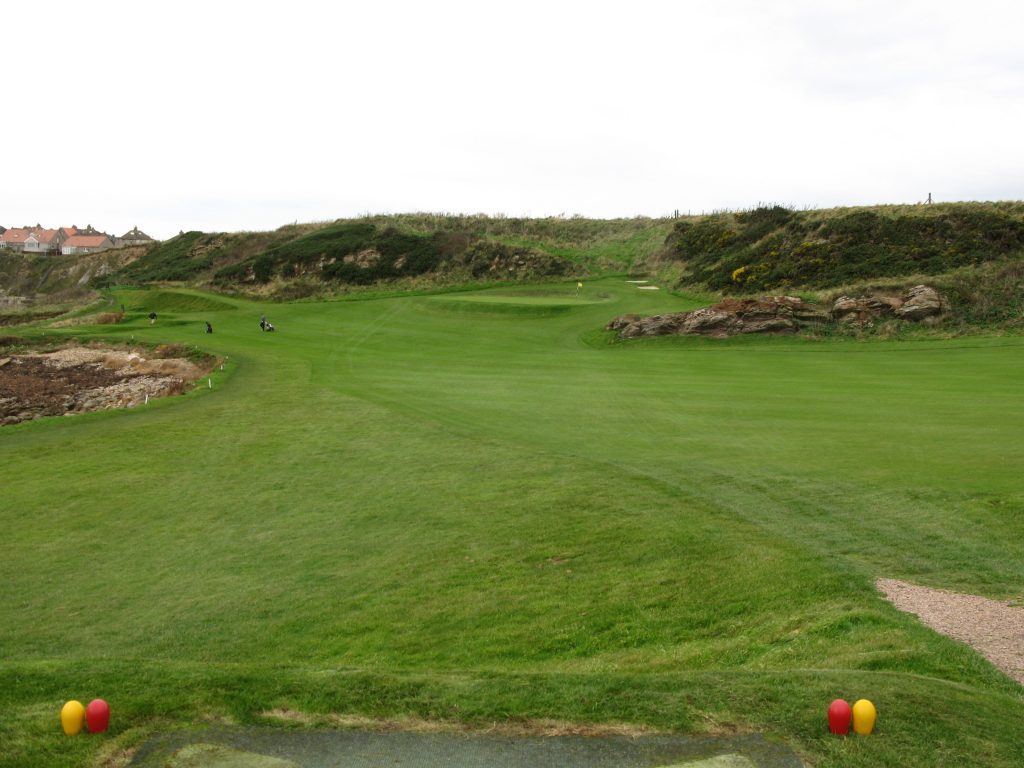
“The Rockies”, UK’s toughest par 3!

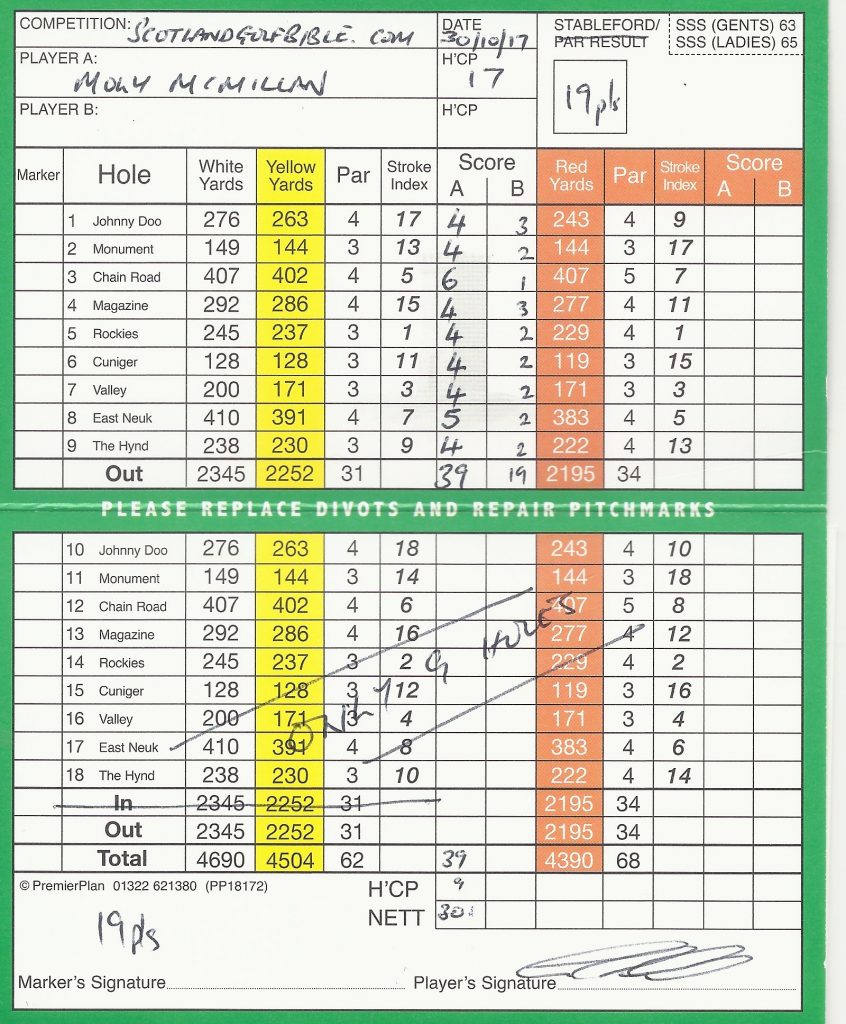
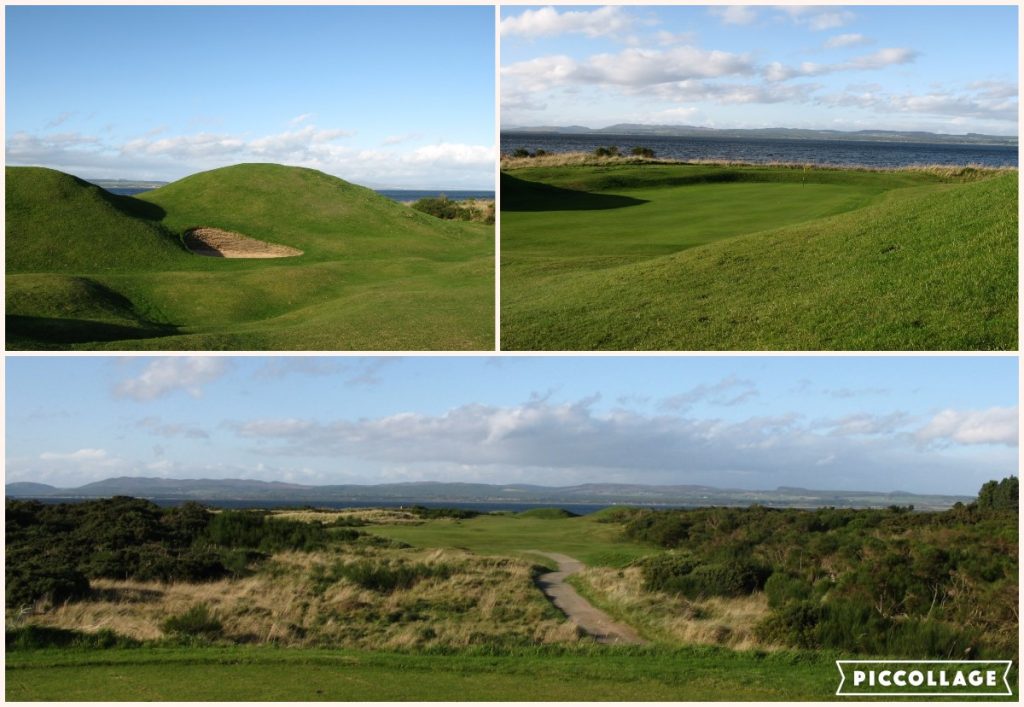
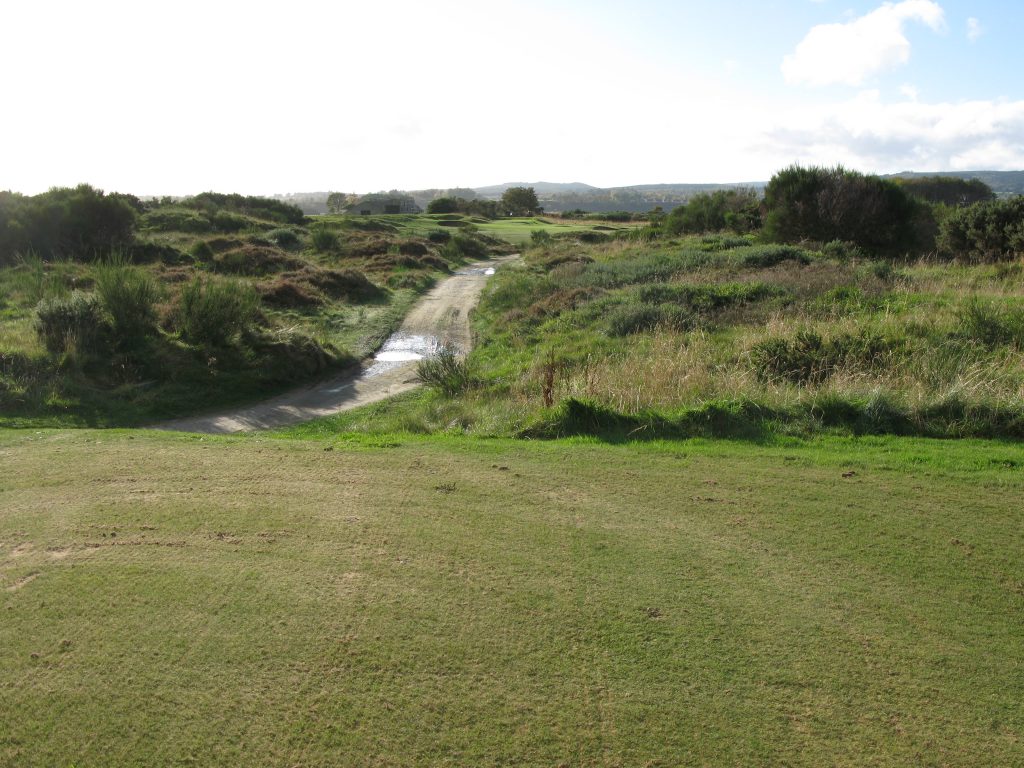
The course provides excellent views over Anstruther Harbour and out to the Isle of May, Bass rock and the North Berwick coastline.  However, I would recommend playing this course solely to play the par 3 5th hole, which was voted in 2007 as the “toughest par 3 in the UK” by Todays Golfer magazine.  “The Rockies” is a coast hugging 245 yards into the prevailing wind, having a blind tee shot from an elevated position into a small green surrounded by a fairly steep cliff bank on one side, with the coastal rocks on the other.  I imagine many a member has never parred this hole from the white medal tee, or even the main yellow tee at 237 yards.  Cynics could conclude that it’s the hardest par 3, because it’s really a par 4!  Disappointingly when I played the tees were placed about 40 yards forward from the bottom of the cliff side, completely altering the hole.  Given that the Golf Club make such a big thing about the hole in there website advertising, they should always use the main tee area in my view.

The nice looking par 3 6th hole at Anstruther.

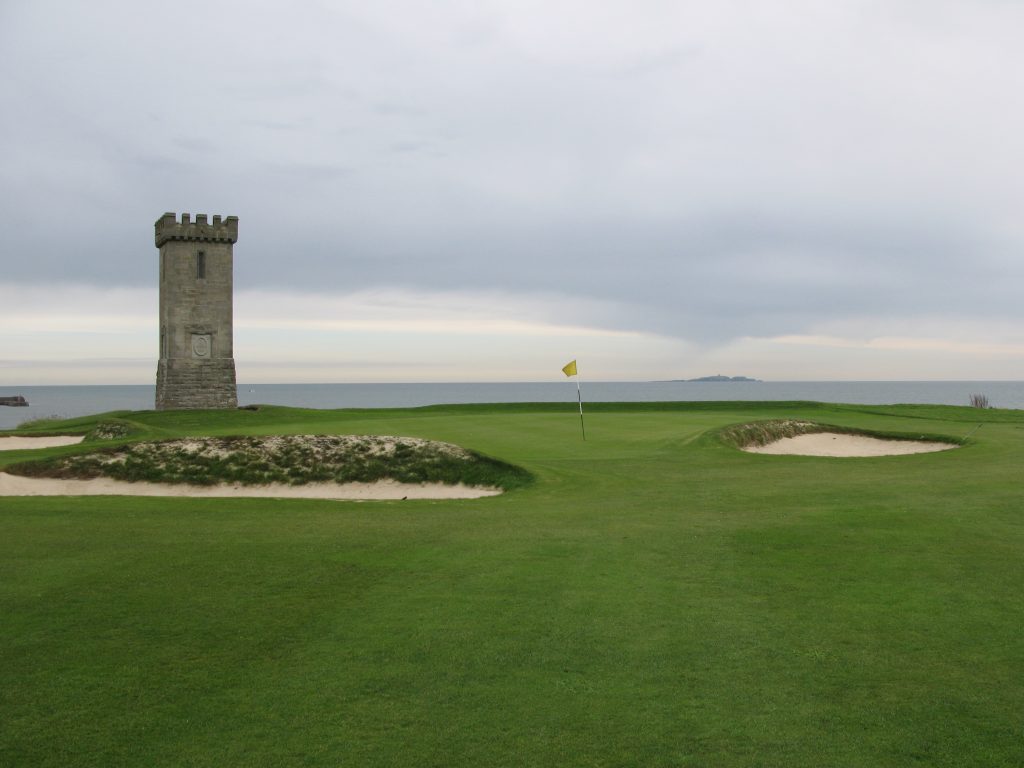
The 5th hole makes up a bit of  an “Amen’s corner”, along with the par 3 6th and par 3 7th holes, but other than these holes the course is a little featureless to my eye, other than the 2nd hole which is a short par 3 played towards the coast and called “Monument” due to the adjacent WWI War memorial – a “baronial tower”.

The WW1 “Baronial” War Memorial adjacent to the well guarded Par 3 2nd hole at Anstruther.

One interesting quirk is that the course was closed during WW2, during which time the course was trenched and numerous poles erected to prevent the landing of enemy aircraft.  There are also some small wartime gun placements and shell stores which are integral parts of the course.

The course was in pretty good condition when I played and, along with the first light breeze I’d played in for a while, I shot 39, 8 over, and about exactly to handicap (17).

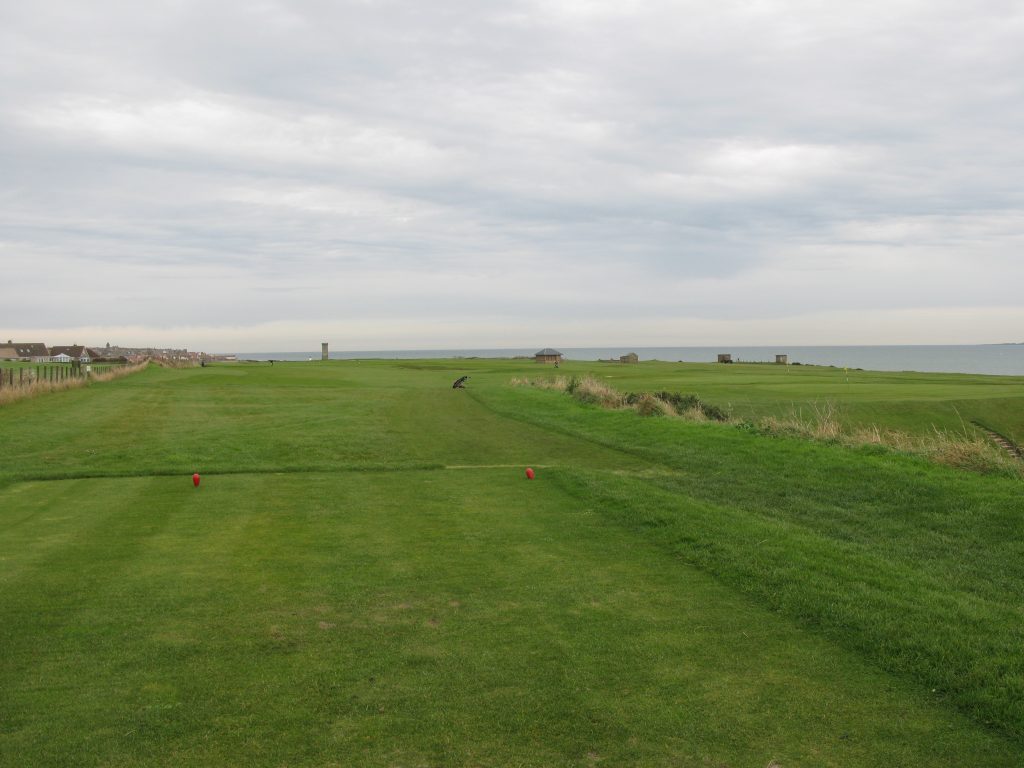
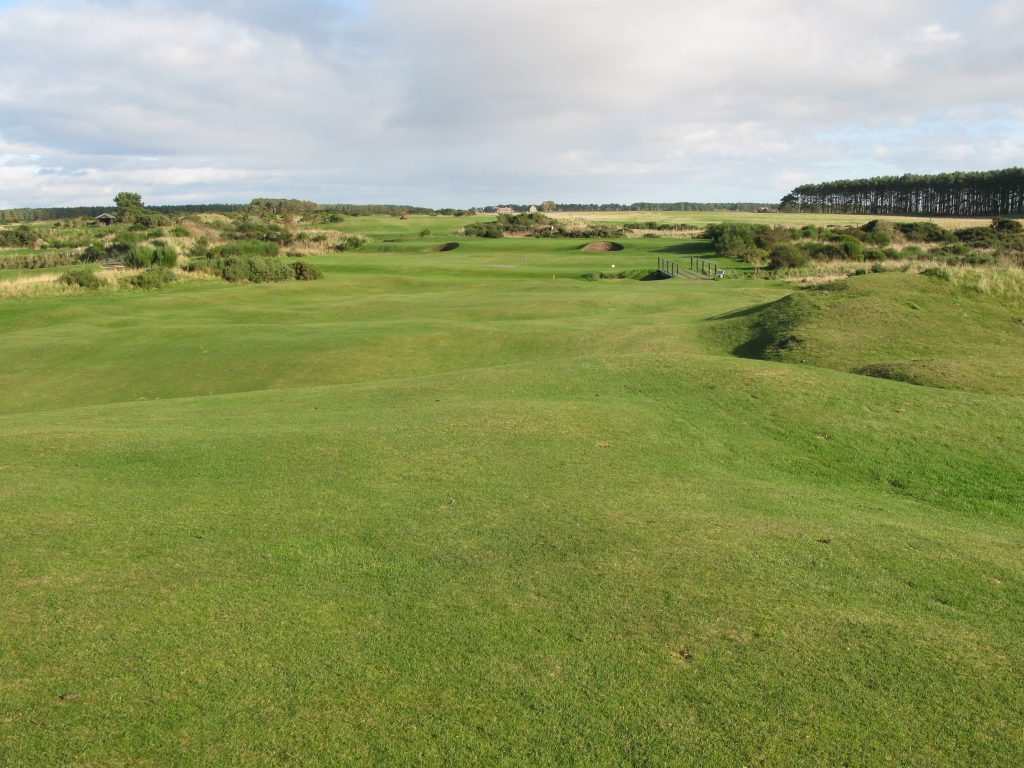
The rather featureless 8th tee shot at Anstruther, with some WW2 relic buildings in the background


Other than the magnificent par 3 5th, the clubhouse restaurant is apparently highly rated and given its delightful location is another reason to visit.

Facts:

Course Type: Links

Par 31 (4 par 4s, 5 par 3s)

Distance (yellow): 2252

Moly’s Gross score: 39

70. Tain. 25th Oct 2017.

Old Tom Morris’ creation is a “must play” if you head North.    

Summary:  Round up to £60.   Par 70.  Value (out of 5) –4.5

Standing on the innocuous looking first tee at Tain, visitors will most likely think “is this it?”;  fast forward 3 holes they may well be thinking “I can’t cope with this!”  The second shot into the 1st is blind over a fenced road with a well placed green side bunker; the approach at the 2nd (SI 4) is also blind with a ditch and engulfing bunker awaiting; and the long par 4 3rd (SI 2) requires a drawing approach shot to have any chance of being close to a left sided or even centre pin – thankfully these holes are assisted by the prevailing wind!  Given the old hickories and gutty balls used in 1890 when the course was opened, Old Tom must have been an incredible golfer.  Welcome to Old Tom’s “Northern Jewel”.

The signature 11th “Alps” – for obvious reasons!

Tain is situated on the Dornoch Firth, 34 miles north of Inverness and 9 miles south of Dornoch.  There is record of 6 holes existing from around 1870, prior to Old Tom Morris designing a 15 hole course which finally extended to 18 in 1894.  Initially called St. Duthus Golf Club, after the patron saint of the town, the name evolved to “Tain” during the 1900s.

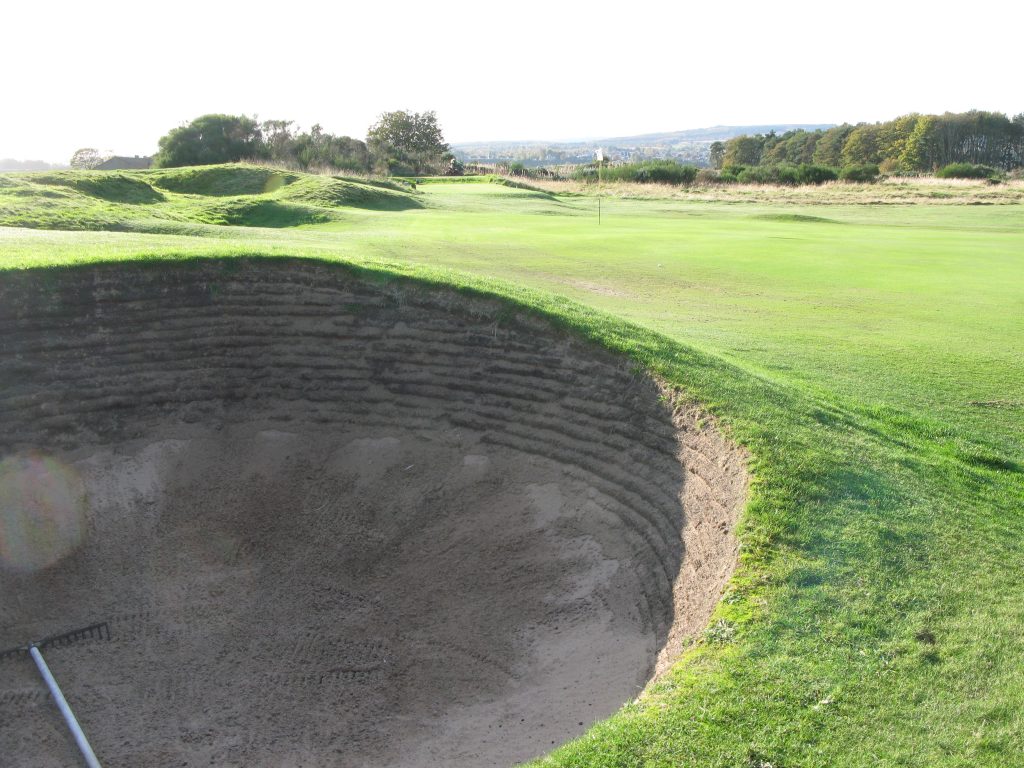
The difficult par 4 2nd hole, with this approach being blind for most average golfers – the ditch is deep!

In assessing Tain’s layout, it’s interesting to consider the originality of the course design and what remains today.   There are several detailed maps on the club’s excellent website – in truth, although the general layout remains similar, due to many adjustments and lengthening over the years, only a few holes, the present 9th (still playing to the original green), 10th, 14th and 15th, remain as Old Tom Morris designed them.   In contrast, Bridge of Allen ,is almost untouched from Old Tom’s original design.

After the opening 3 holes, you are then faced with the long par 5 4th, actually a respite, then a mid iron par 3 5th, with deep pot bunkers, then turning partly back into the prevailing wind to play the par 4 6th hole, which worryingly has the name “Bunker”.   By which time on the day I was 13 over par!

The mid iron par 3 8th hole at Tain

After some holes that then feel more like highland golf (trees, turf, ‘feel’), the signature 11th hole, “Alps”, takes you closest to the shore, followed immediately by the aptly named “Glenmorangie”, 12th, with views to the distillery.

By which time, if you’ve still got a card going, beware the SI 1 14th, played into the prevailing wind, then an interesting pair of back to back par 3s, at 16 and 17, both with water in play.

A typical well placed Tain bunker at the 8th.

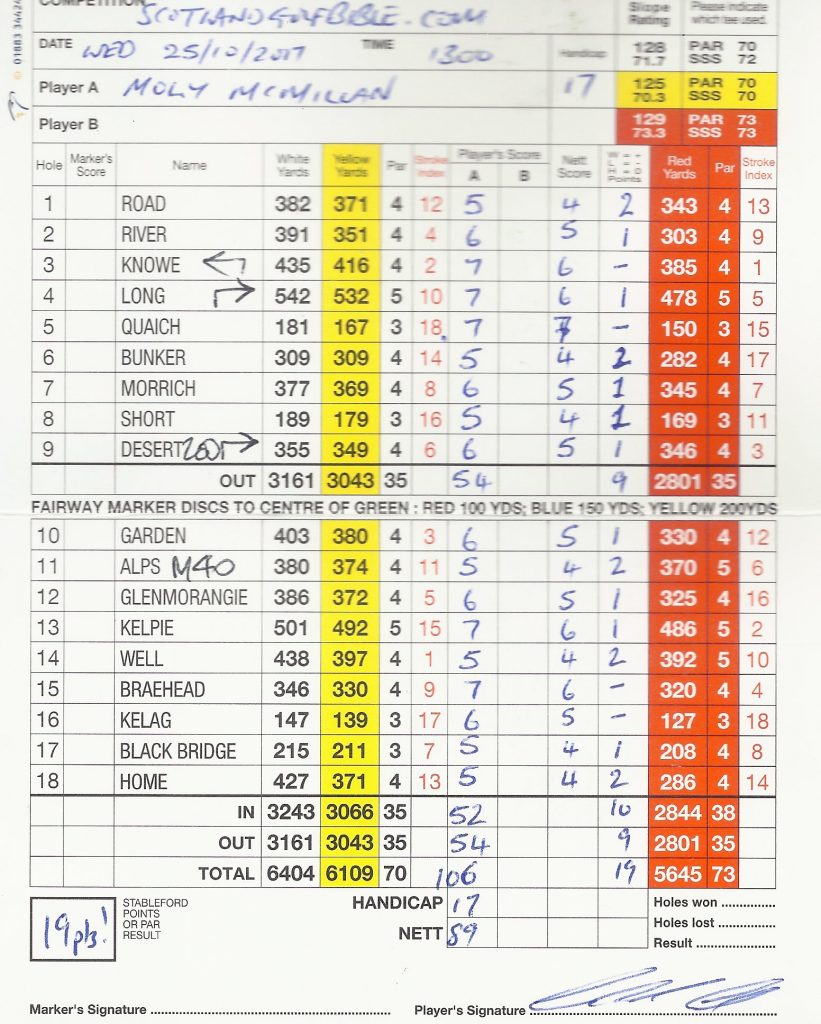
After a very friendly and helpful discussion before my game with the pro, Stuart Morrison,  in the end I shot 106 (Aaagh), completely down to my very poor play, albeit the wind blew up to 30 mph.  The course was in very good condition with play still on full tees and greens.

It must be said that Tain has very many characteristics of a links course (layout, location, pot bunkers, hillocks) but the turf in many places is distinctly more arable and I suspect Tain will play longer in the summer months than the more harder fairwayed links courses.

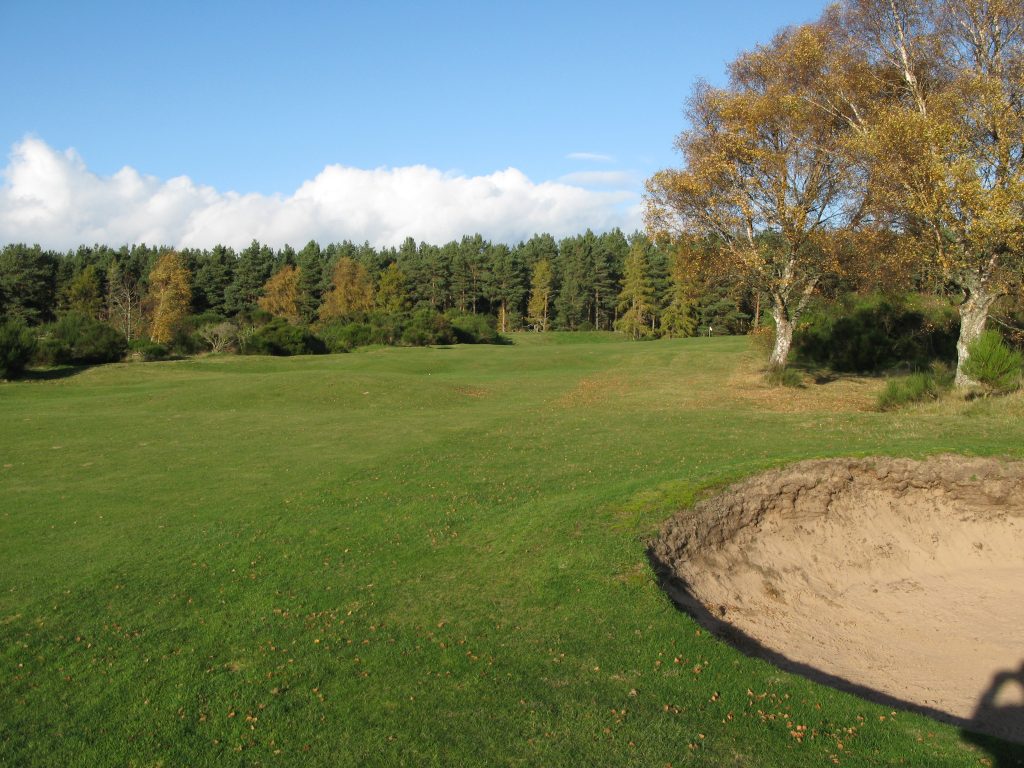
A more highland feel at the dog leg par 4 9th at Tain.

This is rightly regarded as a “must play” links course, and I would urge anyone venturing north to play Royal Dornoch, its more prestigious neighbour, to play Tain, which could be argued is better value.

Facts:

Course Type: Links

Par 70 (2 par 5s, 12 par 4s, 4 par 3s)

Distance (yellow): 6109

Moly’s Gross score: 106

Moly’s 106 card at Tain!

« Older posts Newer posts »

© 2026 Scotland Golf Bible

Theme by Anders NorenUp ↑