A guide to green fee value for money

Category: Old Tom Morris (Page 2 of 5)

152. Forfar. 9 July 22.

Incredible and possibly unique golf course.

Round £50. Par 69. Course Rating / Slope Rating (yellow) 67.2/119. Value (out of 5) – 5

Forfar is an incredible golf course. Although I’m a native Dundonian and played football in nearby Forfar many times, I had never actually played the golf course – I had no idea what I’d been missing all those years. Whenever I’ve mentioned Forfar to my non-Scots friends, I always get “Forfar four, East Fife five!”. It should be famous for its golf course.
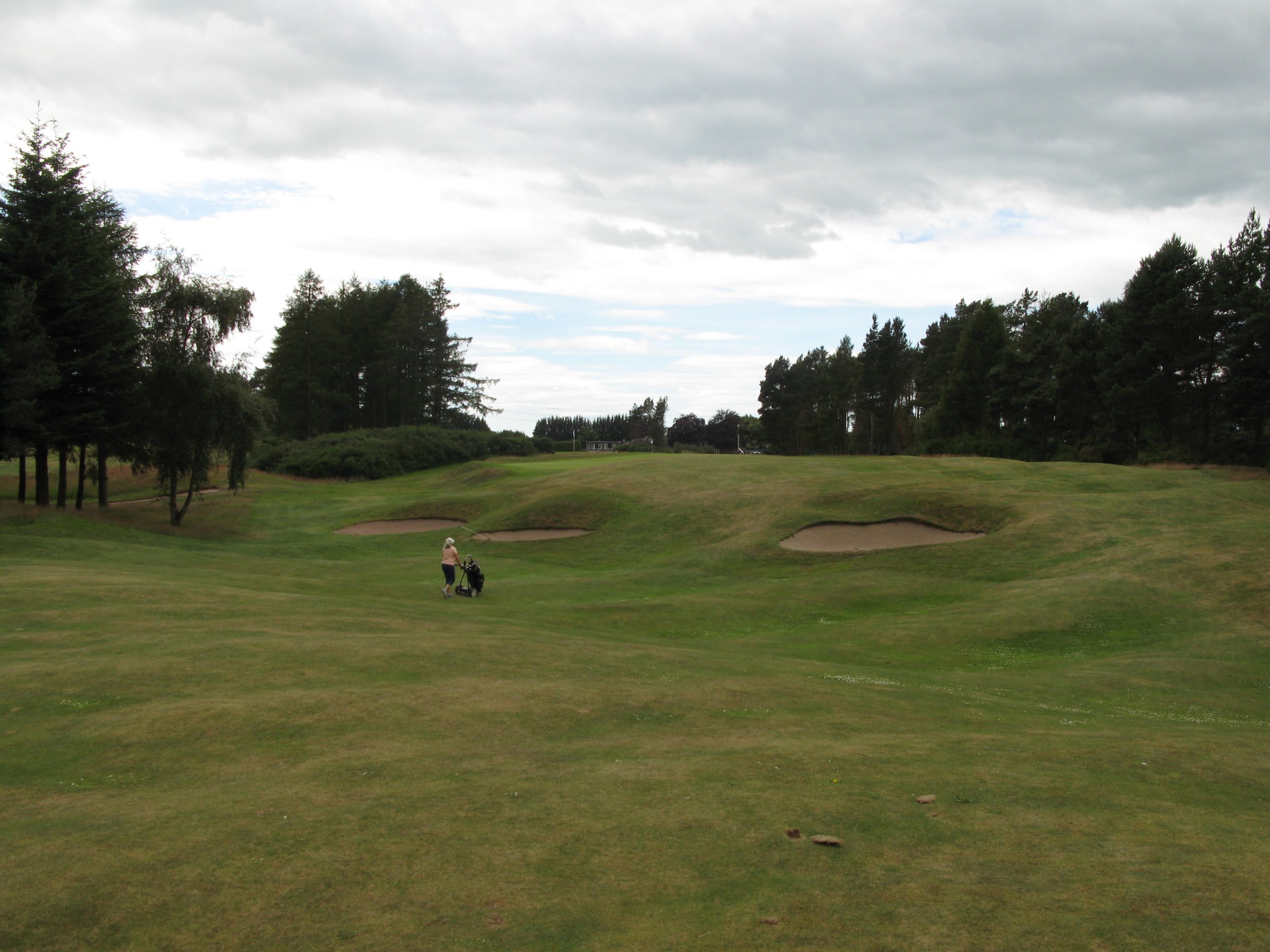
The 4th, ‘Cat Law, a tough par four, with Forfar’s terrain on show.

Having read many reviews of Forfar golf course, I was struck by the number of writers commenting on the unusual terrain – “it’s an ‘inland links'” said many.
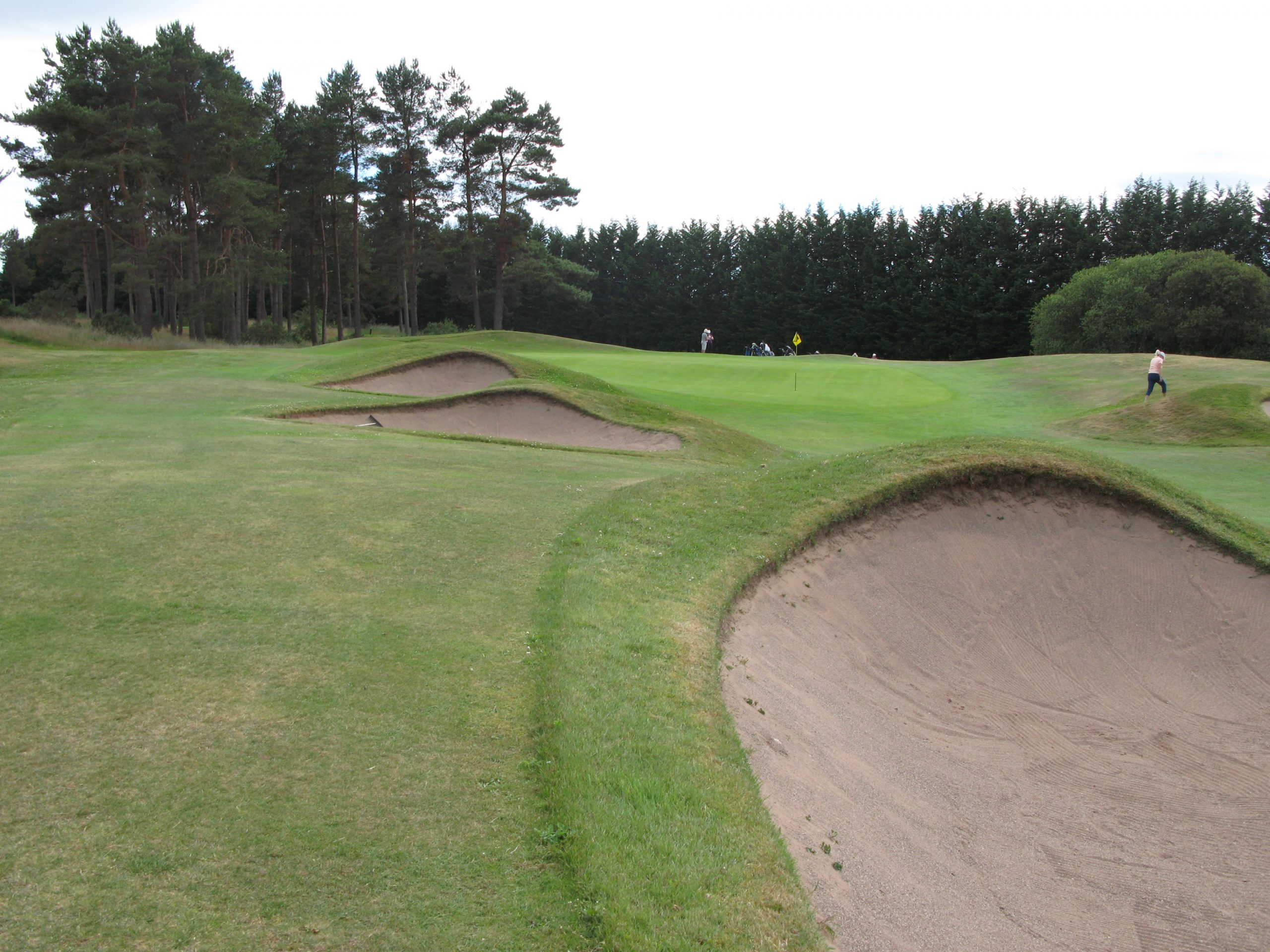
The majestically bunkered 17th hole – this is typical of the views playing Forfar.

The geology is very marked. It has hummocks and undulations with so much similarity to a links. Look at the fairways, and it could be Scotscraig, near St Andrews. Look at the numerous Scots Pine, with the hilly surrounds, and it could be Boat of Garten in the Highlands. The wonderful heather and bunkered green surrounds, would make their way easily onto Lanark, Edzell or any number of the great heathland courses.
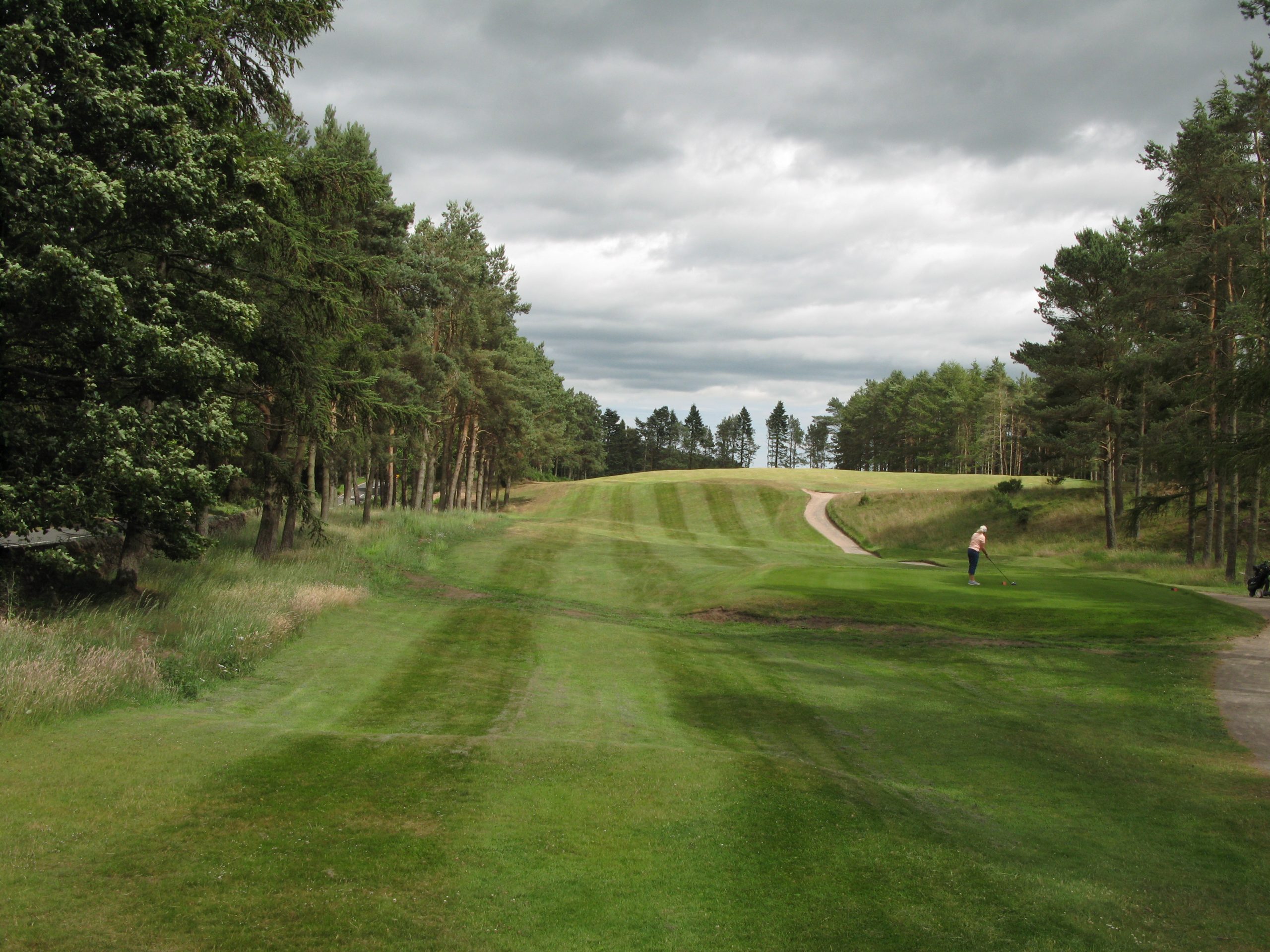
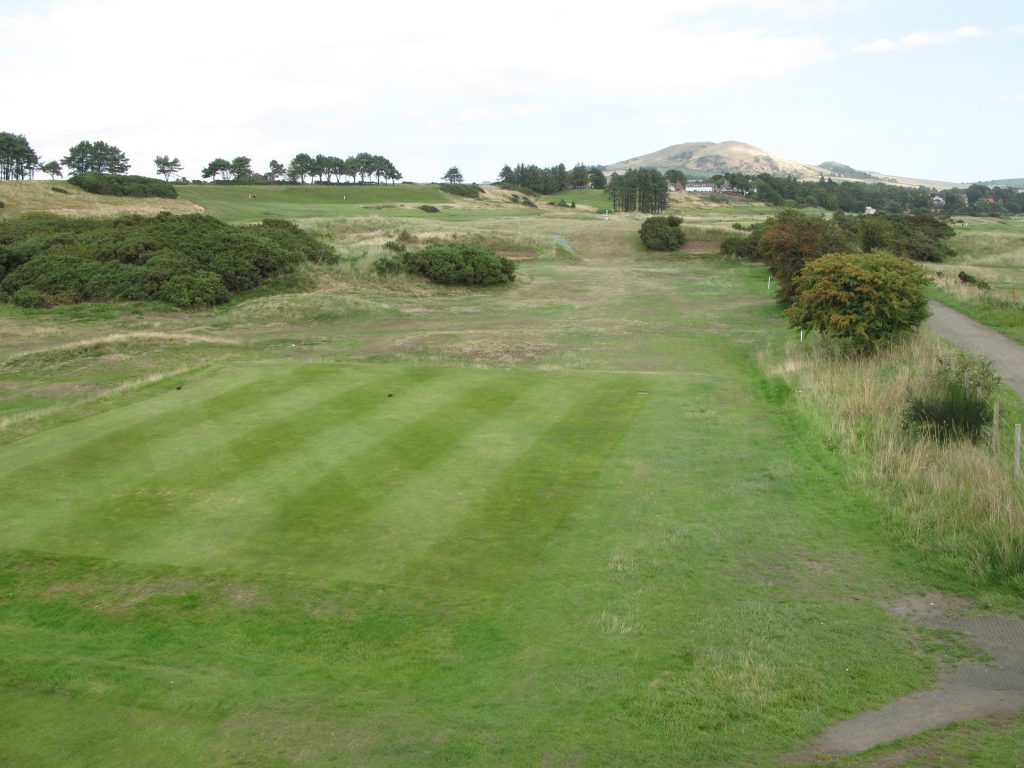
The blind tee shot at the par four 2nd hole.

I’ve played over 200 golf courses throughout the world, from the Monteray Peninsular, through the championship layouts of South Africa and Australia. Ryder Cup parkland courses and Open Championship links. Asian tour venues. Forfar is both like none of them and yet like all of them, simultaneously.
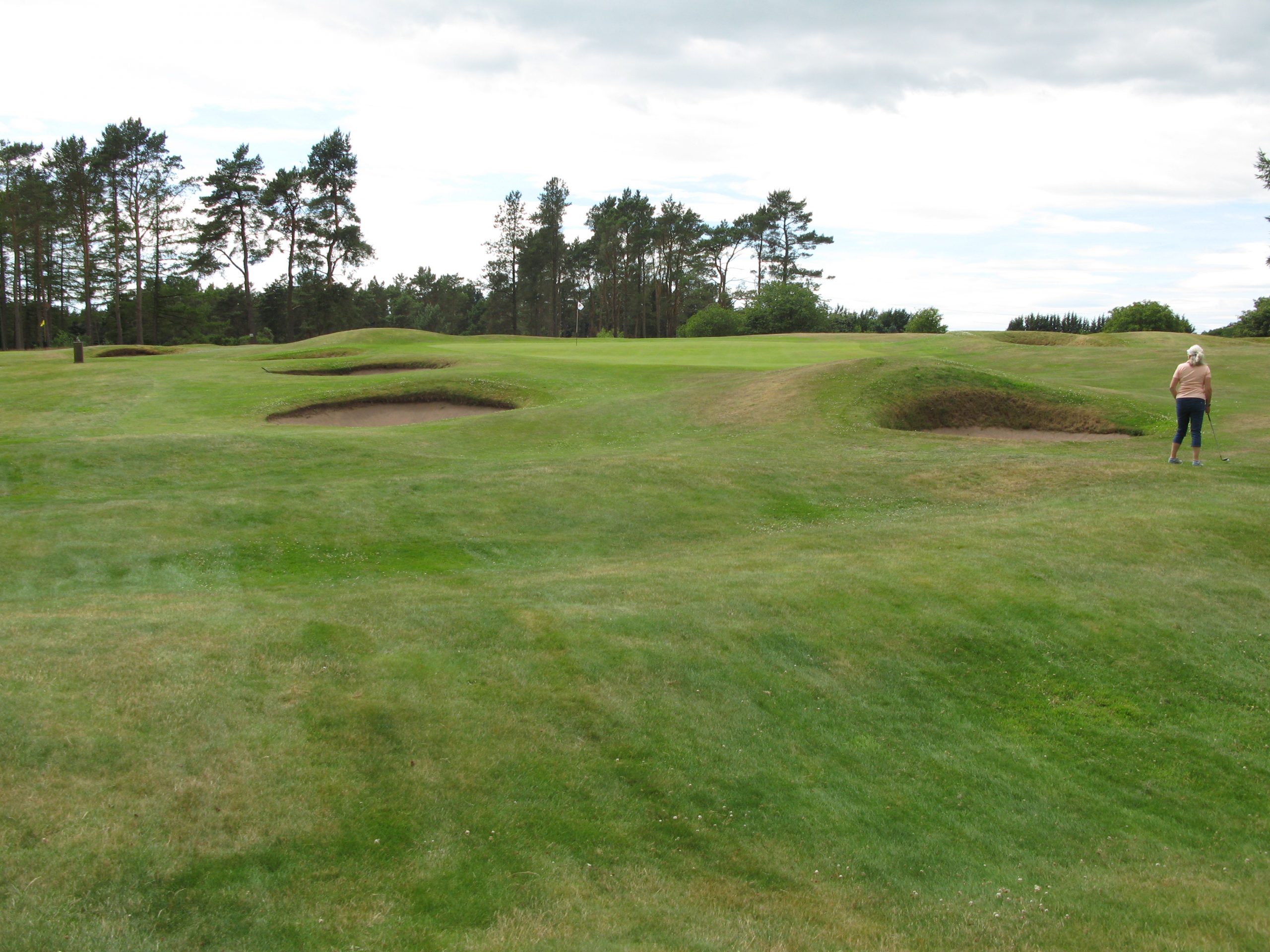
The green complex at the fifth, a challenging long par 3.

On land influenced by the remnant boulders of the last ice age, Forfar sits only 15 miles north of Carnoustie and 15 miles south of Glen Clova in the Angus Glens. The golf course has a lengthy history, claiming to be “the 4th oldest 18 hole course in the world and is the very first Club to have an 18 hole course from inception and inauguration”.  This latter comment is carefully contructed, since there are many earlier 18 hole courses, for example the Lundin/Leven Links (blog here) 18 holes dates to 1868, 3 years before the creation of Forfar.
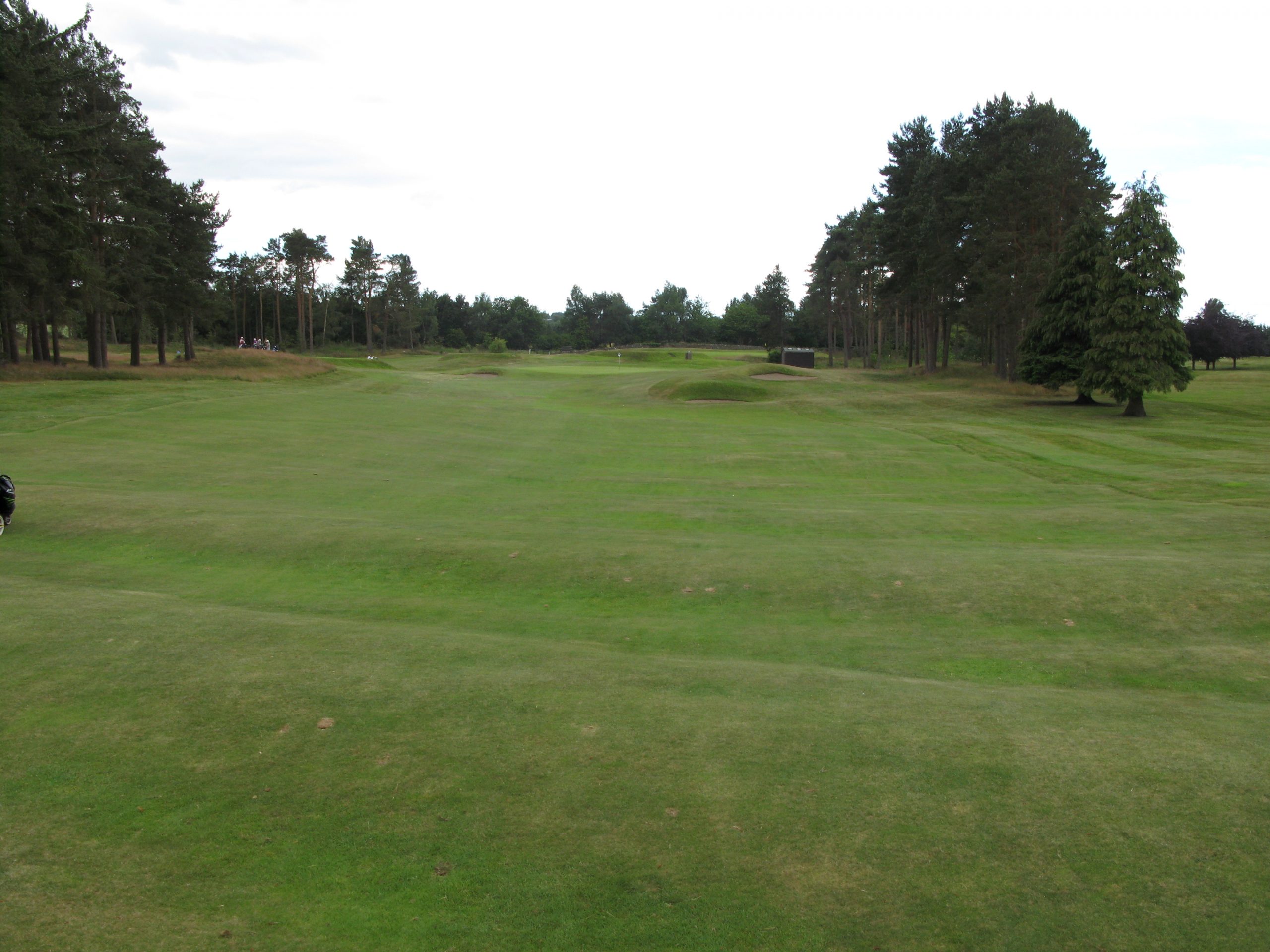
The approach to the seventh, the par four, ‘Quarry’, SI 2 hole. Play long and right, if you can hit the green in 2.

The course was designed by Old Tom Morris, at a time when no major earth moving was done in course construction. So all that you walk on is natural. The green surrounds are at times genius, which makes sense since James Braid carried out a redesign in 1926, but the majority of the holes remained the same. Overall, its a beautiful golfing challenge.
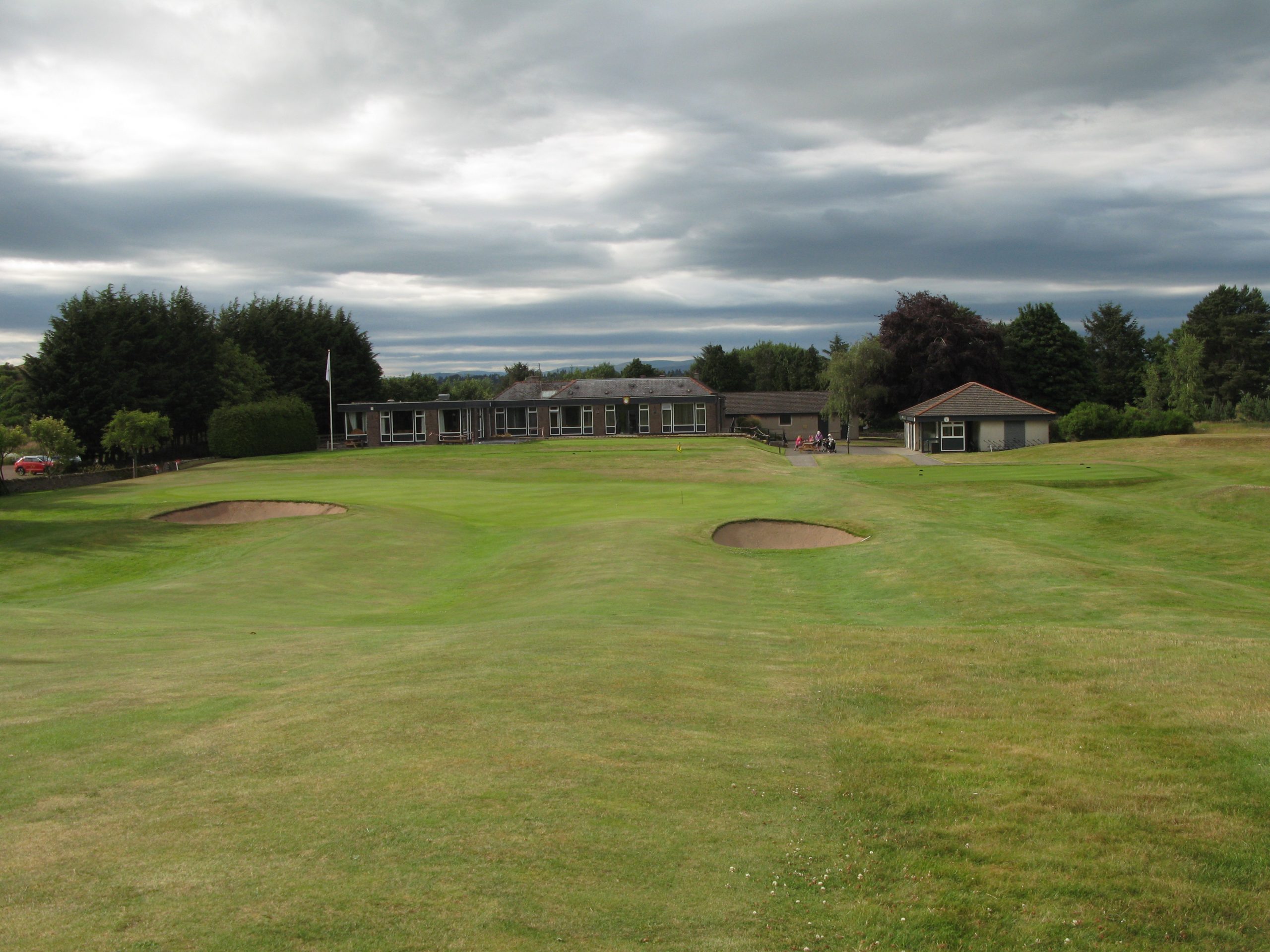
The tricky 18th green to find from a blind approach shot. I was lucky to choose the right club, to get my 3rd birdie of the day. Very unusual for me!

Despite having a few weaker holes, notably the par three ninth, there are many that are memorable. When we played on a calm, July day, the course was in great condition. The fairways were dry and fast running, the turf was firm, the greens slick, the bunkers consistently first class and the teeing grounds all excellent.
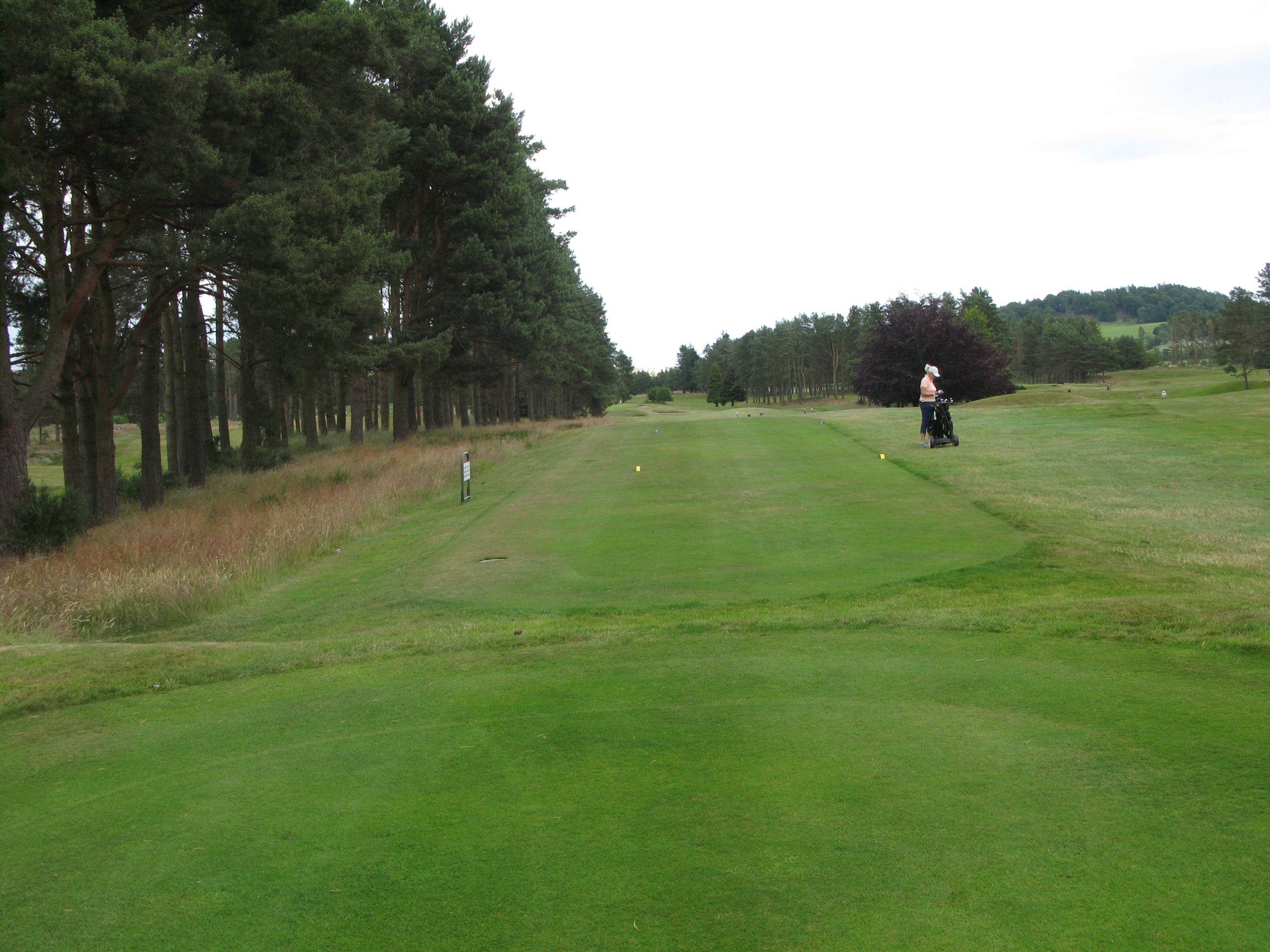
The wonderful 12th hole, the SI 1 hole on the course. A par four of 422 yards (yellow).

Value for money is undoubtedly 5 star, at the £50 mid-week rate; we paid only £20 through a Golfnow ‘hot deal’ for a Saturday twilight time. In fact, unbeatable golfing value.
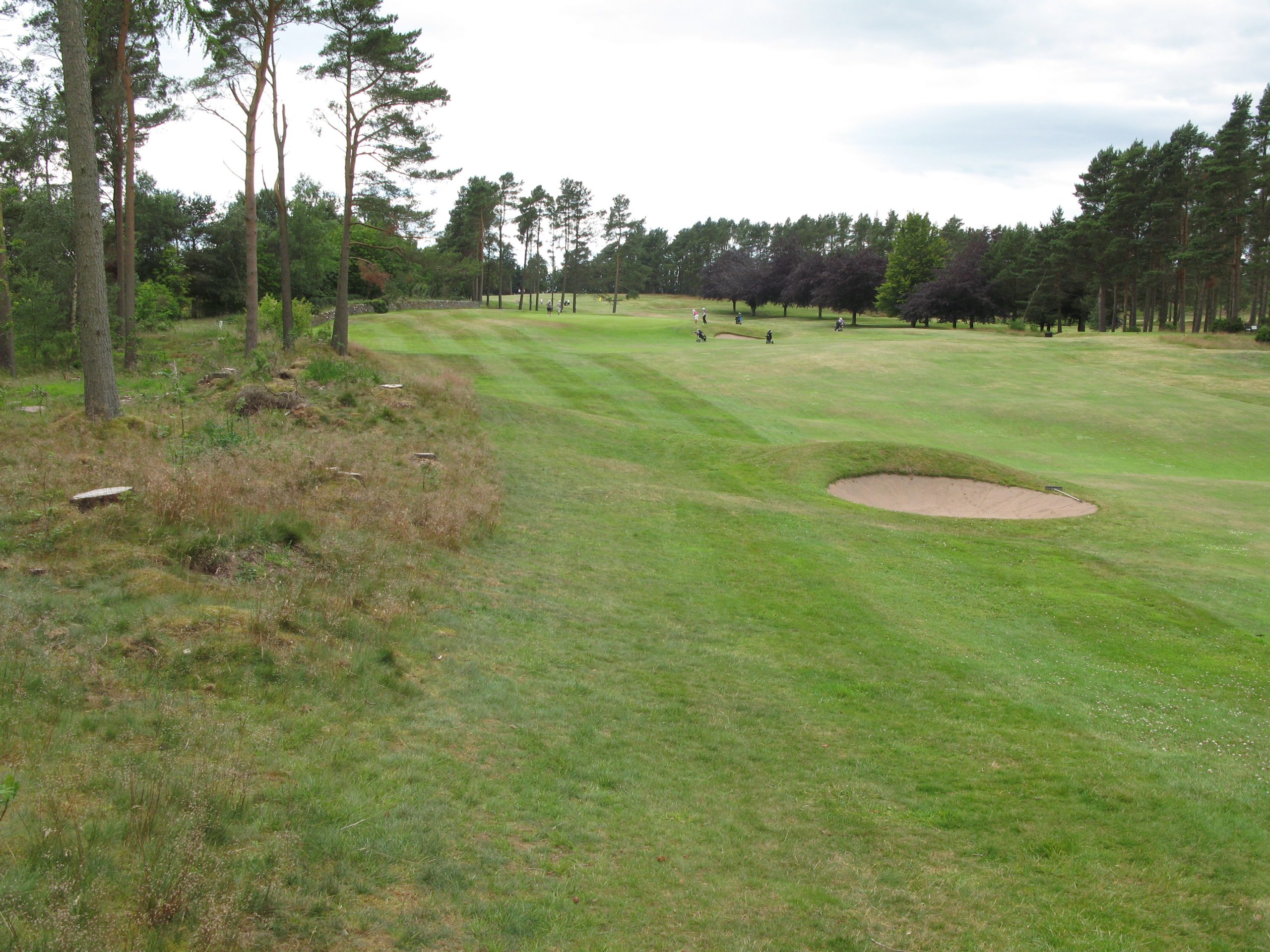
The 10th, a mid length par 4, where storms had left their mark with a loss of trees.

If I had to select only 10 courses that collectively represented the range of golf in Scotland, Forfar might just be be my number one pick, it is that unique. As to its overall ranking, it regularly appears in the “Top 100” Scotland courses, typically around 70th place. This doesn’t do it justice for me, I think it’s easy to justify a top 50 placing.

I can’t recommend Forfar high enough.

Facts:

Course Type: “Inland Links?”

Par 67  (1 par 5s, 13 par 4s, 4 par 3s)

Distance (yellow): 5754 yards

Moly’s Gross score: 84
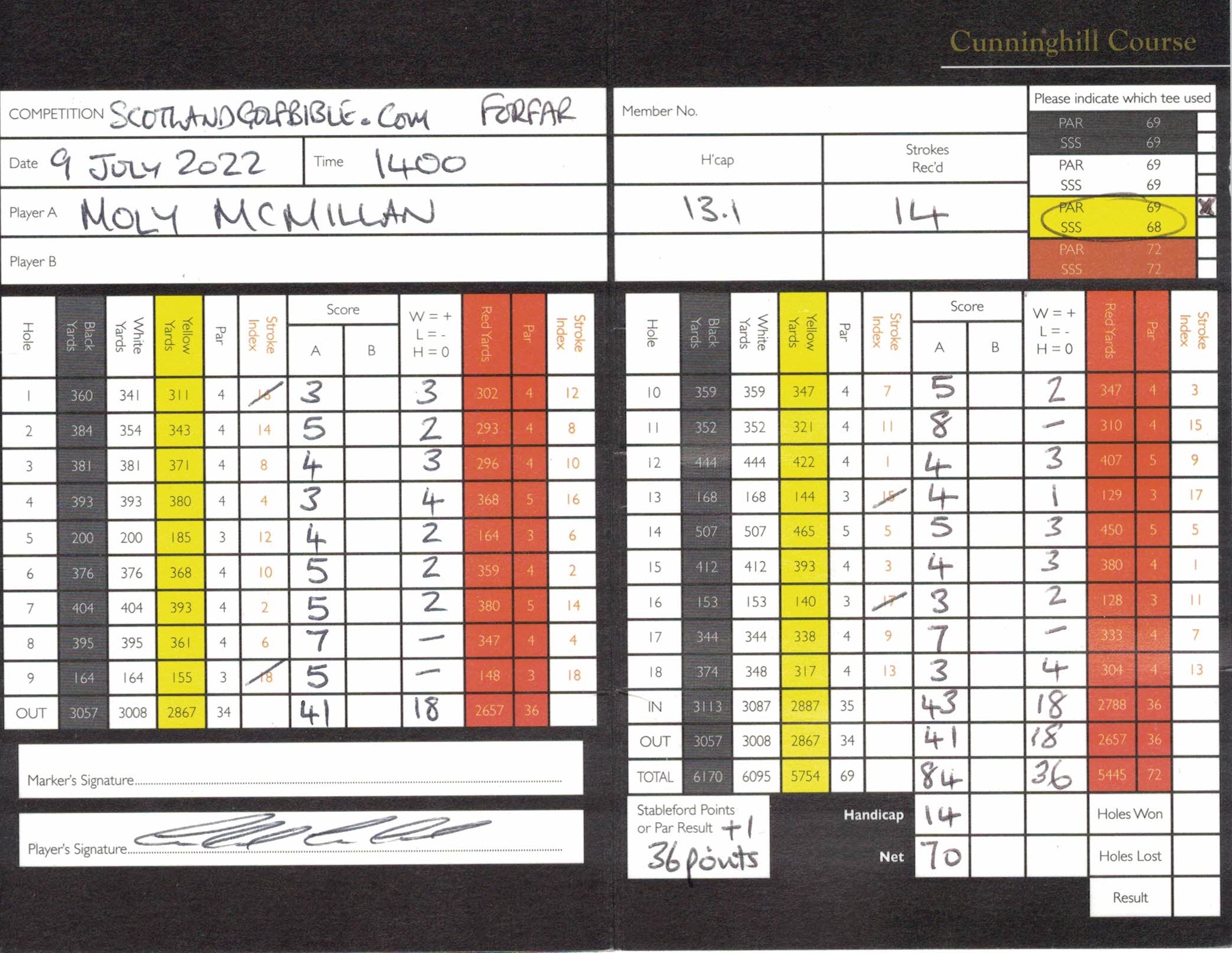
Moly’s Forfar scorecard – a commendable 84. 3 birdies and 3 triple bogies!

118. Callander. 4 Nov 2020.

A course down on its luck, well worth playing, but this is no “Gleneagles” as its web site infers.

Round £24. Par 63. Course Rating / Slope Rating (yellow) 62.6/105. Value (out of 5) – 4

There is a well known equation for individual business success – “under promise and over deliver”. Why do some golf clubs get this completely inverted by “over promising and under delivering”. Callander Golf Club is a perfect example of this error.

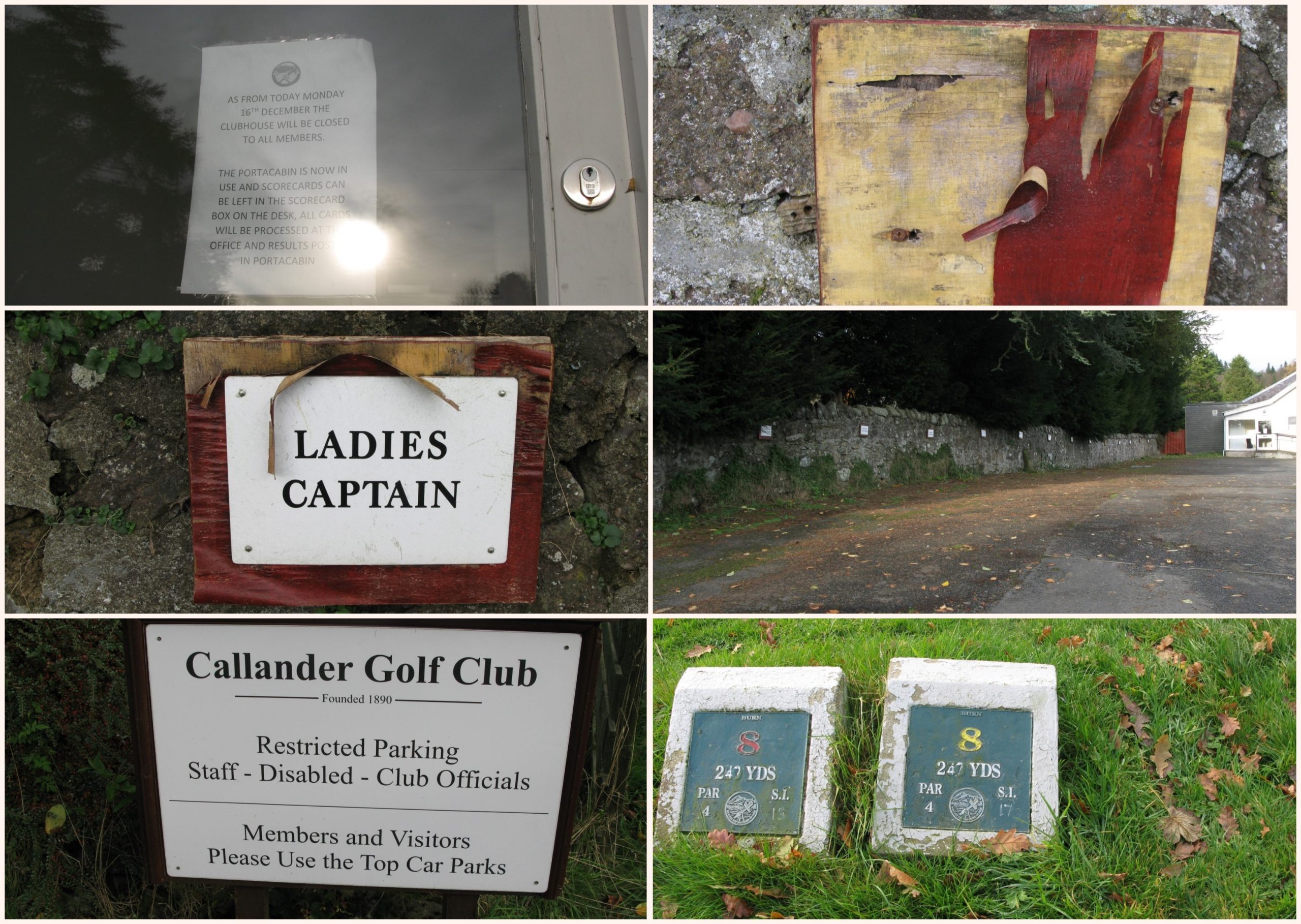
Callander golf club has seen much better days – its website is also living in the past.

The club has clearly seen better days – the photo above gives a glimpse of the state of its infrastructure. The ‘temporary’ clubhouse was a shipping container. Its web site includes the following statements, some quoted from media outlets:

Callander Golf Club is probably the most scenic golf course in the UK“,

The charming and challenging 15th is one of the most famous par 3s in Scotland“,

“‘The Scotsman’ includes Callander … ahead of Carnoustie’s Championship Course.

“‘Golf Monthly’ rated Callander among the top ten courses in Scotland for visitors, alongside Gleneagles, Turnberry and St. Andrews.

These statements, collectively, are so wide of the mark – in my humble opinion of course! Just image a touring golfer, having played Gleneagles, Turnberry, St Andrews and Carnoustie, turning up at Callander expecting something similar.

Callander’s 7th, one of the many short par 4s, this one called ‘Blind’ for obvious reasons off the tee.

Please, don’t get me wrong, this is a really fun and lovely golf course set within the beautiful Trossachs area of central Scotland, with very picturesque surroundings, some great and memorable holes and in decent condition.

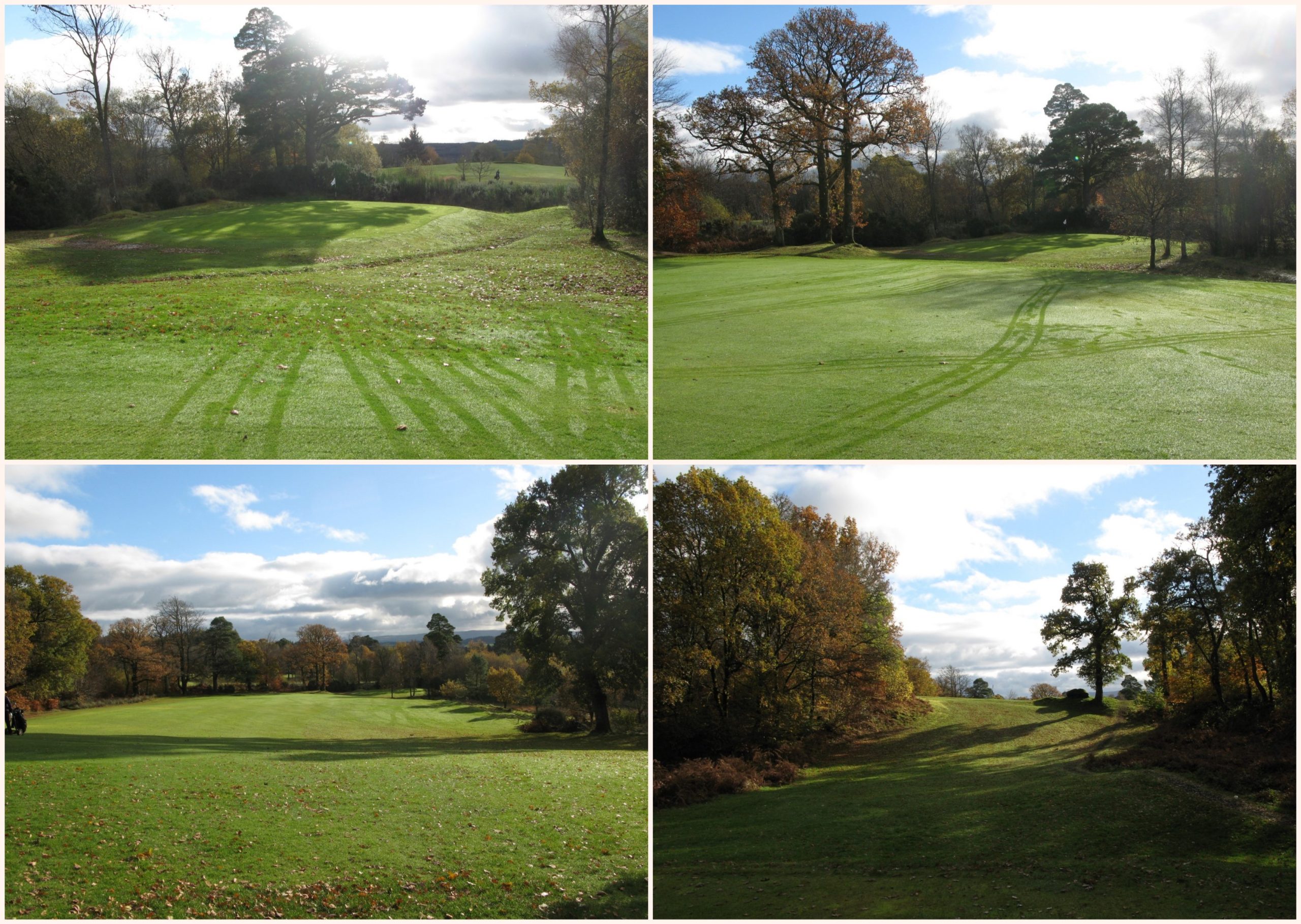
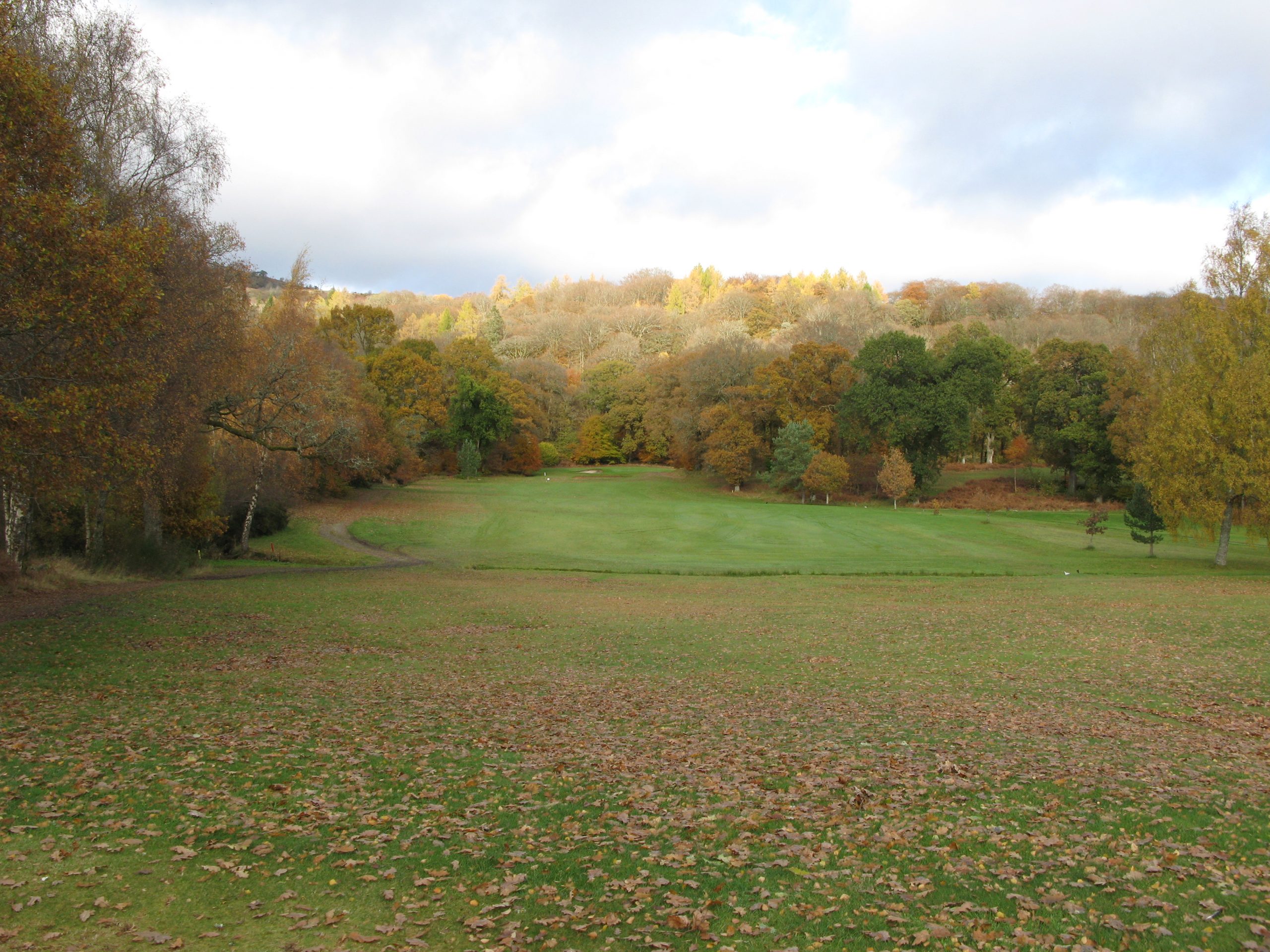
The 6th at Callander, ‘Dell’, the most difficult of all the holes , in full Autumn colours

The course was opened in 1892 as 9 holes designed by Old Tom Morris, then Willie Fernie extended it to 18 holes in 1914. Heady architects both.

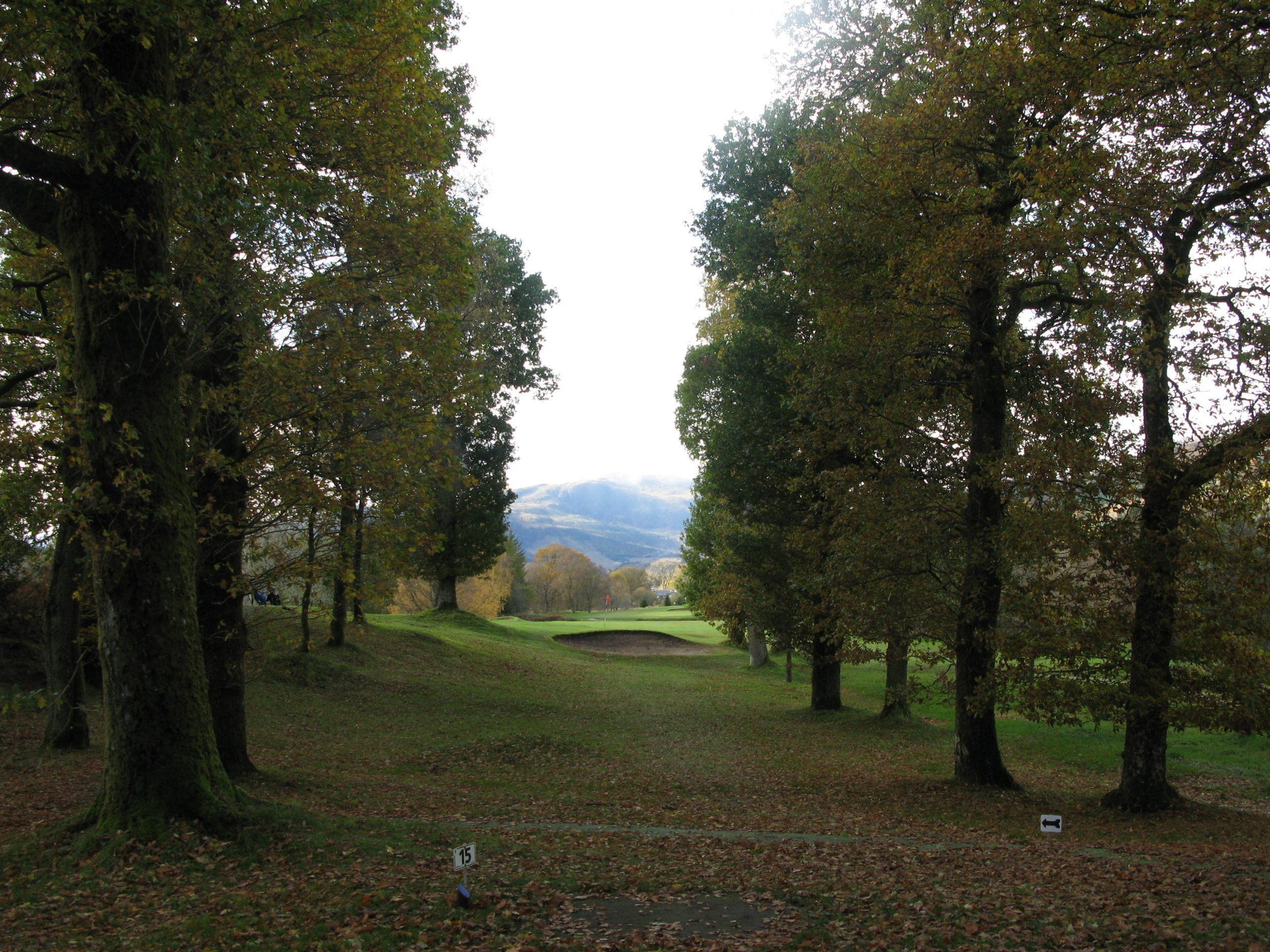
This is, in particular, brilliant holiday golf. It’s short, at well under 5000 yards from the yellow tees. It has fairly generous fairways, not too many bunkers and relatively straightforward greens. There is an abundance of par 3s, with five on the back 9 alone, including the cute 15th, where play is through, or more likely, above a tiny channel between tall trees. It’s memorable, and one of those holes that demands straight hitting.

The Slope Rating of 105, gives most golfers the chance of posting a great score for 18 holes – that’s always nice.

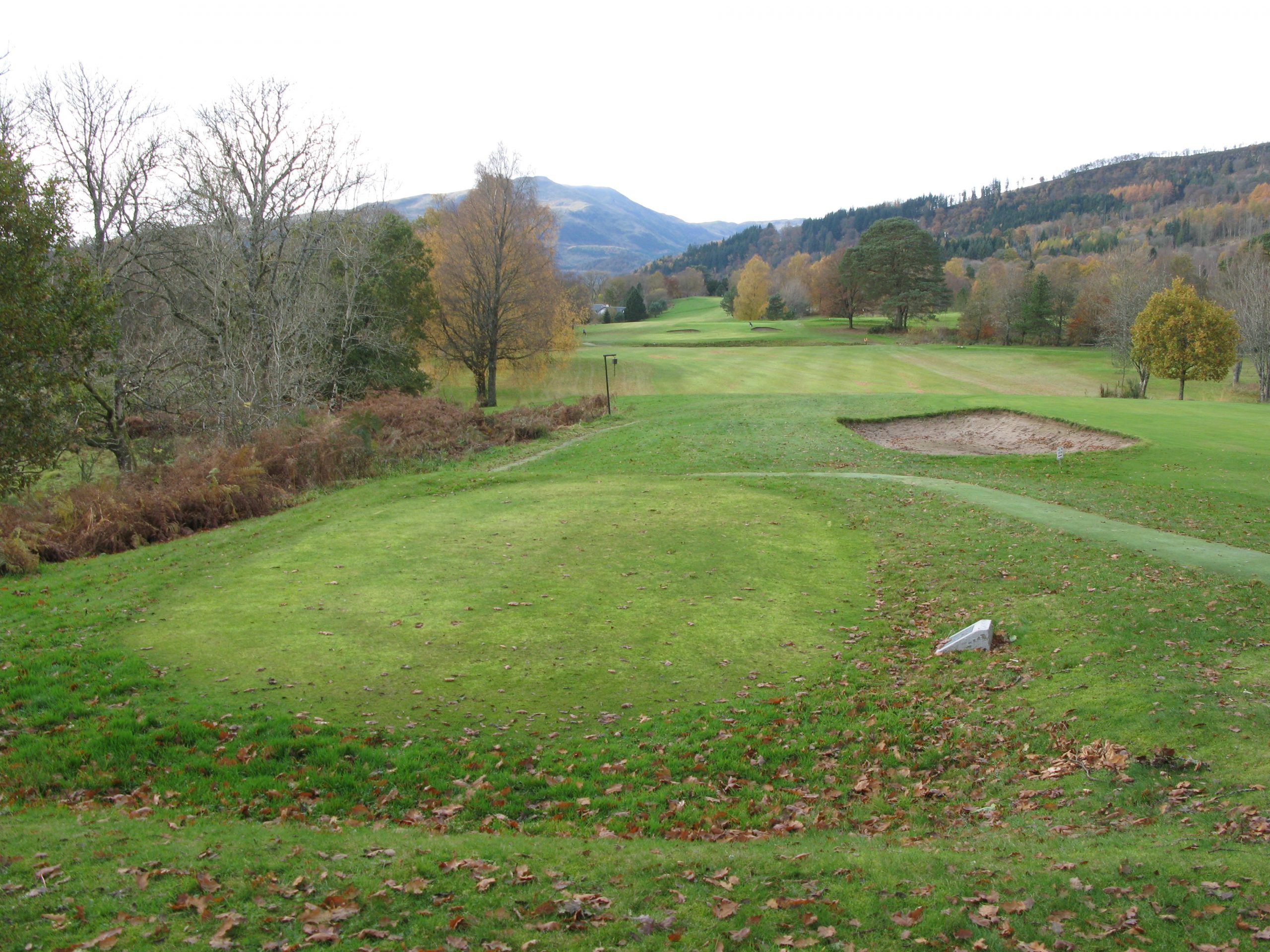
The 16th at Callander, with Ben Ledi in the background

Its well worth playing – but don’t expect to be playing Gleneagles – the green fee will tell the true story, and to that extent it’s also a great course for serious golfers to play as well, in order to experience the great value golf Scotland has to offer. Scots are known for being honest, so lets set the record straight on the web site.

The wonderful par three 15th – ‘Avenue’. But not as famous as, for example, the ‘postage stamp’

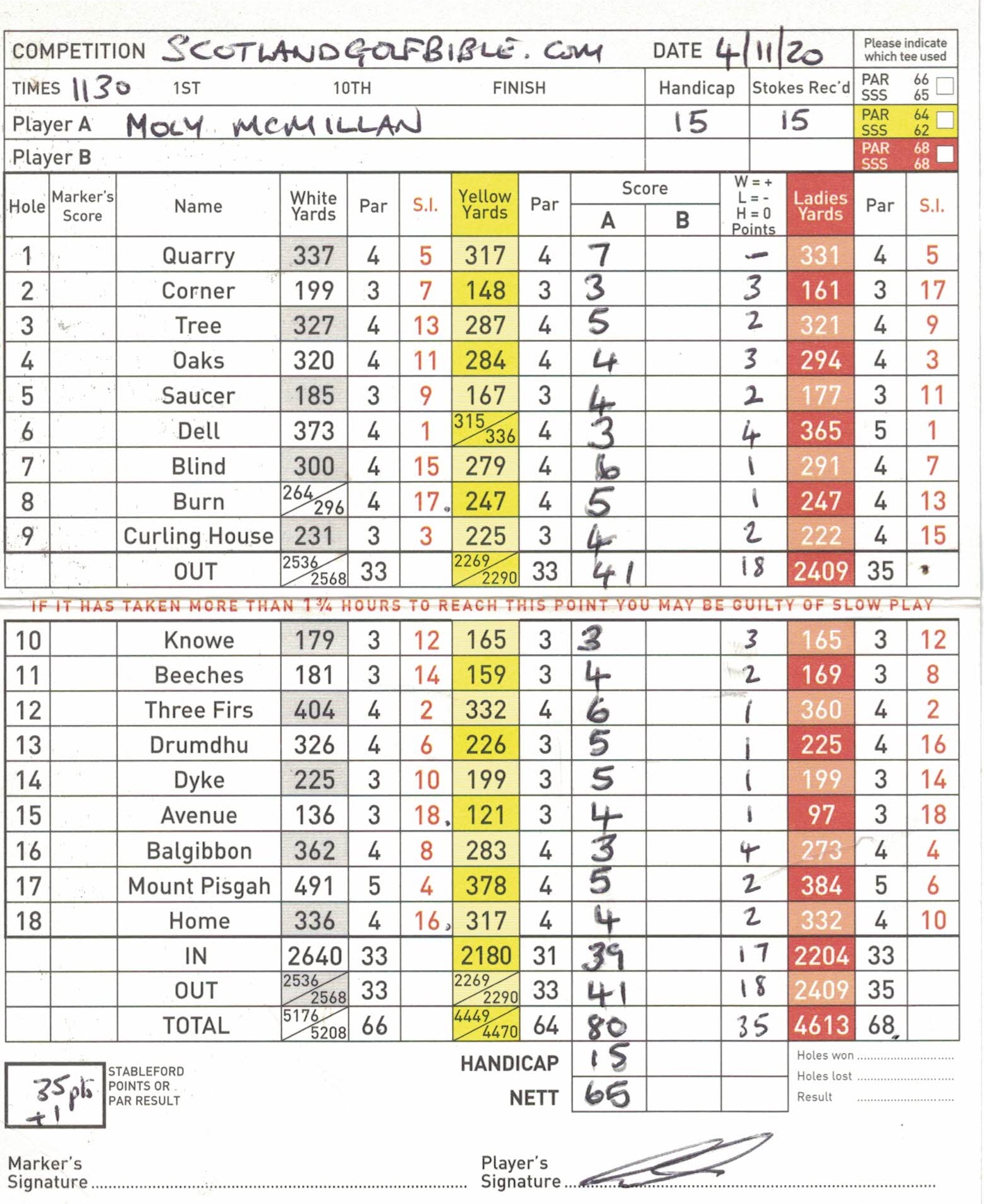
On a very wet Autumnal day, with colours in late bloom, Fran and I had the course pretty much to ourselves. I played decent to shoot 80

Course Type: Parkland

Par 64 (0 par 5s (although 1 on the white), 10 par 4s, 8 par 3s)

Distance: 4470

Moly’s Gross score80

Moly’s scorecard at Callander – 80

95. Alyth. 7th June 2019.

Great Value with Architectural Pedigree, along with a recent 9 hole expansion

Round £42.   Par 70.  Value (out of 5) – 4.5

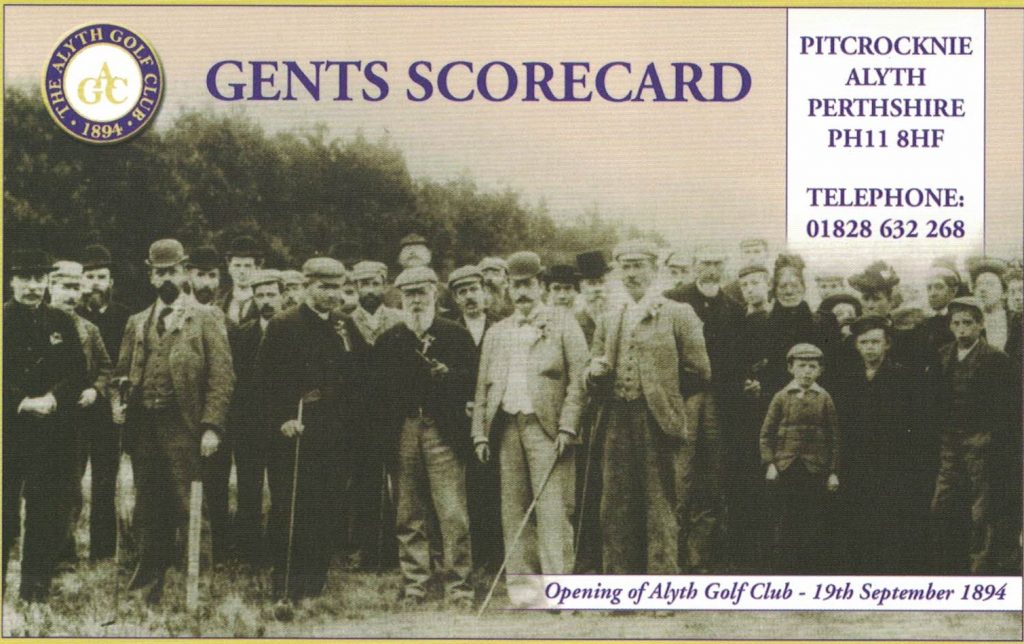
The Alyth scorecard immortalises the founding members

Alyth is a small town of around 3000 with an abundance of golfing choices in this agriculturally rich area of Perthshire. The Alyth golf club now boasts 2 courses – the main 18 hole course (subject of this blog), described as heathland albeit I think it is a parkland course, and dating back to 1895; Old Tom Morris laid out the first 9 holes, then extended to 18 in 1934 by James Braid. Much more recently, in 2016, the club took over the back 9 holes of the Glenisla course when that club closed down. It is one of the small bits of good news in the general decline of golf in Scotland.

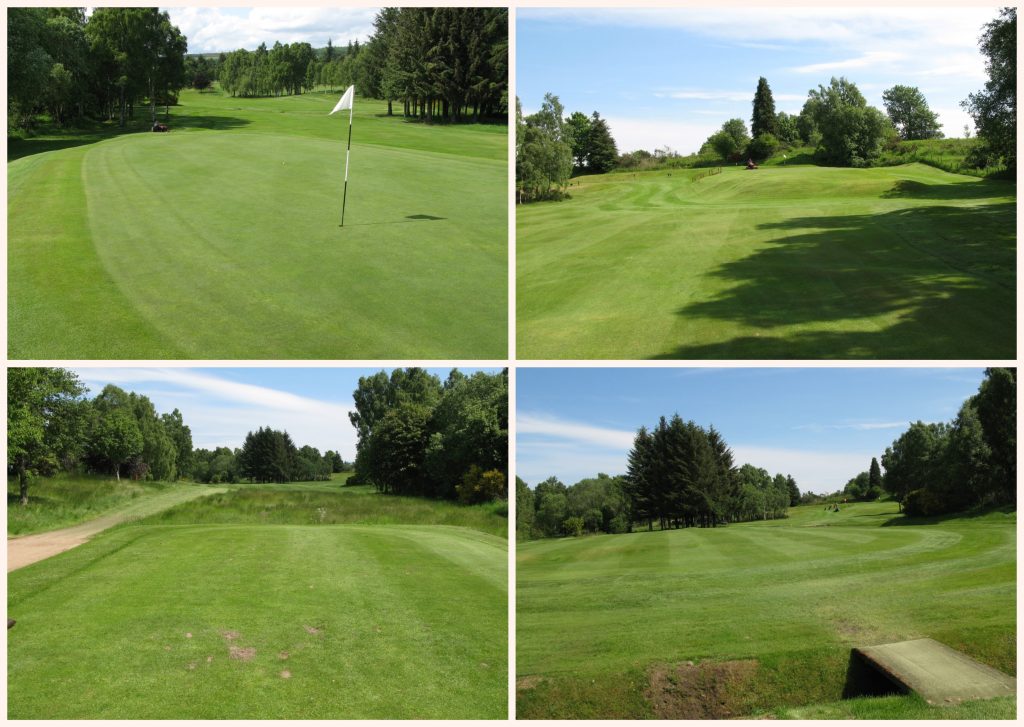
The wonderful Stroke Index 1, 5th hole at Alyth requiring both strategy and shot making

The main 18 hole course is really great value, with offers available through several sources, I suspect prices driven to attract the many tourist golfers who might otherwise just play the nearby world class Blairgowrie or Carnoustie courses. I strongly recommend playing Alyth, where the slightly shorter course, compared with those nearby giants, makes it a much more pleasurable experience, especially given the very picturesque landscape. The course has won awards for “best value”.

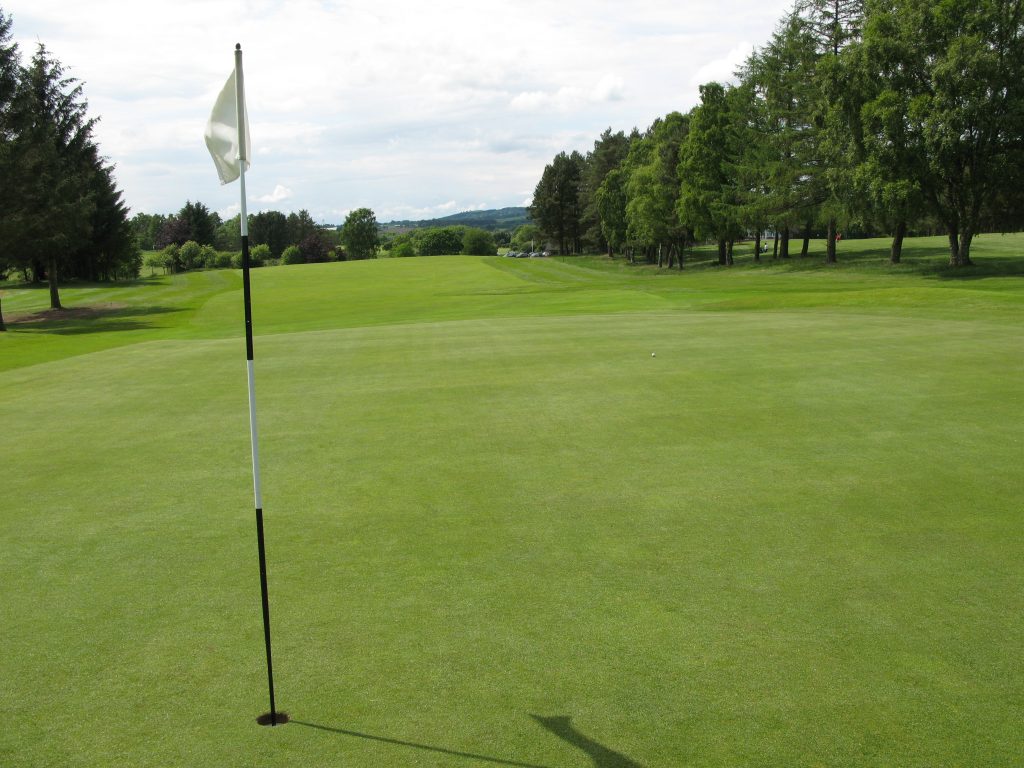
The first green at Alyth, showing the fine standard of the course’s conditioning

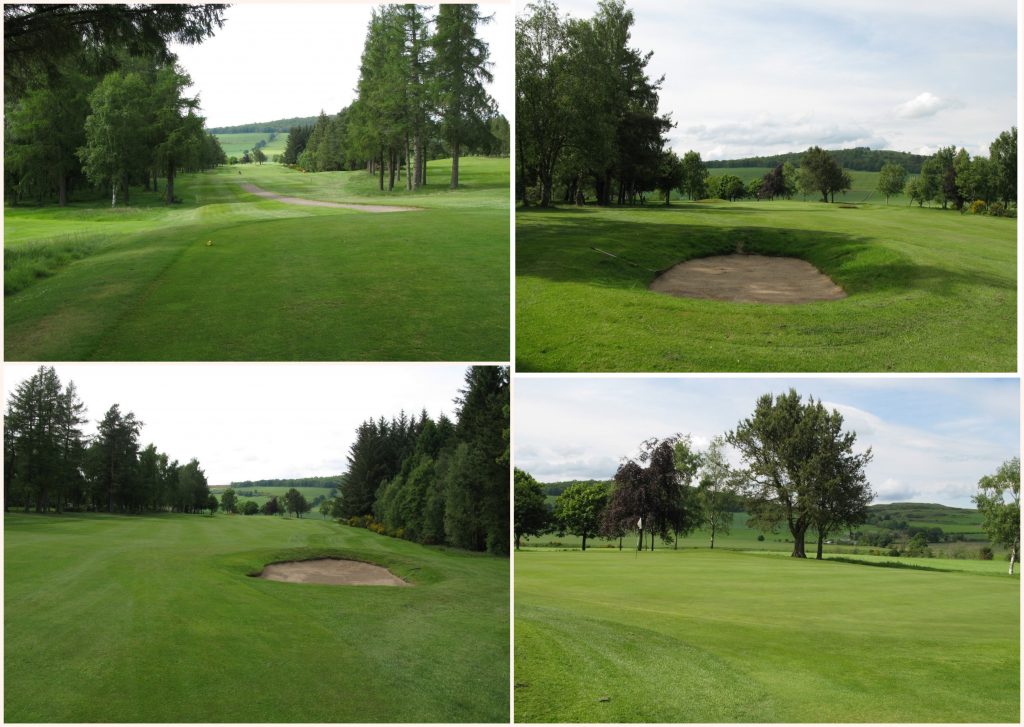
Although the course is set amongst tree lined fairways, the course is quite wide and the rough and tree areas not overly penalising, which makes it probably attractive to societies and more occasional golfers.

There are some great holes. The Strike Index 1, 5th hole, is a relatively short par 4, but the fairway ditch which runs diagonally across the fairway needs to be avoided, prior to finding the right club to reach the plateaued green. I was delighted with a bogie and moved on.

The 11th is another really nice hole, a short par 5 with well placed bunkers, that should reward those whose smart club selections take the bunkers out of play.

The short par 5 11th at Alyth, a lovely looking hole

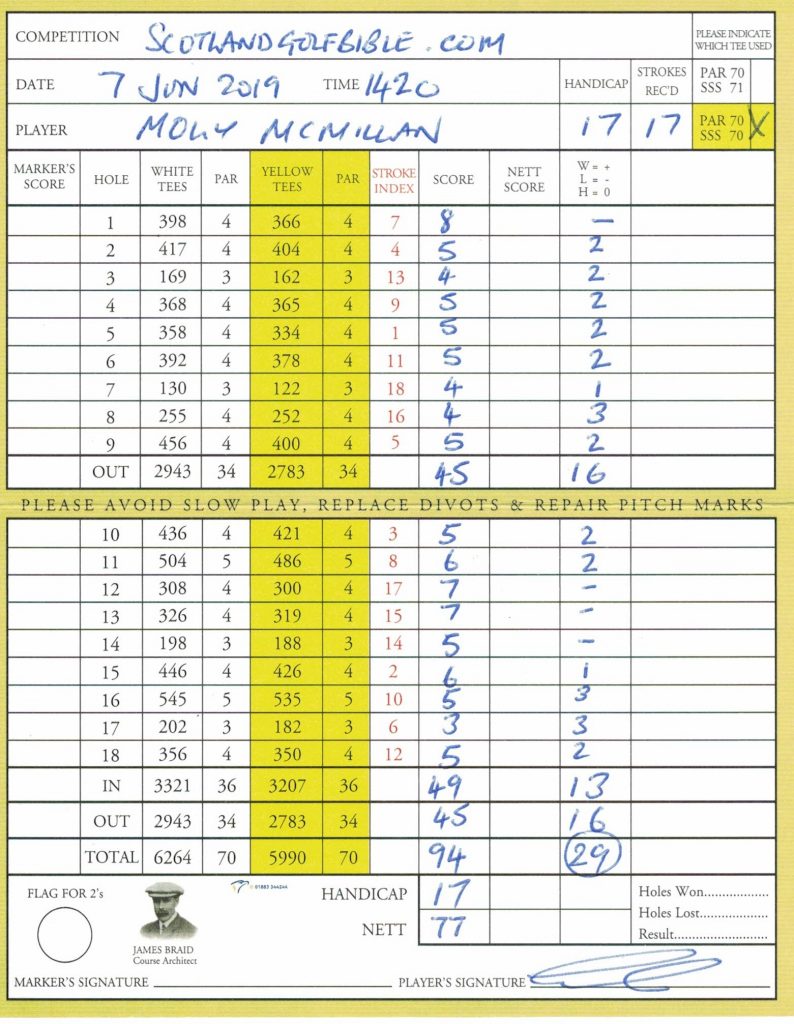
When I played, the course was in excellent condition, with all bar the bunkers immaculate. I shot a gross 94 for 29 stableford points; the most enjoyable part being the very tidy finish over the last 3 holes, which should have been all pars, but for 3 putting the last after hitting my longest drive of the day!

I will go back to Alyth – highly recommended.

Facts:

Course Type: Parkland

Par 70 (2 par 5s, 12 par 4s, 4 par 3s)

Distance (yellow): 5990

Moly’s Gross score: 94

Moly’s 94 scorecard at Alyth

84. Lundin. 31 Aug 2018.

This historic links is a marriage made in golfing heaven 

Round £75.   Par 70.  Value (out of 5) – 5

Winston Churchill one said “this is a long speech because I’ve not had time to prepare a short one”.  That feels like my dilemma in writing about the wonderfully crafted golf course at Lundin Links; what to leave out?  I say the golf course “at” Lundin Links, because that is actually the name of the town, which sits on the southerly Fife coast about 12 miles south of St Andrews, where the Lundin Golf Club is based.  I think it’s the only place in the world where the town has the more appropriate golfing name than its golf course!

Moly at Lundin’s par 3 14th – where you can see all the 18 greens!

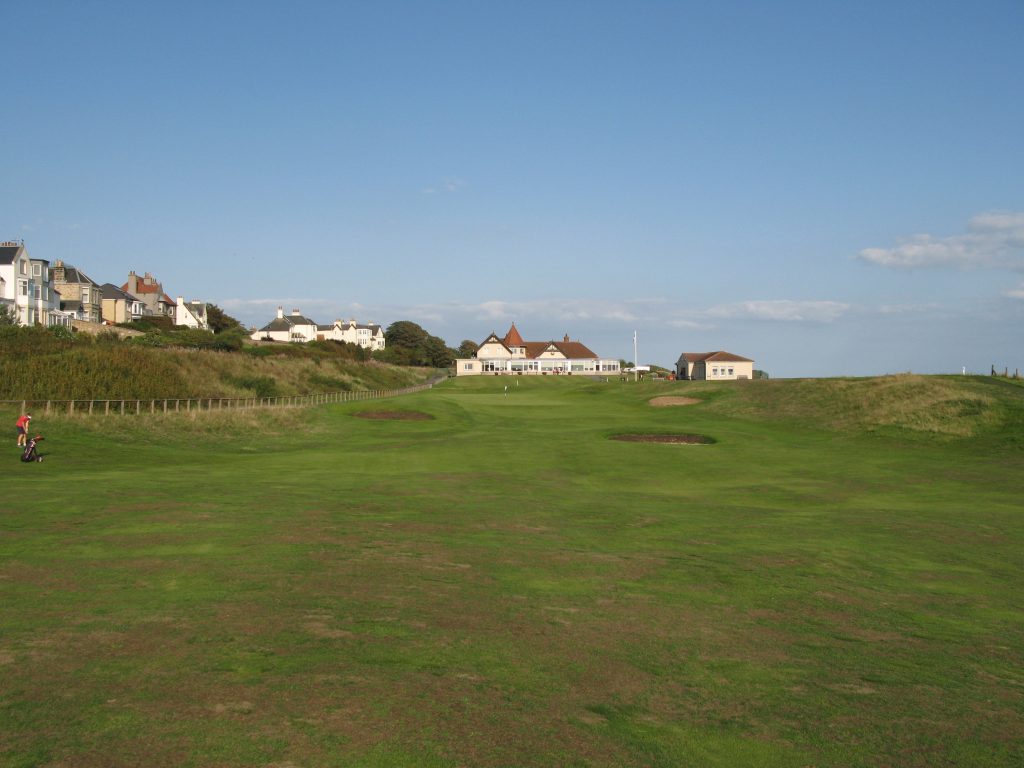
This naming conundrum is aesthetically appropriate because Lundin golf course poses a few other riddles.  Along with the adjacent Leven Links (the name of the golf course by the way, not the town, which is simply called Leven; au contraire!) it had the first ever 18 hole golf course with 18 separate greens, established in 1868.  That original 18 hole layout, 9 holes of the current Leven Links course plus 9 from Lundin, separated by the Mile Dyke, is still played, but only once per year in a competition to mark its history.  I covered the history of the split in the courses fully in the Leven Links blog here.

View across the Lundin course from the 13th fairway.

The real riddle at Lundin was the architectural one given to James Braid, who was tasked in 1908 with adding 9 holes on the inland side of the 9 holes crafted by Old Tom Morris, to leave us with the current 18 hole layout.  The resulting course is an absolute beauty, and I’m sure Braid tinkered with the bunkering of Old Tom’s holes as well.  Old Tom’s holes are now the first 5 and last 4.

The course is a nice length at about 6400 yards; not long by today’s standards, but with some fascinating decision making, especially from the tee.  Until very recently it was used for final qualifying when the Open was staged at St Andrews, a measure of its quality and condition.

View from the 12th green at Lundin, looking towards Leven

The course was in excellent condition when I played, as a guest of local member Eric Brown and his wife, Moira.  I ungraciously won the “6 point per hole” match play game, although it was nip and tuck most of the way round.  My 9 pars off my 16.8 handicap did rightly elicit a self induced “bandit” conversation, albeit my 3 lost balls (1 resulting in an 8 at the par 4 18th), meant that my 36 points on a fine day would likely have been only in the handicap buffer zone!  That’s my defence anyway M’Laud!

Enough about me, the golf course is the star here.   It’s also a good time to introduce readers to Golf Club Atlas a non commercial web site run by and for golf course architects, where you can find some excellent reviews of many of the worlds great courses.  Being reviewed by Golf Club Atlas is a measure of a course’s pedigree, as well as giving great insight as with their entry for Lundin.

The first 4 holes are classic links holes, played normally into the prevailing wind, with OOB along the left with the beach awaiting a wild hook.  The first is a difficult 400+ yards par 4, with a mid to long iron needed to an uphill plateaued green;  the second, a shorter par 4, requires good judgement to stop short of a fairway burn with your tee shot;  then the 3rd, another short par 4, presents a challenging drive to miss several fairway bunkers.    The 4th, however, is where many a round will come unstuck.  Any time a James Braid influenced course has a stroke index 1 hole without any fairway bunkers, one needs to probable play it as a par 5.  I failed to adhere to this plan, and ended up hitting a decent second shot with a hybrid to the right on the green and never saw it again – whether it cleared the deep burn I will never know!

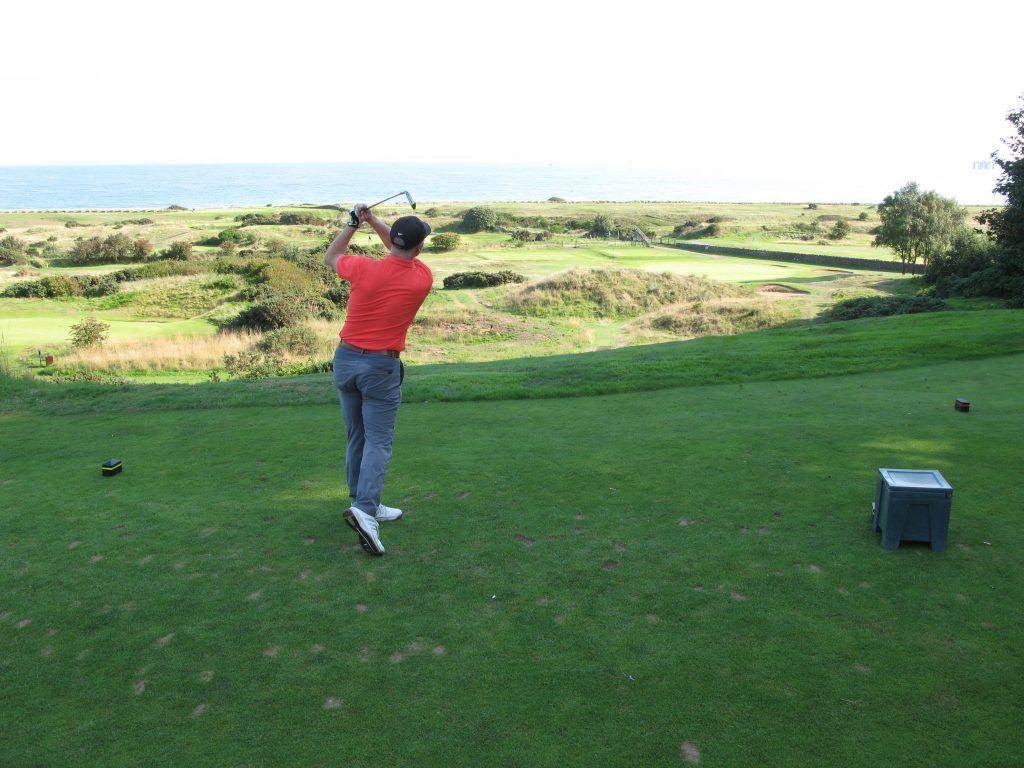
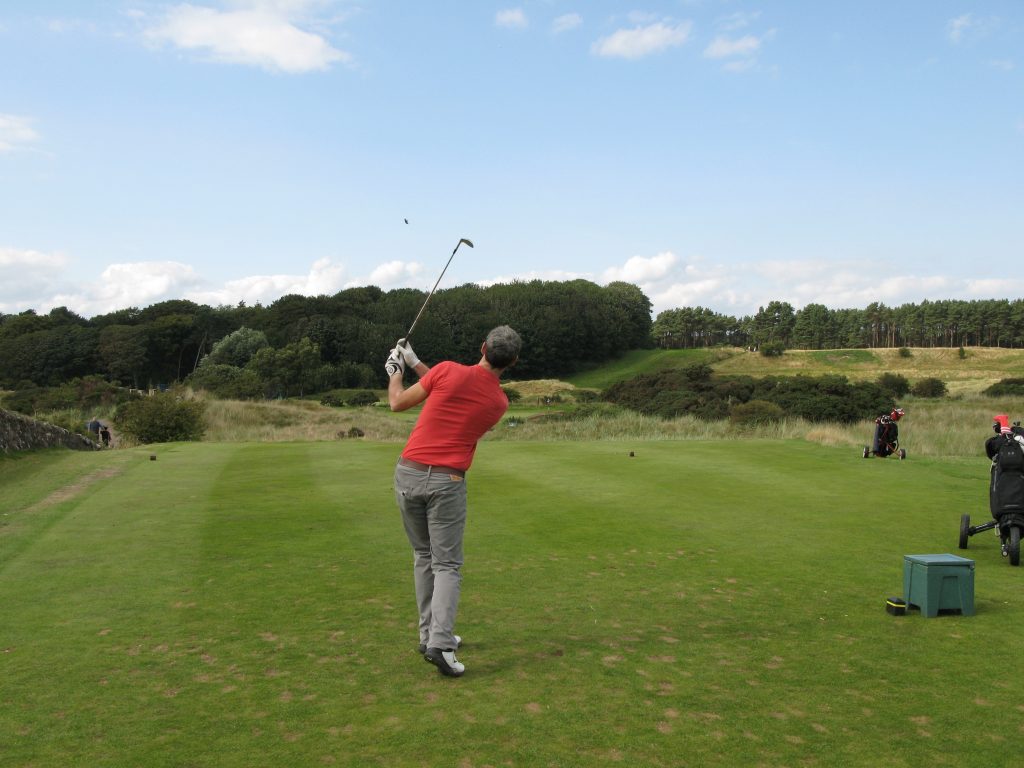
Eric Brown playing at the par 3 5th hole, one of only 2 holes at Lundin not playing in the coastline direction.

After a relatively short par 3 5th, you leave Old Tom’s legacy and move to the other side of an old railway line that slices the course in half, and play the 9 Braid holes, the first 3 of which have the railway as OOBs to the right.    By the time you have played the 6th and 7th, you might also have picked up another clever feature of this course – the short par 4s tend to have very tricky greens.

The view from the 6th tee, one of the short par 4s with a very tricky green.

The 10th hole was another of the typical strategic challenges;  the fairway is cut in two between the tee and green;  go left where no bunkers exist, but leave a blind second with the green side bunkering obscured, or go right for an easier approach shot, as long as you miss the well placed fairway bunkers.  A joy of a hole.

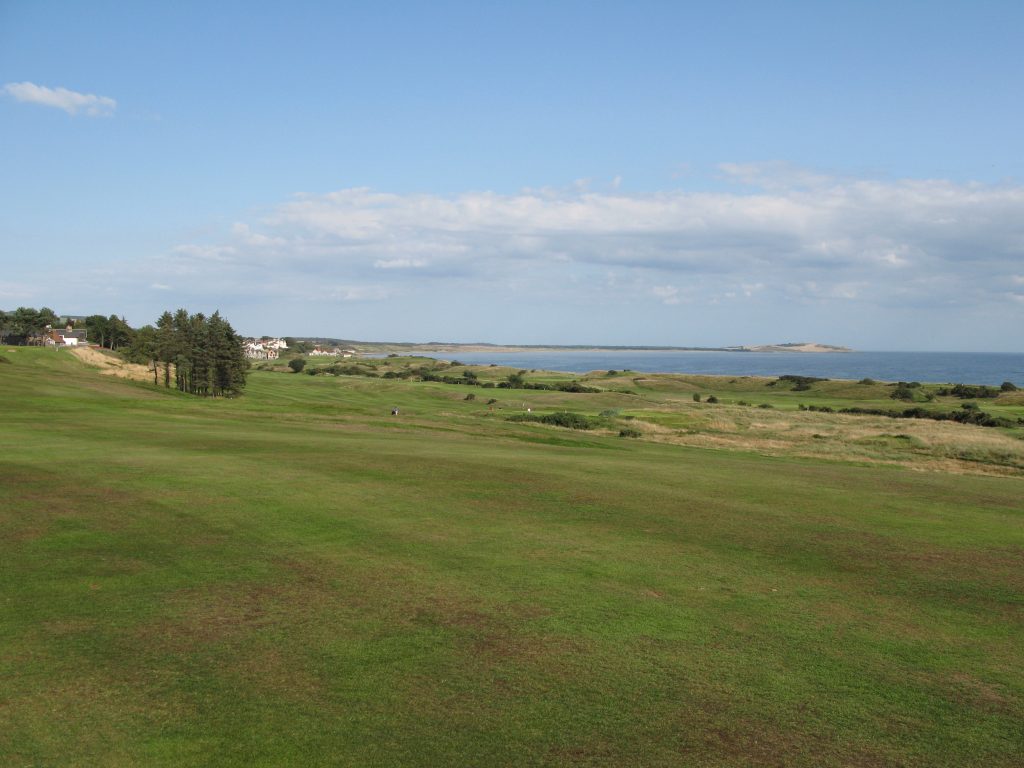
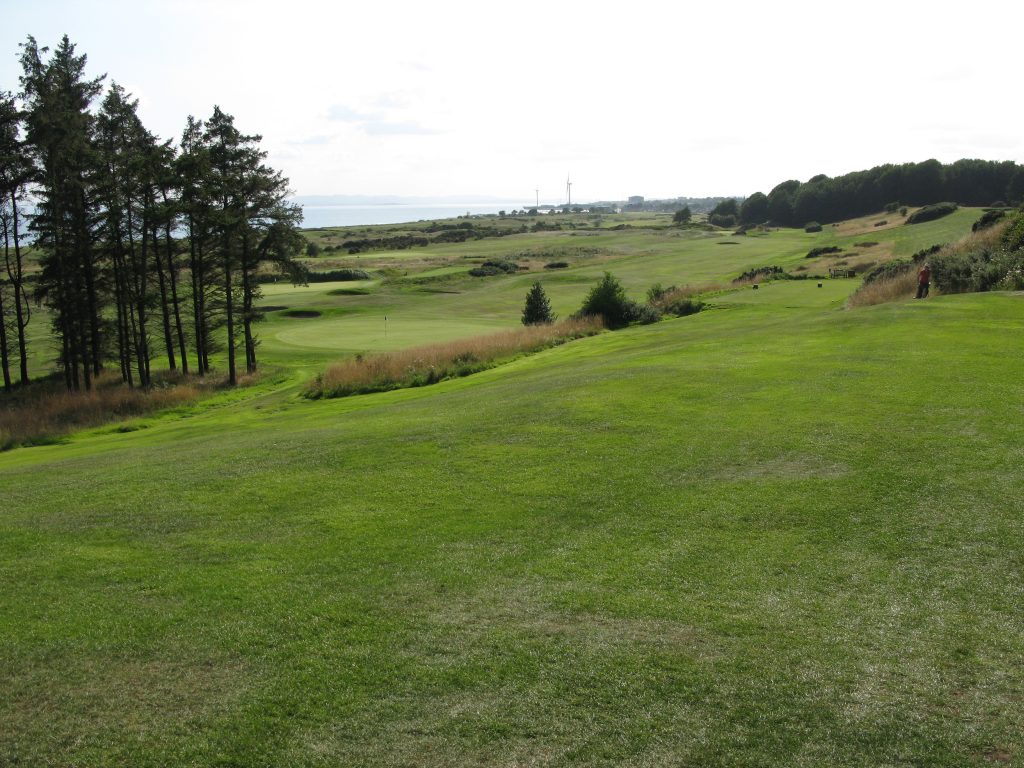
After playing the, arguably parkland, inland holes of 11 through 13, you reach a place arguably unique in world golf.  From the 14th tee, you can see every green on the course, along with a magnificent view of the Firth of Forth and the North Berwick coast in the distance.  This view is worth the green fee alone.  The 14th is also a great par 3, with a significant drop, so club selection is key to this hole – it’s better being long than short here by the way.

After a nice set of par 4s, you come to the very difficult last hole, a long par 4 played to a long and slightly raised green that slopes from back to front in front of the terrific clubhouse.  I think the number of visiting golfers that find this green in regulation will be low;  plus the sting in the tail is that it has a very difficult green to finish.  I ended up with an 8, having put my second OOB to the left.

The difficult long par 4 18th hole, in front of the lovely Lundin clubhouse.  Moira, seen here playing her approach, having just stayed in bounds on the left.

People say that Lundin is a “gem”, but I disagree.  Its much better than that;  for me, the term “gem” has evolved into one used to describe “great courses, but somewhat unknown or off the beaten track”.  Lundin is very much on the well trodden track, is a merge of architectural significance by 2 of the greats, and it is a joy, for many reasons.

A must play Scottish golf course.   Buy the Course Guide, and study the holes!

Facts:

Course Type: Links

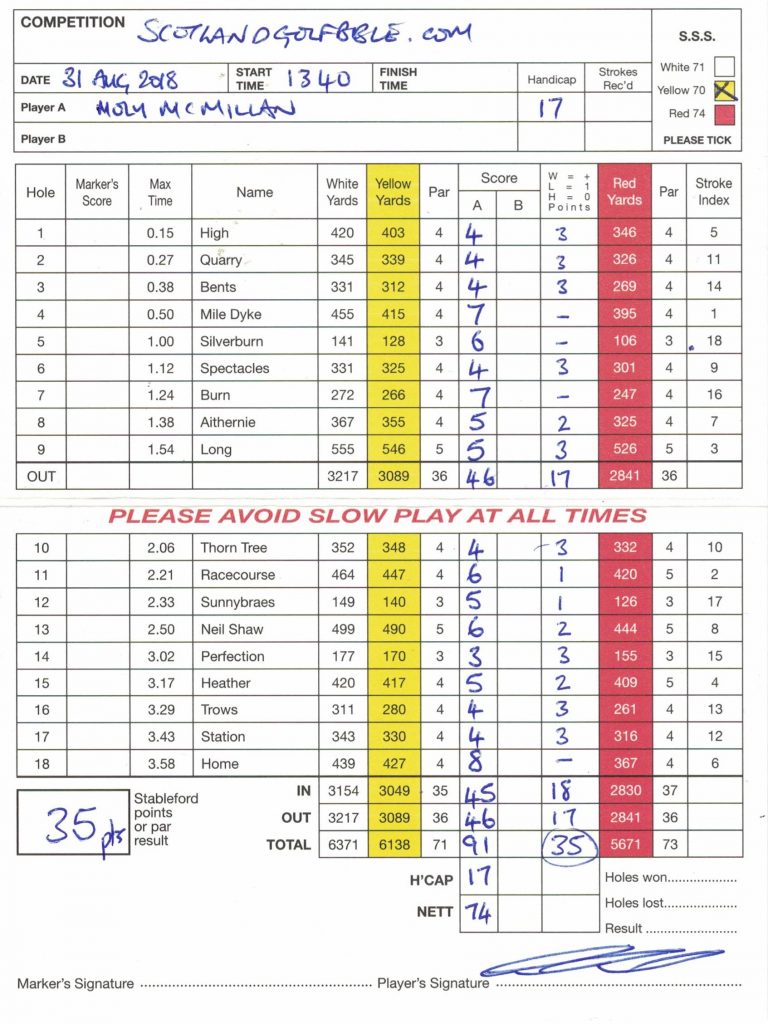
Par 70 (2 par 5s, 13 par 4s,  3 par 3s)

Distance (yellow): 6138 Yards

Moly’s Gross score: 91

Moly’s very mixed Lundin scorecard – 9 pars, but still 21 over par for 91!

« Older posts Newer posts »

© 2026 Scotland Golf Bible

Theme by Anders NorenUp ↑