A guide to green fee value for money

Category: £20 – £39 (Page 7 of 21)

127. Winterfield. 26 Sep 21.

The greens might be the firmest in Scotland – any fast bowling attack would like them!

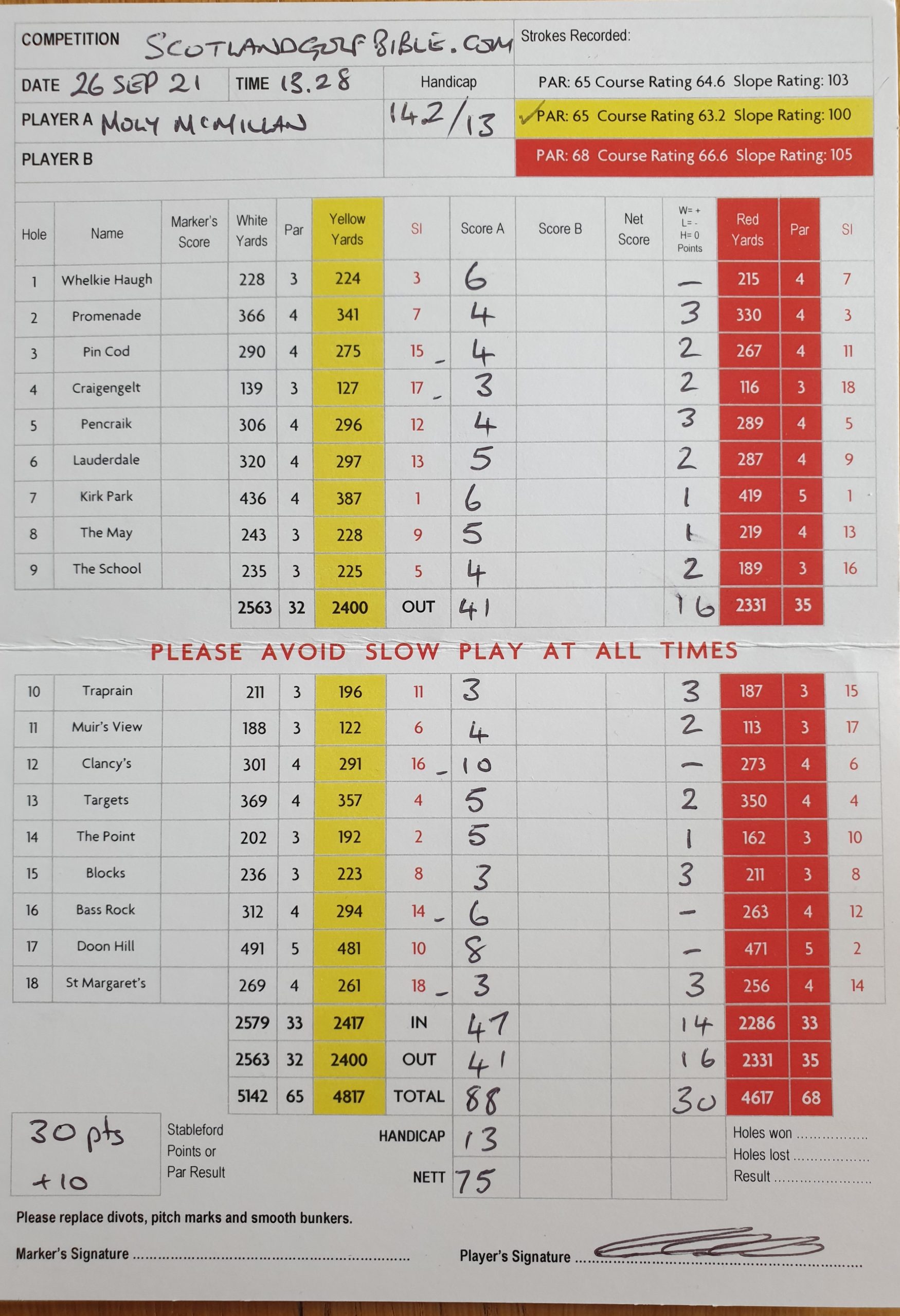
Round £31. Par 65. Course Rating / Slope Rating (yellow) 63.2/103. Value (out of 5) – 4

When I played Winterfield golf course, on a blustery, but warm, late September day, certain questions and thoughts kept going through my mind:

  • This is the most fun golf I’ve had in years.
  • The West Indies fast bowing heroes of my youth could bowl on these rock hard greens!
  • Tiger Woods couldn’t get near this pin – it’s impossible!
  • This is mickey mouse golf!
  • How can this be assessed as a 103 slope rating, with 4 par 3s well over 200 yards?
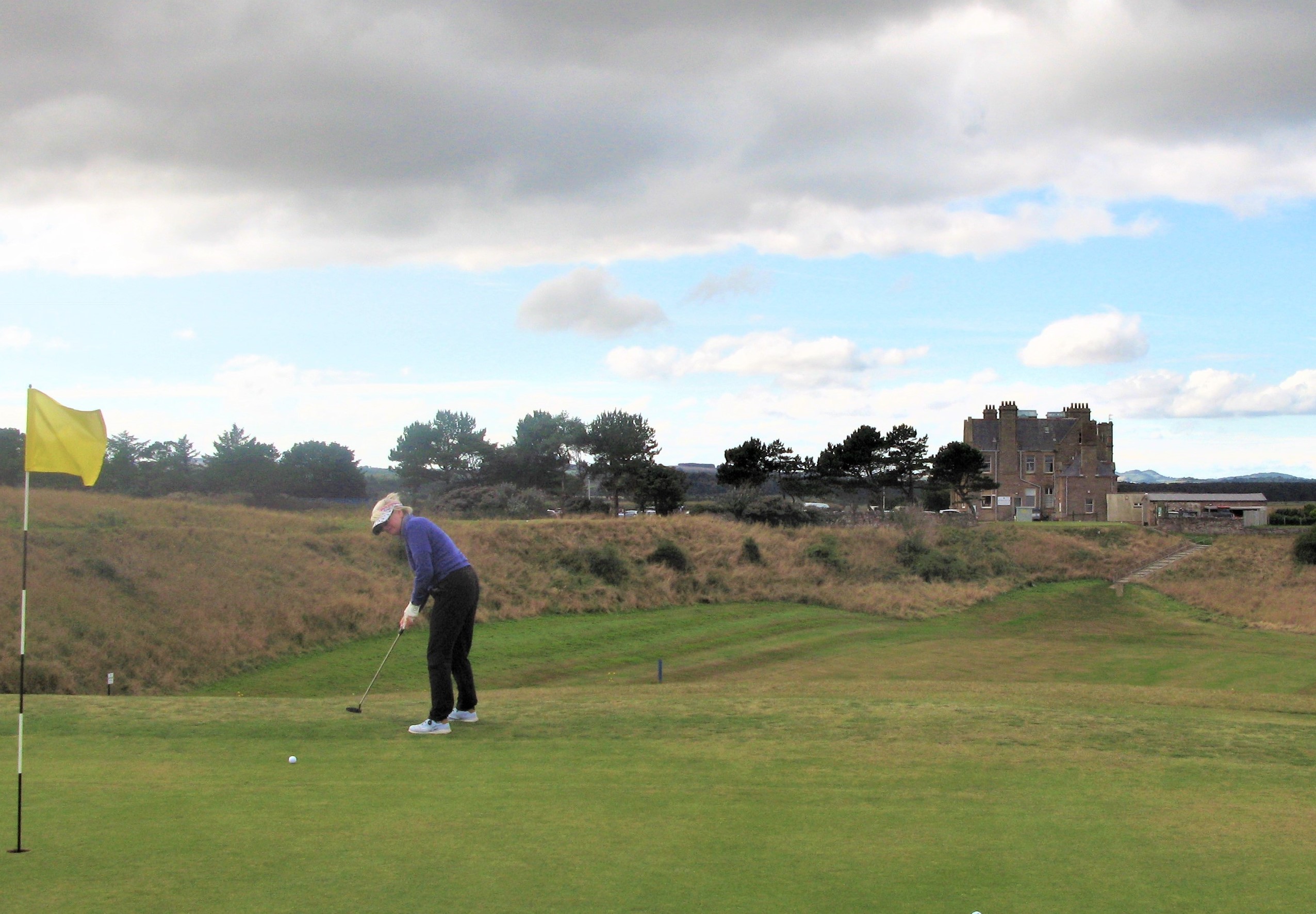
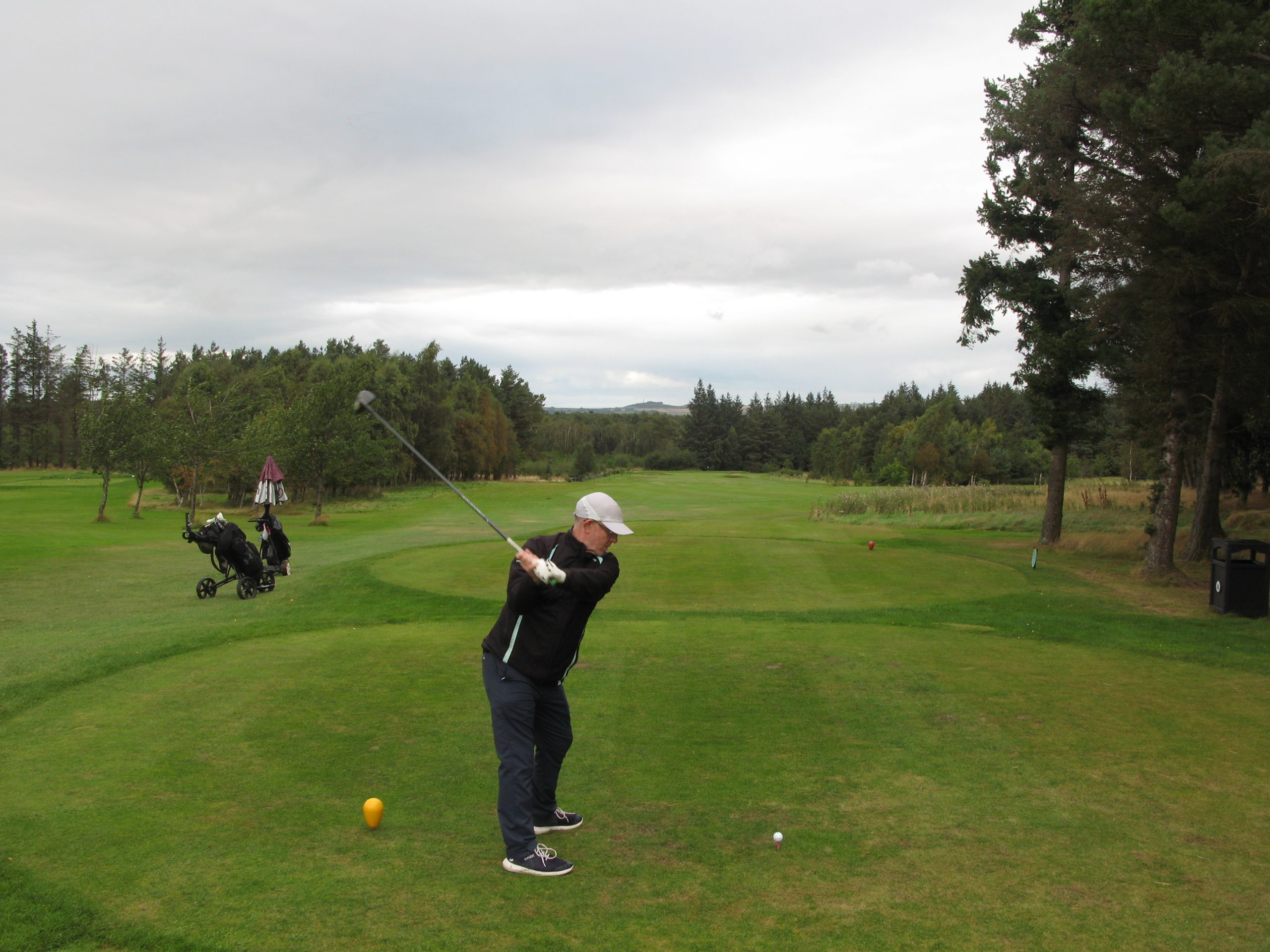
Fran at the very difficult par 3 opening hole, which is a par 4 for the ladies.

Winterfield golf course is located in Dunbar on the “golf coast” of East Lothian. Overshadowed by the magnificent Dunbar golf course, which is also known as the “East Links” course in Dunbar, Winterfield is close to the “West Links” area of Dunbar where golf is first recorded as being played in 1616. Therefore, there is arguably a greater historical story with Winterfield, albeit the course was only established by the local town council in 1935, without any note of the course designer in the club website.
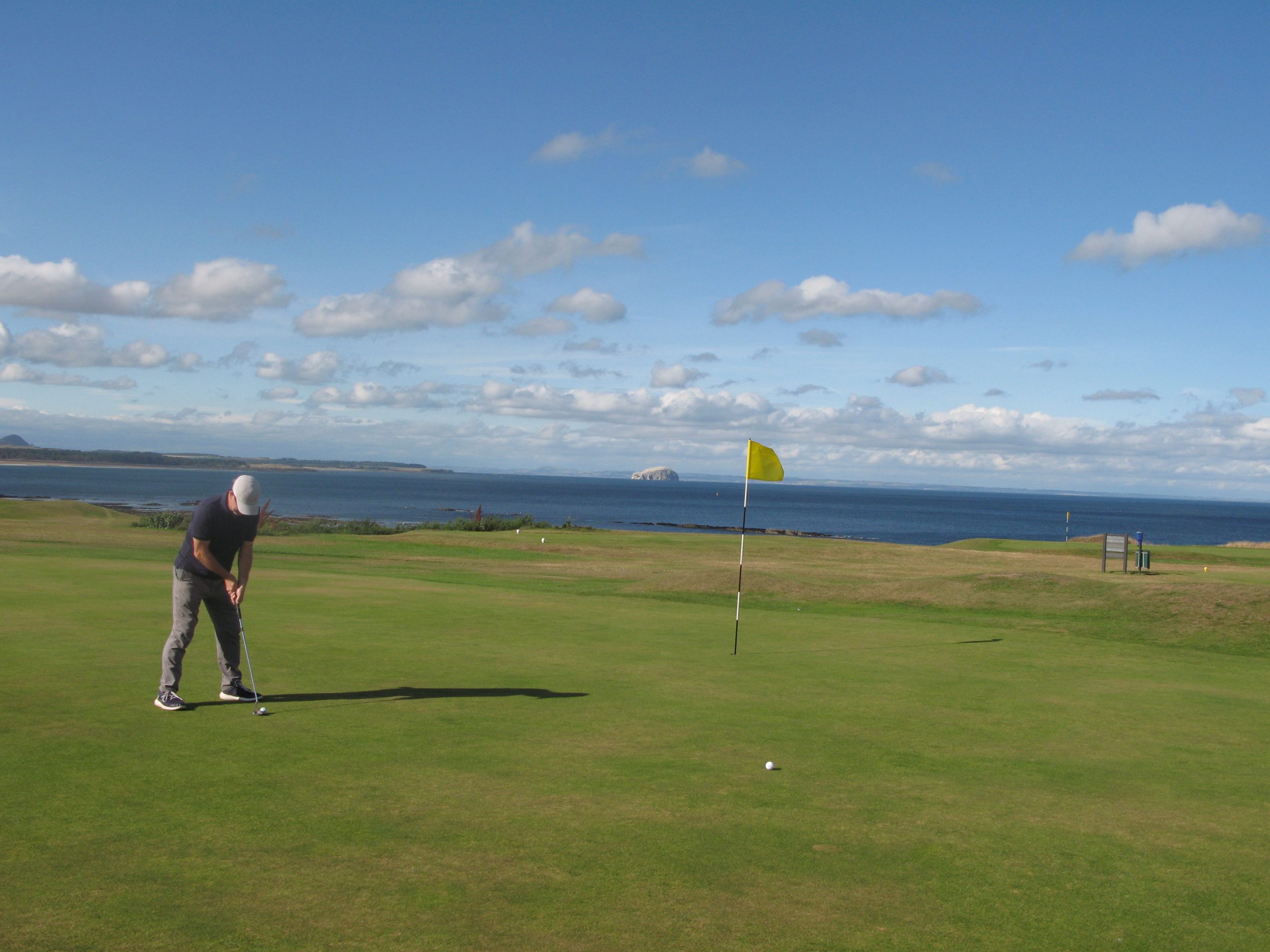
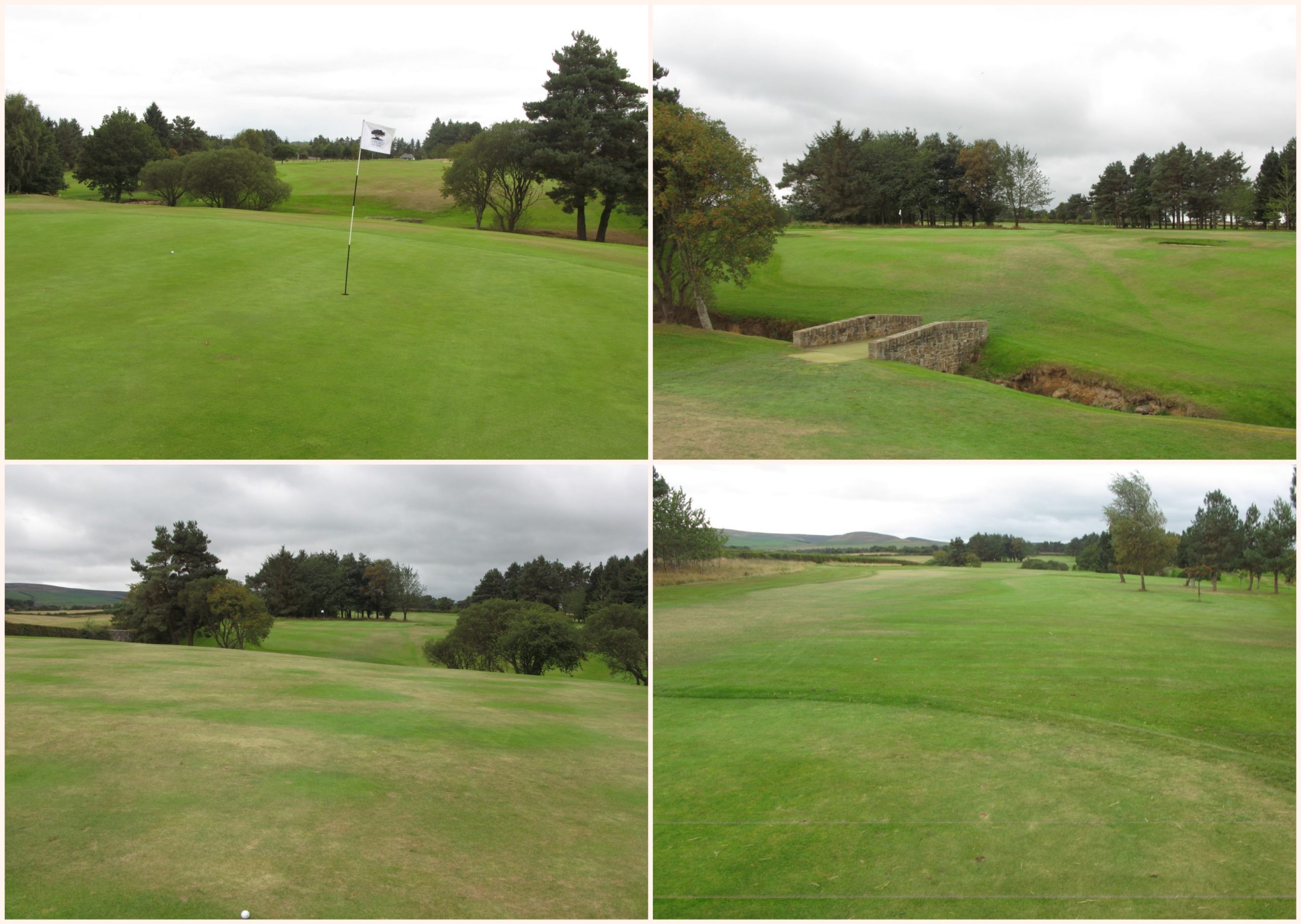
The Bass Rock dominates the backdrop of the 5th green, where Moly was putting for birdie (missed!).

The golf course sits on a beautiful piece of ‘links’ land around the fine clubhouse, called St Margaret’s House, which is home to the “Fairways” restaurant.

The 18 hole course is not long, at only 4817 yards from the yellow tees most visitors will use. However, the slope rating of only 103, belies the real challenge of the course. It has some of the toughest and long par 3s in the area, starting at the opening hole which is 224 yards long, over a long carry. It deserves the Stroke Index 3 rating. Play the first hole as if a par 4, and be happy with a bogie is my advice, as the holes 3 through 6 is the easiest stretch on the course and enable you to get under your handicap; the long par four 7th, SI 1, will challenge the best and has the most difficult green on the outward 9.
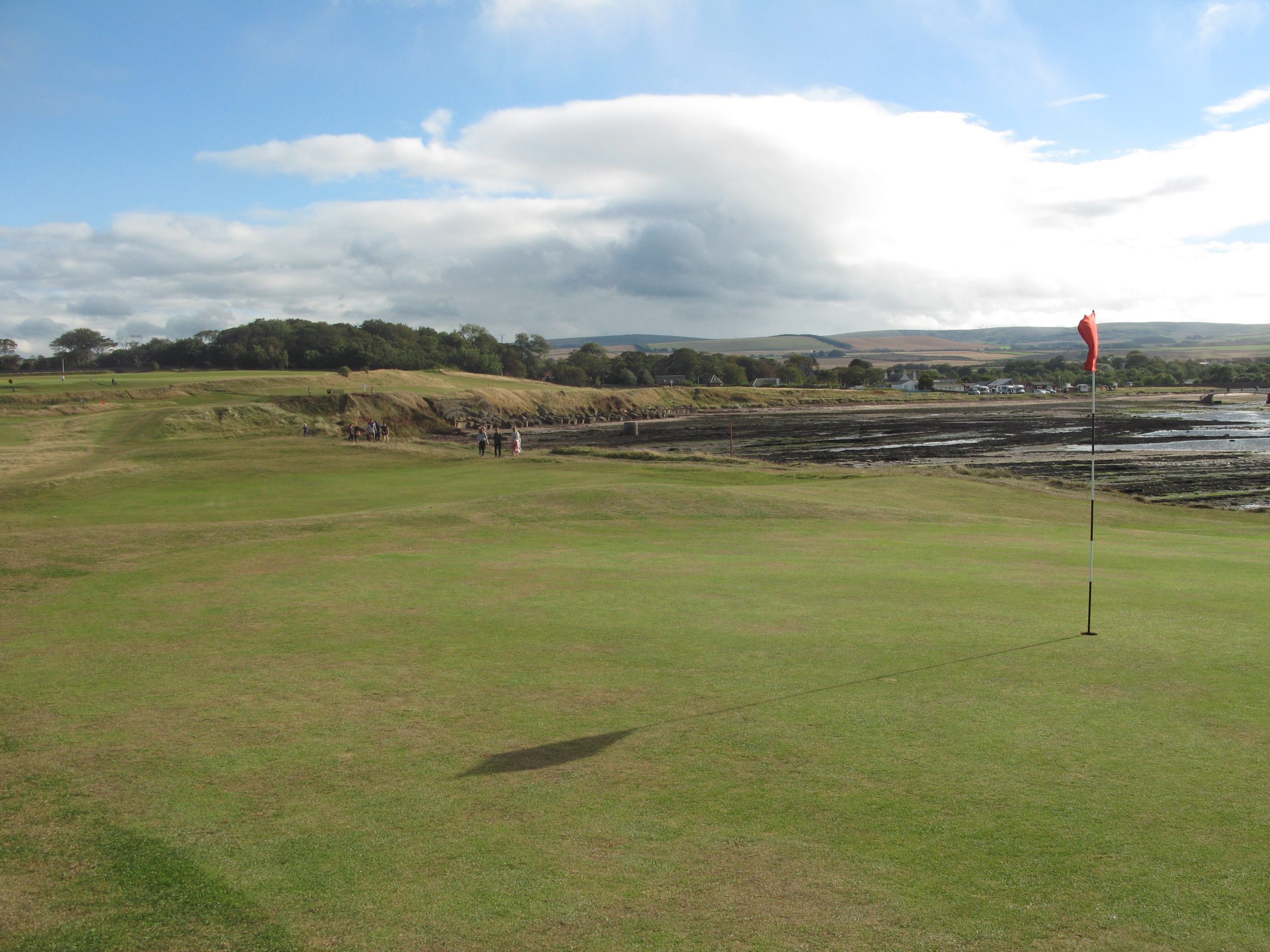
The wonderful par three 14th hole “The Point” (192 yards from yellow), here pictured from behind the green towards Dunbar Beach.

The back 9 is where the course presents the coastal challenges, with a number of the holes skirting Dunbar beach. No more so than at the aptly named “The Point”, the long par three 14th hole. With a very strong wind and fast running fairway I played a 9 iron (normally my 115 yard club) to the front of the green at the 192 yard hole! I four putted for a 5!
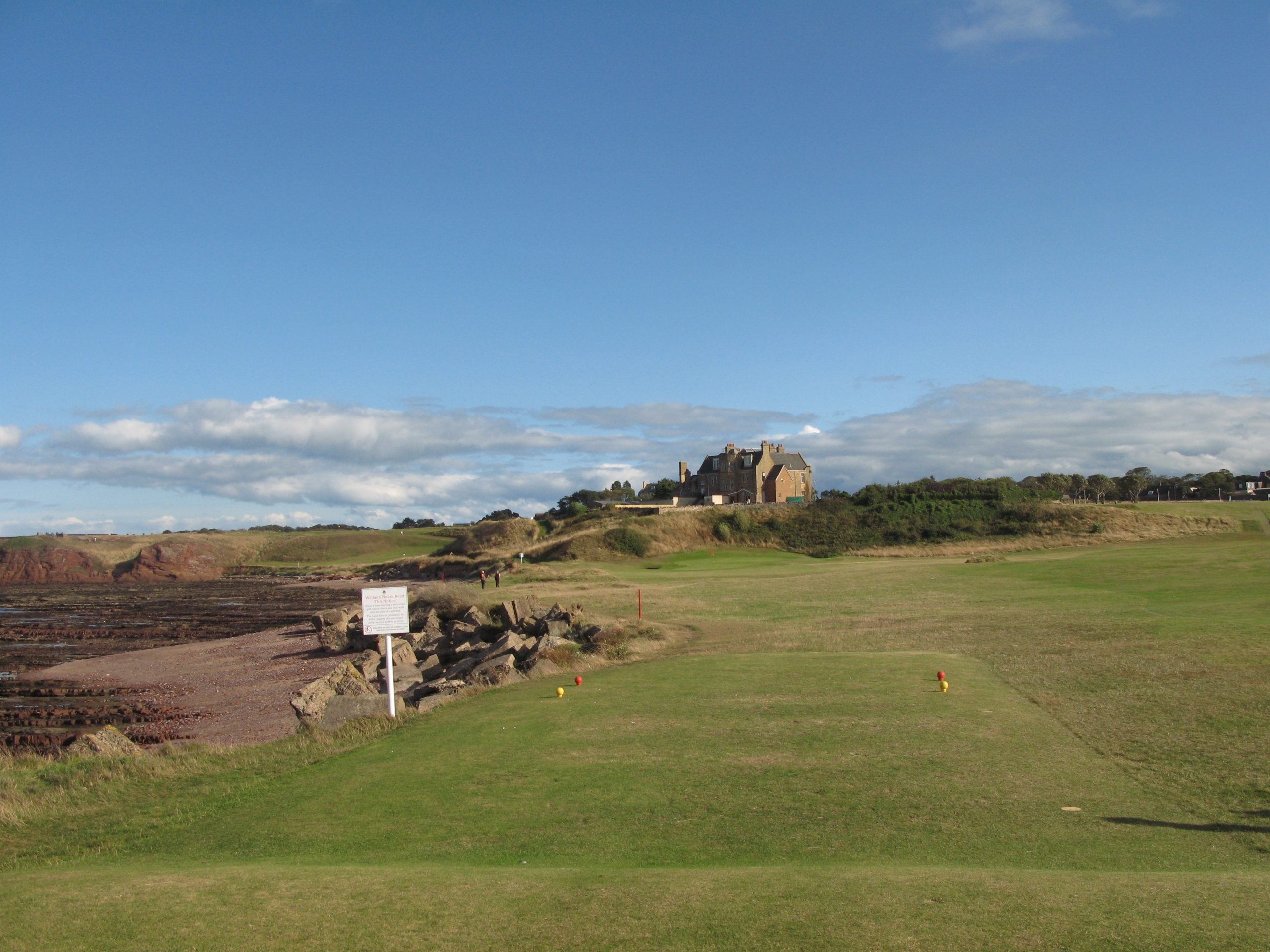
The last of the par 3s – the long 15th at 223 yards (yellow). The wind helped Moly reach the green here.

There are fantastic views views across the Firth of Forth towards The Kingdom of Fife, with the Bass Rock headlining the vistas. It is a nice walk for any non playing partners.

If you want a low cost links experience and challenge, in non stuffy surroundings, Winterfield is an ideal venue. But this is no easy holiday golf course and only the very top golfers will par many more than half of the par 3s on this course. The club also boast of a number of members who went on to play top amateur or professional golf.
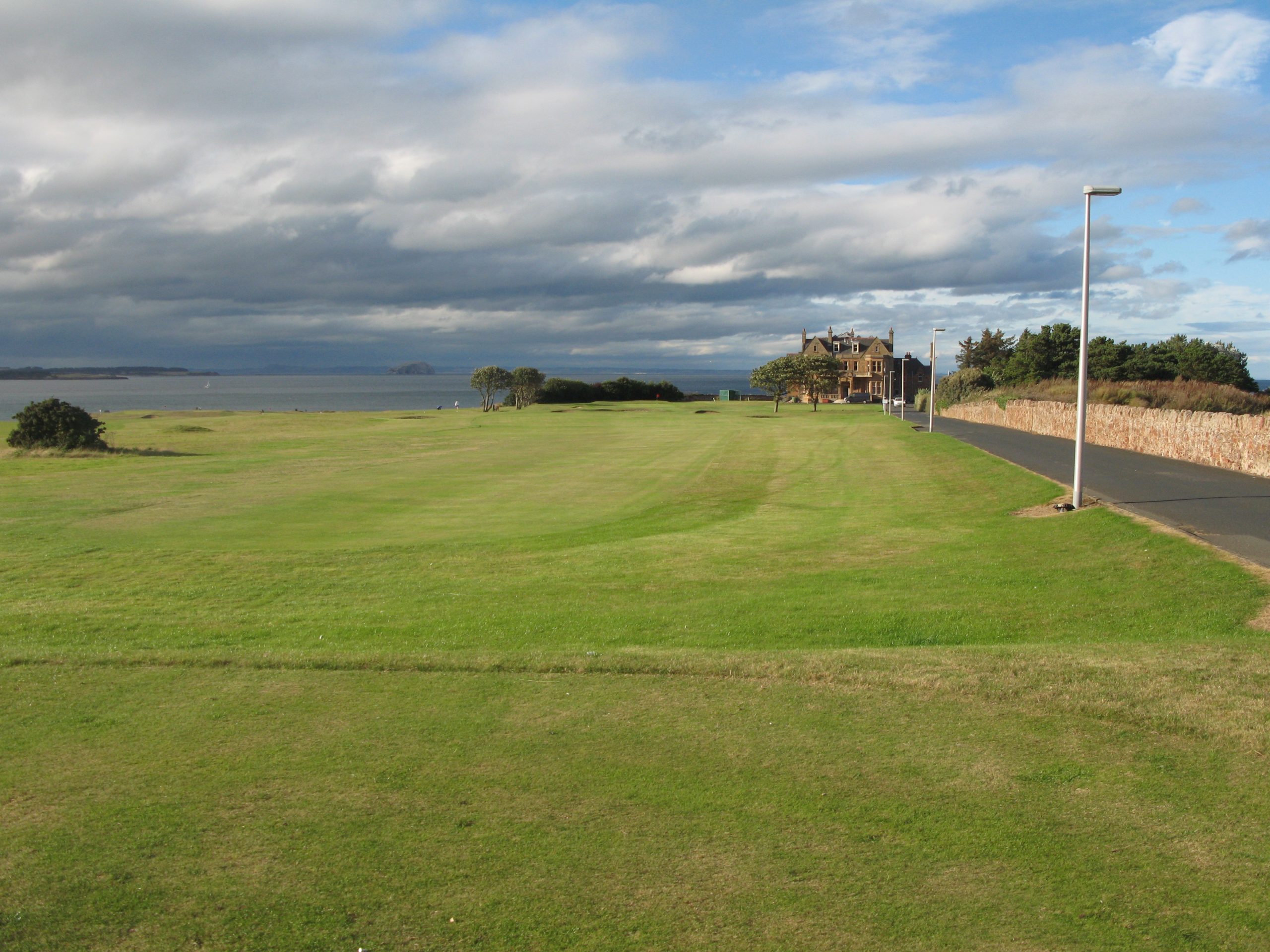
The 18th, a short par 4, with St Margaret’s house in the background.

I felt I played well for my 88, which although 10 over net, was 30 stableford points. The greens were treacherous; very dry and fast, impossible to get any check spin on. The positions of the pins were also very difficult. The green side bunkering is also pretty tricky, and you should try and navigate away if you can.
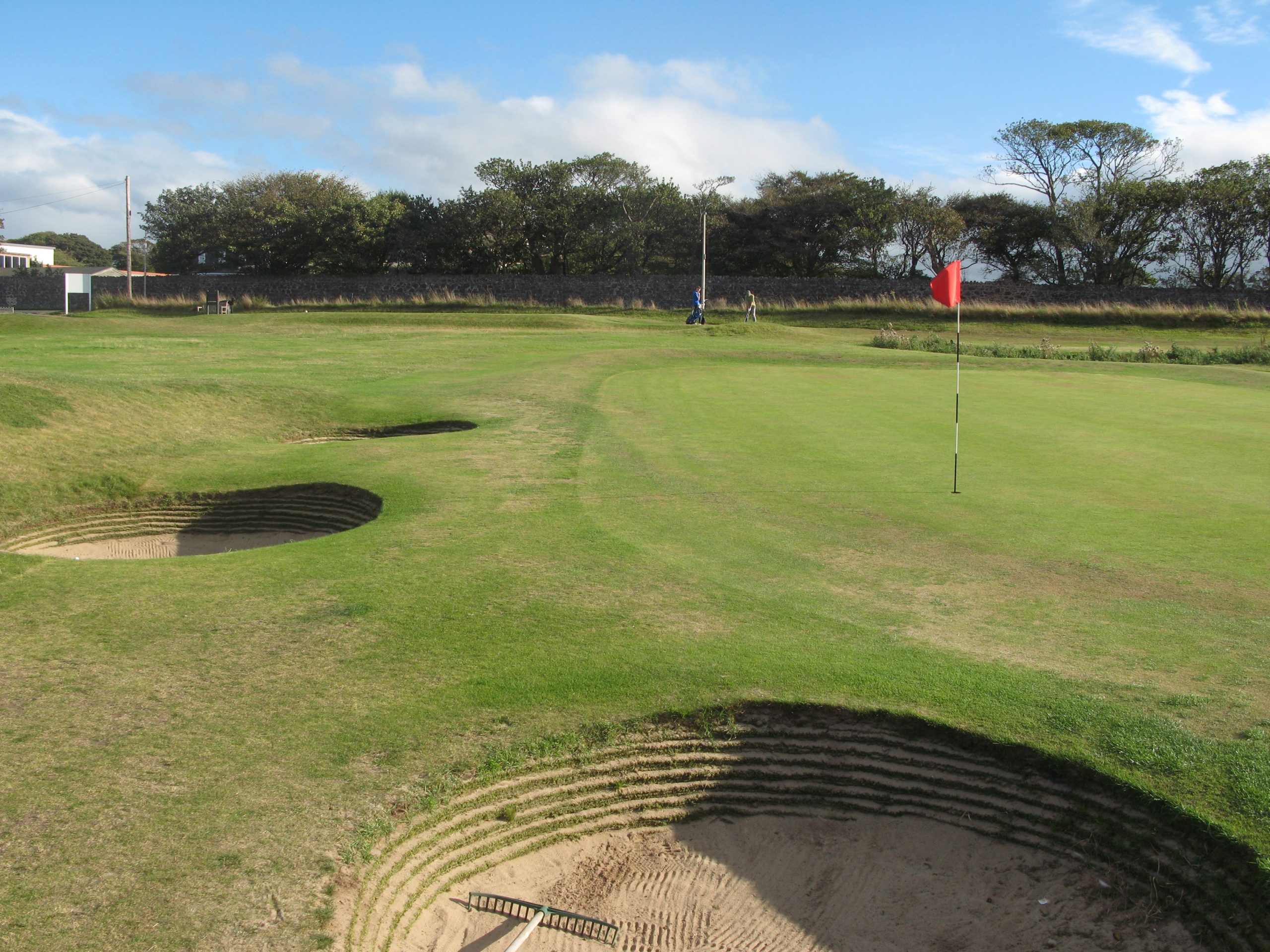
There is tough bunkering at Winterfield, here shown at the par five, 17th hole; where the tough pin positions meant it was nigh impossible to flirt with the pins.

In summary, don’t be fooled by the slope index, which I imagine will adjust higher after several years data is compiled. I think if felt more like a 115 course.

Great value golf, but the hard greens devalue it a bit, hence only 4 rather than 5 for value.

Course Type: Links

Par 65 (1 par 5s, 9 par 4s, 8 par 3s)

Distance: 4817 (yellow)

Moly’s Gross score88

Moly’s decent round of 88, for 30 stableford points, including a 10 at the par four 12th hole!

125. Gifford. 23 Sep 2021.

Like a roller coaster that leaves you wanting to get straight back on.

Round £25. Par 34. Course Rating / Slope Rating (yellow) 34.1/127. Value (out of 5) – 4

I can’t imaging many golfers not wanting to be a member of Gifford Golf Club. This easy walking nine hole course in the delightful and upmarket village of Gifford in East Lothian has an alluring appeal. No sooner than finished the ninth you’ll want to go straight back on – just like a great roller coaster, that you see kids jumping back in the queue time after time.

Moly driving at the very tough par four 6th hole at Gifford.

I imagine there’s been quite a few people have gone round here at least 4 times on a summer day – I wonder what the record for most times played in a day is? This is no easy course though. The Slope of 127 will tell you that.

It was designed in 1904 and by all accounts has not changed much since being laid out. It has by all account only had 4 greenkeepers in the nearly 120 years of its existence; that would explain the excellent all round condition including the greens which were quite varied and all challenging.

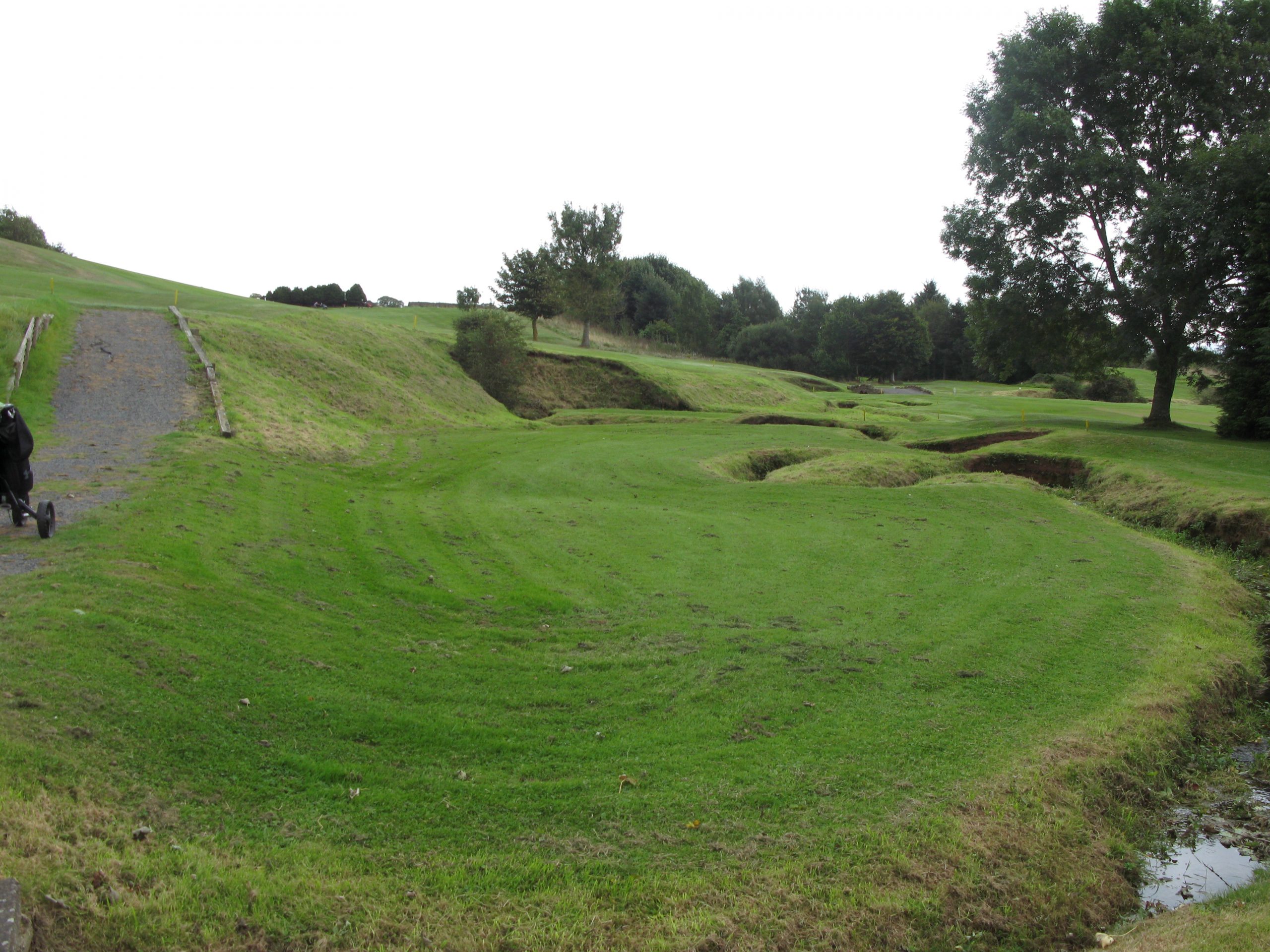
The second hole, a par 4 of around 350 yards, at Gifford is typical of the challenges awaiting.

Despite searching, I couldn’t find the architect, but I imagine it was a top designer given how well the course flows, the excellent hole framing and the variety of challenges presented.

The course starts with three holes played out into the prevailing wind – the first, a well bunkered par 3, one of only two par 3s on the course, needs enough club as the danger is all at the front. The second, although a relatively short par 4, is a difficult hole, where the approach shot into the green, is played over a small burn, and is difficult to judge – trust your distance device here. The third, is the SI 9 hole and is the only ‘easy’ hole on the course – I got a ‘blob’.

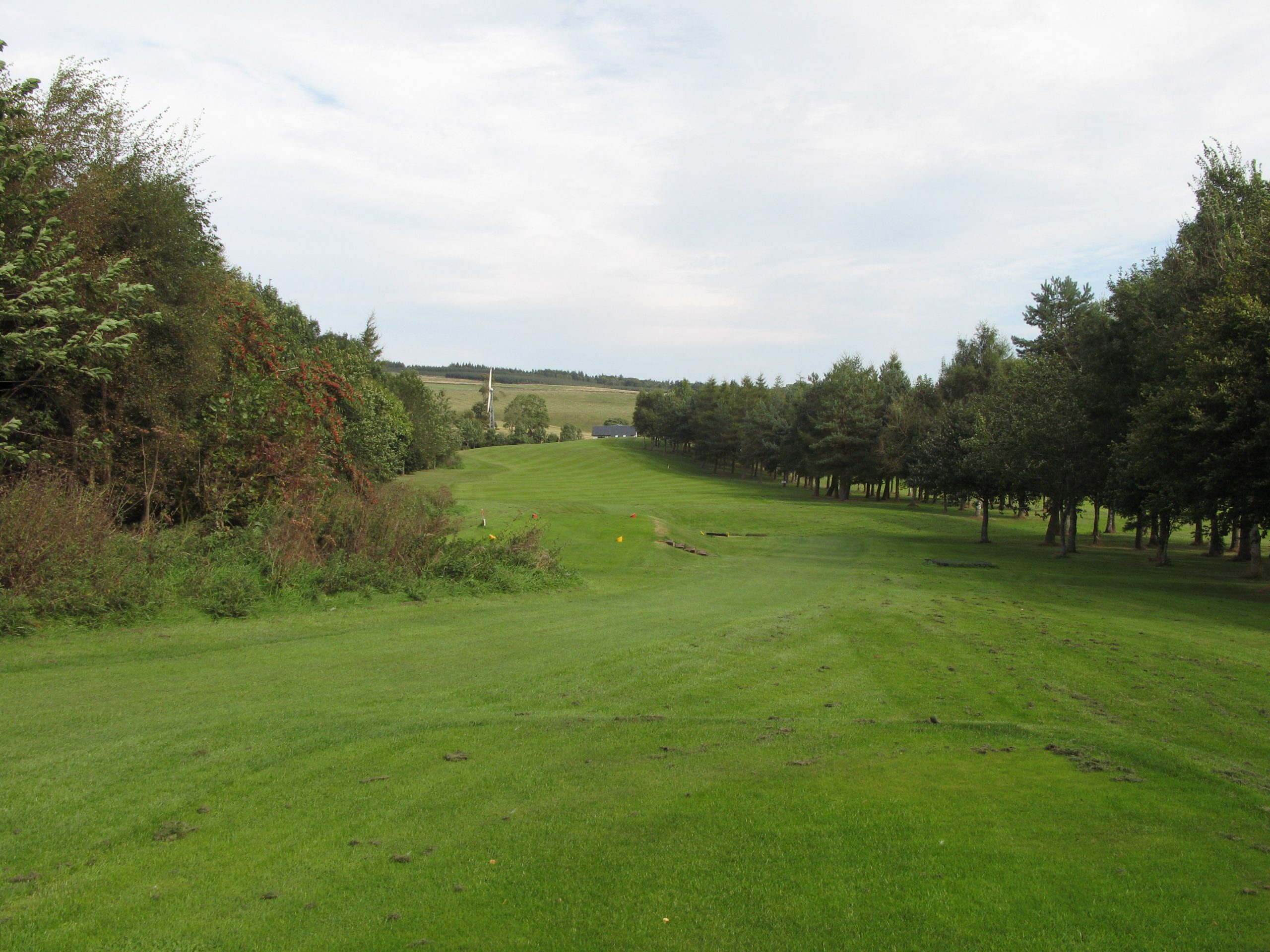
The excellent par four 7th, here showing the great condition of the teeing ground – a sure fire measure of greenkeeping excellence.

The remainder of the holes constantly change direction, making for great variety depending on the wind. Set in open and undulating countryside, you are exposed to the elements, so wind will normally be a dominating feature playing here.

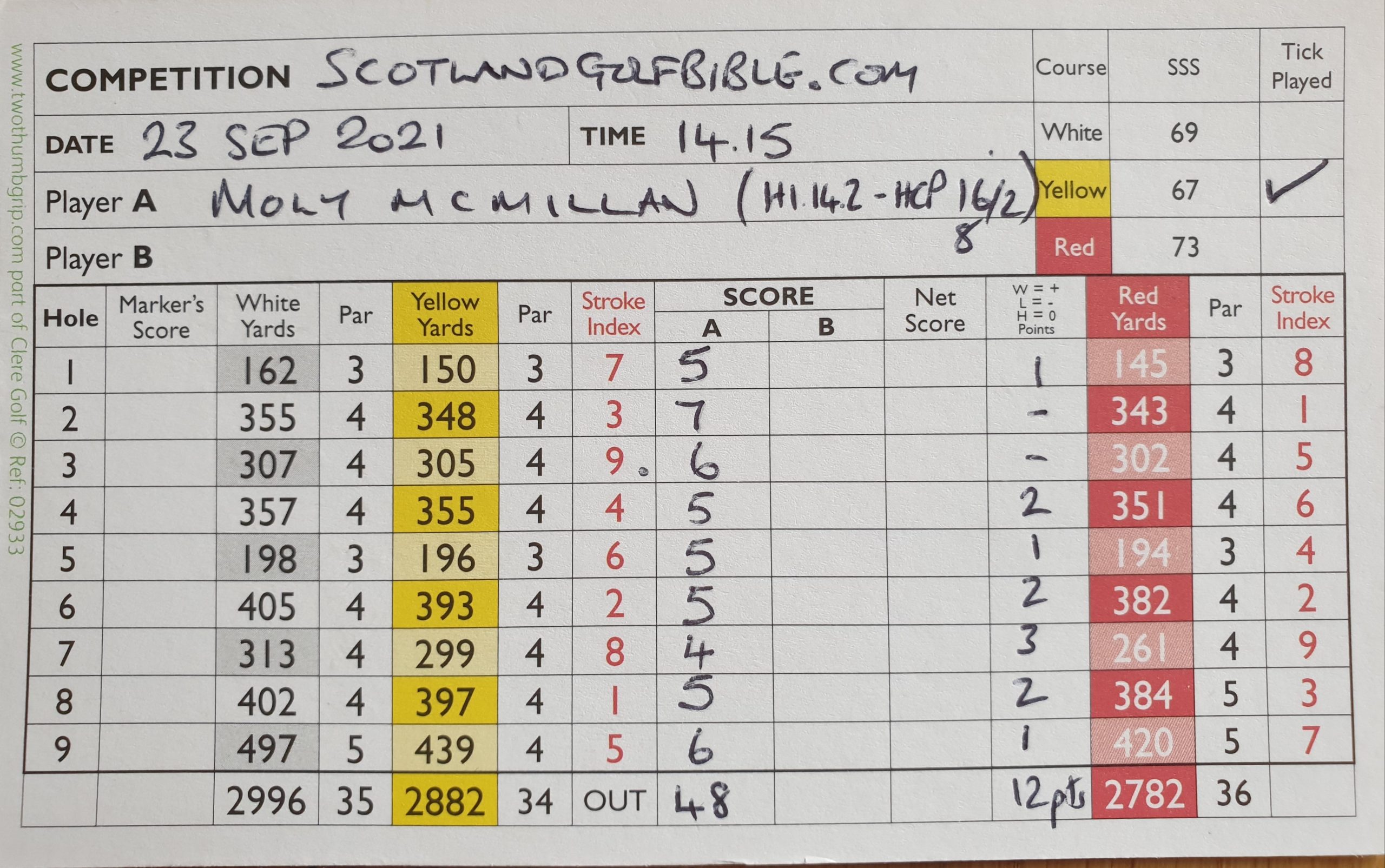
I found the challenge of the wind when I played a little too difficult and I scored a 48, 14 over par, thereby using all my handicap on the “first” nine holes. There are a couple of the holes, which have significant alternative tees, to enable a “back” nine to be played, albeit I never consider this anything other than 9 holes. It would be like classifying different tee boxes as constituting a different hole.

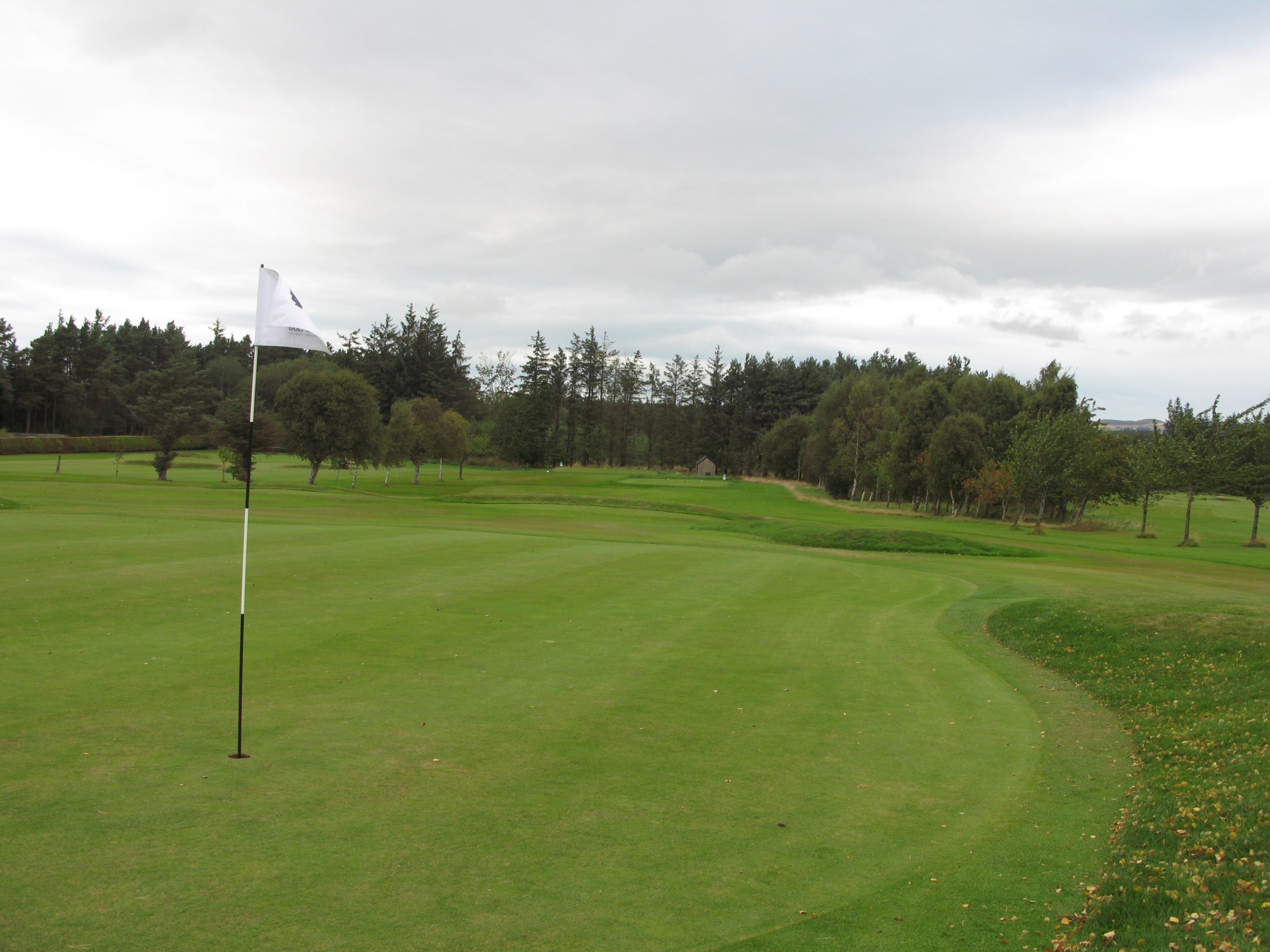
The good greens at Gifford, here shown at the par four 5th.

The clubhouse is also delightful and give yourself time for the exquisite but homely baking on offer.

On having a discussion with the very friendly attendant/cook, I found out that many local resident of Gifford village – a very well heeled place – are members of both Gifford and Gullane. Now that does make me envious!

Worth playing Gifford.

Course Type: Parkland

Par 34 (7 par 4s, 2 par 3s)“front 9”

Distance: 2882

Moly’s Gross score48

Moly’s 48 – for 12 stableford points – on this delightful nine hole Gifford course.

124. Duns. 21 Sep 2021.

This well laid out course might just be “The Average Scottish Course” – that’s good!

Round £30. Par 70. Course Rating / Slope Rating (yellow) 69.2 /119. Value (out of 5) – 3.5

I’ve now played about 25% of all Scottish golf courses, with about 20% now blogged – that represents a statistically significant sample for the mathematical minded.

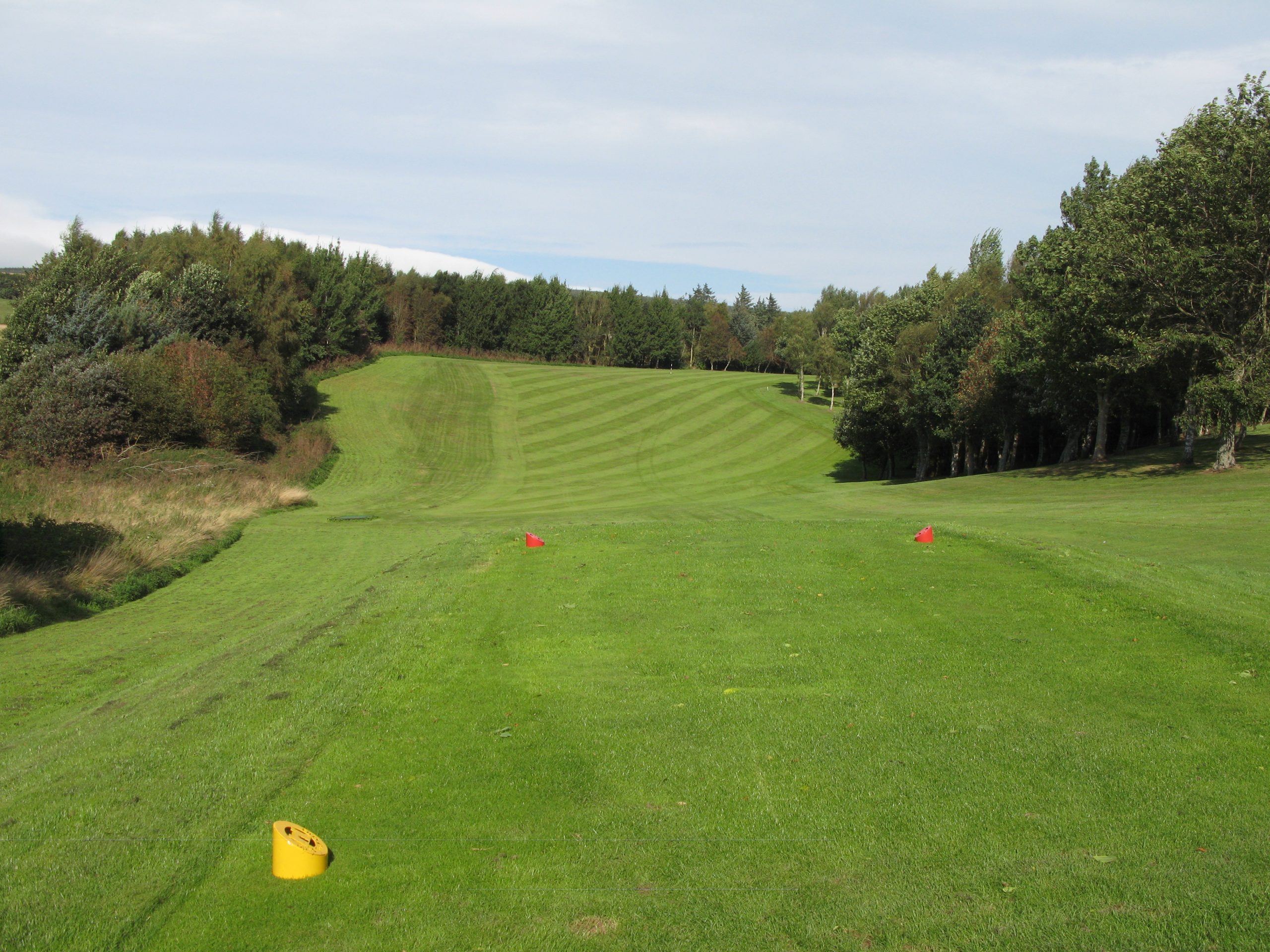
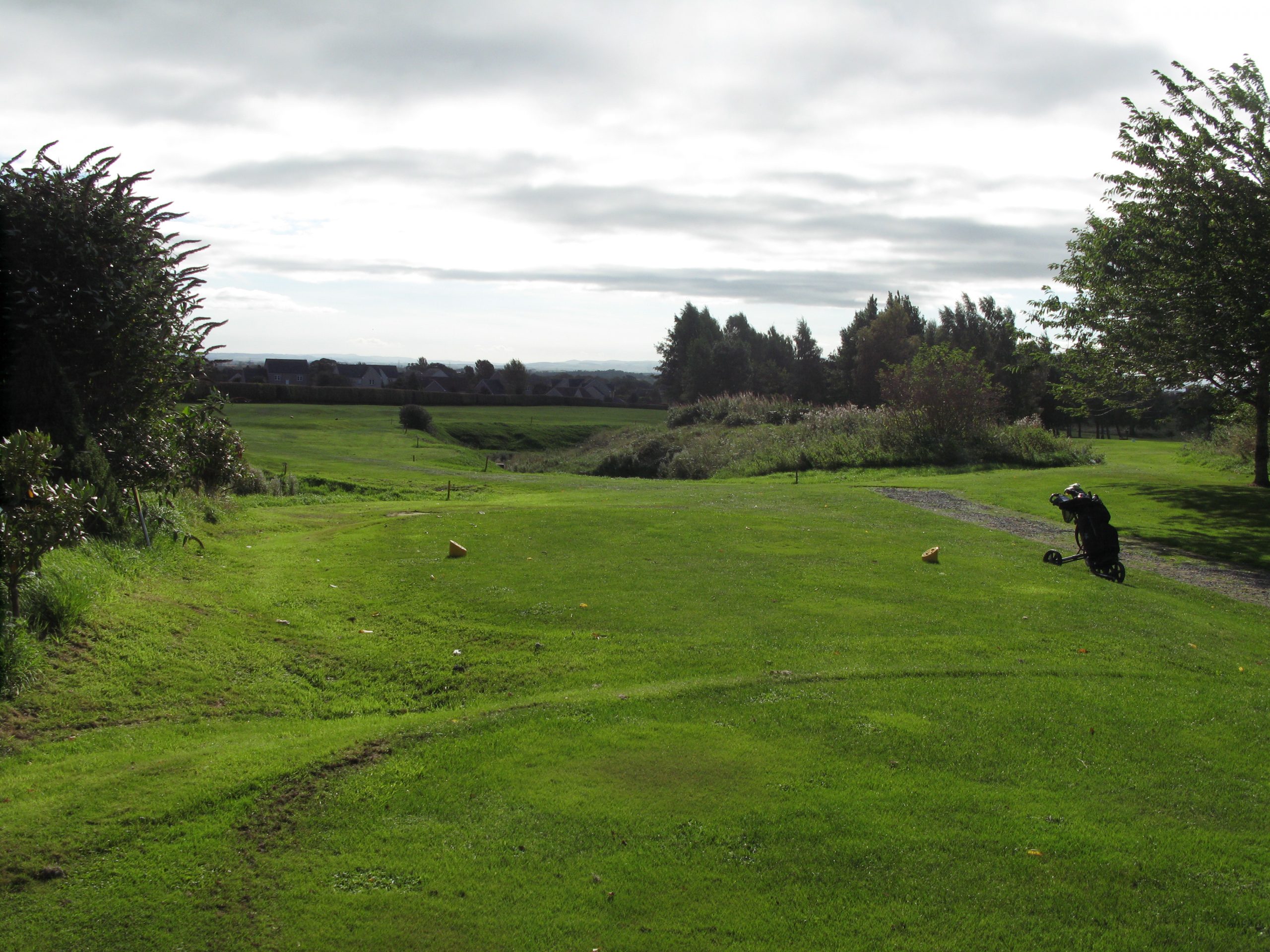
The Wellrig Burn comes into play on a number of holes, here shown at the 16th, a tough par 4, played uphill – it is Stroke Index 5.

Therefore, when I played Duns I couldn’t help but consider what the ‘average’ Scottish golf course would be like. A small town setting. A club formed in the latter part of the Victorian age. A course, starting off as a nine hole layout, now having gone through a number of variations, culminating in an 18 hole course only established in the last 30 years. A course length off the yellow tee just under 6000 yards. A nice clubhouse, but with no frills. A course with tees adorned with sponsorship from the local hotels and garages. A decent price of, perhaps, around £30, being low but higher than the municipals that still, thankfully, abound in Scotland. Decent and homely catering, attracting travelling “days out”. A good, but not necessarily outstanding course condition or difficulty.

The well framed 9th hole, ‘Green Knowe’, a par 4 of 354 yards (yellow) I scored 5

All in all, I realised Duns might be one of the (reasonably many) ‘average’ golf courses that Scotland has; that is to say a really nice place to play golf at great value. With an annual membership fee of £460 (2021) that, in particular, represents excellent accessibility. It is also good to see Family memberships available (Couple plus 2 children under 16) at only £900.

The par four 8th, “Postie’s Walk”, at 363 yards.

Duns, with a population of just under 3000 is the historic county town of Berwickshire, in The Scottish Borders. Only 10 miles north of the Border, It is slightly off the beaten track, in that it doesn’t lie on any of the main trunk routes between Scotland and England. To that extent, Duns is a ‘day out’. It would be an ideal visit for lovers of motor sport, as it is home to the famous racing driver Jim Clarke who has a museum in the town dedicated to his life.

The second hole, the first of the tighter driving holes at Duns. It’s strategic, requiring good judgement on the second lay-up to leave a pitching iron to the dog leg right entered green. Good golf hole.

The course is blessed with some outstanding scenery over the Tweed valley towards the Cheviot Hills in Northumberland. Set in open agriculture countryside, it did at times have a heathland feel, in particular the turf. The course wasn’t in brilliant condition though, albeit the greens were being treated as it was the end of the season. I can understand why it plays fast in the Summer. The fairways were quite tight, but the rough was forgiving – a reasonable compromise.

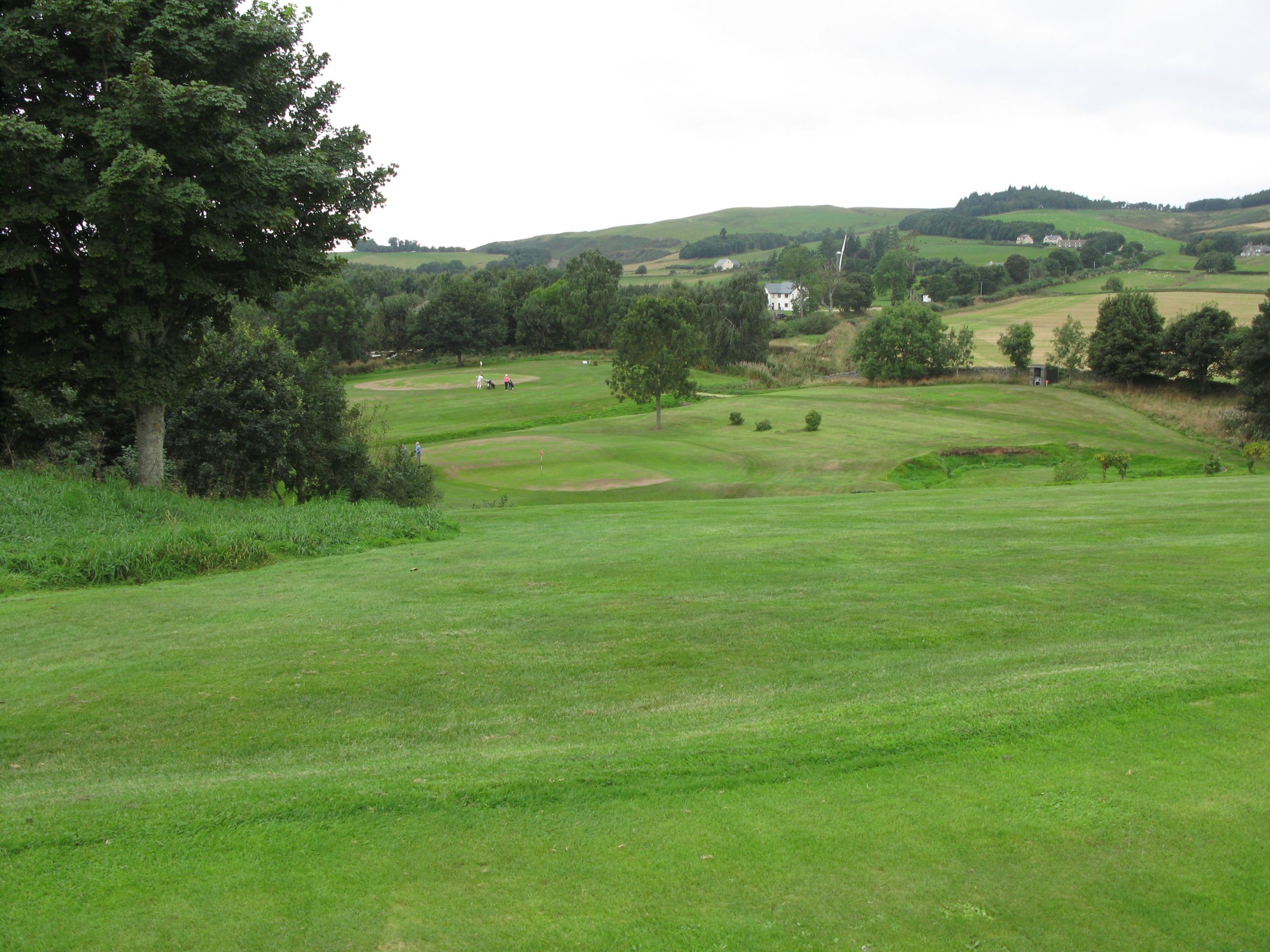
The downhill par three 15th hole. Choose your club wisely, I overshot the green to find the very narrow burn! A 5 on the scorecard at the SI 18, always annoying. Play towards the right of the green

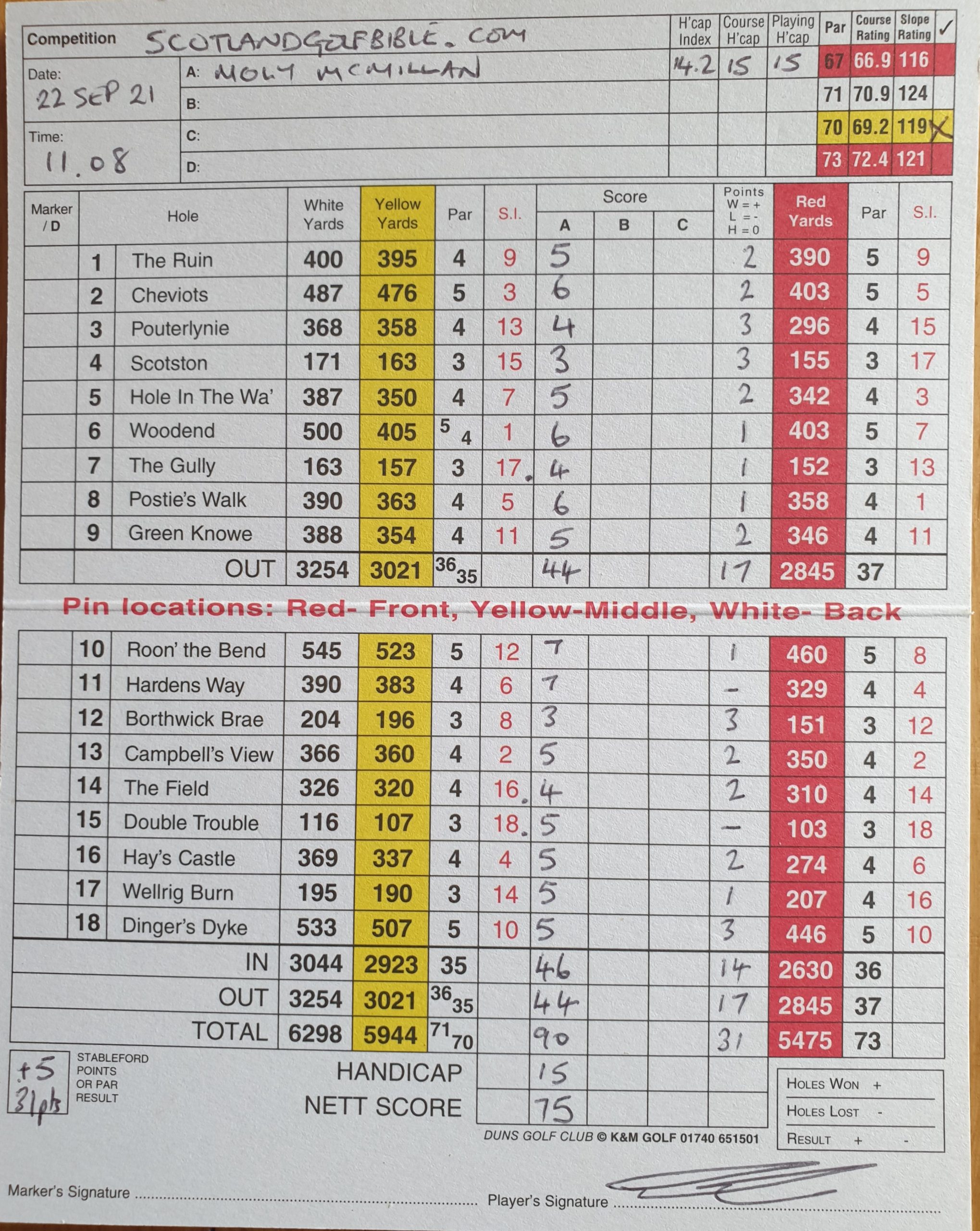
On a breezy day of 15mph wind, I played very soundly for my 90, which equated to 31 stableford points, breaking my contentment threshold of 30 points for a first time play.

Overall, this felt like an innovative and progress club, with attractive and variable pricing using the BRS booking system, increasingly common for tee bookings for several clubs.

If you wanted to visit Scotland for golf, playing Duns would give you a great feel for what most members of Scottish golf clubs experience. No nonsense, good value golf.

Course Type: Parkland

Par 70 (3 par 5s, 10 par 4s, 5 par 3s)

Distance: 5944

Moly’s Gross score90

A solid round of 90 on this decent Duns course

122. Eyemouth. 23rd June 2021.

Not one, but two notable challenges making it worth the drive, but mainly for the ‘fish n’ chips’ and a warm welcome.

Round £37.50. Par 72. Course Rating / Slope Rating (yellow) 70.2 /122. Value (out of 5) – 3.5

I’m glad I don’t overly research courses before I play and I learnt long ago to ignore the marketing hype golf clubs use on their websites. It’s similar to reading the tantalising comments on the latest ‘best selling’ book, before you consign it to the charity shop after 50 pages!

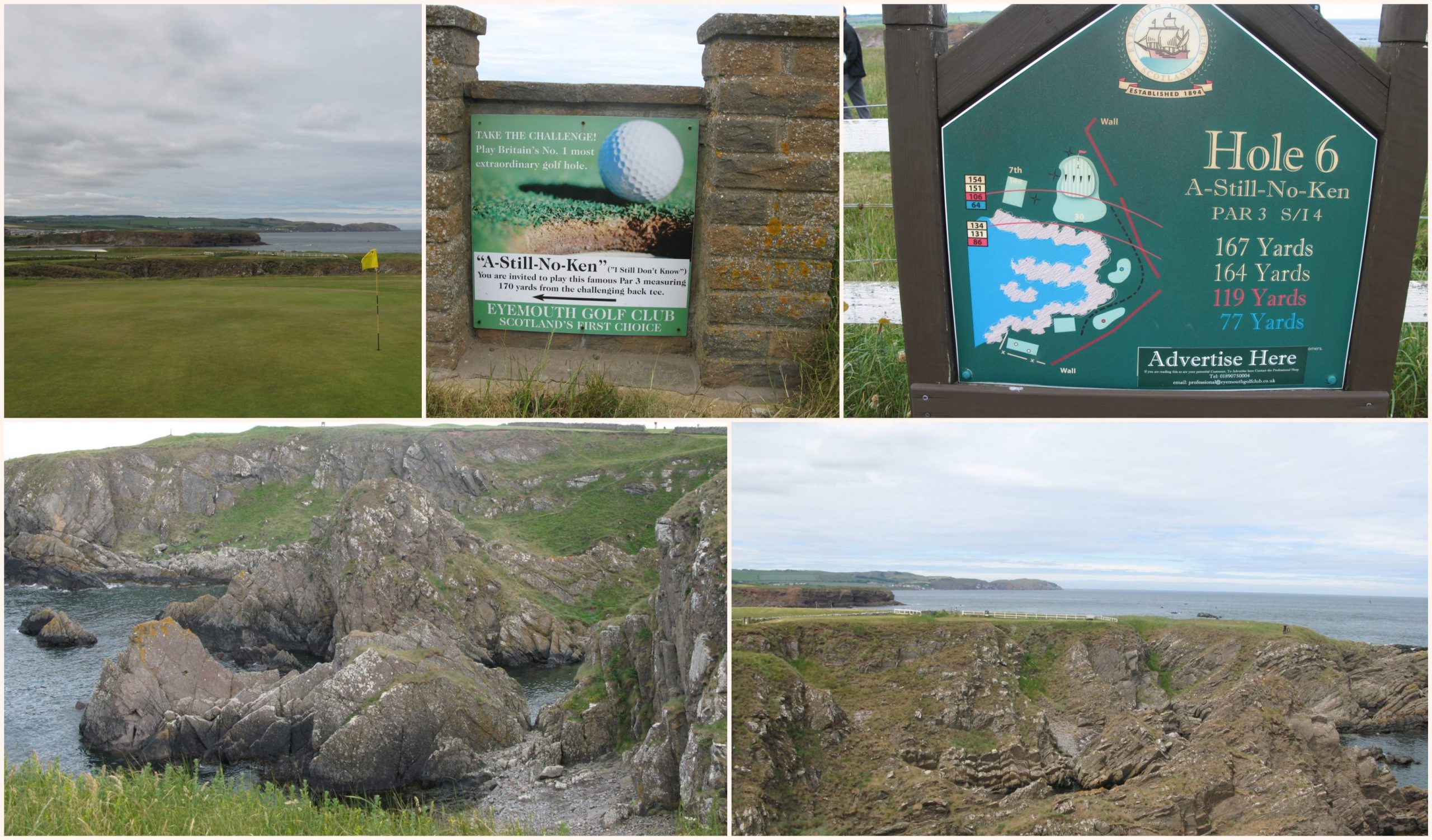
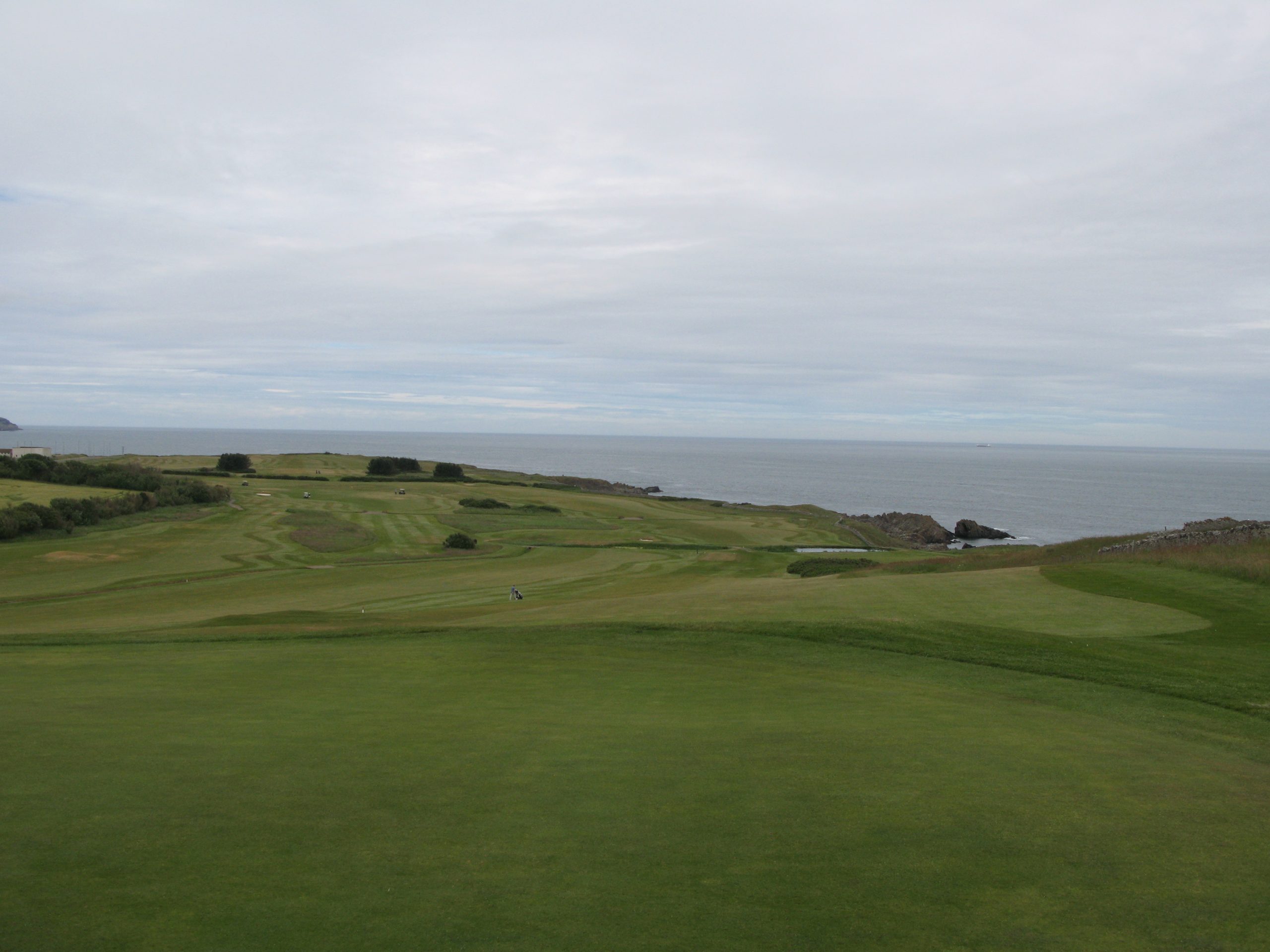
The 6th, one of the ‘challenge’ holes at Eyemouth – a watery grave got all 3 of our balls.

Therefore, please ignore “The club was formed in 1894” – the original 9 hole course is completely gone and has been replaced by a ‘home made’ design in 1997 on a different piece of arable (not links) land, known as Gunsgreen Hill, to the south-east of the original course. The course feels like a new ‘parkland’ layout, before saplings mature to properly frame the course.

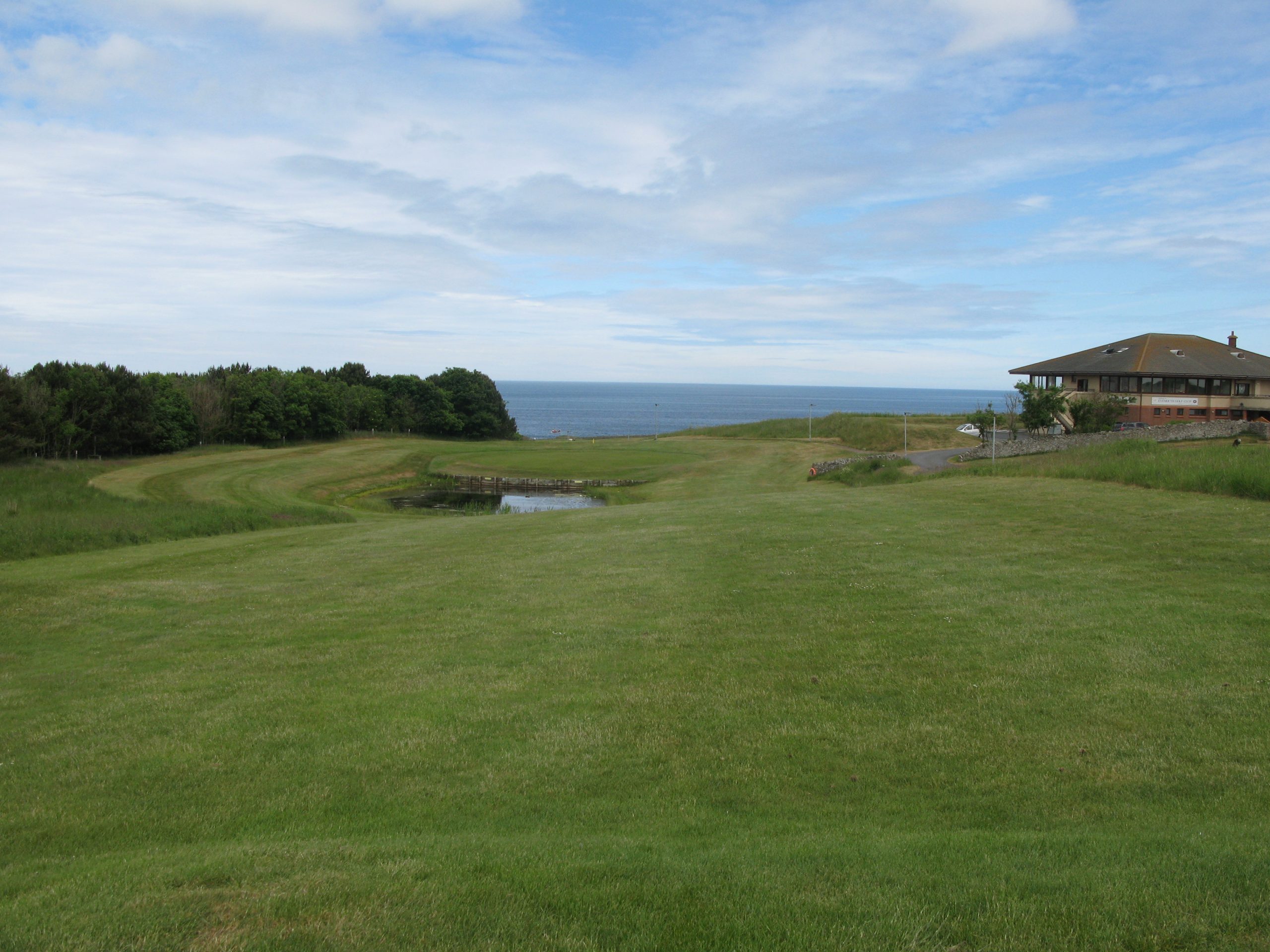
It is worth playing Eyemouth though; it’s good value, has a couple of notable challenges (more of below) and excellent fresh locally caught ‘fish ‘n chips’, served in the clubhouse restaurant that has long reaching views of the Berwickshire coastline.

The short par three 3rd hole, with the clubhouse on the right that has commanding views. All three of us playing made par, which was unusual for us!

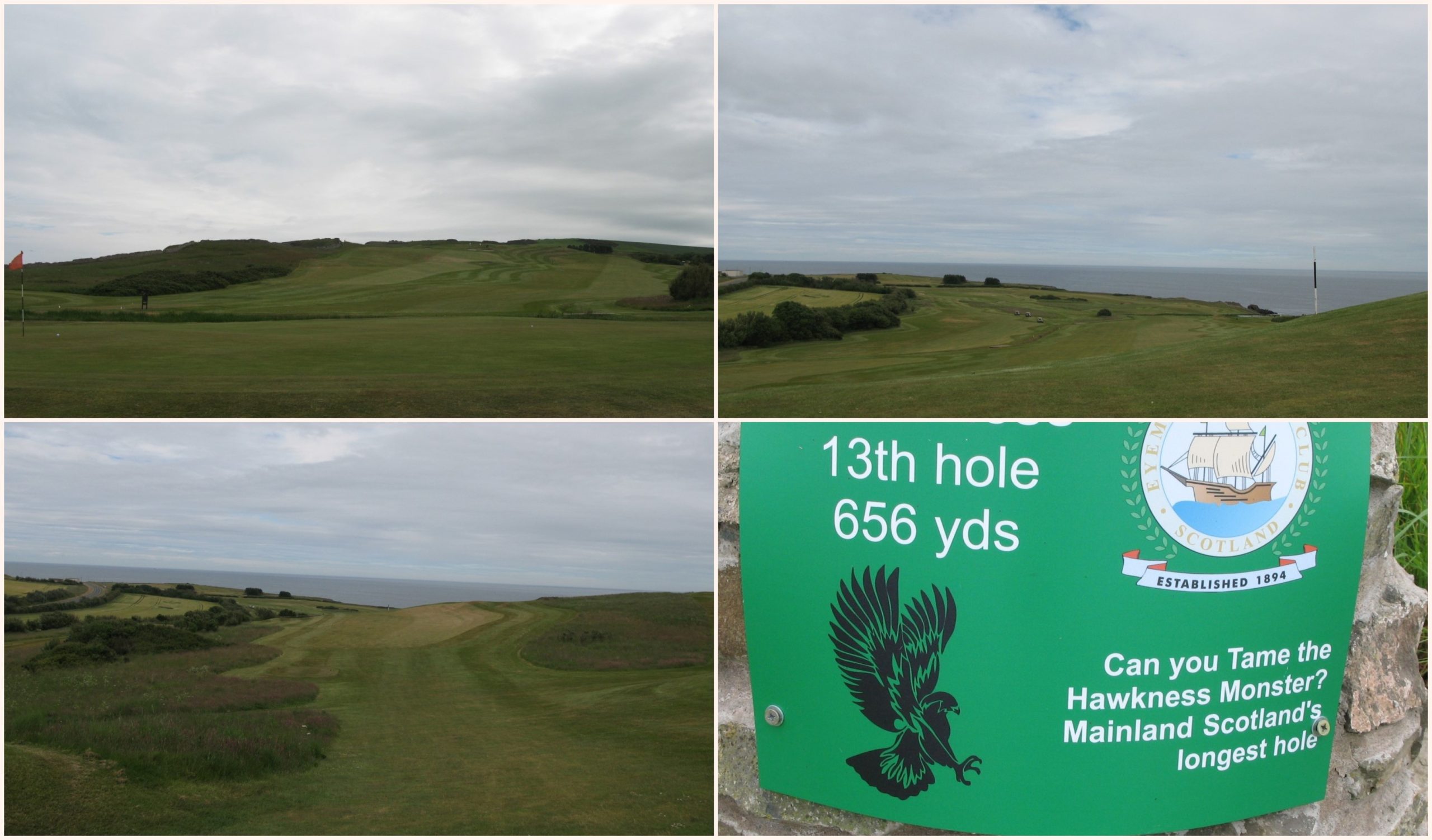
It’s certainly a meaty, if not fishy, course, which has hosted a number of regional and Scottish amateur competitions. Many of the longer holes playing uphill are very difficult, none more so that the 450 yard par four 15th hole, the stroke index 1; albeit, at 450 yards, it is still 200 yards shorter than one of the two ‘challenge’ holes – the par five 13th, cheesely named ” The Hawkness Monster”, at 656 yards it is reputedly Scotland’s longest hole; thankfully it is all downhill. On the day I actually parred the longest hole in Scotland, yet scored a quadruple bogie 9 on the Par 4 15th, That’s golf in a nutshell.

The ‘Hawkness Monster’ – Scotland’s longest hole. 656 yards.

The other notable, and more attractive, hole, is the 6th; curiously named ‘A Still No Ken’ [‘I still don’t know’] it is a visually stunning mid-iron hole over craggy coastline, at 167 yards from the white tee, albeit the actual carry required is only about 140 yards. It’s all in the mind. Played into a stiff North Sea breeze, this would obviously compound the difficulty. All 3 of us playing (Brian and Frank being my partners), found the sea. On reflection I would call the hole something like ‘North Sea Graveyard’.

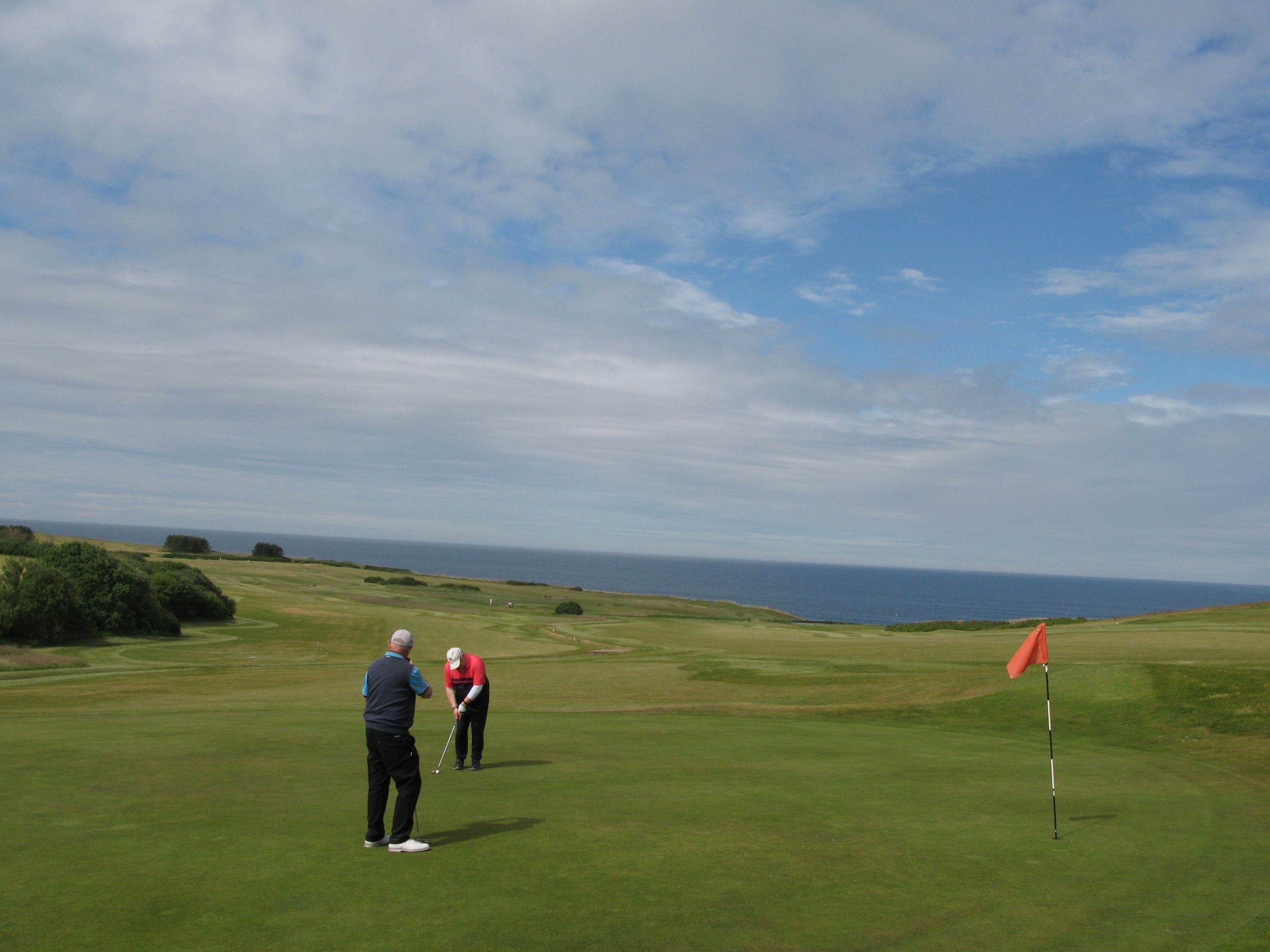
Frank putting out on the tough par four 15th hole, his technique scrutinised by Brian.

We paid through www.golfnow.co.uk and received about 20% off the ‘rack rate’ prices. Golfnow, has been a great development for peripatetic golfers who prefer to not join a club, but as yet less than 50% of Scottish clubs allow this means of booking, and disappointingly, hardly any of the premier clubs. This is a shame and the pricing of the top100 clubs remains elusively high, compared with the annual fees paid by their members; the ‘must play’ courses leveraging their attractiveness, which I guess is understandable.

The very difficult 11th green overlooking this relatively new course at Eyemouth.

The course was in decent, but not great, condition when we played, despite it being high season; the tees and very large greens were no more than average. Some of the greens were very tricky, most notably the 11th, where you couldn’t afford to be over the back of the green. The fairways are wide, but miss them and the rough is deep – there is no semi-rough to speak of. Although in dry seaside conditions, this might feel like a links, it is arable land, and I consider it a parkland course.

If you plan to play Eyemouth, I recommend considering a buggy if you’re not as fit as you once were. More importantly, the ‘fish ‘n chips’ in the clubhouse were as good as I’ve tasted anywhere. Those, and the very friendly staff at the club, make it a decent place to visit and play.

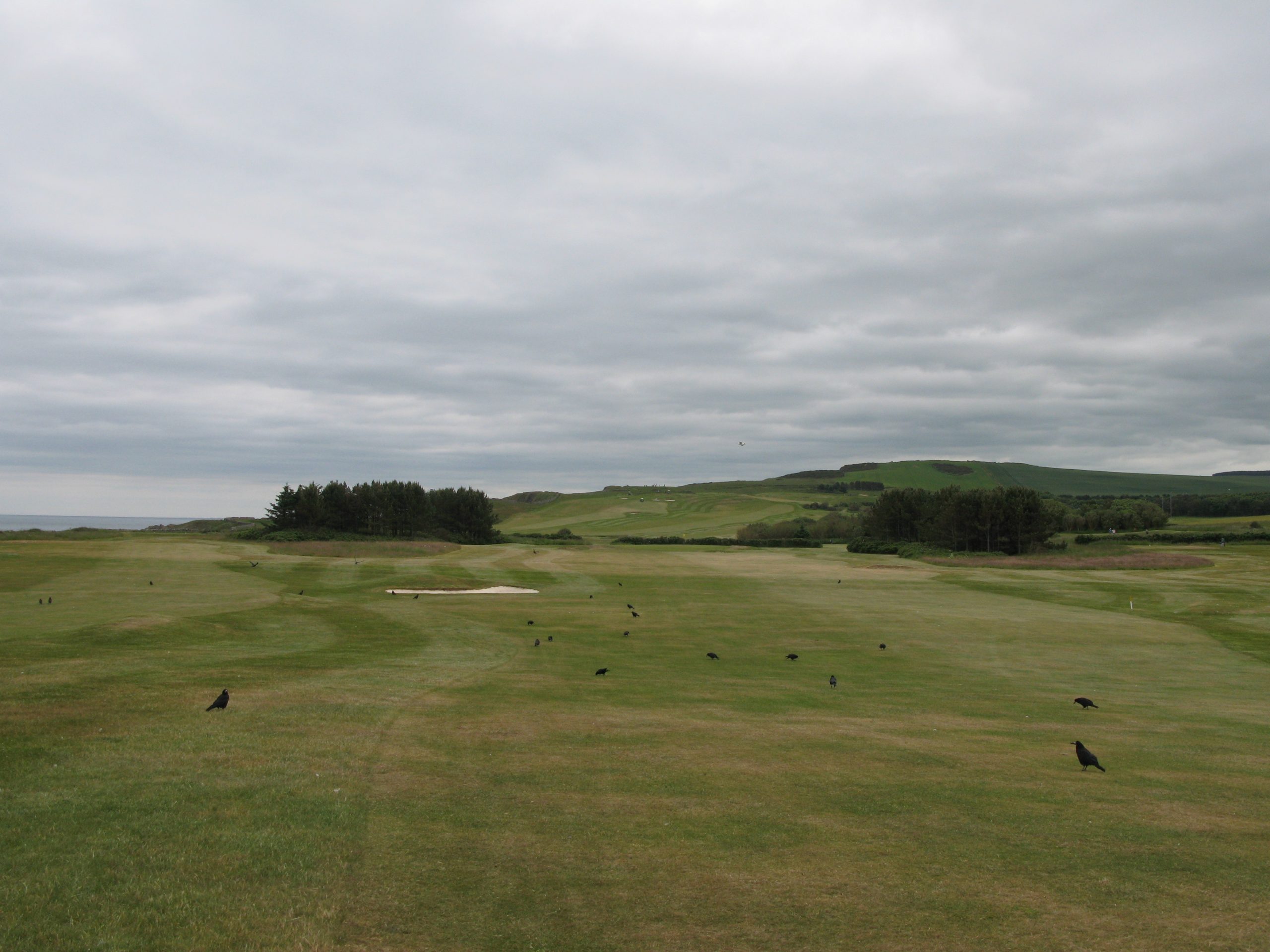
The openness and wide fairways at Eyemouth, typified here at the 9th.

Finally, in writing about Eyemouth, I came across an extraordinary sporting story in the excellent https://www.golfsmissinglinks.co.uk/ web site, which charts the long lost history of Scottish Links. In the 1880s, during which time golf was played on a 5 hole course around the Eyemouth beach fort, the world famous cricketer, WG Grace actually played two seasons for Eyemouth cricket team. Now there’s a context for a film.

Course Type: Parkland

Par 72 (4 par 5s, 10 par 4s, 4 par 3s)

Distance: 6182

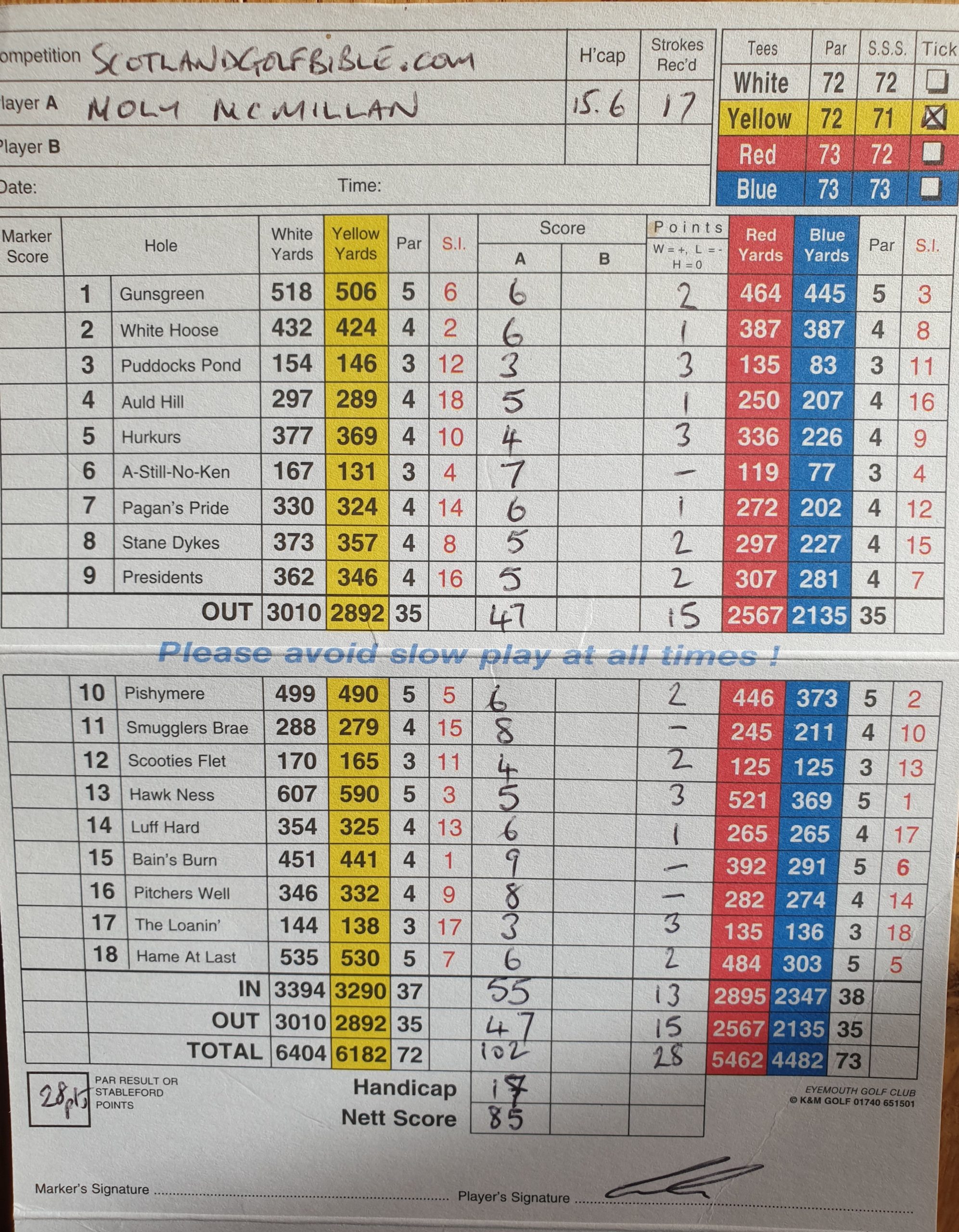
Moly’s Gross score102

Eyemouth – 102 reflects the challenge of this tough layout
« Older posts Newer posts »

© 2026 Scotland Golf Bible

Theme by Anders NorenUp ↑