A guide to green fee value for money

Category: £20 – £39 (Page 4 of 21)

151. Hazelhead Pines. 8 July 22.

Decent course that highlights beautiful municipal pricing.

Round £27. Par 67. Course Rating / Slope Rating (yellow) 67.2/119. Value (out of 5) – 3.5

Sport Aberdeen is the local council’s vehicle for publicly funded sport, with its golf offer being managed under ‘Golf Aberdeen’. They manage 5 courses in total, with three of them ( two 18 holes and one 9 hole course) being at Hazelhead Park in the west of the city. The other two courses not at Hazelhead Park are Balnagask and Kings Links.
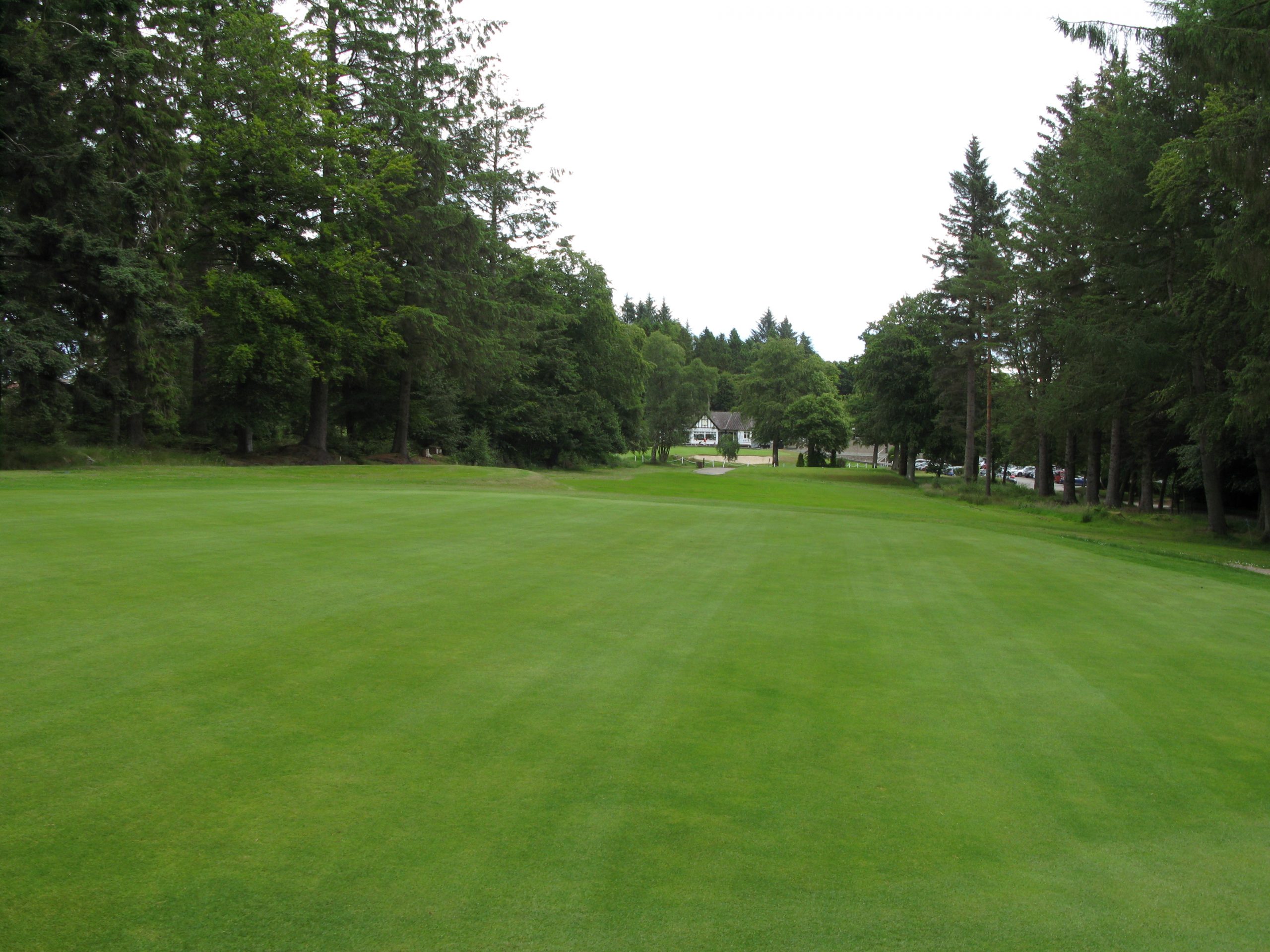
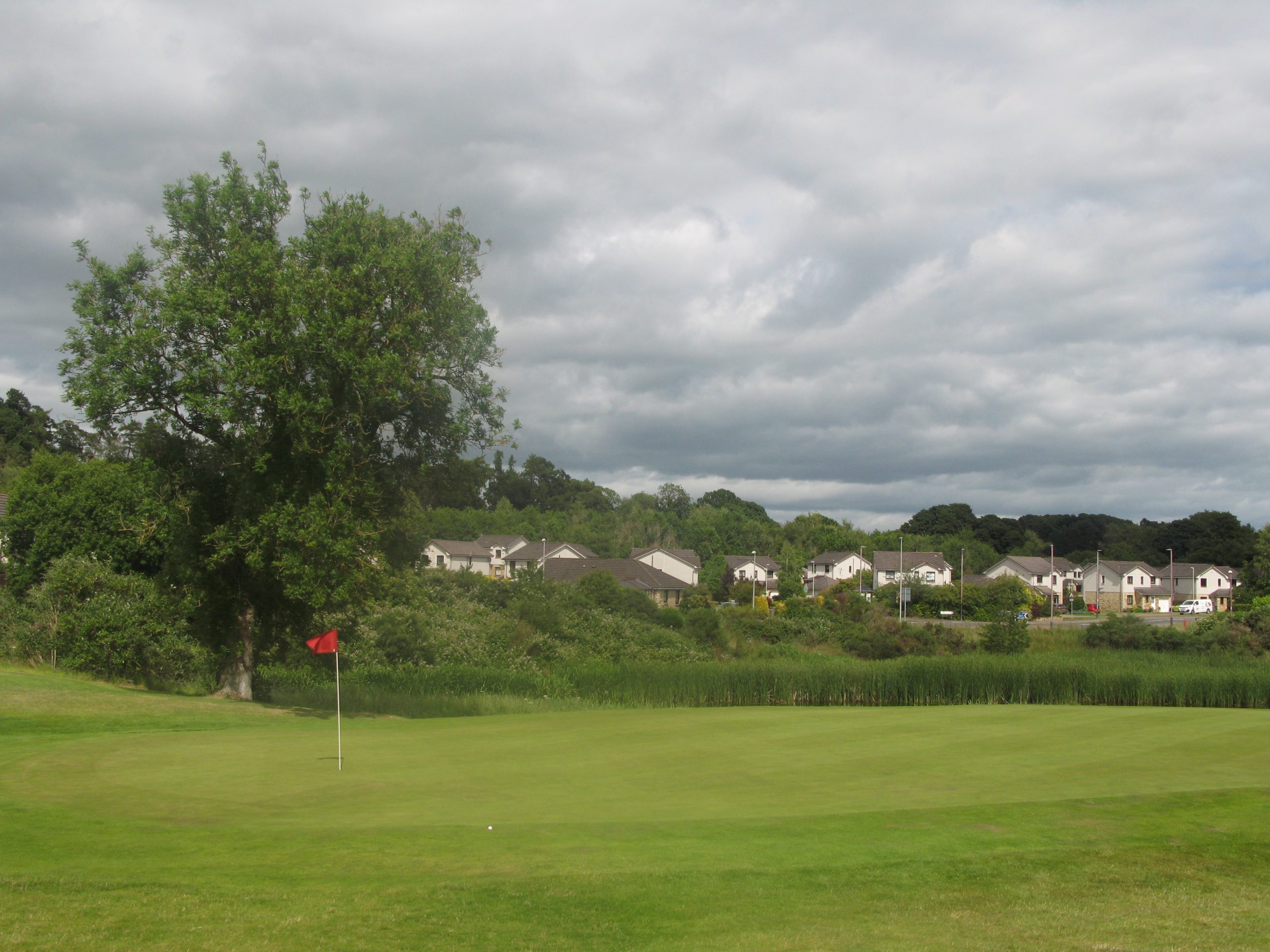
First green at Hazelhead Pines, a straight forward par 3 to start. The clubhouse is in the background.

All Golf Aberdeen 18 hole courses are priced at £27 for an individual round; albeit I was able to access Hazelhead Pines for only £22, through the Golfnow app.

The Pines course was originally a 9 hole course, but extended to 18 holes in the 1970s; it was designed by the golf architect Roger Dyer with the well known golfers Brian Hugget and Neil Coles. The three also designed other courses, including nearby Auchmill.
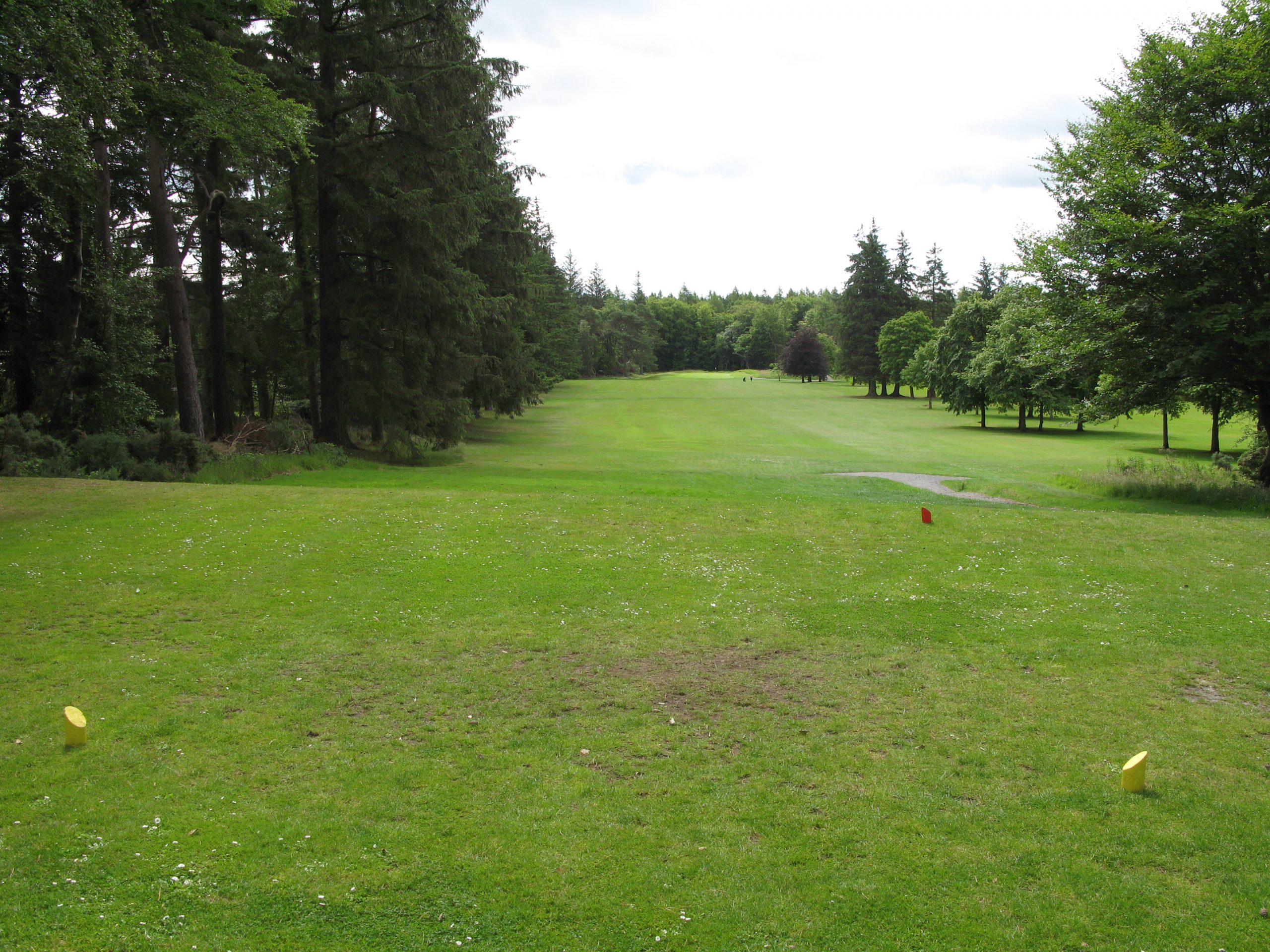
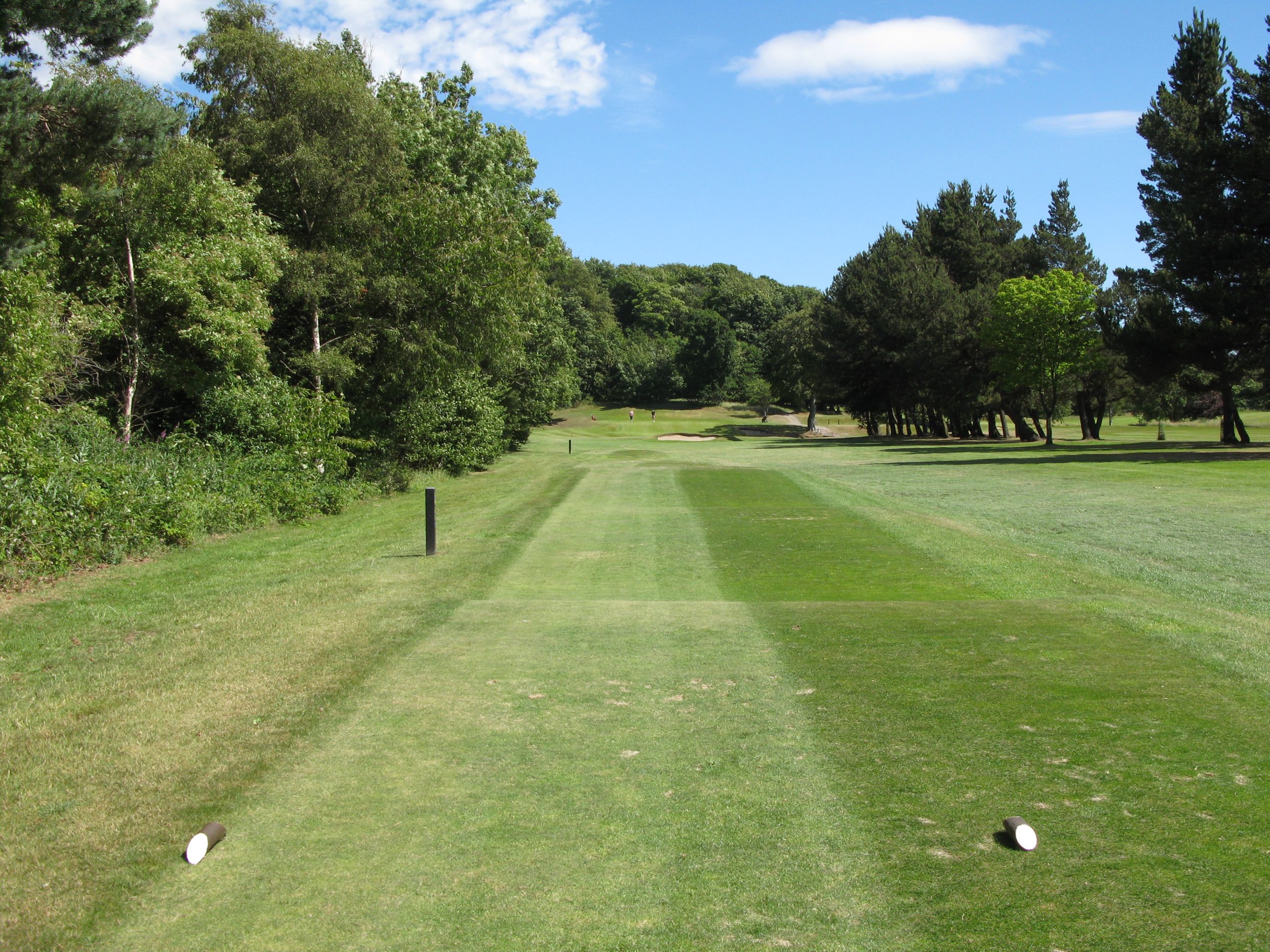
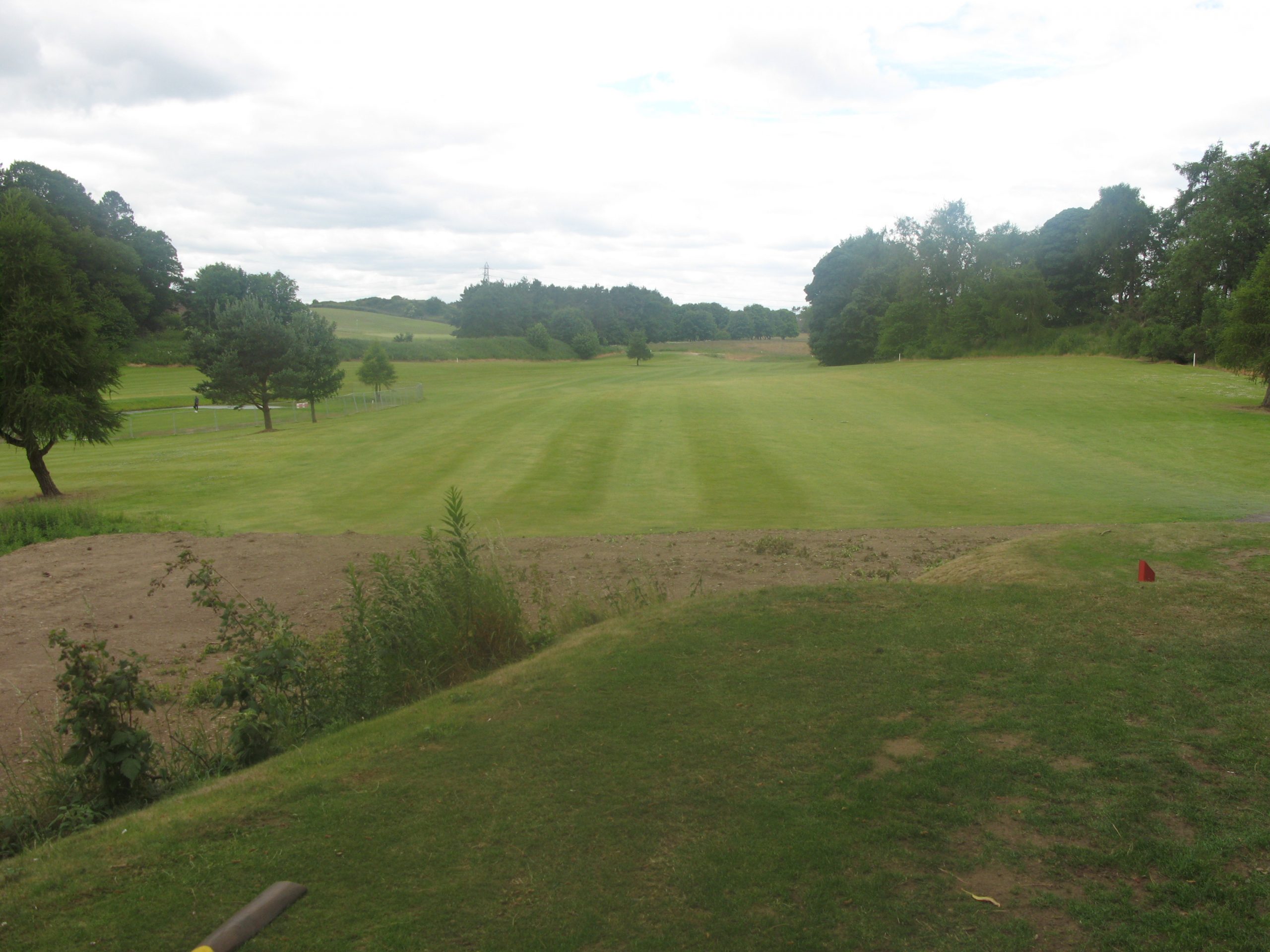
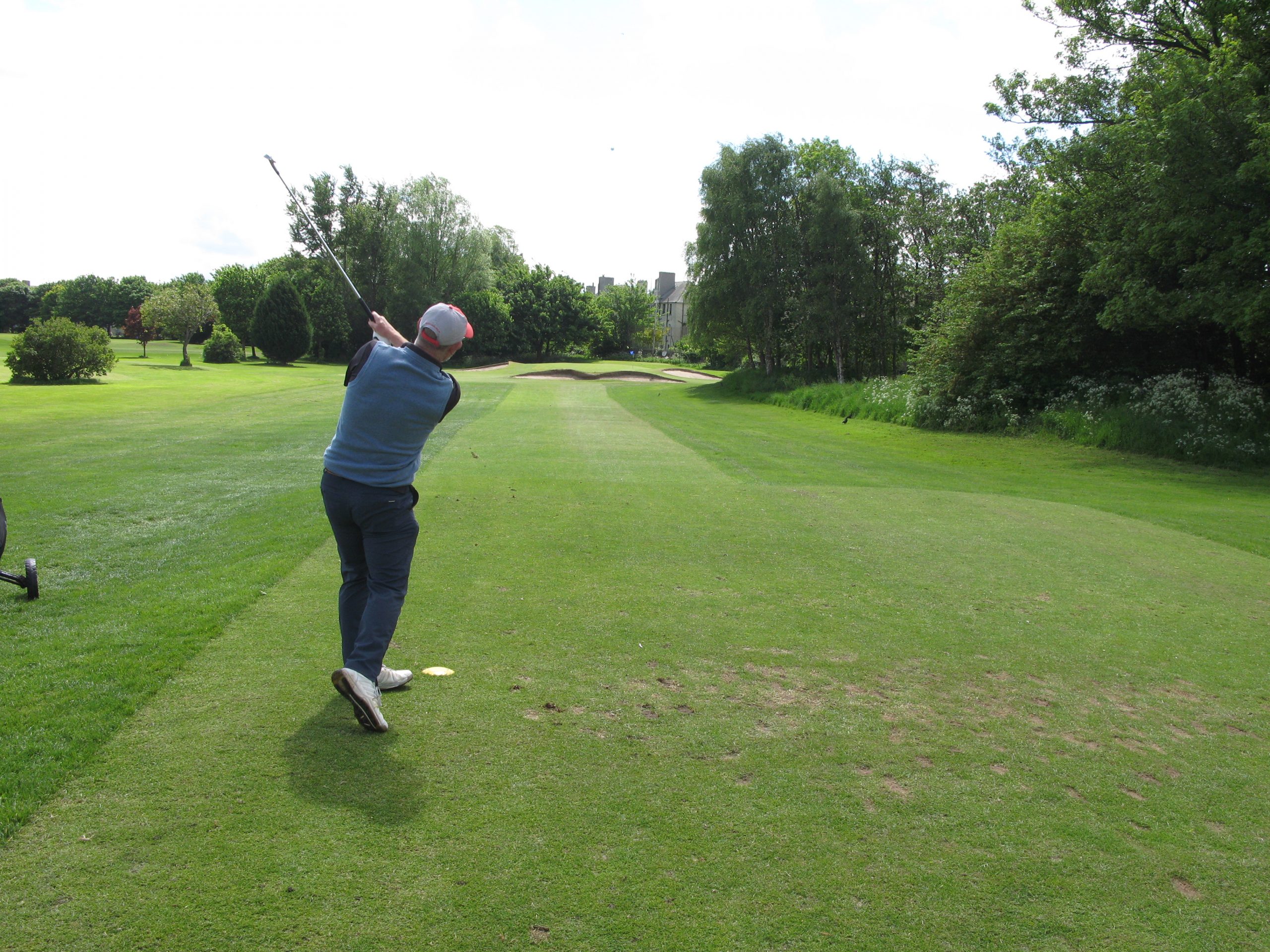
The 5th, a par four over 400 yards, a characteristic hole at Hazelhead Pines, highlighting the rather tired looking teeing ground

The best value option at Hazelhead Park, if your body can cope, is to pay the day rate of only £37, for which you can play all three of the park’s courses, which includes their “Jewel in the crown” – the MacKenzie Championship course. That being Dr Alister Mackenzie, one of the most pre-eminent golfing architects of all time, whose credits include Cypress Point, the West Course at Royal Melbourne and Augusta National.
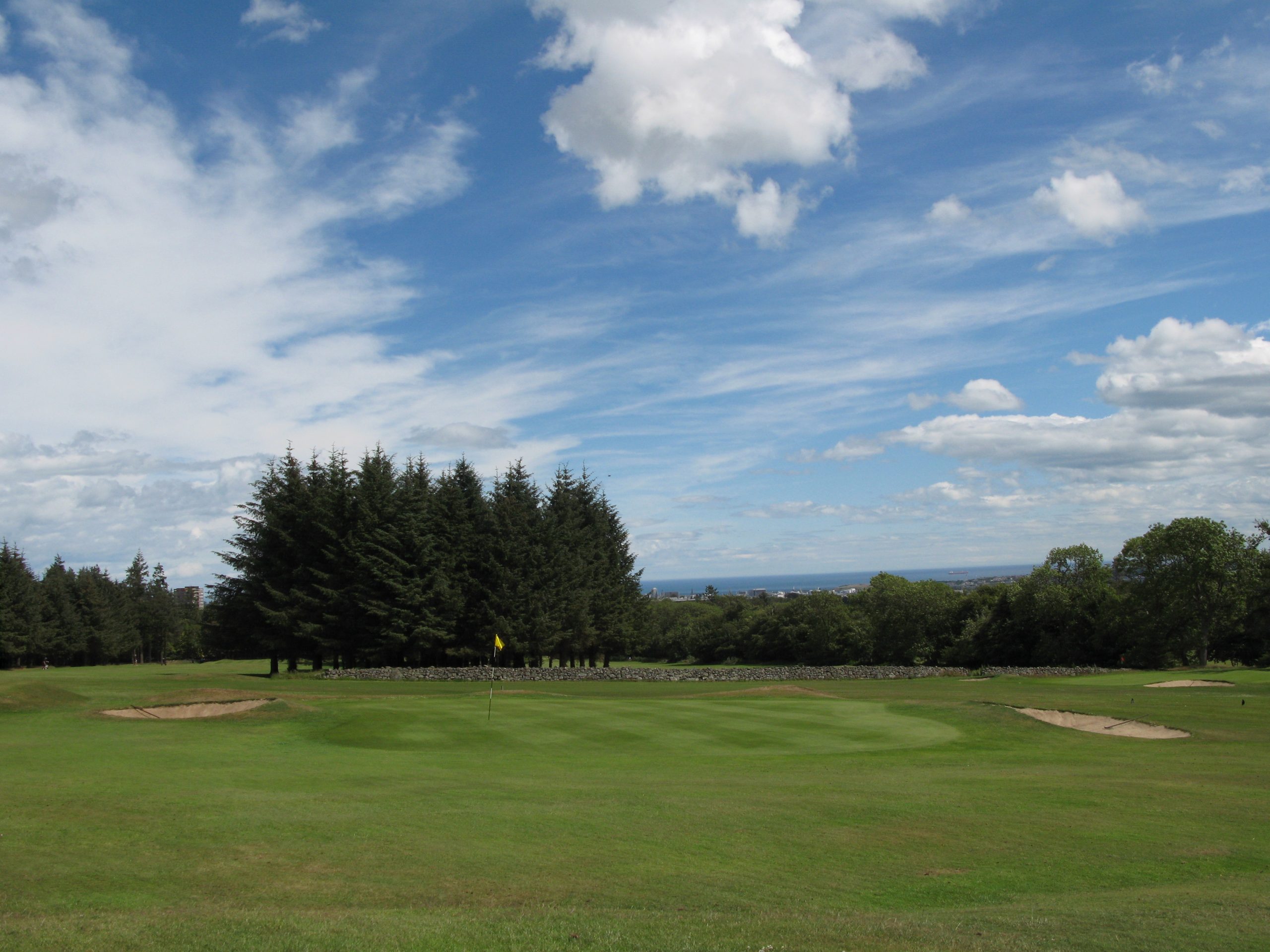
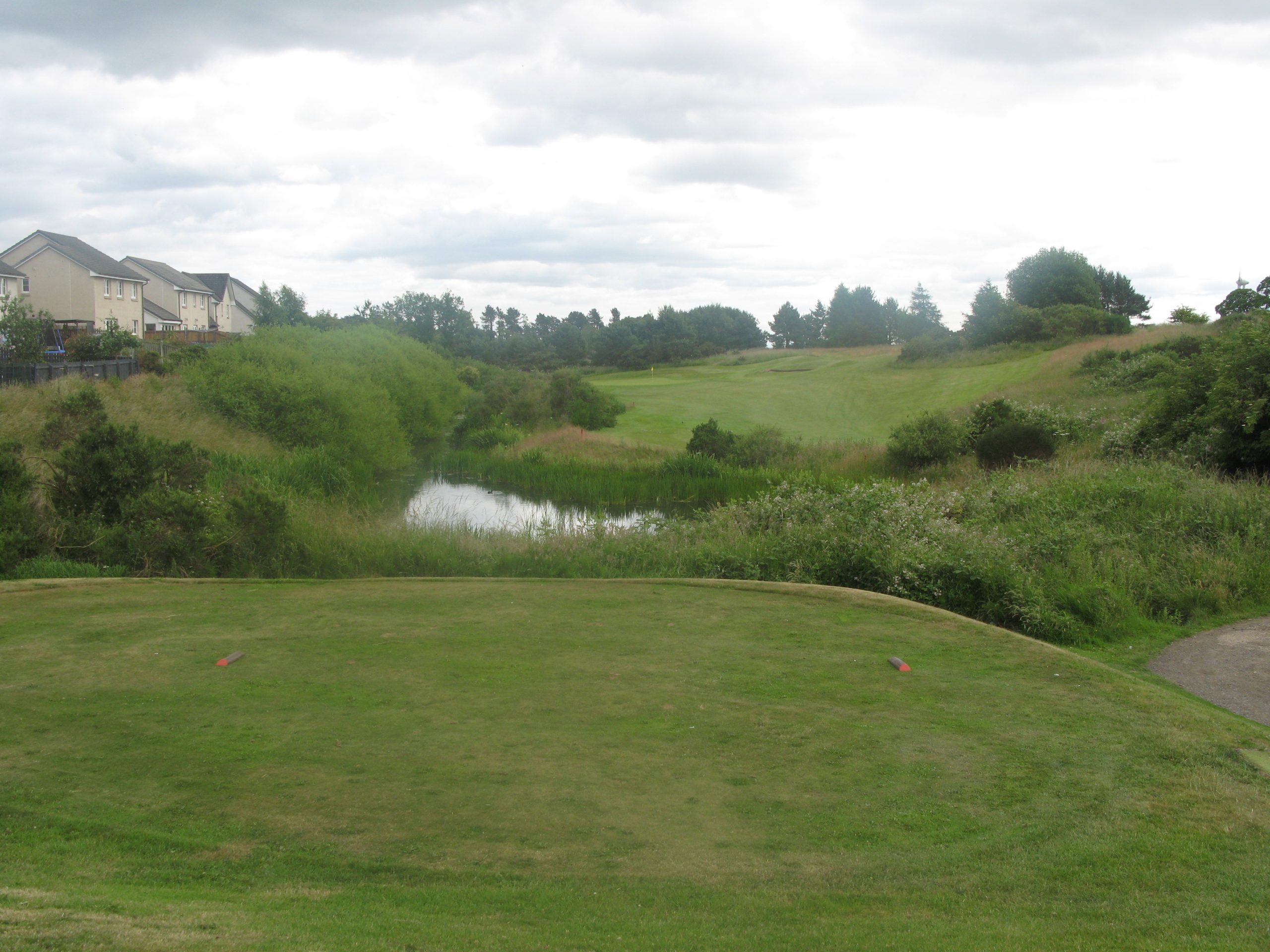
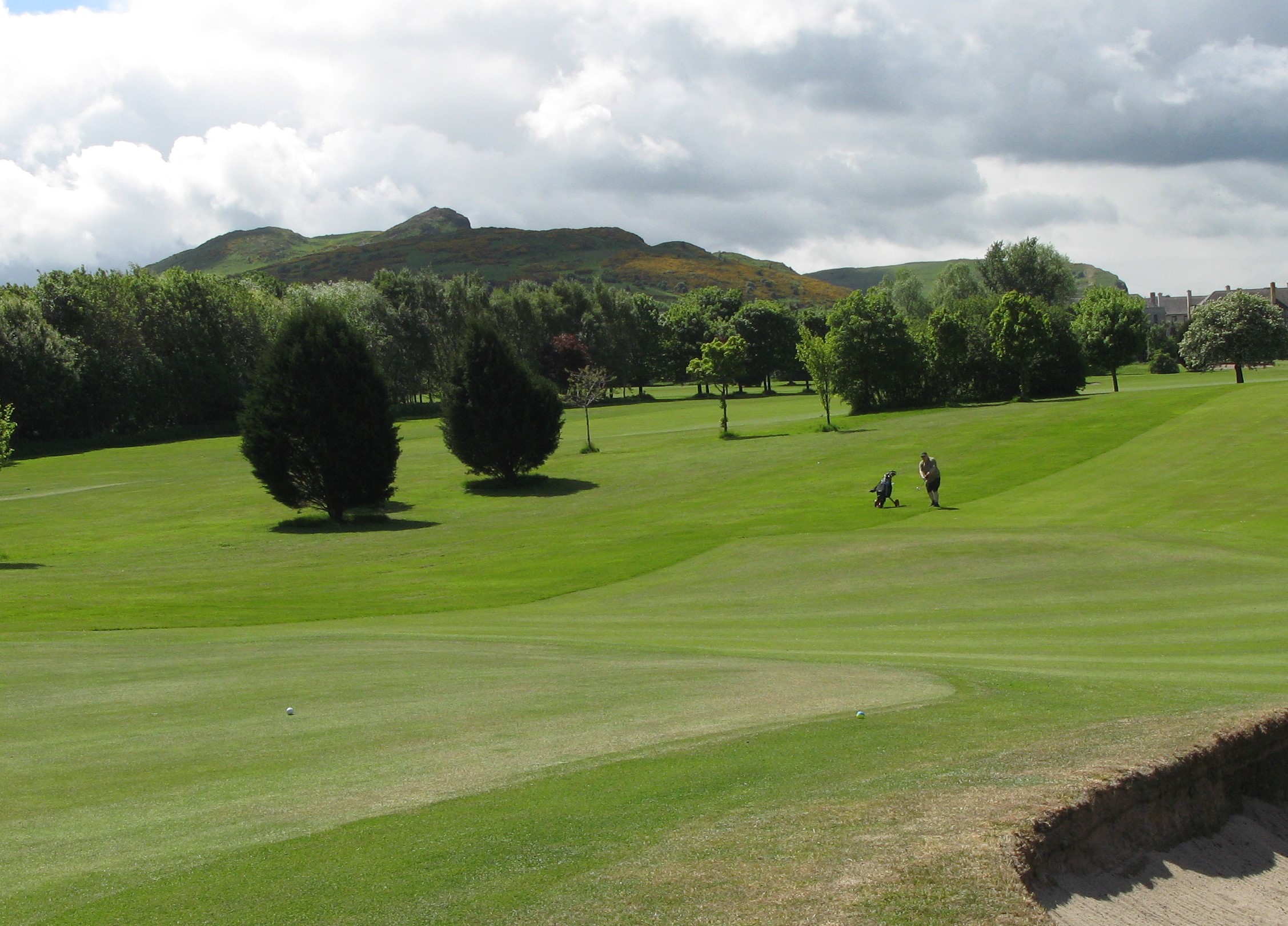
17th at Hazelhead Pines, with far reaching views over Aberdeen

This highlights a pricing anomaly. The Pines course is a nice, but pretty basic layout. Fairly short, with generous fairways that have few bunkers, a number of the holes are unmemorable. The greens are good and some are well bunkered. Other than the teeing grounds, the course was in good condition and the price tag represents decent value. The Hazelhead Park MacKenzie course on the other hand, deserves its “championship” label – a much more sophisticated track, by one of the worlds greatest architects, could attract a much higher price than The Pines. But one could argue that providing both courses at the same price, is the hallmark of good municipal golfing management.
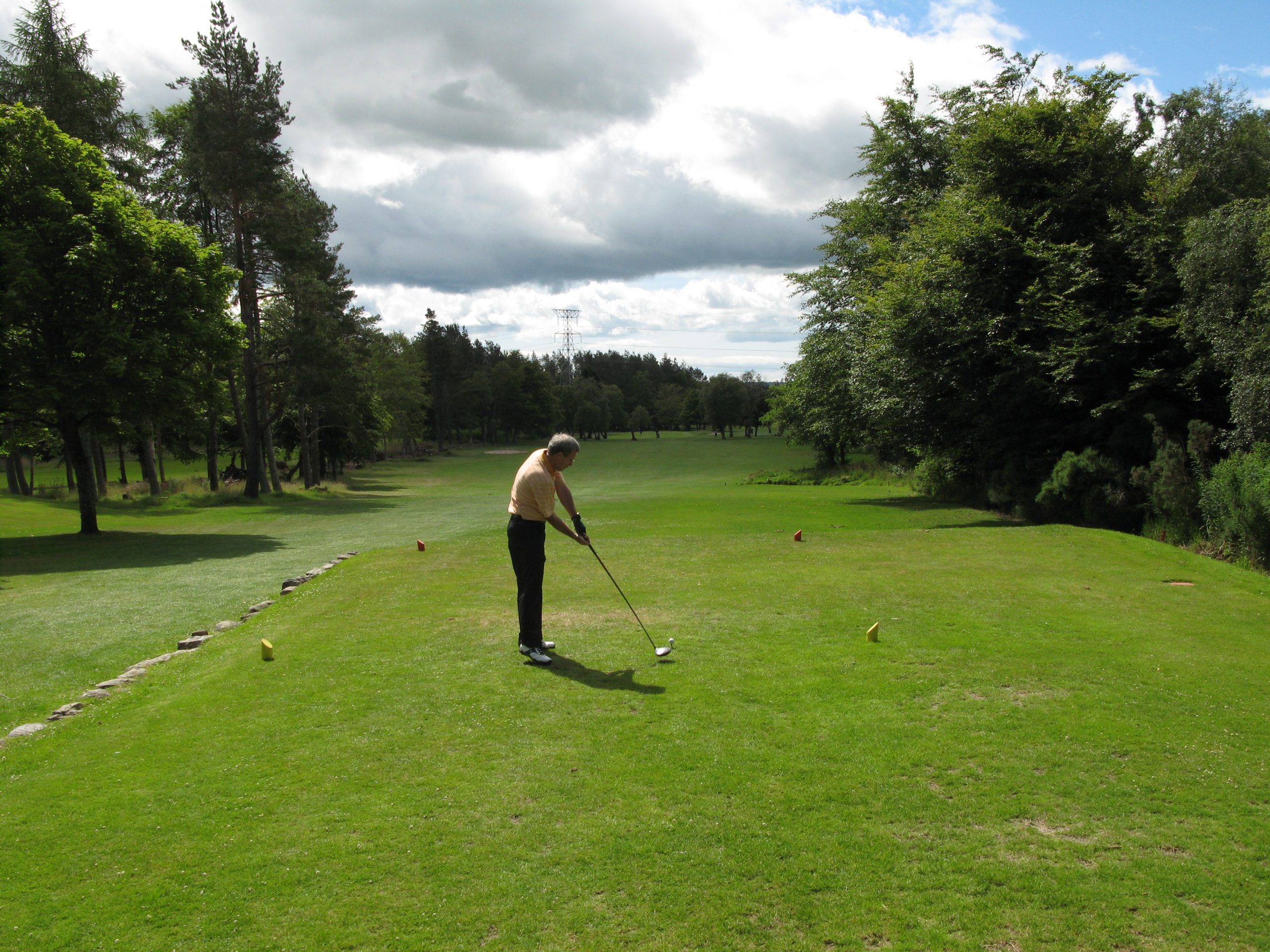
Gary Fleming, of Dullatur GC, another golfer trying to play all Scotland’s golf courses

One of the delights in playing Hazelhead Pines, was meeting up with fellow “Scottish Golf bagger” Gary Fleming, a member of Dullatur GC in Glasgow. Gary, a similar standard golfer to me, had played over 400 Scottish courses, and I was keen to pick his brains for any tips about value and planning. He had played in many Open competitions, winning a few of them – well done Gary and good luck with completing them all.
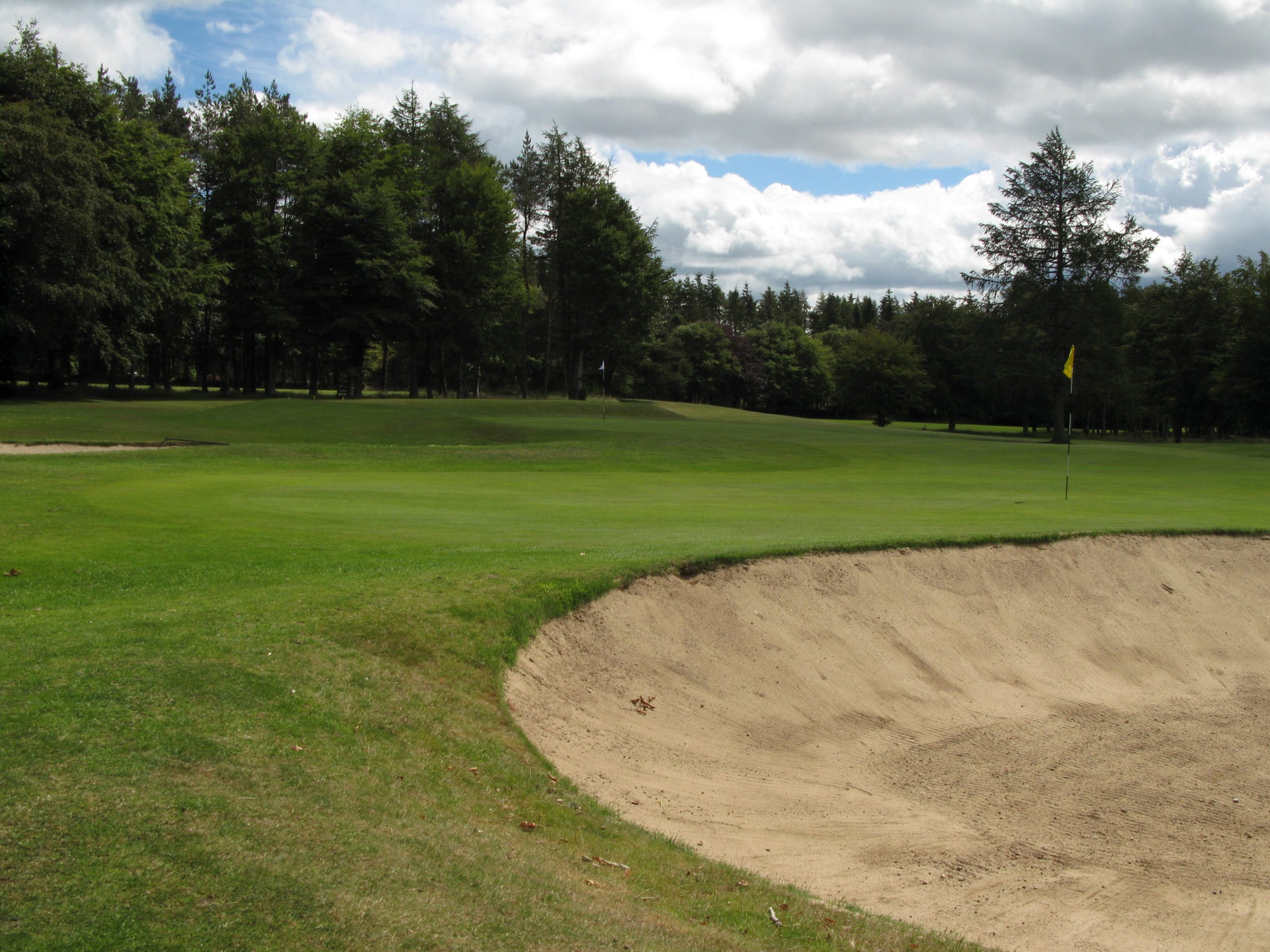
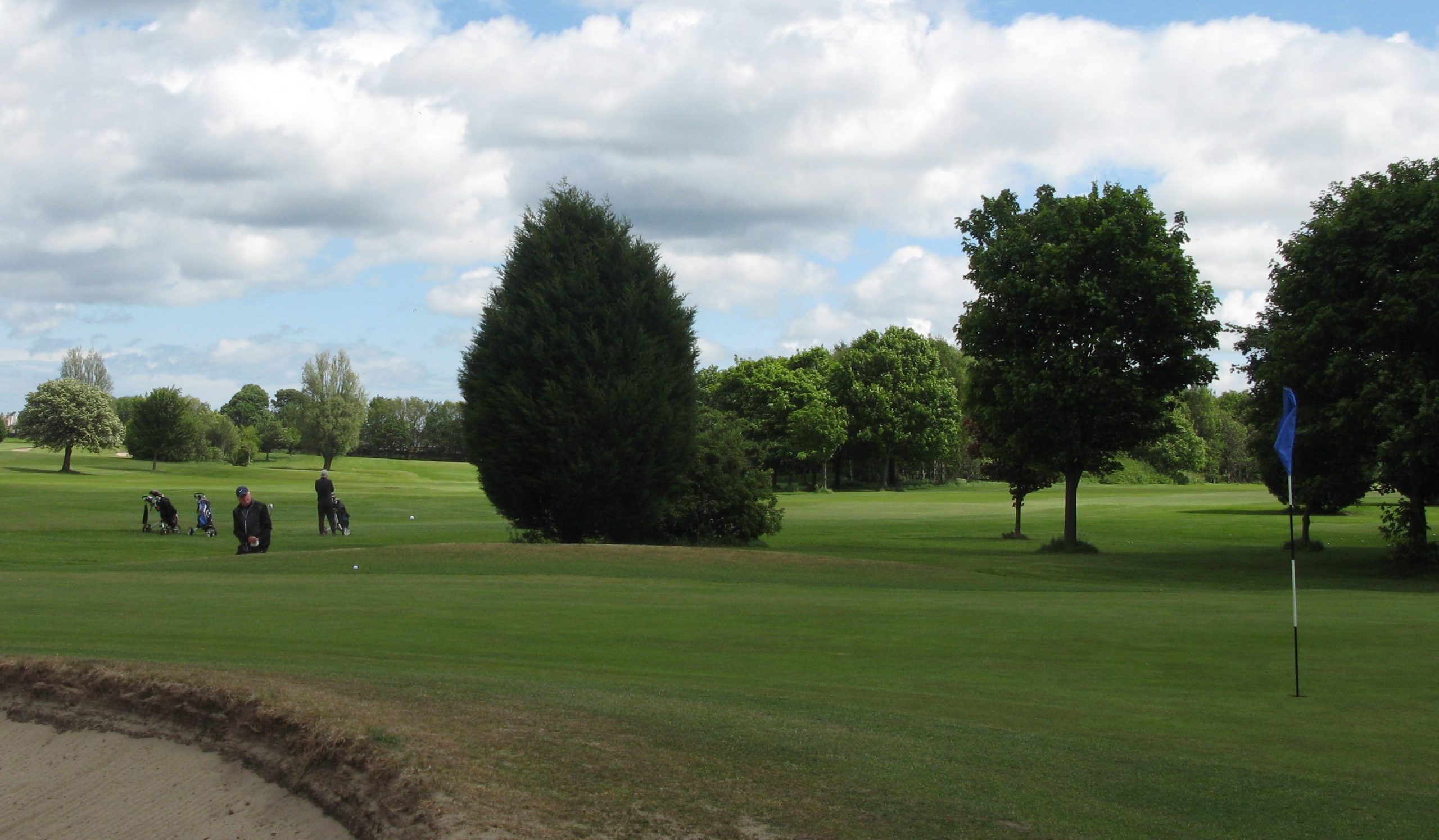
The brilliant 8th green (shared with 13th) at Hazelhead Pines, showing one of the good greenside bunkers.

Perhaps inspired by Gary, I played well, shooting 83, just 2 over net. Admittedly, the course actually played much easier than the excellent flyover videos available on the Sport Aberdeen website here would suggest – it’s not nearly as tight as it looks. In that regard the slope rating at 119 for the yellow tees feels a little high.
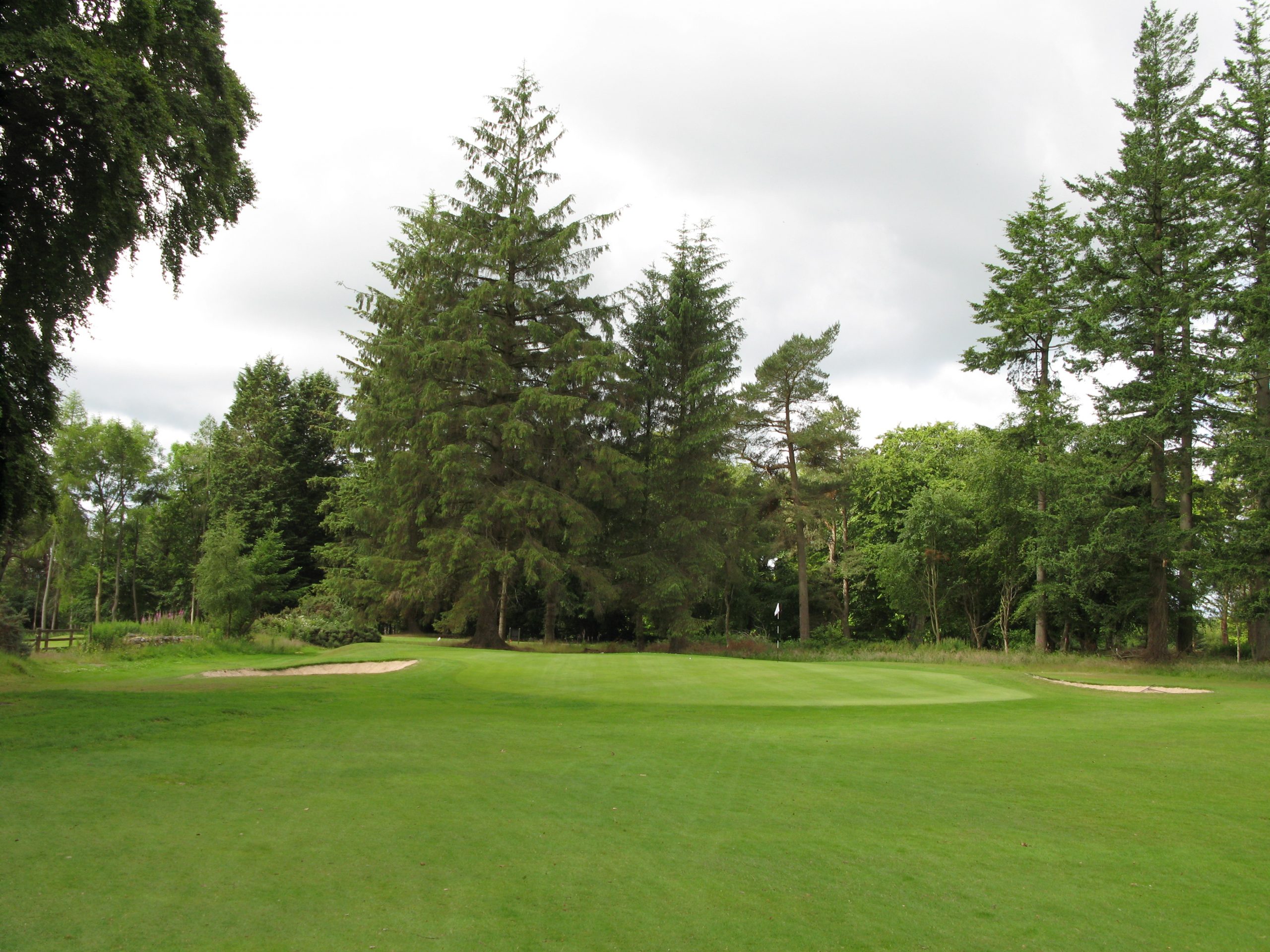
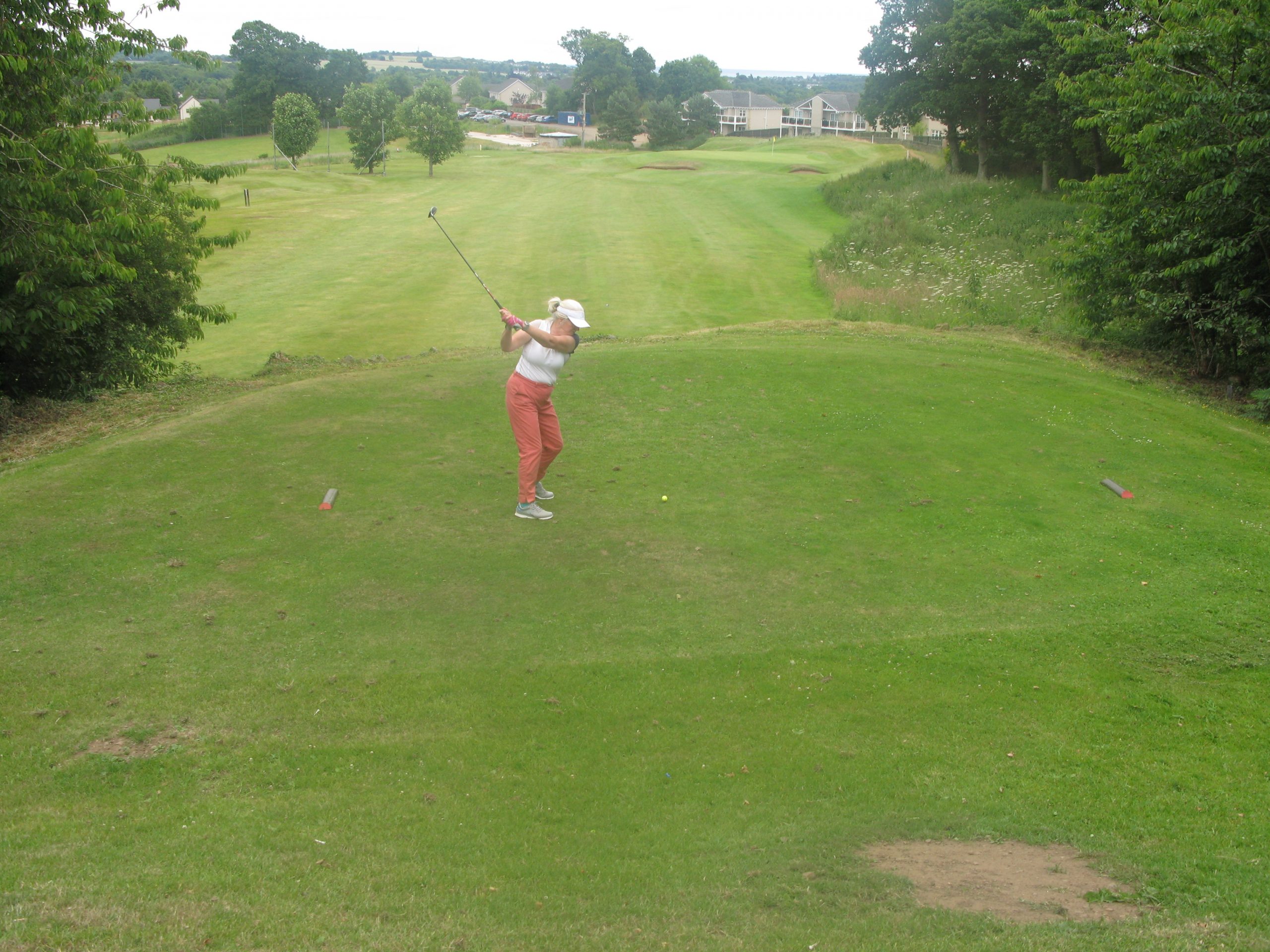
Stroke Index two 4th at The Pines, a really tough par 4.


It’s worth playing the Pines course, but if you can I suggest playing both on the same day for greatest value. That was what Gary did – he planned better than me!

Facts:

Course Type: Parkland

Par 67  (1 par 5s, 11 par 4s, 6 par 3s)

Distance (yellow): 5592 yards

Moly’s Gross score: 83
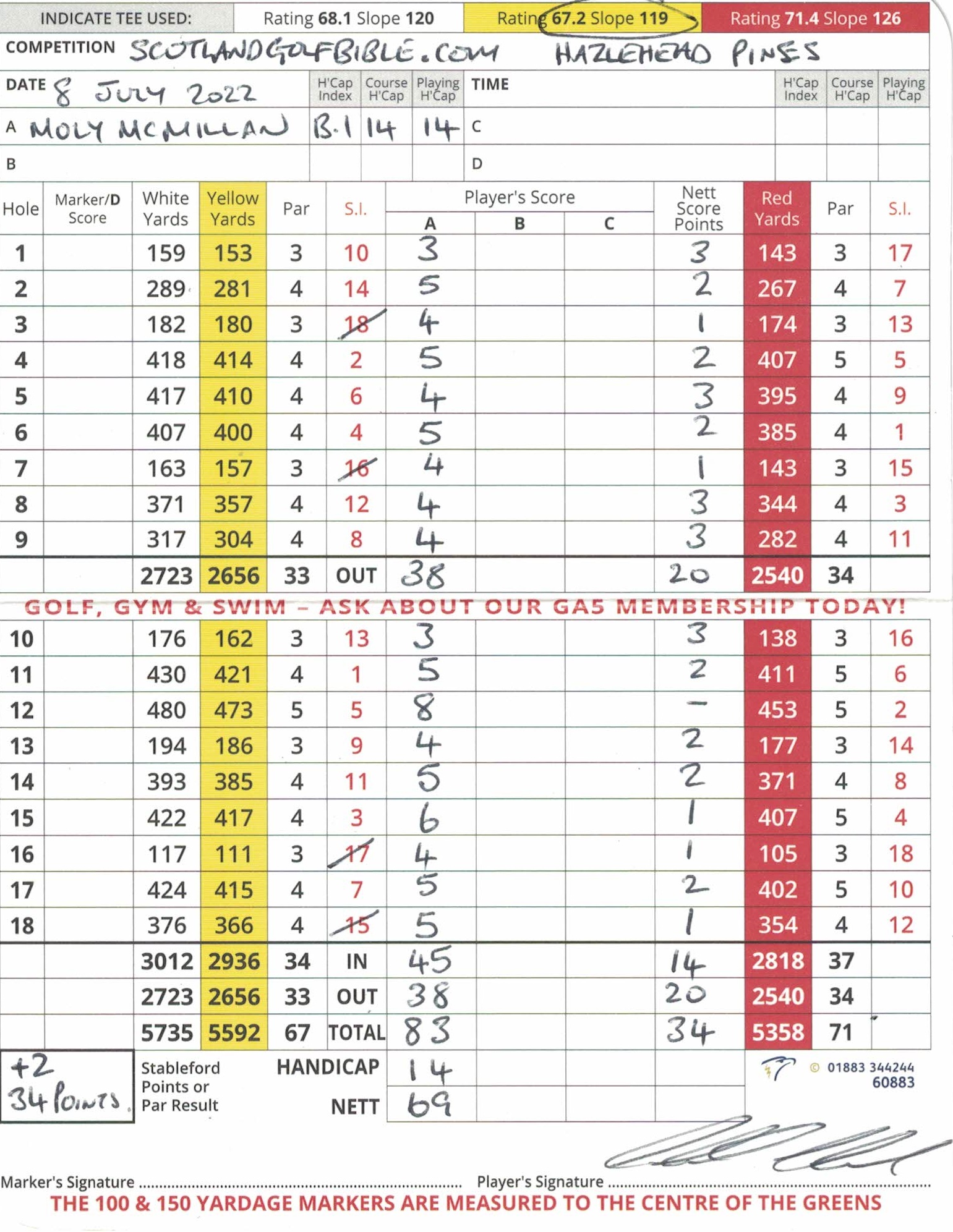
Moly’s Hazelhead Pines scorecard – a solid 83

150. Pitreavie (Dunfermline). 7 July 22.

Foreshadows of Augusta at Dr Alister MacKenzie’s only Fife creation

Round £30. Par 70. Course Rating / Slope Rating (yellow) 68.8/134. Value (out of 5) – 5

Paul Brookes, the professional at Pitreavie GC asked me, “Name an architect that has three courses consistently in any list of the world’s top 100 courses?”. He was, of course, speaking about the courses Augusta National, Cypress Point and The West Course at Royal Melbourne, all creations of Dr Alister MacKenzie. Paul could even rephrase the question to be “in the top 10 or 20 best courses ever built”, such is the regard for these designs.

The ‘camoufleur’ skill of Alister Mackenzie on show at the par three 3rd hole. A brilliant golf hole.

You could spend a lifetime, and a fortune, trying to play all of these top 10 world courses; however, you can get a glimpse of MacKenzie’s skill by playing Pitreavie in Dunfermline for no more than £30. Pitreavie is one of only three courses in Scotland fully designed by MacKenzie, the other two being Hazlehead Municipal in Aberdeen and the Eden course at St Andrews.

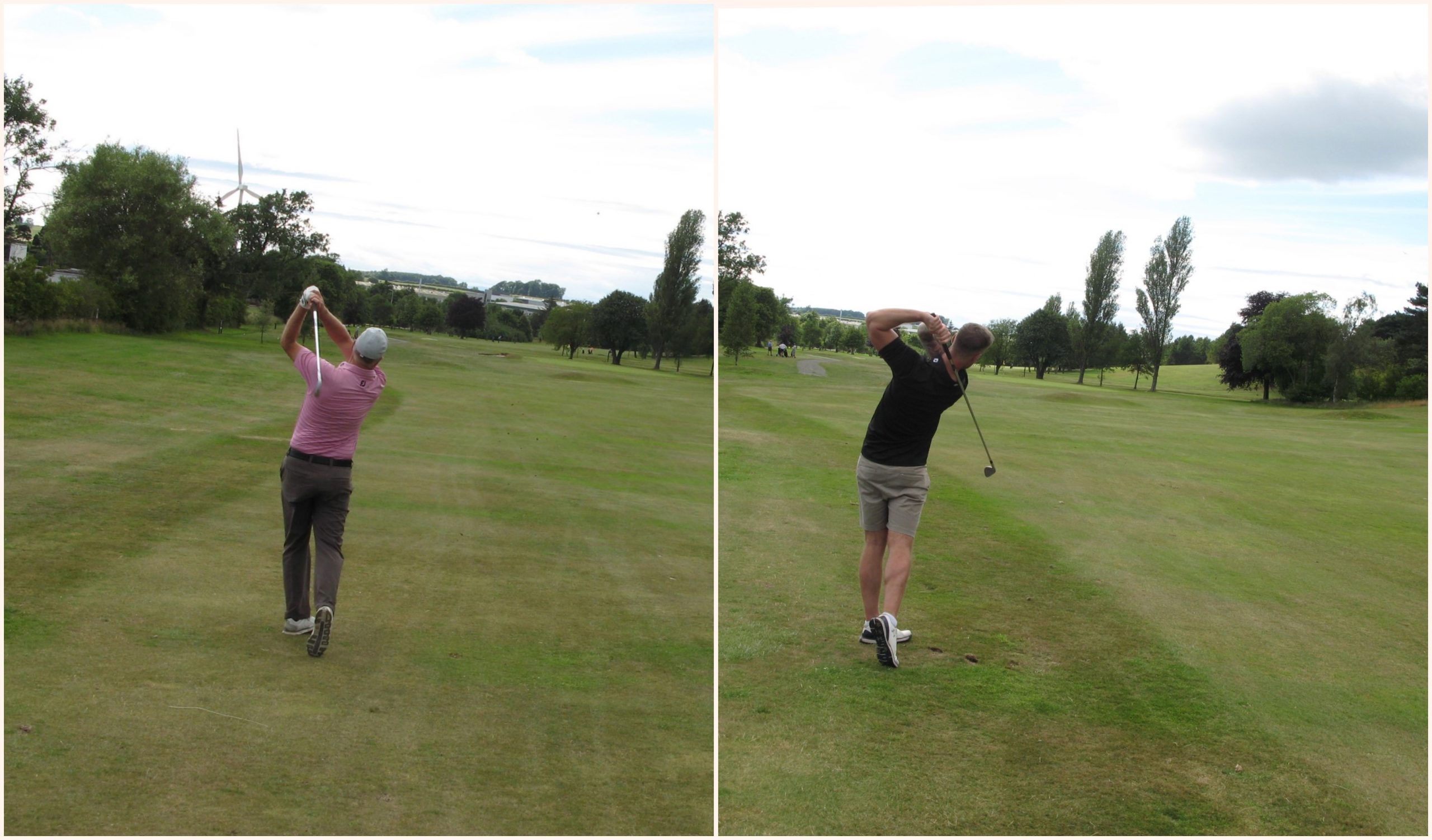
Moly tees it up at the fifth hole, one of the more scoreable par 4s on Pitreavie.

Born of Scottish parents, MacKenzie was in fact a Yorkshireman. His Scottish name must have been handy though in the early 20th Century US golf growth period, at a time when many of the great Scottish designers, such as Donald Ross (Pinehurst) and Tom Bendelow were making great advances.

The very wide and narrow 12th green at Pitreavie, a downhill par 3 of only 135 yards. A great hole. The entrance is from the right of this picture.

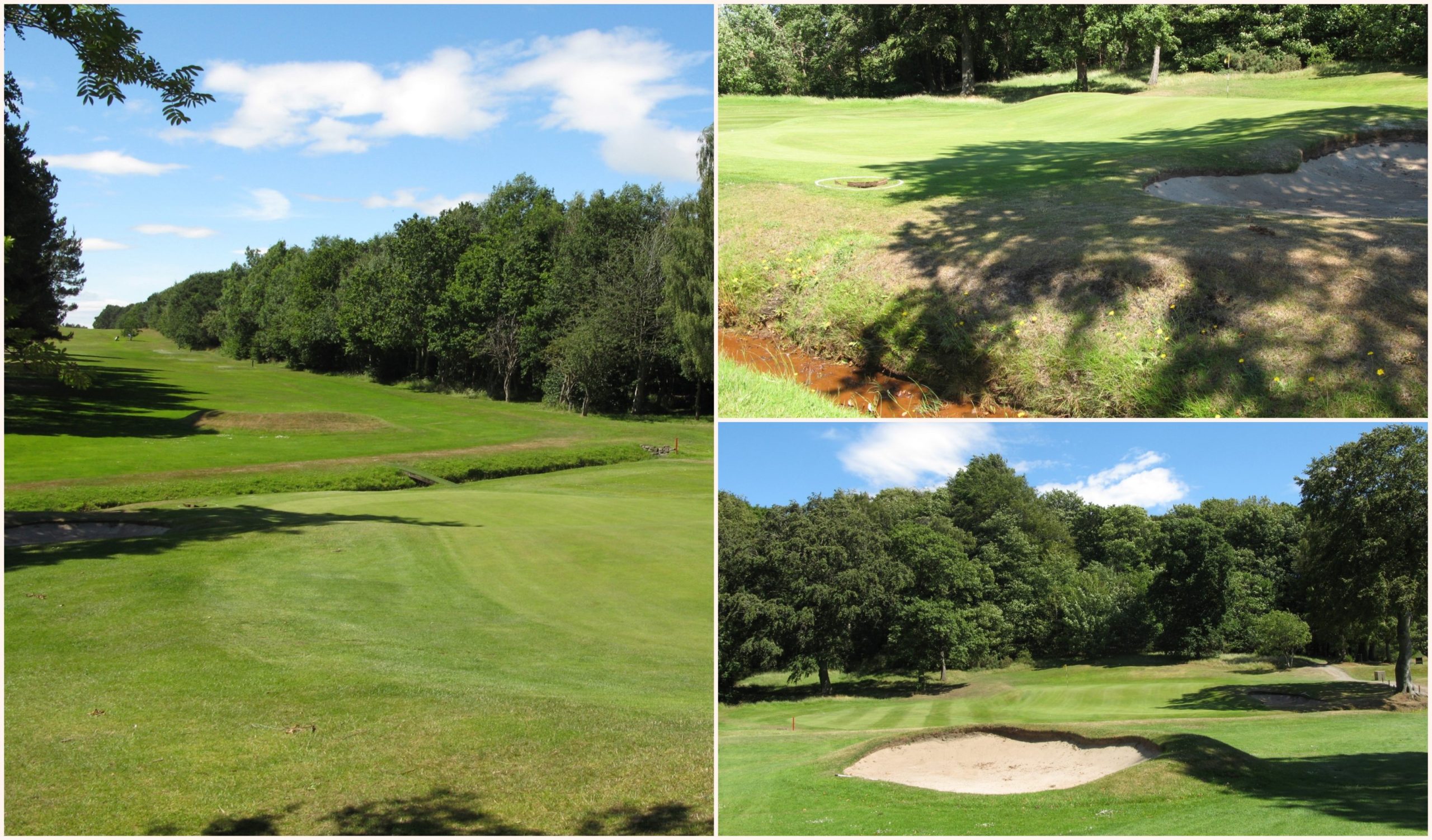
After two par fives to start, the third is the first real glimpse of MacKenzie’s skill. A long par three, it is the stroke index 2 hole, with a teeing ground almost 65 yards long giving many distance options. But looking at the hole you can’t readily see how hazardous it is. Medical army doctor MacKenzie had specialised during the Boer war and then WW1 to become a camoufleur, a specialist in camouflage. He was to later note the similarities between camouflage and golf design. At the 3rd, there is a hidden burn running across the front and up the right of the long multi level green. It is a formidable ‘camouflaged’ hole, as your eye is drawn naturally to the green tiers.

The third, the most beguiling of par 3rd at nearly 200 yards. I can imaging even low handicap players playing as a 2 shot hole.

This clever use of the burn is brought into play on several more holes, notably the par threes 6th and 12th holes, and most cunningly at the par four 13th hole, the Stroke Index 1. When you play Pitreavie, keep in mind the use of Ray’s Creek at Augusta, especially at the front of the 13th green. It’s the symmetry between both 13th holes, at Augusta and Pitreavie, that adds to the story.

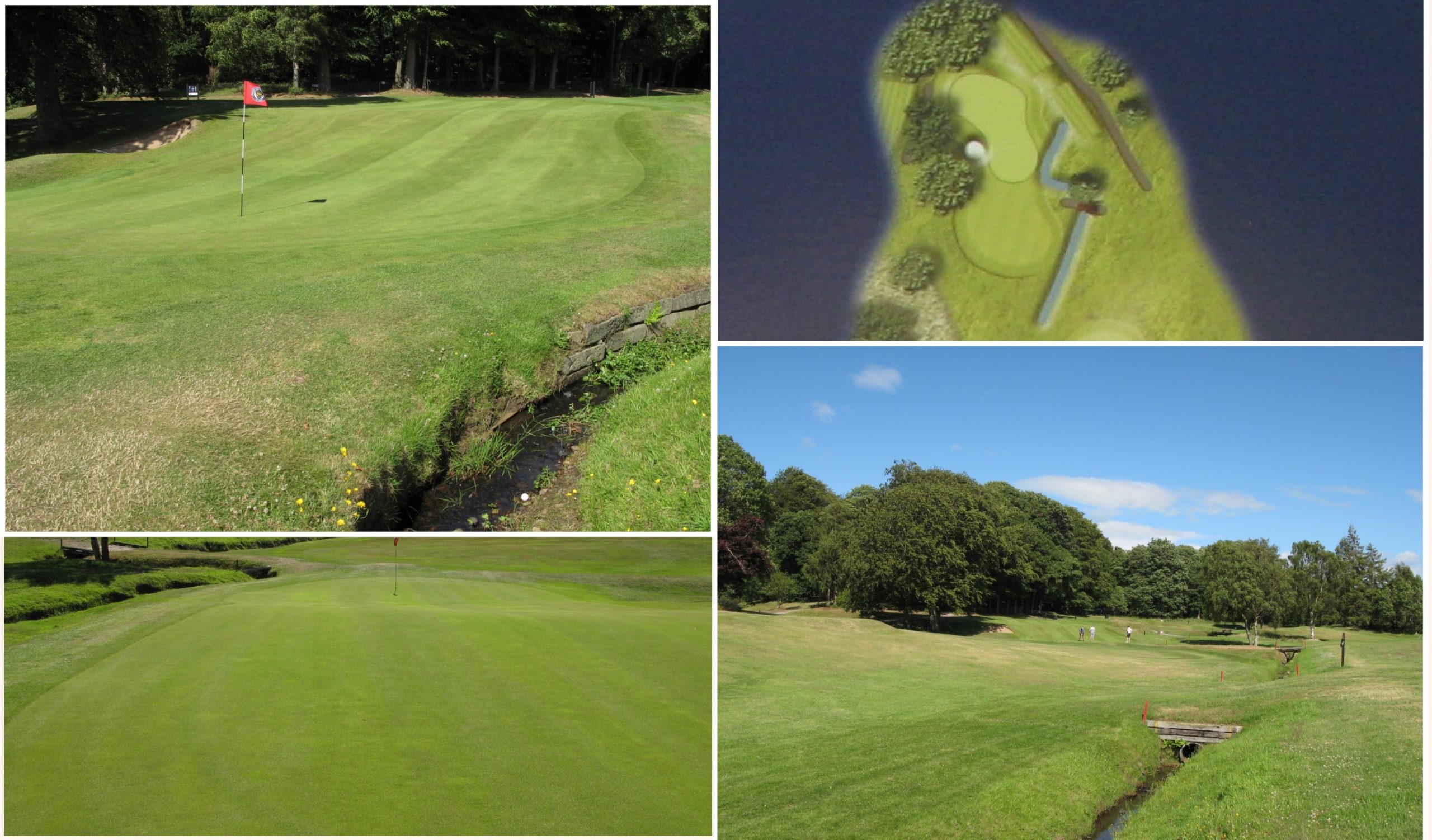
The wonderful par four SI1 13th hole at Pitreavie. Have a close look at the course map (top right) at how the burn cuts into the green, but is completely unseen from the approach (bottom right). You can see my ball in the top left picture!

Another feature of the course is the undulating terrain. This gives rise to the question about how closely did MacKenzie follow his own 13 principles of course design published in Golf Architecture (1920). “The greens and fairways should be undulating, but there should be no hill climbing”, also “There should be a minimum of blindness for the approach shots”. Whilst there are several blind tee shots, there are indeed no blind approach shots; however, I’ll leave readers to find out about how tough a walk it is in places!

I met up with local members, father and son, Ian and Dean Black. Ian on the left here, with both shown playing into the 17th green.

The course was in great condition when I played. The sand in the bunkers was perfect, often an overlooked part of parkland maintenance. There are also outstanding views from several tees, towards the Queensferry Bridge.

The fairways were fairly open, which reinforces the difficulty of the green surrounds that contribute to the slope indices well into the 130s for both white and yellow tees.

I met up with local members Ian Black and his son Dean, and we enjoyed a few holes together, and I listened to how they were very happy with the course and how good value the membership was.

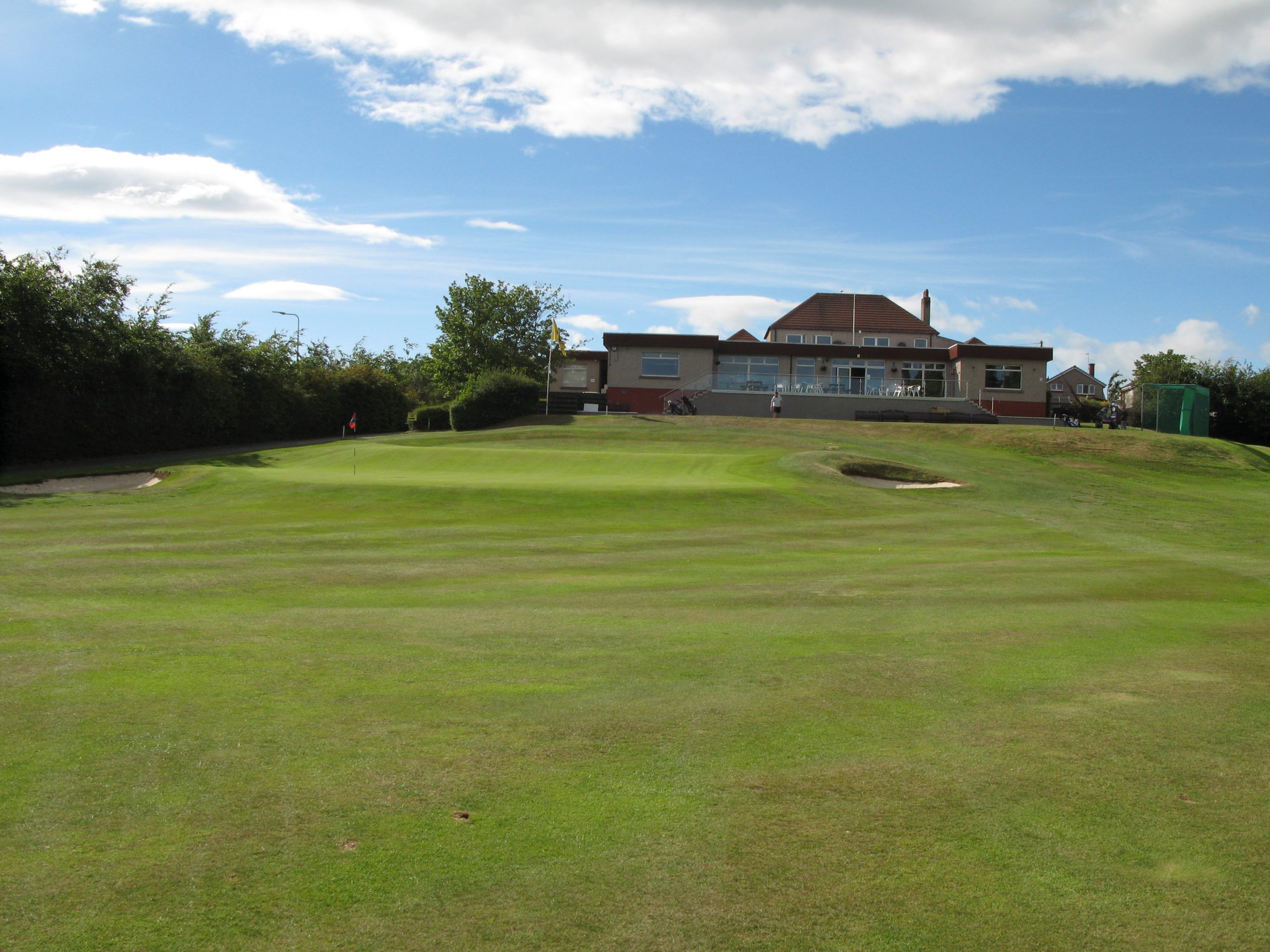
The beautiful 18th green at Pitreavie, adhering to Alister MacKenzie’s design principles.

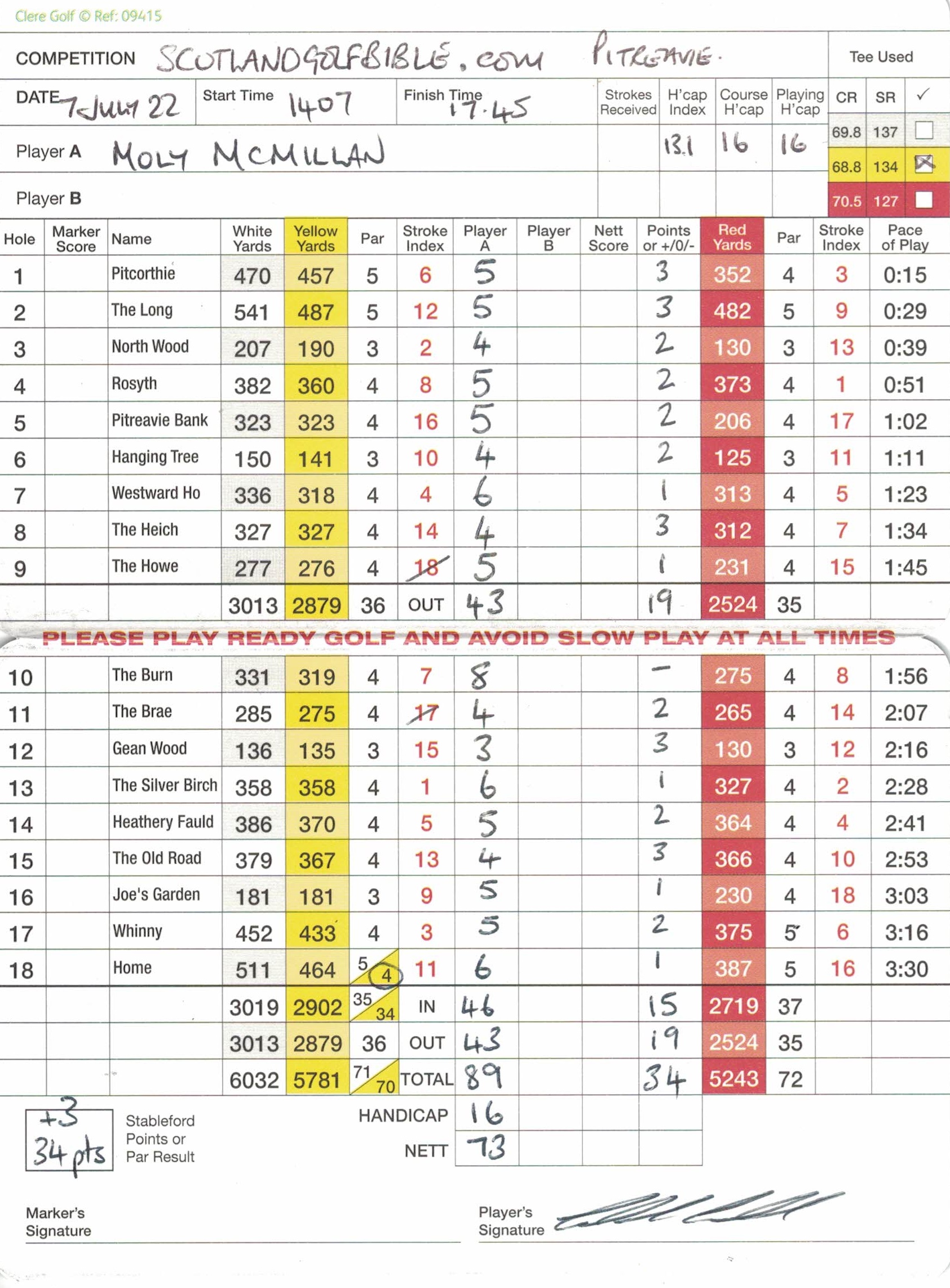
I played well, shooting 89 for 34 stableford points, with only one blob/disaster at the 10th, where I took an 8 at one of the few dog leg holes.

As to value, although there are a few weaker holes, to be able to experience some of MacKenzie’s genius at no more than £30 (I paid only £17.99 on Golfnow) means 5 out of 5 for me. This is outstanding value and highly recommended.

Facts:

Course Type: Parkland

Par 70  (2 par 5s, 12 par 4s, 4 par 3s)

Distance (yellow): 5781 yards

Moly’s Gross score: 89

Moly’s Pitreavie scorecard – 89 for 34 stableford points.

148. Ballumbie Castle. 5 Jul 22.

Perennial struggle for Ballumbie Castle

Round £25. Par 69. Course Rating / Slope Rating (yellow) 68.3/122. Value (out of 5) – 2

With good municipal courses still available in Scotland, but declining in number due to council budget cuts, the race is well underway to see whether courses like Ballumbie Castle survive.

The dog leg right 2nd hole, the common feature on this fairly uninspiring and ‘tired’ course

I know this course and area well, it being a stone’s throw from my wife’s family home. I was intrigued during the late 80s and 90s when several courses were built in the wider area, including Letham Grange, near Arbroath, which finally closed in 2019. I was skeptical about the business case for these courses, often heralded as part of housing or leisure developments. My question was why pay more to play Ballumbie than nearby municipal Caird Park or Monifieth Links? Moreover, why pay more for Letham Grange when as an Angus resident you qualified for nearby world class Carnoustie?

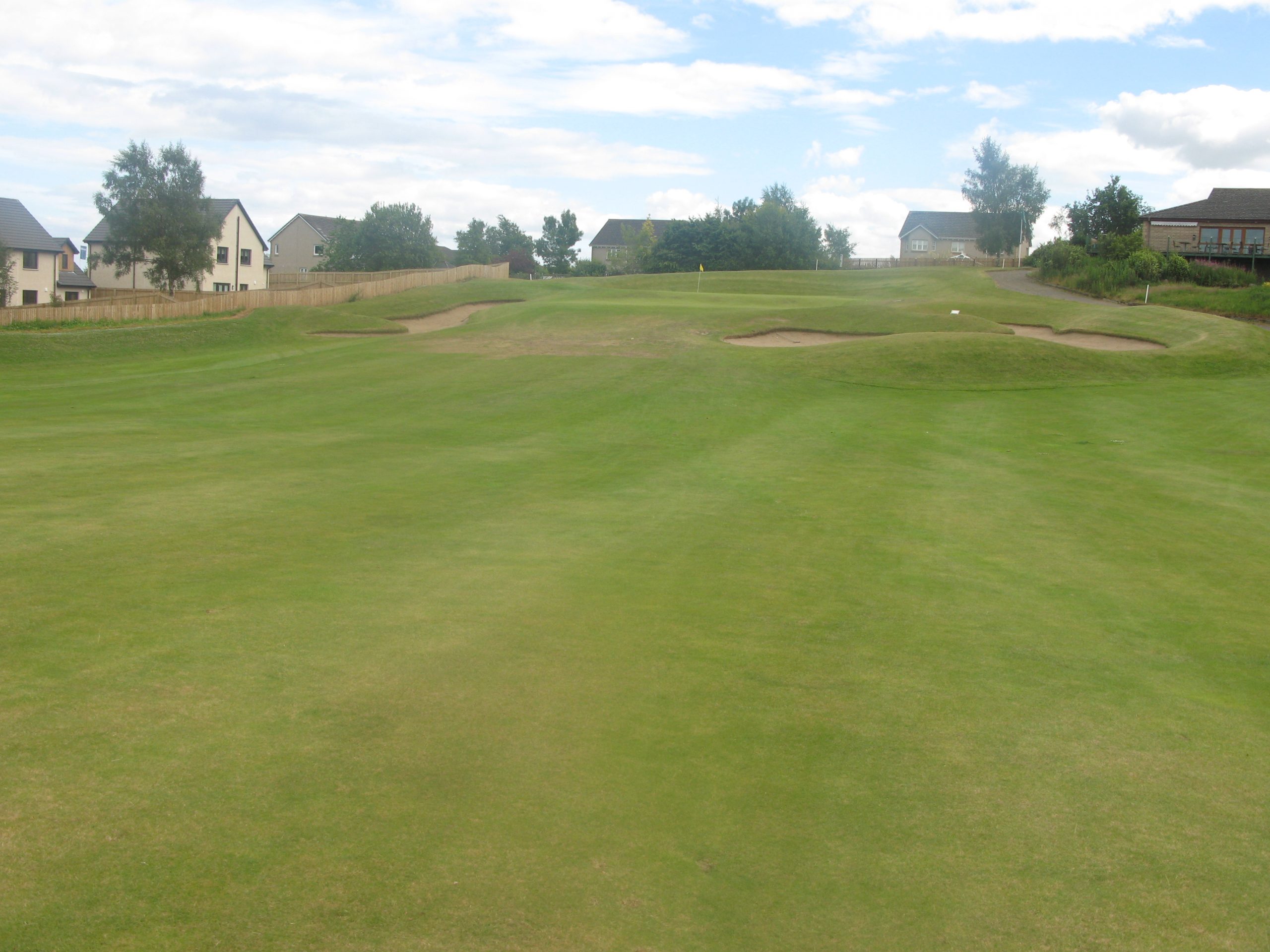
The par three 11th, the best hole on the course, not surprisingly the area dominated by overlooking houses.

Look closely at the 20 years of Ballumbie Castle’s history and you uncover a repeated saga of dissolved companies or companies in administration and protracted housing development applications. The last point is the open secret, the land’s inherent value is in housing, not golf which is often a means to an end. The former dream of living in a golf development must be a bitter pill for those still housed overlooking the former Letham Grange course landscape. Ballumbie Castle Estate householders must wonder how long their golf course views will remain.

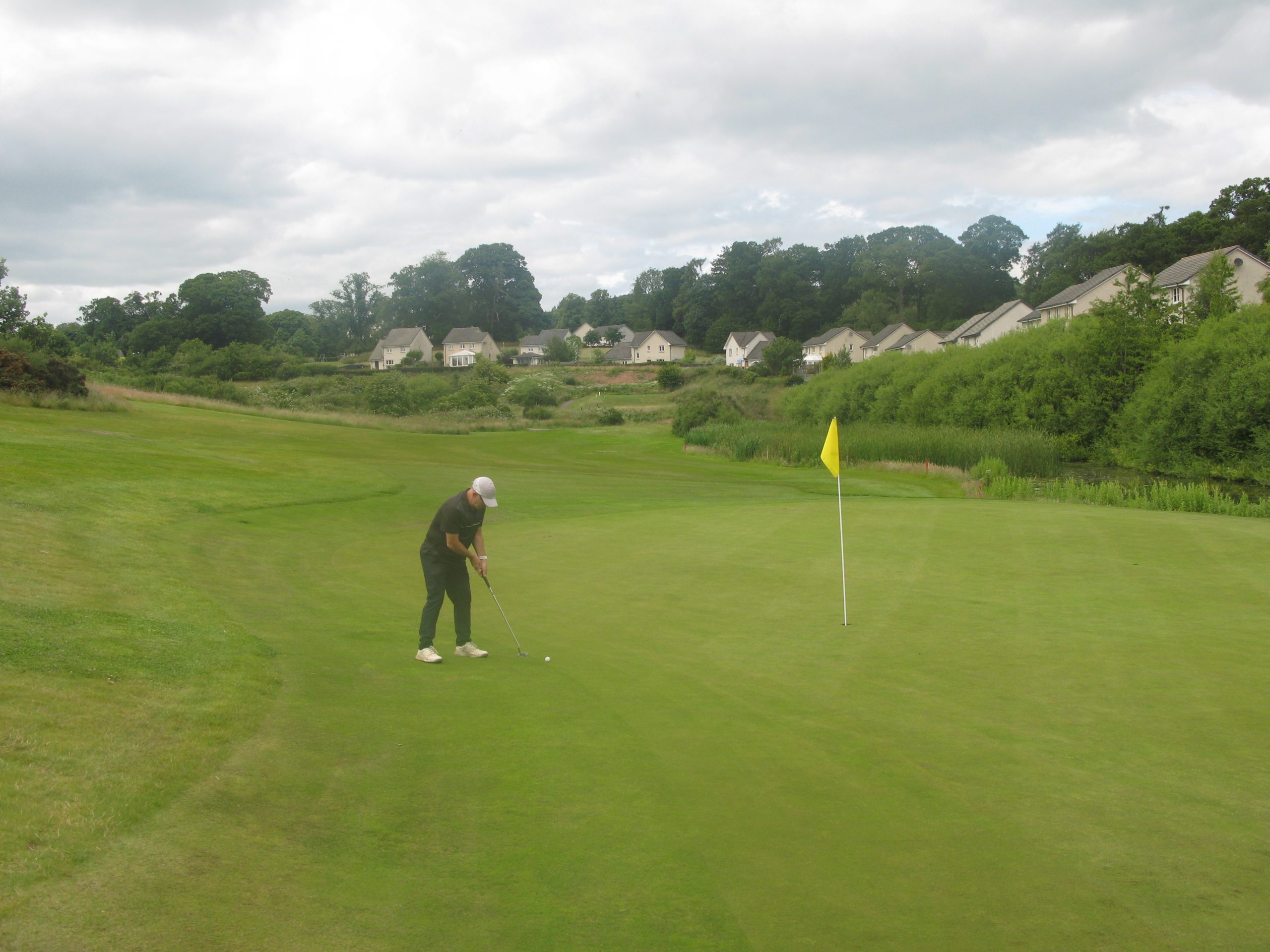
Fran at the par three 4th hole, where we both nearly made birdie.

The course itself is laid out in 4 varying sized parcels of land around a small hill and housing access roads, with fairly long walks between the sections. There is a nice mix of holes, but the predominant feature is of dog-leg right par fours, with seven of them. Not great if you are a mid length fader of the ball, like most mid to high handicap right handers. Low handicap faders though must revel on this course.

12th green at Ballumbie Castle, a short par three at 141 yards

Over the years, the course condition has declined steadily, matching the financial struggles of each management regime. Whereas the tees were previously pristine with great tee box markings, those days are long gone, with only one tee box marker (the 17th) being left from its glory days.

The greens and fairways were still okay, but the bunkers could have been better kept.

Moly at the 11th green, a long par 3, which should have a higher stroke index in my book.

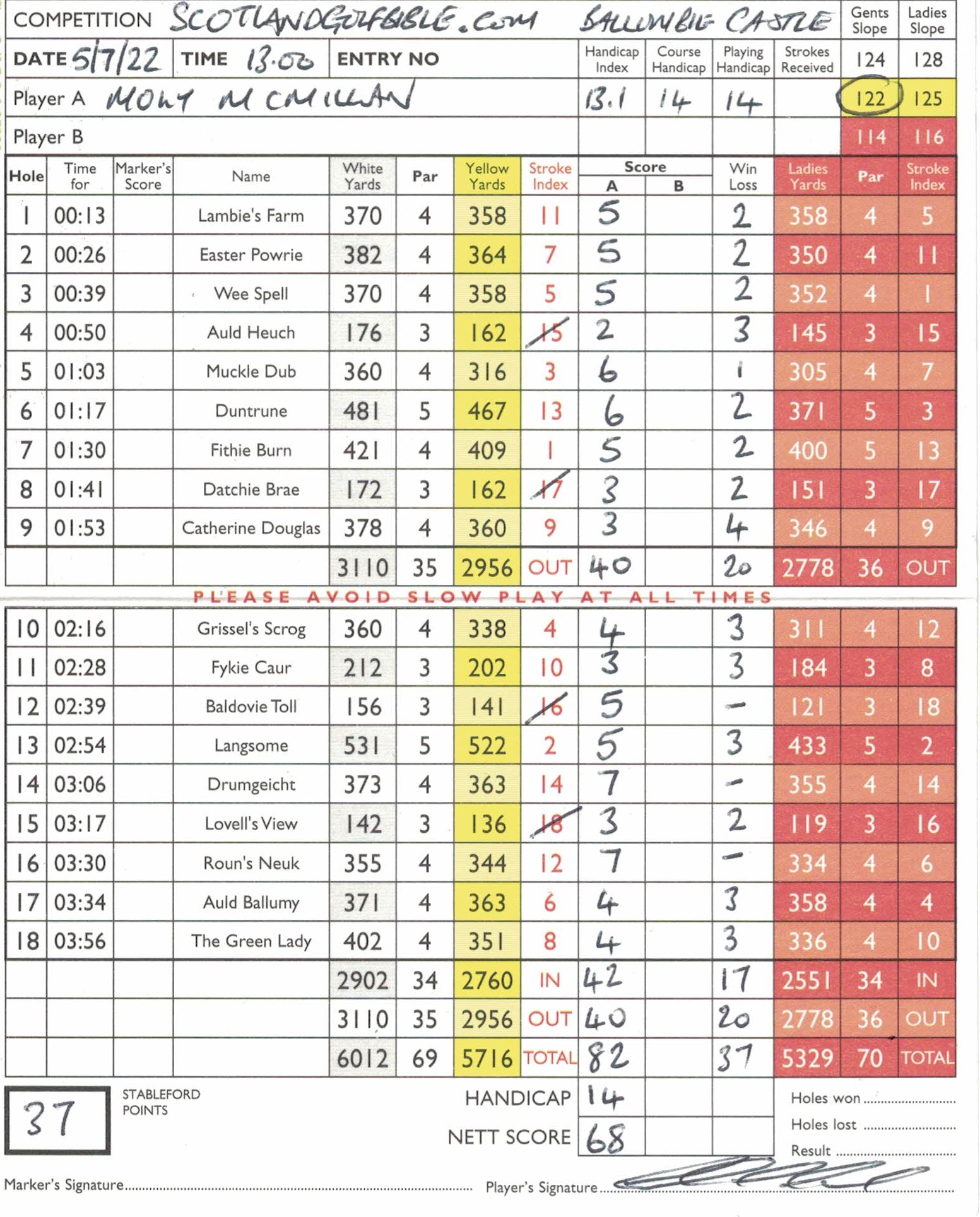
I played very well, shooting 82, the best I’ve done here, picking up birdies at the par three 4th and the par four 9th. But my decent round doesn’t deflect from the general ‘tired’ state of Ballumbie. If you get a good deal, through golfnow as I did, it’s worth playing, but there’s better value to be found nearby at the full price.

The very strong par four finishing hole at Ballumbie Castle, take at least one club more to get up to the green, take two more if the oin is on the upper level.

The current planning application for housing being debated will see several of the holes being replaced with housing, so it remains to be seen the golfing future of Ballumbie Castle.

Facts:

Course Type: Parkland

Par 69  (2 par 5s, 11 par 4s, 5 par 3s)

Distance (yellow): 5716 yards

Moly’s Gross score: 82

Moly’s 82 at Ballumbie, including two birdies and two 7s.

144. Lochend Craigentinny. 25 May 22.

Municipal courses like ‘The Tinny’ are at risk from green fee apps

Round £27.50. Par 67. Course Rating / Slope Rating (yellow) 64/108. Value (out of 5) – 3.5

Edinburgh Leisure, runs 6 municipal golf courses across Edinburgh on behalf of the council, including Craigentinny, an 18 hole course on the east of the city between Leith and Portobello, just off the A199.

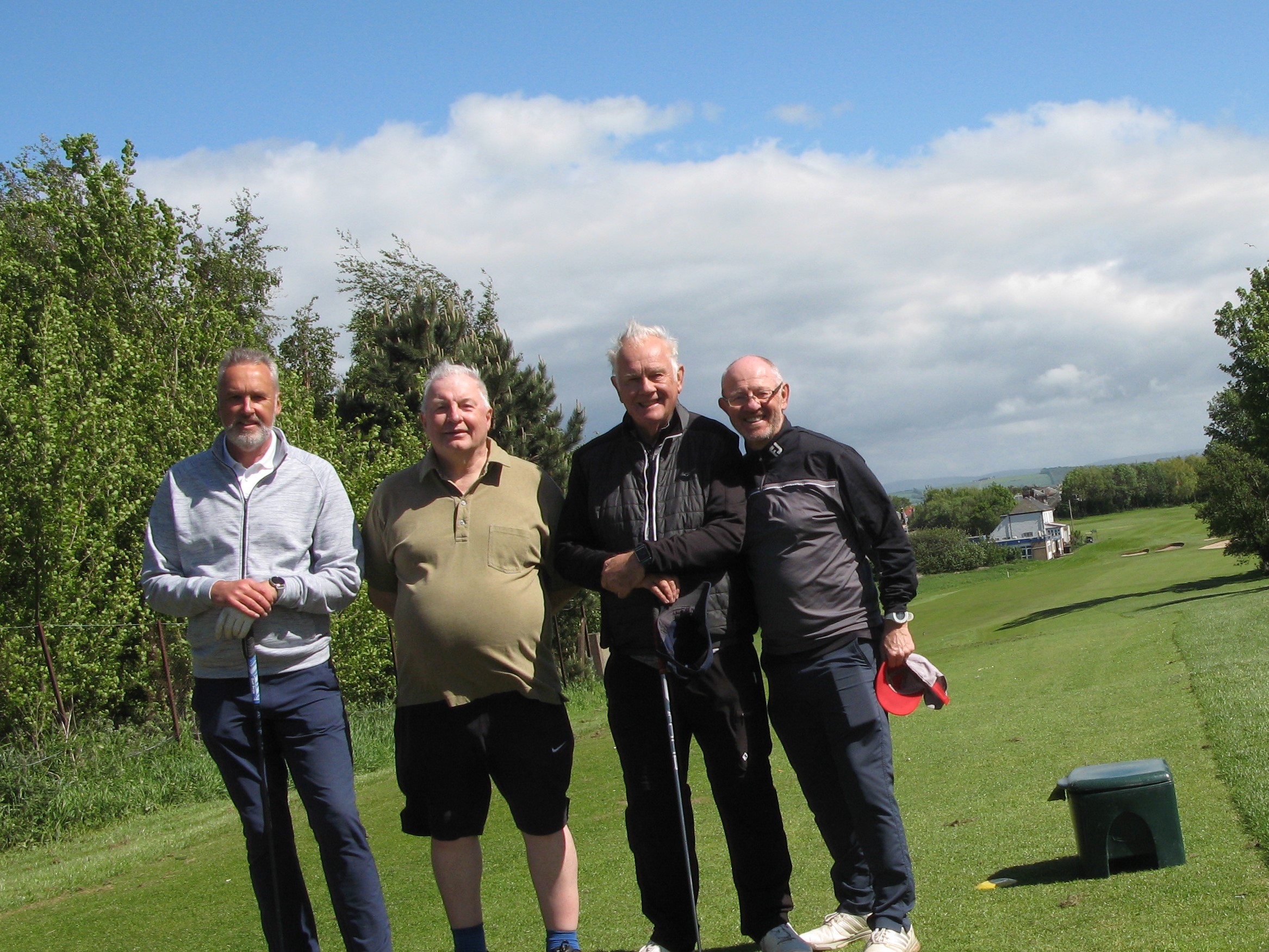
From left, Gordon, Frank, Brian and Moly at the 18th, with 40 mph winds to help put 3 OOB.

“The Tinny”, as it is known, is a decent little course at just over 5000 yards (yellow). It has no par 5s, and only one of the par 4s, the 10th, is over 400 yards. With wide open parkland, light rough and only a handful of fairway bunkers to speak of – there were signs of some bunkers having been filled in – the Slope Rating of 108 (yellow) lets you know this is ‘friendlyish’ golf.

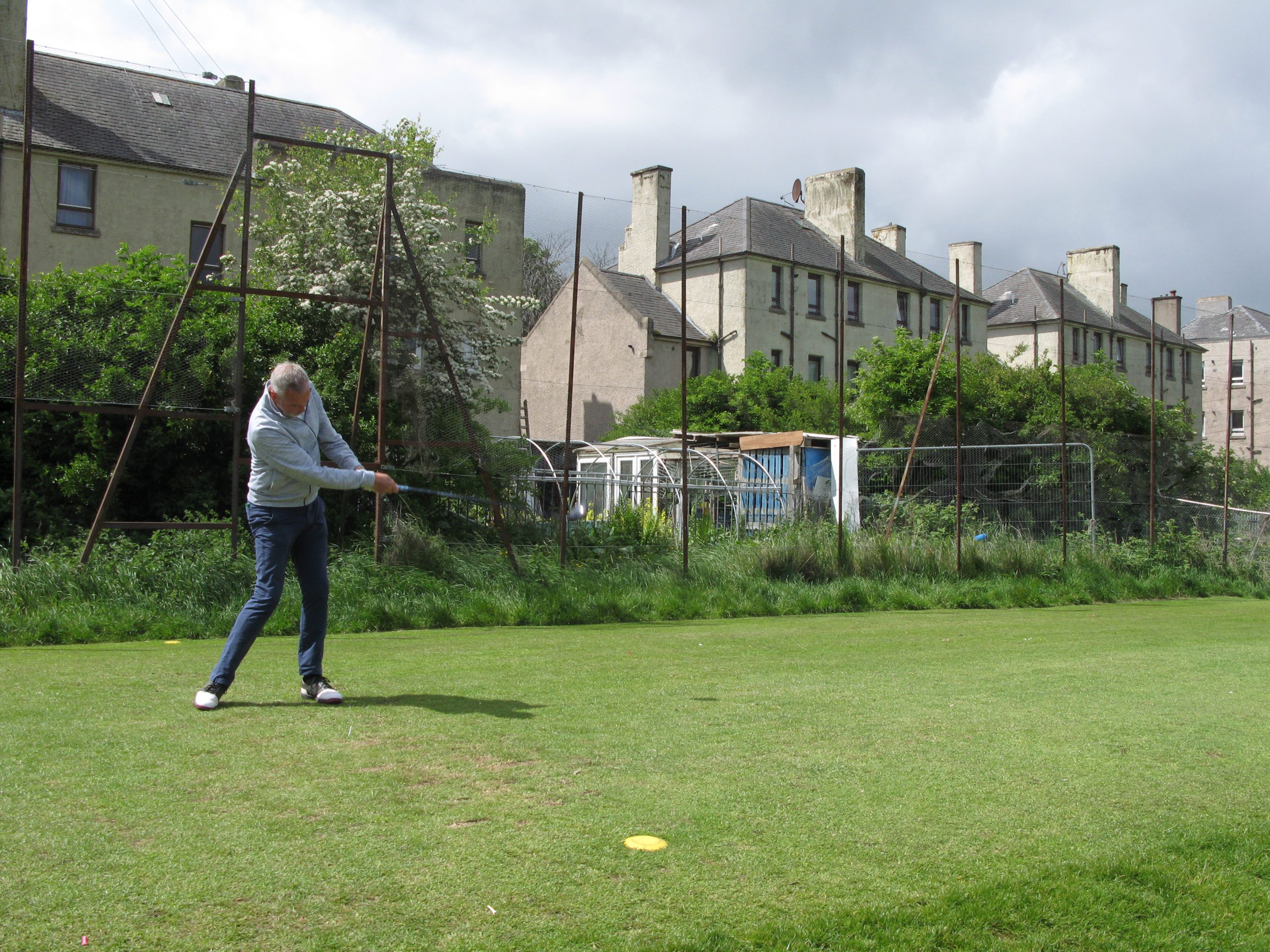
Gordon driving at the 7th, a par 4 of 274 yards, with the social housing that surrounds “The Tinny”

Perhaps uniquely, the most difficult two holes are par 3s; the long 13th (234 yards) and 4th (216 yards), being stroke index 1 and 2 respectively. I have never come across this situation with a golf course before. The five par 3s are the best of this course.

Moly at the well bunkered 6th, supposedly the easiest hole.

The course was in good condition, with the small greens being the highlight. There was potential to move on to the wrong holes, with a few long walks between green to tee and no tee box marking. Referral to the scorecard map is essential, as its easy to get waylaid looking at the fine views of Arthur’s Seat from many of the holes.

Brian played a good bunker shot at the 6th green.

I played alongside my former Apex Scotland board members. The charity continues to do sterling work supporting people with convictions back into the workplace and society.

We had a competitive game, albeit we all (bar Brian who scored a fine 32 points) suffered from the very high winds that got up to about 40 mph, especially on the back 9. No matter how easy the course is, 40 mph is going to be penal!

Frank playing one of his “Links” shots into the 9th, with Arthur’s Seat in the background.

There are no specific council facilities at the course, other than a kiosk, toilet and a basic vending machine in the “pavilion” style ‘clubhouse’. There is however, a co-located clubhouse for the Lochend Golf Club, named after the nearby Lochend Loch, which play at “The Tinny”, hence the blog and course is called “Lochend Craigentinny”.

Lochend Golf Club does have a lengthy history, dating back to the 1700s, albeit they didn’t play at “The Tinny” till it opened in 1908, a few years after the Council banned golf at the then open Leith Links. The club costs an additional £177 for its annual fee, to get access to to the usual club benefits. The clubhouse was closed when we played, hence why the lack of Council provided facilities were brought into focus. Thankfully, nearby Newhaven, where we retired to afterwards, has arguably the best fish restaurant in Scotland!

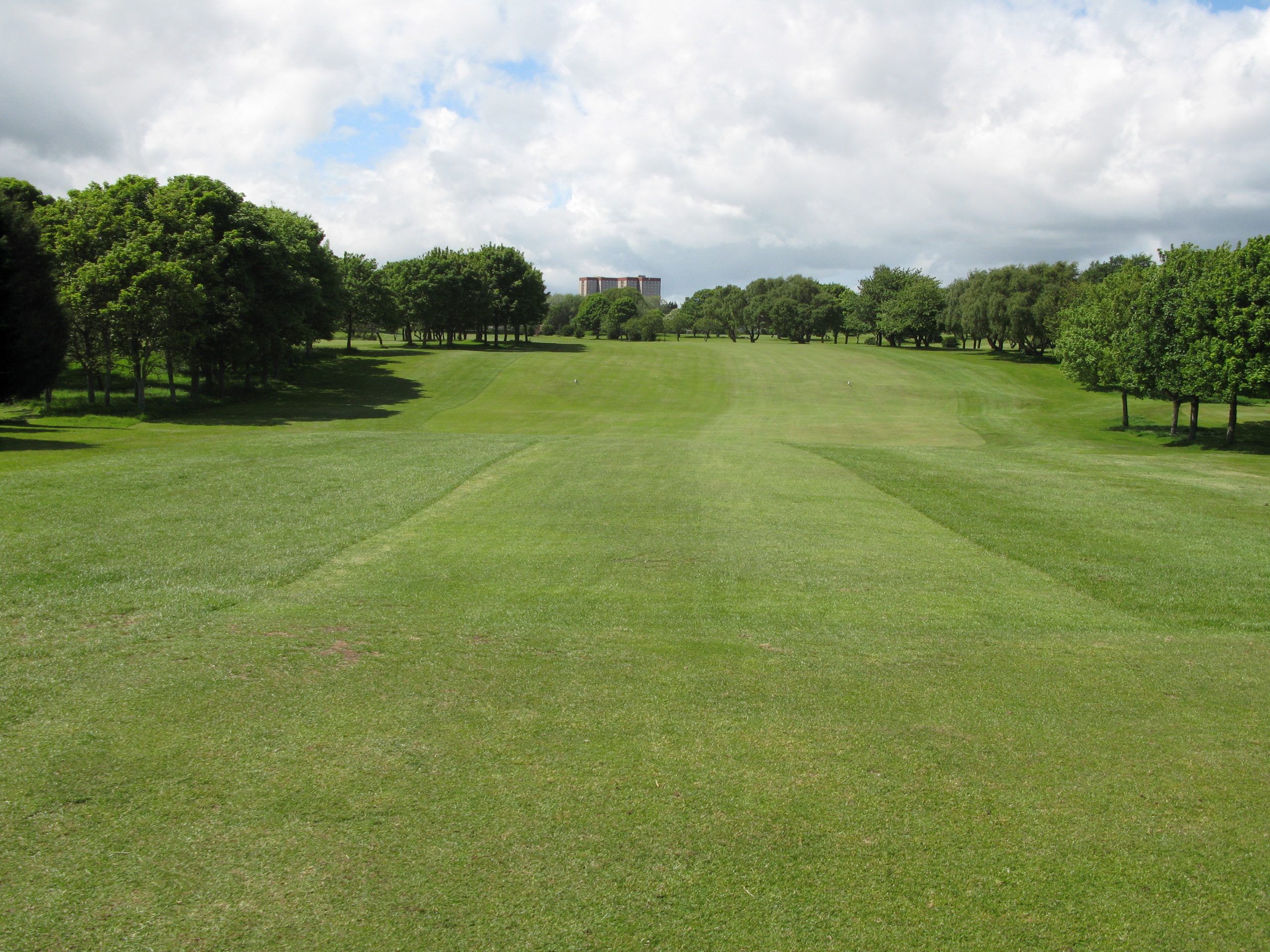
The par four 10th, over 400 yards, is the longest hole and typical of “The Tinny”

An annual 7 day ticket for the 6 municipal courses costs £500, incredible value. An individual visitor green fee on any of the 18 hole courses is £27.50, again decent value, but this pricing is starting to look relatively expensive when set alongside the offers available through golf fee apps, led by Golfnow. On any given weekday, you can play much better nearby courses than Craigentinny, at significantly lower than £27.50; including Newbattle, Baberton, Turnhouse and Royal Mussleburgh. Some Scottish Councils (such as South Ayrshire and Aberdeen) are offering discount pricing through Golfnow, and I think Edinburgh Leisure would do well to consider that.

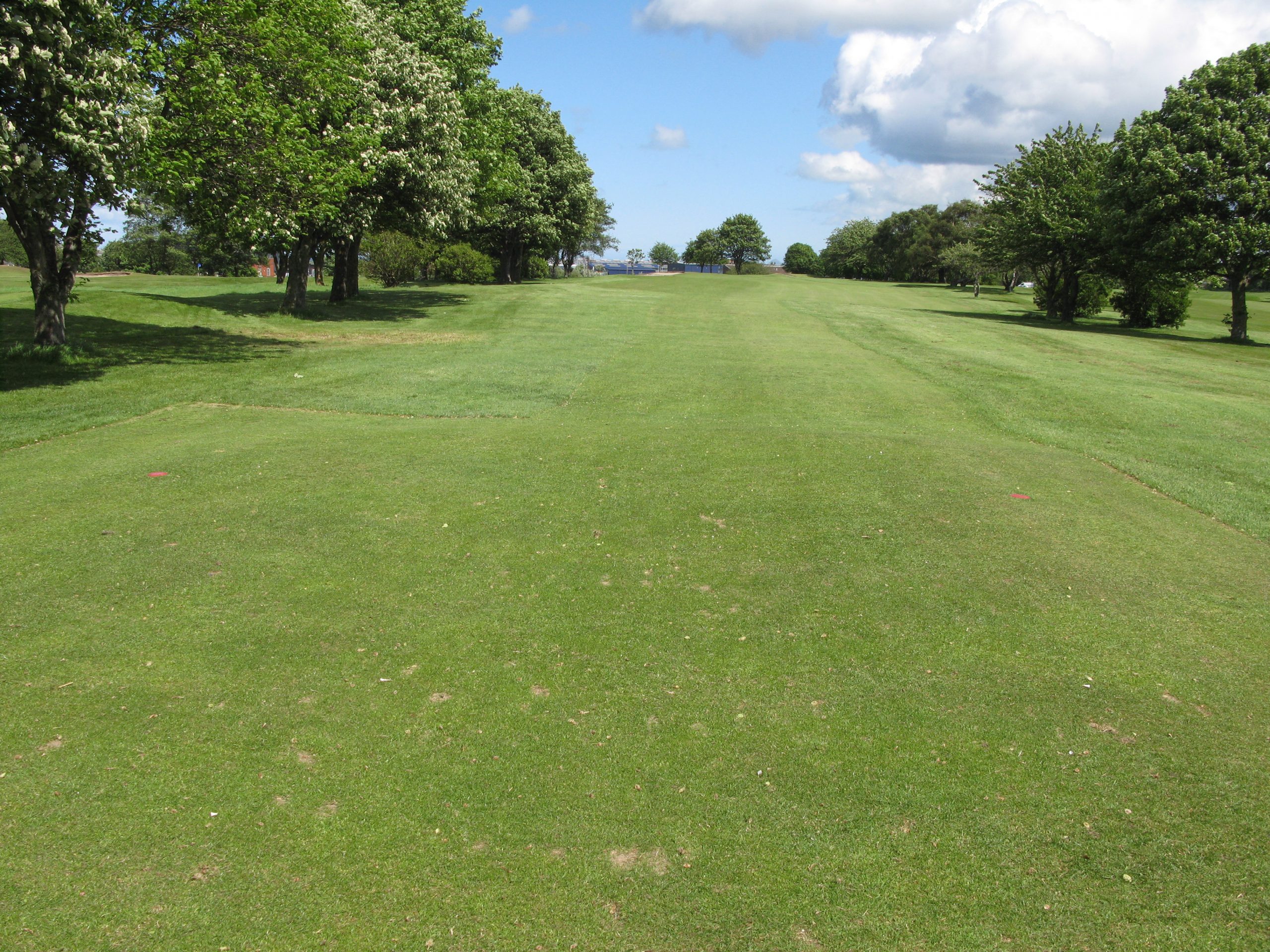
The Stroke Index 1 hole – the long par three 13th hole, at 234 yards.

Overall, I would say this is “an average Municipal course”, and will need to keep a keen eye on visitor income, which will be an increasing challenge from apps such as Golfnow.

Facts:

Course Type: Parkland

Par 67 (0 par 5s, 13 par 4s,  5 par 3s)

Distance (yellow): 5141 yards

Moly’s Gross score: 88

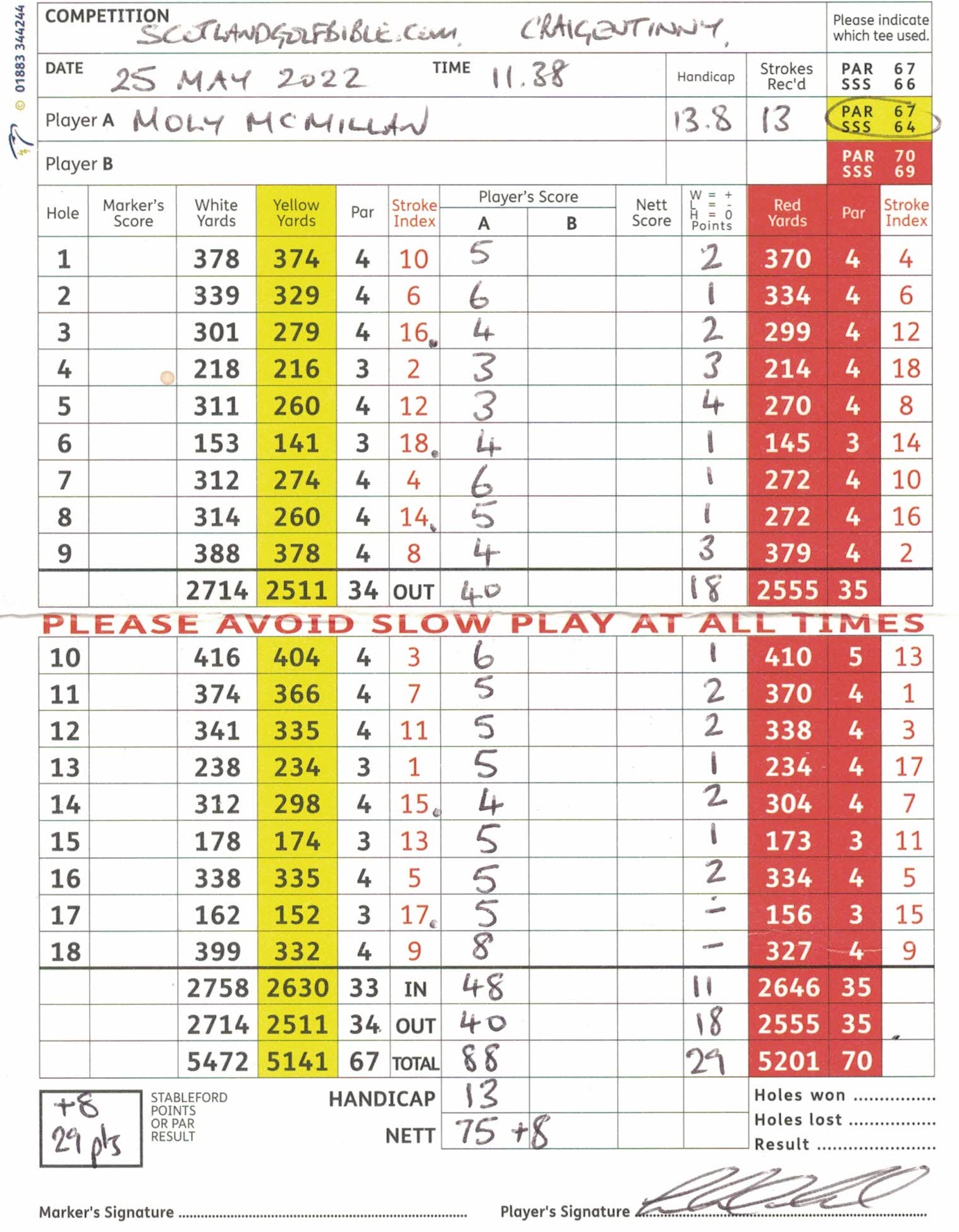
Moly’s 88 at “The Tinny”, with the back 9 explained by 40 mph wind.
« Older posts Newer posts »

© 2026 Scotland Golf Bible

Theme by Anders NorenUp ↑