A guide to green fee value for money

Category: 5 star (Page 3 of 4)

145. The Royal Burgess Golfing Society. 26 May 22.

Golfing grandeur nestled out of sight – just like Augusta National – with azaleas and other mysteries thrown in.

Round £175. Par 68. Course Rating / Slope Rating (yellow) 67.4/113. Value (out of 5) – 2.5

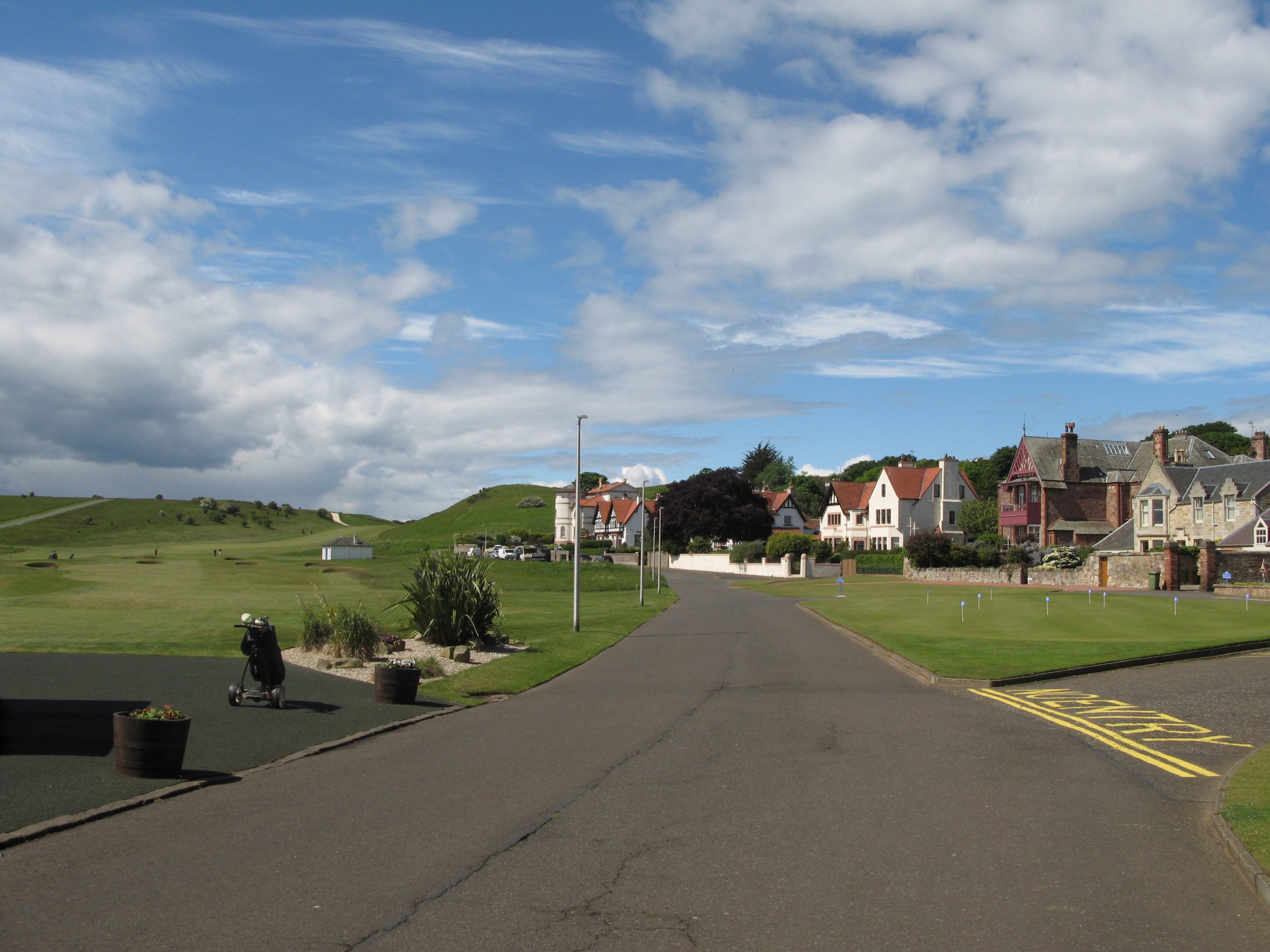
As I played Royal Burgess, close by a busy traffic junction in Edinburgh, I had a nagging thought; this venue has parallels to Bobby Jones’ Augusta National, an oasis of golfing perfection just off a nondescript highway.
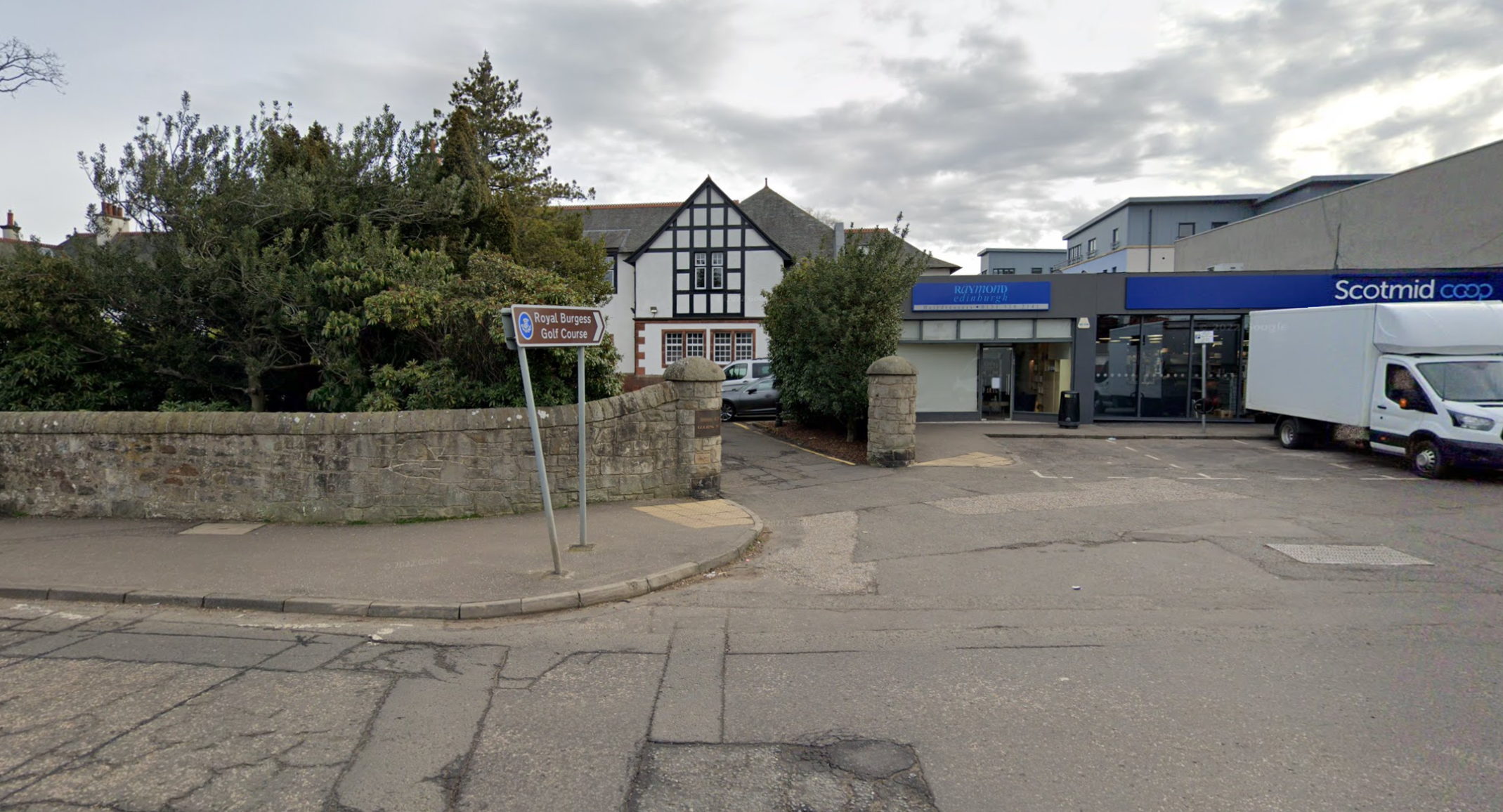
The humble Burgess entrance, belying the wonderful parkland beyond, had me musing of Augusta.

This is not a ‘Golf Club’ though, but the more grander ‘Golfing Society’, a term dating back to 1735, some 150 years before the creation of the current golf course at Barnton.
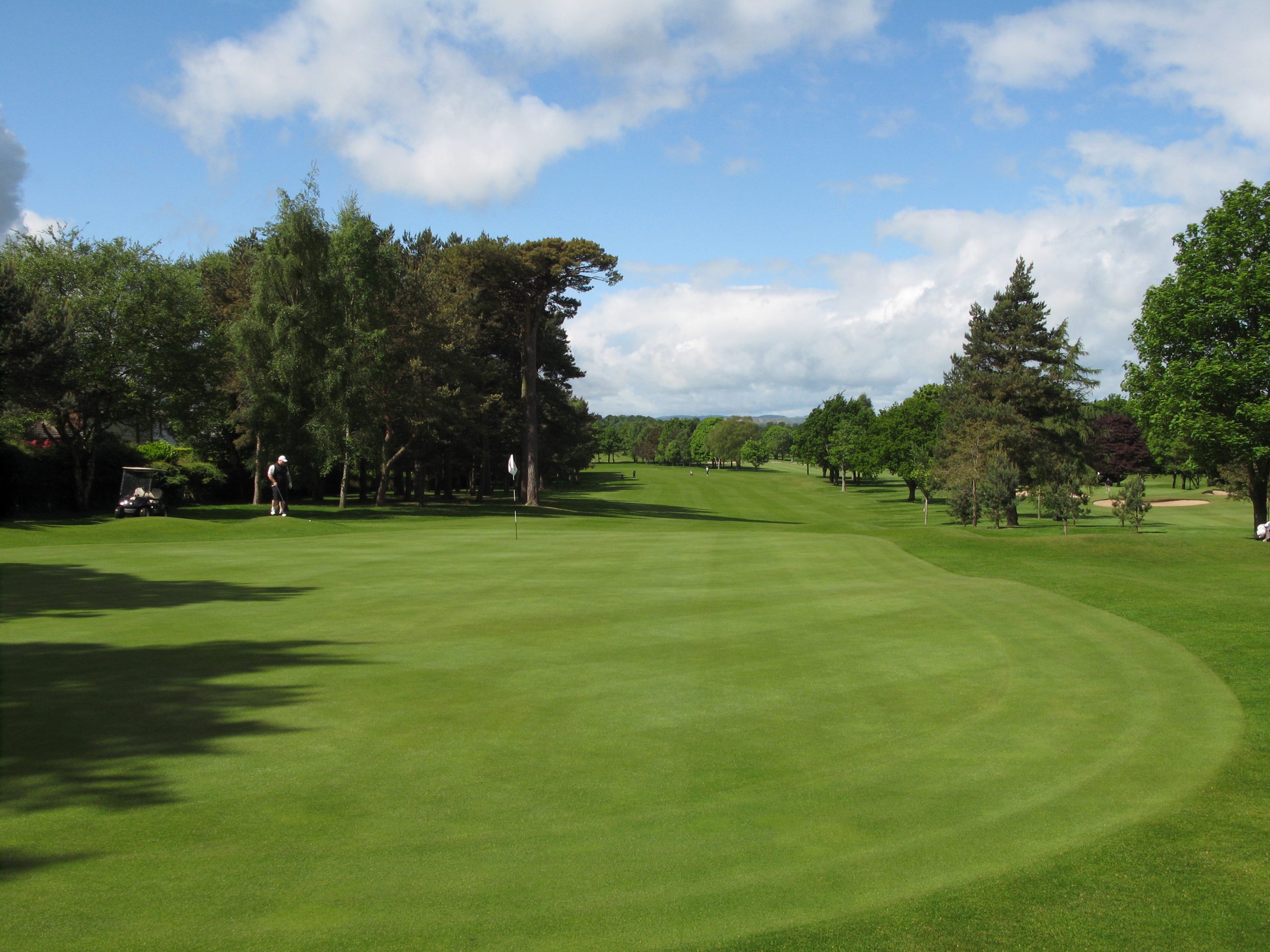
The difficult par 4, fourth hole, one of the best at Royal Burgess.

A ‘Burgess’ is a term used differently in different countries. In Scotland in 1735, the year of the Societies origin making it the oldest golf club in the world, ‘burgesses’ were city freemen with exclusive trading rights and members of trade guilds. In a sense, they were the Scottish Bourgeoisie. The men would also, probably without exception, have been Freemasons, as Scotland was the birthplace of post middle-age freemasonry. There is a very interesting article “How freemasons invented golf” in the www.scottishgolfhistory.org website which also covers how the Burgess Society was involved.
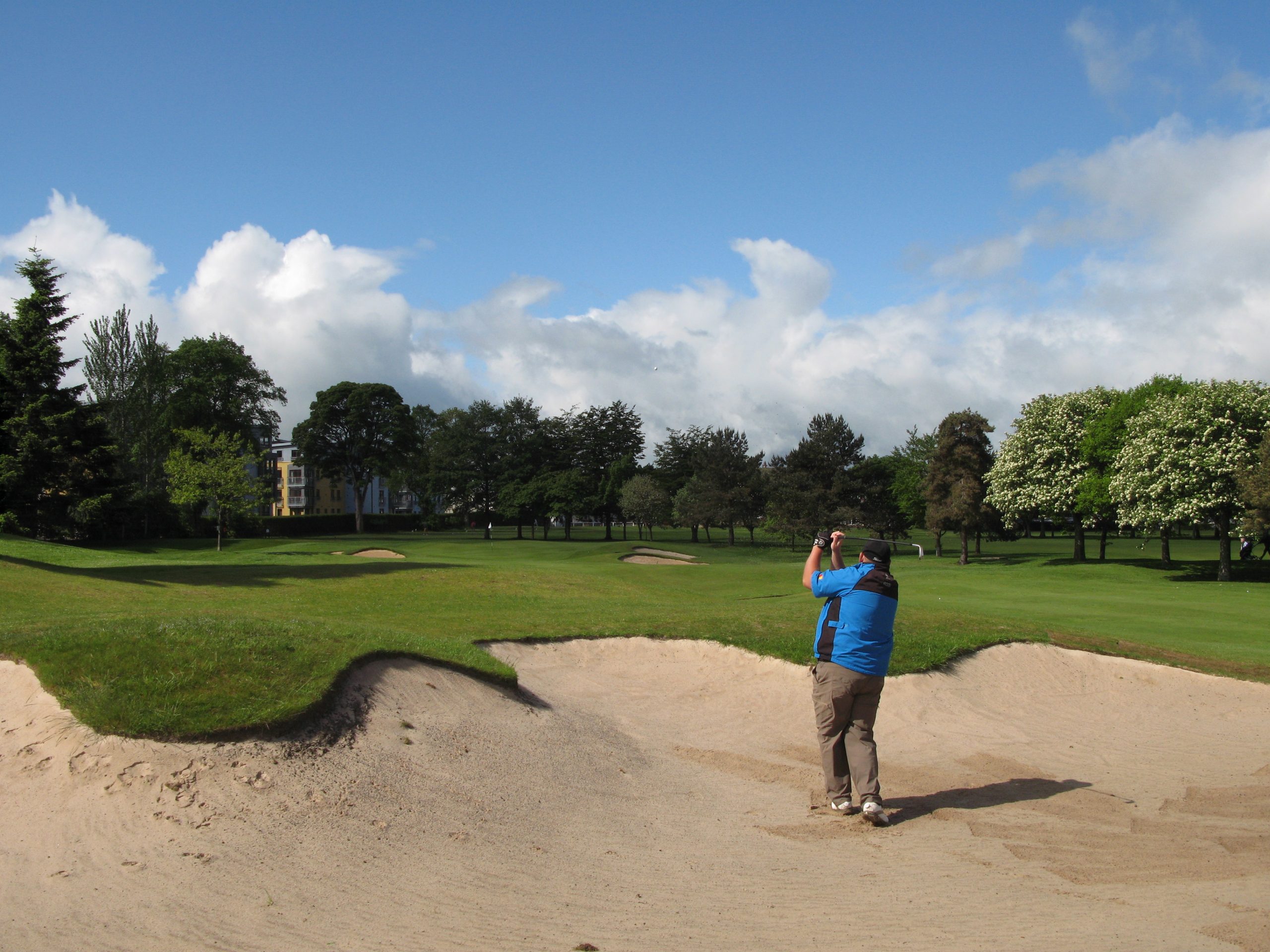
Ian Ponton plays from a typically well manicured bunker, here at the 2nd, a short par 4.

There is also a lovely Burgess history here on the clubs website, and covered in fine detail on the walls of the impressive 1897 “Arts and Crafts” clubhouse, which is well worth visiting when you play.
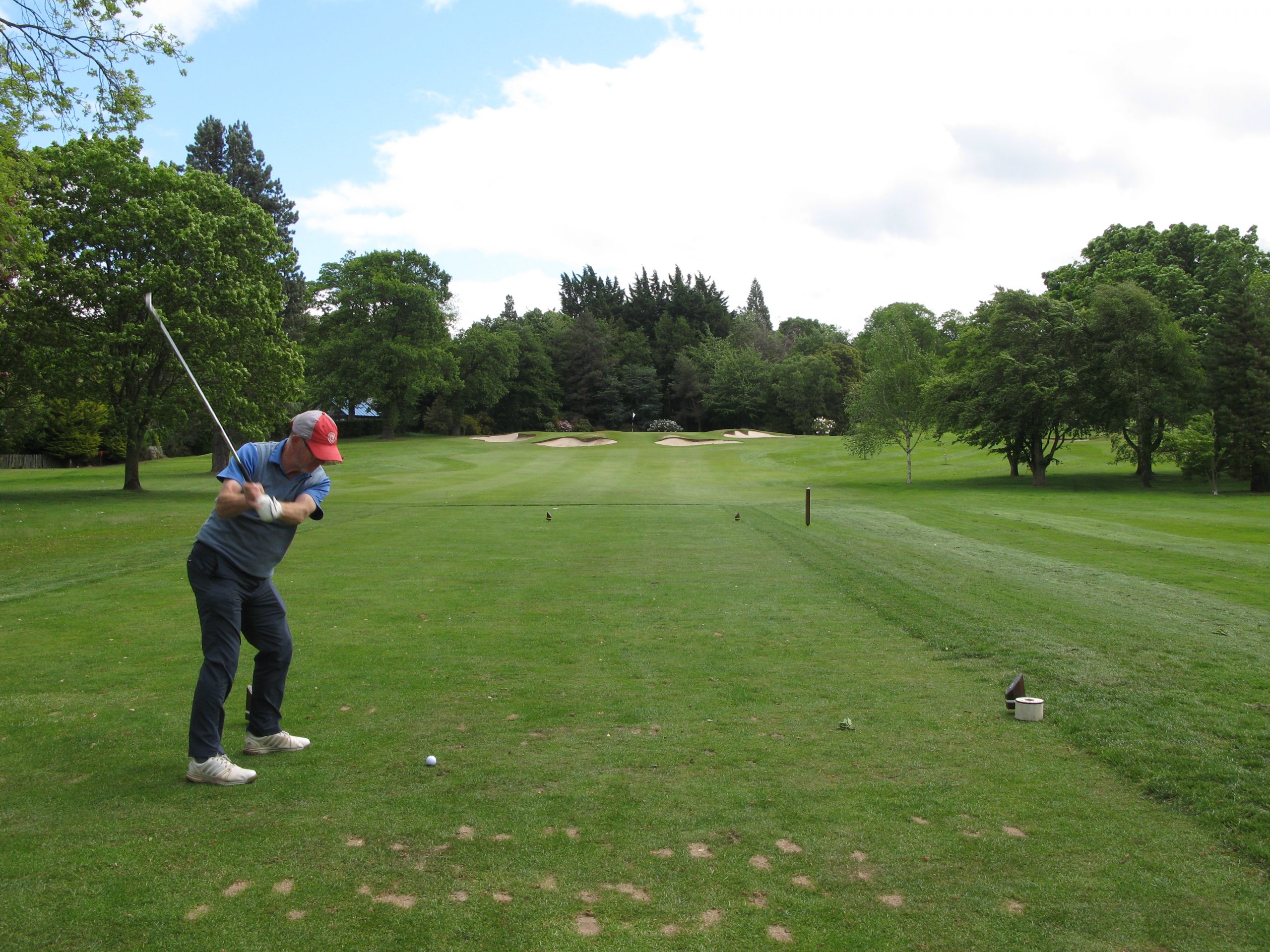
Moly’s tee shot at the 121 yard par three 8th hole, with a typically aesthetic surround.

The society originally played over 6 holes at Bruntsfield Links near Edinburgh Castle, then at Musselburgh from 1874 along with some rival societies (you may be able to guess them?). The Burgess finally came to its current location in 1895 on land that had been the private course of a wealthy businessman, Robert Clark. It was an ideal location in its day, with the current starters hut, adjacent the first tee, formerly being the ticket office for the Barnton railway station of the Caledonian line.
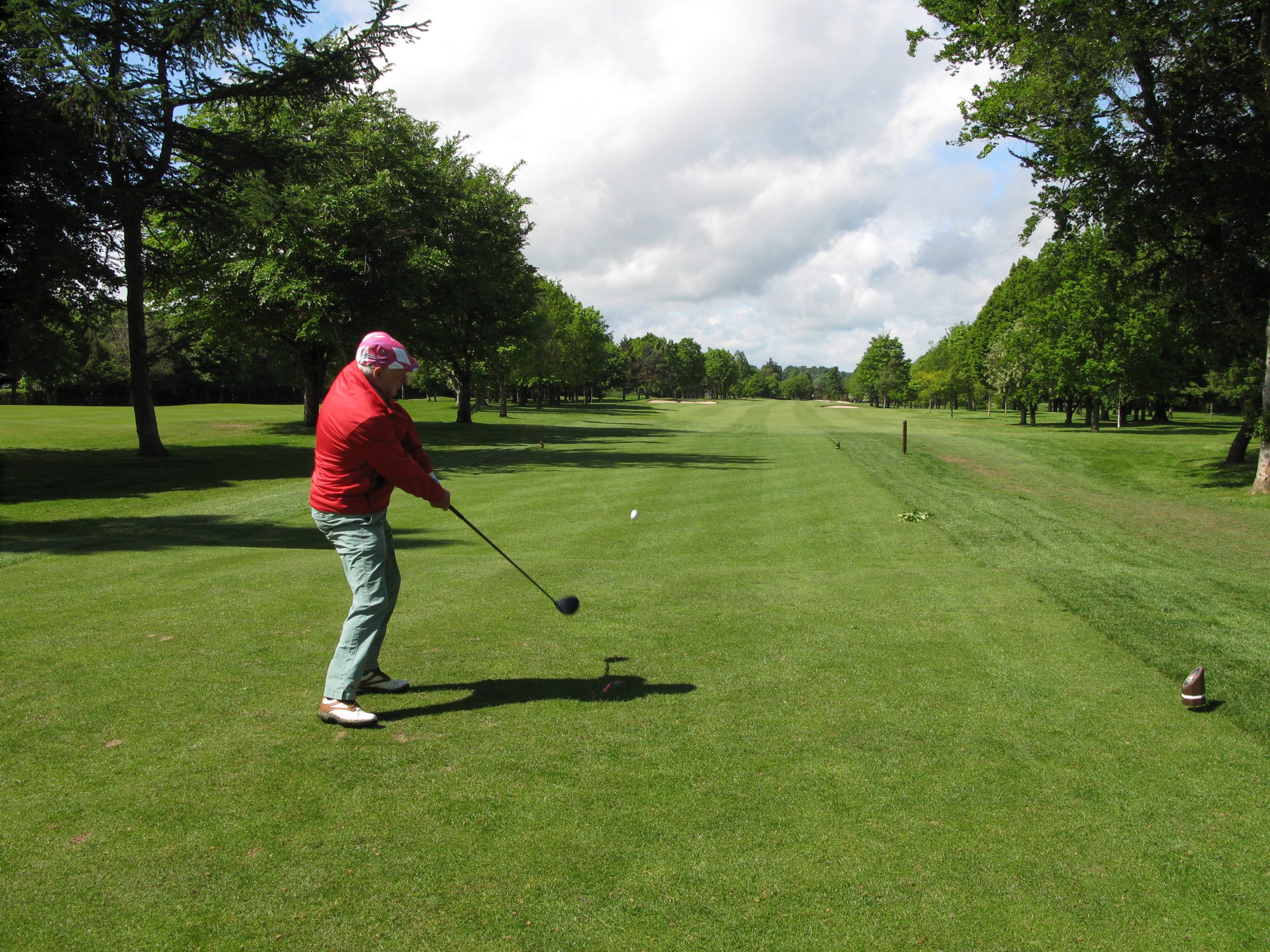
Bob Tait, demonstrating a full extension through the ball, at the 437 yard par four 6th hole. Royal Burgess is a good course to use in any debate for advocating different stroke indexes for each tee box.

Since 1895, no lesser than Old Tom Morris, Willie Park Jnr (main designer), James Braid and Philip MacKenzie Ross have developed the course – that’s quite an architectural pedigree.

The course sits in a beautifully manicured arboretum with a wide variety of trees and plants, including azaleas and rhododendron. Although not a long course and constrained by the tight parkland surrounding, the ‘yellow’ course feels longer than its 5700 yards, comprising several long par 4s and no yellow par 5s. There are many large and deceptive greens making three putts a constant hazard. An anomaly in yardages means that the 210 yard par three 18th, is stroke index 18, due to the championship tee designating it a par four. I imagine most matchplay games reaching the 18th, strongly favour a lower handicapper.
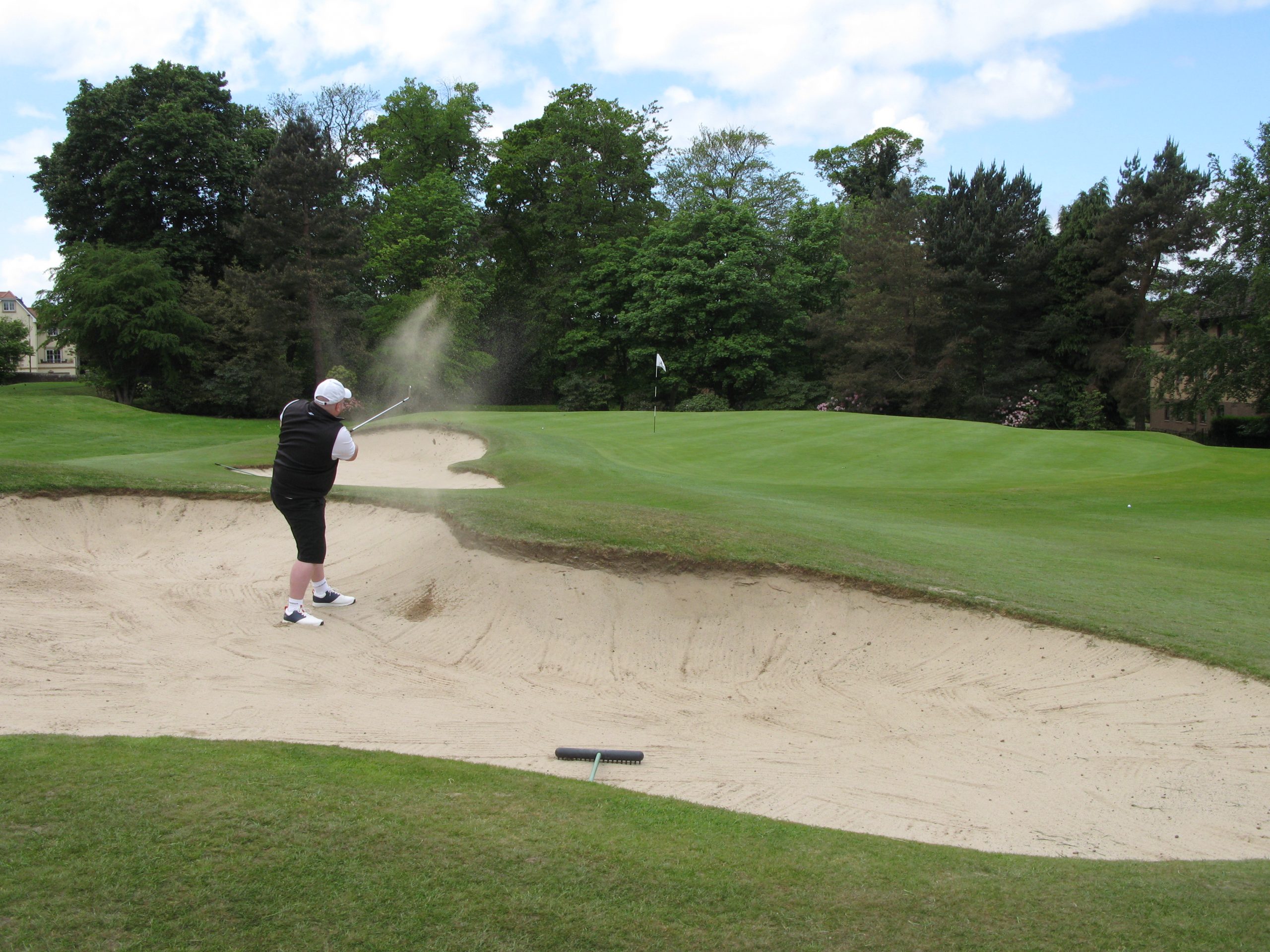
Jamie Snedon playing from the greenside bunker at the 15th, a tough par four.

The course was in great condition when I played, hosted by the affable Ian Ponton, owner of the Oz Bar in Candlemaker Row in Edinburgh, along with his great friends Bob Tait and Jamie Snedon. Jamie played by far the best golf on a very windy day, but thankfully we hadn’t made a wager as we started off in a bit of Scottish drizzle.
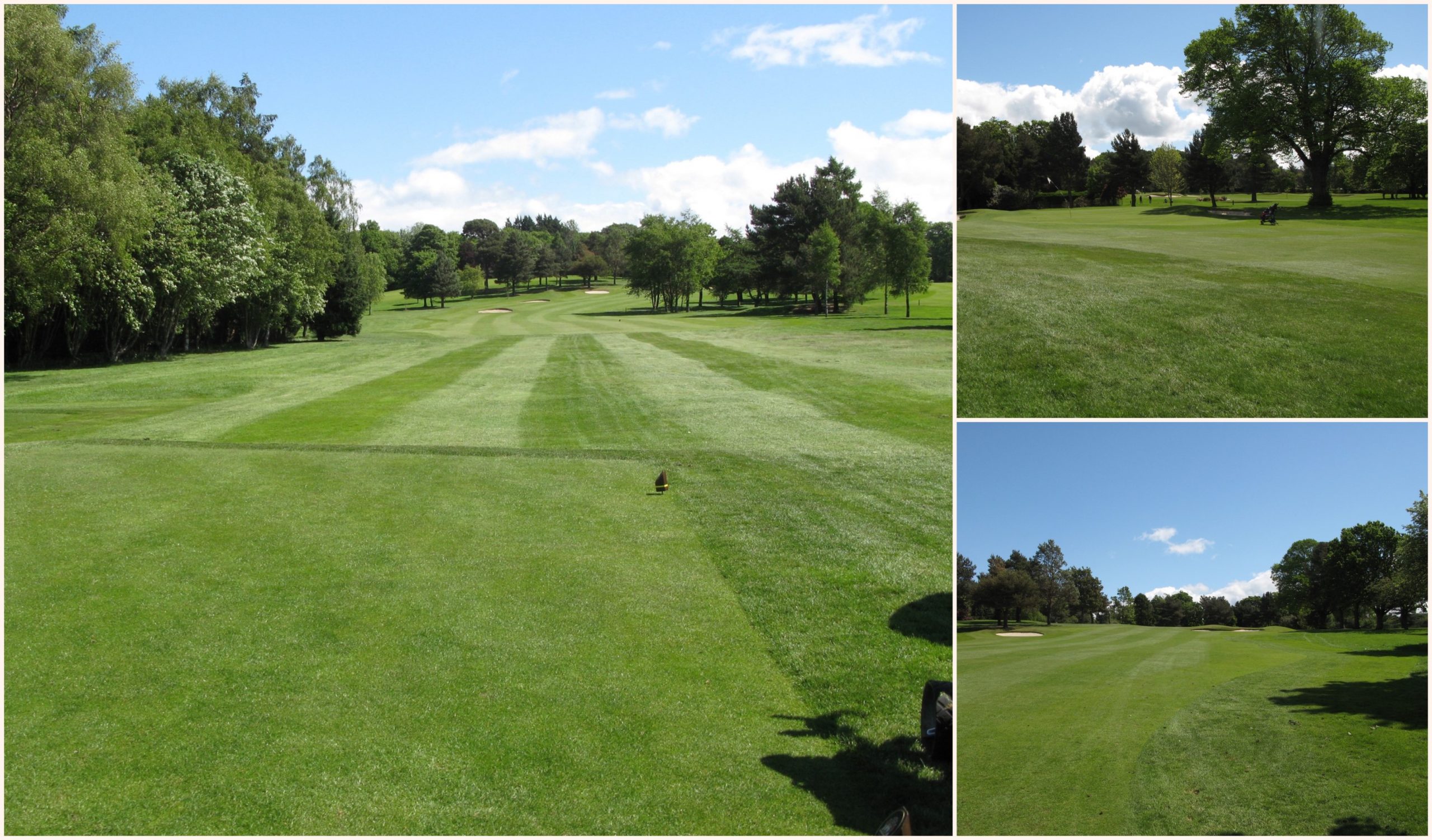
The 10th, a testing dog leg par four and a very characteristic Burgess hole

The wind didn’t hamper our enjoyment and one could really appreciate the course design, where many large fairway and greenside bunkers were of the highest order, with perfect sand. Many bunkers have been added over the years, some recently. The course sets up better for a fader of the ball (such as Jamie), with all bar one (the 14th) of the many dog leg holes being left to right.

The par threes were well bunkered albeit, other than the 18th, they were short to mid length iron shots for most players.
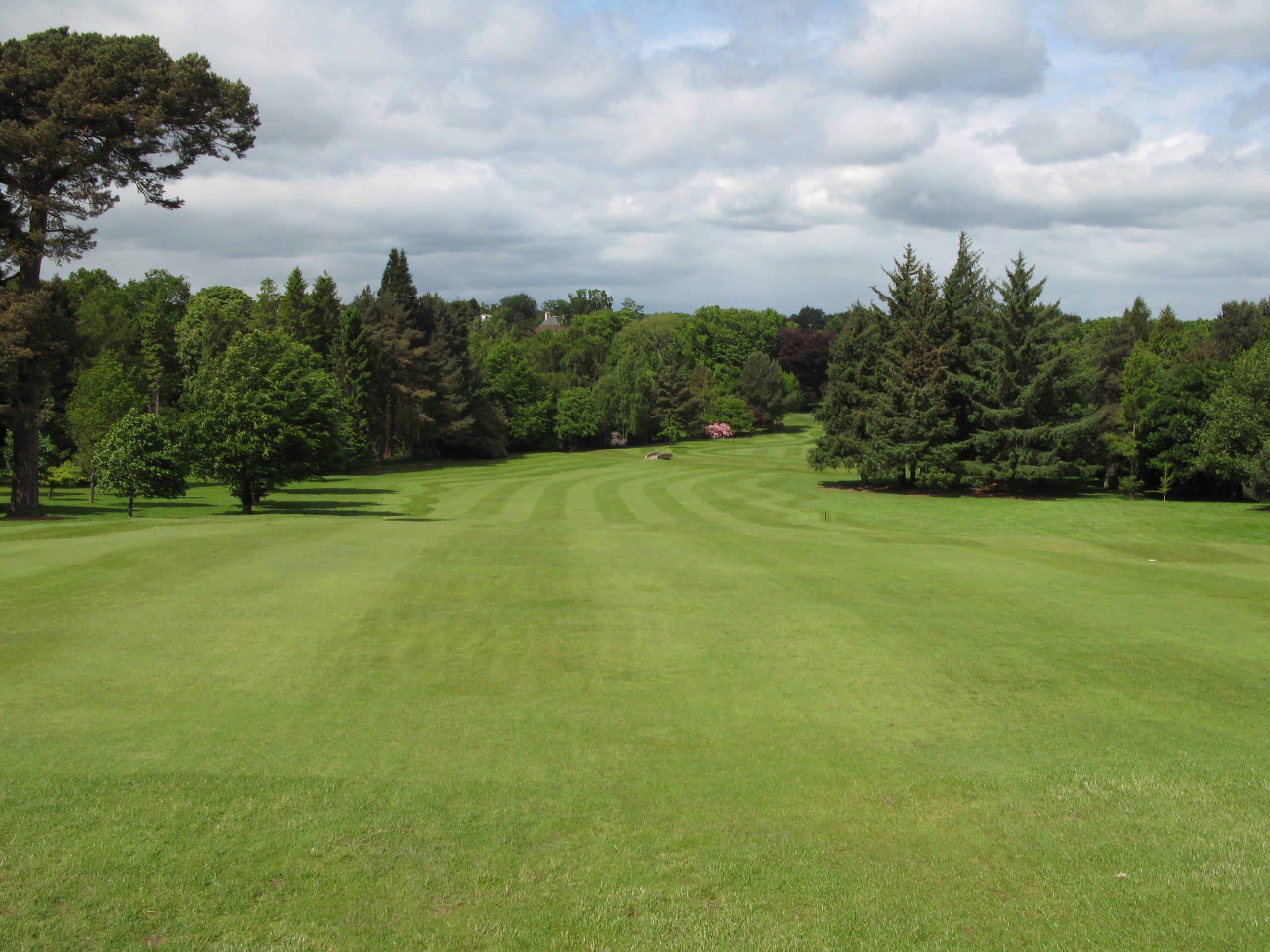
The approach at the 11th, the signature hole at The Burgess

I struggled to a score of 95, which can’t all be attributed to the wind and my recently developed fade was turned into a monstrous slice on several occasions. It’s important to avoid the bunkers to score well at Burgess, something I failed to do.

I can’t imagine anyone not liking Royal Burgess, a place of genuine history in the developing of the game. It’s beautiful condition, makes it a four for value at its current price.
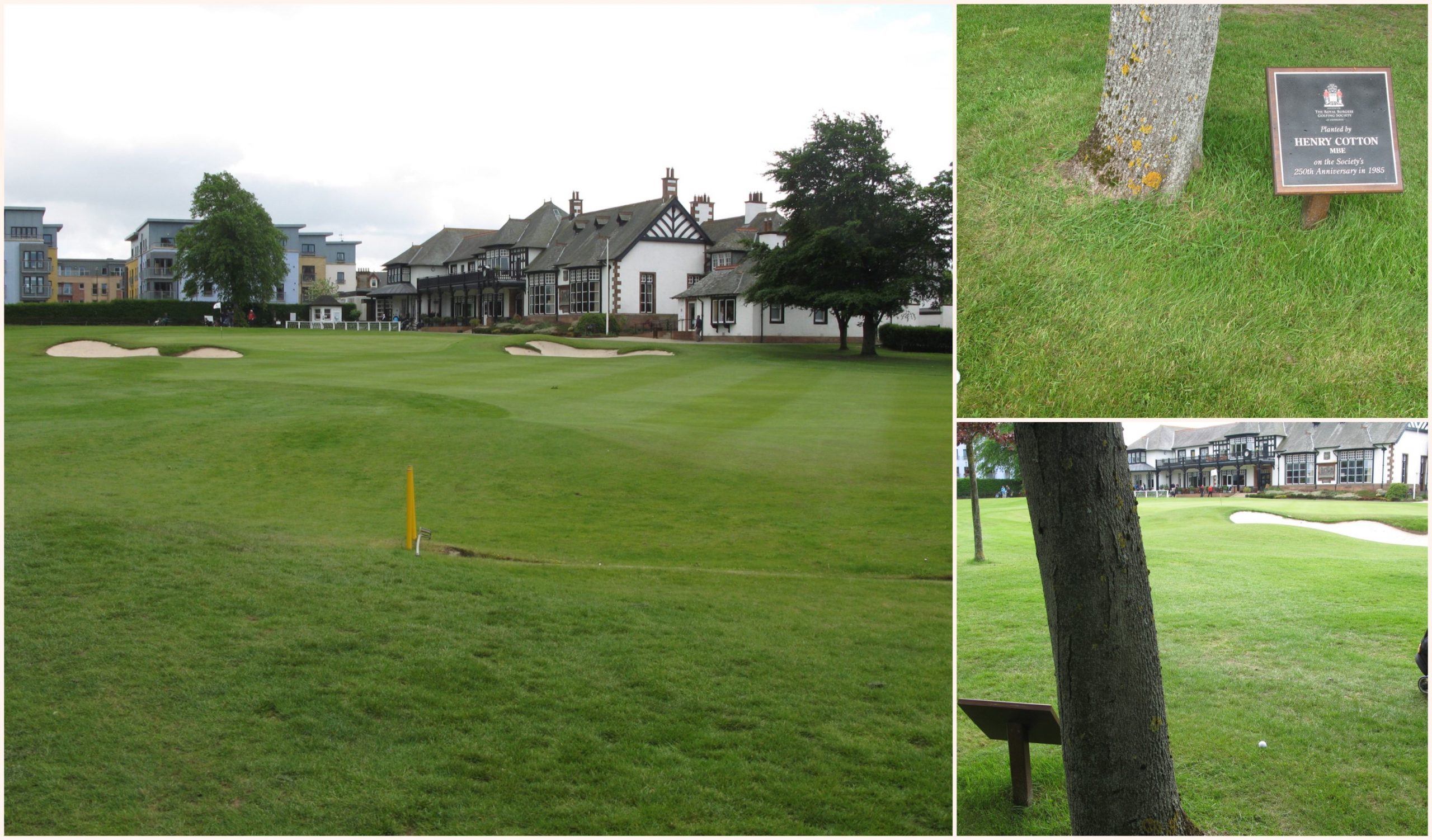
The clubhouse is the backdrop to the 18th, with a plaque commemorating Henry Cotton’s visit to Royal Burgess, where I conveniently located my tee shot!

The “Royal” patronage was bestowed on the club in 1929, due to a friendship between Robert Boothby, a Burgess member, and the Prince of Wales, later King Edward VIII (he who abdicated). Boothby was knighted the same year the club became Royal Burgess.

Finally, lets return to my Augusta National ‘gut feeling’ comparison. In looking for a comparable Augusta picture to the Royal Burgess entrance photograph, I stumbled upon a quite remarkable thing. Directly opposite the unobtrusive entranceway to The Masters venue, is the headquarters of the Ancient Scottish Rite Freemasonry organisation. Dig only a little deeper and you find that none other than Augusta hero Brother Arnold Palmer was a Grand Great 33 degree Freemason of the Scottish Rite.
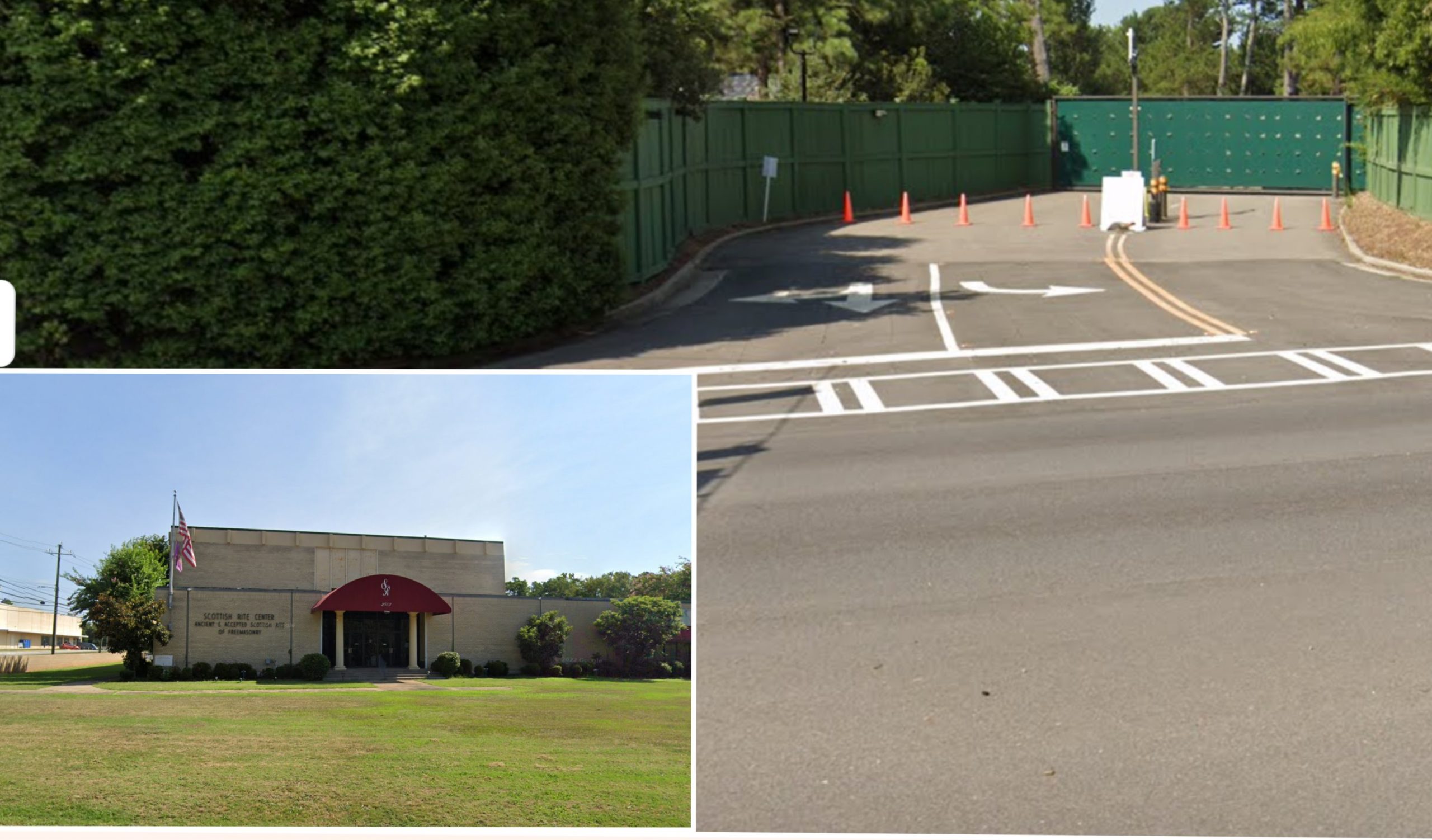
Augusta National entrance with inset of the building opposite – the HQ of Scottish Rite Freemasonry

Plenty of mystery and history to ponder in playing this recommended, but overly priced, course.

Facts:

Course Type: Parkland

Par 70 (0 par 5s, 14 par 4s,  4 par 3s)

Distance (yellow): 5704 yards

Moly’s Gross score: 95
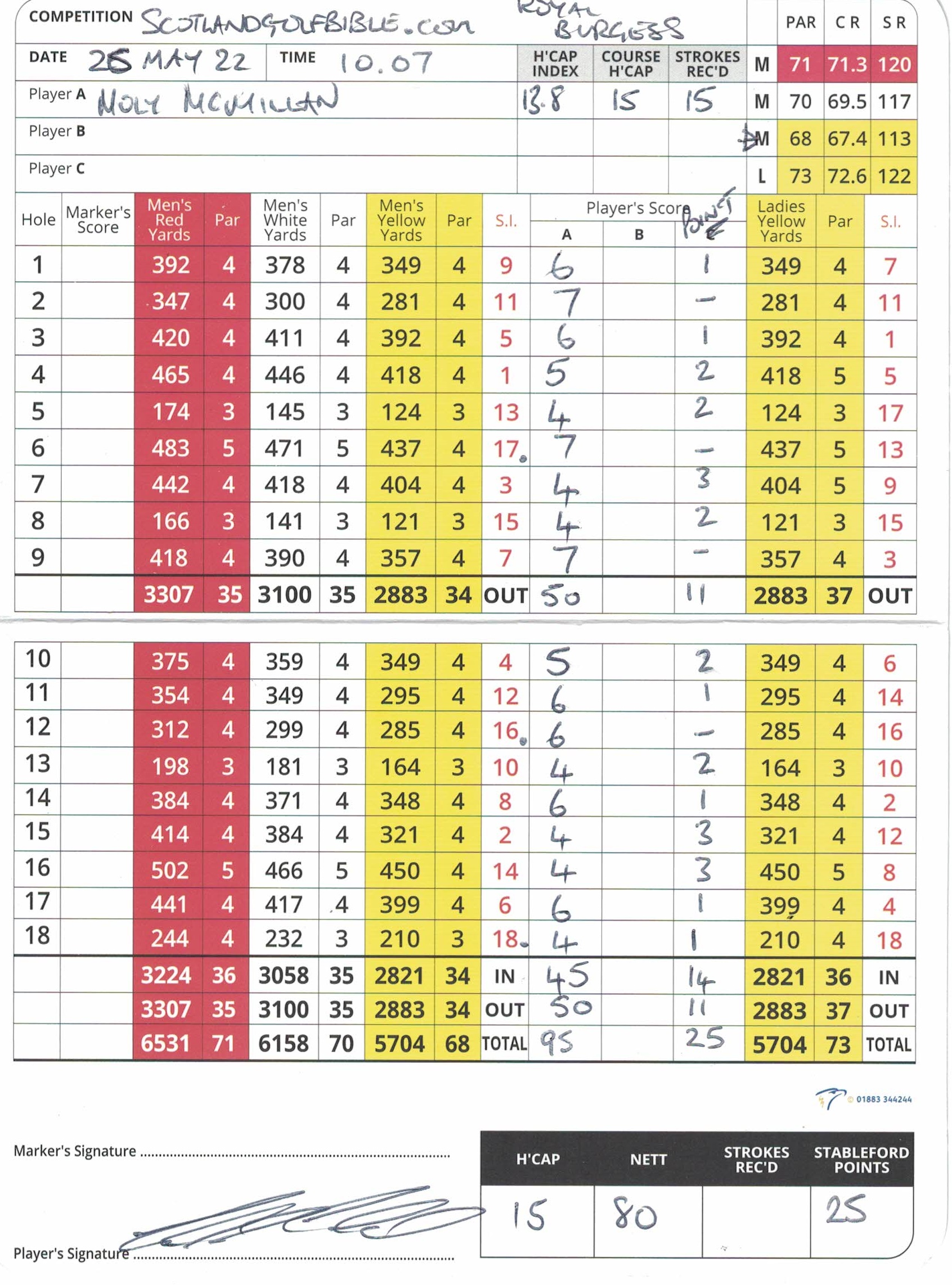
Moly’s Royal Burgess scorecard – 95 – dominated by up to 40 mph wind.

143. Gullane Number 1. 24 May 2022.

Arguably the epi-centric viewpoint of world links golf

Round £195. Par 71. Course Rating / Slope Rating (yellow) 70.4/122. Value (out of 5) – 5

In Michael Murphy’s great book, “Golf in The Kingdom”, golf is eulogised in metaphysical or spiritual terms. In starting to write about Gullane, I can’t do better than Murphy’s epigraph, the Scottish golf saying:

“Golf was invented a billion years ago; don’t you remember?”

Oh, to win the lottery and live next to Gullane Number 1’s first tee.

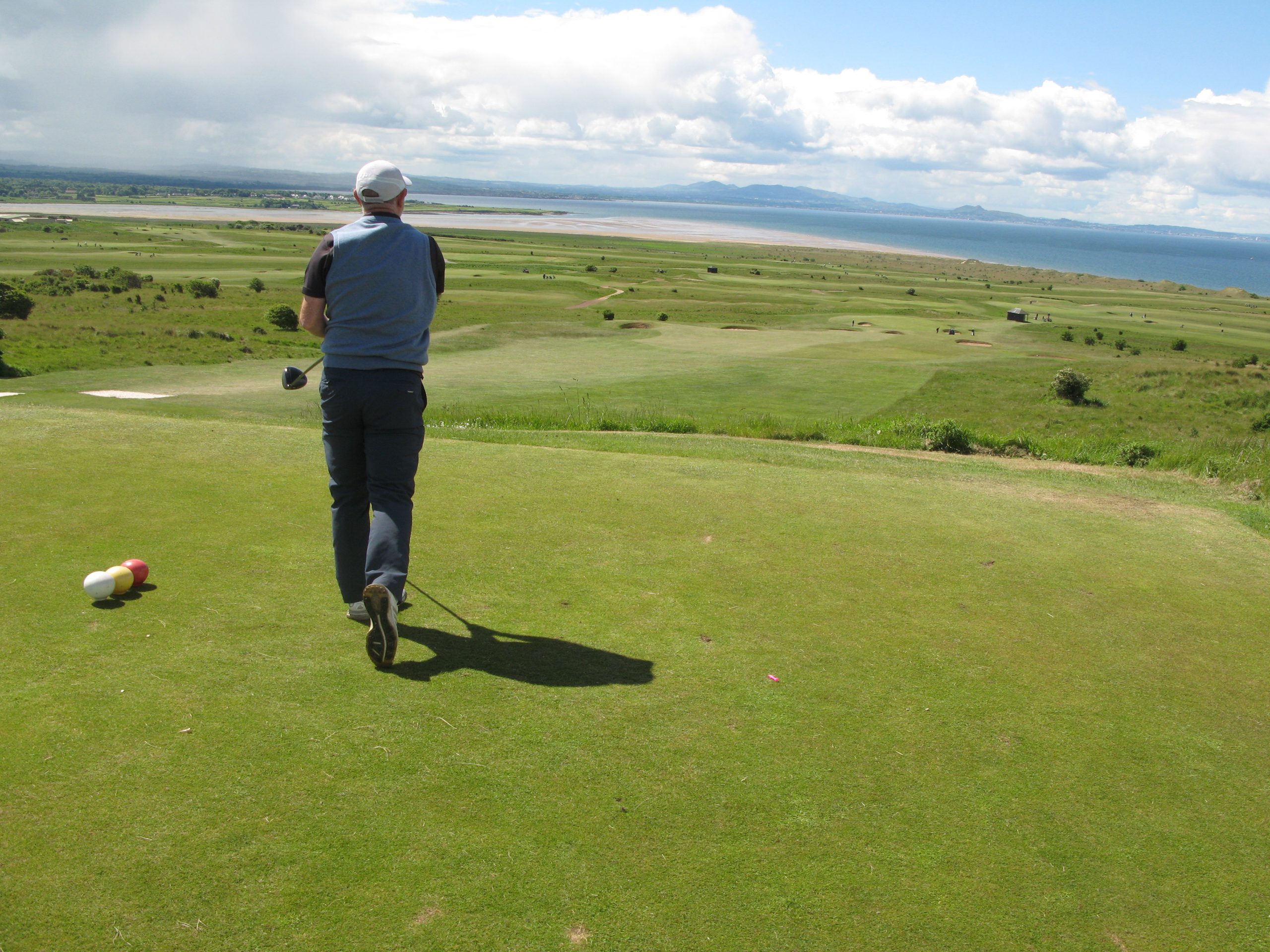
That epigraph made complete sense as I walked onto the 7th tee at Gullane Number 1 for the first time. Set on the small Gullane Hill, it is said on a clear day you can see fourteen counties. What is without debate, I think, is that you have the greatest links land view on earth. Perched there, you are at the mid point of the East Lothian ‘golf coast’ stretching from Dunbar to the east and Musselburgh to the west, with names synonymous with world golf – Dunbar, North Berwick, Archerfield, Renaissance, Muirfield, Luffness, Kilspindie, Craigie Law and Longniddry.

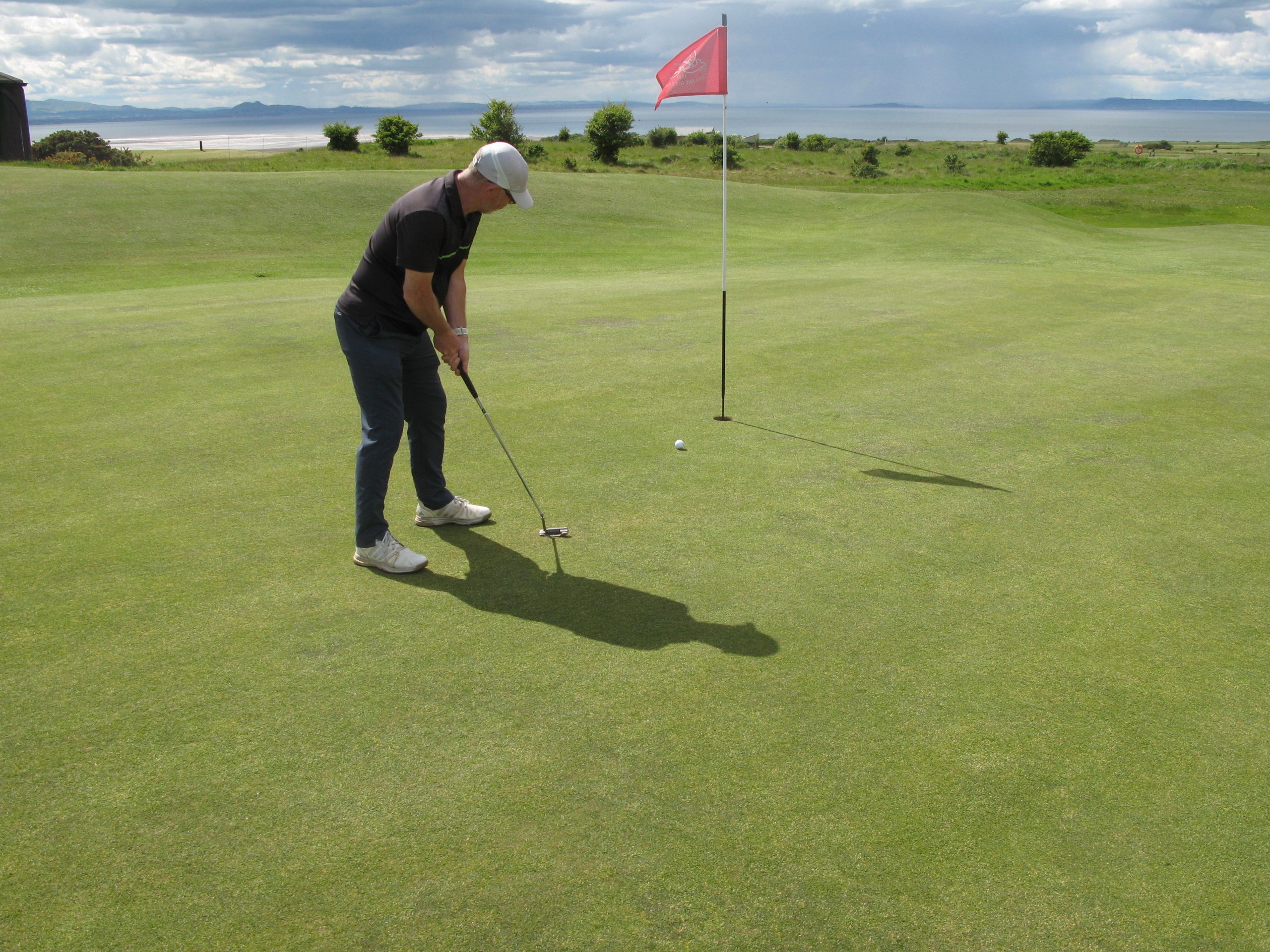
Moly on the epi-centric viewpoint of world golf – the 7th tee at Gullane No 1.

Look north across the Firth of Forth towards the Kingdom of Fife, with Leven, Crail, Elie and St Andrews; see past the Tentsmuir Forrest towards the links of Carnoustie, Montrose, Royal Aberdeen and Cruden Bay. Golf has been played on the East Coast of Scotland for hundreds of years, perhaps indeed ‘billions’. This 7th tee on Gullane Number 1 could be the epi-centric viewpoint of world golf; the Old Course is undoubtedly the “home”, but Gullane’s viewpoint is unparalleled.

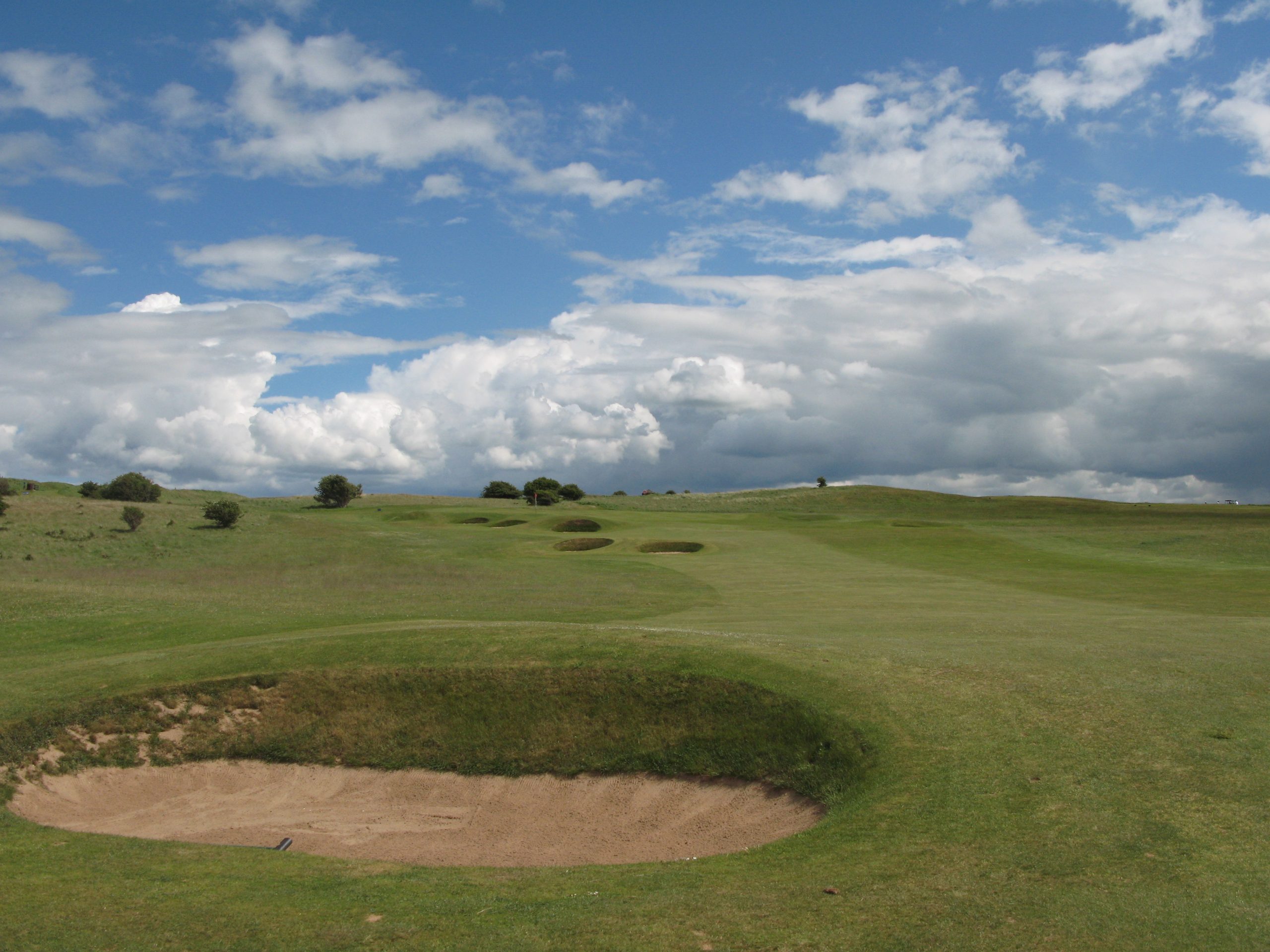
The second hole at Gullane No 1, a par four “carved into the Ancient Links”

So much has been written about Gullane, including the crafted explanation of posh ‘Gillin’ versus humble ‘Gullan’ in his book, “Playing Through”, by Curtis Gillespie, that I decided to more or less tell this story mainly through pictures.

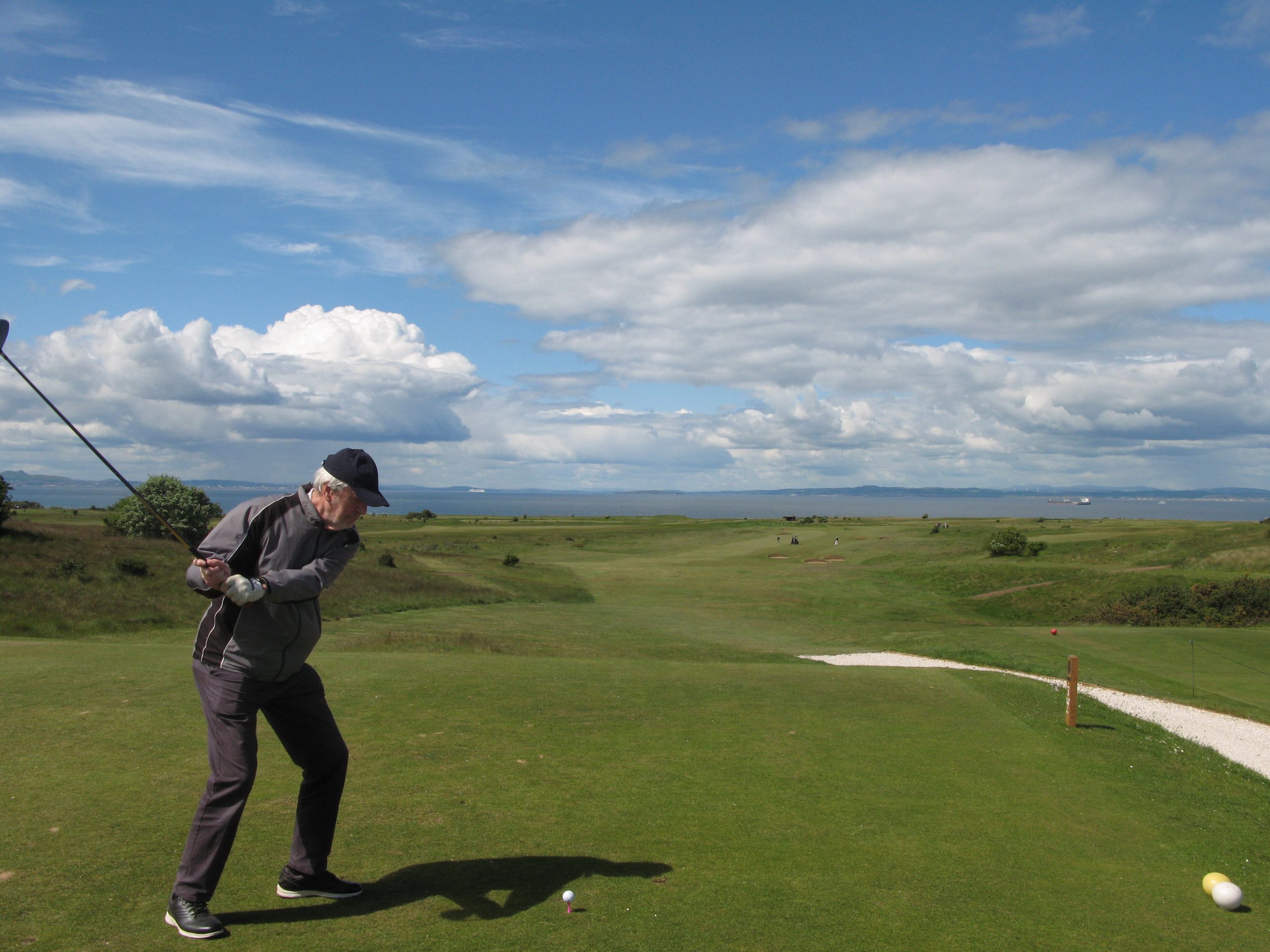
Alastair Allanach plays his low top spin drawing drive, which galloped down the “Racecourse” third; a swing honed and bartered over many years of tutelage by a South African pro. The Hill was used in bygone days by racehorses.

Accompanied by Gullane member, Alastair Allanach, a man who has played more golf courses than anyone I know, we had an absolute blast, waxing lyrical about Gullane and its history. Alastair, a great all round sportsman, and now well into his 70s, was keen to get in at least two of the three Gullane courses on the day, as he struggles to “carry my bag for three rounds nowadays!”

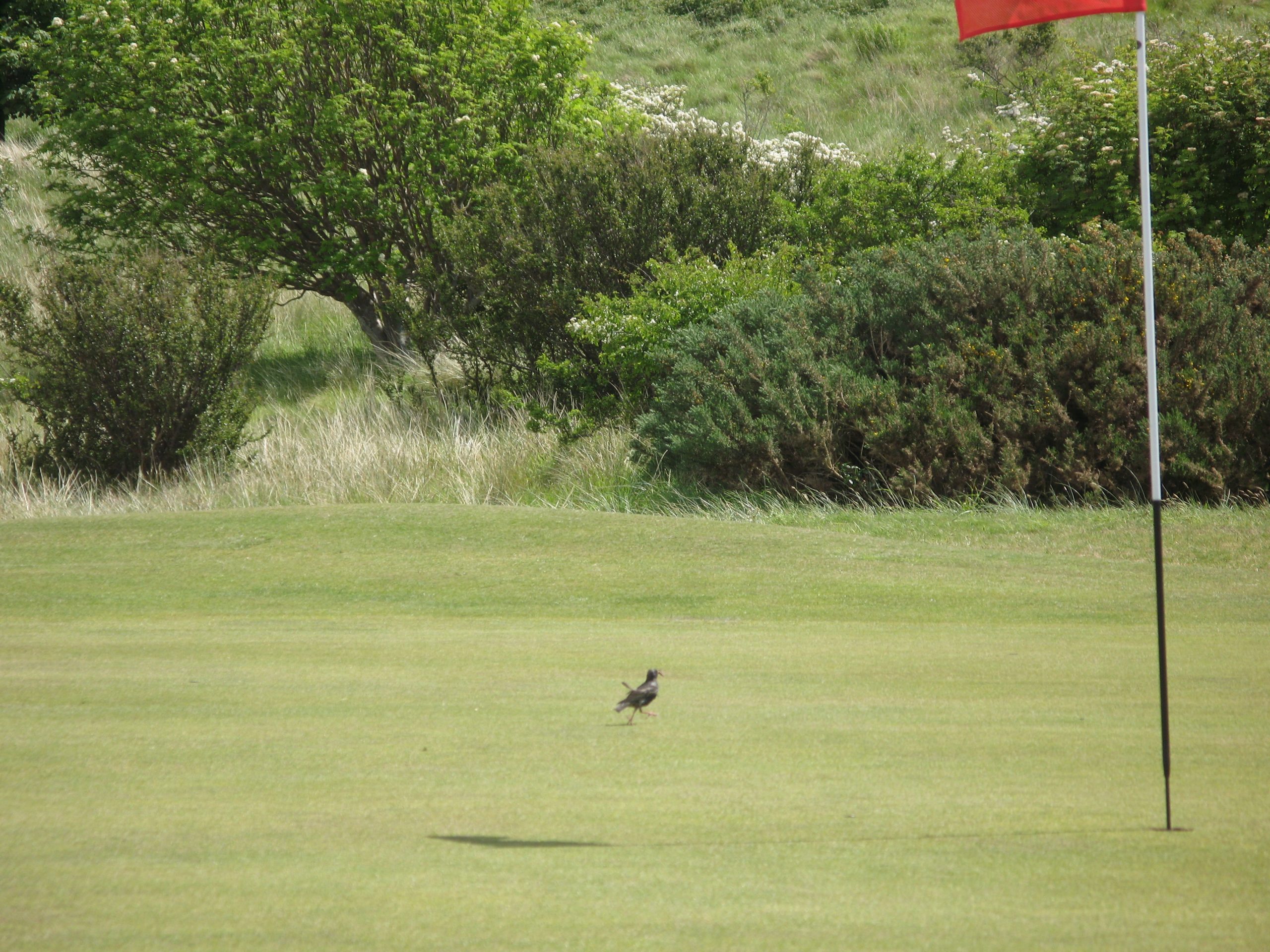
Gullane is one of a few nesting grounds where Larks abound, here encountered at the 8th green.

I met Alasdair a few years ago, when I helped a tiny bit in his editing of the golf book, “The Golfing Life of Jock Kirkcaldy“, the alter ego of our mutual great friend Frank Crowe. The book was forwarded by Gary Player, a friend of Alastair’s – of course!

The brilliant bunkering at the par 3, ninth hole. Although not “the turn”, as with constant directional changes on the interweaving course, it’s unlike the many “out and back” links in Scotland.

This Championship course, the first of the three Gullane courses, dates back to 1882, (the others being innovatively named Gullane 2 and Gullane 3) and it was in brilliant condition. It could have immediately held another Scottish Open without any adjustment. The greens had a little more grass than a professional tournament would have, in order to ensure they didn’t become unplayable in the wind. We had a relatively still day on the links – only a 10mph breeze. Whilst Gullane 2 and 3 were both designed by golfing royalty, Willie Park Jr, the designer of Gullane 1 remains a mystery, which seems so apt.

The bunkers at the left of the 12th fairway, a short par 5, but played slightly uphill and into the prevailing wind – a challenge. Moly’s birdie 4, was witnessed by a group of Swedish golfers, among the many international visitors Gullane gets each year.

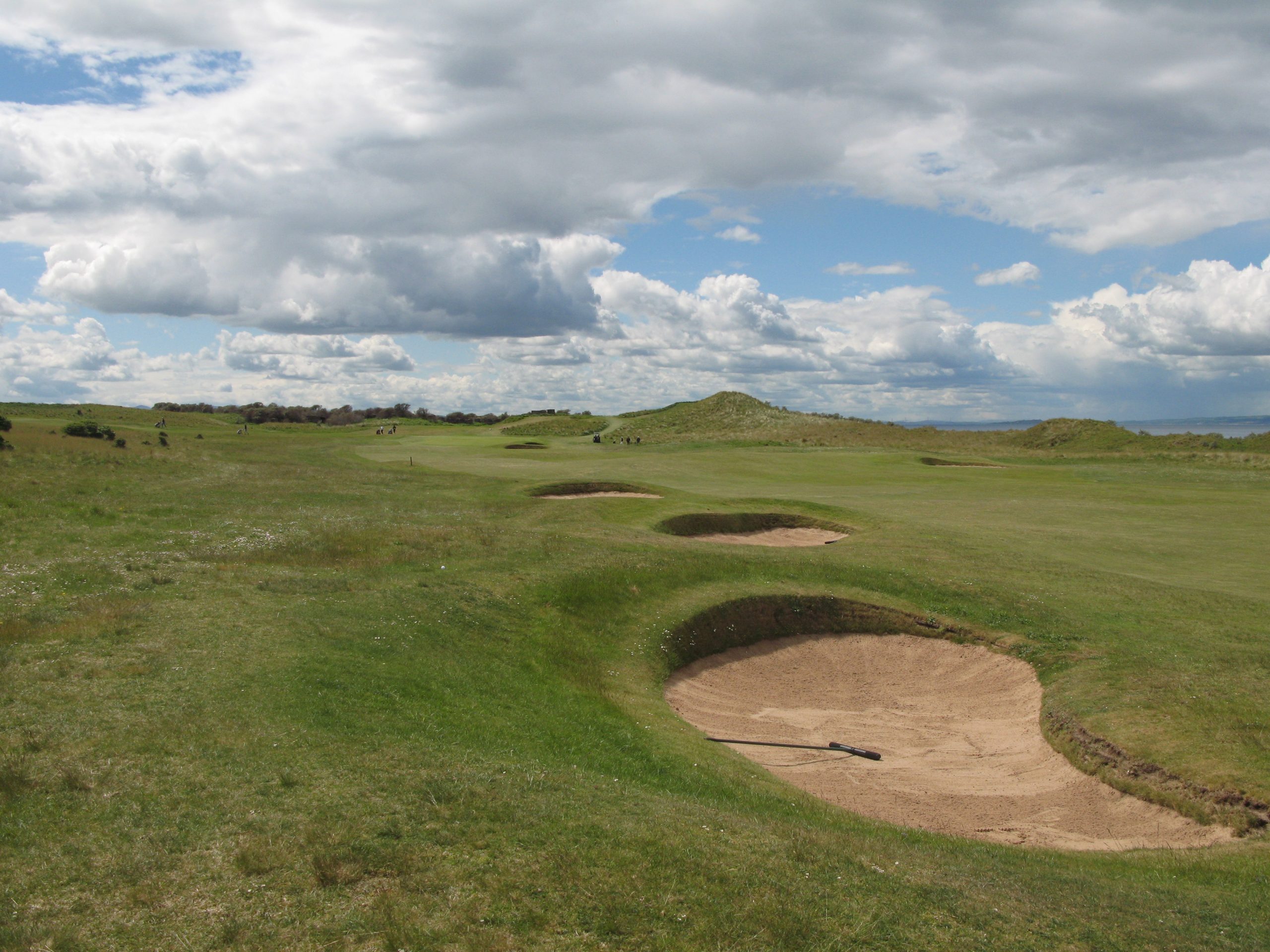
The bunkering was exceptional. Strategically placed, penal, but not impossible, many of the new US style courses could learn from a Gullane recce. I recently played on the Ryder Cup course at the K Club and found that almost all the bunkers required a shot height and carry I no longer had in my bag. Gullane bunkers give you a chance.

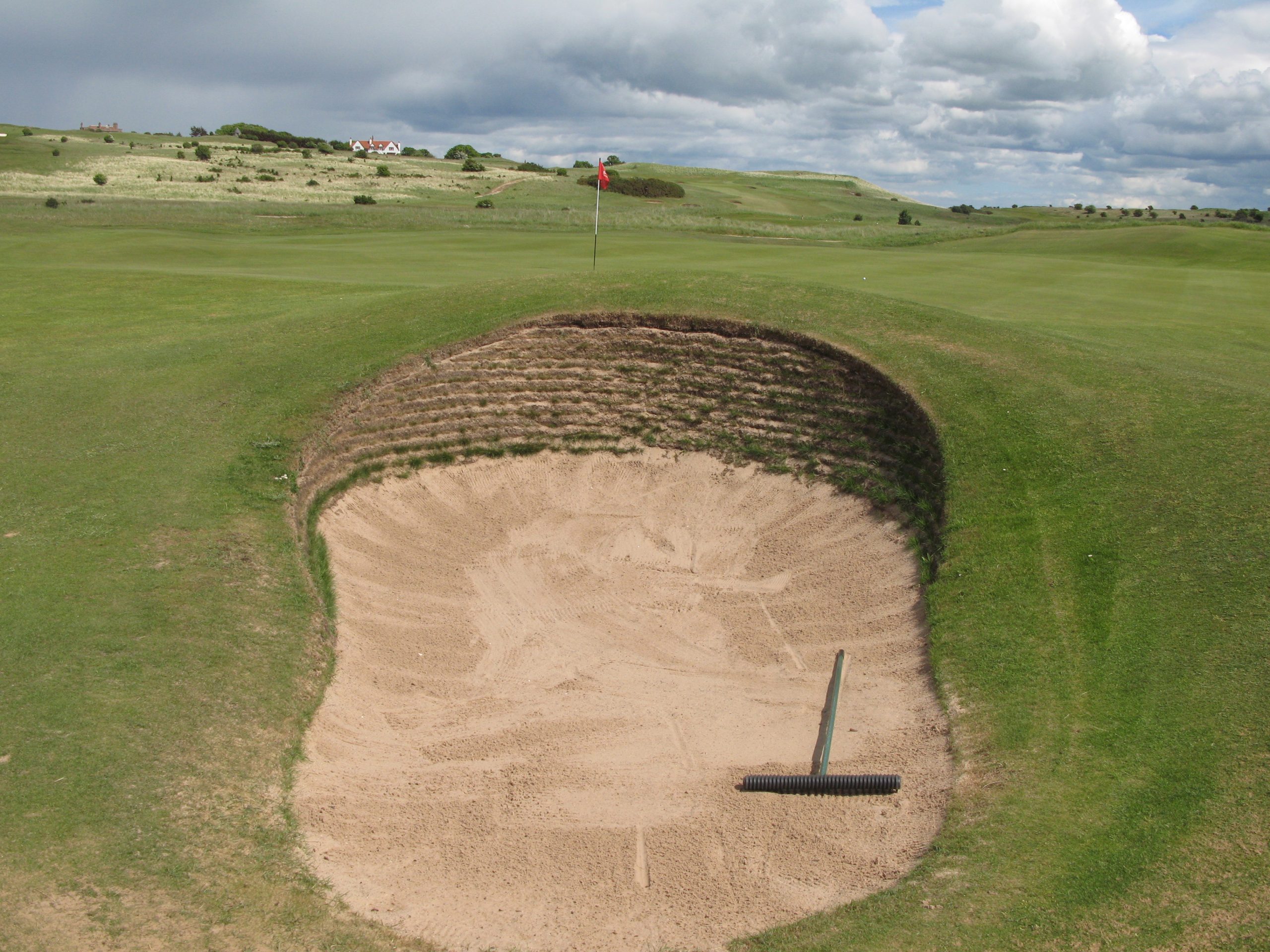
The immaculate bunker at the 14th green – penal but not impossible.

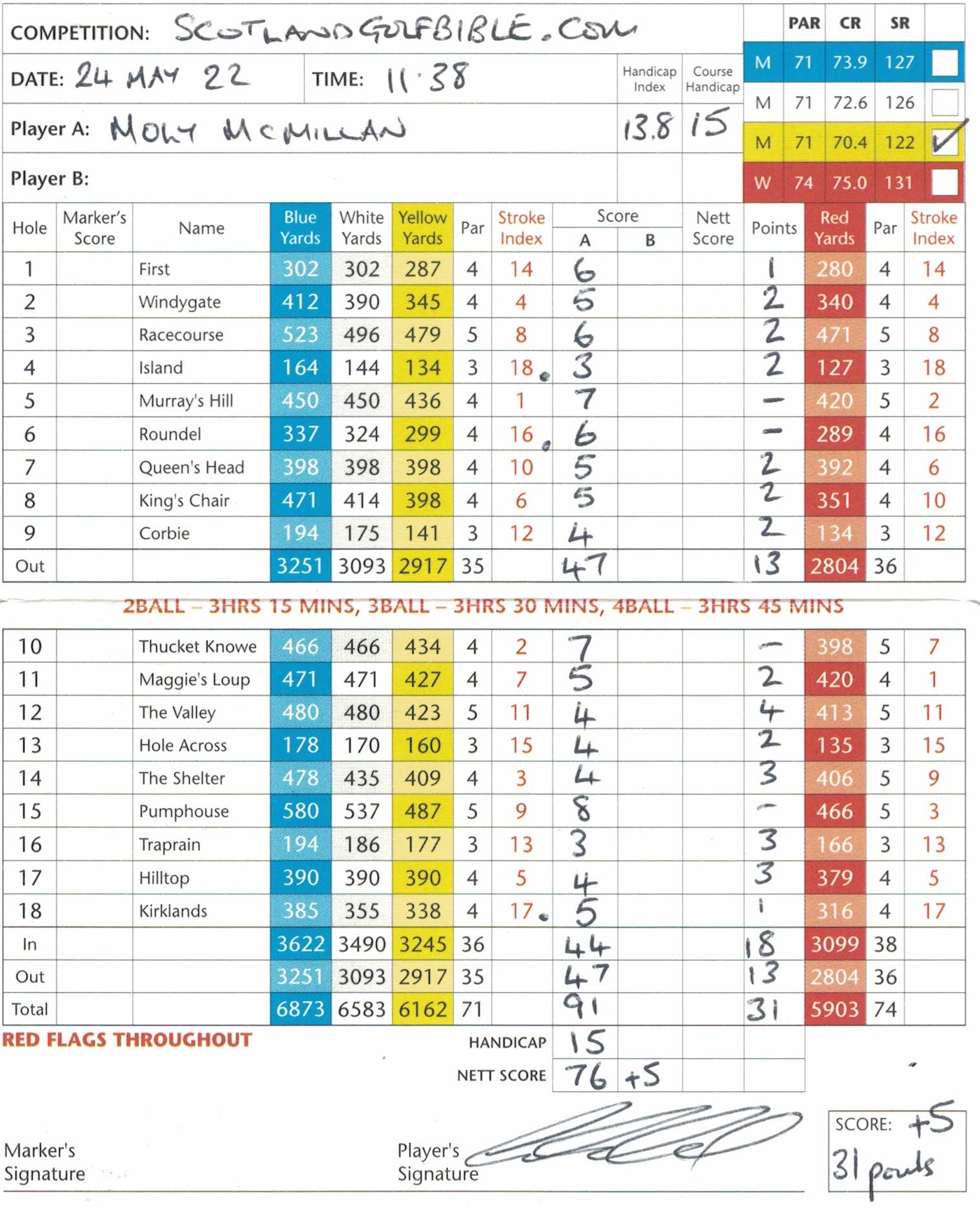
I was very pleased with my 91, despite 3 triple bogies, including at the stroke indexes 1 and 2 holes, the 5th and 10th respectively. I played off the yellow tees at 6162 yards, plenty enough distance for me. I had such a great time playing Gullane. I only hope all of the very fortunate 1200 members feel as blessed as Alastair does, who was a joy to play with on a memorable day for me.

The approach at the long par 5 15th hole.

The course sits on a vast area, so expect to 3 putt some of the monstrous greens. Despite being a busy day with all tee slots taken, I was amazed to only hear one shout of “fore”, a measure of the space here.

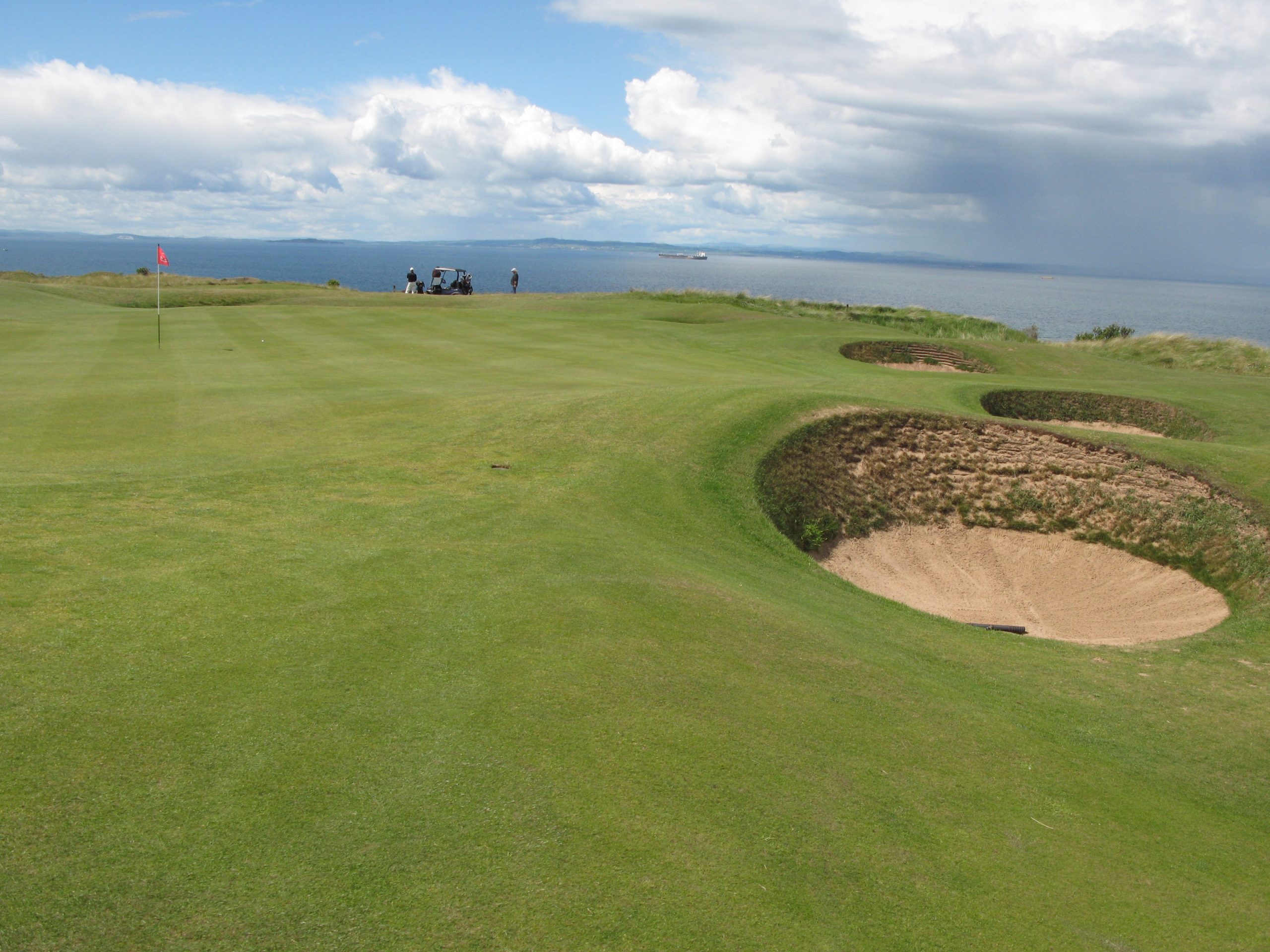
Moly has a rare birdie chance at the uphill par 3, 17th. Note the rain in the Firth of Forth, which never arrived on the course.

Now for the assessment of value. Golfing visitor fee inflation has really impacted Scottish golf. In 2018, in my St Andrews Old Course blog, I said anything higher priced than the old course can’t be worth the money. At the time the Old Course was £180 for a high season round, this year it is £270, a compound annual rise of over 10% per year, or more than three times the retail price index over the same period. Put another way, using 2018 as the datum, the Old Course should be £205.

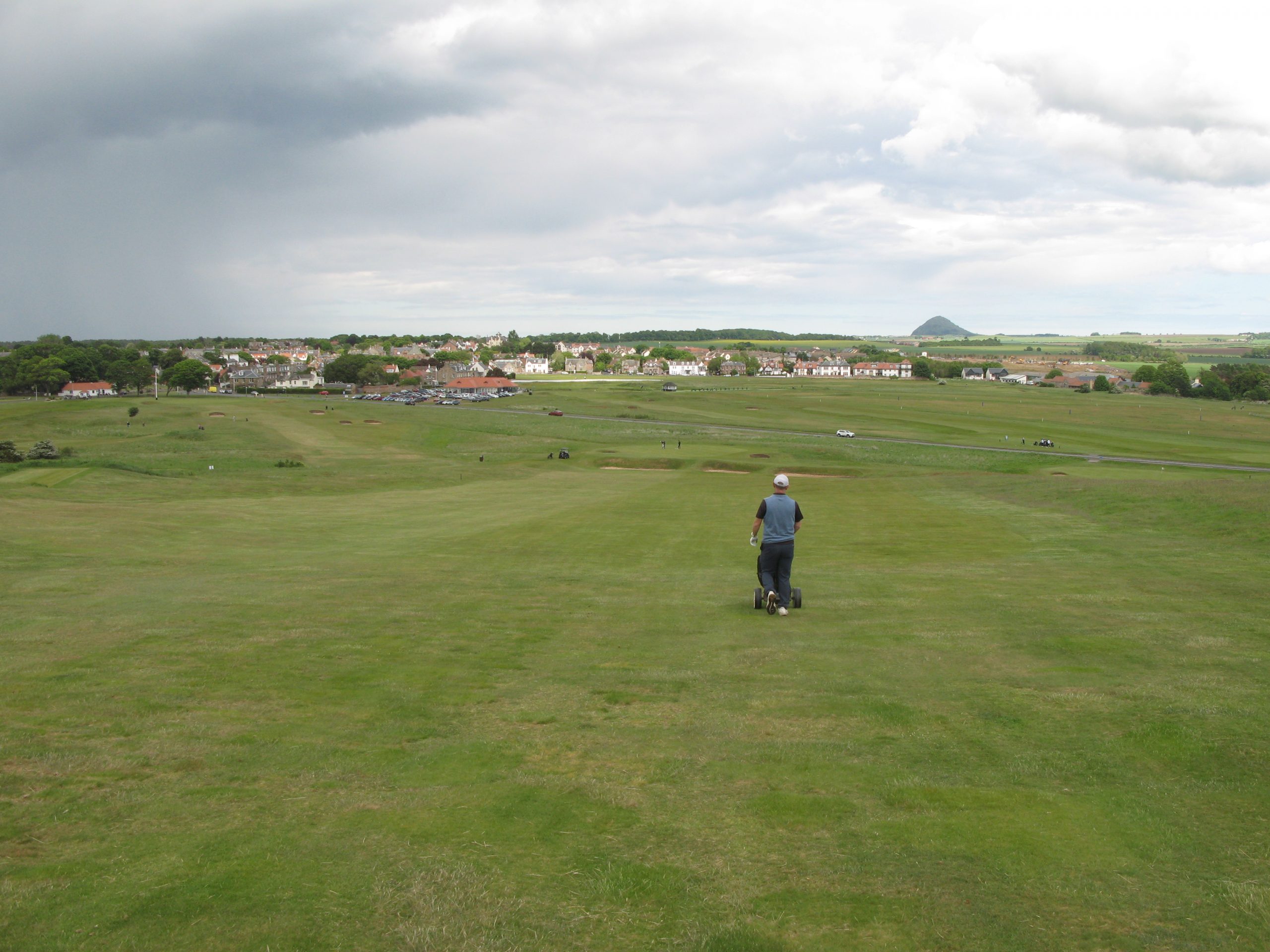
All good things come to an end – here Moly walks towards the 17th green, a deceptive par four, with the town of Gullane awaiting, watched over by Berwick Law.

No matter how much might have wanted to, in the end I couldn’t give this course anything less than 5 out of 5 for value, despite the price tag of £195. It’s a must play links golf course with unbeatable turf, bunkering, green surrounds, sea breeze, wispy rough.

Play, if for nothing else, to stand on the exact epi-centric viewpoint of world links golf. If such a thing could exist.

Facts:

Course Type: Links

Par 71 (3 par 5s, 11 par 4s,  4 par 3s)

Distance (yellow): 6162 yards

Moly’s Gross score: 91

Moly’s Gullane Number 1 scorecard – 91

105. Shiskine. 15th Sep 2020

One explanation makes sense – this is perhaps God’s home course.

Round £26 (12 holes). Par 42. Value (out of 5) – 5

Shiskine is probably the greatest 12 hole golf course in the world, but that hardly does the course justice.

The Isle of Arran sits off the North Ayrshire coast, accessible all year round by regular ferry crossings from the Port of Ardrossan or, during Summer, from the Kintyre peninsular.

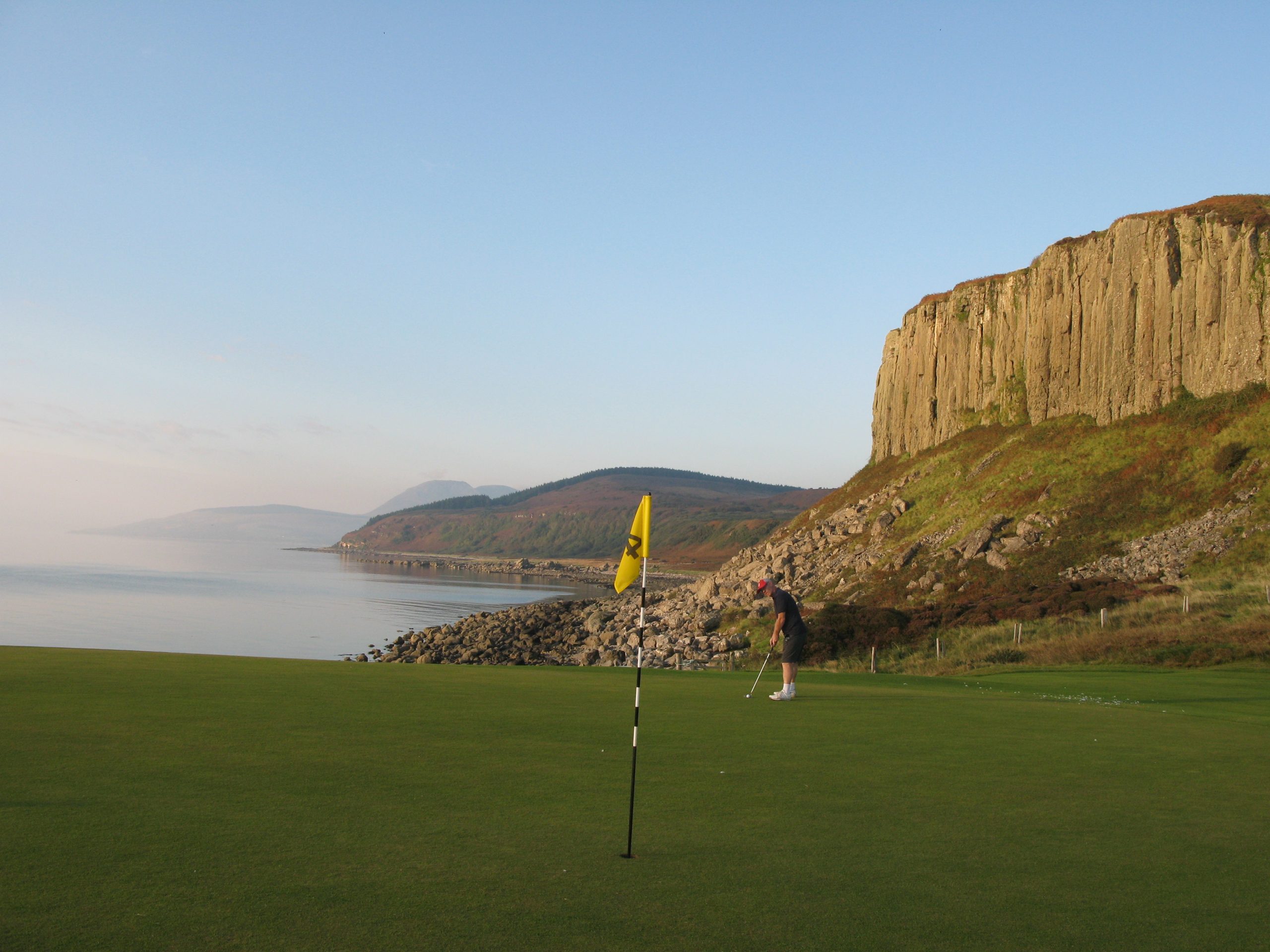
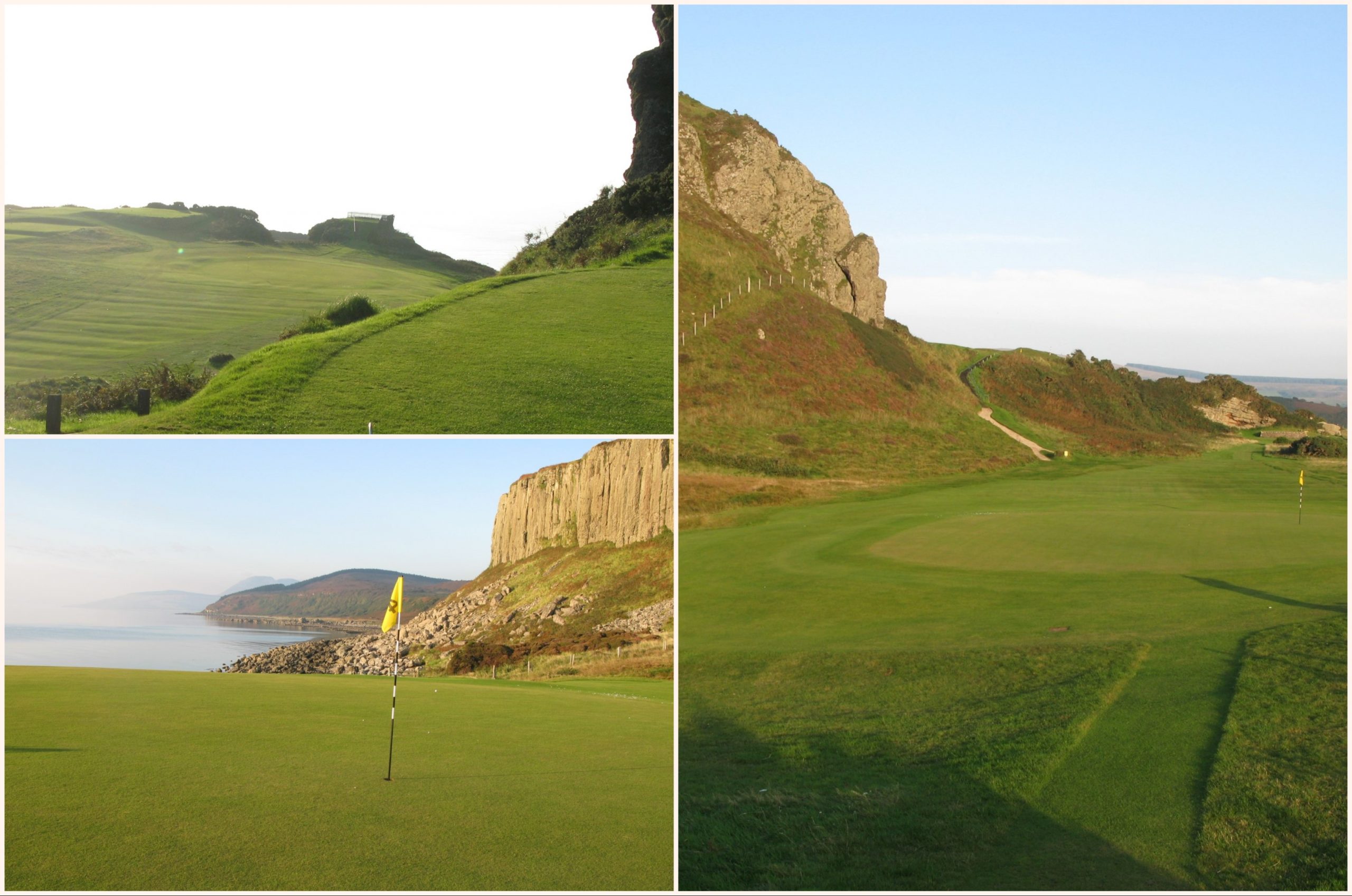
Moly putting for birdie at the 4th “The Shelf” hole at Shiskine, in benign conditions.

Several areas of Scotland self proclaim the title of best destination for golf, with the East Neuk of Fife and the North Berwick coastline being the headline events. But when it comes to the best value destination for golf (worldwide?) Arran sits comfortably at the top of any list – in my humble opinion. This island of 432km2 has a population of 5,000, with a majority of the people working in the hospitality sector. Arran has 7 golf courses, which all sit on the periphery of the island and are easily accessed; none of them has a weekly green fee greater than £30. With many hotels, B&Bs and campsites, Arran is a must visit golfing destination.

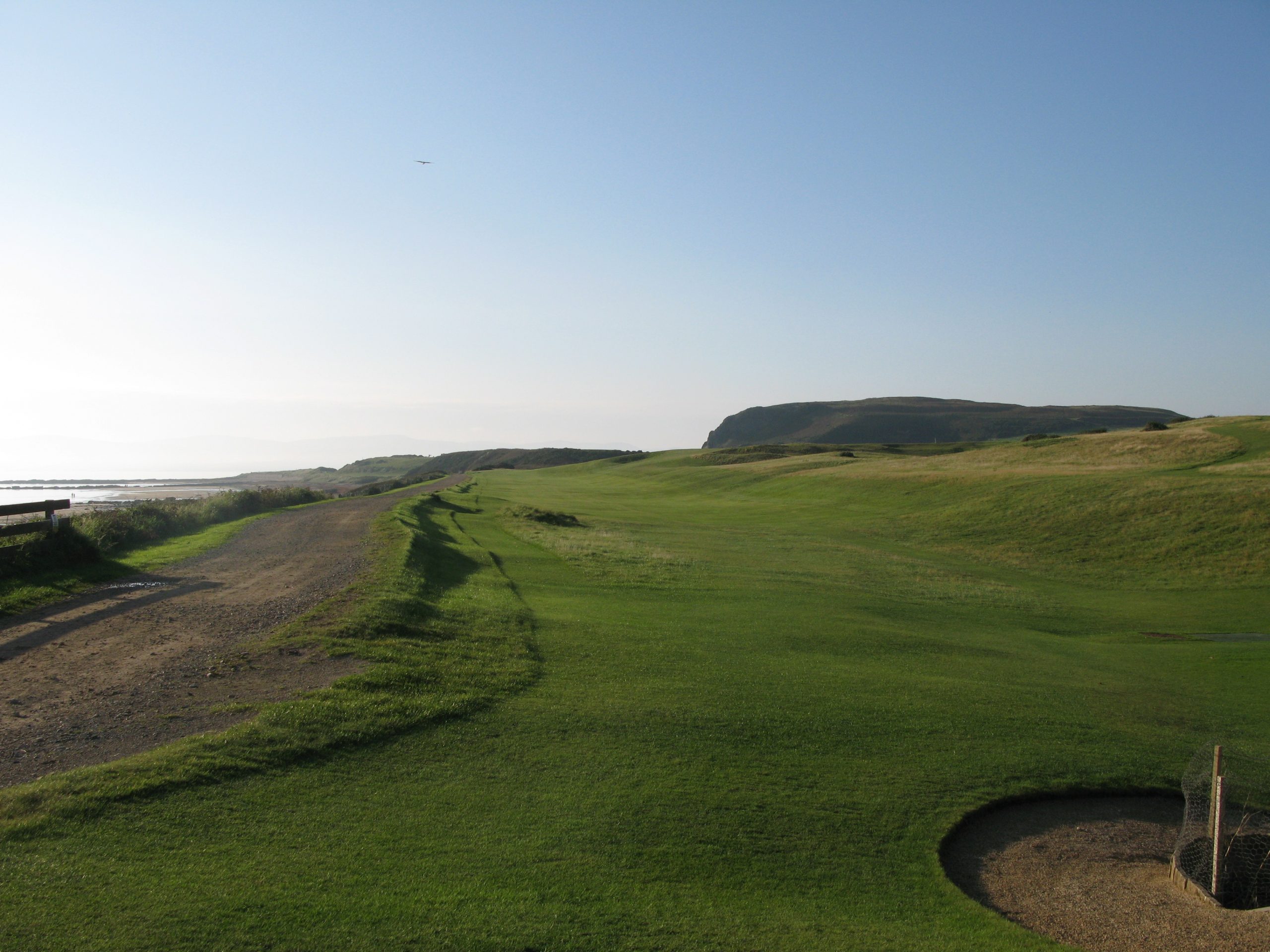
Shiskine, set on the west of the island, is the jewel in Arran’s crown.

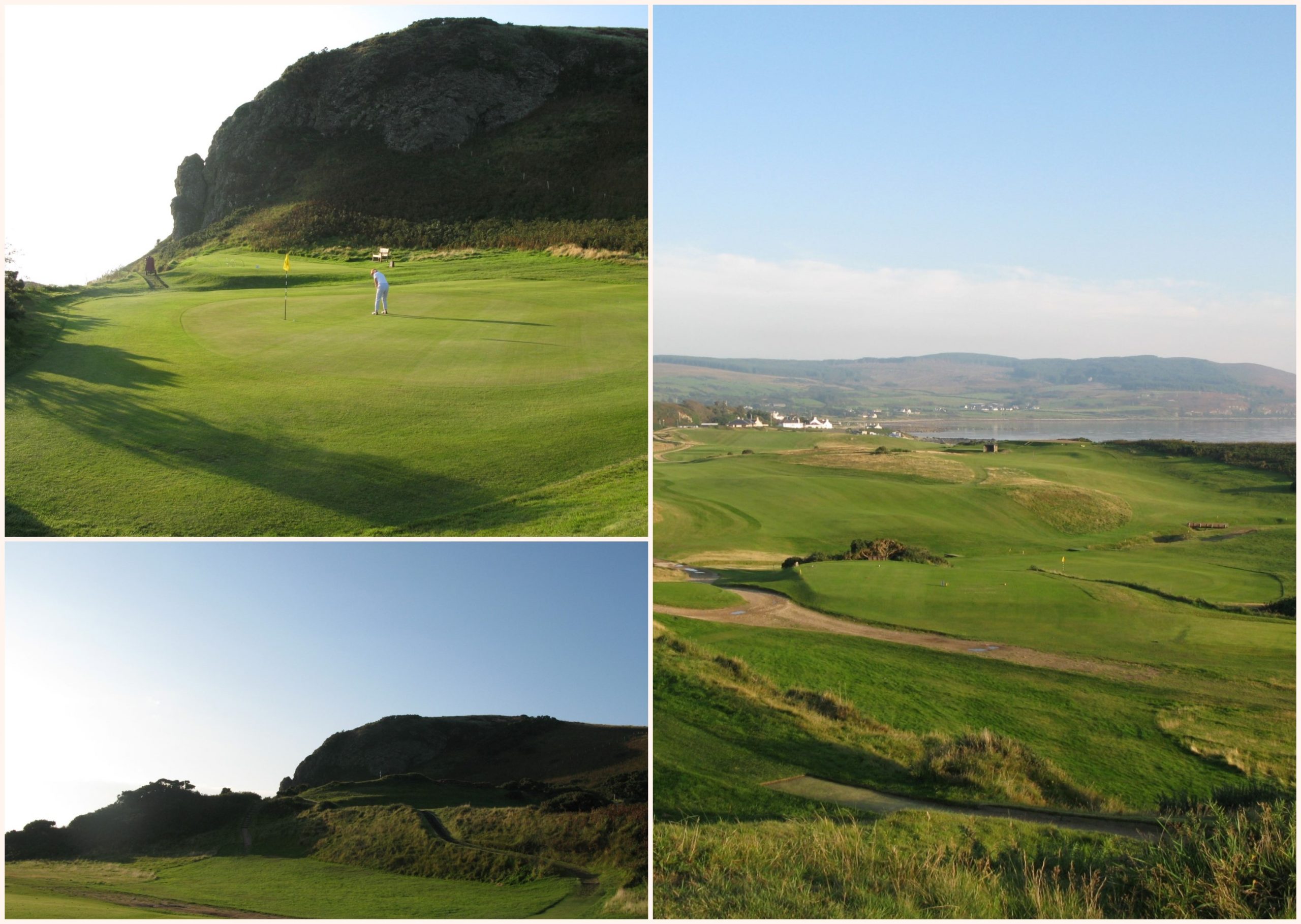
The par 3 ‘Craws Nest’, 3rd, with views over the beautiful Shiskine layout.

It is said you should never meet your heroes as it can be so disappointing. It was with a similar sentiment I embarked for Arran with nightmares about losing all my balls into the sea from Shiskine’s formidable first tee. Such was my desperation to play that immediately after pitching our caravan and with pristinely tranquil conditions, I psychologically ran to the course to grab a twilight round at only £21. Without a pre-shot routine, and with a vice like will to keep my head over the ball, I drove a low running drive over 200 yards up the fairway – hallelujah! Entering a trance like state, I then proceeded to play the 12 holes in 47, or 5 over par – not quite the best round of my life, but I cannot remember smiling so much to myself during a round of golf.

The terrifying par 4 “Road Hole” first at Shiskine, with OOB left all the way to the hole.

Perhaps by ‘divine’ intervention, a feasibility study in the late 1800s rejected building a deep water pier on the current golf course site to serve the local port of Blackwaterfoot. Sometime thereafter, Willie Fernie of Troon (who also designed Turnberry’s Ailsa course), laid out the original 9 hole course, which opened in 1896, although only the current 5th and 9th holes survive from then.

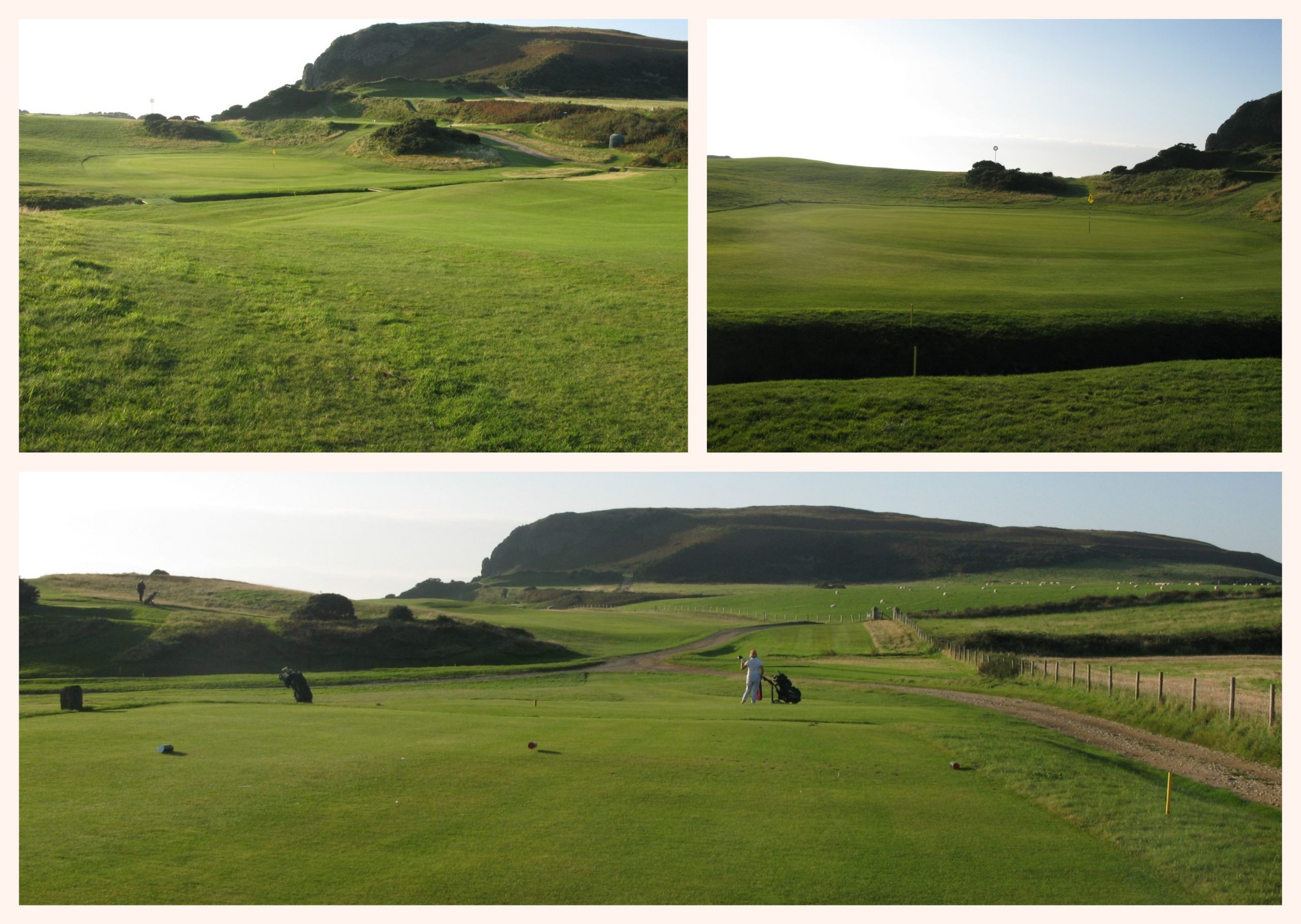
The difficult stroke index1 second hole at Shiskine, a tough par 4 with a burn in front of the green capturing many of the blind second shots into the green. Take enough club. Atop Drumadoon Hill in the background was where 6 holes returned to waste during the first world war

The course was extended to 18 holes just before the first world war using land above the current ‘shelf’ area of the 3rd green, but fell into disrepair during that war. Several attempts during the decades after failed to reestablish an 18 hole course.

Willie Park (Sunningdale and the North Course at Olympic Park, Chicago) then designed the current 12 holes between 1925-28. 18 holes play is reserved for member only competitions with the 1st, 2nd, 9th, 11th, 12th replayed with a further hole using a unique “15th” tee into the 4th green.

The course is not long, at just under 3000 yards from the white tees for the 12 holes, and 4,878 for the 18 hole layout; its slope rating is only 99 and disappointingly has no red ‘ladies’ tee boxes. It has 7 par 3s, 1 par 5 and 4 par 4s. Despite its short length, this is really fun golf, with very many blind tee or approach shots. I would strongly recommend reading the course guide, there is, for example, a bale out area to the right of the blind 3rd green, so aiming right of the flag is imperative. It’s rather hard to adequately describe the course other than saying it’s magical. It’s not perfect though, with the 12th a rather underwhelming short finishing hole. Nevertheless, it actually made me feel like I was playing my part in a Michael Murphy (Golf in the Kingdom) style mystical adventure with Shivas Irons as a playing partner. Perhaps I exaggerate. I can conclude by saying that I doubt you’d find anything like this course other than in Scotland and it’s a must play destination.

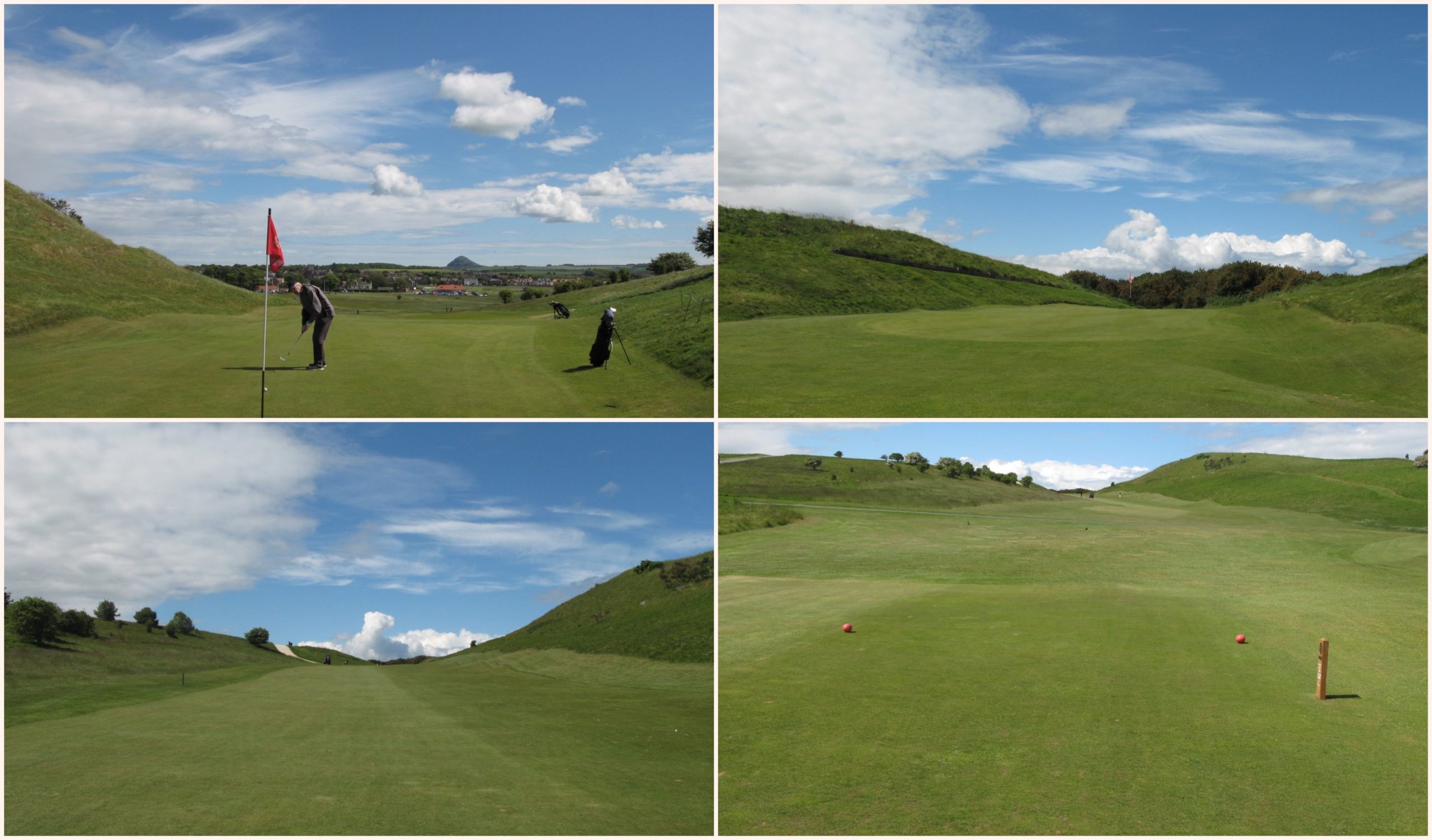
The 4th at Shiskine, a collage of dreams.

I’ve often pondered what golf handicap God might have? I’ve concluded that it would make sense if he or she were to have the exact average Scottish men’s or women’s handicap. God’s preferred course would be majestic, but not too difficult. For example, it wouldn’t have par 4s or par 3s that are really disguised par 5s or 4s respectively. It wouldn’t have any carries off the tee that effectively disenfranchise most higher handicap players. It would be set amid a beautiful landscape. It would offer a mix of guile and strategy. Some of the shots would be frightening. The greens, tees, fairways and all round conditions would be perfect. The weather or elements would play a significant part of the experience. Play would have to be fast – so he/she decided 12 holes was the best length. In the right conditions, it would bring you close to it’s maker.

Perhaps God did design Shiskine after all. Please go and play.

Facts:

Course Type: Links

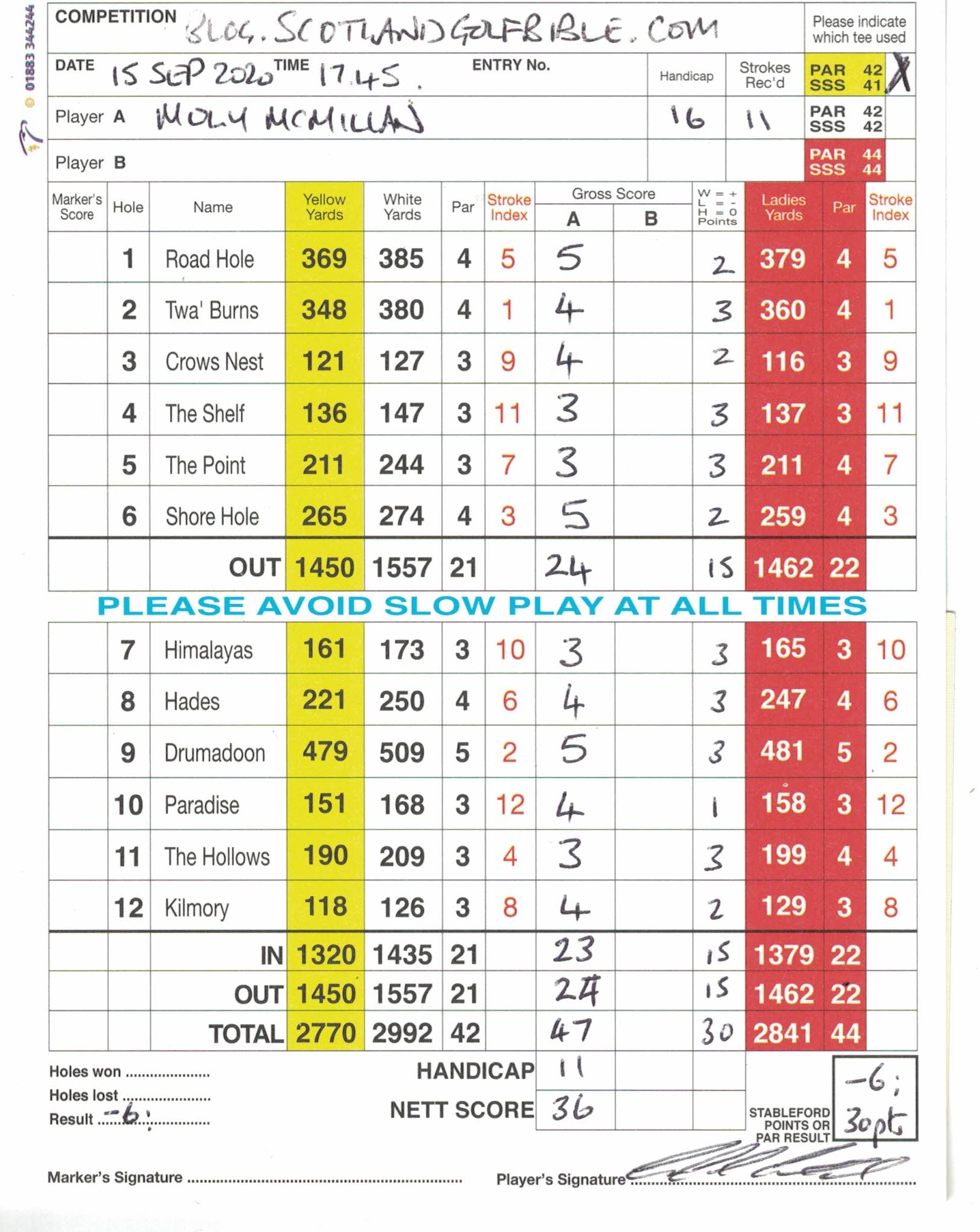
Par 42 (1 par 5, 4 par 4s, 7 par 3s)

Distance: 2770

Moly’s Gross score47

Moly’s life affirming 5 over for the 12 wonderful holes at Shiskine

86. Archerfield – Fidra Links. 12 Sep 2018.

Superbly designed course that could be considered any of links, parkland or woodland!

Round £90…plus hotel residency!   Par 72.  Value (out of 5) – 3.5

I felt a little stupid when the answer came to my question “Why is it called Archerfield?”.  “It was where King Edward I’s bowmen practiced in 1298!”

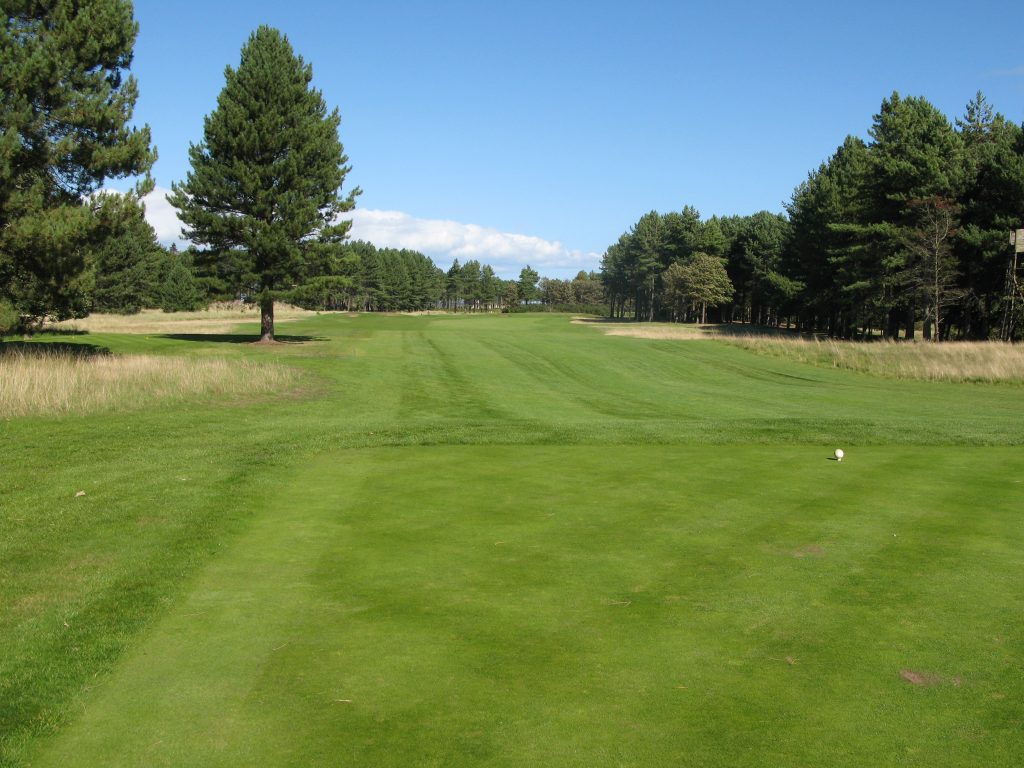
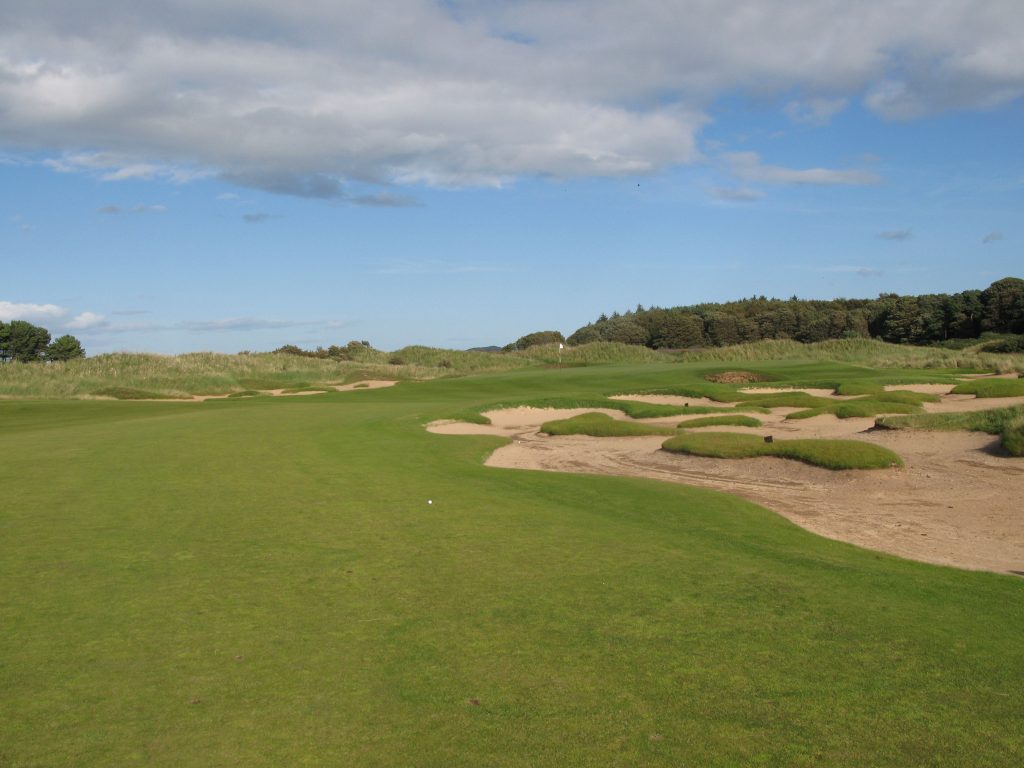
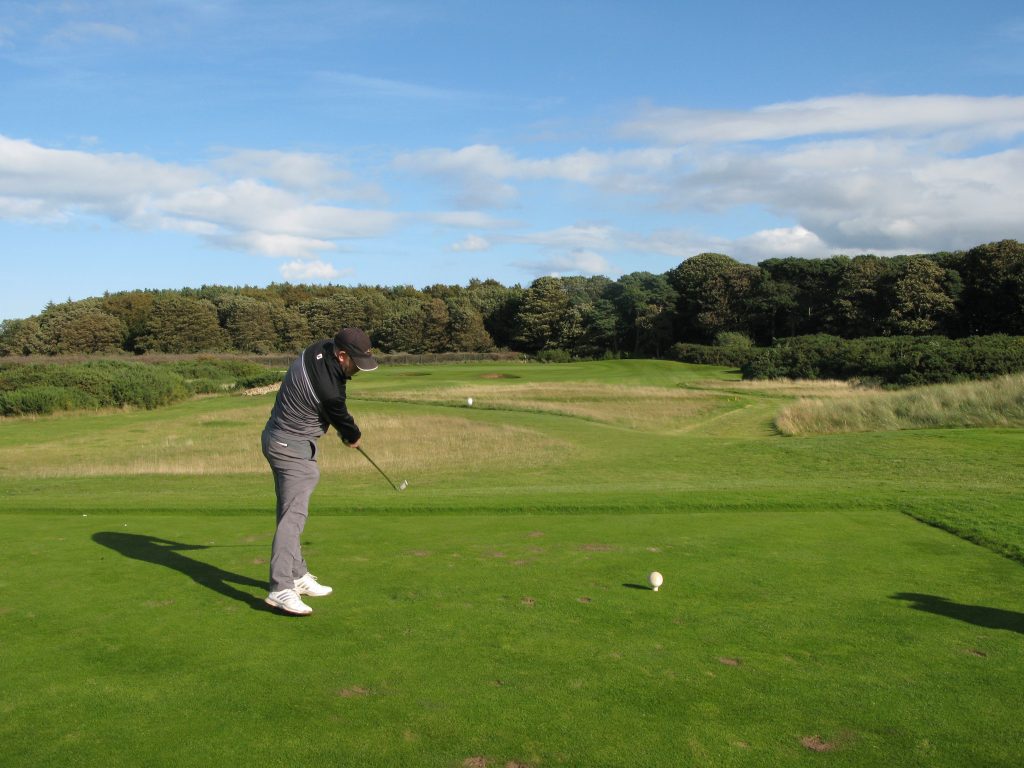
The 1st at Fidra Links, very typical of the first 11 holes.

Fidra Links is one of the two courses on the Archerfield Estate, a golf centred development created by the Edinburgh businessman Kevin Doyle over the last 15 years.  The estate has a range of 5 star accommodation options, with the 17th Century, 16 bedroom, flagship Archerfield House being available to rent in part or in whole.  When my wife and I stayed in a nearby “Pavilion Suite”, we were politely refused entry to Archerfield House by a Concierge, as we weren’t one of the 4 Americans that had rented it for the week.  Get the picture – know your place amongst the clientele of “Scottish” golf these days.

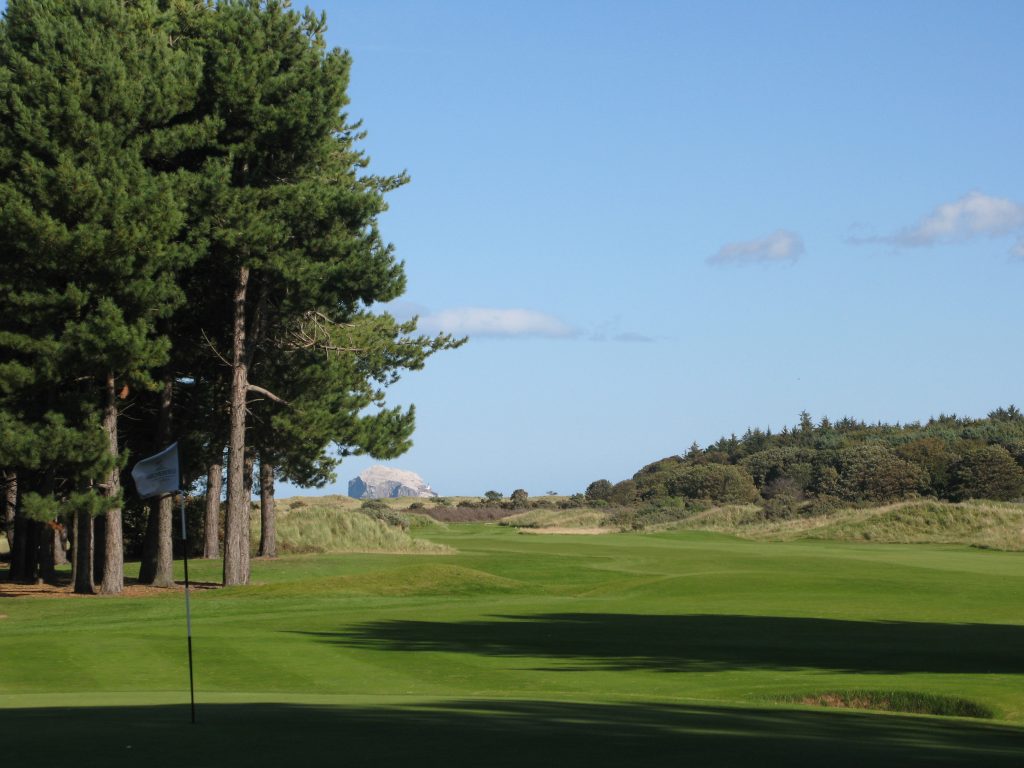
A view towards the Bass Rock from behind the 6th green at Fidra Links

Seriously though, with great accommodation, a quite superb Scandinavian inspired spa, and first rate practice facilities on offer, this is a world class golf resort on Edinburgh’s doorstep.  Curiously, the clubhouse restaurant and bar is adorned with African art, giving it a colonial feel?

Nestled between Muirfield and North Berwick, and adjacent to the magnificent Renaissance,  Fidra Links and Dirleton Links (the other Archerfield course) strengthen the case that this East Lothian region is Scotland’s premier golfing destination.

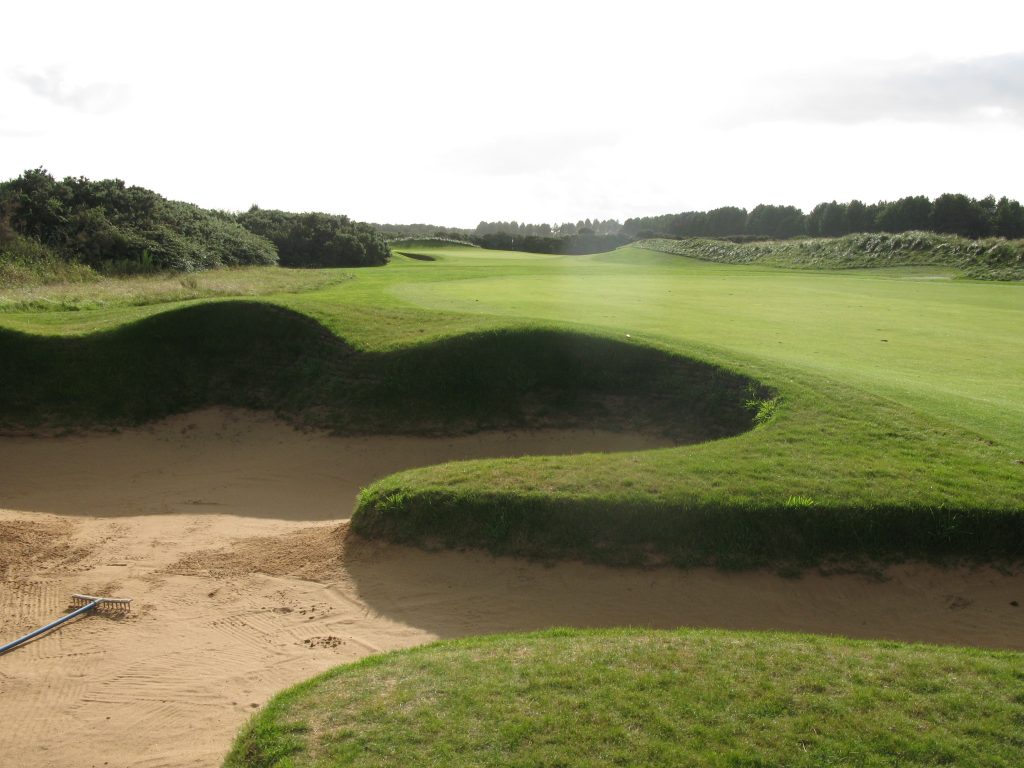
The approach to the 12th has plenty sand awaiting.

It’s not cheap though;  membership via a debenture costs about £30,000, then around £3,000 annual fees.  But, you do get your shoes cleaned and don’t need to worry about paying for range balls.  You can have a “golf experience day” (price unknown), or as I did pay a £90 green fee as an accommodation occupant; I suspect many golfers play both courses either side of a single night B&B stay, which costs about £500; not bad for a short break of this quality.  The clubhouse food is pretty good too, and not overpriced.

Moly plays straight at the par 3 12th at Fidra Links – straight into the front bunker that is!


Fidra “Links” is a beautifully laid out design by architect David J Russell, who has created a great mix of parkland, woodland and links!  It may well be the most tree lined course adjacent to the sea in Scotland; I really don’t know how you would classify it.  The first 11 holes are pine forest protected, with the last 7 holes being the “faux” links holes open to the elements.  The bunkering is often fierce, the greens are large and tricky, and with constant changes of direction, it’s difficult to get an easy couple of holes together, especially if the wind is up as it was for us.   The trees are fairly open at times with the pine undergrowth meaning balls are relatively easy to find, which is a big bonus with my wayward driving game.

The course condition was excellent, as one would expect, and if you were to find any lost balls they are unlikely to be scuffed Top-Fight’s.  Finding good golf balls, especially by having to crawl though thorny bushes, is one of the guilty pleasures in my life!  It was actually more difficult to find the next tee at Fidra, than lost balls, as apparently Mr Dolye doesn’t like signage?  That was my main criticism of the course, as well as the tee options.

There are some great golf holes here.  The SI 2, par 4, 7th hole, is a slight dog leg left, where only a tee shot on the right of the fairway, can avoid having to hit over 2 prominent trees about 50 yards short of the green.  The short par 4 12th has magnificent bunkering awaiting a pushed second. The 14th, into the prevailing wind was well worth the SI1 tag.

The fairway bunker on 15 at Fidra is a typical and well constructed feature.

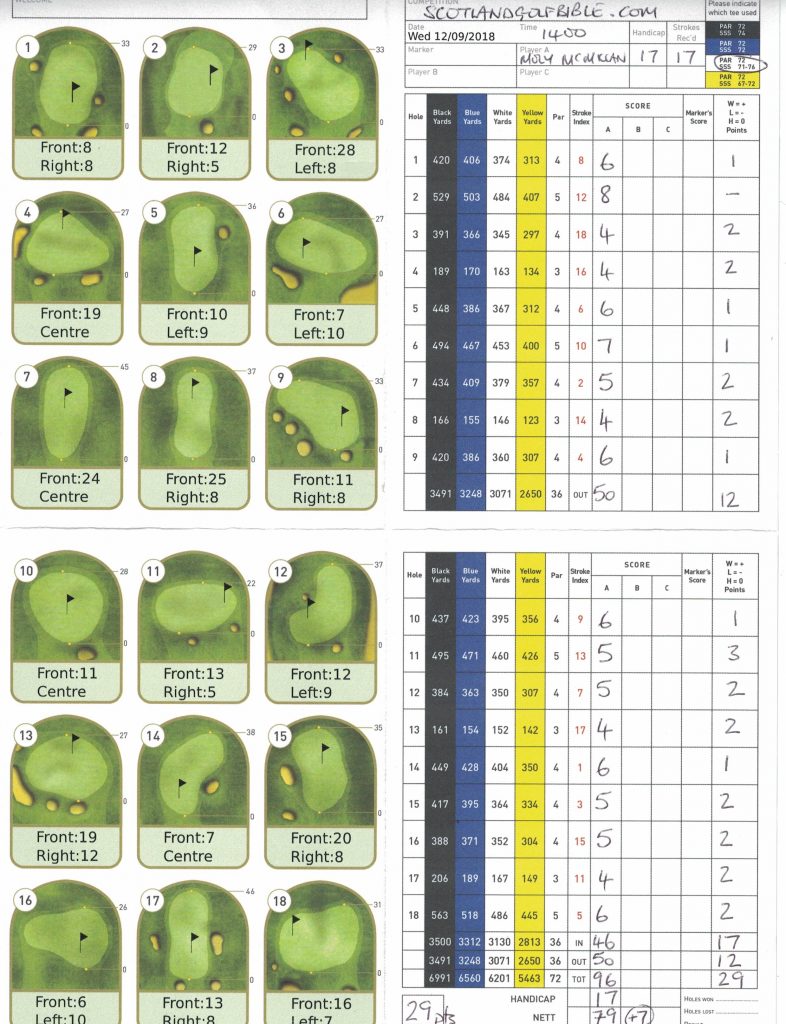
It wasn’t long from the yellow tee (5463 yards), but with 4 tee options to choose, I played off the white at 6201 yards, and felt I played really well for my 96 and 29 stableford points.  Disappointingly, there were no red tees, the traditional colour used for ladies, which given the current debate about encouraging women to play, didn’t make any sense to me!    The card was though very instructive (see below) as it was printed daily with the pin positions!

If you can afford it, its worth staying and playing at Archerfield.  If you do, I recommend you also splash out on the Golfer’s recovery massage – I didn’t know I had so many knots in my back!

Facts:

Course Type: Parkland/woodland/links

Par 72 (4 par 5s, 10 par 4s,  4 par 3s)

Distance (white): 6201 Yards

Moly’s Gross score: 96

The daily printed scorecard at Archerfield’s Fidra Links – Moly shot 96.

« Older posts Newer posts »

© 2026 Scotland Golf Bible

Theme by Anders NorenUp ↑