A guide to green fee value for money

Category: 3 star (Page 7 of 15)

104. Dalbeattie. 14th Sep 2020.

A delightful and great value “crowd funded” course

Round £10 (9 holes). Par 34. Value (out of 5) – 5

I was glad to meet the greenkeeper half way round my game at Dalbeattie, as I’d called him several unrepeatable names since the 2nd green, where I had hit two great shots to the green and walked off with a 9. I didn’t technically 7 putt, since I had putted off the green at least twice.

“These pin positions are a joke, they are ridiculous!”. “Yes, I agree”, said the very affable greenkeeper, “we held a charity texas scramble yesterday and were told to make the pins impossible”. “Ah, well, they certainly are that!”.

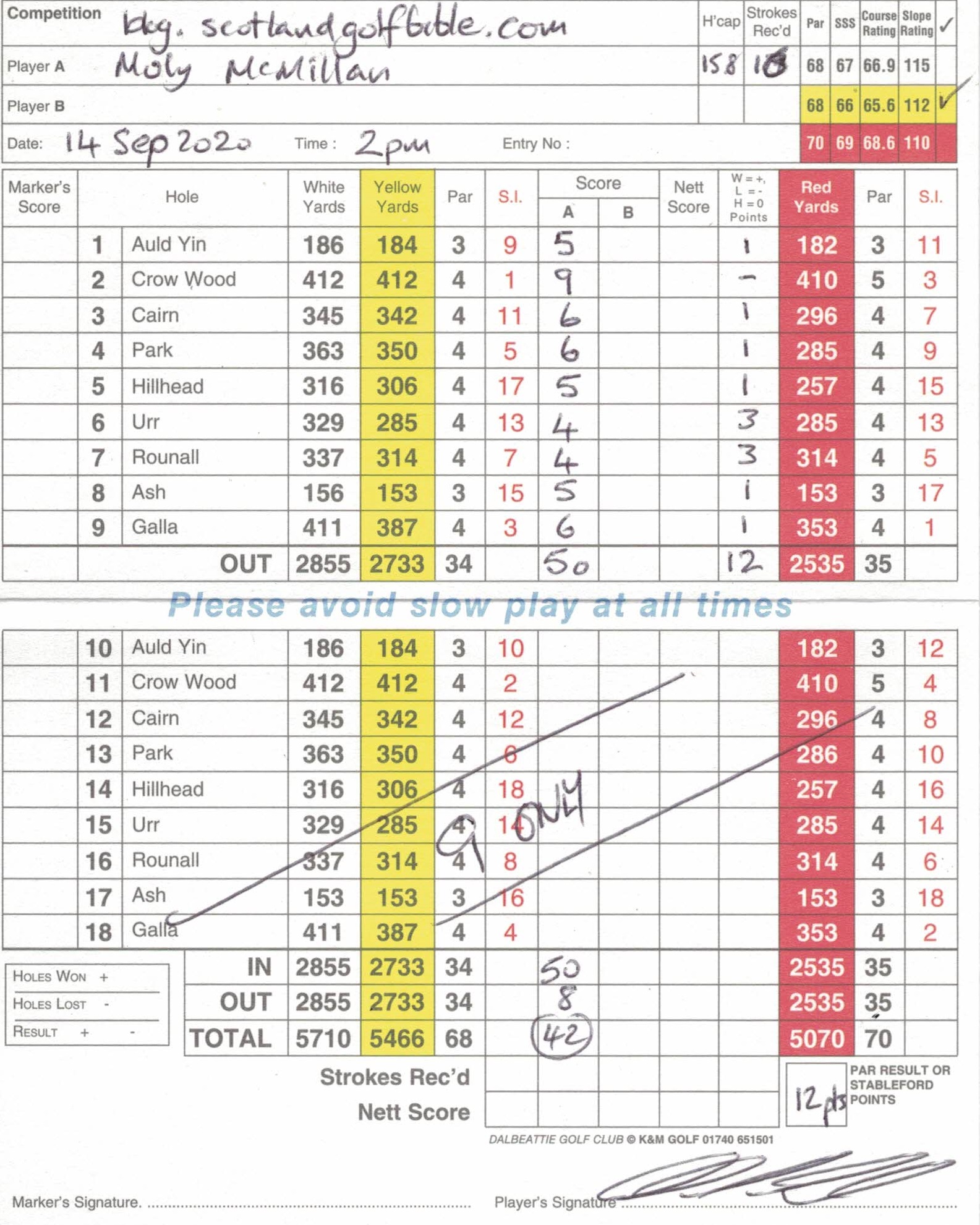
So my 50 for 9 holes, or 16 over par, at least has a decent excuse for once.
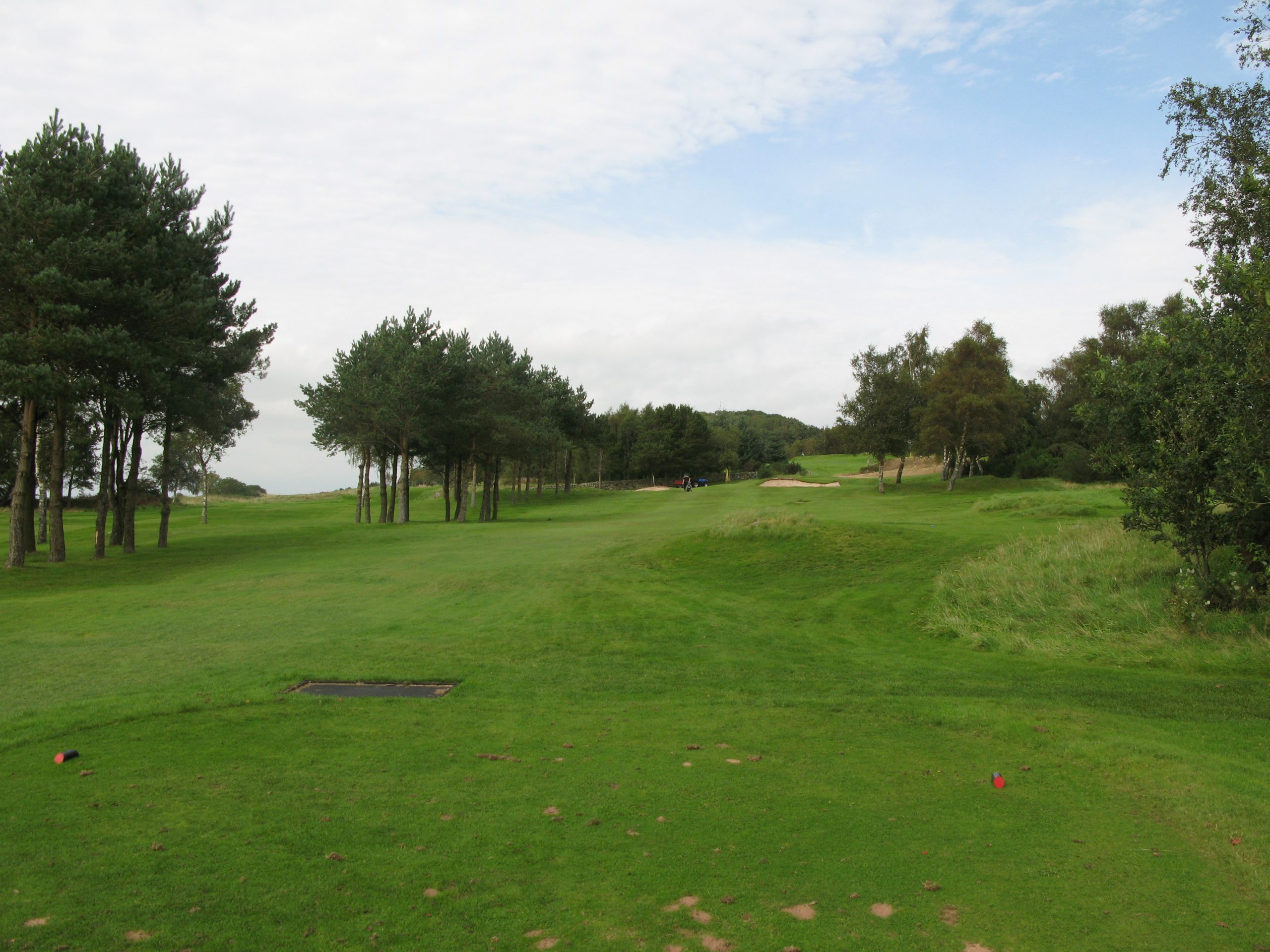
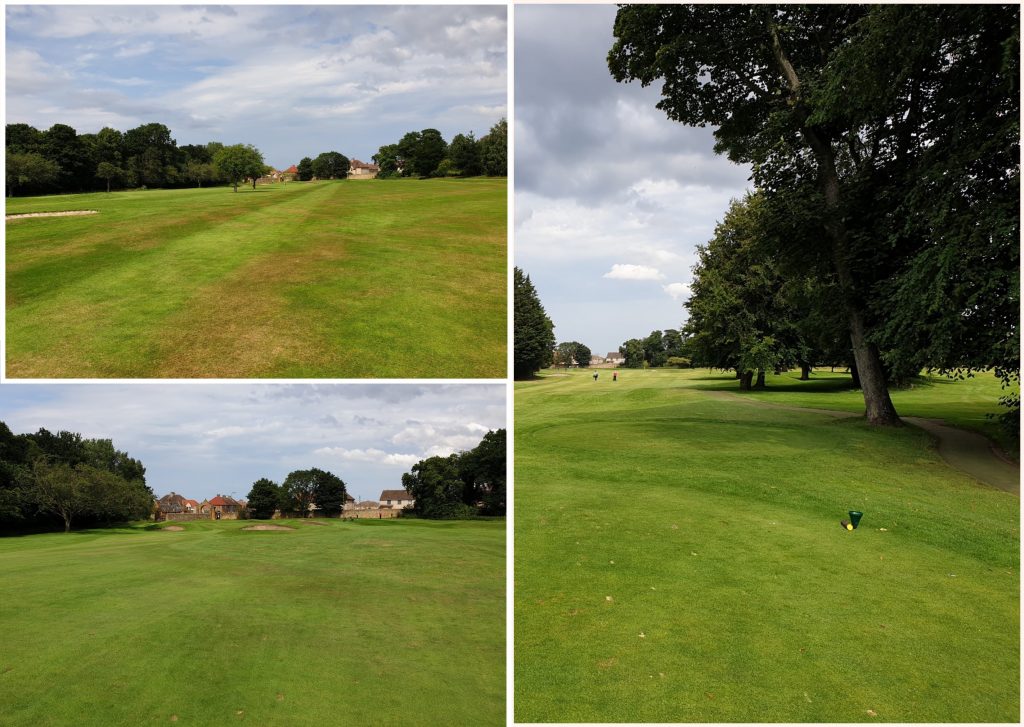
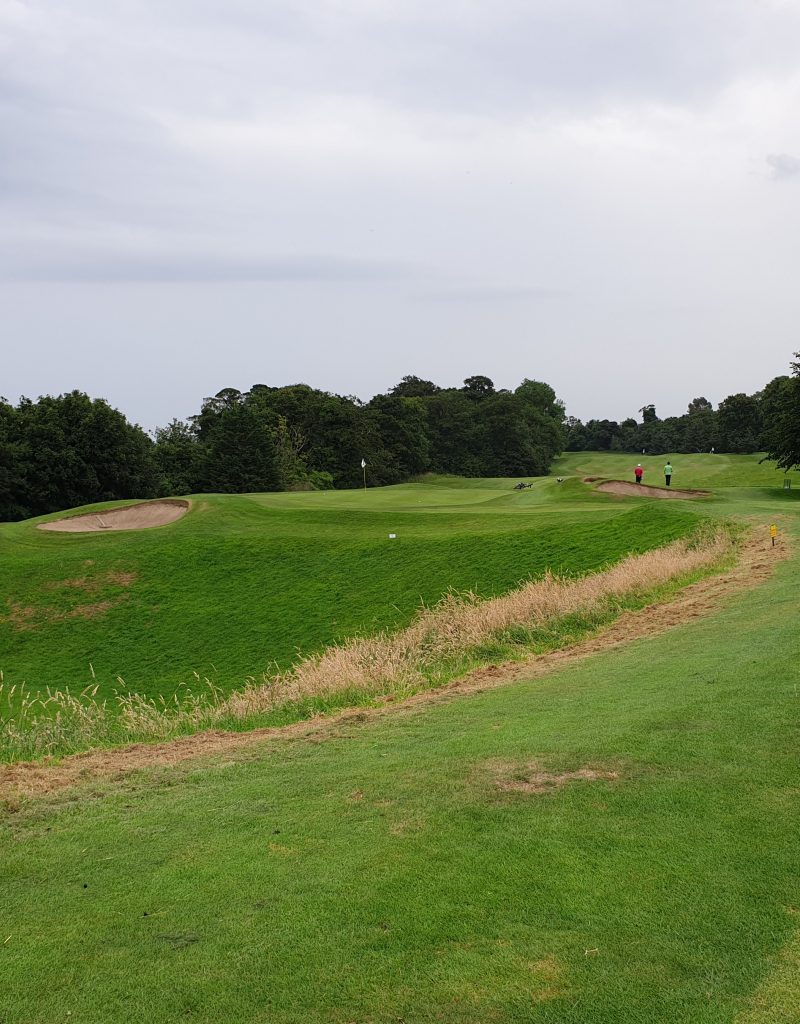
Difficult short opening hole at Dalbeattie – which had the first of many impossible pin positions.

In addition to the ‘difficult’ pin positions, the drive into the car park, had also not boded well. The sat nav took us through a small wood on a dirt track, which without our 4 wheel drive we may not have made it. Apparently the locals park on the streets surrounding the 9th green.
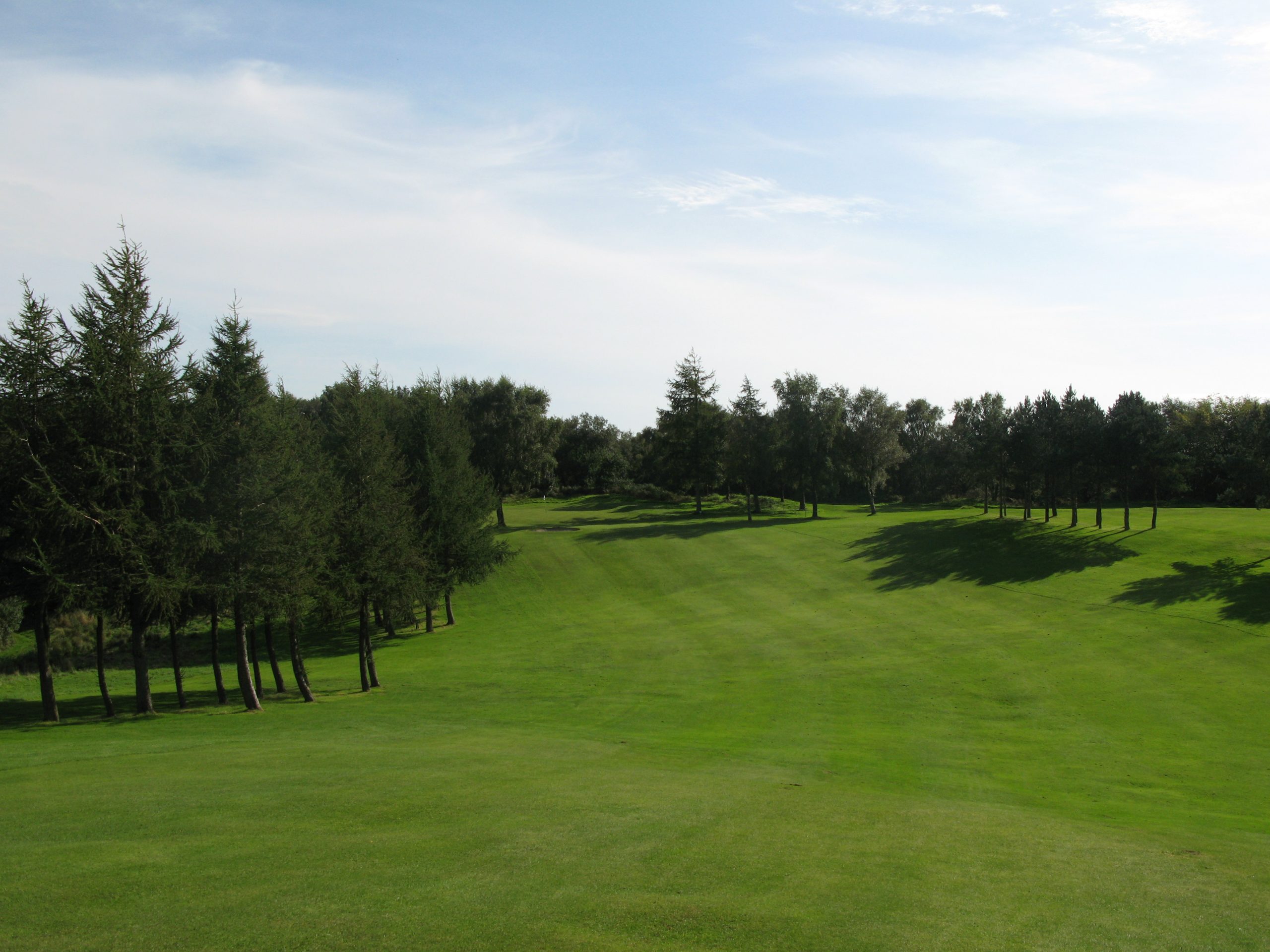
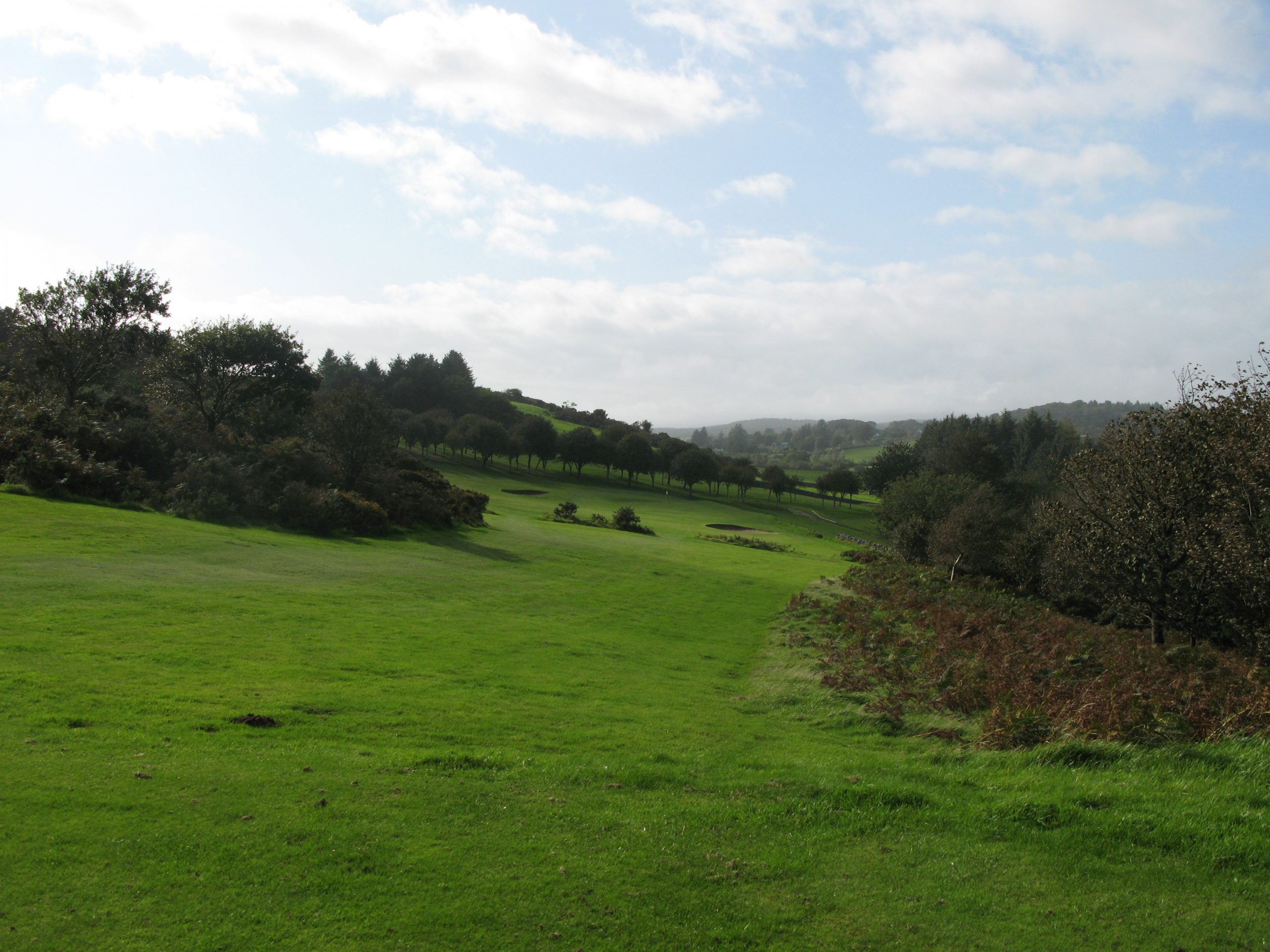
Beautifully contoured 5th fairway at Dalbeattie

Having got my grumbles out of the way, lets get to the point. This is about as good value golf you can buy and also a good data point in the history of golf development in Scotland. The club was founded in 1894, around the time when golf was becoming accessible to holiday makers due to the expansion of the railways. The club has a delightful, albeit short, history page on its web site here. In summary, the elder fathers of the area raised money through a bizarre to ensure Dalbeattie golf club was an attractive venue; in effect it was “crowd funded”.
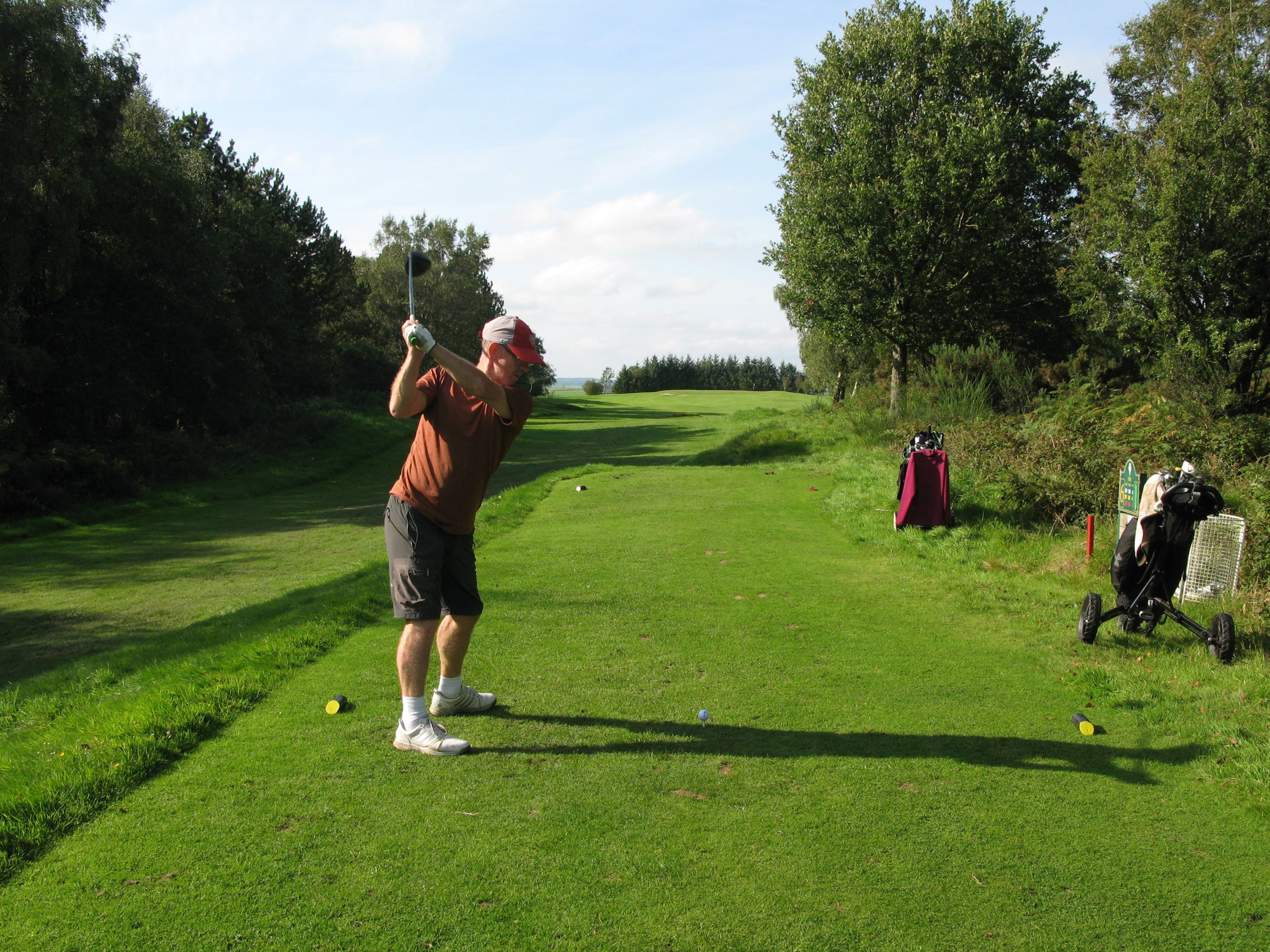
Shorts aren’t always the order of the day in September at Dalbeattie – Moly shown here driving at the short par four 6th hole

Despite some excellent information on the club’s web site, there is no detail of the designer of this 9 hole layout. I suspect it was an experienced golf course architect as there is some lovely design, very both pleasing on the eye; the views are wide ranging along the Urr valley and south to the Lake district.
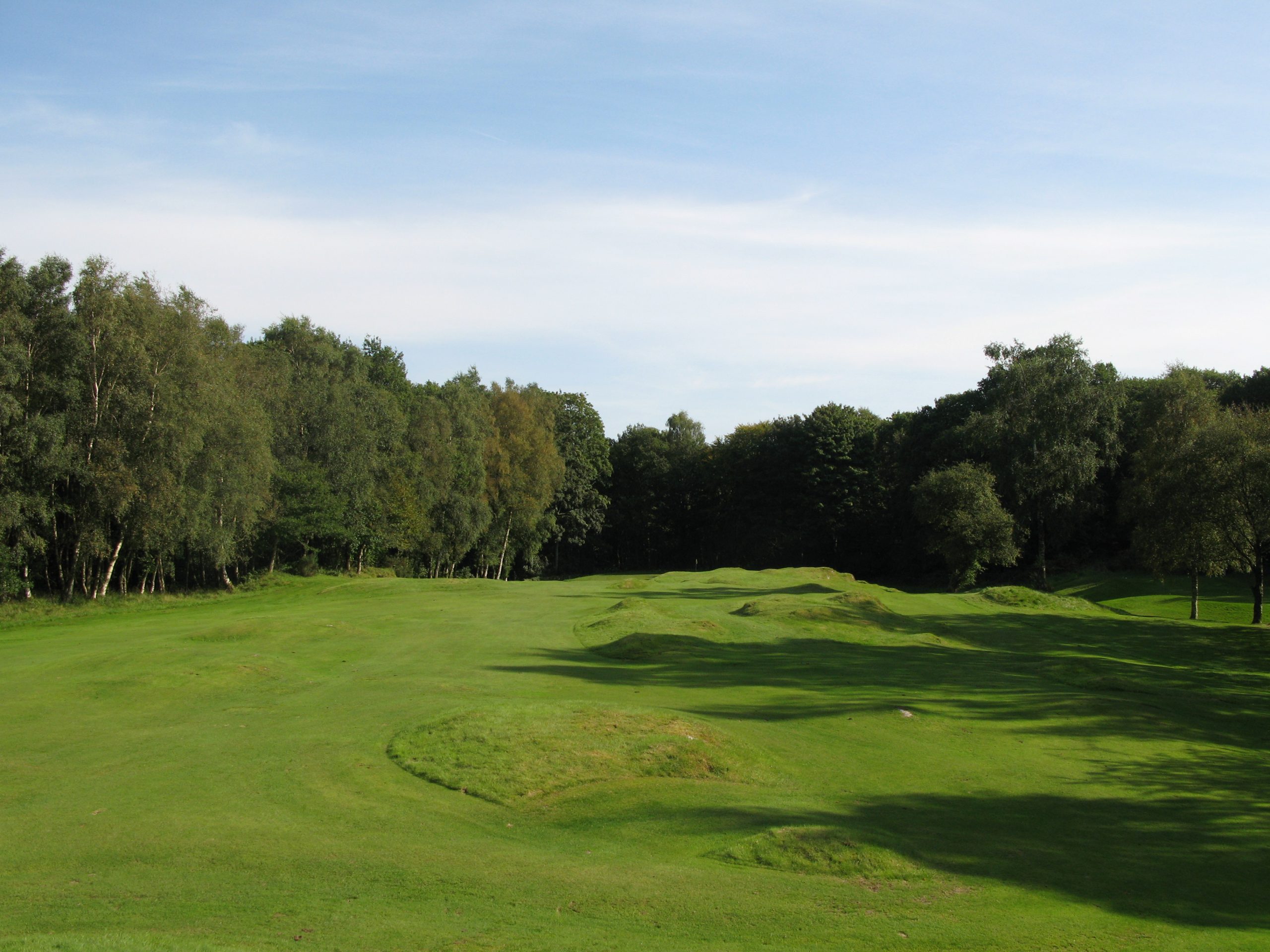
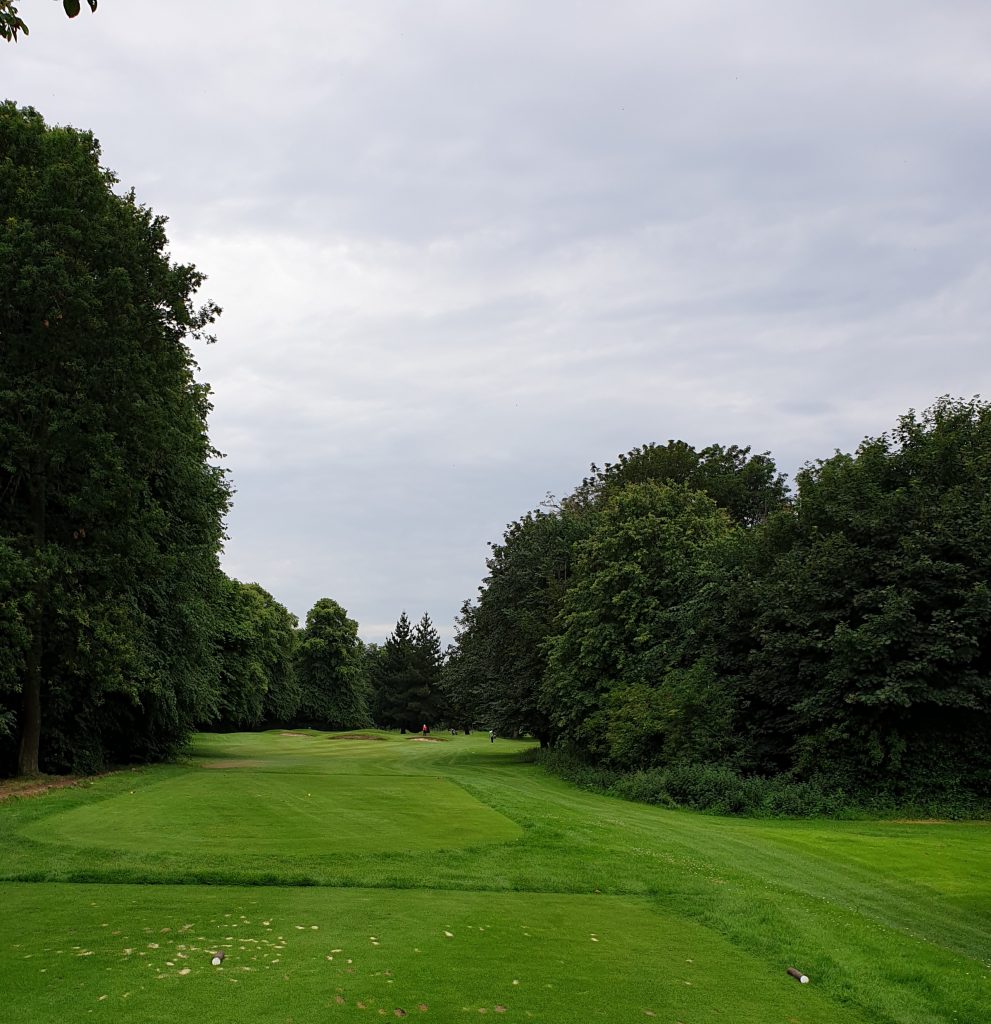
The 7th at Dalbeattie, the nicest framed hole on this course in Moly’s opinion

In particular, there is great framing on many of the holes, with the 5th and 7th holes vying for the signature hole. The 4th, a par 4 dog leg right hole, is also very difficult, with the window to drive intoquite narrow.

The course was in lovely condition when we played on a beautiful September “Indian Summer” day. Just the tonic, before heading off the day after towards the mystical golfing island of Arran.

Very worth playing at Dalbeattie.

Facts:

Course Type: Parkland

Par 34 (7 par 4s, 2 par 3s)

Distance: 2,733

Moly’s Gross score50

Moly’s Dalbeattie scorecard – a pretty poor 50 on this nice course

103. Colvend. 13th Sep 2020.

A favorite course of The Times’ sports photographers Marc Aspland and Bradley Ormesher

Round £25. Par 69. Value (out of 5) – 3.5

They say you should never meet your heroes. After reading an article in The Times (25th Aug 2020) about Colvend golf course by the sports photographers Marc Aspland and Bradley Ormesher, I felt obliged to seek out the course whilst in the south west of Scotland on a golf trip a couple of weeks later. Marc and Bradley had written so lovingly about a place that was clearly deep in their hearts, to the extent that the “third hole at Colvend remains my favorite place”, even when compared with Open venues. Really?

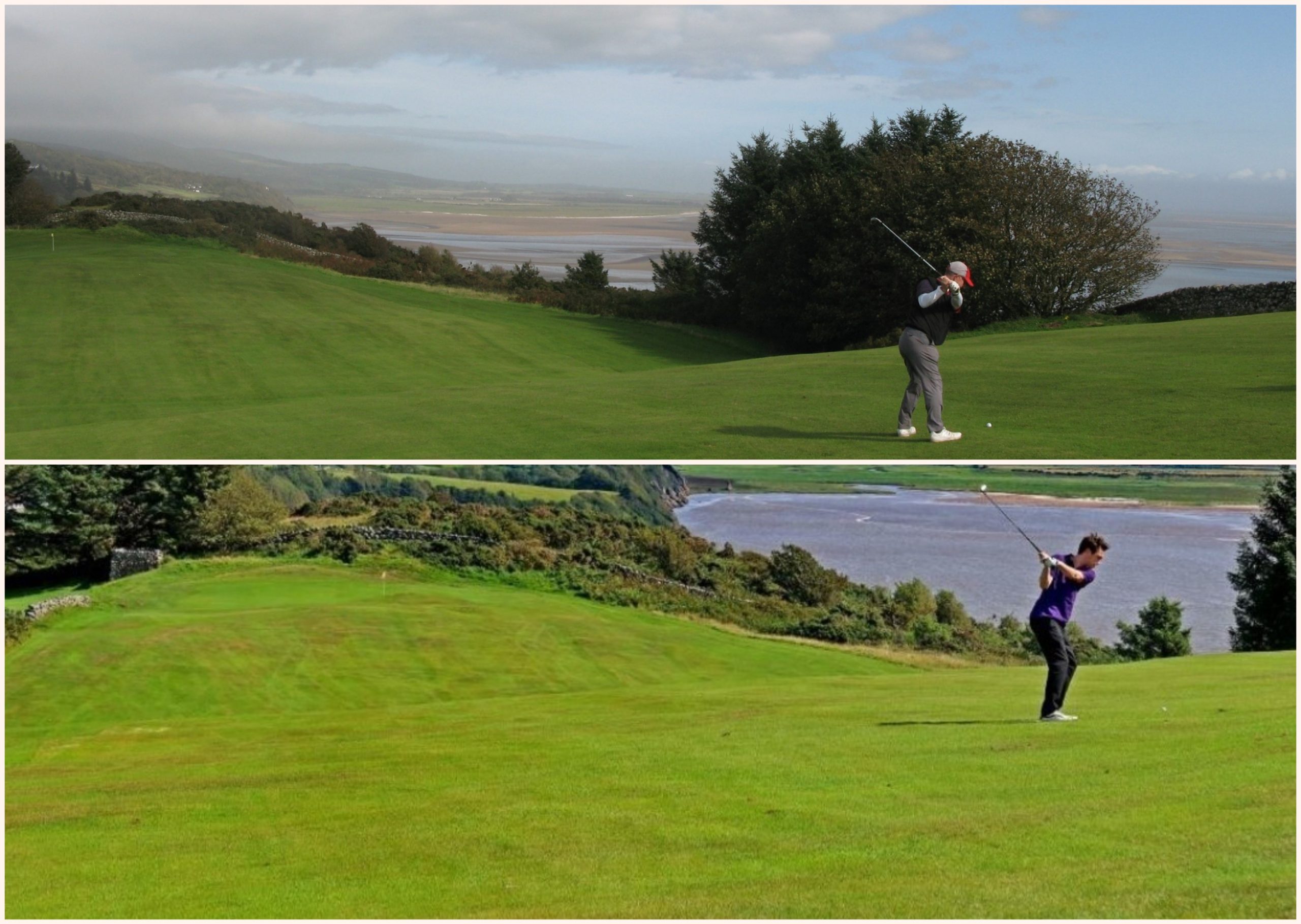
Moly (top) replicates the photo of Marc Aspland (bottom) at the third hole “Solway View” that appeared in The Times article on 25 th Aug 2020.

Colvend golf course has 9 holes either side of the A710, the road which skirts the northern coast of the Solway Firth, from Dumfries and Dalbeattie. The course was established in 1905 with the 9 holes on the coastal side of the road, designed by Willie Fernie (Ailsa course at Turnberry) and the 9 inland holes were added in 2005 by Dave Thomas (Belfry, Spey Valley).

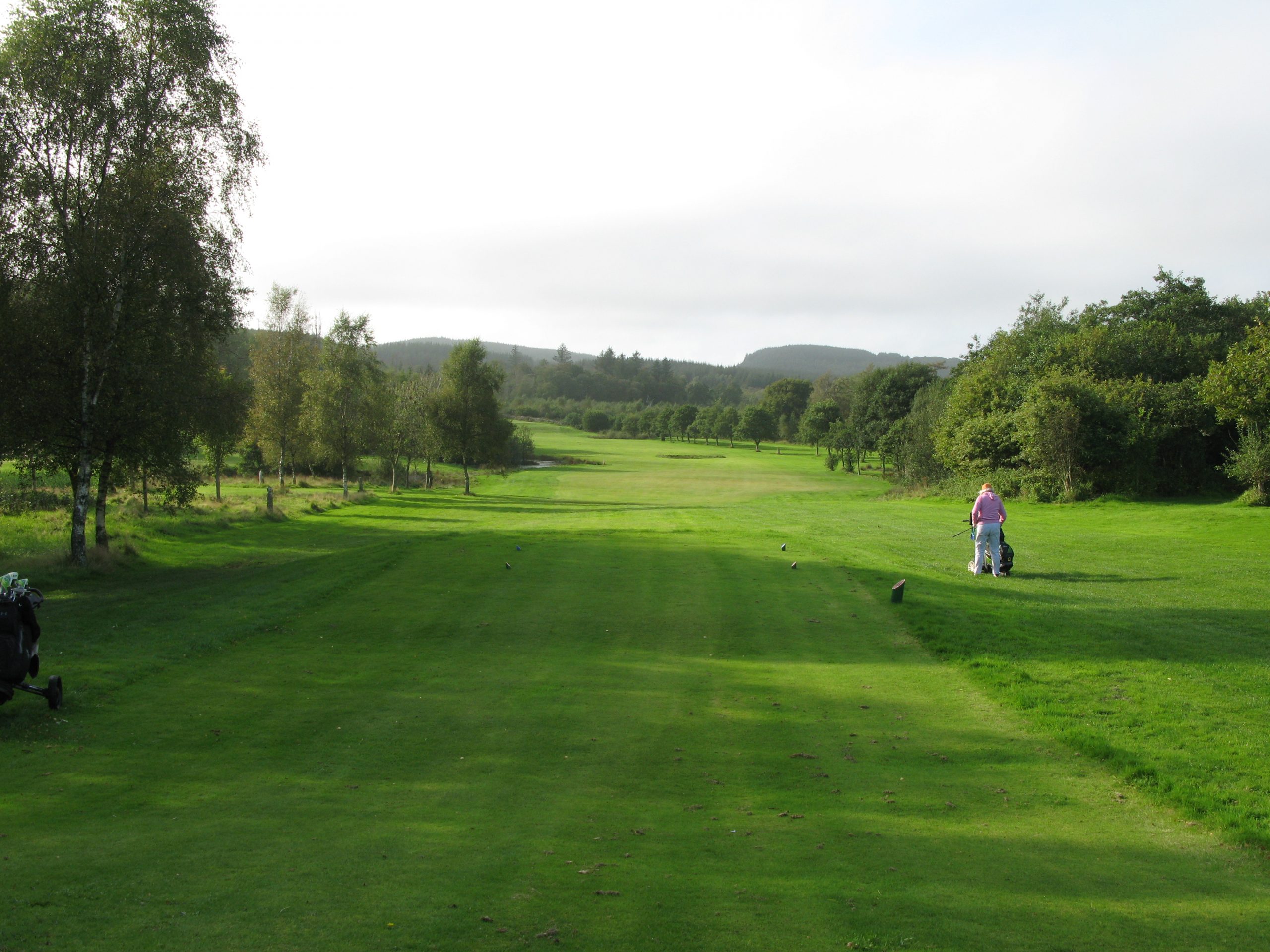
13th hole at Colvend, easily the stroke index 1 hole, and a clearly modern parkland design which could be picked up from the Belfry. Plan your way to a bogie and move on quick!

Although on the coast, this is very much a parkland layout, with great views on a couple of holes across the Solway Firth to the Lake District.

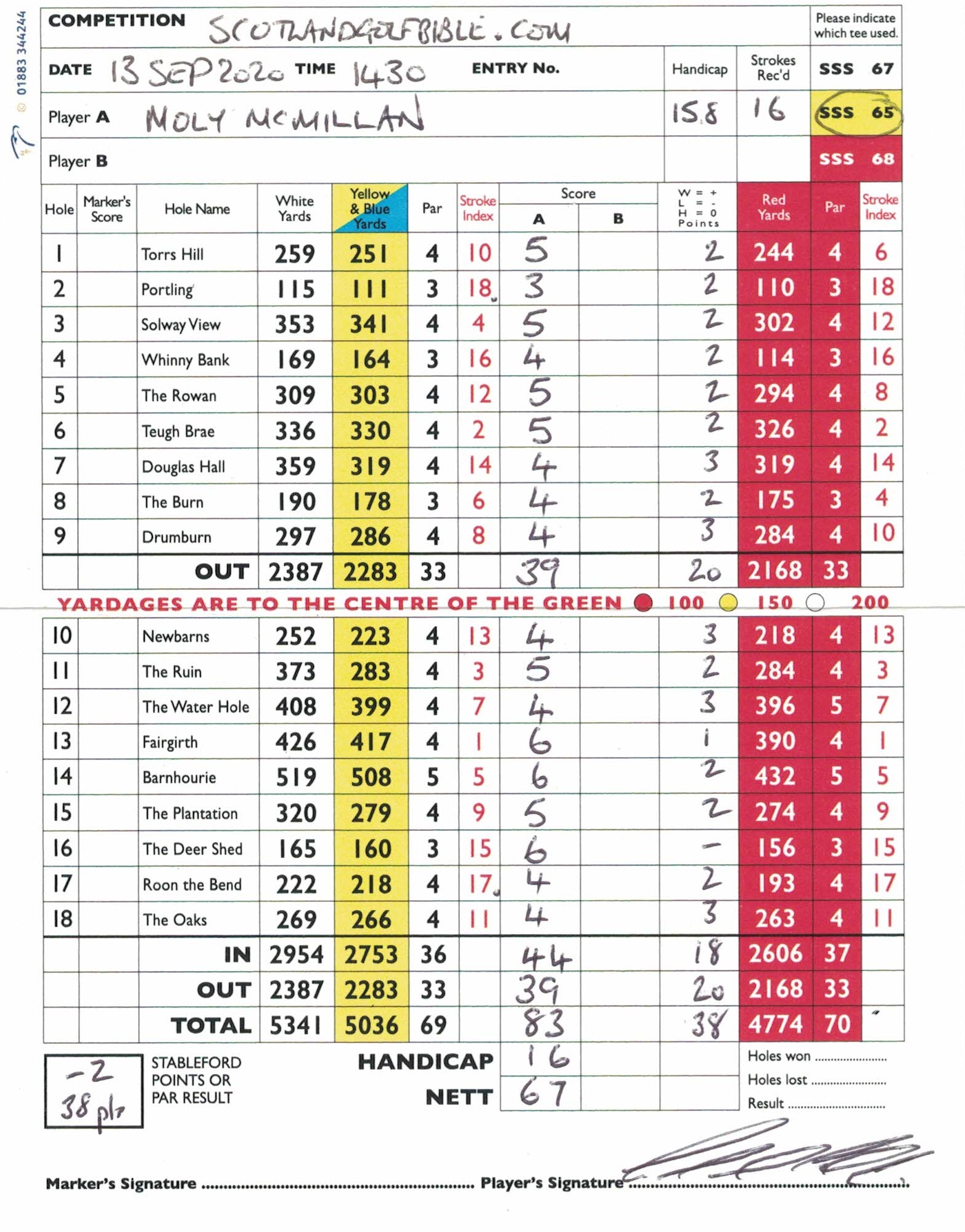
Looking at the card, you’ll see the difference in length between the original holes and the ones later laid out by Thomas – the par 4 18th at 266 yards, was the original 9th hole. There’s also significant architectural differences as well, with the coastal holes being very naturally laid out, and the inland holes being clearly “designed”, no more so than at the 13th, the clear stroke index 1 hole.

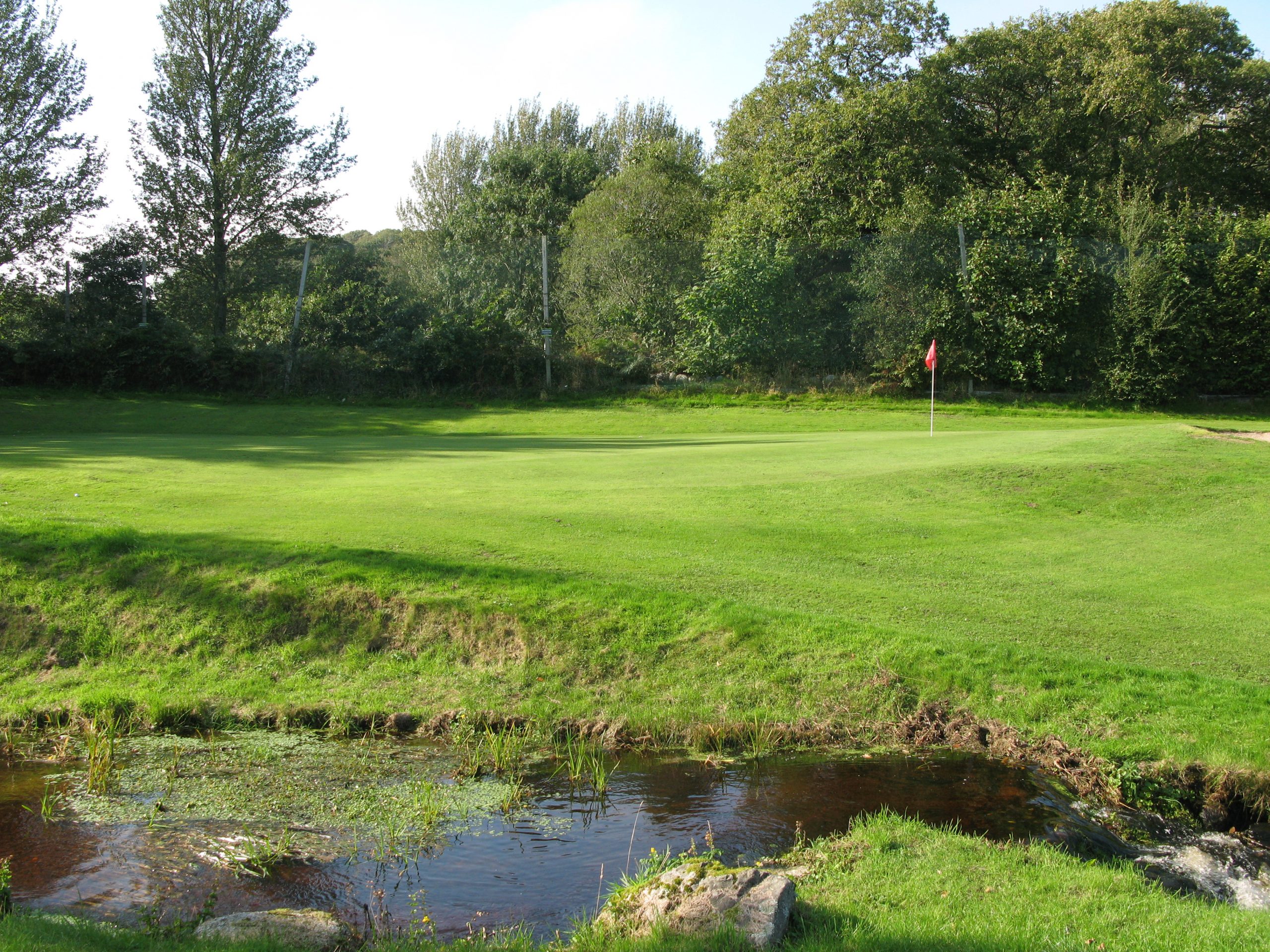
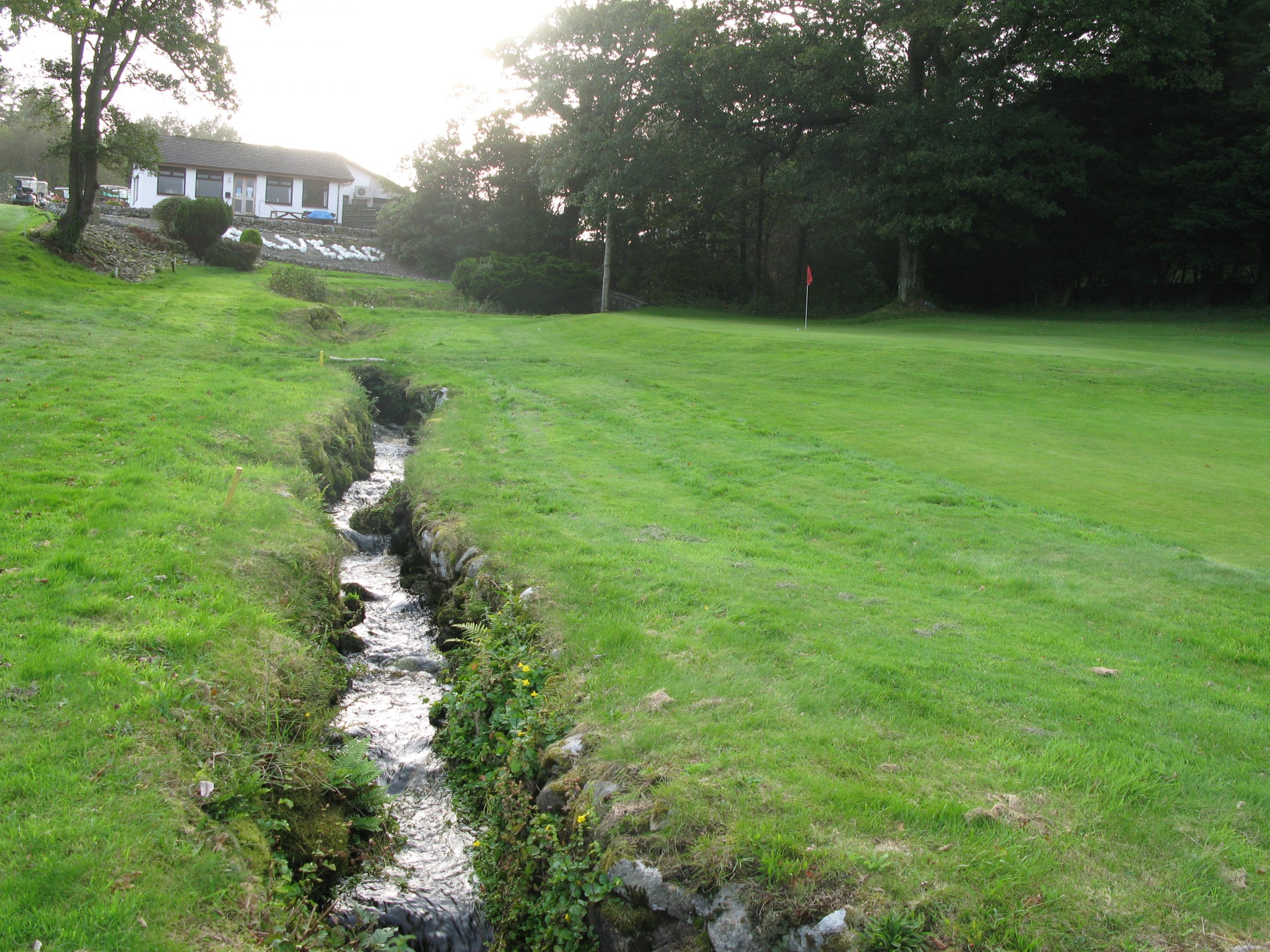
There are some neat challenges as well. The par three 8th has a hidden burn in front so take enough club, but with danger behind the green as well, I imagine this being a “lay-up par 3” for many of the members.

The dangerous 8th green, take at least 1 extra club to avoid the water in front, which is obscured from the tee.

The par-4 dogleg 18th is a clever hole. Only 266 yards long, I imagine the longer hitters see this as a risk reward hole, trying to drive the green. But the green has a burn in front and very large trees obscuring the approach, mean you need to be well back to get over easily. With no wind it’s probably something like 7 iron, then wedge to the green. Very strategic, and to be fair to Dave Thomas, it has the feel of the 10th at the Belfry.

Keep left on the 4th, with plenty of room to chip and putt. One of the original naturally designed holes.

The course was in decent, but not great, condition when I played, but to be fair we had only recently come out of the first prolonged covid-19 lockdown so everyone was just grateful to be out of the house. The greens had become quite mossy.

The 18th green at Colvend with treacherous burn awaiting to spoil a good round

Few things to be aware of. This is not an easy walk as the amount of buggies for hire in the car park attested to, so is not necessarily an occasional holiday golf game venue; the steep uphill first being one of several inclines to navigate. There was also a need for better signposting between the 16th green and the 17th tee, which left Fran and I lost for a few minutes.

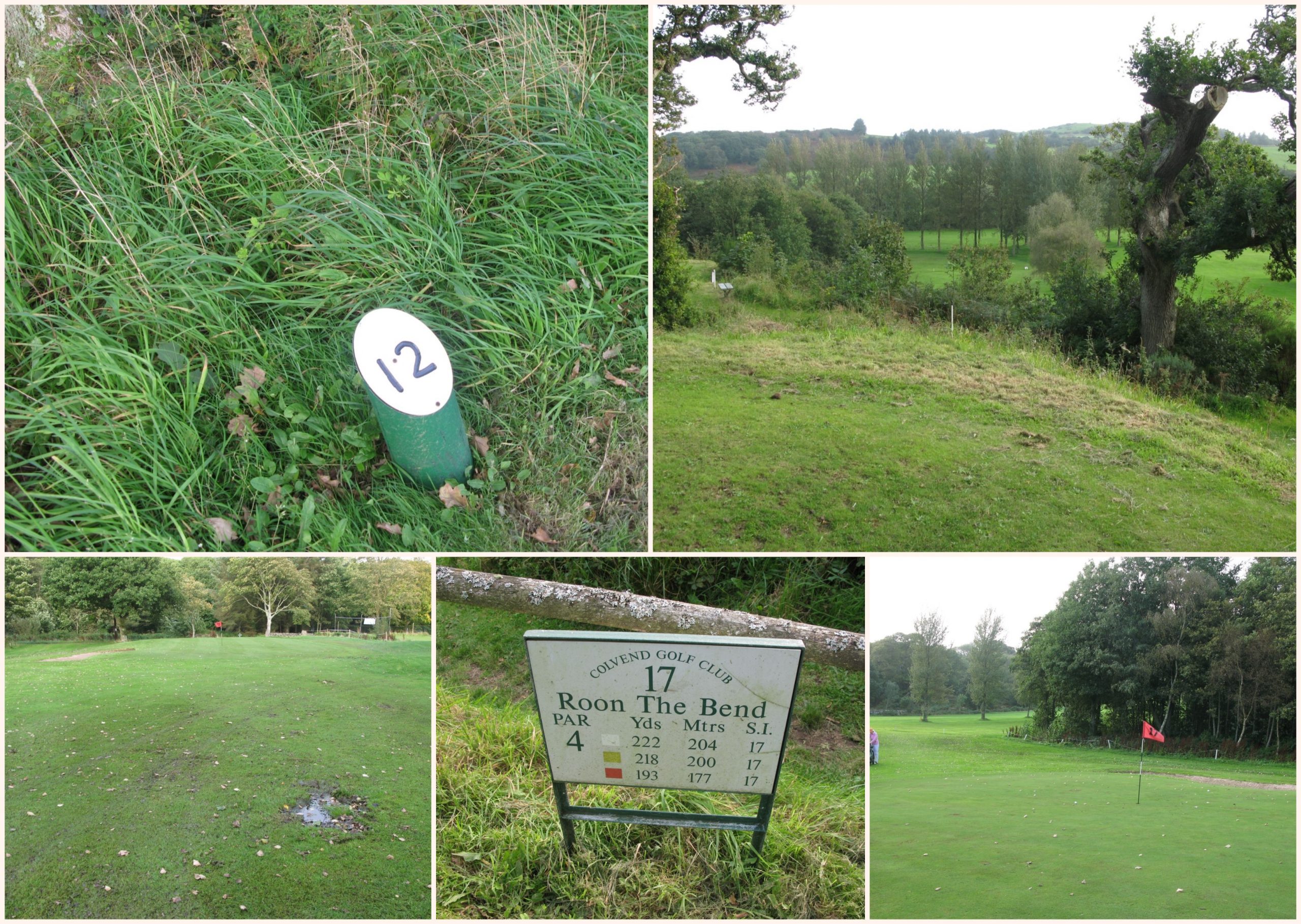
The aptly named “Roon the Bend” 17th hole, which is difficult to find, the clue is its part of the 12th tee, but you can’t see that as you walk onto the “17th” tee.

Despite high winds I scored very well breaking my handicap with a steady round. I did walk off though a little perplexed at how “rose tinted” The Times article had been – it was a nice course, but sometimes over-marketing isn’t actually good business as it can just lead to disappointment. Perhaps it needed a clearer day for those views.

Worth playing.

Facts:

Course Type: Coastal/Parkland

Par 69 (1 par 5, 13 par 4s, 5 par 3s)

Distance: 5036

Moly’s Gross score83

Colvend Scorecard – 83 in high winds a great day out, level against SSS of 67

This incredibly fun 9 hole course is like playing in Gordon’s Dream

Round £10. Par 31. Value (out of 5) – 5

Covesea, pronounced “Cowsea” by the locals, is a wonderful surprise. Built by Gordon Clarke in 2010 pretty much on his own and still maintained by him, Covesea costs £10 for 9 holes or £15 for the day. It used to have a cafe called the Tee Shack, which unfortunately burnt down in 2014. Overall, it feels like playing in someone’s dream.

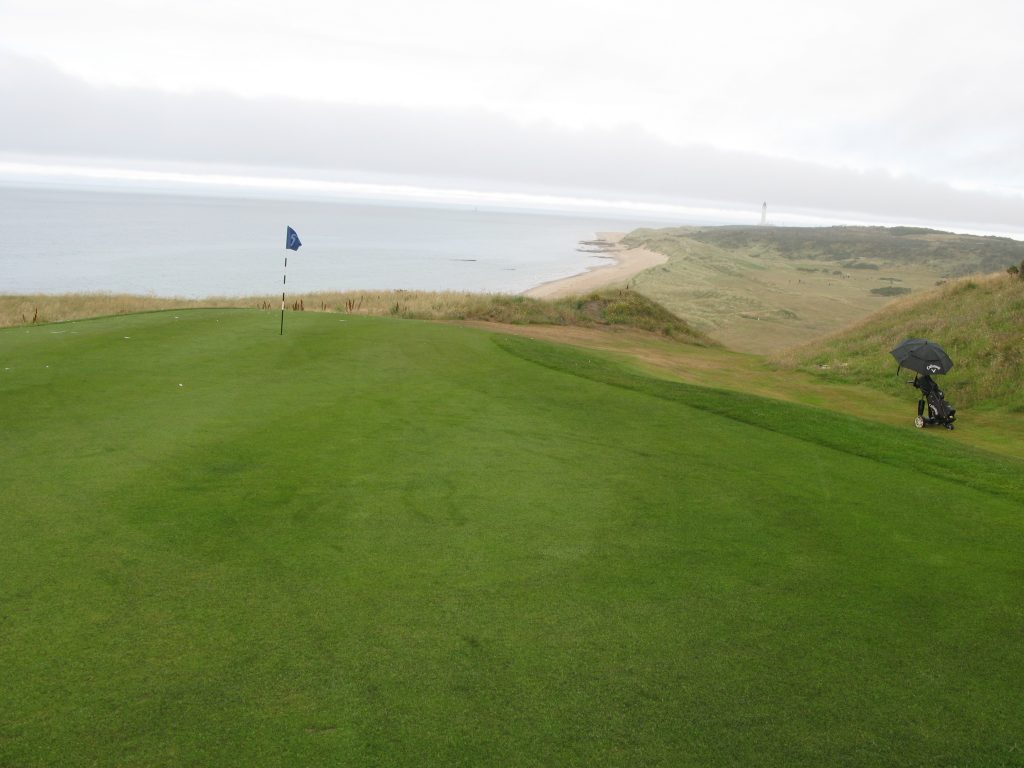
The 5th green with the wonderful view back towards the Covesea Skerries Lighthouse

The course sits on the Moray coastline between the towns of Lossiemouth and Hopeman, set in a cove just west of the Covesea Skerries lighthouse. It is a magnificent setting for a golf course and my first thought on seeing it, was why had this piece of land never been developed as a course during the heyday of Victorian golf course building – unfortunately I wasn’t able to track down an answer, but there must be one! For those familiar with Scottish golf, Covesea has many resemblances with Cullen (1908), Anstruther (1890) and Shiskine (1896).

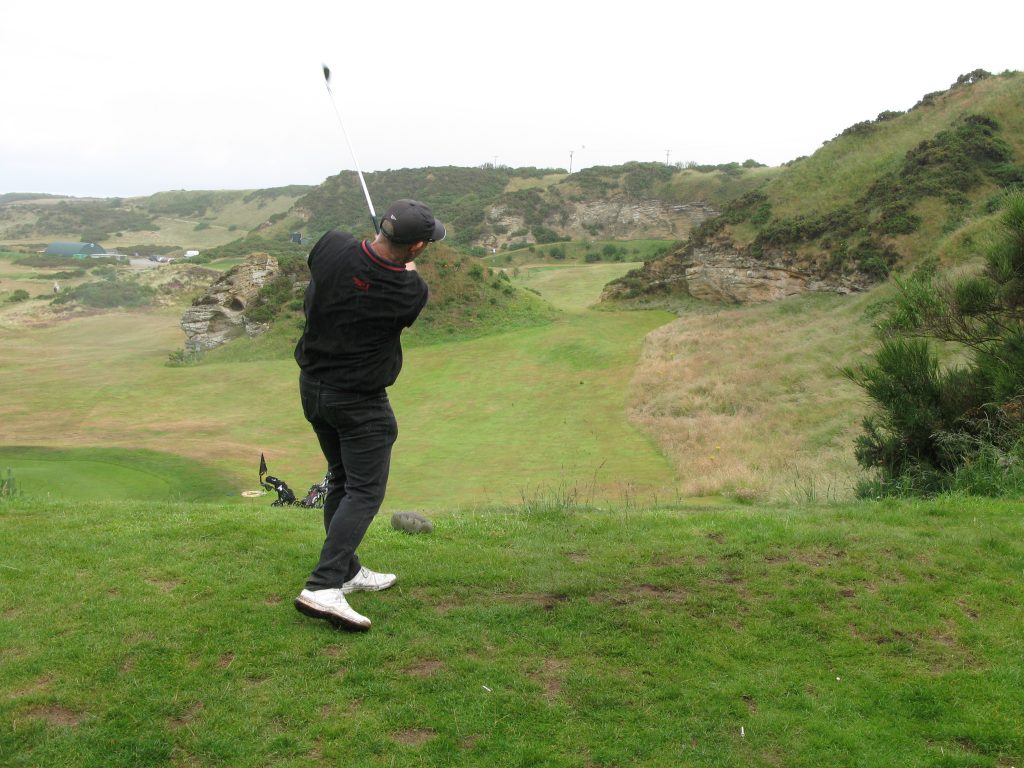
The dramatic and difficult tee shot at the 8th, with the sandstone structures enveloping the hole.

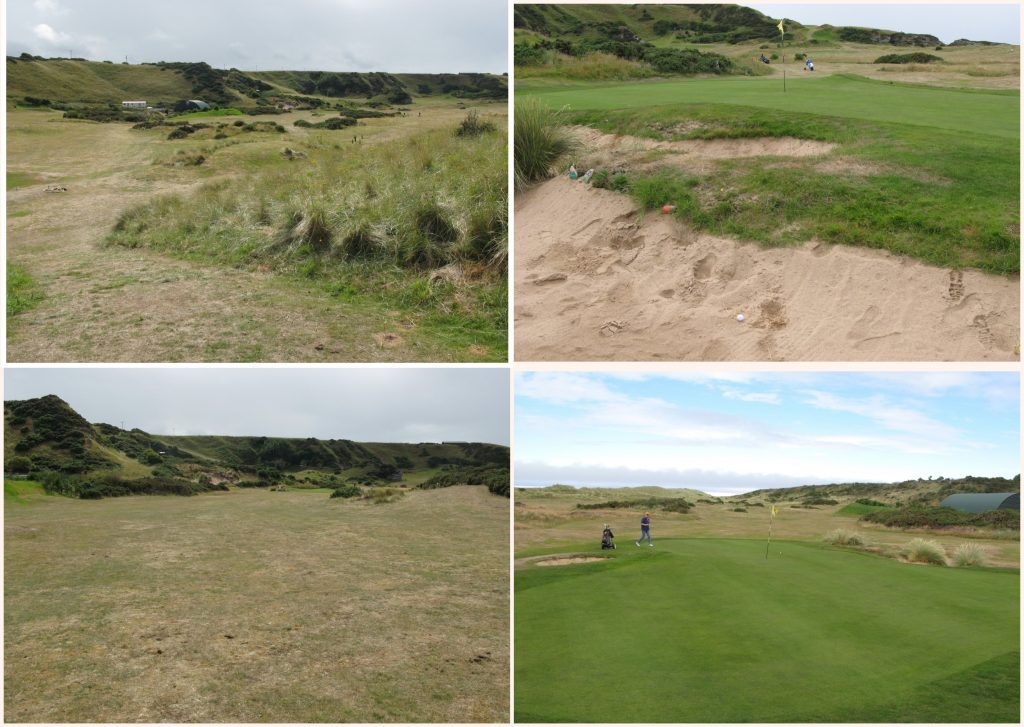
With it being basically a “one man band” operation, Gordon’s green keeping duties concentrate on the greens and their surrounds; this means the tees and fairways are, in places, very poor. However, if you can see past that, the condition of the greens are really good and must be the best in Scotland with a fee of “up to £10”.

The course comprises 5 par 3s and 4 par 4s, and several of these are very challenging holes.

The 2nd at Covesea, with a “Good, Bad and Ugly” feel – a very difficult pin to find.

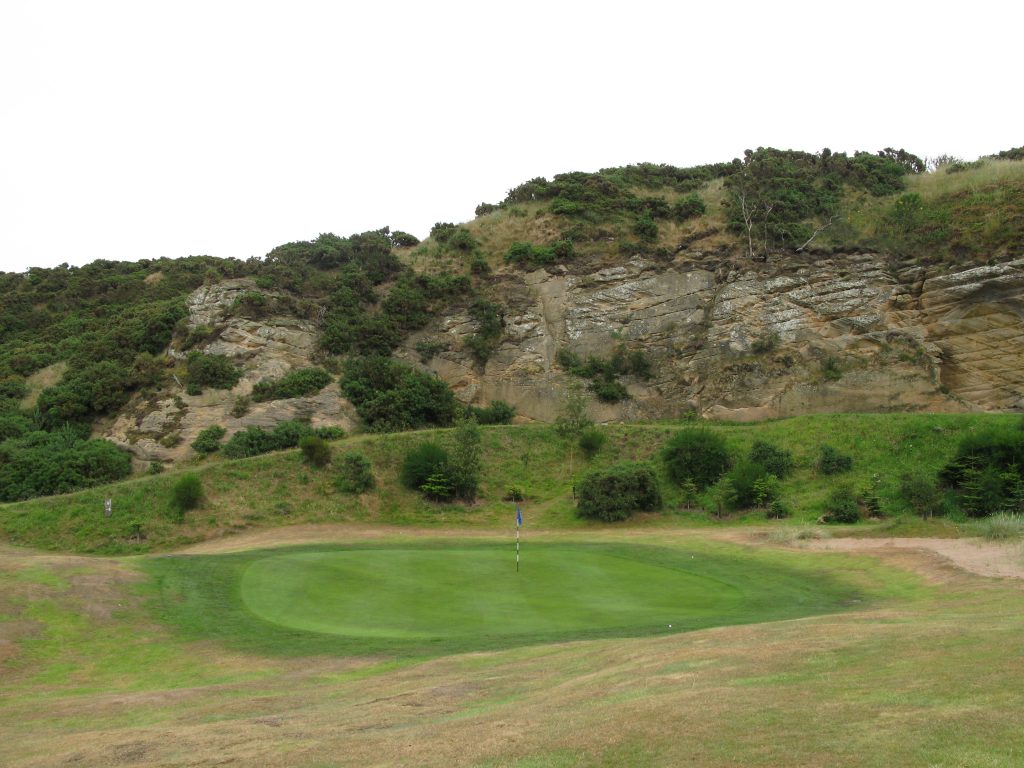
In particular, the 5th through 8th, are dominated by the craggy rock formations and offer a lovely stretch of golf, with spectacular views from the 5th green and 6th tee.

The 8th green, clearly showing the variance between the fantastic greens and less well kept surrounds.

Overall, this is a brilliant “Value for Money”, and what a legacy for Gordon to have built. With good tees and fairways, I just wonder what the fees could be?

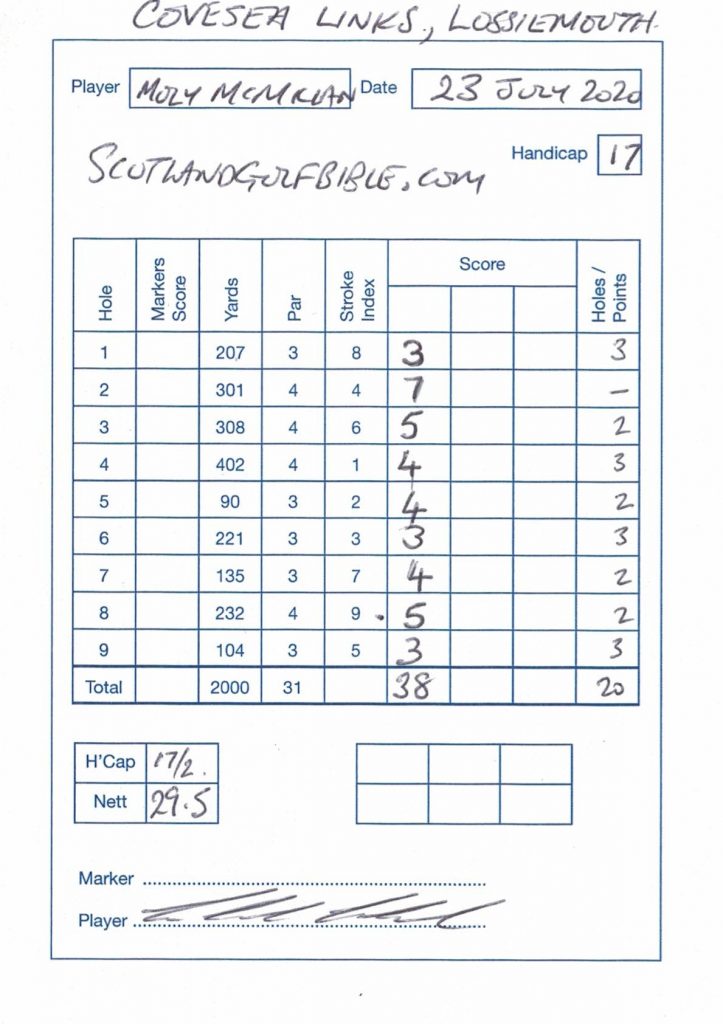
I played really well, other than a mess on the 2nd where I took 5 shots to get down from the left hand bunker – the resulting 7 dominating my overall score of 38, seven over par.

Facts:

Course Type: Links

Par 31 (4 par 4s, 5 par 3s)

Distance: 2000

Moly’s Gross score37

Moly’s Covesea Scorecard – 38, 7 over

99. Royal Musselburgh. 26th July 2019.

This ‘Royal’ 6th oldest club in the world is a bit like playing ‘Trigger’s broom’

Round £65. Par 70. Value (out of 5) – 2.5

When reading the history of the Royal Musselburgh GC on its website here I couldn’t help being reminded of the classic comedy sketch below….

This ‘Only Fools and Horses’ sketch came to mind whilst researching Royal Musselburgh GC

….don’t confuse the pedigree of the Golf Club, ‘founded’ in 1774 , with the pedigree of the Golf Course, which is much less prestigious, in my opinion. When you play Royal Musselburgh you’re actually playing a course opened only in 1925; although a pretty good course, it’s on a flat piece of land and it’s over-priced for the course quality, the price undoubtedly influenced by the ‘Royal’ patronage and the Golf Club heritage. In fact, the first 150 years of the history of ‘Royal Musselburgh’ is related to play at Musselburgh Links at the racecourse! Hence the comparison with Trigger’s ’20 year old’ broom! Please forgive my imagination.

The par 4 third hole at Royal Musselburgh, a typical hole on this flat track.

Musselburgh is the largest of the towns in East Lothian, situated on the coast about 5 miles from Edinburgh and close to the start of the great North Berwick coastal run of courses which includes Muirfield. There are actually three ‘Musselburgh’ courses: ‘Musselburgh Links’, which is in Musselburgh and recognised by the Guinness Book of Records as the oldest course in the world; plain old ‘Musselburgh’, which is actually in Monktonhall; and ‘Royal Musselburgh’, the subject here, somewhat nearer to Prestonpans than Musselburgh! I blogged about Musselburgh here and Musselburgh Links here.

The 6th hole at Royal Musselburgh, one of only 3 par threes on the course.

Although only open since 1925, the course does owe its design to the great James Braid, albeit I couldn’t help thinking that the remit was to make a challenging, but not too challenging a course. It is set on ground leased from the Prestongrange Estate, and its clubhouse is within part of Prestongrange House, which is an impressive building from the outside. The fairways are quite wide and the rough under the trees was cut short allowing balls to be easily found. It’s not surprising that Royal Musselburgh is attractive to society or group visits.

The 14th,the shortest of the par 3s, where club selection is crucial at this, “The Gulley”, hole.

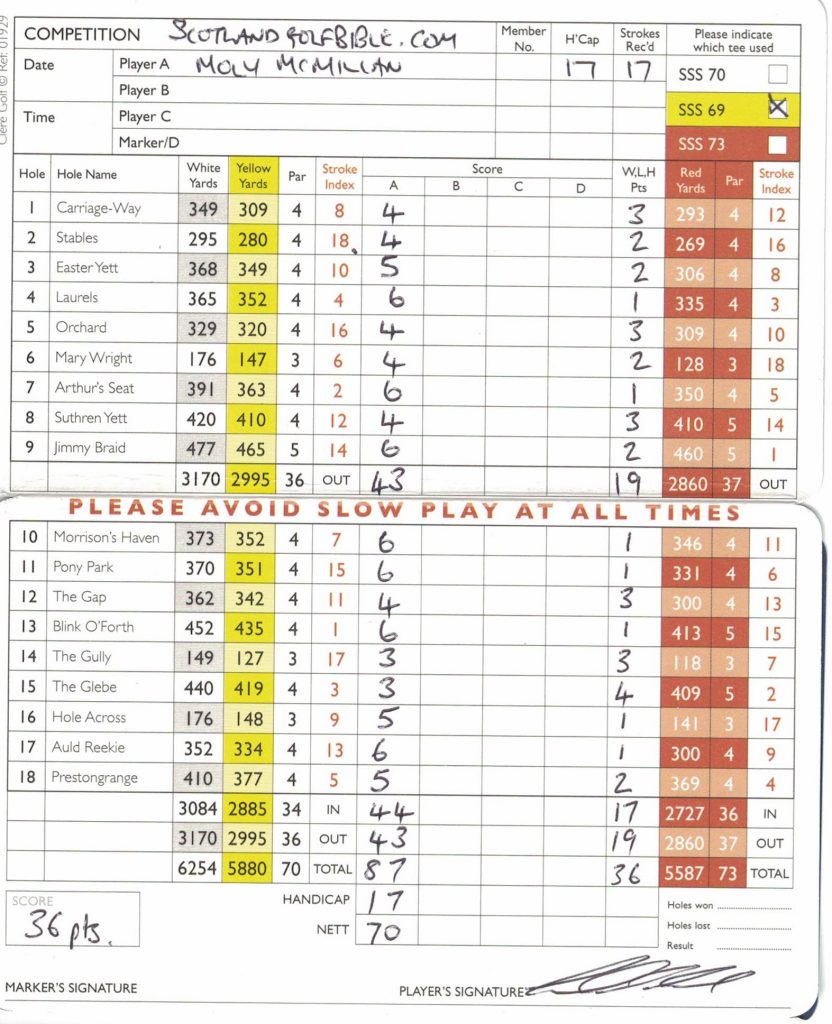
The course has only three par 3s and one par 5, and with several similar par 4s, it was a little repetitive, for my liking. It was though in very nice condition when I played and the greens were very true. I actually played the best of the season, scoring 87 for 36 points, including a birdie at the stoke index 3, par 4 15th hole, including hitting one of my longest drives for years – it was the first time I’d played with my new fitted driver and the technology has helped!

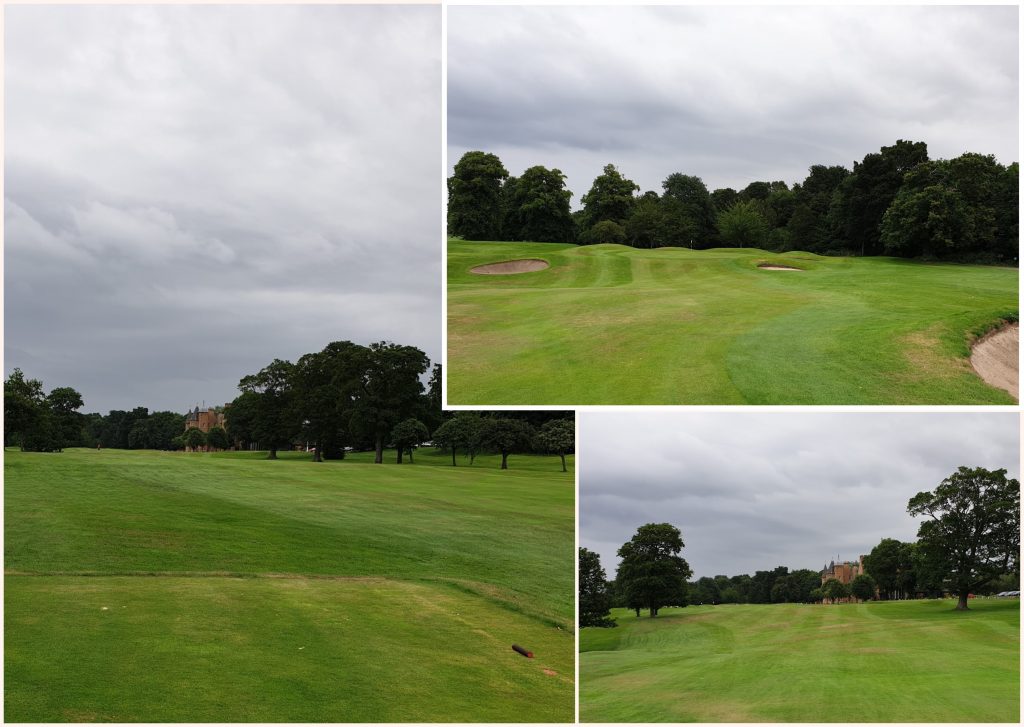
The tough 18th hole at Royal Musselburgh, with a well protected green, with views of Prestongrange House to the right of the hole.

My advice would be it’s a nice course to play if you can get a good discount, otherwise play the two other Musselburgh courses, which have much more to offer, by way of both history (The Links) and quality.

Facts:

Course Type: Parkland

Par 70 (1 par 5, 14 par 4s, 3 par 3s)

Distance: 5880

Moly’s Gross score87

Moly’s scorecard of 87, best score all year made possible by first new driver bought for years.
« Older posts Newer posts »

© 2026 Scotland Golf Bible

Theme by Anders NorenUp ↑