A guide to green fee value for money

Category: 1 star (Page 1 of 2)

186. Broadlees Par 3. 25 Mar 2023

Scotland’s first synthetic greens course, probably.

Price: £8. Par 27. Value: 4/5.

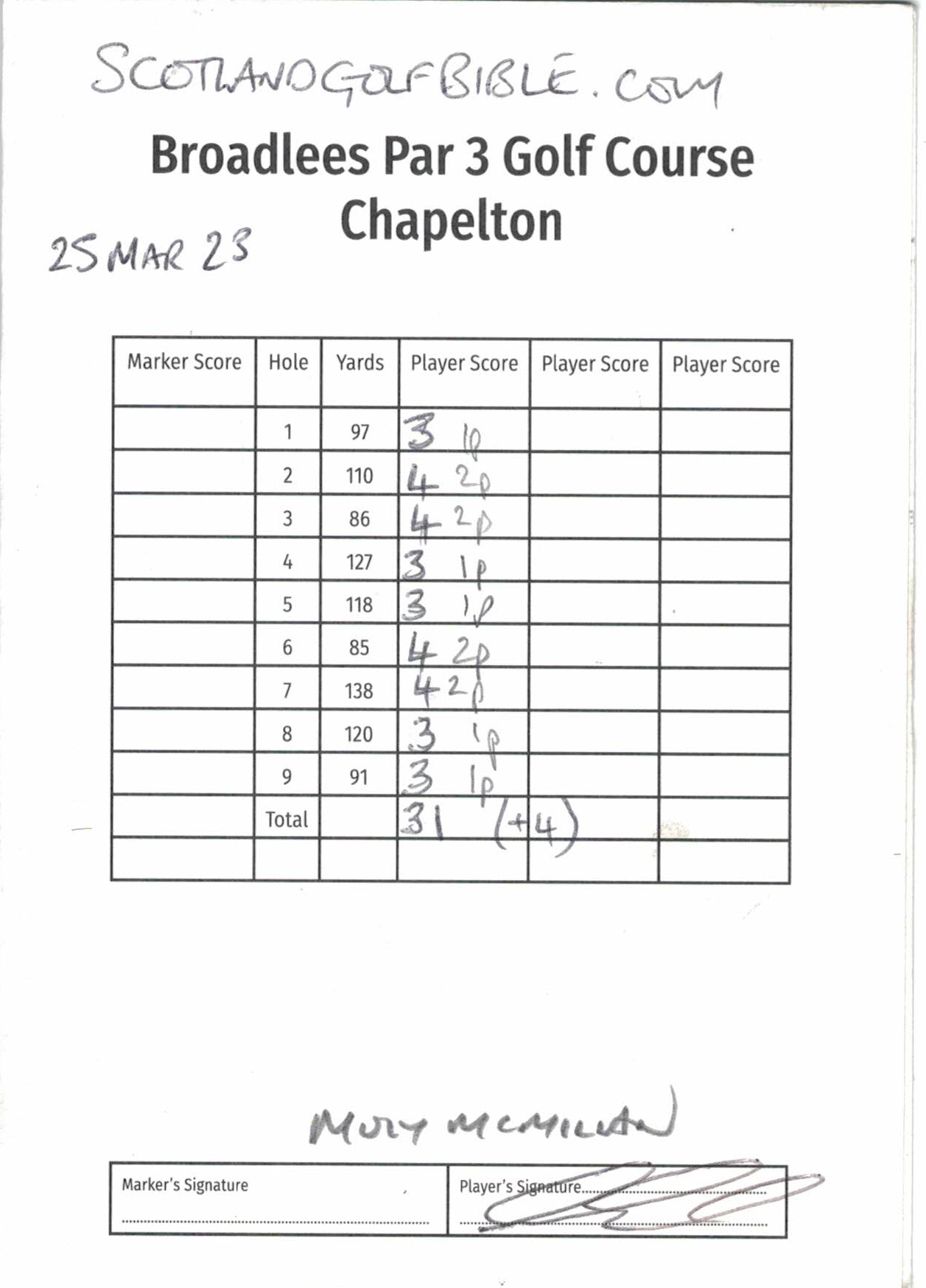
Moly’s Score: 31 (+4)

The backstory is in Blog 185, the main Broadlees course. In summary, since 2004, Robert and Barbara Anderson have built a diverse golf operation – range, 9-hole course, crazy golf, footgolf, academy, café and Santa’s grotto – to compete in an area stocked with golfing alternatives, many of them subsidised.

In 2021, they added something possibly unique in Scotland: a 9-hole par 3 course with synthetic greens and tees, playable every day of the year regardless of weather or ground conditions. The commercial reasoning is sound: a course needing no greenkeeping on its playing surfaces, generating income in January.
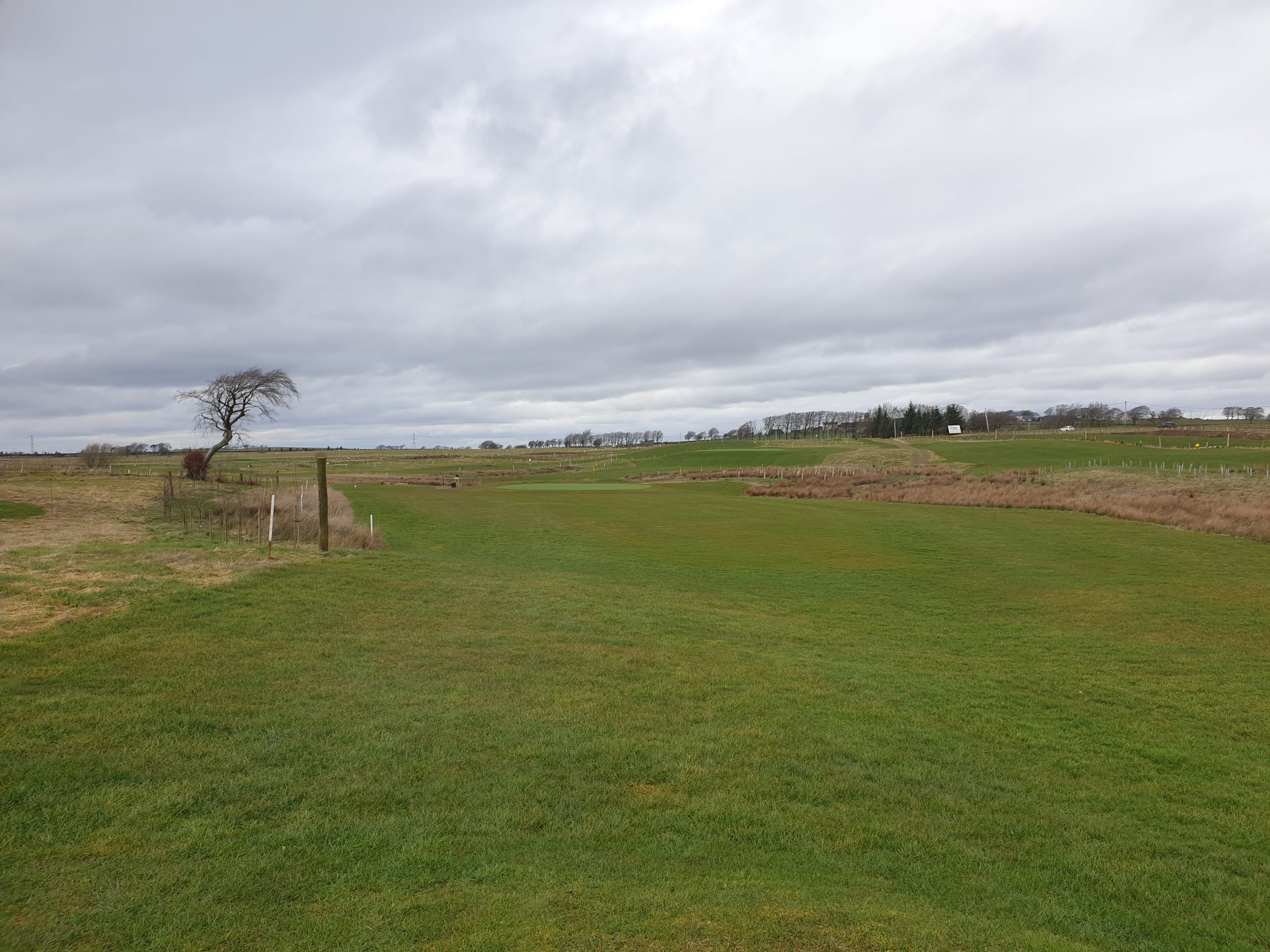
The first (97 yards) with the startlingly green synthetic surface immediately apparent against the March gloom. You are not playing a normal golf course.

From the start the scene is stripped back entirely with open ground, single windswept tree, and a synthetic “green” looking like a piece of discarded carpet. Not aesthetic, but very interesting, with the graves of golfing Architects stirring?

Synthetic tees matter commercially as much as the greens, as grass par 3 tees are brutally punished and need constant repair, reseeding, levelling and divot mix. The cost of upkeep of mats is negligible, plus they play consistently.
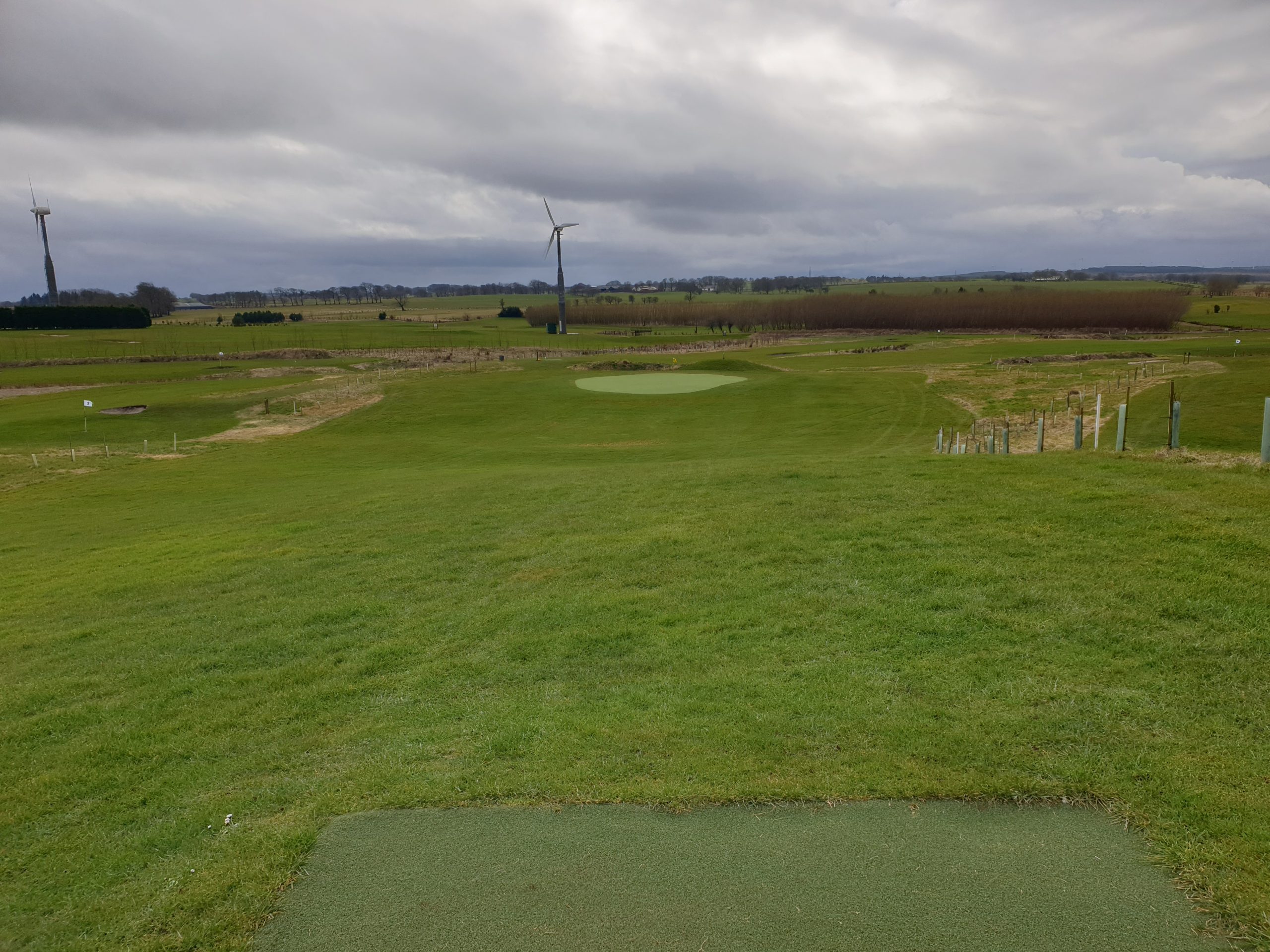
Hole 3 from elevated tee. The two wind turbines are a constant presence.

Holes range from 85 to 138 yards, so this is great wedge practice. They are not architecturally interesting in any way. But the holes have several water hazards to contend with.
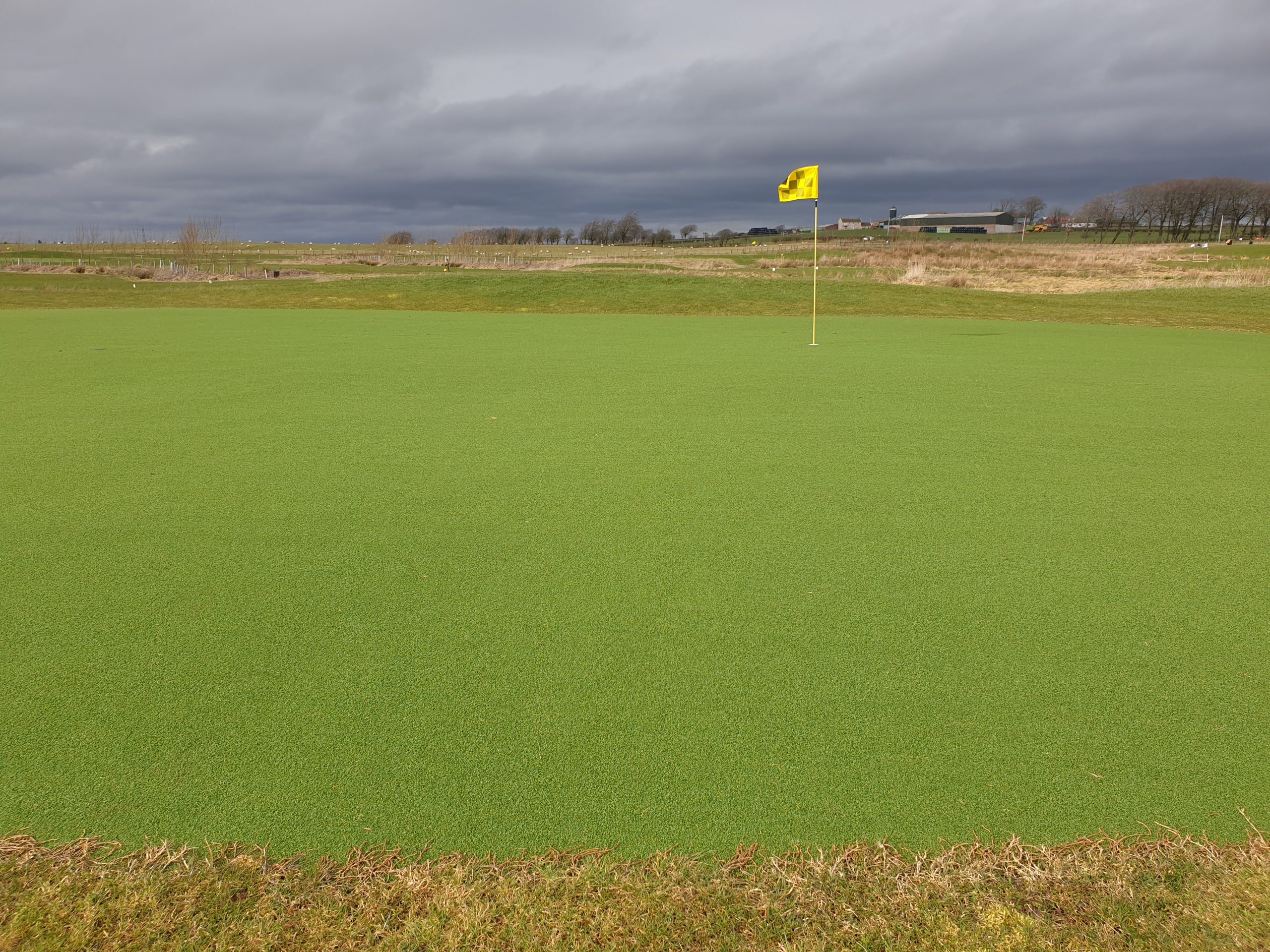
The fourth green with synthetic pile; dense, uniform with its own playing logic.

The key question is “how do the greens play?”. The answer is situational. In wet March conditions the green surrounds were too soft for a chip and run approach. The only option was to fly the ball onto the front of the green and allow it to release. The surface bounces more than ‘checks’ on full shots, so that requires careful judgment. Land too deep into the green and the ball runs through; land short and it stops on wet grass short.

Short chips around the green, played softly, were a different matter — the synthetic pile had enough give to generate some check, certainly more than expected. A useful discovery, though it came too late on the card to rescue early bogeys. On the greens themselves the ball rolled true, although breaking differently from a grass surface.
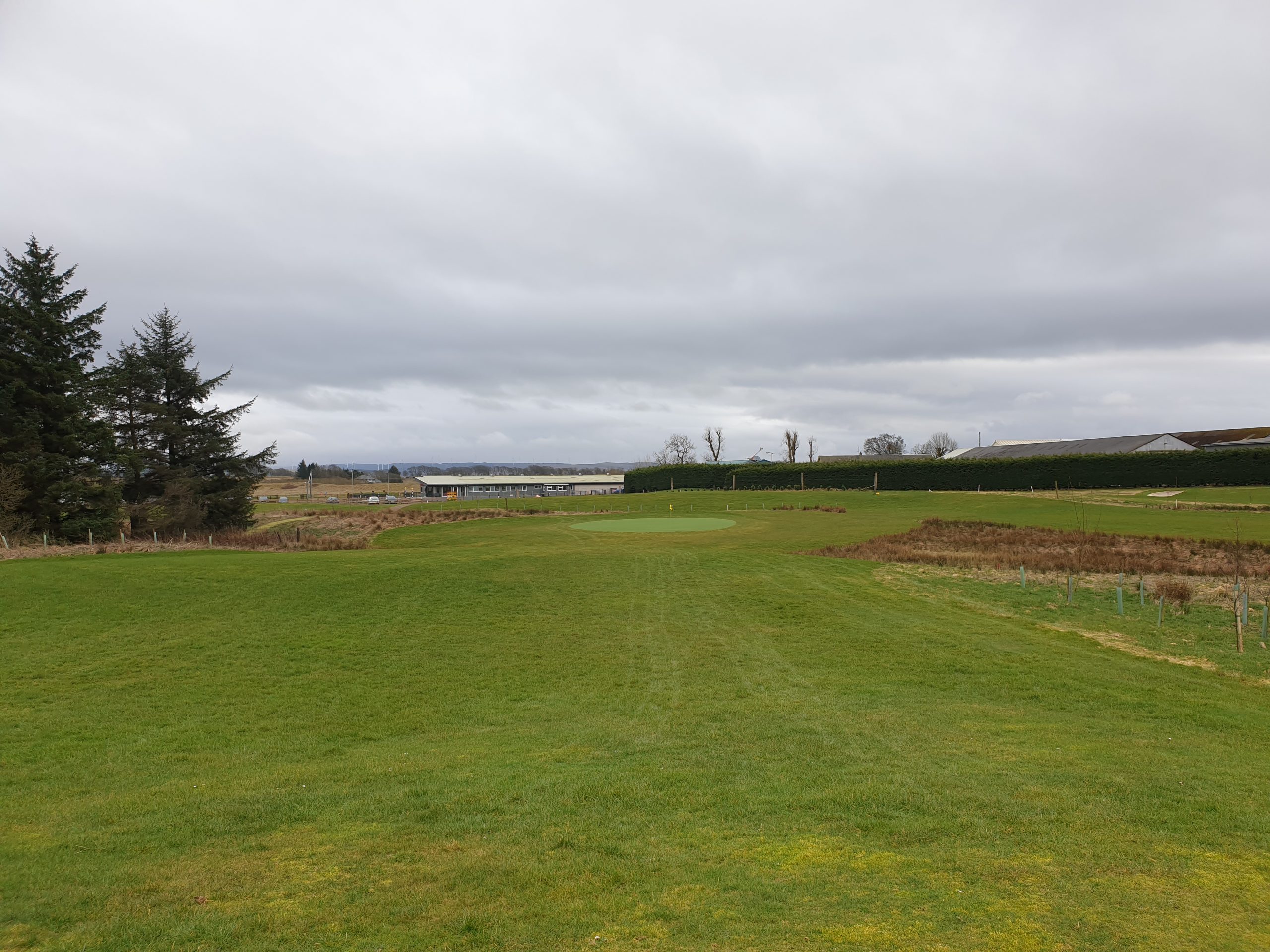
The 9th (91 yards), looking towards the Broadlees clubhouse, with cafe, range, and main course off to the right.

I shot 31 gross, four over par. On the two holes where I holed from outside ten feet I correctly read that the ball would not break as much as expected. It was an education. I’m sure regular players hole lots of putts.

At £8 for nine holes (2023) this is great ‘novelty’ value. I would think there is a commercial opportunity to price a combined fee with 9 holes on this course and 9 holes on the main Broadlees course.

Value: 4/5, to play Scotland’s first and possibly only synthetic greens course

Facts:

Course type: Par 3, synthetic tees and greens

Par 27 . Distance: 972 yards.

Moly’s Gross Score: 31 (+4)

See also: Blog 185 — Broadlees Golf Course
174. Aberfeldy. 30 Nov 2022.

Better Days

Value 1/5

I played the three 9-hole courses of Aberfeldy, Mains of Taymouth and Strathtay on the same wet Highland Perthshire day. This is important context, because whereas Mains of Taymouth and Strathtay were well presented, Aberfeldy was in awful condition.

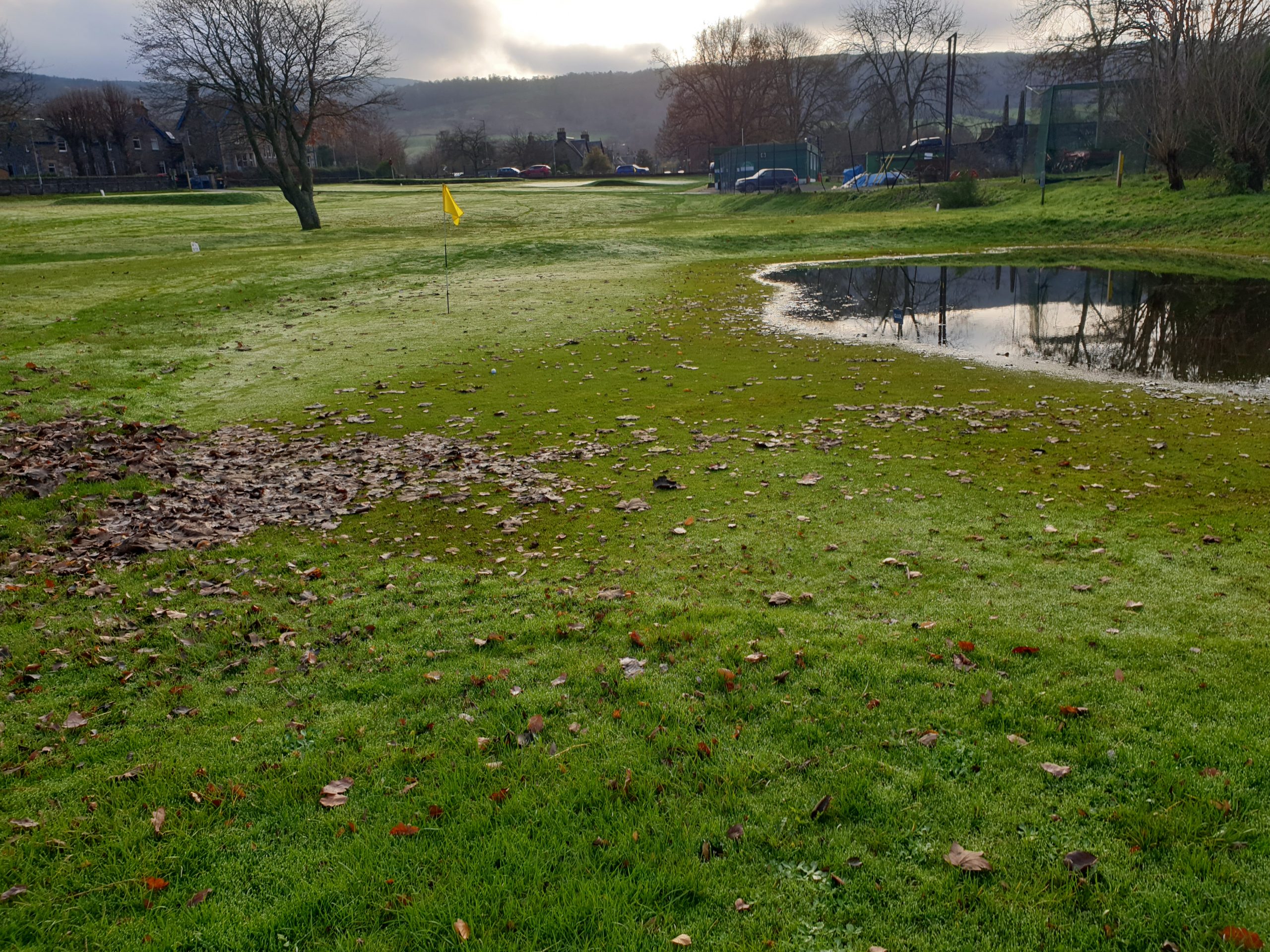
The 8th green at Aberfeldy, on a day the course should have been closed.

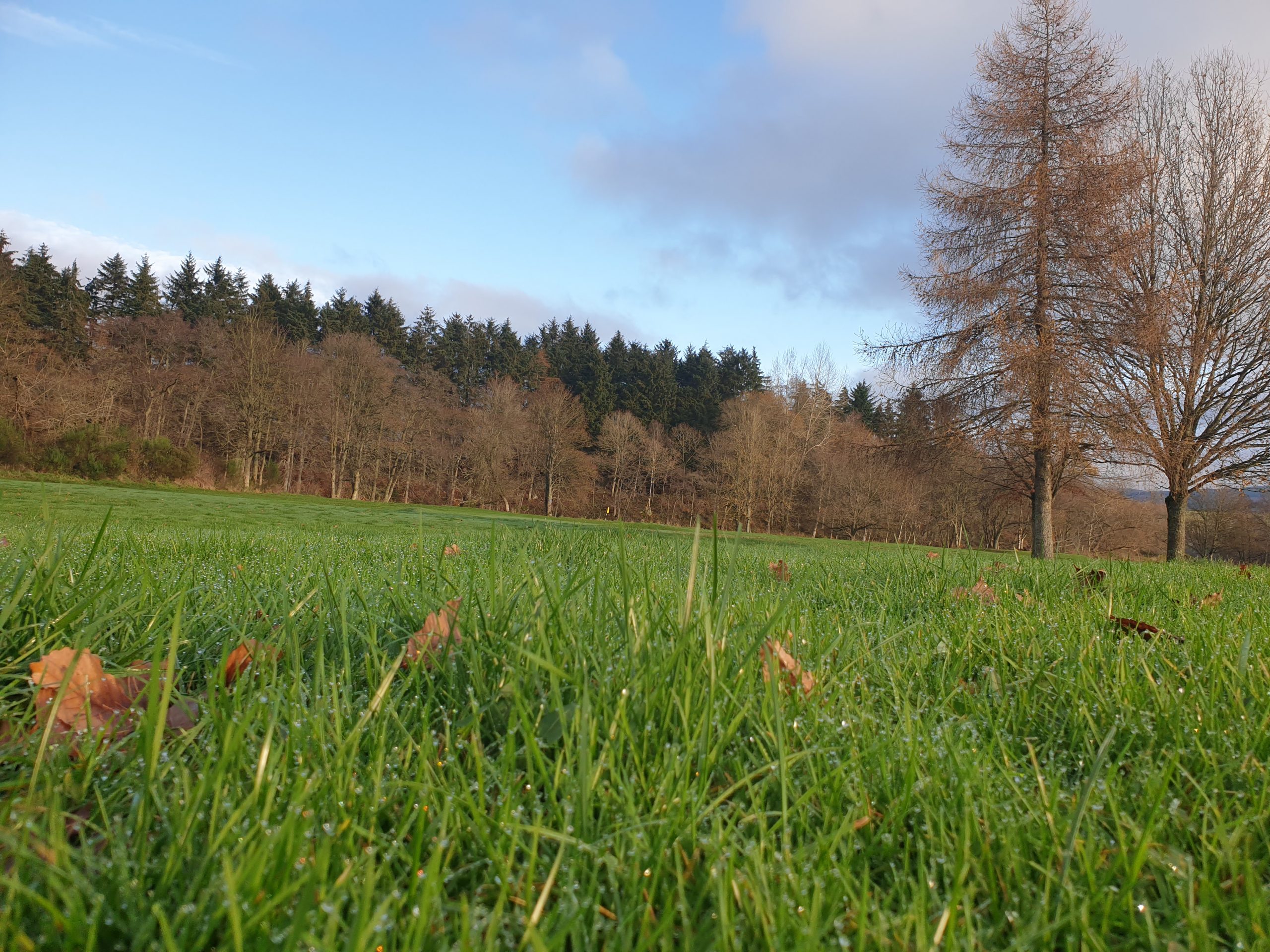
All three courses sit along a 12 mile stretch of the River Tay, between Kenmore and Grantully, and experience the same climate. It’s evident Aberfeldy GC is struggling to maintain the course with its small membership, with volunteering a critical resource.

The length of fairway meant Moly lost 3 balls from shots hit into the “fairway”.

Finding the course in such a bad state, especially from the 2nd hole onwards, leaves me somewhat uncomfortable in writing a review, as I’m sure there will be reasons why the course was effectively unplayable. Nonetheless, I’m committed to writing what I found on the day; all it would have taken by the club was a “course closed” sign on the first tee.

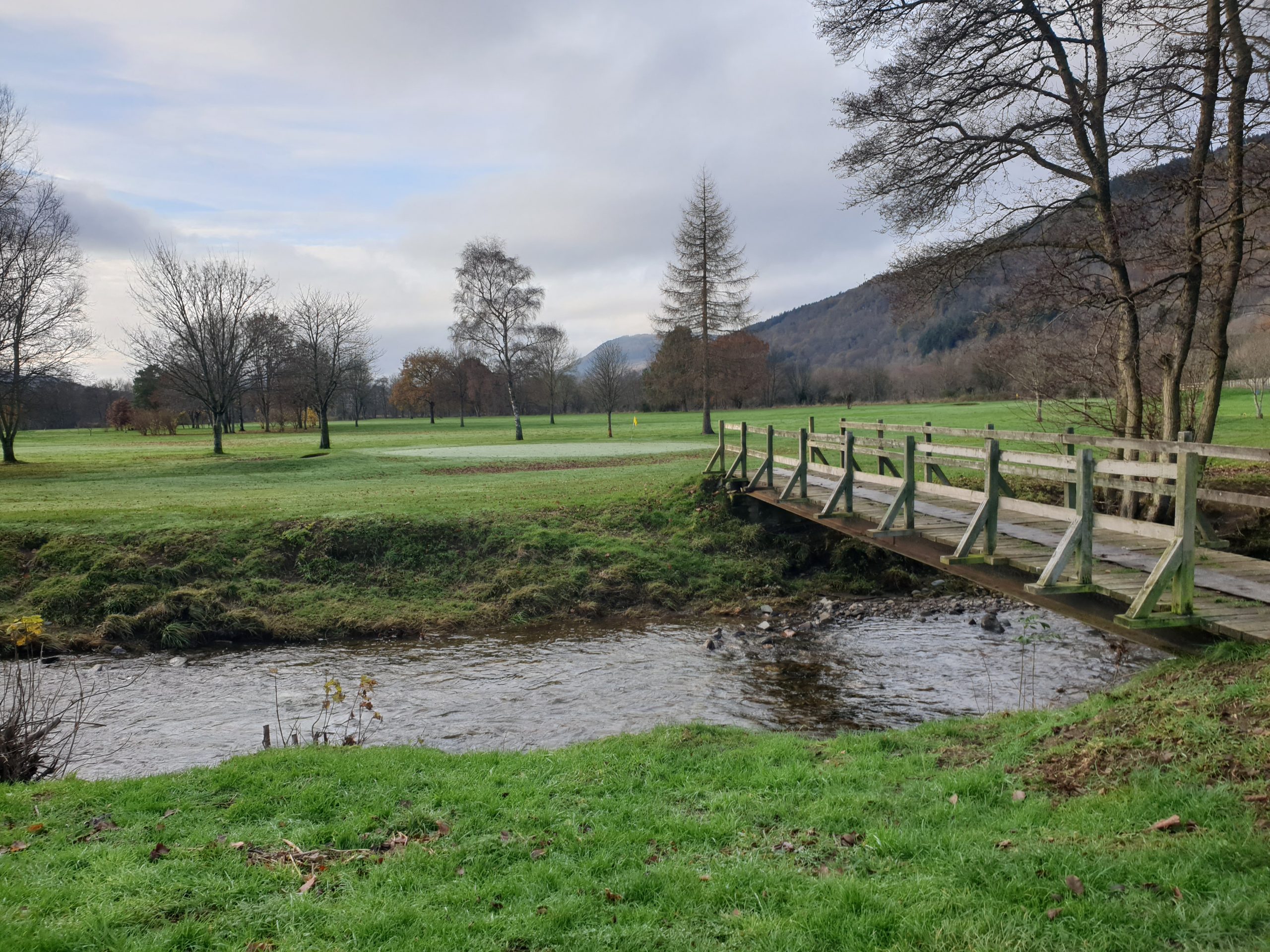
The Moness Burn, which feeds the Tay, is the key feature and hazard, which has to be crossed several times, here shown on the approach shot to the par 4, 7th hole, one of the more difficult holes. Beware the dog walkers, as the burn seemed a well used route.

Golf in Aberfeldy, much like in Scotland overall, is a story of expansion and contraction; the websites Missing Links and Breadalbane Heritage collectively tell Aberfeldy’s story, but there are gaps likely created by the old matter of ‘club’ versus ‘course’. There is also a book, intriguingly “Never an Old Tin Hut”, by local historian Jack Rees, published to mark Aberfeldy’s centenary in 1995.

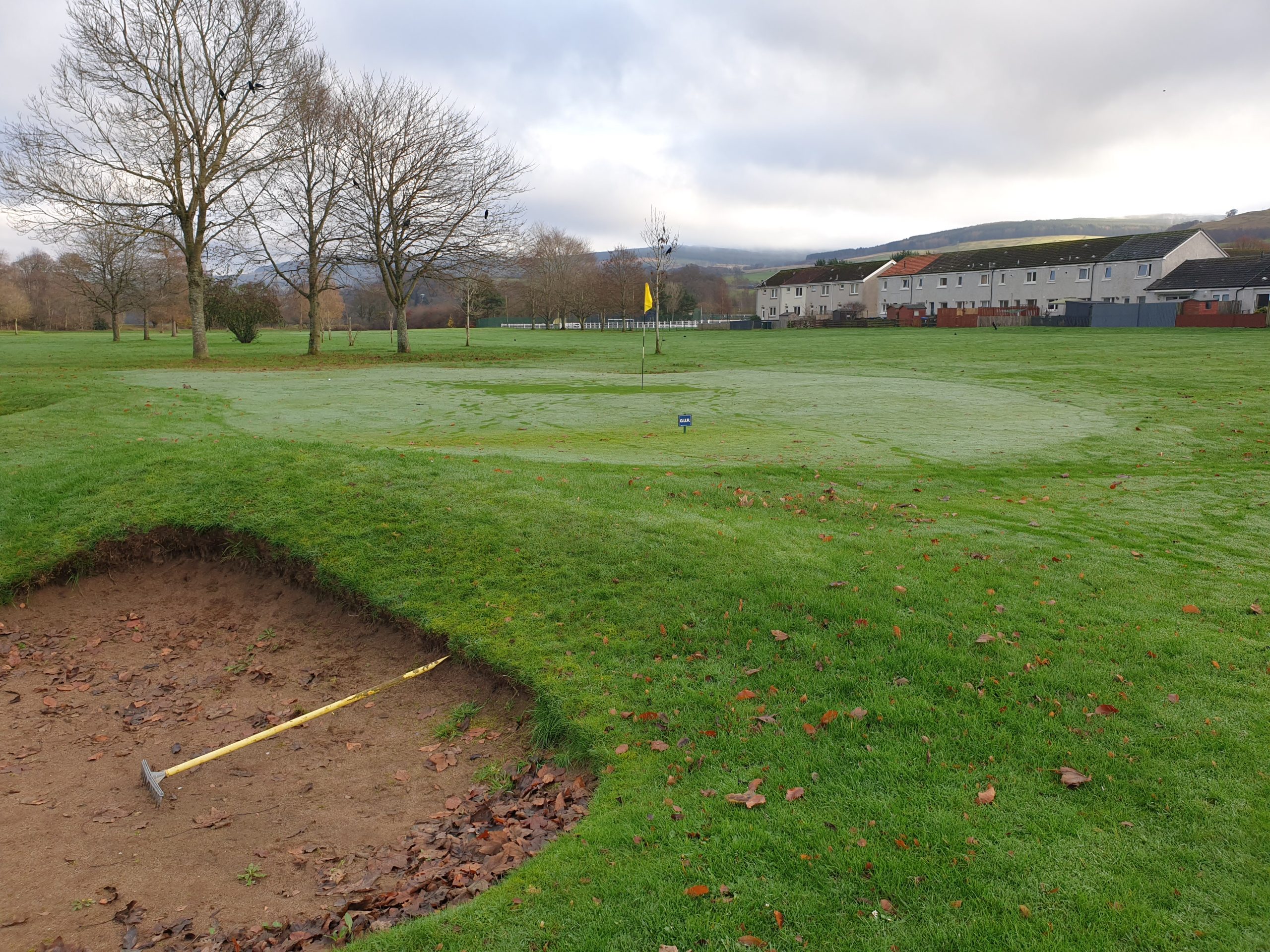
The 2nd green was GUR. It wasn’t the worst!

In summary, Breadalbane GC and course, was founded in 1895 at its current location and would later be renamed Aberfeldy GC. But there are records of 2 other courses as early as 1891, in nearby Weem and in a place called Welar, the latter course can still be made out on Google Maps just north-east of Camernay. The current very flat course was characterised by sharing its ground with cows for many years.

The course expanded to 18 holes in 1995 including 6 holes north of the river, but was returned to 9 holes in 2016, due to the drop off in demand.

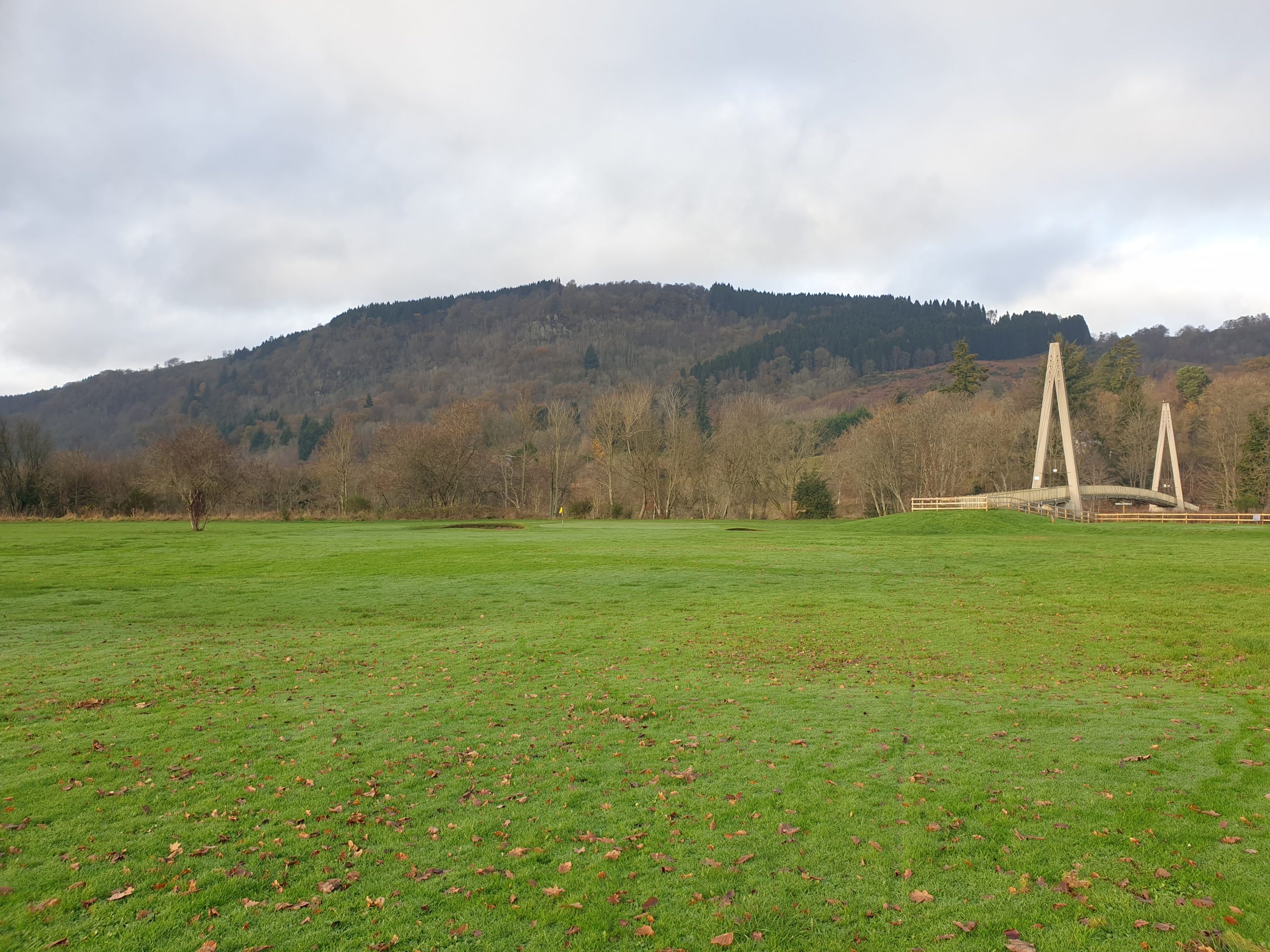
The “advanced composite footbridge” over the Tay, shown here from the 5th hole, made accessible 6 holes on the north of the river between 1995 and 2016.

The pictures tell their own story about the course condition. With much better courses nearby, one can’t see the long term survival of Aberfeldy GC. The local interest in golf can also be gauged in the lack of business sponsorship, even although Aberfeldy is base to one of the great whiskey distillers, Dewars. Plus, Breadalbane Academy, Highland Perthshire’s main school, is only 500 yards away, yet sadly has no mention of golf within its sporting curriculum.

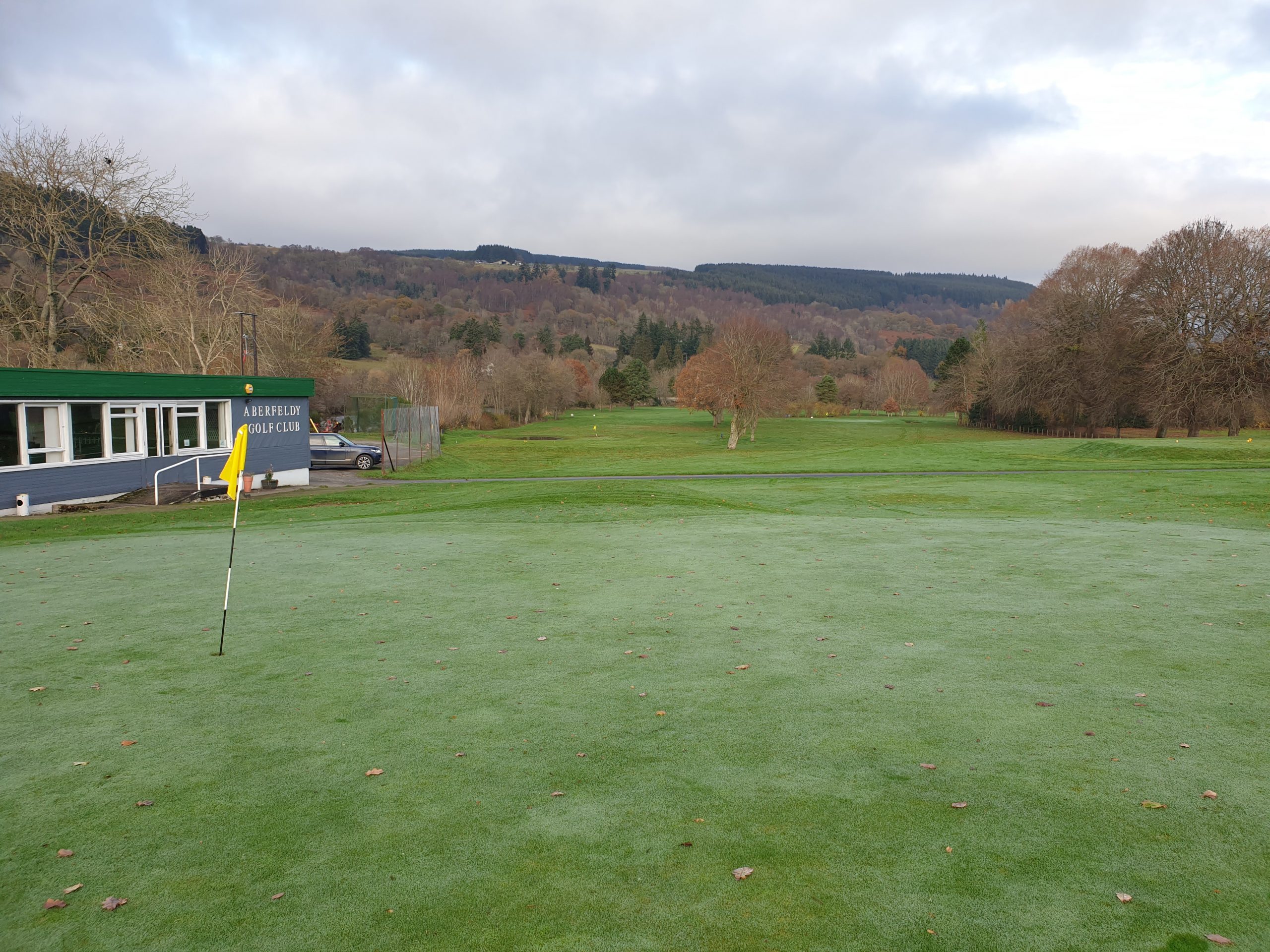
The 9th green, adjacent the main road and clubhouse, was the most manicured.

This was a sad day for me, but I’m sure many people have fond memories of Summer golf in Aberfeldy. I thought the course condition when I played might be reminiscent of the course in the late 1890 – ever an optimist.

Round List Price £15. Actual Paid £10 (Winter rate).

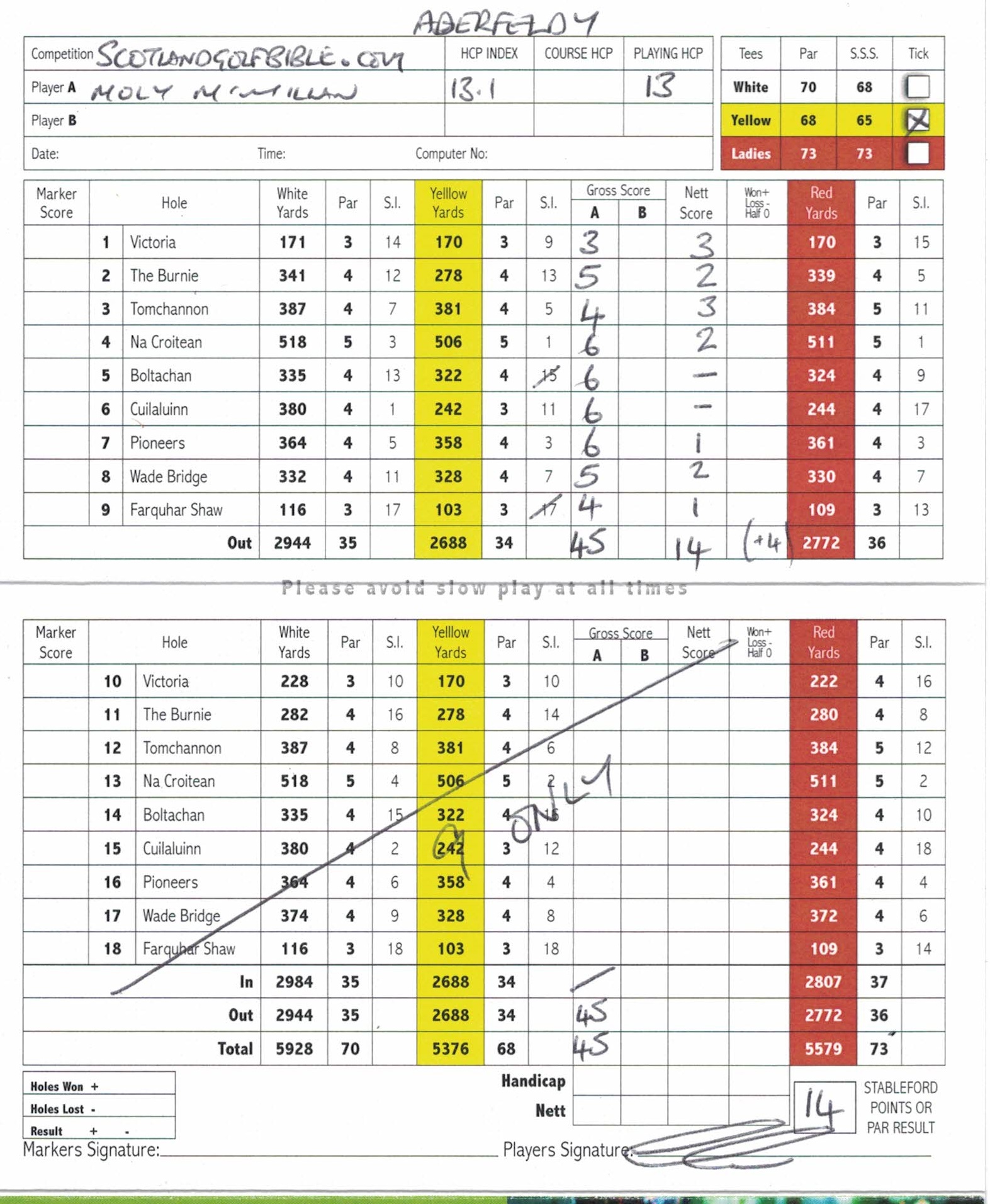
Moly’s Score – 45 for 14 points (off 13)

Course/Slope Rating (yellow) nk/~65

Course Type: Parkland

Par 35  ( 1 par 5s, 5 par 4s, 3 par 3s)

Distance (yellow): 2688 yards

Moly’s score of 45 included losing 3 balls on fairways doubling as rough!

110. Machrie Bay. 21 Sep 2020.

Don’t make the same mistake as Walter Hagen – this is not worth playing

Round £15. Par 33. Slope (yellow) 100. Value (out of 5) – 1

Machrie Bay, is on the west of the island of Arran, not far from the majestic Shiskine. What a big disappointment – unless you’re chalking up all the courses on Arran, I would give this nine hole course a miss. At £15 for nine holes, this was very poor value when compared with the similar prices on offer on the island.

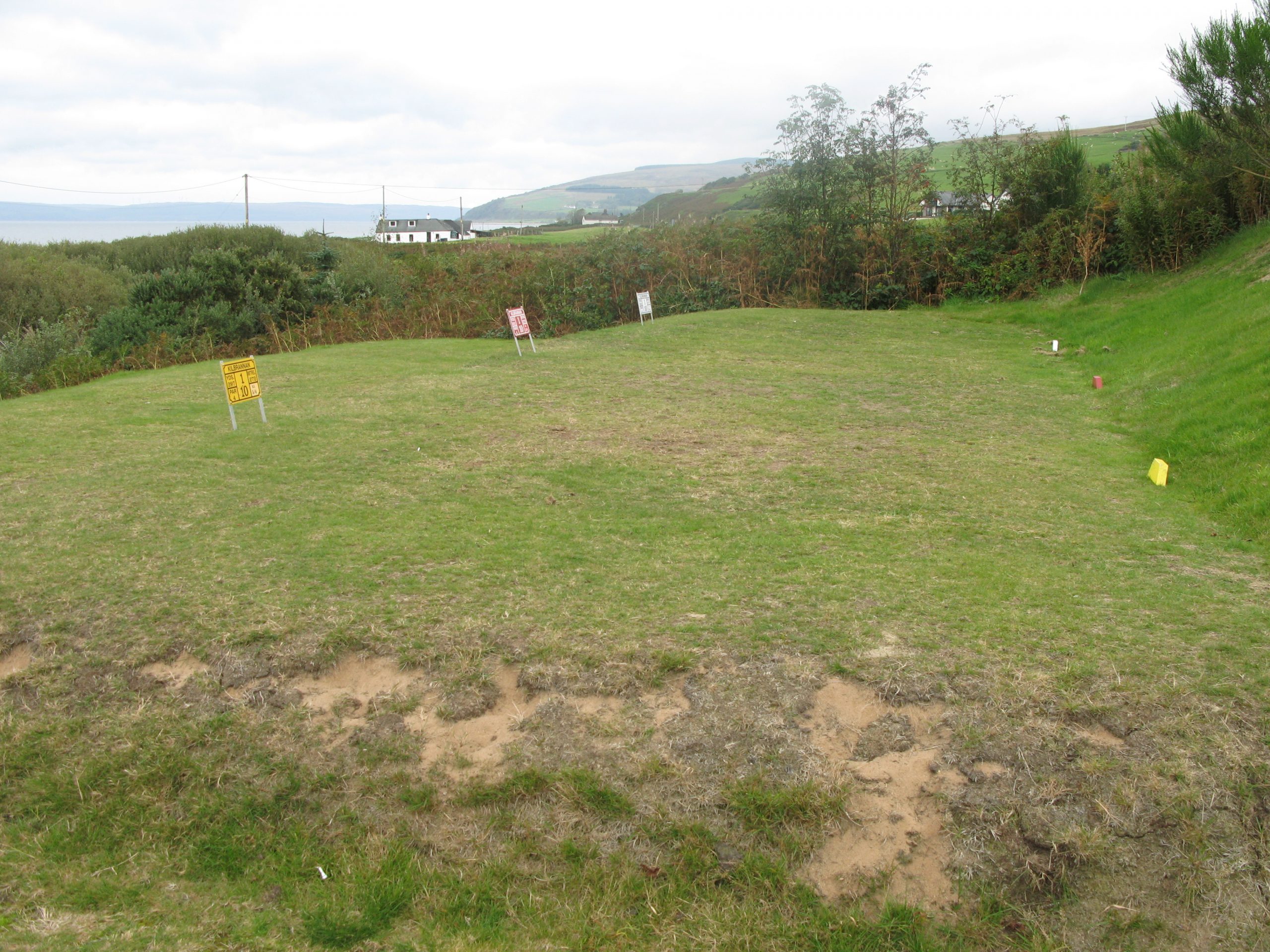
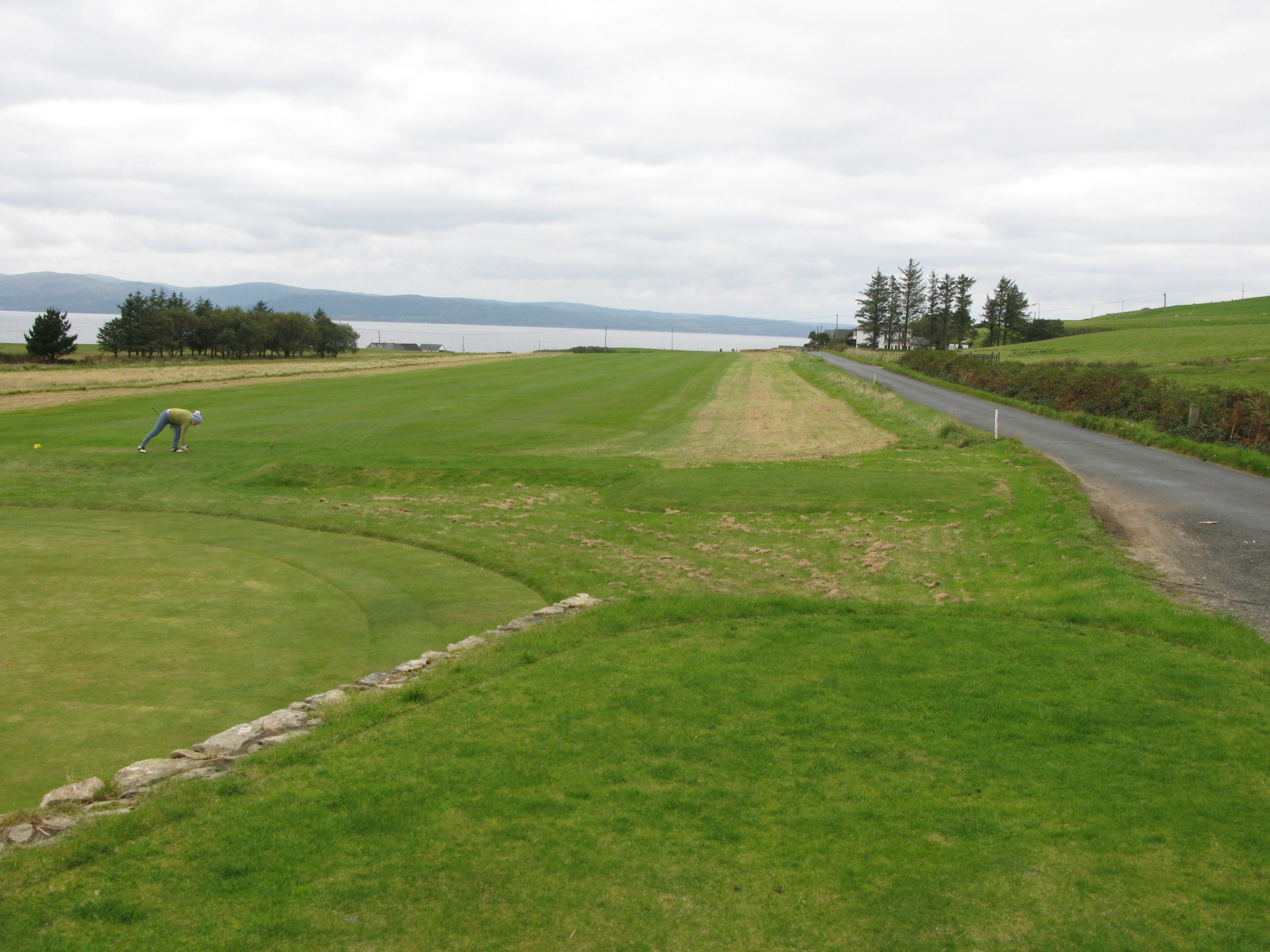
The very poor first tee at Machrie Bay, not an impressive start.

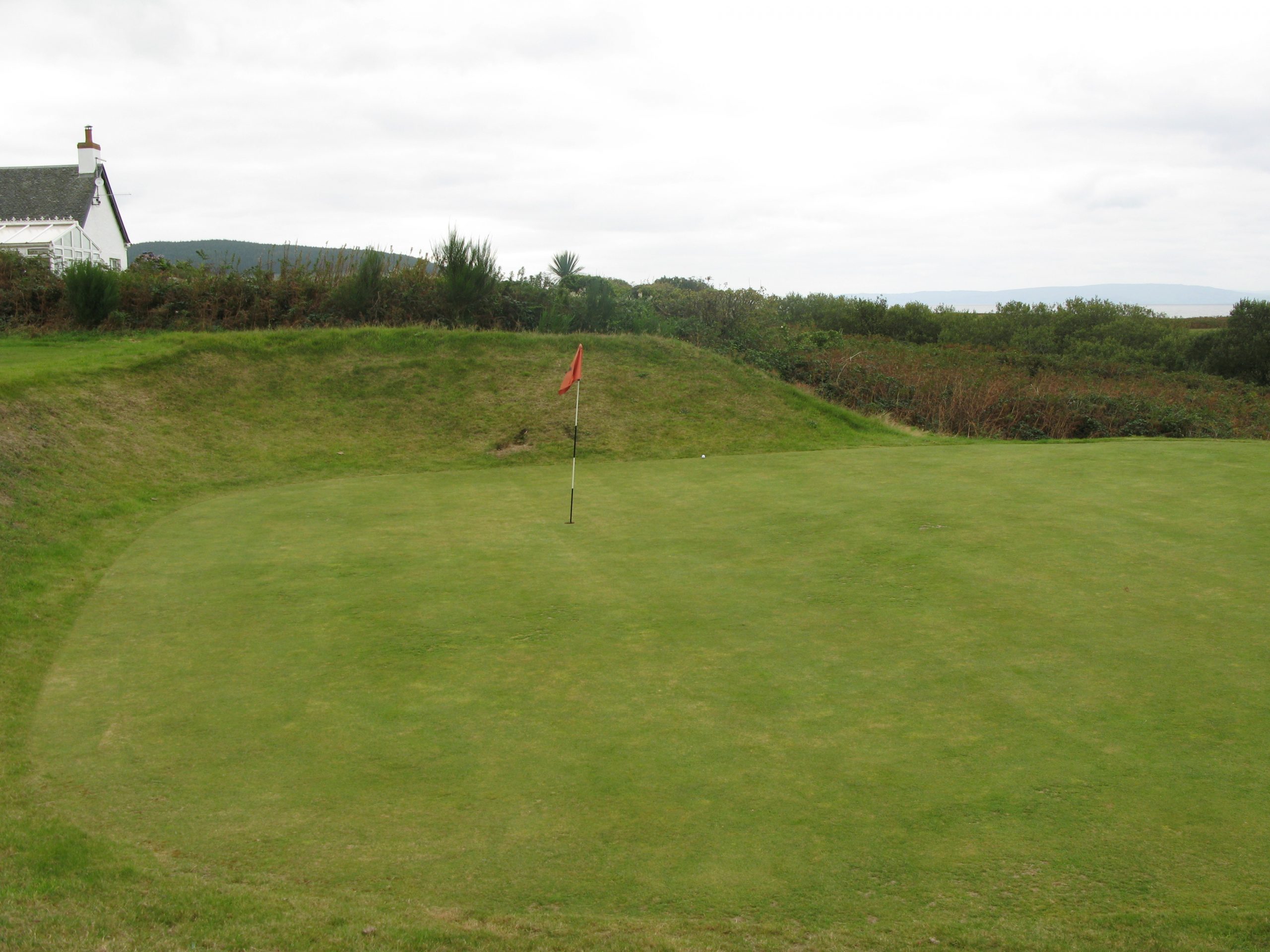
The world was in the middle of the Covid Pandemic when I played, but in looking closely at the poor course condition it was clear that the pandemic was not the reason – the course was suffering years of neglect. The teeing grounds were bad and many of the greens were covered in moss.

The moss covered 1st green at Machrie Bay.

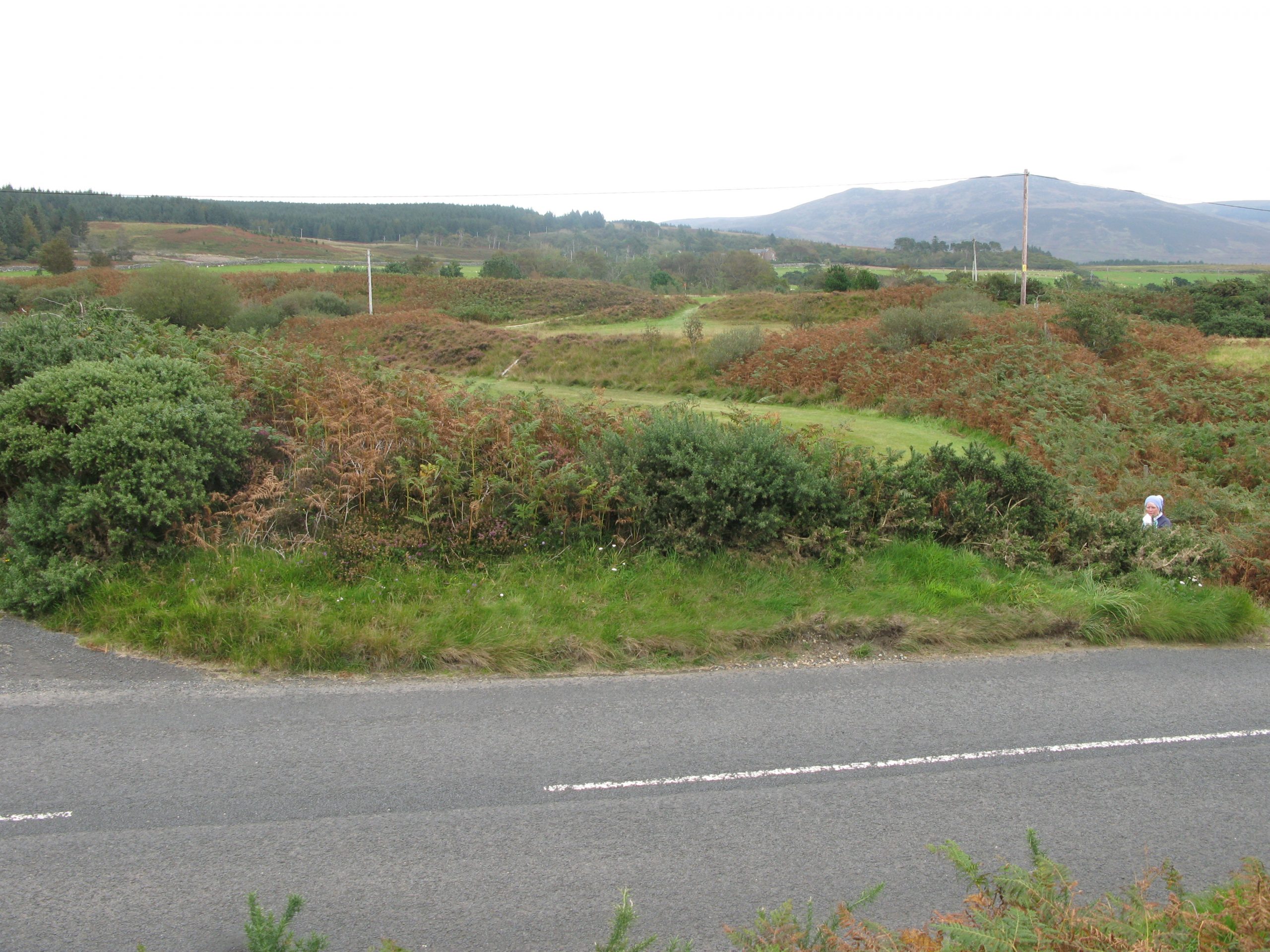
There’s not much to say about the course. It had many very plain holes, little more than fields with a tee at one end and a green at the other. It did have 2 holes worth noting, both which play over the road that circles the island. The 2nd, played from the white tees was a difficult par 3, and the 9th hole, a fairly short par 4, with a very dangerous blind second shot over the road, for which distance control is critical – I played a good shot and never found my ball again!

The tough par 3 second hole at Machrie Bay – pictured from the white tee.

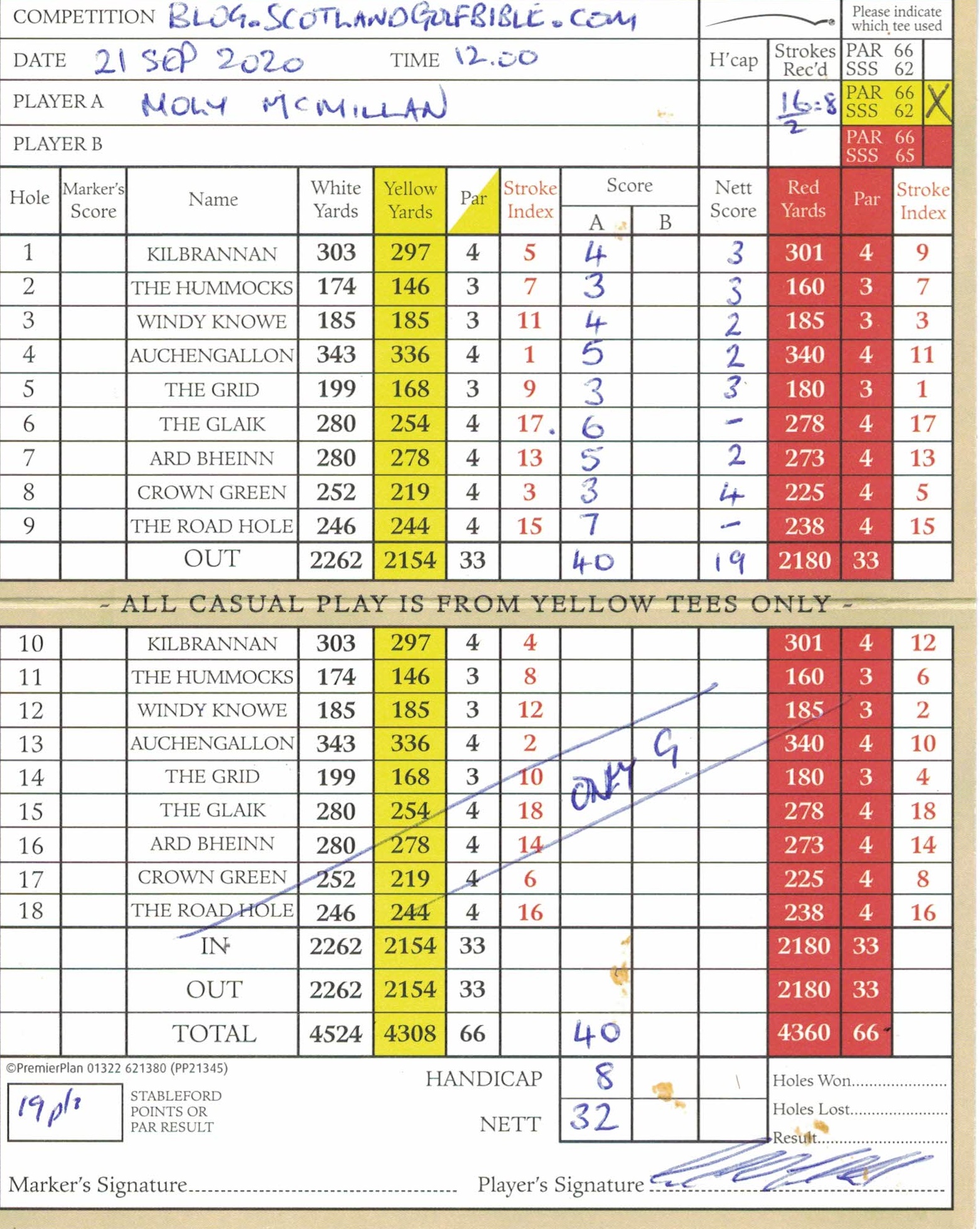
On the day I struck the ball well and scored 40, for 19 stableford points.

The par four 6th hole – the typical bland hole at Machrie Bay

Finally to Walter Hagen. There is a delightful newspaper clipping on the Machrie Bay website here. Enticed to play “The Machrie” course, a beautiful course on Islay, Hagen turned up in Arran to play Machrie Bay. Don’t make the same mistake – but then again doing something the same as Hagen might not be too bad!

Facts:

Course Type: Parkland

Par 33 (0 par 5, 6 par 4s, 3 par 3s)

Distance: 2154

Moly’s Gross score40

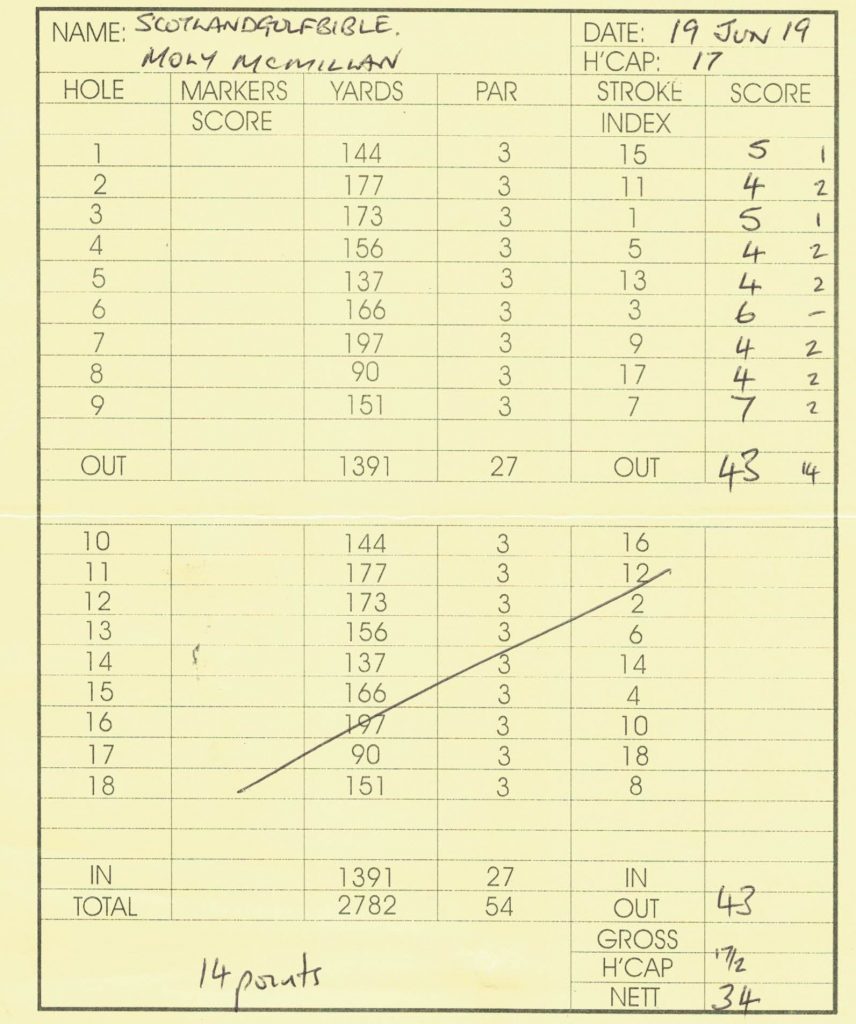
Moly’s Machrie Bay scorecard – gross 40, with triple bogie at the last

96. Craigieknowes. 19th June 2019.

Playing 150 years ago might have felt like this

Round £7.   Par 27.  Value (out of 5) – 3

This course is really worth playing, but its assessed ‘value’ of 3 does not necessarily mean this course is good or even average quality; it’s not. Craigieknowes is cheap at less than £10. The greens were terrible when I played – little more than well mowed lawn. The teeing grounds don’t actually exist, they are just areas of the fairway with a tee marker. There are no bunkers – or if there were I can’t remember any.

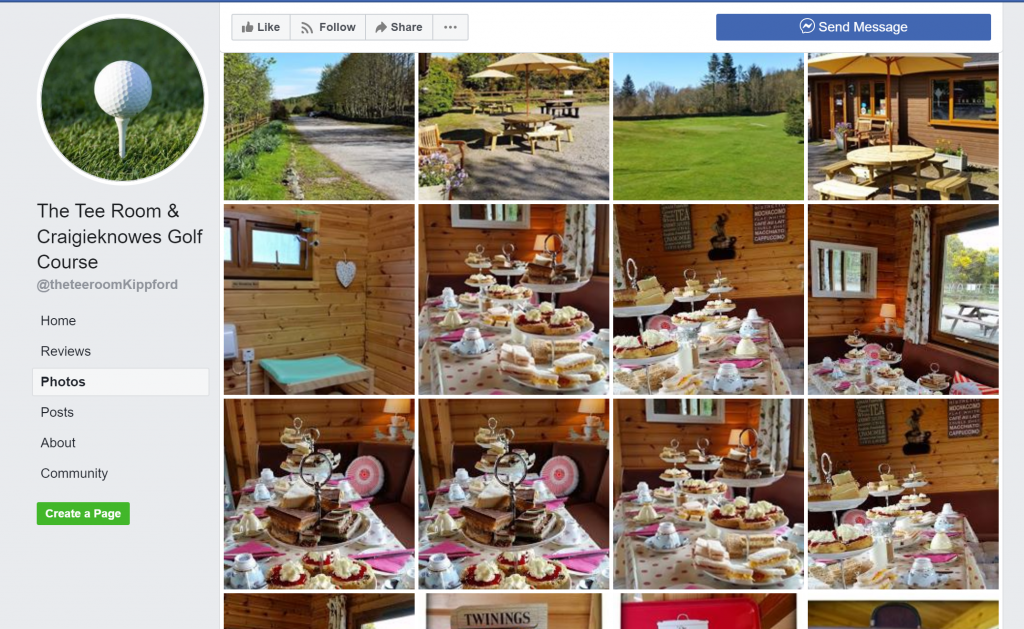
Craigieknowes Facebook Page focuses on the real attraction – Cake!

Craigieknowes golf course, near Kippford in Dumfries and Galloway, is really worth playing, for no other reason than it is what I imagine golf would have been like in the late Victorian era, when golf courses were sprouting up all over Scotland.

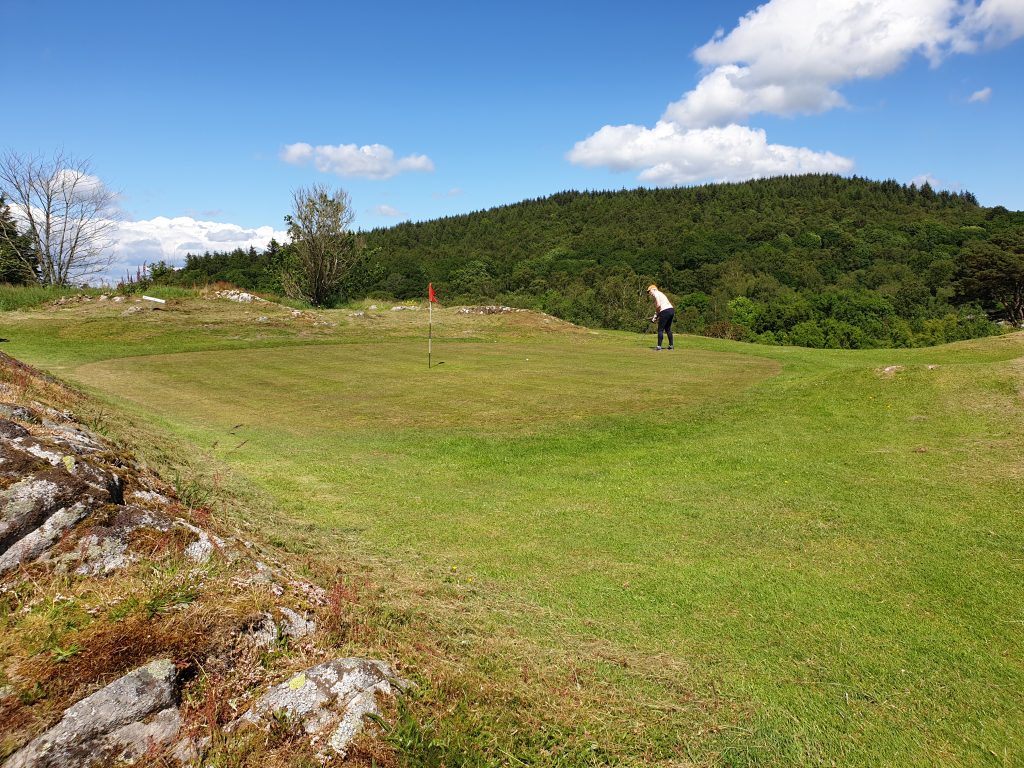
Fran on the 3rd green – she played much better than me on the day.

It’s a 9 hole par 3 ‘highland’ course against the beautiful and peaceful backdrop of South West Scotland which still exists I suspect from the income generated during the Summer months in this holiday park of Scotland. The golf course seems to be secondary to the delightful tea room, which is the centrepiece of the facebook page of the course. The fact that Craigieknowes doesn’t even have its own proper website is also a measure of its status.

Unfortunately, despite some research I couldn’t find any meaningful history of the course.

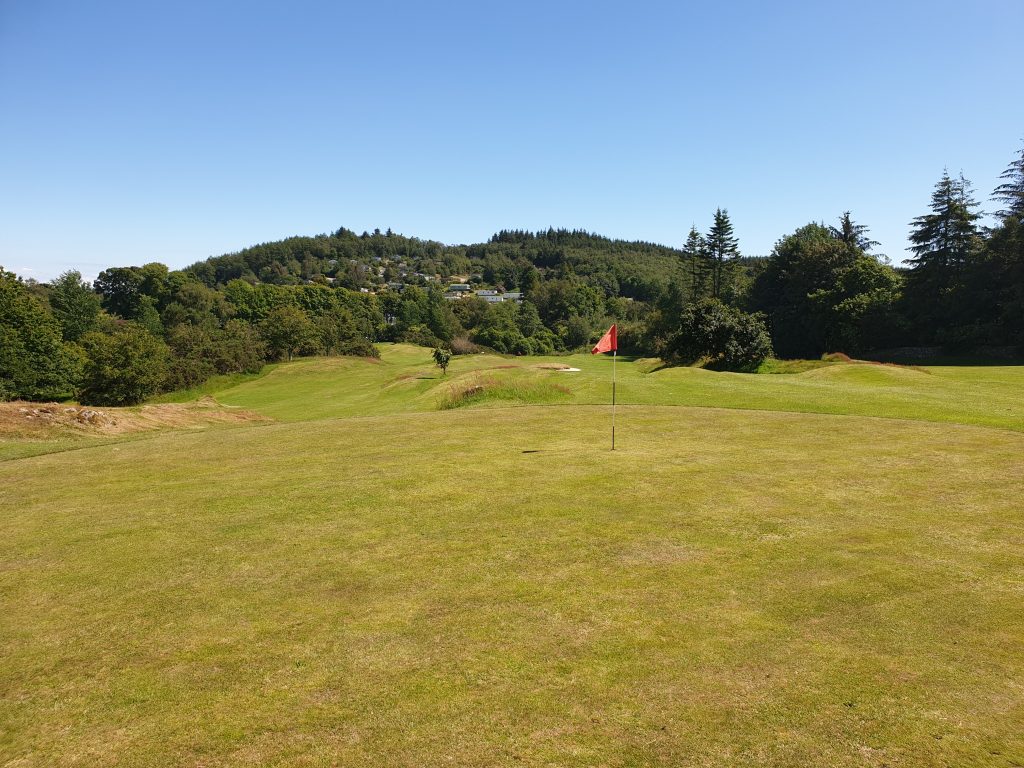
The difficult 4th, take at least one club longer, for the 156 yard hole

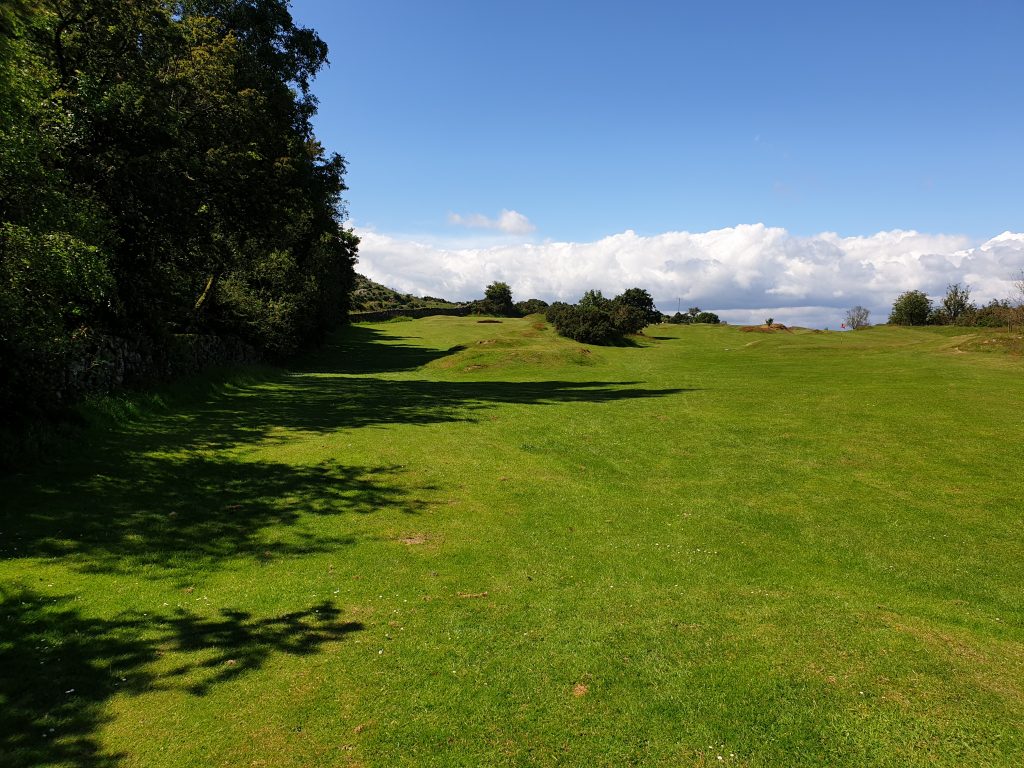
Although being in poor condition, there are some meaty holes to overcome here. In particular the 4th, played uphill to a plateaued green, requiring more club that it looks to the eye, and the 166 yard 6th, again uphill, with OOB to the left of the green. On the 6th I lost a ball near the OOB wall, despite at least a 5 minute search – no-one was behind us!

The 6th – a challenge with OOB on the left.

On the day, we had lovely weather, and it was really good fun. Nevertheless, I couldn’t par any of the holes in my score of 43, which I’ll put down to the greens;)

If you are in the area this is fun to play, and the tea and cakes were really yummie!

Facts:

Course Type: Highland

Par 27 (9 par 3s)

Distance: 1391

Moly’s Gross score: 43

Moly’s 43 at the par 27 Craigieknowes GC
« Older posts

© 2026 Scotland Golf Bible

Theme by Anders NorenUp ↑