A guide to green fee value for money

Category: Members (Page 6 of 26)

152. Forfar. 9 July 22.

Incredible and possibly unique golf course.

Round £50. Par 69. Course Rating / Slope Rating (yellow) 67.2/119. Value (out of 5) – 5

Forfar is an incredible golf course. Although I’m a native Dundonian and played football in nearby Forfar many times, I had never actually played the golf course – I had no idea what I’d been missing all those years. Whenever I’ve mentioned Forfar to my non-Scots friends, I always get “Forfar four, East Fife five!”. It should be famous for its golf course.

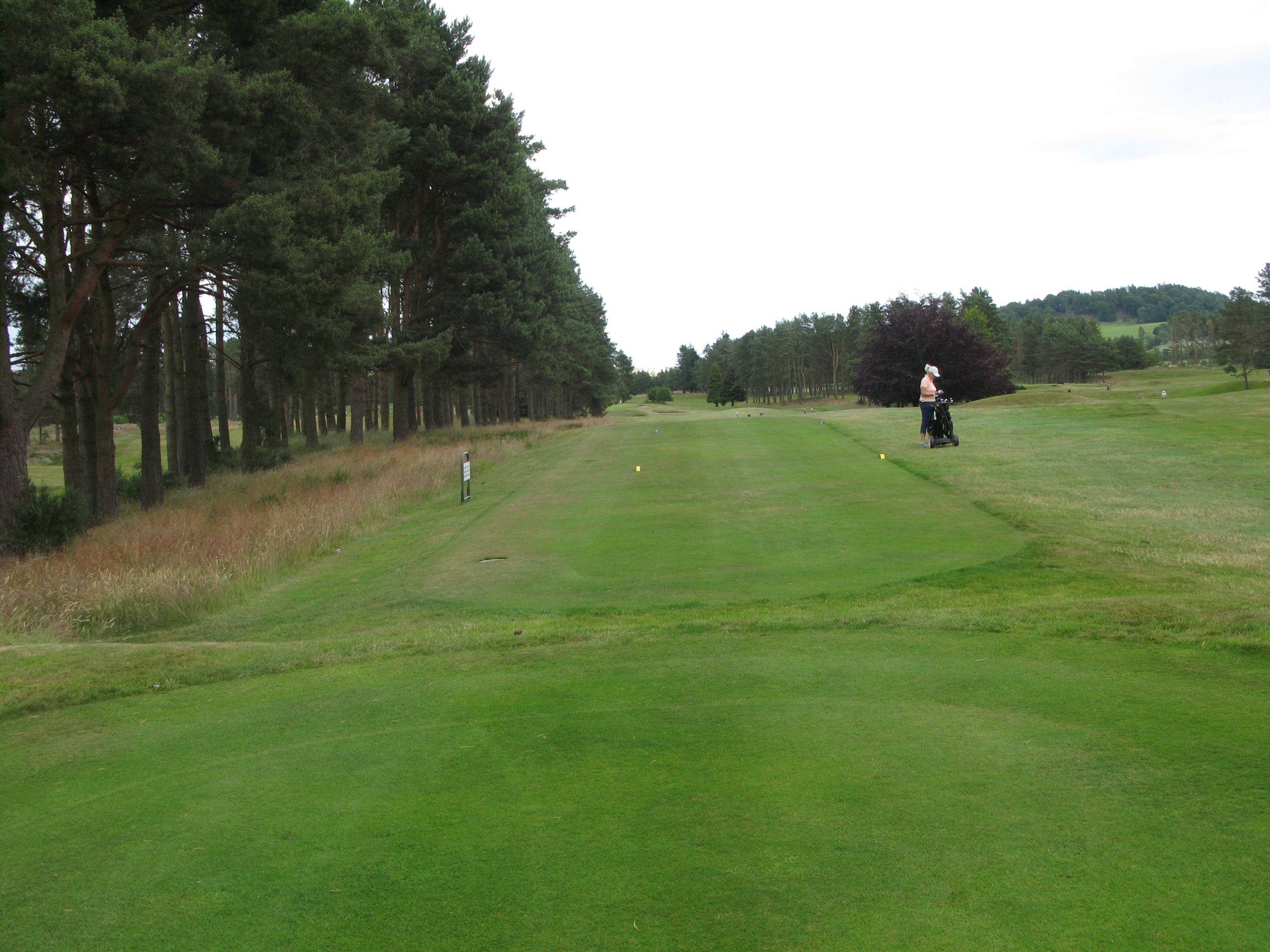
The 4th, ‘Cat Law, a tough par four, with Forfar’s terrain on show.

Having read many reviews of Forfar golf course, I was struck by the number of writers commenting on the unusual terrain – “it’s an ‘inland links'” said many.

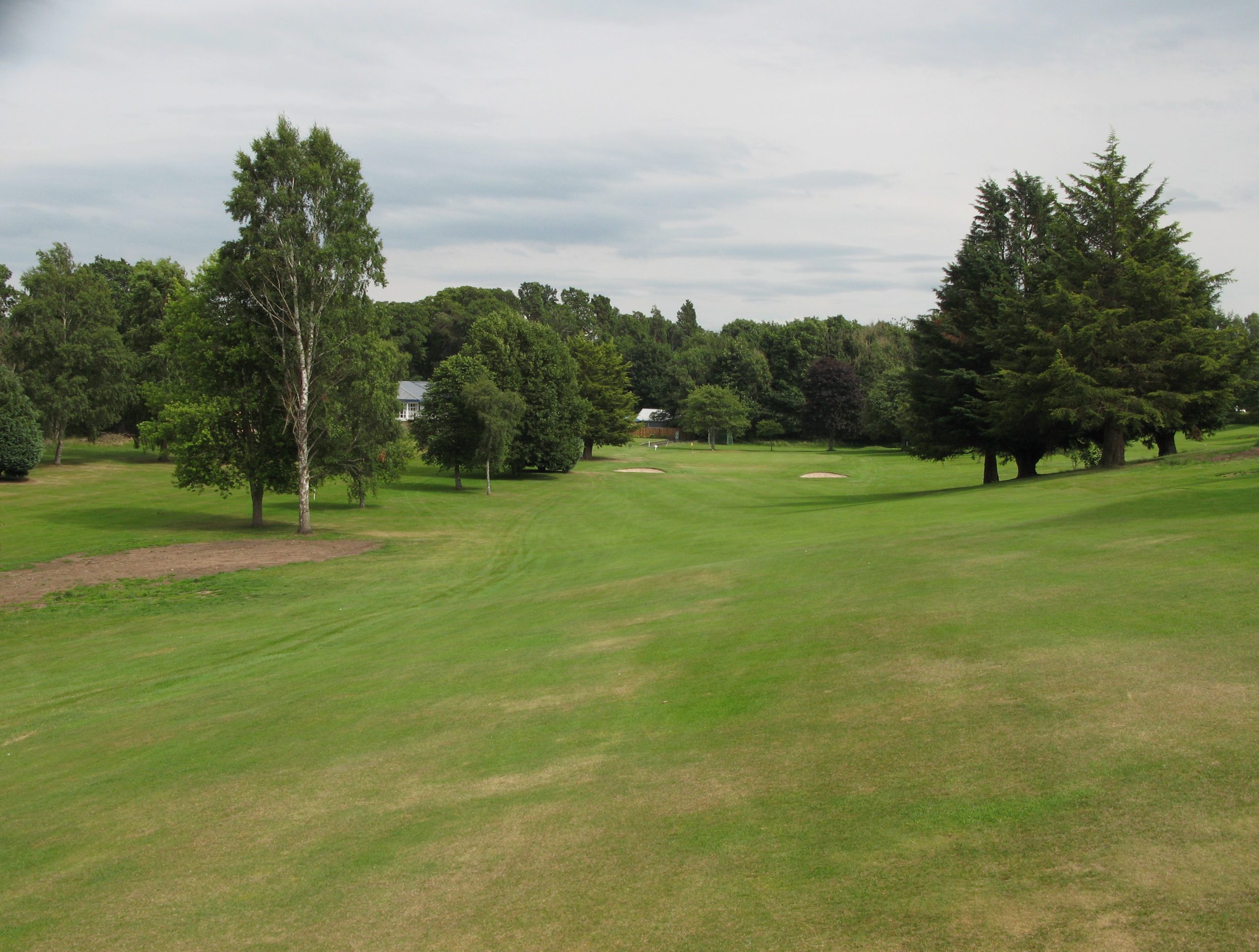
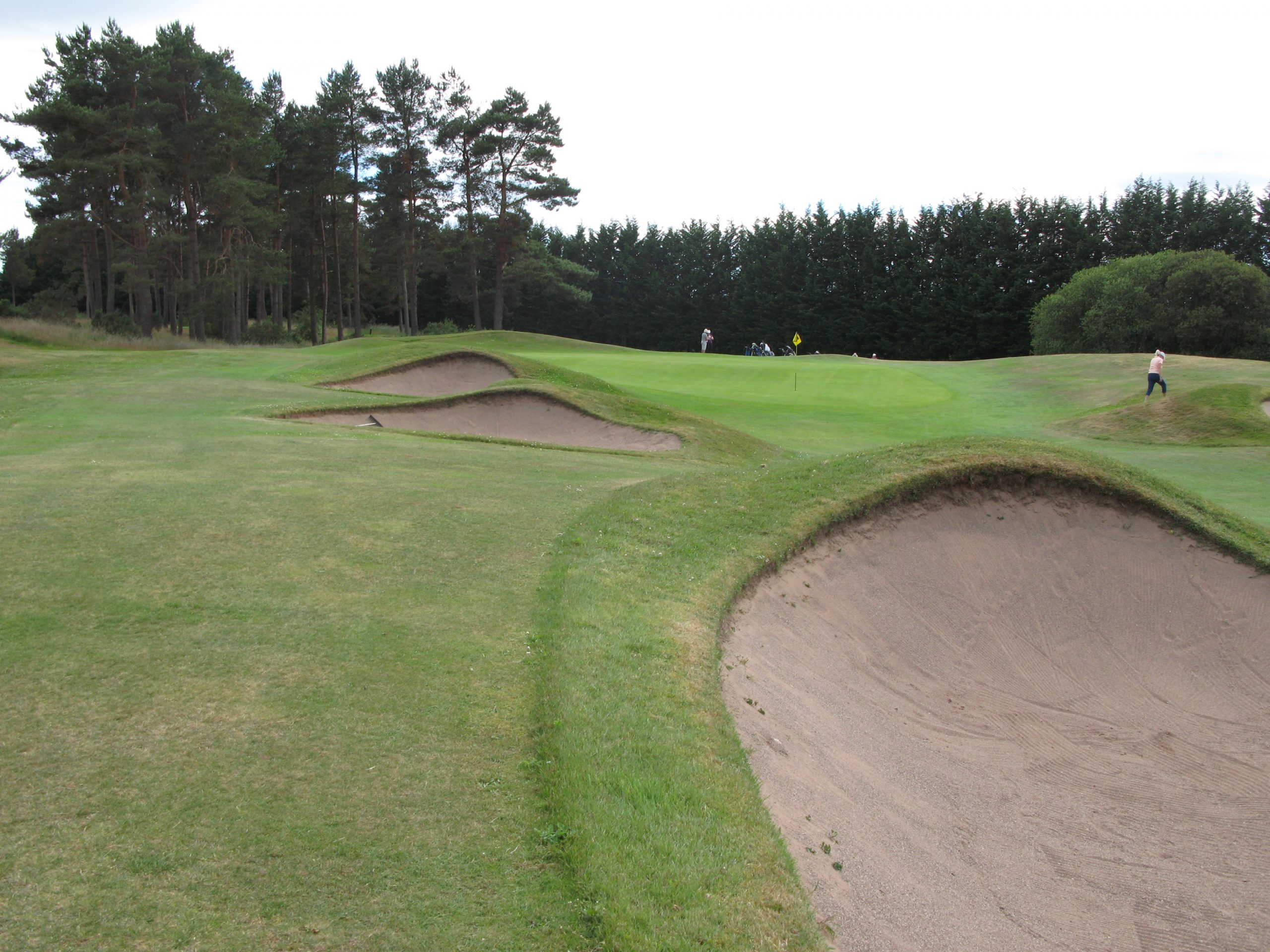
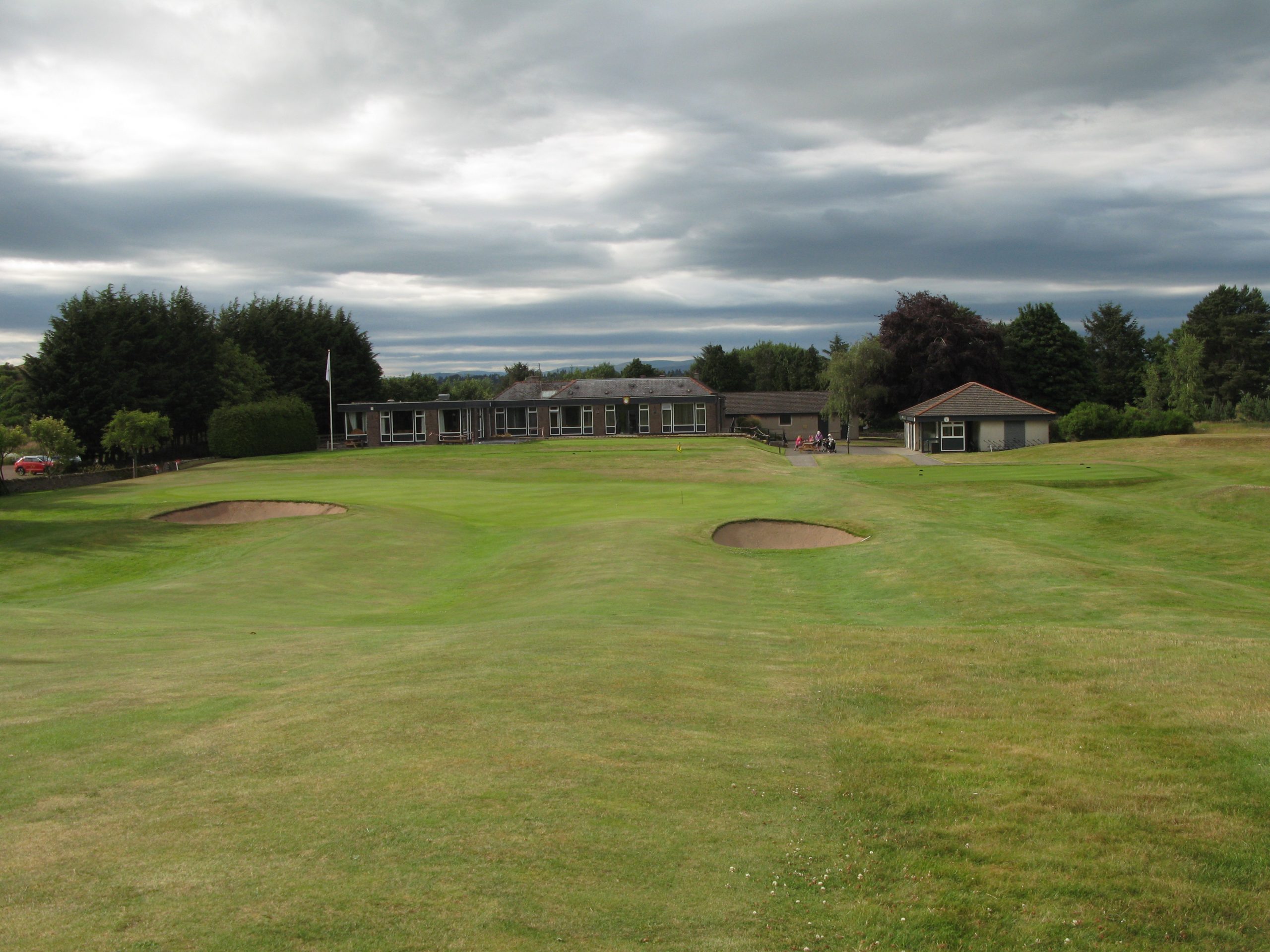
The majestically bunkered 17th hole – this is typical of the views playing Forfar.

The geology is very marked. It has hummocks and undulations with so much similarity to a links. Look at the fairways, and it could be Scotscraig, near St Andrews. Look at the numerous Scots Pine, with the hilly surrounds, and it could be Boat of Garten in the Highlands. The wonderful heather and bunkered green surrounds, would make their way easily onto Lanark, Edzell or any number of the great heathland courses.

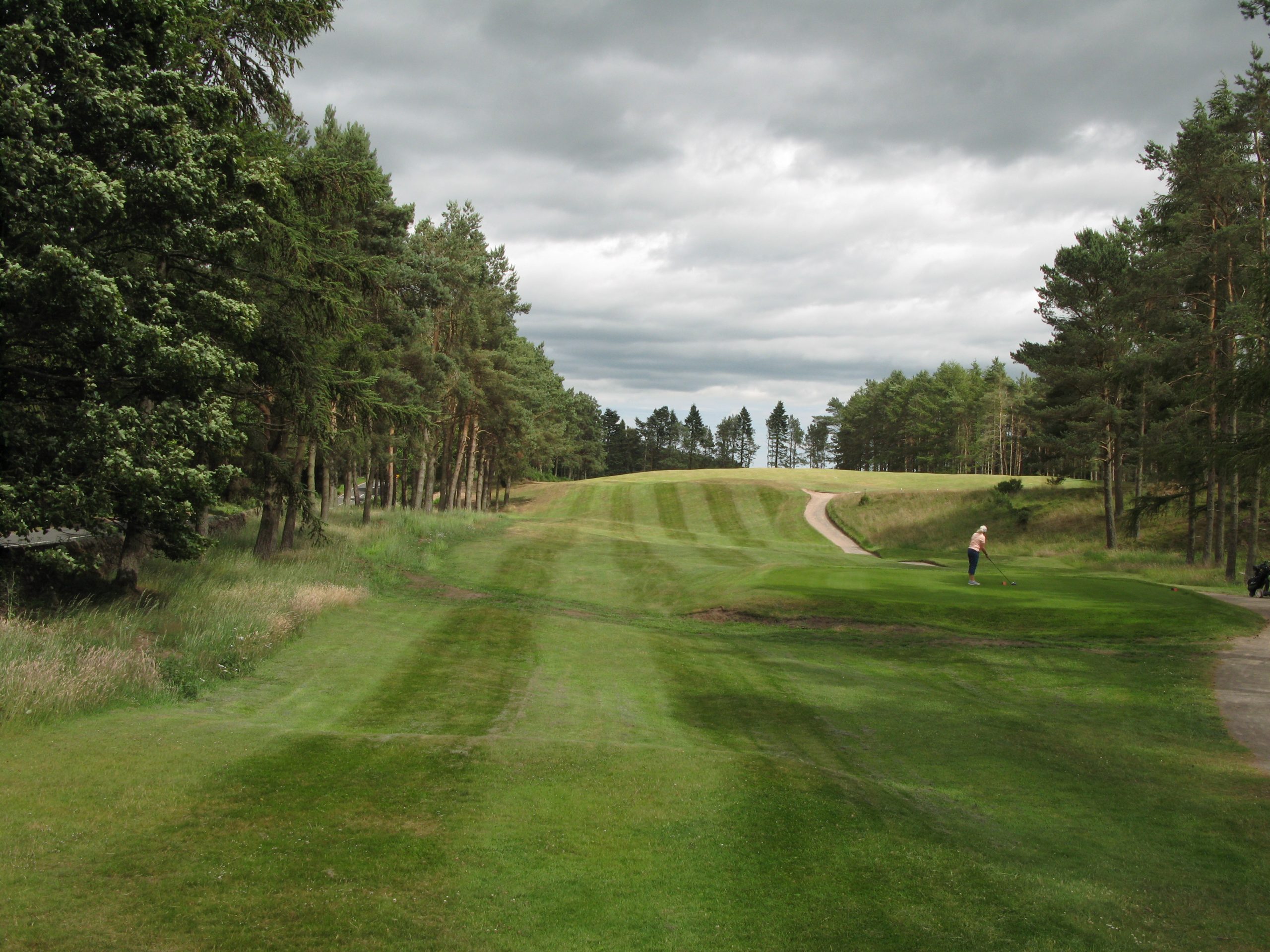
The blind tee shot at the par four 2nd hole.

I’ve played over 200 golf courses throughout the world, from the Monteray Peninsular, through the championship layouts of South Africa and Australia. Ryder Cup parkland courses and Open Championship links. Asian tour venues. Forfar is both like none of them and yet like all of them, simultaneously.

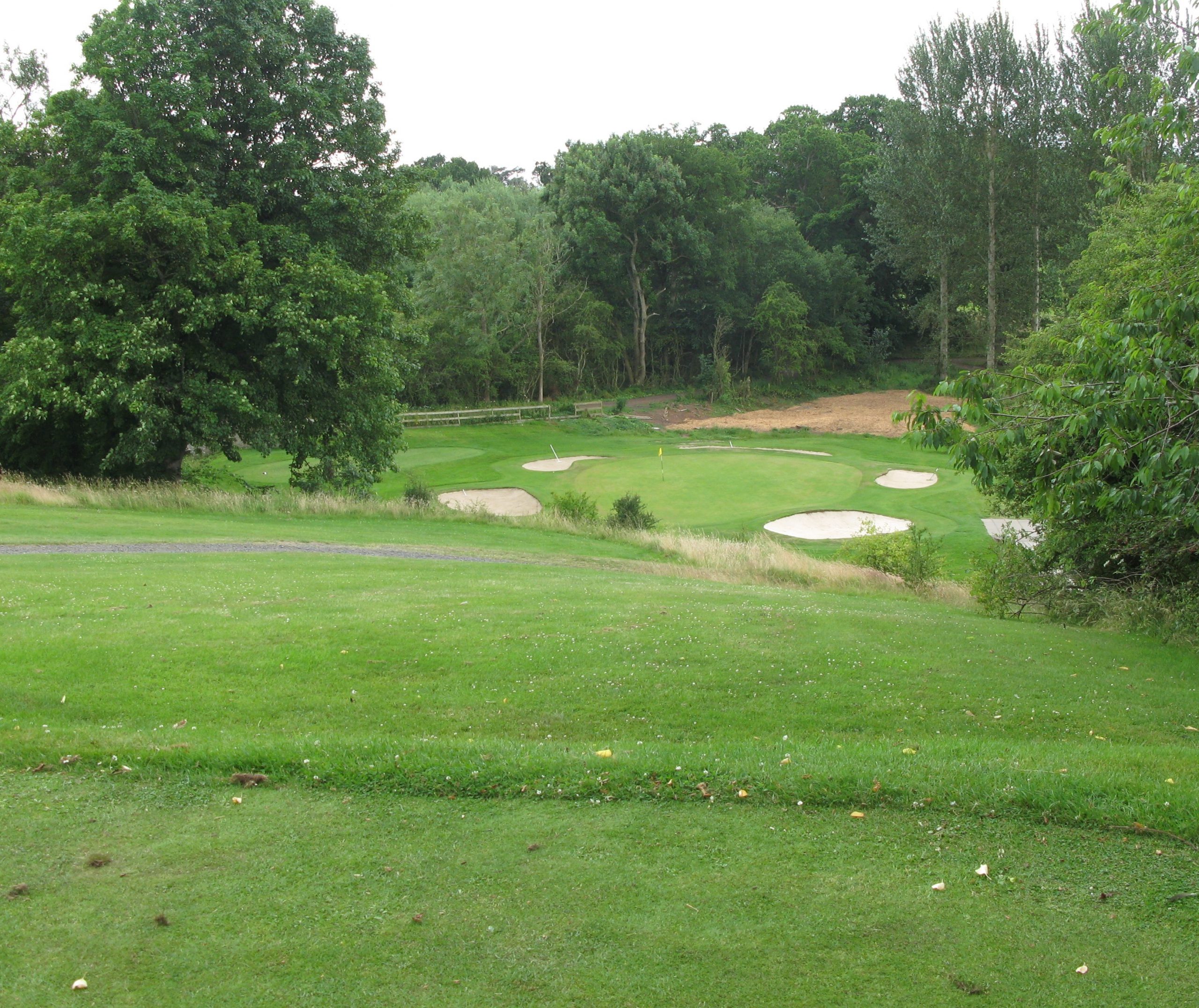
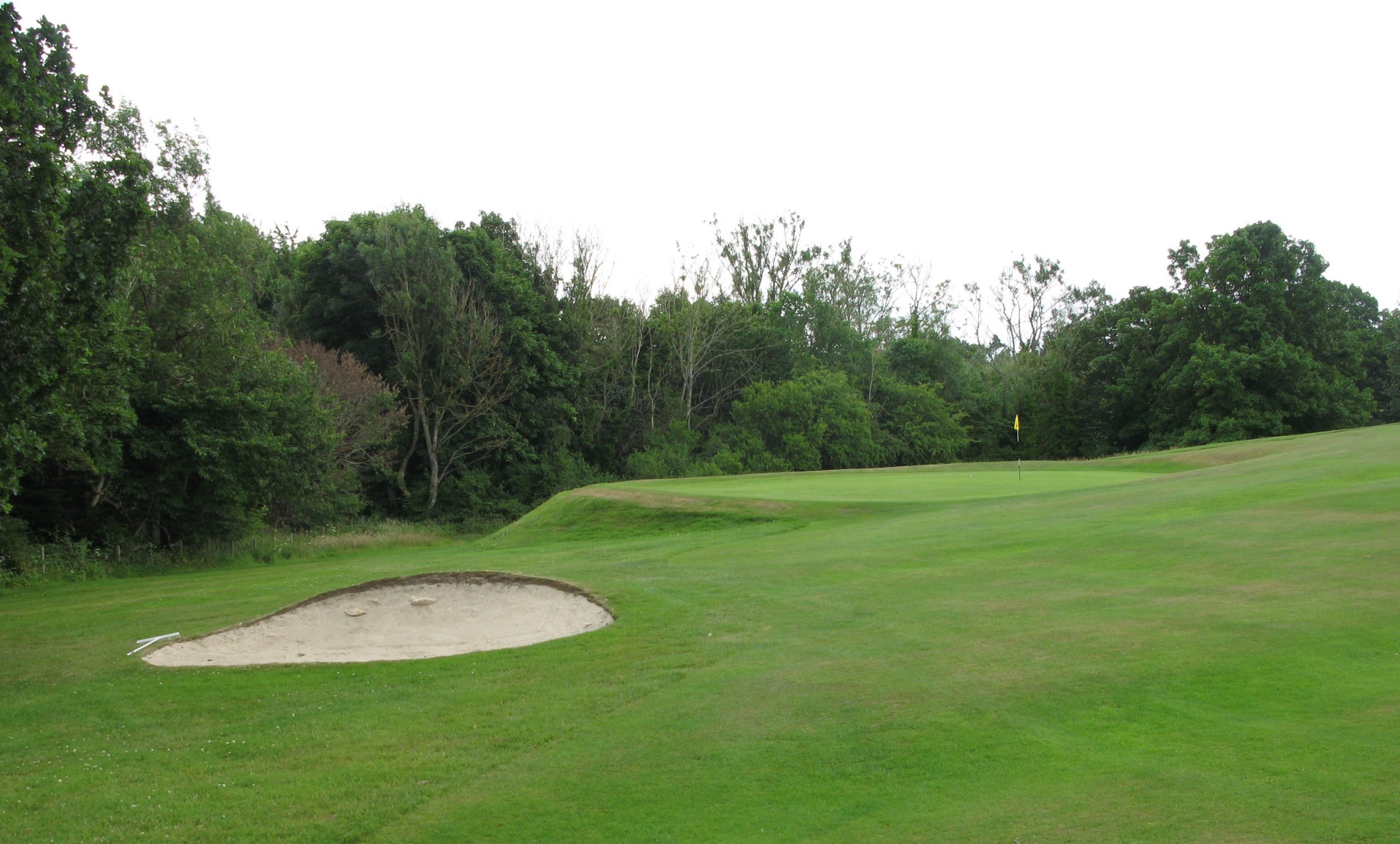
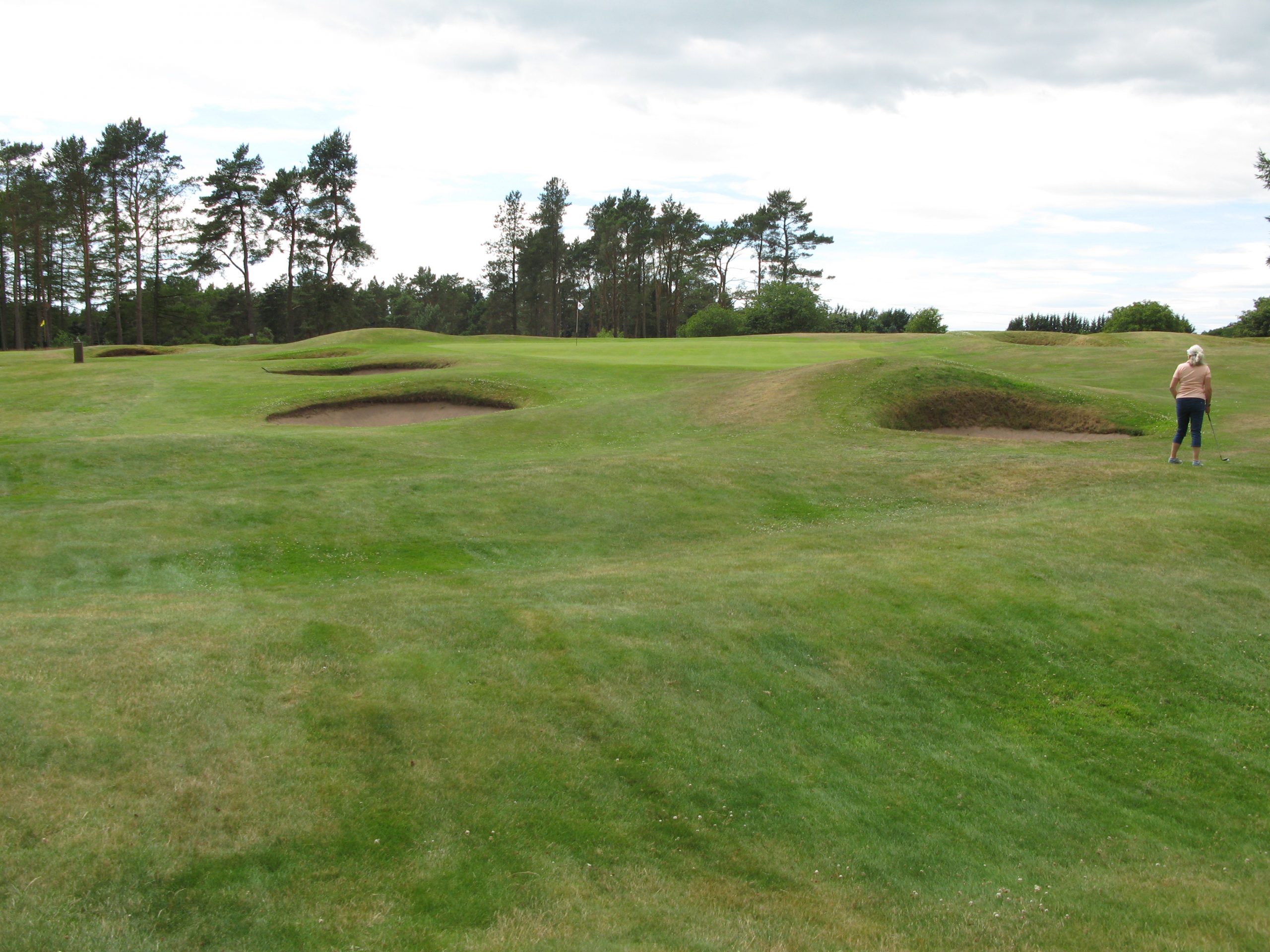
The green complex at the fifth, a challenging long par 3.

On land influenced by the remnant boulders of the last ice age, Forfar sits only 15 miles north of Carnoustie and 15 miles south of Glen Clova in the Angus Glens. The golf course has a lengthy history, claiming to be “the 4th oldest 18 hole course in the world and is the very first Club to have an 18 hole course from inception and inauguration”.  This latter comment is carefully contructed, since there are many earlier 18 hole courses, for example the Lundin/Leven Links (blog here) 18 holes dates to 1868, 3 years before the creation of Forfar.

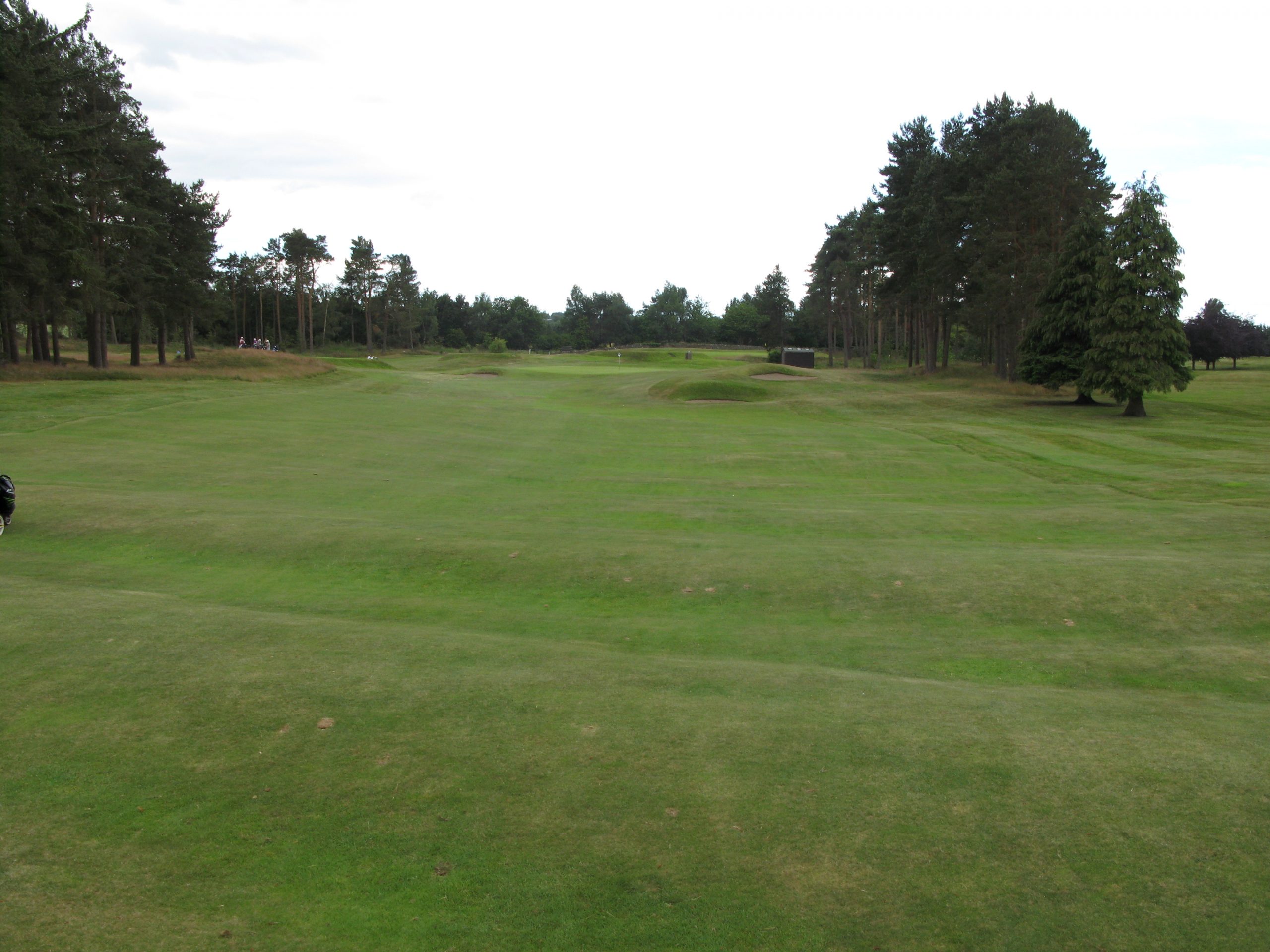
The approach to the seventh, the par four, ‘Quarry’, SI 2 hole. Play long and right, if you can hit the green in 2.

The course was designed by Old Tom Morris, at a time when no major earth moving was done in course construction. So all that you walk on is natural. The green surrounds are at times genius, which makes sense since James Braid carried out a redesign in 1926, but the majority of the holes remained the same. Overall, its a beautiful golfing challenge.

The tricky 18th green to find from a blind approach shot. I was lucky to choose the right club, to get my 3rd birdie of the day. Very unusual for me!

Despite having a few weaker holes, notably the par three ninth, there are many that are memorable. When we played on a calm, July day, the course was in great condition. The fairways were dry and fast running, the turf was firm, the greens slick, the bunkers consistently first class and the teeing grounds all excellent.

The wonderful 12th hole, the SI 1 hole on the course. A par four of 422 yards (yellow).

Value for money is undoubtedly 5 star, at the £50 mid-week rate; we paid only £20 through a Golfnow ‘hot deal’ for a Saturday twilight time. In fact, unbeatable golfing value.

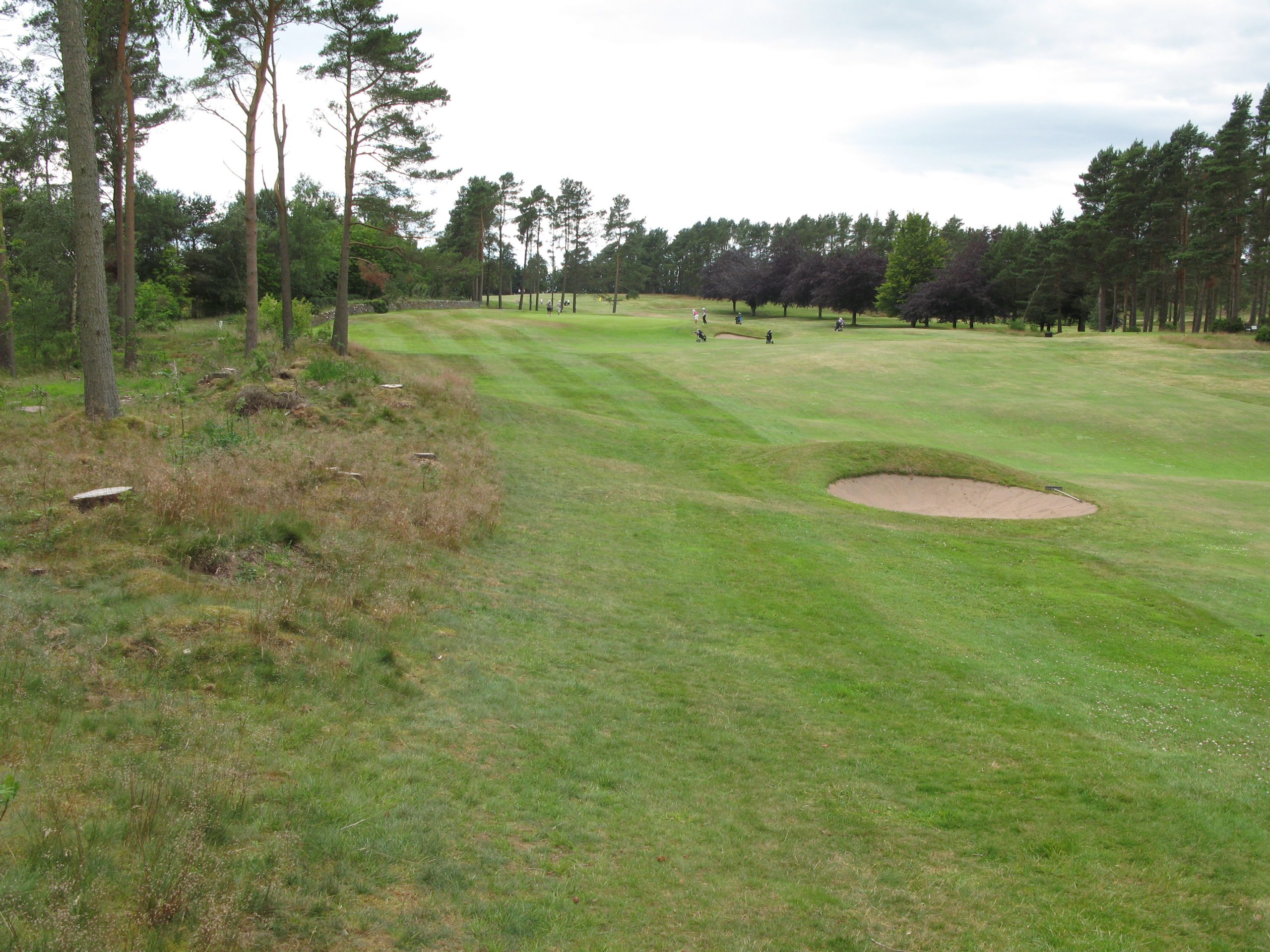
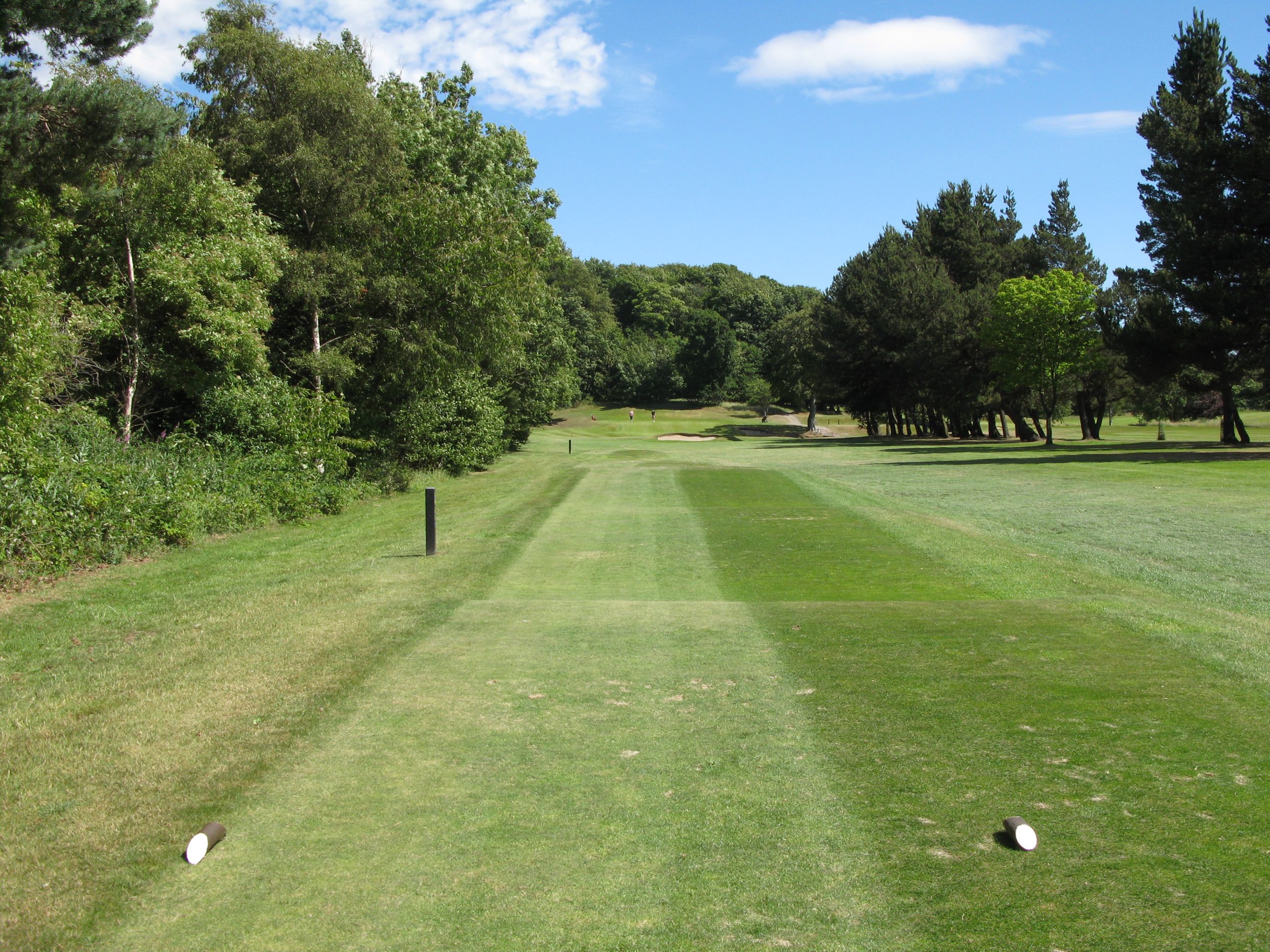
The 10th, a mid length par 4, where storms had left their mark with a loss of trees.

If I had to select only 10 courses that collectively represented the range of golf in Scotland, Forfar might just be be my number one pick, it is that unique. As to its overall ranking, it regularly appears in the “Top 100” Scotland courses, typically around 70th place. This doesn’t do it justice for me, I think it’s easy to justify a top 50 placing.

I can’t recommend Forfar high enough.

Facts:

Course Type: “Inland Links?”

Par 67  (1 par 5s, 13 par 4s, 4 par 3s)

Distance (yellow): 5754 yards

Moly’s Gross score: 84

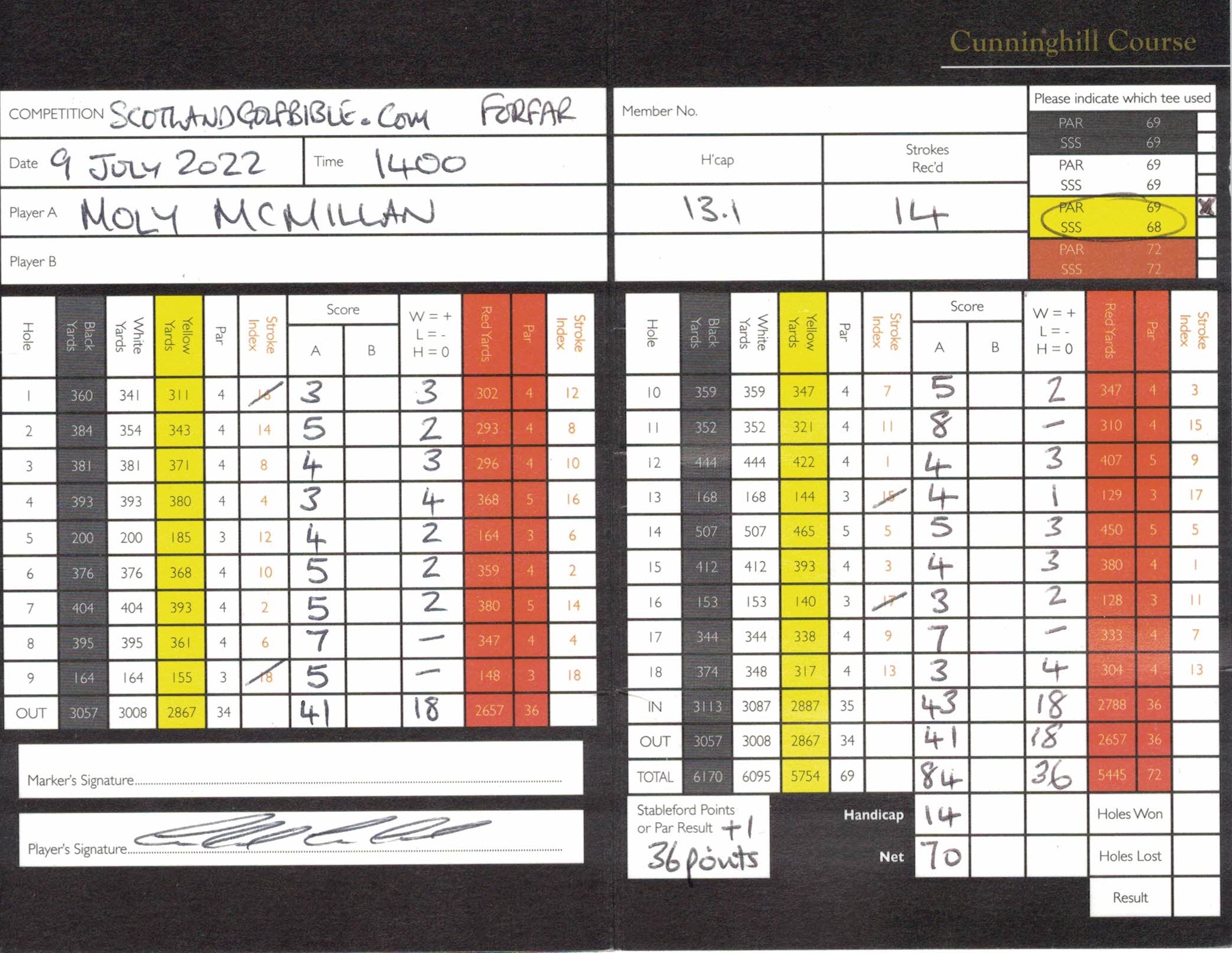
Moly’s Forfar scorecard – a commendable 84. 3 birdies and 3 triple bogies!

150. Pitreavie (Dunfermline). 7 July 22.

Foreshadows of Augusta at Dr Alister MacKenzie’s only Fife creation

Round £30. Par 70. Course Rating / Slope Rating (yellow) 68.8/134. Value (out of 5) – 5

Paul Brookes, the professional at Pitreavie GC asked me, “Name an architect that has three courses consistently in any list of the world’s top 100 courses?”. He was, of course, speaking about the courses Augusta National, Cypress Point and The West Course at Royal Melbourne, all creations of Dr Alister MacKenzie. Paul could even rephrase the question to be “in the top 10 or 20 best courses ever built”, such is the regard for these designs.

The ‘camoufleur’ skill of Alister Mackenzie on show at the par three 3rd hole. A brilliant golf hole.

You could spend a lifetime, and a fortune, trying to play all of these top 10 world courses; however, you can get a glimpse of MacKenzie’s skill by playing Pitreavie in Dunfermline for no more than £30. Pitreavie is one of only three courses in Scotland fully designed by MacKenzie, the other two being Hazlehead Municipal in Aberdeen and the Eden course at St Andrews.

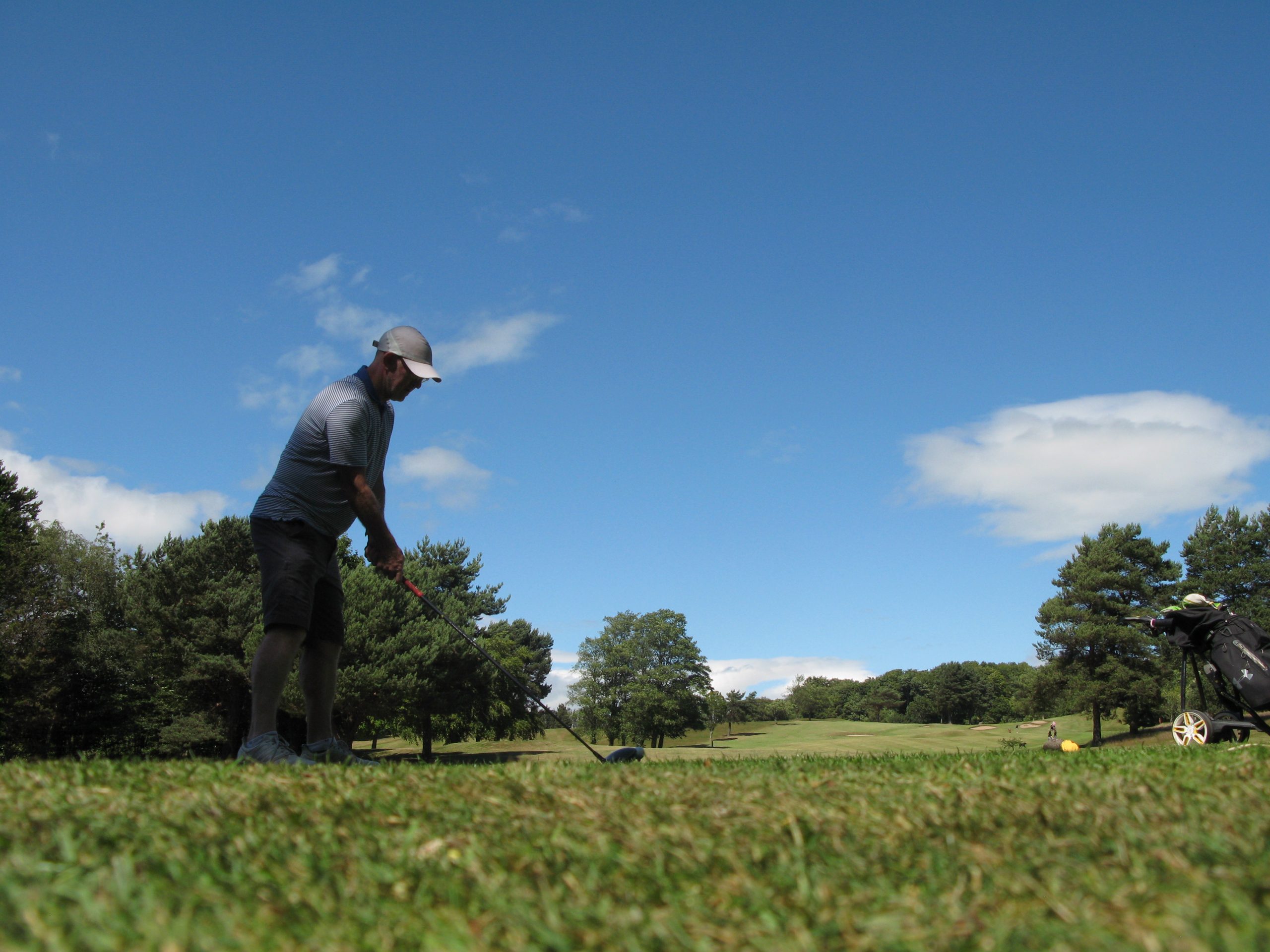
Moly tees it up at the fifth hole, one of the more scoreable par 4s on Pitreavie.

Born of Scottish parents, MacKenzie was in fact a Yorkshireman. His Scottish name must have been handy though in the early 20th Century US golf growth period, at a time when many of the great Scottish designers, such as Donald Ross (Pinehurst) and Tom Bendelow were making great advances.

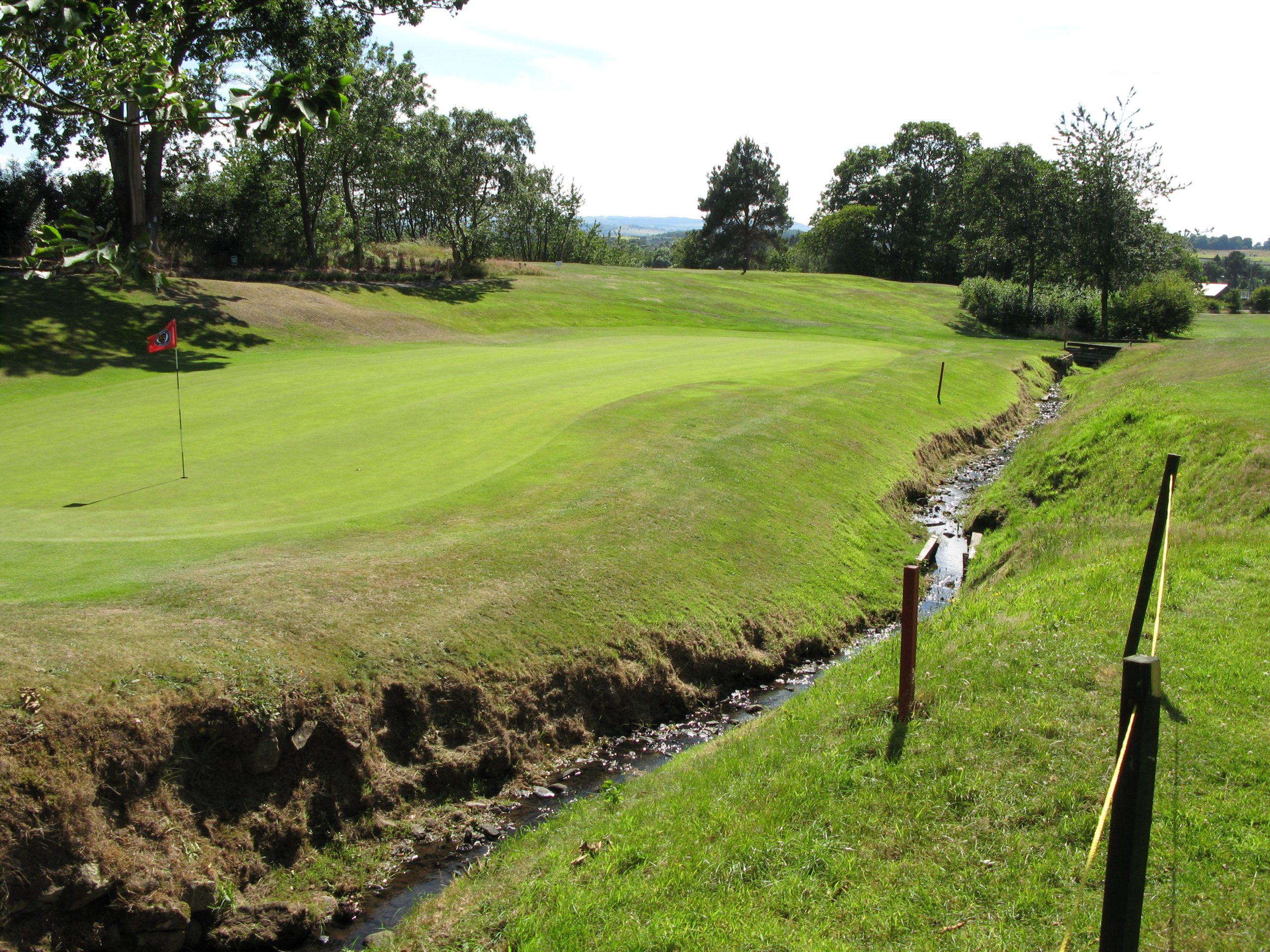
The very wide and narrow 12th green at Pitreavie, a downhill par 3 of only 135 yards. A great hole. The entrance is from the right of this picture.

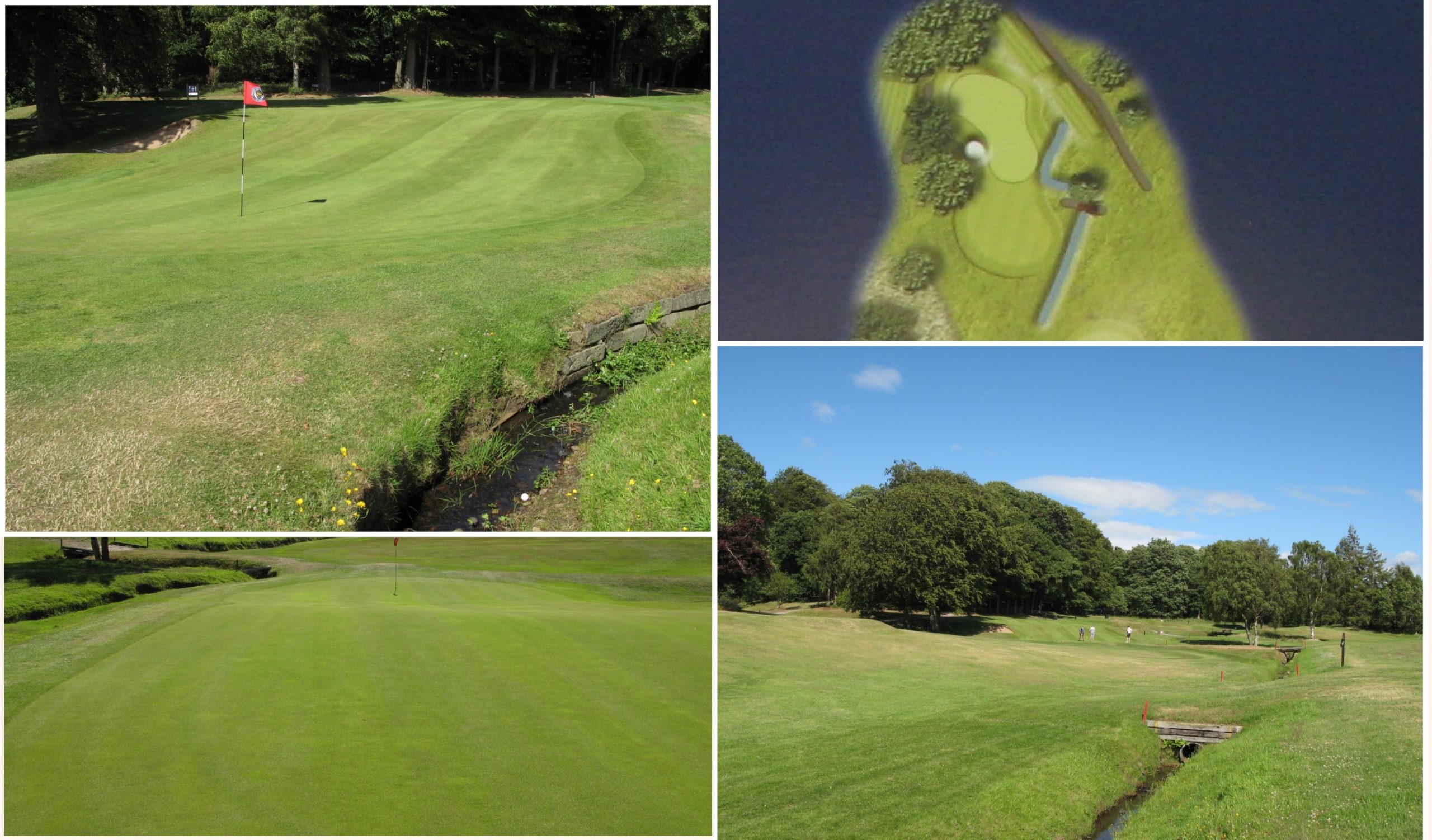
After two par fives to start, the third is the first real glimpse of MacKenzie’s skill. A long par three, it is the stroke index 2 hole, with a teeing ground almost 65 yards long giving many distance options. But looking at the hole you can’t readily see how hazardous it is. Medical army doctor MacKenzie had specialised during the Boer war and then WW1 to become a camoufleur, a specialist in camouflage. He was to later note the similarities between camouflage and golf design. At the 3rd, there is a hidden burn running across the front and up the right of the long multi level green. It is a formidable ‘camouflaged’ hole, as your eye is drawn naturally to the green tiers.

The third, the most beguiling of par 3rd at nearly 200 yards. I can imaging even low handicap players playing as a 2 shot hole.

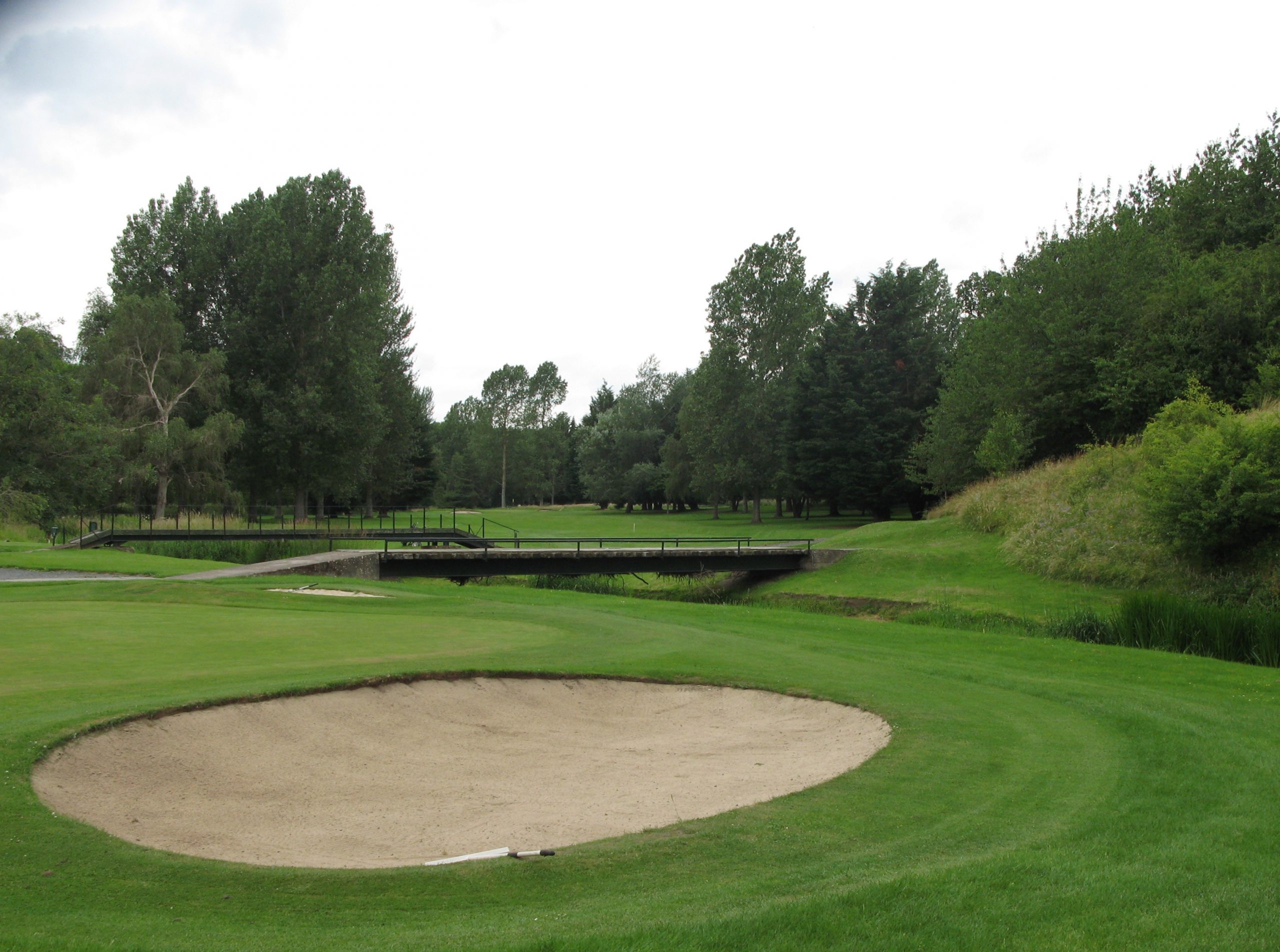
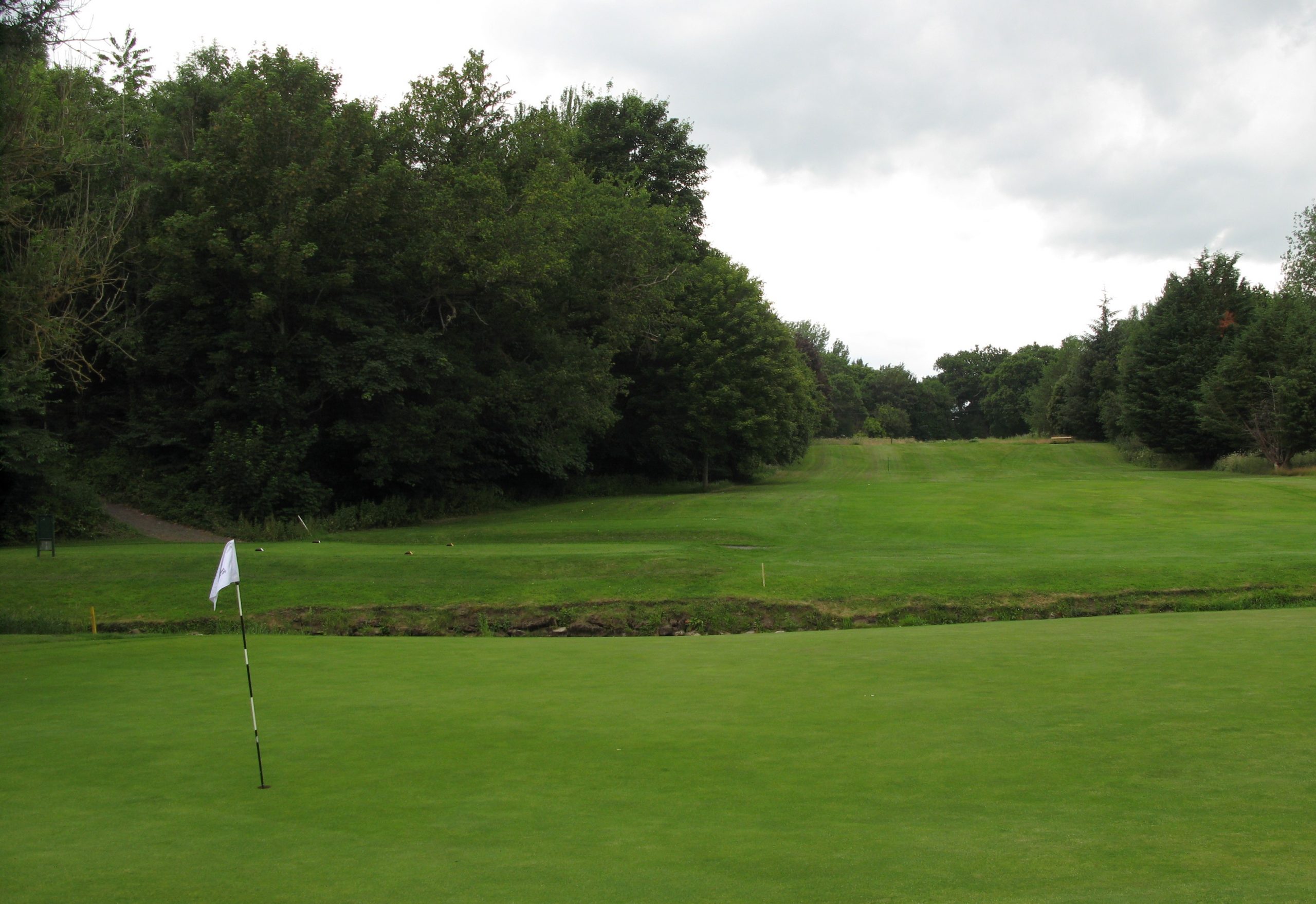
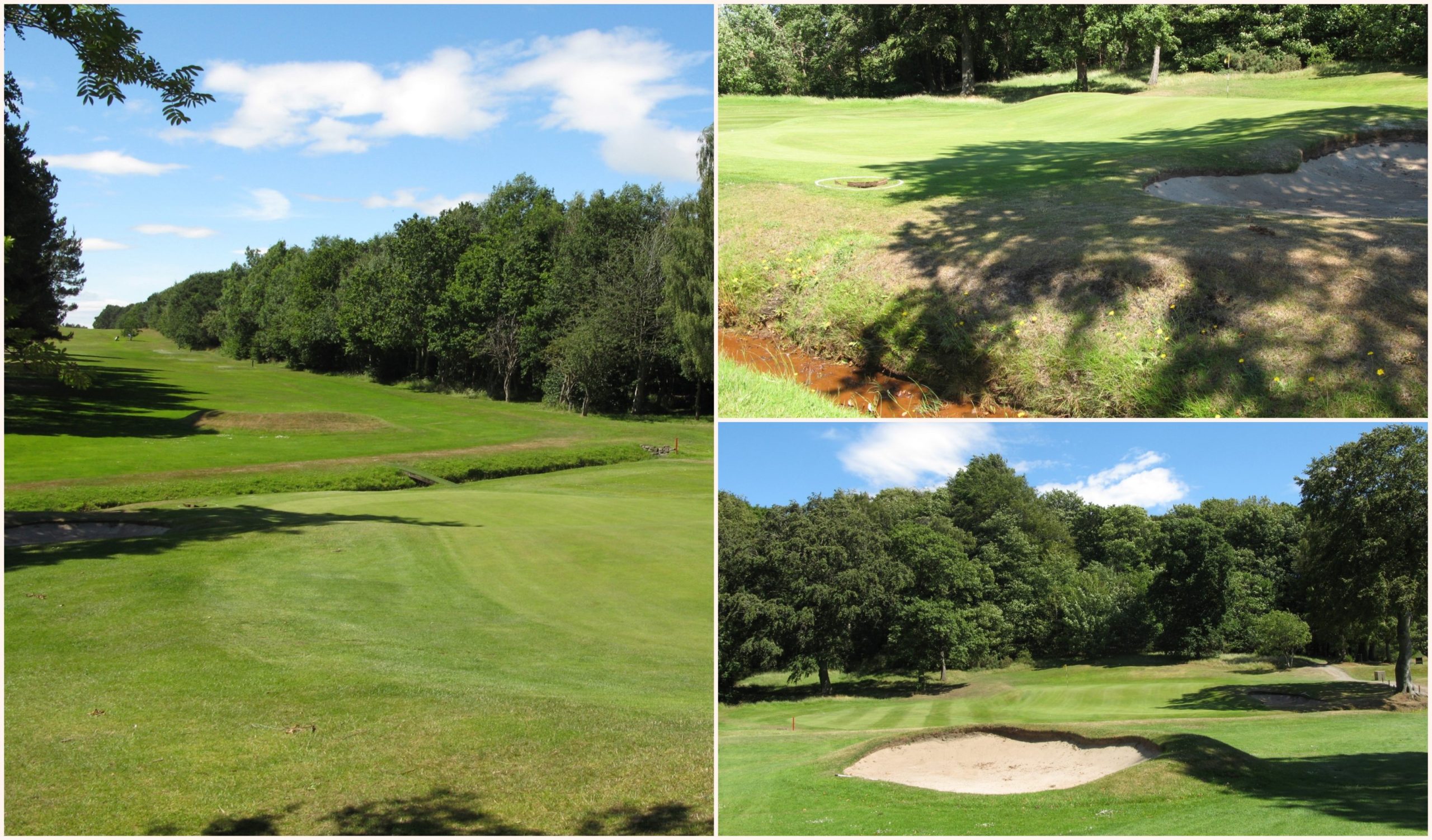
This clever use of the burn is brought into play on several more holes, notably the par threes 6th and 12th holes, and most cunningly at the par four 13th hole, the Stroke Index 1. When you play Pitreavie, keep in mind the use of Ray’s Creek at Augusta, especially at the front of the 13th green. It’s the symmetry between both 13th holes, at Augusta and Pitreavie, that adds to the story.

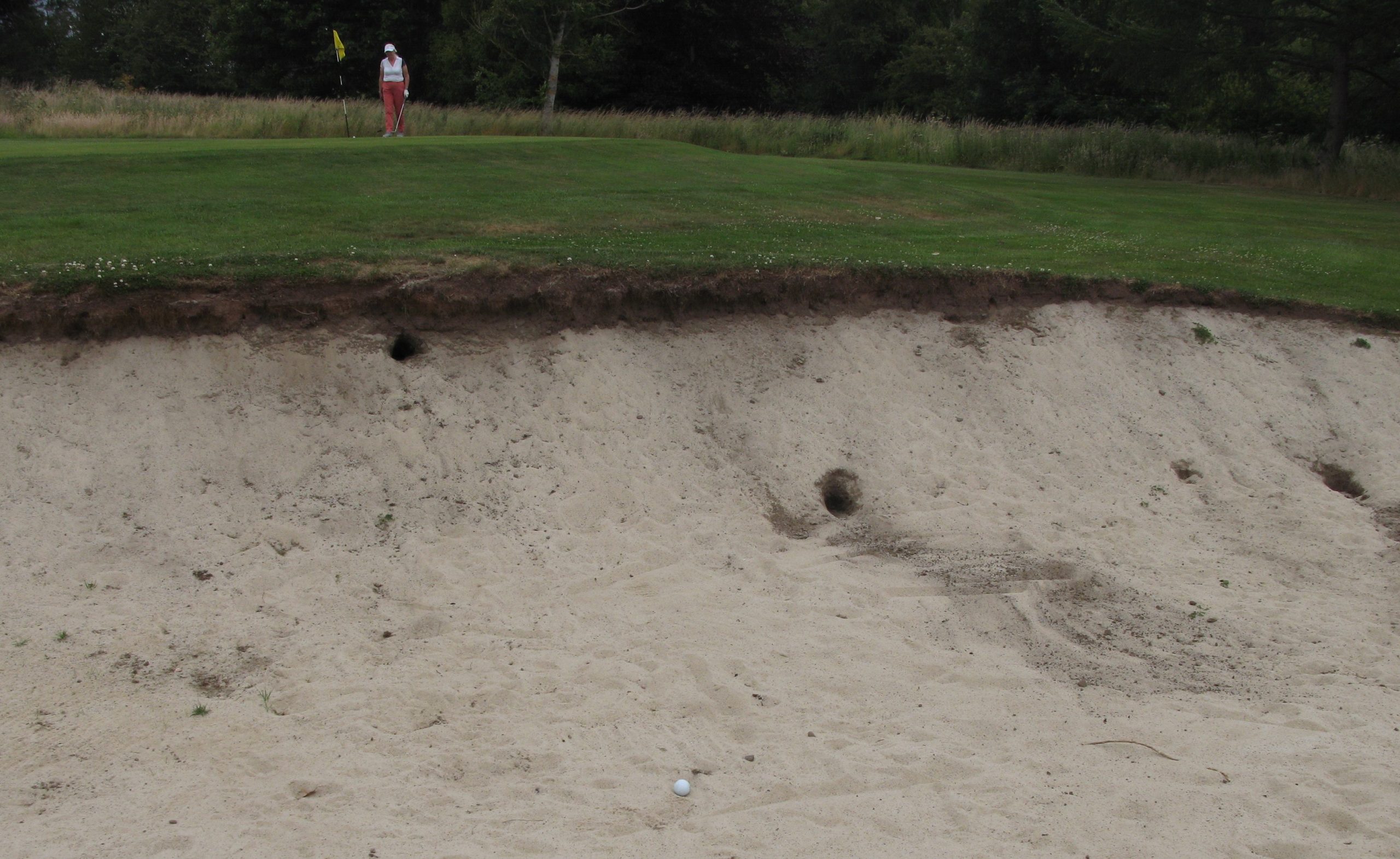
The wonderful par four SI1 13th hole at Pitreavie. Have a close look at the course map (top right) at how the burn cuts into the green, but is completely unseen from the approach (bottom right). You can see my ball in the top left picture!

Another feature of the course is the undulating terrain. This gives rise to the question about how closely did MacKenzie follow his own 13 principles of course design published in Golf Architecture (1920). “The greens and fairways should be undulating, but there should be no hill climbing”, also “There should be a minimum of blindness for the approach shots”. Whilst there are several blind tee shots, there are indeed no blind approach shots; however, I’ll leave readers to find out about how tough a walk it is in places!

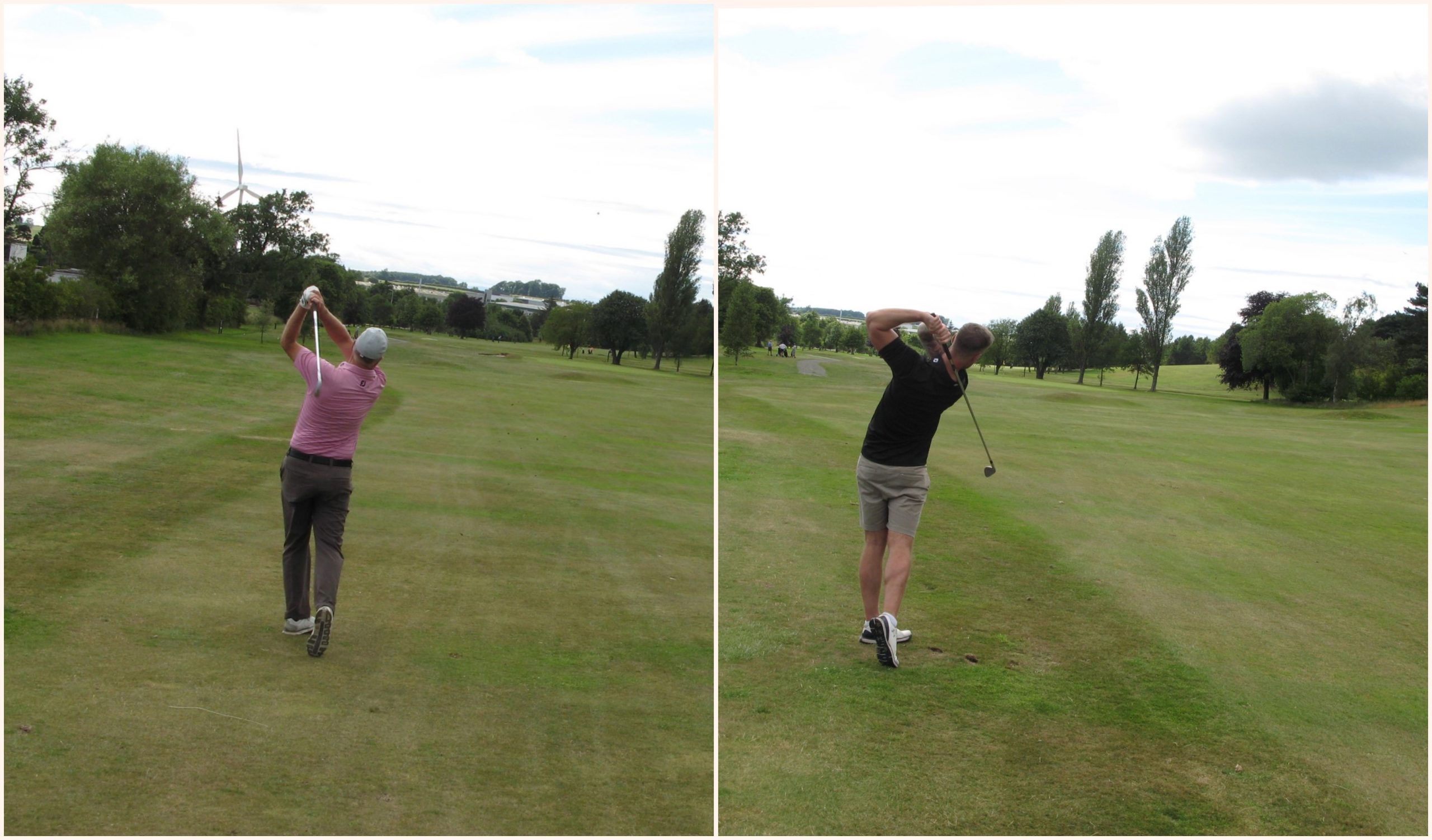
I met up with local members, father and son, Ian and Dean Black. Ian on the left here, with both shown playing into the 17th green.

The course was in great condition when I played. The sand in the bunkers was perfect, often an overlooked part of parkland maintenance. There are also outstanding views from several tees, towards the Queensferry Bridge.

The fairways were fairly open, which reinforces the difficulty of the green surrounds that contribute to the slope indices well into the 130s for both white and yellow tees.

I met up with local members Ian Black and his son Dean, and we enjoyed a few holes together, and I listened to how they were very happy with the course and how good value the membership was.

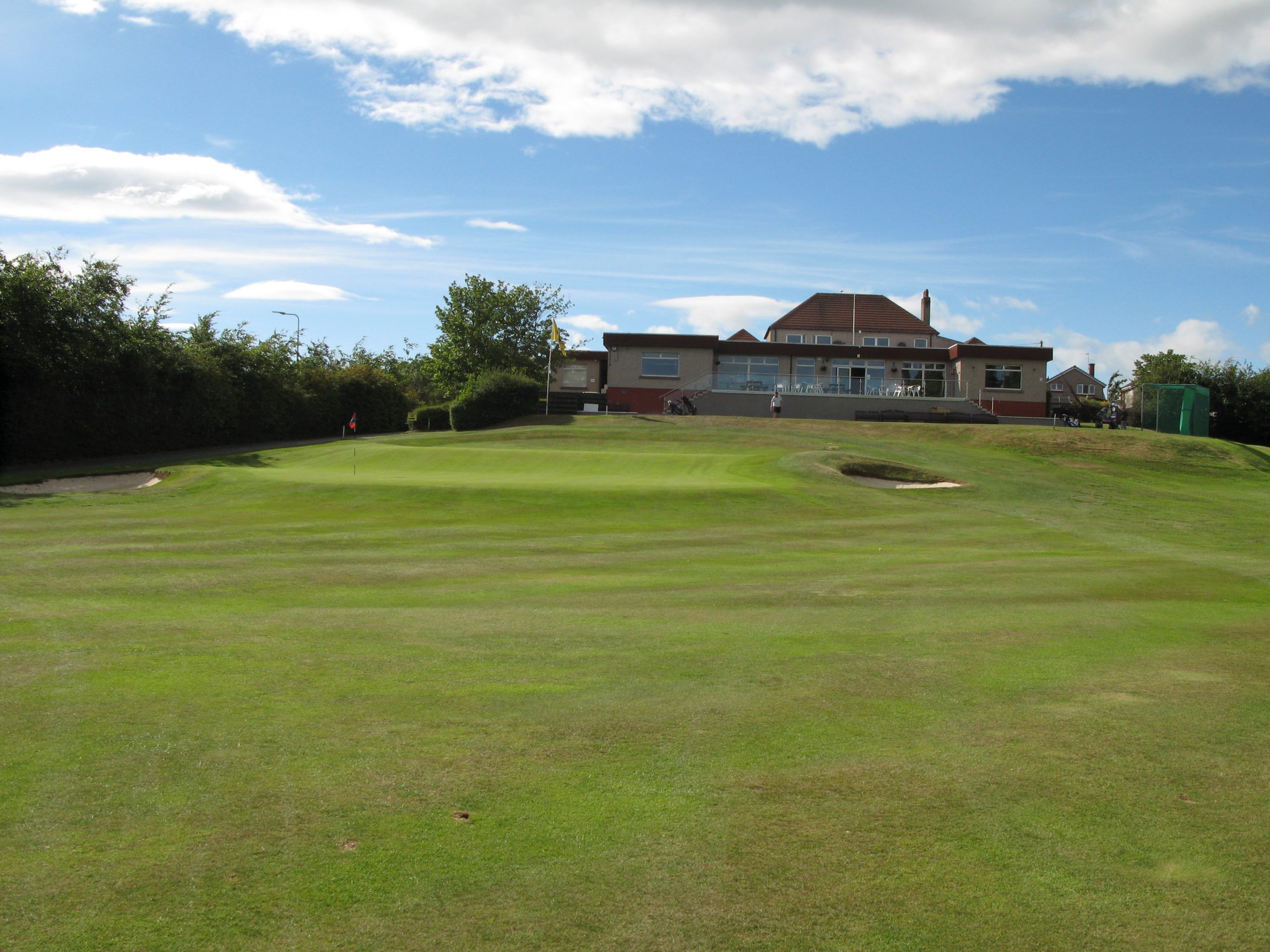
The beautiful 18th green at Pitreavie, adhering to Alister MacKenzie’s design principles.

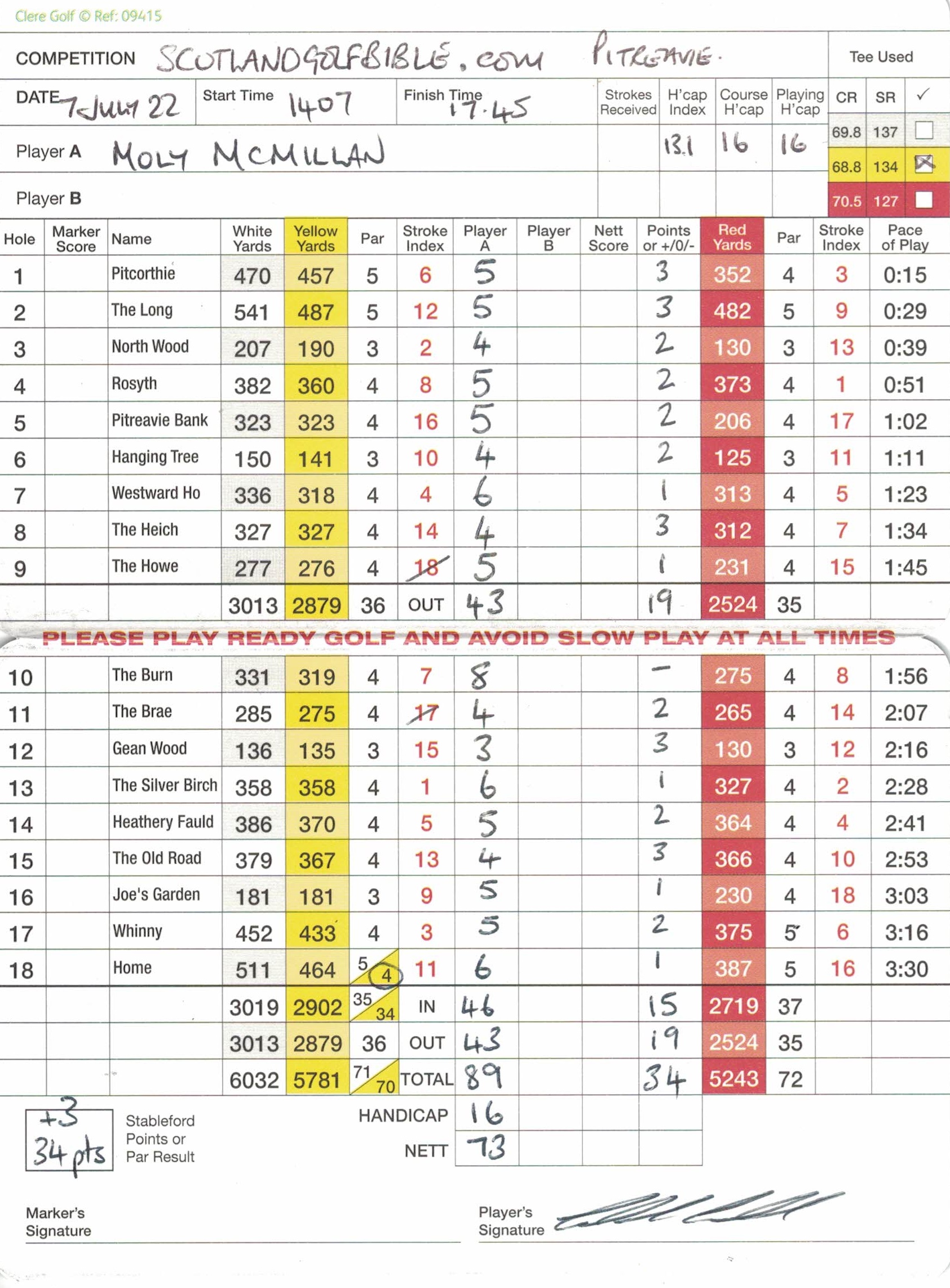
I played well, shooting 89 for 34 stableford points, with only one blob/disaster at the 10th, where I took an 8 at one of the few dog leg holes.

As to value, although there are a few weaker holes, to be able to experience some of MacKenzie’s genius at no more than £30 (I paid only £17.99 on Golfnow) means 5 out of 5 for me. This is outstanding value and highly recommended.

Facts:

Course Type: Parkland

Par 70  (2 par 5s, 12 par 4s, 4 par 3s)

Distance (yellow): 5781 yards

Moly’s Gross score: 89

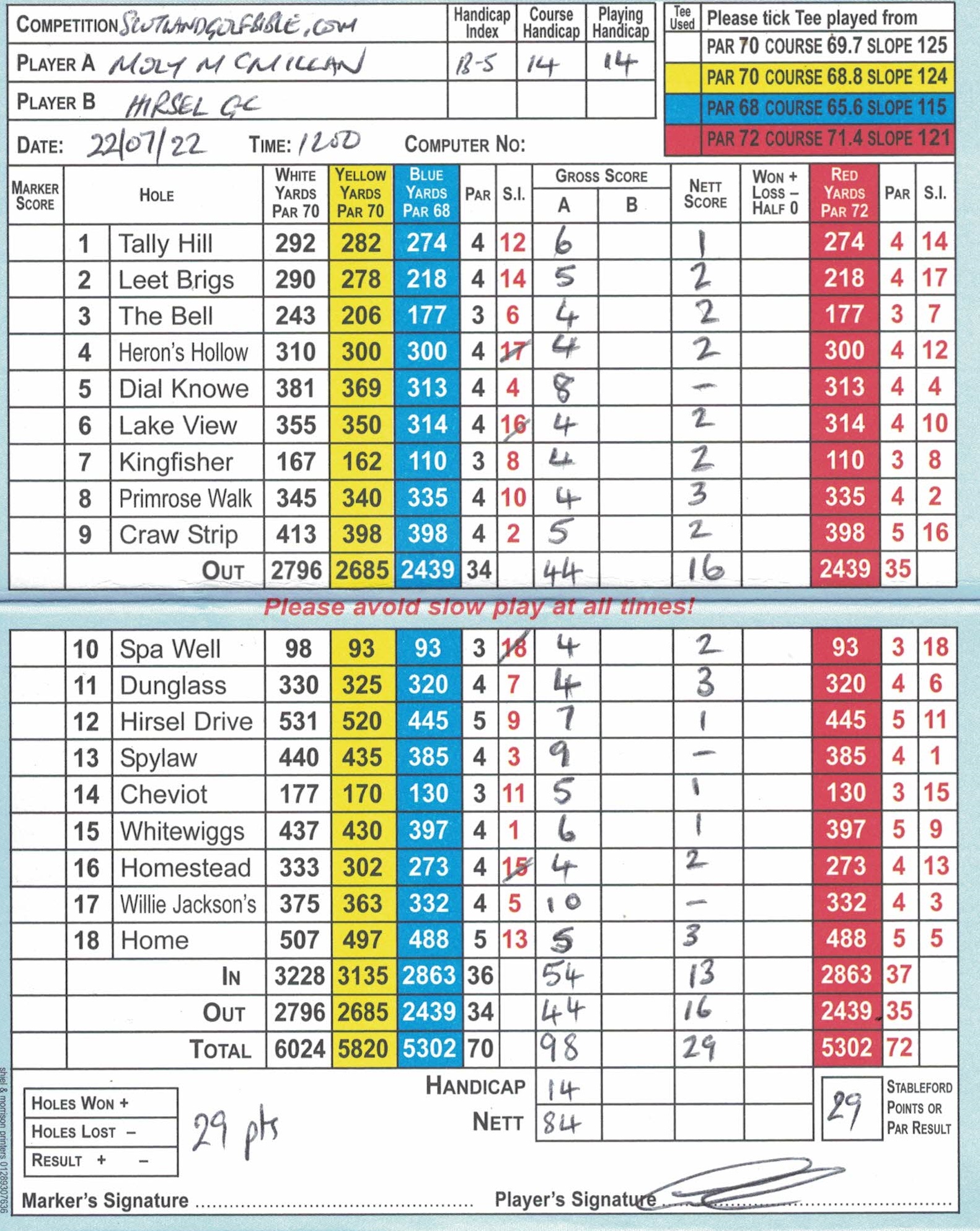
Moly’s Pitreavie scorecard – 89 for 34 stableford points.

147. Edzell West Water. 4 Jul 22.

Good nine hole course to sit alongside its wonderful big brother

Round £15. Par 32. Course Rating / Slope Rating (yellow) 60.8/99. Value (out of 5) – 3

The main course at Edzell is a well established heathland course and my blog from 2016 is here. This nine hole course, called “Edzell West Water”, was designed by the prolific Scottish golf course architect, Graeme J Webster, of Team Niblick of Inverurie, Aberdeenshire. The course has excellent views of nearby Fettercairn and was opened in 2001, following the period of buoyant economic activity in the 1990s.

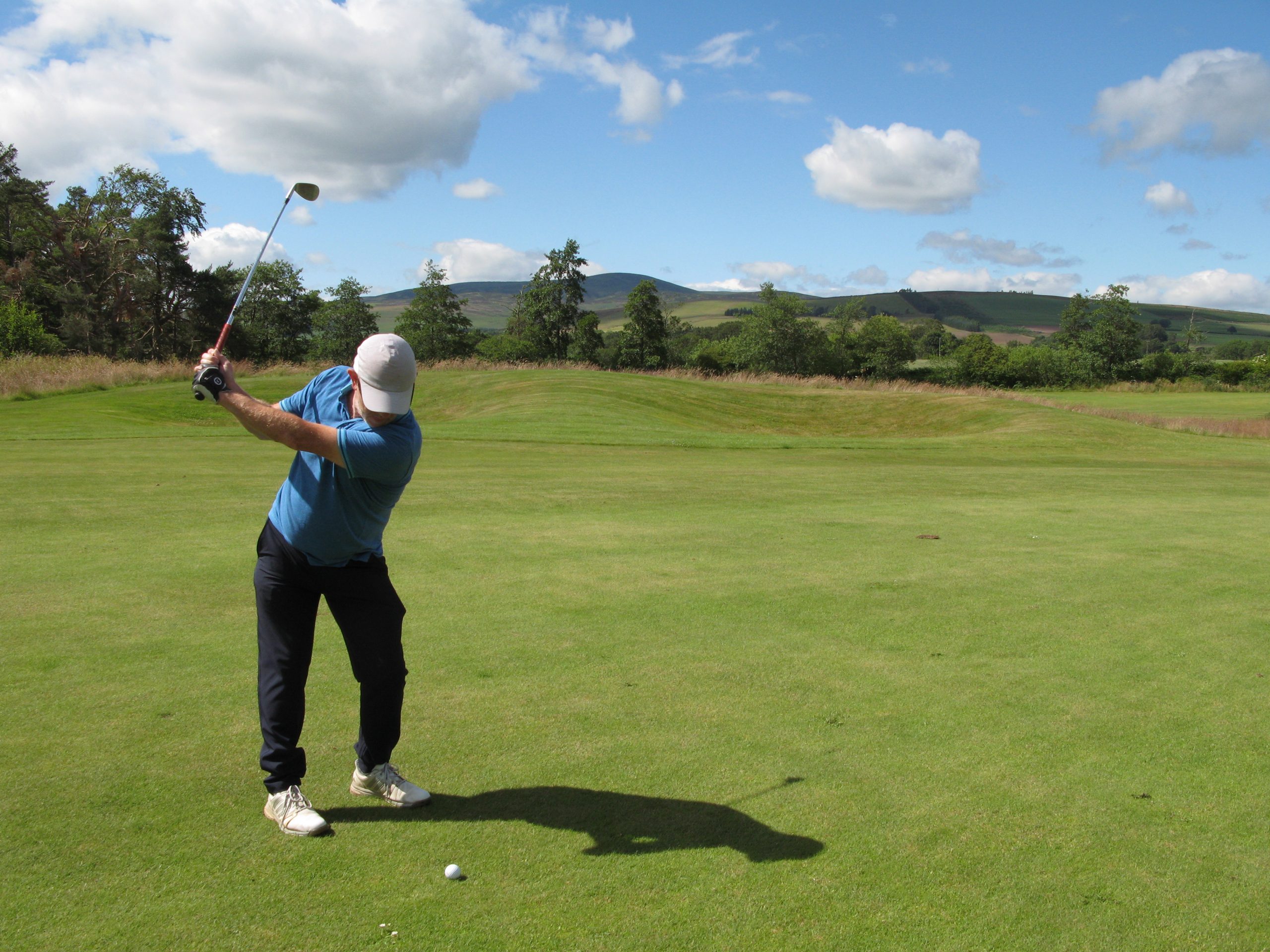
Moly on the 9th fairway at the picturesque Edzell West Water

The course is an ideal adjunct to its big brother, albeit it is accessed via a separate road to the main club, and like many people, I suspect, we were directed to the course from the main clubhouse. We got the impression, the staff were fed up re-directing people!

Nonetheless, the welcome from the starter at the small hut serving the West Water course could not have been friendlier.

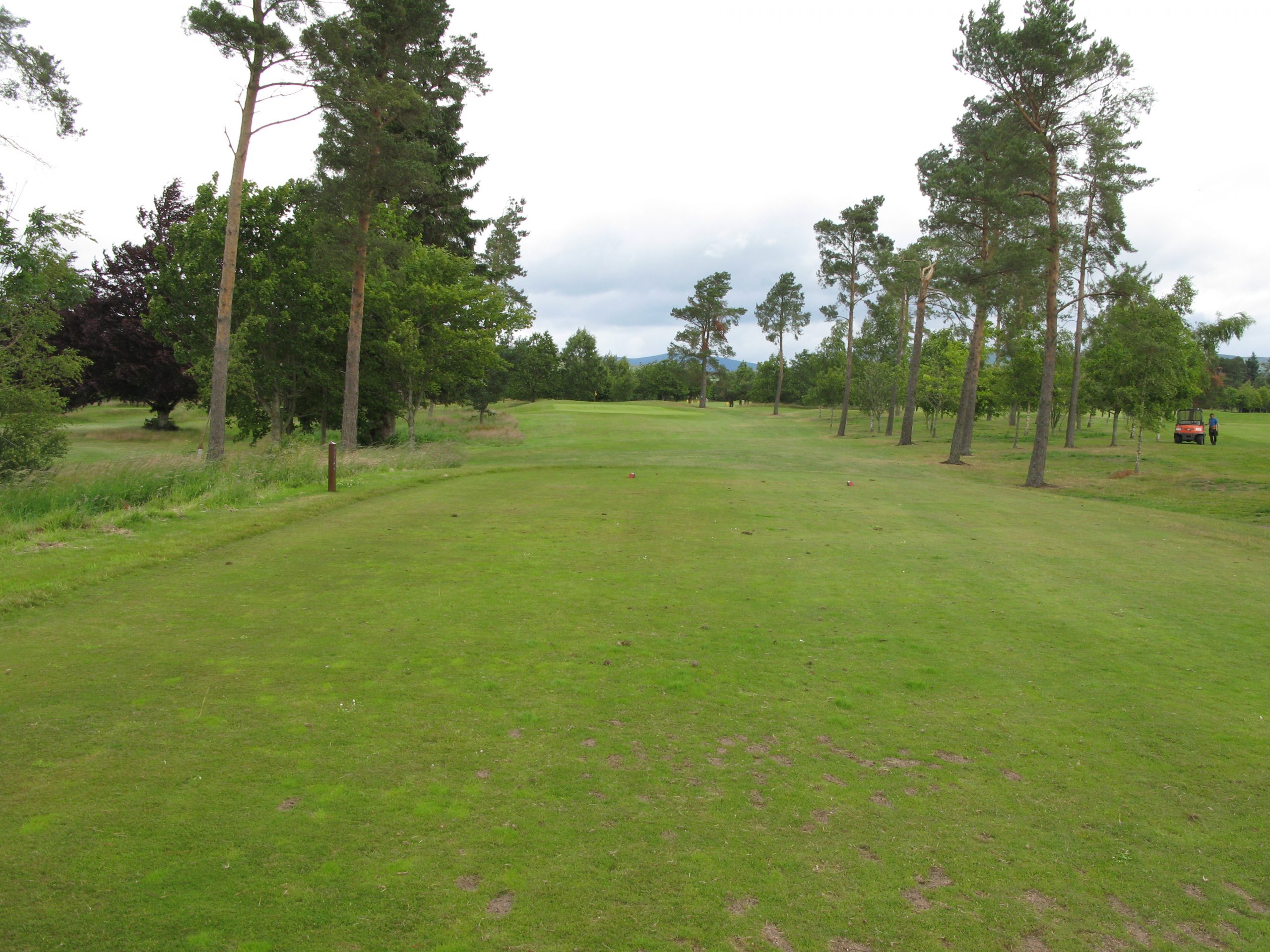
The tough 3rd hole at “West Water”, a par 3 of 157 yards.

The course is short, but certainly not easy, with several challenging holes. The first has a two tier green that will likely need 3 putts if you don’t reach the right level. Having secured a decent par, I then had a disaster at the par 5 second, including two air shots, trying a miracle shot from the heather to the left of the fairway!

Comprising five par threes, this is a course where good iron or hybrid play is needed to score well. The par four 5th hole, SI 1, is also an excellent hole.

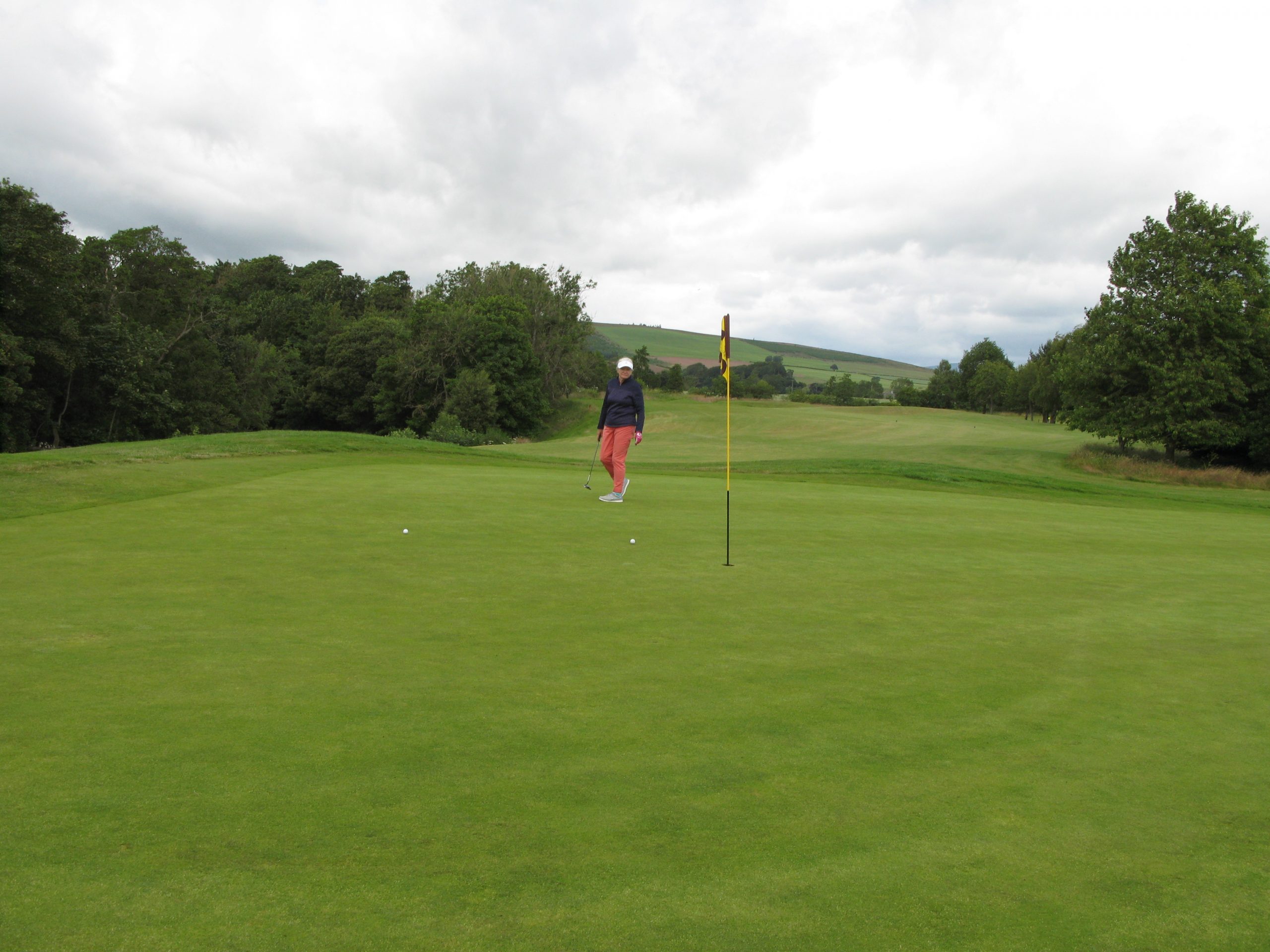
Fran ponders the line on the 6th green, one of the shorter par 3s at Edzell West Water.

The course, which has great ‘heathland’ turf, was in good condition, with green complexes worthy of ‘bigger’ courses, albeit the greens were a little mossy in places, giving some variability in pace. The greenside bunkering is very good.

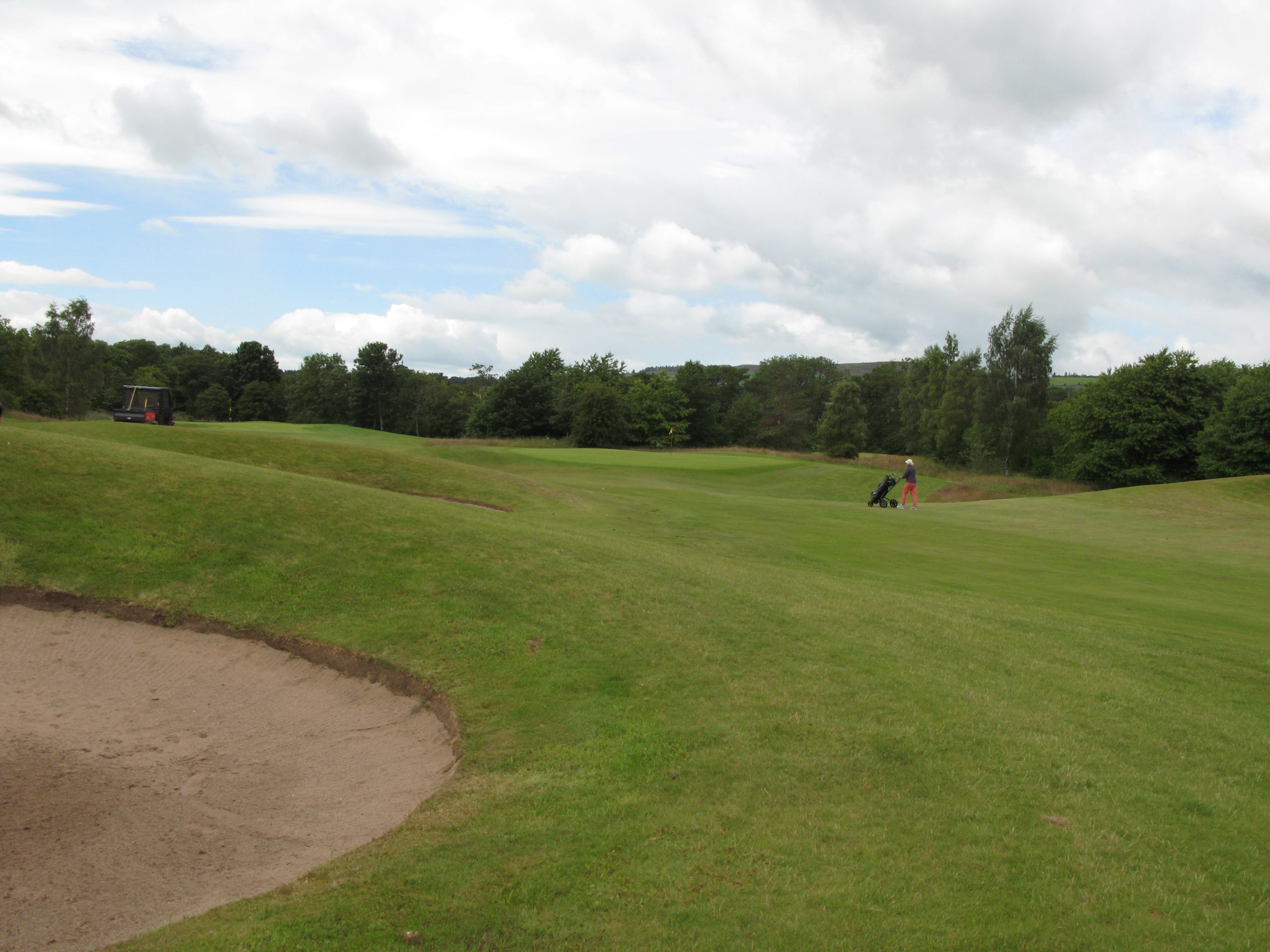
The entrance to the par four 5th green, the worthy SI 1 hole.

The green fee of £15 was actually for the whole day, which is a real pity if you want to only play 9 holes. That deflates the ’round’ value a lot. There is a good offer of a return fee of only £10, which I think they would do well to charge it someone only wanted to play 9 holes.

The 4th at Edzell West Water, one of only three par 4s.

There is also collocated driving range, which does present an OOB hazard, especially at the par for 7th hole, ‘Wirren’, where you need to keep your tee shot well left off the tee. I didn’t!

The 7th and 8th run alongside the “west water”, hence the name of this course, which is worth playing, but only if you want to play more than 9 holes in my opinion or perhaps combine with the main track.

Facts:

Course Type: Heathland

Par 32 (1 par 5s, 3 par 4s, 5 par 3s)

Distance (white): 2057 yards

Moly’s Gross score: 46

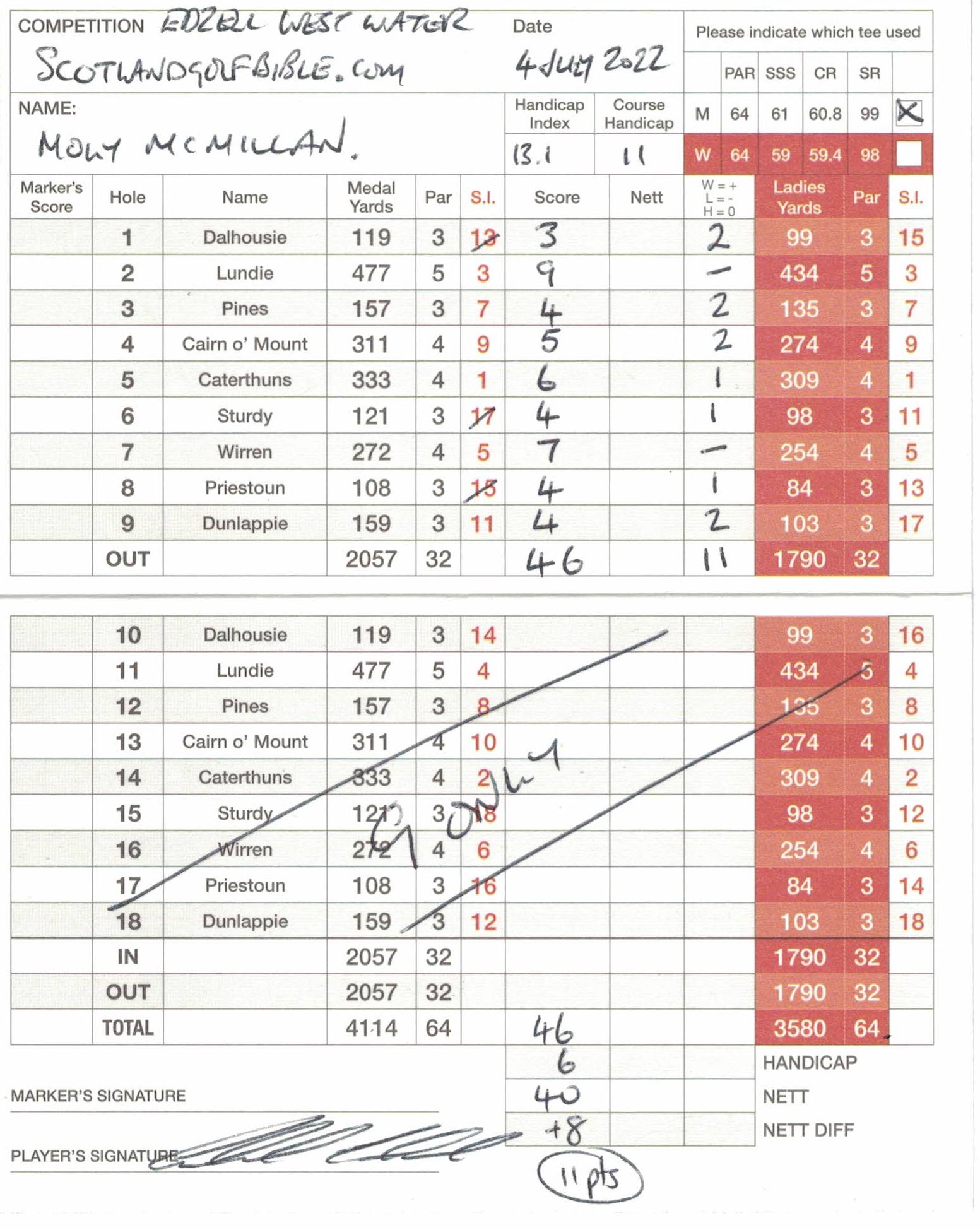
Moly’s Edzell West Water card – high winds didn’t really explain this poor round of 8 over net

146. Auchterarder. 3 July 22.

Stroll the Gleneagles landscape at 20% of the cost.

Round £50. Par 69. Course Rating / Slope Rating (yellow) 65.7/114. Value (out of 5) – 5

Wonderful Perthshire views. Firm heathland turf. Magnificent greens and teeing grounds. It really could be Gleneagles. But whereas playing the PGA Centenary Course will set you back £250, next door Auchterarder will be £50 for a mid week summer round; I paid only £35 for a weekend twilight for a beautiful early evening game, representing incredible value.

Moly tees off at the 10th at Auchterarder, with the Gleneagles PGA course, venue of the 2014 Ryder Cup, in the background.

Having previously been brutally exposed on the Gleneagles Ryder Cup layout, I continually wonder why ordinary golfers like me are willing to pay huge fees for golf courses that just highlight their golfing deficiencies. I can well imagine the humour value for the Auchterarder members, who pay £670 for annual membership, looking across at the well heeled swings next door.

Challenging first hole, ‘Deils Dyke’, at Auchterarder – 360 yards from the yellow tees played into the prevailing wind.

Auchterarder was designed as a 9 hole course by the legendary Ben Sayers in 1913, some 6 years before The Kings Course at Gleneagles was laid out, making Auchterarder the senior member of the local golf courses. The course went through plenty of disruption around WW2, but was subsequently reconstructed and then extended to an 18 hole course in 1979, partly through the demand created by the Gleneagles Hotel establishing its reputation as one of the world’s great golfing resorts.

The brilliant golfing entrepreneur Ben Sayers, the designer of Auchterarder, here depicted in his younger and older self.

The current course is an absolute cracker. Short, at 5357 from the yellow tees most visitors will use, this course gives you a chance to play to your handicap, making it an attractive amateur open venue, especially given its highly rated kitchen.

The 16th, ‘Gulley Brae’, a long and challenging par three, needing driver for most.

Surrounded by hills the course itself is an easy walk, amidst well maintained pines and other trees that frame many holes but don’t overly narrow the generous fairways.

The typically picturesque short par three 8th hole at Auchterarder.

The course is very well maintained and was in immaculate condition, the bunker sand in particular being in perfect order. The greens were firm, but gave good purchase for well struck irons. Beware the rough though, which was very whispy and will wrap the club for most players.

The brilliant green at the par 4 seventh hole, one of Moly’s disasters.

My only misgiving with Auchterarder was that it is set on a fairly small parcel of land, which means there is some ‘criss-crossing’ of holes, with some slightly reverse walks between greens to tees, to facilitate the yardage. A few times I came across ‘lost’ balls in the fairway which could have come from one of two adjacent holes. I can imagine many balls being ‘found’ that were actually ‘in play’ for others. These comments are perhaps a little over critical.

Fran at the short par four 13th, ‘Ochil View’, with the Gleneagles backdrop in the distance.

I played really well for my 83, especially my back nine of 38. My 14 over par, included two triple bogie 7s; one of those was on the very aptly named ‘Dinnae Stray’ seventh hole, where having hit two good shots onto the front of the very large green , I proceeded to take 5 shots to get down and they were not all putts!

Auchterarder is 5 star value golf. Take note of the clever hole names, which are a delight.

Facts:

Course Type: Heathland

Par 69 (3 par 5s, 9 par 4s, 6 par 3s)

Distance (yellow): 5357 yards

Moly’s Gross score: 83

Moly’s very solid 83 at Auchterarder
« Older posts Newer posts »

© 2026 Scotland Golf Bible

Theme by Anders NorenUp ↑